

Dr

Annabelle Bennett

AC FAA

Annabelle Bennett
Image Description
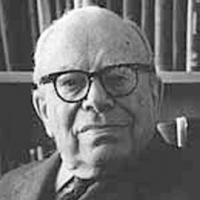
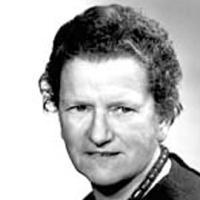
Annabelle Bennett is an internationally recognised leader in Intellectual Property (IP) patent law, specializing in scientific, medical and information technology issues. As a Federal Court Judge (with a PhD in Biochemistry) she delivered nearly 500 decisions concerning IP, including 281 judgments in patent matters, 78 concerning trademarks and 111 on copyright. Bennett has also made significant contributions to Australian science through her tireless service on numerous boards and advisory groups, including as: Chair of the ANSTO Board; Director of the Garvan Institute of Medical Research; Member of the Advisory Board of Questacon; and Chair of the World Intellectual Property Organisation Advisory Group of Judges. She is a former Chair of the National Health and Medical Research Council, Director of the Sydney Children’s Hospital Foundation, Pro-Chancellor of the Australian National University, President of Chief Executive Women and Chair of the EEO Committee of the New South Wales Bar Association.

Expertise type

  • mRNA Export
  • Multi-pathogen Resistance
  • Biology

Please contact fellowship@science.org.au to request any updates to the data.

Professor

Peter Høj

AC FAA FTSE

Peter Høj
Image Description
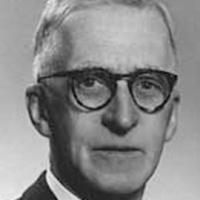
Peter Høj has made distinguished contributions to Australian society, particularly through more than two decades of leadership as Vice-Chancellor of the University of Adelaide, the University of Queensland and the University of South Australia, and as CEO of the Australian Research Council and the Australian Wine Research Institute, Høj has also been a member of numerous high-level policy committees, following his earlier career as one of Australia’s leading young biochemists.

Fields of research

31 BIOLOGICAL SCIENCES
  • 3101 BIOCHEMISTRY AND CELL BIOLOGY
    • 310199 Biochemistry and Cell Biology not elsewhere classified
  • 3106 INDUSTRIAL BIOTECHNOLOGY
    • 310601 Biocatalysis and Enzyme Technology
    • 310603 Fermentation
32 BIOMEDICAL AND CLINICAL SCIENCES
  • 3205 MEDICAL BIOCHEMISTRY AND METABOLOMICS
    • 320506 Medical Biochemistry: Proteins and Peptides (incl. Medical Proteomics)

For full list of research codes, please visit the ARC Website .

Expertise type

  • Biological Chemistry
  • Protein Structure
  • Biochemistry
  • Protein Structure-Function Relationships
  • Analytical Chemistry
  • Chemistry

Please contact fellowship@science.org.au to request any updates to the data.

Position statement – Openness Agreement on Animal Research and Teaching in Australia

The Academy's position on the use of animals in scientific research and teaching.
Image Description

Scientists and scientific organisations should be transparent and open about the use of animals in research and teaching and must maintain the highest ethical standards for this work.

The Australian Academy of Science supports the Openness Agreement on Animal Research and Teaching in Australia and was an inaugural supporter at the launch of the Openness Agreement on 10 August 2023.

Research roadmap for blood cancer

A 10-year plan to accelerate blood cancer research in Australia, with a national quest to achieve zero preventable deaths by 2035.
Image Description

The Leukaemia Foundation on behalf of the Blood Cancer Taskforce partnered with the Australian Academy of Science to develop a 10-year research roadmap to accelerate blood cancer research in Australia. 

The Academy, in collaboration with the Australian Academy of Health and Medical Sciences (AAHMS), developed the roadmap to identify priority areas for research activity and investment, and barriers and opportunities for research advancement and translation into clinical care.

Executive summary

Blood cancers are one of the most common cancers globally and are expected to become the most prevalent and deadly form of cancer in Australia by 2035.

Incidence has risen by 47% over the past decade, far outpacing population growth, and is expected to double in the next decade.

The cause of this increase is unknown, but understanding it is critical to developing new treatment and management options. Blood cancers are typically non-hereditary, non-screenable, and spontaneous cancers, with more than 100 subtypes, making detection and treatment challenging.

Past research has delivered dramatic gains in survival for some specific blood cancers. For those difficult-to-treat blood cancers with high mortality rates, new research is the only way to improve outcomes.

Immediate action is needed

Right now, we are losing the race. To reverse or slow the rise of blood cancer incidence, and to minimise deaths and impacts, Australia must increase its investment in research – both fundamental and applied – and the workforce that drives it.

Current funding is not sufficient to meet the existing challenge of high-mortality blood cancers, nor to avert the rising incidence.

This is a once-in-a-generation opportunity to build a coordinated and strategic approach and to pioneer new treatments for blood cancer, building on the foundation of our existing research strengths and clinical trial capability.

The quest: Zero preventable deaths by 2035

We propose a national quest, supported by government, industry and philanthropic stakeholders, to fast-track research efforts, leverage existing infrastructure and strengths, and build new opportunities and capacity. The quest will address the overarching issues applicable to all healthcare and cancer research and is a shared responsibility of all health researchers to emphasise areas where we can make the greatest differences.

This national quest has the following three priorities.

  • Investment in research: Increasing funding for blood cancer research – including fundamental research – with dedicated funding streams to tackle areas of particular need, including difficult-to-target and high-mortality cancers.
  • Translation of research into practice: Improving national coordination of research, incentivising multidisciplinary teamwork, enabling strategic international collaboration and partnerships, and supporting large-scale clinical trials.
  • Build the research workforce: Bridging the gap between research and clinical care by empowering researchers and clinician–researchers with the skills, resources, and support they need to conduct research, advance health and medical knowledge, and improve patient care and outcomes.

Three blood cancer missions

To support the quest for zero preventable deaths by 2035 and deliver this Research Roadmap, three missions have been identified that address areas of high unmet need. Each mission offers a new focus for blood cancer research. The Australian Government must lead the investment of $125 million into blood cancer research, spread across the three national missions.

  1. Blood cancers with poor outcomes: We need to explore better options to manage cancers such as acute myeloid leukaemia (AML), poor prognosis multiple myeloma, recurrent aggressive lymphomas, and currently intractable rare blood cancers.
  2. Causality and potential for prevention and early detection: This mission should focus on including early detection in populations and the small subset of individuals known to be of high risk of developing a blood cancer – from environmental influences, prior cancer therapy and heritable factors.
  3. Personalised medicine: The third mission should focus on integrating advanced genomics, and targeted and cellular therapies in models of care, aiming to change the natural history of blood cancers.

Expert steering group

Issues paper: Incentivising business investment in R&D

The Australian Academy of Science is calling for an urgent national conversation on research and development investment in Australia.
Image Description

Australia’s persistent underinvestment in R&D threatens our productivity, limits wage growth, threatens our standard of living, and weakens our ability to respond to global volatility. These threats have consequences for every member of society.

This issues paper makes the case for investment in the underpinnings of an Australian future that is flourishing, fair and secure.

The paper outlines the Academy’s proposal to incentivise business R&D investment by applying either a 0.25% or 0.5% R&D levy to businesses with annual revenue of $100 million or more that can be discounted if businesses invest in R&D.

The fact sheet (page 10) provides independent economic analysis of the measure and outlines its impact.

*Correction: The issues paper and fact sheet document was amended on 31 July 2025 to reflect that increases to the RDTI expenditure threshold caps were from $100 million to $150 million. A previous version stated this increase was to $200 million.

International scientific collaborations in a contested world: Summary of the National Symposium, November 2023

Exploring the role of science in an uncertain geopolitical landscape.
Image Description

In November 2023, the Australian Academy of Science facilitated a national dialogue about how national security concerns can be addressed while enabling the benefits that open scientific collaboration offers Australia and the world.

This report summarises the issues examined by the keynote speakers and panellists across the symposium. 

The key symposium messages were that:

  • continued international scientific collaboration is in Australia’s national interest
  • responses to national security threats need to be evidence-informed and proportional
  • science is a diplomatic asset.

Find out more about the symposium

Mid-term review – Nourishing Australia: A decadal plan for the science of nutrition

Reviewing progress towards the goals and recommendations of the 2019 plan and providing an update on the state of Australian nutrition science.
Image Description

Australian nutrition science plays a key role in improving long-term health and wellbeing globally, while delivering environmental, social and economic benefits nationally. 

This mid-term review carries on the work of Nourishing Australia: A decadal plan for the science of nutrition (2019–28). 

The review highlights that, while progress has been made in the nutrition science ecosystem, significant work remains to be done to achieve a collaborative and consolidated approach to building capacity and connections, and advancing research for the benefit of all Australians and their nutritional health.

Terms of reference


Steering committee

The members of the mid-term review steering committee are:

  • Chair: Dr Emma Beckett (FOODiQ, University of New South Wales, current NCN member)
  • Professor Maragret Allman-Farinelli (University of Sydney, current NCN Chair)
  • Professor Lauren Ball (University of Queensland)
  • Professor Nenad Naumovski (University of Canberra)
  • Mr Luke Williams (RMIT)

Financial report 2023–24

For the year ended 30 June 2024.
Image Description

This is the financial report of the Australian Academy of Science for the year ended 30 June 2024.

It contains the balance sheet as at 30 June 2024, the statement of comprehensive income, the statement of changes in equity and the statement of cash flows for the year then ended, and notes to the financial statements, including a summary of significant accounting policies, and the Statement by Council. 


Annual report 2024

In 2024, the Academy celebrated 70 years of science impact. This report covers 1 January to 31 December 2024.
Image Description

The Australian Academy of Science Annual report 2024 covers 1 January to 31 December 2024.

In 2024, the Academy celebrated 70 years of science impact.

Significant achievements during the year included successfully advocating for a redesign of Australia’s research and development system, and playing a key role in establishing a learned academy in the Pacific so our regional neighbours have a collective scientific voice.

The Academy led with evidence to advocate for clean indoor air standards, coordinated climate change capability, and supercomputing capability to support researchers and industry. 

We investigated the implications of AI on society and on science, and strengthened and deepened our work with Aboriginal and Torres Strait Islander peoples, including launching our Innovate Reconciliation Action Plan.

Operationally, the Academy took significant steps to renew our governance, including modernising our Council to support transparent, accountable and agile decision-making. A significant realignment of our workforce and resources is allowing us to meet our strategic objectives.

Salt in the diet: the elephant in the room – why health professionals need a shake up

A summary report from the National Committee for Nutrition for a 2009 symposium on salt intake.
Image Description

A symposium held on 13 August 2009 focused on excessive salt consumption as an overlooked health issue.

The symposium was sponsored by the Academy's National Committee for Nutrition and the Nutrition Society of Australia, Sydney Group. Its objectives were to:

  • raise consumer and health professionals’ awareness of the health consequences of excessive salt intakes
  • disseminate strategies which could be implemented at a federal, state and community level to reduce dietary salt intakes.