
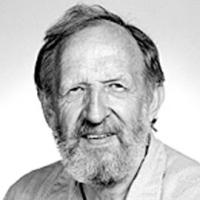

Professor

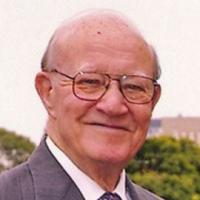
David Balding

FAA

David Balding
Image Description
David Balding is co-developer of the Balding–Nichols match probability formulae, which allow for population genetic effects in the evaluation of DNA profile evidence. He is also author of the likeLTD software for profiles obtained from low DNA template and/or degraded samples. He is co-proposer of the Balding–Nichols model for simulation of genetic data from structured populations and for likelihood-based inferences from structured population data. He is a pioneer of computational methods for inferring demographic history and detecting the effects of selection, and has made important contributions to methods for genetic association analyses.

Fields of research

31 BIOLOGICAL SCIENCES
  • 3105 GENETICS
    • 60411 Population, Ecological and Evolutionary Genetics
    • 60412 Quantitative Genetics (incl. Disease and Trait Mapping Genetics)
49 MATHEMATICAL SCIENCES
  • 4905 STATISTICS
    • 490502 Biostatistics
    • 490504 Forensic evaluation, inference and statistics

For full list of research codes, please visit the ARC Website .

Expertise type

  • Population Genetics
  • Human Genetics
  • Evolutionary Genetics
  • Mathematics
  • Genetic Epidemiology
  • Computational Statistics
  • Forensic DNA Profiles

Please contact fellowship@science.org.au to request any updates to the data.

Professor

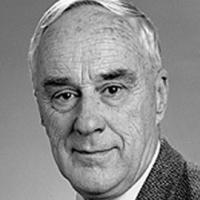
Kerry Landman

FAA

Kerry Landman
Image Description
Kerry Landman stands at the vanguard of internationally recognised applied mathematics devoted to cross-disciplinary research and real-world problems. She has made crucial contributions to a range of fields, from colloidal fluid mechanics to developmental biology. The distinguishing feature of Kerry’s achievements is the development of a broad spectrum of inventive models, which provide a fundamental understanding of how complex processes interact to produce experimentally observed behaviour. In recognition of her career contribution to industrial and applied mathematics, in 2014 she was awarded the ANZIAM medal, the premier medal of the Australia and New Zealand Industrial and Applied Mathematics Society.

Fields of research

46 INFORMATION AND COMPUTING SCIENCES
  • 4602 ARTIFICIAL INTELLIGENCE AND IMAGE PROCESSING
    • 460207 Modelling and simulation
49 MATHEMATICAL SCIENCES
  • 4901 APPLIED MATHEMATICS

For full list of research codes, please visit the ARC Website .

Expertise type

  • Nonlinear Partial Differential Equations
  • Partial Differential Equations
  • Applied Mathematics
  • Modelling
  • Mathematics

Please contact fellowship@science.org.au to request any updates to the data.

Professor

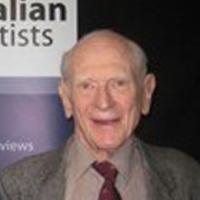
Warren Alexander

FAA FAHMS

Warren Alexander
Image Description
Warren Alexander is an internationally recognised medical researcher notable for his discoveries in molecular haematology, particularly in regulation of platelets and blood stem cells and negative regulation of cytokine signalling. He has a sustained record of outstanding quality and consistent recognition of his research excellence by his peers, nationally and internationally. A conspicuous research leader, he has also made exceptional leadership contributions to medical research policy and peer review, as well as influential contributions to professional societies and extensive mentorship of students and early- and mid-career researchers.

Fields of research

31 BIOLOGICAL SCIENCES
  • 3101 BIOCHEMISTRY AND CELL BIOLOGY
32 BIOMEDICAL AND CLINICAL SCIENCES
  • 3201 CARDIOVASCULAR MEDICINE AND HAEMATOLOGY
    • 320102 Haematology
  • 3211 ONCOLOGY AND CARCINOGENESIS
    • 321106 Haematological Tumours

For full list of research codes, please visit the ARC Website .

Expertise type

  • Cancer Biology
  • Cell Biology
  • Blood Cells
  • Molecular Biology
  • Molecular Genetics
  • Medical Sciences

Please contact fellowship@science.org.au to request any updates to the data.

Professor

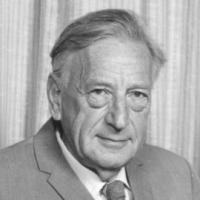
John Hamilton

FAA

John Hamilton
Image Description
John Hamilton has made significant molecular and translational contributions to the field of inflammation. He has shown how colony-stimulating factors (CSFs) control macrophage lineage numbers and function in inflammation, mainly in the contexts of arthritic disease and inflammation-associated pain. He discovered the role of CSFs in inflammation, pioneered cell signalling studies for the CSFs, and progressed the biology of the CSFs to encourage and facilitate several successful international clinical trials with antagonists to granulocyte-macrophage CSFs in arthritis and asthma.

Fields of research

31 BIOLOGICAL SCIENCES
  • 3101 BIOCHEMISTRY AND CELL BIOLOGY
    • 310111 Signal Transduction
32 BIOMEDICAL AND CLINICAL SCIENCES
  • 3202 CLINICAL SCIENCES
    • 320223 Rheumatology and Arthritis
  • 3204 IMMUNOLOGY
    • 320407 Innate Immunity

For full list of research codes, please visit the ARC Website .

Expertise type

  • Innate Immunity
  • Research Commercialisation
  • Cellular Metabolism
  • Medical Sciences
  • Autoimmune Disease
  • Blood Cells
  • Growth Factors
  • Cytokines
  • Immunology
  • Inflammation

Please contact fellowship@science.org.au to request any updates to the data.

Dr

Surinder Singh

FAA FTSE

Surinder Singh
Image Description
Surinder Singh has pioneered the successful genetic modification of fatty acid composition in the seeds of canola so that they produce large amounts of the long-chain omega-3 oils that are essential for human health, and which, to date, have been available predominantly from unsustainable marine sources. He has also modified safflower oil for industrial applications and the fatty acid metabolism in the leaves of certain crops to produce large amounts of valuable oils that are useful for food and industrial applications.

Fields of research

10 TECHNOLOGY 30 AGRICULTURAL AND VETERINARY SCIENCES
  • 3001 AGRICULTURAL BIOTECHNOLOGY
    • 300105 Genetically Modified Field Crops and Pasture
31 BIOLOGICAL SCIENCES
  • 3101 BIOCHEMISTRY AND CELL BIOLOGY
    • 310113 Synthetic Biology
  • 3108 PLANT BIOLOGY
    • 310806 Plant Physiology
85 ENERGY
  • 8505 Renewable Energy

For full list of research codes, please visit the ARC Website .

Expertise type

  • Nutrition
  • Biology
  • Recombinant DNA
  • Plant Physiology
  • Agricultural Science
  • Biotechnology
  • Lipid Biochemistry
  • Lipids
  • GM Crops
  • Deregulation of GM Crops
  • Plant Synthetic Biology

Please contact fellowship@science.org.au to request any updates to the data.

Professor

Paul Hodges

FAA

Paul Hodges
Image Description
Paul Hodges is a world leader in motor control and pain. His unique approach, from single cells to whole humans, has made fundamental shifts in our understanding of why people move differently in pain. He was the first to show modified neural control of muscles in back pain and to uncover molecular mechanisms, resolving a decades-long debate regarding muscle changes after injury. His work has transformed our understanding of diverse conditions, from control of urinary continence to progression of osteoarthritis. His discoveries have improved outcomes for people in pain, particularly back pain - the leading cause of disability internationally.

Fields of research

32 BIOMEDICAL AND CLINICAL SCIENCES
  • 3202 CLINICAL SCIENCES
    • 110317 Physiotherapy
  • 3209 NEUROSCIENCES
4207 SPORTS SCIENCE AND EXCERCISE
  • 420703 Motor Control

For full list of research codes, please visit the ARC Website .

Expertise type

  • Motor Control
  • Muscle Function
  • Neuroscience
  • Respiration
  • Anatomy
  • Brain Function
  • Inflammation
  • Electrophysiology
  • Pain Neurobiology
  • Women's Health
  • Rehabilitation
  • Continence
  • Men's Health
  • Biomechanics
  • Medical Sciences

Please contact fellowship@science.org.au to request any updates to the data.

Professor

Christopher Barner-Kowollik

FAA

Christopher Barner-Kowollik
Image Description
Christopher Barner-Kowollik is a macromolecular polymer chemist with a number of important scientific achievements based on his deep understanding of the fundamental mechanisms governing radical polymerisation processes, probed by laser experiments. His fundamental knowledge of complex polymer reactions has allowed the generation of new classes of advanced materials. His research outcomes include the development of advanced polymer analytical protocols based on mass spectrometry, the use of chemical sensitivity of light-induced reactions for soft matter material design, and the development of a new generation of photoresists for 3D laser lithography.

Fields of research

34 CHEMICAL SCIENCES
  • 3403 MACROMOLECULAR AND MATERIALS CHEMISTRY

For full list of research codes, please visit the ARC Website .

Expertise type

  • Organic Chemistry
  • Photonics
  • Physical Chemistry
  • Physical Organic Chemistry
  • Polymer Chemistry
  • Chemistry
  • Laser Spectroscopy
  • Surfaces

Please contact fellowship@science.org.au to request any updates to the data.

Professor

Maria Makrides

FAA FAHMS

Maria Makrides
Image Description
Maria Makrides is an international leader in maternal–infant nutrition, with a focus on optimising the cognition, growth and immune development of children. She is especially recognised for her rigorous nutritional intervention studies during the first 1000 days of life—between conception and a child’s second birthday. Her multidisciplinary research group conducts large-scale randomised controlled trials to investigate the health effects of dietary fatty acids, iron, iodine and novel dietary ingredients. She has made major contributions to changes in the composition of infant formulae, on changing international food laws and on setting specific nutrient recommendations worldwide.

Fields of research

32 BIOMEDICAL AND CLINICAL SCIENCES
  • 3210 NUTRITION AND DIETETICS
    • 321005 Public health nutrition

For full list of research codes, please visit the ARC Website .

Expertise type

  • Child Health
  • Clinical Trials
  • Diet
  • Early Life
  • Public Health
  • Pregnancy
  • Fatty Acids
  • Lipids
  • Biology

Please contact fellowship@science.org.au to request any updates to the data.

Professor

Debra Bernhardt

FAA

Debra Bernhardt
Image Description
Debra Bernhardt (nee Searles) is a world leader in nonequilibrium statistical mechanics. She is widely known for the first rigorous derivation of a fluctuation relation, known as the Evans–Searles Fluctuation Theorem, showing the second law of thermodynamics can be derived mathematically rather than just postulated as a law of nature. The theorem has broad implications for the behaviour of small systems where fluctuations become pronounced. Debra has also made significant contributions to theoretical computational chemistry, including combining quantum chemistry and molecular simulation, as well as the calculation of transport properties of materials.

Fields of research

10 TECHNOLOGY 34 CHEMICAL SCIENCES
  • 3406 PHYSICAL CHEMISTRY (INCL. STRUCTURAL)
  • 3407 THEORETICAL AND COMPUTATIONAL CHEMISTRY
4018 NANOTECHNOLOGY
  • 401807 Nanomaterials
49 MATHEMATICAL SCIENCES
  • 4902 MATHEMATICAL PHYSICS
    • 490206 Statistical Mechanics, Physical Combinatorics and Condensed Matter Maths
51 PHYSICAL SCIENCES
  • 5103 CLASSICAL PHYSICS
    • 510304 Thermodynamics and Statistical Physics

For full list of research codes, please visit the ARC Website .

Expertise type

  • Chaos
  • Small Molecule Transport
  • Sustainable Materials
  • Solution Thermodynamics
  • Nanomaterials
  • Physical Chemistry
  • Polymer Processing
  • Quantum Chemistry
  • Chemical Physics
  • Classical Mechanics
  • Surfaces
  • Computational Chemistry
  • Chemistry
  • Electrolytes
  • Statistical Mechanics
  • Theoretical Chemical Physics
  • Thermodynamics

Please contact fellowship@science.org.au to request any updates to the data.

Professor

David McClelland

FAA

David McClelland
Image Description
In 2016, the LIGO and Virgo Collaborations announced the first direct detection of gravitational waves, opening up a new window for astronomy and cosmology. David McClelland was a vital contributor to this success as Australia’s leading audio-band gravitational wave scientist and Chair of the Instrument Science/Advanced Detector program in the 1000-strong LIGO Scientific Collaboration. He led the ANU team that played a crucial role in designing, installing and commissioning Advanced LIGO’s acquisition system, which brings the interferometers into operation. His pioneering quantum science experiments that beat the previous low-frequency limit for squeezing light by three orders of magnitude were also essential for improving gravitational wave detection sensitivity.

Fields of research

51 PHYSICAL SCIENCES
  • 205 OPTICAL PHYSICS
  • 5101 ASTRONOMICAL SCIENCES
    • 510102 Astronomical instrumentation
  • 5108 QUANTUM PHYSICS

For full list of research codes, please visit the ARC Website .

Expertise type

  • Instrumentation
  • Optics
  • Quantum Optics
  • Gravitational Waves
  • Physics

Please contact fellowship@science.org.au to request any updates to the data.