


Associate Professor

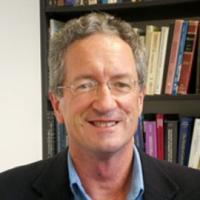
Lee Berger

FAA

Lee Berger
Image Description
Lee Berger determined the global cause of catastrophic declines and disappearances of amphibians in pristine areas, by discovering the novel pandemic disease, chytridiomycosis. By applying her disease expertise for the benefit of conservation, she is a world leader in understanding the epidemiology and pathogenesis of chytridiomycosis. Berger’s research has made a major contribution to the recognition that the spread of exotic disease is a threat to biodiversity and a serious consequence of globalisation.

Fields of research

30 AGRICULTURAL AND VETERINARY SCIENCES
  • 3009 VETERINARY SCIENCES
    • 300999 Veterinary Sciences not elsewhere classified
41 ENVIRONMENTAL SCIENCES
  • 4102 ECOLOGICAL APPLICATIONS
    • 410202 Biosecurity science and invasive species ecology
  • 4104 ENVIRONMENTAL SCIENCE AND MANAGEMENT
    • 410401 Conservation and biodiversity
    • 410407 Wildlife and Habitat Management

For full list of research codes, please visit the ARC Website .

Expertise type

  • Biology
  • Epidemiology
  • Conservation
  • Conservation Biology
  • Disease Resistance
  • Fungal Pathogenesis
  • Fungal Disease
  • Infectious Diseases
  • Veterinary Pathology

Please contact fellowship@science.org.au to request any updates to the data.

Professor

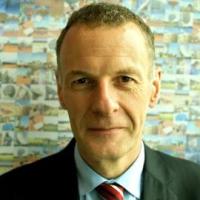
Kevin Galvin

FAA FTSE

Kevin Galvin
Image Description
Kevin Galvin is distinguished for his outstanding contributions to the field of mineral processing, particularly to the selective separation of valuable particles. He has made seminal contributions to the behaviour of fine particles in laminar shear flows, which has led to the invention of the Reflux Classifier, an innovative separator for recovering and concentrating high value minerals such as iron ore, chromite, coal, manganese and lithium. Since 2010, Reflux Classifiers have been installed around the world, processing raw materials and delivering significant economic impact, especially through the recovery of valuable minerals from waste materials.

Fields of research

40 ENGINEERING
  • 4004 CHEMICAL ENGINEERING
  • 4019 RESOURCES ENGINEERING AND EXTRACTIVE METALLURGY

For full list of research codes, please visit the ARC Website .

Expertise type

  • Engineering
  • Chemical Engineering
  • Flotation
  • Mineral Processing
  • Separation Science

Please contact fellowship@science.org.au to request any updates to the data.

Professor

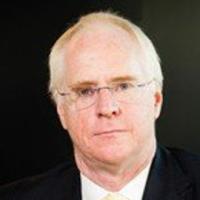
Linda Blackall

FAA

Linda Blackall
Image Description
Linda Blackall is a microbiologist who has pioneered and championed procedures that reveal microbes and their functions in natural and engineered systems. She discovered microbial contributions to practical aspects of water, wastewater and solid-waste treatment, leading to improvements in treatment and energy savings. Blackall’s work with host associated microbes has explained animal conditions, including equine and ruminant gut upsets, and she has investigated microbes involved in coral larval settlement and bleaching. She has empowered diverse practitioners in the application of microbial ecology methods to solve real-world problems. Blackall also has an excellent outreach record, having founded collaborations with arts-science experts to disseminate microbial knowledge via children’s books.

Fields of research

10 TECHNOLOGY 31 BIOLOGICAL SCIENCES
  • 3107 MICROBIOLOGY
    • 310703 Microbial Ecology
40 ENGINEERING
  • 4004 CHEMICAL ENGINEERING
    • 400410 Wastewater Treatment Processes
41 ENVIRONMENTAL SCIENCES
  • 4103 ENVIRONMENTAL BIOTECHNOLOGY

For full list of research codes, please visit the ARC Website .

Expertise type

  • Biology
  • Bacteria
  • Microbial Diversity
  • Marine Ecology
  • Bacteriology
  • Biofilms
  • Coral Reefs
  • Environmental Engineering
  • Insect Bacteria Interactions
  • Microbial Ecology
  • Microbial Evolution
  • Symbiosis
  • Environmental Microbiology
  • Green Algae
  • Microbiology
  • Microbiome

Please contact fellowship@science.org.au to request any updates to the data.

Dr

Simon Poole

AO FAA FTSE

Simon Poole
Image Description
Simon Poole is an outstanding researcher and entrepreneur with many years’ experience in the field of photonics. His achievements cover research as well as successful commercialisation of advanced technology on an international scale. As a researcher he was part of the team which developed the Erbium-Doped Fibre Amplifier (EDFA), which is now a ubiquitous part of the optical fibre networks that underpin the global internet. Poole has also led the establishment of an export-competitive photonics industry in Australia, having founded manufacturing companies in Australia that have generated high-value-add export revenues.

Fields of research

10 TECHNOLOGY
  • 1005 COMMUNICATIONS TECHNOLOGIES
    • 100506 Optical Fibre Communications
    • 100507 Optical Networks and Systems
3212 OPTOMETRY AND OPHTHALMOLOGY

For full list of research codes, please visit the ARC Website .

Expertise type

  • Guided Wave Optics
  • Optical Communications
  • Research Commercialisation
  • Lasers
  • Physics

Please contact fellowship@science.org.au to request any updates to the data.

Dr

Wenju Cai

FAA

Wenju Cai
Image Description
Wenju Cai is a prominent world authority and leader on climate variability, ocean dynamics, ocean-atmosphere interactions, and climate change. He has pioneered the first successful nonlinear dynamical framework and model of extreme climate phenomena in the tropical Pacific and Indian Oceans under greenhouse warming. Cai has elucidated the dynamics of ocean circulation, ocean-atmosphere variability, and their response to greenhouse warming. He has unravelled the links between climate change forcing factors and changes in the global ocean circulation, extreme climate and extreme weather including Australian drought and bushfires. His work had led to significant improvements in fundamental knowledge, climate simulations and climate projections.

Fields of research

37 EARTH SCIENCES
  • 3701 ATMOSPHERIC SCIENCES
  • 3708 OCEANOGRAPHY
    • 370803 Physical Oceanography
370201 Climate Change Processes 370202 Climatology (excl. Climate Change Processes)

For full list of research codes, please visit the ARC Website .

Expertise type

  • Earth Sciences
  • Oceanography
  • Oceans
  • Climate
  • Climate Change
  • Climate Science
  • Climate Variability
  • Nonlinear Analysis

Please contact fellowship@science.org.au to request any updates to the data.

Professor

Carola Vinuesa

FAA FAHMS FRS

Carola Vinuesa
Image Description
Professor Carola Vinuesa has revealed how our immune system produces high quality, long lasting antibody responses. This has significance for understanding immune responses to pathogens and autoimmune diseases. Her team identified T-follicular helper (TFH) cells as an independent cell subset and demonstrated how failure to limit these cells causes rogue selection of B cells and diseases such as lupus and type-1 diabetes. Carola unearthed cells and molecules that control TFH cells, shedding light on pathways to autoimmunity, and providing a rationale for new approaches to treatment.

Fields of research

32 BIOMEDICAL AND CLINICAL SCIENCES
  • 3204 IMMUNOLOGY

For full list of research codes, please visit the ARC Website .

Expertise type

  • Medical Sciences
  • Autoimmunity
  • Biology
  • Clinical Translation
  • Immunology

Please contact fellowship@science.org.au to request any updates to the data.

Professor

Ryan Lister

FAA

Ryan Lister
Image Description
Ryan Lister is a genome biologist who has made major advances in our understanding of the epigenome, the molecular code superimposed upon the genome that can regulate the readout of the underlying genetic information. Through landmark technology development and biological investigations, Ryan’s discoveries have provided major advances in our understanding of the epigenome in plants, animals, human stem cells, development, and the brain. His work is driving advances that will provide benefits to agriculture, human health and medicine. Overall, he has made major scientific contributions through his pioneering scientific research, and his leadership and promotion of Australian science.

Fields of research

10 TECHNOLOGY 31 BIOLOGICAL SCIENCES
  • 3101 BIOCHEMISTRY AND CELL BIOLOGY
    • 310113 Synthetic Biology
  • 3105 GENETICS
    • 310504 Epigenetics (incl. Genome Methylation and Epigenomics)
    • 310505 Gene Expression (incl. Microarray and other genome-wide approaches)
    • 310509 Genomics
  • 3108 PLANT BIOLOGY
    • 310803 Plant Cell and Molecular Biology
3206 MEDICAL BIOTECHNOLOGY
  • 320606 Regenerative Medicine (incl. Stem Cells and Tissue Engineering)

For full list of research codes, please visit the ARC Website .

Expertise type

  • Gene Expression
  • Epigenetics
  • Embryonic Stem Cells
  • Plant Synthetic Biology
  • Genomics
  • Induced Pluripotent Stem Cells
  • DNA Methylation
  • Biochemistry
  • Developmental Biology
  • Gene Regulation
  • Molecular Biology
  • Plant Molecular Genetics
  • Molecular Genetics
  • Plant Cell Biology
  • Biology

Please contact fellowship@science.org.au to request any updates to the data.

Professor

Peter Corke

FAA FTSE

Peter Corke
Image Description
Peter Corke has made significant contributions to the field of robotic vision. In particular, he has developed a solid foundation for the theory and practice of visual servoing, on which he is the world authority. He is the founding director of the ARC Centre of Excellence for Robotic Vision. His research has defined and advanced the field through significant and highly-cited scientific papers, and made it widely accessible through popular textbooks, online courses and open-source software. In addition, he has pioneered the practical use of this theory in aerial, marine and land robotic systems for applications as diverse as mining and environmental monitoring.

Fields of research

40 ENGINEERING
  • 4008 ELECTRICAL ENGINEERING
400702 Automation engineering 46 INFORMATION AND COMPUTING SCIENCES
  • 4602 ARTIFICIAL INTELLIGENCE AND IMAGE PROCESSING
    • 460205 Intelligent robotics
460304 Computer Vision

For full list of research codes, please visit the ARC Website .

Expertise type

  • Robotics
  • Science Education
  • Electrical Engineering
  • Computer Science
  • Computer Vision
  • Engineering

Please contact fellowship@science.org.au to request any updates to the data.

Professor

Cynthia Whitchurch

FAA

Cynthia Whitchurch
Image Description
Cynthia Whitchurch’s outstanding contribution is her discovery of novel roles for DNA that are unrelated to its genetic functions. Her seminal discovery that extracellular DNA (eDNA) is required for building multicellular bacterial communities called biofilms promoted a paradigm shift in our understanding of biofilm biology and demonstrated a novel role for DNA in nature. She has also demonstrated that eDNA facilitates the self-organisation of actively expanding biofilms and has identified explosive cell lysis as a novel mechanism for the release of cytosolic content, including eDNA, and membrane vesicles for use as public goods.

Fields of research

31 BIOLOGICAL SCIENCES
  • 3107 MICROBIOLOGY

For full list of research codes, please visit the ARC Website .

Expertise type

  • Pathogens
  • Biology
  • Antibiotic Resistance
  • Bacteria
  • Biofilms
  • Pseudomonas
  • Bacterial Pathogens
  • Bacteriology
  • Infection
  • Medical Devices
  • Bacterial Pathogenesis
  • Antibacterial Discovery

Please contact fellowship@science.org.au to request any updates to the data.

Professor

Lois Salamonsen

FAA

Lois Salamonsen
Image Description
Lois Salamonsen is internationally recognised for her transformative contributions to human fertility/infertility related to the uterus (womb). Her work addresses immense global challenges and is delivering new translational concepts to alleviate uterine infertility without IVF, for a proportion of the 17% of infertile couples world-wide. Salamonsen’s work has also pioneered new approaches to developing non-hormonal contraceptives and increasing the acceptability of existing long acting contraceptives, which are urgently needed to stem world population growth and hence alleviate poverty.

Fields of research

32 BIOMEDICAL AND CLINICAL SCIENCES

For full list of research codes, please visit the ARC Website .

Expertise type

  • Fertility
  • Contraception
  • Medical Sciences
  • Early Pregnancy
  • Embryo Implantation
  • Endometrial Receptivity
  • Endometrial Remodelling
  • Endometriosis
  • Endometrial Repair
  • Extracellular Vesicles
  • Female Reproductive Tract
  • Infertility
  • Reproduction
  • IVF
  • Menstruation
  • Women's Health

Please contact fellowship@science.org.au to request any updates to the data.