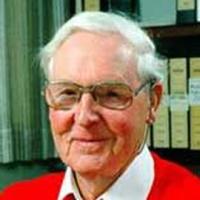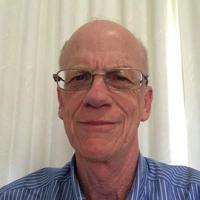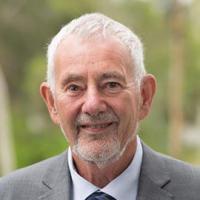

Professor

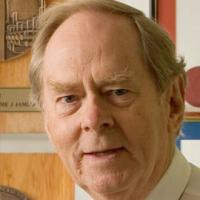
Graham Goodwin

AO FAA FRS FTSE
Graham Goodwin
Image Description
Professor Goodwin has made outstanding contributions to the area of systems science and dynamical systems over a period of 25 years. His work has had a major international impact and is known in virtually every country in the world. Of particular significance is his capacity to link fundamental theoretical research with engineering applications. He made pioneering contributions of lasting significance on the convergence of adaptive controllers and on numerical issues in digital filtering and control. More recent work on switching strategies in adaptive control may turn out to be a key concept in the emerging area of hybrid dynamical systems.

Expertise type

  • Control Systems
  • Control Theory
  • Electrical Engineering
  • Engineering

Please contact fellowship@science.org.au to request any updates to the data.

Professor

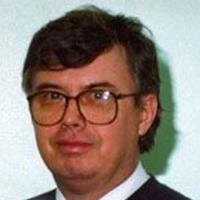
Graeme Jameson

AO FAA FTSE FRS

Graeme Jameson
Image Description
Professor Jameson is distinguished for his seminal contributions to the basic science of bubble production and bubble-particle interaction in stirred fluids. From this comprehensive base have flowed technological advances, the most important being the JAMESON flotation cell now in operation across Australia and worldwide in leading mineral processing plants. His basic and applied work has received national and international recognition in the form of election to the Australian Academy of Technological Sciences and Engineering, the CRA, CSIRO and Clunies Ross Research Awards, and the election in 1994 as a Foreign Member of the Royal Academy of Engineering (London).

Expertise type

  • Multiphase Processes
  • Bubbles
  • Jameson Cell
  • Engineering
  • Flotation
  • Mineral Extraction
  • Mining

Please contact fellowship@science.org.au to request any updates to the data.

Professor

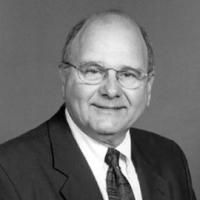
John Booker

AO FAA

John Booker
Image Description
Professor John Booker is distinguished for his outstanding contribution to analytical geomechanics. His research is primarily concerned with the time­dependent and inelastic behaviour of soil and rocks, and is characterised by both a rigour of thought and a dear appreciation of the practical utilisation of his analyses. He has made major contributions to the theory of plasticity as applied to soils and rocks, consolidation behaviour of soils, mitigation of earthquake-induced liquefaction, and the analysis of contaminant transport in soils and rocks. This latter work has provided an invaluable tool for the assessment of the environmental impact of landfills.

Expertise type

  • Analytical geomechanics
  • Engineering
  • Engineering mechanics

Please contact fellowship@science.org.au to request any updates to the data.

Emeritus Professor

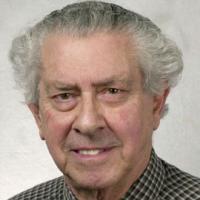
David Boger

AC FAA FTSE FRS

David Boger
Image Description
Professor D. V. Boger is an internationally recognised expert in non-Newtonian fluid mechanics who has been an invited or plenary speaker on this subject at numerous international meetings. His work in viscoelastic fluid mechanics has led to the discovery of constant viscosity elastic liquids (Boger fluids) which have now been identified as a class of material behaviour, are a missing link in non-Newtonian fluid mechanics, and are now used worldwide in non-­Newtonian fluid mechanics research. With these materials Professor Boger and his group have observed elastic effects in isolation in a large number of fundamental and commercially significant flow fields. Theoretical prediction and comparison of observed elastic effects in viscoelastic fluid mechanics has thus been possible for the first time.

Expertise type

  • Chemical Engineering
  • Engineering
  • Fluid Mechanics
  • Polymers
  • Boger fluids
  • Non-Newtonian fluids

Please contact fellowship@science.org.au to request any updates to the data.

Professor

Jacques Miller

AC FAA FRS

Jacques Miller
Image Description
Professor Jacques Miller's major discovery arose during investigations of the role of the thymus gland in the pathogensis of leukemia in mice. In 1961 he showed that neonatal thymectomy in mice had profound effects on the development of the immune response in later life, especially the component related to transplantation immunity. Subsequently he has developed this discovery with great skill. He showed that even in adult life the thymus is essential for the maintenance of an adequate pool of immunologically competent cells. Grafting of thymus tissue reversed the effects of thymectomy, at least in part by a humoral effect. He has also shown that the thymus exports lymphocytes into the peripheral recirculating pool, and that these collaborate with bone marrow-derived lymphocytes in antibody formation. These discoveries have opened up wide areas of research in several important fields of medical biology, tissue transplantation, immunological deficiency syndromes and control of incipient cancer by immunological surveillance.

Expertise type

  • Autoimmunity
  • Immunology
  • Medical Sciences
  • T Cells

Please contact fellowship@science.org.au to request any updates to the data.

Professor

Bruce Runnegar

FAA

Bruce Runnegar
Image Description
In the past ten years, Dr. Runnegar has provided a new understanding of the evolution of the Mollusca through his work on Palaeozoic fossils. He has developed a coherent new hypothesis explaining the origin of the major living and extinct classes of molluscs, has demonstrated that at least five major lineages of molluscs have much longer histories than previously suspected, and that early (Cambrian) molluscs may be used successfully for biostratigraphic and biogeographic purposes. His work on Permian geology has greatly clarified knowledge of the palaeontology, stratigraphy and structure of that system in Australia. He has made significant contributions to palaeontology in its evolutionary, biostratigraphic and palaeoecological aspects.

Expertise type

  • Palaeontology
  • Astrobiology
  • Earth Sciences
  • Geology
  • Space Science

Please contact fellowship@science.org.au to request any updates to the data.

Emeritus Professor

Neville Nicholls

FAA

Neville Nicholls
Image Description
Neville Nicholls is the world’s pre-eminent expert on the nature, causes, predictability and impacts of inter-annual climate variability in Australia and its region. His research is the basis for operational prediction of climate variations and their impacts including droughts, crop yields, bushfire and tropical cyclone activity, and human health impacts, in Australia and elsewhere. He initiated and led the development of high-quality historical climate databases for Australia and their use in understanding the causes of climate variations and change, and led national and international assessments of observed changes in climate, focussed on climate and weather extremes.

Fields of research

37 EARTH SCIENCES
  • 3701 ATMOSPHERIC SCIENCES
    • 370108 Meteorology
  • 3702 CLIMATE CHANGE SCIENCE
    • 370201 Climate Change Processes
    • 370202 Climatology (excl. Climate Change Processes)

For full list of research codes, please visit the ARC Website .

Expertise type

  • Southern Oscillation
  • Meteorology
  • El Niño
  • Atmospheric Science
  • Climate
  • Climate Variability
  • Earth Sciences

Please contact fellowship@science.org.au to request any updates to the data.

Dr

Ian Allison

AO FAA

Ian Allison
Image Description
Ian Allison is a glaciologist who has greatly advanced our understanding of the role of Antarctica and sea ice in climate variations. He pioneered the study of Antarctic sea ice with innovative and challenging year-round field campaigns, which documented for the first time the seasonal variation in growth, redistribution, and decay of sea ice through its interactions with the atmosphere and underlying water column. He has also shown the importance of melt and refreezing beneath ice shelves to mass loss from the ice sheet, and vulnerability to ocean change. He has been an outstanding leader of the Australian Antarctic program and international polar research collaboration over many decades, including co-chairing the peak committee responsible for the 2007-2008 International Polar Year.

Expertise type

  • Climate Science
  • Earth Sciences
  • Glaciology

Please contact fellowship@science.org.au to request any updates to the data.

Professor

Malcolm Sambridge

FAA FRS

Malcolm Sambridge
Image Description
Professor Malcolm Sambridge has made lasting fundamental contributions to the understanding of the Earth and its internal processes through new mathematical approaches to analysing complex geophysical datasets. His robust approaches to modelling diverse observational data – including statistically meaningful estimates of uncertainty – has had wide-ranging impact in geoscientific research. Malcolm’s work has changed the way in which we analyse seismic waves for the structure of the Earth’s interior, model landscape evolution, understand populations of mineral ages from isotopic microanalysis, and interpret infrared absorption spectra associated with hydrous crystal defects in silicate minerals.

Fields of research

37 EARTH SCIENCES
  • 3706 GEOPHYSICS
    • 370609 Seismology and Seismic Exploration

For full list of research codes, please visit the ARC Website .

Expertise type

  • Seismology
  • Data inference
  • Earth Sciences

Please contact fellowship@science.org.au to request any updates to the data.