
Professor

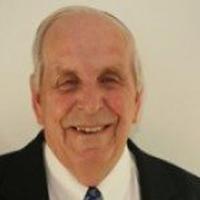
John Young

AO FAA

John Young
Image Description
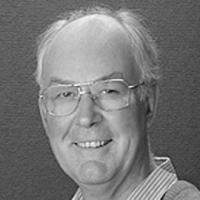
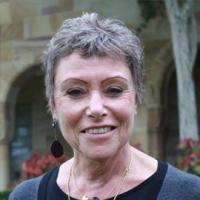
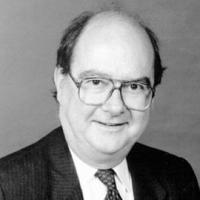
Professor Young is one of the world's leading scientists in the field of glandular physiology and renal amino acid transport. He was the first to succeed in demonstrating, directly, the loci for electrolyte secretion in salivary glands, and in elucidating the nervous control of the secretion, work which has been of great importance in clarifying basic secretory processes in exocrine glands. He made the first micropuncture analysis of the secretory processes of the seminiferous tubules and was the first to detect the inhomogeneity of the proximal renal tubule in regard to amino acid transport. Professor Young has followed a broad approach towards epithelial transport processes investigating other glands, such as the thyroid follicle and the pancreas, and making important contributions to all of them.

Please contact fellowship@science.org.au to request any updates to the data.

Professor

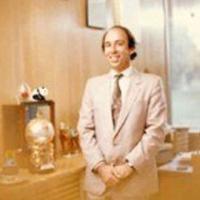
Roger Short

AM FAA FRS

Roger Short
Image Description
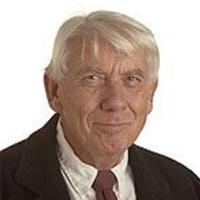
Short made outstanding contributions to knowledge of the comparative endocrinology of reproduction in domestic, laboratory and wild animals, and in humans. Initially he was concerned with development of methods for the isolation and measurement of steroid hormones in blood and tissues in different reproductive states. That led to study of control of testicular activity in seasonally breeding animals and the influence of hormones on behaviour. More recently he has investigated human reproduction with particular emphasis on the way in which lactation regulates fertility in women, and the ways in which this could be exploited in developing countries to check population growth.

Expertise type

  • Animal Biology
  • Biology
  • Reproductive Biology

Please contact fellowship@science.org.au to request any updates to the data.

Professor

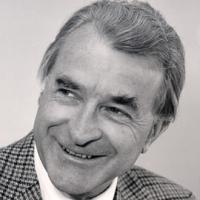
Jonathan Stone

FAA

Jonathan Stone
Image Description
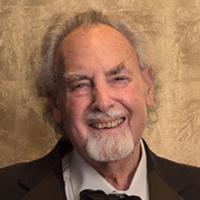
Distinguished for his many contributions to eye and brain research, particularly towards showing that the retina comprises not a single sense organ but several, each with its own class of retinal ganglion cells and distinct patterns of connections with the visual centres in the brain. In addition to his discovery and elucidation of the properties of a major new class of retinal ganglion cells, consisting of the smallest cells with the finest axons, Stone has made outstanding contributions to our understanding of the other ganglion cell classes. His work on coding in the visual pathways has completely redirected the study of the problem to a 'parallel-processing' model of information coding. More recently he has established an international reputation in the field of retinal development.

Expertise type

  • Dementia
  • Medical Sciences
  • Neuroscience
  • Vision Science

Please contact fellowship@science.org.au to request any updates to the data.

Professor

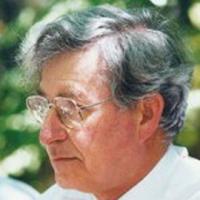
Derek Denton

AC FAA FRS

Derek Denton
Image Description
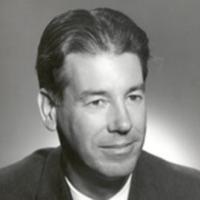
Derek Ashworth Denton has made outstanding contributions to the physiology of body fluid homeostasis, particularly the mechanisms involved in the regulation of body sodium. His experiments have provided many new insights on sodium homeostasis, secretory processes and endocrine influences in environmental adaptation. He pioneered in the method of adrenal auto­transplantation in the sheep. Through this he was the first to elucidate in vivo the role of ionic and hormonal mechanisms (particularly the role of ACTH, angiotensin II and III) on aldosterone secretion. He was the first to show that the salt appetite of wild animals often arose in response to marked sodium deficiency and this has stimulated him to analyse the behavioural and interrelationships determining salt intake and salt appetite. He has shown that particular hormone combinations can produce strong salt appetite in pregnancy even in the presence of sodium repletion. The development of this type of behaviour pattern may be relevant to the pathogenesis of hypertension. Denton is one of the world's leading workers and thinkers in the field of body sodium control. He has provided much leadership to medical research in Australia in this important area of integrative physiology and experimental medicine.

Expertise type

  • Sodium
  • Medical Sciences
  • Physiology
  • Biology
  • Homeostasis
  • Evolutionary Biology

Please contact fellowship@science.org.au to request any updates to the data.

Professor

Brian Gunning

FAA FRS

Brian Gunning
Image Description
Professor Gunning has made distinguished contributions to the elucidation of relationships between plant structure and function. His researches on membranes, organelles, microtubules and cell walls are key contributions in the fields of cell biology and morphogenesis. With Professor J. S. Pate, he discovered transfer cells and demonstrated their function. His papers and book on intercellular communication, have yielded new understanding of nutrient transport within plants. His use of electron microscopy has itself been imaginative and innovative. His book on plant cells has provided an ordered basis for future studies. His work on how organelles, cells and whole plants are organised to perform their vital functions is an outstanding contribution to biology.

Expertise type

  • Biology
  • Cell Biology
  • Plant Biology

Please contact fellowship@science.org.au to request any updates to the data.

Professor

Peter Gage

FAA

Peter Gage
Image Description
Distinguished for his ability to relate concepts derived from physics, chemistry and mathematics to the study of fundamental responses of biological membranes during the transmission of excitation. This approach has led to better understanding of the mechanisms responsible for release from nerve-endings of transmitter substances, and their mode of action on postsynaptic membranes. Gage's work is characterised by his ability to identify fundamental processes and to find means of studying these using techniques and preparations which are simple but chosen with imagination. He has become a leader in neurophysiology in Australia, and his collaboration is much sought after by his colleagues overseas.

Expertise type

  • Neurophysiology
  • Biophysics
  • Neuroscience
  • Biology

Please contact fellowship@science.org.au to request any updates to the data.

Professor

Richard Mark

FAA

Richard Mark
Image Description
Distinguished for his contributions to understanding of the basic mechanisms which determine the genesis of functional connexions between nerve and muscle cells during development and regeneration, and for studies extending knowledge of the biophysical and bio­chemical basis of memory-formation. He has a special flair for going directly to the core of a complex problem, and exploits with great skill and ingenuity a variety of experimental approaches ranging from simple, direct observations to highly sophisticated procedures. As a result of his unique ability to combine behavioural and cellular neurophysiological techniques, new and challenging ideas are emerging about the nature of memory and the factors involved in the development of neural connexions.

Expertise type

  • Neurobiology
  • Biology

Please contact fellowship@science.org.au to request any updates to the data.

Professor

Geoffrey Burnstock

AC FAA FRS

Geoffrey Burnstock
Image Description
Professor Geoffrey Burnstock's major contribution has been in the field of the cellular and comparative physiology of smooth muscle. He developed the 'sucrose gap technique' for electrophysiological recording from smooth muscle. This has become the foremost tool for studies of the effects of drugs and ions at the membrane level. He has investigated the mechanism of action of acetylcholine and adrenaline on smoooth muscle. He and his colleagues have pioneered studies of the autonomic nervous control of single smooth muscle cells and are international leaders in this area. His work concerned with the evolution, development and functional organisation of the vertebrate autonomic nervous system is a unique approach to this field.

Expertise type

  • Medical Sciences
  • Neuroscience
  • Physiology

Please contact fellowship@science.org.au to request any updates to the data.

Professor

Gordon Ada

AO FAA

Gordon Ada
Image Description
Dr. G.L. Ada is distinguished for two fundamental contributions to the fields of chemical virology and biochemistry. Ada and Perry, in 1954, for the first time unambiguously demonstrated that the genetic material of influenza virus is a ribonucleoprotein. Since all systems of genetic interaction available at that time were of the DNA type, this discovery greatly widened the scope of potential genetic studies. This finding, remarkable on considering the technical difficulties involved, has since been repeatedly confirmed in other laboratories and still serves as a model for the investigation of animal viruses. The second major achievement was the crystallization of Vibrio cholerae neuraminidase. This enzyme, isodynamic with the enzyme of the myxoviruses, has played an important role in the study of virus-host cell interaction and in the elucidation of the fine structure of sialo-glycoproteins since 1946. The availability of this enzyme without contaminating proteases is of the greatest value. A considerable amount of research work emerging from these discoveries was carried out in Ada's laboratory.

Expertise type

  • Virology
  • Immunology
  • Influenza Virus
  • Biology

Please contact fellowship@science.org.au to request any updates to the data.

Professor

Halina Rubinsztein-Dunlop

AO FAA

Halina Rubinsztein-Dunlop
Image Description
Halina Rubinsztein-Dunlop is recognised internationally for her achievements in laser physics, linear and nonlinear high resolution spectroscopy, laser micromanipulation, atom cooling and trapping and nano-optics. She is one of the originators of laser enhanced ionisation spectroscopy, and is a pioneer of laser micromanipulation and transfer of angular momentum of light and all optical drive micromechanics. She initiated the experimental programs in laser micromanipulation and atom optics at the University of Queensland that culminated in the demonstration of dynamical tunnelling in a Bose Einstein Condensate (BEC) in a modulated standing wave. She led the team that observed dynamical tunnelling in quantum chaotic systems.

Fields of research

51 PHYSICAL SCIENCES
  • 5199 OTHER PHYSICAL SCIENCES

For full list of research codes, please visit the ARC Website .

Expertise type

  • Laser Physics
  • Physics
  • Quantum Optics
  • Quantum Physics

Please contact fellowship@science.org.au to request any updates to the data.