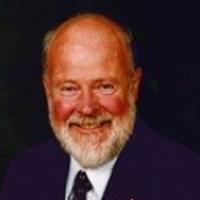


Dr

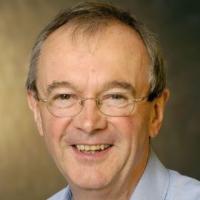
John Philip

AO FAA FRS

John Philip
Image Description
Distinguished mainly for his work on the movement of water through porous media, notably soils, where he has led in the subjection to systematic analysis of a complex and hitherto poorly­understood set of phenomena. Problems treated comprehensively have been the infiltration of water into an unsaturated medium and the general phenomena of diffusion where the diffusivity is concentration-dependent. He developed the treatment of movement in vapour form between the inter-granular menisci including the influence of a temperature gradient, and hence the evaporation from non-saturated soils. His considerable versatility and originality have provided other miscellaneous contributions of merit in the borderline fields of hydrology, meteorology, and ecology. Basic analyses of the physics of water in plants, and through the soil - plant - atmosphere continuum, have had impact on the understanding of plant-water physiology.

Please contact fellowship@science.org.au to request any updates to the data.

Dr

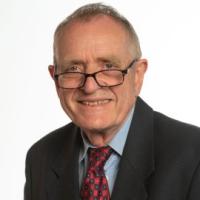
Sefton Hamann

FAA

Sefton Hamann
Image Description
Distinguished for contributions to the effect of high pressure on chemical reactions and physical properties of matter; and to the theory of intermolecular forces in fluids. The effect of pressure on ionic reactions - whether organic or inorganic - are traced to solvation and consequent stabilisation of ions. Novel techniques using explosives has transformed non-metals to metals and some properties of liquids were measured under conditions of pressure shock up to 300,000 atmospheres. Hamann's approach to intermolecular forces between molecules has been elegantly direct and has led, inter alia, to recognition of quantal effects on the pressure-volume relations of hydrogen and helium.

Expertise type

  • High Pressure Physics
  • Physical Chemistry

Please contact fellowship@science.org.au to request any updates to the data.

Dr

Alan Reid

AM FAA FTSE

Alan Reid
Image Description

Expertise type

  • Chemistry
  • Solid State Chemistry

Please contact fellowship@science.org.au to request any updates to the data.

Professor

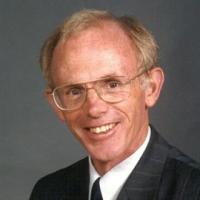
Alexander Ogston

FAA FRS

Alexander Ogston
Image Description
Professor Ogston has been interested in various aspects of the application of physicochemical ideas and methods in the field of biochemistry and physiology. These include: (1) assessment of the constitution, configuration and physiological functions of hyaluronic acid; (2) theory and applications of physical methods to the determination of the characteristics of macromolecular particles in solution; (3) theoretical and critical papers on a variety of topics including enzyme kinetics and specificity, protein structure and the thermodynamics of metabolic processes. His present research interests are mainly in category (1).

Please contact fellowship@science.org.au to request any updates to the data.

Dr

Ezio Rizzardo

AC FAA FTSE FRS

Ezio Rizzardo
Image Description
Dr Rizzardo has an outstanding record of achievement in the invention and. development of chemical methodologies relating to the molecular control of polymer architects produced by free radical polymerisation. Indeed, he is internationally acknowledged as a world leader, if not the world leader, in this field, which has the potential to revolutionize the way that polymers are made. Literally hundreds of papers from groups around the world are based on Rizzardo's work. In recognition of his standing he receives invitations to speak (plenary/keynote) at all the major meetings in polymer science that are held around the world, as well as some important meetings in free radical organic chemistry. In addition, he has been invited to deliver the prestigious Melville Lecture at Cambridge University (2000) and the Rauscher Lecture at the Rensselaer Institute in New York (2001). Awards for his work include the CSIRO Medal, the CSIRO Chairman's Medal, the RACI Australian Polymer Medal, and the RACI Applied Research Medal. He has an enormous citation rate in the literature.

Expertise type

  • Chemistry
  • Free Radicals
  • Polymer Chemistry
  • Raft Polymerisation

Please contact fellowship@science.org.au to request any updates to the data.

Professor

David Doddrell

AM FAA

David Doddrell
Image Description
Professor Doddrell is distinguished for his developments of innovative and unique methods for applyiog NMR spectroscopy to structural organic chemistry, magnetic resonance imaging and image directed spectroscopy. With his co-workers he published the first analysis of gradient enhanced spectroscopy in terms of product-operator algebra He invented the elegant "DEPT" pulse sequence, in worldwide use for the past decade or so by structural chemists, and the SPACE pulse sequence. The latter allows the acquisition of signals from a known voxel, the signals having a very short relaxation time. His innovative method of correcting gradient induced Bo temporal shifts by phase modulation is being implemented by General Electric on all of their MRI equipment for high speed imaging.

Expertise type

  • Magnetic Resonance
  • MRI
  • Physics

Please contact fellowship@science.org.au to request any updates to the data.

Professor

Brian Figgis

FAA

Brian Figgis
Image Description
Professor Figgis has advanced knowledge of the nature of the metal-ligand bond. He was one of the first to apply ligand field theory to the magnetic properties of transition metal complexes, particularly their temperature dependence and anisotropic behaviour. His application of nuclear magnetic resonance spectroscopy to inorganic systems, employing nuclei other than the proton (1H) and use of X-ray diffraction for studying bonding was seminal. More recently, he has applied high precision X-ray and polarised neutron diffraction in a complementary programme to give 3-dimensional information on valence electron charge and spin distributions, and with advanced ab-initio molecular orbital calculations has given a much more critical account of the metal-ligand bond than any previously available.

Expertise type

  • Chemistry
  • Inorganic Chemistry
  • Neutron Diffraction
  • X-ray Crystallography

Please contact fellowship@science.org.au to request any updates to the data.

Professor

Alan Parker

FAA

Alan Parker
Image Description
Professor Parker's researches include aspects of aromatic nucleophilic substitution (10 papers). The bulk of work is concerned with applications of dipolar aprotic solvents in: (i) synthesis of organic molecules (9 papers); (ii)mechanisms of substitution and elimination at saturated carbon atoms (26 papers); and (iii) the salvation of ions (26 papers). He is regarded as an expert of world standing in all of these very large areas.. His work on processing of copper, silver and nickel by complexing in aqueous solution with volatile agents, developed from that on ions, possesses considerable industrial promise. A biochemically important series of papers concerns· the scission of S-S bonds by nucleophiles and electrophiles (5 papers).

Please contact fellowship@science.org.au to request any updates to the data.

Professor

Berthold Halpern

FAA

Berthold Halpern
Image Description

Expertise type

  • Chemistry
  • Organic Chemistry
  • Mass spectrometry

Please contact fellowship@science.org.au to request any updates to the data.

Professor

Bruce Hyde

FAA

Bruce Hyde
Image Description
Distinguished for his contributions to solid state chemistry. During the past 10 - 12 years, Hyde's researches have provided some of the main factors in the profound changes undergone by our ideas about apparently highly defective structures - nonstoichiometric compounds and ternary solid solutions. His work has covered both structural and thermodynamic aspects. He was -independently - one of the pioneers in applying high resolution electron microscopy to these problems and has particularly illuminated the nature and role of crystallographic shear. He showed how extended defects could virtually eliminate point defects from these materials and discovered the remarkable continuous reorientation of shear planes. His thermodynamic studies of the 'nonstoichiometric' praseodymium oxide and rutile systems are classics of careful, critical experimentation. In addition, he has been prolific and original in ideas about both the implications of the new findings and the structural and topological aspects of solid state transformations. He has built up an excellent and productive research school in Western Australia and is internationally recognised not only as a leading figure, but as a world authority in the solid state field.

Expertise type

  • Chemistry
  • Solid State Chemistry
  • Inorganic Chemistry

Please contact fellowship@science.org.au to request any updates to the data.