


Professor

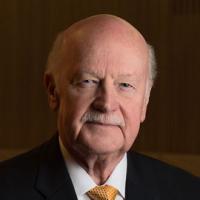
Ian Ross

AO FAA

Ian Ross
Image Description
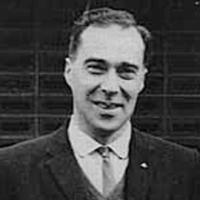
Ross has made important contributions to molecular electronic spectroscopy. He participated in a significant early quantum mechanical investigation of the lower excited states of benzene by a new method, and later applied the method in the first soundly based non-empirical calculation of the energy levels of acetylene. He has made major contributions to the understanding of the spectrum of azulene, culminating in the rotational analysis of the 0-0 band of the second singlet-singlet transition. He has also brought a new viewpoint to the study of radiation­less transitions in complex molecules which has been widely quoted and discussed.

Expertise type

  • Chemical Physics
  • Molecular electronic spectroscopy
  • Chemistry

Please contact fellowship@science.org.au to request any updates to the data.

Professor

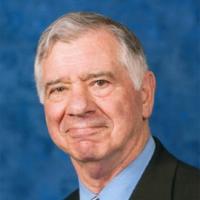
Andrew Hurley

FAA

Andrew Hurley
Image Description
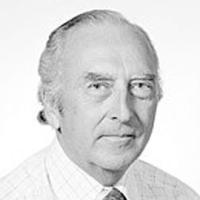
Distinguished for his contributions to the electronic theory of small molecules including: extensions to the molecular orbital theory of chemical valency; the development of new methods for the electrostatic calculation of molecular energies ; detailed investigations of the method of atoms in molecules which have resulted in new techniques for calculating the binding energies of molecules ; and the derivation of a new method of calculating potential energy curves for doubly positive diatomic ions in terms of those for the related neutral molecules. Hurley was a Fellow of Trinity College, Cambridge, during 1955-56, and Visiting Professor of Theoretical Chemistry at Iowa State University during 1962-63.

Expertise type

  • Quantum Chemistry
  • Group Theory
  • Chemistry

Please contact fellowship@science.org.au to request any updates to the data.

Dr

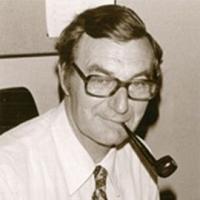
John Anderson

FAA

John Anderson
Image Description
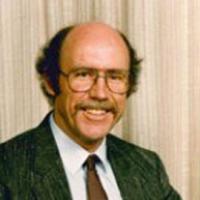
Dr. Anderson is distinguished for his work on the adsorption and reaction of gases at the surfaces of metals. He has shown that catalysis is not restricted to the surface and is akin to metal tarnishing. Particular studies have shown the fundamental role of carbon-metal bonds in the important catalytic reactions of petrochemical industry. His work has demonstrated the complete inadequacy of the current D-band theory and emphasized the importance of surface impurities. Through the use of ultra-thin films he has demonstrated the changes wrought in catalyst as well as in the gaseous adsorbent.

Expertise type

  • Catalysis
  • Chemistry

Please contact fellowship@science.org.au to request any updates to the data.

Professor

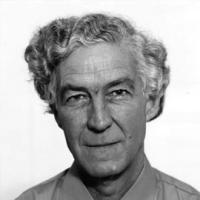
Denis Jordan

FAA

Denis Jordan
Image Description
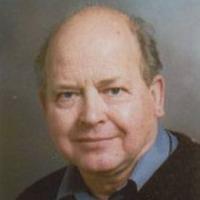
Jordan's early work on the physical chemistry of nucleic acids in solution tin collaboration with the late professor Gulland) led to pioneering conclusions about the hydrogen-bonded structure of native deoxyribose nucleic acid, and about the changes in molecular configuration ('denaturation') that result from interference with this hydrogen bonding. These discoveries laid the foundations for the now accepted helical, hydrogen-bonded structure. He has remained active in this field, contributing particularly to the relationship between stability and chemical constitution; he is actively engaged on the study of the interferences with structure brought about by the binding of small molecules. He has made significant contributions also in the field of synthetic polymers, particularly to the knowledge of the mechanism of ionic polymerisation and to the properties in solution of ionic polymers. He has built up in Adelaide a lively and capable group working on various aspects of the physical chemistry of macromolecular substances, including proteins; this group has owed much to his guidance. He has always taken an active part in the scientific life of Australia, and has been chosen for two important roles outside the University of Adelaide. His active interest in scientific education, in schools as well as in universities, has contributed to the rising standards of Australian chemical graduates.

Expertise type

  • Chemistry
  • Physical Chemistry
  • Inorganic Chemistry

Please contact fellowship@science.org.au to request any updates to the data.

Professor

Stephen Angyal

OBE FAA

Stephen Angyal
Image Description
Angyal has contributed with distinction to several fields of organic chemistry but is notable particularly for two series of publications. One of these reports the elucidation of the mechanism of the reaction due to Sommelet for the preparation of aldehydes and studies of its applications and limitations. The more important series is concerned with the chemistry and stereochemistry of the cyclitols, particularly the biologically-significant inositols. In this field Angyal is one of the leaders, whose work has led to the isolation of all the isomeric inositols predicted by theory and the establishment of their configurations, as illustrated by an invitation to deliver a special lecture at the 1961 IUPAC Congress in Canada.

Expertise type

  • Organic Chemistry
  • Chemistry

Please contact fellowship@science.org.au to request any updates to the data.

Sir

Geoffrey Badger

AO FAA FTSE

Geoffrey Badger
Image Description
Badger is well known for his original contributions which have mainly been made in the field of the aromatic and polycyclic organic compounds. His research activities along these lines began almost twenty years ago when he became associated with Professor Cook at the University of London, the collaboration being continued later at the University of Glasgow. During the course of this work attention was focussed on some polycyclic compounds which showed marked carcinogenic effect, notably benzpyrene, and Professor Badger has made significant contributions to our knowledge in this field. He has also contributed to our knowledge of the absorption spectra of certain groups of organic compounds, and has devised interesting and successful methods for the synthesis of higher fatty acids.

Expertise type

  • Chemistry
  • Organic Chemistry

Please contact fellowship@science.org.au to request any updates to the data.

Professor

Charles Shoppee

FAA FRS

Charles Shoppee
Image Description
Fellow of the Royal Society, formerly Professor of Chemistry in the University of Wales, now Professor of Organic Chemistry in the University of Sydney, is distinguished for his contributions to organic chemistry, with special reference to the investigation of problems of reaction mechanism, the establishment of the structures of the adreno-cortical hormones, and the elucidation of stereochemical relationships in the steroid field.

Please contact fellowship@science.org.au to request any updates to the data.

Sir

Noel Bayliss

CBE FAA

Noel Bayliss
Image Description
Noel Stanley Bayliss is distinguished for his investigations into the spectra of halogens and organic compounds. He has studied solvent effects on such spectra, including work on the quantum mechanical theory of continuous absorption and its temperature variation. He has developed an electrostatic interaction theory of the solvent-induced red shift in electronic and infra-red spectra. He is an independent originator of the "free electron" treatment of conjugated compounds. During World War II he directed and published work on the chemistry of alunite, and on phase rule and pilot plant studies connected with the production of potassium sulphate, potassium carbonate and alumina.

Expertise type

  • Chemistry
  • Spectroscopy

Please contact fellowship@science.org.au to request any updates to the data.

Professor

Allan Snyder

FAA FTSE FRS

Allan Snyder
Image Description
Snyder's prolific and pioneering contributions to Optical Physics, especially Fibre Optics, have guided and oriented research in a field of great technological importance. Simultaneously, his many seminal contributions to the physics of visual photoreceptors of vertebrates and insects have provided directions and challenges for visual physiologists. Whether bridging physics, biology and mathematics, or in optical physics, a characteristic theme of his work has been a remarkable capacity to reduce exceedingly complex phenomena to an intuitive, tractable form.

Expertise type

  • Medical Sciences
  • Mind Physics
  • Neuroscience
  • Transcranial Stimulation

Please contact fellowship@science.org.au to request any updates to the data.