

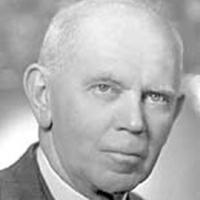

Emeritus Professor

John Pate

AM FAA FRS

John Pate
Image Description
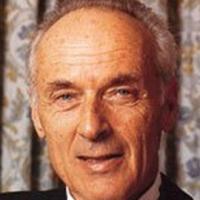
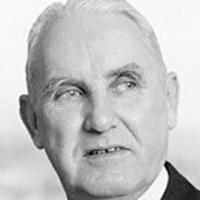
Professor Pate's major contribution has been the quantitation and integration of our understanding of the carbon and nitrogen economy of legume plants, especially the pea. Using a wide range of experimental approaches and techniques, many of his own devising, he has analysed the circulatory system for nitrogen and carbon compounds, particularly in the fruits, but also in the leaves, roots and nitrogen-fixing nodules. In this field he is pre-eminent and his work has, for example, elucidated the interrelations and traffic between xylem and phloem, and the nature of the competition between roots and nodules in their metabolic activities. With Professor B.E.S. Gunning he discovered transfer cells and elucidated their function in plants.

Expertise type

  • Biology
  • Plant Biology
  • Plant Physiology
  • Water Management

Please contact fellowship@science.org.au to request any updates to the data.

Dr

Alec Costin

AM FAA

Alec Costin
Image Description
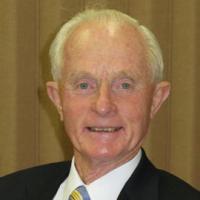
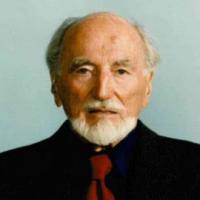
Dr. Costin is an international authority on the ecology of high mountain and high latitude ecosystems. His studies have provided a comprehensive understanding of the evolution of the Australasian high altitude biota and of the contemporary distribution and successional patterns of the major plant and animal communities. As part of this work he has made a unique contribution in historical biogeography, where he has developed an absolute chronology of late Quaternary events in south-eastern Australia. He has also made major contributions to the flora of the Snowy Mountains area. These investigations, together with his research in hydrology, geomorphology and conservation have had a substantial influence on public awareness and government policies concerning many aspects of conservation and environmental management.

Expertise type

  • Biology
  • Ecology
  • Land-use Ecology

Please contact fellowship@science.org.au to request any updates to the data.

Dr

William Williams

OBE FAA

William Williams
Image Description
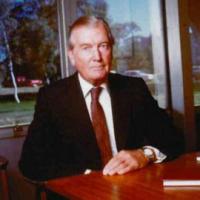
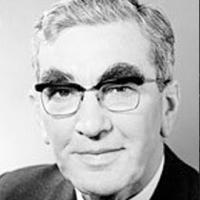
Dr. Williams has made distinguished contributions in two fields of biology, first in plant physiology and then in taxonomy and ecology. His early career was devoted to plant-water relationships, where he conducted penetrating studies in the water-relations of the epidermis, the physics of transpiration from wilting leaves, and the mechanism of drought resistance. Subsequently, he has made important advances in the numerical analysis of biological data, in the process producing the first successful computer based systems for the monothetic classification of binary data and devising the complete set of algorithms which underlie the TAXON classificatory package, the first such package to be capable of processing mixed data with missing values. He then turned to the problem of analysis of species-rich floras, and produced a now classic series of papers on the analysis of rainforest vegetation. More recently he has turned his attention to the use of numerical techniques in the analysis of agricultural data.

Please contact fellowship@science.org.au to request any updates to the data.

Professor

Henry Wallace

FAA

Henry Wallace
Image Description
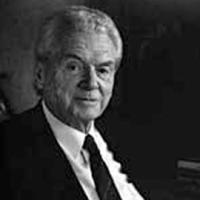
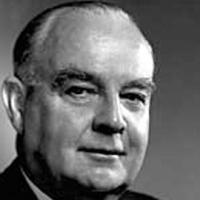
Wallace has studied ecology of soil nematodes and its bearing on disease. He discovered precise concepts which explained numbers and distribution of nematodes in soil and he devised a model for locomotion of nematodes of some general application. Work on foliar nematodes produced an explanation of the infective process which made possible the control of the disease; similar work was conducted with root-knot nematodes. He has shown that plants have compensatory mechanisms for maintaining health and that they may over-compensate at low levels of infection. He has skilfully used methods of partial regression to analyse host-parasite-environment interactions and is at present examining disease in the field using step-wise regression analysis.

Expertise type

  • Biology
  • Plant Biology
  • Plant Pathology
  • Nematodes

Please contact fellowship@science.org.au to request any updates to the data.

Professor

Irvine Watson

CBE FAA

Irvine Watson
Image Description

Please contact fellowship@science.org.au to request any updates to the data.

Professor

Harold Frith

FTSE AO FAA

Harold Frith
Image Description
Dr. H. J. Frith has studied the ecology of a number of birds and mammals, notably the grey teal and other species of water fowl, the mallee hen, several species of pigeons and the red kangaroo. His work on the grey teal stands as a uniquely documented contribution to the ecology of opportunistic species. It is relevant to the current dialogue about the control of natural populations which is an important frontier in the theory of population ecology. All of Frith's work has the same quality which comes from tackling, with ingenuity and insight, important ecological problems in a broad and completely natural setting.

Expertise type

  • Animal ecology
  • Conservation Biology
  • Biology
  • Ornithology
  • Marsupials

Please contact fellowship@science.org.au to request any updates to the data.

Professor

Ronald Wharton

FAA

Ronald Wharton
Image Description

Please contact fellowship@science.org.au to request any updates to the data.

Professor

Ralph Slatyer

AC FAA FTSE FRS

Ralph Slatyer
Image Description
Dr. R.O. Slatyer is distinguished for his work in plant physiology and ecology. He has developed our understanding of water utilization by plants by evaluating the physical and physiological mechanisms associated with water transport and clarifying the significance of internal water deficits in the pattern of development. His techniques have explored effects of physical environmental factors and physiological control mechanisms within the plant. His work, as strong in theoretical interpretation as in experimentation, has re-awakened interest in the importance of water potential gradients as pre-requisites for flow and has quantified the importance of stomatal closure in control.

Expertise type

  • Plant Physiology
  • Ecology
  • Biology

Please contact fellowship@science.org.au to request any updates to the data.