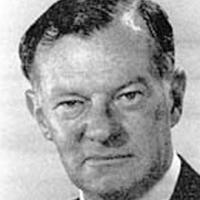
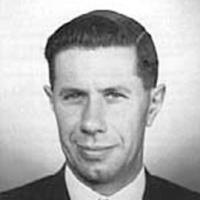
Dr

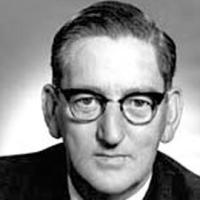
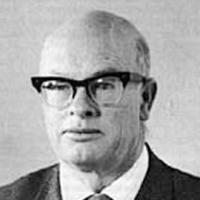
Robin Holliday

FAA FRS

Robin Holliday
Image Description
Robin Holliday has made fundamental contributions to molecular genetics, epigenetics and cell biology. He postulated the intermediate in genetic recombination, the 'Holliday Structure', which is now accepted as integral to the process of recombination. His work on cellular aging implicated protein errors as being important in the aging process. His pioneering work in epigenetics and the role of DNA methylation has led to advances in our understanding of the importance of the epigenetic control of development.

Please contact fellowship@science.org.au to request any updates to the data.

Emeritus Professor

Eugenie Lumbers

AM FAA

Eugenie Lumbers
Image Description
Professor Lumbers is an internationally respected authority on fetal and maternal physiology. Her original discovery that blood and amniotic fluid contain an inactive form of renin is a landmark in the understanding of the renin-angiotensin system of hormones that contribute powerfully to blood pressure regulation. Her finding that oestrogens in contraceptive pills increase renin substrate production is fundamental for understanding blood pressure regulation in women. Her many original and important experiments have shown the widespread involvement of the angiotensin system in pregnancy, in control of maternal and fetal blood pressure, and in regulation offetal renal function.

Fields of research

32 BIOMEDICAL AND CLINICAL SCIENCES
  • 3214 PHARMACOLOGY AND PHARMACEUTICAL SCIENCES

For full list of research codes, please visit the ARC Website .

Expertise type

  • Kidney Function
  • Early Life
  • Pharmacology
  • Hypertension
  • Reproduction
  • Medical Sciences
  • Physiology
  • Maternal health in pregnancy
  • Renin-angiotensin system
  • Placenta
  • Preeclampsia
  • Indigenous maternal health in pregnancy

Please contact fellowship@science.org.au to request any updates to the data.

Professor

Julie Campbell

AO FAA

Julie Campbell
Image Description
Professor Campbell has pioneered the use of cell culture to study interactions between the constituents of the vascular wall, important in development of atheroschlerosis and restenosis after angioplasty. Her seminal discovery is that in most cases before mature smooth muscle cells (SMC) of the artery wall can divide, they must undergo a reversible change in phenotype. She subsequently described phenotype-dependent changes in matrix synthesis, lipoprotein metabolism, cell surface receptor expression and the expression of various genes. Her work has profoundly influenced concepts on formation and atherosclerotic plaques, and stimulated ideas on SMC diversity.

Expertise type

  • Cardiovascular Physiology
  • Cell Biology
  • Molecular Biology
  • Cardiovascular Disease
  • Medical Sciences
  • Smooth Muscle
  • Stem Cells

Please contact fellowship@science.org.au to request any updates to the data.

Professor

John McKenzie

AM FAA

John McKenzie
Image Description
Professor McKenzie has studied the genetic response of natural populations to environmental change, using insecticide residues in the Australian Sheep Blowfly, Lucilia cuprina as the primary model system. In practical terms, a clearer understanding of the genetic response, (both major and minor gene substitutions), and the precise environmental circumstances evoking the genetic response, has provided one of the soundest conceptual bases for the management of pesticide resistance. In more general terms, the laboratory and field studies of McKenzie has provided one of the most fascinating analyses of modern ecological genetics. For his theoretical and practical contributions, McKenzie is regarded as a world leader in ecological and evolutionary genetics.

Expertise type

  • Biology
  • Genomics
  • Insecticide Resistance
  • Insects

Please contact fellowship@science.org.au to request any updates to the data.

Professor

Simon Gandevia

FAA FAHMS

Simon Gandevia
Image Description
Professor Gandevia is an international leader in human neurophysiology. He has made findings of fundamental importance on the roles of intramuscular, joint and cutaneous sensory nerves in proprioceptive sensations and reflexes, and has shown the dependence of certain sensations on centrally-generated nerve discharges associated with command signals for movement. He was the first to show the fatigue resistance of human respiratory muscles, the rapid and powerful projection from cerebral cortex to the motoneurons of these muscles, and preservation of respiratory sensations when these muscles are completely paralysed.

Expertise type

  • Medical Sciences
  • Motor Control
  • Neuroscience
  • Sensation

Please contact fellowship@science.org.au to request any updates to the data.

Professor

Elspeth McLachlan

FAA

Elspeth McLachlan
Image Description
Professor McLachlan is the world authority on neural pathways within the autonomic nervous system. Her work has ranged from detailed analyses of transmission in autonomic ganglia to the organization of autonomic nervous pathways and their disorder in pathological states. She was the first to describe the statistics of transmitter release in autonomic ganglia. She showed that during development Ca++ channels become localized on dendrites, that pathways in the autonomic nervous system are tightly organized, that the properties of ganglion cells correlate with their function and that sympathetic nerve sprouting is involved in the chronic pain that follows nerve damage.

Fields of research

31 BIOLOGICAL SCIENCES
  • 3109 ZOOLOGY
    • 310906 Animal Neurobiology
32 BIOMEDICAL AND CLINICAL SCIENCES
  • 3209 NEUROSCIENCES
    • 320905 Neurology and Neuromuscular Diseases
    • 320999 Neurosciences not elsewhere classified

For full list of research codes, please visit the ARC Website .

Expertise type

  • Medical Sciences
  • Neurophysiology
  • Pain Neurobiology
  • Synapses
  • Cardiovascular Disease
  • Autonomic Nervous System
  • Spinal Cord Injury
  • Neuroinflammation
  • Synaptic transmission
  • Peripheral nerve biology

Please contact fellowship@science.org.au to request any updates to the data.

Professor

David de Kretser

AC FAA FTSE FAHMS

David de Kretser
Image Description
Professor de Kretser's studies have effectively combined structural and biochemical approaches to study testicular function. He provided the definitive account of human spermiogenesis and demonstrated ultrastructural defects in spermatozoa from infertile men. He formed a team that was responsible for isolating the new gonadal hormone inhibin cloning in the genes encoding its two subunits and, by developing radioimmunoassays, elucidated aspects of the physiology of inhibin and activin. His team also isolated follistatin, sn activin-binding protein. He was a pioneer in demonstrating the existence of paracrine communications between the compartments of the testis. Professor de Kretser is unquestionably one of the world's leading reproductive biologists.

Expertise type

  • Infertility
  • Biology
  • Endocrinology
  • Reproductive Biology

Please contact fellowship@science.org.au to request any updates to the data.

Professor

Graeme Cox

FAA

Graeme Cox
Image Description
Dr. Graeme Cox is distinguished for contributions to a number of aspects of bacterial physiology using the techniques of biochemistry and molecular biology. In his earlier work he made important contributions in the areas of iron-binding compounds and iron transport, the biosynthesis and function of quinones, and the genetics and assembly of the F0F1-ATPase. His recent site-directed mutagenesis experiments on the mechanism of oxidative phosphorylation have solved the long-standing problem of the nature of the proton channel of the ATP synthase. He has also defined, by site-directed mutagenesis, essential amino acid residues concerned in phosphate transport and transmembrane signalling in the pho regulon in Escherichia coli.

Expertise type

  • Ion Channels
  • Biochemistry
  • Medical Sciences
  • Membrane-Bound Enzymes

Please contact fellowship@science.org.au to request any updates to the data.

Dr

Cyril Appleby

FAA

Cyril Appleby
Image Description
Dr. Appleby is distinguished for his contributions to the understanding of hemoprotein structure and function. He purified and crystallized cytochrome b2, showed it to be a flavohemoprotein, and determined its reaction mechanism. His major study on soybean leghemoglobin and Rhizobium cytochromes provided the foundations for elucidating the energetic processes of nitrogen fixation. He showed that nitrogen-fixing rhizobia respire efficiently at low levels of oxygen, that leghemoglobin has unique kinetic properties which permit rapid transport of oxygen to the respiratory oxidases at these low levels of oxygen, and that the mobility of the distal histidine within an unusually flexible oxygen-binding pocket of leghemoglobin accounts for these properties.

Expertise type

  • Haemoprotein
  • Leghaemoglobin
  • Symbiosis
  • Spectroscopy
  • Plant Roots
  • Iron
  • Spectrophotometry
  • Cytochrome
  • Biology
  • Haemoglobin
  • Plant Biology

Please contact fellowship@science.org.au to request any updates to the data.

Professor

Bruce Holloway

AO FAA FTSE

Bruce Holloway
Image Description
Professor Holloway has achieved international recognition for his work on the genetics of the bacterium Pseudomonas aeruginosa and its bacteriophages. He has played a major role in discovering and developing systems of conjugation and transduction in this organism. Much of the current knowledge on the genetic organisation of Pseudomonas stems directly from his work, and his authority in this area has been recognised by various invitations to write review articles for overseas journals. As a development of earlier work with the sex factors of Pseudomonas he is currently investigating the role that such factors play in the transmission of antibiotic resistance among strains of Pseudomonas and other gram negative bacteria.

Expertise type

  • Pseudomonas
  • Genetics
  • Bacteriology
  • Biology
  • Genomics
  • Microbiology

Please contact fellowship@science.org.au to request any updates to the data.