


Professor

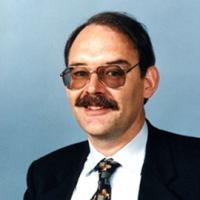
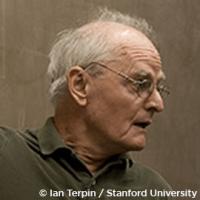
Henry Burger

AO FAA FAHMS

Henry Burger
Image Description
Henry George Burger is distinguished for his outstanding contributions in medical practice and medical research. He achieved the isolation, purification, cloning, sequencing and determination of the regulation of the hormone inhibin. Sperm production and ovulation are modulated by this feedback signal to the pituitary gland. Involved in treatment of patients with a variety of hormonal disorders, his work with infertile couples has brought greatest international recognition. He has achieved world leadership in investigation and treatment of infertile males and females. His inhibin measurements provide the complete source of information about functions and disorders of inhibin secretion in man.

Expertise type

  • Cancer
  • Hormone Replacement Therapy
  • Hormones
  • Men's Health
  • Inhibin
  • Endocrinology
  • Fertility
  • Medical Sciences
  • Menopause

Please contact fellowship@science.org.au to request any updates to the data.

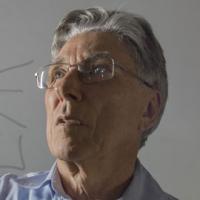
Professor

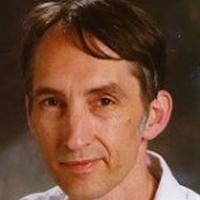
Simon Foote

FAA FTSE FAHMS

Simon Foote
Image Description
Simon Foote has contributed significantly to many different scientific disciplines. He was the first to purify the renin protein, he identified one of the two chloroquine resistance genes in P. falciparum and was key in identifying the mechanisms of resistance to two other antimalarials. He produced the first physical map of a human chromosome and was instrumental in the subsequent map of the human genome that was crucial for the sequencing of the human genome. He has mapped the genetic loci for many diseases and has found a new function for the platelet, as a hunter killer cell against malaria.

Fields of research

32 BIOMEDICAL AND CLINICAL SCIENCES
  • 3202 CLINICAL SCIENCES
    • 320213 Medical Genetics (excl. Cancer Genetics)

For full list of research codes, please visit the ARC Website .

Expertise type

  • Malaria
  • Host Response
  • Aboriginal Kidney Disease
  • Immune Response
  • Drug Design
  • Genetics
  • Immunology
  • Medical Sciences
  • Human Genetics

Please contact fellowship@science.org.au to request any updates to the data.

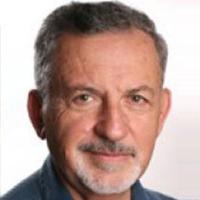
Professor

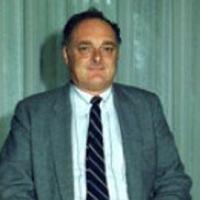
Georgia Chenevix-Trench

FAA

Georgia Chenevix-Trench
Image Description
Georgia Chenevix-Trench is a cancer geneticist, internationally recognised for her work on the genetics of breast, ovarian and other cancers. She played a critical role in the identification of the PTCH gene, responsible for nevoid basal cell carcinoma syndrome. Georgia has also led ground breaking work that showed that mutations in the ATM gene confer moderate risks for breast cancer, which has major implications for research in the genetic architecture of other complex diseases. She leads an international consortium focused on identifying genetic modifiers of the breast cancer genes, BRCA1 and BRCA2, which will enable personalised risk prediction in mutation carriers.

Expertise type

  • Breast Cancer
  • Cancer
  • Cancer Risk
  • Genomics
  • Medical Sciences

Please contact fellowship@science.org.au to request any updates to the data.

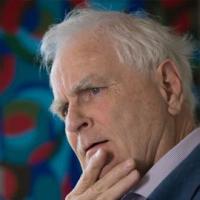
Dr

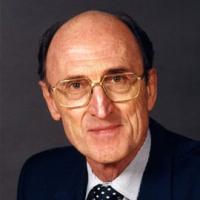
Colin Ward

FAA FTSE

Colin Ward
Image Description
Dr Colin Ward has had an incredibly successful career as a discovery scientist. His early publications on the structural biology of haemagglutin attracted considerable attention. However, it has been his creativity, foresight, organization skills and incredible hard-work over the last 20 years which has led to the unravelling of the 3D-structures of the extracellular domains of four growth factor receptors: IGF-1R, insulinR, EGFR and erbB2. Colin not only led the teams that produced and purified these proteins, his insight into the protein chemistry and biological implications of the structures has revolutionized our understanding of the activation mechanisms for these receptors.

Expertise type

  • Insulin Receptors
  • Biology
  • Structural Biology
  • Influenza Virus
  • Potyvirus

Please contact fellowship@science.org.au to request any updates to the data.

Professor

John Mattick

AO FAA FTSE FAHMS

John Mattick
Image Description
John Mattick has pioneered a new view of the structure of genetic systems in the higher organisms, by elucidating the hidden role played by non-coding RNA. He showed that regulatory information scales non-linearly with function in integrated complex systems and that the vast tracts of intronic and intergenic sequences in the genomes of humans and other complex organisms, previously thought to be junk, are transcribed in a developmentally regulated manner. His insights have led to the emerging realization that the majority of the human genome specifies a sophisticated internal RNA regulatory network that directs the trajectories of differentiation and development.

Fields of research

31 BIOLOGICAL SCIENCES
  • 3105 GENETICS
    • 310508 Genome Structure and Regulation
    • 310509 Genomics
    • 310510 Molecular Evolution

For full list of research codes, please visit the ARC Website .

Expertise type

  • Biotechnology
  • Transcriptomics
  • Evolution
  • Genetics
  • Molecular Biology
  • Genetic Basis of Disease
  • Genomics
  • Medical Sciences
  • RNA Regulation

Please contact fellowship@science.org.au to request any updates to the data.

Professor

Jonathan Sprent

FAA FRS

Jonathan Sprent
Image Description
Jonathan Sprent has been at the forefront of research in T cell immunobiology for 30 Years. In early studies he defined the lifespan and migratory properties of recirculating T and B cells and showed that T cell exposure to antigen in vivo causes MHC-restricted trapping followed by proliferation and entry of effector cells into the circulation. He clarified the mechanisms of MHC-restricted T-B collaboration and, with others, developed the concept that T cell differentiation in the thymus involves a combination of positive and negative selection. He has also made important contributions in the fields of transplantation immunity, immunological tolerance and memory.

Expertise type

  • Immunology
  • Medical Sciences
  • T Cells
  • Transplant Immunology

Please contact fellowship@science.org.au to request any updates to the data.

Professor

Evan Simpson

AM FAA

Evan Simpson
Image Description
Professor Simpson is recognised as the world leader in the field of oestrogen biosynthesis. His group were the first to clone the gene encoding aromatase, the enzyme responsible for oestrogen biosynthesis, and show that tissue-specific regulation was under the control of tissue-specific promoters. This led to the concept that in post-menopausal women oestrogen action in breast, brain and bone is due to local production in these respective sites. This new concept implies that unique modulation of synthesis in a tissue-specific fashion is possible, leading to the development of breast-specific inhibitors of aromatase expression, and thereby preventing the development of breast tumours.

Expertise type

  • Biochemistry
  • Breast Cancer
  • Diabetes
  • Medical Sciences
  • Obesity
  • Oestrogen

Please contact fellowship@science.org.au to request any updates to the data.

Professor

David Vaux

AO FAA FAHMS

David Vaux
Image Description
David Vaux discovered that the putative oncogene BCL2 encoded a protein that inhibited the cell's self-destruct mechanism. BCL2 was the first component of the cell death mechanism to be identified in any organism. This finding showed that inhibition of physiological cell death promoted the development of cancer. He showed that the mechanism of programmed cell death in the worm C. elegans and the mechanism of apoptosis in mammalian cells was related, and conserved through evolution. By creating transgenic mice that overexpressed BCL2, and crossing them with transgenic mice that over-expressed the growth promoting oncogene c-MYC, he showed that they synergized to promote cancer in vivo. He later identifed members of the Inhibitor of Apoptosis (IAP) family, as well as their antagonists SMAC/DIABLO and HTRA2/OMI. His association with IDUN and ABBOTT enabled the first testing of BCL2 family inhibitors in Melbourne in vitro, in vivo, and in the clinic.

Expertise type

  • Apoptosis
  • Cancer
  • Immunology
  • Medical Sciences

Please contact fellowship@science.org.au to request any updates to the data.

Professor

Joseph Sambrook

FAA FRS

Joseph Sambrook
Image Description
Professor Sambrook is internationally renowned for his classic studies on DNA tumour viruses and the molecular biology of normal and neoplastic eukaryotic cells. His Tumour Virus Group at Cold Spring Harbor identified and mapped all of the major genes of SV 40 and adenoviruses, determined their transcriptional control in lytically infected and transformed cells and elucidated the mechanism of integration of these viruses into the genome of the host cell. He has also made major contributions towards understanding intracellular traffic and protein folding and is an influential leader in the field of the molecular genetics of human cancer.

Expertise type

  • Cancers
  • Medical Sciences
  • Melanoma
  • Oncology

Please contact fellowship@science.org.au to request any updates to the data.

Professor

Bruce Kemp

AO FAA FRS

Bruce Kemp
Image Description
Professor Kemp is recognised internationally as one of the major figures to contribute to our understanding of protein kinases at the molecular level and their roles in cellular signalling. Starting with the cAMP-dependent protein kinase in the mid-70's he delineated the substrate specificity of many different protein kinases and developed the novel simplifying concept that it depended on linear epitopes - one of which now bears his name as Kemptide. He also showed that an important common mechanism of kinase regulation was inhibition by a pseudosubstrate region of the kinase itself (intrasteric inhibition) that had to be modified to achieve activation of the kinase.

Expertise type

  • Biochemistry
  • Drug Design
  • Medical Sciences
  • Protein Regulation

Please contact fellowship@science.org.au to request any updates to the data.