

Professor

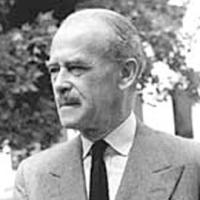
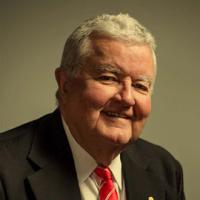
John Sprent

CBE FAA

John Sprent
Image Description
Distinguished for his research into the life histories and evolution of ascaridoid nematodes. He has made notable contributions to knowledge of the migrations of the worms in intermediate hosts, the ecological significance of their host ranges, their behaviour in strange hosts, and their immunology. He has opened up new possibilities in the pathogenesis of some obscure clinical conditions, and has developed a skin test which may elucidate unexplained cases of eosinophilia in Australian children. His knowledge of general parasitology is profound, he has a world-wide reputation, and his Department is an important centre of teaching and research.

Expertise type

  • Parasitology
  • Biology

Please contact fellowship@science.org.au to request any updates to the data.

Professor

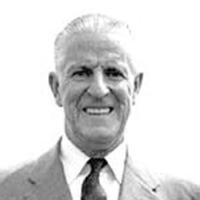
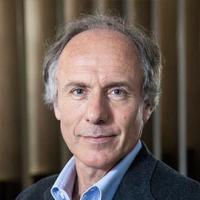
Spencer Smith-White

FAA

Spencer Smith-White
Image Description
Dr. S. Smith-White is distinguished for his outstanding contributions to the knowledge of the cytology of the Australian flora, contributions which are important to cytology, to systematics and to evolutionary history. He has developed a programme of research which, at the time of its initiation twenty-five years ago, pioneered a new field of botanical research in Australia. The objective of the work has been to contribute to a knowledge of the evolutionary history of the Australian flora, and in this objective the work has had considerable success. In addition to his own published work, research initiated by Dr. Smith­White and carried out by post-graduate students, has dealt with the Proteaceae, the Casuarinaceae, Goodeniaceae and the Rananculaceae.

Please contact fellowship@science.org.au to request any updates to the data.

Professor

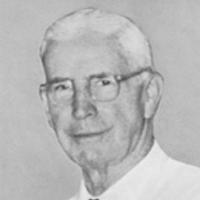
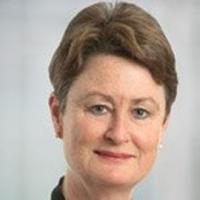
Herbert Andrewartha

FAA

Herbert Andrewartha
Image Description
Andrewartha holds the degrees of B.Sc. Agric. (W.A.) and D.Sc. (Adelaide). He is distinguished especially as an ecologist. His outstanding contribution was to show how a general theory of ecology could be built up from the principles of population ecology. This and other fundamental contributions to ecology appeared in a book of which Andrewartha was the senior author. Andrewartha also is a first-class entomologist and statistician, an unusually able writer, and has a wide knowledge of the scientific and economic aspects of agriculture. He was a member of the editorial board of the Australian Journal of Zoology.

Expertise type

  • Zoology
  • Entomology
  • Animal ecology
  • Biology

Please contact fellowship@science.org.au to request any updates to the data.

Dr

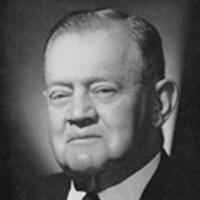
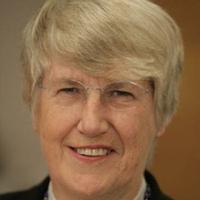
James Rendel

FAA

James Rendel
Image Description
Distinguished for his researches on animal genetics, especially the study of breeding systems in relation to genetic gains in economic characters. His earlier work was on selective mating in Drosophila. Later he developed an interesting biochemical model of heterosis and studied the relationship between coincidence and crossing over. His most recent studies are on genetic control of developmental canalization in the case of the scute gene in Drosophila. His work is a major contribution to our understanding of the theoretical basis of artificial selection. In Sydney he has developed a very active research unit in animal genetics.

Expertise type

  • Biology
  • Genetics

Please contact fellowship@science.org.au to request any updates to the data.

Dr

Kenneth Key

FAA

Kenneth Key
Image Description
Distinguished for his work on the ecology and taxonomy of Australian locusts and grasshoppers. He and his team have established the fundamental causes of locust outbreaks in eastern Australia, and thus provided the basic knowledge necessary for radical control. He has shown that phase changes occur in other Orthoptera also, and his critique of the phase theory has profoundly influenced the outlook of locust workers throughout the world. In addition to being a recognized authority on physical ecology, he has contributed to an understanding of colour variation and made significant advances in general taxonomy.

Expertise type

  • Biology
  • Ecology
  • Entomology
  • Taxonomy

Please contact fellowship@science.org.au to request any updates to the data.

Dr

Maxwell Day

AO FAA

Maxwell Day
Image Description
Dr Maxwell Day is distinguished for his fundamental contributions to two important aspects of insect physiology: 1) the sources of insect hormones; and 2) insect digestion, notably the digestion of keratin. More recently Dr Day has applied his knowledge of histological and histochemical techniques to a critical study of the mechanisms of transmission of animal and plant viruses by insects. Dr Day is recognised as an extremely learned and productive biologist. His competency in the field of microscopy led to his early mastery of the classical aspects of protozoology, histology and cytology. Day has shown a remarkable ability to combine older classical techniques with recent and forward-looking developments, as, for example, histochemistry and elecron microscopy. His work in collaboration with Mercer on the peritrophic membrane has already opened new avenues of understanding. And, as is always the case in substantial scientific work, it has also revealed new and deeper mysteries.

Expertise type

  • Biology
  • Ecology
  • Environmental Ecology
  • Forestry

Please contact fellowship@science.org.au to request any updates to the data.

Dr

Douglas Waterhouse

CMG FTSE AO FAA FRS

Douglas Waterhouse
Image Description
Distinguished for his work in the field of insect physiology. Waterhouse developed a number of new histological techniques and by their application considerably extended knowledge of the processes of digestion, storage and excretion in insects. In a series of studies of iron and copper distribution in Lucilia cuprina he has indicated functional differentiation of the epithelial cells in the midgut of insects. His investigations of keratin digestion in the intestine of the clothes moth clarified knowledge of this process. In the field of applied biology he has made valuable contributions to the taxonomy, ecology, behaviour and control of the Australian blow-fly. During the war his work in the field of Medical Entomology materially influenced policies concerned with the control of malaria.

Expertise type

  • Entomology
  • Biology
  • Aerogard

Please contact fellowship@science.org.au to request any updates to the data.

Sir

Otto Frankel

FAA FRS

Otto Frankel
Image Description
Distinguished for his contributions to plant breeding and to cytogenetics. He has been responsible for the improvement of wheat in New Zealand, and the development of new methods of plant breeding, especially for quality. His contributions to cytogenetics have included studies on the New Zealand flora, especially Hebe and its relatives, and on the mechanics and physiological behaviour of the chromosomes of plants.

Expertise type

  • Cytogenetics
  • Plant Biology
  • Biology
  • Wheat

Please contact fellowship@science.org.au to request any updates to the data.

Professor

William Rogers

FAA

William Rogers
Image Description
Distinguished for his pioneer work in the study of the endo-parasitic nematodes, particularly in relation their digestive and respiratory metabolism. His fundamental work on anthelmintics and their mode of action has had an important bearing on their practical control.

Please contact fellowship@science.org.au to request any updates to the data.

Sir

Rutherford Robertson

AC FAA FRS

Rutherford Robertson
Image Description
Distinguished for his contributions to knowledge of the absorption of ions by plant cells, and for his work in the applied field of Plant Physiology. Robertson in a fine series of studies showed, inter alia, that the rate of passage of inorganic ions into plant cells is determined by the respiratory process, and is dependent upon the Cytochrome System for the energy necessary to effect it. His fundamental studies on the metabolism of Apples provided a fund of exact knowledge upon which modern methods of storage of this fruit are based. His work both in the fundamental and applied fields has been very widely recognised. He is the leader of a vigorous research team.

Expertise type

  • Fruit
  • Respiration
  • Biochemistry
  • Biology
  • Plant Biology
  • Membrane Biochemistry

Please contact fellowship@science.org.au to request any updates to the data.