



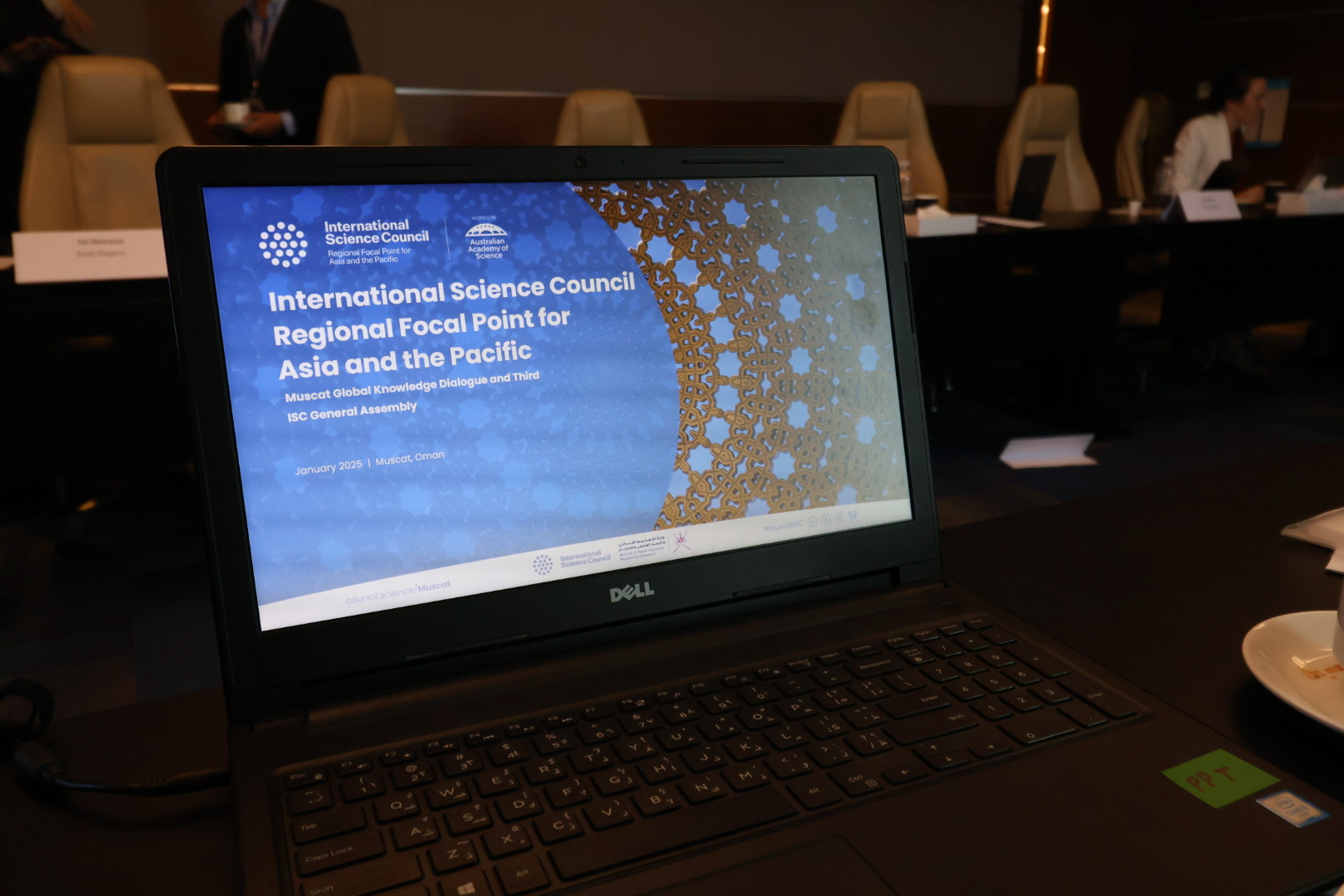
Submission—Australia’s response to the priorities of Pacific Island countries and the Pacific region

The submission highlights the diplomatic and scientific connections between Australia and the Pacific, namely through initiatives from the International Science Council Regional Focal Point for the Asia Pacific.
Scientific capability and mechanisms for science advice to inform decision-making are vital to support economic, environmental, and social development.
Submission—Australian Tertiary Education Commission
The Academy supports an Australian Tertiary Education Commission in principle, but recommends amendments to it including that it be established as an independent authority, and better governance structures that enable effective collaboration and access to knowledge of the higher education system.
The Academy proposes the following amendments to support an effective ATEC:
- Establish ATEC as an independent authority to give it independence from the Department of Education.
- Remove barriers to the ATEC recruiting the higher education system experience it needs to be effective. The appointment criteria for Commissioner roles should be reconsidered to allow experts and leaders from the sector to be appointed.
- Consideration should be given to how the ATEC can best use the expertise of Australia’s Learned Academies and professional bodies to develop advice that informs policy and decision-making.


Submission—A new Australian Government drought plan
In the submission, the Academy noted:
- drought is a national challenge that impacts Australians and requires a coordinated effort across different sectors and organisations. Australia’s science system is part of this effort
- science is a critical input to drought preparedness, response and recovery, and ongoing fundamental scientific research is required to better understand the complexity of drought processes
- it recommends the drought plan include additional content that explicitly addresses policy to coordinate, maintain and grow Australia’s drought science capability.
Submission—Strategic Examination of Research and Development
On 16 April 2025, the Academy made a submission to the Australian Government’s Strategic Examination of Research and Development (R&D).
The Academy recommends the advancement of radical ideas to create a new national R&D system model.
We offer a model in the body of this submission:
- Introduce a business R&D investment incentive that applies to businesses with annual revenue of $100 million or more.
- Set a national target for lifting R&D investment to levels competitive with peer nations and adopt a phased plan to achieve it, including new funding models such as a business R&D investment incentive.
- Rebuild Australia’s investment in fundamental research to ensure a strong foundation for innovation and long-term national problem-solving.
- Change Commonwealth and State procurement policies to incentivise domestic R&D through a scaled-up Small Business Research Investment Incentive.
- Implement the principles of the UNESCO Recommendation on Open Science through national policy settings that mandate open access to publications, promote FAIR data standards, and support inclusive knowledge sharing.
- Establish a national metascience capability to evaluate and improve the performance, efficiency, and public value of Australia’s research system.
- Urgently develop a framework to guide Australia’s approach to international research collaboration to provide strategy, clarity and purpose to international engagement.
- Diversify and support our international science collaborations to serve Australia’s long-term and strategic needs by committing to participation in international collaborative research alliances such as the Belmont Forum and Horizon Europe.
- Implement policy measures to strengthen Australia’s science diplomacy architecture through mechanisms such as the Global Science and Diplomacy Fund and growing Australia’s network of overseas science counsellors.
- Develop a ‘raise, train, attract and sustain’ workforce strategy to grow and embed STEM skills across the R&D system.
- Develop a long-term national strategy and roadmap to build national High-Performance Computing and Data capacity. The Academy proposes an investment of $200 million a year over 10 years to support sector planning, deliver upgrades to current facilities and drive coordination and co-investment in a Tier-0 facility.
- Develop an AI investment plan to build national AI capability across the R&D system, including in fundamental AI science.
Submission—Statutory Review of the Data Availability and Transparency Act 2022
On 13 June 2025, the Academy made a submission on the Statutory Review of the Data Availability and Transparency Act 2022.
The Academy makes the following recommendations:
- Public sector data custodians should be appropriately resourced to respond to the increasing demand for data for research and be required to publish metadata to make data discoverable.
- Mandate participation in the DAT Scheme for major Commonwealth data-holding agencies to ensure comprehensive access to high-value datasets, and encourage the development of mechanisms to support harmonisation with state and territory data access frameworks to enable cross-jurisdictional research.
- Modify the DATA Scheme accreditation model to enable collaborations involving multiple institutions.
- Amend Section 16A (2) and the Data Availability and Transparency (National Security Measures) Code 2022 to include a risk-based approach and avoid discouraging researchers from using the DATA Scheme.
- The Statutory Review consider the increasing use of AI in research and the DAT Act’s interaction with developments in Australian Government policies on Artificial Intelligence since its commencement.
- A greater whole of government, consistent commitment to open data through implementing measures to meet the UNESCO Recommendation on Open Science.
Submission—Select Committee on PFAS (per and polyfluoroalkyl substances)
In its submission, the Academy says there is an imperative for Australia to enhance its coordination and monitoring efforts and utilise and expand the scientific evidence base on PFAS to inform robust policy responses to address legitimate concerns.
The Academy recommends:
- establishing a coordinated national monitoring program to determine the extent of environmental PFAS contamination across Australia, which should inform enforceable standards to strengthen the regulation of PFAS
- creating a national human biomonitoring program to monitor bioaccumulation of PFAS and other Contaminants of Emerging Concern (CECs) to further understanding of the health risks associated with PFAS and sources of exposure
- expanding our understanding of PFAS and the concentrations that require clinical care, developing methods to detect and monitor PFAS contamination, and developing replacements for PFAS in current industrial processes and products by strengthening the scientific evidence base
- transparent, up-to-date and reliable risk communication to the Australian public on PFAS contamination and its potential risks.
Submission—NSW’s Independent Forestry Panel
The Academy made the following recommendations in its submission:
- Native forests should be preserved to increase viable habitat for threatened species in NSW and reduce bushfire risks and impact.
- The NSW Government should commit to phasing out native forest logging and transition to a plantation-only industry.
- The NSW Government should develop a long-term carbon storage plan that includes intact native forests.
Submission—Nature Repair Market Legislation
The Academy made the following recommendations in its submission:
- Biodiversity outcomes of projects under the Nature Repair Market must be measurable.
- To measure outcomes, the legislated Nature Repair Rules must provide clarification on whether projects address biodiversity at an ecosystem level, or the conservation of individual threatened species.
- Information on what species the project addresses should be included as a specific project attribute.
- The Nature Repair Committee must have a mechanism for ongoing access to biodiversity expertise, which could be through the Biodiversity Assessment Expert Reference Group.
- Auditors need specialised expertise in biodiversity to conduct effective evaluations that ensure the genuine delivery of biodiversity benefits.
Submission—National Health and Medical Research Strategy
On 4 March 2025, the Academy made a submission to the Australian Government on the National Health and Medical Research Strategy.
The Academy recommends that the strategy focuses on:
- promoting an optimal funding mix for impactful research, which would include strategic government investment in basic research and incentivising greater private investment in research translation
- re-focusing federal government investment towards basic research and establish mechanisms to translate research into better treatment options
- building a health and medical research system prepared for the changing nature of science and demands of policy and healthcare
- strengthening the health and medical research workforce by establishing clear career pathways, ensuring the workforce has the necessary skills to participate, and expanding opportunities for researchers at all career stages, including through mentorship and continuous training
- planning for investment in health and medical research infrastructure and skills needed to strengthen our research capability and boost research productivity, including next-generation high-performance computing and data (HPCD)
- how to enhance Australia’s international leadership in health and medical research through participation in global initiatives such as Horizon Europe and the Global Health Security Agenda.
Submission—National Digital Research Infrastructure (NDRI) Investment Plan Environment Scan
Strategic investment in high-performance computing and data infrastructure (HPCD), including exascale capability, is vital to secure Australia’s research capability and ability to meet national and regional priorities into the future.
The Academy recommends that the NDRI Investment Plan articulates a plan to acquire and sustain next generation supercomputers, for the development of Australia as a hub for exascale capability in the Asia-Pacific region – including developing a national supercomputing strategy and committing to necessary scoping studies.