





Professor Jacques Miller, pathologist


Jacques Miller attended St Aloysius' College in Sydney then went on to study medicine at the University of Sydney. During his medical studies, he took a year off in 1953 to do a BSc in a bacteriology laboratory. Miller did his medical residency at Royal Prince Alfred Hospital, Sydney and was then awarded a Gaggin Fellowship to do medical research in London. At the University of London, he completed a PhD in 1960. In 1963 he spent a year at the National Institutes of Health in Maryland. He returned to London for several years and in 1966 moved to Australia to become head of the experimental pathology unit at the Walter and Eliza Hall Institute of Medical research. Miller served on the International Research Agency for Cancer, and was president of the Scientific Council. He served on the World Health Organization in the area of eradicable diseases and had a term on the International Union of Immunological Societies.
Interviewed by Professor Frank Fenner in 1999.
Contents
- An intercontinental childhood
- Into medicine and on to research
- Leukaemia virus and newborn mice
- Immune tolerance: what was the role of the thymus?
- Why did the mice waste away? An unexpected finding
- Spreading the word
- So why did the mice waste away?
- Testing a theory – and a very testing procedure
- Could thymus lymphocytes become immuno-competent?
- Differentiating lymphocyte subsets
- Eventual acceptance, but new complexities
- Studying delayed-type hypersensitivity: could MHC restriction be shown in vivo?
- Immune-responsiveness genes: a masquerade
- Where was that elusive T-cell receptor?
- Why are we tolerant to our own tissues? More complexities
- Contributing to the scientific community
An intercontinental childhood
Jacques, you had an interesting and exciting childhood and early adulthood, moving between France and China before coming to Australia. Could you tell us about that?
My father was the manager of the Franco-Chinese Bank in Shanghai, staying in China and Japan for about 25 years. One of my sisters was born in Paris, before my parents left for Shanghai, another sister was born in Shanghai, and I was conceived in Shanghai but born on holidays in France, where my mother had gone for health reasons. When she was on the boat – that is how people went in those days – she found herself pregnant, so she decided to have the baby in Nice, next to Marseilles, where the boats used to go.
After less than a year we went back to China but about 3 years later my mother returned to France with the family – again for health reasons and because she wanted my elder sister to be educated there, not in China. Unfortunately, my elder sister contracted tuberculosis, and so the family moved to Switzerland for her to be cured. (That was before the days of streptomycin.) My father eventually came to Switzerland for long service leave, but then World War II started and we left in a hurry for Shanghai. After about a year and a half, knowing that the Japanese were going to be involved in the war, we went to Australia. That was about 3 months before Pearl Harbor.
I didn't know much English at all and had to learn very quickly. But children do learn very quickly. Because my father had thought the Jesuits were wonderful in Shanghai, he decided that in Sydney I would go to a Jesuit school, St Aloysius', and my sister went to Loreto Convent. Both were in Milsons Point. Actually, Gus Nossal was a year ahead of me at St Aloysius'. He was always enthusiastic and very outspoken. He loved debating and was very articulate, just like now.
Into medicine and on to research
You did pretty well at school, I gather.
I was lucky, I did very well at school and therefore I got an Exhibition, which in those days was a kind of fellowship which took you to university. I had always wanted to do medicine. One reason was that having escaped from the war twice, I was dead against violence. I didn't think I could escape being drafted but I thought I might be a doctor in the army rather than a soldier. I was interested in medicine also because when my sister got tuberculosis they didn't know anything about how infectious diseases were conquered by the body – what pathogenetic mechanisms dealt with such infections. That always interested me and I wanted to learn something about it.
In 1956 I did my residency in the Royal Prince Alfred Hospital, which was the main hospital in Sydney. That is where I met my wife, who was a nurse at the time, and we got married the year I was a resident. During my medical studies I took a year off in 1953 to do a Bachelor of Science, because I hoped to do a little bit of research into pathogenetic mechanisms. In medical school you don't learn much about that – you learn the various signs and symptoms but you don't go into depth. I chose to do a BSc (Med) year in Pat de Burgh's bacteriology department, at the University of Sydney, because they were studying the response to ectromelia virus and that sounded very interesting.
An old friend of mine, ectromelia virus, which I worked on with Mac Burnet in the late 1940s. So you gained a taste for research and knew it was what you wanted to do?
Even more than before, yes. After my medical training and internship, I saw an ad in the Medical Journal of Australia about a Gaggin fellowship to be given by the University of Queensland for 2 years' medical research in London and then 1 year in Brisbane. I applied for that fellowship and was very pleased that it enabled me to do a PhD at the University of London – based at the Chester Beatty Research Institute, the institute of cancer research in South Kensington.
When I arrived at the institute I didn't really know exactly what I wanted to do as a PhD subject and I was told to look around. At the main institute in London they were studying chemical carcinogenesis at the chemical and nucleotide levels. I was not terribly interested in this – I was rather depressed, actually. But the institute had satellites, one in Surrey and one in Chalfont St Giles at Pollards Wood, and at Pollards Wood I met R J C Harris, who was interested in the Rous sarcoma virus and its effects. He suggested that I study another tumour virus, such as the leukaemia virus (Gross, in the United States, had just isolated it in tissues) and I decided that the induction of mouse leukaemia by Gross virus would be the subject for my PhD.
So that kept you in virology, but in a cancer research environment.
Yes. Having worked in virology in de Burgh's laboratory, I was very pleased.
Leukaemia virus and newborn mice
In those days, viruses were not generally accepted as a cause of cancer. Gross had been able to induce leukaemia in mice by using filtered extracts of mouse leukaemic tissues. He had never isolated the virus as such, but the filtered extracts were able to induce leukaemia in low-leukaemic strain mice, that is, strains of mice which normally don't get leukaemia. Leukaemic extracts from high-leukaemic strain mice, which normally do get leukaemia, were injected into newborn mice at birth – it had to be at birth and not later – and the leukaemia developed 3 or 4 months later.
Rather than develop my own virus from the mouse leukaemic extracts, I wrote to Gross saying, 'Would you mind sending me some of your filtered extracts? I have to do a PhD, I've only got 2 years and it would take me too long to start from scratch, whereas if you sent me your filtered extracts I could induce leukaemia and then repassage that through a series of mice.' Luckily for me, he was kind enough to do it.
I remember that Ludwik Gross wrote the book Oncogenic Viruses.
In those days you had to inject the extracts in newborn mice – if you injected into adult mice nothing happened. That was interesting in itself. Knowing that people like Sir Peter Medawar had discovered immunological tolerance by injecting cells into newborn mice, I wondered whether that had anything to do with the induction of leukaemia by injecting these kinds of extracts to newborn mice, and I was very interested in the phenomenon of immunological tolerance. I had not met Medawar but I decided to see if I could learn something from him.
In 1960 Medawar gave the Tercentenary Lecture of the Royal Society. Afterwards, in a quick chat, I asked whether he would be kind enough to teach me a few things about how to induce tolerance in mice. He said, 'Come along one day,' and very nicely he arranged for one of his co-workers, Leslie Brent, to teach me how to inject mice intravenously, how to skin-graft, and other techniques.
Brent later became Professor of Microbiology at St Mary's, didn't he?
That's correct. I was then able to do some experiments on immune tolerance, particularly to see whether I could induce leukaemia in low-leukaemic strain mice simply by putting in them a thymus graft from a high-leukaemic strain. That was a naive idea, but all these techniques that I learned at the time became very useful later.
Immune tolerance: what was the role of the thymus?
How did you get onto thinking about the thymus?
Lymphocytic leukaemia induced by Gross virus began in the thymus and then spread elsewhere. Many other types of lymphocytic leukaemia in mice do exactly the same thing: you can induce leukaemia in low-leukaemic strains by various agents, such as irradiation or chemical carcinogens like dimethylbenzanthracene. All these lymphocytic leukaemias begin in the thymus and then spread. In fact, the spontaneous leukaemia of high-leukaemic strain mice, which are called AK, also begins in the thymus. In America and other places it had already been shown that thymectomy (removal of the thymus) in older mice would prevent both spontaneous leukaemia and leukaemia that had been induced by the various agents I mentioned, provided it was done at about 1 or 2 months of age – so preventing leukaemia from starting at 9 months of age, as it normally would.
That had not yet been done for the virus-induced leukaemia, so one of the first things I did was to see if thymectomy prevented virus-induced leukaemia. I injected the virus at birth and then thymectomised the mice when they were a month old, and it worked – it prevented leukaemia. The next question was obvious: put the thymus back with a graft and see if leukaemia begins again in the thymus. And it did. That was to be expected, but what was not expected was that when I put the thymus back 6 months after adult thymectomy, thinking that by then surely leukaemia could not start again, it did. That suggested that the virus must have remained latent for all that time.
The next experiment was simply to thymectomise adult mice that had been inoculated at birth with the virus, wait for 6 months – not give them a thymus graft – take their tissues, make an extract of their normal tissues and see if that induced leukaemia. And it did. So that was the logical outcome of the experiment.
If it showed that the virus was generalised throughout the body, not localised to the thymus, was the thymus the critical place where it multiplied, presumably because the lymphocytes there were the ideal cells in which to replicate and produce leukaemia?
Probably that is totally incorrect but it is exactly what I thought. You would have to give the virus at birth because the thymus at that particular stage was producing very large lymphocytes – people did not know then why it produced lymphocytes – and perhaps those lymphocytes were the ideal medium for virus replication. So if you inject the virus at birth, it goes to the thymus, replicates and then migrates to the rest of the body. My idea was that if you thymectomised first, at birth, and then injected the virus immediately afterward, leukaemia would not occur – that was obvious – but when you gave the thymus back later on, as I had done, leukaemia should still not occur because the virus would not have had a chance to multiply.
I can see that. That's what my experiment would have been.
So I had to learn the technique of neonatal thymectomy. I could do it in the adult but it is a bit different in the newborn. Finally I worked it out, and actually it's quite easy.
I remember meeting you at Pollards Wood in 1962 and learning from you how to do a neonatal thymectomy. I never used it in my subsequent work, though.
The one problem about neonatal thymectomy is cannibalism by the mothers, so I had to do a lot of mice. I must thank my wife: she helped me very nicely by making sure that the mothers would not eat the babies after thymectomy, or changing them around until she found some that did not eat babies.
Why did the mice waste away? An unexpected finding
I became worried because although all the mice that survived the operation were perfectly healthy with their mothers and until after weaning, about 4 to 5 weeks of age, they then suddenly wasted and became sick. This was never recorded after adult thymectomy – you can take the thymus of an adult mouse and it lives perfectly well into old age – but after neonatal thymectomy, generally at 6 to 8 weeks depending on the strain, they started wasting away and many of them died. I couldn't understand that.
I did a post mortem, of course, and I found several things. One was lesions in the liver, which looked as if they were infected by a virus – hepatitis virus, for example. But also I found a deficiency of lymphocytes in the lymph nodes and spleen, which was quite remarkable. At that time Jim Gowans and Peter Medawar had both shown that lymphocytes in the spleen, in the lymph nodes and in the recirculation pool – that is the lymph and the blood – were the cells which could initiate immune responses. (They were called immunologically competent cells.) My mice had a deficiency of those lymphocytes, which led me to think they must surely come from the thymus.
Yes, because the thymus is filled with lymphocytes.
Correct, but in those days it was thought that because the thymus had a lot of dying lymphocytes it was a graveyard for them. Not only that, but thymus lymphocytes were not able to induce immune responses in appropriate recipients as the lymphocytes from the spleen and lymph nodes or the recirculating pool were. And also because adult thymectomy did not interfere with immune capacity, people did not believe that the thymus had anything to do with immunity.
Yet, because of the results that I had obtained, I really wondered whether the thymus was the seat of production of those lymphocytes which would eventually become competent. Maybe they were just immature in the thymus – they had to mature and go out, and then become competent. I wrote that idea up in the Lancet in 1961, after being pushed to write it by Sir Alexander Haddow, who was officially my mentor.
It would have been a great help to have somebody like that to push you to write it up and to make sure that you ended up in a journal like the Lancet.
I had to check my idea, and one way was to see whether these mice were totally incompetent. Having learned the technique of skin-grafting from Medawar's group, I gave those mice skin grafts from many different types of strains and even rats, and they accepted the skin grafts. They never rejected them.
The other thing was to see if those mice could be rescued immunologically, to be able to respond as normal mice and reject the skin grafts, by giving lymphocytes – and by giving a thymus graft. Lymphocytes from the circulation rescued them perfectly well, or putting in a thymus graft also rescued them. Putting two and two together, it looked very much as if the thymus was the source of those lymphocytes.
That totally unexpected outcome of investigations of mouse leukaemia must have changed the direction of your life.
Exactly. It changed my life and I actually had to learn immunology.
Spreading the word
You were not only learning immunology but creating it, to a large extent. Three people brought developments within a decade: Medawar with immunological tolerance, Gowans with the lymphocyte circulation, and you – the youngest – with neonatal thymectomy and the role of the thymus in the production of lymphocytes and therefore immunologically competent cells. When did you first talk in public about it?
There were some meetings at the British Society for Immunology in Oxford and in London, but the first international meeting at which I gave my results was in Perugia, in 1961 – even before the Lancet paper came out. This was a meeting on tumour viruses rather than immunology and actually my written paper is on my work on leukaemia. But what I gave viva voce was on the effects of neonatal thymectomy, because it was so interesting, and the published discussion of my work was on that and hardly at all on leukaemia. People were interested but still very sceptical.
The second international forum was in February 1962, in New York. I had applied to go to the New York Academy of Science and had been accepted, so I gave very detailed results on neonatal thymectomy and the immune response, to an audience mainly of immunologists and transplantation biologists. That made quite a few headlines – even in Time magazine, as a matter of fact!
That's going a long way in America.
In general people accepted the data, but quite clearly some were still very sceptical because of the knowledge that thymus lymphocytes are not able to induce immune responses and that adult thymectomy does not do anything at all. They wondered whether my mice might be so worn down by infections for one reason or another – perhaps they were dirty mice, or something like that – that it would only happen in my case. People in Holland tried to reproduce the work, I remember, but couldn't. That worried me. By that time I had a technician, so I sent her along to that place in Holland where she taught them how to do the thymectomies and of course it worked.
People in America reproduced my work partly but could not cross barriers like the strong H2 barriers. If mice which were thymectomised had skin grafts put on them from mice which were very similar to them in genotype, they accepted those skin grafts, but they would reject skin grafts from mice which were very distant or from other species like rats. Finally it turned out that all those people were not doing complete thymectomies but only partial ones. Once they were able to do complete thymectomies, all the work that I had done was reproduced exactly.
Such a delicate operative technique has to be performed skilfully to succeed. A newborn mouse is a tiny object, and the thymus is a tiny object within that again.
Yes. And it is very interesting that partial thymectomy doesn't have any effect at all. It looks as if the piece of thymus that remains behind has all the necessary equipment to do whatever the whole thymus has to do.
So why did the mice waste away?
Did you stay on in America?
No. After the February meeting of the New York Academy of Science I returned to London, but I decided I must do a year in a place somewhere in the world which had germ-free mice, because of the problem with infection. My idea was that my mice got infected because they were immuno-incompetent, not for some other reason. They were immuno-incompetent because they were thymectomised at birth, so if I could only do thymectomy in a germ-free situation, I would never get wasting disease but yet I would get evidence of immuno-incompetence, like failure to reject skin grafts. I found that the National Institutes of Health in Bethesda had germ-free facilities; I applied for an Eleanor Roosevelt Fellowship in 1963 and got it; and I was able to do the work in a germ-free tank at NIH. I showed there that these mice lived on perfectly healthily but yet could not reject skin grafts.
So wasting disease essentially had been due to their lack of control of infection?
That's right.
Testing a theory – and a very testing procedure
NIH is a wonderful place to work in and your work in the germ-free unit must have been a good experience for you.
It was very good. Also, I did some work with Lloyd Law, who was on the same floor as that unit, and showed that neonatally thymectomised mice were much more prone to cancer-inducing agents than normal mice. I had done that before with chemical agents, but we used the polyoma virus and showed it to be true. Burnet had a theory of immuno-surveillance, that the immune system was essential to survey the body against mutations which occur, for example, in cancer and to get rid of cancer cells. So it was very good to show that if you were immuno-incompetent your threshold for developing carcinomas or different types of neoplasm was very much reduced.
It had been on the right track but didn't have the experimental evidence?
That's right, so it was useful to be able to do all these experiments in NIH. After the Eleanor Roosevelt Fellowship I went back to London in 1964, with a few visits to America – to Denver, for example, where they wanted to thymectomise opossums in the pouch! In those days people only thought of one type of lymphocyte, and the very fact that neonatal thymectomy in mice was still associated with some lymphocyte production suggested that perhaps you should take the thymus out before birth, to make sure that all the lymphocytes have been removed. That is impossible in mice, but in opossums you could do it in the pouch. They had opossums in Denver and were working on them, so I went there twice to do it. It was very difficult and I never got very far. They were like balloons filled with nothing but blood.
It's bad enough on a neonatal mouse, but on something only a few millimetres long!
Could thymus lymphocytes become immuno-competent?
In 1965 Gus Nossal succeeded Sir Macfarlane Burnet as Director of the Walter and Eliza Hall Institute, in Melbourne. And he remembered his schoolboy friend.
Yes. Being an immunologist he had been interested in my work, and he invited me to the institute. I decided to go back to Australia partly because my wife, being Australian and having a sister there, would like to go back, and also because I realised that Gus would give me tremendous encouragement and a lot of facilities, many inbred strains to work on and so forth.
You haven't regretted that decision?
No, not at all. The Walter and Eliza Hall Institute is a magnificent institute and a great place to be. The infrastructure is stupendous and it is just wonderful that you can talk to any scientist, whether or not they are in your field. Gus is to be congratulated very much for having built an institute in such a way.
Even when I was there, in Burnet's day, it was a wonderful place to work in and very bright visitors would come out from Europe and America to work with him for a year or so, but it was really tiny in numbers of people – about the size of a small department of a modern institute or university. Gus's first idea was to build it up, and he did that very effectively.
It was still quite small when I first joined, but they built two floors and then one floor on top, and then finally you had a completely new building.
When you joined the Hall Institute in 1966, what did you embark on?
I was pleased to find that Gus had already chosen Graham Mitchell, who had just graduated in veterinary science from the University of Sydney with first-class honours, to be my first PhD student. We made it our first priority to see what sort of cells in the lymphoid and haematopoeitic system could restore immune responsiveness to thymectomised mice, either neonatally thymectomised or adult-thymectomised, irradiated and marrow-protected.
To explain: the effects of neonatal thymectomy can be reproduced in the adult, provided after adult thymectomy you get rid of all the lymphocytes that are present in the body, by irradiation, for example. If you give very high doses of irradiation you have to inject bone marrow, of course. But in the absence of the thymus, the stem cells coming from the marrow can no longer generate lymphocytes, at least thymus-dependent lymphocytes. So you could reproduce the effects of neonatal thymectomy in the adult, provided you followed that up with irradiation.
We decided to have a very, very good look at the types of lymphocytes which would restore immune responsiveness to immuno-incompetent mice. We used thoracic duct lymphocytes, removed from the lymph – and the spleen, of course, and bone marrow, thymus and lymph nodes – and studied their effects.
It was good, because thoracic duct cannulation was a very powerful technique which taught us a lot of things, for example that neonatal thymectomy – or adult thymectomy, irradiation and marrow protection – was associated with a tremendous diminution of the number of cells that could recirculate. Those recirculating cells were the cells which Gowans had shown to be immuno-competent, so again this showed that the thymus had something to do with the buildup of immuno-competence. But was it an effect of putting lymphocytes out to the circulation, or was it a humoral effect? It could have been an endocrine effect, as Medawar believed – that the thymus did not produce lymphocytes that went out in the circulation as competent cells but produced some kind of hormone which activated lymphocytes.
I remember talk of the 'thymic hormone', yes.
We really had to show whether thymus lymphocytes became immuno-competent. One of the experiments we did was to inject thymus lymphocytes which had been passaged twice in irradiated mice, together with antigen, to try and boost them up. But even those thymus lymphocytes which had been passaged with antigen into irradiated mice were unable to induce responsiveness. They were certainly not as good as lymph-node lymphocytes. But when these lymphocytes were given to adult-thymectomised, irradiated and marrow-protected mice, then the response was fantastic. In the presence of bone marrow, thymus lymphocytes were able to restore responsiveness, which in those days we measured by antibody production, on a plaque technique.
Yes, one thought immunity and antibody went together.
Yes, except for my skin-grafting, which depended on cellular immunity, not antibody. It had been shown that only lymphocytes (not antibody) could reject skin grafts. Thymus lymphocytes had never been shown to produce antibody, but when we showed that in mice that had been thymectomised and protected with bone marrow were able to restore antibody responses, we thought, 'That's fantastic.'
Differentiating lymphocyte subsets
I said, 'Now we're going to show that thymus lymphocytes are the precursors of antibody-forming cells. We have to have a genetic marker.'
In those days they didn't have any known markers like theta or Thy-1, or CD4 or CD8 – they had none of the markers we have now. We had only the markers which were determined by histocompatibility genes, so we simply used an F1 hybrid thymus into a parental genotype recipient. In other words, we had a cross between two strains of mice, A and B, which can be distinguished by histocompatibility genes. The thymus came from an F1 and the recipient mouse was a thymectomised, irradiated, parental genotype strain mouse which had been protected again with parental genotype marrow. Into these mice we injected the F1 thymus, and we got a tremendous number of plaque-forming cells. And now, because we had antisera against both parents, we could determine whether the origin of the plaque-forming cells was thymus or bone marrow. The results were absolutely spectacular, no question about it. One plate was complete with plaques and the other plate had nothing.
We knew that one of these would tell us whether it was thymus lymphocytes that became antibody-forming, and I bet it would be thymus. It wasn't. It was bone marrow. But the thymus-derived cells were absolutely essential in order to allow the bone marrow-derived cells to make antibody, so there must have been some kind of interaction between thymus-derived cells and bone marrow-derived cells. We were able to publish those spectacular findings during 1967–68 in a very short statement in Nature; a paper which Burnet sent to the National Academy of Science, in the United States; and four papers in the Journal of Experimental Medicine.
That was the very first unequivocal demonstration, I think, that in mammalian systems you have two major subsets of lymphocytes, one of which is not derived from the thymus but becomes the precursors of antibody-forming cells. The other one is derived from the thymus but is needed to help in some way the antibody-forming cell precursors to become antibody-formers. That is somewhat similar in birds, which have both a bursa and a thymus.
I remember the bursa of Fabricius in the bird. Is the system the same as in mammals?
It is exactly the same, but the bursa doesn't exist in mammalian species. Its function, we know now, is taken over by bone marrow.
In hindsight it turns out very useful that 'bone marrow' begins with a 'b', so that you could talk of B cells in both birds and mammals.
Yes. We called them 'bone marrow-derived cells' and 'thymus-derived cells', which was quite a mouthful. For a long time I tried to work out short terms for them but it was Roitt, in London, that coined the term 'T and B cells'. I wish I had done that.
Roitt is a very good populariser of science who writes general textbooks for non-immunologists to understand, as well as immunologists.
Eventual acceptance, but new complexities
To make two such major discoveries – the interaction of B and T lymphocytes in antibody production, and the role of the thymus itself – is quite an achievement.
Thank you. Actually, the concept of two cells interacting in the immune response was not accepted by the immunological community for a long time, for several years. First of all, Gowans had shown that the small recirculating lymphocyte can either produce antibody or reject skin grafts. To him the small lymphocyte was a type of cell and there need not have been two subsets with any difference between small lymphocytes that caused cellular immunity, or skin graft rejection, and those that became antibody-formers. It was well ingrained in the literature that one type of lymphocyte can do both.
Secondly, both T and B cells had to be specific for a given antigen. In fact, we proved that by using the antigen-suicide technique of Gordon Ada. We showed that we could suicide thymus cells with a specific antigen that was heavily radio-iodinated. So they had specificity of their own. And of course the bone marrow-derived cells had specificity because the antibody they formed was specific. So how could two very rare, clonally individuated cells ever meet each other in order to collaborate? People said, 'It is just not possible.'
How did you get over that? What was the next step in the investigation?
People repeated our work and eventually it came out to be absolutely true: there are two types of cells. Then came the antigen Thy-1, which someone had discovered in America – I wish I had used it before – and which was shown to be on some lymphocytes but not on others. In London, Mitcheson and Martin Raff used an anti-Thy-1 antibody to show that you could eliminate the type of lymphocyte that was thymus-derived and responsible for skin-graft rejection. It did not eliminate the other lymphocytes.
The other thing which came out was that one type of lymphocyte had immunoglobulin on its surface but not the other, and the one that had immunoglobulin on its surface was the bone marrow-derived one. As all this came together, people started believing in two subsets.
Among the interactions between T and B lymphocytes, essentially, a subset of T lymphocytes is important in its effect on the precursors of B lymphocytes.
Yes, that is correct. After this work, it was shown in America – not by us – that even T cells can be divided into two major subsets, CD4 and CD8. The first helps B cells form antibody and the other becomes the cytotoxic T cell, which kills off virus-infected cells and may be involved in graft rejection and so on. So even that is more complicated than people thought in the early days.
Studying delayed-type hypersensitivity: could MHC restriction be shown in vivo?
Perhaps harking back to your early family history of tuberculosis, you started looking at the delayed-type hypersensitivity reaction.
Yes. That is a type of cellular immune response which we wanted to study in vivo. Many people at that time were studying cytotoxic T lymphocytes in vitro, in tissue culture. I was keen to study the interaction which takes place in vivo, so we decided to study delayed-type hypersensitivity (DTH, as I call it). With Matthew Vadas, another PhD student at the time, we devised a new technique for measuring DTH which relied on the radioactivity that you can measure in a particular site, in fact in the ear of a mouse. I didn't like to measure the thickness of the ear. It seemed to me that it is not so accurate, because it depends on the person who measures it. We devised a method of injecting a radioisotope in the ear so that the ear would have a certain amount of radioactivity and we could measure that effectively in a counter. It would not be dependent on the investigator.
Zinkernagel and Doherty had discovered the phenomenon of restriction by the major histocompatibility complex (MHC). This phenomenon had been demonstrated in vitro, and using this particular technique we were able to show that it also occurred in vivo in the transfer of delayed-type hypersensitivity. When you transfer DTH in vivo, you cannot transfer across an H2 barrier. You have to have H2 identity, which is similar to MHC restriction in vitro. I remember ringing Zinkernagel and speaking to Doherty about it in those days. They were very pleased that another system showed that they were correct.
If you had showed they were wrong, they wouldn't have been so happy! But if 'discoveries' are made in vitro, in cultured cells, it is very important to check them in an intact animal. Otherwise you may be led up the garden path.
Immune-responsiveness genes: a masquerade
How did you go on from there?
At the time, 'immune-responsiveness genes' were in fashion. These were supposed to allow certain strains of mice to respond to certain types of antigen. For example, in the laboratory you could make synthetic antigens like a polyamino acid of glutamic acid, alanine, tyrosine, and you could show that certain strains would respond perfectly to these synthetic antigens but other strains would not respond at all.
When you say 'respond', do you mean produce antibody?
By delayed-type hypersensitivity or by antibody responses, by any criteria. The supposed immune-responsiveness genes were thought at one stage to be the receptor on T lymphocytes – the T-cell receptor for antigen – because they generally acted in the case of cell-mediated immunity or helping antibody formation. But our experiment with the transfer of delayed-type hypersensitivity showed that the immune-responsiveness genes were just the MHC-restricting element of Zinkernagel and Doherty – they were identical. And this turned out to be true.
So the term 'IR genes' has disappeared from the literature as a false conception. Sometimes things get simpler rather than more complicated! Since cellular immunity can be effective against intracellular parasites, did you think of investigating the idea that it might be effective against cells that had changed by becoming malignant?
Yes. Also, in my early work I had shown that neonatal thymectomy allows mice to develop cancers much more frequently than non-thymectomised mice. It was evident that this must be true to some extent but we did not investigate it in great detail. A lot of people in George Klein's laboratory, among others, were investigating tumour immunity, and it has been shown that there is such a thing as immuno-surveillance. But now not just T cells but NK cells, natural killer cells, are involved as part of the immune system.
That again shows the complexity of things we call lymphocytes, when NK cells are also morphologically just like the others. The cells that circulate in the lymph are really a pretty complicated lot.
Where was that elusive T-cell receptor?
Where did you go after the work on DTH?
We did quite a lot of different things. It would be hard to single one out. I will tell you one of my great failures. We decided to look for the antigen receptor on T lymphocytes. It was clearly known that it was immunoglobulin on B cells which allowed B cells to make antibody. Several groups in the world thought, without actually knowing, that there was some kind of immunoglobulin molecule on T cells. In fact, in the Hall Institute, Jack Marchalonis coined the term 'IgT' for immunoglobulin T, being on T cells. I had never thought that was correct.
We really tried to find immunoglobulin on T cells, but I just wasn't able to show any evidence of it. With the help of a molecular biologist, David Kemp, we showed at the RNA level that there could not be any RNA expressed to make immunoglobulin on T cells. That was a negative result, which was written up in the Journal of Experimental Medicine. Trying to look for the T-cell receptor without much molecular biology knowledge, I failed completely to find it. The Americans found it!
Why are we tolerant to our own tissues? More complexities
You have certainly done a wide range of different things. You did so much work in vivo, in the best experimental animal there is, the mouse – which now has been rendered vastly more valuable than ever before, even with SPF pure-line mice, by the possibility of making transgenic mice.
Yes. That, I think, rescued me from the T-cell receptor. When transgenic mice became available I immediately realised that this is the ideal system to study tolerance to 'self' – not tolerance, as Medawar and others had studied, to antigens introduced into the animal, but tolerance to one's own-self tissues. Why we are tolerant to self is still unresolved. When transgenic mice became available we were able to inject into the fertilised egg a gene which would make a gene product in a particular tissue. We chose a gene product against which we had an antibody, so that we could find its product. It is like having a marker for self, a self marker. All our work since 1986 or '87 has been done on transgenic mice and on self-tolerance. That has been very productive.
We have shown that there are several mechanisms of self-tolerance. In transgenic mice, both we and Zinkernagel have shown that some of it is due to ignorance. We have also shown that some tolerance is due not just to the self-reactive cells being eliminated in the thymus. If they escaped from the thymus they could be eliminated in the circulation as well, as a result of antigen driving the cells to elimination – now shown to be due to a death gene called Fas, or CD95. These studies have been productive but have led to more complications, involving signalling in the cells by various types of molecules. Other people studied CD95 as one which signals the death of the cells, but we have looked at signalling molecules with names like CD30, CD40 and so on, which are very important in the immune response – or in shutting it off. That has great potential for the study of autoimmunity – autoimmune diseases, for example – and perhaps also neoplasms. If, instead of shutting the cells off, we could activate them to kill cancer cells, that would be very useful.
How is the shutting off done in the thymus?
Probably the cells which encounter self antigens in the thymus are killed through some mechanism dependent on the avidity of the T-cell receptor for its target. If the T-cell receptor has a very high avidity, then the T cell is killed. If it has a low avidity, the cell can escape or it can respond to other antigens. We have worked on that, but it was not discovered by us.
Contributing to the scientific community
Would you tell us about some of your activities in national and international bodies?
I served on the Academy's Council and Sectional Committees, and a few other things like that. Also, I was asked to serve on several international agencies.
For 3 or 4 years in the 1970s I was on the International Agency for Research on Cancer, whose headquarters are in Lyon, and I eventually became the President of the Scientific Council. It was interesting to see what sort of research is done in that field, and I benefited from that.
I served on WHO for quite a number of years, on eradicable diseases. WHO wanted to eradicate five parasitic diseases by the end of the millennium, including malaria, schistosomiasis and leprosy. It was very ambitious: I don't think malaria will be eradicated by the end of the millennium. I was one of several immunologists on that committee.
So it was strongly oriented towards vaccine production?
Definitely towards vaccination, yes. We were also trying to boost research by checking grant applications and deciding on various methods of attacking those diseases. I also served on WHO every now and then to summarise certain aspects of medical research – immunological research, in my case – writing books that the WHO put out on certain topics.
You did a term on the International Union of Immunological Societies, and you have regularly attended conferences on immunology, from way back in 1961 up to the present.
For many years, with three or four international trips each year. I have been quite active in that respect.
You have given us a very good picture of your career, Jacques. Thank you very much.

Sir Otto Frankel (1900-1998), plant physiologist
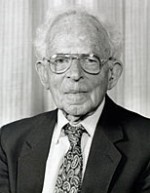
Sir Otto Frankel was a geneticist by training, plant breeder by occupation, cytologist by inclination and genetic conservationist by acclaim. Apart from his personal research, Otto was a highly effective builder and leader of research groups, Socratic gadfly to the scientific establishment, and high prophet of the genetic resources conservation movement. His career in science was unusual in that his most widely acclaimed work was done after his official retirement.
Interviewed by Dr Max Blythe in 1993.
Contents
- Cursedly indpendent from a very early age
- The simple matter of becoming a geneticist
- An Austrian Jew's entry into the British Empire
- A Cambridge introduction to cytogenetics
- The New Zealand years: chance encounters, enduring benefits
- Promoting good science in the CSIRO
- Linking developmental genetics with plant physiology
- 'Let's call it Genetic Resources!'
- Genetic diversity in nature reserves
- Honest science for self-sustaining ecosystems
Cursedly independent from a very early age
Sir Otto Frankel, it's good to be able to talk today to someone who has made such a massive commitment and contribution to gene conservation. First, though, can I take you back to beginnings? You were born in Vienna in 1900, I believe.
I really don't remember much of my childhood, but I don't think either of my parents was an especially powerful influence on me. I went to school in Vienna, but after that I was interested to move away – not because there was any unkindness in my parental home but just because from my very early days I was rather an individualist and cursedly independent. I was also a naive young man, stupidly idealistic. I was anxious to go to Russia, with no idea that I wouldn't have lived very long, had I gone there. I became a Communist and didn't shed that until years later.
Similarly, my own stupidity made me take up agriculture. I had no idea of how to do any farming or produce anything, but after the First War the world was very hungry, especially central Europe, where I was studying chemistry in Munich. Suddenly it occurred to me, 'The world is hungry. Why am I wasting my time on chemistry? I should be doing agriculture.' And so I started studying agriculture in another university, in the western Germany town of Giessen.
The simple matter of becoming a geneticist
Then I got so tired of studying that I gave it up altogether, until an old aunt of mine (a farmer on whose farm I was working) said to me, 'Otto, you're not an idiot. You're quite an intelligent young man. Don't waste your life like this. Go and study properly.' With her financial help I went to the Agricultural University of Berlin, which had a very high scientific reputation.
In my second year there I heard Erwin Baur, a very distinguished German geneticist, lecturing about genetics – something which was completely new to me; I'd never even heard of it before. I was fascinated. I thought, 'Well, this is it!' After a few lectures I went to Baur and said, 'Professor, can I do a thesis with you?' He said yes, when could I start? 'Next week.' He fixed a time for me to go and see him about it; I started my thesis; and I became a geneticist. It was as simple as that.
I worked on the snapdragon, antirrhinum, which Baur had made quite a famous object. It is now very much in the forefront in molecular work and people have done wonderful work on it – but still based on the background information provided by the work of my generation. Without that part of my life I don't know what would have become of me. My doctoral thesis included the first review on linkage in plants, where there was already quite a literature, which was then published in the German genetical journal as a major contribution.
What happened after that?
Well, although I was Dr Frankel by then, I had nowhere to go, nothing to do in life. It was very hard. One of my father's clients, an Austrian baron, had a large sugar factory and farms producing sugar beet in Slovakia, very close to the Austrian border, and my father arranged that I would be able to work there without pay. So that is where I went.
I was still far too young to apply for academic posts, and anyway I hadn't contemplated that. At the back of my mind I wanted to produce food. And Russia was still at the back of my mind, but in my naivety I had no idea how to do anything about it. I just sat there, not learning anything. But I did gain a little bit of experience; there was no-one who knew more than I did.
An Austrian Jew's entry into the British Empire
Were you hindered at that time by your Jewish background?
I'm sure I was. I really didn't have any openings. Working in Germany seemed unthinkable, partly because of the Jewish background.
But that background became very useful. (I hope you won't mind if I tell you another personal story.) One day I got a letter inviting me to come to London in connection with a post in Palestine as research officer in a team in which the Empire Marketing Board was involved. This Board was an imperialist move after the First World War to establish connections with the Empire – commercial connections on behalf of the motherland, rather than on behalf of the colonies. But the Board also had a committee to establish research schemes in the dominions and colonies. The emphasis was on mineral deficiencies, especially minor element deficiencies, which were quite fashionable at the time, being very important in animal production. A number of minor elements had been discovered, but the question was where else they existed.
The chairman of the research committee was Major Elliott, DSc, a member of parliament who had a close affiliation with the Rowett Research Institute at Aberdeen. And the Institute's director, Dr John Boyd Orr – later Sir John and then Lord Boyd Orr, the first director-general of FAO – interviewed me, very informally, in London.
In fact, my first dinner in London was in the House of Commons, where Walter Elliott had invited my cousin, Lewis Namier – who was already a distinguished modern historian with the chair at Manchester, and later became Sir Lewis. At that time he was the political secretary to Weizmann, the founder of Zionism. A group of Conservative politicians affiliated to Lord Balfour (of the Balfour Declaration for the Jewish national home) was attempting to assist the Zionist development, and Elliott and Balfour's niece, Mrs Blanche Dugdale, were the centre of this group. This research scheme on which I was engaged, then, was a cooperative venture between the Empire Marketing Board and the Zionist organisation, but actually administered and run by the Colonial Office.
So I was appointed by the Colonial Office and went to Palestine with a young Aberdeen man from the Rowett Institute, John Crichton, with whom I became firm friends and who taught me a lot of very colloquial English, with a great many swear-words! And that was my entry into the British Empire.
An amazing experience. How long were you in Palestine?
I stayed there for 9 or 10 months. But I was a plant geneticist and breeder, and animal nutrition really wasn't my field. I had been promised that if I didn't like it in Palestine they would bring me back to England and help me find a new job in my field, and so I came back – first to London and later to Cambridge.
A Cambridge introduction to cytogenetics
You were in Cambridge for nearly a year then, in the '20s. What were you engaged upon? It certainly impressed people.
I was working in the Plant Breeding Institute (which was part of the university) with A E Watkins, a very good wheat cytogeneticist and evolutionist. I had worked on wheat in Czechoslovakia, but it was Watkins who brought me into the cytogenetics of it. I learned a lot from him. He was a nice chap, who among other thing introduced me to English literature – he made me read Jane Austen and a lot more which was quite unknown to me, and seminal.
Watkins was very interested in establishing a collection of land races. He was obtaining material, in Cambridge, through the British Board of Trade. Its officials in different parts of the world, including Mediterranean and Near Eastern countries, went into markets and collected samples of seed lots that were for sale. Watkins generously shared his samples with me, and later when I came to New Zealand I had about 3000 in my collection.
Really, the science of it was based on the work of the remarkable Nikolay Vavilov, a Russian explorer and plant geneticist, plant geographer and collector. And 10 years later, in 1935, I spent a week with him in Leningrad. That link with Watkins and Vavilov in my Cambridge days influenced me greatly throughout my life. The cytogenetics of wheat became my field in New Zealand for many years.
I think your move to New Zealand had something to do with Biffen, who had been your first contact in Cambridge. Is that right?
Biffen was the Professor, but I saw him only once when I arrived and, of course, paid my respects. I never saw him again until he brought me the telegram which started me on the way to New Zealand.
That telegram is another story of the utmost chance. It came from John Orr, who had crossed Canada by train (as one did in those days) with Ernest Marsden – an English atomic physicist who had worked under Rutherford and had come to New Zealand as an administrator of education, I think. When New Zealand set up a Department of Scientific and Industrial Research (DSIR), as everyone did at about that time, Marsden became its head. So Marsden told Orr that having established a dairy research institute and appointed a cereal chemist, he was now establishing a wheat research institute and looking for a wheat breeder. It seems to me that Orr pricked up his ears at this and said, 'I have got him for you.' The result was his telegram to Biffen, who asked me if I was interested. Of course I was. And that greatly important New Zealand chapter of my life lasted for 23 years or so.
The New Zealand years: chance encounters, enduring benefits
Tell me about those New Zealand years, Otto. You went to a government-type job?
Very much, because I was appointed to the staff of the Wheat Research Institute under the DSIR. It was interesting enough, and I could do other things as well. I became very good friends with my director, F W Hildendorf, who was a leading man in agricultural science development in New Zealand and also Professor of Botany at Lincoln College, in the University of New Zealand. When he died, I took over from him.
During those DSIR years I did a lot of work, not only on wheat but also in the cytology of quite a different plant. In fact, that was the work for which I was made a Fellow of the Royal Society, in 1953.
The main outcome of your New Zealand work would have been the wheat strains you created, I suppose.
Oh well, I did some very difficult cytogenetic work there which was published in a series of scientific papers. But in my mind, as I look back at my life, none of this was really outstanding or as important as the work on genetic resources, most of which came after I formally retired. I look on the work we did on genetic resources and the genetics of conservation as my main contribution, the thing my name is reasonably well known for.
Wasn't it in New Zealand that you married your present wife?
My second wife, yes. I always think, you know, that through that chance interview on the railway train between Orr and Marsden she got a wonderful husband!
But in 1951 you moved to Australia. Did that also happen by chance?
In effect, yes. I had never seriously thought of looking for a job until quite late in my stay in New Zealand, when I had a row with the chairman of the Public Service Board (a personal friend). I wanted to appoint to a job a young Australian who wanted to continue his Australian salary level until the equivalent salary under our scale caught up to it. But this would have meant circumventing our very fixed salary system by a few hundred pounds – a trivial amount – and the Commissioner refused to let me do it. I thought his reason was plainly stupid, and as I walked out I said to a man from our head office, 'The next job that's going! I mean it.'
Then, one day, a colleague asked whether I had looked at the Australian advertisement that was on the noticeboard. When I admitted that I never looked there, he said, 'You ought to. You are the only one here who could take an interest in that one.' Well, I took it off the board, wrote a letter of interest and named referees, and was invited to come to Melbourne. Had this man not spoken to me about the job, oddly enough, I would have missed it.
Promoting good science in the CSIRO
You came to the CSIRO, where you remained.
Yes, and straight away I was enormously impressed. It was a different, larger world.
The post was as head of the largest division in CSIRO, the Division of Plant Industry, and the selection committee consisted of a number of university professors (several of whom became my good friends later) and some heads in CSIRO. I wasn't terribly keen, actually, when I was taken to Canberra and saw so many difficulties there. The main difficulty was, as I told the chairman of CSIRO, Sir Ian Clunies Ross, the next day, that I felt terribly ignorant. I had previous experience of hardly any field in the Division, and I told him I just felt so inadequate to fill this post that I really couldn't accept it if it were offered. But that impressed him enormously, as I realised later on, because I was the opposite of self-advertising.
As we talked, I kept on asking what they had done to find a more suitable person. I said, 'How about so-and-so?' and that impressed them even more. I couldn't understand why they didn't appoint the man who was acting chief, a distinguished ecologist and pasture expert, but Clunies Ross said simply, 'He would make it into a pasture research place, but we want very much more than that. We want good science.' So I was offered the job, and good science they got – in the end, for him perhaps a bit too much science and not enough agriculture. We went on to have a close, friendly relationship, however, and he played a big role in my life.
In the late '50s your administrative work grew, when you were on the Executive for four years. Did you enjoy that role?
No, I didn't, although really I was quite a good administrator. When it was offered to me, I accepted it because the large divisions were being disrupted and made into smaller ones but Plant Industry as it had evolved was such a good place, so productive, and had assembled such a very good staff that I didn't want it disrupted. I wanted to appoint my successor and see that he was safeguarded. With that done, the place got better and better rather than weaker and weaker as I had feared it might. It's a highly distinguished institution now, of considerable world reputation. I know I am given a lot of credit for this, but I did at least sow the seeds to make the beginning possible.
Linking developmental genetics with plant physiology
Clearly that saved the Division. With such a big administrative role, though, did you have a chance to do bench work?
I always had a small group, usually of two people, working with me on the genetics work which I had started and which ran through my life until the '70s, when it turned to physiology rather than cytogenetics.
I just thought you looked at a lot of chromosomes all the time.
No, not in this work. This was developmental genetics, work on the genetics and development of the wheat flower, and it was very difficult. We had discovered two different systems of genes which are responsible for the development of the wheat flower and can be found in a group of mutants called speltoids. They are similar to spelt, which is a species of the Triticeae and is closely related to our bread wheats. It is distinguished by a large, complex mutation involving several genes.
If this mutation is present, it can be transferred from mutants to bread wheat. When it is there, a different system of flower formation is revealed once the gene responsible for non-speltoidy is removed, and it is this secondary system which I studied throughout the years, using physiological methods. In Plant Industry we had developed a phytotron – that was one of my major achievements in Australia – and so I could use it as a place to do the physiological work. The series of papers which resulted didn't end till long after I retired. (I stayed on in the Division of Plant Industry doing this work, in addition to the international work on genetic resources.)
Your work changed the production of wheat and flour. Did it have an economic outcome?
No, not really. But it was of considerable academic interest.
'Let's call it Genetic Resources!'
How did you eventually become involved in working on genetic resources?
Well, there were two components of the curious way that came about. In the 1960s I was asked to represent Australia on the international scene. As it happened, Ledyard Stebbins – a very distinguished friend of mine and a well-known American evolutionist and taxonomist – took a leading part in the earliest stages of the International Biological Programme, and because he thought I should become interested in what became known as gene pools, he bullied me into taking over that field in the new IBP. So this is how it all started.
To make a long story short, it got me into the Food and Agriculture Organisation as a temporary consultant to advise on what they ought to be doing about genetic resources, as we later called it. I was one day sitting in my office in FAO when in came Hermann Kuckuck, a German agricultural scientist, younger than I, whom I had known a little. He told me a very interesting story, that extremely important genetic resources in Iran and in Abyssinia (Ethiopia) were disappearing. This was quite new to me and it made an enormous impact, because I had been interested in plant collecting and plant collections for many years, almost from my student days. As I then followed this up and got information about land races – the old peasant varieties which had been selected by farmers and also, very largely, by natural selection, and which had been the real resources of plant breeders ever since plant breeding started – so my interest in genetic conservation grew.
An international meeting of experts in Rome, which I organised, was the formal beginning of the whole campaign to assemble and to salvage the genetic wealth that had been accumulated in different parts of the world where agriculture had evolved. That was really the beginning of it for me, and the beginning of the movement to save genetic resources. At that 1967 meeting, I was talking to my colleague Erna Bennett, who had come to FAO to help with the final phases of organising this conference, about what we were going to call this. And together we said, 'Genetic Resources!' That's where the name comes from, and that is how we started the campaign against the loss of plant and animal species. And I'm still very much involved.
Genetic diversity in nature reserves
What was the other component of your involvement in genetic resources work?
That was an invitation to give a Macleay Memorial Lecture, in a series which had been established by the Linnean Society of New South Wales. I wasn't actually very intrigued, but such distinguished people had given that lecture before that I thought it would be pretty immodest if I were to refuse.
I was going to talk about what I had done before, but whilst I was thinking about genetic conservation it suddenly occurred to me, 'We plant breeders have all these land races and wild relatives of crops as our resources, and we bring them together, we cross them and we select. But what happens in nature reserves?' God would have to do it, and I couldn't see God coming down and making all these crosses! How would Nature have the diversity to select from for natural selection to occur when the environment changed – say if the climate hotted up or got dry or wet? As that sank in to this dumbskull head, I thought, 'This is quite something. There must be genetic diversity in nature reserves.' And this is why the Macleay Lecture is, to a degree, quite seminal. People hadn't talked about this. Perhaps everyone took it for granted, but no-one had emphasised it. And now it's become a bandwagon and it's being overemphasised.
Honest science for self-sustaining ecosystems
Tell me about the book you are working on at present, Otto.
It is like a sequel to the one that came out of the contributions to the 1967 conference, which became really the first bible of genetic conservation. In writing The Conservation of Plant Biodiversity, Dr Tony Brown (A H D Brown), Dr Jeremy Burdon and I are trying to establish a scientific balance. Biodiversity has become a catchword of the first order, but in this book one of the subjects we are dealing with is justification for species conservation.
You see, conservation takes two major forms. One is the conservation of communities, which we strongly advocate, and the other is conservation of individual species, whether of particular significance or not. Many people, including very distinguished American biologists, now say that everything must be preserved – simply, as one of them said to me the other day, 'Because it's there.' To me that makes little sense, so in this book we discuss various aspects of species conservation, among many other things, in a scientific way.
The three of us are firm that the important issue is the conservation of natural areas, although we have some differences about letting things die out. I am quite cheerful about that; I see no reason for attempting to preserve everything just because it's there. There must be a degree of selectivity. But I am all for preserving as many ecosystems as we can contrive to. I don't think we are winning in that battle, however, because of the increase in human populations everywhere. We can't win until we ourselves stop growing. This is not just about gene pools but about communities – complex communities which can sustain themselves and develop through natural selection.
Will your book be published soon?
We have a contract with Cambridge University Press for termination at the end of this year. Each of us has three chapters to write. I have written mine, and revised and re-revised them, but my colleagues are not as far advanced because they have a lot of other things to do. Besides their own research, they have to earn their keep, and their jobs have become very arduous: CSIRO has become burdened with an enormous amount of administration, and they have got to write reports and help find money for their work. They have become subject to a change which I personally cannot approve of, but which is a reality. They are very busy people.
In addition, we need an introductory chapter which sets the scene. I have written much of this, but when they have done a bit more work I will have to write some more introduction to refer to their chapters. And then there will be a summing up, in which we have to stress what we believe is important in the conservation of plant biodiversity. There we have to come out as honest scientists.
Professor Mervyn Paterson, geophysicist
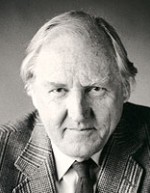
Professor Mervyn Paterson is a geophysicist who has led Australian research into rock mechanics and pioneered instrument development over the last fifty years. He was born in South Australia in 1925 into a family of wheat farmers. He attended Adelaide Technical High School, then The University of Adelaide from 1941 to 1943.
He began his career at the CSIR Division of Aeronautics working on the physics of metal fatigue, a foundation which shaped his entire career. He received a PhD from The University of Cambridge in the UK on x-ray diffraction effects of deformation metals, and pursued postdoctoral studies in Chicago in the USA. He returned to work at the newly-named CSIRO, but soon moved to the Australian National University, where he stayed for 31 years in the Research School of Earth Sciences. During this time he developed instruments to test rock deformation, which subsequently led to a 'second career' as owner and manager of Paterson Instruments P/L, a company specialising in building scientific instruments.
Interviewed by Professor Kurt Lambeck in 2006.
Contents
- Studying rock deformation
- The importance of crustal rocks
- Influences in rock deformation studies
- Early life and family background
- Widening horizons at high school
- From university metallurgy to CSIR research
- A Cambridge PhD in material science
- Chicago: the postdoctoral student meets his wife to be
- Transition from CSIRO to the ANU
- Moving firmly into experimental rock deformation
- A new career in equipment building
- Whither rock deformation studies?
Studying rock deformation
I think it is fair to say that Mervyn Silas Paterson is Australia's leader in research into rock mechanics under a range of laboratory and geological conditions. And over some 50 years he has pioneered apparatus developments that have been adopted world wide and are still directing the research of this field.
He was first appointed to the Australian National University in 1953, becoming a professor in 1987 – when professors were still few and far between and the title actually meant something. He was elected to the Australian Academy of Science in 1972, and during his career he has received a number of international and national awards in recognition of his work, perhaps most notably the Walter Bucher Award of the American Geophysical Union.
Mervyn, it is appropriate that we start with your science. I recognise that it is futile to try to summarise your career in a few minutes, and the details would probably be better set out elsewhere. But perhaps you can give us an overview of what you have been doing all these years, and an idea of how it relates to geological research in general.
I really started as a metallurgist and later got into material science, as it is called nowadays. Coming to the ANU in 1953 represented a big change in direction for me, because that was when I got into experimental rock deformation studies.
We were trying to understand how rocks deform – to understand geological processes, because during mountain building rocks get really screwed up and twisted and bent. The object in the lab is to try to understand what the processes are, and what sort of strengths rocks have. How strong is a rock under geological conditions? What sort of forces do you have to apply to deform it?
So that is the sort of thing that has kept me busy over the years.
If you go to a road cutting and look at how the rocks there have been folded and faulted, how do you relate this back to your laboratory experiments?
Well, you have to imagine what the conditions were at the time when those rocks got deformed in that way, when they were deeply buried in the Earth, perhaps even at the bottom of the Himalayas. A rock normally is rather brittle – if you try to bend it at atmospheric conditions, it just breaks. So to do our experiments on plastic deformation of rocks we have got to find high-temperature, high-pressure conditions, say thousands of atmospheres of pressure and 1000 degrees in temperature. You can bend a rock just like a piece of copper if you have the right conditions.
And where does that place you in the Earth?
Perhaps halfway down in the crust, 15 to 20 kilometres. But once you are under those conditions you are studying processes that are no longer so pressure dependent, and so you can apply the results in thinking about deformations deeper in the Earth.
How do you extrapolate from your laboratory work to the geological environment?
That's a very tricky one, because we don't have the geological time in which to do experiments. That is where the detailed study of the structure of the rocks and the specimens and the crystals in them becomes very important, because we want to understand the mechanism of the deformation. There are various ways in which a rock could deform at the atomic or crystal structure level, and we need to look in the microscope for evidence of what processes occured in the crystals of the rock. That tells us something about what particular deformation mechanisms were effective.
Then we can go to rocks in the field, do similar studies there, and try to come to conclusions as to what the mechanisms of deformation were. If we can persuade ourselves that the same mechanisms were operative in geological deformation as were operative in our experiments, we are entitled to extrapolate our very short-term experiments – hours or days – through to geological time of millions of years.
The importance of crustal rocks
During your career there has been a major revolution in the earth sciences as the plate tectonics hypothesis has developed. How has your own science been influenced? Has it made the outcomes of what you are doing more relevant?
I had got into this field about a decade before the plate tectonics revolution so it didn't greatly influence what we were doing. It has been extremely important for the context of geological studies, which I suppose has impacts on the laboratory work, but plate tectonics is really very large scale and we work at the intermediate and small scales.
I guess one consequence has been to move the emphasis in the earth sciences away from the crust into the mantle – to look at convection, for example, the dynamics of the mantle. Do you ever think of trying to do deformation studies at the greater depths and temperatures that are more representative of the mantle?
Well, there is no problem about the temperatures, because those we work at are at least the same as in the upper mantle. And the pressures are not a great factor in extrapolating down to greater depths, because the plastic deformation processes that we are looking at are not so pressure sensitive. It is exceedingly difficult to do experiments at the higher pressures. People are doing that now: a group in America and another one in Bayreuth, Germany, are doing experiments at much higher pressures. But they are much cruder experiments. I prefer to stay in a regime in which I can do more precise measurements.
I guess there is a question of choosing materials. If you are working at crustal depths you are looking at crustal materials; to work at mantle depths you have to look at mantle materials. Initially you have been working mainly on calcite, and later on quartz. How pertinent are these to understanding the Earth?
They are very pertinent in the crust. And I must take issue with the notion that all the important questions are down in the mantle. Most of the geology that we see is in the crust so I am a firm believer in the importance of working on crustal rocks. But we have also done a lot of work on olivine rich rocks, and olivine is the principal constituent in the upper mantle so we haven't neglected that. David Kohlstedt, from Minneapolis, spent a sabbatical here at a time when we had already got into working on olivine rich rocks, through work by Pram Chopra. Since then Dave Kohlstedt – using one of our machines – has taken up this sort of work in a big way in Minneapolis, which is now the centre of work on olivine rich rocks.
Influences in rock deformation studies
Over the years you have had a tremendous impact on students, staff and visitors, many of whom have gone on to positions of distinction and influence in Australia and overseas and have shaped the discipline of rock deformation studies. To what do you attribute this influence, and what lessons can we draw?
That's a bit hard to answer [chuckle] (assuming that I have had much impact on people). Comments from one or two of my colleagues suggest that they have learned something about how to be meticulous in thinking and in examining and analysing problems. I think it is a matter of attitude and of a disciplined analytical approach.
And of your ability to marry the instrumental development with the science?
That's all part of the same approach. When you want to attack a problem you have to develop the procedures for attacking it, and if you are an experimenter that means developing experimental equipment.
I think it is fair to say that your research work is characterised by asking critical questions and then designing experiments in search of the answers. Can you give us an example or two of that?
Well, take for example the crystallographic preferred orientation in marble. Marble is made up of crystals of calcite and in many cases the crystallographic axes are lined up, they're not just random. It is thought that they are lined up during the deformation. In the lab we can put pieces of marble – calcite aggregates – into the apparatus and deform them, and then use X-rays and so forth to measure the preferred orientation. In that way you can actually relate the preferred orientations that you see in a marble specimen to the sort of deformation that it has had. That enables you to go into the field, pick up a piece of marble and say, 'That's probably been deformed in this way.'
What have been your most important contributions so far in this field?
I like to think my work on quartz has been important. Quartz is really one of the most difficult of materials to deform and I don't think we understand it altogether yet, but I think I have made a contribution there. Another one that comes to mind is some work we did very early on with Barry Raleigh, on deformation of serpentinite at high temperature. That work brought up ideas about how deep-seated earthquakes may occur and has had quite a bit of attention over the years.
Early life and family background
Going back in time, Mervyn: you grew up in a 'one-horse town' in South Australia. In fact, you had to share a horse in order to get to school. Have any aspects of that early environment shaped your subsequent life?
I grew up in Booleroo Centre, a town about 300 kilometres north of Adelaide in a marginal wheat farming area – very marginal, I think. We lived right on Goyder's Line, which was supposed to be the limit to where you could grow wheat.
My forebears had gone up there in about 1875 when the area first opened up for wheat farming. So I came from a farming background and grew up on a wheat farm. The early 1930s were fairly tough years, however, when we had a lot of droughts and dust storms as well as economic depression, so things weren't very easy on the farm. But it was a great background in a way.
I went to local primary schools: small country schools with about 14 children in each of them, all classes in the one room with one teacher. The older kids got told off to teach the younger ones, and it was a cooperative venture. That's not a bad way to start off, actually. It teaches you a lot of self-reliance and so forth.
We had to travel quite a long way, though, and yes, I used to go to school on a horse. In fact, during the Depression our farming went back to the use of horses.
We escaped from going bankrupt in 1936 and moved down to Adelaide Hills, where I did my last year and a half of primary schooling at a very small, one-room school with a remarkable teacher, Max Wardrowski. He had a university degree, which was exceptional – all the teachers before that had been young women who were more or less just out of high school with a year's teacher college training. But because Max had a degree I became aware that universities existed and that a person could have an academic career.
Even earlier, I understand, your background includes the very foundation of Adelaide. Have I got that story correct?
Yes, one of my great-grandmothers came out in the first year of the colony. All my forebears were in South Australia by the 1850s. Half of them were from Scotland, a quarter from Wales and the rest from England, especially Somerset I think, with a great-great-grandmother from Ireland somewhere along the line. They were all farmers. My father used to have stories about the amount of cider that the 'Somerset' lot would drink during the summer.
I gather that your forebears were fairly staunch Protestants. Did that rub off on you and have any influence on your life?
[chuckle] I wonder. I think it's deep down. I think there were Cornish Methodist connections going right back to John Wesley himself. Certainly I grew up in a context of Protestantism. My father was a Methodist lay preacher, so we used to be regular churchgoers. I'm not particularly a churchgoer these days and I suppose I have become a bit agnostic, but I don't regret that as a background.
Mervyn, in reading obituaries of great scientists I am struck by how often their background has been very similar to yours – they have come from small towns, gone to small schools, had a not particularly academic environment. What is it about such a background that produces outstanding people?
I think one of the important things is self-reliance. When you come from such circumstances you do have to learn to make your own way in many respects.
I believe that even today you still walk to and from work. Do you think that mothers have to stop dropping their children at school and picking them up, and let them walk five miles?
[chuckle] Well, I don't think walking five miles does them any harm! It probably does them quite a bit of good.
Widening horizons at high school
Did you go on to a local high school?
There was no high school in our area so I went away to the Adelaide Technical High School. It was a select entry school with emphasis either on engineering or on commercial activities. (Max Wardrowski had probably brought our attention to its existence.)
When I was about to start at high school there was a polio epidemic so school was a little late starting that year. We had correspondence lessons for a while.
The school was very good, with high standards, and I had very good teachers there. For example, my teacher in the first year was Max Bone, who was subsequently Director of Technical Education in the South Australian government. Another outstanding teacher was the chemistry teacher, Dougal Slee. I learnt a great deal from him.
I suppose I gradually developed an interest in pursuing further studies. The high school didn't teach any foreign languages, so when I got the idea that I might be able to go to university I had to go and do Intermediate French at night school while I was doing my Leaving. I somehow managed to pass it.
That must have stood you in very good stead later on, because your French connections are well known. At some stage during high school you had to make a choice, I understand, between going to university and joining your father as a farmer.
Yes. During the Intermediate stage he came to me one day and said he was interested in a new property down in the south-east of South Australia, a bigger property which would have been more than he could manage. Was I interested in going in with him in that? Well, I thought that I would like to do another year at high school yet [chuckle] and passed that up. I guess by that time I was getting doubtful about pursuing a farming lifestyle anyway. I had seen plenty of how tough a life it was, the financial stringency and so forth.
So that was a turning point. I guess I oriented myself to a non-farming life from then on.
I guess ignorance was bliss – you didn't realise how tough and difficult an academic life could be. You have no regrets about not becoming a farmer?
No regrets. I did think about going on to agricultural science, because I still was very interested in that sort of thing. My father had been very active in the local agricultural bureaux that used to keep farmers up to date with the latest ideas about farming. But one of my teachers, Stan Tiver, had a son who had just finished agricultural science and couldn't get a job. (This was just before World War II.) Well, considering all the unemployment of the '30s, the really important thing about a career was to be able to get a job! That ruled out agricultural science.
Dougal Slee had inspired me very much in chemistry and I thought that would be a good field to go into, but doing an academic chemistry degree didn't seem to be the avenue to a job either. So I did the next best thing and chose metallurgy, which involved plenty of chemistry and also had the possibility of a job at the end of it. And on the basis of that decision I entered the university.
From university metallurgy to CSIR research
As I understand it, when you went to Adelaide University you were remarkably young by today's standards. What are your memories of university life?
[chuckle] I was just 16 when I started. I didn't take much part in university life in those days, except going to lectures and studying. It was very much a nose to the grindstone period. I used to do all right at it, though.
I started at the university in 1941. The end of that year was Pearl Harbor and the fall of Singapore, and the first vacation in 1942 we actually spent digging trenches in the grounds of Adelaide University because the Japs were coming down what were then the East Indian islands at an alarming rate. So the university engineering courses went into four terms a year, and the university shortened the course and gave an interim Bachelor of Science (Engineering) which I finished in '43.
Were you called up for military service?
I was called up, examined and pronounced A1, but as a metallurgy student I was sent back to the university because that was a reserved occupation. A metallurgist was supposed to be making cartridge shells and things, and wasn't allowed to join the Army. (I didn't protest about that.)
After university you joined the Aeronautical Laboratories at Fisherman's Bend, Melbourne, where you worked on the physics of metal fatigue. I understand that that was quite a remarkable place and going there shaped your subsequent career.
Yes, that was a real turning point. Our university course had been what one might call fire and smoke metallurgy – all smelting and ore dressing, extraction metallurgy, with practically nothing in the way of studies on the properties of metals. But in my last year at the university I happened to pick up in the bookshop a newly published book by C S Barrett called Structure of Metals, and that was an absolute revelation to me: I'd never heard about crystal structures in metals in my metallurgy course. It was an inspiration, and was partly the reason I moved over into the physical metallurgy field.
This move resulted also from having second thoughts about pursuing a primary metallurgy course. Professor Gartrell had lined me up a job at the Mt Lyell copper mine, doing studies on flotation of copper ores – which was right up my street, the thing that interested me most in metallurgy. But I got cold feet about spending the rest of my life in a mining town at that point, and Mt Lyell was about as remote a place as you can imagine, on the west coast of Tasmania.
Then I became aware, probably from an advertisement, of an assistant research officer post at Fisherman's Bend in the CSIR Division of Aeronautics, and I went there in the last year of the war. The lab had been going for about four years, I think. There was a remarkable galaxy of talent at that place, a real research environment, with people like George Batchelor and Alan Townsend.
They both went on to Cambridge and to great things.
Yes, very well known in the field of turbulence later on. There were a lot of people in mathematics; a lot of students of Tom Cherry, from Melbourne University, were there. Oh, it was a very stimulating place.
A Cambridge PhD in material science
For your PhD you went to the Cavendish, in Cambridge. Did that mean you had to leave your position at CSIR?
Only temporarily. I went to Cambridge on an Angas Engineering Scholarship established by the Angas family of Angaston in South Australia – who had actually brought my great-grandfather out in the 1850s.
And that closed the circle.
Yes. The scholarship, however, still paid about the same amount of money as it did when it was established in the 1890s, and it was totally inadequate support. So I also got a CSIR studentship to make the Angas up to the value of their studentship for me. That was very good.
Can you tell us anything about your time in Cambridge? Did any particular events or individuals shape your future?
Going to Cambridge was a new step, and for me a step into the university life. While I was at Adelaide University I lived with my grandmother and life was mostly just studying. But in Cambridge one came in contact with all sorts of people and enjoyed the college life. For example, a couple of my very close friends there were Sahkar – subsequently the editor of the Times in India – and Abuticknama, who became Vice-Chancellor of the university in Colombo, Sri Lanka.
I went to the Cavendish to work with Orowan. I probably got to know about him from Walter Boas (a one-time Fellow of our Academy here) who had been a fellow student of Orowan's in the Technical High School in Challottenberg, Berlin, in the 1920s – a great period in German physics.
There was a very interesting group of people around Orowan in the Cavendish at that time. One of the people I used to share an office with was Rodney Hill, for example, who was just finishing his PhD in plasticity theory. Norman Petch was another interesting person. Robert Cahn is very well known in material science nowadays; he also shared that office. [chuckle] It was a very stimulating time, and I very much enjoyed living in Clare College and associating with the people there.
When you went to Cambridge was there again a change in research direction?
Going there was essentially a new orientation for me. It provided me with a new direction, working in X-ray diffraction effects of deformation in metals.
Actually, I didn't go there with a thesis topic in mind, and initially Orowan said I should work on the mosaic structure of crystals. Well, I spent about six months bashing my head on this and trying to understand the dynamical theory of X-ray diffraction and so forth, but I wasn't really getting anywhere. So he suggested one day that I look at the X-ray line bordering in copper deformed at liquid nitrogen temperature. I picked that up and I managed to extend it out to a PhD.
Chicago: the postdoctoral student meets his wife to be
After Cambridge, then, you returned to Australia.
Yes, I came back to Fisherman's Bend for a year. While I was in Cambridge, CSIR got its O and became CSIRO, and when I came back it was to the Department of Supply, because CSIR hadn't been seen as secure enough for aeronautical research. It was all right during the war: we didn't even have a guard on the gate in those days!
Afterwards you went to Chicago for postdoctoral studies. Why did you pick Chicago? What was going on there?
That came about by chance. I think Orowan had received information about the postdocs going in Chicago and mentioned me, and I said yes, I might be interested in that. So he wrote off and they offered me a postdoc. But I thought I was committed to go back to Fisherman's Bend at that time and didn't take it up immediately. I was already in the boat on my way back when I got a cable from Fisherman's Bend saying they would okay me to go to Chicago. [chuckle] Well, I held them to that and a year later I went.
In Chicago I actually worked for a year with C S Barrett, the man whose book had inspired me earlier on.
The CSIRO were quite content to encourage you down this path?
Yes, they agreed to it. They had been cooperative all along.
Not only did the Chicago year change your science, but I believe it was in that big and foreign city that you met your wife to be.
Yes, that's another opening-out of one's life. I was a Protestant colonial [chuckle] from remote parts of the Earth, she was a Hungarian Catholic with all the cultural background of Europe, including food.
So this was the civilisation of Mervyn, was it?
Oh yes, I'm sure she'd like the idea that she had civilised me.
Transition from CSIRO to the ANU
From Chicago where did you go?
I went back to Fisherman's Bend. In a sense I spent about eight years at Fisherman's Bend, but for half of that I managed to be overseas.
What did you work on this time?
I started work on the more fundamental aspects of fatigue in metals. I was looking at reverse deformation effects, studying single crystals and pulling them back and forth, looking at the changes – defects and so on – in them. Actually, I spent much of that time perfecting a machine which I later brought up to the ANU and continued to use here. (My first research student did his PhD on that machine.)
We come now to your time at the ANU. You have been at this university for longer, possibly, than anybody else.
Except Frank Fenner! [chuckle]
Would you care to make any comments about what you have seen over this period and perhaps how science was done in the early days compared with today?
There has certainly been a lot of change over the years. Part of it is associated with the increasing size of the place. In the early days one knew everybody – I even knew all the people in Pacific Studies and Social Sciences, whereas I don't know anybody over there now. One was linked in more broadly to the university community in those days.
Finance was never really a problem: the university was quite well funded, and funded in the institutional way so we didn't have to spend our time writing grant proposals and so forth. And we were starting off in new fields, largely, so there was a lot of freedom in choice. The department head, Jaeger, would appoint somebody with an idea that he might work generally in, say, seismology but what he did was up to him. [chuckle] He had to formulate his own problems.
Listening to you, I reflect on how similar many aspects of my own career were, despite there being a time difference of 20 years or so. But it seems to me that in these last 20 years things have moved much more rapidly than in earlier periods.
Well, life was more leisurely. I think that is a difference in the research environment nowadays – people have to work much harder. I suppose they're all stimulated by each other and have less time outside the lab. At Cambridge we used to go off and play tennis in the afternoon, but here we don't have time for that.
Is the work any better as a result?
The quantity may be greater, but I'm not so sure about the quality.
Moving firmly into experimental rock deformation
You were appointed to the ANU by Professor John Jaeger, who today has reached almost mythological standing in the Research School of Physical Sciences. Can you tell us something about the circumstances of your appointment to the then Department of Geophysics? It would be unusual today for someone to come into this field from outside the earth sciences community as you did.
It would be somewhat unusual, yes, but it can happen. The background to my coming here goes right back to the beginning of the university and the setting up of the school. It was decided that geophysics would be one of the areas included and a meeting was held in Canberra to discuss where it might go. One of the people brought in to that meeting was Tuzo Wilson, a famous geophysicist from Canada, who suggested that experimental rock deformation would be a good field for the new university to enter.
Oliphant, the first Director of the school, took this up. And when he appointed Jaeger, who arrived at the beginning of '52, he passed this on, together with the thought that it would be worth writing to Orowan for possible names. (Oliphant had known Orowan before the war by giving him a place in Birmingham when he came as a refugee from central Europe.) Orowan was my PhD supervisor in Cambridge, and he put my name into the ring. So I got a letter out of the blue from Jaeger, asking me whether I was interested in this field. And that's how I came here.
No advertisements, no applications?
There may have been an advertisement, I'm not sure.
When you got here, what were your marching orders?
To work in experimental rock deformations – nothing more specific than that.
And starting from scratch, no equipment?
Yes. There was nothing in the laboratory at that time. I first got an X-ray diffraction outfit and then started thinking about deformation rigs. I built two or three rather primitive ones before I finally got onto the sort of apparatus that I use now in the lab.
Was this a new area of apparatus development, or did such rigs exist?
There are two pioneers that one must mention. One is von Karman, whose experiments in about 1908 were quite out of their time. The other is David Griggs, who started in Harvard in about 1935, with inspiration from Bridgman on the experimental side. When I came to the ANU, Griggs had been in UCLA since the late '40s and he had the experimental deformation laboratory in the world at that time. After about four years, in 1957, I had the opportunity to go to Griggs' lab and make contact with him.
So you weren't daunted to enter this new field from outside the area?
Well, from the physics point of view I wasn't [chuckle] because I was really interested in getting into deformation of non-metallic materials. From the technological point of view I was rather daunted; I felt I didn't know anything about high-pressure experimental work and I was a little hesitant.
How long did you take to get your first publications out?
At first I used the piece of apparatus that I brought with me from Melbourne to work on reverse deformation of metals, an aspect of the fatigue of metals work that I had been doing at the Aeronautical Research Laboratories at Fisherman's Bend. I carried on with that here for a couple of years while I was accumulating equipment for the experimental rock deformation work, and I got a publication out on that. But it was two or three years before I got anything out on the rock deformation.
How would you have fared in today's climate of Australian Research Council reporting et cetera?
[laugh] I don't think I could have developed any of the equipment I have now, because I am very slow at things and it takes years to make these things work.
I guess a lot of the work in the School of Physical Sciences was characterised by long-range, very careful instrument development and the science was often very slow in coming. But when it did come, it was invariably outstanding.
And all backed by superb workshop facilities and laboratory assistants.
A new career in equipment building
Can you tell us something about your time since formal retirement? I say 'formal' because I know that you have not gone fishing but have developed a new career as a builder of scientific instruments.
Well, I had many research students and sabbatical visitors over the years who used the high-pressure equipment that I'd designed and had built in the lab, and they seemed to manage it quite well. It seemed to me that the equipment was reasonably user friendly, and I knew there was very little such equipment about.
I am talking about equipment for deforming rocks at high temperature and high pressure. It is basically a pressure vessel, a big cylinder of steel, in which one generates a high pressure. The pressure medium is argon gas, and when you pump that up to 3000 or 5000 atmospheres it has about the density of water – that is really high pressure for a gas. Inside the pressure vessel you have a furnace which raises the temperature to 1000° or so. In effect, you operate a mechanical testing machine in that environment, applying directed stresses to the piece of rock so that you can plastically deform it. Then you have to measure the forces involved, and we do that inside the pressure vessel so as to avoid problems with friction and pistons.
That took many years of development. I was conscious that although a number of people over the years had set out to build such machines, many had never worked, so I thought that there was room for one that it was viable. So before I actually retired I had the idea that we might go commercial with it.
The Instrom company, a big testing machine company in England, expressed interest in it for a while but finally they said that they liked to make machines at 100 a year [laugh] and they lost interest in my much smaller proposal. I mentioned to a friend of mine in the United States that I was thinking of giving up, but he said, 'Well, why don't you do it yourself?' After some consideration I thought, 'Why not?' and that's how it came about.
So how many have you been making a year?
About one. [chuckle] But we have made 12 so far – they are in England, Germany, Switzerland, France and the United States so far – and we have got feeler expressions of interest from China and Italy. The ones in use are all in earth science departments except the one in Poitiers, France, which is in a material science department. I have just come back from a meeting in Orleans at which the Poitier man gave a talk about the work that they were doing.
Whither rock deformation studies?
You have witnessed 50 years of change in rock deformation studies, and 50 years of change in the earth sciences. Where are things going now?
Things are already going in the direction of higher pressures and higher temperatures for application to deep material of the Earth – in my view, a pretty limited field. Once you have solved one or two problems there, that may be the end of it. The crust of the Earth has infinite variety in it and I think there is a lot still to be done.
What are the big issues that have to be resolved?
I don't know whether they are big issues but we do need a lot more understanding of how polymineralic rocks deform. So far we have been doing very simple things like marble, which is just an aggregate of calcite; quartzite, which is just quartz; and a dunite which is just olivine. Now we need to do more on rocks which are mixtures of crystals, for example granite, which has quartz and feldspar and micas all in the same rock. We don't really know very much about the deformation of such materials.
Mervyn, you have had a remarkable life and continue to do so. If at any stage you could have changed directions, would you have done anything different?
I'm not sure that I would. I think life consists of taking the opportunities that arise. If I had been given different opportunities I suppose I'd have gone in different directions, perhaps into history or something like that.
I guess there were no jobs for historians, back in the late '30s.
[chuckle] Well, some people survived in that period.
Yes.
Professor Brian Anderson, systems engineer
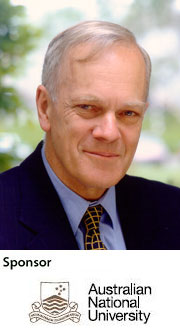
Professor Brian Anderson
Introduction
Professor Brian Anderson was born in Sydney, Australia in 1941. He attended the University Sydney graduating with a degree in both engineering and mathematics. Professor Anderson received a PhD from Stanford University in the mid–1960s and stayed on as a faculty member before returning to Australia in 1967. He worked as a Professor of Electrical Engineering at the University of Newcastle until 1982 when he moved to the Australian National University in Canberra to found a new Department of Systems Engineering within the Research School of Physical Sciences and Engineering. In 1994 Professor Anderson oversaw the establishment of the Research School of Information Sciences and Engineering and was the School’s Director until 2002. Between 1998 and 2002, Professor Anderson was President of the Australian Academy of Science. From 2003–06, he was Chief Scientist of the organisation National Information Communication Technology Australia (NICTA). Professor Anderson continues his passion for research in his role as Distinguished Professor at the Australian National University.
Interviewed by Professor Neville Fletcher in 2008.
Brian, it's great to be talking with you, to explore your career in science. You were a Sydney boy, I believe. Is Sydney where your family came from?
I was born in Sydney, as were my grandparents and, I think, a number of their parents also. I'm not sure when my ancestors first came to Australia. My father was born in Sydney; my mother was born in Mexico of Australian parents, when her father was working there as a mining engineer.
So the engineering goes back in your family a long way?
It certainly does. I think there were engineers even before my grandfather.
Did your school days lead you to a career in science and engineering?
Well, most of my schooling was in Sydney, with a little bit in London. In my primary school we were challenged with arithmetic and even some algebra, and I enjoyed that very much.
The high school I went to was Shore School, at North Sydney – Sydney Church of England Grammar School – where we had some excellent mathematics teachers, including the headmaster, who taught Leaving Certificate Honours mathematics and nothing else. And also physics was very good at that school.
I had two school friends whose fathers were electrical engineers, and with them I engaged in what you might call scientific and engineering sorts of hobbies. I admired their fathers, and I think that had something to do with directing me.
Did you have some hobbies related to what you decided to do?
Ahh, yes. With the school friends I mentioned, especially, I was involved in things like Meccano sets and electric trains. I was also interested in music, and played in the school orchestra and did some band work. And I was always reading. I enjoyed that very much too.
What instruments did you play?
I started by learning the piano for several years, and like many young children, I suppose, I rebelled a bit. But then it became possible to learn the viola and subsequently the violin, to fill holes in the school orchestra, so I took that opportunity too. The stringed instruments I abandoned when I went to the United States to do graduate work – for practical reasons, not because I disliked them – but I have kept up the piano since.
You then went to the University of Sydney and did degrees in both engineering and mathematics. Was that university experience a good one?
Well, I went into engineering, with a major in electrical engineering planned downstream. To do an honours degree in electrical engineering you had first to complete at least a pass science degree, and you did that by doing two years of engineering and then a third year of mathematics and physics. I did that, and the mathematics was great. I got a CSIRO award, something like a graduate student stipend, for a fourth (honours) year which I did in pure maths, and after that I went back to electrical engineering. The professor at that time was David Myers, the father of one of my school friends, and he took a great interest in me.
Was electrical engineering your first choice, rather than mechanical or one of the other sorts?
Yes, it was. I think that came from my high school experiences, including hobbies. Also, I'd formed the view that electrical appeared to use mathematics (and probably physics) in a much more sophisticated way than did other areas of engineering, and so there was never any doubt in my mind that I wanted to do it. I was actually turned off by factory roof trusses and gearbox design and how to purify water, and by the iron-carbon equilibrium diagram – I am sure they are important, but they just didn't stimulate me.
Computers weren't really around then, were they?
Not really. SILLIAC was the only computer on campus. I remember that we typed a long program into a teletype and got some punched tape; we marched across campus to SILLIAC; we gave the tape to a gentleman wearing a white coat, who ran the tape into the computer and gave us a tape in return; we walked back to electrical engineering, fed that tape through the teletype, and found that 11 plus 5 was 16! [laugh] To tell the truth, I thought, 'This is crazy. Who wants to waste time doing this sort of stuff?' So that for me was actually a turn-off from computers.
While you were at the University of Sydney you had some experience of being in the air force. Did that influence your future career?
Ahh, that's true. For most of the time I was an undergraduate there was some form of national service, and as soon as I went to university I volunteered to join the Air Force Reserve. That kept me out of the army, and it gave me some wonderful technical experiences and also management experiences, really, because I became an officer after two years and I worked with electronic systems on aircraft – and with the technicians who were directly servicing them. I learnt a lot, and I found it very interesting. I'm very glad I had that experience.
Did you get some flying in, even if not as a pilot?
Yes, I did – in Australia, of course, but also I went to Malaysia (or Malaya, as it then was) and Singapore and the Philippines on different occasions, on deployments that were about a month long.
That must have been very interesting, particularly in those days when people didn't travel so much.
That's right. Mind you, we didn't travel in a 707, the predecessor of a 747, but in a Hercules, where we sat on collapsing plastic web seats. Our ears rang for hours afterwards, because Hercules are incredibly noisy inside. You couldn't extend your arms in front of yourself, because there was an engine in front of you and above you; if you raised your leg you'd probably hit the engine. And to go to the toilet you had to climb along the tops of the seats. It wasn't particularly comfortable! [laugh]
How did the opportunity to go on to Stanford University, in California, come about?
Well, I was following some advice from Professor David Myers, who by the time I graduated had moved to be dean at the University of British Columbia. He was someone whose advice I took seriously, and he advised me not to go to the UK but to consider MIT, Berkeley, Stanford or Caltech. The staff at Sydney university helped write references, and then one of them said to me one day, 'I think I've got you a research assistantship at Stanford.' He had met a visiting Fulbright professor from Stanford and had, I suppose, delivered a sales pitch on my behalf. So I met the Stanford person, he told me a problem, I solved the problem fairly quickly, I think – maybe in a week or something like that – and I got a research assistantship for the period of my PhD. I was just very fortunate.
What was the experience of a PhD like at Stanford? It must be even now quite different from a PhD in Australia.
Yes, and incredibly different from what a PhD in Australia would have been in the mid-1960s. Electrical engineering was the biggest department at Stanford. It had 600 graduate students, and it had about 45 or 50 full professors, most of whom were stars and many of whom I had heard of as an undergraduate before I went to Stanford because they had written books. It was very, very much a research university, and so I found the environment incredibly stimulating. It had a major effect in shaping me and giving me scholarly values and proper training.
Did you get to travel around America much at that time?
A fair bit, I suppose. I went to the east coast once or twice. And then after I graduated I was a faculty member at Stanford and I travelled during that time. Also, while I was still a student I started a part-time job with a company and I kept that on when I was a faculty member, so that gave me some more broadening opportunities.
Incidentally, just a small number of years ago I made contact again with the boss that I had in those years. He is a fellow of the National Academy of Engineering in the United States, and when I was elected a foreign associate I got a lovely email from him, reflecting on the time I spent in the company. He told me that the thing I worked on had made a big difference at the time.
What was 'the thing you worked on' at that time?
The company was engaged in putting telemetering on rockets and missiles, and the requirements would differ between different rockets and missiles. Part of the associated circuitry, therefore, was specific to the order, and they were taking many months to do the design – they didn't have a systematic methodology, and they were using slide rules and such things. So I did a systematic methodology. I didn't program it, because in those days you had a programmer who interacted with a service bureau. But it enabled the company to receive an order in the morning, feed this into the program and get a printout for the factory as to how to do the product, and they had that within 24 hours. That was the main thing I did.
In 1967 you came back to Australia to be professor of electrical engineering at Newcastle. How did you come to pick the University of Newcastle?
Newcastle picked me. I was interacting with a number of Australian universities, under some obligation to return to Australia because of other support that I'd had when I went to the United States. So I was generally writing round and in negotiation with several universities, and when I wrote to Newcastle they wrote back and said they had a vacant professorship, and would I apply. (I had of course sent my résumé.) I did so, but heard nothing more until I got a cable one day offering me the position – without having had an interview.
Very flattering, isn't it?
Well, yes, or very foolish on the side of Newcastle. But there was an explanation: the appointment committee included members of another appointment committee with whom I had dealt. So in retrospect it perhaps wasn't quite so surprising.
You had quite a long time at Newcastle. What sorts of things happened while you were there?
I was there for 15 years, and it was great. I was able to appoint a number of people, many of whom became famous – I think several became fellows of this Academy, many are IEEE [Institute of Electrical and Electronics Engineers] fellows and at least one is a fellow of the Royal Society. The philosophy was that we could build strength in a subdisciplinary area by saying to people, 'Come and work in the same area as us if you are good, but bear in mind you are going to have to teach any undergraduate course we ask you to teach.' And that seemed to work. I think we were all very proud of what we were able to do at Newcastle.
It remains a flourishing engineering university, doesn't it?
I'm very pleased that it does, yes.
In 1981 you moved from Newcastle to the Australian National University (ANU), in Canberra, to found a new Department of Systems Engineering within the Research School of Physical Sciences and Engineering. How did that come about?
About two or three years prior to that I'd had some discussion with the ANU about a position which they were filling in the research school and for which I think I was quite unsuited. At that time I made an almost casual remark to the then director, John Carver, 'Look, if you ever had something closer to my interests, I'd very much like to look at it,' because I was getting a bit frustrated at the Newcastle approach of not being selective in giving more funds to the better people – everybody had to be treated equally.
With John Carver I was a member of the Australian Science and Technology Council, and in about April or May '81 I was at a meeting in Canberra where John Carver said, 'We had a conversation a couple of years ago. I think I might be able to do something about that. I'll tell you more at lunchtime.' At lunchtime he laid out the fact that he'd been given money to develop engineering. It was limited but it had the backing of the university, and would I please think about the possibility of accepting an appointment if I was offered it – no advertisement or anything like that.
Well, things moved very, very fast, and I was signed up within a couple of months and started on 1 January 1982.
That was to be a different sort of engineering from the bit that was already going on at that school, wasn't it? There were some things about solar energy, a solar generator and so on.
Yes. There was a department called engineering physics – not engineering, but engineering physics – which was a bit of a grab-bag. It included, I think, a rail gun and maybe plasmas, a number of separate activities like that, and a number of the people doing these things were hard-core physicists, not engineers. So it was very different, and I didn't have a great disciplinary affinity for that sort of activity.
Were there many staff people attracted to your branch of engineering?
When the move to set up systems engineering was put to me by John Carver, he indicated that it was with the support of the central part of the university. What he didn't say was that there were many people in the school who thought this was a crazy idea, because there was a semi-tradition that physics was a superior discipline to engineering, and maybe engineering just belonged in a technical college – and also a feeling that, 'If we got engineers, there'd be less money for us more important people, the physicists.'
I remember that I had to give an inaugural lecture, and did so. There was a far larger audience than had been anticipated, with many, many people having to stand, and as is normal there were questions. But these were what I'd call '60-Minutes' questions, rather than the style of questions you are now putting to me!
So, how many staff members? I can remember them at morning tea and so on, because I was part of that.
I am guessing a little bit, but I think there were maybe 80-odd staff members in the school overall. In systems engineering we had about five or six, I think. I should say that after a number of years there, I think there was a lot of acceptance of our activity.
During the 1980s you were involved in several new initiatives in the way engineering was organised at the Australian National University. One of them was the foundation of an undergraduate Faculty of Engineering. Tell us about that.
That went from the creation of a new department in the Faculty of Science to a separate Faculty of Engineering and Information Technology. One of the deputy vice-chancellors at the time, Ian Ross (a past fellow of this Academy) had for a long time believed that the university ought to be doing something in engineering – the Swiss Federal Institute of Technology is the Swiss national university and focuses on engineering – and so he asked me to draft a proposal.
The proposal didn't look like what was the convention in Australia at that time. Indeed, according to the Institution of Engineers, it was unaccreditable. According to Sir Bruce Williams, who was at that time conducting a review of engineering in Australia, it was wonderful, and the Institution of Engineers would be in trouble if they didn't accredit it. The institution changed their opinion, and it got accredited and started. The guy who initially headed up the operation came from systems engineering.
The new department later became part of the Faculty of Engineering and Information Technology, and is now part of the College of Engineering and Computer Science at the ANU.
Has the faculty maintained a balance similar to the one you started it with? Or has it become more conventional?
Of course it's not identical with what was originally planned, but even so it does not offer a degree in electrical or mechanical or chemical or civil. The degree is called systems engineering, which is indicative of a broader degree that picks things from electrical and mechanical, principally, with some materials stuff and supportive subjects of management style, or law or economics, something like that.
Does that make it different from, essentially, all other engineering faculties in Australia, or have others have followed that model?
There are others that are a bit closer to that now. But the older schools, I think, have stuck with the traditional names, most of which were instituted around the start of the 20th century and, as a result, became the basis for accreditation requirements. The existence of those names or divisions probably inhibited experimentation in engineering programs.
The Research School of Physical Sciences, over the years, has 'given birth' to several new research schools – the Research School of Earth Sciences, the Research School of Astronomy (a good bit later) and then, during your time, the Research School of Information Sciences and Engineering. What made that one happen?
I've mentioned the name of John Carver. When I'd been at the ANU about 10 years, John became a deputy vice-chancellor. And in, I think, my 11th year John said to me, 'Brian, I think you should work on a proposal for a Research School of Information Sciences and Engineering.' He said I should take into it systems engineering, which is where I was, and computer science, which was another, more recent addition to physical sciences. John nominated also a sort of floating centre in the university called Centre for Information Sciences Research, saying, 'We may be able to find some money for telecommunications as well.'
So I generated a proposal, and it was necessary to sell that proposal and actually get a majority vote from the collection of research school directors and also a broader body called the Board of the Institute of Advanced Studies.
The research school directors were torn, because they saw the Institute of Advanced Studies budget as being fixed in size and therefore a zero sum game principle was applied. On the other hand, the institute had been very severely criticised in a previous review for not being able to show that they could move funds around, and for being still 'frozen' in the style and format that prevailed at the time of the institute's formation. Another review was coming up, and they were terrified that they would be stabbed, perhaps even fatally, by the reviewers if change wasn't demonstrated. So they opted for change with minimum cost. [laugh] They agreed, and then the Board of the Institute of Advanced Studies agreed, and the new school was established on 1 January 1994.
On the campus, the new school is physically about as far away from the Research School of Physical Sciences as it can be, and very close to the undergraduate Faculty of Engineering. Would you say that is consistent with a continuing move toward integration between graduate schools and undergraduate?
Well, yes. It makes sense. But I should say that when the new school was formed, its four components were in four different buildings. That was thoroughly unsatisfactory. There was also a space problem and some of the buildings were themselves unsatisfactory. For example, rats would die under the floor of an office and regularly the office would have to be vacated while the problem was fixed up! So it wasn't hard to persuade the university that the new building was needed – and a single building. The location then fell into place, in terms of proximity to the undergraduate activity and Anutech, and availability of space and so on.
And the research school has flourished, with a quite large staff filling this building?
Yes. I don't know how many there are now, but it flourished. And a few years ago it helped give birth to National ICT Australia.
The founding of NICTA is perhaps the most significant of your interactions with industry, and the organisation is now very important and successful. Can you tell us about it?
Well, I had formed the impression that the people in Australia were likely to miss out on many benefits from the information technology (IT) revolution. Many millennia ago there was an agricultural revolution, and maybe biotechnology is giving us another one. We had the industrial revolution a couple of centuries ago. But we've really been sitting through this new revolution, the IT revolution.
We've had only one big indigenous company in this area, Telstra. We've had many big companies from abroad trying to sell us things. We have indigenous Australian companies that are very, very small and so find it very hard to market well. We've had purchasing mistakes worth massive amounts, hundreds of millions of dollars, caused by poor knowledge. We had a situation where the Australian Research Council were funding, I think, 2½ times as many postdocs in history and anthropology as they were in information and communication technology (ICT). We had Australian authored papers in ICT about 23 per cent less popular, on a normal metric, than the world average, whereas most areas of Australian science are within ±5 per cent.
I thought it was a mess, and a number of other people were of a similar opinion, especially the Department of Communications, IT and the Arts, under Senator Alston at the time. So I was asked to do a report for the Prime Minister's Science [Engineering and Innovation] Council on the R&D base in ICT, and that report then made a series of recommendations. And very shortly after it was completed, a package of measures announced by the Federal Government – Backing Australia's Ability I – included a provision for an ICT Centre of Excellence.
There was a competition to set up the new organisation, and I was the leader of the bid team for four partners: the University of New South Wales, ANU, the ACT Government, and the Government of New South Wales. (There were some supporting entities, like the University of Sydney, but those were the four principal partners.) And we won. The idea was to set up an organisation which would do some basic research, certainly, because there was seen to be poor performance in that area, and would participate in graduate education, doing this on what you might call the French or German model, in cooperation with universities. But it would also focus on getting the ideas out and provide thoroughly professional support for the commercialisation side of this activity, rather than the sometimes amateurish support that you have in Australian universities.
NICTA is now in Queensland, Sydney, Canberra and Melbourne, with minor activities in Adelaide and even, I think, in Western Australia – very minor there.
Apart from getting it going, you were very much involved in actually running it for some years, weren't you?
Because I led the bid team, to have credibility I said I would be the initial president. But from the start I limited that to one year, because I didn't really care for that sort of activity, and it was made worse by the fact that the headquarters had to be in Sydney and I don't handle that sort of travel particularly gracefully.
After that year as president, during which they recruited someone else, I became chief scientist, the person legally in charge of the research program, and I did that for a bit over three years. Then I stopped when I saw that there were now enough skills for that to be done, including in the person who by that time was CEO. I stopped also because it was taking a huge amount of time and I was frustrated that I wasn't doing enough research: believe it or not, Neville, although we've been having this discussion about organisational things, research is my first love!
Actually, getting so many things done at an organisational level has not kept you from being heavily involved in research covering a lot of areas of information science. Could you tell us a bit about the sorts of things you've worked on?
I've done many things, because I've been in this for a long time. The areas in which I have worked have been largely control systems and signal processing, with some telecommunications. And occasionally that's spilled over into mathematical topics in random processes or linear algebra or something like that. Many of the problems have had their origins in industrial needs or applications domains.
For example, Boeing were taking several hundred person years to design the flight control systems for their commercial aircraft. That was because they were using trial and error methods; they did not have a systematic methodology. The only systematic methodologies that existed gave them extremely complicated control systems on paper, which would just worry a manager to implement and so were deemed unusable. My particular research in that area was all about how to take a design of a very complicated control system and say how to systematically simplify it. 'Systematically' means that you don't do trial and error and you've got good computer programs; also, you needed to be able to simplify it to a level that a manager was happy with. So I did that, and it gave rise to commercial software and a book, because it's a big topic.
Another thing that I worked on a few years ago came from DSTO, the Defence Science and Technology Organisation. Submarines, when their motors are on, give off periodic sound signals that travel through the water. Other people who are listening are receiving an extremely noisy signal with many harmonic components. The question was: how can you best process that noisy signal and infer an underlying periodic signal, and get some sense for the relative magnitude of the harmonic components? That can, of course, fingerprint the motor you're listening to.
The thing that's got me really hooked at the moment is largely related to formations of unmanned airborne vehicles and, less obviously, to sensor networks. You could imagine maybe 100 vehicles flying in a formation in the air – not that we are doing this yet – and ask: if you're going to maintain the shape of this three-dimensional formation, then who looks at who and what do they measure, and what do they make sure they keep constant? And, by the way, what if one of the sensors goes down, or they're supposed to be joined by someone or they want to detach someone? That's the sort of problem I'm working on now. Some of this is with DSTO but some of it is more long-range.
Have you ever been approached by biologists to apply those techniques to the flying of flocks of birds or bats or something of that sort?
No, not really. I have talked to biologists about this sort of thing, but there's a limit to what you can do. And I'm just happy doing my stuff. I wouldn't want to suggest that it is unimportant to mix ideas of biology and engineering. I think it's marvellous that many people, including some of my colleagues, are getting involved in that, because it's an area where there are simultaneously very challenging scientific problems and great applications potential – that is, potential to do good things for people.
The particular research topics that you have talked about have been quite largely related to aircraft and defence, almost linking back to your undergraduate days in the air force. What about some of your significant industry experiences?
I was a member of a scientific and technology advisory board of CRA, which later became RTZ, for many years – in fact, up till the time RTZ took it over – and I was a director of Cochlear Limited (which makes implantable 'bionic' ears) from the time that it was formed. For a number of years before that I was a director of Telectronics, which made implantable pacemakers. So these were high-tech areas.
Also, a few years ago a consortium of companies was interested in developing or studying the case for making a high-level nuclear waste repository in Australia. It would make Australia a lot of money. You'd have this repository in an area that was incredibly geologically stable and where it hadn't rained for millennia. There are, naturally, issues of safety and proof of concept, so they were using a scientific and technical board to direct the consultants and their own internal work, and I was involved in that.
Those are just some examples of the rich array of experiences I've had outside my immediate specialty.
You have had research collaborations with lots of people around the world. Would you tell us about some of those?
One of the privileges of being an academic is the potential – not always used – to establish international links with clever people, and as a by-product you get exposed to their cultures. (I find other cultures very, very interesting.) My first experiences along those lines were, of course, going to the United States, initially as a graduate student, when the United States was unquestionably the leader in ICT matters. It is perhaps still the leader, but by nowhere near as big a margin as it used to be.
My later experiences came not so much from going to the UK, although of course I have been there, but to continental Europe and to Asia. In continental Europe I probably put in more time in Vienna, Switzerland and Belgium than elsewhere; and in Asia, in Japan and, to a lesser extent, China. A huge amount of what I have written has been with foreign authors, and I have had students from these places. I have incredibly enjoyed the cultural aspects – that is, things other than the immediate scientific aspect. I just feel they have enriched me as a person, and given me greater understanding of some big questions of life.
When I was having my first contacts with China and Japan, China was still very much a place where people wore Mao suits and if you visited there you were under police supervision, and anybody that came to this country was told to expect an example of workers being exploited by the capitalists. There was very limited English, and really a very low scientific standard because they had been set back from a not very high standard by the policies of Mao.
When I first went to Japan, it was very intimidating from a linguistic point of view. And when I first had something to do with Japanese people, their average English standard was far lower than it is now. There have been transformations in both countries – in Japan, particularly in the notion that to plug in internationally they need to get linguistically competent in English. The rules for the Japanese national meeting in control systems require papers entirely in English now.
China hasn't gone quite as far as that, but of course the political constraints have been largely removed so it is much more easy for the Chinese to travel, it is a pleasure to visit there and so on. Many of them are very clever and very highly trained, fully at world level. So it's been very interesting to see that transition. They embarked upon it some years after the Europeans, many of whom would have been set back scientifically by World War II but had been strong beforehand, so it wasn't hard for them to pick up.
In your continued scientific collaboration with some of these people, is there a sort of balance in which, for example, you do theory and they experiment?
No, there is no balance like that. A number of the problems I have worked on are motivated by applications. I have a visitor from Vienna right at the moment, and since what I have in common with him is modelling, we are working on some econometric modelling problems that are of interest to the Federal Reserve Bank in the US. Its chairman, Ben Bernanke, is one of the authors of a paper we have looked at. And I met a European Central Bank person in Vienna last year. Also, I've got a Japanese visitor arriving in March, and an American visitor arriving in April; I'm going to Belgium later in the year; I'm in Korea and Japan later in the year, and so on.
You were president of the International Federation of Automatic Control in the early 1990s, and then you became – more importantly, I guess, from our present perspective – president of the Australian Academy of Science, from 1998 to 2002. Could you tell us about that? How did it come about, and what sorts of things did you want to achieve and actually achieve during your time as president?
Well, what brought me into it was a phone call one day from Gus Nossal, who said, 'Brian, I'd like to come and see you in your office.' And then, in my office, he said, 'The council would like you to consider becoming the next president.' I was surprised. That's not false modesty; it's more a reflection of the fact that I am an engineer and to some scientists that is still, I think, a slightly lesser form of life. This is, after all, an academy of science, and while it's fine that there are engineers in it, they're not quite the core sort of scientists that some people think would be required. I did wonder whether the bulk of the fellowship would believe it was acceptable to have an engineer, so I asked a couple of people. They reassured me, and apparently it was all right.
What did I do as president? To look first outside this Academy: at that stage the university part of the research sector had taken a real hammering – which continues even now – and because it was such a big hammering it was obvious to a lot of people, including important people. So I joined a group of important people who saw it as their job to persuade the government that they needed to change. We were successful to the extent that we got Backing Australia's Ability I, which included doubling the budget of the Australian Research Council (ARC). That is a pretty fair-sized increase, but it was just indicative of how far behind things had slipped. So I did see my 'outside' task primarily as one of engaging the government.
I concluded, by the way, that the first thing you have got to do is get people to trust you. You must be absolutely straight and reliable. And you need to build up this relationship with the senior bureaucrats, the minister's staff and the minister – and there are different groups – and always be ready to help and so on. That's an important thing.
Within this Academy, I suppose every president makes changes. One of the things I wanted to do, and I guess did, was to introduce a program for new fellows which had every new fellow presenting a seminar of between 10 and 15 minutes on their research, in language that a child could understand, or at least that many children could understand.
That's great, isn't it – having a biologist speak in such a way that a physicist can understand!
Yes. And to me that is the most enjoyable side, technically, of this Academy. I think a number of other people find that also.
We had a great gift from John Shine and a big gift from the Commonwealth government, which enabled a long overdue refurbishment program resulting in the present Shine Dome.
Our management of our financial capital resources – shares and so on – was amateurish to the extent that we only looked at it once every three months. We had good people looking at it but once every three months wasn't adequate, so we professionalised that management.
We created a new officer position as a secretary for education. The outreach to schools has always been a strong point of this Academy, and something that's not typically reflected in the work programs of like academies elsewhere. Our own executive secretary had bravely and effectively borne the torch, but he told me in the midstream (of my presidency) that he wanted to retire, and as part of the adjustments the council agreed that we should get a new officer position for the education area. And we did.
Also, I was concerned that we make the process of electing fellows more rigorous, in the sense of being completely fair and eliminating too much lobbying or self-interest or conflict of interest – and, at the same time, enable ourselves not only to recognise quality but at the margin to allow something for the underrepresented gender, people from locations which weren't well represented in this Academy, young people, and people from fields that weren't well represented. I think we got a robust process that was effective in terms of women coming in and so on.
Yes, I think this Academy has become more balanced, and certainly it's prospering well these days.
While all this has been going on, of course, you've had a family, with kids growing up and all sorts of things. Would you like to tell us something about this?
Well, it started when I married my wife, about 40 years and 10 days ago [laugh] in Newcastle. I count that as a very fortunate thing in my life. We had three daughters, who are all married or have been married or are somewhere along that route, because I have two ex-son-in-laws. We have six grandchildren. Only one of the daughters is following in a sort of academic style of activity; she's a PhD student in Sanskrit at the University of Queensland. It's interesting that she displays many of the same characteristics that I think I display: passion for a subject and interest in what other people are doing. And she gets a great charge out of going to a conference and so on
My wife has not been an academic, although she did very well at school. She was trained as a high school music teacher and did some teaching in the school system, at both private and
public schools. She's done a lot of charity work. She was president of the faculty wives at Newcastle University, and a similar thing here, and she sits on the committees of some organisations like the Eisteddfod Society, the Women's International Club and so on.
It seems that music runs in your family. Do you still keep up your music?
Ahh, yes, I do, but I wouldn't say I was particularly systematic about it. It's only the piano, and sometimes it's duets with my wife, which gives us both a huge charge. At other times I'll go back to a Haydn or a Mozart or a Beethoven sonata or something like that, or Schubert, and try to work my way through it, recognising that my skill levels have certainly decayed! I listen a lot to music. If I walk down the street, I'll take my iPod. People look at me, because no-one older than 21 is supposed to wear an iPod, I think! [laugh] But I'm just listening to some nice Mozart opera or symphony when I do that.
I find music an amazingly uplifting, almost spiritual dimension of my life.
Have you managed to keep on with any hobbies? Did you learn to play golf, or something like that?
No, not golf. But we all should keep ourselves fit at our age, and I enjoy that. I swim 50 lengths of my pool each day for about seven months of the year, and for the other five months I walk every morning – at least if I'm at home. And I sometimes climb Mount Ainslie and so on at the weekend.
I still enjoy reading, both fiction and non-fiction, and English- and non-English-originating books. And occasionally I play computer games, but not what I call the shoot 'em up ones. There are some which require you to solve puzzles, and I find them fun.
After your experience of life, do you have any good advice for people contemplating a career in science or engineering?
Ahh, there's a couple of principles that I'd suggest people keep in mind. (They may conflict at times.) One is to be passionate about what you're doing, or choose what you're doing on the basis of your passions. The other is to understand what your strengths are, and try to play to those strengths. If you find it difficult dealing with people, and you're not prepared to work on that problem with some form of training, don't become a boss. If you find it very hard to produce research results, don't plan to be a research engineer; plan to be some other kind of engineer – in
management or a sales engineer or something like that.
As another, subsidiary principle, I think differentiated experiences are very helpful. I have found it very interesting, while I've had a university position, to have been in other countries, to have worked for companies in Australia and round the world, to have done work for the Australian government – and, once, the Chilean government, and another time the Austrian government – and I found those activities made me wiser. If you're wiser, presumably you do a better day job as a result.
Engineering probably has as many if not more outward paths from the day you get your bachelor's degree than does, say, Sanskrit, and so for people who aren't sure about what they're going to do, that's a way of keeping your options open – at least if you like maths and physics and technical things.
Brian, thank you very much for sharing your experience in science and engineering with us.
© Australian Academy of Science

Dr Isobel Bennett, marine biologist
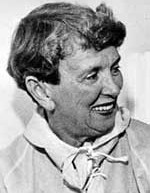
Dr Isobel Bennett
Introduction
Isobel Bennett is one of Australia's most distinguished and best-known marine biologists. She is unique, in that she achieved this pre-eminence without the benefit of a university degree in her discipline, and in an era when it was very rare for a woman to be a scientist at all. But to counter these drawbacks and to prevail, she was generously endowed with curiosity, tenacity of purpose and high intelligence.
Her earliest work concerned plankton, and she was involved in the first study of it to be undertaken in Australian waters. Another area which she made her own is the intertidal zone of the temperate shores. Her work here spanned nearly a lifetime of meticulous observation.
Her best-known work, though, was concerned with the Great Barrier Reef. As late as 1959 it was said that knowledge of the Reef of a positive kind was far from complete or satisfactory. If this situation has been rectified, it is largely a result of the work of Isobel Bennett.
Interviewed by Ms Nessy Allen in 2000. (Funded by the Australian Government as an ongoing project from the 1999 International Year of Older Person)
Isobel, could you say something about your family background?
I was born in Brisbane, in 1909. I had a twin brother and sister, and another sister three years younger than myself. We lived in the suburb called Corinda, and walked about a mile and a half each way to go to the local state school.
At about 14, having passed the Scholarship exam, I was enrolled at Somerville House – a Brisbane equivalent of the PLC and MLC in New South Wales. I'm not quite sure why, but I was fascinated by the look of the biology lab and used to look at the girls doing biology. However, I was devastated to be told by my family when I was just 16 that I had to leave school, go to a business college, and then find a job.
So you never actually took science at school?
No, and I didn't know anything about it, really. After business college I obtained a position with a patent attorney's office. Then in 1928, at the beginning of the Depression, my family decided to move to Sydney and I lost all my schoolday friends. I was fortunate enough to get a position in the Sydney office of the Associated Board of the Royal Schools of Music. But at the end of 1932 the board could no longer afford to send its very high-powered examiners out to Australia from London by ship, and teachers were no longer sending children in for exams. So the board closed and I lost my job.
Then came the turning-point in your life, didn't it?
Yes, it certainly did. My sister and I were able to get a cabin aboard a brand-new P&O Company ship for a five-day Christmas cruise to Norfolk Island. This is where fate stepped in: the cabin next to ours was occupied by Professor and Mrs Dakin – we would certainly never have met them otherwise, on a ship that size – and they took us under their wing.
The Professor, discovering that I had lost my job, said he needed somebody to look up the logs of some of the old ships' whaling captains, who had a habit of drawing a little sketch of a whale whenever they sighted them. He thought that by plotting them he would get some idea of the distribution of whales around the Australian and New Zealand coasts, for the book he was writing on the history of whaling in these waters. So I did that at the Mitchell Library for two or three days a week.
In the meantime, of course, I was applying for jobs. I was actually offered a job with the CSIR Division of Entomology, in Canberra, but my father refused point-blank to let me go and live in such a foreign city all by myself, and so I never went. (It turned out to be the kindest thing he ever did to me.) I kept on doing some work for the Professor, and offered to type the manuscript of the book he was writing. And then in May 1933 I received a surprise letter from the university offering me a temporary position in the Department of Zoology, taking my instructions from the Professor. That temporary position lasted for nearly 40 years.
So, in fact, you came to the university and to science quite by accident?
Absolutely. I even had to look up the word 'zoology' in the dictionary.
What kind of work did you do for Professor Dakin in the department?
His main research was plankton, the minute floating animals and plants of the sea. He had a small vessel, mainly crewed by university student volunteers, and when he discovered that I loved boats and never got seasick I was signed on as a permanent crew member – even to being hoisted up the mast to scrape it down when it needed revarnishing. On all our trips it was my job to put down the net, time it and make notes of the sea temperature and various other details, preserve the catch and take it back to the university, and then sort out what animals were in it (because neither he nor I knew). This was a rather difficult task, because there were absolutely no books of any kind available apart from details in huge tomes of various expeditions that had travelled round the world, mostly in the last century.
Professor Dakin was English, not Australian, is that right?
Yes. He was very familiar with the plankton of the British seas, but nobody had done any plankton work in Australia and there were no vessels available except this small yacht which the university had purchased for him. We did this for quite a few years, mostly at the weekends because he was working during the week. The work was published by the university in 1940 as a monograph of the Zoology Department, and was used by the Fisher Library in their reprint series for distribution. It was also sold to students and others. This was the very first study of plankton in Australian waters, and quite apart from the actual physical work of preparing the illustrations, the Professor included a very large bibliography. Had it been in a scientific journal, he would not have been able to use nearly so many illustrations. There was a bibliography for each chapter, his whole idea being to publish the book in such a way that it was a stepping-stone for all future plankton workers.
The introduction to the published text acknowledged your work. You actually dissected some of these organisms, I understand.
Yes. But a small crustacean, for example, might only be two or three millimetres in size, sometimes even smaller. In order to be quite sure of the identity, you had to try to dissect off the various appendages – which even under the microscope were minute – and put them onto a slide. The Professor then drew them. It was quite a task, but nobody could teach you; it is all a matter of practice, really. He gave me the microscope and the dissecting needles, and I just had to teach myself about that.
In 1935, when Professor Dakin took sabbatical leave for a year, the acting Professor allowed me to do the first year of Zoology – only the practical class, not the lectures. It was rather fun. He made me take the exam at the end of the time, and I was a bit disappointed that because I failed to take off a couple of the mouth parts of a cockroach I got only 98 per cent instead of 100.
Also whilst the Professor was away, I started on trying to put the library – which had masses of reprints and books from various past professors – into some kind of order.
When Professor Dakin came back, did your job change at all?
Well, it was decided that I knew enough about the animals to add demonstrating to first-year students in with all my other duties. I enjoyed it very much, because it gave me a lot more contact with the students. Representatives were needed of the various phyla but there was no actual museum, and very few animals in the class collection, so I made it one of my jobs to collect as much specimen material as I could.
The Professor was very concerned that there was little communication between the scientist and the man in the street, as it were, and he was asked to do a series of lectures for the ABC. His weekly series of talks, Science in the News, involved quite a lot of research on my part. I had a lot to do with the second printing of his book Whalemen Adventurers as well, because he put extra chapters in after having been overseas, and also I worked on getting the plankton monograph ready for publication.
And then, when the war broke out and Professor Dakin went to Canberra as the Technical Director of Camouflage, in the Department of Home Security, you went as his research assistant.
Yes. I was released from the university for the period of the war.
What did Professor Dakin do after the war, back at the university?
Having succeeded in getting the plankton monograph published, he chose the intertidal region of the seashore as his next subject for special research. A long series of studies was being conducted at that time around the South African coast, and he thought that we should do a similar one on Australia's temperate shores, beginning with New South Wales. Because we had no idea what was on the shore – there were no Australian books like the seashore books in Britain – I had to spend almost a year on the various low tides, going to the rock platforms, the ocean beaches and the estuarine beaches and bays.
I drew up lists for the various phyla, for the crustaceans, the molluscs, the echinoderms and those sorts of things, and in 1946 I started off, with Elizabeth Pope (from the Australian Museum), on a scientific ecological survey of the New South Wales coast. We went from Sydney down to the Victorian border, checking off my lists, and as we went south to the colder waters some animals dropped out and others started to come in. Professor Dakin had been very ill from the end of 1945, but in 1947 he recovered enough to join us for the survey from Sydney to the Queensland border. This work was finally published in a scientific journal, and during his periods of recovering from operations he amused himself by scribbling the basis of a book on the seashore so that people of this maritime nation could know something about the animals round our coast. So that was how Australian Seashores started off.
Didn't you do a lot of this work by yourself – sometimes in fairly dangerous places?
The Professor had a very good knowledge of the English fauna but not of the Australian fauna (until we finished our survey) and so for each of the animals he used my field notes and descriptions. Also, I collected all the common animals and had them photographed, and arranged the plates for the book.
He was very meticulous. When we discovered, in writing up the scientific report, that one of the very important indicator species was completely missing from our lists north of Cape Byron, he sent me up to make sure we hadn't missed it. Travelling at that time was still very difficult, and I had to get official permission to get a train to Brisbane. Then I had to get a bus down to Byron Bay. The Cape Byron lighthouse was a rather lonely place some distance out of town, with the rock platform at its base. It was a bit hairy: nobody knew I was there and so I had to be terribly careful that I didn't slip on the rocks and break my neck. However, the more I searched, the less I could find any barnacles, so we hadn't made any mistakes in our checking. But that indicates the lengths to which he would go to make certain. This was very good for me: for the rest of my life I never accepted a thing unless I was quite certain about it.
In effect, you edited the whole of Australian Seashores, didn't you?
The manuscript for the book was given to Angus and Robertson's before the Professor died, but because of the backlog of publishing after the war it wasn't published until two years afterwards, in 1952 – which is really very sad. I had to arrange all the plates and the captions, and then there was the proofreading and the index. Elizabeth Pope helped with the proofreading, but I felt responsible and I was determined that the book would be as perfect as possible, because that is the only way Professor Dakin would have liked it. He would have been amazed and very delighted, I'm quite sure, had he known it would go through 11 editions.
Having seen the book through to its publication, you completely revised some of the later editions. In that sense they might be said to be really your work, not his.
Well, yes. They were my responsibility. Angus and Robertson's, whenever they were running out of stocks, used to ask me if I had any corrections. Unfortunately, they only allowed me to correct names; I wasn't allowed to alter much of the text because of the expense. For the 1980 edition, however, they approached me saying that they had decided that the book was rather dull and needed uplifting, and how about some colour? I reminded them that in the last three editions they had printed the original six colour plates in black and white (without amending the list of illustrations), but I did provide about 64 colour plates – at my own expense. They didn't pay me for them.
They turned that 1980 edition into metric, which I did not think was going to make very much change. But also they reprinted the whole book, completely, without telling me. That upset me very much because it meant I had to proof it all. The worst part was that by then there were quite a few differences in the classification, and with a few extra pages I could have brought the book absolutely up to date, instead of just adding footnotes.
Then in 1986 Angus and Robertson's asked me to bring the book up to date. It was a 1948 text, remember, so I had almost to rewrite it. Worse than that, they wanted it all in colour. I refused point-blank – at the age of 77, I felt it was impossible for me to replace about 900 black-and-whites with colour. However, they kept on badgering me and finally my family persuaded me that I owed it to myself to make sure that the new, colour edition did come out. I had a lot of colour photographs, but I had to get a lot more and all of the work that had been done in Queensland, South Australia and Western Australia since the original book, had to be incorporated. So I travelled from the Queensland temperate shores right down to Tasman Island, round the Tasmanian coast, to Western Australia and as far north as Kalbarri. I finished up with more than 500 colour photographs in the new book.
Didn't Professor Dakin get you involved in his work on the breeding of prawns?
Oh yes. That was very interesting. It came about when one of his former radio fans, the wife of a professional fisherman on Tuggerah Lakes, wrote offering to get specimens of things for him, and mentioned that the lake had been closed off from the ocean for a couple of years. The Professor was very interested in the very complicated life history of the commercial prawns, which migrate to sea to spawn. The eggs and the larval stages get wafted back into the estuaries, where they grow up as adults which, after a certain time, go back to the sea. He was anxious to find out whether, if the lake had been closed for at least two years, the prawns were breeding within it. And so for a couple of years we used to go up to Toukley and with the aid of one of the fishermen go out and make plankton catches. We did eventually find that one species was capable of breeding in the lake, but the others definitely went to sea. After his unfortunate death I finished that work, with one of the students, and we published a paper on the life history of this particular small prawn.
You are probably best known, Isobel, for your work on the Great Barrier Reef. How did that begin?
In 1946 Professor Dakin was doing a series of articles on the Reef for Walkabout, and he asked me to go up to the Whitsundays to get some further information and some photographs. That was my first experience of the reefs – which really, being mainland islands, were hardly the Great Barrier Reef. But in 1950 I went with a group from Sydney University Zoology Department to Heron Island, and that was absolutely wonderful.
Then in 1954 the Queensland University and the Great Barrier Reef Committee sent an expedition to Low Isles, to which in 1929–30 there had been a year-long expedition composed mainly of people from the northern hemisphere. Their long series of papers covering all the various disciplines was published by the British Museum of Natural History, in London. That was the first time ever that anybody had done such a life history of a coral cay and its reef. When the Queenslanders decided that it would be interesting to go and look at what had happened in the intervening years, the fact that I had been to Heron Island and the Whitsundays was a great help to me and I really got to know something about the Reef. I was working with Professor Stephenson and Dr Robert Endean, and our ecological survey of the intertidal Reef was published.
Also, I think, you took students to Heron Island.
In 1958 the Great Barrier Reef Committee had erected a small research station on Heron Island. I was approached by some of the zoology students belonging to the university's Biological Society who wanted to go there but had to have a member of staff with them. As the only member of the Zoology Department staff with any knowledge of the reefs, I went with groups of students for quite a number of years after that – paying my own way, of course. I was very relieved that I had some knowledge, because I felt I just had to keep a step ahead of them.
You mentioned following up the New South Wales work for the original Australian Seashores by going to Victoria and Tasmania. Would you tell me about that?
Professor Murray came as the new professor after Professor Dakin, and his research was completely different. He was interested in the development from cartilage into bone, and all he wanted me to do was to use a microtome and make microscope slides of tissues from the embryos of chicks, turtles and things like that. (Again I was fortunate, because Professor Dakin had taught me the mystique of such things.) Professor Murray said that so long as the marine work I had been doing with Professor Dakin didn't take up too much of my time, I could go on doing it.
The Professor had envisaged the whole of south-eastern Australia, so Elizabeth Pope and I, with help from Miss Macpherson (from the Victorian Museum), did the same kind of survey along the coasts of Victoria and Tasmania as for New South Wales. Quite a lot of the Tasmanian coast we had to do with the aid of the Commonwealth lighthouse ship, because in those days there were no roads and no means of access to many of the rock platforms. We did trips in the lighthouse ship right down to Maatsuyker Island in the south-west and along the north-west coast as well.
Having more or less written the book which you called W. J. Dakin's Classic Study, you then wrote your own first book. How did that come about?
In the early 1960s I had a request from Rigby, in Adelaide, to write another book on the seashore. I pointed out that I was already committed to Australian Seashores but they said there was plenty of room for another book. So, using photographs that I had taken with assistance from a friend, and photographs that I had used in the department, I wrote The Fringe of the Sea, which was published in about 1966.
How did you manage to write that while you were working at the university?
I used to write it at home, between about 9 at night and 3 in the morning. Fortunately, my bedroom was away from the rest of the family and so I was able to bash away at the typewriter. By this time Professor Murray had left and had been replaced by Professor Birch. When I just casually handed him a copy of the book, he got rather a shock because nobody knew that I was doing it.
How did you come to write your next and probably best-known book, The Great Barrier Reef?
I was approached by the publishers Lansdowne Press, in Melbourne, who had been very impressed on seeing a copy of The Fringe of the Sea, to do a book on the Barrier Reef. I felt that I wasn't really competent to write a book on the subject: although I had some knowledge of the Reef, I knew nothing of chemistry, botany or physics, and as far as I could see, there was absolutely nothing known of the corals. However, they were quite insistent. Unfortunately, when the photographer who had helped me with The Fringe of the Sea was asked to cooperate, he decided that he couldn't spare the time. So I asked Lansdowne Press to give me a year to see what I could get in the way of photographs and what sort of a manuscript I could produce. When I sent it to them, they were delighted, and it was published in 1971.
To write that overview of the Reef you really had to start from scratch, didn't you?
Well, yes. I realised that I had to write this so that it covered the extent of the Reef – people talk about the Great Barrier 'Reef' but there are two or three thousand reefs and it's about 2,000 kilometres long. There were no books of any kind. I did find a publication which covered a trip by Professor Wells (from Cornell University) and Professor Stephenson in the lighthouse ship. They were supposed to have a named collection in the Queensland University, but when I asked about this they [the university?] couldn't find it. They thought it had gone to the Queensland Museum, but the Museum Director said to me rather apologetically, 'Well, we have no curator who covers this, but here's the collection. Make yourself at home.' I never found the named collection, and most of the corals had names which went back to the last century rather than this. So it was with great trepidation and fear that I attacked the corals at all.
I had different chapters on the coral cays as such and their associated features – the birds, the vegetation and the turtles – and the continental islands, and then I had separate chapters for each of the different faunal groups. Long afterwards Dr Veron (who works now at AIMS, the Australian Institute of Marine Science) and his associates published a series of scientific monographs, and then, 15 years after that first book of mine, he produced a magnificent, very beautiful big tome of taxonomic studies which has in colour practically all the known corals of the Great Barrier Reef. But when I began there was absolutely nothing.
You have been invited to accompany scientists on various voyages, one being to Low Isles. What were some of the others?
I went on part of the Danish ship Galathea's around-the-world cruise in 1951–52. The idea for the cruise had come from the young zoologist and the young naval lieutenant who knew about the voyage of original Galathea 100 years before, but the Danes were unable to carry it out until a few years after the war. They purchased an old British ship – HMS Leith, I think – and manned her mainly with students doing their National Service. She was run as a naval ship. All the young scientists were also doing National Service, and the leader of the expedition was that young scientist who until his death was Denmark's leading oceanographer – Dr Anton Bruun.
Because of the expense, at the various places they visited they would take on a scientist or two to experience the life on board. For example, they picked up a scientist in New Guinea and brought him to Brisbane, and then brought another one to Sydney. When Professor Murray showed me the information about this, I handed it back to him rather disgusted, saying it was very mean of him to show it to me. He said, 'Why? You wouldn't really want to go, would you?' I said I would give anything to go, to which he replied, 'Well, the Danes are very much more civilised people than we are, and they just might take you.' And so he submitted my name, and I sailed with 113 Danish sailors down to Melbourne.
A strike in Melbourne caused the ship which was to have taken all their collection to date, to be held up in Adelaide, and so we went on to there. I had the rather amusing and yet terrifying experience of trawling in Bass Strait, where the Galathea lost a great deal of her equipment. When we went in to Adelaide, I thought I would have to come straight back but they said, 'Oh no, we're putting you off in Melbourne.' So I benefited from the strike: I went to Adelaide and had the extra trip back to Melbourne.
That experience was all very interesting. I learnt a lot about what they had done previously and I was able to observe all their methods. And I did a little bit of work for them on board as well.
A few years later there were the Macquarie Island trips.
Yes. They followed on from our work in Victoria and Tasmania, where the fauna was classified as cool temperate rather than cold. We wondered what would happen in much colder seas, and we decided the only place where we might be able to find this out was Macquarie Island. That was very difficult, because the Antarctic Division's station there was a case of men only – they'd never had a woman. It took us quite a long time to get permission to go.
In 1959, as the Danish ship which was used happened to have four-berth cabins, they allowed four women to go down. Miss Macpherson, who had worked with me in Victoria and Tasmania, came as my co-worker. We four were the first women scientists ever to visit Macquarie Island. There had been a couple of women in the last century with the whalers and sealers who went there, but no women had ever been there officially with the Antarctic Division. We were warned – rather unnecessarily, we felt – that on our behaviour depended the future of women in the Antarctic.
Then, in early 1960, I happened to meet Dr Law in Sydney and mentioned that we had had very little time to do what we wanted to do and would like to go again if possible. So I went in 1960 and again in 1964. And in 1968 I went again, at the request of the Antarctic Division. The biologist they were sending down was going to work on the seashore and also had to assist with a lot of other projects, and they thought that he would have a head start if I accompanied him and showed him all that I could.
You published a book on this, didn't you?
Yes. Miss Macpherson and I had decided that we would write this up as a scientific paper. But two young scientists from at least 10 or 15 years before, had done some work which was not published. Professor Stephenson told them that if they didn't get it published, somebody else would do it before them. When their paper came out, although we found quite a number of differences we felt that our few days' trips didn't warrant another scientific paper. Then Rigby asked me to write it up as a book, which I did: Shores of Macquarie Island.
And then in 1963 you were invited to go on the Stanford University Indian Ocean expedition.
The university had a marine station at Pacific Grove, near Monterey, and had acquired a small vessel to do three-monthly cruises off the Californian coast so that the students could experience the conditions under which their materials were taken. At that time it was the only American ship with equipment for deep-sea work, so the university decided to use it for students on the first leg of a cruise from San Diego to Singapore to join the International Indian Ocean expedition. I was invited to join the cruise because they were going to be doing plankton work and visiting coral reefs, and because, having women students on board, they required a woman as Dean. Dr Bolin, the chief scientist, happened to know me and my work and he wrote to Professor Birch to invite me to be Dean of Women.
Also, I had to give a whole series of lectures. Although Professor Birch said, 'You can't possibly give those,' I knew that if I accepted the invitation, I would have to. They were completely outside my own subject, but fortunately I had six months to prepare them. And from the practical point of view, at least, the plankton work was very important. These were all postgraduate students, who knew far more than I did. Professor Bolin assured me that they'd have forgotten all their original, basic work, but it turned out that most of them were already at marine stations doing work which was far above anything I had ever done. However, I survived.
You have visited scientific centres in many countries, including Britain, the US and Scandinavia.
Yes. In 1956 I took all my long service leave on half pay, so that my six months extended to 12 months away. I visited as many countries and as many universities and marine stations as I could.
I had to give some lectures, a few of which were rather terrifying. In particular, at Columbia University, in New York, I discovered that just down in front of me I had one of the world's leading professors of genetics and a few other people like that. Also, one of the professors had to go home and bring back his projector for my slides, because the university's machine did not work. And at Yale University nobody could produce a projector that worked. When finally they brought one in from the Botany Department, nobody knew how to work it except one of the students. But he was very shortsighted and I had to keep on saying, 'Please focus that.'
You attended scientific congresses in Japan, Canada, Edinburgh, New Zealand, Australia, everywhere. Tell me about some of them.
I attended a Pacific Science Congress in Tokyo and another one in Vancouver, and also a very big meeting held in 1972 by the Royal Society of London and the Royal Society of Edinburgh to celebrate the centenary of the HMS Challenger's trip around the world – one of the most outstanding scientific exploration trips ever done. I was very fortunate in meeting there quite a number of friends that I had made overseas.
And those activities took you back to Low Isles, in the Barrier Reef.
In 1973 an International Coral Reef Symposium was held in the Marco Polo and we travelled from Brisbane up to Lizard Island, calling in at Low Isles. That trip included two members of the original British 1929–30 expedition, Professor Steers (from Cambridge) and Professor C M Young (from Glasgow), and I don't think that any of the Queensland people had been back since our first trip in 1954. They were all shattered by what they found there in 1973.
I had some idea of what to expect, however. In 1969, while I was doing the Barrier Reef book, I finally managed to get permission from the Navigation Department to do a trip in the lighthouse ship Cape Moreton – the only means by which I could get to some of the northern reefs. I was quite shattered when I saw Low Isles, because the areas that I had worked were completely covered with sand and silt, and the corals were dead. I could only assume that in the intervening years since 1954 the tremendous increase in the agriculture of that whole area had led to soil erosion and the washing down of silt by the rivers, so that the currents brought this down.
Then, last year, I happened to be invited up to Cairns for a book launch and I was taken by the Quicksilver people out to Low Isles as their guest. I was able to look at the particular area in which I was very interested, and again I found a tremendous difference. The corals that I had seen covered with silt were now all uncovered and any of them that had been living were completely dead, but the silt had built up to the eastern side and had mangroves growing on it. It was very interesting to see the changes that had taken place.
You've always had a strong social conscience, which manifested itself when you were young and helping to form the University Women's Land Army during the war.
That was started by my friend Dr Helen Turner, who was working in the McMaster Laboratory. We took students up to Penrith in the cold of the August vacations and camped in the boatshed by the river. They worked on dairy and fruit farms, which were very short of labour because of the war. On one weekend Helen and I ran the dairy, dead scared that we wouldn't get the milk finished in time for it to be collected.
And right from the beginning of your work you have drawn attention to that complex and fragile interconnection of living forms which is the urgent concern of environmentalists today. In fact, you speak about this in the preface to The Great Barrier Reef.
Yes. That was a great concern of mine.
Have these social and environmental concerns influenced your retirement projects?
I don't think I ever retired. I have written a couple of books on my own, I have been co-author of two books and I was co-editor of A Coral Reef Handbook, which went through three editions.
Also, from about 1973 to 1979, I was asked by the Fisheries Department to take part in a survey on rock platforms at Plantation Point, in Jervis Bay, and at Ulladulla, where a sewer outfall was going to be put in, in order to see afterwards what effect it had had. I made about 20 different trips down there in a completely voluntary capacity, just with transport provided. But in 1979 I suggested that this kind of survey should really cover a very much longer period than they were prepared for – we found that overnight a heavy storm could cause incredible destruction on the reef, but unless you knew this, it could be misconstrued later on. And on one occasion we found a very extensive settlement of barnacles but the next time we went down, they were all dead. A whole week of searing westerly winds coinciding with midday low tides had killed them all. We knew what had happened, but in another survey it might be assumed that the sewerage had something to do with it, and so I persuaded the department to call it off and stop wasting money.
Have you found a way for others to use your magnificent collection of colour slides?
Someone suggested to me that the National Library in Canberra had a pictorial section which could look after my slides properly, and so I donated to the Library all the 500-odd slides covering the last edition of Australian Seashores. Then I gave them all my Shores of Macquarie Island slides; and my field notes, manuscripts and all that sort of thing have gone into another section of the Library, where they've all been catalogued so that anybody could use them. And the best of my couple of thousand slides of the Barrier Reef have been given to the Queensland Museum, which has constant-temperature rooms for storing them.
And I think you gave some to the Pittwater Council, as well as being involved recently in a program which furthers your concerns.
Yes. The Pittwater Council have a very good Coastal Environmental Centre and some very active people. They've been using me as an honorary consultant. I was able to give them some help with their project 'Foreshores', which was sent out with a lot of detailed information to all primary schools around the State. Then about four years ago they started another project, 'Project AWARE on the Rocks', training volunteers to take people out on the rock platforms. This has been very, very successful, and they have got a grant to carry on the work. This is the sort of thing I have always wanted to happen, and I have been very happy to do all I can to help them make it happen.
Also, I donated the slides I had left – about 400 – to the council. Those have been made into a very beautiful CD ROM which is available through the Environment Centre. In addition, the council have had interpretive books made of aluminium, bolted down onto huge rocks which were put at Mona Vale, Newport and Palm Beach. I believe that other councils are very interested in putting them on too, to explain about the rock platform and the animals that are there.
This seems to be part of education beginning at the grassroots level, which I think you have always believed in.
I have. And I was delighted, only yesterday, to be taken to Long Reef, where the Fisheries Department in conjunction with Warringah Council have built a small shedlike building with a large panel, on one side of which there is a map of Long Reef and another map showing where the aquatic reserves and marine parks of the New South Wales coasts are situated. Then on the other side many of the common animals of Long Reef have been illustrated, using all my slides. It was wonderful to see that, because it had been a long haul getting this sort of thing going. Long Reef is an outstanding rock platform, but it was heavily used and today is even more so, with enormous groups of schoolchildren going there.
What else have you done to inform schoolchildren?
I get invited from time to time to give talks to various school groups. I am rather proud, especially, that the Mary MacKillop College at Wakeley asked me to open their science centre in 1972 and named their new biology lab after me, and that later, when the Nazareth Senior College at Bankstown asked me to come along and talk to them, to my amazement they also named a new biology lab after me. That was nice.
And a coral reef, a genus and five species of marine animals have been named in your honour, haven't they?
They have, yes – two of them named by visiting English scientists and the rest by local people. I was actually taken by the New England University people up to the Swain Reefs, where I flew and sailed over 'my reef'.
Not surprisingly, you have been showered with honours. Before we look at your academic honours, what are some others that you are particularly pleased about?
At the ANZAAS meeting in 1982 I was given the Mueller Medal. That floored me. I really felt it was something to find my name among those of such august previous recipients. Dr Dorothy Hill, a geologist from Queensland, was the only other woman on the list. It included names like Sir Edgeworth David, Mawson, Florey and Fleming, so I felt that I was truly in among the immortals.
Also, I was rather delighted when two of my books were given the Royal Zoological Society's Whitley Award – The Great Barrier Reef, for natural history photographs, and The Australian Seashores, for the best text. And the third edition of A Coral Reef Handbook got the Whitley Award for the best handbook. I was co-editor, with Dr Mather (from Brisbane), of the original handbook, which was put out by the Australian Coral Reef Society. This edition was very much enlarged and I was a contributor to it.
To have three Whitley Awards, as you have, would be very unusual.
Sydney University honoured you with its first Honorary Master of Science degree.
Yes! That was in 1962. It was rather a shock: I never expected anything like that to happen to me.
When you retired in 1971, however, even though you had this degree and you had lectured all over the place and written all these books, you were classified as a Professional Officer, not as an academic. Why was that?
Until I was appointed, no professor had a secretary at the university. I was in a category all by myself, and I only ever got a salary rise when Professor Dakin went and badgered the Vice-Chancellor. Professor Murray, however, thought that this was rather beneath his dignity, so when the university formed a new group – between the laboratory attendants and the lecture staff – called Technical Officers, he asked me whether I would be interested. He said it would save him from having to worry about my salary but I would lose academic status. I said, 'Well, Professor, I've never had any academic status. It would just give me about another ₤100 a year.' A little bit later, the Technical Officers decided they wanted to be called Professional Officers instead, and I remained in that category for the rest of my time at the university. I suppose that because I wasn't a lecturer, neither Professor Murray nor Professor Birch thought there was a place to fit me into for academic status.
In 1984 you received the Order of Australia.
Yes, that's right. I'm not sure who was responsible for that, but it was for my services to marine biology. And the latest honour – which really left me speechless – has been the award by the University of New South Wales of an Honorary Doctorate of Science.
Isobel, your contributions to marine biology have been enormous, and it is not surprising that you have been called 'the last of the great naturalists'. Thank you very much indeed for participating in this interview.
© Australian Academy of Science
Dr Liz Dennis, plant biologist
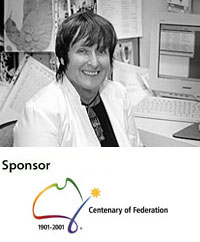
Dr Elizabeth Dennis is an eminent plant molecular biologist and a Chief Research Scientist working in the Division of Plant Industry of CSIRO in Canberra, where she leads a large team of research workers. Her work has been recognised by many invitations to speak at international meetings, and she is a past president of the Australian Society for Biochemistry and Molecular Biology. She was elected to the Australian Academy of Technological Sciences and Engineering in 1987 and to the Australian Academy of Science in 1995. In 2000, she was joint recipient of the inaugural Prime Minister's Science Prize.
Interviewed by Professor Frank Gibson in 2000.
Contents
- Introduction
- Early years: expectations and opportunities
- University years: nucleic acids and a social conscience
- The native rodents of Papua New Guinea
- Why do plants contain haemoglobin?
- How do plants flower at the right time?
- Gene regulation: plants can't run away from a flood, so why don't they drown?
- Switching on in science: new discoveries, new techniques, new successes
- Putting more iron into the rice bowl
- Beyond the work cycle
- How can we promote discovery-based science?
Introduction
Dr Elizabeth Dennis is an eminent plant molecular biologist and a Chief Research Scientist working in the Division of Plant Industry of CSIRO in Canberra, where she leads a large team of research workers. Her work has been recognised by many invitations to speak at international meetings, and she is a past president of the Australian Society for Biochemistry and Molecular Biology. She was elected to the Australian Academy of Technological Sciences and Engineering in 1987 and to the Australian Academy of Science in 1995.
Early years: expectations and opportunities
Do you think something in your family background, or perhaps your schooling, Liz, led you to choose to study science?
I come from a fairly middle-class family. My father was an engineer; my mother worked on and off while she was looking after the kids. We lived in Hunters Hill, in Sydney – quite a nice suburb, if a little bit ‘bohemian’ in those days (but much more up-market now). A lot of interesting people lived there.
I was the eldest of three girls and my parents were very supportive of any academic aspirations I had. I think my father would have liked me to be an engineer, like him and his father before him, but I always had the expectation of going to university and then following a career. I went to Methodist Ladies College, a girls’ private school which was very good, and unusually supportive of women. Its philosophy was that you shouldn’t not do anything because you’re a woman, and so it provided courses for us like physics honours and chemistry honours, which were unusual then.
As a young girl I was always keen on chemistry. Reading stories of Madame Curie, I decided I wanted to be like her. I think she was the only heroic figure I had in my early childhood. Then at MLC we had a very good chemistry teacher – she had a PhD in chemistry, and was outstanding in those days – who gave us a real interest in chemistry.
University years: nucleic acids and a social conscience
Would you tell us about your university years? Did you find your undergraduate course – majoring in chemistry and biochemistry – very satisfying and stimulating?
Intellectually, in general no. There were huge numbers of people at Sydney University then : we’d have a lecture of 1000 people and virtually no stimulation by the staff or contact with them, in the first couple of years. I’d say the undergraduate teaching was very poor, except for the ‘odd’ courses. In first year we had Hans Freeman, a very exciting lecturer, for a special chemistry course. And then Harry Messel and Stuart Butler – both exciting – ran a special physics course. In second year, hearing Gerry Wake talking about nucleic acids made me decide that was what I really wanted to do, and later one of the best things that happened to me was having Gerry as an honours supervisor. He taught me a lot about science, about being rigorous, about being focused and methodical.
I went on to do a PhD with Gerry at Sydney in nucleic acids, on how bacteria replicate their DNA. Then I went to New York to Julius Marmur, who was one of the pioneers in physical studies on DNA. He had worked out the relationship between base composition and melting temperature of DNA and also base composition and density in caesium chloride gradients, and developed one of the early methods for preparation of DNA from bacteria. So he was really a bacterial DNA expert, but when I was there he said, ‘Well, what do you want to work on?’ It was very laid back. I looked around and saw they’d started to work on mitochondrial DNA replication in yeast, a natural progression from the bacterial DNA replication work I’d done with Gerry.
During this period you were fairly socially conscious and got involved, I gather.
Yes. The late ’60s was the time of all the civil rights activity and later the anti-Vietnam days. At Albert Einstein College of Medicine, in the Bronx, I found a very active group of doctors, students and post-docs keen on those issues, but also worrying about civil and medical rights for poor people, blacks, and other disadvantaged groups. That whole swag of social issues in New York at that time opened my mind.
The native rodents of Papua New Guinea
Perhaps because of this social awareness, you didn’t come back to work on DNA, did you?
No, I went to lecture at the University of Papua New Guinea. This may be a paternalistic view, but I thought it was good to do something to use your knowledge for the less developed countries. That was quite a mind expanding experience. I think normally we are comfortable in our own little niches, but Papua New Guinea didn’t have all the molecular biology, high-tech instrumentation and big infrastructure, or an environment where you can feed ideas off lots of colleagues.
I was doing chromosome and DNA studies on the native rodents, and together with a classical zoologist, Jim Menzies, I would go out trapping rodents and taking pictures of them and determining the chromosome complement. We even wrote a book on the rodents of Papua New Guinea. There is a big radiation of species. Some of them are cute little tree mice but one rat is called Hyomys goliath because it’s so big (about 400mm head and body and tail the same weighing 1kg). And they’re quite unrelated to Rattus. That project was fun and I saw a lot of the PNG countryside. Doing this work taught me that there are a lot of scientific problems and it’s interesting when you get involved in any of them.
Why do plants contain haemoglobin?
Later you moved to the CSIRO Division of Plant Industry, in Canberra. Were you pleased that that meant you were able to get back to your beloved DNA and to develop a long-term research program?
Yes. At first, I worked with a very good group under Jim Peacock’s leadership, including Doug Brutlag and Rudi Appels. We looked at repeated DNA in Drosophila. Then I returned to Papua New Guinea for a while. When I got back to CSIRO, in 1976, the mission of Plant Industry had become more focused on plants, so we switched over – still in conjunction with Jim – to working in DNA from plants.
During the ensuing years you’ve covered several topics. Could you tell us something about the work on haemoglobin? That doesn’t sound very plant-like.
No, it doesn’t. That was quite an exciting development. It was inspired by Cyril Appleby, who is also a member of the Australian Academy of Science. He worked on haemoglobins, initially from legumes which use haemoglobins to carry oxygen past the bacteria involved in symbiotic nitrogen fixation. Then he isolated and worked on a haemoglobin from an Australian tree called Parasponia, which also fixes nitrogen. We decided we would clone the Hb gene Parasponia. It was known, as the basic principle, that haemoglobin is important in fixing nitrogen in the nodules of legumes and that other Australian trees also fix nitrogen. The question was whether the gene that is used in the non-legumes is the same as the gene used in the legumes. So we isolated genes from other species – in the beginning, from plants in Australia and Papua New Guinea like Casuarina and Parasponia, which fix nitrogen.
We found that in fact there were two quite different Hb genes, one that was in the legumes and also in Casuarina, and another one in Parasponia that was quite different. But we then found that the gene in Parasponia was also present as a second gene in Casuarina, but not in the nodules. It became clear that there were two families of Hb genes, each of which had been recruited to fix nitrogen, one in the legumes and one in the Parasponia. We then went on to show that in Arabidopsis, which has nothing to do with nitrogen fixation, there are two classes (and now possibly a third) of plant haemoglobins. We have extended this to suggest that Hbs are in all plants. They’re related to the animal haemoglobin, so they’ve probably been there ever since the divergence of animals and plants about 1500 million years ago. Hbs must have had some function other than nitrogen fixation in plants, and then subsequently, as the legumes and Casuarina and other nitrogen fixing plants evolved, the haemoglobin genes that were there became adapted to function in nitrogen fixation. If you cut open a nodule on the roots of a pea, you find it’s quite red because it’s got haemoglobin in it.
We’ve been trying to work out the function of these Hb genes in plants and the only thing we’ve found so far is that one of these genes in Arabidopsis is switched on by low oxygen. In fact, if you put more of that Hb into the plant, it protects the plant against low oxygen stress. So that may be the function of one, but we have no idea what the function of the other one is.
How long have you been working on that problem?
For 15 years, on and off, mainly working with students. As new techniques become available, we go back and try again. Of course, all the work is a lot of collaboration with different students and postdoctoral fellows.
How do plants flower at the right time?
You also have an interest in the flowering of plants. In general terms, what is that about?
That is very much our current project, involving all the people in the lab. Flowering is an important developmental process in plants, a very exciting biological process. In animals you set aside your germ cells early in development, but in plants there is a growing point which starts by making leaves and stems and vegetative structures but then switches to making reproductive structures like flowers and pollen, all the components that make up flowers. So how does that switch occur? How do cells derived from the one growing point change from making vegetative to reproductive cells?
Using Arabidopsis, we isolated a mutant that didn’t flower till very late, and then we isolated the gene that was mutated to cease this effect. We could show that this gene acts as a repressor of flowering: the more of the gene product there is – the more the gene is switched on – the later the plant flowers. It’s a quantitative controller of flowering time. Later we found that this gene is down-regulated by vernalisation, a response to a period of cold which has long been known to cause plants to flower.
Plants need to flower in the springtime, not when there might be frosts or when they won’t have enough time to get their seeds mature for the next generation. They can’t go inside when it’s cold, so it is very important to them to flower at the right time and they’ve evolved mechanisms to ensure this happens. One of those mechanisms uses the cold as a signal. That is, many plants require a period of cold – a cold winter – in order to flower in the spring. They may also use day length (they recognise when the days get longer) as well as vernalisation to ensure that flowering occurs at the right time. We’ve found that the vernalisation, or cold, switches off the repressor gene called FLC – flowering LOCUS C. After this repressor of flowering is switched off by the period of cold, the plants flower. So we have a molecular basis for one of the long-standing question in plant biology – how does vernalisation work?
Gene regulation: plants can’t run away from a flood, so why don’t they drown?
You’ve also been interested in the regulation of plant genes, haven’t you?
Yes. That’s the basic theme that makes it all hang together. The major project we’ve had, over a long time, is looking at genes being switched on by low oxygen, such as occurs in flooding or waterlogging. When plants are flooded they can’t run away. If it gets wet for you and me, we just walk away, but the plants are stuck. Plants have evolved mechanisms to cope with stresses caused by their being sedentary. So, when plants are flooded, they switch their metabolism from oxidative metabolism – oxidative phosphorylation – to fermentation. They make alcohol: the genes for the ethanol fermentation pathway are switched on. Instead of pyruvate going into the Krebs cycle, it enters the ethanol fermentation pathway where it is converted first to acetaldehyde and then to alcohol, using the enzmes pyruvate decarboxylase and alcohol dehydrogenase.
Over the years we have looked at these genes switched on by low oxygen, trying to identify the promoter motif so important for switching them on. In fact, all these genes have the same anaerobic response elements, so they all have a DNA sequence, upstream of the gene – a promoter element – that’s important in the glycolysis and low oxygen metabolism alcohol fermentation pathways. We’ve now identified the protein that binds to that low oxygen control element. That’s the sort of thing we’ve been interested in, with a view to trying to help Australian agriculture by making plants more resistant to waterlogging.
You had an interesting time at Stanford, I understand, working on gene regulation.
Yes. In 1982–83 I spent a year’s sabbatical as a Fulbright Fellow in Paul Berg’s laboratory. That helped me in several ways. For one thing, it helped me to understand the thinking that people in Paul’s lab and other labs in Stanford were using to try and analyse the control sequences of genes. They were further advanced toward understanding the sequences that replicate genes. To introduce a candidate you introduce it back into animal cells, see what effect that has, irradiate mutate a few bases, and see if this alters expression of the gene.
But also, the whole way the Stanford biochemistry department worked was very good for me in considering how laboratories, departments, could work. That department was very distinguished: two Nobel prize winners were in it – Arthur Kornberg and Paul Berg – and maybe three-quarters of the rest of the faculty were in the National Academy and really were very innovative and exciting scientists, like Dave Hogness, Ron Davis and Dale Kaiser. Charlie Yanofsky, in biology, was around there too. The department was small, with only about eight or ten members of staff, but the way they worked together produced a very exciting intellectual environment. They had staff meetings where they discussed science and the department, they pooled their grants, they worked together, they didn’t try and look after their own equipment or prevent other people using them. Everything was cooperative, which seems a very good way to work.
Switching on in science: new discoveries, new techniques, new successes
Over the years, in your various activities, you have made quite a few novel discoveries. As a result, you have been invited to talk at many international meetings.
Well, it’s been the right time, with the new techniques in Arabidopsis and new expression techniques in plants, for us to identify what the sequence is controlling the genes switched on by low oxygen. The completely unsuspected idea that there are haemoglobins in all plants is also a novel discovery, and then this gene that regulates flowering, that we’ve recently been working on, is pretty novel too.
A lot of this work has been done in collaboration with other people, and so we share around the talking at international meetings. And I’ve had a long-term working arrangement over these years with Jim Peacock, who has had a big input into projects.
Would you say there have been major switches of your research direction at particular times? If so, what caused them? Which gene did you switch on?
I think changes in direction come with the opportunities provided by new techniques. The advent of cloning, of being able to isolate genes, has certainly been important. Initially we worked on repeated DNA in Drosophila and in plants. The Drosophila DNA and also one of the plant DNAs have the sequence like AAGAG, and it took us about 3 years to sequence those five bases! This little five bases repeat was repeated maybe a hundred thousand or a million times, but to actually get that sequence – back in the middle 1970s, with Doug Brutlag and other people – took a long time. But then the ability to sequence DNA, and later, cloning, enabled us not just to look at repeated DNA, but to isolate the genes and to study them in detail. The technology has been tremendously important. The development of Arabidopsis as a model plant, with its genome now almost completely sequenced, has been very important in plant molecular biology. So often, it seems, we spend years doing something that appears really simple afterwards!
Putting more iron into the rice bowl
You have also applied your interest in biotechnology to rice, in a very important project. Has the outcome been satisfying to you?
This project built on our work on haemoglobin, a protein that has a haem group, which binds iron.
People in developing countries who eat rice as their major food source face two major problems of nutrition. One is that people can go blind from vitamin A deficiency, and the second major problem is anaemia. Rice doesn’t have much iron, so something like a billion people suffer from iron deficiency anaemia. One of our projects, with support from CSIRO and from the rice growers of Australia, has been to try and increase the iron content in rice. We’ve added genes for haemoglobin under the control of strong regulatory sequences so that they’ll have high levels of activity in the seed and the seed will contain large amounts of haemoglobin.
So we’ve got transgenic plants with high levels of haemoglobin, but we don’t really know how much that has done for the iron, because it’s very important how iron is presented when you eat it. If it is associated with haem, it’s much more bio-available and can be absorbed: it can be 20 times more efficient than if you just eat the same amount of iron as iron filings or ferrous sulphate. So we’re starting feeding trials on rats – and there’s an artificial system now – to see whether we have improved the nutritional properties of the rice as far as bio-available iron genes.
The problem of the vitamin A has been attacked by Ingo Potrykus and other workers in other parts of the world, and you may have heard they have had some success in making rice that contains higher levels of vitamin A.
Beyond the work cycle
Apart from being President of the Australian Society for Biochemistry and Molecular Biology, for a long period you’ve been on numerous government committees and so forth. Do you regard your committee work as an act of charity or a necessary ill, or do you really enjoy it?
I guess a combination of all that. There is a duty side to it: I think we have a responsibility to put back something into the scientific community so we should do some of this, just to help. But I particularly enjoy committees which are reviewing science and trying to see what people are doing, trying to evaluate it and make suggestions for where things should go. I have enjoyed being on committees reviewing departments, or research grants committees, because I like broadening my focus. I learn from it too. That side of it I like; some other committees are more duty.
In such a very busy life, I imagine you’ve worked very hard and constantly. Do you have any outside interests at all? If so, how do you fit them in?
Well, I have a family – I guess that’s an outside interest. We have two boys, now aged 15 and 13 so they’re pretty active, and looking after them takes a bit of work. They’re probably not looked after as well as they might be, but they seem to be pretty tolerant about having a mother that’s a scientist, and the idea of my having to work. Most nights, I come home, make dinner, have a bit of family life and then go back to work about 9 or 9.30 and work till about 11 or 11.30.
My other major interest is that for just on 20 years a group of us have owned some land on the coast, at Tilba. It was a dairy farm, so it had been completely cleared – there was only one tree left on the whole 70 acres. We do a lot of tree planting and revegetation, and have enjoyed seeing what happens when you restore the vegetation, watching what birds and animals come back. It’s right on the beach, so it’s also a very nice place to be: it is very relaxing to enjoy the botany and wildlife and have a swim. Next to us a national park has been declared, so we’ve been active in getting it protected, stopping people from driving on its dunes, and revegetating those dunes too. That’s been very important, and to have that break away from work does help – no telephone, no electricity down there.
How can we promote discovery-based science?
You have some pretty firm theories on what should be taught at university, and how.
I really enjoyed university, but largely because I lived in Women’s College and so I made quite a lot of close friends. We’d spend time discussing the meaning of life and the intellectual basis of ideas. In the days when I went through university, it didn’t develop people’s capacities to their full or take full advantage of their abilities. I would have preferred smaller groups doing projects, where people actually focused on things that they needed to know – trying to work from a project-oriented base rather than having a vast amount of knowledge that had to be just stuck into you. Kids now are not reading anywhere near as much as they used to, but they are very computer literate and they do learn in a much more empirical way than we used to. I think that education could change quite a lot towards taking advantage of the flexibility of younger people and their ability to pick up things as they need to know them. If you can give them a project where they need to know things, and they go out and find them, that is a much better way to learn.
I learnt a great amount of organic chemistry that I’ve completely forgotten because I’ve never needed it again. I think that very classical view of education we’ve had should be changing, but I can’t see many of the universities responding to that.
There has now been another change in biology, into genomics: instead of looking at single genes, we have to look at whole genomes and see all the genes that are changing and what’s going on. That’s much more information-rich and information technology-rich science and again has a much more empirical basis. You might start off with a hypothesis, but part of the question will be, ‘What gene is switched on?’ rather than, ‘Let’s test if gene X is switched on.’ So the science is discovery-based rather than hypothesis-based. You might find a lot of new parameters that you didn’t even think about. If you start off in the traditional way you say, ‘The genomics approach means that you’ll find X, Y, Z and others that you’ve never even thought of’. It is a much broader view of science than we’ve been used to.
You talk about the genomics approach. Presumably you’re thinking now of actual research work rather than instruction?
Yes, that’s right. But if we’re instructing people so that they can use the new science, we have to encompass this new approach to research in the teaching as well. There are two pressures for that. One is the sort of research that’s being done, and the second is the sort of background the kids coming to university have now, which I think is very different from what we had. We were all reading a good deal but had a narrow base of experience. But I think kids come now with a much broader background – not as intent on reading, much broader because of the computer and the internet. And so instruction has to change too. The way to link those two things is to give them at least project-based work: not ‘Here’s a mass of knowledge, learn it,’ but, ‘Think about doing this, and find all the things that need to come out of it.’ There’s so much knowledge, you can’t hope to learn it all. How do we decide whether we should have five hours a week organic chemistry, or one hour a week? What’s the basis? What is the body of knowledge that should be passed on? We don’t know.
Thank you, Liz, for giving us so much insight into your experience and your ideas.
Professor Jonathan Stone, medical scientist
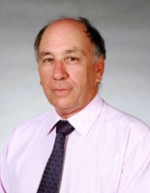
Professor Jonathan Stone was born in 1942 in Auckland, New Zealand and moved to Australia with his parents when he was a baby. He received a Bachelor of Medical Science from the University of Sydney in 1963 and a PhD in 1966. After a year as a visiting lecturer at the Hebrew University of Jerusalem, Stone did post-doctoral research at the Institute of Biomedical Research in Chicago with Sir John Eccles, and then spent a year in Munich at the Max Planck Institute for Psychiatry. Stone returned to Australia in 1970 to take up a position as a research fellow at the John Curtin School of Medical Research. Here he continued his research on the retina. In 1976 Stone moved to the School of Anatomy at the University of New South Wales (UNSW) initially as a senior lecturer, then as an associate professor (1978–85). He became head of the school and took up a Personal Chair in Anatomy in 1985. During his years at the UNSW, Stone's research interests shifted from the study of parallel processing to the development of the brain. His next appointment was as Challis Professor of Anatomy at the University of Sydney (1987–2003). Here he worked on the interaction of neuroglial cells during the stresses of birth, particularly focusing on types of blindness that result from the degeneration of photoreceptor cells. Stone was appointed Director of the Research School of Biological Sciences at the Australian National University (ANU) in 2003. At the ANU his research concerns the stability and degeneration of the central nervous system, including dementia and a group of inherited eye diseases that affect the retina.
Interviewed by Dr Max Blythe in 1996.
Contents
- Cradled with warmth, intellect and no nonsense
- Knowledge, philosophy and cheerfulness
- Retinal insights: developing the whole mount
- From the retina to receptive fields
- Working with Jack Eccles
- A parallel-processing odyssey: working again with Peter Bishop
- The family man and sportsman
- Moving on: balancing teaching with brain research
- Building up research
- Blindness: the ontogenetic link
- A wider arena: Alzheimer's disease
- And wider still: animal welfare
- Population biology
- Optimist or pessimist?
Cradled with warmth, intellect and no nonsense
Perhaps we could start with your family – the cradle of your attitudes and achievements.
I was born in Auckland in 1942, three years after my parents had gone there for my father to take a Chair of Law. (He was very young, in his early 30s.) As a babe in arms I was brought to Sydney, where my father had been appointed to the Challis Chair of International Law and Jurisprudence. My mother tells me we came in one of the old QANTAS flying-boats and landed out on Rose Bay.
As you grew up, the family environment that moulded you was fairly tough.
Yes, it was. My parents were by then immigrants to Australia but their own parents had been immigrants to England from Russia, fleeing the Tsar's armies and their claims on the Jewish population in Lithuania. They were fighting their way up to the middle class, and doing a good job of it. From the slums of Leeds, my father went to Oxford just at the time when it was opening up. Although he recognised that it gave him his start, and on his study wall he kept his college shield – Exeter, I think it was – he had a love/hate relationship with the place. He was never invited back despite all the distinctions he gained, and didn't himself ever want to go back, yet he spoke with great affection of his tutor there, Geoffrey Cheshire – Leonard Cheshire's father. He kept up contact with the elder Cheshire for many, many years.
They were tough people who had come through tough times, a very strongly Jewish family. That was the time when the British mandatory powers in Palestine were being debated, and as a young man, newly arrived in Australia, my father took a very strong stance against our Governor-General. When I read those old papers I can sense the mixture of intellect and anger that was driving him. But that was not part of my life. Being just a babe, I was unconscious of it. Then I found myself in postwar Australia, growing up, going to school.
I think your father was a strong, powerful loner, perhaps not unlike you.
Yes. You never know whether you are imitating somebody or you just are that way yourself, but my instinct has been to follow my mind. I have never had any problem with authority of the institutional sort but I have always had a problem with intellectual authority.
You got into a few conflicts.
Yes, which with a bit more of a smile and a shrug and a tug of the forelock I could have just gotten round, but my instincts weren't there. They are well in place now, with all the learned reflexes, but I do not think I somehow or other inherited them.
I'm sorry I am never going to meet your fascinating father. Tell me about the rest of the family: your mother, brother and sister.
It was a close marriage. My mother, Rebecca – Reca, as we call her – is still alive. She devoted herself to the family and provided the traditional background which my father drew on. My elder brother has for many years been Professor of Religious History at the Hebrew University of Jerusalem, and my sister is a psychiatrist practising in Sydney. They have very stable marriages and happy families, and ours is a very warm sibling relationship.
Mother was strong, as well as Father?
Yes. She came from that generation that had fled and then lived. Luckily my parents found themselves in England and therefore unaffected by the Holocaust, but they were fiercely burnt by it psychologically. That gave a toughness, a no-nonsense attitude. For example, I didn't do much sport at school because it just wasn't encouraged – what mattered was the knowledge, learning, getting qualifications. I have since made up for that in various ways, however.
I became aware of the Holocaust only in the most peripheral way, although of course as a kid you learnt about it. But I realised that within central Europe something of the most awful nature had happened. Out of that I drew a scepticism about the role of culture – Kultur, in the German sense – and I realised the amorality of culture. Like my father, who at core was intellectual, a common lawyer, I came to appreciate the value of the British tradition: a powerful set of mechanisms, quaint and odd and full of idiosyncrasy, which nevertheless had provided England and could provide Australia with a form of government that, for all its imperfections, got rid of that terrible instability that afflicted middle Europe. And I thought about that, trying to understand it at its fundamental levels.
Knowledge, philosophy and cheerfulness
Did your primary schooling have much influence on you?
No. After the local school, Gordon Public, which I remember with affection, I spent two happy years at one of the selective primary schools which were called 'opportunity schools'. Then I passed into a selective high school, North Sydney Boys. That was a tough environment, not really a caring one – not care-less, though – and I have since learnt through my children's experience how much more caring and attentive schools can be. But it was a fair environment, which I appreciated. I threw myself at the academic windmills there and did well enough. I wanted to have a go at everything, but the area that I really found myself standing out in was English: for some reason the words came and I could be a star at that subject.
I suspect it was through parental pressure that you went into a medical course at Sydney.
Yes. I came out of high school young, only 16, with no clear idea of what I wanted to do. Hell, I thought I was ready for anything. I'm sure my parents would have supported me in doing any of a number of professions, but I wasn't sure which I wanted. They suggested medicine, and in I went.
Going in at 16 couldn't happen now, could it?
No. School has been extended by a year, for a start, and there are increasing attempts to bring people into medicine at an older age. And I was a case in point. I threw myself at the medical course. It was then, even as it is now, a flood of knowledge that people package for you as best they can. It didn't help that those were extraordinary years: after the war, the Australian universities were asked to cope not just with the normal flow of kids coming out of high school but also with the returned servicemen. They were not allowed to put academic restraints on. There were 700 of us in that year, of whom 300 failed, and when we passed on we picked up 300 more that had failed. It went on for a few years like that, during which we were dealt with en masse. I wasn't enjoying it, and when the opportunity came to do a research degree, the Bachelor of Medical Science I quit the medical course and went into research.
You liked writing and I've got a feeling that you were reaching out for quite a bit of philosophical material. Was that linked with your father?
Yes. I got from him, whether through genes or absorption, a need to understand at some fundamental level what was going, without getting into either the scholasticism of a lot of modern philosophy – which I read and just couldn't handle and then came to understand for what I think it was – or the gloom that Boswell referred to in his Life of Johnson. (He commented that he had tried to be a philosopher but cheerfulness kept breaking in.) At some point you walk away from it, because it just drags you into deep and difficult debates, but you realise that the philosophers have tackled very difficult issues that afflict us generation after generation, and I found I could make my way better in science if I understood those issues.
You were already strongly analytical. Did science help to further that?
Yes. Science gave a lot of materials for understanding. For example, I found it fascinating to read about the debate over evolution – not so much the debate itself, which was a confrontation between two systems of knowledge, but the drive in some people within the scientific system to have a clear-cut classification that everybody could understand, while others said, 'Wait a minute. What we need is a classification that can deal with errors, that can be creative.' Heuristic is the word that the philosophers use. As I came to understand that, I could see what was drawing my colleagues in certain directions. I felt I became a fuller scientist for doing that.
Retinal insights: developing the whole mount
Perhaps you can put me in tune with the environment that Peter Bishop had created for that Bachelor of Medical Science degree.
Peter had the passion in him to establish the study of the brain in Australia. Eccles had a group in Canberra, in the very specialised environment of the Institute of Advanced Studies, but there was almost nothing else. After Peter had been to University College in the late '40s, he set up major labs at the University of Sydney, he started to bring in people and I was one of those lucky enough to go into his lab. Some were extraordinary people, who have gone on to make their mark right throughout Australian neuroscience and overseas. And in Canberra he attracted a lot from overseas who later made their mark in their own countries. I feel privileged to have been one of those people.
Peter was interested then in the cerebral cortex. He had moved on from the study of individual neurones, which he did so well, to studying the system as a whole, going to the highest levels. The first project he gave me was to explore the visual cortex but I couldn't do it. He was so busy that I found myself on my own, and I remember gritting my teeth and saying, 'I'm just going to work till I find my way out of this.' The way out came partly through a collaboration with Bob Rodieck, an American – extremely bright, full of ideas, full of self-confidence – who now has just about retired after a very distinguished career. I was lucky to meet him at that stage. The group included also Bill Levick, who has just retired from a personal Chair at the ANU, and Jack Pettigrew, who now heads a research centre at the University of Queensland.
But also I created something myself, when I got really interested in the structure of the retina. Peter gave me an experimental project on the retina, the starting point of the visual system, and I had an insight into how to look differently at the retina. I drew on old sources to figure out a way of taking the whole retina and laying it flat, instead of cutting it up into pieces. This proved to be an enormously powerful way of surveying it. I presented that at my first scientific meeting, of the Australian Physiological and Pharmacological Society in Melbourne, in 1962. I can remember during the long train ride back from Melbourne after that meeting thinking how to use the technique to explore new features of the retina.
Is the retina easy to peel off? Does it dislodge easily?
Once you get confidence, yes, and now the method is used in hundreds of papers in many, many labs every year. Although its origins are forgotten, I have some pride in having contributed at that point. I must have been about 19 or 20 when I made those first whole mounts. And I'm still looking at them – I spent time on the microscope on one this morning. It's a powerful technique. Of course we have brought in the more molecular techniques in subsequent years and the new forms of microscopy (fluorescent, confocal), but that was a core thing for me.
The use of whole mounts gave me incisive data, new ways of looking at things, and I was ready to go. We came up with a series of studies then which led to an understanding of aspects of the retina on which Peter could draw to strengthen his cortical work. I've always been grateful to him because, once he understood what I was getting at, he gave me freedom and support to go for it.
From the retina to receptive fields
Peter Bishop had already looked at the cortex – a mosaic of cell areas, interpreting the messages from the retina – looking at the optic nerve and the geniculate nucleus on the way through. Were you actually providing a fresh look at that mosaic?
Yes. I went out to the periphery.
So you were mapping this retinal structure?
That's right. With all my analytical and holistic desire to see the large picture, I found myself getting down to very detailed counting – one, two, three, four, five – but I did get the data on which I could see patterns of specialisation of the retina. Two of Peter's collaborators (Wladimir Kozak and George Vakkur) had started to look at that but hadn't concentrated on it. I picked up from them, getting down to the microscopic level. That enabled us to see how the retina divided its projection into the two halves of the brain and we began to pick up the morphological differences among the ganglion cells, which then became the basis of the parallel processing story.
After that first period in Peter's laboratory, in the '60s, you did a PhD with him.
Yes. Peter was my supervisor. The study had physiological parts which I did with Bob Rodieck, the American collaborator, and it had anatomical parts which were much more my own. We were working at a point in the study of visual pathways at which people had started to look at the receptive fields of the cells. Once it was realised that the cell would not respond to the whole visual field but only to part of it, you could define the part (the 'receptive field'), analyse it, start to model it, and then when you surveyed many you could start to see the differences. That had been begun in America in the late 1930s by Hartline, who got the Nobel Prize for his work. The work had stopped during World War II but this was its renaissance, certainly in Australia. That work culminated in a mathematical model that Bob Rodieck produced, calling it the convolution model. I went a fair way down that stretch with him – he did the mathematics – and that became a paper of reference in the literature from which then we could begin the classification work.
Peter was quite insistent that for my post-doc years I should go overseas, and he arranged for me to work with Jack Eccles, who by then was in Chicago.
Leaving Peter Bishop's unit was not totally without some stresses with colleagues, because you were burning rather a bright light at that stage.
Certainly with Peter it was a friendly leaving and later he welcomed me back to join the department he then headed at the ANU. With my colleagues, I suppose there must have been something in the chemistry of personalities but the substantive issues on which I found myself at tension with them were conceptual. Although I felt I did do my time painting the fine strokes, perhaps I was more willing than some other people to draw broad strokes.
I knew I had so much to learn from those colleagues, because they had skills and enthusiasms and abilities that I didn't have. But science is a matter of choices. I was always drawn to where I thought we were breaking through into new ground. Creative science is always done on the edge of the unknown. You are always stumbling in the dark. You will be clumsy, fall, look silly, but I was never afraid of that. Others were more content to stay in the safe ground which was a bit explored, where they could do much more elegant work. I rejoiced in what I believed was new, despite my clumsiness. They rejoiced in the (very real) elegance of their work. That was the tension.
So you really were ready to go to Eccles in Chicago in 1965?
Oh yes, I was ready to go.
Working with Jack Eccles
My post-doc years were exciting. Working with Eccles was a terrific experience. I did intracellular recording. Two of my collaborators were Henri Korn, who is now a major figure in French neuroscience, and Nakikira Tsukahara, who was rising in Japanese neuroscience when he died tragically in an airline crash.
Can you give me a portrait of Jack Eccles himself?
He was a gorilla of a man. He was quite big, still full of energy – in his youth, I think, he'd been a great swimmer. He was positive and quick to judge, and if you were on the line that was his at the time, he was there and supportive. But if you differed too much, dug in your heels, he would just walk away from you. He was in his late prime by then: he had achieved great things and had great self-esteem. I was prepared to absorb, and I learnt a great deal from being in that group. Later, I drew a lot from Eccles' philosophical writings – from the fact that this man of empirical commitment believed he had something to learn from philosophy.
And, as you were saying of yourself, he was comfortable with being on the frontier of science, with getting things wrong and stumbling.
Yes, he was. At one conference I remember, when somebody put forward what was then a fairly radical idea – I think it was the proposition that all the climbing fibre inputs to the cerebellum come from the olivary nuclei – only Jack Eccles would speak up and support it. He just wasn't afraid. He was willing to take a strong position, and he had real judgment. Jack Coombs, who had worked with him, remembered this judgment in one of Eccles' great discoveries. While they were working on a quite different issue, recording synaptic potentials in the spinal cord, they kept seeing something unexpected and irrelevant: a synaptic potential inverted on the screen as the neurone became injured. Jack Coombs told me that after that happened two or three times, Eccles said, 'Forget about what we're doing. That's what we're investigating.' Out of seeing that epiphenomenon came his analysis of the mechanism of this inversion, and later his book on the ionic basis of synaptic transmission, which was his key contribution.
A parallel-processing odyssey: working again with Peter Bishop
When Eccles left Chicago, you went to one of his first-rank people.
I was offered a position in another lab in Buffalo, where Eccles went, but I'd dragged my family round enough. I stayed with Rudolfo Llinas' group and worked with John Freeman, a young American who showed me how brilliance and good hands could take you a long way very fast. I greatly enjoyed that year with John, going into intracellular recording using classical electrical stimulation techniques, which I then took back to Canberra.
Via Munich.
Yes. I had a year in Munich, partly to see Germany but also because I was lucky to get a position there in the Max Planck Institute for Psychiatry. The head of the lab was Otto Creutzfeldt, a very distinguished neuroscientist whose father's name is attached to the Creutzfeldt-Jakob disease. Otto later headed a group in Göttingen, and Bert Sakmann and Erwin Neher, who got the Nobel Prize a few years ago, were his protégés. He too supported me and left me to my own devices while I brought together the techniques I had learnt with Eccles with the work I had done with Bishop.
From Eccles I had learnt to watch for the unexpected in what you see down the microscope or on the oscilloscope screen. And that's what happened in the transition from Germany back to Peter Bishop's group. When I worked in Germany on a very detailed study of conduction velocity of cells with different receptive field types, I saw variations that no-one had described. Hanging out on the end of the traces were cells that didn't fit into the two major types. I put them aside…
And that's where you stumbled across the W-cells?
Yes. Briefly, when you stimulate along the visual pathway – as Bishop had shown 20 years before – you get two groups of fibres turning up at very precise moments on the oscilloscope screen. When I started to work on their receptive field properties, I saw a very occasional scattering of cells which I guessed to be small neurones that others hadn't seen in the past 20 years because of microelectrode technology. I went back in, using the glass electrode technology that I'd learnt with Eccles, and then they started to turn up, one in five. When I did look at the receptive fields they were quite different, and I realised that I was dealing with a class of cells that hadn't been recognised before.
Were these patterns and populations of cells with very precise influences that turn them on or switch them off?
That's right. And that was the excitement that came out of Hartline's work. Buried small in my doctoral thesis had been a chapter in which I gave – when I look back at it – an incomplete description of receptive fields that hadn't ever been seen before. It was very exciting at the time and it got published in Science, but they were not easy to record and I couldn't do more with it. It stayed somewhere in my memory traces, however, and when I reached back to it I found that although it was a bit untidy it looked better with passing years.
I had five fruitful years with Peter's group. He put me in a lab, with tremendous support. I got technical support equipment; I didn't have to write a grant, just go. The first story that we pulled out was this new class of cell in the retina. Having absorbed that, then I turned to how the retina sent information to the brain. The ganglion cells are the output cells of the retina, and in your eye and mine there are a million of them, each has its own private line into the rest of the brain. Among the ganglion cells there are clearly different cells doing different things. The retina is not just a light processor but is specialised, through these different output cells, to pull different things – movement, shape, colour in the primates – out of the visual image and channel them into different parts of the brain. The idea driving me was that when you then traced them in the brain you would find they went to different areas, and this worked.
I mustn't fail to acknowledge the superb work done by the others working in the same area in Canberra. We drove the idea right through to the visual cortex. With colleagues who made tremendous input to it – Peter Hoffmann, Bogdan Dreher – we argued that these ganglion cell classes are reaching the cortex without mixing and are driving some of the variation in the cortex which American workers had interpreted as serial processing. They had seen the same variation but had thought the information was being processed in a hierarchical manner. One of the papers we wrote together was on hierarchical and parallel visual processing. It contained large areas of analysis that I still am pleased to read.
That driving idea of parallel processing was resisted by the Americans. They had done such a lovely constructive job; they broke open so much, and were rightly rewarded with great honours. But on this…
You were not yet 30 and you were pushing against big, established ideas.
Yes, and was stupidly fearless about the matter. But I must say that Peter Bishop understood it: he saw what was happening and his philosophy was that out of the ferment, which he welcomed, would come the hard testing, the discarding of what was wrong, and so he gave us great intellectual freedom. I like to think that he found that a very productive period in his lab. I believe those ideas are now part of the mainstream. My father used to say in his own field, 'There comes a stage, son, where not only don't they remember the details of the battles, they forget that there ever was a battle.' I think we've got to that stage now with the parallel processing concept of visual processing.
I haven't done the cortical work since then, but we have seen evidence that different areas of visual cortex are handling motion information, information about movement, information about colour. Even the recognition of faces – you would be aware of the work of Oliver Sacks – seems to be packaged into parts of the cortex. I didn't believe it would go as far as it has. Quite extraordinary stuff.
You were drawing now on the Eccles time, those five years out of the Bishop world, as a philosophical time when you probably read Popper – an exciting time of transition.
Yes, although I must admit I didn't really tackle the philosophy until, in Peter's group at Canberra, I started carving out new paths. That's when the fire really started and I found myself under a philosophical attack as well as an empirical one. And that's when I went back to it.
The family man and sportsman
Jonathan, before we move you on from Canberra, could we look at how you took a wife and became a family man.
I met Margaret as a lab technician in Peter Bishop's lab. She was then studying Arts part-time. We rubbed along well enough in the lab but struck up a relationship after a few years of being together there, and ours has been a warm and successful marriage that I've relied on. I've drawn very deeply on her intellect as well as her warmth as a person. We have three daughters, but after we returned to Canberra she enrolled in law, did wonderfully well, got a job when I moved up to Sydney in 1976 and began her own career. She stayed with the New South Wales University Law School for perhaps 15 years, and is now going strong with one of the big law firms in town. That's been a very positive, warm, stable family life.
But not so strongly Jewish as your background. I think you put aside some of the religious pressures.
Yes. The issue of ethnic involvement is such a fascinating one for anyone brought up in that tradition, because obviously there is a religious core to it. And on issues of faith I am a sceptic, an agnostic. There is a ritualistic core to Judaism, and I am not an admirer of ritual. It has both strengthening and divisive aspects to it. But nevertheless it wasn't a sanctuary into which I could escape, nor did I really want to escape. In fact I have close colleagues in Israel and work there from time to time, and I enjoy and am fascinated by the extraordinary history of that place and time and of those people, of whom I am certainly one.
Are you ethnically associated now, rather than religiously?
That's right. Every religion goes through its own evolution. It seems to me that the evolution of Judaism was stunted by its diaspora, by its being spread out – that now, having its own space and patch in the sunlight, it is starting to evolve again. But that's another story. I am part of that, but just a part.
As your career took off, you began to find the odd leisure opportunity. You become a sailor. You haven't been a sportsman before but have just ground away at it all.
Yes. I had played a few games – a bit of squash and so on. But my enthusiasm, to which I didn't come till after I was 40, is racing dinghies. I realised I had grown up in Sydney, with that superb harbour, and had not sailed. I have since learnt to sail them and to enjoy the racing, and I have as many friends in my small harbourside club as I have in the rest of my career. That has been a wonderful side to the sport.
What did you and your family find Canberra like? It must have been a culture shock.
Yes, but we were at the stage, with young kids, where Canberra was ideal – just laid on for young families. You can complain of Canberra even now that it is less culturally rich than great cities, and that is certainly true. Canberra was and is still a middle-class town. If you take it as it is, it is just great. You can grumble but we didn't. We had a wonderful five years there.
Moving on: balancing teaching with brain research
You mentioned that you moved next to Sydney. To a senior lectureship, wasn't it?
Yes. I applied for and was appointed to a senior lectureship in the School of Anatomy at the University of New South Wales. Despite the scientific ferment in Peter's department, I found the institute life, the life of turning up to work with a small group day after day, quite stunting, I wanted to be interactive. I was looking for lots of faces. I wanted to teach, very actively.
You had been coming to Sydney to teach, hadn't you?
Yes. I had come up year after year to give a few lectures, and always enjoyed doing it. Also, my father loved to teach and he taught me a lot about teaching, just by example. He became a media figure in Australia. I can still remember him giving his last lecture (he was very sick at the time but he was determined to do it) when he must have been 75, saying that it was 50 years from his first class. He taught me that what you need to be a teacher is knowledge and passion and commitment. He said, 'It doesn't matter whether you stand on your left foot or your right foot, or it's a small class or a big class. If you have that knowledge and passion, you will teach.' I accepted that, not just at face value but with some thought in it, and it has enabled me to deal with the educational enthusiasms that sweep over the teaching scene from time to time, trumpeting the value of some technology or a particular way of presenting knowledge to the student. These ideologies come and go. What you need to be a teacher is to have a passion and communicate that passion, and the kids do respond. You can stumble and mumble but they'll still respond if the passion is there – and the knowledge, of course. They won't let you hoodwink them.
In those first nine years how did the research evolve?
During the years at New South Wales I shifted from the parallel processing model to study development. I became more and more interested in the ontogenetic development of the brain and the fascination of how the organ could wire itself together. That included a period of sabbatical at Yale with Pasko Rakic, which was very influential: I found him a very powerful, thoughtful figure. But I got stuck into the teaching and balanced the demands as best I could, and we had good, productive years. I must say, looking back, that not quite such a theme developed from them, although the themes have started to develop in the last three or four years.
Building up research
In the 1980s you got a personal Chair. When did you go on to become Challis Professor of Anatomy?
That appointment was in 1987. It involved moving from the University of New South Wales to the University of Sydney. The department there needed building up, particularly on the research side. My predecessor – Michael Blunt, who was English by origin but had been in Australia for many years – had been an enthusiast for teaching and had introduced two things which I still cherish. One was a commitment to small-group teaching: if you have to have a structural philosophy that's a pretty damn good one to have. The other was to leave a teacher with a group for a long period so they could establish a relationship. We needed building up in research and also in another area. He had done a very good job on classical, topographical anatomy but anthropology, which was the great science in Sydney Medical School at the turn of the century, had languished. An important collection of Aboriginal remains had been built up, and a long string of very important papers on the anthropology of indigenous Australians had been published from that. Another predecessor, Macintosh, was the last of the great figures in that tradition.
So you became curator of these remains?
Yes. And with help, through a generous benefaction from his widow, we refurbished that museum magnificently. We have brought it back to life. Anthropology is the history of anatomy and it's really exciting when you realise that on a bone that is millions of years old you can see, drawn out on that bone, the same tubercles and tuberosities that are on your own, drawn by the same muscles, but millions of years ago. There has to be a sense of understanding of that history, and I want to communicate that to the students. So you can see that I would resist – and I do, but only in the gentlest of ways – the modern philosophy of teaching medical students related to clinical problems only. They will learn about the clinical problem, but they need to experience that scientific and historical background of anatomy too, although we don't really get time to go into Australian anthropology.
But that legacy also brought its burden. Because of the fierce debate – which we had to have – over ownership/control of these remains, I have had to deal, in as deep and analytical and thoughtful way as I can, with the Aboriginal claim to control all bones of Aboriginal origin, and work through it in a sympathetic way. I have as clear understanding as anyone can have, because I come from a victim group. Not in this continent: it is curious that when I travel to Europe I belong to a victim group; when I come back to Australia I am a member of an oppressor group. Sometimes, I tell you, when the shooting's done it is easier to be a member of the victim group.
I have done everything I can to fit in with the Aboriginal claims and always will. But I must say that the Aboriginals and all indigenous peoples claim – absolutely rightly – to be part of the human family and to deserve recognition. But if that is true, then their history is also my history, because I am part of the same family. So the claim of the most extreme to exclude people like me or white anthropologists from the study of these bones seems to me to be flawed. And I am sure that will come to be accepted. I hope that we can with care and responsiveness work through to that position, but it will take a few years.
Being a head of department was a good and bad experience. You realise how much management is required in an institution like a university. I was trying to live up to the old model, in which a professor took some of his or her time out from scholarship to build up the discipline but then got as quickly as possible back to the lab, but I found the universities in a mood of requiring more and more management. They didn't want professors or associate professors to be getting back to the lab; they wanted people who were happy to stay sitting at the committee table and to deal with the flow of reports that the modern institution needs. I stuck with it perhaps a little longer than I should have, but in 1992 the point came to get out. I got out still full of energy and by then it was time to become trained in molecular work. I took that opportunity and have had a wonderful year since. I am looking forward to the next 10 or 20 years.
Blindness: the ontogenetic link
Brain development sounds fascinating. Was that a rewarding line to take?
Yes. I have realised in the last few years how rewarding, because in that time it has been going better than I deserve. It wasn't a dry patch, because we published paper after paper and I was interested in it, but I had to get the concepts, the data of development into my mind. I had to understand not just the neurones of the brain, to which Peter Bishop had introduced me, but the neuroglial cells, the supportive cells, because they are the architects, the scaffolds of development. And so I spent several years getting into understanding those glial cells and getting the techniques to study them. Introducing one talk, just off the cuff I said, 'Look, techniques give you power but they're also prisons.' I was thinking of this whole mount preparation, which I'd always studied with stains which showed me neurones. I'd worked at it, I'd walked across it this way, I'd walked across it that way. Now we have techniques that show us the glial cells and they break out of the prison of that old technique, but of course only to admit you to another room of the prison. But nevertheless years and years of fruitful work opened up and we began to understand the conversations that glial cells have with themselves and with neurones, and the roles they play.
Then we began to understand the interaction of neuroglial cells with the stress of birth. That is the concept I am now developing, that as the brain comes on line it goes through a period of stress, which is related to its enormous oxygen demand. It goes through episodes of hypoxia, of lack of oxygen. We became tremendously interested in the role of oxygen levels in control of events – of neurone birth, death, movement. Just to give you a feeling for the fruits that have come off the tree: there exist a series of human blindnesses which result from the death of the photoreceptor cells of the eye. Our contribution there – and we are still in the midst of the excitement of it – has been to pick up that the degeneration sets in in this birth period of stress, and realising that if we can relieve that stress we can rescue the cells and prevent blindness.
So there are categories of blindness that can actually be rescued?
I believe so. We have done it in animal models where the gene defects are probably like the human ones, but we have been lucky to get a transgenic mouse in which the condition has been produced with a human gene. If we can save this one – and we haven't done it yet; that's the gleam in our eyes – then we can go through the difficult and demanding process of transferring it to the human models. We can go to the people who handle the human condition and say we've got something to offer. So that adds a medical component to what has been a very basic scientific thrust.
Was it that kind of work, with its genetic aspects, that took you to Jerusalem? Or did Jerusalem actually show you that avenue?
I went to Jerusalem because in 1992, when as I said it was time to break out of the administrative shackles, a group there published the right molecule: evidence of a gene which turns on in hypoxic conditions and makes blood vessels grow to supply oxygen. I wrote to my colleague there, Eli Keshet – he didn't know me from Adam and I wrote by mistake to his graduate student, whose name was first on the paper, but I got the reply from the right guy – and now Eli and I have a close and warm relationship, and I hope to see him in a few weeks to push it along.
So I found myself in Jerusalem. Margaret and I had accepted a period of months apart for me to do this, but I have family there so there was an element of going home and now I have very warm relationships with that university. I had deliberately spent a year there in 1966–67 (Margaret came with me) just to experience that part of the world, and I found myself in the middle of the Six-Day War. I saw Jerusalem under siege and under fire, and even came under fire myself in that medical school.
They were bright and vivid memories but they were already 25 years old. I didn't go back for those memories; I went back for this molecule. We published papers together of which I am very proud. Of course, Eli's input to them was determinative. What pulled me in was the publication of genes which are hypoxia-induced, and I knew that hypoxia was driving developmental events. He gave me an insight into the molecular changes, and that has been of tremendous importance.
You have brought with you some wonderful, beautifully coloured illustrations.
These are a mixture of technology and ideas. The reds and greens are the dyes that work so well in the fluorescent microscope and therefore in the modern confocal microscope, so the technical excitement for me has been to learn to use this superb new instrument. The red is showing the glial cells in a piece of nervous system, the retina. The green is showing blood vessels. What we are exploring in these images, which you see in these red blobs, is the death of the glial cells so close to the vessels. And where that death occurs actually along the vessel, then the vessel breaks out; in this case out of the retina into the vitreous humour of the eye. That is the very beginning of the damaging proliferative vasculopathies which destroy vision in so many people with severe diabetes and venous occlusive disease. With that additional insight I think we then have ways of rescuing those cells, of healing the retina that has been exposed to hypoxia in the diabetic, and better ways than are now available of dealing with these blinding diseases.
A wider arena: Alzheimer's disease
You have also been drawn into the great and fascinating sink of Alzheimer's disease –being pulled, perhaps, into a wider arena.
Yes. Alzheimer's disease has such links and then such differences. It has been with us for a long time but it has been identified for 70 or 80 years and has become a basket group of dementias for which we don't understand the cause. Alzheimer's thrust, when you read his original papers, was to distinguish his patient's dementia from a dementia that arose from syphilis, which we don't see any more. He drew attention to two pathologies, the plaques and tangles prominent in the cerebral cortex of the sufferers. Molecular biologists today have done beautiful work on both of those molecules, and on another protein, apolipoprotein E. But I was drawn in first through the Hebrew University connection and through a Jewish businessman, John Hammond, in Sydney, who was very committed to this because of his wife's affliction and who felt his own strength failing. He is in his late 80s now. I had returned from places that made sense to him and he asked would I be a trustee of the Sir Zelman Cowen Universities Fund, a charitable trust which he had established. That drew me into the field, and to understanding it.
A paper in a major meeting in Kyoto last year argued that the best correlates of Alzheimer's disease are not plaques and tangles but brain inflammation. I knew enough of the glial cells of the brain and the cells which might be involved that I could read the data – and it had an element of the loner idea which maybe struck a chord with me. I came back from Kyoto with this idea that I felt had fallen on a mind that was ready for it (but I don't mean that immodestly) and convinced that it was worth exploring. Not that it was true, because science isn't like that, but obviously the other techniques were not offering anything to the patient, the sufferer, and this did. There was evidence from retrospective epidemiological studies that anti-inflammatory drugs could prevent Alzheimer's disease. There was one prospective study which suggested that once it had started you could stabilise it and stop it from progressing. And those drugs are available. They all have side-effects, but it's so much more than is available to the sufferer.
So I persuaded the trustees; we convened a group of scientists to monitor it; and we convened a working party of real Alzheimer's scientists who took it on board. We have funded it and it is about to be launched officially. We aim to report within 12 to 18 months, and I hope we will do enough work to convince our Medical Research Council that there is a case for clinical trials. If so, it's exactly what that Fund wanted: at the earliest possible moment to produce something that could offer some hope.
It must be nice for you to have made the transition from focusing on nerve cells and the structure of the brain to dealing with wider human need.
Yes. But certainly it has a tie-in with the work I am doing now on cell death and survival in development, because we are talking about massive neuronal death. I believe it's quite different. I don't think it is driven, as it is in retinal development, by hypoxia or oxygen radicals. It may be an activated microglial cell rampage that sweeps through the temporal lobes and then the parietal lobes, and destroys the brain of these sufferers. And I think if that is true we can stop it. That would be a tremendous gratification.
We are beginning. We have funded four projects, one of which includes a preliminary clinical trial. That will be carefully done because the drugs have side-effects. One of the valuable contributions of the molecular work is that it has identified a group of people who are really likely to get Alzheimer's disease and to whom you have some justification to say that they really should take on this drug, with all its side-effects, if they get to a certain age. There is a great deal of caution about clinical trials. I am not a clinician but I am of the view that you have to try, otherwise you are never going to break down that caution. I am hoping I will see strong methodological connections that might bring me to work on Alzheimer's but I'm content at the moment to have coordinated that group and I'm looking forward very much to helping write the report.
And wider still: animal welfare
Jonathan, we've taken you through the central strand of your career – neurophysiologist, neuroanatomist – to some new things at the cutting edge. This wider holistic person has published in a number of other fields as well – concerned about animal welfare, animals in experiments; concerned about population and the future of the world environment, and a number of other issues of public debate.
There were two or three of those debates into which, yes, I was drawn – by circumstance and by inclination too. I was drawn into the one over animals by a rising debate, principally in the United Kingdom but with its eddies coming out here, over vivisection. It was a renewal of an old debate and I wanted to get to the bottom of it. Having done a lot of animal-based research, I wanted to understand the moral challenge and respond to it by changing or not changing what I did. I came to understand the nature of debate, the tricks and also the earnestness of debate. I came to learn a lot about how well-meaning, good-hearted – and I mean that without patronising – societies like the British Union for the Abolition of Vivisection could be raided by fascist societies, as they have been, how anti-vivisectionism could become a cloak for a general anarchism, and how to deal with that, how then to respond in the most creative way. And that was obviously by trying to clear away the terrible edges of that debate and concentrate on the core moral issues with the real and earnest people.
That had its awful moments. The Australian group drew from England in deciding to focus on individuals and for some reason I turned out to be their focus. I decided not to delist my telephone but to just walk out and take the flak. It drew me into public debate and also into earnest writing, and I've tried to do both of those as best I can. I think we have managed, with a lot of input from a lot of people, to take that debate in Australia along very creative lines, where the issues of animal experimentation are handled by institutional ethics committees in which the debate takes place on a weekly or monthly basis, in detail, with animal welfare people brought in. And now there is legislation through all the States. So yes, I played a small role in that: some of my writings went beyond what was in the literature and maybe I made a contribution.
Population biology
How were you drawn into the population debate?
That was really through my Academy work. In the '80s I was privileged to be asked to be Biological Sciences Secretary for the Australian Academy of Science and had a thoroughly enjoyable and instructive four years seeing science, as academies do, as groups with energy needing to be brought together. I was very encouraged by that fascinating period.
I was asked to represent the Academy at an international meeting of academies which was held in Bologna in '89 with the theme 'Scientific Problems of the Next Century'. Sitting down with a blank page to prepare a presentation, it slowly became clear to me that overpopulation was the great challenge we faced. It has a lot to do with medical history because the reason we are overpopulated is the success of medicine in reducing death rates. When I got into that debate I found it quite fascinating, because I began to disagree with the David Suzukis and the Paul Ehrlichs of this debate – not because they weren't right on so many of the issues but because they constantly took the high moral ground. I felt they didn't deserve the high ground and that taking the high moral ground was destructive.
Despite both Suzuki and Ehrlich being biologists, they have not dealt with the reality that we are overpopulated not out of carelessness or mismanagement, as is their constant refrain, but out of our success in doing something which we all accept is good, and that is keeping children alive. That although birth rates have fallen since the middle of the 1850s, the fall in death rates has been so dramatic that we have massive overpopulation. And if that is true, then the evil of overpopulation that is making a mess in so many ways is deeply entwined with the good of what we do. Until their entwining is realised, they can't be untangled.
I like the start of your lecture. You went back to Dickens: 'It was the best of times, it was the worst of times.'
Yes. It is the human condition that the good and evil of what we do are tightly bound together, and those who would preach usually are thinking of themselves as having the insight or faith to separate the good from the evil – which they have not. You can sense in that a loner's position, that I was not a conservationist nor a populationist nor a growth advocate, but I felt that I had identified the core issue of overpopulation and that it was worth arguing. People do respond to it.
The next step in that path, after the talk in Bologna and the Australian Foundation for Science lecture in 1991 in Adelaide, was to convene a symposium – which again the Academy was generous in taking under its auspices, not as its opinion but by giving it its platform. We were very lucky in that we met in 1994, just as the Australian Government through Barry Jones' committee (the House of Representatives Standing Committee on Long-Term Problems) was convening its inquiry into the population of Australia, and our submission was just in time for that. I think we made an important contribution there. That was a rewarding experience.
Optimist or pessimist?
You're a great private crusader, but these are tremendously big issues and I don't see them all being untangled in time. Are you an optimist or a pessimist?
It's difficult sometimes to be an optimist. But in that lecture on population control I drew an analogy with the Cold War. Underlying what was happening during the depths of the Cold War – mutually assured destruction (MAD for short), the constant building up of the arsenals – was a constant series of meetings and a series of treaties on the use of the seabed, on nuclear weapons in space; the START I negotiations go back, I think, to the middle 1970s. START II is a bit later. Good was emerging but it was being outpaced by the growth of the armaments. And so I thought it was a striking and unique moment in history when Gorbachev declared that the Soviet Union would not again intervene militarily in Eastern Europe. It was an absolutely key moment, when a very proud revolution announced its limits. I can't remember another revolution that has done that quite so superbly as the Russian Revolution, and the Russians deserve enormous credit for saying, 'This vision has come to its limits.' That opened up so much, leading to the first disarmament since the Romans formed the centurion brigades. It's been an upswing ever since.
So yes, in times when we can't see the solution to a problem such as overpopulation we must work to lay the framework, because somewhere it will come. There is some element of optimism, in that birth rates are falling so universally that the United Nations people are correct to project a levelling of the population. It is at a very high level, but perhaps somehow we can manage through to there and learn not constantly to grow the population. I think we are going to accept the limits to population growth very soon, even within 20 years.
Limits to growth are going to be harder to accept. Governments who accept that their population should stop growing – I think the Australian government is close to doing that – will not be ready to accept that economic growth should stop, because it is the solution to unemployment, to the problems of the needy, of how to bring the needy help without soaking the rich. That second stage, of stopping economic growth, will be much slower. I can see reasons for optimism, but no reason for stopping developing the infrastructures with which we must one day solve these things, in good times or bad.
Your exciting book Parallel Processing in the Visual System, published in 1983, seems to me to exemplify your work. Such a contribution to the literature was overdue.
It was due in its time. It picked up on a theme that for me finished in the early 1980s, of the parallel processing in the visual system and its implications. It has in it two or three chapters which distil what I had come to understand of the heuristic debate that underlay both the creative ferment and the conflicts of that time, and have been reference points for me ever since. I tried to make it very strong empirically, because you become vulnerable as a scientist if you spend too much time with the cheerlessness of the philosophy. You've got to be careful to understand the philosophy but then not to be too entranced by it, but I think that scientists do need to understand the philosophical framework, the philosophical problems within which they are working. As I said before, Eccles and Popper were very influential with me. Popper, in one of his books, wrote that if you want to understand a philosopher you should understand the problems he was dealing with. That has helped me a lot, including when I go into the public debates: why are people taking particular positions, what are they defending, what are they trying to bring forward – a very good reference point that has helped me in these many ventures.
Jonathan, we've covered a rich story, a rich tapestry. It's been fascinating to talk with you. Is there anything behind the story that I have missed?
I've been lucky to be born at a time when I didn't have to die in somebody's army; I've had good health and a clear run. I have debts all over the place: to family, to my present family, to scientific mentors. I have tried to name the important ones but I'm sure I've missed some. I am still thoroughly enjoying it. Perhaps I could end on the message that the excitement is there and I'm looking forward to the next 25 years with the same sort of zest.
Before that's up, though, perhaps I'll come back and talk to you some more.
Sure. I look forward to that. And thanks for having me.
For so many things, thank you very much.
Dr Leanne Armand, marine micropalaeontologist
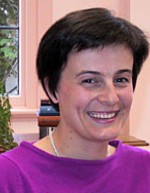
Dr Leanne Armand
Introduction
Dr Leanne Armand received a PhD in geology from the Australian National University. Her thesis work focused on the use of algae remains as an indicator of sea surface temperature changes and sea ice estimation. The algae remains were found in sediment cores taken from the southeast Indian Ocean. As an Australian Research Council postdoctoral fellow with IASOS (Institute of Antarctic and Southern Ocean Studies at the University of Tasmania) she developed this work further, especially in the area of estimating sea ice extent in the Holocene and over the last 190,000 years.
Now working in the Biogeochemical Cycles Program at the Antarctic CRC, she investigates biogeochemical cycles using algae collected in sediment traps at certain ocean sites between Australia and Antarctica and also continues her sea ice research. Her work is important in gaining an understanding of how sea ice and sea-surface temperatures vary naturally over time, and how this natural variation influences climate.
Interviewed by Ms Marian Heard in 2001.
Where were you born, Leanne, and when?
My life started in North Adelaide. I was born on 20 February 1968 – 'just in time for lunch', my mother says. I have a younger brother, Andrew, who is currently a hospital nurse in Adelaide and who has three kids
What are your recollections of your childhood?
My childhood was very interesting. My family was always going out and doing things, sometimes associated with St John Ambulance. We did a lot of camping, and we also had good childhood experiences in and around the Adelaide suburbs.
As a young child I spent a lot of time at the beaches along Marion – Seacliff beach and Glenelg, areas around there, and that got me into collecting seashells. I used to try and set up 'museums' with my shells or even just with bits and pieces I collected around the house or whatever, and to give 'guided tours' and explanations of how and why things were.
Your primary school experiences focused more on craft than on science. Did this change in high school?
Yes, it did. I had excellent high school science teachers, who really led me on to develop my skills towards the way I would eventually go. In fact, it was in year 11 that I succeeded in picking up a John Green Memorial Prize, a biology award which was offered at our school each year.
At the end of year 12 you were chosen to represent Australia on an exchange to the United States. What was that all about?
South Australia was turning 200 years old at the time I was finishing high school, and I was chosen to represent Rotary International for a Bicentenary exchange with Arkansas. I was able to go over in a youth contingent to experience life there for six weeks, and in return we later had an exchange student come and stay about two months with us for the celebrations.
I have mixed recollections of that trip. The most important one would be of meeting Bill Clinton, who was then Governor of the State of Arkansas. But I also remember that within two days of turning up at the high school, I had outclassed all the biology students – much to my horror. What a way to make friends in my first few days of high school in America! Anyway, I survived.
What did you do after finishing year 12?
I went on to do a major in biology at Flinders University. At first I intended to become a biology teacher, but as the years went on, my studies focused on my interest in research and finding out more about the world around me, particularly palaeontology.
The first digs that I went on – run by Rod Wells and Peter Murray – were at Narracoorte Caves, in South Australia. These were followed by digs at Alcoota station, in the Northern Territory. I spent several seasons up there, digging fossils with Peter Murray and often a group of students from Flinders University. (We conducted coursework at the same time.) These were very enjoyable times for me.
The fieldwork certainly made life more interesting. Working outdoors, getting your hands dirty, has always been a bit of a joy for me. Some people say you never grow out of using all the skills that you acquired at kindergarten, and it is definitely true that being outdoors and digging in the dirt to find treasures is a joy.
Your interest in fossils and palaeontology stayed with you throughout your degree. But although you decided that you preferred research to teaching and so enrolled in Honours at Flinders University, after six months you pulled out. Why was that?
I started Honours in Alice Springs, hoping to work on some fossils from Alcoota station, but I needed the facilities of the university at hand. The long distance between Alice Springs and Adelaide hindered the project considerably. So I decided to pull out at that time, and instead I went on to help organise a conference for vertebrate palaeontologists in Australia.
Needing a job and wanting to continue studying, I was able to then move to the Australian National University and start a part-time position as a fossil preparator for Professor David Ride – working with material from many different areas of New South Wales – and also to restart my Honours studies.
Did your part-time work contribute to the skills you needed in your Honours project?
Most definitely. It provided a sort of background training, helping me develop skills in research as well as fossil preparation.
I did my Honours work in the ANU Geology Department, as half thesis and half course work. My project was in the Southern Monaro, the Alps region, and this was one of the sites that I was given to work up from a geological and palaeontological perspective. The thesis work was specifically to go to Teapot Creek, where we knew there were fossils, to identify all the fossil sites in that catchment and also work out the geological formations in which the fossils were occurring. I did a lot of work in that area.
Did you have any important mentors at this time?
I certainly did. Besides Professor David Ride, Mike Archer (one of David Ride's first students) had a great deal of influence in my palaeontological career. And from the geological perspective, Ken Campbell had a lot of input in my development.
After Honours you chose to stay at ANU for a PhD in micropalaeontology.
Yes. My PhD focused on a collaborative effort between the University of Bordeaux, in France, and the Australian National University Geology Department. My supervisors were Jean-Jacques Pichon at the University of Bordeaux and Patrick De Deckker at ANU.
I had a choice of about five research grant possibilities for my PhD. Four of those were with vertebrate palaeontology, with the large mammals of Australia, but there were not so many jobs in vertebrate palaeontology. There was certainly a niche in the micropalaeontological world that I could move into without so much competition, and I decided to take the opportunity to move into that area.
Just what is micropalaeontology?
Well, basically what you need for micropalaeontology is a microscope to look at these tiny fossils, and to observe and characterise them. I started my new research on fossil algae, and I have researched them for the last six or seven years. Algae can be thought of as the green slime that you find on your fishtank, and their skeletal remains are made essentially of glass, silica.
When algae die, they fall to the sediments or the bottom of your ocean or stream or whatever. I focused on looking at past sea surface temperature changes and sea ice estimation, based on the algae remains found in sediment cores taken from the ocean between Australia and Antarctica. I started off with two cores specifically, looking at which diatoms, or algae, indicated warm water or cold water environments. I used the diatoms to help provide indications of climatic change – whether sea surface temperature got warmer or colder, and whether sea ice advanced or retreated from Antarctica.
Why was this work important?
At first we weren't sure how far we could develop the sea ice model, but it has become increasingly important as time goes by. Climate modelling is now a very important focus for all society: Where are we heading? What is the natural variability of the world in terms of its climate? Is it going to get warmer and warmer, or are we going to go into cold glacial periods like those of the past? My PhD study and also my current study, which has continued to some degree in this field, have been trying to give answers to modellers that will help them define the natural limits of climate variability. Sea ice, and also the sea surface temperature near Australia, are important in predicting future weather patterns or climate affecting Australia.
I believe your PhD years extended a French connection that you already had.
That's correct. I happened to meet my husband, Stéphane, at the ANU during my Honours year, and I married him during my PhD years. He is actually French, so from that chance meeting I now have a French family.
Because of the collaboration with the French university I often went to France for periods of between two weeks and two months, and I was able to springboard from the University of Bordeaux directly into my family over there. In that way I could pick up French along the way and also get a good understanding of the country and the culture, and now I am probably not badly assimilated into it.
What did you do after completing your PhD?
During the last year of my PhD I actually moved over to live in France and finished writing up my thesis there, in the hope that I might get a postdoctoral fellowship overseas. I was thinking Germany, America, possibly France. At the same time, though, I applied for a postdoc position in Australia, because you have always got to try for everything that's available.
I distinctly recall getting a phone call one night, 'You've got the postdoc in Australia.' We lay in bed thinking, 'Oh my goodness. We're due to have a baby in three months. How is this all going to work out?' But it did all work out. When our first son, Gaston, was three months old – a year and a half after we had moved to France – we packed up the house and moved back again, baby and all, to Hobart.
Was it difficult to juggle your research in Australia with caring for your young baby?
I have a great husband, and I was lucky that he decided to stay at home and look after our son in our first year back. And I guess they have both profited from being so close during this formative age. (That's not to say I wasn't around as well!) It has been a juggle, certainly, but my husband and I have a great relationship where we are able to divide up the responsibilities of life.
What research did you do in Australia for your postdoc?
It was to essentially develop further the work of my PhD, especially in estimating sea ice over the past 190,000 years. I took a transect between Tasmania and Antarctica, and picked out a few new cores to help the group that I was working with – the Palaeo Environment Group at the Antarctic Cooperative Research Centre – to establish the past sea ice variability over this distance.
This research has assisted modelling people, and also the palaeo environment community, the oceanographic community in general,
to understand what an important role sea ice has played in how the ocean circulation turns and how
fisheries stocks and the whole food web have changed over time. The bottom line is that sea ice and sea surface temperature really do influence climate, and so play a role in the terrestrial Australian climate.
How do you go about collecting the fossils that you look at under your microscope?
Collecting is always a business, and there are certainly hard moments. We tend to go out on cruise vessels specifically designed for research purposes. We go out with our coring devices – piston cores, and also box corers. Piston cores are very long metal tubes with very heavy weights on top, and we send them down with a cable. They penetrate into the sea floor and their special 'Chinese fingers' interlock at the bottom to stop the sediment coming out of the tube. Then, when the cores of sediment come back up to the boat, we sample them. They can be anything from 5 metres long – I think the longest core I took (as part of the team) was around 35 metres. We took that one on the Marion Dufresne, when we were not far from Kerguelen Islands.
There are fun elements, too, in going out collecting material. There can often be mud fights, usually when we're finished with the sampling of the material. You know – somebody throws a bit over there and, 'Oops, it's landed on you.'
Haven't you just taken up a grant for another 18 months with the Antarctic CRC?
Yes, but I have diversified slightly. I do have some continuation with the sea ice program, but I will now be working with the biogeochemical cycles program that is run by Tom Trull. This is more specifically to look at sediment-trap material. Sediment traps are essentially very large funnels that collect material from the surface of the ocean. A little collection cup at the bottom of the funnel collects material over a year-long period. People go out and retrieve these sediment-trap devices from the ocean; when the traps are brought back to the laboratory, we
sample them. I will be looking at the annual cycle of the algae that are produced in the ocean at certain sites between Australia and Antarctica.
What are your thoughts about Antarctica? It seems to fascinate scientists who are involved with it.
I guess Antarctica always has a certain mystery about it. It is an amazing place which a lot of people would love to visit, just to experience the isolation, the whiteness. Certainly it is spectacular and unique, but at the same time it is very cold and windy – and very white. I have yet to set foot on Antarctica, but even after having seen it I still do not really have it as one of my goals to go down there. There are other places I would like to see now. Going to Antarctica has just been icing on the cake.
What, then, have been the most rewarding or exciting aspects of your science career?
For me the exciting part is the thrill of the find. There's always something new turning up, there's always something fantastic for me to look at under the microscope.
I get a thrill every day from the variety and the beauty of diatoms, to me they are the most beautiful creation that nature has brought about. I never tire of looking at them down the microscope. The little skeletons are magnificent in their variety of shapes and the little areolation patterns that occur on them – they're an amazing assortment. You're always looking for your favourite one, or saying, 'Ooh, look! There's something new!' They are just wonderful to look at.
And finding an answer to something that you may have spent months or years studying is also a fantastic and rewarding focus of your work, as is being able to contribute to solving a greater problem.
What skills do you think are needed in science today?
If you are to move on, you really must have a passion. I think that is true for anything that you choose in life: you must be passionate about it in some way or another. I firmly believe that to be in science you must be a detective as well. You must have the desire to answer a question, to solve the mystery, to go that one step further. And then the skills that complement those sorts of initiatives come from a variety of backgrounds. You can be a biologist or an oceanographer or a geologist, but actually being a bit of everything is also very important these days. Often, I think, being rounded rather than specific is the better option. But being passionate is the most important thing.
Science communication is one of the key skills you need to develop, even while you are developing the skills of whichever area you wish to go into. But it is probably one of the hardest – not something that we would normally develop at school age, when we can communicate on certain levels, and write essays or whatever, but the ability to communicate science to a general audience can take a long time to develop.
Thirdly, collaboration and teamwork is an absolutely integral part of science. My own work is very internationally based; probably not a day goes by when I'm not communicating by email or faxes, or sometimes telephone, with colleagues in America, Germany, France and other countries – even, on the odd occasion, Poland or Japan.
Where do you see yourself in 10 years' time?
Ah, this is a good question. Science is a hard thing to stay within. In 10 years' time, I hope, I'll be with the new-form cooperative research centre that will follow on when the Antarctic one finishes up. I truly hope that I will be part of the team that develops and goes forward with that research area. If not, well, maybe I'll be working with Geoscience Australia, or maybe out consulting. If all else fails, I may turn back to a teaching career.
Your research is clearly a very important part of your life, but no doubt you will want to continue with your range of other interests as well.
I certainly hope so. Earlier this year I had a second son, Maxime, and I keep myself busy with my two young boys. As something different, I do quilting, and I enjoy yoga for a moment of peace.
I spend a lot of time with my family. We do car camping, we get outdoors, we enjoy our life as much as possible in that respect. I enjoy bushwalking, and occasionally some climbing – just getting outside, getting mucky (which probably relates back to my early days at the beach) and enjoying family life. That's really the most important.
© Australian Academy of Science
Sir Rutherford Robertson (1913-2001), plant physiologist
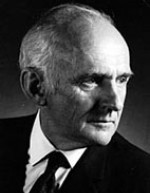
Rutherford Robertson was born in Melbourne in 1913. He attended Carey Grammar School there and when his parents moved to New Zealand he attended St Andrew's College in Christchurch. In 1934 he received a BSc Hons from the University of Sydney. In 1936 Robertson went to England to study for his PhD at Cambridge University where he worked on the relationship between cellular respiration and salt uptake by cells. He returned to the University of Sydney as an assistant lecturer in 1938 where he worked on apple and wheat storage.
Between 1946 and 1958 Robertson worked at CSIRO as the head of the section working on plant physiology and fruit storage. He spent 1959 as a visiting professor at the University of California at Los Angeles and on his return to Australia joined the Executive of CSIRO. He received a DSc from the University of Sydney in 1961, and in 1962 was appointed professor of botany at Adelaide University, a position he held for 7 years. Robertson moved to Canberra in 1969 to become master of University House at the Australian National University. He then became director of the School of Biological Sciences at the Australian National University, a position he held from 1973 to 1978. Sir Rutherford passed away on 5 March 2001.
President of the Australian Academy of Science 1970-74.
Interviewed by Dr Max Blythe in 1993.
Contents
- Family background and early life
- First interest in science
- Education
- Entering scientific research
- A marriage of scientists
- Activities at Cambridge University
- Teaching science
- Solving food storage problems
- Investigating active transport and respiration
- Overseas studies
- Promoting scientific research
Family background and early life
Perhaps you could start by telling me about your early life.
I was born in Melbourne in 1913. My parents were living there because my father was a Baptist minister and he had churches in Melbourne. My parents were strictly religious people, as you might expect in the Baptist denomination. While my father was busy converting people, my mother, who was well-educated and well-read, had a broader perspective. Certainly I owe a good deal of my early upbringing to her wisdom.
What kind of person was she?
She was very investigative and really got me interested in science, particularly when we settled down after World War One. During the war, my father was a chaplain to the Australian Forces in France and was away for two years. My mother, who came from Queensland originally, took me to Brisbane and we stayed with my grandmother. My father came back in 1919.
By that time I'd succumbed to an epidemic of polio (or infantile paralysis, as it was called in those days). When we went by train from Brisbane to Sydney, I remember limping along the platform to meet my father – a forbidding figure in full uniform – Captain Chaplain Robertson. So those are my earliest memories. We then went on to Melbourne, where he was going to a church in the suburb of Canterbury.
Talking about your family...you have an interesting Scottish and English background.
Yes. The Robertson name comes from a family in the Shetland Islands. The Shetland Islands were in a pretty bad way in the middle of the 19th century, and there was a great deal of emigration. Our branch of the family migrated then and went to settle in Victoria. My grandfather Robertson married another Scot, Miss Cairns, whose mother's maiden name was Rutherford; that's how I got the Rutherford in my name, because it was a family name given as a Christian name.
On my father's side there must have been genes for preachers, because almost every man was a preacher. In the 19th century they conducted the sort of tent-missions which travelled around Australia singing and preaching. On my mother's side my grandfather (whom I never knew, because he died before my birth) was a very successful businessman in Brisbane. That family too was well-read and well-educated, but none of them was encouraged to take tertiary education in those days; they went into business.
Just thinking of that line of preachers – tell me more about your father.
He was a great influence as far as I'm concerned. While he did believe it was necessary to save souls, he had more than just a conversion instinct. In addition to doing theological courses, he studied history and social studies. He preached what he himself would have termed a 'social gospel', which meant that Christian people had to do something for the community as a whole and not just look after their own heavenly futures. That was unusual in those days.
You mentioned being ill as a boy and winding up with a limp. That must have been hard to cope with.
It wasn't easy, though my parents encouraged me to do everything to strengthen my weak leg and to take part in sport as far as I was able. If you recover from poliomyelitis, you seldom have pain subsequently, just weakness, and I didn't find that too much of a burden. The worst part was being dragged around to various people who thought they might be able to cure it. There was always the possibility that the next person I was taken to might have a better form of massage or something of the kind.
First interest in science
What stimulated your early interest in science?
My mother. She did not have any specialised knowledge, but from reading and from occasional lectures, she became interested in what was happening in science and what scientists were up to. This was in the early 1920s in Melbourne.
And she'd talk to me about it. For instance, I remember when Ernest Rutherford visited Melbourne, she went to listen to his lecture and to learn something about what such people were up to, without knowing any of the details. She encouraged me to have a similar interest in science. When I began to see that chemistry was an interest, my parents didn't buy me a toy chemistry set. Instead, they went to a friend who was an industrial chemist and said, 'What sort of things could a boy do a few experiments with?'
So you built a bench and you got to work.
Yes, that's right. I didn't discover anything very vital, but I enjoyed it.
Education
And your early schooling in Melbourne?
It was mostly enjoyable. Because of my inability to get about very well, the first school I went to was what would have been called in Britain a Dame's school. It was a school mainly for girls up to about 14, but which took a few small boys. It was very near where we lived, and was run by three sisters, the Misses Hester. I learned not only what I was supposed to in my own class, but because there was really one big room with all ages in it, I also learned what was going on in the other classes. I really enjoyed that period.
Then I went to what was the beginning of a primary and secondary school, called Carey Grammar School, which had a Baptist foundation. I was there for three years before my family moved to New Zealand. I enjoyed my time at Carey, although I began to learn what it was to have hard knocks with people with whom I didn't see eye-to-eye.
Did Carey contribute towards the scientific career that was to follow?
Only a small amount. Science was a subject that was taught, I think, only in the last year that I was there, by which time I was about 12. As far as it went, that added to my interest, but it wasn't very exciting science. Science classes in those days tended to start with mensuration, so we spent our time looking at rulers and protractors and one thing and another. This didn't seem as interesting as chemistry, which I wanted to get involved in.
In the mid-1920s your family went to New Zealand for your father's posting?
Yes, it was a fascinating experience. We went to the South Island of New Zealand, to Christchurch. The advantage of the South Island from my point of view and from my parents' point of view was the proximity to the Southern Alps. I had several opportunities to go to Franz Josef Glacier and to the high mountains in the vicinity of Arthur's Pass, which was one of the ways through the mountains in those days. That was a good experience.
What kind of school did you go to?
It was a Presbyterian school, a boarding school for sons of farmers, but I went as a day boy. The social life was fairly demanding and enjoyable. I had to turn up on Saturday afternoons to watch the first 15 play the rugger match, and I had to take part in sport, which I enjoyed to the best of my ability. And I think the teaching on the whole was good. Certainly the ethical outlook of the school was very good, and I enjoyed the teachers I was associated with.
Do you remember anyone in particular teaching at that school?
Well, I remember the mathematics teacher, Leadbetter, who was very good indeed. He was something of a hero to the boys, because he was the sprint champion of New Zealand at the time he was our teacher. And in those days, anybody who could run 100 yards in 10 1/5 seconds was automatically a hero.
Leadbetter went on to become headmaster of one of the big and famous New Zealand high schools. I think he went to Waikato, and he then did an unusual thing: on reaching retiring age, he took holy orders in the Presbyterian Church and became a minister. I was pleased to call on him in later life when he was a retired preacher.
And what about science teaching in the school?
The science subjects were mostly restricted to chemistry and some very elementary physics. We didn't really have a scientist as a science teacher. I remember that I had a little trouble when it was said (and I suppose I'm talking about 1927 or so) that we were now going to talk about the atom, which was the smallest indivisible particle – that there was nothing smaller than an atom. And I said, 'But, Sir, hasn't...?', and went on to suggest that someone had split the atom. The master at the time was embarrassed and said, 'Yes Robertson, come and see me afterwards'. So afterwards he said, 'You're quite right, Robertson, but that's not in the syllabus'. So that was about the level of science we were getting at that stage. But I didn't lose my enthusiasm for having more.
You came to Sydney next, and went to university there?
Yes.
It must have been quite difficult going to Sydney University from that kind of background.
Yes, it was, and in some ways it was a mistake. My father, consulting me, toyed with the idea of my going to a school in Sydney for another year or even two. I was only 16, but I had a matriculation qualification, which Sydney University accepted. A friend of the family who was a school teacher said, 'Why don't you let the boy go to university? Even if he fails and repeats, it won't matter very much, and it would be better for him to start getting university experience.' In fact, that wasn't quite so, because I was ill-prepared and had to work so hard to keep up. I didn't get much chance to grow up – I was too busy working in the first year or two. That all changed with a couple of years' maturity.
And what did you study?
Chemistry, botany, physics and geology in the first year. Then it split down to more chemistry and botany, and I did zoology as a first year subject in second year.
But by the time you got to third year, you were really beginning to find that botany was coming out on top?
Yes, that's right. The botany that I was doing then – under the leadership of Professor Osborn who subsequently went from Sydney to be Professor at Oxford – was more interesting than chemistry. It was the way it was taught; that was largely because there was a lot of memory work in chemistry, which I found less challenging than thinking out the solutions to problems that I was getting in the biological courses. Subsequently I made up for that, because my interest in chemistry didn't decline. I learnt much more in graduate years than in the undergraduate years.
And Osborn?
He was a very good lecturer, sparkling and lively. His lectures were appreciated by first year students. He was not so good for third year students, because he didn't give us as much of a feeling for the research atmosphere then as successful teachers of senior students do now.
Entering scientific research
In your fourth year, you had an option to do a research year?
Yes, that's right. I chose to do the honours year in botany, which consisted of a great deal of reading – a long reading list – over the whole range of the subject, including its history. Osborn suggested the research problem, and then left the honours students alone to work out what to do, though he gave advice from time to time.
But he set you a rotten problem?
Well, it was partly my own choosing. It was to work on the way the pores in leaves, called stomata, open and shut. It was quite fascinating, and I did manage to get a few results. In fact, the fourth year students in the different subjects were invited to compete for a prize based on the thesis or paper they had written, and I got a student prize for the work that I was doing. I also got a first class honours degree, which showed that I was enjoying it and making something of it.
Looking at that work, you made all kinds of apparatus.
Yes, one of the physical chemists helped me. I learned how to make apparatus by blowing glass. I did that primarily so that I could analyse for carbon dioxide and oxygen, which we believed going in and out of the stomata had something to do with controlling their opening and closing.
You had to make a high vacuum?
Yes, in attempting to get analysis for very small quantities of gas. I didn't use it throughout the research, though, because I found I could get rather bigger volumes of gas than I had been thinking of. I then made an apparatus which was based on the Haldane apparatus, which was a gas apparatus. That worked for what we were doing at the time.
But you didn't resolve the problem you initially set out to resolve?
No, so I talked to Petrie in Adelaide about it during the summer holiday. I should explain that this was a plant physiological problem and there were no plant physiologists in Sydney at that time – none at all. The only two of any stature were Petrie at the Waite Institute, University of Adelaide, and Wood, who was Professor of Botany, also in Adelaide. I got an opportunity to discuss the problem with Petrie, and he made some suggestions, which I worked on. But they weren't terribly successful either, at least not in my hands, with the equipment available at that time. But the important thing about the contact with Petrie was that he said, 'If you want to be a plant physiologist, you must get to Cambridge.' This was good advice.
How did you meet Petrie?
My father took a busman's holiday by going and preaching every Sunday for a month in a church in Adelaide, so we were living in Adelaide. He did that in two successive years. On the first occasion, through friends of his, I was taken round the Waite Institute and met Petrie. And Petrie, being a Sydney graduate, took an interest in me, and we had some discussions. The next year my father was going over again, and Petrie said, 'Why don't you come and work in my laboratory for the three or four weeks that you're here.' That was a great experience in itself.
How did you find Petrie?
He had a very sharp intellect and was very critical – so critical at times that he offended the people that he was giving helpful, critical advice to. But I got on very well with him.
From there you went to Cambridge?
Yes, I got a scholarship. Some of the money that was raised in the Prince Albert Exhibition of 1851 was used to set up scholarships called the Exhibitions of 1851. These scholarships were mainly responsible for taking colonial or dominion students to England. Most of the students went to Oxford, Cambridge or London University, but not necessarily. When I was fortunate enough to get one of these, I went to Cambridge on Petrie's advice.
I was wondering whether that's where the term exhibitioner had its origins.
I think it might be. The list of people who went and became famous since is long. I think Rutherford had one of those scholarships when he first went, and certainly Mark Oliphant had one, going from Adelaide in his case.
So you went from Sydney to Downing Street and St John's College. What a botany school! When did you arrive there?
I arrived at the beginning of October 1936. I went in to see Briggs, of course, and gave him the work that I had been doing on stomates. He was not too uncomplimentary, but it was obvious that he had something that he really wanted his next research student to do. He suggested that I might put this stomate work aside and work on what was really interesting to him. That seemed to be good policy – to do what your supervisor wanted done – so I had no difficulty in doing that and was completely fascinated with the problem.
What work was that?
The best way to start is to say that all cells – plant and animal – take soluble constituents (nutrients and so forth) into them. They do it in such a way that quite often these constituents are being moved against their natural tendency, against the concentration gradient which makes them diffuse back out, but there is something that spends energy on taking these constituents into cells. Not at the time I started with Briggs, but later on, this came to be called active transport, meaning active in the sense of work having to be done to make these things move. We called it accumulation in those days, because it resulted in salts such as sodium chloride or potassium chloride accumulating in plant cells. If some work is being done in living organisms, the energy for that work comes from the process of respiration.
Briggs invited me to combine the measurement of the respiration with the measurement of the salt accumulation. We used slices of ordinary carrot roots, which were living cells. As the salt went into the tissue, the electrical conductivity of the solution that it had gone from would decrease because there was less salt in it. We had electrodes in the external solution, and we could measure the amount of salt that was going into the carrot discs.
The respiration resulted in carbon dioxide being given off, and we developed a technique for measuring the amount of carbon dioxide given off, which also depended on electrical conductivity of a solution. We bubbled air past the respiring tissue, and the carbon dioxide given off was taken into the air stream. We passed it through sodium hydroxide, in which the carbon dioxide combined to make sodium bicarbonate. The sodium bicarbonate has a lower conductivity than the sodium hydroxide, so we were able to get conductivity shift again. So it was a double conductivity shift that we were looking at.
Did it correlate the respiratory rate with salt uptake and accumulation?
Yes, it did. The system we were working with was very advantageous, because after we cut the tissue and put it in aerated water for 24 to 48 hours, the respiration rate dropped very low. When we put salt on it, it rose again and – to make a long story short – the increase in respiration was proportional to the amount of salt that was taken in. A good deal of my work went into establishing that close relationship with aerobic respiration.
And that was the core of your thesis?
Yes. I finished the thesis in December 1938, and I was examined orally by Maskell, who was a famous physiologist and my internal examiner in Cambridge; and Bennet-Clark, another physiologist who was the external examiner. They give me a viva, as it's called. Nobody told me whether I'd passed or not – nobody at all. There wasn't a hint. I was on the ship going to Australia, somewhere near Cape Town, when I got a telegram from my tutor in Cambridge saying that my PhD had been passed.
A marriage of scientists
I want to go back a bit before the doctorate to your marriage to Mary Rogerson. Could you tell me about her background.
Yes. My wife is of Scottish parentage. Her father came out to settle in Australia in 1911 I think, and his fiancée came a year later. He sold a farm in Dumfrieshire, which had been in the family for a long time. The name Rogerson is quite famous in that area. They were either farmers or doctors. Indeed, there was one John Rogerson who was medical adviser to Catherine the Great because of the connections between Scotland and the Russian court in those days.
When Mary's father came to Australia, he bought land first near Canberra at Gundaroo, and then in 1920 at the place where we now live – Binalong – which is about 95 km from Canberra. Mary was a science student at Sydney University when we met, and we were engaged to be married before I went to Cambridge. We were then facing a separation of a possible two years, but fortunately, with some financial help from our families and finding that I could do better with my scholarship than we feared, she was able to come over at the beginning of the '37-'38 academic year. We were married in September 1937 in All Saints Church, Jesus Lane, Cambridge – which sounds great.
And your marriage has lasted all these years?
Fifty-five years and still going strong. Mary has been an enormous support. In our Sydney days she used to do part-time demonstrating, which was practicable. We had a son who had to be looked after, and a full-time job would have been difficult. She continued that interest until we went to Adelaide, when we made a choice of our own that perhaps a professor's wife being on the same staff might not be a good idea. That might have been an error, looking back. She could probably have continued demonstrating part-time there, too. But she not only helped me with experimental work from time to time, but also edited a great deal of my writing. She criticised my papers, and did all the typing before word-processors came in.
Activities at Cambridge University
I'd like to spend a bit more time talking about Cambridge in those years.
Cambridge was a very exciting place in the 1930s. The Cavendish Laboratory, with physics led by Rutherford and a collection of stars around him – Cockroft and others – was doing exciting things that were reported almost every month. It was a great privilege to be able to go and listen to the great Rutherford give an occasional lecture. Plant physiology, of course, connected up with biochemistry, and the biochemistry school under Sir Frederick Gowland Hopkins was especially strong in those days. Among the people that I knew there were Dr Joseph Needham and Dorothy Needham, and Robin Hill, Pirie (who worked on viruses), and Dick Synge (who subsequently won the Nobel Prize for work on paper chromatography in collaboration with others).
And Briggs?
Briggs was one of the most imaginative plant physiologists that I met. He placed a strong emphasis on the importance of physical chemistry and mathematical analysis to the basis of living processes. He was highly critical and appeared offensive when not meaning to be. It's said that once, just before my time in Cambridge, he was asked to comment on a lecture given by the Professor of Botany from either Edinburgh or Glasgow – I'm not sure which. The professor was a very distinguished figure in his day, but in his older years, he wasn't presenting things with the rigour that they deserved. Briggs said so in the audience. The gentleman, when asked to reply to Mr Briggs (as he was then), said that he didn't think he wanted to waste his time on some up-start of a young man who didn't know what people were doing. The story goes that the poor chap wouldn't eat his breakfast the next morning. He was staying with Sir Albert Seward, and Lady Seward had to ring Briggs and suggested that an apology would be appropriate. Briggs was very upset about having done this; he had no idea that his trenchant criticisms were in any way unfair, and he had no idea that he was upsetting anyone. When he made those sort of criticisms, they would be pretty sound.
Briggs was very supportive of your work...
Yes, he was one of the two great influences in my career.
And so, Cambridge. Cambridge was under the influence of the Spanish Civil War at that time.
Yes, it was. In 1936-37 we were concerned about the way things were developing in Spain, exemplifying, a lot of people thought, what was going to happen in Europe generally if Hitler cut loose as he was threatening to do. And, as a person interested in the social relations of science (perhaps due to my father's influence), it was inevitable that I took an interest in the sorts of groups that had that in mind.
One of these was the Association of Scientific Workers, which tried to get scientists to acknowledge their social responsibility and the contribution that science could make. I became secretary of the Cambridge branch. At that time, not surprisingly, such bodies tended to attract a number of people who were on the left side of politics, including some people who were communists – a few card-carrying communists, others secret communists – and I found that atmosphere very interesting. I was never a communist myself, because I tended to be suspicious of things that some of these people took as acts of faith.
The other body that I was associated with was the Cambridge Scientists Anti-War Group, and this was the one that related particularly to the way things were developing in Spain. We were concerned that the conservative British Government was using some technical knowledge to prepare people for the possibility of Britain being invaded – like advice on how to gas-proof rooms in houses, should there be a gas attack as part of the war. At that time we published a little book called The protection of the public from aerial attack.
You were a contributor?
Yes, I was one of the junior contributors. Somewhere down here in the list of the editorial committee, it says R.N. Robertson BSc. This gave me an interest in meeting a lot of people that were seriously concerned about what was happening. At this time the great J.B.S. Haldane, an acknowledged communist, was writing daily articles for the communist paper, the Daily Worker. He gave an unfavourable review of the book, which surprised my colleagues, because they thought that Haldane should be on our side. So I was deputed to go and see Haldane, who was in London at that time. I called on this great man, who really was a great scientist. He was just back from helping the government in Spain against Franco, and he gave me a very good hearing. He agreed in the end that in one of his criticisms he may have been right, but in the other he was wrong and he apologised. So, as far as I was concerned, that was a good experience.
I have to say that I was surprised at the devotion of some of the people on the left, including Haldane, to things that obviously were not as rosy in the USSR as these people believed. As far as I was concerned, when Hitler and Stalin made a pact, that was the last straw. I couldn't believe this stuff anymore, and was surprised that some of my friends remained with it until later years. Most of them were put off by the invasion of Czechoslovakia, I think.
So that was the atmosphere of Cambridge, and one of my personal experiences relating to the atmosphere at the time. When summer came in 1938, I went to Leiden for a couple of weeks for further experience in glass-blowing.
That was something that you really got into?
Yes. Knowing that I'd have to make equipment for myself when I got back to Australia, I was keen to do that. After Leiden, Mary and I went to Germany, but with some misgivings, because by this time it was early September 1938. We went to Munich, because a friend of ours was working there, and we were surrounded by Nazi uniforms. We had a very pleasant visit, except when we got into an argument with one of the German soldiers in the Hofbrauhaus. We had a friend with us who was fluent in German, and it was quite clear that what they thought they were going to do was very different from what we thought they should do.
We returned to England in that September, and under strict instructions, the first thing we did was go to the local school in Cambridge and collect our gas masks, because it was thought that war would break out within a month. As it happened, Chamberlain went and talked to Hitler – what became known as the Munich crisis – and the war was put off for a year.
Teaching science
And so you returned from Cambridge to Sydney University and the Botany School you had left...
That's right. Osborn had left and early in 1938 Eric Ashby, who subsequently became Lord Ashby, had taken over the professorship. This revolutionised the outlook and the way things were done. I went back to Sydney University as an assistant lecturer. Ashby gave me responsibility for the practical classes in plant physiology and some of the first year practical classes in botany, and this was a good experience. First of all, I found that I really enjoyed teaching. Secondly, Ashby said that the important thing about teaching is not to give students a lot of facts but to make them think, which suited my approach to science. Ashby encouraged us to make every practical class like a mini-research project, where the students were encouraged to investigate for themselves, draw their own conclusions, and discuss it with us when or if they got stuck. I enjoyed that...
But different to your time as a student.
Yes, it was. It was different from organic chemistry, which was all memory work, and from lots of botany, which was also memory work.
So you settled in well?
Yes, but then the war came in September 1939, after I'd been back for about eight months. Ashby was called on to do war work. Towards the end of the war he was asked by Australia, with the connivance of Great Britain, to go as a counsellor to the Australian Embassy in Moscow to further relations between the allies and Russia. By that time the USSR was fighting Hitler.
I was put immediately on the reserved occupation list, which meant that I couldn't leave. I took over some of the things that Ashby had been doing, even while he was still in Australia, because he was busy setting up a Science Liaison Bureau.
Solving food storage problems
I also got involved with CSIRO, with problems that arose out of the war in relation to two food products. One was apples. All of a sudden there were no ships to take our export apples from Australia to other parts of the world. We needed to store them for as long as possible to spread the marketing in Australia, so that there'd be minimum loss for the growers. We worked on things like oily layers on the surface of the fruit to try and restrict the respiration and hence make the fruit live longer.
The other food product was wheat. There was so much wheat that every silo in Australia was filled, and there was nothing to do except put water-proofing on the ground, make a huge stack of wheat and then build a roof over the top. They still do it these days with excess wheat. The stack would be about 10 feet deep on the edge and 40 feet deep in the centre, and the size of the structure would be as large as 5 or 6 tennis courts.
The problem was that the wheat was getting hot. It was racing up to 40 degrees centigrade, and the question was, 'Why is the wheat getting hot?' Dry grain has a very, very low respiration rate, and we didn't think it could produce enough heat to do this. With the CSIRO people, we discovered that there were grain borers and grain weevils boring into the wheat stack, and it was their respiration that was bringing the temperature up. So, those were the two things that I was doing part-time.
You made quite a contribution to apple storage, though, didn't you?
Yes. That led me on to what happened at the end of the war, which was a change of jobs. In 1946 I moved over to head a section of CSIRO. That gave me staff who did experiments on the practical side, like how to store fruit. It also gave me some extra research assistance for continuing the work that I was doing in fundamental ion movement and respiration, which was encouraged. That was a very happy period, especially as CSIRO agreed to my continuing to run the practical classes in plant physiology at Sydney University. So I had the best of both possible worlds. I did that until 1958.
And you confirmed something about fruit storage that was important?
Yes. With the staff that I had in the fruit storage work, there were experiments going on in cold-rooms, cold-rooms with modified atmospheres and so on. I had very competent people to do this routine work. But, in the physiology of fruit, we followed up an observation made by Martin, a CSIRO colleague in Tasmania, that large fruit could be of two kinds: one kind would keep reasonably well in storage, but the other would keep badly.
We were able to show that if the fruit grew large because it had produced a lot of cells (in other words, there'd been a lot of cell division) but the average cell size wasn't very large, that fruit was a good keeper. If the fruit grew large but had produced few cells, so that the average cell size was large, that was a bad keeper. This was important information. We sent advice to growers and people storing fruit about how to divide their batches of fruit to keep the bad storers for a shorter time.
This would have had widespread economic importance.
Yes. Martin had most of this information, but he asked us to find out the explanation for it. So that was the fruit storage work. At the same time we were doing work to try and explain why or how the respiration rate of fruit changes and the time it needs for ripening – technically called the climacteric rise in respiration. We tried to determine what controlled the climacteric rise, whether it might be due to the balance of the free phosphate and bound phosphate in different constituents of the fruit. If there was a lot of free phosphate, there was plenty of opportunity for the respiration to rise. If the phosphate was bound, the respiration was going as fast as it could, because it couldn't send compounds away.
Was that a good hypothesis?
Yes, except that in the end, like a lot of science, it didn't turn out to be universally true. There were some varieties of fruit for which the explanation was different.
Was it true for apples?
Yes, it was true for apples, but it became more complicated to fix all the details.
Investigating active transport and respiration
And at this time, you were still excited about the active transport?
Yes, in the 1950s we were investigating the active transport and its relation to respiration at a more biochemical level. Respiration produces energy, but it distributes the energy through a phosphate carrier that is called ATP (its longer name doesn't matter for our purposes). We found that if respiration was proceeding and the active transport was proportional to the respiration, the respiration could be knocked out with various inhibitors and the active transport would be knocked to zero.
One of the things we found was that an inhibitor of the formation of ATP would also knock the active transport out. That was a very important observation, because it led on to later aspects of my work that were to connect up with the brilliant work of a man called Mitchell. But the way in which the respiration was affecting the ATP made us wonder whether the active transport was directly dependent on the respiration, because we could knock it out with respiration inhibitors; or whether the ATP needed to be formed first and the active transport depended on the ATP, because we could knock it out with ATP inhibitors. We did a lot of work to separate those two possibilities.
We were bothered about this through the 1950s. In 1959 I went to the University of California at Los Angeles as a Visiting Professor for the academic year, and while I was there, I attempted to follow up the literature in my own previous work, about whether the active transport was dependent on the respiration or the ATP. As early as 1940 we had shown that the respiration and the active transport were stoichiometrically related (that is, the number of oxygens being taken up was quantitatively related to the amount of salt that was being accumulated). At that stage, we decided that it was mainly a respiration feature, and we believed that the respiration was producing a separation of positive and negative charge – the negative charge being an electron going one way, and the positive charge being a proton going another way.
Causing a polarisation of the membrane?
Yes. If that was the case, you could swap a positive proton for another positive ion like a sodium or a potassium, and you could swap a negative electron for another negative charge like a Cl- or Br-.
An uptake by a kind of anionic or cationic trading?
Yes, that's right. That was the hypothesis that I developed in the 1950s.
At that time work was being done in Kreb's laboratory in Sheffield by a man called R.E. Davies on the way hydrochloric acid is secreted by the gastric mucosa (in your stomach, my stomach, a frog's stomach, everybody's stomach). Davies and I got together in the late 1940s and decided that the hydrochloric acid secretion was possibly another facet of charge separation. There the proton was going straight off and the negative charge joining it was in the form of a chloride minus. That was a pretty exciting idea.
Now coming back to later in the 1950s: While I was at UCLA, I pointed out that possibly this charge separation had another function; it might be what activated the phosphate to go on to the ATP. So the charge separation was the basis both of ion movement and the formation of this energy-carrying substance, the ATP. I published this in 1960, and as far as I am able to judge, I think this was an original suggestion: that the charge separation could be used either for ion movement or phosphorylation.
Was the polarisation controlling which things could move?
That's right.
You were getting close to the cytochromes, in a way.
Yes, indeed. The separation was taking place at the cytochromes in the respiration story. The next step was in 1961 when Mitchell, the great star of this part of the game, came up with what he called the chemiosmotic hypothesis. This hypothesis, which he arrived at in parallel with my thinking and perhaps with some influence from me, made the point that this charge separation was likely to be both the active transport system and the ATP forming system. That was a great leap forward because he recognised something that I didn't have enough nous to see: if you reversed ATP and broke it down, you could get a charge separation back from it (that is, a positive and negative charge) across a membrane. That was where Mitchell and I had a very high degree of agreement starting in 1961 when we exchanged correspondence for the first time. He was then in Edinburgh.
Another influence in my thinking, which I haven't mentioned in sequence, was the great Swedish plant physiologist, Lundegårdh. The work that he was doing through the 1950s was very similar to what I was doing, and we exchanged information and were helpful to each other. I saw him in 1948 and then again in 1956. He had invited me to go and work with him in the late 1940s, but CSIRO thought I'd had enough leave and overseas trips and should stay in Australia.
Overseas studies
Could I just ask about those overseas trips.
Yes, I had some wonderful opportunities to travel. In those days CSIRO was aware that we could easily be isolated in Australia, so they gave us the opportunity to travel for six or nine months to other parts of the world. In 1948 I went by ship to South Africa and travelled overland to see the fruit work in South Africa in particular. Then I went on to England where I saw plant physiologists and fruit storage, and got the chance to see Briggs again.
You stayed on and worked with him a bit?
Yes, I had about five months, a lot of it in Cambridge, and we produced a paper together. That was when I met Lundegårdh for the first time. Lundegårdh was not only a great scientist but an unusual man. He had enough money to build himself a private laboratory – which he did, adjoining his quite luxurious house some distance from his apartment in Uppsala. Incidentally, he was married to the daughter of Bruno Liljefors, a very famous Swedish painter. The Lundegårdh house and laboratory were hung with Liljefors' paintings, lovely things like a hare in the snow. In his scientific work, Lundegårdh was one of the greatest plant physiologists of the century, and he and I had similar ideas about the charge separation phenomenon and the quantitative relations between respiration and ion movement.
And you also travelled to the United States?
Yes, the opportunities to go to laboratories in America were splendid. My first contact on arriving in America was with David Goddard, who was a plant physiologist at Rochester, but he soon moved to the University of Pennsylvania in Philadelphia. He was very influential, and very good to me personally. He made contacts with the other plant physiologists in America, and told me whom I should go and see. So I met Kenneth Thimann, then at Harvard; Folke Skoog, who was at Wisconsin; and then across to the West Coast, which was the real stronghold of plant physiology in those days, with the Hoagland Laboratory. James Bonner was at the California Institute of Technology, and he was doing the remarkable work that took him into the biochemistry of plants. Also there was Fritz Went, the growth substances man. That was a great broadening experience that led subsequently to some collaborative work.
Promoting scientific research
What about the CSIRO work in the late 1950s?
I mentioned that I went to UCLA in 1958-59. I came back because I was asked to join the Executive of CSIRO. CSIRO had about 4000 employees, and the Chairman, Sir Ian Clunies Ross, had died in office. The new Chairman, Sir Frederick White, asked me to join the Executive, which was a four-man body in those days.
I had misgivings about doing that, because I didn't think a full-time administrative job for the rest of my life was what I should do. First, I was still interested in research. And second, you do well at administrative jobs if you take on somebody else's problem and make it yours while you solve it. I found I could do it, but it took a great deal out of me and I didn't know whether I'd want to keep doing it for very long. So I took the administrative job in the CSIRO for up to three years, but in the event, I left after about two and half years. The Chairman didn't want me to leave, but he agreed that it would probably be better for me to take the next step, which was to become a Professor of Botany at Adelaide University. So that brings us to 1962.
You were better off in Adelaide?
Yes, it was like coming home – doing more plant physiology in a proper way, and I got the opportunity to make a couple more appointments. One of them was a man who had been working with Briggs, Professor Michael Pitman, who later became Chief Scientist in the Prime Minister's department in Canberra. The other was a former student of mine from Sydney who had been in America, Dr J.T. Wiskich. I brought him back in plant biochemistry, and he is still in the Adelaide department as a reader. So we had a strong physiology group there.
Did you still have a chance to do research at this stage?
Yes, I did, especially between 1962 and 1965. Then something happened that took away all my research time. The Australian government decided to do something it had never done before – namely, give individual grants to research workers or teams in universities. The minister in charge was Mr Gorton, who later became Prime Minister. At that time he was Minister Assisting the Prime Minister in matters relating to education and research. Some people, including the Chairman of the Universities Commission, thought that the money should be given in block grants to the universities. Others thought that there should be a system whereby the best work was supported; let it be competitive.
Mr Gorton sent for me from Adelaide to come and see him in Canberra, and I remember that when I walked into his office he was riffling some papers on his desk. He looked up and said, 'Oh, hello. Thank you for coming over. I wanted to ask you to be Chairman of a research grants committee that I'm setting up. It will be a bloody awful job and I wouldn't advise you to take it, but I'd be tremendously grateful if you would.' Who could resist such an offer?
So there you were, dealing with research grant applications.
The money was already available and there was a good deal of unhappiness in the universities because it hadn't been distributed at all. It had been delayed so long, we agreed that we should get going as fast as possible. Gorton had the idea that I should be able to do it with a committee of about a dozen people and, in fact, we started with ten. Those ten were specialists in different fields, but the system was based on confidential reports in writing from referees both in this country and elsewhere: 'This is Joe Blow. Here is what he is doing. He will be known to you through his research papers. How do you rate this man?' We brought in that system and distributed the available money. There were some disappointed people, but there were no rows. The system that I set up and operated as chairman for four years went very well and hardly changed in the next 25 years. It's changed now because the whole exercise has got rather bigger.
It was an important development that lasted for a quarter of a century.
Well, it was important to me; I felt it was something that was worth doing to help science in the community. That is probably why someone recommended me for a CMG [Companion of the Order of St Michael and St George], which I got at the end of that period. But it meant my research time was shot to pieces.
After the Adelaide professorship and your chairmanship of the research grants committee, you got an invitation to come back to Canberra to the Australian National University?
Yes, that's right, I became Master at University House. The mastership is like an Oxford or Cambridge mastership. The Master has a senior position in the university, is expected to be scholarly or scientific in his pursuits, has time to do so (or did in my time), and has some research assistance. I set up experimental work in the Research School of Biological Sciences and I had an assistant. I enjoyed being Master of University House because it was even more academic then than it is now. Indeed, we wore gowns to high table and had dinner in hall every night of the week in those days. My wife and I always stay there if we're in Canberra overnight.
It's a bit more commercial now, I suspect.
Yes, it has to be. In those days it was using some of the grants provided by the government. These days that's no longer possible.
Was your research a success in that time, because you would have been quite busy running University House.
Well, yes and no. The work was going quite well, but it wasn't University House that interfered with my time. Very soon after I came to Canberra, the President of the Academy of Science, Dr David Martyn, died in office. I seem to be fated to succeed people who had died in office.
You were captured again!
I was asked to be President of the Academy of Science. That, of course, is an honorary part-time job which becomes all-absorbing. The next four years, the four years of my tenure as President of the Academy, were at the expense of my research. I was able to do very little.
But you were busy for the Academy.
Yes, I did a lot of things. I suppose the most exciting, indeed the most straining, was when we entered a protest through the Australian government against the French atmospheric testing of nuclear weapons and suggested that there was a circulation of radioactive material. In 1973 the French asked if they could send four scientists to come and discuss this with representatives of the Academy. The discussion lasted over three days, during which time we agreed on all the technical details; we had a very happy atmosphere of discussion with our bright French colleagues.
We disagreed in the end because, while they didn't quarrel with the figures, they thought that the amount of radioactivity released into the atmosphere was negligible and likely to have negligible effects. We said that there was no way of knowing when a given dose of radioactivity was negligible, and we thought the prudent view was to stop atmospheric testing. That was a very interesting experience. It was run, I think, by the Department of External Affairs, and everything was done with strict protocol. Our French colleagues were such good chaps that it was an enjoyable experience, even though we differed in the conclusion. There were so many protests about atmospheric testing that the French stopped it soon after that. We may have made a very small contribution to that.
During your career in Canberra you moved to a new job.
Yes, I was appointed head of the Research School of Biological Sciences. I was there until retirement.
Where you facilitated a good many developments, rather than doing a lot of bench research, I believe.
Yes, that's true. I was asked by one of the great vice-chancellors, Sir John Crawford, the same one who had asked me to come to University House. He sent a message, saying the directorship of the Research School of Biological Sciences was coming vacant. That was in 1971, and he asked whether I would like to consider that rather than continue at University House. He asked Frank Fenner to come and discuss it with me. I think Frank was then the Director of the John Curtin School.
I was in hospital at the time Frank came. I was a very keen horseman, and I have the dubious distinction of having broken two legs on separate horses in one year – which was a bad thing to do, especially with the sort of break that requires some eight weeks of traction. But while I was in this state, the matter was discussed. I decided I would like to get back to a greater involvement in science and lesser involvement in administrative details which, though not enormous, were still significant in University House. So I accepted.
You didn't take long to decide I guess. Frank Fenner is terribly persuasive.
Yes, that's right. So that was how I came back to the Research School of Biological Sciences. I was still President of the Academy, which meant that I didn't start with a lot of time for research. I enjoyed the association with the research school people, an absolutely first-rate lot.
Even when I ceased to be President, yet another of these part-time jobs came along. This time it was the Prime Minister of Australia, Malcolm Fraser. I'd known him for some time, ever since CSIRO days when he'd come to visit us as a politician to see if we were doing our job properly. He wanted to set up something that the Academy had recommended: a science and technology council. The idea was to bring together ten or twelve people – bureaucrats from departments that had scientific activities, businessmen who had scientific or technological interest, and academics. Under Malcolm Fraser's persuasion I consented to be Deputy Chairman, and a former colleague from Adelaide University, Sir Geoffrey Badger, was Chairman, and that was no sinecure. I think my contributions through that (which ran into my period of retirement) might possibly have been the reason that I got recommended for the honour of Companion of the Order of Australia.
Well, you certainly put a lot into that job. We're into the last minute of the interview, Sir Rutherford, but there's a lot that you haven't talked about. I hope that we can meet again for a further interview.
Professor Lawrence Lyons (1922-2010), physical chemist
Lawrence Lyons was born in 1922, in Sydney. He began studying at the University of Sydney when he was 16 years old. In 1942 he completed an honours degree researching the effects of nitrogen and carbon monoxide on the photolysis of acetone. He received a PhD (1952) and a DSc (1964) from the University of London. During the war years, he worked as a chemist at GE Crane and Sons in Sydney and was in the Air Force from 1943 to 1945. From 1945 to 1963 Lyons was at University of Sydney as a lecturer, senior lecturer and reader in chemistry. While at the University of Sydney, he investigated the physico-chemical properties of solids. In 1963 Lyons became the first professor of physical chemistry at the University of Queensland. From 1970 to 1973 he was head of chemistry. He remained at the University of Queensland until his retirement and appointment as emeritus professor in 1987.
Interviewed by Professor John White in 2008.
Contents
- Early years
- Wartime work
- Lecturing at the University of Sydney
- A one-man delegation to China
- Experiences in Japan
- Developments at the University of Queensland
- Intriguing and rewarding aspects of science
- Nurturing student hostels in Sydney
- Progressing to new university colleges
- Issues for university education
- Retirement projects
Early years
I am talking to Professor Lawrence Ernest Lyons at his home in Moggill Road, Kenmore, near Brisbane. We are going to talk about not only his work but also the things that come to mind in a conversation that will be of interest to me, in the first instance.
Thank you, Lawrie, for agreeing to talk. Perhaps we should begin with your early life, and especially your years as a student at Sydney University.
Sydney University saw me first as a boy of 16, and I turned 17 in the middle of my first year there. When I went to the university I didn't know whether I wanted to do medicine or science, and so I did (in science) the four subjects common to both.
My honours year was in 1942, with Thomas Iredale. We studied the photolysis of acetone and the effect on it of two gases, nitrogen and carbon monoxide – those two having been chosen by Thomas Iredale because they had similar masses and electronic structure but one had a dipole moment and the other did not. In the end, the results turned out to be identical.
As there was no workshop, I had to do everything myself, making my own glassware – not flasks or things like that, of course, but the gas microburet examination system and the irradiation set-up. I had to learn to work with soda glass, because there wasn't any Pyrex.
I remember that myself, Lawrie, when I worked with Thomas Iredale – making soda glass vacuum lines.
Yes. They're tricky; trickier than Pyrex. But, anyhow, that went off all right.
Wartime work
By that time, World War II was under way. I'd like to hear about the work you did during the war, as that's something you haven't mentioned in your biography.
All students had to do an army camp with the Sydney University Regiment, and mine was in 1940. After the war I had a letter that told me I was discharged from the Army Reserve – and I did not know that I had been in it.
My lecturer in first-year botany was Eric Ashby (later Sir Eric Ashby), who was professor of botany at the University of Sydney. But during the war he was made scientific liaison officer for Australia. He had all the science students in the university out onto the area in Science Road – there was no lecture theatre big enough for everybody – and he stood on a platform with a microphone and told us Australia had to make a start on various industries. Whereas before the war all things in various categories had been imported, Australians now had to make things like aluminium alloy because they could no longer import them. And it was our duty to go to some industrial place when we finished our first degree at Sydney and become part of the team to set up the necessary industries.
How was that organised, Lawrie? Who chose which place you went?
You chose it yourself, from advertisements that were made by the places. I was selected by GE Crane and Sons to go to their place at Concord, in Sydney, where they had a big factory site. They had been in the habit of making brass and copper things for plumbing: taps, cocks of various kinds, pipes and so on.
So, at the beginning of November 1942 – the year having been chopped off at the university – I went to join Crane's. That company, in the war, was the first to make aluminium in Australia, and it had contracts to turn out aluminium alloy sheet for making aircraft. I went there because the results of the previous chemist had been unsatisfactory. In the end we put in a method of British Aluminium and everything went well. GE Crane and Company were the first people to have made the duralumin sheet metal, which is largely aluminium but has certain other elements in it as well. The alloys made in Sydney were sent to Melbourne and used to make aeroplanes.
I was at Crane's as a chemist. There was a staff of six assistants in the laboratory, and others in the office. The metal alloys were made in large heated vats in the factory.
I stayed till, after about seven or eight months, I realised I'd done everything I could do there; everything was going smoothly. I then applied to join the Air Force, and I was accepted. But then they did nothing for about eight months! They had too many people, enrolling in air crew. I'd enlisted and that was that, but I couldn't do anything – I had to stay at Crane's until I was actually called up. And it took the Air Force eight months to do that. I realised that indicated something cumbersome about the system, but one couldn't do anything about it.
What did you do in the Air Force?
I was in the Air Force from 1943 to 1945. I ended up as a trainee navigator, without having done anything useful. I'd done a lot of training, but also a lot of waiting around in various cities. I did a bit of flying, as everybody did, but they decided I was a better navigator than I would be a pilot, I think. [laughs]
Lecturing at the University of Sydney
So you came to Sydney University then, as a lecturer!
Yes. I got out of the Air Force just before the war ended, and I went straight into a lectureship at Sydney – they were wanting people, and so, fortunately, I didn't have an awfully long wait to get appointed; it was all done quickly, and I was still in uniform when I arrived there.
And you lectured first-year and a whole series of courses?
Oh yes. There were a lot of students enrolling at the end of the war. That's why the university needed more staff.
What about the research possibilities? Electrochemistry must have been one of them, surely. I'd love to know about the work you were doing then, because when I first came to know you, you were doing spectroscopy and electrical conductivity of organic solids. I remember very clearly, also, the time when you were constructing the book on organic superconductors known as Gutmann and Lyons, and I was very proud to receive a copy of that when you visited us in Oxford.
Well, I'd done the research with Tom Iredale, and then I started up various things. That's all listed in the papers, for anyone who is interested to see.
And later you went to University College, didn't you?
Yes, to do a PhD with Dr Harry Poole and Professor David Craig. As for the book with Felix Gutmann, the first volume appeared in 1967. It was later reprinted, and the Russians translated it for a 696 page volume published by Mir, Moscow. There were more than 2000 references. A second volume with again more than 2000 references and another co-author Hendrik Keyser appeared in 1983
A one-man delegation to China
There is something else besides the war thing that I particularly want to tell you about, because this is also not in my biography.
In 1965 I was invited to become a delegate to China, on a one-man delegation. There were political goings-on around the place, and I think that with Christiansen in engineering being a supporter of Communist China, he had something to do with the invitation. So off I went.
The Americans weren't there, nobody else was there. There weren't tourists very much to China in that year. They took me to four cities, where I was accompanied by a man who was a minder, a translator, a guide – and a friend, really. A very decent fellow. He was with me for all the 16 days.
What was the purpose of your visit to China?
The purpose of it, from my point of view, was to find out something about the country and its universities and so on. I lectured in Beijing (then Peking).
You gave a lecture of an hour or so, and then you had lunch all together with the committee. After lunch there was a question session in which you answered their questions for an hour or so. It took three hours from beginning to end of the lecture itself and the questions – and, the night before, another hour with the translator getting familiar with the vocabulary, the technical words.
So you talked in English and someone translated while you were talking, is that right?
Yes. I visited four cities, and in every city there was a political fellow with you, and a group of them met with you at the beginning of the visit to the city. Then there was a similar thing at the end.
I quite got to like the Chinese, because – quite different from the Japanese – they'd grasp your hand or your arm and slap you on the back. And a typical farewell from the political fellow who stage-managed the whole meal, the whole conversation, was, 'Oh, we must be very good friends, because only good friends could differ so much!' (My political opinions weren't Communist.) [laughs]
What was your impression of the place at that time? I think it was an extremely interesting period.
Well, the first thing I was shown was the 'friendship with Vietnam' commune, which was more of a factory, where a lot of young women sat around on the floor and filled grenades with explosives. That was the first thing they showed me, so I knew where I stood: different from where they stood. They were hoping to get a sympathiser, I suppose, but I don't think they ever succeeded in doing that – although, later on, a party showed up in Brisbane that I was asked to show around Australia as a return, as it were, for my visit there. And the same translator came with that party as had been with me.
He had started his career in a bank, but he left while still very young and did a four-year course, learning Russian. Then the Russian business collapsed in China, so he went to another institute and did four years of learning English. And then he came to the work such as looking after me. I remember once meeting the rector of Tsinghua University, in Beijing, who had just come back from Korea. He told me horror stories about how the Americans in Korea were supposed to have attached ropes to a man's two arms, tied one to the back of a truck and the other to the back of an opposing truck, and then driven off and pulled him to bits. This was to the embarrassment of my translator-guide friend, and I didn't have much to do with that rector of the university after that.
Experiences in Japan
Weren't you also in Japan, some time after that?
Oh, I went to Japan several times later on, yes.
You have had quite close scientific activity there, have you not?
Yes. I was the Leverhulme Senior Fellow in the University of Tokyo. The person of greatest contact was Professor Hideo Akamatsu, who ran the laboratory. (It had previously been under Professor Mizushima, who was some royal relative, in Tokyo University.) I was part of his research group of about 12 while I was there. I gave lectures and so on.
What was the work about?
They were working on organic conductors, semiconductors, photoconductors, and they did what I think was the first doping of an anthracene-like substance with electronically active dopants that conveyed a very high conductivity upon the solid. Akamatsu was at the beginning of all that, and hasn't really been recognised. There have been Nobel prizes given to some Americans in that field, but without acknowledging the Japanese work which was the first. Anyhow, we had a great time.
Another man there was Hiroo Inokuchi, who had been the Japanese Ramsay Fellow at University College – the Ramsay fellowships having been named after a one-time professor and the discoverer of inert gas elements at University College. I'd also been a (British) Ramsay Fellow in Britain, so Inokuchi and I had this in common. He was a right-hand man to Akamatsu and later became a professor at Okazaki National Research Institutes, in the Molecular Science Institute.
I seem to remember that he did some work on big dye molecules, very coloured material.
Yes, he did that, I think. Another very decent fellow.
In Tokyo we had an apartment that the university provided. My wife and two young boys were there. They travelled around, and went to a school owned by a Miss Matsukata, the Nishimachi School. This was a private school where the staff was 50 per cent Japanese, 50 per cent 'other', half the students being Japanese, the other half foreigners.
Sounds like an excellent education for youngsters.
Miss Matsukata was enlightened. The school had a tremendous library, and fostered intellectual activity.
And your children enjoyed that?
Very much. Andrew was elected class captain, I remember. That pleased the Tokyo people who had come good as referees, even though they thought we were poking our necks out (not that they ever would have said this) when we put children down for this school. It was highly selective and you didn't want to make a mess of things. They were very relieved, anyhow.
They didn't lose any face?
They didn't lose any face at all. One of the most interesting phenomena while I was on that visit, however, was that Akamatsu – and his wife, most unusually – attended a dinner that Akamatsu invited me and my wife to attend. His wife was there because my wife was there. But the rest of the people were all staff members, and they didn't bring their wives. Mrs Akamatsu didn't speak any English, which was a bit restrictive, but all the same he was very good in English.
This was at a specially hired place in a restaurant in the city, and Akamatsu was seated facing the door. We were seated near him and his wife, and then other places were down the two sides, away from Akamatsu. His staff came in, one at a time, in strict order of seniority. And when the first man comes in, he bows, he kneels, and then he puts his forehead on the ground. I said to Alison, 'Why don't we start that in Brisbane?'
Developments at the University of Queensland
Your mention of Brisbane brings us back to your career in Australia. You'd had an excellent career in Sydney, but you took the leap to come to a university like the University of Queensland. At least, that's my impression of it. And you built a new building. Could you tell us a bit about your experiences in Brisbane?
Oh well, I was the first person they'd had in a chair of physical chemistry. And TGH Jones was the very university-active person who had been head of the department for a good number of years. (At the age of 45 he gave up research, after being very, very active in it, and then he was on the senate and every other committee around the university and so on.)
Originally the University of Queensland had been downtown, where the University of Technology now is, and when it moved to the St Lucia site a new building for the Chemistry Department had been put up there. In fact, part of the original stonework was used for the chemistry building. But, on its rectangular-shaped block, one quarter was omitted, still blank. The idea in TGH Jones' mind was that we would build physical chemistry in that quarter to match the rest of the building. That aroused such antagonism amongst all the other staff – you know, 'This new fellow's getting a new thing and we've got this old thing,' – that in the end I said to him, 'Why don't we try to get a complete new building?' He thought, 'Why don't we?' and in one interview he brought it off! So we got a new building entirely, for everybody, not just for the new physical chemist.
TGH Jones was still the head at that time. We set up the thing with three sections. Eventually I became head of the department, in rotation. I didn't want ever to do it again!
The change in the University of Queensland since then has been enormous, not just in the buildings but also, I think, in its international reputation.
It's improved steadily all the time, yes. Recently there have been two research institutes, one from ANU (Australian National University) and one from Melbourne University that have been bought up and transferred holus-bolus into Brisbane. And I see that John Mattick, who was head of the Institute for Molecular Bioscience, was elected to the Academy of Science just the other day. I've never met him, but I wrote to him with my congratulations and said that it was long, long overdue. He wrote an appreciative note back.
It's a great thing to see the university so strong.
Well, under John Hay's vice-chancellorship there was tremendous growth in research funds, and a lot from outside any governments. A man called Feeney has given hundreds of millions and a lot of that was fed into molecular bioscience, all that side of things.
It shows much to the advantage of the state of Queensland, in my view.
Yes. I have always felt that the Academy's method of electing fellows showed terrible state discrimination, year after year. One year I got Peter Beattie, the then premier of Queensland, to write to the Academy officers about it. It resulted in five Queensland places that year, compared with the average of one in four years.
But all meritorious, I trust.
Oh, they were meritorious – of course they were. But there is still state weighting of selection committees in favour of Canberra, Sydney and Melbourne. I had the statisticians work it all out. There is an enormous correlation between state representation on the selection committee and the states of those elected. I would have liked to see an experiment in which state weighting was set aside for one year, to see what happened.
Intriguing and rewarding aspects of science
What do you think was your most interesting scientific work – the things which gave you joy?
When I was in Harvard one year I published a paper on how you explain electronic properties of organic solids, the whole clutch of effects. For someone that worked in inorganic materials like silicon or the inorganic semiconductors, where you can use one-electron functions for quantum mechanics – the trouble with organic materials is that there you just can't do that. Any functions are mixed up. And it's beyond calculus.
Why did that particular work give you joy?
Well, it hadn't been done for any organic materials. It's just the whole range of effects: photoelectric thresholds of molecules and crystals, photoconduction thresholds, conductivity thresholds, molecular affinities, crystal electron affinities and so on. It wraps it all up. What you're doing is using certain experiments on molecules to get the answers to the quantum mechanics. But nobody has ever, I think, even to today, worked it out from absolute scratch. The functions are too complicated.
You were involved with Bill Moffitt at that time, weren't you?
Yes. He gave me shelter, in a way. He didn't want to get involved in the work, or in the publication, even though I asked him if he would like to. But before long he died on a squash court, at the age of 33.
When I was a young don in Oxford and you came to visit me, you were working on photo cells, were you not?
Oh yes, there was work on photo cells. We went into cadmium telluride after the organics. And we showed that cadmium telluride was the most terribly sensitive substance on Earth in picking up impurities. None of the published analyses could be relied on. You bought material as 10-6 purity, and it wasn't. None of it was anything like that. You couldn't rely on purchased levels of impurity.
You couldn't touch the cadmium telluride with glass. It sucked whatever had got into the glass holes out of it into the cadmium telluride.
So that changed the electrical properties enormously?
Yes. Ultimately we bought SIMS [secondary ion mass spectrometry] and Auger analysis equipment and so on, and proved the point. Pure silica was a good material. It didn't have such hosts of impurities that glass – Pyrex – had. And Teflon was all right. You had to watch the surfaces to protect the cadmium telluride. Put in glass, it was hopeless. For a long while we didn't know what was going on, until we found we could increase the purity dramatically by avoiding glass surfaces all the way.
You mean even beakers and things of that kind?
Yes. If you bought the cadmium telluride as 5N standard or whatever, it wasn't.
Nurturing student hostels in Sydney
To change the subject: I am sure I remember that when I was a student with you, you and your wife Alison used to have competitions to see who could get the most letters into the Sydney Morning Herald. Is that true?
[laughs] Yes – at one time. Alison was really the best.
For me as a young person it was enormously interesting that there could be an intellectual interest which was competitive in that way.
That must have been the time also when you were thinking about university hostels and colleges. I suppose you did that, to some extent, as a team with Alison. We all know how much our wives help us in these matters.
Well, after being at University College to the year 1953 I came back from England with the idea that we ought to have a church college in Sydney – in addition to St Paul's College in the University of Sydney. But the warden of that college, Felix Arnott, because of churchmanship ideas, didn't want an evangelical Anglican college put in. He had ground to put in a women's college, and we put that to him and put it to the university. Bickerton Blackburn (Sir Charles Bickerton Blackburn) was the chancellor of the university and he said he didn't see why we shouldn't have a college, but at a meeting which included Stephen Roberts [Sir Stephen Roberts], the vice-chancellor, it was made clear that the university didn't want it.
On university land, do you mean?
Yes. Oh, there was plenty of church land. The university could have talked the church into selling them a parcel of land quite easily when the Glebe 99-year leases fell up. Glebe had got out of the control of the church, though it still owned the land, because it had no say over the tenants – people who owned this bit or that, and let it off to somebody else. The University Hotel was a base for prostitutes, and so on.
But you converted that into a university hostel, didn't you?
Yes, we did that in the end, when the university wouldn't play ball nor would they help. Margaret Telfer, the registrar, was trying to get a Presbyterian thing off the ground at the same time and we had a joint application, I think with a third party, to try and get new Glebe land, but it didn't work. The church wouldn't do it.
Anyhow, we found that the lease for the University Hotel had finished and so the church had regained control of the building. Broughton Knox and I and Ron Winton – who was the editor of the Medical Journal of Australia and worked in a publishing building just across Parramatta Road from the University of Sydney site – approached the church to let us start a hostel in the University Hotel. They agreed. Broughton said, 'We'll pay the church. For every student night that a student is here, we'll pay them one shilling,' and they accepted that. There were about 40 students in the end there. So the church got £2 a night, which in those days was not as ridiculous as it might sound now.
Huh! That was a good deal.
We let the students order their own food, do their own cooking; we just rented them a room – at first. After a while they got tired of that and we had to, with the committee, employ somebody in the kitchens and so on. We now had a men's hostel going, and instead of University Hotel we called it University Hall.
Then we had a women's hostel in the Kentish Hotel, not far away. And then somebody wanted us to take over an existing student hostel at Petersham, 'Arleston', which we did. We sent Bishop Clive Kerle around to the bank to borrow $11,000, on the security of the property at Petersham. He came back with the money, gave it to the Arleston people, and we had another hostel. We called it Latimer House. So we had three hostels going.
Alison and I took a pair of scales to weigh how much restaurants provided when they gave you the meal with roast beef and potatoes and peas and so on – to find out how many peas, potatoes and so on people served in a commercial establishment might reasonably have. Consequently we knew what we had to buy to feed people. We had terrible trouble with cooks, who always had 'sentiments', and then we found that students didn't like lamb's fry, though it gave a very good tick to various entries in their proper diet. Oh, we had lots of fun.
Progressing to new university colleges
How did the University of New South Wales enterprise start?
I went to see Philip Baxter, the vice-chancellor, one day. And I said we'd like to start a college of the Church of England – Anglican Church – at the University of New South Wales. He said, 'That's very good. We're delighted to have you.' So after 20 minutes I went back to my committee and surprised them by saying, 'He's agreed, already!' The Roman Catholics wanted to do the same thing, and I think he had them in mind also. Anyhow, we were partners with them; they got their bit and we got our bit.
At first Philip Baxter wanted to put us out at Long Bay, saying that we had mentioned we wanted playing fields. Well yes, after we'd been to St Paul's College we had said, 'There's a great playing field there. We could go over the other side of that and be right next to the playing field.' And that sort of story had been said to Philip Baxter also. But when he told me, 'Oh, we've got plenty of land out at Long Bay for playing fields,' I said we also wanted to be near the university. I said, 'Why don't you move your playing field from Anzac Parade frontage out to Long Bay?' He replied that he didn't know if they could do that, but in the end he did move it a bit. He moved the playing field away from Anzac Parade so we got buildings on Anzac Parade and the playing field at the back; the Anglican site was next to the entrance from Anzac Parade. So that became New College.
That's a very successful enterprise.
Yes. Only the other day I was talking to the present master, Professor Trevor Cairney. He's got a $30 million 'New College Village' going up across Anzac Parade for a graduate college, with authority from the university.
Would you like to say some more about the founding of New College?
We called ourselves the New University Colleges Council (NUCC). My wife Alison was also on NUCC. The council doesn't exist now, but it did exist for a long while. First it founded New College, at the University of New South Wales. That was mixed – men and women. It also started the Robert Menzies College, at Macquarie University. Those two colleges were started with university help and blessing. We sold our hostels and got some money from that. Arleston had given us a vacant block as part of the total area they had there, and that was sold separately.
Did you have the freehold at University Hall, or did you sell it as a leasehold property?
We were running University Hall as an entity that leased the property from the Sydney church. It was run by the New University Colleges Council, a separate body which was not under any bishop – an independent church body, but with sympathies with the church leaders.
And it was a legal entity, was it?
Oh yes, it was a legal entity all right. So we got the two colleges, replacing the three hostels, but in the end. I left Sydney in '63 to come to Brisbane, and at that time we had the land for New College and we had the architect appointed, Bob Woodward. He was the one that designed the El Alamein fountain on one of the corners at Kings Cross.
With the water jets?
Yes. It wasn't an original design, he wasn't the first in the world to do that, but he was quite well known. And he had done all sorts of drawings and plans (and costings) for us, to help us talk to various people. We used the staircase principle as in Oxbridge.
I don't know what the two colleges are worth in present-day terms – perhaps $100 million if we include the New College Village – but in those days it was very much less. And there were subsidies. The federal government subsidised college construction, and that was a great help.
I left Sydney before the Macquarie proposal started up. John Hawke became secretary of the New University Colleges Council. He hadn't been on it before; he was then put on it and he was the one that did all the dealings with Macquarie University. And so that went along, all by itself.
Oh, there were all sorts of committee arguments and things about the church wanting more control and so on. Anyhow, Trevor Cairney recently has come out with the third big scheme, the graduate college across Anzac Parade, in partnership with the university. He has a way of financing it, I think, but you should talk to him about that.
Issues for university education
What do you think are the important issues at the moment for university education?
I think university education needs an integrated intellectual approach that covers both religion and science, and technology and everything modern. And I think Alister McGrath, in Oxford, is the man to do it. He's done much of it already. He started as a molecular bioscientist doing research at Oxford. He is a prodigious writer. His Dogmatics is still undone – it's going to be a three-volume thing – but he already has a three-volume work, Scientific Theology. In the 1st century AD the Christians had Plato and his philosophy; in the mediaeval period they had Aristotle and his. (Aquinas used Aristotle in his outlook.) Well, McGrath is seeking to displace Plato and Aristotle, in providing McGrath.
I hope he has the weight.
He has tremendous weight. He has a most excellent mind and is a prodigious worker. When he gave a lecture here, 700 people turned up to it. In fact, 200 had to be turned away without a seat.
Retirement projects
In your retirement years you have put your ideas about an integrated approach to religion and science and technology into effect by founding the ISCAST, the Institute for the Study of Christianity in an Age of Science and Technology, and you were its first president. Are you still active in ISCAST?
Well, for Queensland I'm still acting secretary and acting treasurer. But when Ross McKenzie was appointed as the chairman of 'ISCAST Queensland', I did send a note to those on the Queensland mailing list asking for some donations to start his reign off with a bit of cash, and we collected $1500 from that.
I see that you have a long list of things here with you. Would you tell me about those?
Since I retired, I have started what I call for myself 'projects'.
The one at the top of the page says, 'Climate change, John Houghton'. As I go down the list I notice 'Postmodernism; Gospel of Judas; Islam and War; Waves,' and so on. Don't these projects intersect in some way or other?
Oh, only by my mind holding them at the same time, such as 'Energy' and 'The Units”. Most of them get a number; the latest is No. 325. Some of them are little one-day things, others go on for years and aren't finished – there's no uniformity in them.
Lawrie, have you followed the recent discussion about climate change? There are some people who take rather a strong view against the ideas of the IPCC [Intergovernmental Panel on Climate Change].
I have, yes. Also I quoted Sir John Houghton. I drew to his attention that a certain Roy Spencer had come out with the claim that the link between carbon dioxide concentration and warming – as measured by the satellites Terra and, more recently, Aqua – didn't exist. I asked him, 'What do you say to that, John Houghton?' And he said that it was impossible to believe there was no correlation.
The question was whether there had been a cooling of the climate since 1998. Well, 1998 was a very odd year. Everybody seems to agree it was pretty much in excess; it had the highest rise in temperature in any year since a very long time ago.
I had come onto this by reading a Jennifer Marohasy, who lives in the Blue Mountains of New South Wales and is employed by the Institute of Public Affairs, a right-wing think tank in Melbourne. She had written articles, and had been to the great meeting of 500 climatologists in America where Roy Spencer had propounded all his views.
I wrote to her, saying that Sir John Houghton (who had been an Oxford professor of atmospheric physics in his twenties and later head of the British Meteorological Office) had just told me that what Spencer was saying was rubbish and of no consequence. She wrote back, 'Roy Spencer is a professor' – of something or other – 'at Alabama University.' Well, that didn't rock the world, in my mind, but she also said, 'He has received two things. He has received a NASA Medal for Exceptional Scientific Achievement, and he has been given the American Meteorological Society's Special Award for very fine work. And, leaving qualifications aside, we have the data.'
She went on to say, 'If you take 1998 as the reference point – or 2000 if you prefer to miss '98 – and look at what has happened since, this Aqua satellite has produced Earth temperature measurements of a kind that hadn't been done before.' Don't ask me what the temperature of the Earth is; it's something measured at a number of points so much above the surface. I don't know all the detail, but it is a well-recognised thing.
Now, John Houghton has drawn attention to the Assessment Report No. 4, in 2007, put out by Working Group I of the Intergovernmental Panel on Climate Change. There are six or so of these working groups, and they have their books and their specialties. They give maps and so on, and a five-year rolling average of the temperature data. I can't rule, myself, on what's right.
But you think there's an argument to be had?
There is certainly a very sound argument to be had. And Jennifer's even-handed in the way she looks at the data. I admire that.
It so happens that the Institute of Public Affairs is staging a lecture in Brisbane in the near future by a Professor Aynsley Kellow. He is professor of government in the University of Tasmania, head of the School of Government, and he is apparently a local authority on Earth temperatures. Jennifer and another woman are coming up to Brisbane for the lecture, and I have asked Jennifer to help me obtain a copy of some pages from that assessment report which John Houghton says I should take notice of. (My computer is unable to download them at present.) So I will go with my son Andrew to hear this Professor Kellow, and get those pages so that I can study them for myself.
Lawrie, thank you very much for talking about all these things today.