



Professor Charles Birch, ecologist

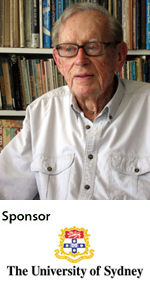
Professor Charles Birch
Louis Charles Birch was born in Melbourne, Victoria in 1918. He graduated from the University of Melbourne in 1939 with a BAgrSc. Birch then began his entomology research career at the Waite Agricultural Research Institute, University of Adelaide. For his work on the spread of the Australian plague grasshopper, Birch was awarded a DSc (1948) from the University of Adelaide.
In 1948 Birch moved to the University of Sydney where he began as a senior lecturer (1948-53), then reader (1954-60), Professor of Zoology (1960-63) and finally Professor of Biology (1963-83). In 1983 Birch was made emeritus professor of the University of Sydney. Birch made major contributions to the understanding of the effect of weather disturbances on the population and distribution of animals. In addition he wrote widely on theological topics including the idea that all life has intrinsic value, for which he won the Templeton Prize for Religion (1990). Professor Birch passed away in December 2009.
Interviewed by Professor Rick Shine in 2008.
Charles, to begin at the beginning: where and when were you born?
I was born in Melbourne in 1918 and grew up there, going to Scotch College for most of my school career. I left Melbourne when I was about 21 and went to the Waite Institute, in Adelaide.
As a child, did you have an interest in nature?
I became interested in collecting beetles, probably because I had a schoolboy friend who collected beetles and I thought I ought to do the same. Then my mother became interested in what I was interested in and she bought me a book, The Insects of Australia and New Zealand, by R J Tillyard. I was now able to identify many insects, at least down to families if not further, and that got me intrigued by biology.
My interest in biology was further stimulated by the fact that I did biology at school, I suppose in the fifth and sixth years. We had a wonderful teacher named Mrs a'Beckett. She was very popular, partly because she was the mother of a top-flight Victorian cricketer at the time! She was an extremely good teacher and I thought, 'I just want to be like Mrs a'Beckett.'
Although I had become interested in science during my early years, however, instead of going on to a science degree I went into agriculture. I initially wanted to do medicine as a part of biology, and perhaps to do medical research, but my parents were pretty much against that. I then became interested in other alternatives and the one that appealed to me most was agriculture, partly because I had a friend who had done the degree in agriculture and had ended up in the Colonial Service in Trinidad. I thought, 'Life in the Colonial Service is what I want' – this is a long time ago – and so I did agriculture instead of science. I'm glad about that, because there were lots of subjects that I studied at that time, such as soil science and climatology, which I never would have studied in science but which gave me a pretty good background for an ultimate interest in ecology.
So your interest in ecology came through agriculture and not through conventional pure science?
I think so, yes, because agriculture covered such an enormous field. I thought, 'Oh, this is great; it's chemistry, physics, physiology, ecology – the whole lot.'
Where did you do your agriculture studies?
I did my course in agriculture in the University of Melbourne. When I graduated from there, I wanted very much to stay in biology. It was a problem in those Depression years that there were not too many jobs available. In fact, there was only one job available that I wanted – at the Waite Institute – and my friend from Melbourne who had collected beetles was also after it so we competed for it. I got the job, which meant that I went into entomology at the Waite Institute and he had to be happy with plant pathology in the Department of Agriculture of Victoria. So it was a bit of a chance business which led me into the area I wanted really to go into. From his point of view, it was a chance that was unfortunate for him!
What was the subject of your PhD studies?
Well, PhDs didn't exist in those days, at least in this part of the world, and so for six years I did full-time research in the entomology department at the Waite Institute, on the ecology of insects. Eventually that led to a Doctor of Science degree from the University of Adelaide, but that hadn't been my objective, which was to study the ecology of insects.
I was working with a colleague, H G Andrewartha, who was really my supervisor. He worked on a number of insects, including spending about 20 years on thrips, a tiny little insect which lives in roses, and I was put onto the job of trying to work out the spread of the Australian plague grasshopper. It had become very dominant in the wheat belt in South Australia, partly because there was plenty of food for it there. The problem was: how do you stop plagues of the Australian plague grasshopper? It was ruining the peripheral areas of the wheat belt.
The conclusion I eventually came to was that you needed to revert the whole thing to the original saltbush
country, which grasshoppers didn't eat. That, of course, was totally unacceptable to the farmers. [laugh] I find that many of the solutions that the scientist comes to aren't exactly approved by the farmers who have to put them into action! So that was never done. But I learned a lot about the ecology of the grasshopper in the six years I worked on it.
I worked on other things at the same time, because by then we were into the war years. One of the problems was how to save the annual wheat crops which normally would have been exported. Here we had these tonnes and tonnes of wheat which, in some way or another, had to be stored. The silos were all filled with wheat, so where could you put it now? People just made huge heaps of wheat, and over these great mounds they put coverings of some sort. My job was to find out how far the insects would spread themselves.
It was a fairly easy project because, actually, the insects produced enough heat to thrive on the surface, but then it became too hot for them and they didn't go through the rest of the pile of wheat. So it was reasonably satisfactory. But I had to try and work out whether the wheat's respiration itself or the insects were primarily responsible for the heating of the wheat. It was the insects.
How did you work out whether it was the insects or the respiration of the wheat?
By measuring the respiratory rates of the insects and that of the wheat plants themselves. It turned out that the insect, per gram, was far more contributory by its respiration than the wheat was. Bob Robertson worked on the wheat side and I worked on the insect side, so we had a sort of cooperative program.
It is interesting that you talk about the applied projects, because the science that I know you were involved with in Adelaide was really about the much more general questions and debates about density dependence and population regulation. How did the pure science come out of the applied?
Well, an attitude that Andrewartha and I had was that we wanted to work on animals that had some practical importance in terms of the economy, as far as that was possible, but to do it in such a way that at the same time we would be learning principles of ecology. Both of us came to the conclusion that the numbers of animals could be determined by almost any component of environment. One was sometimes more important than others but, in most of the cases that we studied, the numbers were determined very largely by the weather. If it was favourable, the insect population went up; if it was unfavourable, the population went down – a fairly simple proposition. We therefore didn't put emphasis where the central emphasis had been in ecology of the numbers of animals, on the so-called density-dependent factors.
There was a thesis, opposed to ours, that all animal populations were self-regulating. That meant that, as the numbers went up under favourable conditions, the animals would become so crowded that the birth rate would drop, the death rate would go up and the numbers would go down. And so, if you asked the question, 'What prevents the species from becoming extinct?' the answer was density regulation: the numbers wouldn't go right down because, as the animals got to a low density, the pressure on them was decreased.
We looked for density-regulating factors, however, and couldn't find them! We were told that was because we always worked with animals which were on the edge of their distribution. That isn't quite true, but it is true that we worked on animals where weather was a very controlling and important component.
In fact, Andrewartha and I didn't persuade our colleagues that any component of environment can be important. That led us to study as many populations as we could find, and we wrote a book called The Distribution and Abundance of Animals. It contained mainly case histories, and we reckoned that there was no need to postulate density-regulating factors in any of these case histories. We tried to investigate studies which had been going on for a long time – thrips for about 20 years, grasshoppers for about 10 years – and we put them, and all those by other people that we studied, together into The Distribution and Abundance of Animals.
I think that had some influence, but we were always in a minority with our ideas of the controlling influences in ecology – and we still are. This is a dispute in ecology which to some extent has lost its kick, but it still goes on. The biggest exponent of the Andrewartha–Birch idea is a chap in the Waite Institute now, Tom White, who has written a couple of books on it. He is a very enthusiastic follower of Andrewartha and draws his inspiration from him.
It must have been pretty amazing for a couple of Australians, at the end of the world, to be major players in a major scientific controversy about paradigms in ecology.
Well, in a sense, Dr Nicholson, who was the Chief of the CSIRO Division of Entomology in Canberra, was a very potent exponent of the density-regulating school of thought. He worked on blowflies and regarded them as a sort of model. Of course, when you work on blowflies in the laboratory and give them a fixed amount of food every day, they do become density regulating. But we never saw a laboratory population as a model for what happens in nature. The important thing is that, if we ask the question, 'What do your populations do in nature? Why don't they become extinct?' then the answer is that some populations do become extinct. For example, under very severe conditions of weather the whole population will indeed die out.
We introduced the concept of dispersion of a population, which are its spatial arrangements. One subpopulation of the species may be in a favourable environment while another is in an unfavourable environment and becomes extinct. But that area can be recolonised, because there always will be some parts of the dispersion of the animal that can help in repopulation. So extinction is not a problem for us. In fact, we realised that it is extremely difficult [laugh] to make any species extinct – which is what you want to do with a pest species, but who has ever been successful in doing that?
So what comes next in the career? Did the applied work lead into broader questions about population regulation?
When I eventually went to the University of Sydney, I kept up my studies but I changed the animal to the Queensland fruit fly, which had become very abundant in places where fleshy fruits were grown. Otherwise it is rare, because there are not many fleshy fruits in native trees and shrubs. But, with the planting of fruit trees, this 'fruit fly' became a pest. (It is not a Drosophila but another species altogether.)
What I became interested in was not just what caused the distribution and abundance in any particular area but the fact that the Queensland fruit fly was spreading south –populations, even if small ones, began to establish themselves in southern Victoria. So I made a study of the birth rates and death rates under different conditions, and I found that the populations that managed to get south were changed populations; they had evolved to suit that environment better.
So I became interested in the relationship of evolution to ecology. This is very important because with fast-growing populations like insects, particularly, you can get through many generations in a relatively short period of time, and opportunities for evolutionary change are significant. Well, having demonstrated that there was evolutionary change, I became interested in relating evolution to ecology.
My interest in this was developed partly by my friendship with Dobzhansky, who was a Russian geneticist and is now an American. I said, 'I want to learn more about evolution, so I want to come and spend a year with you,' and he said that would be fine. Not only did I spend a year with him but we went down to Brazil and spent a year there also, studying evolutionary changes. After I had worked those two years with Dobzhansky, he said to me, 'Well, you've learned evolution from me. Now I want to learn some ecology from you. Why do you ecologists not agree on what are the main important components of determining the numbers of animals? We'd better get them together.'
So he organised the Cold Spring Harbor Symposium on population ecology, hoping that some consensus would emerge from this, but he was amazed to find that there was no consensus at all. Instead, there were centres of great interest. One centre he recognised was Nicholson's group in Canberra, who were all very density-regulating people, and another was the Andrewartha group, more in Adelaide and Sydney. That disappointed him a bit, and he said, 'You ought to get together more.' We didn't need to get together more, because we'd had plenty of relationships. But they had become a bit hostile at one stage [laugh] because whereas Nicholson seemed to argue from the point of view that you start off with basic principles and then look for them in nature, our view was that you look at nature to see what is going on there and then try and work out some principles. It is a matter of one approach being deductive and the other being inductive.
When did you first become interested in the relationship between science and religion that played such a major role in your later research career?
This had nothing much to do with Queensland fruit fly; it was an independent sort of problem that I became interested in. Early on in my career I was a pretty fundamentalist religious person, but my understanding of science seemed to indicate that that was all haywire and didn't get you anywhere. Well, was there anything in the religious position which was valid? I pretty quickly learned that fundamentalism was out, and I was no longer interested in that. I discovered that there are alternatives to the fundamentalist interpretation of Christianity, and I became interested in the alternatives – which I think a lot of people didn't know about.
So my religious position became a very liberal one. Some would say it was not a Christian position, but I would argue against that.
As a professional scientist you must have found that trying to incorporate a broader perspective on some of these issues was immensely challenging
Well, it is very important. I found that there was a good deal of interest but not much understanding on the part of scientists. Dobzhansky was very interested, but I wouldn't say he had much understanding. He had a Russian Orthodox background which he kept in one place while the sciences were in another. And that applied to quite a lot of scientists, I think. Scientists tend to be a bit narrow-minded about things because they become experts, and yet a real understanding of science involves an understanding of philosophy, ethics, religion – a whole lot of different things.
Did you get antagonism from professional scientists who said, 'What you're talking about isn't science. You should stay with fruit flies,' or did scientific thought welcome the attempts you were making to broaden the debate?
Oh, I think the attitude of, 'Cobbler, stick to your last and don't get involved in anything outside making boots,' is pretty widespread. And it's a good excuse for not thinking about a subject. I got a lot of opposition, that's true, but it didn't worry me too much because I was convinced at two levels: the total validity of the science approach; and the fact that people have religious experiences, which is part of the facts of existence. I end up with a position that, firstly, science is primarily concerned with the objective world that you can weigh and measure. You get information that way and it becomes very important information. Some say this is the only road to truth, but I would say there is a second set of experiences that people have – feelings, which are not objective but subjective. What about feelings of courage and patience, for example? Science doesn't help us to understand much about that side of things.
One day it may. In the meantime, those of us who think that there is a subjective world as well as an objective world spend some time trying to relate the two. And I think the main current problem is the relationship between the objective understanding of the world through science and the subjective understanding via a concentration on our non-objective aspects such as feelings.
This becomes important ethically, I think, in that you've got to look at animals as having not only an instrumental value in the world – a usefulness to human beings or to other animals – but also an intrinsic value in themselves. What on earth would give intrinsic value, a value quite independent of any usefulness to other creatures? The answer I have come to is that only feeling gives intrinsic value. In other words, you recognise some degree of feeling or of mentality, if you like, which is very high in human beings and reaches a level of consciousness, but fades off as you go down the evolutionary scheme of things. And yet I would say it is still there.
A philosophy that becomes very important for me at this stage is expounded by A N Whitehead, a philosopher and also mathematician who wrote extensively in this area. Whitehead sees the subjective side of life going all the way down to the most fundamental bits and pieces of the world, which then is to be seen as a collection not of substances but of experiences. In other words, the most fundamental thing in the Universe will be the experience of atoms and things like that. In a sense, a substance does not have an experience, but the experience itself somehow or other becomes important in existence itself. It is like talking about the dance without the dancer. It's a bit difficult to get at, but Whitehead has worked on that idea and sees the subjective world as fundamentally important to understanding the real world around us.
Now, most scientists who make an attempt to understand Whitehead reject him if they do understand him; if they don't understand him, they go on to something else [laugh] because his work is very difficult to read. I got onto Whitehead by being persuaded to read Science and the Modern World – the first book he ever wrote, I think – in which he relates the subjective to the objective. But then he gave the Gifford Lectures in Edinburgh and they were published as a book called Process and Reality, arguing that reality is a process, a process of experience. So I am trying to pursue that one (with some difficulty, I might say).
Who were your mentors, the major influences, in your scientific career?
I don't think I am original; I think my ideas all come from other people! My ideas from the scientific point of view come primarily from Andrewartha, whom I worked with in Adelaide for six years (and subsequently also, but when we were in different cities.) From a philosophical and an evolutionary point of view, Dobzhansky was very central in my understanding of things.
Even more so was another geneticist of equal distinction, Sewall Wright, of Chicago. To me, the nice thing about him was that he went all the way with Whitehead in many respects – in other words, he saw experience as the fundamental thing that had to be understood, the experience being far more widespread in existence than we tend to imagine. By experience, we are not just talking about conscious experience, which is very characteristic of human beings and perhaps of no other creatures, but about mentality, some non-objective aspects of things. Sewall Wright was a very important influence.
The other influential person from a philosophical point of view was Charles Hartshorne, a professor of philosophy in Chicago who was my friend and also Sewall Wright's. He was a thoroughgoing Whiteheadian and so I had lots of discussions with him, spent many hours in his home. Even after he left Chicago, I followed him to different places he lived. (He ended up in Texas.) He was enthusiastic about biology as well about Whiteheadian philosophy.
There have been some very key people in my understanding of things. In particular, Sewall Wright was an incredibly bright person, one of the brightest I've ever met, and it gave me great confidence that I was on the right track when I found that Sewall, who was accepted as a first-rate biologist, was on a similar track.
What do you see as the greatest achievements in your career?
The first important thing was strictly ecological: a particular way of looking at the relationships of animals to their environment.
The second was the more philosophical side of things, that you shouldn't look at any entities, be they atoms or human beings, as substances but as being, in many respects, what they are by virtue of their relationship to other entities: 'I am what I am by virtue of the family that I was brought up in,' and so on. Then you go into great detail in that. There is a very big difference between the view that we are like lumps of material and that's the most we can say about ourselves, and the view that 'I am what I am by virtue of my relationships' – a very big difference. The latter view leads to a philosophy of life, as far as I am concerned, and I think my second contribution is my understanding of experiences as being much wider than just belonging to human beings.
In a more subsidiary role, I suppose, a third contribution that I think I've made is on the relationship between science and religion, putting a great emphasis on the tremendous role of science in objective understanding of the world and the importance of recognising also the non-subjective aspect of things.
Do you have any advice for a young Australian scientist starting a career today?
What I would like to hope might become more common is that our understanding of the world is absolutely dependent upon a scientific approach. Without that, we would be lost, as we were lost before science got into the picture.
But that leads to the broader, more difficult area of feelings, the subjective area. You can adopt the attitude that feelings are just a side effect, something that is not fundamentally important but just happens to be carried along in the stream of thought, or you can regard them as fundamental in just the same way as substances used to be regarded as fundamental. I would hope that, in future, science might be able to get beyond its purely objective analysis to include the subjective – which involves thinking along the same lines as people like A N Whitehead.
We haven't got there yet. In fact, we've hardly got anywhere on that area, because it's extremely difficult. But we shouldn't exclude it from possibilities.
So I think my advice to the young scientist would be, 'Pursue the objective world as hard as you can – and that's what I have tried to do – but see if you cannot also include, as a part of the whole experience, the subjective, feeling side of things. That will lead to a greater understanding of the world around us.'
That is a superb answer. Charles, thank you so much for allowing me to interview you today. It has been wonderful to catch up and to hear you talk about your life and your career.
It's very nice to be interviewed by you [laugh], when I have known you for a long time and appreciated your approach to science as well as the rest of the world of experience. Thank you.
© Australian Academy of Science

Aboriginal and Torres Strait Islander Scientist Award
Award highlights
- Up to $20,000 is available to support outstanding Aboriginal and Torres Strait Islander PhD students and early- to mid-career scientists.
- The award funds research activities and international visits to expand networks and knowledge exchange.
- Applications must demonstrate cultural connectedness and benefit to Aboriginal and Torres Strait Islander communities.
The award recognises research in the physical and biological sciences, allowing interdisciplinary and sociocultural research that could straddle the social sciences and humanities, by outstanding Aboriginal and Torres Strait Islander PhD students and early- and mid-career scientists. It aims to support their research and/or the expansion and growth of their research networks and international knowledge exchange through visits to relevant international centres of research. Awards will be for up to $20,000, with additional support provided to attend the Academy's annual Science at the Shine Dome event.
Key dates
Below are the key dates for the application process. While we aim to keep to this schedule, some dates may change depending on circumstances.
GUIDELINES
The following guidelines and FAQs provide important information about eligibility, submission requirements, and assessment processes. Please review them carefully before submitting an application.
Applicants must be Australian citizens or permanent residents* at the time of application. Applicants should also either be enrolled for a PhD or be within 15 years of obtaining a PhD.**
Where travel to international centres is proposed, it must be for a minimum of two weeks and a maximum of three months duration. Funded activities are normally expected to have been undertaken within two years from the date of award. Awardees may apply for extensions due to extenuating circumstances or to apply for variations to remove or adapt to barriers encountered to their planned research or travel.
Applicants must provide a letter from an Aboriginal and Torres Strait Islander Community or Organisation where they identify and are accepted. This may come from one of, but not limited to, the following:
- Land Council
- Prescribed Body Corporate (PBC) or Native Title Group
- Natural Resources Management Board (NRM Board)
- Traditional Owner group
- Elders group
- A university's Indigenous department
* Includes the Special Category visa Subclass 444 for New Zealand citizens.
** The Australian Academy of Science is committed to ensuring that all eligible researchers can be considered for awards and collects career interruption information to assess their opportunity to demonstrate scientific excellence. Accordingly, extensions to the post PhD eligibility requirements for Early and Mid-Career awards will be provided for qualifying career disruptions.
A career disruption involves prolonged interruption to a nominee’s capacity to conduct Full Time Equivalent (FTE) high-level research, either due to part-time employment or absence (for periods of one month or greater) and/or long-term partial return to work, to accommodate carer’s responsibilities, illness or other interruption.
The career disruptions here must have occurred post the date of the letter advising that the PhD thesis was passed and resulted in significantly reduced research productivity or nil research output. Career disruption periods will be taken into account for those who would otherwise be beyond the Post PhD Career Eligibility requirements.
Up to $20,000 is available for research and related travel. Funding may be used towards of fieldwork, equipment, consumables and other research costs not covered from other sources.
Where proposals are for visits to relevant international centres of research, the budget for this should not exceed $5,500 of the total being requested. Attendance at relevant conferences is welcomed but must be in addition to a 14 day minimum visit.
If the research proposal includes collaboration with First Nations Knowledge Holders, remuneration for their time is a compulsory budget item. The source of the remuneration funding can be entirely derived from the Award, shared between the Award and applicant’s host institution or entirely from the host institution. For an example, see the Arts Law ICIP information sheet.
Funding may not cover bench fees, managerial costs, insurance or visa costs or primary researcher salaries. The award may be used to fund conference/webinar access support or costs involved in researching and developing digital tools that allow researchers to adapt their research to challenges faced during the COVID-19 pandemic.
Applications must include the following:
- Letter indicating acceptance by the Aboriginal or Torres Strait Islander Community.
- Research proposal structured under the following headings: aims and background, significance of the research, methodology, management implications of the project. Maximum of 1,000 words.
- Where projects involve collaborations with First Nations Knowledge Holders, provide a brief statement (max. 200 words) explaining how intellectual property ownership will be addressed. If relevant, see AIATSIS Code of Ethics for Aboriginal and Torres Strait Islander Research and/or Our Knowledge, Our Way Guidelines – CSIRO.
- One referee report. Applicants should choose referees (domestic or overseas) based on their standing in the relevant scientific field. The referee report should comment on your ability to undertake the proposed award and comment briefly on the potential benefits of any proposed visit.
- Itemised budget with brief justification for each item, the names and details of any research funding already received (project title, funding body, amount).
- Support from your department/division head supporting both your research and this application.
- Brief CV including qualifications, summary of professional/research experience and publications/presentations. A full publications list is not required. Maximum of three pages using size 12 font.
- (If applicable) Career disruption information.
- (If applicable) Host researcher correspondence of support for international travel.
- (Optional) Supporting letter/document for cultural connectedness of proposed research.
Applications are assessed based on the assessed competitiveness of the proposal by a committee of scientists with diverse expertise. The Academy is not able to enter into discussion or correspondence regarding the reasons why an application is successful or not.
Criteria used to assess applications include:
- Applicants' research track record relative to opportunity.
- Referees’ reports.
- Budget suitability and justification.
- Cultural connectedness of the project with the communities involved.
- Potential for proposed research to benefit Aboriginal and Torres Strait Islander peoples.
The last two criteria will be judged via statements within the research proposal:
- One explaining how the proposed research aligns with the cultural interests of the communities involved. There is also the option to upload a supporting document for this criterion (e.g. a letter from the Traditional Owners of the Country on which the research will take place).
- One explaining how the proposed research will benefit Aboriginal and Torres Strait Islander peoples e.g. through a direct benefit to the Aboriginal and Torres Strait Islander peoples (fiscal, health, environmental, cultural…) or indirectly through advocacy by the Awardee in encouraging First Nations youth to consider a STEM career and/or develop research capacity.
Applicants can only receive funding from the same research or travelling research award once in a three calendar year period.
Applicants may apply for more than one award but can only receive one Academy travelling or research award per calendar year.
Grants are offered to successful applicants in early November each year for projects/travel to be carried out in the following year.
Funded activities are normally expected to have been undertaken within two years from the date of award. Awardees can apply for project variations if their award proposals are impacted by extenuating circumstance.
An annual report is required on the progress of the research project. The report should detail progress on the research goals outlined in the grant-holder’s proposal, and expected vs. actual expenditure to date.
If the Grant is held for two years, a report is also required at the end of the second year.
Applications are to be completed through an online form found by clicking on the Apply button on the top right of this web page when the round is open.
- Can awarded funds pay for salary expenses?
- The Thomas Davies Research Grant funds can cover research assistant salaries, but not primary researcher salary expenses. The Aboriginal and Torres Strait Islander Scientist Award, the Margaret Middleton Fund and Max Day Fellowship Awards are not able to cover any salary expenses, for either primary researchers or research assistants.
- Can I apply for more than one research award?
- Yes – however, you can only receive one research award per calendar year. If you are ranked highly for multiple research awards, the assessment committee Chairs will decide which award is most appropriate for the project and applicant.
- Can I receive the same research award for a different project in subsequent years?
- No – once you have received a research award, you are not eligible to receive the same award for 3 calendar years.
- Can I use the funds to attend a conference?
- The Margaret Middleton Fund does not support conference expenses.
- The Aboriginal and Torres Strait Islander Scientist Award and the Max Day Fellowship funds can be used to cover the cost of travel to undertake research or attend relevant conferences/workshops.
- Thomas Davies Research Fund can support conference expenses if it can be demonstrated that it is relevant for the project, however, this is not the primary objective of the award.
- Can I use the funds to cover overhead expenses?
- No – each award notes the specific exclusions for use of funding; however, no award allows funds to be used towards bench fees, managerial, visa, insurance or infrastructure costs.
- Can I request feedback on my application assessment?
- No - applications are assessed based on the competitiveness of the proposal by a committee of scientists with diverse expertise. The Academy is not able to enter into discussion or correspondence regarding the reasons why an application is successful or not.
- Can I apply for the Max Day Environmental Science Fellowship if my PhD has not yet been through the confirmation process?
- No. If you are a PhD student applying for a Max Day Environmental Science Fellowship you must have completed the PhD confirmation process with your institution. Please note that specific confirmation process requirements may vary between institutions. Candidates are strongly encouraged to clarify the requirements with their institution prior to submitting the fellowship application.
PAST RECIPIENTS
- Dr Cassandra Sedran-Price, University of Sydney – Investigating culturally appropriate seed banking practices at Namabunda Farm.
- Jacob Birch, University of Queensland – Indigenous food sovereignty as nation building: developing Gamilaraay governance of the native grains industry.
- Dr Mitchell Gibbs, University of Sydney – Global Collaborations between First Nations people for habitat restoration.
- Associate Professor Shannon Kilmartin-Lynch, Monash University – Utilisation of Indigenous knowledges behind tree resin to repair micro cracks in concrete structures.
- Dr Justine Clark, Telethon Kids Institute – Aboriginal and Torres Strait Islander precision cancer research.
- Dr Joe Greet, University of Melbourne – Healing Water Country: developing a Traditional Owner-led billabong health assessment framework.
- Ms Stephanie Beaupark, University of Wollongong – to study the colour chemistry of natural dyes from Australian native trees and using an Indigenist methodology involving yarning with other Indigenous natural dye artists and weavers.
- Ms Michelle Hobbs, Griffith University – to provide new insights into the management of Australian freshwater ecosystems and freshwater mussels.
- Dr Jordan Pitt, University of Adelaide – to look at the interaction between sea ice and ocean waves, in order to improve future climate models.
- Ms Tamara Riley, Australian National University – to understand how the human–animal–environment relationship impacts on Aboriginal communities’ health, and then to develop ‘One Health’ models for use in Aboriginal communities.
- Ms Vanessa Sewell, University of New England – to address the problem of vaccinating against drench-resistant sheep parasites.
- Dr Keane Wheeler, University of Queensland – to undertake research to redress inequalities in Aboriginal and Torres Strait Islander children’s health and development.
- Mr Luke Williams, RMIT University – to evaluate the dietary safety of Australian native foods.
- Mr Frank Loban, James Cook University – to visit New Zealand to discuss and learn from fisheries management organisations how they are managing their fisheries, governance framework and indigenous interests.
- Dr Michael-Shawn Fletcher, University of Melbourne – to visit Udayana University in Bali to establish a research collaboration and to collect paleoclimatic data that will act as pilot data for another larger research grant proposal in 2020.
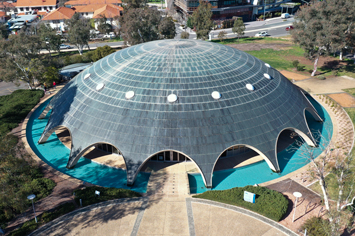
Image of the Shine Dome in the above video by Stuart Lindenmayer, CC BY-SA 4.0
- Mr Tui Nolan, University of Technology Sydney – to visit the Alan Turing Institute in London to study computational methods that have applications in public health and education.
- Ms Amy Searle, Baker IDI Heart and Diabetes Institute – to attend the Science at the Shine Dome Event in 2019, the annual signature event of the Australian Academy of Science.
- Mr Bradley Moggridge, University of Canberra – to visit New Zealand to learn how Maori culture has incorporated Indigenous knowledge and values into their water management practice.

Conversations with Australian scientists


Fellows' biographical memoirs

Submission—Universities Accord (Student Support and Other Measures) Bill 2024
In the submission, the Academy noted:
- the provisions of the Bill are measured, and elements like HELP adjustments and the Prac Payment will benefit science students at universities
- the Bill fails to address urgent issues for university science, such as the systematic underfunding of undergraduate science and fixing Australia’s broken university science research funding systems
- the Bill begins implementing the recommendations of the University Accord’s final report. However, the response to date has not addressed two broad themes that were key to the Accord’s final report: funding for undergraduate science and the state of university science and research. This Bill makes no attempt to fix the egregious elements of the Job Ready Graduates scheme passed by the Australian Parliament, which cut funding for undergraduate science.

Submission—Nature Positive (Environment Protection Australia) Bill 2024 [Provisions] and related bills
The Academy recommends:
• adopting a stronger definition of ‘Nature Positive’ aligned with international definitions and Australia’s own targets and ambitions.
• establishing EPA and EIA as statutory bodies with independent governance boards.
• legislating expert advisory committees with clear functions for both EPA and EIA.
• progressing stage 3 of the Nature Positive reforms package including National Environmental Standards before end of 2024.

Submission—Inquiry into the Digital Transformation of Workplaces
On 5 July 2024, the Academy made a submission to the House Standing Committee on Employment, Education and Training Inquiry into the Digital Transformation of Workplaces.
The submission recommends upskilling the Australian scientific workforce to ensure skills in the fundamentals of AI research and responsible use of AI, establishing guidelines that address the risks AI brings to the research sector, and improve diversity in the AI workforce.
In line with the Academy's previous submissions, the Academy also emphasises the importance of a sovereign high-performance computing capability in Australia, as computing power and software is essential for development and adoption of AI tools.
Submission—Green Metals Consultation Paper
Decarbonisation and the transition to net-zero emissions demand technological shifts that are underpinned by scientific capability. The Future Made in Australia policy framework needs to draw on a strong science foundation to inform investments in promising applied science and technology to deliver the required capabilities for Australia. Advancing science capability not only enables innovation in green metals to deliver economic growth but also enhances sustainability.
The Academy advises that:
- Australia needs a multi-faceted approach to stimulate investment in enabling renewable energy infrastructure for green metals, including private sector engagement and investment.
- Green metals industry must examine the true sustainability of green metals by:
- implementing lifecycle assessments of green metal materials or products to quantify the environmental impacts of green metals production
- developing policies that consider the entire green metals supply chain, from mine to end-use products to recycling, addressing every step as a ‘green’ process.
- Including copper in policy considerations is crucial due to its essential role in electric vehicles, renewable energy systems and storage batteries. However, production of copper lags behind.

Submission—Education Services for Overseas Students Amendment (Quality and Integrity) Bill 2024
On 1 July 2024, the Academy made a submission to the Education Services for Overseas Students Amendment (Quality and Integrity) Bill 2024.
The submission emphasises that as part of the Education Services for Overseas Students (ESOS) reform package, the Government must outline a comprehensive plan to fix the broken funding model of university research.
It also recommends higher degree research student load be exempt from measures to control university admissions.
Submission—Draft Sustainable Ocean Plan
In the submission, the Academy and Future Earth Australia:
- Support the plan's overarching priorities, which largely align with the recommendations in the FEA Sustainable Oceans And Coasts National Strategy 2021–2030.
- Recommend including clear, measurable, and quantifiable actions for each proposed national priority through an action plan, to ensure a pathway to successful outcomes is presented.
- Propose that the Plan explicitly acknowledges the interconnectivity of the proposed national priorities to enable transdisciplinary opportunities and avoid fragmentation and siloing.
- Propose empowering Indigenous communities to lead in the co-management of Sea Country, with representation at all decision-making levels.
- Recommend leveraging Australia’s membership of the Belmont Forum through FEA to shape and resource global science and research that meets Australia’s priorities.