Theo Murphy Initiative (Australia) - Amplify activity
The Australian Academy of Science invites applications from Australia's early- and mid-career researchers (EMCRs) for Amplify grants valued up to $15,000 each, funded by the Theo Murphy Initiative Australia (TMIA).
Closed
Submission deadline:
Program highlights
Amplify an existing STEM conference or symposium with a new add-on workshop, training event or activity that creates additional benefits and opportunities for Australian early- and mid-career researchers, supported by a grant of up to $15,000.
Be part of a competitive opportunity offered by the Australian Academy of Science and funded by the Theo Murphy Initiative (Australia), supporting high-merit, high-impact EMCR initiatives.
Develop your coordination and delivery experience by leading an EMCR-driven organising committee to design and deliver an add-on activity that strengthens the host event for EMCRs.
The Australian Academy of Science invites applications from Australia's early- and mid-career researchers (EMCRs) for Amplify grants valued up to $15,000 each, funded by the Theo Murphy Initiative (Australia), or TMIA.
Amplify grants support new EMCR-focused activities that are delivered alongside an existing STEM conference or symposium and provide additional benefits for Australian EMCRs.
Amplify funding is intended to enhance an existing event through an additional workshop, training activity, networking initiative, mentoring activity, professional development opportunity, or similar EMCR-focused activity.
Amplify grants do not fund the core delivery of the host conference or symposium. Applicants must clearly demonstrate how the proposed activity provides benefits and opportunities for EMCRs that are additional to those already available through the existing event program.
Please note: For ‘Flagship’ and ‘Amplify’ activities, the Academy’s secretariat will provide guidance and advice to the organising committee regarding scope, deliverability, and project management.
Academy fees may apply where additional Academy support is requested or required, such as event website hosting, event registration and publicity support.
Key dates
Below are the key dates for the application process. While we aim to keep to this schedule, some dates may change depending on circumstances.
10:00am (AEST)
Call for applications opens
11:59pm (AEDT)
Application round closes
Eligibility screening
Assessment and shortlisting
Endorsement and recommendation by the Australian Academy of Science Council
Final decision by the Royal Society (Australia) Board
Notifications of outcomes
GUIDELINES
The following guidelines provide important information about eligibility, submission requirements, and assessment processes. Please review them carefully before submitting an application.
Eligible applicants
To be eligible to receive an Amplify activity grant, applicants must:
applicants must be less than 15 years post-PhD, excluding eligible career disruption or barriers*
at the time of application and for the duration of the project, the applicant must reside in Australia and be an Australian citizen or a permanent resident - this also includes holders of a Special Category Visa (Subclass 444).
applicants are expected to act as the project lead and coordinate the Amplify activity organising committee.
the organising committee must include at least three members and be EMCR-led. The committee may include senior scientists, but EMCRs must make up most of the committee. Inclusion of a senior scientist is optional, and senior scientists must not outnumber EMCRs on the committee.
applicants must provide evidence of commitment-in-principle from the host event as well as confirmed or well-developed sponsorship or partner support, including the expected cash or in-kind value of contributions.
applicants must not have received a TMIA Flagship or Amplify grant within the past three years.
*Researchers who are more than 15 years post-award of their first PhD and have experienced a career interruption may be eligible to apply.
To be considered an eligible career interruption, the period must be:
• a formal leave of absence, such as parental, carer's or personal leave; or • a period without employment.
Periods in non-active research roles, or periods where research activity has been reduced or paused as part of normal employment arrangements, are not considered eligible career interruptions and should not be claimed as such.
Where an applicant has experienced an eligible career interruption, the period of interruption may be taken into account when assessing eligibility. Eligible career interruptions will be considered based on the total duration of the interruption, provided the criteria outlined above have been met.
Eligible research organisations
Applicants must be employed by an eligible Australian research organisation on an ongoing basis. Eligible organisations include:
Australian tertiary education institutions (as per the Higher Education Support Act 2003)
Australian cooperative research centres
Publicly funded research agencies
Australian state and territory funded research organisations
Australian public research companies
Australian private research companies
Australian not-for-profit research organisations
Other Australian incorporated entities
*For this program, employed on an ongoing basis means the Project Lead has a current appointment with their organisation that is expected to continue for the duration of the project. Fixed-term appointments are eligible, where they meet these requirements. Honorary or adjunct positions are not eligible.
Eligible applications
Applications must be complete at submission, including all required responses and attachments.
Applications must outline how the proposed Amplify activity will be delivered, including the role of the organising committee and relevant experience of the committee members.
Applications must clearly demonstrate that the proposed add-on activity attached to an existing STEM conference or symposium is new and additional to the existing host event program. Amplify grants cannot fund standalone conferences, symposiums or independent events.
Applications must demonstrate how the proposed activity will provide additional, tangible benefits and opportunities for EMCR participants beyond the existing event program.
Applications must include a completed activity income and expenditure budget that is consistent with the eligible and ineligible expenses in the ‘Terms of award’ section. Eligible expenses must directly relate to the delivery of the Amplify activity only.
Applications are welcome from EMCRs in all fields of science, technology, engineering, and mathematics (STEM).
The terms of the award are outlined below, and acceptance of these conditions is required at the time of application submission.
Successful applications will receive an offer of funding from the Academy to support the delivery of the approved Amplify activity.
A funding agreement must be executed between the Academy and the administering organisation before any grant funds are released.
Grant funding may be administered by the applicant’s organisation or another eligible Australian research organisation, such as a registered scientific society, subject to the execution of a funding agreement between the administering organisation and the Academy.
Grant funds cannot be paid to individuals.
Amplify funding may only be used to support the approved Amplify add-on activity and associated eligible expenses. Funding cannot be used to subsidise, replace, or offset costs associated with the delivery of the host event.
Any significant changes to the approved Amplify activity, including scope, delivery arrangements, budget, timing or key personnel, must be approved in writing by the Academy.
Where sponsorship or partner contributions form part of the approved activity budget, funding recipients must notify the Academy of any material changes to those contributions.
Funding recipients must take reasonable steps to minimise financial loss arising from cancelled, postponed or changed arrangements and should seek refunds, credits or alternative arrangements wherever practicable.
If required, the Academy may be able to provide additional support to successful applicants, including the development of case studies, web stories, impact reporting, and promotion through the Academy’s official communication channels.
The availability of these services is subject to Academy and Council approval and may incur fees in accordance with the Academy’s pricing framework. Applicants interested in accessing these services should contact the Programs Team for further information.
Eligible expenses
Venue costs directly attributable to the delivery of the approved Amplify activity.
Event catering directly attributable to the delivery of the approved Amplify activity.
Audio visual services, including online streaming services.
Design, printing, and production of activity materials and event outputs.
Publication costs arising from the Amplify activity.
Costs associated with engaging, invited speakers, subject matter experts, registered training providers, and other specialist contributors required for the delivery of the approved Amplify activity.
Participant support costs, including registration fees, bursaries, travel grants, childcare support, or other approved financial assistance to enable attendance at the funded activity.
Accessibility and participation support costs required to enable equitable participation in the funded Amplify activity
Direct event costs associated with activity development, stakeholder engagement, evaluation and approved project outputs.
Travel and accommodation costs for invited event speakers, subject matter experts, event delegates. Where the approved Amplify activity is being delivered outside the project lead or committee members usual place of residence, travel and accommodation costs for those individuals may be permitted*.
Meal allowances, meal reimbursements, and other attendance-related costs for organising committee members and project leads, unless approved by the Academy.
Salary and staff costs, including contractor expenses.
Gifts or prizes for invited speakers, registered training providers and all other Amplify activity participants.
Travel, accommodation, registration and other attendance-related costs for organising committee members, except where expressly permitted under these guidelines or approved by the Academy.
Research expenses that are not directly related to the delivery of the approved activity, including laboratory consumables, equipment, fieldwork, sample collection, research personnel, and other project-based research expenses.
Institutional overheads and indirect costs, including management, administration, finance, human resources, institutional publishing charges, and other organisational support functions.
Applications must be submitted via the Academy’s Good Grants online portal. Applications must be completed in full and include the following attachments as supporting evidence:
Brief CV of the applicant and organising committee members (maximum three pages per CV).
A letter of support from the administering organisation confirming their commitment to delivering the proposed Amplify activity as outlined in the submitted application. Applicants should use the Administering Organisation Letter of Support Template, available on the 'Templates and supporting dcumentation' tab. The letter must not be signed by the Project Lead or any member of the Amplify activity organising committee.
Evidence of confirmed or prospective partner sponsorship or support, such as a completed Partner Sponsorship or Support Letter. Applicants should use the Academy's Partner and Sponsorship Support Letter Template, available on the 'Templates and supporting dcumentation' tab.
A letter of support from the primary host organisation delivering the host event to confirm their approval of the proposed Amplify add-on activity as part of the program. Applicants should use the Host Organisation Letter of Support Template, available on the 'Templates and supporting dcumentation' tab.
Quotes or screenshots to support the requested budget items.
Where funding is requested for bursaries, grants or scholarships, applicants must provide a one-page outline describing the purpose of the funding, the intended recipients, the expenses to be covered, and any supporting evidence.
Applicants should ensure all budget requests represent reasonable costs and demonstrate value for money.
Proposals will be assessed based on:
the capacity of the proposed activity to provide additional, tangible benefits and opportunities for Australian STEM EMCRs beyond those available through the existing STEM conference or symposium.
the capacity and experience of the organising committee to deliver the proposed Amplify activity and achieve the intended outcomes.
the relevance and benefit of the proposed Amplify activity to EMCRs and the broader Australian STEM community, including how it adds value to the existing conference or symposium.
the design of the proposed Amplify activity, including, innovative approaches, knowledge-sharing strategy, alignment with the host event and expected outcomes.
the extent to which the proposed Amplify activity promotes diversity, equity, inclusion and accessibility.
the commitment of sponsors and event partners through confirmed cash and/or in-kind contributions. Confirmed or well-developed sponsorship or partner support is an eligibility requirement. Applications that do not provide supporting evidence of this support will be deemed ineligible.
the effective, appropriate and value-for-money use of Academy grant funding, including the justification of the proposed budget.
the proposed approach to administering bursaries, grants or additional participation supports, where if applicable.
Further information: Applications will be carefully considered against the selection criteria by a committee of scientists with diverse expertise and recommended for final approval by the Royal Society (Australia) Board.
The decisions of the Board will be based on the merit and impact of the proposals. The Academy will not enter into discussion or correspondence regarding the reasons an application is unsuccessful.
Successful applicants will be required to submit an interim progress report halfway through the activity and a final report within two months of the activity completion date, or by the due date outlined in the funding agreement, whichever occurs first. The Academy will provide the reporting templates to successful applicants upon execution of the funding agreement.
The narrative reports should summarise key outputs, outcomes, achievements, and highlights, including relevant media links demonstrating that the activity met its objectives. Financial reporting requirements will be outlined in the funding agreement and associated reporting templates.
Unspent Funds
Any unspent funds must be returned to the Academy, and the Academy must be notified immediately once unspent funds have been identified.
Acknowledgement and use of assets
It is a requirement that any publication or media release resulting from the activities funded by this program duly acknowledges the support of the Australian Academy of Science and the Theo Murphy Initiative (Australia).
Applications are to be completed through an online form found by clicking on the Apply button on the top right of this web page when the round is open.
Flagship grants support stand-alone, EMCR-led activities that create benefits for Australian STEM early- and mid-career researchers (EMCRs).
Amplify grants support a new EMCR-focused activity delivered alongside an existing STEM conference or symposium. The activity must add benefits or opportunities beyond those already available through the host event.
For Flagship and Amplify grants, the organising committee must include at least three members and be EMCR-led. EMCRs must make up most of the committee.
Senior scientists may be included, but they must not outnumber EMCRs.
No. Senior researchers may be included on the organising committee but are not required.
If senior researchers are included, EMCRs must still make up most of the committee, and senior researchers must not outnumber EMCRs.
Yes. Applicants must provide evidence of confirmed or well-developed sponsorship or partner support, including the expected cash and/or in-kind contributions.
Confirmed or well-developed sponsorship or partner support is an eligibility requirement. Applications that do not provide supporting evidence of this support will be deemed ineligible.
No, Flagship and Amplify funding cannot be paid to individuals.
Successful projects must be administered through an eligible administering organisation. A funding agreement must be executed between the Academy and the administering organisation before any grant funds are released.
Each sponsor, partner or supporting organisation should complete a support letter that outlines:
the type of support they intend to provide
the expected cash or in-kind value of that support, where relevant
their role in supporting the proposed activity
whether the support is confirmed, contingent on another factor, or expected to be confirmed at a later stage
Applications that do not provide supporting evidence of confirmed or well-developed sponsorship or partner support will be deemed ineligible.
Applicants are not eligible to apply if they have received a TMIA Flagship or Amplify grant within the past three years.
The Academy may provide guidance and advice to successful Flagship and Amplify organising committees about scope, deliverability and project management.
Additional support, such as event website hosting, event registration or publicity support, is not automatically included and may incur fees.
Applicants should not assume these services will be provided as part of the grant.
The administering organisation support letter must be signed by an authorised representative of the administering organisation.
The letter must not be signed by the Project Lead or any member of the organising committee.
Yes. Fixed-term appointments are eligible where the applicant has a current appointment with an eligible Australian research organisation that is expected to continue for the duration of the project.
No. Applicants must hold a current employment appointment with an eligible Australian research organisation that is expected to continue for the duration of the project. Honorary or adjunct type positions are not eligible.
Researchers who are more than 15 years post-award of their first PhD may still be eligible if they have experienced an eligible career interruption.
Eligible career interruptions are a formal leave of absence, such as parental, carer’s, or personal leave, or a period without employment.
Periods in non-active research roles, or periods where research activity has been reduced or paused as part of normal employment arrangements, are not considered eligible career interruptions.
Significant changes to the approved activity, including scope, delivery arrangements, budget, timing or key personnel, must be approved in writing by the Academy before they are implemented.
Where sponsorship or partner contributions form part of the approved activity budget, funding recipients must notify the Academy of any material changes to those contributions.
Amplify grants support new EMCR-focused activities that are delivered alongside an existing STEM conference or symposium.
The activity must provide additional benefits and opportunities for Australian early- and mid-career researchers beyond those already available through the host event program.
A new add-on activity is an EMCR-focused activity that is delivered as part of, or alongside, an existing STEM conference or symposium, and is additional to the existing host event program.
It may include a workshop, training activity, networking initiative, mentoring activity, professional development opportunity or similar activity that strengthens the host event for EMCRs.
No. Amplify grants cannot fund standalone conferences, standalone symposiums or independent events. Amplify funding is only available for a new add-on activity delivered alongside an existing STEM conference or symposium.
No. Amplify funding cannot be used to subsidise, replace or offset costs associated with the core delivery of the host conference or symposium. Funding may only be used for costs directly related to the approved Amplify add-on activity.
Applicants must provide evidence of commitment in principle from the host event, and should use the Host Organisation Letter of Support Template, available on the ‘Templates and supporting documentation’ tab
A host organisation support letter is required from the organisation hosting the existing STEM conference or symposium. The letter should confirm support for the proposed Amplify activity and outline relevant host event details, such as the conference or symposium name, dates and location.
It may also outline the practical support the host organisation will provide, such as venue or meeting space, promotion, registration support, audio visual or technical support, or staff or volunteer assistance.
Yes, even where they are the same organisation. Each letter provides specific information to support the application and assessment processes.
Amplify applicants must provide:
an administering organisation letter of support (template here)
a host organisation letter of support (template here)
a letter of support (template here) outlining confirmed or well-developed sponsorship or partner support arrangements.
The administering organisation support letter confirms support for administering and delivering the proposed Amplify activity.
The host organisation support letter confirms support from the organisation hosting the existing STEM conference or symposium.
The sponsor or partner support letter confirms the intended cash and/or in-kind contributions to the activity and outlines the sponsor's or partner's role, level of commitment, and whether the support is confirmed or contingent on future arrangements. This information helps demonstrate the viability of the proposed activity and supports eligibility and assessment requirements.
Amplify funding may only be used for expenses directly related to delivering the approved Amplify add-on activity and achieving the outcomes described in the application.
Eligible costs may include venue or meeting space costs for the Amplify activity, catering, audio visual services, activity materials, invited speakers or specialist contributors, participant support, accessibility support, direct event costs, approved travel and accommodation, and publication or output costs connected to the approved Amplify activity.
Only the proportion of a shared cost that is directly attributable to the approved Amplify activity may be requested. Applicants must clearly justify any shared costs and explain how the amount requested has been calculated.
Yes. Amplify funding may support bursaries, registration support, travel grants, childcare support or other approved financial assistance where this support enables participation in the approved Amplify activity.
Where funding is requested for bursaries, grants, scholarships or other participant support, applicants must provide a short outline describing the purpose of the support, the intended recipients, the expenses to be covered and the proposed allocation process.
The proposed Amplify activity must provide benefits or opportunities for EMCRs that are additional to those already available through the existing conference or symposium. Applicants should clearly explain how the add-on activity strengthens the host event for EMCRs, and how it creates value beyond the existing program.
Applicants must also demonstrate that the proposed activity is a genuine add-on to the host conference or symposium, is focused on supporting EMCRs, that Amplify funding will not be used to subsidise the delivery of the core event.
Significant changes to the approved Amplify activity, including scope, delivery arrangements, budget, timing or key personnel, must be approved in writing by the Academy.
If changes to the host event affect the approved Amplify activity, funding recipients should notify the Academy as soon as possible and seek approval before making changes to the funded activity.
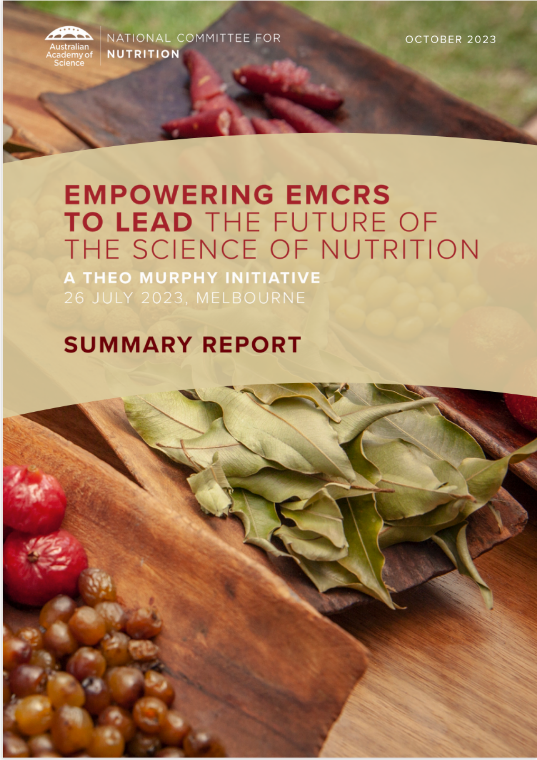
Empowering EMCRs to lead the future of the science of nutrition: Summary report
PDF
(
3
MB
)
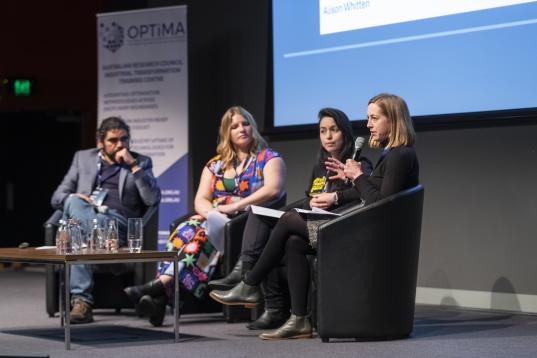
At a 2023 Theo Murphy-funded symposium, early- and mid-career researchers reviewed the progress of Nourishing Australia, the National Committee for Nutrition’s decadal plan.
Theo Murphy Initiative (Australia) - Flagship activity
The Australian Academy of Science invites applications from Australia's early- and mid-career researchers (EMCRs) for Flagship grants valued up to $50,000 each, funded by the Theo Murphy Initiative (Australia) (TMIA).
Closed
Submission deadline:
Program highlights
Deliver a high-impact Flagship activity that creates tangible benefits for STEM early- and mid-career researchers from more than one Australian organisation, supported by a grant of up to $50,000.
Be part of a competitive opportunity offered by the Australian Academy of Science and funded by the Theo Murphy Initiative (Australia), supporting credible, high-impact EMCR-led activities with well-developed sponsorship or partner support plans.
Develop your leadership and delivery experience by leading an EMCR-driven organising committee to design and deliver the activity.
The Australian Academy of Science invites applications from Australia's early- and mid-career researchers (EMCRs) for Flagship grants valued up to $50,000 each, funded by the Theo Murphy Initiative (Australia) (TMIA).
Flagship grants support ambitious, EMCR-led activities that deliver tangible benefits to Australia's STEM early- and mid-career research community. Activities may include conferences, workshops, training programs, collaborative initiatives, knowledge-sharing activities, or other activity formats that create lasting value for EMCRs and the broader scientific community.
Applicants are encouraged to consider how their activity will create meaningful outcomes beyond the delivery of the event itself, such as new collaborations, resources, networks, publications, training opportunities, or other benefits for Australian EMCRs.
Please note: For ‘Flagship’ and ‘Amplify’ activities, the Academy’s secretariat will provide guidance and advice to the organising committee regarding scope, deliverability, and project management.
Academy fees may apply where additional Academy support is requested or required, such as event website hosting, event registration and publicity support.
Key dates
Below are the key dates for the application process. While we aim to keep to this schedule, some dates may change depending on circumstances.
10:00am (AEST)
Call for applications opens
11:59pm (AEDT)
Application round closes
Eligibility screening
Assessment and shortlisting
Endorsement and recommendation by the Australian Academy of Science Council
Final decision by the Royal Society (Australia) Board
Notifications of outcomes
GUIDELINES
The following guidelines provide important information about eligibility, submission requirements, and assessment processes. Please review them carefully before submitting an application.
Applicant eligibility
To be eligible to receive a Flagship activity grant:
applicants must be less than 15 years post-PhD, excluding eligible career disruption or barriers*
at the time of application and for the duration of the project, the applicant must reside in Australia and be an Australian citizen or a permanent resident - this also includes holders of a Special Category Visa (Subclass 444).
applicants are expected to act as the project lead and coordinate the Flagship activity organising committee.
the organising committee must include at least three members and be EMCR-led. The committee may include senior scientists, but EMCRs must make up most of the committee. Inclusion of a senior scientist is optional, and senior scientists must not outnumber EMCRs on the committee.
applicants must provide evidence of confirmed or well-developed sponsorship or partner support, including the expected cash or in-kind value of contributions.
applicants must not have received a TMIA Flagship or Amplify grant within the past three years.
*Researchers who are more than 15 years post-award of their first PhD and have experienced a career interruption may be eligible to apply.
To be considered an eligible career interruption, the period must be:
a formal leave of absence, such as parental, carer's or personal leave; or
a period without employment.
Periods in non-active research roles, or periods where research activity has been reduced or paused as part of normal employment arrangements, are not considered eligible career interruptions and should not be claimed as such.
Where an applicant has experienced an eligible career interruption, the period of interruption may be taken into account when assessing eligibility. Eligible career interruptions will be considered based on the total duration of the interruption, provided the criteria outlined above have been met.
Eligible research organisations
Applicants must be employed by an eligible Australian research organisation on an ongoing basis. Eligible organisations include:
Australian tertiary education institutions (as per the Higher Education Support Act 2003)
Australian cooperative research centres
Publicly funded research agencies
Australian state and territory funded research organisations
Australian public research companies
Australian private research companies
Australian not-for-profit research organisations
Other Australian incorporated entities
*For this program, employed on an ongoing basis means the Project Lead has a current appointment with their organisation that is expected to continue for the duration of the project. Fixed-term appointments are eligible, where they meet these requirements. Honorary or adjunct positions are not eligible.
Eligible applications
Applications must be complete at submission, including all required responses and attachments.
Applications must outline how the proposed Flagship activity will be delivered, including the role of the organising committee and the relevant experience of committee members in delivering similar events or activities.
Applications must demonstrate how the proposed Flagship activity will provide tangible benefits to the EMCR community in Australia.
Applications must include a completed activity income and expense budget that is consistent with the eligible and ineligible expenses outlined in the Terms of Award.
Applications are welcome from EMCRs in all fields of science, technology, engineering, and mathematics (STEM).
The terms of the award are outlined below, and acceptance of these conditions is required at the time of application submission.
Successful applications will receive an offer of funding from the Academy to support the delivery of the approved Flagship activity.
A funding agreement must be executed between the Academy and the administering organisation before any grant funds are released.
Grant funding may be administered by the applicant’s organisation or another eligible Australian research organisation, such as a registered scientific society, subject to the execution of a funding agreement between the administering organisation and the Academy.
Grant funds cannot be paid to individuals.
Funding may only be used towards approved eligible expenses as outlined in the executed funding agreement and these guidelines.
Any significant changes to the approved Flagship activity, including scope, delivery arrangements, budget, timing or key personnel, must be approved in writing by the Academy prior to implementation.
Where sponsorship or partner contributions form part of the approved activity budget, funding recipients must notify the Academy of any material changes to those contributions.
Funding recipients must take reasonable steps to minimise financial loss arising from cancelled, postponed or changed arrangements and should seek refunds, credits or alternative arrangements wherever practicable.
If required, the Academy may be able to provide additional support to successful applicants, including the development of case studies, web stories, impact reporting, and promotion through the Academy’s official communication channels.
The availability of these services is subject to Academy and Council approval and may incur fees in accordance with the Academy’s pricing framework. Applicants interested in accessing these services should contact the Programs Team for further information.
Eligible expenses
Venue hire
Event catering
Audio visual services, including online streaming services
Design, printing, and production of activity materials and event outputs
Publication costs arising from the approved Flagship activity.
Costs associated with engaging, invited speakers, subject matter experts, registered training providers, and other specialist contributors required for the delivery of the approved Flagship activity.
Participant support costs, including bursaries, travel grants, registration support, childcare support and other approved financial assistance to enable attendance at the Flagship activity*.
Accessibility and participation support costs required to enable equitable participation in the funded Flagship activity *.
Direct event costs associated with activity development, stakeholder engagement, evaluation and approved project outputs.
Travel and accommodation costs for invited event speakers, subject matter experts, event delegates. Where the approved Flagship activity is being delivered outside the project lead or committee members’ usual place of residence, travel and accommodation costs for those individuals may be permitted*.
Meal allowances, meal reimbursements, and other attendance-related costs for organising committee members and project leads, unless otherwise approved by the Academy.
Salary and staff costs, including contractor expenses.
Gifts or prizes for invited speakers, registered training providers and activity participants.
Travel, accommodation, registration and other attendance-related costs for organising committee members, except where expressly permitted under these guidelines or approved by the Academy.
Research expenses not directly related to the delivery of the approved activity, including laboratory consumables, equipment, fieldwork, sample collection, research personnel, and other project-based research expenses.
Institutional overheads and indirect costs, including management, administration, finance, human resources, institutional publishing charges and other organisational support functions.
Applications must be submitted via the Academy’s Good Grants online portal. Applications must be completed in full and include the following attachments as supporting evidence:
Brief CV of the applicant and organising committee members (maximum three pages per CV).
A letter of support from the administering organisation confirming their commitment to delivering the proposed Flagship activity as outlined in the submitted application. Applicants should use the Administering Organisation Letter of Support Template, available in the Templates and Supporting Documentation section. This letter must not be signed by the Project Lead or any member of the Organising Committee.
Evidence of confirmed or prospective partner sponsorship or support, such as a completed Partner Sponsorship or Support Letter. Applicants should use the Partner and Sponsorship Support Letter Template, available on the 'Templates and supporting documentation' tab.
Quotes or screenshots to support the requested budget items.
Where funding is requested for bursaries, grants or scholarships, applicants must provide a one-page outline describing the purpose of the funding, the intended recipients, the expenses to be covered, and any supporting evidence.
Applicants should ensure all budget requests represent reasonable costs and demonstrate value for money.
Proposals will be assessed based on:
the capacity of the proposed activity to provide tangible benefits to Australian STEM EMCRs from more than one Australian organisation
the capacity and experience of the organising committee to deliver the proposed Flagship activity and achieve the intended outcomes
the relevance and benefit of the proposed Flagship activity to EMCRs and the broader Australian STEM community
the design of the proposed Flagship activity, including innovative approaches, knowledge sharing strategy, and expected outcomes.
the extent to which the proposed Flagship activity promotes diversity, equity, inclusion and accessibility
the commitment of sponsors and event partners through confirmed cash and/or in-kind contributions. Confirmed or well-developed sponsorship or partner support is an eligibility requirement. Applications that do not provide supporting evidence of this support will be deemed ineligible.
the effective, appropriate and value-for-money use of Academy grant funding, including the justification of the proposed budget.
the proposed approach to administering bursaries, grants or additional participation supports, where applicable.
Further information: Applications will be carefully considered against the selection criteria by a committee of scientists with diverse expertise and recommended for final approval by the Royal Society (Australia) Board.
The decisions of the Board will be based on the merit and impact of the proposals. The Academy will not enter into discussion or correspondence regarding the reasons an application is unsuccessful.
Successful applicants will be required to submit an interim progress report halfway through the activity and a final report within two months of the activity completion date, or by the due date outlined in the funding agreement, whichever occurs first. The Academy will provide the reporting templates to successful applicants upon execution of the funding agreement.
The narrative reports should summarise key outputs, outcomes, achievements, and highlights, including relevant media links demonstrating that the activity met its objectives. Financial reporting requirements will be outlined in the funding agreement and associated reporting templates.
Unspent Funds
Any unspent funds must be returned to the Academy, and the Academy must be notified immediately once unspent funds have been identified.
Acknowledgement and use of assets
It is a requirement that any publication or media release resulting from the activities funded by this program duly acknowledges the support of the Australian Academy of Science and the Theo Murphy Initiative (Australia).
Applications are to be completed through an online form found by clicking on the Apply button on the top right of this web page when the round is open.
Flagship grants support stand-alone, EMCR-led activities that create benefits for Australian STEM early- and mid-career researchers (EMCRs).
Amplify grants support a new EMCR-focused activity delivered alongside an existing STEM conference or symposium. The activity must add benefits or opportunities beyond those already available through the host event.
For Flagship and Amplify grants, the organising committee must include at least three members and be EMCR-led. EMCRs must make up most of the committee.
Senior scientists may be included, but they must not outnumber EMCRs.
No. Senior researchers may be included on the organising committee but are not required.
If senior researchers are included, EMCRs must still make up most of the committee, and senior researchers must not outnumber EMCRs.
Yes. Applicants must provide evidence of confirmed or well-developed sponsorship or partner support, including the expected cash and/or in-kind contributions.
Confirmed or well-developed sponsorship or partner support is an eligibility requirement. Applications that do not provide supporting evidence of this support will be deemed ineligible.
No, Flagship and Amplify funding cannot be paid to individuals.
Successful projects must be administered through an eligible administering organisation. A funding agreement must be executed between the Academy and the administering organisation before any grant funds are released.
Each sponsor, partner or supporting organisation should complete a support letter that outlines:
the type of support they intend to provide
the expected cash or in-kind value of that support, where relevant
their role in supporting the proposed activity
whether the support is confirmed, contingent on another factor, or expected to be confirmed at a later stage
Applications that do not provide supporting evidence of confirmed or well-developed sponsorship or partner support will be deemed ineligible.
Applicants are not eligible to apply if they have received a TMIA Flagship or Amplify grant within the past three years.
The Academy may provide guidance and advice to successful Flagship and Amplify organising committees about scope, deliverability and project management. Additional support, such as event website hosting, event registration or publicity support, is not automatically included and may incur fees. Applicants should not assume these services will be provided as part of the grant.
The administering organisation support letter must be signed by an authorised representative of the administering organisation.
The letter must not be signed by the Project Lead or any member of the organising committee.
Yes. Fixed-term appointments are eligible where the applicant has a current appointment with an eligible Australian research organisation that is expected to continue for the duration of the project.
No. Applicants must hold a current employment appointment with an eligible Australian research organisation that is expected to continue for the duration of the project. Honorary or adjunct type positions are not eligible.
Researchers who are more than 15 years post-award of their first PhD may still be eligible if they have experienced an eligible career interruption.
Eligible career interruptions are a formal leave of absence, such as parental, carer’s, or personal leave, or a period without employment. Periods in non-active research roles, or periods where research activity has been reduced or paused as part of normal employment arrangements, are not considered eligible career interruptions.
Significant changes to the approved activity, including scope, delivery arrangements, budget, timing or key personnel, must be approved in writing by the Academy before they are implemented.
Where sponsorship or partner contributions form part of the approved activity budget, funding recipients must notify the Academy of any material changes to those contributions.
Flagship grants support ambitious, EMCR-led activities that deliver tangible benefits to Australia’s STEM early- and mid-career research community.
Activities should create value beyond the delivery of the event itself, such as new collaborations, resources, networks, publications, training opportunities or other benefits for Australian EMCRs.
Flagship grants may support conferences, workshops, training programs, collaborative initiatives, knowledge-sharing activities or other activity formats that create lasting value for EMCRs and the broader scientific community.
The proposed activity must be EMCR-led and designed to deliver tangible benefits to Australian STEM EMCRs.
Yes. Flagship activities must provide tangible benefits to Australian STEM EMCRs from more than one Australian organisation. Applicants should clearly explain how the proposed activity will benefit EMCRs beyond their own institution or immediate organising group.
Flagship funding may only be used for expenses that are directly related to delivering the approved Flagship activity and achieving the outcomes described in the application.
Eligible costs may include venue hire, catering, audio visual services, activity materials, invited speakers or specialist contributors, participant support, accessibility support, direct event costs, approved travel and accommodation, and publication or output costs connected to the approved activity.
Yes. Flagship funding may support bursaries, travel grants, registration support, childcare support or other approved financial assistance where this support enables participation in the approved Flagship activity.
Where funding is requested for bursaries, grants, scholarships or other participant support, applicants must provide a short outline describing the purpose of the support, the intended recipients, the expenses to be covered and the proposed allocation process.
Travel and accommodation for the Project Lead or organising committee members is not automatically eligible. It may be considered where institutional funding is not available, attendance is essential to delivery, the cost is reasonable and the Academy approves the expense.
Applicants should not assume these costs will be supported unless they are clearly justified in the application and approved by the Academy.
Empowering EMCRs to lead the future of the science of nutrition: Summary report
PDF
(
3
MB
)
At a 2023 Theo Murphy-funded symposium, early- and mid-career researchers reviewed the progress of Nourishing Australia, the National Committee for Nutrition’s decadal plan.
Thomas Davies Research Grant for Marine, Soil and Plant Biology
This fund offers annual grants of up to $20,000 to support research in the field of marine, soil and plant biology.
Closed
Submission deadline:
Award highlights
The fund offers annual science grants of up to $20,000 each to early-and mid-career researchers in the field of marine, soil and plant biology.
The grant is funded through a generous philanthropic bequest from the estate of the late Thomas Lewis Davies.
The Thomas Davies Research Grant for Marine, Soil and Plant Biology is funded through a generous philanthropic bequest from the estate of the late Thomas Lewis Davies to the Australian Academy of Science. The fund offers annual science grants of up to $20,000 (GST exclusive) each to early-and mid-career researchers in the field of marine, soil and plant biology.
For this grant early-and mid-career researchers are classified as scientists with up to 15 years post PhD experience. Grants are offered to successful applicants in November each year for projects to be commenced the next year. Funded activities are normally expected to be completed within two years from the date of award. Awardees can apply for project variations if their award proposals are impacted by extenuating circumstance.
Key dates
Below are the key dates for the application process. While we aim to keep to this schedule, some dates may change depending on circumstances.
Applications open
Applications close
Notification of outcome
GUIDELINES
The following guidelines and FAQ provide important information about eligibility, submission requirements, and assessment processes. Please review them carefully before submitting an application.
Applicants must be Australian citizens or permanent residents.*
Applicants should have held a PhD (or equivalent) for no more than 15 years at the time of the award closing date.** This award is not open to PhD students.
Grants should be spent within 24 months from the date of award.
The work should lead to publication in high quality scientific journals.
Funded activities are normally expected to have been undertaken within two years from the date of award. Awardees may apply for extensions due to extenuating circumstances or to apply for variations to remove or adapt to barriers encountered to their planned research or travel.
* Includes the Special Category visa Subclass 444 for New Zealand citizens
** The Australian Academy of Science is committed to ensuring that all eligible researchers can be considered for awards and collects career interruption information to assess their opportunity to demonstrate scientific excellence. Accordingly, extensions to the post PhD eligibility requirements for early and mid-career awards will be provided for qualifying career disruptions.
A career disruption involves prolonged interruption to a nominee’s capacity to conduct full time equivalent (FTE) high-level research, either due to part-time employment or absence (for periods of one month or greater) and/or long-term partial return to work, to accommodate carer’s responsibilities, illness or other interruption.
The career disruptions here must have occurred post the date of the letter advising that the PhD thesis was passed and resulted in significantly reduced research productivity or nil research output. Career disruption periods will be taken into account for those who would otherwise be beyond the post PhD career eligibility requirements.
Funding may be used towards the costs of research assistant salaries, equipment and other costs not covered from other sources. Funding may not cover bench fees, managerial costs, insurance or visa costs or primary researcher salaries.
Funding can be used for conference expenses if it can be demonstrated that it is relevant for the project. However, this is not the primary objective of the award.
Applications must include the following:
A research proposal structured under the following headings; aims & background, significance of the research, methodology, management implications of the project. Maximum of 1000 words.
Itemised budget with brief justification for each item, the names and details of research funding already received (project title, funding body, amount).
Brief CV including qualifications, summary of professional/research experience and publications/presentations. Maximum of three pages using size 12 font.
Applicants must submit two referee reports with the application. The reports should be addressed to the Awards Committee and indicate the referee’s knowledge of the applicant’s research and their ability to carry out the project successfully. Maximum of one page using size 12 font for each report.
Late applications will not be considered.
Applicants must commence their research within 12 months of being offered the Award, after which the offer will automatically lapse.
The Award may be held concurrently with awards or grants from other institutions.
Applicants can only receive funding from the same research or travelling research award once in a three calendar year period.
Applicants may apply for more than one award but can only receive one Academy travelling or research award per calendar year.
An annual report is required on the progress of the research project. The report should detail progress on the research goals outlined in the grant-holder’s proposal, and expected vs. actual expenditure to date.
If the Grant is held for two years, a report is also required at the end of the second year.
Applications are to be completed through an online form found by clicking on the Apply button on the top right of this web page when the round is open.
Travelling awards, research grants, workshop and lecture awards
Can awarded funds pay for salary expenses?
The Thomas Davies Research Grant funds can cover research assistant salaries, but not primary researcher salary expenses. The Aboriginal and Torres Strait Islander Scientist Award, the Margaret Middleton Fund and Max Day Fellowship Awards are not able to cover any salary expenses, for either primary researchers or research assistants.
Can I apply for more than one research award?
Yes – however, you can only receive one research award per calendar year. If you are ranked highly for multiple research awards, the assessment committee Chairs will decide which award is most appropriate for the project and applicant.
Can I receive the same research award for a different project in subsequent years?
No – once you have received a research award, you are not eligible to receive the same award for 3 calendar years.
Can I use the funds to attend a conference?
The Margaret Middleton Fund does not support conference expenses.
The Aboriginal and Torres Strait Islander Scientist Award and the Max Day Fellowship funds can be used to cover the cost of travel to undertake research or attend relevant conferences/workshops.
Thomas Davies Research Fund can support conference expenses if it can be demonstrated that it is relevant for the project, however, this is not the primary objective of the award.
Can I use the funds to cover overhead expenses?
No – each award notes the specific exclusions for use of funding; however, no award allows funds to be used towards bench fees, managerial, visa, insurance or infrastructure costs.
Can I request feedback on my application assessment?
No - applications are assessed based on the competitiveness of the proposal by a committee of scientists with diverse expertise. The Academy is not able to enter into discussion or correspondence regarding the reasons why an application is successful or not.
Can I apply for the Max Day Environmental Science Fellowship if my PhD has not yet been through the confirmation process?
No. If you are a PhD student applying for a Max Day Environmental Science Fellowship you must have completed the PhD confirmation process with your institution. Please note that specific confirmation process requirements may vary between institutions. Candidates are strongly encouraged to clarify the requirements with their institution prior to submitting the fellowship application.
PREVIOUS AWARDEES
Dr Ashley Jones, Australian National University:Creating a Eucalyptus pangenome resource for adaptive forest restoration under climate change
Dr Ben Clifton, University of Western Australia:Uncovering the role of metabolic exchange in phytoplankton-bacteria interactions
Dr Elena Eremeeva, Queensland University of Technology:Managing “Forever Chemical” Pollution with Aptamer Biosensors in Marine, Plant, and Soil Ecosystems
Dr Huan Liu, University of Technology Sydney: Understanding the Fate and Functional Effects of Biosolids-Derived Microplastics in Plants
Dr Ilaine Silveira Matos, Adelaide University: Navigating synergies between drought, heat, and fire extremes: how prepared are Australian endangered plants?
Dr Sally Lau, James Cook University: Harnessing animal genomes to understand East Antarctic Ice Sheet melt history
Dr Timothy Ghaly, Macquarie University: Tiny solutions to global challenges: Optimising soil microbial communities for enhanced plant growth and sustainable agriculture
Dr Valeriya Komyakova, University of Western Australia: Tiny Spaces, Big Impact: Unlocking Habitat Functionality for Juvenile Reef Fish through Micro-Complexity Design
Dr Xiaoxiao Zhang, Australian National University: Fast next-gen evolution to create new-to-nature crop resistance genes
More information on the 2026 Thomas Davies Research Grant for Marine, Soil and Plant Biology awardees can be found here.
Dr Amanda Dawson, CSIRO:Decoding the biological passport: tracing microplastic journeys using the ecocorona composition
Dr Julian Greenwood, Australian National University: Establishing a transient assay to rapidly assess resistance responses in canola
Dr Satomi Hayashi, Queensland University of Technology:Unveiling a native Australian plant’s defence: identifying the novel resistance gene against Tomato Yellow Leaf Curl Virus
Dr Zeinab Khalil, University of Queensland:Soil microbial innovations for sustainable agrochemicals and plant pathogen control
Dr Eve Maunders, University of Queensland:Investigating developmental dialogues in a marine sponge holobiont
Dr Joseph Pegler, University of Newcastle:Understanding the mechanism(s) by which plant constituents sequester per- and poly-fluoroalkyl substance (PFAS) from contaminated water
Dr Anne Sawyer, University of Queensland:Development of RNA-based controls for Phytophthora cinnamomi
Dr Qi Yang, CSIRO:Uncovering microbial indicators: a sensitive and reliable approach to soil health measurement
Dr Shima Ziajahromi, Griffith University:Fate and behaviour of biosolid-derived microplastics in Australian agricultural soils: lab-scale experiments and field evidence
More information on the 2025 Thomas Davies Research Grant for Marine, Soil and Plant Biology awardees can be found here.
Dr Tanveer Adyel, University of South Australia: Fate and consequences of microplastics in Australian coastal wetlands
Dr Laura Burchill, University of Melbourne: Discovery of the missing pathway for cysteinolic acid degradation in marine bacteria
Associate Professor Nicole Carnt, University of New South Wales:Harnessing Acanthamoeba to control cyanobacteria blooms
Dr Elena Colombi, University of Melbourne: Functional integration of nitrogen-fixation in Australian indigenous rhizobia to improve soil fertility
Dr Florence Danila, Australian National University:Targeted approach to map the genetic switches of plasmodesmata formation in C4 leaves to improve crops
Dr Pranali Deore, University of Melbourne: The ‘accumulation body’: an understudied autofluorescent organelle of marine microalgae
Dr Paige Maroni, University of Western Australia: The deep sea and a deep phylogeny: reconstructing the backbone of deep-sea Amphipoda using phylogenomics
Dr Ricky Milne, CSIRO:Furthering understanding of crop multi-pathogen resistance
Dr Megan Outram, CSIRO: Engineering plant immunity receptors to combat rust phytopathogens
More information on the 2024 Thomas Davies Research Grant for Marine, Soil and Plant Biology awardees can be found here.
Dr Martin Breed, Flinders University: Harnessing the root-associated microbiota of the invasive species buffel grass to improve its management
Dr Cheong Xin Chan, University of Queensland: Deciphering the molecular regulations of heat tolerance in a coral algal symbiont
Dr Onoriode Coast, University of New England: Exploring acclimation of wheat leaf respiration to warm nights
Dr Maria Ermakova, Monash University: Developing a synthetic biology platform for high-throughput genetic engineering of sorghum to sustain crop productivity
Dr Zahra Islam, University of Melbourne: The effect of fertilisers on the capacity of soil bacteria to scavenge atmospheric hydrogen
Dr Chaoyu Li, University of Melbourne: Unravelling the newly discovered complete ammonia oxidiser (comammox) bacteria in terrestrial ecosystems
Dr Mariana Mayer Pinto, University of New South Wales: Interactive effects of light pollution and ocean warming on herbivory in temperate reefs
Dr Joanna Melonek, University of Western Australia: Uncovering the molecular function of mTERF proteins in fertility restoration in plants
Dr Inka Vanwonterghem, University of Queensland: Mangrove forests’ unseen majority—unravelling microbial diversity, functions and interactions
More information on the 2023 Thomas Davies Research Grant for Marine, Soil and Plant Biology awardees can be found here.
Dr Tatiana Soares da Costa, La Trobe University: Using supercomputers in the search for herbicides that inhibit amino acid production in plants
Dr Orpheus Butler, University of Sydney: Uncovering the key biological role of molybdenum in soil formation
Dr Zoe Doubleday, University of South Australia: How will climate change affect the brain functioning of octopuses?
Dr Niloofar Karimian, Southern Cross University:Arsenic and antimony co-behaviour in soil under a changing climate – resolving interactions between microbiology and mineralogy
Dr Akane Uesugi, RMIT University: Experimental tests of driver-passenger hypotheses – effects of weeds, fire, and soil microbes on native plant restoration
Dr Linda Armbrecht, University of Adelaide: Probing ancient Antarctic krill populations
Dr Michael Haydon, University of Melbourne: Time for growth – integrating metabolic signals in the plant circadian clock
Dr Laura Ryan, University of Newcastle:The rainbow connection – the importance of substrate colour on biodiversity in urbanised intertidal zones
Dr Benjamin Schwessinger, Australian National University:Deciphering the genomes and genetics of Australian orchid mycorrhizas from the Tulasnella and Serendipita genera
Bonnie Holmes, University of the Sunshine Coast:Investigate the movements, habitat use and population structure of great hammerheads (Sphyrna mokarran) off the Australian east coast
Amelia Wenger, The University of Queensland:Improving marine ecosystem health through better wastewater pollution management
Jana Sperschneider, Australian National University: The rust genome in 3D: uncovering gene control mechanisms that allow fungi to devastate crops and native species
Antony van der Ent, The University of Queensland: Novel trace element hyperaccumulator plant discovery in Australia
Caitlin Byrt, Australian National University: Deciphering desalination mechanisms from salt-excreting mangroves
Adam Frew, The University of Southern Queensland: How do different mycorrhizal fungal communities affect plant defences against belowground herbivory?
Dr Jennifer Lavers, University of Tasmania: Seabirds as a vector for nutrients and pollutants on islands
Dr Fiona Walsh, Consultant ethno-ecologist:What’s in and beyond the ‘fairy circles’? Investigation of patterns of pavements amongst desert spinifex grasslands
Dr Danielle Verdon-Kidd, The University of Newcastle: Unlocking pre-instrumental climate secrets from the wood anatomy and isotopic composition of Avicennia marina
Dr Edwin Lampugnani, The University of Melbourne: Marchantia; a simple model to study cellulose biosynthesis
Dr Mark Waters, University of Western Australia:Interactions between light and smoke signals in plant development
Dr Elisabeth Strain, The University of Melbourne: Assessing the role of restored and natural kelp forests in protecting against coastal erosion and ocean acidification
Dr Simon Williams, The Australian National University: Establishing a synthetic biology platform for engineering plant innate immunity receptors
Dr Joel Daniel Haywood, University of Western Australia: Structure-based investigations into plant growth pathway proteins.
Dr Sambasivam Periyannan, Australian National University:Protecting Australia’s Eucalypt landscape from myrtle rust invasion by rapid identification of natural resistance.
Dr Adriana Vergés, University of New South Wales Sydney:What are the food web implications of temperate reefs becoming increasingly dominated by tropical species?
Associate Professor Tracy Ainsworth, University of New South Wales Sydney: The impact of a changing climate to New South Wales coral populations.
Dr Staffan Persson, University of Melbourne: Monitoring fungal root wilt disease on canola in real-time.
Associate Professor Heloise Gibb, La Trobe University: Can we restore soil microbial communities by reintroducing digging mammals?
Dr Cindy Gunawan, University of Technology Sydney: Does the commercialised use of antimicrobial silver nanoparticles facilitate co-selection and spread of antibiotic resistance genes in marine microbiota? A metagenome study.
Isaac Santos, Southern Cross University: Coral reef calcification in the Great Barrier Reef following widespread bleaching
Manoj Kumar, University of Technology Sydney:Identification of the molecular response of seagrasses to heavy metal pollution and ocean acidification
Zoe Richards, Curtin University:Enhancing coral threatened species management with integrated phylogenomics
Ashlea Doolette, The University of Adelaide: How do Australian native plants survive on low phosphorus soils? New insights using 31P NMR spectroscopy
Allison van de Meene, The University of Melbourne: Dissecting mechanisms of cell wall deposition and variability for improved understanding of our crop plants and products
Mark Farrell, CSIRO: An innovative method for probing active soil microbial function
Jan Strugnell, James Cook University:Dating the collapse of the West Antarctic ice sheet using next generation sequencing of marine invertebrates
John Morrongiello, University of Melbourne:Marine extremes: understanding how marine heatwaves impact on fishes and fisheries productivity
Jason Grant Bragg, National Herbarium of NSW: Climate cycles and blue gum populations: insights from the genome
Peter Vesk, University of Melbourne:Testing the functional traits responsible for tree distributions in long separated branches of the eucalypt phylogeny
Vanessa Wong, Monash University:Temperate coastal wetlands: interactions between acid and greenhouse gas generation potential
Jeff Powell, Western Sydney University: Decomposer interactions and carbon flux: termite influences on microbial wood decay within the TERN Australian SuperSite Network
Christopher Fulton, The Australian National University:How will marine climate change affect seaweed growth on coral reefs?
Martin Francis Breed, The University of Adelaide: Adaptive potential in Dodonaea viscosa as a model for plant climate change adaptation
Shu Kee Lam, The University of Melbourne: Overcoming the reduction in cereal grain protein under elevated CO2 by the use of a nitrification inhibitor
Peter Macreadie, Deakin University: Can overgrazing of seagrass destroy ancient carbon stocks?
Robert Sharwood, The Australian National University: Unlocking the diversity of Rubisco catalysis from deep-sea ocean α-cyanobacteria for eventual transplantation into higher plant chloroplasts to improve photosynthetic CO2 assimilation
Melanie Bishop, Macquarie University:Developing indicators of seagrass carbon storage
Jonathan Plett, University of Western Sydney: Enhancing root health through a better understanding of plant genetics that enable mutualistic relationships with soil microbes
Rebecca Lester, Deakin University:Carbon sequestration by wetlands: A fresh(water) approach to tackling climate change
Shane Powell, University of Tasmania:Effect of pH changes on biofilm communities
This fund offers research grants of up to $24,000 to support empirical research into how the size, distribution, material aspirations and other characteristics of Australia’s population are likely to affect Australia.
Closed
Submission deadline:
Award highlights
The fund supports empirical research into how the size, distribution, material aspirations and other characteristics of Australia’s population are likely to affect our environment—not only our land and landscape, but also social cohesion, health, the economy and defence.
The W H Gladstones Population and Environment Fund was established in 2010 through generous donations from the late Dr William H Gladstones.
The W H Gladstones Population and Environment Fund offers support for empirical research into how the size, distribution, material aspirations and other characteristics of Australia’s population are likely to affect our environment—not only our land and landscape, but also social cohesion, health, the economy and defence. Population pressures in other countries which may have an impact on Australia could also be part of the research.
One grant of up to $24,000 is available for award every two years.
Funded activities are normally expected to have been undertaken within two years from the date of award. Awardees may apply for extensions due to extenuating circumstances or to apply for variations to remove or adapt to barriers encountered to their planned research or travel.
This grant does not provide funds for bench fees, managerial, visa, insurance or infrastructure costs.
Supporting institutes and awardees are required to ensure that any research they undertake that is funded by the Australian Academy of Science adheres to the Australian Code for the Responsible Conduct of research, severe breach of these codes may result in the withdrawal of current and refusal of future funding support. Research involving Indigenous Australians must comply with the guidelines for Ethical Research in Australian Indigenous Studies.
Key dates
Below are the key dates for the application process. While we aim to keep to this schedule, some dates may change depending on circumstances.
Applications open
Applications close
Notification of outcome
GUIDELINES
The following guidelines provide important information about eligibility, submission requirements, and assessment processes. Please review them carefully before submitting an application.
Applicants should be employed in an Australian university or research institution and should have completed a PhD not more than 10 years ago.* Persons engaged in research for a PhD may also be considered if their thesis topics are judged to be highly significant.
The Australian Academy of Science encourages applications from female candidates and from candidates from a broad geographical distribution.
Focus of research
Research to be supported should aim to quantify various aspects of the human footprint, and to model likely ecological and other consequences.
* The Australian Academy of Science is committed to ensuring that all eligible researchers can be considered for awards and collects career interruption information to assess their opportunity to demonstrate scientific excellence. Accordingly, extensions to the post PhD (or equivalent) eligibility requirements for Early and Mid-Career awards will be provided for qualifying career disruptions.
A career disruption involves prolonged interruption to a nominee’s capacity to conduct Full Time Equivalent (FTE) high-level research, either due to part-time employment or absence (for periods of one month or greater) and/or long-term partial return to work, to accommodate carer’s responsibilities, illness or other interruption.
The career disruptions here must have occurred post the date of the letter advising that the PhD thesis was passed and resulted in significantly reduced research productivity or nil research output. Career disruption periods will be taken into account for those who would otherwise be beyond the Post PhD Career Eligibility requirements.
The purpose of the grant is to supplement the researcher’s existing resources and can be used for the purchase of such things as equipment, data, or the development of new measurement and analysis techniques.
Funding of up to $24,000 (GST exclusive) is available, in equal payments over two years. For example, an award of $24,000 would be paid in two payments of $12,000, at the start of each year. A satisfactory progress report is required before the second payment will be released (see 'Reporting requirements').
This award does not provide funds for bench fees, managerial, visa, insurance or infrastructure costs.
Applications must include the following:
Brief CV including qualifications, summary of professional/research experience and publications/presentations. A full publications list is not required. Maximum of three pages using size 12 font.
Project proposal summarising the objectives and methods of research to be undertaken (maximum 1,000 words).
Itemised budget with brief justification for each item, outlining the proposed use of the Grant over the two years. Where relevant, a declaration of external financial support should be included.
Two referees’ reports. Referee reports should be addressed to the ‘Awards Committee’ and be no more than two pages in length and indicate the referees’ knowledge of the research and the researcher’s ability to carry out the project successfully. For PhD students, one of these reports must be from the applicant's PhD supervisor, indicating that such a research proposal can be conducted from within the department and their opinion of the proposed research, the need for award funding and potential career impact of award if funded.
Grants are offered to successful applicants in early November each year for projects to be carried out in the next year.
Funded activities are normally expected to have been undertaken within two years from the date of award. Awardees can apply for project variations if their award proposals are impacted by extenuating circumstances.
Applications are assessed by a committee of scientists with diverse expertise based on the assessed competitiveness of the proposal. The Academy is not able to enter into discussion or correspondence regarding the reasons why an application is successful or not.
Applicants must commence their research within 12 months of being offered the Award, after which the offer will automatically lapse.
The Award may be held concurrently with awards or grants from other institutions.
Applicants can only receive funding from the same research or travelling research award once in a three calendar year period.
Applicants may apply for more than one award but can only receive one Academy travelling or research award per calendar year.
An annual report is required on the progress of the research project. The report should detail progress on the research goals outlined in the grant-holder’s proposal, and expected vs. actual expenditure to date.
If the award is held for two years, a report is also required at the end of the second year.
Applications are to be completed through an online form found by clicking on the Apply button on the top right of this web page when the round is open.
This fund offers grants biennially of up to $10,000 to support research access to archives that record the history of science in Australia.
Closed
Submission deadline:
Award highlights
The award supports access to archives that record the history of science in Australia, especially by early career researchers.
This award is aimed at postgraduate students and other researchers with expertise in the history of Australian science. Its purpose is to support access to archives that record the history of science in Australia, especially by early career researchers, and it can be used towards travel and accommodation costs.
A total of $10,000 (GST exclusive) is available biennially. This will generally be awarded to one person, but may be split between candidates at the selection committee’s discretion.
The fund was established by Jean Moran in memory of her husband P.A.P. ‘Pat’ Moran FAA FRS, Chairman of the Library Committee from 1974 until his death in 1988, with the aim of encouraging researchers, especially young people, to use the Academy’s archives. The purpose was later expanded to include any archives that record the history of science in Australia.
Key dates
Below are the key dates for the application process. While we aim to keep to this schedule, some dates may change depending on circumstances.
Applications open
Applications close
Notification of outcome
GUIDELINES
The following guidelines provide important information about eligibility, submission requirements, and assessment processes. Please review them carefully before submitting an application.
Applications are welcome from all researchers with expertise in the history of Australian science. However, preference will be given to early career researchers and postgraduate students.
Applicants should be employed or studying in a recognised Australian university or research institution.
This award is open to applications from candidates of all genders.
Applicants can only receive funding from the same research or travelling research award once in a three-award year period.
Applicants may apply for more than one award but can only receive one Academy travelling or research award per calendar year.
Applications must include the following:
Brief CV including qualifications, summary of professional/research experience and publications/presentations. A full publications list is not required. Maximum of three pages using size 12 font.
A brief outline of the proposed project and the archives to be consulted.
Please include an itemised budget with brief justification for each item. Up to $A10,000 is available to cover travel and living expenses. Daily allowance rates followed for this scheme are listed in table 1 of the ATO Tax determination ruling. They can also be found through contacting the awards team at awards@science.org.au
Two referee reports. These reports are to be uploaded to the online form and should each be no more than one page in length. They should indicate the referees' knowledge of the researcher's ability to carry out the project successfully.
Funded activities are normally expected to have been undertaken within two years from the date of award. Awardees may apply for extensions due to extenuating circumstances or to apply for variations to remove or adapt to barriers encountered to their planned research or travel.
Applications are assessed by a committee of scientists with diverse expertise based on the assessed competitiveness of the proposal. The Academy is not able to enter into discussion or correspondence regarding the reasons why an application is successful or not.
Applicants must commence their research within 12 months of being offered the Award, after which the offer will automatically lapse.
The Award may be held concurrently with awards or grants from other institutions.
Applicants can only receive funding from the same research or travelling research award once in a three calendar year period.
Applicants may apply for more than one award but can only receive one Academy travelling or research award per calendar year.
An annual report is required on the progress of the research project. The report should detail progress on the research goals outlined in the grant-holder’s proposal, and expected vs. actual expenditure to date.
If the Grant is held for two years, a report is also required at the end of the second year.
Applications are to be completed through an online form found by clicking on the Apply button on the top right of this web page when the round is open.
Travelling awards, research grants, workshop and lecture awards
Can awarded funds pay for salary expenses?
The Thomas Davies Research Grant funds can cover research assistant salaries, but not primary researcher salary expenses. The Aboriginal and Torres Strait Islander Scientist Award, the Margaret Middleton Fund and Max Day Fellowship Awards are not able to cover any salary expenses, for either primary researchers or research assistants.
Can I apply for more than one research award?
Yes – however, you can only receive one research award per calendar year. If you are ranked highly for multiple research awards, the assessment committee Chairs will decide which award is most appropriate for the project and applicant.
Can I receive the same research award for a different project in subsequent years?
No – once you have received a research award, you are not eligible to receive the same award for 3 calendar years.
Can I use the funds to attend a conference?
The Margaret Middleton Fund does not support conference expenses.
The Aboriginal and Torres Strait Islander Scientist Award and the Max Day Fellowship funds can be used to cover the cost of travel to undertake research or attend relevant conferences/workshops.
Thomas Davies Research Fund can support conference expenses if it can be demonstrated that it is relevant for the project, however, this is not the primary objective of the award.
Can I use the funds to cover overhead expenses?
No – each award notes the specific exclusions for use of funding; however, no award allows funds to be used towards bench fees, managerial, visa, insurance or infrastructure costs.
Can I request feedback on my application assessment?
No - applications are assessed based on the competitiveness of the proposal by a committee of scientists with diverse expertise. The Academy is not able to enter into discussion or correspondence regarding the reasons why an application is successful or not.
Can I apply for the Max Day Environmental Science Fellowship if my PhD has not yet been through the confirmation process?
No. If you are a PhD student applying for a Max Day Environmental Science Fellowship you must have completed the PhD confirmation process with your institution. Please note that specific confirmation process requirements may vary between institutions. Candidates are strongly encouraged to clarify the requirements with their institution prior to submitting the fellowship application.
The Margaret Middleton Fund for Endangered Australian Native Vertebrate Animals
This fund offers annual grants of up to $20,000 to support field-based, conservation-based vertebrate animal research in Australian ecosystems.
Closed
Submission deadline:
Program highlights
This fund offers annual science grants of up to $20,000 each to support field-based, high-quality ecological research.
The objective of the grant is to provide financial support for conservation-based research of Australian ecosystems that ultimately will lead to tangible outcomes for management.
This fund offers annual science grants of up to $20,000 each to support field-based, high-quality ecological research by PhD students and early-career researchers. The objective of the grant is to provide financial support for conservation-based research of Australian ecosystems (including off-shore islands and the continental shelf) that ultimately will lead to tangible outcomes for management. The scope of the research is open to terrestrial, marine and freshwater research on endangered Australian native vertebrate animals.
The research must address ecological and conservation problems in Australian systems. Preference will be given to novel research which deals with empirical field-based data and ecological community processes with possible management implications rather than pure genetic or modelling research.
The work should lead to publication in high quality ecological or conservation/management journals.
Key dates
Below are the key dates for the application process. While we aim to keep to this schedule, some dates may change depending on circumstances.
Applications open
Applications close
Notification of outcome
GUIDELINES
The following guidelines and FAQs provide important information about eligibility, submission requirements, and assessment processes. Please review them carefully before submitting an application.
The grant is open to PhD students and early-career researchers (within 3 years of completing their PhD or equivalent*). Grants are offered to successful applicants in November each year for projects to be commenced the next year. Funded activities are normally expected to have been undertaken within two years from the date of award. Awardees can apply for project variations if their award proposals are impacted by extenuating circumstance.
Applicants must be in one of the two below categories.
Be a student enrolled for a PhD at an Australian institute and hold an Australian Government Research Training Program (RTP) scholarship or university scholarship.
Be within three years of having received a PhD (or equivalent) and hold a postdoctoral position at a recognised Australian research institute, e.g. CSIRO or a university.
This award is open to applications for candidates from all genders.
In assessing applications, the committee will take into consideration:
whether the proposed project addresses a problem of substance with regard to contemporary challenges faced in native species conservation
the degree to which the project will include empirical field studies or studies of fundamental ecological processes
innovation and novelty
feasibility
potential to lead to a publication in a leading journal.
In addition, the committee will assess the potential of the applicant to undertake the research, taking into account stage of career and any interruptions, as demonstrated by a track record of engagement in research, publication and the support of referees.
* The Australian Academy of Science is committed to ensuring that all eligible researchers can be considered for awards and collects career interruption information to assess their opportunity to demonstrate scientific excellence. Accordingly, extensions to the post PhD (or equivalent) eligibility requirements for Early and Mid-Career awards will be provided for qualifying career disruptions.
A career disruption involves prolonged interruption to a nominee’s capacity to conduct Full Time Equivalent (FTE) high-level research, either due to part-time employment or absence (for periods of one month or greater) and/or long-term partial return to work, to accommodate carer’s responsibilities, illness or other interruption.
The career disruptions here must have occurred post the date of the letter advising that the PhD thesis was passed and resulted in significantly reduced research productivity or nil research output. Career disruption periods will be taken into account for those who would otherwise be beyond the Post PhD Career Eligibility requirements.
Conference travel is not supported.
Journal page charges up to a maximum of $2,000 may be supported.
This grant does not provide funds for bench fees, managerial, visa, insurance or infrastructure costs, or salaries.
Applications must include the following:
A research proposal structured under the following headings; aims and background, significance of the research, methodology, management implications of the project. Maximum of 1000 words.
Itemised budget with brief justification for each item, the names and details of research funding already received (project title, funding body, amount).
Brief CV including qualifications, summary of professional/research experience and publications/presentations. A full publications list is not required. Maximum of three pages using size 12 font.
PhD students must submit a letter of reference from their supervisor indicating that such a research proposal can be conducted from within the department and their opinion of the proposed research, the need for award funding and potential career impact of award if funded. Maximum of one page using size 12 font.
Post-doctoral fellows must submit two referee reports with the application. The reports should be addressed to the Awards Committee and indicate the referee’s knowledge of the applicant’s research and their ability to carry out the project successfully. Maximum of one page using size 12 font for each report.
Applications are assessed by a committee of scientists with diverse expertise and based on the assessed competitiveness of the proposal. The Academy is not able to enter into discussion or correspondence regarding the reasons why an application is successful or not.
This grant does not provide funds for bench fees, managerial, visa, insurance, infrastructure costs, or salaries.
Applicants can only receive funding from the same research or travelling research award once in a three calendar year period.
Applicants may apply for more than one award but can only receive one Academy travelling or research award per calendar year.
By February 28 of the year of award, grant-holders must provide:
A timetable of their research activities, including an anticipated date of completion.
A copy of the approval of their research by their institution’s ethics committee in relation to a Code of Practice governing the care and use of animals for scientific purposes.
An annual report is required on the progress of the research project. The report should detail progress on the research goals outlined in the grant-holder’s proposal, and expected vs. actual expenditure to date.
If the Grant is held for two years, a report is also required at the end of the second year.
Applications are to be completed through an online form found by clicking on the Apply button on the top right of this web page when the round is open.
Travelling awards, research grants, workshop and lecture awards
Can awarded funds pay for salary expenses?
The Thomas Davies Research Grant funds can cover research assistant salaries, but not primary researcher salary expenses. The Aboriginal and Torres Strait Islander Scientist Award, the Margaret Middleton Fund and Max Day Fellowship Awards are not able to cover any salary expenses, for either primary researchers or research assistants.
Can I apply for more than one research award?
Yes – however, you can only receive one research award per calendar year. If you are ranked highly for multiple research awards, the assessment committee Chairs will decide which award is most appropriate for the project and applicant.
Can I receive the same research award for a different project in subsequent years?
No – once you have received a research award, you are not eligible to receive the same award for 3 calendar years.
Can I use the funds to attend a conference?
The Margaret Middleton Fund does not support conference expenses.
The Aboriginal and Torres Strait Islander Scientist Award and the Max Day Fellowship funds can be used to cover the cost of travel to undertake research or attend relevant conferences/workshops.
Thomas Davies Research Fund can support conference expenses if it can be demonstrated that it is relevant for the project, however, this is not the primary objective of the award.
Can I use the funds to cover overhead expenses?
No – each award notes the specific exclusions for use of funding; however, no award allows funds to be used towards bench fees, managerial, visa, insurance or infrastructure costs.
Can I request feedback on my application assessment?
No - applications are assessed based on the competitiveness of the proposal by a committee of scientists with diverse expertise. The Academy is not able to enter into discussion or correspondence regarding the reasons why an application is successful or not.
Can I apply for the Max Day Environmental Science Fellowship if my PhD has not yet been through the confirmation process?
No. If you are a PhD student applying for a Max Day Environmental Science Fellowship you must have completed the PhD confirmation process with your institution. Please note that specific confirmation process requirements may vary between institutions. Candidates are strongly encouraged to clarify the requirements with their institution prior to submitting the fellowship application.
Previous awardees
Camille Kynoch, Monash University: Breeding on Borrowed Time: Managing Flatback Sea Turtles Amid Climate Driven Male Scarcity
Dr Louise Tosetto, Macquarie University: Designing Better Homes: Developing a framework for developing effective and animal friendly artificial habitats.
Benjamin Wilson, Charles Sturt University: Olfactory overload: confusing feral cats to save a culturally significant, threatened lizard
Dr Patrick Finnerty, University of Sydney: Reintroducing endangered eastern quolls (Dasyurus viverinnus) into predator-free safe havens: a critical stepping stone for beyond-the-fence rewilding success across mainland Australia
Dr Emily Hoffmann, University of Western Australia: Frogs on fire: Rapid assessment of wildfire impact on an Endangered peatland endemic to inform prescribed burn practices
Emmeline Norris, James Cook University: Utilising drone-based thermal imagery to accurately estimate abundance of the endangered spectacled
Dr Samatha Tol, James Cook University:Do green sea turtle faeces increase seagrass seed germination and seedling success through fertilisation?
Dr Deanne (Dee) Trewartha, Flinders University:Heat, water and lizards – understanding behavioural responses to translocation in an endangered, endemic Australian grassland reptile to inform conservation practices
Dr Anthony Waddle, Macquarie University:Hot-spot shelters to fight amphibian chytrid epidemics
The impact of this work extends beyond the scientific community. Our publications and our conference presentations have generated media interest which in turn has resulted in public outreach and education to highlight the unique ecology of the pygmy bluetongue and the importance of grassland conservation in South Australia. Importantly, the study demonstrates how targeted funding—such as the Margaret Middleton Award—can directly enhance research outcomes by enabling larger sample sizes, improving data quality, and accelerating conservation progress for threatened species.
Dr Dee Trewartha, Flinders, 2024 Middleton recipient
Dr Shaina Russell, Macquarie University: Rrambaŋi djäma (working together):New camera trap approach to detect bio-culturally important fauna on remote Indigenous land
Ariana La Porte, Monash University: Early-life impacts of climate warming in endangered purple-crowned fairywrens: Studying mechanisms to inform conservation strategies
Emma Carmichael, James Cook University:Small frogs with big problems: Ecology and conservation of critically endangered mountaintop nursery frogs
Miss Shelby Ryan, University of Newcastle: Optimising emerging drone monitoring technologies to accurately determine population density of koalas.
Ms Melanie Wells, University of Tasmania: Investigating the health of little penguins as a sentinel of Tasmanian ecosystem health.
Miss Chloe Robinson, UNSW Sydney: Does mammal reintroduction reconstruct arid food webs?
Ms Angela Simms, La Trobe University: Optimising a head starting program for freshwater turtles in the Murray Darling Basin.
Miss Finella Dawlings, Monash University: Thermal scanners for monitoring and management of cryptic, endangered endotherms.
Dr Jenna Crowe-Riddell, The University of Adelaide: Molecules for conservation: Can eDNA be used to save cryptic populations of critically-endangered sea snakes?
Ms Penelope Pascoe, University of Tasmania: Quantifying island ecosystem recovery following rodent eradication.
Ms Dympna Cullen, University of New South Wales: Predator refuges of the crest-tailed mulgara.
Ms Jackie O'Sullivan, The Australian National University: Quantifying the ecological role of surface rocks on reptile conservation in agricultural landscapes.
Ms Rebecca Jane Webb, James Cook University: A novel conservation tool for controlling chytridiomycosis in Australian amphibians.
Dr Teigan Cremona, Charles Darwin University: Can predator enclosures support recovery of small mammal populations in Kakadu National Park?
Ms Heather Neilly, Australian Landscape Trust:Malleefowl as ecosystem engineers and drivers of restoration.
Dr Chris Gordon, Western Sydney University: Interacting impacts of persistent fire regimes and predation on threatened animals
Ms Emma Spencer, The University of Sydney: Does predation threaten the endangered night parrot (Pezoporus occidentalis)?
Ms Katharine Senior, The University of Melbourne: Spatial solutions for managing fire and native mammal conservation
Tim Doherty, Deakin University – Paying the debt: reptile dispersal and extinction in an agricultural landscape
Catherine Price, The University of Sydney – Problem predators: can odour habituation reduce impacts of rogue predators on endangered prey?
Benjamin Allen, The University of Southern Queensland – Releasing dingoes to eradicate goats and restore biodiversity on Pelorus Island
Donna Belder, The Australian National University—Survival and persistence of woodland birds in restoration plantings in the south-west slopes region of NSW
Bonnie Derne, Flinders University—Investigating the parasite biota of the endangered Pygmy Bluetongue Lizard: its importance for conservation
Elise Furlan, The University of Canberra—Improved surveillance of the critically endangered southern corrobboree frog, Pseudophryne corroboree and northern corrobboree frog, P. pengilleyi, using environmental DNA
Ella Kelly, The University of Melbourne—Surviving the cane toad: preventing declines in endangered northern quoll populations
Renee Catullo, CSIRO—Cryptic diversity on Cape York: assessing conservation priorities in endemic Toadlets (Uperoleia)
Michael Hitchcock, University of Melbourne—The decline of hollow-dwelling mammals in northern Australia: hollows be thy bane
Robyn Shaw, The Australian National University—Halting Australia’s mammal declines: a demographic, ecological and genetic approach to fire response in Australian native rodents
Melissa Wynn, The Australian National University—Threat mitigation to support reintroduction of critically endangered reptiles on Christmas Island
Laurence Berry, The Australian National University – Fine-scale post-fire landscape ecology of the Mountain Brushtail Possum, Trichosurus cunninghamii
Christopher Henderson, Griffith University – How effective are Marine Protected Area (MPAs) at protecting mobile predatory fish species?
Stephanie Hing, Murdoch University – Stress and disease in the decline of the critically endangered woylies (Bettongia penicillata)
Wendy Neilan, The Australian National University – The effect of matrix heterogeneity on avian diversity in commodity production landscapes of temperate and subtropical Australia
Phil Bouchet, The University of Western Australia – Characterising the diversity of mobile ocean predators in a biological hotspot and proposed marine reserve, the Perth Canyon (32oS, 115oE)
Amanda Edworthy, The Australian National University – Causes of decline in endangered forty-spotted pardalotes
Bastian Egeter, University of Otago – The development and utilisation of molecular techniques to detect and quantify predation on New Zealand and Australian frog species by introduced mammals
Claire Foster, The Australian National University – The interacting effects of herbivory and fire on understorey vegetation and its dependent fauna
Jenny Molyneux, Charles Darwin University – Understanding the role of fire in managing brush-tailed mulgara (Dasycerus blythi) populations in central Australia
Katrin Schmidt, James Cook University – The ecological role of tadpoles in rainforest streams
Ross Alford, James Cook University – Understanding and managing threats to wet tropics amphibians: improving management prioritisation and using novel techniques to protect frogs
Kellie Leigh, Conservation Ecology – Finding the endangered spotted-tail quoll; new detection methods for declining and low density species
Teagan Marzullo, University of New South Wales – Estuarine fidelity, home-range, habitat use and energetics of stingrays
Ben Scheele, University of Canberra – Northern corroboree frog disease dynamics and recovery
Rebecca West, University of Adelaide – Returning warru (black-footed rock-wallabies) to the Anangu Pitjantjatjara Yankunytjatjara (APY) Lands of South Australia
Greta Frankham, University of Melbourne – The phylogeography and population genetics of the long-nosed potoroo (Potorous tridactylus)
Michael Letnic, University of Western Sydney – How do dingoes provide conservation benefits for the dusky hopping mouse (Notomys fuscus)?
Adam Polkinghorne, Queensland University of Technology – Towards an effective conjugate vaccine to combat debilitating chlamydial disease in the koala
Qamar Schuyler, University of Queensland – Sea turtles threatened by marine debris: do they have a choice in the matter?
Arian Wallach, James Cook University & Adam O’Neill, C&A Environmental Services Pty Ltd – Restoring ecosystem function from the top
Bastian Egeter, University of Otago – Predation on Leiopelma species and Litoria raniformis
Adam Kerezsy, Bush Heritage Australia & Leanne Faulks, Macquarie University – Population genetics and captive breeding – red-finned blue-eye and the Edgbaston goby
Vee Lukoschek, James Cook University – Sea snake declines and extinctions on Australia’s coral reefs
Jane Melville, Museum Victoria – Immunogenetics of Pardalote species in south-eastern Australia
Nicola Mitchell, The University of Western Australia – Predicting the sex ratios of loggerhead turtles
Diana Fisher, University of Queensland – Conservation ecology of the kultarr (Antechinomys laniger)
Felicia Pereoglou, The Australian National University – Fire, genetics and the Eastern Chestnut Mouse (Pseudomys gracilicaudatus)
Anja Skroblin and Sarah Legge, Australian Wildlife Conservatory – Phylogeography and Conservation Biology of the Purple-crowned Fairy-wren (Malurus coronatus)
Jan Slapeta, The University of Sydney – Epizootiology of a Myxozoan parasite in the green and endangered green and golden bell frog
Yiwei Wang, University of Queensland – Bridled nailtail wallaby – evaluating the mesopredator release theory in the context of endangered species management
Aaron Fenner, Flinders University – Long term conservation of the endangered pygmy bluetongue lizard (Tiliqua adelaidensis)
Gerhard Körtner, University of New England – Habitat use of the endangered spotted-tailed quoll (Dasyurus maculatus) and its interactions with wild dogs
Ivan Lawler, James Cook University – Locating and protecting nesting sites of Irwin’s Turtle (Elseya Irwini)
Meri Oakswood and Peter Foster, Envirotek: Ecological Research, Survey and Education – Monitoring extinction of the northern quoll
Arian Wallach, The University of Adelaide – Disruption of stable social structure in a top-order predator triggers the extinction crisis across Australia
Peter Gill, Australocetus Research – Fine-scale foraging and feeding behaviour of endangered blue whales in the Bonney Upwelling, southern Australia
Christopher Izzo, University of Adelaide – Changes in telomere length may provide a non-lethal means of determining the ages of free-living Chondrichthyan populations
Menna Jones, University of Tasmania – Investigating causal factors underlying changes in genetic diversity in Tasmanian Devils associated with population decline from devil facial tumour disease
Marissa Parrott, University of Melbourne – Maximising captive breeding success and conservation of endangered marsupials in the southern dibbler and dunnart species using mate choice and cross fostering techniques
Peter Spencer, Murdoch University – Conservation conundrum: the population and epidemiological dynamics associated with recent decline in woylies in Australia
Jessica van der Waag, University of Western Australia – How to support mallee fowl recruitment in a fragmented landscape
Peter Banks, University of Wollongong – Wildlife general – protecting prey with chemical camouflage
Meri Oakwood, University of New South Wales – Northern quoll – monitoring extinction
Andrea Phillott, Central Queensland University – Hatchling flatback turtles – dispersal and swimming behaviour
Jessica van der Waag, University of Western Australia – How to support mallee fowl recruitment in a fragmented landscape
Terry O’Dwyer, University of Wollongong – Where do endangered Gould’s petrels forage during breeding? Assessing the potential effects of commercial fishing activities.
Sarah Pryke, University of New South Wales – Conserving the Gouldian finch – the species and the morphs
Monica Ruibal, The Australian National University – Applying faecal DNA to investigate the social ecology of the spotted tailed quoll (Dasyurus maculatus maculatus)
M Morgan, The Australian National University – Northern and Southern Corroboree frogs
J Melville, Museum Victoria – Earless dragons
Ross Crozier, James Cook University – Conservation genetics and ecology of the Gouldian finch
Mark Eldridge, Macquarie University – Adaptive genetic variation in Australian island macropod populations
Alistair Glen, University of Sydney – Competitive and predatory effects of the red fox on the spotted-tailed quoll
Andrea Taylor, Monash University – Genetic marker studies of the endangered Leadbeater’s possum
Shaun Barclay, University of New South Wales – The genetic management of Greater Stick-Nest Rats
Danielle Clode, Friends of Panton Hill Bushland Reserve System Inc. – A community-based monitoring, environmental enhancement and dietary study of brush-tailed phascogales
Karen Firestone, Australian Museum – The conservation genetics of the northern quoll
Glenn Shimmin, University of Adelaide – The translocation of hairy-nosed wombats
Peter Banks, University of New South Wales – Transmission of toxoplasmosis from feral cats to native mammals
Russell Palmer, University of Queensland – Impact of feral cats on the Bilby in the channel country of western Queensland
Jonathan Webb, Northern Territory University – Restoring the habitat for the broad-headed snake in the Sydney basin
Jean-Marc Hero, Griffith University – Movement and habitat use of rare and endangered frogs in south-eastern Queensland
David Taggart, Zoological Parks and Gardens Board – Cross fostering for the conservation of the critically endangered south-east Australian brush-tailed rock wallaby (Petrogale penicillata)
Patricia Woolley, La Trobe University – Conservation of the Julia Creek dunnart (Sminthopsis douglasi)
These fellowships are awarded to distinguished overseas scientists to visit Australia for public lecture/seminar tours and to visit scientific centres in Australia.
Closed
Submission deadline:
Award highlights
Fellowships are awarded to distinguished overseas scientists to visit Australia for public lecture/seminar tours and to visit scientific centres in Australia.
Fellows are expected to increase public awareness of the physical and biological sciences and scientific issues and accordingly will be outstanding lecturers to the general public.
The Fellowship is financed through the generosity of the trustees of the Selby Scientific Foundation. In 1980 the Directors of H B Selby Australia recognised the need for a continuing source of funds to help finance education, research and development in the fields of science and medicine, with which the company had been involved for some 80 years as a supplier of scientific instruments, laboratory apparatus and chemicals. Accordingly, the Selby Scientific Foundation was established with contributions from HB Selby Australia Ltd, members of the Selby family and a number of shareholders in the Selby company. One award of up to $A15,000 is offered each year.
This was offered as an early-career Fellowship from 1961 to 1975, before being offered as a senior Fellowship.
This award is open to nominations for candidates from all genders. The Australian Academy of Science encourages nominations of female candidates and of candidates from a broad geographical distribution.
Fellowships are awarded to distinguished overseas scientists to visit Australia for public lecture/seminar tours and to visit scientific centres in Australia. Fellows are expected to increase public awareness of the physical and biological sciences and scientific issues, and accordingly will be outstanding lecturers to the general public.
Key dates
Below are the key dates for the nomination process. While we aim to keep to this schedule, some dates may change depending on circumstances.
Nominations open
Nominations close
Notification of outcomes
GUIDELINES
The following guidelines provide important information about eligibility, submission requirements, and assessment processes. Please review them carefully before submitting an application.
Fellowships are awarded by the Council of the Academy on the recommendations of the Selby Fellowship Selection Committee. Prospective candidates should not only be outstanding scientists but also should have strong public lecturing abilities. It is intended that awardees will present advertised public lectures and provide strong evidence for their ability to effectively communicate their scientific work to a broad audience with no expertise in the field.
Fellowships are tenable for visits of not less than two weeks and not more than three months. Visits to as many areas of Australia as possible, including Western Australia, are encouraged.
It is preferable that nominators either be based in Australia or otherwise have appropriate connections to be able to support the candidate in organising their visit. It is the responsibility of the nominator to nominate hosts for the arrangement of both public and scientific lectures in the various centres to be visited.
Fellowships are normally expected to have been undertaken within two years from the date of award. Awardees may apply for extensions due to extenuating circumstances or to apply for variations to remove or adapt to barriers encountered to their planned travel.
Up to $A15,000 is available to cover direct return economy class airfares between the Selby Fellow’s city of residence and Australia, economy class airfares within Australia for an itinerary approved by the awards committee, and a daily allowance. The amount offered is subject to a budget and detailed itinerary.
Lectures are encouraged to be held at the Academy's Shine Dome and this is accordingly made available free of charge, although caretaking charges apply for weekends and on weekdays from 5 pm. Nominators are also encouraged to contact the secretariat to determine costing for anything in addition to week day venue hire.
The Academy does not, in general, have the resources to offer support to partners and children to accompany an awardee of a travelling fellowship or scholarship, but will on a case by case basis and subject to the availability of funds, consider support for a carer to accompany an infant if this allows the carer to accept the award.
Individuals cannot self-nominate for this award.
Nominations must include the following:
The nominee's curriculum vitae. Include a full publications list and any evidence of international standing, major awards, fellowships and invited, keynote or plenary talks, where appropriate to the award.
10 most significant publications. Upload a list of up to 10 of the most significant publications (of most relevance to this Fellowship), each including up to 50 words on why they are significant. Outline the nominee's specific role in the research and indicate percentage contribution.
Nominee's brief citation.
Evidence of the nominee's scientific achievements and honours (max. 150 words).
Summary of the nominee's career achievements.
Evidence of the nominee's lecturing capabilities (max. 100 words). Provide a summary of lecturing capabilities, including the ability to communicate with scientific and lay-audiences.
Aims and benefits of the nominee's tour and an outline of the planned itinerary.
Itemised budget with brief justification for each item. Up to $A15,000 is available to cover travel and living expenses. Daily allowance rates followed for this scheme are based on the Daily Travel Allowance set by the Australian Tax Office (see the ATO Tax determination ruling). They can also be found through contacting the awards team at awards@science.org.au.
(Optional but recommended) Supporting documents, such as letters of support/invitation from potential hosts.
It is the responsibility of the nominator to nominate and contact hosts for the arrangement of both public and scientific lectures in the various centres to be visited.
This grant does not provide funds for bench fees, managerial, visa, insurance, infrastructure costs, or salaries.
Applicants can only receive funding from the same research or travelling research award once in a three calendar year period.
Applicants may apply for more than one award but can only receive one Academy travelling or research award per calendar year.
A report is due after the completion of travel. The report should include the purpose and outcomes of the tour, along with details of venues, approximate attendee numbers (with specifics on EMCR attendee numbers), and expected vs. actual expenditure.
Nominations are to be completed through an online form found by clicking on the Nominate button on the top right of this web page when the round is open.
For Australian or overseas biological scientists to visit Australian scientific centres and to deliver lectures.
Closed
Submission deadline:
Award highlights
The purpose of the Fellowship is to enable either Australian or overseas scientists of standing to visit Australian scientific centres and to deliver lectures.
The Fellowship commemorates the contributions of Professor M.R. Lemberg, FAA, FRS to science in Australia.
The Rudi Lemberg Travelling Fellowship commemorates the contributions of Professor M.R. Lemberg, FAA, FRS to science in Australia. The Fellowship is financed through the generous bequest of Mrs Hanna Lemberg and the Australian Society for Biochemistry and Molecular Biology. It is offered every two years.
The purpose of the Fellowship is to enable either Australian or overseas scientists of standing to visit Australian scientific centres and to deliver lectures. Up to $A15,000 (GST exclusive) is offered. The Lemberg Fellow may be drawn from any field of biology but special consideration will be given to those areas in which Professor Lemberg had an especial interest, namely biochemistry, conservation and the Australian flora.
The financial support of the Australian Society for Biochemistry and Molecular Biology is greatly appreciated.
Key dates
Below are the key dates for the nomination process. While we aim to keep to this schedule, some dates may change depending on circumstances.
Nominations open
Nominations close
Notification of outcomes
GUIDELINES
The following guidelines provide important information about eligibility, submission requirements, and assessment processes. Please review them carefully before submitting an application.
The Lemberg Fellow may be drawn from any field of biology but special consideration will be given to those areas in which Professor Lemberg had an especial interest, namely biochemistry, conservation and the Australian flora.
As well as having outstanding scientific credentials, the successful candidate must also have a proven ability to inspire the next generation of scientists and reach the lay public outside of his/her field.
Nominators should be based in Australia, with appropriate connections to be able to support the candidate in organising their visit. It is the responsibility of the nominator to nominate hosts for the arrangement of both public and scientific lectures in the various centres to be visited.
The Fellowship is tenable for visits to and within Australia of not less than two weeks.
The Australian Academy of Science encourages nominations of female candidates and of candidates from a broad geographical distribution.
Fellowships are normally expected to have been undertaken within two years from the date of award. Awardees may apply for extensions due to extenuating circumstances or to apply for variations to remove or adapt to barriers encountered to their planned travel.
Up to $A15,000 is available to cover economy class airfares and assistance towards living expenses. The amount offered is subject to a budget and detailed itinerary.
Lectures are encouraged to be held at the Academy's Shine Dome and this is accordingly made available free of charge, although caretaking charges apply for weekends and on weekdays from 5 pm. Nominators are also encouraged to contact the secretariat to determine costing for anything in addition to week day venue hire.
The Academy does not, in general, have the resources to offer support to partners and children to accompany an awardee of a travelling fellowship or scholarship, but will on a case by case basis and subject to the availability of funds, consider support for a carer to accompany an infant if this allows the carer to accept the award.
Individuals cannot self-nominate for this award.
Nominations must include the following:
The nominee's brief curriculum vitae. Maximum of three pages using size 12 font.
Evidence of the nominee's scientific achievements and honours (max. 150 words).
Evidence of the nominee's lecturing capabilities. Must be no more than 100 words. Provide a summary of lecturing capabilities, including the ability to communicate with scientific and lay-audiences.
List of up to 5 of the most significant publications (of most relevance to this Fellowship), each including up to 50-words on why they are significant. Outline the candidate's specific role in the research and indicate percentage contribution.
Aims and benefits of the nominee's tour and an outline of the planned itinerary.
Itemised budget with brief justification for each item. Up to $A10,000 is available to cover travel and living expenses. Daily allowance rates followed for this scheme are listed in table 1 of the ATO Tax determination ruling. They can also be found through contacting the awards team at awards@science.org.au
Contact details of two referees.
It is the responsibility of the nominator to nominate and contact hosts for the arrangement of both public and scientific lectures in the various centres to be visited.
This grant does not provide funds for bench fees, managerial, visa, insurance, infrastructure costs, or salaries.
Applicants can only receive funding from the same research or travelling research award once in a three calendar year period.
Applicants may apply for more than one award but can only receive one Academy travelling or research award per calendar year.
A report is due after the completion of travel. The report should include the purpose and outcomes of the tour, along with details of venues, approximate attendee numbers (with specifics on EMCR attendee numbers), and expected vs. actual expenditure.
Nominations are to be completed through an online form found by clicking on the Nominate button on the top right of this web page when the round is open.
The Douglas and Lola Douglas Scholarship in Medical Science
The Douglas and Lola Douglas Scholarship in Medical Science is offered as a ‘top up’ scholarship to PhD candidates awarded a National Health and Medical Research Council (NHMRC) Postgraduate Scholarship in one of the areas of Indigenous or primary health care.
By invitation
Submission deadline:
Award highlights
The scholarship is offered as a ‘top up’ scholarship to PhD candidates awarded a National Health and Medical Research Council (NHMRC) Postgraduate Scholarship in one of the areas of Indigenous or primary health care, with preference given by the Academy to the area of Indigenous health research.
The Douglas and Lola Douglas Scholarship in Medical Science was made possible through a generous bequest made by Lola Rachel Maude Douglas, a philanthropist with a keen interest in medical research.
The Douglas and Lola Douglas Scholarship in Medical Science was made possible through a generous bequest made by Lola Rachel Maude Douglas, a philanthropist with a keen interest in medical research. Her main charity was the Royal North Shore Hospital in Sydney but one of her great wishes was to support young researchers and this bequest enables the Academy to help to fulfil this wish.
Applications are not sought for this award. Highly ranked recipients of the National Health and Medical Research Council (NHMRC) Postgraduate Scholarship will be contacted by the Academy and invited to apply.
The scholarship is offered as a ‘top up’ scholarship to PhD candidates awarded an NHMRC Postgraduate Scholarship in one of the areas of Indigenous or primary health care, with preference given by the Academy to the area of Indigenous health research. It is awarded initially for one year (currently $7,000 per annum) with funding available for a maximum of two years. It is awarded on condition that the scholar continues to hold the NHMRC scholarship and is enrolled in a PhD program, and the Academy receives a satisfactory annual report. The scholarship’s purpose is to cover costs of small items of equipment, research materials, travel, or research assistance. The funding may not cover bench fees, managerial, insurance or visa costs or go towards stipends.
2016—A Pisaniello: The impact of omega-3 fatty acids on the inflammatory mediators of heart disease.
2015—G Diplock: Alice Springs Hospital Readmission Prevention Project
2014—D Tsai: Improving antibiotic dosing of Piperacillin-Tazobactam, Meropenem, Ceftriaxone and Vancomycin in critically ill Australian Indigenous patients
2013—E Grant: Understanding the immune response to infleuenza in the Indigenous and non-Indigenous populations
2012—K Hare: Study on bacteriology of bronchiectasis in Australian Indigenous children
2011—M Bunks: Vitamin D and acute lower respiratory tract infection in Indigenous children
2010—A Bowen: Randomised controlled trial of co-trimazole versus intramuscular penicillin for impetigo in Aboriginal children
2009—T Kearnes: Beating Scabies and strongyloidiasis in a remote Aboriginal community in the Northern Territory
2008—J Hughes: The relationship of obesity, insulin resistance and inflammation in Aboriginal and Torres Strait Islanders with diabetes mellitus and renal impairments
2007—N Bar-Zeev: Burden of severe disease due to influenza and other respiratory viruses in Aboriginal children in the Northern territory
2006—J Boyle: Polycystic ovary syndrome in Indigenous women
2005—K O'Grady: Pneumonia in children territory-wide using radiological endpoints, and the impact of pneumococcal vaccine strategies
Background documents – Astronomy decadal plan 2026–2035
Working group reports and additional papers for the ‘Astronomy decadal plan 2026–2035’, a strategic review conducted by the National Committee for Astronomy.
In September 2024, the review committee invited 13 working groups to engage with their communities and submit white papers on their respective disciplines. These papers serve as a key foundation for shaping strategic priorities and informing the review process.
The plan is based on the reports of working groups (listed below) comprising more than 250 astronomers, engineers and educators from more than 30 Australian institutions across all states and the ACT.
To ensure broad representation, a demographics survey was conducted at both the individual and institutional levels.
This collaborative approach reflects the diverse perspectives and expertise within the Australian astronomy community.