





Committee—Hannan Medal

Purpose: To advise Council on the award of the Medal, in accordance with Standing Order XXII.
- Professor Alan Welsh FAA - Chair
- Professor Matt Wand FAA - Member
- Dr Frank De Hoog - Member
- Professor Richard Hartley FAA FRS - Member
- Professor Michael Cowling FAA - Member
- Professor Jean Yang - Member

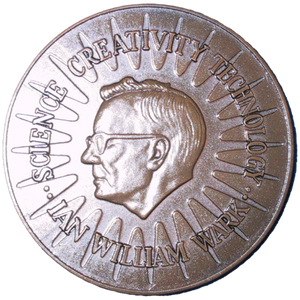
Committee—Ian Wark Medal and Lecture
Purpose: To advise Council on the award of the Medal, in accordance with Standing Order XXII.
- Professor Erich Weigold AM FAA FTSE - Chair
- Professor Willy Zwaenepoel FAA FTSE - Member
- Professor Andrew Blakers AO FAA FTSE - Member
- Professor Calum Drummond AO FAA FTSE - Member
- Professor Elaine Wong - Member
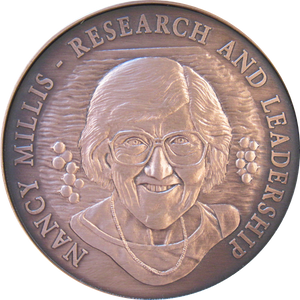
Committee—Nancy Millis Medal For Women in Science
Purpose: To advise Council on the award of the Medal, in accordance with Standing Order XXII.
- Professor Dorrit Jacob FAA - Chair
- Professor James McCluskey AO FAA FAHMS - Member - Melbourne University Representative
- Professor Laura Parry - Member
- Professor Ute Roessner AM FAA - Member
- Professor Tim Ralph FAA - Member
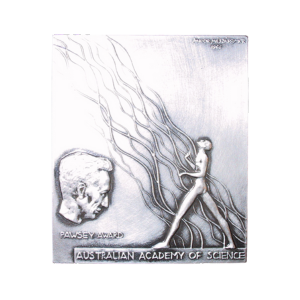
Committee—Pawsey Medal
Purpose: To advise Council on the award of the Medal, in accordance with Standing Order XXII.
- Professor Xiaojing Hao FAA FTSE - Chair
- Professor Mathai Varghese FAA - Member
- Professor Nicole Bell - Member
- Professor Halina Rubinsztein-Dunlop AO FAA - Member
- Professor Catherine Stampfl FAA - Member
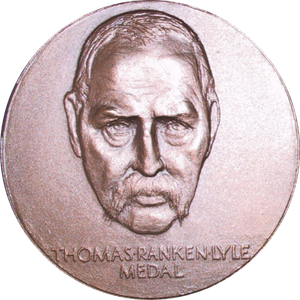
Sir Thomas Ranken Lyle 1860-1944
Thomas Ranken Lyle was born in Londonderry, Northern Ireland on 26 August 1860. He graduated from Trinity College, Dublin in 1883 with the highest honours the college could award: gold medals in mathematics and experimental science and a university studentship in mathematics. He gained his MA in 1887 and continued his studies in advanced mathematics and physics.
Lyle took up the chair of natural philosophy at the University of Melbourne in 1889. With the introduction of the Master of Science degree in 1891, he embarked on a small research program. Much of the apparatus he needed had to be made in the university, and Lyle was fortunate in that he was an expert glass-blower. He was also a skilled photographer. When, in mid-February 1896, he read newspaper reports of Röntgen's discovery of a mysterious new form of radiation he put this combination of skills to good use and successfully evacuated a Crookes tube to produce practical X-rays. He is credited with taking both the first X-ray and the first published X-ray in Australia, in March 1896. In June of that year he was invited to take a photograph of a patient who had a needle embedded in his wrist. The 'shadow photograph', clearly showing the needle's exact location, allowed the surgeon to make an incision at the correct point and extract the needle.
Despite this ground-breaking medical work, Lyle's more active interest was in electrical power technology, in particular alternating currents and their associated magnetic effects. His most significant paper was a theoretical analysis of the alternating current generator.
Lyle was a member of numerous government bodies and inquiries. He held several directorships, including that of the Metropolitan Gas Company. Among other senior appointments he was one of the first three (part-time) commissioners of Victoria's State Electricity Commission and its first chairman. In 1919 he was a foundation member of the Australian National Research Council (ANRC), the forerunner to the Australian Academy of Science, and its president from 1929-32. The ANRC recognised his outstanding contribution to scientific life in Australia in 1931 when it created the Thomas Ranken Lyle medal for distinguished Australian research in mathematics and physics.
Lyle was also an excellent sportsman. In 1885-87 he played rugby for Ireland five times before suffering knee injuries that caused him to be lame in later life and eventually forced his resignation from the University of Melbourne in early 1915. His health deteriorated after a cerebral haemorrhage in 1940 left him a semi-invalid, and he died on 31 March 1944.
Lyle received an ScD degree from Trinity College, Dublin in 1905, a fellowship of the Royal Society in 1912 and a knighthood in 1922
Bibliography
- Home, R.W. 1986, Lyle, Sir Thomas Ranken (1860-1944), mathematical physicist, Australian Dictionary of Biography, editors Bede Nairn and Geoffrey Serle, Melbourne University Press, pp.172-174
- Macdonald, Colin F. 1965, Röntgen's discovery of the X-rays and the pioneer Melbourne radiologists, Victorian Historical Magazine, vol.36, no.4, November, pp.136-153
- Russel, K.F. 1975, William Stone: a pioneer in Australian radiology, Australasian Radiology, vol.19, no.3, September, pp.216-222
- Ryan, J., Sutton, K. and Baigent, M. 1996, Australasian Radiology – A History, pp.24-26
- Trainor, J.P. 1946, Salute to the X-Ray Pioneers of Australia, W. Watson & Sons, (Sydney) pp.26-27
Travelling Fellowship Award Committee terms of reference
Membership
In order to ensure transparency and to allow for wider involvement of the Fellowship, Committee membership for all awards will be for three years only, with approximately one third of the members retiring each year (on 31 December). In the case of newly formed committees, such retirements will begin at the end of the second year.
A Chair will normally have already served on the Award Committee as a member for at least one year and their maximum term as Chair will be for two years - so that their membership term does not extend beyond five years. For biennial awards, years of membership are up to three award rounds (six years) for members – with the maximum years for a Chair’s term being two award rounds (up to four years). There will be a minimum break of two award rounds before a member can re-join a committee.
To safeguard the Academy’s real and perceived independence in decision making, donors or those with a close personal connection to an award (such as an award’s namesake or their family members), may not be members of the relevant award’s committee. Such individuals are also asked to refrain from acting as a referee for candidates for that award.
Award Committee members are unable to nominate or apply for an award or act as a referee for a candidate, for consideration by the committee that they are sitting on. Council members are not eligible to nominate or apply for Academy awards during their term and for two years after they leave Council.
Award timeframes
Travelling Fellowship award nominations and applications are due by 1 June each year. Award Committee deliberations are to be finalised and written recommendations and reports sent to the Secretariat by 1 August. Recommendations will then be submitted to EXCOM in August for approval.
Committee deliberations
All members are expected to undertake unconscious bias training. Council and The Secretaries will determine the nature of this training each year.
The Academy is committed to promoting diversity of, for example, gender, ethnicity, age, geographical distribution and scientific disciplines, and to the principles of inclusion, equal opportunity, fairness and transparency in its policies and procedures.
Unconscious bias often manifests as prejudice or unsupported judgments. It is considered to be universally present, and often escapes detection because it is not applied consciously.
The purpose of unconscious bias training is to help Committee members recognize its existence and forms, and the influence it can have on decision-making processes, with a view to mitigating its effects on selection processes.
Current training is provided though the Academy’s unconscious bias training video, which Committee members are requested to view prior to stating their nomination assessments (45 minutes).
Members of each Award Committee are also encouraged to watch the Royal Society video on avoiding group think.
Applicants can only receive funding from the same research or travelling fellowship award once in a three calendar year period. Applicants may apply for more than one award but can only receive one Academy travelling or research award per calendar year.
If a candidate applies for two or more research or travelling fellowship awards, the chairs of these committees will be alerted to the fact and will be charged to communicate with each other to ensure that the awardee only receives the one award. Their assessment will be based on their determination of the quality of the other applicants in that round. If an applicant for two awards is the top ranked candidate for both awards, the chairs will recommend a single award that best benefits the research/career of that candidate.
Committee members will ensure that they are satisfied that proposals comply with the Australian Code for the Responsible Conduct of Research. Research involving Indigenous Australians must comply with the guidelines for Ethical Research in Australian Indigenous Studies. Any concerns must be reported to the Academy for further clarification or resolution either at the application or pre-award stage.
Conflict of interest
The first task of the Committee before any assessment or ranking takes place is for committee Chairs to ask for and collect declarations of conflicts of interest from all committee members and forward this information to the Secretariat. When identifying conflicts of interest, committee members should use the following as a guide to direct and indirect conflicts. The Secretariat will provide Chairs with a spreadsheet for members to complete and will keep a record of declarations.
To reduce the risk of conflicts of interest, award committee members are asked to refrain from nominating, or acting as a referee, for candidates for awards that fall under their committee’s remit. All conflicts, real or perceived, must be declared in the member’s conflict-of-interest report sent to the Chair and Secretariat.
Members with direct conflicts of interest must abstain from assessing (i.e. discussing and scoring) candidates, but may respond to queries about the candidates’ science, if asked.
Indirect conflicts will be assessed by the committee Chair to determine if an indirect or potential conflict is significant enough to warrant a member absenting from assessing a candidate in part (e.g. scoring but not discussing) or in full.
Committees with Chairs that have declared any direct or indirect conflicts of interest are requested to copy the relevant Side-Secretary into all committee deliberations.
At the relevant Side-Secretary’s discretion an independent third-party assessor may be brought in to assist such committees at any point of the deliberations. They would join as either an additional member of the committee with full voting rights and normal tenure, or as a non-voting observer for one year.
A direct conflict of interest is defined as a close personal or professional relationship with the candidate. An indirect conflict of interest is defined as relationships that could create bias. Refer to the Fellowship nominations conflicts of interest guidelines for examples.
Perceived conflicts of interest are important to the reputation of the Academy and in some jurisdictions have the same standing as actual conflicts of interest. As such, the number of exceptions to these guidelines approved by the Side-Secretaries will be minimised.
Confidentiality
All material relating to candidates is strictly confidential and must not be shared with anyone. Following the deliberations, all electronic material must be deleted from personal devices and printed material and notes securely destroyed or returned to the Awards office. The deliberations remain confidential, even after the awarding of candidates.
Consideration of candidates
Committee members will ensure that gender and diversity issues are taken into consideration when considering candidates for awards.
The Secretariat will organise a web conference for the committee to discuss the award applications. Aside from this Secretariat-organised meeting, chairs will determine how their committee will conduct its deliberations, for example via electronic means.
Committees are requested to ensure that candidate achievements are judged relative to opportunity. The approach aims to give more weight to the overall quality and impact of achievements rather than the quantity, rate or breadth of particular achievements, which in many instances is directly related to time and resources available rather than talent, merit or excellence. An assessment of a candidate’s opportunity to demonstrate scientific excellence will take into account the factors below, based on the Research Opportunity and Performance Evidence (ROPE) guidelines of the Australian Research Council (ARC).
- Research training; employment in research positions, either within the research sector or outside academia, including the research component and/or full-time-equivalence of positions; research and development activities; industry engagement; research environment, including supervision, mentoring and leadership; professional development; research management experience, and access to research and support facilities.
Career interruptions- including those due to employment outside academia; unemployment, part-time employment; childbirth; parental leave; carers’ responsibilities; misadventure; limited or no access to facilities and resources—such as through workplace interruptions; disaster management and recovery; misadventure; medical conditions; disability; caring and parental responsibilities, community obligations, including Aboriginal and/or Torres Strait Islander cultural practices and protocols or illness.
In general, Award Committees should attempt to achieve a consensus with respect to the awardee to be recommended to Council. Where this is not possible, the matter should be resolved by a formal vote. In the event of the number of votes for any two candidates being equal, the Chair would exercise a casting vote. When a vote is used to decide the outcome of the Committee’s deliberations, the actual distribution of the votes should be recorded in the Chair’s report to Council.
Committees can recommend that there be no award made in that round if there is consensus that there isn’t a sufficiently strong candidate.
Chair's report to council
The Secretariat will provide a report template for chairs to complete. Chairs will provide the Awards Officer with a brief summary (one page) of the deliberations of the Committee, how many applications were received, the final decision and why the candidate is being proposed to Council for the award, by 5 September. The report should also include the completed register of conflicts of interest (and how conflicts were dealt with) and any recommended changes to the award or to the selection process.
New members
As part of its recommendations to Council, the Award Committee should advise on optimum disciplinary makeup of the committee for replacement committee members.
The Secretaries Physical and Biological Sciences will review the interest received from individual Fellows to sit on award committees and the Committee recommendations regarding disciplinary makeup and select new members and Chairs as guided by the following selection principles, presenting these to Council Annually out of session for record and oversight:
- Annually the Fellowship will be consulted on their availability for Award and Sectional committees.
- The member expertise across each Awards Committee will endeavour to cover the fields of the candidates relevant to that committee
- When nominations close, new members will be added to any Awards Committee if the Secretaries consider that expertise is lacking or that conflicts would inhibit the committee in ranking particular candidates
- The membership of each Awards Committee, within the conditions of that Award, and where possible will reflect appropriate geographical spread, gender and ethnic diversity as guided by and in accordance with the principles provided by the Diversity and Inclusion Advisory Committee (DIACOM).
- The Secretaries will also consider members outside of the award discipline for Award committees, including corresponding members of the Academy and Fellows of the Royal Society Te Apārangi.
- The Secretaries will aim to have a minimum of 5 members appointed on each Award Committee.
- The DIACOM representative on Council will be tasked to record and feedback to the Secretaries any equity and diversity matters observed in relation to the awards and where shown in the annual award committee reports presented to Council.
- When appropriate Early and Mid-Career Researchers and previous awardees of an Award will be considered for award committee membership, as well as Fellows of other National Academies and non-Fellows with particular expertise.

Research Award Committee terms of reference
Membership
In order to ensure transparency and to allow for wider involvement of the Fellowship, Committee membership for all awards will be for three years only, with approximately one third of the members retiring each year (on 31 December). In the case of newly formed committees, such retirements will begin at the end of the second year.
A Chair will normally have already served on the Award Committee as a member for at least one year and their maximum term as Chair will be for two years - so that their membership term does not extend beyond five years. For biennial awards, years of membership are up to three award rounds (six years) for members – with the maximum years for a Chair’s term being two award rounds (up to four years). There will be a minimum break of two award rounds before a member can re-join a committee.
To safeguard the Academy’s real and perceived independence in decision making, donors or those with a close personal connection to an award (such as an award’s namesake or their family members), may not be members of the relevant award’s committee. Such individuals are also asked to refrain from acting as a referee for candidates for that award.
Award Committee members are unable to apply for an award, or act as a referee for a candidate, for consideration by the committee that they are sitting on. Council members are not eligible to apply for Academy awards during their term and for two years after they leave Council.
Award timeframes
Research award applications are due on 1 June each year. Award Committee deliberations are to be finalised and written recommendations and reports sent to the Secretariat by 5 September. Recommendations will then be submitted to Council in October for approval.
Committee deliberations
All members are expected to undertake unconscious bias training. Council and The Secretaries will determine the nature of this training each year.
The Academy is committed to promoting diversity of, for example, gender, ethnicity, age, geographical distribution and scientific disciplines, and to the principles of inclusion, equal opportunity, fairness and transparency in its policies and procedures.
Unconscious bias often manifests as prejudice or unsupported judgments. It is considered to be universally present, and often escapes detection because it is not applied consciously.
The purpose of unconscious bias training is to help Committee members recognise its existence and forms, and the influence it can have on decision-making processes, with a view to mitigating its effects on selection processes.
Current training is provided though the Academy’s unconscious bias training video, which Committee members are requested to view prior to stating their nomination assessments (45 minutes).
Members of each Award Committee are also encouraged to watch the Royal Society video on avoiding group think.
Applicants can only receive funding from the same research or travelling fellowship award once in a three calendar year period. Applicants may apply for more than one award but can only receive one Academy travelling or research award per calendar year.
If a candidate applies for two or more research or travelling fellowship awards, the chairs of these committees will be alerted to the fact and will be charged to communicate with each other to ensure that the awardee only receives the one award. Their assessment will be based on their determination of the quality of the other applicants in that round. If an applicant for two awards is the top ranked candidate for both awards, the chairs will recommend a single award that best benefits the research/career of that candidate.
Committee members will ensure that they are satisfied that proposals comply with the Australian Code for the Responsible Conduct of Research. Research involving Indigenous Australians must comply with the guidelines for Ethical Research in Australian Indigenous Studies. Any concerns must be reported to the Academy for further clarification or resolution either at the application or pre-award stage.
Conflict of interest
The first task of the Committee before any assessment or ranking takes place is for committee Chairs to ask for and collect declarations of conflicts of interest from all committee members and forward this information to the Secretariat. When identifying conflicts of interest, committee members should use the following as a guide to direct and indirect conflicts. The Secretariat will provide Chairs with a spreadsheet for members to complete and will keep a record of declarations.
To reduce the risk of conflicts of interest, award committee members are asked to refrain from acting as a referee for candidates for awards that fall under their committee’s remit. All conflicts, real or perceived, must be declared in the member’s conflict-of-interest report sent to the Chair and Secretariat.
Members with direct conflicts of interest must abstain from assessing (i.e. discussing and scoring) candidates, but may respond to queries about the candidates’ science, if asked.
Indirect conflicts will be assessed by the committee Chair to determine if an indirect or potential conflict is significant enough to warrant a member absenting from assessing a candidate in part (e.g. scoring but not discussing) or in full.
Committees with Chairs that have declared any direct or indirect conflicts of interest are requested to copy the relevant Side-Secretary into all committee deliberations.
At the relevant Side-Secretary’s discretion an independent third-party assessor may be brought in to assist such committees at any point of the deliberations. They would join as either an additional member of the committee with full voting rights and normal tenure, or as a non-voting observer for one year.
A direct conflict of interest is defined as a close personal or professional relationship with the candidate. An indirect conflict of interest is defined as relationships that could create bias. Refer to the Fellowship nominations conflicts of interest guidelines for examples.
Perceived conflicts of interest are important to the reputation of the Academy and in some jurisdictions have the same standing as actual conflicts of interest. As such, the number of exceptions to these guidelines approved by the Side-Secretaries will be minimised.
Confidentiality
All material relating to candidates is strictly confidential and must not be shared with anyone. Following the deliberations, all electronic material must be deleted from personal devices and printed material and notes securely destroyed or returned to the Awards office. The deliberations remain confidential, even after the awarding of candidates.
Consideration of candidates
Committee members will ensure that gender and diversity issues are taken into consideration when considering candidates for awards.
The Secretariat will organise a web conference for the committee to discuss the award applications. Aside from this Secretariat-organised meeting, chairs will determine how their committee will conduct its deliberations.
Committees are requested to ensure that candidate achievements are judged relative to opportunity. The approach aims to give more weight to the overall quality and impact of achievements rather than the quantity, rate or breadth of particular achievements, which in many instances is directly related to time and resources available rather than talent, merit or excellence. An assessment of a candidate’s opportunity to demonstrate scientific excellence will take into account the factors below, based on the Research Opportunity and Performance Evidence (ROPE) guidelines of the Australian Research Council (ARC).
- Research training; employment in research positions, either within the research sector or outside academia, including the research component and/or full-time-equivalence of positions; research and development activities; industry engagement; research environment, including supervision, mentoring and leadership; professional development; research management experience, and access to research and support facilities.
- Career interruptions- including those due to employment outside academia; unemployment, part-time employment; childbirth; parental leave; carers’ responsibilities; misadventure; limited or no access to facilities and resources—such as through workplace interruptions; disaster management and recovery; misadventure; medical conditions; disability; caring and parental responsibilities, community obligations, including Aboriginal and/or Torres Strait Islander cultural practices and protocols or illness.
In general, Award Committees should attempt to achieve a consensus with respect to the awardee/s to be recommended to Council. Where this is not possible, the matter should be resolved by a formal vote. In the event of the number of votes for any two candidates being equal, the Chair would exercise a casting vote. When a vote is used to decide the outcome of the Committee’s deliberations, the actual distribution of the votes should be recorded in the Chair’s report to Council.
Committees can recommend that there be no award made in that round if there is consensus that there isn’t a sufficiently strong candidate.
Chair's report to council
The Secretariat will provide a report template for chairs to complete. Chairs will provide the Awards Officer with a brief summary (one page) of the deliberations of the Committee, how many applications were received, the final decision and why the candidate is being proposed to Council for the award, by 5 September. The report should also include the completed register of conflicts of interest (and how conflicts were dealt with) and any recommended changes to the award or to the selection process.
New members
As part of its recommendations to Council, the Award Committee should advise on optimum disciplinary makeup of the committee for replacement committee members.
The Secretaries Physical and Biological Sciences will review the interest received from individual Fellows to sit on award committees and the Committee recommendations regarding disciplinary makeup and select new members and Chairs as guided by the following selection principles, presenting these to Council Annually out of session for record and oversight:
- Annually the Fellowship will be consulted on their availability for Award and Sectional committees.
- The member expertise across each Awards Committee will endeavour to cover the fields of the candidates relevant to that committee
- When nominations close, new members will be added to any Awards Committee if the Secretaries consider that expertise is lacking or that conflicts would inhibit the committee in ranking particular candidates
- The membership of each Awards Committee, within the conditions of that Award, and where possible will reflect appropriate geographical spread, gender and ethnic diversity as guided by and in accordance with the principles provided by the Diversity and Inclusion Advisory Committee (DIACOM).
- The Secretaries will also consider members outside of the award discipline for Award committees, including corresponding members of the Academy and Fellows of the Royal Society Te Apārangi.
- The Secretaries will aim to have a minimum of 5 members appointed on each Award Committee.
- The DIACOM representative on Council will be tasked to record and feedback to the Secretaries any equity and diversity matters observed in relation to the awards and where shown in the annual award committee reports presented to Council.
- When appropriate Early and Mid-Career Researchers and previous awardees of an Award will be considered for award committee membership, as well as Fellows of other National Academies and non-Fellows with particular expertise.
Honorific Award Committee terms of reference
The honorific awards were established to recognise outstanding contributions to the advancement of science at the early, mid and career level. Career awards recognise life-long achievement. Receipt of early- and/or mid-career honorific awards may assist to advance the recipients’ careers.
The primary criterion for all awards is scientific achievement.
The list of all early-career, mid-career, career and premier honorific awards can be found here.
MEMBERSHIP
To ensure transparency and enable wider involvement of the Fellowship in the selection process, committee membership for all awards will be for three years only and approximately one third of the members will retire each year (on 31 December). In the case of newly formed committees, such retirements will begin at the end of the second year.
A Chair will normally have already served on the awards committee as a member for at least one year and where possible, also be a Fellow of the Australian Academy of Science. The maximum term for a Chair will normally be for two award rounds - so the membership term does not extend beyond five award rounds. For biennial awards, the years of membership are up to three award rounds (six years) for members – with the maximum years for a Chair’s term normally being two award rounds (up to four years). There will be a minimum break of two award rounds before a member can re-join a committee. Committee members may not be nominated for that award for two award rounds after they leave the committee.
To safeguard the Academy’s real and perceived independence in decision making, donors or those with a close personal connection to an award (such as an award’s namesake or their family members), may not be members of the relevant award’s committee. Such individuals are also asked to refrain from nominating or acting as a referee for candidates for that award.
Serving members of the Council of the Australian Academy of Science may not be members of honorific award committees, except if specifically required by the award guidelines. Council members are not eligible to be nominated for Academy awards for two years after they leave Council. Council members may not nominate candidates for honorific awards.
AWARD NOMINATION
Copies of each candidate’s nomination documents (including the nomination form, brief citation, non-technical description of the work, CV and list of publications) will be sent by the Secretariat to the award committee in June of each year.
No candidate can receive more than one award in the same year. When a candidate is nominated for more than one award, and becomes a front-runner for more than one award, the Chairs of the relevant committees need to confer. A joint meeting of the relevant award committees can also be arranged by the Secretariat, if needed.
Award committees will receive a summary of relevant awardee eligibility details to inform their shortlist decision.
COMMITTEE DELIBERATIONS
All members are expected to undertake unconscious bias training. Council and The Secretaries will determine the nature of this training each year.
The Academy is committed to promoting diversity of, for example, gender, ethnicity, age, geographical distribution and scientific disciplines, and to the principles of inclusion, equal opportunity, fairness and transparency in its policies and procedures.
Unconscious bias often manifests as prejudice or unsupported judgments. It is considered to be universally present, and often escapes detection because it is not applied consciously.
The purpose of unconscious bias training is to help Committee members recognise its existence and forms, and the influence it can have on decision-making processes, with a view to mitigating its effects on selection processes.
Current training is provided though the Academy’s unconscious bias training video, which Committee members are requested to view prior to starting their nomination assessments (45 minutes).
Members of each award committee are also encouraged to watch the Royal Society video on avoiding group think.
The Secretariat will organise a web conference for the committee to discuss the award nominations. Aside from this Secretariat-organised meeting, Chairs will determine how their committee will conduct its deliberations.
CONFLICTS OF INTEREST
The first task of the Committee before any assessment or ranking takes place is for committee Chairs to ask for and collect declarations of conflicts of interest from all committee members and forward this information to the Secretariat. When identifying conflicts of interest, committee members should use the following as a guide to direct and indirect conflicts. The Secretariat will provide Chairs with a spreadsheet for members to complete and will keep a record of declarations.
To reduce the risk of conflicts of interest, award committee members are asked to refrain from nominating, or acting as a referee for, new nominees for awards that fall under their committee’s remit. It is appreciated that there may be residual conflicts from existing nominations. These should be dealt with in consultation with the Secretaries.
All conflicts, real or perceived, must be declared in the member’s conflict-of-interest report sent to the Chair and Secretariat.
Members with direct conflicts of interest must abstain from assessing (i.e. discussing and scoring) candidates, but may respond to queries about the candidates’ science, if asked.
Indirect conflicts will be assessed by the committee Chair to determine if an indirect or potential conflict is significant enough to warrant a member absenting from assessing a candidate in part (e.g. scoring but not discussing) or in full.
Committees with Chairs that have declared any direct or indirect conflicts of interest are requested to copy the relevant Side-Secretary into all committee deliberations.
At the relevant Side-Secretary’s discretion an independent third-party assessor may be brought in to assist such committees at any point of the deliberations. They would join as either an additional member of the committee with full voting rights and normal tenure, or as a non-voting observer for one year.
A direct conflict of interest is defined as a close personal or professional relationship with the candidate. An indirect conflict of interest is defined as relationships that could create bias. Refer to the Fellowship nominations conflicts of interest guidelines for examples.
Perceived conflicts of interest are important to the reputation of the Academy and in some jurisdictions have the same standing as actual conflicts of interest. As such, the number of exceptions to these guidelines approved by the Side-Secretaries will be minimised.
CONFIDENTIALITY
All material relating to candidates is strictly confidential and must not be shared with anyone. Following the deliberations, all electronic material must be deleted from personal devices and printed material and notes securely destroyed or returned to the Awards office. The deliberations remain confidential, even after the awarding of candidates.
CONSIDERATION OF CANDIDATES
If a proposed candidate is already the recipient of an Academy early-career honorific award, they will not be eligible for nomination for another early-career award or a mid-career honorific award. In accordance with the objectives of the honorific awards, a mid-career honorific award recipient will also not be eligible for nomination for another mid-career award and Fellows of the Academy are ineligible to be nominated for early or mid-career honorific awards. Premier awardees can be awarded a second premier award but not in the same award year.
Where a candidate has been put forward for an award but is clearly better suited or equally eligible for other awards in that round, the Secretaries have the discretion to consider having the nomination moved or jointly considered for the other award (with prior approval of the nominator).
Each committee should ensure that they have examined each case appropriately, exercising judgement and limiting the use of metrics (e.g. H-indexes, number of international presentations) or other constructs that can discriminate against those who have had fewer years full-time in research. Metrics should only be used in a qualitative way and not as a decisive criterion in recommending a candidate for an award. Any use of metrics should take into account the size and the practices in different fields.
Committees are requested to ensure that candidate achievements are judged relative to opportunity. The approach aims to give more weight to the overall quality and impact of achievements rather than the quantity, rate or breadth of particular achievements, which in many instances is directly related to time and resources available rather than talent, merit or excellence. An assessment of a candidate’s opportunity to demonstrate scientific excellence will take into account the factors below, based on the Research Opportunity and Performance Evidence (ROPE) guidelines of the Australian Research Council (ARC).
- research training; employment in research positions, either within the research sector or outside academia, including the research component and/or full-time-equivalence of positions; research and development activities; industry engagement; research environment, including supervision, mentoring and leadership; professional development; research management experience, and access to research and support facilities.
- Career interruptions- including those due to employment outside academia; unemployment, part-time employment; childbirth; parental leave; carers’ responsibilities; misadventure; limited or no access to facilities and resources—such as through workplace interruptions; disaster management and recovery; misadventure; medical conditions; disability; caring and parental responsibilities, community obligations, including Aboriginal and/or Torres Strait Islander cultural practices and protocols or illness.
Taking the above considerations into account, the key question should ALWAYS be: has the candidate made significant research contributions worthy of the award?
Committee members are asked to assign scores for each candidate out of a total of 100, based on a scoring matrix provided by the Academy that allocates a score of up to 100% to scientific achievement. Other factors such as mentorship and international profile can be used as a tie breaker, but not as primary scoring criteria. This is subject to any additional specific criteria of an award.
Recognising that it is not necessary to assign 100 to any particular candidate, total scores of 80 and above indicate an assessor’s support for shortlisting and/or awarding the candidate.
When members score shortlisted nominations, they are asked to keep to a scoring range of 80-100, noting that a score of 100 means that the candidate is outstanding in every way. This is in contrast to an 80, which might mean that the candidate is very strong, but the case is not as compelling as some others under consideration. Members must avoid tied scores.
In general, Award Committees should attempt to achieve a consensus with respect to the candidate to be recommended to Council. Where this is not possible, the matter should be resolved by a formal vote and recorded in the committee’s report to Council. If the number of votes for any two candidates are equal, the Chair should exercise a casting vote, except for when a Chair’s vote will have an impact on the awarding of a candidate they are conflicted with. In such a case, The Secretaries will be notified to adjudicate.
Committees can recommend that there be no award made in a round if there is a consensus that there is not a sufficiently strong candidate.
Committees can recommend that the award be jointly awarded to more than one candidate and are encouraged to consider doing this if the top two candidates are very close and the second candidate can be shown to represent dimensions of diversity, as defined in the Fellowship nominations diversity dimensions guidelines. However, where there are two candidates in close contention for the award who do not meet this criterion, only one can be recommended to Council. If a second awardee is proposed, the reasoning must be included in the committee’s report to Council.
Committees will also be requested to provide (when possible) a shortlist of high quality unsuccessful candidates who will be invited to update their documentation for consideration (if eligible) for up to two subsequent awarding rounds. Up to three unsuccessful candidates may be shortlisted if dimensions of diversity are represented. Otherwise, only two unsuccessful candidates may be shortlisted.
Committees will be requested to also provide the names of the runner-up for each award in case there were concerns by Council about the appropriateness of the recommended awardee.
CHAIR’S REPORT TO COUNCIL
The Secretariat will provide a report template for Chairs to complete. Chairs will provide the Awards Officer with a brief summary (one page) of the deliberations of the committee, how many nominations were received, the shortlist of up to four candidates (including the awardee), the final decision and why the candidate(s) is being proposed to Council for the award, by 5 September. The report should also include the completed register of conflicts of interest (and how conflicts were dealt with) and any recommended changes to the award or to the selection process.
NEW MEMBERS
As part of its recommendations to Council, the award committee should advise on optimum disciplinary makeup of the committee for replacement committee members.
The Secretaries Physical and Biological Sciences will review the interest received from individual Fellows to sit on award committees and the committee recommendations regarding disciplinary makeup. They will select new members and Chairs as guided by the following selection principles, presenting these to Council annually out of session, for record and oversight:
- Annually the Fellowship will be consulted on their availability for award and sectional committees.
- The member expertise across each awards committee will endeavour to cover the fields of the candidates relevant to that committee.
- When nominations close, new members will be added to any awards committee if the Secretaries consider that expertise is lacking or that conflicts would inhibit the committee in ranking particular candidates.
- The membership of each awards committee, within the conditions of that award and where possible, will reflect appropriate geographical spread, gender and ethnic diversity as guided by, and in accordance with, the principles provided by the Diversity and Inclusion Advisory Committee (DIACOM).
- The Secretaries will also consider members outside of the award discipline for award committees, including corresponding members of the Academy and Fellows of the Royal Society Te Apārangi.
- The Secretaries will aim to have a minimum of 5 members appointed on each award committee.
- The DIACOM representative on Council will be tasked to record and feedback to the Secretaries any equity and diversity matters observed in relation to the awards and where shown in the annual award committee reports presented to Council.
- When appropriate, early- and mid-career researchers and previous recipients of an award will be considered for award committee membership. Fellows of other National Academies and non-Fellows with particular expertise with also be considered.
Noel Sydney Hush 1924–2019
Noel Hush left Sydney with his MSc in 1949 to work in Manchester, and then Bristol, before returning to the University of Sydney in 1971 as the inaugural professor of theoretical chemistry, the first such chair in Australia. His students and collaborators occupy senior positions in Australian and international universities.
With theoreticians and experimentalists he researched electron transfer in electrochemical changes, between metal ions, in covalent bond frameworks, in surface chemistry of gold, and in complex organic and bio-organic molecules.
He was a leader among Australian academics, protesting the restrictions placed on Russian Jewish scientists who wished to leave their homeland.
He was elected to fellowship of the Australian Academy of Science and the Royal Society of London, and he continued research long after the formal retirement age.
Download the memoir
Supplementary material
About this memoir
This memoir was originally published in Historical Records of Australian Science, vol. 36, 2025. It was written by Ian D. Rae and Jeffrey R. Reimers.


John William White 1937–2023
John William White FRACI FAIP FRS FAA CMG AO (1937–2023) was a pioneer in the application of neutron scattering to chemistry, one of the most influential advocates for neutron facilities globally, particularly in Australia, and was a friend and mentor to a great many neutron-scattering scientists working worldwide.
This biographical memoir will demonstrate the enormous legacy that he leaves through his service to science by following his career from the University of Sydney to Oxford University – initially as a DPhil student, but subsequently as a fellow at St John’s College – through to Director of the Institut Laue Langevin (ILL) neutron facility in Grenoble, France, before returning to Australia as Professor at the Australian National University in Canberra.
Download the memoir
Supplementary material
About this memoir
This memoir was originally published in Historical Records of Australian Science, vol. 36, 2025. It was written by Elliot Paul Gilbert and Julia Stretton Higgins.