
Ian McDougall 1935–2018

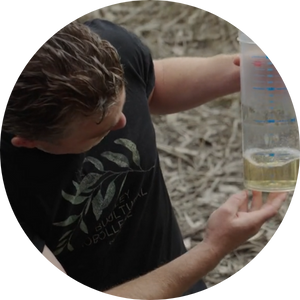
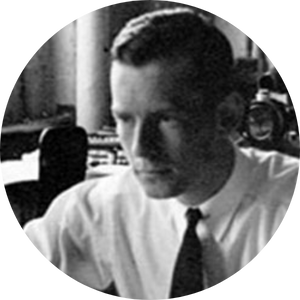
Ian McDougall was a renowned Earth scientist who gained worldwide distinction for his research in the fields of K-Ar and 40Ar/39Ar geochronology.
Image Description

Ian McDougall was a renowned Earth scientist who gained worldwide distinction for his research in the fields of K-Ar and 40Ar/39Ar geochronology. 

He was born in Hobart, Tasmania and obtained a BSc (Hons) at the University of Tasmania and a PhD at the Australian National University in Canberra. Following his PhD, he was introduced to the emerging field of K-Ar geochronology during a postdoctoral year at the University of Berkeley in 1961. 

On his return to Australia, Ian accepted a position in the newly established K-Ar laboratory at the Australian National University. He pioneered the application of the K-Ar dating method to young volcanic rocks and played a pivotal role in developing the geomagnetic timescale. These findings provided crucial evidence in support of the ‘hot spot’ (mantle plume) model and the emerging theory of plate tectonics. 

He subsequently established the 40Ar/39Ar geochronology method at the Australian National University and gained an international reputation for meticulous experimental work. 

In the 1980s, he resolved a significant controversy with regard to the age of hominin fossils and artefacts in the Turkana Basin, Kenya. Over the following four decades, he developed a comprehensive geochronological framework for volcanism across the Turkana Basin, providing the basis for current interpretations of early human evolution in the region. 

Other notable collaborative accomplishments include the application of the 40Ar/39Ar method to thermal history studies and noble gas geochemistry studies of volcanic glasses and mantle material, which provided insights into the evolution of Earth’s atmosphere and interior. 

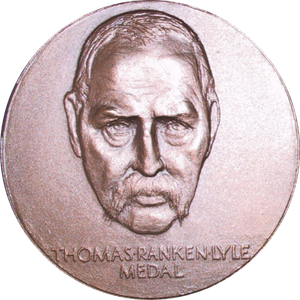
Ian’s scientific contributions were recognised with numerous honours and awards, including being elected a Fellow of the American Geophysical Union, a Fellow of the Australian Academy of Science, and receiving the Jaeger Medal from the Australian Academy of Science and the Centenary Medal for ‘service to Australian society and science in geochronology’.

Download the memoir


About this memoir

This memoir was originally published in Historical Records of Australian Science, vol. 35(1), 2023. It was written by David Phillips.

Stuart Ross Taylor 1925–2021

Stuart Ross Taylor made fundamental contributions toward understanding the composition and evolution of the Moon and Earth, the origin of tektites and solar system evolution.
Image Description

Stuart Ross Taylor, born and raised in New Zealand, spent most of his career at the Australian National University where his laboratory research focused on trace element geochemistry. 

He made fundamental contributions toward understanding the composition and evolution of the Moon and Earth, the origin of tektites and solar system evolution. He carried out the first-ever chemical analyses of Apollo 11 lunar samples. 

Ross Taylor received many awards and honours and was a Companion of the Order of Australia.

Download the memoir


Supplementary material


About this memoir

This memoir was originally published in Historical Records of Australian Science, vol. 36, 2024. It was written by Scott M. McLennan and Roberta L. Rudnick.

Robert Woodhouse Crompton 1926–2022

Robert (Bob) Crompton was a towering figure in low energy electron and ion physics in Australia and internationally.
Image Description

Robert (Bob) Crompton was a towering figure in low energy electron and ion physics in Australia and internationally, as witnessed by his seminal publications on swarm physics, atomic and molecular physics and gaseous electronics generally, his widely-read monograph with Sir Leonard Huxley on the subject of charged-particle transport, and the many personal and professional accolades and awards he received for his contributions to science, science policy and the general community. 

Born and educated in Adelaide, Crompton spent the majority of his long career at the Australian National University in Canberra, with numerous sabbatical periods in overseas laboratories where he fostered many important international research collaborations and lasting friendships.

Download the memoir


Supplementary material


About this memoir

This memoir was originally published in Historical Records of Australian Science, vol. 36, 2024. It was written by Erich Weigold, Zoran Lj. Petrovic and Stephen J. Buckman.

Robert Gerard (Gerry) Milton Wake 1933–2020

Robert Gerard (Gerry) Wake had a long and distinguished academic career in biochemistry and molecular biology at the University of Sydney.
Image Description

Robert Gerard (Gerry) Wake was born at Wangi Wangi, a town on the shore of Lake Macquarie, New South Wales, on 8 August 1933. He died from the complications of Parkinson Disease in Sydney on 26 January 2020. 

Wake had a long and distinguished academic career in biochemistry and molecular biology at the University of Sydney, spanning 1950 – with a two-year postdoctoral period and various study leaves – to 1999. His association began as an undergraduate, progressing to MSc (1956) and PhD (1958) and an appointment as lecturer in 1961, and a professorship in 1977. 

He is internationally renowned for work on the physical biochemistry of the transformation of the milk protein κ-casein by the enzyme rennin; and what was to become his major career focus, the molecular biology of bacterial DNA replication; having been the first to show that the chromosome in Bacillus subtilis (the hay bacterium) is circular. This was only the second bacterium for this general characteristic of bacterial genomes to be discovered. 

Furthermore, and against conventional wisdom, he demonstrated that replication of the B. subtilis circular chromosome is bidirectional involving two replication forks moving away from a common origin. 

Wake was a dedicated educator at the undergraduate level and led by example with excellent postgraduate guidance. He also made major contributions to academic governance at the University of Sydney, and more broadly to science in Australia, through influential roles in the Australian Society for Biochemistry and Molecular Biology, the Australian Research Council, and the Australian Academy of Science.

Download the memoir


Supplementary material


About this memoir

This memoir was originally published in Historical Records of Australian Science, vol. 36, 2024. It was written by Ronald J. Hill, Richard I. Christopherson and Philip W. Kuchel.

John Atherton Young 1936–2004

John Atherton Young conducted research on the physiology of epithelial ducts – beginning with those of the kidney but later centring on salivary glands and the pancreas – bringing him international recognition as a leader in the field.
Image Description

John Atherton Young (1936–2004) graduated in medicine at the University of Queensland and undertook research in physiology at the Kanematsu Institute in Sydney for which he was awarded his PhD. 

After postdoctoral studies in Germany, he joined the department of physiology at the University of Sydney, rising to professor, then Dean of the Faculty of Medicine and finally Pro-Vice-Chancellor for Health Sciences. 

His research on the physiology of epithelial ducts, beginning with those of the kidney but later centring on salivary glands and the pancreas, brought him international recognition as a leader in the field. 

He made significant contributions to professional societies and was recognised with international and national awards including membership of the Order of Australia. 

A bronze portrait head of Young by sculptor Dan Lake is displayed in the foyer of the Edward Ford building at the University of Sydney. He was a man of great culture, a witty conversationalist and a great scientist.

Download the memoir


Corrigendum


Supplementary material


About this memoir

This memoir was originally published in Historical Records of Australian Science, vol. 36, 2024. It was written by Ian D. Rae.

Jeremy David Pickett-Heaps 1940–2021

Jeremy Pickett-Heaps was a biologist whose acute observational powers were fed by a deep fascination for how cells work; he had an affinity for the myriad diversity of algae and other protists in general and for what they could teach us about all cells.
Image Description

Jeremy Pickett-Heaps was a biologist whose acute observational powers were fed by a deep fascination for how cells work; he had an affinity for the myriad diversity of algae and other protists in general and for what they could teach us about all cells. 

An early adopter of the electron microscope, he made fundamental discoveries in plant cell division and green algal phylogeny that developed into studies on cell division in general: first with the highly-ordered diatoms and other protists, and later with animal cells. 

In the latter part of his career, Jeremy mastered timelapse micro-cinematography to document the dynamic lives of cells and, through the resultant movies and his enthusiastic teaching, introduced many to the wonders of microscopic life.

Download the memoir


Supplementary material


About this memoir

This memoir was originally published in Historical Records of Australian Science, vol. 36, 2024. It was written by Peter Beech and Arthur Forer.

Gavin Brown 1942–2010

Gavin Brown was a distinguished mathematician and was a key contributor to the area of harmonic analysis.
Image Description

Gavin Brown was a distinguished mathematician, born and educated in Scotland. He moved to Australia in 1975 and was a key contributor to the area of harmonic analysis at the University of New South Wales. 

Gavin’s career saw him become vice-chancellor of both the University of Adelaide and the University of Sydney, before he became the founding president of the Royal Institution of Australia. 

When Brown died in Adelaide on Christmas Day 2010, we lost a distinguished academic and research mathematician, a huge contributor to Australian education and society and a generous human being with a wonderful sense of humour.

Download the memoir


Supplementary material


About this memoir

This memoir was originally published in Historical Records of Australian Science, vol. 36, 2024. It was written by Anthony H. Dooley.

Dr W.R. (Bill) Blevin 1929–2022

William Roderick (Bill) Blevin focused much of his distinguished research career on improving measurement standards for optical radiometry and photometric measurement.
Image Description

William Roderick (Bill) Blevin graduated from the University of New England (UNE) with First Class Honours in science in 1950, completed a Diploma of Education in 1951 and a Master of Science degree in 1952. 

He joined the CSIRO Division of Physics in 1953 as a research scientist and became the leader of the Optical Radiometry and Pyrometry Group. 

In 1972, he was awarded a DSc from the University of New England and in 1976 became a chief research scientist within CSIRO. In 1988, he was appointed chief of the CSIRO Division of Applied Physics. 

For much of his distinguished research career his focus was on improving measurement standards for optical radiometry and photometric measurement. 

Among his many achievements was an independent experimental determination of the Stefan–Boltzmann constant which advanced the accuracy of agreement with theoretical determinations by more than an order of magnitude. His work on the Stefan–Boltzmann constant and his determination in the face of international opposition eventually led to the redefinition of the candela, the SI (International System) unit for light intensity, in terms of the unit for power. His work was widely recognised internationally and brought great credit to CSIRO as well as gaining great respect for metrology in Australia. 

Bill served as president of the International Consultative Committee for Photometry and Radiometry (CCPR) for some twelve years and served as a member, secretary and vice-president of the International Committee for Weights and Measures (CIPM). He received many awards and honours throughout his illustrious career, including recognition as a Member of the Order of Australia.

Download the memoir


Supplementary material


About this memoir

This memoir was originally published in Historical Records of Australian Science, vol. 36, 2024. It was written by B. D. Inglis.

David Albert Cooper 1949–2018

David Cooper was an internationally renowned immunologist and HIV clinician who spearheaded Australia’s world-leading HIV response.
Image Description

David Cooper was an internationally renowned immunologist and HIV clinician who spearheaded Australia’s world-leading HIV response. 

Known for advocacy and community engagement, he made several world-first discoveries on HIV pathogenesis and treatment. He was involved in the development of every HIV drug used in Australia and drove the introduction of antiretroviral pre‐exposure prophylaxis (PrEP) in NSW. 

He established, then led, the Kirby Institute for 32 years, remaining at the forefront of communicable disease research in Australia and internationally.

Download the memoir


About this memoir

This memoir was originally published in Historical Records of Australian Science, vol. 36, 2024. It was written by Anthony D. Kelleher, Suzanne Crowe and Anthony Cunningham.

Anthony George Klein 1935–2021

Professor Anthony (Tony) George Klein AM FAA (1935–2021) was an outstanding physicist, university teacher, leader, mentor and science communicator.
Image Description

Professor Anthony (Tony) George Klein AM FAA (1935–2021) was an outstanding physicist, university teacher, leader, mentor and science communicator. 

We recount Tony’s life from his childhood in wartime Romania, his early interest in mathematics, the family’s migration to Australia via Israel in 1953, high school and university education in Melbourne, appointment as a research scientist at the AAEC in Sydney, followed by a distinguished career as an academic, researcher and leader in the School of Physics at the University of Melbourne where he retired as Emeritus Professor. 

The memoir describes Tony Klein’s personal qualities, the influences and experiences shaping his career, his major research contributions and collaborations in the field of neutron optics and neutron interferometry, his service to scientific and medical organisations and recognition by the university, the Australian Academy of Science and the nation. We evaluate Tony Klein’s contribution to science, knowledge and higher education.

Download the memoir


Supplementary material


About this memoir

This memoir was originally published in Historical Records of Australian Science, vol. 36, 2025. It was written by Trevor R. Finlayson, Leon Mann, Bruce H. J. McKellar and David G. Satchell.