




Committee—Dorothy Hill Medal

Purpose: To advise Council on the award of the Medal, in accordance with Standing Order XXII.
Professor Peter Cawood FAA - Chair
Professor Suzanne O'Reilly AM FAA - Member
Professor Meghan Miller - Member
Dr Amber Jarrett - Member - GSA President
Professor Helen Bostock - Member - UQ Dorothy Hill Chair of Paleontology
Emeritus Professor Zheng-Xiang Li FAA - Member

Committee—David Craig Medal and Le Fèvre Medal
Purpose: To advise Council on the award of the David Craig Medal, in accordance with Standing Order XXII.
- Professor Julian Gale FAA - Chair
- Emerita Professor Mary Garson AM FAA - Member
- Professor Yuning Hong - Member
- Professor Debbie Silvester-Dean OAM - Member
- Professor Guoxiu Wang FAA FTSE - Member


Committee—Ruby Payne-Scott Medal
The Ruby Payne-Scott Medal and Lecture for women in science is a career medal that recognises researchers of the highest standing in the physical and/or biological sciences. Along with the Macfarlane Burnet and Matthew Flinders Medals, it is one of the most prestigious career awards of the Academy and honours Ruby Payne-Scott’s pioneering contribution to radiophysics and radio astronomy. The Lecture is given at an Annual General Meeting of the Academy and complements that of the other prestigious awards.
The award is made annually and is restricted to women researchers who are normally resident in Australia and for research conducted mainly in Australia.
Nominations for this award are invited from Academy Fellows only. Candidates may be non Fellows.
Membership consists of the Secretaries Physcial and Biological Sciences and the immediate past Secretaries Physcial and Biological Sciences (if they are not nominees), chaired by whichever Secretary is not chairing that year’s other premier award committee.
See Council pages for the list of Current Council members.

Future Earth Australia
Future Earth Australia is a national peak initiative that enables Australian scientists, governments, industry and NGOs to collaborate both with each other and with international networks and programs across Australia.
More than 10 years of R&D funding decline cannot be restored in one budget
The Australian Academy of Science welcomes one-off funding of $233 million for CSIRO and $40.8 million for ANSTO in the Government’s mid-year economic and fiscal outlook (MYEFO) as a first step towards supporting focused and sustainable government-funded science agencies.
President of the Australian Academy of Science, Professor Chennupati Jagadish AC, said while the funding is welcome, what’s desperately needed is a plan to turn around the long-term decline in overall R&D funding in Australia.
The Academy expects the Denholm Report – the outcome of the independent review of the Australian R&D system – to recommend that Government reverse declining R&D investment and implement policies that recognise R&D as a national strategic asset able to grow the economy, strengthen national security and improve intergenerational wellbeing.
“More than 10 years of decline in science funding cannot be restored in one budget. The Academy urges the Albanese Government to consider the recommendations of the Strategic Examination of R&D and commit to long-term R&D reform and investment.
“To prosper in an era of massive technological, geopolitical and environmental disruption, we have no choice but to invest in today’s currency of power and prosperity: science and technology. These are not luxury investments.
“Cuts in MYEFO to the Global Science and Technology Diplomacy Fund (GSTDF) illustrate a profound lack of understanding of the vitality of international research–industry partnerships,” Professor Jagadish said.
The GSTDF supports strategic international science, research and technology collaborations with Asia–Pacific partners in Australian Government priority areas including advanced manufacturing, AI, quantum computing, hydrogen production and RNA technologies.
“The cut to the GSTDF is shortsighted. It was only in September that Minister Ayres publicly expressed his enthusiasm for the fund and acknowledged Australia is stronger, smarter, safer and more resilient when it is engages in international research collaboration,” Professor Jagadish said.
Season's greetings from the President

Dear friends,
We find ourselves at the end of 2025 under the heavy weight of a horrific and profound loss.
We at the Academy are shocked by the senseless antisemitic violence at Bondi beach. We stand with every Australian in condemning this evil act.
On behalf of the Academy, I extend my deepest condolences to the victims, their families, and all those impacted.
At times like these I am reminded that we all have a role to play when it comes to sustaining a respectful, stable and cohesive democracy and society, and the Academy’s steadfast commitment to informing decision-making with evidence is vital in this regard.
Amid our collective grief, let us not lose sight of our shared values and the hopes of our nation and people to live peacefully together.
Below you will find the message I had intended to send you this week as we prepare to close the year.
Be safe and well this holiday season.
Professor Chennupati Jagadish AC PresAA FREng FRS FTSE
President, Australian Academy of Science
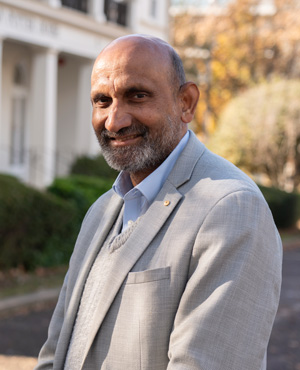
As this year draws to a close, I have been reflecting not only on what we have achieved together, but on what kind of future we are leaving the next generation.
Young and future Australians will confront major challenges including climate change, technological disruption, and mis- and disinformation.
In this emerging era, marked by geopolitical uncertainty and profound societal dilemmas, science is not a luxury. It is a strategic necessity.
Science underpins our prosperity, our security, our health, and our environment.
Until this year, no national effort had systematically assessed Australia's science capability against our nation's future needs.
In September, the Academy launched one of the most ambitious policy efforts in our history: Australian science, Australia's future: Science 2035. This study maps our national strengths, and our most serious gaps.
The findings are confronting but also empowering. For the first time, we now have a clear, evidence-based blueprint for action.
This year, the Academy has continued to speak plainly about what the R&D system needs.
We reaffirmed that development requires research; that fundamental discovery remains the wellspring of innovation.
In Australia, R&D investment is now so far behind the average OECD as a percentage of GDP invested in R&D, it would take an additional $33.4 billion dollars per annum just to get to parity.
So, we called for new, sustainable ways to fund research – including an ambitious proposal for a business R&D levy that can secure our sovereign capability for generations to come.
We advocated for renewed investment in national infrastructure, from supercomputing to the telescopes that will probe the deepest questions of our universe.
In a turbulent global environment, we stood up for Australia's strategic research interests. We strengthened international collaboration, worked to attract outstanding global talent, explored deeper connections with European research programs, celebrated new regional leadership through the Pacific Academy of Sciences, and strengthened our relationships across the Asia–Pacific region.
Through an Indigenous-led international research partnership, we took meaningful steps toward transforming how people create and share knowledge.
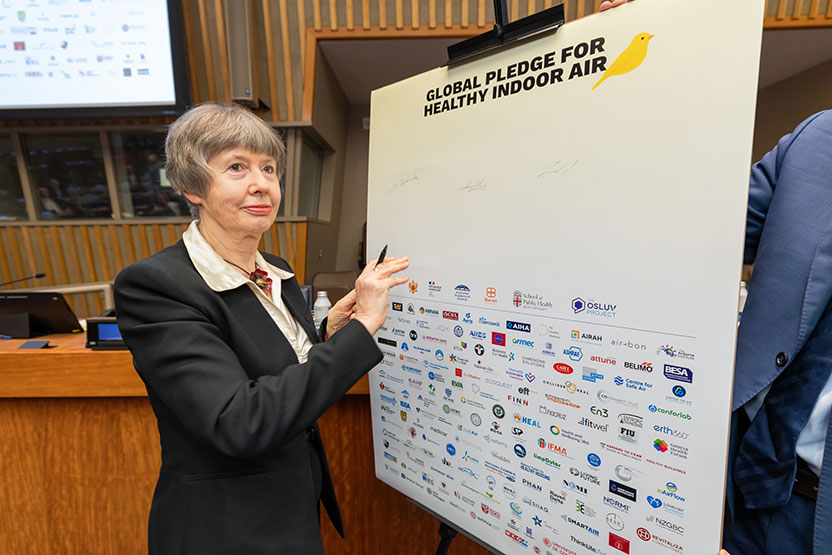
From championing healthy indoor air as a human right, to elevating national conversations on artificial intelligence, to making 23 evidence-based submissions to government, we ensured science was present where people make decisions.
We invested in the future through education, placing the work of our finest researchers directly into classrooms. And we celebrated excellence, welcoming new Fellows, honouring world-class achievements, and supporting early- and mid-career researchers to lead the next wave of discovery.
As we look towards next year, we await the final report of the strategic examination of Australia's R&D system, a once-in-a-generation opportunity for structural reform.
Much is riding on the outcome of this review. This is our opportunity to be courageous, to seize a better approach to science and technology. Because when productivity is declining, our research and innovation capability can unlock industrial diversification and economic growth.
It has been a privilege to lead the Academy this year as we have advocated, analysed, and proposed solutions – harnessing science and evidence for better decision-making at all levels of government and across the public sphere.
I am deeply grateful for the extraordinary generosity of our supporters, donors, Fellows, and the Academy secretariat, and all who have given their time, expertise, and philanthropic support.
In that vein, I am pleased to share our end-of-year supporter newsletter, highlighting the impact of giving in its many forms. Thank you for your invaluable contributions, which benefit our entire community.
Download supporter newsletter
As my Presidency draws to a close in May 2026, I feel deeply confident; not because the path ahead is easy, but because this Academy understands both the responsibility and the opportunity before us.
The decisions we make now will shape the nation we become.
Let us continue to choose science – boldly, wisely, and for the benefit of all.
Thank you.
Wishing you and your family a safe and happy holiday season.
Professor Chennupati Jagadish AC PresAA FREng FRS FTSE
President, Australian Academy of Science

Theo Murphy Initiative (Australia) 2026 grant funding recipients announced
The Australian Academy of Science congratulates the grant recipients of the Theo Murphy Initiative (Australia) grant funding for the 2026 round.
Established by the Royal Society to further scientific discovery, the Theo Murphy Initiative (Australia) is administered by the Australian Academy of Science and provides grant funding to support activities that provide tangible benefits to Australia’s early- and mid-career researchers (EMCRs) in the fields of science, technology, engineering, and mathematics (STEM).
A total commitment of $260,000 has been allocated to support 23 applications with the grant recipients spread across Australia. These grants are distributed among four Flagship projects, five Amplify initiatives and 11 Participation Support grants which are expected to start implementation from January 2026.
Funding stream one: Flagship activities
Find out more about Flagship activities
Four grants have been approved to deliver activities designed to provide meaningful benefits to EMCRs in Australia and the broader scientific community. The initiatives will foster collaboration between more than one organisation and garner additional sponsor support from partners to maximise impact.
Approved Flagship activities
| Project title | Representative body | Awardee name | Affiliated organisation |
|---|---|---|---|
| Entrepreneurial mindset training for Victorian STEM EMCRs to build capacity towards Australian innovation | RMIT University | Dr Joseph (JJ) Richardson | AAS EMCR Forum member ARC Centre of Bio-Nano Sciences and Technology EMCR committee and engagement committee (funding for the Centre has finished) CNG EMCR leadership team (Unimelb) Department of Chemical Engineering EMCR organization team (Unimelb) |
| Essential skills for statistics leadership in consultancy and research | Queensland University of Technology, University of Melbourne | A/Prof Nicole White | Statistical Society of Australia Early Career and Student Statistician Network |
| The SynBio EMCR Series 2026: Connection, communication, and collaboration | Synthetic Biology Australia | Dr Paige Erpf | Joint Academy Microbiology Society (JAMS Sydney) CoESB EMCR committee |
Funding stream two: Amplify activities
Find out more about Amplify activities
Five grants were approved to enhance conferences, workshops, symposia and networking events. These activities are designed as complementary additions to scientific events to support a greater focus on EMCR engagement and are intended to create opportunities for meaningful interactions and collaborations beyond research endeavours. The grant covers the additional costs to support EMCR participation, ensuring a more inclusive and enriched experience for all attendees.
Approved Amplify activities
| Project title | Representative body | Awardee name | Affiliated organisation |
|---|---|---|---|
| 2026 BPA/ANS/ACNS Joint Neuroscience conference EMCR program of events | Biological Psychiatry Australia (BPA), Australasian Neuroscience Society (ANS), Australasian Cognitive Neuroscience Society (ACNS) | Dr Samara Walpole | Biological Psychiatry Early Career Research Network Early Career Researcher Subcommittee of the Australasian Cognitive Neuroscience Society Early-Mid Career Research Committee of the Australasian Neuroscience Society |
| Early and Mid-Career Researcher Day at SEDI 2026 and beyond: building inclusion, connection, and careers | Study of the Earth’s Deep Interior (SEDI) | Dr Lauren Waszek | AAS EMCR Forum |
| Rheology School at the 2026 Australian Society of Rheology Annual Meeting | Australian Society of Rheology | Rishabh More | Australian Society of Rheology EMCR network, Monash Early Career Network |
| Mental health first aid skills for EMCRs in ocean sciences | Australian Marine Sciences Association | Dr Rita Franco-Santos | UN Ocean Decade ECOP Programme - Australia/New Zealand National Node (ECOP AUS/NZ) Australian Marine Sciences Association (AMSA) Australasian network of women working in Earth and Environmental Sciences in academia, industry and government (WOMEESA) |
| EMCR photovoltaic industry tour, career panel, poster slams, and bursaries at Wagga-AC2MP 2026 | Australian Institute of Physics | Dr Siobhan Tobin | N/A |
Funding stream three: Participation Support grants
Find out more about Participation Support grants
Eleven grants were approved for Australian EMCRs to support their participation in scientific events and activities. This funding covers expenses related to caregiving, accessibility, and mobility, ensuring EMCRs can access career development opportunities like conferences and workshops. By reducing financial barriers, the Participation Support grant enables EMCRs to fully engage in activities essential for their professional advancement.
Approved Participation Support grants
| Applicant | University/institution | Affiliated EMCR Forum or Group |
|---|---|---|
| Dr Joanna Achinger-Kawecka | University of Adelaide | EMCR Forum |
| Dr Thomas Burton | University of New South Wales | Australasian Neuroscience Society EMCR Committee (treasurer) |
| Dr Ashfaque Chowdhury | Central Queensland University | Early- and Mid-Career Researcher Forum |
| Dr Nehad Elsalamouny | University of Wollongong | Australian Academy of Science’s EMCR forum, QUBIC's Inclusivity, Diversity, Ethics and Access Portfolio, UOW Early Career Researcher Disruption Committee (previously) |
| Dr Pamali Fonseka | La Trobe University | Australian Academy of Science EMCR Forum |
| Dr Christopher Keneally | University of Adelaide | EMCR Forum |
| Dr Sombol Mokhles | Australian National University | Early Career Researcher |
| Dr Kamyar Shirvani Moghaddam | RMIT University | EMCR Group functional materials |
| Dr Prabhavi Perera | Australian National University | EMCR Forum |
| Dr Danielle Smith | University of Queensland | EMCR Forum |
| Dr Pei Lay Yap | University of Adelaide | EMCR Group Analytical Chemistry |
Every application undergoes thorough evaluation by the EMCR Committee of Council, a panel consisting of esteemed Academy Fellows and EMCRs. The final decisions regarding approvals and allocations were made by the Academy's Council and the Board of the Royal Society (Australia) Pty Ltd. Participation Support recipients were selected for funding using a computerised random generator following eligibility screening.
The next round
The Academy anticipates the next call for applications to open around mid-2026. For any enquiries related to the Theo Murphy Initiative (Australia) program, please email theomurphyau@science.org.au.
Cryopreservation and urban biodiversity: funding awarded to two research conferences focused on protecting Australia's wildlife
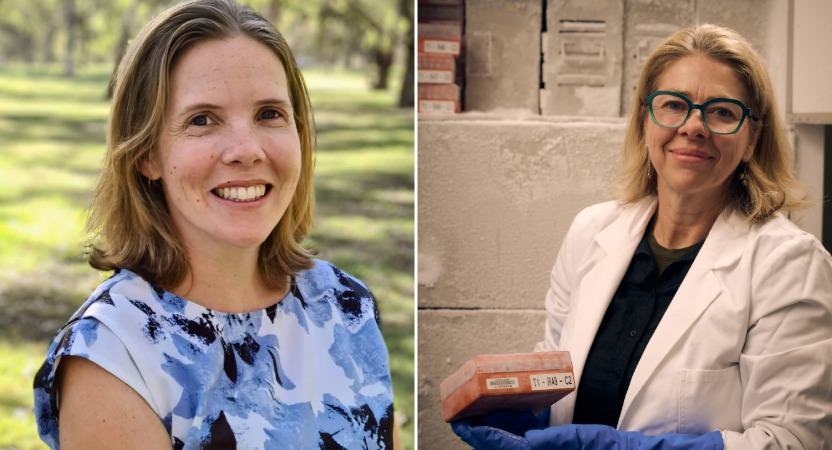
Dr Lizzy Lowe (photo: supplied) and Dr Joanna Sumner (photo: Eugene Hyland, Museums Victoria).
Wildlife conservation will take centre stage at two specialist conferences next year, funded by the Australian Academy of Science.
Conserving genetic diversity of wildlife in living cells with the Boden Research Conference
The 2026 Boden Research Conference will focus on growing and cryopreserving living cell cultures from threatened wildlife.
Cryopreserved cells can act as a safety net for species at risk, safely storing genetic material long-term for future use in breeding, cloning or genetic rescue.
The Museums Victoria Research Institute has successfully cryopreserved cell cultures from more than 130 native Australian animals.
“We want to bring museum scientists and wildlife researchers together to learn how to use these techniques,” said Dr Joanna Sumner of the Museums Victoria Research Institute, recipient of the conference funding.
“This is an opportunity to develop cellular resources that can support wildlife conservation into the future.”
Museums Victoria will host the conference, where international experts will share expertise with Australian scientists, aiming to increase capacity for cell culture work across the country.
Protecting biodiversity in Australian cities with the Fenner Conference on the Environment
The Fenner Conference on the Environment will bring together academics, practitioners, and policymakers to tackle the pressing environmental challenge of protecting biodiversity in our rapidly growing cities.
“This funding gives us an opportunity to engage directly with a large range of communities and stakeholders in urban biodiversity, which is anyone living or working in a city,” said Dr Lizzy Lowe of Edith Cowan University, recipient of the conference funding.
Specialists from urban planning, design, ecology, law, and land management from Western Australia and the eastern states, will convene to share expertise and forge collective strategies for biodiversity conservation in Australian urban environments.
“There are unlimited ways we could be working together to protect natural spaces and improve the long-term sustainability of urban areas across Australia,” Dr Lowe said.
Academy to begin funding the Workshop Series from 2027
The Academy proudly supports scientific research by funding specialist conferences, including the Boden Research Conference and Fenner Conference on the Environment, which will take place in 2026.
Generous bequests from the late Dr Alex Boden AO FAA, the late Professor Frank Fenner AC MBE FAA FRS and the late Mrs Bobbie Fenner have made these conferences possible.
From 2027, the inaugural Workshop Series will support researchers in Australia to run small specialist workshops with funding up to $40,000.
The Workshop Series has been established with the combined support of the Boden, Fenner, and Elizabeth and Frederick White Conference Funds.
The first stage of applications (expressions of interest) will open in mid-February 2026.
Research round-up: Unravelling serpentine science and epic egret journeys
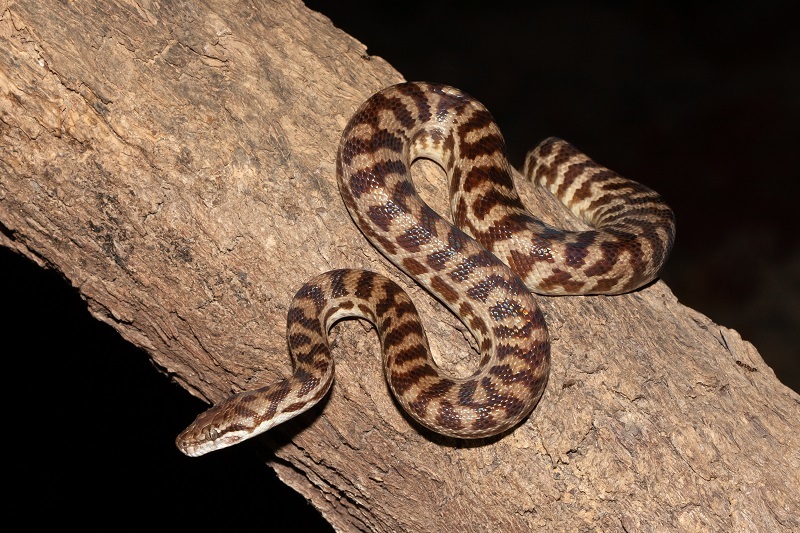
Spotted python (Antaresia maculosa). Image credit: dhfischer via iNaturalist (CC BY 4.0).
The Academy is pleased to partner with CSIRO Publishing Journals to champion Australian science excellence. In this quarterly research round-up series, we feature recent discoveries reported in CSIRO Publishing Journals.
Find out more about CSIRO Publishing Journals
The taipan's tangled tale
The coastal taipan is an iconic Australian snake known for its deadly venom, large size and storied history. However, its tale of discovery is peppered with errors and omissions.
A new paper, co-authored by Academy Fellow Professor Rick Shine AM, sets the record straight when it comes to how the first coastal taipan specimens were collected and classified by western science.
From the initial 1866 specimen – brought to western science by German-born single mother and natural history collector Amalie Dietrich – to the ensuing decades of taxonomic confusion, Shine and co-author Professor Kevin Markwell clarify this early history.
They also highlight the overlooked contributions of First Nations collectors, including the Aboriginal men who played pivotal roles in collecting some of the earliest and most important specimens.
Read the original research in the Australian Journal of Zoology
Hidden python diversity revealed on Cape York
Not one, but three python species in the genus Antaresia live on Cape York peninsula, according to an investigation by a team including 2023 J G Russell Award winner Dr Damian Esquerré.
Using a combination of genetic analysis and careful examination of physical traits – such as scales, colours and patterns – the scientists identified three different species among Cape York Antaresia specimens.
The Papuan spotted python – only described in 2021 from New Guinea – was found in the northernmost tip of the peninsula, confirming the presence of this species on mainland Australia. Further south, the Cape York spotted python and Children’s python live side by side.
The discovery highlights Cape York as a hotspot for python diversity, with eight species now known from the region.
Read the original research in the Australian Journal of Zoology
An Australian bird flew 38 hours non-stop to Papua New Guinea
For the first time, a team of Australian researchers have used GPS to track the flight paths of young egrets as they leave their nests. The data reveal that two wading bird species – plumed egrets and great egrets – can travel vast distances.
All the plumed egrets headed north from their nests in the Macquarie Marshes of New South Wales, with one individual completing a non-stop 38-hour journey from Australia to Papua New Guinea. Great egrets, in contrast, dispersed in all directions.
Understanding where and when these nomadic birds spend their time is important for managing and protecting critical wetland habitat.
Grant secured to preserve fragile magnetic tape material in the Archives
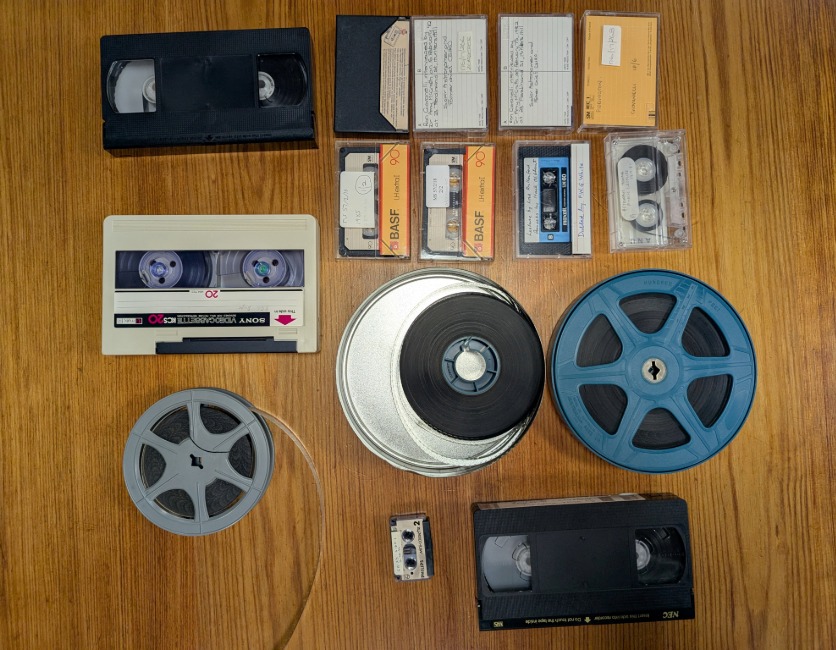
Vulnerable reels, cassettes and audiovisual pieces in the Fenner Archives.
The Fenner Archives has secured funding to digitise 19 pieces of rare magnetic tape documenting Australia's scientific heritage, ensuring the voices of pioneering researchers are preserved for future generations.
The Community Heritage Grant (CHG) will enable the preservation of vulnerable reels, cassettes and audiovisual materials at risk of permanent loss due to their uncommon and obsolete format and deteriorating condition.
Securing the preservation of these reels, cassettes and audiovisual pieces is part of a wider initiative to safeguard the Archives’ audiovisual material.
While the Archives maintains an active paper-scanning project and can digitise audio cassettes in-house at the Shine Dome, specialist equipment for older formats is increasingly difficult to source, making external partnerships essential for preservation.
The collection includes rare 1968 film footage from Professor Ronald Giovanelli FAA, which is being digitised by Canberra firm DAMSmart, who specialise in audiovisual material.
The CHG program, managed by the National Library of Australia, supports non-profit community organisations to preserve locally owned collections of national significance and improve public accessibility.
Stay tuned for further updates at the conclusion of the project.