





Nancy Millis Medal

Award highlights
- The award is open to women mid-career researchers, eight to fifteen years post-PhD in the calendar year of nomination, in any branch of the physical and biological sciences
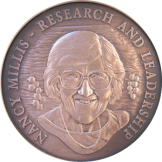
- This award honours the contributions made to science by the late Professor Nancy Millis AC MBE FAA FTSE and recognises her importance as a role model for women aspiring to be research leaders.
- The Academy acknowledges the funding received from friends and colleagues of Professor Millis and the perpetual funding received from The University of Melbourne.
The Nancy Millis Medal of the Australian Academy of Science has been established to honour the contributions made to science by the late Professor Nancy Millis AC MBE FAA FTSE and recognises her importance as a role model for women aspiring to be research leaders.
The award is open to women mid-career researchers, eight to fifteen years post-PhD in the calendar year of nomination except in the case of significant interruptions to a research career, in any branch of the physical and biological sciences. Recipients will have established an independent research program and demonstrated exceptional leadership.
The award is made annually and is restricted to candidates who are normally resident in Australia. Relevant research undertaken outside Australia may be considered, provided the researcher has conducted the majority of their research career—defined as periods of employment or study primarily involving research activities or research training—in Australia, and has been resident in Australia for at least the past two years.
The Academy acknowledges the funding received from friends and colleagues of Professor Millis and the perpetual funding received from The University of Melbourne.
The Australian Academy of Science encourages nominations of candidates from a broad geographical distribution.
Candidates may be put forward for more than one award. If a proposed candidate is already the recipient of an Academy early-career honorific award, they will not be eligible for nomination for another early-career or a mid-career honorific award. A mid-career honorific award recipient will also not be eligible for nomination for another mid-career honorific award. Fellows of the Academy are ineligible to be nominated for early and mid-career awards.
Key dates
Below are the key dates for the nomination process. While we aim to keep to this schedule, some dates may change depending on circumstances.
GUIDELINES
The following guidelines and FAQs provide important information about eligibility, submission requirements, and assessment processes. Please review them carefully before submitting a nomination.
How to nominate a scientist for the Academy’s honorific awards
The following guidelines contain detailed information for nominators.
These guidelines contain information for honorific award nominators.
The following guidelines contain information for honorific award referees.
These guidelines contain information for honorific award referees.
See below for specific relevant conferral dates for the current award round.
This document contains specific PhD conferral dates for early and mid-career honorific awards in the current award round.
Please submit your nominations using the Nominate button found on the top right of this webpage when nominations are open.
Please note the Academy uses a nomination platform that is external to the main Academy site. Nominators will be required to create an account on the platform. Even if you are familiar with the nomination process, please allow extra time to familiarise yourself with the platform.
Early-career, mid-career and career medals
Can I nominate myself?
- No – you must be nominated by someone else. Self-nominations are not accepted.
Can I submit a nomination on behalf of someone else?
- Yes – you can submit a nomination on behalf of someone else if you are not the nominator. An example would be a university grants office or personal/executive assistant completing the online nomination form on behalf of a nominator. Once the form is submitted, the nominator will be sent an email confirming that the nomination has been completed. If a nominee submits a nomination for themselves on behalf of a nominator it will not be considered a self-nomination.
Residency requirements
- Winners of all awards except the Haddon Forrester King Medal should be mainly resident in Australia and/or have a substantive position in Australia at the time of the nomination deadline. Unless explicitly stated in the awarding conditions, the research being put forward for the award should have been undertaken mainly in Australia. Some awards have more specific conditions that the relevant selection committee must apply and nominators are advised to read the conditions associated with each award very carefully.
Honorific career eligibility (more specific details found in the honorific awards nominator guidelines and the honorific award post PhD eligibility guidelines)
- Career eligibility is calculated by calendar year.
- Early career awards are open to researchers up to 10 years post-PhD.*
- Mid-career awards are open to researchers between eight and 15 years post-PhD.*
- * or equivalent first higher degree e.g. D.Phil., D.Psych., D.Sc.
- Please note that the Awards Committee may consider nominees with post PhD dates outside of these ranges if a career exemption request is being submitted with the nomination, further guidelines on career exemption requests can be found in the nomination guidelines.
- See the post-PhD eligibility guidelines document for relevant conferral dates.
Academy fellowship requirements in award nominations
- Fellows and non-Fellows of the Academy can provide nominations for either Fellows or non-Fellows for all awards.
Women only awards
- The Dorothy Hill, Nancy Millis and Ruby Payne-Scott Medals are for women only. These medals are open to nominees who self-identify as a woman in the award nomination form. The Academy does not require any statement beyond a nominee’s self-identification in the nomination form.
- This practice is consistent with the Sex Discrimination Act 1984, which has recognised the non-binary nature of gender identity since 2013, and gives effect to Australia’s international human rights obligations. The Academy remains committed to the fundamental human rights principles of equality, freedom from discrimination and harassment, and privacy, as well as the prevention of discrimination on the basis of sex and gender identity.
PREVIOUS AWARDEES
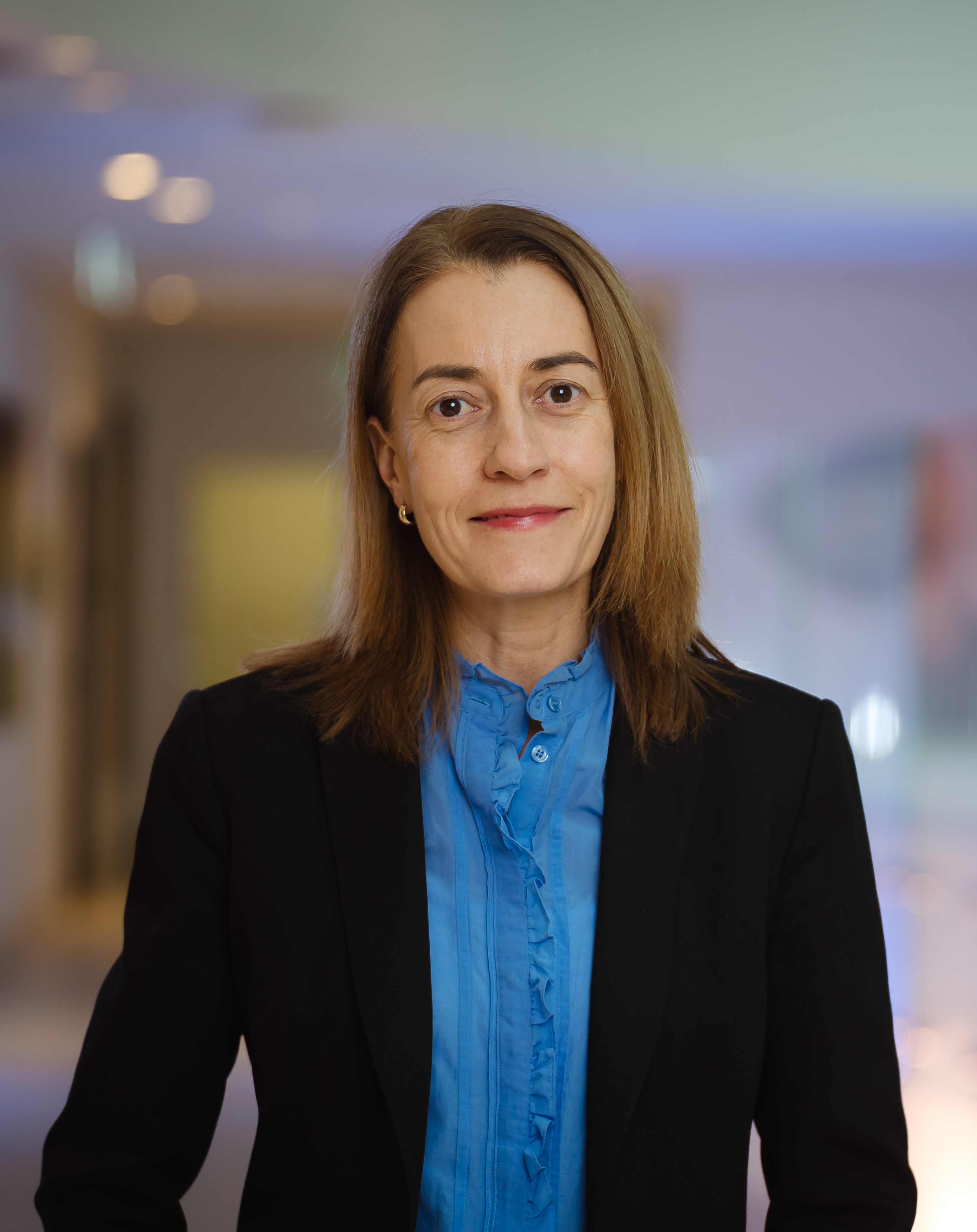
Professor Sarah-Jane Dawson, Peter MacCallum Cancer Centre
Many cancers shed small amounts of DNA (circulating tumour DNA or ctDNA) into the patient’s bloodstream. Recent technological advances allow levels of ctDNA to be accurately measured in the blood. ctDNA analysis can provide a ‘liquid biopsy’ alternative to tissue biopsies allowing the serial analysis of cancer-specific genomic changes from a simple blood test. Moreover, changes in ctDNA levels have potential to be used as markers of disease progression and response to cancer therapy.
Professor Sarah-Jane Dawson’s research has pioneered fundamental advances in the clinical application of cancer genomics and the development of personalised biomarker approaches using ctDNA, establishing a new paradigm for molecular disease monitoring in cancer. The research has helped change clinical practice and led to a rapid global expansion and investment in this arena with the goal of facilitating precision cancer medicine and improving survival outcomes for patients across many different malignancies.
Associate Professor Natasha Hurley-Walker, Curtin University
Associate Professor Natasha Hurley-Walker has transformed our view of the radio sky. She uses powerful supercomputers to analyse petabytes of data from Western Australian telescopes to explore the universe. Her discoveries include the remains of stellar explosions, insights into the lives of supermassive black holes, and a new kind of repeating radio source unlike anything astronomers have seen before. Associate Professor Hurley-Walker has mapped the southern sky in ‘radio colour’, bringing a new view of the cosmos to the world. Giving public talks and media interviews, and filming for documentaries, she has reached tens of millions across the world, inspiring interest in STEM careers. Her work will help Australian astronomers find the unexpected with the Square Kilometre Array, which will be the world’s largest radio telescope.
Professor Anita Ho-Baillie, University of Sydney
Professor Anita Ho-Baillie is a pioneer in developing next-generation solar cells which will play a key role in the transition to a carbon-free-economy. Traditional silicon-based solar cells are inefficient at converting high-energy light into electricity. Professor Ho-Baillie’s research centres on multi-junction solar cells, utilising a range of semiconductor materials to absorb different sections of the solar spectrum within a single cell, significantly enhancing energy conversion efficiency. She has achieved record efficiencies for multi-junction solar cells utilising metal halide perovskites. Her recent breakthrough addresses the issue of perovskite cell degradation in heat and humidity. This marks a pivotal step toward durable, commercially viable perovskite cells and solidifies her role in advancing this technology. Beyond research, Professor Ho-Baillie is deeply committed to inspiring young minds in STEM fields and science communication. She is a regular speaker at the Harry Messel International Science School, engaging high-calibre high-school students worldwide. She is also a popular public speaker for science outreach, contributing to numerous National Science Week events.
Professor Renae Ryan, University of Sydney
Neurotransmitters are the chemical messengers responsible for cellular communication in the brain, a fundamental process that underlies everything we do including moving, thinking, reading and speaking. Professor Renae Ryan’s research focuses on neurotransmitter transporters – nanoscale vacuum cleaners that suck chemical messengers back into cells after they have sent their message on. In diseases such as Alzheimer’s disease, epilepsy and stroke these vacuum cleaners can break down, leading to confusion in cellular communication and, ultimately, cell death. Her internationally recognised research has revealed the molecular architecture and choreography of these miniature vacuum cleaners, allowing us to start to understand why they stop working in disease states, and providing the basis for the development of new medications to treat brain disease. Professor Ryan is a globally respected leader and advocate for gender equity, diversity and inclusion, and a sought-after supervisor, mentor and role model for women in science.
Professor Vanessa Peterson, Australian Nuclear Science and Technology Organisation
Our continual need for cheap energy presents major challenges. Professor Vanessa Peterson’s game-changing research into the fundamental working mechanisms of energy materials is helping to solve these global challenges. Professor Peterson’s significant research targets functional materials at the heart of energy technology such as batteries, fuel cells and materials for the separation and storage of energy relevant gases including hydrogen and carbon dioxide. Vanessa has pioneered methods to understand the atomic level function of materials, revealing in unprecedented detail how the arrangement and motions of atoms can be harnessed to make new and better sustainable-energy devices. Her work has led to discoveries that push the frontier of our understanding of energy materials, helping to reduce Australia’s carbon emissions and develop sustainable clean-energy systems. Professor Peterson is an internationally-regarded leader in materials characterisation, specialising in neutron scattering methods, and is an outstanding mentor, advocate and role model for women in science.
Professor Angela Moles, UNSW Sydney
Professor Moles’ research is to understand the different strategies that plants have evolved to grow in ecosystems ranging from tropical rainforests to arctic tundra. She was the first to quantify global scale patterns in vital plant traits such as plant height, seed size and defences against herbivores. Her work has also revealed how quickly introduced plant species evolve when they are introduced to a new range with different environmental conditions. One such plant has changed so much since being introduced to Australia in the 1930s that it is becoming a new, reproductively isolated species. She is currently applying her understanding of the ways that environmental conditions shape plant ecological strategies to help understand the likely effects of climate change on Australian ecosystems.
Professor Moles is nationally and internationally regarded as a leader in global scale ecology, and is an outstanding mentor, advocate and role model for women in science.
Associate Professor Cathryn Trott, Curtin University
During the first billion years, the first stars and galaxies formed and died, bathing the Universe in light and evaporating the hydrogen fog that existed beforehand. By using low frequency radio telescopes, Associate Professor Trott hunts for this needle-in-a-haystack signal from the time of the first generation of stars. She has pioneered methods to observe this weak signal and separate it from all of the radio light from other galaxies that formed in the past 12 billion years. Observation of this signal requires advanced knowledge of our telescopes, and painstaking work to collect the thousand hours of clean data required to find it. Trott is a world-leader in the hunt for this exciting, important and fickle signal that will transform our understanding of the Universe.
Professor Nicole Bell, University of Melbourne
Professor Nicole Bell is an outstanding theoretical astroparticle physicist who has made significant contributions in the areas of dark matter and particle theory, matter-antimatter asymmetries and neutrino astrophysics and cosmology. Her work has helped shape the interpretation of Large Hadron Collider searches for dark matter, using physically self-consistent descriptions of dark matter interactions. She has explored the link between dark matter and matter–antimatter asymmetries and examined whether the accumulation of dark matter in old neutron stars can result in gravitational collapse to black holes. She has also used cosmology and astrophysics to constrain the properties of neutrinos and has examined whether dark matter annihilation can account for unexplained galactic gamma ray and antimatter signals.
Associate Professor Kate Schroder, University of Queensland
Associate Professor Kate Schroder is an international leader in the field of inflammatory biology. Her innovative work is defining the molecular and cellular processes of inflammation. The protein complexes involved in inflammation and disease are known as inflammosomes. Her research has established that inflammasome signalling is crucial in antimicrobial defence and she has established that they drive pathological inflammation in diseases. Associate Professor Schroder’s laboratory seeks to use the understanding of fundamental cellular processes to develop therapeutics for a wide range of inflammatory diseases. Small molecule inflammasome inhibitors co-invented by Associate Professor Schroder are currently under commercialisation as novel anti-inflammatory drugs.
Professor Jacqueline Batley, University of Western Australia
Professor Batley has made major contributions to our understanding of the genetics and genomics of crops including canola (Brassica napus), a major source of edible oil. Her DNA markers have been critically important in the mapping and sequencing of genomes of canola, related Brassicas such as turnip and cabbage, and other crops including wheat, peas and lentils. In addition, she has developed new ways of looking at how pathogens interact genetically with crop plants. In these ways she has played a key role in pioneering biotechnological methods that are now being exploited by plant breeders worldwide. Examples of some successful commercial applications in canola include improvements in oil quality, reduced shattering of seed pods, and breeding for increased resistance to blackleg fungus infection. Her motivation to improve world food security and rural economies is being rewarded through such applications.
Dr Marie-Liesse Asselin-Labat, The Walter and Eliza Hall Institute of Medical Research
Dr Marie-Liesse Asselin-Labat is internationally recognised as a leading researcher in cancer biology, tissue-specific stem cells and development and is emerging as one of Australia’s young leaders in medical research in the lung stem cell and cancer research field. Using multiple strategies combining genetic approaches as well as computational studies, her team has demonstrated that some lung cell types are efficient in repairing their DNA following exposure to DNA damaging agents while others are not so proficient. These results provide novel insights into the pathogenesis of lung diseases such as lung cancer and emphysema. She also identified key regulators of basal stem cell production in the embryonic lung. Her work sheds lights on the molecular events that are critical in normal lung formation and maintenance that may be altered in lung disorders and impacts therapeutic applications.
2017
2017
Professor Kerrie Ann Wilson, University of Queensland
Professor Kerrie Wilson has made significant discoveries in the environmental sciences that have resulted in more effective conservation practices. She identified how significant funds for conservation can be saved and investments could be more equitable through incorporating socio-economic principles into setting priorities for conservation investments. This has resulted in new theory and novel decision support tools to inform how limited conservation funds should be allocated to achieve multiple objectives, further enhancing the legacy and impact of her influential applied research program. Her research has led to innovative ways to efficiently protect and restore natural ecosystems and her ability to translate this new knowledge into practical applications has positioned her as a global, national and local leader in conservation science.
2016
Dr Elena Belousova, Macquarie University
Dr Belousova has achieved international renown for her TerraneChron® method for analysing trace elements in zircon and applying this technology to studying crustal evolution. Her discoveries have greatly influenced understanding of the geological development of the Australian continent and has major significance for mineral exploration.
2015
Associate Professor Tamara Davis, University of Queensland
Associate Professor Davis uses astrophysics to test our fundamental laws of physics, and study the nature of dark energy and dark matter. She is one of the most highly cited astrophysicists in the world. Her contributions include testing advanced theories of gravity, measuring time-dilation of distant supernovae, using galaxies to measure the mass of the lightest massive particle in nature (the neutrino), and discovering that active galaxies fuelled by black holes can be used as standard candles.
2014 inaugural award
Professor Emma Johnston, University of New South Wales
Professor Johnston is Australia’s leading young investigator of human impacts on marine systems. Her research has broken new ground by combining traditional laboratory studies with novel field-based experiments in Antarctica, the Great Barrier Reef, and temperate Australian estuaries. Her work has earned respect in both the international ecological and ecotoxicological fields.
Professor Johnston’s work has generated critically important findings on the causes and consequences of bio-invasion. As a result, she has not only found the first evidence that pollution facilitates the invasion of marine systems, but also discovered that heritable pollution tolerance promotes invader dominance, published the first studies of marine invasion that control exposure to marine invasive larvae, and identified the potential for translocation of non-indigenous species via small-scale disruptions to antifouling surfaces.
Director of the Sydney Harbour Research Program for SIMS, Professor Johnston has demonstrated outstanding leadership in the field – all the more remarkable given that her PhD was received just 11 years ago.
Principal partner
Founding donors
The Academy would like to thank the following founding donors for their generous support of the Nancy Millis Medal:
- J A Angus
- E S Dennis
- S Cory
- I D Gust
- E Hartland
- A B Holmes
- P Y Ladiges
- J A Pittard
- R Roush


Moran Medal
Award highlights
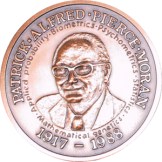
- The award recognises outstanding research by scientists up to 10 years post-PhD in one or more of the fields of applied probability, biometrics, mathematical genetics, psychometrics and statistics.
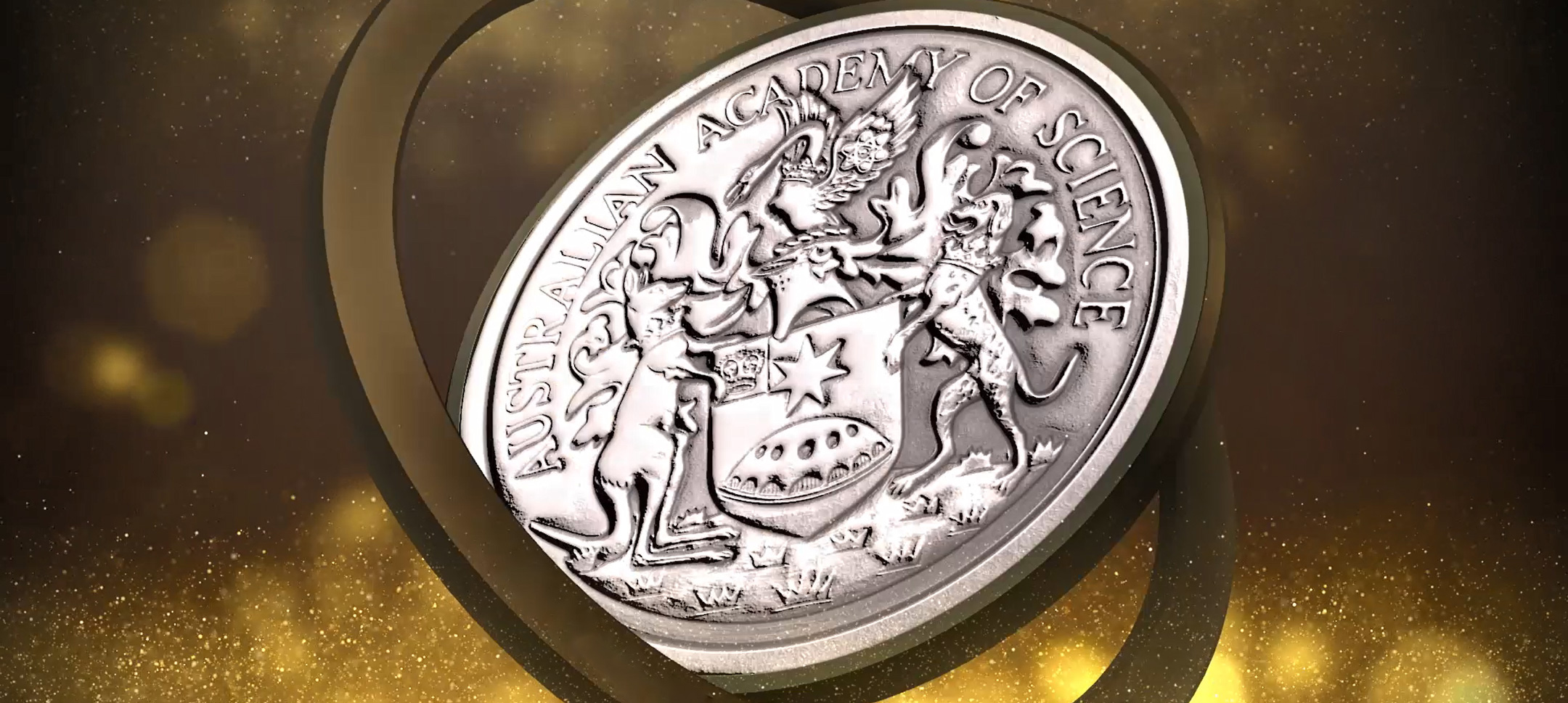
- This award recognises the contributions to science of the late P.A.P. Moran FAA FRS.
The Moran Medal recognises the contributions to science of the late P.A.P. Moran FAA FRS. Its purpose is to recognise outstanding research by scientists up to 10 years post-PhD in the calendar year of nomination, except in the case of significant interruptions to a research career, in one or more of the fields of applied probability, biometrics, mathematical genetics, psychometrics and statistics. The award is normally made every two years. Relevant research undertaken outside Australia may be considered, provided the researcher has conducted the majority of their research career—defined as periods of employment or study primarily involving research activities or research training—in Australia, and has been resident in Australia for at least the past two years.
This award is open to nominations for candidates from all genders. The Australian Academy of Science encourages nominations of female candidates and of candidates from a broad geographical distribution.
Candidates may be put forward for more than one award. If a proposed candidate is already the recipient of an Academy early-career honorific award, they will not be eligible for nomination for another early-career or mid-career honorific award. A mid-career honorific award recipient will also not be eligible for nomination for another mid-career honorific award. Fellows of the Academy are ineligible to be nominated for early and mid-career awards.
Key dates
Below are the key dates for the nomination process. While we aim to keep to this schedule, some dates may change depending on circumstances.
GUIDELINES
The following guidelines and FAQs provide important information about eligibility, submission requirements, and assessment processes. Please review them carefully before submitting a nomination.
How to nominate a scientist for the Academy’s honorific awards
The following guidelines contain detailed information for nominators.
These guidelines contain information for honorific award nominators.
The following guidelines contain information for honorific award referees.
These guidelines contain information for honorific award referees.
See below for specific relevant conferral dates for the current award round.
This document contains specific PhD conferral dates for early and mid-career honorific awards in the current award round.
Please submit your nominations using the Nominate button found on the top right of this webpage when nominations are open.
Please note the Academy uses a nomination platform that is external to the main Academy site. Nominators will be required to create an account on the platform. Even if you are familiar with the nomination process, please allow extra time to familiarise yourself with the platform.
Early-career, mid-career and career medals
Can I nominate myself?
- No – you must be nominated by someone else. Self-nominations are not accepted.
Can I submit a nomination on behalf of someone else?
- Yes – you can submit a nomination on behalf of someone else if you are not the nominator. An example would be a university grants office or personal/executive assistant completing the online nomination form on behalf of a nominator. Once the form is submitted, the nominator will be sent an email confirming that the nomination has been completed. If a nominee submits a nomination for themselves on behalf of a nominator it will not be considered a self-nomination.
Residency requirements
- Winners of all awards except the Haddon Forrester King Medal should be mainly resident in Australia and/or have a substantive position in Australia at the time of the nomination deadline. Unless explicitly stated in the awarding conditions, the research being put forward for the award should have been undertaken mainly in Australia. Some awards have more specific conditions that the relevant selection committee must apply and nominators are advised to read the conditions associated with each award very carefully.
Honorific career eligibility (more specific details found in the honorific awards nominator guidelines and the honorific award post PhD eligibility guidelines)
- Career eligibility is calculated by calendar year.
- Early career awards are open to researchers up to 10 years post-PhD.*
- Mid-career awards are open to researchers between eight and 15 years post-PhD.*
- Please note that the Awards Committee may consider nominees with post PhD dates outside of these ranges if a career exemption request is being submitted with the nomination, further guidelines on career exemption requests can be found in the nomination guidelines.
- See the post-PhD eligibility guidelines document for relevant conferral dates.
- * or equivalent first higher degree e.g. D.Phil., D.Psych., D.Sc.
Academy fellowship requirements in award nominations
- Fellows and non-Fellows of the Academy can provide nominations for either Fellows or non-Fellows for all awards.
Women only awards
- The Dorothy Hill, Nancy Millis and Ruby Payne-Scott Medals are for women only. These medals are open to nominees who self-identify as a woman in the award nomination form. The Academy does not require any statement beyond a nominee’s self-identification in the nomination form.
- This practice is consistent with the Sex Discrimination Act 1984, which has recognised the non-binary nature of gender identity since 2013, and gives effect to Australia’s international human rights obligations. The Academy remains committed to the fundamental human rights principles of equality, freedom from discrimination and harassment, and privacy, as well as the prevention of discrimination on the basis of sex and gender identity.
PREVIOUS AWARDEES
Professor Margarita Moreno-Betancur, Murdoch Children’s Research Institute and University of Melbourne
Contemporary health and medical research studies need statistical innovation to tackle important and increasingly complex questions concerning the causes of ill-health. Professor Margarita Moreno-Betancur’s research creates both new and improved biostatistical methods that enable novel and more accurate analyses of a wide range of data collected from people over time. These analyses can elucidate the complex causal pathways that lead to disease, for example through the interaction of multiple chronic conditions, and inform what types of interventions could prevent or cure ill-health while accounting for real-world data limitations and complexities such as missing data. Her work has powerful global reach beyond the field of biostatistics, via application of these methods in studies that advance knowledge in multiple health areas across many countries. Her methods have enabled the use of existing data resources to inform public policies, treatments and interventions for preventing cancer, cardiovascular disease, mental health disorders and allergy.
Associate Professor David Frazier, Monash University
A web of complex models underpins modern life. Models are used to predict traffic patterns, help control invasive pest populations and mitigate the spread of disease. These models are driven by unknown quantities, and so statistical inference is used to quantify and understand these unknowns, with Bayesian statistical inference methods often applied in such settings due to their interpretability. However, in many cases the underlying models and data are so complex as to render standard Bayesian methods intractable. In such cases, the best we can hope to do is perform statistical inference using ‘approximate’ Bayesian methods, which seek to deliver tractable Bayesian inferences in challenging modeling settings. Much of Associate Professor David Frazier’s research has focused on establishing the statistical behaviour of approximate Bayesian methods in a wide variety of contexts, including approximate Bayesian computation, Bayesian synthetic likelihood, and variational Bayes methods. The overarching goal of his work is to ensure practitioners can reliably apply these approximation methods to derive meaningful inferences, make reliable decisions and obtain reproducible results.
Dr Rachel Wang, University of Sydney
Working at the interface of theoretical statistics, computational statistics and data-driven applied fields, Dr Rachel Wang has pursued a diverse research trajectory emphasising both rigorous theoretical development and practical relevance to interdisciplinary scientific problems. She has made contributions to statistical inference problems in network models, enabling model selection and parameter tuning to be performed with provable guarantees. Her theoretical work on local convergence issues in variational approximation and scalable MCMC has led to a deeper understanding of how algorithms navigate a high dimensional, non-convex landscape, addressing a prevalent problem in all large-scale machine learning tasks. Leveraging her expertise in theory and computation, she has developed novel statistical and computational tools for extracting new biological knowledge from genomics data, seeking to improve our understanding of gene regulatory mechanisms and the inner workings of cells.
Professor Christopher Drovandi, Queensland University of Technology
Almost every field of science requires sophisticated data analysis, and this in turn requires increasingly sophisticated methods for intelligent data collection and efficient computation. Professor Drovandi's research contributes substantively to both of these areas. He has created new methods for optimal design of experiments that facilitate more cost-effective, data-substantiated decision-making. His innovative research into synthetic likelihood estimation have freed traditional constraints of likelihood-based statistical modelling and computation. His application of these methods to diverse problems in computational biology and exercise science have generated new insights for scientists and managers in these fields.
Dr Janice Scealy, Australian National University
Dr Scealy’s research focuses predominantly on developing new statistical analysis methods for data with complicated constraints including compositional data (vectors of proportions which sum to one), spherical data, directional data and manifold-valued data defined on more general curved surfaces. Her work has led to important new insights in a diverse range of applications. Her new flexible compositional model was applied to predict the proportions of total weekly expenditure on food and housing costs in Australia. Janice used a manifold data transformation to help identify geochemical processes acting on the surface of the Australian crust. She has developed multiple new statistical techniques for analysing noisy paleomagnetic datasets and her methods have led to improvements in uncertainty measurements of Earth’s magnetic field.
Dr Kim-Anh Lê Cao, University of Melbourne
The main focus of Dr Lê Cao’s research is to develop statistical and computational methods that are applicable to high-throughput biological data arising from frontier technologies. The emergence of these new platforms is generating a vast amount of data with enormous potential to help understand the functioning of the human body in health and disease, as well as the health of animals, plants and our environment more generally. Her expertise in multivariate statistics, combined with her deep understanding of molecular biology, put her at the forefront of cutting-edge biological research. Dr Lê Cao has a track record of success in biological data analysis, in developing novel statistical methods, in implementing them in efficient software, and in disseminating the software and encouraging its uptake by the relevant research community. She plays a critical role in several local, national and international collaborative studies with researchers from diverse bioscience disciplines.
Associate Professor Stephen Leslie, University of Melbourne
Associate Professor Leslie has made major contributions to mathematical genetics. The thrust of his research is developing methods for analysing modern genetic/genomic data, focusing on understanding the role of genetics in human disease and how genetics informs studies of human population history. He applies novel approaches to genetic data to understand the history of populations and infer past migration events. Stephen’s work on the British population is a landmark in the field, impacting history, archaeology, anthropology, and linguistics. It is a blueprint for studies in other populations and a benchmark for understanding natural genetic variation in human populations, crucial for disease studies. In other work he has revolutionised the study of immune-system genes, particularly those crucial to the body’s mechanism for detecting ‘self’ (one’s own tissues) from ‘non-self’ (such as viruses and bacteria), by enabling these genes to be included in large studies for the first time. This work has led to important discoveries associating these genes to serious diseases.
2017
Associate Professor Joshua Ross, University of Adelaide
Associate Professor Ross has made important and influential contributions to Applied Probability and Statistics, and through application to Conservation Biology and Public Health. His research has focused predominately on addressing problems arising in infectious disease epidemiology and conservation biology, though the methodological developments that he has provided to solve such problems are more widely applicable. These application topics are of great importance, and his contributions to these fields are significant.
2015
Associate Professor Yee Hwa Yang, University of Sydney
Associate Professor Yang is an applied statistician who has made significant contributions to the development of statistical methodology for analyzing molecular data arising in contemporary biomedical research. Her work on removing extraneous variability for microarray data has been incorporated in major software packages used worldwide to identify gene expression patterns. She has also developed novel methods for integrating molecular and clinical data and has already made an impact on Melanoma research by identifying potential genes that help with predicting survival outcome.
2013
Dr Aurore Delaigle, University of Melbourne
Dr Delaigle's has made influential contributions to contemporary statistical problems, including deconvolution, regression with measurement errors, functional data analysis, analysis of high dimensional data, group testing, and a wide variety of contributions to function estimation. She is remarkably adept at transforming complex and highly abstract methods into easy to understand concepts, and at developing fully applicable techniques that work in a wide variety of settings. An advantage of her approach to developing methodology is that her techniques apply at once to many practical problems, in both the biological and physical sciences.
2011
Dr Scott Sisson, University of New South Wales
Scott Sisson has made highly significant contributions to computational statistics and extreme value modelling. His research in approximate Bayesian computation has enabled researchers at the leading-edge of many scientific disciplines to examine realistic models and hypotheses, rather than be forced to use simpler, less credible alternatives. His research on extreme value modelling has enabled improved inferential procedures and highlighted the dangers of poor statistical modelling. In applying these techniques to challenging problems in other disciplines, Scott has had a very positive impact on furthering scientific research in a wide range of applications.
Dr Mark Tanaka, University of New South Wales
Mark Tanaka’s research concerns the evolution and population biology of microorganisms. He uses mathematical and statistical methods to study the dynamics of bacteria and viruses. A particular focus of his research is the transmission patterns of infectious diseases. He has investigated key parameters in the epidemiology of tuberculosis in published research which has led to conclusions with public health policy implications that were hitherto unavailable. Tanaka’s research is highly original and excellent, judged by the highest international standards.
2009
Dr Melanie Bahlo, The Walter and Eliza Hall Institute for Medical Research.
Melanie Bahlo is an applied statistician working in genetics and bioinformatics. She is highly regarded for her work in theoretical population genetics, in genetic epidemiology, and in gene mapping. She began her career with some very strong work in theoretical population genetics. Subsequently she moved into epidemiological applications and has grown into an outstanding statistical geneticist and biometrician.
2007
Professor Robin Hyndman, Monash University, Melbourne
Rob Hyndman has made major contributions to a wide range of fields, especially to forecasting, time-series, graphical methods and computational statistics. His research in forecasting challenged the appropriateness of the most fundamental of Bayesian forecasting models for exponential-family time series and on state-space models for exponential smoothing. Rob has recently proposed a new methodology for forecasting age-specific mortality curves and all official Australian cancer forecasts now use this method. His research on graphical methods has produced an ingenious method for visualising conditional probability densities, and a remarkably useful tool for data analysis – the ‘highest density region’ box plot.
2005—M.W. Blows
2003—N.G. Bean
2001—A. Xia
1997—M.P. Wand
1993—P.K. Pollett
1990—A.H. Welsh
Mawson Medal and Lecture
Award highlights
- The award recognises outstanding research in the Earth sciences.
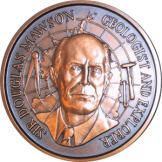
- This award honours the contribution to science in Australia by Sir Douglas Mawson FAA FRS, geologist and Antarctic explorer.
The Mawson Medal and Lecture recognises research in the Earth sciences and honours the contribution to science in Australia by Sir Douglas Mawson FAA FRS, geologist and Antarctic explorer.
The award is normally made every two years, and is restricted to candidates who are normally resident in Australia, with the majority of the relevant research having been conducted in Australia. The lecture is delivered at the time of each convention of the Geological Society of Australia.
Candidates may be put forward for more than one award. If a proposed candidate is already the recipient of an Academy award, the second award must be for a distinct, additional, body of work undertaken since the first award, and/or work in a different field.
The Australian Academy of Science encourages nominations of female candidates and of candidates from a broad geographical distribution.
Key dates
Below are the key dates for the nomination process. While we aim to keep to this schedule, some dates may change depending on circumstances.
GUIDELINES
The following guidelines and FAQs provide important information about eligibility, submission requirements, and assessment processes. Please review them carefully before submitting a nomination.
How to nominate a scientist for the Academy’s honorific awards
The following guidelines contain detailed information for nominators.
These guidelines contain information for honorific award nominators.
The following guidelines contain information for honorific award referees.
These guidelines contain information for honorific award referees.
Please submit your nominations using the Nominate button found on the top right of this webpage when nominations are open.
Please note the Academy uses a nomination platform that is external to the main Academy site. Nominators will be required to create an account on the platform. Even if you are familiar with the nomination process, please allow extra time to familiarise yourself with the platform.
Early-career, mid-career and career medals
Can I nominate myself?
- No – you must be nominated by someone else. Self-nominations are not accepted.
Can I submit a nomination on behalf of someone else?
- Yes – you can submit a nomination on behalf of someone else if you are not the nominator. An example would be a university grants office or personal/executive assistant completing the online nomination form on behalf of a nominator. Once the form is submitted, the nominator will be sent an email confirming that the nomination has been completed. If a nominee submits a nomination for themselves on behalf of a nominator it will not be considered a self-nomination.
Residency requirements
- Winners of all awards except the Haddon Forrester King Medal should be mainly resident in Australia and/or have a substantive position in Australia at the time of the nomination deadline. Unless explicitly stated in the awarding conditions, the research being put forward for the award should have been undertaken mainly in Australia. Some awards have more specific conditions that the relevant selection committee must apply and nominators are advised to read the conditions associated with each award very carefully.
Honorific career eligibility (more specific details found in the honorific awards nominator guidelines and the honorific award post PhD eligibility guidelines)
- Career eligibility is calculated by calendar year.
- Early career awards are open to researchers up to 10 years post-PhD.*
- Mid-career awards are open to researchers between eight and 15 years post-PhD.*
- Please note that the Awards Committee may consider nominees with post PhD dates outside of these ranges if a career exemption request is being submitted with the nomination, further guidelines on career exemption requests can be found in the nomination guidelines.
- See the post-PhD eligibility guidelines document for relevant conferral dates.
- *Or equivalent first higher degree e.g. D.Phil., D.Psych., D.Sc.
Academy fellowship requirements in award nominations
- Fellows and non-Fellows of the Academy can provide nominations for either Fellows or non-Fellows for all awards.
Women only awards
- The Dorothy Hill, Nancy Millis and Ruby Payne-Scott Medals are for women only. These medals are open to nominees who self-identify as a woman in the award nomination form. The Academy does not require any statement beyond a nominee’s self-identification in the nomination form.
- This practice is consistent with the Sex Discrimination Act 1984, which has recognised the non-binary nature of gender identity since 2013, and gives effect to Australia’s international human rights obligations. The Academy remains committed to the fundamental human rights principles of equality, freedom from discrimination and harassment, and privacy, as well as the prevention of discrimination on the basis of sex and gender identity.
PREVIOUS AWARDEES
Professor Neil Saintilan, Macquarie University
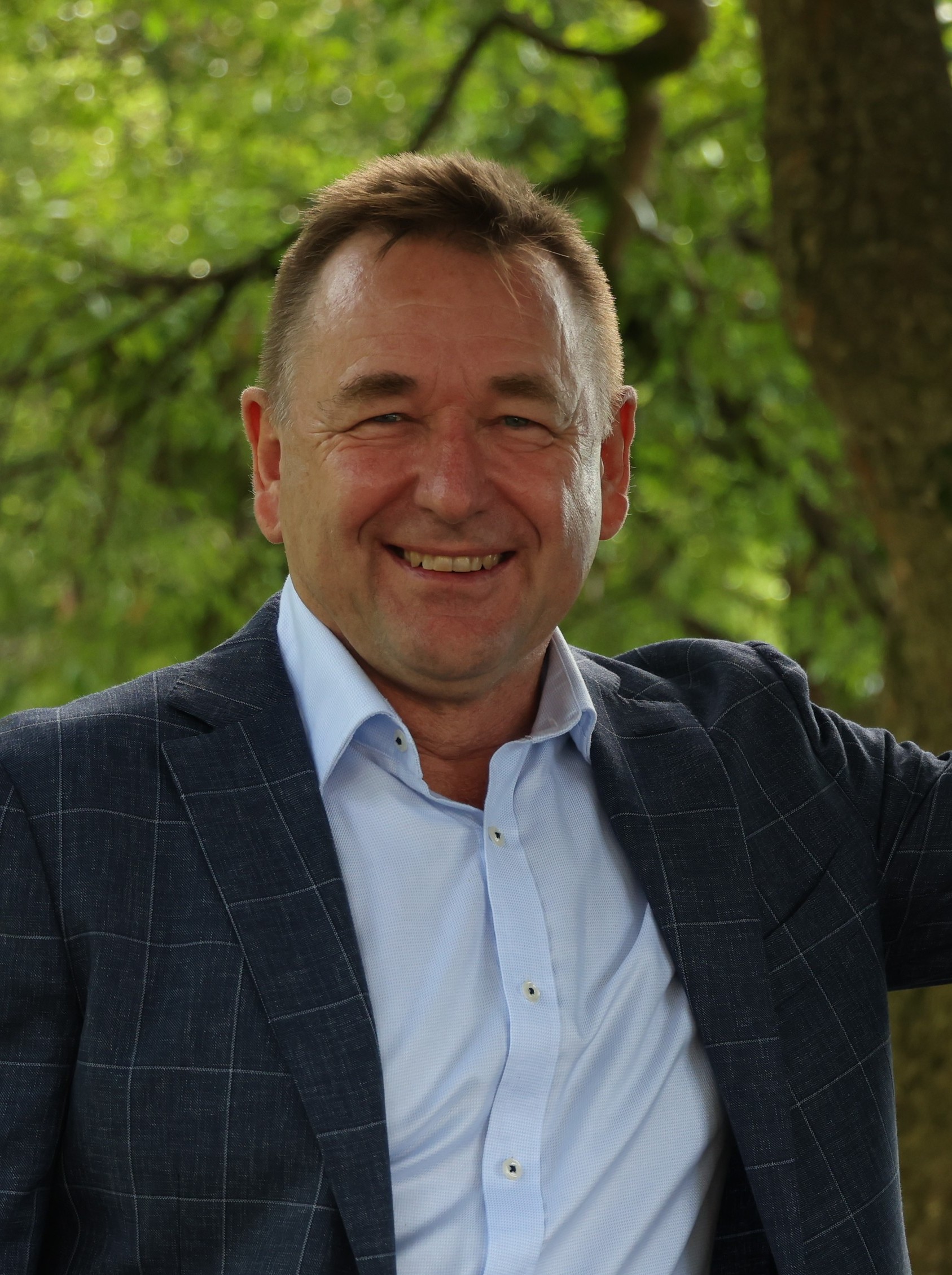
Professor Neil Saintilan is a world-leading Earth scientist whose research has revolutionised our understanding of coastal wetlands and their response to sea-level rise. His groundbreaking studies have revealed how wetlands store carbon, how mangroves adapt to rising seas, and the role of sediment movement in wetland survival. His work has been pivotal in shaping global climate policies, helping governments include coastal wetlands in carbon accounting frameworks.
Additionally, he played a key role in Australia's $8 billion Murray–Darling Basin water reform, ensuring that science guided environmental water management. Professor Saintilan’s research has influenced climate resilience strategies worldwide and has been featured in major media outlets like The New York Times and BBC. His contributions continue to advance the field of Earth science, with a lasting impact on both policy and public understanding of coastal and wetland ecosystems in the face of climate change.
Dr Adriana Dutkiewicz, University of Sydney
Dr Adriana Dutkiewicz is an innovative geologist who has pioneered the use of vast amounts of deep-sea drilling data collected over the last 50 years to advance our understanding of deep-sea sedimentation and the long-term carbon cycle. Her digital global map of deep-sea sediments is the first of its kind. The detailed tapestry of sediments it portrays represents a quantum leap from hand-drawn maps, enabling new and quantitative research directions. In other advances, she and her team linked deep-sea sediments and plate tectonics to compute fluctuations in marine carbon storage, provided insights into the formation of manganese nodules, and linked discontinuities in the geological record to bottom current intensity. Dr Dutkiewicz’s research connects traditional sedimentology with big data analysis and emerging machine learning methods, playing a transformative role in this field. In addition, she was the first to discover Archaean and early Proterozoic oil preserved within fluid inclusions, challenging long-held ideas about the temperature limits of hydrocarbon survival and the composition of the early biosphere.
Professor Andrew Roberts, Australian National University
Professor Andrew Roberts has made fundamentally important contributions to understanding the magnetisation of sediments, which provides the basis for use of paleomagnetism to reconstruct global plate tectonic movements and to understand variations in Earth’s magnetic field through its history. His work influences all aspects of understanding sedimentary magnetisation acquisition, and has particularly contributed to recognising that the previously poorly-known magnetic mineral greigite, and magnetic minerals produced by magnetotactic bacteria, make important contributions to the magnetisation of globally distributed sedimentary rocks. He is an international leader in the field of environmental magnetic analyses of climate change, and has developed new methods in rock magnetism that are used widely in solid state physics, materials science, the magnetic recording industry, and Earth science. His work in environmental magnetism has made significant contributions to understanding African monsoon dynamics, sea level variations, and Arctic and Antarctic glacial history.
Professor Allen Nutman, University of Wollongong
Professor Allen Nutman has made some fundamental discoveries concerning the evolution of early Earth, through numerous field campaigns in arduous conditions. He has revolutionised our understanding of Greenland geology by applying necessary, detailed geological mapping and applying necessary geochronological dating obtained through state-of-the-art geochronological techniques which he personally obtained. He is considered to be one of the leaders in the understanding of early history of Earth. Professor Nutman also made significant contributions to ancient rocks through successful international collaboration.
Professor Matt King, University of Tasmania
Professor Matt King has made seminal contributions to the understanding of the function and threat posed by the two great ice sheets, Greenland and Antarctica. With a commitment to meticulous field measurements, his research has opened new arenas of research and changed thinking on the timescales over which ice sheets and solid Earth beneath them are responding to external forces. He has made international contributions to at least three major areas of polar research: demonstration of the great sensitivity of the ice sheets to small changes in forces acting upon them; the first agreed estimate of the contribution of the Antarctic Ice Sheet to sea level change; and a dramatic revision to the understanding of the timescale of interactions between the Antarctic Ice Sheet and solid Earth beneath it. His work has had substantial influence on international practice, conventions and climate change assessments.
2016
Professor Colin Vincent Murray-Wallace, University of Wollongong
Professor Murray-Wallace has conducted outstanding, multidisciplinary research in the field of coastal science. He investigated past sea level changes using a variety of dating techniques, including the progressive changes in the amino-acid composition of marine mollusc shells to date past environmental changes. This work is particularly relevant today to understand coastal evolution under a progressive sea level rise. His coastal research in southern Australia has revealed evidence for neotectonism during the Quaternary in a continent traditionally regarded as tectonically highly stable.
2014
Dr Gavin C Young, Australian National University
Dr Young is an international leader in the field of early fossil vertebrates and the application of paleontology to solving problems in biostratigraphy, biogeography and historical geology. His field work in Antarctica in the 1971 Victoria University of Wellington Antarctic Expeditions resulted in a new biostratigraphy and age determination for much of the central Transantarctic Mountains, with robust correlations to strata on the Australian mainland. His field work and mapping in central Australia (Amadeus Basin) resulted in the discovery of the oldest known vertebrate fossils on the planet, and many new sites rich in vertebrates that enabled detailed correlations throughout Australia and Gondwana.
2012
Professor Gordon Lister, Australian National University
Professor Gordon Lister examines tectonic processes that lead to the building and destruction of mountain belts. His PhD involved modelling and simulation using the primitive computers of the day, and led to the first of many software packages that have stemmed from his research. He taught for a decade in Leiden and Utrecht in the Netherlands, where he developed an ongoing fascination for the evolution of the Alpine-Himalayan orogen. This mountain belt once stretched from Spain to New Zealand, but has now been largely destroyed by the processes of lithospheric extension. His return to Australia enabled a renewed interest in ancient mountain belts, and comparison with modern orogens. Professor Lister was one of the first to demonstrate the importance of extensional tectonics in orgenic processes. His research has greatly influenced this field.
2010
Professor Patrick De Deckker, Australian National University
Patrick de Decker’s work is multidisciplinary in nature, with the aim being to reconstruct past marine and continental environments to understand global and regional climatic variability. His pioneering work on the trace elements within the shells of small crustaceans has provided quantitative and accurate estimates of past changes in water temperature and salinity on land and in the oceans. He is currently analysing the origin and composition of Australian dust, which has implications for the environment, the oceans and human health.
2008
Professor Peter Cawood, University of Western Australia
Peter Cawood is an international leader in the application of structural geology, tectonic processes and geochronology, and has contributed greatly to our understanding of the development of the continental lithosphere throughout geological time. His research is concerned with the integration of field-based studies of mountain belts and their bounding cratons with the development and application of tectonic models.
2006
Professor Kenneth McNamara, Curtin University of Technology
Kenneth McNamara is internationally renowned for outstanding academic contributions in palaeontology and biology relating to studies of developmental change, rates of growth and phylogeny. He is a well-recognised expert on trilobites and their evolutionary patterns. He graduated from the University of Aberdeen, and obtained his PhD from the University of Cambridge. His taxonomic research has resulted in the description of at least 69 new species and 13 new genera of invertebrates.
2004—M. Sandiford
2002—A.J.R. White
2000—C. McA. Powell
1998—B.W. Chappell
1996—G. Seddon
1994—O.H. Warin
1991—P.J. Davies
1989—J.M. Bowler
1988—W. Compston
1986—K.S.W. Campbell
1984—R. Woodall
1983—M.W. McElhinny
1982—D.H. Green
1981—B. Runnegar

Professor Vicki Sara in conversation with Professor Robyn Williams
Professor Vicki Sara
Introduction
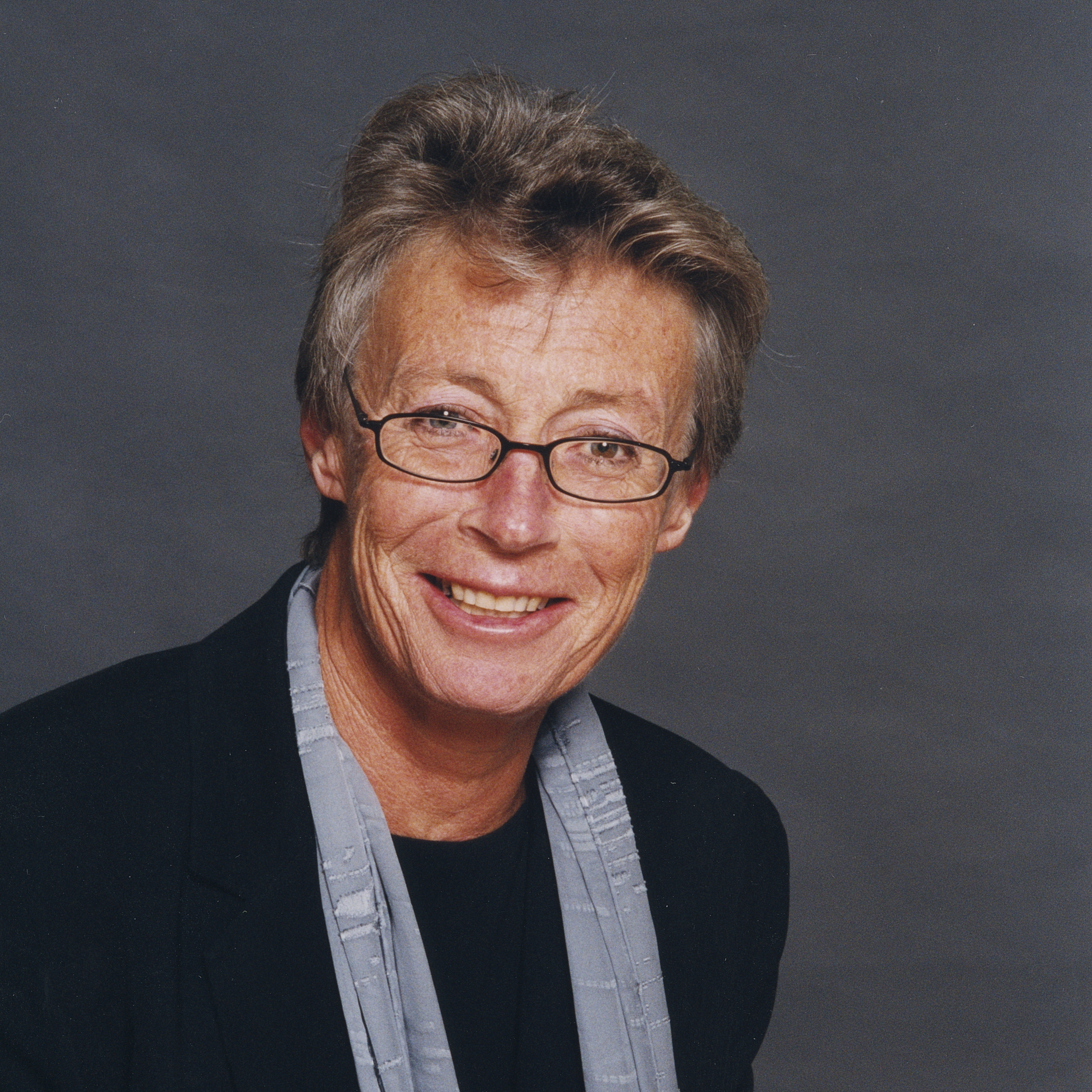
Professor Vicki Sara, an endocrinologist specialising in research into growth hormones and foetal brain development, was born in Sydney. Before attending the University of Sydney, she attended Bondi Public School and Sydney Girls High. Professor Sara recalls starting out studying undergraduate science, being sidetracked by the Sydney University Dramatic Society and completing her first degree as a Bachelor of Arts. She returned to university for a degree in Physiology and completed her PhD in 1974.
Professor Sara began work with the Garvan Institute of Medical Research and, in 1976, left Sydney for Sweden, where she spent 17 years at the Karolinska Institutet. It was here she isolated the growth hormone responsible for foetal brain development that is now used as a therapeutic for growth and metabolic disorders. She returned to Australia in 1993 to head the life sciences faculty at the Queensland University of Technology (QUT), where she became Dean of Science in 1996.
Professor Sara was Chair and then Chief Executive Officer of the Australian Research Council, where she was the driving force behind the far-reaching reforms of the council announced in 2000 and the increase of funding included in the Innovation Action Plan Backing Australia’s Ability in 2001. Her work helped establish the ARC’s credibility in delivering policy and programs that advance Australian research and innovation globally. She has been a member of the Prime Minister’s Science, Engineering and Innovation Council, the CSIRO Board, and the Cooperative Research Centres Committee and served as Chancellor of the University of Technology Sydney until 2016.
Professor Sara’s past appointments and committee memberships are many. Including a stint as Consul General for Sweden in Sydney, time with the Advisory Board of the Rio Tinto Foundation for a Sustainable Minerals Industry, as Director of the Australian Centre for Plant Functional, Chair of the Board of the Australian Stem Cell Centre and Chair of the Advisory Board of the Centre for Quantum Computation and Communication Technology to name just a few. She recalls taking opportunities as they arise, listening before speaking, and finding powerful and compelling messages in the many voices of Australian science.
Transcript
Was your family in any way scientifically minded?
Oh, not at all. No. Well, let me put it this way. Nobody was scientifically minded on my mother's side. My mother left school when she was 12, Robyn, so she had really very little education. My father on the other hand was not interested in education. Even though his family sent him to Grammar in Sydney. He was not [scientifically interested], shall we say. A lovely man, but not in that area.
I see. So, he is interested in Grammar, but therefore he thought you would be suitable for Sydney Girls High. Is that how....the equivalence going on?
No. I went to Sydney High and Sydney High was a selective school and that was probably one of the really critical steps in my life, is going to Sydney High. I [first] went to school at Bondi Public, which was not a scholastically high achiever. I'd been sent to an early learning kindergarten type of place when I was very young, like three or something, which was not done in those days. When I went to primary school, I was very bored and also somewhat bullied a lot because I had done everything that they were doing. Then when I got into Sydney High for secondary school, it was a whole revolution for me, everything was wonderful. It's a wonderful school.
What made the revolution? Was there a special teacher?
They were all good. The whole scholastic environment was wonderful. But yes, there was a special teacher in biology. Her name was Ruth Koman, and Ruth Koman was fascinating. I loved biology due to her, actually. She used to bring in paintings. She introduced all of us to Fred Williams when we were in about fourth year or third year or something to show us how the different environments affected animals. It was quite wonderful education.
All those trees he painted, yes - but you see [it's an] interesting thing about the supportive atmosphere that you described because some girl’s schools, I know had a kind of prejudice against achievement and you had to pretend to be dumb, pretend to be not very scholastic otherwise you'd have a hard time. Did you come across that at all?
Clearly in my earlier days at primary school, yes absolutely, but at Sydney High, no, never. It was important to be scholastic, to achieve things in that area. Art, music, all of that was important. Debating. All of those things were wonderful. It was just a different atmosphere where learning and intellectual ability was held to be something that was so important. It was a very positive thing.
Yeah. And so presumably it's a gilded path to Sydney University, you just cruised in, did you?
I think I cruised in on my biology results, but not on very much else. I was a bit of a naughty lass, but anyway, yes.
Naughty at what?
I got very in interested in theatre and drama and film and all of those other activities, but I always love biology. I just loved it.
Did you find at all that the interest in the arts rounded you so that you became a better scientist, really?
Absolutely Robyn. I started out studying physics, chemistry, math, biology, failed miserably my first year at Sydney University because I discovered SUDS [Sydney University Dramatic Society] and all those fascinating people who we know so well now, who were in the theatre. We were making films and when I say we were making films, you can imagine at about 16, 17, I was a little extra running around just fascinated by the whole experience.
Sydney University Dramatic Society?
Yeah. There was Germaine Greer and the rest of them, you just looked up to as idols. I had wonderful time and then I couldn't continue. So, I went to arts. I actually have my first degree as a Bachelor of Arts. I studied Anthropology, Philosophy, English. Particularly Philosophy, I enjoyed enormously. That's really given me an enormously broad education. I went back and did a degree in physiology later on while I was doing a PhD, because that's what I wanted to do.
Two at once...
Two at once
Yes. So, getting your PhD, what year was that roughly?
Gosh, roughly the end of the '60s, I started my PhD after I finished an honours degree, '69 and I finished my PhD '74. So, it was the end of the '60s [early 70s].
'74. And you couldn't wait obviously two years before you went off to Sweden?
Well, I would've gone earlier if I could've, it was very difficult. I think people should learn a bit from this as well. That I became very interested in, when I was doing my honours...I was interested in brain and behaviour and memory formation. Now remember, this is the end of the '60s and Jacob and Monad with the RNA [translation] from DNA were explaining how proteins could be made in cells. So, I thought this could be a mechanism that might underpin memory formation because it could lead to a structural change, [interest was in neural networks] and structural changes for memory.
They got the Nobel Prize for their work, didn't they?
Yes, they did. So, I was very interested in that and I wanted to continue. I was interested in looking at how the structure of the brain was formed in early life, which was embryonic development, obviously in the very initial stages. There was nobody working in that area at all, and I wanted to do a PhD on it, but there was absolutely nobody. Unfortunately, the supervisor I had who was supposedly physiology/psychology suggested I do a study of the structure, and I'll never forget this, the structure, and the function of the globus pallidus. Now that was as exciting as trying to walk backwards through mud. My first year of a PhD was spent as all students do, doing a literature review, and I came to the end and really decided that it would be impossible for me to continue. That was probably a very wise decision to take, because I think it's very important when you do a PhD that you're actually involved and fascinated and have the drive to continue with that subject.
Yes. Rather than walking through mud, you wanted to find out how the brains that we develop as babies and even smaller than babies...we get this amazing apparatus growing up. So after nine months we are born and we've got all this gear, how did it happen?
It's serendipitous in a sense. At the same time, there was a lot of work being done overseas, not in Australia, on growth factors role in development. Many of these growth factors were regulated through pituitary growth hormone. That's how I got involved in endocrinology and looking at growth factors and growth hormone.
Wasn't John Shine working on that?
[I think John was first working on prolactin. Then he investigated the gene for growth hormone. Remember this was an exciting period in science leading up to all the DNA synthesis that was done, the isolation of genes and the ability to read genetic code]. All of this was at this time. It was very exciting. Anyway, I decided I couldn't go on with globus pallidus. I would do what I wanted to do, which was to look at growth of the nervous system in early development. The only person vaguely related to that was Arthur Everett at Sydney University, Professor of Physiology there. He agreed to be my supervisor, although his work was on growth hormone, body growth at puberty and old age. So, he did that and I went to the Garvan Institute and did my PhD there.
I mean it's Sydney University still, but I used the laboratory because that was the major Endocrine Institute in Sydney. Then when I finished my PhD, I really needed to go to where people were working in this area so that I could learn from them and develop along this track. My idea was always to be a full-time researcher.
And here came Stockholm?
And I came to Stockholm, which was wonderful.
Very brave
Yes. Now I think so, but it was for a short time. I didn't realize it would be for 20 years....so I came to Stockholm.
Did you have to speak Swedish at all?
No, of course not, because all Swedes speak English, even then. I came to Stockholm in '77, I think it was. Most Swedes and certainly in the scientific community, and the medical research community, everyone spoke English, but to be part of the system in Sweden, then I had to speak Swedish. So initially I was what was called a guest researcher. I was on a postdoc fellowship from UNESCO for the first two years, but then our work was going so well, and it was such an exciting time. It was as if there was a race of several groups, one from Switzerland, two from the US and us in Stockholm who were racing to identify [what the substance were]. It was very exciting. I was there for two years and then decided I really wanted to stay and continue my studies, my research there. I was doing rather well and was getting a lot of support from the Swedish Medical and Research Council and from industry and from various places so that I continued there.
And that was at the Karolinska Institutet. I've been there only once. I was there actually for the announcement of the Nobel Prizes, and I was most impressed by the relaxed informality of them. There weren't any trumpets, they weren't flourishes. They just came in, sat down and said, okay, here are the results, any questions? And I thought, well, that's nice instead of being put off by this legendary place. I thought, well, I could live there. You found the same thing, did you?
Oh yes. I love living in Stockholm. It was very exciting, but when you talk about that [Nobel Prizes], then there was the formal dinner of the presentation. That is formality to the extreme that you don't see here. There's a nice balance in Sweden, I think, between the easy-going informal approach to the very formal approach that is with things like the Nobel Prize presentation by the King or the Queen at the time. That's really something very special.
And I thought I'd gone to heaven when I was at that ceremony and the chorus of young women dressed in white and with tiaras made of lighted candles came down, oh boy.
It's the light [coming of the light Santa Lucia]
They know how to turn it on, I must say. So, you had a wonderful time, and without leaping through the whole of the 20 years. What exactly did you find summarizing your work there?
I actually identified what I had thought was a new growth factor. There was a member of the insulin-like growth factor family. I mean, they used to be called somatomedin, then when they were identified, there was insulin-like growth factor, one, two, et cetera different forms. It proved to be the one I was working on, which tended to be the predominant one during foetal development. Also later on, of course we work with cancer and tumour development. There's another up swelling of production of the substance then. That was the main thing that I did, which was embryonic brain insulin-like growth factor. Now a couple of things were wrong. It proved later on that it wasn't just the brain. It was throughout the whole embryo. It was an embryonic form of the hormone, and what it was [actually part] of the larger hormone, the parent hormone, where the N-terminus had been cleaved off.
So the same gene, but there was a protein processing was clipped off the N-terminus. First, I can tell you a story of, after so many years trying to get enough substance to be able to sequence and working with probably the world's best protein chemist Hans Jornvall, using his up-to-date sequencer. We get the amount of...tiny amount of substance that he could start [with]. Then sitting there all through the night, watching amino acids coming off the machine and we realized the first one coming off was quite different to the other IGFs. Second one too, and then suddenly we start to realize there's something very familiar here. What it was is the cleaving of the N-terminus.
Now you think, oh, that's terrible. It was very disappointing, but we tried to figure it out. There's a group here in Australia also, [with] John Ballard, who's working with similar stuff. When you tried to figure it out, what it was is really quite important because the N-terminus was where [the IGF protein was] bound by the binding protein, which protected it from interacting with the receptor and creating a biological effect. So it was quite an important mechanism, but we didn't know that at the time. What I'm saying, I suppose, from enormous disappointment and failure, if you think hard enough and try to work it out, there may be [something of a great importance] there.
Failure can be a turning point. I've heard that so often. It's wonderful, isn't it? Without going into detail about what you've just said. In terms of the way the physiology worked, what you've got is all these cells with the same DNA blueprint, but they've decided to go off in different directions to form this most complicated organ, the brain. Some parts are doing medulla. Some parts are doing cortex, some parts are doing the... How do they know what to do and where to go? How's the timing work?
Isn't it wonderful? Isn't it wonderful that we can still ask questions like that to try and understand how it happens? I mean, when you look at it, I was so pompous believing that I could actually answer the question. How does the brain grow? I mean, how ridiculous is that. That's youth, that's '60s youth, and you realize that you're looking at a very isolated, single mechanism of cell division. [It's a fascinating area to understand how the structure is set]. I know we realize that there's plasticity in the brain, but there's not an awful lot of plasticity in the brain. So, it is very important how that structure is set down early in life during pregnancy. The importance of alcohol abuse, of diet, all of those things really do have a [deleterious effect].
Yeah. Because - a quick summary - is it the fact that there's a chemical map that the cells need to follow? And if you go one way, you become changed, and the other cells go to another way and they become changed. So, the whole process in that way becomes separate and they're going in a different direction, forming different sorts of organ.
Yeah. I think that's the basic principle of it. It's a matter of identifying what those signals and messages are and how they are actually able to direct the cell to go one way or another way. Quite clearly, I think, probably what we were looking at all those years ago, having got involved...was an embryonic form of an embryonic stem cell production. Is what we were probably looking at, but we didn't recognize it at the time because I guess stem cells weren't de rigueur in those days.
No, indeed. Well, after what, maybe 17 years, maybe a bit more, you came back to Australia. Where too?
To QUT. To Brisbane...
QUT, the Queensland University of Technology. And briefly, because you've spent some time at universities of technology, what's the difference between a university of technology and the non-university of technologies. Are they different these days or pretty much the same?
I think they're pretty much the same these days. There certainly was a huge cultural difference. I think still a cultural difference does exist between those universities. It's very difficult to lump all technology universities in one basket and all sandstones in another basket because there's a spectrum in both. With time difference, remember I came back to Australia, I think in, gosh, what was it? '93. QUT had been formed, what, in '88, I think something like that. So, it hadn't been a university for such a long time. The truth of the matter is I needed to come back to Australia. I was an only child with an ailing mother and quite honestly, my passion, other passion, well, I have several passions in life, but one of them happens to be sailing. The weather in Sweden is not good for sailing.
No
I was looking forward for green and blue, and hence I'm sitting on Sunshine Beach at this very moment.
Indeed. Yes, but QUT...a wonderful setting right on the water next to the Botanic gardens. And now indeed, it's got fantastic buildings and it's connected, it's good at robots and all sorts of things.
In those days when I came back, [in] the early '90s, they in fact imported me back. I could say bought me back. Well, they did buy me back very generously to really give a boost to research culture. Particularly the Vice Chancellor of the time was desperate to get a CRC [Cooperative Research Center]. So, we had a deal. If I got a CRC, we'd get a new building in life science, and we did get a CRC and we did get the laboratory fit out and building.
That's a Cooperative Research Center working with industry.
Yes. Because one of the things I learned in Sweden was not only the collaboration between people across all different areas - because that is quite outstanding - but the importance of the collaboration with industry. Now, I also learned...I'm not saying we should do short term commercial research at universities. I think that's wrong. I think we need to have high quality research at universities that is not driven by commercial outcomes, and in that I'm becoming quite isolated in those views, but never mind. It was very important that you had a collaboration, I mean we could never have isolated genes, got the DNA sequence, identified a receptor without having the support and the interaction and collaboration with KabiGen, and Kabi and Pharmacia and all of those companies. What they wanted was the first bite at any intellectual property, and for that, they supported our work enormously because they could recognize the potential for patenting the work and being able to produce medicine out of it.
I thought that Australia had when I came back, had a very different attitude to industry collaboration and industry had a different attitude to university collaboration. So one of the things I think I tried to contribute very much when I came back to Australia was to try and break down those barriers so that there was no fear from the university that their IP would be stolen and run away with, which is just crazy. And for industry to really recognize the importance of the quality of research.
The Hawk government and the Chief Scientist at the time encouraged that thing. It was interesting how fast it moved.
Yes. Well, I think I got the CRC, was it '93, '94, something like that. So, it was in the early days of the CRC, Ralph Slatyer was still around.
That's right from Perth. I think he went to school with Bob Hawk as well.
Interesting, that isn't it.
Yes. And so, you stayed there for quite some time talking about the funding of science. May I leap you to the Canberra responsibility where you were suddenly in charge of the [Australian] Research Council? Was that a long way off your return?
No. It was very soon.
Quite soon. And what took you there?
Well, I didn't stay at QUT very long. I stayed there for three years. I was the Dean of Science, and I had the CRC, which is a huge package to look after. It wasn't that at all. There really wasn't the research environment that I was seeking. I was still doing research, but from a distance. I wanted to have the opportunity to make a difference to research in Australia. I'd learned an awful lot in Sweden, and it was a shock coming back. It was particularly a shock coming back to Queensland. I have to say, and one of the first things that happened to me when I came back was, I was put on the ARC or on one of their committees.
Then I was on the committee for a while and then onto the Council. I could see perhaps that here I could make a change and be able to contribute something, to make research much better than it was in Australia. That's why I took on the job. I have to say it was a wonderful, wonderful opportunity to do things, but it was very hard. It was a difficult road to hoe.
Now here's a long question. It just so happens that I probably joined the ABC 50 years ago last week. During my time over the last 50 years, the one recurring policy question has been A, why do we have so little funding for science, 2% of GDP? I think. Korea is four and a half percent, over twice as much. 2% for a rich country is rather extraordinary in the OOCD. Then you've got the question of translation, the investment in the future of science, via industry and so forth. You went in at a time when so much needed to be done. Did you actually pull them towards the future during your period there in the council?
I believe I did. The result was Backing Australia's Ability. When I took over the ARC, the success rates had fallen to [one in five or less]. I mean, they're dreadful at the minute I have to say, but they had fallen then from like 22, 25% for large grants, all for scholarships down to under 20% and there is masses of evidence that you're really turning off the best and the brightest young people for even trying when their chances of any success is only one in three, one in four. So it was very difficult with money. At that time also, there were more governance issues which underpinned all of that. Firstly, we didn't have sufficient money to support the quality research which was being done in Australia, and the governance of that was being regulated by the bureaucrats. So when I took over the ARC was part of the Department, it was not a statutory authority.
Now, some people may think they it's a small distinction, but it isn't. It's a very large distinction. So that what was happening, that our budget was part of the budget for the department so that it could easily be raided if required. So that the quality of research that we could support was very much determined by how much money was left in the bucket, rather than what we had hoped we would be able to achieve. So there were those two issues we needed to really convince government that there needed to be an investment in research and we needed to convince government firstly that, but secondly, importantly, that we needed to establish the ARC independently from the department. I guess if I had to say, what I've achieved in that time was to do both of those things, which was not an easy task. It was because of the wonderful people...We all worked together.
What about the Ministers you'd talk to; who was good and who was resistant?
Well, I had many and different. Amanda Vanstone appointed me. She was removed from office about three months after she appointed me - nothing to do with me. I hadn't even met her. Actually, I had. I saw her in Canberra Airport, and I chased her through the airport and up the escalator.
She on her way to Italy at the time?
Well, no, but soon after. She was good, and then there was David Kemp. David was really a pivotal person in the change to the ARC.
One, because he'd been a Professor, he was an academic?
At Monash, he was an academic. At the time, he was very much driven by the Department. At the end of the day, David actually supported us in establishing the ARC as an independent authority, but it took a number of years to get to that point that he actually trusted [the ARC]. The person who actually was the force behind that with John Howard. As [Chair] of the ARC I was a member of PMSEIC [Prime Ministers Science Engineering and Innovation Council] and I got to know him through that, and with Robin Batterham and, John Stocker I think was the person before Robin, and developed a relationship so that I could actually discuss with him and discuss with David Kemp about the necessary changes. We would never have got Backing Australia's Ability where over $1 billion went into the ARC - a doubling of our funding went into it - without his support.
Yeah. So, you mentioned Robin Batterham of course, Chief Scientist, lots of experience in industry and John Stocker, who himself in a medical area was a top industrial CEO. I remember when he became Chief Scientist, he did say, depending on which general field, one investment of $1 in science gives you $10 later on. The return is fantastic. And yet Australia doesn't seem to have realized that. I remember being told a story which I broadcast from someone senior in the CSIRO during the war. With the tyranny of distance, of course, Australia realized it couldn't get stuff from overseas. So, it might have to research and make it itself. And it did so very successfully. Then the war stopped, and someone said, "Oh, we don't have to do that anymore. Give it away." So, we didn't do the R&D. Or we did the R, the research, but the D was going to be somewhere else. It seems this attitude lingers, but you're quite right. John Howard understood that there was a unity.
Yes. So, without his support, I guess it was a very long time. What was really good during those times, which was the end of the '90s, beginning of 2000, is there was Robin, myself, Brian Anderson, who was the Chair of the Academy. We spent so much time just visiting ministers and department heads and trying to persuade them that this was so important. The really critical thing, Robyn...we ended up having people on side, the important people. We had the business council on side, so they could carry the message. Nobody believes an academic when they're talking. So, you had other, the people [who] were taking the message forward, which was really quite wonderful. We were successful and all the people involved were wonderful in [contributing] and it allowed the ARC to develop centres of excellence. It allowed us to develop Federation Fellows, Indigenous early career researchers, early career researchers generally.
This is the first time we could actually have a strategy for what was required for Australian research going forward, high quality research going forward, and that we actually had the money to be able to deliver that. That was very important. We also built-up linkages with - a linkage program came out of that - the discovery and the linkage came out of that and all of the centres came out of the Backing Australia's Ability. It was really John Howard's support, which allowed that to happen and to get through.
Now, let me ask you about something you mentioned just briefly in passing there. And that's the young people who are, I think in many ways, still struggling with their short-term contracts. They graduate, they've done most of their adult lives, even before that as teenagers, working away at school and eventually they get it through, they do their PhDs - and then you are nowhere with very, very few long-term contracts. How on earth can a modern nation like Australia expect to have the scientific force that it needs when anyone with any sense would think, well...just such a set of hurdles we've got to go through. We've not got much of a hope. What do you do?
It depends on coordination between the many players involved in that. I think you have to think of the pyramid, how many PhDs, how many postdocs, how many research fellows? I mean, at the ARC, we spent a lot of time trying to work out how we could put money into the various levels. That would mean that we didn't automatically cut off people when they started the steps. So, if we had 10 at a postdoc level, how many could we take forward to be a research fellow at the next senior level? So all of that, but the ARC's only one player, then there's the universities and the PhDs, the postdocs, the academic positions, which are there, the industry positions.
It just seems to me at the minute that there's a real need because when I look at the budgets for the ARC, particularly, which is my baby, I think that we need to do something again, of drawing together all the players, to put the arguments forward, not just for the ARC, but for building an academically bright workforce in Australia that can drive the country forward. The economy of the country forward, the ideas of the country forward. So that's a dream. Well, we had a dream once Robyn, but truly to be able to do that, you need industry, you need universities, you need technical colleges, you need a lot of people involved and it is possible to do.
And you could call it the clever country. I remember that phrase.
We've done that a lot, haven't we?
We have, yes. Let me leap you forward to another university of technology. Sydney, where you came [from], actually to mention in the beginning, just to illustrate how research goes on there. I remember doing something at Los Angeles and there was some research going on there into trying to repair severed nerves. In other words, people have become paraplegic or something like that. There was work on reconnecting those nerves, so that for instance, you could have Superman walk again so that, that work could continue to improve the lot of people who'd had that severe central nervous system damage. When I asked them in Los Angeles, is anyone else doing this work? They said, "Yes, Sydney University of Technology." I said, "Really who's doing that?" And it turned out to be true, just such a surprise. I can't remember the names, but there was a department there. And it's just surprising that Sydney tech, as it seemed to be New South Wales Technology outfit, which did quite a bit of psychology and environmental stuff was doing this frontline nervous stuff. Did you come across it at all there?
No, not at all. I have come across the work. We did a lot of related work in Sweden which has continued on, where compressed tubes were made, which were then coated with growth factors in collagen to be able to provide a supporting structure and also to provide the growth stimulus for the nerves. So, the was a lot of work in the Karolinska that was going on and that would've been in the early '90s. I would've imagined. It really hasn't come to anything that I'm aware of, particularly. Then of course, you've got a lot of people working with stem cells that think they can use the stem cells to be able to do that. But again, I haven't seen successful results coming out of it.
I'll have to go back to UCLA and see, but did you arrive at Sydney straight as Chancellor?
When I finished at the ARC, that was the first time I retired. I think it was probably for about four weeks, something like that. I've always been on a number of boards as well. So, I was on those. Then I continued working and Ross Milbourne, who was the Vice Chancellor at the time, asked me if I'd considered to be the Chancellor. He'd like to put me forward. I'd worked with Ross through the ARC time. I couldn't think of anyone more clever and more lovely to work with than Ross. So I agreed immediately, and so we were a good team. I was his enthusiastic support through the times, and we turned UTS around. I visited UTS as Chair of the ARC and their research was fairly middle to lower class research. Ross wanted to turn it into a real research technology university. I hope I helped him do that in my way.
You certainly did because they're higher up in the ranks. That's wonderful. I noticed that the highest in the rank of the new universities is that the University of Wollongong, just up the road from where I am. But you mentioned being on the number of committees, it involved plants, minerals, stem cells, Rio Tinto, Consul General for Sweden. All at once, was it?
It was probably all at once, yes. It was quite handy to be sitting out there when we were trying to really change the ARC. I mean, a lot of that started when I was Chair of the ARC. That gets you onto a lot of committees. I think you have to take opportunities as they arise. It proved to be very helpful because then I could talk to other groups of people about what we needed to do with research in Australia.
And that's the CSIRO Board as well?
Yes. And Catherine, who was the Chair just before I left. Catherine Livingstone is now the chancellor at UTS, which is lovely.
Indeed, and she's also head of the Commonwealth Bank.
I know that
And I understand that she's one of the best chairs of board meetings you could ever wish for.
I think that's probably right. I don't know they had the fun that we had.
So, you were a good chair and you had fun.
I hope we did. My chairing ability comes because I believe so much [that] it's a whole team effort where everything's done. So, I listen to everybody, and we talk together a lot.
Now, let me ask you a couple of closing general questions. One of them from Alan Finkel, another Chief Scientist who had advice to scientists when they were doing the kind of thing that you have described for the last, nearly an hour. That is trying to influence people in industry or especially politicians. And he said, number one, don't enter the room and immediately ask for money, because they don't like it. Secondly, don't have all your different groups - and there's so many in science - balkanized and talking with all separate voices, have one or two voices. Is that what you learned? Is that your experience?
Yes, yes. I learned that at the ARC, and I also learned a lot in Sweden that I could bring with me and it was, listen to people first, before you just come out with what you're going to say. Think about what you're going to say and say something that is relevant rather than something that isn't relevant. At the ARC, because I was really mentored by a lot of extremely clever public servants, I learned how to put an argument to a minister in the five or three minutes that you've got, to take out the unnecessary, to get one critical point you want them to remember. All of that was incredibly helpful trying to go around and talk to people about the importance of research and industry. That has to be in their language as well, that's the other thing. So I think Alan's absolutely right. Absolutely right.
In more recent times I've done a couple of stories in broadcasting. One about the problems, of all things, in geology departments around the country. You think with a place that is so based on digging up ores and exporting them, the most natural thing in the world would be our thriving geology departments. And yet they're closing them down and there's going to be something at the end of...in September, October, there's going to be an international festival to draw attention to this plight. To show that geology is more than just mining, which has got a bad reputation. So that students come back. Similarly in your own area, there was a threat to the Eccles Institute at the ANU, doing brain research based on Eccles...Sir Jack Eccles, who got the Nobel Prize for his work. You would never dream that a such wonderful Institute would be threatened with closure. What are those two examples’ symptoms of in 21st century Australia with all its resources?
Well, I don't know the performance of Eccles Institute for example, but I think it is very much performance-based funding that we are looking at and a lack of awareness and I guess respect for traditions. Perhaps a failure to understand the importance of certain areas of science where Australia has a long-lasting tradition and has built up layers of individuals in that, and the value of maintaining that. Now I go back to performance funding. I don't know what that was like, but I think unless research groups and institutes can perform well and demonstrate that they're actually achieving things, be it through education of the next generation of scientists or through discoveries, whatever it happens to be, there are a number of indices you can use. Then I think it's very difficult to continue supporting them.
I also think that there has been a tendency in Australia, which I think has diminished a lot. There's a tendency to repeat similar things. Now we're a small country with a small budget and we need to ensure that we don't spread our resources too far so that you have a brain research institute in Queensland, Sydney, ACT, et cetera. Let's try and perhaps have that across the country, but let's coordinate it so that they're part of the network so that you can really stop the resources being ploughed into places that are not performing, perhaps as best they could.
Do you still go to the bench and do work in the lab?
When I retired, and I just retired again this year or the end of last year-
Serial retirer...
... I did think about it, but when I retired from the ARC, I went back to Sweden, you know. I went to the Karolinska as my PhD students, of course now are running labs and things. So it was easy for me, but it was also easy for me to recognize that I'd lost it. In all the years I'd been away from the bench, which had been sometime since then. The world, particularly in molecular biology and endocrinology had moved on enormously and I was not able to contribute at the level I'd like to contribute. I mean, I was happily tucked in a corner and given a little bench space and the equipment I needed, but it didn't have the same feeling for me. I knew what I wanted to do was to move into the more governance side of things. I was Chairing the Sunshine Coast University Hospital [Institute, at a major new hospital built here SCUH (Sunshine Coast University Hospital) including Griffith and USC [University of the Sunshine Coast] and TAFE to try and build a research institute there. I've stopped that, and I'm just having a little pause to look after myself and family.
And then what happens?
I'll probably get back into it again. Who knows? Isn't that exciting? Who knows?
To your fellow of two academies at least? Do you find them working together well?
No. And this is honest, I'm out of the system. So that's hard to see, but I do recall that the Technological Science Engineering went through a period of calling themselves the Academy of Science, I think. Which shows the lack of cooperation and communication between the two academies. I hope it's better. I know there's an overarching Academy Forum, and it is very important. I read the newsletters and I must say, I think that it is important for the two of them to work very closely together, if not into one Academy.
And speaking with one strong voice.
Yes.
Well Vicki, thank you for talking and lots of good sailing.
Thanks, that I intend to do. Thanks Robyn.
Thank you.
Lovely to see you again.
Additional information
© Australian Academy of Science
Some re-use permitted (Creative Commons BY-NC-ND)

Professor Susanne von Caemmerer in conversation with Dr TJ Higgins
Introduction
Professor Susanne von Caemmerer was born in Freiburg in Breisgau, Baden Würtenberg, Germany. She arrived in Canberra on a gap year in 1974 and, because the Australian National University offered more options for study, fewer students and fewer rules, decided to stay and finish her BA (Hons) in Pure Mathematics in 1976, and her PhD in Plant Physiology in 1981. She is now Professor of Molecular Plant Physiology at the Research School of Biology.
Professor von Caemmerer’s work focuses on photosynthesis and stomatal function, with an emphasis on the mathematical modelling of the carbon acquisition of plants, the biochemistry of carbon dioxide fixation and the regulation of carbon dioxide diffusion in leaves. She was part of a team that presented a mathematical model of the biochemistry of leaf photosynthesis. Her modelling approaches have been influential and are used extensively by researchers in fields ranging from ecology to crop modelling and global climate change, while her innovative use of molecular technologies to study physiological questions has led to numerous new insights into stomatal and photosynthetic regulation.
In this interview, Professor von Caemmerer discusses what inspires her in mathematics and plant biology, her decision to stay and work in Australia, mentors, colleagues, international collaborators, and the global impact of her work. She recalls the challenges and opportunities of her early career when she was one of few women in her field, recognition by the Australian and German Academies of Science and the Royal Society of London and talks about what is next, both in her research and for science in Australia.
Transcript
I'm TJ Higgins and I'm interviewing Professor Susanne von Caemmerer on this date, 27th of April 2022 for the Australian Academy of Science. It's part of Conversations with Australian Scientists program.
Susanne, it's a great pleasure to interview you. I'd like to start by asking you where you were born?
So I'm German, and I was born in Freiburg im Breisgau, which is a town at the edge of the Black Forest. It's a beautiful city, very old.
I've been there.
I went to school there. I finished my high school there, everything. It was a very pleasant life there. I went to the public schools and got, I think, a very good education.
You were very impressed with pure maths?
I loved mathematics, yes. I always did. Even at school. I think when I was 13, I had decided that I would like to study mathematics, and especially pure mathematics.
So what influenced you?
Well, I guess my aunt and uncle were both mathematicians, so I had mathematicians around me.
Yes. The Neumann's [Hanna and Bernhard]
So that sort of gave me... Also, I was good at it, and I was dyslexic. I couldn't read or write very well. So, mathematics was a real easy thing to do.
So you wanted to study mathematics in university, if possible, but you couldn't for some reason?
Well, I could have. In Germany, I would've had to study mathematics with either physics or with economics. None of those two really excited me that much. I really had always wanted to do mathematics together with biology or plant biology, but that wasn't really fashionable at the time. People hadn't really been thinking about it. I mean, bioinformatics didn't really exist yet, and so on.
Yeah. You were very lucky, I think, to take a gap year?
I think I was very, very lucky. Yes.
It was a wonderful idea. Especially with your relatives.
Yes.
Here in Canberra, who were also Fellows, both of them are Fellows of this Academy.
Yeah. We always had very close connections with our families. My sister, who was the goddaughter of Hanna Neumann, actually, came and went to school here for a year. We've always had that communication. Their children came and lived with us in Germany, and so on.
So you knew about Australia?
I knew a little bit about Australia, yes.
You went to a girl’s school?
Yes. I went to a girl’s school and actually it stopped being a girl's school the year after I had my intake, when the German government decided that all schools should be mixed.
Yeah.
It was a girl’s school and I was lucky that it was a girls school that focused on science.
Yes. I was quite surprised by that.
Yes. It sort of meant there were girl schools that... Well, there were schools, it was also boy schools that focused more on languages. And there were some that focused more on science and having a school that focused on science was very good.
Suited you very well?
It suited me very well. I got to go there, because my mother had thought it was really good to go to a mixed school and send my brother to the humanities school, where he had to do Greek and Latin. She realized that was not very... Didn't suit him all that well. Actually, I finished my high school. My abitur in Freiburg and I had the invitation from my aunt and my uncle to come here to Australia. My aunt, unfortunately, had already died the year before.
Oh, had she.
Yeah. I guess, it was a good opportunity for me to travel and it seemed ideal to get away from home.
Yes. So, when you arrived in Canberra on your gap year, what did you do in that first year? You did enrol later.
No, I did enrol in that first year. My uncle, being very proactive, had enrolled me. He'd also booked me into Bruce Hall, one of the colleges. I enrolled in pure mathematics and applied mathematics. I was in the Arts Faculty, and I could do two sub-majors. I did one in philosophy and one in botany, which was a lot of fun.
Which was really ideal for you, considering what you wanted to do in your earlier life. It's very interesting that you got a Bachelor of Arts degree?
Yes. I'm very proud of it. I always thought mathematics was an art.
Yes. At that time, it was possible for you to get an education that was relatively inexpensive. You didn't end up with a big debt?
No, I didn't. I think the first year I was here, there were still fees, and my uncle very kindly paid them. Some of my aunts very kindly paid my accommodation. I had a family that sort of supported all us cousins in our education.
Gough Whitlam had a big influence on the cost of university?
Yeah. I could not have stayed if universities had not become free in Australia, because, of course, they were free in Germany. My parents were perfectly prepared to pay for my living allowance, but I think, university fees would've been too much, and I would've had to go back.
The politics in Australia, at that time, one could say, contrast a lot with the current situation.
Yes. Yes, and it's very sad.
Governments, at that time, were more interested in evidence and in science and philosophy than, say modern day politicians. I would say.
Yes, I think so. Yes. I think, yes, it was a very good time to be at university.
So when you finished your Bachelor of Arts degree, you either had to go back to Germany or you had to do something to get a visa.
Because I was on a typical student visa, which, of course, expired once I had finished my degree. But at the time, the immigration department was in Barton and very relaxed. They made me a cup of tea, sat me down and said, now, these are the things that you..
Told you what to do?
..and told me what to do. I looked through the job ads and the technical officer positions, or technical laboratory technicians’ positions at the time were permanent.
Oh, okay.
Yes. They were all permanent, so that suited me very well, and I applied to RSBS Environmental Biology.
So who were you working for initially?
Initially, I was working for Dave Sheriff, who then later on moved to Darwin, and I just sort of bumbled about a bit. He was very pleased to have someone with some statistical knowledge and so on.
Yes.
Yeah. So, I did some interesting experiments.
Graham Farquhar then asked you if you'd like to do a PhD?
Yes. In the department, we had a lot of conversations, always. I think people underestimate how important morning and afternoon teas were. We would sit around and discuss some of the science.
Absolutely.
Graham said, was I interested. They were just starting on wanting to do a model for C3 photosynthesis, because he and Ian Cowan were working on Stomatal Optimization theories.
Yes. So, you were a real find for them, because of your mathematical background? I would say.
Yes, I think so. I think what I brought, actually, I mean, pure math isn't really that useful. Quite honestly, but what I brought was a different way of thinking about biology, which I think was useful.
Oh, absolutely, yes. You benefited a lot, I think, from your interactions with Ian Cowan?
Yes. He was very good. He was a very good mentor and always took the time to explain.
A classic mentor, I would say.
Yes. He was very good. I learned a lot from him.
You still have his little book?
Yes, I do. It's handwritten. Because at those times, we didn't have computers and the departmental secretary would not have wanted to type it.
He also helped you out with physics, I think?
Yes, he did, because I hadn't done it. I mean, we had very good physics at my high school, but I didn't have a lot of the sort of gas law physics that I needed for what I was doing with the models. So that was very helpful to get that really good and very, very rigorous grounding.
When you finish a PhD, you look around for postdoctoral fellowships. And actually, there was no email. So, I had applied for a postdoc with Joe Berry, but I also had applied for several postdoctoral fellowships in Germany. I had applied for one with Professor Heber. I'm not sure whether you know him? But, of course, mail is slow, and the letter of acceptance came after the one from Stanford. So, I took the one from Stanford, but I think it was actually the right choice to stay, not go back to Germany, because being a female scientist in Germany was still very difficult.
I must admit, I've always had excellent support from people like [inaudible 00:09:28]Professor Heber He has always supported my career all through, but many of them gave me the advice. Don't bother coming back just at the moment, just because it's too difficult. So, I did sort of one and a half years at Stanford, and I was very grateful that. Barry Osmond had a fellowship that I could go to. And I came straight back to Australia.
So Graham Farquhar and Chin Wong were important colleagues?
Yes. Very important colleagues.
I could always go to Graham, again, with a cigarette in hand and ask some questions if I didn't understand something.
This was an incredibly important time in photosynthesis. I think that Graham was desperately trying to figure out CO2 diffusion and getting a good model system?
Yes.
And I think that's where you excelled, made a huge contribution to their work?
I guess, we really worked together. I think Graham and I were very lucky, and we still are, that we can talk with each other without having to say a lot of words and know exactly what the other one is thinking. We may not agree, but we were a good team.
Yes. So, you can develop equations yes. Rather than talking and using lots of words.
Yes. That's right.
You also had international collaborations at that time. I think Joe Berry was probably very important at the Carnegie Institution of Washington and Stanford?
Yes. He was very important. I guess we were very lucky actually, at the time, because we had Barry Osmond as Head of Department of Environmental Biology, part of my PhD. And he always invited everybody to RSBS so there were lots of international visitors to the department.
Sabbatical visitors.
Yes. A sabbatical visitor.
Really important.
So our department was always full with people that one could talk to. I realized after I finished my PhD, I think, it was '81. There was a botanical Congress in Sydney.
Oh, I remember that Congress.
Yeah. I went to that and presented my work and I realized, I already knew everybody who was working in photosynthesis, because Barry had them all in our department.
All the people who were making big contributions in that area?
Yes. It was a wonderful time to do research in photosynthesis.
Murray Badger was a colleague of yours around that time, too?
Yes. He was also in the department, and, of course, he was more biochemistry-focused. I really admired his knowledge in of physical chemistry if you sort of know what... Yeah. Yeah. I had this mathematical model I was trying to do, but, of course, I also wanted to do experiments, and so on. Murray was someone I could always talk to on how to best, perhaps, do the experiments.
He's a real experimentalist.
Because he's a real experimentalist, but also a real biochemist. Trying to get enzymes out of a leaf is not that easy. You can get a brown soup very quickly.
Yes. Or a green brown soup anyway, at the best.
Yeah. So, all that knowledge that I needed was really in the department and helped a great deal.
So one of your many big contributions was the gas exchange equation?
Yes.
I think that has had a huge long-standing impact.
Yes.
Still.
Yeah. Graham sort of said, go and do it, and gave me a paper to read. Yes, that has been very influential. It's used in every piece of machine that measures gas exchange. It was a novel way of doing it because it was looking actually at the ternary diffusion
rather than just binary diffusion. So, I was taking into account the effect water coming out of the leaf would have on CO2, trying to come in, which had not been considered.
But later, other contributions that you've made, many contributions, as I've said, was the relationship between rubisco, that the enzyme that fixes CO2 and electron transport and gas exchange. I think you added a quantitative aspect to that?
Yes. I think, everybody knew rubisco, the primary carboxylation, and there's a lot of rubisco protein in the leaf. Gas exchange was only just becoming doable, popular, people had instruments. There were lots of experiments around where people had measured
photosynthesis and then they had extracted something like rubisco and found that both varied together when you grew plants at different light, nutrition, and all that sort of stuff. But no one had actually bothered to put the numbers together.
So there'd be CO2 simulation rates and micromolar per meter squared and then mg protein for rubisco and no one really thought about what the quantitative relationship should be. That's something we sorted out with the model.
You certainly did, and your mathematical background probably helped you?
Yes. I think it sort of gave me that interest and actually working out, had I got out all the rubisco out of the leaf that I wanted.
Following on from that, a little later, work that had been done by Murray Badger and John Andrews on using biotechnology to make transgenic plants allowed you to then maybe verify some of those?
Yes. That was a very exciting time, actually. We had this model hypothesis, which was based on rubisco kinetics, that we could say, CO2 assimilation rates are limited by the amount of rubisco under low CO2 or limited by electron transport capacity. But all through my PhD, I wasn't really able to probe or test that hypothesis, because whenever I tried to grow plants under different growth conditions. For example, I tried elevated CO2, because I argued, Plants would actually need less rubisco under those conditions. But plants didn't seem to know that.
Or they adapted.
Everything was always correlated, so correlations are really very hard.
So when John Andrews and Murray Badger started doing transgenic plants, that was really a tool for me that was ideal for a mathematician, because with the antisense technology, you could get plants that had a whole range of rubisco activities and you could make wonderful graphs with that.
Yeah. So that was a great era?
Yes.
That technology was hugely valuable to you and your colleagues. Later you, I'm not sure exactly of the timing of this, but you were interested in C4 photosynthesis?
Yes.
And you'd done a lot of work on C3 plant, but you also became very interested in C4?
Yes, of course, that interest was sparked by having Hal Hatch up at CSIRO doing C4 photosynthesis. So, it was a natural progression.
So it was helpful. Of course, one of Hal's post doctorate students, Bob Furbank was a collaborator that you continue to work with even to today?
Yes. We still work very closely together, and we used to have what we called C4 lunches and Hal Hatch would come and we'd tell him all the new things we thought we'd just done.
And Hal would be delighted with this.
He would be delighted. Yes. It was always great. So yes, it was actually Joe Berry who had done the very first rudimentary C4 model. It was empirical and the equations were a little bit rough, but he had shown that if you concentrated CO2 in the bundle sheath, you could get the sort of gas exchange phenotype you would expect and I sort of built on that and developed some analytical equations, which were easier to solve.
So mathematics came back into it, again?
Yes. Mathematics came back into it.
And equations?
Yes, and I've actually just updated that model last year.
Have you?
Yes. Because one of the big problems with models is to have good parametrization and for a long time it was sort of higgledy-piggledy of rubisco kinetics for maize. PEP carboxylase kinetics from this plant and it was all a bit of a mix. Now we have the model species Setaria viridis that people have embraced.
It's sort of our C4 Arabidopsis and people have actually developed all the kinetic constants for the different enzymes. So, I was able to put together a coherent model parameterized from one species.
You've been involved in a very big project funded by the Bill and Melinda Gates Foundation with colleagues, originally, I think, at IRRI in the Philippines. But now with colleagues in Oxford, of course. And Bob is still continuing.
Yeah.
So that's still a big activity for you and probably still a challenge?
Yeah. It's a big challenge. We have another two years of funding and I guess we're hoping we may get some more. It's a very big challenge and it's quite interesting how that project has changed from when we began in 2009, where we did lots of mutagenesis screening at IRRI of EMS sorghum mutants and so on. And all our transgenic plants that we made at the time in rice, was sort of one gene at a time and then crossing it in.
Of course, now, it's developed. We now put five or six genes into a golden gate construct and do it all at once. So, during that long course of research the technology has really developed.
But also, not just the technology, your knowledge about some of those genes has greatly helped you?
Yes. That's right., When we started, we didn't know all the genes. We'd only just sort of probably almost completed the metabolic list.
Bob Furbank and I have been mainly working on the metabolism of C4 photosynthesis, whereas Jane Langdale's lab in Oxford has been focusing on the sort of leaf development and things like that. transporters were one of the things that were still missing. We didn't know all of the transporters that were getting metabolites in and out
Which ones were important.
Yeah. Important for chloroplast.
And are you getting there?
I think we're getting there. Yeah. We're not 100% sure of all of them, but we're getting there. So that's exciting. We're starting to put our metabolic constructs together with leaf development construct...
I just wanted to go back to one other area of work that you've been involved in for a long time and that's your collaboration with John Evans? Another Fellow of this Academy. The work that you did on partial pressure of CO2 in the chloroplast versus elsewhere in the cells?
So John, of course, was also doing his PhD with Graham. He was just a year behind me. He did the first experiments together with, I think, it was Joe Berry actually trying to make measurements of carbon isotope discrimination. They wrote a paper, and I very strongly disagreed with what they concluded. I thought it really wasn't right. That sort of started an argument between John and myself, and we decided the...
A friendly argument.
A friendly argument, scientific argument. Yeah. And we decided that really the best way to resolve it was to do some experiments together, and sort it out. That turned out to be very fruitful.
Did you correct John and Joe's paper?
Yes. I think I did, but it actually turned out that both of us weren't completely right. As often it happens, and we came up with slightly newer ideas. In the initial model of C3 photosynthesis, Graham, and I had thought that the drop in CO2 partial pressure from the intercellular air space to the chloroplast, wasn't very large, and that we could actually ignore it. But later on, it did turn out that it would perhaps be important, because, of course, that drop changes with flux and so on. It affects the carbon isotope discrimination, which is why we can make measurements of it. But that, of course, also affects atmospheric carbon isotope composition. So, getting it right is actually quite important.
Being quantitative, again?
Yeah. Helps.
I guess, sometimes I'm a bit surprised. All my research is actually focused on the leaf. I've hardly ever done research on the whole plant and all these sorts of things. I guess it's the interplay between leaf structure and the biochemistry that are really important to understand. Going back to mesofphyllconductance, which is sort of what seems like such a trivial thing, but at the moment, all the terrestrial photosynthesis models are still parameterized without it.
Are they?
Yes, and it's really sort of the next step. They have to incorporate it. Some of the things that we're currently learning is that the temperature dependence of that conductance is actually quite diverse with different species. We just published a paper on it in 2015. So, there's quite a lot to put in to improve the global models, really.
Well, impact of improving the global models, we'll be able to give better predictions of what the global CO2 uptake is, which of course, in climate change is very important. Only talking about the terrestrial biosphere, not the oceans, which are equally important. I guess what's thrilled me most is that all these leaf-level processes, which seem very obscure and a little bit... Why would you want to know the difference in CO2 partial pressure between inside the leaf and the chloroplast. They do actually have an impact, that you can study leaf-level processes that impact on the global scale.
What role did Margaret Barbour have in this? Have I misinterpreted her role? I know that you did some work with her.
Yeah. We've done work with her, also, in mesophyll conductance. I guess she was also a student of Graham's, later on. Her research focused more on water relations and O18 discrimination, but she then also became interested in mesophyll conductance. Perhaps a little bit after John and I did but as often happens with research around the world other labs were also suddenly getting interested in mesophyll conductance and CO2 partial pressures inside the leaf. So, we were not the only one.
Yeah. So, she made a contribution, as well?
So she made a contribution as well, and she was always very proactive in getting in new instrumentations up and so on. So, I took advantage of that and visited her.
Just speaking of international collaborations, of which you have many. You have also worked with Steven Long and Christine Raines for many years in the UK and more recently in the US?
Yes. So, Christine, struck up the collaboration with me and she came actually to RSBS, because she wanted to learn gas exchange in those techniques. Then very kindly, she got me a Leverhulme Visiting Professorship to come and visit her at Essex. That sort of started our collaboration, and it's actually where I learned most of my molecular biology. Having come from pure mathematics I really had very little knowledge. So very slowly step-by-step I managed to accumulate some knowledge
Re-educate yourself?
Yeah. Re-educate myself.
Yeah. Which you have done really in a most exemplary fashion, I would say.
That sort of has continued as an ongoing collaboration. We're doing some very exciting research together at the moment as part of RIPE [Realizing Increased Photosynthetic Efficiency for Sustainable Increased in Crop Yield].
Yes. Well, that's another big collaboration that you've got funded by the Bill and Melinda Gates Foundation and really some important advances have been made there, as well. Not just in C4, but in C3 plants.
Yeah. In C3 plants. So RIPE has focused more on C3 plants, and I have worked mainly on mesophyll conductance together with Steve Long. We have a joint little group, which is really exciting. We have our monthly meetings.
He has also focused quite a bit on modelling and sort of mathematical approaches, which probably appeals to you a little bit?
A little bit, but the thing about mathematicians is that they only like their own models. It's a terrible thing to say.
I think Steve likes your model.
Yeah. He likes my model. Yeah. We like each other's models and it's good to talk to some other models, but Steve has very much tried to make more complete models, put every enzyme step in which is, of course, something you can only do if you have a lot of computing power.
Which has changed, of course, with time.
Which of course has changed and of course, you can do. The other thing, of course, you need is the ability to parameterize. All those functions. So, I guess the model that Graham and I did was very much streamlined. We wanted as few equations as possible.
I know you got rid of a lot of things just to make the equations work.
Yeah. Just so you could actually do it by hand, you don't need a computer.
Did not need an international-
But the models inter-mesh and yeah. Steve Long had a PhD student, Xinguang Zhu. He's now in Shanghai and we are very close friends, we always discuss the various model outputs.
Yes, you have a huge number of international collaborators. One of the things that I think you say you struggled with is the role of chloroplast and stomatal function. I think you feel that perhaps you haven't sorted that out yet?
No. I probably won't have time to sort it out. As I was sort of struggling, you think, what will I write my next grant on? And C4 photosynthesis having the model, it seemed very easy for me to get funding and progress with it. That was sort of... and again, in collaboration with Bob, we made the transgenics in Flaveria. In stomatal function, I had some really interesting results that no one liked. I got booed down at a stomatal meeting in Snowbird from the physiologists and one of the molecular biologists said, oh, you did wake up the people, didn't you.
It was actually, Chin Wong's thesis with Graham had pointed out, that there is a really close correlation between photosynthetic capacity and stomatal capacity. They always go hand-in-hand, so the ratio of intercellular to ambience CO2, is almost conserved. So, when we then had the transgenic plants and we reduced the amount of photosynthesis by reducing the amount of rubisco, we realized that we could completely break that link, so it really was just a correlation. I guess that question is still open, how these two processes are coordinated.
So that's a big challenge for future?
I think it's a challenge for future generations. And it's also quite interesting. I don't think chloroplasts in guard cells - I think they've just been some recent papers - do the same thing as chloroplasts in mesophyll cells.
I wanted to turn to something else, now, and that is your career as a woman in science during an interesting period of time. I think you did very well.
It was very interesting. The one thing that I didn't write in my notes, but I was very careful of at the time. When I wrote my first papers, I noticed that in Plant Physiology, the American Society Journal, that the men, their names were listed with just the initial for the first name. But for women, the whole first name was spelled out. And so, I was very careful to only ever use an initial for my first name, because I didn't want it to be known that I wasn't a man, because I think my work would've not been regarded in the same way at the time.
It's very interesting and very sad.
Yeah. I mean, it has passed now, but...
It is passed now, but it must have been extremely difficult at the time.
Yeah. It was difficult.
But you were lucky as well. I think you had your colleagues, like Graham and Barry, particularly, were probably supportive?
They were both very, very supportive. I could see just how supportive they were because there were other postdocs within the Research School of Biological Sciences that didn't get the same support once they had children. -
Plenty of women didn't get that support.
No. So, I really got it.
Well, you earned it as well.
I think I was a bit bossy too, which is a terrible thing to say.
I can't believe this, Susanne.
I made them change all the seminar times, because we used to have seminars from four to five, in the afternoon. But if you came late to pick up your child from creche, you got slugged something like $10 for every five minutes. So, I couldn't afford to be late.
So there was a good reason to change things around and you got them to agree, and that would've been difficult at the time. Much easier now, of course.
It's much easier now, but Graham and Barry, of course, were always supportive, and yeah, we did it. Yeah.
Yeah. So, I'm glad to be able to count some men as doing the right thing.
Yes.
At the time. This is, 40 years ago. Really.
Yes. It's a long time ago.
It's a long time ago, and you did really well to manage that. I think.
Yeah. I think it was more the perception in the general science community or wider one. That once you had children, you were no longer fully committed to doing science. It was sort of a subconscious bias, that's what was the case. So, it was hard to counter that.
Yes. Very hard, but you did.
Yeah, but I did it. I was going to go and work three quarter time or part-time and Graham just said, don't bother, just work full-time. You'll do enough work, even if you're not there all the time.
Oh, I see. In terms of pay, he was talking about?
Yes. Yeah. Just yeah.
But you did take some leave without pay?
I did. Well, I had to, I mean, when you have a baby, you have to look after it.
Yes. You do have to. There are some responsibilities there, and I think you had a supportive husband, as well?
I did. Yes. He was very good.
Jim, was it?
Yeah. And because he was a teacher, later in life, when the kids were older, it was also easier to manage the family that way. But he's very supportive. I was very lucky. At the time when we worked with all the antisense plants, we were a group doing it together.
We were all young and we had young children at home. And I don't know if you have young children, you know that they're always sick, and plants grow. And tobacco plants, they will be a seedling one week, and then next week, they will be almost too big to do experiments on.
So, we had to really coordinate ourselves. When children got sick, we sort of had these complicated timetables of trying to cover off on the experiments that needed doing and still get the work done and still be home and look after the kids. So, one paper in particular, it hit us all very hard. All the kids had middle ear infections and creche just wouldn't take them. We had to sort of have a schedule of you come for two hours, then I hand over to you and then you go.... but we got it done.
Susanne, I know you won't want to talk about this, but you have had many awards. You've been a distinguished Professor at ANU. You've been the deputy leader of the ARC Center of Excellence. You've been elected to the Leopoldina. You've been elected to the Australian Academy of Science, equivalent to the Leopoldina, which is in Germany. You've been elected to the Royal Society, a major, major, major honour. There aren't too many Australian scientists or German scientists who are Fellows of the Royal Society. More recently, you've received the Suzanne Cory Medal for biological research. How important do you think some of these recognitions have been?
I've always been delighted, if I got one of these recognitions, because I think it sort of emphasized that the research we were doing here in Australia actually had international impact. That I think was really gratifying to know, because you get these awards if you have international supporters that write you kind references and so on.
But they write you kind references, because of the work that you have done. They're not doing it without backing
No, but you know what I mean.
So photosynthesis was actually a big research area, as you know, in the 1980s, and so on.
In Australia. Yes?
In Australia.
So that opened up the possibility to get these awards. There will be other research areas on root microbiome or other areas. Where there's not the density of people researching it, and it would be much harder.
Yes, Australia was doing fantastic research in photosynthesis for many, many years. Not just at the universities and several universities were very important in this, but also even at CSIRO where it was quite difficult to do such research with some of the leaders, who were then at CSIRO. But it was still hugely influential.
I think I've been incredibly fortunate to have been born into that environment as I was doing my PhD, which I think really set me up for succeeding.
So you have developed scientific friendships internationally as a result of all of this as well? So, your life has been, I think, enriched by these friendships.
Yes.
As well as scientific collaboration, it goes beyond the scientific collaborations to friendships as well?
It does. Yes. I think that's one of the fantastic things about doing science, that you really get to know so many people and become close friends with them.
Yes. You've done a lot of teaching as well, even though you were in the Institute of Advanced Science. Which I think, you regard it as being very helpful to your career?
Yes.
Being able to devote so much of your time to research only, but then you did do a lot of teaching later?
I guess, I did a little bit of teaching, and I did actually enjoy it. It was always quite interesting. I would ram the equations down their throat. I just felt the students just had to cop it. There were always two halves to the class. Some that really liked it, for them, it made everything clear.
Then the other part of the students just groaned.
She's got the equations up there again!
Yeah. She's got the equations up there again. Teaching, of course, is very, very instructive in clarifying thoughts. Isn't it?
Yes. As well.
I remember walking past a lecture theatre, where you were lecturing. And I was just coming from a lecture that I had given in a different course, but I just stood out there at the door without you knowing that I was there. I found it absolutely fascinating to hear you teaching.
Okay.
At the time you were talking about C4 photosynthesis in that particular lecture and talking about some of the people that we've talked about earlier, Hal Hatch being one of them. It was very instructive. I enjoyed it, even though I was auditing the lecture, illegally, probably.
You've had a lot of PhD students, nearly 20 of them, 18, I think. 20 postdocs. You've done a lot of other teaching, not just to undergraduates, but teaching to graduate students and to postdocs.
Yes. Yes. I guess that's sort of a general collaboration, isn't it, with other scientists, which is always really, really rewarding, especially with PhD students [who are] starting to develop their own thoughts and their own interests and being able to help them.
Yes. Well, you mentioned mentoring earlier when we were talking about Ian Cowan, for instance. The mentoring that you did was probably equally important.
I think taking time with students and perhaps filling in the little gaps I have and helping them along. It's very gratifying.
Very, yes. I mentioned that you were elected to the Australian Academy of Science a couple of decades ago really. You've had other roles in the Academy? How important was your election to the Academy of Science as well as the other things that you have done [there]?
I guess, when I first got elected to the Academy, Well, I knew a little bit about it but no really close contact. What delighted me most was suddenly being immersed into a group of scientists from all different disciplines.
Yes.
I really enjoyed that greatly. John Passioura persuaded me to participate in running dinners for ACT scientists, which were always accompanied by a scientific talk. It gave me immense opportunity to talk to lots of different scientists and learn new things, which I really liked.
Physics or astronomy?
Yeah. Physics and astronomy and all sorts of things.
All kinds of things. That's one of the great things about being a Fellow of the Academy.
Yes. I think so, it really is, because it comes with lots of different points of views.
And you were on committees at the Academy?
Yes, I did. I guess we all do the Sectional Committees. Electing new Fellows, which is actually really difficult. Isn't it?
It's very difficult
Because you have a long list of excellent scientists.
Or candidates.
Or candidates, having to make decisions. Yeah.
You were also on Council?
Yes. I really enjoyed that, actually. It was Andrew Holmes, who was the President at the time. I thought he was an excellent President.
Yes. Wonderful.
He was absolutely wonderful. I learned a lot from Council, on how to conduct meetings. What to do? How to behave? And all these things that you don't get at the lab bench so easily.
You've played an important role there as well for science in Australia, by being on those Academy committees. Not to be underestimated, the importance of those contributions. I want to turn now to something that's a bit more politically
difficult perhaps, and that is the future of science in Australia. What do you think of science now in Australia compared to what it was like, say back in 1980?
Well, I guess in 1980, we were so very, very fortunate at ANU to have the Institute of Advanced Science.
Which was really an institution for research only. It was in physics and chemistry and biology and medicine and so on. That's, of course, now gone at ANU, but I actually think it's not completely gone within Australia. I think other universities have seen the benefit of having research only little hubs and have set them up at their own universities.
Yes.
Certainly ARC [Australian Research Council] Centres of Excellence are good opportunities to focus on research. So, I think, there is still a good density of opportunity for doing research-intensive work. I guess when I was doing research, I could think about how CO2 diffuses from the intercellular airspace to the chloroplast. I think it'd be much more difficult to make that palatable now, the very basic research. I think it is much harder to fund, because from the government's attitude that it has to have application.
Yes. Immediately.
Immediately. At the University I've been on promotions, committees, and lots of different committees. What I realized was, that actually is quite easy in engineering and some of the other disciplines, but, of course, not necessarily quite as easy in the biological sciences. That perhaps the government is not really nuanced enough to see those distinctions.
Yes. That's a very kind way of putting it. I would say. We need more nuance in the government and investment in science.
Investment in basic science, really. Yeah. I mean, we would not have Wi-Fi, would we? If we didn't have basic science.
No. Do you have any advice for PhD students and postdocs?
When you come out of undergraduate and you have finished your honours, you sort of have to make a decision of what you want to do. I think the most important thing about doing a PhD is that you actually want to do some research or it's something you can see yourself doing for three years and enjoying.
I think that's probably the best criteria for the decision: should I do a PhD or not?
Yes.
If you think you're going to be doing something that you love. Doing a PhD, just for the sake of getting a PhD is probably difficult.
Not the right...
Not the right way to go. I would not recommend that.
I would agree with that 100%. That you have to be absolutely committed to it and not worry about the fact that you may not have a high paying job at the end.
Yes. You probably won't have a high paying job, but you will have learned a lot.
You'll have a very satisfying job, probably.
Yes, that's right. I guess the fantastic thing about my career is that I've always enjoyed the work I do.
Just going back to the very beginning, when you first left Germany and arrived in Australia on a gap year. I'm focusing a bit on this, because gap years, I think, are important times for people to think about what it is they want to do. Whether they want to go on to university or want to do something else.
Yes, yes.
For you. This was relatively easy, I think?
Not really, I wanted to become a violin builder, but my mother really didn't think that was good.
At wood work?
Yeah. I played the violin, and I was friends was the one violin builder we had in Freiburg and I used to often go to his workshop. I thought, oh, that's something I should try. But my parents were very adamant that I had to go to university.
Yeah. And do something more academic.
Do something a little bit more academic. Yes.
Yeah. So, when you came here, having access to the Neumann's?
Yeah. So, it was nice. I mean, I was lucky that my uncle paid for me to stay at the college.
Bruce Hall at the time was very vibrant. There was a lot of international students there and I think a lot of students still had Commonwealth scholarships so they could afford to stay there. So, it was a really lovely community. The nice thing about staying at a college was that, again, I met with lots of people from different disciplines, not just what I was studying myself. I think a lot of students now miss out on that, because they live at home with their parents, because they can't afford to live away from home or at colleges. The nice thing about studying pure mathematics is that there were very few people that actually wanted to study it.
So you had small classes?
We had very small classes. At the time, it was still terms. We started up in the first year and for the first term, everybody was given a basic course. Then you did a test, and then you were divided into a pass or an honours stream. So pure mathematics had honours right from first year.
The start of first year.
From the start of first year, because they taught a different type of mathematics, than what they taught in the pass classes, which was more aimed at either physics students, and chemistry students, and so on. I got into the honours stream. Then I think in second year we had 10 students and then went down to six and the last year it was four.
Had a lot of attention?
We got a lot of attention, and I was the only woman in the class. So, of course. Yeah.
But that was not a disadvantage?
That was not a disadvantage. I think the pure maths department, I guess it had been led by...my aunt [Hanna Neumann] had set it up. So, no, it wasn't a disadvantage.
People were ready for it.
Yeah. People were ready for it.
Yeah. Outside of science, I know that you have been involved in singing, amongst other things. Clearly, you mentioned the violin, which I wasn't aware of. I know that you took part in operas and that you sang in Canberra?
Yeah. Yeah. My husband, Jim, got me into that. He was a keen singer and he said, why don't you come along? So, we joined the Canberra opera chorus, and it was great fun. To go to the country towns and perform operas, just singing in the chorus, which is
not a difficult thing to do.
Yeah. You also did some singing in Stanford, as well. I think.
Yeah. Well Jim, because he couldn't work joined the Middleton or something opera company, which was just between Stanford and San Francisco. So, it was sort of a local opera, which was sort of a steppingstone for people wanting to go to San Francisco. It was great. I mean, I didn't think that. Jim really entertained himself while with doing that. It was good because it got us into a different group of people.
Yes, absolutely. So important.
Yeah. That's right.
To have that something else outside of science, as well.
Yeah. That's right. So, it was nice to have the contrast and we enjoyed our time at Stanford.
I think I'd like to call the interview to an end and thank you, Susanne, for your very open and interesting answers that you've given. It's been just beautiful.
Yeah. Thank you.
Additional information
© Australian Academy of Science
Some re-use permitted (Creative Commons BY-NC-ND)
Professor Robyn Williams in conversation with Dr Elizabeth Finkel
Introduction
Professor Robyn Williams is perhaps the leading science journalist in Australia. As Executive Producer of the ABC’s Science Unit and presenter of The Science Show, one of the longest-running programs on Australian radio, Williams has made a significant contribution to the public understanding of science. In 1993 Williams became the first journalist elected as a Fellow of the Australian Academy of Science.
In this conversation with Dr Elizabeth Finkel, Williams recalls a stellar career against the backdrop of a childhood in post-war Europe and discusses what drew him to science, the arts and science broadcasting. He admits to graduating with a Bachelor of Science (Honours) in England despite spending as much time acting as studying. He talks of moving to Australia twice – first as a ten-pound pom inspired by an Australian friend and advertisements for migration on London public transport, then as a new graduate who successfully argued his way into a job in the ABC’s Science Unit in 1972.
Professor Williams recalls the early days of the Science Unit. A broadcast division whose creation was greatly influenced by Academy Fellows like Frank Macfarlane Burnet, Marc Oliphant, and John Eccles, whose return to home after World War II was crucial in Australia establishing and communicating a scientific tradition of its own, independent of Europe and America.
Williams also covers the beginnings of The Science Show, developing new programs for broadcast and the highs, lows, and major stories of his fifty years at the ABC. He talks about what has changed over the course of his career and what hasn’t, his hopes for the future, his appreciation for the long shadow of history and what inspires him about scientists today.
Transcript
Robyn, you're on the other end of things now. I get to interview you, but I'll be kind.
Robyn, more than three decades ago, the National Trust voted you a living treasure and the Sydney Observatory even named a star after you. What was true more than three decades ago is immeasurably more so today. Your consistently high rating Science Show is approaching its 50th birthday. That's five decades of observing science and society in your inimitable way from the perspective of every person. Let me just do a little overview of the terrain I want to cover.
First of all, I'd like to hear your reflections on nearly five decades at the helm of the Science Show, not so much filter feeding as drinking from the fire hose of sciences that happens. And yet, Robyn, all your stellar success, having a star named after you and being voted a national treasure has been against the relentless backdrop of financial starvation, unhelpful management, harassment by governments of all persuasions. Clearly, these pressures have evolved an agile survivor.
I'd also like to hear your reflections on that in this interview and really, to hear about what has driven you in this epic. From doing my homework, which mostly has involved reading your glorious books, where I've discovered a whole different Robyn Williams, because when you're doing your radio programs, the spotlight is on someone else, but you take the spotlight in your books, and I've discovered a whole different person than the one I thought I knew. I just love your books, and for whoever listens, get a hold of Robyn's books.
They are rye, irreverent, and panoramic over decades of science, passionate sketches of some of the wonderful, wonderful people you've met and wonderfully colourful terms of phrase. Some of which were quite new to me like sparrow fart. I've learned that you don't just have a passion for science as the stairway to progress, but about public broadcasting itself as the vehicle for enlightening the masses, it's been your abiding passion. That's the territory we want to cover, and I'll do my best to lead you through it. Everybody has to have their origin story told and so I know a big part of you is your frugality, your eclecticism, and your sense of public good.
So, tell me a bit about your beginnings and where these things emerged?
My beginnings were unpredictable and I got used to moving around a lot. I worked out that I'd been to something like seven junior schools before I was 8-years old and by the time I was seven, we'd moved to Austria in Central Europe and of course, that was 1950, which is only five years after World War II had finished. I was used to having a family that was moving around. I was actually born in High Wycombe because we'd moved out of London because of the Blitz and so, I was in this place which I've heard of. I've never been back.
Although when I go to Oxford on the bus, I look over the freeway and there it is sitting there and think - I must go back one day, but we were there because of Hitler. It's rather strange to remember that when I was born, Hitler had 14 months still to go. Anyway, there we were, lots of different schools and therefore lots of different friends, and my father's first language was Welsh. My mother came from Central Europe, and she had a very confusing family, which had lots of brothers, all with different surnames. My mother's surname was Davis.
There was Uncle Izzy who was Michael Lofsky. There was a Jacobs, there was a ... On it went. I couldn't quite work out what was going on until I suddenly realized that if you came from Central Europe and you had some Jewish around, you change your surname to adapt to the circumstances where your strange name wouldn't be weird. I couldn't work out. Was I Welsh? Was I Jewish? Was I European? And then suddenly, after all those different schools, I was in Austria and put in a junior school.
What took you to Austria?
Well, my father had moved there. My father went to Austria in, I think, late '49 because he had been a coal miner in South Wales. He was actually a Welshman from Central Casting. He was handsome. He spoke fluent Welsh. He played rugby. He was left-wing. He not only went down the pit when he was 14, but he came up and did higher mathematics and passed his exams and became a bloody engineer when he was hardly 18 or something. And walked up to the coal miners, the owners and said, "Your mine is dangerous," where upon they promptly sacked him.
He was an unemployed Welshman from Central Casting, which meant he went to become a bus conductor in London and he met my mother. I found out many, many years later when he died, when I was 18, that he never married her. So, there's all that uncertainty around the place. He went to Austria. My mother followed with ... I had a younger brother at that stage, and we moved into a place which was so horrifying on the way from the airport that I burst into tears looking at the rubble.
I'm reminded, of course, of Ukraine looking around like that at all the destruction. But we were well off. Instead of being penniless, we were suddenly well off and we had a couple of servants, and we were surrounded by people from all sorts of nations. I didn't notice nationality, particularly. I thought the world was full of a variety of people. I was put in a school, a volksschule, a folk school, a primary school where nobody spoke English and I spoke no German. I, obviously, had to learn German very quickly, which I did in a couple of months.
I'm giving you a picture of having to adapt to changing circumstances, different people, going out there and seeing extraordinary things. The characteristic that you describe of my being in the ABC, actually. I've been in the ABC now for 50 years, this particular year, two months ago. February 2022 was the 50th anniversary of my walking up the street. Yet from that stability, from that constancy, I've tried to have a huge variety of experience associated with other organizations, but always culture and science being my abiding interest. Because the world is so interesting.
Yes. Your father got a job in Vienna as an engineer, is that what it was? I see, and you were well off?
No. He was more or less a journalist. That was his alibi. That's what he put on the form, and he was also head of a union, in fact, two unions. One, of course, was the mining union because he was protesting so much about what happened to him early on and of course, the 1920s were full of minor strikes and God knows what else. He was also, for reasons I can't quite explain because everyone's dead, so I can't ask them, he was also a senior person in the scientific association.
He had those jobs with an organization called the WFDU, the World Federation of Trade Unions, which was situated in a palace in the middle of Vienna, full of marble steps and chandelier and people from all over the place. The only time I came across the WFDU was in a novel by John le Carré, who'd put it as a front organization for a communist infiltration outfit in the middle of Vienna. But there were lots of people who were very straight, and it was interesting.
So Vienna, we get your agility, your eclecticism maybe, where does that frugality come from? Because you were well off in Vienna.
We are very well off. We had two nannies and there were lots of international receptions and you got on a bus, and you went away for the weekend, and you stayed in comfortable places. That was all very lovely, but in 1955, it all changed. I guess, I don't quite know. I've tried to find out, that my father was rather rude about Stalin and so, we were suddenly ejected at very, very short notice. There we were in Clapham, which was a bit ordinary, a bit like Balmain used to be in the Sydney.
"Don't go to Balmain, you'll get your head kicked in," when I first arrived, they said. Now it's very posh. Similarly, Clapham, it's now called South Chelsea by some people. But anyway, they bought a house for two-and-a-half thousand pounds. My father was virtually unemployed, and my mother, who got a job actually working, I think, as a head assistant to some outfit in St. James not terribly far from the Royal Society building where I stay when I am actually in London. She had a breakdown. Neither of them was earning and things were very, very rough.
When my father died when I was 18, we had virtually no income because she didn't have a widow's pension because she wasn't married. I developed what Br'er Rabbit in the legend, in the fairy story, talked about being born and bred in a Briar patch when he was thrown in there by Uncle Remus or whoever it was. I was used to that kind of severe austerity and coping and so if you tell me that I have to make science shows in the garage where I'm sitting at this very moment with no visible budget, certainly no reporters, or people to do research. You know, I've got a friend called David who is my producer in Sydney, and we cope.
Yes. Robyn, the man today, if you look back at your parents and you think what you got from each of them, what would it be?
Well, starting with my mother, she was exuberant, she spoke several languages. She had the most extraordinary lateral thinking. Many times, she would make jokes by verbal association, which I could not understand, and I find myself doing exactly the same thing these days. And when the mad things, I mean, just to illustrate, if you read a book by John Lennon…it's called Spaniards in the Works, not Spaniards in the Works. You switch things...it's a bit like Kathy Lette these days. That's the kind of humour that she had, and she was wonderfully social.
She would be making friends with all my other buddies and she was absolutely terrific like that. However, she was very vulnerable. When she'd broken down, all she did was sit in the kitchen, smoking cheap cigarettes and making cups of tea, waiting for people to turn up and showing no inclination to go back to the rather senior jobs that she had before as a translator, as a person who was traveling, used to meeting lots of professional people. She used to fight terribly with my father, which I hated. And my father was very strict.
He came from a tradition where you were told off, you were put in the corner if you misbehaved, you were given corporal punishment. He was very strict like that and a formidable personality, and what seemed to me from a young age, almost a genius at science. I remember sitting there one day trying to do homework of a particular physics, or was it mathematical question? And I said, "Look, just look at this." And I read him the question. And before I finished, he gave me the answer. This struck me as almost like magic.
It made me feel that there was a kind of human being, mostly male, it seemed then, who just had a natural aptitude to this, a bit like playing the piano or doing ballet that was beyond normal people like me. He also used to tell me a lot about my failings. That, obviously, I had been an unexpected child, I infer. And so, there was a kind of resentment that I inferred. For me, several things came from my father. On the negative side, I had the automatic feeling that if there was something that involved analysis of, say, a mathematical question or even a puzzle, I could not do it because he told me so.
Secondly, it was something that made me feel about some rather severe men, especially from that generation, which was to be feared. So, I learned to fear from him. But on the positive side, I also learned Welsh exuberance. Him singing Welsh songs in the original Welsh, of course. It was just incredible. When once there was a British science meeting in Swanzey and I found my way to the Dylan Thomas House that was, at that time, being restored by an engineer. And I knocked on the door and asked, I said, "Could I have a look around?" And he said, "Of course."
I said, well, after a look around, "Could I come back and record something? I'll try to make it into a science show. You're an engineer, aren't you?" But what I did was a kind of anthropological thing. Why did Dylan Thomas live in that house? And one illustration was that when we went to a toilet, the engineer showed me the wonderful toilet as it was when they first moved in. And I said, "What's the significance?" He said, "You must understand that there was lots of cholera."
Having proper plumbing meant that Dylan Thomas was more likely to live than die as a young person. Then we went downstairs and there was the living room and there was virtually a record player with a great big trumpet sticking out. He put on a song that was there and I recognized it instantly, [inaudible 00:15:16], and as he played, I could remember the words from my father singing after decades. They had an influence, and I'm still discovering how deep it went.
Yes. So, the science, it, wasn't a direct line to science, looking at bits and pieces of your bio. When did the idea of being a broadcaster, specifically in science, how did that happen?
It happened very simply. It happened when I was 12. Because in grammar school, as I then was, I'd been to the Gymnasium, which is like a grammar school in Vienna, and I'd passed that exam and that was fine. Then we got to Britain in South London in 1955, and I went into the first form in my grammar school. Then at the age of 12, you had to choose between the arts and the sciences. And it's a bit like in the old days, when women had to do what their husband said, you were Mrs. Alan Finkle, you weren't Elizabeth Finkle, or even with your first name.
Similarly, they asked my father what I was to do and he, being a good old fashioned socialist, feeling that science and technology was the way of the future. That's how we build the Promised Land. I was put in the science form. Even though up to then, I'd been very, very well performing in the arts. I could have just walked through doing languages because I already had fluent German. I had quite a chunk of French at the same time.
But there, clunk! I was in science in the very area where if you give me the exam, I remember what my father said to me about not being terribly good at things and I would freeze up. Anyway, I continued in the science and realized it was nature, the science of my body, the science of what's out the window with all the trees and the animals. And I then having looked carefully as scientists do and selectively and exuberantly, at all there was to be enjoyed, I then relished finding out how it all worked and what I was good at and what I was not good at.
And so, science came that way. Once you are doing science in the old-fashioned grammar school set up, they have ... I'm not sure they've got it now, but they certainly had it then, you did it until you were 18 and only later would you possibly change, as a couple of my friends did. One of my closest friends, actually, was doing arts all the way through and then decided, oh no, his father happened to be a scientist, so he changed to do science and got himself into bloody Oxford. Now he's the emeritus professor of public health there.
It wasn't a straight track to science broadcasting. Now somewhere along the way, you come to Australia. I guess you're backpacking to see the world and you end up on the snowy mountains project and in the mint. Put together the stepping stones of how you got back into science broadcasting?
Well, I came to Australia twice. I came, first of all, in 1964 and I came as a 10-pound pom and I was 20. My father had died nearly two years before and we were having such a rough time with no income. My mother, in a pretty dire state, terribly sad, terribly emotional, uncertain, worried, she thought the house was going to be taken away because the mortgage hadn't been paid off and still no income. My brother and sister were partly going feral.
In fact, my sister eventually ran away to Gretna Green, Gretna Green, where you can get married at the age of 15. She ran away with the lodger. It was all pretty grim stuff. However, when you get on a ship having paid 10 pounds, you arrive in Australia and you had a completely new life.
And why Australia? What was your fantasy of Australia?
I mentioned the boy who then became the Professor of Public Health at Oxford, whom I still know and love the family. As I was straight from Vienna into the school in South London, South London, as they call it. I was rather shocked to find that none of the boys had been anywhere or done anything. I didn't realize because through my arrogance, that it was partly because they came from single families, single mother families, because there had been a Canadian or a Polish pilot or the father had been killed in the war. And they're all pretty poor like we were.
But there was one extraordinary boy who was first at everything in every subject and who was captain of cricket, the fastest runner, and brilliant rugby. He also had the most fantastic younger sister, which another story. I adopted Michael Goldacre. Michael Goldacre was 11 and I was 11. And he took me home in a rather different way because I don't think he particularly knew how to have buddies, except to make me useful. Even though I knew nothing about cricket, he bowled at me, and I fetched the ball for hour after hour.
He was telling me the most extraordinary set of figures about the Australian cricket team. I thought, how on earth do you know all that? And it turned out that his family was Australian and that his father had been on television, working for the Chester Beatty science organization and developed various extraordinary things. His father was a superstar and had also been selected for the Australian Olympic team in the 440. But that's, of course, cancelled by the war. There was no Olympic games that year, so he didn't get to run.
His mother, and this is the key thing, one of the most extraordinary women I have ever met, Patricia Mary Murray Goldacre, with a wonderful Oxford accent, wonderfully kind, and it turned out - and this I didn't know till much later - the great granddaughter of Sir Henry Parkes. Australian royalty, in other words and their household was a wonderful venue for all sorts of people. Many, many professors from Australia who turned up in shorts, wearing funny hats, men and women, all wonderful at sport, wonderful at conversation, artistically minded.
I thought, well, a country like that, most extraordinary. She was also behind the invention of the campaign for nuclear disarmament. I would be in this house in Balmain, which was so enlightened because as she divorced her then husband, Michael's father, she got various boyfriends. And when she was finished with the boyfriends and including her husband, they all moved up this terrace house to a different floor. They were all there, and one of them was helping organize the campaign for nuclear disarmament.
Sometimes I'd go into the hall and the phone was ringing. I'd pick up the phone. "Hello? You want Pat? Alright, what's your name?" "Russell." "Pat, someone called Russell for you." Russell? Bertrand Russell? It was. I thought Australia was one of these places, which is not only Shangri-La, because I'd seen the odd film in Vienna of the Elizabeth and Philip visit in 1954, or whenever it was, and everything was perfect. Sun was shining and wonderful animals, and there were ads in the tube over your paying 10 pounds and you just went there.
I applied, I was accepted, and I got on the ship, the Castel Felice, the Castle of Happiness. I was given a job by big brother, and it all worked wonderfully. Grace building, which is now Grace Hotel, a very posh hotel, which is where I did my clerical job/ Around the corner was the Royal George Hotel, which turned out to be the headquarters for the push in Sydney. In other words, the push from the University of Sydney and various other organizations of one of the most radical outfit, Germaine Greer, PP McGuinness, the Hughes brothers. I really landed in the centre of something quite wonderful. Then went to the snowy mountains and the plan I'd had was to hitchhike back after two years, which I duly did.
Just as a labourer at the snowy mountain?
I was a pick and shovel labourer. Yeah, that's right.
Right. But in Sydney, you'd been working for the mint. Is that right, as a clerk?
Well, I worked for two organizations, the Repatriation Department at first, which worked out pensions. I also worked for the Decimal Currency Board or the "Dismal Guernsey Board" as we called it, dollar bill. You remember dollar bill in 1966, the 14th of February? They thought vaguely because I'd done A level science that I knew something about numbers and cash registers and that I could organize the compensations required for people owning grocer shops and restaurants to get them compensated for the conversion of their cash registers.
Anyway, I hitchhiked to London, got into the university, and did a standard classical biology course, botany, zoology, a bit of chemistry, and passed. And while I was doing that, the person I'd come to Australia with ... Sorry, come from Australia was someone I married in a very casual way, Pamela, who'd been a person organizing concerts in the ABC. She got a job via some friends of ours in London, working for Lew Grade, who ran ATV, very famous person in show business. His brother used to run the London palladium. She got a job as a casting director.
You possibly remember way back the series, The Prisoner with Patrick McGoohan. Anyway, when I was at university, I wanted to earn money because we were still poor, you know, a classical Williams tradition. So, she got me a couple of agents. Instead of digging roads, I could do stuff on television and for five years, I was a student. I did about three gigs a week, which is why I wonderfully missed so much at university.
You must have been pretty good.
I was human prop. I learned reliability. You turn up, that's 90% for junior stuff. You turn up, you work out how to put the whistle through your uniform if you're playing a policeman. You learn where the furniture is, so you don't fall over it when you're entering the Bridgerton Palace or whatever it is. And so, I did that for five years and I learned that I could not act, but I could pretend to do little bits. I had loads of different experiences with five programs, Monty Python. I missed the birth of my son, Tom, because I was doing a gig with The Goodies.
I was playing a trombone and pretending to be in the Salvation Army. That experience of doing science, a general science degree, which I thought was far too general, but it turned out to be perfect for a journalist because you'd vaguely heard of everything. You didn't necessarily understand it, but journalists don't need to understand. They need to ... The key question, what I don't understand about this is, and so being slightly bereft when it came to the powerful learning was made up for by the fact that I was such a generalist. I qualified, I got my degree and just as I got my degree, I met somebody called Jeffrey Burton.
Jeffrey Burton, I'd vaguely known in Sydney. He turned out to be a cameraman working for the ABC, the news cameraman and then later, he became the director of photography for a film called Storm Boy with David Gulpilil. He asked me the classic question that you get when you're 28 and you've just graduated, "What are you going to do now that you've grown up?" And I said, "Vaguely, oh, I'm going back to Australia, going to muck around, hang about."
He said, "I understand that Pamela is about to have a child. You need to have an income. What are you going to do?" I had no idea. He said, "Look, you've done science. You've been in TV for a long time. You've got the background there. Why don't you write to Humphrey Fisher, who is head of special project features or whatever it's called, he's at St. Leonards in the ABC and see what happens." I wrote to Humphrey Fisher and of all things, it wouldn't happen today, he replied and said, when you are in Sydney, come and see me. We landed, we got a place to live.
And I went to St. Leonards. There was this very lush person, terribly posh. His father was the Archbishop of Canterbury who crowned the queen. His wife was Dina Fisher, television and all sorts of stuff like that. She used to be on the panel of New Inventors ABC. Anyway, there he was being lush, and he said, "That's interesting. You haven't done any broadcasting. You've only been a bit of an extra. I tell you what, come back in 10 years when you've had some experience and you've written a couple of books because that's the standard these days."
I got so cross. He reminded me slightly of my father, this male determination authority, and he'd been writing various things. Imagine you've got butcher's paper. He'd write something in the middle of it. And I said, "If it were me, I'd have written on that page, just one page, not all this stuff that you've been scribbling on." I was actually telling him off, this person who I went to see to get a job. I was telling him off. He looked rather startled. And I then dropped a few names, I can't remember whose. But before you go to a place, you case the joint.
I mentioned a few names to give him the impression that I knew roughly what was going on in the ABC. He wrote on the remaining piece of paper, he dare not take a fresh piece of paper, slum child again, and gave me Peter Pockley's address in William street. Peter Pockley was the head of the Science Unit, which then was mainly responsible for radio and not television. He'd done some television, a couple of amazing programs, which were international hook-ups. But anyway, I left that appointment with no idea particularly what I was going to do.
The following week, 50 years ago, I had two appointments. One of them was in a girl's school, somewhere in Sydney. And somehow, I don't know whether it was via the labour exchange or whatever you call it, Centrelink. I'd been sent along to see a ... Turned out to be a Padre. And he said, "Yes, you can be a teacher, but don't drink at lunchtime and you'll be teaching geography and maths." And I said, "Well, I haven't done math since God knows when," which is the wrong thing to say.
"I'm not terribly great on Australian geography because I haven't lived here very much." "Oh, that won't matter." The other appointment I had was with Peter Pockley. Here was this amazing person who'd been one of the head boys at Geelong Grammar, who'd got himself a Rhodes Scholarship, went to study at Balliol in Oxford and had been a teacher himself. In fact, he'd written a textbook of chemistry. When I dropped my names, he was most impressed, people I'd been reading, the people I knew in Sydney who were vaguely connected to science broadcasting.
And he said, "Well, we happen to have a couple of vacancies and we've got Apollo 16 and 17 happening this year, 1972. And we need someone who can get some stuff together." I was being offered a job, much to my astonishment and that's how I joined the ABC. I was kept on to do that sort of thing and gradually discovered what broadcasting was all about.
Your initial job involved being a researcher?
I was a gopher. Yeah, I was a gopher. He said, “how tall is the Saturn rocket that's going to take these three guys to the moon in April 1972?" And so, I said, "Oh, it's as high as the AMP building," which was good to say because it gave people an image, and it was short and sharp and to the point. I gradually learned how to do that stuff. I was also being taught editing and it was quite extraordinary because here was the ABC science unit, full of people, I immediately recognized as really top class.
I mentioned Peter Pockley's background and he was a wonderful live broadcaster. There was a bit of ruffian called Michael Daley who had started doing something called The Daily Weekly or The Weekly Daily. I can't remember the one way, in New Zealand and he was a classic lunchtime booze person. I don't think he had a degree, but he loved science and he was really a person who could chase down the hot story. There was somebody called Robin Hughes, who's better known to some people as Robin Throsby.
She was a person of immense intellectual quality. She's been the youngest person ever to be hired by the BBC Third Programme, come from a really great Australian family, obviously. Margaret Throsby, her sister-in-law, David Throsby, Professor David Throsby, her husband, her daughter, Edwina, is now head of some very important part of the ABC. She taught me how to be succinct, how to be focused, how to edit. My first piece of editing was of One-Tree Island on the barrier reef.
And One-Tree Island was being experimented at, by Frank Talbot, who is then director of the Australian Museum. He was putting artificial reefs there to see how quickly with that kind of artificial structure fish moved in. And there was the tape I had and there was the razor blade and the little marker. I learned how to cut the actual tape, although he didn't need that much. He was a very precise speaker. I learned that ums are about that long, half an inch, and they got spaces either side, you can cut them out very easily without any bumps.
It was interesting that the science unit was also a place where you could be against the regular rules because we were not supposed to be doing the editing that was supposed to be done. We were a part of the GPO. We're part of the ... Our minister was the postmaster general and so the designation in the commission, the ABC commission, was fairly strict. It was tech who was supposed to do the editing and not us. But we did it anyway because it's so much faster than going up the road to a studio to dub off an arm.
Let me get you straight. You talk your way in, bluff your way in, basically, by insulting whoever that guy was, telling him off of taking up so much butcher's paper, why couldn't he just succinctly get down the message. Then you managed to impress Peter Pockley? It's not like this was your driving ambition. Your other option seemed better than teaching geography for a non-Australian. And suddenly, you're in? You've charmed your way in somehow?
Yeah, because I had the confidence of impermanence. I was only supposed to be in Australia for a year. I was going to go back and do something for the BBC. Because with all that experience as a kind of walk on prop, I thought I could bluff my way into the BBC. It was quite interesting. We did, in fact, go back to London after a year, it was more than a year, actually. All my gear was on the ship, and I was still doing a bit of interviewing because I thought, well, you never know what's going to happen.
The aforementioned Robin Hughes left a message in the ABC London office. Would I please phone Sydney? I thought, what on earth is this? I'd just been to the BBC. I talked to, funnily enough, somebody else called Fisher, who was head of the BB[C] and it was so dull. I found them pompous. Does he really have a powerful mind? Which college was he at? Blah, blah...and all that stuff. I didn't want to know about that stuff. I wanted to know about the big ideas that they were talking about in Sydney.
And so, suddenly, I thought, oh, well, there was Robin Hughes on the phone. She said, "We're starting a new program. It's going to be called Investigations. It'll be on from 7:15 in the evening until 10:00. We're going to have it all live. We're going to use the new satellite connections that we can get to interview anyone in the world who's willing. Will you come and host it?" I then phoned the docks and said, "My luggage is about to turn up from Sydney. Would you please turn it right round and send it back again?" I went back to Sydney and that was a commitment.
And really, the people there in the ABC all-round, the Collection of Baroness. It wasn't one great big lump of the ABC. It was lots of barons who ran music, who ran drama, who ran science, who each had their empires and did extraordinary things. One of the most extraordinary was Alan Ashbolt's empire of talks. It was called special project because he was very left wing, and that was the basis for the classical antagonistic of the outside, some parts of it, [see] the ABC as being a left-wing plot. But he was very don-ish.
He was left wing and thoughtful, but in the best of all possible ways. He'd been doing four corners and had criticized the RSL and you didn't do that then. So, here was an ABC that was able to innovate because it had very, very smart people. It had hired the best, the people who were senior there had written books, their plays were on around the country, we had orchestras, we had a natural history unit that then worked with David Attenborough and the BBC One. It was really a class action.
It sounds that your passions for communicating science and public broadcasting suddenly were formed in this crucible. You didn't come in with - "I want to work in public broadcasting because of my enlightenment project for the world". You came in pretty much just this hobo off the street?
I needed a job. I'd worked in factories. I'd dug roads, I'd dug tunnels, I'd done all sorts of things. One of the things that was different in London, in England, there was a class system that implied from a very young age, you were essentially not qualified. Only by a fluke my buddy, Goldacre, got himself a place at Merton College, Oxford. That was extraordinary, my gosh. Whereas in Australia, not only was I temporary, but I could muck around it. It was if I was somehow in an impermanent place and could experiment.
It didn't that much matter until, of course, it did matter. Strangely enough, having started the Science Show, in the science unit, there had been the aforementioned Michael Daley who did a magazine program. That was, I think, the World Tomorrow, which is a half hour and is on Saturday mornings and it had lots of innovation stuff. It did a certain amount of journalism, but it was very much information based. It wasn't so much fun, and I had been swept up with the people I described in the ABC who invented something called the radio action outfit, which met in a church in William Street, heads of department, all sorts of people.
They're the smartest imaginable, all experimenting with bright ideas of what you could do. So when things changed and things became possible, we took off and our contribution was to invent something called the Science Show, which was going to be a program, not as buckets of information, but of ideas, and which depended on being out there, not in your office, not at the end of some sort of remote connection, but looking out at the world and then reflecting it as it really is, nature as it really is, science as it really happens to be.
Need I say that these days, I still do that and I'm looked upon with certain amazement. Tomorrow, I'm going to do five interviews, walking the corridors at the University of Sydney, knocking on doors. Hello, Professor, you don't know me, or you possibly do, and I've done that for 50 years because you find out what's actually happening out there, and you are doing so in a language that's active. The Science Show was invented. I did the first one from Canada, actually, in August 1975.
Strangely enough, I could repeat that program and most of its content would be appropriate today. However, when I went back running The Science Show till, I think, it was something like the end of '75. I did it for three years, but I had applied for a job that was advertised, a dream job for me, that is the European correspondent for the ABC to do anything to do with talks, not just science. I could do what I'd done anyway and go interview Lord Clark of Civilization, the Oxford Don who had done the first ever series of 13 programs on television. I could go to Austria.
I could go to all sorts of places to do interviews. And then there was an election because Gough Whitlam had been dismissed. It's quite interesting because I was confirmed on December the 2nd 1972, having done that year as more or less a freelance gopher on a semi-permanent basis. In December '72, in came Gough Whitlam. Then at the end of '75, there was a coup, out went Gough Whitlam. Fraser came in and as usual, the first thing that the conservative government, the Liberal government, Malcolm Fraser's government did was chop the ABC budget.
The first job to go was the one I'd got to go to Europe to be the talk's officer, hence The Science Show did not stop at the end of 1975 or be carried on by somebody. There I was, and it continued. Fate.
Just a minute, I'm a little bit confused. Because you went from being a gofer to doing investigations and then the Science Show began in '75, right?
I turned a gofer into being an anything. Because as I said, we did our editing, even though we weren't supposed to. And I turned out to be pretty good with a microphone. Because during Apollo 16, I think on the second day, Peter Pockley left the live studio where he'd been on for hours, from dawn. And he just said to me, "Go in and take over." That was my training. I found there was a sort of phone in thing. It was actually an army telephone with a switch on and off.
I had to do an interview with the speleologist or the selenologist, the person who understands the rocks of the moon, who's at the ANU. I managed to connect it and I interviewed him, and I kept on saying, "That's interesting. That's interesting." Anyway, after several weeks of improvisation, I then was given my own little program called Innovations to do as a presenter and then we invented the Science Show, but the Science Show came three years later.
Peter Pockley had spotted that I might have a certain amount of flare and gave me a job at the end of 1972 to do the Commonwealth Day documentary program, which is to go to 32 countries, which is on the building and the finishing of the Anglo-Australian telescope on Siding Spring Mountain. And so, as usual, I track down all sorts of name drops. I found Fred Hoyle, the famous astronomer, who should have gotten a Nobel Prize for working out where the elements come from, cooked in stars.
But did not get one because he had the wrong idea about the nature of the universe. And all sorts of other people whom I interviewed, including the Professor of Astronomy at the ANU, who was vaguely in charge of the Anglo-Australian telescope construction. We got the age of the universe wrong by a factor of 10, which I thought was very interesting because he got billions mixed up between American ones and other. We broadcast that to 32 countries, and there was only one complaint.
There was my documentary, and I'd been there up on for a whole week, a week on location. This is luxury, interviewing the astronomers and also, I interviewed mainly men who were building this fantastic telescope which, for a period, it was the best in the world. The people I talked to who were the workers, if you like, the engineers. The engineer actually said to me, "We had this most wonderful incident when the workers, the mainly Indigenous men heard that the British Minister for Science and Education was coming out to inspect and they thought they'd build an Aboriginal embassy to welcome her." Can you guess who it was? Margaret Thatcher.
Oh, okay.
I had that in my documentary and that was a bit that Peter Pockley demanded to be cut out because you can't have that sort of thing going round to the Commonwealth on a Commonwealth Day program about something so pristine as science. By the end of '72, I'd done so much broadcasting. I was on air all the time.
Your broad science degree and your theatrical training and your natural every man or every person just expressed itself in the Science Show. It really is still very much the character of the Science Show, as I reflected. I love to listen to the Science Show. I listen to it as a lass and I think, well, there are so many science programs out there, but I still like to listen to the Science Show. I like its character. I like its eclecticism and I guess I like that sense of this is for the every person, inserting myself into labs or just putting my finger to get the pulse of what is happening in science this week.
Let's talk about the evolution of ABC Science. As I say, when I was a lass, all I knew was Robyn Williams and the Science Show, one of my favourite activities on a Saturday. Now there's lots of different programs on science. Is that a good thing?
It can be. On the other hand, if you talk to someone like Merlin Crossley, who's Deputy Vice Chancellor at the University of New South Wales and a scientist, or if you listen to someone like Sir Paul Nurse, who's the former President of the Royal Society and a Nobel prize winner, both of them say, we are drowning in data. You have material coming at you at such a rate and in such a fashion, it's almost impossible to digest. When I did the program, the one thing that I found absolutely delightful in the beginning was that there was no shopping on Saturday afternoons.
People came home at 12:00. We no longer had scratch records being played. The couple of science programs had been on somewhere else doing innovations or something, how the latest widget works, but the Science Show was supposed to be about ideas. There was information. Yes, you can't do without it, but it had to be in this structure of narrative experience and some sort of excitement. It could be excitement about something horrid. We had horrid stuff, yeah, sure. Vacancies. We had quite a few vacancies despite the job cuts that came later.
And there's this Scottish chap, a doctor called Norman Swan, and we asked him what he wanted to do. Obviously, he wanted to do a medical program. He said, "Yes, but I also want to take on William McBride because there's something scandalous there. And we all know what happened to the person who was very, very famous for exposing aspects of drugs being used badly and thalidomide and so on. Who was eventually, through Norman and the Science Show, dismissed for seeming to fake his research. One aspect of it to do with an after morning pill.
We had all sorts of stories. We had long ones, we had short ones, and we wanted to be flexible in that you needed roughly a short item, could be five or six minutes. A longer item could even be the whole program vis William McBride. Or you could have a series. I remember when Johnny Merson, who was one of the people who was hired to be with us, who had been on television, John Merson, who's now at the University of New South Wales and a wonderful lateral thinker.
He kept on saying something about the Chinese and Chinese history of science and if only people realized how much the Chinese had invented in the first place, but they didn't know about it themselves. There's this professor at Cambridge who's written, I don't know how many books on this. "We really ought to do something." I said, "Johnny, do you think you'd need a whole Science Show?" He said, "No, six." Six site shows. "Why?" "Well, I'd go to China, or I'd go to Harvard, and I'd go to various other…" Oh my god. And he did that. And he came back ...
And you had to pay him.
And we paid him. We had funds, you see, money, money and he came back with this stuff, and it was a most extraordinary discovery. Here was evidence that was gained through a colonial means. These people from Britain had been in China, more or less in charge of stuff and as they came back, and many of them were thoughtful, they'd written up how much was there in China, if only you went to look in various places. And putting it together was one of the triumphs of investigation.
Johnny put this stuff together and we had the main people in the field, in the world, in our programs and we broadcast it. It was fairly routine until a couple of years, few years later when I decided, because our attitude to China had changed, I decided to rebroadcast them with slight amounts of editing. I happened to be in ... I think it was Brisbane and Simon Winchester, the writer, just published a book called Bomb, Bang and something else. And I said, "Gosh, that's interesting. We did a series of programs on that." He said, "Oh, really?
Because we could not get near half the people." I said, "May I send you the recordings?" And I did. And it was just euphoric because we had been out there and done it. We had science as history. We had science as narrative. We had science as politics because that's what it is. We weren't inventing it and to make science just what is published in journals and here's a summary...one of the arguments I have these days, because most of the people who are doing science, we've lost the natural history unit that went some years ago.
We couldn't make Nature of Australia anymore like we did in 1988. We've lost the connection with what my partner did for 20 years Catalyst, which was a half hour program for 38 weeks a year, half hour program with maybe four or five items. And again, variety. Most of the product that we have now is scripted stuff, mainly to do with information, mainly to do with the new cycle, what is published, what's out, what's topical and of course, the public don't know about topicality. Well, if you land on Uranus, that would be topical because it never happened before.
If rocket blows up or if there's a volcanic explosion in Tonga and a tsunami, yes, yes, yes, that is now. Whereas most of the work that we cover and that is covered in news about science is to do with the publication. It's semi what we call what, in fact, a colleague of mine in the United States, science journalist called spoon-fed journalism. You are at a conference and there's a media centre and it's all timed with an embargo and it's to do with the publication, not the fact that something is happening.
When I walk the corridors, I'm doing work in progress on the basis that when you hear it in my program, and then again when it turns up, you'll think, ah, I knew about that before and now they've got to this stage, they've managed to publish the fact that they've discovered the whatever it is. You ask a question about whether everything is fine because it's so ubiquitous. Well, stuff is ubiquitous. And as I said, we're drowning in information and I'm not quite sure what that means for me personally or the future of what we do.
I know people will keep churning stuff out there, but I talked to you as someone who did a brilliant job of editing Cosmos Magazine. I was told the other day that there are more magazines dealing with tattooing than there are dealing with science. I don't mean journals. I mean magazines. I can think of Cosmos, and I can think The Skeptics Magazine. It's a bit of a struggle already, but most of them have gone. I haven't written an article for a magazine or for that matter for a newspaper for years.
Yes, it's tough, commercially tough, which I know from experience. Maybe we had a high point at the ABC through the late'70s, even maybe the '80s. But a definite low point, truly shocking to me, was the axing of Catalyst. When did that happen? I think in 2016 or something like that. And you didn't pull any punches, Robyn. You wrote - "this week up to 17 catalysts staff will leave the building. One of the top teams in the world dedicated to science communication, absolutely. With not a farewell, a handshake, or a stale biscuit but like felons out onto the street." I cannot understand to this day what happened.
Oh, it's very straightforward. You had staff broadcasting on air and you've got that in news, yes. But as a very nice person who was for a period, the Director of Television, Sandra Levy, said to me once and said to colleagues, "Here you've got a standing army of broadcasters, but they're not broadcasting because we don't have the budget to make the programs. The standing army still has to be paid salaries because they're permanent. It doesn't work. Either we've got money to make the programs or it's not on."
And always, they've been tempted by what happened overseas. That is that you've got outside companies making programs which the ABC could buy or not buy. With radio, it's more difficult because you need people who are skilled specialists and they're not lying around much. You've got people who could write about science, but they're not necessarily broadcasters. We, in radio [are] broadcasters, and you can ask us to go and do something fairly cheaply. And here I am in the garage in some part of New South Wales still doing it. I've done two interviews this morning.
I'm doing five tomorrow. Television costs money in gear on all the rest of it. They'd already shut down the natural history unit, despite the fact that we'd done Nature of Australia, that was a co-production with the BBC where we did it all. But they broadcast the program first, strangely enough, and got 8.2 million people for the first broadcast on BBC Two, that's a television network. And when it came to cutting down catalysts, they got rid of 17 people.
All you need to do is appoint a couple of people who would then be the commissioners, if you like, and working with people on the outside who run independent filmmaking or TV making programs. And nowadays, they do it, not necessarily by going out there. You probably notice this yourself that what happens is the ABC has a vast archive, all those years going out and filming in the bush and all the off cuts or the things that you can use in a different way.
You go to the library, you take out all shots of nature, kangaroos, camels, you name it, the rockets being fired into space, all the action that people did for so many years. You then do a new program with new talking heads, with off cuts from this library stuff. And it's so much cheaper. You don't have to pay, unless they're superstars, the people who are going to be on air as talking heads. You've got all the other stuff in the cupboard, which you can give to the people from the independent filmmakers. And there you can continue as if you have local content.
That's how you deal with massive cuts. The strange thing is I remember interviewing David Attenborough when he came out at the launch of Life on Earth. "Oh, you've been to all the continents on earth, that's astounding" and some people said that's so indulgent. Now all that travel and all that waiting round for the polar bear to turn up and he said, "Look, if you do something, that's the best. And it's known as the best because you can see it. It's got the best science, the best people, the best shots of animals behaving in a way you've not seen before.
And do you know you can sell it just as much and easily as you do the old stuff? You amortize the costs, and you make a fantastic reputation for doing it well. It's not squandering money, it's investing it." That was David Attenborough's answer. And he's quite right. It seems to me that the way forward would be to understand as you could with science in Australia itself. And what are they doing? Two things. One of them, they're not investing in basic science, which is the food stuff of translation or applied work. If you don't have the basic science, you can't do the applied work.
Secondly, when two people who I've interviewed in the last two days, for example, who've just graduated with their PhDs, do they have job in Australia? No, they're going overseas. There aren't more than a handful of jobs in Australia and science and technology Australia, the organization that represents scientists will tell you that one in four grants can be given. In other words, contracts for doing work and they are each worth only 18 months security. That is what's being offered someone who's worked all those years, done, not just a degree, but a PhD and is ready having cost the state a million dollars in education. They don't have a future. Now the same thing can be said for Australia, a rich country's neglect of science broadcasting, which I think could be doing some fantastic things.
You haven't pulled punches with the attrition of the ABC in 1978. Actually, the ABC turned off transmission in industrial action and must have been an atavistic time for you recalling your father. And what did you do? You said I'm sick of watching the ABC fall apart, I'm sick of waiting for one public statement of concern from Mr. Norgard, of waiting for the smallest, the slightest action from him, or indeed senior management to show that they're doing something to save the ABC. This was at the time of the cuts by the Fraser government. The ABC was haemorrhaging.
It's been haemorrhaging for a long time, and yet it's still here. How is the patient today? Notwithstanding the assaults from technology that have made it very hard to compete, dismemberment by various governments and economic rationalism. How is the ABC today?
It depends, really, on the nature of government and I don't mean left wing or right wing, Labour or Liberal. I mean, by whether the government itself has goodwill and a sense of the future, this latter seems to me exactly what's missing. Yes, I said those things in 1978. And the minister was Tony Staley. I'll give you a couple of examples of our being outspoken. And, yes, we had some sort of idea of what we could be doing, partly because we were already doing it and had been stopped from doing it.
We knew that the public wanted programs that we made because we were in touch with the public and there was good feedback. There was an arbitrary cap. We protested, and I remember there were really hot discussions going on between our leaders as broadcasters and the people, the authorities, which were top of the ABC, Sir Talbot Duckmanton, and other people like that, and the conservative government. And when it was settled, there was goodwill.
I know there's goodwill because you see, even though I said rude things about the top of the ABC and Tim Bowden, similarly. When we had a party in the science unit, we invited the whole of the ABC up William Street from all sorts of departments to come along and we had a real riot. Downstairs that just invented Triple J, which is then called Double J, and they came up as well. Marius Webb, who was the person who launched Double J, was the subject for the strike, the staff elected commissioner. They didn't want him. Anyway, we kind of won.
So I invited the commission, that's the board of the ABC to come to our party. The aforementioned Norgard of BHP fame and so on and Leonie Kramer, who was Deputy Chair and a very conservative person, the person who went on to become Vice Chancellor of the University of Sydney, they all turned up. Can you imagine? They all came. I proposed a toast to the staff elected commissioner of the ABC, Marius...and they raised their glasses. There was goodwill.
To some extent, I'm reminded and I'm not being romantic, of Chifley, having a scotch with Menzies, even though they were on opposite sides and leading two different parties. When he came to Tony Staley, Tony Staley, the Minister of PMG, in other words, Post Office. We were still not quite in the corporation. He had a terrible accident and was in a wheelchair afterwards. This is years after the strike, and we became friends. We got on very well. He was telling me that his son was studying physics and he'd been listening to our programs. And I said, "Where is he now?"
"Oh, he is in America studying Einstein's work on physics." "I must look him up." I did, and I broadcast him. This is goodwill. At the moment, the Nature of Australian politics is bilious. It's opposition at all costs, with no sense of the future. And this is what worries me because it seems to me that one of the great things that a Minister for Science, whom I really treasure and he's just turned 90, Barry Jones, he invented the Commission for the Future because he'd written a book called Sleeper's Wake. In other words, this is the science of the future. This is what's coming.
He was talking about the new technology and manufacturing that we should do. Instead of depending on another country to send us widgets, does it remind you of anything? Computer revolutions, for example. He was saying, "We should do it. We should wake up." Sleeper's Wake. And he invented the Commission for the Future so that we could encourage Australians to imagine what they would like their future to be. Would your school have a teacher standing in front of the class and would you have desks in the normal way?
Nobody imagined we would have iPads or anything like that on those desks, but imagine what it will be like, imagine what your shops would be like, imagine what the agricultural world would be like. For a while, we were able through the Commission for the Future. Then Philip Adams was the first Chair. I was the second Chair. John Button of great fame was a person who came after me, and we tried to excite people's ideas about the future that they wanted, the Australia that they wanted as if it was obtainable.
Of course, being obtainable means if you develop the science in a proper way as a vehicle for change as something, which would enable you to live differently and better. I don't see any of that in the current election discussion. Science, as far as I can tell, has not featured. People are talking about translational work, as I mentioned before, but not about the basic science. It seems to me also that the ABC has been left in that kind of no person's land, which is why the ABC alumni are campaigning and have been in the press.
And again, have been attacked, especially Jonathan Holmes, who chairs it, has been attacked almost every couple of days in the Murdoch press. This is greatly worrying. We're not in a war, we're in a society, and a society should combine despite its different cultures and ideologies to look at the way the future can unfold because the future is looking very, very dodgy at the moment as science tells us.
Robyn, let's move on from politics to science. I mean, you've been in an extraordinary position, as I said, drinking from the fire hose of science for half a century. Anybody would want to ask you, well, which are the stories that have fulfilled that promise of miracles and which are the stories that haven't, and who are the people that really stick out for you? Which stories fulfill the promise, first?
Of the sciences, I tend to concentrate on the ones that Norman Swan doesn't do. In other words, I don't do medical therapy and I tend not to do the straight news stories because my program is on three times a week on air and it's there as a podcast, and so an awful lot of the stuff that's announced is going to be bloody obvious by the time it comes around a week later. I tend to be not a slave of topicality as conventionally designed, but I try to do, as I said, deal with ideas.
I find it really fascinating that in the beginning, I got into terrible trouble because we seemed to be campaigning and it was mainly for the first area. In fact, I mentioned that in Science Show, number one, I had concern about forests, concern about young people leaving science, not being ... In fact, it was the publisher of Scientific American who said, "I have failed in my career because young people are leaving science." I also had an interview with Lord Ritchie Calder, warning about climate change based on the emission of fossil fuels.
He gave tonnages of each of the gases, the greenhouse gases, and that was in Science Show number one. And we have been warning about this since 1963, and here we are in 1975, and as we told the United Nations, no one is doing what's necessary. That was in Science Show number one. I got into trouble as I was about to say, because we fostered a campaign led by a dear colleague of mine about asbestos, and we were attacked for being against Australian mining and capitalism and all that sort of thing.
And we said, yes, but the evidence, Matt Peacock was on air all the time, very much in the Science Show about asbestos and working with asbestos being really dangerous beyond belief. Here we are all these years later, no one would imagine doing a promo for the advantages of asbestos anymore. Similarly, lead in petrol. We talked about the research to do with kids' brains and how lead in petrol, despite the fact that it was going to be good for a knocking engine, it would stop the knocking, make it more efficient, it was killing people.
Indeed, some people said that if you looked at the performance, the IQs, and God knows what...the scholastic attainment of young people, mainly Black people in America are kids who lived alongside big roads, highways, their measurable brain performance was lower. Then we had coal, of course, and I did an interview with one of the Vice Chancellors at RMIT University in Melbourne, and he was saying that the amount of mercury produced by burning coal is enough to cause damage to the brains of 60,000 kids, babies in America per annum.
The stuff about coal was overwhelming. And of course, still this argument [is]not scientific argument. Argument in public about whether this science is okay. I've seen what we warned about coming true in lots and lots of ways, and some of the people I talked to...I am enthralled by the young people coming up and their enthusiasm and their ability. I interviewed two today. Both of them, as I implied earlier, going to America. One, who's doing the counting of various molecules. You know, physics, it's the mathematics and physics, really, of the body and he's doing work on how it affects cystic fibrosis. He couldn't get a gig in Australia, so he was going to America. The other person I interviewed is a person who studies how lyrebirds learn their song. She's finished her PhD and she's being awarded, we hope, but she's already got a place in Cornell. I love these people, the freshness, the innocence, the way they describe it is like you used to say, find a scientist in a pub "saying it real", with the enthusiasm, not writing a scientific paper, but as it really affects their hearts, as well as their brains. That's what I love.
Some of the people I have put on the radio ... Well, talking about asbestos, I lived next to a psychiatrist who moved to the Central Coast, and he did lots of good work as a psychiatrist there until he suddenly got in touch with me and said, "I seem to be ill." I said, "Well, what's the problem?" He said, "I think I might have something like asbestosis." And I said, "Oh my god, how did that happen?" He said, "Well, I remember in Balmain, when suddenly I don't know what it was, the ceiling fell down and we had all this rubble around as we were breathing it for well over a week."
And suddenly, he had mesothelioma. I said to him...I don't know quite why I said this to him, "Would you keep a diary? And every two weeks, we're broadcasting something about what's happening to you and what you're doing about it." And we did. He talked about being a singer and he talked about traveling with his oxygen mask on the plane and his flask of oxygen and how he loved singing, even though he couldn't do it terribly well because his lungs weakened. He did that right to the end. This was real science.
It was science that transmitted a completely different view of what it was like being applied. Here was a person trained as a scientist and a professional doing the broadcasting for me, and there were several examples like that. We also had a great number of people who were biologists, who were radical. I broadcast because it's the 90th anniversary of the ABC, some of their arguments. E. O. Wilson, the idea of biophilia, he who's one of those gentle people I've ever met; a Texan who was talking about ways in which sociobiology affects people.
But various Marxists, Richard Lewontin from Harvard, they were on adjoining floors, but mortal enemies in many ways. But I'll go back to what I was saying about the politics of yesteryear. They were still polite to each other. They're still engaging to each other. But one had a view that science meant that you were flexible as a human being and the other implied that you were in the rigid tram lines of history. This, of course, was behind what I'm broadcasting this week because one thing I haven't mentioned is how fond I am of history.
This happens to be the 200th anniversary of Gregor Mendel, his birth. Mendel's work, some of the greatest imaginable. You could not want greater proof of something being shown again and again, not just by scientists and labs, but by the whole of agriculture and the breeding of animals. And yet, Stalin was totally against it, and there was Lysenko, his buddy, and they actually killed Vavilov, the person who said we needed to collect all the seeds in the world.
I broadcast something terribly poignant about the ways in which the scientists had the store of seeds collected by Vavilov in Leningrad during the attack by the Nazis. These scientists were starving, and they could have eaten those seeds, but they said, "This is the heritage of our science." And they died of starvation, and the seeds survived. This went on until 1965. The Stalinist view that Mendel was wrong and this idea that we are not prevented from building the promised socialist land, my father was used to talk about, because we had flexibility.
Whereas if you say it's all in our genes, you can't move. You're destined. You're going to be a woman as women are supposed to be and they are a capitalists. And so, Stalin rejected on that naïve basis. Some of those things really affect me, but it's the young people who make all the difference in the world. I had one on three weeks ago whom I met at the Australian Museum. I've not mentioned the Australian Museum, which is one of the loves of my life and I've been President of their board. This little kid came up to me and said, "I want to talk to you about neutrinos."
And I looked down, I said, "Why? I don't know. Where do you come from?" He said, "Townsville." "And what are you doing reading about neutrinos?" He said, "I love physics." "How come?" "It's so interesting." Next thing I know, last year, he won the Eureka Prize, the Sleek Geek Prize for the video he did. He's moved from physics, not that he's given it away, to biology, and he's done one about rewilding, why it's important to bring the top predators back. Because they will catch the moose or the deer and all those vegetarians will stop killing all the trees and all the bushes that are growing up and you'll get a greater balance in the landscape, in the ecosystem. I put him on the radio, and he talked for 15 minutes. He's 15 now, and he's sensational. Well, it was a scintillating stuff. Because he'd read the books. He dissipated my fear that young people would only look at screens. He does both, and he shows how you can actually exist well from a screen, as well as a book. You need the depth as well as the stimulation that modern technology can bring. But you need a balance.
I'm going to ask you a last question because I think that's all we've got time for. In your wonderful book, Promise of Miracles, which is just wonderful, and Alan's going to read it next. He was fighting me for it. As you say, you love history and there's just something so rich about this firsthand view of the way the world looked, particularly the way the world of science looked 20 years ago. One part that really moved me was from your Alfred Deakin Lecture.
You started wonderfully with that quote that sometimes attributed to Churchill, but probably antedates Churchill - that if a man is not a socialist by the time he's 20, he has no heart. He's not a conservative by the time he's 40, he has no brain. And this essay, you rift on the fact that when you turn 40, you were waiting to see what would happen, how the conservative spirit would take over. But towards the end of your essay, your wonderful essay, you quoted three people, I think, that resolved your right and left leanings.
One of them was Arvi Parbo, the Estonian refugee who became a mining engineer and then a Chairman of Australia's three largest companies that "you need constructive solutions to the environment", as opposed to all this ideological fighting we have at the moment and "all problems are actually underpinned by a strong economy". I guess that was your nod to turning 40 in a conservative, but you also quoted two other people, Bertrand Russell and his main motivators being love, wisdom and pity.
And Peter Medawar, who, despite all his terrible medical problems, his credo was, you stay in the race not to be in ahead, but to be in that race for human good. Robyn, in ending, what would be Robyn Williams' credo, your motivations? What are you going to leave us with?
Well, first, I'd tell myself off for having quoted only men because I'm reminded of my strange relationship with my father looking at authority. Well, Medawar, Nobel Prize winner, absolutely wonderful men and Bertrand Russell, ditto.
Who you spoke to. You spoke to him?
Yes, indeed. No, I didn't speak to Churchill. I did speak to Arvi Parbo, and I know that he was a very narrow man. He was a very good scientist and geologist but when we debated, he was looking at environmental problems as being ideological ones, not understanding the nature of ecosystems and the nature of ways that you can do so much better. I mean, coal is ridiculous as for what it's worth. In the old days, you know, my father going down the pit and having all those diseases, dying at 57.
And what you could do with coal instead, oh, hundreds of things, and there are far better ways of using it. What I would give myself as a credo these days is looking forward to, as you implied, there's always a solution to a major problem. The wonderful thing about science, two things about science, in Australia, it is now mature. Because when I started broadcasting, you didn't do terribly much science in Australia. [Frank] Macfarlane Burnet was the first person who came back to do his work, one of the great geniuses of science. He didn't just do it overseas. He came here to do it.
And also, the scientists are talking to each other and there are no strict boundaries. I've just given a couple of examples. One of them being a person who's working on the physics and maths of molecules and looking at cystic fibrosis. If you put the scientists together, you can find a solution by mixing them, because nature is a mixture. If you just live in a box, that's not real science anymore. Not that it ever has been, but we can do so much more. We can then, in terms of public policy, put real science in every department of every government, every single one.
And also, when you are telling young people about studying science, it's not to be a scientist necessarily, it's to do every single job. I think I may have put it in my book way back then, Promise of Miracles, that if the person who's making your sandwiches at the conference has never heard of public hygiene, you have a problem. If you have someone who's organizing the garbage, I went to the Nowra tip to do one of my stories. Why? Because everything on that tip was being recycled.
They had mountain of mattresses and they're taking out the plastic fibres, and another mountain of dirty glass that they were washing, putting them together and making household tiles based on the work of Veena Sahajwalla from the University of New South Wales. Putting things together, finding solutions, making science work as a unity like nature is. There's nothing I can imagine apart from keeping the earth as it is for eternity, that isn't possible given what we know. And I would say when it comes to individuals, her name is Frances.
She won the Nobel Prize for chemistry about three years ago at Caltech, and Frances Arnold is her full name. I did an interview with her. She, again, was working on some of the aspect of molecular biology, but in fact, is everything. She was looking at the future of which proteins would be developed, not just in nature, but by people in laboratories and she got the Nobel Prize on her own for that work. And she said, "Coming to my party tonight?" I said, "Oh yeah." I went to her party. In the queue, I was surrounded by five Nobel Prize winners.
Turns out, she was the first one out of 38 who was a woman to get a Nobel Prize at Caltech. She stood up, made a speech. She took out her medal, "This is the gold medal, the Nobel Prize medal that you get. I'm giving it to my staff." Then she took out the check that she got from the Swedish Academy, and she gave it to the department to do science. She then thanked everybody and caught the 10:00 plane to Melbourne to give a lecture. That's class.
Great. Great. Okay, good point to end, I think.
Additional information
© Australian Academy of Science
Some re-use permitted (Creative Commons BY-NC-ND)
Professor Ian Sloan, Applied Mathematician
Professor Ian Sloan
Computational Mathematics, Mathematics, Numerical Analysis, Numerical Integration.
Introduction
Professor Ian Sloan was born in Melbourne to a family of scholars, teachers, and sports people. He completed a degree in undergraduate physics and mathematics at the University of Melbourne, a master’s degree in mathematical physics at the University of Adelaide, and a PhD in theoretical atomic physics at the University of London.
In this interview, Professor Sloan recalls his childhood influences, what sparked his interest in science, studies, and his early career with the Colonial Sugar Refining Company (CSR), which supported him through his PhD in England. He returned to Australia and joined the University of New South Wales as a lecturer in 1965. He has been there ever since, as Personal Chair of Mathematics (1983), Head of the School of Mathematics (1986 – 1990, 1992 – 1993) and now as Emeritus and part-time Professor in the School of Mathematics and Statistics.
Professor Sloan talks here of his challenging transition from theoretical physics into computational mathematics and numerical analysis, the difference between how physicists and mathematicians operate, and the profound impact of the computer revolution on his work. He recalls the development of his department at UNSW and fostering of Australia’s premier numerical analysis program, whose students have gone on to have a significant impact in both industry and academia.
Professor Sloan remains active in the research community and offers insight into how he works, what makes a difference and how he feels about the future of science and mathematics in Australia.
Transcript
Professor Hans Bachor interviewing Professor Ian Sloan for the Conversations with Australian Scientists Program on 16th May 2022, for the Australian Academy of Science. Good morning, Ian.
Good morning, Hans.
Thank you for coming for this interview. Well, it's not, it's a conversation. Let's start at the beginning. Who, and what inspired you to study science and mathematics at school?
I suppose that's an easy one in that my father was a mathematics teacher and he taught me. In many ways he was very interested himself in science. I have an interesting background I suppose, I think. My grandfather, my father's father was not a highly educated man, he was a postmaster, a local postmaster and he was a famous VFL - Victorian Football League - footballer. He was a captain of Fitzroy when they won the first Premiership back in the end of the 19th century.
What I think is that people of course didn't have the opportunities in those days, but because he got famous through football, he actually had a very successful career as a rowing coach for Scotch College in Melbourne. And that is important. I believe that's important in my story because my father then went to Scotch. I don't know how exactly, but he surely got there, and it was a very good place to go, of course.
He was a polymath. At Scotch College, he finished up as Captain of the school, as Dux of the school. As Captain of boats, as Captain of football, everything, he just did everything. He was a big influence on my life. He was headmaster of my school in Ballarat for all my school days and I greatly admired him.
What I think is interesting, and may be insightful, is that he himself was a fine scholar and a fine sportsman. He used to play annually, the teachers would play the boys and he was the star of the football team. 'Get out of the way boys...coming through'. His heroes were the scientists. He had a great admiration for the great theoretical physicists of the 1930s and so on. He in fact was at Cambridge himself doing the Math Tripos just before the Second World War and his heroes were people like Mark Oliphant FAA, whom he knew there.
So, I guess it was rather easy. I was always interested in maths and science, as well as other things. That means that we had a lot of interests in common. I was not such a great sportsman. My brother was a very good sportsman, and he was jealous of my relationship, it turned out in later years, because my father seemed to appreciate the scholarship more.
Ian, you came from Melbourne, at the time we didn't have AFL, we had VFL.
Yes.
Victorian Football League.
Yes.
You ended up, via England, in Sydney. How did you survive with different football codes?
Well, easily, I suppose. My son played rugby. My wife and I both became very interested in rugby and we're more or less totally uninterested in Australian Rules Football anymore. We are now rugby aficionados, but we're still proud of that old tradition. It's remarkable, because I suppose I'm getting on, but [when] my grandfather was Captain of Fitzroy, this is still in the 19th century. 1898, I think it was.
The question is interesting, I think, because to me, I was always surrounded in a certain sense by a real appreciation of scientists and so on, but also by sporting people. I'm not a good sportsman, but I have always found my friends all tend to be pretty good sports people as well as scholars, I would say.
So at school, the teachers, did you stand out in your sciences or did the teachers encourage you?
I was good at everything, if I may say, immodestly. I wasn't so especially one-sided, I also enjoyed history, for instance. The person who most inspired me, the best teacher I had, was the history teacher, and he really made modern history seem extremely interesting.
So when you came to university you started with physics, I believe?
Yes. I started with physics. It seemed a natural thing to do, I suppose. Physics and mathematics, I was always interested in, I suppose, more or less equally.
And for some, physics at university, is a bit different to physics at school. Was it what you expected, were there disappointments, did you discover other interests?
Yes. I must say, I was an undergraduate at the University of Melbourne in physics and it seems very disloyal of me to say to my former alma mater that I thought the physics teaching was very disappointing, actually. In the final year they had this, I thought, terrible system, still think terrible system, whereby we had over the three terms, each one had eight separate blocks.
I can't remember the details, but for instance, one sort of sequence was atomic physics, followed by nuclear physics, followed by quantum theory or something. The trouble is by the time you got to atomic physics; you'd forgotten the quantum theory. It was only eight lectures. You were examined on it immediately after it, never to come back to it again. I know empirically, since I after all did a PhD in Physics, I might as well never have studied quantum mechanics. I had to begin completely from the beginning. I remembered nothing from my undergraduate days. So, I must say, I thought that was disappointing.
So then the progression was to do a PhD?
No. I first did an Honours Math Degree at Melbourne University, which was a bit of happy circumstance in a way, because when I finished my undergraduate degree [and] I didn't know what I was going to do. Right at the end, Russell Love who was a Professor of Pure Mathematics there, I happened to meet him at a social event, and he asked what I was going to do. And I said, "I don't know what I'm going to do". I know this sounds rather pathetic, but that's how it was. And he said, "you should do Honours Math, which is a two-year additional course". I said, I can't do that, because I dropped out of second year Applied Math. So, this is part of the colourful history.
My second year I was sowing my wild oats, you might say, and you could do two subjects instead of three at Melbourne University Science in those days. I dropped applied mathematics after three weeks because I thought it was rather boring, which is a little ironical since I like to tell my students that, since after all, I'm now a Professor of Applied Mathematics.
So anyhow, he said, "you can do second and third year together." And so, I did, and that was a marvellous piece of flexibility, because that really...I did learn something from the mathematics. What I didn't learn is that you could do research in mathematics. What I learned was very good analysis and so on, very good. I always... I have a good feeling for analysis, now a good instinct for it. And I think I've got that in my undergraduate years.
And then going to England, that was the automatic choice at the time?
No, it was not. I wanted to get married at the time to my present wife, Jan. So, I looked to see what jobs I could get with some research flavour. If I may explain, I applied for three different jobs at the time with the research flavour, one was Aeronautical Research Labs. One was at BHP and the other was at CSR, Colonial Sugar Refining Company, as they were at the time.
The latter, Colonial Sugar Refining Company, offered to send me to England to do a PhD at the University of London, in theoretical atomic physics. I thought what could be better? I didn't know what I wanted to do, but I thought that's an interesting topic. So that's why I went to England.
That seems far-sighted of the company to send a young student for doing a PhD?
Yes. I might say I was on the payroll. They didn't give me a scholarship, they put me on the payroll. Well, it was a very far-sighted company in those days, and unfortunately it didn't last. At the time I was employed they had a research laboratory of 150 people in it, in East Roseville in Sydney. By the time I came back, it'd already fallen into decay. The project I was supposed to work on had disappeared and it wasn't too long afterwards that more or less everything disappeared, the whole research laboratory disappeared.
So that is a tragic story, I suppose, of public policy about encouraging industrial research. For a period, they encouraged it with, I think, generous tax breaks. Then a change of government, change of policy, they changed their mind, and the company then just abandoned it all.
So now you were then in Britain, a different lifestyle, a different city?
It was the swinging 60s. I have said elsewhere that it seemed to have passed us by, we didn't notice at the time, but the public life was thrilling. There was Christine Keeler and all that sort of thing going on, scandals everywhere. We took in a lot of theatre, a lot of concerts, opera. We went out every week maybe. We went out more than a 100 times I suppose, to take in the delights of London.
So, it was a great experience and gave us lots to remember. Took three marvellous holidays on the continent, I guess. So, of course it was a wonderful time. I always thought I like this combination of science and culture, you could say, or science and travel, where you can mix them. Live in a place and get to absorb it.
So, this was great. It obviously could never go on. We obviously couldn't even afford to live where we lived if we had, as we had before we finished, a baby. It wasn't equipped for that. So it was not an ongoing existence, but anyhow, I had a job back in Sydney, so I was a bit rushed with the PhD. I finished it in two and a half years, because they wanted me back again. It turned out to be a mistake, since they didn't have anything for me to do.
But you had a plan to come back?
I had a plan to come back, for sure.
Now let me ask you a question more from the science side. So, this was a new age coming in, you mentioned the cultural side, which was very lively, but also this was a time when computing came in, right? So, the introduction of the mainframe and the ability to use big computers?
Indeed.
Where you involved in any of that? Did you use them?
Yes, indeed. So, it was indeed the case that the computer revolution was coming, and I am eternally grateful for it. It certainly made it much more interesting doing a PhD, as it was in theoretical physics. So, I was doing problems of scattering electrons from helium atoms, for instance, things like that.
In the previous days I know how it went. A PhD student would sit down with a calculating machine for six months and solve a differential equation or whatever, but laboriously, laboriously, laboriously. So, it's really a critical thing, I think, that because computers came in we could, in fact, when proper computers came in, we could tackle more interesting problems.
So as a general theme, what I think I've realized over the years, is that people have the idea sometimes perhaps, that because we have computers, we don't need mathematics. That's exactly the opposite, it's because you have computers where physicists and chemists and mathematicians can tackle much more interesting, ambitious problems, which need much more ambitious and interesting mathematics.
I didn't really answer your question. The Atlas computer at Manchester was one of the first large scale computers. We could use that, we'd write a program, it went on to paper tape, and you sent off the paper tape overnight and it would come back probably with an error. So, one learned to be very painstakingly careful, but it was good. I was very grateful that I was at such a time when so much was improved, the quality of what you were doing on the one hand, and on the other hand, the quality of the problems you could tackle.
Now you did physics at the time, looking back, do you think that the physics, you and the people around you, the department had a good long-term impact?
Yes, I suppose. That's a difficult question. For the problems I was working in, they were say, problems involving helium, I said scattering from helium. So that's three particles, right? So, when we and other people moved onto more particles and the problems become so much harder. That in one respect, problems became just too hard in the end, too hard to do properly.
Physicists, especially chemists, have always been very good at making wonderfully effective approximations, things that really work. Chemists, especially, I think you'd agree are fantastic at doing big molecules and all that sort of thing. Introducing approximations that allow you to effectively work with them. The things we were doing were pretty hard. But still, in all the people...
Well, I, of course, was working in atomic physics and I very quickly left that field. So, I haven't been following it much. When I came back to Australia, I started working on theoretical nuclear collision problems, which are the same quantum mechanics, but somewhat different proportions, no light particle anymore, like an electron, but all heavy particles. I did a lot of work on that.
And yes, of course, it's all a contribution but I wouldn't say that anything that I have done has really lasted so well from that period. Do I think that? I know I get citations; I get requests for... I get citations from different things. I'm always interested to see how many go back so far in the past, to 50 years ago, they still come in sometimes. So, it's pleasing, at least gratifying to see that there's somebody who reads these things.
Let's move on to the transition back to Australia. So, you had the opportunity to come to Sydney and I understand then that led very quickly to university life and to lecturing.
Yes.
So what was the lifestyle then, in Sydney at the time?
Yes, so I can particularly talk about the Department of Applied Mathematics. It was indeed an exciting time in many ways. It was exciting both scientifically I think, and in a lifestyle sense.
So scientifically... Well, John M. Blatt, John Markus Blatt, was the Professor of Applied Mathematics, he'd come, not so long ago, but in the five years or so earlier, from Sydney University. He was an international star, really. Certainly, one of the most able people I've ever met. Not always the most effective, because he would get himself involved in arguments that are unproductive very often.
John Blatt was interesting in many ways. At that time his work was in theoretical nuclear physics. Blatt and Weisskopf is still a quite renowned monograph in the field. He was a colourful character in many ways. If I just talk about lifestyle for a moment, he was divorced. James Lyness was there at the time, he was [also] divorced and a real playboy, if I may say so, [my later friend] James Lyness. I regarded [the playboy scene] as very threatening, as far as I was concerned. As it happened, I lived a long way away because I lived in an area appropriate to my [former] work at CSR. But I was glad to keep my relatively new wife and bride away from these dangerous characters at the University of New South Wales.
Scientifically, well, John Blatt was always exciting. I remember he had views on quarks and quasars, this was one of his enthusiasms. After a while he changed direction into mathematical economics and so on. He had views [that] everybody's ideas about equilibrium were all wrong. Equilibrium is probably only ever quasi equilibrium, or something like that. Into mathematical economics, into computing and into other areas, and always making extraordinary contributions, but not necessarily long-lasting ones because he refused to read the literature of what anybody else had done.
So, his typical story was that he'd get into something new, publish a rather insightful bright article, the referee would say, but you haven't taken account of the fact that something like this was done by XX. Then John would look at that and say, but that's all rubbish. Then it would start a long episode of fights with the editor over some things. It's a bit unproductive as a way. I don't think he was the most effective person I knew, but certainly one of the brightest.
I was going to say, among the other people who were there at the time, in the early days, James Lyness went on to have a distinguished [career]. He was a numerical analyst actually, but everybody else there were physicists, including me. So, Barry Ninham FAA was there. Later Colin Thompson FAA, also in the Academy. Colin Pask, very bright guy. Tony Guttmann FAA , who is now in the Academy and very distinguished.
It was a very lively place. The Applied Maths [Department] of those days had an enormous influence on the development of theoretical physics, I suppose, in Australia. Applied mathematics, yes, but theoretical physics is usually not thought of as a branch of applied mathematics but for a decade or more, when I was [first] here, it was a theoretical physics department. I taught nothing but theoretical physics things. There maybe were two mathematical methods courses, but most of the time I taught quantum mechanics, and I taught solid state physics, I think. I taught electricity and magnetism, real physics stuff, which I have greatly benefited from in later years, by the way.
Yes, I remember, I taught a course on group theory and quantum mechanics once, which has stood me in wonderful stead in later years. With theoretical physics - and I don't know if you would like me to go on, but after 10 years or so - I might say at that time the University of New South Wales had no theoretical physics department. It then decided it should have a theoretical physics department. My understanding is they asked John Blatt whether he would like to move over, [and] take the whole department over. We had discussions about this, and in the end, he decided (he was not a man who needed others opinions), he decided that we'd stay in Mathematics and he would change field. Strangely enough, most of us at the same time did change, myself [included], but perhaps we come back to that later.
So just for the record, when did you start lecturing at University of New South Wales?
1965, I guess. As soon as I was appointed there, I had to learn new... It was the usual thing; one has to learn new things. Of course, you don't know many things, even the things you're supposed to know, you don't know very well.
We did teach of course. At UNSW, they've always had a cooperative view of the first year, which actually, I think is a very beneficial thing. Everybody, at least [in] Pure and Applied, all took part in first year [Mathematics]. That means that we all had to teach it, but you also had to compromise on teaching. Most of the time it couldn't be too abstract, it had to be reasonably useful teaching. Of course, I did that, as well as teaching specialist theoretical physics subjects.
So at the time - it might be interesting to understand how mathematicians or theoretical physicists actually worked in those days. Were they working largely individually? Were you intensively working with PhD students? Or was it teams of people? How did it actually work in the research side?
Yes. What an interesting question, because compared with now it was so much more individual, papers were mostly one-author papers, and mine certainly [were].
So, when I went to University of New South Wales, John Blatt suggested that maybe I should start looking at the nuclear few-body problem, the three-body problem, which he was very interested in. I don't want to give the wrong impression, we never worked together. We never worked closely, but it did get me onto thinking about scattering problems with nucleons rather than with electrons, rather than atomic physics. It was real nuclear physics.
I had to develop that on my own. I worked peacefully, nobody bothering me in those days, but I could get on and do my research. It took me quite a while before I had... Well, not so long before I was able to participate in ARC [Australian Research Council] grants. I had a postdoc. So, I worked then with postdocs, and students; Reginald Cahill at the University of Adelaide, still in theoretical physics, was one of my early students, John Aarons was an early PhD student. But it wasn't like a group. There was no group except for me and my students. And John Blatt, I should say, but we didn't pay any attention to each other's research in fact.
So, it was very different. Nowadays research in mathematics overall is much more collaborative. In my area of mathematics of computational mathematics, it seems natural to have more than one person, because you need some people with different kinds of expertise. I do believe that science is greatly enriched by working collectively, and mathematics is much improved and much more fun when you work with other people.
That matches my observations, and there has been a big shift. So, it sounds like University of New South Wales was a special place. There was already Sydney University, well established, long history. So, what would've attracted academics to come to New South Wales Uni or PhD students wanting to work there?
Yes. A good question. Well, John Blatt of course was unique. He came from Theoretical Physics at Sydney University. I don't think there was any difficulty between those groups, people like Bob May [the late Lord Robert] FAA at Sydney University and Stuart Butler FAA and M R Schafroth. I didn't know Schafroth, but they were [all] stars, and Blatt was also recognized as a star.
So, I went there, I'd never heard of Sydney University... I exaggerate, but to me, Sydney University was not on my map when I came back from England, because I grew up in Melbourne. Melbourne's in a different country, as you know.
I went to University of New South Wales because they advertised for casual lecturers. So, I thought that would be interesting to do. I had an interview with John Blatt, and he said, don't do that, you don't want to be casual lecturer, come and join my department.
So, this was by accident that I got there, and I'm still there, quite a long time [on]. Why did it attract other people, students? Well, Blatt had much to do with it. I'm thinking of Tony Guttmann FAA and Colin Thompson FAA. I don't know what their story was, but I'm sure he had a big influence on this.
So individuals had a big influence on the choice. I think Michael Barber FAA also studied -
Excuse me, how could I forget Michael Barber, my good friend. Remaining still a good friend, Michael Barber. I should have mentioned Michael was there because he was there first as a student. He went to do a PhD with [Mark] Kac as I recall. I can't quite think where it was in the US but came back again as a member of the faculty [at UNSW]. So, what attracted him? I suppose the same things again. And people are very important.
So, at some stage, I suppose I really need to say, and you want me to say that, we went through a transition, which was my transition as well, in the mid '70's, out of theoretical physics and into computational mathematics [and other fields]. Not a deliberate policy, more I slipped into it. I seemed to have so much to do, that I never quite got back, until recently.
The department did change. By then, we had... We went through some troubled years, I think, I would say. We went through some very troubled years, because as well as John Blatt there, we had Ted ( V. T.) Buchwald, [who] also came from Sydney University. I'm sorry to say that they were at loggerheads through their 20 years of coexistence there together, in a dramatically important and ultimately almost tragic way, because they had separate departments. We had two departments of applied mathematics. One was called Applied Mathematics, that was John Blatt’s and it had control theory and numerical analysis, optimization, mathematical economics, perhaps. Buchwald's Department of Theoretical, and Applied Mechanics had elasticity, fluid mechanics especially.
That's okay of itself, but they didn't get on. They didn't get on, they fought against each other. Actually, now I say, one of my distinct memories of those years, is that I finally said - as I was getting a little more senior, I suppose, and a little more obnoxious and self-opinionated - I said to John Blatt, if you're not going to do your job as head of Department, you should stand down and let somebody else do it, me, I suppose. He thought about it for some days and decided, no, he wouldn't do that. He'd pick up his game, and he did pick up his game a bit, but our relationship was never quite the same after that.
Now in the long run it perhaps was okay. Fluid mechanics became a major strength of applied mathematics at UNSW. It led to an outbreak of... No, a separation of the department [into] what is the Climate Change Research Center. So, Matthew England FAA and others left the department.
Was Pitman there?
[Andrew] Pitman was there briefly, but he wasn't really much involved in the School, I think. But Matthew England went through the ranks there and is a very good friend of the school. This was not a separation of anger; it was the separation of success.
The School has now built up a new strength in oceanography and so on. I must say I was very impressed when I saw the [UNSW] advertisement a couple of years ago for Lectures on Oceanography by two Fellows of The Royal Society of London. One was Herbert Huppert, who's had a part-time association with us for as long as I can remember, and the other was [UNSW's] Trevor McDougall FAA, Fellow of the Academy, and my good friend.
Well, at some point I could say, maybe I should say now, that Applied Mathematics is now very strong, I would say. Mathematics is very strong, at UNSW and very collegial. One of my proud things is that I was the first head of the joint Department of Applied Mathematics, elected by the members of both the fields. Now it is a very wide-ranging department, which I think is fine. Applied mathematics can be a very broad church.
We have had people like Michael Banner who would fly planes down low over the ocean in bad conditions to look at the waves and to measure the waves and so on, but also make models. We have people who prove theorems and so on. In the old days there was tension about this, but that's all gone, we are now very successful, I think. And [that's] something to be very proud of, I'd say.
Moving from theoretical physics to computational mathematics, numerical analysis, was the most interesting thing and most challenging thing I've ever done. I highly recommend a change of career. Now, I didn't have to change jobs, because the whole department changed at the same time, in that sense. But it was really a challenging thing to do and a rewarding thing to do. I knew nobody in the field in Australia, I knew nobody in the field anywhere in the world, in numerical analysis, computational mathematics. So, that was the hard bit.
And of course, I was already 10 years into my career. In those days, the communication was slow, but I remember writing quite a number of letters to people overseas to say, look, don't think of me as a callow graduate student, I've been around, I have a career in theoretical physics. I think I could claim a modest career, but I felt I had a career in, and I was established. I maybe had 35 papers or something in physics journals at this time.
What I found especially wonderful is that I was very quickly accepted, invited, appreciated, recognized, and I just think that's absolutely wonderful. I always found the field very open. My wife who has been with me through this whole time, she has a rather negative view about physics, in the sense that she thinks that mathematics is much more open.
I'll tell you something about it that is worth thinking about. The first thing I did when I changed fields - Ted Buchwald arranged for me to be invited as a speaker at the Australian Applied Maths Conference in the early 1970s. I had never been to such a conference. I'd never been to any conference, any time with mathematics in the title.
So, I talked about new ideas for this numerical solution of integral equations. Doesn't matter what they are, but they're often used in an application, in all sorts of applications. I thought it was absolutely wonderful, that when I spoke there everybody was very enthusiastic. The whole of the Applied Math Conference was there just to listen to me as a relatively young guy, talking about new ideas for numerical solution of something.
They [were] not all numerical analysts. Physics is much more specialized. It's a bigger field, it's much more specialized. And I thought... I'd given many talks [at] the American [Physical] Society Special Interest meetings and so on, but there the specialization is so great that very often there are only 10 people in the audience. Whereas there were 50, 100 people in the audience for this talk. For me this was transformational.
In no time - in the following year I organized the next annual conference. I was editor of the journal. I was quickly into it. I was so quickly accepted into this other field, which I think is an absolutely wonderful thing.
Ian, I'm a physicist, but I'm a gadget builder. So, I love to build machines, and from my background, theoretical physics, applied mathematics is almost a continuum, because I was starting at the experimental end.
Yes.
You seem to make a clear distinction between the two. Is that an intellectual distinction between the way physics and mathematics is done?
It's a cultural distinction. When I went into mathematics... Well, when I started doing computational mathematics I submitted a paper to Mathematics of Computation, one of the leading journals in the field, and they knocked me back. That led me to eventually to learn some mathematics and [ how] to [prove] things.
I agree that it is an absolute continuum, but people generally don't cross over, and it's amazing how distinct they are from a social, cultural point of view. Because as I perhaps mentioned before, when I started in computational mathematics, actually I knew nobody, nobody who could help me on this. [As] theoretical physicists we [had been] doing things similar in some ways or that I learned from my theoretical physics days. But [the new work] wasn't necessarily interesting to [physicists], I wasn't doing it for physics.
In applied math, we would say computational mathematics these days, but numerical analysis, I didn't know anybody in Australia. There were some very fine people in Australia, but I didn't know them. I had never been in a mathematics department in the 10 years or so I worked in theoretical physics. I'd never been in a department with mathematics in the name. I'd never been to a conference with mathematics in the name, because the crossover was almost negligible.
I was going to say Michael Osborne FAA, Fellow of the Academy, was one of the noted people. Robert Anderssen, Bob Anderssen [is] a very fine numerical analyst and also David Elliott at the University of Tasmania. They all became good friends, but I knew none at the time I crossed over, because there's just so little [crossover]. And yet, the ideas are the same. The cultural things go deeper, of course.
I love the way theoretical physicists are happy to write a paper and say at the beginning, what we really wanted to do was this, this and this - but that's too hard, so what we're doing instead is this model problem, which gives us insight. At the pure mathematics extreme, the other way, they won't say that. They'll say that let X be a fiber bundle and Y be a topologically connected doughnut, and so on, without saying why we're doing it. I hope we're getting better in the applied math in the...
So that's the good side of it, of theoretical physics. But I said, sometimes I just wish at the end of this two-page explanation of why things actually work. Insight is everything. That's good. I just wish at the end of it, they give the two-line proof that it actually does work. Because the two-line proof that the mathematicians love often gives you no insight at all. Maybe proof by contradiction. Doesn't tell you anything at all. It just tells you something doesn't work, but it doesn't tell you how it might work. So cultural differences are very great still, I think.
So cultural differences. This is about people, communities, people, where do they mix? Where do they not mix? I read with great interest your recent article about "A Marriage made in Heaven", which you wrote for the Royal Society [of New South Wales], I believe. And you're giving great examples in there, where physics and mathematics and other subjects actually, maybe chemistry and others, actually meet. Is this a good progression that came out of those days?
Well, it's not just mine, of course.
No. But generally speaking.
Well, what I think about that is, that mathematics is in fact extraordinarily powerful and used almost everywhere. Almost half the world is using mathematics, [but] you don't see that said so often. Because people talk about computer models. Most of the time a computer model is written in a computer language, but it is in fact a mathematical model.
This is the case certainly with all the climate modelling and so on. Physicists know they're using mathematics; they're using mathematics all the time. They may not refer to mathematics papers, journals, books, but they know they're using mathematics. The chemists know they're using mathematics. The engineers know they're using mathematics, but that's not what they say.
I remember former President of the Academy, Brian Anderson FAA, he's an applied mathematician, but he would never admit he was a mathematician. He used to visit us. We had good relations with the Newcastle people when he was there, but I've even chipped him about this. You managed to not say you're doing mathematics - no, in my field, it's not a good idea. He didn't say that, but I believe what he's really feeling is, that in engineering it's not good to say you are a mathematician. But he is a mathematician, a very distinguished applied mathematician.
Let me cast you back to the research work you did at University New South Wales. Was there a discussion about the big topics, unresolved issues in applied mathematics? How did you actually progress? How did you choose your topics? Was there a strategy?
Well the strategy... So, can I correct one thing? Do, not did. I continue to "do". I've always thought that from a point of view of me as a person, as a person doing mathematics, applied mathematics, physics, [it] is rather more a question of what can you do that will work, will make a difference?
Rather than [asking] what are the big questions for the field, I have always... [well] I've drifted from one thing to another. I sometimes think I'm something of a butterfly in the way of research. I'm looking for new things to go onto. Partly because I get bored with working in [a] field. [A field can get] worked out too. I think mathematicians often face the problem of getting worked out, of having exhausted the lode that they're working in.
I'm giving the mining analogy. You dig and dig and dig. You've run out of things, what're you going to do? I like to think of myself more as a farmer rather than a miner. I keep cultivating new areas and so on, because people who dig deeper and deeper on a narrow [front] often run out.
I'm always looking for new things to do and I think that to me is a secret of longevity. One thing I can claim I think is I've been in the field a long time and to still be active, and the secret for me, for someone like me, is to keep finding new things to do. When you get something new to do, really follow it up. Perhaps with the help of others, enlist other people to help you, learn something about a new area.
It's great to see you so productive all this time, leading to new things. Where did the stimulus then come from? So, what gave you the input that this might be a new interesting question?
I tell you these things are more particular, rather than general. Well, I could give one anecdote, perhaps. In my physics days, when I really worked in physics, I knew the late Ian McCarthy FAA quite well, we had quite common interests, and after I had rather left physics, I nevertheless talked to him and he said, do you know about these really interesting ideas in high dimensional integration? And I didn't know, I'd never heard of such things. But this is from physicists, also he was a Fellow, of course, Ian.
And so, he told me about this wonderful work being done by the Russians and so on, on high dimensional numerical integration, and I didn't know, I learned it then. I thought, gee, that sounds interesting. I dug into it. I put everything aside for a few weeks. I remember I put in an early ARC application on it. So, I'd had some ideas about what to do. That is an area that's still going for me, and it's an important area.
But how did it come about? Came about by - I think you could say, serendipity, happy discovery by accident - but it's also seizing the opportunity, to me, see something new, grasp it.
You had your position at University of New South Wales for decades?
Yes.
Literally. But I believe you also travelled a lot? So that was probably another input for new ideas?
Yes, absolutely. Travel of course, interaction with colleagues. I think ideas are very precious actually. I think they're also quite rare. I know some people are able to take on a lot of PhD students and give them good projects. To me, I'm not bursting with projects other people can do. I seem to have enough projects that I can do, which is not necessarily the same thing a lot of PhD students can do.
But to me, good ideas are precious. They don't come too often. But [for] a good idea, I would drop everything to... My advice about that is, drop everything. You get a good idea, drop everything, and follow it up. It may not turn to be a good idea. Often if you do follow my advice, you may find that, oh gee, that was just stupid. I had overlooked something, or I didn't understand something properly, but then you do at the end of that process, learn that you had a wrong idea about something, [which] is often as valuable as... Not as good as getting a good idea. But ideas are so precious and rare, that to me, follow them up whenever you get them, don't waste a good idea.
So I understand there were quite different schools of teaching mathematics. For example, in Russia or in France or in the US. Did you encounter that in your travel? Did the culture also come through?
No, not in the teaching. I haven't been involved in teaching outside of Australia.
I was meaning when you travelled you met people in research, but they might have had a different cultural background?
Oh, well, of course that is true. The French are very powerful mathematicians, to make a generalisation. The English tradition is a little more mixed, I think.
To me, you need to be able to profit for all these things. So, I hate the idea of ever seeing the disciplines widely separated. I hate the idea of the pure mathematicians and the applied mathematicians not being in balance, not being on song. I hate the idea of them being in separate departments, as can happen.
It's Cambridge tradition. I think it's a bad tradition. You need people to rub off each other and to stimulate each other. So, I think we have it reasonably well run here, I think.
So you brought this back, and then in New South Wales, there was more of a continuum maybe than you saw somewhere else?
Well, when I came back... You mean when I came back from my PhD, of course it was all theoretical physics in the department. So, there was perhaps respect, but not much interaction. I suppose it's... Well, you would like everybody to be broad in their interest, but the scientific system doesn't always help that. To get ahead, you need to... If you're a pure mathematician in algebra, you need to publish in algebra and be strong in algebra. And what you do about cultivating wider interests, may not be professionally advantageous.
But I wish everyone were broader, because so many problems, really serious problems require help from all sorts of disciplines. I might say, one of the things I'm proud of now is that we are doing some work on the cosmic microwave background and now we have a physics colleague with us doing this. This to me is a very satisfying thing, because he has expertise, he knows things that we don't know. That's the kind of thing that...I would be keen to always be broader rather than narrower.
Now you gave me some names of PhD students who worked with you, and they all have very fond, very positive memories from working with you. So that is a global community or family, I guess, of people who work together. Did this happen through projects or through conferences? What is the mechanism?
Oh, again, I don't think there's any universal answer. My first-
No, in your case now?
Yes, but even that story is not one-sided. It happened in just different ways. Maybe I'll just mention two of them. One of them, my first PhD student in computational mathematics, numerical analysis, now Professor Ivan Graham, came from England, he actually came from Scotland, is actually a Northern Irish. Anyhow, he came to do a PhD back in the '70s. Why? I think he was adventurous. He wanted to go somewhere interesting.
Then I had done no work, [had] published no papers in this field. We are still colleagues, and we have resumed being colleagues. We now have active projects again. He now has, I suppose, emeritus status at the University of Bath.
I've had several students who've come back from industry, actually. They've been very successful. I think that is really a fine thing. They've gone into the finance industry as often happens and then they think - yeah, it'd be really interesting to do something that has some ideas and some freedom. I think people in the industry particularly would like freedom to develop other ideas. And that I think is very successful, they come with more maturity.
That's an interesting idea in the modern world, that you can go from university to industry, come back to academia, maybe go back to industry or wherever.
I do think so, it's part of this breadth, and so on, that I am so keen on. I just love people being able to move and for the world to be such as to allow them to move. In our scientific areas, in spite of the fact that we really need breadth from people, we do everything we can to prevent people from getting that breadth, by looking only at what they publish in their own area and that sort of thing.
It's hard to publish in another area if you're not there. It takes a big investment of effort. But I really think we should try and encourage people to be broader rather than narrower. It makes me, by the way, a little bit cautious about this Olympiad, that kind of thing. Because to me, what happens with Olympiads is often the kids get off in a very young age and get very specialized very early, and sometimes don't progress intellectually, they're still...
Being put on that path very early, and then following that in a linear way. May I come back to this point with computation? So, we talked about the '60s, '70s. Let's say, talk 10, 20 years ago, computers were something quite different. People learned about algorithms, models, as you said, were used everywhere. People were then also interested [in] how accurate are they? Can we trust these predictions? Weather forecasts or financial predictions? Does applied mathematics play a role in investigating how accurate things are?
Yes, of course. At some level we all do it, physicists do it, everybody does it to. If you do a calculation with some integration rule, a Gaussianrule, say with a 100 points, you repeat it with 200 points and make sure you get close enough answers. You look at empirical convergence. So that's a natural strategy, which everyone does. But how much can you believe things?
The models of climate and so on, are immensely complicated and I don't think anybody would claim that you really have a good error control on them. They look for consistency, of course. Again, they look for consistency, both between different modellers and so on, and sometimes you can't prove things. There's a lot of interest in what are called particle methods now, where you prove not things about particles, but about other continuous problems.
What you do is you follow the track of a number of particles. Follow a 100 particles and see what they do. These are methods that are very difficult to get theory for, I think. So, theory now has a valuable role when you can do it. And I belong to the camp, I'm one of the people who nowadays work very much in the area of trying to prove things where you can, to give you support, so you know. It never answers everything, you never know exactly what the error will be, but you have confidence in your methods.
Can I say that one of the big challenges, I think, when you think about the future applications, is in data science and machine learning and so on, there is a real absence of theorems there. It's one of the things that tends to keep mathematicians out of it. There's a lot of intuition in machine learning and so on and deep learning, all this sort of thing. I don't criticize it. What I say is that I see it's a real challenge to have more confidence. These days, of course, people are relying a lot on machine learning. And if it's a health matter and so on, it's not good to know that these things can fail, that maybe your algorithm will not work for you and will kill you instead.
So you're pointing really to opportunities, aren't you?
Opportunity, yes.
Opportunities for mathematics, to put a more sound base below things which we're doing?
I am. That is an area presently of interest to mathematicians, interest to statisticians. We have a data science hub at UNSW now, led by the School of Mathematics in particular, the statisticians, but not exclusively dominated by [them]. I think it's very important. I think mathematics should be trying to give the lead and yet it's an area that seems hard to get a real control on.
It's an interesting way, how you can put a foundation afterwards. As an architect you need a foundation, then you build, you can't change the foundation. In other fields you can actually make a better foundation while it's being built.
Yes. As theorists, you can improvise. You can do it as you go along, learn as you go along. And if necessary, go back and get the foundations right and really build the building.
So you mention data and big data is a big topic at the moment. You mentioned many dimensions. And I read in my preparations, you were also interested in randomness, in things like Monte Carlo. Now, Monte Carlo to me is the name of a casino in Europe. So why does a casino come into mathematics?
Well, of course this is a very interesting topic. In the broad, of course, it came about in the Second World War in the Manhattan Project, where they were trying to do complicated calculations, and the scientists, they were very inventive and discovered that some things you can do very well by random methods.
I guess the methods are not random, but there's some randomness?
You use randomness.
Yes.
If you want to find the volume of some container, it actually makes perfect sense to distribute points randomly on a square, on the containing square and see what proportion of them, If you distribute them uniformly, randomly, what proportional will lie in the container.
So, that gives you an estimate. That's a simple way, that's a simple Monte Carlo method for evaluating a volume or area. I suppose, going on from that, we are very interested in what are called quasi Monte Carlo methods. It's a bad name, because they're not trying to pretend to be random, but they're trying to use methods which are better than random. Mathematically better than random.
That wasn't a very precise way of finding a volume, there were many other ways of doing it. The quasi Monte Carlo methods rely on throwing points around, but doing them intelligently, not randomly. So, it's a violation of randomness.
You're trying to cheat the casino, right? You try to be clever to be better than the casino?
Yes, yes. That is it. That is a good way of putting it, if only... So, randomness is very much... To describe random processes in general may require a lot of random variables. That's where my interest in randomness has come from. My interest in doing high dimensional problems, which goes back to my physicist friends who introduced me to methods, some particular methods for doing high dimensional problems.
To me, it's a natural progression. Always be prepared to learn is another of my [mantra]. If you're not prepared to learn, then you are into a dead end. You will run out; you will run dry.
So if I was looking for a practical example, what many dimensions are, should I think about something... I want to understand the atmosphere for predicting the weather, or is it in that direction that I need all of these variables or dimensions?
I hesitate to say that we can make much contribution to the climate thing, because it's a difficult area, a very complex area. We do quite a lot of work though. In a different way there's a lot of work done in which...
Well, okay, let me just give an example now on the engineering problem of oil recovery, or oil flowing through a porous medium. Now, when you have a porous medium, just if it's in three dimensions, you have a choice, you can either try and track the path of all the porosity, the hollows, which is obviously extremely complicated. That's a mathematical problem of stupendous order.
Or you can do what engineers often do, is to treat the porosity as random, the permeability as random. But if you do that, you need a lot of random variables. If it's a fine scale thing, you may need hundreds of thousands of random variables. See, that's the kind of application, it's a high dimensional application. The randomness comes in as a tool to model complexity.
Right. So oil, yes. Maybe in the future water, understanding how water flows underneath the soil. These would be areas where the engineers are looking for better techniques.
They do. They often do model these things by just treating the field as random, a random field. So, when we go as mathematicians, we're trying not just to prove that things work, but rather to do things better and prove that they work. Do things better and prove that they work.
Now, Ian, that's a beautiful, long story. You're still active, you're contributing, you're thinking actively about these issues. So, may I ask you, there are challenges ahead in Australia and clearly they need mathematics as well as data and statistics, is Australia well-equipped for that? Could we do something better in the way we operate, educate?
Australia, I think does well, from the point of view of its academic institutions, its universities, its researchers and so on. I think it does extraordinarily well. I think we have much to be proud of, in what we are able to do.
I do worry at the present time about the way in which the Federal Government seems to treat, seems to regard universities as a hostile enemy territory. In a way I worry about the lack of support in the long run for fundamental research, because in my view, fundamental research underlies applied research. It's a total mistake to just cut out the fundamental research and what I'm thinking of, it may be applied math, but I still think it's fundamental. We're developing ways of doing things that... and we were well enough supported.
I mentioned this random field stuff, how to actually do problems like that in high dimensions for approximation problems, for finding out what's the distribution and so on. We're getting close to being able to do these things, but it is at the cutting edge. It's not just something that can be picked up out of the manual. We need the research.
We have been well-supported. I have been well-supported. That's not my complaint. I have received excellent support from the ARC over the years, and broadly speaking, the community. But I do worry about the underlying political, the strength of will in the community to put it more broadly, that will get us to do these things. And for that reason, I think it's important that we do know that mathematics does lie behind all this modelling that's done. People talk about computer models and so on, they are nearly all mathematical models.
That's clearly a theme that came out of this interview, is to emphasize where the mathematics is and that it is essentially more than just a language, it's at the centre of many of the things we're doing right now.
Indeed.
So I hope I didn't miss out on any big questions for you, Ian.
No. Well, I think it's been a very interesting conversation. I'm very happy to have been interviewed by you and I hope I shared our joint love of physics.
It has been fascinating. Thank you so much, Ian.
Thank you.
Additional information
© Australian Academy of Science
Some re-use permitted (Creative Commons BY-NC-ND)
Professor Hans Bachor interviewing Professor Ian Sloan for the Conversations with Australian Scientists Program on 16th May 2022, for the Australian Academy of Science. Good morning, Ian.
Good morning, Hans.
Thank you for coming for this interview. Well, it's not, it's a conversation. Let's start at the beginning. Who, and what inspired you to study science and mathematics at school?
I suppose that's an easy one in that my father was a mathematics teacher and he taught me. In many ways he was very interested himself in science. I have an interesting background I suppose, I think. My grandfather, my father's father was not a highly educated man, he was a postmaster, a local postmaster and he was a famous VFL - Victorian Football League - footballer. He was a captain of Fitzroy when they won the first Premiership back in the end of the 19th century.
What I think is that people of course didn't have the opportunities in those days, but because he got famous through football, he actually had a very successful career as a rowing coach for Scotch College in Melbourne. And that is important. I believe that's important in my story because my father then went to Scotch. I don't know how exactly, but he surely got there, and it was a very good place to go, of course.
He was a polymath. At Scotch College, he finished up as Captain of the school, as Dux of the school. As Captain of boats, as Captain of football, everything, he just did everything. He was a big influence on my life. He was headmaster of my school in Ballarat for all my school days and I greatly admired him.
What I think is interesting, and may be insightful, is that he himself was a fine scholar and a fine sportsman. He used to play annually, the teachers would play the boys and he was the star of the football team. 'Get out of the way boys...coming through'. His heroes were the scientists. He had a great admiration for the great theoretical physicists of the 1930s and so on. He in fact was at Cambridge himself doing the Math Tripos just before the Second World War and his heroes were people like Mark Oliphant FAA, whom he knew there.
So, I guess it was rather easy. I was always interested in maths and science, as well as other things. That means that we had a lot of interests in common. I was not such a great sportsman. My brother was a very good sportsman, and he was jealous of my relationship, it turned out in later years, because my father seemed to appreciate the scholarship more.
Ian, you came from Melbourne, at the time we didn't have AFL, we had VFL.
Yes.
Victorian Football League.
Yes.
You ended up, via England, in Sydney. How did you survive with different football codes?
Well, easily, I suppose. My son played rugby. My wife and I both became very interested in rugby and we're more or less totally uninterested in Australian Rules Football anymore. We are now rugby aficionados, but we're still proud of that old tradition. It's remarkable, because I suppose I'm getting on, but [when] my grandfather was Captain of Fitzroy, this is still in the 19th century. 1898, I think it was.
The question is interesting, I think, because to me, I was always surrounded in a certain sense by a real appreciation of scientists and so on, but also by sporting people. I'm not a good sportsman, but I have always found my friends all tend to be pretty good sports people as well as scholars, I would say.
So at school, the teachers, did you stand out in your sciences or did the teachers encourage you?
I was good at everything, if I may say, immodestly. I wasn't so especially one-sided, I also enjoyed history, for instance. The person who most inspired me, the best teacher I had, was the history teacher, and he really made modern history seem extremely interesting.
So when you came to university you started with physics, I believe?
Yes. I started with physics. It seemed a natural thing to do, I suppose. Physics and mathematics, I was always interested in, I suppose, more or less equally.
And for some, physics at university, is a bit different to physics at school. Was it what you expected, were there disappointments, did you discover other interests?
Yes. I must say, I was an undergraduate at the University of Melbourne in physics and it seems very disloyal of me to say to my former alma mater that I thought the physics teaching was very disappointing, actually. In the final year they had this, I thought, terrible system, still think terrible system, whereby we had over the three terms, each one had eight separate blocks.
I can't remember the details, but for instance, one sort of sequence was atomic physics, followed by nuclear physics, followed by quantum theory or something. The trouble is by the time you got to atomic physics; you'd forgotten the quantum theory. It was only eight lectures. You were examined on it immediately after it, never to come back to it again. I know empirically, since I after all did a PhD in Physics, I might as well never have studied quantum mechanics. I had to begin completely from the beginning. I remembered nothing from my undergraduate days. So, I must say, I thought that was disappointing.
So then the progression was to do a PhD?
No. I first did an Honours Math Degree at Melbourne University, which was a bit of happy circumstance in a way, because when I finished my undergraduate degree [and] I didn't know what I was going to do. Right at the end, Russell Love who was a Professor of Pure Mathematics there, I happened to meet him at a social event, and he asked what I was going to do. And I said, "I don't know what I'm going to do". I know this sounds rather pathetic, but that's how it was. And he said, "you should do Honours Math, which is a two-year additional course". I said, I can't do that, because I dropped out of second year Applied Math. So, this is part of the colourful history.
My second year I was sowing my wild oats, you might say, and you could do two subjects instead of three at Melbourne University Science in those days. I dropped applied mathematics after three weeks because I thought it was rather boring, which is a little ironical since I like to tell my students that, since after all, I'm now a Professor of Applied Mathematics.
So anyhow, he said, "you can do second and third year together." And so, I did, and that was a marvellous piece of flexibility, because that really...I did learn something from the mathematics. What I didn't learn is that you could do research in mathematics. What I learned was very good analysis and so on, very good. I always... I have a good feeling for analysis, now a good instinct for it. And I think I've got that in my undergraduate years.
And then going to England, that was the automatic choice at the time?
No, it was not. I wanted to get married at the time to my present wife, Jan. So, I looked to see what jobs I could get with some research flavour. If I may explain, I applied for three different jobs at the time with the research flavour, one was Aeronautical Research Labs. One was at BHP and the other was at CSR, Colonial Sugar Refining Company, as they were at the time.
The latter, Colonial Sugar Refining Company, offered to send me to England to do a PhD at the University of London, in theoretical atomic physics. I thought what could be better? I didn't know what I wanted to do, but I thought that's an interesting topic. So that's why I went to England.
That seems far-sighted of the company to send a young student for doing a PhD?
Yes. I might say I was on the payroll. They didn't give me a scholarship, they put me on the payroll. Well, it was a very far-sighted company in those days, and unfortunately it didn't last. At the time I was employed they had a research laboratory of 150 people in it, in East Roseville in Sydney. By the time I came back, it'd already fallen into decay. The project I was supposed to work on had disappeared and it wasn't too long afterwards that more or less everything disappeared, the whole research laboratory disappeared.
So that is a tragic story, I suppose, of public policy about encouraging industrial research. For a period, they encouraged it with, I think, generous tax breaks. Then a change of government, change of policy, they changed their mind, and the company then just abandoned it all.
So now you were then in Britain, a different lifestyle, a different city?
It was the swinging 60s. I have said elsewhere that it seemed to have passed us by, we didn't notice at the time, but the public life was thrilling. There was Christine Keeler and all that sort of thing going on, scandals everywhere. We took in a lot of theatre, a lot of concerts, opera. We went out every week maybe. We went out more than a 100 times I suppose, to take in the delights of London.
So, it was a great experience and gave us lots to remember. Took three marvellous holidays on the continent, I guess. So, of course it was a wonderful time. I always thought I like this combination of science and culture, you could say, or science and travel, where you can mix them. Live in a place and get to absorb it.
So, this was great. It obviously could never go on. We obviously couldn't even afford to live where we lived if we had, as we had before we finished, a baby. It wasn't equipped for that. So it was not an ongoing existence, but anyhow, I had a job back in Sydney, so I was a bit rushed with the PhD. I finished it in two and a half years, because they wanted me back again. It turned out to be a mistake, since they didn't have anything for me to do.
But you had a plan to come back?
I had a plan to come back, for sure.
Now let me ask you a question more from the science side. So, this was a new age coming in, you mentioned the cultural side, which was very lively, but also this was a time when computing came in, right? So, the introduction of the mainframe and the ability to use big computers?
Indeed.
Where you involved in any of that? Did you use them?
Yes, indeed. So, it was indeed the case that the computer revolution was coming, and I am eternally grateful for it. It certainly made it much more interesting doing a PhD, as it was in theoretical physics. So, I was doing problems of scattering electrons from helium atoms, for instance, things like that.
In the previous days I know how it went. A PhD student would sit down with a calculating machine for six months and solve a differential equation or whatever, but laboriously, laboriously, laboriously. So, it's really a critical thing, I think, that because computers came in we could, in fact, when proper computers came in, we could tackle more interesting problems.
So as a general theme, what I think I've realized over the years, is that people have the idea sometimes perhaps, that because we have computers, we don't need mathematics. That's exactly the opposite, it's because you have computers where physicists and chemists and mathematicians can tackle much more interesting, ambitious problems, which need much more ambitious and interesting mathematics.
I didn't really answer your question. The Atlas computer at Manchester was one of the first large scale computers. We could use that, we'd write a program, it went on to paper tape, and you sent off the paper tape overnight and it would come back probably with an error. So, one learned to be very painstakingly careful, but it was good. I was very grateful that I was at such a time when so much was improved, the quality of what you were doing on the one hand, and on the other hand, the quality of the problems you could tackle.
Now you did physics at the time, looking back, do you think that the physics, you and the people around you, the department had a good long-term impact?
Yes, I suppose. That's a difficult question. For the problems I was working in, they were say, problems involving helium, I said scattering from helium. So that's three particles, right? So, when we and other people moved onto more particles and the problems become so much harder. That in one respect, problems became just too hard in the end, too hard to do properly.
Physicists, especially chemists, have always been very good at making wonderfully effective approximations, things that really work. Chemists, especially, I think you'd agree are fantastic at doing big molecules and all that sort of thing. Introducing approximations that allow you to effectively work with them. The things we were doing were pretty hard. But still, in all the people...
Well, I, of course, was working in atomic physics and I very quickly left that field. So, I haven't been following it much. When I came back to Australia, I started working on theoretical nuclear collision problems, which are the same quantum mechanics, but somewhat different proportions, no light particle anymore, like an electron, but all heavy particles. I did a lot of work on that.
And yes, of course, it's all a contribution but I wouldn't say that anything that I have done has really lasted so well from that period. Do I think that? I know I get citations; I get requests for... I get citations from different things. I'm always interested to see how many go back so far in the past, to 50 years ago, they still come in sometimes. So, it's pleasing, at least gratifying to see that there's somebody who reads these things.
Let's move on to the transition back to Australia. So, you had the opportunity to come to Sydney and I understand then that led very quickly to university life and to lecturing.
Yes.
So what was the lifestyle then, in Sydney at the time?
Yes, so I can particularly talk about the Department of Applied Mathematics. It was indeed an exciting time in many ways. It was exciting both scientifically I think, and in a lifestyle sense.
So scientifically... Well, John M. Blatt, John Markus Blatt, was the Professor of Applied Mathematics, he'd come, not so long ago, but in the five years or so earlier, from Sydney University. He was an international star, really. Certainly, one of the most able people I've ever met. Not always the most effective, because he would get himself involved in arguments that are unproductive very often.
John Blatt was interesting in many ways. At that time his work was in theoretical nuclear physics. Blatt and Weisskopf is still a quite renowned monograph in the field. He was a colourful character in many ways. If I just talk about lifestyle for a moment, he was divorced. James Lyness was there at the time, he was [also] divorced and a real playboy, if I may say so, [my later friend] James Lyness. I regarded [the playboy scene] as very threatening, as far as I was concerned. As it happened, I lived a long way away because I lived in an area appropriate to my [former] work at CSR. But I was glad to keep my relatively new wife and bride away from these dangerous characters at the University of New South Wales.
Scientifically, well, John Blatt was always exciting. I remember he had views on quarks and quasars, this was one of his enthusiasms. After a while he changed direction into mathematical economics and so on. He had views [that] everybody's ideas about equilibrium were all wrong. Equilibrium is probably only ever quasi equilibrium, or something like that. Into mathematical economics, into computing and into other areas, and always making extraordinary contributions, but not necessarily long-lasting ones because he refused to read the literature of what anybody else had done.
So, his typical story was that he'd get into something new, publish a rather insightful bright article, the referee would say, but you haven't taken account of the fact that something like this was done by XX. Then John would look at that and say, but that's all rubbish. Then it would start a long episode of fights with the editor over some things. It's a bit unproductive as a way. I don't think he was the most effective person I knew, but certainly one of the brightest.
I was going to say, among the other people who were there at the time, in the early days, James Lyness went on to have a distinguished [career]. He was a numerical analyst actually, but everybody else there were physicists, including me. So, Barry Ninham FAA was there. Later Colin Thompson FAA, also in the Academy. Colin Pask, very bright guy. Tony Guttmann FAA , who is now in the Academy and very distinguished.
It was a very lively place. The Applied Maths [Department] of those days had an enormous influence on the development of theoretical physics, I suppose, in Australia. Applied mathematics, yes, but theoretical physics is usually not thought of as a branch of applied mathematics but for a decade or more, when I was [first] here, it was a theoretical physics department. I taught nothing but theoretical physics things. There maybe were two mathematical methods courses, but most of the time I taught quantum mechanics, and I taught solid state physics, I think. I taught electricity and magnetism, real physics stuff, which I have greatly benefited from in later years, by the way.
Yes, I remember, I taught a course on group theory and quantum mechanics once, which has stood me in wonderful stead in later years. With theoretical physics - and I don't know if you would like me to go on, but after 10 years or so - I might say at that time the University of New South Wales had no theoretical physics department. It then decided it should have a theoretical physics department. My understanding is they asked John Blatt whether he would like to move over, [and] take the whole department over. We had discussions about this, and in the end, he decided (he was not a man who needed others opinions), he decided that we'd stay in Mathematics and he would change field. Strangely enough, most of us at the same time did change, myself [included], but perhaps we come back to that later.
So just for the record, when did you start lecturing at University of New South Wales?
1965, I guess. As soon as I was appointed there, I had to learn new... It was the usual thing; one has to learn new things. Of course, you don't know many things, even the things you're supposed to know, you don't know very well.
We did teach of course. At UNSW, they've always had a cooperative view of the first year, which actually, I think is a very beneficial thing. Everybody, at least [in] Pure and Applied, all took part in first year [Mathematics]. That means that we all had to teach it, but you also had to compromise on teaching. Most of the time it couldn't be too abstract, it had to be reasonably useful teaching. Of course, I did that, as well as teaching specialist theoretical physics subjects.
So at the time - it might be interesting to understand how mathematicians or theoretical physicists actually worked in those days. Were they working largely individually? Were you intensively working with PhD students? Or was it teams of people? How did it actually work in the research side?
Yes. What an interesting question, because compared with now it was so much more individual, papers were mostly one-author papers, and mine certainly [were].
So, when I went to University of New South Wales, John Blatt suggested that maybe I should start looking at the nuclear few-body problem, the three-body problem, which he was very interested in. I don't want to give the wrong impression, we never worked together. We never worked closely, but it did get me onto thinking about scattering problems with nucleons rather than with electrons, rather than atomic physics. It was real nuclear physics.
I had to develop that on my own. I worked peacefully, nobody bothering me in those days, but I could get on and do my research. It took me quite a while before I had... Well, not so long before I was able to participate in ARC [Australian Research Council] grants. I had a postdoc. So, I worked then with postdocs, and students; Reginald Cahill at the University of Adelaide, still in theoretical physics, was one of my early students, John Aarons was an early PhD student. But it wasn't like a group. There was no group except for me and my students. And John Blatt, I should say, but we didn't pay any attention to each other's research in fact.
So, it was very different. Nowadays research in mathematics overall is much more collaborative. In my area of mathematics of computational mathematics, it seems natural to have more than one person, because you need some people with different kinds of expertise. I do believe that science is greatly enriched by working collectively, and mathematics is much improved and much more fun when you work with other people.
That matches my observations, and there has been a big shift. So, it sounds like University of New South Wales was a special place. There was already Sydney University, well established, long history. So, what would've attracted academics to come to New South Wales Uni or PhD students wanting to work there?
Yes. A good question. Well, John Blatt of course was unique. He came from Theoretical Physics at Sydney University. I don't think there was any difficulty between those groups, people like Bob May [the late Lord Robert] FAA at Sydney University and Stuart Butler FAA and M R Schafroth. I didn't know Schafroth, but they were [all] stars, and Blatt was also recognized as a star.
So, I went there, I'd never heard of Sydney University... I exaggerate, but to me, Sydney University was not on my map when I came back from England, because I grew up in Melbourne. Melbourne's in a different country, as you know.
I went to University of New South Wales because they advertised for casual lecturers. So, I thought that would be interesting to do. I had an interview with John Blatt, and he said, don't do that, you don't want to be casual lecturer, come and join my department.
So, this was by accident that I got there, and I'm still there, quite a long time [on]. Why did it attract other people, students? Well, Blatt had much to do with it. I'm thinking of Tony Guttmann FAA and Colin Thompson FAA. I don't know what their story was, but I'm sure he had a big influence on this.
So individuals had a big influence on the choice. I think Michael Barber FAA also studied -
Excuse me, how could I forget Michael Barber, my good friend. Remaining still a good friend, Michael Barber. I should have mentioned Michael was there because he was there first as a student. He went to do a PhD with [Mark] Kac as I recall. I can't quite think where it was in the US but came back again as a member of the faculty [at UNSW]. So, what attracted him? I suppose the same things again. And people are very important.
So, at some stage, I suppose I really need to say, and you want me to say that, we went through a transition, which was my transition as well, in the mid '70's, out of theoretical physics and into computational mathematics [and other fields]. Not a deliberate policy, more I slipped into it. I seemed to have so much to do, that I never quite got back, until recently.
The department did change. By then, we had... We went through some troubled years, I think, I would say. We went through some very troubled years, because as well as John Blatt there, we had Ted ( V. T.) Buchwald, [who] also came from Sydney University. I'm sorry to say that they were at loggerheads through their 20 years of coexistence there together, in a dramatically important and ultimately almost tragic way, because they had separate departments. We had two departments of applied mathematics. One was called Applied Mathematics, that was John Blatt’s and it had control theory and numerical analysis, optimization, mathematical economics, perhaps. Buchwald's Department of Theoretical, and Applied Mechanics had elasticity, fluid mechanics especially.
That's okay of itself, but they didn't get on. They didn't get on, they fought against each other. Actually, now I say, one of my distinct memories of those years, is that I finally said - as I was getting a little more senior, I suppose, and a little more obnoxious and self-opinionated - I said to John Blatt, if you're not going to do your job as head of Department, you should stand down and let somebody else do it, me, I suppose. He thought about it for some days and decided, no, he wouldn't do that. He'd pick up his game, and he did pick up his game a bit, but our relationship was never quite the same after that.
Now in the long run it perhaps was okay. Fluid mechanics became a major strength of applied mathematics at UNSW. It led to an outbreak of... No, a separation of the department [into] what is the Climate Change Research Center. So, Matthew England FAA and others left the department.
Was Pitman there?
[Andrew] Pitman was there briefly, but he wasn't really much involved in the School, I think. But Matthew England went through the ranks there and is a very good friend of the school. This was not a separation of anger; it was the separation of success.
The School has now built up a new strength in oceanography and so on. I must say I was very impressed when I saw the [UNSW] advertisement a couple of years ago for Lectures on Oceanography by two Fellows of The Royal Society of London. One was Herbert Huppert, who's had a part-time association with us for as long as I can remember, and the other was [UNSW's] Trevor McDougall FAA, Fellow of the Academy, and my good friend.
Well, at some point I could say, maybe I should say now, that Applied Mathematics is now very strong, I would say. Mathematics is very strong, at UNSW and very collegial. One of my proud things is that I was the first head of the joint Department of Applied Mathematics, elected by the members of both the fields. Now it is a very wide-ranging department, which I think is fine. Applied mathematics can be a very broad church.
We have had people like Michael Banner who would fly planes down low over the ocean in bad conditions to look at the waves and to measure the waves and so on, but also make models. We have people who prove theorems and so on. In the old days there was tension about this, but that's all gone, we are now very successful, I think. And [that's] something to be very proud of, I'd say.
Moving from theoretical physics to computational mathematics, numerical analysis, was the most interesting thing and most challenging thing I've ever done. I highly recommend a change of career. Now, I didn't have to change jobs, because the whole department changed at the same time, in that sense. But it was really a challenging thing to do and a rewarding thing to do. I knew nobody in the field in Australia, I knew nobody in the field anywhere in the world, in numerical analysis, computational mathematics. So, that was the hard bit.
And of course, I was already 10 years into my career. In those days, the communication was slow, but I remember writing quite a number of letters to people overseas to say, look, don't think of me as a callow graduate student, I've been around, I have a career in theoretical physics. I think I could claim a modest career, but I felt I had a career in, and I was established. I maybe had 35 papers or something in physics journals at this time.
What I found especially wonderful is that I was very quickly accepted, invited, appreciated, recognized, and I just think that's absolutely wonderful. I always found the field very open. My wife who has been with me through this whole time, she has a rather negative view about physics, in the sense that she thinks that mathematics is much more open.
I'll tell you something about it that is worth thinking about. The first thing I did when I changed fields - Ted Buchwald arranged for me to be invited as a speaker at the Australian Applied Maths Conference in the early 1970s. I had never been to such a conference. I'd never been to any conference, any time with mathematics in the title.
So, I talked about new ideas for this numerical solution of integral equations. Doesn't matter what they are, but they're often used in an application, in all sorts of applications. I thought it was absolutely wonderful, that when I spoke there everybody was very enthusiastic. The whole of the Applied Math Conference was there just to listen to me as a relatively young guy, talking about new ideas for numerical solution of something.
They [were] not all numerical analysts. Physics is much more specialized. It's a bigger field, it's much more specialized. And I thought... I'd given many talks [at] the American [Physical] Society Special Interest meetings and so on, but there the specialization is so great that very often there are only 10 people in the audience. Whereas there were 50, 100 people in the audience for this talk. For me this was transformational.
In no time - in the following year I organized the next annual conference. I was editor of the journal. I was quickly into it. I was so quickly accepted into this other field, which I think is an absolutely wonderful thing.
Ian, I'm a physicist, but I'm a gadget builder. So, I love to build machines, and from my background, theoretical physics, applied mathematics is almost a continuum, because I was starting at the experimental end.
Yes.
You seem to make a clear distinction between the two. Is that an intellectual distinction between the way physics and mathematics is done?
It's a cultural distinction. When I went into mathematics... Well, when I started doing computational mathematics I submitted a paper to Mathematics of Computation, one of the leading journals in the field, and they knocked me back. That led me to eventually to learn some mathematics and [ how] to [prove] things.
I agree that it is an absolute continuum, but people generally don't cross over, and it's amazing how distinct they are from a social, cultural point of view. Because as I perhaps mentioned before, when I started in computational mathematics, actually I knew nobody, nobody who could help me on this. [As] theoretical physicists we [had been] doing things similar in some ways or that I learned from my theoretical physics days. But [the new work] wasn't necessarily interesting to [physicists], I wasn't doing it for physics.
In applied math, we would say computational mathematics these days, but numerical analysis, I didn't know anybody in Australia. There were some very fine people in Australia, but I didn't know them. I had never been in a mathematics department in the 10 years or so I worked in theoretical physics. I'd never been in a department with mathematics in the name. I'd never been to a conference with mathematics in the name, because the crossover was almost negligible.
I was going to say Michael Osborne FAA, Fellow of the Academy, was one of the noted people. Robert Anderssen, Bob Anderssen [is] a very fine numerical analyst and also David Elliott at the University of Tasmania. They all became good friends, but I knew none at the time I crossed over, because there's just so little [crossover]. And yet, the ideas are the same. The cultural things go deeper, of course.
I love the way theoretical physicists are happy to write a paper and say at the beginning, what we really wanted to do was this, this and this - but that's too hard, so what we're doing instead is this model problem, which gives us insight. At the pure mathematics extreme, the other way, they won't say that. They'll say that let X be a fiber bundle and Y be a topologically connected doughnut, and so on, without saying why we're doing it. I hope we're getting better in the applied math in the...
So that's the good side of it, of theoretical physics. But I said, sometimes I just wish at the end of this two-page explanation of why things actually work. Insight is everything. That's good. I just wish at the end of it, they give the two-line proof that it actually does work. Because the two-line proof that the mathematicians love often gives you no insight at all. Maybe proof by contradiction. Doesn't tell you anything at all. It just tells you something doesn't work, but it doesn't tell you how it might work. So cultural differences are very great still, I think.
So cultural differences. This is about people, communities, people, where do they mix? Where do they not mix? I read with great interest your recent article about "A Marriage made in Heaven", which you wrote for the Royal Society [of New South Wales], I believe. And you're giving great examples in there, where physics and mathematics and other subjects actually, maybe chemistry and others, actually meet. Is this a good progression that came out of those days?
Well, it's not just mine, of course.
No. But generally speaking.
Well, what I think about that is, that mathematics is in fact extraordinarily powerful and used almost everywhere. Almost half the world is using mathematics, [but] you don't see that said so often. Because people talk about computer models. Most of the time a computer model is written in a computer language, but it is in fact a mathematical model.
This is the case certainly with all the climate modelling and so on. Physicists know they're using mathematics; they're using mathematics all the time. They may not refer to mathematics papers, journals, books, but they know they're using mathematics. The chemists know they're using mathematics. The engineers know they're using mathematics, but that's not what they say.
I remember former President of the Academy, Brian Anderson FAA, he's an applied mathematician, but he would never admit he was a mathematician. He used to visit us. We had good relations with the Newcastle people when he was there, but I've even chipped him about this. You managed to not say you're doing mathematics - no, in my field, it's not a good idea. He didn't say that, but I believe what he's really feeling is, that in engineering it's not good to say you are a mathematician. But he is a mathematician, a very distinguished applied mathematician.
Let me cast you back to the research work you did at University New South Wales. Was there a discussion about the big topics, unresolved issues in applied mathematics? How did you actually progress? How did you choose your topics? Was there a strategy?
Well the strategy... So, can I correct one thing? Do, not did. I continue to "do". I've always thought that from a point of view of me as a person, as a person doing mathematics, applied mathematics, physics, [it] is rather more a question of what can you do that will work, will make a difference?
Rather than [asking] what are the big questions for the field, I have always... [well] I've drifted from one thing to another. I sometimes think I'm something of a butterfly in the way of research. I'm looking for new things to go onto. Partly because I get bored with working in [a] field. [A field can get] worked out too. I think mathematicians often face the problem of getting worked out, of having exhausted the lode that they're working in.
I'm giving the mining analogy. You dig and dig and dig. You've run out of things, what're you going to do? I like to think of myself more as a farmer rather than a miner. I keep cultivating new areas and so on, because people who dig deeper and deeper on a narrow [front] often run out.
I'm always looking for new things to do and I think that to me is a secret of longevity. One thing I can claim I think is I've been in the field a long time and to still be active, and the secret for me, for someone like me, is to keep finding new things to do. When you get something new to do, really follow it up. Perhaps with the help of others, enlist other people to help you, learn something about a new area.
It's great to see you so productive all this time, leading to new things. Where did the stimulus then come from? So, what gave you the input that this might be a new interesting question?
I tell you these things are more particular, rather than general. Well, I could give one anecdote, perhaps. In my physics days, when I really worked in physics, I knew the late Ian McCarthy FAA quite well, we had quite common interests, and after I had rather left physics, I nevertheless talked to him and he said, do you know about these really interesting ideas in high dimensional integration? And I didn't know, I'd never heard of such things. But this is from physicists, also he was a Fellow, of course, Ian.
And so, he told me about this wonderful work being done by the Russians and so on, on high dimensional numerical integration, and I didn't know, I learned it then. I thought, gee, that sounds interesting. I dug into it. I put everything aside for a few weeks. I remember I put in an early ARC application on it. So, I'd had some ideas about what to do. That is an area that's still going for me, and it's an important area.
But how did it come about? Came about by - I think you could say, serendipity, happy discovery by accident - but it's also seizing the opportunity, to me, see something new, grasp it.
You had your position at University of New South Wales for decades?
Yes.
Literally. But I believe you also travelled a lot? So that was probably another input for new ideas?
Yes, absolutely. Travel of course, interaction with colleagues. I think ideas are very precious actually. I think they're also quite rare. I know some people are able to take on a lot of PhD students and give them good projects. To me, I'm not bursting with projects other people can do. I seem to have enough projects that I can do, which is not necessarily the same thing a lot of PhD students can do.
But to me, good ideas are precious. They don't come too often. But [for] a good idea, I would drop everything to... My advice about that is, drop everything. You get a good idea, drop everything, and follow it up. It may not turn to be a good idea. Often if you do follow my advice, you may find that, oh gee, that was just stupid. I had overlooked something, or I didn't understand something properly, but then you do at the end of that process, learn that you had a wrong idea about something, [which] is often as valuable as... Not as good as getting a good idea. But ideas are so precious and rare, that to me, follow them up whenever you get them, don't waste a good idea.
So I understand there were quite different schools of teaching mathematics. For example, in Russia or in France or in the US. Did you encounter that in your travel? Did the culture also come through?
No, not in the teaching. I haven't been involved in teaching outside of Australia.
I was meaning when you travelled you met people in research, but they might have had a different cultural background?
Oh, well, of course that is true. The French are very powerful mathematicians, to make a generalisation. The English tradition is a little more mixed, I think.
To me, you need to be able to profit for all these things. So, I hate the idea of ever seeing the disciplines widely separated. I hate the idea of the pure mathematicians and the applied mathematicians not being in balance, not being on song. I hate the idea of them being in separate departments, as can happen.
It's Cambridge tradition. I think it's a bad tradition. You need people to rub off each other and to stimulate each other. So, I think we have it reasonably well run here, I think.
So you brought this back, and then in New South Wales, there was more of a continuum maybe than you saw somewhere else?
Well, when I came back... You mean when I came back from my PhD, of course it was all theoretical physics in the department. So, there was perhaps respect, but not much interaction. I suppose it's... Well, you would like everybody to be broad in their interest, but the scientific system doesn't always help that. To get ahead, you need to... If you're a pure mathematician in algebra, you need to publish in algebra and be strong in algebra. And what you do about cultivating wider interests, may not be professionally advantageous.
But I wish everyone were broader, because so many problems, really serious problems require help from all sorts of disciplines. I might say, one of the things I'm proud of now is that we are doing some work on the cosmic microwave background and now we have a physics colleague with us doing this. This to me is a very satisfying thing, because he has expertise, he knows things that we don't know. That's the kind of thing that...I would be keen to always be broader rather than narrower.
Now you gave me some names of PhD students who worked with you, and they all have very fond, very positive memories from working with you. So that is a global community or family, I guess, of people who work together. Did this happen through projects or through conferences? What is the mechanism?
Oh, again, I don't think there's any universal answer. My first-
No, in your case now?
Yes, but even that story is not one-sided. It happened in just different ways. Maybe I'll just mention two of them. One of them, my first PhD student in computational mathematics, numerical analysis, now Professor Ivan Graham, came from England, he actually came from Scotland, is actually a Northern Irish. Anyhow, he came to do a PhD back in the '70s. Why? I think he was adventurous. He wanted to go somewhere interesting.
Then I had done no work, [had] published no papers in this field. We are still colleagues, and we have resumed being colleagues. We now have active projects again. He now has, I suppose, emeritus status at the University of Bath.
I've had several students who've come back from industry, actually. They've been very successful. I think that is really a fine thing. They've gone into the finance industry as often happens and then they think - yeah, it'd be really interesting to do something that has some ideas and some freedom. I think people in the industry particularly would like freedom to develop other ideas. And that I think is very successful, they come with more maturity.
That's an interesting idea in the modern world, that you can go from university to industry, come back to academia, maybe go back to industry or wherever.
I do think so, it's part of this breadth, and so on, that I am so keen on. I just love people being able to move and for the world to be such as to allow them to move. In our scientific areas, in spite of the fact that we really need breadth from people, we do everything we can to prevent people from getting that breadth, by looking only at what they publish in their own area and that sort of thing.
It's hard to publish in another area if you're not there. It takes a big investment of effort. But I really think we should try and encourage people to be broader rather than narrower. It makes me, by the way, a little bit cautious about this Olympiad, that kind of thing. Because to me, what happens with Olympiads is often the kids get off in a very young age and get very specialized very early, and sometimes don't progress intellectually, they're still...
Being put on that path very early, and then following that in a linear way. May I come back to this point with computation? So, we talked about the '60s, '70s. Let's say, talk 10, 20 years ago, computers were something quite different. People learned about algorithms, models, as you said, were used everywhere. People were then also interested [in] how accurate are they? Can we trust these predictions? Weather forecasts or financial predictions? Does applied mathematics play a role in investigating how accurate things are?
Yes, of course. At some level we all do it, physicists do it, everybody does it to. If you do a calculation with some integration rule, a Gaussianrule, say with a 100 points, you repeat it with 200 points and make sure you get close enough answers. You look at empirical convergence. So that's a natural strategy, which everyone does. But how much can you believe things?
The models of climate and so on, are immensely complicated and I don't think anybody would claim that you really have a good error control on them. They look for consistency, of course. Again, they look for consistency, both between different modellers and so on, and sometimes you can't prove things. There's a lot of interest in what are called particle methods now, where you prove not things about particles, but about other continuous problems.
What you do is you follow the track of a number of particles. Follow a 100 particles and see what they do. These are methods that are very difficult to get theory for, I think. So, theory now has a valuable role when you can do it. And I belong to the camp, I'm one of the people who nowadays work very much in the area of trying to prove things where you can, to give you support, so you know. It never answers everything, you never know exactly what the error will be, but you have confidence in your methods.
Can I say that one of the big challenges, I think, when you think about the future applications, is in data science and machine learning and so on, there is a real absence of theorems there. It's one of the things that tends to keep mathematicians out of it. There's a lot of intuition in machine learning and so on and deep learning, all this sort of thing. I don't criticize it. What I say is that I see it's a real challenge to have more confidence. These days, of course, people are relying a lot on machine learning. And if it's a health matter and so on, it's not good to know that these things can fail, that maybe your algorithm will not work for you and will kill you instead.
So you're pointing really to opportunities, aren't you?
Opportunity, yes.
Opportunities for mathematics, to put a more sound base below things which we're doing?
I am. That is an area presently of interest to mathematicians, interest to statisticians. We have a data science hub at UNSW now, led by the School of Mathematics in particular, the statisticians, but not exclusively dominated by [them]. I think it's very important. I think mathematics should be trying to give the lead and yet it's an area that seems hard to get a real control on.
It's an interesting way, how you can put a foundation afterwards. As an architect you need a foundation, then you build, you can't change the foundation. In other fields you can actually make a better foundation while it's being built.
Yes. As theorists, you can improvise. You can do it as you go along, learn as you go along. And if necessary, go back and get the foundations right and really build the building.
So you mention data and big data is a big topic at the moment. You mentioned many dimensions. And I read in my preparations, you were also interested in randomness, in things like Monte Carlo. Now, Monte Carlo to me is the name of a casino in Europe. So why does a casino come into mathematics?
Well, of course this is a very interesting topic. In the broad, of course, it came about in the Second World War in the Manhattan Project, where they were trying to do complicated calculations, and the scientists, they were very inventive and discovered that some things you can do very well by random methods.
I guess the methods are not random, but there's some randomness?
You use randomness.
Yes.
If you want to find the volume of some container, it actually makes perfect sense to distribute points randomly on a square, on the containing square and see what proportion of them, If you distribute them uniformly, randomly, what proportional will lie in the container.
So, that gives you an estimate. That's a simple way, that's a simple Monte Carlo method for evaluating a volume or area. I suppose, going on from that, we are very interested in what are called quasi Monte Carlo methods. It's a bad name, because they're not trying to pretend to be random, but they're trying to use methods which are better than random. Mathematically better than random.
That wasn't a very precise way of finding a volume, there were many other ways of doing it. The quasi Monte Carlo methods rely on throwing points around, but doing them intelligently, not randomly. So, it's a violation of randomness.
You're trying to cheat the casino, right? You try to be clever to be better than the casino?
Yes, yes. That is it. That is a good way of putting it, if only... So, randomness is very much... To describe random processes in general may require a lot of random variables. That's where my interest in randomness has come from. My interest in doing high dimensional problems, which goes back to my physicist friends who introduced me to methods, some particular methods for doing high dimensional problems.
To me, it's a natural progression. Always be prepared to learn is another of my [mantra]. If you're not prepared to learn, then you are into a dead end. You will run out; you will run dry.
So if I was looking for a practical example, what many dimensions are, should I think about something... I want to understand the atmosphere for predicting the weather, or is it in that direction that I need all of these variables or dimensions?
I hesitate to say that we can make much contribution to the climate thing, because it's a difficult area, a very complex area. We do quite a lot of work though. In a different way there's a lot of work done in which...
Well, okay, let me just give an example now on the engineering problem of oil recovery, or oil flowing through a porous medium. Now, when you have a porous medium, just if it's in three dimensions, you have a choice, you can either try and track the path of all the porosity, the hollows, which is obviously extremely complicated. That's a mathematical problem of stupendous order.
Or you can do what engineers often do, is to treat the porosity as random, the permeability as random. But if you do that, you need a lot of random variables. If it's a fine scale thing, you may need hundreds of thousands of random variables. See, that's the kind of application, it's a high dimensional application. The randomness comes in as a tool to model complexity.
Right. So oil, yes. Maybe in the future water, understanding how water flows underneath the soil. These would be areas where the engineers are looking for better techniques.
They do. They often do model these things by just treating the field as random, a random field. So, when we go as mathematicians, we're trying not just to prove that things work, but rather to do things better and prove that they work. Do things better and prove that they work.
Now, Ian, that's a beautiful, long story. You're still active, you're contributing, you're thinking actively about these issues. So, may I ask you, there are challenges ahead in Australia and clearly they need mathematics as well as data and statistics, is Australia well-equipped for that? Could we do something better in the way we operate, educate?
Australia, I think does well, from the point of view of its academic institutions, its universities, its researchers and so on. I think it does extraordinarily well. I think we have much to be proud of, in what we are able to do.
I do worry at the present time about the way in which the Federal Government seems to treat, seems to regard universities as a hostile enemy territory. In a way I worry about the lack of support in the long run for fundamental research, because in my view, fundamental research underlies applied research. It's a total mistake to just cut out the fundamental research and what I'm thinking of, it may be applied math, but I still think it's fundamental. We're developing ways of doing things that... and we were well enough supported.
I mentioned this random field stuff, how to actually do problems like that in high dimensions for approximation problems, for finding out what's the distribution and so on. We're getting close to being able to do these things, but it is at the cutting edge. It's not just something that can be picked up out of the manual. We need the research.
We have been well-supported. I have been well-supported. That's not my complaint. I have received excellent support from the ARC over the years, and broadly speaking, the community. But I do worry about the underlying political, the strength of will in the community to put it more broadly, that will get us to do these things. And for that reason, I think it's important that we do know that mathematics does lie behind all this modelling that's done. People talk about computer models and so on, they are nearly all mathematical models.
That's clearly a theme that came out of this interview, is to emphasize where the mathematics is and that it is essentially more than just a language, it's at the centre of many of the things we're doing right now.
Indeed.
So I hope I didn't miss out on any big questions for you, Ian.
No. Well, I think it's been a very interesting conversation. I'm very happy to have been interviewed by you and I hope I shared our joint love of physics.
It has been fascinating. Thank you so much, Ian.
Thank you.
© Australian Academy of Science
Professor Hans-Albert Bachor in conversation with Dr TJ Higgins
Introduction
Professor Hans-Albert Bachor is a German-born Australian research scientist and academic leader. He was born in Wolfenbüttel, Germany, in 1952 and studied Physics in Hannover, where he received his diploma and doctorate. He took up a position at the Australian National University in 1981, was the Chair of the National Youth Science Forum in Australia and is now an Emeritus Professor in the Department of Quantum Science, Research School of Physics and Engineering at the Australian National University.
Professor Bachor established experimental quantum optics in Australia and created a widely known group for optics and laser physics, exploring the possibilities of harnessing the quantum nature of light. He has pioneered techniques for sensitive measurements beyond the quantum noise limit, for the improvement of optical sensors, interferometers, optical communication and data storage. He is active in the professional management of science, a former member of the expert panels of the Australian Research Council (1997-2001, 2010-2012) and the European Research Council (2009-2013), through leading roles in the Australian Optical Society, as chair and organiser of several international scientific conferences, and as a member of the advisory boards of global research Centers.
Professor Bachor holds many academic awards and distinctions, including the Humboldt Research Prize (1999), Fellow of the Institute of Physics (UK), the Australian Institute of Physics (AIP) and the Optical Society of America (OSA). He is recipient of the AIP Walter Boas Medal (2000), the AIP award for contributions to Physics (2009), the IOP/AIP Harrie Massey Medal (2010) and the AOS Beattie Steel medal (2010). He was awarded Membership in the Order of Australia (AM) on Australia day 2012, recognising his achievements as a research scientist and educator. He was elected as a Fellow of the Australian Academy of Science in 2014.
In this interview, Professor Bachor remembers his childhood and schooling in Germany, building lasers at Imperial College in London and discusses the impact of teachers, mentors, and friends. He recalls coming to Australia, offers insight into how he works and what he finds inspiring, and shares his thoughts on the importance of communicating science to a broad audience and the future of research in Australia.
Transcript
Hello. My name is TJ Higgins. I'm interviewing Professor Hans Bachor for Conversations with Australian Scientists. We're doing this at the Australian Academy of Science at the Shine Dome. Today's date is October the 27th, 2021.
Hello, Hans.
Good morning, TJ. I'm glad you're interviewing not me.
I'm interviewing you today. I would like to start off by asking you a few questions about your early days in Germany. Can you tell me in which city you were born?
Good. My passport says Wolfenbüttel, but that's just where my mother went. It was actually near Wolfsburg and that's of some interest because it's the town where the VW factory was already established and was growing at the time. The home of the famous [VW] beetle and my father had a job as an engineer, he was planning factories. I guess that shaped my outlook on life.
So that got you interested in technical matters and how things work?
Yeah, so my, one of my first memories is when we moved from Wolfsburg to a new place called Hannover and they were planning the factory that was later making all the VW Kombi's. They came from the factory that was just appearing outside the windows of where I lived as a small child and that was very impressive. So, you know, I got seriously interested in machinery, in anything engineering.
I seem to recall that you used to have a Kombi in Australia?
Oh Yes. We brought a Kombi to Australia partially because we had converted that into a camper van, and we explored parts of Europe from Scotland to Spain. We had converted it ourselves. I wanted to sell it; nobody offered a decent price, so I decided to put it onto a boat. It ended up in Australia, it had the steering on the wrong side, but I found a way of fixing that myself and then got it through rego. That was a neat project and we drove it for another 12 or 14 years.
We're getting ahead of ourselves here, but this is a very interesting little sideline. So, the school that you went to, how big was the school? The primary school? What we would call a primary school here?
It was a small school in a small country village, and we had two age groups in one class. So 1, 2....3, 4, were one class. There might've been about eight or nine of us in one age group in a small village. One thing that stood out for me was the head teacher. I think there were three teachers all together. He was of the conviction that none of us was bright enough to ever make it to the gymnasium, the highest level. That meant that none of us would ever go to university, and he believed that. So I'm pleased that I proved him wrong, yes.
So you were already showing signs of becoming more nerdy than he thought?
Absolutely. I mean, looking at old pictures, I probably was pretty much a nerd. I wasn't any good in any sport, but fortunately in German schools, that's not so important. If you don't stand out, it doesn't matter, we don't have representative sport in Germany. It was more about physical activity. I broke my arm in high jump and that was it for athletics. I could do whatever I wanted in terms of science, felt supported and as long as I help the others in the class with their homework and occasionally in the exams, or during the exams, not going there to the details you know, we were a happy bunch of people.
It sounds like it. Your early days were very much like your more mature days, very interested in other people and their ability with science?
Yeah, I think you're right TJ. I always paid attention to others in some regard to their needs. I was a little baffled that they couldn't understand the simple math. So, you become a tutor for others and then you realise that yes -you know, I somehow had the ability to see structures or see things in maths and physics that they just simply couldn't without major help. So tutoring, or explaining both of that, became part of my life.
Yes. It seems very prophetic really for what you ended up, well, [with] what you have been devoting your life to in Australia as well. Is the gymnasium the equivalent of a high school or college?
Well, Germany, Germany has streaming. So there were three levels and at the time when I went to school, about half of the students would have been in the lowest level. You go to year nine or ten and you learn a trade. Then there was a middle school maybe a quarter, and then there was the highest level in terms of streaming and that's a gymnasium. At the end of that, you get a certificate called the Abitur, and that's basically the entrance to university.
Right. Okay. Like higher school certificate or college. So, you proved the teacher wrong? You did make it into the gymnasium?
I did make it into the gymnasium and I was almost thrown out from the gymnasium because of my poor English marks. If you think about it at that stage, I lived in Germany, everything I saw on television, on film, in theatre, everything was in German. Why on earth would you want to learn a foreign language? Since I didn't have an answer to that, I just wasn't very good at it. Learning vocabularies or anything by heart wasn't really my strength.
So when you left, you were able to enter the university then? And you studied - what did you study at university?
Well, there was a difficult decision to make. I had a choice. You could study anything you want, but personally, for me, there was a choice to either study engineering or physics. When I had to make that choice, I was actually in the compulsory military service, which is another interesting side chapter because it made me realize how other people think, very differently to just the top line at the gymnasium. I decided on physics in the end because I was more interested in how things were working, than just perfecting them. It looked like engineering, like my father, was about building the best factories, but he hardly ever had the time for his curiosity as much as he wanted. So, I opted for the curiosity path, which was physics.
So you got a degree in physics?
Correct. In Germany we have a diploma, there is no time limit. You can repeat any classes as much as you want, and I surely had to do that. Quantum physics I had to repeat twice, which [was] because I just didn't get it. Only the third teacher sort of came up with something that I could really accept. The other interesting thing...possibly because it comes back to my time here, was that a bunch of young physics educators just at that time decided to abolish all exams in that particular university in physics, apart from oral exams. So, there was no way I knew how good I was, but there were four exams after year two. Four exams after year five, and nothing else. They were all oral exams. I took that later to Australia and had I think great success with it, but nobody really understood that the ANU really deeply. What is the difference between an oral exam and the written exam?
So you didn't know how well you were doing, but other people knew how well you were doing?
Yeah, but only after they saw me for half an hour.
Yes, that's what I mean, after the oral exam. They were aware that you were very knowledgeable and capable?
Yeah, and oral exams are little bit like...I lead you to a new lake in the mountains, you jump in and you go to the other side and you solve anything in-between. Right. You don't know where you are, but you have to use your wits to get out at the other end, swimming through whatever it might be. That's how you set up an oral exam and you see how clever they are in using their knowledge.
Yes. How important was mathematics?
About 50% of our training would have been mathematics of various forms.
So that was something that would have served you very well later as well?
Absolutely. Yeah, I think, and I still think up to now in some cases, I think in German. That's one of the few areas where I never really learned all the lingo because that's sort of the basic knowledge I have. I would probably come back to German terms occasionally. I can tell you about Wahrscheinlichkeitsrechnung in German, but I wouldn't do that in English.
Yes. Very, really, very interesting. When you finished your first degree, was that when you went to the UK?
Yeah. Everybody wanted to study fast. I got this idea, together with a friend, that I really wanted to see other cultures, and there was an opportunity to get a scholarship for one year fully paid by the German government. You could choose your university. I chose Imperial College by going to London and actually just knocking on doors and asking what they would do with me if I could come for one year fully paid. One of the deciding factors was the Lady Anne Pery Thorne who became my first supervisor in any way. I had not chosen any specific type of physics. She was in plasma physics and needed to build lasers, and I just felt at home with her. So my first supervisor was Anne Pery Thorne and then anything else sort of developed from there?
So, she was like a kind of a mentor?
Yes. This was [where] Imperial College mimicked, in a way, Oxford and Cambridge. There were pairs of students with a tutor. We had our weekly meeting, something completely novel to me when I came from Germany. You never saw your professor personally in Germany, but they had the tutoring system. So that was impressive, and so she became a personal mentor.
And got you interested in lasers?
In lasers, and you couldn't buy them. We built them. Nobody would allow us to build these lasers now in the way we did, but the safety regulations were either not there or not applied to the basement in Imperial College. No accidents happened. I have never damaged my eye, but in terms of electrical safety, it was pretty marginal.
Yes, probably. It wouldn't be easy to do it today.
No. These were pulse lasers, big capacitors, high voltages, the whole lot. And we just with great confidence moved in there, built it. I think they kept an eye on us...
I'm sure they did.
It was probably safe, but we felt that we were explorers.
At the end of that year at Imperial College...that was a brave decision for you to make, considering you weren't all that interested in English earlier and suddenly you were dropped right into it.
Yes. It would have been interesting to have a recording of me in the first month or two in London. Probably terrible, but I learned a word per day. I wrote it down. My vocabulary expanded and after a few months I just learned the language directly without a teacher and that was very effective. I felt that I could, at the end of the year, really contribute, communicate, go to conferences. So suddenly English wasn't a barrier. It was just a way of communicating.
Yes. That's really fascinating that you did that and that you made such progress in a very short time. Did you experience any difficulty in...at this time it would still be interesting having Germans visit the UK? Did you observe anything?
Oh, sure. I mean, you know old war movies galore. A very stereotypical idea of Germans after World War II, but as Germans, we were acutely aware, I mean, educated in Germany at the time, that's what I should say. We were all carrying a high guilt for World War II, for the Nazis. We were very sensitive that Germany was the country that started it all. So in a way, if anybody was critical about Germany during the Nazi time, we expected that and wouldn't discuss it in any...wouldn't defend any things that happened.
No. What was, it was more in the other direction. Britain is such a country full of traditions. I didn't mention my supervisor Anne Pery Thorne was actually a lady squared. She had inherited a title. She was in the House of Lords, and she had married the Usher of the Black Rod who opens the parliament. Now all of that, I only learned in the last two weeks of the whole year because she never mentioned it, but you could imagine that this was an immediate exposure to all the tradition of Royal Britain, and that was so strange coming from Germany. So it was a big awakening, how different the culture only a few hundred kilometres away could be.
Yes, and probably had...was quite important in you developing your interest in cultures, which I know you have done subsequently. That would have been huge. I would think, a huge culture shock.
Yeah, that's true. I think it was a big investment, but it was also...allowed me to think that I could work in other countries. Maybe jumping ahead, we didn't come to Australia because we wanted to migrate. It wasn't that we wanted to get from Australia...from Germany, but when we arrived here Australia convinced us that we should stay.
Yes, you were culturally adapted really, but just going back to when you returned to Germany from Imperial College. Then you started your real post-graduate studies, presumably?
I was only two years down the five-year track. I had another three years to go. I got a few credit points for having worked in Imperial College. So I went through all my senior classwork, like you would do it here in year three and year four. Then I embarked on a diploma project, which was more or less an extension. I had brought ideas from Imperial College to Hannover, and we realised that that's exactly what they needed in plasma physics there. So my diploma was pretty rapid. During the diploma, I wrote a research proposal and said what I wanted to do as a PhD, so that seamlessly led to the PhD. Then I got into a competition with a colleague who could do his PhD faster. I don't know whether it's a record, but it was only two and a half years for the PhD. It's a shocking thesis when I look at it now in terms of the quality of the writing, but it's good science, we published it and that was it. I had done what I wanted and now was the time to think and look outside.
Ah-huh. So even when you look at it now, when you look at your thesis…now it was in German, presumably?
Yes, in German. Since we're sitting in a library, you had to produce and pay for one copy for every university in Germany, that has German as a language. That was about 90 copies. Then you had to go to the library, gives them one and it's supposed to be stored in the archives, deep down in every German speaking university.
And you had to pay for the production of each of those copies?
Yeah, sure. That's why the print quality we went for [was] the lowest cost reproduction, so it doesn't look anything like an ANU thesis or an Australia thesis. No hard cover. None of that. It's A5 and a soft cover and it was...I had handwritten it. That was the time a lady typed it; she made the one systematic mistake I had made in the spelling. So I learned what copy and paste is because you type out the correct word 45 times, you cut it out, you paste it on and that's in the thesis before it got photocopied. So, you know...
The original copy and pasting?
The original copy has a cut and paste. Yes. So one couldn't think that this is high quality looking from where we are now.
So when did you move to Australia? Was it immediately after you finished your post graduate degree?
Yes. I finished my degree, and we could apply to a German scholarship that did not...Fellowship, let's say. That did not specify where...which country. It was for one year only, fully paid. I had met during my PhD one person from Australia, Professor John Sandeman from the ANU and we had discussed what we were doing and [that] I had made a good contribution to what he was doing here at the ANU, at the time, and so that was it. One year, two people having great fun.
Yes again, pointing to how important it is in the scientific community for people to be able to move around internationally. Here are you meeting somebody who is likely to be quite influential in your future direction, but it was important that he was able to travel as well.
Yes, absolutely. At the time he had spent a fairly substantial part, more like a sabbatical - a couple of months in Zurich with another colleague. That's where I met him as a sort of sideline of a conference. Yes, and we got really intrigued by the opportunities that were suddenly opened. He had not used the lasers in the way that I had in Hanover. He was working on other projects here, which were more about supersonic vehicles, because ANU was one of the leading places in having shock tubes and piston compressors. They were really testing re-entry vehicles. That was very fashionable at the time to understand the physics of how you slow down a satellite or an Apollo capsule or something like that when it comes back from the moon, and there's a lot of physics that needs to go into the models. How you would actually do that when you re-enter, and ANU at the time was one of the very few, if not the only place, that could simulate that in real experiments.
So you had one year of funding when you arrived?
Yes. I got there and suddenly I saw something that I had never seen in Germany. Germany was very hierarchical. There is a big professor and my next step in Germany would have been to study for my Habilitation, which would take five years, and you basically do what the professor tells you. That's the tradition and you might have a job afterwards, or you might not. I think at the time about 50% of the people with Habilitation would get a job in universities. The other half went to industry, some of their own choosing. In ANU, the situation was quite different. They said - well here's a lab, we have some equipment, you have some good ideas. Why don't you do that? By the way, we’ve got some honours students here and you might have some ideas what they should do in the next year. So I had immediately three collaborators who were doing honours, very bright students. And by the way, if you need some new equipment, we still have a little bit of money in the kitty and you tell us what we need. I mean, wow!
What an opportunity this was?
Fantastic. Right? And then I complained about the state of their second-year laboratory and said, well, you know, they're pretty dull experiments, you could do better. The response was, well, if you think so, why don't you improve it? And so suddenly I was building demonstration experiments and laboratories and things like that. I was flat out enjoying myself.
Given your head, you are being, given your head, which might've been more difficult in the German system?
Absolutely. So that was, you know…combine that with the beautiful weather of Canberra. We arrived in a drought. There was no rain fall for the first three months, we thought that was terrific. And the openness of the people. So, when they actually said you could become a lecturer here, we would offer you a position. And this was the good old fashioned proper lectureship, not a time position, just start your career. We said, yes!
Wonderful. So, you were offered a job as a lecturer how soon after you arrived here?
Well, at the end of that postdoc.
So one year?
They tested me for one year. They offered me a lectureship.
Wow. That was fantastic, you must have done really well during that one year?
Well, maybe I was good and notorious or something. Right, so anyhow, they made a move, and then actually, I have [had] only one working contract in my entire life. That was the ANU contract from 1982 to 2011, never changed employer.
This is a wonderful story. So in about 1985, I think you went to a conference in Hawaii that was quite influential?
Yes. We were on our path. We were doing our physics and we had much better lasers. It gets a little technical here. We can talk about the resolution. You know, when you look at a spectrum, what is the finest detail you can measure? And for a long time, because the light that you are looking at would come from a lamp, from a discharged lamp, like a fluorescent. That would be what we know is Doppler broadening. So, you know, the atoms would move in that gives it a Doppler shift, and so you can't see the fine details. Now, just at the time when I arrived in Australia, or was just a few years earlier? People had found ways of making lasers about a thousand times narrower in the line width. So suddenly you could explore all of these fine details that were in the textbooks that came from the theory, but which you could not measure.
So, globally there was a big rush. In Stanford, Ted Hänsch was working there later [and] got the Nobel prize at NIST [National Institute of Standards and Technology]. Other people I worked with were working there on making better lasers. We were able to do that. Suddenly we could ask completely different questions, but after four years of doing that, having brilliant PhDs, publishing, and becoming part of this worldwide network of high-resolution spectroscopy, I was too. Because there were situations where I had a bright idea, I thought for about two or three days that this was really revolutionary and then I discovered that people had done exactly that, but they had done that with microwave because microwaves already had that resolution. So three days of jubilation, realising, okay, we are just repeating another microwave experiment and went on and on, and on.
It sounds like science.
Exactly, but I was thinking maybe that's something optics can do that microwave can't, so that went through my head. I went to this laser spectroscopy conference that was all about this topic in Hawaii. There was a new topic where people were not measuring the line width for fine details or quantum physical predictions, but they were actually measuring the signal to noise ratio, you know, can I modulate it? What is the noise? And the noise turned out to be a pure quantum effect.
So this is the start of your interest in quantum optics?
Exactly, and then very quickly you could see that with radio waves, this noise level was not observable because it was masked by all sorts of thermal noise so microwave had no chance. Other various parts of the spectrum had no chance. And so, optics was at that time in the mid-eighties, the only area where you could actually test all of these predictions of where does the noise, the randomness of the light, actually comes from. That fascinated me, and I learned about it at the conference. I sort of decided this is how it ought to be, how should we do that?
This challenge that you solved, which occupied you for 10 years?
It must have impressed somehow, yeah. We insisted that after the conference, we flew to California and also to Colorado to the leading laboratories because we thought, well, if we go, as far as Hawaii, we might as well go further. We knocked on the door. Hardly anybody knew us. Yes. I've seen you on the conference. Two of us, my PhD student and myself, we just insisted that we wanted to learn this. They were a bit surprised.
So these were people who had techniques that you could see were going to be useful?
Yes, they were the world leaders, right. One of them a couple of months later said, would you be interested to become a research fellow at IBM in California?
So who was that person? Can you remember?
Yeah. His name is Mark Levinson. At the time one of the five leading people. So there was a competition who could be there first. Mark Levenson invited me, I got a warning that he wasn't an easy person to work with. Ignored that. Spent three months at IBM. Learnt all the tricks. He came to ANU, wanted to know what we had. I went back two years later to do another stint at three months.
So this is a wonderful collaboration. Clearly ,they saw that you had things to offer as well? Yes, very much so, really.
And that became the nucleus of the group at ANU. I had a fantastic freedom to just learn all the tricks, go into all the labs in the US, and it was largely a US game at the time. There we were: the first experiment took four years and had only marginal success in Australia. We had just picked the wrong material, the wrong idea. I went back to Europe and learned more about how to do it in crystals. The second experiment at ANU took another four years and it got us the world record in a way. We were the best noise suppression. Just by being very clear and very pedantic at what we wanted to do. So that was Ping Koy Lamb and his generation. Then we were on the map.
So I have a question for you. You are regarded as the father of squeezed light in Australia.
Yes
Now I'm just wondering what squeezed light is?
Okay. So, this is all going back to this idea of noise.
Can you get rid of the noise?
Yes. When you modulate a light beam. Let's say you want to send a signal from here to the moon. So you would put some sort of modulation on your light beam and with light, because it's the wave, you have two ways of doing that. You could either make an amplitude modulation, we call that FM, or you could actually change the phase of the wave. Forward and
backwards, right? And in radio technology, we call that FM. So, you have AM and FM are the waves on the radio. That exists for light. What you encounter is that because of the quantum physical origin of the light, of the photons, there will always be a noise background on the laser. The best possible signal to noise ratio is your signal and the quantum noise. Right? And so squeezed light means is that you have a choice.
You could actually make the noise, let's say, in the amplitude smaller. So, if you have an AM transmitter, actually, your quality goes up. But at the same time, because of the Heisenberg uncertainty principle, the noise in the other component, we call it, the other quadrature, in the phase would go up. So, you don't win overall, but you win in one particular way of modulating. And that was the famous squeezed light. So, by the 1985 ICOLS conference in Hawaii nobody had demonstrated this, but there were four groups in the US at four different locations doing four different experiments using four different techniques. And by...in about 1986, 1987, two or three of them had succeeded right. So, we came too late to be the first.
But made a huge contribution, as well.
We made contributions, we learned. Nobody took us serious. That was great. Nobody expected much, that was great. And by 1996, we published the best or the deepest squeezing of any of them. So, we had overtaken them in a technical sense. And then it was time to think what you could do with that.
I'm sure people did make use of that knowledge and they...I have a feeling that that was also important in LIGO [Laser Interferometer Gravitational-wave Observatory] and the detection of the gravitational waves.
It will be. That's an interesting one, TJ. We wrote publications. We estimated how much better we could do with squeezed light in a gravitational wave detector. But first of all, you have to note that the detectors only good when it works 24 hours per day for weeks, because you never know when it comes. And so, it has to be amazingly reliable.
And very robust...
Very robust, and it's quite complicated. It's a full table of stuff. And the reality is that none of the gravitational wave detectors as of two or three years ago, when they made the first big discoveries - 2015 was the first one - uses squeezed light. However, the people who have since then first demonstrated squeezed light on a tabletop. Not three kilometres, but that big, some of that was at ANU. You [know] the person who then did it for the German team.
He was a postdoc with me, a Humboldt Feodor Lynen Fellow. The other person is a PhD and still here. David McClelland, who pushed very hard joined my team. He didn't come as a postdoc. He came as another lecturer, but deliberately into my team that was just emerging. So, you know, if I wanted to be super bold, we were the nucleus of how to turn squeezed light and make it useful for gravitational wave detectors. And the fruits of that will only come in the next few years when they have switched...they had to improve about six other things before squeezing is the ultimate factor of two at the end of the whole saga. The other things already led them to detecting gravitational waves and now it's going to be so much better with squeezed light. So, the origin can be traced back to...
To those days...
To here. Obviously other people had proposed it. It wasn't our idea, but we made it work.
Fantastic. You had a Centre of Excellence; you're I think Director of that Centre of Excellence. An ARC [Australian Research Council] Center of Excellence. Tell me a little bit about that centre?
Well, it had sort of two missions. At the time I had been on ARC selection committees, you know, grant committees. I was around when the government decided that they wanted to set new priorities. We had a little bit to say [about] what exactly the priorities should be. We steered it towards…photon science and technology was I think the title at the time. We had Vicki Sara, who was heading the new type of ARC, which got administratively quite a different direction. And so, quantum optics and related things were a topic, and really my mission. I had just become a [ARC] Federation Fellow. So that was an independent decision, and you were supposed to think big as a Federation Fellow. Good. And so, I felt that what was worth demonstrating to the ARC and to maybe the government was that if you lifted the game from a local competition...ARC is like the national football league, right. You have all the local clubs playing against each other.
If you had a Centre of Excellence and you could combine the best in the whole country, you get a national team and then suddenly your competitors were in Europe and the US or possibly in Asia. So that would be a new level of playing field. I was actually very keen as a Director to demonstrate that this could be done. What you had to do is to take people who were used to playing against each other, and that means they were not very perfectly open with their ideas. They didn't trust each other because every year they had to compete for another ARC grant. After about three years we could demonstrate that we trusted each other and had new, bigger ideas, which we did on a global scene. So that was one of the reasons for the Centre of Excellence. I think we documented that well. And so, the fact that we still have Centers of Excellence rests on the fourth, maybe let's say four examples at the time where this concept was really demonstrated
This takes real leadership in science. Getting competing groups together to realise that it's much better to collaborate and that the advances would be much greater if you're collaborating rather than competing.
Exactly, TJ. So that was one of my missions and I'm very pleased we pulled that off. You know, an alternative would have been just to have a single centre or a single person type of research. That wasn't what it was all about. The second mission was that at that time, we were sort of already on top of the game in quantum optics. We knew and understood that, but it was also the time when there were big ideas about forming Bose-Einstein condensates. That scientifically meant that you could actually make a group of atoms behave as one entity from a quantum point of view. You could see a pathway how the effects, which we had done with squeezing and entanglement and so on, in the optical world could be repeated in Bose-Einstein condensates. There was also a topic called the atom laser, which was a narrow beam of atoms, but it had almost all the quality of a laser beam.
Neither the BEC nor the atom laser were things that we did first. There were people in the top 10 laboratories in France, in Germany, and the US and Japan that could do that, but what was unique about us was the vision that we would combine that. That's why the word for the Centre, the title is Atom-Quantum Optics. It has a hyphen between atom and optics. A friend of mine, [Bill] Phillips the Nobel Laureate from NIST, at the opening said, the hyphen is important as the other full words. This is about linking, and what I like about the centre, why I'm on the advisory board is that you are trying to bring these two worlds together. So, it was about bringing people together and bringing ideas together.
I think you took quantum optical techniques into biology as well?
Yes. that's an interesting story. I call myself a quantum mechanic. I'm a gadget builder. I'm a person who needs real machines and I could see that the improvement of squeezed light made better machines, which allows us to understand biology better, make faster measurements, more precise measurements. And we did a demonstration together with my ex-PhD student who was at Queensland, or still is at Queensland. We published one of the first papers on measuring biological effects. At the time there was, and there still is a school of thinking that quantum mechanics plays a role in biology. There are people who think that you could only understand photosynthesis being so fast in the reaction if there was some entanglement in different parts of the molecules of the living body. I must say that I was always a very big critic of that.
I couldn't see how that would actually work for scientific reasons. It became a really big field in Europe and parts of the US, and to the best of my knowledge, nothing much came out of it in terms of demonstrated experimental evidence, but it's a big field. So in a way, we did our demonstration both to show what squeezed light can do for biology, and I coined the word quantum inspired science. That was controversial a bit for a time now, people are using it. It basically says look, in order to do quantum physics, you need the best instruments you could build. If you use the same instruments, forget for the moment about the quantum, you can make really big improvements and other things. In communication, in understanding the brain, in understanding biological processes, by producing better data, faster data, more reliable data. Now that's quantum inspired because you learn these tricks only when you wanted to do something as measurement entanglement or teleportation. But please don't claim that what you are now measuring is quantum physics. You're using the tricks, but you're not using the quantum. That became...I became an outsider because that statement is too critical, but never mind, I think from my perspective, it's reality.
It's part of advancing the science. Just going back a little bit in time. I'm thinking now, not just of your scientific discoveries and advances, but also your ability to convince, say, senior ministers, that they should be supporting science. That's something that we would love to see happening today as, as you might imagine. I'm thinking of some of your interactions with Brendan Nelson, who was then the Minister.
Well, Brendon Nelson was the Minister when I was awarded the Federation Fellowship. So that, that was obviously, I mean, that's clearly one of the highlights. To be elected for that, that was great. As you might recall we were sort of the little elite troop where the government experimented, if you give really good money to people, what can they do? And we promise teleportation. Now that was a bit cheeky because everybody knew teleportation from various science fiction movies. I even had a centre, no, a grant called Scotty. Where we had, you know, you put the words together up to [when] you get an acronym, and we manage to do teleportation of information with lasers. We were not the first, but again, we were probably at the time the best.
And certainly convinced the minister
And that convinced the minister because then suddenly you can rave about the future of teleportation. I had a radio interview from Sydney, which was actually about the terrible traffic situation. The only reason they brought me in was to say, would teleportation help with the traffic jams in Sydney. And you do that. I don't mind doing that. I like to go in front of audiences, so...and I knew it was correct. This wasn't hype, this was real, as long as you choose your words carefully, we were teleporting information, right. We were showing that there was a loophole in the answers that you couldn't teleport something physical. We showed with an experiment that there were more options for teleporting things like rebuilding things out of atoms than the simple-minded estimate had shown. So that was a breakthrough, but it didn't mean that we could teleport things.
No.
Right. So carefully crafted, and I think Vicki Sara also saw an opportunity and she said, look, let's go out there, make a big spiel. And we did. And it helped to argue that Australia was able to do this sort of frontier big science that impressed Nelson, and maybe these were some of the examples, and there were others, [as to] why you should spend more on science.
Yes, absolutely critical being able to do that sort of thing, providing policy advice...
I never saw him in his office. I never lobbied it. I just provided the material that others could use for lobbying.
Well, you're providing policy advice. You also wrote a book on....a Guide to [Experiments in] Quantum Optics.
Yes. So being this quantum mechanic I try to do things as simple as possible. The books that I read were all correct, but they were very mathematical. That's not me. So I try to push together...I tried to push the limit. What was the simplest way I could explain squeezing and all of that? The first edition was sort of fine, but it had quite a few technical errors and also some typos. I'm very prone to typos. It wasn't such a good book, but I got together with one of my PhD students. It became a two-author paper, a book, the second edition which... and he's a theoretician. We really had a beautiful collaboration of he critiquing me and I critique him. I pushed him further than he wanted to go. He pulled me back because it was over simplified. So, the second edition was really good. The third edition, which we published only a few years ago in 2018, 2019 is sort of still state-of-the-art. It lasted 10, 12 years, and then we had to rewrite it almost completely because in that area, technology determines the progress and so much good has happened that the old book needed a revamp. It's still being read. It's still being quoted. I think it's about 1200 citations, which isn't that bad for something that is basically a textbook.
Yes, that's wonderful. I know that it's part of your ability to explain things well, and simply. The ABC was interested in you and the New Inventors, and you had to explain entanglement?
Yeah, that's a nice little story in itself. So basically, the ABC had run the New Inventors for quite a while, and it was very popular. I mean, we watched it all the time. You might've seen it; Noreen Potters, right. It was about all sorts of interesting little gadgets. They approached us with about a week's notice and said, look, we have an idea. We want to try where we can have actual a scientist, or some new science, in the series just to see how far we can push it. And I said, yes, that's an interesting idea. What would it take? Well, you're going to make a video clip in the next three days. You're going to come to the studio. We are going to prerecord it and then it will be shown later. So, you've got a week to do this. Curiously. The big hurdle was to convince my PhD students.
They said, no, no, no, we are not inventors. We are serious scientists. We make innovation maybe, but no inventing no way. After some heavy arm-twisting I got them included. We made the video clip on campus, and [when] we appeared one of them, she said, no, I'm not going on stage. This is too frightening, ABC studio live audience, no way. So, it was just one other, but she is in the video. Then I had to build some props and there's the big ropes still in my home. We went on stage. We convinced the judges. One of them is actually Veena Sahajwalla from New South Wales Uni.
And a Fellow of the Academy
That's right. We won the judges prize, but we were in competition with a Fox light. That's a blinking light that deters foxes, and most importantly, an automated kebabs slicer that goes on the big meat stick and prevents people from burning their fingers because it was slicing. The Kebab slicer was the popular choice. So, you know, can't beat that, but we had great fun trying to convey something as abstract as entanglement to a television audience. I proudly have that trophy at home.
Yes, you should have. And it's a great introduction, introducing your collaborators and students to conveying science to the public.
Yeah, I think in the end, they were all proud and convinced, but not in the beginning.
Yes, I remember meeting you, and you wouldn't remember this at all, but the first I came across you was at the National Science Youth Forum. I think a long time ago. And they're very…it wasn't even called that then I think but I remember you.
It was the National Science Summer School.
Yes, Summer School. You have always been interested and very active in telling people about science much more broadly than just the academic community. You're very interested in making people aware of science and its importance.
That's true. Yeah. I mean, I had that right from the beginning. Maybe it started with my classmates and there is a bit of urge to inform others about science and make it as simple, but as correct as possible. I think there is a bit of an art to it. How far can you simplify and still be correct in an academic sense? Now, many of my colleagues don't want to go there. It looks too...either too simple or too dangerous to oversimplify. I love that. I love to be pulled back and said, well, you know, you went a bit too far and it's not quite as simple that's to me, these are really deep discussions actually. Yeah, so I always was on the lookout for an audience. I got that at the University with first year, second year, you know, all the undergraduate teaching. And then I expended to NYSF [National Science Summer School]. I did that for five years as the Chair of the Board. Then I came up with public shows, which got me to Questacon and nowadays it's at the Academy and it's all these attempts to what we say, engage the unengaged.
So you've been heavily involved in the Academy for quite a long time. I think maybe originally through the National Committees?
Yeah, so the National Committees. [I] didn't actually think much of the Academy, in a way. It looked sort of stale. But I had very positive encounters with Jim Peacock, and also I had always a high respect for Sue Serjeantson and who was a Director of the National Institutes in the ANU and Jim Peacock had this idea of bringing scientists into schools. But apart from that, I knew the physicist who were in the Academy, but it really didn't interest me that much. It looked a little bit wooden, a bit old fashioned and then Joe had nominated me, and it didn't go anywhere for six years. So fine. I mean, that's it, but what brought me back was my passion for the National Committee for Physics, for a decadal plan for demonstrating how important physics was to this, to the community. Then there was an opportunity to actually do a systematic study with economists. Could we quantify the role of physical sciences? Ian Chubb was the...
Chief Scientist?
Chief Scientist at the time, the National Chief Scientist. He found the money. He found me and we went ahead, and we engaged a proper economic research team and got reliable numbers. And I'm very pleased basically they're still quoted. These are the numbers that the politicians are quoting.
Highly influential.
Ian Chubb had just the right nose to say, these numbers we need, but who can do that? I was the one who brought the scientists together and the economists did all the mathematics and the methodology. So that worked and it was great fun. And through that, and being Chair of the National Committee for Physics, I then realized that there was another very interesting, fascinating, and important side to the Academy.
...and the role of the Academy. Now you're the Secretary for Education [and Public Awareness] and on the Executive Committee, highly interested in the video system [Video Project].
Yeah. Highly interested in engaging very different audiences. The videos, well you know, one of our best videos is only five minutes long. It was designed for a single person and that was the Minister for Education at the time, and it got us the grant. So that was at one end, an audience of one and I think it was very effective. So video is the language and in the other audience....[at the] other end of the spectrum, we have our Facebook pages or things on YouTube, which are designed to be attractive to many different people who don't actually look for us, don't search for us, but we get them to listen to material from the Academy and through that they get to really reliable and true material. That's an attempt to do something constructive in the age of misinformation.
I think one other area that I know that you've been involved in, and it's interesting to me to think about you doing this. That is making contact with Germany again, through Falling Walls?
Yes. I had this link with Germany. I continued the link. I was a...I got a Humboldt Prize. Through that, I got people joining me in Australia for the Humboldt scheme. We got people into Germany, so it became an active exchange. Through that, I learned about Falling Walls and realized that was an emerging global stage for the ideas of young people. It was an opportunity for Australians to get a global audience. Well, that's fantastic, right. If you have an idea and you can actually speak to decision makers, not just on the radio randomly, but the audience is what made Falling Walls always so great. I use the past tense because it's important as a live event. A little bit more questionable now in the moment, but it will be live again, after COVID. There was an opportunity to send some really sparkly, bright people, and you know some of them TJ, who got selected here, and then they had the opportunity to speak in front of a powerful audience. The style is a bit like TED, but the audience is completely different, much smaller, but much more influential.
And a wonderful opportunity for these young people to talk to Nobel laureates. I think some of them have done very well.
Exactly right. So, the parallel program is Lindau [Nobel Laureate Meetings], where we are allowed to send 10 people to Lindau. I'm actively involved in showing them more of how science is done in Germany, because there's such a big contrast to how it's done here. With Max Planck Institutes and Fraunhofer (institutes) you know, it's a different way of dealing with it. More integration of industry, far more in Germany than here. So that became another passion, of opening doors.
We've talked a lot about your science and the contribution, the fantastic contributions that you've made over your lifetime, but you also have a life outside science. I know. Just tell me a little bit about your interests and Connie's interests, especially in the Australian environment that you find yourself in and have found yourself in. Really.
So it's important that I bring family in there. I came with my wife, Connie. She was a teacher. She had trained as a teacher in German and English. She taught here for a while and her other passion is horses, training, horses, training people to ride, judging competitions and so on. We were simultaneously looking for a place where we could have horses and that's so easy in Canberra. You know, you can drive within 20 minutes. There were not that many traffic lights in those days in 1980s. We picked a place in the country after about five years in Canberra, which we enjoyed. We moved out there and I always wanted to build a solar house, but you couldn't get Australian builders to build you a solar house. I mean, they all looked a bit ugly, and they were all a bit experimental, and the builders just didn't want to do what you asked them.
So, you know, when it comes to insulation and double glazing, and so the only choice was to do it more or less yourself. We have done that ever since, but then at the same time, once we moved into the country and you observe nature, you realize how fragile it can be in a drought, fire, but also that you could have possibly too many plants of one type. So, we call them weeds. We are presently eradicating a native plant as a weed because it started to dominate after the rain came back. So, you know, we got all involved in this whole question, how can you actually live in nature? And can you do something actively to keep nature in balance?
So you're interested in sustainability?
Sustainability, all of it...yeah, and we try to set up practical examples. And so, we have been doing that for the last three decades and we really enjoy it. And it's a beautiful compliment to this sort of academic work, right? When you got stuck with the latest squeezing experiment, you go there and build a horse yard, or you do something big, and it gets you away from the minute little detail of quantum optics. It has always been a great compliment.
I think you've been interested in the history of architecture as well?
Yeah, particularly modern architecture. You know, we visit cathedrals, we learn about...and I'm amazed about cathedrals because how do you actually manage to build something let's say for 300 years? When every craftsman only has a life in his job of about 30? So that would be at least 10 generations, you know, how do you communicate the idea over 10 generation of craftsmen? That's sort of one thing that fascinates me, but I'm particularly interested in post-World War II architecture. Germany is a poor place for that because it was…my hometown of Hannover was 90% destroyed. It was rebuilt very quickly and not much thought went into architecture. Very few buildings. Canberra is a fascinating place to me, and here at the Shine Dome I'm sitting in, you know, to see the vision of the people and they had the opportunity to actually shape something.
I think we have some brilliant architecture here in Canberra, in Sydney, to a lesser degree in Melbourne, of the 1950s, 60s, 70s. I've now become a fan and a supporter, and I like to argue about maintaining that. I think Australia - one of the criticisms I have is we are very poor in creating history. We are pulling things down after 30 years. You think about Sydney CBD. In my counting, that's the seventh generation of buildings since 1788. We pulled six generations of building away and just destroyed them, and there's very few examples left. So, you know, we continue to do that. It's a fascinating country in comparison to Europe. I have this opinion about; we need to preserve some of the really hallmarks of architecture.
Speaking of hallmarks and the future. I'm thinking now about the future of science, how do you see science for the future and young people, what their role will be?
Well, it's a mixture. I'm optimistic. I think the last two years are a brilliant example that have shown how much we need science. We wouldn't be in this good shape with the pandemic, with vaccinations and all of that without the biology, the medicine, and also the modelling that we have done. I think that's a great example, what science can do when hard-pressed. Much better than World War II, where it was about making better weapons, anyway that was also a boom time for science. Sure. The role of young people is of utmost importance because we need their creativity. We need, you know, some of the things I did when I was a young person look pretty foolish now, but they were creative, they were pushing the limits. I think young people are great and pushing the limits. So that's good. Now, as a young person, you would be much more concerned about your future, your security, where's the job coming from? I don't think the career that I had, straight into a lecturer, never changed employer, is probably not feasible. I'm a bit concerned that we don't give them the security that they deserve, and that needs us the older generation to be vocal and active, to create more security. But on the whole, I have an optimistic outlook.
What about concepts and physics for the future?
That's always very hard to predict. Lord Kelvin predicted there was nothing new and he was utterly wrong. People in 2000 at the turn of the thousand years. Forget the word in the moment, predicted there was no new physics. People did serious thinking about when you go into a new millennium, that's the word, in the new millennium, knew that there would be nothing new. That's probably wrong. Where the novelty from comes from, I'm not sure. I think in the moment, the greatest innovation is to take the best of all sciences in each field, and to see what happens, if you bring the ideas together.
Interdisciplinary approaches?
Interdisciplinary, multidisciplinary, transdisciplinary, people argue about which pronoun for that. But making sure that the minds work together, that minds provoke each other. From that point of view, I see the Academy as a fascinating place because we're all...you come from different backgrounds to me, but we can come up with new things, new important things, maybe even new concepts that we borrow from each other. And so, I think that's for the moment, where the future is. People say, and they want to just be a little bit provocative that physics always changes. I would always say, no, it always expands. There are very few situations we had where we actually made a change. Yes. Newton made a change, and the way we understand the solar system changed, I give you that. There were ideas that revolutionized what optics was and radio physics and radio activity.
Yes. But in regard to the possible new concepts of physics, some people make the case that there is new physics, and I would rather argue that physics is always expanding. There are examples of physics can be new. We had that with optics. We had that with the planetary system. We had examples where we sort of corrected and changed the physics, but for the moment that doesn't look as important as bringing physics together with other disciplines. I see it as an ongoing expansion of physics into the future, unpredictable as it is, but I don't see that we are going to revolutionise and actually declare that we have things in our present concepts which are actually wrong.
That's a good point on which to finish and I would like to thank you Hans, for a wonderful exposition. I know that you're going to continue to make huge contributions into the future.
And thank you, TJ for being patient. I was a bit raving, but I enjoyed it.
Additional information
© Australian Academy of Science
Some re-use permitted (Creative Commons BY-NC-ND)
Dr TJ Higgins in conversation with Professor Hans-Albert Bachor
Dr T.J Higgins
Introduction
Dr TJ Higgins is a plant biotechnologist with background training in agricultural science. He is internationally recognised for his distinguished contribution to the application of gene technology for plant improvement, with a particular focus on improving the nutritive value of food legume grains and their resistance to pests and diseases. He strongly advocates for effective science communication and regularly discusses gene technology in public forums.
In this interview, Higgins recalls his childhood in Ireland, the impact of his fluency in Gaelic on his early education and eventual training in agricultural science at the National University of Ireland.
He gained a PhD from the University of California, Davis and moved to Australia as a post-doctoral Fellow at the Australian National University. Higgins worked for many years for the Commonwealth Scientific and Industrial Research Organisation (CSIRO) as a leading researcher in plant biotechnology and has substantially improved our knowledge of viral and plant gene expression.
Dr Higgins has a long history of strong international scientific collaboration. He works closely with colleagues in Nigeria, Ghana, Burkina Faso, Malawi, and India, where he has mentored colleagues in agriculture and food security by working alongside them on projects of interest to those countries. Higgins has also helped build capacity in African and Indian scientists involved in risk assessment and in the establishment of regulatory systems for the oversight of genetically modified organisms. He also collaborates with scientists in the USA and Europe.
He talks here about the challenges and opportunities he has encountered in his long career, the application of his research on international food security, his contribution as a Fellow of the Australian Academy of Science and thoughts on the future of science in Australia.
Transcript
Well, good morning. I'm Professor Hans Bachor, and today I'm going to interview TJ Higgins. The date is the 16th of November 2021. The location is Shine Dome in Canberra. This is a recording for the Conversations with Australian Scientists at the Australian Academy of Science.
Good morning again, TJ.
Hello Hans, delighted to be here.
I'm really looking forward to learning a little bit more about your work and your life, TJ. May I start at the beginning? I mean, you had a very long and distinguished science career and you have contributed so much to improve food production, food security, even reduce poverty, benefits to society. Could it be that your upbringing right at the beginning played a role in that and set you on a positive path? Can you please describe your early life and how it influenced you?
I was born in the West of Ireland in a rural area (County Roscommon), an area that is still relatively poor. My parents had a very small farm and they brought up six of us. I was the eldest of six. I was very fortunate in having such wonderful parents who worked hard to look after us. I had a very good and busy childhood growing up in that environment. My parents were subsistence farmers, so we produced most of our food. We had chickens, a pig, and cows to produce milk and butter. We grew our vegetables, including potatoes of course. Being Irish potatoes were still a big part of our diet even then in the late nineteen forties and early fifties.
So obviously you had to go to school and I assume that is local, and in many cases the teachers actually influence things. Did that happen to you?
It did indeed. The local primary school had two rooms with two very good teachers. The school was small, probably less than 30 students and it was within walking distance of home. So, I walked there with other children from the area. Later I had to cycle a bit further to a secondary school in a town about ten kilometres away, called Elphin. This school was built with a bequest from an English Bishop, in the seventeenth century, I believe, but it was rebuilt several times. I was able to go there because my mother negotiated with the headmaster for me to be admitted without paying any fees, which my parents could not afford. So, I was very lucky in being able to go to that school which had two-room with about 48 students in total. Again, I was very lucky in having two excellent teachers, particularly the headmaster who was a Canon in the Church of England, which was very unusual in that part of Ireland by that time. He was an inspiring teacher, and I think he influenced me to think about science in the future.
So as you said, the choice of where you could learn, where you could study, was actually a little bit limited or driven by fees. Was that normal or just...?
It probably was normal for the area where I grew up, where most of the people were, like us, very, very poor in monetary terms, but very enriched in a cultural sense. People, including my parents, worked very hard to bring us up, but certainly money was an issue. And I would not have gone on to secondary school if it hadn't been for the fact that the grammar school that I did attend, did not charge fees.
So you obviously got a very comprehensive, sound education through the grammar school. I understand you're actually also studied in Gaelic, not just in English.
Yes, Gaelic, particularly in parts of the west of Ireland, was still spoken. It has become much more widely spoken since then. It was government policy at the time for people to speak Gaelic. My maternal grandparents spoke Gaelic, and so I was conversant in the language. Because I spoke Gaelic, I was able to enrol, free of fees, at University College Galway, part of the National University of Ireland system.
So you studied agriculture and sciences. Would that mean that it could explain agriculture to us in Gaelic?
Yes, [greets Hans in Gaelic]. I studied agriculture, which was obviously an extension of my farming experience. As kids we all worked, before and after school. So, we had experience doing farm chores including milking cows, saving hay, or cutting peat for firewood. It was an obvious choice for me to enrol in agriculture.
So, Dublin was the next stage, and then from there you actually picked a PhD project, and then there is this remarkable travel to California. How did that all come about?
I moved from Galway to Dublin in order to complete a degree in agriculture. I had a very inspiring lecturer, a geneticist, who had trained in Scotland. He encouraged me to do post-graduate work and to apply to various places. I was particularly interested in going to the United States and I applied to Cornell University, the University of Illinois, and the University of California. I chose the University of California at Davis. It was well known for its agriculture.
So that was both an adventure and further study, I assume?
Yes, lots of adventure there and wonderful colleagues. There were lots of students from around the world, a lot of South Americans, a lot of Australians, which probably had an influence on me coming to Australia. I met many great postgraduate colleagues there from all around the world. It was wonderful place, and [where] I had my Major Professor as they were called, Bruce Bonner, was an absolute inspiration for me as a scientist.
TJ, you worked in genetics in the 1960s and 70s. I'm a physical scientist, actually, I have almost no deep knowledge of genetics. What were the big questions at the time, in those days? Did you have any role models or were there famous people that motivated work in genetics?
Yes. There were lots of them, in fact. [There were] big questions around that time, because the structure of DNA had been discovered in the fifties, which wasn't all that much earlier. There was a great deal of interest now in the role that modern genetics might play. Towards the end of my PhD, which was largely chemistry based, I was interested in a problem that Mendel had worked on. Mendel, the very famous geneticist, had worked on. He had used peas, tall and dwarf peas, in his work to study genetics and to study genes and their role. But I was also quite interested in the chemistry behind those genetics. One of the professors at Davis at that time had just discovered some new chemicals in plants. They were hormones, very much involved in plant growth and regulation, and one of these hormones caused dwarfism in plants. There were known hormones already in plants, gibberellins that caused plants to grow very tall. I spent most of my PhD trying to figure out the relationship between those two hormones in the control of the growth that Mendel had studied, you know, 150 years earlier nearly. I started out with the chemistry focus and became more and more interested in the genetics behind that chemistry. How were these hormones, what were the genes involved in producing these hormones and how are they regulated? I was very fortunate in the colleagues I had at UC Davis in getting started in that area. And it was a very, as you alluded to, it was a very fruitful time in biological sciences because people were starting to understand genetics much better at a very detailed molecular level.
And was technology part of that?
Technology definitely was very much part of that. It soon became possible to sequence genes to get their primary structure. And of course, the human genome project, which came a bit later, was a massive expansion of that early technology. There were people like Fred Sanger at the University of Cambridge who developed methods for sequencing, not only the proteins, but sequencing RNA and DNA. And this opened up a whole new area for when I came to Australia, for instance.
So there's the next big move. You were somehow attracted to Australia for people or through the reputation?
Yes, again the reputation of people and advice from colleagues at the University of California. People whom I highly respected said, you know, there are very good people at the Australian National University and the Research School of Biological Sciences. You should go there for more training, different kinds of training to what you have been able to get here. So that's how I ended up coming to the Research School of Biological Sciences as it was called then at ANU. I came there in the early seventies, 1971, and worked with Professor Denis Carr and his research assistant Peter Goodwin. This was an excellent and fruitful time for me, again, having access to wonderful colleagues. Not just the Professor and his research assistant, but also other people at ANU and at CSIRO, which is just across the road. There were lots of collaborations, lots of contact. I was very fortunate.
So, that was a great choice in terms of your research. TJ, you're still here in Australia, right? So, you migrated to the country and you continue to stay. Was that easy? Was it automatic?
It was very easy. There certainly has been a lot of Irish influence in Australia for a long time, starting with the convicts, perhaps. The culture in Australia was very easy for me to adapt to much, much easier probably than for many other people who came both before and after my time. It was very easy cultural transition for me, and I felt very comfortable here in talking to the people and interacting with them in general.
So coming back to the research, what was the general opinion about the things you wanted to achieve? Were they difficult? Were they achievable? Where they regarded as impossible? And what timescales did people like you then look at, at the time? How long would it take to make real progress?
I spent two years at ANU and then I moved across to CSIRO. Just across the road really and moved into a program that was very appealing to me. It was a program that was set up by former President of this Academy, Lloyd Evans. He was already at that stage - which was in the early seventies - becoming concerned about food security and the role of protein and calories, but protein particularly, in people's diets. He could see, and I think he was very prescient in the way in which he set up this program to look at food security, the timescales, of course, were long. We did anticipate that this would take time. Breeding new varieties of plants usually takes 15 years to come up with a new variety because of all of the work that needs to be done: the testing, the field testing, the proving of the plants in the field. It was not short-term work, but at that stage research and development was well-funded by the government. Not so much anymore, but definitely then, it was possible to undertake projects that were likely to take time. The new technologies that were coming available, I think, made it more attractive to a young person like myself. I could see that advances that were being made in protein chemistry, as well as in nucleic acid analysis, were going to be extremely helpful in what we wanted to do.
So, were there particular skills that you brought to this personally, and what was the type of collaborators were you were seeking? Because this is probably all around teamwork.
It certainly was all about teamwork. We have wonderful colleagues at CSIRO and ANU, and beyond during that time. My skills, I think were mostly energy...and interest. I had a background in chemistry, biochemistry, and a little bit of protein chemistry, but I think my main contribution at that stage was a great deal of energy and enthusiasm to understand better the molecular biology of plants, how genes were controlled in plants. The technology greatly helped me in achieving some of those goals over the next several years. I spent a year on study leave at University of Washington in Seattle working in an animal laboratory, because I could see that animal science at that stage was ahead of plant science. It reversed very quickly, I might say. But I went there and spent a wonderful year in Seattle, which gave me new training in skills that I didn't have before that had been developed by colleagues there and at Stanford, just before I got there. I came back to Australia with a whole new range of skills that allowed me to do more molecular biology and perhaps less chemistry.
So, you clearly brought new ideas, which were evolving around the word, brought them here. Another dimension of research is intuition. Does that play a big role in your line of research?
Yes. Intuition is important there too. One of the things that did seem a dream but could possibly work, was the fact that we might be able to transfer genes. Not just by the birds and the bees as is normally done, by crossing or hybridisation as it's often called, but also using basic chemistry and biology to isolate genes and transfer them into species where they're not present at the moment. So that was, at that time, that seemed possible. It certainly looked like it was possible in mice. Could it be done in plants? And it turned out, in time, that it was possible to do this in plants and that became a major part of my career. From then on it was figuring out ways to transfer genetic material from one species to another, just using chemistry and biochemistry.
So in the moment you're already sort of comparing what we know now or what we can do now and what it was like to do genetics in the 1980s. Was the development that you have experienced predictable, or were there big surprises?
There were big surprises, first of all, that this was possible at all. There were many interesting discoveries along the way about how one could manipulate genes, make them do things that they didn't do before. The current President of this Academy, John Shine, did a lot of the early work in animals and in microbes that I think gave us a lot of guidance in plant science about ways in which we could achieve things that were not possible to do using conventional plant breeding, for instance, but really advanced plant breeding so that now you could aim for changes in plant development and plant production that were not possible before.
Now you have been with CSIRO since 1973, and you are still working there. That's a really remarkably long time. Was that clear to you from the beginning? What kept you there? What was the motivation to stay and push from one location in this big globe?
Yes, it was very important. I joined CSIRO on that project that was overseen by Lloyd Evans, basically as a three-year appointment at the beginning. But when I arrived there – when I worked with colleagues like Paul Whitfeld, and Don Spencer, John Jacobson - I realised that this was a wonderful environment in which to work, and I could see that it would be possible to do much more than I had done before because of the research environment that was there. The colleagues that I worked with were extremely important to me and in my deciding to stay on in Australia. At the end of my three years, I was very fortunate to have my appointment made permanent. Something that doesn't happen all that much these days, but it was very important to me, of course, and my career, because it meant that I had some continuity and that I could, in fact, take on projects that were likely to take quite a bit of time and effort. So, I've been very fortunate. This has really been kind of a vocation or a hobby for me, very closely related to my background growing up in Ireland, of course, when my interests were always in thinking about ways in which it might be possible to improve farming so that it was less labour intensive and more productive.
Now at the same time you were at CSIRO you also supervised PhD students. I assume that the vicinity to University was useful, ANU next door to Plant Industry. Did that play a role?
Yes, that was very important. Having access to the University so that we could helped train students. They would frequently spend most of their time at CSIRO, because of the facilities that were there may not have been the same sort of facilities...we had a lot of facilities that were downstream, you might say. Universities are very important in educating new students, but sometimes facilities at CSIRO were complimentary to what they needed to complete their degrees. I was involved in the training of many PhD students, and post-docs in collaboration with universities. ANU mostly, but other universities like the Queensland University of Technology, University of Melbourne, Latrobe University, Monash University, University of Western Australia. I've been very fortunate in having many wonderful colleagues in the university system, as well as in CSIRO. So collaboration - I think you can get the message that collaboration is something that I see as being very, very important in achieving what are sometimes complex projects and taking them through to fruition.
Are you still able to stay in touch with some of your ex PhD students?
Yes, definitely. Some of them are even starting to retire from their positions around the world now, but I do still maintain contact with them. I'm very proud of what they have actually achieved, and they sometimes say thank you as well, to me. I'm joking, of course, they have been very appreciative. I've greatly enjoyed working with young people. I still do now that I'm retired.
I guess that's what keeps you young?
Absolutely.
Now, genetic modification technology has been immensely successful, but it also has been controversial. What were the big intellectual and technical advances? Let's start there...
Well, the technical and intellectual advances were that it was possible now in the early eighties to transfer genetic material from one species to another. I was certainly involved in that, but my main interest was improving the quality of protein in food legumes. Legumes are an important group of plants that I greatly appreciate because they fix nitrogen from the atmosphere, allowing a farmer to reduce the application of chemical fertilizers. So that's something that I think is very important in sustainable food production. I've always worked on food legumes. Initially on legumes that were very important in Australia from an agriculture perspective, like peas, and chickpeas and lupins. I spent most of my career working on using gene technology to improve protein composition, but that, of course, involved genetic modification or genetic engineering, which became a highly contested area and controversial. People for some reason, became very worried about this aspect of genetics.
I saw it as an extension of what Mendel was doing. Many people did not see it in that way, and I can understand [that] it is different. This certainly occupied me, not only doing the research work, but also in educating decision makers, and the community in general, about gene technology. How we did it, the technical aspects that were involved. So that people understood it better, but that wasn't enough. People wanted to also take it much further and became concerned about the role of multinational corporations in the technology. And it's true that multinational technologies had the funding to take this technology to the field. Whereas public research institutions like my own CSIRO, or the university system, didn't have the funding to take the technology to the farmers directly largely because of the regulatory costs, which are quite high. This raised suspicions in the minds of the community, the community became concerned that the multinational corporations would control the food system all the way from seeds, through to the food.
This is a concern, quite a legitimate concern in many ways. However, it was not the intention of the multinational corporations to take over the food supply for all the crops. They were interested in some of them of course, crops where they could take money, but this is a small proportion of the total number of probably 3000 different crops around the world that people use for food. The multinational corporations were interested initially in probably three, out of that 3000. And eventually they became interested in probably up to 10, but never very much more than that. But it was still a legitimate concern that people had. This has reduced a little with time and the public sector is now starting to take some of their research crops through the system, to the farmer's field. I'm involved in one of those myself now.
So let's have a look at the practicalities. In all the three releases of GMO – Australia, Africa and I believe Bangladesh, am I right with that?
Bangladesh and India, yes.
So what was the motivation for these campaigns? What was achieved and, you know, was it similar or very different in their nature? In the plants, and the farmers that were using it?
So the outcome of my earlier research on a better understanding of how proteins were made in plants, particularly in the seeds of legumes, led to me, working on, particularly on lupins. Lupins are a very important crop, especially in Western Australia as a source of protein, particularly for sheep and you will recall that sheep were very important in Australia's agriculture, particularly in the more recent past. They're slightly less important now, but I was very interested in improving the protein composition for feeding ruminant animals like sheep. We developed lupins using gene technology that had an improvement in their protein composition, such that it led to an increase in wool production, more efficient production of wool. We published all of that work and had taken it very close to commercial release, except for the fact that there was so much opposition to the import of lupins into Europe, because Europe was particularly antagonistic towards GMOs, and project had to be shelved.
I continued working on using that same technology in peas and chickpeas and branched out away from just working on protein composition and improvement of protein composition, to improving those crops in the field from the point of view of insects. Frequently the plant breeders, while they appreciated improvements in composition, they were also very interested in improving the protection of the plants in the field. And insects are usually the first line of offense in the field. There are many other offenses as well, but insects are a major problem. So I used that same sort of technology to develop peas that were resistant to a major problem in Australia. A bruchus called the pea weevil and we developed again, pees that were resistant to this particular insect pest. But again, we became stymied by public reactions to this where we did lots of field trials, but in the end, we were not able to commercialize these peas and they're still on the shelf here in Canberra. But the technology was also applicable to other crops.
You alluded to chickpeas in India, too. I have colleagues that I worked with in India to protect chickpeas against another insect pest and those crops are currently in the pipeline for possible commercialization in India and Bangladesh as well. I also became interested in another crop in Africa. Cowpeas or black-eyed peas. I have spent really the last 20 years working on that. Taking some of the technology that we developed in the early eighties for legumes like lupins, peas and chickpeas for cowpea. Cowpea is a very important staple and food source for probably 200 to 300 million people, particularly in west Africa. This crop is of course also subject to all kinds of insect damage, but particularly a lepidopteran or a moth species called a pod borer. So, I had a request from colleagues there. This is part of the internationalization of science, one is always talking to colleagues around the world. They approached me and my colleagues at CSIRO to adapt some of the technologies that had been developed for the food legumes of importance here, and in Asia.
You were invited to a conference in, I think it was Nigeria? And you reported your research findings because people had heard about your work. And it was largely about improving food for sheep, and they were not so impressed, but I guess that's changed with time?
Yes, that conference was in Senegal, Dakar. The people who invited me there clearly had an ulterior motive. They were very interested in adapting the techniques that we had used in lupins and peas and chickpeas to cowpea. They were very persuasive, and I visited many farmers in that area, particularly in Nigeria, but also in Burkina Faso, and in Ghana. Visited lots of farmers and scientists, African scientists. They convinced me that it was worthwhile trying to use the technology for cowpea as well. It took us a few years to do that, but we did succeed in developing ways of getting new genetic information into cowpeas. That work has led to a whole new series of collaborations around the world, particularly with African scientists, entomologists, agronomists, plant breeders, wonderful colleagues. This was an opportunity for me to share technology that had been developed in the west and could be adapted in developing countries.
Frequently African scientists say, there's wonderful technology, but we never get access to it. Well, this was one case where I could see there was a way of transferring the technology from Australia to Africa. This has taken time. Of course, like you said earlier, these projects do take time. This project has taken about 15 years, but we now have transferred genetic information into cowpeas that protects them against the pod borer, this devastating pest. It means that the farmers do not have to spray so much. They do spray to control these insects because the crop is so important in their diet, they want to be able to grow it. They don't get very much yield if they don't spray. Chemical insecticides have become cheaper over time and are imported from China, but they don't like spraying, just like farmers everywhere. They don't want to spray, if possible. They would prefer a biological inbuilt protection, and that's what this is. They started growing cowpeas with pod borer resistance, and instead of spraying seven to ten times a season, they can get away with spraying, say twice a season. This makes a huge impact both financially and health wise as they don't like spraying because of the risk of the insecticide, but also it's much cheaper of course.
I understand that it means you're not just sending seeds to Africa. You're actually also building up the ability to do the gene technology eventually within Africa? In collaboration with other scientists?
Yes, that's absolutely true. We share the technology with them and where possible try to have them do as much of the technology as possible, and in fact, they do a large proportion of the work now. I'm very proud to say, and very pleased to say that they are my real collaborators on a daily basis. I have fortnightly meetings with them. In the current climate, it's not possible for me to go there, but it is possible to share the technology and they are more and more competent, and I can stand back from the technology more and more. There are still things that I can do and am doing and look forward to doing into the future, but I also feel that they are very well trained and prepared.
So that's quite an alternative to huge companies like Monsanto or, you know, Bayer. Who have big research labs and large resources. You see it as a feasible alternative to the company funded research?
Well, certainly this case of the pod borer resistant cowpea in Africa is an example, and it's only one example now I might say, of the technology being done completely in the public system with funding from public sources. The funding in this case has been very important - from USAID, from the Rockefeller Foundation, from CSIRO, from the Crawford Fund in Australia, and from ACIA, the Australian Center for International Agricultural Research. These are all public funds that have made this possible. The companies are still of course doing this sort of work, but now the public sector is doing it as well, and I'm very pleased that this is the case. The large companies are not interested in crops like cowpea, of course. They're not a way of easily making large amounts of money and we're not interested, of course, either in making money. We are much more interested in being able to give these seeds to the farmers, small holder farmers in Africa. Small holder farmers are even smaller than the farm that I grew up on. I grew up on probably a 20-hectare farm. These farms in west Africa are probably one to two hectares.
So, the pressure is still on from the regulatory sides for GMO. Do you think that the current status of the framework of the regulation is appropriate in regard to safety oversight approvals? Or would you like to see changes?
On the one hand I would like to see changes of course, to see that the regulatory arrangements were more proportional to the risk, but at the moment they're disproportionate. I also am very respectful of the regulatory system because it helps reassure the public and the community that everything is being done according to safety guidelines for health and for the environment. It's very costly, but I think it's still needed, shall we say. It is very expensive and could be changed, and the regulatory systems around the world are attempting to change to be more proportionate, but there are legal constraints, legislative constraints that makes it difficult to change. So, on one hand I find it difficult, because it is expensive. On the other hand, I feel reassured that the public are assured that it is a safe technology.
You are a person who has worked with organizations that advocate strong regulations like Greenpeace. Is that a positive experience? Constructive experience?
It has been. I've certainly enjoyed the possibility of being able to talk to people in Greenpeace and Friends of the Earth and other organizations. I've spent a lot of my time, time that I should have probably been spending on doing research, but spent talking to people, educating them about the technology. It hasn't been entirely easy, but it has been respectful, I have to say.
So TJ, how would you advise a young scientist now in regard to the balance between basic research commercial R&D and work with communities and NGOs? Can and should an individual person do all of these? You're basically an example for that, or should an individual person focus on just one or two of these?
This is a very good question. I think it is very important for a young scientist starting out to definitely build up their credibility as scientists and to spend time working at what I would call the bench, or in the lab. This is very important, but it should not be to the exclusion of communicating that science to the community and to decision-makers. This is also very important. It's time consuming, but it is also extremely important. I encourage young scientists just to do some of the things that I've done. That is to talk to the community about your research and talk to decision makers in the government about the research. Show how this research is improving lives in the community. This is difficult to do, but I think it's extremely important. [To] science communicators that I've worked with, and there are many of them and they are excellent, this is a very important aspect of science. Probably much more so than I realized when I started out, as you would know too, very well.
So there are choices. That's what you're saying, depending on who you are and where you are in your career? You can focus, but then still contribute to all of these areas?
Well, I think so, yes, but it does need to be taken in a stepwise manner. I think it is important to develop credibility in science, but it is then also very important to start moving that science forward towards an end goal that is going to benefit the community in the longer term.
I think that gets us seamlessly to the Academy. TJ, you have made major contributions to this Academy as a member of Council and for many years as Vice-President. How did you get involved and what was the best experience?
The best experience was being elected a Fellow of the Academy, of course, totally. I felt totally unjustified in my case, but this was a great experience. The Academy has been an important part of my life as well. It has been part of some of the issues that you've just raised...talking about science to the community, to the public and to decision-makers in government. The Academy has given me opportunities to talk to them from a platform where they are likely to pay attention because of the reputation of my other colleagues in the Academy. The Academy has a very high standing in Australia and around the world, I might say, but it is a great platform, to talk to the community and decision makers about the role of science in our future. I have enjoyed making a contribution as well, because of the great benefits that I have received from being a Fellow of the Australian Academy of Science.
So surely there have been some challenges too?
In the Academy?
Yup.
Yes. There have been challenges. We have fought very hard for funding, for R&D, and for decision-makers particularly in the government recognising the value of investment in research and development for the future. This is an ongoing activity we have with my colleagues in the Academy, more so than I directly, have also made major contributions in convincing first of all, the community from an education perspective, but also from a policy perspective. The Academy provides all kinds of advice to the government and to the community about the value of science, and this is something that I have made a small contribution towards, but many of my other colleagues, fellow members of the Academy have made huge contributions in those areas. It is a challenge and was much easier when I started out, [when] the government did invest much more money in research and development.
It's not doing that now, but I hope...I'm hoping that our information pleas to the government, particularly after….I think the government probably recognised the importance of science during the COVID pandemic. This has been an immediate way in which the government can see past investments made in medical research and development, but other aspects too I might say, how important that has been for Australia's quite rapid recovery. So, I'm hoping that there will be changes in the future.
So let me ask you, TJ, did the Academy influence you?
The Academy did influence me. Even in the early days, I could see the investments that the Academy was making in awards, and in supporting science. I didn't benefit directly from it, but some of my colleagues did, and I could see how valuable that was. That the Academy does make a huge contribution to science in Australia, even more directly than the way in which it influences policy or has its policy advice, [which] is so important. The fact that it recognises science advances around Australia, this is extremely valuable as well, and had an influence on me when I could see people's careers getting recognised by medals and awards. These are very important as well.
So looking into the future, TJ. Do you see it with optimism or with fear, in your own field or for the whole society?
I do think about the future and, I do have some concerns. I think like you, I'm interested in population, the fact that we are overpopulated in the world and that we are doing a lot of environment damage, particularly in in the Western world. Our food production systems are not really sustainable. We are destroying too much of the environment in order to produce our food and we have to change that. We know that we are going to add another 2 billion people to the planet in the next, probably 25 to 50 years. This is something that I am still concerned about, and this comes back to my point that I was making about public investment in research and development. I think it is important that our governments do invest more in research and development for the future to deal with some of these very big issues.
I am concerned about that for the future, but I'm also optimistic about the future. I'm particularly optimistic about the way in which young people are working for a better environment for the future. They are thinking much more than I think my, our generation thought about such issues at the same age, for instance. We're now thinking about it, of course, but we didn't, I suspect, at that time. I'm also very optimistic about our future in the role that women, especially young women now, are playing in STEM. That they're becoming much more interested in some of the areas of science and technology, mathematics, that are going to be very important for our future and their full participation in that is, I think something that makes me very optimistic about the future. So I'm not all doom and gloom about the future. I do have some concerns, but I do also feel very positive about the future as well. That we can do better than we have done in the past. That we will do that.
Well, thank you, TJ for such positive, but you know, well-considered outlook. Now we talk all about your work, but it's important to balance work with life. Can you tell us a tiny little bit about what keeps you sane, what keeps you active? What allows you to have all of this energy that you show?
So, work certainly has been important. My wife would probably say, maybe over a bit overdone, but work really has been more or less a vocation or a hobby for me. It is very important in my life, and I relate that back to growing up. You know, my family, my parents, hard work, they certainly...our culture was to work and to enjoy it. It hasn't been a burden to me, at all. I've enjoyed it so much, but I've also been very interested in the outdoors. We've done a lot of bushwalking, camping. We spent a lot of time at the beach as well. I've also been interested in cultural activities, particularly in music and dance, and particularly folk dancing because of my background in Ireland, I started out with social dancing, which we call ceilidh dancing.
I continue to do that when I came to Australia because bush dancing here is closely related to the kind of dancing that I used to do as a youth in Ireland. Dancing has always been an important part of my outside life. Mostly in more recent times Scottish country dancing. This is an activity that's practiced everywhere around the world. Everywhere you go, you can join a Scottish country dance club, anywhere, immediately. It's something that has also provided me with a bit of exercise and a great deal of community involvement, interactions with people who are not involved in science at all, which I think is also an important way to maintain balance.
Oh, that's beautiful. I've always enjoyed the talks recently about the future of food [Food for Thought 2021]. Maybe in the future we can also enjoy some Scottish dancing here at the Shine Dome.
Yes, yes.
I would like to thank you for such a beautiful, elegant interview. I'm sure if I wish you all the best for the future you will do many more things in science and in your private life.
Thank you. Thank you, greatly enjoyed this interview.
Additional information
© Australian Academy of Science
Some re-use permitted (Creative Commons BY-NC-ND)
Dr Robin Batterham in conversation with Professor Robyn Williams
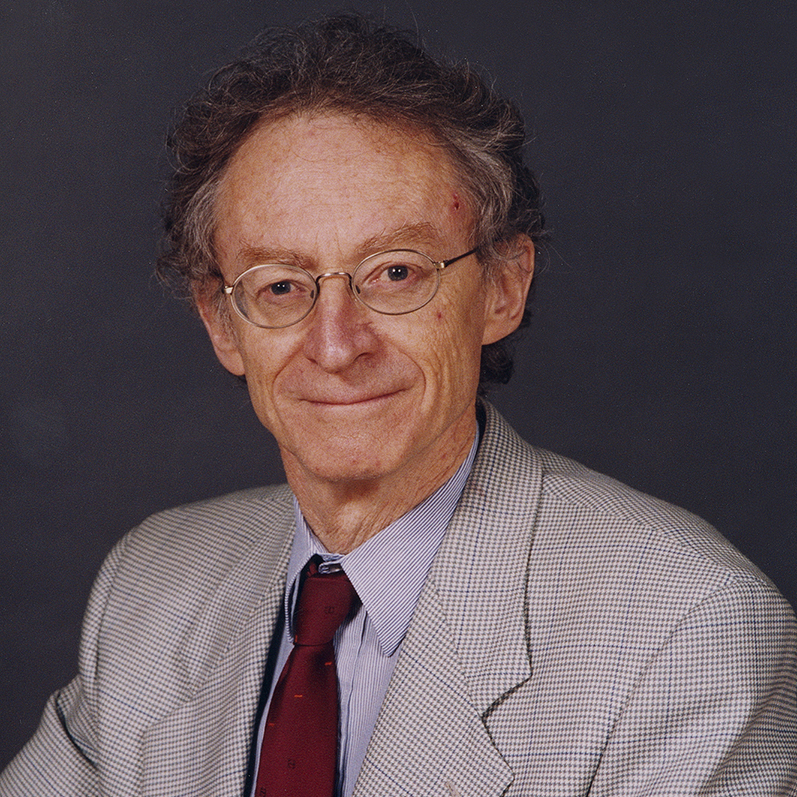
Introduction
Dr Robin Batterham, a chemical engineer, was born in Brighton, Australia to a family with a talent for music and engineering. He faced an early choice between science and the arts before graduating from the University of Melbourne in Chemical Engineering and completing a PhD in 1969. After post-doctoral studies with ICI Central Research Laboratories in England, Batterham returned to Australia as a research scientist with the Division of Chemical Engineering at CSIRO. He was appointed Chief of the Division of Mineral Process Engineering in 1985 and, from 1988 held senior positions in Technology Development with what is now Rio Tinto Limited.
Dr Batterhams career has been primarily in direct collaboration with industry. The focus of this work was and continues to be on the scale-up of new processes and the improvement of existing processes. Early in his career, he developed a successful principle for scale-up that has been applied in many examples and continues to be used to good effect 50 years later.
Batterham is a past President of the Australian Academy of Technology and Engineering (2007 – 2012), former Chief Scientist of Australia (1999 – 2005) and past President of the Institution of Chemical Engineers. He joined the University of Melbourne School of Engineering as Kernot Professor in the Department of Chemical and Biomolecular Engineering in 2010.
Dr Batterham is still a musician. He is patron and former chair of the Australian Chamber Choir, Organist Emeritus at Scot’s Church in Melbourne and has performed in many Cathedrals, Concert Halls and Universities.
Transcript
Robin Batterham. You grew up in Brighton and you went presumably to school close by. Was that a gilded path? Did you just sail through or what?
It was an interesting path. My mother had a serious injury, back injury I think, when I was really very young. So, I spent the first few years of schooling farmed out amongst relatives, one of whom lived in the country. So, I attended a country school where all of the school was in one room and that was just terrific because each class was one row, and if what you were doing was boring in your row, you just shifted into another row. And this, I found a marvellous system of education. Then I got a scholarship to Brighton Grammar, it was a music scholarship actually, and that lasted me all through my education. Then of course, went to Melbourne University.
Before you rush on to that what about science teaching? You did music and you had a scholarship? Where did science begin to come in?
So, it was interesting. I'm old enough, and ancient enough, and the school that I was at was conventional enough, that how well you did in Latin dictated whether you went into the science stream or the stream that was headed for other things. So I managed to get good enough grades in Latin to get into the science stream because it looked far more interesting, and apart from the fact that you had the challenge of doing the Latin. So in the science stream, the school at the time, had superb teachers. It wasn't that there was just one teacher who just lifted you out of this world. I can think of the physics teacher. He could explain almost anything in physics. That was marvellous. There was also a mathematics teacher who never used a book, like one lecture I had at a university and could just do it all in his head. And who also taught me, although I don't think I needed to be taught, that mathematics, solving applied mathematical challenges is as much about intuition as it is about method and knowledge and understanding.
You imply there was a dialogue, in other words. You weren't just d'en haut en bas, as they say in France - from above, down below, when you used to take notes, it was a dialogue.
These were teachers who understood that experiential learning beats didactic type teaching any day and encouraged the students, and particularly those that wanted to be encouraged, and of course there were people who didn't want to be needless to say that's in any school. Fortunately, I had a bigger brother, I think about three years older. So that if there was any physical problems or challenges as you tend to get in boys’ school, my protector was always there to be called up if necessary.
Why chemical engineering when you went to the University of Melbourne?
Yeah, this was interesting because I had a mother who had been a concert pianist when young and her father was a musician, a very well-known one at the time. City organist. Resident composer for the ABC actually, when they had such a thing and they looked after the Melbourne symphony orchestra. So that side was very much the music, but my father was an engineer and just so inventive. I mean, I look at the things that he invented and made his mark in the world and think, well, you know, that's really quite something. And at the time I thought, well - I look at my grandfather, the musician. I would say he led a happy life; he didn't travel much. I looked at my father who sort of worked around the world one way or another and I thought, oh, that sounds a little bit more interesting. Now, if I'm going to do engineering, can I do a combined engineering and music? And I was told, no, that's just silly. And I thought, well, that's a bit of a comeback. So looked at what sort of engineering and the one that stood out to me was chemical engineering, because you did the math’s, you did the chemistry, you did the physics just as if you're doing a science degree. And it was all about being analytical, pulling things apart, if you like analysing them and then putting them back together in sometimes more imaginative ways. And that's what I've been doing on the engineering side, all of my life.
Yes, Bob May - also from the Academy of Science, and also a Chief Scientist except in Britain tells the same story. He did chemical engineering and that led to zoology, mathematics, everything. In other words, it seemed to be a good portal for the future.
I think it's one of those disciplines where you are grounded in what I would call the basics. Physics, chemistry and these days, microbiology and biology as well, and with a good smattering of mathematics. That allows you to get inside anything at a reasonably fundamental level. It doesn't mean that you're expert in every area. That would be a nonsense, but it means you have the capabilities of getting into areas and actually making some judgements as to whether what you're seeing adds up and makes scientific sense or not. And then building on it. And if it interests you, of course, you can always go in deeper. Chemical engineers, I find are T-shaped people. They can be quite deep as they need to be, but they've got very broad shoulders. My shoulders are not physically broad, of course, but I do regard myself as T-shaped.
As an undergraduate, I actually took five years to do a four-year engineering degree. These days you call it a gap year, but my gap year was actually working as a, I don't know what you'd call it, a non-qualified researcher in chemistry and helping the late Ian Ritchie, wonderful chemical engineer, and professor of chemistry. Over in Murdoch or Curtin...Murdoch, I think. He was at Melbourne Uni at the time, and we were looking at intermetallic compounds and I found this more interesting than doing a third year of chemical engineering, I might add, at the time. I was starting to get a bit bored with chemical engineering at that stage. So got into these intermetallic compounds and I wanted to make a Silicon carbon compound and the way to do it ended up using very, very high temperatures. There was no furnace that could get up to those temperatures in chemistry, but CSIRO had a furnace that could go to near the temperatures we wanted. It had a hydrogen atmosphere, so, you know, reducing atmosphere. So the wires and the furnace didn't just burn up and all this sort of thing. And I managed to burn that up, but then I discovered, okay, well, you could do in a...if you levitated this material in a silver boat, which was water-cooled just in case anything touched it because you needed to get it up to about 1200 centigrade before it would start to soften and run together. And then you had to get up to about 1600 centigrade. So, I discovered that CSIRO, which was a division of tribophysics. So, which was on the university at the time had this marvellous RF furnace, an induction furnace with the capacity for what we needed.
So we built the silver boat, built the cooling system and what have you. And I did all this. And then the day came to put it into the furnace, and we cranked up to the power and we sort of made a tiny little pellet of the stuff. Testing the stuff was entertaining, because I had to do some work that involved using liquid nitrogen for one of the tests that I was doing on it. I was doing this at 2:00 AM in the morning and the dewar that I was pouring out...I mishandled, and it fell onto the floor and immediately flooded the floor in liquid nitrogen. Think about that. What do you do? I jumped up onto a table because you don't want your feet frozen off. And I thought, okay, do I stay here till someone comes in in the morning, because this is before the days of iPhones but the amount of nitrogen that's boiling off from all this liquid nitrogen on the floor will slowly fill the room, so I'll asphyxiate.
Or do I try and rush for the door? In which case my feet will be frozen, and I'll lose my feet as a minimum. What do I do? And I decided, of course, this is...these are the two extremes. Let me pick a point where I think there's still oxygen that I'm breathing, not enough liquid nitrogen on the floor to be damaging, because it made a fog, of course so I didn't know how deep it was. So, I started poking things down into it and seeing how the ends froze off. Eventually I got out safely, but you know, these days.... health and safety? I got out, you know, about 4:00 AM. The next day I was back at CSIRO, and I decided, well, I could make a lot more of this stuff now I know how to do it. So, we cranked up the power and from an effect that, I'm not quite sure how we managed to do it, but we created a plasma, which is not good news because of conduction effects and that not only blew up the RF furnace, it took the power supply for the whole building out.
So having wrecked furnaces in chemistry, CSIRO, and then their prize RF furnace et cetera. and we didn't get a publishable paper out of it that after all...
A dangerous young man! Now, it was a story way back that many Australian scientists would naturally go abroad, and MacFarlane Burnet was one of the first actually to turn that around. He went abroad certainly and did wonderful work, but then came back and did his main research and activities in Melbourne, of course, in a way that helped establish the tradition, which you enjoyed of a flourishing of Australian science. What did you do? You went to Britain, but only for brief time?
Well, it was only for two years and I must say that what brought me back was as much to do with family reasons as any other. At the end of my postdoc, I was offered a very reasonable position and the decision was really because we had two young children at the time and the elder of the two was heading towards kindergarten and the decision was, well, do you want them to grow up as English children, or Australian children. Now, to me that actually didn't matter much. I saw nothing wrong with English children. I see nothing wrong with Australian children but to my wife at the time, that was very important. She wanted them to grow up in Australia with access to the family, the wider family. So, I looked around for a job in Australia and CSIRO were generous enough to employ me and back we came, but one could have stayed in England.
So it was as much a domestic choice as anything else. But in coming back, I wasn't the slightest bit worried that there would be really satisfying and challenging work to do. I had worked in vacation jobs in an oil refinery, in a fertilizer factory. I'd worked as a labourer chopping wood in an army kitchen, I might add. I worked also at CSIRO, and I saw the spark that was there to look at things from a fairly fundamental level, understand them and come up with something that was far better and appropriate for Australia. And that attracted me. So, I was delighted to pick up a job with CSIRO.
Yes, it's interesting, you bounce back. During the war, of course, when the tyranny of distance meant that Australia was forced to do its own innovation and its own research and found it could do it very, very well. But then after the war, everyone said, well, we're back in touch now, so let's stop. But there's something that happened that got this sort of momentum going now, you at CSIRO became a leader of say, 240 people eventually when you became chief of the division. Where did the understanding of the nature of leadership come in? Because you've been a leader all your life?
I think leadership is something which can be hotly debated, and as to where it came in. To me, the leadership has just got some rather simple principles. The rubber band principle, for example, if you consider yourself the leader on one end of the rubber band and a group of people who you're working with are on the other end of the rubber band. Go out too far in front and the rubber band breaks, because it's just not credible and your personal authority disappears and can disappear quite rapidly. Be too close to the people, then surprise, surprise, nothing much happens. They just wander around doing whatever they want to do anyway. So getting that tension right is a very obvious thing, you know, when you're having impact. I used to in CSIRO play a rather naughty trick, which was to try and teach people.
This was a bit of leadership and part of my learning curve, you wouldn't be allowed to do these things these days I might add, I do admit that. I was upset by the way, people were too bureaucratic, by the way they were so obsessed with whether they got a double increment or not, and who got a double increment. And whether that was a more worthy case than theirs, and so on. The way they kept their ideas to themselves, rather than sharing them around. In a research environment an idea shared is always an idea enhanced, or shown to be not worthy and discarded, I might add. So never hold onto your ideas, I think that's nonsense. So, I used a bit of a trick, which was for the annual Christmas party at the CSIRO division the research leaders were given an option.
They could get a brown paper envelope, first thing in the morning which contained a field of endeavour when they opened it up, and it wasn't their own field of endeavour. And they had to have written the outline of a provisional patent in that area by lunchtime, which was when the barbecue was, or they couldn't come to the barbecue, or they could come over to my pre-lunchtime recital in the Blackwood Hall, which would be largely Bach I might add, of course, on the wonderful Arhend organ there. And then that would allow them admittance. So, if they wanted to come to the Christmas barbecue with the rest of the team, they had two options. Now, some of them chose the envelope. One of the provisional patents was so good we followed up on it, and this is just out of the head for heaven's sake.
It turned out to be not, let me just say not bad. I don't want to incriminate the person concerned because when we took out the provisional, the amount of experimental work that was done to justify it was a little less than what I would regard as satisfactory in the normal range of things. So this leadership thing I'd always been given opportunities. Sometimes my impact caused ripples. A Director of one of the institutes of CSIRO gave me the task of coordinating work right across CSIRO in the iron ore area. And at the annual review of all of the leaders in that area. I wouldn't do it nowadays. I carved one of them up for just wasting people's time with the technical direction they were heading. It was a black box approach when there were no fundamentals in it, no furthering of the understanding, just a numerical kick this in the direction of west and it will head in the direction of west type work.
This was seen that my approach, and I remember the words to this day, was like a footballer up before a tribunal for some terrible act and such footballers tend to answer the tribunal in a rather rude way and it was seen that my insouciance matched that of a VFL or to be precise AFL these days, tribunal witness. And at the time I thought, well, not really. I was just calling it as it was. What's the problem? And that continued. I've never been afraid to hold back on, putting down on the table what I think is right. When I was appointed Chief of Division, the Chair of CSIRO invited me to a lunch with the board. So, I'd already been appointed, it wasn't a final interview. And the board gave me a hard time for not doing enough basic science and running, to quote their words, a panel beating shop. Now, in fact, we were publishing in reputable journals, not quite as much as some of the other divisions I admit, but we were pulling in funding for the work that those publications underpinned at a considerably higher level than any other part of CSIRO. I'm not going to talk about the figures, because it would just sound like boasting, but with one division pulling in almost as much as the rest of CSIRO combined. I rebutted this criticism rather strongly, probably with insouciance and this person lost their cool, which is a bit unusual at a board lunch and said, Dr. Batterham, you should be taken out and crucified not with one nail in the hand, but with two and I just calmly said, well, that'd be useless because you actually don't put the nails through the hand. They just pull out with the weight of the body. It doesn't matter how many nails you use; you only need one nail and you put it through the wrist. Dead silence, so...
I could imagine. A diplomat, but only just. What I would also like to explore necessarily in CSIRO, of course, there's a link with industry. What have you found to be the differences either in diplomacy or in communication? Dealing with bright ideas between the scientists you're talking to and the people in business who've got to make decisions in a much shorter time worth a lot of money?
Robyn, you've pinpointed here, a challenge that this country has faced, at least since post-World War II. And it manifests itself in all sorts of ways. For example, our publication rates in reputable scientific journals are often quoted as being two to three times higher than you would expect based on our population. And yet our patenting rate or our uptake of innovation is seen as being much further down the scale. And this is a story that hasn't changed in 60 to 80 years, and so you have to look at this and say, what's going on here? Well, on the one hand you can argue, well, this is perhaps because we can afford to be like that. We have very profitable industries. They keep our balance of payments in the right direction. We've got an economy that ticks over on the basis of that, to this add tourism and bringing in students when you don't have COVID et cetera. You look at all this and say, we can afford to make those choices.
It's actually not such a bad thing. That's one view of it. The other is that for many years, there's been a certain element of, I would call it intellectual snobbery around. That pushing back the frontiers of knowledge and becoming a high sci...these days, high sci author or our laudable examples of Nobel Laureates is more worthy than getting the production of iron ore on a ship loader up from 12,000 ton an hour to 15,000 ton an hour in an industry that exports a billion tons a year at a price anywhere, well I mean currently it's below a hundred dollars a ton, but it has paid up to twice that level and higher. This is Australia's largest industry. So, this intellectual snobbery has been well known. The clash of cultures in amongst other things, and I look at that and say, no, that is fundamentally very, very wrong because if you're working in science and you discover something new and you can publish it and have your peers review it and be well-pleased, you have achieved something.
If you were working on an industrial challenge, and you don't increase the ship loading rate from 10 or 12, up to 12 to 15, you have failed. Now you might have ended up discovering that the frequency of particles bouncing on the screen, which is a part of the core of what the ship loading rate is going to be, a kangarooing effect can be changed by putting even more on the screen, which holds them down and stops the kangaroos bouncing too high. And, that's really interesting physics I might add, and there are a few engineering details as to how you implemented it. So, you could still get something to publish out of it that was actually just as highly publishable and citable as somebody working in a standalone field. I look at it and say, there are various elements to this, not the least of which is that, not all of us have figured out that knocking over technical challenges by getting into the fundamentals 1. Is great fun. 2. Keeps the industry people happy because you're doing things for them, and 3. Still advances the disciplines.
Yes
I guess I say, what's the problem?
Indeed, but what you're doing there, there are several themes in your work. One of them is scaling up and you talk about getting more of the tonnages on the ship, but you can do it in two ways. Either you can just say, well, there's plenty of iron in that ore. Or you could say there are ways in which, and they're doing this at Centers of Excellence say in Newcastle, where you use less water, you use more cunning to get the sufficient that's required out of the ore before you start shifting things. In other words, you've got a cunning way of combining both the scientific principles and the more brilliant engineering up-to-datedness....finesse.
This is absolutely right. The notion that there are always smarter ways of doing things is a very powerful one. Now, here you run into a bit of economic theory which puts an interesting turn onto this. Let's stay with the iron ore, so you're pouring something out the door at 10,000 ton an hour, and that's, you know, at a hundred dollars a ton. Let's keep the prices down low, that's a million an hour. Now you look at the cost of making some small improvement and the risk of it failing. And you say, look, I'll just keep on at a million an hour, thank you very much. That's putting 750,000 in the bank, clear profit. Not in these days terms I might add, but back in the seventies - yes, that was about the sort of numbers. Well, in the seventies it was $40 a ton but I think cost of production at the time was probably eight to $10 a ton. So, tons out the door, beat improvements and beat them quite solidly because the risk of failing on the improvement is finite. No innovation can be guaranteed. Changing something cannot be guaranteed to improve it, and even in the work that I referred to, the screening work - it did actually cost about three days of production, because when we got the rate up the conveyor belt that the iron ore went on, which was a kilometre or two long heading out to the ship loader, was actually getting more sideways force on it from the higher flow of ore, and so it tracked slightly to the right as it was heading on out. That was nothing, but eventually it tracked further and further, and eventually some alarms went off that indicated side belt problems.
The operators ignored those alarms on the basis that they had never had a side belt alarm. They saw no reason why they should be getting one. They didn't get off their backside, jump into a truck, go out and investigate it. You know, half a kilometre away from the control room, and the control room was up on a tower, beautiful views and all that sort of thing. So, the net of that was about 200 meters of the belt ran off sideways. Now you can't come along and just pick it up. There are tons and tons of material. You've got to send people in with shovels and wheelbarrows, and then eventually front-end loaders. Scoop it all up, clear the belt off, then bring in cranes to lift the thing back on gently enough so that you can run it forward and clear the belt. This was three days or so.
So the experiment that we did, succeeded in getting the tonnage up, but it failed if you look at it and say, they lost three days production. Now that was an enormous amount of money. Now they put in drop plates to break the momentum of the ore falling down, which I should have thought of and could have thought of by the way, if I'd really spent enough time on it. But I was so enthused with the notion that, I can see how to get the shipping rate up, let's go guys! And they believed me. So sometimes you're going to be lucky, they continued to believe me...
Well, let's get you to Rio Tinto and CRA [Conzinc Riotinto of Australia] where you're eventually Chief Scientists there. Were you dealing more or less directly with management and the business people? Were you as much involved with the engineers and the people on the ground as you had been before?
The positions that I had in CRA and then as it became Rio Tinto, where at a fairly senior management level and as such one was dealing with one's peers at that level for an awful lot of the time. The people that reported to me when they had corporate laboratories, their advanced technology development laboratories, were of course at a lower level that they had to be dealing with the operators of plants, the general managers of plants, the technical advisors, and so on, every day. And it seemed to me that whilst I could talk with my peers and the group executives and occasionally with the board, and certainly with the board of some of the subsidiaries, like Comalco, pretty regularly, that was one level of communication, but you have to have the people who are doing the things actually out there talking with those who you're trying to help. That's essential.
So you can't escape that. You can't escape that in CSIRO either, or universities for that matter. If you want to make a change, you have to be able to spend the time, and not just time, but understand what's needed and see how you can fit in and work with it. I find it appalling that people will take money for a project to do with an industry supported project and then in effect hardly communicate or look at what the partner wants to do, that's paying for the work, in anything other than whatever the mandatory reporting time is. That really is not a formula for long-term success. And then whether you’re starting up and spinning stuff off, or whether you're working from within Rio Tinto with existing business units, one has got to remember the formula that making innovation and making advances in science, I would argue is path dependent. So that if you get on well with people and you have successful results, surprise, surprise your path forward is a lot easier than if the only time they see results is when they almost force it out of you.
How did you deal then with various aspects of environmental consideration? Which of course with Rio, as well as various other mining mineral industries is, especially in recent times, has been a fairly bumpy ride. Did they consult you?
It's interesting. This has always been on the agenda and there's a few ways you can look at it. Personally, I acknowledge that I have a personal position, which is a little bit irreconcilable in that it's got some contradictions in it. I used to work pretty frequently up in the Pilbara. So frequently I might add, this was back in the seventies that the company actually gave me a house because it was cheaper for them than paying the hotel bills and so on. And also, it meant that some members of my team who were there much longer term could be there. So, I'd fly up sometimes twice a month and stay there for a few days. And if I had a weekend, we would always go out walking, whether it was inland, whether it was going out on the Burrup Peninsula.
I can remember trying to get to the confluence of the Hancock Gorge, and the Witternoon Gorge, and the Joffre Gorge, which all come in together in one place. It's sort of impossible to get to, and we had three or four attempts because at that stage, there were hardly any tourists, et cetera. It wasn't easy to access. And we eventually got there, and I can recall the exaltation and how great I felt. We were down at the bottom of what is quite a steep gorge, where the other three come in and we heard voices and I thought, oh. You sometimes get people up the top, and if so, you've got to watch it because they'll inevitably throw stones. So, we tucked ourselves in against the wall and then I thought, they're actually coming up Witternoon Gorge.
This was a bunch of people from Dampier, from one of the youth clubs. And they'd brought up inflatable rafts to paddle across stretches of water, then walk along the base and they'd actually walked up 15 kilometres or so in Pilbara type heat, I might add. And their idea was that they were going to climb out through Hancock Gorge. Well, that's not easy because it's got an overhanging lip in it. And we'd had several attempts to figure out a way without equipment, how you could do this, get down and get back up again, getting down was easy. It just jumped off and fell into the water. So, we had to help these guys climb up. Fortunately, we bought a rope with us and a log that we'd found further up the gorge, and we could wedge it across, and we can actually, actually provide a climbing rope for them.
I was thinking at the time, how outrageous it was, when having carted this log for a kilometre or so along the gorge and with a rope, which was out just in case, though it tuned out it was need. When we wedged this log across a couple of more than cracks, but clefts in the rock face. There was a piton that had been banged in where somebody had followed exactly the route that we were and had just used technical climbing. How outrageous! And I thought this is a pristine environment. What are people doing? Banging pitons into the rock. This was before the LNG train was built, we used to walk out on the Burrup peninsula and just rejoice in the environment that it was the pristine state of it, and we had a couple of favourite spots. I recall visiting one, one time and thinking, this is where they're going to bring the LNG in. The bastards! How can they do that?
Now, the only reason I was there, was because Hamersley Iron was collaborating with us and we're working on technical problems, like improving the ship loader rate . And they had massively changed the environment. Of course, when they came and yet I had this unreasonable reaction that how dare you touch a pristine environment like this? And I think I carry this dichotomy of view, but I've long since rationalized it by saying, if you were on the industry side and the investment side, you always have two points that are extreme. One, do something which is against the law and go to jail. That's clearly a no-no, although in places around the world, of course, environmental degradation, just staying with environment, is appalling and illegal. However, that should be one limit in your thinking that says, I must at least stick by whatever the regulations are...
And by the way, regulations have a habit of getting tougher and tougher. Why? Because our ability to detect things is now for many things in the parts per billion, not parts per million or parts per thousand. So, regulations often tend to follow detection limits, but that's another story. That's one point. Now out on the other is to say we will bankrupt the company ensuring that our footprint is absolutely minimized. Just simply as much as you can and the cost of doing that will bankrupt the company. So, you have to come to a compromise position in good faith that says we can't avoid having some impact, but can we make the impact at a point where the options for the future are maintained. And, mining can't be totally sustainable, that's nonsense, you're digging up a resource for heaven’s sake...that resource is not there as an option in the future, but you do have to think about, well, if you're digging a pit, what's it going to look like when you're finished. Because the valuable that you're taking out...remember when you break rock, you end up with a volume that is about 30% greater. So, what are you going to do? Are you going to backfill the pit? Have you figured that one out? What happens to the water table? What happens to some obscure life forms that might've been living in ancient water that you're going to end their lives?
Yes, but if I may just say that sometimes the signals are so strong, you mentioned Witternoon just now, obviously that was where lots of asbestos mining was going on. And even 50 years ago, it's perfectly plain that asbestos was becoming a massive problem. And of course, there was, involving Rio Tinto, explosions involved more recently with the caves involving Indigenous arts. You know, somehow, you've got to perceive, especially in your position as Chief Scientist. You warn them and say, this cannot go on?
I think that deciding on that curve from hopeless on the left of the curve to hopeless on the right, deciding where you sit has to be a very communal decision. It is not just the company and its direct stakeholders. There can be lots of stakeholders involved and the chances of coming up with decisions to please everyone, of course, are zero, by the way. I think in almost all cases, one has to accept that as a reality, and it can be a long-time negotiating positions. I do look at the way social media and a lack of facts and misinformation swings debates these days and say, coming to a position that makes sense to most people is actually a lot tougher than it was when I was in the industry. And that's courtesy largely I think it's, as I say, misinformation through social media. The social media side, I say is good in that more people now can be involved in these decisions that have to be made, but it's tough.
Let me ask you now about two aspects of your research, one starting with zinc, and then green steel. Some of your ideas there, starting with zinc.
The zinc one was interesting up in the north of Queensland. There are some deposits that are extremely fine grained and by fine-grained, I mean, liberation size for the valuable mineral of around seven or eight microns. And whilst this is nothing in the industrial materials area, for example, pigments for paint are ground down to that sort of size. In the minerals for metals, it's pretty unusual to have to come down much below a hundred-micron, 50 micron or so. To come down an order of magnitude more than that to liberate the valuable mineral is really a challenge because it costs you energy to grind something up just to liberate a mineral. So, it's interesting that there was a [similar fine grained] deposit at McArthur River that I recall when I was working in the CSIRO. Mt Isa Mines owned it at that time, and they brought [the problem] to CSIRO and the world actually to say, can you figure out a way to liberate the valuable minerals so that this becomes an economic deposit? There was an awful lot [of this fine-grained mineral].
And that was essentially 40 years, a 40-year journey for [Mt Isa Mines] to come up with a way of successfully liberating the minerals in their case, largely zinc and lead. In some way, CRA as it was then was a bit luckier in that the deposit they found was, was similarly fine grained, and not all that far away I might add, was almost entirely a zinc [mineral]. And it was zinc that didn't have any iron in it and iron is one of the contaminants in zinc concentrates that ends up as a nasty and is pretty hard to deal with. It used to be dumped in the ocean, I might add. That's stopped these days. This fine grain zinc, we managed through ultra-fine grinding and then finding almost miraculously that flotation worked to separate the zinc from the other minerals was actually pretty straight ahead. [This was a breakthrough in fine particle flotation].
So we ended up with something which was developed in two years, compared with 40 years for McArthur River. The project was highly successful economically. There was another technical breakthrough in [the project]. Zinc concentrate is first of all roasted in a flash roaster to turn it into zinc oxide, which is then leached with acid. And if you put 10 microns [concentrate] into an up flowing current of hot gas, it's just going to blow out the spout. It has to be about a hundred micron. That's what the [roasters] are designed for and what we found, it was just so simple, that if we just trickled water on the feed belt to this flash smelter, it caused enough agglomeration that the particles stuck together for long enough that they fused before being oxidized. So, they were the equivalent of a beautiful hundred-micron material. So, there were these series of breakthroughs that got this [project] through in just two years.
And I've had some tough things to do in my life. One of them was to tell the team who had worked...certainly quite often seven days a week, because we were under enormous pressure. This was the only significant project that CRA had on the books at the time. So, there was the CEO requesting fortnightly updates of progress. Now in the world of science and technology, you don't make progress on a fortnightly basis. Well, if you do, it can often be in the wrong direction etcetera, and we tested their patience. And, through my group executives at the time, who was just an absolute pillar of strength, and buffered some of this for me, and I pay tribute to John Innes’ leadership there. We were able to shield the team from a lot of that pressure, but the disappointing thing was when we got it through and it was piloted onsite, et cetera, and there were many tales one could tell about that. It was then sold to another company because the NPV, the net present value of selling it at that stage was higher than if Rio Tinto had owned and operated it itself because the low iron content meant it was particularly valuable to smelters who were running out of places to store their jarosite residues.
And I had to tell the team, gee, thanks guys. You know, world-class, absolute show beater. You've done in two years, what others took 40 years to do. And it's an absolute success, and the company has just sold it.
Okay. The story of green steel and Veena Sahajwalla from the University of New South Wales has been recognized as bringing that forward as well. Do you match in approach?
I've great respect for Veena. She worked with me at CSIRO a long time ago. I've great respect for her work. There are many alternatives [for green steel] and I gave a talk recently at the Iron Ore [World] Congress. I think the world has become a bit enamoured with the hydrogen route, which is make hydrogen from electrolysis and then use that for direct reduction. And that's fine, it will work. But if you look at the international energy agency's roadmap for the iron and steel industry, you'll see that by 2050, the industry is still nowhere near zero emission. It's at least 2070 in their estimates. And that is using a very aggressive investment in new technology and new investment. So that's not quite the rosy picture that one hears, when one hears the stories that we're going hydrogen, that's all going to happen.
And yes, it will. I might add, but globally, that's still a slow process of change as with any capital intense industry. You can argue that's the case. So, we're looking at alternatives to the hydrogen route and at this stage until the second patent is lodged and the public announcement is made of the funding. I can't say much more than that. Other than saying that there are two or three other routes that are around the world being looked at. One of them is happening here at Melbourne University. One of them is happening at MIT. The MIT one is a very high temperature direct electrolysis and having spent years on direct smelting molten iron, [any system] with FeO dissolved in it at 1400 plus centigrade is quite an engineering challenge, but one which the iron and steel industry actually well knows how to handle. So, there are some interesting developments there at the moment, some of them are wrapped up and I would look at this on a global basis and say fine. It is always good to have alternatives there, and we will see how they develop. This is a watch this space area Robyn and I hope we can talk about it a bit more sometime soon.
We shall. Now let's talk about your being a Chief Scientist. And again, I mentioned Bob May. He was Chief Scientist in Britain, and when he was appointed, several extraordinary things happened at once to challenge him almost to the limit. And one of them was mad cow. When you were appointed, was there anything like that to overwhelm you?
I don't think there was. Bob May was, I acknowledge as an extraordinary great person, both in terms of fundamental contributions to science and their application and having a very smart head on the shoulders. I got on very well with Bob May. Both of us, of course looked, at that stage when we were both chief scientists pretty similar. [I had far more hair than I have now and curly, as did he] also both of us sort of reasonably lightweight, scrawny looking people. Not totally similar in face, but similar enough that if people didn't know either of us, they, and we didn't introduce ourselves, they mightn't be quite sure who was who. And I do recall giving a press interview with Bob, a joint press interview on one occasion after the World Chemical Engineering Congress. And we'd both given keynote papers and then gave a joint press interview afterwards. And the first question was fired at me but answered by Bob May.[Missing section here]
Thereafter, we continued for the rest of the interview, including when it was for Bob May then I would answer and vice-versa. And we both walked off stage trying to keep a straight face. Of course, I might add, no harm was done. We didn't make any claims that were untoward. They were fairly straight-ahead questions, and both of us well capable of answering them all. But I tell that little tale just on the basis that he was actually full of life, of course, always ready to talk and swap notes. And fortunately, I just didn't have a mad cow type catastrophe on my hand at the time. The carbon capture and storage did blow up in that it was seen [that I was biased] in pushing carbon capture and storage, which is still I think, got a long way to go in terms of the tonnage and making it actually happen. Technically it's been shown that it's all doable and appropriate. In pushing [carbon capture and storage] I was seen as having a conflict of interest and that caused quite a bit of pain within government. But as it turned out, there was certainly no conflict of interest and the...
By the way, if I can just interrupt there. Carbon capture and storage still has a long way to go in, assuming we've got 10 years, do you think it'll make it?
I think carbon capture and storage is in an interesting position. We've got a project going on here, a joint effort between this university, Princeton, University of Queensland, and the Nous Group. And it's looking at a similar approach to what Princeton did for north America. The so-called Net Zero America study, and the Net Zero America study is really quite stunning because it takes what all the demand is and reasonable projections on population, energy demands, transport demands, and so forth, and then brings in on the supply side, whatever is the most economic at the time. And it does this for different scenarios, high electrification, or not so high electrification. All renewables or constrained renewables. In other words, you can only build renewables at say one and a half or more times, the rate that you have ever succeeded, or any country has ever succeeded in putting renewables in.
And then it goes into all this detailed modelling of saying, well, there's an awful lot of land that you can't just put wind towers on or solar panels. It might be too steep, or it might be land, which is very valuable for agriculture. And you can't just turn around, say for offsets, and take out your arable land and turn it all over to forestry. Just because you want to sell the offsets, you then don't have the food to eat. And so, it goes on. So, in down-scaling, it not only included everything rather than just looking at one particular sector. It included everything and it did all this downscaling, of going right down to what I call postcode level of what you can put in and what you can't. And then you bring the thing in, on an economic basis. And the results are just to me, staggering, in that the amount of renewables that you've got to put in is actually fairly mind-boggling and for Australia, which is where we're doing this modelling now the challenge is not so much getting Australia to zero. That's quite doable, I think, but our exports at the moment have so much in the way of direct emissions from the people who use them.
So-Called tier three emissions. That if the world is going to decarbonize, it's not going to take our products unless we do some of the decarbonizing. So that's where you then have to start looking at carbon capture and storage and saying, do we have the capacity? Not for what we might need just in Australia to get to net zero, but for all of the emissions associated with our exports. And I've got to tell you on that score, there are some particularly in the geological sciences, who would say, yes, we have. There would be others who say, you're just looking for an excuse to keep on doing what you're doing, and that's not the way of the future.
And by the way, I agree. Totally. but you might need CCS for some things that are really hard to decarbonize, I might add, like cement production and so on. Now, the difficulty is that there is a difference between the number that some people say we are capable of for CCS and the numbers that could be achieved when you talk to people who actually own some of these properties and who are trying to make CCS happen, the numbers are not as great as what some of the geoscientists argue. And I can see the reason why. It's not until you actually poke wells in the ground and test flow rates and test where the material goes to that you know where you stand. Rio Tinto did a joint venture with BP, and they were looking globally at opportunities for CCS.
And they looked at one off the coast of Fremantle. And the idea was from the BP refinery, you would take the hard to utilize materials from the crude distillation unit. It's sort of only good for asphalt on the roads, and there's a limit to the number of roads you can build even in Western Australia. You would gasifier it, pull off the hydrogen and you would take the carbon dioxide and put it into a geological formation, so you'd end up with a valuable product - hydrogen in this case, which you can use for upgrading the transport fuels to a higher octane number, and CO2 to be buried. All of this proceeded, it looked terrific on paper, and then they started drilling holes into the formations and started doing a bit of test work and they found that formation A actually had some pretty big connection to Formation B to Formation C.
And all of a sudden you were under Rottnest Island, and would you really want to be gassing the quokkas with CO2? And the point about this is the doing the detailed geology indicated that what was an apparently very promising reserves from large scale geology. When you got down to fine scale, didn't add up the way you expected. So until a lot more geological testing is done, we're in a bit of a catch 22 here. I would argue that until a lot more CCS is tried, we don't actually know what the capacities are. I have no doubt that you can poke CO2 down one and a half, two kilometres and have it stay there for heaven's sake. The natural gas that was in that reservoir, that you've extracted all the oil has been there for a long time. Why won't the CO2 be there for a long time? And, you know, oh because it will leak back up the well. Well, not if you plug it properly.
Interesting, yep. And of course, this relates very much to the carbon work you're doing at the moment as well, advising on how we can do agriculture in different ways. So that carbon goes into the soil. And again, this argument about how much can go there, how you measure it and how it stays there? Is that what we're working on at the moment?
I think the carbon in soils story is a really interesting one. It's featured as part of Australia's technology roadmap that it's got quite some potential. You're spot on. The opinions in this area really vary from stridently against the notion to vociferously arguing the case for it. Both have a reasonable position. The reason that you get this disparity in what I'd call the science is that carbon in soils per se, is a highly variable measurement. Firstly, in the upper layers, it goes up and down depending on the crops, the weather, et cetera, it's highly variable. So that's temporal. The deeper you go, the more constant it is, like temperature I might add. So that's, that part's fine. So, we've got this temporal variability and Australia being a land of droughts and flooded plains, et cetera.
And with the likelihood that some would argue that we're going to see more variable rainfall than what we've had before. This isn't a good news story for carbon in soils, but then on the other hand, if we think about deeper rooted species and this might mean changing agricultural practices so that we go more for perennials, that we go for deeper rooted species, that we go for riparian agriculture, with rows of trees, with windbreaks et cetera. You can envisage 10 to 20% of good quality arable land being given over to planting trees or deep-rooted species. So, I might add, and the benefits of the greater water retention actually meaning...and less agricultural chemicals needed, I might add because you have more birds get rid of more insects, and so it goes on. You could end up with a win-win here, but as to the question of how much the jury is out, it's as simple as that, there are opinions, there is the anecdotal evidence, but when you get into the anecdotal evidence, was it all measured to the standards that would pass peer reviewed science?
And the answer is no, by and large. Are we just going to take satellite imagery and interpret the three colour or whatever, or hyperspectral and say, well, look, we know how much plant protein there is there and it's going up, therefore the soil carbon is going up? No, you just can't do that. We have to do the work to crack this particular challenge. And I think when we do, if we can deliver a low-cost method, much, much lower cost method of accurately forward predicting what soil carbon is on an annual basis, then the benefits are going to write the equation themselves because there will be considerable benefits, even if we're hitting rougher climate climatic conditions.
Now I'd like to ask you a question about the future, your discussion over this past hour has been to do with so many different aspects of minerals, geology, the exploitation of resources and so on. And so, it comes to a surprise to many of us that there were departments of geology in Australia, at universities are being closed down and that geoscience has been diminished. How is it when there's so clearly an importance and also a heritage in this regard that such things are going on and if I reappointed you as chief scientist, what would you do about it?
This one is interesting, what do students choose to study at university? This is a really interesting question. I'm not going to duck it; I will make a few comments on it. Equally, what graduates are employable is another part of the answer to this question. And we can't avoid the fact that as students go through school, they're very effected by their teachers and what their teachers think and the directions that they're pushing them or encouraging them. So, when you take the totality of this and you come to a position that says mining and anything associated with it is intrinsically bad, look at all the problems it's caused, and it does cause problems. For heaven's sake, you've mentioned some of them earlier on. If I got into the business of tailings, this ultra-fine material, the waste that remains after you've extracted the valuable mineral, at the moment in the world of order one major tailings facility collapses every year.
And there's quite a few mishaps. And we're well aware that some of these mishaps have caused great environmental concern. Cyanide residues heading off down the stream for a hundred kilometres or so in a European country or Eastern European country. And then let me not go into detail, iron ore tailings, letting go and wiping out a couple of hundred people, let alone decimating a productive valley, and so on. This sort of thing is still going on. So, is it a surprise then that teachers and students at schools see anything associated with mining to be not where we want to be? We want to be in a circular economy and I'm very supportive of that, I might add. A circular economy can only work by the way if you've got energy input to it. So, one should also have the discussion about energy before one gets carried away with circular economies, but by any stretch of the imagination, it's going to be 30 to 50 years before the globe gets to the circular economy.
And so you're still going to need primary materials for that period of time. Albeit, in diminishing amounts, but an awful lot of primary materials. So how do we get over this mismatch between how our students perceive the world and how they're educated and the like, and hence the choices they make. And then at the university level, how do you, if you not getting the students applying, these days that means that the department closes, full-stop end of story. Certain aspects can live on as research I might add, providing they're pulling in the research dollars. So, this is a problem which is society wide. Now, if I turn to the university part of it, I think that's fairly easy. Try for, if you want people to do a geology course, try firstly doing world-class research that in and of itself gets a reputation and helps to inspire people, the undergraduates that do come through.
Two, put prerequisites on your course and high levels of performance. So, you don't take an ATAR or its equivalent below 95, and you do require math’s, physics, and chemistry, and then see what happens. Physics over in Western Australia, I can't remember whether it was UWA, or Murdoch or Curtin did just that. And the numbers increased, not decreased. Think about that. Why? Because it was prestigious. It was something you had to be really, really good. And if at the same time you come into a department that's doing world-class research and is getting industry input as well. And that's not too hard to do. You've got the formula at that end; you still have to address the formula through the schools and the wider bit. And I think that has to be by outreach of companies, of universities, reaching out into the school and working with them.
And you can't knock over all schools. You do it by being a little bit selective because there's only 24 hours in the day to do these things. I look at something like the STELR Program that the ATSE started off by Alan Finkel, I might add. Of giving students the equipment and the gear and the curricula and making sure it's within the curricula to teach things about, to teach basic physics and a bit of chemistry I might add within curricula, but very much tailored to renewable energy. That's the sort of outreach program that changes people's attitudes that it's doable. And that it's interesting. So, Robin, it's a long-winded answer. I think one can make a difference here, but the formula is a tough one and it goes against the tide to turn around and say, well, we're in danger of being shut down because we're not getting enough students instead of the race to the bottom - we'll take anyone that can even spell a geology. And by the way, it's G E O it's not G E E et cetera. No, no try. Only taking students that have a 95 ATAR.
What else are you working on? We've, we've gone through a huge list and lots of it is still being maintained by your extraordinary mind and activity. What would you like to mention at this point?
Yeah, we've covered a lot of ground. I find the only limit to ideas and applying them and finding worthwhile things to do, whether it's in the education field. Whether it's in the research or the like are the hours in the day and the fact that I might add, you've got to work with people. One just doesn't have, these days the notion that as an individual, you can go off and invent a green steel process. You've got to do that with colleagues. So, you've got to be able to work with teams and so on. So, my perhaps only complaint in life is that nobody has invented the 25 hour day. It's really quite outrageous. There's such a need for it, and it's just not happening. So, and you can look at your sort of personal life and say, you still have to balance your personal interests here.
So there's many things that I am working on at the moment and it's really that my colleagues are working on and they are generous enough to let me slip in and throw in a few ideas and then work with them. I'd point to the work of Professor Antoinette Tordesillas who has got a wonderful approach of looking at how shear bands develop in particulate solid. So, if you've got a, a column of sand, for example, a now compress it and it's contained in a column where it...and it doesn't matter whether it's concrete or sand or whatever, as long as it's ultimately a particulate. The prediction of where the failure band will occur, she can do. And she does it by a combination of watching what all the movement is at the individual grain level, and then forward predicting how the whole is going to move.
And this is not massive computing of taking every single grain and saying, it's got this force on it. Can it rotate? Can it slip and so on? We don't have the computer strength to do that sort of thing. This is far, far cleverer than that. This is saying, well, you've got two modes of operation here. One of these modes is that it all just sort of sits there when you put a little bit more force on it and it gets a bit excited and the force chain that actually supports the weight is not every single particle, it's chains of particles. And when one of them slips a little bit like a column bending can no longer take its load, other force chains form. So, it's all about, are the force chains staying roughly in the same place? Or is a failure mode where there's going to be catastrophic movement and force chains, just aren't in the picture starting to become evident by the patterns of movement.
And when I looked at her work, I thought this is brilliant because [of what we could do with that approach]. And Rio Tinto had just had a slide in the pit, a one-kilometre-deep pit, and the whole side of one face let go. Disaster! They saw it coming months in advance, I might add, but even the extent of it caught them by surprise. And I thought, Antoinette, your work here is remarkable because if you apply the same logic to an open mine face or a side of a hill that might let go and have a mudslide, that buries a village, or the side of a volcano, that with just a little bit of oomph from underneath might let go. Like, Mount Stromboli is in Italy et cetera, the same principles are applying. So, we got some information of a collapse of a face of a mining operation.
Such information was a little bit hard to get. We've had to keep it anonymous. I don't think it burned up any friendships, but we certainly weren't able to say what it was that we were looking at. It was an incident where there was an unfortunate slip, nobody was injured, no equipment was lost, et cetera. So, it was just a delay to production. And we had the radar ranging data for every pixel point on this face and the best available technology...and we had about six weeks of data...the best available technology, globally available gave about five false warnings before giving a very clear warning two days before the failure. Antoinette's technique picked up the likelihood of failure on day two and was right.
So you can predict danger in mines and hillsides, in all sorts of circumstances?
Yes. Is the short answer, and I'm currently looking at how we might get funding?
We're talking with the Nepalese government because they have slides coming down the hillsides and wiping out villages in the valleys with unfortunately quite a high incidence. As to how we might get funding to use the Sentinel [satellite data], to ranging to and apply this methodology to it, to actually forward predict to the residents in these valleys when they've got to get the hell out of it. We haven't got funding for that yet, but that's just one example, I could actually give several others. How do you make micro bubbles? If you can figure out how to do that, you can change the economics of wastewater treatment of fermentation processes of a lot of chemical reactions, I might add. There's some brilliant work done by Zimmerman in the UK of using a fluidic oscillator to alter the flow rate of the air, coming up to an orifice where a bubble is going to form and pulsing it at such a rate that only a tiny bubble comes off rather than what you normally get.
This phenomenon by the way that I observed back in my post-doc days anyway. So, it's not new, but the Zimmerman has been out and patented it and good on him and so forth. His approach uses a fluidic oscillator, it's a bit of dog. With due respect to him in terms of its robustness and operability and so forth. And no doubt you can tune it up. I compliment him on all the work that they've done, but there's smarter ways. I think of doing it, using piezo-electric switching so we can use the basic phenomenon that's there and perhaps generate the pulsing by piezo-electric switching, which you can do at very high frequencies. And you can tune the frequency and you can tune the amplitude and so forth. So, bingo! I think we've got ourselves a microbubble generator. And when there's enough time, we'll go chase some funding to develop that. There are others...
Still going strong! Two final, quick questions. The first is having been a Chief Scientist and still being in touch with politicians, making big decisions. How do you get on with them?
I find politicians an unfairly maligned species. I've had the great privilege of working with a string of politicians and the ongoing privilege of being asked for comment by a range of politicians or coming across them and giving them comment if they want it. So, I still have some regular discourse with politicians, not as much as when I was Chief Scientist. When I was Chief Scientist, I made a point of talking to shadow ministers as well as ministers, caused quite some upset when I first started doing this until people realized, no, he's not giving away party secrets or whatever. He's working on things that need bipartisan support. They're important enough for that. And I still hold to that principle. One certain politician greeted me not all that long ago, Robin! Your video on such and such went viral, blah, blah, blah, and went into a bit of detail on it.
That level of being able to chat and being known, I might add and also respecting their positions on the political scene means that it's fairly easy. And what I've found is that with the politicians that I deal with and continue to deal with is that these are highly intelligent, highly capable people, the pressure they are under never to say the wrong word, always to be able to whiplash the other side, et cetera. The social media, the constant media attention is just something that is almost inhuman. That of course colours some of their behaviour, but to be able to sit down for half an hour or an hour even in some cases, and just simply discuss what's best for Australia and how might you achieve it? That's a great privilege. And the people that I occasionally have the great privilege of talking with, I respect for the intellect that they have and that their hearts tend to be in the right place, even though they might behave politically from time to time.
Indeed, but you're not set off by those behaviours. You're not getting angry. You're not led by passions. That for instance, going back to Bob May, drove him quite a lot.
I'm driven by the passion of seeing better things happen. And that's my passion. You can say, well, you're just a technical hedonist. You totally enjoy these things when they work and so forth. The answer is Yes, happy to admit that. The world I hope ends up in better place when we as scientists and technologists and engineers get in and improve what we have now, either by inventing the new and seeing it implemented, or simply by improving what's there, there so much that we can do, so much more.
Do you still play music in church?
I gave up my position of 20 years as assistant organist at Scott's church, which in some ways you could argue, well, you're crazy. It's got one of the top organs in the world. I'm an organist. And it is, I would argue it's the best in Australia, but many would argue against me on that one, but I can go into chapter and verse on that. A professional choir, a congregation who are as interested in the ministry of the music as anything else and that I see as very positive. It's pointless making good music if it's not moving people appropriately. And I gave up my position of 20 years there. I still play occasionally there and still do some other work. And one of the elders of the place came up to me at the time and said, Robin why are you retiring? It was sort of what are we doing wrong? Is it the salary? Should we double it? I said, no, I think it's time that somebody else had a go at it. I'm spending less and less time in the country, as it turns out. Then my time commitments were such that it's really not fair. I’m keeping some probably better musician out of a really good job. They should be having the fun. So as simple as that...
Thank you very much indeed, it has been a delight talking to you.
Thank you
Additional information
© Australian Academy of Science
Some re-use permitted (Creative Commons BY-NC-ND)
Marcel Dupré's Stations of the Cross
performed by Robin Batterham on the Rieger organ of Scots' Church, Melbourne.