


Academy celebrates the best of Australian science
Prestigious honorific awards acknowledge outstanding contributions from 23 scientists across disciplines and career stages.
- 6 mins read

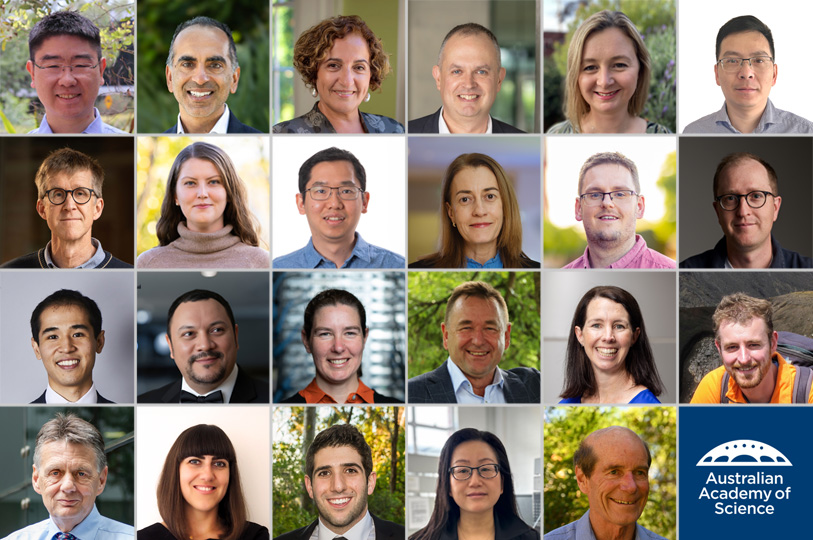
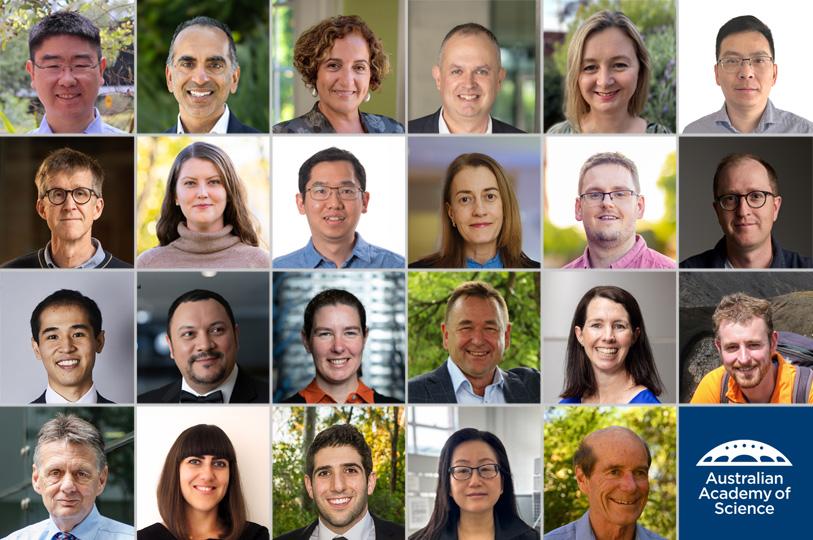
2026 honorific award recipients.
Today, the Australian Academy of Science recognises 23 exceptional scientists across disciplines and career stages with our prestigious annual honorific awards.
This year’s recipients have helped restore the ozone layer, transform cancer monitoring, and reimagine clean energy storage.
President of the Academy, Professor Chennupati Jagadish AC, said the awards recognise scientists whose work delivers tangible benefits to society.
“Each of the researchers recognised today represents the very best of Australian science, through the depth, rigour and impact of their work.
“From fundamental research to applied science, they improve lives, protect our environment, and help secure a better future for all Australians.
“The Academy is immensely proud to celebrate their achievements."
Three decades of lifesaving discovery recognised with the Macfarlane Burnet Medal
Professor Alan Cowman AC FAA FAHMS FRS, Walter and Eliza Hall Institute of Medical Research (WEHI)
Professor Alan Cowman has spent the last three decades contributing to our knowledge and treatment of the most severe and deadly form of malaria caused by Plasmodium falciparum.
Malaria is one of the biggest killers of children under five in most developing countries. Left untreated, P. falciparum malaria can progress to severe illness and death within 24 hours, according to the World Health Organization.
As an international expert in molecular parasitology at WEHI, Professor Cowman has developed techniques to genetically modify P. falciparum, a tool that has been adopted by malaria researchers worldwide and has contributed to efforts to eradicate this disease.
His fundamental discoveries have led directly to development of novel therapeutic candidates, including live, genetically weakened vaccines that harness the parasite's own biology against it.
His work has also contributed to the development of new antimalarial compounds designed to overcome the drug resistance that has undermined existing treatments.
Professor Cowman has received one of the Academy’s most prestigious premier awards, the Macfarlane Burnet Medal, and said this represents the culmination of countless hours of teamwork, shared insights and collective problem-solving.
“It serves as a powerful reminder of the interconnectedness of scientific progress and the importance of fostering a collaborative research environment,” he said.
Redefining bone regeneration recognised with the Suzanne Cory Medal
Professor Hala Zreiqat AM FAA FTSE FAHMS, The University of Sydney
Serious fractures, bone cancer, advanced arthritis and major bone loss caused by injury or disease can leave damage too extensive for the body to repair on its own. This challenge is becoming even greater as people live longer and healing becomes more difficult with age.
Professor Zreiqat said her research focuses on developing new generations of synthetic biomaterials capable of repairing and regenerating large, load-bearing bone defects, with the potential to transform treatment for skeletal damage caused by trauma, cancer and ageing.
“By integrating advanced chemistry, materials science and bioengineering, my team has developed ceramic biomaterials designed not only to match the strength of bone, but also to stimulate regeneration, resist infection and support personalised treatment for individual patients.”
As an internationally recognised biomedical scientist, Professor Zreiqat and her team have pioneered 3D-printed, patient-specific ceramic implants designed to match the exact anatomy of an individual patient. Her research is also advancing new strategies to improve healing in ageing and other challenging biological environments where regeneration is often compromised.
Professor Zreiqat has been awarded the Suzanne Cory Medal and said the award affirms the value of perseverance and of believing that science and engineering, when combined with purpose, can truly change lives.
“It reinforces the importance of using science not only to heal, but also to inspire, build capacity and contribute to a more equitable and sustainable future.”
Personalised cancer treatment recognised with the Nancy Millis Medal
Professor Sarah-Jane Dawson FAHMS, Peter MacCallum Cancer Centre
Many cancers shed tiny fragments of their DNA into the patient's bloodstream. These fragments, known as circulating tumour DNA, or ctDNA, carry information about what the cancer is doing, and where it is heading.
ctDNA analysis can be used to understand the genetic make-up of cancer without a tissue biopsy. Instead, a simple blood test can provide real-time insight into a tumour’s genomic profile.
Professor Sarah Jane-Dawson has been awarded the Nancy Millis Medal for her research that has demonstrated how ctDNA can be applied in a clinical setting across various types of cancer.
As an oncologist at the Peter MacCallum Cancer Centre, Professor Dawson’s work has contributed to fundamental advances in the development of personalised biomarker approaches to guide treatment decisions for individual patients.
Professor Dawson said this research has helped change clinical practice and led to a rapid global expansion and investment.
“We want to apply precision cancer medicine to improve survival outcomes for patients across many different malignancies,” Professor Dawson said.
“This award inspires me to strive to follow in the footsteps of all that Professor Nancy Millis achieved during her research career, and serve as a role model for other women aspiring to be research leaders.”
Understanding plant cellular communication recognised with the Fenner Medal
Dr Kai Chan, Australian National University
Plants have spent hundreds of millions of years evolving sophisticated ways of sensing danger and responding to it, communicating across their own cells to make decisions about survival.
Understanding how plants manage water stress at the cellular level is part of engineering crops that can survive in a hotter, drier world.
Dr Kai Chan from the Australian National University is leading breakthroughs in our understanding of plant cellular communication during environmental stresses, such as drought and intense sunlight.
He specifically focuses on chloroplasts, the ‘solar panels’ of plants responsible for converting sunlight to chemical energy.
Dr Chan identified how sensor proteins in chloroplasts can detect when a plant is under stress and in response generate a chemical signal that sends a message to the rest of the plant cell.
This discovery revealed chloroplasts as active participants in a plant’s stress response by connecting with plant hormones and other cellular communication pathways to control stomata, the microscopic pores on leaf surfaces through which plants breathe and lose water.
Dr Chan is now investigating how chloroplasts function as stress sensors across different types of cells within a plant leaf. He is also working in collaboration with the local Ngambri-Kamberri-Walgalu custodian Paul Girrawah House to understand the molecular basis of heat resilience in Australian native plants.
Dr Chan is this year’s recipient of the Frank Fenner Medal. He is one of 14 early-career researchers recognised today.
2026 Honorific award recipients
Explore the awardees' work through citations and videos.
Premier awards
- Macfarlane Burnet Medal and Lecture – Professor Alan Cowman AC FAA FAHMS FRS, Walter and Eliza Hall Institute of Medical Research (WEHI)
- Ruby Payne-Scott Medal and Lecture – Professor Zaiping Guo FAA FTSE, Adelaide University
Career awards
- David Craig Medal and Lecture – Professor Philip Gale, University of Technology Sydney and the University of Groningen
- Haddon Forrester King Medal – Professor Graham Heinson, Adelaide University
- Ian Wark Medal and Lecture – Dr Tony Murphy, CSIRO
- Mawson Medal and Lecture – Professor Neil Saintilan, Macquarie University
- Suzanne Cory Medal – Professor Hala Zreiqat AM FAA FTSE FAHMS, The University of Sydney
Mid-career awards
- Nancy Millis Medal – Professor Sarah-Jane Dawson FAHMS, Peter MacCallum Cancer Centre
- Gustav Nossal Medal – Professor Sant-Rayn Pasricha, Walter and Eliza Hall Institute of Medical Research (WEHI)
Early-career awards
Click each recipient's name to watch a video about their work.
- Fenner Medal – Dr Kai Xun Chan, Australian National University
- Dorothy Hill Medal – Dr Caroline Eakin, Australian National University
- John Booker Medal – Associate Professor Jianguang Fang, University of Technology Sydney
- Anton Hales Medal – Dr Mark Hoggard, Australian National University
- Pawsey Medal – Dr Cullan Howlett, The University of Queensland
- Gottschalk Medal – Dr David Khoury, University of New South Wales
- Le Fèvre Medal – Dr Yu Heng Lau, The University of Sydney and Dr Karolina Matuszek, Monash University
- Frederick White Medal – Dr Adele Morrison, Australian National University
- Christopher Heyde Medal – Dr Stephen Muirhead, Monash University and Dr Belinda Phipson, Walter and Eliza Hall Institute of Medical Research
- Ruth Stephens Gani Medal – Associate Professor Miguel Rentería, QIMR Berghofer Medical Research Institute and Dr Nicole Warrington, The University of Queensland
- Brian Anderson Medal – Associate Professor Liang Zheng, Australian National University