




Welcome to our new website

Thank you for visiting the Australian Academy of Science online. If you’ve visited us here before, you’ll notice that our website has had a make-over.
We’ve made some changes to help you get more easily to the information you’re looking for: you’ll see that, for example, you can now sort out which of our events you might like to attend—depending on whether you’re a scientist or a science lover. If you’re hoping to nominate someone for a medal, win a grant to stage a conference or to travel overseas and further your career, you’ll find all our opportunities for scientists in one place. You might be interested to learn about our wide range of school and public education programs and initiatives. And we’ve also brought together all the information about how the Academy is working to on behalf of science and scientists to support science through advising governments, setting strategy, representing Australian science overseas, improving gender equity in science and much more.
We’ve also worked with graphic designers and website user experience specialists to improve your experience while you look around the site: we’ve brightened up the colours and cleaned up the design, and we’ve made sure the site is responsive, which means you’ll find it easier to navigate regardless of the device you’re using.
Welcome to our new website. Please take some time to look around: we hope you like it!
The image of the diver is from Jason Parrish / Flickr, used with Creative Commons.
Frontiers of Science conference starts today
Scientists working on new materials to meet the challenges of the 21st century are gathering in Melbourne today for the annual Frontiers of Science conference.
Materials for the 21st Century: From design to application is the latest in the Australian Academy of Science’s Theo Murphy Frontiers of Science series which brings the best young Australian scientists together with leaders in their fields.
This year experts will explore new techniques and materials to improve drug delivery, energy and food production, as well as ways to develop the next generation of flexible electronics.
A special session will also be held to examine the challenges for women in engineering and materials science.
You can follow the conference by following the Academy's twitter account @science_academy or via #AusFos15.
Read the program here
Article—Science and the 2003-04 Budget
On 19 May 2003, the following article on Science and the 2003-04 Budget was published in Campus Review. It was written by Professor Kurt Lambeck FAA, FRS, Foreign Secretary of the Australian Academy of Science and Professor of Geophysics at the Australian National University.
Science and technology continue to have a prominent place in the Federal Government's agenda, as seen in the 2003-04 Budget. In Australian political circles it is now understood that science and innovation, together with their national and international networks, underpin the nation's prosperity.
The 2003-04 Budget continues to deliver Government promises made under Backing Australia's Ability, with the planned increases for science and innovation delivered in full. The big surprise in the Budget was deferment of CSIRO's new triennial funding, although CSIRO has gained an additional $20m for its flagship programs that are aimed at partnering with industry and universities in key priority areas of research. The outcome of triennial funding for CSIRO awaits the outcome of a study on Mapping Australia's Science and Innovation System and on two new high-level, strategic reviews to be undertaken by the Department of Education, Science and Training (DEST).
There is a strong emphasis in this Budget on seeking to introduce significant reforms to higher education. These reforms reflect the greater priority placed in the final stages of the 'Crossroads' Review upon teaching and training relative to research. Despite some concerns within the research community over this imbalance, it is important to recognise that the Government is now embarking on the lead-up to the second phase of Backing Australia's Ability. Various statements made in the Budget about what will happen next year are consequently far more important to the future of Australian science than the specific budget allocations announced on 13 May.
There are already a number of reviews aimed at providing inputs to the second phase of Backing Australia's Ability. A major study to map Australia's science and innovation system and an evaluation of the Cooperative Research Centres program are already underway. And of course the impact of the first phase of Backing Australia's Ability will also be assessed in the coming year. In addition, Ministers have used the Budget to announce a raft of additional reviews that will influence the second phase of Backing Australia's Ability. These are the development of a National Strategy on Research Infrastructure, the establishment of a high level taskforce to examine the scope for closer collaboration between universities and the major publicly funded research agencies, and a comprehensive evaluation of the formulae used to allocate university research funding under the 1999 Knowledge and Innovation reforms. These reviews are aimed at ensuring that the policy framework for Australia's competitive research funding is effective.
The forward-looking issues highlighted by the Federal Government in this Budget go to the heart of researchers' concerns, as the Academy of Science has been arguing for some time (Priorities in Research and Innovation for the Next Australian Government, October 2001). The capacity to build 'critical mass' in research, fixing the current problems relating to universities' capacity to fund the indirect costs of research, adequate funding for infrastructure and fostering collaboration between institutions are all firmly on the policy agenda.
Under the 2003-04 Budget reforms, one publicly funded research agency, the Australian Institute of Marine Science, has been affiliated with James Cook University in Townsville. The Academy supports the affiliation of these two organisations, both with international stature in marine biology. Both stand to benefit significantly from the sharing of resources, collaborative activities and an enhanced profile that will attract and retain eminent researchers. There will be increased opportunities for research training following the affiliation. The affiliation, underpinned by a plurality of funding mechanisms which range from competitive Australian Research Council project grants, Cooperative Research Centre (CRC) funds and block-funding, will be watched with interest. The plurality of funding mechanisms should lead to a robust institution with a strong sense of purpose, and alert and responsive to new opportunities.
In recent years, publicly funded research agencies and universities have forged closer affiliations through co-location, shared facilities, CRCs, joint supervision of PhD students and joint commercial ventures. The political message to scientists in this year's budget is that the Government has recognised the strengths and advantages of these affiliations and may be tempted to play a more interventionist role in ensuring they take place. The publicly funded research agencies, including not only CSIRO and ANSTO, but perhaps parts of DSTO as well, and the universities, have been put on notice that it is indeed a matter of 'partner or perish'.
In this Budget, the Government has been cognisant that the corporate world has said good-bye to mergers and acquisitions and that partnerships and alliances, with a plurality of funding mechanisms and management practices, are the new strategies of business. Similar strategies may well strengthen the science base in Australia. This Budget marks the end of one phase of policy deliberations and the start of another. The year to come is where the real action will be for Australian science.
Science Academy urges global action at Paris climate talks
Leadership by the Australian Government and global cooperation at the Paris climate talks will be essential in avoiding the worst effects of global climate change, according to the Australian Academy of Science.
Representatives from more than 190 countries are heading to Paris this week in an attempt to reach an agreement to reduce greenhouse gas emissions and limit human-induced global warming.
The Academy’s President Professor Andrew Holmes urged world governments to take note of the scientific evidence and the implications of inaction.
“The science is clear, we need to move to net zero carbon emissions by the second half of this century to avoid serious impacts on our health, our economies and on our environment. Paris will be a critical turning point along the path to a carbon neutral world,” Professor Holmes said.
“Australia has an important responsibility, as one of the world’s biggest per capita emitters, to show leadership at this important moment in history. As the world’s twelfth largest economy, we also have the capacity to do our fair share,” he said.
“Australia has some of the best climate scientists in the world and a wealth of expertise in clean energy; we have the opportunity to play a leading role.
“The national commitments so far are promising and Australia’s own post-2030 targets are an important start but now is not the time for complacency. We must understand that the only sustainable long-term goal is net zero-emissions and the risks are too great to keep on our current high emissions path.”
In a submission to the Australian government in May, the Academy recommended cuts in greenhouse gas emissions 30 to 40 per cent below 2000 levels by 2030.
Professor Holmes is available for comment. To arrange an interview please contact Bella Counihan on 0419212219.
Innovators and leading thinkers recognised in Science Academy awards
Scientists who are leading the world on solar energy efficiency, helping to develop one-shot flu vaccines, and making portable biosensors to detect viruses are among the winners of the Australian Academy of Science’s annual honorific awards.
Each year the Academy presents awards to recognise scientific excellence, to researchers in the early stage of their careers through to those who have made life-long achievements.
This year’s announcement includes 17 award winners across astronomy, nanoscience, mathematics, chemistry, physics, environmental science and human health.
Professor Martin Green, sometimes known as the “father of photovoltaics”, has won the prestigious Ian Wark Medal and Lecture for his world-record breaking work improving solar efficiency.
Dr Jane Elith and Associate Professor Cyrille Boyer, who recently won awards in the Prime Minister’s Prizes for Science, will be the recipients of this year’s Fenner and Le Févre prizes.
The Academy President, Professor Andrew Holmes congratulated all the award winners for their work.
“These scientists are simply inspirational. They are working at the leading edges of their fields and of human knowledge, and they are developing innovations that will change and improve our society, our economy and our health,” Professor Holmes said.
“This list of winners represents the best of Australia’s leading and emerging scientists; from researchers doing fundamental research to those building next generation technologies,” Professor Holmes said.
The awards will be formally presented at the Academy’s annual three day celebration of Australian science, Science at the Shine Dome, in Canberra in May 2016.
Academy awards research funding for leading scientists
The Australian Academy of Science will fund new research to help the survival of some of Australia’s endangered species, help prevent hospital readmissions in central Australia, and apply cutting-edge ecology and evolutionary biology to model climate change adaptation.
The Academy today announced $190,000 worth of funding for scientists, including to support international travel and scientific conferences.
“I’d like to congratulate all of this year’s winners – we anticipate that this funding will go some way towards expanding the boundaries of our knowledge in these important areas,” Academy President Professor Andrew Holmes said.
“The travelling fellowships will allow scientists from Australia and overseas to spread the latest scientific knowledge across international borders,” Professor Holmes said.
The 2016 Selby Travelling Fellowship will bring Dr. Federico Rosei from Canada to Australia to discuss his research on advanced nanomaterials to improve energy saving and storage.
The Academy will also support three scientific conferences on the understanding the origins of the Galaxy, self-assembly in biological cells and emerging technology for desalination and energy generation.
“These awards have been made possible by the generous donations of individuals and organisations who have a passion for science. We thank them for making these awards, fellowships and conferences possible,” Professor Holmes said.
Later this month, the Academy will announce its honorific awards to recognise the early-career, mid-career and lifetime achievements of Australian scientists working in a diverse range of fields.
Innovation agenda a turning point for Australian science
The Academy today welcomed the government’s national innovation and science agenda as a turning point for science in Australia.
Secretary for Science Policy Professor Les Field said: “This new agenda means we can grow an economy based on our outstanding science, and which makes the best use of our significant scientific capital.”
The national innovation and science agenda includes:
- Expansion of Innovation Council to become Innovation and Science Australia and coordinate science expenditure across Government
- Establishment of Innovation and Science Committee of Cabinet, chaired by the Prime Minister
- $2.3 billion over 10 years for national infrastructure $2.3 billion over 10 years
- $75 million for Data61
- $70 million from government towards a $200 million CSIRO innovation fund
- $250 million Biomedical translation fund
- $36 million for a ‘Global innovation strategy’, international engagement, including $22 million to assist Australia collaboration with international research-industry clusters
- support for the joint Academy–ATSE initiative to improve gender equity in science, SAGE.
Read the Academy’s media release response to the announcement. The Academy will soon make a more in-depth response.
Innovation agenda a turning point for Australian science
The government’s national innovation and science agenda announced today puts science and innovation at the centre of Australia’s future, with 20 initiatives to boost research and innovation, including in education, research infrastructure, and international collaboration in science and business.
The Australian Academy of Science’s Secretary for Science Policy Professor Les Field said: “This new agenda represents a turning point. It means we can grow an economy based on our outstanding science, and which makes the best use of our significant scientific capital.”
“The Academy is delighted that the Government intends to strongly support strategic investment in Australia’s scientific research infrastructure. We also welcome the new Global Innovation Strategy which will enable Australian scientists and science to be a part of the excellent science and innovation being done around the world.
“For a long time Australia has lagged behind many other countries when it comes to commercialising ideas from universities and research organisations,” Professor Field said.
“With this agenda, the Turnbull Government has recognised that innovation is key to Australia’s future and that the ideas and knowledge produced by research are key to innovation. The Australian Academy of Science is excited at the prospect that this will be the beginning of long-term engagement between Government, researchers and industry.”
Professor Field welcomed the restoration of funding to the CSIRO and Data61. “It is great to see the Government recognising CSIRO’s unique role as the great Australian innovator that uses the best science to address Australia’s challenges,” he said.
He also welcomed the Government’s commitment to improving gender equity in science.
New Early- and Mid-Career Forum executive announced
The Academy's Early- and Mid-Career (EMCR) Forum has announced changes to its executive team.
The EMCR Forum is the national voice for Australia's emerging scientists, representing scientists who are up to 15 years post-PhD.
Executive leadership
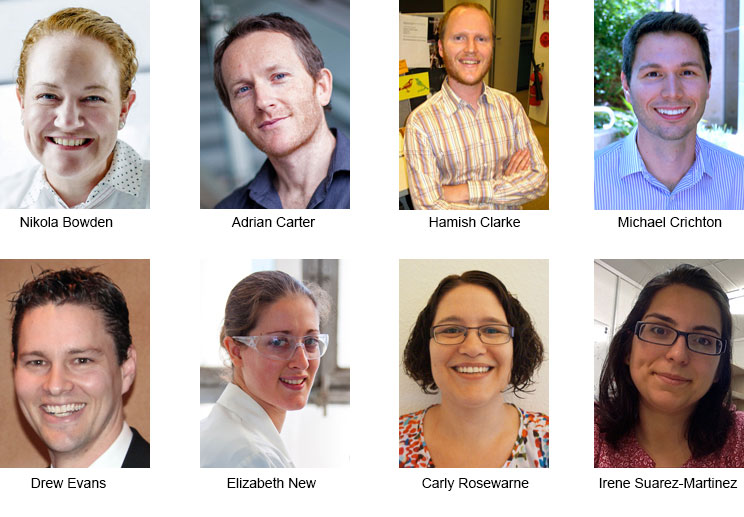
The new team includes Dr Nikola Bowden as committee chair, along with Dr Adrian Carter and Dr Michael Crichton who will each take on the role of deputy chairs.
Dr Nikola Bowden has been a member of the EMCR Forum Executive since 2014 and was this year named a NSW Tall Poppy. She works at the Hunter Medical Research Institute in Newcastle investigating DNA repair in cancer.
Dr Adrian Carter is the editor of the EMCR Forum’s newsletter: EMCR Pathways and a member of the EMCR Forum Executive since 2015. His research examines the impact that neuroscience has on understanding and treatment of addiction and other compulsive behaviours and he is based at Monash University.
Dr Michael Crichton works on novel biomedical devices with the aim of producing and improving microdevices for drug and vaccine delivery. He has previously worked in industry but currently performs research at the Australian Institute for Bioengineering and Nanotechnology (AIBN) at the University of Queensland. He joined the EMCR Forum executive in 2015.
New members joining in 2016
In addition to current members Dr Sharath Sriram and Dr Roslyn Hickson, the executive also now includes five new members (listed below) selected from 42 applicants from around the country.
Dr Hamish Clarke is a recent PhD graduate who works at the NSW Office of Environment and Heritage. In his spare time he brings science to the masses by running Science at the Local, a way for the Blue Mountains' community to engage with scientists and current scientific research.
Associate Professor Drew Evans is a member of the South Australian Science Council which advises the Chief Scientist of South Australia. His research is performed at the Future Industries Institute at the University of South Australia where he works in the area of translational materials research and is co-inventor on numerous patents.
Dr Elizabeth New is a lecturer at the University of Sydney where her work focusses on the development of small molecule fluorescent and magnetic resonance probes for the study of biological systems. She has received numerous award both for her research and her work in outreach. She is a 2015 NSW Tall Poppy Award winner.
Dr Carly Rosewarne is a geneticist who studies “the unseen majority”, commonly known as microbes at CSIRO in Adelaide. She is also a passionate advocate for gender diversity in science and is seeking to encourage more female EMCRs to acts as mentors.
The research career of Dr Irene Suarez-Martinez has been dedicated to the atomistic modelling of carbon materials and she is currently a Senior Research Fellow at Curtin University. She has also contributed widely in the science outreach area from presenting at science festivals to producing short films about nanoscience.
Innovators and leading thinkers recognised in Science Academy awards
Scientists who are leading the world on solar energy efficiency, helping to develop one-shot flu vaccines, and making portable biosensors to detect viruses are among the winners of the Australian Academy of Science’s annual honorific awards.
Each year the Academy presents awards to recognise scientific excellence, to researchers in the early stage of their careers through to those who have made life-long achievements.
This year’s announcement includes 17 award winners across astronomy, nanoscience, mathematics, chemistry, physics, environmental science and human health.
Professor Martin Green, sometimes known as the “father of photovoltaics”, has won the prestigious Ian Wark Medal and Lecture for his world-record breaking work improving solar efficiency.
Dr Jane Elith and Associate Professor Cyrille Boyer, who recently won awards in the Prime Minister’s Prizes for Science, will be the recipients of this year’s Fenner and Le Févre prizes.
The Academy President, Professor Andrew Holmes congratulated all the award winners for their work.
The awards will be formally presented at the Academy’s annual three day celebration of Australian science, Science at the Shine Dome, in Canberra in May 2016.
See the list of winners below
Career honorifics
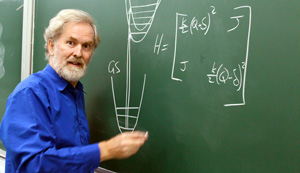
2016 David Craig Medal
Professor Jeffrey Reimers FAA University of Technology, Sydney
Professor Jeffrey Reimers is a chemist who has pioneered the application of chemical quantum theories in biochemical and technological areas. His work helps to explain the solar-to-electrical energy conversion during photosynthesis and has also evaluated the role of chemical quantum effects in manifesting consciousness.
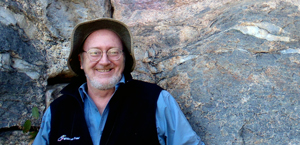
2016 Haddon Forrester King Medal and Lecture
Professor Murray Hitzman Colorado School of Mines
Professor Murray Hitzman is a minerals scientist and geologist who has pioneered new understandings of the physics and chemistry of mineral formation. His research has an important impact upon mineral exploration around the world.
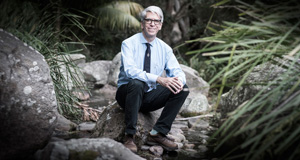
2016 Mawson Medal and Lecture
Professor Colin Vincent Murray-Wallace University of Wollongong
Professor Colin Murray-Wallace is a coastal scientist who uses shells to track environmental and sea level change. This work is particularly relevant today in understanding coastal evolution under a progressive sea level rise.
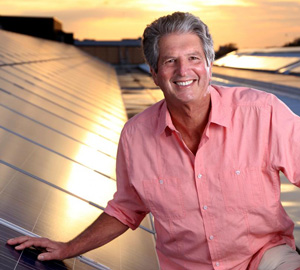
2016 Ian Wark Medal and Lecture
Scientia Professor Martin Green AM FAA FRS FTSE UNSW
Known as the “Father of Photovoltaics”, Professor Martin Green is a world leader in the field. Several generations of his group’s technology have been successfully commercialised and he has helped develop some of the most efficient silicon solar cells in the world.
Mid-career honorifics

2016 Gustav Nossal Medal for Global Health
Professor David Wilson Burnet Institute
Associate Professor David Wilson models infectious disease outbreaks, particularly HIV. His modelling informs our understanding of future risks, enables better decision-making and how best to target resources in a global health context.
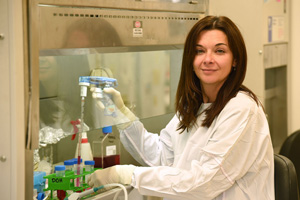
2016 Jacques Miller Medal for experimental biomedicine
Associate Professor Katherine Kedzierska The Peter Doherty Institute for Infection and Immunity, University of Melbourne
Associate Professor Katherine Kedzierska researches immune responses to virus outbreaks, including influenza, with a particular focus on how best to protect vulnerable and high-risk groups. Her cutting edge work could lead to the development of a one-shot flu jab for life.
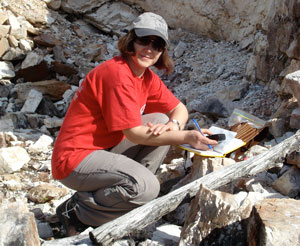
2016 Nancy Millis Medal for Women in Science
Dr Elena Belousova ARC Centre of Excellence for Core to Crust Fluid Systems, Macquarie University
Dr Elena Belousova has achieved international renown for TerraneChron®, a method of analyzing trace elements in zircon and applying this technology to studying the evolution of the earth’s crust, with major significance for mineral exploration.
Early career honorifics
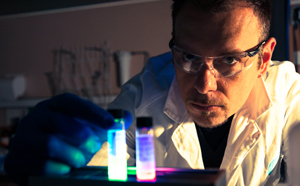
2016 John Booker Medal
Dr Paolo Falcaro CSIRO Materials Science and Engineering
Dr Paolo Falcaro engineers nano-materials with highly specialised properties. Working at the molecular level, he has developed materials to decontaminate water and improve medicine delivery. He is also developing portable biosensors to detect viruses during outbreaks.
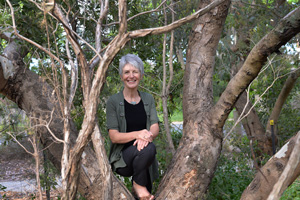
2016 Fenner Medal
Dr Jane Elith University of Melbourne
Dr Jane Elith has rapidly become one of the world’s most influential researchers in applied ecology. She uses novel tools to understand species distribution in the wild, helping to better inform environmental managers and governments on invasive species, land-use and improving biodiversity.
Photo credit: Joe Armao/The Age
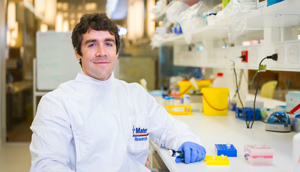
2016 Ruth Stephens Gani Medal
Associate Professor Geoffrey John Faulkner Mater Research Institute University of Queensland
Associate Professor Geofrey Faulkner has analysed the genomes of individual brain cells, identifying genetic changes that may impact how neurons function. His pioneering work has implications both for our understanding of brain disorders and future treatments.
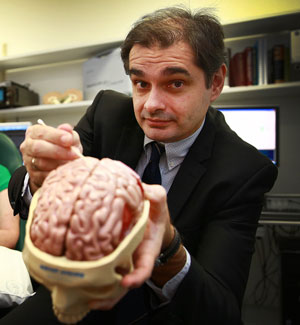
2016 Gottschalk Medal
Professor Ostoja Vucic University of Sydney
Professor Ostoja Vucic’s pioneering research has uncovered the processes that can trigger Amyotrophic Lateral Sclerosis (ALS), a motor neurone disease. His research has led to new treatments and a new technique to diagnose ALS, resulting in earlier, more effective interventions.
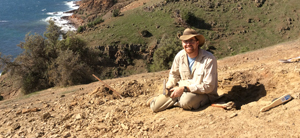
2016 Anton Hales Medal
Professor John Paterson University of New England
Professor John Paterson is a world-leading researcher on the earliest animals in the fossil record, using exceptionally preserved Australian fossils to answer major questions relating to evolution, biogeography and palaeoecology.
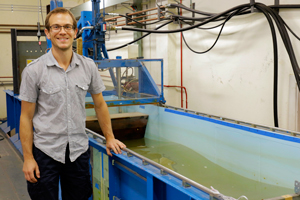
2016 Christopher Heyde Medal
Dr Luke Bennetts University of Adelaide
Dr Luke Bennetts is an applied mathematician who models how different kinds of waves interact with objects in their path. His work has improved understanding of how ocean waves interact with sea ice, with direct implications for understanding and forecasting Earth’s climate.
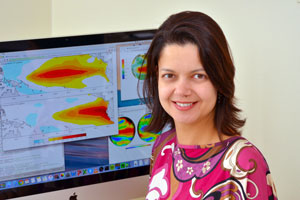
2016 Dorothy Hill Award
Dr Andréa Taschetto UNSW
Dr Andrea Taschetto is a leader in climate systems science. Her research has significantly advanced our understanding of the role of the Pacific and Indian Oceans in regional climate variability.
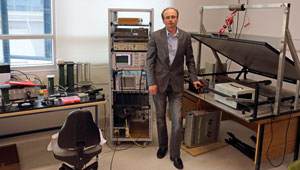
2016 Pawsey Medal
Dr Ilya Shadrivov Australian National University
Dr Ilya Shadrivov is developing new metamaterials which have properties not usually found in nature, such as the ability to selectively absorb some colours of light, or beam electromagnetic waves in specific directions. These have great implications for the next generation technologies.
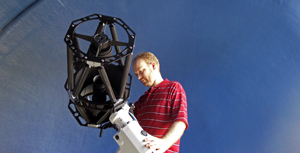
2016 Frederick White Prize
Dr Michael James Ireland Australian National University
Dr Michael Ireland develops and applies the latest optical and infrared technologies to build innovative astronomical instruments to investigate the lifecycles of stars and planets.
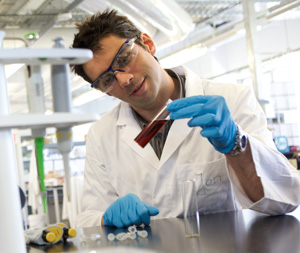
2016 Le Févre Memorial Prize
Associate Professor Cyrille Boyer UNSW
Associate Professor Cyrille Boyer is an authority in the field of polymer science, developing innovative methods of polymerisation. His demonstration of how chlorophyll and light can control polymerisation of functional macromolecules has implications for the synthesis of macromolecules using bio-resources.