




Australian scientists head to India

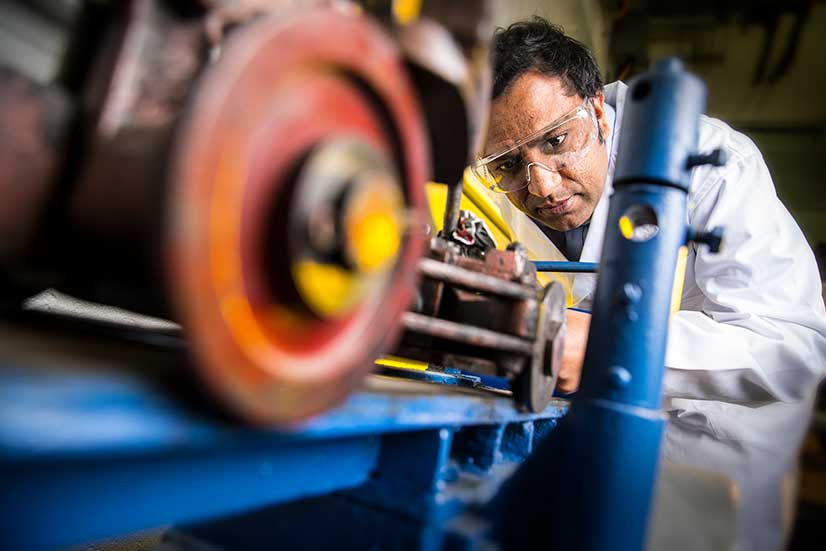
Dr Md Shahriar Hossain | Photo courtesy of Paul Jones, University of Wollongong
The Academy has just announced the four Australian scientists travelling to India in 2017 to undertake ground-breaking research at some of that country's leading research institutions.
The Australia–India Strategic Research Fund Fellows have been selected by the Australian Academy of Science from a competitive field of applicants, and will receive a combined amount of $88,000 from the Australian Government to undertake their research.
A reciprocal fellowships scheme funded by the Indian Government will support Indian scientists to visit Australia from early 2017.
About the reseachers
Dr Md Shahriar Hossain from the University of Wollongong will investigate superconductors for low-cost fusion power for a sustainable future, with the Institute for Plasma Research.
Dr Vicki Thomson of the University of Adelaide will work with the Tata Institute of Fundamental Research to study the disease risk from black rat species in India.
Dr Samia Toukhsati from Austin Health, Vic will research the effect of relaxing music on the autonomic nervous system in heart failure patients, with Manipal University and Kasturba Medical College and Hospital.
Dr Mike Williams of CSIRO Land and Water, SA will look at identifying antibiotic and antimicrobial resistance in the Moosi River near Hyderabad using chemical and biochemical markers, with the Indian Institute of Chemical Technology.
Full details of the successful Australian Fellows
More information about the Australia–India Strategic Research Fund
Have your say on the future of agriculture
The Academy's National Committee for Agriculture, Fisheries and Food is looking for comments and feedback on the final draft version of the Decadal Plan for Agricultural Sciences.
Email your suggestions by 19 December 2016 to have your say on the future of agricultural sciences in Australia.
Decadal plans are 10-year strategic plans for science disciplines. The Decadal plan for Agricultural Sciences will shape priorities and guide the research direction for the future of Australian agriculture.
The purpose of the plan is to identify and define responses around the likely major scientific and technological advances occurring over the coming decade.
It will also look at changing trends in the management of agriculture enterprises and aim to encourage processes that ensure decisions around research targets and funding are effective.
Input and feedback from the scientific community is an important part of this process.
More details on other decadal plans are available on the Academy’s website. If you would like to know more about plans currently in development, please contact the Academy.
Australia strengthens science ties with Indonesia
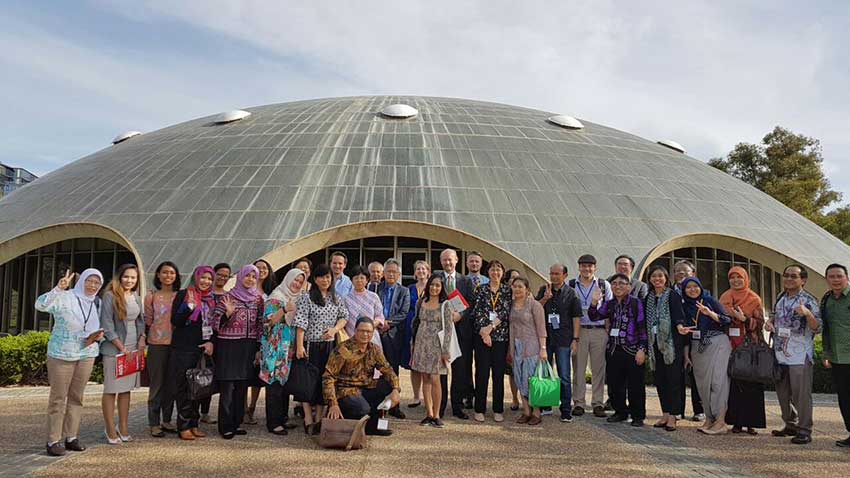
The first Australia–Indonesia Science Symposium brought together more than 100 leading researchers and emerging scientists to find out how science and innovation can meet shared challenges.
Held over four days, scientists from the two nations shared their research, looking for solutions to some of our most pressing challenges in health, marine science, climate change and agriculture.
On track to become the fourth largest economy in the world by 2050, Indonesia is undergoing massive economic and social change. Poverty is declining, health is improving, and the nation is urbanising.
Indonesia is keen to develop energy, health, water and food security, with Indonesians being early adopters of new technologies.
Using social media to inform scientific policy, developing drought-tolerant crops, breeding dengue resistant mosquitoes, working with big data and managing marine and coastal health to address climate change were just a few of the topics covered at the symposium.
The event was jointly organised by the Australian Academy of Science, the Indonesian Academy of Sciences, the EMCR Forum, and the Indonesian Young Academy of Sciences with the support of the Australian Department of Foreign Affairs and Trade, the Indonesian Ministry of National Development and Planning (Bappenas) and the Knowledge Centre Initiative.
Transforming Indonesia and Australia with science and innovation
Australia and Indonesia to improve scientific collaboration
Australian and Indonesian scientists have come together in Canberra this week to encourage better scientific cooperation between the two countries.
Hosted at the Australian Academy of Science’s Shine Dome, the Australia-Indonesia Science Symposium will be attended by Senator the Hon. Concetta Fierravanti-Wells, Minister for International Development and the Pacific and Dr Bambang P. S Brodjonegoro, Indonesian Minister of National Development Planning.
Indonesia is on track to become the fourth largest economy in the world by 2050. It’s undergoing massive economic and social change. Poverty is falling, health is improving, the nation is urbanising. The nation is hungry for energy, health, water and food security. Its people are early adopters of new technologies from social media to big data.
Australian and Indonesian scientists are working together to find solutions for some of the most pressing challenges facing both nations in health, marine science and agriculture. The Symposium will also offer scientists an opportunity to look at the innovations that can arise from the use of big data and other disruptive technologies.
President of the Australian Academy of Science, Professor Andrew Holmes, said the Symposium would run over four days, and lead to enhanced collaboration and cooperation on innovative research.
“Leading researchers from both countries will start the Symposium by sharing their work, celebrating successful joint
projects between scientists in Australia and Indonesia,” Professor Holmes said.
Highlights of the four-day symposium include:
- A new drought-tolerant sugar cane for Indonesian farmers (Professor Bambang Sugiharto, Universitas Jember)
- Golden bananas and other crops to reduce vitamin deficiencies (Professor James Dale, Queensland University of Technology)
- What do the people want? Harvesting social media to inform policy (Diastika Rahwidiati, Pulse Lab Jakarta)
- Managing Indonesia’s coral reefs (Professor Jamaluddin Jompa, Universitas Hasanuddin)
- The future of mangroves—and why they’re essential for fisheries and coastal health (Professor Catherine Lovelock, University of Queensland)
- Breeding mosquitoes to fight dengue (Professor Adi Utarini, Universitas Gadjah Mada)
- Why is it hard to acquire immunity to malaria, and what does that mean for vaccine development? (Dr Diana Hansen, the Walter and Eliza Hall Institute of Medical Research)
Professor Holmes said the Symposium would build on these successes and provide opportunities to discuss career pathways in science and the challenges in linking science to policy.
“There will also be workshops and opportunities for Australian early- and mid-career researchers to establish working relationships with their Indonesian counterparts.”
“By supporting this work, we can move forward together to achieve great results for research in Australia and Indonesia.”
Professor Holmes said the event was a culmination of the hard work of the Australian Academy of Science, the Indonesian Academy of Sciences, the Australian Early- and Mid-Career Researcher Forum, and the Indonesian Young Academy of Science. The event is supported by the Australian Department of Foreign Affairs and Trade and the Knowledge Sector Initiative.
Full program and more speakers atwww.ksi-indonesia.org/aiss/agenda
Scientists from Australia and Indonesia will be available for interview throughout the event. For more information or to arrange an interview, contact:
- Toni Stevens on +61 401 763 130, (03) 9398 1416, or toni@scienceinpublic.com.au
- Michelle Kovacevic on +61 439 444 762.
Sustainability focus for new program launched by Academy
The Future Earth Program, which brings together thousands of researchers and billions of dollars of sustainability research from across the world, was launched in Australia today.
The Academy has appointed Dr Imran Ahmad to lead this ambitious program following support from CSIRO, the University of Queensland, Macquarie University and the University of Sydney.
Future Earth will take a uniquely holistic approach to address some of humanity’s most complex problems, such as climate change, food security and water supply, by integrating physical sciences with the social sciences and humanities.
Dr Imran said an example of how this would work would be tackling the challenge of sustainable urban and agricultural development in areas with reduced rainfall by bringing together experts from diverse fields such as agricultural science, urban planning, behavioural economics and history.
The launch of the Future Earth program follows an initial 18-month consultation and planning process involving each of Australia’s learned Academies that was funded by the Australian Council of Learned Academies (ACOLA).
More information and a copy of the Future Earth Australia strategic plan can be found on their website.
Sustainability science initiative to safeguard Australia’s Future
The Future Earth Program is being launched in Australia. Future Earth is a global initiative of the International Council for Science that brings together thousands of researchers and billions of dollars of sustainability research programs across the world.
“Future Earth is a significant international research framework, and its focus on social, economic and environmental sustainability is of particular importance to our region,” said Professor Andrew Holmes, President of the Academy of Science.
“The Academy of Science will establish an Australasian node of this important program to ensure that Australia and our neighbours have an opportunity to realise the full benefits of the sustainability work that’s being undertaken across the globe.”
The Academy has appointed Dr Imran Ahmad to oversee this ambitious program following support from the CSIRO, the University of Queensland, Macquarie University and the University of Sydney. Dr Ahmad has extensive experience in international sustainability research, programs and policy through senior roles with the Global Green Growth Initiative, the International Renewable Energy Agency (IRENA) and the UN Department of Economic and Social Affairs.
He said that the unique aspect of the Future Earth Program was the integration of physical sciences with the social sciences and humanities to achieve a truly holistic approach to some of humanity’s most complex problems.
“Australia faces unique sustainability challenges, and in many cases we don’t yet have good ways to address these,” he said. “Future Earth Australia will allow us to begin tackling challenges such as sustainable urban and agricultural development in parts of Australia that will have reduced rainfall by bringing together experts from fields such as agricultural science, urban planning, behavioural economics and history, for example.”
The launch of the Future Earth program follows an initial 18-month consultation and planning process involving each of Australia’s learned Academies that was funded by the Australian Council of Learned Academies (ACOLA).
More information and a copy of the Future Earth Australia strategic plan can be found at www.futureearth.org.au.
Media contact: Dion Pretorius | 0418 281 777 | dion.pretorius@science.org.au
New funding a game changer for recognition of leading women in science
The future of women in science is stronger today after funding was announced for one of Australia’s most prestigious awards – the Nancy Millis Medal.
The University of Melbourne, which is providing ongoing funding for the award, hosted an event to celebrate the profound impact the Nancy Millis Medal has made for women working in science, technology, engineering and medicine (STEM). The Medal is awarded to women who have demonstrated exceptional leadership in the areas of STEM, and is vital in achieving gender diversity in fields traditionally dominated by men.
The most recent recipient of the Award, Dr Elena Belousova from Macquarie University, said she had felt extremely honoured and humbled when receiving this important and prestigious Award.
“As a recipient, I had the opportunity to meet Australia’s foremost scientists, and learn about their outstanding contributions to the national science,” Dr Belousova said. “It was certainly a very inspirational and enlightening event in my research life.”
President of the Australian Academy of Science, Professor Andrew Holmes, said what began with a small group of Professor Millis’ colleagues coming together to create an award to celebrate her work, has now become one of the organisation’s most popular awards.
“More than 100 remarkable women have already been nominated for the Medal in its short life span,” said Professor Holmes.
“This is the second Medal awarded by the Academy to acknowledge leading women in STEM, and we hope that we can work harder to support many more through our Awards. The Academy is very proud to be a partner with the University of Melbourne in celebrating and nurturing these leaders, and it is extremely grateful for the strong financial support of the award.”
Deputy Vice Chancellor Professor Jim McCluskey said the university was proud to honour Professor Millis, who was a national figure, an alumna (studying at University of Melbourne in the 1940s) and a member of the Department of Microbiology between 1952 and 1988.
“Professor Millis was a wonderful scholar and a great character. The obvious traction the Medal, named her in honour, has for women in STEM would have made her both proud and humble.”
Provost Professor Margaret Sheil added, “While an icon for all Australian microbiologists, Professor Millis treated discrimination with disdain, saw integrity as a guiding principle and was quick to promote youthful endeavour. She led with distinction various national committees that dealt with key STEM issues like the emergence of molecular biology and its sensible governance. She would be delighted to think that a medal struck to recognise the accomplishments of female scientists was so actively pursued.”
The Nancy Millis Medal was established in 2014 to honour the contributions made to science by the late Professor Nancy Millis AC MBE FAA FTSE and recognises her importance as a role model for women aspiring to be research leaders.
Professor Holmes said with donations and support from other organisations and the public, the Academy of Science has been able to do so much more to further its work to achieve gender equality in STEM careers.
World leading Australian researchers recognised in Academy Awards
Australian scientists addressing some of the world’s most significant challenges – such as antibiotic resistance, the reduction of green-house gases in the atmosphere, and a lack of clean drinking water in disaster zones and developing nations – are among the recipients of the Australian Academy of Science’s annual honorific awards.
Their work has led to light triggered nano-medicine, unbreakable encryption techniques, new methods of carbon capture, and global collaboration in advanced brain imaging research.
Each year the Academy presents the Awards to recognise scientific excellence among Australian researchers, from those in the early stages of their career to those who have made life-long achievements in their field.
This year’s announcement includes 17 award winners working in the fields of microbiology, applied mathematics, earth science, materials engineering, astronomy, chemistry, evolutionary biology, fluid dynamics and more.
Professor Barry Ninham from the Australian National University has been awarded the top honour, the Academy’s prestigious Matthew Flinders Medal. He was recognised for his work in the self-assembly of biological molecules and in the theory of molecular forces – which most recently led to a cheaper and more efficient method of water purification that has the potential to increase living standards for millions of people and save thousands of lives.
Those recognised also include Professor Joss Bland-Hawthorn, awarded the Thomas Ranken Lyle Medal for his work in establishing the astronomical fields of galactic archaeology and astrophotonics; Dr Joanne Whittaker, recipient of the Dorothy Hill Award for her work in understanding how the seafloor and ocean basins are formed and evolve through the movements of tectonic plates and the earth’s mantle; and Professor Kathryn Holt, named the Gottschalk Medallist for her work on the evolution of pathogens which has led to better understanding of disease transmission, control, and responses to antibiotics and vaccine-induced immunity.
President of the Academy of Science, Professor Andrew Holmes congratulated all the award winners for their inspiring work.
“The discoveries made by our awardees will change people’s lives,” Professor Holmes said.
“These men and women are the best of Australia’s leading and emerging scientists; from researchers building on existing research and enhancing our understanding of specific fields, to those working at the very edge of human understanding and knowledge,” Professor Holmes said.
Read more about the awardees and their research here.
The awards will be formally presented at the Academy’s annual three day celebration of Australian science, Science at the Shine Dome, in Canberra during May 2017.
Ends.
Argentinian delegation visits Academy
The Argentinian Minister for Science, Technology and Productive Innovation, Dr Lino Barañao, paid a visit to the Academy's Shine Dome last week.
Professor John White FAA, hosted the visit to discuss Australia’s research system and the potential to develop cooperative research links between Argentina and Australia.
The Academy works hard to foster international collaboration and cooperation in research through its international representation and various grants and funding programs.
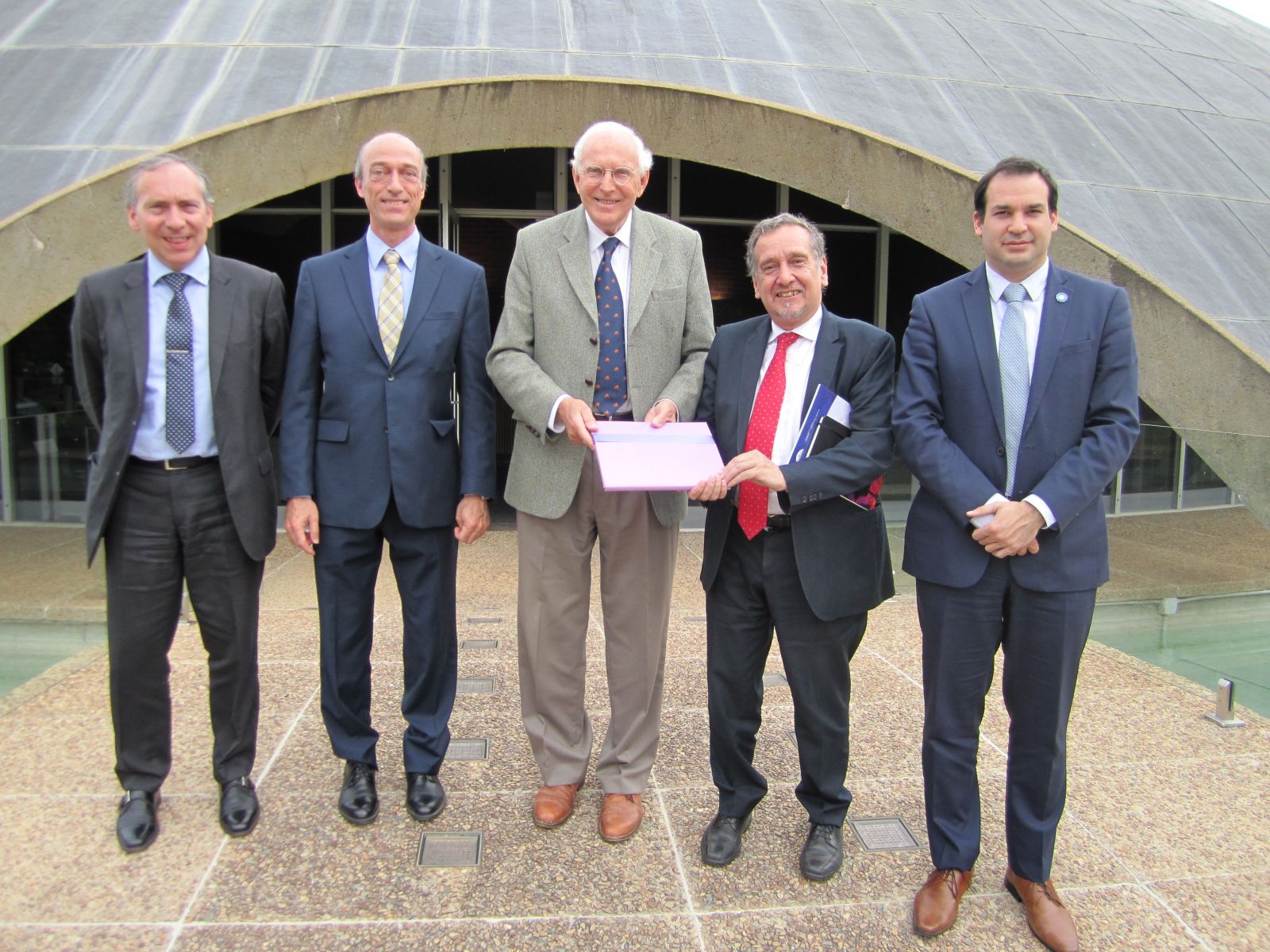
From left to right:
Under-Secretary for Policy (Ministry of Science, Technology and Innovation) Dr. Jorge Aguado
Deputy Head of Mission, Embassy of Argentina, Eduardo Acevedo-Diaz.
Prof John White FAA
Argentinian Minister for Science, Technology and Productive Innovation, Dr Lino Barañao
Director for International Cooperation (Ministry of Science, Technology and Innovation) Mariano Jordán
Annual honorific awards announced
Australia’s brightest scientific minds have been recognised in the Academy’s annual honorific awards, acknowledging their contributions to important scientific challenges.
17 awardees have been honoured by the Academy this year, celebrating their achievements in a range of fields including biomedicine, conservation, applied mathematics, climatology, galactic archaeology, fluid dynamics and more.
Professor Barry Ninham of ANU has been awarded the Academy’s prestigious Matthew Flinders Medal for his illustrious career, most recently working to transform methods of water purification in disaster zones and developing countries.
The Academy congratulates the awardees on their achievements.
Learn more about the awardees and their work
Awardees
Career honorifics
2017 David Craig Medal—Professor David St Clair Black, UNSW
2017 Hannan Medal—Dr Frank Robert de Hoog, retired (ACT) CSIRO
2017 Jaeger Medal—Emeritus Professor Ross William Griffiths, ANU
2017 Matthew Flinders Medal and Lecture—Professor Barry Ninham, ANU
2017 Thomas Ranken Lyle Medal—Professor Joss Bland-Hawthorn, University of Sydney
Mid career honorifics
2017 Gustav Nossal Medal for Global Health—Professor Barend Marais, University of Sydney
2017 Jacques Miller Medal for experimental biomedicine—Professor Jian Li, Monash University
2017 Nancy Millis Medal for Women in Science—Associate Professor Kerrie Ann Wilson, UQ
Early career honorifics
2017 Anton Hales Medal—Associate Professor Juan Carlos Afonso, Macquarie University
2017 Dorothy Hill Award—Dr Joanne Whittaker, University of Tasmania
2017 Fenner Medal—Professor Simon Ho, University of Sydney
2017 Gottschalk Medal—Associate Professor Kathryn Elizabeth Holt, University of Melbourne
2017 John Booker Medal—Professor Dayong Jin, UTS
2017 Le Févre Memorial Prize—Dr Deanna D'Alessandro, University of Sydney
2017 Moran Medal—Associate Professor Joshua Ross, University of Adelaide
2017 Pawsey Medal—Associate Professor Igor Aharonovich, UTS
2017 Ruth Stephens Gani Medal—Dr Sarah Medland, QIMR Berghofer Medical Research Institute