




Scientists lay out plan to future proof Australia’s agricultural sector

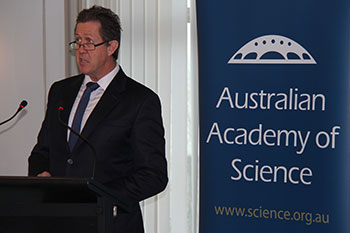
Assistant Minister to the Deputy Prime Minister, Luke Hartsuyker MP launching the Academy’s ten-year strategic plan for Australian Agricultural Sciences.
Australia’s leading agricultural scientists are calling on industry and government to establish a $100 million agricultural translation fund to help boost productivity and profitability, future-proofing Australian farmers against looming shocks like climate variability or major disease outbreaks.
The recommendation is one of five in a ten-year strategic plan for Australian Agricultural Sciences developed by the Australian Academy of Science.
Dr Jeremy Burdon, Chair of the Academy’s National Committee for Agriculture, Fisheries and Food, said that a new research translation fund supported by public and private equity would fast-track investment in the development of applications for the most promising Australian research and boost Australia’s economy through new and improved agricultural products and services in domestic and international markets.
The 10-year plan outlines strategies to capitalise on emerging technologies to create ‘digital paddocks’ that draw on a range of data sources to optimise planting, water, fertilisers and herbicides for various crops, depending on conditions.
It also outlines strategies to improve the strength and efficiency of agricultural research in Australia in ways that will increase the ability of governments and producers to maintain productivity and efficiency in the face of evolving natural challenges.
“Australia has repeatedly faced invasions of plant and animal diseases that, once established, consume large amounts of resources in order to regain control. Yet there are unfortunately plenty more to come,” said Dr Burdon.
“We know for instance that it’s only a matter of time until we see an outbreak of an aggressive invasive species such as the Varroa destructor mite that would devastate bee colonies and crop pollination.
“If the status quo is maintained, Australia will be unable to marshal well-coordinated research teams to prepare for and respond to these kinds of shocks. This will dramatically impact the Agriculture Minister’s vision to turn our agricultural sector into a $100 billion sector by 2025.”
The Academy’s report has also identified opportunities to improve efficiencies in the sector by streamlining governance arrangements between Commonwealth, state and territory governments, research agencies and universities.
“There remains a distinct lack of coordination of agricultural research and innovation in Australia and a culture of competition over collaboration,” Dr Burdon said.
“The scientific and research community must form stronger partnerships across sectors and industries, focusing on better-integrated global data, modelling and analytical capacities, to better respond to new opportunities and prepare for major threats to agricultural production.”
The full ten-year strategy is available from the Academy website. The Academy acknowledges the support of the Australian Research Council in the development of this plan.
Academy Fellow Dr Graham Farquhar awarded prestigious Kyoto Prize
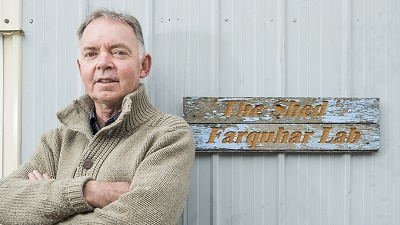
Academy Fellow Dr Graham Farquhar is the first Australian to win the prestigious Kyoto Prize. Photo: Stuart Hay, ANU
Academy Fellow Dr Graham Farquhar AO FAA FRS has become the first Australian to win a Kyoto Prize—the most prestigious international award for fields not traditionally honoured with a Nobel Prize.
Dr Farquhar has won the 2017 Kyoto Prize in Basic Sciences for his life’s work in plant biophysics and photosynthesis, which has involved research on water-efficient crops and the impacts of climate change.
He has helped develop new water-efficient varieties of wheat, improved global food security, and found evaporation and wind speeds are slowing as the climate changes.
‘It’s wonderful to get this kind of international recognition,’ said Dr Farquhar, from the Australian National University Research School of Biology.
‘The work that this prize recognises has really been a team effort, so I’d like to acknowledge my colleagues, students and the ANU, where I have worked for my whole career. It’s a wonderful honour for all of us.’
Academy President, Professor Andrew Holmes, said the Academy is delighted at the news of the award.
‘Dr Farquhar is renowned for his scientifically and economically important research into plant physiology and biology and further contributions to understandings of Earth’s climate systems,’ Professor Holmes said.
‘The Kyoto Prize has been awarded to such eminent people as Jane Goodall, John Maynard Smith and Masatoshi Nei in the past. This forms Graham's hat-trick of prizes—PM’s Science Prize 2015, Macfarlane Burnet Medal 2016 and Kyoto Prize 2017.’
Dr Farquhar will receive $600,000 as part of the award.
Kyoto Prizes have been awarded annually since 1985 in three categories—Advanced Technology, Basic Sciences, and Arts and Philosophy—to people ‘who have contributed significantly to the scientific, cultural, and spiritual betterment of mankind’.
Australia’s highest accolade for three Fellows in Queen’s birthday honours
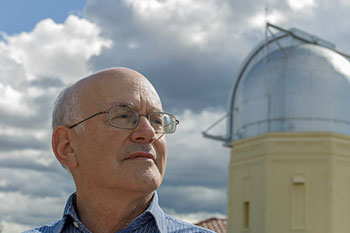
Professor Ken Freeman AC FAA FRS was one of three Fellows named as a Companion (AC) in the General Division of the Order of Australia. The others were Professor Peter Colman AC FAA FTSE FRS and Professor John Shine AC FAA. A total of 10 Fellows received Queens birthday honours.
Three Academy Fellows are among only 15 Australians to receive Australia’s highest accolade in this year’s Queen’s birthday honours, named as Companions (AC) in the General Division of the Order of Australia.
Professor John Shine AC FAA received the honour for eminent service to medical research, particularly in the area of biopharmaceuticals and molecular biology. He was among the first researchers to clone the insulin gene and the human growth hormone. Professor Shine was also recognised for his contributions to higher education as an academic, to professional medical organisations, and as a supporter of the advancement of innovation in science.
Professor Peter Colman AC FAA FTSE FRS was recognised for eminent service to medical research, as a leader in the commercial translation of scientific discoveries and as a mentor of young scientists. His research has had a major impact on our understanding of the epidemiology of influenza and led to the development of Relenza, an antiviral medication to treat the flu.
Professor Ken Freeman AC FAA FRS was recognised for eminent service to astronomy through pioneering contributions in the field of galactic archaeology and as a leading astrophysicist and researcher.
Regarded internationally as Australia's most renowned astronomer, Professor Freeman introduced the concept of dark matter, a finding that changed the course of astronomy. Dark matter makes up about 27% of the universe, which is not in the form of stars and planets that we see.
Professor Freeman was also recognised for his contributions to tertiary science education, to professional academies, and as a mentor of young scientists.
Fellows of the Academy recognised as Officers (AO) in the General Division of the Order of Australia are:
- Emeritus Professor Geoffrey Fincher AO FAA
- Professor Andrew Gleadow AO FAA
- Professor Ian Hume AO FAA
- Professor Angel Lopez AO FAA
- Dr Phillip McFadden AO FAA
- Professor Stephen MacMahon AO FAA
Emeritus Professor Robert Vincent AM FAA has been made a Member (AM) in the General Division of the Order of Australia.
Statement from the Australian Academy of Science—withdrawal of the US from the Paris Accord
“The Paris Accord in 2015 was a landmark in global acceptance of the need to avoid the worst impacts of climate change.
“Signatories accepted that to limit global warming to 1.5-2.0-degrees above pre-industrial levels, we needed to reach net-zero carbon emissions by the second half of the century, and reduce atmospheric greenhouse gas levels thereafter.
“The withdrawal of the world’s largest economy from the Accord will certainly have an impact on global climate change efforts. However it shouldn’t affect the resolve of the many countries already committed to reducing greenhouse gas emissions. We acknowledge the Australian government's resolve to maintain its own commitment.
“Australia is one of the highest per-capita emitters in the world, and our coastal infrastructure and water resources in parts of southern Australia are highly vulnerable to climate change.
“By virtue of our position in the southern hemisphere, Australia also has primary stewardship for monitoring and understanding half of the world’s climate, so climate change must be central to public discussion and policy thinking.
“The Australian Academy of Science has a number of publications that help people understand the science of climate change, both our best understanding of the current situation and what is uncertain. The challenge is monumental—even more so following this announcement—and will require the very best science from around the world to provide understanding, to adapt to the existing impact of climate change; to suggest solutions and to evaluate the success of efforts to combat this global challenge."
Quotes attributable to Professor Andrew Holmes, President of the Academy.
Academy climate change publications
Nova: science for curious minds
- The enhanced greenhouse effect
- Climate change and rising sea level
- Climate change and human health
- Climate change and biodiversity
- The problem with methane
- Climate change and ocean acidification
- Climate change and coral bleaching
- Feeding a hot, hungry world
- Blue carbon
Australian Academy of Science welcomes changes to NHMRC grant funding
The Australian Academy of Science welcomes the changes to the National Health and Medical Research Council’s (NHMRC) grant funding program announced today.
Professor Andrew Holmes, President of the Academy, is optimistic that the reforms will assist the NHMRC to fund and support health and medical research in a more targeted and equitable way in the future.
“The changes will provide better opportunities for outstanding early- and mid-career researchers, and will address concerns about the potential for loss of creativity in research. Previously, funding applications for new ideas that pushed the boundaries may have had less prospect of success,” Professor Holmes said.
“Of course adjustments will need to be made to the new system and we recognise some researchers will not be able to apply for the same number of grants as before.
“The new two-step review of applications will take pressure off both applicants and reviewers. Currently, applicants invest extraordinary amounts of time to apply for grants with a relative low chance of success. Time spent on unsuccessful grant applications is better spent on doing valuable research. These reforms free up researchers to get on with solving health and medical research challenges.
“I am encouraged that assessment of some grants under the new arrangements will be blinded to gender, age, career stage and institution.”
The reforms include replacing the longstanding Fellowship scheme and the Project and Program grants programs with three new streams, through which the majority of the NHMRC’s research budget will be allocated.
“Australia is a world leader in many areas of health and medical research, from the Nobel Prize winning discovery of the cause of gastric ulcers, to spray-on skin and the cervical cancer vaccine. The investment of taxpayers’ dollars in health and medical research by the NHMRC has had direct, beneficial outcomes for all Australians,” Professor Holmes said.
“As the size and complexity of research required to improve health outcomes increases, these changes will go some way to ensuring that the funding structures in place to support our highly trained and specialised medical researchers are as robust as possible.”
Media contact: Dan Wheelahan. dan.wheelahan@science.org.au ph: 0435 930 465
Transcript: Science at the Shine Dome 2017 President’s Address, Professor Andrew Holmes
Delivered 9 am Wednesday 24 May 2017, Shine Dome, Canberra
E&OE: CHECK AGAINST DELIVERY
Australian Academy of Science President, Professor Andrew Holmes AC PresAA FRS FTSE
Fellows of the Academy, distinguished guests, ladies and gentlemen.
Before we begin the proceedings, I would like to acknowledge and pay respect to the traditional owners of the land on which we meet—the Ngunnawal people of the Wiradjuri Nation. It is upon their ancestral lands that the Australian Academy of Science is built.
As we share our own knowledge, teaching, learning, and research practices may we also pay respect to the knowledge embedded forever within the Aboriginal Custodianship of Country.
I welcome all the new Fellows as well as the award holders who will present their lectures this morning.
Before we start the day's proceedings I should like to update everybody on the initiatives that Council has undertaken on the subject of diversity.
- The academy has aspirations for the Fellowship to reflect the diversity of representation in senior academic appointments in Australia, with the ultimate goal of reflecting the diversity in society at large;
- The Council is being guided by the recently formed Academy Equity and Diversity Reference Group chaired by Sue O'Reilly and Peter Koopman;
- The Council aims to realise its aspirations by broadening the diversity of nominations of eligible candidates for election to the Fellowship;
- To improve the diversity of the pipeline of eligible senior scientists we are actively engaged with our partner, the Australian Academy of Technology and Engineering (ATSE), in working with over forty universities and research establishments on the Science in Australia Gender Equity initiative;
- In the election period the Council has taken the opportunity to discuss with the members of the SCs various methods of comparative assessment of a diverse range of candidates.
I should also like to take this opportunity of reporting to you on your Academy’s relationship with government, and to talk about science advocacy, communication and outreach, as well as relate some of the activities undertaken by Fellows of the Academy on your behalf.
Relationship with government
When I reported to you a year ago scientists were excited by the government’s commitment to the National Innovation and Science Agenda (NISA) and to the longer term support for the National Collaborative Research Infrastructure Scheme (NCRIS).
We have now heard the Federal budget for the financial year 2017–2018, and although disappointingly neither of these schemes received much mention, the Minister has released the Research Infrastructure Roadmap, but with no indication of investment; we are hoping that no news is good news, and that further positive announcements will be made in the future. There has been commendable continued support for basic research with significant announcements having been made in the budget concerning support for Australia’s partnership with the European Southern Observatory (a recommendation included in the latest Academy Decadal Plan for Astronomy), support for various kinds of medical research supported by disbursements of the Medical Research Future Fund (MRFF), and Cooperative Research Centre commitment to large scale manufacturing projects. Tomorrow Minister Hunt will announce a radical revision of the NHMRC research funding structure.
On the other hand there are concerns about the efficiency dividend imposed on universities and the increased pressure that will arise on research funding that is already too heavily dependent on the innovative use of tuition fees to underpin the deficit. The Academy is also concerned that the high mobility of postdoctoral researchers and new academics will be hindered by the more restrictive conditions on the issue of 457 visas, and we will be emphasising to government the honeybee effect that such exchanges have in pollinating the spread of new ideas and thinking. We have written to the Minister for Immigration and the Leader of the Opposition on these matters.
When I became President I stated that one of my longer term ambitions was to establish a good working relationship with government where the Academy was a natural ‘port of call’ for the government to seek advice. I am pleased to say the fruits of the investment in engagement with parliament before the last Federal election are beginning to show in a number of ways. Most encouragingly we have engaged strongly with the past and the present Ministers of Industry, Innovation and Science. The Academy developed a review of capabilities and needs for climate science in a submission to the Hon Greg Hunt in his role as Minister for Industry, Innovation and Science through a committee led by Trevor McDougall, a review that we shall soon publish, and the Academy Fellows were extensively consulted by the Minister in his Statement of Expectations submitted to CSIRO. We congratulate Minister Hunt on his appointment as Minister for Health and Minister for Sport in which role the Academy will continue to engage with him over issues of health and medical research, and we welcome Senator the Hon Arthur Sinodinos as incoming Minister for Industry, Innovation and Science. We had the privilege of meeting the Minister for dinner with the Council of the Academy and were subsequently able to provide background information for the Minister’s recent National Press Club address as a keynote contribution to the ‘Science Meets Parliament’ week in Canberra in March.
We continue to maintain strong relationships with the Chief Scientist and his office as well as the Office for Innovation and Science Australia. Each plays a crucial role in informing the short and long term policy landscape for science.
Science advocacy
One of the key issues that has been pre-occupying scientists around the world is the developing trend in discounting the potential contributions of science to a civilised society. Events in the United States and in the United Kingdom and other parts of Europe have given a stronger voice to those who choose to ignore the informed position that is available from a scientific analysis of a physical situation on the planet. As a result there developed a strong enthusiasm for scientists to participate in a ‘March for Science’ on Earth Day (22 April). The Academy Council discussed whether the Academy should play a leading role in participating in such a march in Canberra and resolved to leave the decision to march to be taken by Fellows individually. This decision was broadly in line with that taken by the Royal Society and the US National Academy of Sciences. Not all Fellows agreed with it. And please let me assure you that I personally think that we as scientists have to take our advocacy for science role really seriously. I was attracted to the advice given by Professor John Holdren, former White House science advisor in the Obama administration:
- Don’t be discouraged or intimidated.
- Keep doing your science ... don’t change what you do or how you think about what you do or its importance.
- Besides your own science, become more broadly informed about science and scientific issues.
- Give at least 10 percent of your time to public service ... including activism.
And last: We as a community need to think carefully about how to focus and utilise our activities to try to ensure the continuation, momentum, and the integrity of science in this new era.
Communication and outreach
I feel that we have a real mission in the Academy in sharing our science with the public, in raising scientific literacy and in engaging in outreach activities in general. But we could do much more, and I encourage you the Fellowship to consider where you might become involved.
Our education programs (Primary Connections, Science by Doing and reSolve Mathematics by Inquiry) continue to have a growing impact in the Australian community. Under Secretary for Education and Public Awareness, Professor Pauline Ladiges’s fine oversight, Primary Connections has relocated to Canberra and all educational activities will now be coordinated under a single education committee, and I am delighted to announce that one of our newly elected Fellows, Professor Ian Chubb has kindly agreed to chair this Committee once it is properly constituted. The present challenge is to develop a coherent and holistic program that will continue to attract government support for the next phases that the Academy is planning.
Nova: Science for Curious Minds has attracted an enormous following. As the initial sponsorship from Telstra draws to a close, the Chief Executive and the communications team have been exploring exciting new ideas for the continuation of the series such that it reaches larger audiences. Watch this space. I promise there will be some lively action!
In terms of outreach the Academy continues to attract large numbers of ACT participants to its monthly Tuesday Public Lecture series. A new development in public lectures outside the ACT was the Science of Life and Death held over the past twelve months in Hobart, Melbourne, Brisbane, Perth and Adelaide. Our partners were Nova and Science and Technology Australia (STA). This has been followed in 2017 with a Plastic Fantastic series on the wonders of modern plastics sponsored by PM Science Prize winner Professor David Solomon, with the initial lectures being in Melbourne and Sydney. These have been a wonderful opportunity to reach out to the wider community, to promote the Academy as an ‘influential voice’ and to extend the Academy’s philanthropic range. I do hope more Fellows can participate in the forthcoming lectures as we have been taking the opportunity to share updates on the Academy’s activities with the Fellows after each event.
Other Academy activities
As mentioned earlier, a major commitment by the Academy in partnership with the Australian Academy of Technology and Engineering (ATSE) has been the expansion of the Science in Australia Gender Equity (SAGE) project among over forty Australian universities and research institutions. This initiative has attracted widespread interest from all sectors of the community and from government, and it is progressing well under the leadership of Executive Director Dr Wafa El-Adhami.
This year, the Academy has been able to secure perpetual funding for the Nancy Millis Award for Women in Science. This has been possible due to the generous contribution by the University of Melbourne that has built upon funding kindly provided by friends and colleagues of Nancy Millis.
Further, generous support has been provided to establish a new medal for Indigenous scientists. Planning for this is underway and will be complemented by other initiatives within the Secretariat to assist indigenous Australians, including the development of a Reconciliation Action Plan.
All the activities are now grounded in the balanced advice provided by an Equity and Diversity Reference Group co-chaired by Professors Peter Koopman and Sue O’Reilly with a broad representation of Council, Academy Fellows and Early and Mid-Career Researchers (EMCRs). Their leadership is providing guidance on ways in which we can continue to develop the STEM workforce such that it becomes more diverse. In addition, strategies are being developed to encourage the nomination of the growing number of talented women in science for Fellowship of the Academy. These initiatives have my full and ongoing support.
The Academy has embarked on a number of new initiatives with administrative support initially being provided within the Secretariat. These include
- The Geoscience initiative UNCOVER ‘on providing the knowledge base and technology that will substantially increase the success rate of mineral exploration beneath post-mineralisation cover in Australia;’
- The Australian Brain Alliance ‘to promote advanced industries in neurotechnology, to develop treatments for debilitating disorders, and to promote transdisciplinary research collaborations’; and
- Future Earth Australia to promote and sustain Australia’s contribution to ‘international research and development collaboration focused on long term sustainability solutions for the planet and human societies, supported by a range of leading global institutions.’
The Academy continues to develop decadal plans for relevant disciplines funded by the ARC Learned Academy Special Projects (LASP) program. Recently the Chemistry plan was launched and this will be followed by agriculture and earth science. Disciplines such as mathematics and astronomy have been successful in obtaining independent funding for the development of decadal plans.
In keeping with the spirit of the National Innovation and Science Agenda the Academy has been developing a plan for improved engagement with business and industry, with the formation of a Council industrial advisory group. At an international level the Academy has hosted (and will host again on 12 September 2017) in conjunction with the Embassy of the Federal Republic of Germany a ‘Falling Walls Lab’ for Australian and New Zealand researchers to develop their ideas. Participants are given three minutes to present their research work, business model or initiative to a broad audience from science and industry, including a distinguished jury who selects the most innovative and promising idea. The winner will attend the Falling Walls Lab in Berlin that was established to commemorate the fall of the Berlin wall on 9 November 1989 and which asks the question ‘Which are the next walls to fall?’ in terms of technological and sociological breakthroughs. You may have fun this evening discussing these questions with others at your dinner table.
Our international engagement remains very strong with extensive participation of our national committee members in international scientific unions, representation on the Executive Committees of the InterAcademy Partnership (IAP), Science and IAP Research, membership of the Executive Board of the Association of Academies and Scientific Societies of Asia (AASSA) and the Secretary-General of the International Council for Science (ICSU) that is coincidentally considering merger with the International Social Science Council (ISSC) at the General Assembly in Taiwan in October.
Serving as a national representative of the Academy has provided some entertaining moments.
Last September the Foreign Secretary and I were privileged to attend the celebrations of the 350th anniversary of the French Academy of Science in Paris and had a personal tour of the Louvre after the event. This year the Chief Executive and I were in awe of the traditional Maori participation we observed while attending the 100th anniversary of the Royal Society of New Zealand that was officially renamed the Royal Society Te Aparangi. We managed to persuade the Prime Minister of New Zealand to join us in a photograph. In March I represented the Academy at a meeting at the German Academy Leopoldina in Halle of the science academies of the G20 nations to present a submission on ‘Global Health’ that had been commissioned by the German Chancellor Dr Angel Merkel to be considered at the G20 Heads of Government meeting in Hamburg later this year. The Chief Executive had promised the Academy secretariat that I would shake Dr Merkel’s hand which fortunately I had the opportunity to do. This S20 Forum was the first time that such an event had taken place and we were reassured that the government of Argentina will be endeavouring to repeat the process at the next G20 meeting.
In April Professors Jagadish and Hans Bachor accompanied the Chief Scientist on a tour to European science innovation sites.
At the annual meeting of Nobel Laureates in Lindau the Academy continues to be well represented by doctoral and postdoctoral representatives, generously supported by the Science and Industry Endowment Fund. Last year was centred on the discipline of physics; this year the field is chemistry (of course the most central of all sciences).
Australian Council of Learned Academies (ACOLA)
In the past twelve months the ACOLA Council completed the delivery of twelve Securing Australia’s Future (SAF) projects together with a thirteenth, specially commissioned by the Minister for Education on Higher Education Research Training. All reports have had significant impact and a book synthesising a summary of the first twelve will be published soon. I served as ACOLA President last year, and the Council took advantage of developing a new Strategic Plan as well as a leaner governance structure. ACOLA is now delivering shorter (6-12 months) Horizon Scanning Projects commissioned by the Commonwealth Science Council, and the first on ‘Energy Storage’ is about to be released.
Chief Executive
As Fellows will know, Dr Sue Meek decided to stand down from the position as Chief Executive in July 2016. We thank Sue for the dedicated leadership that she provided in the Academy. We welcome Ms Anna-Maria Arabia who was appointed in October. We look forward to the development of various new initiatives in the Academy under Anna-Maria’s leadership. We are most grateful for the leadership team of Mr Ben Patterson (acting Chief Executive), Ms Nancy Pritchard and Dr Chris Hatherly who oversaw the smooth running of the Academy during the period of recruitment of a new Chief Executive.
Academy Secretariat
A number of vacancies arose through the departure of various members of the secretariat and the creation of new initiatives and opportunities. During this time the dedication of the remaining members of the Secretariat was quite remarkable and we extend our thanks to all those who undertook extra tasks to maintain the smooth running of the Academy. We thank all those who have departed and wish them well in their new positions. Likewise we welcome the new members of the Secretariat who have joined the Academy over the last twelve months.
Fellowship
We congratulate Professor David Boger who was recently elected to the National Academy of Engineering, Professor Jon Sprent who was elected a member of the National Academy of Sciences (NAS), and Professor Ken Freeman who was elected a Foreign Associate of NAS.
Congratulations to Professors Susanne von Caemmerer, Eddie Holmes and Gerard Milburn who were elected Fellows of the Royal Society.
Ladies and gentlemen, this brings me to the end of my address for the Annual Meeting 2017. Thank you very much.
Academy launches its Annual Giving Program for 2017
A message from President Andrew Holmes as the Academy launches its 2017 Annual Giving Program
Imagine a world without science, a world without scientists striving every single day to understand the world around them. It’s virtually impossible to contemplate such a reality. I often think about the collective impact on the world made by the Fellows of the Australian Academy of Science and remain quite awestruck at the difference their work has made to our wellbeing, the economy and our physical and designed environment. The world simply would not be as we know it today in the absence of their contribution.
Equally, it is hard to imagine where the Australian Academy of Science would be without the generosity and philanthropic support of many individuals and organisations.
Gifts and legacies enable the Academy of Science to create cutting edge science education in schools, hold scientific meetings, support public policy development, publish scientific reports, give early-and mid-career scientists the edge they need to advance their science and their careers, make awards and bestow Fellowships on outstanding scientists, and inspire generations of Australians with the wonder of science. Indeed, most of the things that make the Australian Academy of Science unique are supported by private gifts that help students, teachers, scientists and society.
All of us share a desire for science and scientists to prosper and for future generations to benefit from discovery and to be empowered by knowledge. Yet each person has a unique reason for supporting the Australian Academy of Science.
I invite you today to support the Australian Academy of Science through our Annual Giving Program so that together we can continue to build a strong and vibrant future for science in Australia.
The Annual Giving Program offers you the chance to support the Academy of Science through donations that are fully tax deductible. Enclosed is further information about the Program and how you can offer your support.
Should you wish to discuss ways in which you can support the Australian Academy of Science and how you would like your support directed, please contact Ms Isobel Griffith, Manager Development and Stewardship on (02) 6201 9400.
Your support is deeply appreciated.
Yours sincerely
Professor Andrew Holmes AC PresAA FRS FTSE
How science, nature and teachers inspired Australia’s best scientists
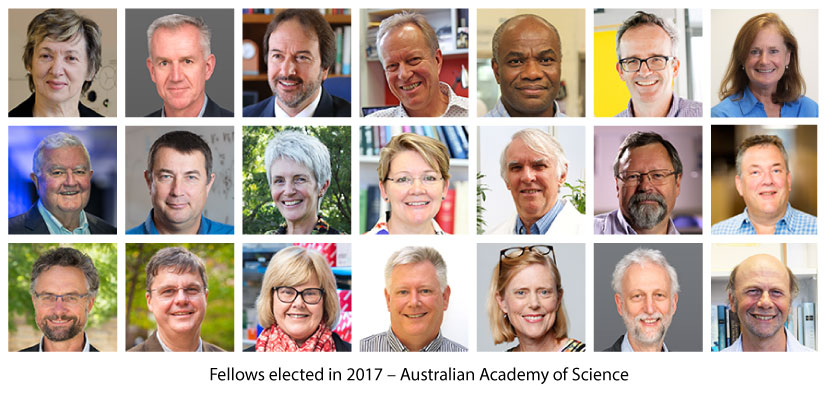
Image source: supplied
Twenty-one of Australia’s best scientists have been elected to the Australian Academy of Science, a rare and esteemed honour, for their outstanding contributions to science.
The scientists’ ground-breaking discoveries and contributions to research range from improving crop yields, women’s reproductive health and mobile telecommunications, through to our understanding of massive galaxies, the periodic table, and the evolution of Earth.
The group was elected by their Academy peers following a rigorous evaluation process.
Academy President, Professor Andrew Holmes, congratulated the new Fellows for making significant and lasting impacts in their scientific disciplines.
“What is delightful about our latest group of new Fellows is that many were inspired to become scientists at an early age,” Professor Holmes said.
“Professor Dietmar Muller gathered billion-year-old fossilised rocks along Baltic Sea beaches as a child, while Professor Lois Salamonsen read books about the universe.
“Professor Branka Vucetic became fascinated with radio-engineering when her science teacher posed a question that she couldn’t answer at the time, while former Chief Scientist, Professor Ian Chubb, would be the first to finish reading tasks set by his primary school teacher so he could go outside and study nature as a reward.
“These stories remind us why it is crucial that as a nation we continue to work together to inspire our next generation of scientists, which is part of our core mission at the Academy,” Professor Holmes said.
The Academy’s total fellowship now includes 524 scientists. The new Fellows are:
QUEENSLAND
Professor Philip Hugenholtz, University of Queensland
Professor Jennifer Martin, Griffith Institute for Drug Discovery
Professor Tim Ralph, University of Queensland
Professor Mark Smyth, QIMR Berghofer Medical Research Institute
NEW SOUTH WALES
Professor Dietmar Müller, University of Sydney
Professor John Patrick, University of Newcastle
Professor Branka Vucetic, University of Sydney
SOUTH AUSTRALIA
Professor Jozef Gécz, University of Adelaide
WESTERN AUSTRALIA
Professor Igor Bray, Curtin University
ACT
Professor Ian Chubb, Australian National University (Special Election)
Dr Evans Lagudah, CSIRO
VICTORIA
Professor Thomas Davis, Monash University
Associate Professor Jane Elith, University of Melbourne
Dr Anita Hill, CSIRO
Professor David Gardner, University of Melbourne
Professor Karl Glazebrook, Swinburne University of Technology
Professor Cameron Jones, Monash University
Professor Melissa Little, Murdoch Children’s Research Institute
Professor Lois Salamonsen, Hudson Institute of Medical Research
Professor Nicholas Wormald, Monash University
TASMANIA
Dr John Volkman, CSIRO
Media note:
New Fellows will be formally inducted into the Academy Monday evening 22 May at the Shine Dome in Canberra. Tomorrow, Tuesday 23 May, they will each have 10 minutes to present their life’s work to Academy Fellows. Media are welcome to attend the Academy’s annual flagship event, Science at the Shine Dome and to interview new Fellows.
More information about each new Fellow, including a statement about why they were elected and a short bio, is available on request.
Media contact
Dan Wheelahan. dan.wheelahan@science.org.au ph: 0435 930 465
21 of Australia's best scientists join the Academy
Twenty-one of Australia’s best scientists have been elected to the Australian Academy of Science today for their outstanding contributions to science.
The scientists’ ground-breaking discoveries and contributions to research range from improving food security, women’s reproductive health and mobile telecommunications, through to our understanding of the evolution of the Earth, the periodic table and massive galaxies.
Many of the New Fellows were inspired at an early age to become scientists.
Professor Dietmar Muller gathered billion-year old fossilised rocks along Baltic Sea beaches as a child, while Professor Lois Salamonsen read books about the universe.
Professor Branka Vucetic became fascinated with radio-engineering when her science teacher posed a question that she couldn’t answer at the time, while former Chief Scientist, Professor Ian Chubb, would race to finish reading tasks in primary school, so he could go outside and study nature as a reward.
The Academy’s Fellowship now includes 524 esteemed scientists. The New Fellows are:
QUEENSLAND
Professor Philip Hugenholtz, University of Queensland
Professor Jennifer Martin, Griffith Institute for Drug Discovery
Professor Tim Ralph, University of Queensland
Dr Mark Smyth, QIMR Berghofer Medical Research Institute
NEW SOUTH WALES
Professor Dietmar Muller, University of Sydney
Professor John Patrick, University of Newcastle
Professor Branka Vucetic, University of Sydney
SOUTH AUSTRALIA
Professor Jozef Gécz, University of Adelaide
WESTERN AUSTRALIA
Professor Igor Bray, Curtin University
ACT
Professor Ian Chubb, Australian National University (Special Election)
Dr Evans Lagudah, CSIRO
VICTORIA
Professor Thomas Davis, Monash University
Associate Professor Jane Elith, University of Melbourne
Dr Anita Hill, CSIRO
Professor David Gardner, University of Melbourne
Professor Karl Glazebrook, Swinburne University of Technology
Professor Cameron Jones, Monash University
Professor Melissa Little, Murdoch Children’s Research Institute
Professor Lois Salamonsen, Hudson Institute of Medical Research
Professor Nicholas Wormald, Monash University
TASMANIA
Dr John Volkman, CSIRO
The new plan to unlock secrets of Australasia’s megadiversity
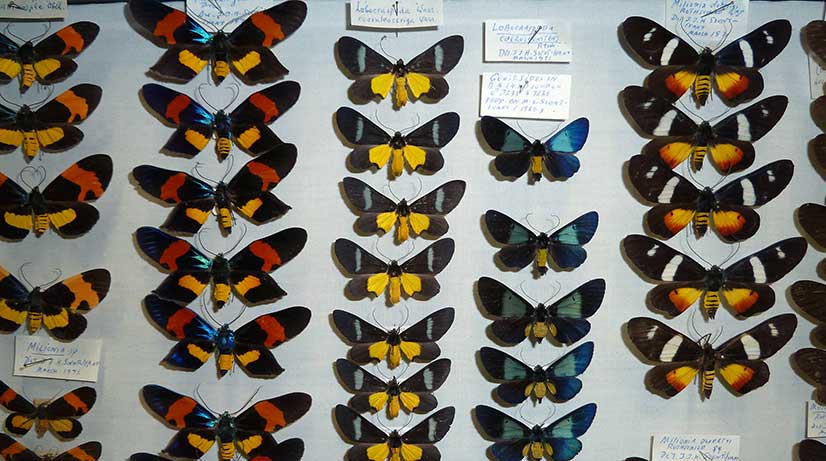
Australian butterflies recently 'barcoded' at the National Insect Collection. Photo courtesy of CSIRO.
The Academy has announced the commencement of a new initiative to develop a 10-year strategic plan for biosystematics and taxonomy in Australasia.
Australasia is one of the world’s most megadiverse regions, with large numbers of endemic and evolutionarily important species, and a high rate of discovery of new species. Biosystematists and taxonomists work to discover, name and document new plant and animal species and their relationships. Every species of plant or animal that is known to humanity was named and described by a taxonomist or biosystematist.
Over the next three years, the Academy and its partners will consult extensively with the research sector and end-users of biosystematics and taxonomy information and capabilities, to identify opportunities and priorities for advancing these disciplines and their services in Australasia.
As well as being a foundational discipline for all of biology, knowledge and information infrastructure developed by biosystematics and taxonomy underpins the work of many industry sectors and public services, including biosecurity, agriculture, conservation and drug discovery, among others.
This initiative has been supported by a grant from The Ian Potter Foundation and contributions from sector stakeholders including national councils representing herbaria and fauna collections, universities, professional societies and associations, the Atlas of Living Australia and Biosecurity Australia.
The project will be led for the Academy by Dr Kevin Thiele, a plant taxonomist, former Director of the Western Australian Herbarium, and former Chair of the Council of Heads of Australasian Herbaria.
The development of the plan will commence in the coming weeks, with an exposure draft planned for November this year, and the plan to be finalised by early 2018. The agreement with the Ian Potter Foundation and sector partners will then allow the Academy to work with key stakeholders over the following two years to ensure that the strategies and recommendations included in the plan are implemented.