




Celebrating the history of women in science

The Academy has produced a special online edition of the Academy’s journal ‘Historical Records of Australian Science’ celebrating the history of women in science.
As in other national academies of science, there were no founding women Fellows in the Australian Academy of Science in 1954. Geologist and paleontologist Dorothy Hill became the first female Fellow of the Academy in 1956. The rate of fellowships began to pick up in the 1990s, and by 2000 new female Fellows were admitted every year, with the aim now for the Fellowship to reflect the diversity of senior academic appointments in Australia, and the diversity of society more broadly.
In this special online edition the Academy celebrates the history of women in science with articles previously published in the journal on notable women scientists. These articles are freely available for three months so any member of the public who is interested can access them.
The special edition was published to align with a recent national symposium hosted by SAGE—Science in Australia Gender Equity. A report on the symposium will be published soon.
More information on the special edition of Historical Records of Australian Science
Moran awardees to research attitudes to GM science and Australia’s historical weather records
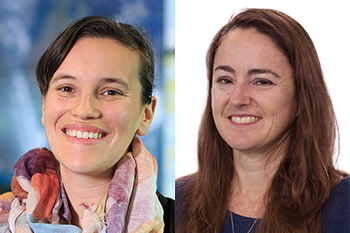
Dr Linden Ashcroft (top) and Ms Kelly McKinley, joint winners of the 2018 Moran Award for History of Science Research
Melbourne climatologist Dr Linden Ashcroft and Adelaide PhD student Ms Kelly McKinley are joint winners of the Australian Academy of Science's 2018 Moran Award for History of Science Research
Dr Ashcroft will use the Moran Award to explore the motivations behind some of Australia's earliest weather observers, while Ms McKinley will explore Australian public attitudes towards genetic modification (GM) from the 1970s to the present.
Dr Ashcroft will work with pre-1900 weather observations to uncover the Australian climate prior to the formation of the Bureau of Meteorology in 1908.
“Historic datasets are vital for understanding the natural variability of our climate and putting human-induced climate change in a long-term context,” Dr Ashcroft said.
“However numerical weather records are only half of the story. Understanding why and how weather observations were taken is a crucial part of assessing data reliability.”
Dr Ashcroft hopes to uncover the motivations behind some of colonial New South Wales' most dedicated weather observers. Learning why they persisted in keeping regular, detailed weather readings for decades in a foreign landscape will help determine the scientific value of their data.
She will examine manuscript material at the State Library of New South Wales and the Sydney Observatory to better understand the dedication of 19th century 'citizen scientists'.
Ms McKinley will use the award towards her PhD project: ‘A history of activism and public attitudes in Australia towards genetic modification (GM) science in agriculture and food production’. The project is part of a larger Australian Research Council grant.
Ms McKinley hopes the exploration of how the Australian public have engaged with GM over time, using archival materials at the National Library, will help inform strategies for civic engagement, science communication and government policy around the issue.
The 2018 Moran Award for History of Science Research is aimed at postgraduate students and other researchers with expertise in the history of Australian science. Its purpose is to support access to archives that record the history of science in Australia, especially by younger researchers.
Basic research and long-term funding focus welcomed by Australia’s research leaders
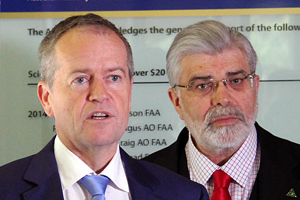
Opposition Leader Bill Shorten with Shadow Minister for Innovation, Industry, Science and Research Kim Carr.
The National Research and Innovation Alliance welcomed Labor’s science, innovation and research agenda outlined today by the Opposition Leader, the Hon Bill Shorten MP.
The Opposition Leader laid out his vision for the sector to Australian research leaders, who have gathered at the Australian Academy of Science to discuss the future of Australian knowledge creation and its applications.
In particular the Alliance welcomed Mr Shorten’s focus on both basic and applied research, education and sustainable, long-term funding. Key policy initiatives highlighted included:
- moving towards research expenditure of 3% of GDP by 2030
- new four-year ‘smart visas’ for academics to enhance Australian research and provide a pathway to permanent residency for the best and brightest
- addressing the “endless grant application” process and providing long-term funding to benefit future generations
- positioning Australia as a leader in education, to enhance graduate outcomes and position students to become world-class researchers.
Co-convenors of the Alliance, Science & Technology Australia CEO Kylie Walker and Australian Academy of Science Chief Executive Anna-Maria Arabia, said they were heartened by the value placed on basic research by Labor.
“A strong and sustainable research sector underpins knowledge creation, policy development and innovation,” Ms Arabia said.
Kylie Walker echoed her sentiments, adding that researchers provide priceless insights to solve issues facing society.
“The National Research and Innovation Alliance represents the breadth of those working to build Australia’s knowledge economy. Working with the nation’s elected leaders, we can achieve great outcomes for Australian society,” Ms Walker said.
The National Research and Innovation Alliance brings together non-government organisations that lead research, working together to create a vibrant Australian research and innovation sector and advise decision makers on how to support the sector to advance Australia’s health and wealth.
The Alliance comprises national bodies who represent thousands of researchers and research organisations:
- Australian Academy of Science
- Cooperative Research Centres Association
- Science & Technology Australia
- Innovative Research Universities
- Academy of Social Sciences in Australia
- Group of Eight
- Australian Academy of Humanities
- Professionals Australia
- Australian Academy of Technology & Engineering
- Professional Scientists Australia
- Association of Australian Medical Research Institutes
- Regional Universities Network
- Australian Society for Medical Research
- Research Australia
- Australian Technology Network.
Roadmap to accelerate Australian minerals exploration and unlock a trillion dollar prize
Australia needs new geoscience, technology and infrastructure to reverse the decline in the rate of discoveries for base and precious metals and deliver Australia’s major new mines of the future, according to a report released today.
The AMIRA Roadmap for Exploration Under Cover—Stage 1 lays out a 15-year roadmap that will fundamentally transform our ability to find non-bulk mineral resources such as copper and gold under the majority of Australia’s landmass.
“Mining continues to be a major contributor to the nation’s GDP, with over $29 billion contributed during 2015-16,” said Joe Cucuzza, Managing Director of AMIRA International.
“The sector also generated 50% of the nation’s export earnings. The need for minerals will increase as renewable energy generation, electric and autonomous cars and consumer technologies all require huge amounts of these minerals,” said Mr Cucuzza.
“Australia is likely to have significant undiscovered wealth hidden away beneath the ‘covered’ areas of our continent. This Roadmap spells out the new data, knowledge and technologies that we need to significantly reduce the uncertainty and risk in exploring and finding these essential resources. This will replace what we are currently mining and ensure that Australia remains a major exporter into the future,” he said.
The Roadmap was developed to progress the vision of the UNCOVER AUSTRALIA initiative, established by the Australian Academy of Science in 2012.
Academy Fellow and Chair of UNCOVER AUSTRALIA, Dr Phil McFadden AO FAA, said Australian and international minerals companies are moving their exploration investments offshore because they have already discovered most of the economically-viable deposits in the 30% of Australia’s land-mass where they occur near the surface.
“The challenge now is to develop the scientific knowledge and the new technologies that are necessary to increase the chances of finding economic deposits in the 70% of Australia that is covered by moderate or deep sediment,” Dr McFadden said.
“The demand for base and precious metals is increasing rapidly. With the growth in renewable energy for example, we’ll need more copper in the next 15 years than we’ve used in all of human history.
“We’re likely to have trillions of dollars of viable deposits of these minerals, and by investing in the science needed to find them, Australia has the opportunity to re-establish itself as a world leader in minerals exploration and ensure strong economic growth for our future.”
The AMIRA International Roadmap is the result of three years of extensive consultation with minerals companies large and small, METS (mining equipment, technology and services) suppliers, federal, state and territory geological surveys, CSIRO and universities, to work out exactly what is needed to increase the success of minerals exploration in Australia.
It was supported by 53 organisations coordinated by AMIRA International and launched this morning at Parliament House in Canberra by West Australian Senator Linda Reynolds CSC (representing the Minister for Resources and Northern Australia) and Senator Kim Carr, Shadow Minister for Innovation, Industry, Science and Research.
Media contacts:
Academy Fellow and Chair of UNCOVER AUSTRALIA Dr Phil McFadden - contact Dan Wheelahan - 0435 930 465; dan.wheelahan@science.org.au
Mr Joe Cucuzza – 0411 707 603; joe.cucuzza@amirainternational.com
Academy releases expert review of Australia’s climate science capability
Australia can improve coordination of national climate science programs to deliver better climate information to farmers and infrastructure planners, and to guide national efforts to mitigate the future impacts of climate change, according to a review by leading scientists.
The Australian Academy of Science report recommends that government consider mechanisms to ensure better coordination of climate research across Australia’s universities and climate agencies. It also recommends increasing climate science capability in a number of critical areas, amounting to around 80 new research positions over the next four years.
The review surveyed all of Australia’s climate research agencies and centres, including the Bureau of Meteorology, the CSIRO, the Australian Antarctic Division and universities to identify how many Australian researchers are working across the various disciplines and sub-disciplines of climate science, and how well these different areas are performing.
It reports that while Australia is strong in areas such as thermodynamics and extreme weather events, there are some significant weaknesses in areas such as climate model development. This includes the Australian Community Climate and Earth System Simulator (ACCESS), micrometeorology (the branch of meteorology that deals with weather conditions on a small scale), boundary layer dynamics (the dynamics of the lowest part of the Earth’s atmosphere) and the modelling of two-way human/climate interactions.
The report found that there are around 420 dedicated climate scientists across all of Australia’s universities and research agencies, with their research providing constant improvements in weather prediction and climate models in Australia and throughout the world.
The area most in need of attention is climate modelling, where critical under-resourcing means that Australia’s climate models are failing to keep pace with world’s best practice. To address this issue, the review estimated that around 30 new climate modellers and scientists would be needed over the next four years.
Other key recommendations from the report include ensuring the work of the Antarctic Climate and Ecosystems Cooperative Research Centre is funded beyond 2019 and that a broader review of climate-related research capabilities is undertaken by the Australian Government.
Review of Australia’s climate science capability reveals a mixed picture
MEDIA RELEASE
Australia can improve coordination of national climate science programs to deliver better climate information to farmers and infrastructure planners, and to guide national efforts to mitigate the future impacts of climate change, according to a review by leading scientists.
The Australian Academy of Science report recommends that government consider mechanisms to ensure better coordination of climate research across Australia’s universities and climate agencies. It also recommends increasing climate science capability in a number of critical areas, amounting to around 80 new research positions over the next four years.
The review surveyed all of Australia’s climate research agencies and centres, including the Bureau of Meteorology, the CSIRO, the Australian Antarctic Division and universities to identify how many Australian researchers are working across the various disciplines and sub-disciplines of climate science, and how well these different areas are performing.
It reports that while Australia is strong in areas such as thermodynamics and extreme weather events, there are some significant weaknesses in areas such as climate model development. This includes the Australian Community Climate and Earth System Simulator (ACCESS), micrometeorology (the branch of meteorology that deals with weather conditions on a small scale), boundary layer dynamics (the dynamics of the lowest part of the Earth’s atmosphere) and the modelling of two-way human/climate interactions.
Academy Fellow Professor Trevor McDougall, who led the review, said under-resourcing in specific areas detracts from Australia’s ability to deliver necessary climate and weather information to domestic end users and national and international organisations.
“Australia’s climate research sector is a fraction of the size of those in America or Europe, but we cover most of the Southern Hemisphere in terms of climate modelling and understanding,” Professor McDougall said.
“Many of our universities are considered to be world-class in this effort, but as a country we are falling behind in areas such as climate modelling.”
The report found that there are around 420 dedicated climate scientists across all of Australia’s universities and research agencies, with their research providing constant improvements in weather prediction and climate models in Australia and throughout the world.
The area most in need of attention is climate modelling, where critical under-resourcing means that Australia’s climate models are failing to keep pace with world’s best practice. To address this issue, the review estimated that around 30 new climate modellers and scientists would be needed over the next four years.
“These capability requirements are brought into sharper focus when you consider that our country is potentially more exposed to the impacts of climate change than most developed nations,” Professor McDougall said.
“Our location means that key factors that influence the climate in our region are not well represented in climate models developed by other countries. It is in our national interest to ensure our national climate science capability, built up over the past 50 years, is maintained. This will also mean Australia maintains its custodianship of many aspects of climate science research in the Southern Hemisphere.”
Other key recommendations from the report include ensuring the work of the Antarctic Climate and Ecosystems Cooperative Research Centre is funded beyond 2019 and that a broader review of climate-related research capabilities is undertaken by the Australian Government.
For a copy of the report visit the Australian Academy of Science website.
Media note: The Australian Science Media Centre will host an embargoed media briefing regarding the report at 10am AEST, Wednesday, 2 August 2017. The expert panel includes Professor Trevor McDougall Associate Professor Julie Arblaster and Dr Graeme Pearman.
Questions and answers
Is there a difference between climate science and climate change science?
Climate change science refers to the study of the long-term changes to the climate caused by natural and human factors. Climate science in contrast looks at climate processes more broadly. For example, one of the most significant natural influences on the variability of climate in the Australia is the El Niño – Southern Oscillation (ENSO). Climate science studies how the ENSO operates and a significant scientific challenge remains in extended prediction of ENSO events. Climate change science studies look at, for example, how ENSO may change under future emissions.
What does Australia’s current climate science workforce look like?
Climate science activity in Australia is carried out by approximately 420 full-time equivalent research staff working across four broad areas: 1) climate observation, 2) climate understanding, 3) climate modelling and 4) climate services. This figure takes into account the 15 full-time staff employed at the CSIRO Climate Centre in Hobart and staff at the new ARC Centre of Excellence for Climate Extremes.
Why was the review conducted?
The Academy instigated the review to assess how well Australia’s climate science sector is positioned to meet current and future demands for weather and climate knowledge, in the context of increasingly powerful and sophisticated tools and methodologies. Domestic and international changes in the way in which climate science is undertaken mean that there are both challenges and opportunities for Australia’s future climate science efforts, and this review is aimed at assisting the Australian government and the broader community to best manage this planning, by identifying those climate science capabilities of critical importance to the national interest.
Who conducted the review and what is their expertise?
The review was overseen by a steering committee including Professor Trevor McDougall FAA FRS (chair), Associate Professor Julie Arblaster, Dr Helen Cleugh, Professor David Griggs FTSE, Professor Rod Keenan, Professor Neville Nicholls FAA and Dr Graeme Pearman AM FAA FTSE. Members of the committee have expertise in meteorology, international research hubs, atmospheric research, climate adaptation and other areas of climate research.
How many submissions were received?
The Australian Academy of Science received 71 individual submissions and 14 organisational submissions to the review, including from organisations such as the CSIRO, Bureau of Meteorology, Antarctic Climate and Ecosystems CRC and the Great Barrier Reef Marine Park Authority.
What were the terms of reference for the review?
The review committee reported on:
- The extent and size of climate science in Australia.
- Current arrangements and characteristics of support of climate science in Australia, and the appropriateness of these arrangements for Australia’s future interests in climate science.
- Australia’s potential to sustain its climate science workforce in the future.
- Australia’s ability to respond to new developments in climate science.
- The means by which Australia’s climate science is disseminated to its users, and the appropriateness of the current arrangements for its dissemination.
Climate impacts and climate adaptation research were not part of this review.
Mentoring inspires donation to honour outstanding Earth sciences research
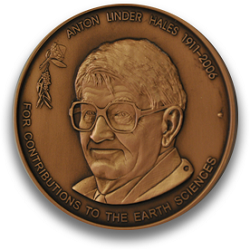
The Anton Hales Medal gives career encouragement to young earth scientists.
A humble backyard barbeque in Canberra four decades ago sowed the seeds for a generous donation that honours one of Australia’s greatest Earth scientists and recognises outstanding research into the structure and workings of our Earth.
The Australian Academy of Science’s Anton Hales Medal is named in honour of the late Professor Anton Hales FAA. Originally from South Africa, the geophysicist’s impressive career spanned three continents and covered nearly nine decades.
What remains unknown to many is the gift that made the medal possible.
That story begins in 1973 when Professor Hales, aged 62, moved to the ANU from the United States to become foundation Director of the Research School of Earth Sciences (RSES).
Professor Hales relocated with his wife Denise, who recalls being welcomed to Canberra with a BBQ invitation from Professor Ian McDougall FAA and his wife Pam. That gesture initiated friendships that continue today.
McDougall was one of the first members of staff recruited to Hales’s new school, where they worked together over the following decades. Like Hales, McDougall is also an internationally distinguished earth scientist.
Following Hales’s death at the age of 95 in 2006, a gift from the McDougalls saw the establishment of the award named in his honour, following discussions with Kurt Lambeck, then President of the Academy and also Director of RSES.
Pam McDougall says the idea behind the award was to not only honour Hales but give career encouragement to young Earth scientists.
The first recipient in 2009 was Professor Jeffrey Walker, a leading Australian expert on the remote sensing of soil moisture.
Walker has gone on to make further significant contributions in the field, including developing algorithms to derive high resolution soil moisture imagery from the Soil Moisture Active Passive (SMAP) satellite of NASA. The orbiting observatory measures the amount of water in the top five centimetres of soil everywhere on Earth’s surface.
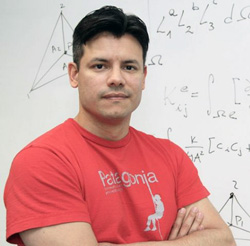
Associate Professor Juan Carlos Afonso was awarded the medal in 2017.
The ninth and most recent recipient of the Medal is Associate Professor Juan Carlos Afonso. He is at the forefront of revolutionising the way that geoscientists interpret the signals they obtain from deep in the Earth by geophysical methods.
Denise believes Anton would be pleased to see the boost that Ian’s gift has given to the recognition of Earth sciences research, his life-long passion.
“When I asked Ian recently what prompted the gift he spoke about Anton’s great capacity for mentoring,” Denise says.
“I hadn’t realised until now the great respect that Ian had for Anton. I know that Anton also held Ian in high regard because he was humble and a quiet achiever.”
Find out more about supporting the Academy
Past awardees
Academy welcomes state and territory commitments to zero carbon emissions
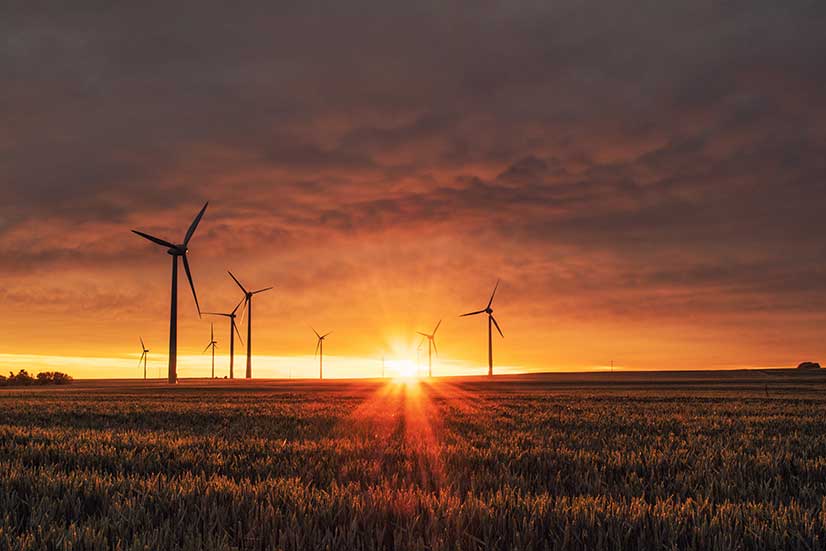
Photo by Karsten Würth
The Australian Academy of Science has welcomed commitments announced today by the Victorian, Queensland, South Australian and ACT governments to achieve net zero carbon emissions by 2050.
These commitments are consistent with the 2015 Paris Climate Accord committing 195 countries, including Australia, to action on climate change.
In particular, the Paris Accord marked international agreement that limiting global warming to 1.5–2.0 degrees above pre-industrial levels would require the world to achieve zero carbon emissions by the second half of the century, and reduce absolute levels of atmospheric carbon thereafter.
Australia is one of the highest per-capita emitters in the world, and our coastal infrastructure, agricultural and health sectors, and national treasures such as the Great Barrier Reef, are highly vulnerable to climate change.
The Academy has previously called on Australian governments to implement policy measures to reduce carbon emissions over the coming decades with the ultimate goal of reaching net zero carbon emissions by 2050, and the announcements by the three state premiers and the chief minister today are a very welcome commitment to achieving this goal.
Tri-nation gender equality recommendations released
A workshop convened in India late last year by the Australian, Indian and UK governments has led to the publication of cross-national recommendations for achieving gender equality in STEMM. The recommendations are designed to progress work done individually and collectively by the partner nations and recognise the diversity and inclusion benefits to all.
Workshop attendees identified recommendations for each country to action either individually or collectively:
- Develop a proposal to the Indian Science Academies’ inter-academy panel to introduce an Athena SWAN framework to India
- Develop a strategy to leverage corporate social responsibility to support female internships across all three countries
- Develop a common set of messages for a digital campaign to promote women in STEMM across Australia, India, and the United Kingdom
- Consider developing a proposal to expand trilateral cooperation on promotion of Women in STEMM to the Commonwealth
- Strengthen coordination and development of and support for bespoke professional leadership programs for Women in STEMM
- Build an entrepreneurial support network under the STEMM professional and academic associations in India, Australia, and the United Kingdom
- Explore opportunities for University/Industry collaboration between India, Australia, and the United Kingdom
- Identify common gender STEMM regional and international data sources that provide consistent, systematic reporting of gender data and are available for the three countries.
Read the full report
Young Australian researchers collaborate with emerging scientific superpower
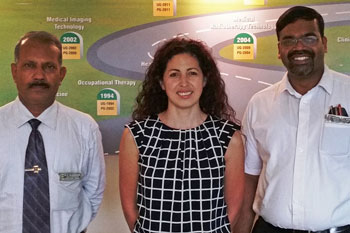
Dr Samia Toukhsati (centre) is being hosted by Dr B Rajashekhar, Dean, School of Allied Health Sciences, Manipal University (left). One of her co-investigators is Dr Abraham S Babu, Dept of Physiotherapy (right).
Can exposure to relaxing music help in the recovery of patients with heart failure? That is the question Dr Samia Toukhsati, Cardiology Research Fellow at Austin Health, is asking as part of an Australian Academy of Science Australia–India EMCR Fellowship.
Heart failure is a major global public health problem. Up to 60% of patients do not adhere to their prescribed medication, partly due to perceived side effects.
Dr Toukhsati’s research aims to reduce the risks associated with poor medication adherence in Indian heart failure patients, through music therapy. The trial builds on recent evidence of a positive effect of music exposure in Indian cardiovascular disease patients. Her co-investigators in the trial are Dr Abraham S Babu and Dr Padmakumar R from India’s Manipal University and Kasturba Medical College and Hospital.
Dr Toukhsati is one of four Australian scientists selected by the Academy from a competitive field of applicants to conduct research in 2017 at some of India’s leading research institutions.
The other Fellowship recipients are:
- Dr Md Shahriar Hossain (University of Wollongong), investigating superconductors for low-cost fusion power for a sustainable future, with the Institute for Plasma Research.
- Dr Vicki Thomson (University of Adelaide), working with the Tata Institute of Fundamental Research to study the disease risk from black rat species in India.
- Dr Mike Williams (CSIRO Land and Water, SA), identifying antibiotic and antimicrobial resistance in the Moosi River near Hyderabad using chemical and biochemical markers, with the Indian Institute of Chemical Technology.
Academy President, Professor Andrew Holmes, said that the Fellowships are an important component of Australia’s engagement with global scientific enterprise and serve to strengthen existing ties between researchers in Australia and India, the world’s second-most populous country and an emerging scientific superpower.
‘These Fellowships support high-performing Australian researchers to work with leading Indian scientists at major institutions. They facilitate greater collaboration between our two countries on science, technology and innovation,’ said Professor Holmes.
Australian early- and mid-career researchers are invited to apply now for the 2018–19 Australia–India Strategic Research Fund (AISRF) Early- and Mid-Career Researcher (EMCR) Fellowships.
They provide up to $40,500 for Australian researchers to travel to India and work with leading researchers at major Indian science and technology organisations for a period of between three and nine months. Applications close 11 September 2017.