
Transcript: Science at the Shine Dome President’s Address, Professor Andrew Holmes
Delivered 8.30am Wednesday 27 May 2015, Shine Dome, Canberra
E&OE: CHECK AGAINST DELIVERY
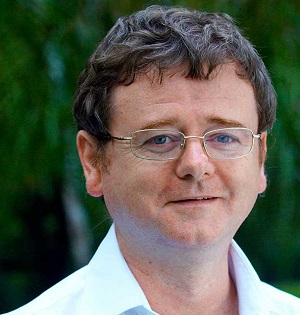
Australian Academy of Science President, Professor Andrew Holmes
Fellows of the Academy, distinguished guests, ladies and gentlemen.
As President of the Academy I have the privilege of delivering this annual address.
I do so this year in the knowledge that a shift has occurred in the past year; a shift in the way in which the Australian public, Australian politicians, and Australian business, talk about science.
Scientists are no longer considered to be ‘precious petals’. We are being taken seriously. We are being heard.
At the end of last year we welcomed the reinstatement of the word “Science” into the portfolio of the Minister of Industry and Science. It seems like a small thing, but it’s symbolically significant, and it was followed by further indications from the government that it is listening to science.
The three key federal government portfolios of Industry and Science, Health, and Education and Training all speak to important pillars for the scientific community, and central elements of Academy activities, and we are pleased that these three Ministers join the Prime Minister, the Chief Scientist and others at the Commonwealth Science Council. It’s a Council, I might add, that has five Academy Fellows as members and has already met twice this year. We are heartened at the interest that the Prime Minister has shown in this body.
The Government has also committed to working with the Council and the Chief Scientist to develop a science strategy, and will be consulting broadly with the sector over the coming months. This is important for Australian science and research and I encourage every researcher and science organisation with an interest in Australia’s scientific future to provide considered input into the consultation.
In March, Science Minister Ian Macfarlane made a positive, respectful and forward-looking speech at Science Meets Parliament, in which he made it clear that he believes science is fundamental to our national prosperity, and that our scientific institutions have the capacity to provide a strong platform upon which to build the Australia of the future.
We are making headway. The political narrative about science is starting to shift.
The Academy
In preparing my address I began to reflect on the purpose of the Australian Academy of Science in this shifting narrative. I reflected also on what we as an Academy can do to demonstrate a worthwhile contribution to the scientific affairs of the nation and the planet.
I was asked recently by a Corresponding Member (these are distinguished overseas scientists whom we recognise): “What is the Academy all about?”
Unquestionably, a key reason for our establishment and continued existence is to recognise excellence in science in Australia and contributions to Australian science abroad. However, although recognition is necessary it alone is not sufficient for the discharge of our obligations to society.
In our strategic plan for 2010-2015 we have focused on three key areas - promoting excellence, developing a national scientific culture, and providing independent scientific advice. We have four major activities that underpin these key areas: to disseminate, to give direction, to educate and to promote.
We aim to disseminate the best scientific knowledge and understanding, and to provide advice to government and to civil society to underpin science policy.
We give direction. We are uniquely positioned to provide a road map for the national research agenda, particularly in the area of curiosity-driven research.
We educate. It’s increasingly important to contribute to the improvement of science education in Australia, and we do this with well-regarded programs at both primary and secondary school levels, using an inquiry-based approach to instruction.
We promote. Success in science relies on networks. Through the connections of our Fellows we are very well placed to promote the best Australian science in Australia and abroad, and to create opportunities for our scientists to show their wares and to be favourably placed both to collaborate and to compete with the most able researchers within and outside this country.
So how have we been doing on these core activities of dissemination, direction, education and promotion?
During the mid-term review of our 2010-2015 Strategic Plan, Council asked ourselves what we should be doing to improve our profile in the community. We agreed that the single most significant thing we could do was to establish a strong communications and media office to disseminate our activities to the community. We have now done that. I believe we can clearly demonstrate that it has made a difference.
Dissemination
I’d like to take you through a concrete example that illustrates the way the Academy has tackled a science project, making extensive use of the skills of the Fellowship, developing science policy, delivering advocacy and providing the best scientific advice to the nation.
The Science of Climate Change: Questions and Answers was published in February this year. In 2010 government funds (provided without strings) enabled the Academy to publish the first edition of this document. The 2015 publication is an updated version of the document. This update incorporates the latest findings from the IPCC and provides a particular focus on issues relating to Australia, using Australian research results.
The update was supported by the then Department of Climate Change but I must note that the agreement with the Department carried no obligation to support existing government opinion. We formed an Expert Working Group of scientists (with a majority of members being Fellows of the Academy) who could deliver the most comprehensive and up to date understanding of the science in language that could be followed by the majority of Australians. In other words they disseminated information and provided opportunities for non-scientists, as well as scientists, to increase their knowledge and understanding. The work was overseen by an Oversight Committee comprising distinguished Fellows in the field, and the first draft was peer-reviewed by many other eminent scientists who represented a broad range of views and expertise on climate change. The project was led by the late Professor Mike Raupach, who was enormously respected across the globe, both within and outside of his field.
When the updated publication was launched in February this year it was noted in numerous news stories in Australia and internationally, thanks to the involvement of learned members of the Expert Working Group and from very eminent scientists in the Academy who were willing to be strong advocates for the message. Paramount to the success of the distribution of the document was the involvement of the communications and outreach team from within the Academy’s Secretariat, from the outset.
Why am I relating this at such length? Because it is evidence of the success of our ability to present the scientific case as accurately as we can, while recognising that there are still questions to be answered. To achieve this everyone pulled together. We had strong commitment from Fellows, other scientists and institutions, supported by the Secretariat.
Of course, climate change continues to be an issue of public contention. After release of the publication I was not surprised that we had to respond to a small number of critics.
In developing these responses I was strongly influenced by a recently published book by the British author George Marshall entitled Don’t Even Think About It; why our brains are wired to ignore climate change. In this book Marshall makes many points. Most importantly he argues evolutionary psychology makes it hard for us to deal with climate change; that the human brain has not evolved to deal well with events in the distant future. ‘People are divided by what we all share - our evolutionary origins, our perceptions of threats our cognitive blind spots, our love of storytelling, our fear of death and our deepest instincts to defend our family tribe.’ We are hard-wired to deal with the here and now. Marshall also argues that rational debate on this topic will only make progress if we try to see the opponent’s point of view.
He quotes the message that Nobel Laureate Steve Chu wrote to his former employees on leaving the White House. Chu, who was energy secretary in the last Obama administration, said this to his staff. It will be familiar to many of you, but I wonder if you realise why it is so familiar. “We don’t want our children to ask, ‘What were our parents thinking? Didn’t they care about us?’”. After all, he continued, “we do not inherit the Earth from our ancestors; we borrow it from our children.”. As with so many of the folk quotations that gravitate to the climate issue, this wisdom, usually ascribed to the Amish or a famous Native American, Chief Seattle, is actually nothing of the kind. It originates in a speech given in 1974 by the then Australian Minister for the Environment, the Hon Moss Cass, but don’t expect any bumper sticker to give him the credit. Marshall makes the point that we need conviction as well as reference to the scientific evidence.
We the scientific community must continue to work positively and constructively with people who do not have a science background, as we strive to raise public awareness of science. The immediate past-President of the Royal Society, Lord Martin Rees, described this as conveying a ’feeling for science’.
So what has the Academy achieved in this direction? How have we conveyed a ‘feeling for science’?
Direction-setting
It was recently observed by a new Corresponding Member of this Academy that Australians appear to care little for science and do not place it as importantly as some other activities in the nation’s life (the word sport comes to mind). While this observation may have some currency I can think of a number of events driven by our better ability to communicate science that are changing the way in which science is viewed in Australia.
There is no doubt that the Academy has helped raise the awareness of science issues in the past year. Our publications and press releases have been reproduced by the mainstream media and we now have a strong following in social media. Our media presence has grown to an average of almost 30 stories per week being picked up by mainstream media quoting the Academy. In some weeks this figure numbers in the hundreds.
In a recent highlight, our past President was invited to deliver a wonderful Boyer Lecture series last year: “The Promise of Science; a Vision of Hope”. It was the most recent of just seven Boyer lecture series which have been delivered by scientists and technologists over the 53 years since its inauguration – and the first such series to have been delivered by an eminent woman scientist.
The inaugural lecture in 1959 was delivered by Dr David Martyn – a Fellow of the Royal Society – on “Society in the Space Age”. Since then the Boyers have featured Sir John Eccles on “The Brain and the Person”, Sir Macfarlane Burnet addressing “Biology and the Appreciation of Life”, and Sir Bruce Williams on “Living with Technology”. In 1989, Max Charlesworth spoke of “Life, Death, Genes and Ethics; Biotechnology and Bioethics” and in 2007 Professor Graeme Clark addressed “Restoring the Senses”.
In the past year not only has the Academy – and of course science – featured in the Boyer Lectures, but four of our Fellows have appeared on the popular ABC television show, Q&A – including on the first Q&A program to focus specifically on science.
We have contributed in many other ways.
Education
As I mentioned earlier, our science education programmes continue to play a leading role in inquiry-based learning at both primary and secondary levels, with Primary Connections and Science by Doing.
I was lucky to visit Fadden Primary School with the Executive Committee of the Global Network of Science Academies in late 2013. There, I saw 6-year-olds being taught the basic concepts of a Venn diagram. The teacher had two intersecting circles. In the one circle there were toys that could be pushed and in the other circle there were toys that could be pulled. And in the intersecting common section there were toys that could be pushed and pulled. So there you have it and the penny dropped (for me). It was the first time that I really understood what a Venn diagram was!
Both Primary Connections and Science by Doing have earned a strong, loyal and growing following in Australian schools. Both of them have the benefit of being created and developed by experts in education and reviewed by Fellows and other experts in science. And there is growing public interest in supporting our education and other community outreach programs through philanthropic donations, for which we are very grateful.
Later today Fellows will have a sneak preview of our re-imagined public science education website, Nova: science for curious minds. Thanks to a most generous donation from Telstra we are revitalising Nova, making it more interactive and accessible, so that we can better excite interest in the latest knowledge about topical issues of science. Our Nova team is confident of success, and there are grand opportunities emerging for expansion of the reach of this communication of science to the public. Nova will launch publicly very soon: in the meantime I encourage you to visit nova.org.au and sign up to learn of developments.
Promoting science in policy
Our working relationships with the other learned Academies are strong – we work collaboratively across the sector collectively to raise that ‘feeling for science’. In particular I acknowledge the collaboration and support of the President of the Australian Academy for Technological Science and Engineering (ATSE), Dr Alan Finkel. Australia is too small for the two academies not to be speaking with a united voice on matters of science and technology. When we collaborate in a collegial manner we reinforce our common goals.
We also value our strong and developing relationship with the Australian Chief Scientist Professor Ian Chubb, which has led to the publication of the Securing Australia Future series with the Australian Council of Learned Academies (ACOLA), and an assessment of the economic contribution of advanced physical and mathematical sciences, with an equivalent study of the biological sciences to follow.
We have issued influential statements regarding policies for the Great Barrier Reef and on alpine cattle grazing, and have given strong advice to government consultations on post-2020 greenhouse gas emissions targets. We have played a leading role in creating and coordinating the National Research Alliance that most recently staged a national campaign successfully to convince the Government to maintain support for the National Collaborative Research Infrastructure Strategy (NCRIS).
Behind the scenes, we continue actively to meet members of government and the opposition and their advisors to create greater awareness of the importance of the relevance of science to the nation and to the future productivity of the country.
All of this activity, I believe, has helped underpin that shifting attitude to science… but there is still work to do to translate this talk into action.
Turning talk into action
In the Federal Budget handed down two weeks ago, there was a welcome reprieve for science funding in the coming financial year.
However, there are still forecast cuts of around $290 million to key Australian science and research programs that will take effect in the financial year 2016-17.
Despite immediate relief for NCRIS and an ongoing commitment to establish a Medical Research Future Fund, overall funding for science in Australia will continue to decline.
Unfortunately NCRIS has been funded through significant reductions in block grants to researchers in universities. This is like taking engines off the jumbo jet.
To do science, you need excellent scientists to make the best use of top quality infrastructure; it can’t be one or the other. NCRIS needs a long-term sustainable funding model that addresses both ends of this equation.
The Minister for Industry and Science, and the Prime Minister say they want to see science play a greater role with industry and yet in this budget there was $30 million cut from the Cooperative Research Centres, which are specifically designed to help improve collaboration with business and help generate jobs from research and development. It will be important to consider an alternative model to promote academia-industry engagement.
While there are forecast selective cuts there have also been selective increases – for the Synchrotron, Australian Nuclear Science and Technology Organisation (ANSTO), Antarctic research and medical research into exotic tropical diseases – and we look forward to seeing those increases sustained into the future. We’re also pleased that there will be a Future Fellowships scheme this year, albeit with just 50 fellowships on offer. It’s a good start for this important initiative to support and retain some our best and brightest young researchers, and we will continue to advocate for the programme to be restored to its former scale.
As the mining boom slows, this should be a time of growth in science funding. We should be preparing Australia to build a knowledge economy so that we do not simply survive, but thrive in an increasingly competitive world.
We should be supporting our world-class research infrastructure, and our world-class and emerging researchers, to create new knowledge and innovation. And we should be supporting scientists and industry to forge strong links to translate this innovation into economic growth and security.
This is a challenge for politics, yes. But it’s also a challenge for the science sector.
On the domestic front we must we must continue to persuade the Australian community of the importance of science as a major cultural contributor and a driver to national prosperity through wealth creation and improved productivity.
We must continue to focus on education, working with young people who will inevitably become the decision makers of the future. We must continue to build strong support, professional development, and mentorship for early- and mid-career researchers – such as that provided by the Australian Early- and Mid-Career Researchers Forum, which grows from strength to strength.
And we must convince the community not only of the value of science as a discipline, but also as a provider of informed and trained minds who can meaningfully contribute to the workforce in many different areas from those directly related to their scientific training.
A major challenge facing the research community is to develop a profitable engagement with industry. There are many ways in which this can be realised, but common to all must be an acceptance that each party should benefit from this kind of engagement.
Here in Australia there are very few large companies engaged in fundamental and applied research. Much activity is carried out in small and medium enterprises (SMEs), which will invariably have limited capacity to fund collaborative research.
The solution to this must be seen as a task of government which will inevitably reap the dividend in the taxation of increased earnings arising from the success of these small companies. Just as we support the notion of a Medical Research Future Fund, so would we support industry engagement – through the Cooperative Research Centres and other mechanisms. It is of course important that this kind of engagement is not supported at the expense of our capacity for curiosity-driven research that is inevitably the wellspring of many translatable research discoveries.
All the evidence suggests that government is willing to engage constructively with scientists, and particularly members of the Academy.
We have also gained the support of the President of the Business Council of Australia, who is a Fellow of the Academy and a passionate advocate for STEM education and research infrastructure.
Ministers take note of the opinions expressed by the Academy, as evidenced by the recent campaign to preserve NCRIS. We are now regularly consulted when policy is being formulated, but there is much more to do to reach the stage where government routinely both consults and listens to us, and builds on our contribution.
For example, the absence of a holistic Australian international research collaborations strategy is becoming an embarrassment. Traditionally, Australia has been recognised as a significant player in the international scientific arena through its participation in many activities. Historically it has been well recognised that if we are not seen internationally, we will slip from the minds of those with whom we wish to engage.
It is on the base of strong historical opportunities that Australia plays such a prominent role in the international scientific community.We supply Presidents, office-bearers and committee members to a vast array of international scientific unions and societies, and hundreds of Australian scientists participate in their research programs. Our high profile abroad makes us respected international partners and we are chosen because we have a reputation for delivering good value in a research collaboration.
It is with these goals in mind that we seek to remind government that we can help in matters of science for diplomacy as well as science for the benefit of sharing information and capacity building. The Academy believes in the value of scientific collaborations that transcend political and religious beliefs and contribute to the peaceful co-existence of nations.
Looking ahead
We are here today to celebrate the excellence of Australian science in the sixty-first year of the Academy. We have much still to do to foster a ’feeling for science’ in our nation.
As an Academy we have set a new direction in re-examining our governance and we have developed a new strategic plan for the next five years. We wish to empower ourselves to build our influence and outreach, and to initiate new projects.
Among those we are contributing to is a ‘Mathematics by Inquiry’ project to improve school mathematics education, that is in development by the Department of Education.
The Academy has also taken a leading role in initiating a science and gender equity programme that we hope will demonstrate through a pilot project the way in which Australia may develop a process for validating the recognition of gender equity in divisions and departments of higher education and research institutions. This exciting venture will make our position comparable with other nations, particularly the UK.
We will of course continue to contribute to meaningful public and political conversations about science, and to work with the government to refine strategic research priorities and build a strong national strategy for science, technology, engineering and mathematics.
This will all be important work, and will help prepare the way for a stronger community of scientists.
I want to finish by setting a challenge for us: for the scientific community. The Academy works hard but we are just one organisation.
Sitting in this room today are some of the most accomplished research scientists in Australia, and some of the brightest hopes for the future of Australian science. It is up to all of us to step up.
It is up to all of us to speak to power when it’s warranted. To become involved in educating and mentoring the next generation. To speak to media and ensure that science has a voice in the public sphere.
We are improving wellbeing. We are helping to prepare this nation, and the world, for an uncertain future. We are strengthening our economy. We are nurturing our international connections. We are innovating.
Together we are making a difference. We are working towards a better informed, more capable, more agile Australia.
Thank you.
Academy welcomes reinstatement of Science to the Australian Cabinet
The Australian Academy of Science today welcomed the Prime Minister’s announcement that Ian Macfarlane is now the Minister for Industry and Science.
Academy President Professor Andrew Holmes said he hopes the move will be more than simply a change in title.
“Having a Minister identifiably responsible for science is a very significant forward step for this Government we very much hope that this signifies that the Government is placing greater value on the importance of science and technology to all Australians,” Professor Holmes said.
“We take this shift in the Ministry as a signal that many important issues which have effectively remained dormant for the last 18 months, while we’ve had no Minster with science in their title, will now have the additional horsepower they need to bring them back on to the agenda.
“The Academy is pleased to continue working with Minister Macfarlane and the Government to ensure that science and technology is a major element in planning Australia’s future.”
Professor Holmes also welcomed the appointment of Karen Andrews as Parliamentary Secretary to the Minister for Industry and Science.
“We hope that the appointment of Ms Andrews boosts the leadership for science within the Government, and we look forward to working with her.
“We also welcome the new Minister for Health, Sussan Ley. This is an exceptionally important portfolio for medical sciences, at a critical juncture for medical research with the imminent establishment of the Medical Research Future Fund.
“The MRFF has the potential to be the single most important initiative for health research in Australia and the Academy has confidence that Minister Ley will be able to shepherd it through the Senate and bring it to fruition.”
The Science of Immunisation in pharmacies for World Immunisation Week
To celebrate World Immunisation Week (20-27 April) the Australian Academy of Science, in conjunction with The Pharmacy Guild of Australia, has distributed copies of The Science of Immunisation: Questions and Answers to approximately 5000 pharmacies around Australia.
The World Health Organisation’s goal for World Immunisation Week is to dispel myths about immunisation, and better communicate the health benefits of vaccination and the dangers of not immunising children.
Eight of Australia’s top researchers were brought together by the Academy to form a working group, co-chaired by Academy Fellows Professors Tony Basten and Ian Frazer, to produce the document.
The Science of Immunisation: Questions and Answers aims to address confusion created by contradictory information in the public domain. It has been endorsed by the Royal Australasian College of Physicians and the Australian Medical Association.
Academy President, Professor Suzanne Cory, said the booklet explains in plain language the current situation in immunisation science, including where there is consensus in the scientific community and where uncertainties exist.
“Pharmacists are well placed in the community to provide a forum for a discussion about immunisation; the Academy is pleased to be able to work with the Guild to distribute our publication,” Professor Cory said.
“The Academy is concerned that people may choose not to immunise as a result of misinformation in the public domain: we hope that by promoting better understanding of the science behind immunisation, we are enabling people to make well informed choices about their health, the health of their children and the health of the broader community.”
The Science of Immunisation: Question and Answers is available free of charge and more than one million copies have been distributed in hardcopy or downloaded from the Academy's website.
Academy welcomes new Council members
A Nobel Laureate, the creator of the cervical cancer vaccine, a Eureka prize winner and woman pioneer in mathematics are among the Australian Academy of Science’s new Council members.
“I’m extremely grateful to the retiring members for their dedication and commitment to the promotion of science,” said President of the Academy, Professor Suzanne Cory.
“We are delighted to have such high calibre new members of Council and look forward to welcoming them in May next year.”
Professor Chennupati Jagadish, nanotechnology and photonics expert from the Australian National University, currently a member of Council, will become the new Secretary for Physical Sciences.
He will be stepping into the role ably filled for the last three years by mathematics Professor Peter Hall of the University of Melbourne.
Professor Jagadish’s appointment gives rise to an additional vacancy on the Council for a member for physical sciences. This position will be filled by Nobel Laureate Professor Brian Schmidt.
Mathematics Professor Nalini Joshi of the University of Sydney and CSIRO climate specialist Professor Michael Raupach will become members for physical sciences when current members Professors Andy Gleadow and Michelle Simmons retire.
Representing biological sciences, cervical cancer vaccine specialist Professor Ian Frazer from Queensland University and ecologist Professor Richard Shine from the University of Sydney will become members of Council.
They will take over from current members for biological sciences, Professors Chris Goodnow and Hugh Possingham.
The new Councillors will assume their roles at the Australian Academy of Science Annual General Meeting at the Shine Dome on Thursday 4 May 2012.
Science high flyers devise ecosystem plans for Murray-Darling, Surat Basin
Sixty high-achieving young physical, natural and social scientists from around Australia have put their heads together to come up with ideas to manage some of Australia’s most stressed ecosystems.
The Theo Murphy High Flyers Think Tank, held by the Australian Academy of Science in Brisbane, examined the Ningaloo Marine Park in Western Australia, the Murray-Darling River Basin, native grasslands on the outskirts of Melbourne, and Queensland’s Surat and Bowen Basins, which have been the subject of recent controversy over the extraction of coal seam gas.
The health of the artesian water in Queensland’s Bowen and Surat Basins must be urgently monitored, the scientists said. The water quality, the ecosystems it affects, and the health of the people who live in the area should not be allowed to worsen because of the mining.
“Very little data was collected before mining began so we have a limited baseline against which to compare the current state of the ecosystem. The horse has bolted,” the scientists said.
“The lack of freely available and well-communicated data for Australia’s ecosystems is a problem that impedes all aspects of natural resource management in Australia.”
Scientists should integrate environmental and social factors into a single model to create the most holistic picture of the impact of mining in the Bowen and Surat region, they said.
“Landholders and industry should participate in data collection and forecasting alternative futures,” they said.
“In addition, the regulatory frameworks for environmental protection and mining industry regulation must be kept completely separate to ensure the best possible outcome for all.”
Strategically placed cameras, online interactive models and smartphone applications could be used to encourage people who live in the Murray-Darling River Basin to work with scientists to monitor the health of the ecologically and politically sensitive ecosystem and plan for its management, the scientists said.
“There are a lot of opportunities for adaptive learning that includes scientists and the community,” the researchers said.
The Think Tank also examined ways to juggle the competing commercial fishing, tourism and ecological pressures of the Ningaloo Marine Park in Western Australia, and ways to protect the nationally threatened species being consumed by encroaching urban sprawl in Melbourne’s peri-urban grasslands.
Plans to model for and manage the four ecosystems – and stressed Australian ecosystems more generally – will be drawn up as a result of the Think Tank.
Statement—Election Policy 2013
On 3 July 2013, the Australian Academy of Science made the following statement regarding science priorities for Australia.
- Download statement (PDF, 20.5 MB)
Fellows celebrated in King’s Birthday Honours
Four Academy Fellows have been recognised for their outstanding contributions to science, tertiary education and leadership by being named in the King’s Birthday 2025 Honours list.
Professor Ove Hoegh-Guldberg AC FAA – appointed a Companion of the Order of Australia (AC)
For eminent service to marine science, particularly the research, conservation and management of coral reef ecosystems, and to tertiary education.
Professor Ove Hoegh-Guldberg was elected to the Academy in 2013 after discovering the molecular mechanism behind coral bleaching. His research was also one of the first to demonstrate the extreme sensitivity of ecosystems to increases in the release of carbon into the atmosphere due to human activity.
Emeritus Professor Mark Howden AC FAA FTSE – appointed a Companion of the Order of Australia (AC)
For eminent service to environmental science, to the global response on climate change and adaptation, to agriculture, and to tertiary education.
Professor Mark Howden was elected to the Academy in 2025 for his work influencing global climate science, policy and public engagement over more than three decades. His research covers the science of climate change and variability, adaptation responses, sustainable emission-reduction options and more.
Emeritus Professor Len Lindoy AO FAA – appointed an Officer of the Order of Australia (AO)
For distinguished service to chemical sciences as a researcher, to tertiary education, and in leadership roles.
Professor Len Lindoy was elected to the Academy in 1993 for his work in discriminating between metal ions using ring-shaped molecules. His research has been applied to industrial processes to selectively recover or remove metal ions.
Professor Igor Bray AM FAA – appointed a Member of the Order of Australia (AM)
For significant service to physics, mathematics and astronomy education.
Professor Bray was elected to the Academy in 2017 for several major research breakthroughs in the field of atomic and molecular collision physics. He is particularly known for developing the convergent close-coupling (CCC) theory, which allows for precise calculations of atomic and molecular collisions.
Read more about how the Order of Australia recognises Australians who have demonstrated outstanding service or exceptional achievement.
Thank you, Science Minister Ed Husic
The Australian Academy of Science thanks Ed Husic for his service and for advancing science and industry in Australia.
“Minister Husic’s knowledge, commitment and enthusiasm for science and technology was rare. He understood its role in the re-invigoration of the Australian economy and in global diplomacy,” said Professor Chennupati Jagadish, President of the Academy.
“His commitment to the portfolio was clear and unwavering, achieving significant impact in three years.
“Minister Husic has laid the groundwork for the long-term reforms needed to structure and position R&D as a significant driver of the economy. He also introduced important measures to remove barriers to participation in science, especially among under-represented groups.
“Commissioning the Strategic Examination of R&D – the most comprehensive review of the R&D system in decades – was essential and will position R&D in Australia to be a key driver of productivity, economic diversity and international competitiveness.
“Australia can and must be positioned in the global technological race and the review lays the path to achieve this.”
Among Minister Husic’s many achievements, the Academy acknowledges his leadership in:
- establishing the National Reconstruction Fund
- backing Australia’s leading role in quantum technology
- enhancing Asia and Pacific scientific engagement through the establishment of the International Science Council’s Regional Focal Point for Asia and the Pacific
- delivering the Pathways to Diversity in STEM review
- boosting Australia’s AI capabilities
- delivering the National Battery Strategy
- revitalising the National Science and Research Priorities
- focusing and delivering regional collaboration via the Global Science and Technology Diplomacy Fund
- helping establish the Future Made in Australia framework
“The Academy wishes Minister Husic well and urges the next Minister for Science and Industry to harness the opportunities Australia has to compete in the global scientific and technological race, especially as we face a complex geopolitical environment,” said Professor Jagadish.
2024 in review: celebrations of science, and progress on many fronts
The Academy’s 70th anniversary year was a celebration of Australian science, where we honoured the Fellows elected to the Academy and recognised the outstanding contributions of Academy awardees.
Academy President Professor Chennupati Jagadish said the dedication and pioneering work of Australia’s high achievers continue to push the boundaries of knowledge, advance our nation and globe, and inspire future generations of scientists.
“The Academy was established to bring science to the service of the nation. This mission has not changed in 70 years – if anything, it has become more critical than ever.
“Our aim is to deliver sought-after scientific advice that influences Australians’ actions and contributes to global science,” Professor Jagadish said.
Advice and influence
An example of the Academy’s influence was the recently announced government review of Australia’s research and development system.
“Our persistent push for change successfully argued the case for a wholesale review of Australia’s outdated R&D system,” he said.
Proposed changes to Australia’s defence trade controls legislation to support the AUKUS agreement would likely have had unintended consequences for scientists and Australia’s capacity to engage in international research. The Academy’s leadership, strategic science policy advice and sustained advocacy led to an exemption for fundamental research being included in the updated legislation, striking a better balance between addressing national security concerns and maintaining vital research collaborations that are in Australia’s national interest.
The year also saw the release of the decadal plan for Earth system science, which calls for the urgent establishment of a national agency to coordinate the science required to transform Australia’s response to climate change. This would ensure that the management of emerging climate risks in Australia and across our region are based on scientific evidence.
In the region, the Academy supported the establishment of the Pacific Academy of Sciences, which will give Pacific scholars agency and a voice in shaping their destiny. The Pacific Islands was the only region in the world that did not have its own learned academy and a local collective voice for science, despite the region experiencing profound impacts due to climate change.
We also partnered with the Australian Academy of Technological Sciences and Engineering, delivering $6 million in Australian Government grants to strengthen science and technology collaboration with our regional neighbours.
Closer to home, we convened experts across the agriculture, nutrition, and food innovation sectors for our annual symposium, Food Futures, held this year as part of the World Science Festival in Brisbane. And in December we released the mid-term review of our decadal plan for nutrition.
The Academy turned its attention to the development of Australian Science, Australia’s Future: Science 2035, a 10-year plan that will position science to support our national ambitions, due to be released in 2025.
“The Academy has a crucial role in making sure Australia’s approach to science is strategic, meets our national challenges and advances Australian interests locally and globally,” Professor Jagadish said.
And, importantly, we provided crucial input to the development or analysis of policy in Australia by making 30 submissions to government consultations and parliamentary inquiries.
Reconciliation and Traditional Knowledges
Progressing our journey to reconciliation, we published our Innovate Reconciliation Action Plan which contains practical steps to respect and celebrate Traditional Knowledges of Australia’s First Nations Peoples to build a stronger, more innovative, and sustainable nation and world.
“Securing our nation’s future economic and social prosperity will be driven by embracing skills, knowledges and experiences from a diverse range of people,” Professor Jagadish said.
“Our work will recognise Traditional Knowledges in Australia’s scientific and technological knowledge systems.”
In November, we joined with the Royal Society of Canada and the Royal Society of New Zealand Te Apārangi at the inaugural Tri-Academy Partnership on Indigenous Engagement. The summit focused on cultural heritage in an era of reconciliation, providing opportunities for deeper understanding, knowledge sharing and connections between Indigenous scholars from the three countries, as well as non-Indigenous allies and stakeholders.
Outstanding achievements in science
Over four days in September, Australia’s most influential scientists gathered for Science at the Shine Dome in Canberra to celebrate and honour outstanding achievements in science. New Fellows and award recipients from across 2023 and 2024 were recognised at the event, and researchers from all disciplines and career levels were able to present, share, network and collaborate.
The Academy’s annual public speaker series featured our iconic earliest Academy Fellows, as we traced our 70-year history from landmark discoveries to the present cutting edge of Australian science.
A joint symposium with the Academy of Law looked at whether the courts are keeping pace with scientific and technological discoveries, and in the ninth year of Falling Walls Lab Australia an eminent jury selected three early-career researchers to represent the nation at the international Falling Walls event in Berlin.
With the performance of Australian schools in science and maths recently in the spotlight, it’s timely that we released new education resources which will boost the confidence and capability of the nation’s primary school teachers to deliver Australia’s science and mathematics curriculum.
“The resources are full of research-based strategies to build teachers’ knowledge for teaching science and mathematics and can be adapted to meet the needs of the range of learners in the classroom,” Professor Jagadish said.
The Academy’s history of developing innovative education resources reaches back to 1967 with the Web of Life textbook, which was viewed as the most successful curriculum development project of its time in the world.
Fellows’ reading and listening recommendations for summer
Set the table for summer with our Fellows’ reading and listening recommendations.
About the Academy
The Australian Academy of Science is an independent organisation of distinguished Australian scientists, championing science for the benefit of all. Find out more about the Academy’s mission, values and priorities in our strategic plan.
Evolving challenges and opportunities for nutrition science revealed in review of decadal plan
The mid-term review of the Australian Academy of Science’s National Committee for Nutrition's decadal plan has revealed critical insights into the evolving challenges and opportunities in nutrition science. From food security to sustainability and nutrition literacy, the review underscores the vital role of nutritional science in shaping Australia’s health, environmental resilience and economic future.
Nutrition science is essential for addressing some of Australia’s most pressing issues. As National Committee for Nutrition Chair Professor Margaret Allman-Farinell noted, “Nutrition science underpins areas of critical interest in securing future health, sustainability, food security and economic outcomes for Australians.”
The review highlights emerging issues such as the increasing prominence of food security and food processing, and the social determinants of nutrition literacy. These challenges are compounded by the lingering impacts of the COVID-19 pandemic, which disrupted food supply chains, increased cost-of-living pressures, and heightened inequalities in food access.
The review identifies food security and sustainability as priority areas requiring immediate attention. Communities across Australia, particularly Aboriginal and Torres Strait Islander peoples, face ongoing challenges in accessing affordable, nutritious food. This lack of access exacerbates health inequities, limiting opportunities for improved health outcomes.
Professor Allman-Farinell said there is a need to recognise the role Indigenous peoples and Indigenous foods can play in advancing nutrition science.
“We [also] needed to find any important omissions from the original plan. It was notable that while the plan was to realise health and environmental and economic opportunities to benefit all Australians, no voice had been given to Aboriginal and Torres Strait Island communities.”
National Committee for Nutrition member Dr Emma Beckett, who led the mid-term review steering committee, highlighted key areas for further research. Among them, the classification of processed foods remains an area of debate, requiring greater collaboration between public health experts and the food industry.
Dr Beckett acknowledged the complexities facing the field.
“As a field in constant flux with new technology, contexts and challenges, we must remain agile to maximise benefits to the Australian population,” she said.
The mid-term review steering committee found the plan’s original four pillars (societal determinants, nutrition mechanisms, precision and personalised nutrition, and education and research training) remain relevant.
The review envisions Australian nutrition science as a global leader in improving long-term health and wellbeing, delivering social, environmental and economic benefits. However, it warns that realising this vision will require coordinated efforts to address the resource and infrastructure challenges exposed during the COVID-19 pandemic.
“Nutrition science has the potential to shape the health and prosperity of future generations,” Dr Beckett said.
“To achieve this, the sector needs recognition of its crucial role in health, wellbeing and the economy, alongside the support required to drive impactful action.”
A call for action
The mid-term review is a rallying call for action. It highlights the need for government support, cross-sector collaboration, and a renewed focus on education and research to equip Australians with the knowledge and resources needed for a healthier, more sustainable future.