




Academy’s advice informed Australia’s RNA Blueprint

The Academy welcomes the Australian Government’s recognition of Australia’s RNA potential in the blueprint released this week, as an important step in building Australia’s RNA capacity.
Building sovereign RNA capacity means Australia can draw on essential health technologies, address our unique environmental needs, and strengthen our research capabilities for the future.
It is of note that fundamental RNA science was identified by this blueprint as a strength for Australia. Patient investment in fundamental RNA science research will be critical to delivering applications for the future.
The Academy has previously recommended a national mission for the whole RNA science and technology pipeline in Australia, driven by strategic investment and prioritisation across funding schemes and providing sustainable, long-term funding for projects from fundamental research through to translation.
The Academy hosted a roundtable in 2021 to identify Australia’s RNA science and technology priorities. In 2022, the Academy provided advice to the Department of Industry Science and Resources (DISR) on RNA science drawing on the expertise of our Fellowship and insights from the National RNA Science and Technology Roundtable. This advice informed Australia’s RNA Blueprint.
Overview of Academy’s RNA work
2021 – Academy hosts National RNA Science and Technology Roundtable
News and media releases
2022 – Academy provides science advice on RNA via unpublished report for DISR
In 2022, the Academy provided advice to DISR on RNA science drawing on the expertise of our Fellowship and insights from the National RNA Science and Technology Roundtable. This advice informed Australia’s RNA Blueprint.
2023 – Academy responds to discussion paper
Academy responds to ‘Understanding our RNA potential: discussion paper’, a consultation that led to the blueprint published this week.
Primary care research receives funding boost thanks to Douglas and Lola Douglas
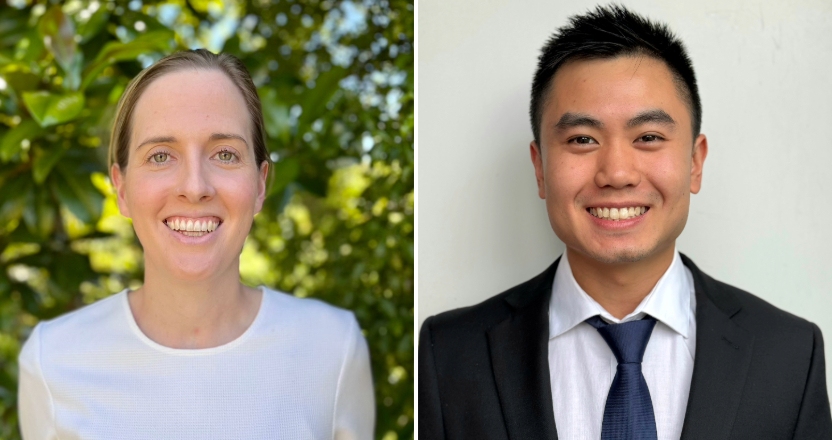
Two early career researchers will receive further financial support to continue their primary care research thanks to the 2024 Douglas and Lola Douglas Scholarship in Medical Science.
The scholarship from the Australian Academy of Science assists with Aboriginal and Torres Strait Islander or primary health care research, and this year’s scholarship recipients are Dr Johanna Birrell and Dr Richard Kha.
Dr Johanna Birrell, University of Sydney
Kidney failure occurs when the kidneys can no longer function adequately on their own, requiring kidney replacement therapy (KRT) to help people survive.
The number of people with kidney failure receiving KRT more than doubled between 2000 and 2021, according to the Australian Institute of Health and Welfare.
Dr Johanna Birrell is conducting epidemiological research into kidney failure across Australia and New Zealand to improve patient access to kidney failure services.
“There are inequities in access to treatment for kidney failure in Australia,” Dr Birrell said.
“Detailed health service planning is required to improve prevention and patient access to kidney failure services, and to prepare for future demand.
“The results of this research will deliver new insights into which communities across Australasia are most affected by kidney failure, face the greatest difficulties in accessing care, and the contributing factors.”
Dr Birrell will dedicate some of the funding to develop her skills in geographic information system mapping as well as travel to remote communities to ensure that the voices of Aboriginal and Torres Strait Islander people living with kidney failure are represented in the research.
Dr Richard Kha, Westmead Institute for Medical Research
Vision impairment has a profound impact on wellbeing and greatly reduces quality of life, and according to the Australian Institute of Health and Welfare the burden of eye diseases in Australia is expected to increase rapidly.
Dr Richard Kha’s research is identifying the current prevalence, risk factors and impact of vision impairment and major eye diseases responsible for vision loss. This information will assist in the development of cost-effective, long-term and sustainable solutions for the prevention of vision impairment.
“The increasing burden of eye diseases is due to the rapidly ageing population, and age is a major risk factor for the primary eye diseases responsible for vision impairment,” Dr Kha said.
According to the results from a national eye health survey, Aboriginal and Torres Strait Islander people experience higher rates of vision impairment, blindness and vision loss than non-Indigenous Australians.
Dr Kha aims to close the gap in blindness and visual impairment by explicitly quantifying the disparities in visual impairment and access to care to inform disease- or location-specific eye care initiatives.
“This data will be critical to planning and delivering treatments and support towards saving sight, as well as tracking progress towards eliminating avoidable vision loss.”
The Douglas and Lola Douglas Scholarship in Medical Science
The Douglas and Lola Douglas Scholarship in Medical Science is made possible through a generous bequest by philanthropist Lola Douglas, who had a wish to support young researchers. This bequest enables the Academy to help to fulfil this wish.
The scholarship provides up to $14,000 over two years to cover costs of small items of equipment, materials, travel, or assistance in Aboriginal and Torres Strait Islander or primary health care research.
The funding is offered as a ‘top up’ to PhD candidates awarded a National Health and Medical Research Council (NHMRC) Postgraduate Scholarship.
Exploration of ‘blood, genetics, race and rights’ wins Mike Smith Student Prize
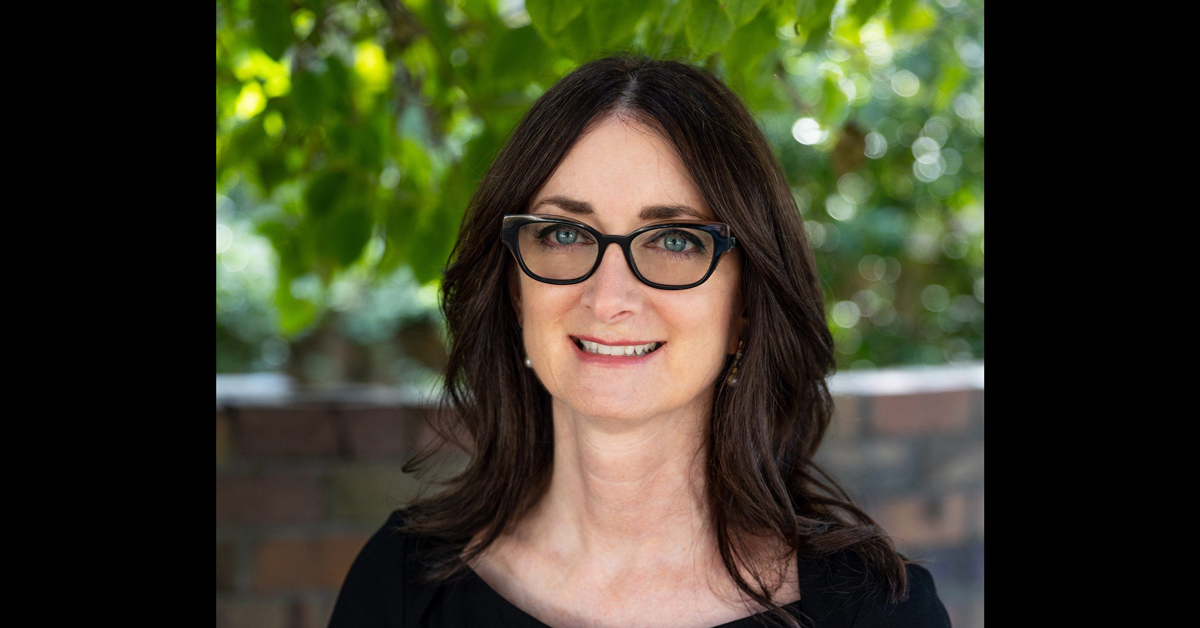
Dr Michelle Bootcov is the recipient of the 2023–24 Mike Smith Student Prize for her original research into the history of Australian science.
She has brought her passion for science and history together in her essay titled ‘Robert Kirk: Blood, genetics, race and rights in the mid to late twentieth century’.
Dr Bootcov has an interdisciplinary background, with a science and an arts degree, and a PhD in molecular immunology.
Now a PhD candidate again at the University of New South Wales (UNSW), Dr Bootcov’s essay investigates the mid-twentieth century transformation of viral diagnostics, through developments in hepatitis research.
The essay was highly commended by the judges for the creative topic, strong analysis and skilled presentation, with Dr Bootcov regarding her selection to receive the Mike Smith Prize an “extraordinary honour”.
It has been published as an open access article in the Academy’s journal, Historical Records of Australian Science.
The intersection between human population genetics and virology in the 1960s
Dr Bootcov said her essay examines mid-twentieth century blood collecting, the ‘undoing’ of race, and the progressive politics of British-Australian population geneticist Robert Kirk.
“This history of Robert Kirk is particular to Australia but engages with universal themes.
“It spans the 1950s to 1980s, which was a transformative period for genetics, social justice and Indigenous politics, and includes the repercussions that followed in the genomic era.”
Kirk collected historically significant blood samples from Indigenous Australians, one of which was found to hold a protein that has proven vital in our understanding of viral hepatitis.
This prompted Dr Bootcov to research Kirk’s scientific practices and social influences in her essay, and she explains the intersection between human population genetics and virology in the 1960s.
“It is not without justification that the collecting of blood for genetic analysis is frequently associated with race science, but it is not solely or inevitably so,” Dr Bootcov said
About the prize
With a first prize award of $3,000, the Mike Smith Student Prize recognises the work of students in the history of Australian science or Australian environmental history.
It is awarded by the Academy’s National Committee for History and Philosophy of Science in partnership with the National Museum of Australia once every two years.
The judging panel also includes an Editor of Historical Records of Australian Science.
Academy President now a Foreign Member of the Chinese Academy of Sciences
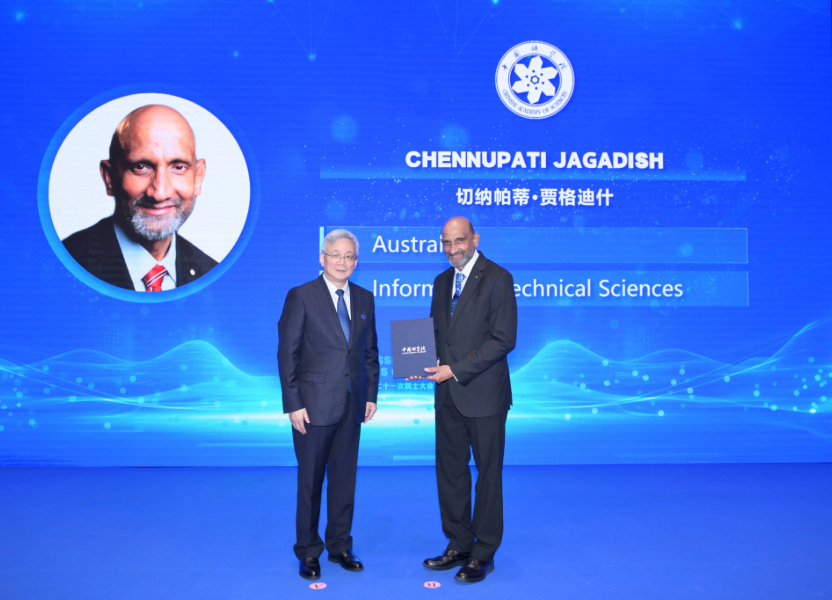
President of the Australian Academy of Science Professor Chennupati Jagadish AC has been inducted into the Chinese Academy of Sciences (CAS) as a Foreign Member at a ceremony in Beijing on 23 June 2024.
Professor Jagadish is one of 180 Foreign Members elected to CAS. Foreign members are people who are not Chinese citizens but have been recognized for their distinguished scientific or engineering work.
He joins three other Australian Academy of Science Fellows, Professor Bill Compston, Professor Max Lu and the late Professor Chris Christiansen as CAS Fellows.
Professor Jagadish said he was humbled and grateful for the honour of being elected as a Foreign Member.
“All the credit goes to my group members and collaborators, past and present for this honour.”
CAS is a merit-based academic society that brings together scientists and engineers from China and around the world to address both theoretical and applied problems using world-class scientific and management approaches.
Speaking at the 21st General Assembly of CAS Members on 23 June, Professor Jagadish said fostering collaboration and partnerships with international scientific organisations and researchers is a key pillar of the Academy's strategic plan.
“International scientific cooperation is essential for addressing global challenges.
“By combining resources, expertise, and efforts across borders, the global scientific community can develop more effective, inclusive, and sustainable solutions to the pressing issues facing humanity.
“This cooperation not only advances science but also fosters global solidarity and peace.
“My research in nanotechnology and semiconductors has been made possible because of some 30 collaborations I maintain across the world, including with China, working together to build basic science knowledge.
“Collaborations between China and Australia have grown in recent decades, and China is now among one of Australia’s most important international partners.”
Speech by Academy Chief Executive: Academy launches a new system of professional learning
This is an abridged version of the speech delivered by Australian Academy of Science Chief Executive Anna-Maria Arabia at the launch of the Academy’s Primary Connection and reSolve resources on Tuesday 25 June 2024.
Hello, Hughes Primary School! Thank you for hosting the Australian Academy of Science this morning and for being with us bright and early on this crisp Canberra morning.
We are delighted to be launching our all-new resources for primary science and mathematics teachers.
I don’t need to remind the people in this room that science, technology, engineering and mathematics (STEM) are at the heart of almost everything we do and how we advance as a nation and a globe, from solving major global problems to creating new businesses and jobs we haven’t yet imagined, STEM is a fundamental foundation in our lives and our future.
The stronger the grounding we all have in problem-solving and critical thinking, the more equipped we will be to navigate life, lead change and shape a future that is both sustainable and prosperous. And one that enables all Australians, regardless of where they grow up, to participate in and benefit from the opportunities before us.
Our ability to problem solve and think critically starts with a strong foundation in science and maths, with students in classrooms able to explore multiple ways of thinking, learning and working.
The Academy has a long-standing and deep connection with, and commitment to, school STEM education in Australia, dating back to 1967 with the groundbreaking Web of Life textbook, which was hailed as the most successful curriculum development project of its time in the world. Developed right here in Canberra!
The STEM education programs of the Australian Academy of Science have at their core, teachers—the beating heart of schools across Australia.
We are driven by a desire to invest in teachers.
To support them to nurture and develop students’ curiosity and to lay the foundations for successful investigation, knowledge building and problem solving.
Our approach always has been and always will be guided by the best available evidence—it’s the Academy way.
For over 20 years, our Primary Connections program has been a favourite among primary school educators. Together with our reSolve mathematics program, these resources attract over half a million visits and nearly 400,000 downloads annually.
But time rolls on and things change.
The digital transformation: from content creator to capability builder
With shifts in the education environment—amplified by the pandemic—and the introduction of Version 9 of the Australian Curriculum, we have taken the opportunity to completely rethink how our programs are designed and delivered in contemporary ways for teachers.
We have again consulted the evidence—the Academy way—and rather than simply converting our existing products and services into a digital format, the new digital resources being launched today are a complete reimagining of how professional learning is delivered to support teachers in building their practice capability and confidence.
This work is led by listening to experts, to evidence, and importantly to teachers.
We have gained deep insights into their needs and operating environments and this has enabled us to create tools and resources that are purposeful and useful to them, in today’s teaching environment.
Our experience is that when teachers are involved in the development and evaluation of programs, they provide invaluable perspectives, experience and knowledge.
May I publicly thank every single teacher who has assisted us in getting us to today, so that we can give back to you.
Summary of key features
What we are launching today is the beginning of a new system of professional learning.
Our new interactive resources support teacher practice. They integrate the latest research and explain the design thinking behind each decision in a teaching sequence.
The Primary Connections and reSolve pedagogical toolboxes are full of research-based strategies to build teachers’ practice for teaching science and mathematics.
They build teacher capability to adapt and mobilise resources and experiences to meet the needs of all learners in their class.
They recognise that learning is a process, not an event. They recognise that teachers are time-poor but vocation-rich.
They recognise that learners—and teachers—come in all shapes and forms and that they learn differently.
Our resources allow teachers to prepare not just what students need to know, but how students learn best.
They are also fully aligned to the Australian Curriculum Version 9 and include achievement standards to support adapting for local curriculum or syllabus needs.
They are teacher informed.
And they are evidence based—it’s the Academy way.
On behalf of the Australian Academy of Science may I extend my thanks for the Australian Government funding for being our partner in this endeavour.
Your commitment means that all of our resources are available free of charge to every single school and teacher across Australia. This lifts us all. It is priceless and we thank you.
Learn more about the launch of these resources in the Academy's media release.
Australia’s participation in Horizon Europe
The President of the Australian Academy of Science, Professor Chennupati Jagadish, said it would be a missed opportunity for Australia not to join Horizon Europe, the world’s largest funding program for research and innovation, valued at over ninety-five billion euros.
“The global challenges we are facing require global solutions, requiring researchers and countries to work together. International scientific collaboration is a matter of strategic national interest and something Australia cannot do without," Professor Jagadish said.
“Australia’s association with Horizon Europe would also assist in mitigating some of the current geopolitical risk in Australia’s scientific enterprise; and deliver scientific and economic benefits to Australia.”
Support our appeal: Preserve Australia’s scientific legacy
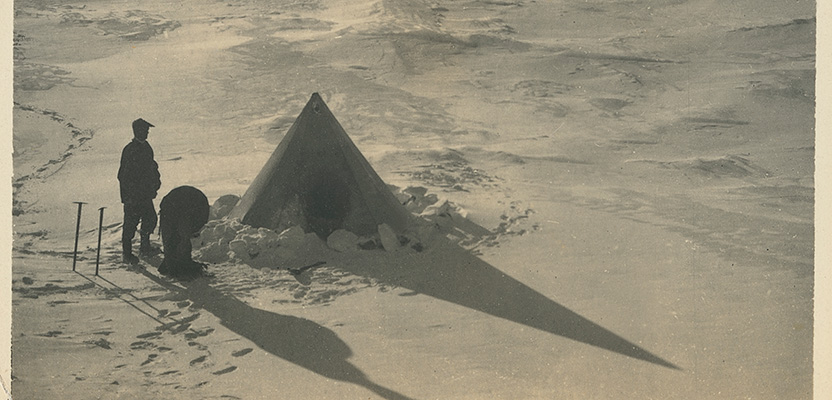
Australia has a rich and vibrant scientific heritage that spans decades of innovation, exploration, and discovery.
From the groundbreaking research of our pioneering scientists to the cutting-edge discoveries of today's researchers, our nation's scientific legacy is a testament to the power of curiosity, dedication, and ingenuity.
The Academy’s Library and Archives hold significant histories of mid-century Australian science collections in the world, with many thousands of rare and unique items.
These intellectual treasures—often hidden behind locked doors—reveal the development of scientific thinking responsible for shaping our modern world.
Through meticulous digitisation of archival materials and recording conversations with Australian scientists, we are preserving history whilst providing future generations with access to critical insights and discoveries.
With support from donors, we have digitised almost 30,000 items now freely accessible and capturing the exciting stories from the history of Australian science, research, and innovation.
We have recorded interviews with nearly 150 researchers and captured the remarkable stories of Australian scientists and their firsthand accounts of breakthroughs, challenges, and the evolution of scientific thought, enriching our understanding of Australia's scientific landscape.
There are still many fascinating and essential stories yet to be told.
Now in our 70th year, we want to bring many more of these stories and our collections to life.
Through preserving Australia's scientific legacy your donation will support:
Digitisation of the archives: to collect, manage and preserve items of scientific importance that hold intrinsic value in Australia’s history.
Recording conversations with Australian scientists: in these interviews, outstanding Australian scientists talk about their early life, development of interest in science, mentors, research work and other aspects of their careers.
This important work will strengthen our collection and help to ensure that our library and archives continues to be a trusted, extensive and distinguished source of scientific history in Australia.
We invite you to read some of our recently digitised material online including the incredible story of rare manuscripts and photographs that tell the story of early Australian Antarctic exploration and ‘Smallpox that was a monster’ through the esteemed work of Professor Frank Fenner AC CMG MBE FAA FRS.
Some of our collections are also made available through Trove, the National Library of Australia’s collection platform.
We hope you will consider a gift to support and preserve Australia’s scientific legacy and help us to bring more of our collections and conversations online, for everyone.
New STEM primary school resources set to transform teaching
The confidence and capability of the nation’s primary school teachers to deliver Australia’s science and mathematics curriculum is set to receive a huge boost, thanks to new evidence-based digital educative resources developed by the Australian Academy of Science.
The interactive and free online teaching toolboxes, funded by the Australian Government, were officially launched by Federal Education Minister the Hon. Jason Clare MP at Hughes Primary School in Canberra.
The Academy’s Secretary for Education and Public Awareness, Professor Lyn Beazley, outlined why the new science (Primary Connections) and mathematics (reSolve) resources were needed.
“Today’s teachers work so hard, but they are extremely time–poor, with many competing demands—this can lead to teachers preparing for what their students need to know, rather than designing how students will best learn,” Professor Beazley said.
“Existing resources for primary school teachers aren’t always meeting their needs and can mean that teachers don’t have the opportunity to fully develop their own expertise. This is where the Academy’s new resources are different.”
Research conducted by the Academy to inform the development of the new resources also found current teacher professional learning programs may be disconnected from the reality of the classroom.
“With shifts in the education environment—amplified by the recent pandemic and rapid advancements in technology—we saw an opportunity to rethink our education programs through new delivery mechanisms and models,” Professor Beazley said.
The Academy’s President, Professor Chennupati Jagadish, said the new resources focus on supporting teachers to build their students’ science knowledge and maths proficiency along with boosting the teacher’s own professional learning.
“The Primary Connections and reSolve resources are a reimagining of how professional learning can be delivered to support teachers to build their capability and confidence,” Professor Jagadish said.
“The resources are full of research-based strategies to build teachers’ knowledge for teaching science and mathematics and can be adapted to meet the needs of the range of learners in the classroom,” Professor Jagadish said.
The Australian Academy of Science has begun a national roadshow to demonstrate the new resources to teachers, education departments and organisations, and students studying to enter the profession, starting with the Northern Territory earlier this month.
Find out more about the resources here.
The Academy’s history of developing innovative, education resources reaches back to 1967 with the Web of Life textbook, which was viewed as the most successful curriculum development project of its time in the world.
For the past 20 years, the Academy’s Primary Connections program has been a favourite among primary school educators. Together with the Academy’s reSolve mathematics program, these resources attract over half a million visits and nearly 400,000 downloads annually.

Nurturing the next generation: The Early Career Scientists International Fund
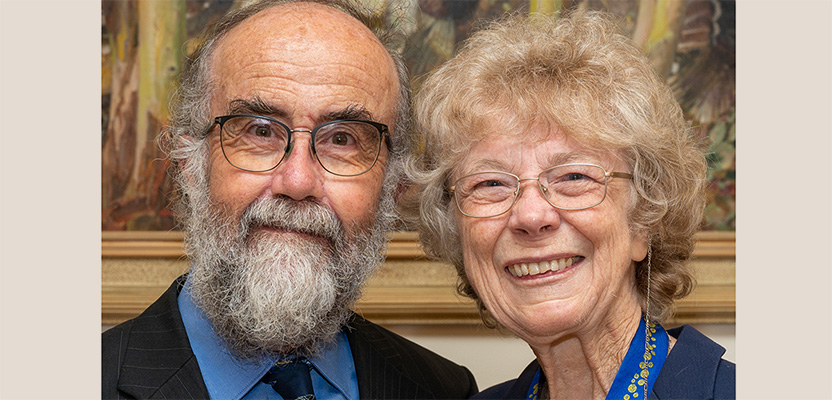
Supported by Emeritus Professor Cheryl Praeger AC FAA and Dr John Henstridge
At the heart of the Academy’s mission is a commitment to advancing Australia as a nation that embraces scientific knowledge and contributes significantly to global scientific endeavours. For many years, the Academy has fostered international collaboration at all levels of research within regional and global science networks.
To support these endeavours, we are very pleased to announce the establishment of the Early Career Scientists International Fund, made possible by a leadership gift from Emeritus Professor Cheryl Praeger AC FAA and Dr John Henstridge.
The primary focus of the program is investing in learning opportunities for graduate students and young researchers from the Asia-Pacific to travel to Australia and to help elevate the voice and profiles of young scientists in the region. Through these engagements, participants will have the chance to enhance research capabilities and foster international collaborative links.
The inaugural recipients will have the unique opportunity to attend Science at the Shine Dome 2024.
This prestigious event will provide them with invaluable experiences, including participation in early career-focused events, engaging with Academy Fellows and networking with other sector professionals.
“We both felt that we had benefited from our educational opportunities and see this as a means of giving back to the science community which had supported our career pathways. We have had many links with mathematicians in Southeast Asia and believe that Australia has an important role in strengthening science across the region,” Cheryl and John said.
Established as part of the Academy’s investment portfolio, the Fund is designed to ensure the longevity and sustainability of their donation to ensure support for early career scientists into the future.
We asked Cheryl and John about the Fund and its mission to other potential donors.
“Science and, for us, especially the mathematical sciences, are important to our society in numerous ways, underpinning all technological advances and helping us respond to global challenges. We have benefited from the training and resources which allowed us to pursue careers in mathematics and statistics, and also both of us have interacted with numerous young scientists internationally, particularly from our region.”
During Cheryl’s term as Academy Foreign Secretary, she saw that discretionary funding directed at supporting young scientists in our region could lead to successful links between those young people and their Australian colleagues, and also between the Academy and other national academies in our region.
“We were pleased to have the opportunity of giving to the Australian Academy of Science, and we were delighted with the Academy’s suggestion that an Early Career Scientists International Fund be established, building on our donation, to provide an effective way of supporting young scientists in our region in an ongoing way.
“We suggest that other people who feel similarly to us might consider donating to support the mission of the Early Career Scientists International Fund.”
This act of generosity has already gone on to inspire others – including a gift from the President of the Australian Academy of Science, Professor Chennupati Jagadish AC PresAA FREng FTSE, and Dr Vidya Jagadish. Their combined support will help to bolster the Fund, and collectively have greater reach and impact.
The launch of the Early Career Scientists International Fund is an important step towards our commitment to fostering scientific excellence, collaboration and providing opportunities for early career scientists in the Asia-Pacific region.
We thank Cheryl and John, and Jagadish and Vidya for their visionary leadership and generous support.
About Professor Praeger and Dr Henstridge
Professor Cheryl Praeger has established an enviable reputation for her highly original research in the theory of permutation groups, both finite and infinite, in algorithmic group theory, in graph theory, and in other combinatorial theories.
Cheryl was elected a Fellow of the Australian Academy of Science in 1996 and served as Foreign Secretary from 2014 to 2018.
Cheryl has run mentoring programs for women in mathematics and was a long-serving board member of the Australian Mathematics Trust and chair of the Australian Mathematical Olympiad Committee. She has received numerous awards including the Prime Minister’s Prize for Science and was appointed as a Member of the Order of Australia in 1999 and a Companion in 2021 for her eminent service to mathematics, and to tertiary education, as a leading academic and researcher, to international organisations, and as a champion of women in STEM careers.
Dr John Henstridge is one of Australia’s most eminent statisticians. In a career spanning 40 years, he has been recognised as a national leader in developing solutions to real world data problems, through modern technology and innovative statistics.
John founded Data Analysis Australia in 1988 and has managed the company’s growth into the largest commercial group of statisticians and mathematicians in Australia. He has held the position of National President with the Statistical Society of Australia (where he was also recognised for his work with young statisticians) and is a Fellow and Chartered Statistician with the Royal Statistical Society in the United Kingdom.
A gift in honour of our family
Cheryl’s father Eric changed his career path at the age of 40 when he studied to be a naturopath and chiropractor and left his job in the Commercial Bank of Australia in country Queensland to begin work with Maurice Blackmore’s Naturopathic Clinic in Brisbane in the CBD. Cheryl was then 14.
He’d had to leave school when he was aged 14 as his father had died and there was not enough money to allow him to finish school.
After service during WWII he returned to the bank, as by then he was married, and it was the natural thing to do. But he was never happy in the bank, and becoming a chiropractor was really his calling in life. Maurice Blackmore was his professional mentor.
While working in the Blackmore clinic, or sometime afterwards when he was in his own practice, the vitamin and mineral remedies (which were developed by Blackmore, and had been available only via individual practitioners) were produced more systematically as Blackmore’s remedies, and Eric became the Secretary of the new Blackmores Naturopathic Organisation Pty Limited.
The company was successful, and when it became a public company Blackmores Laboratories Limited in 1985, Cheryl’s parents gave their children and grandchildren some shares. Eventually after Cheryl’s parents’ deaths she inherited one third of the shares owned by her parents, and in 2023, Blackmores was bought by a Japanese firm, and family members had to sell all their shares at that time.
Cheryl therefore had a strong loyalty to the Blackmore company and had not contemplated selling her shares, so the sale of the company was quite an unexpected thing for her. And so, the donation to the new Fund honours Cheryl’s father Eric. It also honours Cheryl’s mother Queenie who had been her champion in gaining permission for her to finish school. It had been Queenie’s wish that one of her children should go to “the university”.
Queenie also had to leave school at age 15 because her father had been off work for more than a year with rheumatic fever, and when he was well there were no jobs because of the great depression. So there was no experience within Cheryl’s immediate family of university education, or even finishing high school.
Eric had thought that commercial skills were what Cheryl should learn, and after 18 months of discussions, with Queenie supporting Cheryl’s wish to study science, she was allowed to go into the academic stream in junior high school, and ultimately to complete her 12 years of schooling. The rest is history!
Written by Emeritus Professor Cheryl Praeger AC FAA and Dr John Henstridge together with the Australian Academy of Science.
Merck joins Falling Walls Lab Australia 2024
We are pleased to announce Merck has joined the Falling Walls Lab Australia 2024 Partnership Program.

Falling Walls Lab Australia provides a platform for talented researchers, entrepreneurs, and innovators to showcase their groundbreaking ideas and projects to a national and global audience.
Through a series of regional and national events, participants present their innovative concepts to a distinguished panel of experts and compete for a spot in the global Falling Walls Lab Finale in Berlin.
As a global leader in science and technology, Merck brings invaluable support to the Falling Walls Lab Australia Partnership Program helping to foster career-enhancing opportunities for young Australian scientists.
Through this partnership, Merck is helping to drive innovation, advance scientific discovery and empower the next generation of innovators to contribute to solving some of the world’s most pressing challenges.
Josie Downey, Managing Director, Merck Healthcare Australia and New Zealand has welcomed the opportunity to partner with the Australian Academy of Science to build excitement about science and technology.
“At Merck, we know the importance of encouraging the next generation of science leaders. That’s why we are pleased to lend our support to the Falling Walls initiative. Innovation is ultimately driven by people—by joining forces to spark excitement in science and technology here and around the world, we can harness the brightest minds to tackle the greatest challenges in healthcare for a more sustainable tomorrow,” Ms Downey added.
Falling Walls Lab 2023 was a great success, and we were delighted when winner of the Australian Falling Walls Lab, Dr Emma-Anne Karlsen of the University of Queensland, was placed third in the global competition in Berlin.
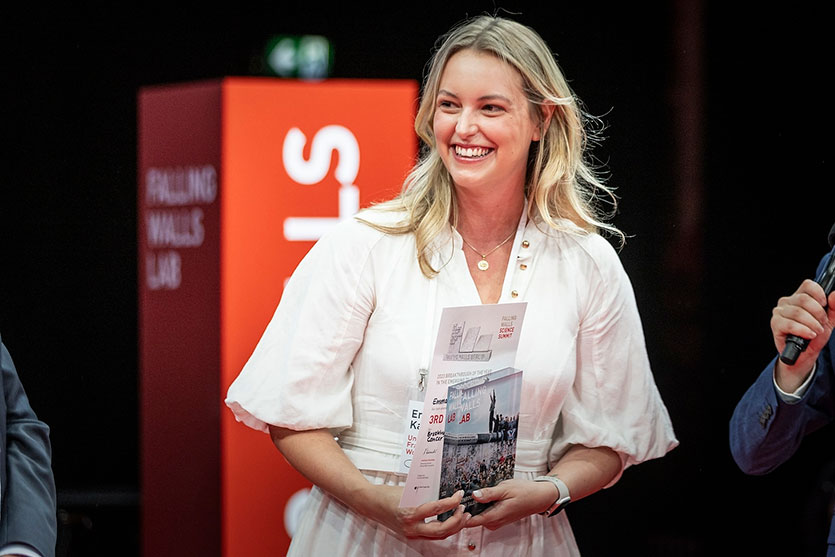
In 2024, the Australian Falling Walls Lab Finale will take place on Friday 30 August at the Shine Dome in Canberra.
Merck will be joining as Falling Walls Lab partners for the next four years. They join our long-term partners, the German Embassy in Canberra and EURAXESS Australia and New Zealand.
We are grateful to our partners for their valued support to showcase the innovative research of some of Australia’s brightest young minds.