




Parliament’s backing of ARC Bill a win for Australia’s research sector

Parliamentarians have backed a more robust and research-oriented system for the nation by passing reforms to the Australian Research Council (ARC) this week.
President of the Australian Academy of Science, Professor Chennupati Jagadish, said that limiting the use of the ministerial veto is a particularly significant reform supported by Australia’s scientists.
“It will ensure that properly assessed, high-quality research proposals proceed without an ideologically imposed filter, a change advocated by the Academy since at least 2018,” Professor Jagadish said.
“When the integrity of Australia’s research system is compromised by perceived or actual political interference, there are real costs for the research sector and the nation. It erodes trust and damages researchers’ relationships with industry, the Australian community and international partners.
“Establishing a board as the ARC’s accountable authority will strengthen and modernise the organisation’s governance. The Academy is of the view that appointees to this board must have extensive experience in the science and research system.”
The passage allows for reforms recommended to the government by a review chaired by Academy Fellow and Council member Professor Margaret Shiel to come into operation on 1 July.
Professor Jagadish said the Academy looks forward to working with the ARC and the broader science community on this journey to reform and modernise this part of the science system.
Ten Australian scientists to attend the 73rd Lindau Nobel Laureate Meeting
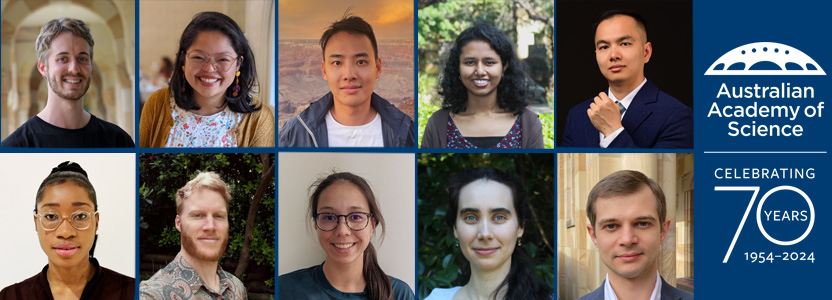
Ten early-career researchers from Australia will be heading to Lindau, Germany this year to attend the prestigious Lindau Nobel Laureate Meeting.
The annual event is expected to bring together 40 Nobel Laureates and 635 young scientists from more than 90 nations.
The 73rd Lindau Nobel Laureate Meeting is dedicated to physics and will be held from 30 June to 5 July 2024.
The Australian delegation’s participation in the Lindau Nobel Laureate Meetings is proudly supported through the Science and Industry Endowment Fund (SIEF) and administered by the Australian Academy of Science (AAS).
The Lindau SIEF–AAS Fellows will receive a grant to enable their attendance at the event and to take part in the SIEF Research Innovation Tour in Berlin, showcasing some of Germany’s finest research and development facilities related to medicine and physiology.
The delegation will be led by Professor Elaine Sadler AO FAA and supported by Professor Hans Bachor AM FAA.
The 10 PhD candidates and postdoctoral researchers selected in 2024 to attend this meeting are:
- Dr Barnali Das of CSIRO, whose research focuses on understanding magnetic massive stars and their potential connection with much cooler magnetic stars and planets
- Mr Jake Horder of the University of Technology Sydney, whose research focuses on cryogenic spectroscopy of solid state single photon sources for quantum technologies
- Ms Emily Kerrison of the University of Sydney, who is a PhD student in radio astronomy, using telescopes in Western Australia and around the world to hunt down supermassive black holes at the centres of other galaxies and understand what makes them tick
- Dr Duy Nguyen, who is an environmental fluid dynamicist at CSIRO, specialising in integrating physical-based and AI/ML modelling of water quality and quantity
- Ms Grace Tabi, who is PhD student at the Australian National University, and whose research focuses on perovskite materials and their applications in photovoltaics
- Mr Mark Watson of the University of Queensland, who is studying light-matter interactions on micron-scale systems establishing methodologies using Rotational Optical Tweezers to perform fast and precise microrheological measurements including studies of rotational inertia and the changing viscosity in the macropinocytosis pathway in macrophage immune cells
- Mr Simon Weng of the University of Sydney, whose research focuses on the diffuse gas surrounding galaxies and its impact on how galaxies form and evolve
- Ms Claire Yung, who is a PhD student at the Australian National University, studying how the ocean influences Antarctic ice shelf melt and vice versa, specifically trying to improve the accuracy of these processes in ocean and climate models for improved sea level rise projections.
Two SIEF–AAS Fellows, who attended the 70th meeting virtually, have also been invited to participate in-person and will travel with this year’s cohort to Lindau. They are:
- Dr W. Y. Sarah Lau, who is a research scientist at CSIRO with a focus on quantum technologies enabled by optics and photonics
- Dr Eugene Sachkou of La Trobe University, who is a postdoctoral researcher specialising in data science and sports data analytics.
The meeting will provide a unique opportunity for these exceptional early-career scientists to share their research, experiences and ideas, and gain inspiration from fellow emerging scientists and Nobel Laureates.
Proposed changes to Defence Bill strike a better balance
The amendments to the Defence Trade Controls Amendment Bill strike a better balance between protecting Australia’s national security and ensuring domestic and international scientific collaboration can continue to serve our national interest, says President of the Australian Academy of Science Professor Chennupati Jagadish.
“I am pleased the Academy’s sustained advocacy in this area has been heard,” Professor Jagadish said.
“The proposed definition of fundamental research in the draft Bill is appropriate and compatible with the US system and includes basic and applied research. This follows months of advocacy by the Academy.
“Putting the fundamental research exemption in legislation will provide scientists with more confidence that the definition can’t be changed on a whim, and that they won’t be at risk of breaking the law by undertaking discovery research, simply speaking at a conference, teaching a PhD student, or collaborating with a colleague.”
The Academy welcomed the amendments to grandfather current research for a year and to review the legislation after three years.
“We look forward to continuing work with the Department of Defence to ensure that researchers understand how the new legislation works, to reduce compliance burden, and to monitor unintended consequences for Australia’s researchers,” Professor Jagadish said.
“Australia’s researchers must be adequately supported to understand their obligations once this new legislation is passed, to enable compliance, and to access sufficient resources to establish secure research environments when required.”
Coral reefs, protein folding and climate change: Research conferences win funding

The Australian Academy of Science is proud to support scientific research through sponsorship of research conferences that focus on rapidly developing fields of research.
The Academy is pleased to announce funding towards four conferences to be held across 2024 and 2025.
Elizabeth and Frederick White research conference: The role of atmospheric dynamics in climate
Untangling how atmospheric dynamics and climate change will influence future extreme weather in Australia will be the focus of a workshop for the Elizabeth and Frederick White research conference in 2024.
Atmospheric dynamics encompasses physical processes within atmospheres, including the motion of air and propagation of waves, providing insights for short-term weather forecasting and long-term climate change. It's the most important source of uncertainty when it comes to predicting future climate extremes, according to the Intergovernmental Panel on Climate Change (IPCC).
The workshop will convene national experts and world-leading scientists, aiming to better understand the impact of atmospheric dynamics on weather extremes, particularly in Australia.
Funding for the Elizabeth and Frederick White research conferences is offered for research conferences in the physical and mathematical sciences related to the solid Earth, the terrestrial oceans, Earth's atmosphere, solar-terrestrial science, space sciences and astronomy.
Fenner conference on the environment: Australian drought under a changing climate
Improving understanding of future drought in Australia will be the aim of the Fenner conference on the environment for 2024.
Australia has faced severe droughts with big impacts for drinking water supplies, agricultural production and the wellbeing of communities. But planning for future droughts remains challenging, as predicting frequency and intensity remains uncertain.
Scientists and stakeholders from diverse disciplines will gather to break down barriers in drought research and advance science relevant to Australia’s needs.
Funding for Fenner conferences on the environment is offered for conferences that bring together those with relevant scientific, administrative and policy expertise to consider current environmental and conservation problems in Australia, with the aim of contributing to the formation of policies that can alleviate some of these problems.
Boden research conferences: Protein folding and model reef ecosystems
Two proposals received funding for Boden research conferences in the 2023 round.
The first focuses on coral reef ecosystems, which are under threat from climate change. Researchers spanning diverse fields will meet in early 2025 to discuss how to use big data to build and test a model reef ecosystem, with the Great Barrier Reef and Ningaloo Reef as test cases.
Big data models aim to allow researchers to understand reef behaviour and function under different conditions, including those emerging as oceans heat up.
The second conference focuses on protein folding—a foundational process where long protein chains fold up into specific shapes that facilitate different functions in living cells. Recent acceleration in machine learning has shown huge potential for predicting protein folding.
Researchers will gather in 2024 to discuss this new horizon for protein folding research, with implications for discovering new drugs, diagnosing diseases and creating synthetic biological systems.
Funding for the Boden research conferences supports small specialist conferences in the biological sciences to facilitate discussion of current advances and problems.
Applications now open
The 2025 award round for all three research conference awards will are now open, closing on 1 June 2024.
Find out more about the Academy’s awards and opportunities.
Thomas Davies 2024 grant to support nine marine, soil and plant researchers
From the genetics of bacteria that help legumes thrive, to the impact of microplastics in coastal wetlands and the path of sulphur through the sea and beyond—the 2024 Thomas Davies Research Grant for Marine, Soil and Plant Biology is supporting the wide-ranging work of nine early- and mid-career researchers.
The grant of up to $20,000 is awarded annually and funded through a generous philanthropic bequest from the estate of the late Thomas Lewis Davies to the Australian Academy of Science.
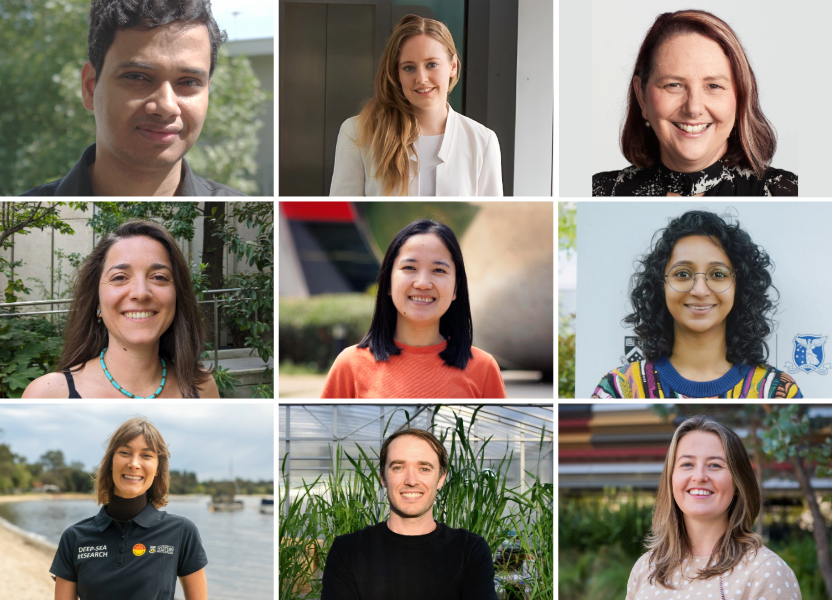
Awardees and their projects
Dr Tanveer Adyel, of the University of South Australia: Fate and consequences of microplastics in Australian coastal wetlands
Microplastics (plastic particles less than five millimetres in diameter) are everywhere—and a growing threat to the planet. And while coastal wetlands are globally significant carbon sinks, they also have an exceptional ability to trap plastics and microplastics from both land and sea, Dr Adyel says.
The grant will support his research into how exposure to microplastics in coastal wetlands influences greenhouse gas emissions and wetland ecology, using techniques from advanced analytical chemistry, biogeochemistry and environmental microbiology.
Dr Adyel says he is “thrilled” to receive the grant.
“The award will allow me to extend my collaboration and examine the ecological consequences, particularly ecology and carbon dynamics, of coastal wetlands under microplastics exposure.”
Dr Laura Burchill, of the University of Melbourne: Discovery of the missing pathway for cysteinolic acid degradation in marine bacteria
Sulphur: it’s a requirement for life, plays a role in cloud formation, and is even partly responsible for the smell of the sea.
In the ocean, it’s transferred between ‘producers’ such as phytoplankton and ‘consumers’ such as bacteria via a group of specialised molecules containing a carbon-sulphur bond.
The grant will support Dr Burchill’s research into the breakdown of these organosulfur molecules, a process with far-reaching impacts.
“This support will contribute to crucial research in the understanding of chemical metabolites in the ocean. It will facilitate the discovery of new biochemical pathways, shedding light on the interconnected web of life beneath the waves and investigating how these networks support marine ecosystems,” Dr Burchill says.
Associate Professor Nicole Carnt of the University of New South Wales: Harnessing Acanthamoeba to control cyanobacteria blooms
Cases of algal bloom—caused by warm temperatures and high nutrient levels—are becoming more frequent in Australian waterways due to bushfires and climate change.
Associate Professor Carnt is investigating eco-friendly solutions, including looking to species of Acanthamoeba, which have been shown to prey on cyanobacteria—otherwise known as blue-green algae.
Using water samples from NSW dams and lagoons, she will identify and quantify the cyanobacterial communities and Acanthamoeba species in macroalgal blooms, investigating whether chemical and physical components of the environment alter the incidence of each.
“In the soil and water that Acanthamoeba inhabits, it is a predator for bacteria,” Associate Professor Carnt says.
“This could be harnessed to control the increasing incidences of cyanobacteria in our waterways.”
Dr Elena Colombi, of the University of Melbourne: Functional integration of nitrogen-fixation in Australian indigenous rhizobia to improve soil fertility
Rhizobia are soil bacteria able to establish a nitrogen-fixing symbiosis with legumes. Dr Colombi is investigating the genetics required for the functional integration of nitrogen-fixation in bacterial genomes—and hopes to translate her work to practical outcomes for Australian farmers.
Between 2017-2022, Australia produced on average 2.8 million tonnes per year of pulse crops, and there is interest in further promoting legume cultivation. Strategies to improve nitrogen fixation in rhizobia are critical to maximise the expansion and the benefits of legume cultivation.
“The use of chemical nitrogen fertilizers in agricultural and pasture systems causes pollution of soil, air and water, disturbs soil fertility, and affects human health. Rhizobial inoculants in legume cultivation are a sustainable alternative to the use of chemical nitrogen fertilizers,” Dr Colombi says.
Dr Florence Danila of the Australian National University: Targeted approach to map the genetic switches of plasmodesmata formation in C4 leaves to improve crops
Plasmodesmata are plant-unique nanochannels that facilitate regulated cell-to-cell transport essential for plant growth and development, as well as photosynthesis and plant defence. In grasses, more photosynthetically efficient C4 species like corn and sorghum have more plasmodesmata in their leaves than their C3 relatives rice, wheat, and barley.
Understanding the genetic mechanisms governing plasmodesmata formation in leaves of C4 species could lead to new opportunities to improve crop photosynthesis, Dr Danila says.
“This should benefit improved crop yield and plant performance in the face of climate change, contributing towards global food security and plant biosecurity.”
Dr Pranali Deore of the University of Melbourne: The ‘accumulation body’: an understudied autofluorescent organelle of marine microalgae
Dr Deore is diving deep into the mutually beneficial relationship between the microalgae and bacteria that are crucial for healthy functioning of corals—in the hope of discovering more about what happens when that relationship breaks down under stressful conditions, such as warming ocean temperatures.
Using state-of-the-art advanced microscopy capable of correlative fluorescence lifetime imaging microscopy and coherent anti-Stokes Raman in collaboration with colleagues at Monash Institute of Pharmaceutical sciences at Monash University, Dr Deore will investigate a subcellular structure inside microalgae cells called the accumulation body.
“My research will explore if the accumulation body contributes to the capture of light energy, which will help us understand how microalgae may cope with climate change driven stress conditions,” Dr Deore says.
Dr Paige Maroni of the University of Western Australia: The deep sea and a deep phylogeny: reconstructing the backbone of deep-sea Amphipoda using phylogenomics
Little is known about deep-sea organisms—from the diversity and demography of species, their life-history traits, or the levels of connectivity within or between deep-sea features across groups.
But species that are only found in—and isolated by—the deepest trenches of the ocean offer an ideal opportunity to investigate evolution and speciation on unprecedented scales, Dr Maroni says.
By combining data from existing amphipod (a type of crustacean) specimens with amphipods collected using baited autonomous lander vehicles, she aims to resolve the phylogenetic ‘backbone’ of deep-sea Amphipoda.
“Robust phylogenies allow us to explore questions of evolution, connectivity, dispersal, and demography, however due to the challenges associated with sampling at depth, this part of our world remains understudied,” Dr Maroni says.
Dr Ricky Milne of CSIRO: Furthering understanding of crop multi-pathogen resistance
‘Rust’ diseases caused by fungal pathogens pose a major threat to wheat and other cereal crops globally. And while plant genes can be harnessed to help protect crops, they tend to confer either strong resistance to single pathogen species, or partial resistance to multiple species.
Dr Milne is researching how these defenses work—in particular, the mechanism behind a wheat gene that confers resistance to multiple crop diseases, and whether this type of multi-pathogen resistance remains effective under future predicted climate conditions.
“A better understanding of multi-pathogen resistance genes has the potential for improving future disease resistance across many crops,” Dr Milne says.
Dr Megan Outram of CSIRO: Engineering plant immunity receptors to combat rust phytopathogens
Dr Outram hopes to combat rust fungi that cause disease in crop plants by using data-driven structural biology to customise ‘resistance genes’ to evolving threats.
Combining deep learning and protein design approaches, she plans to design new immunity receptors that can directly target common surface properties of identified pathogen-produced effector proteins, so that multiple rust pathogens can be detected by a single resistance gene.
“This is an important proof-of-concept study to facilitate further engineering studies to improve disease resistance in crops,” Dr Outram says.
More information
Applications for the 2025 round are now open.
Academy concerned by the removal of advanced mathematics prerequisites at University of Sydney

The Australian Academy of Science is concerned by the removal of advanced mathematics prerequisites for particular courses by the University of Sydney.
Mathematics is a foundational skill across the sciences. Removing the prerequisite to have studied advanced mathematics for certain degrees will leave students underprepared and ill-equipped to complete their courses.
The Academy acknowledges that there are systemic equity issues raised by the University of Sydney, with some Australian students not able to access advanced mathematics education at school. But we need both excellence and equity and students have the right to expect both.
Removing the advanced mathematics prerequisite does nothing to address the decline in mathematics enrolments at schools and sends the wrong signal to students. It is up to the Australian and state and territory governments to fix the systemic problems impacting mathematics education at schools.
Transcript: The launch of the St Vincent’s Discovery and Innovation campaign by Professor Chennupati Jagadish
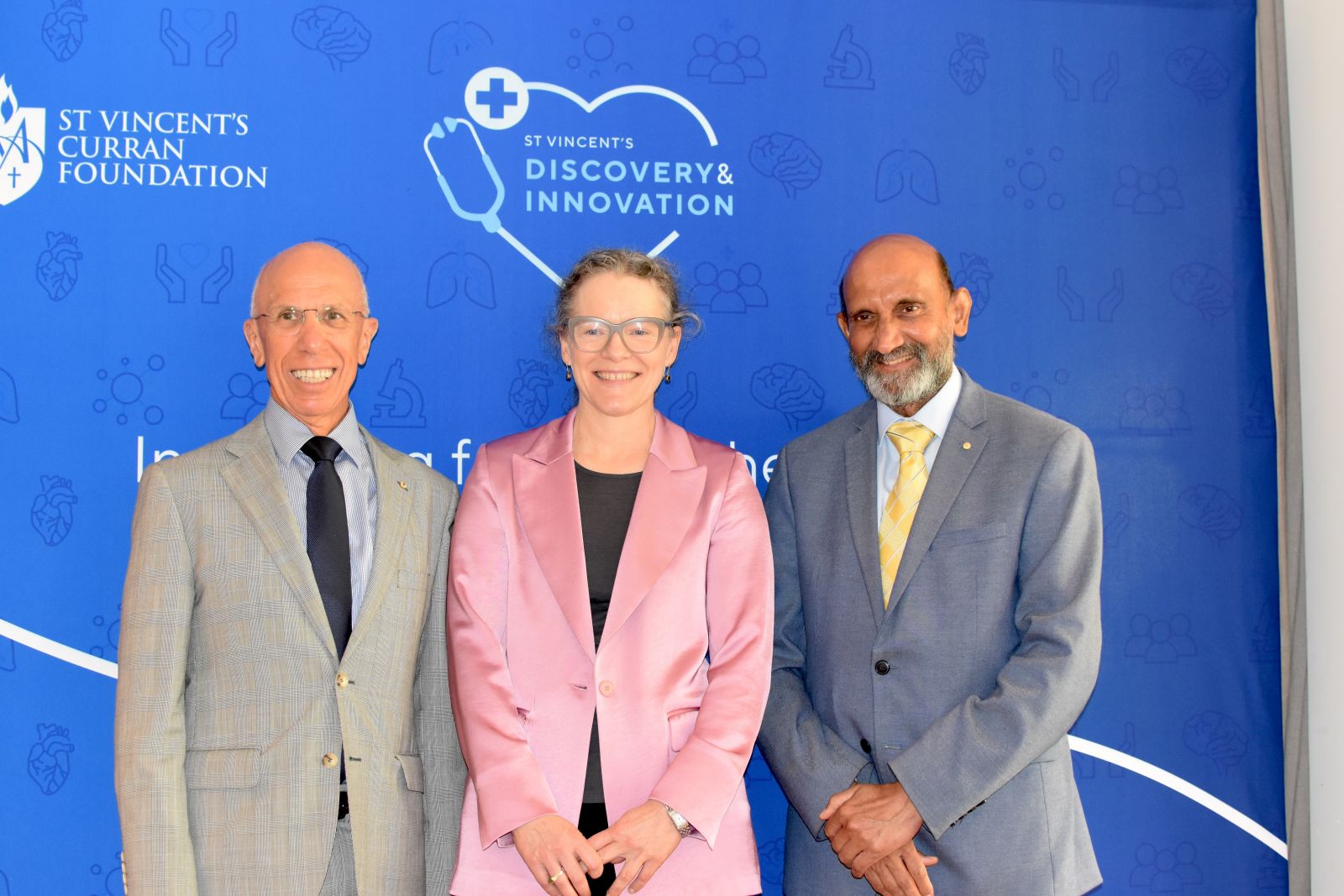
Richard, Anthony, my sincere congratulations on the launch of your campaign. I wish you every success.
Thank you for the opportunity to speak today on Gadigal Land. I wish to acknowledge the Traditional Custodians and pay my respects to their Elders past, present, and emerging.
I’m a nano scientist. That means I could place 21 lasers in one strand of your hair. Please don’t worry, I’m not going to attempt that today.
My discovery research over the past 30 years has led to the creation of new solar cells, new methods to split water to create clean energy sources, breath sensing for ketosis and using nanotechnology and AI to develop treatments for people with dementia.
My passion for supporting discovery research is something I think we all share.
If that weren’t the case, you wouldn’t be here today.
We also share a commitment to improving lives and making our nation a better place.
As well as my research, it is also my great privilege to lead Australia’s top scientists as the President of the Australian Academy of Science.
I’m sure many of you know some of our Fellows – our former President Professor John Shine AC from the Garvan and St Vincent’s precinct.
Our current Vice President and Council Member is clinician and researcher Professor Bob Graham AO - from the Victor Change Cardiac Research Institute and St Vincent’s Hospital. There are others, 600 in fact!
The Academy works every day to advance Australia as a nation that embraces scientific knowledge. And a nation whose people enjoy the benefits of science.
While the latter is certainly the case, Australia has a long way to go to truly embrace scientific knowledge.
Our Prime Minister has said that science is essential to future economic growth and could unlock our potential as a country.
Acknowledging the importance of science is one thing. Investing in science is another.
In the decade leading up to 2020, Australia’s investment in research and development declined to a new low point.
As government investment in R&D falls, the incentive for business investment falls with it.
It is perhaps no surprise that productivity growth was the slowest in 20 years over the same period.
It is clear there is a mismatch between Australia’s aspirations and its support for science.
We need science to decarbonise our industries and economy.
We need science to build defence capability that will strengthen national security.
We need science to take advantage of the opportunities AI and quantum technologies bring.
We need science to improve our health and turn discoveries into cures that are used in clinical practice here at St Vincent’s and beyond.
It is clear that science has never been more valuable. And yet with record low levels of investment, it has never been more vulnerable.
As the Academy works to reverse the decades-long decline in R&D investment, we see important roles for not just government but also industry, universities, the research sector and philanthropists.
We know investment in R&D is patient capital. It’s the long game. But dollars invested return in spades – both in economic wealth but also in our health and wellbeing which is priceless.
In fact, the Australian Research Council recently reported that for every research dollar invested via one of their major grant programs, the return is $3.32.
Failing to invest in discovery science is like constructing a building without foundations. It may last for a while, but if we get a big wind, then the building will come down.
Philanthropy especially has the potential to transform funding in the scientific landscape in this country and provide sustained investment.
In its quest to deliver the best healthcare and innovative medical research, the St Vincent’s Curran Foundation seeks to bridge government funding gaps through the generous support of others.
I support this approach too via my own personal endeavours. My wife, Vidya and I created a fund which gives students and researchers from developing countries a chance to travel to the Australian National University to pursue collaborative research and develop their networks.
We did this because we have directly felt the transformational impact that the generosity of others can have. If it weren’t for the generosity of my maths teacher in India, today I would be ploughing the field in India like my cousins.
Our own desire to create opportunities for others has inspired many around me, and I am so pleased that our family fund is helping several students each year.
I close by commending you all – as clinicians, researchers and philanthropists – for supporting science, discovery and research in Australia.
Your efforts go so much further than you can imagine.
Thank you.
Global fund will strengthen regional science and technology capability
Joint release: Australian Academy of Technological Sciences and Engineering (ATSE) and Australian Academy of Science
The Australian Academy of Technological Sciences and Engineering (ATSE), in collaboration with the Australian Academy of Science, will deliver $6 million in grants to strengthen science and technology collaboration with regional neighbours as part of the Australian Government’s $40 million Global Science and Technology Diplomacy Fund.
Announced today by the Hon Ed Husic MP, Minister for Industry and Science, and Senator Penny Wong, Minister for Foreign Affairs and Trade, the grants of up to $1 million each are available to Australian researchers and businesses to partner with counterparts in Indonesia, Malaysia, Singapore, Thailand, Vietnam, New Zealand, Japan, the Republic of Korea and Brazil.
The grants focus on national priorities such as advanced manufacturing, AI, quantum computing, hydrogen production and RNA vaccines and aim to grow international collaboration in our region and drive innovation and commercialisation in priority areas.
ATSE CEO Kylie Walker said the grants have been designed to help create a modern, safe, sustainable and healthy Australia and world by focusing on areas where Australia has a competitive edge.
“The program will create links between Australia’s emerging and current STEM leaders and global partners, and give them access to international networks that can boost respective capabilities, economies, and build our international science and technology cooperation in a win, win, win,” ATSE CEO Kylie Walker said.
The Academies have a strong commitment to international engagement with a long history of global initiatives successfully delivering results for Australian science and technology.
ATSE is proud to lead and collaborate with the Academy of Science to deliver this new initiative, funded by the Australian Government Department of Industry, Science and Resources.
Australian Academy of Science Chief Executive, Anna-Maria Arabia said the Global Science and Technology Diplomacy Fund will support international scientific collaboration and diplomacy precisely when it is needed the most.
“By identifying and supporting strategic international science and research collaborations, the fund will play a pivotal role in advancing the science and technology landscape in our region,” Ms Arabia said.
The learned academies will draw on their expert Fellowships to support Australian researchers and innovators to build global science and technology collaborations, amplify commercialisation potential and strengthen Australia’s standing as a global science leader.
Expressions of interest can be submitted through the grant website.
An information session on 3 April will provide an opportunity to learn about the program. Please register at this link to find out more.
For more information about grant opportunities go to www.glodip.org.au or email info@glodip.org.au.
Scientists recognised for raising the voice of Aboriginal and Torres Strait Islander research
Two researchers have received the 2024 Australian Academy of Science Aboriginal and Torres Strait Islander Scientist Award for their research on precision cancer treatment and the management of Australian wetlands.
The award recognises research in the physical and biological sciences of outstanding Aboriginal and Torres Strait Islander PhD students and early- and mid-career scientists.
Dr Justine Clark, Telethon Kids Institute
Aboriginal and Torres Strait Islander precision cancer research
Indigenous peoples in Australia and globally share experiences of reduced cancer survival rates and barriers to accessing cancer healthcare in comparison to non-Indigenous peoples.

Dr Justine Clark. Photo: supplied.
“Aboriginal people are about 14% more likely to be diagnosed with cancer, compared with non-Aboriginal people, and also about 20% less likely to survive after diagnosis,” researcher and award recipient Dr Justine Clark said.
Precision cancer medicine is the use of an individual’s genetic profile to provide improved diagnosis, therapeutic decision making and long-term management of cancer, and is becoming an increasingly important part of cancer care in Australia. While precision cancer medicine has immense potential to improve cancer outcomes, Indigenous Australians still face barriers in accessing both standard and precision cancer medicine.
Dr Clark is a post-doctoral researcher in Indigenous genomics at Telethon Kids Institute, with a focus on Indigenous precision cancer research. Her research contributes to international efforts to improve Indigenous cancer health equity.
Māori researchers in New Zealand have begun to explore the potential for genomics-guided precision cancer medicine to improve outcomes for Māori peoples, and Dr Clark’s project brings together Māori New Zealander and Aboriginal Australian precision cancer researchers.
Dr Clark said that Indigenous-led precision cancer research provides a unique opportunity to create novel, tailored cancer care for Indigenous Australians and set future research priorities by characterising cancer types of the greatest burden of disease.
“This research must be guided by community priorities and aspirations, as well as clinical data identifying cancers that have the greatest burden on Indigenous Australians.”
Dr Joe Greet, University of Melbourne
Healing Water Country: developing a Traditional Owner-led billabong health assessment framework
Wetland health and sustainability are improved when Indigenous people lead the management of wetland systems according to award recipient Dr Joe Greet. This success is based on knowledge gained from managing and identifying with their land and waterscapes for millennia.
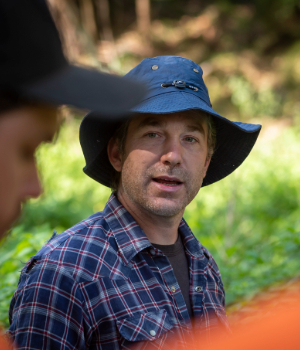
Dr Joe Greet. Photo: Doug Gimesy.
But the inclusion of Indigenous knowledge and Traditional Owners in the scientific investigation and management of freshwater environments in Australia remains limited, particularly in urban contexts.
Dr Joe Greet is working to change this by bringing together Traditional Owners, specifically the Wurundjeri Woi Wurrung people, and Indigenous scientists for on-Country workshops to share their knowledge and increase the role of Traditional Owners in water and land management.
“This is a culturally significant and innovative project as it recognises the efficacy and importance of Traditional Owner leadership in the scientific investigation and management of freshwater environments,” Dr Greet said.
His research aims to develop a Traditional Owner-led framework for wetland health assessment and management, using Melbourne’s degraded riverine wetlands (billabongs) along the urbanised lower Birrarung (Yarra River) as example ecosystems.
Dr Greet is working with the Wurundjeri people to preserve the last remaining billabongs in Melbourne, and said he is humbled to be receiving this award.
“I am most grateful for the Academy’s support to continue working with Narrap Rangers to develop a Wurundjeri-led billabong health assessment framework to better manage and help heal Country.”
Celebrating Indigenous scientists
Established in 2018, the Aboriginal and Torres Strait Islander Scientist Award aims to support research and the growth of research networks and international knowledge exchange. It supports interdisciplinary and sociocultural research that could straddle the social sciences and humanities.
Awards include up to $20,000, with additional support provided to attend the Academy’s annual Science at the Shine Dome event.
The award is also part of the Academy’s work to champion diversity and inclusion in the sciences and empower the next generation of scientists. This will strengthen the voice of science and support scientific excellence.
Academy responds to Universities Accord report
The Australian Academy of Science welcomes the Australian Universities Accord Final Report released today.
Academy President Professor Chennupati Jagadish said the report warns that unless the nation continues to produce more knowledge, skills, opportunities, and research, then we face a decline in Australia’s productivity, innovation and standard of living.
One of the recommendations the Accord makes to avoid this happening is for the Australian Government to commission a cross-portfolio examination of Australia’s research funding and develop a strategy that sets targets for Australia’s overall spending on R&D.
“The Academy has been calling for both these initiatives for several years, including in our latest pre-Budget submission, so we are pleased to see these recommendations in the report,” Professor Jagadish said.
“The report underlines the critical need to modernise our national science and innovation system.”
The report makes several other significant recommendations that, if implemented, will positively impact scientific research and education in Australia.
These include:
- Investing in fundamental research
- Planning and investing in the next generation of Aussie scientists
- Increasing government funding to university science courses
- Calls for government and industry to better utilise university science
- Predictable long-term funding for NCRIS
The Academy also welcomes recommendations to establish an Australian Tertiary Education Commission, funding the full cost of research and a Higher Education Future Fund.
Professor Jagadish said the report makes clear that Australia must improve equity and access to tertiary education – a recommendation strongly supported by the Academy.
“Universities do more than just train people for the workforce: they help prepare our nation for the future, they educate our citizens to think critically, to question, and to critique with the confidence to challenge and to lead,” Professor Jagadish said.
“The transformative nature of education should be available to all.”
The Academy thanks Professor Mary O’Kane and the review panel for producing this report and calls on the Federal Government to implement its recommendations.