




J G Russell Award set to help talented early career researchers

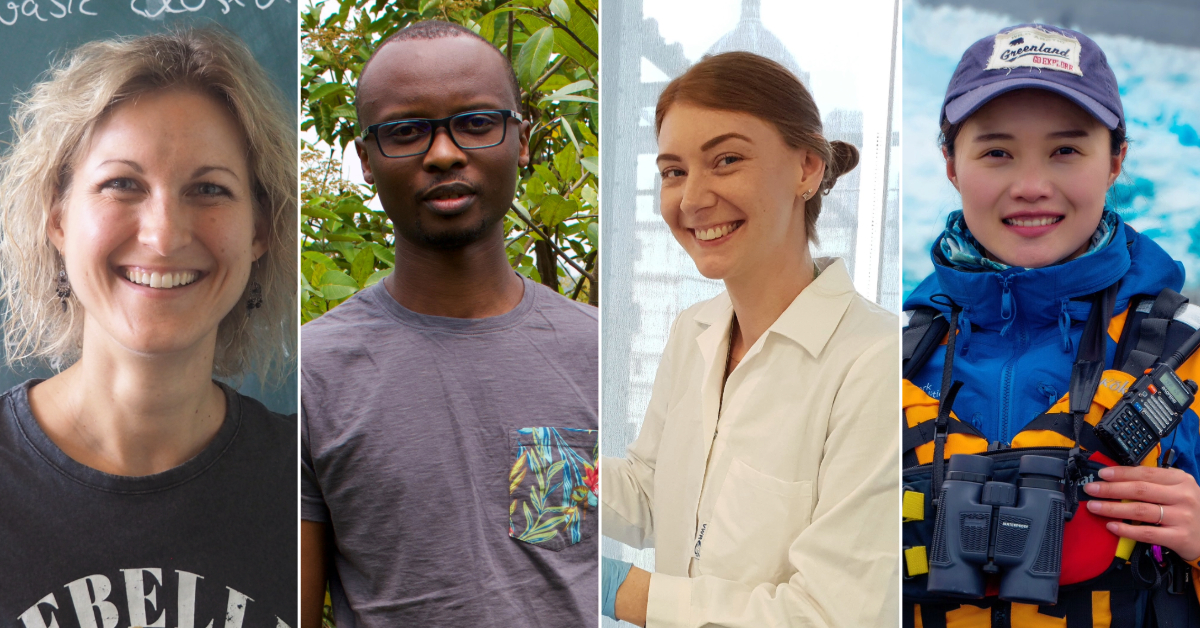
The Australian Academy of Science has announced that four early career researchers have received the 2024 J G Russell Award.
The J G Russell Award provides financial assistance to talented younger researchers in the basic sciences, in recognition of the community’s regard for them.
This award is supported by the generosity of the late Miss J Russell and provides top-up grants to projects funded through the Australian Research Council’s Discovery Early Career Research Award (DECRA).
Dr Mareike Dressler, University of New South Wales
Mathematician Dr Mareike Dressler is using mathematical methods to make optimal decisions for real-world problems. Optimisation is a type of mathematical problem for making the best possible (optimal) decision from a set of numerous feasible choices.
Dr Dressler said many real-world problems can be cast as polynomial optimisation problems. But the mathematical methods and algorithms currently used for solving polynomial problems of a large size are not sufficiently developed, limiting their application.
“By using an innovative combination of a novel theory of algebraic geometry and convex optimisation, my project aims to generate new knowledge and develop efficient methods to solve large-scale polynomial optimisation.”
She will use the award funding to travel to Germany and France, visiting mathematical institutions to expand her knowledge, build networks and bring large-scale optimisation technologies back to Australia.
Dr Mirindi Eric Dusenge, Australian National University
Dr Mirindi Eric Dusenge’s research aims to enhance our understanding of how climate change impacts key plant carbon metabolic processes, including leaf respiration and photosynthesis, on a global scale.
Dr Dusenge said we don’t yet fully understand how future climate conditions will impact photosynthesis and plant respiration and plans to develop a framework to improve climate models.
“Studying leaf respiration in Australian forest trees will enable more accurate modelling of the global carbon cycle exchange, guide financial carbon markets, and improve food security.”
This funding will support Dr Dusenge’s field research at the Hawkesbury Institute for the Environment and contribute to hiring equipment that is essential to his research.
Dr Emily Roycroft, Australian National University
Evolutionary biologist Dr Emily Roycroft will use the funding from this award to travel to work with colleagues in Germany. She will be trained by experts in the application of a newly developed genomic sequencing method that provides an efficient and cost-effective way of generating higher resolution genomic data compared to current approaches.
Dr Roycroft will bring this knowledge back to Australia, to implement into her research on the evolution of Australian biodiversity, and to inform ongoing conservation management of threatened and declining species.
Dr Roycroft said this award would allow her to tackle long-standing questions about the evolutionary biology and molecular evolution and genetic health of Australian mammals.
“The new approaches I will apply as part of this project will accelerate my research, and place Australia on the cutting edge of advances in global research on conservation and evolutionary genomics.”
Dr Chen Zhao, University of Tasmania
Dr Chen Zhao’s research is dedicated to unravelling the intricate puzzle of how Antarctica’s ice sheets contribute to rising sea levels.
The J G Russell Award will contribute to Dr Zhao’s travel to the COP29 conference, where she will organise a side event to showcase the Australian research on Antarctic ice sheets and sea level rise projections through talks and panel discussions. She will also visit Dartmouth Engineering in the US to present her project to international collaborators.
“This opportunity allows me to share critical knowledge and findings with a diverse global audience, advocate for policies that preserve ice sheets, combat climate change and influence climate policies both nationally and internationally,” Dr Zhao said.
The Academy’s awards program
The Academy provides many awards and opportunities that support researchers at all stages of their career. Applications for funding opportunities for 2025 are still open, with a closing date of 1 June 2024.
Shaping a science system to support our national ambitions
The Australian Academy of Science is developing a 10-year plan to demonstrate how science needs to evolve to achieve our national ambitions and advance Australian interests locally and globally.
‘Australian Science, Australia’s Future: Science 2035’ will assess the capability of Australia’s science system, its ability to compete and collaborate globally, and its contribution to the nation’s economy, security, health and quality of life.
President of the Academy, Professor Chennupati Jagadish, said as a nation we have ambitions to decarbonise and diversify our economy, create a future made in Australia, strengthen our defence capabilities, and grow sovereign capability. Every one of these ambitions will need a strong, resilient and responsive science system. But is our science system structured to support our national ambitions?
“We need to ensure we have the capacity, technology, skills and knowledge to address the challenges that will shape our nation,” Professor Jagadish said.
“Australian Science, Australia’s Future: Science 2035 will equip decision makers with the evidence they need to address capability gaps and direct resources strategically so Australia can confidently put its best foot forward.”
The Academy will convene experts from within its Fellowship and across the research and innovation sectors to inform this initiative.
Sector consultations and analysis will be conducted over the course of 2024, with the Academy delivering its independent report in early 2025.
The Advisory Panel members are:
- Professor Ian Chubb AC FAA FTSE (Chair)
- Professor Andrew Cuthbertson AO FAA FAHMS FTSE
- Ms Mibu Fischer
- Professor Joan Leach
- Dr Martin Parkinson AC PSM
- Professor Philip Poronnik
- Ms Kate Pounder
- Professor Margaret Sheil AO FAA FTSE
- Dr Ed Simpson
- Mrs Fiona Simson
- Dr Katherine Woodthorpe AO FTSE
Find out more about Australian Science, Australia’s Future: Science 2035.
Investment in the future of Australia: a step in the right direction
The Australian Academy of Science has long supported the need for Australia and Australian governments to invest in what is important for our future.
The pursuit of designed and made in Australia is critical to building a prosperous, secure and safe country.
Academy President, Professor Chennupati Jagadish, said a future made in Australia is heavily dependent on the breadth and depth of Australian science and investment at scale.
“It is an opportunity to drive economic growth, enhance national security, and position our nation as a leader in next-generation technologies such as quantum computing.”
Professor Jagadish said any investment in quantum computing must be supported by a supercomputing national strategy. Such a strategy is critical for Australia to have access to the full spectrum of world-leading computing infrastructure domestically.
“High-performance computing and data (HPCD) and development of quantum computing are mutually dependent. HPCD is required for multiple sophisticated applications, including emulation and design of quantum computers; it will be essential for the full realisation of quantum computing.
“Additionally, as quantum applications are developed and scaled up, Australia will still require high performance computing capacity for the other functions that quantum computing will not be able to replace.
Read the Academy’s the future computing needs of the Australian science sector brief and the Academy’s submission on the proposed framework for a national quantum strategy.
The path of pesticides: researcher named Australian representative for global prize
Research into the insidious and far-reaching impacts of pesticides has seen an environmental engineer chosen to represent Australia in a global competition for breakthroughs in sustainability science.
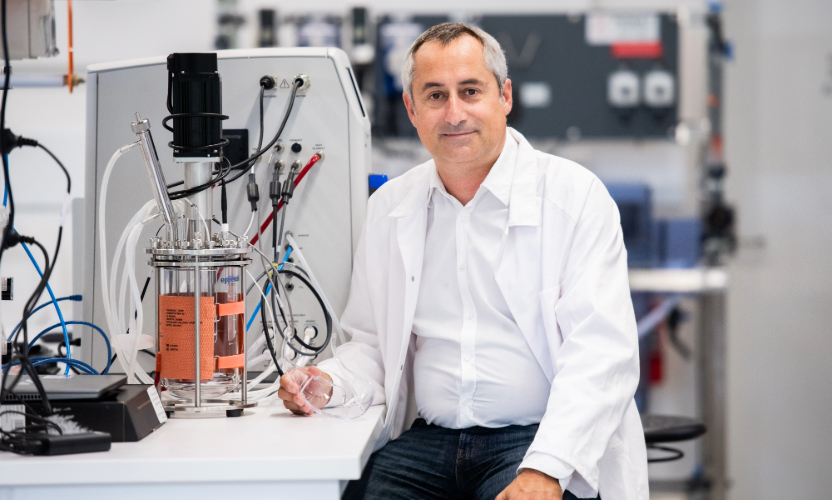
On 22 April 2024, Associate Professor Federico Maggi of the University of Sydney was declared a National Champion for the Frontiers Planet Prize, an initiative of the not-for-profit Frontiers Research Foundation.
Now in its second year, the prize focusses on research that shows the greatest potential to help humanity remain within the boundaries of our planet’s ecosystem.
Associate Professor Maggi is one of three researchers nominated by the Australian Academy of Science, for his paper ‘Agricultural pesticide land budget and river discharge to oceans’.
He is now in the running for one of three International Championship prizes, each worth one million Swiss francs or around A$1.6 million, which are awarded as a grant to the recipients’ host institutions to fund their continued research.
The winners of the International Championships will be announced at an award ceremony on 26 June at the Frontiers Planet Prize Award Ceremony in Villars, Switzerland.
The National and International Champions are chosen by a jury of 100 leading sustainability scientists, and will become part of the Frontiers Planet Prize alumni network, where they will have opportunities to share their research and findings at events in collaboration with the Frontiers Planet Prize partners.
Associate Professor Maggi said he and the paper’s co-authors, Fiona Tang and Francesco Tubiello, were humbled to have their work of many years receive this recognition.
Their study represents the first comprehensive environmental assessment conducted on the journey of individual pesticides from their origins to their endpoints across the globe.
With each pesticide carrying its own distinct toxicity and mode of action, the research provides insights into the impacts of substances resistant to degradation and identifies biodiversity risk hotspots where they accumulate, Associate Professor Maggi said.
“The geographic extent of pesticide contamination is so broad that there is no pristine environment in the world left ... every corner of the Earth has been adulterated by these chemicals,” he said.
“Agriculture is by far the greatest consumer of pesticides, with about three million tonnes of active substances used on crops each year. Active substances in pesticides are designed to kill unwanted invasive species in agriculture but have severe adverse side effects on non-target living organisms.
“Our research has led to greater worldwide awareness of the severe pollution from these invisible chemicals that are greatly affecting ecosystems and humanity.”
Associate Professor Maggi said the findings underscore the “urgent need to enact a radical change in the food production system, where profit should be equally valued as environmental conservation and human health. Our paper is a salient warning: now is the time to set planetary boundaries over the use of these pesticides.”
One of the two Australian runner-up nominees is looking at alternatives to pesticides, to address the devastation caused by rodent invasions.
Professor Peter Banks of the University of Sydney was nominated for his research into “olfactory misinformation” as an ecologically sensitive approach to rodent management, including the use of masking odours to hide desirable food such as crop seeds.
Dr Sachinthani (Sachi) Karunarathna of the University of Melbourne was nominated for her work developing rubberised concrete road barriers. By incorporating around 45kg of waste tyre per barrier, Dr Karunarathna said occupant safety is enhanced, while tackling the problem of tyre waste and extending the lifespan of road barriers.
Australia's extinction crisis: public hearing statement
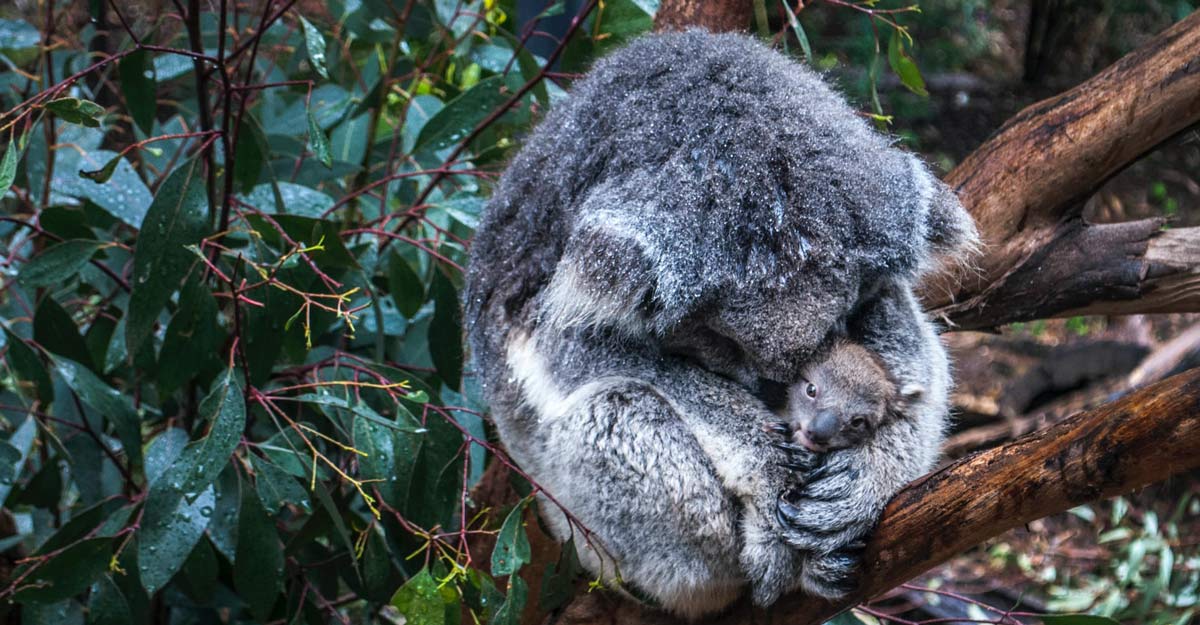
Australia is failing to halt, slow, or reverse the loss of biodiversity.
We have one of the worst records of species extinctions of any continent, with nearly 50% of the world’s known and historically recorded mammal extinctions.
In that context, we welcome the announcement that the Australian Government will seek to legislate the Environment Protection Agency and particularly, Environment Information Australia.
The Academy endorses establishing a data agency.
Australia’s biodiversity monitoring, data collection, and curation standards are insufficient.
A national biodiversity information system, overseen by an independent agency, is crucial for integrating data, supporting decision-makers, and ensuring public trust supported by a national environmental data standard.
Given this, we are disappointed in the decision to delay other important reforms recommended by the independent review of the Environment Protection and Biodiversity Conservation Act 1999 (EPBC Act).
In going forward without National Environmental Standards, we risk entrenching the failures of the current legislation. The new agencies will be locked into supporting the current—broken, inadequate—framework.
Further, as the 2021 State of the Environment Report found, there are key scientific capabilities missing.
For example, while the discovery, naming and documentation of Australian species by Western scientists has been ongoing for about three centuries, current knowledge of Australia’s biodiversity is incomplete.
The best estimate is that 70% (or 420,000) of all Australian species have yet to be discovered, documented, named, and classified. At the current rate, it will take more than four centuries to finish the job.
This gap hinders the effective management, conservation, and the sustainable use of Australia’s biodiversity, Australia’s biosecurity, biodiscovery, and effective environmental regulation. Many unnamed species are likely to be rare and threatened, and many of these will become extinct before they can be recognised.
What we do not know, we cannot protect.
For the national political system, for this Parliament, to maintain these failed systems and consider that an adequate response is unfathomable.
The Academy provides scientific advice. We’re happy to do so. We provided scientific advice to Professor Graeme Samuel, and we’re providing scientific advice to the Department of Climate Change, Energy, Environment and Water.
The scientific advice is that the situation facing Australia’s threatened species and its threatened ecological communities is dire. It is not getting better.
The need for legislative reform is very clear.
Failure to progress these reforms is a failure of the political system.
This statement was provided to the Senate Environment and Communications References Committee inquiry into Australia’s extinction crisis.
Global marine heatwave a stark reminder: President’s statement
The US National Oceanic and Atmospheric Administration (NOAA), a leading authority in climate and oceanic research, declared a global coral bleaching event overnight.
This declaration, and more evidence of the mass bleaching event occurring on the Great Barrier Reef (GBR), is a stark reminder of the entirely predictable consequences of extensive global warming for Australia and the planet.
The damage to the GBR and reefs globally serves as a poignant symbol of the real-time impacts of a warming climate and the increasing frequency of severe weather events.
The widespread bleaching of the GBR and the resulting threat to coral survival are disasters for the diversity of reef ecosystems. This bleaching also significantly impacts the livelihoods of tens of thousands of Australians and the communities they reside in.
The frequency of marine heatwaves and mass bleaching on the GBR weaken its ability to recover and makes the entire ecosystem less resilient to a changing climate. The effects of bleaching range from short-term physiological damage to widespread mortality.
As an independent and authoritative science adviser, the Academy has long observed that climate change is the primary threat to the GBR and its connected systems. Scientists expect more severe, irreversible, and costly impacts unless bold action is taken to reduce emissions.
Simply continuing with a business-as-usual approach is no longer an option.
It is crucial that Australia implements strong and effective national and local environmental laws.
These laws must prioritise scientific evidence and prevent practices that damage the GBR’s ability to adapt to climate change, including damage to the habitats in the GBR catchments.
To increase our chances of success, we must collaborate with local communities, especially Aboriginal and Torres Strait Islander groups, to ensure we utilise all available evidence and knowledge.
Data and evidence must be shared and understood by all landholders and stakeholders so that they can be informed participants in the decision-making process and incentivised to restore the GBR catchments.
The Academy’s Reef Futures Roundtables Report published last year highlighted that in the medium-term, there are opportunities to slow the decline in the health of the Great Barrier Reef, but this requires Australia to take further action now.
The upcoming review of the Reef 2050 plan needs to show ambition and align with the scale of the challenge—acknowledging that there can be no quick fix and putting all options on the table, from finding new ways to manage the GBR catchments to institutional arrangements, activating required resources, protecting and restoring habitats where possible, and drawing on Traditional Knowledges.
The Great Barrier Reef is a precious natural wonder, and safeguarding it demands collective effort and unwavering commitment.
Professor Chennupati Jagadish AC PresAA FREng FTSE
President, Australian Academy of Science
Australian science key to a future made in Australia
The Australian Academy of Science welcomes the Prime Minister’s announcement of his government’s intention to legislate a Future Made in Australia Act.
President of the Australian Academy of Science Professor Chennupati Jagadish said, “A future made in Australia is heavily dependent on the breadth and depth of Australian science.”
Science underpins innovation and industry, but over the past two decades, we have seen incoherence in research and development (R&D) policy and investment in Australia, he added.
Today, we still have not identified our science capability gaps, let alone planned to address them to meet our national ambitions.
“There is a fundamental link between science and economic development, but this cannot be realised with a science system that is not fit for purpose and relies on decades-old settings,” Professor Jagadish said.
Internationally, Australia is well behind the pack in utilising science to secure sovereign capability and make our economy more resilient to shocks.
In contrast, the US is boosting science investment through the Inflation Reduction Act and the CHIPS Act.
China is trying to achieve scientific self-sufficiency. Similarly, Japan, countries in the EU, and the Republic of Korea are boosting their investment in science and diversifying their economies.
“We cannot have successful industrial policy without a productive, innovative and sustainable science system,” Professor Jagadish said.
“We need a strategic roadmap and a decade of commitment to boost government investment in R&D and stimulate expenditure by other sectors, which is critical for Australian productivity and industrial capability.”
Remarkable achievements in research recognised with Academy awards
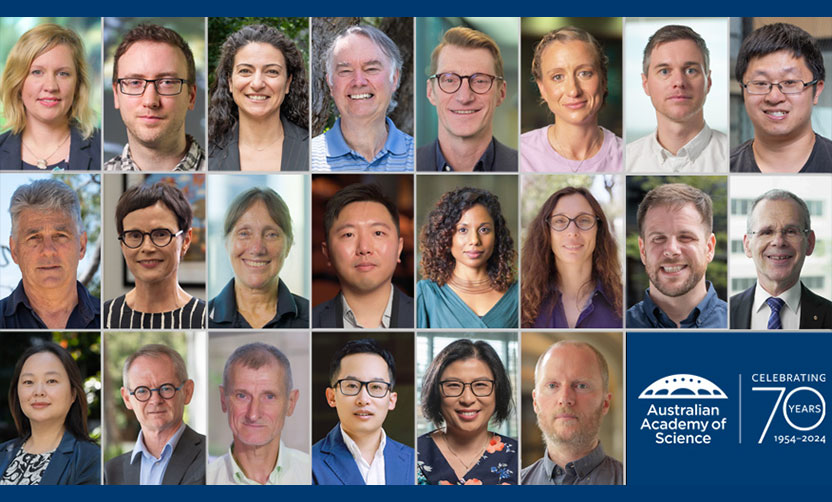
Today, 22 researchers from around Australia who have made outstanding contributions to the advancement of science are recognised for their achievements with Australian Academy of Science honorific awards.
The Academy’s annual honorific awards celebrate the achievements of the country’s leading minds, from researchers who are early in their careers to those who have spent a lifetime contributing to science.
Academy President Professor Chennupati Jagadish said the awards recognise the diverse contributions of researchers across Australia and the power of long-term commitment to science.
“From climate change to public health, Australian researchers are addressing the challenges our communities face every day.
“Their dedication to the pursuit of knowledge enriches our understanding of the world around us and sets a great example for generations to come.
“It is a tremendous privilege to be given the opportunity to honour their contributions to science.”
The awardees this year include:
Professor Kerrie Mengersen FAA, Queensland University of Technology
Ruby Payne-Scott Medal and Lecture
Professor Kerrie Mengersen is this year’s recipient of the Ruby Payne-Scott Medal and Lecture, one of the Academy’s most prestigious awards.
Professor Mengersen’s research focuses on the development of new statistical methodology. She is driven by challenging real-world applications in a career spanning 35 years.
From helping to save the declining population of jaguars in the Amazon to creating Australia’s first interactive cancer atlas, Professor Mengersen’s statistical models have helped us better understand the world around us.
Recently, she led a citizen science project aimed at improving monitoring efforts for the Great Barrier Reef. The online tool, Virtual Reef Diver, allows divers to upload photos they’ve taken of the reef which anyone in the world can then annotate with features such as coral, algae and sand. This project engages everyday people in reef conservation.
Professor Mengersen said the opportunity to work with different challenges using skills in data analysis is what keeps her passionate from day to day.
“It’s what gets me up in the morning wondering, ‘What will today bring?’”
Dr Adriana Dutkiewicz, University of Sydney
Mawson Medal and Lecture
This year’s recipient of the Mawson Medal and Lecture, Dr Adriana Dutkiewicz has spent the past decade advancing our understanding of deep-sea sedimentation and the long-term carbon cycle, which is the movement of carbon between the solid Earth, atmosphere and oceans. While carbon is the backbone of life, changes to the environment that put carbon dioxide into the atmosphere result in warmer temperatures on Earth.
Dr Dutkiewicz used 50 years of data to develop a digital map of global deep-sea sediments—the first of its kind. She has also led research into the movement of sediments across the seafloor.
Dr Dutkiewicz said her team discovered a huge pile of sediment along an 8,000 km segment of the South-East Indian Ridge of the Southern Ocean, which had not been known before.
“That area potentially contains a very high-resolution record of Earth’s past climate, but it still remains to be drilled and properly mapped using ships.”
Professor Andrew Steer, Murdoch Children’s Research Institute (MCRI)
Gustav Nossal Medal
Professor Andrew Steer is a paediatric infectious diseases physician and Director of the Infection and Immunity Theme at MCRI. He is this year’s recipient of the Gustav Nossal Medal, recognising his research as among the highest standing in the field of global health.
As an international authority on tropical infectious diseases, Professor Steer has established global community-based treatment programs for tropical skin infections such as scabies, influenced vaccine development for Strep A diseases, and introduced diagnostic technologies and control programs for rheumatic heart disease.
“Up to one child in every classroom might be affected by rheumatic heart disease in the Pacific. And usually, up to one in two children are affected by scabies,” Professor Steer said.
His team has led efforts in controlling the spread of scabies in the Pacific, supporting local researchers and medical professionals so they are empowered in disease control programs.
Professor Steer said that Sir Gustav Nossal was involved in some of his scabies work as an advisor.
“I feel a particular personal connection, and so being awarded the medal is extra special and meaningful to me.”
Professor Eric Chow, Monash University
Gottschalk Medal
Professor Eric Chow is one of two recipients of the Gottschalk Medal, for his contributions to our understanding of how sexually transmissible infections (STIs) spread, and how we can reduce their transmission.
Gonorrhoea is a preventable and curable STI, with over 82 million cases world-wide annually. Professor Chow’s research was the first in the world to identify kissing as the major means of transmission of gonorrhoea, rewriting 100-year-old paradigms on our understanding of the disease.
Originally from Hong Kong, Professor Chow lived through the 2003 SARS epidemic, which is what drove him to pursue a career in public health research.
“I really love this area—that we can actually do research to help people, to help the community, to protect the community,” Professor Chow said.
Professor Chow’s research aims to educate people about the best ways to prevent STIs, and drive changes in future sexual health education programs.
All 2024 award recipients
Read more about all the awardees and their research. Individual links below take you to the video and award citation for each recipient.
Premier honorific awards
- Macfarlane Burnet Medal and Lecture (biological sciences)—Professor David Lindenmayer AO FAA, Australian National University
- Ruby Payne-Scott Medal and Lecture—Professor Kerrie Mengersen FAA, Queensland University of Technology
Career honorific awards (for lifelong achievement)
- David Craig Medal and Lecture (chemistry)—Professor Justin Gooding FAA FTSE, University of New South Wales
- Haddon Forrester King Medal, sponsored by Rio Tinto—Professor Stephen Cox, Australian National University
- Ian Wark Medal and Lecture (applied sciences)—Professor Anthony Weiss AM FTSE, University of Sydney
- Mawson Medal and Lecture (Earth sciences)—Dr Adriana Dutkiewicz, University of Sydney
- Suzanne Cory Medal (biomedical sciences)—Professor Peter Koopman FAA, University of Queensland
Mid-career honorific awards (8—15 years post-PhD)
- Gustav Nossal Medal—Professor Andrew Steer FAHMS, Murdoch Children’s Research Institute
- Nancy Millis Medal for Women in Science—Professor Anita Ho-Baillie, University of Sydney
Early-career honorific awards (up to 10 years post-PhD)
- Anton Hales Medal—Dr Andrew King, University of Melbourne
- Christopher Heyde Medal (two recipients)—Professor Serena Dipierro, University of Western Australia and Dr Christopher Lustri, University of Sydney
- Dorothy Hill Medal—Associate Professor Ailie Gallant, Monash University
- Fenner Medal—Associate Professor Ana Micaela Martins Sequeira, Australian National University
- Frederick White Medal—Dr Hamish Clarke, University of Melbourne
- Gottschalk Medal (two recipients)—Professor Eric Chow, Monash University and Associate Professor Kirsty Short, University of Queensland
- John Booker Medal—Associate Professor Lining Arnold Ju, University of Sydney
- Le Fèvre Medal—Professor Yao Zheng, University of Adelaide
- Pawsey Medal—Associate Professor Jiajia Zhou, University of Technology Sydney
- Ruth Stephens Gani Medal (two recipients)—Dr Sonia Shah, University of Queensland and Dr Stephin Vervoort, Walter and Eliza Hall Institute of Medical Research
Nominate for our 2025 awards
Nominations are now open for the Academy’s 2025 honorific awards. Nominations close 1 May 2024.
Science protected in Defence exports law passed by parliament
Australia’s scientists say the passage of the Defence Trade Control Amendment Bill 2023 today improves the balance between protecting Australia’s national security and enabling the benefits that open scientific collaboration offer Australia and the globe.
The passing of the legislation comes four months after the Australian Academy of Science first raised concerns about implications of Australia raising the fence for scientific and technological collaboration with any countries other than the UK and the US.
Academy President Professor Chennupati Jagadish said the Academy’s sustained advocacy in this area has minimised the unintended consequences for the Australian research sector.
“Enshrining the fundamental research exemption in legislation provides scientists with more confidence that the definition can’t be changed on a whim and that they won’t be at risk of breaking the law by undertaking discovery research, simply speaking at a conference, teaching a PhD student, or collaborating with a colleague.”
The Academy said the amendments to grandfather current research for a year and to review the legislation after three years were also appropriate.
“Now, as the rubber hits the road, Australia’s researchers must be adequately supported to understand their obligations to enable compliance and to access sufficient resources to establish secure research environments when required,” Professor Jagadish said.
“We look forward to continuing work with the Government and Department of Defence as it implements the forthcoming reforms and revises the Defence Strategic Goods List to ensure researchers understand how the new legislation works, to reduce compliance burden, and to monitor unintended consequences for Australia’s researchers.”
Read more about how Australia benefits from international scientific collaboration in a contested world.
The Academy’s President, Professor Jagadish, is just one of thousands of Australian researchers collaborating with international partners. His research in nanotechnology and semiconductors is made possible because of some 30 collaborations he maintains across the world, spanning countries including the UK, US, India, China, Germany, France, Sweden, Finland, Norway, Italy, the Netherlands, Japan, South Korea, Russia, Lithuania, Poland, Brazil, South Africa and others.
Academy's national symposium on food futures yields fruitful discussion
How is the food on our plates changing? And how are Australian scientific capabilities evolving to meet the future needs of the nation?
These were two broad themes explored on 22 March 2024 when the Academy hosted its national symposium, ‘Food Futures: Nourishing a Nation’ at the Brisbane Exhibition and Convention Centre as part of the 2024 World Science Festival Brisbane.
The Academy convened experts across the agriculture, nutrition, and food innovation sectors for this event.
Professor Lyn Beazley AO FAA FTSE, the Academy secretary for education and public awareness, hosted the symposium.
She opened the event with an acknowledgement of the Country on which the symposium was held (Meanjin) and paid respects to the Turrbal and Yuggera Peoples as the Traditional Custodians of the land. She underscored the importance of engaging in a truly national dialogue about the future of our food.
“Our farmers are producing one-fifth of their product for [Australians] and one-fourth is going overseas,” Professor Beazley said.
“This is our huge export industry, and one that represents Australia around the world.”
Queensland's Chief Scientist Professor Kerri Wilson congratulated the symposium convenors—Professors Christine Beveridge FAA and Stephen Simpson AC FAA FRS, and Dr John Kirkegaard FAA—for their guidance in bringing the symposium together. She also noted the collaboration between the Academy and the World Science Festival Brisbane in bringing the event to the public.
“Thirteen percent of our goods and services exports are agricultural products,” Professor Wilson said, emphasising the interdisciplinary nature of agriculture and food science.
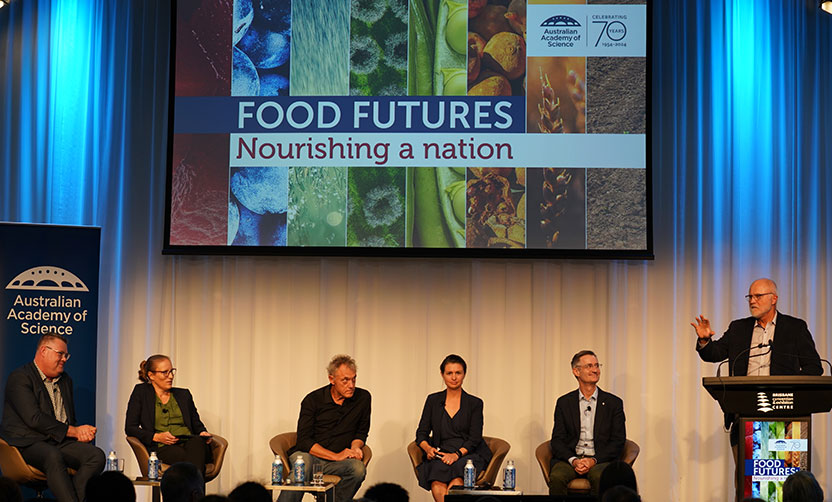
The opening keynote address by Professor David Raubenheimer, Professor of Nutritional Ecology at the Charles Perkins Centre and School of Life and Environmental Sciences at the University of Sydney, focused on the relationship between the natural world and our food systems.
His team invented a new approach to nutrition called ‘nutritional geometry’. By manipulating the diets of creatures ranging from cockroaches to primates, they found that after being in a state of imbalance, they found the right combination of foods to rebalance their nutrition.
“What this tells us is that ... animals don't have a single appetite, but they have an appetite that makes them hungry for specific nutrients depending on what they need at a given time,” Professor Raubenheimer concluded.
He discussed the effects of ultra-processed foods while highlighting the broader socio-economic effects that contribute to a low-protein diet in society, given the affordability of ultra-processed foods.
His presentation also considered the relationship between greenhouse gas emissions and our diets and concluded that diets rich in ultra-processed foods are associated with higher greenhouse gas emissions due to the energy use in their production.
“The key challenge we face is to manage those causal factors ... in such a way that we can produce diets in a food system where the benefits of what we eat in economic, health, and environmental terms are aligned,” Professor Raubenheimer concluded.
Prof David Raubenheimer, a leading expert in nutritional ecology, speaking on Appetites for Change: Rebalancing the Australian Food System. His research at the Charles Perkins Centre, University of Sydney, has been exploring how the rebalance needed will involve better aligning… pic.twitter.com/WaRx3ZAPva
— Australian Academy of Science (@Science_Academy) March 22, 2024
Academy Fellow Dr John Kirkegaard spoke about the future of Australia’s agriculture industry and highlighted that while it has shown flexibility and innovation to changing environments, challenges such as climate change, input costs and supply chains, policies, and changes to the environment and biodiversity are limiting yield.
Dr Kirkegaard said we must keep an open mind and use science to select the most effective systems in different places, when discussing the systems and theories underpinning farm practices.
“The importance of bringing the agriculture sector with you is that changes can be real and sustained,” he said.
“It’s critical that the policies we build around new farming systems actually align with what farmers can keep up with.”
Dr Kirkegaard also spoke of innovations that are leading to revolutionary agricultural practices, such as ‘green’ ammonia and Omega 3 Canola crop.
The discussion that followed was moderated by Professor Matthew Morell, Institute Director at the Queensland Alliance for Agriculture and Food Innovation (QAAFI).
Panellists included: Dr Greg Rebetzke, Chief Research Geneticist at CSIRO Agriculture and Food; Professor Wendy Umberger, Chief Executive Officer at the Australian Centre for International Agricultural Research; and Professor Neena Mitter, Director of the Centre for Horticultural Science at QAAFI.
Professor Morell emphasised the importance of learning from Traditional Knowledges to enhance the Australian agricultural sector.
He also spoke of the ambitious targets set for the growth of the sector through science and innovation, lamenting that research and development (R&D) investment in Australia as a percentage of GDP has reduced.
Dr Rebetzke spoke of his research into novel wheat varieties that facilitate deep sowing and are more resilient to changes in climate, while Professor Umberger spoke of global food insecurity and its effects on other areas, such as health.
“We don't just need agricultural scientists working on food; we need scientists working on food systems from every discipline,” Professor Umberger stressed.
Professor Mitter spoke about crop protection and the use of pesticides.
“Pesticides have been detected within 60kms of the Great Barrier Reef,” she said, highlighting the need for innovations—such as RNA-based biopesticides—to address the issue.
Next, a panel discussion featuring Prof Matthew Morell (@QAAFI) as moderator, Dr Greg Rebetzke (@CSIRO), Prof Wendy Umberger (@ACIARAustralia) and Prof Neena Mitter (@QAAFI).
Prof Umberger points out the leading weather-related issue affecting food systems across the globe is… pic.twitter.com/AyYSbZ9sEv
— Australian Academy of Science (@Science_Academy) March 22, 2024
Climate change resilience in agriculture and the impacts of science, technology and policy
Keynote presenter Adam Fennessy PSM, Secretary of the Australian Department of Agriculture, Fisheries and Forestry presented on science technology policy, and the macro-policy setting within Australia and globally.
“Australia is one of the most food secure countries in the world ... but we cannot take it for granted; we must continue to invest in it,” Mr Fennessy stressed.
“Climate change brings risk to the entire food production and supply chain ... Even with progress on mitigation, some climate impacts are already locked in, so adaptation efforts need to continue.”
Professor Richard Eckard FTSE, Director of the Primary Industries Climate Challenges Centre at the University of Melbourne, highlighted the COP21 Paris Agreement as being the driver for the agriculture industry to reduce emissions.
He stressed the importance of designing and implementing a sound policy framework for stakeholders to move towards carbon emissions reduction goals.
“Carbon credits ... were meant to be the last course of action, not the first course of action,” he warned.
As part of the Net Zero Australia Plan and the person responsible for reconciling the agricultural pathway to Net Zero, he stressed there is “no way to buy your way out of trouble—you actually have to reduce emissions.”
Dr Rohan Nelson, the Director of Food System Horizons at the University of Queensland and CSIRO, elaborated on the learnings of agriculture and climate change policy in Australia.
“We've built a world-class agriculture system ... it is the envy of many other countries around the world,” he said.
While mentioning the successes, including the increase in agricultural output and return on investment on agriculture R&D, Dr Nelson also highlighted social and environmental challenges facing the sector.
“Think about a pilot flying an airplane. You want the pilot to look at the compass, altimeter, and air speed. Imagine if they're only looking at one of those instruments? That's how we've been flying the agri-foods system in Australia,” Dr Nelson said.
He implored the audience to think about the futures we want and how to get there, and the importance of novel forms of public leadership to drive action on food systems innovation.
The discussion that followed included: Alison Kelly, Farm Emissions Specialist at Agriculture Victoria; Professor Manfred Lenzen, Professor of Sustainability Research at the University of Sydney; Dr Di Mayberry, Principal Research Scientist at CSIRO Agriculture and Food; and moderator Professor Richard Eckard.
Ms Kelly spoke about her role in engaging with the farming sector about their emissions targets and strategies.
Her research suggests there is a narrowing of expectations in the potential for reducing emissions without affecting profitability, while acknowledging they are still in their early days of the project.
Dr Di Mayberry covered the complexities and challenges faced by the livestock systems industry in Australia.
“We've come a long way since 2005 but that doesn't mean we can't or shouldn't try to continue to reduce emissions from the industry,” she said.
“There's no single solution that's perfect for everyone ... We need to balance adaptation and mitigation with societal expectations around how people want their food produced.”
Professor Lenzen presented a systemic view of food systems in Australia and globally.
“In my field, there's more and more evidence and consensus that technology-driven approaches to getting us to two degrees [or lower] won't save us, and that's simply because we've waited too long,” Professor Lenzen said.
He concluded that systemic social disruption will affect food systems and the international society should prepare for this.
Our second panel discussion features Alison Kelly, Farm Emissions Specialist, Agriculture Victoria (@VicGovAg), Prof Manfred Lenzen, Prof of Sustainability Research, @Sydney_Uni, and Dr Di Mayberry, Principal Research Scientist, @CSIRO Agriculture and Food.
"There's no single… pic.twitter.com/SHVQIaMBpb
— Australian Academy of Science (@Science_Academy) March 22, 2024
Rebalancing the Australian food environment with science and technology and improved nutrition literacy
Associate Professor Severine Navarro, Group Head of the Centre for Childhood Nutrition Research at the QIMR Berghofer Medical Research Institute spoke of her research on immune tolerance and how food is influencing this, particularly in the early period of human development.
“The microbiome-immune cross-talk is responsible for many chronic inflammatory conditions,” she said, concluding that immune tolerance is influenced by the food we eat and that food science should be included in the discussions at a policymaking level.
Professor Yasmina Sultanbawa, Director at the Centre for Nutrition and Food Sciences at the Queensland Alliance for Agriculture and Food Innovation, spoke about the diversification of diets and its impact.
“Two billion people in the world don't have access to a healthy diet, but developed countries like Australia are also not immune to this,” she said.
“Australia is blessed because we are a very biodiverse country ... and this is where the Traditional Knowledge and Indigenous connection comes in. They have so much information ... Indigenous populations know how to grow and how to care for their land and now it is desired by the mainstream consumer.”
The next panel discussed the linkages between diet and health. It included: Dr Gilly Hendrie, Research Scientist and Leader of the Public Health and Wellbeing Group at CSIRO; Associate Professor Andrew Holmes, Theme Leader (Education) Molecules, Cells and Organisms at Charles Perkins Centre, University of Sydney; and moderator Professor Stephen Simpson AC FAA FRS, Academic Director at the Charles Perkins Centre, University of Sydney.
Professor Simpson opened the discussion by noting, “It is projected that within a decade or two, the health budget may outstrip GDP for the country, and it all comes back to diet.”
He argued that Australians are having single-nutrient discussions in a diverse nutrition environment.
Dr Hendrie said that 67% of Australian adults are overweight or obese, and data suggests our diets are getting worse.
“People who prepare food together, eat together,” Dr Hendrie said, mentioning that multigenerational teachings are sacrificed in a modern society that prioritises convenience and speed.
“There’s a lot lost as we move towards this more convenient food environment,” she said.
Associate Professor Holmes described the day you’re born as your “inoculation day”, referencing the importance of our microbiome.
He noted that while the microbiome is a fairly stable structure within species, it is modifiable by diet.
“There isn't a human microbiome—each of us have a microbiome and it's unique and responds to various pressures in different ways,” he said.
Our nutritional biology has been hacked in the modern industrialised food environment and consumer demand is driving agriculture and food production practices to satisfy a market for unhealthy foods. How has this happened – and what can we do about it? Our final panel is… pic.twitter.com/xn3HUT1MgS
— Australian Academy of Science (@Science_Academy) March 22, 2024
Professor Beazley called the symposium to an end by thanking our event partners, the University of Sydney's Charles Perkins Centre and University of Adelaide, and program partner and host of the World Science Festival Brisbane, the Queensland Museum.