




2024 Max Day Awards: restoring ecosystem engineers and protecting marine environments from microplastics

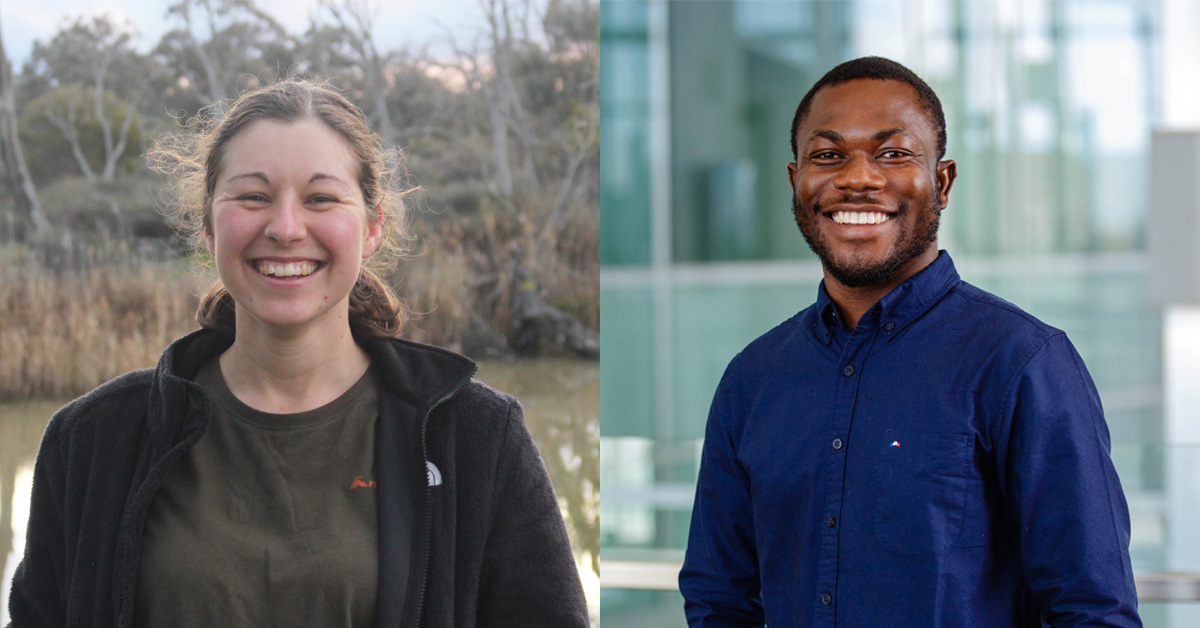
The 2024 Max Day Environmental Science Fellowship awardees, Ms Aviya Naccarella from Deakin University (left) and Dr Elvis Okoffo from the University of Queensland. Photos: supplied.
Two early career researchers have each been awarded a 2024 Max Day Environmental Science Fellowship Award for their interdisciplinary research on protecting the environment.
Ms Aviya Naccarella, Deakin University
The contribution of mycophagous mammals to ecosystem services and restoration
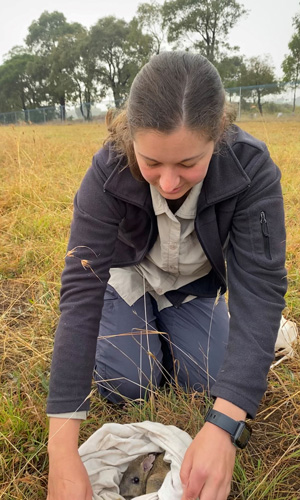
Ms Aviya Naccarella is assessing how digging, mycophagous mammals contribute to ecosystem function in Victoria. Photo: supplied
Digging, mycophagous (fungus-feeding) mammals were once common throughout many parts of coastal Australia, providing a range of essential ecosystem services, including improving soil health, providing a habitat for other species, creating germination niches for plants and dispersing fungal spores.
Now, due to habitat loss and the introduction of invasive species such as cats and foxes, populations of these mammals have reduced and so has the ecological services they once maintained.
Ms Aviya Naccarella, an early career ecologist at Deakin University with an interest in restoration ecology, will use translocations in Victoria to assess how digging, mycophagous mammals contribute to ecosystem function and what role these mammals can play in restoration.
“Mycophagous mammals are ecosystem engineers,” Ms Naccarella said in her application.
“My project will test the benefits of reintroductions for the restoration of ecosystem services.”
Ms Naccarella will use her Max Day grant to conduct DNA analysis on soil samples before and after translocation to increase our understanding of the influence they have on fungal community dynamics and soil health.
Dr Elvis Okoffo, University of Queensland
Unmasking the hidden threat: Investigating microplastic pollution in Moreton Bay for a sustainable future
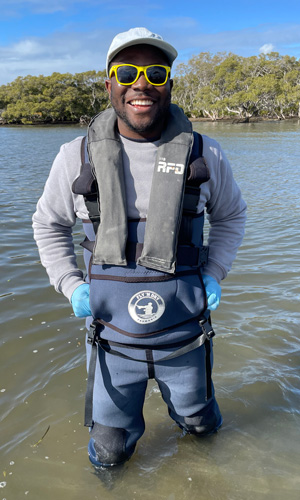
Dr Elvis Okoffo is researching the extent of microplastic pollution in Moreton Bay, Queensland. Photo: supplied.
While the sight of plastic on a beachfront is distressing, the presence of microplastics goes unnoticed due to their microscopic size. These tiny plastic particles can have immensely negative impacts on the environment, from disrupting the food chain and endangering marine life to threatening human health.
Dr Elvis Okoffo from the University of Queensland is researching the extent of microplastic pollution in Moreton Bay near Brisbane, home to a vast biological diversity which many animal and plant species rely on for survival.
Dr Okoffo’s research will be used to evaluate the exposure and risk to the marine organisms within the bay and inform management plans to help protect this environment.
“It is imperative that we develop a comprehensive understanding of the types and distribution of microplastics in Moreton Bay to effectively address this pervasive issue,” Dr Okoffo said, in his application.
“By doing so, we can protect the health of our ecosystems, safeguard human well-being, and preserve the natural beauty of this precious marine environment.”
Dr Okoffo will use his Max Day grant to continue sample collection from the waters of Moreton Bay, developing novel sampling approaches and analytical techniques for monitoring plastic residues in these environmental samples.
Highly commended
Another two researchers and their projects were highly commended for their 2024 Max Day Environmental Science Fellowship Award applications:
- Mr Christopher Keneally, University of Adelaide: ‘Predicting methane emissions and ecosystem function from salinity and microbial communities in a hypersaline coastal wetland’
- Dr Jiaying Li, University of Queensland: ‘Combating the antimicrobial resistance threat: understanding antibiotic exposure and antimicrobial resistance spread in urban water systems’.
Max Day: a champion of environmental research
The Max Day Award provides up to $20,000 for early career researchers working on the conservation of Australia’s flora and fauna, the ecologically sustainable use of resources, and the protection of the environment and ecosystem services. It is named in honour of Academy Fellow, the late Dr Maxwell Frank Cooper Day AO FAA, who spent a lifetime championing entomology, conservation and forestry, as well as helping other scientists.
Applications for the 2025 award round will open on 15 February 2024. Learn more about this award.
Academy Fellows receive prestigious International Science Council Fellowship
Three Academy Fellows and an EMCR Forum member are among several distinguished researchers appointed a Fellow of the International Science Council – the international body for convening global scientific expertise on issues of major scientific and public importance.
Professors Brian Schmidt AC FAA FTSE FRS, Cheryl Praeger AC FAA, and John Church AO FAA FTSE have been appointed in recognition of their “outstanding contributions to promoting science as a global public good,” the ISC said in their announcement today. Computer scientist and member of the Academy’s EMCR Forum, Associate Professor Andreea Molnar has also been appointed a Fellow.
“The ISC Fellowship recognises individuals who are ambassadors and advocates working tirelessly for science internationally and for the vital importance of evidence-informed policymaking,” Chair of the ISC Fellowship Council Professor Terrence Forrester said.
“ISC Fellows hail from wide-ranging geographies, sectors, disciplines and career stages, and we look forward to working with them all in multiple capacities in the coming months and years.”
Award-winning mathematician, educator, and science diplomat, Professor Cheryl Praeger said she was thrilled to hear the announcement, particularly given the international significance of the Council. “I saw the role of the ISC in action during my term as member of the ISC’s Committee for Freedom and Responsibility in Science, and I am very pleased to see the ISC’s role this year in supporting the formation of a Pacific academy for the sciences and humanities,” Professor Praeger said.
“Currently I have the privilege to serve on the National Science and Technology Council providing science advice to the Prime Minister and other Ministers, and I look forward to this new opportunity to contribute through the ISC,” Professor Praeger said.
Professor Praeger has more than 40 years of experience in scientific engagement and leadership in Australia and overseas. She served as adviser and executive on numerous Australian science bodies, including the Australian Academy of Science, as well as the Association of Academies and Societies of Sciences in Asia, International Mathematical Union, and ISC Committee for Freedom and Responsibility in Science. She was the first pure mathematician to win an Australian Research Council Federation Fellowship, and in 2019 she became the first pure mathematician to be awarded the Australian Prime Minister’s Prize for Science.
Nobel Laureate and world-renowned astrophysicist Professor Brian Schmidt’s research has led to unlocking fundamental mysteries of our Universe. He has been the Vice-Chancellor of the Australian National University since 2016 – a position he will relinquish in January 2024 – and has won major accolades including the Shaw Prize in Astronomy in 2006, the Gruber Prize in Cosmology in 2007, and the Academy’s Pawsey Medal in 2011. He was made a Companion of the Order of Australia in 2013.
Professor John Church is the pre-eminent authority on the rate of 20th century sea-level rise. He was a pioneer in what is now a standard approach to the use of observations to detect climate change in the ocean, and his research has played a significant role in international planning for climate change research. He was co-convening lead author on the IPCC 3rd and 5th Assessment Reports and is a member of the Joint Scientific Committee of the World Climate Research Programme.
Associate Professor Andreea Molnar’s research is focused on computing for good. Her research has applications in health, education, and governmental services, and she is also the Senior Editor for Information Technology and People. Associate Professor Molnar is also a member of the Global Young Academy.
Other prominent Australian researchers including conservationist Professor Peter Bridgewater, Emeritus Professor of modern history Roy MacLeod, and cognitive scientist Professor Anina Rich have also been appointed to the ISC Fellowship.
“The election of these researchers and scientists to the fellowship of the International Science Council is a fitting acknowledgement of their excellence and years of service to advancing science as a global public good. We are thrilled for them and offer our warmest congratulations,” President of the Academy Professor Chennupati Jagadish said.
ISC Fellows serve as experts and advisers for the ISC’s governance, scientific initiatives and partnerships, and as ambassadors and advocates for science for the global good. They are nominated by stakeholders including ISC Fellows, members, and affiliated bodies, and must demonstrate relevant expertise in their field as well as a track record of contributing to science policy and science for society, in addition to having a global or regional influence.
75 years of the Australian Journals of Scientific Research celebrated
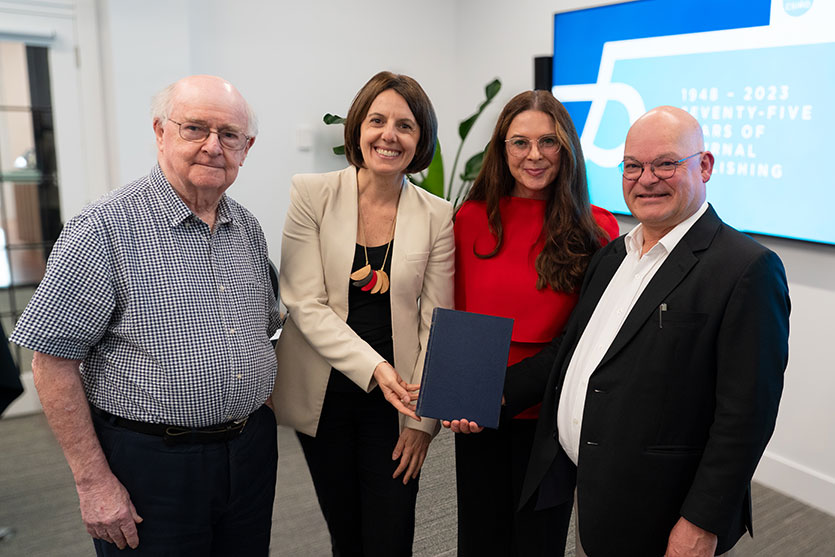
This year marks the 75th Anniversary of the Australian Journals of Scientific Research (AJSR) which represent a remarkable archive of more than 70,000 articles.
CSIRO Publishing and the Australian Academy of Science celebrated the anniversary at a gathering at Ian Potter House in Canberra on Thursday 7 December.
The event marked the long-running collaboration between the Academy and CSIRO, which publishes 1,000 articles every year under 14 AJSR titles.
The growing archive reflects Australia’s rich history of science as well as Australian scientists’ continuing impact on international research. Communicating the outcomes of that science in journals creates building blocks for future learning and understanding.
The origins of AJSR
Development of science journals started to gain momentum early in the 20th century, but was halted by World War II. There was a shortage of resources, and printing equipment needed to be prioritised for government requirements.
Much of the research that might have been published in peacetime was also paused for security reasons, so by the mid-1940s there was a considerable backlog of work waiting to be published and not enough journals or local publishing capability.
In 1946, the CSIR (now CSIRO) proposed the establishment of an Australian Journal of Scientific Research—Series A, Physical Sciences and Series B, Biological Sciences—to capture the best of Australian research findings.
In 1948, Dr N.S. Noble from the Linnaean Society of New South Wales was appointed as editor and published the first volumes of the Australian Journal of Scientific Research. An editorial board was developed, and submissions were refereed by a broad range of specialists.
Through the following years the rules of conduct for the journals were established in collaboration with the Australian National Research Council (precursor to the Australian Academy of Science).
Demand for publishing services continued to grow and in 1950 three new journals were started: the Australian Journal of Agricultural Research, the Australia Journal of Applied Science, and the Australian Journal of Marine and Freshwater Research.
The expanding suite of journals became known as the Australian Journals of Scientific Research (AJSR) governed jointly by CSIRO and the Australian Academy of Science through the Board of Standards. By 1988 the AJSR comprised 11 titles.
AJSR goes online
During the late 1980s and early 1990s, the winds of economic rationalism buffeted the journals. CSIRO directed its publishing operation, including the journals, to adopt a commercially sustainable business model, so CSIRO funds might be targeted at directly supporting research. CSIRO Publishing was created, and the business unit took on the task of adapting to a new publishing channel: the internet.
All AJSR titles were available online by the end of 1997, making them more easily discoverable and speeding up the publication processes.
Digital journals quickly led to the idea of making articles available online for free, or ‘open access’. The scholarly and publishing communities wrestled with the open access concept for the first two decades of the 21st century, trialling various business models that would allow for free distribution of the articles, but which would also sustain the work of editors, publishers, and journal brands.
AJSR today—and into the future
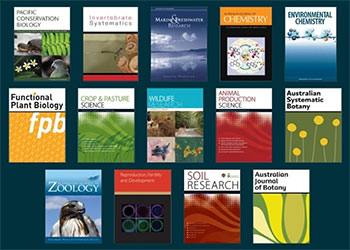
Today the number of journals in this collaboration sits at 14 and they publish more than 1,000 articles per year. Given the collaborative nature of science, many articles are now co-authored by researchers around the world.
All volumes are now digitised, accessible online and owned by the Australian public through CSIRO. This content will continue to contribute significantly to the landscape of trusted literature that informs decision-making and future research.
In 2023, as we reflect on the enormous changes in knowledge transfer, the significance of trusted research that has been peer-reviewed and published following ethical processes is greater than ever.
In the most recent agreement between the Academy and CSIRO, the focus is on moving towards open science and ensuring the integrity of the journals in an increasingly complex environment.
Many challenges face the editorial boards, reviewers, and publishing teams that support our journals. However, these dedicated teams value the role they play facilitating the application of research and collaborating to publish outcomes that will help solve societies biggest challenges.
Summer stories: Fellows share their top books, podcasts and TV shows
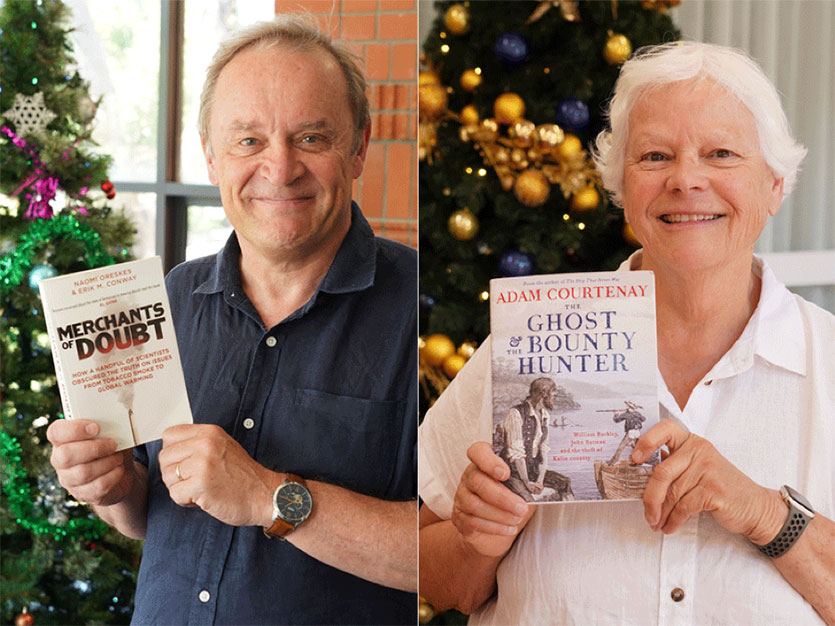
Professor Malcolm Sambridge and Professor Susanne von Caemmerer are two of the many Fellows who have shared their recommendations for summer reading, listening and viewing.
Are you curious about how germs have shaped human history?
Perhaps you’d rather be swept away in the retellings of Greek mythologies, follow aged care residents solving murder mysteries, take a close up view of the life and work of George Orwell’s wife, or walk with an author exploring the brutal truths about his ancestors and their part in the colonisation of Australia.
In the eighth annual Fellows’ reading, listening and viewing list, our Fellows reveal the broad array of topics—across books, podcasts and TV—that have captured their attention in 2023.
See the Fellows’ reading, listening and viewing list
Below is a snapshot of this year’s recommendations.
Books
Wifedom, by Anna Funder
Recommended by Professor Tony Basten AO FAA FTSE: A must-read for all fans of George Orwell (Eric Blair). Wifedom speaks to the unsung work of women everywhere today, while offering a breathtakingly intimate view of one of the most important literary marriages of the 20th century. It is a book that speaks to our present moment as much as it illuminates the past.
Recommended by Professor Robyn Williams AO FAA: The book is about the ‘invisible’ wife of George Orwell. Anna is a magnificent writer who investigates the seemingly unreachable evidence like the true daughter of a great scientist that she is.
The Arbornaut, by Meg Lowman
Recommended by Professor Barbara Nowak FAA: This is an amazing book about forest canopies and their biodiversity and the woman who pioneered this research and did everything she could to do this, including sampling from a cherry picker bucket while pregnant. From researcher and explorer to storyteller, educator and mentor, [Meg Lowman] is now active in global forest conservation, promoting sustainability and forest stewardship. While many of her life stories will be very familiar to women scientists, the scientific content of the book and the fieldwork adventures will excite all readers.
Rock Star: The story of Reg Sprigg – an outback legend, by Kristin Weidenbach
Recommended by Emeritus Professor David Smyth FAA: This is an absorbing biography of South Australian geologist and entrepreneur Reg Sprigg (1919–1994). He was the first to report Australian fossils of multi-cellular organisms now known as members of the Ediacaran fauna, defining a new period of geological time—the Ediacaran (635–538.8 my ago), with the base marked by a golden spike in the northern Flinders Ranges. Never a conventional geologist, he published his Ediacaran record in the Transactions of the Royal Society of SA in 1947 (current impact factor 0.8), only ever received an honorary doctorate, promoted oil and gas exploration including the Gidgealpa/Moomba gas field, and contrarily established the Arkaroola Wilderness Sanctuary in the Northern Flinders Ranges.
Children’s books
My Aunt is a Protein Crystal Scientist. That's RAD!, by Jennifer Martin, Brian Doyle, Rachele Andrews
Recommended by Professor Jennifer Martin AC FAA who writes: Yes, I'm spruiking my own book! Well, it was a big hit at the public lecture I gave in Melbourne this year. If protein crystals aren't your thing, the That's RAD! SCIENCE series has another four science books, all written for children, by women scientists. And they'll soon all be available for free online.
Audio and TV shows
Matters Microbial, by MicrobeTV—Dr Mark O Martin (podcast)
Recommended by Professor Cynthia Whitchurch FAA: Matters Microbial is a podcast that discusses the wonders of microbiology with the microbiologists that study them. It provides remarkable insights into the latest microbiology research and the enthusiasm of the scientists for their work.
Slow Horses (TV series)
Recommended by Professor the Honourable Barry Jones AC FAA FTSE FAHA FASSA: A third series of Slow Horses, a series about intense and dirty competition among spy agencies, starring Gary Oldman and Kristin Scott-Thomas, both at the top of their form, began in November 2023 on Apple TV+. Fortunately, rivalry and dirty tricks are unknown in the Australian scientific community, but, nevertheless, don’t miss it!
Previous recommendations
Hungry for more? See what our Fellows recommended in:
Press conference transcript: Kathleen Folbigg's convictions quashed
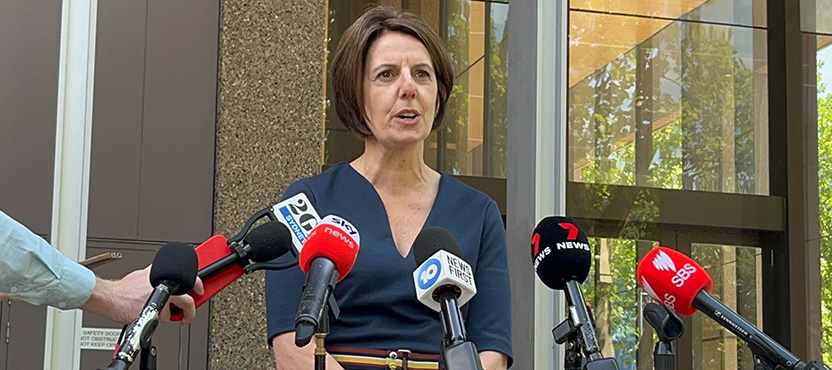
Please note: this transcript has been slightly edited for clarity.
Anna-Maria Arabia:
The Australian Academy of Science welcomes today's decision by the Court of Criminal Appeal to squash the convictions of Kathleen Folbigg. But make no mistake, that without law reform, these sort of miscarriages of justice will continue.
Although, there was evidence in 2019, new scientific evidence, basic scientific principles were not adhered to from the time of trial. There were at least six occasions on which this occurred from 2003. There was no medical or pathological evidence for the smothering of Kathleen Folbigg's children. Yet she was convicted of smothering them.
Circumstantial evidence was given more weight than scientific evidence. There was pathological and medical evidence that explained the death of the children at the time of the trial.
No trauma, journalling, or grief experts were brought before any legal proceedings until 2022.
The International Calmodulin Registry was inappropriately and wrongly interpreted, and that evidence was admitted into the inquiry in 2019. There is ample evidence that scientific principles have not been upheld in this case since her trial in 2003.
We must absolutely use this occasion in Australia to bring about law reform. Firstly, there is no jurisdiction in Australia that has a reliability standard. You and I and our liberty rely on reliable evidence being admitted into courts of law. There is no way to check that in Australia at the moment. That is a first form of law reform.
A Criminal Case Review Commission or some sort of independent post-appeal mechanism must be introduced in Australia so miscarriages of this kind do not happen again.
And finally, the Australian Academy of Science acted as an independent scientific adviser to this case. That was rare, unique ... but it ought not to be.
We must find mechanisms to enable independent experts from the right disciplines, wherever they reside, to be brought before our courts so that they can be cross-examined by all parties.
Without law reform, we will continue to see miscarriages of justice across our country and across the globe. Thank you.
Journalist:
[paraphrased] What more would you like to see specifically from the New South Wales justice system?
Anna-Maria Arabia:
The New South Wales justice system, the New South Wales Government, must absolutely, as a matter of urgency, look at their current justice system and ask whether it is delivering justice to the people of New South Wales. I would go further and say that every jurisdiction in Australia needs to ask the same question.
There is significant law reform that needs to happen in Australia if we are to create a more science-sensitive legal system. It does not exist at the moment, unreliable evidence is routinely admitted into courts. And there is no post-review appeals mechanism to deal with mistakes when they are made.
Is New South Wales behind other jurisdictions on this, or are they all behind?
All jurisdictions need to look at the legal system but here in New South Wales, we've just seen the quashing of the convictions of Kathleen Folbigg after 20 years in jail.
If a case of this magnitude does not trigger law reform, I'm not sure what does. It is time for Australia to review its legal system to ensure it can be more scientifically informed, particularly given the pace of change of scientific discovery and technological advances.
Thank you.
More information
Read the Academy's media release on the decision by the NSW Court of Criminal Appeal to quash Kathleen Folbigg’s convictions.
Australia must seize nuclear science opportunities to meet challenges on the horizon
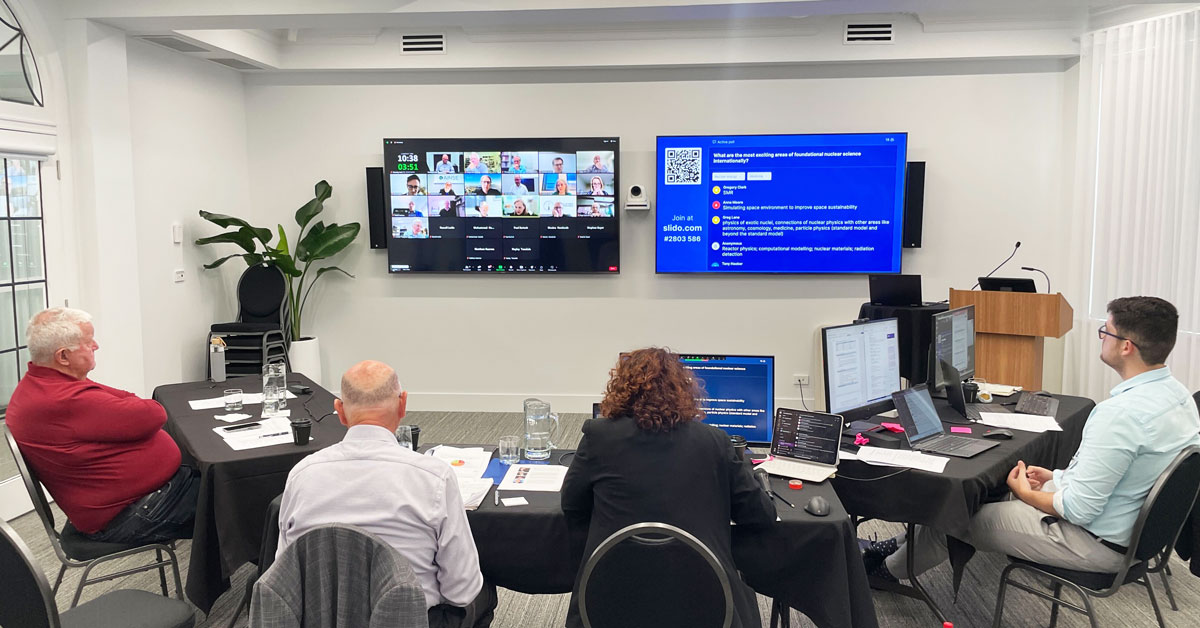
Maintain the health of Australians through medical research and its translation into care. Defend Australia. Meet our space ambitions. None of this can be achieved without increasing Australian nuclear science capabilities.
That is the conclusion reached by experts at a national nuclear science roundtable hosted recently by the Australian Academy of Science.
The roundtable determined that Australia’s nuclear science sector needs a national strategy that leads to new knowledge and infrastructure and equips Australians for jobs in this expanding sector.
The online forum brought together multidisciplinary experts from fields including nuclear physics, nuclear medicine, radiation science, space, nuclear waste management, environmental science, and nuclear regulation and diplomacy.
The roundtable was chaired by Emeritus Professor Lawrence Cram.
“Basic research is key to Australia’s ability to have a successful applied nuclear science sector and to be able to benefit from new technological developments and mitigate sovereign risk,” Emeritus Professor Cram said.
“There is also a critical need for informed debate and respectful deliberation to inform decision-making and improve public understanding of nuclear science and the benefits it can bring to Australia.”
The experts concluded that new technologies and hands-on experiences would inspire students and improve nuclear science literacy in schools. Nuclear science will provide new careers across Australia, requiring additional undergraduate and postgraduate courses.
A survey of experts conducted prior to the roundtable found 74% believed that if Australia’s core nuclear science capabilities were not strengthened, there is a high risk of increased misinformation about nuclear science.
The participants of the national roundtable called for:
- an independent knowledge broker between academia, industry and government to advise on national needs and opportunities that require nuclear science in all its dimensions
- a national strategy that:
- identifies opportunities to grow education pathways in nuclear science, including the potential to expand existing programs
- details the infrastructure required to train nuclear scientists, conduct novel foundational and applied research, and promote multisector collaborations
- outlines a communications plan to help the Australian public to engage with nuclear science.
The Academy’s President, Professor Chennupati Jagadish said the AUKUS agreement has increased awareness of critical gaps in Australia’s fundamental and applied nuclear science capabilities.
“A scaling up of nuclear science capabilities is needed to transform our ageing nuclear science infrastructure and to plug the current deficits in our knowledge and skills so that we can meet our national ambitions,” Professor Jagadish said.
The Academy will publish a summary of the roundtable in 2024.
Roundtable participants
Roundtable Chair: Emeritus Professor Lawrence Cram, Visiting Fellow, Research School of Physics, Australian National University
Dr Miles Apperley, Group Executive Nuclear Safety, Security, and Stewardship, Australian Nuclear Science and Technology Organisation
Dr Stephen Bayer, Director Safeguards Policy Section, Australian Safeguards and Non-Proliferation Office
Dr Paul Bertsch, Science Leader Environment BU, Commonwealth Scientific and Industrial Research Organisation
Professor Eva Bezak, Centre Director, Centre for Translational Cancer Research, University of South Australia Cancer Research Institute
Dr Greg Clark AC FAA FTSE, The Australian National University
Ms Michelle Durant, Managing Director, Australian Institute of Nuclear Science and Engineering – AINSE Ltd.
Dr Jacinda Ginges, Senior Lecturer, School of Mathematics and Physics, University of Queensland
Associate Professor Susanna Guatelli, School of Physics, University of Wollongong Centre for Medical Radiation Physics
Dr Mohammad Haskali, Chief Radiopharmaceutical Scientist, Peter MacCallum Cancer Centre
Associate Professor Anthony Hooker FARPS, Director, Centre for Radiation Research, Education and Innovation, University of Adelaide
Professor Mihail Ionescu, Leader, Nuclear Fuel Cycle Research, Australian Nuclear Science and Technology Organisation
Professor Matther Kearnes, Deputy Head of School, School of Humanities and Languages, University of New South Wales
Professor Tomas Kron, Director of Physical Science, Peter MacCallum Cancer Centre
Professor Greg Lane, Department of Nuclear Physics and Accelerator Applications, Australian National University
Dr Russell Leslie, Visiting Fellow, Australian National University
Professor Anna Moore, Director, ANU Institute for Space (InSpace)
Dr Thomas Payten, Managing Director, NovaTerra
Distinguished Professor Anatoly Rozenfeld, Director, Centre for Medical Radiation Physics, University of Wollongong
Professor Tim Senden, Director, Research School of Physics, Australian National University
Dr Ed Simpson, Fellow, Department of Nuclear Physics and Accelerator Applications, Australian National University
Professor Nigel Spooner, Prescott Environmental Luminescence Laboratory, University of Adelaide
Dr Kath Smith, Chief Nuclear Officer, Australian Submarine Agency
Dr Ivan Williams, Chief Medical Radiation Scientist & Branch Head, Australian Radiation Protection and Nuclear Safety Agency
Summary of 2023 Symposium: Professors Steven Chown and Frances Separovic
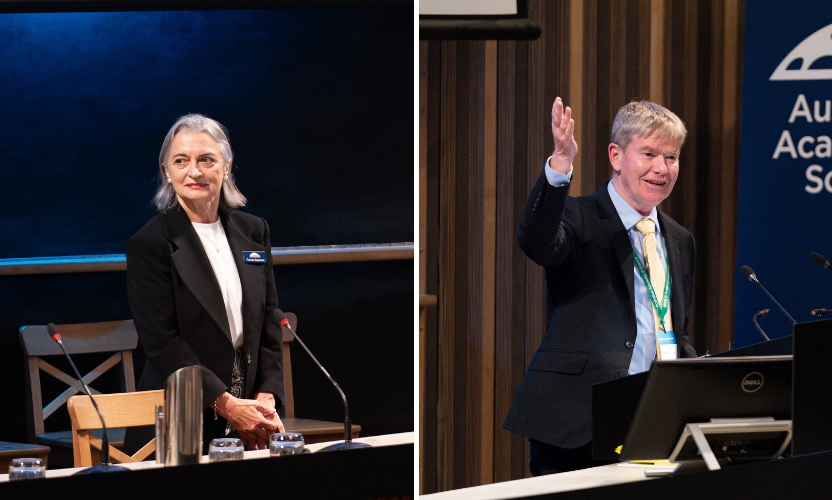
Welcome back, everyone.
We have now come to the end of the 2023 Symposium. Today we have heard from a range of thought leaders from Defence, foreign affairs, our security agencies, the university and research sectors, and industry.
We have examined the complexity and changing nature of the geopolitical landscape and the challenges national security experts, scientists, and researchers alike face in navigating this terrain.
I would like to thank all of our speakers and panelists for sharing your expertise with us today, and for the frank discussions that took place.
I found some of it confronting and some of it encouraging.
There are some principles I think we could all agree on:
- when risks are managed, we can achieve greater outcomes through international collaboration while maintaining security needs. Responses need to be proportional to risk, and grounded in evidence rather than fear
- science is a critical diplomatic asset and a lever to deter conflict. The scientific community can provide a window of communication to other nations that political leaders can use
- Australia plays an important role in international science diplomacy and working with key partners such as the US, UK, Europe and China. The Academy will play a key role in regional diplomacy through our hosting of the International Science Council Regional Focal Point for the Asia-Pacific
- international collaboration is the norm in Australia and central to our scientific research capability—and is underpinned by academic freedom. It is in our sovereign interest to remain a part of international scientific collaboration; it gives us access to breakthrough innovations, ensures we don’t fall behind or be caught unprepared and allows us to leverage global expertise and infrastructure to advance Australia’s national interests
- scientists have a responsibility to be security aware and do their due diligence, managing research administration burdens which we anticipate will increase in the coming years
- governments have a responsibility to consider unintended consequences and to measure the impact of security measures of the research ecosystem. Government has a responsibility to consider how compliance and regulatory burden are reflected in research funding. Geopolitical interests are shaping international collaborations, and as Sir Peter Mathieson and Diarmuid Cooney-O'Donoghue mentioned, we don’t want researchers to need to ‘self-censor’—it’s not in Australia’s national interest.
With the assistance of the Academy’s policy team, who have been furiously taking notes over the course of the day, I will ask Steven to try to summarise what we have learnt and what will inform the Academy’s next steps.
Keynotes
Our keynotes this morning discussed that, when presented with global challenges and the big challenges of our time, we can only solve them together. Agile international collaboration between scientists is essential, such as was demonstrated in the COVID-19 pandemic.
As scientists, we know that the best solutions come from the sharing of ideas.
The balance between collaboration and national security is delicate, but when managed correctly can lead to strategic and productive partnerships and collaborations.
Assistant Minister for Foreign Affairs the Hon Tim Watts MP spoke to the constrained environment we are operating in, but that there is still so much we can do to benefit Australia, our region, and the world. He also highlighted international partnerships on space, energy, and critical minerals.
Deputy Secretary National Security and Resilience Nathan Smyth emphasised that foreign espionage and interference present an unprecedented threat to Australia.
He spoke on how our best asset to protect our intellectual property and national security is for institutions and researchers, who best understand their research, to exercise due diligence to identify and address risks and what the end use of a technology may end up being in the hands of nefarious actors.
In the Q&A discussion, audience members highlighted the resources needed to help the research sector exercise due diligence, and the problematic ‘zero-sum’ framing of national security discourse (“we got it, they want it, we need to protect it”). In Australia's case, we also need to consider the inverse framing (“we don’t have it, they do have it”).
Deputy Prime Minister the Hon Richard Marles MP, in conversation with Chief Defence Scientist Professor Tanya Munro AC, discussed the Defence strategic review and how state power is now innovation power.
He spoke about how Australia needs a science-centric culture—and that the biggest microeconomic reform challenge we have is infusing our economy with science and technology.
Panel 1
Our first panel discussed the two-way responsibility for engagement between government and scientists. Scientists and their research organisations are required to understand their responsibilities, and government needs to ensure that guidance for engagement is implementable.
They discussed fundamental science to be included in considerations of risk for collaboration, because it is a pool of knowledge from which applications are drawn from.
The panel discussed AUKUS, the proposed Defence Trade Controls Amendment Bill 2023 and what this means for working with other allies outside the trilateral agreement.
There will be benefits from free exchange with the US and UK, however, there are serious concerns in the research community regarding the impacts that proposed legislative reforms to strengthen export controls, including criminal penalties, will have on research collaborations captured in the Defence and Strategic Goods List with countries and foreign nationals outside this partnership—and the very architecture of our research system.
Professor Monro highlighted work her team is doing engaging with the sector to establish ‘carve-outs’ in the regulations—today’s discussions are highly valuable in this context, and the Academy will engage with this to convene those impacted by the legislation and provide science advice to design a workable system of export controls.
Panel 2
Our second panel explored current approaches to the management of national security risks associated with research collaboration in Australia and overseas in the context of increasing geopolitical tension and the emergence of a multipolar research system. Presenters focused on collaborations with China, considering both potential risks and rewards.
This ‘spicy’ session highlighted the real human impact on researchers and risks to research culture from an overly cautious and disproportionate approach. It challenged the evidence base on which security measures have been designed.
As well as exploring the current experiences of managing security risks in Australian universities, lessons from the global experience were highlighted. The importance of a balanced approach to regulation and compliance that protects academic excellence and freedom emerged, as did the importance of engagement and information sharing between government, the national security sector and the research sector.
Panel 3
Our third panel considered whether current constraints on international engagement will impact the ability of science and technology to help solve global challenges.
The panel discussion emphasised that collaboration is central to solving global challenges such as climate change. They are too big and too complex to be solved with a single perspective and no single nation has the full suite of capabilities to realise emerging technologies that could be part of solutions.
Sharing their experience in international science collaboration, panellists recognised that collaboration comes with risk, but that this must be balanced with the risks posed by global challenges.
They reflected on how we can re-think and reshape international and local collaboration in more inclusive ways, as well as opportunities to learn from the way we have worked in the past.
For example, the negotiation of the Antarctic Treaty in the lead-up to 1959 was about demilitarisation and the prohibition of nuclear proliferation.
This is an example of science collaborating despite the deterioration of politics regarding dual use technologies and goods.
Summary
The big question we sought to answer today was: “have we got the balance right between national security and research openness?”
I don’t think we have an answer, other than we need to get the balance right—and we will need to continue to try to get it right as geopolitics changes and science and technology evolves.
We did reach some points of agreement:
- science and scientific collaboration is vital. Australians are terrific collaborators, and long may this continue. From the discussions today, we seem to be on the same page about this—but we need to weigh the benefits against the risks, and we need to consider focusing collaborations with those nations that share our values
- the world order of science is changing, and this has implications for how scientists assess the risks—both positive and negative—of collaborative activities
- this implies a degree of cultural change needed—both by government in its habits of engagement with the scientific community, but also by scientists to understand the changed geopolitical environment and the perspective of the national security community
- it is essential that government, the national security community and the research community work side by side and forge an open dialogue on risks and are clear-eyed on the issues this presents for research
- it would be helpful to establish a more systematic architecture and taxonomy for Australia’s equivalent of FFRDCs and UARCs and understand how they can be further developed to support Australia’s research endeavour.
There are serious discussions that started today around new legislation that is coming around Defence export controls to understand the actual target of regulatory action, and the implications of this on the architecture and conduct of research in this country and beyond.
This will affect research and researchers, and we need to be transparent and aware of the realities of how this will play out and how to encourage compliance and minimise unintended consequences.
These discussions and dialogue will need to continue.
We look forward to sharing the detailed proceedings with you all in the coming months, which will inform useful discussions that can progress the sharing of knowledge between scientists and government to ensure we support vital international scientific collaboration while protecting both our scientists and their intellectual property, and our nation.
It has been a pleasure to co-convene and host this symposium.
Thank you all once again and I will now hand over to Professor Chennupati Jagadish for his final remarks.

History made as Pacific scholars vote to establish Pacific academy
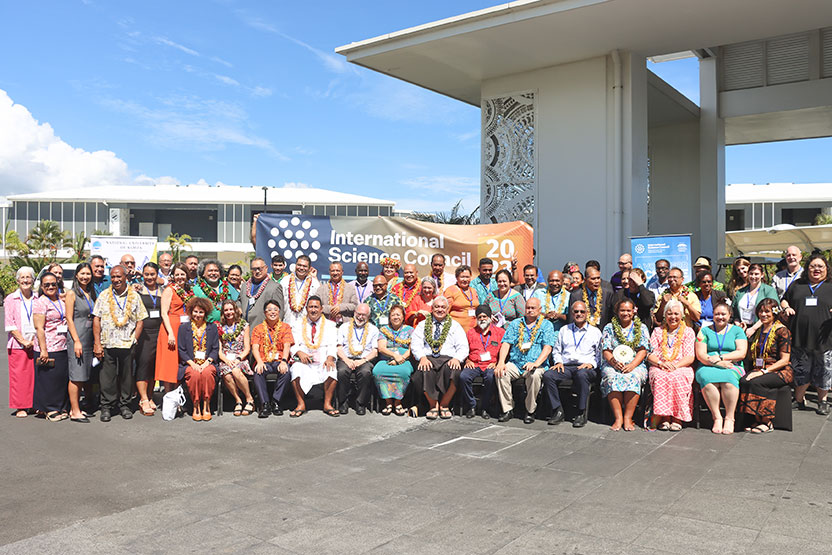
In a truly historic day, more than 60 Pacific scholars from across the Pacific Island nations overwhelmingly agreed to establish a Pacific academy of sciences and humanities at a gathering in Apia, Samoa on 24 and 25 October.
The establishment of a Pacific academy received the endorsement of the Prime Minister of Samoa, Fiamē Naomi Mataʻafa.
At present, there is no mechanism for Pacific scholars to convene and bring together their knowledge so it can inform regional and international decision-making, despite the region experiencing profound impacts arising from a changing climate. More often than not, decisions are made by others about them, not with them, even though local scientists and indigenous communities possess unique knowledge about their respective regions and inhabitants.
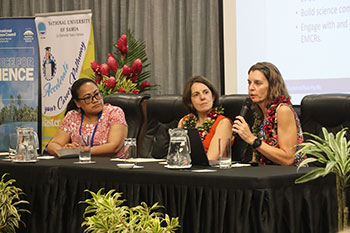
Left to right: Salote Austin, Oceania Manager, ISC Regional Focal Point for Asia and the Pacific; Anna-Maria Arabia, Chief Executive, Australian Academy of Science; and Petra Lundgren, Director, ISC Regional Focal Point for Asia and the Pacific.
The meeting was attended by Academy Foreign Secretary Professor Frances Separovic AO FAA; Academy Chief Executive, Anna-Maria Arabia; Dr Petra Lundgren, Director, ISC Regional Focal Point for Asia and the Pacific; and Salote Austin, Oceania Manager, ISC Regional Focal Point for Asia and the Pacific. They heard directly from Pacific scholars on their needs and challenges and learnt about the criticality of respecting and incorporating the ‘Pacific Way’ and indigenous knowledge into decision-making.
Ms Arabia shared the experiences of the Australian Academy of Science, alongside representatives from the African Academy of Sciences, the Royal Society Te Apārangi (NZ), and the US National Academies.
Ms Arabia said, “A Pacific academy, designed by Pacific scholars, will provide a systematic and permanent mechanism to bring together the region’s expertise, and empower local experts to be part of solutions in their region and unite as a voice for science.”
Meeting participants agreed to set up an establishment group to take the next steps in designing an academy that represents Pacific scholars and their knowledge.
The landmark meeting was facilitated by the International Science Council (ISC) and its regional office, the ISC Regional Focal Point for Asia and the Pacific, which is led by the Australian Academy of Science.
The meeting was hosted by National University of Samoa, with funding support from the Sasakawa Peace Foundation and the Richard Lounsberry Foundation.
‘Masterful and thorough research’ by Academy Fellow led to Kathleen Folbigg pardon
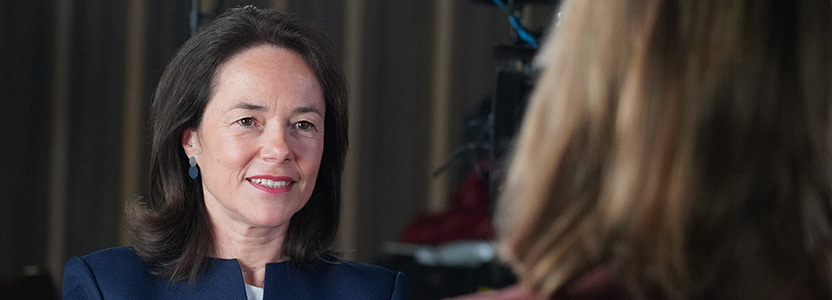
The role of science in overturning one of Australia’s biggest miscarriages of justice has featured in a national TV documentary broadcast to more than half a million Australians.
The exclusive Channel Seven Spotlight program featured the breakthrough research of Academy Fellow Professor Carola Vinuesa FAA FRS, who is now based at the Francis Crick Institute in the United Kingdom.
Her discoveries with 26 co-authors, published in leading international medical journal Europace in 2021, led to the establishment of a second Inquiry into the convictions of Ms Kathleen Folbigg.
That Inquiry found reasonable doubt regarding the convictions, which saw Ms Folbigg unconditionally pardoned in June this year.
The Spotlight program was Ms Folbigg’s first interview since her release from jail. It detailed her visit to the Shine Dome and the ANU’s John Curtin School of Medical Research in Canberra, where Ms Folbigg met some of the scientists behind the research.
The Spotlight program also published additional interviews online with former Academy President, Professor John Shine and current Academy Chief Executive, Anna-Maria Arabia.
The interviews delved into the science and explored why the Academy backed the petition that called for Ms Folbigg’s pardon.
In his interview with guest host Natalie Barr, Professor Shine said Professor Vinuesa’s work was masterful and thorough.
“She took advantage of the latest sequencing technologies, taking DNA from the deceased children, looking for unknown mutations that might cause cardiac death,” Professor Shine said.
Those mutations were explored in detail at the second Inquiry.
In her interview with Spotlight, Ms Arabia said the case illustrated how science and the justice system can engage more effectively.
“We know this case will lead to reform in the justice system,” Ms Arabia said.
This case has implications for law reform in the following areas:
1. The adoption of a reliability standard as applied to the admissibility of expert opinion
2. Mechanisms for the selection of experts by independent and reliable sources, particularly where complex scientific material is required to inform decision-making
3. Establishment of post appeals review mechanisms, such as a Criminal Cases Review Commission.
— Australian Academy of Science (@Science_Academy) October 16, 2023
Fellow’s ‘extraordinary journey’ leads to PM’s Science Prize
Academy Fellow Professor Michelle Simmons AO FAA FTSE FRS has been awarded the 2023 Prime Minister’s Prize for Science for her world-leading research in quantum electronics.
The award recognises her influential contribution to technology that promises to transform many industries—from cryptography to drug design.
Professor Simmons’ efforts have opened a path into the quantum world, bringing us closer to powerful computers that can solve complex problems in minutes, which would have otherwise taken thousands of years.
"Twenty years ago, the ability to manipulate individual atoms and put them where we want in a device architecture was unimaginable,” Professor Simmons said.
“We can now not only put atoms in place but can connect complete circuitry with atomic precision—a capability that was developed entirely in Australia.”
In the early 2000s, she pioneered the field of atomic electronics with research showing that quantum computers might be possible. She and her team have since made several breakthroughs, creating the world’s first single atom transistor in 2012 and the first quantum processor in silicon in 2022.
“Taken as a whole, this has made for an extraordinary journey, and it is the journey that I am proud of more than any specific result,” Professor Simmons said.
The Scientia Professor at the University of New South Wales is just as proud of her former students and postdocs, and her current team at Silicon Quantum Computing, as she is of any scientific breakthroughs.
“To develop a pioneering technology takes pioneering people,” she said.
“My team mean the world to me.”
A “strong believer in diversity of thought”, Professor Simmons is passionate about encouraging young people—especially young women and girls—to pursue careers in physics and computing.
“I hope that I can inspire others to take on technologically challenging problems as I honestly believe this is where some of the greatest rewards lie.
“Being a scientist requires enormous perseverance and hard work, but it’s a team game and it is exciting and meaningful work.
“That means, most importantly, it can be a heck of a lot of fun.”
Professor Simmons’ trailblazing research has earned many accolades, including Australian of the Year in 2018 and Officer of Order of Australia in 2019. She was elected to the Academy in 2006—at the time, one of the youngest researchers elected to the Fellowship.
Academy Fellows have featured in the Prime Minister’s Science Prizes each year since the awards’ inception in 2000.
Recipients of the Prime Minister’s Prizes for Science will be celebrated at a breakfast at the Shine Dome on Tuesday, 17 October.
For the complete list of 2023 PM Prize winners, visit the Department of Industry, Science and Resources website.