




Fellows celebrated in King’s Birthday Honours

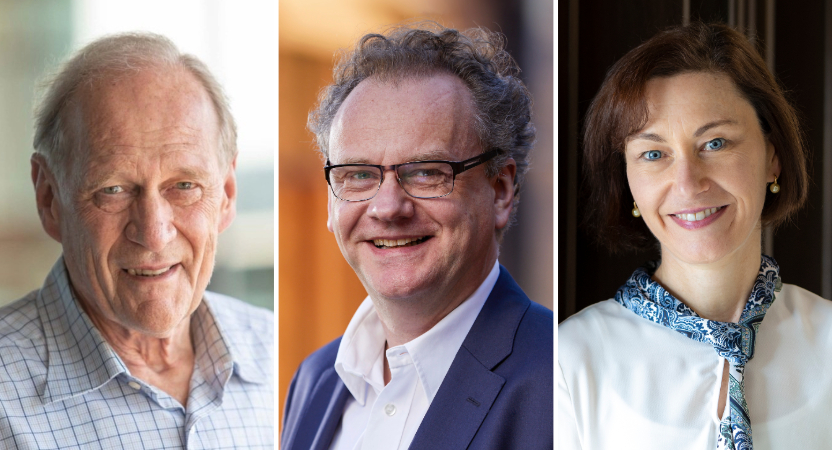
Three Academy Fellows have been recognised for their outstanding contributions to science, innovation and mentorship by being named on the 2024 King’s Birthday Honours List.
Professor John Furness AO FAA FAHMS
Professor Furness receives his AO “for distinguished service to medical research in the field of autonomic neuroscience and neurogastroenterology”.
Elected to the Academy in 1989, Professor Furness is a leading expert on digestive and autonomic nervous system research and is responsible for identifying the intrinsic sensory neurons of the digestive tract.
He introduced a chemical coding hypothesis which led to the identification of the different neuronal types that control the gastrointestinal tract.
He is currently a research scientist at the Florey Institute of Neuroscience and Mental Health and the Department of Anatomy and Neuroscience at the University of Melbourne, where he has been since 1990.
Professor Thomas Maschmeyer AO FAA FTSE
Professor Maschmeyer receives his AO “for distinguished service to science as a researcher, innovator and educator, and business through pioneering commercial technologies”.
Professor Maschmeyer was awarded the Prime Minister’s Prize for Innovation (2020) for translating his fundamental research into two pioneering technologies that address urgent global challenges, including climate change and resource limitations.
He invented a new, efficient way to convert renewable and plastic waste inputs into their constituent chemical materials for reuse, contributing to overcoming the challenge of waste recycling.
Professor Maschmeyer has also reimagined zinc-bromide chemistry to develop a completely new solar energy battery technology, making renewable energy safer and cheaper.
Elected to the Academy in 2011, Professor Maschmeyer cofounded two companies (Licella and Gelion) that continue to develop these technologies, which are now used globally.
He was the recipient of the Academy’s David Craig Medal (2021) and Le Fevre Memorial Prize (2007).
Professor Kate Smith-Miles AO FAA
Professor Smith-Miles receives her AO “for distinguished service to tertiary education, to applied mathematical research, and as a role model and advocate for women in STEM”.
Pro Vice-Chancellor (Research Capability) of the University of Melbourne, Professor Smith-Miles is known for developing the mathematical methodology for stress-testing algorithms, providing a much-needed solution to the long-standing problem of algorithmic trust.
Elected to the Academy in 2022, Professor Smith-Miles has also developed the Instance Space Analysis tool for researchers to explore the strengths and weaknesses of their own algorithms.
She is also actively involved in mentoring and is an advocate for encouraging women to participate in mathematics, having been Chair of the Advisory Board for the Australian Mathematical Sciences Institute (AMSI) Choose Maths program from 2016 to 2021.
New opportunities for researchers via Australia’s renewed Belmont Forum membership
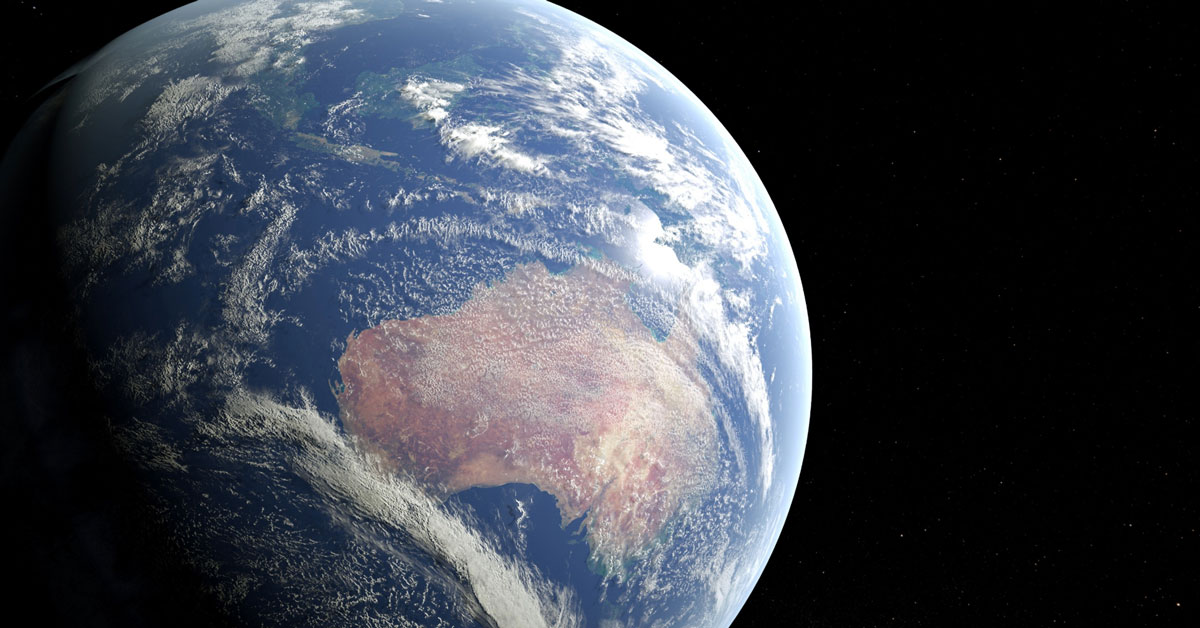
Future Earth Australia has been announced as Australia’s new representative on the Belmont Forum, an international body dedicated to funding environmental and sustainability collaborations.
Future Earth Australia co-chair Dr Jemma Purandare said the group’s membership of the Belmont Forum is a long-awaited strategic partnership that will see both organisations work collaboratively to drive progress in sustainability.
“This is an exciting new chapter for Future Earth Australia, and we are excited to be able to bring our members and partners along with us,” Dr Purandare said.
“It also opens the door to new funding opportunities for Australian researchers.”
As a member of the Belmont Forum, Australian researchers gain access to a dynamic international network, fostering transdisciplinary partnerships and amplifying the impact of their work.
The Belmont Forum was established in 2009 as a partnership of funding organisations, international science councils and regional consortia.
Global networks
The Forum uses its global networks to mobilise the funding of transdisciplinary research and accelerate its delivery to remove critical barriers to sustainability.
It has supported the commitment of A$382 million across 177 projects, averaging $13 million per collaborative research action call and $1.26 million per funded project.
Dr Nicole Arbour, the Executive Director of the Belmont Forum, welcomed Future Earth Australia’s membership of the Forum.
“Future Earth Australia will be taking on the responsibility from CSIRO, which has represented the invaluable perspectives and expertise of Australian researchers since the forum’s inception,” Dr Arbour said.
“This relationship transition will enrich our joint efforts towards addressing global environmental challenges.
“We are pleased to be working with Future Earth Australia and the Australian Academy of Science towards the delivery of the Belmont Forum Challenge, so that we can safeguard our planet for generations to come.”
The Belmont Challenge is a funders’ vision for the guiding mission of the Belmont Forum—focused on international transdisciplinary research that provides knowledge for understanding, mitigating and adapting to global environmental change.
About Future Earth Australia
Future Earth Australia is a national platform that connects researchers, governments, industry and society to support sustainability transitions, hosted by the Australian Academy of Science.
Future Earth Australia is currently accepting new members.
Eminent scientists join Academy as Corresponding Members
Professor H Vincent Poor and Professor Eric Warrant join the likes of Sir David Attenborough, Nobel Laureates Professor Elizabeth Blackburn and Sir Fraser Stoddard as Corresponding Members of the Australian Academy of Science in 2024.
Professor H Vincent Poor FAA (United States)
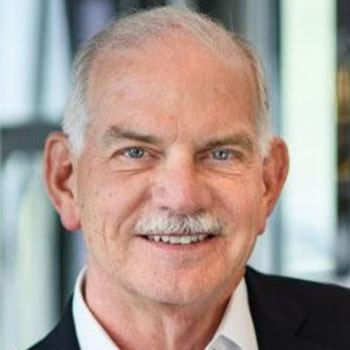
Professor H Vincent Poor
Professor H Vincent Poor has been recognised for his pioneering research in communication theory, signal processing, and wireless networks. He is currently the Michael Henry Strater University Professor at Princeton, where he is working on several projects to improve our understanding of the relationship between machine learning and wireless networks. Of particular interest to him is the use of wireless platforms for machine learning based on data collected at the edges of wireless networks – work that will contribute to the advancement of the next generation of wireless networks by enabling the use of artificial intelligence throughout such networks, which will in turn stimulate many applications accessible to the billions of users of wireless technology.
“I came of age during the 1960s when the US was developing the technologies to take humans to the moon. This was a time when science and technology were very much at the forefront of public consciousness, and this motivated me and many of my peers to pursue engineering,” Professor Poor said of his motivation to become a scientist.
“I have had rich collaborations with Australian colleagues at many Australian universities and research organisations, spanning almost 40 years. Needless to say, it is a great honor to be recognised for this work,” Professor Poor said of his election to the Academy.
Professor Eric Warrant FAA (Sweden)
Professor Eric Warrant is a Professor of Zoology, Head of the Lund Vision Group, and Head of the Division of Sensory Biology at Lund University. An Australian by birth currently residing in Sweden, Professor Warrant leads an active research group studying vision and visual navigation in nocturnal and deep-sea animals. Through an interdisciplinary approach, Professor Warrant has shed light on the visual strategies employed by nocturnal creatures, from insects to mammals, to thrive in very dim light conditions.
Professor Warrant credits his upbringing in Gosford, north of Sydney, as the first source of inspiration for him to pursue a career in entomology.
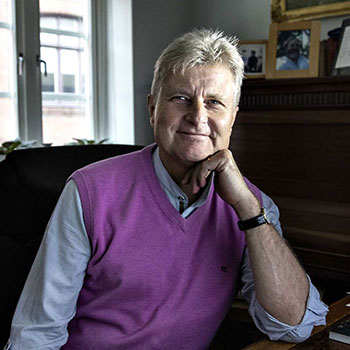
Professor Eric Warrant
“Ours was the home of clouds of screeching rosellas racing through the dense canopy above and of bell birds, whose incessant soft calls mimic the ringing of tiny bells. But above all it was a world of insects, and I became increasingly fascinated by them,” he recalls.
Professor Warrant says his career in science was ever more enriched by the connections he built with colleagues, peers, and mentors.
“Thinking back to those early years it wasn’t clear to me back then just how much my early teachers, supervisors and mentors did to pave my path forward – and to give me those opportunities that invariably change and enrich a life.”
Professor Warrant is Visiting Fellow at the Australian National University and Adjunct Professor at the University of South Australia.
Corresponding Membership is a special category within the Fellowship, comprising eminent international scientists with strong ties to Australia who have made outstanding contributions to science. There are currently 38 Corresponding Members of the Academy.
Academy announces 2024 Fellows
An expert in spider venoms, a leader in plant science, an authority on star formation and an oncologist who has changed the way melanoma is treated are among 24 researchers elected as Fellows of the Australian Academy of Science. See the Academy's new Fellows for 2024.
Academy announces 2024 Fellows for outstanding contributions to science
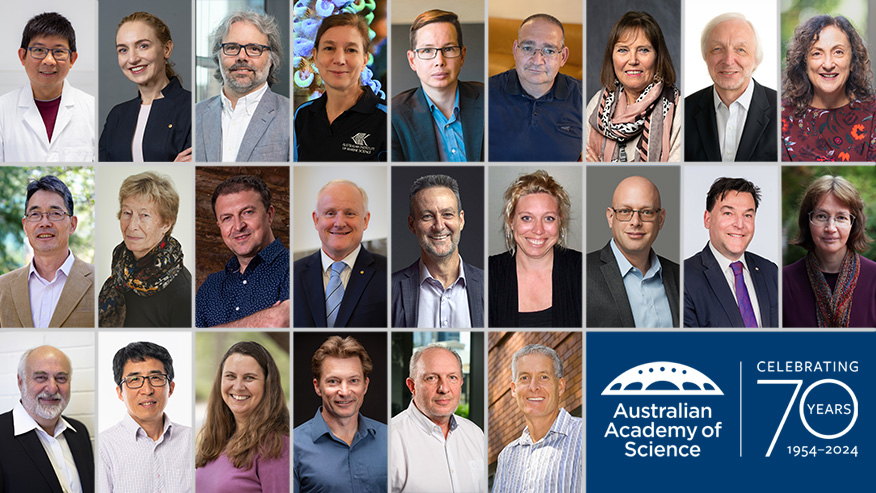
An expert in spider venoms, a leader in plant science, an authority on star formation and an oncologist who has changed the way melanoma is treated are among 24 researchers elected as Fellows of the Australian Academy of Science.
President of the Academy Professor Chennupati Jagadish AC said it is a privilege to welcome new Fellows to the Academy each year.
“Despite my election to the Academy some 19 years ago, I still recall the deep satisfaction of being recognised for my contributions to science, and I know that our 24 Fellows are sure to be feeling the same.
“From the depths of Earth’s oceans to the edges of our galaxy, Fellows nominated to the Academy today represent the ground-breaking research happening in Australia.”
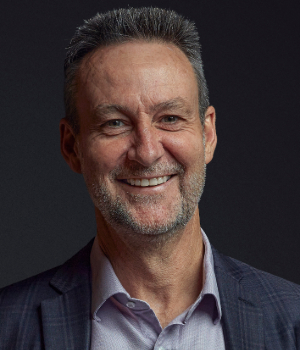
Professor Glenn King FAA. Photo: supplied.
Newly elected Fellow Professor Glenn King from the University of Queensland has found spider venom to be an unlikely ally in his research career, demonstrating use of venom compounds as eco-friendly insecticides that are safe for humans and honeybees.
Now, Professor King is looking to use spider venom as a potential drug to treat ischaemic heart disease and stroke—the leading causes of death globally.
“We discovered a peptide in venom of the K’gari funnel-web spider that prevents brain injury after stroke, reduces cardiac damage after a heart attack, and improves the viability of donor hearts procured for transplantation,” Professor King said.
Also elected this year is Professor Roslyn Gleadow from Monash University, recognised as an international leader in plant science for her research on how plants respond to environmental changes.
“Science has enabled me to make discoveries that help us understand the impact of climate change on food security, gain knowledge, and meet amazing people from around the world,” Professor Gleadow said.
From the depths of Earth’s oceans to the edges of our galaxy, Fellows nominated to the Academy today represent the ground-breaking research happening in Australia.
Professor Mark Krumholz, an astrophysicist from the Australian National University, said that from the time he was a child being a physicist always seemed like the next best thing to being a wizard.
Now, he has been elected to the Academy for his research on the way diffuse gas in our universe collects to form stars and galaxies—which may seem like magic but, according to Professor Krumholz, can be explained by mathematics.
“As soon I grasped the basic concept of using maths to represent reality, I knew I was going to be a scientist,” Professor Krumholz said.
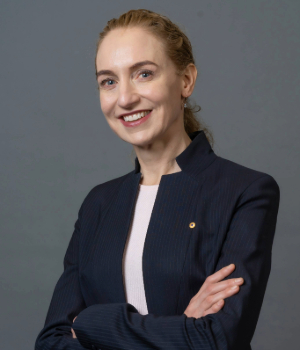
Professor Georgina Long AO FAA FAHMS. Photo: supplied.
Professor King, Professor Gleadow and Professor Krumholz are elected alongside Professor Georgina Long AO (University of Sydney), 2024 Australian of the Year, whose clinical trials into complex skin cancers with a particular focus on melanoma resulted in Australian Government funding for 10 new melanoma drugs.
Professor Long said she looks forward to collaborating with colleagues and being a member of an Academy that makes a difference, not only locally in Australia but also internationally.
“In these times where there is an enormous level of data information, shared across multiple platforms, it is important that we put science and the truth at the centre of our work.”
The 24 Fellows have been elected to the Academy for their outstanding contributions to science across the spectrum of research disciplines.
“Nominated by their peers, Fellows of the Academy are recognised as leaders in their fields, having all made exceptional contributions to science throughout their careers,” Professor Jagadish said.
“The Academy brings the expertise of our Fellows together, to build a nation that embraces scientific knowledge, and benefits from it every day.”
2024 Fellows
The Academy’s new Fellows for 2024 are:
- Professor Nerilie Abram FAA, Climate Scientist, Australian National University
- Professor Andrew Blakers FAA FTSE, Engineer, Australian National University
- Professor Rachelle Buchbinder AO FAA FAHMS, Rheumatologist and Clinical Epidemiologist, Monash University
- Professor Kylie Catchpole FAA FTSE, Engineer, Australian National University
- Professor Louisa Degenhardt AO FAA FASSA FAHMS, Psychologist, University of New South Wales
- Professor Calum Drummond AO FAA FTSE, Molecular Scientist, RMIT University
- Emerita Professor Mary Garson AM FAA, Organic Chemist, University of Queensland
- Professor Arthur Georges FAA, Evolutionary Ecologist, University of Canberra
- Professor Roslyn Gleadow FAA, Plant Biologist, Monash University
- Professor Dmitri Golberg FAA, Physicist, Queensland University of Technology
- Professor Michael Kearney FAA, Ecologist, University of Melbourne
- Professor Matthew Kiernan AM FAA FAHMS, Neuroscientist, Neuroscience Research Australia
- Professor Glenn King FAA, Biochemist, University of Queensland
- Professor Mark Krumholz FAA, Physicist, Australian National University
- Emeritus Professor Zheng-Xiang Li FAA, Geoscientist, Curtin University
- Professor Georgina Long AO FAA FAHMS, Medical Oncologist, University of Sydney
- Professor Shahar Mendelson FAA, Mathematician, Australian National University
- Professor Budiman Minasny FAA, Soil Scientist, University of Sydney
- Professor Jose Polo FAA, Biochemist, University of Adelaide
- Professor Hrvoje Tkalčić FAA, Geophysicist, Australian National University
- Professor Gene Tyson FAA, Microbial Ecologist and Bioinformatician, Queensland University of Technology
- Professor Madeleine van Oppen FAA, Ecological Geneticist, Australian Institute of Marine Science
- Professor Lianzhou Wang FAA, Chemical Engineer, University of Queensland
- Professor Willy Zwaenepoel FAA FTSE, Computer Scientist, University of Sydney
The Academy's new Fellows will be formally admitted to the Academy on 9 September 2024 and present their science on 11 September at Science at the Shine Dome.
More information
Following the 2024 election of our new Fellows, the Fellowship now stands at 616 Fellows.
Celebrating its 70th birthday this year, the Australian Academy of Science was founded in 1954 by Australian Fellows of the Royal Society of London, with the distinguished physicist Sir Mark Oliphant as founding President.
Find out more about criteria for election to the Academy and how to nominate a scientist for Fellowship.
Four Academy Fellows elected to Royal Society
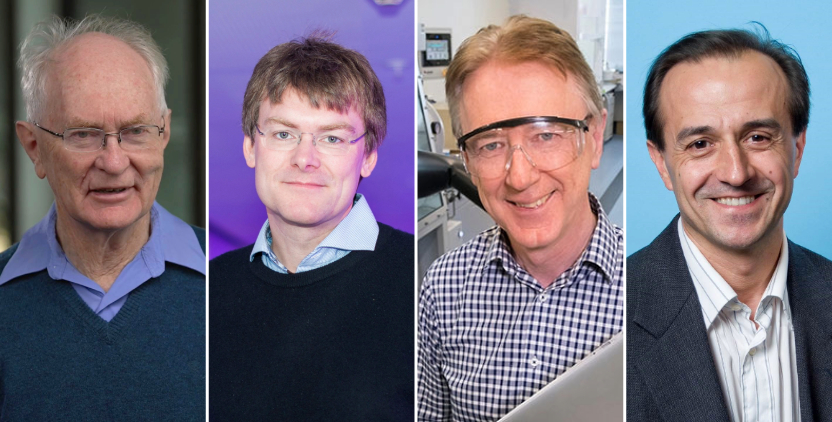
Four Fellows of the Australian Academy of Science are among 90 outstanding scientists to be elected to the Royal Society today, in recognition of their invaluable contributions to science.
Recognised as leaders in their fields, the Academy Fellows elected to the Royal Society are:
- Professor Richard Hartley FAA FRS, from the Australian National University, elected for his scientific contributions to the field of computer vision and image understanding, which has resulted in a new area of research that led to the publication of hundreds of papers by many authors in the past decade
- Professor David Komander FAA FRS, from the Walter and Eliza Hall Institute of Medical Research (WEHI), elected for his leadership in the field of ubiquitylation, a key molecular pathway derailed in inherited Parkinson’s disease
- Professor Douglas MacFarlane FAA FTSE FRS from Monash University, elected for making extensive contributions to the field of materials chemistry, in particular the preparation and physical properties of new ionic materials
- Professor Ivan Marusic FAA FTSE FRS, from the University of Melbourne, elected as an internationally leading figure in the field of fluid mechanics, particularly for his discovery of ‘superstructures’ and uncovering the key role these large-scale motions play in wall turbulence.
In fields spanning all areas of science and technology – from biochemistry to artificial intelligence – Fellows elected to the Royal Society this year are from around the world including Brazil, China, Japan, Mexico and Singapore.
Founded in the mid-17th century, the Royal Society is a Fellowship of many of the world’s most eminent scientists and is the oldest scientific academy in continuous existence.
Australia’s economy depends on a resilient science system
The pages of our national newspapers are littered with debate about the merits of the Albanese Government’s Future Made in Australia policy. Yet, the one factor that supporters and opponents equally ignore is that no matter your vision for the future, economic power in the 21st century correlates with scientific power.
Only nations with strong, innovative science sectors that seek out new knowledge and understanding, work with industry, and are supported by government can prosper in the hypercompetitive world we live in. The question is - does Australia possess the sovereign scientific capability to support our ambitions?
Does our science and innovation system have the capacity and capability to underpin the energy transition we must make, to enable Australians to develop and adopt rapidly emerging new technologies, to support the health and medical needs of a growing and ageing population? And can it deliver the health and lifestyle advances we have come to expect?
The short answer is, we don’t know.
The Australian Academy of Science is developing a ten-year plan – Australian Science, Australia’s Future: Science 2035 – that will identify critical gaps in our science capability, structures and policies, that if left unaddressed, will limit our national and global ambitions.
The plan will equip governments and industry with the evidence they need to address capability gaps, direct resources strategically, and take a whole-of-system approach so Australia can confidently put its best foot forward.
To date, Australia has prioritised short-term needs over preparing for our nation's changing needs. This means that our science and innovation system more closely resembles a patchwork of bandaids, rather than a finely calibrated system that is interconnected, responsive and resilient to change.
This approach has delivered us Research and Development (R&D) investment across 14 portfolios and approximately 200 programs that operate largely in isolation. And a big slice of the R&D pie –the R&D Tax Incentive – is poorly targeted. Imagine running a business that doesn’t critically examine the effectiveness of an incentive that absorbs 25% ($3.2 billion and growing) of your operating budget.
Any rigorous capability analysis must take a system-wide approach to examine policies, resources and structures across schools, universities, VET, science-based institutions, industry and government. That’s why we are convening stakeholders from a range of disciplines and sectors to evaluate system capability.
If Australia gets this right, a strong science system that engages effectively with industry and government can diversify our economy making it more resistant to shock, add to productivity, provide sovereign capability that generates jobs, and improve our overall well-being.
If you were rapidly falling behind the rest of the world in terms of R&D investment, as Australia is, you would at least want to be investing in activities that deliver best bang for buck.
So, how we spend our $12 billion in annual R&D investment matters, but how and where we grow that investment, so we remain globally competitive, able to meet challenges and grasp new opportunities matters even more.
Australian Science, Australia’s Future: Science 2035 will help governments and others take a more targeted and informed approach.
This article was originally published in Innovation Aus.
How did science and research stack up in the 2024 Federal Budget?
The strategic examination of Australia’s research and development (R&D) system announced in tonight’s Federal Budget is a once-in-a-generation opportunity to power up R&D in Australia that the Australian Academy of Science has been calling for since 2018.
Academy President, Professor Chennupati Jagadish, said science and technology is central to the government’s signature policy – Future Made in Australia.
“Significant investments in net zero industrial transformation, and technologies like quantum, are testament to the opportunities that science can offer the nation,” he said.
“However, needed re-investments in discovery science – the basic feedstock of a Future Made in Australia and the government’s net zero ambitions – are fundamentally missing.
“Addressing this missing component of the Australian Government’s vision for science will be the essential task of the strategic examination of the R&D system.
“Our national investment in science and research – by all governments, industry and universities – continues to decline.
“That is why the Academy strongly welcomes the announcement of a strategic examination of the national R&D system as a necessary step towards the urgent development of a national action plan for science,” Professor Jagadish said.
As outlined in Budget paper no. 1 (p. 201), the science system faces challenges as the Australian Government will need to address funding cliffs such as the expiration of national research infrastructure measures.
Also missing from this budget were any substantial investments in Australia’s sovereign AI capability so that our nation can remain competitive.
Nevertheless, the budget makes several welcome investments in developing science and technology spillovers in quantum, battery technology, renewable energy, green steel and hydrogen – all of which build on investments in discovery research made 10 to 20 years ago.
The imperative to enable the participation of all the available STEM talent is recognised with an investment of $38.2 million over eight years to respond to the Pathways to Diversity in STEM report recommendations.
There are necessary infrastructure investments in science agencies, with funding for Australia’s nuclear medicine enterprise at the Australian Nuclear Science and Technology Organisation (ANSTO), and modernising the dilapidated facilities at the National Measurement Institute.
The budget also makes several key investments in recognition of the value that science brings to the nation, including:
- $1.7b Future Made in Australia Innovation Fund to support innovative green technologies and $1.5b to the Australian Renewable Energy Agency to supercharge investments in renewable energy
- $566.1m to Geoscience Australia to map Australia’s resources and critical minerals
- $523.2m to establish the Battery Breakthrough Initiative
- an additional $290.5m over five years to continue delivery of the Australian Antarctic Program
- $95m for the Square Kilometre Array, reallocated to help address Australia’s obligations to the ongoing construction in Murchinson, WA.
The budget notes the intended establishment of the Australian Tertiary Education Commission, a key recommendation of the Australian Universities Accord Final Report.
Federal Budget 2024–25 science and research snapshot
The Academy has published an interactive data report that provides a snapshot of the Australian Government’s science and research expenditure estimated in the Federal Budget.
Thirty years overdue—R&D strategic examination a once-in-a-generation opportunity for structural reform
The Australian Academy of Science applauds the Australian Government’s commitment to a strategic examination of Australia’s research and development (R&D) system announced in the Federal Budget tonight.
Academy President, Professor Chennupati Jagadish, said the strategic examination is a welcome acknowledgement by the government that a stronger, more resilient nation cannot be built with a stagnant, siloed and atomised R&D system based on decades-old settings way past their use-by date.
“The Academy has been arguing the case for this long-overdue whole-of-sector analysis since 2018,” Professor Jagadish said.
“It is a necessary precursor to the creation of a strategic roadmap that can direct R&D in Australia and reverse the 14-year decline in investment that has left Australia well below the OECD average, uncompetitive and ill-equipped to meet our national ambitions.
Investment in Australia’s science and research system is currently spread over 227 programs and 15 federal portfolios, with multiple ministers and departments having key responsibilities.
“A strategic examination of Australia’s R&D system is the first step to align national effort across the whole of government, industry, universities and philanthropy to create an environment where investment is effective, strategic and scaled."
“The examination is cross-portfolio and cross-sectoral and is a once-in-a-generation opportunity to create the necessary conditions for science and research to maximise its contribution to our national prosperity.
“The Academy looks forward to working closely with the government as it undertakes this important strategic examination,” Professor Jagadish said.
The Academy earlier this month announced it is developing a 10-year plan to explore ways to ensure that Australia has the necessary scientific capability to meet an unpredictable future and consider how science needs to evolve to advance Australian interests locally and globally.
“The Academy’s 10-year plan, to be published later this year, will be a complementary and independent input into the strategic examination announced in the Budget,” Professor Jagadish said.
Federal Budget 2024–25 science and research snapshot
The Academy has published an interactive data report that provides a snapshot of the Australian Government’s science and research expenditure estimated in the Federal Budget. You can read about how science and research featured in the Federal Budget here.
Geosciences, Australian minerals and Australian prosperity
The Australian Academy of Science welcomes the Australian Government’s renewed investment in Geoscience Australia (GA).
This investment will help drive our nation’s critical minerals industry through large-scale mapping and exploration.
Such a comprehensive exploration of Australia’s mineral wealth, surface and sub-surface, will require new scientific knowledge, data analysing capacity, tools and skills, however.
The Chair of the Academy’s National Committee for Earth Sciences, Professor Ian Jackson, said the renewed funding of GA for precompetitive exploration represents a strong focus on identifying the extent and nature of Australia’s critical minerals and other vital resources like groundwater.
“But this must be supported by investments in building a stronger workforce.
“Existing gaps must be reversed if we are to extract full value from the opportunities we have,” he said.
For Australia to remain a significant player in the global resources industry, including in the critical minerals that drive the 21st-century economy, more resources must be provided for science and technology infrastructure, scientific research in the geosciences and training of geoscientists with sophisticated data management skills.
The UNCOVER initiative, led by the Australian Academy of Science, has provided the vision and accompanying framework for the necessary transformation of exploration geoscience.
A detailed UNCOVER roadmap, funded through Amira Global (formerly known as the Australian Mineral Industry Research Association), provides a comprehensive plan for the step-change needed to modernise the technologies to understand our land, revolutionise our understanding of subsurface geology and map our hidden mineral systems.
Australian scientists back new health and medical funding reforms
The Academy welcomes the package of health and medical research initiatives announced today by the Australian Government, including the powerful Medical Research Future Fund (MRFF) research missions that will be delivered through the National Health and Medical Research Council (NHMRC).
Academy President, Professor Chennupati Jagadish, said the package recognises the power of science, expertise and evidence to drive medical research, drug discovery, health care technology, and the best medical care for Australians.
“The review announced by Minister Butler last year to improve alignment and coordination between the MRFF and NHMRC’s Medical Research Endowment Account provided an opportunity to look at the ways in which the governance of two important schemes could be improved.
“The Academy supports the government’s commitment to making sure public funding of research is coordinated and well governed,” he said.
The Academy also welcomes the centralising of clinical trials in Australia to create a ‘One Stop Shop’. It will improve the accessibility of life-saving technologies developed from scientific research and reduce regulatory burden.
The Academy supports the continued leadership of Emeritus Professor Ian Chubb AC FAA FTSE as Chair of the Inter-Governmental Policy Reform Group.
Today’s health and medical research announcement acknowledges the urgent need for wider reform of Australia’s research sector.
“Australian research and researchers are not well served by a fragmented research support system with some 190 programs funded through 13 departments and agencies.
“The government’s commitment to a National Health and Medical Research Strategy is welcome but we also need a strategic roadmap for all Australian research,” Professor Jagadish said.