




EMCR events and opportunities

Theo Murphy Initiative (Australia)
The Theo Murphy Initiative (Australia) was established by the Royal Society to further scientific discovery. The fund is administered by the Australian Academy of Science and provides grant funding to support career development opportunities for Australia’s early- and mid-career researchers (EMCRs) in science, technology, engineering, and mathematics (STEM).
Science at the Shine Dome
Science at the Shine Dome is a biannual four-day event held by the Australian Academy of Science. It incorporates the induction of new Fellows, presentation of awards, and multiple opportunities for networking. Importantly, there is a special program for EMCRs and the opportunity to network with Australia’s leading scientists.
Awards and opportunities
See the Academy's page containing a range of opportunities for scientists. There are honorific awards for recognition specifically for EMCRs, as well as research funding and travel opportunities that may be of interest.
EMCR Forum membership registration
Have your say … become a member of the EMCR Forum
In order to have an effective voice, we need to have a strong EMCR Forum membership.
Membership of the Forum is open to early- and mid-career researchers (EMCRs) actively engaged in STEM research, either as a researcher or in a role that substantially supports the delivery of research and that requires substantial research training and experience.
In principle, an EMCR is someone between 0 and 15 years of graduating from a PhD or equivalent (discounting career interruptions) and includes individuals in Australia’s academia, industry, government, public, commercial and not-for-profit sector positions.
The Forum aims to be accessible and inclusive, so there are circumstances where self-identification as an EMCR can be accepted as criteria for what defines an EMCR. The Executive also recognises and is inclusive of alternative career pathways, individuals from underrepresented intersectional communities (as identified by the EMCR forum, Equality Australia, research institutions, government, and funding bodies) who are considering or embarking on a research career and is open to considering membership of researchers without a higher degree but with equivalent professional experience.
Become a member of the Australian Academy of Science Early- and Mid- Career Researcher Forum and help to ensure the future of science in Australia
To become a member, simply fill out the membership form.
Best of all, membership is free!
If you do not self-identify as an EMCR, but are interested in receiving the EMCR Pathways Newsletter and email updates from the EMCR Forum, please choose subscriber on the membership form.
Member benefits
As a member of the Forum, you:
- receive our newsletter as well as our email update and other Academy news and events
- are able to contribute to or promote events in the newsletter and email updates
- can have your say! Members can participate in regular consultations that the EMCR Forum makes to the Australian Government and other organisations in the sector to ensure that we realise the brightest future for EMCRs
- may be eligible for support in hosting local EMCR events.
About the Forum
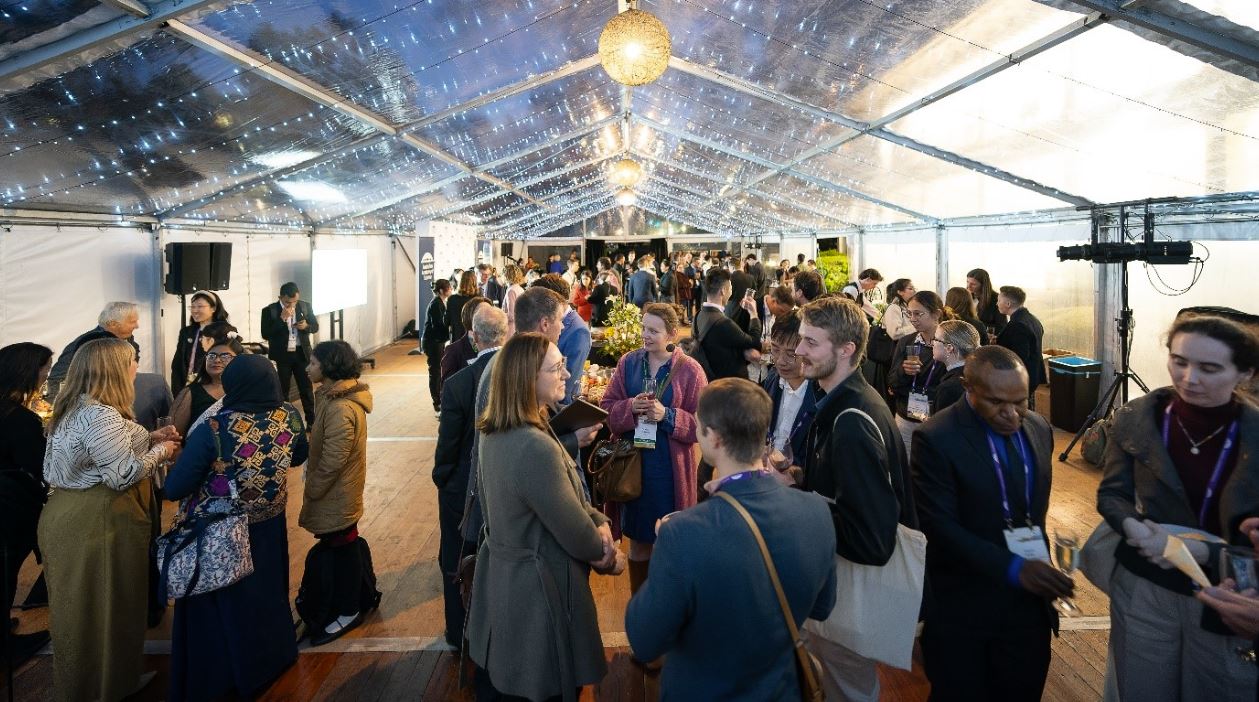
The EMCR networking event at Science at the Shine Dome 2024.
Who are members of the EMCR Forum?
To become a member of the EMCR Forum, sign up on the website. While the Forum Executive Committee advocates for all early- and mid-career researchers, we strongly encourage every EMCR to sign up. It’s a great way to stay informed, get involved and have your voice heard. The larger, more diverse and representative our membership is, the louder and more impactful the Forum and its Executive Committee can be.
Purpose
The Forum provides a mechanism for the Academy to engage with early- and mid-career researchers (EMCRs) from around Australia and to obtain advice on issues relevant to EMCRs. This informs the Academy’s policy recommendations to government and helps it to develop effective EMCR activities. The Forum provides a vital connection between Australia's most eminent scientists and tomorrow's future scientific leaders.
The EMCR Forum's mission is to serve as the voice of Australia's early- and mid-career researchers, championing improvement in the national research environment through advocacy. The focus of the Forum is on sustainable and transparent career structures, gender equity, stable funding policies, career development opportunities, and raising awareness of issues facing the future of science.
Structure
The EMCR Forum Executive Committee is a dedicated group of volunteers who work in close collaboration with the Secretariat of the Australian Academy of Science to amplify the voice of Australia’s EMCRs in STEM. The Executive Committee advocates on behalf of all EMCRs to decision-makers in government and relevant agencies, while also facilitating national initiatives that support the EMCR community. Serving as a direct link between the EMCR Forum and the Academy’s Council, the Executive Committee strives to be as inclusive, diverse and equitable as possible.
History
The Australian Academy of Science recognised the challenges faced by Australia’s emerging researchers and in 2011, established the Early- and Mid-Career Researcher Forum (EMCR Forum). The EMCR Forum’s creation was championed by then Secretary of Science Policy for the Academy, Professor Robert Williamson, and a group of passionate EMCRs. The Forum was established to serve as a unified voice for EMCRs.
The Forum was structured to have an executive of 10 members, with Dr Marguerite Evans-Galea (then at the Murdoch Childrens Research Institute) serving as the Founding Chair. The Forum Executive Committee annually replaces a third of its membership, and has evolved to represent diversity in gender, discipline, sectors and geography. You can find details of past and current Forum Executive members on our Executive Committee members page.
The Forum has actively and successful advocated on behalf of EMCRs, with particular emphasis on diversity and career structures. This has been driven by interacting with decision makers in government and funding agencies, policy and consultation submissions, and best practice guides.
AI in Science

Highlights from the event
- The Artificial Intelligence (AI) in Science conference, hosted by ANU in collaboration with CSIRO, brought together over 75 early- and mid-career researchers (EMCRs) from across Australia to critically examine AI’s role in advancing scientific research.
- The conference explored ethical, social and environmental dimensions of AI, calling on participants to consider AI’s broader societal impact and the responsibility researchers bear in shaping its development.
AI: strengths and risks
Artificial intelligence (AI) approaches are being accelerated into STEM. With the new frontier of capable and productive algorithms, there has been a sharp upward shift in the power, accessibility and public profile of AI.
AI offers enormous potential through the economy of labour and by pushing human limits of logic and creativity. AI has the capacity to facilitate transdisciplinary collaborations through the integration of complimentary research. However, AI may also be misinformative, which can be challenging to recognise and contain. A critical need exists within the emerging national STEM leadership to be able to efficiently access relevant knowledge about AI, to use its strengths and recognise and address the risks, and build connections with experts and peers in AI.
The AI in Science project, delivered as a conference, aims to support Australia’s emerging early and mid-career STEM leaders in embracing the opportunities and challenges of rapid developments in AI. Hosted by The Australian National University, the AI in Science project received grant funding from the Theo Murphy Initiative (Australia) administered by the Australian Academy of Science. The project also received additional sponsorship from Australia’s National Science Agency, CSIRO.
Early- and mid-career researcher (EMCR) rapid fire presentations
As part of this project, EMCRs from around Australia were invited to submit Rapid-Fire Presentations showcasing their research using AI.
Watch these presentations.
Resources for researchers using AI
EMCRs were also invited to run activities that supported Australian researchers to develop practical skills and knowledge to work effectively with large language models (LLMs) and generative AI systems, and to broaden their AI literacy. Explore the curated resources developed through these activities:
These resources highlight key issues surrounding the ethical implications of AI. The report on AI adoption in science provides an overview of how AI is shaping research trends. The article on labour exploitation in the AI industry discusses the ethical concerns of underpaid gig workers who power AI systems. There are valuable insights into ‘AI for social good’, offering a critical view of its impact, and practical advice on prompt engineering for effective LLM use. Another article examines the environmental cost of training large AI models, while another explores how big data in criminal justice challenges established criminal procedures.
- This report gives a comprehensive overview of AI adoption in scientific research, with insights into future trends.
Reference: Hajkowicz, S., Naughtin, C., Sanderson, C., Schleiger, E., Karimi, S., Bratanova, A., & Bednarz, T. (2022). Artificial intelligence for science – Adoption trends and future development pathways. CSIRO Data61, Brisbane, Australia. - This resource highlights the often-overlooked exploitation of gig workers in the AI industry, arguing that addressing labour abuses, such as underpaid and highly surveilled data labellers, content moderators, and delivery drivers, should be central to AI ethics efforts, rather than solely focusing on debiasing data and ensuring transparency.
Reference: Williams, A., Miceli, M., & Gebru, T. (2022, October 13). The exploited labor behind artificial intelligence: Supporting transnational worker organizing should be at the center of the fight for “ethical AI”. Noema. - This article explores the potential of ‘AI for social good’.
Reference: Moorosi, N., Sefala, R., & Luccioni, S. (2023, December). AI for whom? Shedding critical light on AI for social good. In NeurIPS 2023 Computational Sustainability: Promises and Pitfalls from Theory to Deployment. - This guide offers practical, hands-on advice for effectively using LLMs, and is regularly updated.
Reference: Anthropic. (2024). Prompt engineering overview. - This article examines the environmental impact of AI development, focusing on the energy consumption of training large models and the need for more sustainable AI practices.
Reference: Strubell, E., Ganesh, A. and McCallum, A., 2020, April. Energy and policy considerations for modern deep learning research. In Proceedings of the AAAI conference on artificial intelligence (Vol. 34, No. 09, pp. 13693-13696). - This article explores how big data, algorithmic analytics, and machine learning are transforming criminal justice by reshaping how crime is understood and addressed, while simultaneously undermining regulatory safeguards, abolishing case-specific subjectivity, and challenging established criminal procedure rules.
Reference: Završnik, A., 2021. Algorithmic justice: Algorithms and big data in criminal justice settings. European Journal of criminology, 18(5), pp.623-642.
These resources provide valuable insights into understanding and effectively collaborating with AI systems, particularly large language models (LLMs). The first two videos offer foundational knowledge about how LLMs function, including their reliance on transformers and common misconceptions about AI accuracy. Complementing these, several articles emphasise the importance of metacognitive skills in human–AI collaboration, outlining how to critically engage with AI outputs, recognise cognitive biases, and enhance decision-making. Additionally, a guide on teaching AI literacy introduces practical strategies for building foundational knowledge, while a thought-provoking piece explores why AI systems don’t truly ‘understand’ in the human sense.
- This YouTube explains how large language models (LLMs) work, with a focus on transformers, the core concept behind models like Chat GPT.
- Building on #1, this YouTube explains how LLMs store facts and helps to dispel common assumptions about relying on LLMs for accurate information.
- This article outlines a validated three-step process to help users reflect on and improve their thinking processes when interacting with AI systems.
Reference: Sidra, & Mason, C. (2023, October 27). How to strengthen your metacognitive skills to collaborate effectively with AI. The Times Higher Education. - This article explains why metacognitive thinking is crucial when working with generative AI. The article also highlights cognitive biases that are often amplified in human–AI interactions.
Reference: Sidra, S., & Mason, C. (2024). Reconceptualizing AI literacy: The importance of metacognitive thinking in an artificial intelligence (AI)-enabled workforce. 2024 IEEE Conference on Artificial Intelligence (CAI), 1178-1183. doi: 10.1109/CAI59869.2024.00211. - This article reflects on how LLMs do not ‘understand’ in the conventional sense of the word, highlighting the impetus on humans to critically assess AI outputs rather than get caught up in the illusion of AI comprehension.
Reference: Sejnowski, T. J. (2023). Large language models and the reverse Turing test. Neural Computation, 35(3), 309–342. doi: 10.1162/neco_a_01563 - This article offers valuable insights into the core concepts of AI literacy and provides practical guidance on how AI literacy can be effectively taught.
Reference: Van Brummelen, J., Heng, T., & Tabunshchyk, V. (2021). Teaching tech to talk: K-12 conversational artificial intelligence literacy curriculum and development tools. Proceedings of the AAAI Conference on Artificial Intelligence, 35(17), 15655-15663. doi: 10.1609/aaai.v35i17.17844
AI in Science EMCR consortium
As part of the AI in Science Conference on 6 November 2024, an Australian EMCR Consortium for AI in Science was formed. The main aim of the Consortium is to develop a position statement on the implications of AI for scientific research in Australia. The position statement will be made available here upon completion.
Japan Society for the Promotion of Science Alumni Association in Australia (JSPSAAA)
The JSPSAAA will:
- maintain and expand the international network of JSPS Alumni Associations
- promote awareness of the opportunities and benefits of scientific collaboration with Japan
- promote Australia as a priority partner for Japan in scientific research and development
- identify and address issues of common concern between the Japanese and Australian scientific communities
- promote exchange of information between Australian scientists with links to Japan
- provide guidance for prospective and new JSPS Fellows.
Executive Committee members (2022–2024)
Dr Ashraf Ghanem (email)
President and Treasurer
University of Canberra
A/Professor Andrew Moorhouse (email)
Vice-president
NSW Rep
Dr Tamim Darwish (email)
Secretary
ANSTO
A/Professor James Sullivan (email)
ACT Rep
Australian National University
Dr Shokoofeh Shamsi (email)
NSW Rep
Charles Sturt University
Dr Matthew McKenzie (email)
VIC Rep
Deakin University
Dr Steven Phipps (email)
TAS Rep
Ikigai Research
A/Professor Hussein Znad (email)
WA Rep
Curtin University
Dr Graziella Caprarelli (email)
SA Rep
*ordinary members of the Executive Committee also act as regional representatives. Regions are as indicated.
JSPSAAA Annual Symposium 2025
Registration is now open for the JSPSAAA Annual Symposium 2025, to be held on Wednesday 26 November 2025, at UNSW Sydney (Kensington campus).
Attendance is free, but registration is essential to assist with logistics and catering.
FY2026 BRIDGE Fellowship program call for applications
JSPSAAA regular members are encouraged to apply for the JSPS Bridge Fellowship Program. The deadline for applications is 30 January 2026.
In FY2026 the JSPS will award up to three Bridge Fellowships to regular members of the JSPSAAA. The fellowship will support a 14–30 day visit to an eligible Japanese host institution, and will include travel and accommodation expenses, as well as support to the host institute for the activities that will be conducted by the Bridge Fellow.
The purpose of the fellowship is to strengthen existing collaborations and to expand the researcher’s network in Japan, thus opening the path to new and stronger collaborations between Japan and Australia.
Find out general information and guidelines about the Bridge Fellowship Program
Applications should consist of three forms:
- Forms A and B are available at the link above.
- Form C can be downloaded below
Applications should be sent to JSPSAAA@canberra.edu.au
For all questions, please contact ashraf.ghanem@canberra.edu.au
Membership types and how to join
There are two categories of membership:
Regular membership is available to all Australian citizens who are or were recipients of JSPS Fellowships or other grants supported by the JSPS (for example, STA).
Honorary membership may be granted to persons who have made significant contributions to Australia’s academic collaboration with Japan and JSPS activities in the AUSTRALIA. Honorary members must be nominated by a member of the JSPSAAA and approved by the Executive Committee.
If you are eligible and would like to join the JSPSAAA, please click here.
Holding international science union meetings in Australia
A practical guide for beginning the bidding process
In the interest of encouraging and supporting invitations to international unions and other scientific members of the International Science Council (ISC) family to hold congresses, general assemblies and similar meetings, this practical guide has been designed to assist individuals and professional societies begin the process of bidding for these events.
Role of the Australian Academy of Science
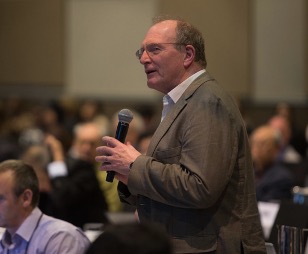
Andrew Holmes AC FAA FRS takes part in the Q&A session at the 31st ICSU General Assembly in Auckland, 2014. Credit: Brendon O'Hagan/International Council for Science
The Australian Academy of Science serves as Australia’s adhering body for the ISC and its affiliated disciplinary unions. The Academy has responsibilities in relation to international meetings; particularly those sponsored by international organisation in which Australian researchers are active participants.
For all types of meetings, the Academy will be involved to some extent. The measure of this involvement will vary depending on the circumstances of each meeting and the responsibilities that will have been agreed upon with respect to the designation of an organising body to handle the necessary fiscal and administrative arrangements, issuance of the invitation, and sponsorship. The Academy’s policy on holding international meetings in Australia provides more information on the role of the Academy in the bidding process.
Incentives and benefits for hosting events

Hobart at Night. Credit: Jarrad Seng
Below is a list of resources of the incentives for hosting ISC union conferences and congresses in Australia.
Guidelines from the Australian adhering body:
- Australian Academy of Science outlines benefits in the introduction of guidelines for Hosting ISC events
Benefits to hosting ISC events:
- Various economic and societal benefits of hosting these events is reported in the Benefits of Australian Membership of the ISC and unions and the Maximising the Benefits from Australia’s formal linkages to global scientific activities
Convention bureaus also offer resources for the benefits and incentives of hosting these events:
The website of the Association of Australian Convention Bureaux offers a comprehensive list of conference bureaux that contain content on the benefits of hosting international conferences.
Organising body and community support
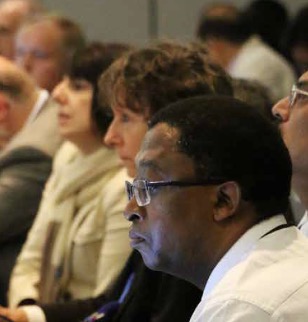
The joint ICSU-ISSC meeting in Taipei, 2017
In Australia, the organisation of international meetings requires the assistance and cooperation of a number of domestic institutions, both private and public. These include the Academy, scientific societies, universities, research institutes and industries, as well as governmental bodies at both the federal and state levels.
This is not a short-term project. Realising the benefits of hosting these events will require a team of enthusiastic and driven individuals. The individuals who take charge in bidding for these events need to be capable of coordinating the engagement of government, industry and specialists in the relative field. The state convention bureaus can help to locate such individuals.
Early communication and continuous consultation by the meeting organisers with the Academy and the relevant National Committee for Science is strongly recommended – preferably twelve months before the meeting at which it is intended to submit the invitation and well before any signals are sent to the ISC body as to the likelihood of an invitation from Australia – so that initiators have a clear understanding of the Academy’s policy and responsibilities that will fall to them. The formal approach to the Academy should be not less than six months before the meeting, so that the Council of the Academy can give full consideration.
Call for applications to host
ISC unions and member bodies hold conferences, congresses, and other events in a cyclical manner. Notification of applications to host are released to the community, generally through officer-bearers and individual union members, and to the Academy and other relevant organisations.
Prior to beginning the process of submitting a bid it is important to assess your applicability to the call. A call for applications will contain selection criteria for the bid.
General criteria to meet for beginning the process of submitting a bid:
- Are they looking to hold an event in the Southern Hemisphere?
Association of Academies and Societies of Sciences in Asia
The Association of Academies and Societies of Sciences in Asia (AASSA) was launched in 2012, as a consequence of the merger of AASA (The Association of Academies of Sciences in Asia) and FASAS (The Federation of Asian Scientific Academies and Societies). The objective of the merger was to establish a single Asian science grouping in order to be more visible and effective in the region, and to tackle the long-term challenges requiring science-based advice. It is a non-profit international organisation with science and technology interests, made up of 34 scientific and technological academies and science societies in Asia and Australasia.
In 2016, the Academy’s Foreign Secretary, Professor Cheryl Praeger FAA, was elected as a Member-at-Large of AASSA’s Executive Board. Professor Praeger was also asked to chair the AASSA Special Committee for Women in Science and Engineering (WISE) which was established in 2017.
Profiles of Women Scientists in Asia
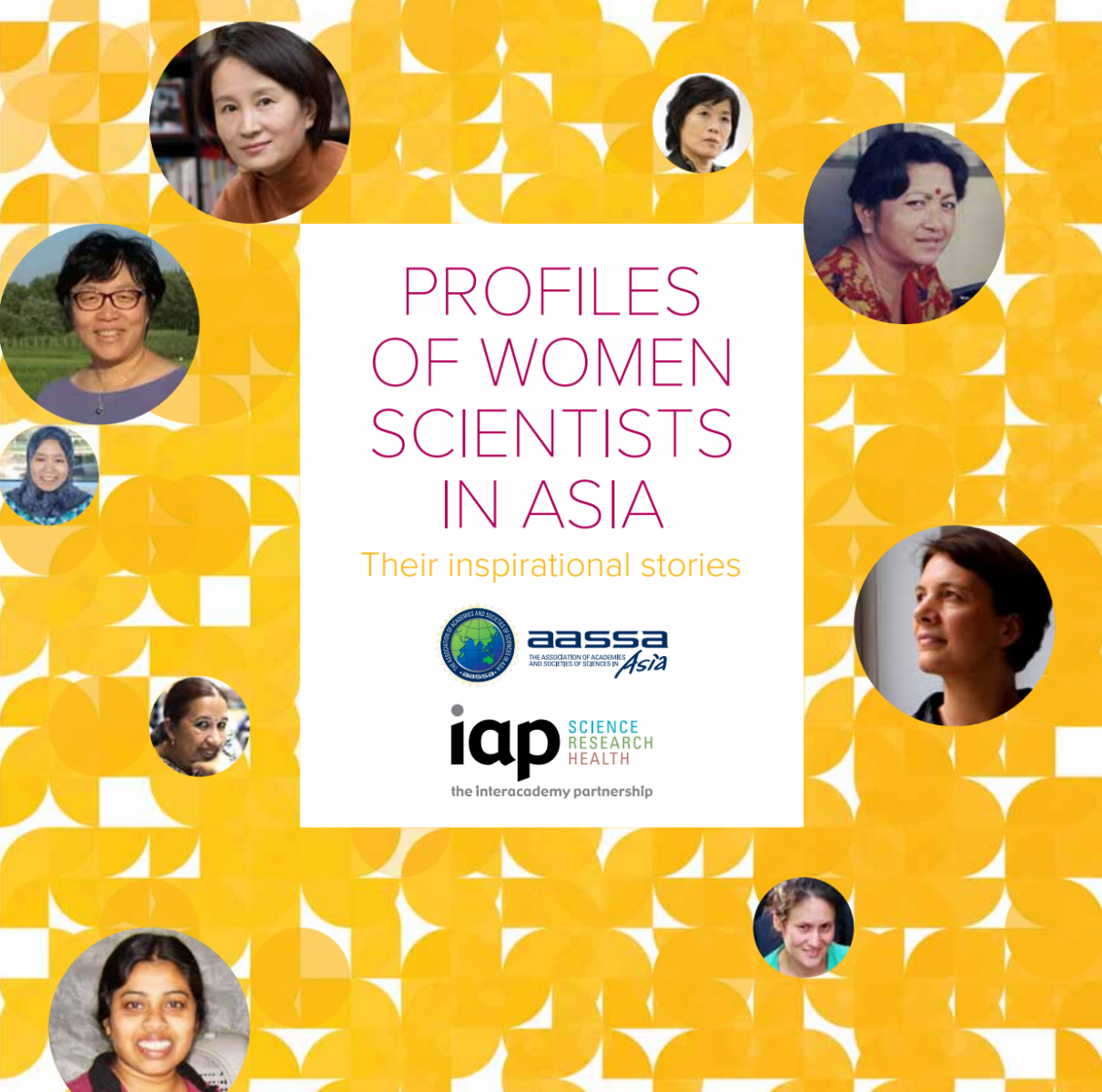
On 29 October 2018 the AASSA Special Committee on WISE launched the report Profiles of Women Scientists in Asia: Their inspirational stories. The report profiles 50 researchers across the AASSA membership countries in a celebration of the dedication, passion and resilience of women in science throughout the region. This project was funded by the InterAcademy Partnership and AASSA and managed by the Australian Academy of Science.
Download Profiles of Women Scientists in Asia: Their inspirational stories (PDF, 6.3MB)
InterAcademy Partnership (IAP)
In particular, IAP harnesses the expertise of the world’s scientific, medical and engineering leaders to advance sound policies, improve public health, promote excellence in science education, and achieve other critical development goals.
IAP’s four regional networks—AASSA, EASAC, IANAS, and NASAC—are responsible for managing and implementing many IAP-funded projects and help make IAP’s work relevant around the world. Find out more about IAP and follow @IAPartnership on Twitter, LinkedIn and YouTube.
IAP has produced statements on issues of fundamental importance to humanity and published reports that provide scientific advice on critical issues that confront society. IAP has also supported projects that focus on building scientific and technological capacity worldwide. The Academy is an active member of IAP and has endorsed or contributed to several statements, reports and projects produced by IAP.
IAP statements endorsed by the Academy
July 2021: IAP Statement on Regenerative Medicine
June 2021: IAP Statement on Protection of Marine Environments
April 2019: A call for action to declare trauma as a disease
July 2018: IAP S20 Statement on Food and Nutrition Security and Agriculture
Read more IAP statements.
IAP reports with Academy’s contribution
May 2019: Improving Scientific Input to Global Policymaking with a Focus on the UN Sustainable Development Goals
November 2018: Opportunities for future research and innovation on food and nutrition security and agriculture: The InterAcademy Partnership's global perspective
Read more IAP reports.
IAP projects with Academy’s contribution
Improving Scientific Input to Global Policymaking: Strategies for Attaining the Sustainable Development Goals – Academy Fellow, Prof Michael Barber FAA, was a member of the working group that produced this report.
Harnessing Science, Engineering, and Medicine to Address Africa’s Challenges – Academy Fellow, Dr TJ Higgins FAA, was a member of the working group that produced this report.
Read more about IAP programs and projects.
IAP news stories
Academy supports IAP communiqué on global green recovery after COVID-19
Academy supports IAP communiqué on COVID-19
Australia's engagement with the International Science Council

Since 1954, the Academy has represented Australian interests at the International Science Council (ISC), formerly the International Council for Science (ICSU), as the Member Organisation for Australia. The Academy meets the responsibilities and obligations that arise from membership to the ISC and its scientific bodies with the assistance of the National Committees for Science. These include coordinating responses and submissions as well as nominations for executive committee positions and appointment of voting delegates to general assemblies.
The International Science Council is a non-government organisation representing both natural and social sciences, with a global membership of 40 international scientific unions and interdisciplinary science bodies as well as over 140 national and regional scientific bodies. These organisations convene scientists within and across natural and social science disciplines to coordinate research and address issues of global significance.
The ISC was formed in July 2018 by the merger of the International Council for Science and the International Social Science Council. The Academy represented Australian science at the historic meeting, with a delegation consisting of the current and immediate past Foreign Secretaries and the directors of International Programs and Future Earth Australia, advised by Professor David Black FAA, Academy Fellow and Secretary-General of ICSU.
The Asia–Pacific region is well-represented at the ISC during its formative years. Among the elected members of the inaugural ISC Board are Professor Sir Peter Gluckman KNZM FRSNZ FMedSci FRS (President-Elect, New Zealand), Professor Jinghai Li (Vice-President, China), Professor Ruth Fincher AM FASSA (Ordinary Member, Australia) and Professor James C. Liao (Ordinary Member, Taiwan).
In addition to membership of the ISC, the Academy is also involved in the ISC Regional Office for Asia and the Pacific (ROAP) which focuses on the development of science throughout Asia and the Pacific and aims to strengthen the voice of scientists from developing countries in the region.
Contact
ISC Liaison Officer
ISC@science.org.au
Benefits of Australian membership of the International Science Council and international scientific unions
These reports summarise the benefits returned to Australia through its membership of global science organisation, the International Science Council, and the Australian Academy of Science’s strategy to enhance these benefits.
The Academy’s previous report, Maximising the Benefits from Australia’s formal linkages to global scientific activities, was published in 2005. The report found that contributing to progress in science, developing excellence in Australian science, and maximising the benefits of science requires that Australia participates fully in this enterprise. The full report may be downloaded here.
Australian membership managed by the Academy
The Academy manages Australia’s membership to 30 international scientific unions and scientific committees of the ISC. These international, non-governmental, scientific organisations work to support the development of international cooperation in their respective fields. The majority of the international scientific unions and committees have great international convening power through General Assemblies, conferences, symposia and other international science events. These activities directly support and facilitate global cooperation in science. Information on Union events held in Australia may be found below.
The Academy's 19 National Committees for Science have a remit to foster a designated branch or theme of natural science in Australia and to serve as links between Australian and overseas scientists in the same field. The committees advise the Academy’s Council on Australia’s representation for the unions and multidisciplinary bodies of the International Science Council and other international bodies.
The Academy's Advisory Committee on International Matters (ACIM) provides advice to the Academy’s Council regarding the ISC, InterAcademy Partnership (IAP), the Associations of Academies and Societies of Sciences in Asia (AASSA) and any other international relations matters of the Academy which are referred to it.
Australian representation on ISC organisations
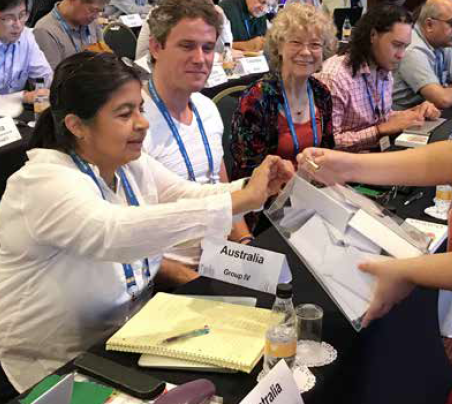
The Australian delegation votes at the International Mathematical Union’s general assembly in Rio de Janeiro, 2018. Credit: International Council for Science
Australia’s global science credibility and influence is enhanced by high-level representation on the executives of ISC organisations. Each ISC organisation has substructures of committees and task groups in which an estimated 370 Australians serve at any given time. This gives Australian scientists extensive opportunities to contribute to international strategic planning and priority setting, and to establish research collaborations with other leaders in their fields.
View the current list of Australians holding positions on the executive boards of ISC organisations.
Australian partner organisations
The Academy has established valuable agreements with professional societies to enable more Australian researchers to have a voice on the international stage. These partners work closely with the relevant National Committees to promote the benefits of the unions to the scientific community. In 2016 these organisations are:
The Academy’s guidelines for scientific meetings set out the policy on holding international meetings in Australia for the information of the relevant scientific communities, convention bureaus and other interested organisations.
International Meetings held in Australia are extremely beneficial to Australian science and society. More information on the benefits of International Scientific Meetings in Australia can be found in the International Science Council benefits report.
Australian Learned Academies Data Interworking Network

Project at a glance
- Led by the Australian Research Data Commons (ARDC), the ‘Australian Learned Academies Data Interworking Network’ project combines the strategic knowledge and experience of the Learned Academies with the national data infrastructure expertise of the ARDC.
- Australia’s five Learned Academies and the Australian Council of Learned Academies (ACOLA) will work together to produce a cross-disciplinary, collaborative report that provides an overview of opportunities to maintain and enhance Australia’s national data infrastructure to support world-leading research.
The Academy of Science will hold a series of discussion workshops with selected Academy Fellows, National Committee members and other experts and stakeholders to inform its contribution to the project.
The findings of the workshops will be used to produce a report that highlights strategic data infrastructure, data policy and skills needs to support excellence in Australian science. An exposure draft of this report will be released in March 2022.
The members of the Academy of Science Steering Committee guiding the project are:
- Professor Jane Elith FAA, Chair
- Professor Ian Chubb AC FAA FTSE
- Professor Andy Pitman AO FAA
- Professor Ginny Barbour
- Dr Lesley Wyborn
- Dr Danny Kingsley
This is a 12-month co-investment project between the ARDC, Australia’s five Learned Academies and ACOLA, concluding in mid-2022.
For more information regarding this project, please contact Lauren Sullivan, Science Policy Analyst, lauren.sullivan@science.org.au.