





Sir Gustav Nossal, immunologist (1998 interview)

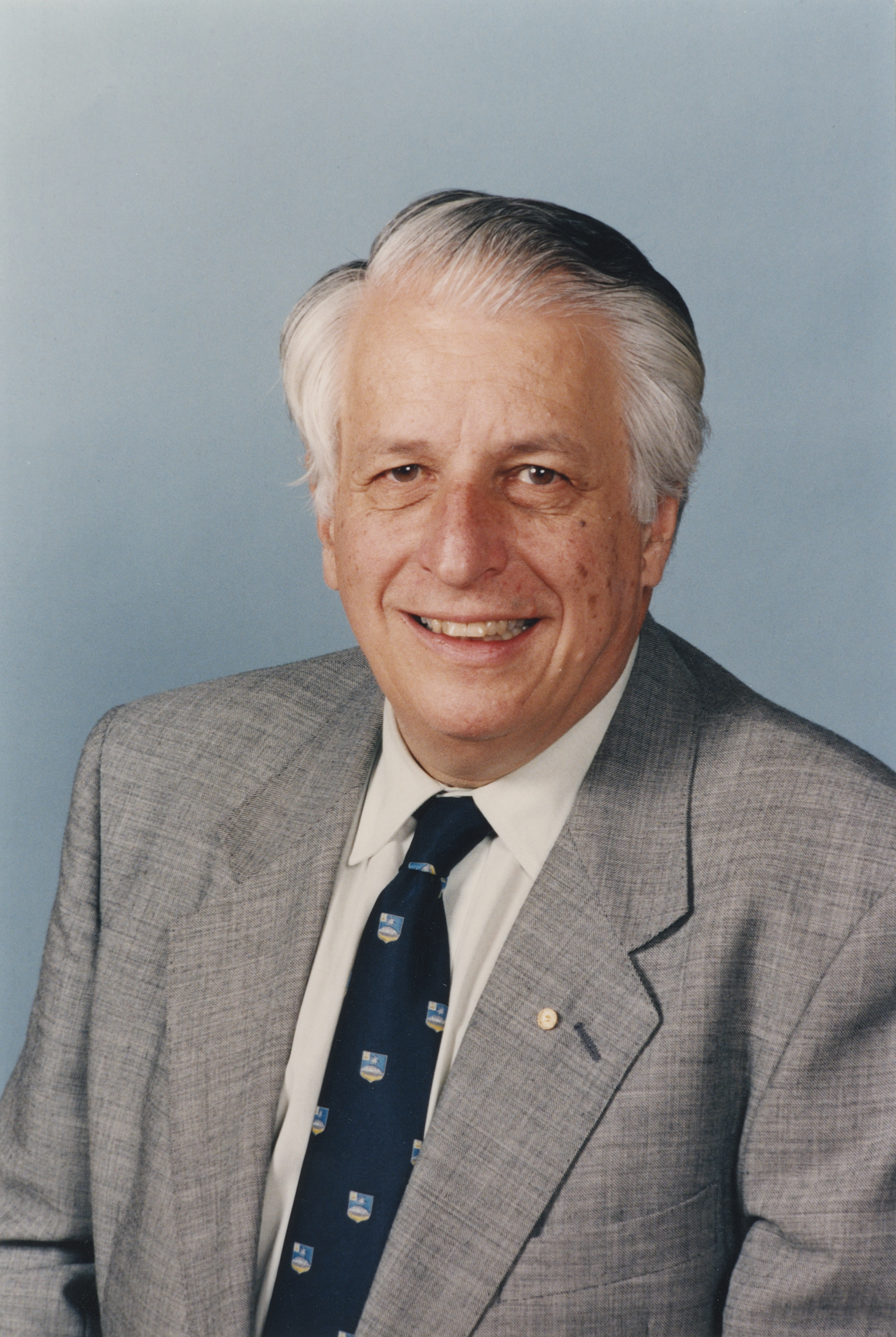
Sir Gustav Nossal
Second interview, 1998
Gustav Nossal studied medicine at the University of Sydney from where he earned a BSc (Med) in 1953 and a B Medicine and Surgery in 1955. After a two-year residency at the Royal Prince Alfred Hospital, in Sydney, he moved to Melbourne to work as a Research Fellow at the Walter and Eliza Hall Institute of Medical Research (the Hall Institute) leading to his PhD from the University of Melbourne in 1960. From 1959 to 1961 he was Assistant Professor of Genetics at Stanford University. In 1968 he spent one year at the Pasteur Institute in Paris and in 1976 he was a Special Consultant to the World Health Organisation. Apart from these exceptions, Nossal's research career has all been at the Hall Institute. During his time there he concurrently served as Professor of Medical Biology at the University of Melbourne. He was Director of the Hall Institute from 1965 to 1996.
Interviewed by Dr Max Blythe in 1998.
An earlier interview with Sir Gustav Nossal was conducted by Dr Max Blythe in 1987.
Contents
- An enduring directorship
- A steep commercial learning curve
- A great welding job
- Advising at the World Health Organization
- Realistic funding for health
- To galvanise the world
- A Pilgrim's Progress away from the bench
- Successive, overlapping preoccupations
- An ambassador for science
- Whither the Australian Academy of Science?
- The funding of science
- An adviser to the Prime Minister
- An ambassador for Aboriginal health
- The Council for Aboriginal Reconciliation
- A lot of plates spinning in the air
- One rough stone, many kinds of faith
- The family atmosphere
An enduring directorship
Gus, 11 years and 24 days ago we met in Melbourne for our first interview.
And of course we're both 11 years younger, aren't we? And particularly, I'm at least five kilograms lighter, aren't I!
At that time, you were Director of the Walter and Eliza Hall Institute – and still had nine years of your directorship to run. How was it that the Institute gave you that massive job when you were still so young?
About Christmas 1961 I came back from the United States, where I had been a post-doctoral fellow and a young assistant professor, and what greeted me was a Hall Institute obsessed with the impending retirement of Macfarlane Burnet. He actually should have gone at the end of 1964 but stayed on, for a variety of reasons, till September 1965. Everyone was saying, 'Of course when Burnet goes, the Hall Institute will shrink. Professor Lovell will take over the clinical research unit and the biochemistry department will go into our first floor, and the fourth floor will be left.' Well, I'd just brought back a big National Institutes of Health grant and Burnet had made me effectively the number three person in the Institute (with the meaningless title of Deputy Director, Immunology). So I said, 'That's nonsense. We have the best medical research institute in Australia. Far from shrinking, we're going to grow.' I suppose I was projecting a positive vision – no Götterdämmerung after Burnet, but a new beginning.
That perception gained currency but to what extent it influenced the board of the Institute after my application went in, I don't know to this day. I do know that I was vain enough to have three Nobel Laureates as referees: Burnet, Peter Medawar and Joshua Lederberg, who'd been my boss in the United States. As to whether they spoke up for me, that is probably buried in the Burnet papers somewhere.
I suspect that this capacity to produce catalytic friendships has had a lot to do with the development of the ambassadorial, leadership/administrative side of your career.
You're right, and I was immensely lucky to be jetted into the big league, a very able peer group, quite early. I can remember, for example, coming to Stanford just after Josh Lederberg had won his Nobel Prize and before Arthur Kornberg won his, and one of the first things that Lederberg, my young boss, did was introduce me to Kornberg. Now, how do you have opportunities like that? I think in general terms people respected the work that I did, and that's been tremendously influential in my life. There is this capacity that Aussies can do it – they can go off overseas and 'fly'. That's been very fertilising for me, and I think I've been able to convey that sense to a lot of my younger colleagues, who indeed have 'flown' in the international arena.
Very early on you were creating an international network for them all, from the time you got the Hall and even a bit before – a critical basis for what was to happen.
Absolutely right.
So what has happened at the Hall Institute since our first interview, 11 years ago?
They say that a chief executive should stay in a job for 10 years, or 15 at the very most. I had 31 years in that institution, and the only way I can justify it is by saying that every five years or so I did try to redefine the role. And in that last period we made some fairly significant developments that I look to as justification. One of them was to become much more savvy about commercialisation. That was born out of travail and some bad mistakes that had been made. The second is conceptually more trivial: we built a beautiful new building and had to work our way into all the growth opportunities that it gave. Thirdly, we became considerably more deeply involved in molecular biology and everything that comes from the cloning revolution.
A steep commercial learning curve
Let's just take in the bad before the good: that period in the mid-1980s of commercial interests that you say weren't exactly the best deal.
The whole country has been on what you might call a learning curve about commercialisation. Turn the clock back to the late 1970s, early 1980s: the word 'patent' did not exist in our lexicon. 'Profit' was rather a dirty word – working for profit was what those nasty companies out there did. We were going to stun the world with our brilliance and make marvellous discoveries, publish them and move on from there.
The realisation gradually dawned that by publishing a discovery with considerable commercial potential you actually delayed its implementation, because no company will put in the immense development funds that are needed without intellectual property protection, without being able to get the financial gain, given that it now costs $350 million to put a new drug onto the market. We had to learn fast there.
The worst aspect was to lose the brilliant invention of Don Metcalf, Nick Nicola, Tony Burgess and their colleagues in relation to the CSFs, and in particular G-CSF, which Malcolm Moore (a student of Metcalf's) actually took to Amgen and which made Amgen a multi-billion dollar company. G-CSF now sells over a billion dollars worth of material a year. That could have been a largely Australian triumph, and it wasn't. I suppose you'd have to say that was my fault and the nation's fault.
Was that really felt? Did it have emotional repercussions?
You know, it's very easy to reconstruct history. I have a distinct recollection of going to several of our companies with two little things in my kitbag: the CSFs (Metcalf's discovery) and the very first beginnings of a malaria vaccine breakthrough, when David Kemp and Robin Anders cloned the various malarial antigens. And I distinctly remember people being much more interested in the latter than the former. People gave us little threads of help. The malaria vaccine kind of flew – it's still not commercial. But the CSFs: 'Interesting, but it's only a mouse phenomenon to date.'
Did losing that patenting really cause problems for a director of the whole Institute?
Well, I think the fact of the matter – I have to be fairly precise here – was that on one of the two agents, the one that sells less well, GM-CSF, we did maintain a good patent position, and we get a modest flow of royalties from that. With the G-CSF, we let our patent position go because we had only studied the mouse molecule and the patent attorneys in the early 1980s told us, 'Well, if you haven't cloned the human gene you're nowhere.' We let the provisional patent go. That was a bad mistake.
But I think scientifically it became so clear that the Metcalf team – which I'm sure he'd be the first to tell you involved about 100 people – so bestrode this field like a Colossus that it really didn't hurt the Hall Institute at all not to get the commercial dollars. Scientifically we learnt to live by our wits, we did the old peer-group-review grant things, and we got more grants every year than the previous year for the whole period of my directorship. So I think the short answer is: Gus's bad mistake, but it didn't hurt him as much as it should have.
Perhaps you were living on a good economy that you had already founded.
Yes, and I think in a funny sort of way the peer group that is in a place like the Hall Institute does quite enjoy living on its wits, with the pain of having to raise those grants, of competing in the basic science marketplace without having perhaps to be too worried about commercialisation – although it is changing quite rapidly.
A great welding job
We have taken in the less palatable aspects of the last 12 years or so at the Institute. What were the most impressive things?
The growth and thriving of molecular haematology, the field that Metcalf, in a way, created, was and was seen to be highly successful. The second thing that I should note from that period was the growth and growth of Adams and Cory, two of my colleagues whom I'd been extremely fortunate to tempt back to Australia as very young and untried people from Fred Sanger's lab – impeccable pedigree. Jerry Adams was Jim Watson's student; Suzanne Cory was Francis Crick's student. How could you have a better marriage than that, the two strands of DNA? They actually did get married and went off to Tissiere's lab in Geneva, and I was fortunate enough to pick them up from there.
So actually we were in molecular biology as an institute before the gene cloning revolution. They brought the gene cloning revolution to every aspect of the Hall Institute's work. Over that last decade they became very prominent in what is still an enormously fertile area – we'll call it broadly the oncogene era of cancer research – really coming to a deep understanding of cancer as a biochemical phenomenon, cancer as heritable, not from person to person but in the sense of from cell to cell. Now that Suzanne Cory is my successor, that thread has become quite dominant.
A third success story, though not a commercial success, was our deepening involvement in the field of parasitology and thus of Third World health generally. Whereas we do not yet have a commercial malaria vaccine, the definition of the blood stage antigens of the malaria parasite and the pathways which will eventually make a really good malaria vaccine possible has to count as major work. And that stems from the unit headed by Graham Mitchell and the work of a lot of scientists, including David Kemp, Robin Anders, Graham Brown and a good number of others.
Did keeping all that together over the years give you great pleasure? It can't have been easy; there were many different personalities. Did it suit your temperament?
Absolutely. It would be remiss of me not to make reference to the motherlode, which continued to be immunology. Through the whole of this period, Jacques Miller, Ken Shortman and I carried on in a linear kind of way what you might call the Medawar/Gowans style work – or, if you want, the Burnet or the Gus Nossal/Jacques Miller style work. That was a continuous thread. I was publishing primary research papers until the day of my retirement in 1996, and a couple of them even afterwards. So there always was this base of science, but then adding to that what you might call the 'Big three' areas: molecular haematology, oncogene research and parasites. Yes, that was a great welding job – and it was a lot of fun.
Advising at the World Health Organization
Within a few years of being Director of the Hall Institute, you took a year off and then got involved in a big way with advising at the World Health Organization.
That's right. I had a sabbatical leave in 1976. The WHO association in a way has deepened down the years.
And in these 10 years you've become chairman of a major scientific advisory committee at WHO, haven't you?
Yes. Again I was very lucky. Niels Jerne, a great Nobel Laureate and a peer of Burnet's as a theoretician in immunology, for a brief period had the very practical job of building up immunology at WHO. But then in 1964 he was followed as head of immunology by my good friend Howard Goodman, an American scientist. So I've been on various committees down the years and got tremendously involved in the Tropical Diseases Research Program – TDR, since everything in WHO has three initials. It is thought by many to be WHO's most successful program, and I am still very proud of it. I had a good period after 1976 working on that; I had a good period on their Advisory Committee for Medical Research, which is the top committee; and then the recycled energies of the last 10 years have gone into global immunisation.
I have had the great good fortune of being able to parlay my knowledge of immunology to this very practical business of (a) getting the vaccines that we have to the 125 million children born into the world each year who need them, and (b) leading the fight for more research into new vaccines, particularly for unpopular diseases where the industry is not too interested in making vaccines, such as some of the diarrhoeal or acute respiratory diseases. President Clinton has boosted AIDS research needs and now everybody wants an AIDS vaccine, but even a malaria vaccine effort is not easy because it's not top of the pops with industry.
At our last interview, you were quite optimistic about where malaria research would go – and that seemed quite justified at the time. You've got to correct that now.
Another big Gus mistake – tremendously naive about the timeframes for major practical discoveries. When Robin Anders and Dave Kemp had their breakthrough in 1983, Graham Mitchell and I genuinely thought that within about 5 years we would, from those cloned antigens, have a malaria vaccine. We gravely underestimated all of the practical things: scale-up – 18 months wasted on realising that what 5 milligrams of protein can do is not the same as what 5 grams of protein can do – and the very arduous process of step-wise clinical testing. We are now in clinical trials of a malaria vaccine in Papua New Guinea, but it is an agonisingly slow process. A third field is a bit technical and shouldn't delay us: we gravely underestimated the importance of adjuvants, which are substances that make the human immune response strong (it turned out that these molecular vaccines were not very strong vaccines). So, a big mistake about the timeframes; still, I believe, on the right track intellectually. But this is another learning process.
What kind of approach does your advisory committee take? What kind of interface do you have with the strategic forces of WHO? What filters down from you, and how?
It's a little bit complex, Max, but I will go into it because it's interesting. I chair one central committee, the Scientific Advisory Group of Experts (SAGE) of the Global Program for Vaccines. That meets as a full committee only once, in June, every year. The meetings go on for about a week and then there is a meeting with the donors for an extra couple of days. So my first 10 days of June are always WHO.
There is a second entity, which glories in the name of the Children's Vaccine Initiative (CVI). That's a kind of umbrella body, which doesn't have a huge amount of money but attempts to coordinate and plan the components of the different elements in the vaccine spectrum: WHO, UNICEF, the World Bank, industry, the non-governmental organisations. That also has meetings which I chair, because the same SAGE is also the SAGE for the CVI. So that's a second commitment each year.
Then I come to a third. There is a new kid on the block, the International Vaccine Institute (IVI), based in Seoul, Korea. It is only a little embryo. It's in temporary quarters but it will be inhabiting a $40 million building, and it's going to be responsible for doing phased clinical trials, disease burden studies, epidemiology – putting flesh on the bones of a lot of this research, to do very practical things. I go to Korea once a year for that, and then once a year elsewhere for an executive committee meeting.
Has that Institute been set up in your time?
The IVI is all quite new, and I'm the deputy chairman of that board. When you add all of those things up, it's a heavy involvement, particularly now that it's embracing the World Bank to a greater extent than before.
Realistic funding for health
There's a great seriousness about the difficulties of managing immunisation in arenas where the budget is falling. How are you going to overcome the economic problems?
Well, through the great generosity of UNICEF and of Rotary International, we have the Expanded Program of Immunisation (EPI), a solid program which has got rid of poliomyelitis from the Americas and should have got rid of poliomyelitis from the world by 2000 or within a couple more years – a wonderful triumph. This same program has materially upgraded the use of the six vaccines that are common in childhood and it has also made big progress in measles.
Now comes the big 'but'. We got stuck at a coverage rate at or just below 80 per cent. Going the extra mile to put it into the 90s or even the high 90s has proven very difficult. And, of course, countries are heterogeneous. In the 28 poorest countries of the world, mostly in sub-Saharan Africa, the progress has been less than remarkable.
So, constraints. In financing, the hundred million bucks or so that UNICEF brings to the party are not enough. That is why recently I've been working very hard with the World Bank. It's my real belief that it should be lending more in health for development, and what better area to begin to lend in than in this field of vaccines. You see, if you use soft-money loans with very low or in some cases even negligible interest rates, repayment 20 years down the track by a country that has upgraded its development because it has upgraded education and health is not so very difficult. And the cash flows of a World Bank exceed by at least one order of magnitude, if not two, the cash flows of organisations such as UNICEF.
Is it realistic to assume that the World Bank and the economic community are going to bail out the Third World? Surely it's been going the other way in the last 10 years.
Let me tell you what I think is realistic. I think it's realistic to see the World Bank as a big agent in the poorest countries of the world. Its President for the last 2½ years is Jim Wolfensohn. He happens to be an Australian and our friendship goes back 40 years plus, to university. Under Wolfensohn the Bank has a very special focus now on Africa, and we had an excellent meeting with him just a few weeks ago. I think for the countries that are a bit further along the pathway of development we can get the Bank to do a lot of advocacy. At the level of international movements the World Health Organization comes in and talks to ministers of health, who unfortunately are usually rather lowly individuals in the decision-making processes of the Third World, but the Bank comes in and talks to heads of state or at least finance ministers, who are much more influential.
If we get that advocacy, with a trickle down of, 'Yes, vaccines are good. Vaccines buy you a lot of health for a small amount of money,' I think we can have industry coming in and we can let the free market work. Industry actually wants to be in India, in Indonesia, and above all in China. We need a push that says, 'Now look, amongst the things that you do we want you to go in there and we want you to sell your vaccines – but of course at a price that the market can bear.' Industry is good at that. It's actually quite good at setting differential prices for different markets, and in some countries we may not require the Bank to do much more than advocacy. That is realistic.
To galvanise the world
I think you're looking forward to the new millennium, when you're going to be able to announce the absence of polio from the world. It'll be a classical moment.
Yes. I actually think that if we can do this task – it's now only a matter of time – it will have a galvanic effect on the world. We had the smallpox triumph, but in our lifetimes smallpox really affected only people in very poor countries, whereas polio crippled a President of the United States. Practically everybody has a friend who's got a gammy leg or arm from polio. The chief executive of my wonderful Victorian Health Promotion Foundation is very seriously handicapped in the legs from polio, and she's only in her 40s. So people can identify with that. If that's gone from the world, if you do not have to vaccinate any more, just think of the savings. Not having to vaccinate would probably pay for all of the previous research on vaccines since the dawn of history in a single year. It'll have a galvanic effect, and I want to be able to do that again and again. I want to do it with measles, which is a very serious disease in a Third World setting. Looking further ahead, neither hepatitis A nor hepatitis B has an animal reservoir and they should, in principle, be eradicable – but over a very long time.
Are river blindness and schistosomiasis and all these other things on the agenda too?
It's good to get back to parasitism. The river blindness (onchocerciasis) story has been a great triumph. It started off in an inefficient way by dumping a lot of insecticides into rapidly running waters where the vector of the disease breeds, so getting the larvae of the flies that carry it. But the real breakthrough has been drugs. Ivermectin, which is given to dogs for heartworm, was actually given free to these African countries. It was backed up by a second drug, and the remarkable fact of the matter is that that disease has now virtually gone, even from some of the poorest countries in the world. I certainly don't think immunology is the only important science. Chemotherapy is hugely important, as is vector control, vector biology, and – though I'll only confess it to friends – even environmental sanitation, seen as the big rival of the technological fix with vaccines and antibiotics, is enormously important.
I mentioned these things because I knew they were also important in your horizons at WHO. Perhaps now we could take the measles story.
The cessation of measles transmission in certain Latin American countries, including Cuba, is totally fascinating because the immunisation rates of infants are not that flash: 80 per cent or anyway the high 70s. But if you combine that with catch-up immunisation, on so-called national immunisation days, where there is a great involvement of the media, where there's a great involvement of political personalities and where you line up all kids under five, in the case of Latin America, you will catch the hard to catch. It may have to be all kids under 14 in a country like the United Kingdom, where you've had a brilliant measles eradication campaign coordinated by David Salisbury, a great man. But you don't have to achieve 100 per cent. If you can achieve, say, 90 per cent, the virus doesn't have enough soil in which to grow and it dies out – the herd immunity effect. So I think that measles eradication is possible. Some of the Latin American countries have shown it, as have some of the Scandinavian countries and the United Kingdom (all cases of measles in the United Kingdom now are imported). In Australia we've had tremendous help from Michael Wooldridge, our relatively new Minister for Health, who is very keen on public health, and we're going to give it a shot here.
A Pilgrim's Progress away from the bench
We have been talking about your change of focus to the World Health Organization. Something has kept pulling you away from personal science. But we had papers coming out right till the end of the Hall Institute days. How was that managed?
To be incredibly frank, that was crafted by very devoted technicians and students and post-doctoral Fellows. It would be remiss of me to suggest that I would trot off into the lab and pipette 5 milligrams of this into 5 milligrams of that. I did not do that for the last 10 to 15 years in the Institute, but I did do a lot of microscope work, of supervision of the primary data, of walking into the lab after I'd opened the mail, saying hello and, 'Now, what are we plotting with this little group here this week?' Then it would be the others doing the experiments – which is why my CV has a lot of last-author Gus Nossal papers but not too many first-author Gus Nossal papers, except the reviews.
Were you still into supervising PhDs at that stage?
Yes. One of the most touching things that happened to me shortly after my retirement was the arrival of a big photo, just ready for framing, of my first PhD student and my last, with a timespan of 30 years in between. They met by chance in Cambridge, of all places, recognised what they were, and sent me this photograph with a very sweet dedication on the bottom. It is now in my retirement office in the medical school.
I've got a flavour now of the Hall Institute: four main channels of work flowing through, producing results; finance coming on stream; you still getting a bit involved at the bench, keeping that Fred Sanger part of you alive and burning; but out of it coming a person who really wants to be more ambassadorial in science.
I would agree a bit with your idea of a Pilgrim's Progress. I suppose there exists in every scientist's breast some kind of a deep admiration for the Fred Sangers of this world – to stay close to the bench, with that unique ingenuity that Fred has got, and make that the 80 hours a week of your working life. And there are such scientists. You have recently interviewed Don Metcalf, who is very much that ilk of scientist – the person who stays absolutely close to the primary data and is very channelled.
I would say that at the senior levels of science it is more common for interests to broaden out and for people to take on wider roles. And because there are only 24 hours in every day and everything competes with everything else – as it really does – the hours that you are spending on a committee or the hours that you are spending working with the media, or for that matter with the business community, are hours when you are not thinking about antibody production by B lymphocytes. Also, having the good fortune of an early promotion as Macfarlane Burnet's successor, at the ludicrously young age of 34 (although you couldn't have explained to me at the time how ludicrous it was), forced me to think on a wider framework.
Successive, overlapping preoccupations
I find it exciting that even though you are still a governor and patron at the Hall Institute, the WHO activity has increased and is really at the top of your agenda now.
Let me pick that up, Max, because there's a fair bit embedded in it. First of all, how can a person work for an institution for 40 years and not have it deeply embedded in their heart and in their brain? But I felt quite strongly when I finished at the Hall Institute that I had really finished. I have a wonderful successor. Professor Suzanne Cory is a great molecular biologist, a mature scientist and extremely able leader. She knows different things from the things that I know: she knows much more molecular biology, she's also quite a good cellular biologist. She'll be taking the Institute in a direction that will be hers, and she will be a fine leader. It's important for her to be able to do what she wants to do without me breathing down her neck, so I moved right out. Of course I remain enormously supportive. She's kind enough to consult me not infrequently, but she's doing her thing and that's how it should be.
As to what has come to occupy the space in my life, you're quite right in saying that the World Health Organization and global immunisation is number one, but I'll give you a number two and a number three. I'd want my colleagues from the Academy to be very careful now as to how I phrase these words. I have the great honour of being President of the Australian Academy of Science, to me a very important job. When I say number two, I will say it's equal number one for the years that I am President, but that's a fixed 4-year term, whereas the other involvement is ongoing. In terms of space in my total persona it's for that reason number two – for no other. Number three is a very recent preoccupation, Aboriginal affairs. We might talk about that later.
Would you say that at the World Health Organization, after a long time of enormous commitment to getting things in order, the results are in gestation?
The results are coming through, Max, although I think you and I are men of the world enough to recognise that this is a really hard one. The world's not always a very pleasant place, and this demands a great deal of unselfishness on the part of the world. Sustainability in all of these programs will be very difficult. But yes, I tackle the job with optimism because that's in my nature and I will carry on this advocacy for global immunisation till I die. How successful we are will depend to a considerable extent on how successful the world is in ridding itself of its prejudices, ridding itself of warfare, ridding itself of this incredible gap between rich and poor. And one can't be overwhelmingly optimistic that all of those things will happen.
An ambassador for science
I detect in you a deep commitment to try to give a fundamental protection against infectious disease for kids right across the globe. Also we have glanced at an ambassadorial role for you in science. For many years you've been involved internationally in a range of organisations, trying to promote science.
I've always been interested in the interface between science and society, the question of not just the products of scientific research – motorcars, television sets, vaccines – but also the process of how it can be interesting for people. That's been a concern for me since I first came down to Melbourne and started thinking about these issues with some of the people teaching microbiology to university undergraduates.
Even while you were at the Institute did you think that Australia was a bit out on a limb and needed wider international networking?
Well, that's true also. But that concern with science and the public, science and society (what the French call vulgarisation, which I always think is such a lovely word, whereas we use a nicer word, the 'popularisation' of science) has always been a thread. And, as one's power base increases, that leads pretty naturally into science and politics. If you have a network, as I've been fortunate enough to be able to do, which has you meeting a lot of influential people – from the business community, the bureaucratic community, the political community – it would become natural to extend that desire to preach about science into these new networks.
You've published quite a lot. A few books are due now, and early on there were a lot of publications that popularised your area of science.
I must say I feel very guilty. I thought that literally as soon as I retired I'd be able to get back to something I really enjoy: writing books for wide consumption. I have an unfulfilled contract with Harvard University Press which is at least a year overdue, to do a book on the general field of global immunisation – which I think is a good read. It's a good story, which needs to be told. And I am shockingly overdue for the third edition of a very successful book, Reshaping Life, which was essentially key issues in genetic engineering. I now have a co-author for that, Ross Coppel, and he's feeling equally guilty.
When the presidency of the Academy falls away there will be an extra slab of time. But I feel guilty: there is a quiet, reflective part of Gus Nossal that, by happenstance, because of things that people ask me to do, has really not shown its face in the two years since my retirement. It's about time the more thoughtful strand came back.
Whither the Australian Academy of Science?
You've mentioned the Academy of Science. It is a wonderful body of senior academics, elevated scientific personages. How do you take that kind of an organisation forward? Is there too much dignity in its scientific background and too academic a base for it to be a really exciting popularisation-of-science body?
The answer to that question is yes and no. The Australian Academy of Science is quite unashamedly a local copy of the Royal Society of London (which prefers now to call itself just the Royal Society). Election to the Academy of Science, in a world that has demeaned and diminished status symbols, I believe, is genuinely still seen as a major recognition for an Australian scientist and is, to be quite frank, something that most scientists of note still aspire to. We elect only 12 people each year – there are about 300 Fellows of the Academy. It is unashamedly an elite body, which considers the conferring of status on other scientists as a not totally trivial and not totally unimportant function. Now comes the 'but': as the peak body of Australian science I believe it can, should and does do much more than just pat old boys on the back.
What does the Academy do? Firstly, we're very heavily into both primary and secondary school education, and during my time there have been two initiatives of which I'm very proud, although both of them had precedents.
We have a series of educational tools for primary school science education, all the way from kindergarten to grade 6, called Primary Investigations. That had a long germination period – Neville Fletcher worked extremely hard with the committee to get it off the ground. Professional teacher-educators are writing the materials and it's been strongly promoted by the Academy. It is making an impact, I believe, on the teaching of primary school science in Australia. It has been very well sponsored by Federal and State governments; there is some of the Academy's own money in it, including money that people have donated – the Fellowship's Australian Foundation for Science has been behind it.
The most interesting thing in secondary school science is our first flutter in multi-media, in the Internet. Nova: Science in the News is a product predominantly for secondary school teachers, but it is also accessible to the brighter students. It seeks to take 50 or 60 of the most pressing scientific issues of the day, present them in an accessible form and guide the Web user to authoritative and, again, fairly simple secondary points. For example, if you want to read about malaria it will tell a story, but it will also lead you to other places on the Web. We have found it very easy to get sponsors for that, because we've made it very cheap, at $5000 a throw. Most institutes or CSIRO divisions can scrape that up somehow. I'm hoping for big things from that initiative because students don't like just to learn from textbooks any more, but also to learn how to learn. The teachers, too, love their much greater role.
Secondly I must stress the international work. The Academy is the corresponding body for all of the 30-odd international unions and societies in science. Our 'national committees' (really, international committees) network with those unions, which tend to be more important in some fields than others. For example, the National Committee for Immunology is not very important because the Australian Society for Immunology is so good and you hardly need the Academy to buy into it. But the national committee associated with the International Union of Pure and Applied Physics is very important. It is the same in some of the geosciences.
The Academy is a coordinating body internationally and nationally?
It is important in coordinating the international effort, right. A third, very important area is advice to government. For better or for worse, the Academy's voice is still very seriously listened to in respect of advice to government, including through the Prime Minister's Science, Engineering and Innovation Council.
A fourth area – these are not exclusive – that I would delineate as of great importance to me is the public awareness of science. Fairly recently the science academies and other bodies have been able to team up with journalists to create a kind of a peak body to take over the annual ANZAAS Congress. The congresses that we used to have ran out of puff a little bit, and for the time being, anyway, ANZAAS is not going to have an annual congress any more. The new forum will be called Science Now! and will be chiefly about communication, not between scientist and scientist as ANZAAS mainly was, but between scientist and the public, prominently including schoolchildren and younger university students – an important role for the Academy.
The funding of science
The Academy is the premier science advisory body and you have alluded to influencing government. Private sector funding of the needs of science in Australia, however, is not particularly impressive. Would you like to talk about science funding?
We have to break the funding of science in Australia into two major portions. Government funding, which tends to be concentrated on the 'purer' end – but bear in mind that science and technology are a spectrum and there aren't any sharp boundaries – is not too bad. It's not crash hot, but among the OECD countries we'd be fourth or fifth in the percentage of GDP spent by government on science: about 0.8 or 0.9 per cent of GDP.
Where Australia has fallen quite seriously behind but is playing a clever catch-up game is in industrial research and development (R&D). When I first got into the big league, as it were, we were down at about 0.3 per cent of GDP going into industrial R&D: it was pathetically small. That is now approaching about 0.7 or 0.8 per cent of GDP and heading up closer to a 1:1 ratio with government science and industrial science.
And this has been happening in the last 10 years?
Yes. In point of fact, the fruits of that are very apparent. Already we have a far bigger proportion of the exports of this country than before in elaborately transformed manufactures (ETMs), at the higher-tech end of the spectrum. If you go to the most highly developed countries, such as the United States, you will generally find that the industrial R&D is about twice the government R&D. An ideal picture would be 1 per cent of GDP going into government science, 2 per cent of GDP into industrial science, 3 per cent into R&D altogether. The United States comes close to that.
Do you think that your publicising of science is going to really fuel that change?
Absolutely. This is really a question of education, of wrestling for the hearts and minds of three groups of people. Firstly, politicians are important. They are just beginning to grasp the importance of science and technology. Secondly, bureaucrats are very important in shaping the government's views. They readily understand the industrial R&D but need a bit more convincing about the worth of university research and they need to be convinced that we're not just a lot of self-indulgent dreamers. That's an interestingly hard battle, and maybe the academics haven't helped themselves by being very much ivory tower people until 15 years or so ago, spending most of their life saying, 'Gimme, because I'm so clever.' That won't work anymore.
What are the persuasive arguments of today to win bureaucrats over?
I think the argument must continually be mounted of science as a part of our culture, but that won't 'play in Peoria'. We must never forget that argument, never forget the crucible, the forging of the absolutely basic science, but package it in a context that says, 'Inter alia this basic science is absolutely essential for you to have the applied science which you need to make the industrial base of this country higher tech.' We're not going to be a nation of miners and brewers forever. Yes, we will feed and clothe the world with our food and fibre – but in that, there's got to be a lot of high tech. I would love to see a totally integrated fashion industry in this country. Why do we just grow the wool, scour only about a third of it, make tops out of only some proportion of that? Why don't we make the cloth and build a fashion industry and be like Milan? I see no reason why we couldn't have a completely vertically integrated clothing industry, aiming at the higher end of that market. And in the minerals area we have to begin to move downstream and transform the minerals more, do more of the smelting here, the refining – and maybe even go further than that, to begin to make things out the metals. So the science and technology are important for that.
I've mentioned the politicians and the bureaucrats but there's a third battle to be won, the battle for the hearts and minds of the people in the big boardrooms up and down Pitt Street and Collins Street, because in fact they have no first-hand knowledge of true wealth generation through high tech. There's no Bill Gates in this country. There is no Sony, no IBM, not yet a Merck manufacturing drugs. The people who have generated wealth in this country have done it out of much, much lower-tech endeavours, and I think until first-hand experience comes they're going to be sceptical. But in the longer term I am absolutely certain that science and technology, knowledge, innovation and entrepreneurship are going to drive the country to a more prosperous future, and not just the food and the fibre and the minerals.
An adviser to the Prime Minister
You mentioned the Prime Minister's advisory body, hoping to move science forward. Is that a significant role you're playing there?
I hope so. Let me take you over the hurdles of the Prime Minister's Science, Engineering and Innovation Council, PMSEIC [pronounced P-M-sake] – no longer PMSEC [pronounced P-M-seck] as it was for a few years. For decades the Australian Academy of Science has been urging on government the importance of independent advice on science and technology. It is not that we don't trust the bureaucracy, which in the Westminster system always has to be a government's primary source of advice, but we believe the bureaucracy can get a little insulated in its cocoon in Canberra from the real world issues, and also has no way of being at the cutting edge of science and technology. So we believe its advice, which we respect and value, has to have parallel to it external advice from a mixture of scientists and industrialists. That view finally prevailed and we had various versions of the key think tank for science which came to be called the Australian Science and Technology Council (ASTEC). That involved scientists, bureaucrats and industrial people.
Then Ralph Slatyer came onto the scene as the first Chief Scientist of this country. He and [Prime Minister] Bob Hawke are both Western Australians and were school friends, and he started the Prime Minister's Science Council – which in a sense upped the ante from what the Academy wanted and was a very good thing to do. It got the Prime Minister and seven or eight of the senior ministers sitting around the Cabinet table, admittedly only twice per year but with an important follow-up through bureaucratic action, and it worked well down the years. But it left ASTEC a little bereft of a role and John Stocker, the current Chief Scientist, recommended to government, and government accepted the view, that the two bodies should be rolled together.
So we now have the PMSEIC, which will meet twice a year as a full body with the Prime Minister in the chair and eight or so of the Cabinet ministers there, but which in between rolls the ASTEC function into itself so that the people who are not ministers constitute ASTEC, with now the Chief Scientist in the chair. In particular, that group will meet as a number of subcommittees to really bite into issues, work hard on them and develop them with bureaucratic support into something that feeds into the higher body and becomes the subject for Cabinet action. This is early days for PMSEIC – its last iteration is only a few months old – but I'm very hopeful for it.
And what about your personal contribution? Well, one can be sceptical about committees, Max. The work of the world is done by individuals, and I suspect the Chief Scientist is much more important to this whole process than Gus, who jets in and jets out. But, having said that, I think I can genuinely say that I put in a lot of energy when I form part of the committee, and I think the contribution has been, shall we say, not trivial.
An ambassador for Aboriginal health
Gus, will you now put on for me another ambassadorial hat of considerable importance. How did you come to get involved in Aboriginal reconciliation?
It does seem a strange thing indeed – how does Gus get involved in all of these different things? – but to everything that I do, I believe there is a connectivity and a kind of a seamless continuum. It began with Aboriginal health. I see my World Health Organization doings as a humanitarian effort for the poor and the disadvantaged of this world, and for quite a number of years now three individuals have been urging me to put that same kind of thinking into Aboriginal health.
First, my wife, who is on the Board of Reference of World Vision, would say to me, 'Gus, you're trotting off again to some Third World country and you're thinking about vaccines, but what about our own Aboriginal population? We should be doing more. They are a very disadvantaged population, in a Third World right here.' The second person is Fiona Stanley. She is the sister of one of Don Metcalf's close associates and she married my first student, Geoff Shellam. She is a neo-natologist, an epidemiologist, very involved in maternal and child health among Aboriginal people and especially interested in low-birthweight babies. And the third person is another former student, John Mathews, a totally magnificent guy who is the director of the Menzies Centre for Health Research, in Darwin, and arguably the most effective in the country in Aboriginal health research. Fiona and John have both been telling me we need to do something about Aboriginal health.
That led to the formation of a ginger group, a lobby group – self-appointed, no legitimacy – consisting of the Australian Medical Association and the Public Health Association of Australia, which went to the Prime Minister, to the Minister for Aboriginal Affairs, to the Minister for Health, to the media, saying, 'Listen, Aboriginal health is a scandal. We cannot have morbidity and mortality statistics in some of our communities that are those of Sierra Leone, the world's poorest country. We must do something about this.'
Gus, how bad is that health?
The life expectancy of all Aboriginal people, including the urban ones, is 16 to 20 years lower than the life expectancy of other Australians – white and yellow and brown. The incidence of diabetes is 10 times higher. The incidence of coronary artery disease is considerably higher. The incidence of alcoholism is well known. The incidence of deaths from kidney infections is 18 times higher. Most telling of all are the mortality rates in mid-life: depending on whether you start in the 30s or in the 40s, the rates of death per 100,000 population are three to six times higher than those of white people. This is horrendous. It is just not acceptable.
About six years ago I interviewed Fred Hollows, who spoke of the eye problems.
I get very struck by deafness in Aboriginal kids. There are communities where they have had so many ear infections and so many perforated eardrums that one half of the classroom is deaf. Is it any wonder that their education is not progressing well?
Funnily enough, in immunisation we're doing reasonably well, simply because it is such a straightforward thing to do and a lot of effort has gone into it. And in maternal and child health we're doing reasonably well, a little bit better than we were, as a result of the people that Fiona has inspired. But in the broad mainstream and, in particular, in cardiovascular health, diabetes, renal disease and common eradicable infections, we're not doing well. We've still got rheumatic fever in these Aboriginal kids, caused by streps, which could so easily be conquered by antibiotics.
And that's where a lot of heart disease arises. They're desperate communities.
That's right. So I started then to get onto my hobbyhorse. I pounded the media, I gave a lot of public addresses, and as a sort of little postscript to whatever else I was talking about, I talked about how bad Aboriginal health is.
The Council for Aboriginal Reconciliation
It turns out that the Minister for Aboriginal Affairs is a doctor, John Herron, who used to be branch president of the AMA in Queensland and whom I've known for about 30 years. (One of the things about getting long in the tooth is that there are people you've known for a long, long time.) And one day, after I had been visiting a biotechnology company in California, John Herron rang me in my hotel room to say, 'Gus, I need you to do an important job, to become Deputy Chairman of the Council for Aboriginal Reconciliation.' I have to be frank with you: never in my life did I think that I would become professionally involved in Aboriginal reconciliation. What do I know about Aboriginal affairs?
At home I talked about this to my wife, who said, 'Gus, this is one job you just won't be able to dodge. It is just too important for this country as we come close to the Centenary of Federation, as we think about becoming a republic. We have this wound, this scar in our midst, this population that has been disinherited from its land, that is disadvantaged in every conceivable way.' So I told John Herron I'd do it.
When you get involved in something it comes to be much tougher, much more difficult, with many more strands to it, than you ever thought. I believe there are two aspects about Aboriginal reconciliation, non-controversial and controversial. The social justice elements that could form part of a reconciliation package are or should be non-controversial: health, education, housing and better employment opportunities. So you begin to work on these, lobbying government and so on to overcome the log-jams in every one of the four, caused by the remoteness of many of the population groups, the alienation of the urban ones, their failure to access the health services, to which they have every right to go but where they feel awkward and uncomfortable.
However, there are also very controversial angles to reconciliation. The two most pressing ones in Australian public life at the moment are native title, which is a land rights style issue, and the big saga of the Stolen Generation, the children who were forcefully removed, where some apology is required. I am chairman of the subcommittee of the Council for Aboriginal Reconciliation that is charged with preparing a document or documents of reconciliation that are so beautifully crafted and so worded that all Australians would feel good about signing it, perhaps by the time of the Olympics. I've become swept up in getting something good out of it.
It seems to me that you're deeply caring about getting a dignified resolution.
It is actually a little bit unfortunate that this overlaps with the last six months of the Academy presidency. Had I vacated the chair of the Academy it would have freed up time. This does seem totally different from anything I've ever done before but it is quite important and it's not really so far divorced from my health interests.
A lot of plates spinning in the air
This caring, Gus, this love for people, this concern for health and basic rights, has got you into a whole range of situations of importance to Australia and internationally, and a range of philanthropic support from cancer councils to health promotion institutes. How do you keep such a lot of plates spinning in the air?
We're living in a very materialistic and rather selfish age, when people seem to want to pay less and less taxes, rather than more and more. We seem almost to have given up on the thought that governments can make society better – a 'democracy fatigue' – and we're making sure that governments have very little by way of discretionary spending. That dry, economic rationalist philosophy is the dominant ideology of most parties now. What is going to fill the gap? What is going to come in to make the society more civil, more compassionate, to make the world a better place to live in?
I think the philanthropic sector has a huge role to play here, and I don't just mean very high net worth individuals who leave $100 million for a foundation. The people who put 20c into a can at the milkbar in favour of spastic kids are philanthropists too. All aspects of philanthropy have got to be supported, to try to create a civil society in an era when government has vacated many areas. And the corporations have a big role to play in philanthropy: they work in communities and depend on those communities having law and order and a stable base. I have had one substantial corporate involvement only – 20 years on the board of the mining company that in Australia is now called Rio Tinto Ltd, until I rotated off in 1997. I took up that opportunity because of a feeling that the director of the Hall Institute had to know a bit more about the world of business, and I've found it quite fascinating.
In my retirement I'm part of a little consultancy group in Melbourne, which is itself a business. I've already mentioned John Stocker, my former student who became head of CSIRO; I've briefly mentioned Graham Mitchell, who was the head of my immuno-parasitology unit at the Hall Institute; and David Penington is the high profile former Vice-Chancellor of the University of Melbourne. Our 'gang of four' have formed Foursight Associates Pty Ltd (not F-o-r-e-sight, but F-o-u-r-sight) and we're trying to broker ententes between people with ideas in universities and research institutes and people with money in Collins Street, in the finance arena. We're doing that quite professionally and having a lot of fun. The four of us are all very different but we're getting on extremely well together. I can only give it about 10 per cent of my time, but it's a pretty serious interest.
One rough stone, many kinds of faith
Here you are, bringing together the worlds of philanthropy and business and science. Let's go right back to 11 years ago when we first talked, in 1987, when you told me about the kid who came out from Austria in 1939, went to a Jesuit school in Sydney and had a strong Jesuit background. Does faith still figure massively in what you do?
Well, I consider myself a Catholic agnostic. I'll always be a Catholic although I don't believe in the man with the long white beard – many people don't. That Catholic upbringing was extremely important to me in forging my personality, particularly the area of discipline and kind of driving your own bus, being in charge of yourself, having something good in the top of your brain controlling the passions, the emotions and so forth. That's been quite important in my formation. I remember being a very pious little boy at school but much of that has fallen away. Yet, in terms of the networks and the loyalties, I still feel very loyal to what has been important to making me as a person.
As to what I believe about transcendence, spirituality, metaphysical things: as a scientist you almost have to be an agnostic. But I like to leave my mind very open on issues of this sort, for the following reason. It is possible that science one day might understand things like consciousness, like beauty, like love, like the compassion that we've been talking about. It's possible that all of that will one day be explicable in terms of the Human Genome Project – DNA, the code and so forth. Until that time comes, until the mind/brain paradox and so forth is completely resolved to access those aspects of human existence, we need the humanities. And religion and theology are definitely among the humanities.
The great poets have taught us a tremendous amount about being human, and so have the great musicians and composers. It would be a very poor scientist who didn't have her or his mind open to those other forging influences on the human brain, on human existence, on personhood. I think it is stupid to close the door on other pathways to the truth. Science is actually one pathway to the truth – a partial, flawed pathway. We don't have to go to Popper or Kuhn to recognise how frequently science finds itself, in retrospect, to have been wrong in quite important ways.
Initially science was a strong religion for you, wasn't it?
I'd like to think that whatever small degree of legitimacy I may have in trying to promote patterns in the world derives from science. I often think that the only reason I can move confidently in the circles that I now move in, many of which are non-scientific, is the security in my science base. Were it not for the peer group esteem that I've been tremendously privileged to enjoy for 40 years, I don't think I could walk up to the Prime Minister and tell him he is wrong on the Stolen Generation and the apology. So I think the legitimacy comes from science.
Would you say that in the last 10 years caring has become the driving faith?
You're probably right that science now occupies less space in my daily life because these other interests have come in, but I think you're painting my caring too nobly. I think the dynamic is that I took a conscious decision in 1996, on my 65th birthday, which was different from the decision that Jacques Miller and Don Metcalf took. They took the decision to remain forcefully in primary science. Having had 40 years at the laboratory bench, wonderful years that the B cell and antibody formation gave me, I took the decision not to run a small lab, not to have a post-doc student and a technician somewhere, because having painted on the big canvas I didn't want to paint on a small one. I suppose that primary decision to leave data generation to concentrate on the more strategic elements of science, on the literature and the broad picture, has in a sense accelerated the move away from science and into these more general affairs. But I'd like to think of myself still as primarily a scientist.
There's an enormous amount of ambition still there.
The worst thing that ever happened to me was that I was insanely ambitious, at least from the age of seven. My Dad used to say that a person comes into the world rather like a rough stone, with all kinds of edges and crags and fissures, and that the purpose of a good life is to polish that stone, to get rid of the roughnesses and so forth. What I try to do is to harness that ambition which is somehow in the mixture of my upbringing and my genes to some purpose that sublimates it to a good direction. You might ask why I was ambitious as a seven-year-old boy. Probably the migrant experience and having been expelled from your own country had a bit to do with it – the need to succeed in an alien culture and so forth. And then who knows? It's probably reinforced by success: being dux of the junior school led to being dux of the senior school, which led to an exhibition scholarship at university so my Dad didn't have to pay fees. These things feed on themselves, don't they?
The family atmosphere
You have just spoken about your father. I think family is very important to you. Tell me about the Nossal family.
The Nossal family is a great and joyous story. I was enormously fortunate to meet my wife of now very nearly 43 years when I was a medical student and she was a speech therapy student. We met not in the corridors of the hospital but through a mutual friend – we lived not very far from each other. I waited till graduation to get married, when I was in my junior residency year and Lyn was a very active young speech therapist. We had the four children between 1957 and 1964, so my youngest child is now nearly 34 years old. All four have married, and now we're lucky enough to have 7½ grandchildren.
People say there's never enough time, time's the most precious thing that we've got, and I've been busy all my life. But I've always tried to guard at least some reasonable amount of time, and certainly a reasonable amount of energy, for my family, because they are really the most important thing – tremendously important – in my life.
All the kids have done extremely well, though none of them are in science. Some would say that's perhaps quite a good thing, particularly in a small country like Australia. Both of my boys are in the finance industry; both of my girls are teachers who've taken their teaching degrees into interesting directions – one preparing curriculum materials and the other as a human resources management consultant. We're a very functional, very devoted family even though the elder daughter lives in Jakarta and the elder son lives in Paris. It's been my wife who has kept the whole thing going. After a good career as a speech therapist she had a second career in arts administration, and has now retired from that. Anyone who knows me knows how important a feature of my life my family is. And that's true of most people, isn't it?
Gus, it seems to me that you, Miller and Metcalf were in a way like a family, polishing the stone of the Hall Institute. Perhaps Australia's been rather unfortunate in not having a second Nobel Prize linked to the Institute.
You're right. I think it is an absolute tragedy that Jacques Miller was not included in the Nobel Prize which Zinkernagel and Doherty said was the 100 per cent Australian prize. The media didn't cotton on to that properly. Doherty is an expat Australian working in the United States. Zinkernagel is Swiss, but everything that he did towards that Nobel Prize was done in the John Curtin School of the Australian National University. So it was a 100 per cent Australian prize. I happen to think that Jacques Miller's discovery of the function of the thymus, when he was a young post-doc at the Chester Beatty Institute, really did deserve a Nobel Prize. Many people share that view. Hugh McDevitt, one of the respected immunologists in the States, once told me, 'Gus, every single year I nominate Jacques Miller for the Nobel Prize, because I think it's wrong that he never got it.' And he was a man himself who arguably could have been in the Nobel Prize for HLA.
You've modestly sidestepped, but there were several names at the Hall Institute in your time that might have been associated with big prizes.
Well, let me go on to Metcalf. Of the Aussies working today, the one whose name most frequently comes up in discussions for the Nobel Prize is Metcalf – sometimes bracketed with Leo Sachs in Israel, sometimes not. Because the CSFs are so important to our understanding of the blood-forming tissues and of haematology, and because they have had a valuable role as adjuncts to cancer chemotherapy and to bone marrow transplantation, and arguably will have a role in infections as well, you have that basic and practical science together. So I think that's still lively and it could still happen.
Now you'll tempt me, 'What about Gus?' Gus was fortunate enough to discover early in his life that one cell only made one antibody. That was really the first evidence in favour of the current paradigm of the immune system, the so-called clonal selection theory, and it was the underpinning for discovering monoclonal antibodies. I do know that I too have been multiply nominated for the Nobel Prize. But there's a big 'but'. The prize for that series of discoveries went to Köhler, Milstein and Jerne. I'd have certainly chosen those three ahead of me. I'd probably have put Dick Cotton as one of the people who got Milstein into the area ahead of me also. So, no skin off my nose. It must have come reasonably close. A couple of people wrote to me that I really should have been in that trio. But they have to take the decision; there's only three.
Why didn't it occur to anyone to suggest maybe three Aussies working in different fields – one on T cells, Miller; one on B cells, Nossal; one on the scavenger cells, granulocytes and macrophages, Metcalf – all in the one Institute for a lifetime, and put that together? Well, the answer is, it didn't. That's not the way the cookie crumbled. And listen, we have had great lives and great careers.
I'll just say a little bit more about the trio, though. Jacques Miller and I were in school together – he's an old Aloysius boy also – and he was also a migrant to this country, having been born in France. Then each of the three of us, as medical students at Sydney University, came under the influence of Patrick DeBurgh, a very remarkable teacher and researcher who has gone on to be the supervisor, in their younger years, of many other excellent scientists – a great mentor. He took us across the hurdles of what science was about. It is an interesting coincidence that Metcalf was two years ahead of me and Miller, though exactly my age, happened to be one year behind me. The three of us went into that lab, and the three of us ended up in the Hall Institute. Metcalf probably didn't do a second year as a resident, so he would have gone down three years ahead of me. I came down there in 1957, and I invited Miller to join the two of us, he having had much of his career in the United Kingdom. So we were together for 30 years, from 1966 till 1996, doing our own thing – chiefly, anyway – and each forging ahead with our own team, sometimes collaborating and always talking, discussing, largely marching forward together.
A terrific collaboration of very different people.
Yes. It is interesting that there is not a huge number of co-authored Metcalf and Nossal papers, Nossal and Miller papers – a few more Nossal and Miller papers but not a huge number – but that collegiality in a very family-like atmosphere at the Hall Institute has, I think, been very important to the three of us. When we had the 'Big Bang', with the triple retirement in May 1996, with the international symposia and that sort of thing, there was a lot of comment about how these three people, over a 30-year period, had been, let's say, not unimportant to Australian science.
Gus, we're coming to the end of this interview. I hope we'll meet in 10 years' time and take this story another volume further.
Well, I'm fully intending to be around in 10 years' time, Max. We might even make it 11 years and 24 days again, so you'd better look in your diary! This general field of popularising science through making it very human is really important. We're coming up to the centenary of Florey and, in the following year, of Burnet, and colleagues led by Jack Best are going to make this very educative for the Australian public.
It has been great to talk to you. Thanks again.
You may also be interested in:
Sir Gustav Nossal in interview with Peter Thompson (Big Ideas: The Wisdom Interviews, ABC Radio National)


Professor Gordon Ada, microbiologist
Professor Gordon Ada
Introduction
Professor Gordon Ada was born in 1922 in Sydney. He graduated from the University of Sydney in 1943 with a BSc. In 1944 Professor Ada took a position working on blood serum opacity at the Commonwealth Serum Laboratories in Sydney. From 1946–48 he worked in London at the National Institute for Medical Research. He received an MSc from the University of Sydney in 1946. In 1948 Professor Ada moved to the Walter and Eliza Hall Institute of Medical Research (WEHI) in Melbourne to establish the Unit of Biochemistry and Biophysics. Professor Ada made many important contributions to the field of virology and immunology during his time at WEHI including research into cholera, the influenza virus and the Murray Valley encephalitis virus. He received a DSc from the University of Sydney in 1959. After 20 years at WEHI, he moved to Canberra in 1968 to head the Department of Microbiology at the John Curtin School of Medical Research. Over the next 20 years Professor Ada’s department successfully united virology and immunology techniques and established a solid international reputation studying cellular immune responses. Professor Ada retired in 1988.
Interviewed by Professor Frank Fenner in 1993.
Gordon, I have quite clear memories of meeting you 45 years ago, when you had just joined the staff of the Walter and Eliza Hall Institute to set up a new biochemistry unit. How did your upbringing lead to such an interest in science?
I grew up during the Depression. My father, who was one of six children, was an engineer. He had had a Peter Nicol Russell scholarship through the University of Sydney, and he was very keen for at least one or two of his children to get to university. But although I looked the most promising candidate in some respects, I didn't really know what I wanted to do. I was not particularly interested in mathematics at school, but rather in what I thought was biology. We had very little of that at school, but a year or so before I was due to finish school with my matriculation I received as a Christmas present The Science of Life, by Wells, Huxley and Wells. The term 'biochemistry' in this book fascinated me.
I talked about this with my parents. At one stage it was thought I might become a doctor, as that was one of the ways to get into this area, but in my ignorance I thought doctors just made other people well and didn't do very much medical research. My father took me to be interviewed by a senior person at the University of Sydney, and it was decided I might go into a science course and specialise in biochemistry. And so, at the University of Sydney, I did the classical four subjects for the first year – chemistry, physics, botany and zoology. I had some superb teachers in those days, especially people like Bob (later Sir Rutherford) Robertson and Eric Ashby. The chemistry lectures of Francis Lyons, who introduced me to organic chemistry, were a great experience.
But when I got to biochemistry, in my second year, it was a disappointment. The professor of the department was Henry Priestley, who had worked on vitamins at the Lister Institute – but well and truly in the distant past. He gave very little encouragement or excitement at all to his students. It wasn't until Dr Jack Still, who had worked under Gowland Hopkins at the University of Cambridge until early in the war, came back to Australia that I began to get some real feeling for what biochemistry was about. He was largely responsible for my becoming interested enough in the subject to stay on to do an honours degree after my Bachelor of Science.
Then two things happened. The first was in early 1944. Dr Bob Walsh, who was then director of the Red Cross Blood Unit at Sydney Hospital (it was sometimes called the 'New South Walsh' blood unit) visited the department to see if he could interest Professor Priestley in putting one of his students to work on a very worrying problem associated with the blood supply at that stage. It was wartime, and serum sent to the front line often deteriorated, developed a precipitate, so it was not very obvious to the people who had to transfuse the serum to the troops whether it had gone off, might have become contaminated, or was safe to use. Dr Walsh thought someone might work on how the blood unit could treat the serum in order to prevent this opacity. So I started that work early in 1944.
The second event which made a difference to me was that Dr Val Bazeley, who was then in charge of the production of penicillin at the Commonwealth Serum Laboratories, paid a visit to the school. When he heard what I was doing, he expressed a keen desire for me to work at the laboratories because there were many more facilities there. So about mid-1944 I left Sydney, and I was then at the Serum Laboratories for almost two years.
I tried to work at the laboratories but it wasn't very satisfying, because in those days they were very run-down, with little modern equipment. I did actually develop a system for extracting serum with ether to get rid of lipid, because it was fairly obvious that the trouble was probably that lipoproteins were dissociating and causing the opacity. But at that time a group at the Lister Institute in London, under Ralph Kekwick, were doing the same sort of thing and they beat me to publication, in a paper in the Lancet describing what was happening. Both of us, however, were overtaken in due course by the method of alcohol fractionation of serum which was being developed by E J Cohn at Harvard University and which became the worldwide process for fractionating serum and getting out its different components.
I decided there wasn't very much future for me at the Serum Laboratories – I needed to go abroad to get further experience. I had by now become interested in the different proteins known to be present in serum. At that time there were two major physical techniques of looking at serum proteins: the moving boundary electrophoresis apparatus and the ultracentrifuge for separating out proteins according to their size. Both these techniques had been developed to their current level in Sweden but A S McFarlane – an English scientist who had worked with people like The Svedberg and Kai Pedersen, and Arne Tiselius – had mainly developed these technologies. He was now working at the Lister Institute, where Kekwick was, so I thought perhaps I could go and work with those two. When I wrote and asked about it they said yes, I would be very welcome.
My application for leave to go there was supported by the director of the Commonwealth Serum Laboratories, Dr Morgan. But about three weeks before my boat was due to leave, the answer came back: no, I couldn't be supported by the Health Department because I wasn't a permanent member of the staff. Maybe rashly – but I think it turned out right in the end – I gave up my job and went under my own steam to work in England, hoping I would get a position once I was there. I worked in England without any salary for the first few months, until they realised that I was serious about it and gave me a salary.
While this was going on, A S McFarlane changed his position and went to work at the National Institute for Medical Research, then at Hampstead, in London. So I had to decide whether to go to work with Kekwick at the Lister or with A S McFarlane at Hampstead. I decided on the latter, and in many ways it was probably the best decision because that was a very go-ahead place. I wouldn't like to say the Lister was not like that, but perhaps it didn't have the same sort of drive to it.
I worked at Hampstead for nearly two years and liked it. I did some interesting work, but A S McFarlane, though a very fine person on the technical side, wasn't an outstanding research scientist as such. He was more interested in technology than the results that you got using the technical equipment. Dr George Popják, however – a man of Hungarian origin – came to work with Dr John Cornforth, the Australian scientist who later got the Nobel Prize for working out the synthesis for cholesterol. I learnt more from George Popják in three or four months at the National Institute than I did from anybody else there. So that was a positive thing.
I was one of four young people in the Hampstead unit. Most of the scientists there were, if not middle-aged, certainly far older than I was. But about a year after I went there, out of the blue I received a letter from Dr Burnet, as he was in those days, the director of the Walter and Eliza Hall Institute.
While I was at the Commonwealth Serum Laboratories I had felt greatly the need for outside contact. There weren't many biochemists there, or people I could talk to, who could interest and excite me in the work I was trying to do. So I made arrangements to meet Mr Henry Holden, the very interesting biochemist at the Hall Institute, who had done some nice work in Cambridge on haemoglobin before coming out to live in Australia and work in the Hall Institute. I used to go and see him quite regularly and we got to know one another quite well. At about that time Burnet was offered a chair at Harvard, and it seems he was making up his mind whether to take it. What came out of this – by what means I don't know – was that he wished to expand the institute in Melbourne and to start up a biochemistry and biophysics unit there (with a special grant of £20,000 which he received from the Commonwealth Government).
So, about a year after I arrived at Hampstead, I had this letter from Burnet which started along the lines, 'Circumstances have arisen recently which enable us to set up at the Hall Institute a special new section employing new biophysical techniques. I am writing to ask whether you would be interested in coming back to work at the Hall Institute in association with Mr Holden to set up this new unit of biochemistry and biophysics.' I decided that I should do so.
I remember Macfarlane Burnet bringing round this young man who had just joined the staff of the Hall Institute. It was the month, August 1948, when my wife and I were leaving for the United States. You were coming to set up biochemistry, other than the Gottschalk type, within the institute.
Yes. I came back to Australia and we ran into one another, as it were, at the Institute. The moment you vacated your laboratory, I took it over. I remained in that laboratory until just before you came back in 1950 after your year in the USA.
By the time I came back, you had been brought into the influenza team.
Yes. I met Burnet at his little office, where he told me the background of the work they were doing. He was a chain-smoker in those days, as you may remember. The thing that sticks in my mind is how many cigarettes he got through in the half hour or three-quarters of an hour I talked with him there.
A phenomenon called agglutination had been discovered by Dr George Hirst, in New York, and Burnet had become very interested in the agglutination of red cells by influenza viruses. He had noticed two things. First, influenza viruses of different strains varied in their ability to agglutinate red cells. If you treated red cells with one strain of virus, that virus would no longer glutinate the red cells when it had finished, as it were, but they were still agglutinated by another strain of influenza virus. So he could make a gradient of influenza viruses. But above all he had found an enzyme called the receptor destroying enzyme, RDE. If you treated red cells first with this soluble enzyme, those red cells could no longer be agglutinated by the influenza viruses. And this enzyme was found in the culture fluid from growing Vibrio cholerae. So he was able to have a gradient of influenza viruses and the RDE right at the very end.
He asked me whether I could do something to find out what was happening in this process, and I came up with the idea that if you were splitting a particular bond and releasing molecules from the red cells, it might make a change in the isoelectric point of the red cells. I talked about this with Henry Holden, and between us – and largely due to his efforts – we made a little micro-electrophoresis equipment whereby we could follow the movement of red cells under an electric current and measure their mobility. Much to my joy, the first experiment I did showed that if you treated red cells with a particular virus, it changed the electrophoretic mobility. But one day Stephen Fazekas, another worker at the Hall Institute, came down and said, 'Gordon, somebody's beaten you to the post.' Somebody else had made a similar finding and it had now been published. At any rate, I went ahead and we spent some years working on finding an explanation for why this happened.
You did actually crystallise the cholera enzyme, didn't you?
Yes. I really hesitate to say this, but it took something like 10 years from the time I started the work to when I actually got the crystals.
Obviously this was an enzyme of some interest. Dr Gottschalk, the other biochemist working at the Hall Institute, was working on what this enzyme did, and isolating and characterising the neuraminic acid which was a product of the reaction of the substrate with the enzyme. Some time later, though, Dr Josh Lederberg came to visit and work in Melbourne. He said to me, 'Gordon, you won't get very far working with a crude extract of the broth that you grow the Vibrio cholerae in. You'll have to have a completely synthetic medium to grow the V. cholerae in', one which didn't contain all these other proteins. 'Then you'll have a chance to crystallise the enzyme.' And actually that is what happened.
Following Lederberg's wise advice, I developed with some difficulty a completely synthetic medium, but although the bacteria grew well in this synthetic medium, very little RDE was produced. It was clearly an inducible enzyme, but where would I find a specific inducer? For a long time, I had no luck.
Some time later, my wife was breastfeeding our fourth (and last) child and I began to think – well, if a child can live for a few months on breast milk, would it contain an inducer? So I added some of my wife's milk to the synthetic medium. The assays for RDE activity were being done by Dr Eric French, who was very painstaking in his work so that one could completely trust his results. On measuring the RDE level in this particular culture, he became very excited, saying that the level of RDE activity had increased by 20-30 fold. Then we had two more pieces of luck. Bovine colostrum, which was more readily available than human breast milk, was also active, and we found that the inducer was dialysable. The active factor turned out to be sialyl lactose.
It was fairly straightforward to purify the enzyme after that. It was a very pleasant occasion when we saw crystals for the first time. We were still excited about it quite a few months later when we learnt that Burnet had been awarded the Nobel Prize for Medicine or Physiology for 1960.
When did you begin to get interested in the nucleic acid of influenza virus?
While I was doing this work on the electrophoretic mobility of virus and RDE-treated red blood cells, I started of course to read a lot about the virus. There was a big discussion at that time, in the early 1950s, as to the nature of viruses and what was the important genetic molecule. Amongst other things it was postulated by some people that plant viruses had RNA as their nucleic acid, animal viruses had DNA. I don't think anybody ever took this terribly seriously; we just didn't have the analyses of all that many viruses. But when I looked up the situation with influenza virus, one person who seemed to be an authority was Dr C.A. Knight, who worked with Wendell Stanley in California. He had claimed that the influenza virus contained both RNA and DNA. It seemed to me this was rather unusual and perhaps it should be looked at. They were using colour reactions in those days to measure the sugar moiety of the nucleic acid, and these could be interfered with in many ways by other carbohydrates present in the virus particle. I thought one had to get away from these influences of the other sugars, so I worked on trying to extract all the nucleic acid from the virus in such a way that it wouldn't bring out the other components of the virus. And when I did this, it came out that the virus only contained RNA, and rather a small amount of RNA. We published that the influenza virus only contained RNA, and so it turned out to be.
The next thing was that we began to characterise this RNA. There was a lot of interest: the structure of nucleic acid had just been elucidated by Watson and Crick in these years, and we wondered whether we could find anything special about this nucleic acid. We looked at the base ratios of both influenza A and B viruses, using a technique devised by Dr Roy Markham, in Cambridge, using chromatography to measure the ratios of different nucleic acid bases. We were able to show that influenza A viruses fell within one particular pattern; influenza B viruses within another pattern. So we published this.
Also, at that time, when you grew human influenza viruses for the first time in the chick embryo you could get what was called an incomplete virus – large virus particles, which were poorly infectious compared with the small virus particles. We found they contained less nucleic acid per particle of virus than did the purified viruses that had been adapted to grow in the chick embryo.
In 1956 Burnet was invited to attend a meeting in London on the nature of viruses, organised by the Ciba Foundation. He managed to get me an invitation to present my work, and the meeting was fascinating. People like Watson and Crick were there. At the time there was still very great discussion about the importance of nucleic acid and what role it really had. Bawden and Pirie, for example, still maintained that protein was the important part of the virus particle but others said no, that the nucleic acid was the crucial ingredient. Roy Markham in Cambridge had shown that you could divide the plant virus he was working with into non-infectious particles and infectious particles, and the non-infectious particles didn't contain any ribonucleic acid.
But the most interesting thing was the description by Fraenkel-Conrat, from California, and by Gierer and Schramm, from Tübingen, that they could make infectious RNA from tobacco mosaic virus. If you isolated the nucleic acid very freshly – as Fraenkel-Conrat put it, if you ran up to the fourth floor where the herbarium was, and inoculated the plants immediately with this nucleic acid, instead of going up slowly by the stairs or lift – it retained its infectivity. You could reproduce the virus particle via the nucleic acid. It was tremendous to be at that meeting where this very exciting discovery was announced for the first time.
Then you had a go at that with influenza but failed. Your control at that time was Murray Valley encephalitis virus, wasn't it?
Yes. When we came back we thought, 'Will this work with influenza virus?' And, by a quirk of fate, the first experiment was positive – to this day I don't know why. I tried for six months to repeat the experiment, and to see if I could get something else to work with. I worked with Gray Anderson, with Murray Valley encephalitis virus. We could make infectious RNA from that virus but we couldn't make it from influenza virus, no matter how hard we tried. I talked to Burnet about how I could get it to work, and we tried to get recombination between the nucleic acid from one strain and a whole virus particle of another strain. But we still couldn't get it to work. So, for the first time in all the 20 years I was at the Hall Institute, I published a paper with Burnet. It appeared in Nature with the title, 'Failure to recover infectious RNA from influenza virus'. It's probably the only paper that has been written for Nature about a failure!
I think the advantage of having Burnet as the co-author is that Nature would publish a negative paper like that.
Absolutely. The worrying thing was that in the next two years there were about six reports that you could get infectious RNA from influenza virus. We now know they were false, because it's a negative-strand virus and it's just impossible to get infectious RNA.
And also it is fragmentary.
Yes. But you look back and you wonder if you did the right thing. I should really have asked, 'Why can't you get it from 'flu? What is there about 'flu that you can't get infectious RNA from it?' Probably the reason was that the Hall Institute was such a small place in those days. There were things happening in America with new technologies, looking at nucleic acids and so forth, and if I had been working in a big institute with a lot of other biochemists, such as the one at Hampstead or one of those in America, perhaps I would have been able to get somewhere. But the Hall Institute was an isolated place, with a very small staff.
It must have been about the size of your department, later, at the John Curtin School.
That's right, yes. The Hall Institute was a great place to work, very exciting. People like Stephen Fazekas and Joyce Stone were there, and Alick Isaacs and John Cairns came out to work there. It was a terrific time and it was great with that small band of people, but you missed a lot of ancillary aspects that were going on in the rest of the world. So I look back on those days thinking that it was good but it might have been better.
Eventually, Burnet made a dramatic transition from virology, which was the sole occupation of the Hall Institute when I knew it, to immunology. How did that happen?
I think it happened for two main reasons. Burnet had done fantastic work on viruses in the 1930s and 1940s, initially with bacterial viruses, and many of today's findings in this area follow from his early work. But he had never tried to work on the genetics of these viruses. He was now studying the genetics of influenza virus, but although he was partially successful – he was able to show recombination and things of this nature – the tools, the end-points of the techniques he was using, really were not accurate enough for him to get very far. I think by the mid-1950s he was feeling frustrated.
He wouldn't get into tissue culture, would he?
No. All his work was done with the embryonated egg. I don't know what decided him finally not to go into tissue culture – perhaps the fact that you had this going superbly in Canberra with your Department of Microbiology – but I think it was a critical decision. It meant that he wasn't going to keep up with the rest of the world in his virus work.
The second thing was that, as you would know better than I do, he had been interested in immunology, and particularly the formation of antibodies. The current way of approaching this was by what we called the instructive theories, that the antigen acted as a template inside the antibody-forming cell. The antibody molecule moulded itself around this template and in so doing obtained the specificity to react with the antigen. This was a concept put forward by the chemists, particularly. I don't really blame them for thinking like this because, in the 1930s, people like Karl Landsteiner found they could make antibodies to substances that did not occur in nature: that chemical compounds when attached to proteins could act as haptens. How could the body have the information to make antibodies against such structures when they didn't occur in nature? So it was a not completely irrational way to think about things. But Burnet said that the instructive theory just could not explain other aspects, particularly the nature of tolerance and the finding that you got an enhanced secondary response to an antigen. Burnet was convinced this had to be associated with a property of cells in some way.
Then, in 1955–56, two papers appeared. In one, Niels Jerne showed that natural antibodies occurred, of all different specificities. They were present there all the time, essentially. He got the idea that they were made in cells like macrophages, but Burnet wouldn't agree with this. And then, in a paper by David Talmage in America, one paragraph in a review about the structure of antibodies said that the selection of cells by antigens must be an important component. This fitted in completely with Burnet's ideas. He decided that he would push this idea and he came up with the concept of clonal selection theory by antigen, that antigens selected out particular cells which already had receptors on their surface of a specificity matching that of the antigen.
Burnet had published earlier some work trying to tie in the formation of antibodies with the properties of enzymes, but it didn't go down at all well, as you know.
It was his least successful book, I think.
Yes. He was very frightened that if he put forward this clonal selection theory – that antigens selected pre-existing cells which made antibodies of a particular specificity, and one cell only made an antibody of one specificity – and it turned out to be wrong, it might be rubbished. So he decided he would publish this first paper in the rather obscure Australian Journal of Science. If anybody wants lessons on how to write a three-page paper, it is a superb paper. But he published it in an obscure journal which he hoped nobody outside Australia would see if it turned out to be wrong! The more he got into it, however, the more he realised that the clonal selection theory had to be right, so he decided to 'market' the theory – to push and push it.
Burnet's interests had swung almost completely from virology to immunology and he decided that from now on, people coming to the Hall Institute would work not in virology but immunology. It was a gradual process. For example, Eric French had been attracted to the CSIRO, so Burnet had lost a senior virologist. Gus Nossal, who had done his PhD at the Walter and Eliza Hall Institute earlier and had gone to work with Josh Lederberg over in Stanford, had come back to work at the institute as a post-doc. Slowly the pattern of life within the institute changed, and I found myself out on a limb as to whether I should switch over to immunology or keep on in virology. One possibility was to come to work in Canberra in your department, but for a number of reasons I decided to look at immunology.
So I began to read about immunology. I had been used to working with very small numbers – 106 or 107 – of virus particles, which might be nanograms or micrograms of virus. It struck me that the immunologists, when they looked at what happened to antigen when they injected it into animals, used very large amounts of antigens. In fact, one of the antigens they were using was a product called ferritin, which had an iron core. When they isolated or made sections of lymphoid tissue, which had antibody-secreting cells present in these sections, they found that this ferritin appeared to be present in these cells. That was very much in line with the instructive theory.
I decided that it would be nice if one could do experiments with an antigen which was so powerful that you only needed to inject very small amounts of it – not milligrams, but micrograms or nanograms or even less. But if this was the case, you had to follow it in some way. We initially used an isotope of iodine called iodine-131. It had a short half-life, therefore you could have a highly specific activity of the protein. Then, after we had been working about a year, a carrier-free preparation of iodine-125 came on the market. It had a half-life of about 60 days, but as it was carrier-free every molecule was active and you could label proteins with it.
But I really couldn't go into this on my own. I was trained as a biochemist; I had no experience of dealing with tissues to any great extent. At that time Gus Nossal was doing very interesting work on the tolerance to antigens. I asked him whether he would help me to try to find out what happened to this antigen when we injected it, and very kindly he agreed to collaborate with me. We had to decide what to use as the antigen. One possibility was to use influenza virus: inactivate it and see what happened to it. But Gus had worked with a particle, the flagella, which are on the outside of Salmonella bacteria and are the mechanism for their motility. They are made up of sub-unit proteins called flagellin, and he was working with these two preparations. Unknown to him, the preparation of flagellin he was using could polymerise into a structure very similar to a flagella, so most of the time he was probably working not with a soluble sub-unit but with a polymer of it. But this was a very active antigen, very powerful. You could get an antibody response in rats by giving micrograms or nanograms of this material. So we decided this would be the best thing to use: we knew something about its structure, its properties and so forth, and it was a much simpler product to work with than influenza virus.
This began a very active collaboration with Gus for about five years on determining what happened to the labelled material when we injected into rats. It was one of the best experiences of my life, because Gus was an ideal person to work with, very considerate, and we got on very well together. I think he would look back on that time as a very nice period in his life as well.
Then came the 'suicide experiment', one of the most famous experiments.
Yes. After I had been working on this area for a couple of years I decided, because I hadn't had a sabbatical period of any significance in all the 15 years I had been in the institute, that I should have a period abroad. I was switching from virology to immunology, so I went to work with John Humphrey at the National Institute for Medical Research, which was then at Mill Hill. That was a great year: I met a whole lot of people such as Avrion (Av) Mitchison and Ita Askonas – it was really the world centre of immunology in those days.
One day after I came back, in about 1967, Gus came down to me and said he had just read a paper published by two Israelis, David Naor and Dov Sulitzeanu, in which they labelled antigen, bovine serum albumin, with iodine-125 and took a suspension of spleen cells, reacted it with this labelled antigen in the cold, washed away any antigen that was bound, made a smear of the cells and did radioautography of this smear of cells. When they did that, they found that some of the cells were heavily labelled but the great majority were not labelled. And of those that were labelled, there was a variation: some were more heavily labelled than others. This is what you would expect if the clonal selection theory was right. The clonal selection theory at that stage was still being contested, particularly by the people who still favoured the instructive theory of antibody formation.
Gus said, 'I think it would be a good idea, Gordon, if you repeated this work to see what happens, and particularly use some of the antigens that we have been working with.' So we labelled flagellin and some of the others, and repeated the work. We found we got a very similar pattern, and we extended the work by showing that if you treated the cells first with antibody to the immunoglobulin receptor for the antigen, you no longer got this binding pattern. So there was evidence to think that it was really binding to a proper receptor on these cells. But a couple of years later I was still thinking, 'Well, this is interesting, but what does it mean?' We needed a functional test to show beyond doubt that it strongly supported the Clonal Selection Theory.
The first Coldspring Harbor Symposium devoted to immunological topics took place in 1967, and I was invited to talk about another aspect of the flagellin molecule, the fact that by splitting the protein into smaller pieces gave a product which more readily induced tolerance. At that meeting Dick Dutton, an English scientist working in the States, showed that if you took cells which were about to become antibody-secreting cells and fed tritiated thymidine to them, you destroyed their ability to proliferate and differentiate. The reason for this was that the radiation given off by the tritiated thymidine was sufficient to damage the cell so it could no longer differentiate and proliferate to become an antibody-secreting cell. For some reason or other this stuck in my head and one night, when I was driving home, I suddenly thought, 'There should be some sort of connection between these two things. Here am I binding antigen with a radioactive label attached to it to a cell, and here's this other guy who stops cells from working with a radioactive tracer.' I think I went through a couple of red lights, while mulling it over in my head. It struck me that maybe the radiation given off by the radioactive iodine would also damage the cells it was binding to. So when you later challenged them with the same antigen, they couldn't convert into antibody-secreting cells. I think it was a good reason to drive through a couple of red lights, actually.
At any rate, we went back and did the experiment. I labelled the cells with radioactive flagellin and let them cook like that for about an hour. The technique was that once you had labelled your cells, you washed away the unbound material and then injected the cell suspension into an X-irradiated animal which you challenged with the same antigen. Over a period of days, if the cells were still active they would become antibody-secreting cells and form antibody. As a control, you injected the animal with another, different antigen, because that should result in the production of antibody. It didn't work the first time, and I puzzled, 'Why didn't this work? Something's gone wrong.' I worked out that perhaps I wasn't giving it enough time for the radiation damage to occur. So I decided, 'Okay, I'll treat them with labelled antigen and let them sit for 24 or 48 hours before I inject it into the recipient animal.' When I did this, it worked beautifully.
Gus Nossal was the first to show some years earlier that individual antibody-secreting cells made antibody of a single specificity. My experiment showed that B cells, even before they responded to antigen, were programmed in this way. Av Mitchison coined the phrase 'hot-antigen suicide' to describe the experiment. The cells essentially suicided by taking up and binding this radioactive labelled antigen. That was great – it was nice work.
You left the Hall Institute and came to the John Curtin School in 1968, as I remember.
Yes, at the end of '68. You had become director of the school, and I think the ruling was that you couldn't be director and also head of a department, so you interested me in this and I was appointed. The reasons for this seemed obvious to me at the time. First of all, I had been at the Hall Institute for 20 years, I was in the mid-time of my life, the mid-40s, and I felt I needed a new experience. I had been in charge of a small group of about seven or eight people at the Hall Institute but I felt I could take on a large responsibility. Secondly, you had built up an absolutely first-class department in virology. I had a virological background but I was now an immunologist, essentially. This seemed to me to offer an opportunity to introduce into that department some people doing work in immunology, bringing together the two groups, the virologists and the immunologists. That had not been done elsewhere, to the best of my knowledge. The third thing was that by that time I had been living on a two-year appointment for some considerable time, and coming to the John Curtin School gave one tenure. Moreover, it enabled one to plan ahead for a considerable time. So I think they were the attractive features of coming to Canberra.
We were able to bring immunologists and virologists together. Before I came to the John Curtin School, cellular immunology had blossomed. T- and B-lymphocytes had been discovered – Jacques Miller had been able to show the different roles for each type of cell – and this offered an opportunity. We knew a lot about how antibody to viruses was produced but very little about the cellular immune response to viruses. Bob Blanden helped particularly and I was able to bring one of my students, Chris Parish, to Canberra with me. This gave me the opportunity to work on cellular immune responses to influenza viruses, or to viruses in general.
We were tremendously lucky, almost by chance again, to have two young scientists come and work with us. One was Peter Doherty, an Australian who had been working in Scotland. Cedric Mims had suggested we bring him back as a post-doctoral fellow. And then Rolf Zinkernagel came out under rather unusual circumstances from Switzerland. Rolf initially worked with Bob Blanden who was studying the role of cytotoxic T cells in viral infections. Then, when Bob needed space in his laboratory for somebody else, I had to decide what to do with these two people. I put them in a laboratory together and they came up with H2 restriction (for mice) or more generally now called MHC restriction. It was one of the major discoveries in immunology in that decade, that the cellular immune response to the viruses was restricted in this way.
They carried out their work with LCM, lymphocytic choriomeningitis virus, while Bob Blanden worked with ectromelia virus, one of the poxviruses. They tried it with influenza virus but it didn't work. I didn't see any reason why it shouldn't work so I put a new student, Leong Yap, onto it, and it worked the first time with Leon. And so I got back into virology from immunology and could go ahead working with influenza viruses again.
It was a very fruitful conjunction, I think, of virology and immunology.
There is no doubt about that. The study of MHC restriction rapidly became very popular. A review on the topic written in 1979 by Peter and Rolf, only a few years after their discovery, contains over 500 references.
There were two crucial aspects. Firstly, how important was this response in controlling different infections, especially in humans, and might it also be important in the control of some non-communicable diseases, such as cancer? Secondly, how did MHC molecules combine with foreign antigens to form a structure which was recognised by the receptor on the T cell?
With respect to the first question, it was soon found that cytotoxic T lymphocytes (CTLs) were formed following infection of a host by viruses, and by intracellular bacteria or parasites. Using different model systems, but especially mice, it became clear that the early formation of CTLs was the primary mechanism for clearing many infections, especially acute infections (those that the host usually clears). A similar situation is found with human immunodeficiency virus (HIV) in humans where CTLs control the infection in the early stages. Additional data now shows that in three quite different disease situations, individuals who possess certain class I MHC specificities (called HLA specificities in humans) are more protected than others:
- Individuals possessing HLA B27 and A32 are less likely to develop AIDS and die after infection with HIV – they become long-term non-progressors.
- In the Gambia, individuals possessing HLA Bw53 are less likely to experience repeated bouts of malaria (following infection by the parasite, Plasmodium). In sub-Saharan Africa, Bw53 occurs in 15-40 per cent of the population, compared to less than 1 per cent in Caucasians and Asians. This strongly suggests that people with this HLA specificity have had a higher survival rate in Africa over time because of the greater protection from early death due to repeated malaria infections.
- Individuals possessing HLA B8 and B35 did not suffer repeated eye infections by Chlamydia bacteria, which can result in trachoma (blindness).
In the 1960s, Macfarlane Burnet coined the term 'immunosurveillance', which suggested that the immune system could prevent tumours from arising. This stimulated a great amount of research which indicated this can happen but that most tumours arose because they evaded the immune system. However, the possibility arose – could an immune response be induced against an existing tumour and cause its destruction? This is now a very active field. In model systems, induction of a CTL response has been found to destroy an existing tumour and new tumours have been prevented from developing. Using the same approach, the destruction of an existing tumour in humans has not been so readily achieved though there are some encouraging results in clearing melanomas in a small number of humans.
With respect to the second question, for some time after the initial discovery by Zinkernagel and Doherty, it was unclear whether the T cell receptor recognised a complex between the MHC molecule and the foreign antigen at the surface of the infected cell, or that the T cell had two receptors, one recognising the MHC molecule and the other, the foreign antigen. But in the early 1990s, first Emile Unanue (St Louis) and shortly afterwards Alain Townsend (Oxford) showed that only a peptide (a breakdown product) from the foreign antigen bound to the MHC. The peptide binding to class I MHC molecules averaged 9 amino acids in size, and Pam Bjorkman, Jack Strominger and Don Wiley and colleagues set about crystallising such a complex. Once achieved, the crystals were examined by X-ray crystallography and showed that the antigenic peptide was held in a groove at the tip of the MHC molecule. Thus, a single T cell receptor recognised an 'area' formed by the peptide and the tip of the MHC molecule.
The following paragraph was added by Professor Ada in 1999:
Peter and Rolf's findings were recognised by the award of several prizes, but in 1995, they with Unanue, Strominger and Wiley, shared the 50th Lasker Prize, which is the most prestigious award for biomedical research in the USA. Not infrequently, recipients of this award go on to receive a Nobel Prize, but a maximum of only three individuals can share this award. In 1996, Peter and Rolf were awarded the Nobel Prize in Physiology or Medicine, in recognition of their original discovery of the role of the MHC antigens in immune recognition. The Nobel Committee rightly considered that recognition of a novel and biologically crucial functional activity was of prime importance. Frank Fenner, Gordon Ada and Robert Blanden, the first three chairmen of the John Curtin School's Microbiology Department, attended the Nobel Award ceremony in Stockholm in December 1996. In 1999, Strominger and Wiley shared the Japan Prize in further recognition of their contribution.
When did you start to get involved in international health through the World Health Organization?
It happened shortly after I came to Canberra. The WHO had an agency in Lyon, the International Agency for Research on Cancer (IARC), which had been set up in the mid-1960s to carry out research work on epidemiology of cancer. They were offering fellowships in cancer research to people all over the world who could go and work particularly on aspects of epidemiology of cancer, and to monitor this they had formed a scholarship selection committee. Neville Stanley, I think, had been the first member on this committee. He was in those days Professor of Microbiology in Perth, and he had finished a three-year time with the IARC. Out of the blue I got a letter from the agency, inviting me to become a member of the fellowship selection committee. For three years this involved me in going round to countries in the Pacific Rim, particularly – not America, of course, but on the other side of the Pacific Rim – interviewing candidates for scholarships, after which all the members of the committee would meet in Lyon and decide who would get the fellowships.
This was like a special program of WHO. It was funded separately from the main budget by supporting nations, of which Australia was one. As well as the fellowship selection committee, they had a scientific council which oversaw the scientific work of the agency. Some members of the scientific council were people from the supporting nations, but others came from nations who weren't supporting nations. I was asked to become a member of the council for a four-year term, and in due course I became the chairman, which was wonderful for me. In contrast to your experience with ectromelia, I had no real experience with epidemiology at all, but the main thrust of this agency was epidemiology work. They were interested in Burkitt's lymphoma, for example, and whether there was another factor: why was it that only a very small proportion of children infected with Epstein-Barr virus got Burkitt's lymphoma? They thought for a while that malaria was a co-factor, and certainly a lot of the data seemed to support this. They were interested in whether there was an association between the ingestion of aflatoxin and liver cancer. After a while they were able to show that there was a connection: those countries where there was a high intake of aflatoxin had higher levels of liver cancer. There were studies on breast cancer going on in Iceland, and so forth. So this really opened a new part of science to me which I hadn't been exposed to before. I thoroughly enjoyed that. Of course, I met a lot of other scientists as well, which was great.
Did the TDR follow directly from that?
Yes, pretty well. This is a special program which has been set up by the World Health Organization to sponsor research and training in tropical diseases. Gus Nossal, during a sabbatical year at WHO in 1976, had a very big role in setting up an overseeing committee which in due course became the Scientific and Technical Advisory Committee. I was asked to join that committee and I was a member for seven years. That introduced me to more work of the World Health Organization. The committee had a very big say, not so much in how much money came into the program but in how the money was spent in the different sub-components: the malaria component, schistosomiasis, leprosy and so forth. These programs had to be reviewed every four years, and as a member of the STAC committee I became chairman of some of these review committees. Reviewing the progress made by the different steering committees was a very great experience as well.
So that introduced you to a group of infectious diseases, the parasitic diseases, that you had had no contact with, and those fascinating diseases led to other things in the vaccine development?
Yes. Firstly, the senior advisory body to WHO was the Global Advisory Committee on Medical Research. Australia, as a member of the United Nations, could nominate a member for a four-year period every eight years. Burnet was the first member to represent Australia, Eccles the second and Nossal the third. I became the fourth. This was a very different sort of committee – a discussion committee, a talking committee, essentially. It came up with ideas rather than controlling any specific program. I was asked to chair a small ad hoc committee to discuss the ways that modern techniques in molecular biology and immunology can contribute to the work of WHO. We wrote a report on it, and this body was expanded to become a rather major subcommittee of the Global Advisory Committee over a period of eight years.
What led from that was the opportunity for Dr Asaad, who was then head of the Communicable Diseases Section, to form a new in-house committee on the Programme for Vaccine Development, and I was asked to be Chairman of the Committee which oversaw this Programme, the Scientific Advisory Group of Experts, SAGE. (It was first of all called the Scientific Advisory Group, but the acronym for that was SAG and it wasn't very wonderful, so we added the word 'Experts' at the end to make it SAGE.) I was chairman for six years. The program tried to bring together different vaccine components in WHO and provide a focus for vaccine development. I got involved with the human reproduction program in the same way, because they had a program to develop a vaccine to control human fertility. So I got a very broad exposure, coming into contact with almost every part of WHO. My interest in vaccines grew enormously because of that.
I think the thing that stood out most for me was that, although the efficacy of a vaccine depends on the immune response it generates, immunologists were not involved in vaccine development at all. There were microbiologists, molecular biologists and so forth, but no immunologists. So, as I was getting closer and closer to retiring age, I saw this as something I could get into: to start to talk about the immune responses that were made to vaccines and how you could generate these immune responses. In my last half dozen years or so at the John Curtin School I devoted my experimental work to using a model system which I picked – the influenza virus in the mouse. It was very good because it only infected one organ, the lung, and you could follow everything that had happened within the lung. And so all my last years were spent on working out what did happen when the virus infected the mouse lung: what immune responses were generated, what determined those immune responses, how long they lasted, why they lasted as long as that and so forth.
And you were able, with the newer techniques, to dissect this in terms of each protein molecule?
Absolutely, yes. You could quantitate things, you see: the action of antibody-secreting cells, the number of B and T memory cells, what determined how long they lasted and what happened. You could dissect the influenza virus – which proteins were recognised best by cytotoxic T-cells, for example. And they turned out to be the internal rather than the external proteins. It was really great.
Your retirement years, I think, brought an even deeper involvement in that subject, first with the human reproduction program and then at Johns Hopkins.
Yes. You're responsible for what happened in that, as in so many parts of my life. D A Henderson was in charge of the WHO program for smallpox eradication, but afterwards he became dean of the School of Hygiene and Public Health at Johns Hopkins University, in Baltimore. I had met him when we were both members of STAC but I never got to know him well. Then, about two years before I was due to retire, I was present in Geneva at the same time as you and D A – you were very close friends, having known one another for a long time. We went out together to dinner, during which you said, 'D A, do you realise Gordon is retiring in a couple of years' time?' D A looked up and said, 'Is he? That's interesting.' Nothing else happened. But about two months later I got a letter from Noel Rose, the head of one of his divisions in the school, asking me to spend my retirement at Johns Hopkins.
I suppose the thing that really made a difference was that just before I retired I was invited to give the plenary lecture on the prospects of an AIDS vaccine, at the forthcoming International Congress on AIDS, in Stockholm in 1988. This came out of the blue, but I decided to accept it because I was interested in that subject. It so happened that the common feeling at that time – promoted by a very eminent US researcher two years earlier – was that within a few years there would be a vaccine against human immunodeficiency virus, HIV. But I had discussed with you all the associated difficulties and the more I looked into it, the more I realised it was extremely unlikely because we had to find out so much more about the virus, and the amount of antigen variation was turning out to be a very great factor. So I got up in front of these 8,000 people in Stockholm in the middle of 1988 and said, 'There will not be a vaccine against HIV for some time.'
This had a tremendous influence on what I did when I went to Baltimore, where a lot of AIDS work was being done. The National Institutes of Health had decided they would form Centres for AIDS Research, CFARs, to bring together the different parts of the program – filling in the gaps, as it were. You had to be already receiving about half a million dollars in AIDS research work to get extra money of about a million dollars a year to set up a centre. I was asked to be an associate director for this because my reputation from the talk had gone ahead of me. After a while the director – the deputy dean of Johns Hopkins – took up another position and they made me the director of the centre. So, in the American scene, I got into AIDS to a very large extent. I don't know what would have happened if it hadn't been for AIDS, but it was a key to open many doors in America.
All your previous sabbaticals had been spent in Britain. American science must have been a new book to you.
Yes. I had visited America many times but never worked there. The thing that struck me most, Frank, was that in America I was accepted almost from the word go. People would say, 'Oh, Gordon's here. Let's get him to come down to this meeting,' or 'to talk at this meeting,' and so forth. That's one of the very great strengths of American science. I suppose people might not be accepted, but I was lucky. Fred Brown had exactly the same experience of being accepted there; they want you to help them do things. So, almost from the beginning, I became involved very much with the National Institutes of Health. I guess they recognised me as having no axe to grind: I could give up at any time and go back to Australia, and I would give my very best opinion as to what I thought the situation was.
On two occasions I was asked to speak about vaccines before the council – which met a couple of times a year – of the National Institute for Allergy and Infectious Disease, NIAID. Half of the work of the AIDS division of the institute was to promote the development of AIDS vaccines. When manufacturers of candidate vaccines wanted to have these tested in a phase 1 clinical trial, they would come to the vaccine selection committee of the division with their information and ask for approval to go into clinical trials. The selection committee would decide yes, it was at the stage for that, or no, it wasn't. And I was appointed as a member of that committee.
It is a big decision, because the costs and difficulties involved are substantial.
Oh, absolutely. There is a lot of money involved in testing vaccines. So I felt particularly honoured. I still am a member of the committee, even though I don't attend every meeting these days.
I came back to work in Australia. But, because of the continuing problems that were associated with carrying out efficacy trials with any particular vaccine against AIDS, in the second half of last year they formed a special working group to promote the development and assessment of HIV vaccines. And much to my astonishment they invited me to become the only non-American member of it. So here am I commuting between Australia and the USA four times a year just to attend meetings of this committee – which has got a tremendous job to do.
To carry out an efficacy trial of an HIV vaccine is going to cost about $30 million, so you've got to be sure you're doing the right thing, you've looked at all the aspects.
It's not only the money, because the places and groups in which you can do this are rather limited. And you can't just go on doing it as you would do an experiment with mice or rats, say. You're dealing with human beings.
That's right. One of the difficulties is that HIV is a sexually transmitted disease. The only similar disease we have handled is hepatitis B, but developing the vaccine for that took 15 years. Looking back on it, it was a cinch compared with HIV, an absolute walkover.
Excellent immunity.
Yes. The chimpanzee was the only animal model for it, which was a restriction, but it was relatively straightforward compared with this virus. And the trouble is that, worldwide, the major means of transmission is by the sexual route, whether vaginal or via the rectum; it is a mucosal surface. You can't mimic the sexual behaviour of people with animals. Mating monkeys, for example, behave – I would like to think – very differently from most humans. They fight and bite and scratch, and it's a free-for-all. I'd like to think that generally that is not the way humans act when they mate. So you've got to go into people sooner or later. The main thing is to be as sure as you possibly can be that it's safe. You can't always guarantee that, but safety is an ever-increasingly important aspect of vaccine development. You hope that it's going to have a chance of working.
There are a couple of things which are hopeful, in a sense. One is that the transmission in normal circumstances, where people are not suffering from other sexually transmitted diseases, is very low – 1 per cent at the most. If sex weren't so popular, this and most other sexually transmitted disease would not be so serious. But it means that on many occasions the infectious dose is probably not all that high – probably two or three infectious doses, rather than 100 infectious doses. There are some men, supertransmitters, who infect every woman they sleep with the first time, but fortunately it's not like that most of the time. So it may not require the world's best vaccine to have some effect. That's perhaps a reasonably optimistic side of things.
There is a terrific amount of study of this virus going on, far more than with any other virus, I think. The amount of money being spent is really enormous. But it is a major problem: it's devastating some communities. In the belt on the east coast of Africa, people in small villages are dying every week from AIDS. A township I went to, Bukoba, on the shores of Lake Victoria, had 40,000 people. Two years ago, 28 per cent of people were infected with HIV. You can imagine what this is going to do to their community life. It's going to destroy communities.
That 28 per cent would include most of the people active supporting their community. Not the kids, not the old ones, but the people that the village depends on.
Absolutely. And the trouble is that a man doesn't know whether he's infected, whether his wife's infected. She doesn't know whether her husband's infected, whether she's infected. They can't go and get tested as we can in this country, for example. People in these countries are fatalistic to some extent, because they're used to losing one in every four or five children from malaria and so on, but this is of an order of magnitude greater still.
Things have changed, for example in India and Thailand. India used to be said to have no prostitution. Film stars weren't even allowed to kiss on the screen. Now we know that there are 200,000 prostitutes in Bombay alone, and up to 50 per cent of them are infected. About a year ago I saw the first film on prostitution in India – and with an Indian lady as director. This wouldn't have happened five years ago. What HIV has done, more than anything else, is to bring these things out into the open. It has had a tremendous influence. When I was awarded the AO this year, I talked about this at a dinner that night at the Governor-General's residence! It would have been impossible to do that five years ago, but now it was accepted as quite normal. I regard it as a positive thing that people are facing up to reality about such matters now.
Well, Gordon, like me you are past what in Australia is called the official retiring age of 65, but the United States doesn't recognise that barrier at all and would have kept you on there in an active role forever, if you'd wanted to stay. I think they are doing even better by using you as the uncommitted outside expert who will go over there whenever given a reasonable…
…excuse! (laughs)
No, a reasonable request. It would be too exhausting to go over every time you could. Fortunately, within the John Curtin School you are able to have indefinite tenure, as long as you feel active enough to do the job. That will be many years from now.
Hopefully. It is good that you set the pattern for that at the John Curtin School by coming back to work for the school after you had finished your job at CRES. I felt that it was a good thing for me to get out of the department for a while – to let my successor, Bob Blanden, take over completely and not to interfere in the slightest way. Being out of the place was a good way to do that.
And in the process you had some marvellous experience in the United States.
Yes. It was the best thing I could have done. I don't say that everything about American science is wonderful, but I really do appreciate the attitude over there of making visitors such as myself so welcome.
And using them to the maximum.
Yes. Just before I came back, a meeting was held at the Hamilton laboratories in Montana to look at the future work of NIAID. One of the six groups was our group on vaccines, in which initially there were myself, yourself and Fred Brown: half of the six members were visitors. That's fantastic. I don't know whether NIH is different in this from other scientific set-ups in the States, but I doubt it. Then they have the Fogarty Fellowships – you've been a Fogarty Fellow – as another way of bringing in very good outside people to work there. And both the visitors and American scientific institutions benefit. It's been a very positive thing.
That the John Curtin School allows people like me to come back and work is good for both of us, essentially. I can take part in the life of the school again, be a sort of consultant, be an adviser on PhD programs, give seminars and what I used to call my old Bible classes every now and then within the school, without feeling I am taking anything away from the school. I'm not occupying a position which a younger person could occupy. I like to think that they benefit from the association just as much as I do.
Well, Gordon, even though we have had to leave out such things as your spell as Foreign Secretary of the Academy we'll have to close this discussion, which has been fascinating. Thank you very much indeed.
Thank you, Frank.
© Australian Academy of Science
Professor Frank Fenner, microbiologist and virologist
Frank Fenner read medicine at the University of Adelaide, receiving Bachelor of Medicine and Bachelor of Surgery degrees in 1938 and a Doctor of Medicine in 1942. He received a Diploma of Tropical Medicine from the University of Sydney in 1940. Between 1940 and 1946 he served in Egypt and Papua New Guinea as an officer in the Australian Army Medical Corps, where he worked on the malarial parasite. After the war, he went to the Walter and Eliza Hall Institute of Medical Research in Melbourne, where he studied the virus that causes smallpox in mice. In 1949, on a fellowship at the Rockefeller Institute in New York, USA, he worked on tubercle bacilli. Returning to Australia in 1949, he was appointed Professor of Microbiology at the new John Curtin School of Medical Research at the Australian National University. Here he began studying viruses again, in particular the myxoma virus. Fenner was Director of the John Curtin School from 1967 to 1973. During this time he was also Chairman of the Global Commission for the Certification of Smallpox Eradication. In 1973 Fenner was appointed to set up the new Centre for Resource and Environmental Studies at the Australian National University (ANU). He held the position of Director until 1979.
Interviewed by Dr Max Blythe in 1992 and 1993.
Contents
- Family influences
- First research: physical anthropology
- A wartime malariologist
- Mousepox: working with Macfarlane Burnet
- The Rockefeller Institute: tubercle bacilli
- The founding of the John Curtin School of Medical Research
- Myxomatosis: a second poxvirus
- The continuing rabbit story
- Viral genetics
- Smallpox: certifying eradication
- Linking biological, environmental and resource issues
- Essential support, major outcomes
- Taxonomy of viruses
- Scientific writings
- Happily married (though not always home)
- Extending the Academy link
- Recognition, retirement, refocusing
Family influences
Professor Fenner, it’s a great pleasure to be talking to you today in the building of the Royal Australasian College of Physicians. Perhaps you would tell me about your early days in Victoria and later in Adelaide. It seems you had very exciting parents.
I was born in 1914 in Ballarat, a former gold-mining town about 70 miles west of Melbourne. I was the second of four boys in my family, with one sister. Our parents were from Victoria, and when they married they were both teachers. My father then became principal of the Ballarat School of Mines, having come up the hard way, leaving school when he was 13. He had obtained a BSc degree at the University of Melbourne while at the Teachers College and later obtained a Masters degree in geology and physiography. In 1916, when he was appointed Superintendent of Technical Education in South Australia, we moved over there and I had the whole of my upbringing, to the end of a university course, in Adelaide.
Although for the whole of my father’s life he was in the administration of education, he was a man of very broad interests. To eke out the income during the Depression, every two weeks he wrote an article on science for one of the national weeklies, under the pen-name of Tellurian. He carried out research in physiography – landforms – and set up a course in geography at the University of Adelaide, doing all this after hours. He was always writing papers, so the ‘study’ in our house was always littered with papers, but it was sacrosanct and my mother could never go in there and clean it up.
He also took you out and about, far and wide.
Yes. Mother and Father used to drive from Adelaide to Victoria once a year, if they could, to see their relatives. These trips were quite an adventure, because on the long stretch of the Coorong there were no roads, only saltpans to drive on. My father was extremely interesting, a great expositor, in describing the geography, the geology underlying it, the trees, the birds and the white man’s history of the area.
My mother was the anchor, the tower of strength and a very good foil for my father. He was somewhat mercurial, whereas she was extremely solid and reliable – and a tremendous help as a mother. I was very fortunate to have a family like that.
First research: physical anthropology
Your education took place in a rather interesting school.
Yes. My father was an experimenter in teaching methods but, being in charge of technical education, he could only introduce something revolutionary in a technical high school, the Thebarton Technical High School. So I went to that school, which taught according to the Dalton Plan. That became a well-known teaching system, but it was not common at the time. It was a great preparation for a university education because you had to do a lot of work on your own. For me it was great, although some people really needed a bit of a stimulus.
Because that school didn’t offer Leaving Honours, the course from which you could get one of the 12 bursaries for a free education at the university, I went to the Adelaide High School to try for one. I failed, though, to my own disappointment and to my parents’ disappointment because those 12 scholarships were the only assistance there was, and they then had to support me at the university. I’d been a bright boy at school, doing well in my examinations right through, but I just fizzled out at the critical time. It must have been quite a struggle for my parents to put me through university – I entered in 1933, just as the Depression was at its worst.
Did you enjoy being at university?
Yes. I was very much involved in sport there and I had a great life.
You read medicine, but largely as a scientist wanting to do something in medical research, rather than to become a doctor.
I thoroughly enjoyed medical school, especially the contact with patients in hospital, which was fantastic compared with nowadays. We had no professors beyond the pre-clinical subjects – no professor of medicine. The Dean of Clinical Studies and Dean of Surgical Studies were both full-time medical practitioners. We had very small classes (there were only 17 graduates from our year) so we all knew each other very well. Afterwards I practised as a locum for five days and in the Army as a physician for a little while in a casualty clearing station, but that was the extent of my medical practice.
At no time did I really think I was going to be a practitioner of medicine. I had wanted to become a geologist but this was before the mineral boom and the only jobs in geology were in universities. So my father dissuaded me, saying, ‘That’s a very narrow opportunity. If you do medicine, you can do what you like later on. You can become an administrator or a scientist or a physician or a surgeon – a very wide range of opportunities.’ That is quite true, I think: it opens up a great range of possibilities.
Did any teachers make a mark on your thinking?
Not particularly. Mostly I got my interest in science from my father, and through him I was introduced to people in the South Australian Museum. As a university student I attended the meetings of the Royal Society of South Australia, a local scientific society, and from my second year, when I was doing anatomy, I did physical anthropological work with a joint Museum/Adelaide University group that used to go up into Central Australia for two weeks every September vacation and make various studies of Aboriginal people.
I’ve read that you did terrific research, for a young man, and produced some papers.
Well, I was just lucky. I was catapulted not into assisting but actually into making various measurements – height, breadth of nose, and so on. The man who engineered the whole thing was a friend of my father’s.
The more interesting findings came later, when I did some studies at the Museum under the influence of Frederick Wood Jones, who had been Professor of Anatomy in the University of Adelaide and then moved to the University of Melbourne. He was a great figure and a very great help to me. I made a suggestion about what I’d like to do, and he wrote longhand letters in which he explained how I should do it. My xerox copies of those letters are in the College library here, but the originals I’ve given to Sir Sydney Sunderland, in the University of Melbourne. Wood Jones, by the way, wrote the introduction to one of the popular Australian science books by my father, Bunyips and Billabongs.
A wartime malariologist
By the time you completed medicine at Adelaide, a war was around.
I was a resident on 3 September 1939 and our residency finished in February. I think only one man in our year didn’t enrol in the Army or Air Force. I had the idea that the war would be fought in the tropics, so before I joined up I came over to Sydney and did a diploma of tropical medicine, using a £200 bonus that the hospital provided for residents who stayed the full 12 months. I have made very few decisions in my life, but that one really was sensible, leading ultimately to my being a malariologist in the Army, which opened up the possibility of my future career.
When malaria cropped up as an important disease in Syria, virtually none of my colleagues knew anything about it, whereas I knew what malaria parasites looked like. I got involved in lab work there, later being in charge of a laboratory at one of the Australian general hospitals in northern Australia and then shanghaied into Papua New Guinea as a malariologist.
My first Army service, however, was in the Middle East in a field ambulance. I went out on a practice operation in which the Army switched the officers from one field ambulance to work with the soldiers in another. The NCOs went off in trucks to put tents up for this field station, but I had been taught by the commander of our field ambulance that the officer always marched with his men, so I got up much later. Just as I arrived on the scene to find my men putting up a tent (with a red cross on its top) right on top of a hill, the general came along and blasted the hell out of me! My error of judgment was ‘marching with the men’. That was all nonsense, of course. You should be in place and give some advice as to where they put the tent. I got transferred out of the field ambulance to Corps headquarters – they thought it might be safer to keep this man out of the field.
But that had some good repercussions, didn’t it?
I was very lucky. The brigadier was W W S Johnson – later, I think, President of this College – who was a marvellous man, a great gentleman. I went up to Jerusalem with him, and through him I met Saul Adler, a very famous parasitologist who became a Fellow of the Royal Society. That again gave me more contact with malaria, which was an important disease even in the Middle East. When I came back to Australia it was a dominating disease in the Army in Papua New Guinea, and I spent the last two and a half years of the war as a malariologist, with a free hand to go everywhere except beyond the Australian lines and back across Torres Strait.
Those were great years and very important for you, quite apart from the medical side. You had wonderful freedoms to grow as an administrator.
Yes. During that time, the behind-the-scenes influence was Dr Keogh, who went to the Middle East as a hospital pathologist. I became acquainted with him in Australia, not the Middle East, because he was moved from being a hospital pathologist to be Director of Hygiene and Pathology at Land Headquarters. He designed the Australian Army’s operations against malaria, with malariologists who were different from the Deputy Assistant Director of Hygiene, who would ordinarily do the job at Division level. Ted Ford, who has made such great contributions at the library of the College of Physicians, was the senior malariologist; Jim English, a Sydney doctor, and I were the other two.
Keogh also was the original brains behind the malaria unit at Cairns, where Brigadier Hamilton Fairley acted as director. Two prominent physicians, Bickerton Blackburn and Rod Andrew, were officers-in-charge. Called the LHQ Medical Research Unit at Cairns, it was set up essentially to investigate the chemotherapy of malaria and how to control malaria in the field. The work – most of it with falciparum malaria – was done by experimentation with soldiers who volunteered to go there. My wife was involved, being a blood transfusion expert who had learnt from Julian Smith, a Melbourne surgeon, how to do direct transfusions. She used a machine given to her by Smith to transfuse 200 millilitres of blood from a person who had just been infected by a mosquito over to a non-infected person. Very early it was realised by chance that in doing this you could transfer sporozoites up to about half an hour after the mosquito bites and then you couldn’t transfuse the disease until blood forms appeared a week later. Clearly, it got hidden. That really was the origin of the idea of the exoerythrocytic cycle of malaria.
Fairley once suggested that if I became a pathologist in the hospital I might have the opportunity of working in the LHQ Medical Research Unit. I’m very glad I didn’t get that opportunity, because he did all the planning of the experiments and you were a slave, to some extent. I went to Papua New Guinea as a field malariologist and had a marvellous time, looking after not just malaria but scrub typhus, dengue, any arthropod-transmitted disease. It was very interesting.
The Australian Army gradually went from a stage where it was really collapsing from malaria to campaigns at the end of the war in which the malaria casualties were trivial. It was a great advance. In the first campaign I was involved in, the Lae campaign, there were a lot of malaria casualties. In the next, in Finschhafen, in northern New Guinea, there were very, very few. And after that, even fewer. I had under my administration some field malaria control units and some entomological research units, so it really was a great opportunity.
Mousepox: working with Macfarlane Burnet
You must feel that you played a large part in that amazing progress against malaria.
Yes. When the war was clearly coming to an end, I had virtually decided that I wanted to go into infectious diseases and that I would try for a fellowship with Macfarlane Burnet to learn something about it. But before I’d made any move I got a handwritten letter from Burnet, offering me a job at twice the salary at which I was going to apply for a fellowship. Keogh was very close to Burnet and must have recommended me from his knowledge of the way I was handling my job. Burnet wanted me specifically to follow up the fact that he himself had shown that a disease of mice called ectromelia – which subsequently, in a paper that I wrote, we called mousepox – was really smallpox of mice. It was closely related to vaccinia virus but this wasn’t known when the group of Topley, Wilson and Greenwood, in Britain, wrote some classic work on the experimental epidemiology of ectromelia.
I was to use the knowledge that it really was a pox disease, but at the time it wasn’t known that it produced a rash. One of the observations that my wife and I made together – she helped me in the lab as an unpaid assistant – was that there was a rash. And I got deflected to a certain extent from the epidemiological studies, the experiments on populations of mice, to investigate the pathogenesis of ectromelia and determine what happened in the incubation period. The paper was eventually published in the Lancet in 1948 and I still see it being used, all these years later.
That marvellous piece of research was a great development. And it took place at the Walter and Eliza Hall Institute, with Burnet around?
Yes. Burnet was a dominating scientist, in the sense that when he was working on influenza he wanted virtually everybody in the Institute – which was very small, about the size of a department in most places – to work on influenza. But he appointed me to work on this different thing and he gave me a completely free go. All the papers I wrote on that were under my own authorship, without Burnet as a tag-on. Our discussions were such that when I had a paper written I’d take it along to him, he’d go over it that night (he used to work in the lab all day), and we’d discuss it next morning, together with what to go on with next. So he gave me a very free go.
Did you form a good, lasting relationship with him?
Oh yes, we remained friends the whole of our lives. He and his wife – his first wife and then his second – used to stay with us. When he and Linda went to Britain for nine months we took charge of their children. The eldest son dropped out of university during our tutelage, and the eldest daughter got engaged. So we had an exciting time in his family life.
How do you sum up the Macfarlane Burnet that you knew and who had such an influence on you – a great scientist, a hardworking man, a man of high perception?
Yes. He was a great ‘lateral thinker’ before the term had been invented, and had a tremendous memory. He worked enormously hard. I think every day he worked at the lab; every night he worked at home, writing papers. He was extremely prolific. I wrote three or four things in collaboration with him, one being a little book called The Production of Antibodies. He wrote the theoretical part of that, for which he got a Nobel Prize; I wrote the more mundane part. But he could write: his first draft was the last draft and he hardly needed to correct things. After his retirement he wrote 15 books, which is a lot to do – one a year.
The Rockefeller Institute: tubercle bacilli
That Walter and Eliza Hall background lasted only two and a half years, but with the mousepox work they were very influential years. Didn’t you then, suddenly, have an opportunity to move to an even more exciting challenge?
Well, there was an intermediate stage. Again Keogh comes into it. He had realised that the generation of people who had been in the Army during the war – Ted Ford, Oliver Lancaster, Alan Jackson, Bickerton Blackburn, Rod Andrew, myself – had missed out on overseas training, which was regarded as essential for Australians wishing to undertake an academic career. We were very isolated, scientifically. He organised with the Carnegie and the Rockefeller people to make overseas fellowships available for us. Keogh and Burnet decided that I should go to a big centre where a lot of people moved through. They picked on René Dubos, at the Rockefeller Institute. That was a great opportunity.
New York was a great place in 1949. It was clean, you didn’t get dust in your eyes, it was safe – when my wife came home from a trip to see a friend in Canada, she arrived at one side of town at 2am and just got an underground to come across to where we were staying. Even the locals would not think of doing that now. And the lab was an exciting place. Dubos was quite different from Burnet: he didn’t work at the bench at all, himself. He had a small group of post-doctorals working with him. At the end of the day he would ask everybody what they were doing and erect an inverted pyramid of speculation on a point of fact. It would often collapse, as you can imagine.
He was a very inspiring man, who had another very good habit. At that time the Rockefeller Institute had a dining room to which all members of staff and all post-doctorals went down to have lunch – at 25 cents it was heavily subsidised, and it was the main meal of our day. Dubos used to move with his post-docs from one table to the other, introducing us to all the notables. So we talked to Van Slyke, Tom Rivers, Frank Horsfall and all these great names; I met Albert Sabin for the first time there. Dubos deliberately went round and exposed us to all these different people, so you really got to know a lot of them and were able to measure yourself against the great figures in the scientific world. Subsequently, of course, I travelled across the United States a lot and met many people there.
What research did you manage to fit into that time?
I had to work on tubercle bacilli. To give myself something original, I took over with me some strains of a bacillus which had been isolated in the Alfred Hospital in Melbourne from some patients from Bairnsdale. It turned out to be a very interesting mycobacterium which was present worldwide – slow-growing, but temperature controlled. It produced severe skin lesions, but nothing in the internal organs because it had a temperature restriction.
In addition, I developed an assay method for mycobacteria. Such a colony count had been very difficult, and my method was subsequently used quite a lot by Dubos’s group. It was possible only because Dubos had developed a method of growing tubercle bacilli in a dispersed manner, by using detergents in the medium. This really made them very dangerous, because every time you used a mouth pipette – as we did in those days – you received a little aerosol of tubercle bacilli. There were several cases of laboratory tuberculosis but, fortunately, I never got sick even if I got infected.
I wrote four papers during that time, mostly work on BCG. Subsequently, when I got back to Australia and hadn’t really picked up virology again as I wanted to, I wrote a very long review on the bacteriology of BCG. I had been by that time appointed to the new John Curtin School of Medical Research as Professor of Microbiology.
The founding of the John Curtin School of Medical Research
I think that by the time you were coming towards the end of your Rockefeller Fellowship, Florey wrote suggesting that you might come to Canberra.
Yes. The fellowship ended in July. I had a one-year visiting visa, and just had to get out. But I got a letter from Florey in about March, offering me a position as Professor of Bacteriology. He asked me reply to him, and said a letter from the university would be coming later. I said I’d prefer the chair to be called Microbiology, but I would accept.
Did this exciting offer just come out of the blue?
Oh, there must have been people at the back of it. Anyway, a group called the Academic Advisory Committee – Sir Keith Hancock; Florey; an anthropologist, Raymond Firth; and Sir Mark Oliphant – were working in England to set up the new Australian National University, which was a totally postgraduate university, no undergraduates. Florey was looking after the medical school side of things. They had already appointed Hugh Ennor as Professor of Biochemistry and Adrien Albert as Professor of Medical Chemistry, and mine was the third appointment.
Instead of coming back to Australia then, I went over to England and met Florey for the first time. I went straight up to Oxford, to plan the building that ultimately would be built for us to occupy in Canberra. We designed the H shape of that building.
What was Florey like?
My dealings with him were all at that level, really, when he was adviser on the university. I found him very effective in his operations, very friendly, very nice to deal with. When I had returned to Australia and was working in Melbourne – Ennor was also working in Melbourne; Eccles had been appointed but was in New Zealand – Florey used to come out every year for about a month. We professors would all go up and live at the Hotel Canberra, where we had breakfast together, and dinner at night, for a couple of weeks while we tried to get the place together.
Since things were going slowly, Florey said, ‘If you don’t get together, this idea will collapse.’ So he persuaded the university to build wooden huts for temporary labs and we went up there in 1952. Then he was extremely influential in getting the permanent building built. It had stalled midway because the university was unable to persuade the government to put enough money in to do it. Florey came out, he talked to the government, we got the money.
I think that aspect of his character that I saw was reflected in his work as President of the Royal Society: after 20 years of dithering, of trying to get decent quarters after Burlington House got too small, he was able to get Carlton House Terrace reconditioned to give them a splendid home for the next century.
Were you elected to the Royal Society while he was President?
No, two years earlier, in 1958. A few years later I happened to be in London at the time of the official opening of Carlton House Terrace, with the Queen and everybody else there in fancy dress. I remember being in the shower, having happened to arrive on that night, and without even a dinner jacket. Somebody lent me one and I was able to participate in that very fancy occasion.
Myxomatosis: a second poxvirus
When you came as Professor of Microbiology to the John Curtin School, how did you find a problem worthy of you?
Well, as I mentioned earlier, I had started off by studying the experimental epidemiology of ectromelia – mousepox – a virus of mice which Burnet had shown was closely related to vaccinia virus and therefore to smallpox virus. Then, when I went overseas, I had drifted away to working on mycobacteria – various kinds of tubercle bacilli – because that was what Dubos was working on. In Australia again, having tasted virology and bacteriology, I wanted to get back into virology. We had no buildings in Canberra while the John Curtin School was getting going, so Burnet offered me space in two labs back at the Hall Institute. He suggested that I might like to take over from him and work on influenza virus genetics, but I felt it would be a mistake to follow on something that he was doing. He was too dominant a personality and I had to be independent. So for a while I carried on with work on the mycobacteria, especially Mycobacterium ulcerans. Then myxomatosis, a virus that had been introduced to control Australian rabbits, broke out.
It hadn’t been very successful initially, had it?
Its introduction has a long history. It started in 1918, it was tried again in 1934, and finally a determined trial was made in 1950 with the setting up of the Wildlife Survey Section in CSIRO. But the initial releases were made through the winter, even though the Australian research workers had shown that it was mosquito-transmitted. It was about to be written off, when in December 1950 – when the weather conditions and mosquito breeding were right – it escaped and was found 10 miles from the nearest trial site. Then it spread all over south-eastern Australia in a matter of about three months. The case mortality rate, we later found, was over 99 per cent in the field – unbelievable.
There were rabbits dying in hundreds of thousands. And you just walked in on that.
Yes, this fell into my lap. Recently, in the Burnet archives at the University of Melbourne, I found Burnet’s diary entries about it. There was no virologist working on myxomatosis, only zoologists. In his diary entries for 31 January and 1 February 1951, Burnet had written that Lionel Bull – Chief of the CSIRO Division of Animal Health, who had done the early work on myxoma virus in 1936-43 before war pressures and so on caused it to be dropped – thought there ought to be some virological work done. On 31 January Burnet wrote that he was thinking of talking to the ecologist Ratcliffe, the head of the CSIRO field section, who was working on myxomatosis. Then on 1 February he wrote that I had approached him to say I wanted to work on myxoma virus. In brackets he had a note that he thought Dame Jean McNamara, a controversial paediatrician who had been needling the CSIRO to get onto myxomatosis again, had something to do with my request. But he was wrong there. I hadn’t been prodded. I just wanted to get into virology and I saw this as an opportunity. And then I was delighted, as I dug into it a bit more, to find that this was a poxvirus – in line with my previous work with ectromelia. So that kept me in pox virology.
The second great poxvirus in your life.
Yes. I had this marvellous opportunity of a great experiment of nature, in which I was able to follow the way in which the virus changed to become less virulent and then some rabbits survived. And those that survived were genetically more resistant, so they could breed resistance. You got this interchange, this balance between virus virulence and host resistance. In parts of Australia which are valuable for agricultural purposes, the rabbit has now ceased to be a pest.
That period of study of myxomatosis and the myxoma virus lasted for quite a while. It covered epidemiology right down to genetics, at a molecular level. You must have played an extraordinary role in that field of research.
We did look at everything. I remember we started off with electron microscope observations of the particle and showed it was a poxvirus. Then I worked on the pathogenesis: the same things I had done with mousepox, I did with myxomatosis. We worked on mosquito transmission, doing what we call wipe-off experiments. That is, we had mosquitoes in little tubes, let them probe through a tumour and then saw how many positives of the different strains of virus would be taken along. That gave us the clue to why there was a selection for less virulent strains, because the very virulent one was very well transmitted but the rabbits died in four days; some intermediate ones were just as well transmitted but the rabbits lived for three weeks with infectious lesions. So there was tremendous selective advantage.
I had a small team – two research assistants, originally, one of whom became my first PhD student. And that became my virological team throughout the 15 years that I was working in the lab on it. But I had collaboration with all the zoologists, all the help that one needed on the zoological/ecological side, from the CSIRO group and also from various others, from electron microscopists to an entomologist, Max Day, who joined the team working on mosquito transmission. He was interested in the transmission of plant viruses by insects, and here was a chance to look at the transmission of an animal virus which wasn’t an ordinary arbovirus. It didn’t multiply in the vector; it was carried mechanically by it. We did a number of experiments and published two or three papers on that.
Looking back, I see that we published a paper on the pathogenesis, on the classification, on the morphology, on the relationship with other viruses of that group, the poxvirus group, on the immunity – passive immunity, active immunity – almost all aspects of all the things you could look at in the lab. But the most significant work was the study of the changes in virulence, which occurred very early and went on progressively, and the concurrent changes in the resistance of rabbits: the fact that when the mortality rate fell from 99 per cent, which it was originally, to 90 per cent, there were enough survivors for selection for genetic resistance to occur. For a number of years we followed both the changes in virulence and the changes in rabbit resistance. They have subsequently been taken up intermittently by other people, with some very interesting results.
The continuing rabbit story
Perhaps we can stay for a while with the myxomatosis story, which has not gone away. You’ve stayed in touch with that.
Yes. The ecological modellers got very interested in it, especially Robert May, a very distinguished Australian in the Department of Zoology at Oxford. Myxomatosis provides about the only example of a long-continued study of changes in virulence and changes in genetic resistance, and there have been about a dozen substantial papers written on the model, comparing it with the results we got in the early days and with subsequent ones. There are some criticisms of these models, as there always are of models, and I think they are valid ones. But it just is very hard to get a disease where you can get this sort of data.
I believe you are to talk this week about the current resurgence of interest in myxomatosis.
Myxomatosis has done a marvellous job in controlling the rabbit pest in Australia. In many areas of the country it has virtually disappeared. But in the dry outback areas, where mosquito activity is minimal and you only get a mosquito plague every few years, the rabbit causes major problems in promoting erosion and destroying habitat for indigenous, native mammals of Australia. Either the land in such areas is not sufficiently valuable for the landowners to put a lot of money into control, or else it is, say, national park. And in some areas the fall in virulence has been sufficient to allow a lot of rabbits to recover. Myxomatosis is not controlling the rabbit in those areas, and I am a member of an advisory committee to CSIRO which is looking at other methods of control.
The people in CSIRO Wildlife and Ecology are suggesting using an immuno-contraceptive approach by putting the relevant genes for zona pellucida into the myxoma virus and allowing it to sterilise those that it doesn’t kill. It still would have to spread effectively in the presence of existing strains of myxoma virus, and that’s going to be the hardest job, harder than molecular biology. But it’s an interesting approach. I’m going to a conference at Geelong this week on another proposal: to see whether the rabbit haemorrhagic disease virus can be used as a supplement. It’s a very lethal virus for rabbits, but not as lethal as myxoma virus was.
And there is New Zealand interest this time.
Yes. There have been several proposals to introduce myxomatosis for rabbit control there. A recent strong one was refused on the grounds that the flea which would have to be introduced at the same time to spread the virus – because there are not sufficient mosquitoes in that particular area on the South Island – might get on the kiwis. As a sop, I suppose, to the landholders who wanted to have the virus introduced, they were told that rabbit haemorrhagic disease virus might be introduced instead. I think that might cause some problems with the animal welfare lobbies there. We’ll see.
Viral genetics
Your study of myxomatosis was a great experiment in evolution, quite apart from its practical importance, and led you to viral genetics. Did you inaugurate viral genetics in Australia?
No. Burnet pioneered that with influenza virus. But I was lucky, I fell on my feet. Looking back, I would say I always had a second string. From 1950 to 1957 I was writing occasional papers on the mycobacteria. When I stopped doing that, I recognised that these changes in virulence were a genetic phenomenon, a virus genetic change. This was extremely interesting, but although the myxoma virus provided a lovely natural experiment, it was a lousy virus to work with in the lab. You couldn’t titrate it readily: you couldn’t get very high titres of virus. Moreover, the only animal on which you could do tests for virulence was rabbits, and groups of rabbits are expensive. So I turned to the model poxvirus, vaccinia virus, which was just the reverse. It is a lab virus; it multiplies to 1010 per millilitre of virus; it is easy to get; it grows on any cell culture; it produces different kinds of pocks on the chorioallantoic membrane so I could pick pocks, that is single clones of virus, readily. I embarked on a study of mutants, both pock-type and host-range mutants, of vaccinia virus, and then studied recombination between them.
It turns out that the poxvirus is extremely complicated. You have got about 200 genes, so it is not a simple matter. But I think I was the first to demonstrate that recombination occurred with an animal DNA virus. Burnet had shown long before that a kind of recombination occurs with influenza virus, where you have a lot of separate genes that shuffle themselves – reassortment – but this was one long DNA molecule with intramolecular recombination, of the kind that had been shown with bacteriophages long before, in the late ’40s, but hadn’t been really explored with animal viruses. From 1957 till ’67 I worked increasingly on the genetics of vaccinia virus.
I finished up my lab work at that stage. I had had the idea of ultimately studying the genetics of virulence, but I never got to that. It is now being taken up, but by molecular biologists.
At the John Curtin School you moved on from Professor of Microbiology to Director.
Yes. In 1967 the then Dean, as he was called (but he was director in fact), took a job as Secretary of the Department of Education and Science, and I was appointed in his place as Director. I am temperamentally unable to do research without being personally involved, hands-on at the bench – I couldn’t do it through assistants or students – so, since the Director's job was not a full-time one, I turned increasingly to scientific writing. But recombination and various other aspects of poxvirus genetics were to serve me in good stead when it came to the smallpox part of my career.
Smallpox: certifying eradication
How did you move into that part of your career?
The smallpox eradication program was set up in 1967, and very soon D A Henderson, the director of the Smallpox Eradication Unit, realised that they had to be quite sure whether there was an animal reservoir of the smallpox virus. It was known from 1958 that another virus caused a smallpox-like disease in monkeys (it was called monkeypox virus, naturally enough). I was a member of the small committee of virologists that met for the first time in Moscow in 1969 to discuss whether this virus might consitute an animal reservoir of smallpox. I later became chairman of that committee, and from that I just got increasingly involved, not in the actual eradication program but in trying to ensure – to certify – that a country or a continent was free of smallpox. Ultimately I was Chairman of the Global Commission for the Certification of Smallpox Eradication – a long-sounding title for the commission and a very challenging role for me.
Was this working with the World Health Organization? You would have been their chief adviser in that sense.
Yes. The Global Commission had three meetings in three successive years and organised some 21 international commissions that visited all the countries and continents where smallpox had been endemic since 1967. One nice thing about my job in Australia was that because there were no lectures to give, whenever there was a meeting I could get time off to go to it. I used to go about six times a year to Geneva and also I had some fascinating trips to China, Malawi, Mozambique, South Africa, all sorts of different places. Finally we got signatures from every country in the world that there had been no cases of smallpox in the last two years, and certified that smallpox had been globally eradicated.
Was the WHO happy then that there were no secondary animal reservoirs?
That was the main problem the virological committee had been set up to deal with. One is always suspicious that a disease in monkeys might be a reservoir of human disease. For example, it is known now that AIDS is the result of a virus of monkeys that has got into humans. Monkeypox virus looked to be a reasonable candidate as a reservoir of smallpox but when the committee looked at it we decided – correctly, I know now – that it was quite a different virus. We now have the molecular biology, the genome.
But the Russian investigators, who were a very important team, claimed that they had isolated a virus identical with the smallpox virus from strains of monkeypox virus. They called these white-pock variants of monkeypox. I knew from my work with vaccinia genetics that you don’t get a number of different isolates of an identical virus in these kind of mutants. They are all different. I had had 50 mutants of rabbitpox virus, white-pock mutants, and they were all different. They had about eight mutants of monkeypox virus that were all the same, and all the same as variola, the smallpox virus. I maintained from that that they were contaminants, and ultimately it was shown and admitted that they were lab contaminants. It is very hard to convince colleagues that they have contaminated their lab stocks.
Technically that was the most important thing I did, but administratively I felt a big responsibility in the final meeting of the Commission to get those 20 people, from 18 different countries – two representatives from the USSR, two from the United States and one each from a number of other countries – to agree to a series of 19 recommendations. They finally did that, a historic moment, and so we had champagne at 3.30 in the afternoon on Sunday, 9 December. The WHO don’t often have champagne there, and certainly not on Sunday afternoon. But we thought it was a worthy occasion.
Linking biological, environmental and resource issues
One of the great interests of your life, even broader than the microbiology story, has been environmental issues. Could we talk about your move in the mid-1970s from the John Curtin School to direct a new centre at the Australian National University concerned with environmental issues.
I was Director of the John Curtin School from 1967 to 1974, during which time the Vice-Chancellor of the university was Sir John Crawford, a close personal friend of mine – we played bridge and tennis together – and an outstanding, very imaginative vice-chancellor. He used the directors of research schools for other jobs than just running their research school, and he got me to be chairman of two committees on new developments. One proposal was for an undergraduate medical school in Canberra. Because the plan for the medical school was very detailed, it suffered by comparison with less explicit plans put forward by other universities and wasn’t accepted by the Universities Commission, which made decisions on big funding proposals.
The other proposal was for a centre for natural resources – something not as big as a research school, but also not narrowly environmental – and in about 1972 that proposal was finally accepted for funding. Our first name was the Centre for Environmental and Resource Studies (CERS), pronounced 'curse'. We decided that was not a good acronym, so we just switched: the Centre for Resource and Environmental Studies, CRES, pronounced 'cress', gave quite a good acronym. I think it’s the only centre in Australia where both resources and environmental problems are looked at in the one context like that. It is important not to go off half-cocked, saying, ‘Don’t use your resources.’ You have got to use them, but in a way that doesn’t despoil the environment.
By then I was coming to the end of my term as Director of the John Curtin School. I felt it was a bad thing to extend a term; it was better to do something else. After six or seven years, I had been out of the lab too long to want to go back to the bench in virology, and I’d had an interest in environmental affairs from my upbringing. From the late 1950s, as Biological Secretary of the Australian Academy of Science, I had taken a very broad view of things; my interest had grown in the mid-’60s and I had been on the international Scientific Committee on Problems of the Environment since ’71; and I was Vice-President of the Australian Conservation Foundation at about the same time. And at Burnet’s 75th birthday I gave a speech subtitled ‘The three faces of science’, one of which was environmental. So I’d had some touch with it.
I indicated an interest in setting up the new centre, and was appointed as director. That was really quite good. Money had never been a problem in the ANU in our early days, up to the time I left the directorship of the John Curtin School. Crawford, in his interviews with the Universities Commission, would lay down the law and say, ‘The annual rate of increase in the gross domestic product is 5 per cent per annum. We must have 6 per cent per annum.’ And that’s what we got. With 6 per cent per annum you can do new things.
The first job was to get started. I was it. My secretary came across with me from the John Curtin School to this new job. To be Professor of Resource Economics I was able to get Stuart Harris, an excellent man. Although he didn’t immediately succeed me, he did become Director of CRES for a while before extending his career elsewhere as a resource economist. And I got Peter Young, who was a systems analyst in England, because I was sold on modelling, a systems approach to environmental problems. He is now a professor at the University of Lancaster. Other senior appointees included Stephen Boyden, who was elected a Fellow of the Academy as an immunologist but then got interested in the broader problems of what he called urban biology, or humans in an urban setting. Having worked in a little unit in the John Curtin School, he then made major contributions in CRES.
Essential support, major outcomes
Did you have strong political support when you got started, or was it just an academic venture that you hoped could win political support and funding?
We had Universities Commission support, which I suppose is conditioned by what the Commission perceives to be the political necessities. I remember it said, ‘Every university has put up a proposal for an environmental studies centre. We can support only two, one in Monash University, mostly for undergraduates, and this one in the Australian National University.’ There was a teaching component in the masters degree by coursework, and PhD students, but no undergraduate teaching.
I had a job to get adequate funds after the first few years. When we started, in 1973, everything was rosy: I had approval for 15 academic staff, quite apart from research assistants, computer programmers and all the rest. But I got only seven or eight, and university funding became tight. Then the Vice-Chancellors changed, and the new Vice-Chancellor saw that one way of saving funds for other things was to kill the half-grown chicken. That meant struggling rather hard.
You were really fighting to survive.
I received great help from ‘Bob’ – Sir Rutherford – Robertson, the Director of the ANU Research School of Biological Studies. He agreed to provide me with three research fellowships as the funding for three additional positions. Then the Director of the John Curtin School transferred Boyden, with his funding and a couple of support staff, to me. That gave me four positions which just made it viable, and there are no more positions in CRES now. If I hadn’t got those positions, I don’t think it could have been continued. The present Director, Henry Nix, is now in his second term and doing a splendid job. He has been very interested in the effects of climatic change on the Australian environment from back in the 1970s. That is centre stage now. He has got very strong modelling and computer understanding and the centre is making a major contribution.
So CRES is there to stay?
Oh, it’s there to stay, yes. It’s good to have it established.
You had the satisfaction of addressing a number of really pressing environmental issues.
Yes, and they are not going to go away. When I began, however, I wasn’t really an expert in any aspect of environmental resource matters. I could bring a broad overview but I never felt that I was an expert. I became an instant ‘international expert’: you are selected to these things because of the position you hold rather than necessarily the knowledge you have.
But you took it seriously and did a lot of research, approaching it with the viewpoint of a sensitive realist.
My writing experience was useful. I became the editor-in-chief of SCOPE, the Scientific Committee on Problems of the Environment, and went to all its executive committee meetings. That was fascinating. SCOPE is the environment body of ICSU, the International Council of Scientific Unions, and reports to the world, essentially. It writes reports: there is now a range of about 50, some of which have been very influential. One was the first comprehensive report on environmental impact statements. I was on the committee that drew that up, meeting in some ice-bound place in Canada for two weeks to do the final editing.
Taxonomy of viruses
It seems that your smallpox work throughout the 1970s – leading to the great moment when, as chairman of a world committee on smallpox, you announced that eradication had been achieved – was the culmination of your career in virology.
I think that’s true. When I went to CRES I resigned from a number of committees to do directly with virology and epidemiology, such as the National Health and Medical Research Council committee which I’d been on for donkey’s years, because I thought I needed to devote myself to learning what my new job was and the topics were so broad. But I really found I couldn’t give up the interest in smallpox. I justified this on the grounds that you could call it an environmental disease. Eventually I got involved with the hard problem of demonstrating to the world that the eradication of smallpox had been achieved. Probably I was acceptable for this because I was an Australian and therefore not from a country that was a big power; I was native-born English-speaking (the World Health Organization conducts its affairs and writes its reports in English); I had been on WHO committees; and I knew a good deal about poxviruses. The high point came in May 1980, when I delivered a report at the meeting of the World Health Assembly, the governing body of the WHO, that smallpox was eradicated.
That indicates to me that your virology work never went away, no matter how many other things you were involved in. Tell me about the work you had done earlier on the taxonomy of viruses.
I was appointed in 1970 as the President of the International Committee on Taxonomy of Viruses. That meant writing the quinquennial report of the committee, which was an interesting job because the nomenclature of viruses came very late to biological nomenclature. In 1966 the committee had devised a number of rules, some of which were very good, such as that doing away with priorities. Up to that time, if you found that somebody had described a species 10 years before the existing name was given, you’d scrap the existing name and reinstate the first one. The committee’s rules dismissed priorities of that kind, preferring a Latinised binomial system of genus and specific name. That was due to the influence of André Lwoff, a very famous French scientist, but it was opposed bitterly by plant virologists in particular, especially British plant virologists such as Adrian Gibbs.
They said – for some good reasons – that it would tie virology into a system which was inappropriate for viruses. The threatening thing at the time I took over was that they were so upset that they threatened to get out of the system. Bacterial and animal viruses would be handled by one committee and plant viruses by another, under two systems of nomenclature. Since certain families of viruses have representatives in both plants and animals, that would be ridiculous. So I saw my major job as keeping them in the fold but not destroying the good things that had been achieved.
I did that by concentrating on the big groups – the families and the genera – and not worrying at all about Latinised names for the species. Instead of always saying, ‘the such-and-such virus group’, it would be easier just to call them ‘-idae’ for family and ‘virus’ for genus. That was successful, and the last thing I did was to ensure that a plant virologist – Dick Matthews, from New Zealand – became the next President.
It sounds as though a lot of diplomacy was involved in that, resulting now in a very tight virological taxonomy.
I think it was a move in the right direction. The plant virologists have now come on board and have done away with their objections to using these more sensible names. That is now a very good committee. The taxonomy works very well, bringing order to the whole business. You can’t have 3000 different agents floating round without any sort of system of nomenclature and taxonomy.
And you published the final report over your signature?
For that 1975 one, yes. But there are others coming out, including a very good one from the present chairman, Fred Murphy, who is one of the collaborators in the book Veterinary Virology. He was at the Centers for Disease Control and Prevention for many years and works now at Davis.
Before we leave taxonomy: what links the poxviruses together? What have they got in common that makes this a family?
The poxviruses are a tight bunch, a really closely related lot of viruses. They are similar in many ways: they have a few common antigens, a similar structure, a similar kind of genome, a similar cytoplasmic replication. But the poxviruses of vertebrates fall into eight clearly distinguishable families, one of which includes eight or nine different viruses – of which smallpox, cowpox and vaccinia are the important ones for humans. Myxoma virus is another group, with representatives primarily in South and North America. That’s a virus of rabbits of different kinds and of squirrels. There is one that causes Molluscum contagiosum in humans, and so on. There are a number of different genera (Orthopoxvirus, etc.) within a well-defined virus family (Poxviridae).
Scientific writings
You have mentioned your writing experience. Could we talk now about some of your books and reports – many of them quite significant.
Well, I have written a number of books. In 1960–61 I had a year’s study leave at Churchill College, in England. Although that gave me the chance to go over to France and find the fascinating story of the French and myxomatosis – which I won’t have time to talk about now – I spent most of the year writing a book, with Francis Ratcliffe, summarising myxomatosis. It was eventually published by Cambridge University Press in 1965.
I guess I had a guilt feeling early in my career about being a professor who had never in my life given a course of lectures – I went from the Hall Institute to the Rockefeller Institute to the John Curtin School. So I wrote a large technical book, in two volumes, on the biology of animal viruses. Then David White – an ex-student who was a very good teacher and Professor of Microbiology in the University of Melbourne – and I wrote Medical Virology, which Academic Press in America published in 1970 with some misgiving. They hadn’t published a textbook before.
That became a classic.
It sold very well, 25,000 copies, and we are currently in the fourth edition of it. After the second edition, however, I wrote to the person whom I’d been dealing with in Academic Press, suggesting that there was room for a textbook on veterinary virology. So Veterinary Virology was deliberately designed as a companion volume to Medical Virology. David White came in with me again, writing some of the chapters of Part 1, the general principles. I got four veterinarians – one from Germany, two from the United States (one of those, Paul Gibbs, was actually a British scientist), and an Australian man in Melbourne, Mark Studdert – to write the clinical chapters for Part 2. That first edition appeared in 1987. The publishers were a bit sceptical about its sales but for a veterinary textbook it sold very well, nearly 6000 copies. It got very good reviews and we have just done a second edition.
Was working with the veterinarians a good experience?
They were excellent, very good companions. Peter Bachmann, the German, died very tragically during the writing of the book so we dedicated that volume to him. To replace him, keeping the international flavour of the editorial group, we got another distinguished German veterinary virologist, Rudolf Rott. My function there was largely organisation and editing – everything went through my word processor. I was very proud that I kept the length of the second edition, in spite of the new material, to within five pages of the length of the first edition. But I’m afraid that Medical Virology, of which David White is now the senior author, has blown out by 200 pages. He doesn’t control the writings so rigidly.
We come now to the smallpox story, on which you produced a vast book.
Three and an eighth kilograms – people would not be able to read it in bed. It is called Smallpox and its Eradication. It covers the virology, the pathology, the pathogenesis, the history of smallpox itself, the history of vaccination, then the history of eradication (country by country and continent by continent), and of certification, and finally the lessons for the future.
You had a major part in putting all this together.
Yes. I had been Chairman of the Global Commission for the Certification of Smallpox Eradication up till 1979, when it made its final decision. When I retired, aged 65, the Global Commission resolved – not at my instigation – that there should be a proper record of the eradication program. I was unoccupied, so I took it on, thinking I was going to do it on my own, and in a year. It took eight years, and I did it with several colleagues – in particular, D A Henderson and Isao Arita. It ended up an interesting book, beautifully produced with a series of coloured photographs of smallpox cases – it would be impossible for any ordinary publisher to afford to publish this in colour, but the WHO spared no expense. Some parts of the book are thrillers, especially the 100-page account of the eradication in India, which was really the hard nub of the problem, as that is the ancient home of smallpox. If you start reading that chapter you have to finish it before you put it down.
Frank, I think that in the mid-’70s you got involved in writing up the history of virology – a novel experience.
Well, it was a kind of history of virology. Adrian Gibbs, whom I mentioned earlier, came out from England for three years of working with me in animal viruses. (He is now Professor of Molecular Systematics in the Research School of Biological Sciences at the Australian National University and has just this year been elected to the Academy.) He suggested that we get some of the people who were studying the classical viruses – tobacco mosaic virus, foot-and-mouth disease virus, and so on – to write up the history of each one as they saw it. The resulting ‘Portraits of Viruses’ were published over about 10 years in the journal Intervirology and then we gathered them together as a volume, despite some reluctance on the part of the publisher, Karger, who couldn’t see that he’d make any money on the sale. That volume contains a lot of very interesting accounts, portraits as much of the 15 virologists who wrote the histories as of the viruses. A classical example is the account of tobacco mosaic virus by Heinz Fraenkel-Conrat, who first demonstrated that the nucleic acid of TMV was infectious. Burnet wrote the one on influenza virus, Brooksby wrote the one on foot-and-mouth disease virus, and so on – all historical.
A classical text. And you wrote about the poxviruses.
I wrote a general one on the poxviruses, yes.
In retirement you have written another colossal text, this time on microbiology.
That was published as the History of Microbiology in Australia. The idea of it was proposed by my colleague David White, who was President of the Australian Society of Microbiology at the time, when I had just finished the book on the eradication of smallpox. Again I thought it would take a year, but it took three years. There were 320 collaborators, of whom 319 provided material. Unusually for a book like this, it has one blank page, on which I was tempted to put, ‘This page is where there should be something on …’ – a particular subject, which I won’t mention, by a person I won’t mention. I left a blank page because when I was already indexing the book I was still waiting for his contribution. But it didn’t come.
Writing the book was an interesting experience, because microbiology is a broad subject. As well as general aspects like international activities and microbiology in the two world wars, we included protozoology, soil bacteriology, water microbiology, viruses – of course – and institutions where microbiology is done and so on.
Happily married (though not always home)
We must say something about a key figure in your life – Bobbie Roberts, whom you married in 1943, during the war. You have mentioned her transfusion work in the malaria unit at Cairns.
Having trained as a nurse in Western Australia, she went away in the first contingent of nurses to the Middle East. She was at the hospital at Kantara, in the desert, where Sir Ian Wood was a senior physician in charge of blood transfusion. He got her to move into that and she became a very expert transfusionist. Because the hospital couldn’t get any saline, my wife undertook to prepare sterile saline – under those desert conditions. Bill Keogh, the pathologist there, did all the sterility testing and she came through with flying colours. She was very good and Keogh was impressed. She in fact got recognition as an Associate of the Royal Red Cross, which is very rare for a person who is not an administrator. Nearly always such recognition goes to matrons, not hands-on, working people. And then, because of her expertise in transfusion work, she went into direct transfusion in the research unit and also dissection of mosquitoes with Josephine Mackerras, the parasitologist there.
You’ve worked pretty closely, for example in the mousepox studies.
Yes. Firstly she worked with me in the lab, and then we had some children and so she looked after them. But also, especially when I was Director of the John Curtin School, she maintained open house for the staff and so on. She’s been a tremendous support to me, right through my career.
You have told me that you moved together from Vancouver to New York by train, when you were going to the Rockefeller Institute to work with René Dubos. I’ve often enjoyed that wonderful journey, with the arrival at Grand Central Station.
My wife has very vivid memories of that trip. We came across Canada on the Canadian Pacific, stopped at Lake Louise for a little while, and then got on the train. But I was under the impression that one got meals aboard. In fact, one didn’t. And I had no money at all. I think I lived on a few oranges, but she almost starved to death before we got down to New York. So that coloured her memory of that trip.
Not all your travels have been together, but during your time with the Global Commission for the Certification of Smallpox Eradication you made some substantial journeys. This wasn’t a sitting job – you were moving about an enormous amount.
I travelled for two reasons: to go to the meetings of this committee; and to the Commission and then on international commissions. Somebody had to see whether the Chinese had eradicated smallpox. At that time they were not within WHO and were very reluctant to receive anybody. Finally they agreed that one person from the WHO committee and I could go on a two-man Commission visit. We travelled fairly extensively in China for five weeks. I suggested we should go to Tibet, where the last cases were, but they wouldn’t let us – they said it would take some weeks for us to get acclimatised. With the travel and after checking the extensive Chinese documentation, we satisfied ourselves that there were no recent cases of smallpox there. And I went to Malawi, Mozambique, Kenya and so on – very interesting.
You have written that during your career there was an enormous change in opportunities for science ambassadors to move about the world. When it had to be by ship, it would have been too slow to be possible.
Well, in the immediate postwar period we went to America by ship and came back by ship. The first time I went to America by plane – in 1953, I think – we stopped at Guam and a few more places as well. But the university at that time was pretty flush and professors were pretty important people who travelled first class. In first class at that time the airlines provided Pullman beds: they just put down white sheets on a bed, where I lay down and slept as the plane flew across the Pacific – very, very smart travel but not the way I travelled for most of the rest of my career. That was usually economy class. For a long time you could lie out flat on four seats across a 747, but since the tourist boom the planes have filled up and you can’t do that any longer.
Extending the Academy link
You have had a long association with the Australian Academy of Science. Can you tell me a bit about your increasing link with the Academy?
I was elected in 1954. The 23 foundation Fellows were Fellows of the Royal Society resident in Australia, plus a few senior scientists. One of the provisions of the charter, which was signed by the Queen in 1954, was that they had to have 50 members by the end of that year. I was one of the 30 who were selected in 1954. In 1958 I was asked to become Biological Secretary, in a similar arrangement to that of the Royal Society. That took me beyond medical research into the wide area of biological sciences. I enjoyed that job because it took me into new fields and led to involvement with committees that played an important part in setting up institutions in Australia. One report arose out of envy of the way in which physical scientists could get $10 million for a new telescope but biological scientists had to struggle to get $10,000 for a research assistant. So it was decided that the only way to get big money was to put up big projects.
One proposal was for a survey of the Australian fauna and flora, which was finally set up as a biological survey of Australia and has produced a new flora of Australia. The second was a recommendation to set up, within the Australian National University, a research school of biological sciences. That too came to pass, resulting in a very successful research school.
Later, because of my membership of SCOPE, I became a member of the Committee on the Environment, which was very active in the ’70s. In 1975, when I was Vice-Chairman and a very prominent meteorologist called Priestley was Chairman, the committee produced a report on climatic change – so we were looking at the climate change problems quite a long while ago, with a whole range of quite influential reports on national parks, ecological reserves and so on.
There is another angle to all this. In the ’70s the second edition of Medical Virology sold very well and because there were only two authors I got quite large royalties, but most of those payments went to the taxman. On top of my university salary they put me into the top tax rate of 60 per cent and I didn’t like the money going that way. Knowing that there was tax deductibility for donations to the Academy, for a number of years I put the royalties into an environment fund for the Academy to use.
After I retired, my wife and I discussed our affairs and decided to set up a couple of endowment funds, this time specifically for conferences. One fund is within the Academy of Science, where colleagues had done the same thing. Sir Frederick White in particular, who had been the Chairman of CSIRO, set up an endowment with which conferences were held every two years. I have provided money over a number of years for a fund – adequate to be maintained indefinitely – with which they hold conferences on the environment. The seed money is put in from this fund, and then other organisations put in 10 or 20 times as much to get the things running. They have been extremely successful, with five or six very good publications and very influential meetings on such things as the preservation of the coastline and adjacent wetlands; the Murray-Darling Basin; the history and preservation of the high country, the Alps; biological diversity, as a forerunner for the conference in Rio; and, recently, trade investment and the environment, and the various aspects of GATT that impact on environmental matters and so on.
The other one is in the John Curtin School, for small conferences on various aspects of medical research, which I think have also been quite successful. So that is the last aspect of my environmental activities. As a person who I suppose is approaching elderly, I find it very satisfying to see how effective this small input of money can be as seed money for these conferences.
Tremendously influential. You and Bobbie must feel very pleased with the outcome.
Oh yes, we’re very happy.
As well as going on with new editions of Medical Virology, you wrote a history of the Academy, didn’t you?
Yes, covering its first 25 years. That was published in 1980.
Recognition, retirement, refocusing
Frank, it would be nice to talk a little bit about your Japan Prize for Preventive Medicine, a remarkable but very fitting tribute.
The Japan Prize was set up by the Japan Science and Technology Council, in close consultation with the Nobel Prize people. It would not compete directly with the Nobel Prize, which devotes itself to fundamental science; instead, the Japan Prize would pick applied problems. The first award was in 1985 and two awards are made on different topics each year, one in the biological sciences and one in the physical sciences. In 1988 the subject was preventive medicine. Since smallpox eradication had just been achieved, it was a natural to be put up for an award. The real leader in that field was D A Henderson, an outstanding epidemiologist. If you picked one man you would have to pick him. But, fortunately for me, the names of two other people were added to his: Isao Arita, his Japanese successor as chief of the smallpox eradication unit at WHO, and mine, as having been Chairman of the Global Commission. We were fortunate enough to receive this prize of ¥500 million, which is a substantial amount of money. Even splitting it up leaves a pretty nice nest-egg. To have that sort of money come in has helped very much in setting up the endowment funds, of course.
It is as though, as you got into your role in addressing problems of the environment, your father’s wisdom and that great early vision of the environment were being put to new and better use all the time.
Yes. I’m sure that was an important influence. I carried on the smallpox work right through the time at CRES. I would go to a SCOPE meeting one month, the next month I’d go to Geneva on a smallpox meeting. And you can look on smallpox as an environmental disease. It is an infectious disease associated with close contact with infected people, and there is a means of controlling it.
You were an observer while it was being slowly pressed into a corner, finally into a little bit of Somalia and then out.
It was a marvellous thing to be associated with. And D A Henderson, who is now in the White House as officer of science and technology policy in charge of biological sciences, was an inspirational person to work with, a real leader, a great man. We respect and like each other very much. So that was a great experience.
In the 1980s you retired and you were going to do all kinds of things in a quieter way. But I don’t think that happened.
The big relief of retirement was to have no administrative responsibilities, which I’d always had as director of a school or a centre, thinking all the time about money and about people. When those were shed I had an excellent job to do in writing the history of the eradication campaign, but in parallel, during quiet periods, I went on to write some other books. Whereas previously writing was my spare-time activity, it has now become my main, full-time activity. Since I became personally wedded to an Apple Macintosh computer, that’s the only instrument that I deal with. I like it very much, especially for these collaborative works done with a number of other authors. It’s so easy to alter, integrate and correct, stick things together, rearrange.
We’re hoping to persuade you to write some more history of virology, with Tom Tinsley, who has joined us at Oxford Brookes.
I’ll be interested in looking at it. I won’t make any commitments.
Professor Fenner, thank you for going over your very exciting career with me. I hope that when next you are in London we can record some areas of that career in further depth. Thank you for talking with me.
Thank you very much. I’ve enjoyed it.
Dr Robin Warren, pathologist
John Robin Warren was born in Adelaide in 1937. Despite an equal love for photography Warren entered medical school at the University of Adelaide, graduating with an MB and BS in 1961. A chance turn of fate led Warren to pathology and after training at the Royal Melbourne Hospital in 1967 he was admitted to the Royal College of Pathologists of Australasia. Warren then moved to Perth to take up a position as staff specialist in pathology at the Royal Perth Hospital (1968–98). It was during this time that Warren first observed bacteria in stomach sections associated with peptic ulcers (1979). Warren began to work with Barry Marshall in 1981 and together they were able to demonstrate that the bacteria Warren observed (now called Helicobacter pylori) was the causative agent in peptic ulcers. This revolutionary discovery was at first rejected by the medical fraternity but finally led to a cure for peptic ulcers.
Interviewed by Norman Swan in 2008.
Contents
- Early observations of Helicobacter
- Seeing the bacterium for what it is
- Trying to interest others
- Linking the bacteria with stomach inflammation
- No research associate yet in view
- The arrival of Barry Marshall
- A team effort
- Childhood and family background
- A happy marriage and a love of photography
- Entering pathology
- Leaving Adelaide for Melbourne and then Perth
- Eventual acceptance of Helicobacter’s significance
- A memorable moment
- The award of a Nobel Prize, and its aftermath
Early observations of Helicobacter
I see you have a book with you there, Robin. Would you explain it to me?
It is called Helicobacter Pioneers, and is quite a fascinating book to look at. Years after Barry and I did our work, he collected, as far as possible, everyone he could find that had written about Helicobacter in some form or other before us. When we did our work, nobody knew that anyone had ever seen them before. It was a bit hard to believe, and to tell you the truth, I didn’t believe it. But Barry collected the names of these people and either got their original articles or got the people themselves to write a chapter for this book, which he edited.
So when was the first time that somebody noticed Helicobacter bugs in the gut?
Well, the first one that we’ve got was 120 years ago – a man in Italy called Bizzozero.
What did he think they were?
He just described them in dogs, and drew them. He could get decent sections of stomach from dogs; you can actually cut sections out and put them straight in fixative, which we never did from humans. (In fact, one of the reasons why they weren’t seen in humans was that there were no good specimens to see them in.) And so the book shows some quite nice pictures of these bacteria in dogs, drawn in 1892.
Did any of those early people get close to thinking that it was related to gastritis?
No, not as far as I know. There was a Greek doctor, though, who didn’t discover the bacteria but did discover, by chance, that people with peptic ulcer disease seemed to be cured by antibiotics. When he tried to patent this as a treatment for peptic ulcer disease, everyone thought he was mad. But, you know, he was right. [laugh]
Were you ever accused of being mad?
I wasn’t personally, although I was ‘accused’ of a few things when I first started. It’s too far back to remember exactly what was said, but basically no-one believed the work that I was doing. I could show them beautiful pictures of the bacteria and they simply didn’t want to see them. People have asked me how I kept going, but it didn’t really worry me because I could see the bacteria and I could photograph them, and I could show them to you. And if someone else wanted to say they weren’t there, well, good on them. (But they’re just crackers!)
So how does this bug work?
I don’t know how it works, but I can show you a model – one of Barry’s little pieces of fun – in which the bacterium is magnified something like 10,000 times. It has flagella at one end and it’s a helical shape. That spiral shape is how it got the ‘helico’ part of its name. It’s not really green as in this model; that’s simply imagination.
Is this an indolent bug or does it move around a lot?
It does seem to move around. Particularly in specimens taken from the stomach, and just in culture fluid, in electron microscopy you can see that it seems to move around quite a lot. I don’t think it moves around much in the stomach itself, but grows on the epithelial surface of the stomach. I could show you a picture of that in the book.
This is a picture taken by me when I first found these things actually on the specimens. This is a very high magnification of the top of the epithelial cells lining the stomach, showing two epithelial cells bulging out into the lumen, as they do when they are affected by these bacteria: they become abnormal and are no longer flat. And in many places on the surface of those cells you can see bacteria. The cells are covered with masses of bacteria, stuck on all over the surface of the epithelium.
They seem to stick onto little things called microvilli. You can see cross-sections of some microvilli here, and you can also see several little ones with the bacteria stuck on them. So the bacteria seem to stick onto the remains of those microvilli.
The microvilli are very important structural things for these cells, because each microvillus contains a bundle of filaments which branch down through the cells and attach to the base of the cells. But when the bacteria attach to them, the microvilli seem to disappear. (You can see that in most of the area here there are no microvilli.) As soon as that happens, the filaments detach from the surface and suddenly the surface has no structure left. It just bulges out into the lumen.
And becomes very vulnerable, hence the ulceration?
It could do, I don’t know. I’m not sure if that’s why it becomes vulnerable or not. But the whole cell loses its structure and becomes amoeboid.
Seeing the bacterium for what it is
Robin, when did you take the photograph you have been showing me?
In June 1979. I first saw the bacteria on my birthday, and that photograph would have been taken the day after my birthday.
So this is one of the first photographs you ever took of the bug?
Yes. The tissue for this is from a wax block, whereas a few days later I took a piece of tissue from a special plastic block which is processed for electron microscopy. The earlier one is at a lower power, being taken just from the top of some cells.
Tell me what you thought, how you reacted, when you first saw that.
I thought they were interesting. I have with me here my first report on the original case I had, and I can show you the ordinary microscope view of the original case. And you can have a close-up view yourself. This shows cells bulging out into the lumen, and stuck on the surface of the epithelium are masses of little bacteria which are staining quite nicely with a silver stain – they stain black.
You can see masses of bacteria in the views from that original case, but I didn’t know what they were. The teaching at the time was that bacteria can’t grow in the stomach. (I eventually worked out my own theories as to why they did grow there.)
All we’d ever hear from the clinicians was something like, ‘Peptic ulcer, query carcinoma.’ But I thought these bacteria were interesting. We’re always finding interesting things in pathology. When you look down the microscope at pieces of tissue, though, it’s not unusual to find something unexpected, because there are so many unusual things. And if there are 10,000 unusual things, you find one of them every now and again.
That is exactly right. But not everybody pursues the one interesting thing in the 10,000 that you might see.
Well, you don’t usually try and see them again. But with this one I actually had my own colleagues challenging me: ‘Really, Robin, if you think they are interesting, why don’t you try and find some more?’ So I thought, ‘Okay, there’s no harm in trying to find some more,’ and I started actively looking for these bacteria. They weren’t hard to find once I’d seen them.
It was like opening your eyes in front of you?
Yes. I’d never seen them before that – I ‘knew’ they weren’t there, because everyone said they weren’t there.
In the particular case here, the mucosa in the section are shown at the usual fairly low power, because most of the diagnostic pathology is done using a fairly low-power magnification.
Usually you’re looking at cells and their reaction?
You’re looking at the tissues more than the cells, and with the low power you can see most things. But all I could see of the bacteria was a funny-looking thin blue line stuck on the surface of the cells in some areas. Wondering what that might be, I had a quick look with high power, and it seemed that there might be little organisms there.
So then I had a look with the oil immersion lens, at the highest power we can use for light-microscopy. And to me it seemed obvious that there were little organisms growing around, stuck on the surface of the epithelial cells, but not as clear with the ordinary H&E-stained section. [Hematoxylin and Eosin stain is a popular method for staining cellular proteins and nucleic acids and is one of the stains most widely used in medical diagnosis].
Did you ever find out anything much about that person whose case changed your life?
No.
Trying to interest others
So what did you do next?
Well, I took the slides around and showed them to my colleagues. I eventually convinced the boss that there probably was something there, although he thought it was just some sort of peculiar artefact. I got a bit angry then. I’d been playing around with silver stain, staining bacteria in tissues – where they are hard to see. The ordinary stains that you use in microbiology, as a rule, are not all that effective in tissue sections, firstly because you don’t know if there are any bacteria there at all. Even if there are, in tissues they are usually in pretty small numbers. Secondly, the stains tend to stain the same for both bacteria and tissues anyway, so it’s hard to see the bacteria against the background.
If you’ve got Staph aureus you can see them, because those organisms are Gram-positive and they stain, whereas the tissues don’t stain with a Gram stain. And acid-fast bacilli like tuberculosis stain, and the tissues are more or less acid-negative; they are not acid-fast. So if you look hard in the right places, even though they’re not easy to see you can find them pretty definitely.
But most bacteria stain pretty much the same as the tissues, and they are very hard to see – and usually they are not there in very good numbers anyway. It’s not like in a micro lab, where you can use these stains perfectly because you just get a culture, take it off the plate and stick it on a glass slide for inspection.
So you were crossing the line here?
[laugh] Anyway, I’d been playing around trying to find a stain for organisms in tissues.
Just by chance I’d had a few cases of Granuloma inguinale, a disease caused by Gram-negative bacilli, which normally you wouldn’t be able to see very well: if you just stain them with a Gram stain, the background stain for the Gram stain stains all tissues as well. But they stain with the silver stain. They’re intracellular bodies called Donovan bodies, seen as little pairs of black dots with the silver stain inside the cells. If you use a silver stain to stain the lymph nodes or whatever you suspect of having the disease, you find these cells with a whole group of double dots in them, the Donovan bodies. I had a few cases of those, and they were very clear-cut and obvious.
Also, you use the silver stain for spirochaetes in syphilis, and they’re pretty obvious too. Although the spirochaetes are very fine little spiral organisms which you wouldn’t expect to be able to see clearly, they show up quite well. With those two things I thought, ‘Right, I’ll try this on other Gram-negative organisms.’ And I had some success – not overall success by any means, but some Gram-negative organisms did stain quite well with a silver stain.
So on this day I thought, ‘Right, I’ll see if my silver stain works on these bacteria.’ As you can see in this photograph it did work, very well.
It’s a gobsmacking picture.
Yes. [laugh] I took that in and showed it to my superiors, who finally agreed that those were bacteria and they were probably were growing there and not merely an artefact of some sort. Their response was, ‘Robin, if you really think they are of any significance why don’t you look for some more?’ So, although I had been just a bit disappointed that no-one was particularly interested in the bacteria – and actually they never did get particularly interested in them – at least they did agree with me after a while.
Once I started looking for the bacteria I found them quite often. And the more I saw them, the easier it was to see them. We got a lot of gastric biopsies at that time, and suddenly, after looking for the bacteria for a few days, I was finding them in about a third of the biopsies.
Linking the bacteria with stomach inflammation
When did you start linking all this to the pathology?
That gradually occurred over, probably, the next few months and year or so. It soon became fairly obvious that in all the cases where I was finding these bacteria, the mucosa was inflamed.
Wasn’t that the reason for the biopsy in the first place?
No. Actually, I was working in the pathology laboratory, and you’ve got to understand that, as far as the clinicians are concerned, the pathologist is there as a service man: he does what they ask and that’s the end of it. They just send down biopsies from what they want looked at. Usually, I suppose, the most common biopsies from the stomach were from peptic ulcers, gastric ulcers – because gastric ulcers are fairly often malignant.
So they’d come down, ‘Gastric ulcer, query carcinoma.’ And that’s all we saw on the request form, of course. The tissue was often affected by the ulcer, and it was difficult for me to see what the bacteria were causing when there was a nearby ulceration causing surrounding inflammation anyway.
And, of course, the bacteria can be secondary to that rather than the primary cause?
Well, that’s what the clinicians used to tell me: ‘They’re either secondary to the ulcer or they’re secondary to the inflammation – if they are there at all, Dr Warren.’ No-one believed they were there. Remember that the standard medical teaching, regardless of Barry’s book about all the previous people who had seen them and had been forgotten about, was that bacteria couldn’t grow in the stomach.
Were you getting irritated by all this?
Oh, mildly. But I didn’t care all that much, because I was doing my own work down in my own room. By the time I finished, I had hundreds of them. And they were all the same, really. Basically, they were all showing bacteria there with inflammation in the adjacent mucosa, so that it looked to me as if the inflammation was being caused by the bacteria.
So you were, in effect, a ‘lonesome cowboy’ trying to work on these little bacteria, trying to make a strong enough case for cause and effect?
Yes. It was just my own opinion at that time.
No research associate yet in view
What made you look for somebody to help you out?
Well, I didn’t particularly look for anybody else, except once.
The electron microscopist in our department was John Papadimitriou, one of the most prolific publishers in Western Australia – he had hundreds of papers. He had taken part in a study by my superior officer in the department, Dr Len Matz, and they’d written a paper, a few years before our paper came out, describing the histology of gastric biopsies. The study, actually, was set up with them by the clinician in the gastroenterology department, who wanted a paper on a series of biopsies showing the histology related to whatever it was related to, and he himself did the clinical side. (They each wrote their own stuff for the paper.)
It was the first time, in our department anyway, that such a study had been done showing electron microscopy of a series of gastric biopsies. John Papadimitriou found the bacteria in about a third of his biopsies, and he did mention that in his report in the paper. But the person I showed these things to, even though he co-authored the paper, never realised that there were bacteria. He never saw them himself, and he didn’t connect with John Papadimitriou’s report in his paper. [laugh] Neither did the clinician catch on to this until some years later.
What has this taught you about how people perceive things?
I think you see what you want to see. But it wasn’t any problem for John Papadimitriou, the same as it wasn’t any problem for me, because he had his pictures of them. In fact, that picture I showed you is probably one of his. He had plenty like that for this paper which had been written before I started.
Some months later, I took the electron microscopy picture of my original case down and showed it to the chief technologist in the electron microscopy department. I was trying to find out if the people in his department had looked at pictures of any previous gastric biopsies. I thought maybe they would have better pictures than I had made of that one, for instance: if they had been processed properly in plastic they’d be decent pictures, whereas although that one of mine is not bad, considering it’s not meant for electron microscopy, the standard is not as good as the real ones.
Anyway, I was discussing this with the chief technologist and asking, ‘Do you think there could possibly be any other gastric biopsies that have been looked at here in previous years?’ But he said, ‘Oh, I don’t think so, Dr Warren. We really don’t get gastric biopsies down here – kidneys and things like that, but not gastric biopsies.’ And then his junior, a young Chinese bloke, walked past the table, glanced at the table with all my pictures laid out on it and said, ‘Hey, they look just like those pictures that Papadimitriou was taking a couple of years ago.’ He walked on [laugh] and the chief technologist looked again at them and looked at me, ‘Hey, they do, don’t they? That’s right, he did.’ So he got out all the pictures that John Papadimitriou had taken a couple of years before, and in almost half the cases they showed the bacteria all over the place.
I tried to bring in Papadimitriou then, because I needed somebody to back me up and help me, and I thought someone with his reputation would be perfect.
Was he happy to work with you?
Well, no. When he saw my stuff and realised it was the same as he’d seen before, I don’t think he was particularly interested. And he had plenty of work to do anyway. All he said was, ‘Keep doing your stuff, Robin, and you’ll get there.’
This is like a story of someone passing up on a famous novelist or the next big thing in opera: somebody had just passed up a Nobel Prize!
The arrival of Barry Marshall
What led you to bring in another person after all?
I was feeling a bit disappointed. I had no-one working with me and no-one believing me, and I didn’t know quite where to go from there.
Then, in the middle of 1981, Barry Marshall turned up in my room. He was the new gastroenterology registrar, and he was expected to have a research subject to write a paper on before he left. I think he was offered a topic on the statistical basis of something that was going on in gastro. But he wasn’t particularly interested, so someone got cranky with him and said, ‘Look, if you’re really not interested in the subject we suggest you go down to see what Dr Warren’s doing with bacteria in the stomach, and find out what it’s all about.’ So Barry knocked on my door, came in and asked to see the work I was doing.
By that time I was in the process of writing a paper myself on the work that I had done. For my paper I’d collected a whole lot of cases of biopsies with the bacteria, and related information, and I had some nice pictures and my own theories. So I showed Barry all my slides and so on of bacteria growing in the stomach, and we spent the whole afternoon discussing my work. To tell you the truth, though, he did not seem particularly interested.
Really?
No. Anyway, I asked him if he could send me down some biopsies that had not been taken near any local lesion such as a gastric ulcer, and in particular some taken from down at the bottom of the stomach, the antrum, because that seemed to be where they showed best. And he agreed to send me a series of biopsies during the rest of that year showing apparently normal stomachs – no obvious abnormality, taken from normal intact mucosa. For some reason he fairly quickly became quite interested, and by the time the year was out he was very interested. So he went from there to setting up a full study of a whole series of 100 biopsies from outpatients who were sent in for gastroscopy.
So what did you think of Barry, this youngster who walked through the door?
Oh, I quite enjoyed working with him. I think I can honestly say that he was the first person who actually was interested in what I was doing. I’d been working on these for a couple of years, but I couldn’t really prove anything till he and I worked together, till our combined work was done.
A team effort
So this was a team effort?
It was a team effort, basically, except that by then Barry’s period of working in the gastro department was finished. He actually set up the study, giving every patient a huge questionnaire to fill in on all the symptoms – he had every symptom he could think of. He really did a good job of it, in the circumstances. The patients filled in the questionnaire and then they had their gastroscopy done and a biopsy. And apart from the ordinary biopsies for whatever was wanted, a couple of biopsies were taken from the antrum and sent down to me. I then looked at them and worked out what degree of gastritis there was, and how many bacteria were present on each one, and we got together afterwards and tried to correlate all this stuff.
It was quite obvious from the work I did on these very nice biopsies that the bacteria were clearly related to a special sort of gastritis which had been called by Richard Whitehead ‘active gastritis’. (He came from England but by then, actually, was working at Flinders University in Adelaide.) These bacteria seemed to be present whenever there was active gastritis, and if there wasn’t active gastritis there weren’t any bacteria. There was an almost 100 per cent relationship both ways – although the activity, so-called, was often very mild and was only found by nuts like me who looked at some patients terribly carefully with electron microscopy! It was always there to some degree.
I got the people in my department to describe these bacteria so that I had a bank of cases. Every gastric biopsy that came would be seen anyway by one of about four pathologists – the work was spread around – and those pathologists were actually describing them and, basically, coding each biopsy for the bacteria, if they saw them.
Did it become part of routine practice?
It became part of routine practice. But they didn’t care about it; they were only doing it because I wanted them to. As far as they or the clinicians or anyone else was concerned, it was nothing but a waste of time. They were just doing it to shut me up. Nevertheless, I could then go to our records and analyse what had been found.
What sort of person does it take to stick with this, to sit down at a microscope and hunt through all these cases?
Well, really, to a large extent I wasn’t doing anything particularly special with these cases. It was just a slight extra on my ordinary day-to-day work. And whereas Barry, when he started his study, needed money to set it up, I didn’t need to have any extra money or anything like that. I was being paid by the hospital for my ordinary work and this was just a bit extra.
How did ethics committees take to it?
The ethics committee didn’t come into it while I was working on it. I was only reporting what I saw, that’s all, and it had nothing to do with ethical considerations. I myself was never involved with ethics committees. But I think our study in 1982 did have to be okayed to some extent by the ethics committee, or whatever it was then, because there were 100 patients who had extra biopsies taken and sent down to me, when these were not particularly ‘necessary’ biopsies.
Childhood and family background
What sort of childhood did you have?
I think I had a fairly happy childhood. I didn’t know much about what was going on, mind you: this was straight after the Depression and during the Second World War, and apparently things were fairly tough. I don’t think it was easy for my parents. But for me things weren’t all that bad.
What did your parents do?
Dad is a wine expert, so-called, and made Hardy’s wines. He was their technical director. And my mother was a housewife.
Did you grow up in Adelaide or in the Barossa, where the grapes were being grown?
I grew up in Adelaide. That was home to me.
And where did you sit in the family – any siblings?
I was the eldest of three sons.
Are they still alive?
One is.
What’s your dominant memory from childhood?
I don’t know if I’m kidding myself, but the incident that has often come back as the first thing I can remember from my childhood is going with my mother to a movie in Adelaide at the Metro Theatre, where they showed MGM films. I can’t remember ever seeing a film before that. Apparently this was a black-and-white film about Nelson, but all I remember is that there were sails floating around all over the place and smoke everywhere, and then this bloke was collapsing on the deck of the ship.
Perhaps you could remember it because of the line ‘Kiss me Hardy,’ when the Hardy company paid the bills in your home!
[laugh] Well, I don’t know. But that’s the first thing I can consciously remember, back in the early ’40s.
I suppose you went to school in Adelaide. Which school did you go to?
Actually, I do remember going up the street to Mrs Luck’s school when I was about four or five. (I used to ride up there on my trike.) I can remember being in grade 1 and grade 2, but I was a year younger than normal. Mrs Luck didn’t mind taking younger people. It was quite interesting, also, that she was teaching a year ahead of what they did at the primary school.
After grade 2 I went to the Westbourne Park Primary School. Other people with me at Mrs Luck’s school went there as well, but whereas they went up to grade 3, I had to do grade 2 again because, it was said, I was too young to go into grade 3. I’d already been doing grade 2 in Mrs Luck’s school, writing in cursive writing with a pen and ink – and suddenly at the primary school I had to do writing all over again, this time with just a pencil, and printing!
Did you start misbehaving at school because of that?
I don’t think I misbehaved. I’m not that sort of person. I think I was pretty boring, really.
It was probably just as well that they did put me down a grade, actually. I would have been all right doing the grade 3 work but I’d have been too young in other respects and would probably not have mixed in very well with the society levels. I’ve never been much of a society person – and I guess that’s why, later, I fitted in quite nicely in the pathology laboratory.
What were your best subjects at high school? What did you enjoy? Or was it all just a chore?
I enjoyed science subjects. I think the one I enjoyed most was maths, which I always found interesting – maybe it’s a bit silly that a doctor enjoyed maths, but still. Actually, most of my mother’s Verco family were a sort of dynasty of doctors in Adelaide. She wanted to be a doctor, like her father. But he died and so my grandmother brought up their four kids, during the Depression, with a great deal of difficulty. To find yourself a single mother with four kids in those days was not much fun, even if they had extended families and that sort of thing. Anyway, my grandmother could only get enough money to send her son to the university, and my mother was not too happy that her younger brother went off doing medicine and she couldn’t. (She did nursing instead.) Whether that background had much to do with it, I don’t know, but from my childhood I always wanted to be a doctor. I don’t really know why. I don’t think my mother ever tried to push me into becoming one.
Do you think your mother felt thwarted?
Oh yes, but I don’t think she passed it on to me particularly. I just did want to do that. I read about doctors – actually, I read lots of science subjects and so on. There was no such thing as television in those days, but I had wireless and books, although we didn’t have a lot to read apart from things like Biggles books. [laugh] I don’t think I missed out on much by not being able to sit down playing games as my grandchildren do these days. It might make them skilled at playing games, but I don’t know what else it does for them.
A happy marriage and a love of photography
I have seen some of your photographs. What fascinates you about photography?
I always wanted to be a photographer, maybe because my father used to take a few pictures. He was never all that mad keen on it, but he had an old Voigtländer camera from the pre-war days and used to take quite nice pictures.
So this has been your major hobby?
Yes. When I was a little kid I was always nagging him to give me a camera, so when I was about 10 he finally gave me a nice Box Brownie with a few extra filters and things on it that opened and shut. Then I got hold of books about photography and read up all the stuff about that, and the next Christmas I got him to get me a developing and printing set.
I can remember, back in those days, getting the old 120 films and developing them in a dish down in our cellar, and fixing them and so on. They were orthochrome films, so you could use a red light while you were doing that.
I think there’s more to these photographs than meets the eye. Would you say your life was changed by photography, in a sense?
Well, I have here probably the worst picture I took, but it shows my wife soon after we first met – actually, when we got engaged. (A year later we got married.) It’s a very poor quality enlargement, made by me, from a film, but considering it’s been stuck for 40 years in this wallet or other wallets that I’ve been sitting on for that time, it’s really not in bad condition.
Where did you meet your wife?
We met when I was doing final year medicine. I was doing obstetrics, during which we had to live-in, and she was there doing obstetrics too. She was in another unit with a whole lot of girls doing obstetrics at the same time, but in a different year from me. We met and gradually got more and more serious, and suddenly realised that we were very serious and decided to get married. We were married a year after I graduated.
Children?
Yes, five – well, six, but the last one died.
I’m sorry to hear that. Was your wife your best friend, in a sense? In other words, did you have many friends apart from your wife?
Not a lot. I knew people from the rifle club – rifle shooting was the only sport that I was really ever any good at – and some colleagues, of course.
You have suggested that you are not very sociable.
I’m not very good at that sort of thing. I never remember anybody’s name, to start with. It’s always quite embarrassing. My wife was wonderful: she could remember everybody’s name and would say to me, ‘Here’s Mr So-and-So. Don’t forget his name.’ [laugh]
Would you tell me what happened to your wife?
She died 10 years ago. She got carcinoma of the pancreas and that fairly quickly killed her. I retired then, actually. After having spent a few months looking after her I thought, ‘Now, will I go back to work or retire?’ I decided to be done with it, and just retire. I haven’t really done any active research work or anything since then.
How did life change for you?
Well, it enabled me to do more of my photography for a while. And then I found that some people, for example the Australian National University, wanted copies of all my papers. By that time I was interested in computers and I thought I would download and scan all these papers into the computer, and set them up and so on. I didn’t know how difficult that was going to be! It’s one thing scanning a paper into the computer; it’s another thing scanning it in with word recognition software and then getting the thing all worked out so that it has no errors in it and is the same as the original, and ensuring that people really can use the text.
Entering pathology
What made you do pathology?
That’s another story. I wasn’t intending to do pathology. After I’d done what is called now the intern year – it was a junior resident year in those days – I suppose I must have been fairly simple but I thought it would be the normal thing to apply for the job I wanted. It seemed reasonable to me. I mean, I wouldn’t be too happy if I was advertising jobs and I got a whole lot of applications from thousands of people who weren’t in the least bit interested.
What was the job you wanted?
I wanted to do psychiatry, actually. I didn’t even know that it was hard to get jobs in that, but I thought it would be interesting. So I applied for a job doing psychiatry. Didn’t get it. And suddenly found that I had nothing, because all the other jobs around the place had been taken. I eventually found a job doing pathology, which was about the only thing left. Nobody else wanted it.
Do you think you would have been any good as a psychiatrist?
Probably not, I don’t know. Who knows. In medicine I didn’t really mind all that much because, as I was going through doing medicine, I never found anything that I wasn’t interested in. I liked it all. So I could have done anything, as far as I was concerned. But once I started doing pathology I found it was very interesting, and I stuck with it.
What is it you liked about pathology?
Oh, it was just fascinating looking down the microscope at the slides – most of which, in those days, we’d made ourselves. I started off doing haematology, actually. We’d go and take samples of bone marrow from patients in the hospital, smear the samples out on the slides ourselves and look at them to see what was wrong with them. Quite fascinating. And the haematology was quite good from the point of view that you had a bit of patient contact there.
But you don’t get much human contact, patient contact, in pathology?
Well, for haematology you certainly do, but not for tissue pathology, which is what I ended up doing.
Did you miss that patient contact?
I never gave myself time to miss it, so I never consciously did.
Leaving Adelaide for Melbourne and then Perth
You did your junior resident year in Adelaide, but for pathology you trained in Melbourne, I think.
Yes, I trained finally in Melbourne when I actually decided to do pathology. I got a good job. By that time I’d learnt that what you do is to apply for every job available, so you go through the Medical Journal of Australia and you find everyone in Australia that wants an ‘anything’. I applied for everything in pathology, because I was interested in pathology, but also I applied for everything I could. I got a job at the Royal Melbourne Hospital and went there, and I never looked back, really.
Did you have good mentors there?
Yes, I did. In Melbourne I started off doing haematology. I did general pathology, actually, not just specialising in tissue pathology. That meant I had to do haematology, biochemistry, microbiology – it was a help for me later on that I had done microbiology – and tissue pathology. It took five years, and I ended up doing a couple of years of tissue pathology.
Did you do any research in those days?
I had to write a couple of papers, which were interesting but never got published.
It’s interesting that neither you nor Barry, two Nobel Laureates, had a strong track record in research.
I had no record in research, really. I did write a paper on using cane toads for pregnancy testing. In those days the only pregnancy test we had required the use of cane toads that were sent down from Queensland. You’d inject the cane toad with the patient’s urine and see whether the toad would ovulate. But by the time I had written my paper on the pregnancy test with cane toads, biochemical test kits were available and suddenly the whole lot was out of date.
Why the move to Western Australia?
After I got my membership of the College of Pathologists, a strange-looking character came into the office next door to my room and began talking to Dr [J Douglas] Hicks, who was my boss then. (Doug Hicks was a very good pathologist, and if you insist that I must have had a mentor I guess I’d have to call him my mentor.) Suddenly the two of them came round to my room and the visitor said, ‘You’re coming to Western Australia next year as my consultant’ – or junior consultant or something, I don’t know. ‘What? Am I? First I’ve heard of it!’ [laugh] Apparently it was Professor ten Seldam, the original Professor of Pathology at the University of Western Australia, and he knew Doug Hicks. So Hicks must have told him about me.
And you dutifully went along?
Actually, I wanted to get a job in New Guinea. Robin Cook was the major pathologist in New Guinea at that time, when that country was changing over from being an Australian territory to being independent.
It was also around the time of the research done by Carlton Gadjusek on kuru. New Guinea was quite a hotbed of pathology.
Well, Alpers I think was particularly involved with that. But I wasn’t expecting to be working particularly in that sort of thing. It would’ve just been doing pathology in the general hospital in Port Moresby and probably picking up some knowledge of tropical diseases and so on, and getting a bit more experience of hands-on pathology.
But you’ve no idea what it was like trying to get that job, because it had to go through the Department of Foreign Affairs and everything had to be done with red tape and by the book. And I had a limited period of time, because I had a job sort of offered to me here but I wanted the job in New Guinea – and, apparently, the people there wanted me to go. But I’d write to the Department of Foreign Affairs and then hear nothing more about it. I’d write to them again, saying, ‘Look, please can you do something?’ and they’d write back and say, ‘Don’t do anything yet. We’ll fix it up in the next couple of days.’ A couple of days later, still nothing’s happened. I’d write to them again, or even phone them, but it kept on going like that: ‘Don’t do anything, we will fix it.’ They never could fix it, though, so in the end I just had to tell them, ‘I’m not going to New Guinea. I’ve got to go over to Perth.’ And we came here.
Eventual acceptance of Helicobacter’s significance
So you had made observations over an extended period, from an extended number of patients, and Barry had come in and was doing more research with you. What was your reaction, then, when Barry told you he had swallowed a dose of Helicobacter?
Oh well, I knew he was going to do it. He wanted me to do it too, but I thought it was a daft idea and I told him I wasn’t particularly interested. As it turned out, apparently I wouldn’t have been able to do it anyway because I was already infected. I was an example of the majority of the patients with the infection, who have no symptoms and don’t know they’ve got it.
That, in fact, was one of the difficulties we had. Our critics used to say, ‘Look, if all these people have got this infection yet they have no symptoms at all, how can you tell us that this bacterium is actually causing any trouble?’ The fact that every duodenal ulcer patient had the infection didn’t seem to mean anything. (If 100 patients are infected, maybe 90 of them have no symptoms, but in the remaining 10 you’ve got all of the duodenal ulcer patients.)
It’s extraordinary. But I think the fight against you and Barry got pretty vicious at times.
It never got particularly vicious as far as I was concerned. I think I was just regarded as a daft pathologist. It was a bit annoying at times when I’d show people a picture and they’d try to tell me there was nothing there, but the way I describe it is that it would be like your trying to tell me that our cameraman today is not there with a camera, when plainly he is there with a camera – I can see him there with a camera. I don’t have to argue about it. [laugh]
It must have felt a bit ironic when, after years of people fighting against your idea, you then had the world almost claiming it as their own, jumping on the bandwagon?
It took a while for that to happen. I just couldn’t understand the response, though, after we published our work in 1983 and 1984. Suddenly people in laboratories around the world repeated the work that we did, trying to prove we were wrong. Basically, they looked at a series of patients to see what they could find. I suppose that they were all intending to prove that we were lying, that it was a lot of waffle. Yet not one paper actually did that. They all, to some greater or lesser degree, said the same thing we did.
You’d opened your eyes, and they saw?
Yes. Suddenly, over the next two years, there were hundreds of papers published which merely repeated the work we’d done. They did nothing more than that!
Apparently, over the next decade our paper was the most quoted paper in the whole medical literature – because, in effect, it was the only one. There have some related discoveries, of course; there are some in this book. But usually, when someone publishes something new like this, other people have done a bit of work here and a bit of work there and another bit of work here, so that eventually all these things come together. If there’s some momentous discovery, it has all of them behind it. It’s very rare that you just get something that, boom, comes out of nowhere; someone publishes it without there being anything behind it.
So everybody who wrote about it for the next few years quoted our work, because it was the only work to quote.
Wasn’t the bacterium called Campylobacter to begin with?
Well, I said it was Campylobacter-like, so we called them CLOs, Campylobacter-like organisms. Recognition that it was not quite the same, however, took some time; for a while, actually, everyone more or less agreed with me that it was very similar to the usual varieties. Most Helicobacters have about four flagella – or even six in some instances – whereas Campylobacters don’t have multiple flagella. Neither do they have the funny little knobs which Helicobacter has on the end of the flagella, and the structure of its flagella is a little bit different too from the usual Campylobacters.
But certainly to me, just looking at these with the light microscopy and not doing any microbiology work on them, they looked like a variety of Campylobacter. And they were close enough for the microbiologists to be reasonably happy, although they seemed to think that they were not precisely the same.
Who gave it the name Helicobacter?
Eventually it was decided that this must be a separate genus. The two were just too different to be called one genus. So someone suggested, at a meeting, that this spiral organism should be called Helicobacter – and the name stuck. Previously we ourselves had called it Campylobacter pylori. (Actually, we started off by calling it Campylobacter pyloridis, but apparently that was naughty: pyloridis, it seems, is a Greek term but a Latin term should have been used. So it was ‘Latinised’ to pylori.)
A memorable moment
In all those years when you were fighting for recognition of the argument that this was causative, does any moment stick in your mind as particularly memorable, either positively or negatively?
I think one of the most memorable moments for me in the whole story occurred one day immediately after the Easter holiday when, just as I was starting work, Barry came into my room and said, ‘Hey, they’ve got a positive culture this morning!’ We had been thinking by then that they were all going to be negative – half the series had gone already and there was nothing positive.
I think this was the occasion when your biopsies had been allowed to culture for longer than usual.
Yes. The people in the microbiology laboratory, being busy, had been treating our research plates as if they were just ordinary, routine plates, which they keep for about 48 hours. Then, if the cultures are negative, they are chucked out. When I found out that our plates had been getting chucked out after 48 hours I was furious; I went around and stripped the skin off the microbiologists for that. And so they started leaving them until they’d overgrown or dried out or become useless or whatever. But we got a few more positive cultures.
Actually, a year later the senior microbiologist started getting interested in these and wanted to do some work on culturing them, trying to prove that the microbiologists’ work was better than mine. In the end I think we had to call it a draw.
For our main series with Barry we got only a few positive cultures. Most of the ones I could see the bacteria in were negative. But it was found, apparently, that the incubator being used for our cultures had been leaking. We were trying to culture them as if they were Campylobacter, and apparently they do in fact culture like Campylobacters – in hypoxic conditions, with low oxygen but not no oxygen and not too much oxygen. Well, there was too much oxygen, so most of them were negative.
But once they started to be done in a new incubator they were 100 per cent positive: if I saw them, the microbiologists saw them, always. Cultures became a really excellent tool for saying whether the bacteria were there or not.
The award of a Nobel Prize, and its aftermath
Did you ever think this was Nobel Prize winning stuff?
Oh, I didn’t. Barry did, actually. [laugh] One day, after a year or two, when we were going over some of the work he said, ‘ I think we’ve got something really going here, Robin. I reckon we could probably get a Nobel Prize for this.’ My response was, ‘Don’t be stupid. We’re only growing a few bacteria in the stomach. Who the hell gets a Nobel Prize for that?’ But I have to admit he was right.
What was it like when you got the call?
I didn’t believe it at first. For a start, everyone used to phone Barry – he was the big front man for the team – and I don’t know why they didn’t call him. But Barry and I used to go and have dinner each year at the restaurant in the old Swan Brewery. Barry liked playing around with the Internet and he would know exactly when the Nobel announcement was going to be made, so usually we would be having dinner then.
(Although the whole process is supposed to be very secret, we did think we had probably been nominated, because at least two lots of people had asked me for my CV so that they could nominate us for the Nobel Prize.)
This had been going on for about five years. Whether or not we got a prize didn’t worry me particularly, but Barry wanted to go and have dinner every year. Usually Barry would be on his email-telephone thing – he loves playing around with these super electronic gadgets – and he’d get all the news when it was going through and say, ‘Oh, no, we’re not there this time.’
Anyway, in 2005 my phone rang while we were sitting down there having dinner. My plate of fish and chips had just been put in front of me, but of course I had to take out the phone and answer it. So then a strange voice said, ‘This is Stockholm calling.’ My reaction was, ‘Oh, yes, I’ll bet it is.’ But the voice continued, ‘We’re ringing to announce that you’ve won the Nobel Prize for Medicine or Physiology this year.’
I was stunned. I said, ‘Can I tell Dr Marshall?’ ‘No, no,’ was the reply. ‘It’s not being officially announced for 25 or 35 minutes. You can’t tell anybody till then.’ Meanwhile I was trying to let Barry know by sign-language what was going on, and eventually I asked, ‘Well, can I give the phone to Dr Marshall?’ ‘Ah, yes, I suppose so.’ And so this person told Barry. What could be the difference between that and my telling him, I don’t know!
And since then?
Well, since then things have got busy. The award was announced 25 or 30 minutes later, and from that second the phone started buzzing. In fact, I’ve got some pictures at home that Barry took at the time, I suppose with the camera on his phone. He says he doesn’t remember the pictures, but I’m pretty certain they were actually taken at the time – my beard was big and bushy, and the phones looked right for that time. Later on, a TV crew got us to do a mock-up of what happened, but for these pictures Barry must have photographed me as I was taking the original call.
You’re retired now. Is the Nobel Prize still influencing your life?
Well yes, to some extent, but although I try to get out a bit whenever possible, I’m not young and mad like Barry. He likes racing all over the place and a lot of the time he’s overseas, because to run all the laboratory business and so on he needs money. And I think he needs to be constantly seen to be actually doing something, where I don’t. [laugh] I don’t particularly want to travel so much. I must admit that a lot of the overseas trips have been fun, but overseas trips for work are not the same as overseas trips for a holiday.
Certainly, you are given some money, and I’m not sorry about that. But, for me, even if you are given a business class seat without charge, it’s still torture to sit for hours and hours in a plane. The way I put it, really, is that if anyone found out that a person at Casuarina Prison was being stuck in solitary confinement with a great noise booming out and their bed moving about under them – having to sleep on something like a plane’s chair – there’d be hell to pay. But because someone is going overseas in a Qantas plane that’s considered to be great. Everyone thinks you’re so damn lucky. Well, I don’t think it’s all that lucky!
Overall I’m not sorry about missing that side of it. And the actual events in Stockholm are not entirely enjoyable. Apart from the major ceremonies there are receptions, usually two sessions a day or even three – morning, afternoon and evening receptions. You see, every body in Stockholm has to have its reception, even if the same people get asked to all of them. So you get into a crowded room and you have to stand there for two or three hours. That wrecked my foot, actually: I think I’m suffering from fallen arches or something. I suppose I’m just getting old and dropping to pieces.
And you, a person who doesn’t particularly like socialising, have to socialise?
Yes, to socialise and to stand there. And half the time you can’t even nibble things, ’cause everyone wants to talk to you. Since then I’ve tried to get out of every reception I can!
Robin, thank you very much for taking the time to talk to us.
Dr Oliver Mayo, evolutionary geneticist
Oliver Mayo was born in Adelaide in 1942. Mayo was educated at St Peter’s College and then enrolled in a BSc degree at the University of Adelaide. He completed this degree, with Honours, in 1964. Mayo then began his PhD, again at the University of Adelaide, which he completed in 1968.
In 1968 Mayo travelled to the University of Edinburgh as a CSIRO senior overseas student at the Institute of Animal Genetics (1968-9) and then a Leckie-Mactier fellow at the Department of Genetics (1969-71). Mayo came back to Australia in 1971 and joined the Biometry Section at the Waite Agricultural Research Institute as a senior lecturer (1971-8) and then reader (1979-89). In 1987 he also accepted the position of dean of the Faculty of Agricultural Science at the University of Adelaide.
Mayo made the move to Sydney in 1989 to become chief of the CSIRO Division of Animal Production, a position that he held until his retirement in 2000. Upon his retirement, Mayo was made an honorary research fellow of CSIRO Livestock Industries. More recently, Mayo completed a BA from the University of Adelaide majoring in German and Italian (2008).
Selected audio from this interview is available from ABC Radio National's The Science Show website Australian scientific superstars No.3 - Oliver Mayo
Interviewed by Professor Robyn Williams in 2010.
- Privilege and loss
- Bright young (mischievous) fellow
- Inspiration from elegant experiments and astonishing lodgers
- Incredibly slow car
- Busy Honours year on the farm
- Self incompatibility or ‘don’t breed with yourself’
- Working at the Waite
- Life in the fast lane with a can of worms
- From bad to worse
- Self-shearing sheep
- Globe trotter
- Viticultural pursuits
- Frankenfoods and other nasty name-calling
- Cuts
- Study post-retirement - allievo ancora
- Graham Wilkinson
Privilege and loss
Oliver, your childhood wasn’t exactly an impoverished one, was it?
Well, quite. As I think you know, I am a highly privileged member of Adelaide’s establishment, insofar as there is or was one. My great-great-grandmother was Colonel Light’s mistress and, when he died of consumption, she inherited the land he had obtained as surveyor of the colony. She married my great-great-grandfather and had issue, including my great-grandfather. My ancestors, who were all from the British Isles or Germany, were all here within 20 years of the colony being set up and most of them did quite well. I have had an incredibly fortunate, privileged life, really.
Were you aware as you were growing up that you had a gilded youth?
I grew up with my mother’s family because my father was in the Sydney and was killed before I was born. Which you could say was perhaps a setback; obviously, I never knew him. My mother came home to her family and that’s where I grew up. They were manufacturers; they made washing machines, stoves and things like that—the brand name was Simpson and, sadly, it has disappeared now. We were wealthy, but I didn’t know it. I grew up in this enormous house, quite different from most of my friends, but it didn’t register that that meant something. As a child, I always thought we were just the same as everybody else. I think that was quite successful on their part. But I can’t deny that we were well off and I was very privileged.
At what stage were you aware of the significance of your father’s death?
I was aware of it quite early because my mother was president of the War Widows’ Guild of Australia and, before that, of the South Australian branch. We used to go to Anzac Day and she would be up on the saluting base and laying wreaths at the dawn service. Not having a father was different from most of the other boys at school. There were other ‘war orphans’, as we were called, but not a huge number. Indeed, my mother told me years later that I came home one day and asked her what a bastard was, because somebody had called me that. She explained but said that I was not one; I did have a father but he was dead. I mean, I knew that, but it was just a fact of life when I was growing up.
My brother was much more affected. He is a couple of years older. As a baby, he saw our father once or twice; he doesn’t remember it, but much more pressure was put on him by my mother to be like him. Fortunately, he has poor eyesight, like me, so he was not accepted for the Navy. When I look back on it: my father joined the Navy on his 13th birthday; he was the most brilliant student they ever had at the Royal Australian Naval College. He had 16 years in the Navy and was killed when the great error of judgement by the captain, Burnett, led him into the claws of the Kormoran, which was commanded by a much better captain, Detmers, and that was the end of him and 645 people who were killed in that incident.
On the ship Sydney?
Yes. They were all killed—and 90 on the Kormoran.
Bright young (mischievous) fellow
Did you have the good luck to inherit most of the Mayo brain power?
‘Yes’ is the simple answer. I went through school in a dream. I was very badly behaved and at an early age was nearly thrown out for drinking. But, because I was expected to do well in the public exams and win prizes and things—and I did—I wasn’t thrown out.
St Peter’s is very good, isn’t it? It understands how to look after bright young fellows.
Well, I think so. We had wonderful teachers. The one who really interested me in science, Peter Day, was driven out by our bad behaviour; he had a nervous breakdown and went back to Yorkshire. He was a very fine man, and I feel bad about it now. Other boys who felt similarly went to see him in Yorkshire but did not find him. He also introduced us to Joseph Priestly and, as my mother’s family were Unitarians, that was a great thing in science.
What is a Unitarian?
One God and 20 shillings in the pound. A lot of them were successful merchants because they dealt fairly, like the Quakers. Priestley was a materialist and a lot of them were materialists. It had its flowering in the Enlightenment, when people who believed in God were trying to find a rational basis for their faith. They thought, ‘There must be something higher and greater than us, we’re not the summit of all creation, so there’s a God; but what about all this other stuff?’ For example, Joseph Priestly worked out for himself that ascension into heaven, virgin birth and various things like that did not fit with what was known about the world. He followed Locke and he knew Hume. So he came to the position that: ‘Yes, there’s a God; and Jesus Christ was a great prophet and teacher, but he wasn’t himself God.’ Those people were Unitarians and they were at a disadvantage in Protestant Britain compared even to Jews and Catholics. They weren’t allowed to hold government jobs or to go to the two universities in England until around 1813, compared with 40 or 50 years earlier for Catholics and, I think, Jews.
Quite a few significant people, many of them scientists, were Unitarians; could you name a few?
Well, Roger Bannister is a Unitarian. Most people would remember him as breaking the fourminute mile ahead of John Landy, but he was a significant chest physician and researcher. Isaac Newton would be the archetypal Unitarian. He, similarly to Priestley, worked out for himself that most of the Christian religion was a corruption of the teaching of Christ, that the Trinity didn’t make sense and things like that. Indeed, the reason he wasn’t required to take orders to stay at Cambridge was that he would not have been able to sign the 39 articles of the Anglican faith and, therefore, would have had to be thrown out. So he was allowed to stay there as a lay fellow of Trinity because he was probably the most remarkable intellect we have got in terms of sheer thinking power.
In the Enlightenment, as I said, a lot of notable people were Unitarians. Wedgwood, Charles Darwin’s grandfather, was like a Unitarian, but he called Unitarianism a ‘downy bed for falling Christians’ because he had gone further and become an atheist. But every now and then you get someone, like Priestley, who stops at God. Bela Bartok is an example of someone who started off as a Roman Catholic, became an atheist and then became a Unitarian—very rare, that one.
At the famous St Peter’s College you did pretty well in your formal subjects, but you were pretty lousy at sport, weren’t you?
I did very badly. I was a fat little boy—clumsy, awkward and short-sighted. I did very badly at games. There were two paths: there was work, and I was good at that; and there were games, and I was bad at those. Most of my friends were Rhodes scholar types: they were good at everything. So I envied them greatly.
Did they make you pay because you weren’t good at sport—all those other boys?
I don’t think so. I had a very sharp tongue and, while that occasionally led to me getting belted behind the shelter shed, it mostly kept people at arm’s length.
Inspiration from elegant experiments and astonishing lodgers
What about that amazing time when you went to the library, picked up Nature and read that astonishing article by Francis Crick?
That was when I was an undergraduate. I knew that I wanted to be a scientist, but that really meant physics at that time, and astronomy was a wonderful attraction. But I was in the library and I picked up the current issue of Nature. It was there for undergraduates to read and nobody had read it. In it, there was a paper by Crick, Watts-Tobin, Brenner and a whole lot of other people. It was about using genetic means to work out the genetic code: did it have three letters or four and things like that. Nirenberg and the other people who had the Nobel Prize for working out that it was a triplet code, did it by brute force— chemistry. Whereas Crick did these beautiful crosses of a whole range of bacterial mutants that they had worked out would give them yes-no answers about things like whether it was a triplet code, and I just thought that was magnificent.
To be able to do something as clever as that and to penetrate a question like that through crosses, was just magic. Of course, it is also a famous paper because, even though it has six authors, one of its paragraphs says: ‘When I came back from Russia, I realised’—or something like that. Obviously, it is Crick’s paper entirely, even though at least one of the other authors later got another Nobel Prize.
Of course, Crick is very famous for writing about the structure of DNA with Watson and publishing the paper in about 1963; but, in fact, the paper that you read in the library in some ways is even better. So it really was pivotal, wasn’t it?
I quite agree. I think it is a wonderful piece of work and, if they had not decided to give the prize for the code to other people, that team or some members of it could have got another one—not that prizes are everything, but it was a quite magnificent piece of science.
Okay. Back to that pair of lodgers, especially one: R A Fisher. I associate the name Fisher with JBS Haldane, both extraordinary people and giants in the field of putting maths and genetics together. How did that influence your thinking?
Fisher and Haldane do need in some ways to be looked at together. Haldane was Eton and Oxford and Fisher was Harrow and Cambridge, reflecting his slightly less upmarket ancestry. His father was an auctioneer who went broke. Fisher was one of twins; the other one died at birth and was buried at the end of the garden, which was legal in those days. So it is interesting to speculate what the twin would have been like if they had both survived. But, yes, they came at genetics through maths but in very different ways.
Fisher went to Cambridge and did maths, which was the high-powered maths that you need for physics: statistical mechanics, linear algebra and analysis and so on. But I think some of what he learned was applied by him quite remarkably in mathematical biology. The theory of diffusion, the so-called Fokker–Planck equation: he saw that it applied to how genes spread in populations, which was completely novel. This is something that often happens when mathematicians or physicists go to work in a quite new field: they see a model that superficially looks quite different but which will require the same maths to describe what happens. In one case, molecules of a gas bouncing off each other randomly; in the other case, a population breeding, following Mendelian rules, and in that there is a fair element of randomness in gamete production.
Haldane was quite different, in a way. He was quite good at everything. He was a big, strong man with normal eyesight. Fisher was a small, modestly built man with very poor eyesight. Fisher could do geometry in many dimensions in his head; whereas Haldane’s maths was brute force, but he was good at everything. He was a leading biochemist. He explained a lot of early experiments. He was one of the first to analyse genetic linkage, which is where two or more genes are on the same chromosome, which affects how they are inherited, because they are not independent as they would be on different chromosomes.
Haldane was doing these analyses at the same time as he was, I think, in the Black Watch in France as a junior officer; whereas Fisher, with his poor eyesight, was working first for an insurance company, then as a schoolteacher and then trying to farm. So, before Fisher became an agricultural statistician, he had already done the intellectual work that revolutionised statistics and quantitative and population genetics. But, as he wrote to his old tutor at Harrow, whose name was Charles Mayo—a very distant relation of mine, I believe—‘Well, I failed at three careers before I got my first proper job’. This job was an agricultural statistician at a very famous agricultural experiment station near London, called Rothamsted.
And, of course, Haldane joined the Communist Party. So the contrast was amazing: this almost aristocratic fellow kept blowing himself up for an experiment, when he was working during the war and he was flamboyant beyond belief. Of course, I remember the astounding story of JBS Haldane when he was at University College, London, as a professor. A student was a bit late trying to get into the library and they wouldn’t let him go through the door. So Haldane took an axe and went to the door and broke it down. I don’t think Fisher was quite as vigorous a chap as that—but amazing people!
I can well believe that. It’s a very Haldanean thing to do.
So you got Fisher as a lodger; did you talk to him about some of these subjects?
Yes. I can remember him saying about the American blood group geneticist AS Wiener, ‘Well, I haven’t always been wrong and I wasn’t wrong in that controversy.’ I was 17, and I listened to this and thought: ‘I think he means that he was right most of the time’—and, sure enough, he did. He did not like criticism. He was a very cultivated man who had an astonishing knowledge of everything and he would take great trouble to add to his knowledge.
I had an old aunt, a medical practitioner, who had Parkinson’s disease and was quite frail. She would come to lunch on Sunday, and Fisher would spend an hour teasing out what she knew about Chinese art, just so that he could learn that. There was nothing that was not within his province. I remember a cat had kittens in the barn. He picked up one of the kittens, looked at it and said, ‘I think it has ectrosyndactyly; you should breed from it.’ Even with his very poor eyesight, which meant that he held a book this close (indicates) in order to read it, he had seen that the front paws were misshapen. Indeed, it did have ectrosyndactyly and we did try to breed from it, but the kittens were normal and I gave up at that point.
Incredibly slow car
When I was 21, I worked in the Snowy Mountains, in a place called Talbingo, in a trench, as a pick-and-shovel labourer. As my only treat on my 21st birthday, I hitchhiked into Tumut, and I got the best thing on the menu, which was a hamburger steak, and I played myself a Beatles’ record, Eight days a week, and then I hitchhiked back. You, on the other hand, had a different kind of 21st birthday. What was your main present?
My main present was a 20horsepower Rolls Royce, which I still have. You might say that is an ultimate sign of privilege—‘It’s outrageous’. But it cost £275, which was a third of the price of the new Mini; they were £810. For £275, we got a car that my brother and I and a friend drove back from Melbourne overnight. It was in reasonable condition and yet that was what I got at 21.
What’s it worth now?
I don’t think it will have kept up with inflation—well, it may have kept up with inflation, but I’d be surprised if it’s worth much more than $50,000. You could get, if you like that sort of thing, a four-wheel drive, for the same price.
I wonder how many scientists, say, in Australia managed to get a Rolls Royce for their 21st birthday.
Well, if they had all wanted one and their parents had gone to look, that would have increased the market for very old and worn out Rolls Royces greatly and it would not have been only £275. The number of people who are stupid enough to want a very old car is small. I mean, that car is 17 years older than I am. It was built in 1925 and I got it quite a few years after that, when it was 38. It was a very old car; and most young men wanted a fast car, not an incredibly slow car. So, yes, it was a definite sign of privilege but an oddity, more than anything else.
And you didn’t get ribbed for it by any of your student colleagues, did you?
Oh, a certain amount, but I think they just thought it was odd. That is the sort of thing that Ob does.
Busy Honours year on the farm
So here you are, at the beginning of what is a revolution in genetics. You have the genetics and the structure of DNA and you have the maths and, possibly, the use of computers. The revolution is taking off; how did you make the most of it?
In my last undergraduate year I suddenly realised, ‘This is the life for me; it’s what I’m going to do till I’m dead,’ and I started working hard and got a first and a scholarship to do a PhD. But even though I’d realised all of that, I still drifted into things.
It was 1963 when I finished my undergraduate years and a sheep selection experiment had been running since 1955, so for nine years, at Roseworthy Agricultural College. Yet nobody had analysed any of the data, and the wool industry was funding this experiment. It was a very nice, simple experiment. It showed that measurement of a simple trait, like clean fleece weight, could allow you to increase that trait over generations without losing fleece quality, robustness of constitutional fertility or anything else. The stud master, John Hawker of Anama Merino Stud, who had supplied the sheep to Roseworthy, chose the best 30 rams in the selection flock, this is out of the roughly 100, that each year were dropped. The best seven of those 30 were then chosen by fleece weight. You really had a stud master to make sure that the sheep were sound, and then just a bit of fleece weighing on top of that would allow you to make significant progress.
There was I, in my honours year, analysing this experiment, working out how to code the data. This was the era of punch cards where people were paid to sit at a thing like a typewriter and produce punch cards. Every card was punched twice by two people and then put through a machine called a ‘verifier’. Every time the two women—they were always women in those days—got a different digit on their card, the ‘verifier’ rang a bell and at that point that card was marked and you would correct it. It was very laborious. You had to work out how to code everything sensibly so that it did not have to be done more than once. They coded the data while I thought about how to analyse them. I applied basic quantitative genetics techniques. That is some simple statistics that had come from Fisher; from his American colleague and rival, Sewall Wright; and Wright’s successors, like Jay Lush and Alan Robertson in Edinburgh. But I had to write the programs myself. For example, there is a simple thing that you do in linear algebra called ‘inverting a matrix’. I didn’t have to do it as I got a computer program to do that, what was called a subroutine, from somebody else. But I wrote a program to do multiple linear regression in my honours year, just as one of many things that I did that year.
Looking back on it, I did an incredible amount in one year, but I didn’t know I was doing a lot. It was just: ‘Here’s this problem; analyse these data; you’ve got nine months to do it in’. I spent three months on a CSIRO field station at Badgerys Creek on the western outskirts of Sydney. Many years later when I was running the division that that field station belonged to, I had the sad duty of closing the field station and selling the land off; but that’s a different part of the story. In that year I spent three months there with the officer in charge, a bloke called Bob Hayman. Bob Hayman was the older brother of David Hayman, one of the very fine teachers I had in the genetics department in Adelaide. He introduced me to self-incompatibility; but that’s again another topic. Anyway, there I was, analysing data on a cross-breeding and inbreeding experiments at Badgerys Creek. After I left, Bob Hayman went back to what he liked doing, which was running the station and making sure that the experiments went well but not writing them up. Like quite a few other things along the way where I’ve done sums for other people, nothing came of it, which is a pity. Research without publication has often been described as wanking, and I think that’s right.
Anyway, that was my honours year: three months in New South Wales learning about CSIRO and about working on a field station and living in a rundown old house, because part of it had been a dairy farm. Pete Shaughnessy, who later became a very expert bleeder of seals and penguins in the Antarctic, was there working on a dairy problem at the same time. We had a good time there. In those days, you thought going and working on a field station far from the bright lights was terrific; I really enjoyed it.
Here are people playing with cards, this tremendously laborious process. Had you any idea of how important the computer revolution was going to be in the work that you were doing?
I am not very good with a crystal ball. I knew that computers were going to be important to me for the foreseeable future. In my PhD years, I knew that they were going to be even more significant in my foreseeable future, which was a postdoc or perhaps even a real job. However, in many ways, I don’t think I have ever had a real job, because I have always liked what I was doing too much for it to be a real job, apart from making people redundant. Science is like that. You sometimes think, in the middle of a chemistry laboratory, fiddling around with fruit flies or just doing sums, ‘They’re paying me to do this; I can’t believe it!’
I think your privileged background is coming to the fore once more.
Self incompatibility or ‘don’t breed with yourself’
‘Self-incompatibility’: essentially that means you don’t breed with yourself; is that right?
Exactly. As Darwin spent chapters and chapters showing in the Origin of Species and then wrote large books about, plants and animals tend to perform better when they outcross or outbreed. Mechanisms to ensure outbreeding rather than breeding with oneself have evolved. That is telling it as a ‘just-so story’. But you can show that this is the case: sex is the most obvious and most important single way of ensuring that you don’t breed with yourself. By and large, it’s impossible for animals to do that. There are small exceptions here and there, even in lizards, and they are not that unusual in invertebrates, aphids and things like that, for example. But most animals need to mate with another animal to produce the next generation. That is to unite male gametes or sperm with eggs or ova.
Now, plants have two obvious characteristics to somebody who comes mainly with a statistical background: they don’t get around much any more and they’re green—and these two things are interconnected. But plants have to be able to disperse their pollen, which is the equivalent of semen. And that’s one mechanism: just the dispersal of pollen. But if they dispersed the pollen and yet it would work on the same plant, then you would have self-pollination. This is what you have with peas, and that’s why Mendel was so wise to choose them: they were true breeding because they always pollinated themselves. But self-incompatibility is one of a number of mechanisms that have evolved which ensure outcrossing. The essence of it is that the plant cannot pollinate itself. It also cannot pollinate certain close relations that happen to have the same gene combinations. Many different mechanisms have evolved that are more or less efficient. Some of them will allow more pollination of quite close relations and with others virtually no close relation can be pollinated.
Early on in my PhD, I looked at the dynamics of one of the simplest systems: it’s called ‘gametophytically determined’. This is just a pompous way of saying that a gene that is in a pollen grain is expressed carrying just one copy. Thus the pollen grain a gamete and it has only half the chromosomes. In addition, in the female plant both genes that she’s carrying are expressed in the stigma, which is where the pollen lands to pollinate and fertilise the plant. I worked on the dynamics of this system.
This system had been controversial for many years because Fisher and Wright had disagreed about it—as they had on so much else—but only about the details. When you are as distinguished and crotchety as Fisher was you get these controversies which are blown up out of all proportion. In the case of Wright, I think, he was a nicer man but a little sly. Many other notable population geneticists had worked on it. Warren Ewens had worked on it, he was also from South Australia, a notable Australian geneticist now in human genetics. Also Motoo Kimura, the most notable Japanese population geneticist, had worked on it.
A fellow PhD student, John Sved, perhaps my closest scientific friend, said to me, ‘This looks like a problem you could solve with computer simulation; why don’t you give it a go?’ I said, ‘What’s computer simulation?’ He gave me three papers to read; and my supervisor, Henry Bennett, a very fine population geneticist, gave me another half a dozen. That is all there were in the world at that time using this technique. In this technique, you make a model population in the computer with numbers, randomly breed from this population and follow what it does over many generations. With this, I was able to show that Wright and Fisher were both right—the true answers were in between what they had said, and they were actually pretty close together. And I showed that what some of the other people had said — Warren Ewens and an English geneticist—was not right.
Warren did not bear any malice; he was instrumental in getting me into the Australian Academy of Science many years later. So I’m very grateful to Warren, who has gone on to many greater things than his three or four papers in this field. But that was my introduction to computer simulation and its use as a tool in population genetics. When the algebra gets really difficult and you’re not a brilliant mathematician—and, for me, both of those things are true in this case—then you resort to simulation. I found that it solved probably a dozen worthwhile problems for me over the years.
I went on with the sheep work and did some simulation there. I even got my hands dirty bleeding sheep, to see how the Roseworthy flocks that I mentioned earlier had diverged and to compare them with their parent flock at Anamar. But I didn’t do a lot of lab work; I did a lot of statistics. In those days, a computer was as big as a grand piano and you booked time on it. I used to book 3am on a Sunday because I could go there after a party and put my program into the machine and correct it—there was a lot of that—and then I could go to sleep while it ran. Something that your pocket phone would do in a thousandth of a second at that time might take four hours by a machine, as I say, bigger than a grand piano.
Working at the Waite
The Waite Institute has been highly significant in your career. Could you tell us what it was like in those days?
The Waite was set up by a far-sighted man who ran Elder Smith, the big pastoral house, in its glory days. He saw the need, as did most leaders in agriculture in Australia, for more agricultural research. So he left his house and about 70 hectares of good, arable land to the University of Adelaide to set up a research institute. The house was an absolute showpiece, with William Morris wallpaper and that kind of thing. The Waite was very fortunate in their first two directors: AEV Richardson, who was one of the people who established what turned into CSIRO. Followed by James Prescott—‘Jimmy the One’, as he was called because he was professor of agronomy, the first chief of the CSIRO Division of Soils and director of the Waite. He was very active and a very fine scientist.
We had a very small student body and they were mostly there because they wanted to do ag science. Unlike many of my fellow students and students of the generations that I taught and the students I was with as an undergraduate in my sixties, they knew why they were there: they were there to do agricultural science. We had a fouryear degree which allowed you to do an agriculture stream for a year and to work every long vacation on farms and also do a solid science degree. It was a luxurious degree. Today it is a fouryear degree, including the honours component; in those days, the honours year was a fifth year.
I taught compulsory statistics to these students and they hated it. Every year I got the same complaints about my teaching methods and they were all true, and every year I tried to improve and failed. Just this year the students from 30 to 35 years ago had a reunion and they asked me along to give a biometry lecture. I was absolutely chuffed by that. Given that they used to say, ‘There’s nothing as boring as biometry,’ I gave them a lecture on the statistical methods that you need to analyse bat defecation. —because there is another boring saying these days—and they were very happy with this.
‘Boring as bat shit.’
Exactly, yes. There is a lot of good work on bat defecation. I gave them an exam paper at the end and they all got one question right. The question was: bats defecate in flight; why do they not defecate when they are resting?
Life in the fast lane with a can of worms
There you were in a place which was intellectually stimulating and wonderfully convivial and it went on for years, year after year. There was no reason for it to stop, was there? What happened?
I was there for a very long time—17½ years. I would probably be there still, had not my wife got sick of living next to her mother-in-law, which was quite understandable. She said, ‘Spruce yourself up and go and get a job somewhere else—anywhere else.’ By coincidence, a couple of friends in CSIRO had said, ‘Our chief is retiring and you’d be ideal to replace him; we’d really like you to apply.’ What they didn’t tell me was that this was a can of worms, a nest of vipers, a den of thieves or some similar metaphor. There I was, an innocent venturing into this thing.
Anyway, my brother-in-law had bought a suit from the Salvation Army for two quid—four dollars—and it didn’t fit him and I was shorter and thicker and he said, ‘You can have it for nothing.’ I put this suit on, cut off my side whiskers, went off to Sydney and got this job. We moved to Sydney and had 13 remarkable years there. We moved from South Australia, where I was part of the furniture and probably growing leaves out of the top of my head, instead of hair, by turning into a tree at the Waite, to Sydney, where we had to live life in the faster lane. Indeed, I had a 30kilometre commute from where we lived in the inner west near Sydney University, to my main lab and headquarters, which were at Blacktown on the road to the Blue Mountains.
Tell me: how many and what sort of creatures?
340 live humans—a very fine set of dedicated scientists and support people; about 15,000 sheep, mainly Superfine Merinos at Armidale; and something like 40,000 chooks in an enormous sound-proofed windowless shed at North Ryde. Windowless as those chooks had a day length that wasn’t 24 hours. If you give them a shorter day, they will naturally lay an egg a day. This allowed you to select birds that were even more prolific than the ordinary layers, and that is why they were a success in industry. That was some wonderful work initiated by a chap called Jim Rendel following Waddington’s theory of canalisation.
There I was with all these resources, human and livestock, and no money. That was because, while I had had a haircut and put on a suit, the division had also had a haircut. Around that time, that was in 1989, the wool industry decided to stop supporting CSIRO so lavishly. Then the wool industry itself collapsed: the floor price scheme—which was an attempt to repeal the law of supply and demand, collapsed and brought down with it a whole lot of things. I had a budget in 1990 of about $15 million, of which about half came from the wool industry; and, when I stepped down as chief in 2000, I had a budget of about $21 million, of which under half a million came from the wool industry.
We had also gone from 340 staff, taking on another 60 from another division which would have made 400, including all the parasite research people from animal health. But in fact, when I stepped down, it was just over 200. So I had personally had to look those people in the face and say, ‘You’re redundant’—most of them. Obviously, there was some turnover in that time and some people were on fixed appointments. But I still had to tell a whole lot of fine, dedicated career scientists that their services were no longer wanted. And I can tell you that the training you get as an academic is not suitable training for that. I don’t know if there is suitable training for sacking people, but I didn’t get it.
Now, the extraordinary thing is, that you have said that that period was, for you, a disaster. Do you think in some ways you were set up? Neville Wran, who was chairman of CSIRO, said, ‘There will be no redundancies and everything will be fairly smooth,’ and there you were, almost right at the beginning, beset by the most horrendous cuts.
Neville Wran did say what you have just said—namely, ‘There will be no redundancies’—but I thought I had to level with the staff. I had said to them when I met them, ‘I don’t know a lot about most of what you do and I will admit that honestly and, if there is something I have to tell you, I will tell you; I won’t hide it.’ So, when we looked at the figures and realised that at that stage we would have to reduce the division from about 340 to probably about 220 or 230, I felt duty bound to tell them. I did tell them—and, yes, the roof fell in. I was summoned, I was dressed down and I was berated. Actually, on the way to my being berated, a recent immigrant drove his yellow Datsun 260Z, or whatever it was, up the back of my Z-car, so I was pretty much a quivering wreck when I got to the interview and, by the end of it, I was just a little heap of jelly on the floor. Anyway, I did think at the time that I had done the right thing and, in retrospect, I still think I did the right thing. The staff often thought I was a bit of a joke, but not about telling them the truth.
Just interrupting myself here: because I am bald, I used to wear a hat when visiting anywhere out of doors, such as Armidale. The hat that I took when I travelled was one of those washing hats made of towelling because I could just stick it in my pocket. I did not know that there had been a child molester in Armidale for many years whose trademark was his towelling hat. I never learnt that, when I took it out, the staff used to laugh and say, ‘Here’s the child molester about to inspect his domain.’ So I was a bit of a figure of fun, I think. But then I had got used to that at school and as a student, so it didn’t bother me.
From bad to worse
So, for you, the part of your life with CSIRO began with a great crunch; how did it go on?
It got worse. We were getting, as I said, half our money from the wool industry, and that dwindled to nothing. Then, in the early 1990s, the cattle industry went sour. We had just geared up to do a lot of work for the feedlotters. In many ways, it was not work that one wanted to do. Cows are ruminants, they eat grass—and that is what they should eat, that is their place in the ecosystem, even an artificial ecosystem like a grazing or farming property. And there we were, helping people to feed the cows with grain and other things that might have been fed to people. Anyway, that went sour in the early nineties, so that money did not come through.
At the same time, the poultry industry condemned itself to be internationally uncompetitive by deciding not to do any advanced genetic work. We were doing transgenics for chooks and that was very hard to do, even though you have the egg to work on outside the chook. Whereas it is much harder in sheep, where we were also doing transgenics. But we had to stop all that work and close that group. The other day, I ran into someone who had been one of the bright young PhD students, Shannie Dyer, who has been out in the biotech industry and now works for CSIRO again in Sydney, and she said how much she had enjoyed that time at Prospect doing chook transgenics. So it wasn’t wasted time for her but, by golly, it was for us and the chook industry.
On the positive side with CSIRO, you met the chief executive, Malcolm McIntosh. He had arrived back from England—he’s an Australian physicist—where he had been running defence procurement with a far bigger budget than CSIRO. So he arrived with all that background and no kidneys, and you got on pretty well with him. What happened?
He was interested in everything. He was a risk taker. He wanted to find the things that were going to make the future because I think he knew he was not going to last long and he wanted to make things happen. He was on dialysis daily; he was a tall, thin man with no physical reserves but a lot of moral and mental reserves. He was a tremendous help because he saw that what we were trying to do with things like sheep transgenics, sheep genomics, satellite imaging for pasture prediction and better nutrition for sheep under poor conditions were really worth doing and we were worth saving.
He helped sustain us and he helped us in our interactions with the science minister, for example. This is for posterity, so I won’t say which particular minister it was whom he led up the garden path to the point where this chap said, ‘Well, I do think, Malcolm, you should have more people at Armidale.’ Malcolm said, ‘How many do you think we should have? We were going to have 40,’ and he—this idiot minister—said, ‘Well, I think you should have at least 80 Malcolm.’ Malcolm replied, ‘Well, Minister, just write it down and I’ll do it.’ For anyone who knows the ways of ministers, this was—as Kim Beazley once said—‘collapse of stout party’. Not many people would recognise that as the punch line of a joke from Punch in about 1890, but it certainly was true in the case of this minister (and it wasn’t Kim Beazley) it was ‘collapse of stout party’.
I got to know nine ministers in succession because we were trying to reduce the staff, which meant redundancies. These were politically sensitive as well as horrible, and we were trying to close Armidale, which was in a marginal electorate and, therefore, even more politically sensitive. So I got to know ministers; whereas somebody at the level of the chief would normally only meet a minister on a glad-handing occasion, like the opening of a new building or the launch of a world-beating product. It was a wonderful experience but not edifying.
There you are, being offered an increase in staff in Armidale, which was not something that you had actually planned, but the part that you wanted to keep, at Prospect in Sydney, went. How did you feel about that?
We had rebuilt the labs, we had restaffed them with bright young postdocs in the new molecular disciplines and we were just about at breakeven point when another funding crisis occurred. All of these were from outside, but they were exacerbated by the fact that you could not do anything quickly. If you wanted to reduce staff, there was a provision, for example, that someone made redundant was paid about a year’s pay as a departure package. Somebody like that could opt to stay on, in case a position arose. This was terrible for morale; either way you were paying out a year’s salary in that financial year, but it was the effect on morale that was the problem. Keeping things going under those conditions was something I felt very proud of.
Isn’t it weird that here we are in Australia, where you depend so very much on geology, on mining and obviously on farming but half of the departments of geology at universities have been closed and similarly agricultural research, given the demands from our industries, has been cut back. What do you make of that?
It is odd. You will remember Barry Jones, who was the first minister whom I met. He was talking particularly about agriculture and, to a lesser extent, mining when he said, ‘They are sunset industries; in the one case, they can’t expand beyond the amount of photosynthesis we have and, in the other case, you dig a hole in the ground and then it’s empty and there’s nothing left. So we should be looking for new industries, which mean they need more money.’ The CSIRO in real terms has not grown in all the years that I worked for it. It is bigger than it was when I was an overseas student and an honours student, but it has not grown in 20 years. If it was going to go into other areas, like light metals or public health, it has to be at the expense of what it was already doing. That particularly meant agriculture, especially as some industries stopped supporting it very much at all.
The wool industry is the notable one: not only is it much smaller and relatively impoverished, but the levies are not spent on farm research at all, although, a little bit is. There is a Cooperative Research Centre devoted to the sheep industry and CSIRO at Armidale does get some of that money; and the Livestock Division, which is now headquartered in Brisbane, gets a bit of the money and we get a bit of the money in Perth. But, relatively, it is tiny. They do not spend a lot on post-farmgate research any longer either. Wool research in Australia is a shadow of its former self. Whereas grains research, where grain production has expanded hugely over the last 30 to 40 years, is well supported by that industry and wine and grape research was also well supported by that industry. One that has grown a lot is aquaculture—from a relatively small base,—and that is quite well supported in terms of research now. Although the industry does not contribute very much of the funding. But it is a sunrise industry, you might say.
Self-shearing sheep
While we are talking about sheep, could you talk about the rise and fall of the self-shearing sheep, if fall they did?
That is a wonderful story. Fifty years ago, there was a wool boom and shearers were getting very expensive and then there was a wool slump and shearers stayed very expensive. They stayed expensive because there is a ratchet on pay but not on commodity prices. The leaders of the industry in their wisdom said, ‘Let us develop a process that doesn’t need people. In the same way as, for example, manufacturing has been deskilled and made much more productive by getting machines to do things that humans used to do; surely we can get something better than mechanical severance with a pair of shears, however mechanised. Can’t we make the wool fall out and then regrow? After all,’ they would have said, looking to the then chief of the division, who was as bald as I am ‘surely your hair falls out naturally; can’t you make it do that?’ The chief of the division would have said, ‘Yes, but it does not regrow; it does it just once!’
They started with the sorts of ghastly chemicals that are used for cancer treatment. The reason they started with them is that these stop cell division and that is why your hair falls out. The follicle shrivels up and stops dividing and producing a new fibre. They tried a whole range of compounds over the years, but they mostly had unpleasant side effects on the sheep and, in some cases, on the operator. Neither of which were acceptable for reasons of obvious human and animal welfare. Then they found that a protein in mice called ‘epidermal growth factor’ had the bizarre and contradictory effect, if given in a pharmacological rather than a physiological dose, of stopping wool growth and having it fall out with almost no side effects. The sheep got a bit red faced and they went off their oats for a day or so, they do that because the cells in the gut lining are also dividing very rapidly, as are the skin cells where the wool is produced. So then they had a molecule that they extracted from the salivary glands of mice, but you needed 10,000 mice to de-fleece one sheep—which is not satisfactory as an industrial process, but the method worked.
Then one day a vet-turned-physiologist called Bill Panaretto was reading the patent literature and he noticed that a Japanese soy sauce company had a patent on making EGF (epidermal growth factor). Human EGF and not mouse EGF, and they could make it in kilogram quantities a day from a normal industrial fermenter. This kind of production would bring the price down to the realms where you could de-fleece a sheep for a few cents for the active ingredient. We got in touch with this soy sauce company and they were absolutely delighted at the thought that, instead of selling perhaps a kilogram a year for wound healing in humans, they might sell a tonne a year for de-fleecing sheep. That started a long, very pleasant and fruitful collaboration with these delightful people in a seaport in the north-east of Japan. I visited them and they were the perfect hosts, as the Japanese are renowned to be; and they visited us and we were the perfect hosts, as Australians are renowned to be—but rather different. The relationship got so good eventually that, when we showed them a piece of research, they could actually say, ‘No, we’re not interested.’
I wonder whether there might have been a bit of an outrage about this because here you have Japanese involvement with an iconic industry. Here you are, trying to put the shearers out of work! What was the reaction?
There was quite a bit of discussion over the years. I can remember appearing on Late Night Live one night and, after I had been switched off, Philip Adams jabbing me in the ribs saying, ‘Well, we’ve been hearing about this for years and it’s a load of rubbish’. In fact, after 12 years in the marketplace, self-shearing has only two per cent of the market. This is mainly due to overpricing of the product to producers who are in very straitened circumstances; that is one problem. The other problem is the conservatism of the producers. The Australian wool industry was too successful for too long and it encouraged a mindset of: ‘We know how to do it and you can’t tell us anything else; we’ll come to you if we want an improvement.’
To commercialise the self-shearing process, we needed a person who was as pig-headed as we were but also tough and a businessman; and John LeBreton is such a man. He took it on and even paid us a sixfigure sum for the initial licence. He has got vision and courage and stubbornness, but I do think he overpriced the process. So, as I say, it has only a couple of per cent of the market. Which is sad as the process is better: you get better wool; the sheep recover faster; there is much less strain on the operatives and the workers do not have to be as skilled. When we had the huge boom and the number of sheep rose to 180 million in 1990, the shearing was carried out to a large extent by shearers from New Zealand, many of them Maori. They are tremendous workers, highly skilled and willing to put up with the shearing shed conditions, which, on the big outback properties, are pretty rough still. They don’t really exist any longer. There are now only 70 or 80 million sheep and a much bigger proportion of growers producing lamb, which is very well priced, rather than wool. We have almost lost that industry, yet it is a wonderful industry producing an unbeatable product.
Could you explain how it is that this chemical process was going to work in the sheep—because, if you give an injection and the sheep loses its wool in the field, it would be rather inconvenient, wouldn’t it?
Quite. There were two problems to solve: one was to keep the fleece on while the regrowth happened; and the other one was then to get the fleece off. In fact, if you had had the sheep bare, they would have been sunburnt. Ralph Chapman and others did some very nice work on sunburn in sheep and they showed that, except in the central part of Tasmania in the second half of July, sheep that were bald would, on average, get sunburnt anywhere in Australia, including Tasmania. So the fleece had to be kept on.
Now, I have mentioned that you induce a break by injecting the chemical. The break is complete within 24 hours and then you are growing one to four millimetres of wool a day. That break would grow out within a few days and the fleece would, indeed, fall off and be ruined. So a jacket of some sort has to be put on the sheep. We worked out a cheap jacket that could be put on simply; we even worked out and built a machine to automate the process to some extent. It was wonderful. We had these wethers that we used to put the coats on and take the coats off. These sheep led a pretty boring life as experimental animals, but these wethers would go up the V-belt of this machine, drop into the net, the jacket would be done up along their back and they would run around to have another go. You had to draft them off into a pen, because they couldn’t have another go - they already had a coat on—but they didn’t understand that; they were sheep. We worked the whole system out and we patented it.
We had a use patent on EGF, we had a process from the Japanese, who were very reliable suppliers, we had a net that worked and a machine to put the net on, and we had patents on those things as well. We offered all of that to John LeBreton and his company and they took the use patent on the EGF, because they could see that that was where to make the money. They also thought they could see how to make the coats cheaper and simpler and over time, with a lot of reverses, they did make them cheaper and simpler. They have a contract, via Elders, with the biggest wool scourer in the world. But the way that the fleece is now removed from the net is not with our neat shaking machine but by thousands of Chinese women pulling the fleece off by hand; so that has had the labour offshored.
But is the scheme still going and does it have a prospect??
I believe so. It is better—that is the point—and eventually, if there is a wool industry, it should take over.
Globe trotter
Now I would like to go to three different countries, paradoxically starting with America. Why did you not do part of your career in the United States?
I think it is the country. It is a great place to visit. There is so much to see and do. There are wonderful people, wonderful scenery and an incredibly high standard of science, but there was something about the atmosphere of the science there, that just did not suit me. I do not think I am competitive enough for the US. I would go to conferences there and then I would come home with relief. Whereas, if I went and did some work in Vienna, I would come home sometimes with reluctance. Many of my good friends—Nick Martin is one—say ‘you can’t be taken seriously as a scientist if you haven’t cut it in the US,’ and to some extent I agree with them and think that I can’t be taken seriously, full stop.
But I have never regretted not working there, even though there are many places where I would like to work. I mean, I have never seen Joseph Priestley’s farm in North Pennsylvania, which is now a Unitarian museum, for example. I have never been to Boston; I hope to go there in the future. My Great-Uncle Elton Mayo was a pioneering leader in industrial sociology at the Harvard Business School, and I have never been to Harvard. I like Chicago; I think the University of Chicago is a wonderful place and there are many other wonderful places in Chicago. I like California; so much of it is rather like home. New York, of course, is wonderful; although, even more than the other places, I would not like to work there. I think I am fairly Mediterranean, although I may not look like a Mediterranean person. I like the pace of life in Adelaide. I like the pace of life in Italy and Spain and the south of France; I like the climate. I have generally been able to work hard wherever I was.
But, of course, Edinburgh is not a Mediterranean country; why did you go there?
Yes, well, Edinburgh is the ‘Athens of the north’, just as some people with tongue in cheek have called Adelaide the ‘Athens of the south’. Although, strictly in terms of the number of Greeks, Melbourne measures up much better. Edinburgh is a wonderful place to work. I was a postdoc there for three very happy years, first with Alan Robertson, who at that time was probably ‘the’ outstanding intellect in quantitative genetics in the world. He was a wonderful man to work with. He was doing some work with drosophila and I did some work on frequency dependent selection on the alleles of alcohol dehydrogenate, an enzyme dear to our heart and liver.
Now, Oliver, I need alcohol dehydrogenase, I love my wine, but why do fruit flies need it?
‘Fruit fly’ is a misnomer. Animals like the former Dacus tryoni and the worst fruit pest in Australia these days, Bactrocera tryoni—now that’s a fruit fly. It lays its eggs on and in fruit; they destroy the fruit and it is full of maggots and you can’t eat it. Drosophila is called a fruit fly because you find it near fruit. Its name means something to do with ‘loving dew’. I think that is from the Greek: ‘drosos’ or something is ‘dew’ and ‘philos’ is ‘love’. What it actually loves is yeast—and, where there is yeast, there is alcohol. You grow Drosophila melanogaster on bottles of porridge seeded with yeast—it may not be porridge exactly, but you could use porridge. As the yeast grows, it provides food for the larvae of the fruit fly and it produces a lot of alcohol. These fruit flies have to have very active alcohol dehydrogenase. The alcohol dehydrogenase breaks the alcohol down to the aldehyde and then another enzyme, aldehyde dehydrogenase, breaks that down and so on. The animal gets energy from this, as we do too. If you drink too much, you get fat and you probably also get a fatty liver because that is where the reaction takes place.
I worked on this widespread enzyme. I mean, even maize has an alcohol dehydrogenase; probably most plants do. It is a widespread enzyme and it is an important one. I was working on the different types of the enzyme, which are the outcome of just a couple of different alleles (forms of one gene). I was looking at whether the enzymes were different not just in their activity but also how the animals responded with crowding or with more of one type than another. I found that there was ‘frequency dependent selection’: the more of one allele you had, the less fit it was in relation to the rarer one. That is one of the many mechanisms for maintaining variability that you find in nature.
And Holland: what did you do there?
I had a wonderful PhD supervisor, George Fraser—or ‘Fazekas György’, as he was as a boy. He was a Ruthenian Jewish refugee in England, who by brilliance went to Christ Church Cathedral School in Oxford, Winchester College and Cambridge, all on scholarships because his parents were refugees. He had an extraordinary career trajectory for about 15 years, always upwards, to better and better posts. After that, it plateaued because he only stayed a couple of years in each place and people got sick of getting ready for him to arrive and then getting ready for him to leave. He had a couple of years in Adelaide, during which time he wrote one of the definitive works on the causes of blindness or deafness in childhood. He also was my supervisor, when Henry Bennett went on study leave to New York, and he was very generous with ideas, with help, with data.
He had been working in Greece with people like George Stamatoyannopoulos, under the direction of Arno Motulsky of Seattle. He gave me a whole lot of data to analyse and said, ‘Professor Mayo’—because that’s what he called me in those days—‘there must be something in these data; have a go.’ Well, he might not have said ‘have a go’, because he sounded very English. He had data on serum cholesterol in two Greek villages between which there wasn’t much mixing by way of marriage. We looked at the gene frequencies for a whole lot of polymorphisms—that is variable genes, like the ABO blood group system and various other blood groups—and we looked at the cholesterol level. I read the literature, worked out how to allow for differences in cholesterol levels due to age and sex, and wrote programs to fit curves. I was able to show that people of blood group O generally had a lower cholesterol level, all other things being equal, than people of A and probably AB blood group. We found a couple of other associations like that and published the results. We didn’t think much more about it really, because it was just rescuing some interesting data from Greece that were part of a much bigger study to do with haemoglobinopathies and their relationship to malaria in those Greek areas.
It turned out that it was the first time that anybody had picked up an association of this kind, and other people repeated it. It wasn’t any use in risk-factor work. High cholesterol is a risk factor for heart disease; cholesterol in low-density lipoproteins is a bigger risk factor for heart disease still and there are other risk factors, like being overweight, smoking and so on. Well, one’s blood group wasn’t a risk factor in that sense; nevertheless, it was an interesting discovery and the first of its kind. People like Fisher had said in the 1930s, looking at these polymorphisms, ‘They may be neutral; the variation may mean nothing.’ After all, Darwin had said that some variation is meaningless, even though variation is the raw material on which natural selection acts to produce evolution. It would not be surprising if something as cryptic as the shape of molecules on the outside of the red cell do not mean anything; but, equally, it would not have been at all surprising if it did mean something.
In fact, some of these polymorphic associations have been much stronger and have been useful in disease diagnosis and today are being used in drug design. So-called designer medicine or designer drugs, pharmacogenomics—where you tailor what drugs you give to a person according to her or his genotype and what drugs will react badly and so on—all depends on the kind of work that we were doing then in the late sixties. It is a discovery that I am proud of, because I was just given the data for a rescue job and I wasn’t told how to analyse them. I was a PhD student and I did not know what to do, so I read the little bit of literature available and I worked it out for myself. It is part of a much bigger picture now; it was just one finding.
I stayed interested in that sort of association and did a little bit of theoretical work later but never again got a wonderful set of data like those. In fact, George Fraser remains a dear friend—not a hero. I know George too well for him to be a hero, but he’s a wonderful man. He is 10 years older than I am and we produced a ‘Festschrift’ a few years ago to his 75th birthday, and it is a very fine volume. In fact, it is the most recent book I have produced—2007—so I’m a bit behind with other work.
Was Holland a really significant period for you; did you enjoy being there?
It was very significant for two reasons. One was that it was where our second child was born, our daughter. Having seen my three children born in Scotland, in Holland and in Adelaide, I would say that the Dutch have it right. I said to the obstetrician, ‘Can I come to the birth, please?’—I asked because in Scotland this was not so good. Luckily, in Scotland, I was working in the same building, so I put on a white coat and turned up. But in Holland the obstetrician said, ‘Husbands are indicated.’ I said, ‘What about visiting hours?’ and she said, ‘Childbirth is not a disease and, subject to the other women in the room, there are no visiting hours.’ As I was driving away from the Akademisch Ziekenhuis, which I worked in, at six in the morning, after Rebecca was born, a stork flew up out of the canal that went through the hospital. Only the Dutch could have proved that storks bring babies in such a beautiful way.
That was one thing about Holland. The other thing about Holland that impressed me was to work in a country where the language was not English and where everybody politely stopped their conversation in the tearoom to fit you in and moved from Dutch to English. That was a humiliating experience because they were so courteous and so kind. It made me do what I’ve done in my retirement, which is to learn, not Dutch, but German, Italian and French so that I can at least try to keep my end up in some places that I like being in. Holland is a wonderful country. There were things wrong with it at the time that we noticed immediately, the way that visitors do. George Fraser, who invited me there and gave me a permanent job, left after two years, so I was very wise to come back to Australia because I would have been a bit of a shag on a rock in his department without him.
Viticultural pursuits
You came back to South Australia and it is not at all surprising that you became involved in wine; in fact, you grew your own grapes. Did you do this as a scientist or just as an enthusiast?
I’m afraid that what we did was grow grapes and sell them to the co-op, and I was not at all scientific. As a scientist, I would say I am a bad poet. We had 16 years of experience. Or, as a big wool producer in the same district said to me once, ‘Or one year’s experience 16 times, Oliver.’ It was a bit unkind. But we had some tough times, like in 1983, when there was flood and drought at the same time and an enormous storm that blew our machinery shed 100 metres up the track. We did not have a lot of vines. We had a 20-acre property—eight hectares—and about half of it was planted, mainly with bush Grenache, which produced wonderful fruit. I am a great fan of bush Grenache, as in Châteauneuf du Pape, Gigondas and places like that. But we just sold the fruit. The idea was that it would be a longterm proposition for a retirement activity. But, when we moved to Sydney, we wanted to buy a house and we wanted to keep the house that we are sitting in at the moment and we didn’t want to be in straitened circumstances. So we sold pretty well everything else we owned, besides this house, in order to buy one in Sydney and not owe money.
The vineyard was never scientific. We planted some Riesling and we did that as well as possible; we got the best advice. We grafted half a hectare of the Grenache over to Pinot and then we got another enormous storm, which blew almost all the grafts off, and we got a bit disheartened. We did not do experiments; we were not scientific. When I made wine, it was by traditional rubbish bin method. I made some wine in the year I turned 40 and we drank one of the last dozen bottles of that one the other day and it was drinkable, and I regard that as a bit of a triumph. I now have some Shiraz, some of which comes from the Grange vineyard, in the front garden, I make a tiny vintage every year, and sometimes it is drinkable.
So you love wine possibly like I do or with a more specialist approach?
I did do some scientific work for the wine industry, as a consultant. For example, I designed a quality-of-cork trial for Yalumba—probably one of many trials that contributed to the almost universal use of something other than cork. I have a keen historical scientific interest in wine. I have always kept a wine book and written notes on what we were tasting. In the 1970s, a cousin who was a colleague of a man who edited a wine series for Faber and Faber, approached me and said, ‘Are you interested in writing a book about Australian wine?’ I said to the cousin, ‘Certainly.’ I wrote a prospectus, a few specimen pages, and sent it off and thought no more about it. The next thing, I got a contract from Faber and Faber. Then I did have to do some, what most people would call, ‘research’. It was just a pleasure—I mean, to go to vineyards you had never been to and taste their wine and to order wine from places you do not often go, like the south-west in Western Australia. I have only ever been there three times and had been only once before the book came out. That was such a great pleasure.
The book was well reviewed and did reasonably well. The first edition sold out and they asked for a second edition; that sold out and they did a second printing. But that got some bad reviews. They said, ‘This book is out of date,’ and, ‘Mayo is not that old but he’s a boring old what’s it,’ and Fabers didn’t want another edition. By that time I was not a carefree academic; I was in CSIRO. So, while I was disappointed that they didn’t want another edition, I was relieved as well because, by that time, there were 1,500 labels and a million tonnes of fruit being harvested. In order to have gone to all those places and have the book out of date, yes, but at least respectable would have been huge. It was a good thing that I didn’t do a third edition.
Frankenfoods and other nasty name-calling
I want to take you back to when they ran the first Australia Prize, which is now known as the Prime Minister’s Prize for Science. That very first time, the winners included Allen Kerr for work on genetic engineering. He told me—I was quite surprised—how sensitive he was to the antagonism that he felt about this particular work. Indeed, one of the other winners came from the Max Planck Institute in Germany and he said, ‘You can’t even talk about genetic engineering publicly in Germany, because there’s so much hostility to it.’ How do you explain that situation these days in the 21st Century?
There are two quite different things in what you have just asked: one is enormous and the other is Allen Kerr. I would just like to mention him for a moment because he was one of my mentors in wine tasting at the Waite and in the way he did his science. We discussed earlier that wonderful paper by Crick and others showing that the code was a triplet code; well, Allen used to do absolutely beautiful plant pathology experiments in which he would get a yes/no answer. As I ran the statistical consulting service at the Waite, I was always grateful to him because he never troubled us. He did beautiful experiments and he measured things, obviously, but he didn’t need statistics, because he was brilliant. He was a shining light on the hill for everybody, including statisticians. His work on Agrobacterium tumefaciens—which is a bacterium, as its name suggests, that you can use to introduce genes into plants—was, indeed, pioneering for genetic engineering of plants. He also produced a cure for the disease that that bacterium causes in peach trees. It was a very simple cure. You inoculate the roots of the seedling or tree that are you going to plant with a culture of a nonvirulent strain, and it works. It was the kind of simple, again, yes/no thing—like vaccination, in fact—that only a person close to genius could produce. So that’s Allen Kerr, a great scientist.
Just the other day, Jeff Ellis, whom I taught and who was a student of Allen’s, was elected to the Royal Society; he has been in the Academy for some years now. I sent him a congratulatory email that said, ‘You’re the first student of mine to get into the Royal Society.’ He sent back an email that said, ‘When I got the news it was two other Mayos I thought of’—and that was because my Aunt Jean, who is still alive, and my Uncle George, who sadly is not, taught genetics in Adelaide and they taught both Jeff and me.
Anyway, to come to genetic engineering. When genetic engineering was first being commercialised by people like Monsanto, under the inspired and horrible leadership of Robert Shapiro, it was being promoted as ‘we are gods now’. And many of the scientists, including a colleague of mine in CSIRO whom I won’t name, said, ‘We’re gods; we can do anything. Animal breeding in the traditional sense is dead because it’s just unnecessary.’ That was in the 1980s, when Greenpeace and other multinational conservation groups were looking for new foci, new targets—whatever you want to call them—new subjects to raise concern about; and there they had a perfect enemy: an industry that was arrogantly saying, ‘We’re God; we’re changing the world. All your traditional disciplines where you worked with producers to produce better plants and animals are all dead and buried.’
What a perfect target for people like Greenpeace when you could get somebody like, in the UK, Lord Melchett—whose grandfather, got his peerage as head of ICI, to lead the Greenpeace fight against genetic engineering in the UK. When you could get that sort of thing happening, you have clearly engineered a confrontation. The scientists did not respond sensibly; they responded like scientists. They said things like, ‘We’re right and the risks are minimal. We know; trust us, we’re scientists.’ These were really stupid things to say—things that you should never say in your dreams, under the shower, to your life partner; you just shouldn’t say them.
The general public, who had heard scientists say things like this about, for example, nuclear energy, immediately thought—particularly as the media like a good stoush—‘These people are trying to force something else down our throats, namely Frankenfoods.’ There is a good word for you; after all, Frankenstein was the doctor who produced the monster. So here we are: we have got a whole lot of doctors producing monsters. People speculated publicly about taking an antifreeze gene out of a fish and putting it into a tomato so that you would make tomatoes frost resistant. Well, nobody has ever done that to my knowledge and certainly it’s nowhere near commercialisation. You had all of those things happening, which made the public distrustful, made the conservation organisations gleeful and made the companies resentful, defensive and secretive.
Cuts
So you left Sydney. Most of the CSIRO work that you supervised had been closed down or been exported, as you said, partly to Adelaide and much of it, to Brisbane?
The cuts in Adelaide were not to my division; they have been to a whole range of other divisions. What we have seen is that different state governments have had different attitudes to science. The Victorian government has encouraged science with Bio21 and things like that. The Queensland government under Anna Bligh’s predecessor, Peter Beattie, encouraged bioscience to a really remarkable extent for a state government. Whatever his faults—and I am not expert on this subject—he did have a vision and he stuck to it, as far as bioscience was concerned. The state government was putting what it could afford into bioscience and a really big new ‘precinct’, as they call it, was being developed at St Lucia, next to the University of Queensland. The CSIRO had a lab there that needed rebuilding and it had a lab at Long Pocket that needed rebuilding. The decision was taken—and I was part of the decision—to close Prospect and to strengthen animal research in Queensland, along with all this other strengthening of research that was taking place in Queensland. The decision was also taken to move all the health activities to the enormous fortress-like Australian Animal Health Laboratory in Geelong, which is there to guard us against exotic diseases. It has got fine scientists in it and extraordinary conditions for working on really dangerous pathogens.
So those decisions were made. Even though I was distressed and remain unhappy about the closure of Prospect, that’s more my problem and those of the people who were personally affected. We had worked really hard to build something good for the future and it was basically knocked on the head and destroyed. The CSIRO is now quite weak in New South Wales and, without wanting to criticise the State government, I would say that there was a lack of vision over many, many years there and labs closed and moved and no notice was taken. We had lengthy interactions with the State government in the 1990s but to no avail.
Going back to Armidale though, they’ve had a very unhappy time at the university in Armidale, especially at the top: the top administrators have been brawling rather unhappily and, as a result, the scientists have felt rather neglected and lots of the research has been on hold. But what about some of the laboratories that you used to run outside; how are they faring at the moment?
In Armidale the situation is that the people there are doing very good work; the headquarters of the sheep CRC are there. Keeping it open, given all the other things that have subsequently happened, was probably the right decision. Unfortunately, it remains understaffed. Australians want to work in big cities; they don’t want to work in rural areas. So the Livestock Industries Division has closed the Rendel Laboratory is in Rockhampton, although it still has a field station there. It has strengthened the Townsville CSIRO laboratory a little bit. It has closed the field station out of Perth and the staff there at Floreat Park working on livestock have to use university facilities. It is good that they are cooperating, but it does mean that there is no dedicated CSIRO field station in Western Australia any longer.
We have retreated from many sites, and that means that you can work in fewer environments—and the environments are changing. Global warming is certainly going to lead to a hotter Australia and a need for adaptation in the rural areas, because we are not going to be able to prevent global warming, on account of lack of action at the top—not the top of CSIRO, I hasten to add. So keeping a rural area going is good. Armidale is at a relatively high altitude and it is relatively cold; it is a fine wool area, like Tasmania, and it is a cattle area, like much of Australia. It is not a very typical area, but it is good in that it has a significant university with a very strong rural focus and our lab has good facilities, good staff and brilliant field stations. If you look 30 or 40 years ahead and we still have a livestock industry in Australia, Armidale will prove to have been a wise choice, I think.
Study post-retirement - allievo ancora
You mentioned before your interest in languages. In 2008, you actually did a BA qualifying in Italian and German. That’s pretty clever, isn’t it?
It wasn’t very clever in any real sense, in that, when you’re no longer young and you’re an undergraduate, you know why you are there: you’re there because you want to learn. This makes you a pleasure to teach because you hand in neatly printed assignments on time, you prepare for the tutorials and, if you have to give a presentation, my goodness, you’re ready for it. The staff love that, because they are under stress. Australia—if I might digress—is a very crass country where, if it is not immediately enjoyable or useable tomorrow, it can’t be of any use. So things like modern European languages or, indeed, ancient European languages are clearly useless—‘because everybody ought to speak English, shouldn’t they?’ So all of the staff are under threat and are doubly grateful, not just because you turn up and are reliable but also because you are there at all and interested in the subject.
What did the students make of this old man in their midst?
They were great; they’re wonderful kids. The ones I did Italian with have put me on Facebook; I don’t know how to use it, although I’m probably better than Mr Howard was with his BookTube. They regard me as some sort of honorary grandfather, I think. The ones who finished Italian with me were all keen to go to Italy to use the language and to find out more about the culture. Young people are wonderful; it’s just that they don’t realise how lucky they are.
Graham Wilkinson
Now tell me about Graham Wilkinson and the effect that he had on your work.
Graham is a remarkable bloke who, like me, met Fisher very early and was strongly influenced by him. Graham made a number of contributions, some of them based on trying to take Fisher’s ideas about inference further. He started to look very hard at the design of experiments for field trials. This was a topic that was of great interest because one of the big expenses in breeding new varieties of wheat is simply the scale you have do it on. That is, having to harvest thousands of plots of gradually increasing size over a period of years. You want your designs to be as efficient as possible in the sense of getting the information that’s in the plants that you’re measuring out of the numbers you are growing and allowing you to choose the best varieties, most reliably, to have a good handle on disease resistance and things like that. Essentially, people were using designs that Fisher and Yates had invented at Rothamsted in the 1930s. And, in the late 1930s, a Greek called Papadakis had thought of an improvement on this; and Maurice Bartlett, another notable UK statistician, had shown that Papadakis’s ideas were all right but that you couldn’t use them essentially without a lot of bias - or misunderstanding of what you had really found. Graham Wilkinson thought hard about this and he came up with an improvement on Fisher, Yates, Bartlett, Papadakis and a score of other people. It was a very simple insight that allowed you to build the variation that was in the field into the analysis in a better way in order to get more precision. It was novel, so we had to work out how to design and lay out the experiments and how to analyse them.
I led a team where Graham was the ideas man. He was very up and down—and I speak only as a layperson—in a manic depressive way. In 24 hours up, he would do a fortnight’s work. He would ignore what the team had been doing in the previous month and just go off in a new direction; and mostly it was an improvement, although not always. So I had to keep the team—Trevor Hancock, the very applied statistician; Stan Eckert, the computer whiz; Graham; and me—on the road, get the experiments designed in such a way that the plant breeders could use them in the next trials, keep Graham happy and keep the team happy. It was a very small team, but it was about making that happen and getting it out as a paper. The paper was read in London at the Royal Statistical Society with, at that time, the most people attending and writing in discussions. That was a fine achievement. It was all obviously in the computer; we built a package and sent it gratis to about 150 locations in the world. Designs based on what Graham invented and we developed are now the substance of variety trials all over the world. In terms of a longterm influence on applied science, I think that is something that I am very proud of; and I am particularly proud of helping Graham to realise his brilliant ideas in such a tangible form.
Thank you Oliver.
Professor James Lance, neurologist
James Waldo (Jim) Lance was born in Wollongong in 1926. Lance completed his medical degree at the University of Sydney in 1950. He began his clinical work as a resident medical officer at the Royal Prince Alfred Hospital (1950-51). Cutting his residency short, Lance took up a National Health and Medical Research Council (NHMRC) fellowship at the University of Sydney (1952-53) to work towards his Doctor of Medicine (MD, awarded 1955). In 1954 Lance travelled to London, England to train as a neurologist and accepted a position as assistant house physician at the National Hospital in Queen Square. Upon his return to Australia Lance combined teaching and clinical practise with appointments as tutor at St Paul’s College (1956-60), visiting lecturer at the University of Sydney (1956-62), superintendent at the Northcott Neurological Centre (1956-57) and honorary assistant physician at Sydney Hospital (1956-61) and St Luke’s Hospital (1957-61).
In 1960 Lance once again left Australia to follow his passion for research work at the Massachusetts General Hospital in Boston. Lance returned to Australia as the founder of the department of neurology in the newly established medical school at the University of New South Wales (UNSW). He remained at UNSW throughout his professional career starting as senior lecturer (1961-63), then associate professor (1964-74), professor of neurology – personal chair (1975-92) and currently, as emeritus professor. Concurrent with his research, Lance continued his clinical practise at the Prince Henry and Prince of Wales Hospitals where he was chairman of the department of neurology (1961-92) and foundation director of the Institute of Neurological Sciences (INS, 1990-91). Lance continues to see patients as a consultant neurologist at the INS.
Interviewed by Professor David Burke in 2010.
Contents
- Descended from veterinarians and merchants
- School days and a painful introduction to science
- Medical degree at the University of Sydney
- An MD in research
- The slow boat to England
- Post-graduate work at Queen Square
- A rewarding tutorial
- Bridging the gap between clinical and research work
- Boston: myoclonic epilepsy
- Boston: Parkinson tremors
- Back to Australia to start a department of neurology
- A revolution in migraine management
- Investigations in motor control
- Books for clinicians, patients and children
- “Three is a paper”
- Legacy of students
Descended from veterinarians and merchants
Jim, you have had a career which has combined clinical medicine and scientific research and you were responsible for founding the first academic department of neurology in Australia. Can we start at the beginning with you telling us how you came into the world?
I was born in Wollongong, literally in the front bedroom of our house there, dragged into the world with forceps by a local general practitioner. I also spent my early years in Wollongong.
Can you tell us something about your forebears?
On my mother’s side, the first ones were veterinarians and they came to Australia from Edinburgh in about 1840. My grandfather on her side was born in Sydney but had to go to Edinburgh to complete his studies in veterinary science, as there was no school here. In fact, he ended up founding the School of Veterinary Science in Sydney—in about 1909. The main building there, the JD Stewart Building, is named after him.
That is the James Douglas Stewart Building.
Yes, James Douglas. I was named James after him. On my father’s side, they were merchants in the Birmingham area. Walter Lance came to Australia in 1870 and started a store down near Central Railway Station in George Street, which I’m afraid didn’t prosper. So he moved to Wollongong. This was fortunate as there was an enormous boost there in population, firstly with the coal industry and later the steel industry settling at Port Kembla. So that business did flourish. My father took that over from his dad when he died— my dad was only 26 when he did this—and built it up to be a very good local department store. The store was taken over eventually by David Jones when my father retired. So one side were veterinarians and the other side were merchants.
School days and a painful introduction to science
So you grew up in Wollongong?
In a sense. But, in fact, I suffered from asthma very badly as a small child and my parents were advised to send me to Tudor House, which is a small boarding school for boys near Moss Vale. It was and still is an extremely good school. I was there for five years and was miserable for the first year, I might say, at the age of seven. But subsequently I enjoyed it very much, and it certainly cured my asthma.
There was a famous headmaster there?
Mr Medley. He was later Sir John Medley and he became Vice Chancellor of the University of Melbourne and Chairman of the ABC.
Did you suffer under him?
He was a rather formidable person. He didn’t cane me—I was caned later on in my school career—but he had a very formidable presence. He was a very dignified man and he certainly played a part in my formative years. Actually, at Tudor House I suppose I had my first introduction to the sciences, by a chemistry master who took phosphorus out of its protective jar and thought he’d entertain us by showing how it glowed in the dark when he wrote on a board. Indeed, it did glow, very spectacularly, and it exploded. The result landed on my left shin and caused a bad phosphorus burn, the scars of which persist to the present day.
Despite that, you still kindled an interest in science.
Yes. Cotter Harvey, who was a well-known thoracic physician in Sydney, came to Tudor House, which his sons attended, to give a talk on respiratory problems. I asked a question afterwards. I said, ‘Why do people yawn?’ He said, ‘Well, I don’t know that I can give an answer to that.’ This was a revelation to me, because it had never occurred to me that there were questions that proper grown-up people and specialists couldn’t answer. I found out later in my career, of course, that life was studded with such questions.
Was this the sort of thing that was stirring in you at the time, a scientific interest?
I can’t honestly say that it was at that stage. I think it must have been at the end of my time at Tudor House because I sat for a scholarship to Geelong Grammar School. I didn’t get the scholarship but was awarded an exhibition, which I think was a sort of consolation or runner-up prize that involved a gift of £5—or I think five guineas it was in those days. I bought a very nice leather bound set of Shakespeare’s Plays, which one was obliged to as a part of the prize and which I still have. I spent all the rest on things of not so much scientific but medical interest—things like AJ Cronin’s The Citadel, Axel Munthe’s Story Of San Michele, and numerous medical histories.
You have mentioned Geelong Grammar School, but I have always associated you with The King’s School?
Well, this was at the beginning of the war. I went Geelong Grammer School in 1939, when war was declared. By the time that 1941 came, it had become very difficult to travel interstate, so my parents moved me over to dad’s old school, The King’s School in Parramatta. But Geelong Grammar was a marvellous school in those days, and I am sure it still is. It had very broad cultural interests. Some of its masters transferred without any problem to academic appointments. For example, Chauncy Masterman became Professor of Classics at the ANU; and the definitive historian of Australian history at that time, Manning Clark, became an Associate Professor of History at the ANU. So they had a remarkable team of teachers. Unfortunately science was not really a major specialty at that stage, but it had a very broad cultural impact.
I think you have used the term ‘Athens enlightenment’. Tell me about King’s; was there much of a contrast?
Moving to King’s was like going from Athens to Sparta because, during wartime, a lot of the younger masters were serving in the Defence Force. Four of the teachers there actually had taught my father. One of them was a quite outstanding man, a chap called Bartlett, and he really instigated the proper scientific method in teaching physics. About half of the physics course was didactic and one had to learn all the definitions and formulae that were necessary—and I still think this should always form the basis of any sort of scientific career. Then the other half was experimental. We were given the equipment and the tasks to do. We had to nut out the experiment, perform it, record accurately the results, analyse them and then present the experiment in written form to Mr Bartlett, who would give a very conscientious appraisal of it. I think, in retrospect, this played a very important and formative role in my scientific thinking.
Many people tend to associate physics and chemistry at the same time. You focused on physics there. Tell us about chemistry at King’s.
We had a lovely chemistry teacher, but he got a bit confused. At the beginning of every lesson, he’d say, ‘Is this my fourth form chemistry or my fifth form geology?’ and we’d have to enlighten him so that he could go on with the appropriate lesson.
Medical degree at the University of Sydney
With that background, why did you choose medicine?
Since I was twelve I’d always had a great desire to do medicine. I’m not quite sure why. I didn’t have any medical forebears. I did have an uncle by marriage, Justin Markell, who was a cardiologist at St Vincent’s Hospital. But I don’t think that was the real reason—I guess, simply, I was intrigued by health and disease and the whole history of medicine. I suppose lurking in the back of my mind was a vaguely altruistic feeling that it would be quite a good thing to do some good for somebody, if one could.
When did you start medicine?
I started then in 1944. Because the war was still in its final stages in that era, we had a fiveyear shortened course. But we had a lot of formal teaching in anatomy. Physiology was very weak at that time, but the basic sciences were otherwise well taught and we had some very good clinicians teaching us too.
Was there any research component to the undergraduate curriculum that you took in medicine?
No, not really. The other person in our year who was interested in research was Henry Harris. The Professor of Bacteriology, Hugh Ward, very kindly introduced Henry Harris and me to Howard Florey of penicillin fame, when he was visiting Australia, and he gave us advice about what to do for a research career. He recommended that we should go to Melbourne, which had the only really good department of physiology in Australia at that stage, and do the honours course, headed by ‘Pansy’ Wright. Florey suggested we then travel to the UK and do honours again at Oxford and proceed from there. We both flew down to Melbourne and Henry Harris adopted Howard Florey’s advice completely, to the extent that he replaced Florey, when he retired, at the Sir William Dunn School of Pathology and later became Regius Professor of Medicine, was knighted, became a Fellow of the Royal Society and has had a most distinguished scientific career. I wasn’t intrigued by the work going on in Melbourne, so I returned disconsolate. But my feelings—not exactly of despair—were alleviated by meeting Peter Bishop.
But I understand that you did undertake a research project when you were a student.
I inveigled a colleague, Alan Holmes, into doing a funny little bit of clinical research. I had observed that the rate at which the blood platelets settled in pregnant women became higher than it was before and, under normal circumstances, the ESR, as it is called—the erythrocyte sedimentation rate—is always a bit higher in women than in men. I postulated that possibly, if these pregnant women were carrying a female foetus, they would have a higher ESR than those pregnant women carrying a male foetus. So we took blood from all of these ladies during their pregnancy and then correlated the results with the sex of the baby when it was born. Unfortunately, like so many experiments, it was negative; there was no correlation.
But you still published that.
In a university medical journal, yes.
But that was your first scientific publication?
It was, indeed.
An MD in research
You mentioned that you came under the influence of Peter Bishop; can you tell us about that?
Peter was an outstanding man. After serving in the Navy, he’d spent four years with J. Z. Young in London and came to Australia and started one of the first research units, called the Brain Research Unit, at the University of Sydney. I met him and was enchanted by his enthusiasm and I felt that this was for me.
Was this after or before you graduated?
It was after I graduated from the University of Sydney. In fact, I foreshortened my senior year as a resident medical officer at Royal Prince Alfred Hospital in order to start with the Bachelor of Medical Science students that he was taking in at that time; in other words, I did three out of the four terms available in my senior year at the Royal Prince Alfred. The reason I did this was that Peter Bishop had some outstanding people who were joining him to do their Bachelor of Medical Science degree by research. These included Jim McLeod, who has been a very close friend of mine all my life, who became a Professor of Medicine and then of Neurology at Sydney University and has become a Fellow of the Academy; and Bill Levick, who became a Professor of Physiology and, again, an academician. Some very outstanding people were Fellows at that time.
But you were doing an MD, weren’t you?
I was doing an MD degree while they were undertaking a degree at the end of their third year of the medical course. It was extremely rewarding. Peter Bishop knew that I was interested in movement and movement disorders whereas he was working on the optic nerve and vision. He suggested that I start working with him in order to get to know the methods and how to use the equipment. It was very daring equipment in those days, like storage oscilloscopes and things of that sort. In fact, initially we didn’t even have storage oscilloscopes; there were coated photographic plates and one had to wind them down each time to capture a single oscilloscopic sweep. Then the great advance: we had storage oscilloscopes, so we could have a number of sweeps before we photographed them. Anyway, he introduced me to all of the technology.
I then plunged off into the pyramidal tract and wrote five papers on it, including one on an attempt to regrow the severed pyramidal tract. It is interesting: they’re still working on attempts at regrowth of the spinal cord and the motor tracts. We were using a thing called pyrogen to cause a fever that was said to stop the glial cells growing that were preventing the neurones from branching out. But that was negative too.
It is also true that some of the work that you did on stimulating the pyramidal tract was a forerunner to work that has since been done by people like Vahe Amassian, in stimulating the corticospinal system in human subjects.
I think it threw a lot of light on the pyramidal tract in cats, which certainly has some implication for human work.
While you were doing the research, Jim, did you do any clinical practice?
I felt it most important to keep up with my clinical work. At that time George Selby was a neurologist at the Royal North Shore Hospital. I think he was the first person in Australia who was allowed to call himself a neurologist, after a considerable battle, because the aim was to keep us all as general physicians with an interest in a specialty. George Selby was the Superintendent of the Northcott Neurological Centre, which was run by the Returned Soldiers League for the families of ex-servicemen with neurological problems. I used to go there one day a week and initially sat in with him and then I ran my own clinic, which he supervised. At the end of that time, I felt I had a good, sound grounding in clinical examination and history taking. This stood me in very good stead in later years when I specialised in neurology. I must say that I regarded George Selby—with Peter Bishop—as one of my mentors. George was a consummate physician and neurologist, a very good clinician and a great influence on me. Peter Bishop, of course, was an outstanding influence in leading me along the scientific field in physiology.
The slow boat to England
We will come back to George and Northcott Neurological Centre a little later, Jim, if we may. But at this time you were finishing your MD thesis.
That’s so. I wanted to go to England to train in neurology. In those days it was not really possible to train in any specialty wholly in Australia, so I obtained an appointment as a ship’s surgeon to work my way over to England.
You didn’t get on an aeroplane?
No. In those days it was a threeday journey to get to England in a propeller-driven aircraft. One had to fly to Singapore and overnight there and then spend two days hopping across Asia and Europe to get to London, and it was prohibitively expensive. No, no. I signed up as a ship’s surgeon on a shilling a month. I also got my return trip to England in return for my services.
Your promised pay: did you cash that in?
I didn’t get my shilling a month. I went to claim it in the office of the Orient Line in the City of London early one dark morning and I was told that, in order to claim my shilling, I would have to join the Seamen’s Union at the cost of £10. So I decided not to collect my shilling. I might say that it had been snowing heavily in London and, as I left the office of the Orient Line—this was right in front of the Tower of London and Tower Bridge—all was covered in snow. Having been brought up in the British tradition, I just sort of melted when I saw this wonderful, snow-covered scene with the Tower Bridge and Tower of London.
Was the trip to England direct; how long did it take? We are used to flying there within 24 hours these days.
First of all, I had to sign up for a cruise for a couple of weeks to Noumea. Then the trip to London took a month, first of all around the coast of Australia to Melbourne and Fremantle, then across to Colombo, through the Suez Canal into Naples, Gibraltar and then to London. I must say that it was a most enjoyable month because the ship that I was on, the Orcades, was first class; hardly anybody was sick and I was virtually a first-class passenger.
By way of contrast, coming back I was on the Otranto, which was on its last legs. It was a terrible old dump of a ship and it served as a migrants ship—the £10 Poms, as they were called in those days, and their children. The children were in cramped quarters below decks and they got every conceivable illness, like gastroenteritis, chickenpox and German measles. We put a rope across the poop deck and had the kids with German measles on one side and those with chickenpox on the other and we trusted that they wouldn’t meet in the middle. It was a terrible, terrible trip. I had to sew up heads of the crew almost every night. Not a good trip, that one.
Post-graduate work at Queen Square
Let’s talk a little bit about that time in London. You were on the house at Queen Square?
I was officially an assistant house physician—and how did I get this job? First, I did a threemonth course in neurology, which they ran at Queen Square, in order to get known, really, to the senior staff. Then I applied for this job. It was the custom in those days to go around to the consulting room of each of these specialist neurologists. I had to trudge around Harley Street and Wimpole Street—in the snow, as it happened—and be interviewed. It was quite startling—the difference in the offices of these people. Sir Charles Symonds, who was the doyen of neurologists at that stage, had quite simple, austere rooms, rather like I imagine Sherlock Holmes might have occupied in Baker Street. Dr Ellington, I remember, had an extremely elegant townhouse. I was ushered into a library with thick-pile carpet, the waiting-room for the patients, and then through into his office with a lovely big desk. I seem to remember that there was a decanter of sherry on one corner of the desk—very elegant consulting rooms.
Were there any outstanding personalities at Queen Square during your time there?
Certainly on the clinical side, with people like Sir Charles Symonds and Sir Francis Walshe. Sir Francis had officially retired at that stage but had half a dozen ‘grace and favour’ beds, and I was allocated to be his houseman. The joy was not only in the neurological side but in his command of English. I can remember him on one occasion picking up the nicotine stained fingers of one of the patients and saying, ‘Ah, cremating yourself on the instalment plan.’ On another occasion there was a dear old lady; every time he asked her to open her mouth and say ‘ahhh’, she’d open her mouth and her denture would fall down, clonk. After several repetitions, Sir Francis said, ‘Ah, the portcullis effect.’
Macdonald Critchley was doing his work on the parietal lobes and he was also interested in headache at that time—and remained interested all the rest of his life. But I think the only person on the consultant staff who was really interested in research was EA Carmichael, whose dictum was ‘the proper study of mankind is man’. He said that the basis of all clinical neurology was physiology. That, in fact, has been a principle that has guided my career throughout my life. There were other people there who were research fellows, like John Walton, who later was knighted and is now Lord Walton.
A rewarding tutorial
After your time in London, you came back to Sydney and I understand that it was back in Sydney that you met your wife, Judith. Can you tell us about your first meeting?
I’d first met her when she’d got a post in physiology; she was a medical student. Her father, who was a house master at The King’s School, got in touch with me and asked whether I would give her some tutorials in physiology, which I did. I was entranced by her at that stage; but I was an old man of about 26 or 27 and she was about 19, so nothing came to pass for several years.
When I came back from England after two years of post-graduate work, I went to a dance at St Paul’s College at the University of Sydney. I met her again then, and this time it really took off.
You have four children?
Well, we have five children and now we’ve got 16 grandchildren and two lovely step-grandchildren as well. I’ve had a charmed life. I have a happy marriage, family life and a satisfying career. I’ve enjoyed every minute of it.
Did any of your children follow in your footsteps?
Indeed. Fiona is a medical graduate and married an orthopaedic surgeon, Craig Waller, and she assists him as well as having had her four children and leading an extremely active life.
Bridging the gap between clinical and research work
Jim, when you came back to Sydney, how did you find the medical scene?
I first went to Peter Bishop and asked if I could combine physiological research with clinical work, and he said, ‘Regrettably, no.’ He said, ‘I’d love to have you as a senior lecturer in physiology, but there’s no mixing with clinical medicine.’ He said, ‘You’re either a physiologist or a clinician.’ I, of course, wanted to bridge the gap and be both, which I subsequently did. Anyway, I did lecture in physiology for five years, when Peter Bishop became Professor of Physiology at the University of Sydney, so I did maintain that close link with Peter and his department.
I also went to Ruthven Blackburn, who was the Professor of Medicine, and he said, ‘Well, look, there could be a vacancy as a senior lecturer coming up in a few years time,’ and he said that I’d be welcome to apply for that. But this seemed a rather sort of slow track and there was no guarantee then that I could have any beds of my own, so to speak. I could have beds in the professorial research unit, but that wasn’t what I envisaged; I wanted to set up a clinic and a department. But, failing that, I took a job as Superintendent of this Northcott Neurological Centre, where George Selby was still a consultant; he continued to be a very strong influence during the years that I was attached to it. I was also appointed to Sydney Hospital as an honorary assistant physician, because we couldn’t call ourselves neurologists in those days.
With George Selby you wrote a famous paper on migraine.
He really started my interest in headaches particularly. We had a large number of headache patients attending that clinic and he encouraged me to analyse the case histories, in detail, of 500 patients. That was easy to do because all of the case histories were typewritten and there was a set format for the history. We took a very detailed history, including all the precipitating and relieving factors and accompanying factors of headache. It was a herculean task, going through 500 records in detail—but it served a useful purpose. He and I published this paper in 1960 on the analysis of 500 case histories of migraine.
Boston: myoclonic epilepsy
I gather that at about that time you took a year off and went to Boston. Can you tell us how that came about?
During my time at Sydney Hospital, there was no opportunity to be solely a neurologist. I wasn’t asked to lecture on any of the neurological topics; such lectures were given by senior general physicians. I had a yearning, of course, to establish something myself.
I did have one very interesting family that I analysed at Sydney Hospital, which had repercussions later on. This was a family of four delightful young adults with a very unpleasant condition called Familial Myoclonic Epilepsy. These kids were the result of a consanguineous marriage between cousins, both having the recessive gene. I studied these very carefully and they all had these myoclonic jerks, which are sudden jerks. What intrigued me was that, after some of these jerks, they would simply fall to the ground as though lifeless. Usually the jerks were followed by falls. Sometimes the falls occurred on their own and sometimes the jerks occurred on their own. This intrigued me and I wondered just what was happening. Was the jerk throwing the patient to the ground, causing the fall? I later had an opportunity to investigate this when I was in Boston because I had patients there with somewhat similar symptoms and signs.
Can you tell us how you came to go to Boston?
At that stage a new medical school was formed at the University of New South Wales. It was to start its departments in 1959 and take medical students later on—I think eventually it was in 1964. They were advertising then for foundation chairs. Ralph Blacket was appointed to the foundation chair in medicine. I thought that, if I broadened my academic experience at a good centre, I could apply for appointment as director of the department or division of neurology. So I applied for an overseas travelling fellowship, which I obtained.
Bob Noad, later Sir Kenneth Noad, very kindly wrote to Raymond Adams, who ran the department at the Massachusetts General Hospital of the Harvard Medical School. Ray Adams, who died only very recently, was a wonderful man, a leading neurologist, and he wrote a magnificent textbook of neurology with Maurice Victor. He was admirable in every way as a clinician, as a pathologist and later as a friend. When I arrived there, I told him that I was interested in movement disorders. He said, ‘Well, Jim, I’ve got four interesting ones here that puzzle me,’ and he introduced me to four of his patients who had suffered cardiac or respiratory arrest and I saw that they had the same clinical syndrome as my family with myoclonic epilepsy. As soon as I saw them, they seemed familiar—the same jumping and jerking, the same falls. This time I really could do something to find out what was doing it.
By means of various neurophysiological methods, including checking spinal reflexes, like the H reflex, during the falling attacks, I found that there were two separate entities. The jerks in these people were coming from an enhanced reflex which involved the cerebral cortex (in others, it involves the reticular formation of the brain stem). But, in these particular ones it involved the cortex, you could actually trace the stimulus-to-touch up to the brain, where you saw a spike-wave complex, and that would then lead down to the jerking of the limbs. On the other hand, the falling attack was quite a different thing: it was caused by inhibition of the normal tonic control of muscle posture and something would happen to switch it off and they’d fall to the ground like a stone. We later published a paper on this posthypoxic myoclonus, which has become a standard paper.
This is the Lance-Adams syndrome.
It has been called the Lance-Adams syndrome, yes—or, otherwise, ‘posthypoxic myoclonus’.
Boston: Parkinson tremors
Can you tell me a little bit about the department at Massachusetts General and the environment in Boston?
It was quite extraordinary. I conducted some research into Parkinson’s disease at the same time by courtesy of Bob Schwab, who ran an enormous army of Parkinsonian patients. But, more than that, the people who were the other registrars and research fellows at the time I was there all later became outstanding neurologists in America and heads of their departments all over the States. That has led to my close association with the American Neurological Association. I was on the foundation board of their journal, Annals of Neurology and I am an Honorary Fellow.
Annals of Neurology, which started with you as one of the foundation editors, is now one of the leading neurology journals in the world.
It is true to say, that while these people in Boston were leaders of their field, also your personal friendships and contacts with them have opened up something in terms of Australian science and the opportunities for people after you to get training in the States.
I think that is the case. It led to a number of visiting professorships in America, including the University of California, San Francisco. I became generally known among American neurologists and that, I think, was probably beneficial for those who have come after.
You mentioned work with Bob Schwab on Parkinsonian tremors; and Movement disorders and motor control have been one of the strengths of your academic career. Can you tell us a little bit more about that particular study?
It was well known that Parkinson patients often have a resting tremor, sometimes called a pill-rolling tremor, which is an alternating tremor between opposing muscles at the wrist. When we looked for rigidity or stiffness of the limbs, there was a cogwheel effect that was at the same frequency as this tremor. But what intrigued me was that some patients had a cogwheel effect with no apparent tremor at all. To shorten the story, I found that, when they were actively contracting the muscle, they developed a different sort of tremor, a much faster tremor but very characteristic, and that tremor was the same as the frequency of cogwheel rigidity. In other words, the factors causing rigidity from the extrapyramidal system were broken up by whatever tremor was dominating the motor neurone pool at the moment.
So the frequency of cogwheeling was determined by their dominant tremor?
By the dominant tremor, whether it happened to be in an action tremor or a resting tremor. This was quite a useful clinical point because you’d see patients not swinging one arm and there’d be no sign of any tremor; but, if you got them to pull up against you, you’d find that the non-swinging arm had an action tremor.
How did you find Boston as both a social and a scientific environment?
It was brilliant, really. We had a wonderful year in Boston. It was a difficult one for my wife, Judy, because we had our little daughter Fiona with us and Judy became pregnant with Sarah while we were away. In fact, we had our second daughter, Sarah, in Boston with a wonderful Canadian obstetrician at the Boston Lying-in Hospital. But she had to drag herself through the snow of the Boston winter, dragging Fiona along with one hand, to do the supermarket shopping. She’d leave it at the supermarket and I’d have to pick it up on my way back from the hospital. I had to trudge back to the bottom part of Beacon Hill where we were living and, on really bad days, I had to wear ski gear into the hospital. Sometimes everything stopped in Boston for days at a time and some of the surgeons had to ski in to do their operating.
Back to Australia to start a department of neurology
It must have been quite different to life in Sydney. You came back to the University of New South Wales?
While I was away I applied for, and was appointed to, a senior lectureship. I was given the brief to found an academic department of neurology at the Prince Henry and Prince of Wales hospitals.
It must have been a pretty barren academic environment in those days.
Well, it was a challenge. The Prince Henry was really a rundown fever hospital; it was mainly an infectious disease hospital. I think, offhand, they had a couple of hundred beds—a hundred for infectious disease and a hundred for general medical and surgery, but it had a very fine name for treatment of infectious disease and it had an unparalleled site overlooking the Pacific Ocean. It was the only hospital in the world, I think, that had its own eighteen-hole golf course. It was a lovely setting but very unfavourable for building up as a teaching hospital. Nevertheless, we were able to do that.
I would pay tribute here to the first neurosurgeon appointed, Alec Gonski. Alec was a tower of strength. He was a wonderful neurosurgeon, a charming man; all his patients did well. We had a very happy and friendly relationship over all those years, building things up. We very soon attracted patients from other centres and became extremely busy. I might mention that Alec Gonski’s son, David Gonski, is now the Chancellor of the University of New South Wales and an outstanding businessman and philanthropist. Anyway, Alec and I built up this department. I started a headache clinic which was soon flooded with patients, so much so that we had to cut it down eventually and just have general neurology clinics. We were extremely busy and built up the clinical side very rapidly and the research side at the same time.
A revolution in migraine management
In those days your research work involved exploiting the opportunities that were presented from the case material that you saw, in terms of the patients there, and you had two main themes, I understand.
One was the headache theme that we followed all the way. There had been reports from Florence, Italy, by Professor Sicuteri that serotonin excretion products in the urine increased in headache, so this gave us a clue that serotonin was involved. A paper from New York from Kimball, Friedman and Vallejo also said that the giving of serotonin as a therapeutic measure could be helpful in stopping a migraine attack. We appointed Don Curran as the first research fellow in headache, and he confirmed the observation that serotonin excretion products were increased. Michael Anthony took over and demonstrated, by very careful estimations of serotonin, that there was a sharp drop as the serotonin was discarded from platelets and that, if that occurred spontaneously, the migraine headache developed. If one injected something that made the platelet discard its serotonin, it would also produce the migraine type headache. We confirmed the New York observations that injecting serotonin would ease the headache.
So these sorts of studies led to animal experimental work on the mechanism of migraine with the investigation of the effect of serotonin on blood vessels and the central nervous system that continues until the present day. That, in a sense, led to the development of the triptans, which have been the most outstanding development in treatment of migraine. These observations of ours and similar observations by others led to Patrick Humphrey taking an interest in the whole thing. He was a chemist in the Glaxo Laboratories in London. In those days, when we made our observations, there were only two receptors known for serotonin. Nowadays there are many; there are about seven or more major divisions and many subdivisions. Anyway, this was all becoming known at that time. Patrick Humphrey devised a substance that affected the correct receptors to stop the migraine without stimulating other receptors that gave rise to side-effects. The first one was sumatriptan, and that is the forerunner of all the triptans that are still now the first line of defence in treating acute migraine. So that has been a success story.
I have heard Pat Humphrey refer to the research that you started at Prince Henry as the catalyst for his work on sumatripan, Jim.
He has actually told me that, yes.
The headache theme has been ongoing all your life; it is still an ongoing research program. Can you tell us a little bit more about it and who is leading the charge?
I’ve been terribly thrilled with the way that it has developed. An outstanding member of our group, Peter Goadsby, became an associate professor at UNSW and Prince Henry, first of all, with this work and then he went to London, where he set up a clinic at my old alma mater, Queen Square. He has now gone to the University of California, San Francisco, and runs a world-leading research laboratory and clinic in headache. Professor Sandrino Zagami and Dr Geoff Lambert have continued the work here in our own university. So I feel that it is still in good hands and I can just sit back and admire it from afar.
Investigations in motor control
But the migraine field was only one of the themes of your research work. Can you tell me about the motor control side?
I’d always been intrigued by the fact that, when one tapped a tendon in a person who had spasticity, as well as the particular muscle contracting, one observed muscles all over the body contracting. Why was this? The current thought was that the impulse went into the central nervous system and spread up and down the cord and, therefore, triggered off the motor neuron pool of all these other muscles. It seemed a very unlikely sort of description. It was thought that a tendon jerk was dependent on the direct stretch of the muscle and a little sensor within it, called the muscle spindle. Again to make the story quite short, we showed that, in tapping the knee jerk, it didn’t have to lengthen or stretch the muscle at all. If we had a piezoelectric crystal on the skin to detect vibration, the knee jerk increased in amplitude as the vibration wave increased. The more the tendon was tapped with greater force or particularly the rapidity of the impact, the muscle was not necessarily lengthened; maybe it would be shortened. But the vibration wave induced was responsible for triggering off the reflex.
This led to a study of the radiation of reflexes in spastic patients. By ‘spasticity’, I mean somebody who has suffered spinal cord damage or cerebral damage that gives them very brisk reflexes. Even if a patient was going by on a steel trolley—and you banged the trolley, the patient would get these jerks, like the myoclonic jerks that we were talking about earlier. The reason for this is that, as you tap, one sets up a vibration wave that travels through the particular limb, even over to the other side of the body, and initiates jerks there. So the vibration is the essential thing that triggers off the ordinary tendon jerks that the neurologists test and not the direct muscle stretch.
We then thought it would be fun to see what would happen if you applied a vibrator to the muscle to see whether this would produce a tendon jerk. We applied the vibrator to a muscle, assisted by Peter Nielsen, our very able technician, who became a doctor of science and a professor; but at this stage he was an assistant research worker. I placed this heavy vibrator on my thigh—I think it might even have been a floor sander or something of that sort—and, to my amazement, it didn’t produce the knee jerk at all. What I felt was a very strange cramp in the muscle and I observed that my leg slowly rose up, beyond my control. By concentrating, I could deliberately relax it; but the moment I was distracted it came up again. This was a tonic reflex. You see, a knee jerk is what we call a ‘phasic reflex’; it is just very brief. But muscle tone is the thing that is increased in spasticity and Parkinson disease. We wanted a tool to examine muscle tone and here we had one. This was subsequently called the ‘tonic vibration reflex’. It raised an enormous amount of interest in physiologists but not, curiously, among clinicians.
This interest in vibration led to a collaboration with colleagues from Sweden. Can you tell us how that came about?
Sir John Eccles was visiting my department and I told him, with great excitement, about this. He said, ‘Oh, I’ve just come from Sweden. A chap called Hagbarth presented a very similar phenomenon.’ So we communicated with Hagbarth. Noone had ever described this reflex before, but he had reported tonic contractions of muscle when it was vibrated. We exchanged letters, and this was the start of a very wonderful friendship and collaboration between us and Sweden. You [David Burke], later went to work with Hagbarth and Hagbarth came to do work in our department. So that was the start of a very fruitful investigation into aspects of tonic control.
And you pursued that work on vibration, Jim, in both humans and animals.
This is true. It was a very easy thing to elicit the tonic vibration reflex in the anaesthetised animal. This helped us to determine just which parts of the brain were responsible for the maintenance of muscle tone and how it could be inhibited. I don’t want to go into the technical aspects of it, but it gave a very good animal model of what we had found or surmised in humans.
The development of this theme of your research work is what ultimately led to the development of the Prince of Wales Medical Research Institute.
Well, yes; but let’s say that it’s because of you and Simon Gandevia, who formed the motor control unit of our research work. Of course, you became a member of the Academy and so did Simon Gandevia. Then the two of you were invited by Ian McCloskey to join together to form this Prince of Wales Medical Research Institute. So I think that our motor group was really the foundation of the New South Wales medical institute, a fact that they have not always acknowledged.
Books for clinicians, patients and children
Jim, I recall that you’ve incorporated a lot of the understanding that your research work has brought into a book, A Physiological Approach to Clinical Neurology.
The guiding light of my research and clinical career has been to try to explain clinical phenomena in physiological terms and apply that to treatment. I wrote this book and, in the last two editions—the last edition was back in 1981—I invited Jim McLeod to join with me to write sections that he was particularly expert in. Even now, some clinicians in America come up to me at meetings and say that they remember reading this and it helped get them through their boards of neurology. So it did make some sort of impact.
But this is not the only field. You have written books on the scientific basis of migraine for both researchers and clinicians and also for patients, haven’t you?
I’ve kept on with this. The last edition, the seventh edition, was in 2005, and in this I invited Peter Goadsby, a former student, to co-write with me because then he was at the very cutting edge of medical research and I provided some sort of wisdom and historical perspective; he had all the latest discussions of genetics to support his views.
But it is not just the scientific field; you have also written books in trying to convey the insights that you get into headache for people who suffer from headache.
This is true, yes. Simon & Schuster published a series of these books on headache—popular books explaining headaches and what to do with them. They’re now out of print.
Can you tell me about The Golden Trout?
When the kids were small, I wrote this little book, The golden trout. I used to tell them stories before they went to bed. I turned this into a little book, which was published in 1977 when the children were quite small, because I remember the introduction is a picture of me sitting there with my son, Robert, on one side and my little daughter, Sophie, on the other. It’s a fantasy about the Great Golden Trout and the way that one of the golden trout’s children was caught by a rather vicious bullyboy. This caused a drought in the valley and bushfires and all sorts of drama and it was only restored when the golden trout’s child was returned.
I seem to remember that that was very well reviewed.
Yes. The funny thing is that I wrote several stories after that and submitted them to a lot of publishers and I was told that fantasy had no part to play in children’s stories. I was told they had to have social content—a bit of incest or being an only child or some sort of childhood challenge like that. Shortly after this, of course, the Harry Potter series and Lord of the Rings came out. So it just showed that that was a lot of nonsense. That remains my solitary children’s book.
“Three is a paper”
One thing that has marked your career, Jim, is that you have taken the opportunity presented by patients of studying the mechanisms underlying their conditions. Can you tell us about some of the conditions that you’ve studied?
Look, there’s an old saying that ‘one patient with a new symptom is interesting, two is a coincidence and three is a paper’. I have always been a sort of collector of unusual things and have put them on the back-burner. They include all sorts of odd things, like neck-tongue syndrome, sex headaches and funny postures assumed in dystonia. Visual hallucinations is another interesting one and Harlequin syndrome, where people flush and sweat on one side of the face and not on the other.
The Harlequin syndrome: can you tell us a little bit about it?
This started off with my daughter, Fiona, actually, when she was working I think in general practice shortly after she left hospital work. She said, ‘Oh, this will puzzle you’—and this was a woman who, whenever she played squash, flushed brilliantly and sweated on one side of the face and didn’t on the other side. This resembled very much the traditional painting of Harlequin in Commedia dell’arte, so we thought we would call it Harlequin syndrome. Eventually we accumulated a number of others with this.
Peter Drummond, who is a very talented research worker—now Professor of Psychology at Murdoch University in Western Australia—worked with me in elucidating this syndrome. Essentially, it appears to be part of an autonomic neuropathy. At first we thought it was compression of the fibres that left the upper part of the spinal cord to supply the face with the sympathetic supply. It hadn’t been realised, before we did a whole series of investigations, that the sympathetic nerves, which were thought to constrict blood vessels and make people pale, also had fibres in them that made people flush. So this was quite a useful scientific endeavour—explaining this so-called Harlequin syndrome.
How about visual hallucinations?
This was fascinating. A level headed farmer reported wild animals of all sorts creeping into his left visual field. Every time he would look to the left, the animals would retreat; and, when he would look forward, they would come out again. This, we found, was caused by a blackout in his field of vision in that area caused by, in his case, a stroke affecting a limited part of the primary visual cortex. I eventually collected about 12 such patients; they all had these hallucinations from a lesion in an area affecting the primary visual cortex. If the normal input into the visual cortex is not there—if it’s taken away—the association cortex which surrounds it, manufactures fantasies or memories to fill the gap. The most striking one I remember was Her Majesty the Queen, who emerged from the left side of the ward, went across the middle and just disappeared. The person who had these hallucinations described her exactly, with her handbag and hat and so on.
This led to a landmark paper in Brain, didn’t it?
On a form of visual hallucinations and their causations, yes.
Legacy of students
Jim, I think you have said that the measure of an academic lies in the success of the students that you have trained, who have gone on to develop academic careers and become professors in their own right. Looking back on your career, can you tell us about some of your highlights?
I’ve described really how your own work has led to the development of an institute and how headache work has led to Peter Goadsby being outstanding in his field. Thinking of others in the motor field, there is Peter Ashby, whom you know well, who was a professor in Toronto. Right throughout the world there are people like Tassinari in Bologna in Italy, who came to us from Gastaut in Marseille; and Mike Welch, who came from London and then Houston. We’ve got scattered representatives, so to speak, in different parts of the world who have become outstanding in their own right—and there is an enormous sense of pleasure and pride in that.
As well as showing insight into the black box that the brain was when I graduated.
I think you and I have been very lucky to have spent our lives in a field like neurology, which has not only given us intellectual stimulation but also been such a source of pleasure. I’m still working part time and derive enormous pleasure from doing so.
Jim, I think we are both very fortunate in being able to work in a specialty that has been growing, and I’m particularly grateful for the opportunity of working with you during this period of time and for the opportunity of conducting this interview. Thank you very much.
Thank you, David.
Professor Jenny Graves, geneticist
Professor Jenny Graves received a BSc Hons from the University of Adelaide in 1964 and an MSc in 1967. Her research for these degrees involved the inactivation of the X chromosome in marsupials. She then received a Fulbright Travel Grant to go to the University of California, Berkeley to work with Professor Dan Mazia. She received a PhD in 1971 for her work on the control of DNA synthesis. In 1971, Graves returned to Australia as a lecturer in genetics at La Trobe University. Her research interests focused again on marsupials and she became involved in gene mapping. Her current research involves investigating the organisation, function and evolution of mammalian sex chromosomes and sex determining genes. She is also interested in comparative genome mapping. Graves became professor of genetics at La Trobe in 1991, and became a Fellow of the Australian Academy of Science in 1999. In 2001 she took a position at the Research School of Biological Sciences, Australian National University as head of the Comparative Genomics Research Unit.
Interviewed by Professor Roger Short, 2000.
Contents
- A biochemical geneticist career coming to fruition
- The planting of the genetics seed
- Growing towards the light: Honours work on gene structure and regulation
- Roots spreading in unconventional ways: a Berkeley PhD
- Birdsong: adventures into marriage and a family
- Looking to the local fauna: X inactivation in marsupials
- The cherry tree: tracing career developments
- Cherries, leaves and branches: where the genetics work has led
- Pruning or nourishment? The crucial role of research funding
- Putting on new foliage: the endless task of grant applications
- Overcoming a health setback
- Nurturing the seedlings: a superb teacher
- Stresses and strengths: the importance of doing what matters
- An orchard-full of stimulating ideas
A biochemical geneticist career coming to fruition
I am speaking to Jennifer A Marshall Graves, of La Trobe University. Jenny, what does the A stand for?
Ann, my mother's name. And Marshall is my father's surname.
How long have you been at La Trobe University?
Since I was appointed to the Department of Genetics in its infancy, back in 1971. I was a very junior lecturer – I hadn't yet finished my PhD, let alone done a post-doc. It's been a very exciting 29 years.
You became a professor in 1991, and now you have moved into the Department of Biochemistry. Is this going to make you a biochemical geneticist?
I guess I've always been a biochemical geneticist, although I have confessed to the chairman of the department that I have never done very well in biochemistry and I've never really taken biochemistry courses. But biochemistry is increasingly taking over some of the genetic territory, like genomics – the physical structure of the genome and of chromosomes, and structure of genes – which I have been heavily involved in.
The planting of the genetics seed
It would be fascinating to know what early influences channelled you into your eventual direction.
I've often wondered, as a matter of fact. Both my parents are scientists. My father was the head of the Soils Physics Subdivision at CSIRO. But I don't actually think that was what turned me to science. Certainly at school I never did much in science – the prizes I won were all art and creative literature. I wasn't being pushed towards science, but my family's example did make me realise that it was a viable option, and ordinary people were scientists.
Did you ever resent the amount of time that your parents devoted to their science as opposed to family? Did you see science as being in competition with family life?
Not at all. It never occurred to me. My father was sometimes in his own world. It didn't matter if you tiptoed around, because he took no notice anyway. My mother was working part-time when I was young. In fact, it really surprised me when I discovered that my friends' parents weren't scientists, they didn't work, they didn't have this other life. I just grew up assuming that everybody had their own life and their own interests which they fitted around their family and their relationships. I have a photograph of my father at an international congress – in Moscow, I think – when he was the Chairman of the Soil Science Society. I am particularly fond of that, because it looks like he is just about to open his mouth and welcome us.
As to choosing a career for myself, I remember in primary school they always asked you, 'What do you want to be when you grow up?' All the other little girls wanted to be air hostesses or nurses, but I knew I didn't want to be an air hostess. When I went home and asked my Mum and Dad what I should be, they said, 'Well, you're good at maths and art: maybe architect.' Once I found out how to spell it, for the next 10 years I put down 'Architect'. Then, when I topped the state in geography, I thought maybe I'd better do something geographical, and for the next three years I put down 'Meteorologist'. But it meant nothing at all; it was just nice to have something to write down, because it means that people treat you differently: 'Jenny really knows what she wants to do.' Jenny didn't have any idea, though – in fact, not till my final year at high school, when I had a very wonderful biology teacher. It was the first time I'd been exposed to biology, and I hated it – it was boring, a whole lot of stuff to learn – until the minute we got to genetics. All of a sudden I thought, 'Wow! This is easy, interesting, fun. I think that's what I want to do.' So when I went to uni the next year, I chose courses heading towards genetics.
Growing towards the light: Honours work on gene structure and regulation
You once amazed me by saying that at first you actively disliked evolution.
Well, I had very strong opinions on what was fun and easy and what was difficult and hard. Evolution was definitely in the latter category – it was all formulae; the ideas were in books by R A Fisher, which I found a little bit impenetrable at the time – whereas physiological genetics, DNA, Watson and Crick, and messenger RNA were all new and topical and exciting. I decided, 'Gene structure and regulation is the direction I'm going into. I'll leave this evolution stuff well and truly alone.'
R A Fisher had a great Adelaide connection. Of all your teachers as an undergraduate at the University of Adelaide, who inspired you most?
Peter Martin's first-year lectures in biology were fascinating, wonderful. They sucked me right in. And as I became more senior in the genetics department, even though it was a very small department I had a number of very gifted teachers.
For my Honours I ended up – again completely accidentally – working with David Hayman on marsupials. The alternative was midges, and I came over to Melbourne to investigate working with them, but then I discovered that where midges grow is the sewage farm! I went off with Jon Martin to the sewage farm, and I decided I would rather work on mammals with David Hayman. He was a marvellous teacher and I got a great deal from his lectures and then also from the project I did in his lab. Peter Martin, who had always worked closely with David Hayman, was a co-supervisor in my Honours year, having come back from London with a terribly trendy new technique called autoradiography. So that was what I was going to be doing in my Honours.
Roots spreading in unconventional ways: a Berkeley PhD
With a new degree hot in your pocket, you decided to go to Berkeley. How did you fund that?
The decision and the funding just happened. I can take very little credit for making a positive choice, except that I had actually been to Berkeley with my parents, who themselves got their higher degrees there. In fact, they more or less met at Berkeley. They had been there when I was a sophomore, and I had taken classes there – one from the wonderful Dan Mazia, one of my great heroes. He was a very famous cell biologist of the '60s, '70s and '80s, being regarded as a great god. He had a famous course which he called 'Physicochemical Biology' – today we would call it cell biology, but there was no such thing in those days. When I took that course, I felt for the first time, 'This is something I can really do.'
After I finished my Honours, having done better than I expected, I was offered a scholarship to stay in Australia. But I thought, 'No, I've had enough of being here and doing this. I want adventure.' So I said the first thing that came into my head: 'Oh, I thought I'd go and work with Dan Mazia.' And then, of course, I had to do it, which was simply terrifying. But he was very helpful and welcoming, and became my major professor at Berkeley. In applying to go to Berkeley I didn't think about the money or anything, but I got a Fulbright Travel Grant which helped out with the travel. And in fact I had a traineeship once I got there, a huge sum of $4000 a year – of which I paid half in fees, so I don't quite know how I lived there.
Had you ever felt, in your Adelaide setting, that it was very unconventional for a woman to think of a career in science? Or didn't it matter?
It wasn't the done thing. In fact, I was very conventional and I wasn't intending to do it. I wandered into a significant career by sheer accident; it certainly wasn't the first thing on my mind. I just kept wandering along and when there was a choice in the pathway I decided right or left more or less at random. The winds blew me towards subjects which I enjoyed and which ended up being on the road to something, but that's not really where I was at. I didn't actually buck the system at all until it came time to decide what to do after my Honours. That's when I decided – again absolutely on the spur of the moment, for the worst possible reasons – that I would go off to Berkeley and do a PhD there. But my mother had been a bucker of tradition. She had gone off to Toronto in the '30s to do her Masters, and that was definitely not what young ladies did in those days.
Birdsong: adventures into marriage and a family
I guess one of the most exciting events for you at the University of California was meeting John. Can you tell us a bit about that?
I didn't meet him the first time I was there, though the funny thing is that he also took Mazia's class in Physicochemical Biology. But when I went back as a PhD student, he was also a PhD student in the same department. The story goes that we met singing on the same stage, but that isn't quite true. We actually met through Scientific French, which I regret to say we were both terribly bad at. Then the department put on a Christmas party for which one of the graduate students had written an entire opera, Nucleoside Story. That was West Side Story converted to the story of the Biochemistry and the Molecular Biology Departments, who were at perpetual war. I was chosen to sing Maria from the Molecular Biology Department, and John was chosen to sing Tony. So we sang such song hits as 'There's a lab for us' and 'Urea'. It had a happy ending, because we ended up married and we've been married for 34 years now.
It was also an introduction to singing. I had never done any formal singing – I couldn't even sing from a score when I met John. But he had sung in a lot of very erudite little groups and so he urged me to try out for a group there. I can't imagine how I ever passed the audition, except that they were running rather late and they gave everybody the same score. It was a Dowland ballad which I had never seen in my life, but after three goes through with other candidates I knew it quite well! After getting into that group I had some wonderful experiences, singing with the university chorus and little choruses – I sang with Seiji Ozawa in San Francisco Opera House and with Stravinsky. And back here I sang with the Tudor Choristers for many years.
How did you persuade John to come to Victoria?
That was easy. He was very adventurous. He had planned to go to Europe that summer we met, but I was planning to come back to Australia because my sister was being married, so he thought he might as well come along. Then, since he was coming to Australia anyway, we thought we might as well get married too. My parents were quite surprised when we told them. Then, when I had finished my degree, I had to return to Australia because of the Fulbright grant conditions, so he came back with me. In fact, he loved Australia. He was born to be an Australian, I think.
How long did it take John to find his new career in your Eltham vineyard? He has been spectacularly successful at it.
His family has always been very interested in growing grapes and wine, and his young brother has set up a winery which is brilliantly successful over in California. John always felt that he wanted to do something too, at least at an amateur level. That has been building up over the years and they are now commercial, though small. But he has other careers too, and local politics has also been very important to him.
I like your photograph of him as Mayor of Eltham, with his mayoral chain. How long was he Mayor for?
For a year. He was the last Mayor of Eltham, which sounds like some kind of a novel! It was certainly quite a new experience for me to be Mayoress for a year, having to say the right things and so forth. It was good practice in getting out of the world of genetics for a while.
And you have two daughters. What are they doing now?
Erica is doing Arts/Science at Melbourne University, and Alison has just graduated with a Masters in Epidemiology from Berkeley and is now doing a PhD there.
Looking to the local fauna: X inactivation in marsupials
Anyone who thinks of you in science, thinks of you in a marsupial context. Having had a marsupial start with David Hayman, when you came back from Berkeley with your PhD behind you how did you get involved in marsupials again?
Again that was completely by accident. When I went over to Berkeley I decided I was going to be a 'proper' molecular biologist and work on bacteriophages. But I had already been bitten by the bug of 'Aren't mammals fascinating?' The work I had done with David Hayman was about X chromosome inactivation – one X chromosome in females is actually genetically switched off – and that was a fascinating saga. Another of my heroes, Mary Lyon, was the one who put forward the hypothesis in the early '60s, and I was the one who tested it in marsupials. When I discovered that there is an inactive X in marsupials, I assumed it was just the same. It turns out that nothing is quite the same in marsupials.
When I came back to La Trobe University, Des Cooper – an old friend of mine from Adelaide – was a senior lecturer here. He was very keen to continue looking at X inactivation in marsupials, and we had to know what genes were on the X chromosome. He said, 'Well, you've had all this experience fusing cells, and that's one way we can map genes. How about doing some work on marsupials?' I remember to my chagrin and embarrassment pulling myself up to my full height and explaining that I was not going to be 'one of those Australians who end up working on “the local fauna”.' Only later did I see that there were good reasons for wanting to work on the local fauna. Just to keep Des quiet I made him a few hybrids, and that turned out to be so interesting that I continued some gene mapping work with marsupials. Gradually the realisation dawned that we had a goldmine there, that marsupials do things differently from placental mammals and that very often, if you compare those systems, you can figure out from how the two systems differ, what the ancestral system was like. So because of my interest in the regulation of genes and X chromosome activation, that became a very powerful way to look for variants.
When I first started, some people – Jim Peacock, particularly – said, 'They're going to be too different. You'll never find out anything.' When the first three genes I mapped were all exactly the same as in the mouse and the human, people started to say, 'They're all going to be the same so you won't find out anything.' But in fact they're just right: marsupials are just far enough distant from mouse and man to be interesting and to provide us with variation, but they're close enough to share the same control systems. Virtually everything I've done from then on has used comparisons between different groups of mammals, and most of it has turned out to be wonderfully interesting. I suppose I should have predicted that, but in the beginning I hadn't seen the possibilities.
It's interesting how long it has taken the rest of the world to wake up to the intellectual excitement of Australia's isolation for 100 million years.
That's quite true. When I first started getting interested in travelling and talking about my work – which took me some time because I had young children – if I mentioned a wallaroo, the audience would all fall off their chairs laughing. I became a bit of a comic turn, I think. I'd show lots of pictures of marsupials, and they'd all think, 'Oh, this is such cute stuff.' I don't think they took it seriously until the saga of David Page's ZFY gene: it pulled people up with a jolt to realise that marsupials could be a test of what should be truly conserved.
The cherry tree: tracing career developments
I remember that when you gave an address here at La Trobe, after you had been elected to the Australian Academy of Science, you showed us a lovely 'cherry tree', with all your research grants as leaves and all the published papers as cherries. That was a great way of summarising your scientific career. I'd love to go through it with you.
That was something I had done many years ago, because I wanted for my own purposes to see how my career had developed. I carried it on and the little tree grew and grew. I found it quite fascinating to look at the accidents that attend any career and how you end up with different, interwoven pathways – you can't really tell, when you're down at the beginning of the tree, which bits are going to be successful and which ones aren't. Many years later you can look back and see that there were a number of branches that didn't lead anywhere, but other branches that started off rather weak and spindly started to get fatter and grow.
Can you take us through some of those branches and fruitings?
Yes, I'll do that. The tree shows where I was at in Adelaide, working on marsupial X inactivation. That led up to my time in Berkeley when I started working on the factors involved in DNA synthesis control – that was what I had been working on in marsupials, so I generalised it to working on animal cell hybrids and that's really what I was intending to spend my entire career on. But that branch fizzled out, and what took over was work which grew out of Des Cooper's comments that I ought to start working on marsupials, because this is where I started becoming very interested in Australian animals. And although that seemed like a teeny-weeny twig then, it grew into being almost the whole tree.
Cherries, leaves and branches: where the genetics work has led
Which was your biggest 'cherry', and which was your biggest 'leaf'?
One of my biggest cherries came with the sex determination work. That was a very important cherry, because that was our demonstration that the gene we thought was the sex determining gene actually wasn't. The tree has gold cherries, too, for the three books which I've edited so far. Tracing the branches up: some have lots of cherries and lots of leaves – that is, they were very well supported and very successful, with lots of publications. I also had little side-projects on irradiation and position effect variegation which then I never was able to 'leaf' very well. They were under-resourced and they generally dried up after a cherry or two.
Where the grant support was forthcoming was in the gene mapping work that I got into during the '80s. That came from my work with marsupials, and was very important because it led me to become part of the comparative mapping committee of the International Workshops on Human Gene Mapping. That was great, because here at last I had some people who appreciated what comparisons could do for you, and everybody was very keen to include marsupials in these comparisons because they are so distantly related. So everything has come off those branches, including work on genomics – comparing the whole genome. We take an array of genes from one species, usually human, and ask, 'Where are these pieces of the jigsaw puzzle in a marsupial? How have they been rearranged over the last 130 million years?' And that we have done in two ways: by mapping genes and also by the new technique of chromosome painting, which we really love because it's so very beautiful. That has been extremely successful, and we have a nice big fat leaf there – my biggest up till last year when a slightly bigger one 'grew' on the tree. The work it supported has also been very fruitful: we've had numbers of publications from it. And it has led to a lot of interaction.
This branch was the work I was doing on X chromosome inactivation. I did some rather important work during sabbaticals in Seattle and in San Francisco, but really I never was able to get support in Australia. So that part of the tree intertwines with the 'mapping' part and feeds off it. It is still going and I think it's going to take off and be a very important branch in the next few years. Hopefully, we will be able to isolate the important control gene from the marsupial X, and we'll be able to compare those as well. The 'sex determination' branch and the 'Y chromosome' branch have also come off this 'gene mapping in weird mammals' branch.
Pruning or nourishment? The crucial role of research funding
With such a very fruitful tree, has anyone ever made the terrible statement to you that you might have been more productive if there had been a bit of judicious pruning?
Only me! In fact, I've had no interference directly from anyone, ever, in my entire career. Nobody in the university has made any suggestion, helpful or unhelpful. But of course you are very much at the mercy of funding agencies – a lot of the directions I have gone in have been driven by funding decisions. I would very much have liked to pursue some things, but it was clear that the funding was simply not there.
These days we are being told all the time that we have to start pursuing more applied research which is of interest to companies, who will therefore lavishly fund us. And in the current funding climate, that is probably very realistic. So I have given a bit of thought to the direction in which I might take my research, where it would be of some interest in its applications, and I have now put in for some small funding. But I don't want the tail to wag the dog, and I certainly wouldn't wish to be in a position where I was being constrained by having to have a certain result or even go in a certain direction.
I'm afraid the days when we can expect to be quite so free in our research are coming to a close, but I've been very lucky, in that I haven't been constrained. I think there would have been no way I could convince some company to invest in gene mapping in marsupials. I wouldn't myself have been able to mount a good argument. I can now, in retrospect, but there were so many surprising things that came out of it, from the discovery of the sex determining gene to all sorts of things that didn't work the same way in marsupials as they did in humans. We could never have predicted that.
Putting on new foliage: the endless task of grant applications
This is the sort of personal question one never dares ask even one's closest friend, so forgive me: How many of your research grant applications have been successful?
Probably not that many more than the national average. Sometimes I'm very successful, and sometimes very unsuccessful. One year I lost four out of four grants. That was while I was in hospital for a year after neurosurgery, too, so I honestly thought that was going to be the end of my career. But then the next year I got five out of five. It's very up and down, which makes it just about impossible to do any long-term planning. Like many people, perhaps, I simply apply for a lot of grants. I'll spend probably two months over Christmas doing nothing but applying for grants. That is not very productive, in that it doesn't put cherries on the tree, but it does focus the thinking something wonderful. I could certainly wish for longer and bigger grants, because they would allow me to do more work and less grant writing, but that's the reality. Perhaps most people don't realise that. They think, 'Oh, you're always successful at grants.' Not true at all – maybe somewhere between a half and a quarter.
When you've been turned down for grants, but then you have been able to fund the work independently through other sources or somebody else has gone ahead and made a success of it, have you ever felt, 'I told you so!'?
Yes, of course I have. There's nothing better than the feeling, 'I told you I could do it, and I did it!' Certainly I have done that a few times in recent years. Frequently, the very thing you need to mount a successful application is the demonstration that you actually have gone some ways along and you do have some preliminary results. I have certainly made use of preliminary results. I'm often a little bit ahead of where I say I am at in the grant application, so I know I can do it.
I think we all do that. But you have touched on an interesting point, that in many ways adversity is the spur to success.
Well, a little adversity is fine, but maybe not a lot of adversity. The year I had no money and I was in hospital was definitely not a spur to my career. S
Overcoming a health setback
Would you tell us a little about your health problem? When we heard about it we all thought, 'Gosh, bye-bye Jenny.' To have made such a comeback is fantastic.
It was a big shock. I came back from a very successful trip to Los Angeles, got off the plane and went home, and in 20 minutes my balance just fell to pieces and I started to see double. So I knew I was in deep trouble. It turned out I had a haemangioma in the fourth ventricle, which was a good thing to have, but not where you keep your heartbeat and respiration – they call it 'tiger country'. When that was operated on, I was warned it would be 18 months before I was really back on my feet – and it was 18 months before I was 100 per cent better. I was absolutely grimly determined to stick with it, so I was back at work in three or four months. But I'd get to work and then have to turn around and go home again because I was so exhausted. It took a few years off my life, I think, but I was determined to get back into some kind of normal working frame of mind – very, very determined to get my career back.
We watched you in those months afterwards, having to hold onto a doorpost or something because you were still quite wobbly. It must have required great courage to persevere and put in those grant applications, and keep the lab running.
You don't get much choice! I had some wonderful people in the lab. But with all my grants gone, I couldn't fund the thirteen people in my lab, so a lot of people left the lab and I was in despair. The few people who were left were incredibly helpful to me. I could really not have done it without them.
Nurturing the seedlings: a superb teacher
Let's talk a bit about the lab personalities. I will always think of you as a superb teacher. You have inspired a generation of graduate students who have gone on and done great things. What is the key to your great success as a teacher?
I've often wondered. I have had wonderful graduate students, although some of them didn't seem that wonderful when they came. I've often picked up students that for one reason or another have not been very successful – in the early part of my career, particularly, eagerness was what I was looking for. Even if somebody didn't have the 'best' first-class Honours, I invested a lot of time in them if I thought they were truly motivated and truly eager and interested in what they were doing. I suppose that's always what I've been looking for.
I love my lab. It's an absolutely wonderful place for me, full of enthusiasm and full of debate and interest. I have for a number of years had five or six or seven – and currently eight – postgraduate students, and I love 'em all! I never want them to leave, but of course they have to. I've been lucky, in that I have been able to follow their careers. I feel like I've got a network of ex-JennyTech people all over the world. I still have a great deal to do with a number of them and we collaborate a lot. It's a huge pleasure to me to see them succeed – like being Mother all over again, a mother of 20 PhD who are all doing interesting things.
At the end of last year, when I was elected to the Academy, a number of my old students who were in my lab many years ago – I think the earliest was from 1972 – came back to a dinner at which they wished me and my current crop well.
You've always done more than your fair share of undergraduate teaching. Do you find that enjoyable, or a bit of a grind?
Both, of course. I've just started my undergraduate subject in the last couple of weeks, so I'm very much into exactly how I feel. I always go through a terrible slump as it looms up closer and closer, because I'm involved in trying to get this done and that done, and send papers off, et cetera. I can see this great shadow arriving, and so I get very depressed. But I know that the minute I start teaching I'll feel really terrific about it. Now I know that will happen, it's easier to cope with.
I enjoy the exercise of putting things before a class, and in a way that they will not just understand but really be enthusiastic about. My course in third year is on human molecular genetics; that is a winner because they are always interested in it, so I thoroughly enjoy teaching it. But it is incredibly exhausting – not so much the lectures, but the lab classes. I've got four days of four hours a week. Yesterday I was talking for five hours solid, until I said, 'Enough! At this rate, I won't be able to say anything to Roger tomorrow.' I do enjoy teaching, but it is a huge drain of energy. And if I did less teaching, I would get a lot more research done. Can't do everything.
Stresses and strengths: the importance of doing what matters
You must also have been a great role model to Australian women in science: you are an example that someone can make a career in science and reach the top, yet also be a mother, a wife and a successful home person – who gives fabulous parties, if I may say so.
Part of that is my husband's wine!
Do you think you have drawn more female students into research than a male chairman of a department might have done?
Probably not. I haven't had a lot of female students, probably no more than anybody else. I'm often asked by women who are considering science as a career, 'How do you do it?' and my answer is, 'H-a-a-h, you work incredibly hard,' because that is still the case. I'm frankly not sure that any of the committees I've ever been on about women in research and so forth are terribly effective. Things haven't changed all that much. You just are doing two jobs: you work incredibly hard, particularly when you have young children. People can help you – John was a big help – but essentially there is nobody who can do it except you. You just have to put in the energy and the hours.
I must say that when I first had children, it did amazingly focus the mind. For perhaps the first time I started to really value my time. Before that I would come to work and spend the day pleasantly, humming a little tune, looking at my cells through the microscope, maybe without anything specific in mind. That all ceased in a minute. Right away I realised I couldn't keep on going unless I called my shots. It was very good for me to have to go through that exercise of valuing myself and my time a lot more highly.
What have you found to be the greatest stresses in your scientific career? And what have you found the best way to relax?
I think I'm not a very stress-y person. I am often asked, 'How can you be so relaxed, when the sky is falling, the sky is falling!' I guess I know that eventually I can cope with most things that happen. I have no trouble relaxing. A lot of things that I do have been extremely relaxing: singing, just being outdoors, my home life. So that's never been a real problem.
The biggest stresses were, and still are, competing claims on my time. Being a university scientist has always been an absolutely impossible job, but it has got more and more impossible in the things you're expected to do. I work 70-odd hours a week, as I think most of us do. That doesn't bother me. What bothers and stresses me is just the increasing amount of work that doesn't seem to have any purpose, but that you have to do or something dreadful will happen. The demands become more and more extreme – endless reporting and accounting and counting up papers and dividing them by two, and rubbish like that. Things that I can see purpose in, I don't mind putting a lot of effort into. But wasting my time is very stressful.
An orchard-full of stimulating ideas
So, Jenny, a final question: What would you most like to be remembered for?
For ideas. When I look at some of my heroes and the contributions they've made, Susumo Ohno stands out as somebody who excited me as a 17- or 18-year-old reading some of his first efforts – not because of the facts but because of the ideas that were so iconoclastic then, and still are with us. They are still the framework for a lot of the questions I'm pursuing. Many are wrong but they were all interesting. I remember knocking on his door at the City of Hope a number of years ago to announce to him that we had just broken Ohno's Law. This was the first time that anybody had shown that genes on the X chromosome in one species weren't on the X chromosome in others – marsupials. Susumo Ohno has been a great hero throughout all my professional life.
More and more, as I gain in confidence, I like to think that some of my ideas may be more important than the actual data that we produce, although that has been surprising and interesting too. I'd like to be remembered for having put on the table some quite shocking ideas: first of all that the gene we all knew and loved was the wrong gene, and then that the right gene doesn't work the way we think it should, and the Spermatogenesis gene actually has a friend on the X chromosome. The evolution of the sex chromosomes is quite different from what we thought it was.
I get a big giggle every time my research points me in the direction of realising that maybe things are not the way we thought they were, and I've got a lot of pleasure out of developing some of these ideas in reviews and papers. Currently I am thoroughly enjoying writing a book which I hope will be a way of presenting ideas in the way that Susumo Ohno presented his. Maybe some 17-year-olds will read it and think, 'Oh, wow! This is fun. I think I want to do that.'
Jenny Graves, you've produced a lot of cherries, and many of us are going to be savouring those for the rest of our lives. Thank you very much indeed for sharing all these inspiring thoughts with us.
Thank you, Roger. It's been a pleasure talking to you, as ever.
Professor Roger Short, reproductive biologist
Roger Valentine Short was born in Surrey, England in 1930. Short was educated at Sherborne School in Dorset before starting a bachelor of veterinary science at Bristol University. He completed his bachelor's degree in 1954 and then travelled to the University of Wisconsin in the USA on a Fulbright Scholarship to complete his masters in genetics (MSc 1955). Short then returned to the UK and began a PhD at the University of Cambridge. Short remained at the Agricultural Research Council's unit in the Department of Veterinary Clinical Studies, University of Cambridge until 1972. During this time he was appointed as lecturer (1962-71) and reader (1971-72). Short then accepted the positions of director of the Medical Research Council Unit of Reproductive Biology and honorary professor at the University of Edinburgh (1972-82). Short came to Australia in 1982 to take up a personal chair as professor of reproductive biology in the department of physiology at Monash University. In 1996 Short became a professorial fellow in the Faculty of Medicine, Dentistry and Health Sciences at the University of Melbourne.
Selected audio from this interview is available from ABC Radio National's The Science Show website
Human population growth the transcending problem of our times
Melatonin for jet lag
The long and the short of Roger
Interviewed by Professor Robyn Williams in 2010
Contents
- Stories, fishing and theatrical flair
- Boarding School in Dorset
- Inspiration from both badger's and scholars
- Cambridge vet
- A question of overpopulation
- Snorkelling elephants
- Controlling human fertility
- 'Holy' observations
- Ever since Adam and Eve
- The God gene
- Citrus fruits to combat AIDS?
- Self-made condom
- Hormone of darkness
- King Canute
- A move to vegetarianism
- Covert feminist
- Post Script (an update sent in March 2011)
My name is Robyn Williams. I work for the ABC making science programs and I am a Fellow of the Australian Academy of Science. I am here to talk to Roger Short, who is also a Fellow of the Academy.
He has done much research in a wide field of science for a long, long time.
Stories, fishing and theatrical flair
Roger, way back, what first turned you on to animals?
Well, Robyn, it all began on my mother’s knee. I can sort of remember it physically, but I can certainly remember it intellectually with great clarity. I still have my original copy of Rudyard Kipling’s Just So Stories. Every night before going to bed, my mother would read to me aloud a chapter from Just So Stories. The one that really entranced me was ‘The Elephant’s Child’, about how the elephant got its trunk, and that’s what I have ended up doing some research on.
Isn’t that interesting. Why weren’t you turned towards something more mechanical such as engineering, using numbers and nuts and bolts and things like that? Why animals as such?
I think that was slightly parental revolt. My father was a mechanical engineer and an amazing man. Every single aircraft flying to this day depends for its navigation on my father’s invention, which was the pitot head airspeed indicator. I have got his original patent of 1912, and it is still unchanged on all aircraft. He was a great inventor. I was really in awe of him and thought he was a wonderful father but I had to do something that made me feel different from him, so I decided to get involved in biology. We were lucky to live on a tributary of the River Thames, so I spent every day of my life on my boat, which was called Imp, with my little dog Sam sitting in the bow, drifting down the river.
Messing about in boats.
It was an absolutely fantastic childhood. That gave me a love of wildlife and I got very interested in fish. I found that I was rather good at fishing because I could get up at dawn and go spinning in the Thames and catch these great big pike which noone else could catch. I thought, ‘I don’t want to kill them, I want to put them back. But I want to show somebody that I’ve caught them.’ So I gill tagged them and, at the age of 16, wrote my first paper. It was a letter to the Field magazine on the growth and movement of pike in the Thames, by capture and recapture of my tagged pike.
Did they respond or print it?
Yes, they printed it, and I was very thrilled.
Before we leave your home, what about your mother? Was she an academic as well?
No, she was a dairymaid. My father first met her when she was milking cows. At the end of the First World War, he was working in Farnborough for the Royal Aircraft Establishment with his pitot tube airspeed indicators and other things. Marion, my mother, was milking cows. Dad fell instantly in love. My mother had had no tertiary education at all, I think she had left school at the age of 12, but she was a brilliant actress. She set up an amateur dramatic society called ‘The Coves’, the co-venture players. Every week we would read from start to finish an entire play with her colleagues in our house, and I took the small parts. From that, I learnt how to speak and how to use different tones of voice. It was an amazing experience and I learnt so much of the English language from my mother.
Hence your flair for show business. I remember the launch of one of your books, the one about sex, where you had a number of people dressed up as Adam and Eve and you had a stage setting. But we’ll come to that.
Boarding School in Dorset
What about school? School is often a very dicey business because one’s hopes and ambitions can be thwarted. Were yours nurtured properly?
My school days were strange, the war was on. We lived just south of London and we were getting bombed. By then I was an only child, my brother had died of rheumatic fever just before the war. My parents said, ‘We’re going to have to send you away from home, so we’ll send you to a boarding school.’ They sent me to Sherborne School in Dorset, which was a lovely place to be. I missed my parents terribly, but it was a great environment. I became very friendly with a boy in the same form as me, we did English lessons together, and whose name was David Cornwell. But you would know him as John le Carré. To have had your childhood with John! Just a couple of years ago, we had a wonderful dinner in London reminiscing, because we hadn’t met since we had left school.
One day my mother came down to Sherborne School by train, there were no cars in those days because of the petrol shortage. She took me into the village park, sat me down in a seat and said, ‘Now, Roger, what are you going to do with yourself?’ I was 16. I said, ‘I don’t know, Mother. I’m very happy here.’ She said, ‘But what are you going to do? What’s your future?’ I said, ‘I’ve got no idea,’ and she said, ‘Well, I will tell you. You’re going to be a vet but you’ll never practice as a vet. You will do research,’ and I said, ‘Thank you very much, Mother’ – and that was it.
That is an astonishing insight, for someone with no proper education in the professional background of scientists.
Yes. If she had had an education, by golly, what would she have been? An amazing woman.
Inspiration from both badger’s and scholars
Then you went up to Cambridge. Was it all very straightforward?
I went to Bristol first and did my veterinary degree, which I enjoyed. I knew that I was going to do something beyond it, so I started doing bits of research. I got fascinated by badgers and went out with some badger diggers. Badgers mate in the spring, in England that’s in February. Then the fertilised egg, the blastocyst, becomes dormant and fails to develop in the uterus all through March, April, May, June, July, August, September, October, November and December. Then suddenly, in the beginning of January, the egg wakes up and there is a twomonth implanted gestation and the young are born in February.
I went out with this old badger digger and we dug up a sow badger. Actually, he wanted to eat it. We put the dogs down the hole and they were barking and we dug and dug. It took about four hours to dig down to this badger. I remember him saying to me, ‘And do ee see Brock, ee tap ’im on the nose.’ So the badger was killed and I opened it. It was a sow badger, and there was the uterus with vague swellings along the uterine horn. I opened up the uterus with my scissors and there were these one-millimetre-diameter pearls, these dormant blastocysts. They had been there since February, and this was June. I thought, ‘How amazing! Gosh, what a sight. They really are the pearls of life. I’m going to be a reproductive biologist.’ So I owe a lot to that badger.
Then you went up to Cambridge?
That took me first to the United States, actually. Having got my veterinary degree, I had heard of these Fulbright Scholarships and I thought, ‘It would be exciting to go to America.’ So I filled in an application for a Fulbright Scholarship to go to the University of Wisconsin, where there was a very good reproductive group. I was summoned to an interview at the US Embassy in London. The rather daunting lady who interviewed me said, ‘Mr Short, I have to say that I have never seen such a carelessly written grant application.’ I said, ‘No. I quite agree. I’ve never read one that’s quite as bad as mine either.’ She said, ‘What do you mean?’ and I said, ‘I agree with you. I could have spent much more time on it.’ Somehow we became friends from that moment and I got the scholarship. So I spent a year in Wisconsin.
Already you had learned the way to charm people: to be a bit pixilated but, nonetheless, get away with it.
Yes. If you can do something slightly unexpected, I think, you often can break through.
Just before I went to Bristol University, while I was still at Sherborne School, my father sent me a letter, he didn’t write to me very often. It was just a quotation. It was Ralph Waldo Emerson’s advice to the scholars of Dartmouth College. I have it in my pocket because I’ve carried it with me every single day of my life. Here it is, much tattered, but it’s all up here [indicates]. That was really a total inspiration to me.
What did Emerson say?
He said:
Gentlemen, I have ventured to give you the following considerations upon the scholar’s place, and hope, because that standing, as many of you now do, on the threshold of this college, girt and ready to go and assume tasks, both public and private, in your country, you will not be sorry to be admonished of the primary duties of the intellect, whereof you would seldom hear from the lips of your new companions. You will hear every day the maxims of a low prudence. You will hear that your first duty is to get land and money, place and name. ‘What is this Truth you seek? What is this Beauty?’ men will ask with derision. If, nevertheless, God have called any of you to explore truth and beauty, be bold, be firm, be true, for the hour of that choice is the crisis of your history; and see that you hold yourself fast by the intellect. It is the domineering temper of the sensual world that creates the extreme need for the priests of science. Explore, and explore. Be neither criticised nor flattered out of your position of perpetual inquiry. Make yourself necessary to the world, and mankind will give you bread, and if not store of it, yet such as shall not take away your property in all men’s affections in nature, in art and in hope.
What an amazing thing that Emerson produced for that graduation address.
Intellect and ideas versus materialism and indulgence. And that’s been your path – that address?
Yes, absolutely. That has been my guiding principle, really. The strange thing is that dad never asked me if I had received the letter and I never told him how much it meant to me, but it’s still there in my pocket.
It’s still with you after all these years.
Cambridge vet
Let’s finally get you to Cambridge, shall we? Magdalene College.
Yes, Magdalene College, 1 January 1956. I am one of the postgraduate students in Magdalene. I am very happy there and have a lovely room. I buy a little cottage in Grange Road, which has now been pulled down for a college to be built there. I get married to the love of my life, Mary Wilson, a Welsh lass. She had just finished doing medicine at Bristol, where we had first met. I worked in the Cambridge vet school as a university lecturer.
I was also doing a PhD and became a member of Professor Thaddeus Mann’s Agricultural Research Council Unit of Reproductive Physiology and Biochemistry. Thaddeus was a Pole who had fled from Poland because of the persecution there. Actually he was a Catholic, I had always imagined he was a Jew, but it turned out that he was a covert Catholic. He was a wonderful supervisor. He said, ‘Roger, you can do anything you want. What would you like to work on?’ So I started working on measuring steroid hormones and he supervised my research. He had no experience in that himself, but he would come in once a week and sit down with me and say, ‘Roger, how is it going?’
I remember once he said to me, ‘Roger, you’re on this scholarship – do you think you have enough money?’ and I said, ‘Oh, yes, of course I do.’ He said, ‘Are you sure?’ I said, ‘Yes. I don’t need any more,’ and he said, ‘Oh, that’s very nice to know.’ It was such a lovely conversation. He was very concerned about me.
I am sure that he had never heard a reply like that before.
A question of overpopulation
You went on, did you not, with Mary Wilson to have a number of children?
We had four children. This was the 1950s and the pill hadn’t come in. We had four children by accident – each one was a surprise.
Population has always been on your mind and I wonder why that has been such a strong theme in some of your work.
You’re asking if having had four kids and then another two by my second wife, Marilyn, did I feel guilty about the four in Cambridge? No, it didn’t really dawn on me that there were too many of us. Then one event happened that changed my thinking completely.
Going back to Rudyard Kipling, I had this love of elephants. Working in the vet school, I had heard from several people that every scientist ought to have a hobby project in addition to their main project. I thought, ‘My hobby project is going to be elephants, so why don’t I take a sabbatical year’s leave and spend half of it in New York, going into Rockefeller every day, and spend the other half in a remote little village in Uganda studying elephants?’ I learned more in the six months in Uganda than I did in the six months in New York. Studying those elephants was just so amazing. It really blew my mind to be in the heart of Africa. We were 100 yards south of the equator in the Queen Elizabeth National Park, so I have crossed the equator more times than most people. That love of elephants has persisted and is still with me.
But how did you actually get your hands on those elephants to study them? They can be quite dangerous to work with, especially the African ones.
I took my crossbow with me, which I still have, and I developed a dart. I think I was the first person to dart and immobilise an elephant using this newly discovered morphine analogue etorphine, or M99, which was developed in England. I discovered that you could knock out an elephant with just five milligrams – you needed only half a millilitre of drug injected intramuscularly. So I went about darting elephants. I also put the first radio collar on an elephant.
When I went back to Cambridge, I found that lots of people were interested in elephants, so I got quite a few students who wanted to do PhDs with me on elephants. One of these students – my first, John Hanks, went out to Zambia, where there was an elephant cropping scheme, and started collecting data. The Zambian government objected to what he was doing, although the government were doing the culling, and he was put into protective custody. I had to try to get him released and I didn’t know what to do. I heard that Sir Peter Scott was visiting Cambridge and I thought, ‘Peter Scott knows Kenneth Kaunda very well’, he was the president of Zambia, ‘and perhaps Kenneth could get my PhD student out.’
I asked Peter Scott if he would come to my office one evening. He came at about six o’clock and he said – this is a verbatim quote – ‘When we started the World Wildlife Fund, its objective was to save endangered species from extinction, and I’m now near the end of my career and we’ve failed completely. We haven’t saved a single endangered species. But, if we’d put all that money we’d collected into condoms, we might have done some good.’ I remember thinking, ‘God, what a thought. Good heavens! Of course, he’s right. What am I doing here wasting my time in a vet school teaching horse-shoeing to vet students? I really ought to be leading a research group in human reproduction and seeing if we can get contraception working and available to everyone. It’s human population growth that’s the transcending problem of our times.’ To be able to remember that particular event and the evening itself – I can even see Peter Scott’s face as he said it. That was another life-changing moment for me.
Snorkelling elephants
I want to stick with elephants for a second. What made you think that they had been aquatic for a huge amount of their history? What aspects of their biology? At what point did that occur to you?
When you go back to that beautiful drawing in Rudyard Kipling’s book of the elephant in the great grey-green greasy Limpopo River, all set about with Fever Trees, and his trunk being pulled by the crocodile, you can see that Kipling was aware of the aquatic nature of elephants. Through the cropping scheme in Zambia and a subsequent cropping scheme in South Africa in the Kruger National Park, we were able to acquire a collection of elephant embryos, the smallest being half a gram, which is about that big [indicates]. It was actually 450 milligrams and is the smallest elephant embryo that has ever been seen.
Here in Melbourne, in the department of zoology, I had a very good PhD student, Ann Gaeth. I said, ‘Ann, I’ve got these amazing early elephant embryos. Your PhD project is to serially section them. Noone’s ever serially sectioned an elephant embryo and goodness knows what you’ll find.’ Ann went away, sectioned them and came up to my office and said, ‘Roger, can you come and have a look? The kidneys look most peculiar.’ I said, ‘I don’t know anything about the embryology of the kidney. I’ll get my wife Marilyn to come and have a look.’
We looked down the microscope and there we saw these amazing structures in the kidney, which are called nephrostomes, which are little tubules penetrating the whole surface of the kidney and ending up in little glomeruli. It is a way of bailing out the peritoneal cavity and siphoning that fluid directly into the kidney. Elephants have them – but no other mammal has nephrostomes in its kidney. Marilyn said, ‘Those structures are nephrostomes. They are a way of bailing out fluid from the peritoneal cavity and they’re found only in aquatic animals. The elephant must be aquatic.’ I thought, ‘God! The trunk is a snorkel. Wouldn’t that be fantastic?’
We then thought, ‘No. Let’s have a look at the trunk.’ I had dissected one or two young elephant foetuses and had noticed something strange: the lungs were stuck to the chest wall – but I hadn’t paid too much attention to it. Then I looked up an American veterinary review, which said that every single elephant that has died in captivity has had pleurisy because its lungs are stuck to its chest wall. So I thought, ‘Oh, probably that’s normal.’ We looked at these early embryos and foetuses and, yes, very early on the lungs stick to the chest wall and there is no pleural cavity at all. We did some work with a very good respiratory physiologist in San Diego who had spent his life looking at respiration and he said, ‘If you’re a snorkeler, you know that you’re not allowed to have a snorkel tube that’s much longer than that [indicates] because, if you do, you will actually rupture the blood vessels in your chest cavity. It’s illegal to have a longer snorkel tube’. And here is an elephant with a snorkel tube that is about eight foot long so they couldn’t possibly snorkel, were it not for the fact that they have managed to glue their lungs to the chest wall so that they can’t get a haemothorax, which is what you or I would get.
Presumably the elephants would have been living in rivers or lakes rather than out to sea.
I don’t think they were in the deep ocean, although they crossed large expanses of sea to get to remote islands off the coast of California. Santa Catalina Island has elephant remains on it and it had never been part of mainland California, so how had elephants got there? They had swum. David Attenborough has lovely shots of elephants swimming under water in the Indian Ocean.
Now that most fish have disappeared from the North Sea, the trawlers are trawling up the sand banks across the North Sea and coming up with all these amazing elephant remains, of which I have quite a selection here, from tusks to vertebrae to teeth. Mammoths, as they were then, were swimming across the North Sea between England and Scotland and Europe and they have really been great aquatic animals – and of course they are herbivores. We have been able to do their mitochondrial DNA just recently and guess what their closest relative is? The dugong. Elephants and dugongs arose from a common ancestor, called Anthrobacune, which I saw the first complete skeleton of in northern Hokkaido.
Controlling human fertility
In 1968 Paul Ehrlich wrote The Population Bomb, a very political book, and I wonder whether your attitudes to population had the same sort of political underlay.
I think I haven’t really been a campaigner. Paul Ehrlich’s book really hit the press. I have to say that I wasn’t terribly impressed with it, because I thought it was a bit too extreme. After I had left Cambridge I went to Edinburgh for 10 years to direct a Medical Research Council unit on reproduction. I decided that I would spend my time looking at what were the normal constraints to human fertility: how had human numbers been kept in check and what kept births spaced?
It turned out to be breastfeeding. We did quite a lot of work on that to show that in traditional societies, like in Australia in Aboriginal communities, if a mother exclusively breastfeeds her baby, the act of suckling will stop ovulation. The normal birth interval in traditional human societies is about four years or a bit more. It was only when we discovered the fact that we could shortcut the breast and feed babies with cow’s milk through a bottle that fertility shot up and, instead of having one child every four years, you could have one child or more a year. That had a staggering impact on human fertility. So I got very interested in that.
Then, in 1960, Gregory Pincus and Min Chueh Chang at the Worcester Foundation in the States were doing their work on trying to find out whether you could use hormones to suppress ovulation. They showed that, if you used derivatives of progesterone, which you gave to rabbits by mouth, by injection or into the vagina, a gestagen would stop the rabbit from ovulating. That was the discovery that led the way to the first development of the oral contraceptive pill, which came onto the market 50 years ago, give or take a couple of weeks. I think the discovery of the pill was amazing.
We did quite a bit of work on this in Edinburgh, looking to see what women felt about the pill, because you took it in such a way that you had a period once a month. I wrote a paper called ‘Why menstruate?’ which caused quite a stir. It said, ‘Why don’t women take the pill more continuously? You never need have a period if you don’t want one.’ I asked Pincus why he didn’t advocate this when the pill was first discovered and he said, ‘It was so revolutionary for a woman to think of taking something by mouth that would be a contraceptive that we didn’t want to confuse it with the other revolution of not being cursed with monthly menstrual periods.’
Do you mean to say that, if you keep taking the pill, you don’t necessarily have to have any kind of menstrual cycle?
Absolutely. We did a big study on 100 women. We said, ‘We’re going to call this the tricycle pill: you take it for three months at a time and then have your withdrawal bleed, so you have only four menstruations a year.’ I have always loved the definition of menstruation that is ‘the womb weeping for its lost lover’. Isn’t that lovely?
But there are no longterm effects? The body doesn’t change?
No. A big paper has just come out in March this year in the British Medical Journal on an amazing study of over 46,000 women who have been followed for 29 years – those who have been taking the pill and a control group who have never taken it – showing that the pill has spectacular benefits. I mean, it halves your risk of cancer of the ovary, which is a really nasty cancer, and cancers of the uterus. Also, if you breastfeed, you protect yourself very significantly against breast cancer, which really is a ‘nasty’.
‘Holy’ observations
This all goes back to some observations made in a nunnery in Genoa 300 years ago, when they noticed that the nuns were all coming down with breast cancer – and breast cancer is an occupational disease of nuns. So there is a message here for the Catholic Church: if Pope Benedict would allow it, all nuns should go on the pill continuously because it would save their lives. But, he has labelled the pill as one of the new deadly sins.
Did any of that bring you into conflict with the established church or churches?
Oh, yes. I had a lovely encounter with George Pell when he was Archbishop of Melbourne. He wrote to the Monash vice-chancellor Mal Logan saying that it had come to his attention that I was distributing condoms to the medical students in class and this practice must cease. I was summoned to Mal Logan’s office and Mal said, ‘Roger, we’ve got this letter from the Archbishop of Melbourne. What do you propose to do about it?’ I said, ‘I’d like to think about it. Could you give me a week to think of a reply?’ and he said, ‘Yes, but no more.’ So I went straight back to my office and got in contact with my lifelong friend Mechai Viravaidya in Bangkok.
‘Mr Condom’.
‘Mr Condom’ – and I said, ‘Mechai, could you urgently make me 200 t-shirts with the following logo: ‘Don’t use Vatican condoms – they’re holy.’ I got this packet of 200 t-shirts and dished them out to all the medical students. I saved one and took it to Mal Logan and gave it to him. He was absolutely horrified – his jaw dropped. But his wife was standing beside him and she roared with laughter, and then I knew that we had won the argument. We never bothered to reply to Archbishop Pell, now Cardinal Pell, and I don’t think he has ever forgiven me.
Ever since Adam and Eve
Now I’d like to talk about sex, especially your absolutely marvellous book Ever since Adam and Eve. How come?
Malcolm Potts and I had been friends since university days in Cambridge. He was the director of Family Health International in North Carolina and he had asked me to chair the Board of Directors of Family Health International, which runs family planning programs all over the world. We went out to have a coffee and Malcolm said, ‘The two of us have such interesting experiences in the field of reproduction – why don’t we write a book?’ So we pulled a table napkin out – we have still got it somewhere – and, with a biro, wrote 12 chapters of the book. I said, ‘That’d be great fun to do.’ Then he said, ‘I’ve got a friend who is connected with WNET in Boston and maybe they’d like to do a television program of it and we could write the television programs.’ I said, ‘That’d be fabulous.’
To start with we wrote, what became Ever since Adam and Eve, as a television series. Then WNET had an election and changed the chairman of the board, who had previously been a man, to a woman who said, ‘Huh! A book on sex just by two men? We won’t release a program on sex written just by two men. We won’t consider it. That project’s cancelled.’ So there we were, left with the television treatments. We had actually started filming in the Highlands of Papua New Guinea and had got some amazing film. We thought, ‘Okay, we’ll do a book.’ So that is how we got to write the book.
Was any of the camera footage used?
No. It is pretty amazing footage, some of which I don’t think I can even mention in this interview, as it is too sensitive. But there is one lovely sequence about old men in the Highlands of New Guinea. They know that they are getting old because their male reproductive function fails and they can’t ejaculate any more. So when they are feeling really old they know that they have got to get some fresh semen if they are going to continue living. They are told to climb to the top of this mountain where there is a tree that, if you cut it, exudes a white sap and, if you eat that sap, it will rejuvenate your ejaculate. Of course, they all die on the ascent.
Oh, so it’s a kindness.
Yes. And it was a lovely form of euthanasia.
There have been any number of books about sex, but yours was distinguished by not being at all pious and absolutely about fun.
Yes. We thought that by structuring the book so that you had little box inserts which were snippets of interesting information to leaven the text. And then trying to use, wherever possible, classical paintings and drawings to show the antiquity of our interest in coming to terms with sex, it might end up not being a sexy book and that is why we tried to give it a non-sexy title. It has been exciting that it has been translated into several languages. The Italian edition is absolutely beautiful, with some lovely Italian paintings which I was unaware of. There is a Spanish edition, a Korean edition and a Chinese edition, which has all the illustrations deleted, which is rather a shame.
Then Cambridge University Press said, ‘We’re going to have to stop publishing this book. It’s become too popular and we are making a profit from selling it and, if we’re shown to make a profit, that puts us at odds with the charity commissioners. So we are ceasing its production by CUP. We’ve sold every single copy of the second edition and we won’t produce any more.’ I said, ‘But surely that’s crazy, isn’t it? You’re meant to be an academic press,’ and they said, ‘No. We are governed by the charity commissioners.’ It was actually the treasurer of CUP who told me this. The University of California Press in Berkeley said, ‘We’ll take it over.’ They now produce it as a DVD, which sells for $1, and as a soft back, which sells for $10. So it has been kept in print.
The God gene
Sex has obviously been a part of everyday life for the whole of human history, apart from during a period of a couple of hundred years when there was this new sense of prohibition. Where did that come from?
I think it was the perfect vehicle to monopolise in order to control people. I always like the analogy of ‘a bit in the mouth of a stallion’: every time he moves his head, he feels the bit and he knows there is someone sitting up there controlling him. In prohibiting whatever aspect of normal human sexuality you want to – and different religions have chosen different bits – it means that every time you think of it, it’s like, ‘Oh, there’s a rider up there.’ It is a very powerful way of controlling societies.
But there has been a very exciting development within the last few weeks and it goes back a few years. I was sitting at Imperial College in London next to Lord Robert Winston, who you know, and we were at an international twins conference. There were 600 of us. The last speaker was Thomas Bouchard from Minnesota. Thomas stood up and said, ‘I’ve spent the whole of my life working on the behaviour of identical twins reared apart. Today is my last lecture because tomorrow I retire, and I’ve saved my most important discovery until this moment. Here you are, 600 of you, experts on twins, and you will not know the answer to the question I am about to pose to you, which I have solved. The question is this: what is the only type of behaviour that will always be identical in both twins, regardless of whether or not they have been adopted into different environments? There is only one of all the types of behaviour that you can think of in which both twins always behave identically – what is it?’ I remember turning to Robert Winston and saying, ‘I haven’t a clue, have you?’ and Robert said, ‘No. I don’t know what he’s on about.’ There was absolute silence and Thomas Bouchard said, ‘I’ll tell you. It’s religiosity.’ I nearly fell through the floor. I thought, ‘My God! How amazing that there’s a God gene.’
I was talking to Nick Martin at the Academy the other day and he said, ‘Yes, they now think they’ve got it mapped on chromosome 9.’ It is a gene or a group of genes that control faith. The brilliant British-American New York Times writer, Nicholas Wade, in his latest book called The Faith Instinct, has looked at all human societies and he has shown how absolutely essential it was to live as a society with a common belief system which united you. Okay, the gene has passed me by, but it has given me a new respect for the church.
I was talking to Richard Dawkins last year and I have been corresponding with him recently saying, ‘Richard, you’ve got it wrong. You wrote The God Delusion. Actually, it’s ‘the Dawkins delusion’ because you have totally dismissed God. Whereas the concept of faith in something does not have to relate to a God. It is that a uniting spiritual belief is deep within our genes and has been responsible for social cohesion of communities. If you want to take it one stage further, maybe I should get back to George Pell and say, ‘Isn’t it tragic that the Catholic Church has chosen to prevent those who are most likely to have the God gene from reproducing.’
Okay, a gene for God. But I don’t really go along with that, because people like Robin Dunbar, who is now in Oxford, have written about the evolution of the brain, saying that it is more a case of there being not a particular gene and therefore a protein that has some sort of God effect but, in human beings, a feeling for the wider community. In other words, what you are looking at with your sophisticated brain is something far more cultural and widespread than God-like. Could that be it?
Yes, I would agree with that completely. For example, Nicholas Wade has a lovely chapter on the Australian Aboriginal belief systems. Okay, they don’t have a God, but they have a real spiritual concept that is a unifying theme and it differs a bit between differing communities. It would be fascinating to study that. If I were starting life again, I think I would like to go and look at that.
Citrus fruits to combat AIDS?
Talking about sex, where did your ideas about citrus fruits, such as limes and lemons, come in as a possible way of combating AIDS?
I’m glad you have raised that because I think one of the hardest things to do in life is to prove yourself completely wrong, and that is what I have done with lemon juice. It was a few years ago that I was sitting in this room with Jonica and doing a program for the ABC on lemons. I was full of enthusiasm because we had shown that lemon juice is a very effective spermicide because of its acidity. It has a pH of about 2.4 and it irreversibly immobilises sperm within a second of coming into contact with them. We know that Casanova, who needs no description, died a wealthy man because he didn’t have any alimony to pay to his mistresses. That is because he insisted that they all put half a lemon in their vagina before sex. That is still one of the most effective contraceptives that we know of. The lemon juice coming up against the cervix plus the mechanical barrier of the lemon peel stops any sperm getting through the cervix.
What we did was take up Casanova’s finding and check out the spermicidal effect of the lemon juice. And we confirmed absolutely that it is amazingly effective as a spermicide. Then we looked at what it did to HIV. We found that HIV, as we have known for quite some time, is extremely sensitive to low pH. In the laboratory, provided that you could get the pH down to about four, lemon juice would kill HIV instantly. So we thought, ‘We’ve discovered a new role for an antique form of contraception, which could actually protect women from HIV.’
Maybe it is a mistake to talk to the media about your inspired ideas, because 99 per cent of your ideas are wrong. But I did have quite a lot of media coverage, which helped because we were able to raise about $15,000 from physicians in Australia and New Zealand and mount a clinical trial of prostitutes in Jos, Nigeria. Some of whom were already using lemon juice and had been for a decade or more and some who had never used it. We have just published the results with a lovely Nigerian, Soloman Sagay, and Godwin Imade – who was in the department of obstetrics in Jos and is the first author on the paper. Godwin Imade was David de Kretser and my student at Monash. We looked at 398 female sex workers in Jos, a quarter of whom said that they were using lemon juice as a douche either just before or just after sex and three quarters of whom said that they never used it. None of these girls had ever been tested for HIV, so we tested them. The results showed that exactly 48 per cent of both groups were HIV positive. There was no evidence of any beneficial effect from the douching! I was shattered: to actually shoot yourself down in flames!
But surely having an experiment that doesn’t actually come off but shows a negative is good science.
Although it really hurts your ego, as was said by Kipling, ‘if you can keep your faith when those about you are losing theirs and blaming it on you’ –
But that is just one study. Does that mean that the whole experiment is over?
No. We have decided that it was not a very good study, because it was a cross-sectional study. We couldn’t control whether the girls were using the lemon juice before or after sex. If you think about the yucky details, the difficulty is: how can you be sure that the few millilitres of lemon juice that you are putting into the vagina mix adequately with the whole of the ejaculate? That is probably where it has let us down. So what we have done is use the balance of the money that is left, from these generous donations of the Australian and New Zealand physicians, to make sure that every female sex worker is tested for HIV and that all those in Jos who are HIV positive are now on antiretroviral therapy. So, in the end, it has benefited them.
We are not planning another study, but we have come across another development which could be exciting. This is where I think my veterinary background helps because you can think comparatively as a vet. I always like the phrase: ‘You go to a vet to get doctored, but you go to a doctor to get vetted.’ There is a nice complementarity to it.
Yes. There is also a t-shirt that says, ‘A real doctor treats more than one species.’
Self-made condom
I have always said when lecturing medical students that, of the male and female reproductive tract, the foreskin is to the glans penis what the vagina is to the clitoris. They are exactly homologous structures. We know that the vagina is extremely sensitive to oestrogen. Nature has designed it that way because the only time the female reproductive tract is going to be exposed to an influx of potential pathogens is as a result of sexual intercourse. So you want to make sure that intercourse is occurring when the whole of the vagina is maximally defended. The best defence is to use the oestrogen to keratinise the lining of the vagina, which is exactly what it does.
I thought, ‘If I believe what I teach’ – that the foreskin is the homolog of the vagina – ‘let’s see if oestrogen has any effect on the foreskin.’ So I borrowed some of my wife’s post-menopausal oestrogen cream, called Ovestin, which is the compound oestriol, and put it on my foreskin. You don’t need ethics approval if you do it on yourself and, within 24 hours, I had keratinised the inside of my foreskin.
How could you tell?
There was no difference in feeling, but you could see a difference. You could no longer see the fine capillaries, because the keratin had occluded them. I thought, ‘This is amazing.’ So I did a little study on myself and then got one of my colleagues to repeat it on himself, and we published this in PLoS One, the exciting, new online journal for Public Library of Science, on 5 May 2008. Just prior to that, we decided to patent it. Melbourne University paid for the provisional patent but said they didn’t want to be involved in the definitive patent, because this was a discovery that would really only benefit developing countries. The university were not interested, which I thought was amazing. So I paid all the patenting costs out of my pension.
The idea is that this treatment can keep HIV out?
Yes. If we wash our hands in a pure culture of HIV, provided that we don’t have hangnails, we are not going to get infected. HIV cannot get through keratin. It is not normally there, but if you can generate this keratin on the inside of the foreskin you can stop HIV entering the penis.
We are at a very exciting stage. As recently as Friday of last week, I was at Monash discussing this with colleagues there. We would like to donate the patent rights to South Africa. We would like to see whether we can do a trial of this cream in the South African army. The army has a 26 per cent incidence of HIV, which is so high that the head of the army has declared that the army is no longer an effective fighting force. It is just staggering. If we gave this cream to the recruits, who are all screened for HIV before they are taken into the defence force, and said to them, ‘All you have to do is put a little bit of this on your foreskin once a week,’ we think there is no way that HIV could get in. We have shown abundantly that it is through the inside of the foreskin that HIV gets into the penis. Hence, the amazing protective effect of male circumcision. Circumcision gives you at least a 50 per cent protection but that depends on how much of the foreskin you remove in the circumcision.
We are in a very exciting phase: we have made the discovery and we have published it. It has caused a lot of interest. We have got a patent here and also in the United States, where the main manufacturer of oestriol cream for women is located. The manufacturers never even thought that it might have an effect in men. When they wake up to the fact that we have got a patent on their product, I think they might be interested. Also, it would be nice to be able to donate the patent, first of all, to South Africa, and next to India, and really help them to contain their HIV pandemics.
Hormone of darkness
You have also taken out another patent, to do with melatonin against jet lag. What made you think of that?
In my school days I decided to devote one midsummer day to going to Stonehenge to watch the sun rise above the Heel Stone. It was an amazing, inspiring experience to think that Stonehenge was built thousands of years ago, and they had got it so architecturally perfect, that only one day of the year does the sun rise over this one stone. That started me looking at circannual rhythms. I thought, ‘How is it that all animals in the Northern Hemisphere control their breeding according to the time of the year? What is the time mechanism?’ My colleague Gerald Lincoln and I were able to show that it is light reaching the pineal gland. The pineal gland produces this hormone, melatonin, at night. We call it the ‘hormone of darkness’. Melatonin is able to feed back on the suprachiasmic nucleus above the pituitary gland and control the pituitary secretion of sex hormones, that is, of gonadotropins.
When I came to Australia, I thought, ‘We can give melatonin to sheep and completely change their breeding season or remove the pineal and create what Gerald beautifully called ‘a ram for all seasons’. ‘Here am I, having to fly all over the world – why don’t I start taking some melatonin myself?’ I had to go to a committee meeting at Family Health International in Chapel Hill, North Carolina, and I flew from Melbourne. I thought, ‘If melatonin works in sheep to control circannual rhythms, it might control my circadian rhythms.’ So I took melatonin to give me night-time in North Carolina when I was on the flight leaving here. I got to North Carolina and felt pretty good and I chaired the board meeting. One of the board members, who was the chairman of a pharmaceutical company, unfortunately called ‘Upjohn’, came up to me and said, ‘Roger, how could you fly in to the States and chair that board meeting?’ I said, ‘I took this stuff, melatonin, and so I got a perfect night’s sleep in Chapel Hill, North Carolina, when it was actually midday in Melbourne.’ He said, ‘Boy, you go and file a patent.’
Two days later I flew back to Melbourne, this is now in April 1983, and went to the vice-chancellor, who said, ‘We’ll organise for you to meet with a patent attorney over the Australia Day weekend and draft a patent.’ We filed the patent. Then I did quite a lot of experiments on myself wearing a rectal probe up my backside, which recorded my deep body temperature every five minutes for a month. It was the most awful experiment I have ever done. You want a shower but you can’t have one with this probe in place.
You should use students, like everybody else.
Yes, I should have done, but then you have ethics committees. That experiment showed very convincingly that, if you fly right around the world and you take melatonin, melatonin drops your core body temperature, and that is essential for sleep. So we filed the definitive patent. I collaborated with a colleague, Stuart Armstrong, who was working on melatonin in rats, and we got the same effect in rats. Melbourne University took ownership of the patent because we were working there and that patent was viable for 20 years. The patent has just expired. When we wrote it, we said that melatonin should be ideal for astronauts, shift workers and polar explorers. So it really covered quite a lot of areas other than just jet lag. And, lo and behold, Paul Davies told me that he had had an email from Andrew Thomas, the Australian astronaut on Mir, who said, ‘People couldn’t survive on the space station Mir without melatonin.’ It was absolutely vital for them because, the space station was orbiting so fast, they were giddy with photoperiodic sickness, and melatonin saved their lives.
Isn’t it peculiar that you can’t buy melatonin in Australia but you can buy it in America, where it’s a health product. Why is it not freely available in every country?
It is because the Australian Drug Evaluation Committee won’t approve a drug unless a pharmaceutical company or somebody will cough up the $80,000 to $100,000 that they need to consider whether it should be made available. The companies that are marketing melatonin in the United States say, ‘Australia is a small market. It is not worth paying that amount of money.’ But a paper just published at the beginning of this year, a major review, just called ‘Jet lag’, says that it is absolutely proven to the hilt that melatonin works to alleviate the symptoms of jet lag. Of course, there is no mention of us at all. He has never read the US patent.
It has often occurred to me that if you are blind, you don’t have that effect from melatonin. I wonder whether some blind people are permanently jet lagged.
I have talked to quite a number of blind people who have told me that they really have a major problem because they feel so disorientated. I have suggested to several of them that they buy some melatonin from the States and see whether it resolves their symptoms. One person told me that it had transformed his life. It won’t work in all blind people, because the cells in the retina that perceive light are very basic cells and they are the ones that re-entrain the pituitary gland to secret melatonin at night-time. You may not be able to see visually, but you may still perceive light, which may be sufficient to entrain you. But, if you are totally blind, I think melatonin would certainly help.
Yes. But, however much some of us might think melatonin is a fantastic drug, and I, myself, have taken it often for years with great effect, some people dispute that it actually works.
Yes. Some people will say, ‘I never suffer from jet lag at all – it doesn’t do anything for me.’ But this recent review in January this year, leaves no doubt from a number of double-blind trials that it works.
King Canute
One of the last publications I have seen of yours is something that you wrote about King Canute for the journal Nature. Where did that come from?
That is an interesting story. I collect antiquarian books and, about 20 years ago, I saw in a booklist a book by John Manwood called A Treatise and Discourse of the Lawes of the Forrest, 1615. I thought, ‘How fantastic to have an almost 400year-old book on English forest laws. I’ll buy it.’ I got it for a couple of hundred pounds and it is on my bookshelf here. When I opened the book, I was amazed that, after all the introduction and summary of the chapters to come, it starts with the forest laws of King Canute – a Dane, King of England – which were laid down in Winchester in 1016 AD. 1016 AD! That is almost a thousand years ago, and here are these 36 forest laws in which Canute is saying that it is absolutely vital to preserve forest. I thought, ‘Isn’t that amazing. Here we’ve got the Copenhagen climate conference coming up in the capital of Denmark and here is Canute who, although King of England first, was subsequently King of Denmark and King of Norway also. The coincidence is so amazing.’
I wrote to the editor of Nature and said, ‘Would you accept a little correspondence slip about this?’ and he said, ‘Yes, send it in immediately.’ Within 24 hours, we had contrived a very simple letter to Nature, which was published at the beginning of December 2009 just before the Copenhagen climate conference. I have had responses to that from all over the world, mostly from expatriate Danes who have pointed out to me my slight mistake that Copenhagen was not the capital of Denmark when Canute was in power, it didn’t exist at that time, and they don’t quite know where Canute had his base in Denmark. But basically it is a very exciting advocacy for planting forest.
I have been exploring at a rather high level the possibility of getting a new forest planted in Britain, because there has not been one since Henry VIII planted the New Forest around Southampton to produce oak for the men-of-war. I said, ‘Wouldn’t it be lovely if we could have a ‘Forest of Windsor’ planted in Britain. With the different objective of doing something to sequester carbon dioxide from the atmosphere and to do something biologically to combat global warming?’ So keep your ears pinned to the ground to see whether there isn’t a royal announcement about creating a ‘Forest of Windsor’. Hopefully in the Duchy of Cornwall, where there is a lot of land which is very poor arable land but which would be perfect to reforest.
Closer to home, how did the Australian Treasury come into this story?
That is very interesting. I saw in the Australian that Ken Henry, Secretary of Treasury, had given the graduation address to the students at ANU on his life and the fact that his father was a forester. He had realised how appalling it was that his father had spent his life cutting down trees in New South Wales and how he, Ken Henry, felt that these days he was really a conservationist and would like to try to do something to make up for what his father had done wrong. So I thought, ‘I wonder if he knows about King Canute?’ I thought, ‘How do you get in touch with the Secretary of Treasury? He must be untouchable. But let’s try the obvious way: let’s look up in the telephone directory the phone number of Treasury, ring them and see what happens.’
I phoned the Treasury in Canberra, and said, ‘Could I speak to Ken Henry’s personal or private secretary?’ ‘Yes.’ I was put through to her straight away and I told her the story. I said, ‘Could I possibly have Ken Henry’s personal email?’ She said, ‘Yes.’ So I sent him an email and enclosed as an attachment the front page of King Canute’s forest laws. I got an immediate reply from him saying, ‘This is absolutely fantastic. We have just had a meeting of all the state treasurers trying to decide who owns Australia’s forests and noone had a clue, and you sent me the answer: it’s the Crown.’ He said, ‘I’m so thrilled.’ I think that is actually rather exciting.
Does this mean that the Australian Treasury and the state Treasurers have some control over Australian forests?
Yes, ultimately. How that juxtaposes with private ownership of forests, I don’t know. But, for example, I discussed with Ken Henry, ‘Wouldn’t it be exciting if we could take the old-growth forests of Tasmania and call them a “new forest of Canute” or, even better, if we could take the poor deforested Murray-Darling Basin and replant it with a “forest of Canute”?’ Those dreams are still dreams, but they might actually congeal into reality.
A move to vegetarianism
I am somehow reminded of one of your schemes suggesting that, when we die, we should be buried upright and be connected to the soil and fertilise a tree. That generalised concern that you have about the future of the world, in terms of conservation and population, which you’ve mentioned so much, I wonder what your world view is in 2010 about our prospects and where we are going.
I think the greatest threat that we face is the way in which we have destroyed our natural environment. When I was born, as you said at the beginning, there were only two billion people on Earth. Today there are 6.8 billion. Although neither you nor I will live to see 2050, which is when there are expected to be at least 9.1 billion, we have really got to ask whether that is sustainable in the long term.
So it’s 2050 and the population is 9.1 billion people – huge numbers. What is that going to do to the world? I wonder, with all your enthusiasms, whether you are positive or negative about our general prospects.
It is going to mean that we have got to drastically rethink agriculture. Even the FAO has announced that we should immediately start trying to halve the world’s population of cattle and sheep because of all the methane they emit. They produce more global warming gases than the exhaust pipes of every vehicle in the world. Think what that is going to mean for Australia: bye-bye cows, bye-bye sheep. Also, we have to cease eating so much meat. I was just reading a lovely quote from Isaiah, which I think is such a profound statement: ‘All flesh is grass.’ Wow!
Our challenge for the future is to think of how we can make use of solar energy, which is our life blood. Solar energy is stimulating the growth of green things, which are vital because the chlorophyll in those green things is sequestering CO2 from the environment. In the case of trees, one tree sequesters a metric tonne of CO2 every 100 years. We have got to think about how we can feed ourselves on that grass. We are not going to eat grass – but to let the grass be eaten by a cow, which we then kill to eat, is so hopelessly inefficient. With the cow farting and belching so much methane and CO2 in the process, it is just not economic. Maybe we have got to adopt a vegetarian Indian-style diet, which clearly India has had ever since the beginning of Hinduism. We have got to totally change agriculture. Australia won’t be able to export value-added water, which you and I call ‘wine’, to the rest of the world, because we are short of water ourselves.
The phenomenal challenges for the future are with how to feed ourselves. The bottom line is that surely it is wrong to think that bigger is better and that Australia would be a better place if we had 36 million people instead of the current 22 million people – it would be a poorer place environmentally. And, for my children’s children’s sake, I don’t want to see Melbourne double in size.
Your approach to life and to science has been of enjoying the ‘thumb’ and one of your other favourite words is ‘amazing’. Given the rather bleak situation that the world seems to be in, I wonder whether you think we’re going to make it.
No. I think I am still an optimist, albeit a somewhat diluted one.
You’re not a Canute.
Covert feminist
No, I’m not a Canute. But I think I am a covert feminist. I think, if we could give women total control of their fertility, they would ensure that human fertility at a population level would come crashing down. If every birth was a wanted birth, the world would breathe a lot easier. I think we have absolutely failed, even in a country like Australia, to give women that control. I mean, how crazy is it that you can’t take the oral contraceptive pill unless you get a prescription from the doctor? That is idiocy, particularly for a young teenager who has just fallen in love and wants to experience the joy of sex and who has to go crawling to a GP, with the consent of their parents if they are under 16, to ask if they could possibly have a prescription to get the oral contraceptive pill. No wonder we have such a high rate of teenage pregnancies. And what a tragedy to have to begin your reproductive life with an abortion!
If we put women in control of their own fertility and – as my great mentor Sir Dougal Baird said back in 1968, save women from the tyranny of excessive fertility – and give them absolute control of their fertility by making the pill freely available to them, I think the world would be a much happier place. There would be less unrest because there is now very good evidence to show that the countries with the highest rates of population growth are those where young people have the least chance of an education. To be reared in one of those countries like Pakistan or Palestine – where 50 per cent of the population is under the age of 15 – if you are a young teenager, you will have no education, you will be illiterate and you will have no hope of employment. Terrorism is probably the only thing that is open to you. Giving women the chance to control their fertility so that every birth is a wanted birth, is the way that the world has got to go.
And science is a part of that answer.
And science is very definitely right in the middle of that answer.
Post Script (an update sent in March 2011)
I celebrated my eightieth birthday in July 2010 at a family gathering at my daughter Fiona’s fifteenth Century Parehayne Farm, Colyton, South Devon. The entire family was there: both wives, Mary and Marilyn, all my 6 children and their partners, and my 7 grandchildren. After a celebratory lunch in the old barn, with speeches and good cheer, Fiona announced that they would like to give me my eightieth birthday present, but it was outside in one of the fields. So we trooped outside, where I was expecting to find a horse or something. But no, we walked to the farthest field, and there, high up on the hillside, was a post, wrapped in polystyrene. I enquired what on earth it was, and they said it was my birthday present, and I must climb up and look.
I slowly ascended the hill, quite puffed, and reached the mysterious post, which I was told to unwrap. And there was a beautiful carved piece of oak, simply engraved with the words “Roger’s Wood”. And as I looked around me, here were all these young saplings, about my height, that the family had planted for me! I was overcome with emotion. There were Oaks, Beeches, Limes, Field Maples, Cherries and Rowans, which would grow and flourish for centuries to come, sequestering carbon dioxide from the atmosphere, and providing shelter for the badgers, foxes and roe deer in the neighbourhood. They had restored my English roots! Touch wood says it all.
Dr Patricia Woolley, zoologist
Patricia Woolley was born in 1932 in Denmark, Western Australia. After she earned a BSc from the University of Western Australia (1955) she continued working there as a research assistant to Professor Harry Waring, investigating marsupial biology. Her lifelong interest in dasyurid marsupials began at this time.
In 1960 Woolley moved to Canberra and she worked demonstrating and lecturing in zoology at the Australian National University before completing a PhD there in 1966.
Woolley worked at La Trobe University in Melbourne from 1967 to 2000 as lecturer, senior lecturer, reader and associate professor. During this time she researched dasyurid life history and reproduction. In 1991 she started searching for the Julia Creek dunnart, Sminthopsis douglasi, a species thought to be extinct, and caught the first live animals in 1992. During the 1980s and 1990s Woolley made many trips to New Guinea, searching for dasyurids and documenting their biology.
Interviewed by Professor Ian Thornton in 2000.
Contents
- Learning to overcome difficult circumstances
- A diversion into marsupial studies
- Antechinus surprises
- From field work to teaching marsupial biology
- Dibbler disappointments and successes
- Anatomical taxonomy in the genus Antechinus
- Extending the studies to New Guinea
- Show me the way you go home
- Seeking certain interesting species
- More disappointments and consolations
- Collecting Sminthopsis
- Highlights: contributions and recognition
Learning to overcome difficult circumstances
Dr Woolley, I gather that you began life in Western Australia.
Yes. I was born in Denmark, which was then a town with a population of about 1000, in the south of Western Australia. My father retired to that area – he was a medical practitioner and my mother a nurse. My father died when I was 10, however, which left the family in rather strained financial circumstances. My brother had to leave the agricultural college that he was attending. But being six years younger, I had to continue my elementary schooling, which was at the state school in Denmark. Like most people at that time we didn’t give much thought to my educational future, because it was generally expected that women would get married and take their place in the home. My teachers, though, certainly encouraged me very much to continue at school, and I remember the state school headmaster urging my mother to send me to Albany High School to complete my Junior Certificate.
Was that when you decided that you wanted to study science, even although your parents had both been in medicine?
I don’t think I ever considered the possibility of medicine – in fact, I recall being vaguely intimidated by a leather trunk full of rather frightening medical instruments that my father kept. But I seemed to do quite well at mathematics at school. By the time I finished my Junior Certificate at Albany High School, my mother had moved to Perth and so I followed her. I wanted to do science subjects but Perth Modern School, which was the school of choice in those times, wouldn’t let women do chemistry. So I went to Perth Technical College and then on to Leederville Technical College, where I studied a lot of mathematics. One teacher really encouraged and inspired me, and as a result of his enthusiasm I decided to study mathematics at university.
A diversion into marsupial studies
And of course you went to the University of Western Australia.
Yes. In those days university was free; if there had been fees I wouldn’t have been able to go. And also the Universities Commission provided students with a small stipend, a sort of a living allowance, so that you could survive. I didn’t find the transition from school difficult, but for some reason I didn’t do well in my first year at university. Certainly I found university mathematics extremely boring, and I lost interest in both that and physics.
My choices then were a bit more restricted, but I was doing zoology at the time and decided I would make that my major field of study. (I was probably influenced by my husband-to-be also studying zoology.) The University of Western Australia, when I began my studies there, had only 2000 students in all, and the zoology classes were small – in my third year there were only six in the class. Four of us went on eventually to academic careers in zoology.
Were you able to get a job on graduation?
Yes. Professor Harry Waring took me on as his research assistant, to continue with experimental work that he’d been carrying out in England before he came to Australia. That was on colour change mechanisms in cold-blooded vertebrates and also pharmacological effects of posterior lobe pituitary hormones. He had come to Australia, however – in his own words – to find out what made marsupials tick. He built up a school of people to work on marsupials, and marsupial studies was the major thrust in the department. So I became diverted into helping people with their marsupial work: I helped four PhD students with studies on quokkas and tammar wallabies, red kangaroos and euros. (One of these students was Hugh Tyndale-Biscoe, who later became my PhD supervisor.)
Antechinus surprises
In 1960, having gained such a wide introduction to marsupial biology, you left Perth. Why was that?
My husband had a position in the John Curtin School of Medical Research and so I followed him to Canberra. At first I had no work there, but I soon discovered that domesticity wasn’t the life for me and I got some part-time work demonstrating in zoology, which is often the way that women were employed in those days. The next thing came just by chance, when the then Canberra University College became a department in the Australian National University. The newly appointed professor, Desmond Smith, was setting up a new Department of Zoology. Hugh Tyndale-Biscoe was appointed to a lectureship there but he couldn’t take up his appointment for a year, so Desmond Smith gave me the job in a temporary capacity.
Was it at about that time that you thought of becoming a candidate for the PhD?
Yes. I could see that I had to make some hard decisions about the future, and the best thing seemed to be to get a PhD. I thought I might try to do a project on differentiation of sex in mammals, which was one of the topics that had intrigued me in Western Australia when I was working on topics that Harry Waring was interested in. But of course I had to find a study animal. That occupied some time until, just by chance, I went to an ANZAAS conference in Brisbane and heard Basil Marlow (from the Australian Museum) talking about a small marsupial he had been studying. It was a dasyurid which he called Antechinus flavipes. As he described the very curious behaviour of these animals, I was really intrigued and decided they were worth looking at – not only because of the work that Basil talked about, but because up to that time the emphasis on research in marsupials had been on macropodid marsupials, and the dasyurids largely had been neglected.
So it was Basil Marlow that influenced the choice of animals on which you based your life’s work?
Yes. And Basil introduced me to trapping marsupials; after my first lessons with him I started collecting Antechinus and studying them. Hugh Tyndale-Biscoe, being a marsupial biologist, took over supervision of my project when he came to Canberra. The project was on the life history and reproduction of what was called Antechinus flavipes but was subsequently found to be another species, Antechinus stuartii. Since that time Antechinus stuartii has been split into A. stuartii and A. agilis, and I believe that the species I worked on was really A. agilis.
What was so unusual about the life history of Antechinus agilis?
Well, as a result of the work I was doing, I set about trapping the animals. I had a couple of study areas near Canberra. I used to go out regularly to trap the animals to try and see what their breeding pattern was in the wild, and I also brought animals into captivity and maintained a colony. But in the course of the trapping I discovered that once the animals had mated, I could no longer trap males. This was really curious, almost unheard of, and I remember giving a seminar in the Zoology Department at the Australian National University when I was actually scoffed at because I suggested that the males had all disappeared from the population. During subsequent laboratory studies, the males did survive the breeding season. (It is a fairly frantic affair during which they copulate for up to 12 or 13 hours.) But in the following year’s breeding season those males were reproductively sterile, incapable of breeding. In histological section their testes looked a bit like those of 80- or 90-year-old men.
Two Fellows of the Royal Society came out to Australia, looking for potential speakers and fields of interest for the first symposium on comparative biology of reproduction, which they were organising to be held in London. When they heard about my work they thought it would be very interesting for presentation at this meeting, so they invited my supervisor – not me – to present the work. But I decided that if anyone was going to do it, I was going to. It created a little bit of surprise that a person in my position would say such a thing.
They didn’t know Pat Woolley, did they!
No. Getting the funds to go overseas for this was difficult, too, but I did get them. While I was writing up my PhD thesis, my husband moved to Melbourne, to a job at Monash University. I stayed on in Canberra, though, until I finished.
Ah, that was very wise.
Yes, I think so too.
From field work to teaching marsupial biology
Once I had finished my degree, I had to start looking for a job. Being unsure of getting one, I went for a few months to work in Victor Macfarlane’s Department of Animal Physiology at the Waite Institute, in Adelaide. Victor’s research centred on fat and water metabolism in arid adapted animals, so he gave me a research fellowship to go and collect fat-tailed dasyurids for him. That introduced me to field work in the centre of Australia. I trapped on Ayers Rock – in those days you could actually set traps there – and all around the base of the rock, and in that general area.
I gather you brought some of the animals you trapped in that project to La Trobe University, in Melbourne. I know you were the first zoologist at La Trobe, because when I came a year later you were one of the two zoologists already present.
Yes. I got a job at La Trobe, fortunately, when it was one of three new universities starting up – the others were Macquarie in Sydney and Flinders in South Australia. Victor shared his animals with me, and I brought some and started working on their pattern of reproduction. Actually, my first year at La Trobe was mainly occupied with building up teaching collections, ordering material and starting teaching programs, so there wasn’t much time for research, but I did maintain some colonies of animals right from the very beginning.
Your marsupial biology course, which you developed in later years, became quite famous in Australia. Could you tell us something about that course?
It grew by a process of evolution, really. I taught a number of different courses at La Trobe and developed them; then gradually, as the staff increased, other people took over the teaching in those areas and I concentrated more on my special area of interest. It started off as a short course on mammals and then I was able to convert it into a course on marsupials only.
As invited lecturers, I involved marsupial biologists who were the leaders in their field at the time; I thought it was really good for the students to be exposed to these people. My reasoning for the course was that 70 per cent of all marsupials are found only in the Australasian region, and it was very appropriate for Australian students to learn about marsupials. And it was in my own area of interest, because I was working on one group of these marsupials. My invited lecturers were wonderful – they all gave their time freely and were very stimulating.
Dibbler disappointments and successes
So, having set up and established your teaching program, you had to start research going. How did you decide to work on the little dasyurid called the dibbler?
In fact, dibblers were rediscovered in the year I started work at La Trobe University. They were thought to be extinct but someone found three animals in the south of Western Australia, and after the preliminary excitement it was decided that La Trobe was the best place for them to go, as I was the only person working with dasyurid marsupials at the time. So the dibblers were sent to me to try to get them to breed.
I didn’t succeed, though. As is so often the way with dasyurids, if you only have a small number of individuals you can’t be sure of success. You do seem to get incompatibilities between animals. I spent a lot of time searching for dibblers in the wild – also fairly unsuccessfully. I collected another two, I think, some years after the initial group, but because by then I no longer had the one male, I couldn’t even attempt to breed them.
The dibbler was presumably on the endangered species list by then.
Not until later. Some isolated populations of dibblers have been found on a couple of offshore islands and also on the mainland again, in two areas not very far from where the earlier ones were found. And I’m happy to say that Perth Zoo has been able to breed them in recent times and animals have been established on another island. So it is a success story, really.
Anatomical taxonomy in the genus Antechinus
Wasn’t it your dibbler work that stimulated your interest in the penis of dasyurids?
That’s right. The one male dibbler that I had was trying to mate with one of the females but he didn’t have much luck, as far as I could see. He had a problem with his penis: he couldn’t retract it. I don’t even know if he got it inside the female, but he could not get it back inside himself. He had a permanent erection, in effect. I just couldn’t believe what a remarkable structure his penis was – it actually had an appendage on it – and that started me off on a new line of research.
Did you ever find out the function of the appendage? I gather that it is larger than the penis itself.
I was able to study the anatomy of it, but I was unsuccessful in my observations of mating animals to see how they deployed it.
Tell me about your paper with the quite famous title ‘Phallic morphology of the Australian species of Antechinus (Dasyuridae, Marsupialia): a new taxonomic tool?’
The dibbler at that time was one of 12 species known as Antechinus, and I was interested to see whether the other species had similar penises. (In fact, I knew that the penis of the one I had studied for my PhD was different.) I set about collecting these animals from quite remote areas in Australia, so that I could look at the anatomy of the penis and also their pattern of reproduction. To study the anatomy of the penis I had to cut histological sections and then try to build up a three-dimensional picture of this quite complicated structure. By projecting the sections onto acetate film and just colouring in and cutting out, I was able to build up three-dimensional models which helped me to understand the differences in the anatomy of the penis of these species.
The paper came out of that project. As a result, only seven of the 12 species remained in the genus Antechinus. The other five, on the basis of their penis morphology, were placed in three separate genera. The true Antechinuses don’t have the appendage. The other species have either something that approximates an appendage or else, like the dibbler, a real appendage. The erectile tissue inside the appendage was bifid, and the appendage became erect at the same time as the penis proper.
Extending the studies to New Guinea
Your study of dasyurid reproductive patterns has been of great importance.
Well, I looked at as many species as I could – about half the 65 or so dasyurid species – to establish whether they were seasonal breeders or could breed throughout the year. After I had looked at many of the Australian species, I became curious about the 17 known from New Guinea. One very small study had been done on two species by an Australian scientist working in New Guinea – he’d made the observations incidentally, while working on some rats that he was interested in – but basically all that we knew about New Guinea dasyurids came from museum specimens of skins and bones and a very few animals that had been kept in zoos. I decided to try to get to New Guinea and work on them, and I spent nearly a full year of study leave there in 1981-82.
I started with the idea of looking at the pattern of reproduction in the three species of Antechinus that occurred in New Guinea. I wanted also to compare the anatomy of their penis with that of the Australian species. It was known that these animals could all be found on one mountain near the town of Wau, and fortunately I was able to base myself at the Wau Ecology Research Institute (which had started life as a field station of the Bishop Museum in Honolulu). From what I knew about the distribution of the animals, I thought I should be able to find them at different altitudes on Mount Kaindi, so my plan was to trap downwards from the top until I found areas where I could get them. I didn’t do very well: in my first seven weeks in New Guinea I only caught two dasyurids. One of them may have been an Antechinus, but anyway they both died.
You also had interference by the local people, didn’t you?
Yes. In putting out my trap lines, I always used a set of numbered traps. But I would discover the traps out of the right order, so I realised that people were visiting the traps, taking the animals out and then putting the traps back – but not in the right place. It was difficult to work anywhere near where people were living.
On one of the Wau trips I had a raskol [rascal] problem. I was confronted by three masked men who banged on the door of the house I was using and demanded money and the gun. They threatened me with a gun, a bush knife and a carving knife, so I had very little option but to give them what I had. Fortunately, they didn’t harm me, but their gun went off and made a hole in the ceiling. It wasn’t very pleasant, but at the time it didn’t worry me very much. The house I was living in was a couple of kilometres out of town, and I remember getting fairly calmly into my car and driving into town and then to the golf course to find a student who was working in New Guinea with me at the time. Then I went to the police, who didn’t know what to do. But after I had rushed back to the house I did discover I was rather upset.
Show me the way you go home
After seven weeks, and two captures, you returned to Australia. Did your experiences put you off New Guinea?
No. I went back to have another go. On my second visit I stayed for five months, which was almost as bad as the first seven weeks but not quite: by the end of that five months I had caught 16 dasyurids and I was beginning to get a feel for working in the forests – a totally different environment from Australia. Back at La Trobe, having caught just 16 animals, at first I thought I might give up. But not being one to give up easily, I decided to go back for another three months. That was when everything started to fall into place, and by the end of that time I had a total of 81 dasyurids. (But I’d also caught over 500 rats.)
I went back to New Guinea about 18 times during the 1980s and 90s. I had a student working in Wau for a year, trapping regularly throughout the year. He collected the faeces of the animals that were easy to trap in that area and analysed the contents to determine the animals’ diet. And during that year I did an interesting study to find out where they nested, because until the animals are in our traps (which we set on the ground) we don’t really know what the animals are doing. I used spool and line tracking, a technique that had been developed a little earlier. You attach a spool of thread to the animal’s back, anchor the end of the thread where you release it, and let the spool unwind as the animal moves away. At some time later you can follow the thread and find out where the animal’s gone.
Yes, if you’ve got very good eyes. This is in the middle of a forest.
That’s right. I relied very heavily on my local assistants, who were extremely good at this sort of work. They knew their way around the forest as well as we know our way around our living rooms. My concept of exactly where the traps were and the routes the animals had taken from the release site was a little vague, but these people made me some really interesting drawings, one of which appeared in a publication.
Seeking certain interesting species
You turned your attention to four other species of dasyurids. Why were they so interesting?
Well, I realised I couldn’t catch enough animals for the project that I’d initially set out to do, but I was able to trap all seven species of dasyurids that occurred in the vicinity of Wau and to bring small numbers of animals back to Australia to study their reproduction – again to look at the reproductive pattern in captivity. (And we incidentally collected information on it in the wild, because we could make observations on the animals when they were first caught.) I decided to expand my research to cover as many New Guinean dasyurid species as I could catch, but some were of special interest. They involved travel to other parts of New Guinea, because they didn’t occur in the Wau area.
One of them, Murexia rothschildi, was of interest because it was rare and also very spectacular: the animal has a wide black stripe on it, as if someone had run a texta pen down its back. It was known from very few specimens and had a fairly restricted distribution – it had only been caught on the southern slopes of some mountains in Papua New Guinea.
The second interesting species was Neophascogale lorentzi. Its distribution is more to the west, principally in Irian Jaya, but it does extend into the Papua New Guinea highlands around Mount Hagen. I mounted a ‘one-man’ expedition to try to get up into the area where the Archbold expedition, back in the ’30s, had collected these animals. Because they occur at fairly high elevation and I’m not all that fit, I decided to hire a helicopter. But the helicopter couldn’t lift a lot of our equipment to the elevation that I was going to be working at, so we took it all to a village part-way up the mountains, offloaded it and abandoned it there to carriers, hoping that I’d see it at the top of the mountains. The helicopter dropped me off (with one Irianese person) on a plateau above Lake Habbema, in the centre of Irian Jaya, and we waited there until the carriers arrived. And then we walked back down the mountain a little to the area that we thought was going to be a good place to trap. In this part of the country the people develop groves of pandanus, which are native to the area, so they can harvest the nuts for food. We set up our camp in one of these groves, by a native hut used in the pandanus season, and did our trapping from there. It was an interesting experience – including even the need for an umbrella while I worked in the 'kitchen'.
Unfortunately, that was not one of my success stories. We didn’t succeed in catching any Neophascogale, although they had been very abundant in that area decades earlier. In fact, the Archbold expedition collected a very large series of animals, which are in the American Museum of Natural History. The only dasyurids I caught there were an animal called Phascolosorex dorsalis – again we caught a lot of rodents and got a lot of interesting information, but not really what I wanted.
The third species I tried to find was Phascolosorex doriae, a relative of P. dorsalis which is restricted to Irian Jaya, at lower elevations than Neophascogale. After my work on Neophascogale I tried to find a locality where I could trap the Phascolosorex. But that area was rather sensitive at the time because of the transmigration programs that were going on and I wasn’t able to actually visit it, so I went looking for the animal in the Arfak Mountains on the Vogelkop, the Bird’s Head Peninsula of New Guinea. Again I couldn’t find these animals, but on the last day that I was there I found a jawbone of one of them – it was on the ground under a tree, inside a pellet that a bird of prey had ejected.
More disappointments and consolations
You went to the Aru Islands to find the fourth of these species. Whereabouts is that?
The Aru Islands are about 150 kilometres south of Irian Jaya and about 800 kilometres north-east of Darwin. To get there, you have to fly to Ambon and then take either a boat or the weekly flight to Dobo, which is the main town in the Aru Islands. And then you have to rely on fishing boats and the villagers’ canoes to move around. I spent four weeks in a village called Namara, on the island of Kubroor.
The islands are just very low-lying limestone outcrops, about 6 or 7 degrees south of the equator. So it is hot there anyway, but with all the sea channels between them it’s very humid. And the village houses are built on bare areas of limestone, where it is extremely hot. It was very uncomfortable.
I believe the famous Russell Alfred Wallace collected the species you were looking for. Did he collect it in the Arus?
Yes, on his visit in 1857. (He said he was the first European to spend any length of time in the islands, and certainly in the village where I lived the children hadn’t ever seen a white woman before.) Wallace collected some of the four Myoictis specimens that had been obtained on the Aru Islands. And only about three of the same species were known from lowland areas on the mainland of New Guinea. This was another animal that I wasn’t able to trap. I think trapping was doomed to failure because the animals are diurnal: I’d be very surprised if animals would enter the traps in broad daylight. But the local people speared two for me and I managed to persuade them to catch some by hand, so I was able to get three specimens alive back to Australia.
They are quite spectacularly coloured animals, quite different from the montane species of Myoictis in New Guinea, and are the size of a very large rat. Actually, the local people eat them, so there’s a bit of meat on them.
Didn’t you hope to catch another dasyurid species on the Aru Islands?
Yes. It had been found near a village that Wallace had visited, where he had made some interesting observations. These animals were obviously a different species from the Myoictis which Wallace had discovered, because he commented that they were about the size of rats and mice and they had a habit of coming out at night and eating any uneaten food that was left lying around. This was a species of Murexia that had been collected by other people on the Aru Islands, and I was really interested to try to get specimens, to compare them with the Murexia from mainland New Guinea. I was able to learn where the village was, but it had been abandoned (probably because of disease or lack of water) and people were so reluctant to let me go into the area that I was unable to get there. So I didn’t get any of those. Small mammal work can be very difficult, with lots of disappointments.
Collecting Sminthopsis
Eventually you turned back to Australia – presumably when the research grant was running out – to work on another problem to do with dasyurid marsupials.
That’s right. I felt I had done as much as I could in New Guinea without more substantial funding. I thought I would follow up my earlier line of research, looking at whether I could use penis anatomy to establish relationships within the genus Sminthopsis. For this project I had to obtain males of all 19 Sminthopsis species, many of which were very poorly known. That involved me in field work, again in many remote parts of Australia, trying to obtain material for the study. One of the species I wanted to work on was Sminthopsis douglasi, otherwise known as the Julia Creek dunnart. That was rather a challenge, as the animal was extremely rare (it was known only from four specimens in museums) and might even be extinct. Although I got permission to try to collect them, I’m quite sure that no-one thought I’d find them.
I started off by getting help from the local people. I did a little advertising and said, ‘Have you seen any of these animals? Or if your cat brings anything in, would you save it for me and let me have a look at it?’ I was lucky: after a few months two or three specimens turned up, and so I was able to focus on the areas that these had come from and go trapping. In fact, on my second attempt to trap them I was able to get eight animals that I brought back to La Trobe to develop a breeding colony.
At the same time you investigated the distribution of the Julia Creek dunnart in the wild, didn’t you?
Yes. Because it was so rare, I was interested to see how far afield it could be caught. I did try trapping, but it requires enormous effort and trapping success is generally very low. So I utilised the superior ability of owls to find small mammals – they have to eat these animals to live. They regurgitate the bones and fur, which they can’t digest, in the form of pellets. I went around collecting owl pellets from as many localities as I could, over an area where it seemed likely that I might find the remains of Julia Creek dunnarts, and so I was able to plot the distribution of the animal. We’re still trying to expand the area it is found in – I currently have some funding to try to establish, perhaps by radio tracking, exactly where the animals live. But the distribution is very restricted and over ten years we have trapped only about 300 individuals. The Julia Creek dunnart was placed on the endangered species list some years ago. We are also trying to determine what impact introduced predators are having on the animals. From a project carried out by one of my students we know that they are preyed upon quite heavily by cats and foxes.
Highlights: contributions and recognition
Looking back on your career so far, what would you say have been the highlights?
One highlight would have to be the Outstanding Achievement Award from the Society of Woman Geographers. That is an international society based in Washington, DC, founded in 1925 by a group of women who felt that women’s achievements were not being given much recognition. Their understanding of the term ‘geographer’ went beyond a limited sense to a wide range of disciplines, including anthropology, archaeology, biology, ecology and oceanography.
And you have recently received a rare honour.
Oh yes. I was made an Honorary Life Member of the Australian Mammal Society, which has only four or five life members. Actually, I attended the inaugural meeting of the Society in Perth in 1959, but I became a member in 1961.
What would you say was your most important contribution to marsupial biology?
Well, studying this group of marsupials that no-one had paid much attention to previously has been important. They were generally regarded as too difficult to keep in captivity. They do take a lot of effort to maintain in captivity, and I guess people just weren’t prepared to put in the effort that is required. But the Antechinus work that I did for my PhD, when I discovered its curious life history pattern – that all the males die at the end of their first breeding season, in what has come to be known as the die-off – has led many, many students to complete PhDs on that topic since.
Pat, if you could have your life over again, would you still become a zoologist?
Yes.
And a marsupial biologist?
Oh definitely, yes. They’re a fascinating group of animals.
Thank you very much for speaking with us today.
Professor Nancy Millis, microbiologist
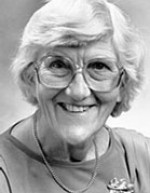
Nancy Millis received a Bachelor of Agricultural Science in 1945, a Master of Agricultural Science in 1948 and a Doctorate in Science (Hon) in 1993, all from the University of Melbourne. She was awarded a Boots Research Scholarship in the UK and used it to study at the University of Bristol where she received a PhD in 1952. Her doctoral research was on microbial growth and fermentation in cider that started her lifelong interest in anything that ferments. From 1952-1988 Millis was at the Department of Microbiology at the University of Melbourne. She became senior demonstrator in 1952 and lecturer in 1954. She was awarded a personal chair in 1982 and held it until her retirement. She was awarded emeritus professor status in 1987 in the Department of Microbiology and Immunology. In her time at the university, she set up the applied microbiology course and worked to link universities and industry. Millis was involved in the setting up of the Recombinant DNA Monitoring Committee in 1980. This committee was replaced in 1987 by the Genetic Manipulation Advisory Committee (GMAC), which she chaired until June 2001 when GMAC was replaced by the Gene Technology Technical Advisory Committee. Emeritus Professor Millis passed away in September 2012.
Interviewed by Ms Sally Morrison in 2001.
Contents
- Introduction
- Early delights
- School days and play days
- A shaky start in the work force
- Enjoying life as an agricultural student
- Recalling some memorable contributions by women
- Glimpsing a different world
- The Masters graduate preparing for something completely different
- A perilous episode
- Another country, another research topic
- Gathering and sharing ideas in microbiology
- Making the most of international collaboration
- Surviving in an unfamiliar society
- The roles of applied and basic science
- Monitoring the application of recombinant DNA technology
- Why Port Phillip isn't green soup: an ecological investigation
- A scientific solution to a mysterious mess
- What it's about: self-assurance, self-expression and honest dealing
Introduction
Professor Millis founded the first real course in biotechnology, within the Microbiology Department of the University of Melbourne. Today she is an Emeritus Professor in that department. At the same time, she is Chancellor of La Trobe University, and since 1980 has chaired the Recombinant DNA Monitoring Committee. In addition, she chairs the Cooperative Research Centre for Water Quality and Treatment, and is on the board of the CRC for Freshwater Ecology.
Early delights
Nancy, you were born in 1922 in Melbourne, where your father was a fruit merchant at the Victoria Market. Would you say that your first impressions of the world came to you through the markets?
I suppose so, yes. There is a smell about very large amounts of fruit which I find most evocative. I never go anywhere in the world without sniffing the air for that specially aromatic smell of lots of fruit which tells me there’s a market somewhere around.
One of the things the family company did was to ripen bananas, which came down from Queensland or northern New South Wales in dead-green condition. The cases then had the lids taken from them and were put into rooms in which coal gas burners were lit – but in those days it wasn’t really known that the burners provided not only temperature but a little bit of ethylene as well, and that was why the bananas turned yellow as they ripened. When we were kids it was our delight to go in to the market with our father on Sunday morning each week or perhaps once a fortnight and to smell the bananas in these rooms.
I must say I have always enjoyed travel, and everywhere I go I look out the window to see what people are growing, how they’re growing it, what they’re doing, at what time of year. If you look out the window at any piece of countryside you can always see something going on.
The market didn’t cater just for the ordinary Saturday buyer, did it?
Oh no. The fruit that was sold in the greengrocers’ shops all around the suburbs was bought wholesale from the markets as perhaps half a dozen cases of apples or oranges or bananas or whatever it might be. My family was in that wholesale side of the business, and would also contract to very large vessels. When the P&O and Orient ships came in, they would need to provender for their next journey, so the family’s business might provide, depending on the season, large numbers of things like oranges and apples. Perishable fruits like bananas would be bought in relatively small amounts but the shipping lines would certainly buy all of the fruits that could travel well, and they would buy those in Australia rather than in, say, Europe or London.
School days and play days
I have heard you say that you don’t have any mentors. But surely your family played a very large part in your development. You were the fifth child of six and you had practical, intelligent parents.
That’s undoubtedly true, yes. My parents were wonderfully supportive of all us kids. Although I didn’t realise it at the time, they must have sacrificed greatly to send us to schools which gave us a very good education, and from that point of view I certainly was given every chance.
We lived in Brighton, in an old semi-Victorian house which had no great architecture but was a very happy place to live. There was a central passage with rooms off either side for ever, and a big living area (the ‘breakfast room’) where we ate all our meals. We had a huge kitchen and even a wood-fire stove, on which my mother cooked very well. Our large garden at the back had once had a tennis court, but with four boys in the family we played football and cricket there rather than tennis. And with a huge verandah all the way round the house, we always had somewhere to play.
I felt we had a very contented and fulfilled childhood. We had no expensive entertainment like skiing or ice skating or any of those things which cost money, and as kids we never had pocket money in any sense at all, but we lived near the beach and we used it a lot. We swam as long as the summer would permit – as far as we were concerned, the summer began in September. (When I think of it now I curl up, but we used to consider Show Day as Swimming Day.) Altogether, it was a great way for a child to grow up.
After state school you went to Merton Hall, where you came across a marvellous maths teacher. Would you tell us about her?
She was a remarkable lady named Winifred Waddell, who had many interests. She was a mathematical tripos from Cambridge, but was also greatly interested in the native flora of Australia and became an expert, particularly in the High Plains flora. She was an extremely able teacher but she wasn’t very much interested unless you had maths ability! She was a bit inclined to say, ‘Do you understand that, child?’ and if child responded, ‘No, I don’t,’ she’d say, ‘Oh, give it a miss and do French.’
A shaky start in the work force
When you were still in your third year at Merton Hall, your father had a serious heart attack. What happened then?
Because my father’s heart attack was pretty severe, it was decided – and I could understand this – that it was appropriate for me to be able to earn a living if anything happened to him. And so I went to a business college, where I think ‘learnt’ would be slightly overdescriptive of my skills in typewriting, shorthand or bookkeeping. But I did all of those things and I later had a job as a bookkeeper in the office of a Customs agent. Oh God, it was a terrible job, but never mind, I did it. Then my sister heard that CSIRO was looking for technicians, which sounded a lot more interesting than what I was doing in the Customs agent’s office. So I became a technician in the then Department of Forest Products, down on Yarra Bank Road where the casino now stands.
You were measuring the strengths of woods for aircraft frames, I believe, by sitting on a crossbeam on top of a table and looking through a telescope! Whatever was that about?
Well, on this occasion they were measuring the strength of ‘timber connectors’ – instead of great big beams, they had beams which were in parallel and held with a metal connector. They wanted to know: if you put pressure on the end of a beam, how much would it withstand before breaking? In order to measure this they put a ruler across the middle of the beam and then compressed it from above, and somebody had to measure the rate at which the beam distorted and finally broke. But to do the measurements you had to be fairly high up in the air, so there I sat – with my telescope – on top of an extraordinary collection of tables and chairs and scaffolding.
Enjoying life as an agricultural student
Eventually you managed to do your Matriculation part-time, over two years. Your sister Jean (eight years older than you) had already done science at university and was by now a biochemist, and you wanted to do science too. But when you rolled up to the University of Melbourne you were told, ‘’Fraid you can’t enrol in science, because you’ve done your Matric over two years. We require it done over one.’ So what happened then, Nancy?
That was a bit disappointing, of course. But again my sister helped me, with the very good advice that the degree of agricultural science would be particularly interesting and similar, in fact, to the science degree. So I went across to the Faculty of Agricultural Science and told Professor – later Sir Samuel – Wadham that I had applied to Science and they would not accept me. He looked at my Matriculation passes and at what I had been doing, and said, ‘Oh well, I’ll give you a go.’
Your year was the first one ever to go to Dookie Agricultural College, where you had a good time. Can you tell us about that?
Dookie is situated in the northern central part of Victoria, not far from the Broken River, in a very pretty part of the world. The rolling countryside is not particularly fertile, but the college had an excellent teaching area, with a dairy, a piggery, chooks and sheep. It was a very pleasant place from that point of view.
This was in the days before coeducation had come in, and usually there would be only one or two women in the agricultural year – sometimes none at all. But ours was a bumper year, three of us, with about a hundred young gentlemen at Dookie. The diploma there was very much for practical farmers, and they were all from farms or wanted to run farms or to be assistants to agricultural scientists.
I enjoyed my life as an agricultural student enormously. Getting up to get the cows in at five in the morning was not exactly your choice – particularly in winter, which was inclined to be a bit chilly. But Livestock, which we did on horseback, was always a pleasure and we used to enjoy that.
Recalling some memorable contributions by women
The agricultural course started in 1918. In the 27 years to 1945, when you graduated BAgSc, there were only 24 women graduates. What was the fate of the women who were with you in your year?
Jane Kent-Hughes married a fellow ag, and she and her husband farmed down Maffra way. Later, she taught in the high school in Sale. So here was a person who had done an ag science degree and contributed back to the community, both in bringing up a happy family and by teaching in secondary schools. My other colleague, Pat Howard, was the most gorgeous looking girl, a very nice person and sharp as a tack – she won all the Exhibitions. She also married, and had a family of four delightful daughters. Pat and her husband, a medico, lived in the northern New South Wales towns of Grafton and Lismore. He was an eye man and Pat assisted in that. She was an enormously important person in the community and would have contributed greatly to the wealth of the cultural life there.
She actually took the Exhibition ahead of all those chaps, and the other two of you did well also. But you were the only one to become a professional academic, perhaps because your family understood independent women and indeed had a tradition of producing them. Would you tell us about the Millis aunts in the office?
There were 11 children in my father’s family, and his older sisters ran the office for the family business. Elizabeth and Florence – Liz and Flo – were remarkable ladies. Flo was large, and I am afraid I have inherited her rather large chin. They lived in Brighton, as we did, and they would pick us kids up to go to school. (They would drop me off by the Shrine [of Remembrance] and I would walk up to the school from there.) Flo was the one who ‘drove the car’. She was an absolute menace on the road. She would talk like a thrashing-machine, and it was always very hazardous. That journey in for school was always exciting, because you never knew what sort of traffic hazards my aunt would create on her way.
Your mother, who brought up a family of six children, was in her own way quite independent and strong-minded, wasn’t she?
Oh yes. My mother was in no way professional, yet she was an outstanding woman – a lovely person of great intelligence, with a splendid sense of humour. She too lived in the community and contributed a great deal through the various activities which went on in her neighbourhood. Though not an academic person herself, she understood about these things and was very encouraging for the family.
Glimpsing a different world
Jean also belonged to the family tradition of independent-minded women, continuing her work as a professional biochemist after she married. I’d like to hear about the time you spent with her in Singapore after your graduation.
After Jean graduated she joined the staff of the University of Melbourne, in the Biochemistry School, and then later she went up to the University of Singapore – which was then still part of the University of London – and was on the staff for 11 or 12 years. She was interested in the nutritional intake of children. Many people in Singapore were pretty poorly nourished, and there was interest in assisting to improve the diet of the various ethnic communities: Chinese, Indian and Malay. The Chinese were much easier to help, in that they had a broader tolerance of what foods they would actually eat, but certain groups had religious problems, particularly, with eating such meats as pork. Those could simply not be added to the diet.
My sister had a team of young folk – Chinese or Malays or Indians, as the case might be – who went around into the various shop-houses in Singapore to weigh children in their homes. There’s no way that the mothers would go to a clinic as you might go to a health centre here, so the team had to go to them. When I visited my sister on one occasion I went around to see how it was all done. These little shop-houses would be no more than about 10 or 12 feet wide. You’d walk through whatever activity was going on in the shop, right through to the back, upstairs, and off a passageway, there would be small rooms for three or four families, perhaps, living in the rooms. So you might find that a bed for father and mother would have then an underlayer and an overlayer and a side layer as well.
The Masters graduate preparing for something completely different
When you graduated in 1945, the state Department of Agriculture made you a rather boring job offer that sent you scurrying back to university to do a Masters degree.
Well, in those days the Department of Agriculture was about the only employer of female ag science graduates. They told me there was a job in the seed testing section. This was certainly an important section of the work, but in effect you just counted out 100 seeds on blotting paper, put ’em in the incubator so they germinated, and then counted how many did germinate. I thought, ‘God, have I done four years for a job like this!’ So I rather explained to them that I wasn’t specially interested in that one.
About that time, however, the then lecturer in microbiology asked if I would like to do a Masters degree, and that sounded an awful lot better. So I began to study a soil organism, pseudomonad, that denitrifies nitrate – that is, it reduces nitrate to nitrogen gas. Studying how it does that, and why, was a very much more interesting activity than counting seeds.
As a Masters graduate you joined a project which the Department of External Affairs, under Sir Paul Hasluck, had going in Papua New Guinea. What was that, Nancy?
By then I’d had a bibful of the academic life and thesis writing and all that stuff. I decided I’d like to go to an outdoor job, so with Mary Eggleston, another agricultural graduate, I joined the department to be a field officer in the Papuan agricultural extension service. Neither of us knew too much about agriculture or anything else in the Territory of Papua and New Guinea, so we were sent first to the School of Pacific Studies – in a lovely spot on Middle Head, Sydney – to spend about three months learning a little bit about New Guinea government, some anthropology and so on.
I got a bit cheesed off with the anthropologists: they were telling us very interesting stuff about how tribal life was organised and so on, but as agricultural scientists we wanted to know what our role would be in such a system. In other words, if the agricultural systems we were learning about were to slash and burn and move on through the forest, should we continue to do this or promote other methods of agricultural production? And if other methods were to be used, how could they be least disruptive to the way of life of the group? I didn’t find that the anthropologists addressed that latter question at all.
A perilous episode
What happened when eventually you arrived in Port Moresby?
We were meant to go and make contact with the Papuan women. The women do the agricultural work – the men just assist by first felling the trees – so the concept of having women agricultural officers is pretty sensible. But when we arrived it was clear that nobody had thought about what they were going to do with us. We spent about two months just doing odd jobs around the place – organising their library, fixing up various bits of correspondence that hadn’t been done, and working up people’s CVs for them. In fact, we were sort of administrative people.
We were supposedly waiting to go down to the Fly River, of all places, where they had an outpost of empire which was concerned with production from sago palms. Fortunately for me, the ship was late and I didn’t actually catch it.
This is Nancy Millis’s idea of good fortune, I might say – not everybody’s!
The reason was that about then I picked up some pretty virulent bug which gave me a most unpleasant time of very severe abdominal pain, and I finished up with a massive peritonitis. Again I was a bit lucky, though, in that a reasonably good surgeon who was with one of the petroleum companies happened to be in Port Moresby, so he did a Zoology I job on my stomach and put in a few drainage tubes and so on. But things didn’t go too well. I had a pulmonary embolus and renal failure and all sorts of stuff went astray, and I was in hospital there for nearly three months. I was not awfully well.
You only survived the episode because they managed to send some streptomycin up from Melbourne.
Yes. In those early days, penicillin was all that was freely available, but as I now know, it doesn’t do much good for the organisms you have in your alimentary canal if they get into your peritoneum. So although I was given penicillin and it probably helped, streptomycin was a very much better and more effective drug against that combination. Otherwise I might not have been here.
They flew me in a little aircraft to Brisbane and put me into a huge Crimean War style ward – it still had board beds. Oh dear, it was uncomfortable. But never mind, I made it to there. Then they flew me down to Melbourne, and I went into hospital because I still had pretty severe pneumonia in about 1½ lungs; I had about half a lung to live on at that stage. I had to dry out there for about a week.
Another country, another research topic
Home in Melbourne after that terrible experience, what did you do next?
I had no money and no job, and it was not advisable to go back to the tropics, so I looked about for a job. Then I saw an ad for a Boots Research Scholarship in UK, at Bristol, with a closing date pretty soon, and I wrote them a most awful application – the more I think about it, the more embarrassed I am – saying I’d like to come. But just then an aunt of mine left me a small legacy of £200 which would just get me a steerage class berth on the Largs Bay (a ship of no great beauty which rolled its way to Britain over about three weeks) so I wrote that I was coming anyway, gave a bank address and said that if they wanted to see me they’d have to write to the bank. And off I went, with no idea whether the outcome would be good, bad or indifferent. I knew I could bum a bed with one of my friends taking PhDs in Cambridge, London or somewhere, and that’s what I did on arrival. I was lucky enough to be interviewed for the scholarship and to be given it. So I spent three years very pleasantly at the University of Bristol.
What choices of topic did you have?
When I was interviewed, they said that had three areas which might be of some interest to me because of my microbiological background. One was the phenomenon of gleying in Scottish soils – presumably sulphate reduction in waterlogged clays, which sounded rather dull and wet so I didn’t go for that too well. The next was strawberry littleleaf, a virus disease of strawberries. Knowing absolutely nothing about viruses, I thought it best not to buy that one. Thirdly, I might like to investigate the disorders which strike cider. That seemed to me a very much more pleasant activity, so for three years I looked at the fermentation of cider.
I came home in December/January. I knew the organism I had been primarily working with in the UK could affect beer, so I thought the brewery might like to employ me. Down there, everywhere I went I saw huge great burly blokes with CUB [Carlton United Brewery] written across their middles, and I thought, ‘Oh God, what sort of a place is this?’ Finally I got into the labs and said to the guys, ‘Here I am. Wouldn’t you like to employ me?’ I think I was a bit of an embarrassment, though; I don’t think they had ever employed a female in such a context. So I’m afraid I got the heave-ho.
I wasn’t all that keen to look for a job anyway. After three winters and three so-called summers in UK, it was so lovely to have a nice warm summer that I thought, ‘Oh, who wants to work?’ and for a while I really didn’t look too hard.
Gathering and sharing ideas in microbiology
So how did you return to working in microbiology?
I went in to see Professor Rubbo at the University of Melbourne and told him, ‘If anybody wants a microbiologist, I’m in the market.’ With that I went home and ‘the living was easy’. About three weeks later he phoned me up, ‘Would you like a job in the Department of Microbiology?’ and so I joined the department.
In 1952 and ’53 you were a demonstrator in that department. The next year Professor Rubbo appointed you as a lecturer. Also, seeing a future in the fermentation of penicillin, which by then was being done in a large way, he sent you to Marvin J Johnson’s laboratory.
Marvin Johnson was in charge of the fermentation and biochemistry area at the University of Wisconsin, in Madison. He had a very active, lively lab of about 14 or 15 people: half were Americans from every state in the Union, and the other half were from all round the world. We had Indians, Australians, Swedes, Dutch, you name it. This man was remarkable, the most imaginative and demanding person but an excellent teacher. I’ve been very fortunate in the people with whom I’ve been associated, and he was an extremely good person. His special skills were in understanding how to manage a mould – which needs lots of oxygen and has traditionally been grown on still-surface cultures – so that by the use of appropriate aeration technology it would grow in a great big tank. The understanding of how to do that, and its importance, was an enormous contribution that Johnson made.
Between 1954 and ’63 you set up the Applied Microbiology course, concentrating on fermentation techniques and the physiology of micro-organisms. Then your sabbatical fell due and for the first three months of it you returned to the United States.
I went to the Hopkins Marine Station at Stanford, not far from where Cannery Row (of Hemingway fame) is situated. This laboratory was run by C B Van Neil, an outstanding microbiologist who gave a summer course each year – a course that really can only be given by an absolute master of the literature and the history of the subject. He explored the concept of how microbiology developed, and the significance of discoveries in allowing ‘the next big step’ to happen. He was very conscious, too, of the importance of equipment. If you could measure something by using spectrophotometers or electron microscopes or whatever the piece of technology was, a new piece of information could be put in place and would assist in developing new ideas. His contribution to me was to make me aware of the way in which ideas develop in a science. It was a wonderful cultural experience.
Making the most of international collaboration
You went to Japan for the rest of your sabbatical. What did you do there?
I went across to the Institute of Applied Microbiology at the University of Tokyo, because the work being done there in a link-up between chemical engineers and microbiologists had sounded interesting when I read about it. I began by meeting the person in charge of the laboratory, Professor Shuichi Aiba. He was a very mathematically minded engineer and very authoritarian – not in any bad way, but with a great understanding of the hierarchy of the system, which quite suited his personality. I’m not entirely wrapped in that approach to life, but when you’re a guest in a lab you have to go along with it.
I was trying to learn how to experiment with continuous-culture techniques, a technique which was just coming in at that time. But I had a problem: because he had so many very bright young people doing the experiments, and I was regarded as a visiting Sensei, a visiting scientist of ‘great renown’ – which is quite untrue, but I was a visiting scientist, and I was a woman, and I had white hair – it was absolutely impossible for me to do anything. Just when I was getting enormously frustrated, Shuichi told me that he was expecting a visiting Fulbright from the United States, Arthur Humphrey. So I thought, ‘Well, I’ll await Arthur’s arrival and see whether between us we can’t salvage something out of this.’
You were just about to write to Rubbo to say, ‘Think of any reason to bring me home,’ weren’t you?
More or less. But when Arthur came I found we had a marvellous mix. I had a fairly strong biological background, Arthur had a good background in biology and a reasonably good background in engineering, and Shuichi (whom we called ‘Schlitz’) was first-rate in engineering, especially the mathematical aspects. So the three of us could really tackle how to scale up a fermentation process from something you can do in a little flask to something you can do in 100,000 litres – a very different set of problems.
Also, between us we gave probably the first integrated course in biotechnology in Japan. We called our course Biochemical Engineering, but today I think it would be called Biotechnology. That made those few months very good for me, very useful and instructive. Later, when we each returned to our respective labs, we wrote a text based on our course – if not the first textbook of its kind, certainly one of the earliest. I think it proved quite a useful document. Writing it was an interesting exercise, because Arthur wrote in what I must say was excruciating journalese, Schlitz wrote in rather stilted English, I wrote in whatever English I’m capable of, and I made myself the editor to rewrite Schlitz’s English and curb the worst of Arthur’s journalese! So we exchanged manuscripts round the table, so to speak. (Remember that the three of us were 6000 kilometres or so apart.) Finally I had Shuichi come down here and stay in our house for a week or so, to sort out the worst of our problems.
Tell me how Shuichi and your Mum got along.
They got along very well. My mother looked after him beautifully, and I knew enough about the custom to realise that he would need to be waited on so we made sure that all happened. And I also made sure we always had rice; that was essential. Fortunately, Schlitz very much enjoyed my mother’s home cooking, and especially breakfast, which was a great meal as far as he was concerned. They respected each other, and altogether it was thoroughly acceptable.
By the way, we called him Schlitz because he enjoyed Schlitz beer when he was in the States. ‘Schlitz’ was near enough to ‘Shuichi’ for us to call him that – so we did.
Surviving in an unfamiliar society
As a woman in Japan, did you encounter any obvious differences in social customs?
Well, I had an interesting cultural problem when I was invited for a meal with other biotechnical people. I would always be the only woman, because the custom is not to have your wife go along on a social occasion. We would go to, perhaps, a large fermentation company. Schlitz, Arthur and I would all sit down to a very nice meal with the people from the company, and each course of the meal would be presented on the delightful china with which all Japanese food is served. But I didn’t ever know when the signal would come for us actually to pick up the chopsticks and eat. It wouldn’t be the hostess who would begin that operation, as it might be here. Knowing for sure that it wouldn’t be me, I could just sit and let it all flow by, and when the host of the day raised his chopsticks I knew I too might do so.
The meal would take a great deal of time. We might have seven or eight dishes, and although the servings were very small – delicate, delightful, but not large – they would take a great deal of time and a good deal of sake was consumed. Not that that worried me at all.
You would have been on your knees for all that time.
No, I sat Buddha style, cross-legged, as the gentlemen do. Much later I discovered that no lady ever does that. I’m glad I didn’t discover it at the time, because I tried sitting ‘properly’ and it’s absolutely excruciating. So as far as I’m concerned, I might have sat as no lady should but it was the only way I could survive the night!
The roles of applied and basic science
In Japan you would have found that university research and the business community had extremely close links. Was this approach useful to you when Australian universities came up against the necessity to make money if ends were to meet?
I’ve always been an applied scientist so it’s never really worried me that the work I do has a fairly direct, practical application. I have found that if industry wants to work with an academic, it is usually because there is some problem or difficulty or process which the current staff do not have the time or perhaps the skills to deal with. Therefore, any work with a company in that way is nearly always to tackle a problem rather than to do some routine job. Companies can get plenty of people to do analytical stuff for them, but if you work with a company which has a problem, you’ve got a challenge. Consequently it has never seemed to me to be too much of a difficulty at the professional level.
Making the actual connection between an industry person and an academic is something which has been very slow to develop in the Australian system. We haven’t had a long tradition of doing this. By far the best of the schemes that the government has developed is the Cooperative Research Centres, where the money that the government puts up must be met by at least an equal, and often larger, contribution from industry. And always industry is the driver of the process. So the three arms are together developing something which industry wants. That is the key to the matter: getting the connection with industry prepared to pay and to have a strong part in developing the research program. I believe that has worked extremely well.
But where does it leave basic research, Nancy?
This is very troublesome. In my view, basic research has to be a national responsibility. If you do not support basic research, you cannot apply anything. As I remember it, Einstein said, ‘It is relatively easy to organise to use a discovery, once made, but not to make one.’ In other words, you can’t organise ideas, ideas are there – and it’s relatively easy to apply them, which is why I’m an applied scientist. Doing fundamental work is extremely difficult, and it is given to relatively few people to make truly major new advances. But if these are not nurtured in universities – with appropriate funding, which is not tied to some set of biscuits in a bag – then we’re in trouble. We run out of intellectual capital.
Monitoring the application of recombinant DNA technology
That brings us to the problems ensuing from the recombinant DNA work, which started as basic science in laboratories. I was involved in setting up part of the lab that did that in the Microbiology Department. You took the practical line, as ever, getting involved with the Recombinant DNA Monitoring Committee which was set up in 1980 and replaced by the Genetic Manipulation Advisory Committee in 1987, and you have chaired it ever since. What does that committee do?
It resulted from a concern, which I think was very reasonable, that people might construct organisms which could have a downside – some ill effect that you didn’t want to happen. A bunch of people was wanted who were prepared to spend time reading each proposal to take a gene from here and incorporate it into another organism. Would the outcome from that be in any way detrimental, whether to people’s health, to the environment, to livestock, to plants, to the general biota, to the cycle of things in soil, and so on? In other words, could any hazards be envisaged that might be associated with the construct? For this the government felt – properly, I think – that they needed an independent authority.
They set up committees of some 15 or 16 members, all of whom have expertise relating either to the molecular aspects or to environmental, health or ethical and legal aspects. This group of people has to have a very broad range of biological skills as well as ethical and legal skills, because all of these impinge upon the assessment of risk and the management of the risk. Our task as a committee is to identify any hazard that could conceivably arise as a result of the particular action, then try to assess how likely it is to happen, how awful it would be if it did happen, and whether you can do anything about minimising or, indeed, eliminating it. And we offer advice on our judgment about that to the person wanting to do the work and to the government.
The policing of recombinant DNA technology must be a very difficult area.
Yes, it is, for a number of reasons. One of them has nothing to do actually with the safety of the process. A number of people are concerned that the process of taking a gene from one organism and putting it into another with which it wouldn’t ordinarily exchange DNA is against nature, against God’s laws, or against their moral or religious views. You can only say that that is someone’s view – it is not anything to do with the safety of the process or its efficacy. And to those people you can only say that most people will accept the technology. For example, most people believe that it is better to have a growth hormone preparation which has been grown in a bacterium than to take one from a cadaver, with the possible risk that you will give the recipient Creutzfeldt-Jakob disease, CJD. But although people will accept that in principle, they have a difficulty sometimes if the same technology is used on food. I don’t quite understand why they have that difficulty, but it is important to recognise that it does exist and therefore the best you can do is to inform people of the process by which you arrive at a decision.
Let us say a cotton plant has been protected from caterpillar attack by putting into it a gene from a bacterium, such that the cotton plant produces a toxin which knocks off any caterpillar that eats the plant. For some people that is an unacceptable activity.
For the cotton grower it means that his plant is protected, so that whereas previously he might have to use 12 to 15 sprays of an insecticide in order to get his cotton crop off, he now can reduce that number to between four and six. The pluses which go with the process are not only a saving for the purposes of applying a biocide, with all the labour that goes with that, but the release of very much less biocide into the environment – a big plus.
The downside could be that the toxin will attack things other than caterpillars, and anybody who wanted to carry out such a test would have to provide data showing that only caterpillars are affected by this particular toxin, and that when the toxin falls onto the ground as part of the plant it is degraded and does not cause difficulties. These are the sorts of questions we would be asking.
Why Port Phillip isn’t green soup: an ecological investigation
You have talked about reducing pesticide use. You have also done a lot of work on the environmental aspects of water quality, haven’t you?
Yes. I’ve been interested in water, and its effects on the environment which receives it, for a long time. For quite a number of years we studied the cycling of nutrients in Port Phillip Bay and Westernport Bay. In particular, the sewage treatment plant at Werribee discharges treated effluent into Port Phillip Bay. The nitrogen it contains is often in the form of nitrate, or is, indeed, denitrified in summer, but certainly in winter a fair amount of ammonia goes into the bay. The question has been what happens to the nitrogen when it is released.
II have always felt that denitrification is a very important process – which takes me right back to my Masters year – in the bay’s ecology. And CSIRO has recently completed an absolutely marvellous, five-year intensive study of the health of the bay, which has nailed down the question in some extremely nice experiments.
In the middle of the bay there is a big layer, about 20 centimetres, of soft, sludgy material which contains very large numbers of burrowing worms and shrimps. When nitrogen comes into the water column it tends to go towards the bottom of the bay, carried there both in solution and as particles of algae and other pieces of organic material. There it is broken down. The ammonia in that water layer, because there’s oxygen about, is oxidised to nitrate. Then all these little burrowing insects that live in the bottom suck the water – and of course the nitrate – down into their burrows. In the anaerobic environment of the sediment outside the burrows, the nitrate is denitrified by bacteria, and now the nitrogen is in the form of gas and goes out of the system.
That big cycle of nitrogen removal, whereby combined nitrogen goes in, gets oxidised from ammonia to nitrate, and then is reduced to nitrogen gas which is released, is an enormously important reason why Port Phillip Bay isn’t green soup. And so it’s very important that the ecosystem in the bottom of the bay is not disturbed.
There is always the problem, too, that if you just go on loading up the system it will collapse. Its capacity to handle the load will be exceeded. So the amount of nitrogen being released into the bay must be carefully controlled and limited. Indeed, the Environment Protection Authority has a careful eye on this.
A scientific solution to a mysterious mess
You also helped to float the Melbourne Concert Hall in Yarra mud. Could you tell us about that?
Oh, this was a really fascinating story. The Arts Centre and the Concert Hall are set down into the banks of the Yarra, in an enormous flood plain of very deep layers of silt. Those are pretty anaerobic, so that the groundwater there doesn’t have any oxygen in it at all and any iron which is always present is in the reduced form.
The people digging that large hole realised that there might well be small amounts of groundwater seeping in, so they arranged to channel it into little drop basins, to be carried down into the basement of the building and away in the sewer. After some months, however, they discovered that the drainage holes were all blocking up with some mysterious bright brick-red material which they thought perhaps was algae. They sent the stuff along to our labs, but when I looked at it I thought, ‘Gosh, I don’t know what on earth this is.’ It looked exactly like completely uniform tubes of spaghetti – on a micro-scale – covered in, well, brick-red tomato sauce. These tubes were very clearly defined but I could see no structure in them at all.
Suddenly, about two days later, it dawned on me what I was looking at. There are micro-organisms called Sphaerotilus which grow as cells within big long tubes and then are shot out the end as if from a pea-shooter. Then what you see is often just the sheaths in which they were once living, and around them an oxidised form of iron, because these organisms gain a lot of energy from oxidising reduced iron. What was happening was that the groundwater (containing no dissolved oxygen) met this little junction box thing and dropped down, becoming aerated. Then the bugs got busy converting the reduced iron to the oxidised form, which grew as a great sludgy mess – iron hydroxide is absolutely jellylike in water – and glocked up the pipes.
The solution for that was easy: just make sure that the material from the drainage area simply went down into the tube without getting aerated in the junction box.
What it’s about: self-assurance, self-expression and honest dealing
Nancy, you have reacted less than calmly to some things – for instance, to the arrival of mail inviting ‘Professor Millis and wife’ to various functions, or to your being only the fourth woman ever appointed to a professorial position at the University of Melbourne. Yet you have been a very resilient soul and say you have had no dark moments. What, then, satisfies you most when you look back on your career?
One of the helpful things, I think, is that I am not too bad a listener – even though I’ve talked a lot today – and I can be independent. People know that really I haven’t got any axe to grind, and that is wonderfully liberating. You can do and say what you honestly think, and that’s a very easy way to get on with people. They respect that.
Let’s return to the young girl at the side of her tall, handsome father with the dark hair and the blue eyes, visiting the Victoria Market all those years ago. What advice would you give to that child’s equivalent today?
I don’t know what on earth I’d say, because I have never planned my life, not at all. I have been the biggest opportunist ever. It is no use to advise anyone to choose their parents, but if your parents can give you the courage to believe in yourself and give you the opportunity to express yourself in whatever way is good for you, then you’ve won the battle before anyone has drawn the battlelines. That really is what it’s about.
Thank you very much, Nancy, for talking to us.