





Dr Jim Peacock, plant scientist

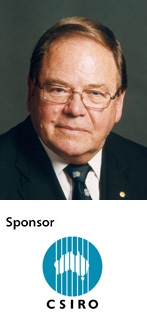
William James (Jim) Peacock was born in Leura, New South Wales, in 1937. He was educated at the University of Sydney where he received a BSc (Hons) in 1958. His interests were in botany and genetics and after his honours year, he won a CSIRO scholarship for further studies. He was awarded a PhD from the University of Sydney in 1962. Peacock began working at CSIRO as a visiting research worker in the Genetics section in 1963. Later that year he moved to the University of Oregon, where he worked as a post-doctoral fellow (1963–64) and visiting associate professor (1964–65). He continued his genetics studies as a research consultant in the biology division of the Oak Ridge National Laboratory, Tennessee, in 1965.
On returning to Australia and CSIRO, Peacock joined the division of Plant Industry. He worked as a senior research scientist (1965–69), principal research scientist (1969–73), senior principal research scientist (1973–77) and chief research scientist (1977–78). He was chief of the division from 1978 to 2003 and then became a CSIRO fellow. Peacock was elected a Fellow of the Australian Academy of Science in 1976 and served as its president from 2002 to 2006. From 2006 to 2008, Peacock served as Australia’s Chief Scientist.
Interviewed by Dr Liz Dennis in 2008.
Contents
- An interest in science and especially genetics
- Plant cytogenetics lead to the US and Drosophila
- Ingredients of success in early career research
- Back to CSIRO and meiotic recombination
- Further US study in molecular biology
- From repeated DNA sequences to ‘real genes’
- A vision for CSIRO Plant Industry
- Advances for the cotton industry
- New research areas: flowering control, plant haemoglobin
- Presidency of the Australian Academy of Science
- Opportunities as Chief Scientist of Australia
- The eternal scientist and explainer of science
- Whither Australian science?
An interest in science and especially genetics
Jim, how did you first get interested in science, and when?
Well, growing up in Leura – a small town on the Blue Mountains – I was always associated with the bush. And although I guess I wouldn’t call that science, both my grandfather and the Anglican minister of the town honed my interest in observation, and I made collections of various things. Also, the minister happened to be an expert on eucalypt species of the Blue Mountains. So I had that in the background.
When did you decide to become a scientist?
I did science at Katoomba High School – physics, chemistry and maths (boys didn’t do biology in those days). At that time, however, I had it in mind to be an economics teacher. So, when I won a couple of scholarships, I travelled on the train from the mountains down to Sydney, to register at Sydney Teachers College and Sydney University. But the train broke down or something, I got there a couple of hours late, and the guy said to me, ‘Oh, we’ve had so many people wanting to do economics, why don’t you do something else? What about science?’ When I replied that I had done pretty well in science and found it interesting, he went on to say, ‘Well, I mean biology.’ I was appalled: I hadn’t done any formal biology. But he said, ‘No, this is the up-and-coming thing,’ and so I signed on to physics, chemistry, botany and zoology in university, and gradually nurtured my interest in the biological sciences.
You had been going to be a teacher!
I was still intending to be a biology teacher, or a science teacher. But when I did honours I found myself just so interested in research that I decided teaching wasn’t for me, and over the next few years I bought my way out of the bond that was attached to my scholarship – in those days that was the only way out – and I did a PhD.
Did you have any early mentors at university?
I’d had a very good science teacher at school, Eric Pidgeon – teaching Jim Peacock, quite a bird life! – and that had helped. Also, in a small town you interact over and beyond the school itself. In university I became very interested in genetics. There were two university lecturers, Spencer Smith-White and Roger Carolin, who taught genetics and related matters, and there was a CSIRO Chief, Jimmy Rendel, who taught the more senior genetics classes. I thought his stuff was great. In fact, I was the only student who passed the course! So that really made me know that I wanted to go on with genetics and to understand genes.
Are we talking about the time before anyone knew just what genes were, in a molecular sense?
Yes. They were algebraic constructs, really, and that turned a lot of people off. But Jimmy Rendel was magnificent, I found. He’d worked with J B S Haldane, a great ‘living geneticist’ who turned human physiology into study of genes and so on. Jimmy, actually, had a pneumothorax resulting from research experiments. He taught me some extremely interesting concepts – one of which, years later, came to be rather important for you and me.
Plant cytogenetics lead to the US and Drosophila
After completing your undergraduate degree in botany and genetics, you went to Adelaide. It was very unusual for people to change universities or even to experience a different university in those days. Who suggested your going to Adelaide, and why did you do it?
I did my honours in the field of cytogenetics – studying snowgrass from Kosciusko, Poa caespitosa, and later a native family of plants, the Goodeniaceae – and I won a PhD scholarship. (CSIRO had a couple of them in those days.) But Smith-White said to me, ‘Look, why don’t you go and learn a bit more in formal genetics?’ The only place in Australia where you could do that in those days was Adelaide, and I wrote to CSIRO to ask whether I could use the first year or so of my PhD scholarship to do some more study. They wrote back saying, ‘Well, noone’s ever asked us that before. Guess so. Seems okay.’ So I did, and that was really important to me. I was in the same college as Sir Ronald Fisher, the statistician, and on High Table with him, and did his genetics courses. The course experience and the whole experience with the people there was rather formative for me, I think.
Yes, that was a good time. Then you came back to Sydney and commenced your research for your PhD. And again you focused on cytogenetics and plants. How did you come to choose what you did?
Well, Smith-White had been really important in looking at the chromosome evolution of Australian groups of plants. And some other students – Bryan Barlow, B B Briggs, Alison McCusker, Sid James – had all studied some groups of Australian plants, mostly woody plants. Smith-White had started me in honours, saying, ‘Why don’t you look at a major Australian herbaceous group?’ so we chose the Goodeniaceae and I went on with that. I found a truly interesting ‘story’ in following the chromosomes of that family. It was terrific for me because I spent half the year camped out in the bush all across Australia, doing my collections and so on. I really enjoyed working in the bush. But one of the species, Brunonia australis, had truly lovely chromosomes and I thought, ‘Gee, I’d like to understand more about chromosomes and how genes are in them.’ So I did some work on broad bean, trying to look at the way in which the chromosomes replicated – how they repeated their DNA sequence and then divided into daughter cells. That is how I got myself started into what I’d say was more experimental, reductionist science, and I liked it.
You have mentioned that one of the good things about your PhD was camping out and getting around the Australian bush. A ‘bad’ aspect, perhaps, was that it was not experimental: you could not perturb things to try to find out what was the difference.
Yes. It was really interesting to look at the races of polyploids, and translocations and things like that, which gave me certain information about how this family may well have evolved in the Australian continent. But I became frustrated. It was descriptive, and on that basis you put forward what you hoped were sensible ideas but without being able to test them. And it was very difficult to grow the plants.
Whilst I was doing that work, however, I was reading widely into genetics, and I was very attracted by some work done by Ed Novitski on the way in which recombination occurred in the X-chromosomes of Drosophila. I thought, ‘Gee, I could use that system if only I knew something about Drosophila, to ask what determines the position on the chromosome of a second recombination event after you’ve got a first one.’ But it happened that Jimmy Rendel had a very exciting American geneticist, Dick Lewonton – a giant in genetics at that time – visiting him. And Lewonton said to me, ‘Well, why don’t you go and work with Novitski?’ I said, ‘I can’t even sex Drosophila; I don’t know the difference between a male and a female!’ ‘Oh God,’ he said, ‘you just write to him and I’ll write to him.’ Novitski wrote back saying, ‘You’re welcome to come here,’ that is, to Eugene, Oregon, which was in those days a centre of excellence in genetics and molecular biology. I won a CSIRO postdoctoral fellowship, and off we went. I must admit I was a bit scared, because by that time I had married and we had a baby and I was thinking I’d better earn some money to look after my family. But my wife, Margie, said to me, ‘Oh, don’t be silly. You don’t want to die in Melbourne,’ or wherever. ‘Let’s take the opportunity and go.’ I’m so glad I did.
What came out of your postdoctoral years?
Well, Novitski gave me complete freedom. And, first of all, in what I would say was one of the most idyllic six months of my life academically, he brought me into Drosophila genetics up to the highest level, so that I was accepted almost immediately by all the top guns in the field as being able to talk sensibly with them. I hadn’t at that time done any work in the field, [laugh] but I really understood it and knew all the problems. He was just fabulous in that way. Every day he’d take me further, and give me papers to read.
I did a hell of a lot of work on a problem that I’d suggested and chosen and that he supported, but after a year I had merely shown myself it was not a goer. There was too much biological noise in the system. So I had my first big disappointment. I just had to put the data aside and hope that one day I might be able to make more of it. (I never did.) But during that time I was introduced by Novitski to meiotic drive, which described a non-Mendelian segregation of genes. I found it was terrific and I spent three years in the US, doing a lot of work in that field. It was great.
Ingredients of success in early career research
What would you say were important things for graduate and postgraduate students and postdoctoral fellows to be aware of, to make their studies successful?
Well, you’ve got to work hard! Also, you need to read widely and benefit from the knowledge put in place by lots of terrific people, so that you hold your work in a continually growing perspective. That’s really important, but it’s something that a lot of kids don’t do well.
I used to argue like crazy with ‘Spinny’ Smith-White and Roger Carolin, my two people in Sydney, and they encouraged constructive argument. In fact, one day when I was up at the board with Spinny I said, ‘Oh, you silly old man, you just don’t see this, do you?’ But then I turned round and realised the professor of the department was there, and I thought, ‘God, that’s the end of me.’ Later on he said to Spinny, ‘I wish I had a graduate student like that!’ So I really was taught to question and think.
Novitski was the same. He was one of the sharpest academic research minds I’ve ever known. Unfortunately, he didn’t move with the upswelling of molecular biology. He felt jealous of molecular biology in the way it was coming into genetics, and that limited him in the end.
Doesn’t that questioning, and following your own science and having such a lot of freedom during both your PhD and your postdoctoral time, contrast in some ways with the present trend toward much more accountability? The idea now is that we set national priorities and that the research organisations have much more targeted projects.
That’s a nasty question, considering that I was involved in setting national priorities!
Well, I didn’t do silly things in the lab; I always fitted my research into the general strategies of the labs I worked in. But I have to say that people were marvellous in giving me enormous freedom, really, and being supportive. I’ve always thought one of the best things about science is all the help you get from your colleagues.
When, after 3½ years or so in the US, I returned to Australia, I could have had a job anywhere, in any university – very different from now. I went back to CSIRO, however, and into the Division of Plant Industry, because I’d worked there for a little while and had seen just what a terrific environment it was. I didn’t work on plants, though! I worked on flies – Drosophila – and on Kangaroos for a while, because my quest was to understand genes and chromosomes. Also, I worked on tissue culture, which was a program with Chinese hamster cells that I had started in America when I worked at the Oak Ridge national labs. (I was asking then about mitotic crossing-over, not meiotic crossing-over.)
I don’t know that we would have such a degree of freedom now. And I don’t know whether having done well in the United States, with work that made it into the international field, helped in the amount of freedom I was given. But I’m really grateful to all those people.
Back to CSIRO and meiotic recombination
So you had gained a reputation in the United States, and facilities and support for science were probably much greater there than in Australia, presenting more opportunities to make a real difference in science. Why did you come back?
It was hard. I loved America and the American people, and the science environment – the mid to late1960s was the golden age of science in the United States, just wonderful. I’d had a sort of a meteoric rise and was working as an associate professor. I was offered some really nice jobs, and yes, I was tempted to stay. But I felt under a moral obligation to come back, firstly because CSIRO had given me that scholarship. Also, I had left Australia before aeroplane travel was common, at a time when it was virtually unknown for visiting scientists from other countries to be in Australia. I remembered how important it had been that Dick Lewonton was there to urge me to go to the US, to a top lab. And so I really wanted to help science in Australia.
What sort of vision did you have of what you would do in science in Australia on your return?
Well, I had made some quite good work in meiotic drive and segregation distortion, and I had another system that I was looking at in meiotic drive. But I returned, really, to my wish to understand more about recombination. At that time, we didn’t even know at what stage of meiosis recombination occurred, and I had ideas as to how I could find out. That was when I first took advice from Michael White, who was important for you and me later. I wanted a grasshopper with very nice chromosomes I could look at and with a slow meiosis that gave me a chance to break up the stages, and he introduced me to Goniaea australasiae, which became one of my major projects.
At the same time – and I’ve always followed the idea of having two or three projects, because projects go up and down and it’s good to have two or three ‘sine waves’ going at once – I had persuaded one of my colleagues from the Oak Ridge lab to come to Australia to work with me on the mitotic crossing-over that we studied on Chinese hamster cells. So it was a very exciting time for me.
Also, when I came back it turned out that one of the absolute greats of genetics in maize, Marcus Rhoades, was there as a visiting scientist. I’d met him, but then we became really good friends and he was vitally interested in my work on recombination. I had a pretty rough spell with that, though. Things just kept going wrong, wrong, wrong, and I was following advice that I eventually had to discard. I had to do things a different way. Then, one Saturday afternoon, when I came in to the lab and developed the slides that I wanted to look at, there was the answer, all laid out for me! With no-one around, I was dancing around the lab – and then Marcus came in. [laugh] Those times are pretty important in science.
Further US study in molecular biology
At about this time, molecular biology techniques started to arise that would give you other opportunities. So how did you first become interested in molecular biology and learn to take some more molecular approaches?
That was one of the giant peaks of activity in molecular biology. To learn about the latest state of play I had to look at the ‘Science and the Citizen’ pages of Scientific American, because a lot of the journals took a long time to reach Australia and that was the fastest. I became really interested in some work by Matthew Meselson and Jean Weigle on recombination in phages, and I thought they’d made a mistake in their work. We talked about it – and a good thing about Smith-White was that although he was a long way from having a full understanding of molecular biology, he encouraged me to discuss this work a little bit with people such as Geoff Grigg and others in CSIRO, and your supervisor in Sydney University, Gerry Wake. They all encouraged me to write to Meselson and say, ‘I think you may be wrong.’ Well, Meselson wrote back and explained that he and Weigel weren’t wrong, but said he was really thankful for the stuff I’d sent. He said, ‘If you come to the States, come and see me, right?’ So, eventually, I did just that. I became very good friends with him and he had quite an influence on me and the work I did subsequently. It’s funny how things start.
You actually went back to the States to learn some molecular biology, so you could perhaps know whether Meselson was right or wrong!
Well, yes. CSIRO were really kind in letting me go again when I’d only been back three years. I went to University of California, San Diego, because I wanted to get more genetic tools to look at recombination, and I knew I had to do that in Drosophila. I went to Dan Lindsley’s lab, which was one of the obvious labs to go to because he was at the leading edge. But that department had some very good plant molecular biology also – Herb Stern’s stuff , and a lot of bacterial work. It was a wonderful eye-opener for me, and led me to conclude that even the genetic approach there was too restrictive for what I needed! I called up my chief at CSIRO and said, ‘Do you mind if I stay another year or so in the States, to go up to Stanford and learn some real tough molecular biology?’ That was okay, and I went to work with Dave Hogness in Kornberg’s department, in one of the most important periods for me ever.
Why was Stanford such an important experience for you?
I learned what was first-class science – not, of course, that I did poor science before! With molecular biology, you had the chance to ask questions in such a way that you could really hope to get an answer. And then you could check it by using a different approach. That was fantastic. Dave Hogness and I decided to take the opportunity to define repetitive DNA sequences in Drosophila. There were two or three labs working on that in the States, but there was a mess of results. So I started the work there, and when I came back that’s what I did first, building up a lab with people like you. (I was never scared to compete at the cutting edge with those other big labs.) We did it right, so we kept being respected. What I was scared of was what I called the ‘Australian gutter’, because I’d seen many terrific Australian scientists do well in labs in the States but then come back and fall into a sort of easy life.
Yes, but I think it was much harder in Australia than in the States at that time. In the States there were big groups with a lot of support, but people probably found it very hard, when they came back to Australia, to set up and compete on the world scale.
Oh, that’s right.
You were fortunate, perhaps, with CSIRO and all the support that you had.
I was. I said to Lloyd Evans, the Chief of Plant Industry, ‘I want to do this stuff, I think it’s really important for Australia to get into this, but I can’t do it by myself’ – in those days, every scientist in Australia worked alone. ‘I need at least two other scientists, plus I’ll bring in visitors and so on.’ And Lloyd had the courage, the vision, to support me. I was the scientist most hated by the other people around, because we then took over the canteen to build a new lab. [laugh]
That’s when I brought out a brilliant guy I’d met in Stanford, Doug Brutlag. Then I went after you, because I’d seen you as one of the very few people in Australia who’d had a first-class molecular biolo
gy training – under Gerry Wake – and who’d gone on to one of the best labs in the US. I thought, ‘Gee, she’s the only person I can get who is high-class science.’ With you, Doug and a couple of people from Adelaide, we built up a world-class lab. It was tough, because in those days we had to make every enzyme and all our reagents, but it was good. And Meselson, Hogness and others offered encouragement all the time.
You organised a couple of Australia-America workshops that I think were really important in those early days of molecular biology in Australia.
Yes. I have mentioned that, as a graduate student, I was so grateful to Dick Lewonton. Mostly graduate students never met famous scientists from elsewhere, and I thought, ‘I’m going to help the graduate students of Australia meet some top-class people.’
When I returned from the United States the first time, Alexander Hollaender – the boss of Oak Ridge National Lab – helped me with money to organise the very first USAustralia workshop. (That help was fantastic. I had more trouble getting money in Australia than in the States!) I then brought out about 20 of the best molecular biologists in the States. You were one of the few Australian speakers, and I decided, ‘That’s someone who’s good.’ And I did eventually, if with a little difficulty, attract you to join the lab. Those things were important. Things started to change from about that time, because air travel and international science became a reality and Australia wasn’t so separated.
From repeated DNA sequences to ‘real genes’
You were still working on repeated DNA in Drosophila. But there was a limit to what you could do with repeated DNA. There were no genetics and no real way of looking at function.
There was no way at that time to look at individual sequences and those things, including in molecular biology, so we just had to work with repeated sequences. We were among the first labs to get the sequences worked out, but it took six months to get 10 nucleotides! [laugh]
That’s right – in contrast to the human genome now, or a bacterial genome that you can get in a day.
You might remember that in our lab we had PhD students, mostly from ANU, but in those days we were required not to have the PhD students work on our own CSIRO-type science – which was a bit silly. So a number of students, probably most importantly Pamela Dunsmuir, worked on repeated sequences in marsupials, and despite the restrictions we came up with the concept of episodic evolution of those sequences. That was pretty important, I think.
That must have been about the time when the first cloning occurred, with Paul Berg and Stan Cohen, and others. That led to more opportunities. And you must have gone to the Asilomar conference about that time.
I did. In 1974 Jim Pittard, from the University of Melbourne, and I were the Australian representatives at that meeting of molecular biologists, which actually considered whether genetic cloning – particularly of cancer virus sequences, or so it was thought in those days – should go on. Scientists showed remarkable ethical consideration, I think, about this whole new area of work. That meeting was really important: when Jim and I came back we convinced the Academy to set up a committee that would be looking after that kind of work, and we were on it. Attending that meeting had a big effect on me personally, as I realised more than ever the power of that approach, those technologies.
It was the dogma of the day that plant DNA was ‘different’. It was too difficult to work on, and there weren’t any repeated sequences of the type that we were studying in Drosophila and kangaroos. I just couldn’t believe that, and I saw that the technologies were good enough then to start back into plant work. We had Rudi Appels in our lab, and after you went back to New Guinea he and I really started on the repeated sequences of plants – in rye, because of the big lumps of heterochromatin – and we blew apart that dogma in more ways than one. Rudi went on to make his career around cereal chromosomes, but again I found it too limiting, with the repeated sequences.
When you came back, together with Wayne Gerlach we saw the opportunity to go after real genes, in maize. Fortunately, I think, we made the terrific decision to focus on alcohol dehydrogenase and not the alternative, sucrose synthase. (Luckily, I’d been misled by some German scientists into thinking they knew all that there was to know about sucrose synthase.)
The alcohol dehydrogenase system was very important in those early days of plant molecular biology and led to a lot of advances, didn’t it?
Yes. We got the cDNA sequence of alcohol dehydrogenase and then the genomic sequence, and we were about the first lab to identify and characterise a gene that was coding for an important enzyme. We used that system in a number of different ways, the most important being to look at Barbara McClintock’s ‘controlling elements’. We’d realised that that was one of the major advantages of the alcohol dehydrogenase system. When we had started that work, you went to Stanford to learn more with Paul Berg – I think your time in Stanford was as important for you as mine had been for me – and we showed what happened when Barbara McClintock’s so-called jumping genes moved out of place and then what happened to the chromosome when one went back in. Just before Christmas 1982 I wrote to her at Cold Spring Harbor and said, ‘Here’s a Christmas present for you. This is the actual sequence of one of your controlling elements.’ And she wrote back, very excited. Her concept of genes moving around in the genome had been looked at almost with suspicion by many geneticists of the day, and for us to be able to show her not only the sequence but how they moved was really very exciting.
A vision for CSIRO Plant Industry
At about this time you became Chief of Plant Industry.
Yes. That job wasn’t something that I was working towards, but in the beginning of 1978 I was persuaded to take it on. I guess I felt I owed a lot to CSIRO, but also I saw the opportunity to do much more about introducing the power of the new biology into CSIRO and into Australia. There was a lab in Adelaide working on the chemical side of it, but we were the only lab in Australia at that time to be doing this kind of work, so we started teaching the university labs and so on. I saw that these new, powerful technologies could really help the work of Plant Industry and help agriculture.
Was it your vision, as Chief, to bring molecular biology to agriculture? Or did you have other visions, some other agenda as Chief?
I wanted to ensure that Plant Industry was one of the very best research institutes in the world, and I knew that depended on good people and on contact with international best labs and so on. The American way of doing science had a huge impact on me, and I ran that division by incorporating what those of us who had gone to such labs in the States, the top labs in the world, saw as the best features – besides having top people, inculcating the best behaviours. We ran our own lab like that, but I tried to get that permeated right through the division. I wasn’t too popular as the Chief at first, because I hadn’t a working knowledge of agriculture. A lot of the guys looked at me with grave suspicion, thinking, ‘Oh, he’s going to do away with our work in agriculture,’ and so on. Eventually, though, they saw that the whole aim was to make it better.
Would you say that one of your guiding principles was to try to attract good people and build groups around them, perhaps in reflection of the freedom as a scientist that you yourself had had in your early days? Did you see a link there, that if people are good enough, you can give them freedom?
Yes, that is right. I didn’t think that I knew everything and that I’d tell them what to do. I had in mind what I used to call my solar systems: I’d pick a ‘star’ and then help that star scientist build a system of ‘planets’ and ‘moons’ of students and others around them.
‘Shooting stars’!
‘Shooting stars’ came out of it, of course, and out of our own lab.
Advances for the cotton industry
From early in your career as Chief you have shown an interest in the cotton industry, and a particular affinity with it. That has been really important for cotton in Australia. Would you like to talk about it?
I had tremendous help from the so-called administrators of the division; they were marvellous. Within two months of my becoming Chief, one of them said to me, ‘You’ve got a lab up in Narrabri and Wee Waa, and you need to go up there and meet your staff.’ So I agreed, although I felt I didn’t know anything about it, and I flew up in a little plane.
This administrator Den Banyard was a gadget guy, and he had said to me, ‘Now, look, you’ve got a chance to really integrate the science with industry. Why don’t you ask the farmers about computers? That’ll show them that you’re thinking ahead.’ Well, I did that and they all looked at me as though I was stupid [laugh] – ‘Computers? What’s that got to do with farming?’ But in not very many months they were crying out for better and faster results on the computer.
On that visit I saw the whole industry, from the basic research to its applications, to the take-up by the farmers, to the ginning of the cotton and the sale and loading onto railcars which then shipped the stuff overseas and so on. It was just marvellous.
One of the great things which helped me, I think, was that the lead farmers were American, graduates of the University of California at Davis, and I felt an instant affinity with them. They understood the importance of research. I became very close friends with one of them in particular, Richard Williams, and he convinced the industry to support our research to the hilt. It became a big success story.
So a lot of that was about management of the industry?
Both breeding and management, yes, which I liked. Out in the field I’d met [Gary Fitt,] an entomologist who had developed a computer program called ‘Fly’, with which he was scoring the number of eggs, first-instar larvae and other major pests of cotton. The results could then be used to help the farmers think about what spray they should be using and so on. I saw the opportunity to meld that with a computer simulation of the plant, and I knew we had someone in our division, Brian Hearn, who was good at that. So I brought the two approaches together, and we called the new system SIRATAC.
I have to admit that one of the main reasons I did that was to bring the Department of Agriculture on side: I put a big ‘A’ in the middle of SIRATAC for ‘Agriculture’. Also, because there were some jealousies and unhappiness in the staff up there, as can happen in isolated laboratories and places like that, I wanted to give the whole staff a goal that everyone worked towards. And I remember being really excited, as I walked down the main street of Narrabri one day, to hear people talk about SIRATAC! I thought, ‘Well, I’ve made it.’
That management system turned out to be extremely important for the industry. At the same time, in the Narrabri research unit we had a wonderful cotton breeder, Norm Thompson. He developed very good varieties, replacing all the American varieties that we were previously growing. He was just an innate geneticist and one of the best plant breeders, with a terrific depth of knowledge – he knew the crop like crazy. After a slow start, his stuff was marvellous, and we began to be enormously respected by the industry.
And then came GM cotton. You could see that GM would be of real benefit to the Australian industry, because pests were getting resistant.
Yes. By that time we were cloning genes, but when I was asked, ‘Will we ever be able to use genes to stop the resistance that’s building up in the pests?’ I had to say, ‘Well, the technology is not quite there.’ Then, after a couple of years, I rang up an industry representative one day and said, ‘I think we can start to put genes in the cotton, to give the plant resistance.’ Richard Williams asked, ‘How much do you need?’ – and I hadn’t written a proposal or anything! – so I told him what I proposed and said, ‘I must have a dedicated scientist, at least.’ He rang me back in an hour and a half, saying, ‘I’ve been round all the directors of this company; we’ll give you the money for five years, matching your money.’ That’s how we got started into transgenic cotton – wonderful, really.
So now 90 per cent of the crop is transgenic?
Yes, over 90 per cent. And that has resulted in an over-90 per cent reduction in the use of agrichemicals. So that trust that built up is always important.
Partnership, that’s right, and perhaps an educated group of farmers who could see the advantages?
Yes. Those American guys set the pace for the industry, and gradually, over the years, more and more university-educated farmers and so on have come in. For those farmers it’s big farming – they have to spend big lots of money for their huge machines and everything, and it’s impressive – and they are highly receptive of research. They know that the answers we give them one year are likely to be bettered each succeeding year, and that’s a tremendous thing for farmers to be able to accept.
New research areas: flowering control, plant haemoglobin
During your time as Chief you also diversified your own science into other areas, into different genes – in particular, looking at control of flowering and the transition from vegetative growth to reproductive flowering. Why were you interested in that?
First of all I have to say that I think I was the luckiest guy in Australia: even though I was head of a big division in CSIRO – and in the end it was about 900 people, all round Australia – I never did give up all my science. That was because of colleagues like you, in that by then you had taken over the running of our lab, and because being able to continue my association with colleagues and postdocs and students really kept me alive. It was the special thing about CSIRO. I don’t think I would have stayed in the Chief’s job otherwise.
We had an interest in flowering. I was always interested in the switch that was made from vegetative growth to reproductive growth by the same growing apex. We came across a system in tobacco tissue culture that looked promising, and at the same time, because we had a good name in the United States, the National Science Foundation supported our lab with marvellous postdocs. One of them helped us to get that system going, but we later dropped it because, although it was good in itself, it simply wasn’t powerful enough and it didn’t have the obvious benefits of the plant whose use in the lab was just developing, Arabidopsis. That had a special affinity for CSIRO, because it was originally proposed as an ideal laboratory plant by John Langridge, of Plant Industry. (As a matter of fact, he was the reason I went back to Plant Industry in the first place.) But then he’d got out of that, and we brought Arabidopsis back in a big way – along with several other labs in the world who were using it.
So we were interested in the shift to flowering. Jimmy Rendel’s lectures had talked about, among other things, the paths of development and how different patterns of genes were responsible for them. And I remember reading one evening a Scientific American article by Robin Holliday about ageing and cancer cells, saying what happened to the genes and their controls – that there was a chemical change that was known in DNA in animals, a methylation of a cytidine residue – and people had thought, ‘Well, that’s in animals.’ It occurred to me that the properties of DNA methylation were exactly parallel to the induction of the switch to flowering by a cold treatment, which many crops have, like winter wheats and so on. Many plants have this ‘vernalisation’ requirement. So the next morning I came in, very excited about this, and I got together our two flowering experts in the division, Lloyd Evans and Rod King, and you. We sat in one of those little rooms and I talked about the idea. You saw immediately how important this could well be, while the other two weren’t at all interested!
But they weren’t molecular biologists.
No, that’s true. Anyway, then we had to have the courage of our convictions. I suppose I was lucky, in that I was the Chief, although I am sure I would have let other people go on. And we got into that.
We also had Jo Byrne, who had come on an Australian Research Council fellowship.
Yes, we did, and it was good to have another postdoc from America, one who was so interested. Those first experiments we did on chemical control of methylation started to give us a real breakthrough. Then we happened upon the FLC gene, ‘flowering LOCUS C’, which now is probably the best-known gene system in plants, in relation to both genetic and epigenetic controls. Our work has triggered huge numbers of labs to follow up those systems, and I guess one of the most important things we ever did was to get into that system.
It led to the Prime Minister’s Prize for Science, so someone else thought it was important!
Well, that was okay too. [laugh]
Wasn’t there another brief but quite interesting interlude, in plant haemoglobin?
Yes. Another of the really top scientists who were around in Plant Industry was Cyril Appleby, ‘Mr Plant Haemoglobin’ of the world. He was talking to us about a dogma of that time, ‘Oh, plants don’t have haemoglobin, except these legumes have them in their nodules, probably as a lateral transfer from the animal kingdom.’ And listening to him induced us to have a look at those things. We did what I think was some really lovely work, showing that all plants had haemoglobins, which performed much the same roles as they do in animals. But, to my continuing disappointment, we never have taken it on to what it probably is capable of showing us. We didn’t have enough resources, I guess, and maybe we’ll come back. Researchers in a lot of other places have added to it now; it’s still very important. When we did our work, that was a new, entirely unsuspected bit of biochemistry in plants. We’ve shown that it has some pretty important effects, which we’re coming back to consider now for agriculture, especially for cotton.
Presidency of the Australian Academy of Science
In 2002 you became President of the Australian Academy of Science.
Yes, while I was still Chief of Plant Industry I was asked whether I would be President of the Academy. So I did that for four years. It’s not a full-time job; you just do it on the side, so to speak. And I enjoyed it, for a number of reasons.
What do you think you accomplished as President?
I think the biggest contribution to Australia that I made through the Academy was to champion better science in schools. In particular, I was able to initiate PrimaryConnections, which now is used in primary schools right across Australia. That was really exciting and I believe it has changed the face of primary school science.
Isn’t that designed to help literacy as well as numeracy, and to encourage experiments?
Yes. In retrospect, it was a pretty smart thing to do. [laugh] We introduced the ‘science through literacy’ program [PrimaryConnections] because we knew the school children studied literacy every day, and we thought that if we provided units for the teacher which happened to be science units but taught literacy as well, that would be good. And it did help both literacy and science.
Also, I tried to make the Academy a little less ‘stuffy’ and more open to advising the government on technical matters and helping with policy and so on. Previously, it had been a mechanism for whingeing about policy, but I said, ‘Well, that’s no good. We’ve got to help toward making the right policies.’ So I did change that approach, and it worked pretty well.
Another achievement was to make a reality of the four learned academies – in the humanities, social sciences, and pure and applied science – coming together as the National Science Forum [National Academies Forum]. And although I was scared stiff of what the humanities guys might do to me [laugh] I really found that to have that forum was a big thing. It is still operating to good effect today.
The other thing that I personally got out of being President was meeting and working with a huge range of top scientists round Australia, in all different science fields. (And that stood me in extremely good stead for my next job!)
Opportunities as Chief Scientist of Australia
So what was your next job?
I was made Chief Scientist of Australia. The day before you become Chief Scientist, you know a little bit about a very little bit of science. Suddenly you get this title, and everyone thinks you know everything about all science – it’s ridiculous. But I did know all the best people in all the disciplines of science. And, while I was Chief Scientist, I had tremendous help from the scientists of Australia, in a whole range of tasks. Furthermore, in that job I was very fortunate in being able to take school science even further, because I had a relatively powerful position from which to push it and I had a couple of very receptive ministers. One was Brendan Nelson, and subsequently Julia Gillard has been marvellous in helping me get the new program of Scientists in Schools into place – just fantastic.
When you were Chief Scientist, a number of controversial tasks were asked of you: firstly, to consider the nuclear review; and, secondly, to review the pulp mill in Tasmania that Gunns were proposing.
Yes. Ziggy Switkowski had chaired the nuclear review commissioned by the Prime Minister, and I was then asked to review the scientific content to say whether it was up to scratch or not. I said, ‘Well, I can’t do that by myself,’ and I brought in some of the best people I could find from around the world – one Australian and other people from the USA, the UK and so on. That worked very well, I think. The review had done an excellent job, and it was important at the time that I was able to assure the government that the report was on a very sound basis, with good evidence for what was being said. When I look back I think it was important, also, as one of the first times that I know of when the policymakers had actually used Australian scientists to advise them and give them the best evidence possible.
When the pulp mill review came along, I found it even more scary than the nuclear energy one, because it was a highly emotional topic. I was asked by Minister Turnbull and the Commonwealth government to report whether, on the scientific evidence, Gunns had done a good job in preparing environmental reports. We were restricted to those things that the Commonwealth had control over – the marine environment and certain things in the land environment. (The state government was responsible for the timber that would have been used in the mill, and the atmospheric conditions and suchlike.) So we were looking only at some of the important things. But once again I formed a committee of terrific scientists from Australia, who helped me. We found that several things hadn’t been done properly, and we made a report with a lot of recommendations of work that needed to be done by Gunns if they were to be permitted to go on – which I think was a bit of a shock to them. Even now, apart from Gunns’ difficulties in finance and so on, they haven’t yet met all the requirements we set down.
That review too was important as a case where the government was able to use first-class scientific data and evidence to say, ‘Well, if you’re going to do this, you’ve got to meet these requirements.’ And I think again it strengthened the idea that Australian scientists might well be useful in terms of helping policymakers to do quality things.
The most recent task, one of my last jobs as Chief Scientist, concerned a uranium mine proposal in South Australia. Once again I thought, ‘My God, how am I going to manage a uranium mine inquiry?’ And again I was fortunate in being able to locate experts and to work with the Environment Department. Many of the public servants in these things are really excellent people. This time, too, the outcome was helpful – to Minister Garrett, in this case – in allowing the minister to say, ‘We need some additional requirements to be met,’ and so on.
I’m hoping that my replacement will also be asked to do this sort of thing. It is really important for helping Australia know that some of the policy decisions are based on the best possible scientific advice.
And they can be fairly transparent, in that usually the reports are published and people are able to look at the issue in detail, if they want to.
Yes.
The eternal scientist and explainer of science
Now that you have finished being Chief Scientist, do you still want to do more science?
Oh yes. I enjoyed the time as Chief Scientist – it was a lot of work but as, supposedly, a part-time job; at the same time I had a part-time job in CSIRO. Now I’m returning to CSIRO full time, to work more in our research, and on a number of matters. Also I’ve been charged in the last couple of years with trying to help increase the excellence of science across CSIRO, and I’ve really enjoyed that, leading the CSIRO Science Team. Part of what I am trying to bring in is the excellence of the way American science went when you and I experienced it. It’s top people, first of all, and then top communication with the best people in the world, and a number of other beneficial behaviours – bringing in the best young people we can find and so on. It’s a joy to me to do that.
And it really helps CSIRO to improve its capabilities.
I think so, yes. We’ve attracted some brilliant mid-career people from round the world, and I find it great to see the catalytic effect they are having.
One of your skills has been to communicate science to the public, to the community. Perhaps it’s a pity you weren’t a teacher, because you’ve been very successful in explaining science. Do you see yourself as having more of that role?
I guess I can sign up in the Scientists in Schools program when I finish! But I do enjoy talking about science and how it affects our lives. I’ve taken part in a lot of public interactions over genetically modified crops and foods, which has been an emotionally charged area. Apparently I have not done well enough at that, because our society still has concerns. I think the community has been misled a lot by certain active people using data and arguments that are less than correct, but we are gradually winning on that.
This is a time, perhaps, when food production is becoming even more important and there is a realisation that food may be reaching limits. If so, we need more improvements in agriculture, and perhaps that will come through GM crops.
Yes. I think the funders and the policymakers have now realised that they’ve got to direct more investment into plant science, for crops to produce more and to be more robust in different environments. I think they’ve realised that we have to use the most powerful technologies that we have, in order to address this global problem of a food crisis.
Whither Australian science?
Do you have any ideas of where science might be going? What do you see as the future of science as such, and how could science in Australia perhaps be done better?
Well, many scientists in the past – for example, Lord Kelvin! – made some predictions, all of which were wrong, so I don’t think I will try to say which particular fields will be important. But I do see that our population, our societies, need to be more science literate, and to understand more how science potentially interacts with the way we live and how it might even lead to improvements. That’s important.
I’m an admirer of the Australian science system, but I think it can be better. I’ve been trying to persuade the previous and present governments that, although we’ve got the universities, the public labs such as CSIRO and AIMS [the Australian Institute of Marine Science] and the medical research institutes, we haven’t got the best way of enabling the very best people in those places to work together. I know that, if we find the right way there, we’re going to get even more out of science than we have at present.
The other thing is that we just don’t have enough really top people coming through the system. We have some very good young scientists, but they’re too few. That’s why I mention those science leaders that we are attracting in CSIRO from around the world. Some of them are Australian expats, but we need to get the best people – Ukrainian or American or Chinese or whatever. We have been attracting all of those, and we need to do that across the whole of the science fabric in Australia. I’d really like to succeed in persuading governments to begin that in earnest. It would be of great benefit.
Are these some of the recommendations of the innovation review?
Yes, they’re in there if you look for them. But it means that we’ve got to invest more. Too often we invest for too short a time in any particular area. I’ve recommended a particular mechanism to address these things and I’ve said that it should be for 10 years, to achieve certain research in key priority areas that the government wants done.
So have you enjoyed being a scientist?
Well, I just want to correct your question! I’m enjoying – not ‘have enjoyed’ – my scientific career. I really don’t intend stopping it, unless I fall off the limb or go gaga. I enjoy encouraging young people: to have them coming through is absolutely essential for healthy science. But there’s nothing quite as exciting as delving into the unknown and coming up with new knowledge that leads us to new things, new understanding, and maybe new applications of that level of understanding. It’s like feeling your way into a dark room, when suddenly the light goes on because you’ve found the switch. That’s the wonderful thing about research – a great career, great job.
Thank you for being interviewed for this Academy of Science series.
Thank you, Liz, for interviewing me. I hope I have answered you truthfully all the way along. I want to thank the Academy too – I hope their projects will stimulate young people to take on science as a career.

Dr Hugh Tyndale-Biscoe, marsupial biologist
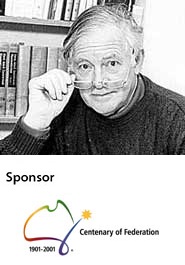
Hugh Tyndale-Biscoe was born in Kashmir, India in 1929. He attended the school his parents ran in Kashmir, then finished school in England. He was awarded a BSc from the University of New Zealand (then called Canterbury University College) in 1951. After a year of working at the Department of Scientific and Industrial Research, he returned to study at the University of New Zealand, receiving a MSc Hons.
In 1955 Tyndale-Biscoe moved to Pakistan where he taught biology in a college. Having decided that he wanted to do research, he returned to Australia to study marsupial reproduction at the University of Western Australia. He finished his PhD in 1962 and took up a lectureship at the Australian National University in Canberra. Tyndale-Biscoe moved to the CSIRO Division of Wildlife and Ecology in 1976 as the head of the marsupial biology group. His work on reproductive physiology of marsupials focused on the endocrine control of breeding. Later his research was directed towards looking for new methods of controlling rabbits and foxes, and he was director of the Cooperative Research Centre for Biological Control of Vertebrate Pest Populations.
Interviewed by Professor Frank Fenner in 1999.
Contents
- Early stirrings of interest in biology
- Learning through hypothetico-deduction and by discovery
- An introduction to rabbit ecology and reproductive biology
- A marsupial field study: the brush-tail possum
- A Socratic approach to elementary biology
- Quokkas and Antarctic organisms: studies in suspended animation
- The greater glider: impacts of forest clear-felling
- A windfall for museum collections
- The closing of a circle
- Returning to the embryonic diapause: lactational quiescence
- Seasonal quiescence: the tammar wallaby
- Endocrine control of seasonal breeding: the pituitary
- Photoperiod, clock information and seasonal breeding: the pineal gland
- The move to full-time research: setting up in CSIRO
- Competing to develop hormone assays
- Marsupial studies coming to fruition
- Times of change
- Dealing with the rabbit: to kill or to control fertility?
- Applying kangaroo experience to the rabbit: a frustrated approach
- Financial salvation, clinched by the foxes
- The crossroads: ceasing marsupial studies
- Tapping into the Cooperative Research Centres program
- A new turn of events: rabbit calicivirus
- Escape!
- Addendum
Early stirrings of interest in biology
Hugh, you had an early life that looks unusual to people who have lived all their lives in Australia. You were born in Kashmir, I gather.
Yes. My parents and my grandfather were missionaries of the Church Missionary Society. My grandfather ran a school for 50 years in Srinagar city and my father joined him in 1928. So I was born there as the grandson of the principal of the school and was made a bit of a fuss of at the time. My grandfather thought that I would be the third in succession.
Kashmir was a wonderful place to grow up. Spring is a really remarkable time there. After a very hard winter, with about 300 or 400 millimetres of snow, in March and April the whole place comes alive with flowers and lots of birds that migrate in to breed. Some of the Kashmiri masters in the school that my father and grandfather ran were interested in the animals. One in particular, a dear man called Samsar Chand Kaul, who wrote several books on the birds and flowers of Kashmir, was like an uncle to me as a boy and I got my first interest in birds and plants and butterflies from him – and also from my father, who had done agriculture at Cambridge and talked with me about biology.
As a student I didn’t think of a career in biology. I was expected to follow my father and grandfather, going to Cambridge and then presumably back to Kashmir. It was only towards my last years at school that I found biology was more interesting than history, and then I took it up at university.
Learning through hypothetico-deduction and by discovery
How was it that you went to university in New Zealand?
For most of World War II I was at my parents’ school in Kashmir. When the European war finished, my sister and I were sent in a convoy of ships taking English children back to England, and we finished school there. Because it was clear that there was no longer any future in India for British people, my father got a job as a schoolteacher in New Zealand. I followed my parents there and went to university in Christchurch.
I came under the influence of Edward Percival, a wonderful teacher who was the Professor of Biology at what was then called Canterbury University College. He made a big impression on me, both in the way he taught biology and also in his scientific method. During the war Karl Popper had been on the staff of the Philosophy Department at the College – probably as a refugee from Hitler. He was a very influential man, whose ideas about scientific method made an enormous impact on the Professor of Geology, Allen, and on Percival. Ideas of the hypothetico-deductive method filtered down to us as students and I remember applying it in the first research project I had, trying to set up an hypothesis and to test and disprove it.
How unexpected, to be exposed in early life to somebody like Popper, even indirectly.
In 1996, at a reunion of our group in Christchurch, some of the people reminiscing about the 1940s talked about having lectures from Popper. A story that I heard then resonated with my experience. Very irritated by students writing notes while he was lecturing, he made a deal with the class: ‘If you stop writing, I will give you all the notes so that you don’t need to write them down. And now you listen to what I am saying.’ By the time I was a student there, Popper had gone – to London, I think – but the stencilled copies of his notes were still circulating around the university and I got hold of a set of them. Ever since that time I have had an interest in him.
I was influenced also by Percival’s technique of teaching. He did not believe in undergraduate students, particularly in first-year biology, being able to have in the lab any books which told them that they were going to see this or that. Everything had to be done by discovery. Those of us who acted as demonstrators for Percival could not tell the students what was there. We could ask them, but they had to discover it. So every practical class was an act of discovery by the students – the whole class gradually ‘discovered’ the amoeba, saw it and had a new experience. Later I found that method of teaching very effective in Pakistan (with students unfamiliar with the English language) and here at the Australian National University.
An introduction to rabbit ecology and reproductive biology
What did you do after you got your bachelor’s degree?
My father supported me through the first three years at university but at the end of that I had to find my own way. In New Zealand at that time you did a first degree and then a master’s degree with honours, the honours being done with a thesis. I wanted to do my honours with Percival, but he went on leave so I waited a while.
I found that the New Zealand Department of Scientific and Industrial Research (DSIR, rather similar to Australia’s CSIRO) had just started an animal ecology section. Kasimierz Wodzicki, a Polish emigrant, had been put in charge of a group to look at the biology of the rabbit, which had become – as in Australia – a major pest in New Zealand, probably because of the lack of control during the war years. He recruited a small team of parasitologists, reproductive biologists and ecologists to study the rabbit in the wild. Percival gave me a good reference and so I happened to become an assistant zoologist to the reproductive group. We used to dissect 150 rabbits every month of the year, working out the breeding season and so on.
There was a funny little story about that. We had a field station up in Hawkes Bay, with a rather tenuous telephone connection through a forestry camp. Kasimierz Wodzicki used to come up and visit us from time to time, and we got a telegram spoken through from the forestry camp: ‘Arriving Friday night. Please arrange for 50 females.’ He had some project for which he wanted to dissect rabbits the next day, but the message caused quite a hoot in the forestry camp.
A marsupial field study: the brush-tail possum
At the end of that year I went back to university to do an MSc. When it came time for me to do a research project, Percival said, ‘Well, are you a vertebrate man or an invertebrate man?’ I said, ‘Oh, I think vertebrates,’ so he told me he had a jar of pickled reproductive tracts of the brush-tail possum and would like a solution to an old problem about the shoulder girdle of the possum. When the newborn is climbing into the pouch, its shoulder girdle is seen to have an articulation of the coracoid to the sternum, as in reptiles. All marsupials have this, which had been seen in the early part of the century as being a throwback, a phylogenetic left-over. Percival was interested in whether the muscles were also reptilian or were eutherian, mammalian.
At that time, very little was being done in New Zealand on the brush-tail possum. There was still debate as to whether it was really valuable as a fur-bearing animal or was causing serious trouble in the forests, and it wasn’t yet considered an important pest. But by this stage I was very interested in ecology and reproduction, through my work on the rabbits, so I asked Percival if I could expand the study beyond the comparative anatomy to a field study. He said yes, and that was the first work on the ecology of the brush-tail possum published in New Zealand. (George Dunnett published a paper in Australia, in about the same year as mine.)
Actually, the comparative anatomy question was a bit out of date: it had been answered in about 1917 but had got lost in the literature. All marsupials that have been studied have mammalian muscles. The coracoid articulation is probably a functional thing to give strength to the glenoid articulation, because the forearms are very important in the travel of the young from the cloaca to the pouch, but it disappears within about a week after birth. So it may be a phylogenetic relic, but it actually has a function at the time of birth, which is lost shortly afterwards.
A Socratic approach to elementary biology
Perhaps because my family background was beginning to have an influence, I was uncertain whether I wanted to spend the rest of my life working in DSIR on rabbits or to do other things. I wrote to the man in Kashmir who had succeeded my father, asking if there was any chance of working with him, but the letter I got back from him came from Pakistan, not Kashmir. He had got involved in the politics of India and Pakistan, favouring Pakistan, and had become persona non grata in Kashmir. He didn’t know what I had done or what my training was, but he said he would really like me to go to Peshawar, to the Frontier, to help set up biology teaching in a college there – and I said okay. My job there was to establish a laboratory and start a course in elementary biology for the students from the North-West Frontier. That was a lot of fun, and quite an adventurous time, but not for a lifetime. I gave it three years and then decided to go back to research.
Those three years in Pakistan were very good. The Socratic discovery method of teaching worked very well with the students and I learnt that Pakistani students were no different from New Zealand students – given the same type of teaching. The traditional teaching in India and Pakistan, however, was all rote learning, fixed questions in exams and so on. Strange things were said: teachers would never go to the library because a student might see them in the library and realise they didn’t know everything! In the first year that I was there, my students were getting very worried that I was teaching them things which were not going to be useful for the exam. But when they all got through the first exams, they were willing to do these rather weird things and they learnt to think for themselves. In later years I kept up with some of those students as they went on to medicine in Britain and elsewhere.
Quokkas and Antarctic organisms: studies in suspended animation
Actually, I first met you on my way to Pakistan, when I talked to the people in Wildlife (at CSIRO, in Canberra) about the rabbit biology work we were doing. I also called in at Perth, where Harry Waring, Professor of Zoology at the University of Western Australia, invited me to go back if ever I wanted to do a PhD. I kept that in the back of my mind.
Harry was a very good influence in the early days of zoology in Australia.
He was the first person to make it respectable to study Australian marsupials. Before his time, to do a PhD in biology you really had to go and study problems in Britain – or perhaps America.
In fact, there weren’t any PhDs at all in Australia till 1947.
Or in New Zealand either. You had to go somewhere else to be polished.
From Pakistan I came back to do a PhD with Harry Waring. Geoff Sharman, before going on to Adelaide, had worked on reproduction in the quokka, the little wallaby that lives on Rottnest Island. The quokka had become the major experimental animal for everybody in the Zoology Department in Perth, so although I had worked on brush-tail possums in New Zealand, Harry Waring said, ‘Well, now you’re here you should build on our knowledge and work on the quokka.’
Geoff had discovered the extraordinary phenomenon of embryonic diapause, the fact that in the kangaroo group the embryo goes through to about 80 cells but, if the female is lactating with a previous young, it stalls at that stage and nothing further happens until the first young vacates the pouch. Then development starts up again. This was obviously very interesting. It does occur in other mammals, but we had an opportunity to start looking at the endocrine control of the process.
In my PhD project I used techniques of surgical removal of the corpus luteum at different stages of pregnancy and then eventually, through learning the techniques from Wes Whitten at the John Curtin School of Medical Research in Canberra, transferred blastocysts from one mother to another to identify the important factors in controlling this diapause and releasing the embryo from it. Actually, that has been a theme of my research almost to the present time and has proved that fascinating mechanisms are involved – and some unexpected ones.
During my three years there working on the PhD, I made a trip to the Antarctic in the summer of 1959-60. I was a member of the New Zealand Alpine Club, which had organised an expedition but found the Americans would accept it only if it had a scientific base. The club looked for people who had climbing experience but could contribute scientifically, and so I went as one of the biologists. The biology was quite different from wallabies in Perth, but it was interesting. We surveyed an area beside the Beardmore Glacier and discovered Collembola, springtails, and mites living there at 84 degrees south. It was at the time the most southerly record of living organisms, and made a little bit of a flurry. One of them was given my label, Biscoa sudpolaris.
Those animals must be frozen solid for probably eight months of the year. The rocks are very dark – black – and where they emerge through the ice, which they do on the mountains on the side of the Beardmore Glacier, you get meltwater forming because the absorption of radiant heat from the sun melts the snow just beside the rocks, forming little damp patches where lichens and mosses grow. And in these lichens and mosses are the little organisms, which must have a very short active period before going back into a frozen state – extraordinary.
The greater glider: impacts of forest clear-felling
By then the Canberra University College had just set up its Faculty of Science and you were offered a lectureship.
Yes, but by the time I took up that position – which was a year later, for a number of reasons – the College had been forcibly amalgamated with the Australian National University, much to the indignation of people at the ANU. I started a research project on marsupials and started getting PhD students. (They were assigned to an official supervisor in the Institute of Advanced Studies, though, because the Faculty was not allowed to have PhD students. That, of course, rankled a lot.)
So began the two projects on marsupial biology during my time there, both arising from projects of my students. First, Roger Smith – whom Geoff Sharman had sent to me from Adelaide – wanted to study reproductive biology in marsupials but didn’t really know what topic to take. When we asked John Calaby, who had all the wisdom about what was possible, what marsupial in this area would make a good research project, he said, ‘Well, the commonest animal in the forests around here is the greater glider, and there’s nothing known about it at all. Why not do that?’
Roger and I went out and looked for greater gliders in the forests near Tidbinbilla, but when we saw them about 60 feet up in the tops of the gum trees we said, ‘How the heck are we going to study these animals?’ We nailed cage traps about 30 feet up – as high as we could get – but they didn’t come into the traps and we were beginning to think that this wasn’t going to be a very suitable study. Then we heard that forests were being knocked down at Bondo, near Tumut, and lots of animals were coming out of the trees so we should be able to get all we wanted.
We drove over to Tumut to collect some animals and bring them back to the lab, but as soon as we saw the site I realised we had a wonderful opportunity to study the impact of forest clearance on animals in the forest. This was a patch of about 5000 acres of eucalypt forest, still standing. On one side of it was pine plantation from earlier clearing operations, and on the other side was farm land that had been cleared before. About a thousand acres a year were going to be felled for the next five to six years, and the only place for the animals from the felled area was to go into the forest which would be felled the next year.
We immediately changed Roger’s project to follow the felling for the next three years. We had two people out there with hard hats on, and as the bulldozers pushed the trees over we’d rush out and catch the animals, tag and measure them and so on, and let them go. So we got two studies in one. One study was the biology of the animals at the time that they were disturbed, in what we assumed was their normal place in the forest, and that gave us information about the distribution of the animals in the eucalypt forest and their biology. Then, from what happened to them afterwards, we got a measure of the impact of clear-felling on the population.
That showed very clearly that, although the animals were not damaged by the felling itself because they could glide out of trees, virtually 80 per cent were never seen again. Even though 20 per cent were recovered during that felling period, when we went back into the next bit of forest a year later we never got more than about 5 per cent of the ones from the year before. This was the first study in Australia to show the devastating impact of forest clearance on wildlife. Because all the animals that we were handling were protected fauna, we had to get a permit from New South Wales. But, in fact, at the end of three years we were able to tell the fauna authorities that virtually everything dies in this situation.
And that applied not only to the glider but to other animals as well?
We didn’t really look at that. That is a pity, but at the time the gliders were the most abundant and we just concentrated on them.
A windfall for museum collections
After the first three years, when Roger Smith got his MSc and went off to Canada, I continued the study with other students. We started doing more manipulative things because we could show the fauna authorities that the animals were all going to die and so we could get permission to actually shoot animals before the forest was felled, in order to test our ideas about them. We wondered whether the reason why so few survived the clear-felling was that there was nowhere for them to go – the remaining forest was already occupied. So we started a number of experiments where we would shoot out the residents of the forest that was going to be felled in a future year, depleting it to see whether the displaced animals would be able to move in there. They didn’t, which means that they don’t move from their home territory. If their home territory goes, they die on the site. We now know from much later work on eucalypt forest that probably the fat reserves in these animals are so low that they are living on the edge, and if they do not get food for three or four nights they will die.
It was difficult to do anything rigorous in the forests. The forestry commission tolerated us but didn’t see us as being serious, and basically we had no rights at all. On a couple of occasions in the late 1960s, although the worth of having invested a whole year of preparation in selectively shooting out a forest depended on the forestry people telling us when they were going to fell, they didn’t do so. They would tell me after it had happened. Such a waste of time, to have a year’s work sabotaged because the forest was gone, shifted my main interest back to reproductive biology.
Disagreeable though it had been, however, to go through the forest shooting those beautiful animals, because I knew they were all going to die anyway I wrote to all the museums around Australia asking if they would like to take advantage of the chance to get really good series of animals from one locality. Most museums have one or two specimens, but when David Ride was director of the Western Australia Museum he had alerted me to the importance of having good series. Three museums took up the offer. The National Museum in Victoria sent up a team to collect 50 skins and skulls, all from one area in 1966, as did a team from South Australia, where Peter Crowcroft was the director. The West Australian Museum took 100 – from an adjacent area – asking us to send them in formalin. Also, quite a number of skulls went into the National Wildlife Collection in Canberra. And there they lay for 30 years.
The closing of a circle
Interestingly, David Lindenmayer, at the ANU's Centre for Resource and Environmental Studies, recently started a study of the survival of animals in relict patches of eucalypt forest buried in pine plantation. Quite serendipitously, without knowing where we had worked in the 1960s, about five years ago he chose the very same area for his study site and somebody recommended that he come out and see me. I was very interested to hear that he was finding gliders in those little patches, because I had assumed from our study that they would have died out forever. The density is about one animal per hectare, and if 20 hectares are left, theoretically the maximum population of 20 animals would hardly be viable.
I told David of the big series of animals taken from this area at the time when the forest was felled, and suggested that we could now do DNA analysis of the original population and the small populations in the present day relics to see whether they show genetic drift or founder effects, or whether they are animals coming in from 10 kilometres away – although our experience in the ’60s was that they couldn’t even move 2 kilometres across country which was not eucalypt forest. David is now the major leader of that big project and Andrea Taylor, from Monash, is the DNA expert. I am involved a little bit with David and we are about to look at a real test of population viability analysis. There is a lot of theoretical stuff on it, but hardly any actual tests.
Having that material from 30 years ago is strengthened tremendously by the ability now to do DNA analyses of it.
It is a vindication of museum collections, as had been argued by the Victorians and others. Dick Schodde, Director of the Australian National Wildlife Collection in CSIRO Wildlife and Ecology, argues that history is stored in the specimens. From skulls or skin apparently you can get quite good quality DNA. We have 400 specimens from that time – not counting the West Australian ones, which unfortunately we were asked to put into formalin. We can’t use them because, apparently, the formalin breaks up the DNA. But who knows, it may be possible in the future. The project is a wonderful closing of a circle, however, using the work which we did in the ’60s.
Returning to the embryonic diapause: lactational quiescence
What was your other project on marsupial biology during those years at ANU?
Ever since I came to Canberra I had been looking for a small wallaby or macropod which would make a good experimental animal to investigate the embryonic diapause – the state of quiescence in the kangaroo blastocyst, where no cell division occurs, no expansion of the embryo, while the mother is lactating a previous young.
I will explain later a complication with the tammar wallaby, but essentially what Geoff Sharman discovered was that pregnancy in kangaroos is equal in length to the oestrous cycle, whereas in all other marsupials it is much shorter than the cycle. In the brush-tail possum, pregnancy is 17 days but the oestrous cycle is 25. A female that becomes pregnant gives birth on day 17 and then suckling by that young in the pouch suppresses the ovary and there are no further oestrous cycles while lactation occurs. In kangaroos, the baby is born on the day that the female comes into oestrus. So she has what is called a post-partum oestrus: she mates a few hours after she has given birth. The egg fertilised at that time develops for about 6 days while she is suckling the newborn young, and then everything is suppressed. It just stays totally dormant while the baby is in the pouch, which in the case of both the red kangaroo and the tammar wallaby is about 7 months.
Geoff showed later, in CSIRO, that as the baby is growing up and about to leave the pouch, its suckling incidence declines as it eats grass. That diminished frequency of suckling releases the corpus luteum from its inhibition; it starts to grow and secretes progesterone; and that stimulates the embryo to start to grow again. Once that starts it can’t stop. Pregnancy then continues to completion and the female gives birth again, by which time the older baby is out of the pouch. Indeed, in some kangaroos the mother throws out the first one and won’t let it back in, on the day that she gives birth. A female kangaroo has four mammary glands and the older young has been feeding only off one of them, so the new baby attaches to one of the three unused mammary glands and that one starts to produce milk of an entirely different constitution, an extremely watery secretion that is appropriate to this newborn baby.
The very early milk contains galactose in the first day or two but then produces oligosaccharides based on galactose, instead. There is very little fat and very little protein in that early milk, but the milk slowly changes through lactation. The carbohydrate moiety goes down, the fat moiety goes up, protein goes up, and towards the end of lactation a very rich milk is being produced. A female red kangaroo can have one mammary gland producing rich milk for the baby that is out at her feet and also be making the watery milk for the newborn. And if conditions are good and the female has already weaned off another one, one of the other mammary glands is regressing from the earlier state. All four glands are in a different state of physiology.
This fascinating puzzle – it doesn’t fit the classical view of the endocrine control of lactation by prolactin – is one of the things we cracked later, at CSIRO. In a cow, for instance, if the calf suckles, the prolactin level goes up and that stimulates the mammary gland to produce more milk. So there is a simple feedback between sucking and milk production. But the kangaroos don’t change the concentration of prolactin. In the tammar wallaby there is no difference in prolactin from a lactating and a non-lactating female through the whole of the first few months of lactation. The sucking young stimulates an increase in the number of receptors for prolactin on the epithelium of the mammary gland, changing not the number of ‘arrows’ coming in but the size of the ‘target’. The level of prolactin stays the same but the mammary gland that the baby is attached to opens out, takes it all and is stimulated.
Seasonal quiescence: the tammar wallaby
You haven’t told me how you got onto the tammar wallaby.
We started off looking at the little rat-kangaroo, Bettongia lesueur, which lives on the islands of Western Australia. (It had been common right through continental Australia but had gone with the sweep of the rabbit.) The animals proved not to be amenable to close captivity. They weren’t docile enough – they fought.
Pat Berger, a Fulbright scholar from Louisiana, had come to do a PhD with Geoff Sharman, who put her onto studying the breeding of the tammar wallaby on Kangaroo Island. She discovered that although the tammar has a very strict seasonality to its breeding, the seasonality is not conventional. The female goes through the process of producing a blastocyst while it is suckling young, and that happens in February each year – the major time when the babies are born. If you take a baby off during the first half of the year, up to the winter solstice, the female will reactivate her blastocyst, give birth after a month, have a post-partum oestrus, produce another dormant blastocyst and now carry the new baby forward. But if you do that procedure after mid-winter, the blastocyst is not reactivated but continues to remain dormant in the uterus – in the absence of a young in the pouch. This seasonal quiescence, as distinct from lactational quiescence, is controlled not by sucking but by photoperiod.
About 6 weeks after the summer solstice, all the females on Kangaroo Island give birth again. Ninety per cent give birth between 20 January and about 10 February, and the remainder a month later – the latter did not have a stored blastocyst but they went through the cycle and then became pregnant. There is a tremendous amount of sexual activity on Kangaroo Island between 20 January and the middle of February. Almost every female is giving birth and having a post-partum oestrus, so all over the paddocks there are females hopping around with a queue of about seven males hopping along behind.
For the rest of the year the males have very little to do, but we discovered that they are not seasonal. If you separate them from females, testosterone and luteinising hormone levels in males stay at a basal level all through the year. If they are with females from December through to February, their testosterone and LH levels go right up. So they are tracking the changes that are going on in the female. If they are excluded from females they don’t track that and they are not ready for the massive breeding in February.
We think that probably the tammar was a non-seasonal animal like the red kangaroo, which got isolated in the southern latitudes on Kangaroo Island and other parts of southern Australia and cobbled together a new kind of seasonality, which is dependent on keeping the corpus luteum in a state of suppression until the summer solstice and then letting it go. And the male just tracks the female.
The Bennett’s wallaby on Tasmania has done the same thing, but the red-necked wallaby, which is the mainland version of the Bennett’s, is like a red kangaroo. So in Tasmania it has probably evolved the same pattern independently.
In the southern areas, where the seasonal change is bigger?
Yes, where there is a selective advantage to having the babies all emerging from the pouch in the spring – whereas of course in Central Australia there is no such advantage. Reproduction is geared to the uncertainties of the climate.
Endocrine control of seasonal breeding: the pituitary
After discovering this extraordinary photoperiod-controlled embryonic diapause, Pat Berger went back to America. Among my students who were getting interested in this was Marilyn Renfree, whom I sent to Kangaroo Island to bring back some tammars for study here. From them we built up our nucleus of a breeding colony, kept at the CSIRO Division of Wildlife Research. The tammars have proved to be wonderful animals. They are very docile, they breed happily in open pens, and that colony has continued to be self-sustaining for 25 years with virtually no input from Kangaroo Island any more.
We started looking at the whole endocrine control of this process, from the environment through the brain to the pituitary gland, to the ovary, to the uterus, to the blastocyst. Various people took different parts of the program, but John Hearn and Marilyn probably contributed more initially than any others. Marilyn worked on the interaction between the uterine secretions and the embryo: what secretions are being produced by the uterus which switch on the embryo, and how are these being controlled by the ovary? I worked on the ovarian part of it and transferring blastocysts, as I had done for my PhD.
When John Hearn wanted to work in this program, I proposed that he tackle the pituitary – a really tough one. No-one had ever taken out a marsupial pituitary gland or measured pituitary hormones in a marsupial. And he did both, during the 3 years that he was here. He taught himself how to do the operation and his animals survived for up to 2 months after, with care. They had to have salt provided to them because their adrenals and their thyroids were all shot, as well as their gonads.
Our working hypothesis was that the corpus luteum is controlled by the pituitary gland withholding a luteotrophic stimulus, a stimulus to the corpus luteum. The conventional way the pituitary controls the ovary is by sending out stimulatory signals. If it withdraws the stimulatory signal, the ovary just stops – anoestrus. We thought that if John was able to take out the pituitary gland, the ovary would shut down and the blastocyst would not develop.
Eventually he could get out the pituitary gland. But, to our absolute amazement, when he opened up these animals two or three weeks later to see what was happening, they were all in late pregnancy. They shouldn’t be! This was completely contrary to conventional wisdom. It was saying that the pituitary is providing a tonic inhibition all the time, holding back the corpus luteum. If you remove the pituitary, you remove an inhibition and the corpus luteum is actually autonomous. There had never been any indication of that before. We had to completely rethink our ideas to ask what inhibitory substance the pituitary is producing.
John finished his PhD at that point and went to Edinburgh to work with Roger Short. I thought I had better get on and find out what this principle was. The first thing I found was that I didn’t know how to do the hypophysectomy! It took me 2 years to master what the PhD student had done. Then, having confirmed what he had found, we discovered that the principal hormone acting as an inhibitory substance was prolactin. That fits nicely with the fact that it is during lactation that this thing is suppressed, because during lactation prolactin is being secreted and is acting as a tonic inhibitor of the corpus luteum. When subsequently Francesca Stewart came to join the group at Wildlife, she showed that the concentration of specific receptors for prolactin in the corpus luteum was higher than in any other tissue in the body, even the mammary gland.
Photoperiod, clock information and seasonal breeding: the pineal gland
The model looked to be that the pituitary is inhibiting the corpus luteum through prolactin, but the question was what happens in the second half of the year, when the animal becomes sensitive to photoperiod. There is no suckling then. Is there still prolactin? At that time another PhD student, Steve McConnell, joined Richard Mark to work on the brain. Richard and I suggested that he might like to look at whether the pineal gland is involved – for which he managed to learn to do surgery from above the head to remove the pineal. We got some very paradoxical results with that.
The pineal is a very strange organ: although it is an endocrine organ it doesn’t work in the same way as others. Melatonin is not a simple hormone that affects a target and has a dose-response effect, but is much more like a neural messenger. The important information is usually the duration of the animal’s exposure to melatonin, rather than the concentration – as long as the concentration is above a minimum.
Steve found that the animal will remain in seasonal quiescence as long as the female is exposed to a summer-length photoperiod. A shortened photoperiod – increased night length and decreased day length – is a very potent signal to start everything up. And if you take out the pineal gland, you remove this reading of photoperiod.
He also adapted an assay for the hormone melatonin, which is secreted by the pineal. The secretion of melatonin, as is known in other animals, is high during the dark phase and low during the light phase. With the assay we could see that if you changed the night length, the melatonin changed on the very first night that the lights went out earlier but the response time for the animal was about 3 days longer than would be expected from other work. If you remove the pouch young, the baby is born 26 days later. If you start giving melatonin, the baby is born 30 to 32 days later. The question was: why those extra days?
Initially we thought that the melatonin level did not go up for the first two or three nights, and so it took that time for the animal to learn. But that wasn’t true. It goes up on the first night. The next argument, that it took the animal three nights to read the message before the process took off, did seem to be true. And if, instead of changing the photoperiod, we just gave an injection of melatonin at the time when the lights might go off, that was just as effective.
Then we found that you didn’t even need to have elevated melatonin between the beginning and the end, but just the punctuation mark. With a melatonin injection, 12 hours of light, and another melatonin injection, the animal thought it had had a 12-hour night – just amazing. That led to the idea that there has to be a centre somewhere in the brain which is computing this information about time. That is still an open issue: how do they read time, and how do they store that information for, say, three nights and then decide the signal is real and go to the next step?
Since I retired I have been hoping to do the experiment which would find and explain that centre in the brain – in the hypothalamus, probably. The tammar would be a very good animal for this because it has a response time that is much shorter than in the conventional animals that are used. The hamster takes 3 weeks to respond to a change in photoperiod and the sheep takes 6 weeks, but here is an animal which takes 3 days. So you actually should be able to find it.
I had hoped, when I joined the ANU's Research School of Biological Science 4 years ago, that I would be able to use PET scan (positron emission tomography) to see hot spots in the brain. That may well be true in the future, but at that time there were no PET scanners in Canberra – it is extremely expensive to get onto one, anyway – and also the people running those machines reckoned that the site I am looking at in the brain would be too small for them to detect it. But things are changing so fast in this field that this is probably the way it will go. It would be a big advantage over what we are trying to do, which is to infuse radio-labelled 2-deoxyglucose and see where it gets sequestered in the brain.
While we know that in mammals there is a so-called clock in the suprachiasmatic nucleus, near the optic nerves, this is not the clock. I am interested in where the clock information is read. I may have a clock in my hand but unless I read it, it is no use. Somewhere there has to be a place where the information is being read and interpreted, and then a response made. I think if we could find it in the tammar, it would point to where it probably is in other mammals, including ourselves. So it might have some use.
The move to full-time research: setting up in CSIRO
You carried that sequence of research through from the Department of Zoology in ANU to CSIRO and, more recently, to RSBS. What made you move on to CSIRO?
At the end of 1972, when John Hearn and Marilyn Renfree finished their PhDs, there looked to be a really exciting prospect coming up. A lot of nice stuff was opening out, with people joining the group such as Phil Moore, who had worked on RNA activity in early embryos – the initial awakening of the blastocyst – during a QEII (Queen Elizabeth II) Fellowship. I really wanted to get into this research as a full-time commitment rather than alongside undergraduate teaching, even though I had enjoyed the teaching. I approached Rutherford Robertson about joining RSBS but that didn’t come to anything. I was invited to go to the London Zoo and went to look at working there, but I really wanted to work on marsupials and doing that from London seemed a bit silly.
Having heard of a feeling that there ought to be more physiology in the Division of Wildlife Research at CSIRO, I approached Alan Pierce (the biological member of the Executive of CSIRO) and gave him a three-page outline of what I had in mind. It was based on this work on the endocrine control of breeding in kangaroos and on growth of pouch young, development of physiological function in the pouch young, and digestive physiology – various aspects of physiology – and it was taken up. Harry Frith, the Chief of the Division, had been very supportive of me all along while I was at ANU and he was supportive of this idea.
CSIRO decided to create a new Marsupial Biology Group, and transferred three scientists from Animal Production in Sydney who had had an interest in marsupials but then had been working on wool. The wool money was collapsing and they were looking for something else. The job of leader was advertised and I was appointed to it, moving to Wildlife at the beginning of 1976.
It was a bad time to move, because the Whitlam government had been brought down in November 1975, the 'Razor Gang' had come in and the funds were all going to be cut. I wondered whether I had made a very foolish decision. However, the cuts did not immediately affect CSIRO and Harry Frith gave me some very good support, including a building to turn into an animal house and surgery and so on, and salaries for four people – two scientists and two technicians – on top of those who had been transferred. It was wonderful. I had a budget which was very expandable – there was no question about not having any money – and I didn’t have to do any teaching.
I was able to recruit some really good people. Rob Sutherland, who is now the Director of the Garvan Institute in Sydney, came from the John Curtin School and got the assays for the pituitary hormones up and running. Francesca Stewart was enrolled for a PhD in Cambridge but her husband was in CSIRO, so she came and did her research on the mammary gland with us, developing all the new techniques for receptor assays and receptors for hormones.
Several people who were already in the Division came into the group. Brian Green took on work on the lactation of kangaroos, opening up the whole field of the milk composition and how it changes through lactation. And Lyn Hinds was appointed as an experimental officer but eventually did her PhD, becoming the expert on the prolactin and progesterone hormone assays. So we had a real ferment of research going on, looking at not only the control of the reproductive cycle/embryonic diapause but also lactation and the growth of the young.
Competing to develop hormone assays
That was a great, productive time. We solved a number of questions which had been around for a while and got the assay systems going – in fruitful but quite intense competition with a similar lab which Marilyn Renfree had set up at Murdoch University, in Western Australia. We learnt that the level of hormone that is important in the wallaby is far lower – maybe a hundred-fold less – than in the conventional laboratory and farm animals. The normal levels of, say, progesterone in the blood of human beings or sheep, for example, are about 10 to 40 nanograms. In the wallaby, the normal level is 100 picograms and 200 to 250 picograms is actually a peak – if you use conventional progesterone assays there seems to be nothing there. With oestrogen the important level is under 20 picograms, and again you miss it with standard assays.
The two groups, in the west and the east, were striving to find out how we could measure this accurately. And in competing we would always be challenging each other. If the others said they had measured progesterone, we’d say, ‘Oh no, come on, you haven’t measured progesterone. What’s the sensitivity of your assay?’ We were both being pushed, pushed down until we got something which we all agreed on. All macropods seem to have this very low level of hormone, but it is still very important.
One spin-off has been that elephants also have extremely low levels of progesterone, which can’t be measured by standard methods. So Lyn Hinds has become the expert on measuring progesterone in the elephants at the Melbourne Zoo, because our assay will measure real levels.
Marsupial studies coming to fruition
There was also some very nice work done by Peter Janssens and his students from the Zoology Department, ANU. Because of all our studies a lot of pouch young were available, and so that they would not be wasted, Peter used to put honours students onto different projects. One student, for example, would study the development of the adrenal gland right through pouch life; another, the thyroid gland; another, the liver function; another, kidney function. One by one, all the systems in the tammar were being worked out.
Richard Mark, when he started work at RSBS on the development of the brain, asked me to suggest an experimental marsupial. ‘Why not use the tammar?’ I said. ‘It’s a really good animal and we can let you have as many pouch young as you like.’ And so they started with the tammar, as did several other groups around the country. Because we had this big breeding colony – 700 animals at its peak – and in those days CSIRO didn’t have to get money back for everything, I would just tell anybody who said they wanted to work on a problem in kangaroo biology to come and collect them. That is, in a way, why the tammar has become the favoured experimental animal. Now there are colonies in many universities around the country.
Originating from the group you brought in?
Not all. A number of people have gone back to get the animals from Kangaroo Island. But the strength is that we know that everybody’s results are useful to everybody else, because they are in the same species of animal.
A tremendous strength, just as the hamster has been so fantastically useful, and of course the lab mouse.
When I first got involved with marsupial biology, in the Waring days, everybody would take a different species. If somebody said that cortisol levels were very low in the brush-tail possum, you didn’t know whether that was a peculiarity of marsupials or of that animal or of that laboratory. Nobody could ever really challenge anybody else. When a lot of different people worked on the same species, the same wallaby, you could challenge them. If you didn’t agree with them, they couldn’t get away by saying, ‘Oh well, my species is different.’ We started to get much harder data.
A much better way of getting principles, rather than just detailed, fragmentary stuff.
It was really important to get the basic knowledge of marsupial biology. Now we are moving into a later phase: people are picking other species and asking whether, say, the Tasmanian pademelon or the parma wallaby is different from the tammar wallaby. We have got our core species; now the others are compared against it.
And you have developed your accurate assay methods.
All these things came to fruition in two books. The book that I co-authored with Marilyn Renfree, Reproductive Physiology of Marsupials, was written in 1985 and published in 1987, and in 1988 we published a volume I had edited with Peter Janssens called The Developing Marsupial, in which we looked at all the work that was being done on the way in which the physiological function of the young develops through pouch life. It is a wonderful model for the development of physiological systems.
That would be the first – and still the only – comprehensive book in the field.
Yes. It arose from a conference in 1986. Rather than compiling the proceedings of the conference, Peter and I agreed to invite chapters on the different systems. That allowed a different style of writing.
Times of change
By then things in CSIRO were changing very drastically. The Division had changed its name to Wildlife and Ecology and had changed its focus to become a much broader ecological division, with plant ecology, rainforests, rangelands and all sorts of other things – much bigger and stronger, with a Chief whose vision was of that kind of work and who really didn’t understand the kind of physiology that my group was doing. We came under considerable threat from the others in the Division, particularly because funds were no longer so easy to get and everybody was having to fight much harder to justify the money they had. Our group’s presence there at all was under question: perhaps, because this was not applied work, we should be at the university. We were more and more on the outers of the Division, without quite knowing how to respond because it didn’t seem that any of the arguments we put up were going to work. The moment of truth came in 1987.
Dealing with the rabbit: to kill or to control fertility?
How did that come about?
Some years earlier the work on rabbits, which had been a key area in the Division, was winding down with the retirement of Bill Sobie, who was a virologist, though not a molecular biologist. It seemed from his work and your earlier work that the interaction between rabbits and the myxoma virus had pretty well stabilised and there was no benefit in trying to get a better myxomatosis, because it would just get selected out. By then I was Assistant Chief. My feeling was that we should drop all the work on myxomatosis, that it had run out of steam and there was no benefit in continuing it. The Chief agreed with me, and we gave notice to the Wool Corporation and the Meat Research Corporation that we were going to discontinue the project. They wouldn’t have a bar of it, saying that we must recruit a new scientist to take Bill Sobie’s place and if we had problems with money they would provide, between them, a whopping grant of $500,000 a year to continue work on myxomatosis. That was too good to pass up.
About then I was given control of the group and we advertised for a scientist to do the work. Steve Robbins applied – a good virologist who had modern techniques and knew molecular biology, which then was just coming in. The interview was quite extraordinary: he talked about what he would do and he started asking some questions, such as whether anybody there knew the genomic structure of the virus. To all these questions the answer was no, and you could see him expanding as he realised what a goldmine he had. These people were going to give him all this money, and they didn’t know anything about it! He accepted, recruited two or three other people and set up a team.
For the next 2 years they did some really good, important work, finding that the myxoma virus had a lot of homology with vaccinia. Steve’s remit was to look at the molecular structure of the virus in order to make a more virulent virus that would kill more rabbits. They were thinking of putting in genes which would kill rabbits more quickly, but it all seemed to me pretty futile because from your work it seemed that that would all be very quickly selected against in the field.
Steve was very independent and pretty well worked on his own. I didn’t have much to do with him directly, although I was his program leader. Then one morning when I opened The Canberra Times, there in the last paragraph of an article by Graham O’Neill was a throwaway line quoting Steve as saying, ‘Yes, we are going to try and put in these genes which will make the virus more virulent – or we could put in genes which make the rabbit infertile.’ I just thought, ‘What? There is something.’ Ever since joining the Division I had wondered if there was any way in which the work we were doing on reproduction could help to control the rabbit. The big problem with rabbits is that they breed so fast. If you kill even 99 per cent of them, they just come straight back. You need something which stops them breeding, but how could you ever find such a thing? That throwaway line made me see that there was a possibility.
Applying kangaroo experience to the rabbit: a frustrated approach
I realised that from the work we had been doing on the tammar wallaby we had the background to know what gene could be put into the virus, which might affect reproduction. I raced in to work that morning with the newspaper and suggested to Steve that we could put in the gene for gonadotrophic releasing hormone, because I knew there were a number of antagonists of GNRH which block its function, and that would effectively make the animal castrated – it couldn’t breed – but would not kill it. It seemed to be something which his group and mine could do together, and he was quite interested.
Immediately, in 1987, we put in a couple of grant applications but both were knocked back. The first was to the Rural Credits Development Fund, who I thought were sure to give us the money. But they didn’t. Don Drover, the scientist in charge, said they thought it was too innovative!
The second application was to the Wool Corporation, saying that this was a better way of going with the myxoma virus than killing. In the presentation I said we would use GNRH, because it is a very small molecule – only eight or nine aminoacids – so the gene would be easy to put in. The head of the Wool Corp at that time was a scientist who saw the problem straight away: all mammals have the same GNRH. He said, ‘Hang on. You want to put something in here. What if it gets into my sheep? Is it going to make them sterile too? Or into my daughters – even worse! We’re not touching this one.’
Then, at a workshop in the Division, I presented our ideas to Alan Newsome’s group working on rabbits. Ian Parer, a very good critic, said it would not work: ‘A castrated rabbit just loses its position in the hierarchy and another rabbit will take its place. You won’t have gained anything.’ That seemed a fair criticism. Since we couldn’t get money and the ecologists were saying it wouldn’t work anyway, it stalled.
Financial salvation, clinched by the foxes
In July 1988 I went to a conference in Kyoto on the embryonic work for delayed implantation. Jurien Deane from the US National Institutes for Health gave a paper reporting that NIH had just cloned the gene of the zona pellucida (the outer coat of the egg) of the mouse, and describing the genome for it. I thought, ‘Ah! Here we have something. Rather than GNRH, let’s go for zona pellucida. The Wool Corp can’t be worried about this, nor can Ian Parer because the animal will be infertile but will still have its ovaries functioning, so it will retain its dominance in the group.’ Over lunch I asked Deane if it was feasible that we could put the gene he had into the myxoma virus. He called it a great idea, generously offered to let us have the gene, and has been a very good supporter ever since. I came back all enthusiastic, thinking I could now bowl over the Wool Corp, but they weren’t listening. The shutters just came down: they would not accept that the new proposal was different from the previous one. So that was out.
At that time, however, Bob Hawke as Prime Minister provided extra money to CSIRO – as a result, actually, of Max Whitten’s intervention.
Probably Ralph Slatyer had something to do with it. He was Chief Scientist then.
Anyway, CSIRO had had a cut but Max Whitten, Chief of the Division of Entomology, who was very politically adept, told Bob Hawke, ‘Look, if you keep cutting CSIRO like this, we’re just going to give up: we’re going to have to stop doing our work in Tasmania and here and there. You should be putting more money in, not taking it away. What it really needs is $60 million extra.’ Evidently Bob Hawke agreed, and so $60 million over 3 years came to CSIRO. In the sudden scurry to find a new, modern project I put up this one, it went in on Jim Peacock’s budget for gene shears – it was considered to be molecular biology – and we got money.
Also, John Stocker, Chief Executive of CSIRO, was very good. Being persuaded that this was worth funding, he gave a continuing grant to the Division for the work. So with John Stocker’s money and then gene shears money, finally we were able to start the rabbit work.
At about the same time, Bob Hawke got concerned about the extinction of native fauna. In a document called Our Country, Our Future, the fox had been identified as a big factor in that extinction – the sheep should have been identified, of course, but instead the fox was. The Division then got called on by the government to come up with a way of controlling foxes. It was in my program, so I put up a paper stating a number of options and saying, ‘It is going to be very difficult, and you can go from the simplest and possibly least effective through to the most complex and most expensive.’ The cheapest would have been putting out baits of stilboestrol, which was known to affect breeding in coyotes in America; that could be done almost straight away. Then it went through several other options to the most difficult – viral-vectored immuno-contraception – where we didn’t have a virus, we didn’t know anything about the reproduction and we didn’t know anything about the immunology. I said, ‘This is really very risky and probably shouldn’t be tried at this stage.’ However, of course, they said they wanted the best for the least cost.
We had said that for the immuno-contraception we would need $300,000 a year for 5 years, but we were offered only $120,000 so I said no, we were not going to take it. I said to Brian Walker, ‘There’s no point. We haven’t got the resources. If we have to do this with underfunding, it will draw money away from the rabbit work, which has much more prospect of success.’ I was told that if a minister offers you money, you never refuse it. But we did. So they had a big workshop which convinced them that they should support us properly, and we eventually got the money. We could now recruit scientists to work on the fox and some to work on the rabbit, all under the one roof and interacting.
The crossroads: ceasing marsupial studies
About then we had to stop the work on marsupials, because everybody in the Division saw this concept of immunising animals against their own reproductive proteins and using a virus as the agent to carry the immunogen to the animals as something with great promise for future control. Many of the people who had been very critical of my group were now very generous in their tremendously strong support within the Division. I tried at that point to say that we should have new money for the new project so that we could continue the marsupial work, but the Chief and the program leaders just said no, we would have to choose which to do. So we were really stymied.
We had a meeting of the whole group to weigh the increasing difficulty in studying marsupials without support from the Division against the need to be wholehearted about the new project if it was to work at all. I thought we really should go with the fertility control and say that we could not continue to compete in marsupial work. Lyn Hinds and I and some others decided to drop marsupial studies but Kevin Nicholas decided to stay with lactation and Brian Green with marsupial physiology. (They did that, but their resources dwindled and inevitably they became vulnerable to cutbacks in the Division.) So then all the other resources of our group and whatever we could get went into the new work.
Tapping into the Cooperative Research Centres program
Then in 1990 the CRC program was introduced by Ralph Slatyer. We put in a bid for the first round but we were not successful because at that stage we didn’t have any results, just a promise. Most of the referees who read it said it was a brilliant idea but very risky, and we hadn’t demonstrated that we were capable of actually doing it. They would not give us 7 years’ money for a proposal which they considered premature.
I felt disappointed, but I was encouraged by Ralph Slatyer and then by Gus Nossal, at the AGM of the Academy, to resubmit the proposal in the second round because Gus and several others thought it would turn out to be great. By the time we applied on the second round, we had some good runs on the board. We had recruited two good scientists (and support staff) who were working so fast that they had already isolated a whole lot of antibodies from fox and rabbit sperm; they were beginning to purify the zona pellucida; and we were looking for viruses for foxes and had identified two or three. Everything was burning along. In the myxoma work, Ron Jackson was finding sites where you could insert a gene and he had actually made the first recombinant using a marker gene, influenza HA, and had shown that the virus was still effective.
We had some strong support by then from Wollongong University and from Conservation and Land Management in Western Australia. And we obviously had a selection committee who were prejudiced in favour of us: Nancy Millis, coming in for the big interview, said, ‘Oh, this is such an exciting project!’ So we were almost a shoe-in, I think, on the second time. That gave us 7 years’ security, with $2 million a year, plus the fox money and the other sums – but we never really got the Wool Corporation on side. They were on the Board of the CRC but they remained very anti, thinking we were using their money for a concept that they had never really approved. In retrospect I think we have been vindicated – recombinant viruses that make mice and rabbits sterile have been constructed and the original CRC has been renewed for a further 7 years as the Pest Animal CRC.
A new turn of events: rabbit calicivirus
When the rabbit calicivirus emerged from Italy, the Wool Corporation decided that there was much more mileage in it than in fertility control. I was involved in it, in the sense that I was chairman of the RCD Subcommittee of ANZECC (the Australian and New Zealand Environment and Conservation Council, previously called CONCOM). Our job initially, with a very small amount of money, was to send people to England to find out what this virus was and to import it to AAHL for trials there, and Brian Cook was sent to Spain to see how it was performing in the field.
That was going along concurrently with the CRC program but never as part of the CRC, although some of the people in ANZECC were really keen that I should take it on as an activity of the CRC. Brian Walker told me he would be quite happy for that, but I feared that we could end up losing all the impetus for fertility control: the Wool Corporation, Meat Research and New Zealand Ministry of Agriculture and Fisheries who jointly funded the first phase of rabbit calicivirus disease research would say, ‘Why should we be giving you more money? You’ve already got all these millions for rabbit control.’ And so it was developed as a separate activity.
When the Australian Animal Health Laboratory reckoned that they had done all the tests to show that the virus didn’t affect other, native animals and that it was very effective in rabbits, they said we should be now moving to trials for release. So we organised a meeting at AAHL in September 1993, at which you gave the opening address. That was to be a public forum at which all views would be expressed, including the government view as to what hurdles had to be jumped before this could be released, and on the basis of that we would design the research to be done.
Unfortunately, the so-called facilitator of the meeting didn’t really know enough about it and we didn’t get any resolutions before everybody ran off to catch their planes. I circulated what I thought were the conclusions of the meeting and there was general agreement, so we operated off that, but it wasn’t very satisfactory for planning. And then there had to be negotiations for the next few months before ANZECC and ARMCANZ funded it.
The sense at that meeting was very much, ‘We must push on and get this thing out as soon as possible. We don’t really need to do any more trials. What we need to do is to help the farmers.’ That was certainly the feeling of the Meat Corporation at that time. Kent Williams from CSIRO Wildlife and Ecology, who is a very thoughtful person, gave a paper there pointing out the risks and the need for much more care before it was released, and he was scarified by people who really took to him as being just an academic who doesn’t understand the real world and so on. So then the program of trials on Wardang Island was driven by a feeling, ‘We’ve got to do this, but let’s get on quickly and get it out.’ I think we should have taken that more slowly.
I gather there was a lot of difficulty in finding a suitable place. Wardang wasn’t regarded as the ideal place.
There aren’t many islands that have got wild rabbits on them, genetically similar, which are in the right climatic zone and where the logistics of getting on the island are reasonably good. I was advocating a small island in Spencers Gulf, about 30 kilometres offshore, but I was not at the meeting of the committee at which the choice of island was made. Basically Wardang was chosen because AAHL saw it as much easier to load and unload stuff there. I think the other island would have been much safer and would not have needed fencing because it is so far away.
Escape!
Considering the meteorological conditions that apparently took the calicivirus from Wardang Island to Blinman, even 30 kilometres is not very far if there are a lot of flies about.
No, but there was still some question as to whether that first jump was natural or whether journalists took it.
Anyway, it was not an easy arrangement to manage, in that the experiments were run by two different groups with two different cultures. Fortunately, we had Brian Cook on the island, but he had a very hard job to do because AAHL didn’t appreciate field conditions at all, yet they had the major responsibility. So when it went wrong, the situation was pretty difficult. And then all the people who had been so enthusiastic suddenly became remarkably silent. There were plenty of critics, and people who asked why the public was never involved in making the decision. But the public had been involved. We had every colour of opinion at that meeting at AAHL. The animal welfare people were even taken right in to have a look at the animals dying.
I remember the demonstration: ‘This really is a very peaceful death. The rabbits don’t even scratch the sand as they die.’
The virus jumped off the island on Friday, 15 October 1995, my last official day in CSIRO before I retired. On Monday morning, when I was no longer a member of CSIRO, all hell broke loose, with the Minister calling up and demanding an explanation. Brian Walker rang and said, ‘Hugh, please, please, can you come in, even though I know you don’t have to.’ So I spent the next two days introducing everybody to the files. I was a bit nervous about that, because all sorts of people were threatening to sue CSIRO and I had no protection now. When they wanted me to continue but would not give me any protection, I decided I’d better not be involved any more.
There certainly was a lot of talk. Even in Western Australia, people who were just setting up rabbit farms were going to sue.
Actually, I did make some comment about that suggestion, because it seemed totally illogical. In the early days with myxomatosis, a law had been passed that no-one could immunise a rabbit against myxomatosis. So anybody who wanted to farm rabbits in Australia over the last 50 years, and protect them from myxomatosis, had to put them behind flyscreen wire. What’s the difference with rabbit calicivirus? Presumably, people farming them have already got them behind wire, in which case they are safe. But that argument didn’t seem to carry any weight at all.
The rabbits probably weren’t behind wire. The risk of myxo was very great in the early days: even in the centre of Melbourne the Baker Institute lab colony got myxo. It was astonishing how it got round. But the risk became much less when the rabbit numbers were down, and farmers probably took a chance on it.
I suppose so, when not so many mosquitoes carried the infection.
Well, that’s an interesting career. Thank you very much for telling us about it.
It started with myxo and finished with rabbit calicivirus disease.
Yes, it did – and you’re not a virologist.
No, never. I had difficulty while I was director of the CRC knowing whether I was actually talking sense or nonsense!
I suppose it would be a bit hard! Well, thank you again.
Addendum
Well, Hugh, when we spoke – a few months ago, it is now – we were beginning to talk about the work of the Vertebrate Biocontrol Centre, with which you were very deeply involved. You were also involved in the use of the rabbit calicivirus for rabbit control, and we got deflected onto the calicivirus work. You remarked that you retired on the day that the calicivirus escaped from Wardang Island, and thus escaped from the calumny that accompanied that, and we forgot to get back onto the Vertebrate Biocontrol Centre. So I wonder if you could outline that, since it was a very important initiative and well worth talking about.
Well, we talked about the genesis of it, and the idea that we would try to develop a way of immunising wild pest animals so that their fertility would be compromised. I think I described the initial stages of that, which were supported by CSIRO and later Environment Australia for fox control. I also said that we had made an application at the first round of the CRCs and we were not successful, and then we had applied again at the second round, encouraged by Gus Nossal, and we were successful in the second round. So the CRC, which was called the Vertebrate Biocontrol Centre, started in January 1992.
The partners in that were the CSIRO Division of Wildlife and Ecology as the major partner, the ANU was also involved through the John Curtin School on the immunological side, and we had two government instrumentalities in Western Australia who were very interested in the control of pest animals. This was the Department of Agriculture, which was responsible for rabbit control in Western Australia, and the Department of Conservation and Land Management, which was responsible for fox control. And so those two partners were very keen, very supportive in getting it going and were very important for us to get support for a cooperative research centre, because if you recall, Ralph Slatyer’s original idea for the cooperative research centres was that they must be a cooperation of institutions, both government and private, and universities and CSIRO. In order to get up, you had to have partners representing different interests within the community.
The other challenge for us in this CRC was that it wasn’t a single-discipline CRC. It really was quite a challenge to not only get different institutions cooperating but also scientists with very different disciplinary backgrounds, because we needed to have immunologists, virologists and molecular biologists who could use the new techniques to make a recombinant virus which would express a reproductive antigen, and at the same time we needed to have ecologists who could answer the questions of what proportion of a population would have to be sterile in order for it to have any effect on controlling that population.
In fact, it was an interesting exercise, because each group obviously felt that they were the people who had the real running on the board, and it took quite a lot of time to get people to respect the contributions of the other discipline, so that the molecular biologists would recognise that ecologists actually had something to contribute, and ecologists would attempt to understand what the molecular biologists were trying to do. One of the ways we tried to achieve that was that once a year we gathered all the scientists involved, from right around the country, for a three‑day meeting and deliberately chose a place for that meeting away from the territory of any of the groups. I think you attended a couple of those.
Yes, I came to at least one, down at Braidwood.
We thought, well, we ought to go to a pleasant place, where we were away from everybody’s home territory, and try to get people to see and appreciate what the other members of the group were doing. And I think that was quite successful.
I think in some senses that bringing those people together was perhaps one of the biggest achievements of that CRC. Of course, we had a number of goals. The key questions for the first 7 years of the Centre were: Can you make a recombinant virus which will express the genes which have been inserted into it, and will the products of those genes provoke a strong immune response in the target? (That was to be either the sperm or the coatings around the egg.) That in itself was a major challenge. And the second one, of course, was the ecological one: What proportion would you have to sterilise to have an effect on the population? So with the resources that we received through the CRC we tackled both those.
By the time I retired, which was at the end of the third year of the CRC, neither of those questions had been yet answered, although we were very close to… No, I’m wrong. By the end of the third year, Ron Jackson had in fact made a recombinant ectromelia virus which expressed mouse reproductive protein, but that was in an inbred strain of mice and those female mice remained sterile for several months after the infection with ectromelia. That was a really important step because it showed that it was possible to do it, although with a number of reservations. Actually, that success encouraged the Grain Research and Development Corporation to join the CRC as a major partner, so that we were then working with three species – the fox, the rabbit and the mouse. And that has continued to the present day.
We set up two very big ecological experiments, one in Western Australia and one near Canberra. They were ground-breaking experiments in ecology because we were answering ecological questions but with a very tight experimental design, which is very rare in ecological research.
What exactly were you doing?
Well, we used surgical sterilisation by tubal ligation of the oviducts of females to represent immunocontraception. That is to say, the females would have their ovaries intact but they would be sterile, which is what we were hoping to achieve with the virus. And we set up four treatments: a control treatment and then three levels of sterilisation – 40 per cent, 60 per cent and 80 per cent. And we argued that if you had to go to 80 per cent, well it probably wasn’t going to work. So that was the highest treatment. Each of those treatments was triplicated. We had three separate populations of about 100 rabbits, out in the wild, for each of those treatments.
So that meant there were 12 populations in New South Wales, and 12 populations in Western Australia, and in each of those populations the field team had to catch every rabbit. Then the females were assigned to the treatment according to the protocol and then they were all released back into the paddocks, and then they were followed regularly through the year. And each year the new recruits, the new females that were recruited into the population, were treated on the same schedule as the first year. It was a huge job. But because it was so well done, with such good replication, it stood up to very rigorous statistical analysis.
Unfortunately, because it was so good the outcome is quite incontrovertible, and the consequence is that you need more than 80 per cent sterilisation to have any long‑term effect on the rabbit population. So that was in a sense a disappointment, though I think that it was a very fine experiment in ecology.
Well, after I retired, Bob Seamark became the Director – he was a reproductive biologist from Adelaide – and he led it through the reviews, which were successful, and then established a second bid with slightly different objectives and it was renewed for another 7 years. So it is still continuing.
Dr Yvonne Aitken, agricultural scientist
Dr Yvonne Aitken
Introduction
Dr Yvonne Aitken received a doctorate in agricultural science from the University of Melbourne, and continued to work there throughout her career. Her research centred on how plant species adapt to climate through the differing flowering responses of early and late varieties and how this in turn affects the growing period (ie, days from sowing to flower initiation, to first flower and to ripe seed).
She first studied the effect of daily temperature and photoperiod on a group
of nine well-known agricultural species (three legumes, six cereals and grasses) sown at Melbourne (latitude 38°S) at intervals during the year. A further set of the same varieties was grown in diverse climates in other world agricultural regions during 1963, 1970 and 1975, with the unique data collected personally by her.
She has contributed to the search for better crop and pasture species for Australia by increasing our understanding of genetic factors within a species that control reproductive development in different seasons and climates.
Interviewed by Ms Nessy Allen in 2001.
Approaching science with keenness and delight
Yvonne, would you tell us about your early life?
I was born in Horsham, Victoria, in 1911. I can remember people coming to the door during the Depression, wanting to chop wood so they could get something to eat. It was terrible.
I was the elder of my parents' two children, and whenever the family had to move for my father's job as a bank manager we were supposed to help – consequently we often found some very interesting things under the furniture seats. My parents were both interested in education, especially of their offspring. And my mother, as a schoolteacher, knew how keen the Convents of Mercy were for education.
Were you interested in science as a child, and at school?
At first I didn't think about 'science' by name; it was just there. I was naturally curious and science appealed to me when it came into my schooling, such as when we tried to do experiments. I had some good teachers at the convent schools.
For the last two years of school I won a scholarship to a branch of the Convent of Mercy that had come from Ballarat to St Arnaud, a country place where we lived. The school didn't have any equipment or place where physics or chemistry could be taught, and the staff were not skilled in teaching it. But the younger nuns had been encouraged to begin their university training in science by going to the School of Mines at Ballarat, where they were able to do geology and botany, which meant I could do those. I was keen to get something to do with science – and I was interested in farming anyway, so I was delighted to get a scholarship to study agricultural science at the University of Melbourne. That was an important thing.
In a sense, then, did your career direction come by chance?
Oh yes. And it might not have gone further, because my parents knew nothing about this 'agricultural science' and they were very dubious, as were the nuns too. Fortunately, one of the nuns rang her brother, who was an expert on irrigation of lucerne and high up in the Department of Agriculture, and he said, 'Of course it's all right for women. We need scientists.'
How did you manage zoology, physics and chemistry in first year at university, when you had not done them at school?
That was a distinct drawback, but fortunately there were very good women demonstrators attached to the practical side. Their sympathy for people who started without those skills made all the difference for me in passing my year. The botany was all right; zoology was fairly close to it and there was a good demonstrator; but it was only thanks to the demonstrators that I could understand physics and chemistry.
Unfortunately, I got ill towards the end of the second year – the year when we went down to Werribee Research Farm for half the week to learn the practical side of agriculture. I was invalided home to St Arnaud, and had to go to bed and be nursed by my mother for quite a long time. I managed to recover all right, but it took about 2 years and I did not get back till 1934 and '35 to finish. I was glad my scholarship continued while I was away, because otherwise we couldn't have afforded to pay for board for me in a residence at the university.
I understand that Professor Wadham, the head of the Faculty of Agriculture, helped you.
He was most helpful. He was very welcoming to start with. I was two weeks late in applying to be a student, and then my mother came down with me to begin. Hearing that I didn't have any place to stay, Professor Wadham rang up the principal of Janet Clarke Hall (one of the only two women's colleges at the university at that time) and so I was able to have a small place that was spare.
Later, when I was home ill but beginning to recover, I wrote to Professor Wadham for ideas about what I could work on in preparation for getting on in another year or so. Having come out to Australia from England, he was most interested in our different kinds of vegetation and also the native grasses. He said, 'Well, you'll have native grasses around the countryside where you are. Try and find out about them, study them, and that could be your talk in the fourth year.'
That gave me something very interesting to do. My family met one or two of the farmers, who gradually introduced me to other people. Some were extremely interested in getting the proper names of the grasses and a few brought in samples that I could grow in the garden and so on. And I could ask the farmers about managing their farms, and about whether the sheep had lambs or not, all that sort of thing.
When you graduated in 1936, what were your plans?
I still wanted to train as a scientist. Professor Wadham told me to go to the library and spend a bit of time looking up the different types of research that I might like. 'Come downstairs in a few hours,' he said, 'and we'll talk about it.' I remember very well that he scarcely glanced at the long list I had made of all sorts of different angles, from animals to plants to microbiology. He just said, 'I've got an invitation from the Department of Agriculture. They've got something very interesting at Burnley Gardens but not enough people to help. Would you like to go and see if you'd like that?' That started almost the whole of my career.
My parents had to move to Melbourne, so I had to have a bit of extra money, but Professor Wadham found me a small annual grant that he kept on expanding from year to year for a while. And a bit of money from demonstrating in botany and other subjects made me enough to keep going.
What was the project Professor Wadham suggested to you?
It was on a small clover that was promising from the point of view of adding to the grazing pasture in a range of climates – from the better country even up into the Mallee, where there was only a very short and erratic growing season. Its name was subterranean clover, because of its peculiar burying of its seed. The only other crop plant that we know has this most unusual character is the peanut.
Subterranean clover is quite a small plant which has three leaflets and so belongs to the trifolium group. It is a legume, which means that it has got a capacity for having a symbiotic relationship with Rhizobium bacteria, which make nodules on the roots of the clover. (These are not a pathological attachment.) There is then a production of nitrogen, at a fertiliser level, available to the plant in return for giving housing to the bacteria. That gives greater value to the farmer because of the high protein of the leaf and because the nitrogen exudes to the soil when the plant – an annual – dies.
Who were you helping at Burnley Gardens?
Mr Jim Harrison, a graduate of ours about 10 years ahead of me. He had started the collection of this strange little weedlike plant that had come quite accidentally into Australia and adapted itself to our climate. Nobody else had done any work on it. He collected subterranean clover samples from different parts of Victoria, mainly the dairy country, and also wrote over to Western Australia in order to collect samples found there accidentally. He had a real enthusiasm to follow the wonderful exploits of Vavilov, a scientist in Russia who after the war ran expeditions to other countries to collect the cultivated types of food plants for study. Like Jim Harrison we had been trained on Vavilov as a most important part of agricultural science, and as students we were fascinated that these expeditions were doing something so very practical. They showed that when you grew plants of the one species beside each other, there was an enormous natural variation which was used by human beings to get a short growing season, good variety and a later one.
Harrison had found some of these plants on the railway line. Perhaps if he started collecting there he might find this wonderful variation, even though it hadn't been through human hands. It became a wonderful enthusiasm for him, and extremely striking to the Agriculture Department. He had done 7 years on this before I came along and his first collectings had shown a magnificent spread of variation, which was why the department now wanted the whole research written up and available for other people. But Harrison and his helper, Frank Drake, always had other things to do and they couldn't get any further. They were getting results but it was just stagnant. So I was getting a chance to work with them.
I was to help check over their results, encourage getting the results into graphs and tables that could be read by other people, think about what evidence there was, and find out more about the biology of the subterranean clover, especially its capacity for a wide range of flowering time – plenty of work, you see. The first thing was to look at plants that had been sown year after year for 6 years at the same time: the typical sowing time for farm crops, from April, in autumn when the rains might have come, to about November/December, when the dry seed had been formed and there would be drought afterwards. When I looked at the data, it was excellent – 6 years, and the plants were doing the same thing every year. We could see the groups: the one that started to flower early, in middle August, which was still winter; the next group a month later, at the beginning of spring; the next one in middle spring, October. I had never before seen plants in that extremely wide range growing side by side.
But we didn't know how the plant reacted to any other climate. The year I started to help at Burnley, we decided we must test out the plants for that. In the Australian set-up, planting seeds of the same variety every month throughout the year would be like going through about three different climates from winter to spring and summer and autumn. That would tell us how the plant was reacting and we might begin to see what factors were making it behave in different ways. And so we started a set of another 4 years. It was from that second method, that time-of-sowing experiment, that we got the clue about the responses of the plant to the temperature as one factor, as it changed, and also to the hours of light in the day – the other factor, which was only just being discovered all over the world.
How long then to maturity?
I think you were also working on how the time taken to reach maturity would vary.
That variability of plant maturity types was a fascination to me – the fact that one type got quite rapidly from sowing to flowering and the finish of the ripe seed, which would then fit it for a shorter growing season in places, but another was so long about it that it was not available for another couple of months. It needed all that extra time to fill out, to make the leaves and the seed and get to the finish of its growing period.
Our training on wheat and the other cereals in the agricultural property in Victoria had been nearly all on wheat and the wheat breeding necessary to get high yields in both the rapid-developing plants for the drier country and the ones that had a longer growing season. Here, though, was a little pasture plant with a capacity for choice naturally there. The problem was then to find out a bit more about what the plant was reacting to. And my interest in that second method we were using at Burnley – on the time of sowing and the plant's reaction – was the start of my own particular research, both in how I helped there and in what I was able to do in the next several years, getting more detail about the controls.
The work for your masters degree was on hard-seededness in clovers. What led you to study that?
That was a kind of sideline that I got interested in. Nobody else had done much about it except someone in Canada, on another kind of legume.
It is just a typical character of clovers, and many other legumes like wattles, that they make large percentages of hard seeds whenever they are producing seed. But a farmer might be trying to increase the value of the clovers by harvesting the seed and sowing it. Then to have a high percentage of hard seeds, and so a very low return of germination, is a great drawback to starting the clover off as a crop or a pasture plant.
The problem of the hard seeds was a particularly annoying one. In a way, it isn't a problem if you have machine harvesting, because scratching the seed coat makes it able to react to water. The trouble comes when a hard seed is in the soil. It may take several years to germinate and you are not getting the benefit of the plant growing. So the hard-seededness of a valuable type of clover has to be thought of in terms of how the farmer can have more control over the germination.
I began by taking sections of the seed as it was developing after fertilisation in the seed cell itself – which quite often had been buried in the soil, in a little cluster of about three or four seeds in the burr that was the way the plant developed after fertilisation. From a section I could see the structure on the outside layer, a kind of waxy covering. If that was continuous, no water could get in to the seed and it could not germinate. So the first thing was to define the reason for the hard-seededness.
The second thing was to find out what conditions would make the seed soften naturally in the soil. That was a much harder answer to define, but it came out of finding that the structure had a slight peculiarity. You had a continuous smooth surface of a single layer of cells, vertical to the inside part of the tissue, but in one spot a little bump protruded like a pimple. And that, when you took the section, was three-times-longer cells pushing out the waxy covering. (It was there in any seed, although because it was small you had to look carefully.)
I tested those seeds first of all in temperature changes. After all, a seed in the soil wasn't going to be scratched in any way, and the only thing that might affect it was reacting to alternating temperatures, especially daily for about a month or so – as occurs particularly at the end of summer when you are changing over to winter. I experimented by using a refrigerator and heaters, and changing the position on these seeds during the day. Keeping them in water, you could watch what happened. When you gave them a wide enough alternation, like they get in the autumn, lo and behold, after a few weeks you would find that a few hard seeds had become soft, and so on. That proved to be the answer to what happened in the soil.
But to gain access to being able to change it, you had to learn a bit more about what happened in the plant itself. Were there certain parts of the timing of the plant that meant those seeds that came from the first-formed flowers made themselves a bit harder than the ones from flowers that had formed along the runners about a month later? (The sub clover is a flat-growing plant whose leaves and the flowers develop on runners in contact with the ground.) Well, that is indeed what we found. We got a clue that there was something to do with the amount of time the plant took to produce that seed from the flower part and get it to full size. And it showed up also when you picked out the seeds: the ones from the flowers that had formed first would usually be distinctly bigger than those from the ones that had formed last, just before the plant died. Put them in water side by side, and the seeds that were in the most recently formed flowers tended, as a significantly higher percentage, to be softer. So that at least gave the answer, but it didn't help the farmer.
We went on a bit with the details, testing what sort of temperature range made the difference and at the same time looking at whether some of the varieties that we were testing, with the large range we had at Burnley, were less hard-seeded than others. We found several, here and there, that were. But that wasn't any help to the farmers either, because those seeds weren't available for them to buy and use. Nevertheless, that was about the most useful pointer I got out of the research. It was able to be written up, and it made me a paper that had to be given to the Royal Society. Also, fortunately, I could submit it for a Masters degree – which I got in 1939.
You were working on another project at the same time as the clover, weren't you?
Yes. In 1938 I had got tangled up with a breeding problem for field peas. That probably sounds odd now, but there was a real crisis in the Agricultural Department of Victoria. For 50 years the total wheat yield had been declining steadily, even though new varieties were being produced and put in the trial. The decline was so dreadful that the department rang up Professor Wadham, asking what could be done.
They worked out that the only way to improve it was to bring in a crop legume: a legume with the same capacity as clovers for getting extra nitrogen into the soil, and giving a good enough yield to be grown. If the farmer put that in the rotation that wheat always needed – one year of wheat, a year of another crop, a year's rest and then back to the wheat – that might reverse the yield difficulty. And so I agreed to start a breeding program on field peas for the Mallee and the Wimmera.
It turned out to be quite long term, actually, because in a breeding program you have to find and test lots of varieties to see which have any value as parents for crossing. We had very few varieties in Australia and I had to get any varieties of peas I could from Europe and elsewhere, particularly from where they had been bred for difficult climates like shortness of growing season, due either to frost or to drought. Gathering that together took quite a few years, and then in the next year or two I was able to start doing the crossing. And I eventually got two varieties that could be bulked up for commercial use.
As I began to get the collection in my hands for growing, I started research out at Burnley Gardens. It was nearly ruined the first time, because wild pigeons came in and got most of the germinating seeds, so I needed somewhere else to grow my material. The discussion ended up with an offer of Dookie College. Not only did it have fewer pigeons but it had a bit more capacity, with a cage in which I could grow some of my crosses, and paddocks where the peas could perhaps be put under netting for the time being. 'Anyway,' I was told, 'that's all we've got to give you. You can go up to Walpeup, which would be another good place to start the seeds for the varieties. That's the choice.' And so that's what we did.
We could do the crossings down here, but to begin the actual growing and selection we moved up to Dookie College. As soon as I found early plants out of the crosses, they were put together to get just enough seed for a plot (each plot was very small, about a metre square) and then that was planted at Walpiup and its equivalent was grown at Dookie as well. Walpiup was extremely important as the testing place for the plant's survival. Our first few varieties ran into trouble because of a drought, but the next year, 1939, was very good. During those 20-plus years at Walpiup there were several drought years, but I did get evidence here and there of worthwhile varieties.
I crossed a good parent variety we had, an ordinary one which grew early in both the Mallee and the Wimmera, with something that had come from Ethiopia as a packet of seed – it landed on the desk at Burnley Gardens, was given to me because I was working on peas, and turned out to be slightly better at coping with drought than the ordinary one. Out of that came the two varieties that we decided, as a side outcome of the breeding program, to make commercial.
I've been told that some students who were helping you christened you Miss Peabody, because of the sun-hat you wore all day as you worked.
Oh yes, that was a great joke to the local students. Very few had hats in those days.
Increasing yields: a teaching post and more pea research
When did you join the permanent staff of the university?
In 1945, at the end of the war. Professor Wadham was deeply involved in the planning for soldier settlements, especially the rehabilitation and proper training of soldiers who wanted to farm, and couldn't spend time doing his ordinary lectures on the agronomy and the plant side of things. Because I had been brought in to practise that for the previous few years, the order was, 'You do the teaching, and I'll put you on the permanent list.'
Did that keep you in Melbourne, or were you still working elsewhere as well?
I was carrying on the pea-planting yield tests in the Mallee and over in Dookie. And there were several planting opportunities to test out some of my varieties, such as at the Waite Institute in South Australia and also at Horsham in Victoria, where Longerenong College had become a wheat-breeding centre. They were just occasional but they gave me more experience of the actual reactions to the growing seasons.
Very little work had been done toward higher yields in the canning peas or vegetable peas – similar kinds of peas needed for the industry – because the varieties were brought in from the United States, England and so on. We wondered, 'Could we breed for increased numbers of full pods in the pea plant?' The places where the mechanical harvesting was going on were in the wetter parts of Victoria, the more southerly parts in the Western District and over in Gippsland. We had to establish the varieties that we were wanting to test out. Growing them in the small plots to find out their yield under those conditions meant travelling for sowing and harvest, but the department's research farm to the east of Melbourne provided a closer place for the observation plots that I needed.
When did you first go overseas for research?
That was in 1955. Professor Wadham decided to retire early because of illness, so it became urgent that I take some leave beforehand. He asked me suddenly, 'How about having a leave next year?' and I had to think what I wanted to do.
My experiences up to that time had made me keen to learn much more about the pea crop in different parts of Europe, from the Mediterranean up to the top end of Sweden. Also, I was keen to plant my little set of early, middle and late pea varieties at the Cambridge Agricultural Faculty area, to get first-hand information about how they reacted to the longer hours of daylight and the cooler spring and then compare that with my data from the Melbourne situation. And I wanted to get in touch with Dr Cooper, at the Plant Breeding Station in Wales. In much the same way as I was looking at sub clover, he had begun to look for the characters controlling the responses of rye-grasses for flowering. Of course, in the process of going from Greece up to northern Sweden I took every opportunity to visit research stations working on the peas, and the very few that had begun to work on pasture plants.
You mentioned getting data in Cambridge to compare with what you had from Melbourne. What problems were you hoping to solve?
They related mainly to climate differences. One problem was the very short growing season. In trying out and testing varieties, the idea was to test only one character, one situation at a time. So in thinking about a short growing season you began to wonder, 'Now, what happens when you go up the side of a mountain?' That would be the place to put your plots at, say, three different levels, plant them on the same day or two, and find out how the same varieties reacted to increasing cold. Then you would think, 'And what can you do in Australia?' This applied to the sub clover very much, as soon as we found that at least the late one refused to get into the flowering state when the temperature was too high. You'd suppose that would be controlling their use in Queensland, so I got my friends in the research side there to plant seeds and so on as part of my sub clover research. And thinking about Australian temperatures, I realised that to get your natural higher temperature you'd have to go miles away from Melbourne, even up to the Northern Territory.
As I started looking out for those different kinds of growing seasons in Australia, another side of the same thing occurred to me. What about different altitudes? There is very little to choose from in Australia, but surely an island in Hawaii would give you the range of temperature. You could try California, too – although they are at the same latitude as we are, their mountains provide the necessary range in temperature. So I was beginning to think of that kind of combination.
My 1955 leave enabled me to do the first such test that I could do easily. Because Cambridge is at a latitude of 56 degrees north, whereas we are at 38 degrees south, I could get a set-up for the spring growth in the higher latitudes to contrast with what I knew happened down here. It got to be very much a pressing fever in my mind. The chance of a sabbatical leave gave me that first experience and led to the idea that a plan, a group of species which would be limited but representative of both your crop and your pasture sides of agriculture, would be very worthwhile.
In a sense you had cooperative growing arrangements to support your work in Australia. Were you able to get similar arrangements in other countries?
Yes. When I took my 1963 sabbatical I went to visit four important people who were going to help me with getting some more information about the reactions of my set of experimental species to different climates.
The first one was Dr Heise, from the Carnegie Institute of Washington, in California, who had many years of experience on growing some of the native species of plants in California at three different levels of altitude. Concentrating on perennials that could be subdivided, rather than annuals and seeds, he grew rooted divisions of the same plant at each level. Since they had the same genotype, any differing reactions were their responses to the range of temperature – from sea level, with temperatures like those in Melbourne, to the middle level at about 4000 feet, behind a reservoir for San Francisco, and then to 10,000 feet (3000 metres) in the mountains along the edge of the driest states. He was quite interested in my idea that I could sow plants from my set of varieties and species in that wonderful range of altitudes and watch for the reactions that showed up, and he even promised me a patch in the office for a desk.
Another person was someone I had met at a conference, who came from the Oregon State University at Corvallis. He was interested in the same experiments and promised to grow at the times I asked for and take the observations. Also, there was Dr Cooper, whom I had met at the Welsh Plant Breeding Station in 1955. He was able to say yes, he would do the plantings for me, and not only in spring but in autumn, which meant that I got the local information about the two seasons. And Dr Britton, in the University of Hawaii, could help me greatly with the problem of growing the same genotype at different levels up the side of a mountain.
'Every single variety was reacting to temperature'
So you continued to develop your climate plots. Just what work did you do on them?
The climate plots were designed to give me information about how fast the actual varieties grew and developed in the real environment of the farming field, where the crops are actually grown or the pasture plants are actually eaten by animals. This situation is particularly valuable because that type of data is mostly missing in the usual research on the factors affecting the development of plants – the experiments are done in laboratories and there is such a rush on the equipment that the time to get your information can't be spared.
I found that flower initiation in the early-maturing varieties was less affected by the climatic factors than in the slowest or the late ones, which meant you could generalise and say that the temperature as such was a major factor in the rate at which a variety would grow from the beginning to the end. That variety would be responding according to its genotype, and that genotype would be reacting according to the climate, involving both the temperature and the day length of that situation. But day length was more exceptional as a factor in the plants' reactions. A number of varieties were not sensible to the photoperiod, but every single variety was reacting to temperature (sometimes in opposite directions). That was a great discovery from the field point of view.
As a result of this work in 1969 the degree of Doctor of Agricultural Science was conferred on you.
Yes. I was surprised that I had managed to get to that stage after so many years, but the conferring of that doctorate was a great pleasure.
Having found out how important temperature was, were you able to follow up the significance of the photoperiod as well?
Yes, working largely in Peru and the highlands of Mexico, and in Alaska. I had a few plant varieties that were sensitive to the photoperiod and I used the contrasting environments to get evidence on how they would react when they were grown in the highlands of Mexico at about 12 hours' daylight in the summer, and by contrast in Alaska in the spring/summer, which got to 24 hours. I spent five months in Alaska first and then came down to the Mexican highlands to sow duplicate seeds of the varieties in that climate, where I spent the final five months or so of the year's leave. The sensitive varieties gave most satisfying slowing-up evidence in Mexico. They were so retarded by the low number of hours a day that they took three times as long to get to a given stage as they did in Alaska.
I took the opportunity also to travel to universities and agricultural research institutes in the United States, southern America and Europe for discussions with scientists working on the physiology of plants suited to short growing seasons.
In 1975 I was able to go again to Mexico: during my last leave, which was only six months instead of a year, I went to CIMMYT, a research organisation outside Mexico City that was one of the first to deal with the major food crops of the world. It was concentrating on wheat and maize, so I was able to plant a second part of my plan and research on maize. I had done the first part in Melbourne 2 years before, growing a range of the maizes from the high altitude section of the mountains in Mexico and Peru and also other varieties in between, that I got as samples, and some Australian ones. Being able to repeat that experiment by planting at CIMMYT gave me the contrast between how the plants developed in their original location and how they developed in Melbourne, in the temperate zone and in a day length that was two hours more in the summertime than in the highlands of Mexico.
The satisfying thing was that some of the varieties from Mexico which had been fairly fast-developing had a response inside themselves that made them go slow when they got the extra two hours of daylight in our summer. Other people had found that sort of thing, but I was anxious to get evidence of how the maize varieties would be acting in temperate places. (The action was actually the opposite to what the temperate ones had told me in my previous experiments.) Anyway, I got enough good data to write a reasonable paper on the effect of location on the maturity of the maize varieties.
You did a lot of research on plant flowering, publishing the outcome up to 1974 as a book entitled Flowering Time, Climate and Genotype. Can you summarise for me what you were trying to establish in your research?
I had been trying to understand the way the plants reacted to temperature and day length as climate factors, alongside finding out, wherever I could, other angles to the genetic controls of the rate of reproductive development. My climate plots had given me excellent indication of how powerful the climate reactions were.
When I began to analyse the data, comparing all that latitude work with the controlled environment work here, I was able to get some ideas about extra reactions that were inside the plant and needed to be added to the recipe of knowledge on their responses to the environmental factors. When I then compared my set of nine plants (some grasses, some legumes) it was a kind of revelation to see how they could be put together precisely on the pattern that they reacted to: how intensely they reacted to the kind of factors they had inside themselves and how important that was as a foundation factor inside them. I called it the 'tendency to flower': the changeover point from the vegetative to the reproductive.
I found I had some varieties that represented the presence inside them of a basic factor called 'intrinsic earliness' telling them when to react, and they were utterly uninterested in the climate. One of those was an oat plant I had collected – I wasn't expecting it, I was just looking for the earliest, but it was that sort of plant and so I could use it as a base on which I could class, in a grade of slight to intense reactions, the other varieties I had. The latest ones were always the ones that had very strong reactions to the climate set-up. Without that a plant was very early, and would be bottom of the possibilities. So for the first time I could think up a 'maturity genotype', a graded grouping of varieties. Another such variety, which I found pretty early on because of the collecting, was in peas. And the third one was in maize. It came from a plant breeder in the United States, and helped to make me so keen on getting maize.
Those three small varieties which were sensitive to an urge inside them to get quickly into the family state enabled me to say, 'No, they haven't got any climate responses. They are typically just very early ones.' Later on I found that a very common variety in peas called Dun Peas (from England, and grown here for split peas) was less anxious to get to that reproductive stage: it was just slow and you couldn't speed it up much at all. So here I had a picture, a way of describing and grouping plants, that other people could use – once they got down to the discipline of looking for the dates and sowing to flower initiation rather than going from sowing to flowering and ripe seed. They could benefit from that extra bit of skill and knowledge about how the plant changed over, under the climate influences, into the reproductive stage.
The next change, from flower initiation to flowering, could also be held up by a couple of small reactions, but not nearly as much as that very first one. And usually you could guess how many months, according to temperature, the plant needed from the flower to the seed – except for where I found a faster-developing one. It was a key thing for using Alaskan wheat. I grew an Alaskan wheat variety and our typical Australian one side by side. The Australian grain got hit by just one hard frost overnight, but the Alaskan one was perfectly all right. Therefore I could say that in wheat the character of being more speedy in ripening from a given time could be valuable in drastic climates where you can get hard frosts. And out of that work eventually came my book concentrating on the control side, with a lot of good evidence from my results.
I used to consult a very important friend in the soil section of our staff about my papers. His group was always interested in what I was doing from the plant side, and he himself was keen on clear and simple writing. (He wrote little newspaper articles about how important it was and how bad scientists were at it.) My last consultation with him took place when I was trying to write up the climate plots. I was planning to do two papers and asked would he look at them. His advice, though, was that people don't read papers. 'Make it into a textbook,' he said. Oh dear. That sounded impossible to me. But he agreed to help me by checking my writing and so on, and eventually the book was published and printed.
Meanwhile I had written to find out how I should apply for promotion. I found you had to show that you had done all sorts of things to be thought worthy, and apparently that book enabled me to be promoted to Reader, which happened in 1975. It was certainly a different process from my 1957 promotion, for which Professor Wadham had made arrangements just before he retired.
One review of your book stated, 'Dr Aitken's command of her subject as expressed in her book ensures that it will be the authoritative text in its field for years to come.'
Well, that comment was very gratefully received, but I don't think many people have read it because various other discoveries on such things came in with regard to the use of computers and genetic engineering. Over time it will still be useful, I hope.
You have contributed to some other books too, I believe.
Yes. I helped to write a textbook on agriculture. It arose because in those days teaching staff from the various faculties, together with secondary school teachers, were on boards for the secondary school examinations by which students got their university matriculation standard. Our group consisted of Jack Wilson and I, representing the plant crops and pastures side of teaching, and two good people on the animal management side: Dr Tribe and someone else. We four had to draw up the examination figures and we were landed with the exam papers at the end of the year. Also, the syllabus said the children had to learn how to make collections of plants and to name them, and they had to present that as their practical work, so we had to mark it for a pass or fail. That all resulted in a long list of how the students fared in the way of passing or failing. It was a surprisingly time-consuming job, but very interesting – particularly when we found that the teachers didn't have a good textbook. And some of the teachers weren't scientists but just school people who were interested and taught science when the schools couldn't find scientists to do it. I can remember Dr Tribe racing up the stairs and telling Wilson and me, 'We've got to make a textbook!' We had to agree that it was needed, and working together we made quite a good one, I think. (But it took a year or two to come out, much longer than we thought it would.) It was a good base for those teachers. We planned a refresher day after the exams, at the beginning of the next year. We kept exam papers with poor answers and good answers, and did all we could to increase the teachers' ability to do the job properly.
I did manage to be included in a particularly interesting book. A very good scientist based in Israel was interested in the flowering and development controls on plants. (He was on the horticultural side, but he had gone on for many years and was one of the leaders in the field.) He decided to make a whole set of books that drew together all the plant research being done throughout the world. He wrote to the people who had specialised in various angles on plant growth, and I was apparently selected because I had done a few papers concentratedly on pastures and agricultural plots – grazing and so on. I got this request just on the basis of the few species I had studied, so then I read up all the research I could find and tried to make a chapter connecting my findings with those of a few other people. And it was accepted. I was very pleased about that one.
One of your research sidelines was some fascinating work on the history of wheat-growing in Australia. Would you like to say something about that?
In 1962, in conjunction with the Department of Agriculture in Sydney, I worked on the problem of what kind of wheats were grown in the very first years of settlement. There were some records that people had planted Lammas wheat, a slow-developing one very commonly grown in England, where it came to harvest time somewhere around the end of the summer. That did not fit with my beginning knowledge on how a slow-developing wheat would go in Victoria or, probably, New South Wales. So I discussed it with my wheat expert friends in Sydney University and we worked out a plan of several of the most early-planted wheats which they would plant and grow for me in Sydney, at the same time as I did that in Melbourne. We managed to get Lammas wheat from the collections back in England, where it is still kept alive in the seed, and sowed it with Purple Straw, an old variety that in the early days in Australia was called an early variety, and also two of our modern wheats that were typical short-term ones in both Melbourne and Sydney. So we had the contrasts being grown in both places. The Sydney evidence would be the more important, of course, being relevant to the old days, but I would have backing-up evidence myself.
We got a season's results from that, showing that the Lammas wheat was very unlikely to have been any use. Because it was simply one of those very late, slow-growing ones, it took extra time to come into the stage of ripe seed – and in the Sydney climate, with not only a bit of drought but also an awful lot of rust afflicting the wheats that were being grown, it definitely was too slow. That made just a very little paper, an article, but it was an interesting trial in reconstructing the early days.
Besides your research on subterranean clover, peas and even early wheat varieties, you have done quite a bit of work on maize and have carried that on into your retirement years. What are you looking for in your maize research?
That research was based on my curiosity to see how a tropical plant would react, but it soon had relevance to the growing of silage for milking cows. Up at Kyabram, near the Murray River where irrigation was used for good pastures, the Agriculture Department had a development with the specific purpose of helping the dairy farmers in the area to feed their cattle to the utmost and so increase milk production. A Californian custom of growing maize for silage came out in a large-scale work as very important for milking cows' rates of producing milk, and that interested the department. So the idea was transported, along with the knowledge of varieties, to Kyabram research station.
I knew about the research there, but for a while I was too busy doing crossings to take much notice. Then I reached the stage when I needed a place in the cooler parts of Victoria to grow some of my crossings. I had planned and begun them with the idea of getting the very early varieties of maize from up and down the Andes, where they were grown by the local people, and applying them to practical use in Australia if we were trying to grow maize in places where it was cool but maize did not normally grow well.
I started off with seeds of some early-flowering varieties in my hand, and the information about how they grew. But they were fitted to the American Indian set-up, not ours. So I began crossing those early varieties with the earliest other one that I had here – one from Alaska, where it was grown for sweet corn. I told the Department of Agriculture people at Ballarat that I had this material, but the department thought the project was too vague. However, word reached a farmer from Bungaree, a potato-growing place near Ballarat, whose job was to grow crops and pastures to feed a dairy herd which his brother was looking after.
Hearing from a department circular about this wonderful new feeding device up at Kyabram, the farmer went up there, saw the magnificent crop of maize, found out its variety, came back and ordered seed for the next year, and grew it at Ballarat. He was disappointed, though, and rang up the Ag Department: 'What's happened? My crop is pretty good, I suppose, but it's only about half as high as the one at Kyabram.' The man at the other end knew a bit about the low temperature in Ballarat and explained that it would make a lot of difference to tropical plants – to the surprise and interest of the farmer, who had never travelled outside southern Victoria. The man in the department told the farmer about my young plants and the immediate response was, 'Tell her to bring all her work to our farm. We'd love to be in on that.' And I have since become friends with the farmer and his family.
Anyway, that's how I started, just a couple of years after I had retired. Because the work involved crosses of two fairly different kinds of genotypes, it took a long time before we could pick out something that was both early and sturdier than the ones from America. That eventually came after about 10 or 15 years of pulling out only the rarities, and now we're just finishing. We've got the variety, and it could be a help to farmers in cool places.
I can see that your scientific interests have never waned. Have you been able to find spare time for any other interests?
My mother was very keen on history, and that got into me very easily. Also, when I was convalescing from my illness I learnt how to do spinning, and eventually weaving, through the Country Women's Association – it had skilled people who would go round to different places to give lessons in such things. My father made me a spinning wheel from a bicycle wheel and other oddments, and later he built me a small loom. And I played around with getting dyes out of gumtree leaves and that sort of thing. So I had lots of occupations.
I also started playing round with painting, especially watercolours of places I'd been to. It was a wonderful change, actually, after whatever else you had been doing for hours, to just have a go – especially when it was to do with what you liked looking at.
I know you liked teaching. What did you most enjoy about that?
I particularly liked teaching when you had a few enthusiastic students in the class! But I liked the students in general; it was only when odd ones played up you got a bit sick of it. In general, though, even they could grow to be enthusiastic if there were a couple of leaders there already, and often the practical classes got them a little more interested – so long as it was important in the exam questions. (They had to have biochemistry, economics and other things that they quite often found very difficult.)
I had to devise a special course for civil engineering students. The university had made a new diploma for agricultural engineers, a special group who were taught civil engineering and then specialised on the design of machinery for agricultural purposes rather than bricks and mortar for houses or roads or so on. It was the only course being taught in Australia, so people might apply through their university training in New South Wales, Victoria or elsewhere. You might have just two or three students who came, without any biological subjects from their school days onwards. The very first one was like that: he had no biology at all in his brain but he had been appointed in charge of the peanut silos in Queensland. (They have to be near where the peanuts are grown so that when the nuts are harvested they can be kept in dry conditions and then gradually dried out for the seed to be removed.) He benefited very much. He was a keen student and he began to link it all up: for example, if you let water come into the silo, onto the peanuts, you would end up with mouldy stuff and everything would go to waste.
I designed the course to have much less talking than usual. I had so many lectures to give them, but beyond that they did experiments planting out some of the standard things like wheat, peas and so on in their plots here when they first began, and taking notes on the development over the next, say, six weeks. I then gave them something in the way of looking at the plant getting to the flowering stage and ripe seed, and also a bit of background on the agricultural management. I think that because they were looking at these things, growing them and having to give reports, it penetrated better than any standard work we could have done.
Yvonne, you have obviously made a most enormous contribution to your discipline, and I have very much enjoyed talking to you. Thank you very much for participating in this interview.
Additional information
© Australian Academy of Science
Dr Keith Boardman, biochemist
Dr Norman Keith Boardman was born in Geelong Victoria in 1926. He attended Geelong High School for 5 years then did a Leaving honours year at Melbourne Boys High School. He was awarded a Dafydd Lewis Scholarship to study chemistry at the University of Melbourne, receiving a Master of Science in 1949 for his thesis on the properties and thermodynamics of molten salt mixtures.
He worked at the Wool Research Section of CSIRO for 2 years where he attempted to shrinkproof wool, then went to Cambridge in 1951 to do his PhD on the separation of proteins by ion-exchange chromatography. He received an ICI postdoctoral fellowship to continue his work at Cambridge on the separation of proteins. He received a PhD and a ScD in biochemistry from the University of Cambridge.
In 1956, Boardman returned to Australia to the CSIRO Division of Plant Industry in Canberra to set up their chromatography facilities. Here he investigated protochlorophyll and its conversion to chlorophyll. His work with Dr Jan Anderson characterised the chlorophyll complexes sufficiently to show that the two photochemical systems of photosynthesis were physically separated. Boardman was also interested in the structure and development of chloroplasts in green plants. In 1964, as a Fullbright scholar at the University of California at Los Angeles, he prepared chloroplasts and achieved cell-free synthesis of chloroplast proteins.
Dr Boardman's research interests included the adaptation of plants to their light environment. During the mid-1960s to mid-1970, he was involved in characterising the photochemical systems and looking how the photosystems and photochemical activity developed during greening. He also carried out studies on the comparative photosynthesis of sun and shade plants.
Dr Boardman was a member of the executive of CSIRO between 1977 and 1985. He became Chairman and Chief Executive in 1985 and Chief Executive in 1987 after the separation of the two positions.
Dr Boardman was awarded the David Syme Research Prize by the University of Melbourne in 1967 and the Lemberg Medal of the Australian Biochemical Society in 1969. He was elected a Fellow of the Australian Academy of Science in 1972, a Fellow of the Royal Society of London in 1978 and a Fellow of the Australian Academy of Technological Sciences and Engineering in 1986. He was awarded an honorary DSc by the University of Newcastle in 1988. He was made an Officer of the Order of Australia in 1993.
Interviewed by Professor Ralph Slatyer in 1999.
Contents
- Fascinating equations
- School science: increasing specialisation
- More and more chemistry
- Applying chemistry to industry
- Political issues and ramifications
- A fortunate interlude
- Researching the separation of proteins
- That Cambridge atmosphere
- A good critical mass in photosynthesis research
- Protein synthesis in Los Angeles
- A very productive decade indeed
- Dealing with big issues for CSIRO
- Crowning achievements
- Retirement: a third career
Fascinating equations
It is my pleasure to interview Dr Keith Boardman, one of Australia's most distinguished scientists, whose early interest in science led him into two careers, the first in research and the second in science administration. Keith, can we start with your family background?
My father was born in Steiglitz, a mining town about 40 kilometres north-west of Geelong where his father was the storekeeper. He left Steiglitz to enlist in the AIF in 1914 and saw service in Gallipoli and France, being awarded the Distinguished Conduct Medal. My mother was born just outside Ballarat, again in a mining area. When still young she moved with her family to Kalgoorlie, in Western Australia, remaining there during the war. When my father came back to Australia after the war, he went first of all to Western Australia, and there he and my mother were married. They moved to near Geelong in 1921 and I was born in 1926 – with a twin sister and an older sister born two years before.
Did your home environment influence your future career?
I think initially my interest in science, particularly chemistry, was activated by the fact that my father had done an assaying course for gold and his textbooks were around. The equations were written in the old-fashioned way in those days, and that fascinated me. I became so interested in science and did so well in it at school that my father couldn't persuade me to go into a bank and commerce as he preferred.
School science: increasing specialisation
Did some of your interests start to develop in your school years?
Yes, perhaps partly because of the results that I got. I spent the six primary years at the Manifold Heights state school, in a developing area of Geelong. From what I remember, I was most interested in mathematics and did very well at it. Not much science was taught in primary schools in those days – but in recent years the effort of the Academy of Science in Primary Investigations has helped to increase interest at that age.
Mining and agriculture, with their science and technology base, were very important to the economy. Perhaps boys, in particular, saw careers in those areas.
Geelong had an agriculture base in that it was the largest wool-selling centre of Victoria: the waterfront was dotted with very big woolstores. In those days Australia had a population of less than six million and one could see that, with expansion, there was going to be a very great need for science and technology for the rural and the mining areas.
What was the structure of primary education in Victoria at the time?
Primary education in Victoria was dominated by the 'three Rs' – Reading, aRithmetic and wRiting – but also there was a fair measure of British history and a reasonable measure of what we called civic studies, where I am glad to say we studied the exploration of the continent and the system of government in Australia.
Next I went to the Geelong High School, where the chemistry teacher stimulated my interest: he had a very big influence in my pursuing chemistry later on. Our mathematics teacher was very good for some students but he did not have much patience for those that were struggling a bit.
I attended Geelong High School for five years to the level of the Leaving Certificate, for which I studied Latin, English, geography and history, as well as mathematics and the sciences.
At primary school and Geelong High School I was keen on sport, primarily cricket although I did play Australian Rules football and partake in athletics. I certainly enjoyed that.
You moved on to Melbourne Boys High School, a selective high school. I think most states had somewhat similar schools.
Well, Sydney certainly had Fort Street. But not only was Melbourne Boys High School a selective school; it streamed people within the school to be taught commensurate with ability. You were streamed by subject rather than course. In Victoria one could matriculate for the university after five years of secondary school but there was also an extra Leaving Honours year (Year 6), in which it was usual to specialise and do only four subjects. My Leaving honours year was spent at Melbourne Boys High School, where I chose to do pure mathematics, applied mathematics, physics and chemistry. My best performance was in chemistry and I shared the school science prize.
The school had taken over a newly built high school in Camberwell when the United States Navy took over the well-known Melbourne High School building in South Yarra. By the time the Navy vacated the old school, though, I had moved on.
Did you have a teacher at Melbourne Boys High School, as at Geelong, who encouraged you in chemistry?
Yes, very much so. The best secondary teachers in Victorian state schools used to migrate to the selective school. The chemistry teacher at Melbourne Boys High School had a Master of Science and kept up with the modern methods of writing equations, using the electron flow as well as the symbols for the elements. He was on the Victorian Education Department's board of examiners for chemistry (although he himself did not set the paper) and was very au fait with the syllabus and the teaching.
More and more chemistry
Let's move on to your undergraduate period.
I applied for and was awarded a Dafydd Lewis Trust Scholarship. Lewis, a Welsh draper, had a store (Love and Lewis) in Bourke Street, Melbourne (the main street) before Myer even appeared on the scene. He left most of his estate to these lucrative scholarships. But he would not fund girls and he had very strong views on what boys should do with the scholarships. The scholarships were not available for studies in divinity, arts or music. The panel to interview the boys attracted high-level people like Essington Lewis, who was then managing director of BHP.
What mainly influenced you as an undergraduate toward your future career?
Having chosen chemistry (I did do physics and maths as well) I just had to choose what sort of chemistry to do. In first year the lectures were taken by Professor Hartung, who put on experiments all the time and loved to create a great show. We were in the new Chemistry building, which had been opened just as war broke out. The first year lecture theatre was equipped with blackboards which could be manipulated with a switch to roll them up and down and back again. He used to get very annoyed, though, when people reversed the flow and blew the fuse. That year was more enjoyment than anything else: I didn't learn any more chemistry than I had at Leaving Honours, which really was an advanced course.
In second year we got more into physical and organic chemistry separately. The lecturer in physical chemistry was Associate Professor Heymann, a refugee from Nazi Germany. He had spent some time in England and had done quite a bit of research in Germany, which was then particularly strong in chemistry and also in medical science. His two areas of interest were the properties of mixtures of fused or molten salts and Langmuir surface chemistry. He lectured particularly well, explaining things and not going too quickly for students.
At Melbourne University a pass in eight subjects was required for a Bachelor of Science. You did four subjects the first year and you could do three the second year (leaving only one) but the university had set up a special course called Chemistry III and Chemistry IV, so that you could chose to study all chemistry for a year. The disadvantage was that you had to do almost five days' practical work as well as six or seven lectures a week.
Fellow students at that time were John Swan and Ron Brown, both of whom became Fellows of this Academy and Foundation Professors at Monash University. My close friends when I was an undergraduate, however, were two law students – one, Gordon Bell, had been at school with me at Geelong and the other was Alan Missen (later Senator Missen). I was very envious of the students in Arts and Law because they had virtually every afternoon free and were able to take part in activities such as politics, amateur dramatics, social activities and sport, whereas the Science students, particularly in that final year, were very restricted. Subsequently, I found that undergraduates at Cambridge, whatever the subjects studied, had free time in the afternoon for such activities. And of course that is part of the enjoyment of a university.
Applying chemistry to industry
Why did you go on to do a Masters degree rather than a PhD?
Melbourne University was different from Sydney, at least, in not having an honours Bachelor of Science degree, only a three-year BSc. You could get honours in subjects but there was no honours year, no research year, no thesis year. The PhD had just begun at Melbourne University but you needed a Masters in order to go on to PhD. I chose the two-year Masters degree, which was done by thesis and research. My research topic was the properties and thermodynamics of molten salt mixtures. There was no specific coursework but we did take lectures in industrial chemistry from an outside lecturer from Australian Paper Manufacturers, who organised visits to various industrial sites. For instance, I remember going to Commonwealth Fertilizers at Yarraville and to the Mitchell lime works at Lilydale.
We have now got the CRC program actively promoting industry linkages but in the 1940s that was happening anyway.
The universities and industry were forced together during the war, when Australia had to do things it could not do before, such as radar, making optical glass, testing ordnance equipment (tribophysics – friction physics, was important), and drug development. And the universities were involved with the application as well, because urgency in getting these things out was the name of the game. After the war, the developed nations in the world saw big opportunities to apply such methods for advancements in peacetime.
Secondly, the chemistry department at Melbourne had a long interaction with applied science. David Masson, an early Professor of Chemistry – appointed just before the turn of the century – was a very influential committee member in the setting up of CSIR, as CSIRO was called originally. Following him as Professor was David Rivett (who only shortly later became Chief Executive Officer of CSIR). He was followed by Professor Hartung, who had been heavily involved in the production of optical glass during the war. So in that era you had people who were thinking that Australia, to become more than just a primary industry country, had to become more involved in modern manufacturing. And chemistry was a key discipline for that.
Also, after the war there was a build-up of central laboratories. ICI put in a greatly expanded central laboratory just outside Melbourne at Deer Park and brought people back from overseas, and BHP had a substantial central research laboratory. The combined effect was that the universities – at least in chemistry and physics – accepted their responsibility to look at the opportunities for good graduates to go not only into an academic system but also into the industrial research laboratories.
Political issues and ramifications
You mentioned your heavy workload in the final undergraduate year. Were you able to expand your activities in the evenings, perhaps, and then during your Masters?
Yes. Because of my law friends I became interested in politics. Melbourne University students were pretty left-wing in those days but I was a bit more conservative. We had a Liberal club and also, mainly because of Alan Missen, I suppose, I joined the Kooyong Young Liberals – there were a lot of social activities with that too.
People in the club at that time included Lindsay Thompson, a subsequent Premier of Victoria, who was a great guy; Ivor Greenwood, who was a bit too emphatic with his views on politics (as came through later on when he became Attorney-General in the Fraser government); and Alan Missen himself. We all got involved in certain political issues because Kooyong was Sir Robert Menzies' electorate and he was proposing to ban the Communist Party. Many of the Young Liberals were opposed to the banning of a party, on the basis that doing so was actually a restriction of freedom, which was contrary to Liberal Party philosophy. That was in 1949, when I was doing my Masters degree and the Liberal Party was just in its infancy.
At about that time, CSIR was under attack in the media and elsewhere. That must have affected the whole research environment. Would you tell us something about it?
CSIR came under attack because of charges by certain federal government politicians that it employed a lot of people who were left-wing – they were almost labelled Communists. The debate was compounded because CSIR was also doing defence-related research, for example, at its Aeronautics Laboratory at Melbourne, but Rivett wanted to maintain the spirit of free inquiry. He did not want any restrictions placed on research, even if it was defence-related.
CSIR's structure as the Council of Scientific and Industrial Research meant that the government had, at most, a pretty loose control over the organisation. It was very much in the hands of whoever were Chief Executive Officer and Chairman. A new Science and Industry Research Act was proposed which would get rid of the Council and put in a five-man Executive – a Chairman and four others – to run the organisation and to be responsible directly to the Minister in charge.
It was about this time that a CSIR person, Kaiser, who I think was on a studentship at Oxford – he was known to have left-wing tendencies and he was working in physics, in an area which could have connections to defence – was photographed demonstrating outside Australia House in London against the Australian government. The Kaiser incident inflamed the criticism of CSIR even more.
Rivett resigned on the eve of the proclamation of the new Act. He felt that this was the end for free inquiry. There is no doubt that he greatly overreacted: CSIRO expanded enormously during the 1950s and a lot of its work was very long-term basic research, whether it was for agriculture or mineral processing or even the work for industry. For example, Alan Walsh's discovery of atomic absorption came from fundamental studies, looking at absorption spectra. Until then everyone looked at emission spectra, with the old spectrographs. He wanted to work out the fundamentals, with no idea that his research would lead to a method which would be widely applied for medical, mineral and many other areas requiring analysis of elements. So things didn't turn out nearly as bad as they might have been. I think it was just an era, certain politicians fuelled it, and it passed when the 'Communist menace' passed.
A fortunate interlude
At the conclusion of your Masters you had some job offers as well as interests in other jobs. What job did you finally decide to take?
I had two offers when I had finished my Masters. One was from the Wool Research Section at CSIR, in Geelong. The other was from Australian Paper Manufacturers, who had set up a central laboratory at Fairfield, a suburb of Melbourne. I chose the Wool Research job, although I had also applied for a job in the Division of Industrial Chemistry because it was developing a tremendous reputation. I was interviewed by the Division Chief, Ian Wark, and also Gordon Lennox but I was beaten by someone from Leeds with more experience. Ian said to me later that he had 'probably made a mistake', but in retrospect it was perhaps a very good thing for my career. I might have become more wedded to straight physical chemistry, whereas I have been able to use my previous training in order to move into new areas.
Would you like to tell us something about that job?
I was only at Geelong for two years. My job was to try to shrinkproof wool – which would be a big advantage – by taking acrylic acid, methacrylic acid and other derivatives and polymerising them on the wool. In actual fact, the amount that you needed to put on in order to stop the shrinkage of the fibres was too great, and also it had an effect on the elasticity, one of the beneficial properties of wool. So that didn't turn out to be a very practical method, even though the shrinkproofing could be achieved quite well in the laboratory.
Nevertheless it provoked you into moving into biochemistry.
It provoked me to learn something about proteins, which I did mostly by reading for myself. I became very fascinated with proteins. In fact, one of the first X-ray crystallography studies of proteins – by Astbury, at Leeds – was of wool. As I became more interested in the structure and the biochemistry of proteins, I determined that I should probably try to go to Cambridge.
Wasn't it about then that you got married?
Although the period at Geelong wasn't a great one in my career, it was there that I met Mary Shepherd, who was a technical assistant with Pip Lipson, the officer in charge of the laboratory. We were engaged to be married just before I left for England, and she came over one year later. We have had a tremendous loving partnership and she has been a terrific mother to our seven children. So that chance meeting and having the job at Geelong have proved to be very fortunate indeed.
Researching the separation of proteins
I went to Cambridge in August 1951. I was a member of St John's College and also worked in the Low Temperature Research Station with a supervisor, Dr Miles Partridge, who was one of the first to separate sugars by chromatography. He worked on preparative methods of ion exchange chromatography to prepare amino acids and other substances from plants, but he also investigated the proteins of connective tissue, elastin and collagen, so I did a PhD with him. At that time the PhD was normally three years, but with a two-year MSc it was reduced to two years.
You just went straight into a research project, I imagine.
Yes. Partridge wanted me to work on the separation of proteins by chromatography on ion-exchange resins. Moore and Stein, at the Rockefeller Foundation laboratory in New York, had been awarded the Nobel Prize for developing their method for the quantitative determination of amino acids by ion-exchange chromatography. They had also worked on some small peptides and a small basic protein had been separated, but the normal size proteins, the ones with a neutral or acidic iso-electric point, were not amenable. They were adsorbed to the resin and could not then be eluted in their native states.
Partridge gave me the job of separating a basic nuclear histone-type protein from herring roe and then he went off for two months' study at an administrative staff college at Henley. In one way that was a little fortunate. I was only about 50 yards from the Molteno Institute, where Professor Keilin was housed. He had done a lot of the early work on cytochromes in animal tissue. Ralston Lawrie, his Scottish research student, was working on cytochrome c and used to come over to use the lovely coldroom facilities at the Low Temperature Station. He said to me, 'Why don't you work on cytochrome c, a coloured protein? You've got a white ion-exchange resin. You'll be able to see what is happening more easily,' Lawrie helped me prepare cytochrome c from a horse heart. It was a very valuable suggestion, because with cytochrome c you could see what was happening on the resin: not only whether the conditions were moving the cytochrome c band down the column but whether there were more than one component.
With my background in physical chemistry, my job was to study the interaction of the protein with the resin and work out the pH and ionic strength which would be suitable for protein separations. I found there was a narrow range of pH and ionic concentration for satisfactory separation. The resin I used was cross-linked polymethacrylic acid. It had lots of carboxyl groups, which resulted in multivalent absorption of a protein. My experiments showed that the absorption of a protein was a balance between the electrostatic forces, between the resin and the protein, and the shorter-range van der Waals forces. Achieving an appropriate balance resulted in the separation of cytochrome c from other proteins.
I then realised that it should be possible to separate more typical proteins. I chose haemoglobin, again a coloured protein but one with a neutral isoelectric point. Fortunately, the Reader in Physiology at Cambridge, Dr Gilbert Adair, also had a laboratory in the Low Temperature Research Station. He had been working on haemoglobin for 20-odd years, being the first (in 1925) to determine the molecular weight of haemoglobin. That was by osmotic pressure and I do not think you would vary the figure today. He was there to help with samples, and the experiments worked like a charm: we were able to separate different haemoglobins. We took haemoglobin from the sheep foetus and separated it from adult; we took oxidised haemoglobin and separated it from the carboxy derivative. Subsequently other people took up the method and were able to separate haemoglobins resulting from genetic disorders, like sickle cell haemoglobin. That was a significant advance.
That Cambridge atmosphere
Keith, what you have been talking about is basic research at its best, with people beavering away on very fundamental questions, essentially unrelated yet with some real contributions to make to one another. Can you tell us something about that Cambridge atmosphere? It must have been very exciting to be there with so many distinguished scientific figures.
I was able to benefit from an enormous atmosphere and effort at Cambridge, in perhaps the heyday of protein chemistry anywhere in the world. At Cambridge you had Sanger, who was coming near the end of his determination of the amino acid sequence in insulin; Perutz, working by X-ray crystallography on the structure of haemoglobin; Kendrew, also in the Cavendish, working on X-ray crystallography of myoglobin. Rodney Porter had just left the Biochemistry Department, having worked on gamma globulin, which he developed more at the National Institute of Medical Research.
As well as those four Nobel Prize winners, you had around you people like Alexander Todd, another Nobel Prize winner, working in organic chemistry on the nucleotides, and Porter and Norrish developing flash photolysis, for which they got the Nobel Prize and which became very important in photosynthesis research. And, to top it all off, Watson and Crick were working on the X-ray structure of DNA. I remember well when Sanger, with whom we interacted a fair bit, came over and told us that Watson and Crick had got the double-helix structure for DNA. That was just before it appeared in Nature but immediately everyone recognised its significance. It was very exciting.
The Cambridge air must have held quite a sniff of Nobel Prizes in those days.
Yes. Sanger was the first, I think, but Watson and Crick must have been soon after. And yet Crick was only a fellow PhD student, although much older than other students.
After your PhD, there was your post-doc at Cambridge, I think on an ICI fellowship.
I was lucky to get that lucrative post-doc for Cambridge, as there were only a few awarded. I got it because of the work on the separation of proteins. It was a great time, with the advantage that I was able to attend all the seminars around the campus and to learn quite a lot of biochemistry without doing any exams. That's a great way to learn a subject! I attended a series of lectures by Keilin, Slater (an Australian who was there at the time) and Hartree, and also Chignall had a protein unit. The examiners for my PhD were a muscle protein chemist at Cambridge, K Bailey, and A J P Martin, who had got the Nobel Prize for his development of paper chromatography.
A good critical mass in photosynthesis research
What led you to return to Australia, to CSIRO Plant Industry?
I had resigned from CSIRO Wool Research after I was awarded the ICI fellowship; I didn't want to come back at that stage. But during my post-doc the lab had played some cricket matches with University College, London. One member of their team being John Falk, who had worked there for several years on porphyrins. He had been appointed to head the biochemistry section of the Division of Plant Industry. Subsequently he came to Cambridge and said he would like to offer me a job in Canberra to set up their chromatography facilities but he had to consult the Chief, Otto Frankel, to see if a position was available. (The Executive of the day still had a pool of positions which they handed out at their discretion.) Knowing the persuasive power of Otto, I believe he didn't have a great deal of trouble in getting the position.
So this was an opportunity to get you into chlorophyll protein complexes?
Yes, that's right. I came back and set up chromatography facilities fairly quickly, and then, with the experience in the haemoglobins – and with John Falk's interest in porphyrins, and also with Rudi Lemberg, in Sydney, having developed quite a school in haem pigments – I decided to investigate chlorophyll complexes.
Soon after I arrived, a paper from the Carnegie Institute in Stanford, California, reported the isolation of a soluble protochlorophyll complex from dark-grown bean leaves. I thought, 'If that's soluble, I'll see whether I can purify it.' So I developed the purification procedure, including density electrophoresis – but in order to be able to assay this protein you had to prepare it in weak green light. Protochlorophyll is converted to chlorophyll in red light; it is a porphyrin going to a chlorin. So I had to set up a whole lab, black it out, put in weak green lights, do the whole purification, and then illuminate the protochlorophyll protein complex in a spectrophotometer and follow the kinetics of the conversion. The kinetics were a little complicated too. They were interpreted in terms of the structure of the hydrogen donor in relation to the protochlorophyll, which needs two hydrogens to go to chlorophyll. I was not able at that time to identify the donor.
That work extended over quite a few years, Keith. Who were your colleagues?
The colleague for the work on the protochlorophyll was myself. But after that I went back to the chlorophyll-protein complexes, where the real rewards were. I was then treasurer of the newly formed Australian Biochemical Society and the secretary was Fred Collins, a lipid biochemist at the John Curtin School. I told him, 'I'm trying to separate these chlorophyll complexes but you've got to use detergents. When I use the normal anionic or cationic detergents I don't get the properties of the chlorophyll as it is in the leaf.' He suggested that I try a natural detergent called digitonin, which had been used very successfully to separate the rods containing the retinin from the eye, with the pigment in a natural state. Sure enough, digitonin didn't wreck the chlorophyll system, and on doing a differential centrifugation I found fractions with different chlorophyll a:b ratios.
An enormous contribution to that advance and to working out what was happening came from the fact that I was working in a biochemistry department with a good critical mass, with colleagues working on projects which were different but had related techniques. For instance, Don Spencer and John Possingham were working on nutrition of plants – they wanted to work out the role of manganese and how it was related to photosynthesis. So they had set up the methods for looking at the electron transport in different parts of the photosynthetic chain. Cyril Appleby had worked on his PhD in Melbourne with Bob Morton, who worked on cytochromes. He persuaded the Division to buy a Cary spectrophotometer to look at cytochromes, so it was ready to go when I had the fractions with different chlorophyll a:b ratios, first of all to look at the photochemical reactions but then to look at their composition. And John David had the analytical methods set up for all the trace elements, so he was able to analyse the fractions for relevant trace elements.
The Cary spectrophotometer had to be adapted. We had highly scattering samples. No-one else could determine the cytochromes in green material: the scattering was too great, the chlorophyll absorbed much of the light. But with the help of our good workshop and Cyril Appleby's contribution, we made an attachment for the Cary which let us do the spectra of scattering materials. Also, we developed a liquid nitrogen attachment for determining spectra at liquid nitrogen temperature. This led to discoveries about the cytochromes which people said we couldn't do with all that chlorophyll there. (Others were extracting the chlorophyll with acetone and other solvents and destroying the native chlorophyll-protein complexes.)
Then Jan Anderson came on board, soon after I had done the first experiments. She was a tremendous colleague. We characterised the chlorophyll-containing fractions to convince the world that there was a separation of the photosystems.
Protein synthesis in Los Angeles
When I first came back to Australia from Cambridge I was interested also in cell-free synthesis of protein. Milton Zaitlin was on a three-year award from the United States, working on tobacco mosaic virus. That was an easy protein or virus to isolate and purify, and we tried to achieve cell-free synthesis of it – but without a great deal of success.
At that time Sam Wildman, from UCLA, visited the lab. He said that he had a lovely gentle method of preparing chloroplasts with their jackets on, and that they would be good for protein synthesis. In 1964, just after the separation of the photosystems, he invited me to go to his laboratory. I had a Fulbright award, plus support from him and from CSIRO. (As we had five children we needed good support.) Richard Franki, from Adelaide, and I had an enormously productive year. We were able to get very good cell-free synthesis of chloroplast proteins. I was able to show that they were driven by a bacterial-like 70s ribosome, not the 80s ribosome of the higher plant. Using the model E ultracentrifuge we were able to characterise the ribosomes; also, with a colleague in the medical faculty at UCLA, we could do the electron microscopy of the ribosomes. So it was a very rewarding and successful period.
And another very good example of research collaboration and interaction, with people of different skills and backgrounds contributing to the overall work.
Yes. Paul Boyer had just set up the Molecular Biology Institute at UCLA and tried to persuade me to stay. He was struggling at that time with the mechanism of ATP in mitochondria and energy transduction, and would have liked to add my chloroplast work. I gave a seminar but I said no, I was going back to Canberra. Boyer seemed to be heading in a direction opposite to everybody else in looking at the mechanism of the activation of the ATP. Yet, 30 years later, he shares the Nobel Prize for his work on the mitochondria.
A very productive decade indeed
What direction did your research take when you returned to Australia?
The next decade was spent in characterising the photochemical systems and looking at how the photosystems and photochemical activity developed during greening. But also we worked with Olle Bjorkman from the Carnegie Institution and the ANU Research School of Biological Sciences on the comparative photosynthesis of sun and shade plants. In about nine months we did an enormous amount of work, with Bjorkman sitting in the rainforest measuring photosynthesis in situ and the team in Canberra analysing photochemical reactions and structure of the chloroplasts. We showed that a plant did not adapt to light intensity in one reaction alone – the adaptation was to keep everything in unison. We examined not only the CO2 absorption and stomatal resistance but also the chloroplast structure, the reaction centre size, and electron transport. All showed changes in the adaptation. Those 10 years were very productive indeed. But again it was because of the concentration of people. And a large number of quite senior investigators from Germany, the UK and the USA came out for sabbaticals.
That is so stimulating, both to the visitors and to the people who are inviting them.
Yes. One of our visitors was Robin Hill, who had showed in 1939 that the oxygen evolved by green plants did not come from carbon dioxide but from water. His separation of the CO2 fixation was the origin of the Hill reaction. He came out in '73 and spent about four months with us. Also, at that time Germany was still being very generous in sending people.
Dealing with big issues for CSIRO
Your first career, in scientific research, was crowned by your election to the Academy and subsequently to the Royal Society. What caused your major career shift to administration in CSIRO, Australia's largest research organisation?
First of all, I had followed you on the Australian Research Grants Committee so I had a very good grounding in having to look at programs over a very wide range of biology. In 1977 the then Chairman of CSIRO, Sir Robert Price, asked whether I would go onto the Executive for a year. Birch was conducting his independent inquiry into CSIRO and CSIRO did not want to commit to an appointment until they knew its result. I said to Jerry Price, 'Well, if you had asked me to go for seven years I would have said no. I don't mind going for a year to see what it is like.'
Do you think they were just softening you up?
[Laughs] Yes. But I think my spread of activities from physical chemistry through to biochemistry and then to aspects of plant physiology was valuable for the assessments we had to make. I had a slightly broader view, particularly as I had just come from research. That was quite a useful year, I think.
It was a very hard decision to continue after the Birch inquiry. Paul Wild was appointed Chairman and I was offered the full-time Executive position – the other one was still vacant. I had had a very good career in science and there was a question whether I could continue that sort of productivity, particularly in a research institute in the absence of students. But also I thought that I had something to contribute to the administration, and that because I had been so well treated in the science career it was something which I should consider taking on. That was a very big decision, and most of my colleagues around Australia didn't want me to take it and leave research.
That second career was crowned by your becoming Chairman in '85 and then Chief Executive Officer till 1990. What were some of issues during your administration?
The issues we were facing at that time concerned the future role of CSIRO. Right from the days of Rivett, the view was that although the organisation was very much directed at applied outcomes you must do strategic long-term research to advance the technology in order to solve the problems. In 1985 questions were being asked about what CSIRO should really do. Should they be contributing more to secondary industry, and if so, what?
Another issue was how much funding should come from appropriation and how much funding CSIRO should be expected to get from other sources. Overseas organisations like TNO in Holland were getting a much bigger percentage from non-government sources. We were worried at the time that our budget might be chopped by 20 per cent and we might be told to go and find that. So we decided to say, 'We will work towards the target of 20 per cent. You, the Government, leave the appropriation where it is and we will go out, get money and build on top of that.'
After all, there needed to be some incentive, didn't there?
Also that meant it wasn't a sudden break. You didn't have to get rid of a lot of people. The other issue at that time was how to cope with the changing nature of CSIRO. It went from a very heavy emphasis on the primary industries to a requirement that we consider not only secondary industry but environmental issues – and with the service sector coming along, there was the question of computing research. How should we change, how could we get a better balance between those sectors?
The issues were funding and the balance: changing the balance of the research effort, and what to do about changing even in a particular area, when some people had been in programs for 20 or 30 years and their contribution was diminishing with time. How could you reactivate and motivate those people?
Crowning achievements
Those were very difficult issues. In such jobs there is frequently such a grind in just getting the job done that it is nice to be able to reflect on the real achievements and the highlights. What are some of the things you were pleased with?
In 1983 I had chaired a committee on what would be the role of biotechnology and particularly recombinant DNA in biological research. I was a bit disappointed with that review, because only the plant people recognised this as a big area for the future. That did change very dramatically, but I was very pleased to be able to push for and get extra funding for biotechnology – as a multisectoral program, so it didn't go to one Division. As well as in plant research we could see that recombinant DNA research would be useful for the development of vaccines for animal health, analysis of the wool genes and for the role of bacteria in the production of a whole range of substances. Recombinant DNA research expanded considerably, because the cutting edge science was going that way.
I pushed support for the expansion of two other areas: physical oceanography and research on understanding climate. I was closely involved with Paul in the decision to place the marine science divisions in Hobart. After the government's Callahan review, Malcolm Fraser (the Prime Minister) told CSIRO he wanted substantial activity transferred to Tasmania. He suggested forestry, but in view of the different conditions for forestry and the different climatic conditions of Australia it was not the best research area to transfer. Because we had trouble at Cronulla – the site was very small from our point of view, but the New South Wales government owned a considerable part of it and there were Aboriginal middens on it, so there was very little hope of expansion there – Paul and I decided to put to Fraser that we transfer marine science on condition that we were given the necessary resources: a site in Hobart and a physical oceanography vessel. And when, subsequently, Sir Ninian Stephen (the Governor-General) launched the Franklin in Cairns, we were both present. We saw that physical oceanography was going to play a bigger role, and a ship could be moored in Hobart – we got the wharf of the old passenger terminal. You could go anywhere around Australia by ship, unlike the specific locations of forestry. I think the transfer of marine research to Hobart worked out pretty well.
Another pleasing thing is that with Ian Ross I started the CSIRO-University Collaborative Research Scheme, which eventually all universities entered into. It was only a small thing but it was a start in addressing what you saw as a deficiency when you proposed the Cooperative Research Centre scheme.
Also I really did push the Double Helix Club, a child science education club. We put extra money into that, and the Club is still very successful.
It certainly is, and quite visible amongst schoolchildren too.
During my time we started a more structured methodology for priority setting. Don McCrae was very much involved in developing the methodology which was published in the ANZAAS journal. It was not easy to transfer resources between areas and it could not be done just off the top of your head. You had to have some rationale, such as benefit to Australia, and whether there were recipients for the research results.
I was pleased that the Australia Telescope, a Bicentenary project, came to fruition during my time and that Ron Ekers took the job as Director. When Ron came to see me there was the issue about whether CSIRO should or should not be running it, and I said to him, 'I will judge the quality of what you do on the quality of the research outcomes and how many top people you can still attract to Australia. There will be spin-offs, as there were previously, but your main job is to ensure that you have top-quality science there.'
That's a pretty good criterion.
Yes, particularly as it was set up to do cutting edge radioastronomy. As you said in your report, research into the southern skies was an important area for Australia.
Retirement: a third career
Although you retired formally in 1990, since then you have had a number of major interests, such as the CRC program, in which you played a big role, and the review of the ANU Institute of Advanced Studies. Would you like to talk about any of those?
I was very pleased to be associated with the Cooperative Research Centre program, your brainchild which you persuaded the Prime Minister to support. It has been a great success, generally, not only in realising your original idea of getting the universities, CSIRO, the state governments and possibly industry to collaborate so that you got a critical mass and cross-fertilisation, but also in ensuring that industry has become more interested. I think industry people see themselves as part of the governing board: they can influence the priorities, how people look at intellectual property and how the results are transferred.
Another success is that the Centres were able to get some pretty good directors who not only were good scientists, with a clear vision of the role of their centre, but they have turned out on the whole to be very good administrators of research, able to interact with industry and other users and to see the importance of the transfer of the research results.
The other success story, from what I have seen, is that there has been a change in the culture, and that applies down to the student level. Students now have a much greater realism of the situation, that there are only going to be a few jobs in academia and that their interaction with industry during their PhD – sometimes with a joint supervisor – is of enormous benefit to them, not only in their decision about an interesting career but also to improve enormously their prospects of moving into the industrial scene. And they have seen that intellectual property is important, whereas previously I think people in most universities did not worry about that. So there has been this culture change and this commitment of industry because they are involved.
There have of course been changes and more variety since that first round, when a lot of the university people saw just another bag of money to apply for. But with the evolution and with experience and the different CRCs – from almost a public good area like Tropical Rainforests (which you are Chairman of) to the aero-structures, which is very heavily industrial – the principles behind what one is trying to achieve, whether it is an industrial application or an environmental application, remain the same. It has been a very successful program, despite problems with some centres. On the whole I think you can be very pleased with the result.
And the review of the Institute of Advanced Studies?
It was a pretty high-level committee – it included the Rector of Imperial College, in London, and the President of the California Institute of Technology – which saw that the Institute of Advanced Studies, because of the block grant and the fairly low level of undergraduate teaching, was able to build up very strong schools to attract top visitors and students from around the world and to be in the world class, competitive in almost all areas where it decided to build up an activity. The problem was that the Institute really did not sit comfortably into the unified national system in Australia. The committee looked at the possibilities of partial funding; nevertheless they recommended that continuation of the block funding was fully justified on the basis of the track record.
They said that the Institute had to make sure that it maintained that top standard, because its Achilles heel would have been to support people who did not measure up with what was happening in the rest of the system. They felt also that there would be advantages from more joint appointments with the Faculties, so that as people moved on in time they might change the balance between research and teaching. They felt it was a shame that the undergraduates don't have much interface with some of our best researchers. That hasn't been taken up to any degree, perhaps because the ANU is worried that its funding would be cut if the Institute was assisting in teaching, but it would be a great thing if there were a few more lectures given by the top people in the Institute. Nonetheless the committee decided that the Institute was well worthwhile supporting and despite a few minor things they said, 'Well, you have built up this great research centre. It has been very successful. You should continue with it.'
Thank you very much, Keith, for a fascinating interview. I have enjoyed all of it, and finding out a number of things about you that I wasn't aware of before has made it doubly enjoyable.
Thank you very much. I am very pleased that you have been able to carry out this interview. You and I span a similar time, with similar backgrounds, so it has been very, very interesting.
Dr Colin Nexhip, chemical engineer
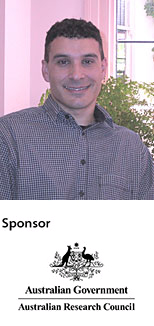
Chemical engineer
Dr Colin Nexhip received a PhD in chemical engineering from the University of Melbourne in 1998. His research was on the physical chemistry of foaming in molten slag systems, an energy efficient phenomenon used in iron- and steel-making. While still a student he was invited to present his work to the Royal Society of London and was awarded a CSIRO Innovation Award for the design of a high temperature laser spectrometer, used for measuring the thickness of molten oxide bubble films. In 1999, he was awarded a Victoria Fellowship, enabling him to travel overseas to 'benchmark' his research against other institutions. As a senior research scientist/engineer at CSIRO Minerals, he works on a number of pyrometallurgy projects, including molten oxide chemistry, high temperature physical chemistry and how to improve phase mixing and separation of molten liquids. In 2001 he was a visiting scientist at the German Aerospace Research Centre. There he conducted ground-based preparatory experiments to measure the high temperature properties of molten metal alloys in different gravity settings.
Interviewed by Ms Marian Heard in 2001.
Contents
- Family interests in science
- Well combined: a teaching degree, a science project and a stimulating mentor
- Superconductors in a precedent-setting Honours project
- Postgraduate metallurgy: the best of both worlds, semi-industrial and academic
- New twists to oxide foam applications
- Inspired projects in mixing and separating metal phases
- Defying gravity: container-less melting for impurity-free measurements
- A potent mix: networking, travel and the excitement of scientific discovery
- A sustaining multiplicity of life interests
- Developing and sharing ideas for the future
Family interests in science
Colin, to begin your story: where and when were you born?
I was born in Kyabram, Victoria – a very small town of about 5000 people – in 1969. I am probably one of the last remaining '60s people among my colleagues. I have an older brother by three years, Kevin, and a younger sister by three years, Narelle, who was born on my birthday.
Neither of your parents has a professional background. What early influences led you into science?
My parents were quite supportive of the sciences. My mother, in particular, has always been very interested in maths. She had to leave school at year 10, just for cultural reasons – it was the thing to do at that time – but she was dux of the school and in more modern times she probably would have been able to progress. So she looks favourably upon the idea of my brother (who is also a scientist) and me pursuing that line. Also, my mother's brother has a Masters degree, and he helped greatly by describing the sort of a life that a scientist would lead.
Well combined: a teaching degree, a science project and a stimulating mentor
For most of your school years you had other interests besides science, and we can talk about those later. But you chose your year 11 and 12 subjects with the specific intention of going into science.
Yes. I guess you have to make choices very early. Once you're around year 9 or 10 you have to start thinking about what career you want, so you know what subjects to choose for the next two years. I started thinking early in high school that I'd love to get into science, maybe as a medical doctor or a vet, something like that.
You went on to the University of Melbourne. What did you study there?
I studied for a Bachelor of Education, as I wanted to be a teacher as well as wanting to be a scientist. Teaching is also within my mother's side – her brother lectures at university, having started off as a high school teacher, so we were able to talk a lot about teaching. I thought it would combine well with science, and I wanted to get my teaching degree in case I ever wanted to go back to it. But I certainly wanted to pursue science as well.
Probably my most important influence toward science was that during fourth-year Education I was able to do a project at the CSIRO, in what was then the Division of Mineral Products, in Melbourne. It was practically one day a week, on a project related to electroplating. Being able to work there, with a scientist called Dr Joy Bear, was very stimulating. Joy was by then one of the most senior scientists in CSIRO, after starting her career as a lab technician in the '40s. I was able to draw on her guidance, and she was my mentor and helped me appreciate how I might use the experience I got at CSIRO to pursue the scientific career further, for example by enrolling in an Honours degree, perhaps in chemistry.
Superconductors in a precedent-setting Honours project
So although you started out doing an Education degree, your Honours was actually in Science, was it?
Yes. I managed to finish my BEd, so at least I had that to say I could go and teach. But Bachelor of Science with Honours was probably the next stepping-stone to, say, doing a PhD.
The Honours year was fantastic, very successful. I was able to work on superconductors, which in the early '90s was a hot topic (as it still is today), in a project of the Chemistry Department and the Physics Department. I gather that such a joint project set a precedent at the time, and it was nice to be able to be the glue for that. I ended up spending about 50 per cent of my time at each department, and we discovered a new superconducting compound, tested it and published it in an international journal.
CSIRO came back into my life during that time, as it did again later. For part of the Honours project I worked at the Materials Science and Technology Division, in Clayton, Melbourne, where I was able to characterise these ceramic superconductors. I was using techniques like electron diffraction which tell us a lot about the crystal structure, which is important to making the compounds superconduct really efficiently. I had a lot of interaction there, and also in the Earth Sciences Department at Melbourne University – it was very much a multidisciplinary project.
Postgraduate metallurgy: the best of both worlds, semi-industrial and academic
What did you do after Honours?
The Honours year tends to finish around November, so to bridge the gap till university resumed I actually worked as an emergency teacher in the school system for about a month – up at Mildura, where my girlfriend (now my wife) Suzanne was teaching. In the New Year I enrolled in a Masters of Engineering at Melbourne University after my Mum saw an opportunity in the paper for industry-funded postgraduate scholarships. Such scholarships tend to be a little bit more generous, and the fact that this was sponsored basically in the area of metallurgy, seemed to offer some good opportunities.
The study was based at the G K Williams Cooperative Research Centre for Extractive Metallurgy (GKW), which was actually one of the first CRCs. I was enrolled at the Chemical Engineering Department at Melbourne University, but I did all of my experimental work at my third CSIRO division, the Division of Minerals, also in Clayton. I was based there full-time as an 'industrial trainee', but in the view of Melbourne Uni I was a full-time postgraduate student. So I had the best of both worlds, able to see that semi-industrial environment but also maintaining links with the university.
New twists to oxide foam applications
You were able to convert your Masters into a PhD. Can you explain your PhD work?
I worked on a fairly new area of metallurgy. People tend to think of metallurgy as an old, dusty, dirty type of thing, but new technologies coming on line are going to change the very way we make metal and the way we recycle.
One of the important things when you're making the metal in the 'primary' or smelting phase is oxide foams. These are just like the foams you get when you're washing dishes, except they're about 1500 or 1600 degrees Celsius – sometimes close to 2000 degrees. They're very, very hot. And they are made of silicates, like lava from a volcano. The interesting thing about these foams is that when you inject gas to make the metal from the iron ore, you get a very large surface area in the foam, which is great for improving heat transfer from post-combustion. That cuts down the greenhouse gas emissions by a great deal, as well as speeding up the reaction kinetics, increasing the throughput rate for an economic benefit as well as an environmental one.
I took a fundamental approach, but in work that hadn't been done before. I withdrew hot bubble films using wire frames, rather like dipping a coathanger into a bucket of soap solution to look at the colours of the film on the frame. We did this in the lab at a very small scale to simulate a hot bubble. Then, using a Michaelson laser interferometer, we were able to design and use some laser techniques for the first time ever on hot bubbles, to measure their thickness as they drained and also how long they took to rupture and how thin they got before they ruptured.
This told us a lot about how to control these foams, how to change the chemistry to optimise them. In reality the foam can sometimes just start violently ejecting from the furnace – that is very dangerous and also causes down time and loss of productivity. Or the flipside is that the foam can sometimes disappear to nothing, so that suddenly you will burn out a lot of the heat lining of your vessel, a lot of the equipment. So even though it was such a fundamental PhD, industry were interested to understand what stabilises these hot foams, which they realise are now pretty much the key to all new smelting technology.
As a result of your PhD work you received an invitation to address the Royal Society, in London. That must have been a wonderful experience.
It was, mainly because that is a fairly selective venue. (They don't have 'conferences', they have 'discussion meetings', basically by invitation.) I received an invitation from one of the Fellows to attend a discussion meeting, so in 1997 I presented my PhD work before I had even written it up – I was one of the few non-professors there to present my work to that august audience. I did finish writing up my PhD later that year, but that experience is very much the highlight of my scientific career so far.
Inspired projects in mixing and separating metal phases
What did you do after completing your PhD?
I stayed on at the CSIRO Division of Minerals. I had some offers to do a postdoctoral fellowship in the US and the UK, but partly for reasons of job security I decided to stay. I have managed to maintain the links with those institutions and visit anyway, basically getting the sort of interaction I would have got as a postdoc. At CSIRO I managed to get a position as research scientist, in effect circumventing the postdoctoral level and going straight into the project level.
I am currently working on many, many projects, as project leader and also now senior research scientist/engineer. I do a multitude of contract projects, which we would call externally funded work – from both international and local companies – for probably 30 or 40 per cent of my time. The other 60 to 70 per cent would be the government funded, 'blue-sky' research, which is generally long-term, looking at trying to solve problems maybe 10 years hence, whereas the industry funding tends to be to solve day-by-day issues.
What sorts of projects have you got going?
I've got a couple that I can't talk about, but generally the theme of those sorts of projects is waste immobilisation – for example, using molten oxides to trap nasties like arsenic and lead, making them basically silicate oxides (called 'slag' in the metallurgical industry). They are essentially what you dig up out of the ground, so they become like geopolymers. You can immobilise toxins in slags and then put them in the ground, and we do leaching tests to see how environmentally stable they are. That's a booming area of work, as you would imagine.
Other areas I'm looking at include phase mixing. Just as you might make salad dressing at home, usually as a bottle of vinegar with oil, and often the two liquids will not mix until you shake them, so we want to bring the two phases – for example, oxide and metal – to mix together in a metallurgical vessel so as to get a good fast reaction. But then we want to look at ways to make those phases separate as fast as possible, so we can tap off the metal product with minimum impurities. That has both economic and also environmental implications, because the more efficient you can make that reaction, the fewer raw materials you need for a given output. The mixing of liquids and foams has been probably my main focus, and it has led to some other interesting new research areas also.
Defying gravity: container-less melting for impurity-free measurements
Would 'container-less levitation' be one of those other areas of research?
Yes. In this relatively new method we use very high frequency radio waves, about 400 kilohertz, to melt and actually levitate pieces of metal. You can use these radio waves to generate a very high current in a copper coil, a bit like a transformer coil. If you put a piece of metal – maybe one or two grams, not all that large – inside this coil, quite amazingly it will just suspend itself in air.
We call this melting or levitation 'container-less' because the metal sample now is not sitting in any crucible from which it could pick up impurities. The advantage is that we can do very accurate measurements on the surfaces of liquid metals without any influence from impurities. For example, we can measure the surface tension of the levitated metal and see how it changes with the oxygen partial pressure. That is, we can simulate how the oxygen in a metallurgical vessel gets less and less as you go deeper towards the metal – we can see how the surface tension changes, to help us predict how phases will mix in current processes or new ones.
Did your recent overseas visit relate to this work?
It did. As part of the Scientific Visits to Europe program of the Australian Academy of Science I received a grant to go to Germany, and at the invitation of some people that I had networked with at the German aerospace research centre in Cologne, near Bonn, I went there as a visiting scientist for one month. (I have just got back.) That group has sent experiments up on the microgravity research laboratories with NASA – into space on the Shuttle, and up on things like sounding rockets and the parabolic flights, the so-called 'Vomit Comets'.
It was very exciting. I was able to work there with them, learn about their new techniques, and look for ways to build German-Australian bilateral links and, hopefully, get involved in microgravity processing of materials. That is really another way of levitating metals. I have been levitating them on Earth by using radio waves, but if you use the microgravity on the international space station you need only heat the samples and do experiments. The idea is to look at advanced materials – how to make new metal alloys much cleaner, things like this – to get ideas for processing them back on Earth, so that when you do make ultra-strong alloys you don't have the impurities or the fatigue problems that you might get with aerospace alloys.
A potent mix: networking, travel and the excitement of scientific discovery
What skills do you think are needed in science today?
Probably the technical aspect has never been my greatest forte. I tend to remember what I have heard or read, but I've never been one to bury myself in maths or anything like that to understand the root of a problem. I guess what has been most successful for me is the networking – to see what is out there, to take the blinders off and look across disciplines at the physics and chemistry, for example, of bubbles and phases and mixing. It doesn't matter whether you're talking about flotation of minerals or about smelting, the physics and chemistry are the same. I've tended to try and break down that barrier and have an open mind, to network quite widely. I think that's the main thing.
You tend to identify 'gatekeepers', people who can open doors, who can write that reference or can give you that advice, be the sounding-board, to help you with either your next proposal or your next idea. So something that has been really important in helping advance my career is to seek out a mentor or a coach and draw on their expertise, using them as a trusted adviser.
What do you see as the most rewarding or exciting aspects of a career in science?
Oh, I'd be lying if I didn't say it was the travel. The international travel is fantastic. You tend to go to places that you might not go to for just a holiday. For example, I've been to Germany a couple of times and also to Stockholm, in Sweden, to Helsinki, in Finland, and to the UK a few times – as well as to places like Hawaii where you probably would indeed go for a holiday. In travelling you are experiencing the different cultures, and also the language of science has always been very international, very globalised. For me that's exciting, because you are always talking to different cultures but at the same time you are talking a common language. There is a great sense of both discovery and networking.
The fundamental science is really about that discovery and the sense of ownership or empowerment that you get when you work with a team and come up with some good ideas, and then see them through. And if you can get something through to commercialisation – I haven't done that yet, but it is one of my goals – it should be very rewarding to be able to say, 'Yes, we came up with that idea and we carried it all the way through to a spin-off.'
A sustaining multiplicity of life interests
Your research is clearly a very important part of your life, but as we said you have had a range of other interests as well. What are some of these?
I like to eat! I like to go to restaurants and eat different foods. A very strong hobby at school was martial arts – some judo, some tae kwon do – and nowadays I am a fairly keen scuba diver and alpine skier.
Music has probably been my biggest interest. I started playing organ at about five and progressed to piano and music theory, and when I went to high school I also did trumpet, playing in a concert band. We did the usual Gilbert and Sullivan types of production – The Pirates of Penzance, and things like this – and every year I managed to score a role. I enjoyed the arts side of things.
A lot of the time now I like to play in a band with my brother. He still lives in the country, in Shepparton, and I try to get up there maybe once every month or six weeks and do a band gig at a pub. That's always good fun, because you either bump into somebody you know or because you're in some small town where nobody knows you, you can let off a bit of steam. I think in life you need some degree of multiplicity, and so the band is a good way for me to experience something else outside my blue-sky or industry-type work. It's nice to be able to just go up there and have a good time and still play with my brother, drawing on a lot of the skills and the songs we might have played when we were teenagers in the bedroom.
Unfortunately we're probably a two- or three-hour drive away from my immediate family – my parents and my sister also live up in Shepparton – but we tend to see a lot of each other. They're always coming and bedding down at my place, for example to make use of the shopping in Melbourne. Basically we're a very close family.
My wife Suzanne and I have a son, Harvey, and she is expecting another child in a couple of months' time. That's kept me very busy. Suzanne is a science teacher – we met during the teaching course – so besides our personal interests we share a professional interest.
Developing and sharing ideas for the future
Where do you see yourself in 10 years' time?
That's a good question! Throughout my career I've always had a three- or five-year plan, looking to that next degree, that next visit or something like that. But I think after about 10 years I would have maybe two options – which could be poles apart, although I am hoping to bridge the gap. One would be to get involved more in the commercialisation of ideas. I have some good ideas of my own, but I tend to be reasonably good at drawing together a critical mass and then, hopefully, seeing those ideas through. Given my technical background and those networks, maybe I could get involved more on the commercial side, which tends to involve a lot more human – less clinical, if you like – interaction. That is, basically you can get out and wheel and deal, and organise things like funding and testing in trials. That's something I would really like to get into.
The flipside, which is not mutually exclusive to that, could be lecturing at a university. (I still have a desire to teach, and getting that degree hasn't come back to haunt me.) At the same time, it gives you a sense of empowerment to start some research group, take on students and act as a mentor to them, trying to help them if they're interested in pursuing science or engineering or technology as a career – just to do what you can to help stimulate that.
Dr Jane Wright, entomologist
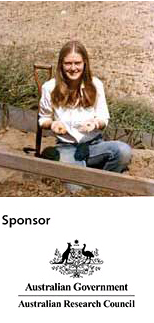
Entomologist
Jane Wright was born in 1954 in Ontario, Canada. She received a BSc (Hons) in 1976 from Queen's University, Canada. She studied lady beetle biology at the University of Guelph, Canada, and received an MSc there in 1978. In 1984 she was awarded a PhD from the University of California, Berkeley, USA, where she researched the biology of a parasitic wasp.
In 1984 Wright took a position with CSIRO Entomology and is still with that organisation. She spent 1984-1988 working on the biological control of dung-breeding flies in South Africa and Brisbane. In 1988 she moved to Canberra as an insect ecologist and behaviourist with CSIRO Entomology’s Stored Grain Research Laboratory (SGRL). At SGRL her work has included trapping and detecting insects in stored grain products and the distribution, ecology and control of the warehouse beetle.
Head of SGRL since 1997, Wright is also currently program leader for CSIRO Entomology's Stored Products and Structural Pests program.
Interviewed by Dr Victoria Haritos in 2000.
Contents
- The road to academic enjoyment
- Around the corner into applied entomology
- By snowshoe in search of sleeping lady beetles
- The tortuous pathway to a PhD topic
- Sucked in: the life journeys of a parasite and its host
- An African complement to dung beetle activity
- Odiferous searches for a buffalo fly predator
- From the perils of the game park to the naming of an insect
- The fall and rise of dung beetle research
- Catching stored grain beetles and recruiting a husband
- Quarantine or control? Tracking the warehouse beetle
- Pursuing a moth-free breakfast
- A new staging-point: science management for accountability, integrated solutions and commercial value
- Botanical by-ways
- A woman at home in science
The road to academic enjoyment
Jane, perhaps you could begin by telling us about your childhood in Canada.
Did you enjoy your schooldays?
Around the corner into applied entomology
Where did the interest in entomology start?
Most entomologists start off with a childhood collection of insects, but I didn't discover entomology till my third undergraduate year. I was interested in things biological from an early age, though: in junior high we would make up infusions of hay, put spoonfuls of water from puddles into them and grow up ostracods. I spent lots of lunch hours looking down the microscope at these things whizzing around in various kinds of dishes, and for me that was really great. A little later, when I took biology and we were learning about the cell and the organelles within it, I became fascinated by the 'Golgi apparatus' – but they didn't tell us very much about it so I went to the library and got out all the books on the cell that I could find. I came to the conclusion that nobody really knew anything about what the Golgi apparatus was for. They could recognise it, they had a name for it, but they didn't know what it was for. This was a huge eye-opener for me: I suddenly realised there are things that people don't know all about yet. That was so exciting that I got hooked on biology.
You attended Queen's University, in Kingston, Ontario. Why did you go there?
My grandmother, my mother, my father all went to Queen's. It was a very traditional university, and at that time a high proportion of the students had parents who'd gone there, so it seemed a natural progression. My parents maintained staunchly they would never try and influence my choice, but my grandmother wasn't quite so restrained: when I was coming to the end of high school, wonderful books about Queen's University kept appearing in our house. And then my father detoured through Queen's – a beautiful place – on the way to the cottage one year. That happened to be graduation weekend, and there were all these incredibly gorgeous men. So I enrolled at Queen's the following year.
It was a great university. My experience there was marvellous, but not a straight path. I had pretty good biology marks in high school but I was quite insecure about whether I'd be accepted to Queen's in biology. I had extremely good math marks, though, so I decided to apply in maths and I was accepted. I did biology as well, and over time I realised that combining computing science with biology to do population work would be even better. This was where it was going to happen, I thought. (This was very early days: we were still punching cards and putting them through card readers.) But my idea was too new for Queen's University. When, eventually, they designed me a program with a joint major in computing and biology, it was too late – by then I had plumped strictly for biology. So I had maths, computing and a lot of biology, and I tried to do both the plant and the animal sides in biology.
The entomology came as a course in my third year – the only course in entomology available at Queen's University – and it was marvellous. I love creepy-crawly things, so I had enjoyed invertebrate zoology and marine biology. And being really interested in plants, I had taken botany courses. When I got to entomology, I realised this was a chance to combine the creepy-crawlies and the plants and to do something useful in applied entomology, so this gave me the direction for the future. The wonderful thing about insects is that even if everyone was fired, in no time there would be an insect plague and at least some of us would get our jobs back. You can always count on the insects.
For my honours thesis in fourth year I worked at a tobacco research station in southern Ontario, looking at tobacco cutworms. This was my first chance to 'play' in the field with real insects. It was fascinating and opened my eyes to the potential in research. It was also my first experience of parasites. Whereas a predator eats many prey items in its lifetime, a parasite just consumes one host. Generally a parasitic wasp, say, will lay an egg into a caterpillar, the egg will hatch and the wasp larva will develop inside the host, completely consuming and killing it. Then the larva will pupate and you'll get a new wasp. In the cutworm project I was absolutely fascinated to see, for my very first time, that whole process in action.
Did it turn you into a mad insect collector?
Not at that point, but I took on the job of emptying a light trap which the research station people had been running for years to keep track of the moth populations in the environment, and counting the different kinds of moths. I learnt how to spread and mount them, and that was actually the beginning of my insect collection. I still have those moths – the ones that haven't been eaten by carpet beetles, that is.
By snowshoe in search of sleeping lady beetles
It is a North American tradition to study for a master's degree prior to going on to doctoral studies. Which university did you attend for this?
The University of Guelph, in southern Ontario. It is known to be very strong in veterinary medicine and applied agriculture, and at that time had the only proper entomology department in Canada, so I felt it was worth making a shift again to a new place. In Canada there's a lot of coursework all the way through, even when you are doing your PhD, and oh my, was there ever a lot of coursework for my master's! I had only one entomology course from Queen's University, but in the entomology department at Guelph the undergraduate students had already taken five or six entomology courses. I felt very far behind so I immediately threw myself in – I did a lot of collecting, working out what things were, and I studied like crazy. It was enormous fun, like discovering a whole new world.
What did you study for the research part of the degree?
The research part was fun. I chose to do my degree with John Laing. When I arrived he told me he had money for three different projects and I should go away to the library for a few months in the summer and work out what I was going to do for my degree. So I went off to the library. I researched a couple of topics, made up my mind, came back and said I wanted to work on apple maggot. 'What's wrong with the other projects?' he asked. I told him what was wrong with this one and that, and why I didn't want to work on ladybird beetles, and I said I really thought the apple maggot project would be wonderful. 'What about the lady beetle project?' was his response. Back and forth we went, and finally I understood what was going on. So I worked on lady beetles for my master's degree.
Lady beetles are very common, naturally-occurring predators of aphids, primarily, and I was looking at them feeding on aphids in corn (maize). I studied a lot of aspects of lady beetle biology. It was quite a lab-based project in terms of the temperature and development studies, and there was even a parasite that attacked the adult. That was very interesting. But I also spent a lot of time looking at how the beetles would be attracted to the cornfields as the corn started to grow and the aphid population rose. I did lab work all year and field work in the summer – and even in the winter.
There are sometimes metres of snow where I was doing my work in Canada and I was interested in how well these beetles survived the winter, particularly by coming together in great big congregations. I created cages that had mesh on the bottom and the top. I put in the soil and leaf litter, added all these beetles, closed up the cages and put them into the ground – in several places in the orchard where I had found the beetles congregating normally – so that they would be level. I marked where they were with coloured tags in the trees above, and went away. I would then come back at intervals through the winter and collect some of the cages.
That all sounds very straightforward until I tell you that no roads were ploughed to go into the orchard in the winter, and so I used to have to snowshoe in – carrying with me a big snow shovel, a brick hammer, a chisel and a great big bag to carry everything back with. And so, several times a winter, I would find my coloured tags, dig down sometimes almost two metres into the snow, chip all of these cages out of the frozen ground, put my cages in the big bag, close everything up and go back out again. It was interesting to find that the adult beetles that had been parasitised were less likely to survive the winter than unparasitised ones, so it seemed the parasites caused a problem to those beetles through the winter.
The tortuous pathway to a PhD topic
After enjoying some research experience, Jane, you decided to undertake a doctorate.
I did. About halfway through the master's, while I was teaching students – doing the labs – for some of the courses and doing my own research, I realised this was what I wanted to do. It just felt right for me. So I would have to have a PhD, but where to go and what to do? I thought I had learned as much there as I could, and it would be a good idea to move some place new. I'd already been to what I considered the best entomology department in Canada, so now I had to leave home.
I went to Berkeley, California, which for me was academic nirvana, just brilliant. I was able to take courses from people who wrote the books that I'd studied from, and I discovered that they were real people, warts and all. We'd have seminar classes where the graduate students like myself would give seminars and the professors would come in the evenings to listen to what the grad students had to say. I felt like I was being treated as an equal, and it was the most marvellous experience – the best.
What did you research at Berkeley?
Berkeley, like Queen's University, puts a lot of emphasis on coursework and exams, but there is also a research component. For the research component I had an arrangement with Professor Carl Huffaker, who had supervised my previous professor, John Laing, back during the crazy '60s. Carl was about to retire but he agreed to shepherd me until I was able to find a proper supervisor. I started going round talking to the other professors about what was possible but no-one seemed interested. So here I was in the centre of the most incredibly wonderful entomology department, and I couldn't find a supervisor. I was getting a little desperate. Finally Carl Huffaker said, 'Well, I've decided to phase my retirement until I'm 70. We'd better find you a project. You're my last student.' That seemed terrific.
I settled down to find something in his area, and decided on the blue-green aphid on alfalfa (lucerne). There wasn't much money for such a project. And this had to be original research, but every time I seemed to hit on something original I would discover that other people had already done it. Just when I thought I finally had it right, a professor who was visiting from Canada said to me, 'Oh, we've already done that. I'll send you the data.' And he did that over and over.
Desperate for a new project, I thought the man who ran the quarantine facility might have something interesting among the wasps and beetles that people brought in for biological control. After showing me some things, he came to part of a project by another professor, Dr Ken Hagan – who is world renowned for ladybird beetle studies, by the way. One cage had small moving yellow dots in it, another had small moving grey dots, and a third had an insect that was two millimetres long. Its females looked a bit like ants. Their wings were short, so they couldn't fly, and they had the most gorgeous white ends on their legs. And as I looked I thought, 'That's them.'
So I went and told my professor I had to change my project, and why. He asked if I had any other ideas and I told him, 'Well, there's this two-millimetre-long wasp in the quarantine.' He agreed to that and so I switched to working on the wasp. It is a parasite of scale insects – plant-sucking insects – that were decimating a particular ornamental plant along the freeways in California. That was a completely different kind of project, but probably the nicest one I've ever worked on.
Sucked in: the life journeys of a parasite and its host
The interesting thing about this project was that everything I did was brand-new. There was no danger of someone saying, 'Oh, we've already done that. Let me send you the data,' because this insect had only got a name four years before. Even things like how many larval stages it had were not known, so I got to work out all of that, as well as how the insect itself developed within the host without killing it until the insect was completely finished developing and emerged as an adult – and also how the insect could assess the size of the host. This is important because when a female wasp lays a haploid egg (which has only one set of chromosomes) it develops into a male; if she lays a diploid egg – two sets of chromosomes – it develops into a female. The wasps choose the smaller host to lay the male eggs in and the larger host to lay the female eggs in: when it comes right down to it, it takes a lot more energy to make eggs than it does to make sperm, so for more energy you go for the big ones. I was able to work out how the female would measure the hosts' size – by walking over them – and what cut-off determined which would get male or female eggs.
Among other aspects, it turned out that the wasps learnt. When a wasp that had never ever experienced a host before experienced a small host, she would often lay a 'female' egg anyway, but once she experienced a large host she would never make the mistake again. If the very first host she experienced was for some reason not going to be satisfactory for development – another wasp had put an egg in it, or it was damaged in some way and wouldn't survive – she would actually accept it, even though it wasn't going to work out. But once she'd experienced a good one she would never make the mistake again. So she was able to learn. Working out these kinds of things was absolutely fascinating.
There were interactions between those little moving yellow and grey dots, which were actually related species in a different genus, but very small. They could sometimes compete within the host, depending on who got there first and how it all worked out. So I was able to do work on a lot of interesting behaviour that I had never ever done before, and it gave me an even greater appreciation for how interesting insects are and how much behaviour is involved in them. They're certainly not just little automatons.
You also studied the development of your wasp's host.
I did, and I found something really interesting. The scale insect is like a little flat pancake that sits on the leaf with its mouth underneath, down with its siphon in. The female wasp will go round and check it, and then she will lay her egg into the side, leaving a little stalk sticking out for air. When the egg hatches, the larva stays attached back to the base of the egg with things that look like air hoses. And when it moults again, it just pushes them back, and pretty soon there's this scale insect with a quite large wasp larva inside and air hoses right back to the base of the egg. (Because the host is still alive, the larva is still in a sort of soup and needs the connection to the outside air.)
Things get really tricky when the larva needs to pupate, for which it needs an airspace. I found that it was able to make a little shell, a container, inside the host and then actually get the host's air tracheae to come up and join to this. The physiology is still not clear, but somehow it managed to convince its host – which it was going to kill – to supply the air it would need for the pupa. Eventually, the larva would break its own first connection to the outside and pupate in its little air-filled sac inside the host. Finally, it would chew a hole, weld together the two bits of outside and inside skin, and come out. And only after that did the host die.
That sealing may be just a tidy way of getting out, but whatever its function, the result was that the host didn't die instantly. I don't think that was of any particular advantage to my wasp, but it did mean that some of those other tiny parasites could develop in the little bit of stuff left over around the edges. So I could sometimes get two species to come out, whereas normally they would fight to the death. In this case, if the timing was right, I could get one big wasp out and a couple of little ones.
An African complement to dung beetle activity
Having finished your doctorate, how did you find work in scientific research?
This is always a big problem. I had an office mate who used to apply for every job that was ever advertised, and papered her wall of the office with rejection letters. I was a little more selective, applying for three jobs in my final year. I was only looking for jobs in Canada or the United States, but somebody told me, 'No, Jane. If you want to see about the foreign jobs, you really need to read Nature.' A foreign job seemed too scary to me, but I did want a job. So on the 4th of July long weekend in the United States I pulled down the last few issues of Nature, and there was an advertisement for a job with CSIRO Australia, to work on predatory dung beetles in Africa. I thought, 'Wow! Now, that's a job. But everybody knows that Australians are chauvinists. There's no way they'll hire a woman to do this job.' Anyway, I decided that if I didn't apply I couldn't turn the job down. The deadline was the following Thursday so I prepared my application over the weekend, and it went into the express mail on Tuesday morning. I got the job.
We have heard a lot about the CSIRO dung beetle project. What was your part in it?
My part was to do with complementing the previous introduction of dung beetles that eat dung. Historically, Australia didn't have large mammals that produce large pads of dung. It was all small pellet, and the dung beetles in Australia were adapted to that. But we brought in cattle, with dung of a very different consistency, and very few native beetles went across to it. The original dung beetle program was all about getting these large pads of dung buried into the soil, getting the nutrients down and – as a secondary issue – helping to control the flies.
There are a couple of kinds of flies in Australia. The 'Australian salute' results from the bush fly, which, although it's actually a native insect, goes very well in dung. My project, though, was about the buffalo fly, which is a pest of cattle in Queensland. The adult flies stay on the cattle and take blood meals – sometimes 20 a day – all day, every day. You can imagine how much irritation that will cause an animal, and high numbers will even make open, bleeding lesions on the animals. So buffalo fly is a very serious pest.
Its life cycle begins when the females get blood meals and use that protein to develop the eggs. When the cow produces a pad, the flies that are ready to lay go down onto the hot dung and lay their eggs around the edges or just underneath the bottom, and immediately fly back on top. Once the dung starts to cool, flies of this particular kind won't lay eggs any more, so on the pad you get a set of eggs that are all laid within a few minutes of each other. These eggs hatch very fast, the larvae eat the dung very fast – they complete development in only about four days in summer – and then they dig into the soil underneath and make a pupa. After a couple of weeks in that stage, they come up as adults and have to find another host. This is the insect we were concerned with.
In some places, some of the time, the dung-burying dung beetles were not able to get rid of the dung fast enough to prevent the flies from breeding. My project was to look at those kinds of insects that are attracted to dung and feed directly on the eggs and the larvae, so that at times when the dung-burying dung beetles were not sufficient we would have direct predators to feed on the fly populations and help suppress them. I was to go to South Africa and work on a very closely related fly on African buffalo dung, in order to select the right species to bring from Africa to Australia. So my job fitted into the whole by providing complementary beasts to help the dung-burying dung beetles along.
Odiferous searches for a buffalo fly predator
Just how did you look for suitable predators of buffalo fly?
I was hired originally to discover exactly which insects had fed on the buffalo fly, by finding the proteins of the buffalo fly in the guts. (A lot of different kinds of beetles would come to the dung, but not all of them would be necessarily eating the fly we were interested in, so this was a way of catching them in the act.) We took an immunological approach. We created antibodies to the fly eggs or the larvae and then used a test in which we took the gut contents from an insect that we thought could have been feeding and mixed that with the antibodies. A reaction would show the protein was in the gut and therefore that particular beetle ate the insect you were interested in. Sounds terrific. The problem was that although we could determine if an insect had eaten a fly, we could never get it detailed enough to determine one particular fly or even one family of flies, so it really didn't work out very well. I tried all sorts of things. I got lots of help from the people in the research farm where we were stationed, I got help from the Onderstepoort Veterinary Institute, but in the end I just had to do something else.
If you can't catch them with a smoking gun, you find the opportunity and the motive. We decided to look for insects that would be in the right place at the right time, and that for other reasons we knew were likely to feed on eggs or larvae of the flies. Place and time was important because ultimately we were going to bring these insects to Australia, and we wanted them to prey on the flies in the places where the flies were going to be – in dung pads out in the open in grassy areas, not in the bushes, often on hard rather than sandy soils – and also very early, when the dung pad is very fresh. (The flies lay their eggs when the dung is hot, and five days later they're out of there, so it all has to happen early on.)
In a fairly standard ecological approach, we set up a number of experiments where we would put cow dung into open grassland areas, on hard soils or on sandy soils, in some scrubby bushland, in some dense forest, and see what insects came each day to these kinds of dung pads. That allowed us to work out the habitat preferences of the insects that were available to us in that environment. Then we had to narrow it down: of the ones that went to the grassland, which were actually going to be interested in cow dung? There's lots of dung out there, and lots of other things that these insects could be having a look through in order to find tasty fly larvae to eat.
And so we set up experiments to look at the attraction of these predatory insects to lots of different kinds of decaying material. All of this was being done in a game park in South Africa, so as well as decaying bananas we had rhinoceros dung, cow dung, African buffalo dung – those were quite similar, being both ruminant dungs – and then we started to get into the smellier end. We moved into sheep dung, on into pig dung as an omnivore kind of dung (quite a lot like human dung, which is why we find it so offensive) and then into rotten chickens. We also had plain traps with no bait, to account for the ones that happened to walk by. With our experiments set up in several places with all these different kinds of baits, we could see from the insects we caught each day who was going to what kind of thing.
Aside from being very smelly, it produced a really interesting result. There was no doubt we had specialists in rhinoceros dung, which is quite a lot like horse dung, we had specialists in the ruminant dung, and we had some – the numbers rose as you got smellier and smellier – that were mostly in carrion and only occasionally back in cow dung. In choosing insects to bring to Australia, we wouldn't consider carrion specialists even if numbers of them appeared reasonably often in this dung, because we already have carrion specialists in Australia. We would concentrate on the ones that were in the grassland, on hard soils, coming very early to fresh dung and concentrating on the cattle or African buffalo dung. This was our way of determining guilt by association.
From the perils of the game park to the naming of an insect
Were there any logistic difficulties in carrying out work in a game park?
Well yes, there were some. We did have accommodation and our own little kitchen come lab in the research compound where the Natal Parks Board people worked, so that part went very well. But when it came to field sites it was different. We worked in this game park because it had African buffalo, which we could use as models for the Australian cattle. But probably they were the most dangerous animals in the whole reserve. If you think of a bull with a really bad temper, this conjures up African buffalo. And of course there were rhinoceros. White rhinos are kind of nice but huge, and black rhinos get very irritated very fast. So there were some logistics about keeping safe in this environment. At times we would arrive to the field site – after driving through the ford and enjoying the sight of hippopotamuses in the water off to the side – only to find an enormous rhinoceros and her calf right in the middle of it. So we would have to make noise and so on until she moved off.
Then, in our experiment on different dung and carrion types, hyenas would dig up the chicken baits. We knew this was likely to be a problem and so when we set our traps up we put very big, strong cages over the top, and put great big spikes into the ground to hold them in place. But it didn't matter; the hyenas dug them up and ate all the chicken bait, so I have one whole experiment that's missing the chickens.
But I think the worst happened one day when we were putting out our experiments. We used to 'create' dung pads with fly eggs on them. We would grow the flies in the lab in Pretoria, get the eggs – remember, they hatch very quickly, so we had to keep them cool – and drive really fast for six hours to get to the game park, paint them onto fake dung pads and put them out in the field. And that day, while we were trying to put them out we heard lions on the site. My assistant and her assistant, a young Zulu lad, came running back to the car so fast! We were pretty nervous so we sat inside the car to put all the eggs on the dung pads, and then we drove this brand-new vehicle – not our normal big truck that day – through the field site, running out with the dung pads and back extra quickly so as not to be eaten by the lions.
In this project you researched not only predators but also parasites of the buffalo fly, didn't you?
Yes. Beetles are seldom parasites, but some beetles turned out to be both predators and parasites at the same time. These insects have a particularly interesting life history. The adult beetle comes to the pad and eats eggs and larvae as a predator does. It then lays its own eggs in the pad, and they develop while a buffalo fly is turning into a larva and doing its own developing. At about the time the fly goes down into the soil to become a pupa, the egg of the beetle hatches. I found that its larva actually followed the smell of the fly maggot down into the soil, chewed a hole into the puparium and developed to an adult as a parasite on the fly pupa. So it was first a predator and then a parasite – it caught the buffalo fly coming and going.
That was a really fascinating study, because we found that when the little larva of this beetle was choosing a host, it would parasitise anything as long as it was a fly, in the right place – under the pad – and about the right size. And that included the fly we were interested in. I looked at it more closely in the lab, where I reared flies of a number of species. I could make small, medium and large ones and I was able to show that what mattered most was the size, not the particular species. The beetles did have preferred optimum sizes of fly, however, and best of all, it turned out that one beetle, even though it would parasitise the African buffalo fly, actually preferred the size of the Australian buffalo fly. So, having been able to do that kind of work on different species, we could work out that this would go well across here in Australia.
And the species was?
Well, there were a number of species. There's quite a good story with that too. As part of this work I became quite a taxonomist in order to identify all these things, and eventually we had to work out the biology of about 250 different species of beetles that came to these dung pads – not all of them in detail, but certainly the major groups. A lot of them had no names, however. Later on, when I contacted a specialist in the predator/parasite beetle group, I sent him my material that didn't have names because he was doing a revision and I thought he would be able to supply names for them. One of those species was new – he had never seen it before – and he has named that tiny little African dung beetle Aleochara wrightii, after me.
The fall and rise of dung beetle research
What happened to the dung beetle project?
It was a really big project and went on for almost 20 years. But the people funding it for that long, long time changed their priorities from production research to meat processing research. So, when I'd been in South Africa for not quite two years and had just started all this ecological work, the funding was withdrawn and we had only about four months' notice to close everything down in Africa – close the lab completely, close our field station, move back to Australia. I went to Brisbane and salvaged what I could from my project, but basically that was the end of the African operation. The project continued in Australia for a while longer, cropping the dung-burying dung beetles from where they were plentiful and redistributing them to speed up their rate of spread. But even that mostly finished, and because my predator work wasn't finished in time and there was no money to pursue it, everything came to a halt from the research side. But not from the beetle side. The beetles are still working hard and still expanding in their distribution.
I guess I always knew that things would come back again, and just in this last year the pastoralists in northern New South Wales and southern Queensland have approached the CSIRO to finish the job because this project has delivered such huge benefits. It's not easy, in these days when funds are not exactly abundant, to start up again. But now on the National Dung Beetle Steering Committee we are looking at what we can do for a little money and at the appropriate steps to finish it.
Catching stored grain beetles and recruiting a husband
Your next move was to the Stored Grain Research Laboratory, in Canberra.
That was a question of needing a job. There was an opening for an insect ecologist and behaviourist, I was offered the position, and I moved from Brisbane down to Canberra to look at how insects, particularly stored grain beetles, move around and cause damage to grain in silos.
Usually a project starts with someone having an idea of what is needed. My first project was to look at ways of detecting insects early in their infestation of large bulks of grain, when there were not yet many of them and there was still very little damage, so that people would have time to do something about it before they had to ship the grain overseas. We had to develop a more sensitive method than the traditional one. We were using traps developed overseas which were used in North America and Europe but not yet in the Australian situation. The characteristics of Australian grain are quite different. At that time people were using quite a lot of insecticide on it, and also the grain was very dry and often very hot. It was my job to see how we could adapt the overseas trapping technology to our Australian grain handling and storage system to get a good result in such conditions. In my first year I did a lot of work in New South Wales – I had a total of 22 different silos or sheds around the state, with a total of 125,000 tons of grain underneath my traps. That's truly full-scale fieldwork.
The Stored Grain Research Laboratory is a marvellous organisation to be involved with. It was set up in 1969 because Australia was exporting not only a lot of grain but a lot of insects with it. This was causing trouble with the customers and the Australian Wheat Board realised that to lift the quality of the wheat it sold, it needed research to point the way. So the Wheat Board built a wing onto the CSIRO Division of Entomology, which filled it with scientists, and they got busy. For 30 years the scientists in that lab and the other staff have been developing solutions for the grain storage handling problems of Australia, making quite a significant contribution to the fact that Australian grain is now considered some of the best in the world, equivalent to Canada's. Our farmers grow excellent grain, very good white milling wheat, and we take good care of it so it arrives at the other end clean and insect free. And as a result, our farmers get a premium price for their high-quality product.
I believe that at SGRL you extended your trapping beyond the insects.
Ah yes. In about my second year there, I went to a conference in Vancouver, Canada. I attended a workshop of stored grain researchers about trapping of insects in grain, which was very topical at that time – and I met this fellow, David Rees, who was working in a similar organisation in the UK. About 18 months later there was another conference, this time in Texas, where I decided this fellow was pretty interesting. And then about a year later there was another conference, in Bordeaux, France, where we were having dinner every night and trying to avoid his work colleagues as we zipped down the back alleys. And so we fell in love.
David was working on stored grain problems in Mexico, West Africa and Indonesia, I was working in Australia, and we spent three years writing letters back and forth. After a while we paid for our own airline tickets and visited each other, and eventually I went to the UK and we were married. I came back to Australia and David followed about seven months later – prepared to try something completely different, which was simply marvellous. Not everybody finds such a spouse. Then, almost instantly after he arrived, a big problem arose with some new pests in Australia which none of us had any experience with. But he had worked on these psocids in the past, so the head of the Stored Grain Lab hired him to work on them. My laboratory head told me I had done the niftiest bit of recruiting he had seen in a long time!
Quarantine or control? Tracking the warehouse beetle
Tell us about your project to investigate the grain pest called the warehouse beetle.
The warehouse beetle is in a group of insects that are known to be quite serious pests of stored grain and stored commodities generally. Warehouse beetle itself can do a lot of damage by feeding on grains, but in its larval stage it very closely resembles another insect, the khapra beetle, which is greatly feared around the world – there are lots of quarantine barriers against khapra beetle. The warehouse beetle got into Australia somehow (there are a few theories about how that happened) in the Griffith and Leeton area of the Riverina, associated with the rice industry, and it very quickly spread into the storages of wheat and other things because it will eat almost any dried food that you can name. The risk then was that people overseas might find warehouse beetle larvae in our exported grain, for instance, and think they were khapra beetle larvae. The trade repercussions could have been very serious. So, after the warehouse beetle was found here in the early 1970s, there was an eradication attempt – which didn't work – and then the hope was that by a series of quarantine and containment measures the beetle population could be quite well restricted to a small part of New South Wales.
As these things go, after a while people stopped thinking much about the warehouse beetle. But after about 10 years people suddenly realised it was a serious problem again and its distribution was starting to expand. The Ricegrowers' Cooperative came and asked Jonathan Banks, then the head of the Stored Grain Research Lab, if we would undertake a major piece of work to help them deal with the problem. He had done the original work, and now he asked me to take that project on. It was a very interesting and broad ranging project, because things had changed a lot in 10 years. We had to think completely differently about how to approach the problem, looking at things like where the beetle was, its behaviour, its seasonal activity, how to kill it – all of those angles.
In one of the most significant outcomes we found that the insect was so widely distributed in Australia that there was no point in trying to eradicate it or even to contain or quarantine it internally any more. We came to that conclusion by trapping it. (Traps and parasites are a continuing theme of my work.) During those previous 10 years, some quite good traps had been developed overseas which used a pheromone – a chemical communication signal – that the female uses to attract a male for mating. We could now buy little lures with the right stuff in them and hang them up inside sticky traps. Male beetles looking for females would intercept a waft of this, think it was a very big female because there was a lot of pheromone, fly in and be caught in the trap. And so we could detect the presence of these beetles.
In the first year of this we found beetles everywhere we looked. We started looking farther and farther out, and we kept finding the beetles everywhere, even quite far out into natural habitats. Finding them so far out into the natural environments told us that they had gone bush to quite some degree. Most of them were still in grain storages, but enough had gone bush that there was simply no way eradication was any longer sensible.
The next question was how much farther out they had gone. In the following year we organised a trapping survey across all of the wheat belt of Australia, enlisting the help of the bulk handling companies in each of the states and setting traps all over the country. We did that for a couple of seasons, and hundreds of thousands of insects were sent back, including lots and lots of native species of Trogoderma, which all had to be looked at and identified. In the end we detected them from Queensland through New South Wales, Victoria and South Australia, and even in Western Australia.
People realised that internal quarantine barriers just didn't make sense any more and that a lot of expensive procedures they had in place could be stopped. That's one significant outcome, and a second one was that we learnt enough about the biology of these insects to be able to give people good advice on how to control them when they actually had an infestation in the shed. What doses of fumigant were required? They're a tough beast, and it turned out you needed more than normal. And if you were going to heat the place up to cook 'em – as you can do quite well with a lot of insects – you needed a little bit longer at a little higher temperature than for the normal ones. So we were able to give good advice.
Pursuing a moth-free breakfast
You have also become involved in solving insect pest problems in food factories.
Well, the food factories, warehouses and so on are a natural extension to a lot of the work we do in the Stored Grain Lab. We had a wonderful project over a couple of years in the food factory situation, where we applied the things we'd learned elsewhere – to the insects a large bulk of grain in a silo and a packet of muesli are both good food, and they will find it.
The project started when a breakfast food company wanted to know whether they should spend quite a lot of money on closing up all of the open eaves in their factory to prevent moths from flying in. They knew that in their factory there were always more moths in summer than in winter, and they always had more complaints about infested food coming back from product that had been packed in the summer than in the winter. So their question was, 'How can we keep those moths from getting in during spring?'
We started a trapping program, using another pheromone produced by female moths to attract males. We put some traps inside the factory, some just outside and some in the surrounding area: would we see a movement of the insect? What we discovered was that within the factory one species was predominant, but although we could regularly find five species outside the factory, none was the same as the species that was inside. So the very first thing we could tell them was that the problem inside the factory was their own problem. Their moth was a different species and didn't fly in every spring after all. As to the activity patterns, in the summer there were more moths both outside and inside – but different species. So there was no point in spending money on closing up the eaves: the moths were not coming in there. Finding that was a very simple thing to do, yet it saved the company a lot of money.
But how were the moths getting into the breakfast cereal?
There are a number of ways they can get in. A lot of food processing machinery has dead spots in it. It's designed from a food processing point of view, not for insect control, and unless it is cleaned very often and very well, sometimes insects can get going in residue build-up in some little blind corner. Also, there are times when the food is open. It tips off the end of a machine into a bin, and if the lid is off while the bin goes along for something else to happen, the moths can lay eggs there. We put a trapping grid in the factory, plotted on a graph how many moths we found, made contour maps of the hot spots and then, taking those, looked at the factory itself. We discovered that the hot spots were where the packing machines were. And way up top where the weighers were dropping the food in the packages, there were the moths flying about and sometimes just laying the eggs in as it went along. Again so obvious, so simple: you look, you find out where the problem is, you either clean the problem away or you enclose the containers so that the moths can't get there – you change something to make it that much harder for the problem to continue. We helped the company bring the moth population down quite dramatically with the cleaning and monitoring, they put in some new pest control, and through those simple things they were able to improve their product quality of its product. The complaints dwindled and things were going along really well.
Next we asked ourselves, 'Can we push the population even lower?' That's when we got into a brand-new area with stored products, where no-one had ever succeeded in controlling the insects biologically, using their own pheromones. This amounts to putting so much pheromone of the females into the air that the males can no longer distinguish where the real females are. It's called mating disruption. The females are there, they are releasing their own pheromone to call a mate, but the males are confused and can't find them. So those females end up never being mated; they lay sterile eggs which will never hatch. We set this up for the company and it worked extraordinarily well. The wonderful thing about pheromone is that you and I can't smell it but it's incredibly important to the insect; and even using extremely minute amounts we can disrupt the insect's behaviour enough to suppress the population.
At SGRL you have progressed from research scientist to science manager. How did the opportunity arise?
The opportunity to start making that shift arose with the regular rotation of deputy head of the Stored Grain Lab: the previous person in that role would not be encumbered with that any more, and it was my turn. I ended up being deputy head of the lab for five years, in which time I gradually learned all the things that are involved with science management – a far cry from what you do day to day as a practising scientist. When Jonathan Banks, after heading the lab for seven years, decided it was time for him to be a scientist again, it became my turn to be head of the lab.
It is said to be hard for scientists to become managers.
It's hard to give up the science. I had had my heart set for so long on being a scientist and had thought of myself in that way for so many years that it was hard to realise I wasn't actually going to be a scientist any more. And although it seems perfectly normal for us to go to university for many years and get a PhD in order to qualify to be a scientist, there is no sense that we need training to become managers – which I think is why science managers have such a bad name, by and large. But I could see the inevitable coming and I have always want to do a good job of things, so at every opportunity I took courses on managing people at work, finance and so on. I felt that when I did end up becoming head of a lab I would have had a little bit of theory and some practice, and would move forward from there.
Management of the Stored Grain Lab is probably more complicated than managing a group of researchers just within some other part of the Division. The link with industry and the Australian Wheat Board (now called AWB Ltd) requires a very definite structure and funding base, and industrial relevance. We have a board that looks over the running of the lab and I report at four board meetings a year. Everybody is accountable these days, but I have an extra level of financial accountability and management because of the high level of funding that we get from the industry – more than half of the cash side of the core budget.
I have to exercise a certain amount of research leadership and shepherding, trying to provide the vision that keeps people going together in the same direction. The lab has engineers, chemists, a mathematician, a physicist, an entomologist (me), some more general biologists, lots of chemists and a toxicologist, and we have to work out a way to get all those people in all those different disciplines working on the same kind of project to produce an integrated solution for the industry.
The last major part of my job is the commercialisation of the research. The Stored Grain Research Laboratory produces commercially valuable research results that we can patent and also license to companies. We have new fumigants, new equipment that can be used for disinfesting grains, say, with heat or with other kinds of physical methods – all of these things have to go through a commercialisation process. So there's a real business focus to the job as well.
Early on, as an undergraduate, you loved botany. What have you done with that?
My idea was to be an entomologist, with both plants and insects. I did a bit of a detour through dung. Grain is a living plant, of course, but it's not green, so I indulge my botany through the wonderful hobby of growing orchids. I have a diverse collection – a few hundred orchids of several major groups. I specialise in slipper orchids from Asia; funny little things from the cloud forests of Central and South America; and a few other orchids, mostly Asian. Orchids keep me sane. I enjoy them enormously and I've made a lot of friends through them. I was on the committee of the Orchid Society of Canberra for 10 years, ending as the president for a couple of years. It's been really marvellous. More recently I've trained and become an accredited orchid judge for the Orchid Society of New South Wales and the Australian Orchid Council, so I'm still heavily involved in different aspects of orchids.
I enjoy plants, full stop, and my husband enjoys them too. David specialises in carnivorous and alpine plants as well as terrestrial orchids, and now he's getting into the natives. Also we go on bushwalks, looking at the plants, and we look at birds – we enjoy all of that gardening-plus-nature side of things to give balance to our lives.
As a woman have you experienced any discrimination in the workplace?
Remarkably little. The only time when I know for sure that I was discriminated against was back when I was applying for those three jobs in my final year. I talked to people at a conference about a job that was going, but one person in that group was absolutely sure that a woman who had studied in California would never ever want to go to a remote part of Canada and work on insects in the forest. I assured him I'd be very interested to do it but he was sure I would not, and I did not get an interview. (It gave me enormous satisfaction to go back to that conference a year later and tell him I was now working for the CSIRO on dung beetles – in African game parks, and dodging lions and African buffalo.)
In the grain industry within Australia I've had no discrimination at all that has mattered. When anybody from the city goes out to the field and works with people for the first time, ah! they're just a little hesitant, unsure. But I went out there and worked hard, explaining what I was doing. The work went well and my research gave them new tools they could use, and since then there's been no problem. This grain industry has been very good, and Australians should be proud of themselves.
In which direction do you see yourself heading? After so many years away from your original home, do you ever consider going back to Canada?
I think that one day I would like to do science again, probably insect taxonomy. Until I retire I want to continue facilitating science as a science leader or a research manager, because having worked these last few years to acquire these new skills I don't want to waste them but to contribute to the science by making it possible for others to do it. Later I'll go back to my own science as an honorary fellow at the Australian National Insect Collection – doing some work on African dung beetles, believe me or not.
I'm not entirely sure what the future will bring. I think I'll be staying in Australia, which gave me the chance when I needed one. It has worked out extremely well for me here and I'm an Australian citizen now, as is my husband David. From time to time he talks about going back to Wales, where he is originally from, but I really don't think I ever want to live through a Canadian winter again. Australia is home.
Dr Natashia Boland, operations researcher
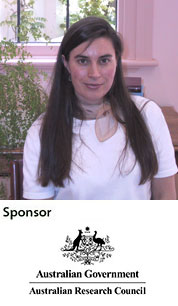
Dr Natashia Boland was awarded a PhD by the University of Western Australia for her work on operations research using continuous optimisation techniques in 1992. She was a postdoctoral research fellow at the University of Waterloo, Canada, in the Department of Combinatorics and Optimisation. This was followed by a postdoctoral research fellowship at the School of Industrial and Systems Engineering at Georgia Institute of Technology, USA.
She is a senior lecturer in the Department of Mathematics and Statistics at the University of Melbourne and is actively involved in a number of research projects in both theoretical and applied operations research, including the optimisation of processes such as cancer treatment plans and aircraft paths. She regularly provides consulting services to industry on a wide variety of topics.
Interviewed by Ms Marian Heard in 2001.
Contents
- Fun and inspiration in childhood mathematics
- The terrific interplay of maths and computer science
- How can a robot best use its arm? Beginning to apply the maths
- How can airline crews' work best be scheduled?
- The buzz of overseas experience and contacts
- Postdoctoral affirmation and impetus
- How can radiation best be used against cancer?
- What is the best aircraft path?
- Mathematics in the real world: challenge, creativity and variety
- Skills for an exciting career
- Enduring interests
- Towards using the potential of mathematics more effectively
Fun and inspiration in childhood mathematics
Natashia, your interest in maths began almost as soon as you were born! When was that?
I was born in 1967, in Perth, Western Australia. When I was at pre-school, I think even as early as two, I really loved blocks and trains and trucks. My Mum and Dad bought me lots of Lego and Meccano sets and things like that, which I would play with for hours. I was always building in sandpits and taking the sand in Lego trains into the house, and trying to build bigger and better systems. Then when I was about 12, we found my grandfather's Meccano set at his house. It was the old metal type, and as I'd only had the plastic type it was a really big thrill. Even as a teenager I spent hours playing with that, just building things.
Did your school teachers encourage you in maths?
Yes. My second-grade teacher, Mrs Martini, was very important. I looked up to her and she really encouraged me. During that year we had a lot of maths books and basically we just worked through each one doing exercises. But I got sick (with chickenpox, I think) and had to take two weeks off school. Not being sick enough to stay in bed, during that time I worked through all the maths books we had for the year, and then my teacher had to do something about that. Luckily for me, she had a split class and so she could enable me to go up to grade 3 early, without being away from my friends or encountering any big stigma. She helped me catch up with the English and so on to do that, and really encouraged me. That felt good – it's always nice to be able to do what you want to do and go at your own pace.
Probably the single most important person in getting me where I am today, however, was Janet Hunt, the maths teacher I had for four of my five years at Churchlands High School, Perth. She was very inspirational and took a lot of care of me, giving me extension materials and encouraging my interest. We never really talked about my personal life or anything, but she set a great example by her focus on her teaching.
I often wondered why that teacher never had any trouble in her class. We were a very naughty year and we didn't always behave well, but nobody ever misbehaved in her class. She wasn't a dragon, she didn't yell at everybody or anything: she held our attention by her total focus on the maths, her dedication to it and her interest in it. I don't know how she kept it going through so many years. Her interest and just her professional attitude really held me. And she also made it possible for me to go to a maths camp, the National Mathematics Summer School, in Canberra – a great experience – at the end of year 11.
The terrific interplay of maths and computer science
You did your science degree at the University of Western Australia, choosing a double major in maths and computer science. Why this combination?
There are several answers, I guess. I chose maths mostly because I loved it and enjoyed it. I chose the computer science initially out of practicality, wanting to make sure I did something that would be very employable at the end of my degree. Now I realise that probably maths is enough on its own to make you employable, but at the time I felt that computer science was important.
I have to confess I didn't like computer science at first. I found it very hard going for the first couple of years, but I was stubborn and persevered with it. By the third year I started to realise that maths and computer science are incredibly intertwined and they really belong together because of the type of thinking you have to do and also because an awful lot of mathematics, in order to be useful in the world, has to be embodied in the form of a computer program. Often you can't even try out your ideas in mathematics without a computer program to test what happens. Suppose you write down equations for the Mandelbrot set. They don't look very exciting. But if you implement a program that converts those equation to colours and pictures, you can have beautiful pictures of fractal sets – you can bring something into the real world.
So maths and computer science was a great combination in the end, better than I realised when I started.
How can a robot best use its arm? Beginning to apply the maths
What work did you do for your Honours degree?
My Honours supervisor was Dr Robyn Owens, who again really encouraged me. The project was on robotics, which was her area of research.
She was one of the main people working on a sheep-shearing robot at the University of Western Australia. Its stated aim was to shear sheep, but really it was more of a testbed for all sorts of different ideas in robotics. A problem had been encountered, however, with certain positions of the robot arm. You might have seen that a robot in a factory has an arm that picks up things and moves them, or that inserts rivets, say. It is very much like a human arm but of course made of metal, and often with more joints. My specific project was to study how to control a robot, looking at the equations that govern its motion at extreme positions – for example, stretched straight out or folded completely back on itself – which cause problems.
One of the things that I contributed, when I thought about this problem, was that these two extreme positions are really quite different. The second type of position – the arm folded back on itself – is useful. When the arm is tucked back, I can change the angle of the hand. So this position is actually useful and not necessarily to be avoided as people had thought.
How can airline crews' work best be scheduled?
After a successful Honours year, you completed your PhD – towards the end of which you had a couple of transformational experiences.
I should mention that a lot of my PhD experiences which really helped were thanks to my supervisors, Professor Alistair Mees and Dr C J Goh. They both took good care of me and made sure that I could have these types of experiences.
One such experience was the Mathematics-in-Industry Study Group. It is a great event, initiated by the CSIRO, and hosted every year by different places in Australia. On the first day, representatives from about eight to 10 companies get up and they each talk about a problem of interest to them which they think mathematics can be applicable to. They might even have brought along some samples – if, say, they want wear and tear in train wheels looked at, they might bring some train wheels along. Each company rep then goes to a different room. The mathematicians that have come along (often upward of 100 from around Australia, and PhD students like I was at that time) just go to the room for whatever problem they like the sound of and think they can contribute to. And for the whole week everybody workshops ideas on those problems.
The problem that really influenced me was one in airline crew scheduling. A given crew, for example, might start working in Melbourne on a certain day and take a flight to Sydney and then perhaps a flight to Canberra. If that's the end of their working day, they might stay the night in Canberra and maybe do a couple more flights next day, et cetera. There are zillions of such tours of duty or combinations for a crew. What you want to do is combine them in the most efficient way so that every flight gets a crew and every crew's work is reasonable. That problem really caught my interest, and I've been involved in problems of that sort ever since.
The buzz of overseas experience and contacts
How did the trip you made to the United States at the end of your PhD influence you?
I was lucky enough to get some funding – again through the help of my supervisors – to spend about eight weeks in the United States, where I did a combination of things. I went to a conference; I visited a university where people were working on specifically what I was working on; and I also had a one-month 'vacation studentship' working at Bellcore, which is one of the research institutes that came out of the AT&T group when it broke apart. Bell Labs, now called Lucent, was one group and Bellcore was the other, and although they were separate they did actually work together and I visited Bell Labs as well (the place where they invented the transistor). It was a big thrill to get to go to these places.
That trip was fantastic because it put me in contact with a lot of people working in my area. Working in specialised areas of maths can be quite isolating at times. There aren't necessarily a large number of people in Australia working on your particular area. Of course you've got people around you working in related areas, but to be at a conference where hundreds of people speak my language and know what I'm talking about, and the nitty-gritty detail, was a very pleasant and exciting experience. I think the whole time I was there I was just buzzing with interest and excitement about everything that was happening.
Postdoctoral affirmation and impetus
You had two postdoctoral fellowships. The first, at the University of Waterloo, in Canada, was an opportunity for you to see how Australians working in your field shaped up with the best in the world. How did they compare?
It was a real confidence-building experience, because I found that Australians were right at the top of the field and no different from anyone else there – Canadians, Americans, people from all over the world. There were three of us Australians in Waterloo at the time, and I think we were all thriving and found that we fitted in, we belonged. A senior professor in that department was from Melbourne originally, and besides me there was another student from Perth (I actually didn't know him until we met there) who has gone on to finish his PhD and actually get a position in that same department. That is a real coup, because it's a top department. It seems Australians often ask themselves, 'How do we compare?' and everybody is very excited when sports people make it big. But I've found that we just naturally are at home. I think our education system has been absolutely great; we certainly are not at all disadvantaged, compared with our North American counterparts, by the quality of education here. It's really fantastic and we do very well when we get the chance to go somewhere else.
Tell us about the postdoctoral fellowship you moved on to after the year in Canada.
That was a really wonderful experience. I had met Professor George Nemhauser for the first time at a conference in Singapore, when I was still a PhD student or just finishing, and he inspired me to change my career direction a bit from my PhD research into a line which was much more practical – still within the same general field, but focusing on problems like the air crew scheduling problem that I mentioned. He's a big expert in air crew scheduling, and he gave a half-day workshop at that conference that triggered my interest and gave me extra impetus to change to that field. And through meeting up with him I got offered a postdoc to work with him at the Georgia Institute of Technology's School of Industrial and Systems Engineering. So after Canada I took up that position for a year, and it was a really inspiring one.
That department does a lot of work on theoretical maths but also has a tremendous amount of involvement with different companies: it seemed like every other week there was a company bringing a problem to be worked on by students and staff. So you got to see a huge variety of different industries and to actually see how the solutions played out. Professor Nemhauser has mentored a lot of careers, and he was a really great mentor to me. He spent a lot of time with me. When a person with his experience and his background is able to devote time to you, that is invaluable. He told me all the things I needed to think about and to do in order to have a good career and to pursue an academic career as I wanted to. He made that happen, and helped make me passionate about what I do.
How can radiation best be used against cancer?
You returned to Australia to take up your current job at the University of Melbourne, where you are working on a number of projects. Would you tell us about the one involving cancer radiation treatment?
This project was brought to me by some researchers in Germany who I've been working with for the past year. (That started when I spent a month last year working with them in Germany.) In the treatment of cancer using radiation, you have a beam source which moves in a semicircular arc around the patient. The beam head will move and stop in a given position, and then fire off radiation at the tumour. The idea is to maintain focus on the tumour but keep changing the angle from which you fire the radiation at it. So the tumour gets hit a lot of times with the radiation but the healthy tissue around it only gets struck from one angle, and the radiation builds up in the tumour without accumulating too much in healthy tissue.
We've been trying to optimise the treatment planning process. There are a lot of decisions to be made when you plan radiation treatment, such as the angles at which you are going to stop and release radiation at the tumour, the sort of pattern of radiation you are going to release when you do that, and how you can get the machinery to deliver that pattern in the most efficient way. There are lots of different combinations of angles you can stop at and ways you can do all these things, so we use mathematics to help us find the best. And by 'best' we usually mean the tumour will get a lot of radiation and the healthy tissue will get as little as possible, and the patient will not have to spend too long in treatment – you want to keep their treatment time as low as possible. Those are the goals, and with mathematics we are able to make some quite substantial advances towards achieving them.
What is the best aircraft path?
Another, quite different, project you are working on involves some work that has been taken up by researchers working with the United States Air Force.
This project highlights the broad spectrum of problems you can use mathematics for. In military contexts you might want, for example, an aircraft to fly from point A to point B through some hostile terrain without being detected. Your intelligence forces might have found out where there are, say, radar detection devices, and so you hope you know where those are positioned. What you do is look at every possible point that the aircraft might travel through to get from point A to point B, and try to assess the risk at each point of detection. You would then plan a path from point A to point B to minimise the risk of detection by all these devices, but at the same time you have to satisfy some constraints such as not having the aircraft flying a huge distance or runing out of fuel. There could also be a whole lot of other constraints – perhaps restrictions on height – depending on the type of aircraft. Addressing those problems is something that mathematics is very good at.
Mathematics in the real world: challenge, creativity and variety
Natashia, you're very enthusiastic about mathematics. What would you tell a young person considering taking up a career in maths were the most rewarding aspects?
There really is a mental challenge, it's fun. Sometimes it's almost like you get to play a game every day, because you're pitting your wits against a problem and it's exciting and fun to see what you can come up with and what you can create. So I would point to that problem-solving aspect, the fun of having new problems to tackle and the challenge of tackling them and using your wits.
There's a surprising amount of creativity in mathematics. People think about careers in the arts or that type of thing as being creative, but you're constantly thinking of new ways to use mathematical ideas to help. That's a really nice part of it.
And then another part is the variety. Maths comes up in almost every aspect of life. When you are a very young child and watch something like Sesame Street, you'll see two elephants walking past, then two zebras walk past, and then two balls roll past, and eventually you realise, 'Oh, the concept here is two.' Two is an abstract concept, a mathematical concept, but it embodies all those different things – elephants, zebras and balls – that live in the real world. That carries throughout mathematics: common mathematical structures come up and appear and are embodied in almost every aspect of the real world. And discovering the common structure, getting that light bulb to switch on, 'Oh, that's the number 2,' but having it happen in ever more complex and interesting ways, is another really nice part of it.
Skills for an exciting career
What skills do you think are needed for a career in maths or science today?
It's not enough any more to focus on just one skill, you really have to develop quite a variety of different skills. Logical and critical thinking is obviously needed: developing your ability to, for example, look at someone's argument and see where the holes in it are. Be suspicious, don't just accept what anybody tells you – examine it. That type of critical thinking is crucial, because with mathematical ideas we're often modelling real systems, and we must check, 'Does this mathematics properly model it? Does it model it in every respect that we need it to?' So we're constantly putting up ideas but then really hammering at them to see whether they hold up under scrutiny. You don't want to move forward with decisions based on mathematics unless it's been properly scrutinised. That's not only an important life skill but it really plays out in a big way in mathematics. Logical and critical thinking are important faculties to develop.
Computer skills are also needed. I mentioned at the beginning that computers and mathematics are interrelated. You get a huge amount of excitement from seeing mathematics come out in the real world, and very often that happens via computers. In my area, to get back to the crew scheduling example, the way that the mathematics plays out – when it helps us sort through all those different combinations and find the best one – is that it sits behind a scheduler's computer system. The scheduler sits there and tries to come up with the best schedule, using a computer and graphics and everything to show their plans for the schedule. But then there'll be a button there which helps them optimise that. When they press that button, there's mathematics running in the background. Mathematics has been embodied in that computer code. So the more you can enhance your computer skills, the closer you can make the link between the mathematics and getting it to come out in the real world and be useful to people.
Enduring interests
You have a range of interests besides mathematics.
I love music. It has always been something I've wanted to do, right from being a small child. My parents, both being very unmusical, were a bit puzzled by this but they encouraged me. It was actually my father who had me sit the test for the musical scholarship which enabled me to go to Churchlands High School, where the scholarship gave me classes in the violin. So I played the violin, and we had a school orchestra and I used to sing in the choir; it was our school that would do the Anzac Day parades and things like that. It was great fun, and to this day I still love classical music and listen to a lot of it.
Also, since I was 20 or so I've liked running and that type of thing, so I've done quite a few fun runs – the longest was a half-marathon. I'm certainly no professional athlete; I'm just happy if I make it to the end. Recently I've got quite keen on triathlon – again nothing long, just the really short ones, but doing them and doing all the different types of training is great fun. So again I like the variety.
And apart from triathlons, I really love hiking. I love getting out in the bush, and having some fresh air and seeing beautiful scenery and watching animals and things like that.
Your husband shares those interests, I believe.
Yes, sometimes slightly reluctantly. He doesn't appreciate the triathlon wake-up call at 6am, but I think he figured if he was going to get out there he might as well do it. He's done the last couple of triathlons with me, and having him along at training is good fun and helps to make it more enjoyable. And he definitely comes on the hikes.
Towards using the potential of mathematics more effectively
You've achieved a lot already in your career. Where do you see yourself in 10 years' time?
I guess I have two main goals for the next 10 years. I would like to have a family, some children. That's a very important goal for me. But on the career side of things, I would like to move more into enabling mathematics to play out in the real world. In my actual research I have been fortunate enough to have applications used, based on what I have been working on, and as well I still do quite a lot of theoretical work, which is great fun and really exciting in its own way. But I would like to move more towards actually making it happen, enabling the mathematics that exists to be used more, because I believe the state of the art in mathematics is beyond what is being used: there is a real gap between what we know we can do and what is actually being done. I would very much like to try to narrow that gap a bit and to do a bit of 'technology transfer' – to use a buzzword. That's where I'd like to move the emphasis of what I do.
Dr Bruce Fraser, biophysicist, 1924–2019
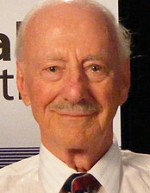
Robert Donald Bruce Fraser was born in England in 1924. Fraser began a part-time BSc at Birkbeck college in London University but this was interrupted by World War II. During the war, Fraser was a pilot in the Royal Air Force where he taught pilot navigation (1943–46). After the war, Fraser completed his BSc (1948) and PhD (1951) degrees at King’s College in London. Fraser’s PhD work focused on the use of polarised infrared radiation to study the structure of biological materials and he made important contributions to our ideas about the structure of DNA. In 1952 he immigrated to Australia with his wife Mary and baby daughter Susan, to take up a position with the Division of Protein Chemistry at the Commonwealth Scientific and Industrial Research Organisation (CSIRO) in Melbourne, Victoria. There he worked on the molecular structures of fibrous proteins including wool and feather keratins, and collagen. He retired in 1987 to take up a Fogarty Scholarship at the National Institutes of Health (NIH) in Washington undertaking collaborative research with several NIH scientists. After returning to Australia he spent some time writing software for his children, Andrew and Jane, and since then has continued to publish original contributions to the structure of fibrous protein until the present time.
Interviewed by Professor George Rogers in 2008.
Contents
- Introduction
- A post-Depression childhood in England
- From university to the Royal Air Force and back
- A PhD in infra-red spectroscopy
- Gaining DNA insights and a wife as well
- Subsequent controversy regarding DNA modelling
- Infra-red spectrometry for CSIRO’s biochemistry
- On to electron microscopy and X-ray diffraction
- Addressing the structure of the wool fibre
- Conformation in fibrous proteins
- Digital processing of fibre diffraction patterns
- Benefits flowing from the writing of books
- Via a US scholarship into a productive retirement
- Further progress in fibres and keratins
- Personal pleasures and satisfactions
I have been a colleague and friend of Dr Bruce Fraser for more than 50 years and it is a pleasure to provide a few words of introduction.
Bruce was elected to Fellowship of the Academy in 1978 for his distinction as a biophysicist in the field of the molecular structure of fibrous proteins. He was born on a farm in the Home Counties and grew up in the Harrow area, just outside London. His high educational achievements led him to study part time at London University for a BSc. It was wartime and, at the end of the first year, when he was 18, he volunteered for aircrew in the Royal Air Force. After qualifying as a pilot, he was selected for instructor training and specialised in teaching pilot navigation.
After the war, he finished his science degree full time at Kings College, London, and then completed a PhD. It was during this period that he met his future wife, who was setting up a biochemistry facility in the biophysics unit, and they were both involved in the work that led to the discovery of the molecular structure of DNA.
In the early 1950s, conditions in England for two young and successful people who wanted to raise a family were so dismal that they emigrated to Australia, where Bruce joined the CSIRO Biochemistry Unit in Melbourne, in which fundamental wool research was being carried out. It was here that Bruce’s career reached its pinnacle, and his X-ray diffraction research into wool keratin structure and other fibrous proteins became known both nationally and internationally. Furthermore, his research ventured further into developing robust mathematical and digital techniques for analysing X-ray diffraction data.
Bruce was awarded a DSc degree by London University in 1960. He has written two books covering keratin, collagen and other fibrous proteins, and has published some 175 papers. During his outstanding career, he has been invited as a visiting professor and as a keynote speaker to many institutions and conferences around the globe. He has also received numerous honours and awards, including the science medal of the Royal Society of Victoria, the S G Smith Memorial Medal of the UK Textile Institute and the Fogarty Scholarship to work at the US National Institutes of Health.
In 1987, having been Acting Chief and Chief of the Division of Protein Chemistry for five years, he decided to make way for some new blood and retired to the Sunshine Coast in Queensland. His retirement did not mean giving up science, however, and he has continued his intellectual work on fibrous protein structure and has published many papers in collaboration with several colleagues, especially his old colleague David Parry, who recently retired as Head of the Institute of Fundamental Sciences at Massey University. Of particular note is their recent publication of a proposed tertiary structure for the filaments of feather keratin. This is the most remarkable and detailed three-dimensional analysis of the structure of a keratin protein ever proposed.
A post-Depression childhood in England
Bruce, we first met in 1952, when you arrived from England to take up a post at the CSIRO Biochemistry Unit in Melbourne, but I know very little about your early life. Where were you born?
I was born on a farm near the little village of Ickenham, just outside London. My mother’s family were farmers who had migrated from Scotland a couple of years earlier, and my father’s grandfather had migrated from the Highlands of Scotland in the 1850s. So I have a very definite Scottish connection.
What are your earliest recollections?
They relate to when I was about four or five, when Britain was still recovering from the Great Depression. My father worked for the metropolitan railways, and he was more fortunate than a lot of people, because at least he was on ‘halftime’ – he worked half the time. But his salary was also halved, so when rent was paid there was virtually nothing left for food or clothing. I still remember the effects of this on the family. And I recall the awful taste and the grey colour of stewed mutton, which I suspect was the only meat my parents could afford.
Where did you go to school?
My first school was in a pretty rough area where a lot of the children’s fathers were out of work due to the Depression. One of the lads I was friendly with would arrive in the winter with very cold feet: his boots had holes in the soles and his family couldn’t afford socks. At the age of 11 we all sat a scholarship examination, and I managed to get a scholarship to Harrow Weald County School. That was very useful for my parents, because they couldn’t possibly have afforded the fees themselves even though we weren’t quite as hard up then – my father (who had won a similar scholarship to Harrow County School) had managed to get a much better job at the Kodak factory. Kodak, being an American firm, looked after their employees much better.
That county school was brand new and, unusually for that time, it was coeducational. Also, the teachers were of a much higher calibre than is customary nowadays – almost all of them had really good degrees. Several had been to Oxford and Cambridge, and some were actually working part time for higher degrees.
Did you develop any interest in science while at the county school?
The science and the mathematics teachers were particularly enthusiastic about their subjects and I think this was infectious. So that is where I first became interested in science.
Did you have any problems at school?
Yes. I’ve always had a dreadful memory. I probably was certifiably Alzheimic at that time! The mark I got for History was always ‘Very fair’, but I never really found out whether ‘Very fair’ was better or worse than ‘Fair’. The term report every year for History said, ‘Could do better if he tried,’ but I simply couldn’t remember a mass of unrelated facts.
From university to the Royal Air Force and back
What did you do when you left school?
At the end of the course I took the School Certificate examination and got the Matriculation and so on. That went fine, but the grant only extended to the end of the schooling period and there was really no question, economically, of my going to university. So I did the next-best thing: I found a job as a laboratory assistant at the Kodak factory, where my father was working. The great advantage of this was that they financed their laboratory assistants to attend Birkbeck College – the only place in London University where you could do a part-time course, normally by evening classes. Unfortunately, World War II was on then and the Germans were regularly bombing the part of London where Birkbeck was situated, so the lectures were transferred to the weekends and one spent five days in the laboratory and two days at lectures [laugh], making a seven-day week. That wasn’t very good for the social life.
What were the conditions like at Birkbeck College?
They were rather unusual, because pretty well all the staff had been posted off to government work and a lot of the old lecturers had been brought in to do the work. This was actually a great advantage, because they were all very experienced lecturers and very good teachers. The Professor of Physics was the distinguished scientist J D Bernal, who was also working for the government but took time off to come in and give a lecture to the students. I’ve never forgotten an extremely interesting lecture he gave about the sine wave and how that is the basis of almost the whole of physics.
What other impacts did the war have on your studies?
Well, at the end of the first year I took what was termed the Intermediate BSc examination and passed in the usual four subjects, physics, chemistry, and pure and applied maths. But, being 18 by then, I was old enough to volunteer for flying duties in the Royal Air Force. And, because there was an acute shortage of pilots, three weeks later I found myself in uniform. After five months of ground school and a couple of months getting a few hours’ flying in Tiger Moths, I was selected for multi-engine pilot training and sent off to South Africa under the Empire Air Training scheme – flying conditions in Britain were so awful for training that people were sent to somewhere with a sunny clime!
Canada was another one.
Yes. I was kept on as an instructor, because, with a background in physics and mathematics, I had obtained higher than average marks in such subjects as navigation, flight planning and meteorology. This instructing was not without its hazards, particularly when teaching really lowlevel pilot navigation. [laugh] All my classmates on the wings course, however, returned to Britain and many of them were posted to Bomber Command. They flew in the massive night bombing offensives against Germany and, sadly, many were lost over Europe. To this day, I still get pangs of survivor guilt when I’m reminded of that period.
Bruce, after the war, when did you manage to get back to science?
At the end of the war, the government introduced a Further Education and Training scheme, financing people to go back to university if their studies had been interrupted, and my period at Birkbeck qualified me for this. It paid the princely sum of £147 per annum, not enough to live on, but because I could live at home I was all right. The advantage to me was that I was then able to convert to full-time studies, and I commenced a degree in physics, with mathematics as ancillary, at Kings College, in the Strand in London.
After the first year, because the authorities were very sensitive to the fact that ex-service people were well behind all the others as regards time, careers and so on, they gave us the opportunity of doing the second and third years together. A couple of us chose to attempt this, and although the number of lectures and practicals was horrific, we did get through. I managed to get a first in physics, with ancillary mathematics.
A PhD in infra-red spectroscopy
How did you progress to PhD studies?
When the results came out, Professor Randall – the Wheatstone Professor of Physics – called me up to his office. He was quite famous because in the early part of the war he had invented the magnetron, which made radar possible and gave the Allies a huge advantage, putting them far ahead. I think Winston Churchill once said it was the greatest single contribution by any individual to winning the war.
I believe Randall had received a substantial grant from the MRC, the Medical Research Council.
Yes. He’d got almost everything by that time. He was a Fellow of the Royal Society and a Member of the Athenaeum, and the government had given him a £10,000 reward. Also, when he applied with the idea (which he had started up at St Andrews University) of a multidisciplinary approach to biology and molecular science, he got a huge grant from the Medical Research Council to establish a biophysics unit at Kings College.
Besides being Wheatstone Professor of Physics, then, he was head of this MRC unit. He offered me a grant, an MRC studentship, which paid £250 a year – almost enough to live on, which was good – and lasted for three years. The idea was for me to get a PhD, and since that was exactly what I’d been hoping for, I was very pleased.
Who was your PhD supervisor?
That was the eminent spectroscopist Bill Price, who was Reader in the Physics Department at the time. He suggested that I should look into the application of infra-red spectroscopy to the study of biological materials. Not only was he an absolutely brilliant experimenter, but he had the great background of an understanding of the theory. He had an infectious, boyish enthusiasm, and a total disregard for fame and fortune.
So you collaborated with him – and you were associated with Wilkins.
He encouraged me to collaborate, because it was supposed to be multidisciplinary, and I quickly formed a friendship with Maurice Wilkins, the Assistant Director of the MRC unit. Wilkins was an expert on the design of precision instruments and taught me a great deal about microscopy and the design of instruments. I collaborated also with Arthur Elliott, another distinguished spectroscopist. He was not in the university but worked in the then Courtauld Research Laboratory, which had been established by the Courtauld fibremakers. He taught me a great deal about polarised infra-red radiation, having pioneered the use of infra-red dichroism to measure bond directions in polymers. Put simply: if you take polarised radiation, you would look first one way and then the other, just as you do with a piece of Polaroid on the sky, and you get changes in intensity as you do this. By applying this to a polymer, you can determine which way bonds are pointing, and that is sometimes a vital bit of information.
Your association with Elliott was extended some years later when you had him out to Australia, as well as visiting him at Courtaulds. But what did you find from those initial studies?
I found that useful information could be obtained from almost all the biological specimens I examined. The big problem was that the focus in normal infra-red spectrometers was quite large – perhaps 15 millimetres by two to three millimetres – and really you want to be on a much smaller scale than that. But glass won’t transmit ultraviolet or infra-red radiation. It is completely opaque to both of them. So you cannot use an ordinary microscope to reduce the size of the beams.
I was very fortunate, in that a friend of mine, Keith Norris, was working with Maurice Wilkins and designing reflecting microscopes. In a reflecting microscope, you have a little mirror so placed that when the light comes in it is reflected onto a much larger mirror that concentrates it into a tiny spot. A second pair of mirrors then reverses the process and a magnified image is produced. Keith knew a great deal about the design of these mirror systems, so I worked with him to design one for infra-red spectroscopy. Because of the requirements of the optical path the larger mirrors were like a pudding bowls and were very expensive to make. Anyway, we completed that and it worked extremely well, and the use of polarised infra-red radiation combined with the microscopy formed the basis of my thesis.
Who were your mentors and role models when you were doing your PhD and your postdoc?
The people I had closest contact with were Bill Price, Maurice Wilkins and Arthur Elliott. Curiously, they had similar properties: they all had a boyish enthusiasm for their subject, they were all meticulous experimenters, and they were all very objective about results they obtained – they never got carried away with theories they wouldn’t change. [laugh] I really regarded those as my role models, and I’ve always tried to emulate them in being very objective about any scientific findings I make and also in making sure I acknowledge all the previous people who have studied and produced results. Today that is a dying thing, which is very sad. I think you should always acknowledge all early work.
Gaining DNA insights and a wife as well
While you were at Kings, the search for the structure of DNA was developing there. Maurice Wilkins was central to that, but what part did you play?
Well, Maurice Wilkins was very, very interested in the structure of DNA. He had found that there were some fibres that could be drawn out of samples of DNA, and he did a lot of work on that. I have here a graphic depicting the people who were working there. Shown at the top are John Randall, the Wheatstone Professor of Physics and Director, and Maurice Wilkins, the Assistant Director. He and his research student, Raymond Gosling, together obtained an X-ray diffraction pattern from the little fibrils that he pulled out of the DNA samples which showed that they were helical. That was a very important piece of work. The little sample that Wilkins had was provided by a Swiss biochemist, Rudolf Signer – and it became the focal point of a great event in the department which caused a great deal of animosity, as I’ll tell in a minute.
At the bottom left is Rosalind Franklin, who was, actually, recruited by Randall to work on denatured proteins. When she arrived, Wilkins was away at a conference in Italy and she was told that she wouldn’t be working on denatured proteins but had been switched to DNA, and later she was given Wilkins’ precious little sample of DNA to use. His research student, Raymond Gosling, was also reassigned to her. There is no doubt that Randall himself, quite an eminent crystallographer, could see the glory that would come from finding the structure of DNA and took this rather drastic action regarding Wilkins’ domain. Later Rosalind made the very important discovery that these little DNA fibres could exist in two forms, A and B, depending on the humidity. Details of the beautiful X-ray diffraction patterns that Gosling took of the B form were leaked to Watson and Crick in Cambridge, and in fact used by them to formulate their famous double helix model.
I am pictured at the bottom also, in the middle. I showed that the purine and pyrimidine rings in the bases exhibited strong perpendicular dichroism, indicating that they were stacked like a pile of plates, and later I developed a specific model for DNA. The remaining person here is my wife, Mary, who prepared the high molecular weight DNA used in the infra-red studies. Not shown is Alex Stokes, a lecturer in the Physics Department who formulated the theory of diffraction by a helix, confirming that Maurice Wilkins and Raymond Gosling had proved that DNA was helical.
Speaking of your wife, Mary: 1950 was a special year for you, wasn’t it?
It certainly was. Professor Randall had decided in the previous year to set up a biochemistry facility to supply materials for the various projects that we had going, and he had recruited Mary Nicholls, who had just completed her PhD degree at Birmingham University for this task. Mary was a very competent and very attractive girl, and she added a new dimension to the otherwise dull environment of the Physics Department! She had a great many admirers but, in 1950, she accepted my proposal of marriage, and we were married later that year.
Two years later we had a little girl, Susan – delightful but another mouth to feed – and since the academic salaries for women and the postdoctoral grants for students like me doing a higher degree were so bad, we decided to emigrate. (I’d been totally spoiled by spending three years in the glorious sunshine of South Africa, and Mary was game for anything.) So I accepted a post in Melbourne, Australia, with CSIRO’s Biochemistry Unit. We left in September 1952.
Tell me about the work on DNA that you and Mary did before you left Kings.
Well, since the sample Wilkins had obtained from Rudolf Signer was very precious, that was what he wanted to produce more of. But there were several problems. Mary didn’t have any cold room facilities in the Physics Department; and, secondly, his write-up of the preparation was rather vague and – not uncommonly, I’m afraid, in descriptions of new advances like that – several vital steps in the preparative procedure weren’t mentioned. The preparation that Mary did had a lower molecular weight, only slightly lower but sufficient to prevent it from drawing the lovely fibres that were used for the X-ray work. However, I then used a totally different method for preparing infra-red specimens, where you smear the preparation on a plate. It turned out to be absolutely ideal for the purpose, much better than the Signer stuff, so I was able to use that, with polarised infra-red radiation, in my studies.
I presume that means the DNA was cleaved, or something like that, so it wouldn't align.
Yes, it just wasn’t quite long enough. What happens, actually, is that the molecules are subject to all the normal thermal motions and, the longer they are, the more time they will stay lined up when you apply a shear.
At one stage, James Watson, of Watson and Crick fame, applied for a post at Kings.
It was quite interesting. While I was doing this work, Watson came around the laboratory and was shown around; I showed him all the work I’d done and the results I’d got. I learned later that Randall didn’t accept his application, because he didn’t think he brought any new skills into the laboratory. But I suspect that this was the first leakage of information from Kings to, as it turned out, Watson and thus Crick, whom he teamed up with when he got a job at the Cavendish under Lawrence Bragg – the first leakage of results between the two groups.
Subsequent controversy regarding DNA modelling
Tell me about developing your model for DNA. Apart from the number of chains, it turned out to have been very similar to the final model that Crick and Watson developed in 1953.
When I finished my thesis, I got a Nuffield Foundation fellowship to continue working in the biophysics department, and Maurice Wilkins asked if I would think about possible models for DNA. Probably he asked me because I had learned a great deal from Bill Price about the distances between atoms, the angles they make and the forces which hold molecules together.
I devised a model which had a helical structure, with stacked bases. I reasoned that the charged phosphate groups would repel each other and so they should be on the outside – this determined the orientation of the bases – and pointing inwards would be the hydrogen bonding groups.
Brenda Maddox, in her book on Rosalind Franklin to celebrate the 50th anniversary of the discovery of the structure of DNA, wrote:
Fraser’s model of DNA, completed very quickly, was a simple structure that had what would turn out to be all main features correct except for the number of chains. It had a helical shape, phosphates on the outside, and bases stacked like a pile of pennies, separated by the 3.4 Å distance worked out by Astbury.
A big step in the right direction, Fraser’s November 1951 model was another glaring example of King’s’ institutional hesitancy. Its details were never published …
The reason I had three chains was that, when I first started the investigation, I went to both Rosalind Franklin and Maurice Wilkins and said, ‘How many chains are in the molecule?’ At that time they were sure there were three, as was everybody who had worked on DNA, including Linus Pauling. So I didn’t bother to consider anything other than three.
But you had everything there, apart from the chain number, whereas Linus Pauling made the critical mistake of putting the phosphates on the inside, in the middle. That was extraordinary for a chemist of his stature.
Yes, and he never recovered from that mistake. He was one of the leaders in chemical thought, yet he made this almost ‘schoolboy’ mistake. Who was I, however, a mere physicist, to question somebody like Linus Pauling? [laugh]
Anyway, in 1952 – after we had arrived in Australia – Wilkins sent me a cable. He was aware that Crick and Watson had realised that their original model, which also had the phosphates in the middle, was quite untenable. Their thinking had taken a new twist after the Kings group had gone up, at their invitation, to see the structure that had been developed in Cambridge. Rosalind Franklin was very supportive of the idea that phosphates were on the outside, and in 1951 she told Crick and Watson in no uncertain terms that they’d got it all wrong. By 1952 they had a new model in which there were only two chains, and they had put the phosphates on the outside and the bases on the inside and so on. Wilkins’ cable was asking me to write up the work I had done (because it was so close to what they had done) in order for the thinking at Kings to get publicity at the same time. I sent him a draft manuscript with a couple of figures illustrating everything, but unfortunately he never published it.
It was, however, mentioned in the actual 1953 paper, ‘Molecular structure of nucleic acids: a structure for deoxyribose nucleic acid’, by Watson and Crick. In the introduction they have this rather grudging acknowledgement:
Another three-chain structure has also been suggested by Fraser (in the press). In his model the phosphates are on the outside and the bases on the inside, linked together by hydrogen bonds. This structure as described is rather ill-defined, and for this reason we shall not comment on it.
That comment is extraordinary, when their initial model was rubbish.
With three chains and the bases down the middle, yes! Also, I had gone to great lengths to try to work out standard patterns of bonding between the bases, which of course was the key to the final model.
Did you have any further involvement?
Yes. I had made only that minor excursion – perhaps two or three months maximum – into the DNA field, but to me it raised a lot of interesting questions. The first one arose when Horace Judson approached Mary. An extremely objective author whom Wilkins knew quite well, he had produced the book The Eighth Day of Creation describing the makers of the revolution in biology. He tried to put to rights the distortions of the situation at Kings that had arisen due to a book by Anne Sayre, who was a very great friend of Rosalind’s, about the awful rows that Rosalind got involved in and the terrible conditions at Kings. Maurice Wilkins had lost his research subject, he’d lost his research student and he’d lost his precious DNA – and she was very uncompromising. Jim Watson, in his famous book The Double Helix, spells all this out in, perhaps, a rather biased way. Anne Sayre hoped to set it right in her publication, but it was, in turn, factually inaccurate and quite misleading. Horace Judson did a good job in straightening some of it out, helped by a lot of correspondence with Mary.
Later, a couple of interesting things happened. Firstly, when Brenda Maddox was writing her book, for two or three months she had emails going backwards and forwards about impressions of all the things that had happened at Kings, and she gave a very fair account of what had happened.
But of most interest to me was something that was set up in the United States – initially, I think, as a private venture – that is, to form an archive of all the material that could be assembled on the discovery of DNA. It was precipitated in my case by a phone call at some ungodly hour of the morning. I got out of bed and answered it, and a strong American-accented voice asked me did I still have a copy of my thesis? I said, ‘Yes, but it’s sitting beside Mary’s on an old bookcase in an outhouse, and it’s very mouldy,’ and he replied, ‘Fine, fine, that’s exactly what I want.’ He explained that since he was compiling an archive, a bit of mould on the surface was a good thing! He said to me, ‘Look, if you send it over to the United States, I’ll have it copied, I’ll do a bound copy for you and send it back, and I’ll give you $US8000.’ So it wasn’t a hard decision to make.
That was more than you got as support when you were doing the work.
That’s right. The other interesting thing was that I had an approach, in that same celebratory period, from the editors of the Journal of Structural Biology. They said they knew about the manuscript I had prepared for Wilkins and, if I sent them a copy, they’d love to publish it. But when I left CSIRO in 1987, I had drawers full of old correspondence which I just swept up and put in the bin; I didn’t keep any of it, because I never thought anybody would be interested in my three months’ excursion into DNA and I wasn’t particularly interested in it myself. So I had no record. I got onto Maurice Wilkins, though, and eventually he found the original manuscript I had sent and gave me a copy – but he had lost the diagrams, which are a vital part of it all. Nonetheless, the journal published it, saying in the introduction:
Although Fraser's model of DNA did not correctly describe the B-form of duplex DNA, it came close to describing the triplex polynucleotide forms with three chains that have since been characterized, first for RNA in 1957 and then as a "high energy" state of DNA (H-DNA).
It perhaps wasn’t so wrong after all – and it was very nice of them to say so. I also supplied copies of a number of photographs I had kept from Kings College days. One which was featured on the front of the journal shows some of the Kings College DNA workers at a departmental cricket match (before the arrival of Rosalind Franklin). Maurice Wilkins was sitting in a deck chair, not watching the cricket match – he wasn’t interested in sport at that time, only DNA – and was studying a sheaf of notes from which he was trying to ensure that what he’d done in describing the helix was all correct.
Alongside Wilkins was his offsider, Bill Seeds, who had some blazing rows with Rosalind Franklin about the workshop. She had brought with her, from France, designs of X-ray cameras and things. But both Bill Seeds and Maurice Wilkins were experts at instrument design and recognised that the designs contained some terrible examples of ‘overconstraint’, and when Seeds made the suggestion that she ‘change this’ and ‘change that’, she blew her top, I’m afraid. So there wasn’t a very good atmosphere in the department.
I am shown next, with Mary; standing is Raymond Gosling, a great friend of ours; and sitting is Geoffrey Brown, who was in the Physics Department and had interests in biochemistry. He and Mary set up the department – jointly, but I think Mary did most of the work of setting up the biochemistry part.
Infra-red spectrometry for CSIRO’s biochemistry
Would you like to talk about your arrival in Australia, and what your first impressions were?
Well, we were surprised that Australians were so friendly and accepted migrants so cheerfully and gladly. We never met any sort of opposition or criticism or anything like that. The other great thing was the joy of escaping from the dismal scene in Britain. This was five years or so after the end of the war, yet the meat ration was tenpence a week, which would buy you one scrawny lamb chop if you were lucky, and you could have one egg a week; petrol was rationed, clothing was rationed. It was a pretty dismal scene, even after all that time.
But in Australia it wasn’t easy to find somewhere to live.
No. We were given some temporary accommodation by CSIRO, but there was very little available for them to offer us. We were actually put into a pub – above the public bar – in the back streets of Melbourne. We had a sink in the room and a communal bathroom down the corridor, and Mary managed to look after a fourmonth-old baby there for several weeks. It was interesting. When we left and signed the documents for CSIRO, Susan had been so good that the landlord said, ‘Oh, I didn’t know you had a baby.’ [laugh]
The people in the lab were wonderful. Everybody helped us. In particular, Gordon Lennox –the chief of the laboratory – and his wife Fran used to look through the ‘To Let’ columns, and we went around Melbourne trying to find somewhere to stay. But if you had pets or young children you were crossed off immediately. Eventually we found a funny little semi-detached house in Flemington near the saleyards and the racecourse. The lady would have us, but first she raised another aspect of Australian life I hadn’t yet come across, asking me, ‘Are you a drinker?’ When I said, ‘Oh … yes,’ she replied, ‘Ohhh, but how much do you drink?’ I told her, ‘I occasionally have a dry sherry,’ to which she said, ‘Oh, that’s not drinking!’ (I found out later what she was scared of.)
I remember visiting you there all those years ago.
It was a nice little house, and it had the great advantage of being very close to the laboratory. I was able to save money by buying an old bicycle and cycling just a few kilometres to work every day. That was good.
Well, you had to be looked after, because you were a very important addition to the lab: you became its only physicist! The Biochemistry Unit was a new venture. What were your first impressions of it as a scientific unit?
CSIRO was a wonderful place to work, at that stage, concentrating on ‘oriented basic research’ – in other words, fundamental studies of direct application to Australian problems. I found a very friendly atmosphere in the Biochemistry Unit, where everybody was just so cooperative. That was great, after the unhappy environment I had come from: a department where Wilkins was disillusioned, and Rosalind Franklin had more or less shut herself off and wouldn’t work with anybody (though that was not her fault). Coincidentally, something about the laboratory that struck me as odd was that, whereas at Kings, Randall was a sort of God, here we all used to sit and have lunch and afternoon tea in the boss’s office. That gave a very good impression. Also, the people at the top of CSIRO at that time were really brilliant scientists. Whenever Sir Ian CluniesRoss, the head, and Sir Frederick White, the CEO, had a spare moment, they would go out to the Divisions and chat to scientists, and I found that a remarkable morale booster. You’d have had the same experience.
Oh yes. Well, Bruce, there you were in Melbourne and you had to set up a structure group. How did you go about that?
Pretty well all my experience at Kings had been on fibrous proteins of various sorts – muscle, collagen, keratin – and one of the first instruments I was going to use in Melbourne was the infra-red spectrometer. They had already ordered a beautiful machine, the latest and greatest, made by Perkin Elmer, and it was there when I arrived. But I had to alter it so that I could incorporate some sort of condensing unit, because I was going to work with small specimens. This involved putting it in the workshop, getting a milling machine and sawing it in half. So the first thing I did with this beautiful new machine was to take it all to bits and store the sensitive parts in desiccators and so on. When the Chief saw the thing set up in the workshop with a milling machine ready to cut it in half, he looked a bit dismayed! The word soon got around among the rest of the staff, ‘What is this new guy up to?’ It was an essential first step, though, toward putting in a microscope.
While this was going on, to keep myself busy I took the opportunity to try to work out the theory of how you could interpret infra-red dichroism in polymer materials. This was later published in the Journal of Chemical Physics and was the first of a series of papers which laid the groundwork for understanding how you could relate this dichroism, which is the ratio of the absorption measured one way to the absorption measured another way, to polymer materials. Anyway, the infra-red spectrometer all went together again and everybody heaved a sigh of relief when it was working again. And I think the Chief was absolutely delighted when he saw a spectrum I had taken which had a higher resolution than when the machine had been delivered – but this was not so much my doing as that of Sir Alan Walsh, who was quite brilliant at adjusting spectrometers. (I quickly teamed up with him when I first arrived and he gave me a lot of good advice about it.)
On to electron microscopy and X-ray diffraction
Next you turned your attention to microscopy, and you and I interacted on a number of problems. We got an electron microscope some three or four years later, as I recall, but before that you started to investigate metal shadowing for looking at the surface of fibres.
Yes. It’s an interesting technique and is much used in electron microscopy as well. The apparatus includes a bell jar where you create a vacuum, and you have a little piece of metal – it might be gold, aluminium, almost anything – which you heat and evaporate so that the atoms come off and deposit to form a thin film. Now, if you do this at an angle, you get a lovely ‘shadow’ of anything which is sticking up from the surface.
We applied this to studies of wool, which has the very special feature of scales which stick out and are responsible for quite a lot of its unusual properties. And even though the images we took of the surface of wool fibres had to be at low resolution, they greatly resemble the scanning electron microscope pictures that were taken later. So we were able to study a lot of features of wool. In particular, treating wool with chlorine cures some of the difficulties of wool shrinkage, and looking at the same sort of picture after treatment with chlorine you can see very clearly that the scale edges have been blunted. If you have wool fibres going in both directions, the scales interlock; without chlorine treatment, each move causes one to be shunted up and everything gets smaller and smaller. So this was a great help.
About the same time, two Japanese scientists, Horio and Kondo, published what actually had been scattered throughout the literature without anybody ever recognising it - that in a fine merino wool fibre, for example, the cortex inside the outer tube of scales is actually in two parts which have different chemical properties. Once these scientists formally recognised that and named the parts and so on, we wondered where the difference occurred. Did all cells start the same in the follicle, where the fibre grows, and then change, or did it go right down to the base layer, where the cells are dividing and producing the elongated cells that finally form the fibre? You had techniques available which you had learned and were very good at, George, and they enabled us to look at plucked fibres – fibres actually in the follicle. And, using some special techniques that Maurice Wilkins had taught me, we were able to follow this right back to the base of the follicle and to show quite clearly that two different types of germinal cells were present.
That was a very early finding, and led to great excitement. You moved on, then, into X-ray diffraction. Would you tell us something about that?
Well, Astbury and his colleagues in the 1930s, working in Leeds, had shown the value of using X-ray diffraction for studying keratins. In X-ray diffraction, you take something like a wool fibre or a hair and you pass an X-ray beam through it to get the diffracted rays, which will record in a pattern. Astbury’s measurement of spacings had shown that wool, in particular, and hair, had a curious structure: the polypeptide chains of which proteins are made were not extended in a line, as silk-like proteins are, but coiled in some way. We decided that this would be a very good thing to apply in wool studies, and as I had learned a lot of new techniques from the people at Kings College – there had been big developments since the 1930s – it seemed logical to think about setting that up in the Division.
So you needed money for a new X-ray tube with special properties!
[laugh] Yes. We put in a special grant proposal, and went along to a meeting with Sir Frederick White and Sir Ian CluniesRoss where we discussed it with them. Fortunately, they didn’t have any hesitation in allotting us the money to set up with a microfocus tube and special cameras, which we needed to build. So that was the start of that era.
Then Tom MacRae joined you.
Yes. I knew a little bit about X-ray diffraction but I was no expert, and we got permission to recruit someone. The best applicant was Tom MacRae, who had been working for his MSc at Bradford using X-rays to do exactly what I had in mind, and he was appointed. It was the start of a lifelong friendship. We worked together for the next 32 years, actually.
You had a common interest in flying as well.
We did. He had been a navigator during the Second World War and, when things got a bit too much and we were lying on the floor, covered in oil from the X-ray machine, with a sore back and broken fingernails, we’d say, ‘Damn it,’ go out and hire an aeroplane from a little airfield near Melbourne, and fly over the Victorian countryside. It really put things in perspective. When we came back from that we worked much better, I think.
So Tom came to Australia and you proceeded with X-ray diffraction. And the electron microscope was acquired. But also you had your first post-doctoral fellow, Andrew Miller.
Yes. We got permission to apply for a post-doctoral fellow and we were fortunate enough to recruit Andrew Miller, who had done his initial training at Edinburgh University. He’d actually been on conventional crystallography, but he was able very quickly to apply all the techniques that he had learned to fibre diffraction. He was an extremely bright student, and went on to an absolutely brilliant career, working in Oxford and Cambridge and later in EMBO, the European Molecular Biology Organisation. Eventually he was involved in setting up facilities for the Synchrotron. Later still, he became Professor at Edinburgh University – funnily enough, of Biochemistry – and then got the vice-chancellorship at Stirling. Mind you, he was well trained!
In the early ’50s you had a request from the Japanese government, to do with Eikichi Suzuki.
That was very interesting. The next person we recruited into the department was another extremely bright student – I think he’d done an MSc at the time – who liked what we were doing and elected to come and work with us. By regulation he had to spend about a month familiarising himself with Australia and the Australian language, and he was allotted a tutor who, apparently, was keen on sailing. So he spent all his lessons in a dinghy sailing around Sydney Harbour, and when he arrived in Melbourne he had a wonderful command of yachting terms! But he was a very good scientist.
He was a good mathematician, wasn’t he?
Oh yes. At the end of the year, because we were very taken with him and he was taken with the work we were doing, we managed to arrange for him to get a permanent appointment with us – and he brought his wife and family over at the end of the year. We worked together for many, many years.
The next appointee was David Parry, who had been working at Kings College in London, where I’d done my PhD. He’d also been working with Arthur Elliott, so he knew all about X-ray diffraction; that was great. He worked with us for three years and did some extremely good work. Later he worked with Andrew Miller, who had gone to Oxford. Eventually he got a professorship at Massey University, New Zealand, and we still collaborate to this day.
You had a reunion in ’82 with some of the members of your group, didn’t you?
It was one of those chance meetings where all our paths crossed at the same time: Andrew Miller, who was then Professor of Biochemistry in the University of Edinburgh, David Parry, who was Professor of Physics in Massey University, New Zealand, Barbara Brodsky, who came from Rutgers University, Tom MacRae, Eikichi Suzuki and myself. It’s a pity you weren’t there, George!
Yes, indeed.
Addressing the structure of the wool fibre
Bruce, you had established the electron microscope, X-ray diffraction equipment and polarised infra-red spectroscopy instrumentation, working together in one unit. In addition, there were all those chemists in the Division of Protein Chemistry separating and sequencing the proteins of wool. So we were in a very good position to look at the determination of the histological and the molecular structure of the wool fibre. What would you say were the highlights of those endeavours?
Well, the fact that there were filaments and a matrix in the structure of wool had already been established, but I think it was your highresolution studies which really kicked it all off – you showed that these filaments were embedded in a matrix, and you were able to take pictures of them in the electron microscope. Engineering studies of composites have shown that special properties result if you do this. You can have a material which is very difficult to extend and yet has flexibility laterally. Much later, we decided this was what was going on in wool, and we extended the work to X-ray diffraction studies.
The point about the X-ray diffraction studies was that no staining was needed and so we could look at native material, whereas the sections you were cutting for electron microscopy had to be fairly heavily treated chemically and were subject, perhaps, to a little distortion when you were actually cutting the ultra-thin sections needed for electron microscopy. It had been important to find a way to do measurements on the native material.
We looked at the theory of diffraction by cylinders and took lowangle diffraction patterns, and were able to identify the expected features in those patterns. Now, once you’ve identified them, if you have the right theory, you can use them to measure, firstly, the diameter and, secondly, the distance apart, and that is what Tom MacRae and I did. It was quite fascinating to find that, if you had more matrix in wool (and very often there is big variation across wools) in the X-ray results you could see the filaments getting further apart. So we got a quantitative method of looking at the native material.
Rubber can be toughened introducing disulphide linkages – in other words, you have a chain in rubber and you can use sulphur–sulphur, a disulphide bond, to link them together; it makes the whole thing much tougher. I think it is called vulcanisation. Our chemists were finding that the matrix was composed of sulphurrich proteins, and so a rather similar thing is going on in wool. There are a few sulphur atoms in the fibrous part, and it was of interest to know if they were linked to the matrix. But I think the main thing was that we were able, by using X-ray stains for these sulphur-containing groups, to parallel the work you were doing, where you used fairly aggressive stains to highlight the filaments. It was a very interesting period.
During that period you went off for a break, a sabbatical year with Arthur Elliott.
Yes. Arthur Elliott, who had been so good to me when I was a research student, was still working for the Courtaulds research laboratory in Maidenhead, in the Thames Valley. At that time it was becoming possible for chemists to make synthetic polypeptides: long polymers made up of amino acids joined together by peptide linkages, just like proteins. Courtaulds had an eye on the huge market for wool fibres and were investing an immense amount of money in trying to make a synthetic fibre which had all the properties of wool – and Arthur Elliott was working in a laboratory where that was, in fact, the aim.
There was obviously a lot to learn from the work they’d done, so when I got a sabbatical leave at the end of seven years in CSIRO, I elected to go and work with him, mainly because he was a brilliant scientist and an expert in infra-red spectroscopy. I had a very productive year indeed there and learned a great deal about how particular amino acids affect the properties of polymers. This was of intense interest to us, as it had direct relevance to our work in the Division of Protein Chemistry on manipulating the properties of wool for particular end uses – because it is possible for the bright chemists there to take a thing like a wool fibre and to change the nature of the groups and the side chains, and so to change the properties of wool.
Advanced though it was, the methodology for producing synthetic polypeptides was not what it is today – in other words, you would make a homopolypeptide or maybe a couple of amino acids but not a proper protein chain with a whole 20 amino acids. Nevertheless, you did great things with what you could have on hand.
Yes, we understood quite a lot.
Would you like to say something about going to the UK for that sabbatical year, and what you did afterwards?
Well, the standard mode of travel in those days between Australia and Britain was by ocean liner, and it took between four and five weeks, depending on the age of the liner. Places on the ships were very difficult to obtain, and although CSIRO managed to organise berths for Mary and the three children, unfortunately it was on an old Italian liner, nothing like the posh one that you used later! The children, who were still young, didn’t like spaghetti, and my youngest daughter, Jane – 18 months old at the time – spent the entire trip climbing the ship’s rails. [laugh] It was a rather harrowing trip for Mary, I’m afraid.
But you went by air.
Yes, because I wanted to go across the United States and I’d had invitations from one or two laboratories to talk about the work we were doing in Australia. We flew up to Sydney, and set off in what was then the Constellation service. The Constellation was a beautiful old aircraft, but I’m afraid it didn’t have a great range. The first stop was Fiji; next we had to stop at Canton Island in the mid-Pacific; then it was on to Hawaii and finally to San Francisco. It took a long time and was very noisy indeed, but was thoroughly enjoyable for me, as a pilot.
When you got to Britain, how did you find that after your seven-year absence?
Things had changed quite a lot. I suppose it was a big contrast with life in Australia. You know, it always happens to a migrant, going to the home country after a while, that you wonder if you have done the right thing in moving. The laboratory facilities, equipment and things like that, however, left me in no doubt it had been a good move.
The weather there was better than usual, wasn’t it?
Kings had pretty dismal surroundings in the Strand, in London, and the year that we’d left had been a bad, wet, cold year, so it didn’t compare too well with Australia. We really enjoyed the sunshine and living in a part of Melbourne that was very close to the bush. But that sabbatical year was a freak year in Britain. For perhaps six months of the year it was reasonably warm or even hot in the summer and there was no rain – no nothing! After a year we found we were missing Australia and looking forward to getting back to its informal atmosphere of life and the easy access to bushland.
Then you were awarded the DSc.
Yes, whilst I was in Britain I was awarded a Doctor of Science degree. This turned out to be a great help to us, because it enabled me to supervise PhD students and I could be an external examiner, and it brought me into contact with quite a lot of interesting people. An additional benefit arose when John Cowley left Melbourne University to take up a post in the USA and I took over his research student Peter Tulloch, who was studying electron diffraction and who became an absolutely vital part of our team, eventually, working on structure.
Conformation in fibrous proteins
How did you apply your work in the UK with Arthur Elliott, on synthetic polypeptides, to fibrous protein studies such as in wool?
When I first got back, one of the big questions was, as always whenever you are interested in wool, the disulphide linkages. I can remember all the years you spent harvesting follicles! But perhaps a word of explanation is appropriate here. When wool is produced in the follicle, the cells synthesise keratin – of which wool, hair, nail, porcupine quills and other epidermal appendages are made – and initially it has no disulphide linkages; the proteins all assemble separately. Just before the fibre pops out of your head or the sheep’s back, however, a big change takes place and -SH [sulphhydryl] groups join up in pairs – boom, like that – and so you get the disulphide linkage. That is an absolutely essential part of making hair, wool or any other appendage completely water insoluble. One of the gruesome things I notice when I am trekking in the country is the skeletons of animals that have died, with the hair still there. It’s quite remarkable.
That’s right. It’s found in mummified animals, too.
Anyway, we coaxed Ian Stapleton, a very brilliant organic chemist in our laboratory, to make synthetic polypeptides, where you start with an amino acid – and join a string of them together. The first one was a derivative of cysteine. And the question we asked was: can those sulphur-containing, linking residues fit into the alpha helix, which is a vital part of the filaments? He managed to make the synthetic polypeptide for us, and we were able to take X-ray pictures and infra-red spectra which proved conclusively that it would adopt the alpha helix conformation. It means that a scheme was there for the filaments to link to other filaments and to the matrix through those disulphide bonds.
You did an equivalent thing with a silk-like peptide.
Yes, similar to that. For the next step we teamed up with another organic chemist, Fred Stewart. By this time it was just becoming possible to link together amino acids in some specified order. You could write down a sequence that you wanted to investigate, and Fred Stewart was an utter expert at joining them together. He did some excellent work there.
One of the things you could do, for example, was to ask the question: why is an alpha helix an alpha helix, and what happens if I incorporate in there this residue that is a little bit different? Can it still be an alpha helix? He made a whole series of sequential polypeptides for us. The first was an extremely interesting one, proving a point which you hinted at just now, that in silk there is a special sequence. (It’s actually got an extended chain, it’s not an alpha helix, but it was a good test of the whole concept.) A repeating sequence is the key to the structure of a lot of proteins, and this one, actually, was a very simple one. It was glycine, alanine, glycine, alanine, glycine, serine – and so it went on like this, and that repeated. He managed to make quite a high-molecular-weight synthetic one with exactly that sequence, and when we took the X-ray picture we could look at the pattern and hold it beside the one of actual commercial silk, the Bombyx mori silk that the Japanese produce, and see that they were identical. So it showed that the method could be used to check conformation in fibrous proteins. We were very excited about it.
Digital processing of fibre diffraction patterns
Perhaps we could now move on to your interest in computing for scientific purposes. You’re still doing that sort of work, but how did you first become involved?
I think it was in 1959, when I came back from the UK. Maurice Wilkins had been stressing the value of using digital computers – but remember that in 1959 there weren’t many around and they were incredibly difficult to use. They had to be programmed in ‘machine language’, where you couldn’t even multiply two numbers together without worrying that there would be an overflow, giving you a false result. Anyway, Tom MacRae and I went up to Sydney and did a residential instruction course on the new SILLIAC computer that had been installed in Sydney University. We learned how to use it, but the machine language was extremely unforgiving, and no user friendly items at all had even been thought about. And if you’d made a mistake in your program, the computer blew a horn, threw the tape out, and that was it. That was the only information it gave you! It wasn’t until the English firm Ferranti brought to Melbourne a computer which was meant for business applications and used a simple ‘Autocode’ language – a pushover to program – that we really got back into applying the knowledge we’d gained in Sydney.
And also you met up with Hans Freeman FAA.
Yes. Hans Freeman was very good. He had an interesting background, having worked with Pauling and Corey at about the time when they developed the alpha helix. He had later come back to Australia and was a good friend of Tom MacRae’s. He was very kind to us, and did some calculations for us. He could use that awful machine language! (Nobody uses it any more, of course.)
The first application we attempted was for an automatic amino acid analyser that we had. The output from that comes in a graphical form, with little bumps in it, and you measure the area under the curve. But every so often you get a couple of bands which overlap, and you’ve somehow got to sort out how much belongs to each. Suzuki and I found that a bit of a challenge, and so we wrote some software for separating bands, a little program in the Autocode language which would sort that out. That was then used in the lab so you could get the required accurate estimates. It’s quite a complicated business, because you have to match the band shape very accurately to get a really meaningful answer.
So that each amino acid could be properly quantified?
That’s right. Later, when higher-level languages like Fortran came in, we could do much more sophisticated programming. We could write a suite of Fortran programs which could be applied to any graphical output from any instrument – at that time, a huge number of results were coming out in continuous curves which needed to be sorted out and separated. We applied it to a number of problems, of course, around the laboratory. Also, Suzuki and I were asked to write chapters for books and goodness knows what else.
There was a great deal of interest in the techniques you developed, especially for digital processing of fibre diffraction patterns.
Yes. There was an interesting situation, in that a lot of very bright people were writing software for work with the diffraction patterns from protein crystals, which are absolutely regular in every one of three dimensions and generally have a lot of water in them. It had become fairly highly automated at that time. But as regards fibre diffraction – where the molecules are not so well ordered, the crystallites are small and everything is a bit airy-fairy, even wobbly – there was virtually nothing, and the methods being used were not much better than those of the 1930s.
The idea that we had was to use the Photoscan instrument which the crystallographers were using: you take a piece of X-ray film with your diffraction pattern on it, wrap it round a drum, scan it at high speed and do a complete collection of optical densities along rows so the whole thing is digitised. We were actually allowed to buy one of these instruments, which was a great help, but we then had the problem of interpretation. It took us quite a long time to work out means of extracting meaningful intensities for all the little diffracted beams. Eventually, however, we did do so, and that is now the standard method that is used – and the paper we published at the end of it all is used today as the standard paper for people who do fibre diffraction patterns. It was about 10 years ago, I think, when I was asked to go to Daresbury, in Lancashire, England, where they’ve got a huge Synchrotron, and found to my amazement that there was actually a society devoted to this one topic. They wanted to see what the old dinosaurs looked like, I think. In fact, at breakfast one morning a young American guy, who obviously hadn’t read his conference program very carefully and didn’t realise I was giving the introductory lecture, introduced himself. And when I said, ‘Oh, my name is Bruce Fraser,’ he said, ‘Not the Bruce Fraser! I thought you were dead.’
For crystals, digitising the diffraction is the way it’s done now, isn’t it? It would be the same sort of principle.
Yes, the same sort of principle – except, as we said, because of all the imperfections in fibres. They’re all mixed up and broad; they’re a right mess, in other words. [laugh] Later I managed to convince the Chief to buy the companion machine, a Photowrite. Nowadays it’s old hat technology, but then it was quite exciting that you could take a digital array, convert it to something like a film and be able to produce hard copy. That is, if a digitised image has a lot of background in it, you can write programs to take out the background, and reprint it so that it’s much clearer. That was all pioneering work in those days.
Benefits flowing from the writing of books
To turn to perhaps a slightly different aspect: 1972 and 1973 were busy years when you produced a book chapter with Suzuki and several other things, including two books.
Yes. A publishing house in the United States, named Thomas, approached me in 1971 and said they would like to publish a book on keratins, because the composition and the structure had been investigated quite a bit and there was beginning to be an overall picture. By then you had moved to Adelaide as Reader in Biochemistry, and had done a lot of good work on the biosynthesis of keratins, studying the way that the cells produce keratin. I suggested to you that, since medicos and all sorts of people were going to be reading this book, we should include that aspect as well, and do the whole thing. I approached Thomas and asked, ‘Could we broaden the subject to the composition, the structure and the biosynthesis of keratins?’ They said, ‘Even better,’ and so that is what we did. The book came out at the end of 1972, and was very well received. I notice that even though that was a long time ago, there are still lots of references to it today. So we felt it was all worthwhile.
Indeed, it became a standard reference.
No sooner had we finished this book than I had a request from Academic Press to put together a book to be entitled Conformation in Fibrous Proteins and Related Synthetic Polypeptides. I recruited Tom MacRae to help me in this, as we had done so much of the work together. It took a year to collect all the information we needed, because there wasn’t any publication at that time where you could get an overall, comprehensive view that was well referenced to the subject; it was scattered in incredible places. Fibrous proteins are studied partly by people who are applied scientists, and so the information was in the ‘Journal of Cosmetic Chemists of Timbuktu’ or something like that. [laugh] Also, we did a huge number of illustrations for the book, which finished up as, I think, 630 pages. It sold extremely well. And again quite often people will cite this in their introduction to something they are writing about, saying, ‘If you want anything before 1973, look at that.’ So we did a lot of hard work for a lot of people! It was received very well and we were very gratified, because we’d put a lot of work into it.
Did it have any effect on the Division, and the work you did there?
It had a profound effect, actually, because from then on we kept getting invitations to open overseas conferences and things like that (always with an offer to pay all expenses). This was pleasant but it was also very valuable scientifically, because it meant that you were bang up to date on a lot of fields where otherwise you might not have bothered reading up – if it was a conference, inevitably you sat through all the lectures, however boring they might have seemed. We gained a huge amount from that.
Also, I received a number of invitations to go and stay in various places and either give lecture courses or collaborate with people. It was a very interesting time for Mary and me, because the children were old enough to look after themselves and we went to places like Israel, to the Weizmann Institute, for an extended period. We did a lecture tour of New Zealand and made several visits to Oxford University, where we stayed for conferences and gave lectures and things like that. It was really very rewarding.
Besides the benefits you derived from those contacts, did the book cause much change to what you were able to do in relation to new techniques?
It made a huge change in the Division itself, because it brought us right up to date. Writing the book made it quite clear that lots of work had been done that either had not been interpreted fully or was, clearly, incorrectly interpreted. So it gave us a whole new dimension to work in, and we’ve never regretted doing it. All in all, it was nothing but beneficial for the work in the laboratory.
One example would be that you went then into low-angle X-ray diffraction measurements.
Yes. I’d learned a great deal about low-angle X-ray diffraction and the progress that had been made in Britain with the use of rotating anode tubes, microfocus tubes and things like that. So we invested in a lot of equipment and were able to study all sorts of features of the microfibril matrix texture in wool, and we studied feather and other fibres.
There is an important point, it seems to me, about the repeating pattern along the wool fibre, the filament. It had been thought to be 200 Ångstroms per step, but you showed that it was actually 470.
That was very interesting. It had been an article of faith for about 30 years, I think, that the repeating pattern along the axis of the filament in wool was 200 Ångstroms – or 198, as it was usually quoted.
Which could have been the molecular length of the extended molecule.
One didn’t know, but yes, it could easily have been. Once we got onto highresolution X-ray diffraction, we found almost immediately that 200 would not fit all the observed reflections. There was only a minute difference, but we were able to detect it. We found that, in fact, the repeat distance along the filament, which the structure repeats, was 470 Ångstroms, over twice as much. Later on, when chemistry advanced a bit further, it turned out to be the length of the molecule we were detecting. So it was very interesting. And we found a number of other things like that.
Along with that work, you investigated the collagen structure in a similar way.
Yes. That was interesting too, because nobody had any idea about the collagen molecules which form part of the tendons that are generally in connective tissue in your body. In the electron microscope you can see these thin filaments, but nobody was sure how the collagen molecules packed. We were able, first of all, to find what was the equivalent of the so-called unit cell. A curious feature in it was that the molecules went straight with a slight tilt for quite a long way and then did an abrupt turn, followed by another straight section with the opposite tilt. This has a very interesting property, if you think about it, because you can apply a sudden force and produce hardly any change in length, but if the thing is elastic, it can absorb a lot of energy. If tendons, for example, were all straight and you applied a sudden force, you would snap them. But this enabled the tendon to extend by a very small amount and to absorb energy without being snapped. (Otherwise, if you were running you would soon snap your Achilles tendon.) An exciting discovery indeed.
Via a US scholarship into a productive retirement
In 1986 you were awarded a Fogarty Scholarship by the National Institutes of Health in the USA. What did that entail?
The Fogarty Scholarships were founded to enable people with special skills to go and live on the National Institutes of Health campus and collaborate with workers in the various institutes there. The Scholars were given rooms in Stone House – a beautiful old former homestead on the site that had been taken over to develop the National Institutes of Health – and treated like royalty. There was a grand candelabra-festooned dining room downstairs, where Scholars dined with their wives and invited guests once a month. In addition, a generous amount was provided for the Scholars, for anything to benefit science; it was not made very specific. I chose to organise an international conference to bring together leading workers on keratin and intermediate filaments. Also I took the opportunity, while I was there, to learn new skills, and collaborated with Alasdair Steven, Peter Steinert and Benes Trus in their structural studies of proteins and viruses.
How long did you take that scholarship for?
It was actually for a year, but it could be broken into two parts. I had recently taken on the task of running the CSIRO Division of Protein Chemistry and I didn’t want to be away too long, so I split it into two sixmonth periods, which turned out in many ways to be very good.
But CSIRO had for some time had morale problems, with frequent internal and external reviews and the power structure changing as each political party came and went. When I got back from the first period of the scholarship, it was very different indeed from when I had joined, when there were three brilliant scientists virtually running the thing: they were truly appreciative of the problems that scientists take on and how long it takes to produce anything – sometimes you can go for a couple of years and produce nothing, and in the next one you get top marks for something. Also, a rumour was going around that the whole of CSIRO was going to be reorganised, with changes to the names of some Divisions, some Divisions being abolished, some being split up. So again, of course, morale went phut. I decided it was probably a good time for me to leave, because I had only a couple of years to go until I was 65 and would be retiring anyway.
You had an apposite quote on the wall of your office, I think.
[laugh] It was a notice I’d put up on the wall of my office many years ago when the reviews started. The old Roman Gaius Petronius had written, in around AD60, I think:
We trained hard … but it seemed that every time we were beginning to form up into teams we would be reorganized. I was to learn later in life that we tend to meet any new situation by reorganizing; and a wonderful method it can be for creating the illusion of progress while producing confusion, inefficiency and demoralization.
It’s also recorded, I found later, that the Emperor Nero never took kindly to any sort of criticism, and Gaius Petronius was mysteriously mortally wounded one dark night in a street brawl. I felt very much that the people who are responsible for major decisions on the reorganisation of science are not fully appreciative of the demoralising effect on someone of getting a couple of years into a problem, only to find that everything is changed again. Doing any sort of basic research is a longterm business.
You and Tom MacRae retired at the same time – the team broke up, as it were.
Yes. He still had three or four years to go, I think, but he chose to retire on the same day that I did, and I found this very touching. In my speech just to the lab staff, when we had a little celebration, I commented that it was odd to me that he and I had worked together for something like 32 years yet I couldn’t ever remember a cross word between us. I attributed this to his absolutely wonderfully tolerant nature.
It was surely an instance of good chemistry between the two of you – or maybe good physics!
When he gave his little speech, he said he didn’t think it was that at all. Rather, the clue was that we’d both been flying in World War II and, under those circumstances of service life, you really have to learn to laugh at adversity. In addition, I was very touched by the fact that you flew over from Adelaide for the official farewell dinner.
That was a pleasure. I enjoyed it, sad though it was to see you retiring. What have you been doing since then?
Well, there were lots of loose ends. And just when I thought I was happily retired, my son asked me to write software for the civil engineering business in which he was a partner. So I wrote him software to help in the laying out of plans and things like that. Also, having learned quite a lot about various mathematical techniques from Benes Trus at NIH, I applied those to the work my daughter Jane was doing in market analysis. It is called cluster analysis, and, provided you plot things correctly, you can pick up all sorts of things about the habits and interrelationships of people you’re trying to sell stuff to!
How did it come about that you decided to move from Melbourne to live in Queensland?
We both felt, after being in Melbourne since 1952, that we would like a change of environment. So we packed up and set off up the coast in our old Volkswagen camper to find some place where we might like to retire – we’re both very fond of sun, the warm weather, and we’re both very fond of the countryside. We kept going up through New South Wales and it wasn’t until we reached Noosa that we found a combination of sun, sea, surf and countryside (in this case, rainforest) that we really liked.
We bought a little house on the edge of the forest, and off we went to the United States to complete the Fogarty.
Then you came back and got on with life in Noosa?
Yes. But it didn’t last long! I received a request from Peter Steinert, with whom I’d worked in the United States, to come and look at a problem that he’d been working on for some time. He was introducing cross-links into the structure of keratins and then dissolving it up and trying to identify which parts of the molecule were opposite which other parts, because the links had been formed and they resisted the hydrolysis. He had a mass of data, but it needed some sorting out. It was the sort of thing I’d done before, so I tried to ‘systematise’ it, and eventually I finished up with a computer program that we could use to get all the relative positions to interact and give us a picture of the way these groups were distributed. David Parry was working on that as well.
Later, after Peter Steinert’s tragic death, the US people got in touch with us again: they had another mass of data he’d collected. Again I worked with David Parry, and we managed to salvage quite a lot about the way in which the disulphide linkages form up in those final stages before wool or hair emerges from the follicle. It is interesting that parts of the molecule, sitting near each other, do a big shift when the disulphide bonds join up. Some of them are not initially opposite each other, but so powerful are the forces for them to join up that things shift. We were able to decipher the actual dimensions of the shifts that take place and produce a physical model of what was going on.
When the chemistry changes?
Yes. This was great fun.
Further progress in fibres and keratins
We’ve dealt with the mammalian work on linkages that you did with Peter Steinert, but there was still a loose end to do with merino wool, wasn’t there?
Oh yes, and I have here a graphic taken from your work – done so long ago that I doubt whether you can remember it.
I remember vividly the great excitement.
That was important in being the first occasion on which one could see real structure in the highly crimped merino wool fibre. Shown on the left is the paracortex, which is the shorter of the two strands in the fibre. The filaments are reasonably straight and are packed in a very orderly way – in fact, it is almost like a hexagonal crystal in some places – whereas on the right the orthocortex (as it is nowadays called) has a curious whorl-like structure, a bit like a thumb print. At its centre the filaments are straight, just as they are in the paracortex; but as one goes outward the tilt increases and ultimately becomes too big to be stable, and so the whorls there are of limited size.
The contribution that you, David Parry and I were able to make when the three of us got into this again was an extension of a very simple formula developed by Francis Crick. After his famous DNA work he looked at molecules which were twisted, and found that, depending on the twist of the molecules, when they aggregated one could get exactly that effect of an increasing tilt as one went out. And if this idea was extended to the much larger structures, I am sure exactly the same thing applied. We’d already shown that the origin of the difference is in the germinal layer – they are producing different proteins – and that, because of differences in composition, one of them had very little twist and the other had a very, very slow twist. When the ones with the slow twist came together, the tilt would gradually increase in angle, and we were able, in fact, to correctly predict the diameter of the whorl.
In addition to that, you worked on feather keratin and, particularly, reptilian keratin because the goanna claw had been sequenced.
Yes. Before I left the Division, I had initiated a project to determine the amino acid sequence – the order of the amino acids – in the keratins that could be isolated from reptiles. One of the simplest sources for me was the claws from the goanna. This project took several years to complete, because, curiously enough, there were a lot more amino acids in these keratins than in feather keratins. I should say that the feather and the reptilian keratins give very similar X-ray diffraction patterns, which means that at least parts of them are very similar, even though the molecular weights are different and the compositions are different.
When this was eventually published, David Parry and I looked at these sequences. He’d worked with me way back in the 1970s on a model for feather keratin filaments, where we reasoned that there must be extended chains quite different from the alpha keratins in hair and wool and that there were 32 residues, in four strands of eight, folded up like a Chinese firecracker. This time we looked at it in relation to the new sequence – lizard – that had just come out. It turned out that we could find a 32residue sequence in the lizard analysis (even though it was a lot bigger protein) that was almost identical with the one we’d identified in feather. This was very exciting.
You went back to that topic last year, and the results have just appeared as a featured article in the Journal of Structural Biology. How did this come about?
Well, there’d been a lot of information gathered. It has become quite popular and much easier using DNA analysis, to do sequences of these keratins. You don’t have to go through a huge process of determining each individual amino acid and its order; it can be done very quickly from the DNA. And we found that, no matter whether you were dealing with snakeskin or bird feathers or bird claws, the 32-residue segment was always present. You yourself had done some work, too, on chick scales and beaks.
So the temptation was to look at whether one could take this 32residue segment and patch it onto the model we’d derived so many years ago, to see how it would fit. David Parry and I collaborated on this and we eventually found that the filament matrix texture you had discovered in 1962 was there. I have here a picture of it with a superposed view down one of the little white filaments, showing the model we derived. It was interesting: in synthetic polypeptides and things like silk, extended chains always form up into flat sheets, but way back then we had found we could only fit the X-ray diffraction data if we assumed that the sheet was twisted. In this model, two twisted sheets come together and mesh. The green spheres shown here represent the hydrophobic residues, which hate water. When the protein is forming into filaments, of course, those residues are going to be away from the cell fluids. They are concentrated in the centre, while the sulphur-containing residues coloured yellow here – with the charged residues coloured red and blue – are concentrated on the outside.
In recent times, amino acid analyses of a wide range of keratins from birds and reptiles have become available. Although they differ widely, we were excited to find at that stage that they all have this 32residue segment similar to feather and similar to the one shown here. I believe there have been electron microscope studies of lizard as well, or certainly of a reptilian claw.
Yes. But also a lot of sequencing has been done on the proteins that are in lizard skin. It is fairly complex, because keratins themselves differ. Nevertheless, it is interesting that in the feather structure you found that the molecular arrangement conforms with what you find in globular proteins, with a hydrophobic core and ionisable chains and other links on the outside.
It all fitted in rather well. And no fiddling was needed – you simply laid the sequence onto the old structure and that’s how it came out.
It was a wonderful advance in our knowledge of the structure.
Personal pleasures and satisfactions
I would like now to ask you just a few personal questions. Firstly, besides all of your professional work you have had an interesting time fishing and flying, haven’t you?
Yes. When I first came to Australia, Fred White introduced me to fly fishing, which at that time could be done in some quite nice little streams in Victoria. I’d never had the opportunity in Britain, where to fly-fish you might be paying £500 a fortnight to fish on the left bank for 300 yards! Thanks to a slight difference in the law, here you could wander anywhere. It is hard to beat for relaxation, to be wading up a crystal clear mountain stream and, from your knowledge, from all the things you have learned, to be able to pick where the big trout is sitting. Then you flick a fly so that it comes down the surface, and, pop, it’s gone – sucked down. That is particularly good when the fly is one you’ve tied yourself.
It was rather interesting that Fred always fished with a fly that had been brought from Norway by Dr Wark, who was a very big name in CSIRO. I used that particular fly - the Doctor Walk Special - in many parts of the world when I went to conferences and I’ve never known a trout to refuse one.
As regards flying, I think any pilot will tell you of the wonderful feeling you get when you line up accurately on the runway for the final approach – ‘in the slot’, as it is called. Things can go horribly wrong, but to have everything right and be in that slot, and to round out over the stripes and then feel the wheels touch down gently astride the centre line is a very satisfying experience.
You did have a few hairy moments with flying, though. I remember one when you were flying with Bob Thomas and you really lost power.
Oh yes. We were doing aerobatics at Elstree, an airfield outside London, in an old aircraft. I didn’t have an English licence at the time, only an Australian one, but he was letting me fly. I’d just completed a loop and was coming out again, and I had got it nicely lined up on the horizon. Then I closed the throttle a bit – and nothing happened. The throttle was stuck. A linkage through to the engine had dropped off, or something had broken. We weren’t too sure what to do, but eventually we made contact with the airfield and let them know what the problem was. An instructor came up on the radio and said, ‘I’ll guide you in.’ Bob and I both had a lot of flying experience but I don’t think this guy had very much, because although there were some big elm trees near the start of the runway he said, ‘Righto, switch everything off now and you can just glide in.’ Bob obeyed, of course; that’s the sort of thing you do. And I said, ‘We’re not going to make it.’ There was not enough urge left to miss those elm trees.
How did you get out of that white-knuckle experience?
Bob managed to start the engine again, taking us just over the top. We were up for an extra half an hour, I suppose, while the guy messed around and ‘instructed’ us on how to get in, and he actually charged us for it – when it was his aircraft that had gone wrong! Bob wouldn’t pay, I’m pleased to say.
Even today I love doing aerobatics. It’s getting harder and harder to find a Tiger Moth, though, to do it in. In a Tiger Moth you really are back to World War I, there’s no doubt about it.
Well, you don’t have flaps.
No – but you have helmet, goggles and everything. And every so often you look behind you to see if the Red Baron’s there. [laugh]
Tell us about your family. I remember you and Mary arriving at 343 Royal Parade in 1952 with Susan, who was then four months old. What is she doing now?
Susan won a Commonwealth Scholarship to go to Melbourne University to study medicine, and has spent the major part of her career working in breast cancer detection and treatment. Her two children both won scholarships to Bond University: Kim graduated in business studies and is a banker in London with the big German firm Deutsche Bank, and Maylin graduated in information technology and is currently working on the application of computer methods to pattern design in the fashion industry – the ideal combination, fashion and IT.
After our arrival in Australia we had a son, Andrew, who studied civil engineering at the Royal Melbourne Institute of Technology and now leads a team specialising in the planning and design of building developments, and a second daughter, Jane who has an MBA and works in Market Research. Her son, Russell, is a computer programmer, and her daughter, Rebecca, is studying medicine at Queensland University.
You must be very proud of that clan, Bruce. Computing seems to be quite prevalent amongst the things they do. Is that due to your influence?
[laugh] Perhaps it’s a genetic thing.
It’s all to do with DNA, I’m sure! Over the years of raising three children, Mary must have had her hands very full. Did she manage to maintain her interest in chemistry?
Yes. When we first arrived here she had a four-month-old baby to look after, but she contacted Melbourne University. They had a great need for people to help Asian students who were having difficulty with English to catch up in first-year university, and they were delighted when she offered to coach in chemistry. It was ideal for her, because the students could come out to the house and be taught. Later she worked as a demonstrator at the Victorian College of Pharmacy – located, very conveniently, two or three doors from where I was working. And throughout the whole of the period we have been talking about, she’s been tutoring the children and then the grandchildren in chemistry, and also, during the early part of their careers, in English literature and English language. I used to handle the physics and computing, and we shared the mathematics. [laugh]
When you look back, what do you regard as your most important contributions to your subject? I realise that is not an easy question to answer, when you have done so much.
The development of the digital method of processing fibre diffraction patterns, which is now the standard method, is probably one of them. And we’re just been talking about the feather keratin.
There were a couple of very exciting moments, I suppose. The first was when we had got the beautiful new cameras and X-ray machines all working and looked at keratins – in this case, I think, in porcupine quill – and discovered straight away that the spacings everybody had believed in for 30 years, as an article of faith, were wrong.
The 200 Ångstroms versus the 470?
Yes. It was the revealing moment! Excitement resulted also when I undertook, with Eikichi Suzuki and Tom MacRae, a study of the basic configuration of the collagen molecule. This had been messed about with for, again, about 30 years, and for the past 20 years there had been a ‘standard’ model devised by the great Indian physicist Ramachandran and so named because he was certain it was right. We picked up a method with a funny name that had been used on DNA – the Linked-atom Least-squares Refinement Method – and applied this to some new data that Tom MacRae had collected with all the new cameras and things. You could put in the structure that Ramachandran had developed, and the computer would ‘move’ the atoms to make the structure fit the pattern better. And the thing this method finished up with was a model that Francis Crick (again) had suggested 30 years earlier.
This was the Rich-Crick hypothesis?
Yes. It was just brilliant. That was a great thrill, because you were sitting watching the computer going through all these steps of refinement, shifting the atoms around, when I thought, ‘My goodness, I recognise that! That’s Crick’s old model.’ I wrote to Francis Crick, and he was absolutely jubilant after all those years. He had done that work with Alexander Rich, who was another big name of that time.
Well, thank you very much, Bruce, for giving a fascinating insight into your great career and all the things that have brought it about.
A pleasure, George.
Professor John Swan (1924-2015), organic chemist
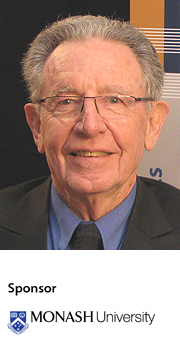
John Swan worked as a junior laboratory assistant at ICIANZ explosives factory from 1940. In 1944 he completed a diploma in applied chemistry at the Royal Melbourne Technical College (now RMIT University). Continuing his studies at the University of Melbourne, he received a BSc in 1947 and was awarded a CSIR (now the CSIRO) scholarship which he used to study at the University of London and complete a PhD in 1949. Returning to Australia, Swan worked as a chemist at the CSIR from 1949 to 1965. During 1953 he was a Fulbright scholar at the Cornell University Medical College, New York, where he was involved in the synthesis of the peptide hormone oxytocin, the structure of which had recently been discovered. In 1966 he moved to Monash University as professor of organic chemistry. From 1971 to 1975 he served as pro vice-chancellor and became dean of the Faculty of Science in 1976 and remained in this position until 1984. After his retirement, he was appointed as an emeritus professor and in 1994 he was awarded a DSc from Monash University.
Interviewed by Professor Ron Brown in 2008.
Contents
- Getting into chemistry
- Experience overseas
- Tackling challenges at Monash University
- Water and the environment
- Wide-ranging chemistry achievements
- Academic innovation and environment research
- Excursions into wool scouring
- A very rounded life
Getting into chemistry
Professor John Swan, we have been friends since we were undergraduates together at Melbourne University in the 1940s. Can we start this interview with a brief summary of your early days – primary and secondary school, tertiary education et cetera?
It's good to see you, Ron. Well, like many boys of my generation, I started my school education in the state system, but I went to Scotch College for seven years, and I found that a wonderful experience. It wasn't just science; I loved languages and I loved literature, and although I was very modest indeed at sport, I really enjoyed my schooling life.
John, what originally kindled your interest in chemistry?
Aahh! I can see myself as an eight-year-old in the back shed in the garden playing with sulphur, and burning things and watching flames, and I generally got an interest in chemical matters from a very early day.
As you got going in chemistry, of course, you had to go on to tertiary level education. Can you outline for us how you entered the chemical profession?
When I left school, in 1940, the war was on and I felt it was important – even at that age of 16 – to make a contribution. I joined ICIANZ in the No. 5 explosives factory out in Deer Park and I worked for four years as a junior laboratory assistant. We would analyse TNT, cordite, phosgene and all manner of chemicals which were used in the war effort for making munitions. And in the last year of those four, I actually moved from the No. 5 explosives factory across the road to the newly established ICIANZ research laboratory, where we had a very intensive effort in manufacturing sulfamerazine. That was one of the early sulfa drugs, and it became of very great importance in the latter stages of the war, particularly in New Guinea and in Burma, for counteracting the dreadful effects of gastrointestinal infections. (Indeed, I think it was Lord Mountbatten who wrote a history of the Burma campaign where he said that the reason
his armies triumphed over the Japanese was that they had sulfamerazine and the Japanese did not.) That was an interesting experience.
The war was nearly over when I left that employment and went to Melbourne University. But, during the four years that I was working, I did complete an applied chemistry diploma at the Royal Melbourne Technical College, now known as RMIT University, and that was wonderful. I worked at the college from 5.30 till 10 o'clock for four nights a week, and the rest of the day out at Deer Park. [laugh] The combination of working in a scientific laboratory during the day and studying chemistry at night somehow suited me. That was an interesting time: there was blackout through Melbourne, and travel wasn't easy – the trains were very crowded, as they are today. Nevertheless, I enjoyed it and that diploma gave me admission to Melbourne University in the second year rather than the first year. And that is where I met you, in second year chemistry.
Yes. I remember that all of us in the laboratory class envied your manipulative skills. We felt you were a cut above the rest of the class. The things that we found hard, you found easy!
Experience overseas
In the late 1940s, after we got our degree at Melbourne, you went to the UK. What prompted you to further your career overseas at that stage rather than stay in Australia?
Well, at Christmas time in 1946 I was having a holiday down at Lorne with a whole group of my contemporaries, many of whom were working in CSIRO (CSIR as it was in those days) and some in industry. At that stage I was about to embark on a masters program with Bill Davies, the organic chemistry professor at Melbourne in our day. One of my friends said, 'Why don't you apply for one of these CSIR studentships? They're looking to send some scholars overseas to do PhDs in Europe and you might succeed.' So I sat down by the campfire and wrote – in handwriting – an application for one of those scholarships. And I got one. After a few months of starting a masters program in 1947, I found this wonderful offer from CSIR to go to a UK university, and I chose Imperial College at London. By late 1947, then, I was embarked on a PhD program there. It was just by happenstance, really.
John, a few years later you gained a Fulbright Award to enable you to go overseas to follow your chemical career. What impact did this have on you?
I gained that award in late 1952, after I had come back to CSIR and joined the Division of Industrial Chemistry. That division had a biochemistry unit under Dr Lennox, and we were very quickly translated into a new wool research laboratory up in Parkville to study the chemical and physical properties of the wool protein. (It was funded by the wool industry, of course.) That involved me very much in peptide synthesis, making small molecules from amino acids, analogous to the big peptides that one finds in nature.
The Fulbright Award allowed me to have one year in one of the pre-eminent peptide laboratories in America, so for the whole of 1953 I was in New York City working with Professor Vincent du Vigneaud in the Cornell University Medical College. He had just discovered the structure of a very, very interesting mammalian hormone called oxytocin, which was widely used in medicine for initiating childbirth. It was a long decapeptide: 10 amino acids with an amide group at the end and a disulphide bond linking two of the amino acids together. We embarked on the synthesis of that molecule and we succeeded. Within 10 months, this team of four or five of us had put together the entire molecule – which in those days was something of a tour de force, I suppose. Indeed, it was a great thrill to us all when that work was recognised in the award to Professor du Vigneaud of a Nobel Prize in Chemistry. That was a very impressive year. I met so many international and other chemists from all round the world in New York City and in America, and I came back to Australia just fired up with enthusiasm for scientific research in chemistry. Great, yes.
Tackling challenges at Monash University
You worked within the CSIRO until Monash University got started. I recall that you were responsible for naming the university!
[laugh] Yes, that's true. When Monash University was thought about, the initial desire of the government of the day was to call it 'Victoria University of Technology'. I thought, 'That's a crazy idea. There's a Victoria University in New Zealand, there's another Victoria University in Canada and we surely don't want a third one in Melbourne. If you really want to emphasise technology, why not name it after Australia's greatest technologist, who was General Sir John Monash?' So I wrote to Mr Borthwick, the then minister, and said that this might be worth considering. He apparently thought it was a good idea and put it to the interim council under Sir Robert Blackwood, and they adopted the idea. It became Monash University.
When you came to Monash you had quite a job in front of you in the chemistry department. Can you outline the sorts of things that interested you in getting that new university on its feet?
Well, challenges are always great fun and it certainly was an exciting time to go 'out to the farm', which was more mud than bricks, and to be part of your team. (You had been there for three years founding that new department.) It had that wonderful feeling of excitement that we could do things differently. We were the first of the new universities, along with New South Wales perhaps, and we felt that we were pioneering a whole new way of looking at tertiary education and study of that kind. I found it very exciting.
After your spell in getting the chemistry department well and truly running at Monash, you then moved on to things that contained less chemistry. How did you find them, up to your retirement?
As you would well remember, we had, like many universities, some problems in the '60s with the Vietnam War and the student reaction to it. The vice-chancellor, Sir Louis Matheson, invited me to become his first pro vice-chancellor to help him with the administrative difficulties that were facing us because of campus upsets and unrest. As before, I thought, 'Well, that's a new challenge and I'll do my best.' So I became pro vice-chancellor with a strong emphasis on student affairs. I enjoyed that, but after five years of it I felt I'd like to get back closer to my scientific roots. At that time, professor Westfold had just retired from being the dean of the science faculty, and I applied for that position and was offered it. In effect, I went from being professor of organic chemistry to five years of pro vice-chancellor, very heavy administration – and I enjoyed that too – and back to the science faculty, where I was again very much involved with my scientific colleagues.
Water and the environment
How did you, a chemist, become involved with environmental issues?
While I was at Monash and during the pro vice-chancellor years, Sir Henry Bolte's Victorian government had decided that Western Port was to be the 'Ruhr of Australia'; it was to be the centre and focus for a major industrial development. Things got to the point where big companies, like BHP, were buying huge slabs of land on French Island. The State Electricity Commission bought a large piece of land for a potential atomic power station on French Island. There was talk of building a causeway to connect French Island to the mainland, via a bridge of some kind. And there was an enormous reaction to this proposition by people who really cared for Western Port as a wonderful natural environment which had been little touched by industry up to that point.
The government accepted – with, I'm glad to say, strong financial support from industries – the need to examine the environmental consequences of the Bolte plan for industrialising Western Port. It commissioned Professor Shapiro from the United States to come to Australia in 1972, and he did two- or three-year major study. I was made the chairman of the scientific advisory committee for the study. That brought me into a much wider circle of interests and involvement with industry and with community groups, and greatly heightened my awareness of environmental issues, leading me into many other environmental matters of that kind. The study was concluded very successfully. It put an end [brief laugh] to the government's dreams of that industrial development, and a very much more modest development occurred as a result.
The Shapiro report still stands as a very important environmental document because he, more than those conducting any previous such study, had integrated the need to consult the people, to look at the social implications of all the people who lived in the catchment. It was very much a catchment study. Things that go wrong in Western Port can often be attributed to what is happening 20, 30, 50 kilometres inland on the catchment, from where the waters gradually drain into the bay. So that study was impressive.
Your interest in water and the environment continued after you retired from Monash, I believe.
Yes. By the time of the Shapiro report I had acquired a holiday house on Phillip Island. I had learned to sail a boat, courtesy of a boat that you sold me – a lovely Mirror Dinghy. Oh, it was wonderful. My wife and I taught our four children how to sail, and we had a small farm there. Through one thing and another I got very interested in the Phillip Island Conservation Society, which was a very active and vigorous group aiming to keep an appropriate proportion of development and care for the environment in terms of the very many remarkable natural features of Phillip Island. So I got involved very much in Western Port matters – to the point that, shortly after I retired, I did something I had never dreamed I would do: I actually stood for public office.
In those days, the water authorities were elected by vote – the citizens could vote for their water commissioners. I put my name forward and I had a ballot paper, but I was told by all the experts that, unless I joined one of those coordinated teams (you know, you joined this or that Liberal, Labor or other party) I didn't have a hope. I took no notice. I said, 'They either vote for me or they don't; I will not have anything to do with that side of politics,' and I got in. I was elected to the Water Board. Then began an exciting nine years because, after two years, the Kennett government came into power and cancelled all the voting for water authorities and simply appointed them on the basis that the best board for a body like that is composed of a range of people with the right balance of skills – scientific, environmental, engineering, public health. So that is the way they created the newly appointed water boards. I was appointed to Westernport Water, and I became very much involved in catchment management.
I found that there was a barbed-wire fence around our reservoir, the Candowie Reservoir, and there were cattle and sheep grazing up to the barbed-wire fence just 20 metres from the water. We made a major effort talking to the farmers, getting them on side, teaching them how to fence off all their streams and to plant lots of trees around spots where erosion was occurring, and we gave them money to help with those projects. I had five or seven years of active involvement in local catchment management, and that was an interesting experience.
It led to other things. In the early 1990s a very interesting study of Port Phillip Bay, a kind of Shapiro study, was done by CSIRO and Melbourne Water. I was on the scientific advisory board for that too, and that was just as fascinating as the study of Western Port.
Wide-ranging chemistry achievements
Looking back over your very long and distinguished career, John, which particular things in chemistry would you say gave you the greatest satisfaction?
Oh, gosh. I hope you won't find this too long a list! First I'd have to go back to the war time, when in that fourth year of my employment I worked on the sulfamerazine project. That was interesting.
In the end of that year, I can well remember, Dr Finn came into my laboratory one morning and said, 'We've just been sent this very interesting patent from Switzerland, of an amazing new insecticide called DDT. Here's a description of how to make it.' So by lunchtime I had made 50 grams of DDT. By the end of that year, ICI was making a tonne a week down at Yarraville. It really was a remarkably successful insecticide and it still is, despite all the negative publicity about it – I won't go into all the details, but it still has a role to play, particularly on indoor surfaces of houses in Africa. You don't spray it all over the countryside, but you can make the inside of your house virtually lethal to mosquitoes with an extremely cheap and easily manufactured chemical, which isn't quite as bad as it has been painted. To be involved in that was another interesting experience.
One of the things I did when I was with CSIRO in the early days was to find a new method for breaking the disulphide bond, which is such an important feature of all proteins, by a method which we called 'oxidative sulphitolysis'. You could simply cleave the sulphur-sulphur linkage with a mixture of sodium sulphite and an oxidising agent. That was quite an important breakthrough in the way to unravel the proteins before doing other chemistry to them.
I have spoken briefly about synthesising oxytocin. When we were doing that work, oxytocin was used only – but widely – for initiating childbirth. The only supply of this chemical that was available for the purpose was human oxytocin, obtained from pituitary glands of deceased people, and was always contaminated with a very closely related peptide called vasopressin. Unfortunately, vasopressin, in addition to being an important hormone to let down the milk for a lactating mother, causes the blood pressure to rise, and the last thing the obstetrician wants when he gives oxytocin is contamination with another hormone that will cause blood pressure to rise. The synthesis of oxytocin made it possible for the chemical industry to make pure oxytocin without contamination, and that work was interesting.
I have been amused to see in recent years that oxytocin has now got a far wider coverage of public awareness. If you'll allow me, I'll read you something about oxytocin from a recent scientific article:
"It has been called the love hormone, the cuddle chemical and liquid trust. It peaks with orgasm, makes a loving touch magically melt away stress and increases generosity when given as a drug. Oxytocin is the essence of affection itself, the brain chemical that warmly bonds parent to child, lover to lover, friend to friend, and it could soon be unleashing its loved-up powers far and wide."
Would you believe this?
Oxytocin, they go on to say, has long been used in labour and so on, but it's now become a very interesting chemical in the functioning of the brain and the whole gamut of human emotions to do with friendship, which I find intriguing. [laugh]
It sounds as if we should be spraying people with oxytocin!
Well, yes. Among other interesting and satisfying things, while I was with CSIRO I found a new method for making alkenes by rapidly breaking down, very easily and at very high yield, chemicals called 2-chloro-alkyl phosphonic acids. This was even employed by one food company in America, because ethylene is a gas which promotes the ripening of fruit, and all fruits when they ripen naturally give off ethylene. If you've got a cool store with 10,000 bananas or whatever in it and you want them to ripen more quickly, you can release ethylene into it. Because not everybody can handle gaseous ethylene or if they don't like doing it that way, you could use my chemical 2-chloro-alkyl phosphonic acid, drop it into sodium bicarbonate and generate ethylene in a chemical way. That was actually used in some places in America for food ripening.
Another thing that I took some pleasure and pride in occurred in the early days of Monash. Shortly after I went to Monash, I was approached by Dr Bill Keogh of the Victorian Anti-Cancer Council to ask whether I could undertake a major survey of all the cigarettes on sale in Australia, in terms of their yields of tar and nicotine when smoked. I've always been a non-smoker and I've always felt very sorry for people who do become addicted to nicotine, because it's so detrimental to their health. Anyway, I took on this task. We built a smoking machine and hired a technical assistant to run it, and we started analysing all of the cigarettes available in Australia. This caused an enormous amount of public interest – it was front-page news in the newspapers, being the first such survey ever done – and the government took great interest in it.
Our work had the bizarre effect of making the two lowest nicotine brands (Hallmark was one of them) become best sellers, simply because, since they were known to be low in nicotine and tar, people smoked more of them. This was a tragedy; the effect wasn't good. Nevertheless, after a few years the government was sufficiently interested to set up its own service: for a number of years the Department of Health in Canberra ran a similar survey of cigarettes, and people at least were informed as to the high-nicotine and low-nicotine cigarettes.
Academic innovation and environment research
Your inquiring mind has addressed more than conventional chemical issues. What are some other achievements that have given you satisfaction?
You have mentioned my years as pro vice-chancellor. It was an interesting experience to move from purely scientific research to administration and, likewise, to the dean's job. One of the things that I did do when I was pro vice-chancellor which has had a lasting effect, not only at Monash but in all the other universities of Australia, is that we introduced what is now known as the gap program. Students could apply to come to Monash University and then decide to ask for a year off before actually walking through the gate into year one. They could go and work or travel or try other options. They could read more; they could escape from the stresses and strains of completing their final year at high school and come back a year later and still be guaranteed admission.
Many of my colleagues were apprehensive. They felt that, if we gave a whole lot of free passes in that way, the following year there might be too many students coming in, all with a guaranteed place at Monash. But I argued that, in the following year, there would be an equal number of students who also wanted to travel, to explore other avenues. And that's the way it worked out. It was a great success. The students were very keen to be able to have a place which they could defer for 12 months – to the point that, within a few years, every university in Australia was offering that program and it has now become a very formalised process around the world. For the gap years there are bodies that fund students to travel and guarantee them employment in France, England, Germany, America or wherever. I've got a granddaughter who's having a gap year at the moment, in England.
The other spin-off from that program was that, as we predicted, many of the students who did come back a year later elected to go not into the faculty they had originally chosen but a different one. They had found their feet in terms of their true ambitions and they'd decided that perhaps law wasn't for them but commerce might be, or science was not for them but maybe engineering, or vice versa. So that was something memorable.
I mentioned earlier my interest in environmental issues. Another one of the things that I became involved with during my Monash days was marine science. I felt that there was enormous potential in emphasising the richness and the wealth of the ocean. Seventy-one per cent of the Earth's surface is covered by ocean, and we knew so little about it in the '60s and '70s. Now modern technology and underwater exploration have become very much understood and used, but in those days these things were very much 'terra incognita'. So, along with Martin Canny, professor of botany, and Dr Phillip Law, the well-known polar explorer, we started the Victorian Institute of Marine Sciences. That lasted for some 17 years – we did a major study on the Bass Strait – until it was absorbed into the Victorian government. I think it was a valuable and useful exercise to get the universities collaborating in a coordinated attack on marine science problems.
Perhaps as a result of that, in the early 1990s I was approached by the APPEA, the Australian Petroleum Production and Exploration Association, to do a major study of any environmental impacts that offshore oil and gas exploration and development might be having. As it turned out, after a year or so of very intense travelling and studying and examining what was really happening in Bass Strait and off the North West Shelf, I and my two or three colleagues found that the industry had a remarkably clean record. What little oil was getting into the oceans was coming 90 per cent from run-off from the roads of the cities – from tar, from petrol and from car exhausts. The environmental record of the oil and gas explorers was remarkably good. They had developed very, very good technologies indeed to enable them to drill into the bottom of the ocean to get the gas and oil out from oil wells deep under the sea without major spills. The few oil spills that have occurred around the world have nearly always been from tankers that have run aground in big storms, not from oil and gas exploration and development.
I am interested to observe that, in very recent weeks, there has been a lot of talk in America of finally abandoning the total banning of near-offshore oil and gas exploration there, now that they are faced with a looming world shortage of oil and gas. I think they can abandon that ban with confidence, knowing that the skill of the oil and gas engineers is such that they can drill without fear of bad environmental consequences.
Excursions into wool scouring
What else is on your list of satisfactions?
Well, when I retired from Monash I did something similar to what many retiring professors do (though I didn't stay at the university, as I felt it was important to move away to another environment): I worked for two or three years as an honorary research associate at the Howard Florey Institute. That was great fun. It was what I might call 'all care but no responsibility'. I was back into my peptide synthesis world with Geoff Tregear. Of course, in those days peptide synthesis was becoming absolutely routine, with machines that can synthesise peptides rather than chemists' hands, and we got involved in DNA synthesis as well as peptide synthesis.
Towards the end of those very pleasant three years, I started thinking again about a problem I'd been aware of for many years through early CSIRO work in the wool game – namely, the problem of wool scouring. Wool at that time was still a major important export from Australia, yet the average wool bale would contain no more than 70 to 75 per cent, sometimes 55 per cent, wool. The rest of it would be grease, wool wax, 15 per cent perhaps; dirt, 15 to 20 per cent; and the occasional bicycle chain and bit of barbed wire [laugh] – but huge amounts of dirt, which sticks to the grease, as you would imagine. Cleaning of the wool in a wool scour was one of the most polluting industries that Australia had. An average wool scour working round the clock seven days a week was producing industrial waste equal to the waste from a city of 20,000 people. Recovering the grease and treating the dirty liquor was a major environmental problem, an appalling problem, in the '50s and'60s, despite the improvements that had been made.
So I started thinking about that. I thought of a method for cleaning wool which required no liquid at all – no water, no solvent, just a dry powder. It was very ambitious, but the wool authorities gave me some money. I started a public company called Hallmark Dell Pty Ltd, and I had 30 or 40 ardent and keen shareholders. It taught me an enormous amount about the skills and problems and difficulties of starting a business. I have great admiration for anybody who starts their own business, even if it is just for the simplest of basic things that the public might buy. Anyhow, I rented a factory out in Laverton, I employed two or three staff and we spent a few years working on this process of cleaning wool with the dry powder, aluminum. And it worked. But, tragically, it fell foul of a very common engineering problem called the scale-up factor. It worked fine for one kilogram an hour with a small-scale, one metre wide drum. The moment we tried to make 10 or 100 or 1,000 kilograms an hour, the process ran into serious problems and we couldn't solve them. No engineer was able to help us. They just said, 'It's the scale-up factor.' [laugh] So I gave it away. It was fun, but it didn't suit.
In the last few days before I finally closed the factory, however, I decided, 'Since I can't beat them, I'll join them.' I started thinking about the current detergents being used in wool scouring and I came up with a new way of using those detergents. I patented it – and it worked. An industrial firm, Albright and Wilson (Australia), offered to commercialise the process in partnership with me and my company, and for some years it looked like being a winner. We had something like half the wool scourers in Australia using this modified process. They were saving 25 per cent of the cost of the detergent, they were getting an equally clean product and they were recovering at least as much and sometimes more of the valuable wool grease from the waste liquors. In fact, that by-product was all that was keeping the industry solvent: the labour costs were going up, and in China the labour costs were coming down.
I had one happy day when my commercial collaborators came to me and said, 'It looks like we might be there. In another year or two we'll have paid off all the development costs' – maybe half a million dollars – 'and we'll start paying you a dividend.' Six months later they came back and they said, 'Sorry, the industry has collapsed. It's all gone to China.' Indeed, all the world's wool, including most of Australia's wool, is now scoured in China, in India and by one or two very impressive companies owned and operated by the Italians in cheap labour countries like Bulgaria and Turkey. Cheap labour has had the consequence of Australia losing that important industry. It may come back one day and I keep my fingers crossed. Anyhow, I enjoyed it while I was involved with it and I'm still thinking about it, I really am. [laugh] I have been trying some new tricks on the water system, the aqueous washing, in my kitchen, garage and bathroom (what I call the KGB that support me) and that keeps me thinking about chemistry. I'm still enjoying life very much.
A very rounded life
John, that's been a fascinating account of your career. You have had a number of other interests as well, however. Can you tell us something about these and perhaps about your family?
I really would like to say that I've very much been a family man. I married Ailsa Lowen in 1952 and we were together in New York City for the famous oxytocin days. I had four children, three girls and a boy, and I just so enjoyed teaching them how to swim, how to sail a boat, how to ride a bicycle, how to kick a ball, how to skip, how to jump and go camping in the bush. I taught them all the joys and wonders of bird watching, which was a lovely hobby. That was a very important part of my life.
I have had other hobbies also. I loved playing the piano and I still do; I've taken it up again in my retirement. I was never very good at sport at school, but I played them all – cricket, football, golf, tennis, rowing. (Rowing I loved.)
In my retirement, in recent years, I've taken up the fabulous and wonderful sport of lawn bowls, would you believe? I play twice a week. It's really a very, very challenging, interesting and quite exciting game, and it is a very friendly game. That is a major interest now. Another interest in recent years is bicycle riding – I do 30 kilometres every Friday with a group called the 'Too Old Bicycle Club' – and I play bridge.
All in all, I think I've had a very rounded life. I know that in this interview I have emphasised the scientific side of things, but there has been another side and I've enjoyed that too.
Professor Swan, thank you very much for sharing your life and experiences with us on this occasion.
Thank you, Ron, for being my interviewer. It's been great to renew our friendship across the table in this way.
Emeritus Professor Dorothy Hill, Geologist
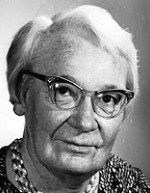
Professor Dorothy Hill
Dorothy Hill was born in 1907 in Taringa, Brisbane. Hill received a scholarship to the University of Queensland and between 1925 and 1929 she completed a three year Bachelor of Science (geology) with first class honours and was the first woman awarded a gold medal for most outstanding graduate of the year. In 1930 Hill received a Foundation Travelling Scholarship which she used to study for a PhD from the University of Cambridge in the UK, researching the Carboniferous corals of Scotland held at the Sedgwick Museum of Earth Sciences. When she completed her PhD in 1932, Hill was the first female graduate from the University of Queensland to receive a PhD from the University of Cambridge. After her PhD, Hill received an Old Students’ Research Fellowship of Newnham College in Cambridge, where she lived for three years. In 1934 she won the Daniel Pidgeon Fund from the Geological Society of London. In 1936 she received an 1851 Senior Scholarship. Using this, Hill remained as a researcher at the University of Cambridge for a further two years. Hill returned to Australia in 1938 and took a position as a research fellow at CSIR (now CSIRO) until 1943. During this period she was also a lecturer at the University of Queensland. In 1943 Hill began working for the war effort under the Women’s Royal Australian Naval Service as an operations staff officer, while continuing to research at the University of Queensland in her spare time. From 1945 she served on the Demobilisation Planning Committee, being the representative of the Women’s Services. Over the next 25 years she worked at the University of Queensland while performing other roles concurrently. In 1956 she was elected a Fellow of the Australian Academy of Science, and became President in 1970.
Getting to university and discovering geology
You were born in 1907, in Brisbane.
Yes. I was born in Taringa.
And where did you go to school?
Coorparoo State School (primary school) and the Brisbane Girls' Grammar School.
Was there an example in the family to follow in going to university?
No. My family was like 99 per cent of other Brisbane families in having no university precursors – because we used not to have a university here, and the only reason people went south to university was to become doctors. We were certainly not in that line.
By 1925, however, when I went to the University of Queensland, you could get one of 20 scholarships each year, and I had one of those. Otherwise I would not have been able to come to the university: my father and mother were not in very affluent circumstances, and I was only one of a family of seven – and a girl – and wasn't all that important! [laugh] My mother was always very keen that each one of us should have the best possible done for us. My father was rather Victorian and thought it was his responsibility to see that all his womenfolk were cared for. He had no view that women should support themselves, really; he thought it was his job to support us.
Did the scholarship support you, take care of you?
Oh, pretty well. It paid my fees – two guineas a subject, about $4.20 in today's terms – and it gave me 20 pounds [£20] a year, or something princely like that for those days.
With that £20 you'd live rather modestly, wouldn't you?
Yes. Well, we all lived very modestly. Tram fares were, I think, threepence [3d] – about 3c in today's currency – and it only cost me 6c a day to go in and out to the university, so transport was no very great expense.
Were there canteen facilities at the university at that stage?
No. We had a 'lunch-bringing tea-drinking association' in the women's common room, and we just contributed X pence per week to tea, sugar and milk supplies. As we came back from lectures we made a cup of tea and we sat around (sometimes at a table) and had a little conversation, and then went off to the next lecture.
When you came to the university, did you know what you were going to do with your life? Did you want to be a geologist?
I did know what I wanted to do: I wanted to be a scientist. I couldn't be a medical doctor – I didn't even bother to ask my family whether they could support me, because I knew they couldn't. By that time, to become a doctor I would have done one year in Queensland and then my family would have had to send me down to Sydney. So I said, 'Well, I'll become a chemist,' because we had done chemistry at the Girls' Grammar School. We had also done maths (but no physics) and biology, so because I felt I knew about biology I took geology as my extra subject at university. And having taken that just as an extra subject, I discovered chemistry to be vitally uninteresting compared with geology.
That wasn't the fault of Bertram Dillon Steele's chemistry teaching, was it?
That wasn't Bertram's fault, because I greatly admired him. It was simply H C Richards' presentation of the subject, and the subject itself – it has great intrinsic interest to one who likes to weigh the imponderable and look at things in an historical light. Geology manages to combine both of those. And you can't measure anything, it's not measurable, whereas maths and chemistry are very largely measurement, which I find very boring.
Was geology more popular than other subjects because one went on excursions to various scenic spots?
It was popular with some of the women. A few of the women went to the university – as you would expect and as I suppose they still do – for what you might talk about as social manners, to discover how to get on with the other sex, and I think it was a very good hunting ground for suitable marriages.
Well, I wasn't interested in that aspect at that time, and that didn't enter into my considerations. Intending to be a chemist, I simply took geology as a one-year fill-in subject because I didn't know anything about it and I had done biology. I was going to broaden my education.
You spoke of H C Richards. What would you say was the most memorable thing about him?
He was a man of complete integrity. (I've never appreciated anybody who hadn't complete integrity, I might tell you now! I cannot even accept them as friends, really.) He was vital and had quite a sense of humour; he was human but nevertheless adult and able to lead – all those things which you wanted in a man in a senior position.
That would have been more important at that stage of the university's development, given that there were only four professors.
It was very important. It still is important now, and it is regrettable that so few professors have what I consider to be the right attitude [laugh] – which is rather parochial of me, I guess.
No, I tend to agree with you. There seems to have been at that time a greater sense of responsibility and also of authority among professors and senior staff. Steele, I think, was another one that acted with responsibility.
He did indeed. Those two men respected one another and worked together very well. Steele always understood Richards' point of view, and I am quite sure that Richards would get his own way with Steele simply because the two men were two of a kind.
Richards had come up from Melbourne, and Steele was from England. Steele was an Olympian character – I understand that he'd had a very good record in explosives and munitions in England during the war. He was made a Fellow of the Royal Society, which was and still is no mean thing. Everybody felt a little reflected glory coming back from him, because of his achievement.
Do you think he was too large for Queensland? He probably could have gone anywhere else.
No, he was a model, you see, and he'd chosen to come to Queensland. This was the thing he'd undertaken for his life's work.
I suppose there is something immensely satisfying about beginning a university and establishing various faculties.
I imagine so. It is a sense of achievement, particularly when you build a thing up from the start and it turns into something before your eyes.
Do you think those men would be happy, if they came back today, to see what had happened?
Yes, on the whole.
What do you remember about W H Bryan as a member of the Geology staff?
He was another man whom one could have a great admiration for. He too was dedicated. He saw his life's work as the department, and he tried to do his very best for it and for his students. He wasn't as vigorous as Richards, however, in pressing for more staff, that sort of thing – Richards I think always had his foot on the accelerator.
Bryan went on to be the first Doctor of Science at the university to have come up through the students. There were, of course, honorary Doctors of Science awarded at the first graduation ceremony, but he was the first graduate of this university to receive a Doctor of Science.
What other people in the university staff of the mid-1920s would stand out as major characters?
I think Priestley and Michie – Priestley as a mathematician but also as an extremely humane character, very interested in the students. For example, I was never really interested in maths and did a second year only because I had to, it was compulsory. After the maths examination I thought I'd failed, yet when the results came out I had got 60 per cent! I thought this was extraordinary, and everybody must have been marked very easily. So I went along to Priestley and said, 'Goodness me, I thought I'd failed.' He showed what I thought was his humanity by saying, 'Oh no, you did very well in two or three questions, you know, and I was able to take account of that.' I still think I was very lightly treated, even now [laugh].
What about Michie? Being in the sciences, perhaps you didn't meet him so much.
Both Michie and Priestley were very interested in sport, and although we didn't have inter-university women's athletics we used to have an annual meet at which women competed against one another. (There were men's events going on at the same time.) Priestley and Michie were always down acting as referees and starters and things like that, so you got to know them quite well. They were quite matey. Also, Priestley was very interested in hockey and he acted as sort of patron of the women's hockey club. He used to come down and support us at interstate or intervarsity matches.
Was there much in the way of intervarsity sport at that time?
All I can recollect for the women was hockey and tennis. I don't know, there might have been swimming. We didn't have athletics.
Were the terms synchronised with the southern universities?
Yes, more or less, and we went down in university vacations. The interstate matches were not synchronised, however, and because I played hockey for Queensland for several years I always had to go and get permission from Richards to be absent from my courses. He was a bit sticky at one time, thinking I ought not to go because it would upset some course I was doing, but Freda Bage weighed in. She was the patroness of the Queensland Women's Hockey Association and possibly also of the University of Queensland Women's Association. When I told her I didn't think I was going to be able to go because it was going to be disadvantageous to my course, she said, 'Oh, I'll go and see what I can do.' She went along and saw Richards, and came back all smiling all over her face: 'That's all right, you can go.' [laugh]
Freda Bage was principal of Women's College, wasn't she?
Yes. I liked her very much. She was another person who saw her job as the prime interest in her life. She didn't just do it to get any money out of it; she did it because she wanted to.
She was the first woman lecturer, lecturing in biology before she became the head of the Women's College. And then, I think as head of the Women's College, she became the first woman elected to the University Senate. So she really was quite a character. She was one of those notable people whom you couldn't help respecting because they had a life's work and they intended to pursue it. She had drive, and also great humanity and kindness, and she did everything she could for everybody. All her students got the best possible deal from her.
I suppose quite a number of old Women's girls would affectionately remember her.
Oh, surely. I actually lived in Women's College for a short time. My family were away somewhere and I thought that I'd take the opportunity to live in instead of fending for myself at home and rattling round in an empty house [laugh], and I enjoyed it very much. The college life was quite a sociable and pleasant thing for me.
Do you think the university was more a closed society in those days, a world of its own, more aloof from ordinary society than it is today?
I don't think so. We certainly formed a world of our own, but people do that today, too. I think our place in the public eye was much the same as it is today – no great difference there.
Let's look at the life of a student at that time. What time did lectures begin?
At 9 o'clock. I went in to the university every day for my science lectures. The mornings were pretty full, and the afternoons had prac classes on them. In fact, at one stage the prac classes were so numerous that they cut into our sports half, and that meant that you got one of the men who weren't interested in sport to look after your experiments for you – which they did very kindly [laugh]. (Wednesday afternoon was the sports half, you see, but Chemistry used to like to put on its lab periods at that time.)
In such a small institution I suppose students would have had a more balanced life at the university than perhaps they do today. Sport and things like that were social activities, to start with.
Oh yes. I don't know why, but I had the idea that when you went to the university you did everything. It was a chance to see what everybody else did – girls and boys. In those days, the girls went to separate schools and really didn't see terribly much of the boys, so it was all very interesting to go to a university where you shared classes with the boys.
You have already mentioned that some women might have gone to university for an education in social manners. I suppose this would have been the first opportunity, for both men and women, to enjoy mixing in adult society and in a society that was no longer segregated along by sex.
Well, mostly I had lived at home with two brothers and four sisters, so that I did know a good deal about boys. I boarded at the Grammar School for some time while my parents were away, and then I stayed on after they came back. Because of the large family, Mother found it a bit difficult running everything at home. So two of us boarded at the school and went home at the weekends.
Were you the oldest, or youngest, in the family?
No, I was the third. I came conveniently, without responsibility, in the middle [laugh].
We have mentioned the geology excursions. I remember reading that one of the first was to Spicers Gap. You would have seen a fair bit of south-east Queensland, I imagine, in your research and as a student. Was such an excursion quite a festive social occasion, or a serious research effort?
It was both, really. If you actually wanted to be a geologist and didn't just go to the university for the social life, the staff were able to see how you set about being a field worker in terribly primitive circumstances where you had to walk. You only used cars in order to get there, and after that you had to do your work on foot or by horse. I used a horse when I was working up in the Brisbane Valley – we were brought up with horses, you see.
The general feeling in a camp was a complex one, because you were keen to see the geology, you were also keen to enjoy being out in the open air and seeing the staff under different conditions – and seeing how you got on in the field, actually. And, of course, if you had the chance you played some sort of game. People were full of high spirits and they would see how far they could throw the geological hammer [laugh] and that sort of thing.
The excursion two years before I went to the university had gone up to Warwick, where it was so cold that there was a frost on the ground, ice all over the place, and they played ice hockey in the mornings! So when I went up to Warwick I was hoping that that was going to happen, but instead of that I went down with flu there.
Who were the staff that took these excursions?
Richards always went, and Bryan always went, in those early days. It was only later on that the professors didn't go and other people did it.
These being mixed excursions, I suppose chaperones were in attendance.
Oh yes, they were terribly conventional. Mrs Richards acted as chaperone always on those large excursions; she and Mrs Bryan generally went together.
What other facilities besides the common room were provided for the students at that time? Were there adequate sporting facilities, for example?
A men's sports union and a women's sports union arranged all the matches and raised money for the trips abroad, to southern States. As to facilities, there were a couple of tennis courts which were used, I think, by staff and also by students, but most of the tennis was played on private courts – at houses of parents – and at the colleges. The men's colleges all had tennis courts, and they invited tennis parties at the weekends. Many weekends were spent in that way, playing tennis.
Hockey we had to play on the Domain, which was all that was left of the Government House Domain after the university and the Government Botanist had encroached upon it. That never had any care taken of it. The potholes were not filled in, and the ball just wouldn't run true but sort of bounded from tussock to tussock. So Queenslanders were never very good at stick work, because they had to catch the ball in the air instead of on the ground. Nevertheless, we didn't worry about that, because playing was good.
The men had rowing sheds and that sort of thing. I suppose that those were also provided by the clubs through their own efforts to raise money.
Did you ever row, as a student?
We only rowed in the Regatta, and then we rowed in fours and we also coxed for the men. The fours were women's fours, and I certainly rowed in a few of those. I enjoyed that, but often the boat was a little bit unbalanced because I'd be quite light [laugh] and the next woman would be a large woman with a lot of weight.
The university didn't encourage sporting events on Sundays, did it?
No. Nobody encouraged sporting events on Sundays in those days. Sunday was a Victorian Sunday in Brisbane.
I remember reading in the Senate minutes of about 1952 that there was much consternation: an athletics meet had been held on a Sunday and people who supported the Sabbath were writing letters to the Senate. They took it very seriously, even as late as that, which I was quite surprised to see.
It was just taken for granted that you didn't do anything like that on a Sunday. You did it all on the Saturday.
You'd probably study on Sunday?
I think it was a family visiting day, and as far as I can recall various relatives came to visit my family at home.
Do you think your examinations were harder in those days? I suppose that because you had a term system and sat for the finals at the end of the year, there was a lot of stress at that time of year.
Yes, because all the other attractions meant that you kept on putting off doing any work in the subjects you were taking until the very end. The last term was a terrible term; you suddenly had to do the year's work in one term, which was no mean feat. I can remember working so hard that I couldn't sleep for the last two or three nights before the examinations – I was sitting up too late and my brain wouldn't stop! [laugh]
Were the flowering jacarandas a symbol even then that the exams were getting close?
Oh Lord, yes, a symbol of what I recollect now as absolute tiredness from making your maximum output. Sports, social life, everything went for those few weeks before the examinations. I made it a point to go through every lecture and be sure that I understood every lecture in every subject before I went into the examination, and that took quite a lot of doing in the third term.
What did students do during their long holiday period at the end of the year? Did a lot of them seek work?
Well, I worked in the State Government Insurance Office one year. I can't remember what I did the other years – probably got bored [laugh].
In families like mine there was certainly an incentive to make a little money. I didn't like to be taking all the time and not giving anything, and it seemed to be a good idea to get a job – which I did, and quite enjoyed it. One of my fellow geology students, Greta Ferguson, and I went in to the State Government Insurance Office.
Did organisations like the government make provision for student employment at the time?
No. In this case, my father and the State Government Commissioner of the time, John Watson, lived opposite one another and were great friends, and Greta Ferguson's father also knew someone in the Public Service, so when Greta knew that I was going to go in she said, 'I'll see if Dad can get me in,' and he did. Fathers did help when they saw you really wanted to get work; they weren't Victorian to the extent of saying no, you might not [laugh].
Society today sometimes perceives students as slightly indulged. What was the attitude to them at that time?
I think people were slightly more affectionate towards them, because the university was fairly new. It was something which Queensland had to build up and therefore it had people's support toward being able to stand on its own feet and be recognised. The students had a little bit of reflection from that. They were indeed thought to be lucky but they weren't thought to be awful or anything like that. They were helped where people could help them.
Do you think the university had a little bit more prestige in those days, as something new, a much smaller institution than presently – 19,000 students now, from a wide cross-section of society – and a place whose professors enjoyed a fairly eminent status in the community?
I very much doubt whether the community thought any differently of the university then. I think most Queenslanders are proud of their university – whatever they say. They're glad it's there and they support it, and they would say, 'Oh yes, it has a good record. Look what it's doing.' I think they did that then. Every time there was a new faculty opened, you could almost sense the community's pleasure.
As an undergraduate you would have attended a few graduation ceremonies, the culmination of Commemoration Week. What do you remember about them?
Oh, they were good fun. The Senate was quite indulgent and didn't complain very loudly about what the students did, and so the students sang songs – more or less rude – about them and enjoyed themselves one way and another. The faculty songs were written by the students to suit the appropriate occasion, and we'd have practised them assiduously one night every week practically since the beginning of term.
The ceremony got a little bit to be vandalised later on when some people didn't have quite the right sense of humour.
I suppose a number of wits, social satirists, came to light at that time.
That's right. Rhys Jones I remember in my time was the great wit for student songs. He could put his finger on the issues, but kindly. Indeed, he was a very kind man and what he said didn't have too many barbs in it. But still you could recognise what he was getting at. (His sister Miriam Jones was a lecturer in classics here for a while.)
Would the magazine in which the students published have been like Semper Floreat, for example, with a mixture of politics and satire?
The magazine was Galmahra. Fred Paterson, Jack Lindsay and some of the others were interested in what you might call radical politics, and Galmahra did have articles by them – and of a high standard of English. But it didn't have muck in it. It was an adult sort of magazine.
Fred Paterson had been to Cambridge as a Rhodes Scholar. What was he doing back here at the time?
I don't remember him myself. He and Jack Lindsay were before me, and they and I did not actually coincide at the university. Nevertheless, their radical views were still talked about.
Were students interested in politics as a serious concern, or were you quite prepared to leave it to people beyond the university?
Political matters were certainly a serious concern, but I think most students accepted the family view of politics at that time, apart from those who would have been radicals in any society and in any circumstances [laugh]. Of course you'd always get those.
That was just about the time when Cambridge and Oxford were being riddled with Red cells, and we did have a visit from an overseas woman who was cruising around getting enlistments to the cause. She had some contacts, I think, who must have told her those people who were idealistic and likely to be swayed.
Do any particular students of your own era come to mind?
I remember Len Fisher, who is one of the Alumni presidents. He was an engineer who was in a senior year to me, and was a rowing man. I remember the footballers quite well. There were quite a lot of them – Ossie Fenwick and Johnny Lavery, and Jack Hulbert, particularly; Ken Paterson, I think, from the Toowoomba school.
Was it necessary to play sport to survive in the university?
Oh no. But I played as much as I could, because I've always enjoyed it and it was another thing to do at the university. It was all good fun.
But there would have been the shy, retiring types there too, who don't readily come to mind.
That's right. There were various people who became legal people and judges afterwards. The girls I remember there were very largely girls I'd known at school, either at Brisbane Grammar or at Somerville House. I met also lots of girls from other schools, and that was all very interesting. And the girls at Women's College came from all round Queensland, so from that point of view you got to know quite a lot about Queensland through the friends you made in the common room.
What was the social life like at night? Did you have regular dances, for example?
Oh, yes. In the first part of the year, Commem practices sometimes had a little dance at the end. But there was nearly always a Saturday night dance to raise money for something or other, and you paid three and threepence [3/3] a ticket.
Three shillings and threepence each would probably be quite a bit of money.
Yes. When you look back at it now, it's only 33c, but in those days it was quite a lot of money for us. The men didn't buy two tickets and invite a woman; the woman bought her own and went along. And then the dances all closed off at midnight, because that was the start of Sunday morning. The band played 'God Save the King' promptly at 12 o'clock.
From a woman's point of view, was behaviour more restricted in those days? Could the ladies who went along to a dance drink with the men, and smoke in public and things like that?
Well, there was no drinking at the dances. You didn't drink wine – or I suppose the odd person would take hip flask along, but I never met such a person.
Was there such a thing as a Regatta Hotel, or the Royal Exchange Hotel that we have today, as student hotels? If so, was it frowned upon for female students to be seen at the pub?
There was a pub at the corner opposite the Queensland Club, relatively close to the university. But I don't think any of the women students would have wanted to go into the pub. It had quite a different atmosphere then. It was rather a low place, where people were probably sick all over the place [laugh], and it didn't appeal to anybody.
At the dances I suppose there would sometimes have been extravagant social behaviour. Do you remember some funny incidents?
No, the only thing I can remember of a dance that was at all funny – it wasn't funny at the time! – is that Ferguson Wood, who was a science student when I was there and later became a professor in the Philippines or somewhere, was driving me along George Street in his little 'baby Austin'. I was wearing my ball get-up, which of course included a long skirt and, in those days, a very beautiful silk scarf. All the girls had scarves and things – shawls, really. Mine was a very handsome affair. Unfortunately, though, the end of the shawl got caught on the propeller shaft. The shawl got ripped off me, wound round the propeller shaft, and came up all over oil. I wasn't very pleased, but I suppose that was a funny affair.
Did many of the students have cars in those days?
We mostly had our fathers' cars. I drove my father's car. I used to drive myself in to most dances – and the cars were used for sitting in, between dances – and then you would get home again after midnight. You didn't worry about driving around as a girl in the middle of the night in Brisbane in those days. There were very few perverts about, or that sort of person, and there was no worry attached to it.
We all wore what was called evening dress. The men wore dinner jackets, rather than full dress – full dress was very rare. Richards used to come out in full dress occasionally; I can't remember why.
In fact, all the staff attended the dances. You would dance with Michie, or you would dance with Priestley, or with Richards and so on. You knew the staff socially, through the dances. The men students would dance with the professors' wives and the professors would dance with the women students.
It seems to have been a small society, with an atmosphere which was probably more intimate than today. I guess a lot of people got married within that society too.
Oh yes. Most of the women married university men. For a lot of the men there weren't enough women to go round [laugh] so they had to marry outside, but a very large number did make university marriages.
Were you regretful when you left all this in 1930? I suppose you were quite enthusiastic and excited about going to Cambridge. It was a milestone in your life.
I didn't see it as a leaving something but as a continuing, and on a higher plane – which in fact it did turn out to be. I found there, of course, the magnificent resources of the Cambridge University library.
I think of all the benefits that could be bestowed upon a young student in those days, a great library was the main one. Many people talk about those you meet and who inspire you. Well, I must say that I never got any inspiration from anybody [laugh] but I got a great deal from the books that I was able to get out of the library.
We'll come back a little later to your Cambridge years and also to your point about libraries.
You took a fourth year for honours at the University of Queensland, and in 1929 you applied for a travelling fellowship. The following year, however, you got a different award, didn't you?
That's right. It was a Foundation Travelling Scholarship. Alan Hoey [or Howie?] got the one the year before.
I had got one of the first open science scholarships. The government decided to support research at the university and put up £300 (I think) a year to support an open scholarship, and I had that for a year. At the end of that year I had applied for the 1851 Exhibition, which had just become available to applicants from the University of Queensland, but I got the Foundation Travelling Scholarship first. I was then asked whether I wanted to wait for the Exhibition scholarship and let the Foundation Travelling Scholarship go to somebody else. Always having been not a gambler, however [laugh], I said I'd take the bird in the hand. The university were quite pleased with that, because it allowed Monty White's application to go forward from the University of Queensland, and he got the Exhibition scholarship. So he and I went off to England at the same time.
I suppose Richards would have been very keen for you to go.
He was away overseas in the first year, when Hoey got the Foundation Travelling Scholarship. When Richards was back, I think he made quite a lot of difference in the councils of the university, one way and another. I don't know, but I've always thought that he was energetic on my behalf at that stage. So that all turned out well in the end.
There was a woman who would have got the Foundation Travelling Scholarship if I'd not opted for that one, and I think she always had a certain amount of resentment because I had chosen that. But from my point of view, the Foundation scholarship was £100 less than the other one, which was also a consideration. It got me overseas, and I got a free Orient Line passage, so I was very happy with that: I didn't have to pay any travelling fare. (P&O and the Orient Line both gave support in the form of free passages.)
Going to Cambridge would have been an experience in itself. When you arrived, were you overwhelmed by it all? Was there a sense of difference from Queensland?
No, I wasn't overwhelmed. I was depressed to begin with, because I thought the buildings were old and dirty. It was quite some time before the beauty became apparent to me. That was because I was looking at it with Australian eyes, and the beauties that I was used to – gum trees and our sort of atmosphere, and space, and cleanliness everywhere – I didn't find. It took me quite a while to realise that there were different standards and that these indeed were very beautiful buildings, particularly when they began to steam clean them.
Did you read for a degree at Cambridge? If you did, who was your supervisor there?
I took a PhD at Cambridge. My supervisor was Gertrude Elles, an outstanding woman geologist at the time.
Is she someone you've modelled yourself on?
No, I don't think I've modelled myself on anybody. I've been a person who's gone my own way.
I took two years to take the PhD. The rule said you had to have either three years or the equivalent thereof, but there was a clause which enabled the supervisor to state that you had indeed reached the standard that would be expected at the end of a first year in Cambridge. Because I had done a year's research here with the open scholarship, my supervisor said that I had reached the required standard and could take the PhD in two years in Cambridge.
For your PhD did you use material that you had gathered in Queensland?
Yes. I took over to Cambridge a collection of corals which was made by myself and Fred Whitehouse just before I went overseas, and worked on that for the first two years.
Whitehouse graduated in about around 1921 and went across to Cambridge on an early Foundation Travelling Scholarship. He was the first person to have his Foundation Travelling Scholarship extended to three years. You see, when he went over you didn't do any research back here beforehand; you had to do three years there or not get your degree. And his supervisor wrote out here to Queensland and suggested that this student was so good that he really ought to be given an extension of his year's scholarship. Richards was able to persuade Senate that they should extend the scholarship, and Whitehouse is the first person from Queensland to get a PhD at Cambridge.
I think you would have been one of the earliest Queensland graduates to get a PhD at Cambridge.
Yes. After Whitehouse, I was the second.
Following my PhD I got the Old Students' Research Fellowship of Newnham College, Cambridge – a women's college – and I lived in the college for three years as a fellow. At the end of that time I had an 1851 Senior Scholarship, and that lasted for another two years.
What caused you to return to Australia?
I was at Cambridge for seven years, 1930 to 1937, at the time of the Depression. By 1937 everything was still very depressed here but just beginning to lift its head a bit, and part of the head-lifting process was the granting to the universities by the government, through CSIR [the Council for Scientific and Industrial Research], of moneys to encourage research at universities. Richards saw a way of getting me back to Queensland by persuading Senate to give me some money from the residue after the grants had been distributed. There was £700 left and he persuaded them to give me, I think, £400 of that as a scholarship and £100 for expenses. And I said, 'Yes, I'll be glad to come back to do research.'
You see, by this time I'd found Cambridge rather desiccating. After seven years I began to feel that it was a bit removed from life. And having now discovered that intellectual pleasures were the things that I most wanted – and knowing how to get them, having used this great library at Cambridge and having been able to speak with all sorts of people on even terms – I felt that I could have the best of both worlds if I came back to Australia.
For a woman to get a geological job in Australia at that time, however, was like asking for pie in the sky, and so when Richards made this miraculous move I was only too delighted and came back running, so to speak. The only drawback was that the war was about to begin and I was a bit disappointed at coming back here: I wanted to be over there to be in it.
You could see it looming even then, in 1937?
Oh, we knew it was going to come, yes, and we all knew that England was caught napping and everybody was going to be needed. Anyway, it didn't turn out quite that way because Neville Chamberlain bought the Germans off for two years.
You were a research fellow at CSIR for six years, till 1943. Were you also teaching at that time?
Yes, I used to give six lectures a week.
That was part of the fellowship terms, was it?
Well, it was part of what Queensland regarded as the fellowship terms; I don't know that the Commonwealth government said you should teach [laugh]. But it was good, both because it enabled the research fellow to see how they went as a teacher, and also because it enabled the staff to see whether this particular person would be any good as a staff member.
You had been away from this university for seven years. What did you notice had changed most since 1930? The war would have still pervaded everything, I suppose.
There was very little change, actually – it was very gradual.
Had the types of students changed at all? Even the Arts students might have gone to university for professional advancement, rather than just doing a degree for the sake of education.
Oh, most people went to the university to increase their capacity. I think the students were exactly the same in type as they had been. They had the same aims, they took life as it was – they didn't want to turn it upside down and inside out; they accepted what was there, they knew they were lucky and they made the best of it.
You were probably still a lucky person to make it to university, because we hadn't developed our scholarship system very much. But student numbers had doubled during your years away, from 700 to 1400. Did you find the intimate atmosphere of the university had changed?
No. The number of students had increased, but there didn't seem to be so very many, as a matter of fact. Staff numbers had increased, but only slightly, because we were still ploughing our way out of the Depression years and there wasn't money to hire people. I couldn't say that there was much change at all when I got back, really.
We still hadn't got anywhere. They were germinating new faculties – Law, Science, Agriculture – but they weren't making any impact, because they were so poorly staffed.
H C Richards was still at the helm of the Geology Department, Bryan was there?
Richards was still there, Bryan was still there, Whitehouse was still there.
In 1940 you received an award from the Lyell Geological Fund of the Geological Society of London. What was that?
That was a little grant of money, £30 or something like that, which was to encourage the young research person to do better [laugh].
It seems rather strange that even in wartime they were still making awards for academic excellence.
It takes more than wars to make the English scientist change his ways!
During your work at CSIR – it had not yet become CSIRO – were you back into the south-east Queensland hinterland?
Oh, I was working on Australian material: New South Wales, Victorian, Western Australian, Tasmanian and Queensland.
After the intellectual stimulation and, presumably, more advanced facilities of Cambridge, did you feel you were returning to a geological backwater in Australia?
No, you only move back into a backwater if you feel so inclined. You always create your own environment, it seems to me. What's the use of being in research unless you create your own environment? I worked with Bryan, who was interested in spherulitic crystallisation in rocks. I was interested in spherulitic crystallisation in corals, and we did a joint paper – which I couldn't have done in Cambridge because there wasn't anybody interested in that same aspect over there. But apart from that, I was able here to do the things that I would have done there. I didn't really feel that I was returning to a backwater.
I suppose the ability to correspond by post with one's peers was still well developed and would offset any isolation.
I did a great deal of that, yes, and wasn't at all worried by isolation.
You could hardly get on a plane and whip down to Sydney for a quick two-day conference.
Oh well, I used to drive down and use the southern libraries. They had a very short-sighted policy of not putting books through the post, so there was no interlibrary loan. If you wanted to use a southern library, you went down and sat in it.
I happened to be down there when the war with Japan broke out, and I spent quite some time, perhaps nearly a week, packing up all the important type specimens in the fossil collections of the Australian Museum ready for sending across behind the ranges – for protection against the midget submarines, I suppose [laugh]. Anyway, that was a little bit of the war history.
In 1943 you did finally get into the war effort, in the Navy. What were your naval duties?
To begin with, I didn't join the Navy. The need was for a civilian cypher service to act in Macarthur's headquarters, and I was asked whether I would look after that. (It may have been the naval officer-in-charge, E P Thomas, Penry Thomas, who asked me.) So I found myself there, a sort of senior woman with a whole lot of undergraduates and typists, doing the cypher work from the naval section for Macarthur's headquarters. We used to get all the Navy signals sent in from everywhere.
It was interesting but terrifying, I must say, because you were getting signals saying that half the Australian fleet had been sunk, or the British fleet, or the American fleet, in the middle of the night. It was a very busy time. I can remember the day of the Battle of Midway: we all had little air raid shelters round at home and after I'd got home after my shift I thought, 'Oh well, perhaps I'll be running in to the air raid shelter by tonight.' There was indeed an air raid alarm, but it was a false one.
Midway was probably the turning point in the Pacific War. Did you still have a connection with the university during that time?
Oh yes, because it wasn't a full-time job. One shift, eight hours – it wasn't very hard work [laugh]. Cyphering is very easy, really, and I used to spend my spare time at the university.
Did depression pervade the university at the time? Did things close down?
Nothing closed down. No, everything went on. I wasn't depressed by it, I was exhilarated by it. Even the fact that we might be bombed I found exhilarating, and I guess this is how people react in battle: they get exhilarated, they don't get their tails down.
Did other university people become involved in the war effort?
Whitehouse enlisted and went into Army Intelligence. He did terrain studies all round Queensland, on which he published geological papers later, and I rather think he then went into the Islands campaign.
Bryan was called up at the beginning of war to go to the census office, because he was on the officer reserve. But he did not go on with that, I think very largely because Richards, though himself a civilian, was one of the chief controllers of science personnel in the directed activities. I have put this in my history; you'll find it in there.
How long did Richards live on after that?
He died in 1947. He had carried a massive workload – right from, I suppose, about 1925 onward. You have to remember that he was the person that represented the university, usually, at the equivalent of today's Vice-Chancellors' conference, and he had to travel a good deal. Also, he was president of the Professorial Board for some time.
You have spoken of the Cambridge University library and of needing to use southern libraries in Australia. As you say in the speech to Convocation, much has been made of the research capacity of this university but very little is made of the fact that its library was a neglected part of it for a very long time.
The university library was absolutely fatherless until Harrison Bryan and Greenwood got together. It wasn't really until Gordon Greenwood and Harrison Bryan formed a team that the library was anything but a shelf with books on. That was the attitude of the Senate to it: it was just books on a shelf and that was that.
It was forever eaten by white ants and was overcrowded?
Oh, gosh, it was terrible. We had a reasonable departmental library, because Richards had the right ideas about libraries, as about everything else. He spent as much money as he possibly could on building up the periodical collection and having adequate monographs for the subject. So we were not starved in Geology, but because I had interests also in English literature and history – although I didn't have time to do it much at the university – I did go into the university library at the time to see what was there [laugh]. And I said, 'I'll never go there again.' It was absolutely uncared for: books in no order, lying on their sides, covers off, nothing whatever that you could make good use of.
Well, Cumbrae-Stewart, the Registrar, doubled as the Librarian too. I'm sure he spent more time as Registrar than as Librarian.
There was no appreciation whatever of what a library could do, and should do. It wasn't until Harrison Bryan and Greenwood got together that the attitude began to change.
The Library Committee also became rather effective in pushing its cause. We had always had a library committee at the Senate level, but it seems to have been low in prestige, with members who just incidentally ended up on it.
I really don't think they knew or understood the purpose of a university library.
The university wasn't far away from the State Library. Were the other libraries in town used by the students?
Not by scientists. Had I been an Arts student I probably would have made use of the facilities at the State Library, but there would be no use in going to the State Library as a scientist – only for relaxation. When you're young, though, you don't have sedentary relaxation; you have active relaxation [laugh]. It's only later when you adopt the library pleasures.
Let's talk a bit more about your return from Cambridge to Queensland. You have said the staff numbers had not increased much in the interim, but do you remember any of the new staff?
No, I don't remember anybody new that had arrived. I do remember Tommy Parnell there, but I had known him before. We had lovely little university garden parties on the lawn at the old Government House in George Street, and I went to one of those very shortly after I got back. Tommy Parnell bent over – he was rather quizzical, and I'm short so he had to bend over to talk to me – and he said, 'And do you think you're going to be able to do any research here now, Miss Hill?' He knew as well as I did, of course, that there was nothing in the libraries. But I said that in England I'd acquired as much scientific literature on my particular specialty as I possibly could and I'd brought it all back with me, and I'd specially arranged good correspondence relations with my fellow specialists all round the world, and I was quite sure that I'd be getting enough stuff to go on working on! [laugh] So he said, 'Oh well, that'll be all right. I was a bit worried, you know.'
What was Parnell like? Was he a retiring man?
No, he was shy, I would say, rather than retiring. He was a physicist and they always see things in black and white, whereas I prefer the greyer variety of people. Nothing is ever black and white, in my experience; it's always tones of grey. But I did like Tommy Parnell. He again was very genuine.
He joined the war as a private, and there is a nice story that one day when he was filling a sandbag, an officer came along who was one of Tommy's old students. Tommy dropped his pipe out of his mouth and clicked his heels together and saluted, and the poor fellow nearly dropped through the floor!
I don't know how he ended up, whether he remained a private, but I always thought the story was so characteristic, because he could be very particular about matters of form. Because he was a private and his student was an officer, he'd have given absolutely the proper and correct salute instantly.
Do you remember anything of the senior staff at that time? Cumbrae-Stewart, for example, was the Registrar when you first arrived. He went on to be Garrick Professor of Law, but he certainly wasn't a very good Librarian.
Well, he always seemed to me to be a pompous little individual. I suppose he had his good points, but they weren't apparent to me [laugh]. These things are all recorded in the Senate business, anyhow; you can see how that came about.
And Page-Hanify succeeds him.
He was a very human type. I saw quite a bit of him. He had a motorboat which he made available to the science students and on which we went down to Moreton Bay – with his son as master of the boat, of course – and had many pleasant days teaching students how to research in the bay environment.
Did you ever meet the man himself, J D Story, at that time?
Oh yes. I never cared for him. I thought he was far too chauvinistic – indeed, sort of fossilised.
Yet he is around for another 30 years, perhaps as a moving force. But I think the damage he does is that he is around for so long, with such a firm imprint on the place, that the alternatives don't seem to emerge. It seems that it is after he goes – and probably quite coincidentally with access to Commonwealth funds – that the university does take off. He certainly had a utilitarian view of the university.
Yes, it was all to serve the State and the Public Service. Well, he was a man of his time, I guess, but he wasn't a university man, in my opinion. He kept a dead hand on the university.
What other senior people do you remember? I suppose the administration would have been very small, and quite remote from the day-to-day lives of academics and students.
No, I knew the administrators quite well. You saw Page-Hanify and it was hail-fellow-well-met all the time. And any of the senior clerks or whatever they were called in those days were all extremely approachable. John Deeble Cramb was always very approachable. And Bruce Green was there. I remember them all; they were part of the family in those days.
So if a gulf does exist today, it has come about only because the university is so large?
Yes, entirely.
There was a time just at the end of the war when we had quite a few of the old fellows dying. Michie died in 1946; Henry Alcock is another one. What do you remember of Henry Alcock, the historian?
Not a great deal. I knew more about Melbourne than about Henry Alcock. Alcock seemed to be rather distant and he didn't appear to me to have any of that personal magnetism that one likes to have in a university person. Alexander Melbourne, on the other hand, was a very vigorous and dynamic man. Although one felt one wouldn't always agree with him, he nevertheless was a man that you remembered better and felt more drawn towards than Henry Alcock, who seemed a rather dry, English-academic type.
It strikes me, reading the records, that Melbourne is someone who would have inevitably ended up being, in the present context, a Vice-Chancellor.
Well, he jolly nearly started the library growing. It was only his death that stopped it from becoming a university library at that time. He died very young.
He did much to focus the university on the Far East. He made a number of trips out there. I think he realised that a university should develop areas of expertise and that we could build on our geographical proximity to that part of the world.
Yes, that's right. And he had indeed got Senate to agree to something, but when he died nothing came of it. We did get a Japanese out here – just in time to be interned!
It was unfortunate that the war squashed any idea of our interest in the Orient for a while.
That's right. Melbourne was certainly a man of his time, a good, forward-looking man. I think he would have made a good scientist, actually.
You have said that nothing much had changed, but there was a change in direction: 'We're not going to
move to Victoria Park. We're going to St Lucia.' Did you go to the laying of the stone in 1938?
No, I didn't go to any laying of any stone. I was probably in my lab, researching. You must remember I was a devoted research worker [laugh].
What was the feeling at the time? Were people excited about moving to St Lucia?
No. It was half and half, because the central site was very convenient – just getting on a tram and going down there, you could get to it from anywhere in Brisbane – and people seemed very much of two minds about moving so far out. But I think everybody realised that if the university was to grow, it simply had to move, and so we all threw in our lot with it and did our best for it.
No-one would have realised that it would take 16 or 17 years after the decision for the move out here to take place.
I think they tried to hurry it on because they saw the war about to start, but they didn't really get very far. Geology finally moved in 1950 or '51. On the whole, the move was the only thing we could possibly have done. Everybody wanted the University of Queensland to become a major university.
I suppose it would have had an effect even on people's residence, for example.
Oh well, I changed my residence. We lived at Coorparoo and the traffic jams as I drove to the university had to be seen to be believed. And so when we'd finished educating our nieces and nephews who had come to live with us from the country, we sold up and moved out here.
Indeed, the St Lucia site has something quite distinctive about it: not only is the university located here but the immediate suburbs tend to contain the academic residences and the student locations.
That's right. Bryan, for instance, moved from Nundah up to here, and Owen Jones moved from the river bank, closer to Taringa, out to this district.
We won't talk any further about the postwar period at the moment – in 1947 you finally commenced duties as a lecturer, and I think that's where we should start our next discussion.
© Australian Academy of Science