




Professor Jim Pittard, microbial geneticist

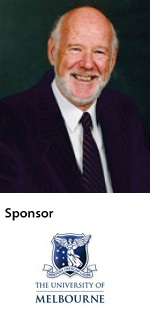
Microbial geneticist
Alfred James (Jim) Pittard was born in Ballarat in 1932. He completed secondary school at the Ballarat Church of England Grammar School in 1949. Pittard then enrolled in a diploma of pharmacy at the Victorian College of Pharmacy (1950-54), where he was apprenticed firstly to Cornell’s Chemist in Ballarat and then a pharmacy in Brighton, Melbourne. After graduation, Pittard worked for a year as a relieving chemist in rural Victoria before enrolling in a bachelor of science at the University of Melbourne (1956-58). He then completed a master’s degree (1959-60), again at the University of Melbourne.
Pittard was awarded a Fulbright scholarship in 1960, which took him to the University of California, Berkley. A year later, Pittard’s PhD supervisor moved to Yale University, and he followed. Pittard’s PhD degree was awarded from Yale in 1963. He remained in the USA on a US Public Health Services post-doctoral fellowship for another year before returning to Australia. Pittard spent the remainder of his career in the department of microbiology at the University of Melbourne, where he was appointed firstly as a lecturer (1964-66), then senior lecturer (1966-70) and finally professor (1970-1997). Pittard was made professor emeritus at the University of Melbourne upon his retirement in 1998.
Interviewed by Professor Michael Hynes in 2011
Contents
- Triangles, Times Tables and the Temperance Society
- The plus and minus of a small school
- Boring and busy pharmacies
- Science degrees
- Barbie and Chris
- Moving Stateside
- Fantastic E. coli
- Juggling research, teaching and administration
- Operon model of gene regulation
- Aromatic biosynthesis and the TyrR discovery
- The TyrR story continues…tyrP as part of the regulon
- Phase 3: in vitro transcription studies of aroP
- Phase 4: exploring the chromosome and finding folA
- Plasmids: carriers of antibiotic resistance
- Plasmids: control of replication
- Biosynthesis of tryptophan
- Moratorium on risky bugs
- Bureaucracy for genetic manipulation
- Mud brick building
- No hero’s but impressed by intellect
- Now and then
- Pittard says ‘yes’ to a science career
I am Michael Hynes and I am here to discuss his life in science with Jim Pittard, a renowned molecular biologist.
Triangles, Times Tables and the Temperance Society
Jim, you were raised in Ballarat, a large country town in Victoria. What are your memories of this and how it affected your subsequent life?
I think it was a pretty happy time, Michael. We lived in Crocker Street for most of it and there were lots of kids in the street that we could play with. I remember playing marbles, making shanghais, making bows and arrows, going fishing on the lake, paddling a canoe on the lake, playing cricket, kicking a football, playing baseball – after the American soldiers were in Ballarat – and riding my bike almost everywhere. It was really a time of great enjoyment.
You went to school in Ballarat. How did that affect subsequent events?
I went to primary school at Pleasant Street state school. It was considered by my family that you should go to the state school for primary. I have to confess that I don’t really recall a great deal about it. I do remember playing the triangle in the first grade. I do remember learning my times table in the second grade and I think in every grade after that, until the sixth. I do remember also some of the teachers. The teacher we had in grade 5 was a sadist, really. He had a leather strap that he folded over so that, when he hit you, you got two bangs: one from the first and one from the second. He also used to delight in making the students kneel on a little dais up the front of the room until they almost fainted. So he was not good news.
Fortunately, the sixth grade teacher was lovely – a very nice chap. So I recovered from the maltreatment in grade 5. I do recall in grade 6 that we had a visit from someone in the temperance society telling us all about the evils of alcohol. They had a tract that they gave us and they said that, if we studied the tract, learned it well and got it correct, we could get a pound. I remember that I learned those three pages. I can still say the first bit: ‘Alcohol is not a stimulant but a narcotic, an anaesthetic, a drug which paralyses first the willpower and then the other higher faculties of the brain.’ That was 70 years ago I learned that. I did the test and I got 99. I don’t think it turned me to drink immediately, but I was very disappointed.
The other thing I recall is the fiasco of air raid drills. It was at the time when Japan had bombed Darwin and people were getting slightly worried about whether they were going to bomb everywhere. The drill was like something out of a French farce really. When they rang the bell, the kids in grade 4 went into the grade 5 class and hopped under the desks, the kids in grade 5 went into the grade 6 class and hopped under the desks and the kids in grade 6 went and marched into the bottom of the empty swimming pool and sang God save the King. So that’s my recollection of my primary school.
Jim, did you feel at all scared because of the war?
No. It was a bit unreal. We had to tell them how we were going to get home, if we had to get home. I said that I was going to walk home around the lake and so on. We didn’t really understand what war was like.
So then secondary school.
The plus and minus of a small school
At the end of primary, I won a small scholarship that let me go to the Church of England boys’ grammar school. It was the school that my father had been to and where my brother was currently a student. That was a small school with only about 160 students all told. But it had a quite inspirational headmaster, Jack Dart. He was a philosopher, a classics scholar, a person of great integrity and a very hard worker. It was during the war and Jack used to maintain an enormous vegetable garden that provided all the boarders with vegetables. He used to get up every morning at five o’clock and go and work in the vegetable garden and then do his teaching. The other person who taught me at that school was George Seddon. George taught me English literature in the last year. So the classes were small. In matriculation, I think we had between three and five students. The teaching was informal. I can remember that we had one teacher who liked to teach us logic as we went walking around the pine plantation. We used to do English literature with George Seddon sitting up in the vegetable garden. And we used to do physics and chemistry, with a dear old teacher who had been pulled back out of retirement, sitting in the big chairs in the teachers’ room.
The other aspect of the school being so small was that you were really involved in everything. In my last few years I was in the cricket team, the tennis team, the football team, I trained for athletics, I was rowing for a while, I was sergeant major in the cadets, I was in the school play and, in my last year, I was captain of the school. I took all this very seriously and it required a lot of effort. That was the good side of things. It was really enjoyable and I think very important. The bad side was that academically it was a bit of a downer for me. My matriculation results were disappointing. I passed English expression, English literature and British history – which another student and I taught ourselves – and I failed physics and chemistry.
In terms of a career in science, that wasn’t a very good start.
It is interesting to think back to those times. At that school at that time, matriculation wasn’t really the focus of education. Maybe the teachers were rebels, but they almost regarded matriculation as an intrusion. So, in answer to your question whether it was important for later life – yes, it was very important. I learned a lot about responsibility, about initiative, about integrity and ideas. In the last couple of years at school, I discovered poetry, I discovered ideas and I discovered originality. So, yes, it was. The down side was that, as far as qualifications were concerned, I wasn’t doing too well.
Boring and busy pharmacies
This led on to your choice of career. How did your family influence this? For example, your father was the owner of a shoe store, this was a family business. Did you ever consider joining the family business? How did the family influence your choice of career?
I never ever thought about the possibility of going into the shoe store, even though the Pittards for generations had been involved with shoes. I had an elder brother, and thank goodness that was his destiny. My father thought I should do medicine, dentistry or pharmacy. Since I had failed matriculation, that only left pharmacy. I had passed leaving chemistry, and that was sufficient. So I signed up for a fouryear apprenticeship with Walter Cornell and Son, Druggists, in Ballarat.
I started off on a wonderful salary of 26 shillings and sixpence a week. For the first two years I worked at Cornells and studied by correspondence. Then I went down to Melbourne, changed my apprenticeship over to someone in Brighton. I continued working in a shop and went to pharmacy college in the afternoons. I quite enjoyed the course in a way. I enjoyed the challenge of learning in the last two years. I think it gave me an opportunity to demonstrate that my non-achievement in matriculation was not a lethal event. In the final year of pharmacy, I got the Ramsay Pharmaceutical Prize in chemistry. I thought that wasn’t too bad for someone who couldn’t get matriculation chemistry.
After you got your qualifications as a pharmacist, where did you work?
When I qualified, I worked for the next year as a relieving chemist. This meant that I travelled around Victoria and took over shops in country Victoria, while the owners went off for their annual holidays. I travelled by train and bus because I didn’t have a car and I stayed in country pubs. The pharmacies varied. Some shops that I ran were quite a challenge because they were busy and there were lots of things to do. I quite liked making up prescriptions, making ointments and mixtures. I got a bit fed up with counting out tablets and scraping off labels, but the dispensing I quite liked. But mixed in with the busy shops were some shops that had very little trade at all, and that was absolutely killing. I hated it. It was so boring. You would go to work and you simply had to wait for someone to come into the shop to give you something to do. You couldn’t exercise initiative. I decided when I did that, ‘This is not for me, and I’m not going to spend the rest of my life doing this.’ So I started to think about what I could do. I wanted to have more education, and science seemed to be the logical thing to do. For a while I toyed with the idea maybe that I might do science and set up a pathology lab next to my chemist shop. But, in the end, I didn’t do that. I knew, if I were to do science, I would have to do physics, chemistry, maths and zoology. So, during that year when I travelled around Victoria, I used to sit in country pubs at night with a physics book and a maths book, trying to bone up on those subjects, which was not easy, I must say.
Science degrees
But you did get into Melbourne University to do science.
I did get in. Today they wouldn’t let me in the back gate.
It has become so competitive these days. In telling your family about this decision, what did they think?
They were not pleased, Michael. By this time, Barbie and I had become engaged. I recall a discussion with my father when he pointed out at some length the onerous responsibilities that I was taking on. Which he didn’t think were met by planning a new course in science. My dear old gran, of whom I was very fond, took me aside and said, ‘Are you sure you’re not giving up the substance for the shadow?’ I assured her that I was not. They were not too happy with that, but that is all right. Barbie was very supportive and that was the main thing.
You finished your science degree and then made a decision to start a master’s degree working with bacteria.
While I was an undergraduate, I used to work at Braithwaite’s pharmacy out in Camberwell on Wednesday afternoons and Saturday mornings. Barbie was working in St George’s Hospital at that stage. Then, when I finished my science degree, Frank Gibson invited me to join his lab to do a master’s degree. Frank was at Melbourne and was a fantastic scientist and a great fellow. I hadn’t really thought about it, to be honest, but I was absolutely delighted. Frank was able to offer me £700 a year as a stipend. I can still remember my father shaking his head and more or less saying, ‘Son, you’ve done four years pharmacy and three years science and now you’re being paid £700 a year?’ He couldn’t understand it. Anyway, we were delighted. It was a great opportunity. So, I started doing a master’s with Frank.
Barbie and Chris
When did you first meet your wife and what were your early married years in Melbourne like?
We met when we were still at school. We were both in Ballarat and we used to meet occasionally. We were very taken with each other. It was only during the time I was working as a pharmacist, when I first finished, that we really got to know each other properly. We got engaged at the end of that year and then we got married at the end of my first year of science. The first year of science I had in Trinity College and then we got married. We then rented accommodation around Melbourne for three years. It was a good time, really. We were poor, but everybody’s poor and we had a good time. Christopher was born towards the end of my science degree, in 1958. We had managed to get a small house built at Montmorency, so we moved into that when Barbie and Chris came home from hospital.
You already had a house in Melbourne when you were doing your degree.
With the master’s, yes.
So you were fairly well established. Overall during your career, has easy has it been to manage your family life and the demands of your career?
You should probably ask the family. It’s difficult, I think. The problem is, if you are teaching and doing research, it is a very demanding job and you do tend to be very preoccupied. Particularly with research, you spend lot of time thinking about problems you are trying to solve and you are very busy. I think people in that situation are very conscious of how much effort they spend trying to spend more time with the family. But you need to ask the family whether that effort is satisfactory.
Sometimes you can physically be there but mentally not.
That is right. It is constantly in your head. But we went overseas to do a PhD and then we had a period of travel. So it was only when we came back, that we really had to struggle with these demands.
Moving Stateside
After you’d finished your master’s, which took two years or so, you decided to do a PhD in the States.
I started with the master’s and I was working in the chemist shop every Saturday morning to get some money. Then Syd Rubbo, who was chairman of the department of microbiology, asked me whether I would be senior demonstrator. So, while I did my master’s, I was also senior demonstrator preparing all the material for class and so on. I don’t think you are supposed to do that, but I needed the money and Syd needed a senior demonstrator. So I did that for two years.
Then, when I had finished the master’s, Syd called me into his office. I noticed that he had this big book on The microbial world that had just been published by Stanier, Doudoroff and Adelberg, who were at Berkeley. Syd said to me, ‘Why don’t you go overseas and do a PhD?’ and I said, ‘Oh yeah, that sounds like a good idea.’ He said, looking at the book, ‘Why don’t you go to Berkeley?’ and I said, ‘Oh, okay.’ He said, ‘You should work with Stanier.’ So I said, ‘I’ll write to Stanier and see what happens.’ Syd encouraged me to apply for a Fulbright Fellowship, which, to my surprise, I won. Syd and Nigel Manning - Nigel Manning was dean of the pharmacy college – got together and they also got me a stipend of £700 a year from Harold Woods. Woods used to make Relaxa tabs. These were tablets that you could buy over the counter. They were a fantastic success because everybody thought they were stressed and needed relaxing and you could get ‘relaxed with relaxa tabs’. Anyway, I got £700 year from Mr Woods for two years. The idea was that when I came back to Melbourne I would do some teaching at the pharmacy college, which I did.
So I wrote to Stanier, and Stanier wrote back, and said that he was very sorry but he was about to go on sabbatical leave to Paris and didn’t have a place. I was thinking of writing to Doudoroff and I got this very nice letter from Ed Adelberg saying that he was happy to offer me a position in his lab. In that way I became a microbial geneticist, because that is what Ed was doing. So that was it. We packed up and launched ourselves off.
Would you say that doing a PhD after you had finished your master’s was accidental?
I don’t know whether I was just living from day to day. I really was very busy, being a senior demonstrator and a pharmacist and a father and a student. So I really don’t think I was looking ahead. Obviously I was very happy to accept the advice. The notion was one that I was very interested in. But I think it was not until I was doing PhD work in America that I felt like a full-time research person, because I was too busy doing too many things.
Obviously going to the States was a big experience. Perhaps you could tell us about how you reached that decision, your experiences travelling there and your experience then as a PhD student in the States.
The travelling was a great experience. The only way to get to America in those days was by boat, so we travelled on the P&O liner Himalaya. Fortunately for us some friends of ours, Barry Egan and his wife, Janine, were travelling on the same boat. Barry was going to Denver to do a PhD so we spent a lot of time together on the boat. The voyage was a sort of mixture of excitement and boredom. The excitement was all the stop-offs. We stopped at Manila, then Hong Kong, then Kobe and then Yokohama. After Yokohama, we went to Hawaii. From Hawaii, we went up to Vancouver. Then from Vancouver we went back to San Francisco. They were the high points of the trip, without any doubt. In Manila we went out at night and watched them play jai alai. It was good fun.
The low points were when we started off. Christopher - who was 2½ - had a raging fever when we first got on the boat. We weren’t too sure how he would be. We thought that perhaps they weren’t going to let us on. Anyway, after a while he was okay. We left Japan just before a typhoon got in, which meant that we had five days of the most horrendous weather. I don’t think I ever want to experience that again.
Were you seasick?
I was absolutely seasick. Barbie was terribly courageous and heroic. At one stage she dragged me right up to the top deck, where we shouldn’t have gone, to look at things. You looked out and the seas were up there (indicates) somewhere. How the ship kept going I have no idea.
We got to San Francisco, got to Berkeley, started looking for accommodation and had absolutely no luck at all for two weeks. We were shown dreadful little apartments miles away, nowhere near the campus. Then one morning I went up and I really believe that they got my file mixed up. They saw ‘Fulbright’ and they thought that I was some visiting Fulbright staff member. All of a sudden they showed me a list of places that I had never seen in my life. Five minutes later I had grabbed the downstairs of a house that was only two blocks from the campus. I signed up and we were there. We were in California for a year. We bought a great second-hand Ford station-wagon with little curtains on the windows that we used to go travelling in. We went to all the national parks –Yosemite, Sequoia, Death Valley – and had a great time.
The first semester I was there, Adelberg said that he didn’t have any room in his lab for me to do any work, which was a bit of a surprise. He said that they weren’t too sure what my master’s really meant, so would I take some graduate courses? I had to take two graduate courses for credit, which were enzyme chemistry and immunochemistry, and I had to audit three others. I did that quite satisfactorily. In the second semester there was room in his lab, so I went into the lab and started on my research topic. I worked as a teaching assistant in immunology at the same time.
At the end of that first year, Adelberg then said, ‘I need to talk to you. I’ve got some news.’ I said, ‘What’s that?’ He said, ‘I’ve been offered and I’ve accepted the position of chairman of the department of microbiology over at Yale University over the other side of the country.’ He said, ‘You’re very welcome to come with me, if you’d like to. I’d be very pleased if you would come. Otherwise, you might like to think of changing to someone like Pardee.’ I was thinking about Pardee, but Pardee had just been appointed to Princeton, so he was just moving on. Barbie and I talked about it and we said, ‘Sure. We’re only too happy, we’ll come to Yale.’ So at the end of the first year, we packed up and we drove down to Pacific Grove, where I was taking a fantastic course in general microbiology given by Klaus van Niel. Then we drove to Denver and stayed with the Egans for a couple of days. Barbie wasn’t too well, so she and Chris flew to Michigan to see some friends and then from Michigan to New York. I pointed the Ford in the direction of the east coast, drove across to New York, picked them up and took them back to New Haven.
For the first four weeks in New Haven, we lived in a little quanset hut. They had these army quanset huts on the polo fields and they had their graduate students living in them. They had a coke-burning stove inside to keep you warm in winter and they had hoses on the roof to cool you down in summer. I remember that my parents visited while we were in one of these. I think my father thought his predictions had proved correct. After that, we got into some new apartments for married graduate students. We stayed there for three years and that was fantastic. It was a very interesting group of people. Still on the travel, while we were on the east coast, we went up to Vermont many times. They were interesting trips. The Egans came across from Denver and we drove with them up to Canada, went around the Gaspe Peninsula and then came back. That was all really very interesting. I mentioned before, we had a station-wagon. We put a mattress in the back. Barbie and I used to sleep on the mattress and Chris used to sleep on the front seat.
Fantastic E. coli
Did you find American science rather different from what you had previously experienced in Australia?
I enjoyed it. It was fantastic. It was a very exciting time to be there. All the work in France – Jacob and Monod’s results – were coming out. There was a lot of work going on.
Perhaps you would like to explain about Escherichia coli that you first started to work on in the States.
I had been introduced to Escherichia coli and Aerobacter in Frank’s lab. But E. coli was really a fantastic organism. It had a lot going for it. First of all, it was non-pathogenic, which was a good thing. Secondly, it was very easy to grow. You could start off with one and finish up with one thousand million cells after overnight cultivation. It was an organism that had a fantastic synthetic capacity. In other words, this organism would grow on a simple sugar like glucose and ammonium salts. It made everything else it needed. All its amino acids, all its nucleotides, all its vitamins, it could make from these simple building blocks.
Also, because it divides by simple fission, the thousand million cells that you grow overnight you can really treat as a single individual in a way. This means that, if you want to look at enzymes, the fact that it is a tiny little organism – only one-micron long - doesn’t make any difference. You can work with a thousand million of them and you can extract the enzyme and you can see exactly what is happening. There were well established methods for extracting enzymes, for breaking cells.
In the late 1940s, Lederberg had discovered sex in bacteria, which again involved E. coli. He had established that the bacteria could transfer genes from one to another by a process called ‘conjugation’. In the late 1950s, people like Jacob, Wollman and Bill Hayes in the UK and Adelberg in the States had all worked on this conjugation system. They had managed to make it into a very efficient system for transferring genes from one cell to another. Not only was it efficient but also it was a system whereby you could do mapping very easily to find where the genes were on the chromosome. Norton Zinder and Lederberg had also discovered that you could do transductions. That is, that bacteriophage (bacterial viruses) can pick up part of the chromosomes and take it and put it into another cell. So all of the techniques were there for working with E. coli. Actually, in the 1960s, it is probably fair to say that more was known about the chromosome and the genes of E. coli than any other living organism.
Oh yes. I’m absolutely sure of that.
It continued throughout the 1960s because it was studies of E. coli that contributed to the cracking of genetic code and working out how the nucleotide sequence represented amino sequence in proteins. It was also the discovery of messenger RNA. You would have to say that E. coli was also involved in the birth of molecular biology. You can attribute many of the major discoveries to work with E. coli. So why would you not want to work with it?
That’s right. You actually got turned on by it and were really excited when you were in the States.
It was great. Adelberg had come back from a year at the Pasteur Institute. He had gone over there on study leave and his intention had been to work with Georges Cohen on isoleucine valine biosynthesis. This is something that he had worked on earlier on in his life. He worked with Georges for six months. But, at the same time, in another part of the building, Jacob and Wollman were busy doing all the conjugation work and all the work with operators. So Adelberg then politely moved from Georges Cohen’s lab to Jacob’s lab. Adelberg published that paper with Jacob on the too-early-interruption easy way to make F-primes. So he came back from the Pasteur all fired up about F-primes, operons and operators – all of this. It was exciting times. But it also was exciting because everything was happening. People were trying to crack the code – they didn’t know what it meant. There were interesting people with interesting ideas trying all sorts of way-out experiments. It was a great time to be in science actually.
I was an undergraduate then and what was happening then was really exciting. Your organism has always been E. coli. Did you ever consider changing to another organism – for example, an animal system?
No, never. The reason is very simple. Once we got started on our various projects that we worked on, we always had more questions to answer than we had time, students, money or anything else to put to them. And you do get pretty obsessed about trying to find the answers to some of these things.
And you were getting grants and being supported to do that, so why change?
That’s right. The reality also, even in those days, was that people who were very successful in one field, would go to a new field and apply for grants and all the reports would come in and they would say, ‘What’s this person done in this field?’ It was very difficult. If you didn’t have a track record, you just didn’t get there.
Juggling research, teaching and administration
After you had finished your PhD, you finished up working at Melbourne University for your entire career doing both teaching and research. In addition, you were head of department frequently during that time. How difficult was it juggling all of these demands?
It is a bit tricky. I really enjoyed teaching. I think it was very rewarding. It is emotionally draining and a lot of work. But I liked it and I enjoyed both my undergraduate teaching and, in particular, I very much enjoyed teaching graduate students. The research and the teaching, in that sense, were very much combined, because much of my research was carried out by graduate students. I think this is often the reality. If you are an academic in a position where you are doing teaching as well as research, you do not have a great deal of unbroken time yourself to spend in the lab. So you do a lot of it through the PhD students who are working for you.
Administration: look, I was lucky with regard to administration. The microbiology department, ever since Syd Rubbo’s day, had always had the tradition of employing a ‘lab manager’, now a ‘business manager’. Who was very efficient and excellent person in that job. We had Jim McEwen for many years and, later on, John Gorry for a number of years. That person had an absolutely vital role to play in running the department. I used to say when I was head that, ‘if there were a day on which I didn’t come in, noone would notice. If there were a day on which John Gorry didn’t come in, the whole thing would fall apart.’ He would manage all the finances, hiring and firing of technical staff – all sorts of things. This meant that, as head, I was relieved of a lot of the administration that I have seen really bog my colleagues down. I have seen some people who really just get absolutely smothered in this stuff.
The second reason I was lucky was that the late David White and I had an arrangement whereby we rotated the headship. So each one of us would be head for about three years and then we would swap. Three years you could just about manage. You could still keep pretty much in touch with what was going on in research and get back to it. When I was appointed head of department the first time, I spent the first four weeks, in the head’s office, which was down on the first floor. It was a bit like being in the pharmacy again: I hated it because the doors were closed and no matter how hard I tried to get out of there, I was being locked in there more and more. So I just got out. The admin secretary was a little bit astonished, but I said, ‘I’m not going to stay in there. I’m going back to my office next to the lab. But, every morning when I come in, I’ll come and see you, get the mail, take it upstairs, deal with it and come back and give it to you.’ So I did that. I lived up next to the lab, which was great. It meant that I always had the door open and I could move into the lab whenever I wanted to. The students could come in. I always had an opendoor policy: people could come in whenever they liked. Those elements were really important in allowing me to cope with things.
As far as the university was concerned, I spent a lot of time in the early years on faculty of science committees. In later years I restricted myself to things that I had to be on: the medical executive board, the faculty board, and research and graduate studies. I concentrated on the research area and tried to stay out of other aspects of administration.
You worked for Melbourne University for your entire career. Was it a good employer? How have things changed at Melbourne University? Would you like to compare it now to how it has been during your time?
It’s difficult for me to comment much at this stage, Michael. It is certainly a very different place. It is so much more complex, there are so many more students now and lots of overseas students that we didn’t have before. The facilities are much better, in general. The workload seems to be pretty heavy on staff at the moment. They seem to be pretty stressed with not only the workload but also, the pressure on people to achieve. The pressure on people to be tops in teaching and research is pretty relentless. I can’t see the department currently taking off for a game of cricket with the department of physiology, like we used to do. Nor do I see my colleagues taking four weeks annual leave to go and sit in the sun. I think it is different from that point of view.
It is different in many other ways too. The impact of electronic media is incredible, in terms of accessing information and communicating. When I started off, the journals that we got at Melbourne all came by boat. So you got the latest information about three months after everybody else. In actual fact, that was quite important. When I would first plan out our research projects, you had the feeling that you needed to have a project that was comprehensive enough so that your lab would be contributing most of the information. If you were going to be dependent on overseas, you were just not going to get it in time.
So, I don’t know. The Melbourne model has been going and it is bedded down now. It will be interesting in a few years to look back and see how successful or otherwise it has been. I don’t know.
Operon model of gene regulation
When you returned to take up your position at Melbourne, how did you and why did you choose the particular research projects that you did?
Okay. In 1961, Jacob and Monod published a big paper in the Journal of Molecular Biology, talking about genetic analysis of regulatory mechanisms in bacteria. It was a paper in which they described the operon model about gene regulation. It was a very important paper. It created a paradigm shift in the way that people thought about how genes were expressed and regulated in bacteria. In their model, what they postulated was that there were two new genetic elements that one had to consider. The first one they called a ‘regulator gene’ or ‘repressor gene’. They postulated that this made something – they weren’t sure whether it was RNA or protein – which was expressed in the cytoplasm of the cell. They thought that that repressor was then able to attach itself to the second genetic element, which they called an ‘operator’. The operator was always located right next to the genes that were being controlled. So here is the model. There is a gene somewhere in the chromosome. It makes something called a ‘repressor’, which binds on the operator and stops those genes from being expressed.
The next part of the model is that small molecules, like lactose or tryptophan, can combine with specific repressors and change their activity. In the case of the lac operon the genes are switched on in the presence of lactose. So the model said, ‘The repressor binds the operator and stops it expressing’, but when lactose is there, that binds the repressor and inactivates it so that you get it switched on. In the case of the tryptophan pathway, the tryptophan genes were switched off by tryptophan. So they simply modified the model to say, ‘The tryptophan repressor is unable to act until the tryptophan combines with it. Then, when the tryptophan combines with it, it sits on the operator and switches things off.’ So this was their model. Once that was published, people all around the world went rushing off to their own systems to apply this theory to see whether it applied to their system – and I guess I was one of those.
Aromatic biosynthesis and the TyrR discovery
So I came back to Melbourne. Frank Gibson was still there. Frank had been elected to the Australian Academy of Science by then for his work on identifying the branch point in aromatic biosynthesis, chorismate. He was subsequently elected a Fellow of the Royal Society. The pathway I was interested in was the biosynthesis of aromatic amino acids – phenylalanine, tyrosine and tryptophan. It is a complex pathway. It has one set of about seven or eight common reactions, leading to this compound that Frank had identified: chorismate. Then there are terminal pathways going off: three to the aromatic amino acids and four to so-called aromatic vitamins: folic acid, ubiquinone, vitamin K and enterochelin. Frank had Dick Cotton working on enzymes in the phenylalanine and tyrosine pathway; and, with Graeme Cox, he was starting to work on the pathway to ubiquinone.
Frank is in Melbourne and I am in Melbourne. Here is someone who knows all about aromatic biosynthesis. So there is a lot of expertise available. The genes were not properly mapped. Tryptophan certainly was done. Charlie Yanofsky had been working on the tryptophan pathway genetically and biochemically for some time. But the phenylalanine and tyrosine pathways and the common pathway had not been looked at extensively from a genetic point of view. There was some biochemistry done and a little bit of genetics. So we thought, ‘This is a good place to start.’ Brian Wallace was my first PhD student. Interestingly enough, he had also done pharmacy, before he started science, and had also worked at Harry Braithwaite’s. He and I started work and the first thing we did was to isolate lots of aromatic mutants.
Actually, let me tell you what techniques we had available at this time. We had mutagenesis, so we could get mutants. We had conjugation and transduction, so we could map the mutations. We could make diploids, so we could do cis-trans tests to see whether we had operators or regulators. We could purify proteins. We had radioactive amino acids, so we could measure transport. That was it. They were the tools.
So we started isolating mutants. We isolated lots of aromatic mutants and mapped them. It was pretty simple to find out where they were. We had some challenges. The first reaction in the pathway is carried out by three separate isoenzymes, which means that it is not easy initially to get mutants. If you knock one out, you still have two left that will carry out the reaction. But, fortunately for us, Colin Doy, Keith Brown and others had shown that each one of those enzymes is inhibited by a different amino acid. One is inhibited by tyrosine, one by phenylalanine and one by tryptophan. So we were able to use that sort of information to design moderately clever but not too complicated methods for isolating mutants. We knocked out those first enzymes one after the other until we had knocked them all out. Then we constructed a strain that had only the tyrosine inhibitable enzyme for that first reaction. We had shown with our mapping that the gene for that was situated right next to the gene of the first enzyme in the tyrosine pathway. Those two are sitting together, so they are good candidates for this sort of operon model. Other people had shown that they are repressed by tyrosine and de-repressed if you starve for tyrosine.
So how do we isolate this regulator mutant or look for it? Well, the strain that we had made, which just had the tyrosine-inhibitable enzyme, couldn’t grow if you added tyrosine to medium – because it knocked that out. The cells still needed that enzyme to make phenylalanine and tryptophan. Nor could it grow if you added a tyrosine analogue like paramino phenylalanine, which mimics tyrosine as a co-repressor but not as a feedback inhibitor. So we made resistant mutants. We mapped the mutations. Some of them, as we predicted, were closely linked to aroF, and they were clearly operator mutants. But we also found a whole bunch situated elsewhere on the chromosome in a gene that we called tyrR. That was our big discovery. We had found our putative regulator gene.
Helen Camakaris isolated temperature-sensitive mutants of tyrR and amber-suppressible mutants of tyrR, which showed conclusively that the tyrR product was a protein. She also made a lac fusion with tyrR and showed that it regulated its own expression. So, having got the tyrR mutant, we then set about finding what were the other genes in the pathway that were regulated by TyrR. I guess we spent the next 10 or 12 years identifying a total of eight different transcription units, or genes, whose expression was regulated by TyrR. Some of these were repressed. That is, you added tyrosine to switch them off. Some of them were activated. You added tyrosine or phenylalanine and expression went up.
The TyrR story continues…tyrP as part of the regulon
At that stage, Michael, you would say that we had more or less come to the end of this project. There was nothing much else that we could do. Except, there was a lot that we could do! We had been sufficiently slow about doing it that gene cloning techniques, DNA sequencing and a whole swag of new technologies were available. So we really were just at the beginning of something. We had all these genes that were regulated by TyrR and now we could clone them, we could sequence them and we could look at the upstream regions. We could have a look at the promoter sequence and we could identify TyrR binding sites. We could clone the tyrR gene and make up lots of TyrR repressor. Then we could use the repressor in purified systems and so on. So we were off and away.
It was a second burst of activities.
It was a second. For the next 10 or 15 years, we were busy and that is what we were busy doing. It is not easy to explain, but I will take this one example to see whether I can explain the sorts of things that we did. One gene which is regulated by TyrR is the tyrP gene, which codes for a transport protein that brings tyrosine into the cell. In the presence of tyrosine, this gene is switched off. All that means is that, when you have got a lot of tyrosine in the medium, some gets into the cell and once the cell pool is high enough, it doesn’t need to bring any more in. So it switches off the transport protein. It stops making it. If there is no tyrosine inside, if the pool is low, the transport gene is switched on to try and grab any tyrosine in the medium. If you don’t give it tyrosine but you give it phenylalanine, the gene is activated. They make more of it. The reason for that probably is that the cell likes to balance these similar amino acids in the cell. If there is too much phenylalanine in the cell, it is opening up the tyrosine transporter to try to grab in a bit more tyrosine to bring it in at the same time.
How does this work? Both these things are affected by TyrR? When we looked at the region upstream of the promoter of tyrP, we could identify two tyrR ‘boxes’. As a result of mutation studies, we were able to identify where the TyrR protein was binding. The tyrR box relates to a palindrome – you know this thing: ‘able was I or I saw elba?’ It goes back to front. The tyrR box sequence was TGTAAA, then six bases and then TTTACA. That is the ideal tyrR box. We looked upstream of the promoter and, overlapping the minus-35, there is a tyrR box and then, three bases away, there is another tyrR box. The upstream box is very much like the consensus. The downstream box, the one that overlaps the promoter, has a few mismatches in it. It has a few GC pairs in the central region, which the tyrR boxes don’t usually have.
By then, we had also purified TyrR protein. Actually, there were also then wonderful systems with gel and electrophoresis for looking at DNA fragments and looking at what is happening and using radioactive tracers. So we could add TyrR protein with tyrosine and with phenylalanine and look at what was happening to this region. We could show that, in the presence of tyrosine, both boxes were occupied by TyrR. Barrie Davidson’s lab, over in biochemistry, had shown that in the presence of ATP and tyrosine, TyrR was a hexamer. In the absence of tyrosine, it was a dimer. We showed that if you look at what is happening in the presence of tyrosine, you get both boxes occupied. The polymerase can’t sit on the promoter, because TyrR is already sitting there. So you get no transcription. In the presence of phenylalanine, only the top box is occupied. So the dimer sits on the top box and it can now interact with RNA polymerase sitting on the promoter to help it initiate transcription.
Arna Andrews and Blair Lawley then took this system and started inserting DNA between the boxes. So we could move the boxes apart and we could move the boxes further away from the promoter. We could ask the question, ‘What is the requirement here with these boxes? For example, do they have to be on the same face of the helix for repression?’ They showed that if you move these boxes apart, putting more bases in between them, repression disappears. But, after you have put 10 bases in between them, repression comes back. What that means is that those boxes have to be on the same face of the helix for the hexamer to bind across. Similarly, with activation: if you moved the strong box up or down, you could show that there was a face specificity of the helix for activation to occur. So that is the sort of thing that we were able to do at this stage. That is what we did with all of the genes. We wanted to understand how it was that this protein managed to use different amino acids to do different things to different genes. The interesting thing about having a ‘regulon’ is that there are subtle differences in the regulation of each one of these transcription units, and those subtle differences relate very much to the function of the gene which is being regulated. A ‘Regulon’ is what we call this system because you have got eight different transcription units controlled by the one repressor.
Phase 3: in vitro transcription studies of aroP
In 1991, I wrote a review with Barrie Davidson on the TyrR regulon. Basically saying what we knew about it at that time. That had just been published when I got a letter from Akira Ishihama in Japan. Akira said that he had read the review and was very interested. He wanted to know if we were interested in collaborating with him. That was great. That moved us on to phase 3. Akira was technically superb, there is no question about it. We got an ARC AustraliaJapan collaboration grant that gave us a little bit of money to travel. Blair Lawley went and worked in Akira’s lab for about four weeks. Yang Ji went and worked in Akira’s lab for about two months. Peixang Wang went and worked there for about four weeks, followed later by Shan Hwang. They got very important techniques working there and, what is even more important, they came back with fantastic material. The most important thing for us was RNA polymerase. RNA polymerase is a complex enzyme made up of a number of subunits. It was available commercially, but nearly everyone you spoke to said that it didn’t work. The enzyme you got was no good. Akira made his own and it was wonderful. Whenever anyone had anything to do with gene activation and RNA polymerase, Akira was there.
Anyway, Akira provided us with RNA polymerase and this then allowed us to do a whole swag of new things. Now, with RNA polymerase and purified TyrR, we could start doing in vitro transcription studies. Now we could take the DNA template, we could add RNA polymerase, we could add protein and we could see how they interacted. We could understand what, in transcription initiation, TyrR was controlling. It was also the ability to carry out this in vitro transcription that let us solve the problem of aroP. aroP encodes a general transporter of the three aromatic amino acids. The aroP gene is repressed by TyrR and by each one of those aromatic amino acids. That was a dilemma for us, because everywhere else the only thing that worked was tyrosine and phenylalanine. We never got TyrR-mediated repression with tryptophan. If tryptophan was acting, it needed the TrpR repressor, and Blair had shown quite clearly that wasn’t happening with aroP.
Once we could do in vitro transcription, Yang Ji and Peixang discovered that, in addition to the transcripts that made AroP, there was another transcript that went in the opposite direction. I will always remember the day I came into work and Peixang was standing by my office door. I came in and he said, ‘Prof, I think I have made a discovery.’ I said, ‘Good on you, Peixang can we talk about it?’ He had made a discovery. In actual fact, the way in which TyrR represses aroP is that it activates a promoter on the opposite strand. We knew that tryptophan would work to help it activate. So either tryptophan, tyrosine or phenylalanine activates the polymerase to bind this promoter on the opposite strand. When it does that, it blocks the one going in the direction to make AroP. This one on the opposite strand is a dud one anyway. It is a very tight binding promoter, but it doesn’t make anything. So that is phase 3.
Phase 4: exploring the chromosome and finding folA
Phase 4, the last phase, also involved Akira. We now had the sequence of the whole chromosome and we knew what tyrR boxes were. Actually, people in the States had scanned the chromosomal sequence and identified where there were various tyrR boxes on the chromosome. We used a slightly different mechanism. Akira called it Selex. How it works is as follows. You take the E. coli chromosome and break it up into fragments. Then you mix those fragments with TyrR protein under appropriate conditions. Any fragment that has a TyrR binding site will bind to the protein. Then you separate out the protein with the fragments bound to it. You take the fragments off the protein and use PCR to amplify them. Then you can sequence them, and then you can use any one of all the wonderful IT things that are around to tell you where that comes from on the chromosome. Then you have a list of a number of genes that have tyrR boxes associated with them. We had eight or nine genes where the tyrR boxes looked as though they might be doing something because they were just upstream of where the gene was. We went through a quite exhaustive study in which we made lac fusions and studied regulation of these genes. I regret to say that, of the nine, only one – that is the folA gene – could we show was definitely regulated by TyrR.
That was even though they were in the right sort of position.
Even though they were in the right spots! Anyway, folA worked out to be a new member of the regulon. The others – well, I’m cautious. I would have to say that we failed in our attempts to demonstrate that they were part of the regulon. We couldn’t demonstrate that. But it may be that we just didn’t have the right conditions.
Organisms are always smarter than we are.
That’s right. Over the years we have mutated the tyrR gene and have identified regions of the amino terminal domain. In particular Yang Ji has done a lot of this work, and Helen Camakaris also. It is a big protein. We have two patches of the amino terminal domain that are necessary for activation: one which binds the amino acids and one which interacts with RNA polymerase. We have got mutations in the central domain which affect hexamerization, ATP binding and so on. In the carboxy-terminal domain, we have identified clearly the DNA binding domain and which bases interact with which amino acids in the protein. It is a very well-studied protein at this stage. Helen, and Tadeshi Fuji, also managed to identify two of the amino acids in the alpha subunit of RNA polymerase that interact with TyrR. So we are almost there.
Plasmids: carriers of antibiotic resistance
Okay, plasmids. The second major project we had was plasmids.
Did that begin when you first came back?
Yes. When I was in the States, there was a lot of interest at that time in antibiotic resistant plasmids in Japan. Lots of strains – shigella, salmonella – were turning up that were resistant to four or five antibiotics. People were very worried about it. Then it was shown that these antibiotic resistances were sitting on plasmids. Plasmids are little mini chromosomes that were also able to transfer themselves by conjugation from cell to cell. I had an abiding interest in plasmids. My PhD work had been with F-genotes and conjugation.
When I came back, there had not been a great deal of work done on plasmids in Australia. So for the first two or three years, we did pretty straightforward epidemiological experiments. We were looking at organisms from hospital outbreaks of gentamicin-resistant strains of Klebsiella. We were looking at the organisms carried by refugees who had recently come in from Vietnam. We were looking at the resistance plasmids that you might find in organisms that you got from cattle. There was a big question about whether or not there was transmission of these things from animals to man and back again. So that is what we were doing for the first few years.
You couldn’t do a great deal with plasmids at that stage. You could determine the antibiotic resistance phenotype easily. You could determine something called ‘incompatibility group’, which simply meant, if you had one of those plasmids, you could test whether it could coexist in the same cell with certain other plasmids that had been identified. You could measure them and we started off measuring them, but that really was enormously tedious. You had to extract the DNA, separate the plasmids from the chromosome, purify the plasmids, put them on planchettes and put that in an electron microscope. Then you could maybe measure and see how big it was. We did that to start off with, before gels and things. It was very hard work.
We were using the incompatibility test quite a lot. We discovered that a lot of the plasmids that we had, seemed to have more than one incompatibility locus. They were complex. Furthermore, the plasmids were very big. They had lots of antibiotic resistance genes, conjugation genes and so on. They were hard to work with. So we thought, ‘Why don’t we use the gene cloning techniques to make little ones? We just need the genes for replication and nothing else. That little plasmid should be able to replicate quite well in cells.’ We also put in the genes for galactose catabolism and then we had something that we could measure easily on a plate. We made up a whole swag of things we call mini plasmids. We were using those to type unknown plasmids. We sent them out to quite a few labs around the world. But then, by this time, technology had improved and now you could get radioactive probes and you could do it more easily that way. So we stopped doing that.
Plasmids: control of replication
Yet we had these mini plasmids and we thought, ‘Let’s take a group of these and use what we have got to ask the question, ‘How is replication regulated? How do these little plasmids regulate their own replication?’ This then became the big project in the plasmid area. We worked on the Icomplex plasmids. I should point out that the regulation of plasmid replication is very different from TyrR regulation. In the case of TyrR, when the cell is growing in the presence of tyrosine, it is not making any enzymes. You transfer it to a medium where there is no tyrosine, and now it has to make those enzymes and it has to make them quickly because it is in competition with all sorts of other cells. So, with the TyrR control, you will get more than a 100-fold increase in the rate of synthesis very quickly. In the case of replication control, these plasmids control their replication so that there is only between one and three copies of a plasmid per cell under any circumstance. There’s got to be more than one so that, every time the cell divides, each daughter cell gets a copy. But it costs a lot of energy to make these things, so the cell that has a big copy number is at a disadvantage to the cells that don’t. With the fine-tuning of this regulation, it is a different system to TyrR. Furthermore, the other difference is that, in the case of these plasmids, the regulation is affected at the level of translation: and not transcription. TyrR affects the transcription but with these plasmids, control acts at the level of translation.
I will refer to this diagram (indicates), which will make it easier to explain. I won’t go through the work but just give you some idea of the complexity and the elegance of this system that we finally discovered. The critical protein being regulated here is called a ‘RepA protein’, and that’s responsible for replicating the plasmid. The messenger RNA, which involves the coding sequence for RepA, has a long leader sequence to it and it forms paired structures, like this one here (indicates). The interesting thing about the paired structure which is formed with this RNA is that the start site and the ribosome binding site for RepA are locked up in it. They are not accessible to ribosomes, so nothing is going to happen.
However, in front of the RepA transcript, there is a region which codes for a leader peptide called ‘RepB’. So, when a ribosome comes and translates repB, as it comes along translating this message, it opens up this paired structure which reveals the binding site and the start site for repA. First of all, you get translation of repB and that makes repA ready to be translated. When that happens it allows a reaction to occur between another loop in the RNA here (indicates). This can form a structure called a pseudoknot. So we have a pseudoknot which is just upstream of the ribosome for repA. If you don’t get pseudoknot formed, the ribosome won’t work either. The ribosome that is translating repB comes along here (indicates) and stops, and Judyta and others have shown that this ribosome is the one that comes back and translates repA. Nothing else can get in here (indicates). I should say that Judyta Praszkierr must have credit for most of this work. There is no question about that. So that is the simple solution. That is how repA is translated.
However, it doesn’t happen like that. There is an antisense RNA which is made which can combine with this stem- loop here (indicates). When it does, as in this case, the pseudoknot cannot form. When the pseudoknot cannot form, translation can’t occur. So the small antisense RNA is controlling what is happening. You have the balance between these things. Basically, you have a series of regulations that have come together to give you this very fine structure control.
We spent many years on this and did lots of mutational studies. Ian Wilson made many mutants. Kirby Seimering did some beautiful work on the interaction between the antisense RNA and this RNA here (indicates).
That is interesting because the use of small RNAs in eukaryotes has been widely acclaimed in recent years, but it has been present in bacteria for a long time, including your discoveries.
And a lot of very interesting work has been done about how the RNAs interact and how they control things. There is no question about it. So that was the second major project we did.
Biosynthesis of tryptophan
We also worked on the transport proteins. When we found that they had been regulated by TyrR.
You had a little bit of involvement with the commercial world in terms of the biosynthesis of tryptophan.
We had all these mutants, so we thought maybe we would have a go at seeing whether we could make something. Tryptophan was an amino acid that was required commercially as an addition to stockfeed. It is one of the amino acids that are very low in things like sorghum. So we set to try and make strains that would produce tryptophan. We were successful enough to do a deal with a big German company called Degussa. They paid – I’m amazed to say – a $1 million licence fee for our strains. They then supported our research for another four or five years after that. We had some success. We had strains that were almost commercially viable. But we had some problems with stability that I don’t think we finally solved. It was an interesting time, an interesting experience. I went to Germany a number of times and we had the Degussa people out in the lab. Eberhard Breuker came out and worked with us for quite some time.
Moratorium on risky bugs
In the 1970s, E. coli was at the centre of the developments in recombinant DNA and genetic engineering work, so you were invited to go to a groundbreaking meeting at Asilomar in California to consider the possible risks and dangers of this. Perhaps you would like to tell us about this meeting.
In terms of background to this, Paul Berg and the late Bob Symons had been planning to do an experiment with lambda and SV40. Lambda is a virus of E. coli and SV40, as you know, is an animal virus. They had planned to linearise these and use homopolymer tailing to make polyA on one and polyT on the other and join them together. They were then going to put this chimeric molecule into an animal cell to see what happened and to put it into E. coli to see what happened. Some scientists got excited about that and said, ‘We think SV40 might be oncogenic and, if you put SV40 into E. coli, is there a danger that you might make an E. coli strain that can induce cancers?’ So that experiment was not carried out.
Herb Boyer and Stan Cohen had discovered that, when you cut DNA with restriction enzymes, they make staggered cuts with sticky ends so that you could join cut molecules together. That opened the field up to all sorts of possibilities of mixing genes and putting them into cells. So a number of scientists wrote and suggested that there should be a moratorium voluntarily put on the work. Berg and others then organised this big conference at Asilomar to discuss potential risks and how they could be handled. There were 85 scientists from the States and about 35 from other countries who went there. Jim Peacock and I were there as delegates from the Australian Academy of Science. Bruce Holloway was also invited as a specialist in pseudomonas genetics. It was an absolutely frenetic 3½ to four days because of the way it was organised. The mornings were mainly taken up with people reporting on the latest experiments that had been done using this new technique. It really was quite mind blowing.
So there was science?
Yes. I can remember Stanley Cohen talking about taking some histone-coding DNA and putting it into E. coli and being able to demonstrate now there was some RNA that wasn’t there before. Herb Boyer was talking about some experiments they had done with staph plasmids. So the mornings were spent on the science and the afternoons were spent trying to work out what the risks were and how they could be handled.
The problem was that the risks were all absolutely hypothetical. In essence there were three groups of people there – three working parties, if you like. There were the microbial geneticists, who were concerned with bacteria and antibiotic resistance and things like that. There were the eukaryotic plant people and animal people, who were interested in those cells. And there were the virologists, who were more into the cancer side of things. The interesting thing was that members of each group were totally convinced that their own work was perfectly safe, but also they were equally suspicious of the work that the others were doing. There is a message in that. Really, what it says is that what people are frightened of is not what they understand, what they are frightened of is what they don’t understand.
Just to set the background to this meeting, the media was also invited. They also invited a number of legal people. I still remember clearly a lecture given by one of the law professors towards the end. Basically he was saying, ‘If you blokes don’t regulate this and do it properly, we’ll regulate you out of business.’ It was very interesting. Anyway, this was the dilemma.
There were a lot of very bright people there – Sydney Brenner stood out particularly, Roy Curtis III, a number of very smart people. So every time we considered different experiments, because we didn’t know the answers, people said, ‘Well, look, let’s consider the worst case scenario.’ What that means is that they say, ‘If you’re using E. coli as the host, let’s assume that the piece of DNA that you’re putting into E. coli will make it into a pathogen. What can we do to make sure that, if that happens, it won’t escape from the laboratory and nobody will get sick?’ They came up with a set of guidelines on physical containment and biological containment. The physical containment stipulated what the labs should be like and how the procedure should be done and the biological containment included all sorts of very clever plans about attenuated strains of E. coli and about plasmids that couldn’t be transferred. At the end of four days we had a draft set of guidelines for all these experiments as to how they should be carried out. There were certain experiments that were prohibited by that meeting. For example, it was decided that you shouldn’t put genes encoding toxins, like tetanus toxin, into E. coli, and that you shouldn’t release any modified organism into the environment.
Bureaucracy for genetic manipulation
Jim Peacock and I came back to Australia and gave a report to the Australian Academy of Science. The Academy of Science set up its own committee – the Academy of Science Committee On Recombinant DNA (ASCORD). Gordon Ada was the chair of that. For about five years, we oversaw the development of recombinant DNA work in this country. We produced guidelines. The whole system was voluntary, but we had agreement from heads of universities, from ARC, from NHMRC and from CSIRO that everybody would abide by the guidelines. It actually worked quite well.
After five years, the Academy commissioned another report. It was a review, with Frank Fenner as chairman of that review committee. Nancy Millis and I were on that committee. It is interesting to read the report on it. One of the things it said was that many of the hypothetical concerns that had been expressed five years earlier had turned out not to be valid. Nevertheless, it thought that regulation should continue and there should be a new committee. They wanted the committee to be government-funded. There were two reasons for this. One, although it is probably not written anywhere, is that the Academy had approached the government for 10 grand to provide secretarial assistance to the committee. The government had more or less told it get lost. It is interesting to note that, with the new government committee set-up, the budget in the first year was $85,000. Anyway, that is the first point. The second point was that it looked as though industry was about to get involved, and people are always concerned that these nasty industrialists and commercial people are going to do things. The feeling was, ‘Maybe we should have a government committee. Maybe that will have a bit more clout to control things.’ Then the Recombinant DNA Monitoring Committee (RDMC) was set up. Nancy Millis was chairperson of that and I was also on the scientific committee. That one went on for about another six years.
The government then decided that it wanted to change the committee again because now it looked as though agriculture was going to get involved. This meant that they were going to have to look at planned release. Up to that point, we had produced numerous guidelines on control. Having made that decision, the government took about two years to do something about it. We were in limbo there for quite some time. Then they produced the Genetic Manipulation Advisory Committee (GMAC), which had this wider purview of also looking at planned release. Nancy Millis was chairperson of that and I was chair of the scientific subcommittee of that committee.
For about 10 years, we handled all the experiments that came through. As chair of the scientific subcommittee, I looked at every application that was made in Australia. I even looked at the ones that didn’t require approval, just to make sure that things were working all right. Around about 1997 or 1998, the government decided that it should have a government committee to review what was happening. The House of Reps had a committee review which produced a report called The threat or the glory? Typical spin on this sort of stuff. Again, even though there was no evidence of any hazard or danger, they decided to go ahead and legislate to make all of the regulations enforceable by law. They created the Office of the Gene Technology Regulator and a whole swag of new committees. GMAC now becoming GTTAC but we were originally GTAC (the Gene Technology Advisory Committee). Then some of the activists objected to that and said, no, we were only the technical advisory committee. So we became the Gene Technology Technical Advisory Committee—and the bureaucracy built up.
Yes. It is now very great.
The budget now is $8 million a year or something.
That’s right. In fact, the original basis of concerns about E. coli was because it was a pathogen but it was proved that the laboratory strain was very safe.
It was a worst case scenario. The problem is that we were too clever by far in putting that forward at that time. I don’t think anybody realised how difficult it would be to roll back away from that worst case scenario. As more and more evidence comes out, evidence which says, ‘It doesn’t apply,’ people say, ‘Oh, but.’ Then you get people saying, ‘What about the precautionary principle?’ Nancy told me a funny one about the precautionary principle. What did the bloke say? He took his vitamins in alphabetical order. He said that he didn’t know whether it made any difference, but it certainly didn’t do any harm. That is the precautionary principle.
If you look at it now, there is more than 30 years of experience in work with recombinant DNA in the labs and release. It would really be a great opportunity for some sort of retrospective analysis to say, ‘We’ve approved all this work. How many examples are there of real hazard? How many examples are there where we have avoided a problem by having this?’ They will find lots of examples where they have found people who haven’t been exactly right with the specifications for planned releases – for example the buffers have been 10 metres instead of 15 metres. But that is not what I’m talking about. I’m talking about how many creations will they find where they can say, ‘That was a really nasty thing. It’s a pity. Just as well we had that locked up.’ I don’t believe that there are any. But, on the other hand, the bureaucracy is so well established it would be very difficult to persuade them to do that.
Mud brick building
Returning to more personal things, we are sitting in this magnificent mud brick house at Eltham. This is the house that you and Barbie built. I believe that you had mud brick extensions in your first house at Montmorency and now you’ve built this terrific, wonderful house. Do you want to tell us about this?
We had a little wooden bungalow in Montmorency on a block with two big white gums on it, it was lovely. When we came back from the States, we adopted two little girls a year apart. So then in the family there were the three kids and the house became a bit small. Barbie, who knew about these sorts of things much more than I did, got Alistair Knox to design a room on the end of that Montmorency house, and it was lovely. It was typical Knox: slate floor, exposed timbers, big windows and a great big fireplace at the end, and we loved it. We got so turned on by that that we started digging out under the house, making mud bricks. We made a room under the house for Christopher. Christopher made a cubby, down at the corner of the block, out of mud bricks. Interestingly, we went back there the other day, 30 years later. The current occupiers of the house had converted that cubby into an office. So we were all fired up by mud bricks. We even put mud cladding on the timber. We put up chicken wire and mud, so you had fake mud walls.
In 1977, I was in Adelaide attending a course on recombinant DNA technology given by Ken Murray and Noreen Murray. Barbie rang up and said, ‘I have found the block of land that we’re looking for,’ and I said, ‘That’s very interesting.’ She said, ‘There’s only one problem.’ I said, ‘What’s that?’ She said, ‘It’s being auctioned on Saturday’ – and I was getting back on Friday. So I said, ‘Okay. I’ll ring up and have a chat with the bank manager.’ Prior to this, every chat I had had with the bank manager had been remarkably negative. So I was quite surprised when I rang him up and said, ‘We want to buy a block of land, what about borrowing money?’ and he said, ‘Yes, sure, no problems. You can go right ahead.’ The bank agreed to lend us 40 grand. I came back Friday night. We rushed out here and walked around the block and thought, ‘This is really good.’ We came to the auction the next day and I think we were the only bidders, except for someone that the real estate agent had paid to push the price up. Anyway, we bought the block for $42,000 and then we went about selling Montmorency. We sold it for about $50,000, which was a steal.
We got Alistair Knox to design us a house. In the first design the house was up by the fence somewhere. Barbie looked at it and she didn’t like it much. We went and saw Alistair. We were sitting there and Barbie said, ‘I don’t like this, Alistair – dull and boring.’ Alistair looked at it and he said, ‘I don’t either,’ and he ripped it up and put it in the bin. Then he came out, sat on the block and looked at the way the hills went. He decided the only thing to do with this block really was to make a big excavation, cut out this large amount, push it over and build half the house on fill. Then we had a design that we wanted.
Next I got a builder. But, after a week, the builder discovered how little money we had. I said to him, ‘This is the situation. We’ve got 40 grand and I want you to build until that’s all used up and then stop. We’ll finish after that.’ He said to me, ‘No, I can’t do things this way. I’m off.’ Then Alistair arrived with two young blokes and introduced them. He said, ‘This is Tony Ryan and Maurice Wilson.’ Tony was a carpenter and Maurice had been doing medicine. He had got to the part of his medical course where he was involved with patients and had decided that he didn’t want to be a doctor. He took himself to Alistair’s house, knocked on the door and said, ‘I want you to make me into a builder.’ Alistair said, ‘Come and work for me. I’m extending and you can do this sort of stuff.’ Tony Ryan and Maurice Wilson did most of the building, but Alistair persuaded me that I could be the owner builder. I could subcontract and do all sorts of things, including things I wouldn’t normally have thought of doing. We were away.
The first thing we did in the summer was to make the bricks. We had all this soil piled up for making bricks. Barbie and I used to make 100 a day. It was a full day’s work to make 100 bricks. We made about 2,000. I think there are about 3,000 in the house, all in all.
Is it true that PhD students had to make a certain quota of mud bricks before they graduated?
A very interesting observation, Michael. We only had people helping us on one or two occasions and, although those occasions were much more enjoyable socially, we never got any more bricks made. The best day for making bricks was when Barbie and I were just slogging away. The other thing we did was to rush around buying timbers. All the timbers in this place are second-hand. All of these lovely Oregon rafters came out of a picture theatre in Sydney Road that had been burnt down in a fire. They supported all the dress circle. So we got all that. The great big king billy pine posts were bridge timbers. They were covered with bitumen and had nails in them and we had to fix all that up. All the red gums came out of the wharves down at dock 19 where they were pulling them out. During the winter, when we couldn’t make mud bricks, I bought a couple of adzes and we adzed all the big posts. It would take me one weekend to adze each post. We adzed them and we oiled them. We got all the ceiling boards from an old house in Toorak. We took the nails out, turned them over and oiled them. We were incredibly optimistic, Michael. I’m glad that, when we did it, I didn’t really understand what we were doing, because it was a massive task.
Sure.
What is the grand design thing where they are always going over budget? Yes, we would have been right in there. We didn’t have enough money, in the end, to get the kitchen finished. I bartered what tools I had bought to Maurice. I gave him half the tools I had to finish the kitchen.
We had some pretty funny experiences. We had rented a place in Bonds Road while our house was being built, but of course it wasn’t finished before the rental was up. So we got out of the place we were renting and put a couple of caravans on site. We were living in the caravans. Somebody complained and then the council moved us on. So we moved into the house. We shouldn’t have been in the house because we didn’t have occupancy, but we moved into it. We didn’t have water. We didn’t have electricity. We used to have a fire and boil up a big pot of water to wash the children. One occasion, very Monsier Houlot-like, we were in the tiny little caravan and I was on some government committee and they sent a big limousine with the chauffer to pick me up and take me to the airport. I can still recall when this limousine nosed its way into the building site and I stepped out of the caravan in my suit and tie with my little briefcase heading off to Canberra. But it has been a fantastic experience. It is a wonderful house. It is 30 years old now and it doesn’t look a day old.
It’s proof that the design and functionality have really worked out.
No heroes but impressed by intellect
I find this is an interesting question: who have been your scientific heroes, both internationally and in Australia?
I don’t do heroes too well, actually. There have been quite a few people obviously that I admire. In terms of international people, Charlie Yanofsky is someone who has always impressed me enormously with his intellect and his ability to really solve very difficult problems. The whole attenuation thing with trp was an example of that.
Yes. He’s the one who did all of the tryptophan work not only in E. coli in but other bacteria.
That is exactly right. I think he is fantastic. I was very impressed with Doudoroff when I was there. I didn’t know him very well, but he had a sort of intuitive ability. Doudoroff would go to seminars that were on things that were not necessarily his specialty. He had this capacity to cut through with the right question – very clever. Adelberg had what I would regard as a super-analytical mind. He had a mind that was excellent at bringing in facts, organising them in his head and then seeing where the gaps were. It is very different from the intuitive thing. It is a slower process. Obviously, you would have to admire the work from the French school with Jacob and others, they were fantastic. Pritchard in the UK, in the early days, he did a lot of work on the control of plasmids, you really needed to be original to do that. Someone like Sydney Brenner was very impressive, with all of his very clever experiments on r11 mutants of phage.
Yes. I have heard him talk once. But, just from what you read, his ability to express something that isn’t detailed science but is a humorous spin on science clearly indicates how bright he was.
Yes, he was good. So this is the point. You meet people whose intellect impresses you and whose achievements impress you. There is no question: there are lots of people like that in the States and overseas. In Australia, at the top of the list you probably have to have Burnet in his prime as a very original thinker and a great scientist. I think Frank Fenner has to be there for similar sorts of reasons. Then, really, I would put Frank Gibson and Graeme Cox up there too. I was always very impressed with their work and their model on the complex ATPase. It was very innovative and was the first model to come up with rotating subunits. It is a model which is still not so far away from the real situation. I was always very impressed with that and with their ability to do that. Also they did it in E. coli at a time when the general consensus was that E. coli was irrelevant to this problem. They said, ‘No, it’s not.’
Both of those were colleagues of yours in Melbourne and then they both went to Canberra to ANU.
Yes. There are lots of other interesting people, but they are a few that strike me.
Now and then
Jim, you have had a long career in serving the Australian scientific community by being on granting panels, reviews and also Academy business. Perhaps you would like to compare for us what you think the Australian scientific scene is like now compared to what it has been.
I have been out of it for a bit and it is a bit hard to comment. There is clearly a lot of excellent research being done in Australia. Each year, when you go to the Academy and listen to people who have just been elected or to people who have won the Young Investigator Awards, one cannot be other than highly impressed by the quality of the work that is being done. I think that goes without saying. The nature of the work has changed a lot. Now much more of the work is done in big collaborative teams. The old situation, where you used to have small groups and single people doing research, seems to be on the back-burner.
I guess there is one aspect that I’m not so happy with. It seems to me that there has been an ever-increasing emphasis on outcomes. Although I understand why and I think that scientists should be more active in explaining the outcomes to people. It’s fair enough: if they are getting the money, the scientists have got to show what the public is getting out of it. But it does seem to me that it is becoming harder and harder for people to be supported to do fundamental research. To do research, where all they are doing is trying to solve a conundrum. If you look back in history, you will find that some of the big discoveries that had really important applications came out of exactly this sort of work. The recombinant DNA thing, for a start, is a good example. Herb Boyer and Stan Cohen were not trying to introduce a system for gene cloning. That was not in their minds at all. Herb Boyer was trying to understand restriction. Stan Cohen was looking at antibiotic resistance plasmids and trying to make smaller ones and put them into cells. They both had coffee together and decided that they could join their work and make something new out of it.
I reviewed an ARC application the other day and it seemed to me that the details on the research project over the years have been shrunk in these applications. Initially, that used to be the big thing. Now it is not the big thing. It is there, but there are all sorts of other bureaucratic aspects too. There is one section which really gives me the horrors – that is the section which says, ‘Tell how your research will benefit the nation.’ Really, people write the most ridiculous rubbish. If you are doing fundamental research, you don’t know whether it’s going to work. You don’t know what the outcome will be. The best you can do is say, ‘Here is my track record. This shows you that I’m able to do this sort of work. Here is the importance of this question.’ But I read things where people say that their work is going to save the country and cure cancer, and I think, ‘What are you doing that for? Why are you writing this?’ I know why they’re writing it. There is a list somewhere that says, ‘This section is worth a certain percentage.’
Yes. You have to say how it fits into the national priorities.
In general, I would have to say that I think research in Australia is going very well. Notwithstanding all these problems, there are great research groups and they are making great discoveries. Yes, very exciting times
Yes, I agree that there are, particularly people around about the age of 30 to 40. The talent is still there.
Pittard says ‘yes’ to a science career
Would you recommend a career in science to young people? How old are your grandchildren now? What stage are they at?
Chris’s youngest, Lily, is doing year 12 next year and she likes maths and physics – I don’t know where she got that from though! Yes, sure I would encourage any young person. I would say, ‘Yes, definitely.’
Why? And what advice would you give to them?
Because it is the most exciting opportunity. We live in a world of extraordinary contradictions at the moment. There is such wonderful new knowledge and new understanding about life coming out of all the scientific discoveries and the potential for all sorts of things just around the corner. Yet we do all this against a background of the most extraordinary radical unthinking pseudo-religious/religious stuff. I would say to people, ‘You need a scientific education and it will be exciting.’ Wonderfully exciting, I think.
Looking back at your life in science and also personally, would you do anything differently?
No, I wouldn’t, Michael. It is the journey really, isn’t it? If you change one bit, that changes everything else. Sometimes the struggle is as important as the achievement. Certainly I think anyone retrospectively might say, ‘Well, actually, if I had thought a bit more about that at that stage, we could have done a slightly different experiment and we might have got there sooner or we might have got a different answer.’ But it doesn’t work that way. You have to deal with it and live with it. Basically, the answer is that I think I have been very lucky. I think it has been a time of enormous excitement and discovery in molecular genetics and molecular biology. I think it has been a privilege to be part of it, and I have really enjoyed it.
Thank you, Jim. This interview has been really interesting and a pleasure.

Dame Bridget Ogilvie, parasitologist and immunologist
Parasitologist and Immunologist
Bridget Margaret Ogilvie was born in Glen Innes, New South Wales in 1938. She finished her secondary education at New England Girls’ School in 1955. Ogilvie then enrolled in a science degree at the University of Queensland (1956), but quickly realised a greater passion for rural science. She transferred to the University of New England where she completed a BRurSc (Hons I) degree, graduating with the University medal (1960). Ogilvie was awarded a Commonwealth scholarship which enabled her to pursue a PhD at the University of Cambridge, England (1960–64). Her thesis research investigated immunity to intestinal nematodes.
In 1963 Ogilvie was invited to join the department of parasitology at the National Institute for Medical Research in Mill Hill, London. She was appointed first as a Wellcome Animal Health Trust fellow (1963–66), and then as a member of scientific staff spending the next 20 years with the Wellcome Trust. In the same period, Ogilvie was a trustee of the National Museum of Science and Industry (1992–2003) and was on the UK Council for Science and Industry (1993–2000). Since leaving the Wellcome Trust, Ogilvie has served on numerous advisory boards and committees including the AstraZeneca Science Teaching Trust, Committee on the Public Understanding of Science, Association of British Science Writers and Association of Medical Research Charities.
Dame Bridget has received many honours and awards for her contributions to science and medical research, including 24 honorary doctorates.
Interviewed by Professor Robyn Williams on 8 September 2011.
Contents
- Family history of educating women
- Really brilliant teachers
- Making the men competitive
- ‘Keeping term’ in Cambridge
- Parasitic PhD
- Scientists as public speakers
- Subversive parasite infection
- Teacher and preacher at The Wellcome Trust
- Wellcome investments
- The Sanger Centre
- User-pays science?
- The public’s (mis)understanding of science
- Subjective vs relative arguments
- Scientists with security guards and new technologies
- There’s no place like home
- The Academy, the Royal Society and women
- Brushes with fame
I am Robyn Williams and it is my great pleasure today to talk to Dame Bridget Ogilvie, who is both a Fellow of the Academy of Science in Australia and a Fellow of the Royal Society of London. Welcome.
Family history of educating women
Is Glen Innes a good place to start a career in science?
Actually, I really was lucky in my family, who happened to live at Glen Innes. We had a sheep property — fine wool. My father was a very unusual man for his generation. He was at Balliol College, Oxford, which was a transforming experience for him and so I feel deeply indebted to that institution. The family had a history of educating women. Two of my father’s sisters had degrees. So, as far as my father and my mother were concerned, there was just no question about it: if they had a bright child, whether male or female, they would get on.
Being a country girl, did you get into the field quite often and get to know the animals?
I did spend a lot of time on the farm, mustering, helping on the farm with the dogs and enjoying myself. The question that formulated in my mind then, which came to fruition in my research career, was, ‘why is it that you can vaccinate so successfully against Clostridia species with one shot, but helminths kept on persisting no matter how often you treated them with anthelmintics or, if they were external parasites, with insecticides?’ That question was an incredible influence at a very young age, when I was a primary school child.
Most primary school kids don’t think like that. Did your friends think like that at all?
I didn’t have any friends until I went to my primary school. Also, it was during the war and we didn’t play after school because petrol was limited. In some ways, it was an isolated existence, but I was as happy as a duck doing my own thing. I didn’t formally formulate that idea about parasites when I was a child. This happened during my undergraduate years. But looking back, it had a huge influence on me.
Really brilliant teachers
I was very lucky. Not only was I lucky enough to have a family with a history of education but I went to the local state primary school which had a really brilliant teacher, AB Clark. The school was a one teacher, one room bush school. The state department of education wanted this brilliant teacher to go to a bigger school, but he liked being a single teacher. There were four in my class — Johnny Pilling, Vincent Winter, Neil Hamilton and me. What the teacher did was to use the brighter children to help him. Then he put more attention on the kids who were struggling. Those of us, like me, who were brighter probably than the average, helped the others.
It’s a brilliant idea, isn’t it?
Yes. Apparently, in educational circles, this is a classic approach. By the time we all got to high school, all four in my class were well ahead from the primary curriculum. So what a stroke of luck: family and this brilliant teacher! He was an extraordinary man. When you are a child you think anybody over the age of 18 is Methuselah, so I had no idea of how old he was at that time. About 20 years ago, I thought, ‘I must see if this guy is still alive’. I managed to track him down in a home, he was over 90. I wrote to him to thank him. I had this sweet letter back saying, ‘Of course I remember you. I remember all the children who went through my hands.’ And he said a few things which made me realise that he did. Then he said, ‘I broke my wrist a while ago and my writing has changed’, but it hadn’t. Then he said, ‘PS: your brother Bill really wanted to be left handed but I persuaded him to be right handed. Is he still right handed?’ Sadly, he died two weeks before I paid my next visit to Australia. He was a brilliant guy. If you were to pass him in the street, you wouldn’t notice, but what a teacher! Because of him, I had an incredibly strong base for my subsequent education. Quite frankly, after that, it didn’t much matter what happened to me educationally, because I had had such a sound training at this one-teacher school.
Isn’t that interesting? Those magical teachers come up again and again in these interviews. One wonders: what if they hadn’t been there? What if that teacher hadn’t turned up? Would your career have been different?
Exactly! I went to a boarding school for my secondary education, and whilst there were two or three very good teachers, most of them were pretty ordinary.
That was NEGS, wasn’t it?
Yes. It didn’t really matter though because I had learned to work by myself. So no matter what happened, I could get on with it.
In those days, university wasn’t nearly as selective as it is now. My dear father was regarded as a deeply eccentric man, sending a daughter to university. A son would have been strange enough in that environment. My father’s bank manager called him in one day and said, ‘Look at all these red lines here’ — if you were in the negative everything in your accounts was in red — ‘you’re spending money on your daughter’s university education. You should be spending it on more fertiliser, John.’ John said to him, ‘Fred, as a matter of fact, it’s the finest form of fertiliser I know’. So wasn’t I lucky?
Did you sail through science at school?
We had chemistry, biology and maths but no physics. The chemistry teaching was pretty lousy until the last six months before the Leaving Certificate. Then a really brilliant teacher came in at about Easter. She had just finished doing her Dip Ed [Diploma of Education], after her undergraduate degree, and she instantly transformed the subject. It was extraordinary. She was a truly brilliant teacher. The half dozen of us who were doing chemistry all got through very well because of her. I went back two or three years later to see her and thank her. But she had died of leukaemia. Her name was Dorothy Shepherd. However, the maths teacher wasn’t very good, so I had to plough through more maths when I became an undergraduate.
Making the men competitive
At the University of New England?
No. I started at the University of Queensland, to do straight science. I found it deeply boring. It was all systematics, and this wasn’t what I was in university to do.
Classification of animals and all that.
Yes. It is important but, to me, it was just so boring. Then I read about this new course, rural science, at the University of New England. I thought this was much more my speed. So I went down to see the founding dean, Bill McClymont. I remember it well. He was thrilled. He was a veterinary graduate and knew that in undergraduate years in veterinary science courses where there were no women, the men didn’t work very hard. He said, ‘They’re all men’. I didn’t know any of this. I remember him throwing himself back in his office chair, putting his feet up on the desk and saying, ‘If you get through the subjects you are doing at the University of Queensland, you can come and join this class in its second year. That’ll make the so-and-sos work.’
At the end of our final year he showed me what happened. It was very interesting. The average mark was trundling along. Then I arrived and there were a couple of exams and I knocked the socks off them! Then the average mark went up by 15 per cent and stayed up. It wasn’t the colour of my eyes that made him want me there.
It wasn’t a distraction, having a woman there?
Well, they were all pretty shocked when I arrived. I am still in touch with the ones who are still alive. Only nine of us graduated and there are only four of us alive still. One of them, Terry Dawson, was teasing me the other day when I was out in Australia — he happens to have retired to Austinmer too, where I now have a house. He said teasingly, ‘The trouble was that, when you arrived, we had to play less rugby and drink less at the pub. You were a thorough nuisance.’ But they were very sweet to me.
Did you feel at all trepidatious about being the only woman in the class?
The strange thing was that I have never had the slightest problem with being the only woman in a group and the men have always been very nice to me, strangely enough.
You had no worries about the point of doing science and where it was leading you.
No, no, no.
You just did the next bit.
The thing that made me realise that I wanted to do research was the major research project in our fourth year. I really loved doing that. It was fantastic. Bill McClymont, the founding dean, was very keen to have some of his first graduates get off and do academic things, so he put me up in the first round of overseas Commonwealth scholarships. It happened that my ultimate PhD supervisor, Lawson Soulsby, now in the House of Lords, was visiting at that time and he interviewed me. That is how it all happened. I went to Cambridge to do my PhD after that.
At that stage had you been abroad at all?
No.
‘Keeping term’ in Cambridge
So you left New South Wales, having been to Queensland briefly, and you arrive in the Fens. What impact did that have on you?
I was heavily briefed by my father, who had been at Oxford, and I knew what a tremendous influence it had been on him for the good. I was attached to Girton College — at that time there were only three colleges that you could be attached to if you were a female. I went to the college as soon as I arrived and they were totally disinterested. So I thought, ‘This is not quite what I expected’. I got together with some of the other graduate students and realised that the college at that time couldn’t give a toss about graduate students.
I very quickly had a tremendous row with them about keeping term. You were supposed to live in an approved place during term and somebody had to sign that you had done this. Because I was living in a flat by myself, I just signed the thing for myself and sent it back. Then I had this letter from my tutor, who was a classics Fellow and senior tutor of the college — saying, ‘Tut, tut, tut. You’ve signed your own residence certificate. This won’t do! You never appear at college. This won’t do! This is not the behaviour expected of a Commonwealth scholar!’ So I wrote to her and arranged an appointment. I went and said, ‘I don’t give a toss about the college because you don’t give a toss about me. I didn’t expect this. After all, this is not what I had been told would happen by my father who had been at Balliol College, Oxford.’ This woman was absolutely horrified. I remember her, a very little woman, going up and down on her heels, saying, ‘Nobody’s ever spoken about Girton like that before!’ So I smiled at her and said, ‘Well, it’s time they did’.
A few days later my supervisor, Lawson Soulsby, had a letter from this woman. He came into my lab and said, ‘Bridget, I’ve had a letter from Alison Duke, what have you been up to?’ He didn’t have a college. You didn’t automatically have a college if you were an academic in Cambridge. So I told him this story and he said, ‘I’ll soon fix that’. So things settled down.
But I always thought the great attraction of being at Oxford or Cambridge was college life. You didn’t bother with that at all.
Not as a graduate student. If I had lived in college, I would have had to get out at the end of every term. At Cambridge terms are only eight weeks long. If you were a graduate student you were there all the year, except for a holiday. There was no way I was going to get in and out of the college three times in the year. I had been at boarding school and in a residential university and I had had enough of all that stuff. I really was completely uninterested in the college, and the college was uninterested in us.
Parasitic PhD
What about the work itself? What about the lab?
I had a lot of fun doing that. I was given a problem which I didn’t think was doable for a single person. So I quickly changed my plans and discussed it with Soulsby. He essentially left me alone to get on with it. It was one of those old-fashioned PhDs, quite common then, where more or less you were allowed to choose a problem and told ‘please give me your thesis in three years time and I’ll see if it’s okay’.
Britain wasn’t very good at PhDs way back.
No, it wasn’t.
They were a German invention, which they were quite leery [suspicious] about.
Absolutely. I was already a very independent person, and this kind of independence suited me. There were three or four of us in the lab and we all got on well and supported each other. I think that often happens. It is a peer group support system.
What was your parasite of choice and what were you trying to follow up?
It was a little nematode parasite of the gut of rats and mice called Nippostrongylus brasiliensis. It was a very good thing to work with because it was easy to maintain in the lab. This was not long after the veterinary group up in Glasgow had invented a vaccine for cattle lungworm, so the whole world of parasitology was very interested in seeing if you could reproduce that in all sorts of other nematodes. I set about looking at the antigenicity of each life cycle stage of that parasite. We were also trying to culture it in vitro. It was fun. I had a very nice time, I enjoyed myself and I eventually got my PhD.
Then I decided that I needed to know more about immunology. I was lucky enough to get a one-year fellowship to go to the National Institute for Medical Research at Mill Hill. It was then a powerhouse of immunology under Peter Medawar’s leadership — John Humphrey, Avrion Mitchison, Brigitte Askonas — were all there. So I went there. I did well there, I enjoyed myself and had a fabulous time. Peter was very supportive.
Scientists as public speakers
Sir Peter Medawar, that great star. He got the Nobel Prize. He shared it in 1960 with Macfarlane Burnet, the Australian. That wasn’t just an ordinary Nobel Prize. That was a revolutionary change in scientific understanding, wasn’t it?
Peter got his Nobel Prize for working out why skin grafts are rejected. But by the time I got there, which was 1963, Peter was really more interested in his other enormous strength, which was writing and speaking. I think that was his greatest gift, it was just brilliant. When you heard Peter give a lecture or you read his books, it was just amazing. He was a really skilful proponent of science. He had an immense influence because of that. And he was an enormously striking man. Medawar is a Lebanese name. But he was born in Argentina and brought up and educated in the UK. He had a huge ego, which filled the room. As an Australian, I didn’t really enjoy that. The really admirable thing about Peter was that, once he had had his first major stroke, he lost that ego but initially retained a lot of his verbal strength. It was that that I really admired about Peter: one, that he had that incredible verbal gift in writing and in words, and two, how he dealt with his stroke subsequently.
In that regard he was a great example. Did he teach you much about the popularisation of science?
No, not really. That really started in my childhood. My father knew that all his great buddies on the land thought he was nuts to send his daughter to university. So it was a private joke between us — he would say to me, ‘Dear, what I’d like you to do is to talk to my old friends at social gatherings about what you’re doing because they’ll be interested in that.’ So I would be chatting away to his friends, and father would come up with a big smile, put his hand out and say, ‘This advice is costing me money, you know.’ That is really how it started. Then, as part of our course with the amazing Bill McClymont, during one vacation we were sent off to a week’s course run by the Toastmasters Association of New South Wales on meeting procedure, how to give a talk, how to give a vote of thanks and all the rest of it — a painful but incredibly valuable experience.
And you practised doing that.
That was a great start. It was brilliant, actually.
Subversive parasite infection
Your field is parasitology, but some of it is a bit abstract, for example, immunology. Were you able to talk about that stuff as well?
What I was trying to do, really, was to find out why these parasites didn’t induce an immune response that got rid of them. In the early sixties, we knew so little about the immune response. We knew that antibodies existed, but we knew nothing about their diversity and how they developed to be so specific. We didn’t know what the lymphocyte did until about that time. Jim Gowans showed what the lymphocyte did — it was key to the whole immune response. We didn’t know about T and B cells and the role of the thymus. The whole thing about soluble factors and cell receptors was long into the future.
Isn’t it amazing. As we speak, it is now the 50th anniversary of the time when Jacques Miller and others announced the function of the thymus gland which people thought was just in the neck for packing or something.
I know. What we did was to be closely involved with the immunology and see what happened in a major infection. What these parasites do is to stimulate an amazingly complex, massive immune response. I suppose there were two key things my contemporaries and I did as research scientists. One was to show that as well as all the usual IgG antibody responses and increases in leucocytes associated with infections in general, helminths induce an enormous IgE response and a huge proliferation of a special type of mast cell. The IgE antibodies are associated with allergy and the special type of mast cells are found in the gut wall and in the mucous-producing goblet cells found amongst the cells that line the inner surface of the gut. All these responses are under T lymphocyte control. Because of this great variety of immune responses, the task of analysing why infected animals may fail to expel their parasite was daunting. I left doing research in the early stages of this analysis.
What is the answer to that: the immune response and how it downplayed it?
What the parasites do is that they subvert the immune response. They induce regulatory T lymphocytes and special regulatory macrophages. These subvert not only the immune responses to the parasites themselves but sometimes to other things. For example, it has been suggested for many years that if you are parasitised with helminths, you won’t get so allergic. There is now real evidence that that is the case. The parasite subverts the immune response not just to itself but to other things. These are very cunning infections because they rarely kill people or animals — unless you have too big an infection. And previous generations of humans, up until very recently, were parasitised like this. Humans free of parasites, as we are, are historical accidents. So it is not surprising that parasites have the capacity to subvert.
There is a parallel with the hookworm story, which we have been dealing with quite often in recent times on radio programs. People have actually taken hookworms, infected themselves and, having done that, find their own diseases are reduced. In fact, sometimes their diseases just disappear. Isn’t it amazing?
But that shows you how insidious they are and how dangerous they are in people in marginal economies. If you’re infected, you don’t feel well, you find it more difficult to work and you find it more difficult to do anything. They are incredibly subtle dangers to the human race, but they don’t often kill.
Teacher and preacher at The Wellcome Trust
In a way, this is the first third, the first chapter of your life. Then how did things come to change?
I really loved being a research scientist and it was so much easier in those days — ‘organised play for adults’ — but I got a bit restless in the seventies. Quite frankly, the leadership in my division at Mill Hill was very poor.
That was after Medawar?
Yes. The head of the institute, Arnold Burgen, was very supportive of me, but the immediate divisional head was very poor. Without going into any details, I got terribly restless. I met the then director of the Wellcome Trust at a meeting at the wonderful Rockefeller owned villa, the Villa Serbelloni, on Lake Como in Italy. It was a meeting which I was chairing. He recognised that I was restless and also he shrewdly knew (a) that I wouldn’t be interested in an administrative post and (b) I certainly wasn’t ready to leave science in the hands-on research sense at that time. So he invited me to come on a sabbatical to run his tropical medicine program and I thought, ‘Why not?’ So I did this on a half-time basis initially for a year, running my lab. In the other half of my time, and I enjoyed it so much that eventually I changed. I had got to the point in my career when it’s not so much doing things yourself that is so interesting but seeing others being turned on. It is the teacher and preacher in us, I guess.
Facilitating other people.
Yes, that’s right. When you go to a funding organisation such as the Wellcome Trust, you can do that in spades. I realised that is what I could do and that is really why I changed.
Sleeping sickness, malaria — what was involved?
The Wellcome Trust has always had a major focus on diseases of the tropics which continues. My first job was to run its tropical program and there were six units. One was on the Amazon at Belem, working on Leishmania species and led by the wonderful Ralph Lainson. There was a group in Jamaica working on nutrition. There was the group out in Kenya, who had been working on schistosomes and then they changed to malaria. There was also what eventually became Nick White’s group, in Thailand and Vietnam. In addition, there was a group working on diarrhoea in South India. So I had a wonderful time running around, managing these groups and protecting them from some of the trustees.
Ralph Lainson is a wonderful guy. He has spent his whole life in Belem pursuing Leishmania — he is still there. One of the trustees, Bill Paton, was a professor of physiology at Oxford. When he was reading Ralph Lainson’s report one year I remember him saying, ‘What’s this Lainson doing working on all these obscure parasites and not just on Leishmania?’ Ralph is a real naturalist, so he would work on parasites of crocodiles, lizards, birds and all the rest of it. I said to Ralph, ‘Ralph, just don’t tell us about these, because it is not necessary. You’re doing more than enough on leishmaniasis for us, anyway.’ I knew very well that trying to stop Ralph from pursuing any parasite he thought interesting would be like trying to stop the sun coming up. He eventually became a fellow of the Royal Society mainly for his work on non-Leishmania parasites. He was supported on an annual basis by the Wellcome Trust for 40 years to do this.
Were those various programs successful as you were working with them?
Certainly Ralph’s was very successful. He is renowned. He is regarded as a treasure by the Wellcome Trust. I know, in this the Wellcome Trust’s 75th anniversary year, he features high on their list of important people who they have supported. The group in Thailand, Nick White’s group, are certainly very successful and Nick is also on this Wellcome Trust list of very successful grant holders. They were working on the pathophysiology of malaria initially but since then on many other infections. The group now in Kenya also working on malaria, certainly. The one in South India and the one in Jamaica, we closed down during my time at the Wellcome Trust.
But how do you measure success in fighting malaria? It is still a killer and it is responsible for any number of millions of deaths per annum. So ‘success’ meaning what?
Well, Nick White and David Warrell before him were the ones who showed very clearly the rapid decline in the efficiency of the available drugs, chloroquines particularly. They did clinical studies by looking at a lot of people infected with malaria and looking at the outcomes. Then Nick heard about this drug that the Chinese had discovered, artemisinin derived from the plant Artemesia annua, which still works, and is now the main drug for malaria. So that has been a seminal unit. There is no question that the Wellcome Trust investment in those things has been very successful and I know that the present director has expanded that program quite considerably. The overseas program, not necessarily the units.
Just thinking globally, only the other day Bill Gates was saying that, with all those millions of people dying of malaria, nonetheless the amount that is spent on malaria in terms of research is barely a fraction of that which goes on some aspect of cosmetic surgery, for example.
Absolutely. Of course, Wellcome was one of the ones that soldiered on supporting work on malaria through it all. Then one of the things that I have done subsequently was to be the founding chairman of the Medicines for Malaria Venture. This has been very successful in getting properly developed artemisinin antimalarials on the market. The ones from China were not accepted because they hadn’t gone through the development process which is accepted in the West. You really can’t put drugs into other countries that are not made in the way that is suitable for dealing with you and me. That was something that I really enjoyed doing very much.
Wellcome investments
Eventually you got the top position in the Wellcome Trust and eventually you had about £600 million to invest annually in research.
That is the figure now. When I went to Wellcome in 1981 or thereabouts, the annual spend was about £12 million. The Wellcome Company was then still wholly owned by the Wellcome Trust. The founder left everything to his trustees when he died in 1936, and hence the Wellcome Trust. They hadn’t had a new drug for a very long time, so the dividend, which is what the Wellcome Trust received, was very low. Then they invented the first really successful antiviral drug, acyclovir, a guanosine analogue, which deals with herpes, cold sores and that sort of thing, and that was put on the market in about 1983. Then eventually they developed the first anti-AIDS drug, zidovudine or azidothymidine (AZT), an analogue of thymidine, which was put on the market in 1987.
It was when these drugs were discovered that the then trustees decided that they should diversify their asset base. As a UK charity they would never be allowed nowadays to have all their assets in a single basket. So they went to the courts and got permission to do that. They were greatly helped because of the precedent of the Nuffield Foundation. They had had all its assets in a single company, British Leyland or its subsequent names, and lost most of its assets when this company collapsed. The chairman of the Nuffield at the time of this disaster was one Sir Anthony Gibbs — the father of Roger Gibbs, who was the Chairman of the Wellcome Trust during my time as its Director. Sir Anthony couldn’t persuade his fellow trustees to diversify their asset base. So this was a fantastic precedent for the Wellcome Trust, and the courts gladly gave their permission to sell.
Were you involved in that freeing up of the money so that they could invest?
No. That was done by two chairmen of the Wellcome Trust, namely Sir David Steel, who had been at BP, and Roger Gibbs, who Sir David got in to succeed him. Sir David got Roger in as a trustee, then chair, specifically to sell off the company. Sir David knew that Roger was very good at that sort of thing.
As the money grew, you ended up having virtually as much as the British government to invest in medical research. How do you feel about that?
One of the really important things was that we had been in the business of giving grants for 40 years. Unlike the Gates Foundation when it started, we were not novices at the business of funding. It was about expanding something that we already knew how to do. When you suddenly get lashings of money, which we did, you don’t do the usual things. It was just a mind-blowing experience, actually, between the first sale in 1986 and the final sale in 1995. You don’t do the usual things because you can’t sensibly suddenly increase the amount of money for individuals. So that is when we did a lot about infrastructure— buildings, equipment and all that kind of thing.
The Sanger Centre
In 1992, not long after I had become the Trust’s Director, along came Aaron Klug and Dai Rees from the MRC. Dai was the head of the Medical Research Council and Aaron was the head of the MRC’s Laboratory of Molecular Biology in Cambridge. They said that they were afraid they would be losing John Sulston, who was just about to finish his genome sequencing of the free-living nematode Caenorhabditis. They didn’t want to lose him to America, where they were trying to get him to sequence the human genome. Dai and Aaron asked whether we would be prepared to put some of our enormous largess together with funds from the UK Medical Research Council to keep him. The figure that they mentioned then was about £2 million. We very quickly agreed to do this and we put John and his group in an old laboratory previously owned by Tube Investments at Hinxton near Cambridge. That is where the Sanger Institute now is. We then set about building that enormous campus at vastly greater expense!
The Sanger Centre named after Fred Sanger, the only person alive today who has two Nobel Prizes. What is he actually like?
One of the important things about Fred is that he came from a Quaker background. That gives people a certain persona and they very rarely go in for being a big public figure. Fred was a scientist’s scientist, if ever there was one. He refused knighthoods, as a lot of creative people of that generation did, and I know that he was offered a knighthood twice. When we wanted to name this building after him, we asked him what he wanted to have on the plaque. He didn’t want his Companion of Honour, Order of Merit, two Nobel Prizes or any other of his many honours on this plaque. He just said it should read, ‘This laboratory was opened by Fred Sanger’. And he was really thrilled because they gave him a key so that he could come into the laboratory at any time
Amazing. The Sanger Centre is famous for gene research, but what sorts of genes?
It was set up to begin to sequence the human genome. In the end, it sequenced a third of the human genome and since then the genomes of many pathogens. Especially those genomes of important but neglected organisms, in which commercial enterprises have no interest, e.g. malaria or trypanosomes. John Sulston, like many of his generation, is very left-wing. So he insisted that there was no question of the human genome being privatised. The Americans, led by Francis Collins, said — referring to the Wellcome Trust — ‘When you see an 800-pound gorilla coming over the horizon, you take note of what they have to say’. The Americans were astounded to find this UK-based charity with suddenly so much money. So it had a big influence. It was amazing, watching the whole experience.
Then along came Craig Venter, that brilliant, highly commercially minded guy. If you set out to find two more disparate people than Craig Venter and John Sulston — well, you couldn’t choose more different people. Craig became this big competitor. I remember seeing the governors, formerly trustees, of the Wellcome Trust gritting their jaws and thinking to themselves, ‘We’re not going to allow this guy to beat us’, and giving John lashings of additional cash. John Sulston never understood that it was the competition that gave him so much money so quickly. It was extraordinary.
John Sulston wasn’t converted to the free market cowboy stuff of Craig Venter?
No. We put him in charge of this big enterprise and, after a while, I suddenly thought, ‘What are we paying this guy?’ But he hadn’t even asked. He was uninterested.
He hadn’t asked for money for himself?
No, he hadn’t discussed his salary with us at all. There was a film about him, at about the time he was knighted. You can see in it he is still living in the same house he bought when he was a postdoc and still grinding his coffee in the old hand-grinding machine. He is that kind of guy.
User-pays science?
What do you think about the whole idea of science for the public good so that you give it away free? Do you think that’s an old-fashioned concept?
I spent nine years on the board of AstraZeneca and the truth of the matter is that, if ideas are not patented, certainly in the pharmaceutical context, they can’t be developed. You have got to have control of the intellectual property in order to make some money out of it. Now that drug development costs so much that is the way of the world. In certain contexts, you must patent in order to protect things. Not necessarily to make money, but in order to protect them so that others who have the expertise to develop them into treatments or drugs can do so. One always has to be aware of that. But we have all become so risk averse and expect drugs to have no side effects, an impossible dream. It is so damaging because of this attitude, it has become almost impossible to develop new drugs and it now costs over $1 billion to produce one.
There is another example, not with drugs, but with the World Wide Web. 20 years ago, Sir ‘Tim’ Berners-Lee, a Fellow of the Royal Society, decided that he was going to give this astounding invention free for the public good. Amazing, isn’t it?
I have given one example of when it is necessary to patent things. But certainly, and for most of my scientific career, we did research for the public good. The attitude at the CSIRO, was the same at that time, until about the mid-seventies. I think the change was partly because research has become so expensive. After all, the majority of science is done at the expense of our fellow taxpayers and you have to get a return. The turning point in the UK was about the time when Cesar Milstein developed monoclonal antibodies. There was all that fuss around the failure to patent that discovery, which is historically well documented. Biological science had become sufficiently powerful and sufficiently precise for there to be much less of a gap between finding a new idea and doing something useful with it. I think that was the turning point: cost and the advances of science.
As for my views on this issue, it would be great if we could just hand everything over for the public good. But, unfortunately, partly because of my experience with AstraZeneca, I realise that it is not always sensible.
The public’s (mis)understanding of science
Was that at about the same time that you took on the role in COPUS, the Committee on the Public Understanding of Science?
They asked me to be Chairman of COPUS as I was leaving the Wellcome Trust. I was very happy to do it because Wellcome has always had a major interest in this. It wasn’t why I joined the staff of the Wellcome Trust. When I first joined them, all that side of the business was managed by the company. That is the old Wellcome Museum, which was posters on walls, mainly about tropical infections, and the collection of books and manuscripts. It was only after the first sale of the shares that the Trust took over that responsibility. The Trust has developed these interests mightily ever since.
However, because of my background and being interested in the application of science, I was always interested in this and I liked to talk about it. If you have an agricultural or medical background, there is always something that will interest the public. So I was naturally inclined that way. I was happy to take over the chairmanship of COPUS. But I quickly realised that it had become a non-functional body. It was theoretically a joint enterprise between the then British Association for the Advancement of Science, now the British Science Association, the Royal Institution and the Royal Society but it was actually completely controlled by the Royal Society. They ignored the fact that Wellcome was putting far more money into this area than anyone else. And that all scientific bodies in the UK were getting more and more active in this area. This was partly because of the major scientifically based tragedies we had had, such as BSE, so everyone realised that new approaches were needed. In the end, I just got fed up with it and resigned very publicly, saying, ‘This body is non-functional. I’m no longer prepared to be its chair.’
Why couldn’t you make it work?
The Royal Society continually blocked me. I tried for about three years.
Why did they block you?
They wanted to control it completely, they didn’t want any change, they didn’t want to make it an inclusive body and they were ignoring what was happening all around the country. I thought it was pointless, I had other things to do and I have never been involved in things just to be a figurehead.
Isn’t it a pity that there are still scientific organisations around operating as though it’s the 19th Century, with men in brown suits?
I know. It is extraordinary. But then most scientists are highly focused on what they do, which is necessary to be successful. To be a good research scientist, you have to really focus. I loved that for a while, when I was in the business of hands-on research. But then I got bored with it. I wanted to broaden my interests. One of the reasons that I was happy at the Wellcome Trust is that you have to take a helicopter view, just as you, as an interviewer, have to take a helicopter view of science. Lots of scientists will always be hopeless at communicating, but many scientists are brilliant communicators. I have never accepted the mantra that all scientists are lousy communicators. That is not the case. But what we needed was help in dealing with issues.
Recent changes have revolutionised scientific communication here in the UK. First of all, when organisations like the Royal Society or the Academy of Medical Sciences make a considered report on some new development in science, they also do a survey of public opinions and incorporate the results of that into their report. The surveys are done by people who are good at doing public opinion surveys. The pioneering one was the nanotechnology report by the Royal Society chaired by Anne Dowling. And there is a recent one from the Academy of Medical Sciences on bits of humans in animals, where they did a survey of public attitudes, incorporated that into the report and worked out ways of dealing with these attitudes. That has been a big change very much for the better.
The other really big change was the development of the Science Media Centre under Fiona Fox. She calls it ‘supporting scientists when science is in the news’. The third organisation, which I am the vice chairman of, is Sense About Science. It deals with the real public. Most of the real public would never dream of contacting a body like the Royal Society or the Australian Academy of Science about scientific matters, but Sense about Science gets inundated with requests from the real public. For example, ‘Is there something in the plastic used to make bottles for babies that is dangerous to babies? Is that really a worry? Are the claims of practitioners of homeopathy reliable?’ In dealing with questions of this sort from the public, Sense about Science has been a brilliant success. Tracey Brown, who runs it, is a campaigning sociologist who likes science and supports scientists. It has really been a success.
What do you think about the problem where there is a gap between what science knows about things like vaccinations and genetically modified crops, and this incredible public prejudice that still exists?
Vaccines have always been controversial. If you go back to the first development of vaccines for smallpox, the cartoonists of the day did all these little cartoons of cows coming out of people’s arms. Vaccines have always been controversial and I think the reason for that is because you are putting a ‘medicine’ into somebody who is well. You are not treating them, you are stopping them from getting ill. Over the years there have been ups and downs in attitudes to vaccines, and that is understandable. But when it was said that the vaccine for measles, mumps and rubella (the MMR vaccine), was causing autism in vaccinated children, it was a tragedy. So many children have since not been vaccinated. Some children have been damaged by getting measles and a lot of boys will have been rendered infertile by not having a mumps vaccine.
Even nowadays in northern New South Wales, where my daughter lives, people have all sorts of hippie ideas about ‘complementary medicine.’ They won’t have vaccinations. The result is that you get any number of kids getting diseases which they shouldn’t have and infecting the others.
Subjective vs relative arguments
What has happened is that the Age of Enlightenment has been dimmed, shall we say. It may be the end of the age of reason and evidence, which had caused the flowering of science. About 40 per cent of the American population believe in homoeopathy, intelligent design and thinking that any opinion has equal weight to any other. We have had a profound change in attitudes in countries like the US and there is quite a lot of it here in the UK and I am sure there is plenty of it in Australia as well. So the age of enlightenment, if not dead, is greatly dimmed. If you have that, then you really are in trouble academically.
When I was still the High Steward of Cambridge University, I sat on a little committee with the then vice-chancellor, Alison Richard. It looked at the salaries of the non-clinical professors. They reassessed all the salaries of the academic staff and I noticed in the top category there were very few non-scientists. As a scientist, I felt I should speak up on behalf of my non-science friends and I asked why there were so few. Alison Richard said, ‘I’m afraid that our arts and humanities people have drunk too deeply of the well of this attitude and we have to wait for a generation to pass before we can get them up to speed again’.
What was the gap? How big was the gap?
In the Cambridge professoriate there are about 420 non-clinical professors. In the top category of these, they only had 15 people — you practically had to have a Nobel Prize to get into that category. There were, I think, three non-scientists in the top category.
Isn’t that astounding?
Apparently this is universal across Britain and I assume that it is the same in Australia.
You would have thought Britain, with its tradition, would be exemplary, and that there would be far more.
You know all this nonsense that has gone on about ‘anything you say is of equal validity to anybody else’. There has been a total change.
‘Relativism’ it is called — ‘You are right to speak out on anything you like.’
And it has the same validity as a reasoned view. That is why it is so difficult to deal with. But the interesting thing is that we haven’t had one of these dire feeding media frenzies about scientific matters recently in the UK. I had, shall we say, the ‘ill fortune’ to be chairman of the governing body of the Institute of Animal Health at the height of the troubles with BSE, CJD and then foot-and-mouth. Then I was on the board of AstraZeneca when we had Monsanto making fools of themselves over GM of plants. So unfortunately I have seen so much of that stuff at first hand. What went on in the media was really shocking.
Scientists with security guards and new technologies
You probably know Colin Blakemore. He was attacked. There were death threats against him and his family, which is astounding. When he was President of the British Science Festival he gave his presidential address on stage with two SAS bodyguards. It was extraordinary. He had an electronic iron gate in Oxford to protect his house.
Yes. I understand they are having something similar in Australia with people who are working on climate change.
Yes. In fact, the Australian Academy of Science has made a public statement condemning this sort of death threat. Are you involved these days in the public understanding of science in any way or taking a public role?
Not really. When I became Director of the Wellcome Trust, the trustees made me undergo an assessment by a former policeman. He had been in charge of British embassies abroad. He told me that I should live on the fourth floor of a multistorey block, with an exit and entrance and all the rest of it. I live in a multi-occupied house — a Victorian villa converted into flats. After he had told me all this, I looked him in the eye and I said, ‘You’ve said your piece. But I’m not moving from here.’ And stay I have.
Just a thought about the Wellcome again, with the museum and the exhibitions, I remember not too long ago there was a display in the medical part of a young woman’s heart. It had been taken out when she had a transplant and she was able to visit the Wellcome and see her own heart on display. It is startling what you can do these days, isn’t it?
It really is startling. People don’t realise how many heart transplants there have been now. There are lots and lots of people who are going around with a new heart. It is amazing — revolutionary. We are bionic men and women.
That is right. The new technology is allowing all these things to happen. Do you keep up with the new technology yourself?
Personally I do, as I have just got new knees. Is that keeping up?
I actually meant communication devices, but knees are fine. What are your knees made of?
Oh, some sort of metal. They clink when I go through the security at the airport.
But they’re working well?
Yes, I’ve been very lucky.
There’s no place like home
When you do go back to the airport, one of your destinations is back in Australia. You spend something like three or four months a year back home. Why?
I have been here a long time and I have never enjoyed the British winter — those dark days. It’s not the cold and, when you are working, it doesn’t really matter much. But, once I had retired, I thought, ‘I don’t have to be here for the winter’. So my brother and I got together and built a house at Austinmer, near Wollongong. The family use it as a beach house and I go there for the summers.
Do you have any relationship with the University of Wollongong, just down the road?
The remarkable Margaret Sheil was the Pro-Vice-Chancellor for Research and she quickly got to know me. I chair a couple of their advisory groups, one to the new medical school there and the other to the group headed by Gordon Wallace working on materials. I know nothing about materials — other members of the advisory board do. But I know a lot about universities and how they function and about how funding bodies function. That is really what I do for them.
The University of Wollongong is really doing well, isn’t it?
Yes. It has been very well led since it was established as a ‘college of technology’ and it is very interesting. They have a big reputation for teaching. I remember asking the vice-chancellor how this happened and he said, ‘When this place was established, all the students had English as a second language, so we had to get good at teaching.’ So that is how they have preserved that.
It was university of the year several times. The University of Wollongong is about to get a new Vice-Chancellor, Paul Wellings, who used to be in CSIRO. Do you think science can contribute to the rejuvenation of an area like that, changing the culture of science and technology?
Yes. Wollongong is a very deprived area in terms of unemployment and it is a very diverse population in terms of background. They are mainly from the Mediterranean region, which makes it very interesting. The people I have got to know there are a really interesting crew. Austinmer is a hot bed of musicians, artists and things like that. So the university is in a strong position to take leadership, as it has been doing for some time.
The Academy, the Royal Society and women
Do you have any chance of taking an active role in the Australian Academy of Science, when you are there?
No. I would love to come to many of the lectures that they are having now. They are really terrific, and I think, ‘I wish I could whip out for this one’. But I can’t, unfortunately. I am not there enough.
A bit of a tricky question: the Australian Academy of Science now has its first female elected president, Suzanne Cory. There was a previous female president, Dorothy Hill, but she wasn’t elected. She stepped in when there was a breach. But there now have been two women as presidents of the Australian Academy of Science. The Royal Society in 350 years has had no woman as president. What is your opinion of that lapse?
Not as president. Anne McLaren was the first female honorary officer, when she was foreign secretary. And they have had quite a lot since. But, no, they haven’t had a president yet.
Why not? What’s the blockage?
Science is very difficult for women because it is so aggressively competitive. That is the bottom line. I neither married nor had children — isn’t it strange that you have to say both these days. But I hugely admire women who succeed in science, despite having major family commitments. In my view things have changed a lot for the better.
I was out in Australia on a sabbatical with what was the CSIRO Division of Animal Health in 1971–72.There was a big peak in female activists at that time. They went to see the Chairman of CSIRO because, at that time, there was only one woman on the scientific staff of CSIRO. They said to this chairman, ‘How come there are no women at any level of seniority in the scientific staff of your organisation?’ This guy huffed and puffed and finally blurted out, ‘It’s not that we’re prejudiced against women. It’s just that we always choose the best chap for the job.’
The head of the Division then was one Alan Pearce. He had known me as a PhD student when he was at the Babraham laboratory near Cambridge, before he went on to head the division. I had this fellowship to work in his three labs — Sydney, Melbourne and Brisbane. I had a whale of a time running about and getting all these men to work hard on my project. Then one of the lab heads was retiring, so they had a little internal search committee and they asked me to go and talk to them. I thought it was because they knew I knew everybody. So I went into this room and there were all these men who knew me well and I knew them well and had for years. And they were all wriggling about like eight-year-old schoolboys. I thought, ‘What the hell is going on here?’ Finally, one of them blurted out, ‘We just wanted you to know that, if you were a man, we’d be recommending you for the job.’ As I took in this stunning remark, I realised that they were actually paying me a great compliment. They knew that I understood that, if they had recommended a woman, they would have been completely ignored. But times have changed.
The chief executive of CSIRO now is a woman. They have had a female chair too. So there have been big changes in the Public Service, particularly in Australia but everywhere else too. But it is always going to be very difficult for women because of the ferocious competitiveness of science. Some women achieve it. They usually have the same characteristics: they are very tough physically and very tough mentally and they have huge support from their partner. But, even so, they always have periods when their science is down a bit — this is inevitable.
Brushes with fame
I want to ask you a final question about meeting people – famous people. How did you get on with Margaret Thatcher?
I only met her after she retired. It was when the University of Buckingham, of which she was then the Chancellor, gave me an honorary degree. I will never forget this because it was on a beautiful sunny February day at the University of Buckingham. It is the only private university in this country. The then vice-chancellor was Sir Richard Luce, and he and his wife were the most charming hosts that I have ever come across. He subsequently went on to become Governor of Gibraltar and the head of the Queen’s household as a Lord. I wasn’t surprised, because of the skill those two had as hosts. Margaret Thatcher was there and she always stayed with them. She was very skilful at flitting about. If you asked her an awkward question, she would immediately pick up a dirty plate and move on. I had a suit with nice buttons on it and she admired them, ‘Oh, what lovely buttons,’ she said.
Instead of answering the question.
Yes, that’s right. Then she wouldn’t wear the floppy Tudor hat that went with her chancellor’s outfit. It messed up her hair. So I didn’t have to wear mine either! I hate wearing those hats. So we had an entertaining time. Her husband Denis was there too. One of my guests was a former businessman and he and Denis were getting on like a house on fire. You would notice Richard Luce slipping the gins into Denis’ hand all through the lunch. It was a fabulous day, one of the most entertaining times I have had. But that was the only time I met her.
Bridget Ogilvie, it has been a great pleasure. Thank you for talking in this interview for the Australian Academy of Science.
Robyn, it is a pleasure. We have met before and you have interviewed me before, so it is very nice to see you again.
Thank you.
Professor Max Bennett, neurobiologist
Professor Max Bennett
Introduction
Professor Max Bennett was born in Melbourne in 1939. He earned a Bachelor of Engineering (Electrical) from the University of Melbourne in 1963. This background, combined with a philosophical interest in how the human mind works, led him to the study of neurophysiology. Continuing at the University of Melbourne, he received an MSc in 1965 and a PhD in 1967. In 1969 Bennett joined the Department of Physiology at the University of Sydney and has remained there ever since. He was Director of the Special Research Centre of Excellence in Neurobiology from 1982 to 1990. Over his career, Bennett has made many significant findings and chief among these was the discovery that nerve terminals on muscles release transmitter molecules other than noradrenaline and acetylcholine, going against the prevailing scientific paradigm.
Interviewed by Dr Max Blythe in 1996.
Max, you were born in Melbourne, in 1939, to fascinating parents.
My father was a Jew, very dedicated to his family's religion. His parents had come to Australia from Galatz, on the border between Russia and Romania – a part of the world where people of Jewish descent would say either that they were Russian or that they were Romanian, depending on how the pogroms were going.
My mother's parents, however, came from County Cork, Ireland. I really feel like Bloom, in the novel Ulysses, in that I have both those rather interesting heritages which I was taught to live up to, yet found slightly contradictory.
Would you say that one of your parents was a stronger figure than the other?
Not really. Certainly my father was a very strong person. He was fascinated with engineering, although he wasn't able to practise it much himself because he went away to the Second World War and that broke up his career prospects. But he was determined that his son would be an engineer. He was also a man of great philosophical depth and a very spiritual, religious man.
So you were headed toward engineering. What about your brother Richard?
He was very interested in pursuing engineering, but when he was quite young he had a rather bad physical accident which derailed him from any career like that at all.
When I became old enough to go to school, my father was away at the war. So my mother, being of Irish descent, naturally enough sent me to the nearest school in our neighbourhood – a Catholic school. There I was, the only Jew in a Catholic school of several hundred. It was an interesting experience. I kept winning the religious prize and they didn't know quite what to do with me, because it didn't seem appropriate for a Jewish boy to go up on the stage and receive the prize from the Archbishop of Melbourne.
Even after my father returned, my mother demanded that I continue my Catholic education. He rather insisted that I shouldn't, but in the end I stayed on at my school. My mother could be quite strong too.
What kind of a war did your father have?
At first he was stationed in Australia, and then he went to New Guinea, which was a very tough area in the Second World War – many Australians died on the Kokoda Trail and in other such areas. He came back to Melbourne after the war somewhat shattered by his experiences, and perhaps as a consequence he became much more centred in the spiritual life. He started to read a lot of Eastern philosophy and religion, and the final 45 years of his life were spent in isolation, effectively as a Buddhist monk. He died last year at just on 85 years of age.
My father's philosophical bent, plus his interest in engineering, have more or less dominated my own thinking in the last 45 years also.
Where did you go to secondary school?
I went to another nearby Catholic school, run by the Christian Brothers. That is where, when I was about 14, I was lucky enough to have as a teacher Brother Kilmartin, who subsequently became head of Catholic Education Victoria. He had a tremendous influence on me – because he would never accept a facile answer to reasonably penetrating questions, he lit the light of inquiry as to how things operate, and particularly the larger questions of cosmology and so on.
He would give me books to read, and in that short period of about 18 months he instilled in me a real fascination with the world around me. He was the key influence, after my father, in shaping my interests in the first 20 years of my life.
So you began to read quite interesting philosophical works.
Well, I did. The influence of my father on the spiritual side, and Kilmartin on the religious side, for some reason channelled me into the general direction of reading a lot of Plato, especially his early dialogues, and then I went on to read Descartes and Leibniz and some of the other philosophers of the 16th and 17th centuries.
Mind and body philosophy?
Yes. And somehow the mixture of that with engineering set me onto trying to think through an analytical approach to how the brain works in the development of consciousness. By the time I was about 18 that had become a dominating stream in my life, and I have pursued it ever since.
Did you study any biological sciences at school?
No. In those days you didn't do biological sciences at a Catholic school! If you opened up a textbook of biology you might find out something about the reproductive tract, and that might get you asking questions which would embarrass people. So that kind of biology was completely missing from a Catholic education. That was a great shame, because it meant you went down a stream either of law (or sociology), or else of the physical sciences, leaving aside the greatest growth industry in natural philosophy at the end of the 20th century – biology.
You went off to Melbourne University to do engineering. What happened to your other interests?
Well, I did engineering because of my father's influence, but that didn't divert me from my philosophical interests. Indeed, as an undergraduate I spent more time doing philosophy than engineering. And there I came across Cameron Jackson, who'd worked with Wittgenstein and who introduced me to Wittgenstein's great works, the philosophical Tractatus and Philosophical Investigations. I got heavily involved in those. We formed a group of undergraduate philosophers, the Athenian Society, and every Friday we would get together to read philosophy, mostly from Wittgenstein but also from another, much earlier Cambridge philosopher, Alfred North Whitehead.
Whitehead was an extraordinary figure who became Professor of Mathematics at University College, London, and later Professor of Philosophy at Harvard. He mixed mathematics with philosophical investigations and was the mentor of Bertrand Russell – who was, in turn, Wittgenstein's mentor.
Towards the end of engineering, however, I decided that really the only way to approach the problem of how the mind arises from the brain was not to sit down doing philosophy but to actually tackle questions in neurophysiology. So I went across to the medical school as a vacation student in my fourth year of engineering.
As a consequence, I got to know some of the good neuroscientists on campus. I was lucky enough to discover two people, Mollie Holman and Geoff Burnstock, who were by far the best neuroscientists of their generation in Australia – although I didn't realise that at the time. They gave me some simple experiments to try out which really electrified me: at last I was, with my own hands, investigating nature and getting a buzz out of discovering things that no-one else had ever discovered. This became a major turn-on for me.
So, Max, with no biological education you go to university to do engineering. But you're desperately keen on philosophical issues and somehow with a holiday job you break into a biological arena.
Yes. I have been Professor of Physiology at Sydney University for many years now but I've never in my life done any formal studies in biology – not one subject and certainly no undergraduate degrees in it.
Incredibly, though, just when I had finished my engineering course – in fact, before I went to the graduation ceremony – my mentor Geoff Burnstock said to me, 'Why don't you come on and do a higher degree in biology? I said, 'That would be interesting but I really want to do philosophy.' He then went away on vacation for four or five weeks and meanwhile I started to do some gastrointestinal tract experiments which turned out to be quite new and significant.
I took a piece of the gastrointestinal tract (which can be thought of as a tube) and placed recording electrodes on either side of the muscle of the tract. And then I made a move which had never been made before: I put a series of electrodes for stimulating the intrinsic nerves within the gastrointestinal tract.
Do those nerves form a kind of nerve plexus?
Yes, the nerves within the muscle are a plexus which is responsible for the phenomenon of peristalsis – the rhythmic movement of food down the gut, the gastrointestinal tract. You may remember from Julius Caesar that soothsayers would kill an animal and take out the entrails, and eight hours later the entrails, still moving, were used in making forecasts about the future. The reason why those entrails are moving is the enteric neurons: the plexus is still alive and still causing peristalsis, even though the creature is dead.
And you directly went and stimulated those nerves?
Yes – and it turned out that they had not been stimulated in this way before. People had stimulated the extrinsic nerves coming in to the gastrointestinal tract from the spinal cord, but they hadn't actually stimulated the intrinsic nerves. In doing that for the very first time, I recorded a potential change with a particular shape, called an increase in negative potential.
The standard theory was that if you ever recorded such a potential it would be due to noradrenaline, a substance which is released from nerve terminals. That idea had been around for nearly 100 years, from work by Langley. In fact, the concept that noradrenaline was the transmitter being released from these nerves had won two Nobel Prizes. The first went to Otto Loewi and Sir Henry Dale, who claimed that nerves called sympathetic nerves were releasing adrenaline – which is actually found in the adrenal medulla, above the kidney. Subsequently, von Euler discovered that it was not adrenaline at all but something very close to it, noradrenaline, and he too won the Nobel Prize, together with Bernard Katz and Axelrod.
So when I stimulated these nerves I expected the potential that I recorded to be due to noradrenaline being released. But when I then put on a substance which would block noradrenaline, the potential remained exactly the same. The implication was that the main control system which was producing relaxation of the gastrointestinal tract, and was responsible for the movement of food down the gastrointestinal tract, was not due to noradrenaline at all.
If the major component of the nervous control in the gastrointestinal tract was not noradrenaline, what was it?
That is exactly what I was asking myself! Only one other substance was supposed to be acting to control the internal organs – acetylcholine. But acetylcholine was known to produce the opposite effect to adrenaline; it was supposed to produce a potential change which went up, not down. Nevertheless, I blocked acetylcholine. Again there was no effect on the potential. So we had discovered that there were nerves in there controlling internal organs by a 'new' transmission which involved neither acetylcholine nor noradrenaline.
It has turned out, over the last 30 or 40 years, that this new transmission controls not just the gastrointestinal tract but most of the viscera and vasculature. The transmitter substance which is responsible for this event, and which was not blocked when we blocked noradrenaline or acetylcholine, is a substance which seems to control, for example, the contraction of your urinary bladder, or the contraction of a muscle in the eye called the nictitating membrane, which is found in many animals, or the bronchi of your lungs. So this transmitter is widespread as a major component of the control of your internal organs.
Now, that experiment was done when I was 23, before I graduated in electrical engineering. It was an extraordinary struggle to get my findings accepted.
These were very significant discoveries. Had anything already primed you, as it were, to go in this direction?
Well, I was very lucky that six or eight months earlier I was in Burnstock's office doing some wiring for him (as a technician at that stage, while I was still finishing off my engineering) when in walked Sir John Eccles, who had just finished writing his major treatise on the synapse – the region of apposition between a nerve and a muscle – and how that operates. This became a large book called The Physiology of the Synapse, but at that stage it had not yet gone to press and Eccles gave Geoff a proof copy, about 200 printed pages. Geoff passed it on to me that night, and there I came across the existence, in parts of the nervous system, of potential changes called inhibitory potentials: they inhibited the ongoing activity of the nervous system.
Consequently, on seeing what came up on the oscilloscope screen when I stimulated the intrinsic nerves in the gastrointestinal tract, I realised that I had come across an inhibitory potential – which then proved to be due to neither acetylcholine nor noradrenaline.
I didn't quite take in the significance of all this, but my colleague who was doing a PhD at the same time, Graeme Campbell, had done biology and had taken Exhibitions in biology at Melbourne University. So he realised straight away that this was 'big', in the sense that I had come across something in this recording which was contradictory to the standard paradigm that had been in place for so many decades.
The significance did become apparent to me, however, by the time we had sent the paper off to Nature and it was published, because the pharmacological and physiological community in Great Britain were aghast. They were dominated by the paradigm which Sir Henry Dale had set in place. He had been President of the Royal Society and had won the Nobel Prize in 1936, and was really the father of modern, 20th century pharmacology. He had set it in concrete that these transmitters were the only ones operating to control the internal organs. Most people are in hospital not because there's something wrong between their Adam's apple and the top of their skull – that is, with their brain – but because there's something wrong between their Adam's apple and their pelvis – that is, with their heart or their gastrointestinal tract, or emphysema or something like that – so the discovery of new transmitter substances for the control of the internal organs was really of some significance.
There was still an unanswered question, wasn't there?
Yes: what is the substance which produces these potential changes, and which is causing the control of many of the internal organs outside of the system which releases noradrenaline and acetylcholine?
My laboratory colleague Graeme Campbell, together with our mentor, Geoff Burnstock, took up this question just after my PhD time. And after about four years they found that one of the main substances causing these potentials is adenosine triphosphate (ATP).
It took about 35 years – until only about two or three years ago – for that to be accepted. First, we were overturning such a well-held paradigm, and, secondly, ATP is such a ubiquitous substance. It's found in all cells, it's the main source of all energy in cells, and the idea that a substance which is everywhere could be used specifically as a transmitter was a no-no. But now it's known to be a transmitter in the central nervous system in the brain as well. Working on this has become a real growth industry, strangely enough, nearly 40 years after my first discovery.
Anyway, you did commit yourself to doing a PhD with Burnstock?
Yes, I went on with Burnstock. And we had to work very hard to convince the British community that we had actually overturned the standard paradigm.
But matters got worse for me, because six months after my transmitter discoveries I learned how to push very fine electrodes inside individual cells. These cells are only three-thousandths of a millimetre in diameter, so it is very difficult to get electrodes into them – plus the fact that in the case of the gastrointestinal tract everything is moving a few centimetres up and down.
How did you get the technique? Was that finicky and time-consuming?
I was meant to learn the technique from Mollie Holman, the most brilliant woman scientist in Australia, who was by then in the Physiology Department at Monash University. She had learned the technique in about 1957, at the time of its invention in Oxford. I went over to Monash to learn the technique but in the six months I worked with her she never succeeded in getting an electrode inside a cell. So I had to go back to Melbourne University and 'reinvent' the technique for myself.
I remember vividly the week that I left Monash: it was the week in 1963 when it was announced that Alan Hodgkin, together with Jack Eccles (who was then in Canberra) had won the Nobel Prize. That was cause for great celebration. Alan Hodgkin had discovered that the influx of sodium ions into a cell was responsible for the rising phase of the action potential, which is the whole basis of communication between one nerve and another. That inspired me, when at last I could put an electrode into these very small cells, to put an electrode inside a smooth muscle cell and record the action potential. I wanted to show that Alan Hodgkin was dead right – that what he had shown for the squid giant axon held for the mammalian autonomic nervous system.
I took all the sodium ions out of the medium surrounding a piece of smooth muscle tissue, to show that the action potential would get smaller and then gradually collapse. But what happened when I took all the sodium ions out was – nothing. The action potential remained perfectly normal. So I had discovered an action potential which was not due to the influx of sodium ions.
The only ion I could change which would greatly modulate this potential was calcium. That was the discovery of the first calcium action potential in the nervous system. So I sent that off also to the British physiological community, only about 12 months after they had copped my previous discoveries, and they were not very pleased.
You were shaking all the established ideas!
Yes, but this was quite accidental. It didn't require any great analytical power at all. In a sense, it just happened because an engineer had come bumbling into the area, without any preconceived ideas, and was doing fairly simple-looking experiments on organs and tissues which hadn't been looked at before. They were technically difficult to deal with, so it was taken for granted that they would act the same way as, for example, Hodgkin had showed the squid giant axon worked – that the action potential was due to an influx of sodium ions. But that wasn't true. It turns out that all the internal organs (with the exception, perhaps, of the heart) work by means of a calcium action potential, not sodium at all.
This block of work had taken me about four or five years altogether, and it was really my first introduction to biology. I was extremely lucky to have stumbled across all this without having done any formal biology at all. So '63 was a great year for me. Other years may have equalled it, but I don't think they've ever been better.
You mentioned Jack Eccles, who would have had a profound effect on anybody working in this field. Did you have a chance to meet him in those early years?
Yes, I met him on a couple of occasions. But I think the longest conversations I have had with him have been in the last two years, while he was in his 90s. These have been about his early research life and why he was subjected to such cruel derision as a consequence of his idea, back in the early 1930s, that nerves throughout the peripheral nervous system work not by releasing a transmitter substance – such as noradrenaline or acetylcholine – which then acts on a muscle, but by imposing an electrical pulse onto the cell that the nerves end on. This is the concept of electrical transmission.
You see, when Eccles first started to record the electrical signs of what happens when you stimulate nerves to tissues such as the smooth muscle of your micturating bladder or the muscle in the nictitating membrane of the eye, for example, he discovered that he couldn't block those electrical potentials with the standard blocking agents that Sir Henry Dale had said must block them. (Dale had shown independently that the nerves going to the nictitating membrane were releasing noradrenaline and those going to the bladder were releasing acetylcholine.)
Eccles stood up with the logic and said, 'I've recorded electrical pulses which are due to transmission. They're not blocked by the agent which Dale says should block them – by chemical transmission – therefore transmission should be electrical, and not chemical at all.'
Dale's reply to all this was very influential, because at that stage it was known that he would soon win the Nobel Prize, which he did in 1936, five years later. He said, 'That's a lot of nonsense. What is almost certainly happening here is that the nerves are coming down and forming a synapse. There's a muscle on which they're terminating, and when the transmitter – which we might say is noradrenaline – is released, it is immediately at such high concentrations in the region between the nerve terminal and the muscle that the blocking agents you're introducing from outside can't block it in there. What you're recording is an electrical pulse which is due to the action of this transmitter acting on the receptors on that muscle, but it's not blocked by my agents because this substance works mainly by diffusing out from there and acting on parts of the muscle which don't give rise to an electrical pulse at all. Therefore you don't record the effects of the chemical transmission, and you're not getting any block of your chemical transmission because the concentration of the substance is too high for the blocking substances to act.'
Dale, because of his authority, carried the day on that issue. And what Eccles and I have been discussing in the last 18 months is that the real reason is that the transmitter substance wasn't noradrenaline in the case of the nictitating membrane, or acetylcholine in the case of the micturition bladder – it was in fact adenosine triphosphate. So they were both wrong. It was not an electrical transmission, either.
That was a ding-dong debate in the early '30s.
Yes, very acrimonious. It used to lead, I think, to tremendously difficult periods for meetings of the Physiological Society of Great Britain, where Eccles and Dale would enter into quite vitriolic argument and their respective students were pitted against each other.
In fact, the real explanation was certainly that we were dealing with a different transmitter. The paradigm that Dale had in place was not correct, and I don't suppose Eccles' was either. But the nice thing about Eccles' argument is that the logic was true, whereas I think Dale's argument is a sleight of hand. He had to bring in another variable – that the concentration of his transmitter was too high for the blocking agents to act on. He stuck with that argument almost to the end of his life.
I've written about that episode in an introduction to a Nobel Symposium on the mechanism of transmitter release at the synapse.
Max, talking about Eccles leads us to your interest in the history of this field of neuroscience. Eccles went to Oxford to team up with Sherrington, but you have written about an even more exciting story before that.
Well, Eccles went as a Rhodes Scholar to work with Sherrington, who was then in his 70s and remained working actively till he was about 76, when he retired as head of the Department of Physiology at Oxford. Sherrington would be regarded, I think, as the major conceptualising figure of the 20th century on how the central nervous system works. He wrote The Integrative Action of the Nervous System – which I think sets the whole of Eccles' main contributions to science, because Eccles followed the Sherringtonian paradigm.
Sherrington himself was introduced to neuroscience by John Langley, who was the Professor of Physiology at Cambridge, having just taken over from Michael Forster. It was in 1888 that Langley and Sherrington published their first paper together.
For me, Langley was the gigantic figure in the whole story that I've been recounting. He was a real genius, but I don't think he has been quite recognised for his enormous impact. On the one hand, his school was primarily responsible for the idea of chemical transmission occurring at all in the nervous system. Also, he developed a whole new line of research on what we now call the plasticity of the nervous system – the extent to which nerves can grow in a mature person and make new connections. It is now clear that during events such as memorising something, laying down new memories in the hippocampus of your brain, there must be changes to the synapses which are responsible for this.
This general area of the plasticity of nerve connections was begun by Langley in the early 1900s. And it was in reading his work on the autonomic system (the system that I have just been talking about in relation to my own first work) that I stumbled across these great papers of his on the phenomenon of plasticity.
How did Langley's work influence yours?
The great question which Langley seemed to me to have left up in the air was: once a nerve terminal in a mature animal has been lesioned in some way, to what extent can it regrow and find its right connection again? And so, at the end of the 1960s when I had finished my first block of work on the autonomic nervous system, I thought I would set up a laboratory to examine this phenomenon of plasticity. The laboratory that was offered to me was at Sydney University, so I left Melbourne and went there – and I have continued occupying those premises for nearly 30 years, still working in the lab that I set up.
In this next block of work I went not to the autonomic nervous system that controls the internal organs but to the nervous system that controls the muscles which we have locomotory control over, such as in our forelimbs and our hind limbs. These muscles consist of individual muscle fibres, each of which has a nerve coming down and forming a discrete, single ending in a very specialised region which is referred to as the motor end platelet.
So the first question I set myself – one which some people had worked on since Langley, but deriving very controversial opinions – was what happens if you sever the axon. We knew that the part of the axon which was no longer connected to the cell body of the neuron would degenerate, and that a growth cone, a bulbous protrusion, would grow on the axon where it had been cut. The axon would then regrow, but the question was to what extent it could form a connection on the muscle.
The first thing I discovered was that if you don't cut the axon too far back from the muscle, the nerve will regrow and it will form connections, but only in the position on the muscle fibre that it was originally connected to. That site on the muscle fibre must contain some information which stops the growth cone from growing any longer, so that it anchors itself and forms a normal terminal.
So the first point was the concept that there are information molecules specifying where nerves make connections?
That's right. The next question I asked was: is this site already on the muscle fibre during very early embryonic development, when the muscle fibres have not yet seen a nerve? Normally during development you put out your limbs, they gradually develop muscle cells, and then the nerves grow out from your spinal cord and find the limb, grow in there and form connections on the muscle cells. So I asked myself whether those muscle cells already have information about where the nerves connect, before the nerves come down.
And what I discovered was that they don't. If a muscle cell has never seen a nerve terminal in its life, the nerve comes down and forms a synapse just anywhere on the surface of that virgin muscle cell. So there are no information molecules on the surface of the cell at all to delineate where the nerve should connect. But then the nerve imprints onto the surface of that cell the information molecules which, if that nerve is severed later in life, will be used to determine that the nerve, when it regrows, will form a connection only there.
Were the experimental challenges of that work quite daunting when you came to Sydney in 1969?
No, it was not very difficult to do. I suppose if there's any daunting side of it, it's in the way in which you go about doing the dissections. But I had a PhD student working with me, Alan Pettigrew (now the Vice-Chancellor at the University of Queensland) who was superb at doing the actual dissecting and suturing work to set up these experiments. We were using mostly rabbits, rats and other mammals like that, so the experiments themselves were not all that difficult. And we had fairly well established techniques, like the electron microscope, available to us. I think the way we designed the experiments was helpful in establishing how the connections were being made.
The two sets of experiments showed that excitable tissues like neurons and muscle – that is, cells which can give rise to electrical pulses – have on their surface, in mature cases, little patches of information as to where nerves anchor. If they are lesioned, then that is where they can grow back to, and nowhere else. But in early development those sites aren't there and the nerve has to impress the sites into the muscle cells. They are very specifically imprinted.
There are two main problems associated with trying to get nerves to reconnect in a lesioned human being. For example, anyone who watched the Hollywood presentation of the Academy Awards last night would have seen Christopher Reeve, who formerly played Superman, sitting in his wheelchair as presenter. He has a lesion at about C1, cervical level 1, and is unable to move any voluntary muscles at all from there down. The question of how to remedy that condition is twofold.
The first problem is to get the axons to regrow through the lesion. The next is to get them to connect up to the right cells. So the question of identification of the molecules which confer specificity on the nerve connection has to be delineated before we will ever be able to get those connections to 'mend' after a spinal cord lesion.
In neuroscience now there is a tremendous amount of interest in trying to remove inhibitory factors which stop the nerve from regrowing through the lesion, and then, once it has done so, to make sure that the nerve connects up to the right informational molecules on the right cells so that the necessary specificity is recapitulated.
Can only one information site be imprinted on each muscle?
No. Torsten Wiesel and David Hubel had shown that there was plasticity of this kind in the visual cortex, in the occipital lobe at the back of the brain. And they showed that during early development there is tremendous plasticity in which different connections can be made, depending on the kind of visual experience you have in early development.
They were particularly interested, then, in our discovery that during early development of the animal, when this imprinting process was occurring, a muscle cell didn't have just one terminal on it, as it does in the mature animal, but several terminals. That is, we have not just one neuron connecting to a muscle as in the normal mature case, but several terminals coming down and competing with each other for the final connection with the muscle cell. All but one of these terminals are eradicated, however; only one remains.
It turned out that our description of that in muscles also held for the brain. During normal development of your brain there is a tremendous excess of connections between one neuron and another neuron, but gradually they are downloaded and you remove a lot of them. Part of the removal process is conditional on your experiences. Your visual experience of the world, for example, affects the visual cortex such that the removal of terminals is either accelerated or not, and this fashions the extent to which the neural connectivity – in this case, the visual cortex – can mediate your visual experience.
For example, suppose that a baby saw nothing but vertical bars. It is said that aristocratic families in Victorian times liked to put their families into beautiful white nurseries – white walls and curtains, a white crib – where the only thing in colour might be the vertical bars on the crib. The child would perceive only vertical bars, which would give rise a set of connections in the child's visual cortex which favoured seeing the vertical rather than the horizontal. That is, as terminals in the visual cortex became eliminated, the ones left in a strong condition (throughout life) would be those subserving the child's vision of verticals. A glass of water would appear to consist of vertical sides, with no top or bottom at all. The horizontals would have 'gone'.
So the question of the elimination of these terminals as a consequence of experience is a very important one in terms of developing, in this case, the mature visual cortex.
I was asked by Torsten Wiesel to go to Harvard and on to a meeting of the Cold Spring Harbor Symposium in 1975 to talk about this work. It was a delight to do that.
I suppose you then looked at why the 'spare' nerve connections did not survive?
Yes. After we talked to Wiesel and to some people working in those days on the development of these connections in the peripheral nervous system, we decided to examine an idea which had just come up from Levi-Montalcini, a very great neuroscientist who won the Nobel Prize for this work. She showed that, in the peripheral nervous system, the nerves which release noradrenaline will only stay alive during early development if they get a growth factor from the muscles on which they make their connection.
Suppose some nerves make connection onto an internal organ muscle such as the micturating bladder, where they release noradrenaline. Each of those nerves will only stay there if it receives a growth factor from the muscle. If not, the growth factor will not be transported back up the nerve to the cell body which provides this nerve terminal with nutrient, and consequently will not get to the cell body nucleus. The cell body will die.
It is quite normal, as a human being develops sympathetic neurons connecting to the internal organs, for a lot of these neurons to degenerate and be lost as a consequence of the competition between nerve terminals for this growth factor. Some of the nerve terminals get it, and some of them fail to get it.
Is this because an early one, getting on well, forms a sink?
No, not necessarily at all. Even the one that got there first could lose out, perhaps because it has made the wrong connection and doesn't get access to the growth factor as easily as those that have made the right connection. And therefore this mechanism is one of eliminating incorrect connections and keeping the right ones – that is, connections such that a neuron cell body in the spinal cord, for example, receives an appropriate input for the motor cortex and operates a particular muscle in a functionally useful way.
You have been talking mostly about the peripheral nervous system. Does the same sort of thing happen in the central nervous system?
That is the next question we asked: does Levi-Montalcini's concept that growth factors are supplied by target organs to nerve terminals – and that, if they're not, the neuron cell body which is supplying those nerve terminals degenerates – work also in the central nervous system? Do connections onto, say, a neuron found in the spinal cord remain intact because they've got a growth factor, not in this case from muscle but now from this neuron?
In our next block of work, then, we set out to try and see whether the brain works on the paradigm that Levi-Montalcini had set up for sympathetic nerves in the periphery. Do nerves stay alive in the brain because they get a growth factor?
The preparation that I chose for this, and which I worked on with a dear, close colleague of mine, Bogdan Dreher, was the neurons in the eye that connect it to the brain. (We chose those neurons because we had worked out a nice technique for isolating them into a culture dish containing the normal nutrients which keep cells alive.) The technique which we developed was to inject an enzyme into the part of the brain that the eye normally projects to. This enzyme is then taken up by the nerve terminals which are projecting from the eye to the brain, and so transported back into the eye. Therefore, the only neurons in the eye which are labelled with this enzyme are the ones which project to the brain. None of the other 20 or 30 other cell types in the eye, such as the photoreceptors that take in the photons, are labelled.
That sounds like an ingenious approach. Was it productive?
Yes. We could now dissociate the retina, even of young animals – foetuses, if you like – and detect which were the ganglion cells connecting the retina to the brain. And that technique enabled us to do two things.
First, we could count the number of neurons in the eye that connect it to the brain during normal development. We found that about half the neurons present in your eye when you were quite young will have degenerated and been wiped out during the normal development of your eye's connections to the brain. It is now known that the same sort of thing happens right throughout the brain. You've now got about half as many neurons in your brain, Max, as you had when you were tiny. That is, you had laid down an excess of neurons.
Second, because we could identify the neurons from the eye in a dish, we were then able to see what would keep them alive. The natural thing to do was to follow Levi-Montalcini's paradigm, that what would keep them alive is a growth factor supplied by the normal cells in the brain that the retina connects to.
So we took out the visual centres of the brain that the eye connects to, mashed them up into their individual molecules and put them into the plate with the neurons we had been able to isolate from the eye, which connect the eye to the brain. And we showed that the only part of the brain that would keep these neurons alive was the part that the neurons normally connected to. Other parts, like the cerebellum, which doesn't get an input from the eye at all, did not contain a growth factor for these neurons.
That even goes beyond the paradigm you were testing, doesn't it?
That opened up the paradigm that there are growth factors right throughout the central nervous system which are specific for certain neuron classes – the ones actually projecting to the part of the nervous system from which you have derived the growth factor. Most of the work I did in the '80s was concerned with trying to isolate the growth factors for these specific parts of the brain, in particular the retinal ganglion cell which connects the retina to the brain.
That work I had the great pleasure of presenting to Levi-Montalcini in 1984 at a meeting of the Pontifical Academy, in Rome. Shortly after that she won the Nobel Prize, because it was realised in the late 1980s that the concept she had developed in the '60s, concerning these sympathetic nerves which released noradrenaline to muscle, held for the entire nervous system. And now a tremendous amount of pharmaceutical work is done in isolating these various growth factors, because they could be implicated in a whole range of diseases.
For example, Parkinson's Disease involves the degeneration of neurons which release dopamine. These neurons are found in the substantia nigra and they might be degenerating because they are not getting their normal growth factor from the regions of the brain they project to. In Alzheimer's Disease there is a loss of neurons in the parts of your brain concerned with memory – old people gradually lose their memory because they have a form of dementia which involves the degeneration of these neurons. The neurons won't degenerate if you give them their normal growth factor.
So growth factors are very important if we want to keep neurons alive.
Are you continuing to work on growth factors?
No, in the last eight or nine years I've gone back to looking at the mechanism by which transmitter substances are released from nerve terminals onto muscle cells. That became possible because we were able to develop special imaging techniques to apply to a cell while it was normally functioning, and so to bring recording electrodes down to specific parts of the nerve terminal at our will.
Consider a nerve terminal abutting on a muscle cell. Each nerve terminal has little bulbous regions in it, and any of these little bulbs can release a packet of transmitter. Because we can now visualise these individual little bulbs – these boutons or varicosities, as they are called – we were able to bring electrodes up and record the release of transmitter from an individual element of the nerve terminal. And what we discovered was that, within a single synaptic arrangement on one nerve terminal, each of the boutons or varicosities has its own individuality. You can't treat a nerve terminal as if it is a homogeneous structure. Each one has quite a distinct capacity to release transmitter on the arrival of a nerve impulse down the axon.
Is it one transmitter or more?
It's more than one transmitter; it's mixtures. And that concept was due to my mentor Geoff Burnstock, who argued – against the establishment – that the packets of transmitter coming out don't just contain the classical transmitters but also lots of other things, such as neuropeptides. It's now known that all release of transmitter involves co-transmitters. For example, at nerve terminals on muscles that you use voluntarily, not only the classical transmitter acetylcholine is released but also substance P and calcitonin gene-related peptide, and adenosine triphosphate.
Our early work with Burnstock and Campbell, back in the 1960s, has led us to become interested in the release of different transmitters at different nerve terminals, and then also in the elaboration of Burnstock's concept that from within a single terminal a whole cocktail of transmitters is coming out, not just one or two transmitters. What is more, our work recently has shown that there is considerable heterogeneity within a single nerve terminal as to its capacity to release transmitter.
Are there many boutons on a nerve terminal?
Yes, there are massive clusters of hundreds of thousands of boutons on a single nerve terminal. And they all behave in ways which are not homogeneous – independently in the sense that they have different properties to release transmitter, but with an ability to interact with each other in complex ways.
The concept that the nerve terminal is inhomogeneous leads on to the fact that mostly it isn't doing anything until you actually bring it into action as a consequence of needing it, such as in the laying down of a memory. If you looked in the brain of a mature human being you would find that most of the nerve terminals there are not doing anything. If you're going to incorporate new information into, for example, the hippocampus (the part of the brain concerned with memory) you have to up-regulate some of these terminals so they become effective, but you can't do that if they're effective already. So there are great reserves.
It seems that from the 1960s you've actually come full circle, back to transmitters.
Yes. My work has been greatly affected by some great neuroscientists, particularly Bernard Katz but also Eccles and Kuffler, Torsten Wiesel and David Hubel. Stephen Kuffler was a great supporter of bringing new techniques in to open up scientific questions in neuroscience. Particularly at this level of analysis, of the synapse, this would be the way he went. That I found very inspiring, and so we took this track.
Did Katz have a specific influence?
Katz would be regarded, I think, as the synapse genius of the last half-century. He laid down, in the early 1950s, the conceptual framework of the way in which we operate in terms of understanding synapses. And some of the first breaks with that tradition are that the terminals he looked at and treated as if they were homogeneous are inhomogeneous – the subcomponents of a single terminal are different – and also that there are co-transmitters. That is, the terminals are releasing cocktails of transmitter. These are the two main shifts in the paradigm which he put in place.
It's very interesting to me, Max, to be talking to you here in the Royal College of Physicians, in Sydney, because the most famous photograph in the history of brain sciences was taken about 200 metres from where we're sitting now, in Macquarie Street. Taken in 1940, it shows Eccles, Katz and Kuffler, who worked just opposite where we're sitting now, together in the Kanematsu Institute. I have that inspiring photograph on my wall, as do many other neuroscientists throughout the world.
Max, we've looked at your career in a series of blocks, bringing us to the versatility that is possible within the nerve terminals. Does that take you back to a philosophical approach, to think of memory and mind?
I think the dominating drive that I've had in the last 40 years has been reading philosophy and also trying to get insights through neuroscience into the physical basis of consciousness.
Until eight years or so ago I wouldn't have dared say that to you or to anybody else, because I would have been laughed at and regarded as someone who's gone senile. I would have blushed! But about 10 or 15 years ago Roger Penrose, the Ball Professor of Mathematics at Oxford, and Francis Crick, who left molecular biology to enter neuroscience, began to consider neuroscience questions in the context of their main interest – the physiological basis of consciousness.
As it has turned out, they have come to totally contradictory positions on the matter. But because one was regarded as one of the great mathematicians in the world and the other is commonly regarded as the greatest biologist since Darwin, it made the field respectable. That is, you can now talk about consciousness as much as you like at neuroscience meetings and very few people are at all embarrassed by it.
This subject seemed to me to be best tackled not by getting lost in the wiring diagram of the brain but by coming down to what's happening at the synapse. My whole life has been dominated by an attempt to elucidate synaptic function, either in terms of natural function, of transmitter release, or in terms of plasticity. I think, as do Eccles and certainly Roger Penrose, that the secret of how the brain operates to give rise to memory and consciousness is to be found in the way in which these terminals either increase their efficacy or decrease it, or grow in different ways. That has been the experimental side of my life, coloured by the philosophical needs.
Where is the synapse story headed now? If polypeptides have now entered the field in addition to some of the 'traditional' transmitters and those you looked at earlier on, that could be a very sophisticated story of communication.
There is no doubt that the way the synapse operates is now known to be very complex. There is a cocktail of substances coming out from the terminal – the neuropeptides, like encephalin, substance P and others – and acting on the muscle cell or the neuron on which the terminal impinges. But those substances also act back on the terminal to change its capacity to secrete transmitter. And they change the capacity of the receptor molecules, which grasp the transmitter after it is released, to actually identify and interact with the transmitter. So we've got a very complex machine here, which I think will require quite a number of years of elucidation.
But is a basic model in view, for the formation of a unit of memory?
The theory about how memory is laid down is a rich but fairly straightforward one which involves changes in the capacity of these synapses to operate. It is no longer very mysterious. The debating point, though, is the way in which consciousness arises. As well as the contributions by Penrose and Crick which I have mentioned, Gerry Edelman – who won the Nobel Prize in immunology in 1972 – has become a major theorist on the physiological bases of consciousness.
I've written about the subject for a number of journals in an attempt to present a kaleidoscope of some of the excitement being experienced in philosophy and in neuroscience as we delve deeper into brain structure. We can now use non-invasive imaging techniques such as positron emission tomography and functional electromagnetic resonance imaging to see the brain actually functioning and giving rise to conscious thoughts. And this field is undoubtedly growing at a great pace.
Our unit in Sydney is still centred on the examination of synaptic function, making great use of high-resolution imaging techniques.
If the experimental investigation of consciousness is now focused on synaptic function, what does philosophy have to say about it?
Well, I've just finished writing The Idea of Consciousness, which gives the various views of neuroscientists such as Gerald Edelman, Francis Crick and Roger Penrose about the workings of the nervous system – what they think might be going on to give rise to consciousness. And those opinions tend to be polarised into two camps, with the possibility that neither is right.
On one side we have an idea derived from the work of Schrodinger, who with Heisenberg invented quantum mechanics. Schrodinger was a fellow of Magdalene College at Oxford in the '30s, after he left Nazi-occupied Austria, and he had a large effect on a co-fellow of that College, John Eccles, before Eccles left Oxford to work in the Kanematsu Institute. Eccles developed the idea, under Schrodinger, that there were quantum mechanical phenomena going on between the nerve terminal and the neuron on which it impinges, and that the mysteries of quantum mechanics could enable one to tease out the basis of consciousness.
The greatest proselytiser of that idea at present is Roger Penrose, who has written two major books on it. And Eccles himself, working with a quantum mechanicist from one of the Max-Planck-Institutes in Germany, published a paper three years ago in Proceedings of the National Academy [of Sciences] on the way in which quantum mechanical principles might explain the way in which conscious phenomena could be derived from the workings of the synapse.
The standard argument against the idea is that the brain is too hot to allow the interference phenomena that occur in quantum mechanics to occur. There is certainly one part of the brain, though, where quantum mechanical principles operate: where there is capture of photons by the rods and cones of the eye. Photons are essentially a quantum mechanical particle, and their interaction with the pigments in the eye must be a quantum mechanical phenomenon.
Nobody yet has been driven to use quantum mechanical methodology to try and work out some phenomenon at the synapse. That is, at present all the phenomena that we have been able to derive at the synapse have been capable of being explained on classical ideas – using classical physics, effectively. But as we delve in closer and closer in a totally reductionist way, you never know what we'll come across.
So what is the other side of the coin?
That takes advantage of the fact that nothing quantum mechanical in the way of analyses has ever had to be used to explain any brain phenomenon whatsoever. It is the view which Francis Crick leads off with, particularly in his recent book The Astonishing Hypothesis, and it's generally supported by Gerald Edelman.
Crick, in his typical hard-headed fashion, says, 'It's the wiring that's doing the job.' He says that a phenomenon which the wiring of the brain gives rise to – an ability to use language and to hear the language through the auditory pathways – is itself capable of explaining anything we want to know about the origins of consciousness. And the reason we regard consciousness as mysterious is that we are experiencing such an enormous range of extraordinary phenomena when we go through a stream-of-consciousness event. It is hard for us to grasp how the 1015 synapses of the brain, and their connectivity, could give rise to this sort of phenomenon.
The main popular paradigm there comes out of the work of Wolf Singer. We have known for a long while that there are different modules in the brain subserving different functions – audition, vision, smell. But when we see a beautiful woman pass by, carrying a bunch of roses, we have a holistic experience. The smell and the vision come together as one phenomenon. So how is it that a brain module concerned with language, or with smell, and a separate module concerned with vision, can give rise to a holistic experience in our consciousness?
What Wolf Singer has shown is that the firing patterns of neurons in these disparate parts of the brain come into synchrony. So the neurons which are subserving your experience of an holistic event are in phase and are firing together at the same frequency, whereas the neurons in the rest of the brain – the huge amount of it which is not experiencing or contributing to your holistic experience – may be taking note of a lot of other things going on but are not contributing to consciousness. That is, they are not firing in phase, with the same frequency.
At present, the argument of the Cricks and the Edelmans of this world for the development of consciousness at any moment in your brain is that it is derived from those parts of the brain which are firing in this pattern. It is through the horizontal connections across the brain that they are brought into synchronous firing, and it is that synchrony of these neurons which gives rise to the holistic experience that you're having as you look at me now and listen to me talk.
Max, let's turn to how you as a scientist relate to the science environment. You have set up at least one action group, I think.
Yes. I've had an ongoing concern about the way in which research is supported in this country, and as a consequence in the 1980s I chaired a group (under the auspices of the Australian Academy of Science) which set up the Federation of Australian Scientific and Technological Societies. That brought the 80 scientific and technological societies in this country into a common forum, in order to promote appropriate government funding for research. It has been operating very effectively since 1984.
In addition, more recently, I set up the International Society for Autonomic Neuroscience (ISAN), which is concerned with the study of the peripheral nervous system controlling the internal organs. The society is having its main congress next year in Cairns, Queensland. It is the sister organisation, we think, to the International Brain Research Organisation (IBRO), which is the main umbrella group for the study of brain functions. ISAN is for the neck down, and IBRO is for the neck up.
Even more recently we have founded the Sydney Institute of Biomedical Research, the main institute for biomedical research in the Sydney region, at Sydney University. On any objective criteria, its members – the main biomedical researchers at Sydney University – are collectively the most powerful group of medical researchers in New South Wales, and probably one of the two or three most powerful groups in the country. That is moving along quite excitingly, because we get a lot of new multidisciplinary research going on as a consequence of bringing such groups together on the campus.
Have you won progress in government funding of science? In England we have not gone forward; we tend to have gone backward.
Well, in Australia we have a problem which is probably not found in most other developed countries. For various historical reasons, there has been an almost complete lack of business funding for research and development in this country. Virtually ever since the First World War, when CSIRO was founded, the Australian government has been supporting research and development at a level comparable with the average or better in most countries of the Organisation for Economic Co-operation and Development (OECD). But that by itself is not enough, and because of the malaise in our business community against putting money into research and development, Australia has an appalling tradition in funding research and development.
That has turned around very dramatically in the last several years as the government has offered the business community a 150 per cent tax break on research and development. That has moved our research and development ahead quite fast, but the improvement comes off such an extraordinarily low base that the total funding of research and development in Australia is still low.
To round off this very pleasant meeting, would you tell me about your family life. Did you marry?
Yes, I have been married for 31 years to a very successful painter of landscape, who does a lot of work concerned with the outback. She goes on trips into very exotic areas in Central Australia such as the Bungle Bungles, and she lives a life which – luckily enough for me – is really independent of mine. (Because I work a seven-day week, my family life is very restricted.) Gillian has been a phenomenal companion. Without her I couldn't have kept up the pace that I felt necessary in order to probe so many questions.
Have I missed asking about anything in your research story?
No, Max. The time you have given me has been very generous. Thank you very much for letting me bash your ears about things which have excited me so much and have been such a great experience for me.
© Australian Academy of Science
Professor Noel Hush, theoretical chemist
Theoretical chemist
Noel Sydney Hush was born in Sydney in 1924. He finished secondary school in 1941 and began university the following year. Hush completed a BSc Hons (1945) and MSc (1948) from the University of Sydney. For the latter part of this time he worked as a research fellow in the Department of Chemistry (1945-49). Hush then accepted an assistant lectureship at the University of Manchester (1950-54). On the basis of his published work, he was awarded the University’s Doctor of Science (D.Sc.) degree in 1959. In 1955, Hush moved to the University of Bristol where he worked firstly as a lecturer and then reader (1955-71) in the Department of Chemistry.
Hush returned to Australia and the University of Sydney in 1971 to found a new department of Theoretical Chemistry, a position he held for nearly two decades (1971-89). Upon his formal retirement, Hush accepted an appointment as emeritus foundation professor of Theoretical Chemistry at the University of Sydney, while continuing his research. In 2002, he also became convenor of the University of Sydney Molecular Electronics Group.
Professor Hush was elected to the fellowship of the Australian Academy of Science in 1977 and served as a member (1978-81, 1984-89) and chairman (1981-82, 1989-92) of the Sectional Committee for Chemistry and as a member on the Science Policy Working Group (1987-97).
Interviewed by Professor Robyn Williams in 2011
Contents
- Private faces
- Charge repulsion between mother and child
- An almost perfect score from holiday reading
- University studies and a background to quantum physics
- Magnetic honours
- Master of solvation
- Slow boat to Manchester
- Evans, Polanyi x2 and Zewail
- Germans, Russians and Kasha – ahead of the rest
- Working out the energies
- Working with Turing on coupled diffusion and reaction
- Entanglement in a non-local world
- Bristol U.
- Sydney U.
- Molecular electronics and the ‘special pair’ of photosynthesis
- Nano and molecular electronics
- Talented children
Hello, I’m Robyn Williams. Today it is my pleasure to interview the great chemist Professor Noel Hush from the University of Sydney.
Private faces
Noel, have you been on television before?
No. It is a new experience.
I see. You have carefully avoided it?
Nobody has asked me before. If they had asked me, I would have probably said no. When you asked me, I could do nothing but say yes.
That is terribly kind.
But my general attitude would be Auden’s ‘private faces in public places are wiser and nicer than public faces in private places’. To be not able to walk into a coffee shop without being recognised would be very boring.
Charge repulsion between mother and child
Noel, may I do something that I have never done on television before? Would you extend your thumb for me please? Why is that a quantum event?
What you are doing there is mimicking a child’s first experience of reality. That is, a child’s first experience of reality is with quantum reality.
How come?
Because I am a child and that is my finger and it is exploring. The first thing that it explores is his mother’s face. Your thumb was the mother’s cheek. When his finger touches her cheek, it doesn’t go through her cheek – it stops, it meets resistance. But why is that? The surface of the child’s finger is just made of electrons, and so is the mother’s cheek. Why don’t they just interpenetrate, like clouds? When two usual clouds meet they mix with each other. But, the electronsare negatively charged and they don’t like to get too close together and they are quantum objects.
If you asked the baby, and he had read a bit, he would say, ‘I realise why mummy’s cheek is resisting me. It is because of exchange quantum repulsion.’ And he would be quite right too.
That explains the other thing that has always puzzled me: atoms are actually empty space, aren’t they.
Yes.
So the fact that we have any resistance at all is amazing.
Well, that is the answer: it is exchange repulsion.
And this has been the basis of your work: understanding exchange repulsion?
It is implicit in it, yes. We are not just talking about a concept. It is the sort of thing that we calculate and put numbers to. We can calculate the repulsion between the baby and the cheek, so to speak.
An almost perfect score from holiday reading
Let us go back to those very early years of you as a baby and then growing up. You have never explained much to me about what those early days were like. Were they unusual? Was it a straightforward childhood?
Just about. I first attended the state schools. I went to a private coeducational school for my secondary education. That is a little bit unusual, I suppose.
For those days. They were the 1930s?
Yes, it would have been the very late thirties. In fact, my only achievement has been in the intermediate examination. Out of eight subjects, I had an almost perfect score. Nothing like that has ever happened again. It was a peak which I have never got up to again.
So you were tremendous.
No, no. The exam result was the one thing of that order. I was a voracious reader – I devour books. It was really in the vacations that I felt that I learned anything. One could get through an enormous amount of stuff in these vacations. A bit like Aldous Huxley, who had his entry in Who’s Who under ‘education’, whilst was on holiday from Eton.
I think Aldous Huxley was being unfair about Eton, because he had a tremendously broad education. Were you similarly omnivorous?
Yes, absolutely so. But I was always looking for very general patterns. At school I made a nuisance of myself. When they were trying to tell me about Ethelred the Unready and all the problems of the Kings of EnglandI would point out Wells’s A Short History of the World. The book began with the world five billion years ago. We didn’t know exactly how the world began, but it went up through the formation of stars and so on. After a while, you began to get to things coming out of the sea, then they got legs, then they started to write books about philosophy, then they discovered atoms and then it started to be interesting. The book showed an unfolding of almost certainly interpretable complexity modulated by contingency, although I didn’t put it like that. Like the weird business about Ethelred, there was no pattern to school history, it was just one after the other. Ambrose Bierce described history as a lot of untruths about powerful people doing foolish things for no reason at all and having other people die for them. That seemed to summarise history as it was being taught.
University studies and a background to quantum physics
What was the standard of Australian science education like way back then?
It was quite good. The more relevant question is what it was like at the universities. When I came up to universitythe war was on. I came up in 1942. I took the preliminary exam at the end of 1941, I was only 16. I then entered when I was 17.The academic staff were pretty depleted in wartime in subjects like physics, mathematics and chemistry. In chemistry, for example, there were a couple of organic chemists, but the physical and inorganic staff was comprised of four people. Only two of whom were research active – not big. It would be difficult to judge
Did you choose general science or was it a straight chemistry degree?
It was chemistry, physics and mathematics – all three of them. But I knew, by the time I began my course, that everything was electronic. I also wanted to look at the world at the level of chemistry. You can be doing things at the level of galaxies or the level of molecules or people, or you can go down to the nuclear level. Now you can look at a sub-nuclear level.
But how did you know that most events were essentially electronic?
Just from general reading. By that time, we knew what atoms were made of. Eddington had written about these things and had scandalised people by saying that a table was just a massive empty space. Also, I had read a bit of the pre-Socratics, who were always concerned with the question of what things are made of. It was very early in my reading when I came across Thales. He was the very first philosopher and the first scientist. We only know what he taught from hearsay. But it seems that he was the man who said that the principle of the world is water. The logical positivists thought it was a very ridiculous statement. But he had latched onto the fact of transformation: one substance being transformed iswater being vaporised and becoming what he called air. Then he saw the water solidify into ice. So he thought that the rocks were probably even more compressed forms of water. The idea was that this one substance transformed itself into many different forms by a difference in density. His mistake was identifying it with a particular substance. There had to be something underlying that. The people who followed him, like Anaximander, did argue it was something more basic. But the elaboration of the idea of a universal substance whose density variation governs everything in the world earned the Nobel Prize for Kohn and Sham. This was for the discovery of density functional theory. In other words, in order to efficiently calculate the properties of something and to solve the Schrodinger equation, you calculate the electron density. Thales would have approved. But the general basic ideas were clear from many good popular science books at the time, such as Eddington’s.
I think it is quite normal to be intensely interested in one particular stratum, as you might say. There was a Cambridge philosopher and mathematician, Frank Ramsay, a marvellous chap, who died at the age of only 28. He was famous for saying, ‘To me, the moon is sixpence and the stars are threepenny bits.’ That is all he needed to know. He claimed he wasn’t further interested. That is an exaggeration. Obviously I am interested in the structure of the galaxyand also in the sub-nuclearrealm, but only in a very general way.I know well people who have been pioneers in these areas. In Bristol I used to walk together with the man down the hill from where I lived to the university. He was the co-originator of particle physics. His name wasCecil Powell andhe discovered the mu-meson. I learned a lot about both on these walks. But I find it difficult to get too excited about the charm and the various subcategories of chromodynamics.
Quarks and so forth.
It is very interesting, but my understanding of the chemical role of acids is not usefully enhanced by the knowledge that a proton consists of two up and one down quark, plus gluons.
When did you first become aware of quantum mechanics?
I read popular works, so I was aware of what had been done in the late twenties. It was really recent, and I was familiar with the idea that something rather weird was going on. That something we had thought to be continuous was no longer continuous but discrete. This was a general idea that was floating around at the time. The idea that you had to have a special sort of physics to deal with that, physics that went beyond the Newtonian. I had no idea of exactly what it was, but I knew that I was going to be coming across something quite different from the ordinary physics that we knew. In my first year, as the general ideas of quantum physics were introduced, I began to realize that solving the Schrodinger equation would probably solve every problem that I needed, at least in principle. That was the dream, that you solve the Schrodinger equation, and that would solve any chemical problem. It is true, of course – stressing the in principle reservation.
Magnetic honours
Were you ever embarrassed, as Ernest Rutherford was, by the difference between chemistry and physics? He got a Nobel Prize for Chemistry, but he insisted that he was a physicist. Were you torn in the same sort of way?
I am called a theoretical chemist, but I am a chemical physicist because I also do experiments. I do calculations and, if they are fairly out of the ordinary, I like to have some experiments going on by which I can check them.
So you did ‘stinks and bangs’ as well.
Oh, yes. In my honours year, I began an experimental project that was quite interesting.There were a couple of research-active people in that department. One of them had just come back from working with Linus Pauling in California, which was a big thing. In my fourth year I was presented with a number of possible research projects and one of them was to do with a magnetic molecule. Michaelis was a famous biochemist at the Rockefeller Institute in the US. You would think all that he would be interested in would be biochemical molecules, but he had published a paper on some peculiar substances which had been synthesised in the 19th century by a German chemist. The substances were called Wurster’s Red and Wurster’s Blue. Michaelis got on to these Wurster salts because they were analogous in a way to quinones. Quinones and hydroquinones are very important – they are ubiquitous in biological systems. Photosynthesis, for example, deals with the reduction of a quinone. Michaelis saw that there was a parallel with these salts and proposed an explanation of their magnetic properties in terms of Pauling’s ‘resonance’ theory.
It was clear enough to me that Michaelis, an enormously clever man, had not got ‘resonance’ quite right. So I was able to devise a molecule which would be a test for his theory. By making and it and taking magnetic measurements, I showed that it was not correct. The first paper I ever published was in Nature on this work. People would think that was a wonderful thing these days, but the pressure to get published in Nature wasn’t quite the thing then. It was a more normal way to have something published. It was a curious thing – one of these amazing accidents – because that problem embodied something which has been occupying me ever since. That is, the ways in which nuclear and electronic motions become mixed up with each other. This is heavily involved in all kinds of things, like oxidation reduction and electron transfer. Electron transfer is the thing with which I have later been much concerned.
We will come to that in a minute. Linus Pauling: I have always felt that he is the greatest chemist of the 20th Century. Do you agree?
Well, he stopped being productive by 1950 when he had gone to this alternative medicine and Vitamin C stuff. But his great legacy went on and it still does.
There were other people who then took on from there. One person I was very closely associated with was the inorganic chemist Henry Taube at Stanford. We first made contact because I had made a prediction. The prediction was that in certain systems you might find a very lowlying electronic transition which would be indicative of an unusual and important electronic structure relevant to electron transfer mechanisms. This had never been seen and this was part of the reason why Taube set out to synthesise an ion to verify this. He put his graduate student Carol Creutz on to it. Within two years they produced the Creutz-Taube ion. There has been argument about the detailed electronic structure of the Creutz-Taube ion ever since and even now. This has served as a focus for interpretation of the properties of mixed-valence and molecular oxidation-reduction systems and contributed ultimately to Taube’s Nobel Prize. It was in 1967 that I made the prediction, and by 1969 he had made the ion which verified it. Over the intervening years, until he died about five years ago, we talked about that and very many other things. Frequently these discussions led to further fruitful experimental work by him and further theoretical work by me.
Master of solvation
Let me ask you about your transition to Manchester. Obviously they didn’t know you. Were you hoping that you could make your application on paper and get it that way?
That is interesting. In the days I am talking about now there was no such thing as a PhD degree. It hadn’t yet come in Australia. It was late coming in England because they thought it was one of those second-rate things. You had to have a DSc or at least an ScD. So everybody was going from England to Germany to work for an ScD and thus they were losing graduate students. So reluctantly they brought in the PhD. There was at the time no PhD degree in Australia.
After I graduated, I spent a couple of years getting an MSc. It was on experimental work on these semiquinones of Wurster and some electrochemistry, but also theoretical work on solvation. Chemistry is concerned with what happens in solution in general and, if you put a charged ion into a solvent, it releases an amount of energy (solvation energy) and the energetics of the reactions depends a lot on that. There was a lot of discussion about how solvation worked. I had written a paper on this. I had made an interesting discovery. Quite a number of people had discussed how all this worked – you put the molecule or ion into water and the water molecules rearrange themselves around it. They all agreed about the same thing – there was no way of measuring this. You could measure the sum of two solvation energies. For example, if you put sodium chloride into the solution, you had a chloride ion and a positive ion from the sodium, and you could measure the sum of the two solvation energies. You would just measure the total. But you couldn’t get the individual ion measurements. I prowled amongst the literature in my usual way of reading around and I found, in the Zeitschrift für Physikalische Chemie, an obscure paper by a German physicist. He was working on contact potentials and Volta potentials. That was the key to the fact that you could get an absolute value.
This, incidentally, turns out to be not merely a matter of theory. We are now dealing with nanoscience and molecular electronics and if you have solutions containing ions from which electrons are transferred to a metal, unless you know that absolute level in the solution, you don’t know anything. Everybody knows that this is so now. But, if you were to ask 99,999 out of 100,000 chemists, ‘What are Volta potentials?’ they would not know. They might know what the absolute potential of the hydrogen electrode is, because we now know what the absolute solvation energies are, but they would not know how they were obtained. That is an example of the disparate way in which we can inhabit almost separate universes.
Slow boat to Manchester
Anyway, to get back to what you were asking me. I had heard that the University of Manchester was doing a lot of work in relevant areas, although I hadn’t actually read any papers from them. So I wrote to the professor of Physical Chemistry, M. G. Evans, to ask about the possibility of an ICI Fellowship. ICI gave these things to Manchester. That seemed pretty remote. But within about a couple of weeks – this was snail-mail days – I got back an international telegram. It was in the old imperial style, with bits pasted on it, which said, ‘No Fellowships, but would you take an Assistant Lectureship?’, which was pretty amazing. I said, ‘Yes, I certainly would.’ Then, again by telegram, things were arranged. By the end of the month, I was told, ‘There it is. Do you want it?’ and I said, ‘Yes.’ By the end of the year, I was in Manchester.
How did you get to Manchester back in those days?
By boat, the Ormonde. When we were at the Bay of Biscay there were raging torrents. We were heeling over to this side and that side. The captain’s message board was full of little pieces of paper saying ‘SOS’ from the ships all around us. But it was wonderful, although it was slow. I went with my fiancée. We called in all over the world. We went north to Brisbane, which at that time was a very grey city. Then you were suddenly in Penang, Singapore, Colombo and India. Then you had crossed the Indian Ocean and were over in Aden. As soon as I stepped ashore in Bombay I felt a tap on my shoulder. I looked around and it was a leper whose arm had gone. It was the stump of his arm that was begging from me. The squalor that you saw there was like something out of Dante. You wouldn’t believe it. I picked up an infection in my heel. I was wearing sandals, which was foolish enough. This was a long stretch where we were out of range of help. It was an awful infection, a rapidly spreading tropical ulcer. We had the usual ship’s drunken doctor, with no possibility of any help. Luckily, we were just beginning to get antibiotics in. Otherwise I might have been done for. He treated my heel and so I was able to limp off the boat at Aden. We went around to Aden, the Red Sea and the pyramids. Then we made our way out through to Malta, then Sicily, through beautiful Mediterranean countryside with buildings, grapes and peaches and, finally, to England.
And Manchester.
And then to Manchester by train. We had come from Australia in the summer. When we got off the train in Manchester we found that it never really rains but is always drizzling. There is always drizzle. The sky is always overcast and grey. Through the drizzle I could see this poster on the station wall. It was an Arab, pointing at you like Lord Kitchener, saying ‘If you were in my country, you wouldn’t waste water.’ But water was around us all the time then. Anyway, that was Manchester. It was black with soot. Even the hedges were black with soot. It was freezing cold in the winter. There was rationing. Even though it was well after the war, rationing was in full force – two ounces of meat and butter a week.
I suppose your wife, Thea, thanked you for taking her to this marvellous, salubrious place.
You might think this was the end of the world, but we were very resilient. Manchester was the Athens of the north. ‘What Manchester thinks today’ they said, ‘London thinks tomorrow’ and it was indeed intellectually highly stimulating. The Manchester Guardian then was a great newspaper.
Based in Manchester, I assume.
Absolutely. It was the ‘Manchester Guardian’ of the Scott dynasty, who insisted on the complete separation between news and commentary. I got to know the Guardian people, and Wadsworth, the editor. The BBC people were there as well, including the satirist Peter Simple, as he became later and we knew him well. The University had quite a complement of brilliant eccentrics. Manchester was still suffering from bad bomb damage. The wonderful Hallé Orchestra under Barbirolli was now under a huge tent near the Belle Vue Zoo and, in a slow movement of the symphony, a lion would suddenly roar or a hyena would scream. We would now call it a multimedia event. Of course, we had the wonderful fog. You couldn’t see a yard ahead. But it was an exhilarating time. I must admit that we did live on food parcels. We were sent regular food parcels from home, without which we probably wouldn’t have had a very good time.
I managed, by a miracle, to get a rather pleasant little flat close to the university. There was only one purpose built block of flats in Manchester, where Barbirolli lived. When you looked at anything for rent, it was usually something absolutely squalid. What was called the kitchen probably didn’t even have a sink in it. You had to put your own sink in. We were extraordinarily fortunate to get this delightful little part of a house.
Evans, Polanyi x2 and Zewail
What about the work of understanding how electrons move from molecule to molecule? Were you in the right place at the right time?
Absolutely. I wrote to MG Evans. I knew that he was the professor of chemistry there.
A very handsome man.
Yes. His full name was Meredith Gwynne Evans. Meredith is also a man’s name in Welsh. He was the pupil, then the student and then the collaborator and colleague of Michael Polanyi. Polanyi was one of the most amazing people you could possibly hope to meet. He was a polymath. He was Hungarian by origin and he had served in the First World War at a very young age. He had done a medical degree and then physical chemistry at Budapest. During the course of this, Polanyi wrote to Einstein asking scientific advice and Einstein wrote back. Anyway, Polanyi got to Germany and did a physical chemistry PhD there and so on. Soon he was well established at the Kaiser Wilhelm Institute in Berlin and he went from strength to strength. This was at a time when everything was new. He did a bit of X-ray crystallography for the very first time – they were just finding out what it was. He made an important discovery in x-ray crystallography and he became a very famous man. In the end he was head hunted by Manchester University and he finally came in 1933.
When Michael Polanyi came to Manchester he absolutely transformed chemistry. Not only did he develop a general theory of the rate at which reactions happen – the speed at which they happen, the kinetics. For example, to boil an egg, you have to put some energy into the reaction – to boil it – to heat it up. You put some energy in and you get some product. He was able to quantify this pathway quantum mechanically showing that the hill that you climbed was an energy one. You began with the reactants, you ended with products and, in the middle, you had something which was given the name of ‘the transition state’. If you are studying reaction dynamics, what you are trying to do in general is to investigate the nature of the transition state. So I was coming to Manchester, at which that phrase ‘transition state’ had first been articulated. This was the ‘transition state theory’ and sometimes it was called the ‘absolute reaction rate theory’. It is what people use now in an extended form to calculate chemical dynamics.
So you ask whether that was the place to be – it certainly was. You might ask why Polanyi wasn’t there with Evans. It was because Polanyi was a polymath and the vice-chancellor had come to him two years before I arrived and said, ‘We are going to make you an honest man, Polanyi. You are going to be a professor of social science’. Polanyi had also worked in economics in Germany. During the war, he wrote a book called The Logic of Liberty, in which he pointed out, before Popper, this idea of the ‘closed and open society’ but in mathematical terms. At a time when Russia was our ally, he predicted, mathematically and economically, the collapse. He couldn’t tell the year, just that it was going to collapse. He then wrote a succession of books. If you look up the internet, you will find that there are several biographies. He gave the Gifford Lectures and he wrote a book called Personal Knowledge, which is really about the nature of scientific knowledge. He depicted scientists as being free agents interacting, not under any kind of direction at all but like a ‘Hobbesian free market’, in which they all just came together. This is a very famous model.
By the way, is it true that his son is John Polanyi, the winner of the Nobel Prize for Chemistry? He lives in Canada.
Yes. John, when I was at Manchester, was just finishing his PhD and went on to work initially in his father’s area. He became a Canadian citizen and shared the Nobel Prize for highly ingenious experimental work on quantised cascading of energy from the transition to ground state.
Is this the kind of work that Ahmed Zewail in Caltech took up and got the Nobel Prize for?
Closely connected. By its very nature the transition state is not something that you can actually look at. It lasts for only about a femtosecond – that is a millionth of a millionth of a second – not very long. John Polanyi carried on studying the very simplest of reactions, taking a hydrogen atom and slapping it into a hydrogen molecule. You might think that nothing happens, but in fact one atom comes out of the hydrogen molecule and links on to the other. So H + H2 gives you H2 + H. That was first studied theoretically by Polanyi Senior and that was the first reaction whose rate was calculated by quantum methods. That was the start of the reaction rate theory. Anyway, John carried on in gas-phase kinetics. He was trying to look at the transitional state, even though it lasted for such a short time. This was very original but he had limited success. He had little experimental means of doing so, until this very brilliant Egyptian by origin, Ahmed Zewail, provided it. I know the man who achieved picosecond resolution. That is 10 to the minus 12, and that was important. But Ahmed Zewail extended this to femtoseconds in chemistry – a giant step. Ahmed and Polanyi got together and they were able to get the spectroscopy of the transition state. That was a big deal.
Germans, Russians and Kasha – ahead of the rest
What about your role in all of this? What were you doing then in the lab?
Many things, mainly but not exclusively, theoretical. As I have said all of Polanyi’s work had been in the gas phase and Evans’ was in solution so they were the sorts of things that I was interested in: oxidation, reduction and so on. Oxidation is removal of electronsfrom something. For example, when a nail rusts, the metal is losing electrons and becoming ionic.Reduction is the reverse. If you react haemoglobin with oxygen, it takes up electrons. Evans was studying these oxidation-reduction reactions in solution, so that was right up my alley. He had also worked on solvation. One of my first seminars in chemistry in the department was on solvation and how it was possible to get absolute ion energy values. I had in front of me some of the cleverest people in Europe and what was their reaction? They thought it was nonsense.
Why?
‘Volta potentials, interfacial potentials? Who’s heard of interfacial potentials?’ They said. ‘This is some nonsense of some obscure German. Who has heard of Lange? Nobody has heard of Lange.’
Also at Manchester was a graduate student called Michael Kasha from America. He was on a postgraduatefellowship. He had worked with the distinguished chemist Gilbert Lewis in Berkeleyon the electronic spectra of molecules. Sometimes molecules briefly fluoresce. But there is a much longer emission of light called phosphorescence where things glow in the dark, which was not understood. They showed that in phosphorescence there is a lower magnetic excited state from which energy trickles out slowly, and called it the ‘triplet’ state. Lewis unfortunately died, and it was left to Kasha to take the good news to Chicago. He spoke in front of a physics audience, a galaxy of famous physicists, and, again, ‘rubbish’, ‘nonsense’, ‘it couldn’t possibly be’. If you look at that now, you would say, ‘What else could it possibly be?’ But this is the common reception of anything which is a bit unusual: first of all, they don’t believe it at all and then, a few years later, ‘Of course, we always knew that.’ Kasha became the leading U.S. molecular spectroscopist.
Did that blockage annoy you?
No. It amused me. By this time I had become very used to the fact that there were these huge gaps. Another gap was one of language. It turned out that Russian electrochemistry was the most advanced in the world at the time, although we didn’t know this. I didn’t know it, because it was all in Russian, but I soon found out. I soon found out also that what I was talking about was standard electrochemistry in Russia. It had been known for about 10 years. But that was how it went.
Working out the energies
Perhaps we can come back to your actual role amongst these four revolutions in Manchester?
I was working, first of all, with Evans. We worked on calculating the energetics of many reactions. In particular those involving hydrogen peroxide and its various breakdown products like HO2, oxygen and the radicals. It was very important at the time. Evans had been working on that during the war. High-test peroxide was a rocket fuel. So the reactions of that were very interesting. But the reactions of these with metal ions were of great importance in many industrial applications. We worked out theoretical interpretations of data for about 80 important reactions. We worked out the details of the energies and entropies of these reactions, which became a standard for next 10 years or so. At the same time I was also looking at electrode processes and the basic theory of them.
As for knowing the energy of those reactions and being able to quantify them, what does that enable you to do that you couldn’t do before?
Our results provided fundamental information on reactions of fleeting unstable radicals which were hard to characterise experimentally. There were people out in industry who would have a radical, like HO2, that would be generated in some way. They would be in the oil industry or in the polymer industry, for example. It would react with a metal ion and induce various types of reaction, such as polymerisation. It was of very great use to have reliable estimates of radical energetics in designing synthetic methods. Also, it was important for biochemistry, where free radicals of this sort have a very important role and little was known about their energetics at the time.The people who followed up this work most immediately werein Israel. They were checking on our numbers, and one got very excited because he found a slight discrepancy with our calculated dissociation constant of the hypothetical radical HO2. The methods that we were using at the time were very ‘ambitious’. We were able to use phrases like ‘this encourages us to interpolate’ – you would never get away with that in a journal these days. But, luckily, we were pretty well right.
Another very important thing at Manchester was the presence of a man who was No. 2 in quantum theory in the country. His name was Christopher Longuet-Higginsand he had studied under Charles Coulson, Waynflete Professor of Mathematics at Oxford. Coulson was the leading British authority on molecular quantum mechanics, and Christopher had been his student and colleague and was now at Manchester. Christopher was very young. Within six months of being there, I was fully acquainted with the theory by which one could actually make calculations. By a strange quirk, the systems on which you could do these calculations most easily were large hydrocarbons like benzene, naphthalene and these sorts of aromatics. I embarked on quantum investigations of properties and of energetics of electron transfer amongst such species. It was ironic that you could do useful calculations for these large molecules whereas you couldn’t for a water molecule. It is very complicated with water for various reasons, including symmetry and electron diversity.
Within six months or so, I was working on papers calculating the energetics of electronic disproportion, ionisation and so on. From then until now, I have been deeply concerned with molecular quantum calculations using theory as it has developed. We began what was called Huckel theory after the German chemist who sometimes turned up in England after the war at Faraday Society Discussions. Physicists now call it the tight-binding theory. It is a parameterised rather than an ab initio approach.
Working with Turing on coupled diffusion and reaction
For computation, I had a little hand calculator which had been captured from the German army. Now we do rather better. Alan Turing was there at the time too. To us, he was just another chap. We knew nothing about his background at Bletchley. We didn’t yet have a computer, although one was approaching completion. He was simply an interesting mathematician in baggy flannels who you talked to over a lunch table. That is untilan arrangement was made by Evans for he and I to talk together seriously. Evans realised that we were doing something similar. This wasan aspect ofTuring’s work that most people don’t know about outside of the biological area.
Just to interrupt: Alan Turing – a legendary name – is world famous for three things. First of all, he helped win the war at Bletchley with Enigma. Then he is one of the master minds behind the invention of modern computing. Also, some of his equations were quite groundbreaking and I would imagine they would have affected your field as well.
There was a common element. This was realized by Evans, who saw that the work I was doing in electrochemical electron rate theory had something in common. Evans knew him quite well so he made an arrangement for Turing and me to talk together seriously because of this. What Turing was investigating was what would now be called ‘morphogenesis’. That is, how living things get their shape and their function.
That is what Darcy Thompson wrote about.
That sort of thing, yes. The simplest possible example would be that you have an animal with a textured skin – a tiger with stripes, for example. The stripes are bands of colour which somehow have to be formed. In a general way, you would think, ‘Well, to get the pattern, something has to move along the skin and get to a point. Then perhaps something else comes to that point, these two react and you get the pattern.’ So the substances moving along would be diffusing and then they would react together. You would have coupled diffusion and reaction. I was studying the theory and also the practice of the basic electrode process. In this process an ion or molecule would diffuse to the surface of an electrode and then transfer an electron to the metal. The question for me was how do you disentangle this motion of the species coming up to the surface from that of the electron getting out from the Fermi level of the metal? This had never before been done and I succeeded in solving it. I was considering elementary reactions and also coupled reversible and irreversible reactions.
What Turing was doing was solving diffusion in two dimensions, which is more complex, and for far more complicated reactions. I was mostly only in one dimension, except when I had, for example, a hemispherical surface. We had a useful discussion about methods of solution, from which I benefitted. On the other hand Turing was a mathematician, at that stage, and not very conversant with magnitudes, the natures of diffusion coefficients and general chemical work in that area. I was able, not only to brief him on that sort of thing, but also to acquaint him with the reaction rate theory. The transition state theory had been applied to diffusion as well, which he didn’t know. So that was useful information for him although it was an extremely modest contribution to his work.
Technically, these diffusion differential equations raise interesting challenges. A PhD student, Keith Oldham, was working with me on them. He became so interested that he has devoted his entire subsequent successful research career to solving such problems for electrochemical systems. He has even resurrected a little-known concept, called ‘fractional calculus’ (as well as the differential d/dx you have d1/2/dx etc.) This concept was played with by Leibnitz and others. It turns out to have very useful applications in this area. Oldham is co-author of the first monograph in that field.
Turing published the results of this research. It remained unnoticed for twenty years or so, but I understand it now forms the generally accepted textbook explanation of morphogenesis and has inspired much research in the area.
Did you know anything then about the tragedy of his life?
Oh, very much so. I left Manchester in 1954 and he had committed suicide two months before that. He got the cyanide from our chemistry department and put it into an apple. According to Hodge’s biography Turing was fascinated by the story of Snow White. But, the suicide was because he was about to come up before a court on what was then regarded as a serious homosexual charge.
In fact, I remember that he had actually called the police because there was a burglary in his place, and the police came in and arrested him for being a homosexual.
A couple of years before, he had been hauled up on a case of accosting or some sort of thing. He had been ‘let off’ from conviction on the grounds that he undertook chemical castration – which he did
Which depressed him terribly.
He lived fairly close to me and I had been talking to him not long before he died. We sometimes sat across the table in the Common Room. It was a very democratic place. The vice-chancellor would eat there as well.
My interaction with Turing had come about owing to my work on extracting rates of elementary oxidation-reduction processes from experimental data. But I was now also starting to work on the basic theory of kinetics (in addition to overall energetics) of such reactions. I was working on how these were linked with the overall energy of the reaction, which soon became an abiding concern for me. My first paper on this dealt with the application of the transition-state theory to the interpretation of rates of coupled hydrogen transfer oxidation-reduction reactions involving semiquinone radicals. The paper also dealt with applying quantum-mechanical methods to calculate the correlation of rate with overall calculated energy. This was applied, with encouraging results when compared with experimental work on such systems by Michael Szwarc. He was also then at Manchester, and was interested in such analyses. Szwarc later moved to the USA. He became one of the most important polymer chemists of the 20th century with his work on ‘living polymers’.
Entanglement in a non-local world
By the way, what is ‘entanglement’?
It is really the basic idea of quantum mechanics. You think of things being separate. There is an apple on the table and there is a glass on the table, and these are two very different things. But the apple will be described, at the basic level, by a wave function. For example, there would be a pigment in the skin of the apple, which is what makes it red. Well, that will be a molecule and I could calculate the structure of that molecule. In other words, that would be a part of the quantum mechanical interpretation and that would hold for the whole thing. A wave function, which characterises the nature of the molecule, has a shape and a density. But it doesn’t stop at the surface. It gradually decays to infinity exponentially. The molecules in the glass on the table also have such functions and the functions of the glass and the apple will interpenetrate and intermingle. So a more correct description of the apple and the glass would be that the wave functions of these two objects are interacting and in that sense entangled. That is a hint of the basic idea of entanglement in terms of electrons only. Technically, it gets more complicated, dealing with issues of coherence and decoherence and leading to the possibility of quantum computing, and teleportation, for example. Every particle in the universe can in principle be entangled with every other and there is, in principle, a wave function of the Universe.
What is that?
We don’t know. It doesn’t matter that we don’t know it. It has to exist. It will probably never be calculated because it is too complicated. So any wave function that we calculate is just a subfunction of that wave function of the universe. But the fact of entanglement is very important. That is what we call ‘non-locality’ and it is the thing that puzzled Einstein for several decades.
It puzzles most of us. Does it puzzle you?
I am marginally less puzzled than I used to be. Let us put it that way. Let us say that I accept it. I live with it, so to speak. I think Richard Feynman thought that, ‘if you try to lie awake at night thinking about things like that, you probably go mad.’ But the issues have become a little clearer. I can go to sleep fairly peacefully, accepting the fact that it is a non-local world.
Bristol U.
Yes, it’s a non-local world. I’m going to delocalise you from Manchester way back to 1972 and Australia. What was it like then?
Actually, I delocalized first to Bristol University following the very untimely death of Meredith Evans in my third year in the North. His death resulted in a dispersal of staff and research students who had been working with him. Almost without exception, their subsequent research careers were important, some extremely so.
I began a research collaboration with M.H.L. Pryce, who had left the Chair of Theoretical Physics at Oxford to head the Bristol Department. This was in the quite new area of crystal field theory, which was revolutionizing our understanding of the electronic structure of transition metal ions. This is of paramount importance in electron transfer processes and enabled me to make quantitative predictions. Pryce was incidentally a near-contemporary of Turing, and Hodge’s biography contains an interesting account of their interaction. Another person who influenced me strongly in those early days was David Bohm. He had just put forward the de Broglie-Bohm interpretation of quantum mechanics. There was a very small group who met with him over a period to discuss and try to work out problems associated with it. It was a very deep problem, which we found immensely stimulating.
My further time at Bristol University was spent in a wide variety of quantum theoretical and allied experimental work. A recurring element of the work was the new and challenging field of electron transfer.
Sydney U.
I returned to Australia, to the University of Sydney in 1971. I hadn’t intended to return. I was embedded in England as you might say, but the opportunity came up to start a new department. It was the department of Theoretical Chemistry, in Sydney. There wasn’t such a department at all in Australia, and it promised be quite an interesting and exciting venture. By that time I wanted to move. For various reasons the obvious place to go was the States but, for family reasons, that was out.
I have no doubt that your wife was quite keen to come back to Australia.
She was. She wouldn’t have liked to go to America. Let’s put it that way. I didn’t think of coming to Australia as a necessarily permanent move. But, it generally turns out that things are more permanent than you think – which was not a disappointment. So I came back and we did establish this department, and it was the only one in the country. We had a very vigorous undergraduate teaching course which attracted a large number of very talented students. Many of the students went on with highly successful careers in theoretical or experimental research or development of computational methods. Some are running some of the world’s largest supercomputer centres. We also set up summer schools, which helped to spread theoretical advances around the country. It really, as you might say, lit the country up in that way. The research that we were turning out was of a very high quality and volume. It was altogether a very exciting time. The department’s success was due to the fact that a number of highly outstanding scientists quickly joined me. Robert Gilbert, Sture Nordholm, George Bacskay and Pieter Schipper were particular towers of strength.
Now that you are ‘emeritus’, do you keep up with the chemical work?
I have not stopped. ‘Emeritus’ simply meant that I changed my description and I didn›t do any more teaching or administration. Fortunately, I had been supported by the ARC from the moment I arrived, and I still am. I continue to enjoy my collaboration with a very distinguished colleague, Jeffrey Reimers, whose interests strongly overlap with mine. I am also in contact with the condensed matter theoretical physics community which is resulting in fruitful collaboration. Partly as a result of this, I am beginning to see how much the diverse electronic structural and dynamic phenomena with which I have been long concerned are underlain by deeper apparently simple but quite profound quantum insights
Molecular electronics and the ‘special pair’ of photosynthesis
You have been recognised by most of the academies, including the American academy, the Royal Society and others. And you got the Welch prize. Was that a surprise?
Out of the blue, yes. Any recognition I have had has always been out of the blue.
Looking at the impact of your field, it has had tremendous kinds of repercussions in all sorts of areas, electronics and otherwise. But, going back to photosynthesis, which is electronics these little plants are doing all on their own – how does that work quantum mechanically?
The simplest systems are the bacterial photosynthetics. They are a little bit simpler than the green leaf ones. I was saying before, when we were talking about how in order to get reactions going, that you have to put some energy into the systemand this is commonly thermal energy – heat. But you can also use light – visible or near ultraviolet from the sun. Nature discovered that you could make molecules which would absorb the energy from the sun and could store it. This energy from the sun is atomic energy, which people forget about. The absorbed energy could then feed into something in the middle, which could then knock an electron out. That electron would then whip down to the other end and would sit on a quinone, and would reduce it. That is the first step to synthesising carbohydrate. So we have the energy coming in from the sun and it strikes these acceptors of the energy. They are arranged in beautiful geometric patterns – lovely patterns only because that is the most economical of energy. Then they funnel that energy down to what is called the ‘special pair’. The electron is flipped out of the special pair by that energy. In about a picosecond the electron hits the quinone. Then out at the other end flows the carbohydrate: the leaves, the branches and, in our case, our tissues and our bodies. So you have an electron transfer reaction, which is a photochemical electron transfer. Our problem is to find out what it is and its details.
When I began in Manchester, it was possible to do very simple parameterised calculations on molecules – quantum mechanical calculations. At the time I left England, at the beginning of the seventies, it was just possible to do a ‘serious’ calculation (that is, one using only the fundamental physical constants) on a single water molecule. You could do approximate calculations. By the mid-seventies, you could do a serious calculation ona pair of water molecules – a water dimer. There are three water dimers. They differ only by small amounts of energy, which would have been impossible to calculate earlier. The water dimers are very important to living systems, particularly with hydrogen bonding. What was happening was that we were improving our methods of calculation all along the way. But the difficulty of the calculation can go up at to the fourth power of the number of functions – higher for more exact calculations.This makes great demands on computer power.Moore’s Law, which predicts the essentially exponential increase of computing power over time, was helping us along the way. But we also had to improve the efficiency of the calculations. That is where Thales came in. Kohn and Sham brought in the density functional method of calculating, not the wave function directly, but the electron density. That made it much easier. A combination of these advances means that we are now able to consider increasingly more complex systems.
In about the late eighties and nineties with JR Reimers, on the photosynthetic system, calculations here use a bit of a trick – ‘divide and conquer’. The important reaction centre is in the middle and it is surrounded by a great protein network, like a basket, which we treat rather more approximately. The bit in the middle we treat with much more precision. So we have many atoms, of which the middle reaction centre atoms are treated rather carefully. We have to account for the vibrations of this centre. We have four million vibrational states. Right in the middle we have these two molecules, over which, an odd electron is distributed. This electron is going to jump out to start the reduction reaction. These vibrational states give a very detailed understanding of the reaction mechanism. When I say ‘the photosynthetic system’, there are many natural varieties. There areabout 50 different ones and the reaction centre is different in each one.
I have mentioned that electronic transition that got Taube so excited. We predicted that there would also be that sort of transition in the photosynthetic centre, and it has been found. When you look at that transition, you can actually check back on your calculations and this all ties together. So quantum mechanics gives you a pretty good picture of what is going on. Although there is still an enormous amount yet to be done. For example, the electron can choose between two almost identical pathways to travel down to reduce the quinone, but it always obeys European traffic rules and keeps to the left. Why, we don’t yet know.
Nano and molecular electronics
A final technical question on the future of your work and its influence on nanotechnology – those tiny wires and various other aspects. How much do you think that work has influenced the progress in that field?
Very closely. Typically, the sort of thing that Taube would do, would be to take an ion and then link it to a bridging molecule with another ion at the other end – this was his big innovation. So, instead of these two ions whirling round and colliding in solution, you knew exactly where they were. They were connected by this bridge. A lot of our research was on working out how the electron gets from one end to the other through this bridge.
One of these things, that people again did not at first believe, was that, if that bridge were made of a non-conjugated ‘aliphatic’ molecule, like paraffin, you could get electrons to travel through it. You get paraffin in petrol – paraffin wax is an electrical insulator that used to be in telephones. If you attach something with a mobile electron to this ‘dead’ bridging molecule and attach an acceptor at the other end you could actually get transfer at a measureable rate. People found it hard to believe that. But we were able to show that you can. Collaborative theoretical and experimental work, with Australian and Dutch groups, showed that you get transfer at almost picosecond rates at around eight Angstrom separation through such a bridge. I reported on this at the first international Bioinorganic meeting in Florence.
The point is that what goes for a hydrocarbon molecule will also go for a protein molecule. A protein molecule is again a non-conductor. You can’t light up your house by putting protein between the light bulb and a dynamo. It is accepted now that electron transfer through bridges is what is going in your body. For example, there is an enzyme called Cytochrome C, whose catalytic action depends on an electron travelling through its protein network. It travels from the iron atom in a haem group at the centre to a substrate at the periphery. It does it in milliseconds. If it did it any faster, we would just fuse. So that is what nature does. It attunes the electron transfer rates, it attunes the lifetimes with great precision.
Referring back to the previous topic we have, in our group, devised a solar cell which is biomimetic. We asked, ‘What has nature done over the eons?’ It has engineered these photosynthetic molecules to within fractions or hundredths of fractions of an Angstrom. That is why they work. You get 100 per cent efficiency of the light energy being transformed into electronic energy in the reaction centre. What we have here are biological electronic devices working at the nanoscale level. Over 25 years ago, I realised the significance of what Feynman had said much earlier. Do you know of that famous essay of his called ‘There’s plenty of room at the bottom’, which he gave in 1959?
Yes, it’s brilliant.
People say that you can write the Lord’s Prayer on the head of a pin – isn’t that wonderful. But Feynman said, ‘If you think about how small atoms are and you think about a crystal surface and putting things on that surface, you are down in orders and orders of magnitude. And, if you can assemble molecules on a crystal surface in an engineered way you would have a complete new technology.’
Where do you think all this is going to lead, looking at the future and the way our lives might change as a result?
It is very hard to predict. These general ideas of ‘molecular electronics’ began in about the 1970s. There was a visionary physicist named Forrest Carter at a US National Laboratory who made beautiful pictures of circuits made just of molecules. He showed a design for a transistor which was just a molecule, which he thought could be assembled on a surface as part of a nanoscale circuit. Around the same time, Mark Ratner and his student Ari Aviram, also in the US, published a seminal paper in which the fundamental principles underlying molecular switching etc. were enunciated. This gave rise to a brief spurt of great enthusiasm as to what might be done. In fact, I was in at the beginning of the literature of this. A journal called Journal of Molecular Electronics was produced in 1985, initiated by a friend of mine, Robert Munn. He was then at Manchester University and was a former colleague at Bristol University. I was involved in this John Wiley journal as a member of the Editorial Board. We kept it going for about two to three years. The problem was that little was really happening. We had great difficulty in getting articles in the field of ‘molecular electronics’. The issues got smaller and finally Wiley changed the title to Optics and Opto Electronics.
By this time the Scanning Tunnelling Microscope had been invented. With this you could see a single atom – I wouldn’t have believed it, but it can be done. And we now have a laboratory doing just that. As is often the case with innovations, it is much simpler than you think. In fact, an American scientist in one of the National Laboratories had almost done it 20 years before, but they cut his funding. He had got it to the point where it worked but it wobbled too much, and he was not allowed to continue. But these days you can knock this microscope up in an electronics workshop in a couple of days – not a very good one, but it would work.
Everything took off at that point. It is all very well talking about assembling a single molecule on a surface but nobody would really believe it unless they could see it. Nowadays there are highly successful journals like Journal of Nanotechnology Letters or Nanoletters and others. There are so many papers coming in that they could not possible print more than a small fraction. However, even though there are many advances, even though all sorts of experiments have been done, the basic simplest thing to do is synthesise molecular wires. These are molecules, and you have to attach them to a nanoelectrode. The way in which you do this is critical. You may, if you are lucky, form a self-assembled monolayer of these on a surface and you can see it in a Scanning Tunnelling Microscope image. But it is not like looking at a picture of your favourite dog. You have to work out what that image represents, as it is not really a picture but an electron density patterns. For example, in our recent work in collaboration with Jens Ulstrup’s STM group in Denmark, Reimers and I have examined attachment of thiol radicals. These serve as anchors for molecular wires to gold nanosurfaces. We find that instead of simply forming a bond with the surface, the radical acts as a ‘gold miner’, digging out a gold atom from the surface and then sitting on it like a monocycle, ultimately forming a supersurface, is very unexpected. That involves highly complex calculations to work out exactly what you’ve got. Advanced quantum theory and large-scale computing is absolutely essential here.
So we are at the stage where we have all kinds of recipes – it is like having a cook book with all these recipes in it – but with no proper stove and few instructions. But ultimately molecular electronics, the most fundamental form of nanotechnology, must happen. This stage is now a slow one, but we are getting better every day. I wouldn’t like to predict what we will be able to do. I think the possibilities are limitless.
Talented children
A final question – rather a more personal one – about your son, who has become a musician. We have actually heard his playing work during this video. How did he come to be a musician rather than a theoretical chemist?
That is interesting. It was my daughter Julia who took the academic scientific turn. She began as a plant biophysicist doing very original work on electric field influences on plant cell growth. Whilst on a Fulbright stint in the US with Hepler, she made the first ever measurements of rates of processes going on inside the intact living plant cell. But she has changed direction completely and now works on human problems in medical research, specifically on pain, using many techniques including f-MRI. She is deeply absorbed in this. Like David, her early life was in England.
David was at Clifton College in Bristol, which had a good musical background. However, he didn’t think of music as an actual profession. In fact, they had a tied scholarship to Cambridge in law and that was what he hoped to do. He came out to Australia, finished school and did an arts law degree. I felt guilty that he had not been able to follow the Clifton option up. But it turned out that it was possible for him to go to Cambridge and to move on to law. A College was arranged and it was all fixed up. At the very last minute he said, ‘I don’t want to do it. I want to be a composer.’ So he followed this path.
He did a music degree here in Sydney and then he wrote to Princeton, which was the leading music school in the US, asking about a graduate fellowship. I understand he was the first person ever to get one there from Australia. He was at that time very interested in 20th Century music. It is very mathematical. Milton Babbitt, who was the great guru of 20th Century music, was there. Babbitt was David’s supervisor. So David’s PhD was in that kind of area, which was theory mainly. But he gradually realised that this sort of music, however ingenious, was so complex that the human ear has great difficulty in registering it. It is like having a Bach fugue with literally 12 voices instead of four. You can appreciate it by reading the score, but you can’t easily hear it. Possibly, in the future, we will have human ears which have been improved to that point! So he moved away from that kind of composition. He wants to re-establish links with the great classical tradition. He would call himself a neo-classical composer, if pressed. These are difficult times for composers. His work is played mainly overseas.
Thank you very much
Professor Angas Hurst, mathematical physicist
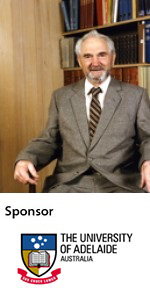
Charles Angas Hurst was born in Adelaide in 1923. Hurst attended the Scotch College, Melbourne where he graduated dux in 1940. Hurst then enrolled at the University of Melbourne but his studies were interrupted by war. In 1942, he enlisted with the Royal Australian Air Force in radio location. After completing a radio physics course at the University of Sydney, a radar course at Richmond and officer training at Bradfield Park, Pilot Officer Hurst was stationed firstly on Normanby Island and then Manus Island, Papua New Guinea (1942-46).
After the war, Hurst returned to complete his studies at the University of Melbourne, graduating with a BA Hons (1947) and a BSc (1948). He was then awarded the Aitchison Travelling Scholarship from the University of Melbourne which allowed him to travel to Cambridge for his PhD studies. He was awarded his PhD in 1952. Hurst returned to Australia and the University of Melbourne to take up a position as senior lecturer in the Mathematics Department. In 1957, Hurst moved to the Mathematical Physics department at the University of Adelaide. He was appointed here firstly as senior lecturer (1957-60), then reader (1961-64) and finally professor (1964-88). Hurst was made professor emeritus in the department of Physics and Mathematical Physics in 1989. Professor Hurst passed away in October 2011.
Interviewed by Professor Bob Crompton in 2010.
Contents
- Clever parents
- Six on the backside
- University…for one year
- Getting ready to enter the war
- Love at first sight!
- Radar station in New Guinea
- Back to university
- Off to Cambridge
- PhD work in lay language, please!
- Wake-up Dirac!
- Delta Squared V Club
- Maths with Cherry to physics with Green
- Pfaffing around with the Ising model
- Putting physics on a solid foundation
- Study leave
- Overseas visitors
- Students and inter-departmental collaborations
- Academy affairs
- Service to the university
My name is Bob Crompton. I am here to interview Professor Angas Hurst, a distinguished theoretical physicist, on behalf of the Australian Academy of Science. We are sitting in a room in the Department of Physics at the University of Adelaide, very close to where we both worked when I first came to know Angas, which was in 1957.
Clever parents
You were not born in Adelaide, were you?
Yes, I was born here. I left here when I was six months old. That wasn’t my doing, of course.
Where in Adelaide were you born?
I was born at Unley Park, I suppose it was the Unley Park hospital. I stayed there (in Unley Park) with my grandmother.
Is that where your parents were living?
No. They had come back from Cambridge and then went off to Melbourne to the Serum Labs. We moved to Melbourne in 1923.
Tell us something about your father and mother.
My father was the second eldest of nine children living up at Paracombe. My grandfather was an apple orchardist. My father, at the age of seven, got ‘infantile paralysis’, so he was not able to work on the orchard. He went to the Houghton school. Then he went to Adelaide High and did so well that he went on to the university. He did so well at university that he decided to go to a job in Indiana. He got married just before he was due to go. My mother and father went to Sydney to catch the boat and there was a shipping strike, which lasted for several months. They sat up in the Blue Mountains, waiting for the shipping strike to end. Finally they said, ‘Blow, going to the United States. We’ll go to England.’ So they turned around and went to England. My father had letters of introduction to Sir William Bragg, so he went and talked to Sir William Bragg. Bragg said, ‘Why don’t you go to Cambridge and do a PhD?’ So my father went to Cambridge and did a PhD with Professor Riddiell. My father was the first South Australian and the third Australian to get a Cambridge PhD. Starting from an apple orchard, that was pretty good!
Amazing. What about your mother?
My mother’s father, my grandfather, left school when he was 14 and then got a job in a timber works. Then, in collaboration with a friend by the name of Walter, he started up a timber firm called Walter and Morris, which became a very well known timber firm in Adelaide.
I knew that name very well when we lived in Adelaide. Is the timber firm still going?
No. They hired a smart bloke who went and lost all the money. Grandfather died in 1917. The trouble with him was that he was an ‘Edwardian’ father. He insisted that the eldest daughter, who was very scholastic, should stay home and help her mother; the eldest son, who was very musical, should run the business; and the youngest son, who was very smart and businesslike, should become a medico. He got everything wrong. The worst thing of all was that he insisted that my mother come to the Adelaide University to do botany, and she managed to fail every subject. But whilst at Adelaide University she met my father, who was assisting Kerr Grant as a lecturer in physics. Kerr Grant and my father were the entire physics department back in 1919.
That’s where your father and my father met?
Yes. They knew everybody in Adelaide.
Was your mother from Adelaide too?
Yes. Their name was Morris and the original family goes back to 1797. But they came out, in about 1850 or so.
Six on the backside
You did most of your schooling in Melbourne?
We moved to Melbourne when I was six months old because, as I said earlier, my father had taken a job at the Commonwealth Serum Laboratories. It was decided that I should go to Scotch College because that was a good school. It was within walking distance – about a mile – so I used to walk to school. I started at the age of six and went on until 1940, when I was 17.
What about some of your recollections about those early years?
At the age of seven I got six on the backside from the junior school headmaster, for which I have never forgiven him. Apart from that, I had quite a successful time at school. I was dux of the prep school and I was dux of the senior school.
That’s an achievement! What turned you first on to science? Was it an inspiring teacher? Who did turn you on to science?
At the age of 13 or 14 an aunt gave me a Lott’s chemistry set as a birthday present. I started doing chemical experiments in the kitchen, until I finally stank everybody out. I was sent out to the garage, where I built a very nice little chemistry laboratory, and became very keen on chemistry. As my father was a chemist, I also had lots of books to read on chemistry. That was my best subject at school. We had a very interesting chemistry master in the last two years at Scotch College by the name of Jamieson. He was always called ‘Tort Jamison’ because he looked like a retort. He was tall and angular, with a rasping voice, and he was marvellous at teaching chemistry. I did very well with him.
Then, in mathematics in my final year, we had A.D. Ross as the mathematics master, who is no relation to the professor of physics in Perth. Ross was a very good mathematician and he had a first-class MA. But in those days there was no job for a research mathematician, so he taught at school. He was a remarkable maths teacher and he produced a string of people who eventually went into the Academy. For example, Alan Head, who was a year or two after me, was one of his students.
Alan Head was at CSIRO, wasn’t he?
Yes, that’s right and he’s an FRS. Richard Dalitz was in the year immediately after me, he was also an FRS, and there was Shaw in front. There was a whole string of first-class people, and it was because of Ross’s inspirational teaching in mathematics. I was really torn between mathematics and chemistry, as a result of having two outstanding schoolteachers.
So there wasn’t really a great emphasis on physics in those early days? It was mostly mathematics.
The physics master was a chap by the name of Kaye. We called him Teddy Kaye. He had a DSc, but he wasn’t a very great teacher. One of his big advantages was that he would let you do what you liked. So we would spend hours in the lab doing our own experiments, which was very good for us. In a sense, he was very good at self help.
Did you build any equipment at that stage?
What we were doing was trying to measure ‘J’, the mechanical equivalent of heat. We spent hours on it and got a pretty good result in the end. We had to build the apparatus for that.
University…for one year
After school, what then?
I went to the University of Melbourne. I wanted to get a job in the vacation after leaving school and before starting at the university. So I went along to the boy’s employment bureau. They gave us all an intelligence test. It was supposed to take an hour and I did mine in 10 minutes. Then I went to an interview with a chap. He had a great card index that he went through, looking at all the jobs. He said, ‘Not good enough for you. Not good enough for you. Not good enough for you’. He didn’t have a single job for me. So I had to work as a delivery boy for a chemist, riding a bicycle. I learned to ride no hands. It was marvellous.
Then I went to the university and to Ormond College. I went to sit for a £10 scholarship to Ormond and the master, D.K. Picken, who was a mathematician, wrote me a letter before calling me in. He said, ‘You’ve done so well that, instead of giving you £10, we’ll give you £80 as a full-time student.’ So I went into Ormond as a full-time student and I found it a very mixed place. I loved the master of college, but it was full of brutal students.
That was very much the case sometimes in those colleges at universities, at that stage.
That’s right. What fixed these brutal students was that, after the war, a lot of ex-commandos came back to the university and they were a bit too big to be pushed around.
Can we just go back for a moment? I really want to hear something more about that first year. Although you were not happy at Ormond, you had lectures from Cherry that you thoroughly enjoyed. Is that right?
Cherry was absolute bliss. I used to look at my watch through the lectures, hoping that he wouldn’t finish. He was so good. That made me love mathematics. But, in physics, Les Martin, who was a senior lecturer then, gave a very advanced course for first year physics. So I liked physics. Chemistry, I’m sad to say, was a disaster. Although I had come top of the state the previous year in chemistry, I flopped and only got a second class honour.
Was Laby still head of department then?
That’s right. Laby was still there for a few years afterwards.
Getting ready to enter the war
After one year there, what happened then?
The war had started by then. At the end of 1941 I wanted another job, and I didn’t want to be a chemist’s boy. I thought I would go into the Melbourne University Rifles and spend the three months vacation there. So I ‘enlisted’, if you can call it that. We were waiting on Spencer Street Station to catch the train on 7 December 1941 and the news came over the loud speaker that the Japanese had just bombed Pearl Harbor. All of a sudden, instead of being fun and games, it was real work. I was put in a platoon for three-inch mortars, which I learnt to fire, it was very good. We could put three bombs in the air at one time!
At the end of my three months there, I thought, ‘I don’t want to go on to the university. I want to enlist.’ I had had enough experience of the Army to say, ‘No, thanks,’ and I didn’t want to go into the Navy, so I thought, ‘I’ll go into the Air Force’. But they had reserved occupations and, if you were in a reserved occupation, you were not permitted to enlist – unless you could get approval. My father found an advertisement in the newspaper for ‘radio location’. It used to be known as RDF and later became radar. The advertisement was inviting science students to apply to the RAAF for radio location. I put in for that and found that the university, in the form of Professor Cherry and Professor Laby, would give me the approval to enlist for radar but not to go into aircrew. So I joined up as a trainee radar officer.
After you enlisted in the Air Force, what next?
I did a radio physics course at Sydney University. There were about 30 of us and we were called the ‘Bailey boys’ because the head of the physics department was Professor V.A. Bailey. He was a very good physicist but a very eccentric person. They set up a six month high-pressure course in radio. It was so good that in the end we were designing and building our own equipment. I built my own cathode-ray oscillograph and designed and built a push-pull amplifier. All after six months of training!
We also had to learn to solder. They had a man in the store who would approve of your work and he was a brute. With everything you took along, he would say, ‘Take it back and do it again.’ Eventually I became very good at soldering. This was very important when I went into the Air Force proper because I could show the airmen that I was as good as they were at soldering. After that, I went to radar school at Richmond RAAF base and trained in radar. Then I had a one-month course at Bradfield Park to be an officer. That was pretty awful because it was right in early summer. We were in tin huts – stinking hot – having boring lectures, and you had to drill the men. It was dreadful. But in the end I finished up as a pilot officer.
Love at first sight!
Around about that time, you met and married Barbara.
Barbara’s father was a Congregational minister. He went through Adelaide. He was a firstclass student. He did an MA with Sir William Mitchell, but he came to Melbourne as a Congregational minister. He had nine children and Barbara was the second youngest. So I met her when she was 12 years old and I was 14 – love at first sight! Then her father, Aubrey Stevens, moved to Sydney because he was a man who was affected by his calling. He didn’t like ministering in affluent areas. He liked to work in the slums. So in 1943 he left to go up to Sydney to work in Redfern and Waterloo, by which time I was in the Air Force. So I completely lost touch with her family and lost touch with her. But then, at the end of the war, by accident, I finished up in Sydney, met her again, got engaged and got married!
Perhaps this is an appropriate time to tell us about the family that you had with Barbara.
We had three children. The eldest is a boy, Angas John; the next is a girl, Elinor Mary; and the third is a girl, Rachel Louise. John went through Adelaide University and did an engineering degree. He then did a PhD at New South Wales in computing science and finished up in Monash as an associate professor in information technology and computing science. He was also chairman of the academic board there. So he has done quite well. Elinor got a first class degree in physics and went to Canberra to do her PhD in astronomy with the chap who later became the head of Mount Stromlo. She found that she didn’t like sitting in the dark, looking at stars, and she chucked her PhD and went into the public service as a computer programmer. She’s been there ever since.
Working where?
Here, in the state government. At present, she is stationed at the university here, doing some work in environmental type stuff. The third one, Rachel, became an architect. She lectures in architecture at the University of South Australia and has been on a number of Australia-wide committees pronouncing on Australian architecture and examining in various universities. She is married and has two children, girls; John had two boys; and Elinor never married.
Radar station in New Guinea
I thoroughly enjoyed reading the notes that you gave me. One of the fascinating parts was your wartime experiences. Tell us something about those.
The Air Force, in its way, did some things which were absolutely unbelievable. Myself and another radar graduate, Bruce Aldridge, were both posted first to New Guinea to become commanding officers of a radar station on the D’Entrecasteaux islands. Bruce was just turning 19 and I was 19. So aged 19, I was in charge of 35 men. I had only just left school and done a radar course and was then stuck on this island miles out. The only communication with the rest of the world was a boat that used to come pretty sporadically – once a week or once a month sometimes. We battled on there, with a radar station perched on the top of a cliff.
One of our best results there was when we were sitting, looking at this radar screen, and suddenly we saw an echo come right up to the top. That meant that it was big. It just sat there, which meant that it was flying straight towards us. It turned out that it was a 100-bomber raid coming straight over us. We were able to give an hour’s warning and Bruce Aldridge, who was further up at Goodenough Island, also gave an hour’s warning. So, by the time these 100 bombers and the escorting zeros arrived at Milne Bay, half of the New Guinea Air Force was waiting to meet them.
Was it all 10-centimetre radar in those days?
Oh, no. Nothing like that. It was long range. The English had developed radar for the English circumstances and they had built these great towers, which would be hopeless for New Guinea. It was the Australians, under Les Martin, who developed the light-weight radar, which you could pack up, cart into the islands and erect there. They worked wonderfully. They used to have valves about this size (indicates), which would function very well at that frequency. I think that radar it was an enormous Australian achievement and it was absolutely ideally adapted to New Guinea. Whereas the British radar would have been hopeless and the Americans had no idea what day it was. In fact, they used to ask the Australians to help them.
What is so amazing for those days was being able to see the flotilla of aircraft coming towards you so early. That was so valuable. That was where radar really helped to win the war so well for us.
Yes. There was one occasion that didn’t work out so well. I got a note from fighter control saying, ‘The plot that you recorded as friendly has flown over Milne Bay dropping bombs and causing damage. Would you please explain?’ So I rushed down and had a look at the plot and saw that there were three plots heading towards Milne Bay and then three plots going into Milne Bay. The three plots heading for Milne Bay had ‘IFF’ on it which meant ‘identification friend or foe’ and that it was friendly aircraft. The three plots in Milne Bay didn’t have ‘IFF’. But it was well known that the airmen would turn it off when they were coming in to land. So what happened was that there was an allied aircraft coming this way (indicates) and a Japanese aircraft coming that way (indicates) and the paths crossed. The operator, quite naturally, thought it was a single track. We explained that to headquarters and they didn’t reply, so I presumed that it was all right. I found out later, from talking to other people, that it was not uncommon for radar tracks to get confused.
After the war, what then? What did you do immediately after the war?
My last posting was at 347 Radar Station on Manus Island. Although that was Australian territory, it was essentially an American base, so everything was paid for by Americans. We had American clothes, American food et cetera. Then suddenly, when the war ended, Lend-Lease was chopped off and the Australian government had to pay for us, which they didn’t want to do. Immediately all the RAAF on Manus Island were hauled out and sent back to Australia, and I was given the job of carting three radar stations from Manus Island back to Sydney. We went back on an aircraft carrier, HMS Slinger and I had a nice trip down from Manus Island to Sydney on the aircraft carrier. When I got to Sydney, I had to disband the three radar stations, and I popped out to see my father-in-law and I met Barbara. Romantic, wasn’t it?
Absolute magic. Very fortunate.
Back to university
Then I came down to Melbourne and picked up my course again.
If I remember correctly, you did but a double degree. A BA BSc; is that right?
Yes. When I went to Ormond College, the master, D.K. Picken, said, ‘With your sort of interest, we’ve got the course that would suit you called a BA BSc.’ Mathematics in those days was a BA degree and physics was a BSc. So you would spend three years doing mathematics and physics and then another year to finish off the BSc degree with physics. The result was that I came out fully qualified in both mathematics and physics. It was a marvellous course. So many people have done it including Dalitz, Alan Head and lots of other people. It meant that we were turning out graduates who were really very well trained in physics and mathematics.
Before you went to the war, in your first year at university, you had Tom Cherry as a lecturer and you found him very inspirational. Did you have him again when you returned to university?
Yes. We had him in second and third year, and he was very good. We also had a chap by the name of Bert Corben. His wife, Mulaika Corben, wrote a book called Not to mention the kangaroo, which was a very severe attack on Melbourne University and all the ningnogs there. Bert Corben left after one term to work with Oppenheimer and so Cherry took over. They were very good. Physics was pretty spotty then. Second-year physics was pretty off-putting. Third-year physics was good again.
Off to Cambridge
Did you get a scholarship to go overseas at the end of your degree?
That was a bit of a swizz because I got a scholarship called the Aitchison Travelling Scholarship. It was the top scholarship for Melbourne University. It was worth £A350 a year, which I thought was going to be pretty good. But, when you converted it into Sterling, it came down to £280 a year and my fees at Trinity and my rent came to £200. So I was living on £80 a year. I got by because I had saved up £700 in radar. Being stuck on islands, you couldn’t spend any money and so I had saved a lot of money. Essentially I paid for myself until the second year. Oliphant had told my father that the ANU was opening up scholarships. So I applied for a scholarship at ANU and got it. All of a sudden, I got £600 Sterling a year and we were very comfortable.
What a difference.
We had a nice house with some spare rooms. We let two of the rooms and we had a number of students. The third student we had was a man by the name of Tony Jay, who later came to write the television programs Yes, Minister and Yes, Prime Minister. And we knew him as a student! He later became Sir Anthony Jay. So that was very interesting.
At that time, didn’t you get some advice from Dalitz which was contrary to what you actually did?
He had come to Cambridge. He had had an Aitchison Scholarship and also had found himself absolutely strapped, as far as money was concerned. He had to leave after a couple of years. He went to Bristol. He had a pretty low opinion of British physics and said that the only place where real physics was being done was the United States and I should go there. But with my family tradition, I had to go to Cambridge. As it turned out, it was the right thing to do.
Where did you meet Dalitz and how did you know him?
Dalitz was a year after me at school, at Scotch. Then, when I came back after the war, at the beginning of my second year, I was going to tutorials in Ormond and he tutored me in mathematics for one term. So we kept in touch with each other almost up to the end. He died some years ago.
Tell us about the Cambridge years.
Once we had got our finances settled, it was much nicer. The staff there were not really much help. My first supervisor was a chap by the name of Eliezer who left after one term. So I was left without any supervisor at all. I fossicked around and found my own problem, which I worked on. But for a lot of time I was talking to other students. A fellow student of mine by the name of Abdus Salam, whom I knew very well, later on got a Nobel Prize. PT Matthews also did very well, he became an FRS. I also spoke to Roy Chisholm and Behram Kurşunoğlu. We had some very good students there. Then there was Dirac, and Dirac was a marvellous experience.
Do I take it then that the students who were with you were doing original research and getting it published?
I could go into the whole story of what was the question of fundamental physics then. But, as students, Salam and Matthews, with John Ward working independently at Oxford, laid the foundations for a rigorous approach to it. The Americans had given up on it. It wasn’t their supervisors but the students who did it all. The supervisors weren’t able to keep it up with it.
PhD work in lay language, please!
Can you tell us something about the work that you were doing at that time – in lay language, if you can?
I picked my own problem at the end of the first year and worked on that for the remaining two years of my PhD. Fundamental physics had got to a very interesting stage then. The only way you could treat fundamental physics, as the equations were so complicated, was to use what is called successive approximations. You would start off with a picture in which there was nothing happening, so-called ‘free field’. Then you would add little corrections, due to the fact that there were some interactions taking place. You would have to calculate these one after the other. It is what is called ‘perturbation theory’.
The remarkable thing about it was that when you made your first correction, you got some very good agreement with experimental results, so it looked as though you were on the right track. However when you did the second correction, it blew up completely – infinity and, from then on, infinity. So a major achievement after the war, by Sin-itiro Tomonaga from Japan and Julian Schwinger and Richard Feynman from the United States, was to find a way to handle these things. They constructed a procedure called renormalisation theory, which enabled one to extract sensible results from all these absurd calculations.
I know that term so well, but I have no idea what it means. What does ‘renormalisation theory’ mean? Is it possible to explain in simple terms?
As an analogy, when a boat goes through water, it drags the water along with it. Therefore, the actual weight of the boat increases because of the dragging along of the water. The same thing happens with charged particles. They have an electromagnetic field around them which they drag along as well, and that increases their mass. Unfortunately, because they are particles, the whole thing is mathematically ill-defined and it is this additional mass that becomes infinite. We know that electrons do not have infinite mass, therefore we would say, ‘Although it must drag it along, as water is dragged along by a boat, it does not drag it to infinity.’ So they rephrase it so that it comes back to the sensible experimental result, which you put in by hand. You can’t calculate it. That’s called ‘renormalisation’.
That’s a great thing for me to know, because I have never known what that phrase meant.
I would say it became marvellously effective. You could get up to 10-decimal-places accuracy with it. Nevertheless one didn’t know whether carrying out the succession of approximations would work. So I gave myself the job of trying to show that they did – ha, ha! It was a pretty ferocious project, but I showed that it doesn’t work.
Wake-up Dirac!
A moment ago, you mentioned Dirac. How did you come across Dirac and was he a good lecturer?
He was a marvellous lecturer. In Peter Szekeres’ account of Dirac’s visit here, he said that Dirac would stop, say a complete sentence without any ers or ums, stop again and say another complete sentence. You could write it down and get a perfect account. It was marvellous to listen to him. But he had a very simple approach. We were a bit contemptuous of him, because he didn’t know anything about modern physics. He used to sit there and usually go to sleep. One of the tests, when you were giving a seminar, was to see whether you could keep Dirac awake. I always succeeded and I was very proud of that. When he asked questions, they were always so simple that you realised what was going on. When he lectured, it was all so straightforward. You weren’t being blinded with science, but you found that what he was saying was so profound – simple but profound. He was an absolute pleasure to listen to.
He was a very withdrawn sort of person. One of my finest achievements was that he invited me to his place for afternoon tea. I went along and had tea with him, his wife, who was Wigner’s sister and very bossy, and his daughter, Margaret, who was 12 or 13 at the time and also very bossy. So there was this great man being bossed around by these two women.
What age would he have been then?
He was born in 1902 and this was 1951, so he would have been 49 or 50.
To have these little sketches of people with very famous names is great.
Despite all his ignorance of modern physics, he would get up and give a seminar which was years ahead of its time. The things that he talked to us about then are still very strong. All the marvellous things that we talked about have all been forgotten.
Delta Squared V Club
You were involved in the Delta Squared V club, weren’t you?
Delta Squared V was a sort of theoretical science club. First of all I got the job of being the treasurer. The next year, I was the secretary. In the third year, I would have been the president, but I had left by then, so I never became president. But, as secretary, I had a major job – I had to find the speakers – and I did wonders. One of the speakers I got was John Littleton, who talked about the theory of comets. Another one was John Pople, who had just got a Nobel Prize on the nature of water. The third one was William Cochrane, who did some marvellous work on X-ray crystallography. So I got these three speakers. But I also had to write an account of what they had said. Well, I couldn’t understand what they were saying! Fortunately, I was able to get hold of some subsidiary information either from writings or by talking to other people. So I was able to write the accounts, which I would then show to the speaker. They all thought I did a good job, which was really a fake.
So that was that. Being the treasurer I had the job of sailing into people who weren’t up to date with their subscriptions. If they weren’t up to date, I would beat them out. So it was really quite a nice job!
Maths with Cherry to physics with Green
After Cambridge, what then?
As I was finishing up my PhD – which was a bit of a job because it was all my own idea – I got a letter from Cherry offering me a job as senior lecturer in the mathematics department in Melbourne.
So you were pretty young?
It was 1952 and I was 29.
Twenty-nine is still young for a senior lectureship.
Yes. I got a write-up in the paper about ‘these young people who are being appointed’, but at that time I was suffering from alopecia and I had all these white spots over my head. They said, ‘We don’t have any grey-headed people around,’ and I had all these white spots all over my head. Anyway, I went back to Melbourne, and that was a plus and a minus. I loved being back there and I liked the people in the department – Cherry, Love, Behrendt and Schwerdtfegher. They were first class.
This was in mathematics and not physics.
That is right, in mathematics. But I used to go across to physics to have afternoon tea and keep in touch with them. Les Martin was the professor there. So I kept my contact up with physics. But there was no one there who knew anything about modern particle physics, so I went into a slump and didn’t publish anything. There was one place where I could have published something. Freeman Dyson wrote an article called ‘Missed opportunities’, and I could have written an article about missed opportunities then too. There was a problem that was staring me in the face that I completely missed and other people picked it up afterwards. So I was getting a bit desperate. Then Bert Green, who was here by then, offered me a job. He hadn’t had much success with his two previous appointees. So I jumped at it and came over to physics in 1957, and I stayed here until I retired.
Did you know him before he asked you to join him?
I had seen him at a meeting in Canberra and I knew of him by reputation because of the world famous BBGKY (Born-Bogoliubov-Green-Kirkwood-Yvon) theory of dense liquids. Bert was famous for that. But Bert was always regarded as a little bit off mark because he was very original and he always wanted to follow his own ideas. People were not always quite sure about Bert. They found out that a lot of the things that he was saying were right – but not at the time.
He was a very clever man.
Yes. He was a genius. I told a story about him at his memorial service, which I think was wonderful. I was writing a paper with Bert and Yehiel Ilamed. Bert wrote the paper, of course, so I was checking it through and I came to something that I couldn’t understand. I thought, ‘As I’m a co-author, I should understand everything that’s in the paper.’ So I spent a week working out what this particular equation meant. I went and showed it to Bert and he nodded and nodded. A while later, I was sitting in my office and he came in and said, ‘I’ve managed to improve on your calculation.’ Then I realised that he had never done it! He had just guessed it and it wasn’t until I had done it that he had found a proper argument for it. So that is what you were dealing with. That is what a genius is. As Immanuel Kant said, ‘A smart person is someone who does something and, if you work hard enough and think hard enough, you can understand it; a genius is somebody who does something that you’ll never understand’ – and Bert was like that.
Pfaffing around with the Ising model
If I remember correctly, you collaborated with Bert Green in those early years on the Ising model. Can you tell us something about the Ising model – again in lay terms, please?
It is a very famous model. It is a simple model of magnetism, in which you have an array of little magnets that form a rectangular array. The little magnets can only point up or point down. The chance of them changing their direction from up to down will depend on two things. One is what the magnets nearby are doing – that is the interaction – and the other is the temperature that makes them jiggle around. So the question was to study this model mathematically. This is done by ‘statistical mechanics’. In 1943, Lars Onsager found a way of solving the problem by using very abstruse algebra. I remember him giving a talk about it in Cambridge and no one understood a word of what he said. He used to stand with his nose to the blackboard and mumble, so it was pretty hard to follow him. John Ward, who had been in Adelaide and had gone back to the United States, was working with Mark Kacs and they thought they should simplify Onsager’s work. They found a way, more or less by guesswork, of replacing Onsager’s abstruse algebraic calculations with little pictures. I read this paper, found that their little picture could be improved and told Bert about it. He said, ‘That’s very interesting,’ and he came back with a paper ‘Hurst and Green’, in which he worked out all the mathematics, introducing a concept that I had told him about before called ‘pfaffians’.
What are pfaffians?
Pfaffians are named after a German mathematician, Pfaff, and they are a mathematical structure. You know what determinants are (a value associated with a square matrix). If you have an antisymmetric determinant of even order, it is a perfect square. A pfaffian is the square root of an even order skew-symmetric determinant – if that’s any help.
I did ask! That’s great, thank you.
We found that it reduced the Ising model of Onsager’s calculation to a very straightforward thing. Later on I found that you could extend it to an infinite set of different models. We found that they all came out as one part of this single construction, using pfaffians.
Quite an achievement.
Then, from talking to a mathematician in Toronto, I discovered that the best way to describe pfaffians was to use what are called Dirac algebras. That reduced the thing from Onsager’s enormous calculation to a third-year subject. So I am very pleased about that.
My trouble is that I tend to lose interest in something and not keep digging down the same ditch. When the Australian Research Grants Committee (ARGC) came in, I asked if I could have a visit from an American mathematician by the name of ‘Slim’ Sherman. He had done some mathematical work in the Ising model area. He was called ‘Slim’ Sherman because he was six-foot-four and about 17 or 18 stone, and he was a lovely person. He came out and for six months we worked together. We extended his arguments about Ising models in two, three or four dimensions – any number of dimensions – to general mathematical statements and we produced some mathematical structures called ‘inequalities’. To give us a bit of advice, we called in another mathematician, who had been prominent in this area, by the name of Griffiths, who was at Carnegie Mellon University. We wrote a paper which is called the ‘Griffiths-Hurst-Sherman inequalities – GHS’. That is one way my name has gone down in history – as GHS. So that is the Ising model – never been back since.
Putting physics on a solid foundation
What is the work of which you are most proud?
It all started back in 1958 or 1959. I was reviewing articles for mathematical reviews and I had reviewed a paper by a chap by the name of Candelin. He was tackling one of the continuing problems in quantum electrodynamics – ‘supplementary condition’, which seemed to be misbehaving for different reasons from the divergences. He had a way of handling it. But, I thought it could be expressed much better if one used algebraic methods. So I wrote a paper on this and then, when I went to Britain in 1961 on my first study leave, I took this account with me. I talked about it in Edinburgh, and they loved it. I talked about it in Glasgow, and they loved it. I talked about it in Cambridge and even kept Dirac awake. In fact, two students told me afterwards that my talk had inspired them to go on in mathematical physics. Then I went down to London, to Salam’s group, and they hated it and they were very nasty. They said that it was too mathematical. Later I went to Geneva and they hated it too. They said that it wasn’t mathematical enough! I thought, ‘Oh, blow you,’ and just left it.
I kept getting a bit niggled by it and about eight years later I thought, ‘We should be able to do something with this’. In the way of a most cruel lecturer, I gave it as a PhD topic to my student Janice Gaffney. She cottoned on to the key approach. She wrote it up and got her PhD for it. We then sent it off to be published and it was rejected. We were a bit stunned.
We had a postdoctoral student with us at the time by the name of Alan Carey, who is now a professor in Canberra. He came in and said, ‘I think we can do something with your problem,’ and it was very subtle. We had used algebraic methods. One of the algebraic methods that we had used was called ‘von Neumann algebras’ and Alan Carey suggested another algebraic method called C-star algebras, and that worked beautifully. So we published it with no trouble at all. We then dug away regularly and rebuilt the whole structure of the supplementary condition in quantum electrodynamics using this approach.
Then another student came along, Hendrik Grundling. Interestingly enough, Hendrik was a South African who came to Melbourne because his cousin had started to pay for his study as an MSc. So Hendrik came to me to do an MSc and I put him on to this problem. He turned out to be a very good mathematician who is now at the University of New South Wales. We took up ideas that Dirac had talked to us about back in 1950 and rebuilt them to make a proper mathematical theory: the Dirac Theory of Constraints. I lectured on that in a Schladming conference and got written up in the local newspaper. I am very proud of it because it provides a foundation for what are called ‘constrained physical theories’, which are theories in which there are constraints where things cannot vary freely. They are called ‘gauge theories’ in physics. The whole of physics is built with this, and we have the rigorous basis for it. It is not new particles and it is not new laws of physics, but it puts things on a solid foundation. I am very proud of that.
Yes, indeed.
Study leave
In 1961, Adelaide had instituted a study leave program and you went on your first study leave to Edinburgh. Can you tell us something about that study leave and also about subsequent study leaves?
The only people who could go on leave were the professors. The sub-professorial staff could only go on leave if they could find someone to take their place and pay their salary. The result was that sub-professorial staff could not go on leave. We had a marvellous vice-chancellor here by the name of A.P. Rowe and he invented the ‘study leave program’. So, when I came here, I got on to that program. Not only could you go on leave but you were also paid £300 and a per diem. So all of a sudden I was able to take my family. We came over by ship and we went back by ship. In fact, coming over by ship, I sat down and read four volumes of the History of the Decline and Fall of the Roman Empire. That is the beauty of sea travel.
Who did you go to in Edinburgh?
Nick Kemmer, who had been in Cambridge. He was a very good scientist, but he had essentially given up doing research. The previous professor was Max Born and Nick Kemmer took over, so I went over and spent a year there with them. I actually shared an office with a chap by the name of Peter Higgs. Peter Higgs was chugging away most of the time trying to organise ‘ban the bomb’ marches and things like that. Every now and then I would get run up by the police: ‘Police here; can you give us some information on the ‘ban the bomb’ march?’, and I would say, ‘Wait until Dr Higgs comes in.’ He went on study leave two or three years later and wrote a paper. In that paper he invented what is called the ‘Higgs boson’. They have now just built a $10 billion machine to look for the Higgs boson that he predicted in 1964.
They are still looking for the Higgs boson, aren’t they, using that extremely expensive accelerator in Switzerland?
They still say ‘next year’. If they don’t find it, it will be a real puzzle and the whole of physics will be tipped upside down. People are very anxious. If they can’t find it, what on earth do you do next? The Higgs boson is the origin of all mass. Without the Higgs boson, where does all this [indicates] come from?
After Edinburgh, when you returned home, what then?
I came back to Adelaide. Then I had a good trip to Toronto in 1964. I stayed at a place called Massey College, which was a student college for senior people. Massey was named after the Governor-General of Canada. The room I had was one that was normally occupied by his brother, Raymond Massey, the well-known film star. So I had the film star’s room, which was very nice. It was a very comfortable college and the master was Robertson Davies, who was a very famous Canadian novelist. He was a very attractive person and he had an Australian wife. So that was very good. The mathematics department had some very good people. One of the best known was H.S.M. (Donald) Coxeter, who was a very good algebraist and has become famous because of all the drawings of Escher. The mathematician who advised Escher, was Coxeter, and he was at Toronto. Coxeter was a nice bloke to talk to. So I enjoyed Toronto very much.
Later on, in 1967, I went to Miami on study leave with Behram Kurşunoğlu, who was a Turk who had been a fellow student in Cambridge with me. Being an Australian, I got on very well with him. We always argued about Gallipoli. One of his favourite stories was that the Turks had invented poison gas: they used to throw their socks over! He started up the Coral Gables conferences. At the first one I went to, when I came to the door, J. Robert Oppenheimer came up and shook hands with me. I met Onsager and Gellman as well as Robert Oppenheimer. All the great people were there. Coral Gables was very nice indeed.
Geographically, where was that?
It is in Miami. There’s a suburb of Miami called Coral Gables – very upmarket.
Was it a series of conferences or just that one-off?
They had them every year. I came back to Miami again with my family a couple of years later. That was another Coral Gables conference and I was one of the editors of the proceedings.
Are there other study leaves of note?
In 1974, after I had been on council at Adelaide University, I wanted to go on study leave. I thought I would go to Indiana and meet up with ‘Slim’ Sherman again. He invited me over but, unfortunately, he died of cancer before I got there. I spent a year at Indiana University, which was a marvellous university, and again met some very good people there. It was cold as billyo – down to two degrees Fahrenheit.
What year was this, by the way?
1978.
There are still a few study leaves to go then.
Yes, that’s right. I had a big tour in 1981. I represented the Academy at a United Nations thing. I went down to Marseillaise and across to Vienna. In fact, I have been to Vienna about six times. I know Vienna very well. The professor there is a chap by the name of Walter Thirring. He and I worked in the same area and got on very well, so he used to invite me to come to Vienna. I went and spent several months there. It is a beautiful city – and the opera house! We used to love going to the opera. The Palace of Schoenbrunn – gorgeous.
Overseas visitors
I also want to talk to you about the things that were going on in Adelaide at that time. One of the things that you were heavily involved with was the Goolwa conference. Can you tell us something about that?
Gellman came to the Coral Gables meeting and I knew that he was keen on birds. So I thought that the best way to get him to come to Australia was to say, ‘Have you ever seen kookaburras?’ He said ‘I’d love to see a kookaburra.’ So, when the time came for the conference at Goolwa, I rang him up and he said, ‘I’d love to come out.’ He came out and I thought, ‘I’d better show him some birds’. I asked Ian John here, ‘How can I show him some birds?’ and he said, ‘Go out to the salt pans.’ I got permission to go out at seven am with Gellman to look at the birds, and we sat there. He knew every bird by name. I don’t know one bird from another, really. He was very grateful.
After that, we went down to Goolwa. On the way down, I was talking to him about walking in the bush. I said, ‘In Australia, walking in the bush isn’t much trouble because there are no big animals to be frightened of. In the United States you have got to look out for bears and mountain lions.’ He said, ‘I don’t worry about that.’ I said, ‘The only thing we’ve got to worry about is snakes.’ Well that scared him! He was frightened stiff! I said, ‘You just watch out where you put your feet and don’t stick your hand up a hollow log.’ But he was terrified of snakes, so I won that one.
Being a great bird watcher, Gellman hated birds to be caged. Bert and I took him to the big aviary at Cleland. I could see that he was getting very restless and didn’t want to go there. But Bert just charged ahead, so we had to follow. We came into this big walk-through aviary and Gellman put his hand over his head and ran through. He wouldn’t look. He couldn’t bear to see caged birds.
At that conference, you made a contribution and I understand from what you have told me that it went down like a lead balloon. What was the sequel to that?
Previously, Schwinger had given a marvellous collection of talks on the foundations of quantum field theory and, in particular, the concept of magnetic charge. Dirac had invented the magnetic charge back in 1931 and it had sat there. Schwinger got very keen on the idea and started talking about it again. I got interested in this and found that there was another way of looking at it, different from Dirac’s and different from Schwinger’s. So I wrote up a paper, which was published very easily in the Annals of Physics. I talked about it at Coral Gables. It was the first time I had ever spoken at an international conference – and there was dead silence. I went away with my face down near my feet. I refused to go to the next day’s meeting and I refused to go to the summing up. They came back and said, ‘The person summing up’ – Nicolai Cabibbo – ‘spent 10 or 15 minutes talking about your paper.’ And I wasn’t there!
Serves you right [laughs].
It is still going. I got buckets and buckets of citations on that one paper.
In addition to your visits overseas, a number of important people came as visitors to the Department of Mathematical Physics in Adelaide, didn’t they? Can you tell us something about them?
Dirac came to visit Oliphant, when he was there. Then we had a string of other people. ‘Slim’ Sherman I have mentioned. There was Arthur Wightman, who was a leading mathematical physicist. Jim McGuire.
Tell us about Jim Maguire.
He was at Boca Raton, Florida, Atlantic University, up north of Miami. I bumped into him, he got talking to me and he came. He and his wife came out on an ARGC. His wife was a very good swimmer, I remember. He and I worked together on one-dimensional problems, which were quite interesting. We got on well together. But, since then, he has got involved with Murray Bachelor in Canberra and Colin Thompson. So I haven’t seen him for years.
Are there others whom you would like to mention?
Milan Vujicic from Yugoslavia. His wife, a lovely person, was from Sarajevo, and they had two boys. They were lovely people. As a result, when we went over to Europe, I got an invitation to talk at Belgrade. I was giving a seminar and, in the middle, one of the audience got up and walked out. I asked, ‘What’s wrong with him?’ Milan said, ‘He couldn’t understand your English.’ That taught me a lesson. From then on, whenever I talked in foreign countries, I talked very slowly. I can talk in Poland, Yugoslavia, everywhere and they all understand me. That was from my visit to Belgrade.
Oh, and I nearly got thrown into jail. I was very keen on steam trains. I love steam engines. I have got a whole shelf full of photos of steam engines. Milan Vujicic was taking us for a drive in the country and I saw a steam engine puffing away. I said, ‘Stop the car.’ We stopped and I jumped out, got my camera, rushed over and took a picture of this steam engine. As I was doing that, a great big Yugoslavian came across, ‘Rrr, rrr, rrr,’ and grabbed hold of me. I was going to be thrown into jail. Milan Vujicic got a policeman to come along and I explained to the policeman that I was a stupid Australian professor who loved steam engines. He gave me my camera back and didn’t even take the film out. Apparently when I took the photo of the steam engine, I turned my back on a military airport, which I didn’t know was there.
On the roll of film there was also a picture of a high-rise apartment that had caught fire. It was a high-rise apartment that had been built in honour of Tito. It had caught fire and they thought it was sabotage. I thought, ‘If they had found that photo, I’d have got plonked into jail.’ All the time this fellow was holding on to me, I kept saying, ‘I’ve got a book about Yugoslavian trains. I know all about them.’ When I got back to Australia and looked up the book, I found, ‘Taking pictures in Yugoslavia is terrible. I got arrested three times’ – I was lucky. I loved Yugoslavia then, but I don’t now.
Students and inter-departmental collaborations
In addition to the piece of work that you told us about earlier, are there other pieces of your work that you are particularly proud of?
I tended to put all the problems to my students rather than to work on them myself. I had some very good students. People worked on the Ising model and also with a lot of algebraic work. Another was upper-air meteors – Logan Francey, one of my students, worked on that. And there was underwater submarine detection. I got involved with quite a lot of people – bits and pieces. I would pick up things.
You and Bert were perhaps unusual in that you both had a wide range of interests in mathematical and theoretical physics. Although you didn’t collaborate much with him, did you?
No, not until later on. We did a little bit of work on algebra, but then he worked with Tony Bracken and Terry Triffitt rather than with me. I went my own way.
You had some very distinguished students, didn’t you? Can you mention some of those?
Do you remember Henry Tuckwell? He worked with Alastair Blake.
No.
They went over to the United States. He was very good. Logan Francey, I’ve also remembered. Bob Irvine was very good. He died some years later. He did a computer study of the Ising model. That was something. In those days they used punch cards.
I had a friend at Adelaide University by the name of David Kerr who was in physiology. I got talking to him at a New Year’s Eve party about some work that he had done on nerve membranes. He referred to a little letter that he and some other people had written about Easter time. I went home and found that you could rephrase the whole thing in terms of what was called a ‘master equation’. So we developed a computer program for the master equation in which you could replicate a nerve membrane as an array of sites which were either open or closed and they would correspond to potassium or sodium irons going through pores in the nerve membrane. The question of whether they were open or closed would depend on what the labels were doing and what the temperature was. We worked out the statistical mechanics of that and did a computer program on it. We found that we could improve on Hodgkin-Huxley’s graph of the variation of the current through the nerve membrane with temperature. In fact, they even thought it had some relation to the blue ringed octopus. We wrote a couple of papers on the nerve membranes.
David Kerr worked in the Darling Building, didn’t he, just nearby?
That’s right. That was a bit of extensive computer programming, which worked very nicely.
Academy affairs
You are a Fellow of the Australian Institute of Physics and of the Australian Mathematical Society and you have been elected a Fellow of the Australian Academy of Science. Can you tell us something about your involvement in Academy affairs?
I was on Council. I was also Chairman of the National Committee for Physics. The President of the Academy at that time was David Curtis and he got the idea that every national committee should write a report on what they were doing. I chased up physics all over Australia and wrote this report on the state of physics in Australia. It turned out that all the other committees were much smarter than me: they didn’t do anything. I busted my guts doing this.
In 1981, I came over to Edinburgh on study leave and then went to France to a meeting of the International Union of Pure and Applied Physics (IUPAP) as the Australian representative. I went along to talk to the United Nations Australian representative. He was very helpful. I wanted to set up an international conference for people from disadvantaged countries, like Sri Lanka and Bangladesh. So we ran this international mathematical physics meeting here in Adelaide. It went down very well. That (the publication arising from it) was an Academy proceeding and it got published. I raised about $5,000 to pay for it. That was very good, as we were able to pay the fares of a lot of people coming from these disadvantaged countries. We got some very good speakers to come along as well.
Did you have other involvement in international physics?
I was on the International Commission on Mathematical Physics. I more or less invented that. I went along and told IUPAP why mathematical physics should have a separate representation. So they formed the international committee and I was on that. I was quite involved with international affairs at that time and knew the people quite well.
Service to the university
Your time in Adelaide was a very important time of your career. Apart from what you did in the Department of Mathematical Physics, what was your involvement in university affairs generally?
I had been chugging along quite quietly until Lloyd Cox came along to see me. He was professor of the medical faculty. I am not quite sure now what his field was. Anyway, he asked me whether I would take over the job of chairman of the education committee. John Carver was the next one and I succeeded John Carver. The committee at that time had 125 people on it. It was said that it was slightly bigger than the United Nations. The meetings used to go on until after six o’clock at night. They would burble on and on and on. So, when I became chairman of the education committee, I decided to rewrite the whole university committee structure and also reorganise the running of the education committee. The simplest change was that meetings couldn’t go past half past four without a majority vote, and that stopped them in their tracks. Then I rebuilt the whole committee structure. Committees were sprouting up all over the place – some were council committees and some were faculty committees – and I tidied them all up. Now, everything has become much more executive than it was.
You were on council, were you not?
Yes.
For how many years?
Four years. I had some good arguments there. I remember that Dean Brown – he became Premier of South Australia – got up and gave a talk on something. When he had finished, I said, ‘You got it completely wrong,’ and I made him do it all over again. I was quite proud of that.
The other thing which took a lot of your time and interest in those years was the rebuilding of the university union. You were chairman, I think, of the union’s house committee. Is that so?
Yes. The warden of the union asked me to go on to the house committee. It was a pretty low-key job, just a matter of what you might call a general sense of responsibility. But that meant that I was on the union council as a member of the house committee. In those days, they used to put in submissions to the AUC. They put in a submission to the AUC for extending the building. The university was growing and the union was getting too small. The suggestion was that they dig a hole in front of the union building and, as an extension, put some rooms half below ground. The chairman of the AUC was Les Martin and he said that was rubbish.
What year are we talking about, by the way?
It would have been in the late 1960s. I said to Harry Medlin, who was on the committee, ‘What the union needs is a planning committee to make proper submissions to the AUC.’ So he put that up to the council with the recommendation that I be the chairman. So I was the chairman of the first planning committee, and our job was to oversee the extension to the union building.
That was a big job.
It certainly was. Henry Basten was the vice-chancellor, and I went to see him. He said to me, ‘We will let you have the services of the university architect, Ron Mutton, to get an opinion on what you should do.’ Ron Mutton came up with a plan for the extension of the union which really wasn’t very suitable, but it gave us the idea that it was possible. This planning committee was a very good committee, and one of its members was Jim Warburton. He said, ‘I had a very good architect building my house. Would you like to ask him? He’s a chap by the name of Dickson of a firm called Dickson and Platten.’ So we got them in to talk to them about it. At first I thought, ‘It’s too big for them.’ But they took on the job and they did marvels. The union building has been cited over and over again as one of the top pieces of architecture. That was Dickson and Platten’s work.
To pay for it was a problem. We got the maximum amount of money that we could out of the AUC, but it wasn’t nearly enough. The Adelaide University Council wasn’t very helpful. But we discovered that students had to pay a union fee and the union fee was paid by the government. So we could keep raising the union fee, which the government would pay. We increased our income, and by taking out a loan as well, were able to pay for the union building to the cost of $2½ million. In those days it was a lot of money, paid for by the federal government. It was very clever.
Very clever. Good thinking.
So I feel that is one of my greatest achievements – getting involved with that.
When we met yesterday, I noticed on the wall a very handsome coloured picture of you in university robes. What was the occasion on which that photograph was taken?
That was when I was pro-vice-chancellor. When I first got involved with things, the vice-chancellor was Geoff Badger and he retired. I was involved in the committee that had to choose a successor and they chose Don Stranks to come along. Don worked very hard, but he found it a bit stressful. Apparently, after one council meeting when he had had a bit of a hammering, he went along to Memorial Drive to play tennis and dropped dead. All of a sudden, there was no vice-chancellor. But, in the meantime, we had had some deputy vice-chancellors, but they weren’t all that popular. People tend to think of deputy vice-chancellors as a bit bossy. We had a committee about it and, in it, I suggested that we should try the idea of having a pro-vice-chancellor who would maintain an academic link. In a sense, they were more part time. They took that up and invited Kevin Marjoribanks to be the first pro-vice-chancellor and me to be the second pro-vice-chancellor. We were there under Don Stranks. When he dropped dead Kevin got the job of taking over – I was glad that I was second and not first. Kevin did such a good job that he was made vice-chancellor.
Did you remain pro-vice-chancellor?
I remained pro-vice-chancellor for two or three years. I found myself as a sort of universal healer. I would go around and listen to people and talk to them. I always found Roma Mitchell, who was the chancellor, an enormous help. She was full of common sense. I would turn to her for advice.
Yes, she was a remarkable woman, wasn’t she?
Oh, she was an amazing woman. She was a fellow student of my aunt. My aunt did law. She and my aunt and John Bray did law back in 1930-something.
Thank you, Angas. That was a really fascinating interview. I’m extremely grateful both for yesterday morning and for our interview today. I thoroughly enjoyed this long conversation with you.
Thank you for talking to me. It was lovely talking to you again, Bob.
Professor Stephen Boyden, human ecologist
Professor Stephen Boyden has had a wide and varied career. Originally trained as a veterinarian, he did research in bacteriology and immunology at the University of Cambridge, the Rockefeller Institute for Medical Research, the Pasteur Institute and the Tuberculosis Immunisation Research Centre of WHO in Copenhagen before going to the John Curtin School of Medical Research at the ANU. He is perhaps best known for his work in the field of human ecology and human biohistory. Author of many articles and books on the subject, he was the director of the Hong Kong Human Ecology Program and a consultant to UNESCO's Man in the Biosphere Program. He is a visiting fellow at the ANU's Centre for Resource and Environmental Studies and deeply involved in the activities of the Nature and Society Forum.
Interviewed by Professor Frank Fenner in 2003.
Contents
- An insistent keenness on the life sciences
- Focusing on haemagglutination in bacteria
- Via one chance event to a widely used antibody test
- 'Don't be afraid to hypothesise and think.'
- Investigating the immunology of tuberculosis
- Delayed type hypersensitivity and the cytophilic antibody
- Could dietary elements protect against tuberculosis?
- Making the right move at the right time
- A lifestyle in touch with nature
- Quantifying the migration of cells
- Understanding the process of chemotaxis
- Addressing a gap: academia and the culture-nature interplay
- Aspects of reality: a conceptual framework for studying human situations
- Unquantifiable variables are important too
- Applying the concept to a real situation
- Generating the Hong Kong Human Ecology Programme
- Outcomes: harvesting synecology and autecology information
- Awakening undergraduates to cultural reform
- Birth of the Human Ecology Program
- Biohistory, realities and challenges: communicating the need for understanding
- Community outreach: the Nature and Society Forum
- Recovering momentum after a fiery setback
- Meanwhile, back on the farm.
An insistent keenness on the life sciences
Let’s start, Stephen, with your early life. Were you born in the country or in the city?
I was born in a very urban area of south London, but when I was five years old we moved about 30 miles further south, to a place not far from Epsom. That was then the country, but it is now suburbia.
That move changed my life. While we were living in London an aunt had visited us every Thursday, bringing lots of little newspaper clippings of animals and plants, and I would sit at the dining table with her to stick these photos into a scrapbook. So I had become sensitised to the existence of living organisms even though, being in London, I had never really seen any. The transition to the country, with lots of animals and plants in a huge garden, was just wonderful. From that moment onwards I have had a very deep interest in the natural environment, in wilderness and the processes of life.
Did your schooling influence you in any particular way?
I went to a local, private primary school. That was important for me: I still remember giving lectures to the other boys on tadpoles and things of that sort, and I was curator of the school's museum.
Later I went to secondary school in Leatherhead, cycling the seven miles there and back every day, sometimes twice. That school did not encourage me or have any positive effect. As I think was typical of big schools for boys, it offered a large range of subjects – physics, chemistry, maths, languages, Greek, history, religious studies and so on – but biological science was simply not there. I think the dominant culture in those days was that the life sciences were so irrelevant to humans and to society as to be simply not worth learning about. But I insisted that I was keen to learn the life sciences, so the school made arrangements (probably the first time it had ever done such a thing) for me to go a girls’ school to do my biological science. That worked very well.
Focusing on haemagglutination in bacteria
When you went on to the university, how did you decide what to study?
After secondary school I went to the Royal Veterinary College, in London, from 1942 to 1947. (Actually, at that time we were evacuated down to Reading because of the war.) I suppose my choice of study reflected my interest in animals and their welfare – my aim was to be a practising vet – but because I had a very good teacher in pathology and immunology, bacteriology and so on, I developed a special interest in that area and after finishing my degree I wanted to do research.
Your next step was to do a PhD at Cambridge. Would you tell us about that, and also how, in the middle of it, you happened to go to the Rockefeller Institute?
When I went to Cambridge I did a year of Part II Pathology, just coursework, in the Department of Pathology. But after that year I moved over to the Department of Animal Pathology, where the director was Ian Beveridge, an Australian. He was my supervisor and played a very important role in determining my future.
I had become fascinated by some of the work which Sir Macfarlane Burnet’s group was doing on haemagglutination by viruses, so when I started my PhD I put together a proposal for research in this area. Ian Beveridge commented, however, ‘Your proposal is probably very like the plans for the whole Walter and Eliza Hall Institute for the next five years’ – it was absurdly ambitious and no single person could have done the work, which would probably be done by the Hall Institute anyway.
Instead, he suggested, why not focus on haemagglutination in bacteria instead of in relation to viruses? Because nobody at all was working on whether bacteria have the same effect on red cells et cetera. I don’t remember receiving any further advice from him over the next three years, apart from some comments after a couple of occasions when I caused flooding throughout the building by leaving a pump on overnight. But in general he was very supportive, and that crucial bit of advice at the beginning determined the whole direction I went.
Within the first couple of weeks I got some interesting results. I treated red cells with an extract from Pfeifferella mallei, which causes glanders in horses – remember that this was a veterinary institute – to see if they would agglutinate. They didn’t. Then it occurred to me that possibly some products of the bacteria might have been absorbed onto the red cells surfaces without actually agglutinating them. So I washed the red cells free of all the bacterial matter and exposed them to antibodies to the bacterium. They agglutinated. This showed that they had absorbed components of the bacterium and now were sensitive to agglutination by antibodies – and, lysis – if a complement was present. I was quite excited about this: not only was it interesting, from a pathology point of view that the bacterial products attached to the cell surface, but also it offered a very sensitive technique for detecting antibodies to those bacterial components.
I was about to write up a little paper on this but I read in either Nature or Science a paper by Dubos and Middlebrook, describing exactly the same phenomenon for the first time, but with a different kind of bacterium, Mycobacterium tuberculosis. That was a little bit disappointing, but in the long run it had very positive effects, as it was then suggested to me that I might actually go and work for a year with Dubos at the Rockefeller Institute in New York, and I was offered some funding to do the second year of my PhD at the Rockefeller Institute.
Via one chance event to a widely used antibody test
At the Rockefeller you met Rene Dubos, with whom I had worked for a year, just about a year before you went there.
That’s right. I found that everybody was talking about Bobby and Frank Fenner, and they continued to talk about them for the rest of my year there, so I felt I knew you long before I actually met you in 1960, when I came out here.
That year in New York was very important indeed, for several reasons. One was that I had become interested in the mechanism of the bacterium products becoming absorbed onto red cell surfaces and I wondered what role it played in pathogenesis and that sort of thing. I started to do some experiments testing a hypothesis I had about the mechanism, and although the hypothesis turned out to be completely wrong, one of the experiments turned up something significant.
I was treating red cells with fructose and then testing their capacity to absorb antigens, but when I needed some fructose there wasn’t any on the shelves in my lab. Eventually Rollin Hotchkiss, in the same department, kindly lent me a little bottle of fructose, and when I took it back into my room and treated red cells with it, I discovered it had a most remarkable effect. After treatment with a very dilute solution of this fructose, the red cells would absorb proteins onto their surface, and if you used the right concentrations of fructose and of proteins – egg albumen or some bacterial antigen – they would absorb protein but not agglutinate. But if you then added antibody to the absorbed antigen, they would agglutinate. That seemed to confirm my idea that fructose has some key effect on the antigen surface.
After I had given Rollin his bottle back I carried out the experiment again, but with a different bottle of fructose – and it didn’t work. Even when I tried another bottle of fructose it didn’t work. It worked only with Rollin Hotchkiss’s fructose sample. That was not too good in terms of my hypothesis, but it was still an interesting phenomenon, with tremendous practical potential.
I realised that Rollin’s fructose sample must contain a contaminant and I tried to work out what that was, looking into the processes by which fructose is prepared, et cetera. Eventually we discovered that the contaminant, the active agent in this effect I had found, was tannic acid. And out of this developed what came to be known as the tannic acid haemagglutination test, which consisted basically of taking sheep red cells, treating them with an extraordinarily high dilution of tannic acid – probably one in 100,000, or something like that – and then with a protein, antigen, at the right concentration. After we had washed these red cells (treated with tannic acid and now having absorbed protein) they were exquisitely sensitive to agglutination by antibody. This formed the basis of a test for antibodies – or antigen, depending on how you did the test – probably the most sensitive test for antibodies available at that time.
That finding wasn’t terribly interesting theoretically – it didn’t tell us anything about the mechanisms by which bacterial products interact with cells – but it was really useful. The tannic acid haemagglutination test was used widely for quite a few years afterwards. And consequently the paper was quoted a great deal, which was important to my career. Yet it was the result of pure serendipity: there were no brilliant thoughts on my part (my hypothesis was wrong) and I used dirty reagents!
So Rollin Hotchkiss’s fructose happened to be contaminated with tannic acid. In a sense, that illustrates the importance of chance events.
Pasteur said, ‘Chance favours the prepared mind.’ I suppose, in retrospect, my mind must have been prepared. I didn’t think of it in those terms then.
‘Don’t be afraid to hypothesise and think.’
You mentioned that there were other reasons, as well, why the year in New York was so important for you.
The whole experience of working in Dubos’s laboratory was very important intellectually. I had many good friends there, particularly Manny [Emanuel] Suter – I am still in contact with him. Also, I am sure Dubos himself had a great positive influence on me. Certainly I enjoyed my interactions with him. He was an extremely generous person and I remember many weekends when he invited me up to their country place in the hills north of New York.
Rene and I used to go for long walks during which we would be talking more or less non-stop about not only immunology but nature. I think he shared my built-in love of and enthusiasm for the processes of life and the natural environment, but also we were both very interested in the implications of the human evolutionary background for our behaviour today, for example, and for our patterns of health and disease and so on. What I remember most strongly is his encouragement: ‘Don’t be afraid to hypothesise and think.’ If you had some sort of silly idea, he’d listen to it. The encouragement he gave me has stayed with me. I have lots of ideas, most of them stupid, but basically his advice was, ‘Don’t be afraid to have ideas; then you can try them out on people.’ That was a very important aspect of my life experience.
Investigating the immunology of tuberculosis
Did you return to Cambridge after that year in New York?
Yes. I went back to Cambridge for another year and wrote up the PhD.
Then I worked for a year at the Pasteur Institute with Pierre Grabar. That was a fantastic year, during which I was still interested in the interaction between cells and bacterial products, but did not achieve any memorable results.
I might add that although I had learned French for eight years at school, when we went to live in Paris I found I couldn’t communicate. Even when I left I still wasn’t any good at it. I’m hopeless at languages.
Your next move was to Copenhagen. How did that come about?
It was a bit unexpected. During my year in Paris I was contacted by Hubert Bloch, who was Swiss but working in New York – not at the Rockefeller but at another institute – where I had known him moderately well. He had been given the job of setting up an international laboratory in Copenhagen for the World Health Organization and he asked me whether I would be interested in working there after my year in Paris. I went to Copenhagen, was interviewed by various people and had a look around, and the idea appealed to me. I was eventually appointed to the position and later became chief of this laboratory, the Tuberculosis Immunisation Research Centre. I was pretty young for that responsibility, I suppose.
I was in Copenhagen for eight years, a very enjoyable period. My eldest two children were born in Copenhagen and grew up speaking Danish like Danes – but not to me, because my Danish was so bad.
We had eight or 10 on the staff. The scientific staff were mainly from overseas. My closest colleague in that time was Ernst Sorkin, from Basel, in Switzerland, and another was Joan Rhodes Madsen, from England.
We concentrated initially on trying to sort out the antigens of the tubercle bacillus, using the tannic acid tests, but also other immunological methods for trying to identify different antigens. We hoped to find that one antigen was particularly important in relation to the establishment of immunity and so on. That turned out to be extremely complicated, and although we published several papers on the antigens of the TB organism, we didn’t make any kind of breakthrough.
Even now, when the genome has been sequenced entirely, people are still working very hard to find out which proteins matter.
That’s right.
Delayed type hypersensitivity and the cytophilic antibody
Then I got particularly interested in delayed type hypersensitivity, because that is characteristic of infection with the tubercule bacillus. One felt that delayed type hypersensitivity probably played some important role in resistance to tuberculosis, but very little was known about its underlying mechanisms. We never made much progress in one sense, but in another sense we did. In trying to analyse delayed type hypersensitivity we used a technique for eliciting it against any antigen.
In this work we decided to make use of Freund's adjuvant, which is used to boost antibody production. If you take, for example, Freund's 'incomplete adjuvant' (which is just paraffin oil), mix it up with an antigen – egg albumen, say – and inject that into an animal, you get a very strong antibody response: humoral antibodies, gamma globulins. But if you use Freund's 'complete adjuvant' (a mixture of the same paraffin oil and killed tubercle bacilli) and if you put your antigen – egg albumen – into that, mix it up and inject that mixture into an animal, as well as very high humoral antibodies you get very strong delayed type hypersensitivity to the egg albumen. So if you inject egg albumen into the skin, intradermally, of an animal immunised in that way, you get your typical delayed type reaction: nothing coming up within a few hours but at 24 or 48 hours a big swelling. That is what happens in tuberculosis itself; it is the basis of the Mantoux skin test for TB.
So we had animals immunised in the two ways. We discovered that those which had been immunised with the complete adjuvant, and had delayed type hypersensitivity, had in their blood a kind of antibody which was quite distinct from the ordinary gamma globulin. We called it cytophilic antibody, because it had a property such that if you took macrophages from any other animal of the same species – and exposed them to this antibody, they became coated with the antibody. And if those cells were then exposed to the antigen, they would absorb it.
Our first experiment was to immunise animals with red cells. We had animals immunised with Freunds complete adjuvant and Freunds incomplete adjuvant, but mixed with sheep red cells as the antigen. We then took the serum from those two groups of animals, treated macrophages with that serum, and washed the macrophages and exposed them to sheep red cells. We found that the serum from the animals which had been immunised with the complete adjuvant and had delayed type hypersensitivity affected the macrophages so that they would absorb the red cells. You would get rosettes of red cells around them. Macrophages of an animal which was immunised with this complete adjuvant would absorb the antigen, whereas macrophages immunised with the incomplete adjuvant would not absorb the antigen. So there was a definite phenomenon here not previously described.
That was towards the end of my time in Copenhagen. I notice that in the literature these days the term ‘cytophilic antibody’ is used a lot, so the phenomenon is now well known. Although we tried, we never discovered its role in either immunity or delayed type hypersensitivity, and I am not sure that anyone has since done so.
Could dietary elements protect against tuberculosis?
Just as cytophilic antibody was one important but unfinished story, another was our observation that guinea pigs who are infected with tuberculosis are much more resistant to it if they have an excess of ascorbic acid in their diet. We showed that the amount of ascorbic acid necessary to avoid scurvy in a guinea pig is 10 times greater in an animal which is infected with TB than in a normal animal. But at the same time we discovered that there is some active agent in plants of the cabbage family which has an additional, enormously important, protective effect, presumably by boosting the immune system in some way. Ernst Sorkin spent at least a year trying to identify this substance – I remember that the whole laboratory, the whole building, stank of rotting cabbage – but unfortunately he never got to identify the active agent.
Making the right move at the right time
What caused you to apply for a position at the John Curtin School of Medical Research, at the Australian National University, and therefore to come to live in Australia for the rest of your life?
By about 1959 we began to feel that it was time to move elsewhere. I enjoyed our years in Copenhagen very much indeed – I was extremely lucky with my colleagues and it was a wonderful period – but eventually I decided it was time to move on. One reason was my failure to speak Danish at more than an elementary level. I was offered a permanent position in Denmark but I decided against it in favour of going to an English-speaking country, simply because I am so bad at languages. The other reason was that I had had enough of the long, cold, dark, dreary, foggy winters.
Should I go back to the UK, or go to America? There was a job in Seattle I was interested in, and one in Florida, and the Americans invited me over for interviews and to talk about these jobs so I went to both places. But I knew also of this position in the John Curtin School. I suppose it was advertised; I can’t remember how I came to make the contact with Colin Courtice, the department head, and George Mackaness.
Well, George Mackaness also spent a year with Dubos, who of course knew you were working in Copenhagen.
Anyway, although ANU didn’t invite me out here for an interview I came at my own expense from San Francisco to Canberra to have a look. I met George and Colin, discussed the whole thing and made up my mind. I came out here in the following year. It was the right move at the right time; I have never regretted it.
A lifestyle in touch with nature
Arriving here in 1960, you had to live somewhere. Where did you first set up house?
I came out as a Senior Fellow and the university kindly provided accommodation in the Rocky Knob area of Narrabundah, ACT, so the family moved there. That was very suitable and I enjoyed those years. But I have always wanted to live in the country, for various reasons. One is personal, that I really need the experience of being in the country, in touch with nature. It is important to my whole state of mind, and I get very peculiar if I can’t get out into the bush fairly frequently. The ideal would be to live in the country, so we actually purchased some land in the Tidbinbilla Valley, and in 1965 we had a house built there.
We had 300 acres of land, including Gibraltar Peak, and some cattle. The site is fantastic, and within commuting distance – 20 or 25 minutes’ drive – of ANU. But eventually, when the government decided to extend the adjacent fauna reserve, leaving us with 40 acres in its centre and the prospect of an enormous amount of passing traffic, we left.
We did get some compensation, so I had a similar, slightly bigger house built on another 300-acre property on the Captains Flat Road, about 10 miles out of Queanbeyan, on the Molonglo River – beautiful, and a wonderful place for the kids. (My daughter was then getting interested in horses and so on.) That was a very good time, but after a few years, when my son was starting to get interested in agriculture, we felt that our property was neither one thing nor the other: not the real wilderness, which I love, but not big enough to be an economically viable farm. So we decided to sell it and to move further out.
We bought another property up in the Tinderrys, fairly high up in the northern part of the Monaro. It’s not the best farming country but it’s really beautiful, and eventually we bought the place next door so we now have 3,000 acres. This was too big for me to manage, so at first I had a paid manager, but now it is run by my son-in-law, John, and he has turned out to be an absolutely fantastic manager. He and my daughter live on the property. Keeping it going, with all the droughts and things, has not been easy. In fact, we’ve had some very bad times indeed. But at least it’s still there and our grandchildren have been born and grown up in that marvellous environment. (They’re both now at university.) We have a lot of real wilderness there, as well as improved pastures and so on.
Quantifying the migration of cells
Your initial job here was in the Department of Experimental Pathology and you worked, as I remember it, mostly with George Mackaness on immunology, your particular field of interest.
Yes. I changed my direction a bit when I came here, in a sense getting broader over the years. One event, which perhaps encouraged me not to remain too narrow, occurred during the early years in Copenhagen when, after the haemagglutination papers and so on, I went to a meeting in Rome and was introduced to a professor from Holland. He out his hands and said, ‘Ah, pleased to meet you, Haemagglutination Boyden.’
Here I found myself getting very interested in the behaviour of cells, especially in the context of resistance to disease, and the behaviour of the polymorphs – polymorphonuclear leucocytes – in particular. The migration of polymorphs is well known; it has been described by Metchnikoff that they will migrate towards bacteria. This was put down to chemotaxis. It was assumed that the cells were responding to a concentration gradient of foreign molecules which are coming from the bacteria: there is a higher concentration on one side than the other, so they move in the direction of the bacterium which is producing these molecules. But it seemed to me that the evidence for this mechanism was very scanty so I wanted to investigate the behaviour in more detail.
The problem was that there was no good technique for quantifying this process. So we tried to devise one. We made a little ‘cell migration chamber’, which basically depended on the fact that it had recently become possible to procure things called Millipore filters, with different pore sizes. My very simple idea was that if we could use a filter in which the pores were just too small for leucocytes to fall through, any polymorphs that we then put above the filter would not fall through it, but could squeeze through to the other side, if they wanted to, by changing their shape.
With the help of the excellent workshop in the John Curtin School we made little chambers and put the polymorphs on one side of the filter, and some substance that might attract them on the other side. We then incubated them for one hour in a solution of serum at 37°. The process is to take the filter out at the end of the hour, fix it with the appropriate alcohol and so on, stain it with the stains you use for polymorphs, and look at it under the microscope. If you put it under the microscope in the appropriate solutions, it is completely clear; you can see right through the filter. So you can focus above the filter and also below it.
To our astonishment, it worked! If you had the polymorphs on one side and nothing to attract them on the other, they would just stay at the top. You’d have a reading of, say, 1000 on that side and a reading of zero underneath. (It was a very all-or-none kind of thing.) But if you had a foreign organism such as bacteria in the bottom part of the chamber, at the end of the hour you would still have some polymorphs on the top but you might have 500 on the bottom. They really do make that effort and come through to the other side. So here was a way of quantifying migration of cells. That was a very exciting time, because it worked so well.
Understanding the process of chemotaxis
From my point of view it was important that developing this method helped us to understand the process of chemotaxis. We found that the polymorphs were not responding to molecules given off by the bacteria. Even if you put, for example, some kind of entirely insoluble foreign matter in the bottom part of the chamber, they would still go through towards it. But they would not if the serum in which the cells were suspended had been heated to 56° C.
We discovered that the foreign matter in the bottom part of the chamber actually interacts with natural antibodies in the serum. If the serum has not been treated at 56°C, that sets in motion interactions with the complement, or components of complement, which result in a new, changed host substance. It then acts on the leucocytes, attracting them and causing them to go through. In other words, the serum components play a crucial role. If you have foreign antigens in the lower chamber, but you don’t have those serum components there, the cells just don’t move through. If you put antibody–antigen complexes in the bottom chamber, then the polymorphs really come through in a big way, because those complexes activate complements, or complement-like substances.
That was quite an interesting discovery and I am certain those results are valid. They were very clear-cut. I don’t think it has sunk in yet to the scientific literature, however. The latest version I have of the Encyclopaedia Britannica, in describing chemotaxis, still has the polymorphs responding to foreign substances coming from the bacterium.
A couple of years ago a John Curtin School email contained an inquiry whether anybody had a ‘Boyden chamber’.
I sat next to an American lady in an aircraft once, going from Papua New Guinea to Sydney. We got talking and when I told her my name she said she knew the name Boyden because in her work she used the Boyden chambers. (I didn’t know at that time they were called that.) They are still used, not only for polymorphs but for analysing any kind of cell migratory behaviour. Yet the idea is so simple – again nothing brilliant, but it worked. I suppose, though, that it was the last finding I made in the immunology area.
Addressing a gap: academia and the culture–nature interplay
After a few years, and some very distinguished work which led to your election as a Fellow of the Australian Academy of Science, you decided you would like to look at a broader picture. You thought that experimental scientists on the whole wore their blinkers too much of the time.
Yes. That would have been in the mid-’60s. I had a broad interest in nature and initially I wasn’t terribly interested in humans. But as time went on I got more interested in the interplay between the natural world and human society. And it seemed to me that there was a serious gap in the structure of the academic world. We had biologists of different kinds, physicists, chemists, social scientists, students of the humanities and so on, all studying different aspects of reality. In real life there is a constant interplay between those different aspects of reality, but there were very few people thinking and talking about that interplay in its own right. I believe that this interplay must be understood if we are to have the kind of understanding of human situations that we need for making wise policy decisions at a personal or a governmental level.
No academic in ANU, for example, was carrying out any studies in that direction. I suppose Rene Dubos in his writings, which I always enjoyed, is one of the few people who thought in terms of such interactions. There were others, such as Zinsser in his Rats, Lice and History – but by and large very few people were thinking in those terms. And certainly they were not reflected in the structure of academia, the courses given or the research programs. So I made a decision to try to do something in that area.
It was a bit unconventional to change direction in mid-career like that, but there were a couple of local factors which made the transition possible. One was the Vice-Chancellor at that time, Len Huxley. Realising that I had been employed to do something different from what I had in mind, I went to see him and asked whether I could continue on the staff at ANU. He was cautious, but amazingly supportive in principle, suggesting that I could have 18 months in which to prove that I could come up with something useful, meaningful, academically sound, appropriate. I think many other Vice-Chancellors would have taken a different view, so I am very appreciative of his decision.
Also, your support in those early years was enormously important to me, both in terms of my state of mind and confidence and from a practical point of view – in relation, for example, to the Hong Kong study which I will describe later.
Aspects of reality: a conceptual framework for studying human situations
You occupied ANU premises in Liversidge Street, didn’t you?
Well, at first the university didn’t know quite what to do with me. Initially I was put in the Sociology Department of the Research School of Social Sciences for a while. But sociologists had had their fingers burnt with Social Darwinism and that sort of thing, and I felt there wasn’t all that much sympathy for what I was on about. (Perhaps I didn’t describe it properly.) It was a very interesting year for me, however, and I learned a lot about the social sciences.
Then we moved to that little cottage in Liversidge Street for a couple of years. Again I was blessed with very enthusiastic and hard-working colleagues, and also our proximity to the Staff Centre enabled people to drop in on their way to or from there – so we had a lot of good interaction then with people from different parts of the university. That was a good period.
We were trying to put together a conceptual framework for studying human situations, recognising the fact of what we have since called 'biohistory'. (We called it 'biology and human affairs' at first, and gave it various other names over the years.)
In essence, in the history of life on Earth there came into existence living organisms which evolved over time, and over thousands of millions of years, leading to tremendous biodiversity.
Secondly, the biosphere – these processes of nature and of evolution – gave rise to humans. The human organism is a part of the biosphere, arising out of it and interacting with it. We separate the humans because we are specially interested in them, but they are still part of the biosphere.
Thirdly, humans have the special biological characteristic – that is a capacity for culture, a capacity to invent language for communicating, with all that follows in terms of what is learned and passed on from one generation to another. So, as a result of biological evolution, humans come into existence, and humans have a capacity for culture, and human culture itself comes into existence. Every human population has its culture and subcultures – a set of beliefs, ideas, assumptions, priorities, language and so on.
We found it useful to recognise these three aspects of reality: the biosphere, humans and then human culture. But as soon as human culture comes into existence it begins to have impact on human behaviour, human activities. This affects humans in one way or another, but it also affects the biosphere. There is constant interplay between these three aspects of reality – between humans and the biosphere, humans and culture.
What I am saying is very simplistic but it is a useful starting point, I think, for trying to construct a conceptual framework to facilitate thinking and talking about those interrelationships.
Unquantifiable variables are important too
I think you used diagrams to explain your conceptual model.
Yes. In all human situations, including the one we find ourselves in now, there is an interplay going on all the time between biological, physical, chemical, and cultural components of the situation. When one is trying, especially with a background of science, to develop a conceptual approach to studying human situations in this sort of way, one is faced with a problem arising from the fact that some very important influences in the total system, cultural influences, are not easily quantifiable in a scientifically satisfactory way.
Einstein said, ‘Not everything that can be counted counts, and not everything that counts can be counted.’ That famous saying is very true. As a scientist, with a scientific background, I am used to being able to measure things. But here we come face to face with variables, like value systems of individuals – values which are in an abstract aspect of reality and cannot be quantified. Yet they are extremely important forces in the system, and I argue that it is unscientific to ignore them when you are trying to understand what is going on, because they play such a crucial role. If you do ignore them, you come up with an incomplete picture.
Applying the concept to a real situation
You have mentioned the Hong Kong project. What was that, and how did you get involved in it?
Towards the end of our time at Liversidge Street, developing this conceptual model, we felt we needed to apply it to a real situation. While we were talking about various ways of doing this, it happened – again pure serendipity – that I was invited to a meeting in Hong Kong on human ecology, arranged by that wonderful organisation in London, the Commonwealth Human Ecology Council. There I came to appreciate that Hong Kong offered an extraordinary opportunity for doing a study of the ecology, in its broadest sense, of a human settlement. As a British Crown colony, it had fantastic records of all the inputs and outputs of materials and energy, of humans and so on, and also of uses of materials, fuels and so on, in the system. A proper study of the ecology of the city had never been done, so at this meeting I threw out the idea that it was about time somebody, perhaps the University of Hong Kong or the Chinese University of Hong Kong, did something about it.
The University of Hong Kong people were very interested. But after about eight months they had to admit that they couldn’t find the means or enough interested people to do it. That was a bit of a disappointment, but then it was suggested that we ourselves might direct a study of the ecology of Hong Kong, and we put this rather ambitious proposal forward at seminars in which we invited people to become involved if they were interested.
We were interested in looking at Hong Kong from the ecological or biological point of view, in terms of synecology – the ecology of the whole system and the interactions within it – and of autecology, the ecology of the human species or population. That is, we would be looking at the actual conditions of people’s life, but also at the system as a whole. In order to do a study of that sort you need the involvement of quite a large number of people, in different areas of specialism.
Generating the Hong Kong Human Ecology Programme
So it was that the Hong Kong Human Ecology Programme came into existence. We got some funding from the Nuffield Foundation, in London, for the human aspect of the study, and then some funds were made available by ANU. (I had discussed the idea of this study with you, and your support and effort were of vital importance.) Quite a few people from CSIRO took part, for example in the analysis of water and of energy flows. The University of Hong Kong became involved, particularly in the study of flows of materials in the system, and the social science department of the Chinese University of Hong Kong became involved in our biosocial survey – a big survey of 5000 people in Hong Kong which we couldn’t have done without their help. It was a very nice team.
I must emphasise that any comprehensive interrelational, ecological study of human systems of that kind has to be based on a conceptual model or framework, so all the team can see how their findings relate to the program as a whole.
By the time the program was getting under way, we were back in the John Curtin School, and we had students going back and forth between here and Hong Kong. It was a very exciting period. But one day I heard that a UNESCO man from Paris had been saying in Canberra that UNESCO also had a study on human ecology going on in Hong Kong. I couldn’t understand why this fellow would have come to Canberra without contacting us, as it seemed ridiculous to have two studies going on at the same time without being in contact with each other. Anyway, I couldn’t find the man himself so I wrote to ask UNESCO about their study.
I got a letter, very apologetic, ‘We had meant to get in touch, and we would have shortly: in fact we have adopted your study, as the first study in the ecology of an urban system, as part of our Man and the Biosphere Programme, project area No. 11’ – which focused on energy and cities and so on. So basically UNESCO must have decided to adopt us, but without actually getting round to telling us about it. Becoming involved with UNESCO was very good in terms of the whole project. It resulted in extra funding and a lot of international contacts, and for years afterwards, right up to my retirement, UNESCO would ask me, and sometimes other members of our group, to go to places where similar projects were being planned.
Outcomes: harvesting synecology and autecology information
You said that the Hong Kong project had both synecology and autecology aspects.
Yes. The end result of the synecology aspect was that we brought together information on patterns of flow, within the system, of energy, materials – especially foodstuffs – and, of course, waste products. That involved analysis of the use of energy in the system (not only inputs and outputs but the different uses), in transportation, for example, and in industrial activities, domestic use and so on. No-one had done this before. It really was a first.
The autecology aspect focused on people. We had a lot of good collaboration from the government of Hong Kong; we had research officers going into government departments and coming out with bundles of paper. We collected information on human health and disease from health authorities, hospitals and so on, and then we did our big survey of 5000 people in which we tried to get information on the actual local environments of people, their living conditions and such things as their diet, their psychological health and wellbeing, time budgets et cetera. From that we tried to consider the important interrelationships between patterns of energy use in the system and then the actual health of people.
The whole thing was a fantastic learning experience for all of us. We had an excellent team involved – not only postgraduate students, but some wonderful research assistants and so on – both in Hong Kong and here in Australia.
And what about publications arising from it?
We produced a book, The Ecology of a City and its People: The Case of Hong Kong, and then a large number of scientific papers – probably about 50 – on specific aspects of the study. I don’t know of any other studies which have been quite so comprehensive. (I had hoped to do more such studies with my colleagues here in Australia, but we didn’t get the necessary support so I did other things instead.)
In recent years quite a lot of studies, especially in Vienna and elsewhere in Europe, have applied the same approach – but more on the synecology side – patterns of energy flow in the systems and so on. That urban metabolism approach has become very important for decision making at the societal level, in terms of the whole issue of ecological sustainability and so on.
Incidentally, at the end of the Hong Kong book we discussed, in essence, the extent to which this pattern of energy use and so on is ecologically sustainable. We came to the conclusion that it is not sustainable. In the long run, significant changes will have to be made to restore ecological sustainability in urban systems.
Awakening undergraduates to cultural reform
At about this time you got involved in setting up the undergraduate Human Sciences Program at ANU.
That’s right. It was about the same time as the Hong Kong project was getting going. As I have mentioned, I realised that the structure of the academic world didn’t acknowledge that human situations involve continual interplay of the different aspects of reality. The courses offered to the students at the undergraduate level contained nothing which focused on the interplay between cultural aspects and biophysical aspects of human situations. And so, although I was in the Institute of Advanced Studies at the time and therefore had no direct undergraduate responsibilities, I wrote to the Vice-Chancellor proposing a course – actually, a whole degree course, but I didn’t get it – looking at the interplay between the cultural and the biophysical aspects of the system in human history and also the present day. A committee was set up to discuss it, but there was a lot of opposition to the idea. It was seen by some people as a soft option, though it isn’t if you do it properly. It is much easier to be a good specialist than a good integrator.
Anyway, some people began to understand what I had in mind and we won the day: the Human Sciences Program came into existence. It was not a full degree program in its own right, but people could ‘major’ in human sciences. We had a second-year unit where the focus was on the ecology of the human species in the past and the present, but in terms of relationships – not only patterns of energy use and so on but also the cultural influences on those patterns. And then the third-year unit, on human adaptability, looked at the capacity for humans to adapt to new situations, both biologically and culturally.
We recognise the capacity of human culture to sometimes embrace quite nonsensical assumptions which lead in turn to nonsensical behaviours which can have very adverse effects on living systems, either around or within us. There are countless examples in history of this ‘cultural maladaptation’, where a culture develops a world view containing assumptions which result in maladaptive behaviour which then results in undesirable consequences in living systems. That is occurring even at the present time.
Fortunately, however, we have the potential, through our capacity for culture, to overcome these maladaptations. We used to call the exercise of this potential ‘cultural adaptation’, but that term has been used by anthropologists in a slightly different way. So we now talk about ‘cultural reform’. If society wakes up to the fact that there are undesirable consequences of certain human activities in the system, it can make use of improved understanding of the situation to introduce measures aimed at overcoming those undesirable consequences.
The pattern of cultural maladaptation followed by cultural reform is a very important area of study. We have put a lot of effort into it over the years, and it is extremely relevant to the understanding of our present, ecologically unsustainable, situation in society, and also of the inequities in human populations and so on. In other words, there are undesirable things happening now as a result of human activities, and the future wellbeing of humanity depends upon effective cultural reform. And we can learn a lot from those patterns in the past, in relation to the present.
The Human Sciences Program has attracted a lot of criticism over the years, but it survived until the last year or two, and now its programs have been taken over by other departments, so – surprisingly enough – it still survives. That is rather pleasing.
Birth of the Human Ecology Program
After being Director of the John Curtin School from 1967 to ’73, I moved over as the foundation Director of the Centre for Resource and Environmental Studies. You were still in the human biology unit of the John Curtin School, but in 1976 you and your staff were transferred to the CRES by mutual agreement between Professor Courtice (the Director of the John Curtin School), yourself and myself, and you spent the rest of your university career in CRES.
That’s right. That is where I set up the Human Ecology Program. CRES was the right place for our activities, although I would emphasise that we have always been interested in the interplay between culture and the biophysical world as it affects not only the environment – where CRES’s interest lies – but also human health and wellbeing. And we still have that interest in the interplay, as it affects the health of the living systems around us and also of humans.
One could have argued that the John Curtin was appropriate, in the sense that we were interested in humans, but I believe the move was right. It was certainly very important. The move to CRES occurred at a time when I had run the Human Sciences Program (for its first three years) and had just about finished my involvement with it, coming back full-time to the Institute of Advanced Studies.
The Hong Kong program was still going on when we moved over to CRES; we had a big room there which we called the Hong Kong Room, where many of my colleagues were working, and we were writing up the final results in the book, which was published in 1981. When we couldn’t get the support we needed to apply the Hong Kong approach to any Australian cities, some of my colleagues did a study on the ecology of the city of Lae, in Papua New Guinea.
I should emphasise the sheer good luck I had in terms of colleagues over those years. The research students and, particularly, the postgraduate students had tremendous enthusiasm and made the whole thing happen. I was only peripherally involved in the study in Papua New Guinea – I went there a few times, but basically Ken Newcombe was running that study. It had some very interesting outcomes. Funded largely by UNESCO, it produced a lot of important UNESCO publications on patterns of use of energy in the system, and also food consumption and life conditions of people.
Biohistory, realities and challenges: communicating the need for understanding
After those early years in CRES I decided it was time I wrote a book myself on the approach that we had been taking, looking at the theory of it all and the relevant information. So I produced Western Civilization in the Biohistorical Perspective: Patterns in Bio-history, published by Oxford University Press, as an attempt to bring together what we had learned over the years before, during and after the Hong Kong program, and in the Human Sciences Program. That took a lot of time. I’m a very slow writer.
Then I did another book for UNESCO, simply called Biohistory, which was based on the same ideas. But it was broader. It started by discussing the history of life on earth, evolution and basic ecological principles, and went on to discuss the emergence of humankind in evolution, human biology and ultimately the impacts of civilisation on living systems. That book was published in 1992, and most of my effort in that time was devoted to writing, literature research and so on.
In about 1988, towards the end of my time in CRES, I proposed the Fundamental Questions Program, which had an unusual purpose.
One outcome of this was a book called Our Biosphere under Threat: Ecological Realities and Australia’s Challenges. I think the title was too negative, but the publishers insisted on it. The subtitle was better. The information in this book was used as a starting point for a series of conferences with social scientists and other people interested in society, gathering their responses on its implications for social change.
Community outreach: the Nature and Society Forum
In 1990 you reached 65, the then statutory age of retirement. You remained a visiting fellow in CRES, but you undertook a new life in setting up the Nature and Society Forum.
Well, not quite a new life – I’ve still been doing a bit of writing – but it was a different kind of experience for me. I was asked to give a talk on World Environment Day 1991 at the National Science and Technology Centre, and as an outcome a group of us decided there was a need for a new kind of organisation in society. So we formed the Nature and Society Forum, which has kept me pretty busy over the last 10 years. We haven’t completely achieved what we originally had in mind, but we are still heading in that direction and hope one day to achieve it all.
The Forum is based on the view that our society is not going to make the quite drastic changes which are necessary to achieve ecological sustainability until there is a vastly improved understanding throughout society of the processes of life, the human place in nature, and – with that understanding and probably as a consequence of it – a deep respect for life and the processes of life, for nature. That is a prerequisite for the achievement in future of an ecologically sustainable, healthy, equitable society (Personally, I like to use the word ‘biosensitivity’. I talk about a biosensitive society: a society which is sensitive to the biological needs of the living systems around us on which we depend, and also our own biological needs. But for the moment let’s call it an ecologically sustainable society.)
I am a moderate optimist, believing that humans have considerable ingenuity, given the motivation. We are faced with some difficult problems in making the transition to ecological sustainability, but I am convinced that our society can make that transition, and the adjustments necessary, if it has a much better understanding of the need for it, and of the nature of our situation in the living world.
Let us accept, however, that existing institutions are not achieving that understanding in the community. I find that among some of the community groups that I am working with at the moment – really very interesting groups of individuals, some of student age, some in the University of the Third Age, people who are interested and care about the future of society – there is an incredible ignorance of very basic facts of the situation.
The first aim of the Nature and Society Forum, then, is to create a vehicle for improving our own understanding of the human situation in these terms, and for communicating this to other members of the community. Its second aim is to try to stir up informed discussion and debate on what it all means in terms of social change and of changes at a governmental level, and to communicate the outcome of these activities, too, as widely as possible in society. We have never had a membership drive; we just have a little bunch of 100 or so very keen people, mostly in the ACT, but a few in other states and a few overseas, including some in Washington DC, who are interested and support this approach.
No other institution in our society does quite what we are trying to do. There is overlap with other institutions like the Environment Centre, and a bit of an overlap with ANU, I suppose, in the sense that we run courses and so on. But we aim to create a two-way bridge between the scientists, on the one hand, and the interested members of the community, our focus being on health of people and of the biosphere.
Our journal, edited by Jenny Wanless, comes out every couple of months and is very successful. We hold conferences and working groups, and we have publications and various programs – such as the one I am involved in at the moment, the People and Nature Program.
Recovering momentum after a fiery setback
Didn’t the Nature and Society Forum suffer something of a catastrophe last year?
Yes. By way of background I should say that all the way along, from the early years, you and the ANU have been extraordinarily supportive. Without that support I don’t think we would still be going. For example, ANU provided us accommodation free of charge, initially at the old hospital – where there had been an ANU department of Clinical Science – and then, when that was pulled down, at the Weston campus of ANU, which is controlled by the Research School of Biological Sciences. We had plenty of space there.
We did have a bit of a setback when that campus went up in smoke in the bushfire of January 2003. We lost everything – all our equipment, our records, our copies of publications, everything. But we are recovering from that. The Canberra Institute of Technology provided us with temporary accommodation, which wasn’t really adequate. But was very much better than nothing. We much appreciated it. And just last week we moved into a wing of Weston Primary School. That is a fantastic place to be, and we are getting back on track.
We had a number of publications. One was a booklet called Bad Bugs, which was the outcome of a conference on infectious disease. Another was Good Grub, also edited by Bryan Furnass. It was the outcome of an internet conference which we organised on food production as it relates not only to human health but also to the health of the ecosystems around us. We are having to reprint those first two booklets to replace the copies that were burnt. And we have another couple of booklets in preparation.
A booklet called Ecological Issues in a Nutshell is coming out in the next couple of months. And another one which I have done, People in Nature: The Big Picture, is actually being used at present by community groups in the process which I was describing: assessment of a situation; learning; discussing and debating the significance of that; and then communicating the outcome more widely.
Meanwhile, back on the farm…
Might I mention, just as a footnote to your retirement, that you have maintained your scientific experimentation by introducing ‘beefalos’.
Well yes, it is certainly an experiment, and so far it seems to be going fairly well. It is actually my son-in-law’s idea.
We have introduced beefalo, which is a cross between bovines and American bison. (It doesn’t involve buffalos at all but I think Americans call bison ‘buffalo’.) It is an unusual, unexpected sort of animal, in that it is fertile, even though bovines and bison are regarded as belonging to different genera. I think a pure-bred beefalo has to be 47 per cent bison. It has such bison characteristics as a very low fat content in the meat, and it is said to inherit the bison’s digestive system, enabling it to do considerably better on roughage and tussock than the ordinary bovine. And various other characteristics make it an interesting animal.
Certainly we are the only people in this part of Australia that have beefalos. There are some, though not many, in northern Queensland, and a chap in WA has a few. We bought some beefalo cows in America and they live over there; they have been inseminated with semen from beefalo bulls, and the resulting embryos are washed out and sent to us here to go into our Angus cows. So our Angus cows are giving birth to pure-bred beefalo calves. They are lovely animals, very gentle, and the meat not only has a low fat content but is delicious, very tasty. We won’t know the outcome of the experiment for a while, but it is going well.
Thank you very much, Stephen, for talking today about your ideas and activities, which have such significance for the future of our world.
Professor Julie Campbell, vascular biologist
Professor Julie Campbell is a vascular biologist whose research has focused on the cell biology of cardiovascular disease and atherosclerosis. Her team has developed a method of growing artificial blood vessels in the peritoneal cavity of an animal into which it will be later grafted. She is Director of the Centrefor Research in Vascular Biology at the University of Queensland and Director of the Wesley Research Institute at the Wesley Hospital. In 1995 she won the Wellcome Australia Medal and Award for Medical and Scientific Research.
Interviewed by David Salt in 2003.
Contents
- The foundations of a competitive scientific career
- Encountering the wonder of the living organism
- A rigorous physiology honours course
- Participating in a Golden Age for smooth muscle biology
- Major discoveries in smooth muscle proliferation
- Postdoctoral travels and achievements
- Research consolidation in a stimulating environment
- Synergies between science and personal life
- From established success to determined pioneer
- The Wesley Research Institute
- The development of artificial arteries
- Grow-your-own designer blood vessels
- New prospects in renal failure treatment
- Potentials and patents: aspects of a new age of bioengineering
- Starting a new vascular biology society
- Scientific obligations and rewards
- Doing things properly
The foundations of a competitive scientific career
Julie, let's begin with your early life. Could you tell us a bit about your parents?
My parents were working-class people, and very hardworking. My father had to leave school when he was 12 years old to support his widowed mother and his siblings, so he didn't have a very good education. Consequently, although his shrapnel war wounds did not really affect him physically, the type of work he did was to manage a paint remover factory, Superstrip, in quite a slum suburb of Sydney – now a fashionable inner city suburb.
My mother came from a family of nine children, her father being a printer. She got a reasonable education for someone in her era, but she worked in a printery and a plant nursery. She was also a physical education teacher, a very fit woman who used to have clubs with several hundred girls, and she was quite well known in the area.
Although neither of my parents was well educated, they valued education in others. They were not exposed to science as I was, however, so they didn't understand it at all. I remember trying to explain to my mother what a cell was, but I don't think she has ever understood it.
So where did you find your passion for science?
I was a very inquisitive child, wanting to know more about everything and to know how things work. I've always been like that, just as I have always been competitive and outspoken. As a child I was a bit of a tomboy, too. Perhaps I got that from my father, who was rather a larrikin, in many ways, a streetwise type of man who could always figure out how to fix something and to find ways around things.
Are you competitive and outspoken in your scientific career?
Oh, very much so. As a child I was in a lot of trouble for being outspoken, for example at high school when the students had some beef with the headmistress. Even if I didn't share their views I acted as spokesperson because no-one else was game enough to speak out. And I don't like losing. I think the only reason I did a PhD was that a lot of my friends were doing it. I thought, 'Hang on, I'm much better than they are at science,' and I couldn't bear the thought that they would get a higher qualification than I had and then one day, when we were competing for the same job, they would get it because they had that qualification.
Your competitive nature probably helped you through primary and secondary school. In 4th grade you were selected to attend an opportunity class for high achievers. You went on to a very selective high school, surrounded again by top performers. What were those school years like?
The girls in the OC classes and at St George Girls High School, in Sydney, where I went, were brilliant. To me it seemed as though it came easy to them. I used to compete against them so furiously, trying to hide it by studying in private to try to beat them – which I never could. I think in my high school years, out of a class of 150, I would come about 15th, or sixth at best. Those girls were just superb – top of the state in many, many subjects.
To my great disappointment, not many of them have done much in their post-school life. They got fairly ordinary degrees, for jobs that really do not take intellectual capacity or provide intellectual stimulation, such as pharmacy. Probably the reason I have gone and become a scientist and a professor is not so much that I was bright but that I have a competitive nature and was always trying to be persistent and determined to achieve.
Encountering the wonder of the living organism
At the end of high school you felt quite 'wrung out', I believe, and when you went to university you chose to work for the first couple of years at the Australian Atomic Energy Commission instead of taking up a Commonwealth Scholarship.
That's correct. I got my Leaving Certificate at the age of 16, and I had a tension headache for about a month afterwards. I had been competing furiously, not so much against other girls – or boys – in the state but against my friends in my class. I wanted to beat them, and although I didn't do that I did work very, very hard. So I felt I needed a break before going to university full time, and for two years I worked on chemistry during the day at the Atomic Energy Commission and studied chemistry at night, part-time, at the University of New South Wales.
At that point you had your sights set on a career in industrial chemistry, I think.
Yes. I always intended to be a chemist. At high school I did physics, chemistry, maths I, maths II, French and English – no biological subjects at all. In fact, I did an elective in chemistry for honours, and I still love chemistry.
But when I hit university I started to do biology subjects, as you had to in first year. Probably one of the major turning points of my life was doing biology and learning about the living cell, the living organism, because it totally blew my mind. I just couldn't believe it. And I couldn't even look at a piece of wood the same again. I would see it as composed of what had been living cells, with the root system and everything. I just thought, 'My God! This is wonderful.' I became enamoured by knowledge and by science, and particularly by the living organism. And I think I still have that wonderment in relation to life and just what it really is.
Do you think such wonderment is one of the key elements of being a good scientist?
It is essential. I think you have to be almost childlike in your wonderment to be a good scientist. To be delighted in learning, in finding out things that you believe no-one else has found out before – as well as to be able to think laterally – is what makes a scientist.
A rigorous physiology honours course
The real starting point for most scientists is their Bachelor of Science. Having 'discovered' biology at university, you ended up doing honours in physiology – something quite special.
I found out years later that I was the first honours student in physiology at the University of New South Wales. I chose physiology because, even though I had majored in both chemistry and physiology, the living organism fascinated me more than the dead molecule, so to speak, in chemistry.
Professor Paul Korner was the head of department during my undergraduate years. He is the most wonderful scientist. As undergraduates we were in total awe of him. I would not say he ruled the place with an iron fist, but he was an imposing and awe-striking person, quite amazing. We used to tiptoe down the corridor, afraid to interrupt his experiments – he did his physiological studies on conscious rabbits and if we disturbed his rabbits in the middle of it, while he was recording from them, heaven help us! We would get such a verbal dressing down that we would be trembling. He was awe-inspiring because he was such a generous, wonderful man and also a fastidious and incredible scientist.
Later, you shared with him that you'd been afraid of him. What was his response?
That was much later, when I had returned to Australia and joined the Baker Medical Research Institute in Melbourne, where he was the Director. (We hadn't seen each other from the time I was an undergraduate until I had been a postdoc for several years.) I remember that we were standing at the photocopier. I had been head of the cell biology laboratory for a few years, and I was still my very outspoken and all-knowing self in many ways. When I told him how as undergraduates we had all been petrified of him, he turned to me and said, 'Well, JC, now I am afraid of you.' And then he laughed, because it was really quite funny that he had learned to respect me as a scientist as I had respected him, and also to be wary of my outbursts as I had been wary of his.
Participating in a Golden Age for smooth muscle biology
After honours at the University of New South Wales, in 1969 you went to Melbourne University for your PhD, taking up studies on smooth muscle, autonomic nerves and cell biology. What was the attraction in these areas?
I went to Melbourne because my then husband wanted to do his PhD there. I looked around at various laboratories in Melbourne and found there was so much good science going on, so many different choices, and eventually I chose to go and do my PhD with Geoff Burnstock, in the Department of Zoology. I had never done zoology in my life – I knew about cells and about human physiology, but not about little animals – but that didn't matter because the Zoology Department at Melbourne University in those days was more of a physiology department.
The reason I chose to go with Geoff Burnstock as a supervisor is that he is the most dynamic man. He wasn't a good PhD supervisor per se – and I say that guardedly – in that he didn't teach you techniques, he wasn't with you the whole time. In fact, you hardly ever saw him. But Geoff did provide inspiration in his lateral thinking, his enthusiasm, his incredibly broad knowledge. Also, he attracted the most wonderful people. The group that was there made it a Golden Age, I think, for smooth muscle biology – incredible people like Max Bennett as his PhD student, John Furness, Marcello Costa and Gordon Campbell. We interacted with each other, we learnt off each other, and we learnt from the people he brought from overseas. He created an atmosphere of learning and interaction.
He was tough, in that he would tend to put two students on the same project. They might have been best friends but he would watch them virtually fight to the death – and God, he got good science out of them. Most of us were already competitive, but he made us supercompetitive. And this resulted in two things. The weaker students failed; they just dropped off. Probably a third of his students left without getting through their PhDs. But the ones that survived were (a) naturally tough, and (b) made more tough by this environment, and now you will find his students as professors all over Australia and internationally. The quality of a person is whom they leave behind, and Geoff has left behind so many wonderful scientists.
Did you choose smooth muscle biology, or did you happen to be in a place where it was taking off, and so to take off with it?
I chose the man, the supervisor. I went to see Geoff and he inspired me. He had ideas that were just mind-boggling. His strength is that he is a visionary. I had no prior interest in smooth muscle; the work just happened to be on that.
But it has turned out to be your life work.
Oh, it has. I remember reading a book when I was a child, about two animals that got marooned on a desert island where there were only two books, one on rheumatism, I think, and one on umbrellas. And the two animals became experts on those two topics, fascinated by them. I think anything can become interesting, if you look deep into it. For me it just happened to be smooth muscle. It could have easily been something else.
Major discoveries in smooth muscle proliferation
Your postdoctoral years were spent at Melbourne University, the University College of London, the University of Iowa and the University of Washington. Would you tell us about the early postdoc years, in Melbourne?
That was the time when I made the discovery which I guess has directed my research for the last 30 years. It involves the fact that smooth muscle cells are only capable of proliferation and matrix synthesis if they undergo a reversible change in their phenotypic expression. In skeletal muscle or cardiac muscle, the mature cell cannot undergo proliferation – it has to die, and an immature cell, a satellite cell, has to come up and take its place. But smooth muscle cells can undergo a reversible change in phenotype and replace themselves. That is in all the textbooks now, and people will say, 'Well, we knew that.' But they didn't. It wasn't known until I discovered it, way back in about 1973.
Was it believed that these cells were set and would not change, regardless of their environment?
People thought that mature cells underwent proliferation. I showed that a mature cell, in its current phenotypic state, cannot do so. It had to undergo this very classical change in phenotype that altered its whole structure, and then the change in biology followed. But it was reversible. I found out also which factors stimulated that change in phenotype, and which prevented it. And I recognised, at that point, how important this was for vascular disease such as atherosclerosis. In atherosclerosis, and in restenosis after angioplasty of primary lesions, we get an overproliferation of smooth muscle cells. But if we could prevent this from occurring, we could prevent disease from occurring. I think one of my major contributions to science is in this very basic cell biology area within smooth muscle.
You knew at the time that these breakthroughs you were making were important. Did you also know that the rest of your career would follow this course?
I don't suppose I really thought about it. But you do try to find more and more about the topic. In fact, my interest now is still in smooth muscle but in something slightly peripheral – not so much the phenotypic changes of smooth muscle, but how other cells can turn into smooth muscle. A second part of the dogma about the mature cell, when I was going through my PhD and postdoc years, was that cells could not transdifferentiate into another cell type. But my research now is showing that a cell of bone marrow origin – in particular, a fully differentiated macrophage – can transdifferentiate into a fully mature vascular smooth muscle cell. So my work has moved laterally, but it is still closely related to the cell biology of smooth muscle.
Postdoctoral travels and achievements
What were some of the highlights of the postdoctoral years you spent overseas?
First of all I should say that my first marriage did not last very long – I was only 22 and just far too immature – I then married Gordon Campbell, one of my fellow PhD students in Melbourne. We both undertook postdoctoral positions in the United Kingdom and then in the United States, and we got married in Iowa.
When you went on those overseas postdocs, were you choosing certain locations or people you wanted to work with, or both, or were you taking any opportunity and then making the most of it?
Both Gordon and I went to London for a year because Geoff Burnstock had recently moved to University College. The aim was to work in London with some of the collaborators that I had met through Geoff, especially Professor Ute Gröschel-Stewart. It was easiest for us to work in Geoff's facilities and for Ute to come across to there from Wurzburg, Germany. So again I was taking advantage of the opportunities that Geoff Burnstock gave to me and to Gordon, for which I am extremely grateful.
In the United States we went to the University of Iowa for about nine months, more for Gordon than for me. There I had a huge fight with the person we ended up working with. I stormed out of his laboratory and refused to work with him because he was a charlatan, an impostor. We actually disproved the hypothesis on which he had based his reputation, but he refused to even consider our crystal clear evidence.
Being still captive, so to speak, in Iowa, I had to decide what I was going to do next. I thought, 'Okay, I shall gather up all the knowledge on smooth muscle biology and phenotype and put it together.' That review on the smooth muscle cell in culture became a 61-page article, virtually a thesis, which was the summation of knowledge at that point, including all my own ideas on smooth muscle phenotypic change and its importance to atherosclerosis. It has become a Citation Classic – I believe it has had over 1080 citations. It is still referred to these days by everyone in the smooth muscle biology field.
We then went to the University of Washington in Seattle, which was where I really wanted to go when I was in the US. We worked there with some marvellous people: Russell Ross, Steve Schwartz and so many other people who are absolute masters in smooth muscle biology.
Research consolidation in a stimulating environment
On your return to Melbourne in 1978, you and Gordon both secured positions at the Baker Medical Research Institute. As head of the cell biology laboratory, what work were you carrying out?
It was a continuation of the smooth muscle biology in atherogenesis that I had started in my postdoctoral years. It was during that time that I really thoroughly categorised and characterised the change in smooth muscle phenotype and what controlled it, how the biology of the smooth muscle cell changed with that change in phenotype, and how that was a crucial event in the development of the atherosclerotic lesion.
So it was a time of consolidation, in a sense, in that you had made the breakthrough and now you were following up and colouring in the picture?
That's right. I was also exposed to some wonderful people. Paul Korner had taken over as Director of the Baker Medical Research Institute in 1975, while I was still at the University of Melbourne and before I had gone on my postdoctorals. And in the next few years he virtually took a broom and swept out the old guard at the institute, bringing in a new guard which included Gordon and me. We were all in our early to mid-30s, people like Warwick Anderson, Elspeth McLachlan, Jim Angus, Tom Cocks, Garry Jennings, Murray Esler. Many of these are Fellows of the Academy. Paul Nestel was there, Noel Fidge, Alex Bobik. We were all working on different aspects of the cardiovasculature but Paul Korner provided the most stimulating environment, where all of us, of approximately the same age although some were 10 or more years older, flourished – wonderful groups. Paul provided that fertile ground for us to have our own head and to follow our dreams and where we were going in science.
Synergies between science and personal life
You were at the Baker Institute throughout the 1980s. What were some of the personal life landmarks for you during that time in Melbourne?
I had three children, one in 1978, one in '80 and one in '81. My first child was 3½ months premature and was a very sick baby. (He is now 24, a big strong lad just finishing his nursing degree. And he is fantastic.) At one stage I had three children aged under 2½. Being the type of person I am, and even though my eldest child was premature and spent his first five months in hospital – I also got a pulmonary embolus as a result of this pregnancy – I took no more than three weeks off for the birth of each of my children. I was so passionate about my science and I was still so competitive that I felt that, despite being a woman with children, one of them very sick, I could not expect any special consideration. I did not think people could say, 'Ah well, it's okay. She's got all these problems. We'll just let her off and we'll give her the grant' – you are still competing against men who aren't mothers. They might be fathers but they don't have the nurturing issues that women do, or the physical problems of carrying and bearing the child, and getting a pulmonary embolus afterwards. But I felt that my competitive nature caused me to be even stronger during that time.
I don't think I was a bad mother. I think I have been a very good mother. My children are all healthy, happy and non-drug-taking, all university students and very strong individuals. I think that in a way I am a role model for them in that regard.
I was fortunate that my mother, who was widowed, came to live with us. She was an incredibly wonderful support for my children in their early years. My oldest boy is now repaying the care that his grandmother (now 82 years old) showed him as a child, by looking after her marvellously, like nothing on earth.
Just on another aspect of your personal life: your husband Gordon is working in a related field but not exactly the same field as you, I think.
Actually, we work together – as we have virtually ever since our early postdoctoral years. He is a Professor of Anatomy; he is structure. And I am a physiologist; I am function. I guess we bring different disciplines and different ways of thinking to the same problem. We work hand in hand.
When you are both choosing your next step, the next location, next lab, you presumably have to compromise at times and maybe not go to your own first choice. By the sound of things, that has worked well for you – you have taken on every opportunity and made the most of it. Has this been a good partnership with Gordon, professionally speaking?
Yes, it has. The decision whether or not to go to Iowa was probably the major one. When we returned to Melbourne we were now married and we both joined the Baker Medical Research Institute. I stayed there for 13 years; he stayed for about two years, because he got a senior position in the Anatomy Department at the University of Melbourne. Anatomy was only 20 minutes away, anyway, so we still collaborated.
In 1991, however, he was offered the Chair of Anatomy at the University of Queensland. I was very well known in Melbourne in my field and I had set up a great lab and had lots of grant money and was really humming away, and our three children were still young. But because he desperately wanted this position I said to him, 'I will move for you once – once only. This is it. Do not ask me to do it ever again.' And we managed to get the children into the Brisbane Boys and Girls Grammar schools, so their schooling was not interrupted. If we were going to move, that turned out to be a good time to do so.
From established success to determined pioneer
How would you summarise the professional highlights of your Baker Institute years?
In relation to my work I think they were the consolidation and proof of my hypothesis, and the fact that I started to get invited to speak at international symposia and to become very well known internationally.
I think the highlight in my professional development was becoming part of the system of the National Health and Medical Research Council. I became a Senior Research Officer, getting my first grant with NHMRC, and then a Research Fellow, a Senior Research Fellow and finally a Principal Research Fellow. I am still a Senior Principal Research Fellow of NHMRC. I have been continuously employed by them ever since 1979. It is fantastic for me personally, to have that employment.
When Gordon took up his position in the University of Queensland, however, you found yourself in an institution where you were not as well known and your international reputation in Melbourne did not give you the prestige that you probably deserved. In Queensland you set up your own lab, the Centre for Research in Vascular Biology, but you have described its establishment as a year of frustration.
It was quite a shock to me that in the first few years in Queensland I was treated like my husband's handbag. He was the big professor and although I was probably better known than he was in Melbourne, suddenly I was just an attachment. That hurt my ego something chronic! Again my competitive nature came to the fore. I set up my own Centre and got my grants, and I built that up from nothing to be a highly successful centre. But it took a few years for the powers that be at the University of Queensland to get to know me and to know what I could actually do – even though I was a Senior Principal Research Fellow of NHMRC and there are not that many of them in Australia, let alone at Queensland University.
One thing that proved my worth was winning a prestigious award, the Wellcome Australia Medal, in 1995. I was the first Queenslander ever to win that. It was a bit of an eye-opener and I think it changed my professional standing to some extent. Also, the lab itself was coming up with significant results. And I personally was bringing in more than $500,000, sometimes $700,000 a year in grants. I'd have thought that would have helped, but again you have got to get their notice.
I suppose that getting the right people, the right equipment to build a laboratory from scratch is frustrating. If things have improved now, do you feel that you have played an important role in that turnaround?
It wasn't easy. At first there wasn't a great wealth of talent for research assistants and students in Queensland. It was hard to get quality people. But that has gradually changed. Queensland is now the most fantastic place for biomedical research, whereas in the early 1990s it was only just starting to happen.
I have been one of the people bringing that change about. I think things act as a juggernaut. You get a few good people, they attract other good people, and it just goes on and on. There are wonderful people now in all aspects of science in Queensland.
I imagine that to set up, from scratch, something that became important and part of the momentum of the place would be enormously satisfying and fulfilling.
That has always been an attraction to me. I have always preferred not to go into an area that was mature and running smoothly. I have always liked to begin, to be the pioneer, and to develop the field, to develop the laboratory, to develop whatever it is going to be. That gives me a buzz.
The Wesley Research Institute
In 1996 you took on, in addition to all these other things we are speaking about, the role of inaugural Director of the Wesley Research Institute, at the Wesley Hospital. What was the aim of this institute, and your role in it?
The Wesley Research Institute was begun in 1994, just by a group of people at the Wesley Hospital who felt that the hospital required a research culture. For the first two years it functioned on a fairly ad hoc basis, with a caretaker person as the Director but not with any real authority. They then advertised for a part-time Director, which was all they could afford. My husband saw the advertisement and said I should apply. When I asked, 'Why? Do I really need another job, an additional job in what I'm doing?' he said, 'Oh, you might find it interesting to have a clinical perspective.' So I did apply, in fact the only non-clinician, the only true scientist to do so. And I think they saw the worth of having someone with very strong scientific training to direct a clinical research institute. I took that on, doing it 1½ days a week – officially 10½ hours, but really there's a lot of nights and weekends involved as well. It's an enormous job and should be full-time.
We encourage, support, direct and administer about 25 investigator-driven projects and eight clinical trials, and only last year we became the institute of all five Uniting Health Care hospitals in Queensland – potentially, of many thousands of visiting medical officers.
You brought a suite of skills to this position. Did the position impact upon the way you did the rest of your research?
I think it educated me. It made me a broader scientist. I knew a lot about the cell biology of the cardiovascular system but I didn't know very much about neurology or breast cancer or prostate cancer, or wound healing in bones, or, in particular, quality of life issues. In fact, I used to think the social sciences were pretty soft. But I came to appreciate that social science can be very exacting, and I strongly encourage the nursing staff to do research into quality of life issues. I think it has broadened me and made me more appreciative of different disciplines.
The development of artificial arteries
Your current set of investigations, in a way, brings together many of the threads we have been discussing. This is centred on the development of artificial arteries. Could you describe what these are?
The seed of this work developed in the early '80s, when Gordon and I were putting pieces of foreign bodies – for example, boiled blood clots or boiled egg whites, or gelatin, or even bits of glass or wood – into the peritoneal cavity to initiate an inflammatory response, to form a myofibroblast capsule around the outside. A myofibroblast, which causes wound contracture in the skin, was always thought to be halfway between a fibroblast and a smooth muscle cell. If you cut yourself, cells in the periphery, on the edges of the wound, become myofibroblasts which become contractile, and when they contract they bring the edges of the wound together. But there was some controversy on their cellular origin. So we were putting this foreign body in the peritoneal cavity – as other people were – to develop myofibroblasts and study their biology.
We noticed not only that the capsule that developed consisted of myofibroblasts but that on the outside there was a layer of mesothelium, the cells that line the peritoneal cavity and have properties very similar to endothelial cells that line blood vessels. They secrete prostacyclin and nitric oxide, supposedly so that they can cause a vasodilatation. They also form a frictionless surface in the peritoneal cavity so the guts can slide around and not stick, just as the endothelium provides a frictionless surface so the blood cells can slide down the lumen. So we had the foreign body, then a layer of these myofibroblasts, and the mesothelium on the outside.
When we did these studies we said, 'Gee, that looks like an artery, but with the cells that normally line the lumen on the outside. It's also a sphere, a solid body. Perhaps we could grow that in a tube structure and make an artery out of it.' Because we were doing so many other things, though, we just put it on the backburner. It wasn't till 10 years later, when yet another PhD student came to us and we were running out of PhD projects, that we thought, 'Hmm, why don't you put some tubes into the peritoneal cavity and see whether you can grow this myofibroblast capsule and mesothelium in the form of a tube?' And the student, Johnny Efendy, did so and found that was what happened.
We then harvested it from the peritoneal cavity and turned it inside out, removing the inner piece of tubing. What we got was a structure that had now the mesothelium, or pseudo-endothelium, lining the lumen of this tube of living tissue. Nothing else. And when we transplanted it into high-pressure arterial sites, we found that it differentiated further into an arterial structure.
We are now doing this in dogs. A piece of tubing 4.5 mm in diameter, which has been in a dog peritoneal cavity for three weeks, can have a capsule formed on the outside which is about 1½ mm to 2 mm thick. That's a pretty strong piece of tissue.
This is now big news, I gather, and it has led to your revolutionary lateral step.
Yes. Recently we have also proven that the myofibroblasts that we were studying years ago, wondering about their origin, are in fact derived from peritoneal macrophages. By using transgenic mice that you can get these days with specific labels for macrophages, we can trace their lineage. So, using new technologies, we have now come to solve a question that we were looking at in the '80s, and have been able to develop these artificial blood vessels.
Grow-your-own designer blood vessels
All this amazing stuff began with the observation that what was happening around those foreign objects looked a bit like a blood vessel. Are you the first people to have made this observation?
Yes, that we know of. People might have said it but not published it. We saw it, we published it, and we did something about it. That's what makes the difference.
Are there other ways of making artificial blood vessels?
A number of laboratories overseas have been trying to grow them in culture, but you have to sacrifice a healthy blood vessel to grow those smooth muscle cells and endothelial cells and then re-seed them into various biodegradable structures. We can grow ours in the peritoneal cavity or the pleural cavity of the person or animal that is going to get that transplant. So it is an autologous artificial blood vessel and there is no rejection.
When you take some healthy blood vessel out of the body and grow the cells in culture, the cells lose a lot of their antigenic properties. Then, if you put the artificial vessel into a bioscaffold and back into the animal or person, the host recognises that as a foreign body and can reject it. The fact that we are growing and transplanting it in the body means there is no rejection. Also, our tube of tissue grows from almost nothing, just cells floating in the peritoneal cavity, to this required structure within two to three weeks. Growing tissue-engineered blood vessels in vitro takes months. So we think we have done something a lot better.
We call these structures grow-your-own blood vessels, or grow-your-own designer arteries, and we can grow them very long. In fact, we have now developed a device whereby we grow the myofibroblast capsule inside an outer sheath that is adhesion resistant, so we don't get any problems, and has holes in it. The cells are attracted through holes into a biodegradable matrix around an inner polyethylene tube. We grow these in dogs to about 25 cm long.
The procedure is really quite non-invasive. We do a small incision, under general anaesthetic, in the linea alba and then a small incision in the peritoneal wall. We put the device in the peritoneal cavity, with a flange which sits flat against the peritoneal wall. We put purse-string sutures around the outside of that little incision, pull it tight so there is no leakage, and then just sew up the skin. The device, which has to be free-floating, just dangles free in the peritoneal cavity. Two to three weeks later, we come back and, under local anaesthetic, just do a very small incision, cut where we have sutured the flange down to hold it flat, pull it out, put a couple of sutures in to sew up the hole and then sew up the skin.
We can then transplant the new vessel as a vascular graft. In the dogs we have been transplanting it into the femoral artery as an interposition graft, and we have kept it there for many, many months. When it is transplanted into that high-pressure arterial site, it undergoes further development, further differentiation, such that it becomes identical to an adult vessel. If a sample of the blood vessel is stained with antibodies to smooth muscle myosin, you can see a media, an adventitia, even vasa vasorum, the small blood vessels in the adventitia. So it becomes almost exactly like a native blood vessel.
New prospects in renal failure treatment
This is not some pure science breakthrough that might have an application in 10 years' time, but something that you have already occurring on test animals. When might it be applied in human cases?
Well, we are currently testing this prototype device in dogs, and we have got to get our numbers up such that we have zero per cent adhesions and 100 per cent myofibroblast capsule formation that is strong enough and will not undergo aneurysms or burst. I think we will have done that by September this year, and at that point we will go into humans. Through my contacts at the Wesley Research Institute and through the Wesley Hospital I have already teed up clinicians – a urologist and a nephrologist – and vascular surgeons who are happy to collaborate. I have also spoken to the ethics committees about what they require before we are allowed to go into humans. As long as we have got the dogs 100 per cent, we may put these devices, or slightly modified devices, into human renal failure patients before the end of the year.
And why renal failure patients?
Those patients often have peritoneal dialysis catheters placed in their peritoneum, so this could be put in at the same time. It is an extra tube being put in, but in circumstances where they are having something done anyway. And this type of patient, I think, has the potential of benefiting most from our discovery of an artificial artery, because they would eventually go on from peritoneal dialysis to haemodialysis. For that, currently, some saphenous vein is taken from the patient's leg and placed in their forearm as an arterovenous access fistula. This is a loop of about 15 cm of blood vessel that has to have an 'in' and an 'out' catheter inserted for their blood to be taken out three times a week and put back in when the toxins have been taken from it. Imagine having a blood vessel – a vein, indeed – punctured by quite a large catheter three times a week for the rest of your life. The vessel becomes fibrosed and blood clots form, and it does not last very long. Then the patients have to have an operation in which their other saphenous vein is taken out, as a replacement. And when that dies, they have to have prosthetic grafts put in, made out of PTFE or dacron, but those tend to kink and thrombose badly.
We believe an end-stage renal failure patient can grow their own haemodialysis access fistula to be put in their arm. We don't know how it will respond to many punctures, but when it does eventually wear out, they can grow a new one. We know from our animal studies that we can grow a new capsule every two to three weeks, so fistulas can keep being grown as they are needed.
We call these 'designer' arteries because we can grow them to whatever length or diameter you want. We have grown them as narrow as 1.5 mm, in lumen dimensions, and as big as 7 mm in diameter. We have grown them 30 cm long; we have grown them 10 mm long. We have not grown branched ones yet, but I see no reason why we can't. It just depends on the mould that we put in.
Potentials and patents: aspects of a new age of bioengineering
There would be a thousand other applications, as well as to renal patients, once you had proof of concept that you could do it in humans.
If we can grow this as long as we believe we can in humans – maybe even 45 cm, given the size of the human peritoneal cavity and the fact that being very flexible this can go between the bowels, perhaps even in the form of a coil – we could use it for below-the-knee arterial replacements, for accident victims, for smokers or diabetics who have peripheral vascular disease. A potential use may be as coronary artery bypass. In fact, we have grown these not just in the peritoneal cavity but in the pleural cavity, where the heart and lungs are – the same body cavity where they are actually going to be a bypass graft for the arteries of the heart.
This research suggests the dawn of a whole new age of bioengineering. I believe you have taken out two patents connected to it.
Yes. My husband and I – he is the co-inventor – first of all formed a company, VasCam Pty Ltd. The University of Queensland is the entity that set that up because all the intellectual property is owned by the university. We have two patents, one for the concept of growing the artificial blood vessel and using this type of device to grow it in, and another one for using body cavities as an incubator to grow artificial organs. Indeed, recently we have been growing not just artificial arteries but also artificial hollow smooth muscle organs that are visceral in nature, such as bladders and vas deferens. We are also going to do ureters.
Starting a new vascular biology society
Of all your many achievements, you cite your role in founding the Australian Vascular Biology Society in 1992 as being one of which you are most proud. Would you tell us a little about the society?
I had been invited to conferences internationally in relation to atherosclerosis, and also a burgeoning international group had conferences on vascular biology as a bit of an offshoot. But there was no actual international society of vascular biology. There was a group in Europe and a loose group, not a proper society, in the United States. In Australia, the only national meetings at which vascular biology was spoken about were the Australian Atherosclerosis Society meetings. I had been a President of that society, but it used to frustrate me no end that most of the discussion was on lipid biochemistry, with very little vascular biology. To me, atherosclerosis was mainly vascular biology, yet I had no-one to talk to at these meetings. The work on it that was presented was basically the work from my laboratory and Gordon's.
So I decided to start my own society. Rather cheekily at an Atherosclerosis Society meeting I got up and said, 'I want to form a vascular biology society. Who's interested? Meet with me at lunchtime and we'll talk about it.' And to my amazement a number of people came. We began the society and I became its inaugural President. I raised money, and together with some crucial people – mainly Peter Little, from the Baker Medical Research Institute, who became the treasurer, and also Gordon – we really got that society going. I was the organiser and chairman of our first meeting, which we held the following year in Caloundra. It made a great profit and kick-started the society. We are now in our 11th year. The society has had 90 members for quite a long time, and is extremely active.
In 1998 I managed to bring the international vascular biology meeting to Australia, mostly through pressuring my overseas colleagues. It had been held every three years in either Europe or the United States, but I said, 'Hey, how about Asia? How about the Pacific Rim?' I formed an alliance with the Japanese and we held the first one in Cairns, with myself as chairman. That brought the best people in vascular biology to Australia and exposed our young scientists to them. Many now have gone overseas and done postdocs in a lot of those people's laboratories.
Scientific obligations and rewards
I am surprised that you have any spare time, yet you give your time also to a large number of boards, panels and committees. These include the Academic Board of the University of Queensland, the NHMRC Grant Review Panels, the NHMRC Training Awards Committee, the Cardiovascular Health Advisory Committee of the National Heart Foundation, the Council of the Queensland Institute of Medical Research and the National Association of Research Fellows of the NHMRC. And you are the founder and inaugural President of the Australian Vascular Biology Society. You were President of the Australian Atherosclerosis Society, and you are currently Chair of the Queensland Fellows of the Australian Academy of Science and a Council member of the Academy. Being so involved comes at a cost. What is the motivation?
Yes, there is a cost. But remember I am not doing all of them now – although sometimes I have done several of them at once. I have done several other things as well, I might add. For instance, I am on the recently formed Queensland Council for Medical Research.
I am not unusual in this regard. I think most scientists freely give of their time to their fellow scientists, for no pay, to forward the cause of science. It is just part of our ethos that this is what you do. If you are asked to review grants or to review papers, you spend your weekends doing it. It's just what we do. I guess we do it because we love it, it's of interest, we learn things. If we review someone else's grant or paper, we learn something from it. But it is also a service. We expect other scientists to do this for us, therefore we have to do it for them.
You have mentioned being awarded the Wellcome Australia Medal, which was for your many contributions to cell biology of the artery wall in health and disease. Do awards like this have significance for science in general?
Oh yes. Scientists don't get terribly much public recognition, although perhaps they are starting to now – the Queenslander of the Year and Australian of the Year were both scientists. I guess the general public doesn't think of scientists as real people but as nerds. Even my children think of scientists as being slightly nerdish, in spite of getting a bit more that way themselves as they become more mature and interested in science. I think these public awards are very important to showcase what Australian scientists can and do contribute to knowledge.
Doing things properly
Besides having a jam-packed professional life, you are also a mother of three university students, you care for seven dogs and, with your husband, you run two cattle properties. On top of that you are a passionate rugby fan.
I am. Up the Wallabies!
I agree with you that a busy scientist often has a busy extracurricular life as well, but what is your modus operandi that allows you to fit all this in?
I'm organised – and I guess that's it. When I get up each morning I know what I have to do, and just do it. You just fit it in.
Maybe it is more than that. I have read that you have said an important ingredient of making it in life is 'fire in the belly'. Where do you get your fire in the belly?
I think I was just born with it. I have always had it. I have always been a bit of a rager and I just put enthusiasm into everything I do. Either I do something properly or I don't do it at all. That's what I try to infuse in my students and my children: 'If you can't do it properly, just get out of the way and put someone there that can.'
Professor Cheryl Praeger, mathematician
Cheryl Praeger was born in Toowoomba, Queensland in 1948. In 1970 she received a BSc Hons from the University of Queensland, having concentrated on mathematics. Praeger was awarded a Commonwealth Scholarship to Oxford University where she studied group theory under Dr Peter Neumann, receiving a MSc in 1972 and a DPhil in 1974. She returned to Australia in 1973 to take up a position as a research fellow in mathematics at the Australian National University.
After 3 years, Praeger moved to the University of Western Australia as a lecturer in mathematics, where she continued her work on group theory, concentrating on group actions and combinatorics. In 1983 Praeger was appointed to her current position, Professor of Mathematics at the University of Western Australia. She has been the head of the mathematics department at the University of Western Australia (1992-94) and the inaugural dean of postgraduate research studies (1996-98).
Interviewed by Professor Bernhard Neumann in 1999.
Contents
- Quite mixed forebears
- Country mouse to would-be city mathematician
- Honours studies and an undergraduate achievement
- To Oxford, the long way round
- A doctorate, a Stewardship and a marriage
- A valiant rescue attempt
- Professional and family growth in Perth
- Applying group theory and combinatorics
- Getting into the mathematics of computing
- 'Surely somebody can suggest an algorithm'
- A mathematics professor of a new flavour
- Participation and advice
- A special relationship marked by an honorary doctorate
- One of many side interests
- Collaborations with a Who's Who of colleagues
- An Australian representative and 'assertive' lecturer
- Research students and barricades
- More visits to and by algebraists
- A wonderful tutorial after 16 years
Quite mixed forebears
Cheryl, I would like to start with your ancestry. Your forebears were from Chemnitz, in East Germany, and from Ireland. Do you know anything about them?
I do know a little bit about my forebears. The last three generations have all been born in Australia, including all of my grandparents. It took me a long time to find out just where the Praeger side came from, because although I had a letter between my Dad’s brother, Uncle Doug, and his cousin in Germany, the town had been renamed Karl-Marx-Stadt after World War II and so I couldn’t find it by looking in current atlases.
My forebears from Chemnitz had moved temporarily to Dublin, where I think the husband was in the diplomatic corps. After he died, his wife and family stayed in Dublin for a bit and then moved back. But, according to family legend, the Praegers came out to Queensland from Ireland rather than from Germany.
The rest of my family seem to come from various parts of Great Britain. On my mother’s side they came from Wales and England, and my father’s father married a Julia Ross, whose family had come from Scotland. So that’s quite a mixture.
I am intrigued by your German connection. Your middle name, Elisabeth, is spelt with an ‘s’, the German way, not with a ‘z’, and the name Praeger seems to be German.
I have been told that the name Praeger – a coinmaker – came from Czechoslovakia.
Of your grandparents, you only remember your mother’s mother?
That’s right. All of the others died before I was born, but Grandma lived until I was seven. I was the first grandchild and so my parents, especially my mother, took me ‘home’ to Brisbane by bus about every six weeks. I saw a lot of my Grandma and of my aunts and uncles: my mother was one of six children, most of whom lived in Brisbane. One lived in Rockhampton and another in Perth.
So when you got to Perth you had family there.
Yes, a ready-made family: an aunt and a cousin. (My uncle had died before I went to Perth.)
Country mouse to would-be city mathematician
I believe that as a child you lived in Toowoomba and other country towns until your father moved eventually to Brisbane.
My Dad worked in the Commercial Bank of Australia, being transferred every few years from one country town to another. We lived on the Darling Downs – in Toowoomba, where I was born, and then Warwick. I was about to start school in Warwick when he was transferred to Margate, on Moreton Bay just north of Brisbane, so I began school there at Humpybong State School – a wonderful name.
After four years we moved again, to Nambour, about 60 miles north of Brisbane. By that stage Dad was an accountant in the bank. He underwent manager training and expected to be moved as manager of a branch somewhere, but I think the new manager in Nambour wanted him to stay longer to help him settle in. The delay gave Dad the opportunity to undergo some extra study to become a naturopath, and by age 40 he was sufficiently far advanced with that to decide to change his career from working in the bank to being a natural healer. The official title now for the sorts of work he did is chiropractor.
Did you go to secondary school in Brisbane?
Yes. I was in the old Queensland system: eight years of primary school followed by four years of high school. When the family moved to Brisbane I had already done one of my high school years in the country, so I had just three years at the Brisbane Girls Grammar School, as a day girl. I had been booked in there for many years, because Mum and Dad hadn’t been certain whether the town they would be in when it was my turn to go to high school would have a good high school, but Nambour did. Being at the girls school was very good. I was a very shy student but there I felt a freedom to enjoy academic work and enjoy school to the full.
What was the teaching like at that school?
I had wonderful teachers. Many of them were at the end of their careers, having devoted their whole lives to teaching, and I benefited from their experience. After leaving school I kept in touch with my English teacher and my two mathematics teachers, in particular. The mathematics course was good but probably a little old-fashioned, and I didn’t get a chance to learn a lot of new mathematics. When I had finished my work I used to spend time helping the other students, so I suppose I developed teaching skills while I was at school. Sometimes I wish I had been given the opportunity to learn a little more mathematics at school, but it’s good to learn other things as well.
When it was time to leave school, did you get career advice at the school?
No, they didn’t have that there, but I went to the government vocational guidance section. My agenda was to find out about how to study mathematics further.
And the adviser said, ‘Oh no, a woman doing mathematics!’ or something like that?
Yes. I’d been well brought up and was a ‘good’ girl, very concerned about people, and my answers in their aptitude test indicated that I should go into some career working with people. But the imagination of the vocational guidance officer was such that he told me I should be a nurse – he didn’t ask whether I was scared of needles or blood! I decided that wasn’t something that I wished to do, so he thought perhaps I should be a teacher. I said, ‘Fine. How much mathematics can I learn in a course to become a teacher?’ The various options for that didn’t include many mathematics courses so I asked for some other possibilities. That was when he said – really – ‘Well, you don’t want to do mathematics. Girls don’t pass. Two girls came to me saying they wanted to do mathematics. I advised them against it but they didn’t heed my advice, they took mathematics. They came back a year later and said they should have listened to me, because they failed.’
Reluctantly he did show me an engineering course description, which I looked at very closely. It had mathematics in the first and second years, but not very much that I could identify as mathematics courses in the third and fourth years, and I decided that wasn’t quite good enough either. So I didn’t get enough information there at all and I felt very dissatisfied.
Honours studies and an undergraduate achievement
You enrolled then in the University of Queensland, where there were already some women on the mathematics staff.
Perhaps Anne Street and Sheila Macdonald arrived in my second year. I don’t think I met any women on the staff in the first year.
Sheila started as Sheila Oates, became Sheila Macdonald and now is Sheila Williams, which is a very good case against a woman changing her professional name on marriage. Whatever is on the passport, the professional name should really stay put from the first publication on.
I learnt that from you!
Hanna, my first wife, was already married when she first published, so she used the name Neumann. But if she had already published seriously under the name Von Kämmerer I would have advised her to keep to that name. Well then, in the second year you had at least some women on the staff?
Anne Street took my class for a full year course of linear algebra and the beginnings of abstract algebra. She was a very popular and very good teacher. It was the first course that she had taught at the University of Queensland, and we enjoyed it very much. I was lucky that there were women mathematicians in the department so it didn’t seem such a strange prospect to be a mathematician.
There were two pure mathematics professors: the Professor of Number Theory, Clive Davis, taught me for the full year of pure mathematics in first year, and Fenton Pillow was our lecturer for the full first year applied mathematics course. I thoroughly enjoyed the pure mathematics because it was so exciting to learn about so many different types of mathematics – the number system and analysis.
Well, they are both retired now, as are Anne Street and Sheila Williams. They are all retired, these young people! Did you continue with mathematics for all four years?
Yes. I also did Honours in physics in my first and second years, but after the second year, when I had to choose, it was quite easy to choose to concentrate on mathematics.
After your third year you applied for a vacation scholarship at the Australian National University and spent eight weeks in my department in Canberra, interrupted when you went to New Zealand.
I had planned a four-week camping holiday travelling by bus with a school friend. ANU – you – were very accommodating and allowed me to go, as long as I could spend eight weeks here. So it seemed like I was here the whole summer, with just the holiday in the middle – a very wonderful experience for me.
And in the eight weeks you solved the problem that I had suggested, just to show you what research in mathematics was like, and despite being an undergraduate you got it published in one of the international journals – quite an achievement.
It was a great thrill.
To Oxford, the long way round
When you finished your Honours year, we offered you a research scholarship at the Australian National University. But you won a bigger prize, a scholarship overseas.
That’s right. I took a Commonwealth Scholarship to Oxford. If I had been staying in Australia I would have liked to work here but I did want to see England, and Sheila Macdonald had strongly suggested to me that I choose Oxford over some of the other universities in the UK. The possibility of going to Oxford was too good to miss.
I travelled with Kay Vale [now Kaye Stacey, Professor of Mathematics Education at the University of Melbourne], who had also been the only girl in her Honours year at university, the University of Sydney. She too had won a Commonwealth Scholarship to Oxford, and I found out about her via one of my colleagues in the Maths Department in Queensland. Although we’d never met, we corresponded and decided to travel together. It was lucky for both of us to have a travelling companion. Only a few months before we were due to leave, we found out from Neil Trudinger, who was working at the University of Queensland that year, about the 1970 International Congress of Mathematicians, in Nice. Discovering that it was possible still to obtain some reasonable accommodation there, we decided to go to it.
It is lovely in the south of France. You must have come across some quite famous mathematicians at the congress.
Oh, that was wonderful. I heard lectures by Poincaré and Walter Feit.
What else did you take in on that trip?
We negotiated quite fiercely about where we would visit, each of us making compromises. We visited Bangkok for a few days. We wanted to travel from there to Athens, and we had to spend an afternoon in Hong Kong. We saw Athens for a few days and then we wanted to go to Nice, but because we were obliged to fly somewhere with a British air carrier we ended up going to Rome and travelling by train from there to Nice. So it was a huge adventure.
When you got to Oxford, which college were you in?
St Anne’s College.
That was Hanna’s college also – still called the Society of Home Students when she was there, but St Anne’s College by the time she took her DSc in Oxford. How did you choose your supervisor, or how did your supervisor choose you?
Oh, I think in Oxford the students didn’t get very much say. I knew that I wanted to study algebra. When I arrived I was interviewed by Graham Higman, the chairman of the Mathematical Institute. He said it was time I learnt some more group theory, and I said, ‘Yes, sir.’ I’d been telling everyone in Queensland I was not going to be a group theorist, I was going to study universal algebra and category theory – both things I’d heard at the summer research institute in Canberra when I was a vacation scholar. For a while I had no supervisor but then I heard it was going to be your son, Peter Neumann.
Did you have to go to Queen’s College to meet him, or the Mathematical Institute?
Most of the supervisions were in Queen’s College, but occasionally we would get some extra attention in the tea-room at the Institute – writing on the white tables. That was fun. There would be a supervision and lots of things written on the table and we would have to protect the writing from the caretaker, who really wanted to clean the table, until we had copied it down.
A doctorate, a Stewardship and a marriage
You finished your DPhil in 1973. Did you attend the graduation in ’74?
No. I had a research fellowship at ANU and my doctorate hadn’t quite come through when I left Oxford. I wasn’t allowed to be paid at the rate of a postdoctoral person until I had taken my doctorate, so I had to take it in absentia. A pity, but I was pleased to come back to Australia.
And we were very glad to have you back. You were officially in my department for three years, I think, but you had some time off in the States. Where did you go?
I went to the University of Virginia, where Leonard Scott was organising a group theory semester. They had some money for some important mathematicians and each time one of them said that they would visit, some extra money was found from elsewhere. So they did have a small amount of money which they used to appoint two young postdoctoral mathematicians for the semester, and one of them was me. That gave me my first opportunity at teaching regular courses, while a long sequence of group theorists visited the university and worked there. It was a wonderful experience.
Then you came back to ANU. Did you stay at University House?
Yes. I had stayed at University House before going to Virginia. When I came back I had planned to become a tutor at Ursula College, and I had even been offered the position when Ralph Elliott, the Master at University House, asked me to become Steward. (He had arrived while I was in America and I met him on my return.) So I decided to stay at University House and I was Steward until I got married.
Your husband, John Henstridge, was also in University House, wasn’t he? I think he was a research student of Ted Hannan, in Statistics.
He was living in University House, and had been elected as a Fellow of the House – a result of involvement in some resident unrest before I arrived, I think. As Steward I was an ex officio member of the governing body in the House so I got to know him as a fellow-member.
When you got married, in Brisbane, Dorothea and I came to the wedding.
Yes. That was in August ’75 and you proposed the toast to the bride and groom.
Ah yes. I still remember making a computation that you were one in a million, or one in 10 million or something – anyway, that it was really a unique thing.
A valiant rescue attempt
While you were in Canberra as a research fellow, you won a medal for lifesaving. Tell us about it.
This was a Certificate of the Royal Humane Society of New South Wales. As Steward of University House, I had been asked by the Master to organise an excursion to the coast, because there were a lot of residents in the House from overseas who had not been outside of Canberra. So that Saturday about 20 of us went down the coast to Batemans Bay and then north to Pebbly Beach – a very beautiful place, with lots of kangaroos underneath the trees just at the back of the beach.
It was a big day. I had to get a special licence so that I could drive one of the university vehicles, a Volkswagen Kombi van. It was full of people, as various friends and colleagues came as well, including a PhD student in nuclear physics, Kyou Il Hong, from South Korea. Kyou Il had lived in Pusan and he told me that he was a very good swimmer, having swum in the sea south of Pusan very often. I think he missed this, and so he went in swimming before many of us had decided to venture in. While we were all sitting on the beach enjoying the sunshine, Jenny Seberry, a colleague from the Maths Department, noticed that Kyou Il was waving. We waved back but then realised that this was a cry for help. He was quite a long way out. A number of us jumped up and ran down the beach towards the sea. I was probably ahead of everybody else and I started to swim out. After a short time I turned around and noticed that the others had gone back to shore because there was a rip. I was just horrified to see how far out I was, in the short time I had been swimming. So I had been caught in the rip also.
I had to make a decision then whether to go out to Kyou Il or go back, and I decided to go out, because he needed me. When I got out to him he was fine but tired, and I was starting to panic because I didn’t really know how we were going to get back. I started swimming with him, pulling him with me and trying as hard as I could to go across the rip towards the shore. Together we managed to come to a sandbar about 50 metres off the shore, but the waves were terribly big and were dumping. We got caught in one of them and were turned over and over, and I lost my hold on him. Within what seemed to be seconds, two men on surf skis were there and I asked them to go and find Kyou Il. One of them continued out while the other one took me into shore, but they didn’t find him and after a whole week his body was washed up on one of the nearby headlands. It was a terrible thing. I’d only known him for a couple of months, and I had encouraged him to go on the trip, thinking it would be such a lovely opportunity.
The sea out there can be quite treacherous.
I had no experience of that before.
Professional and family growth in Perth
Tell us about you and your husband going to Perth.
While John was still doing his PhD, I was offered a short-term position at the University of Western Australia. After John also was offered a tutorship for a year, we decided to go, as it was very difficult to get teaching jobs just at that time. John had to finish writing his thesis during that first year, so he completed it over the summer at the end of the 12 months in Perth.
When we arrived we were offered either a private flat, which the university owned, or accommodation in St George’s College, the oldest college at the University of Western Australia. We decided to stay in the college, because we liked the vision of the Master of the college at that time, Peter Simpson.
And you had always been involved with younger students, so this was very natural. I seem to remember we visited you at the college once.
That’s right. It was probably during an Australian Mathematical Society conference in Perth in May ’76, just a few months after we’d moved there.
When you started in Perth, Larry Blakers would have been head of department. I think I knew all of them there. It is a very nice university, with some beautiful buildings and grounds, and a very nice Mathematics Department.
Yes, thanks to Larry’s planning. He was very proud of the Mathematics Building.
Your job originally was a temporary one, wasn’t it?
It was called a ‘special temporary lectureship’, and it was for two years. During the second year I applied for a tenured lectureship which had been advertised. During that year also, Chuck Miller arrived at the University of Melbourne and offered me a three-year lectureship. I really wanted to go to Melbourne: there was a very nice group of people I could have worked with there, whereas in Perth I was a little isolated. I found it difficult to encourage my colleagues to talk serious mathematics with me, leading to joint research or serious mathematical discussion. But John very much wanted to stay in Perth to be involved in applications of statistics. Terry Speed had been appointed to the Chair in Statistics not too long before we arrived in ’76, and he wished to start up a statistical consulting group. John was very interested in working in such a group so we decided that if I were offered the tenured job we would stay in Perth, and if not we would go to Melbourne. I was offered the tenured job and so we stayed in Perth.
I hope you’ve never regretted it.
No. It’s a very nice place to live, and with modern electronic communications it is not nearly as isolated as it seemed when we first went there. We did move house, though. In 1978 we moved from the college to a small unit, and our first child, James, was born in ’79. Then our second son, Timothy, came in 1982 and we moved again – the unit was just a bit small for us. We couldn’t close the door because of the cot. Our house now is lovely, and very nice for a family with teenage children who want their own space.
Your sons are now big. The elder one has finished his first year at university?
No, he is now finishing his third year, so he will have completed the requirements for a Bachelor of Science degree. He has two years to go to finish his double degree in engineering and science. The younger one is – right as we speak – sitting for one of his year 12 examinations. We hope he will want to go on to university.
They sail with the local Sea Scouts, I believe, and also your family and I share a love of cycling, of the ordinary push-bike. In fact, there is a lovely picture of the four of you on two bicycles.
That’s right. We used to cycle to work, which worked very well with two adults: one child on the back of each bicycle. But when John left the university to work for a company called Siromath and was no longer on the campus, I had to transfer children between the childcare centre and kindergarten in the middle of the day and then take them home. I really didn’t want to have to drive a car the short distance to collect them, so we looked around for other ways to manage two children and one adult on one mechanical contraption. The solution turned out to be a tricycle. John constructed an aluminium frame at the back of it, fitting on two cut-down bicycle child seats for the two boys, and that’s the image that many of my colleagues at the University of Western Australia have of me and the children. They still think of them as toddlers, even though they’re 17 and 20 now.
Applying group theory and combinatorics
One thing a mathematician learns very early is never to talk mathematics to people except when collaborating with a colleague on something mathematical. But now we must put in a little about the particular mathematics you have been working on – even if some of the technical terms are a bit difficult. Probably some of your most significant work has been in permutation groups.
Yes. The common thread through most of my work is group actions, both for their own sake and to understand the structure of other objects which have some symmetry.
That got you into combinatorics as well, which got you into a mathematical theory of weaving, did it not?
That’s correct. I was asked to referee a paper by Jan Hoskins for the proceedings of a combinatorics conference at which I had heard her talk about the mathematics of weaving. It led to my working with Anne Street and Jan on some problems of weaving. I became more interested in the way this very simple mathematical model applied to the weaving process, and the direct relationship between the mathematical model and the sorts of diagrams that weavers would draw up for themselves to enable them to create a pattern and then decide how to tie up the loom and weave that pattern. It’s very beautiful and it’s so easy that I began to be asked to talk about it to high school students and then mathematics teachers, and it became one of my hallmark lectures. Everyone was asking me to give ‘that’ lecture.
It is quite serious mathematics but still something that a general audience can understand. You have been interested also in group theoretical aspects of designs.
Yes. My interest in design theory, the theory of combinatorial designs, came about in two different ways. The first was indeed looking at the symmetry of designs, arising first from work of Peter Cameron. But I also became involved in designs used for experimental layouts for agricultural experiments that statisticians would analyse – to help statisticians to understand what symmetry groups were involved in the particular experimental designs which they were interested in. This became a collaborative work with Terry Speed, for whom it was first a teaching and then a research interest. He was trying to understand what types of designs statisticians might be interested in, to get a feeling for the class of designs that they needed to understand: he went away for a year in 1978–79, and every time he found a new design in the research literature somewhere he would send it back to me and say, ‘Analyse this one.’ The object was to analyse the variance of this design, and in the analysis we could point out and identify the various factors which were significant in trying to analyse data arising from using this layout, for example, comparing the yields of different varieties of wheat.
Did you at that stage collaborate with your husband John?
I spoke a lot with John, but our only joint paper is in group theory. It was John who passed on Terry’s question to me – John was attending an Honours course that Terry was giving in experimental design. He came to me and said, ‘Well, for this particular design I think the symmetry group is a direct product. But what about this other experimental design? What’s happening here? I don’t understand it.’ I was then led to explain to Terry what a wreath product was – I think even some group theorists don’t like working with them so much.
And John later created his own consulting firm, which goes from strength to strength.
Yes. He worked first for Siromath – a private company set up by CSIRO – but about 10 years ago he set up his own firm, Data Analysis Australia. It is a mathematical and statistical consulting company.
Getting into the mathematics of computing
I believe you got also into the mathematics of computing. Why was that?
After my appointment to the Chair in 1983, I felt a responsibility to introduce computers into the teaching of mathematics and I knew that I would only have a really serious interest in doing this if I also had a research interest in computation. Then Gordon Royle, a PhD student, arrived and said he would like to do ‘any project whatsoever, as long as it requires the use of a computer’. Gordon was very interested in discrete mathematics so I contacted colleagues in Melbourne and Canberra to ask for some suitable area in which to work, and he ended up by being supervised jointly by me and Brendan McKay, of ANU, on a project involving vertex transitive graphs. That was a link between combinatorics and group theory, involving enumerations of some of these objects by developing algorithms and implementing them on a computer. So my first introduction was having a PhD student in the area.
I next thought I needed to learn about groups on the computer, so John Cannon very generously offered to visit Perth for two weeks and run some workshops to teach us about his then new system, CAYLEY, named after the 19th century mathematician. While he was there, he would mention various aspects of the system which didn’t run as well as they might – areas where there weren’t, to his mind, optimal procedures for doing various computations involving groups. I picked up on one of these and developed an algorithm, in very close consultation with John. I had no idea how a computer thought about a group in a particular instance, so he would tell me what the computer knew about the groups and what could be done easily and what would take longer to do. And I developed this interest, starting with this baby problem that John had given me.
Then he suggested that we might write a book together. I visited him in Sydney and we produced a possible schedule and obtained a contract to write a book. John gave me all of his lecture notes and, by working through the notes and converting them into several chapters of a book, I learned about algorithms for computing with groups on the computer. Unfortunately, that project didn’t eventuate in a book – it wasn’t a high enough priority for either of us, I guess – but it taught me a lot. I understood a lot of the algorithms which were used and which ones were more expensive than others, because I had to learn about them in such detail.
‘Surely somebody can suggest an algorithm’
How did you get in touch with Joachim Neubüser, the mathematical computing expert at the Rheinisch-Westfälische Technische Universitat, in Aachen?
I met Joachim Neubüser at a computational group theory week at Oberwolfach in Germany in 1988. John Cannon encouraged the organisers to invite me, and I gave a talk about the algorithm which I had developed with John’s encouragement and then developed further with Charles Leedham-Green and Leonard Soicher in London during the year I was on study leave in England. One evening in Oberwolfach, when a group of us were talking after dinner, Joachim said, ‘There are so many wonderful algorithms which work very efficiently for computing with permutation groups, but many people want to compute with groups of matrices. We have no very good, general-purpose algorithms for computing with matrix groups. Why, we can’t even decide efficiently whether a collection of matrices would generate a really large group, a group containing all of the matrices with determinant one – a special linear group. Surely somebody can suggest an algorithm by which we could at least manage to recognise a special linear group.’
Because of my involvement with John Cannon, I had a picture immediately that the algorithm should look, in a way, like the randomised algorithms for recognising whether a group of permutations was the full alternating or symmetric group – the really big groups. They operated by making a random selection of permutations and understanding that some permutations were actually very common in the alternating and symmetric group and very rare in other permutation groups. I thought, ‘Maybe we can find some matrices which are very common (so we can find them easily) in these very large groups, but are actually very rare in any other matrix group.’ Your son Peter Neumann was also in that group speaking after dinner, and when I explained that this was the sort of algorithm we would need, Peter very quickly thought about what those special elements ought to be. Within a week we worked out what the algorithm ought to be like, but it took two years to completely work out the fundamental theory which was going to prove that, firstly, it would work, and, secondly, it would be implementable and work in practice. That was the first of the new range of general-purpose algorithms which have been developed for computations with matrix groups.
Alice Niemeyer, from Aachen, was a pupil of Neubüser. Was it through him that you met Alice in Canberra?
I first met Alice in Canberra after she had completed her Diplom with Neubüser in Aachen. She and her colleague Werner Nickel had come to ANU for one year and then decided to return to do their PhDs here. So they were working as students of Mike Newman when I visited Canberra for your 80th birthday celebrations in 1989.
They had been involved with the new group theory system, GAP, for their Diplom program projects. At a 'chocolate party' organised by the graduate students, they said, ‘Has somebody got any problem at all involving groups that we can try out, using this new GAP system?’ I said, ‘Of course I’ve got a problem.’ The problem involved groups acting transitively on the lines (or blocks) of designs, and I knew exactly what computations were needed to decide whether any of these designs existed or not. It was down to a computational problem.
I eventually persuaded Alice and Werner to take on the problem – that it would not take 100 years of CPU time, it would be feasible. Indeed, it was feasible, and we discovered and characterised this very beautiful class of designs. The result was that Alice and Werner expressed some interest in working with me after the completion of their doctorates. As it turned out, I got a research grant and Alice came to work with me in Perth as my postdoctoral fellow but Werner decided to return to Germany.
A mathematics professor of a new flavour
Could we look some more at your career. From your special temporary lectureship you became a tenured lecturer. Then did you go straight from lecturer to professor?
No. I had been promoted to senior lecturer by the beginning of 1983. Larry Blakers retired at the end of ’82 and the university decided to advertise a Chair in any area of pure or applied mathematics. John Mahony was still Applied Maths Professor and Phil Silberstein was Pure Maths Professor, so the university weren’t really sure what other flavour of mathematics they wanted in the new professor and they made a very general advertisement. Terry Speed suggested that I apply for the Chair, although I hadn’t really thought seriously about applying for Chairs at that stage. Timothy was only a few months old, James was 3½, and I had only just been promoted to senior lecturer. But I thought about it very seriously over the time in Thailand and decided that I had something to offer. I put in my application at the end of February – a month or two after becoming a senior lecturer – and in the October I was interviewed and offered the Chair. So I was a senior lecturer for less than a year.
So you became the only female mathematics professor at that time – the first after Hanna. And also you got into administration, not only as head of your department for quite a while but then as a Dean.
I was asked whether I would be interested in becoming the inaugural Dean of Postgraduate Research Studies at UWA, and the idea took my fancy. I have a great commitment to postgraduate students and I wanted to assist them and the university to provide a very good research environment for the students, to make sure that there were appropriate workshops and procedures, policies, in place to support them during their candidacy. I really enjoyed my time there. I was very tired, because I was working as a half-time secondment in the position as Dean and was still half-time in the department, probably doing a 70 per cent job in both spheres. So my 2½ years as Dean was about as much as I could manage and stay alive.
Two 70 per cent jobs plus a family and all your other interests is quite a heavy load, yet your research did not suffer.
Well, I had two postdoctoral assistants during that period, and at the beginning of the time I still had five postgraduate students, so in some ways they helped form the agenda. They had their own time deadlines and I had to meet them.
Are you still a member of the Senate at the University of Western Australia?
Yes. I have been an elected staff representative on the University Senate for two or three years, with a year to go. It is very interesting.
Participation and advice
You have followed Hanna in another way, by being elected a Fellow of this Academy. She was elected in about 1969, when she was 55 years old.
I was elected in 1996, when I was 47.
Since then you have been a member of Sectional Committee 1, and you have just been elected to the Council. You’ve held also many advisory positions. For example, you were a member of the Prime Minister’s committee, weren’t you?
Yes. It was set up as the Prime Minister’s Science Council. During the time that I was a member of it, it became the Prime Minister’s Science and Engineering Council, and it would have had two more names since then. I was invited to membership there towards the end of 1989 and was a member for about 2½ years. It was a wonderful experience of a very good, non-partisan way for science, engineering and technology in the country to provide advice to a range of senior Ministers in the government – an excellent initiative.
You are deeply involved also in the Australian Mathematics Trust, which brought you here yesterday for its board meeting. How long have you been with the Trust?
I’ve been a board member since the Trust was set up in 1992. I remember Peter O’Halloran asking me for some suggestions of women who might be on the board. I gave him names of other people, but he then invited me to be a member. I have enjoyed that involvement very much indeed, because I feel very sympathetic with the aims of the Australian Mathematics Trust and it was a great act of generosity and will by the various components, the subtrusts, in coming together to form the Trust. I greatly admired Peter O’Halloran’s vision, his energy, his total commitment to providing a mathematics challenge for young Australians. I really wanted to support that in whatever way I could. Probably the Trust activities have always been ahead of their time for setting the agenda. The Trust now, I believe, has very strong support from government for its altruism and the quality of the programs that it offers.
The Trust has gone from strength to strength, beginning with the Australian Mathematics Competition, incorporating the support of the Australian Mathematical Olympiad and moving on to enrichment activities for both students and teachers. I am a strong believer in the Trust, although I am only on the advisory committee.
‘Only’ on the advisory committee! You are an integral part of the Trust. There are the B.H. Neumann awards and the Bernhard Neumann medals. In 1977, the participants of the first International Combinatorics Conference that was held here were taken by bus to see the University of Canberra, and I remember Peter O’Halloran’s talking with you about his vision of a national competition which would involve all Australian children. I believe that the Australian Mathematics Competition began really from about that time.
When the firm that originally supported the Trust moved out, Westpac came in. The combination of the University of Canberra’s resources and Westpac’s completely different but complementary resources has been marvellous. I very much value my connections with the Trust, where now I represent the Canberra Mathematical Association. It’s very good that you are on that board, because it brings you here from time to time!
A special relationship marked by an honorary doctorate
You developed a special relationship with a Thai university. Did that have anything to do with your stop off in Thailand on your way to Oxford in 1970?
The relationship developed with a relatively new university, the Prince of Songkla University, which had started off in Bangkok and had then been relocated further south. At first the only campus was in Haad Yai, in the neck of Thailand going down towards the Malay Peninsula, although now there are three campuses.
The mathematicians there had asked for some interest from the mathematicians at the University of Western Australia. There was already a relationship between the chemists, with joint research projects and students coming to Perth from Haad Yai to study. Terry Speed was the first mathematician to travel to Haad Yai, in the summer of ’81–’82, and he was asking the department if someone else would be interested to going there in the summer of ’82–’83. John and I were both very interested and we went there, travelling with three-year-old James and our seven-month-old baby, Timothy. This could only happen because my parents agreed to meet us in Singapore and travel with us, as a sort of a holiday, up the Malay Peninsula. My mother then stayed a full month with us at Haad Yai, but my Dad had to return to work in Brisbane.
We had a whole month working and talking with the mathematicians at Haad Yai and arranging for the next part of the relationship – what sort of mathematician they would like to meet with, what their problems were, who might be able to benefit from visiting the University of Western Australia. I didn’t return to Haad Yai but various members of staff from PSU visited Perth, where I made sure they formed the right links with mathematicians and were looked after properly.
Didn’t you also have research students from there?
Not actually research students, but while I was in Haad Yai the first time I had worked together with a staff member, Chaufah Nilrat, on a problem in combinatorics – we published a paper deriving from that – then we worked on another problem when she visited Perth for two months a couple of years later. It was rather difficult for them, because one of their priorities had to be to translate mathematics texts from English or other languages into Thai and so a lot of their time, apart from teaching, went into preparing resources for the next generation of students in Thailand.
My next association, in 1993, came as a great surprise. I received by fax a letter from the President of PSU saying that they wished to award me an Honorary Doctor of Science in Mathematics, and that this would be presented by the King of Thailand some time in September – the timing of it depended on his diary.
And so you got your DSc honoris causa in mathematics. But in the end the King couldn’t come.
That’s right. He was represented by the Crown Princess, who is very popular, a wonderful person. The presentation took place at the campus in Pattani, on the coast. It was the one graduation ceremony for PSU for that year: in three hours she presented 1,200 degrees. It was so well organised, the most efficient ceremony I’ve been to. Beforehand we had to tiptoe on the outside of her red carpet, because we weren’t allowed to stand on it. It was great fun. The whole family came for the presentation, and it was wonderful to see all our old friends again.
So now you have got two doctorates of science, having already taken an earned DSc at the University of Western Australia in 1989. I was one of the examiners.
Which I wasn’t supposed to know about!
One of many side interests
One of your many side interests has been music. When did that start?
My mother tells me that when I was two years old I used to ‘practise the piano’ on the kitchen table. My mother’s youngest brother, Uncle Darcy, played the organ at a central Brisbane Baptist Church that we went to whenever we visited my Grandma. I could see him up in the organ loft at the front of the church, and I think I always wanted to play the piano. So my mother put away the money that the government used to give mothers in those days – it was to buy us milk, I think – and when I was eight years old she was able to buy a piano and I could begin to learn to play it.
We were still living at Margate at the time, where Jean Skennerton (a very good teacher) had just begun teaching when her children were old enough. I had a private lesson and then Jean organised a community theory and band afternoon each week. It was good fun and I loved it.
You gained a good qualification. You must have been good on the piano.
I just managed to do the Associate of Music Australia, the AMusA, in piano performance. When I was quite young I thought about taking up music seriously, but at age 11 – because of a certain amount of disobedience – I had an accident in a pool and dislocated my finger and fractured it in a couple of places. It took two years of very serious physiotherapy for me to get it strong enough and straight enough to be able to play the piano again. So it was my ambition to play the piano but I certainly couldn’t have taken it up professionally.
But you got much joy out of it. Do you still play now, in your church?
Occasionally I play the organ or the piano at church, but not as much as I used to.
Collaborations with a Who’s Who of colleagues
You have, over the years, collaborated with colleagues in many countries – Israel, the United States (a number of times) and England. Have you been to Italy?
Only briefly, and I haven’t really worked with many Italian mathematicians. I’ve been to Germany.
The last time I saw you in Germany was at the Mathematics Research Institute at Oberwolfach, where you were with Peter.
Yes. Peter, Jason Fulman – a former student of Persi Diaconis – and I were there for five weeks working in the RIP program, which I think really means ‘Research in Pairs’.
Peter invited me to come there from the International Congress of Mathematicians in Berlin last year. We had some chamber music, didn’t we?
Yes, in the music room next to the library.
Your collaborations have been with very many mathematicians in many fields.
It’s a bit hard to know why it happened that way. My first collaborative work, apart from my position as a student, happened while I was a research fellow at ANU. Just after I returned from America, Marcel Herzog arrived as a senior research fellow. Having just come back after six months in the army, he wasn’t really into serious mathematical work but wanted to get back into research work. He asked to see my papers, began to talk with me about permutation groups – the area of my doctoral work – which he wanted to learn about. So we worked together, at the beginning on a lot of problems which arose from my work. I learned a lot of things from Marcel.
Was it he who then attracted you to Israel?
Yes. In 1980, John and I and James – as a 20-month-old baby – visited for a month to work with Marcel and to meet his former students and colleagues. I have since returned to work with Avinoam Mann, in Jerusalem.
Your long list of publications shows that you have collaborated with a fantastic number of people, really a Who’s Who of algebra, combinatorics – everything! Clearly you have always been at least an equal partner, and often the senior partner.
The collaborations have been different in nature, yes.
An Australian representative and ‘assertive’ lecturer
And also you have represented Australia in various overseas activities, haven’t you?
Yes. I represented Australia at the Pan-African Mathematics Conference in Morocco in 1995. I had just finished my term as President of the Australian Mathematical Society and I happened to be in Europe on study leave at the right time, so I attended that very interesting conference. I think it’s been my only contact with a lot of African mathematicians and African mathematics societies.
They have an intriguing set-up there, especially in regard to the history of African mathematics. Mathematics not only in South Africa but also in the rest of Africa is very interesting. It was probably the rest of Africa mainly represented in Morocco.
Yes. It was at that meeting – the first occasion on which South African mathematicians had been present – that the Pan-African Mathematics Congress decided to accept the South Africa Mathematical Society as members. There was a diverse delegation from South Africa involving both black and white: English-speaking, Afrikaans-speaking and the black mathematicians. It was very, very good.
Was Egypt represented? Two of my PhDs were Egyptians, who returned to Egypt.
I believe it was. My involvement, I suppose, has been more with the Middle East than with Africa. I have visited Israel and it turned out that my very first PhD student is an Israeli citizen. She is an Israeli Arab who had emigrated with her family to Perth and decided she wanted to do a PhD. After completing her PhD with me, she returned to Israel and is now a deputy vice-chancellor or deputy vice-president of Bir Zeit University in Ramallah, on the West Bank – a very fine woman.
You have also visited Iran, I believe.
Yes. At the International Congress of Maths Education in Adelaide in 1984 I met again Akbar Hassani, who had been two years behind me when I was a student in Oxford. As a result, he asked if he and his family could spend their sabbatical year in Perth. They came in the early 1990s, and after his return he repeatedly invited me to visit Iran. It was very difficult for me to do so because I was head of department, but eventually in late ’94 I found the time to visit Iran for a few weeks. And I gave numbers of lectures while I was there!
Ah yes, they do work one hard. But how did you get on with the dress in Iran?
Oh, I’m not very competent at wearing Islamic dress. I found it very difficult to keep my hair from showing from underneath the scarf. Eventually the few women mathematics research students who were attending my lectures explained to me how to make attractive headdresses – comparing the different types of headdress each of them was wearing, and each deciding that hers was the best. If I went there again I would try to get an authentic headdress, which looked very much easier to wear than my silk scarf. I took a little while to get used to what I should be wearing where, and to be able to wear such a lot of clothes comfortably while lecturing. The comment was made to me by both male and female mathematicians that I lectured in a very ‘assertive’ manner. I thought I was just trying to communicate.
Research students and barricades
What other countries have you visited for some time?
I’ve had a lot to do with mathematicians in the Philippines. A very strong relationship between Australia and the Philippines was started by John Crossley from Monash University, who encouraged me to first of all accept two research students from the Philippines in 1986, Florita Capao-An and Luz Nochefranca. They came to work with me for six months, Luz originally to write up her thesis and Florita to begin her research program. I ended up suggesting a new research project for Luz after she pleaded with me to be allowed to sit in on the supervisions with Florita and to be given a project in that area. So I began working quite intensively with Luz, and she visited me on two occasions for over a year, each time as a postdoctoral researcher. On the other hand, Florita decided that she would like to work on crystallographic groups, with my support. She returned home, got married, had three children and still hasn’t finished her doctoral work. Those were my two first contacts, and after they returned to the Philippines John and I visited for a month in early 1987. The children stayed with one set of grandparents, were transferred by plane to John’s parents in Adelaide, and then flew home by themselves to be met by us just after we had arrived back.
Our visit to the Philippines was very exciting. While we were there, only one year after the People’s Revolution, we listened to stories from every mathematician about what they had done during the very tense period just before Cory Aquino came to power. We visited Mindanao, one of the southern islands, for a few days to visit a university in Davao, and on our return the flight was very late. Apparently every flight was very late because there had been an attempted coup and the rebels had almost taken over an air force base which was adjacent to the civilian airport in Manila. When we eventually managed to land, Luz and Florita were there to take us home because they were very concerned at our trying to get between the airport and the university by ourselves. It was very difficult to get back to the university because of barricades on every road the taxi tried to take. There were young men with red bands around their heads and we weren’t quite sure which side they were on, but we managed eventually to get back to the university. We were then told that we must be very careful and we should move offices to one particular side of the mathematics building, because the offices on another side were ‘within range of the military’s guns’ – which were trained on a television station which had been captured by the rebels.
More visits to and by algebraists
I have met you at conferences in yet another country, South Korea.
Yes. I have been to three conferences there.
You were invited by Ann Chi Kim, weren’t you?
Yes. I met Ann Chi when he arrived in Canberra – in 1975, possibly – to work with you in mathematics. It was after Kyou Il’s death, I remember. At the end of 1977, John and I visited Ann Chi in Pusan. It was our first visit to South Korea and we were the first Western mathematicians to visit that university. It was a very nice time. Ann Chi met us in Seoul, and in the train on the way down to Pusan he told me that I would have to give a two-hour lecture. In some surprise, because I was used to lecturing for a little under an hour, I started preparing a two-hour lecture. But by the time we got there, I had only enough time to give a 30-minute lecture!
I briefly visited him in Pusan – after a conference in Singapore, perhaps – to encourage him to return to research. He had got too much into administration. But he has encouraged a lot of his young people to study wherever he thinks best for them, through his many contacts overseas.
Yes, and encourages them back again. He has been a wonderful influence on Korean mathematicians and mathematics.
Then didn’t you have connections also with Vietnam?
I have never been to Vietnam, but Ngo Duc Tan from the research institute in Hanoi visited me for two months and we worked together. I still have email contact with him. His son Ngo Dac Tuan was an extremely good mathematician who won a Gold Medal at the International Mathematics Olympiad a few years ago and was hoping to study at the University of Western Australia. He won a scholarship but because of a health problem we lost him. He ended up doing his degree in Paris, but he may still come to work with me next year to do his Honours project.
And it was in Perth where I met some of the Vietnamese colleagues.
That’s right. The President of the Mathematics Societies of Ho Chi Minh City and also of Hanoi were at an Australian Mathematical Society conference in Perth in ’92. One of those people, as well as being a mathematician, is a minister in the government. I met him again when he visited the University of Western Australia on other occasion.
You must have been to Singapore too.
Oh yes. I’ve been there a few times.
Well, there are few places you haven’t been to yet, and very few algebraists you haven’t worked with. Is there anything I haven’t covered?
A wonderful tutorial after 16 years
One thing is my association with Russia. In 1974, when I was a research fellow in Canberra, you asked me to consider writing a letter to Professor Kaloujnine, in Kiev. He had written to you, saying he would like to hear from some young Australian mathematicians about their research work. I replied, telling him what I was doing and saying that I would very much like to hear back from some young Russian mathematicians. But I heard nothing. Then, 16 years later when I visited Russia for the first time, I was collected from the airport by Igor Faradjev and Mikhail Klin. Misha Klin said to me, ‘I read the letter you wrote to my professor.’ He had been a student in Kiev at the time, and it was impossible for them to reply. My information got to them but they weren’t allowed to write back.
Misha knew a lot of my work and the work of my colleagues, but because I am not a very good linguist I hadn’t read the Russian papers and so I didn’t know a lot of the work of the Russian school. I had one week in the system studies laboratory in the Academy of Science in Moscow, talking with a lot of the people there, and one particular day I was taken by Misha Klin to see the Kremlin and to an art display, and then to his home. We began mathematical work at 3 o’clock in the afternoon and worked without stopping for eight hours. Misha wanted to tell me about all of the relevant results by Russian mathematicians, of which some was in parallel with developments in the West and some was different, as you would expect. It was fascinating and exhausting, but a wonderful tutorial. I think we got back to my hotel in the centre of the city about midnight – I almost missed the last train back! That was a very interesting trip.
I had planned to go to Russia to work with Sasha Ivanov, A A Ivanov. He had read some of my work and had discovered a mistake in a paper I had written in 1984, and he had written a very substantial paper picking up on this mistake and doing the sort of work that I should have done, I guess. He was allowed, therefore, to send me his pre-print in English in about ’85 and I was able to correspond with him with very brief letters. In 1988, when I was in England, I received a phone call from him – from Eindhoven, in the Netherlands, where he was on his first visit outside of the USSR. He said he was there for only a number of weeks. I was giving a lecture in Cologne and then, two days later, a lecture in Essen, so I took the train from Cologne to Essen via Eindhoven – not a very direct route – for the opportunity of meeting Sasha for about half a day, and consequently I visited Moscow the following year.
Fantastic contacts, very impressive. Well, your care for students, your mathematical and other interests have brought you membership of the Order of Australia. That came this year, didn’t it?
This year, in the Queen’s Birthday Honours List. It was a great surprise.
It was less of a surprise to me, although I had hoped for something higher for you. But there is still time. Thank you very much for the opportunity to interview you. It has been a great pleasure. After all, you have long been essentially a daughter, in that I introduced you to research in 1968–69, and a great-granddaughter through being the pupil of my son Peter, who ‘mathematically’ is my grandson because he learned his mathematics research from Gilbert Baumslag, who took his PhD with me!
Thank you for agreeing to interview me, Bernhard. I really appreciate it.
Professor Ray Martin, physical and inorganic chemist
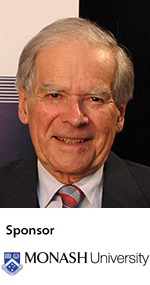
Ray Martin earned a BSc in 1946 and an MSc in 1948 from the University of Melbourne. From 1949 to 1951 he was an Exhibition Scholar and studied at the University of Cambridge where he was awarded a PhD in 1952 and a ScD 1968. He stayed at Cambridge as a research fellow until his return to Australia in 1954. Martin returned as a senior lecturer at the University of New South Wales where he stayed until 1959. He left academia to work in industry at Imperial Chemical Industries (ICI) from 1959 to 1962. From 1962 to 1972, he was professor and head of inorganic chemistry at the University of Melbourne where he helped set up the inorganic department. In 1972 he moved to the ANU as foundation professor of inorganic chemistry in the Research School of Chemistry. In 1978 he received a DSc from the ANU. Professor Martin returned to Melbourne in 1977 to become vice-chancellor of Monash University, a position he held until 1987. He then was professor of chemistry at Monash University until 1991. During these years he was also chairman of the Australian Science and Technology Council (1988–1992).
Interviewed by Professor Bruce Holloway in 2008.
Contents
- A background environment of learning
- Studies at the University of Melbourne
- To Cambridge for an inorganic chemistry PhD
- Further research, marriage and back to Australia
- Valuable academic and industry experience
- Establishing inorganic chemistry departments
- Contributions to chemistry and to industry
- New opportunities at Monash University
- The Australian Science and Technology Council
- An arts interest with family underpinnings
- Extended interests and involvements
- Many challenges and pleasures, with few regrets
A background environment of learning
Ray, what do you remember of your early life?
Looking back on it, Bruce, I think I was very fortunate; I had a very happy life. Close friends of my parents owned an old Victorian mansion, 'Astolat', set in four to six acres of land in Riversdale Road, in the middle of Camberwell, and subdivided into four flats. I lived there from the age of six to the beginning of my university days. There were lots of young people in the neighbourhood, and we used to go around building tree huts, playing cowboys and Indians and doing the things you do as you are growing up – and all in that lovely environment.
This great property had an asphalt tennis court, where as a youngster I used to watch the adults have their tennis days. At afternoon tea time they would always lend me a racquet and let me have a hit, and that's where I learned to play tennis.
I started Scotch College in Melbourne at six years old and went through to Leaving Certificate. Later, however, I attended North Sydney Boys High School, where I experienced one of the most memorable events of my school years. This occurred in 1942, in the middle of the war, when we lived on the North Shore Line. One night there was a lot of banging and crashing going on, and my mother dragged my father and me out of bed and said, 'We're being attacked! We must get under the kitchen table!' It turned out that a couple of Japanese midget submarines had got into Sydney Harbour and had started firing at ships. There were torpedoes and things going off around the harbour, causing all the commotion.
Otherwise, I suppose my memories are fairly typical of an Australian child growing-up, except that normally one does not grow up in a large property which has now been taken over by the National Trust. (Actually, one of the owners of the property, 'Uncle' Lynn Martyn – not really a relation – became a sort of mentor.) Those were happy times.
Did your parents or relatives have any influence on your interest in science?
My parents and also my relatives provided an environment which, in various ways, made me interested in learning. My maternal grandfather and grandmother were country schoolteachers but settled in the city, and Melbourne Grammar invited my grandfather to teach for a few years in retirement. Of their children, two of my uncles were school teachers and one was a refrigeration engineer – again an atmosphere of learning. My father was involved in universities for most of his working life, and my mother had gone to the Conservatorium of Music at Melbourne University and was a very accomplished pianist. So when I was young I heard classics being played on the piano all the time and had a father who worked at Melbourne University. Among the family and the relatives there was a lot of personal involvement with scholarly matters, and I suppose that inevitably provides a background environment of learning.
Your father was a distinguished scientist. Did this influence your interest in science?
The answer has to be yes. I don't remember either of my parents actually trying to direct me into science, but probably the family background meant, subconsciously, that I was always very interested in science and music.
Did school teachers, or other people outside of the family, stimulate your interest in science?
Yes. I was very fortunate at Scotch because, particularly in the senior years, I had some memorable teachers of chemistry and physics. After I had done my Leaving Certificate there, my father was moved quite suddenly to Sydney, where the government had asked him to head up the radar activities at the CSIRO unit. I applied to enter Sydney University, but they wouldn't accept me because I had only one language at leaving level. So I had to repeat a year to do the Leaving Certificate of New South Wales – at North Sydney Boys High School, where the science teacher, in chemistry and physics, was excellent. At both schools I was fortunate in having excellent, inspiring lecturers in those subjects.
Studies at the University of Melbourne
Then you moved back to Melbourne?
Yes, my parents and I moved back to Melbourne in about 1943. I applied for entry to Melbourne University and this time I managed to get in without a second leaving-level language.
What are your memories of those Melbourne University days?
One has a lot of freedom at university; I think that one immediately becomes conscious of the lack of school discipline and restrictions. Being in that environment was a wonderful experience. I enrolled in a combined engineering and science degree. One of the requirements of engineering was that you had to do 'workshop practice', so that one of my memories is of travelling out to Footscray Technical School every day (after the university year had finished) to learn to file pieces of aluminium with great accuracy. At the end of a month of doing workshop practice, we had to cut what was called a square thread: a thread which you cut in a rod of iron, but square rather than the normal angular one. That experience was enjoyable and mind opening, but it decided me that really engineering wasn't for me, so in second year I focused very much on science. It was probably at about that stage that I became committed to science and strongly interested in it, particularly in the physical sciences.
Was it that second-year focus on science which resulted in your becoming a chemist?
I don't think so. Actually, I still took second-year physics as well as the second-year chemistry subjects – and I did pure and applied maths in second year. But by the third and final year of the BSc degree, my father had become a professor of physics, head of the physics department, and I thought, 'Well, one physicist in the family is probably enough. I'll strike out on my own and major in chemistry.' That would have been the turning point in my decision to major in chemistry. I ended up taking a double chemistry major in the final year of my BSc, and I think I did pure mathematics also.
That year, 1945, was interesting for other reasons, being the year when the war in Europe stopped. I remember that we all ended up walking in from Melbourne University to Swanston Street, in downtown Melbourne. I don't know how the message got around, but people seemed to be coming from everywhere. Everybody was hugging everybody else, whether they knew them or not, and kissing each other. There was a euphoria that the war was over. It was really remarkable, and the memory of that occasion has stayed very clearly with me. In fact, all my late schooling and education to that BSc level took place in wartime years, and there were all sorts of unusual facets of life during that period.
Then you went on to graduate work.
Yes. When I finished the third year for the BSc degree, I was fortunate that I'd done quite well – I'd got a double first in the two chemistries that I took – and I decided that I'd like to do some research. There was no PhD available in Australia at that time; the standard degree on offer was a Master of Science, which was not done by course work but was a research degree. So, in the fourth year, I enrolled for an MSc in chemistry. That took two years.
One of my lecturers in the undergraduate course had been JS Anderson (a Fellow of the Royal Society) – who later became a professor at Oxford and an FRS, a very distinguished man – and because I had found him an enthusiastic and excellent lecturer I asked if I could do my MSc under his supervision. He said yes, and set the topic: to look into a class of compounds called, in chemistry, nonstoichiometric compounds. Most of the chemicals we deal with are 'stoichiometric', one-to-one. For example, salt has one sodium atom and one chlorine atom. That is nice. But there are classes of oxides and other materials that are 'nonstoichiometric'. They don't obey these simple rules and they have very strange formulae. JS Anderson was a specialist in this area, and I did my MSc on a problem of oxide compounds of so-called rare metals.
We all use transistors and sensors of various kinds, solid state devices, which use compounds based on nonstoichiometric solids. That is the field I was in, not to make transistors or semiconductors but to learn something more fundamental about the particular compounds I was working with. Of Australian interest is that the sands in Byron Bay (which often figures because Paul Hogan lives there, amongst other things) are monazite sands, absolutely loaded with rare metals. The problem I was given was to look at some of the rare metals from Byron Bay which form these nonstoichiometric compounds – a problem with a fundamentally Australian origin.
To Cambridge for an inorganic chemistry PhD
Why did you decide to go to Cambridge for your PhD thesis work?
I completed the masters degree with – luckily for me – with first-class honours, and so a PhD seemed to be an exciting prospect. My father had done his PhD at the University of Cambridge and I grew up seeing photographs of the well-known Cavendish Laboratory, the physics side of academia in Cambridge, and photographs with people like Lord Rutherford of Nelson, a famous New Zealand physicist. In the household there were many memorabilia which went back to Cambridge days, because, almost immediately after my parents married, my father got an 1851 Exhibition which took him to Cambridge to do his PhD. I don't think I ever thought clearly about the various options; I just felt I'd love to go where they'd had such a happy time. And it was a famous university. So I made the decision for emotional reasons rather than by any logical analysis of what might be offering at Manchester or Oxford, or even in America.
I think you and your father were each awarded an 1851 scholarship.
Yes, I was lucky and managed to get an 1851 too. It was probably very unusual that a father and son should do that. I hasten to emphasise, though, that my parents never pushed me to do any of these things. They provided an environment, consciously or subconsciously, but these were decisions that I made.
Who did you work with at Cambridge, and how was the topic of your thesis decided?
Well, in final year undergraduate work we had had a textbook called Modern Aspects of Inorganic Chemistry, whose authors were JS Anderson – who became my MSc supervisor – and HJ Emeléus. Much of the exciting growth in chemistry had come from the organic chemists, whereas inorganic chemistry, to some degree, had not fully developed in the same way. This book, however, was quite a leap forward. Harry Emeléus was professor of inorganic chemistry at Cambridge, so I wrote to him and said I'd love to enrol in a PhD in his department. Would he be willing to take me on? Happily, the answer was in the affirmative, and that is really how I ended up there. But I knew I wanted to go to Cambridge because of the family associations.
And so Harry Emeléus was your PhD supervisor?
Yes, but not immediately on my arrival. He was on holidays at that time, and a relatively senior man in the department tried to persuade me to work on problems he was interested in. I had a very good friend in Cambridge, Norman Greenwood, who later became a professor at Leeds University. (We had graduated BSc together, and he was now a year ahead of me at Cambridge.) Knowing what was going on, he said, 'Look, why don't we go walking in the Lake District for a week or two? Harry Emeléus will be here when you get back and you can make your decisions then.' So we went off walking for a couple of weeks, and talked a lot about life and about possible research topics. We decided that it would be great fun to work together on a new subject: to study the compounds formed by a molecule called boron trifluoride. Boron trifluoride was well known to have very high catalytic activity and I think certain industries use it as a catalyst, so it had some applied interest. The research program we worked out involved the application of many physical methods and techniques, like electrochemistry and measuring the electrical properties of these boron trifluoride compounds.
When I returned to Cambridge with Norman Greenwood, Harry Emeléus was back from his holiday and said, 'Martin, I'd like you to start by measuring the composition of the Cambridge gas supply.' [laugh] This was not quite what I'd travelled from one side of the world to the other to do, so eventually Norman and I arranged a meeting with him and told him about what we'd decided would be an exciting problem. He was very good, saying, 'Well, why don't you go ahead and see how it goes?'
In the end we worked jointly on this problem of the boron trifluoride compounds. Norman finished off his PhD with a chapter on the problem, but because I was running a year behind, I had two years of working on it and my whole thesis was devoted to it. Both of us succeeded in satisfying the examiners and we both got our PhDs on this problem. As well as that, we managed to publish 15 or 16 papers in the Journal of the Chemical Society and then a review on top of it. So it turned out to be a very exciting project.
Further research, marriage and back to Australia
Did you come straight back to Australia after gaining your PhD?
No, I stayed on at Cambridge. I was lucky enough to get what was called a Senior 1851 [Exhibition], four of which are awarded in the sciences in the UK each year. My other bit of good fortune was that the college I was at – Oliver Cromwell's old college, Sidney Sussex College – invited me to be a college fellow. That meant I had living accommodation, three meals a day and a stipend to go with it, plus the 1851. So I was very fortunate. I stayed on in Cambridge until 1954, researching as before and playing tennis.
Following the days of 'Astolat' and the asphalt tennis court I'd played a lot of tennis, and I was chosen for the Cambridge team. That was a wonderful facet of Cambridge, because the team played not only many of the county teams but also some overseas teams. For example, I went across to Amsterdam, where we played the Dutch international club. The tennis gave me an excellent opportunity to meet and make friends with people who weren't necessarily in the academic stream.
At one stage during those postgraduate Cambridge years, however, I decided it would be good to work in another laboratory and, after some consultation, Professor Emeléus said, 'Look, I have a very good friend in Stuttgart in south-west Germany. Why don't you go down and see if he'll take you on?' I went to Stuttgart and I worked with Professor Joseph Goubeau. He was a charming man, as was Harry Emeléus – old-world gentlemen, both of them. I lived in Stuttgart for six months and did some research there. I wasn't very popular, because Professor Goubeau had asked me to explore a compound called anhydrous perchloric acid, which nobody had ever made. This field was notorious for violent explosions and people didn't want to share a laboratory with me, as they used to feel that an explosion was imminent, but fortunately none happened. So I had that break away from Cambridge.
But what happened was that I met my future wife in London, when I was essentially fairly penniless. I had no money to speak of and no home, because I'd lived in the college. I think she used to wonder how I'd ever support her if she said yes when I proposed to her. Like Mr Micawber in Charles Dickens' novel, I said, 'Oh, something will turn up,' but to make sure I started applying for positions back in Australia.
Now, one of the people who came to Cambridge and lectured was an Australian, from Broken Hill, named Ron Nyholm. (Nyholm became one of the most distinguished chemists, I think, that Australia has ever produced.) He gave a lecture in which he talked a lot about a renaissance of inorganic chemistry. Essentially, the 'renaissance' was built around two things. One was that the chemistry of so-called transition metals had been neglected in the past, and the second was the importance of applying the methods of physical sciences to work out the structural behaviour of these compounds. He was a big influence on me: I thought this sounded tremendously exciting. Nyholm was at the UNSW, where I sent one of my applications. By good fortune, he offered me the position of senior lecturer at the UNSW.
Rena and I were married in Cambridge and then came out, so in 1954 we started married life on the trip back to Australia, where I was looking forward very much to working in Nyholm's department..
Valuable academic and industry experience
What are your memories of being at the University of New South Wales?
That was my first lecturing position, and of course I had to gain experience in articulating the discipline of chemistry to first year, second year and third year. That was a very important part of the learning process. One memory I have is that Professor Nyholm gave me the 6 pm chemistry 1 class, in which a large proportion of the students were people who worked during the day and then came to do a part-time degree. After the lecture the students had to do a three-hour prac, in the evening – it was not uncommon during the lecture to see a brown paper bag come out and a sandwich taken in to keep them going – so I had the opportunity to get to know a lot of them. I was greatly impressed by their dedication and sheer capacity to be in a full-time job and then to try to stay awake during the chemistry lectures! All in all, a very interesting experience.
I had to learn not only the techniques of lecturing but also course design, the running of laboratories at the undergraduate level and the design of appropriate experiments. Then, the third thing that I hadn't had any experience in was supervising students who wanted to do a higher degree. So the five years I spent at the UNSW were very important academically – a great opportunity for me to learn what a career in academia, from the teaching side, was about.
On the research side, Nyholm had already arranged for a magnetic balance. He was very interested in the magnetism of metals and it was fashionable, if you were involved in this subject, to have magnetic balance. He had a young PhD student, BN Figgis, who was doing all the hard work of setting up the magnetic balance and, subsequently, became a worldwide expert in the magnetism of metals and a professor at the University of Western Australia. Nyholm, much to my disappointment, was invited back to University College, London within the first year after I returned. So, although I'd had great hopes of working with him and we did publish a couple of papers together, he left. He asked me to supervise the finalising of Brian Figgis's PhD on the magnetism of copper compounds. (Brian has written a textbook on the subject and has had a distinguished career in his own right.)
The department was quite research oriented, as well as teaching, so there was a lot of opportunity – and interesting research opportunities. I had collaborated with Ian Ross, who was at Sydney University, and he and I did some work together. He was a very fine chemist, and later became a Fellow of the Australian Academy of Science.
On the personal side, Rena and I didn't have a great deal of money when we started. But her parents had a beach cottage at Newport Beach, a most beautiful spot about an hour's drive north of Sydney, and we asked whether we could rent that for a while – which we did. By coincidence, as I was going to work in Sydney one day on a double-decker bus which used to run up that part of the coast, an old friend called out to me, and so we very quickly got assimilated into his group of friends at Newport Beach. We had a wonderful sunny, beach-type lifestyle in that period, during which our first two children were born.
Personally, then, we had very happy memories of being in Sydney, and academically it was a great learning experience for me.
Was that an important time for you in selecting your research interests?
Oh, very important. I left nonstoichiometry at that stage and became totally immersed in the chemistry of metals and the application, particularly, of magnetism and other physical techniques such as infrared spectroscopy, nuclear magnetic resonance – all the modern techniques which were available and which give you a lot of information on the details of structure and shape of molecules and their chemical behaviour.
Why did you decide to leave the University of New South Wales and work in industry?
I think the circumstances just were there. The five years at UNSW terminated in 1959 and I had gone to Cambridge in 1949, so altogether I'd been away from Melbourne for 10 years. By then various things had happened. In particular, Nyholm had gone back. Then Sir David Zeidler, one of the directors of ICI, came to see me and said, 'We're going to build one of Australia's first industrial research laboratories, to be called the Central Research Laboratories, at Ascot Vale. We want it to have a fairly basic approach to research, which often will deal with problems that ICI need to solve, but we don't exclude fundamental research.' He was very enthusiastic about this prospect, and said that the company was looking for someone to take over the inorganic side of the new development. So I think the combination of getting back to Melbourne, one's home town, after 10 years and of being involved in what seemed a very exciting new venture was what really persuaded us that maybe it was time to make a move.
Did you enjoy your time in industry?
It was an interesting experience, because it involved many things that otherwise I would never have done. For example, I was sent to ICI UK and spent time there being taught about what ICI did, what they made and how they did it. I learned quite a lot about the industrial chemistry process and strategies. In addition, they sent me to Canada and America because there are outposts of ICI in those countries, and also organised me to visit what you might call competitor companies: Monsanto and so on. That was really very interesting to me. Although it wasn't basic research, at least it gave me a feel for how chemistry operates in industry. I ended up being called an associate research manager, so I suppose I learned a little bit about being responsible for research management from the industrial point of view. I wasn't there for a long period, but it was an enlightening experience – during which, probably, I saw enough of industry to know that it wasn't my natural forte.
Establishing inorganic chemistry departments
What made you return to the University of Melbourne, and to university life, in 1962?
Well, I had a visit from the head of the Chemistry Department at Melbourne University, Professor Alan Buchanan, which – like Dirk Zeidler's visit to Newport Beach to see if he could persuade me to join ICI – was quite unexpected. I was most surprised that Buchanan wanted to come and see me, but it turned out that as head of department he had decided it would be very good if Chemistry were subdivided into three departments, for physical chemistry, organic chemistry and inorganic chemistry. Already, in effect, there were de facto departments of physical and organic chemistry, but not inorganic. He wanted to encourage me to take over the job of setting up an inorganic department at Melbourne University.
It occurred to me subsequently that there was a link involved. When JS Anderson left Melbourne University and took up the chair at Oxford, Buchanan had asked me if I'd be prepared to go to the chemistry school and do a course of lectures each year that Anderson had given on solid state chemistry – nonstoichiometry and things of that kind. So I had been going to Melbourne University for some time and giving this course of lectures.
From my point of view at the time, it was just an unexpected opportunity that came up, but I do think I knew that I wanted to go back to academia.
What were your main research interests in your time as a professor at Melbourne University?
I continued in the Nyholm tradition, focusing very much on metals and their chemistry – and magnetism, of course. I built magnetic equipment and things of this kind. That focus has continued.
Why did you leave Melbourne University in 1972 and go to the Australian National University?
The 10 years I was at Melbourne as head of Inorganic Chemistry were very happy years. I had to make a number of appointments to build up the inorganic department, and managed to get some excellent staff. It was very productive; it was oriented very much to research as well as to teaching. As a team, they did extremely well. And I made some very good friendships which I've kept from that period.
When eventually I thought I'd be retiring at Melbourne University, however, Professor DP Craig – another very distinguished professor who had been back to University College – wrote to me and said the ANU would like to get an inorganic department going at the Research School of Chemistry, in the Institute of Advanced Studies. They had strength in organic chemistry, under A J Birch (Arthur Birch), and in physical chemistry, under David Craig. There were one or two people doing inorganic chemistry, but the school didn't have an inorganic department, so Craig asked whether I would be willing to come up. Rena and I talked about it and we decided it might be a very interesting challenge and opportunity; also, my parents had moved to live in Canberra. So we went off to Canberra.
Did you continue the same areas of research there?
Essentially, yes. One of the attractions of the ANU was that they had a lot of money for provision of postdoctoral fellows and a lot of money for equipment. (It was a research school, so there was no teaching.) Towards the end of my Melbourne time, universities were having some fairly tight budgetary times and it was very hard to get money for postdocs, but Canberra offered money for equipment and for postdoctoral fellowships, so I had two really good postdocs working there with me. Also, I took several of my top candidates who were enrolled in PhDs at Melbourne with me. Consequently, I had a fairly quick start to getting something built up.
Contributions to chemistry and to industry
What do you think are the most significant contributions you made to chemistry?
[laugh] This has to be very subjective! The first two I would mention are fairly specialist areas, so they are not easy to explain.
In my UNSW times, using magnetic technique we discovered two new types of bonding. All chemists know that in chemistry there are sigma bonds and pi bonds, but we managed to find in some of the metal compounds, such as copper acetate, a 'delta bond'. It was the first example that had ever been established. Copper acetate's chromium analogue, chromous acetate, had a sigma bond, two pi bonds and a delta bond totalling four bonds – and we called these a quadruple bond. Delta bonds had never been discovered before, so that was quite exciting.
Another successful piece of work was in the magnetic area, where we discovered some compounds in an unusual class that had two different electron spin conditions present at the same time, in what technically is called a 'spin crossover situation'. We did some extensive work on elucidating that phenomenon, and that work has been well regarded overseas.
During, I think, the ANU period I developed a new theoretical interpretation of the nonstoichiometric problem: coordination defect theory. That seemed to be quite well regarded too. So they are three of the areas which I personally feel were exciting.
Did your work have any implications for industry?
Indirectly, I think. Anything in the nonstoichiometric oxide area potentially has links to transistors, semiconductors and solid state devices, but the knowledge we developed may or may not be directly useful industrially at some stage.
At UNSW I was only ever supported by a pseudo industry – once – when the Sydney Water Board came along and said, 'We're having terrible trouble with corrosion in our giant outlet pipes; all the concrete is just falling apart. We'd like you to look at it. We think it might be because all the effluent we're trying to get rid of has a lot of sulfide in it. We'll provide some money for the research and we'll provide you with a research worker.' So we looked at ozonising the Sydney effluent (but on the laboratory scale, of course). That was about as close to industry as I got. I don't think the project solved their problems, but it was fun.
New opportunities at Monash University
You left the ANU in 1977 to become vice-chancellor of Monash. Was it difficult to decide to give up full-time research?
That invitation was again something I hadn't expected. My secretary at the ANU came in and gave me a rather crumpled little bit of paper on which someone had written a message in pencil. It was from the distinguished Sir Brian Hone, who had had a wonderful career as head of Melbourne Grammar and was by then a council member of Monash University, and it read, 'Ray, would you give me a cup of coffee if I come in tomorrow?' So I told my secretary that of course I would, and when Sir Brian came in he said, 'Monash want a vice-chancellor and, if you're interested, we'd like you to come down and meet the selection committee.' And that's how it happened – it came totally out of left field.
Rena and I looked at all the pluses and minuses. I suppose one factor was that, by then, the eldest of our four children was into his early 20s, and our daughter was 17 or 18. Canberra is a wonderful spot in some ways but it's very small and parochial. The number of employment opportunities for young people in their 20s and so on is quite limited, and we were beginning to feel conscious of that type of argument.
Probably the time was right for a move. We both love being in Melbourne, where we have spent so much of our life, and we thought returning there would give the family many more options – which is exactly the way it has turned out; they've all done different things. The invitation just happened to turn up at a time when we had some concerns about staying in Canberra, and it seemed a very exciting possibility that we would never have dreamed of.
What were the challenges of being a vice-chancellor, compared with those of being a professor of chemistry?
I suppose it's a little bit like comparing the challenges of being an admiral of the fleet with those of being captain of, say, a battleship. A vice-chancellor has all the challenges of trying to position his university in as strong a position as he can. My personal view about Monash was that the most important thing was to do whatever we could to maximise its scholarly and its research reputation. Louis Matheson had done a marvellous job in the preceding 10 or 12 years in creating and building it up and getting all the staff in position, and the students – a remarkable job. It seemed to me that now the most important thing for Monash was to make sure that, in scholastic terms and research terms, it attempted to become pre-eminent in the Australian system and also the international system. I used to get immense pleasure out of looking at how many of the Fellows of the Academy were from Monash, and so on. It was and is doing very well.
The challenges for the vice-chancellor are formidable. You're essentially chief executive officer of the institution, meaning that anything which happens in the institution is ultimately your responsibility. This is fine if there are good things happening [laugh] but it can be a bit difficult when bad things happen, because it's still your responsibility.
In practical terms, at Monash the system is that the vice-chancellor chairs the professorial board and the Committee of Deans, who are the senior people providing all the information and input about where the university should head and so on. He has the responsibility of being the public face of the university, so there are myriads of invitations to go and talk to this group or that. It's a very time consuming job, but it's one that provided me with a lot of pleasure. I think Monash is a tremendous institution, again because of the quality of its staff.
Did you try to strengthen the connections between Monash University and industry?
Yes. It seemed to me quite important to get financial help from the industrial sector. At one stage, Professor Ron Brown and I did a trip to the UK, including Scotland, and to Canada and the United States, specifically looking at science parks and other ways in which universities in these countries had tried to link in with industry. We presented a written report to Council when we got back, and we ended up creating the body called Montech, of which you have been a director. Its purpose was to try to be the bridging link between industries – Melbourne based, largely, but Australian if necessary – and the university. The other hope I had was of converting the other side of Blackburn Road to a science park where industries would put their research institutions, in addition to which we would have Montech doing the management and the linkages.
Montech did come into being and it survived for a number of years, but we didn't ever quite achieve the grandiose plan. Perhaps, in retrospect, neither industry nor the university was ready for this type of development; perhaps the United States and the UK are much further advanced in this type of relationship than we are in Australia. But that's just a personal view.
As vice-chancellor I was able, however, to exploit Professor Roger Short's invention of melatonin, which he recognised might be a very good drug to counter jet lag after long flying trips. Leon Serry, the head of Circadian Technologies, came to see me and we worked out an agreement between his firm and the university in which we gave them licensing rights to melatonin – with Roger's consent, of course – and the university benefited from that. Circadian Technologies prosecuted the commercialisation of melatonin quite successfully, in the sense that Eli Lilly, the American giant pharmaceutical company, paid Circadian something like $3 million.
The Australian Science and Technology Council
In 1988 you were made chairman of ASTEC, the Australian Science and Technology Council. What were some of the important outcomes of your time on ASTEC?
ASTEC was an interesting body, being set up under legislation which enabled it to deal directly with the Prime Minister without any bureaucrats present. That is, the chairman of ASTEC had the opportunity to take the council's recommendations directly to the Prime Minister, discuss them with him and try to get the message across. That made it a very relevant council at the time.
I was chairman of ASTEC for four years, in which time we published about 12 reports to the Prime Minister. Broadly speaking, they could be broken up into two groups.
The first group were specific studies of some six or eight projects in different kinds of science and technology. For example, we did one which looked at all aspects of the fishing industry in Australia. We did another one on whether the government should build an Australian gravitational telescope, a laboratory which can pick up very sensitive gravitational waves in the ground. Another one was on nanotechnology. Now, I'm talking of the period around 1990, so that was an early specific identification of nanotechnology. There was also one on accelerator and beam facilities – atomic beams, cyclotron-type beams – for Australia.
The second type of report was more to advise the Prime Minister (and government, hopefully) about the more broad issues. For example, reports were written on the health of science, technology and research in Australia, broad issues of that kind. So there were really two main foci of the ASTEC reports.
When each report was completed, the chairman then made an appointment to see the Prime Minister to discuss the implications of the recommendations, why ASTEC felt they were important and how they might be implemented.
ASTEC was a largish body. It had, I suppose, 20 to 24 people, taken from all aspects of science and technology – for example, Peter Laver from BHP as a representative of industry – as well as academic representation. It acted as a very broad-spectrum, very good committee.
While at ASTEC and Monash University, were you able to continue research in chemistry?
In actual fact, I left the vice-chancellorship of Monash in 1987 and became professor of chemistry instead, until 1991. And I was at ASTEC from 1988 to 1992. Although ASTEC had its permanent office in Canberra, the chairmanship was part time, so it probably took only a day or two of my week and the rest of the time I was in chemistry. So, yes, I was able to get some research going again, putting out perhaps eight papers during that four-year period.
Are you still writing papers for publication?
I am. In fact, I've just had a paper with a colleague in Adelaide accepted by the Journal of Solid State Chemistry, a distinguished American journal, and another manuscript has been submitted we haven't heard about it yet. I'm still finding some time to do a little bit. [laugh]
An arts interest with family underpinnings
Has your family been involved in your professional career?
By 'family' I imagine you mean Rena and our children. I can't say enough about the wonderful job Rena has done. In all these different positions I have held, she's been a tower of strength in providing the necessary facilities to entertain people and in supporting me in every way a wife can. She has done a marvellous job.
Three of our children have graduated as PhDs, but they are all in different fields: our daughter is a chemist, as I am, but one son has a PhD in anatomy and another in petroleum geology, so they've broken away from any family tradition. The fourth graduated in computer science and he has led a very interesting career more on the business side. In their various ways, they've been quite integral, as a family is. They all get on well together and, by and large, they don't give their father too hard a time.
Outside your science, you've had considerable interaction with the arts community over a long period. Has your family played any special role in your interest in the arts?
Certainly both my mother and my wife did. My mother was a very good pianist. I grew up with her playing the piano for large parts of the day, and in the evenings my parents used to play a lot of classical music on the old-fashioned gramophones and so on. That side of life inevitably gave me a strong interest in music.
Rena herself used to paint a lot, so I got quite interested in art – although, even before I was married, whenever I went London I would be sure to try to find time to go to the National Gallery, or I'd try to go to the Prado in Madrid or the modern art gallery in New York. I have always been very interested in art, wherever I am. I find it a great way to relax and I just enjoy the visual interaction with painting.
You have chaired or been on committees for various organisations. How did you become involved with them?
Well, at one stage the Victorian College of the Arts invited me to become a council member, but as always it's difficult to say why. Somebody must have said, 'Oh, he's quite interested. Why don't we invite him when a spot comes up?' I ended up being president of the college for a number of years. That was a very stimulating and interesting exercise, because the college had about five schools covering all the arts.
Then the board at the Heide galleries invited me to join them, so I used to go out to Heide quite regularly for board meetings. They have a noteworthy collection of Australian art, with an interesting history. So things have gone along in that type of direction.
At Monash I was involved (as you yourself were) in helping Celia Rosser, the Faculty of Science artist, to do her wonderful 1975–76 paintings of the Australian Banksia genus, and in bringing that project to fruition. I had a very good chance to become quite close to the Banksia project because, when I first arrived at Monash, I found a lovely Banksia painting in my office. I was soon told that, every time Celia completed a painting, it was framed and put in the vice-chancellor's office. I became even more involved when the first 24 or 25 paintings were going to be put in volume I and we had to decide on a publisher – I spent time in England trying to identify who might be the best publisher. Academic Press, which finally was our choice, did a splendid job; its director Roger Farrand was very taken with the project, and I think volume I set the high quality for the subsequent two volumes. I had a great interest in the banksias, both for their sheer beauty and for the fact that that was an Australian project with a wonderfully gifted artist.
I have had other interests in the arts, and all these probably go back to the family environment making me aware of such things.
Did you ever want to do any painting yourself?
I did painting up to intermediate level, I think, and I quite enjoyed it and never had any trouble in passing the subject. But I don't think I ever had the leisure to take painting any further than my school days.
Extended interests and involvements
What have been the other main interests in your life?
Ah, let's see. [laugh] One of the more bizarre interests, I suppose, was in what some people call astroarchaeology – a combination of astronomy and archaeology. I had read a book about Stonehenge and the possibility that the Stone Age community had set it up as an astronomical observatory. It is an interesting monument which has a circle of 56 holes. The author of the book suggested that those ancients, somewhere about 2000 BC to 1500 BC, were able to predict lunar eclipse cycles, and that this circle of 56 holes, called the Aubrey circle, represented a 56-year eclipse cycle. One of my colleagues whom I'd appointed to the Department of Inorganic Chemistry at the University of Melbourne was Ray Colton, an Englishman who not only was a fine inorganic chemist but also had the hobby of astronomy. We sat down and looked at this monument very carefully, and decided that 56 years was not a particularly significant cycle in eclipses of the moon. We ended up having two papers on this topic published in Nature, and a third paper in another journal. It was quite a consuming hobby-type interest at one stage.
There have been other interests. At one stage I got involved in a commission of the big International Union of Pure and Applied Chemistry. I was invited to join IUPAC's Commission on Atomic Weights and Isotopic Abundances, and ultimately I became chairman for a number of years, so I used to have to go overseas. It sounds an odd thing, but atomic weights keep changing slightly and these changes are very important for certain types of science, and so the commission was important. That was a slightly different type of involvement that I had for a while.
Probably the longest involvement I've had of a non-academic type was with the Winston Churchill Memorial Trust. I was a member of the board of that organisation for 23 years and, eventually, its national president. The Churchill trust was started by public donation in the early 1960s and raised £4 million, which was invested. The proceeds are used to send Australians overseas in any walk of life in which they have some excellence, if they want to get an opportunity to go and work in an expert's laboratory, or whatever it is, and bring back to Australia the knowledge they have gained. The corpus has gone from £4 million to, perhaps, $70 million now – it's quite large – and we send away about 25 Churchill Fellows a year. They could be a house painter or an artist, anybody. Any Australian can apply for this, provided they have some expertise in a field and can make the case that, by going overseas for four weeks, six weeks, 12 weeks, they can bring a lot of knowledge home to Australia. I've had a long involvement in the trust, and I think it has done a great job.
Many challenges and pleasures, with few regrets
What was one of the best career decisions that you made?
I don't actually know how to quantify career 'decisions'. I think I would answer in reverse by saying that the different career changes that I've experienced have been, in general, quite unexpected: they weren't planned changes but opportunities that came up. Rather than saying that one career change was better than another, which I'd find hard to do because the circumstances of each are so different, I think I can truthfully say that I've never regretted any of them. I have found each, in its own way, very rewarding, very challenging and very enjoyable.
Did you establish important scientific collaborations in Australia and overseas during your main research years?
Having recently gone back through my reprints, I don't really think I ever had a strong link of the type you're asking about. Altogether I've ended up with something getting close to 200 scientific papers, and when I look at them I feel they are a tribute to the remarkable quality of students – the majority of them Australian – who come on and decide they want to do a BSc honours degree, a masters degree or a PhD. The quality is just excellent. So I have never felt for any particular reason that international collaboration has been necessary, because the quality of what we've got in this country is outstanding.
You have received a wide range of prizes and distinctions from various organisations. Which ones gave you the most pleasure, and why?
My top choice would probably be receiving the Order of Australia, which gave me immense pleasure. That came as a surprise – a letter in the mail – and I have no idea of who might have nominated me. I would rate very highly indeed, also, receiving news that I'd been elected as a Fellow of the Australian Academy of Science. That too gave me a lot of pleasure. And again one never knows who might have made the nomination.
Is there anything you would like to have done but haven't?
I've always regretted never having learned to play the piano. My mother, when I was quite young, tried to get me started, but I always found there were other things I wanted to do more; I never seemed to have the time that is necessary for it. Nowadays I think being able to play the piano, if you would like to, would be wonderful.
The other thing I've regretted is perhaps slightly bizarre [laugh]: I've never learned to fly an aeroplane. As I drive home I see these little planes pottering around over Moorabbin airfield and I think, 'Gosh, that would be fun.' Those aren't regrets that weigh heavily, but they are two of the things I'd like to have been able to enjoy.
On a more positive note, however, I've been very fortunate in being able to play tennis, and at a level that has opened up a lot of avenues, providing me with the opportunity to meet people in walks of life that I'm not familiar with. Not only has playing competitive tennis given me a lot of pleasure but through tennis I have met a number of people who have become good friends. I've always enjoyed sporting activities, and have had much pleasure from playing an occasional game of golf and from skiing. I have enjoyed skiing because the family all enjoy it and, on most occasions when we've skied, it has been a family trip – a great opportunity to enjoy something with the family, even though they are all adults.
I have found another great thing about tennis. You asked me earlier about the challenges of being a vice-chancellor. Every Saturday I was able to go and play tennis with a regular group – a wonderful way to unwind from all the trials and tribulations of that very challenging job.
That is probably the main note I would like to finish on. If you can find a hobby, a sport or something that can give you a break from whatever particular challenges you are dealing with during the week, it's a great thing.
Professor Ray Martin, thank you very much.
Thank you.
Professor Donald Metcalf (1929 - 2014), physiologist
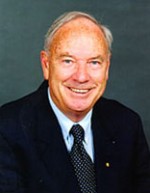
Professor Donald Metcalf was born in 1929 in Mittagong, New South Wales and was educated at the University of Sydney. In 1951 he received a BSc (Med). He earned an MB BS in 1953 for his work on the ectromelia virus; this research was the beginning of his interest in haematology. He received an MD in 1961. Professor Metcalf was a resident medical officer at the Royal Prince Alfred Hospital in Sydney when in 1954 he accepted a Carden Fellowship in cancer research at Melbourne's Walter and Eliza Hall Institute of Medical Research (the Hall Institute), where he studied vaccinia virus. He was a postdoctoral student at Harvard Medical School between 1956 and 1958, returning to the Hall Institute as Head of the Cancer Research Laboratory in 1958. Metcalf remained at the Hall Institute for the rest of his career, and he is still actively engaged in research. From 1965 to 1996 he was Head of the Cancer Research Unit and Assistant Director of the Hall Institute, and was also Research Professor of Cancer Biology at the University of Melbourne (1986-1996). In 1996 he became Professor Emeritus of the University of Melbourne.
Interviewed by Dr Max Blythe in 1998.
Contents
- An itinerant country childhood
- Powerful discussions in medical science
- Through virology to a fascination with leukaemia
- Gaining a good clinical grounding
- Entering Burnet's realm
- Lessons from chicken blood and mouse thymus
- Tissue and hormone balances
- The strangeness of the thymus
- Shifting emphases at the Hall Institute
- Goodbye thymus, hello CSF
- Early steps toward purifying CSF
- So many CSFs!
- How pure is pure?
- The uncertain emergence of clinical goals
- Fishing out the genes for CSF
- How to optimise CSF use
- Hastening slowly
- CSFs, receptor chains and cells with a mind of their own
- Cells learning to behave badly: can leukaemias be suppressed?
- No more bone marrow transplants
- Another mysterious multiple-action growth factor
- Lessons from the past
- Keeping administration and finance in their place
- A time for impatience
- Personal impacts
An itinerant country childhood
Professor Metcalf, it is good to be interviewing you in Melbourne, where most of your research career has been based. You were born in 1929, and in your early years you trailed around schools because your father was with the New South Wales teaching department.
Well, it’s one way to grow up. You classify yourself as a country boy, an itinerant – the family moved every two or three years from one small country town to the next. (When my father was still low down on the ladder, the ‘town’ might be just five houses in a couple of square miles.) You never made any lasting friendships, because every time you moved to a different part of the country you started all over again. I suppose it bred a certain independence and stubbornness. I was in effect an enforced loner; I had to get used to the fact that my friends were going to keep changing.
Tell me about your parents. Did they encourage you towards medicine?
My father, Donald Davidson Metcalf, was the son of a Scottish migrant. Education was everything to him, not only as his profession but also as his route to promotion: he was always doing degrees at night-time by correspondence. I had an older sister and a younger one, and we all gained the ethos of keeping your nose to the grindstone and paying attention to your education.
My mother, in her younger days, was one of the teachers in the school, and even when she was mainly a homemaker she taught dressmaking to the girls. (In a single-class school that had to be done by the wife of the teacher.) Our family background encouraged attention to study, but it didn’t in any specific way push us into one career path or another.
The idea of doing medicine came about halfway through high school, where I had to wait and repeat two years. That was partly to get a high enough pass for a scholarship that would get you to university. But the other reason was that because I had gone to school at the age of three – put in the back of the classroom, with the class acting as a babysitter, I learnt to read and write at an appallingly early age – and I would have finished high school at 14. I could hardly go to university then, so I had to wait until I was old enough. In fact, I think I was still not ready at 16½.
Besides schoolwork did you do other things, perhaps sport?
I played sport – and some exercise was unexpected, like if you were kept in after school and had to walk home nine miles. We were running a small farm as well, so there were cows to milk and poultry to feed. You got your exercise one way or the other!
I suppose you went to more than one high school. Did you have any teachers of special significance?
I went to four high schools. The classes were up and down, as you might imagine. My teachers ranged from the Latin teacher, in a mining town, who was the local Communist candidate for election – whether or not he sparked political views in me, he certainly didn’t spark my Latin course – to one or two who were very good. Sooner or later you run into an excellent teacher, and an exposure to somebody like that for a year or two makes an enormous difference.
Powerful discussions in medical science
You went off to university in Sydney.
Yes. At that time the only medical school in the State was at Sydney University. We were the first class to go through after the Second World War – 650 in a class, no textbooks, very few pieces of equipment (we shared a skeleton which was chained to a post in the middle of the museum), staff that was run down from war years. It was survival of the fittest, a tough way to do medicine, and doesn’t compare at all favourably with today’s mollycoddling of students. Nevertheless, out of that hopeless zoo of students quite a number of scientists did emerge. So one wonders whether a well-equipped university department is what actually breeds a desire to do science.
I gather that in your clinical programs you would often be unable to get to a patient because there were 40 or 50 students round the bed.
It is tough if the class size is about three or four hundred, which it still was at that stage. But from time to time, almost by random chance, some of the lectures were superbly good. What made the biggest single impact, though, was the development of a new research training course at Sydney University so that at the end of second, third or fourth year the medical course was broken; you joined a laboratory and for a year you worked full-time in research, eventually ending up with a BSc in medical science.
I was the first student to do this course, in 1950 – the beginning of the Korean War. I took it at the end of third year, in the Department of Bacteriology. The department was rundown but the professor and assistant professor were quite exceptional. They had had interesting training and backgrounds, and were prepared to sit and talk to a young person of 20 and discuss science as though you were actually a human, not a number, and had something worth saying. After a year’s exposure to that, you at least knew what research life could be like. You finished your medical course, you did your training in hospital and then you could make an informed choice to continue with research or go into clinical medicine.
Professor Hugh Ward was a quite eccentric lecturer who would walk out of the lecture hall to the corridor and then in again to complete what he was saying – he had been a prisoner-of-war in the Balkans Campaign (in 1912!) and could never stand to be in a room with the door shut. As a post-doc he had been trained at Harvard by Zinsser, at that time the most famous bacteriologist in the United States, so there is almost a direct lineal descent from Zinsser to Ward and his protégé Patrick de Burgh, and then to Metcalf.
Patrick de Burgh was an equally eccentric scientist teacher who succeeded Ward as professor. Neither of them was at all creative in the sense of writing scientific papers, but they were very influential on everyone in their department. (Three Fellows of the Royal Society came out of that one little unequipped department.) They did essentially no research work, but they would sit and discuss and argue things with you, which is very powerful. I promised that I would always do this with my students – and forgot. Instead I decided to teach by example and do the experiments myself, and if my students watched and decided the idea was good, then so be it, that’s the way they learnt.
Through virology to a fascination with leukaemia
You told me once, in relation to that medical science research, that you were ‘just allowed to have a room and get on with it’.
That was after removing the junk from the room and making a bit of bench space! There were two of us as BMed Science students and we got by pretty well, working on ectromelia virus (a cousin of smallpox virus). It was straight virology, looking at the basis for the hepatitis that the mice were getting. It would never be permitted today, because it is a highly infectious agent that institutes live in terror of having within their four walls. We were let loose on it with no training, but although it is harmful to mice it’s not harmful to humans.
Did that work contribute in any way to your deep interest in blood diseases, especially leukaemia?
During this research year haematology became fascinating, and cancer in general was fascinating, so that narrowed the field down to leukaemia. There was a certain amount of evidence that viruses would cause leukaemia in animals, particularly in mice and chickens. Nothing was known about the disease in humans except that irradiation would cause it, and the possibility of a virus cause was still viable. So it seemed a good time and a good subject to be in. Leukaemia was an incurable disease – 100 per cent fatal – but if it was virus induced, maybe you could develop a vaccine. That was the hope until the late ’70s, I think, when people decided that humans were probably unlike other animal species and possibly did not harbour leukaemia viruses. This conclusion is still somewhat dubious, I’m sure.
Gaining a good clinical grounding
In about 1953 you got your MB BS and went into a residency. Although you had decided some time previously that you weren’t going to practise clinically, I know that you like people and you care about patients. Did your residency experience have any effect on your research commitment?
They were not comfortable times, because you realised that despite your training you knew nothing. When suddenly you were faced with a ward full of patients, your inadequacies became very obvious very fast. But everyone was in the same boat.
Of the various types of clinical training I had, nothing was terribly relevant for later life: casualty surgery is not training you to be a cancer research worker, nor is orthopaedics, nor is chest surgery. But it is good general grounding, which you need to even recognise in later life that there are medical problems that should – or could – be tackled. Science graduates who have never had that exposure to real-life disease are quite capable of posing questions, but they don’t know that particular diseases exist so they are at a disadvantage. Technically they are superior to medical graduates, but they just don’t have that breadth of experience.
You kept some exciting research links with clinical practice and eventually, 50 years on, we get you doing clinical trials.
It was episodic, I think. You learn that most medical research will never have a direct application in clinical medicine. Everybody gets used to spending decades working at the bench in the knowledge that only a very exceptional body of research will lead to some change in treatment of actual patients. So you don’t see patients very often. It’s a mistake to think you can be a superior clinician and do superior research work simultaneously. To extend that argument a little: every hour you spend on clinical work reduces your ability to do anything creative in the laboratory. Early on you just have to make up your mind: is it going to be a clinical career or research? A lot of medical graduates have great difficulty reaching a decision, but I didn’t. I was quite happy to drop the clinical work, to say, ‘Okay, I've done that. I know the sorts of problems that are out there,’ and just to get on with it in the laboratory.
Entering Burnet’s realm
You came to the Walter and Eliza Hall Institute, here in Melbourne, virtually a year after qualifying. How did that happen?
Well, I was in the middle of an operation with a particularly unpleasant surgeon when somebody came in with a telegram offering me a Carden Fellowship in cancer research, and I said, ‘Right! I’ll take it.’
Australia was a small academic community in those days, and my opportunity to join the Hall Institute resulted from contact made by my professor with the Anti-Cancer Council of Victoria and then with the Institute. That type of personal arrangement no longer happens. For a youngster these days entry into a research career can involve a tortuous route. In retrospect you have to say you’ve been lucky to have been able to have a fellowship that took you to the best research institute in the country and, after a little bit of huffing and puffing, to do pretty much what you felt should be done.
I had to come down to Melbourne to be interviewed. I worried the hell out of them by saying that I wasn’t experienced enough to be appointed, and so I would take a fraction of the salary on offer. I’d never do that again.
Were you interviewed by Sir Macfarlane Burnet himself?
No, but I had visited the Institute as a student. I was thrust on Burnet by the Anti-Cancer Council as a paid Fellow with some research support, but he wasn’t particularly enamoured of cancer research, which he saw as a pointless exercise. To him, cancer was an inevitable disease of ageing and therefore neither preventable nor curable. He couldn’t grasp the concept that the occurrence of such a disease may be brought forward by other agencies so that it becomes a major problem. For example, if we all lived to 500, probably all of us would get lung cancer. But by smoking cigarettes you bring that curve back into your own lifespan. It becomes almost plus and minus: smoking equals lung cancer, but no smoking, no lung cancer. His attitude was correct, and to this day most known mutations are occurring either at random – spontaneously – or for reasons that nobody knows. Nevertheless, at the practical level there is such a thing as finding a cause that will accelerate a disease process and therefore developing preventive measures of value.
Burnet said, ‘Okay, I will take you, but to prove you are a genuine scientist I want you to work for two years as a virologist.’ This was a virus institute, so I was put to work on vaccinia, which was a kissing-cousin of ectromelia that I had been working on. I did that for two years – I was allowed in the main building so long as I was doing virology – and then slowly I began other experiments and deviated off into my own area. (Eventually I was put into the animal house for eight years to do my work.)
Burnet was then a major figure in Australian science. Did you find him impressive?
Yes. He was a formidable exponent of virology. You’d have to say that in the late 1940s, mid-’50s, he was at the top of his powers as a working scientist who knew virology backwards and was making important contributions. It just happened that he didn’t know anything about cells or the blood-forming system, so he had no experience or detailed knowledge that I could gain from. And, obviously, he found it hard to interest himself in any discussion on that subject.
What could I learn from somebody like that? I think the first thing you learn is a way of working. He would insist that you began writing a paper when you were halfway through the experiments – which, as he said, points out like no other method what’s missing from the study while you’re doing it and you’ve still got all your reagents. I still teach that to my students, because that is good technique. There were general things like that, but it was no use looking to Burnet for a sophisticated discussion on leukaemia or blood cell formation. And it is true for many of us that our interests become focused so much that we really are quite ignorant of other particular areas. I learned by general observation of him how somebody who was successful manages their scientific career, even if he was – like all of us – a little idiosyncratic in handling interpersonal relationships. He was certainly a plus to have around, but not in my particular area.
Lessons from chicken blood and mouse thymus
I suspect that you found a way of getting back from the vaccinia bench onto blood, which you were more enthusiastic about, by working on chicken leukaemia.
Well, it was a one-step retreat from the injunction to work on viruses, because chicken leukaemia is caused by viruses. So by going out and collecting chickens that had leukaemia, and starting to look at their blood, I could be doing haematology – studying blood cell formation – at the same time as carrying out various experiments that you could label ‘virology’. I ended up taking chicken blood and putting it on the membranes of chick embryos, and then you could get quite large pox developing. Were these due to a virus?
Those were dismissed by Burnet as being somewhat uninteresting, but always, sooner or later, something unexpected turns up. When I returned to the Institute a couple of years later, almost everyone in the building was working on the so-called Simonson phenomenon, which was a reaction of lymphocytes against the host embryo. I hadn’t realised what my original experiments were showing, but pox development became a central area of study in immunology – and everyone was working on what I had stumbled across by accident some years before Simonson.
What led to your involvement with the thymus?
I began to inject extracts of tissues into baby mice, hoping for evidence that they contained something that would stimulate blood cell formation. I kept getting answers that if you injected into mice an extract of the thymus, you could change lymphocyte levels in their blood. To this day, however, nobody has been able to repeat those experiments. Goodness knows whether they were true or not. They seemed to be at the time.
I think you found thymectomy affected peripheral lymphocyte distribution and growth.
That was the extension of this work. If the only extract that would produce this effect was the thymus, then why not take out the thymus and see whether things reversed? And yes, the lymphoid tissues in the rest of the body did regress some. Those studies of mine in Boston preceded the formal observation that taking out the thymus of a newborn animal has a dramatic impact on the immune system. It’s the same mechanism, just a little less dramatic, if you take out the thymus in adult life.
Tissue and hormone balances
Don, you mentioned Boston. Didn’t you go there because of that remarkable character called Jacob Furth?
Yes. He had made the remarkable observation that if you were a mouse and somebody took out your thymus, you would not develop lymphoid leukaemia. And it made no difference whether irradiation or oestrogens were used to cause leukaemia, the answer was the same. He seemed to be the only person working on the thymus, and also it was a good idea to go to a large research centre like Boston, so I went there to the Harvard Medical School for two years (1956–58) as a post-doc. I forget whether I wrote to them or Burnet did, but as long as I came armed with my own fellowship, I was accepted.
That is how I fell under the influence of Furth, a Hungarian-born scientist with a remarkable flow of ideas and creativity on many aspects of cancer research. He was iconoclastic, never afraid to come up with 12 theories by tomorrow morning about how things might work. He wasn’t very good at executing them, because he’d have another 12 the next morning, but if you ignored those and got on with the first 12, then often interesting things happened.
Furth was an incredibly seminal figure, but I don’t believe he ever got the credit that his work deserved.
I agree. I later tried very hard to have him awarded the highest American prize for cancer research, when I was on the selection committee, but I was told, ‘No, he is now 80 and not active. That previous work doesn’t count.’ Well, the rules have now changed a little!
I think the single most important aspect of Furth’s work was the documentation that the development of many tumours, particularly tumours of endocrine target tissues, occurred because of an imbalance in the regulators controlling the tissue. So you could make tumours by creating regulator imbalance. The second part of that story is that for a time the tumours only behaved as cancers if you continued that regulator imbalance. If that was to have any meaning at all for leukaemia, which was my bag, I would have to find the regulators controlling blood cell formation, try to develop a system where they were out of balance, favouring cell proliferation, and see whether that causes leukaemia.
Actually, the mid- and late ’50s was the time when viruses were flavour of the month, with new mouse tumour viruses being found almost every few weeks. In Boston we were working most of the time with people developing tumour viruses, like Ludwig Gross and Charlotte Friend, both in New York. This was the era of the discovery of the big card-carrying cancer-inducing viruses, and if anyone said, ‘Hey, wait a minute, maybe there’s another contributing cause of leukaemia. Maybe it’s a hormonal imbalance,’ they were regarded as slightly wacky, out in left field. So you kept one foot in the virus camp to be conventional, and with the other foot you tested the water outside.
It was a good post-doc period for me. Although only three papers were published – few enough to earn you bad marks these days for a two-year postdoctoral period – it provided a lot of training and a lot of experience in animal pathology, which is hard to acquire.
Charlotte Friend, as a woman in science, was also not being recognised. But she was a fascinating person. I did enjoy reading your memorial lecture.
They were times of great passion. There would be furious fights during meetings and people would abuse each other publicly. During one leukaemia meeting I was at, the main speaker had a heart attack and was dragged out feet-first while the argument continued. These days, too much money and too many post-docs’ careers are at stake for such public dissent. You do not get up and tell the speaker he is an idiot. But you did in the ’50s. Different days.
The strangeness of the thymus
After those two golden years in America, you come back to the Hall Institute.
Yes, I came back with my own little group and my own series of mini-laboratories – but as payment I had to work in the animal house, surrounded by 10,000 mice, to which I am allergic, so my nose ran for the next eight years. But it was my own little laboratory, so we could do what we liked. We began with one technician, moving to one Japanese post-doc (probably the first in this country) and ending up with about three scientists and four or five technicians. We were not considered part of the Institute, but were just listed as ‘visiting and attached’.
We were still working on the thymus, trying to figure out what controlled its growth. It is a very strange organ. For one thing, it is completely autonomous: it just follows its own rules. When we are young, the thymus grows to a very large size – so large that surgeons used to take it out, calling the ‘disease’ thymic hyperplasia when this was really a normal young thymus growing. As we get to adolescence it begins to shrivel up. In advanced age, it is quite a tiny, withered-up organ. In other words, there’s a time clock in the behaviour of the thymus. But, extraordinarily, that time clock is within the organ, it is fixed. If you take a baby thymus and put it into an old mouse, it will still go through exactly that same size change, on time.
The main thing that came out of our study was something else very strange about the thymus: it made lymphocytes at an astonishing rate (it replaced itself every three days) yet very few of them seemed to get out into the rest of the body. That did capture Burnet’s interest, because by then there were more immunologists in the Institute and his attention and enthusiasm had switched to immunology. By that time also, two members of our Institute had discovered that there were two sorts of lymphocytes, T lymphocytes made in the thymus and B lymphocytes made in the bone marrow. So why the devil did the body make 99 times too many cells in the thymus and promptly kill most of them?
At that time there were still very few people working on the thymus, and our very careful findings that there was little export of cells out of the thymus were just regarded as crazy. But that is now well established. Our work was the origin of what has become an almost religious dogma that the self-reactive cells have to be eliminated in favour of the ones that have rearranged their genes correctly, which are then the few that get out and are used.
So you were very early with that. But you have said in one of your papers, ‘I went from the whole animal to chemist, in a way – to growth factors.’
Oh yes. But our work on the thymus was getting nowhere. You could do all those experiments but you couldn’t actually penetrate to find out what made cells divide so quickly in the thymus. You could observe that they did divide, but as long as you were stuck working with the whole animal you couldn’t really get ahead. You had to go to tissue culture.
Shifting emphases at the Hall Institute
Before we move on, Don, could you talk a little about the Hall Institute? You said Burnet became interested in the immunological side because the Institute’s direction had massively shifted. Burnet says in his own writings, though, that he changed the direction of the Institute.
Both statements are probably true. There’s no doubt that some of the existing virologists were encouraged, rather forcibly, to move elsewhere. But it did coincide with the arrival, almost by happenstance, of people who were interested in immune cells. So the two notions came together. And I think Burnet had always, since pre-war, had an interest in tolerance as he encountered it with virus infections but thinking laterally to immune responses. In the early ’60s, such a thing as an antibody-forming cell was quite unknown. So, at this time, the nature of these cells was being discovered by Gowans at Oxford and by the young people in our Institute.
Gus Nossal was trying to prove formally (and eventually did) the correctness of Burnet’s theoretical postulate that one cell made only one sort of antibody. Jacques Miller had done the first work removing the thymus from neonatal animals, with obviously a dramatic impact on the immune system. And a younger person, Noel Warner, and an older Polish visiting scientist, Alexander Szoenberg, working with chickens, figured out that the cells from the Bursa of Fabricius seemed to be making antibody and that the cells from the thymus were engaged in cell-mediated responses. Now, it happens by sheer fluke that B for ‘bursa’ is also B for ‘bone marrow’, which in mammals is the equivalent of the bursa. So by the mid-’60s, which marked the end of my involvement with lymphoid cells, T and B lymphocytes were the star turn, the centre of all attention.
By that time Burnet had retired. The emergence of immunology as a cell science began in the late ’50s and early ’60s, and probably coincided with his feeling that the Institute’s techniques had gone as far as they could go with viruses and that it was time to change. I think the way it’s recorded is partly right, and in part the change would have happened anyway – a sort of a revolution.
Did Miller’s work on thymus bring you close to him in your work?
Not really. He is a loner – unlike me, who won’t admit to that. And immunologists were extremely arrogant in the ’60s. They had a cell science that technically put them beyond workers with other tissues: with exquisite specificity you could take single cells and actually measure the amount of antibody they were making. So to the immunologists anyone working on any other cell system was barely worth talking to, let alone collaborating with.
You have said to me that your seminars in your field were rather poorly attended in that period.
That’s true. Even in an institute so highly focused on immunology, there were other people – like us. Whether or not what we were working on was very scientific, it was certainly of little interest. Probably every day there are scientists who can say, ‘Nobody pays attention to my work.’ It’s a scary life being a scientist.
Goodbye thymus, hello CSF
The great watershed year was 1965, wasn’t it? Something quite dramatic changed it for all of you.
Yes. It arose from the phenomenon that individual cells in a culture of bone marrow cells growing in semi-solid medium, agar, could generate enormous colonies. Now, that technique was discovered by accident by Ray Bradley, a scientist working in the University of Melbourne with whom I had collaborated over the years. Two things became pretty obvious. For the first time in history, people could grow blood-forming cells as colonies. It turned out that (as had seemed likely) they were clones, each one coming from a single cell – and they made a colony of daughter cells during a week of incubation. But unless you added something to the medium in the culture, colonies would not grow. That something we called colony stimulating factor, CSF.
The point about the cultures was that they gave you a technique for measuring CSF concentrations, because the number of colonies that develop reflects the concentration of CSF. So we had a way of doing three things: working in tissue culture, which I knew we needed; detecting some factor that, hopefully, was a regulator of the sort we had been seeking for a decade; and measuring it. So yes, almost overnight all work on the thymus stopped.
It wasn’t that we immediately rushed over to Ray Bradley and taught ourselves how to culture colonies. We worked for the next year as a team, in which I continued to do the formal haematology and general cell biology, but eventually we did teach ourselves how to do the technique and take the next logical steps. Every so often there is an accidental occurrence like that, when you would have to be blind not to realise that here is something astonishing that warranted a few decades’ work – and so it proved.
In the 1960s, at the time when you came into this culture work with the Bradley culture technique, there were suggestions that ideas might have been pirated from Israel. Would you like to tell us about that?
Well, it’s a phenomenon that we’re all familiar with now: it keeps happening that two quite separate groups, by accident, stumble on the same observation at about the same time. Why did it happen at that time? Maybe there were just the beginnings of tissue culture in many parts of the world. We had never had tissue culture in the Institute until then. Maybe it’s just a fluke. But there have since been many examples of quite injured feelings with the parties concerned saying, ‘Hey, you stole my technique.’ On this occasion the senior Israeli scientist was convinced that we had read about his technique and copied it without ever quoting it – but that in fact wasn’t true. It was a sheer coincidence.
Interestingly enough, these colonies were at first misidentified by the Israeli group. Growing in agar, which is metachromatic, the cells phagocytose lumps of agar and then have purple granules in their cytoplasm. That’s what mast cells look like, so their first two papers described colonies of mast cells. But we met in Philadelphia – at a dinner in honour of Ludwig Gross, of all people – and when he said, ‘We’ve been doing funny little cultures, growing colonies of mast cells,’ I told him, ‘That’s funny, we’ve been growing colonies of granulocytes and macrophages.’ I can take you to the spot in the Grand Ballroom at the Sheraton Hotel where that conversation happened. So yes, it was a simultaneous discovery.
So you were both growing neutrophil granulocytes and macrophages.
Yes, but until we fed them things for them to phagocytose, it took us a long time to figure out – rather grudgingly – that these cells were actually macrophages.
It’s good to have an episode like that Israeli one on the record, to be openly addressed. If you believed everything you read in scientific papers, might get a mistaken idea about the history of this field – and you’d be an idiot anyway, because so many things written in scientific papers aren’t very accurate.
Early steps toward purifying CSF
So what to do about that watershed in the mid-’60s? It’s no good simply believing that you have a technique for discovering your favourite unknown hormone-regulating blood cells. You’re working with cells in a culture dish, artefacts abound, maybe colony formation was all just an artefact. To get further forward, several things were needed. The first was to be able to show that CSF was detectable in the serum and hopefully in the urine. Why? Because it would make sense if it’s a regulator that detectable levels of CSF should be present in the serum and urine. It would be nice also if you found that there were CSFs to be detected in tissues. It would make sense if you had an infection and needed to make extra protective white cells (granulocytes and macrophages) that CSF levels should go up, otherwise it would not be a good candidate for a regulator.
We spent about three years surveying patients with infections, looking at CSF levels in their urine and serum and looking at different tissues to see which had the greatest content of CSF – assaying all the time by the culture method, which was the only one available to us. And by, perhaps, late 1968 it was obvious that there was enough indirect evidence to support the notion, ‘Yes, CSF is a good candidate for a regulator. Let’s spend some time purifying it and putting a biochemical basis to it.’
I put a poor unfortunate PhD student, Richard Stanley, onto this 'simple' job of purifying CSF. (He is now a distinguished professor in New York; his photograph was on last month’s issue of Cancer Research.) We started with human urine because it was a good, cheap starting material. We had buckets for collection of urine in the Institute. First you had to take the cigarette butts out of it – these were the days when you could smoke in a research institute – and then you had to dialyse it in great evil-smelling tanks in 50 litre batches. Great stuff! It took nine years to purify CSF from human urine. Richard did not complete the job until he was in Toronto working as a post-doc.
So many CSFs!
This must have been getting into the early 1970s, was it?
Yes. Meanwhile, the situation was becoming a little bit murky and uncomfortable. The CSF from urine did not stimulate colony formation all that well. In particular, mostly we got only small macrophage colonies, not the large beautiful granulocytic macrophage colonies seen with the original Bradley technique. Clearly things were a bit more complicated than we had thought. There must be more than one type of CSF. When we began to analyse what type of CSF was being made by different tissues, it became appallingly obvious that lung tissue was making a CSF that had no chemical relationship whatsoever with urine CSF (which was now being called M-CSF because it pretty much only stimulated macrophage colony formation). Lung CSF was a much smaller molecule and it stimulated the formation of beautiful granulocyte macrophage colonies, so we called it GM-CSF.
It also became obvious that if you took lymphocytes and stimulated them with mitogens they produced another type of CSF with some remarkable properties. While all this had been going on, we and others had developed culture techniques that would grow colonies of other types of blood cell. (There are eight major families of blood cells.) CSF made by activated T lymphocytes could stimulate the formation of red cell or megakaryocyte colonies. Urine CSF or lung CSF could not do this. So there appeared to be yet another CSF.
It took us quite a while to realise there was yet another, fourth CSF. This turned out to be the most famous CSF of all – G-CSF. For two years I had missed the fact that there were miserable little colonies developing in certain culture dishes. I thought they were merely dead colonies! But the CSF causing the formation of these small granulocytic colonies came to be known as G-CSF, and it’s the one that is making mega-millions for drug companies.
So everything was happening simultaneously. You might say we were very slow to purify the CSFs, but the project had become four times more complicated. This is partly why the project took fifteen years to complete. Other sorts of assays were being developed all the time, we had to figure out all the novel biology behind why one type of colony was being made and why another, and we ended up with a project that needed four different purifications (for four different CSFs) and a much broader range of assays to be done.
Don, to recap: in just three or four years from the late 1960s into the ’70s, using a whole range of different culturing methods, you went from the initial discovery to the conclusion that there must be four factors that related to your field?
Yes. This came partly from the development of different assays, but also from the fact that when you take an impure preparation and start to break it up into fractions on a column or use some other separative procedure, you get multiple peaks of activity. Then, if you look carefully, you will find the biological activity of the material in the various peaks is not quite the same. So you say, ‘Uh, up here we’re getting all granulocyte colonies. Whoops, down here we’re getting all macrophage. Maybe these two peaks of active material are different.’ Maybe they’re not, because these molecules have a lot of carbohydrate on them and that can make enormous differences to their physical properties, and it might just be that some molecules are made in a sloppy way and have variable amounts of carbohydrate on them. That possibility was always a pain in the neck. But eventually you couldn’t escape the fact that biochemically there had to be at least four different CSFs. And so the project began to get out of hand.
How pure is pure?
By now we had a group of nine or 10 scientists, and we were beginning to work as a tight team. Biologists like me concentrated on cultures and bioassays; biochemists concentrated on purifying the CSFs. And this was a tough slog. We are talking about purifications of one million fold – never before achieved – because there’s only one molecule in a million of that type in tissues or in your serum. The techniques of high performance liquid chromatography that permitted such enormous purification had not been developed, and weren’t until the late 1970s.
So there was a continuous battle going on about what 'pure' means. Take the cigarette butts out; is that purified urine? Well, it is one definition of purified. When do we stop? When do we say we have now purified CSF? The first definition of purity, in retrospect, was pathetic: a single band in a gel that would stain with Coomassie blue dye. Absolute rubbish – such a single band might contain dozens of different proteins in it. Then we got more clever and said no, the analysis had to be in a reducing gel and the material had to produce a very narrow silver staining band. Slowly during the ’70s things got tougher, and with the invention of the amino acid sequencing machine here in Melbourne you could say, ‘No, I want material that, when you start sequencing it, gives you just a single amino acid sequence. That’s pure.’ And then with the development of molecular biology, at the beginning of the ’80s, people said, ‘No way. You must make an artificial gene based on that sequence, then use that to pull out the corresponding gene, and when that gene is expressed and the product sequenced, it’s the same sequence as the one you started with.’
We wrote any number of papers – as did everyone else – describing the 'purification' of CSF or saying, ‘This is now purer CSF’. But nobody knew the acceptable definition of purity. In fact, it is impossible to purify anything absolutely. Nothing is ever ‘pure’. Even the purest, purest, purest preparation may still have 10 molecules of Socrates’ hemlock in it. But there is now a working definition: it must be sequence grade purity producing only one sequence, and you’d better pull out a cDNA whose sequence agrees and will encode the production of material with the same sequence. Then you can talk about purity.
That learning period in the mid-1970s was also disaster time, because incredibly minute amounts of material were involved as the end product – a few millionths of a gram extracted from a quarter of a million mice. Hard slog. A quarter of a million assay cultures and you end up with 10 micrograms of pure material that then sticks to the tube and you lose it, so you do it all again. We had to repeat parts of the whole six-stage purification sequence for G-CSF 100 times. Not every batch needed to go through all stages, but you kept running into dead ends that you couldn’t then get out of with another purification technique. You can write a paper based on the first two or three purifications – ‘Great, purification of CSF’ – but then you’ve got to do parts of it another hundred times with no publication, just to get enough material to sequence. You can’t write a paper about that. This is real grunt work.
The uncertain emergence of clinical goals
And beyond that distant horizon of purification it would be clear for you, a clinical person, why these factors – once you’ve got enough – are important?
If only that were so. It would be a lovely story to tell that way, so logical. I recently went back through all our publications on CSF, expecting to see sooner or later a discussion of how this could be used in the clinic. There is not one word about it until the late 1980s. There we were, gritting our teeth, slogging on with a project for 20 years, yet according to the written record there was no notion that the CSFs might ever be used clinically. This mystifies all of us. We can’t remember whether this was so obvious, such common knowledge, so much part of our daily ethos, that we never ever bothered to write it down. Or were we damn stupid and blinker-visioned?
Certainly we knew we had to purify these things and make enough to inject into animals to see if they’d even work. Did we actually think that once we had done that, we might as well inject humans? Remember we’d been working with mouse tissues, and mouse hormones won’t work in humans. Is it possible we never thought in clinical terms?
What did start to get talked about was the possibility of using CSFs to treat leukaemic patients. We had originally got into looking for growth factors because I felt they had something to do with the development of leukaemia (as it turns out they do) and so that story had been going along in parallel. Everything we did on normal tissues, we looked at also using leukaemic cells. And we ran into a very strange phenomenon.
By the early 1980s we could draw a little diagram that we used to use as a standard lecture summary. There were four different sorts of CSFs, and when they hit the common cell ancestors these cells started to divide and to make their progeny. So you started with quite immature cells that divided to make nice adult-type, mature cells that you would be proud to call your own: these mature cells will kill bacteria and protect you against infections. It turned out that life wasn’t quite so simple. We had discovered these CSFs because they were absolutely needed to make the cells divide. So they were mitotic stimuli. But the very same molecules proved to have all sorts of additional actions on those subfamilies of white cells. They could tell cells to start maturing, or to stop thinking about ever forming other sorts of progeny – or they could act on mature cells and say, ‘Work harder. Eat more bacteria. Kill them more quickly.’ That is, they could functionally activate them.
This notion that a regulator or a growth hormone might have multiple actions was not well received. Nonetheless, it turns out to be a principle that’s true of all growth regulators, for any tissue. But as part of working on this bewildering pleomorphism of the actions, we had observed that the purified CSFs could make some leukaemic cells mature well enough. They would stop dividing and make a fairish attempt at becoming mature cells.
So if you sufficiently regulate a leukaemic line by CSFs, it will specialise enough not to go into division?
Right. The cells will take an irreversible decision not to reproduce themselves any more, not to display that characteristic of a cancer cell population, but to go down the pathway of maturation.
That suggested itself as a possible treatment for leukaemia. If you had a bottle of CSF and you had a patient with myeloid leukaemia – and the patient behaved the same way as the cell lines – hey, you could stop that leukaemia cold, using a natural body hormone instead of cytotoxic drugs. And that was discussed in our writings as a clinical application. Curiously, though, it’s not actually in any of the papers prior to doing clinical trials. I, like you, assume in retrospect that we knew what we were doing, that we did have the big goal in front of us. But there’s no written record of it.
Fishing out the genes for CSF
Don, you have talked about going from animal research to tissue culture. Now we’ve got you deeply into biochemistry and molecular biology.
Yes. For us the early ’80s was a time of depression: we had figured out how to work as a team but we had an enormous logistical problem. We now recognised that we could never extract enough native CSF out of the richest tissue source to inject into one mouse – and to get enough material for one patient we would have had to work for 250 years. We had purified CSF, we had done elegant tissue culture experiments, but now we’re into logistics and were facing a big black hole.
By this time we had another collaborative arm to our team, the molecular biologists in the Ludwig Institute for Cancer Research next door. So they took the bold step, ‘Let’s go for the CSF genes.’ Doesn’t sound a big deal now, but by then very few mammalian genes had been cloned, and fewer still had been shown to be able to go on and generate their protein product. Looking back, we were probably pretty innovative to go for the CSF genes. But we were desperate. We were getting nowhere with purification. Even I, workaholic that I was, had begun to hate doing assays!
So in 1983 the decision was made to try to use what little sequence data we had from purified CSF to develop an artificial gene with which to fish out the gene for GM-CSF – the one we had sequence data for. And we had a pretty hairy time getting the gene out, because there were probably only two copies in our entire library and both of them were incomplete. We managed, by stitching together fragments, to get a complete gene out by ’84. But then competition became fierce, and the remaining three CSFs were cloned by other workers. Companies were now beginning to get into the act, so some were cloned by company scientists.
Within two years (1984–86) genes for all four CSFs from the mouse and man had been cloned and with more or less tolerable difficulty you could mass-produce CSF, for example by using bacteria. The world’s first vial of bacterially generated recombinant CSF, made by putting a GM-CSF gene into bacteria to make the recombinant product, probably contained $2 million worth of CSF. It would certainly have cost us $2 million to purify that amount. The cost now, to buy it off the pharmacist’s shelf? $160. Cost to make now? Perhaps $2.
So this was the logistical breakthrough. Now we literally did have in our hands enough material to inject into a large number of mice, to ask the question after 20 years: does this stuff really work in an animal? It’s great in tissue culture but can you now stimulate an animal to make more mature white blood cells? So you inject CSF into a mouse. Does the peripheral blood and other populations now look the way you hope? The answer was yes, they do – and the moment that answer came through, in 1986, it was all over. I clearly remember, after getting a positive answer in mice, saying, ‘Okay, there is going to be a human with a disease where CSFs will be used.’ It was evident that patients would be found whose white cell production could be stimulated by CSFs and the function of their white cells increased, improving their resistance to infections. And that is the way it’s turned out.
How to optimise CSF use
You must be pleased that CSFs are actually being used now in cancer patients.
Well, CSFs themselves do not have anything to do with cancer, but patients who have cancer are the ones most often treated with CSF. Those patients have heavy chemotherapy to destroy their cancer cells, but this also damages the bone marrow so the patients often end up with no white cells, and then they need transplants of bone marrow to try and regrow the white cell population. That’s a slow, difficult business, but if you treat the patient with CSF for a short period you can accelerate this recovery.
You don’t give any cells, you just treat with the CSF?
Yes, just CSF. It is a case of using the body’s own product. The body does make CSF in increased amounts when faced with this emergency, but by giving more CSF you get a quicker recovery. And that saves time in hospital for the patients. For reasons like this, the CSFs became licensed for use and have now been used in more than three million patients.
It is probably not the best use for the CSFs and it’s certainly not the way the body does it, but because of the way these CSFs were developed you’re now talking about biotechnology companies that have licence or patent positions: one has GM-CSF, another has G-CSF, and another has M-CSF. The companies don’t talk to each other and they don’t permit clinical trials that would allow me, say, to combine GM-CSF with G-CSF. It’s no good for me to say, ‘The body uses combinations of CSFs, because it’s more efficient, you get synergy. Why don’t you do that in patients?’ To this day it’s never been done in patients, simply because each company is an empire to itself. So you can’t do the clinical trials and therefore, you can’t get licences for their combined use. A decade after the first use of CSFs, they are still not being used correctly – in combination with one another – nor are they being used extensively for probably the ideal situation, patients with infections.
If you were smashed up in a car accident and had compound fractures, pounds to peanuts you would get an infection. Wouldn’t it make sense to start having shots of CSF right now, to crank up production of new white cells and make them work harder to stop any possibility of getting an infection? It’s not done. First of all, the clinical trial hasn’t been done, proving it. Why not? Because it’s too hard to round up 200 car accident patients; it’s easier to round up 200 cancer patients. What’s more, the company would charge you $160-odd per ampoule, and in this era of economics there may be no cost-benefit to the hospital. Much better you get the infection and then be treated with penicillin, which will cost $2. So it’s a competition between good medical biology and Realpolitik: it’s cheaper for you to get antibiotics. And if you ask, ‘Well, you can make that CSF for $2. Why can’t I have it for $2? Then it would be okay,’ you don’t get an answer. The company simply says, ‘Ah, but we need the money to do research’ – which it does by duplicating what is done in the universities. So the public pays twice.
For whatever reason, these CSFs, which are very powerful and do work as single agents, are not yet being used in the right context. They are not being used for the right sorts of disease or in any combination that makes much sense. So it’s still early days after a 30-year history of development, figuring out how to get round the problems, finding out to our delight that they are effective and that they’re not particularly toxic. You can’t assume that a natural body product is not toxic – some of them are the most toxic agents known – so we had a bit of good luck there. And they do work. But I’m sure they can work much better.
Hastening slowly
You must be keen to reduce the distance from the bench to the bed, from the research unit to the patient. These things could have come on stream 10 or 12 years ago, but they haven’t yet. Does that frustrate you?
They do take time, yes. On the other hand, you don’t want to make mistakes. One or two growth factors have proved to be lethal – literally – and if you were one of the first patients in a clinical trial, you would not like to be dead now. So sometimes hastening slowly is an inevitable part of the equation. The CSFs were licensed within about five years, which was some sort of record. But things are a bit slow, and it must be tough for a patient to see a drug coming along but not yet ready.
What’s the role of pharmaceutical and biotech companies? Are they the good guys or the bad guys? It costs $200 million to get a drug into the ward, and you can’t afford too many mistakes. You will go broke if you spend your $200 million on a drug that’s the perfect treatment for one of only six people in the world who have the disease. So there are constraints. Maybe it will be possible to develop simpler clinical testing programs that still have safeguards in them and are ethical, but it is a problem. And it’s slowing down. I have talked about four CSFs. We ourselves have discovered other growth factors and meantime the rest of the field has discovered maybe 20, so they’re all available now for potential use in patients – but some of them are not yet under test and some may never be, for economic reasons.
Can virtually all the steps in haemopoietic development be accounted for by factors that have now been isolated?
The factors known now may not be the best, or the final ones, but for four of the eight blood cell families a clinically used agent is now available – erythropoietin for red cells; two CSFs for white cells, and thrombopoietin, which may be licensed soon, for platelets. But companies are taking the view, ‘Well, you’ve got one good agent for each of those families. What more do you want? There’s nothing in it for us to spend money developing a second agent active on one of these families.’ Well, it’s a little more complicated than that, but there are many other agents available and some still to be discovered.
CSFs, receptor chains and cells with a mind of their own
We’ve talked about the purification of these substances, the cloning, the preparation. But these are also fascinating glycoproteins with interesting binding sites, and they can bind on multiple receptors in cells very widely around the body. Perhaps you would just take me into that biochemistry.
CSFs are quite complicated, large molecules. They are big because they have two working faces that are going to make contact with the two receptor chains on the cell surface, which are some distance apart, and you’ve got to have a scaffolding that will hold those two working faces apart.
All of the growth factors work on the basis that there are at least two receptor chains. Sometimes the two chains are identical; sometimes, like the GM-CSF receptor, there’s one little chain and one long one. Contact is made first with the little chain and then the whole complex makes a further complex with the big chain, and it’s the tail of the big chain that sends out the different instructions to the cell – ‘Divide,’ ‘Mature,’ ‘Do something,’ ‘Work harder’ – coming from different parts of the receptor chain.
I think that in the early days you were scorned for suggesting that there were multiple messages, controlling so many actions.
Well, there is a physical basis for it. Our ability to say anything sensible about receptors depended on our developing techniques to clone the genes for these receptors – which we did – and then to make mutations along the receptor chain and cut out or change bits, showing that one or other function is lost. There is still a lot we don’t understand about the details of this, but in principle, yes, the different sorts of signal are coming from different regions of the receptor. And the astonishing thing is that on any one blood cell there would only be about 300 of those receptors. That sounds a lot, but it means one here and one about half a mile away, and they need to talk to each other, actually to bind to each other. So they’re probably occurring in clusters on the membrane – and that’s not understood, either.
Okay, suppose you’re a cell. Unless you have a receptor for a particular hormone or growth factor on your surface, you have no interest in it. Control by hormones is very much a passive thing. You, as a cell, make your own decision: ‘I’m going to make a receptor for that hormone, and then I will listen to whatever it’s telling me. What I choose to do when I hear the voice of the hormone is my business. I might choose to divide, or I might choose to make more lysozyme to kill bacteria. I’m going to think about that.’ So it’s a passive control system. The hormone has come along and locked on to the receptor (it can’t choose to lock on to some other cell where there’s no receptor) and what the cell does following that is it’s own business. That’s what we don’t understand very well.
We know a lot about the hormones that control the cells and how they act through the receptor, but we know very little after that. We know some of the biochemistry but we don’t really have a good handle on the basic ground rules of what’s allowing the cell to do this or that. Plenty still to be done there, and that’s part of what we’re engaged on now. This problem of receptor signalling is a real nightmare – conflicting data which all has to add together somehow.
Cells learning to behave badly: can leukaemias be suppressed?
Perhaps we should return to the 1980s and the leukaemia story. By then you must have been paid very much better at the Hall Institute than when you went there on your Carden Fellowship.
I’ve been on the same Fellowship for 43 years now, and they are bitterly regretting not writing in a termination date on it! However, I earn them more in royalties than they pay me.
Anyway, I was paid to do cancer research and was supposed to be finding out the cause of leukaemia and doing something about it. It turned out that my original idea that got me into this field was correct: just as Jacob Furth had shown with his endocrine tumours, if there is an imbalance in the control of blood-forming cells, if you are being driven too hard to divide, that’s one of the abnormalities that will lead to leukaemia development. It’s more subtle than that. The blood cell itself has to learn how to make its own growth factor, so-called autocrine growth factor production. Why, I don’t know. You can surround a cell in a sea of growth factors and it won’t behave as a leukaemic cell. But the minute it learns how to make its own growth factor, it’s somehow different. That’s one of the two big changes it needs for transformation from a normal to a leukaemic cell.
All of that was being worked out by us in model systems during the CSF development period, and so we ended up – at about the same time as we had the first recombinant CSF available to inject – actually showing by a formal model that you could transform certain cells to leukaemic cells simply by putting that CSF gene into them. Once they made their own CSF, suddenly they were leukaemic cells.
It also turned out when we were studying receptor function and the multiple actions of CSFs that you could suppress leukaemias. And which part of the receptor is issuing that instruction? It’s the same part that says, ‘Differentiate.’ But that’s still unfinished business. How do you control the decisions a cell is making about whether to self-generate – to make two daughters who are like the parent – or to have one or other of the daughters say, ‘No, I will now mature’? It takes us back to the problem that we don’t understand the molecular control of which genes are allowed to respond when a signal comes to them.
So leukaemia development is in a quite complicated state at the moment. Others have found specific genes that are associated with different types of leukaemia. Every one of them has to be fitted into this basic model of learning how to make your own growth stimulus and getting perturbed in the way you strike a balance between self-generation and differentiation. At least, that is what I think – but all of those statements are not yet watertight. So part of my head still works on leukaemia development and part is still working on the biology of blood cell formation.
No more bone marrow transplants
We made an interesting observation that, when we started to inject patients with G-CSF, instead of all the ancestral cells living in the bone marrow, many turned up in the circulating blood. So it occurred to our clinical colleagues that if you were having chemotherapy and then needed a transplantation, instead of painfully having a litre of bone marrow sucked out you might just collect the cells from the peripheral blood after some days of injection of CSFs. Those cells have turned out to work much better than bone marrow cells. They regenerate much more quickly, and it’s a much simpler technique – no anaesthetic, the patient reads a book, cells are collected, the rest of the cells are returned to the patient, and that’s it. As a by-product of using these colony stimulating factors, bone marrow transplantation is now an obsolete procedure. Nor is it a big deal in a hospital. You don’t always need a special ward set aside for bone marrow transplants; you can now often have the transplant as an out-patient procedure because it’s fast and it’s simple. That has had an impact on the way cancer patients are treated, because now with high doses of chemotherapy they can now have their bone marrow restored with peripheral blood stem cells.
So unexpected things turn up all the time. But a major problem persists: we still don’t really understand how blood cell formation is controlled, although we’ve got clinical agents that are highly effective. This is similar to giving diabetics an injection of insulin without understanding that diabetes is an auto-immune disease and this is not ideal. We’ll get there. It just takes time.
You say that you can provide a whole range of stimulating factors, with clear properties, but that the cell makes the final decision, based on its genome, of how it responds to the information.
Yes. Fortunately, it’s not too common for the cell to act bizarrely, but leukaemia is one example of a cell population that is misbehaving – probably misbehaving because of genes that should have been turned on or off. One day perhaps cells can be made to behave instead of just being killed with a shotgun-like chemotherapy.
On the bottom line, though, is any of the material that you’ve developed being used well in leukaemia?
It’s being used most commonly in leukaemias where the cells don’t have receptors for the CSFs. If a child has got lymphoid leukaemia, the lymphoid cells don’t have receptors for the CSFs and you can stimulate the rest of the marrow to your heart’s content – no worries there for the clinician about stimulating leukaemic cell proliferation. But the ability of growth factors to actually suppress leukaemic cells is so subtle that once we figure out why leukaemic cells don’t always listen to those signals and behave the right way, using that ability might turn out to be a much more elegant way to treat leukaemia.
Another mysterious multiple-action growth factor
What about leukaemia inhibitory factor, LIF?
What’s outstanding about it is that it was discovered and developed because it was a hormone that could make leukaemic cells suppress themselves. This work was done in the late ’80s, in an attempt to resolve a controversy (this time between Japanese workers, Israeli workers and us) as to which was the real CSF that suppressed leukaemic cells. It turned out that everyone was right, because different cell lines responded to different agents, but in the hassle we came up with a novel factor that the Japanese had described but not managed to purify. We bulldozed our way through, purified and cloned it first, calling it LIF. It turned out to be a most mysterious molecule – a major player in regulating brain function, how the pituitary produces hormones, how fat cells take in lipids, how muscle cells regenerate.
And even the performance of gonads.
It has been in clinical trial now for stimulating repair of neurons. But it illustrates a problem we are finding more and more, that the body is using control chemicals that don’t make sense to us, that are able to influence too many tissues. There are no diseases where you have something wrong with your brain, and your bones, and your blood cell formation, and your liver. There is no disease that combines those four different tissues, and there’s no stage in development where it would make any sense at all for the same agent to control all four. Yet that’s what the body is doing. That tells us, I think, that we don’t understand too much about the body. LIF is itself an interesting factor but it’s pointing to a phenomenon which, if you think about it, make you very uneasy that you don’t really understand tissue and organ biology.
Lessons from the past
We’ve gone right through the 1980s. LIF is obviously a part of the ’90s. What now?
Most of the ’90s we’ve spent discovering different receptors and finding the genes encoding different receptors. There turns out to be a little region just on the outer edge of the cell membrane that is common amongst a large number of these receptors. This allowed us to recognise that in fact there is a big family of receptors that are obviously all related. Way back when we were a single-cell organism, we probably had only one hormone and one receptor system. Now it’s got a little fancy, but you can use that common region to pull out other receptors, and we’ve done a lot of this type of work.
A major activity now is that, for one reason or another, we’ve had to go back to whole animals, to establish just what role each of these many different hormones plays in the body. We know what they do in a tissue culture dish, we know they work in an animal, but how does it all fit together in the animal? Which ones overlap in their actions? Which do you really need? So you have to build mice from which you have knocked out the gene for one or other of these hormones. Each one of these can be a $2 million experiment, unless you’re lucky, and it can take decades to figure out then what’s happened in the animal. But this is the era of knockout mice or knockin mice, where you put another gene back into the space that one used to occupy. We have gone back 30 years, if you like, to working with animals again – but armed with very sexy in vitro assays or molecular probes that are, hopefully, helping us through the wilderness.
It’s amusing that there are now very few old-timers like me who can work with animals and animal pathology, and so our Institute is full of beautiful models not being worked up properly because too few trained biologists or a pathologists are around. If you have a young son and you want to give him good advice, tell him to become a biologist or a pathologist and he will be in eager demand anywhere. These things are cyclic. We went through a phase where biochemistry was the glamour science, then we had molecular biology – and it still is glamorous, but even molecular biologists are realising that they’re into big trouble unless somebody comes and tells them what they’ve just done.
We have talked about the evolutionary background of receptors. Are the CSFs directly related through evolution?
I wish I could tell you. We once studied kangaroo urine. We were so determined to write a paper that the Israelis could not accuse us of stealing that we decided to look at quokka urine from Rottnest Island. That was pretty distinguished starting material but it was not a great experiment. (Don’t knock kangaroos, though. They’re different from us – they’ve only got seven chromosomes.)
But if you are asking how far back CSF genes of this type go, I don’t know. People haven’t really looked. Has Drosophila got CSF genes? I think it might, but I wouldn’t swear to it. Do bacteria have what amounts to one master CSF gene? How do they kill their own parasites? I don’t know.
The standard party line is that there is probably some divergence in CSF evolution. If you find a whole bunch of receptors that have the same spaced structure, you say, ‘Ah-ha, these guys have to be related, so probably they have all come from one master type of receptor.’ The rest is guessing. Did the dinosaur only have one sort of CSF? One assumes it may well have done so, but all you’re saying is they are related, therefore ancestrally they may be derived from a common source. That’s probably safe – the details could be worked out but it’s a slightly boring taxonomical problem and nobody would get a grant to do it. Perhaps in my retirement I’ll go and look at Drosophila.
Keeping administration and finance in their place
The Hall Institute has been the backdrop to all this research. As deputy head of the Institute for some 30 years, did you find your role as an administrator a comfortable one, or did you tend to keep it strictly to one side?
I wasn’t plagued too much by administration. Anything I had to do, I did with dispatch. I’m not greatly in favour of democratic ways, so I’d rather do it myself and get it over with. But I was lucky: Gus Nossal, my Director, was talented and hard-working, enjoyed the publicity, and therefore did not put any great burden on me. In all truth, it was not a problem. We had an arrangement that if he was out of the country I would run the Institute; otherwise, he would run it. And he wouldn’t offload scut-work onto me – everybody had some, but I had no more than most unit heads. For the couple of years when I was Acting Director, it was still possible to get a day’s work done as well.
Such a large institute must need considerable funds. Has your work put significant new life into it through royalties?
You raise that question on an interesting day – royalty payment day. The answer is no, most institutes don’t significantly benefit financially. The amount of royalties we get is about five per cent of our total budget. It’s useful to have, it’s a nice little safety reserve, but it does not make or break us. You can argue incessantly whether, if we’d played our cards better, we would now have mega-million dollar royalties, as is theoretically postulated. I think the answer for us in Australia was that one way or another we were going to lose things to the US or the Japanese and never make those mega-million dollars. Much to everyone’s slight dismay, institutes now do have to watch what they’re doing in terms of royalties and patenting. That’s a fact of life. But does it provide an important of funds? No, it’s the icing on the cake.
A time for impatience
Whether or not you decide to look at Drosophila, I don’t see you being retired, Don.
Well, I am retired but it means working about three times harder, with about a third of the pairs of hands to help me. Research in retirement is not a game for the weak-willed, but it seems to me that I’ve finally figured out how to do research and now might as well capitalise on it. I’ve already made all the mistakes – or most of them, I hope.
Do you find now that the young minds around you play a critical part in drawing you into new areas, away from a fixation on a particular line of research?
That was always true. I am a workaholic: if you present me with 1000 culture dishes I’ll sit here till I have counted all the colonies on them. Will I say, ‘Hey, this is getting me nowhere. I think I’ll clone a gene’? No, I won’t. I have always depended on being in a team of colleagues who say, ‘Listen, this is stupid. It makes no sense. Let’s do that instead.’ And I go along with it and say, ‘I’ll do my part of it; you do your part.’ So now they say, ‘Let’s look at signalling genes,’ or something else, and unless I think it’s too outrageous I go along with it.
With time you tend to develop a very restricted knowledge base. I know what I’ve done and what I’m doing, and I may know what you have done because you’re doing something related. But I don’t have time to read the literature – I have no interest in finding out what Joe Blow did – and therefore I’m very ignorant and dependent on my colleagues for news of new things now able to be done. I may well be able to think of how to do them properly. Restricted knowledge, I think, gets worse with age. You tend to become impatient. I dislike refereeing manuscripts that journals send me. I can’t be bothered reading what somebody else did. I’m realising that I am running out of time: I’ve only got time for a few more experiments, and I want to do them and not be stuffed around and deviated onto other projects. So I can no longer be bothered to read the literature or to write reviews.
I want to do my own experiments, which I feel are probably going to be novel enough that I won’t accidentally repeat what somebody else has done. There’s a bigger risk that I will accidentally do something I’ve done previously but forgotten. My colleagues take great joy from the fact that I forget so much. On four occasions now I’ve actually done experiments, repeated them with growing excitement, drawn up figures and got ready to write them up – only to discover that not only had I done the experiments before but that I had already written them up and published them! I have no memory – I can read a novel and three weeks later not remember the plot at all. So while someone else might have said, ‘Hey, why don’t we do this? Oh, but we already did it,’ I don’t have that cut-off and I’m at risk of doing the same experiment again. But is it exactly the same experiment that someone else is going to do? Not likely.
For a non-existent memory, yours has done remarkably well this afternoon.
Selective memory is a wonderful thing.
Personal impacts
Could we look now, just briefly, at some of your relationships with your family and your patients? I think that sometimes you have an opportunity to see what you have achieved for your patients.
Yes. It happens in a number of ways. I have a photograph of a young lad who is now able to deal with a disease in which his white cell production stops every 18 days, so infections occur. The family could never go on holidays, because – predictably – the child was always sick. He now injects his G-CSF daily, just as a diabetic would inject insulin, and is essentially in normal health.
It’s interesting; you do run into patients in the supermarket who say, ‘Oh, I have had CSF treatment.’ (They may feel it did them more good than it really did.) You need to keep in mind when giving public lectures that there’s probably somebody in the audience who has had that treatment, or whose relative has. That is an uncommon thing to happen in medical research. Most research workers spend their life knowing that their work is not likely to have a direct impact on clinical medicine.
I don’t visit the wards, even though you might think that’s strange for a medical graduate. For whatever reason, I don’t go, and so I don’t see the patients in action. I suppose I am miserly of my time. I think I could do a few more experiments, rather than indulge in a bit of self-gratification.
Does that miserliness with your time affect your family life? Do you see your family?
Well, if you start work at 7 and don’t get home till 7, and then work 5½ days a week you are sometimes not too popular. I admit that it’s a big problem. Families of research workers can have difficulties that way, but then the spin-offs like going on sabbatical leave and living in other countries partly balance it.
What of the wife who has been such a supporter over the years, Don?
Josephine was a nurse who trained in Sydney, worked in Melbourne and raised four children. The children moved as far away from science as they could think of, becoming lawyers and teachers and painters. It is difficult to know, isn’t it? You could say, ‘Why don’t you play chess at home?’ but your daily scientific problems make a chess game look so infantile that there is no appeal. Maybe this is being selfish and you should play chess even though it’s not quite as interesting as what you were doing. It’s difficult to know sometimes how best to divide your time between your family and your research.
On that note, then, I’ll say good afternoon to you, and thank you very much for such an enormous amount of information about your career.