





Henry Burger, endocrinologist

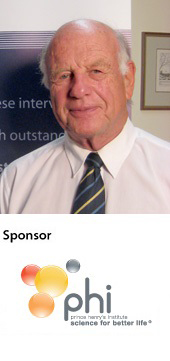
Henry George Burger was born in Vienna, Austria in 1933. Burger completed his secondary schooling at Xavier College in 1950. He then began his compulsory National Service in 1951 before beginning a medical degree. Burger graduated with an MBBS from the University of Melbourne (1956), winning eleven of the twelve prizes on offer. After graduation, Burger worked as a resident medical officer (1957-58) and then registrar (1959) at St Vincent's Hospital. In 1960 he completed a Doctor of Medicine at the University of Melbourne. He then went to the Diabetic and Metabolic Unit at the Alfred Hospital as a research fellow (1960-61).
In 1961, Burger was awarded a Nuffield Dominion travelling fellowship to the Middlesex Hospital in the UK. While in the UK, he worked on measuring testosterone in various disorders in women. Burger then moved to the USA to take up a United State Public Health Service International postdoctoral fellowship at the National Institutes of Health in Bethesda, Maryland (1962-65). Burger returned to Australia in 1965 as associate director of the Prince Henry's Hospital Medical Research Centre (1965-69). He was then promoted to executive director (1969-72) and director (1972-90) of the Medical Research Centre and the Department of Endocrinology and Diabetes at Prince Henry's Hospital. He also worked concurrently as senior lecturer at Monash University (1965-78). Prince Henry's became an Institute in 1990 and Burger continued as its director until 1992. He remained as unit head and director of Endocrinology at Prince Henry's Institute until his retirement in 1998, but has continued in endocrine practice since then.
Interviewed by Professor Rob McLachlan in 2010.
Contents
- From Vienna to Adelaide
- Happy schooling and inspirational parents
- Catholic teachings: questions and answers
- Teaching experience via national service
- Prize winning medical student
- Olympic games photo-finish
- Specialising in endocrinology
- Protein hormones by radioimmunoassay
- The young Turks, bovine growth hormone and giants at NIH
- A new Medical Research Centre with plenty of talent
- Students at Prince Henry's
- The Inhibin story
- Inhibin – granulosa cell tumours and ovarian tumours
- Pulsatile hormone secretion
- The Menopause
- The Jean Hailes Foundation
- Music, skiing and family
- Science and religion
- Expanding world view
- International and national recognition
- Leading the Institute
- What retirement??
My name is Rob McLachlan. We are here today at Prince Henry’s Institute of Medical Research in Melbourne to talk with Professor Henry Burger.
From Vienna to Adelaide
Where and when were you born?
I was born in Vienna, Austria, in May 1933.
And your parents?
My father was an organic chemist in the Department of Chemistry at Vienna University. My mother met him when she was a student there. My mother was reasonably well to do and was a baroness appointed by Kaiser Franz Joseph. Her father was in the Austrian army. My father’s father was a GP. I was an only child.
Where did you grow up?
I grew up in Vienna for the first few years of my life but was sent to England in 1939. I spent a year there in boarding school before coming to Australia on the SS Oronsay. I arrived just at the outbreak of war, at the end of January 1940.
And your parents?
My father had preceded us. He had been in Australia for seven or eight months before my mother and I arrived. I had started on the ship in Southampton and my mother joined it in Naples, Italy. The rest of the journey we made together. She rather stymied my lifestyle on board the ship because I used to assist the stewards in distributing breakfast to other passengers and she disapproved of that activity.
They left everything they had in Europe?
Effectively. Although they subsequently managed to bring out some of their belongings in a very large packing case – not quite as big as a container but not far short. Curiously, many years later, my father took the packing case up to Mount Buller and built one of the very first ski huts for his company’s ski club.
Happy schooling and inspirational parents
What about your school life?
We spent the first three years after our arrival to Australia in Adelaide, so I went to school in Adelaide first. I went to three different schools, including being sent to a boarding school up in Mount Barker in 1942. My parents’ were concerned about the possibility of a Japanese invasion and bombing, so I was put out of harm’s way. We then moved to Melbourne in early 1943 and I went to a Jesuit school called Xavier College Preparatory School. I then moved on and spent the rest of my school life at Xavier College.
How do you reflect upon your schooling in that place?
My memory of school is really a very happy one. Having come from Austria to a country which was at war with Germany and, therefore, regarded German speech and German culture with considerable distaste, I found myself psychologically also developing anti-German attitudes. When my parents spoke German to each other in the street, I wouldn’t walk with them. I would walk behind or in front, as if to detach myself from that atmosphere. That was reflected in my last year at school, where I was doing German as a year 12 subject. I didn’t do very well in it. I was filled with pride when one of my oral examiners said that it was very surprising to learn that I was born in Vienna. Not a sentiment of which my mother approved at all, but of which I was quite proud.
Your parents were obviously well educated. Were they supportive of your schooling?
Very supportive. I think my time of schooling and early school life was happy. I remember pottering with test tubes, inspired by my father, who was a research scientist and who came to Melbourne as research director of Monsanto Chemicals. He made an important wartime contribution in developing a better method of synthesising sulphonamides. These were essential for Australian troops in New Guinea, particularly in the treatment of infections and malaria. He was an inspiration to me not only as a scientist but as a human being. He was somebody who was very popular with all around him and who related extremely well to all levels of Monsanto Chemicals in Braybrook, Melbourne. He was a very good sportsman. He had represented Austria in hockey. He played the equivalent of league football in soccer. He was a very good tennis player and skier. I very much looked up to him, even though I could not do any of the things in those areas nearly as well as he could. He taught me to ski and play tennis, and he was an inspiration. My mother meantime had decided that she had to contribute to the family income and she did a Bachelor of Arts. She became a senior lecturer in French at the University of Melbourne.
My schooling was happy. The school was supportive and open. It taught one to be self-critical. I made a lot of friends there and one of the influences that led me to do medicine, rather than anything else, was the group of friends whom I met and who were all determined to do medicine. I also enjoyed many aspects of school. I learnt about music from a school contemporary. Music has been a lifelong love, particularly baroque and classical music, but I also like popular music. I participated in sport but without a great deal of success, except for one sixwicket haul against Melbourne Grammar in the under15 B cricket team.
In my final years of school, I did the equivalent of year 12 twice, because I was too young to go to university after the first time. This gave me an opportunity to do subjects that I might not otherwise have been able to do. Amongst those, perhaps the most important was english literature, where I had a superb teacher. I thoroughly enjoyed my experience of that topic. I also enjoyed physics and chemistry.
The decision to do medicine was not too difficult. I was torn between doing organic chemistry, like my father, and doing medicine. It is hard to remember precisely what moved me in the direction of medicine. Certainly having a grandfather who was medical and having a close school friend whose elder brother was a doctor and whom I admired were influences that went towards that.
Catholic teachings: questions and answers
This was a Catholic school. Has Catholicism been an important part of your life?
Catholicism was a very important part of my life. As you said, Xavier College was a Catholic school. I think it would be fair to say that we were taught in a reasonably open manner, without having dogma thrust down our throats, one did develop a critical attitude at school. But I was what you would call quite a devout Catholic. When I was at university, I continued in that regard. And when I was a resident and registrar at St Vincent’s, I frequently used to go to Mass down the road at St Patrick’s Cathedral. At that time, I really followed church teaching quite closely and obediently. But, once I had met my wife, she used to challenge me and make me think. She always used to say, ‘They give you the questions and they give you the answers, and I want you to think about asking some of the questions yourself.’ That was a major influence that made me start to question some aspects of Catholicism.
There was a particular Jesuit priest who taught you mathematics and, indeed, went on to marry you and your wife, I understand.
There was a Jesuit priest called Father Walmsley J. Smith, who walked with a limp and a walking stick and who taught us mathematics and religious knowledge. He married us in 1959.
In your last year of schooling, you did very well in chemistry and got into medicine. Was it difficult to get into medicine in those days?
To my best memory, no. You could nominate and say that you wanted to do medicine. I can’t remember if there was any sort of a quota – perhaps there was – but I don’t think any of us from the school who wanted to do medicine failed to gain admission.
Teaching experience via national service
Before starting your undergraduate program, you had some interesting experiences serving your country in the national service. Can you talk about that?
Yes. At that time national service was a compulsory part of one’s late teens, particularly between school and tertiary education. That involved going to the army camp at Puckapunyal, near Seymour, for a period of 12 or 14 weeks. It was a curious experience for me, as somebody who had never been any part of military service at school. I had never been a cadet or anything of the sort. Hundreds of us were taken up to the railway siding outside Puckapunyal and our names were called as we were allocated to the various companies of which we were going to be members for the next 12 or 14 weeks. I remember standing the whole day on this siding and not having my name called. Finally, there were five of us left on the platform and we were informed that we were the forerunners of a company, the large part of which would be made up of boys coming from the country – from Cobram, Tocumwal, Shepparton and Echuca. I became the sole occupant of my platoon hut for one night before the rest of the fellows arrived from those country towns. To me, that was a very important education in human relationships, in learning to live with people who were of an entirely different upbringing and educational level.
I was sent immediately to a training course in order to become either a lance corporal or corporal. When my colleagues in the hut realised what I was doing, they made quite dire threats about my health, unless I came back with two stripes as a corporal – which, thank God, I duly did. At the time I don’t think I enjoyed national service at all but, in retrospect, found that it was very valuable. One of the things that was very valuable is that we were taught to teach. We had to give lessons to the rest of the platoon and we were taught the principles of good teaching. I think that stood me in tremendous stead which I later used to teach medical students, colleagues and graduates.
So you entered medicine with experience in teaching and human relations and with a commanding knowledge of English. It was a very powerful combination for you.
That was a fortunate attribute that I had, that I could speak quite well and could write well. Education in Latin and Greek were important contributors to that ability. But it was a natural ability. My mother was a very good linguist. Whether there are some genes for that, I don’t know. I think that has been something that has been very helpful at all points of my career.
Prize winning medical student
What about your undergraduate medical training at Melbourne University?
I did the classic sixyear medical course. Three preclinical years, a year of pathology and introductory medical studies and then two full-time clinical years, where I was a student at St Vincent’s Hospital – an institution about which I have very warm feelings. It was a great teaching hospital, a classic clinical school with excellent clinical teaching and wonderful pathology teaching in the autopsy room. One great character, a pathologist called Alex Tait-Smith, used to rivet us with his post-mortem demonstrations. But I very much enjoyed my clinical teaching in medicine and surgery. At the end of the medical course, I was extraordinarily fortunate in that I topped the year and got firstclass honours in all the three major subjects. I also won most of the clinical prizes that were on offer at the end of that year. Some of it was quite fortuitous, but it was something which certainly allowed me to make fairly free choices about the terms I would then serve as a junior intern, a resident and registrar. I effectively had free and first choice at what I wanted to do.
Can you recall any individuals who made a special contribution to your medical education and in what areas?
There was a group of us who formed an extra curricular tutorial group. One could make a private arrangement with appropriate people to be tutored. And we had made an arrangement with John Cahill, a medical tutor who was one of the senior physicians at St Vincent’s; John Connell, a surgical tutor; and Maurice Barrett, an obstetric and gynaecological tutor. We met with these individuals very regularly. They were very helpful in teaching us how to learn clinical medicine, surgery and obstetrics and gynaecology. But, apart from that, I was certainly impressed particularly with my physician teachers. I remember the physician teachers much better than the surgical teachers. All the senior clinicians at St Vincent’s were very good teachers, as were the specialists. I particularly remember the late John Billings in neurology, I very much enjoyed that as a subject and his teaching of it.
You also tutored the medical students one year below you. Why did you do that and what did that give you?
I think I was asked by colleagues both at my contemporary level and also a year or two behind me to give tutes on topics as we went through. I have always loved teaching and it was something that I enjoyed doing. It gave me quite a charge. If you have to teach it to somebody else it is also a way of reinforcing one’s knowledge of the topic.
The final medical exams in those days were fairly rigorous. What were they like?
The final exams were a real test of one’s stamina. We had to do a straight three and a half days of seven written papers, morning and afternoon. Then the clinical exam extended over another five weeks, where you had to do long cases, short cases, interviews and specialty areas like paediatrics and gynaecology. My preparation was perhaps a little unorthodox. For the two weeks before our final exams started, I skied at Mount Hotham, without any textbooks with me. I found that was fantastic preparation in terms of fitness and energy.
Your examiners presumably didn’t know that you had been skiing for the last two weeks.
I suspect that my examiners didn’t.
‘Where did the tan come from, Burger?’ They didn’t ask you that.
I certainly was much more tanned than most of my colleagues.
You obviously got most of the questions right, given that you got 10 of the 11 prizes on offer. There was one circumstance where you were correct and the examiner was wrong. Tell us about that.
After I had spent 25 years as director of the Medical Research Centre at Prince Henry’s, Harry Garlick, one of the senior physicians who had been involved in establishing that centre, told a story about me. He was one of the examiners, in conjunction with a well-known physician, William McIntosh Rose, for one of the written papers in medicine. After Harry Garlick had marked the papers, he said to Rose or Rose said to him, ‘Were there any outstanding papers?’ He said, ‘Yes, one.’ So they compared notes about that candidate. Harry Garlick had given that candidate 90 per cent for one of the questions and Bill Rose had only given him 70 per cent. The difference in mark was not a matter of style, it was a matter of medical fact in the subject of the question. They went back to the textbooks and the final mark that was resolved was the 90 per cent – and that candidate was me.
Olympic games photo-finish
Immediately after your medical course, you had an experience, which many would be jealous of, at the 1956 Olympic Games in Melbourne. It was an extraordinary experience.
One of the best jobs that I ever had I got by courtesy of John Connell, the surgeon who had been our surgical tutor. The 1956 Olympic Games occurred immediately after our final exams and Connell knew the head of the photo-finish team which was to cover the Olympics. They were looking for one extra assistant to help them whilst they were in Melbourne, and Connell very kindly nominated me for that position. So I was the photo-finish extra. The highlight was the athletics at the Melbourne Cricket Ground. A special little shed was set up opposite the finish line for all the major sprints and long-distance runs. The photo-finish camera was up on the roof of the members’ stand and this shed was in the members’ stand. The film would be sent down a chute and I had to collect it and then go and develop it in the dark room in this shed. I was the first person to see who had won any of the close races. I worked there at the MCG for most of the Olympics. I also worked at the swimming and at the cycling, and it gave me my first exposure to competitive Olympic-standard cycling – a wonderful experience and something I would never forget.
Specialising in endocrinology
What were your early experiences that led to your passion for endocrinology? How did that evolve?
That evolved significantly later. I went from the examinations to take up a standard ‘junior resident post’ at St Vincent’s. We did the standard twomonth terms in various aspects of medicine and surgery and the emergency department. Then, in second year, I did a sixmonth stint as medical registrar with Professor John Hayden, who was the first Professor of Medicine appointed to St Vincent’s Hospital, he was also the second University of Melbourne professor. I spent a twomonth term with a thoracic surgeon, John Clarebrough, who was one of my real role models and pin-up boys at the time. The experience of working with him almost made me do thoracic surgery. I found him an inspiration. But John Hayden was also an inspiration and I went back in my third year and spent the whole year as his registrar – a very interesting and informative experience. I started a little bit of research at that time. I wrote my first paper when I was in my third year there, with one of the members of the Department of Medicine. Hayden was an inspiring teacher. His ward rounds used to be populated by a significant number of people, particularly postgraduate students. He was very clever in the way that he would deal with a question to which he clearly didn’t know the answer. He usually handballed it to me and said, ‘Burger will tell you the answer to that,’ and Burger would never know the answer either. So we had to go off and look it up or admit that we didn’t know the answer.
You needed to make a decision whether to pursue a surgical career or one in internal medicine and endocrinology.
That was a decision that I had to clearly make in that third year, as to where I would go. It was clear that endocrinology was one specialty which was not well covered at St Vincent’s. There was one man, Bill Hamilton Smith, who was the endocrinologist and diabetologist at St Vincent’s. Somehow I started to get attracted to that area. I talked to him and was encouraged by him to do endocrinology and to then look at having a career at St Vincent’s, once I had been trained. He suggested that I would be free to take over endocrinology and develop it as a specialty at St Vincent’s. I was then directed to go and work at the Alfred Hospital, where the Ewen Downie Metabolic Unit was situated and where the late Bryan Hudson was endocrinologist. Joe Bornstein, an expert biochemist, was also part of the Metabolic Unit. So that appeared to be the optimal place in Melbourne for me to start training in endocrinology. I had hoped to spend most of the time with Bryan Hudson, but he spent a sabbatical year for most of the time I was there, and I only joined with him for a few months before leaving to go overseas. The experience was interesting. The laboratory side of it was rather frustrating and not very beneficial for me, except that it taught me patience and the need to be very careful in setting up experiments.
I was then awarded a Nuffield Foundation Dominion Travelling Fellowship and went to work with the late Sir John Nabarro in London at the Middlesex hospital. From a clinical standpoint that was an excellent experience. Again I was given a rather unsatisfactory laboratory project, on which I think I wasted quite a lot of time. That is, until I was directed to go and work in the laboratory of Dr Alex Kellie, an expert steroid biochemist and assayist. That was a very productive and fruitful few months, where I learnt the elements of measuring steroid hormones by the double isotope dilution derivative assay technique – almost as long-winded a technique as the name indicates. That led to my being able to measure testosterone in various disorders in women. And those results with Alex Kellie and under John Nabarro’s overall supervision led to my first paper in the Journal of Clinical Endocrinology and Metabolism.
Clearly you had developed an interest in endocrinology. What was it about that subject that really triggered your interest and passion?
I was attracted to endocrinology, in part, because of my father’s background as a chemist. He was somebody who worked in the laboratory and used laboratory techniques in his profession, and I saw endocrinology as a specialty which would allow me to combine clinical medicine with laboratory technology. That is, the need to learn and execute assays for hormones in the lab. The possibility of that combination was one that I very much valued and that attracted me. I think that is probably why I went in that direction. I never had any cause to regret that. I also found myself with the opportunity to visit institutions like the Royal Postgraduate Medical School at Hammersmith, where I used to go out to their grand rounds and occasionally on ward rounds. It was here that I was exposed to the upper echelons of English endocrinology and English general medicine at that time. That was the kind of thing that attracted me.
There you were in England – and you experienced the very highest level of academic environment.
A very important event then occurred while we were in England. I was visited by the late Bryan Hudson, who had been appointed foundation Professor of Medicine at Monash University at the old Prince Henry’s Hospital, which no longer exists. Bryan came to London in 1962, telling me that he had been asked to look after a new initiative at Prince Henry’s which was to establish a Medical Research Centre. It was the only hospital, of the teaching hospitals in Melbourne, that didn’t have an institution or research laboratory. He asked me whether I would consider being the Associate Director of this Research Centre. I thought all my Christmases had come at once. This was an unbelievable opportunity – a very precocious one, when I was still very much in the raw stages of learning endocrinology. But he clearly had some sort of faith in my abilities and possibilities. So I accepted that with alacrity, much to the chagrin of my St Vincent’s colleagues, who had fully expected me to come back there.
I remember, before leaving for London, I went to see the Mother Rectress, who held all the power at St Vincent’s, but it was a new Mother Rectress whom I had not previously known. I asked her whether I could have any assurance that I might have a future in endocrinology at St Vincent’s, as it had been, in a sense, promised to me. She said, ‘No, I’m not going to give you that sort of assurance before I see how you get on overseas.’ I bottled that piece of information and, when I was offered the Prince Henry’s job, I accepted it with great enthusiasm.
Protein hormones by radioimmunoassay
Bryan was immensely helpful in suggesting to me that the future of research in endocrinology would be in the protein hormone field, not in steroid hormones. He had been an expert in measuring testosterone, but he was also interested in other aspects of steroid endocrinology. But he said, ‘The future is in protein hormones.’ I had originally planned to go and work with the late Dr Fred Bartter, who was an eminent American steroid endocrinologist in the aldosterone field, and I had to make very last-minute arrangements not to go and work in his laboratory but to go and be trained in protein hormones. I had a US Public Health Service International Postdoctoral Fellowship, so when we went from London to the States, I went to work in a protein hormone laboratory rather than the steroid hormone laboratory.
That was a very critical decision, wasn’t it?
It was a hugely important decision and Bryan gave me absolutely the right advice. I went to work at the National Institutes of Health, and the advice to do protein hormones and protein chemistry was very important advice. It also gave me the opportunity to learn the relatively new technique of radio immunoassay. Radio immunoassay was a technique developed in order to be able to measure the very tiny circulating concentrations of protein hormones. It was subsequently applied to other molecules circulating in very low concentrations. But the initial developments were particularly for insulin – a protein hormone.
The radioimmunoassay technique relied for its sensitivity on the employment of a radioactive label which allowed detection of very small amounts of radioactivity. Its specificity was conveyed by the immuno part – namely, the use of an antibody to the hormone of interest. You had to have specificity to be able to measure a protein in amongst thousands of other proteins. One of the big advances was a technique of labelling protein hormones without destroying their tertiary structure, usually with radioactive iodine – a technique what was introduced by two Englishmen called Hunter and Greenwood. One was able to label a purified form of the hormone with radioactivity, purify it so that you just had the labelled hormone and then incubate the hormone with a limiting concentration of a specific and high-affinity antibody. You then added known amounts of unlabelled hormone to construct a standard curve where the unlabelled hormone would displace the radioactivity from the antibody. After that incubation, you separated the radioactively bound hormone from the free or unbound, which had been displaced. By measuring the ratio between bound and free as a function of the addition of increasing quantities of the unlabelled hormone, you constructed a standard curve. You then incubated a serum specimen, read the bound-to-free ratio and worked out what concentration of unlabelled hormone that was equivalent to.
That technology was introduced in about 1959-60, not long before I went to the States. Ultimately, it resulted in the development of an immunoassay for insulin. My memory is that the first insulin assays were published in about 1960 or 1961, and it was then applied to growth hormone. One of the laboratories or the laboratory that first developed a growth hormone assay was the laboratory of Sol Berson and Ros Yalow in New York. I had an opportunity to go and visit them. They worked in a cellar in the Bronx. I was amazed when I got there to find the two of them sitting, surrounded by thousands of little tubes, pipetting the reagents, doing the separations and measuring growth hormone.
Berson was an extraordinary man, probably one of the most extraordinary individuals I ever met anywhere in endocrinology. He was a genius. He should have won the Nobel Prize but, unfortunately, died before that opportunity arose. His colleague Ros Yalow did win the Nobel Prize. The other two people who worked on the growth hormone assay with them were Jesse Roth and Seymour Glick. Jesse Roth went on to a very distinguished career at the National Institutes of Health. He is still active in research and in teaching. He was in the laboratory next to me when I worked at the National Institutes of Health in Bethesda and I learnt the growth hormone immunoassay directly from him. That was invaluable to me when I came back to Australia to develop the new Medical Research Centre at Prince Henry’s. I subsequently encountered Berson again in 1968, on the first major overseas trip I made after my return to Australia, and I found that he was not only a superb biochemist and endocrinologist but also a superb historian, art appreciator, chess player and violin player. At that time, I was at a meeting in Liege, Belgium, when the book called The Double Helix had just been published, describing the structure of DNA. He spoke about that book as though he had been in the laboratory involved in all the work. He was just a most extraordinary individual.
The young Turks, bovine growth hormone and giants at NIH
Tell me about the young Turks.
One of the encounters with Berson that I observed from a distance was his participation in the annual meeting of the American Society for Clinical Investigation, which was often called the ‘young Turks meeting’. The radioimmunoassay field and the assay of insulin was a highly competitive area where more than one group was involved in the development. There was another team in San Francisco, Gerald Grodsky and Peter Forsham, who were also right at the very beginning of the ‘immunoassay for insulin’ story. I was at a young Turks meeting where Grodsky was presenting their findings on immunoassay and claiming priority, and Berson got up from the floor and attacked him in the most incredibly vitriolic terms. I could not believe my eyes and ears as I sat there, watching the interchange between the two of them. It exposed me to what is very much an American tradition of standing up and expressing your views and not being frightened and not being embarrassed to do so, which I think here in Australia we were much more anxious about.
Tell me more about your NIH experience.
As I have indicated, the advice Bryan Hudson had given me was to learn about protein hormones and protein chemistry. I went to the laboratory of Peter Condliffe, who was an expert in protein hormone purification. His particular area of interest was thyroid-stimulating hormone, but he also was expert across the board in protein hormone chemistry. He, in turn, recommended that I work with a physical biochemist, Harold Edelhoch, who was a student of protein structure, ultracentrifugation, fluorescence polarisation and other techniques which one could use to study the behaviour of proteins in solution. The protein that we decided to study was bovine growth hormone. So I spent essentially two years in his laboratory, learning and doing physical biochemistry. Bovine growth hormone turned out to be quite an inspired choice because it underwent spectacular changes in its fluorescence properties when it was acidified. We made studies of all sorts of aspects of the structure and function of bovine growth hormone and, as a result of my studies there, we published three papers in the prestigious Journal of Biological Chemistry and another one in the leading endocrine journal, Endocrinology.
One of the things that I should have considered at the NIH was to do a PhD. But I would have had to spend a lot of time doing course work as part of a PhD at any of the universities closely associated with the NIH in Bethesda, Maryland. I chose not to do that, because I wanted to maximise my laboratory training and some clinical training.
At the NIH at that time were a number of giants of endocrinology. Including Martin Rodbell, who went on to win a Nobel Prize for his studies of second messenger signalling; Gerry Aurbach, a pioneer in the parathyroid hormone field; Ira Pastan and Bob Bates – all big names in endocrinology. The rest of the unit had people like Ed Rall, Jack Robbins and Jan Wolff, who were experts in the thyroid hormone field, in which I didn’t have a great deal of interest, but I admired them and watched them.
I didn’t entirely sever my contacts with Fred Bartter, who was in the building several floors below. I used to attend his laboratory meetings, listen to how he planned his clinical research and learned from him the importance of what many of us called the ‘dry run’. The dry run was a practice for presenting at meetings or for being interviewed for grants. He was ruthless about the importance of adequate preparation, criticism by your peers, going back to the beginning and preparing it again and, finally, being able to give a polished rendition of your research, your ideas and what your laboratory was doing. That was something which I brought back with me and put into practice right from the very beginning when I worked in Melbourne.
A new Medical Research Centre with plenty of talent
You moved back to Australia in 1965 to take up that position that had been offered you by Bryan Hudson several years previously.
Correct. I came back to the Medical Research Centre at Prince Henry’s Hospital and was placed on the eleventh floor of the hospital, which had a great view over the city of Melbourne and the Victorian College of the Arts. It was in St Kilda Road. The hospital has now long been torn down and has been replaced by an upmarket apartment building called the Melburnian. I was placed up on the eleventh floor with some laboratory and office facilities, and the staff included a secretary and two laboratory technicians. I found the initial few months of being back in Melbourne quite challenging, having been in an environment where everything that you could possibly think of in research techniques and research facilities was available. Here I was really responsible for getting the place equipped and started.
But one of the first things I did was to establish the growth hormone immunoassay. We went along swimmingly for a short time and then the assay stopped working. It took us six months to work out that, in purifying the labelled growth hormone and collecting the purified fractions into tubes containing fairly concentrated albumin solution, we were failing to properly agitate the fraction tubes, so the hormone was not protected from degradation. That took six months to find out.
Once we had that solved, we ran the immunoassay very heavily and received samples from many different laboratories because it was the first immunoassay for growth hormone in Australia. I fairly quickly established a collaboration with the late Norman Wettenhall. He was a paediatric endocrinologist and there were very few in the world at that time. He had a big population of children with short stature and the assay technique enabled us to determine who was truly growth hormone deficient, and therefore who might be expected to benefit from therapeutic growth hormone preparations. These preparations were just starting to become available at that time, particularly through the offices of Kevin Catt, one of my colleagues at Prince Henry’s. Kevin was a skilled protein chemist/clinician scientist. With his efforts and those of a few others, we started to develop growth hormone for therapeutic use, and the assay clearly provided a way of making an appropriate diagnosis in those short children. Growth hormone therapy for them was a huge boon and produced some quite spectacular improvements in their growth velocity and final height.
You were Chairman of the Human Growth Hormone Subcommittee for fifteen years. Tell me about that.
Yes. At that time it was decided that the Department of Health in Canberra would establish a pituitary hormone committee to guide the therapeutic use of protein hormones in Australia. It was called the Human Pituitary Advisory Committee and it was officially a committee advising the Minister for Health. It established three subcommittees: a purification subcommittee, which was charged with overseeing the purification both of growth hormone and of gonadotrophins for use in the treatment of infertility; a follicle stimulating hormone (FSH) committee, that being the main therapeutic gonadotrophin, which was established to supervise the therapeutic use of FSH in hormone deficient men and women; and then a growth hormone committee to supervise the therapeutic use of growth hormone for children with short stature. I became chair of the growth hormone subcommittee and a member of the Human Pituitary Advisory Committee and served in that capacity for about 20 years. I worked with the two leading paediatric endocrinologists in Australia at the time and learnt an enormous amount from them. I practised in paediatric endocrinology for a time, until that specialty became better established, and I used to see children with short and with tall stature and used my laboratory technology to assist that at the same time.
That perhaps illustrated a very important principle for me: (a) I had to be familiar with assay techniques by doing them myself and knowing what could go wrong. For example, what the interpretive difficulties might be and what limitations there might be to the interpretation of assay results. And (b) seeing the clinical problems to which those assays could be applied and having a kind of bench-to-bedside approach to the clinical practice of endocrinology.
Going back to those days, Bryan Hudson was the chairman of the Department of Medicine, but there were many other important figures at Prince Henry’s at that time.
Bryan was the foundation Professor of Medicine and he quickly established a very vigorous, talented Department of Medicine at the old Prince Henry’s Hospital. He was situated on the sixth floor of the outpatient block, whereas I came back to the eleventh floor of the main block. There was a physical separation, but that didn’t prevent a very close collaboration. In his department, Ken McLean was the associate professor, a cardiologist and an inspiring individual. He had people like Kevin Catt, as mentioned, Hugh Niall of distinguished endocrine career, Jeff Tregear and Jim Stockigt, who became a leading thyroid endocrinologist. Then, in other related fields, people like Jack Hansky in gastroenterology – Jack was also somebody who developed assay methods for gastrointestinal peptides; Blair Ritchie, who was a respiratory physician and physiologist of distinction; and Mel Korman, a registrar who subsequently moved into the gastroenterology field. It was a distinguished and very active group, and we did a lot of collaborative research and prospered the Department and the Medical Research Centre at the same time.
When you look back on the achievements at the Prince Henry’s Institute in those days, what do you reflect on?
Students at Prince Henry’s
A very important milestone for me was the recruitment of my first medical postgraduate scholar, a man called Don Cameron. He came down from Queensland and enrolled to do a MD. He decided that he would work on human growth hormone to determine how growth hormone was handled in the body, that is, the metabolic clearance of growth hormone, its secretion rate and its disposal in the circulation. Don enrolled and joined me in 1967. That was really when the Medical Research Centre took off.
A couple of years later, the late Yogesh Patel, a Fijian Indian who was a New Zealand medical graduate, came to join us. Yogesh was an extraordinarily brilliant individual. He decided that he wanted to work in the thyroid field, so he made an existing assay for thyroid stimulating hormone much more sensitive. At the time he joined us that assay could not distinguish the lower limit of normal from a suppressed value. In thyroid disease, it was very important to be able to make a diagnosis of hyperthyroidism or thyrotoxicosis. One of the ways to do that, in principle, was to be able to show that a patient had suppressed thyroid stimulating hormone (TSH) because of the autonomous activity of the thyroid gland, over secreting and suppressing the pituitary. Yogesh made the existing TSH assay much more sensitive and enabled us to measure suppressed levels of TSH and distinguish them from the lower limits of normal. He also developed one of the first assays for the second thyroid hormone, tri-iodothyronine or T3. With the combination of standard T4 assay, T3 assay and TSH, we did a lot of studies of thyroid physiology and thyroid pathophysiology.
Yogesh went on to have a distinguished career overseas. He went to work in Geneva with Lelio Orci, who was a pioneer of the cellular localisation of hormones and their transport intracellularly. Ultimately, Yogesh went to Montreal to become Professor of Medicine and become the world expert on somatostatin, the hormone which inhibited the release of growth hormone. He died very young at the age of 61 or 62 – a very sad occurrence.
From there on, a number of other people joined the Research Centre, including Frank Alford, who became the main endocrinologist at St Vincent’s and who also joined us to do studies of growth hormone. Gordon Baker, who became a distinguished Professor of Andrology, was my first endocrine registrar. Fairly early after my return, not only was I charged with running the Medical Research Centre but I also became head of the hospital Department of Endocrinology. We were allowed to appoint our first endocrinology registrar in 1970, and that was Gordon. Gordon subsequently stayed at Prince Henry’s and became a PhD student. He did a masterly PhD on the endocrinology of liver disease, under the joint supervision of Bryan Hudson, David de Kretser and me. He was another distinguished member of the team who contributed enormously to our studies of pituitary hormone secretion. We studied the 24hour patterns of secretion and looked at the pulsatility of pituitary hormone secretion. Yogesh’s assay allowed us to show that thyroid stimulating hormone had a circadian rhythm, as did some of the other pituitary hormones. Other members of the laboratory at that time included a biochemist, Terry Bellair and subsequently, Adrian Herington, who studied all sorts of aspects of the mechanism of action of growth hormone and its binding to a growth hormone receptor.
In turn, after that, I was joined by David Healy, who became Professor of Obstetrics and Gynaecology at Monash. He came to do a PhD on prolactin, so my interests diverted to that. All that, in a sense, represented the fact that my philosophy in running the Medical Research Centre, fortunately backed up by the fact that people expressed a wish to come and work with us, was to use the talents of people to the maximum and to allow them to decide which hormone and which direction they thought was appropriate. That resulted in us ultimately becoming a highly productive research institute in quite a number of aspects of endocrinology. In the meantime, I was joined in 1974 by David de Kretser, who spent several years on our staff as a senior research fellow. That continued a collaboration I had begun with David before he really joined us and of which the pinnacle was the isolation and purification of the hormone inhibin.
The Inhibin story
The story of inhibin is a fascinating one and a major component of both your life and mine. It is really a triumph for basic science and clinical connection, what we now call translational research. Perhaps you should tell the story.
David had, as his special area of interest, the structure and function of the testis. He had undertaken postgraduate training in Seattle at the direction of Bryan Hudson, who was our mutual endocrine ‘father’. David had come back. In the interim, I had established, among other things, immunoassays for the two pituitary gonadotrophins: follicle stimulating hormone (FSH) and luteinizing hormone (LH). We applied those assays to the study of men with infertility and found that men with some forms of male infertility had a hormonal pattern with an elevation of FSH but normal levels of testosterone and normal levels of the other pituitary hormone that controlled the testis, luteinizing hormone. The fact that there was an isolated elevation of FSH indicated that there must be another factor produced by the testis which was lacking in men with some forms of testicular disease.
That factor had been postulated as a hormone forty years earlier by workers in the United States. Various groups had made sporadic attempts to purify that substance which had been called inhibin. The original introducer of that was McCullagh. The term ‘inhibin’ was really a concept rather than an actual entity, because nobody had been able to purify it. From our radioimmunoassay studies and the studies of other laboratories around the world we were convinced that such a hormone must exist. So we set out to explore whether we might be able to isolate this hormone because it was one of the big unanswered questions in reproductive endocrinology. Victor Lee and Ted Keogh, who was one of my early registrars, extracted bovine testis and infused those testicular extracts into castrate sheep. They showed that those sheep, which initially had elevated FSH levels, had their FSH levels suppressed by the infused testicular extracts, but their LH levels were not suppressed.
Our research was also supported by observations from a Belgian endocrinologist called Paul Franchimont. He was another individual who was very influential on me as an endocrinologist. In 1968, Paul ran a protein and polypeptide hormone conference in Liege, Belgium and invited me to participate. I met him and was immediately struck by his abilities in endocrinology and his enormous charism. I would become due two or three years later for a sabbatical, so I was starting to consider where I might take it. I decided that, if he would have me, I would go and spend a year in his laboratory in 197273.
Paul was somebody else who was interested in the inhibin concept and whose laboratory was also very early in establishing an FSH assay. He, too, had made the observation about infertile men in papers that were published almost simultaneously by him and from our group in Melbourne. He was an extraordinarily innovative endocrinologist who asked the simplest of questions and used the simplest of technologies to answer them. He took castrate rats, injected them with seminal plasma from normal individuals and showed that the seminal plasma suppressed FSH. He then took seminal plasma from men with infertility and azoospermia and showed that their plasma didn’t suppress it. So he was also very convinced that there was an inhibin and that it would be possible to isolate it perhaps from seminal plasma. Regrettably from his point of view, he didn’t finally succeed in what then became a competitive race to be the first to isolate inhibin. But this sabbatical provided me with a year of exposure to his thinking and his technologies and additional material, which I found invaluable.
Having come back from that sabbatical and having shown that these testicular extracts would suppress FSH, we went on to try to purify the activity, in continuing collaboration with David. An important next step was to find a simpler way of assaying the extracts than infusing them into castrate sheep. An important person in that was Larry Eddie. He worked at the Howard Florey Institute, going up as a senior research fellow, where he was joined by Hugh Niall and Geoff Tregear, both eminent protein chemists. Bryan Hudson had gone to the Howard Florey in 1972, having resigned the chair of Medicine at Prince Henry’s. Larry Eddie developed a cultured pituitary cell assay in which, putatively inhibin-containing extracts would suppress the stimulation of gonadotrophin secretion by the cultured cells. This stimulation occurred when they were exposed to the fairly newly discovered luteinizing hormone or gonadotrophin-releasing hormone, GnRH.
Late in the 1970s, I was joined by Russell Scott, a research fellow from New Zealand. Russell Scott established a cultured pituitary cell assay which worked even better than the Eddie assay. He did this in conjunction with Helen Quigg, one of our technicians at the Medical Research Centre, and me as supervisor. We applied this cultured pituitary cell assay to monitoring the purification of inhibin. At that stage, we were using what was called ‘rete testis fluid’ as a better source than whole testicular extracts, which were very messy. The rete testis fluid was collected from the lymphatics which trained the testicle. In the attempt to purify inhibin, David de Kretser and I worked at Prince Henry’s in collaboration with Bryan Hudson and his team at the Florey. The collaboration worked, in the sense that the protein chemistry was done at the Howard Florey and the assays were done by us with Russell Scott and his cultured pituitary cell assay.
Late in 1978, when that collaboration appeared to be going quite well, David and I received a visit from Bryan Hudson, who said that the Florey group felt that they weren’t progressing as fast as they would like to. He said that some of that delay was due to the fact that we were taking longer to do the assays than they were happy about. They had, therefore, made the decision that they would terminate the collaboration amicably, that we would continue to use the same extracts from rete testis fluid as a biological standard but they would proceed alone with the purification technique.
How did that make you feel?
David de Kretser and I couldn’t believe this discussion, at first. But, in the wake of Bryan’s leaving my office at Prince Henry’s, we looked at each other and said, ‘We’ll beat them.’ So together, David and I pursued the purification. We decided that it would not be appropriate to use the same starting material as Bryan. It had become clear that there was a similar activity in follicular fluid from the ovary and, therefore we used bovine follicular fluid, which could be readily collected at the abattoir. The other crucial aspect was that we were joined by David Robertson. David had had an extensive training at the Karolinska Institutet in Stockholm, Sweden. David was a rigorous, careful and dedicated protein chemist and assayist and he was crucial in the progress we made in purifying inhibin from follicular fluid. It was a very difficult protein to purify. It kept on disappearing from column chromatography attempts at separating it from other proteins.
Marian Dobos worked with us in the early 1980s and applied reverse-phase column chromatography to the purification and succeeded in partial purification of what was, in fact, ovarine follicular fluid inhibin. We were assisted by Milton Hearn, who was an expert in protein chromatography, and also by Frank Morgan at St Vincent’s, who was a protein chemistry expert. This illustrates the fact that we had a wide collaboration in this attempt to purify inhibin. David and I led the team from Prince Henry’s and David, subsequently, from the Department of Anatomy at Monash, to which he moved in 1978. We had regular team meetings with all the main players, we kept rigorous accounts of what we were doing and the project proceeded slowly but in a generally successful direction. Until 1984, when we felt we had succeeded in our mission.
Do you remember a Eureka moment with inhibin, where you knew you ‘had it’?
I don’t remember a Eureka moment. There must have been one.
I can. I can remember a silver stained gel showing a homogeneous band, and David Robertson was uncontrollably excited.
Certainly we reached electrophoretic purity of a molecule which had the inhibin properties. We first submitted our work to the American journal Science, because we thought this was a very important breakthrough discovery. The isolation of a new hormone in reproductive endocrinology was a pretty major achievement. Science held on and held on, and we didn’t get an answer. We started to become a little suspicious that one of the referees for the paper might have decided that this was a real plum and they might quickly see whether they couldn’t duplicate the technology which we had submitted. We weren’t very used to dealing with prestigious American journals, but after Science had had the paper for about four or five months I finally plucked up courage and I rang the editor of Science. He said, ‘No, we still haven’t made a decision,’ and I said, ‘I’m sorry. I wish to withdraw the paper. We cannot hang on for ever and ever to have this published.’ We then made a decision to go for a much quicker, less prestigious journal, Biochemical and Biophysical Research Communications. We submitted it there, it was accepted within a few weeks and we published about three weeks ahead of the main Japanese competitors, who had isolated inhibin more or less at the same time. But we had the science prize, we had got there first.
We also should have got to the cloning of inhibin first, which turned out to have two subunits, but one of our collaborators in amino acid sequence analysis had made an error in the sequence of one of the two subunits. That meant that we were frustrated and we were beaten to the cloning by Hugh Niall, who was working in the United States at that time.
But we also went on to generate antibodies with the purified hormone. I think David Robertson was crucial in that and you were also crucial in that. You and David developed a radioimmunoassay for inhibin. In retrospect, we realised that that was a radioimmunoassay which generically recognised inhibin, which was subsequently shown to exist in two forms, and the assay probably mainly reflected inhibin A. But you had joined us as a PhD student and the world was at your feet because you had a new hormone, a new assay – which you had participated in the development of – and now you could go out and apply it to almost all areas of reproductive endocrinology, male and female. You indeed did this with great distinction. So we were able to publish jointly a whole series of papers on the physiology and the pathophysiology of inhibin.
Inhibin – granulosa cell tumours and ovarian tumours
Perhaps the next big step that occurred was that in the interim several people had joined the lab to study inhibin control and the control of the inhibin genes in the test tube. Including people like Susan Davis, who did her PhD in that area and went on to a distinguished career in female reproductive endocrinology. A crucial meeting occurred, when I met a Dutch gynaecologist at an international congress in about 1987 or 1988 and he said, ‘You guys are publishing measurements of inhibin. I have a series of patients who have a rather uncommon ovarian tumour called a granulosa cell tumour but, as you have now shown that granulosa cells are the source of inhibin, my prediction would be that patients with granulosa cell tumours (GCTs) would have high inhibin concentrations. I’ve got a whole lot of sera in my freezer, would you be willing to assay them?’ I very enthusiastically agreed to do that, and he was absolutely correct. The patients with GCTs had very high inhibin levels. He had collected serum from patients whose tumours recurred only a year or two later, and we showed that the inhibin assay would predict tumour recurrence up to 18 months or two years ahead of the actual recurrence being clinically detectable. We published a paper, in the New England Journal of Medicine,on the elevated inhibin levels of patients with granulosa cell tumours.
How has that area now progressed?
That clearly provided a very important practical application of the inhibin assay. I should say, parenthetically, that our group in Melbourne – Hudson, de Kretser and myself as the main investigators in the midseventies–had been awarded a big Ford Foundation grant for our work directed towards the possibility of a new male contraceptive. The theory was that, if one could isolate a hormone like inhibin, which was a selective suppressor of FSH, you might be able to selectively suppress spermatogenesis, for which FSH was crucial, without interfering with the male hormone function of the testis. So the testosterone producing function which gave a man his virility rather than his fertility would be unaffected. Of course, it turned out that inhibin was far too complex a protein to make it a practical male contraceptive. But suddenly, with the advent of the granulosa cell tumour finding, here was the possibility of a new diagnostic in ovarian tumours.
David Healy then collected material from a lot of other patients with ovarian tumours and showed that some patients with serous epithelial tumour, the most common form of ovarian tumour, had raised inhibin levels. He also showed that most patients with the mucinous tumour, the second most common tumour, also had raised inhibin levels. The common marker for ovarian cancers at that time, and still now, is an antigen called CA125. It looked as though in samples from patients with ovarian tumours, suspected ovarian tumours or even in screening for ovarian tumours, CA125 and inhibin, measured together, might be an excellent combination because inhibin picked up the tumours that CA125 didn’t. David Robertson, in particular, was the person who moved that field along and was able to show that that complementary assay was very helpful in the diagnosis and monitoring of patients with ovarian tumours.
Pulsatile hormone secretion
We now know that hormones are secreted across the day and moment to moment in different ways and with different patterns. Can you remember an important development at Prince Henry’s in this particular area of physiology?
One of the very important members of staff of the research centre at this stage was Iain Clarke. Iain Clarke had been an associate of Professor Jock Findlay, who was also a very important contributor to reproductive physiology, particularly using sheep as a model. We had collaborated much earlier in developing an immunoassay for FSH in the sheep. For some reason, that had proved to be a very difficult nut to crack. But finally, with the collaboration of Lois Salamonsen and Helen Jonas, we did establish a good immunoassay for FSH, which allowed Jock to pursue a lot of physiological studies in the sheep.
More or less at the same time, Iain Clarke had established a collaboration with a neurosurgeon from St Vincent’s, Jim Cummins, because Iain wanted to be able to access the portal circulation. He wanted to access the blood supply coming from the hypothalamus at the base of the brain to the pituitary, using the sheep model. Between Jim and Iain, a method was established for directly sampling portal blood coming from the hypothalamus. Iain had established an assay for GnRH, the small peptide which stimulated FSH and LH secretion, particularly LH, from the pituitary. In fact, it was an assay which I think I had originally established in Paul Franchimont’s lab, when I had done my sabbatical and we established an ongoing immunoassay for GnRH. Iain took frequent samples from the portal blood and, at the same time, measured peripheral blood LH secretion in the sheep. Iain showed that GnRH secretion was pulsatile, with pulses occurring about every 30 minutes. Each pulse was followed by a pulse of luteinizing hormone in the peripheral blood. So here we had a demonstration that hypothalamic hormone secretion, at least as far as gonadotrophins were concerned, was a pulsatile secretion.
The ramifications of that observation are profound in reproductive systems.
The ramifications are indeed profound. A similar demonstration had been made almost simultaneously by a group in the United States with a different approach to the problem. Nevertheless, Iain’s was the pioneering observation. We decided that treatment with pulsatile GnRH, if we could find some way of giving it to them, might be a method of treating women who had stopped cycling because of functional hypothalamic amenorrhoea. So we established a collaboration with Charles Hackman, who was an anaesthetist. He helped us to design an infusion pump which would give pulses of GnRH. David Hurley was a postgraduate student who had joined me to do his MD or PhD – I have forgotten which – and he took on this project with Charles Hackman. For quite a long time, we had been running a program to induce ovulation in women who weren’t ovulating. It was one of the projects in which I was very enthusiastically involved at the clinical level. I supervised the treatment of a lot of these women. Using Iain’s data, David, Charles Hackman and I set up a program in which women would wear this infusion pump with a needle placed subcutaneously into their tummy and where the infusion pump gave them pulses of GnRH. They appeared to be able to wear this pump without too much difficulty and they had to wear it for days at a time. We followed, with daily or second-daily hormone measurements, the evolution of a perfectly normal menstrual cycle of hormone secretion in response to this and we had a number of successes in inducing ovulation and causing pregnancies in such individuals.
We had one very famous or notorious patient under our care. She was treated with what was then the common way of inducing ovulation, which was to use FSH as the gonadotrophin to induce ovulation. She had had what, on all reviews, was an impeccable and appropriate dosage of FSH and she conceived quintuplets. That became very rapidly widespread daily news, and she lost the quintuplets one by one in the succeeding weeks after they were born. Very courageously, she came back to me and said, ‘I still want to get pregnant. Are you willing to treat me again?’ We decided that we would give her the pulsatile GnRH therapy rather than trying gonadotrophins again, and she conceived a singleton pregnancy and very happily went away to motherhood. So that was another aspect of our bench-to-bedside research and clinical application in employing the pulsatile GnRH technique.
The Menopause
The menopause has been a major focus for you for decades. How did that initiate?
My interest in the menopause was stimulated originally by a visit from the late Dr Jean Hailes, who was the pioneer of menopause management in Australia. She was a general practitioner. She asked the advice of Bryan Hudson and then me about how she could improve the lot of women suffering menopausal symptoms. At the time, this was in 1971, there was no accepted treatment in Australia which was specific to treat hot flushes and sweats, which troubled so many women at that time. The general attitude was paternalistic and dismissive by the medical profession. Recently she had been to the United States and had seen the benefits of hormone replacement therapy in the States. We set her up in a room in the endocrine unit where she could see patients. She saw very few for the initial weeks, until she gave an interview to a reporter for the Melbourne Argus, one of our daily papers. From there, she was flooded with inquiries and interest, and we very rapidly established a menopause clinic. She worked in it and she recruited several of her colleagues. I never physically worked in the clinic with her, but she came to me as a mentor and adviser. She wanted to introduce research from the beginning. She did one of the earliest controlled trials of menopausal hormone therapy in the 1970s and published in the Medical Journal of Australia. That is what really stimulated my interest, her continued discussion of issues and problems related to it.
Then I had the benefit of another sabbatical leave, which I chose to take at the World Health Organisation in Geneva. I had worked with the Human Reproduction Program at the WHO, so I knew the organisation a little bit. One of my reasons for going was to explore whether I might want to have a late career change and go and work in a place like that. I had always enjoyed my contacts with international colleagues when working in international programs. When I got to the unit where I was going to spend six months, I was asked whether I would work on a Scientific Group on the Menopause, which the Program was going to conduct. That meant that they invited a number of experts from around the world to prepare position papers on various aspects of the topic and who then came to Geneva for a meeting to discuss all aspects. At the meeting they are supposed to reach agreed positions and decide what sort of research needed to be done in the future. So I spent most of that six months in the library at WHO, reading almost everything that had ever been written on the menopause and becoming reasonably knowledgeable in the process. I then acted as the rapporteur for the Scientific Group meeting. It was a very revealing and interesting experience. I met my first real live epidemiologist at that meeting. We agreed about a position paper and I wrote the final report. That was quite an influential document worldwide because it summarised almost everything we knew about the menopause and pointed out the directions for research. Interestingly, even in early 1981, the two key issues were: did hormone replacement therapy prevent heart disease in menopausal women and did it increase the risk of breast cancer? They were the two key issues of that Scientific Group.
I came back and Jean Hailes involved me in more discussions on aspects of menopausal practice. I started to go around and give lectures about the menopause, because it was something I had ready-made and was able to present. That then stimulated my interest in doing some more research. I realised that we didn’t know a lot about the endocrinology of the menopause and that, with the availability of the inhibin assay, we might have an opportunity to see whether inhibin played a role, which one forecast that it would.
We started some early studies, to study the pattern of hormone evolution, we took blood samples from women who had just started to have irregular periods and also from normally cycling women aged between 20 and 50. We realised fairly quickly that particularly over age 40, inhibin levels dropped as FSH levels started to rise. We also demonstrated that, in the initial long cycles of women starting their transition through menopause, hormone levels were unpredictable and were clearly of no value from a diagnostic point of view. This was because they would change from one week to the next in the same individual. So we started to teach that diagnostic hormone assays were not of much value in that situation.
That research continued into the early 1990s and, in 1991, Professor Lorraine Dennerstein invited me to join her in a prospective study that she planned to look at how women transited the menopause. At that time she was head of a centre of excellence for women’s health in Melbourne. She did a cross-sectional survey of about 2,000 Melbourne women and then initiated a longitudinal study of over 400 women who were still cycling and who were aged between 45 and 55 at the time they were first recruited. We took annual blood samples from them and they completed questionnaires. That turned out to be an enormously fruitful collaboration because I was able to study, at least once a year, hormone levels collected, where possible, in the earlier part of the menstrual cycle. That started to build a picture of what sort of hormonal changes were occurring. That completely confirmed the likely uselessness of hormone assays, which up to that time had been widely used in women to diagnose whether they were menopausal or not. I finally wrote and published a paper which said that these hormone assays have very little diagnostic value.
However, we measured inhibin in these women as well as the gonadotrophins and oestrogen. That allowed me to incorporate studies of inhibin into studies of transition through the menopause. We recognised that probably the very first clearly detectable event was a drop in the levels of inhibin B right at the beginning, when women were starting to go through the transition. So again, for me, that was a sort of bench-to-bedside ability to apply an assay to the clinical study of women transiting the menopause.
More or less in parallel with all that, I developed an active interest in menopause management and in the role of menopausal hormone therapy. That has been an abiding interest ever since. One of the major areas in which I have been active, not as successfully as I might have liked, was in the reaction to the American Women’s Health Initiative study. It caused a total explosion in the hormone replacement therapy field in 2002 and resulted in an up-to-80 per cent drop in the use of menopausal hormone therapy. In my opinion, this reaction was for what were totally specious reasons. The data were not fairly and appropriately presented, in my opinion. From the day that study was published, I have been one amongst many who have spoken out against the applicability of those findings. That is a standpoint that has been taken by the International Menopause Society, the American one, the Australasian one and, most recently, in a scientific statement published by the American Endocrine Society, called A Scientific Statement on Post-menopausal Hormone Therapy. This statement also came to the same sorts of conclusions that I had been defending.
Do you see an important role for scientists and clinicians to engage in the public arena in discourse about matters such as the menopause?
I think it is an essential role. One must be there to comment. Unfortunately, given the nature of the press, they will often single out people who are of a diametrically opposite view and perhaps a view that one would not regard as very fairly presented. So you often end up in a position where completely conflicting statements are made to the media, and it becomes very difficult to persuade people of a particular point of view. But I think it is absolutely essential to do that.
The Jean Hailes Foundation
The name of Jean Hailes continues to this day in the form of the Foundation. Can you tell us a little about the early history and your involvement in that?
Jean Hailes died a premature death of lung cancer in 1988. A group of us who were closely associated with her felt that we must do something to perpetuate and honour her name. Ultimately, we founded the Jean Hailes Foundation for Women’s Health. We developed a clinical service, a research arm and an educational arm, which has become very well known nationally and is funded significantly by the federal government. The Jean Hailes Foundation has really become the reference point for all questions relating to women’s health, particularly menopausal women’s health. Its present director, Helena Teede, who was one of my last registrars, is interested in the very topical area of lifestyle influences on women’s health. She is especially interested in the commonest reproductive-aged women’s health disorder, polycystic ovary syndrome. Helena is leading the research arm in producing an excellent set of guidelines for how women should regard their health, their weight and their exercise patterns, in order to prevent future disease. She is also leading diabetes at Southern Health.
Music, skiing and family
I would like to turn to other aspects of your life now. What other hobbies and interests do you have?
I mentioned earlier that I was very interested in music. That has been an abiding interest. I love to listen to music at home and we love to go to concerts. I mentioned particularly my interest in baroque and classical music. I have always loved to ski and that has given me an opportunity to see some wonderful and picturesque parts of the world. I play tennis regularly and I am an avid watcher of cricket, football and other competitive sports, mainly on the television but sometimes at the Melbourne Cricket Ground, which is near where we live.
I believe that you also have a four-wheel drive in the family and you like to get around in the outback.
Yes, and we have made several trips up to the Kimberley region, which we love. We feel very fortunate in that we have now managed to see a fair part of Australia rather than just confining our visits to overseas, of which we have made very many.
I think it is important to recognise the significant others in your life: your wife and your family. How have they impacted on your life at home and, indeed, at work?
Absolutely essentially. Jenny was a student of my mother’s at Melbourne University in the French Department. We met at a Bastille Day celebration in 1957 and we were married in 1959. She was a teacher of French and German for very much of her professional career but then changed fields completely in 1987. She did a Master’s degree and went to work in the field of mental health, particularly as a carer consultant, meaning that she looks after the families of people where there is a member with a serious mental illness. That is something to which she is devoted and which, as far as I can see at least, she does superbly. She has been a wonderful wife, a wonderful mother. She’s a superb cook. She’s my best friend. I couldn’t speak highly enough of her.
It struck me, in thinking about your travels overseas, in particular with your wife and young family, it must have been challenging for you and particularly for her.
Certainly it was. We went to England on our first overseas trip with our first child about to turn one and the second child in utero. He was born in London. The third one was born in the United States, and the fourth and fifth were born back in Australia. I think Jenny found life very difficult, as a young mother without much in the way of a support network particularly in the United States, things were a bit better in London. In the Unites States we lived in a little house off the campus of the NIH. That was a tough life for her. Jenny single handedly, effectively, brought up the five children. She stopped working almost entirely and I am afraid that I probably fell short as a father who worked long hours and was persuaded for quite a long time that he should spend at least one day of his weekend playing golf. I ultimately realised this was not a profitable thing to do and then returned to the fold a bit more.
Yet, we had some marvellous trips. Our sabbatical in Belgium in 197273 included the company of the youngest daughter of my mentor, Bryan Hudson. Leigh lived with us as a kind of younger sister to Jenny and then stayed in Belgium as a secretary to Paul Franchimont after the rest of us returned to Australia. We had camping and caravaning trips through Europe with all five children. When we first arrived, the French used to look at us and say, ‘cette famille enorme.’
And now you have twelve grandchildren.
Yes. Three of them live in Germany, one of them lives in Canberra and the other eight live here in Melbourne. They are a great joy.
And you still have a very close family. I understand that recently all five children came back from around the globe to celebrate Jenny’s birthday.
All five children planned a surprise for their mother, including the German and the Canberran residents, who both came to Melbourne for the weekend. We had a most wonderful family reunion just with them and the two of us. We also celebrated our 50th anniversary of marriage late last year.
Science and religion
Your Catholic faith and your life in medicine, particularly reproductive medicine, must have presented opportunities and also some conflicts over time.
I mentioned earlier that I was brought up as a Catholic. During my time, possibly even as a medical student but certainly as a resident, I got to know John and Lyn Billings. They were teaching a method of fertility regulation which conformed to the Catholic orthodox teaching of the time, they called it the ‘ovulation method’. I was involved in teaching in a marriage preparation course, which was a course for engaged couples. I used to give a lecture on reproductive anatomy, physiology and the basis of the ovulation method. Not with any injunction that couples should use that, but to inform them about its nature. In fact, I got involved in a very interesting study with the late Jim Brown and the Billings which was able to show that the ovulation method, as taught by the Billings, was extraordinarily accurate in picking the likely day of ovulation and the likely day of maximum fertility in the cycle. It basically taught women that a pattern of mucus secretion, which could be recognised in the vulva, would guide them as to when in the month they were fertile or not fertile. Jim Brown and myself did the relevant hormone assays and the Billings taught the fertility observations to a group of twenty women. That was a landmark publication in the Lancet in 1972.
I went on to join the Human Reproduction Program as a consultant in Geneva and was asked to coordinate a fivecountry study of that method to determine whether women of all backgrounds and educational levels could learn the method. And how well or otherwise it would work when put into practice. What we found was that more than 90 per cent of women were able to produce a chart which was interpretable as indicative. That they knew what they were looking for and what they were observing and that, if the method was applied strictly according to the rules taught by the Billings, the pregnancy rate was extremely low. As one would expect with a method that requires periodic abstinence, in practice many pregnancies occurred. It is still a method which the Billings promote and teach. They have programs particularly in China and Africa. But I have no good appreciation of how widely the method is used now.
You are also a part of a group of other Catholics who gave a great deal of thought to the teachings of the church, particularly the Papal Encyclical of 1968. Can you talk about that group?
We are part of two discussion groups. One of them is particularly concerned in the area that you have mentioned – a group of what could be called ‘Catholic intellectuals’. This group included my former deputy director at the institute, Professor John Funder, who is a widely educated man, and his wife, Kathleen, who has since died and who was also extremely well informed; a professor of philosophy at Melbourne University and his wife; a psychologist married to an urologist; an American historian; two senior teachers and a lawyer. We meet regularly. Also, there were two or three priests who used to join the group regularly and there was one who was an ex-priest who became Professor of History at Melbourne University.
But, when the Papal Encyclical on artificial contraception was issued, which reaffirmed the Church’s position that this was contrary to moral teaching, one of the priests in the group made a public statement. It was published on the front page of the newspaper, saying that neither as a moral theologian nor as a priest nor as a man could he give either internal or external assent to the papal statement. He lost his priestly job in the blink of an eye. Another man who was of similar views and who had been director of Catholic Education was also a part of that group and also was a dissenter. I think all of us in the group were dissenters and felt that we could not accept any longer that sort of teaching. It has to be remembered that Paul VI, who promulgated that encyclical, had been advised almost unanimously by a special papal commission that the church’s ban on contraception should be lifted but was persuaded by a very small number of conservatives at the very end not to do so.
Since that time, there have been other controversies in reproductive medicine, particularly IVF and donor insemination. How have you dealt with that personally and also professionally in terms of what the institute was researching?
It has always been my view that my personal attitudes or my personal morality should not influence what was done at the Research Centre or the Research Institute, unless there really were a gross conflict – and that there has never been. But, for areas like donor insemination and IVF, the Institute itself has not been directly involved but certainly it has been involved indirectly and I acted as an adviser to the early weeks or months of the establishment of IVF in Melbourne. My personal attitudes were that I was in a pluralist society, that I respected the views of others and that I was certainly not going to impose my views on them.
Expanding world view
What you think were the most important and significant overseas experiences that you have had.
I would have to go back and say that the early experiences of postgraduate training were significant, but I won’t go back over those. The experience of the Ovulation Method survey in the five countries, which included countries like the Philippines, South India and El Salvador, was a wonderfully enlightening one and opened my eyes to what poverty in other parts of the world really meant. It also always seemed delightful to be to work with overseas colleagues. In 198485, I was appointed a Sims Commonwealth travelling professor and that involved visiting Zimbabwe, South Africa and the United Kingdom. Apartheid was very much alive and well in 1984, when we visited South Africa. I enormously enjoyed the experience of seeing and working with South African colleagues, and most of those that I encountered were seriously anti-apartheid. The man who mostly looked after us in Cape Town was somebody who had vigorously fought apartheid in his own hospital to the extent that he could do it. Many of his colleagues had left South Africa because of that problem. He had chosen to stay and fight and I had enormous admiration for him. His name was Solly Benetar. That trip was one that was highly significant.
I made many trips overseas to attend and speak at international conferences and to serve on advisory boards. I suppose that, for a number of years, I was travelling overseas between five and eight times a year. All of which I enjoyed and all of which I found to be a great privilege, to be able to interact with colleagues overseas who were inevitably hospitable, generous and a delight to work with.
You also visited China in 1983, I recall.
I went to China in 1983 for the World Health Organisation to teach a course in andrology. It is a specialty that we haven’t talked about today but in which I was very active with David de Kretser and others in the early 1970s and 1980s. I went to teach a course in andrology in Beijing, at a time when there were very few cars on the road and everybody still wore a Mao suit and road a bicycle. That was a very interesting experience.
You also had some extraordinary experiences travelling and teaching in eastern Europe. Would you like to talk about those?
One of the aspects of my involvement in the menopause that I didn’t mention was an involvement with the International Menopause Society, with which I became associated probably in the mid-1980s. I became president of that society in 1996 and decided that, in 1998, we would make a visit to Eastern Europe. I was very concerned that there was very little connection between the Western European based International Menopause Society and its Eastern European counterparts. So we made a trip which began in Yugoslavia and included Romania, Bulgaria, Hungary, Poland, the Czech Republic and Russia, a trip which was marked by enormous hospitality, enormous warmth and a successful outcome. From there on, Eastern European representatives started to play a much bigger role in the International Menopause Society.
International and national recognition
Over your career, you have received many awards and invited speakerships, but there must be some that stand out in your memory as being particularly significant. What are they and what was it about them that made such an impact on you?
Important to me was the promulgation of the name of Prince Henry’s Medical Research Centre and the making known to colleagues overseas that we were doing worthwhile work. In part, that is achieved by publishing in internationally recognised journals, and our staff were successfully in doing that. But there was also the aspect of being recognised by awards from international colleagues. I suppose the first significant one of those was in 1981, when I was asked to give a state-of-the-art lecture on testicular inhibin at the American Endocrine Society, which didn’t invite too many foreigners to speak. That was one of the initial big events for me. Subsequently, I was also asked by the American Endocrine Society to give a plenary lecture at one of its meetings in the late 1990s, where I talked about our work on the endocrinology of the menopause.
I was recognised by the British Endocrine Society with the awarding of its Dale Medal, which is its highest accolade. I was recognised by the American Endocrine Society with the Distinguished Physician Award. I was given two awards about six years apart by the North American Menopause Society, one for the work on perimenopause and the other for work that we haven’t talked about today: the use of androgens in women with disordered sexual function.
Also, in Australia, you were awarded the Harrison Lectureship of the Endocrine Society of Australia.
That also meant a lot in terms of being recognised locally. I was thrilled to be elected to Fellowship of the Australian Academy of Science and I was also thrilled to be given an award in the Australian Honours list as AO.
Leading the Institute
Granted that your publication record has been extraordinary – you have over 580 manuscripts – what else do you regard as being your major achievements in science?
Probably the most enduring achievement, if I set aside family life, has been what I would humbly call the successful leadership of Prince Henry’s Medical Research Centre and Prince Henry’s Institute, as it became in 1990. I had the privilege of leading the Institute essentially from 1965 to 1998 and was able to build, by virtue of the excellence of the people who came to join us, a firstclass productive Institute. I would like to think of it as being Australia’s leading endocrine research Institute. I led it with values of the absolute importance of integrity and honesty, of collaboration and cooperation and of joint leadership. I always had all the senior scientists of the institute as members of a senior advisory group and took no decisions for the Institute without consultation with them. I attempted to ensure that the working environment was conducive to work satisfaction and good relationships. I must say that occasionally I exercised my discretion in not appointing people who I thought would not work in accordance with that sort of principle. I was very strong in encouraging young people and, particularly in my later years, encouraging women in endocrinology. I was fortunate enough to train a substantial number of endocrine registrars and PhD and MD students, many of whom have gone on to leadership positions in endocrinology.
What was your approach to the direction of the Institute and the work that was undertaken?
My philosophy was always to attract firstrate people who would work in the broad area of endocrinology, to foster their research and to rely on the fact that they were people of excellence, who would be productive and would make significant contributions. In the early years, after Bryan Hudson had left to go to the Florey, a major individual to join the institute was Professor John Funder. Funder was an expert in salt-retaining hormones and had been crucial to the identification of the cellular receptor for aldosterone. He continued his work in that field, served as deputy director of the Centre for many years, was a major contributor to scientific dialogue in the public domain, a brilliant speaker and served the Centre with great distinction. He subsequently became director of the Baker Institute. But, after stepping down from that, he rejoined Prince Henry’s Institute and is now working at the Institute in a part-time capacity.
Other significant people who were members of staff included Lois Salamonsen. She was one of our original graduate research assistants who came back to do a late PhD, in career terms, and subsequently headed a Uterine Biology group. This group has made superb contributions in the whole area of menstrual bleeding disorders, implantation of the embryo and new approaches to contraception. She has really had a star-studded career in contributing in that area. Harry Majewski, a pharmacologist, joined the Institute in 1990 and was with us for 10 years. He was interested in cardiovascular pharmacology. Helena Teede, whom I mentioned, did some postgraduate work under his guidance. He provided a new opportunity in the Institute and brought new research students and again made a highly significant contribution. Evan Simpson joined the institute and eventually became its director. His work in breast cancer research was pivotal and resulted in the Institute becoming a member of the Breast Cancer Research Consortium in the state of Victoria. This research consortium made important contributions to knowledge and led to the establishment of a collaborative group of people who regularly talk to each other about breast cancer research.
What retirement??
Sir Henry, you are now 77 years old and it has been twelve years since you retired as director of the Institute. But, in those twelve years, you have had 120 papers, you continue to see patients, every Monday morning you come to journal club at eight o’clock and every lunchtime you contribute to the clinical discussions of the unit in a very active way. The resident staff also value your insights enormously. So, with that in mind, can you talk about what the word ‘retirement’ might mean?
I think the word ‘retirement’ for me is a difficult word to understand. I would say that I regard myself as being in the extraordinarily fortunate position of being able to do the things that you have just mentioned. My successors as directors of the institute, Evan Simpson first and then Mathew Gillespie, were both very welcoming to me to stay. They gave me access to an office and secretarial help and the privileges of library communication. They could easily have said, ‘You’ve been here so long; we would rather not have anybody peering over our shoulder.’ I accepted that hospitality on the condition that I would have absolutely no involvement whatever in the administration of the Institute, once I had stepped down.
Retirement has certainly meant an easier pace of lifestyle. I do two half days of clinical work, I keep my hand in a few research projects, I still referee quite a lot of papers for learned journals and I act in a consultative capacity to various bodies who seek review of statements and advice. But I do it in a fairly leisurely fashion. I spend probably three days a week still in front of my computer at home. But weekends are longer. I am able to relax a bit more and read a bit more widely. So retirement so far has meant a gentle modification of what I did before, and that is the way I see it rolling out from here on.
Henry, thank you for being here today and sharing with us your life history and your insights into science, clinical medicine and, indeed, life in general.

Dr Kristen Bremmell, chemical engineer
Dr Kristen Bremmell received a PhD from the University of Newcastle in chemical engineering. Her doctoral studies investigated the fundamental nature of chemicals used in treating industrial wastewater.
After finishing her PhD, she was a research fellow at the University of Melbourne in the Particulate Fluid Processing Centre, where she worked on a project involving alumina industry tailings.
As a research fellow at the Ian Wark Research Institute at the University of South Australia, her research area is in colloid and interface science. She investigates particle interactions and the effect of different molecules in suspensions of particles. This work is important to the minerals industry in the processing of ores and tailings treatment. A second area of application of her research is the biological and pharmaceutical area where she is working to measure the deformability of red blood cells and looking at titanium bone implants.
Interviewed by Ms Marian Heard in 2001.
Contents
- Early experiences in practical science
- Excitement and independence in hands-on chemistry
- Honours projects in waste treatment
- PhD work: the chemical treatment of waste water
- Amazing experiences in a sugar refinery and beyond
- Projects in mineral processing
- Biological applications
- Fundamental science, funding and commercialisation
- Wide-spread interests and opportunities
- Getting the message out that science is an exciting place to be
Early experiences in practical science
Kristen, would you tell us about your early life and how your interest in science began?
I was born in Newcastle, in New South Wales, in 1970. I had one brother, and we shared a lot of time playing in the garden and around the house, and going on holidays together.
As I was growing up I was always interested in looking at nature – at bugs and plants and how they lived and were made up – and at how things around me worked. My grandfather bought me a chemistry set and was very interested in teaching me things, helping me learn about life and where things came from.
You were good at science at high school, weren’t you?
Yes, I enjoyed science, particularly the practical aspects of it. My physics teacher, Mr Donald, inspired us a lot and we used to enjoy doing the experiments, going outside to look at light refracting, and making little solar instruments that would work in the sun. It was a lot of fun.
While I was at school, thinking I might like to be a vet, I did some work experience at an animal house at the University of Newcastle. That involved me doing all the menial tasks, though – every day, for example, I had to clean out the messy cages for the rats and the three dogs, and feed the sheep. But I had an interesting experience when a kookaburra came in with a broken wing and the vet decided to operate to fix it. I was helping out, but because kookaburras have hollow bones, the gas that was used to anaesthetise the bird came out of its wing and I couldn’t stop yawning!
Excitement and independence in hands‑on chemistry
What subjects did you study for your science degree at the University of Newcastle?
I started out in first year studying chemistry, psychology, computer science and maths. Later on I did a little bit of geology, and majored in chemistry. I ended up doing all the chemistry subjects that I could do.
Did you, like most students, have a part-time job during that time?
Yes, I did – actually, two part-time jobs. I worked in a shoe shop and also in a coal lab, Carbon Consulting, where we analysed coal for moisture and for ash content. We did a lot of ultimate analysis as well, like fluorine and carbon dioxide.
That led to another interesting experience, when one day I was pressuring a vessel with carbon dioxide. Suddenly, as I was filling this vessel, I felt the floor rumble underneath me and there was a big bang – ‘Oh, what have I done?’ I thought. But it turned out to be an earthquake, and we all went outside and watched BHP burning. It was an exciting time.
Did BHP’s large presence in Newcastle influence your decision to go into chemistry?
It had a big influence, I think. I’d grown up with BHP always around, and it was always talked about in school. Many people were encouraged to do science, and engineering in particular, because of BHP. The company provided a lot of scholarships and part-time jobs.
In fact, at the end of third year I was lucky enough to get a job at BHP Research. They gave me the independence to take on projects myself, even as an undergraduate student, and investigate a variety of different things. I looked at the copper sediments from Ok Tedi mines, and at gold leaching; I looked at water treatment and we also did a bit of work on site remediation.
Honours projects in waste treatment
After that you obtained a BHP scholarship to do your Honours in chemistry at Sydney University. What work did you do for that?
I did a waste water treatment project that BHP were interested in. In their rolling mills, in particular, they use an emulsion – a fine dispersion of oil in water – to lubricate the steel as it is rolled. But the emulsion gets quite dirty after a while, so we were trying to break the emulsion, separating the oil from the water, for the water to be reused and the oil disposed of.
Also I did a lot of flotation experiments, supplying air bubbles through a solution. The waste products stick to the air bubbles because they are hydrophobic, and they rise to the surface. You can then remove them and concentrate them up.
PhD work: the chemical treatment of waste water
To do your PhD you returned to the University of Newcastle. What did that involve?
I’d never planned to keep going and do a PhD; I always thought that I would get out and get a job. But I really enjoyed the independence of staying at uni. I think doing a PhD is very independent work.
I was working with a waste-water treatment business, treating industrial waste. There are two different chemicals that they use: a polymer, or a flocculant, and a surfactant, which is a detergent, something that you might use to wash up your dishes. I was looking at the interaction between these two molecules and also how they interact on the surface of a particle. It is important to know how this works so that you can best utilise the chemicals that you are adding to separate the solid waste product from the water. (You don’t want to add too many chemicals, both from an economical perspective and also with respect to the environment.)
We were hoping to understand something about how these chemicals work and how to select the correct chemicals, and then the correct amounts and order of addition, to get the most efficient separation of the waste from the water.
Your PhD graduation was unusual in one respect, wasn’t it?
Yes. It was in the middle of the year, when there is a smaller graduation. Only four chemical engineers graduated, and they were all females, which was quite unusual.
Amazing experiences in a sugar refinery and beyond
For your PhD work you travelled across to Western Australia. Tell us about your experiences there.
I was working as a consultant. We used to do a lot of pilot plant trials, and this particular one was commissioning a plant in a sugar refinery at Kununurra – installing the plant and keeping it working for a little while.
It was a very exciting and interesting time. I worked in the sugar mill, which was an experimental-type mill. They were experimenting with a lot of different technologies, and one reason we were there was to look at inserting some new technology to separate the sugar liquor from the crushed sugarcane.
While I was there I not only got to work on my little bit of the plant, but also found out a lot about how the plant worked and the different processes happening in the plant, right from the crushing through the separation of the sugar juice from the cane, the crystallisation and the drying process, to using the gas to generate electricity for the plant and for the town as well. And I had the incredible experience of going into the control room, where the computer controlled the plant. They actually taught us how to control the whole plant from this room, even changing the chemicals and changing the speed and things that happened. It was a continuous plant, and if you had problems with the sugarcane and you weren’t getting enough feed, you had to slow down the rest of the process so that you didn’t actually ever have to stop.
The town and surrounding area is an amazing place as well, and I went on a few day trips. We went to the Ord River, which was dammed to provide water for agriculture and so on. They grow a lot of different produce around there and also have lots of wonderful fishing. It’s a popular place to go. And during a flight over the beautiful Bungle Bungles we went over the Kimberley diamond mine, another very interesting thing to see. On one trip we went in our four‑wheel drive to El Questro station, where we had a swim in the swimming-hole. The station is a tourist-type place but again is very beautiful, as were the Aboriginal rock paintings that we saw, to our great surprise, on our way to it. So going there was a fabulous experience.
Projects in mineral processing
What did you do after your PhD?
I got a research position at the University of Melbourne, working on an industrial project in the alumina industry. Like a lot of other mineral processing-type industries, they put their waste products into a tailings dam – eventually the water will evaporate off and they can reclaim the land. We were looking at how you could better separate the solids from the liquids, using various mechanical techniques, and also at the various chemicals that are added to do this. If we could end up with a drier product, the land could be reclaimed a lot faster.
And in your current work, at the Ian Wark Research Institute, in Adelaide, two of your projects relate to mineral processing, don’t they?
Yes. One project is on optimising dewatering in mineral processing. That is a little bit similar to the work I did at Melbourne Uni but it involves looking at the whole process, right from the ore extraction through to the tailings dams, and again the different chemicals and mechanical techniques that you can add to optimise the mineral processing.
Another project is looking at polymers in mineral processing. A polymer has a long-chain carbon backbone. We are studying how these molecules adsorb onto particles and flocculate them, or how they might form a steric barrier to allow the particles to slide over each other in a more efficient way for pumping. We do a lot of fundamental work, from looking on a small scale at how the chemicals interact with a surface, right up to looking on a larger scale at the rheology, or flow, of these systems with chemicals present. So we go from the nanometer scale right up to the plant scale, where we do a lot of plant visits and testing of the actual product.
Biological applications
Isn’t there also an interesting biological aspect of your work?
There is. Since I started at the Ian Wark Institute I have been interested in coming into the biological area, and one of the projects I’m involved in is looking at how red blood cells deform to fit through your small capillaries. We plan to use an atomic force microscope, which comes into contact with the red blood cells and measures the force as a sphere approaches a red blood cell, to measure how that red blood cell deforms and also its elasticity. We hope to then be able to apply that to red blood cells from people with different diseases – to look at how these diseases (and different pharmaceuticals) might affect the red blood cells. Then we can apply this to other types of cells as well.
The other project I’m involved in, with a PhD student, is looking at titanium bone implants. When you implant something into your body, you want it to be accepted by your body and then you also want it to adhere quite quickly and become part of your bone structure. We’re looking at the different proteins, which are what adsorbs first onto your bones: how they adsorb, and how quickly and how strongly they adsorb. Once the proteins have adsorbed, then the bone cells are able to come and grow on your implants.
Fundamental science, funding and commercialisation
How is the research at the Ian Wark Institute funded?
The director began the institute on industry money and I’m currently funded that way as well, from the different industry projects that I’m involved with. Other people within the institute are actually funded as part of a Special Research Centre for which the Australian Research Council gives money each year.
Having worked closely with commercial companies in your research, what do you think about the commercialisation of science?
I enjoy the practical, applied aspect of science, so I’m very happy that science is becoming more commercial. Also, the industry provides quite a lot of funding for science which would otherwise be quite difficult to come by. I can see a possible conflict of interest, in that you might be forced to do certain work that a company requires, and in that respect it is important to have very fundamental science as well – which I guess comes from government funding. But I’ve been very happy to work with companies. As long as you supply them with the answers that they want, you can also manage to study fundamental things along the way.
Wide-spread interests and opportunities
Kristen, as well as your research you have a range of other interests, some of which I think began during your school years.
Yes. I like to keep fit. I go to the gym, I do a lot of walking and riding my bike, and I enjoy hiking. When I was young I started dancing in what was called Physical Culture, and I did that until I was in my teens; now I enjoy Latin dancing. I also learnt the piano and I still like to play (but occasionally, when I find a piano). And travel is a big passion of mine. I used to travel a lot with my family around Australia. We had a caravan and we used to go to different places and look around, going caving and walking in the bush, going to zoos and swimming a lot.
Being in science, I’ve been lucky enough to travel overseas quite a few times, sometimes to quite exotic places. On one special occasion I went to a Colloid and Interface Science Conference in Sophia, Bulgaria. A few Australians that I knew were there and also I met a lot of international people, from Europe, the UK and the US. And before coming home I went for a holiday through Croatia and Boznia-Herzegovina, spending a few days in Sarajevo to visit my friend who works for the United Nations. The war there had just finished, and I had the opportunity to experience an amazing combination of different cultures, plus a lot of peacekeepers and UN workers, all in one city. It was like a big party – although it was very sad to see so much destruction. The people have an incredible ability to laugh and enjoy life, simply to get on with life even amidst such destruction and sorrow. It made me feel very lucky.
Three years later I went to a similar conference in Bristol and visited my French friend Sophie, who had gone back to live in France after we did our PhDs together. She was now working with Exxon. We travelled around France, around Normandy, we went to Monet’s garden in springtime. And after the conference, I travelled around Ireland for about 10 days. So that was another amazing trip.
Getting the message out that science is an exciting place to be
What would you tell a young person were the most rewarding or exciting aspects of a career in science?
There are a lot more opportunities available for someone in science than I realised when I started. One, of course, is travel: you can travel overseas with your job (going to a lot of overseas conferences, as I do, gives you the chance to see a wide variety of life and to travel a little bit while you’re there) and also you can get work overseas quite easily, either as a postdoc or in a longer-term job. It’s very much up to you.
I enjoy the wide variety of work you can do, wherever your job may be. You can work in the lab, work with students, work with companies, go on site visits, prepare reports and grant proposals. It’s just an exciting place to be.
What skills do you think are important in science today?
You need a wide variety of skills, not just in your particular area of science or technology. Good communication skills are very important to attract funding and also to talk about your results and excite people about them. You need very good people skills, to interact with a wide variety of people – international people, government people, funding people, students, business people. Yes, you need very good communication skills.
Where do you see yourself in 10 years’ time?
Actually, I’m interested in a variety of things, including science management and policy development, and the communication of science, promoting science awareness. I hope to work on the skills that those things involve, and to just look for opportunities and take them as they come up.
Professor David Craig (1919-2015), theoretical chemist
President of the Australian Academy of Science 1990-94.
Professor David Craig was born in 1919 in Sydney. He completed a BSc(Hons) at the University of Sydney in 1940 and an MSc in 1941. From 1942 to 1944, his scientific career was interrupted by war service and in 1944 he returned to the University of Sydney as a lecturer in physical chemistry. In 1946 Craig moved to University College, London, where he was a Turner and Newall Research Fellow. On completion of his PhD in 1949 he was appointed lecturer at University College until 1952. In 1952 Craig returned to the University of Sydney to be the first Professor of Physical Chemistry. In 1956 he went back to University College, London as Professor of Theoretical Chemistry. In 1967 Craig came back to Australia when he was appointed Foundation Professor of Physical and Theoretical Chemistry at the Research School of Chemistry, Australian National University (ANU), a position he held until his retirement in 1984. At the ANU he served as Dean of the Research School of Chemistry from 1970 to 1973 and was an Emeritus Professor there since 1984. Professor Craig passed away in July 2015.
Interviewed by Professor Bob Crompton in1998.
Contents
- The early road towards science
- Studying covalent bonds
- War service, firstly in Australia
- To New Guinea and back to Sydney
- At University College, London, for the first time
- Applying molecular orbital theory
- Some stimulating interactions with fellow scientists
- Moving on with spectroscopy
- Marriage and family
- A new Chair in Sydney, and again to London
- In the thick of crystals
- International journeys
- Computers
- Bringing Australians home to the ANU
- Recognition, projects and influential roles
- Honours, a citation classic and a scientific retirement
The early road towards science
David, perhaps you could tell us something about your parents and where you were born.
I had a middle-of-the-road upbringing. My father was a Manchester man who had a very difficult early life. His father died when he was 18 months old, but the father had taken out an insurance policy under which the four children, of which he was the youngest, would all be educated at Cheadle Hulme Grammar School. That is a boarding school close to Manchester, in much the same class as Manchester Grammar. So the children got a good education, and they did very well there.
My father took articles and learned to be an accountant with a Manchester firm. But in 1911, at age 24, he emigrated to Australia for a warmer climate because of his antrum and sinus trouble. Bit by bit he drew the rest of his family out after him, and then in 1915 my mother came out in a boat called the Suevic – safely, despite a trip round the Cape of Good Hope with threats of submarines. My parents were married in Hobart in 1915.
My father teamed up in a firm of accountants called Craig and Fraser, in Sydney, and then went into business in a middle-sized firm called James Sandy and Co., of which he became managing director. The firm manufactured paint and shop-fitting requirements at Redfern and retailed them from a show-room in George Street, Sydney, close to where Wynyard Station is now.
I was born in 1919, at Roseville. My primary education was at Knox Grammar School, at Warrawee on the North Shore line of Sydney, and the secondary part of my education was at Shore – Sydney Church of England Grammar School – in North Sydney. We had a good teaching staff. The headmaster, Mr Robson, was the mathematics master – a Brigade Major in the First World War, very stern but also a very good mathematician. The physics teacher was Mr Fisher, and in chemistry we had E J Clinch, who was really a very good teacher. Unusually, he already knew about resonance and the then modern theory of the valence-bond.
Your own work later has been at the intersection of physics and chemistry, hasn’t it? We never know whether to call it chemical physics or physical chemistry.
I’ve always tried to bridge those two. That’s where my interests have been, throughout.
Studying covalent bonds
When did you go to Sydney University?
I began in 1937 and had the standard four years plus honours course. It didn’t cost my family anything much because like quite a few people I had an Exhibition, which was a publicly funded form of support, and I lived at home. After three years as an undergraduate I was taken on as a student by D P Mellor, who had just come back from Caltech (California Institute of Technology) with the wonderful ‘message as given by St Pauling’ and was full of fire. Linus Pauling had just a few years before that published his famous work on the nature of chemical bonding, particularly covalent binding. By the time that Mellor joined him, he’d got interested in the study of bond type, through magneto-chemistry. You take a standard tube and you pack it with the material of interest, hang it in front of an electromagnet and find what apparent change of mass there is when you switch the magnet on. You can interpret these measurements of susceptibility in terms of the nature of the binding in transition metal coordination complexes. If you’ve got nickel surrounded by four atoms, you can in some cases decide whether they’re square or tetrahedral.
Pauling rationalised the relationship between magneto-chemistry, magnetic susceptibility and bond type in terms of the orbitals that were being occupied in the two sorts of binding. Depending on that occupancy you get a different magnetic property – unpaired electrons in the one case and no unpaired electrons in the other, if we’re talking about nickel. So just by a simple measurement of whether it is paramagnetic or not you can, in favourable cases, discover what the bonds are doing. Mellor and I did that in cobalt, in which a somewhat similar situation applies, with some minor differences.
Pauling was a very interesting man. I saw quite a bit of him later in my career because I got to know his son, Peter Pauling, when Peter worked on the staff at University College, London as a crystallographer. He was one of the first to use computers in X-ray crystal analysis. The father would visit to see him and also to see Christopher Ingold, whom we’ll talk about a bit later on. I have a photograph of Pauling taken in 1973 when he visited the Research School of Chemistry in the ANU.
Later in this initial time at Sydney University, you had your introduction to quantum mechanics, didn’t you?
Yes. It had been discovered in ’26 but in Sydney the message was just filtering through and it was a great novelty. In physics they had Dick Makinson, who was a very able physicist and had grasped quantum mechanics better than others, and in chemistry, Allan Maccoll – who was a great buddy of mine – had spent a vacation working through Dirac’s first book, which is formidable, terribly difficult, and had read other books as well. He gave us a course of lectures in my last year, and got me interested too. Together we worked through a couple of books, doing the best we could with them, trying to get the message.
He was only a few years older than you, wasn’t he, and doing an MSc at the time you were doing honours?
Yes. He’d done a double degree, in maths and chemistry. He later got involved in chemical kinetics rather than theory, but kept both alive. He was the first of us to go to University College, in 1945.
War service, firstly in Australia
Those early days of yours resulted in four or five papers, I think, and several prizes on the way. Your honours year ended after war had begun. Did you join up then?
I finished my honours in about November 1940, and I worked on an MSc over the long vacation and into the early part of ’41. Then the Sydney University Regiment, of which I had been a member for some time, went into camp for about three months and while I was there the rules were varied so that people in reserved occupations – as most of us were – were allowed to enlist in the AIF, at first for service in Australia only but later overseas as well.
After that happened, the Regiment was to be disbanded and the commanding officer, Colonel Stacy, had to decide what to do with his officers. Some went off to anti-aircraft batteries because of the threat already of Japanese bombing. I thought that the thing to do was to try and serve in something in which my scientific training would be useful, and so I went along to talk to Commander Quince, of the Anti-Submarine Unit, who had been a master at Knox when I was there. The Unit was dealing with ASDIC, the use of sound waves to locate submarines, so he tested me in detecting changes of pitch between the reflected and the outgoing sonar beams, which I found very easy. But just as I was leaving he said, ‘Oh well, you’d better do the Ishihara test.’ Being colour-blind I failed the test disastrously, so that was the end of my aspirations to get into the Navy.
I would have thought that a hearing test was far more important!
However, Colonel Stacy, of the University Regiment, had been commander of the 1st Australian Battalion and was an old friend of General Sir Iven Mackay, formerly CO of the 4th Australian Battalion. They had been together on Gallipoli, in the First World War. And just at this time Mackay came back from the Middle East and wrote to Stacy that he was looking for an ADC. Stacy packed me off to Melbourne to try my luck, Mackay took me on and I worked with him for quite a bit.
After the bombing of Darwin we had to go up to see just what had happened. We took off from Mallala airport, north of Adelaide, in an RAAF Avro Anson – a rather ancient pre-war bomber with two engines and only a slight range so that we kept constantly coming down. We were refuelled at funny little airstrips, often by Aboriginals who were very good and quick at it. On we went, step by step, until towards the end of the first day, when darkness was coming down and we were still nowhere near Darwin, the pilot lost his way. There were no radio direction-finding aids available to him and he literally couldn’t find Tennant Creek. We were weaving about, looking for the line of the north-south road, when suddenly he spotted a little group of dwellings and made a landing on a dirt road at right-angles to the north-south road. The plane ran into a ditch but nobody was hurt, so we got out and wondered what to do. Well, in about 20 minutes there was a dust cloud in the distance. In the dusk we watched this thing grow and it turned out to be a Dodge open car of about 1925 vintage, in which there were six very stalwart gents with shotguns. It turned out that the postmistress at old Tennant Creek had sent a message to new Tennant Creek saying the Japanese had landed!
We were taken on from there in a Hudson bomber, through Daly Waters to Darwin, three or four days after the worst of the bombing. We could see all the ships sunk and there were fires still burning in some places.
To New Guinea and back to Sydney
You have a photograph there showing you in New Guinea. What was that about?
Well, later that year we went to New Guinea, this time flying from Townsville to Port Moresby in a Sunderland flying-boat, a very slow aircraft of about 90 knots so that the journey took about four and a half hours. One very interesting trip we made was to Wau, early in 1943 after the action there by the 17th Brigade to repel the Japanese from Crystal Creek. The New Guineans who helped in that had been organised in units, and the photograph shows them with their commander, lined up to have medals presented to them by General Sir Iven Mackay, accompanied by Brigadier Moten, the commander of the 17th Brigade, the Brigade Major of the 17th Brigade and the commander of the local group of ANGAU, the Australian New Guinea Army Unit. I am on the extreme right.
Then your war effort shifted to Sydney, did it?
Technically I was still in reserved occupations, so the Manpower Service arranged for me to return to the University of Sydney, where Professor Fawsitt, the Professor of Chemistry, was looking for new staff. I was mainly lecturing but I did do some work there towards the scientific war effort with Adrien Albert, on the amino-acridines. These bacteriostatic agents inhibit the growth and reproduction of bacteria. Acridine orange was the most famous of them. Albert was developing new ones which were more powerful and which didn’t stain – the acridine orange was a shocker for staining clothes and so on – and he needed someone to work on their ionisation properties and their spectroscopy. So I was lined up to do that with him.
We were very under-equipped. There was no spectrophotometer at all in the University and I had to go and use one at the Royal North Shore Hospital, where Dr Rudi Lemberg, working on the blood pigments – verdohaemochromogen and so on – was good enough to let us use his instrument, on the strict condition I cleaned it up carefully at the end. So we worked on that, and I published a paper on it. But that was my sole contribution to the scientific war effort.
I was back in Sydney in time for the academic session which started in March ’44, when help was needed to teach the large classes that were being formed because quite a few returned soldiers were enrolling by then.
That would have been an interesting mix: raw 17- and 18-year-olds with these people who’d had a lot of experience and had a real drive to get on.
Yes, and very riotous and rowdy the classes were, too. One night, at a meeting of the Chemical Society, a fellow got loose with a fire extinguisher, the old foam type, and was squirting it round everywhere.
At University College, London, for the first time
That stint on staff at the University of Sydney didn’t last long, did it?
No. In the next year, 1945, the first of the Turner and Newall Research Fellowships were advertised for the UK. Allan Maccoll got one and went to work at University College, London with Ingold. The next year, when I applied, the ones on offer were at University College and Liverpool. I had the offer from Liverpool but in the end had another offer from London, which I accepted because for me there was just nothing that could equal the chance to work with Ingold in his department.
During the war the department had been moved from London to Aberystwyth, in Wales. After the worst of the bombing was over, in ’43, it had come back and now Ingold was building it up again. Already there were at least 60 or 70 postgrads there, and that grew very quickly to about 100. He had a great reputation.
Was he a knight already, David?
No, he was knighted after being President of the Chemical Society, which was a few years after that.
And you were one of many Australians seeking that opportunity just after the war?
Yes, absolutely. In 1945 there had been the first departure of people who had had their overseas training delayed by the war, and ’46 was the second major departure. We went on a boat called the Waiwera, which was a cargo steamer really, but with quite a few berths for passengers on board. It was packed with postdocs or postgraduate student hopefuls, of whom you will know Gordon Ada, Douglas Waterhouse and also Edwin Salpeter, who went first to work with Peierls in Birmingham, on infinities in quantum electrodynamics, and then to the US to work with Hans Bethe at Cornell, where he has stayed the whole of his working life. He was made an Honorary Fellow of this Academy.
How did you find London and University College, so soon after the end of the war?
London itself was cleared of a lot of the rubble but very little building had been done, and you could see the nature of the damage – houses were split in two and you could see torn wallpaper inside the rooms, and the baths and so on. An extraordinary sight. The streets had weeds growing in them – it was a scene of desolation. And the College itself had been badly bombed in two big raids in ’40 and ’41, probably because it was close to Euston Station, close to Kings Cross. There was huge destruction in the library – many of their most valuable manuscripts had been sent off to Wales and were safe, but the ordinary, run-of-the-mill science serials had largely gone and had to be replaced, at great expense. Although the rubble had been cleared, it hadn’t been replaced by anything and part of the library was just a blank space.
Chemical Engineering had been flattened and a lot of the other buildings had been damaged, though Physics and Chemistry had escaped, fortunately. But it was really a pretty pathetic sight and the buildings hadn’t been properly maintained inside. The chemistry laboratories were really primitive and dirty, but there was a great spirit.
What about equipment?
Oh, that was quite good. It had gone the double journey to Wales and back. But in addition to that, big firms like ICI had been very generous in building the College up and during my time we got lots more equipment, usually from industry. So it was really in good shape.
But the main thing was the extraordinary vitality and the total research orientation of the place, which was something that I hadn’t really experienced with intensity before. Everybody really had their heads down. And the teaching loads on staff were very light. In my time I think I gave 30 lectures a year, which was an average load and yet was nothing compared with today’s load.
Who were some of the people you met at University College?
On arriving I was astonished to see people like J B S Haldane in the common room, holding court with his acolytes – a very interesting man – and J Z Young, about whom I remember an allegedly true story. J Z Young worked on the nervous system of octopuses and the way they responded to sounds. So, in pursuit of his research, he applied to the Science Research Council for a ‘digital tone generator’. When, in due course, this request was approved, he bought himself a piano! Well, that was one way of generating tones. Andrade was also there, and D R Bates and Harrie Massey.
You have told me that your PhD took two and a bit years. It’s enormously to your credit that, immediately on conclusion of your PhD, you were appointed to the staff of University College.
Well, I think they were pretty hard up for staff. I don’t feel all that flattered. Anyway, I liked being appointed to the staff: it was security. My fellowship paid six hundred a year, which wasn’t all that bad, but I was getting married at about that time and the little extra came in handy.
Applying molecular orbital theory
What was your main scientific interest during that spell in University College?
When I was doing my doctorate, knowing the interest in the department in benzene I worked on the theory of the excited states of benzene – although they had been experimentally characterised to a degree, theoretically there was no proper account of them. First I enlarged the existing method of valence-bonds, and added a different kind of structure in which there were separated plus and minus charges as well as ordinary covalent bonds. I got from that a reasonable picture of the excited levels of benzene, of which two by that time had been roughly characterised so I had a kind of test.
But then I got interested in the serious discrepancy between that theoretical picture of benzene and the molecular orbital picture which had been developed beforehand by Mulliken, amongst others. Working through some work that had been done in 1938 on the molecular orbital theory in which the parameters were all calculated instead of being empirically fitted to experiment, as was the pattern of the time, I was struck that there was something very odd about the results. The separations between the states were sometimes smaller than the coupling integrals between them, so that it really made no sense to claim that those states were physically real. What you had to do was to work it out again, including all that interaction between configurations, and that’s what started me off on the business of configuration interaction. Once that was done, it all began to fit into place – not with great numerical precision, but with agreement in the ordering of the states, which was the first thing you had to look for.
Next I had an interesting, enjoyable period of working with Ian Ross, who was one of my first PhD students and also had worked with me a bit in Sydney so we were very comfortable working together. We wanted to improve the integrals that went into these computations – technically it’s the change from two carbon centres to three and four carbon centres that you’ve got to accommodate. Then I had a letter from Robert Parr, an American who was working with Mulliken in Chicago, saying that they were working with these integrals and he’d got a few himself, and would we like to team up and do a joint trans-Atlantic effort, in which we’d recalculate the whole business, using Parr’s integrals and ours? We agreed to do that. I’d never met him, didn’t meet him for 10 years, but we had a good correspondence and published a joint paper which really for the first time got sensible agreement between theory and experiment.
To extract the roots of a six by six determinant for this work, as we had to do, was a formidable task using the mechanical calculators of the time and was really a full day’s work. And to allow for mistakes it all had to be done twice – we did it once in London, and Parr repeated everything in the US before we could accept that it was right. Now, of course, we can do it in microseconds.
Some stimulating interactions with fellow scientists
We’ll come back later to what computers have done for your field. But first would you like to tell us about your interaction with Teller? It began while you were at University College and continued on and off for some time, I believe.
Yes, that’s right. Edward Teller had been a refugee from Europe in about 1933. Donnan and Ingold, at University College, had given him facilities and accommodation, and Teller in that time had done his famous work with Jahn, the two papers on the Jahn-Teller effect. Because he’d published a paper with Herzberg in ’33 about the interaction of vibrations and electronic motion and that was involved in what Ingold was doing with benzene, there was a natural affinity there and Teller was a theoretical adviser to Ingold and influenced a lot of what went into those famous benzene papers. There was a continuing connection after Teller left and for a long time he was a frequent visitor to the department. I met him on one of those visits.
I’d been working – I suppose really because of Ingold’s interest – on this very problem of vibrational electronic interaction in benzene, as an element in the structure or the spectrum you observe. The problem was not the identification of it but the magnitude, and I had a little model that gave me a magnitude and made a certain amount of sense. When I talked to Teller about it, he was much interested and suggested that I go to work with him in Chicago, as I guess it was at that time, saying that I could work with Mulliken too. I thought it was a bit rich but I’d better try, but to get there I had to apply for a Harkness Fellowship. I didn’t get one, so the whole thing ran into the sand, but I have had many contacts with Teller over the years.
Teller was a wonderful man for discussing a problem with, even though it wasn’t at the top of his mind. We were working on naphthalene at one stage at UC but couldn’t make head nor tail of the problem we encountered. When Teller turned up I told him about it, and he said, ‘Oh, what’s naphthalene again?’ I drew him a picture on the blackboard and said what we thought the orbitals were like, and the electron eigenfunctions and so on. I said we couldn’t really determine which way the first transition would run, along the big axis or the small. He waggled his leg, as he always did sitting on the edge of the table, thinking about it, and in the end he produced an answer which actually was not right but it was brilliant to see the man’s mind ticking over in something that was foreign to him. I don’t suppose he’d thought about that for donkey’s years.
He was quite a forceful character, wasn’t he?
Oh yes. He and Ingold had wonderful discussions and occasionally the junior people like me would be invited along to dinner with the two of them. Of course, we didn’t get a word in while they were batting ideas about. It was the same with Pauling. He and Ingold used to dine together and take us along – wonderful experience. They’d be talking about things that I’d never heard of at the time, such as the Hall effect. Well, I didn’t think Ingold would know what it was. Pauling I’m sure would have, but there they were batting it back and forth.
You said that Teller worked with Herzberg quite a bit. Did you ever meet Herzberg?
Oh yes. Herzberg was a frequent visitor at the College also. He was a supremely good experimental spectroscopist and he was much helped by Teller in the theory. I think Teller was a constant consultant for him throughout many years before Teller got into the nuclear field so deeply.
This was about the time of your second interaction with Maccoll, too, wasn’t it? Was he already on staff at University College then?
Not quite. He had just about finished his PhD on gas kinetics, but he was on the staff before I was and so we were able to get together and work on some of these problems that we’d worked on in Sydney, particularly on what were called the nonbenzenoid aromatic molecules.
This is a class of aromatics, of which benzene is the father and naphthalene and anthracene are the next in line. What distinguishes them is that you’ve got alternating double and single bonds round the rings. There are other systems with that property which are not aromatic, for some reason. For example, there’s the molecule that has two five-membered rings, called pentalene, with alternating double and single bonds, but at that time it had not been made. People had tried very hard to make it. Another one, called heptalene, has two seven-membered rings, same property. So we got together to work on this problem and we found ways of making distinctions between it and the regular aromatics in terms of symmetry properties.
Purely theoretical?
Purely theoretical, yes. We discovered that whereas the ground state of the normal aromatics was totally symmetrical in the symmetry group, the other ones were not. So if you could find a rule for saying which would go this way and which would go that, you would enable people to say straight off, without trying, ‘Well, this is a pseudo-aromatic. It won’t be easy to make.’ We did put out some rules which worked quite well for a few years, but then an exception was found and that was that. We had the pleasant experience later on of people successfully making these molecules and finding they really were very unstable – decomposing very quickly.
I have here a picture of Allan Maccoll and me that was taken probably in Bologna, with Christopher Ingold and Angelo Mangini, one of the great fathers of post-war Italian chemistry. There was a very interesting connection between Mangini and Ingold. Italian chemistry had suffered dreadfully during the war. The bombing in Bologna was formidable – the railway yards were blown to smithereens – so after the war they had almost nothing. But under the Marshall Plan, by which Europe could be, to a degree, built up again with American funds, with Ingold’s support Mangini had succeeded in getting a very good swag of equipment. There was a strong friendship between them. When I first got to Bologna, the first thing that I saw was great piles of equipment in boxes, under the Marshall Plan, not yet unpacked.
Ingold and I went together on that occasion. We flew to Milan, and Mangini had sent his driver and his large, grand Fiat car to meet us. We set off back to Bologna, through villages, up and down – they didn’t have the Autostrada in those days. Our driver had driven in the Mille Miglia, the great motor race of those days, and he was mad, wild. Up and down these hills, with the local inhabitants scattering to right and left. When we finally arrived in Bologna he said, ‘Oh gee, I said to the boss I’d be here five minutes ago, and we’ve only just made it now.’
Moving on with spectroscopy
After a while your students at University College were doing experiments that were all spectroscopy, weren’t they?
Yes, and at that stage I was doing a bit of experimental spectroscopy myself, sharing the work. We got into the business of identifying spectroscopic transitions between two triplet states. In benzene, for example, normally the only states you can see are singlet states – that gives you the ordinary spectrum. But if you get it at low temperatures and you irradiate hard with ultraviolet, some of the molecules will slip into a triplet state. While they are in that state you can measure the spectrum again, and that’s what Ian Ross and I began doing at that stage. We had interesting contacts at that time with Michael Kasha, who was a student of G N Lewis in Caltech – again a US connection in our work.
Our early work with crystals has its own bit of interest. To get decent crystal spectra you had to have very cold conditions. Liquid nitrogen was available to us but not cold enough; you could still see too much vibrational excitation. So we decided the only thing to do was to go for liquid hydrogen – liquid helium was not available – and we had a special Dewar flask constructed for it in the workshops at UCL. There were two Dewars, one for use in the spectra, to cool the crystal down, and the other just to carry the stuff round. We discovered that F E Simon at Oxford was making liquid hydrogen in their laboratories and was willing to supply it, so Peter Hobbins, who was my student working on this, took a Dewar flask up on the train and brought it back, several times. But then, to our dismay, there was a huge explosion in the Oxford hydrogen generator – caused by condensation of oxygen from the atmosphere on the surface of the hydrogen, after which the obvious happened. But we’d been carrying this stuff up and down on the public trains for months!
It’s remarkable, then, that we’re having this interview.
Yes. What is most surprising is that Peter Hobbins survived all the hard work of getting it there and back. And it worked to a degree. Before this terrible explosion we’d got quite a few results, but that was the end because hydrogen was recognised to be just too dangerous. So no more really low temperatures until helium came along.
Marriage and family
You mentioned that you were getting married at about the time you were appointed to the staff of University College. This is probably the time to say something about your marriage and family. Was your wife-to-be an Australian?
Yes. I’d met her in about 1944, on a train between Sydney and Nowra. We’d been on a hike to the Shoalhaven. Meeting her was the best thing that ever happened to me. Then she came and joined me in England in ’48, and we were married in Reading, in Caversham. On making our decision we went to see the parson, and I had to explain to him that although I’d been brought up in a Church of England school and during the war on my ‘meat-ticket’ I’d had ‘C of E’ written – in case the worst happened – I really was not a religious type of person. When he said that was all right, I went on, ‘But I think we’d like to see the church some time.’ He said, ‘Oh, that should be possible. What about 11 o’clock on Sunday morning for morning service?'
We have four children, of whom Andrew is the eldest, born in August 1949. He was at school in England and later did engineering at the University of Sydney and also environmental science at Murdoch. He now combines those, as an environmental engineer managing a fire control program in the extreme north of Western Australia, with a view to encouraging desirable species and discouraging weeds.
Our second, Hugh, is an academic in the Department of English at the University of Newcastle. He works in part on the computer recognition of authorship, taking a piece of writing and analysing the use and frequency of words in it, in order to compare it with authentic samples writing by a known author such as, say, Jonson or Shakespeare and say that it certainly – or probably – is or is not by them.
Number three is our daughter, who is a doctor in Sydney, married to a solicitor. She practises medicine as much as she can with three children. And our fourth is a senior lecturer in the Department of History in the ANU, so we have two out of four academics. We’re up to seven grandchildren now.
A new Chair in Sydney, and again to London
I think you were only at University College for another couple of years before you got a call back to Sydney.
Yes. In Sydney the Council had decided to change the structure of the Department of Chemistry – which had hitherto had two Chairs, Organic and Inorganic – by calling it a School and adding a Chair in Physical Chemistry. I came out to be their first Professor of Physical Chemistry in ’52, I suppose that was. It was a very different department, with quite a bit of equipment – nothing like what I’d been used to in London but it was a good deal better place to work in by then – and very good people on the staff, with a strong research orientation. That’s been a feature of Sydney.
You got your Chair in Sydney when you were still a very young man, about 32. Arthur Birch also took up a corresponding Chair. Was that your first encounter?
Yes, because he’d left Sydney for England well before the war, probably in 1937. We got on famously together in Sydney and we were quite a useful combination, with a few battles to fight. Equipment money was ludicrously short – you had to beg for a few hundred pounds. We begged together and we got a bit of money, but not enough really. It was an interesting school, with Le Fèvre as head and Professor of Inorganic. Arthur was Organic and I was Physical.
I suppose you were dealing mainly with theory by now.
Well yes. I was not doing experiments but I was still running them. One very interesting project was again on naphthalene because we were still concerned to identify experimentally what the excited states were. We got the idea that if we could make a vapour absorption spectrum we could perhaps detect from the nature of the contours of the bands what the directional properties were. It had been done for diatomics, where it was a well-known method. I had a very able and interesting student called Max Redies, who had been in Sydney working with Thomas Iredale, and he was a rather chubby, tubby man. We found that the only way we could get enough vapour pressure of naphthalene in the spectrometer, because we didn’t have a heated tube, was to warm the whole room. So we warmed the entire room to 35 degrees Celsius or more and poor old Max Redies was in a terrible state – he was almost liquid!
We were fortunate to have a Hilger large-quartz spectrograph, which I think Iredale had got years before. Its resolution was just enough to detect a difference in the contours of two of the sets of bands. Armed with those few spectra I went back later to London, where we got a proper spectrometer onto it and that then resolved them comfortably.
This stay in Sydney was fairly short, wasn’t it?
Yes. I heard from Ingold that he would like to get me back in his department, having already got Nyholm back from Sydney Technical College. They had everything that opened and shut in equipment, and an excellent supply of research students and postdocs – it was irresistible. So I went back in ’56. By then London had been greatly rebuilt – despite great blanks in South London – and the College was largely restored. It was a different world to work in. The library was still a bit deficient, but much had been done to restore it and we had libraries close by, such as at the University of London.
In the thick of crystals
What was the focus of your work by that time?
By then I was in the thick of crystals. Liquid helium was easily available and had transformed the whole crystal spectroscopy scene. You could get fine structure that was invisible otherwise. I got some theory going, because in crystals you find that spectral transitions that are single in the molecule get split into two or four separate components, and the magnitude of that splitting can tell you what the characteristic of the transition was, its transition moment. It’s a very important number. This Davydov splitting was named for a Russian who had done the first work on it, showing that it would exist, but we couldn’t get the magnitudes of the intensities right. We got the idea that you had to allow not only for the splitting but for the effect of the crystal field on the mixing of what in the free molecule were separate transitions. They got melded and merged in the crystal. Once you do that, in a certain class of transition the intensities come right. For very weak transitions we had to use a different trick theoretically, but we got to the bottom of all of that.
What was your collaboration with E A Power?
Well, when you work out the interaction between the transition dipoles in the crystal, which underlies the splitting, you’ve got to find out the dipole-dipole interaction sums. But that raises a very tricky problem because, as is well known in static dipoles in three-dimensional arrays, the value of the sum depends on the surface shape: it’s different for a sphere, an ellipsoid and so on. Edwin Power, who was an applied mathematician at University College, already knew that if you used retardation in the potentials – that is, allowing for the speed of propagation of the signal from one dipole to another – then convergence looked possible. The sum wouldn’t be shape-dependent. So Power and I worked on that problem and elaborations of it, beyond just dipole sums into the interaction of optically active molecules, which was the main focus of our work, and also on the theory of the dispersion interaction at long range. That two-way collaboration worked out very well and our association has continued, but the irony was that the problem that I’d first discussed with him turned out to have nothing whatever to do with retardation.
Another colleague, the Sri Lankan Thirunamachandran, began with you round about that time too.
Yes. (He accepts just Thiru as a name.) He was a member of staff in the University of Ceylon, as it was then called, and came to do a PhD with me. In those days, because you couldn’t get a PhD in Ceylon you could be put on the staff without a PhD, so he’d had some research experience. We worked then on crystals, not on dipole sums but on ones like quadrupoles, which do converge. After his PhD he went back to their staff, and a few years later I got him back to a vacancy on our staff in London, where he stayed and is now a Reader. We’ve collaborated, off and on, ever since – and very often Edwin Power has been in the group as well.
Another very famous Australian at University College around that time was H S W Massey, whom you mentioned earlier. He was a Fellow of this Academy till he died.
I knew him quite well. He became Quain Professor of Physics, but when I first knew him he was Professor of Mathematics, running courses on scattering theory as he prepared to write either the second edition of his first book, or his second book. A number of us from Chemistry went over to hear his excellent lectures but as a kind of price for attending these lectures he inveigled us into working through the examples in his book, which were really quite hard going. He was quite a good cricketer. We used to have Physics vs Chemistry matches out at the College grounds, and he would turn out for Physics. Massey and Ingold formed a pretty formidable pair, and working together they could get finance and most of the things they wanted out of the College committee.
International journeys
At about this time you established a number of international links. Travelling here, there and everywhere wasn’t all that easy in those early days, was it?
It was difficult. I had been to Europe, but the very first trip I made to the US, in the ’50s, was under the aegis of the Office of Naval Research. In those days it was easy to have contracts to do such things, and one of the perks was that you could get a free ride to the US on a military-type aircraft. John Pople, Stuart Walmsley, various others and I were going to the first meeting of the International Molecular Crystal Symposium, in Durham, North Carolina, and we were offered rides on the Military Air Transport Service of the US Army.
The first thing you had to do was to be made a member of the military, so we were all made Majors overnight: Major Pople and Major Craig and Major Somebody Else. We all went up to Mildenhall to get on board a converted Second World War bomber – very uncomfortable, with metal seats, and very noisy. As we were getting towards Newfoundland, there was word from the captain that he was having carburettor icing problems and would have to land at Harmon Field, which is a military air force base in either Iceland or Newfoundland. So we had to spend a very uncomfortable night in the other ranks' quarters there while the problem of the carburettors was being looked into. We got off next day but when we arrived at Newark, New Jersey, at night, there was nobody in attendance. (It was the military airfield, not the civilian one.) ‘Major John Pople’ got on the blower and made a fuss, and finally somebody came out, took us on board and helped us with the rest of the journey – but too late for the opening of the conference.
On these international journeys, such as that one to the United States, were you going to conferences or to visit specific people?
That was a specific conference, but we did other things as well. Pople, Walmsley and I hired a car and did a lot of visiting, in Canada as well as the US, and a number of collaborations grew out of such visits. For example, I worked with Bob Gordon, of Kingston, Ontario, on the spectra of highly dilute vapours, with some nice outcomes. A number of other students I met there or later but I can’t think of any particular research projects that came out of that. The contacts were always useful, of course.
Unfortunately, in the course of the crystals meeting I got mumps, one of the early signs of which is a very bad breath, halitosis. The first I knew of it was that I’d be sitting on a bench with people, talking science, and I would see them edging away a bit! By the time I got to Hamilton, Ontario, it was full-blown mumps, but fortunately an old University College pal, Ron Gillespie, who was there as Professor, and his wife took me in. It was something for them to do that, and otherwise I would’ve been in a bad way. Afterwards I made a few more trips in Canada and then came back.
You said you had been to Europe as well.
Yes. Some of the most interesting trips were to Eastern Europe. In 1958, when I was still at University College, the British Council sent me to Czechoslovakia and then to Russia for a month each – very instructive. In Russia it was bureaucratic madness in those years. To make even the slightest variation to arrangements that had been agreed beforehand was almost impossible. I wanted to change from train travel to air travel between Moscow and St Petersburg, or Leningrad as it then was. I started quite early: I spoke to my guide and I spoke to the guide’s boss, and then I spoke to the head of the department. I kept on speaking. Their standard response was always, ‘We will see what can be done.’ But the day came and went before any action. In the end nothing was done and I travelled by train, the Red Arrow, from Moscow to Leningrad. Czechoslovakia was much freer. You didn’t feel the same weight round you. I’m sure it’s changed in Russia now, but it was really a formidable undertaking in those days. It was a tremendous relief to me to get out to Finland. I felt, ‘Well, now I can breathe again.’
Did you meet Davydov during your Russian trip?
Yes, at the University of Moscow – and also in London. We had many contacts.
I believe you had an arduous journey by sea which had some amusing aspects to it.
This happened when my family and I were returning to London in 1956. Again we travelled by cargo steamer, this time the Imperial Star, of the Star Line. We left from Brisbane, travelling around the north of Australia through Torres Strait and across towards Aden. But when we were a day’s steaming from Aden the message came through that the Israeli war had broken out, so we did a 90 degree turn to port and went down to Cape Town. It had been a full month from one sight of land to the next, and the crew was pretty restive. There was some trouble in Cape Town and they came on board loaded with the local grog, there was a bit of a fight and one of them was knifed in the chest.
There were eight passengers on board, of whom my family accounted for five, with the ship’s doctor and his wife and a Lady Monckton. The ship’s doctor was fresh out of medical school and he hadn’t really much experience. When the captain said, ‘I’m sorry, doctor, but we’ve got a knifing, in the chest,’ he said, ‘I haven’t any idea about chests!’ The captain told him, ‘Well, you’re it. Get on with it.’ He did his best, the man duly recovered, and on we went. It was about eight weeks from Brisbane to our landing in Hull, and all that intervened.
Computers
You have brought with you a primitive means of calculating. What is it?
It is called a Curta hand calculator, and it enables you to do simple arithmetic – you can multiply and divide. Supposing you want to multiply a number by another one, you put the first number down here in these little channels and it shows up like this. If you want to multiply that by 25, let’s say, you do two rounds, move it one position, and then five more. Then you read the result off and it’s never wrong.
I began, as probably others did, with the Fuller calculator, which was a form of slide rule wound on a cylinder so that you had about five feet of effective slide rule length to work on. They were quite good for their time.
I take it that neither of those was the sort of thing you were doing your large computations on at University College.
No, they were not any good for diagonalising matrices. The electromechanical ones we had in London were noisy and slow but were a good deal better than anything we’d had before. We had Brunsvigas but then we had the Marchant electromechanical calculator and extracting the roots of a six by six determinant was really a full day’s work. Ian Ross was very good at it, and I don’t think you could’ve beaten his record of about a day. Now, of course, we can do that in microseconds.
People had immense patience, didn’t they?
Oh yes. Anything beyond six by six I think I would have baulked at, though people tell me they’d done eight by eights. That must have been about a week’s work. And with those machines you get a partial result which you have to write down and re-enter, so if you’re doing it by hand there are mistakes.
You had to be very precise, too, in aligning the figures on slide rules accurately to get three or four figures off them. Your field must have profited enormously from the revolution in high-speed computing power since the days of a five-figure log book or a slide rule or other gadget. In your later days you even worked on supercomputers, didn’t you?
Yes. The factor of improvement in computing speed that I’ve seen in my working life is about 1012, so that it’s just a different world now. When I say this to experimenters, they say, ‘Well, it’s a funny thing, but that’s the same order of improvement that we have seen in the period of the minimum flash that we can use in photochemistry. It used to be, in the old days, about a hundredth of a second, and now it’s around a femtosecond.’ You just wouldn’t contemplate undertaking these structure calculations back then, and the world of ab initio calculations of small molecules was simply not within sight 20 years ago. Now people can get very precise results on sizeable molecules, just because computers are so powerful.
Bringing Australians home to the ANU
You have made many oscillations between Australia and Britain and elsewhere, but in 1967 it was back to Australia, to the ANU. What was the background to that?
The first indication was a visit to London by Hugh Ennor (later Sir Hugh Ennor, Secretary to the Department of Science). He was then working in the ANU, and came to talk to Birch and to me and to Ron Nyholm in our various haunts in England. It wouldn’t have done for the College to have any inkling of what was going on at that stage, so we met outside the College, in an Express Dairy Cafe on Euston Road – one of those places where the early morning clerical assistants nip in for a quick cup. So we looked at one another across a pool of coffee left by other drinkers and he explained to me what the ANU had in mind, which was essentially that they wanted to create a centre of chemical research which was so good that it would attract back some of the cohort of young, able scientists from Australia who’d gone to the US or Britain. The ANU wanted somewhere excellent that these people could return to, somewhere very well equipped and all the rest of it. That caused my first spark of interest, and I think Nyholm and Birch reacted with similar interest. We made about three trips out to talk to Council and to Huxley, the Vice-Chancellor.
When the project began to take shape we got serious and we agreed to participate, and then the University agreed to plan the building. They sent an architect and an architect’s draughtsman to London, who set themselves up in a room the University had hired in Brown’s Hotel, Half Moon Street. It was all frightfully secret as we three ‘advisers’ to the project would troop down there, separately or together, to tell them what we thought was required for the various floors of Inorganic, Organic or Physical. They would build them into working drawings; we’d go again and confirm; and this went on. After a month or six weeks we had agreed working drawings.
But at the very last moment there was a hitch: a telephone call from Tom Owen, who was the building works supervisor, to say that funds had unfortunately run down a little bit and we’d have to change the module from 12 feet to 10. The module is the unit of building, the scale, so this was a shocking blow. But the architects took it nobly and we had no alternative but to say okay, we were still interested. And so the building was revamped at quite a late stage to accommodate that change of size.
But it’s a very fine building, isn’t it? Arthur Birch was very proud of how well it was done and how well it looks. It’s a relatively cheap form of construction, I believe.
Yes, the external building was very cheap, and in appearance it does show a good, strong vertical treatment. The secret of its success is that there are no internal walls. There are pillars, of course, but the internal accommodation can be juggled with great freedom, so a laboratory can be made bigger or smaller just by shifting partitions. We insisted on excellent servicing, with everything laid on – nitrogen gas and all the rest of it – and we were well looked after with equipment.
Did you not come out till it was complete?
No, although we were out at least once, maybe twice, in the course of construction. We had the great good fortune to have on site the man who became the lab manager, John Harper, who supervised construction or looked after it from the user’s point of view, and Rod Rickards, who looked after it from the scientist’s point of view. Rod had been recruited from Manchester, where he had been with Arthur Birch. The building is very well adapted to its purpose. We have no great revisions that with hindsight we’d like to have made – and of course the secret is to have no internal walls.
Recognition, projects and influential roles
I want to turn now to your role in the Academy, David. Just after you’d returned to Australia to take up the appointment at the ANU, you were elected to the Royal Society. I wonder whether they were trying to entice you back to Britain once more.
I don’t think they would have thought of me as important as all that, Bob. No, I don’t think there would be any coupling between those possible events.
You were elected to this Academy one year later, and became Treasurer in 1985, for four years – that’s quite an onerous job – and then President from 1990 to 1994. The Academy was doing a number of things while you held each of those positions. What do you think are the highlights of that time?
Well, certainly my recollection of the Treasurer’s appointment was of dealing with the Becker Bequest, which was a major thing from the Academy’s point of view. Becker was a huge benefactor of the Academy and had already donated the Dome, and we knew that we were beneficiaries under the will even before my time as Treasurer. The will was contested for some time, however, and there were separate parts of the bequest – jewellery and so on. It all came to a head, as it were, in my time as Treasurer and we had to learn how to invest and how to exploit the talents of our Finance Committee, who greatly helped us. They included Ian Potter, the sharebroker – he was very influential not only in that capacity but also through the Potter Foundation and his contacts – and Meredith Ryan, secretary to AMP, and Sir John Wilson, of the paper manufacturers APM. He too was a very shrewd businessman. Also, Ros Greenwood, who came at that period, was a tremendous help with the investment side. That was my biggest task at that time.
The Australian Foundation for Science has gone from strength to strength, hasn’t it?
Yes. The Foundation was separate from the Becker estate. It had been in the mind of the previous President, David Curtis, but it took shape in my Presidency. In fact, that’s the major thing we were about. We made inquiries widely and we got professional help from the National Fund Raising Counsel of Australia for a funding campaign.
We had to do a lot of legwork trying to influence big companies to help us. Keith Boardman was very often with me when we did that. Our very first approach was to CRA, and by a stroke of the greatest good fortune John Ralph said yes and gave us $125,000. We could hardly believe that this was fundraising – this was munificence of a high order – but it never happened again. We did the rounds of many, many firms, but although they were all interested and many have since supported us by way of project finance, that has not been untied finance such as CRA gave us. That was marvellous.
We have had some successes, and in the course of that Presidency we had Primary Investigations getting under way and Environmental Science, both of which have been very successful. I really think the Foundation was what I was most interested in and concerned with, and it’s going very well.
Besides the behind-the-scenes interaction that there has always been between the Academy, through its senior officers, and government, you were also on the Prime Minister’s Science and Engineering Council and a member of the QEII Fellowship Scheme. When were you on the Executive of CSIRO?
That was from 1989 to ’95. That was a big task, one I enjoyed very much. I was involved in the health and safety problems, because one of the staff – at Fishermens Bend, I think – had died from exposure to some chemical or other and Barry Jones, the then Minister, insisted that there be a proper health and safety investigation by a committee. I was made chairman of that committee, and we had some very good people, outsiders, on it. We went to most of the CSIRO Divisions and came up with recommendations which were really quite severe, but I was pleased that the Executive adopted most of them and they’ve been put in place. When I came to finish my term on the Executive I had a nice letter from Barry Jones which said, ‘On your having now reached 65, I can no longer appoint you to the Executive – unless you can change your age or become a woman.’ So my term with the CSIRO ended.
Did you have any exciting times on the PMSEC?
It was a time when that Council was establishing itself as influential, although its influence has fluctuated since. Bob Hawke, who was the Prime Minister at that time, was almost always present at Council meetings for most of the day and he did take account of what people were offering by way of suggestions. The members were then a mix of industry and academic and university people, and you got a lot of very interesting opinions thrown up. There were subcommittees appointed, which reported back, and I do think it was influential.
And the QEII Fellowship Scheme has done a tremendous amount of good work.
Yes, that was very good. It was eventually subsumed into a government scheme, to my regret, but we did have excellent conditions to offer. The salary was good, the tenure was quite long, and we got very good people applying, many of whom have since gone on to important positions. That was very satisfying. When it became incorporated into a wider government scheme that had different levels, it kept the name QEII for the top level of it. You can still get a QEII Fellowship.
Honours, a citation classic and a scientific retirement
For that work and for your eminence as a scientist generally, in 1985 you were made an Officer of the Order of Australia. Your distinctions include a DSc from the University of London, an honorary doctorate from the University of Sydney and, somewhat unusually, an honorary doctorate from Bologna. Tell us about that.
Well, I had had a long association with that university. There was a lot of to-ing and fro-ing and I had a number of their staff as my students or postdocs – Carlo Zauli was one in particular, a most able man. I had a lot to do with Bologna, one way and another, and I went to their 900th anniversary, celebrating their establishment in 1086. Also, there had been this early connection with Ingold and Mangini, who I think always had a soft spot for Ingold’s people. His department is very powerful. It’s called the Department of Industrial Chemistry, oddly enough, but a lot of its work is as fundamental as you could have, and there are some very good people there.
Mangini himself was a great figure in Italian science, which is run on rather unusual lines – professors are appointed not by their universities but by a Commission which sits in Rome, and for life. If you are just a young man and recommended to a professorship, you’re sent off to some lesser place, some smaller university, and then as you grow older and more wise you come up the line and finally you get to Bologna or Rome or somewhere like that. It’s a very interesting system, where the universities’ influence on those promotions is really very small and you’ve got to be a member of the Commission to have power. But they’re quite well funded – the equipment is there.
Your CV includes a long, impressive list of prizes, awards and visiting lectureships, but I won’t embarrass you by reading them all out. Your publication list includes a 1982 Current Contents article cited as a ‘citation classic’. What does that mean?
If a paper is quoted often enough in the Citation Index they treat that as a citation classic. They send you a very nice bit of paper and ask you to submit an account of how the work was done, which is rather good.
What was the paper upon which that was based, and why does it get cited so much?
It was the paper that I did together with Nyholm, Maccoll and Leslie Orgel, who’d been a pupil of Leslie Sutton in Oxford. It was to do with the overlap integrals between atoms using d orbitals in their binding. Overlap integrals you could do nowadays in a very short time, including programming, but at that time it was a lot of work and we had to make sure we got the same results in Oxford and London.
I think the paper was cited so often because it was the basis of an improved picture of bonding, with elements like sulphur, the heavier elements, in which not only the p orbitals and the s ones are used – as they are in oxygen and nitrogen, for example – but the d orbitals as well. And to get a picture of how important they are, you need some measure of their ability to overlap with the orbitals of adjacent atoms. You need to know how well the p orbital of oxygen overlaps with the s orbital of sulphur, for example. So we worked out all those tables which people used, and we gave our view of which compounds this sort of thing was going to be important in, both transition metal compounds and inorganic compounds of other kinds.
After your retirement, a number of years ago now, you were first of all a University Fellow at the ANU for a three-year term, weren’t you? You’ve continued as a Visiting Fellow in the Department of Chemistry, and you still write papers and generally carry on with your science interests.
Rather thinly spread papers, let’s put it that way! But I do keep an interest in electrodynamics, particularly, which I think is fascinating, and I’m very interested in the interaction of optically active materials, which underlie so much of life. You get a very good handle on that sort of thing using the methods that I now use in molecular quantum electrodynamics. So that really is the basis of my interest there.
What is your title at University College? Do you still visit there?
Yes. I am a Visiting Professor. I used to go back every year but now it’s every couple of years.
Well, that’s about where we will draw it to a close. Thank you very much, David, for a fascinating interview.
Thank you, Bob, for your good eliciting.
Dr Joel Mackay, biochemist
Dr Joel Mackay studied organic chemistry at the University of Auckland, receiving a BSc and an MSc. In 1990 he won a Commonwealth Scholarship to study at Cambridge University, where he looked at the mechanism of the action of antibiotics at the molecular level. Having received his PhD from Cambridge in 1993, Dr Mackay worked for a year as an experimental scientist at the CSIRO Food Research Laboratory. He began his present association with the University of Sydney in 1995, initially as a postdoctoral fellow, then as a research fellow, and now as a senior lecturer in the School of Molecular and Microbial Biosciences.
Interviewed by David Salt in 2002.
Contents
- Following a natural path into science
- Encouraged by a mentor and people 'down the corridor'
- Fundamentals: the role of protein molecules in DNA transcription
- Can protein shapes be usefully modified?
- Looking indirectly at protein shapes
- Protein pictures in exquisite molecular detail
- Designing drugs for specific clinical uses
- Australian contributions in molecular biochemistry
- Leading and managing a laboratory
- Leaving the lab behind – sometimes
- Pathways toward the excitement of discovery
Following a natural path into science
Joel, you were the first person in your family to go to university. What led you into science?
I guess I have always been interested in science. When I look back to my youth I remember being curious, spending a lot of time looking around me and reading about things, and always asking questions – sometimes to my parents’ frustration. Probably that was why I so often got encyclopaedias as presents! I’ve always had an interest in understanding how things work and trying to figure out things that people don’t already know. I always wondered, ‘Can you find out new things?’
At the age of 34, you are now the head of your own laboratory and recognised as one of Australia’s leading young molecular scientists. What pathway led you to this point?
It has all seemed very natural to carry on with the path from my undergraduate degree, to research at the University of Auckland, and then a move to England and later back to Australia. I enjoyed keeping on with research all the time, and people were prepared to support me, to pay me to do it. It always seemed so natural, and I can't think of any alternative that I would have enjoyed more.
Encouraged by a mentor and people ‘down the corridor’
Have any mentors influenced your science career?
I think the first person that really had a serious influence on me as a scientist was a teacher in my last year at high school in Auckland. The school was a good one, and most of the teachers were good, but this guy stood out because of his passion for what he was teaching. He was an exchange teacher from England, which was unusual, but the most unusual thing was that he had a PhD.
Most science teachers have done a bachelor’s degree in science, maybe an honours degree as well, but because they then go into a school their interaction with real science, with research science at the cutting edge, is relatively limited. It’s not their fault; that’s just the way it generally is if you are a full-time teacher. This guy, though, had done the three or four years of his PhD and then had been out in industry, doing research himself. He had been at the forefront of science, doing new work and making new discoveries, and I think that was why he was able to make things more relevant and provide much more context to us than someone that had just come out from an undergraduate degree and gone into teaching. He had much more of the excitement of science in him, and he was really able to communicate that to the students.
You studied for your PhD at Cambridge University, one of the world’s finest institutions. Did you gain from being there with other researchers?
When I was at Cambridge, I didn’t think much about the research being done by any of the people ‘down the corridor’. They were just there. But I realise now what an incredible hotbed of intellectual discovery Cambridge was. Some of those guys down the hallway were in contention for Nobel Prizes; many were already world leaders in the sort of research they were doing. Not until I stepped back from being part of the place did it become clear how incredibly invigorating it was. You can see now that the people you got to meet, and the people that were always coming through your department from other places, and also the people you were working with, many are now starting to lead their own fields, in their own chosen areas. It was a great opportunity to make contacts, to meet interesting people and just to be involved in this community of such high-profile people.
Fundamentals: the role of protein molecules in DNA transcription
How would you describe your type of science?
The work we do is very much trying to understand processes that happen in the bodies of all organisms. We want to understand them right down at the most fundamental level, at the basic molecular level, to find out how individual protein molecules and individual pieces of DNA actually interact with each other and how their interactions allow all of the functions that go on inside us to be carried out.
We focus on one particular area, DNA transcription, trying to understand how that works. You can think of that as part of the process by which different cells in different parts of your body are able to carry out different functions. Every cell in our bodies contains exactly the same sequence of DNA, and the sequence of DNA that we have – our genome – is a blueprint that describes everything about us. And one of the fundamental questions in biology is how all these different types of cells can arise when they all contain the same information. A cell in your heart and a cell in your brain both contain exactly the same DNA, but clearly they have very different functions, they look very different from each other and a lot of the chemistry that they carry out is very different. So for some time now our interest has been in understanding how this differentiation can occur.
Can protein shapes be usefully modified?
What types of projects are you currently involved in? Maybe you could give us some examples of your lab’s work.
One of the things we focused on very early is how specific protein molecules can attach themselves to DNA and to other protein molecules, how these large complexes of proteins can be built up surrounding pieces of DNA, and how they can then control how certain genes are switched on and switched off. You can understand processes like that at all sorts of different levels; we are trying to understand at a very fundamental level how these individual molecules can interact with each other – how strong these interactions are, and how specific, and also, when these interactions take place, what effects they have on which genes are expressed and which are not.
One thing we have been interested in is the development of blood cells, because that is one of the best understood developmental processes within mammals. So we have focused a lot of our work on how specific proteins that are involved in blood cell development interact with each other and with DNA to control the development of blood cells.
That work then has led us on to looking at how some of these specific types of proteins are suitable for the processes that they carry out, such as for binding to DNA, or for interacting with other proteins. We know proteins all have different, very specific shapes that allow them to carry out their functions, so we have tried to understand why these specific structural motifs – these specific shapes – are suitable.
Some of these shapes seem to be very, very robust and able to tolerate lots of mutations (changes in their amino acid sequence). And so we have realised that these different structures may be actually very useful as a kind of designer drug system. That is, you can take a specific protein shape – a molecular scaffold, if you like – and introduce changes onto its surface so that the scaffold is then able to interact with a target such as some sort of protein or other molecule that has gone haywire and is giving rise to a disease condition, for example. Indeed, a lot of cancers are based around one or more proteins doing something they are not supposed to be doing, or doing far too much of whatever they normally do. So if we can make specific designer molecules to target those recalcitrant proteins, we might have a good chance of blocking their bad effects and the diseases they are causing.
Looking indirectly at protein shapes
How do you figure out the shape of a protein, of a molecule? They are too small for you to take a picture of them by microscope, aren’t they?
That’s right. They are about 10 times smaller than the scale that the most sophisticated microscopes – electron microscopes – can look at. There are basically two experimental methods that can be used to determine the shapes of proteins by ‘looking’ at them indirectly. One method is X-ray crystallography: essentially, X-rays are fired at a sample of your protein, which is in a crystalline form, and the way those X-rays are scattered can tell you the shape of the protein.
We have used another method, nuclear magnetic resonance spectroscopy (NMR) – for which Kurt Wütrich was awarded the Nobel Prize in Chemistry this year, in 2002 – because it has been the most suitable for the proteins we’ve been looking at. In a way it is more complex to understand, but it works by taking advantage of the fact that a protein molecule may contain thousands of hydrogen atoms. If we irradiate the protein with radiofrequency radiation – basically radio waves – the individual hydrogen atoms will respond and absorb some radiation. And then we are effectively able to measure that absorption.
The key feature is that we are able not only to measure the absorption of radiation by an individual hydrogen atom, but also to see correlations, or connections, between pairs of hydrogen atoms that are close to each other in the structure of the protein. Now, imagine that a protein has thousands or hundreds of thousands of hydrogen atoms all over its surface and all over its inside as well, and that you can create a map that tells you the distances between each pair of those atoms. Essentially, that allows you to describe the shape or the structure of the protein. And that’s the method that we use by choice.
It sounds like working out the sizes of jigsaw puzzle pieces, and how they might fit together.
That is an extremely good analogy. It’s a cross between a jigsaw puzzle and a logic puzzle. You have a whole wealth of information in front of you, and you have to sift through that information and make connections between, in this case, pairs of hydrogen atoms or a larger series of hydrogen atoms. You have to try and find an answer to the problem of identifying which hydrogen atoms are which, and which ones are interacting with which others, and you have to find a solution that is entirely self-consistent.
You start off by saying, ‘Let’s suppose for a moment that this hydrogen atom is such-and-such. If that’s the case, that leads me to conclude that this one must be something else, and this one must be something else again.’ And you are led through this series of deductions, until either you find an inconsistency and you have to go back because one of your assumptions wasn’t correct, or you come to an entirely self-consistent solution in terms of the identities of these hydrogen atoms and the connections between them. So it is very much like a jigsaw puzzle.
Protein pictures in exquisite molecular detail
Do nuclear magnetic resonance and X-ray crystallography produce actual pictures showing the molecules?
Ultimately yes, and you do get to see what the shape of that protein molecule is like. As to the sort of information that arises initially from NMR spectra, the NMR images that we obtain are initially not direct images but a list of connections between pairs of the hydrogen atoms contained within the protein. So if your protein has a thousand hydrogen atoms in it, analysing NMR data will allow you to extract a whole list of distances between pairs of them. You will be able to say, for example, that hydrogen atom A in the protein is about five Ångstroms – 0.5 nanometres, which is 0.5 times 10-9 metres – away from hydrogen atom B, and hydrogen atom X is five or six or seven Ångstroms from hydrogen atom Y.
You can feed a list of hundreds or thousands of those individual pieces of information into a computer program, together with the amino acid sequence of the protein. (Remember, a protein is a linear polymer containing a whole series of amino acids.) And if you tell your computer program, ‘This is the amino acid sequence, and hydrogen atom A is next to hydrogen atom B, and X is next to Y,’ and so on, the computer program will use that information to fold up the protein chain – to take this linear chain and contort it into a three-dimensional shape that satisfies all of the individual pieces of information that you have provided. Hydrogen atom X ends up being five Ångstroms from hydrogen atom Y, and so on. And what comes out of that is your picture of the protein molecule.
And these pictures are the basis on which you will create designer drugs?
That’s right. Probably 80 or 90 per cent of the drugs that are available now have been discovered by random screening events, where a particular target is simply screened against a library of thousands or tens of thousands of different potential drugs – and, simply, the ones that have an effect are chosen. In that sense it is not a rational design system but a random system. There is nothing wrong with that. It has produced almost all of the drugs that we use at the moment.
But the alternative, rational approach, involves knowing in exquisite molecular detail the shapes of the proteins that are your targets. This is because, if you know the shape of your target, you can alter the shape of the scaffold that you want to use as your drug so that it fits in to a specific cavity or a specific groove on the surface of your target. And one way to do that efficiently is to know the molecular structures of both the target and the drug that you want to make, and see how they fit together.
Designing drugs for specific clinical uses
Where do you think this work might go over the next 10 years?
There are two branches to what we are interested in. On the more applied branch – working towards discovering designer drugs – a clinically useful product is probably still more than 10 years off. I would hope, though, that by the end of 10 years we would have a very good understanding of these specific protein structures and how we can manipulate them to make them interact with specific targets.
Meanwhile, we want to get in place a whole wealth of information for a complete picture of how these structures are able to be changed, how they are able to tolerate change and how they are able to be modified to interact with specified partners. I think that will put us in a very good position to attack specific targets of clinical interest, and I hope that over a 10-year time frame we will be able to start actually targeting specific clinical problems.
Could you give us some examples of some clinical problems – diseases, cancers – that this might be solving?
Cancer is certainly a very good candidate, because a lot of different types of cancer, particularly blood-cell cancers like leukaemias and lymphomas, are often caused by one or more proteins being ‘over-expressed’ – made in much larger quantities than they are supposed to be. The effect of this over-expression is normally to stop cells from differentiating into the specific types of cells they are supposed to be, such as red or white blood cells. They are held in an immature stage where they just keep dividing and dividing, and basically this uncontrolled division is what cancer is. Because these cancers are so often caused by one or more specific proteins, which in many cases have been identified, we have good targets to aim at. For example, it is known that a specific protein called BRCA1 is very strongly implicated in causing breast cancer. So there you have a molecular target which you can potentially design your designer protein drug to inhibit.
Australian contributions in molecular biochemistry
You have chosen to work here. How does Australia rate in molecular biochemistry?
I think Australia does well. Some research fields, obviously, involve enormous capital outlays which to some extent will inhibit Australia in competing, but in an area like molecular biology or structural biology, which I’m involved in, Australia is certainly in a position to make a substantial, significant contribution. We have a set-up at the University of Sydney which is as good as many of the other institutes that I have visited around the world. We’ve gained access to a whole host of different experimental techniques that are essential if we are to figure out what the structures of individual proteins are like and how those proteins work.
I see no reason in principle why I can’t make a contribution here as large as those of many people from other places in the world. In this day and age it is so easy to collaborate with people overseas – I have a number of collaborations with people in the United States and in New Zealand, for example – that there is really nothing to stop you from becoming involved in high-profile work that is being carried out on the other side of the planet. So I don’t see Australia’s geographical position as a great hindrance these days.
In fact, the most high-profile drug so far to have come out of the designer drug type discovery system was discovered right here in Australia: the anti-influenza drug RelenzaÔ. That drug was discovered by Biota, a small biotechnology company based in Melbourne, who looked at a particular protein that is essential for the life cycle of the influenza virus. Because they were able to examine its shape in atomic resolution detail using X-ray crystallography, they were able to see the shape of a particular cavity on that protein’s surface and to design a specific small molecule that would fit precisely into that cavity. It then made a whole series of specific interactions that inhibited that protein, an enzyme, from carrying out its normal function. That really is one of the first from the generation of designer drugs. And it was quite nice that the work for it was based right here in Australia.
Leading and managing a laboratory
You are not only doing science, you are managing a team of researchers. What is it like to lead a laboratory?
I find that leading a laboratory is fabulous fun. There is the opportunity to be constantly involved with PhD students and postdocs, people who are young (not that I consider myself particularly old) and bright and enthusiastic. They’re not there because it’s going to make them a lot of money or because the profession brings some sort of status, but because they want to be there. They want to be doing research, to be discovering new things. And to me the excitement you get when you discover something, when one of your students discovers something, is definitely not to be missed.
You have got a deep experience and training in science. Do you find you need extra skills in order to manage people?
Certainly I was trained as a scientist, but once you start to run a lab you end up being a manager as well and that requires a completely different set of skills – skills that, obviously, I haven’t had any formal training in. But formal training probably isn’t really the answer to something like that. It’s probably something much more natural. You may be someone who has an affinity with your students and with people in your lab, someone who can gauge their moods and what needs to be done to encourage them or to keep them interested or happy. Some people will be able to do that but some people may just not be very good at it. I don’t think formal training would necessarily make much of a difference.
To some extent, probably, you will find that successful labs are run by people who enjoy being with the people there. They aren’t managing a group of people because they’ve been told to, but because they enjoy having those people there and interacting with them. I think that’s very important.
Leaving the lab behind – sometimes
Joel, you are into long-distance running. As you are running along, are you planning your next experiment or do you leave the lab behind?
I guess it’s a combination of the two. It very much depends on what day it is. Some days, it is a great opportunity to not think about anything at all but just look at the scenery – I prefer running in the bush. Often, especially if it’s technical running, you are spending enough time trying to concentrate where your feet are going without thinking about anything else. So it’s a nice way to switch off. But in other situations it is a nice way to just mull over things, and not infrequently something will pop into your head that you wouldn’t have thought about if you had been sitting at your desk, surrounded by a load of different distractions.
What else do you do when you get away from the lab?
A lot of sport, I guess. I play quite a bit of indoor soccer, and I do a lot of rogaining, which is like a long-distance version of orienteering, out in the bush looking for specific checkpoints from a topographical map over a period of 6 or 12 or 24 hours. I quite enjoy doing that. And bushwalking and cycle touring are two of the other outdoor things that I like doing.
Pathways toward the excitement of discovery
If a young student was considering a career in science and was keen on getting into research, what sort of course would provide the best base?
There is a variety of different ways you can go. In our Department of Biochemistry there are some people with very strong chemistry backgrounds, some with strong physics backgrounds, and others with strong biology and genetics backgrounds who have done relatively little chemistry or physics. It very much depends on the area you’re interested in, but certainly if you are trying to understand things at a molecular level, if you really want to zoom in on the fundamental processes at a very, very basic level, then courses in chemistry, physics and maths are very important.
You can almost get by as a biochemist without having done any undergraduate biochemistry. I am pretty much in that situation myself. But when you have a basis of chemistry, physics and the like it is much easier to come into something like biochemistry or biology, which is relatively descriptive, than it is to try and go the other way – to start from a biological background and become more chemical or more physical. So in some sense I would recommend a path that included chemistry and physics, but there is no question that people are very successfully doing great science in biochemistry without having backgrounds like that.
For me the great thing about science is discovering things that have never been seen before. I really try and reinforce that point to the students working in my lab, because sometimes when you’re working from day to day on a project you get caught up in the small picture, in making very small, incremental steps towards discovering something. I try and remind the students, ‘When you discover something, when you do get a result, basically you’re looking into a part of the world that no-one has ever seen before. You’re seeing something for the very, very first time. No-one in the history of the world has seen what you’ve just seen.’ It’s a very exciting thing to be looking into the face of nature, into a place where no-one has ever looked before.
Dr Moira O'Bryan, medical scientist
Dr Moira O’Bryan, despite her youth, has already made a major contribution in the area of molecular reproduction and endocrinology. She started her career at St Vincent’s Hospital, in Fitzroy, Melbourne, working on the characterisation of an immune regulator in the male reproductive tract, and its effect on infertility. Awarded a Mellon Foundation fellowship at the Population Council Centre for Biomedical Research at the Rockefeller University in New York, she worked there on the endocrinology behind male fertility for three years. She then returned to Australia, to the Centre for Molecular Reproduction and Endocrinology at the Monash Institute of Reproduction and Development, Monash University, in Melbourne. Here she heads a large research group, the main projects of which revolve around identifying components of the mammalian sperm tail, identifying their function and determining if they are associated with human male infertility.
Interviewed by Ms Nessy Allen in 2001.
Contents
- Introduction
- Family influences
- The dawning challenge of scientific research
- Honours project: clusterin interactions with the immune system
- PhD project: clusterin, male fertility and highly motivated patients
- Mentors and a mind-blowing place to work
- Enjoying collaboration
- Research projects, teaching and student assistance
- Sharing experience, exchanging insights
- Pure and applied research: equally important but inevitably divergent
- The search for a funding balance
- Exciting times, essential changes of focus
- The skills that matter, the gender issues that don't
- Whither tomorrow?
Introduction
Moira O’Bryan, despite her youth, has already made a major contribution in the area of molecular reproduction and endocrinology. She started her career at Melbourne's St Vincent’s Hospital, working on the characterisation of an immune regulator in the male reproductive tract and its effect on infertility.
Awarded a Mellon Foundation fellowship, she worked at Rockefeller University in New York on the endocrinology behind male fertility. After three years she returned to Australia, to the Centre for Molecular Reproduction and Endocrinology at the Monash Institute of Reproduction and Development, Monash University, in Melbourne. Here she heads a large research group, the main projects of which revolve around identifying components of the mammalian sperm tail, identifying their function and determining if they are associated with human male infertility.
Family influences
Moira, where were you born, and when?
I was born in 1966 in Berriwillock – a very small town of about 100 residents – in the Victorian Mallee about four hours north of Melbourne. I have one sister and two brothers, all younger than I am.
And your parents?
They had lived up there most of their lives. My father was a shearer, from a farming family. My mother was a teacher, and came from a teaching family. They were both avid readers and many was the day I came home to find that Mum had been reading all day, with a big stack of books next to her.
My parents, particularly my mother, were very supportive of education. We didn’t have the option of going onto the family farm, so I think from a very early age we knew that we would go to university when we turned 18, and we would probably move to the city. That was fine, we were all very excited about the idea.
Were your parents supportive of science in particular?
They had a very strong interest in it, probably Earth sciences rather than laboratory sciences. My mother and my grandfather certainly had a very strong interest in geology. They were both keen gardeners and we would often go on Mum’s ‘nature walks’ – we hated them at the time, but in retrospect I suppose we began to notice things and learnt quite a lot.
Mum was from a very large family of 11 children, and one of her younger brothers, Patrick, was actually a geneticist. He would have only been about seven years older than me, and through him I encountered genetics, which I found very exciting. I can remember going into the laboratory where my uncle was doing his PhD when I was maybe 13 or 14, and thinking that what he was doing was fabulous. (I can’t remember what the experiment was, but I know he was counting flies with red eyes and flies with white eyes.) He was ‘discovering’ things, whatever that was!
But I suspect the strong influence on me came from the family, rather than one person in particular.
The dawning challenge of scientific research
What science subjects did you take at school?
At secondary school I did all of the standard ones – mathematics, chemistry, biology, physics. The school was very small so there was a fairly narrow range of subjects available, but I took all the science I could, rather than, say, accounting and so on.
Were the teachers encouraging?
One in particular, Alan Marshall, was very supportive. When I found science quite easy at school he went out of his way to challenge me, giving me extra assignments and interesting books to read, for example. Fortunately for me, the classes in such a small school were also very small – in my HSC physics class there were three people – so I had a lot of individual attention, which was fabulous.
Did you know what you would want to do at university?
When I finished high school I knew in general that I wanted to do science. I remember saying I wanted to be a biochemist but I didn’t really know what that was, and it wasn’t until I actually went to university that I found biology the most enjoyable of the four basic areas of science. Perhaps that’s why I found it easier and stood out in it. That was when I realised I would probably end up being in biology, and fairly early in my university career I became certain I wanted to do research.
Honours project: clusterin interactions with the immune system
You read for your Honours in 1988 at St Vincent’s Hospital, in Fitzroy. Why there?
I remember sitting in a meeting where all the potential supervisors read out the projects – some sounded terrible but several sounded interesting, particularly the one at St Vincent’s with Dr Brendan Murphy. In the end I took that project because when I went to his laboratory to see him, he made me feel very welcome, giving me papers to read, introducing me to people, and I felt comfortable with him. So that’s really why I went to that lab.
Can you explain the work you did for your Honours thesis?
I had to purify, from blood and also from seminal plasma, a protein called clusterin, which Brendan Murphy had discovered a few years earlier. After purifying that protein we then had to find out how it interacted with the immune system. And we showed how it did, which was lovely – we went on to write that up into a paper which was published. I was very proud of the fame!
Did you then go straight on to your PhD?
No. I organised to do my PhD but to delay it while I took a year off. For about six months I worked as a research assistant in that same laboratory, actually on the same project, but after that I went travelling for six months, to Nepal, Thailand and Malaysia. I had a fabulous time. And I now recommend to my students that they take some time off, get a bit of distance. That year gave me time to decide this was what I really wanted to do, so when I came back I was motivated, I was pretty fresh, I’d had a break – I knew why I was there.
PhD project: clusterin, male fertility and highly motivated patients
What did you work on for your PhD?
My PhD was again on clusterin, characterising where it was made in the body – specifically in the male reproductive tract – and just how it was involved in normal male fertility and how it was changed with different types of infertility. That involved a mixture of pure biochemistry, where I was purifying things, using big columns and what not, and quite a lot of clinical work. I had to go and see the patients of my other supervisor, Gordon Baker, talk to them about what had gone wrong with their fertility, get samples and then go back to them and say, ‘This is what I think is wrong,’ or ‘This is the information I’ve found out.’ I hoped that would help them, but I don’t know if it did. They were always very appreciative, though.
To have such face-to-face contact with patients was a very satisfying part of that project. They were a very highly motivated group of people, who did the most amazing things to try and achieve having children.
At about the end of 1993 you were awarded a postdoctoral fellowship.
Yes. It was a fellowship from a United States foundation supporting research into population control. So I went to the Population Council, at Rockefeller University, on Manhattan in New York – a fabulous place to work. My project was to purify a cell type from the testis, grow it and then look at what these cells were making. Again it involved a lot of biochemistry and a lot of growing cells and so on. It was a great time. I loved being there.
Mentors and a mind-blowing place to work
Did you have any mentors during your university years, or in New York?
My two supervisors, Gordon Baker and Brendan Murphy, were excellent mentors, in that they were very kind men who really went out of their way to help me. They cleared a lot of paths and put me in contact with the right people. Perhaps they saw abilities in me that I hadn’t realised I had.
In New York I don’t think I had a mentor, but Rockefeller was a very inspirational place to work. It is quite an amazing university – no undergraduate research but perhaps a thousand postdoctoral scientists, mostly from outside of America. At that time there were six Nobel Laureates on staff. It was absolutely mind-blowing to be in an environment of scientists working at such a pace, in such a well-respected place with so much money. It was a very contagious place to work: you wanted to work harder, to achieve more. I think that’s when I got hooked on science!
Enjoying collaboration
In 1996 you were awarded a National Health and Medical Research Council Peter Doherty Fellowship to return to Australia. Where did you take that up?
I came back to Monash Institute of Reproduction and Development, specifically to the group headed by Professor David de Kretser at Monash University, in Clayton. The Institute has grown in its 10 years from maybe 30 people to over 200, and it continues to grow. I may be a bit too close to the Institute to judge, but I think it’s a rising research centre that is becoming more and more important in Australia. Like Rockefeller, it is a very vibrant place to work – a lot of energy to get things done, a lot of collaborations between people, and a real pride in actually producing things at the end of the day.
I love collaborating with people. There are several scientists I work with constantly, and I think it’s true that two minds are better than one for a lot of things, particularly when you have students involved. Students can take up a lot of time and they do need – and deserve – a lot of attention, so if you have two supervisors or two people collaborating on a project, that is certainly better than one.
In just five years since returning, you have been promoted to senior scientist within the Institute, and I believe you now head a large research group of your own.
Yes. It certainly keeps me very busy. I currently have four PhD students, two research assistants, a postdoctoral fellow and a visiting clinician. Most of them are working on areas involving how sperm tails develop and how they move, but there is a spread of interests across reproductive biology. The PhD students are not as much work as they might have been, because they are very clever, they work very hard and they help each other – which is great for me.
Research projects, teaching and student assistance
What types of projects are you working on, and what do they involve?
I decided to divide the research into two main areas. Most of my students and staff work on rodent models of infertility, trying to find the genes that are important to enable sperm to be made. We will look for mutations in these genes and see how they affect sperm movement, for example, or sperm number. As a natural progression, we want to find out whether those proteins we have identified in the rat or mouse are important within human males. The clinical fellow and I spend a lot of time screening infertile men for mutations, to see if we can actually tie the rodent work with the human work for a story that fits together nicely. It happens sometimes that it does.
You mentioned PhD students. Do you teach at all?
I do very little undergraduate teaching. All of my teaching is for Bachelor of Science (Honours) students, in their fourth year, or PhD students. I very much enjoy working with them, particularly Honours students. They have a lot of theoretical knowledge from their lectures but they have spent very little time in laboratories, so when they first get in there, they are amazed by how much fun it is. And the first time they find a result that they’re the first person to know, they get so excited.
I sit on a postgraduate student committee. I’ve been quite lucky that there haven’t been any problems yet with my students, but with so many PhD and Masters students going through the Institute, problems are going to happen sooner or later. The committee monitors how the students are progressing: are they getting enough supervision, are they trying to do experiments that are impossible, are they likely to be able to write up papers, will they get jobs when they’re finished? And, of course, personality problems can always pop up as well. So the committee is important in watching for problems and trying to solve them, or at least to find a way around them.
Sharing experience, exchanging insights
Are you involved in many committees and societies?
Well, I sit on lots of committees within the University. As for societies, one that springs to mind is the Australian Society for Medical Research, which was formed to represent the interests of medical scientists throughout Australia. It monitors things like pay scales, and gives information to government, but one of its most important roles is to help explain medical research to the public. It’s very easy when you are a scientist to get tied into your chemicals and your fancy names, but the public – which is investing so much money in medical research – has a right to know what is actually being done and to insist that it will eventually help public health. So this society is there to increase public awareness and explain some of the difficult situations.
I’m also a member of several research societies, including the Endocrine Society of Australia and the Australian Fertility Society. They usually have a conference once a year which I go to with my students and they will present their work.
So you are acting as a mentor to them?
I suppose I am, in some ways. I’m not sure they enjoy it, though!
Aren’t you convening a large medical research symposium to be held in December?
I am. It is called ‘Reproductive Genomics’, and concerns the way the whole genome – every gene in your body – affects how fertility is manifest. We are looking at both male and female fertility. Setting up this conference has been a real exercise in organisation: some things I felt would be easy have been hard, and vice versa. I have been very pleased that when I have invited some very high-profile national and international scientists, they have almost uniformly said, ‘Yes, I will be there. Just tell me what you want.’ It’s been a lovely experience.
Pure and applied research: equally important but inevitably divergent
Do you see a great difference between pure and applied research?
I think up to a certain point they are exactly the same thing – you must have the pure or discovery research to actually get some applied research. After a certain point, however, they can diverge, as we have found a couple of times. Your research instinct may say, ‘Right, I’ve finished this chapter, I’ve written my paper – tick. Let’s go and work on another little bit,’ but with the applied research you need to develop a test so a doctor in the clinic can measure the same thing you have done in a laboratory. Similarly, you may need to move into clinical trials or to test on something else. Both pure and applied are equally important, there are just different skills, and it all depends on the time and the project.
How would you describe your own research?
At the moment, it is mostly basic research – finding out a little bit of biology and extending on it again and again. But increasingly, particularly with the association to the clinic, it is becoming applied. I have to develop tests for mutations that someone else can do in the room down the corridor, or in a hospital across the country. And I have to package them in forms that will work every time, not just in the right lab on the right day.
I am interested in the practical applications of my research. I still enjoy dealing with patients, particularly in male infertility. Very few doctors actually know a great deal about it, so if we can develop products or tests that can help treat infertile men in Darwin or central Australia, that’s fantastic.
A major emphasis of Moira's group is to identify such mutations and determine the consequences for overall fertility and on any children conceived through assisted reproductive technologies.
The search for a funding balance
Where do you get your funding from?
It is virtually all from the National Health and Medical Research Council of Australia, the major funding body for medical research in the academic community. We also have a little bit from Andrology Australia, which was set up to look at research areas within men’s health, spanning prostate cancer to infertility to heart disease and public education. And we get smaller amounts of money from international funding bodies like the Wellcome Fund and some American foundations.
How do you see research being funded in Australia in the future?
Although there have been some significant improvements with the National Health and Medical Research Council and also the Australian Research Council, doing basic research in Australia has become much more expensive – largely because of all the new technologies that have arisen out of the Human Genome Project. The techniques are incredibly beneficial and you get huge amounts of information out of one experiment, but they are also incredibly expensive, so unfortunately for scientists the government probably can’t fully fund research projects. We are virtually being forced to go and talk to industry and look for offshore – or onshore – investors, moving more and more towards a commercial setting.
That is likely to be a good thing, but totally commercial-based funding could be very bad: you wouldn’t discover accidental things while you were doing the research, ‘playing’, if you like. It is important to keep a balance of the two. And I think there will be some big changes in the next five years. Hopefully, they will be for the better, but I really don’t know.
Exciting times, essential changes of focus
I think you and some colleagues are in the process of setting up a biotech company to explore commercial applications of your work.
We are. We argue daily about the name, so there is no name yet! The company would be based on the intellectual property that is generated from our academic research. We are at the stage where we are putting it into a neat package, and within the next six months we will look for both investment partners and other academic partners – in Australia and overseas. We want to be big enough to form a critical mass, to be able to make products that can be tested and marketed effectively. So it is an exciting time.
The company will most likely end up mixing research with being a commercial outlet for our work. Most of the research we have done through the Institute is at a point where a little bit more needs to be done before it can be channelled into a commercial stream. So the company I imagine will do a little bit of basic research and from there do product development and testing.
Do you think the setting up of such a company will make a difference to the type of research you are doing?
It probably will. It has pluses and negatives. I think it will make my research more efficient, in that there is a real benefit in setting solid goals that people can strive for, particularly if you can give a bonus when they actually get to that. There could be a negative for some of the research that might have resulted in interesting peripheral findings – someone like me might come along and say, ‘That’s not going to end up as a product. You have to drop it.’ It’s early days, so we are still working it out. I’m not sure if it’s going to be a good thing or bad, but they’re new tricks and I think they are essential things for us to do.
The skills that matter, the gender issues that don’t
What skills do you think are needed in science these days?
Good computer skills are essential. I have a student who is a fabulous scientist, an excellent geneticist who did genetics and Arts at university, with a little computing stuff in the middle. You need computer skills more and more, and you need to be organised and also to be able to look across disciplines. I think the days of being someone who works on one molecule for your entire career are gone. You must be able to link things together and work in teams – being a team player is very helpful.
Have you found that being a woman scientist has made any difference?
No. That may be luck, in that it absolutely hasn’t been an issue for either my PhD supervisors or the professor I work for now. I can’t remember feeling any form of discrimination against me. If anything, being female has actually helped me – certainly some older female scientists have really gone out of their way to help me.
Whither tomorrow?
Where do you see yourself in 10 years’ time?
It’s a very hard question. I think the next couple of years will decide where I am. If the company has any success I may move further into the commercial stream. I love doing bench research, getting in and doing experiments, but those days could well be numbered. I may end up sitting in an office all day. I really don’t know. But I would be loath to give up doing the occasional experiment.
Moira, it is clear that you have achieved a great deal in a very few years in your discipline. Thank you very much for participating in this interview, and whatever you decide to do, all the very best in your future career.
Thank you, Nessy.
Dr Rohan Baker, molecular geneticist
Dr Rohan Baker
Introduction
Dr Rohan Baker received a PhD in 1988 from the John Curtin School of Medical Research at the Australian National University. It was here that he discovered and analysed a gene sequence for human ubiquitin. Ubiquitin is a small protein that serves as a universal signal for the degradation of other proteins to which it is attached. He has continued to research the ubiquitin pathway since then.
During 1988-91 he was a postdoctoral fellow in the Department of Biology at Massachusetts Institute of Technology in the USA, where he investigated how cells select proteins for degradation and go about attaching ubiquitin to them.
In 1991 Baker returned to the John Curtin School as a Research Fellow in the Molecular Genetics Group. He is now Head of the Ubiquitin Laboratory, where research centres on the role of ubiquitin in the destruction of other proteins (proteolysis) in the cell and how defects in the ubiquitin system affect the cell.
Interviewed by Mr David Salt in 2002.
Rohan, was it something in your early life that steered you toward science?
Probably it was my family life. My father is a research scientist and he always encouraged us to be inquisitive, asking us questions about the environment and our surroundings, and getting us to think about what was going on in our lives and in the world. I guess that awakened an interest in asking questions.
What pathway in your education led you to become a molecular biologist?
Well, although I was born in Townsville, North Queensland, and lived there till I was 11, we then moved down to Sydney and I did high school there. I went on to undergraduate studies at the University of New South Wales, intending to become an organic chemist like my father. But at university I took some biology and, ultimately, biochemistry subjects to fill in my subject load, and became very interested in biochemistry as a combination of organic chemistry and biology – defining how molecules interact inside a cell, the physical properties of organic molecules and how they function in different life processes.
In my last year of undergraduate studies the subject of molecular biology was just being introduced at the University of New South Wales, and that sparked my interest so much that I carried on to do honours in molecular biology. So you see, during my undergraduate degree I gradually changed my interests from organic chemistry to biochemistry and then to molecular biology.
Yes, except for a postdoctoral fellowship of three and a half years at the Massachusetts Institute of Technology after I finished my PhD. I've been back at the John Curtin School for 10 or 11 years since my postdoc.
You now lead a laboratory in molecular biology at the John Curtin School. What is the connection between molecular biology and medical research?
Molecular biology enables us to study how molecules interact – the biology of molecules. Interactions within the cell and then within an organism underpin our normal health, and defects in those interactions can underlie many disease conditions. So understanding how molecules interact and their biology is very important to understanding what has gone wrong in many disease states.
Most people connect molecular biology with genetics. Are they the same thing, or is one a subset of the other?
I guess genetics is a more classic discipline which follows the hereditary nature of genes – of phenotypes, of how things behave. Molecular biology is connected with genetics in the sense that it is partly a study of DNA, the molecule that makes up your genes: a piece of DNA is inherited through any sort of genetic offspring. There is certainly a connection between molecular biology and genetics, but they are different disciplines. In a way, molecular biology these days is more of a technique that underpins a lot of modern research. We can use it to study many different disciplines, be they genetics or biochemistry or physiology.
Most of your scientific career has been devoted to studying the protein ubiquitin. What is it, and why is it so important?
Ubiquitin is a fairly innocuous-looking protein. It's very small, as proteins go, containing 76 amino acids – an amino acid being the basic building block of a protein. It doesn't seem to have any enzyme activity of its own, but it is very important because the cell uses it as a mechanism to mark or signal other proteins for destruction in the cell. The cell takes this little ubiquitin molecule and attaches several moieties of it (several units of ubiquitin) to a protein; that targets the protein for degradation at a large proteolytic complex inside the cell, called the proteasome. That is a collection of proteases that specifically bind to the ubiquitin component and then destroy the protein to which ubiquitin is attached. So it is not an enzyme in itself, but it serves as a universal signal for degradation of proteins.
I stumbled into it early in my PhD, when I was working in a laboratory at the John Curtin School with Philip Board to study glutathione transferase proteins. They are proteins in a cell that detoxify carcinogens we might take in from our diet or from insults like tobacco smoke. I actually obtained a gene for ubiquitin as a false positive in the first lot of screens I was doing. At the time, nobody had isolated a human ubiquitin gene, or the DNA that codes for ubiquitin in humans – there was only one paper reporting a sequence from yeast – so it was a very new area. A bit of biochemical study on ubiquitin had shown that it was involved in protein degradation, but it wasn't yet realised how fundamental this process was in controlling the activity of many proteins in the cell.
I was very lucky that the research environment I was in, with Phil Board and the Human Genetics Department, encouraged me to go off on this little tangent. Discovering the ubiquitin sequence was rather serendipitous in the first place, but it has kept me interested for the last 17 years.
What does the name 'ubiquitin' mean?
I guess the names that scientists give things must seem funny sometimes, but essentially this is called 'ubiquitin' because of its ubiquitous distribution and conservation. It's in every organism except the very simple bacteria. It is in the simple eukaryotes such as yeast, right through to ourselves, in every cell in our body. And it is the most strongly conserved protein known, the one that has changed the least during evolution. That is because it has this very fundamental role in destroying – very selectively – proteins in the cell.
Crucial roles for the ubiquitin pathway
We would all have heard that an important part of the way a cell works is by making lots of proteins. Is the destroying of the proteins as important?
It is absolutely critical. In a closed system such a cell, you can't keep synthesising new molecules without destroying the old ones. (Eventually the cell might build up and explode!) You need more synthesis than degradation because as a cell is dividing it needs to generate new material for the daughter cells it makes.
The ubiquitin pathway involves picking out, and specifically destroying, one protein from perhaps 1000 or 2000. Some of the proteins it destroys are molecules that are essential for regulating cell growth, division and development. It is critical that those proteins are produced at the right time and active, but it is just as critical that they are destroyed when the cell no longer requires them to be active. Just as the absence of a certain enzyme could be detrimental to cell growth, the overabundance or overactivity of a molecule could be detrimental to cell function, so it is critical to have a balance between synthesis and degradation. My view, perhaps biased, is that even these days the degradation aspect is a little bit overlooked. But I think it is being realised more and more how important the selective destruction of proteins is to the cell.
Might a knowledge of ubiquitin's role in this lead to any applications?
Oh definitely. In my lab my main interest is in the area of cancer research. Many of the proteins that ubiquitin is involved in destroying are ones that we might call oncogenes. They are proteins that would cause cancer if they were present at too high a level in the cell, so it is critical for the ubiquitin pathway to remove them from the cell, to stop them functioning.
One example from my research is that one of the enzymes we work on can snip ubiquitin back off a protein (one that we haven't identified yet). If we overproduce that enzyme in a cell, it can actually cause cancer; it will cause tumours in mice. So our model is that this enzyme, by snipping ubiquitin off the protein, is preventing degradation or destruction of the protein and keeping it at too high a level in the cell. And the protein goes on to promote unregulated cell growth, which is cancer.
So I'm interested in two aspects. One is the fundamental mechanisms of how ubiquitin is attached and removed from proteins, and how that regulates degradation of proteins. The other is research into cancer and other diseases where you have defects in cell growth or cell division because proteins are not destroyed before they promote too much cell growth.
Opportunities for innovative, integrative science
Is the John Curtin School of Medical Research a good place for a researcher in your field to be?
Definitely. When I first came to talk to people at the John about doing a PhD I was encouraged by the breadth of expertise and of the research questions that were being asked there. That may not have been so important 15 or 17 years ago, but now it is becoming very important that we integrate as many aspects of biological research as we can to address a question. I think the days are gone when you could just focus on your favourite technique, your favourite protein, and ignore other aspects of cell physiology. You have to integrate as many different approaches and techniques as possible, and the knowledge and expertise of other people.
The John Curtin School is an ideal place, I believe. It covers quite a broad range of research fields and its breadth means there is always someone whose door you can go and knock on to ask a few questions about something that's out of your own area. There's a lot of expertise in there that you can rely on. And there's a freedom to explore and investigate, which often leads to extremely important findings.
Where does Australia stand, then, in the field of molecular biology?
Australia is definitely out there at the forefront. I think we can hold our heads high in that respect. We've had many of the early pioneers in molecular biology, including researchers from ANU, and we stand very well in the world scene in modern molecular biology, molecular genetic research.
This field is becoming very expensive, especially to do the large-scale projects such as genome sequencing. Probably Australia can't cope financially with those. But we have contributed to the Human Genome Project – mainly through Grant Sutherland, in Adelaide – and we can certainly benefit by getting onto the more functional questions that arise from it. Now that we have the blueprint, we have to go in and find out how it all fits together and makes an organism function. Australia has always been very good at asking the right questions, the clever questions, and getting answers.
Your research is largely done in test tubes, outside the cell. How does this relate back to what is actually happening inside the cell?
That's a good question. I think a lot of research is very reductionist. Certainly biochemistry and molecular biology are guilty of that. You are purifying one or two components and then studying those in a test tube to see how they might interact, what consequence mutating or changing a single amino acid building-block in a protein might have for its function in a test tube. The important thing now is to put all that knowledge back together and look at the function of enzymes within the whole cell. This new, more holistic approach is the so-called functional genomics or functional proteomics.
In my research we're moving back into the whole cell, into cell biology. There are great techniques now for studying the location and movement of proteins within a living cell. We're studying how the enzyme that we know can cause cancer in mice actually moves, at certain times during cell growth, from the cytoplasm of the cell – the region outside the nucleus – into the nucleus and then out again. We're trying to understand what mechanisms regulate those movements, and where the enzyme's important function in the cell is. Is it most critical that it's in the nucleus at a certain time to function there, to prevent unregulated cell growth, or is it functioning out in the cytoplasm of the cell and just popping into the nucleus to be out of the way?
We have to understand how enzymes operate within the whole soup of a cell, which is composed of many thousands of different proteins and different mechanisms for moving proteins around. We can find out a lot of important things in a test tube, at the reductionist level, but we have to be able to then put that back into the context of the whole cell, the whole system, and understand how an enzyme or protein or DNA molecule works in that context. That's the critical area that biology is moving into.
The cell sounds like an incredibly complex place.
It certainly is. I'd love to be a 'fly on the wall', sitting inside a cell and just watching what's going on. To some extent we can already do that in living cells under the microscope, by attaching fluorescent labels to certain proteins and watching them move in the cell. We are gaining wonderful insights into protein localisation and translocation, movement around within a cell.
There are fantastic techniques available to address these questions and there's an incredible amount still to discover. Although we don't know yet know how all the blueprint information we have goes together, we can at least make a very good guess at what the various component parts of a cell would be. Now we have to go in and ask the questions. How do all those components interact in different cell types – muscle, liver, kidney? How are all those components produced at the right time? How do they function together and interact to give us the ultimate outcome of a living cell and then a living organism? This is a wonderfully exciting and challenging time to be a molecular biologist or geneticist.
You said you have been studying ubiquitin for 17 years. Some people would say that's a long time to be studying one molecule, one protein. What drives you?
Well, it's always changing. Even though I've been working on the one protein itself and the pathway it is involved in, every new discovery – whether by us or by other people working in the field – highlights more complexities in the system.
The original aspect of my ubiquitin research, for instance, was my PhD work on structure: how the DNA that codes for ubiquitin is arranged in humans, how it is expressed as the cell turns those genes on to make ubiquitin protein, and under which conditions. Then my postdoctoral fellowship work moved to the functional aspects: how the cell selects proteins for degradation and goes about attaching ubiquitin to them. And ultimately I got interested in enzymes that can actually cleave the ubiquitin back off proteins. They could not reverse degradation but they could reverse the signal attachment in the ubiquitin and thus perhaps prevent proteins getting degraded.
My research has always been on the ubiquitin pathway, because it is such an important, fundamental pathway. But the focus changes as new research aspects emerge, and that's what inspires me and keeps me involved.
Should pure research like this be commercialised?
It's a very important goal to have; I'm certainly interested in it and I have several patents coming from my research. I'm just not sure that it should be the focus of our research. To me, the more important focus is to understand fundamental mechanisms in cell biology so we can really understand how a cell works in the normal situation. Then we have a great base from which to study diseases, working out what's gone wrong between the normal state and the disease state, which we can then try to address. We must know about the normal state of not only our pathway but every other pathway in the cell, because if we manipulate a certain pathway in disease, we don't want a detrimental effect on other pathways. So it's important that we have a very thorough, basic knowledge of cell function.
We should certainly commercialise any aspect of our research that we can, but not as a primary research goal. Rather, it is the accumulation of knowledge that will help us down the road.
What skills are necessary for a scientist to make it these days?
Many skills, I guess. You need to be fairly dedicated to the work, especially when you are driving your own research program. You need the ability to focus your efforts on a problem. And these days there's more and more information to be aware of, so you must be able to seek and find information, by the internet or from other sources.
Most of all, you need the ability to put together lots of different pieces of information into a coherent story, a nice set of questions to follow in a coherent research program – and that requires diligence and dedication.
You said that discovering the ubiquitin sequence was quite unexpected. Is it an important aspect of science to be able to follow a clue, a chance discovery, to see where it might take you?
Oh definitely. I think of Pasteur's famous quote about chance favouring a prepared mind. You do need some focus in research, but you have to keep your mind open to other possibilities in what you are discovering, and even go off on a tangent at times.
What would you advise a keen young student of science to do if they want to get into the field of molecular biology?
I believe you've got to get out there and knock on doors, try and get yourself into a laboratory and experience getting your hands wet, getting them dirty. I've found a big difference between doing a biochemical practical class at university and actually being out in a research lab and working. Most universities and institutes run some sort of summer scholarship or work experience program. Because my father worked in a research company I was lucky enough to get work at the bench in my summer breaks from university, and now in my own lab I take as many vacation scholars, summer scholars, as I can. It's a great opportunity for people to try the science for themselves and see if they like it – very different from learning about it at university.
Is it important for a scientist to spend time overseas as a part of training for a research career?
I'd strongly recommend it. For me, going to MIT was a great opportunity. It opened my eyes to a big research institution and how things are done elsewhere in the world. MIT was a fairly high-pressure place, with a lot of high-profile scientists, very big names in their field. Indeed, the whole Boston environment was good to experience, with Harvard and Tufts Medical School and various other schools. A lot of good people come in giving seminars, and being there is a very good way to keep up to date on cutting-edge research.
It also gives you the chance to appreciate what a good place Australia is, and I must say I was very happy to come home to Australia and continue my research here. There are certainly goods and bads about both systems, but there's no place like home.
Have you had any mentors? Have any people made a big difference to your career?
I think scientists on the whole are very good at helping each other – mentoring, if you like, giving a shoulder to lean on and being there to give advice and opinions and help when you need them.
But two people have stood out in my career development, I'd say. My father encouraged me to get into science, and to ask questions in general and think about things around me. And I have mentioned that Phil Board allowed me the opportunity to pursue my own interests in his lab, which wasn't really working on ubiquitin at all. He realised the potential of this pathway's importance in regulating cell metabolism, and gave me the freedom to investigate that.
You are a director of the Australian Society for Medical Research. What does it do, and why are you associated with it?
The Australian Society for Medical Research (ASMR) is the peak body in Australia to promote the awareness of medical research, both to the community and to government. That is a very important aspect of doing research but is often overlooked.
I think we should see it as part of our job as scientists, and also an obligation, to get out and communicate our results to the public. Often they fund our research through their tax dollars and, after all, in medical research we are working in the hope of curing or treating different diseases. But as well as communicating our progress, we need to communicate that it's not an easy path to follow – it's an incremental set of steps to find how to cure diseases. Just as important is convincing the government of the need to fund medical research in Australia to an adequate level. It's financially beneficial, anyway, because prevention is always better than cure.
I see the Australian Society for Medical Research as a very important vehicle in that lobbying and communicating, so I am one of the board of directors of the society and we are very active in promoting medical research, both to government and to the public.
What are your other interests away from the lab?
The first one would be my family. I've been married to my high school sweetheart, Chelsey, for 17 years – ever since I started my PhD. We now have two young children (Merryn and Jackson), aged five and two. It's always great to go home to them. It really lets you unwind. You can forget about the pressures of the lab or what didn't work today, and just have fun with your family. I'm also lucky to have much of my larger family in Canberra, and my Mum has been a great support to us.
I'm quite interested in music, and at work we've started a band called 'The Major Groove' – a very poor pun on the double helix structure of DNA. (The two DNA strands give you a minor and a major groove.) That's just a bit of a release, I suppose. We've started playing a few after-dinner dances on the scientific conference circuit, and it's fun to have a bunch of scientists up on stage playing to another bunch of scientists.
Also, I have a love of carpentry and I tuck myself away in the workshop and make bits of furniture and things like that.
You've been enormously successful in your career to this point. Where do you think you might be in 10 years' time?
Well, I hope that in 10 years' time I'll still be a full-time researcher. It is getting more difficult to secure sufficient funding for all the things that I want to do, but I am quite certain that I want to go on being a research scientist. I imagine I'll still be in the ubiquitin field somewhere and driving my own research lab.
I guess there are times when you feel a bit down about it, mainly because of the uncertainties in obtaining sufficient funding – not just for yourself but for the people in your lab as well. You need funding for postdoctoral fellows and lab technicians, and it's very uncertain for them too. So yes, there are days when I think about what else I'd be doing, about packing it in. (Maybe if I wasn't in science in 10 years I'd be a music-playing carpenter!) But no, really I'm sure I will still be here.
© Australian Academy of Science
Dr Alec Costin, alpine ecologist
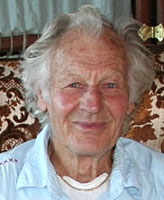
Dr Alex Costin
Dr Alec Costin is an ecologist who has more than fifty years experience in the research and management of ecological environments with particular emphasis on high mountain and high latitude ecosystems. After obtaining his degree he accepted an honours placement to study the Australian Alps. This was an auspicious career choice, as in the mid 1940s very little was known about the ecology of the area. In the early 1950s his research took him interstate and overseas until 1955, when he began a 19 year career at CSIRO Division of Plant Industry. After CSIRO he was a visiting fellow at the Australian National University until 1977.
Interviewed by David Salt in 2006.
Alec, you were born in 1925 in Roseville, on Sydney's North Shore. What are your memories of your childhood?
Of running wild, I guess. We lived in a Depression street of returned ex-servicemen, very few of whom had jobs, but we had a wonderful time because we were right on the edge of the Castle Cove-Castlecrag bushland and we came to know the bush intimately. I think I recognised every plant, but I never knew the name of anything other than when we wanted a bit of pocket money, especially at Christmas time, when we'd pick the flannel flowers, Christmas bush and Christmas bells which grew there in huge profusion. Not much bush is left in those parts now, though.
Do you think this love of the bush perhaps set your life course toward an understanding of ecology?
Oh, those experiences must have had some effect. I've never felt lost in the bush, even when I'm 'lost'. It's always been part of what's there.
What schools did you go to?
I went to Roseville Public School for my primary education, and later to North Sydney Boys' High School. At that time there were very few high schools in Sydney – a secondary education normally didn't go beyond third year, when most people went into technical courses. North Sydney High School was the only full high school on the whole North Shore, apart from the so-called Great Public Schools.
In 1942 you accepted a cadetship with the recently formed New South Wales Soil Conservation Service. Why did you choose to join that Service?
My main reason was that if I wanted any tertiary education I would have to get some support, and the most attractive support took the form of the very few Public Service cadetships sponsored by some of the main government departments in Sydney – Agriculture, Forestry, Water, Public Works et cetera. I was advised to have a go at one of these cadetships, and I applied for one in forestry.
In a subsequent interview as one of the people that were short listed, I was told that I'd missed out on the forestry cadetship (subsequently I've been very happy about that). However, Clunies Ross, who was Professor of Veterinary Science in Sydney University, offered me a cadetship in vet science. I wasn't interested in vet science, so then Sam Clayton, the Soil Conservation Commissioner, told me there was a cadetship available in agriculture but from the Soil Conservation Service of New South Wales. That's how I started my university course in agricultural science.
What was the aim of the Soil Conservation Service? Was it to help farmers?
It was, but actually it was the brainchild of Sam Clayton, the first Commissioner, who was a senior agronomist at that time with the New South Wales Department of Agriculture. In his opinion there was enough land degradation to justify a big soil conservation component in extension work of the Ag Department, but the department was not interested.
Then Clayton got a scholarship to the United States during the time following the dustbowl/Depression years where conditions were described in The Grapes of Wrath by Steinbeck. He came back all fired up that something had to be done. Again the department was not interested, but because of Clayton's friendship with the Minister for Mines the legislation was enacted in 1938 and the Soil Conservation Service did come into existence – at first with a very small group of people who had a lot of miles on the clock. And from the time I was given the cadetship, at the start of my agricultural course in Sydney University, I was already a fairly senior public servant – not that being senior meant anything to me.
You studied for a Bachelor of Science in agriculture at the University of Sydney.
Do you have any memories of that first degree?
Oh, lots of memories, especially of the introductory lecture that all the prospective first year agriculture students were given by Robert Dickie Watt, the foundation Professor of Agriculture. Essentially, he said, 'Look, agriculture is a service, a profession. If you're here to make money I don't want to see you here tomorrow.' This was during wartime and I think everyone felt a need for some giving, as well as getting, in what you were doing.
Initially I found things very difficult. For most males at that time biology was never part of the high school course – it tended to be science and maths – and so I wrestled with biology for the first couple of years, finding it very hard work. But after a while I started to enjoy it and to get on top of it. The course was, in the end, very fulfilling.
For your honours year you studied the ecology of the Australian Alps, didn't you?
Yes. I did quite well during my four years' pass course, and it was suggested by Noel Beadle, a lecturer in botany who was already a colleague of mine, and by Gordon Hallsworth, a lecturer in soils in the Agriculture Faculty, that I should consider an honours year in agriculture or botany. I really didn't have much idea of what I could or should do, but it had to be in the general framework of the course subjects in the Faculty of Agriculture. Then the Botany Department pointed out that I could have a go at the Australian Alps, where they said very little work had been done and where in particular virtually nothing at all was known about the soils.
That suggestion got the green light from Sam Clayton, who was already deeply concerned about the condition of high mountain catchments in New South Wales and had participated in quite extensive field inspections of Kosciuszko which led to legislation enacted in 1944, setting up the State Park there. And although there was a recreational basis for setting up the park, the primary reason for doing it was catchment protection, so that early legislation was soon followed by the first moves to reform snow lease grazing in the mountains. Clayton, then, was more than happy that I should start an honours year in an area that he himself was concerned with.
Had you had any experience of working in the high country?
None whatsoever. I'd only seen snow once, I think at Katoomba, and I had no idea of what was ahead. But I find that the more you get involved in a subject, the more it sucks you into it, and that was especially so from the soils and vegetation points of view. The country was just magnificent, and because almost everything that one looked at was new – there was so little known, and not much help in the literature – this was a real voyage of discovery. Almost everywhere you looked or anything you did, it was a challenge to follow up and find out a bit more.
It was a good time to be undertaking these studies, in that you weren't following in other people's footsteps but creating your own.
Absolutely. I felt incredibly lucky.
Following your degree, I think, you had to pay back your cadetship with service.
Oh yes, for every gift there's always 'a quart of blood and a pound of flesh'. The Public Service Board, which administered the cadetships, insisted that any cadets should remain in the service of the department that had succoured them for at least as many years as those of the cadetship. In my case it was more than five by the time I had completed an honours year. So I was stuck with the Soil Conservation Service – which didn't worry me at all. My first assignment was to open up the soil conservation station at Cooma, which was to be my base for continuing the survey work that I had started in my honours year.
Cooma would have been a fairly small town at that time, in the late 1940s.
That's correct. It was a small, very stable, very inbred, very interesting place to be.
And I think you had the first bulldozer in the area.
Yes. This was just post-war and there was very little earthmoving equipment in Australia, but the Soil Conservation Service managed to latch on to a couple of bulldozers. One of them was sent down from Goulburn, where there was a main regional office of the Service, to start up a bit of work around Cooma. In particular, there was some very badly eroded land at Bredbo, and what Sam Clayton was very keen to do – and he did it well – was to set up demonstrations in soil conservation on highways et cetera where the public couldn't help noticing them. So a little bit of my work was involved with that, but essentially I was meant to continue the vegetation, soil and land use surveys that I had started.
I believe that despite being regarded as a senior Public Service figure so early in your career, you were not all that good at filling in forms. But you did have a very good use for red tape.
I've never been good at filling in forms, but I used to preserve all my botanical specimens – which became the basis of an herbarium which is still in existence – with many yards of red tape. This was ideal for tying around the bundles of plant specimens. I really got into trouble once when I requisitioned for some 100 yards of red tape, because I was thought to be very insolent to run the Public Service down to that extent. And so I went.
With this capacity to deal with red tape, however, you were destined for senior management, weren't you?
Well, one day my life was interrupted by a call from head office to present myself in Sydney as soon as possible for an interview during which I was told that being very senior in the Soil Conservation Service I had to come to Sydney to accept some administrative responsibilities, because soon I might be sitting in another seat. I said I didn't like the idea of that at all, because I was very involved in my work and it was opening up to the extent that I had to stay with it in order to get the best out of it. As soon as I got back to Cooma I wrote my resignation and proceeded to look for employment that would keep me in that same sort of job.
Sam Clayton, who was head of the Service, rather regarded you as a protégé. It would have been very disappointing to him that you chose to resign.
Whether he regarded me as a protégé or whether, because I was one of the first cadets, he wanted to make sure that he got the best from me, I do think he was a bit upset about it. He certainly didn't do anything – it was perhaps out of his control – to lean on the Public Service Board to go easy on the amount of bond money I had to repay because I left the Service several years before my cadetship terms were up. But eventually he and I did reinstate our relationship.
In the early 1950s you benefited from a couple of research grants, the Lawrance Pawlett scholarship and the Australian Services Canteens fellowship, to maintain your studies of the high country. What were these about?
I had chosen not to go to that comfortable chair in Sydney because I wanted to finish the work I was doing, and in particular to carry out a huge backlog of soil analyses on soil samples that I'd accumulated. That required some funding, but rather than look for another job, which would have had its own constraints and requirements, I managed to get a couple of scholarships. The first one was the Thomas Lawrence Pawlett fellowship, from the Faculty of Agriculture in Sydney University, and I then worked for a while from the university.
Also, as I was enlarging my interest in high mountain ecology, it was suggested that I ought to see as much as I could of mountain environments elsewhere, and to work with overseas ecologists who were more familiar with them than I was. In particular, a visiting Swede, Professor Carl Skottsberg (the director of the Rijksmuseum) urged me to get over to Europe as soon as I could and said he'd arrange for me to get experience. I was lucky enough to get one of the well-endowed Australian Services Canteens scholarships that had just been initiated, and I was off.
I had no commitments other than a rucksack and the same suit of clothes that I wore all the time, so I could move wherever I wanted. That was a very enlightening time. Not only did I see what was going on in many of those mountain areas but I was able to work with some of the world's leading ecologists. This was invaluable to me, because ecology was undergoing lots of changes. Australia was still lumbered with the old-fashioned Clementian approach to ecology that was rife in North America for a long time. The ecologists in Europe, by contrast, were far more dynamic.
Also of significance to me, because I had already been trying to work in this direction, was that the ecosystem concept was just emerging – though not yet as a practical entity. Tansley, in Britain, was the first to use it, again more on a theoretical basis.
How did the high country overseas compare with Australia's high country?
That's a big question. As far as ecology is concerned, the overseas mountains were generally much steeper, much younger as the result of more recent uplifts, and also much younger as regards the development of soils et cetera. Mostly the environments that the overseas mountains presented you with had developed since the Ice Age, whereas most of our mountains survived glaciation. Although they were severely periglaciated, much of their periglaciated material still exists for vegetation and soils.
As far as land use was concerned, almost all of those mountains had been used for transhuman grazing for centuries and so many of them had developed a quasi-equilibrium, but almost without exception they were obviously grossly disturbed. Those in the Australian Alps showed very much less disturbance. For instance, most of the British mountains used to be forested but are now covered with heathland. Most of the European Alps used to be forested, and one reason they are so prone to snow slides and avalanches is that most of the timber is gone. So, from the point of view of land use and its effects, the Australian Alps were substantially different from most of those I worked in overseas.
Seeing these things overseas reassured me a little bit. In my reports up till that time, especially in the Monaro ecosystems book, I had trodden very lightly indeed, being very cautious about cause and effect and about the relation between high country grazing and catchment deterioration. I now realised I had been soft-pedalling, and this had a big influence on what I did later – not that I was trying to prove anything, but future work needed to recognise that the controlling factors in what had to be done were human as well as natural.
Back in Australia, your next move was to begin working with the Victorian soils authority, focusing this time on the Victorian high country.
Well, toward the end of my time overseas I was married, so I needed some money and wasn't able to freelance as much as before. I got a job with the Victorian Soil Conservation Authority to run their little research group, but my particular responsibility was catchment areas in Victoria, particularly the high country – essentially an extension of the Kosciuszko Park into the Victorian Alps. Because I had the background from Kosciuszko to work on, it was not very difficult (although a bit physically extending) to do a reconnaissance survey of the whole of the Victorian Alps in the time that I was with the Authority.
These were the same highlands as before, in effect, but you were now part of a different state jurisdiction. Was that of any importance to you?
I was more interested in the basic ecology, which was generally similar to that of Kosciuszko. The major land use difference related to the steeper terrain of the Victorian Alps, apart from the Bogong High Plains, and was reflected in the fact that cattle grazing, rather than sheep grazing, was more prominent in the Victorian Alps than in Kosciuszko. But essentially the associated problems were the same.
From a water catchment point of view, the big problem with all rangeland grazing – whether you start from an alpine area and go right through to a desert area or to a monsoon tropical area – is that the grazing is incredibly selective. In fact, in terms of plants and places that are frequented by livestock, the effective stocking rates can be considerably higher than the actual stocking rates on highly improved pastures where the whole pasture is grazed virtually like a lawn. The selectivity of rangeland grazing plays a major part in the initiation of degradation. And, as those degraded areas continue to be selectively grazed, the degradation grows.
As far as nature conservation is concerned, and national parks set up to protect nature in its natural condition, the selective grazing is unreservedly deleterious because it changes the botanical composition and structure of the very community that is the object of conservation.
So, whilst there were differences between the Kosciuszko environment and the Victorian Alps, in principle the problems were much the same.
After your Victorian experience, in 1955 you joined CSIRO. How did that come about?
It was rather serendipitous. By about the end of my first year with the Victorian Soil Conservation Authority, two or three years after the Snowy Mountains Hydro-Electric Scheme had started in 1949, construction work for the scheme was under way. So I took leave to pay a flying visit to the Kosciuszko region, especially the Island Bend-Guthega area where the Snowy scheme was actually getting going.
During that time I revisited some of my original sites on the Main Range, where right from the beginning I'd been very careful to keep permanent records – initially photographic records and later transect and quadrat measurements that were repeated over a long period of years. These sites had been taken out of grazing almost as soon as the Kosciuszko legislation was passed, so they were already protected from the main disturbing agent. But I found that in the few years since I first saw them the amount of degradation had increased incredibly, simply reflecting the fact that if environments are near the edge of stability and you just tip them over the edge, their condition will continue to go downhill.
I sent a short report with the photographic evidence on this to the Victorian Soil Conservation Authority. A copy was sent to Sam Clayton, who was very angry that someone from a state Public Service was working over the border, in another state. And a copy went to the Snowy Mountains Authority, which received it quite well despite the inclusion of some criticisms of the Authority's own works at the time. So for some reason – perhaps a feeling of some responsibility – I decided that maybe I should look for another job in the Kosciuszko region.
It is said that fools rush in where angels fear to tread. Anyway, I presented myself to Clunies Ross, who was by then chairman of CSIRO in Melbourne, and said I thought he should give me a job there. He must have passed this on to the Division of Plant Industry, because I was offered a job in the mountains with quite specific terms of reference to investigate the relations between vegetation and water yield. That was the start of many years of mountain work – some of which is continued today, although by other people.
How heartening to hear that a report you made to the Snowy Mountains Authority was received favourably, and acknowledged, and a national research organisation took up your suggestion that you could offer some value in a specific region. I can't see that happening in either case these days.
I can't either. I guess that, for one thing, the starting up of the Snowy Mountains scheme provided a big crunch because hydro-electricity generation relies on water availability. For another, there was still not much known about the high mountain areas, and even a little additional knowledge was better than none.
And that additional knowledge came mostly from your setting up the study sites. I imagine that at first you may not have realised quite how long they would go for.
That's true, but in CSIRO the main lines of work that I followed (with colleagues such as Dane Wimbush) were still the same: the relationships between water yield and the different vegetation types in the mountains. Water can be regarded as a crop, which like other crops has various components to its yield. The main components of water yield – quality, quantity and distribution in time – were examined in a series of experiments that ran for years.
The quality component of water yield in the mountains is affected essentially by soil erosion, so we investigated the relations between plant cover, infiltration and surface run-off. This was done through a series of experimental plots, with natural and artificial rainfall, and we found that the minimum cover requirements to get maximum infiltration and minimise soil loss in the mountains were roughly 100 per cent ground cover at approximately 10 tonnes per hectare. This concept of cover standards has been taken up all around the country now.
The quantity component of water yield in these mountains had previously attracted interest because this was a snow country environment. Much of the yield in the mountains is from snow, and one of the many things affecting it is simply surface roughness. The rougher and the taller the vegetation, the more down draughts it causes; snowfall comes with it and that snow tends to last longer among the rough vegetation, improving continuity of yield – and therefore distribution in time.
The quantity of water yield is related also to very finely divided rain and cloud, at near freezing point. This brought me into contact with CSIRO's early rainmaking experiments in the mountains, particularly in relation to rime – much cloud comes in as supercooled droplets, and whenever it touches anything under those conditions it ices out. So the vegetation there has quite a big effect in increasing both the amount of water yield and its continuity.
To translate this to catchment condition: generally speaking, a fairly natural vegetation with scattered trees to produce down draughts, turbulence et cetera, with a continuous grass cover underneath at the rate of about 10 tonnes per hectare, is the optimum for water yield. It took quite a long time to develop that.
In contrast to many lower environments, where the tree cover has deeper root systems and so tends to use more water than herbaceous cover, we didn't find there was any 'water penalty' in having trees in the high country. With its deep soils you've got a reasonable amount of soil moisture available to plants for most of the time, and retaining the native cover caused no offsetting greater loss by evapotranspiration.
So that tended to set a standard which might be related to whether land uses involving burning and snow lease grazing would satisfy the water yield requirements.
Was your CSIRO work in the mountains related entirely to water yield, or to conservation of that environment as well?
Well, although nature conservation in the mountains around Kosciuszko could perhaps be seen to start with the establishment of the State Park in 1944, at that time water and water catchment were all-important. It wasn't until the National Parks and Wildlife Act in New South Wales was passed in the mid-1960s that the emphasis began to change from catchment to nature conservation. And it just so happened that a lot of the work we did on water yield was of direct relevance to nature conservation, particularly because rangeland grazing is so selective in terms of plants – and of plant communities like sphagnum bogs – which are important for nature conservation. So the work had relevance for both water catchment and nature conservation purposes.
It was during this time that we realised the importance of having permanent reference areas and areas that we documented over a long period of time. Sooner or later people will say, 'Oh well, you say it was like that, but prove it. It could easily have been due to this or that.' The long-term vegetation measurements which Dane Wimbush and I started – and which Dane and, later, university people continued after I had left CSIRO – have proved extraordinarily valuable. Their use exemplifies a rather interesting change of emphasis from water conservation to nature conservation. Those long-term measurements have been exceedingly important to national park management, in so far as we have not only documented the changes that have occurred exactly here and there but we have been able to relate them to environmental factors like heavy snow years, light snow years, cold winters, the occasional drought.
Renewed attempts to increase snowfalls by cloud seeding (if they prove effective) could upset these long-term measurements, however, by introducing another variable.
I believe that at those long-term study sites you developed a number of innovative ways of capturing the information, such as by stereophotography.
That's true. To set this in context: the prerequisite to any ecological work in the field is equivalent to the three Rs, Reading, wRiting and aRithmetic. You've got to have the basics right. It is essential to know the plant species properly, to know the soils properly, and to know the main components of the environment that you are dealing with. This sort of knowledge accumulates as you go on.
Collecting the information is enormously time consuming and you have to streamline everything you do, in order to handle it. For example, during my time in the Victorian Alps, long-term recording work similar to the work I've been describing was beginning on the Bogong High Plains. But it was incredibly detailed, involving many, many university students, and we realised there was no way that with our very small resources we could handle that sort of thing up in the mountains. So we had to look for different techniques, although the detailed botanical work was still necessary.
In our CSIRO line transect work we developed methods of tape recording in the field and transcribing all the information in the evening, and we had one of the early computer people work with us so that this went onto computer tape. So all this is available now and it will always be available. And we realised that photographic evidence is very important to decision makers so Dane Wimbush, in particular, developed very simple means of stereoscopic photography on permanent quadrants.
Does this stereoscopic measurement give you a three-dimensional view of the area?
Yes. It just involves a frame on which a camera, say with a broad-angle lens a metre or more above the ground, can be moved from position A to position B to give a stereoscopic pair of photos which you then examine through an ordinary stereoscope. If you want to make it really quantitative you can superimpose any kind of detailed grid on what you are looking at, and map the changes in extreme detail.
The resulting reference material has proved absolutely invaluable, because even if people were to say that a particular spot was atypical of anything else, the facts of life could be shown to be that that's what was there, those are the changes that have occurred, and that's where it is at the present time.
Did any further research avenues open up from your mountains work for CSIRO?
Yes. From the initial survey work, the catchment work, the detailed quadrat and transect work, there were all sorts of spin-offs – the paragenesis effect of periglacial activity in soil formation, the Kosciuszko Alpine Flora which a group of us were able to bring out to make our knowledge of the plants more generally available, and many other examples. I think many of my former colleagues would agree with me that this was a very good feature of working in CSIRO at that time. Of course you were expected to do what you were employed to do, but there was plenty of scope and encouragement for taking this avenue, and another one, and another, provided the extra work was vaguely related to the main job.
That is how I got involved in Quaternary ecology and some of the earliest carbon-14 dating that was done in the mountains, which established the general contemporaneity between glacial and post-glacial events in the Australian Alps and in the Northern Hemisphere. That was a pretty remote offshoot from the main work, but it all started with the recognition that some of the soils were deep peats, and some of those peats obviously were pretty old, being on glaciated or periglaciated surfaces. And there were many other cases like that, for instance the role of atmospheric dust coming in from the dry parts of Australia to the mountains. Sometimes the snow is quite red; in drought times out west more comes in than during good times. This is one of the important sources of particulate matter in the mountain soils in the Alps, and people are investigating the possibility of using the amount of these deposits in some of the peats deposited year by year as an index of aridity in drier parts of the continent.
You said that eventually you reinstated yourself with Sam Clayton. How did that come about?
By the time I went to the CSIRO and resumed my work in the mountains, the Snowy Mountains scheme had started, the snow lease controversy was on, and my work became involved in the controversy.
During that time there was one inspection after the other, including several by senior New South Wales public servants and even one by George Enticknap, the Minister for Conservation – who had to decline participation in the horseback part of an inspection because he had only one leg, having lost the other in the First World War.
Sam Clayton kept away from me during all those inspections but one crucial inspection, probably the one that clinched the final removal of grazing from the Kosciuszko National Park, was made by the Catchment Areas Protection Board, of which Clayton was chairman. We spent most of the week in the southern and central parts of the Kosciuszko park, the last part of the inspection being in the north of the park around Rules Point and then Currango Plain. On our way out, I took them over to the Brindabellas – and although that's physiographically very different from the Kosciuszko area, there was a particularly good bog, the Ginini Bog, which we visited.
The contrast between the Ginini Bog and all of the bogs and swamp communities we had seen in the Kosciuszko park was overwhelming, reflecting simply the fact that the Cotter, because of human health considerations related to the water supply, had been taken out of grazing and public occupation ever since Canberra was set up, so the Ginini Bog was in a pristine condition. There was good regeneration of snowgum and other things too.
That inspection decided the day as far as the Catchment Areas Protection Board was concerned. And, humorously, I can still remember that big hand thumping me on the shoulder as Clayton said, 'Alec, you can call me Sam.' So yes, I did reinstate myself.
I think that people like Clayton are extremely important because of what they stand for. In those days many of the state and federal departments – especially those concerned with resources – had permanent heads who were outstanding in their professions. They stuck to their guns; they not only believed in what they were doing but tried to achieve what they wanted done. In a sense they were above politics. You know, for generations we've had a battle between bureaucracy and politics. At that time, I think, the bureaucrats were on the winning side; these days certainly it's the politicians who are winning, because there are very few permanent heads and because department heads often have very little background in the profession they're associated with. Clayton was a good role model, in that he really believed in what he was doing and he tried to have it done.
When you started at CSIRO you headed up the Alpine Ecology Unit, based up at Island Bend.
That's true. It was the central camp that was responsible for the Guthega development, the first development in the Snowy scheme. Island Bend doesn't exist now, though.
Living and working at Island Bend, did you feel isolated from the rest of the world?
That's a very interesting question, which bears on much of what we've been talking about. There had of course been earlier work than mine at Kosciuszko, especially by geologists. Most of it was hit-and-run work where a person is up there for a few days, does a bit of work, and bang, there's a publication on it. This was the way of things for a very long time.
But as soon as someone was working there and could take visitors around, the feedback that occurred was incredible. I had so many visitors I didn't know how to handle them. More and more came, not only from Australia but from overseas, swarms of them. The overseas people, especially, were very interested in coming to a place whose counterparts they were familiar with in the Northern Hemisphere. There is a great paucity of high mountain environments in the Southern Hemisphere in the mid latitudes that the Snowy Mountains occur in, those mid latitudes being mostly ocean, so this very small amount of Australia has attracted a lot of attention. And the mere fact of having someone there that could help them get around resulted in a big spate of scientific work all over the place. It didn't in any way reflect the quality of the Alpine Ecology Unit but simply the fact that it existed. It is a great pity that it no longer exists, but other organisations are now well involved.
Not all of your 19 years with CSIRO were spent at Island Bend. You actually lived in Canberra for most of those years, didn't you?
Oh well, we had six young kids that were still babies, it became unsustainable and I was transferred to Canberra. Dane Wimbush and another offsider continued at Island Bend for quite a long time, and then occupied premises supplied by the National Parks and Wildlife Service at the foot of the mountain.
The Canberra move did me a lot of good. I still commuted to the mountains almost every week and participated in what was going on, but what I hadn't had before then was working in a group of scientists. In particular, the editorial system, the critical review that went into papers prior to publication in Plant Industry, was exceedingly good.
What are some memories of your time at the Black Mountain laboratories in Canberra?
They relate largely to my exposure to other activities in which I participated. One of those was catchment work at Ginninderra, where most of our grazing work was carried out, looking at cover standards in the same way as we did in the mountains. This confirmed generally that, say in the tableland-type environment, the typical grazing environment, you need to have at least 70 per cent ground cover before you've got effective soil protection. And this just stands to reason, because at such cover rates the vegetation is essentially the continuous network and the bare ground is the discontinuous part of the system, and you have a reasonably stable situation. But once the cover is reduced below about 70 per cent, it is then the bare spaces that start to become the continuous parts of the system, and that's when the trouble really sets in. In effect, that's what happened right up on the top of Kosciuszko: once a little bit of bare ground was exposed, the causative processes continued to enlarge it and soon produced a greater expanse of bare ground. Continuous selective grazing has that effect as well.
We also examined the longer-term sustainability (a word which I use rather apologetically) of current improved pastures in the Southern Tablelands environment. We had to measure everything that went in to the experimental area at Ginninderra and everything that came out of it, and because we wanted to make it bigger than on a plot scale we had to instrument a catchment there of several acres, setting up water measuring equipment combined with automatic and manual sampling equipment to measure suspended sediment as well as nutrient losses.
The long and the short of it was that with a fairly good stocking rate of about five dry sheep equivalents to the acre, and given a well-established phalaris/subterranean clover pasture – which is not the most productive pasture but is certainly a sustainable one – that sort of grazing system seemed okay. There were minimal losses of nutrients. The loss that was most serious then, and seems likely to be most serious in future, was simply the losses of phosphorus if superphosphate was applied just before a heavy rain, when it would wash off. And bear in mind that most phosphate in soils is fixed in the surface soil. Any area that is prone to surface erosion is therefore prone to losing a lot of its phosphorus along with the surface soil.
That work had interesting side effects. Work on Scrivener Dam was proceeding and we had queries from the National Capital Development Commission to the effect of, 'Good God, when we've built this dam, is it ever going to be filled with water?' On the basis of some of the catchment results when big rains gave big percentage run-offs we simply said, 'No worries, mate. You'll wake up one morning and the dam will be full.' And that's just how it was.
Another activity in those Canberra days was the development of the Australian rangelands research program, which was meant to be a wonderful research project that brought together not only CSIRO research but research in universities and in the various state departments, like the Queensland Department of Primary Industries – all groups involved in arid zone research. It started fine, with a lot of cooperation, but inevitably the power seeking happened and it went off in the wrong direction. Participants lost interest and although part of the rangeland program continued, it never lived up to its expectations.
One of my other jobs was to reorientate the staff of the Riverina Irrigation Laboratory from irrigation research to dryland research. That was successfully done, despite quite a lot of trauma in the staff, and it resulted in some extremely good work on grazing diet selection. The principles are the same whether you're dealing with arid zone areas or with alpine, but some very good dryland research work came out of that.
I think some of your activities at CSIRO have carried over to later years.
That's true. One example was in relation to national parks in New South Wales. Because of my continuing efforts in Kosciuszko, I became a member of the Kosciuszko National Park's advisory committee, and continued with that long after I left CSIRO. Also, in about the mid to late '60s, the New South Wales National Parks and Wildlife Service was set up under Tom Lewis, the Minister. Lewis was very effective on the Kosciuszko committee – he knew what he wanted but was always ready to listen to reasons for doing something else. And one of the first things he did was to ask Harry Frith and me, 'How can we best get a representative group of parks set up in New South Wales?' We told him he could do it quite quickly if he had two or three people on it whom we named, but he would have to accept that he was getting an answer that was 90 per cent correct rather than 99 per cent correct. This proceeded like a house on fire, and the meetings we had were very effective indeed – until every Tom, Dick and Harry in terms of interest groups wanted to get on the committee. In no time flat it got so bogged down that no decisions were possible because there was always something else that needed investigating, investigating, investigating.
One of the huge tragedies of that, from a conservation point of view, was the way the woodchip business got off the ground in New South Wales. Geoff Mosley was on that committee too, and Geoff and I had the job of attempting to define the coastal environments in New South Wales that merited coming into the National Parks and Wildlife system. We could do this quite readily from parks we knew, but to be on the safe side we then had to look at all the areas which were still Crown land, and because they were so important in all sorts of ways our recommendation simply was, 'Get the lot. Have all of the still available Crown lands.'
That was the time, however, when the meetings were starting to bog down, and that's when woodchips arrived. Not only state forests but other areas of uncommitted Crown land were brought into the woodchip system. And that's how New South Wales lost much of what could have been a magnificent belt of parkland, right down the coast of New South Wales.
Another important activity which continued to be important after I left CSIRO was an endeavour to look at a relatively undeveloped area, within stone's throw of Canberra, which was of value for water production and still had some degree of flexibility as regards current and future land uses which could conceivably have some effect on water yield – if water yield were given a high priority. The area that more or less selected itself was the upper Shoalhaven catchment, where the Sydney Water Board for donkey's years had been progressively buying up land, adequately compensating farmers, and leasing the land back to them until such time as the dam was built. That dam has now become a no-no. It was to be built in the 1990s but the waters of its tributary zone are now being utilised to supplement Sydney's water supply.
Anyway, it was an ideal area to examine the effects of different land uses under different climatic, soil and slope conditions, in terms of water yield.
Another activity took place at about the time when systems ecology started to take off, when we appointed one of the first systems ecologists outside the CSIRO computing section. We first got a student of Bill Williams, one of the early people in the CSIRO computing system, and subsequently we got Alan Ashton. Using the old-fashioned computing techniques then available, they were able to develop realistic models incorporating all the components of the landscape, climate et cetera, in terms of water yield. And we were able to test this quite well against actual run-off data held by the Sydney Water Board. This was quite a success story.
As in the Snowy days, essentially we examined water as a crop, and one could show quite definitely that, in certain environments, its value as a crop exceeded the value of developing those particular environments for pastures or pine forests. It was better to leave those environments not only in their existing eucalypt conditions, but – this is the interesting thing – with a lot of the semi-cleared land and so on just as it was. The low carrying capacity of its pasture was offset by a relatively low water use and a high water yield. Those recommendations would still stand, because the Water Board was pretty keen on them at the time, but I don't think it will ever come to anything more than an academic exercise, because the economic pressures to develop have been too strong.
That group was, effectively, broken up during changes in the Division of Plant Industry. A lot of the writing up still had to be done, and it's one of the things that I was able to continue with later.
You say the economic pressures to develop made that, in effect, an 'academic' exercise, yet it sounds like an 'economic' one. You were considering opportunity costs of different land uses, which I would have thought were specifically what government would be using for its decisions.
Well, I guess it was an academic exercise in terms of individual farmers, who could always push down a few more trees. That was still a time when the application of superphosphate was cheap because of the superphosphate bounty et cetera. And as long as you can make a quick quid, there's always a case for doing it.
All this sounds like an analysis of ecosystem services, to use the current term.
No-one called it ecosystem services at that time. But I was brought in contact again with Sam Clayton by an ecosystem services sort of issue. It was in the days when Canberra's water supply was getting dirtier and dirtier after heavy rains, and more and more attention was given to whether pine forests in the ACT were contributing to this. Of course, the forestry lobby said, 'No way,' but other people weren't so sure.
Pine forestry in the ACT started essentially as a rabbit control and weed control measure round Uriarra, where there was a lot of eroded land. But its success there led to its progressive extension into the Cotter catchment. Whilst the gentler slopes of the Cotter catchment were being developed everything was okay, but when there were no more of the gentler slopes the development got onto steeper and steeper slopes, such as under Mount Coree, where there was some horrendous erosion. By contrast, I have been told that before the Second World War there was no problem in using water direct from the Cotter for laboratory work, it was just so good.
Anyway, Sam Clayton was called down from Sydney and I went in from CSIRO, and we looked at quite a lot of these areas. I had an MSc student, Don Gilmour, working with me, using the same techniques that we used in the Snowy to measure run-off and soil loss, both with artificial rains and with natural rains, and believe it or not Don Gilmour's data was the only really firm data showing where most of the soil was coming from. In fact, Professor Teakle, the then Professor of Agriculture in Brisbane, used it when he was called down to Canberra by the NCDC as their special consultant to look into Canberra's water supply. And that data has, I think, helped say no to any more pines in the ACT – or at least, if there were to be more pines, to look elsewhere to plant them.
In all, that part of my CSIRO life was satisfying in some ways, because it was somewhere between research and application. You could see that what had been found on a small, experimental scale made sense in the real world, was worth doing.
You left CSIRO in 1974. What lay behind that departure?
I was never a good administrator, and I should not have gone into administrative positions. I think that sums it up. It was also at a time when the Division was in something of a turmoil, in that it was very large and there were quite disparate groups working under the same broad umbrella. It was also a time of extreme competition for positions and resources. A lot of CSIRO's research was being done with industry money, particularly wool money, and people were in permanent positions that depended entirely on industry funds – until wool money started becoming very hard to get and an awful lot of competition for funds and resources developed.
Without in any sense having a chip on my shoulder, I must say that ecology was not then regarded as top-rate science. There were strong pressures all the time within CSIRO to reuse ecology positions and resources, and particularly to close down or at least reduce the extent of field activities, which are usually more expensive than entirely laboratory based ones.
It was certainly that competitive atmosphere, and the realisation that ecological work was going down the drain, that led to some illnesses that I had. And so, when the medical officer said I'd be better out of it than in, I left CSIRO.
For the next few years you were a Visiting Fellow at the Australian National University. I believe this was a time of consolidation and restoration.
What put me on my feet again, both physically and mentally, was the fact that my late wife and I took on a 1500 acre farm in the upper Shoalhaven catchment, near where our group had done the systems work in conjunction with the Water Board. The extremely hard physical yakka that that involved, together with the fact that when a problem arose I couldn't find someone else to fix it but had to do it myself, was of great benefit to me.
Something else occurred which was very satisfying and helped restore my faith in myself a little. In taking on the property, I developed it according to the accepted prescription of entire farm planning that had been pushed for a long time by the Soil Conservation Service, but with the additional constraint of superimposing water conservation, and especially wildlife and shelter conservation, needs upon the soil conservation that up till that time had been the priority consideration.
The simple, effective way of doing that is still the McHarg overlay technique, where you have a map showing the soil and slope resources of the farm and you superimpose a map showing the areas best suitable for agriculture, then superimpose one for pasture, and so on. It's simply a restatement of the land use capability approach that's been around for a long time, except that instead of only one possible land use, agriculture, having top priority, every land use has top priority if it is most suited to the particular site.
This is really the way we approached national parks, beginning with a zoning plan at Kosciuszko. We had to incorporate hydro power and also certain tourist development, but it was possible to stratify the whole area in terms of those uses for which it was not only most suitable but often the only site that was suitable. So this is in a nutshell what I tried to do on the upper Shoalhaven. And it seemed to work.
This is where the shot in the arm came. I suddenly found, to my complete surprise, that I'd been awarded the prestigious McKell Medal for outstanding work in land and water conservation in Australia. That bucked me up quite a lot.
So it was a time of physical reclamation and restoration, and I was soon again dealing with much of the carry-on work from Kosciuszko. I was able to do quite a lot of work finalising Kosciuszko Alpine Flora.
At first it was Donald Walker, in the ANU Research School of Pacific Studies, who gave me a room to do that. I'd be in for a couple of days a week and up at the farm for the rest of it. Frank Fenner later enabled me to work in the Centre for Resource and Environmental Studies, CRES.
So I was able to finalise quite a lot of the work that I'd started at Kosciuszko. If it weren't for that break, I don't think any of the long-term transect work with Dane Wimbush would have ever seen the light of day, because Dane by that time had been transferred to Canberra and pulled onto other stuff. So it was a bit of luck, actually.
It is the writing up that really makes it of worth, isn't it?
Absolutely. A very interesting outcome while I was at CRES arose because at that time the late Colin Williams, a wonderful bloke, was the soil chemist in Plant Industry and one of his main interests was phosphorus. Most phosphorus is fixed in the surface soil, and increasing intensification of agriculture and pasture causes more and more of the goodies to become increasingly concentrated in the topsoil, which is the vulnerable part of any soil erosion that might occur.
So Colin and I brought out Phosphorus in Australia, which was essentially a book of specialists in different branches of phosphorus – natural occurrence, mining et cetera. If there is one resource that is very limited in nature but which we are using very fast, extravagantly and probably irreplaceably, it's phosphorus. In fact, a book by a colleague of mine entitled Feed or Feedback takes phosphorus as something that might stymie world agriculture in the future.
Also, I have mentioned the Shoalhaven work which was discontinued before it had been finally written up. I was able to incorporate that, using a fellowship from the Reserve Bank which I took out at CRES, to produce a publication on the Shoalhaven with the title Harvesting Water from Land.
Another important outcome at that time, although the first part of it had been done when I was still in Plant Industry, was a very good book by a group of us simply called Conservation. It was based on a series of TV productions outlining the situation with respect to soil, water, national parks, wildlife et cetera – the main natural resources in Australia. The series went off very well and the book was widely used in schools. A second edition was brought out when I was with Frank Fenner in CRES, and we were lucky enough to have a chapter in it by Nugget Coombs, who looked at conservation from the social aspects as well as the more particularly scientific aspects that we had looked at it from.
That time at the ANU was great. Even though it was only a stone's throw from where I used to be in Plant Industry, I wasn't cluttered up, and I enjoyed that enormously. In fact, I had to make a big decision about whether to stay on at CRES after Frank Fenner retired as Director and a new Director, Stuart Harris, the economist, took over. I was tempted very much to stay on, although my interest in the farm was the thing that was pulling me. By that time I'd had to sell the farm at Braidwood and I'd moved down to where we are now at the coast, at Bodalla.
The thing that would have kept me, because I tried very hard to get it off the ground – and a couple of years ago I tried again – was one of my dreams in ecology. The object was to have a group of senior ecologists that knew a bit about every one of Australia's main land use environments. We were building a small but pretty good group of specialists. Len Webb was the Australian expert on rainforests; I knew a bit about the high country, Richard Groves about grassland, and Edmund Gill about forests; John Leigh had come in from Deniliquin on the semi-arid and arid zone; we had Ted Moore on temperate woodlands, and Ted Coaldrake on coasts. By means of a series of seminars that would probably go on for about 10 years, each specialist in his field would organise appropriate symposia, the outcome of which would be, 'That's the way it is, and that's what the best scientific, considered opinion thinks we ought to be doing about it.' It would have provided a consolidated picture of land use in Australia.
Well, the group split up and it didn't come to anything, but if it had come to something I would have liked to stay on. There was a lot of support for it, but not in the right places. I think it's an objective that is even more necessary now than it was then, because more and more irreversible steps are being taken in resource use every day now.
Frank Fenner was head of CRES when you were there. But I believe your association with Frank went back well before that time at ANU. Can you tell us a bit about it?
It went back a long time, perhaps even a bit earlier than my first acquaintance with Frank, because when I arrived at Island Bend, soon followed by my wife and four babies and another two shortly to arrive, there was a very kind visit by wives of CSIRO and ANU people including, I think, Bobbie Fenner. But very soon after that I first made my contact with Frank – on the rabbit issue, of course. Frank and others working in his group considered rabbits that had never been exposed to the myxoma virus to be necessary for further experiments, but pretty well all the rabbits that you could catch anywhere had been exposed to the myxoma virus somewhere or other. There was a possibility, however, that as the main vector, mosquitoes, petered out with altitude, if you could find populations of rabbits high up above the mosquito level you might get the virgin rabbits that had never been exposed to the virus. And that's how my first association with Frank started.
When snow fell in the high country, rabbits tended to go up the roads and tracks and establish, but big snow would wipe them out. A huge snow in 1956 – I don't think there's been a bigger one since – covered the ground with deep snow, but on this occasion a couple of warrens had managed to dig themselves out and the rabbits were still there. I was able to identify these with Frank, and so he came up with his blokes to catch a few. It was one of the amusing nights of my life when big fellows with butterfly nets and torches kept disappearing down wombat holes, trying to chase rabbits to take back to Canberra. But it was a successful time, Frank got his rabbits.
Almost right from the beginning, then, Frank was at least in the wings with regard to land use problems in the mountains, and he always kept very close to that issue so indirectly I was associated with him.
The next main association was just before CRES was set up in the ANU. Fred Morley and I – he was, like me, an assistant chief in Plant Industry, but more on the agronomic side – had a phone call from Margaret Mahoney, Frank's secretary in those John Curtin School days, to come over for lunch with Frank. Our very interesting conversation with him concerned the university's idea that it might set up a school of agricultural sciences, cashing in on the availability of a large amount of good research work in the CSIRO laboratories at Black Mountain and at Wildlife. Frank said, 'Well, the university's considering this, but what do you think about a school of natural resources instead of the school of agricultural sciences?' Fred was quite a good conservation thinker and we both said that sounded terrific.
I came closer to Frank because of my involvement in some early Academy of Science reports, but it wasn't until I'd left CSIRO, gone to Ballalaba on the Shoalhaven and then started to get my work going again that I really got to know him. That was when he invited me to go over to CRES and to make use of its facilities, at first to finalise the Kosciuszko Alpine Flora, but also to do all the work on the Shoalhaven, because that's where the Reserve Bank fellowship was to be held.
One reason why CRES was so good for that work was that one of its early appointees was Peter Young, a wizard in systems ecology, and he left behind a couple of very good people who were there when I came. But I then had some of the most intellectually difficult moments of my life; I just couldn't get into the Shoalhaven work. I remember saying to Nugget Coombs, 'Look, I'm just not going to handle this, I can't seem to break it. I ought to give the money back to the Reserve Bank, because they're not going to get anything out of this.' He said, 'Oh no, stay with it. It'll be all right. And anyway, the computing side is starting to come out.'
So I stayed for another couple of years, and because I was pretty well established then I enjoyed it. I was able to do other things as well, including the Phosphorus in Australia. And I got to know Frank a lot.
You have mentioned Nugget Coombs a couple of times. What did you think of him?
One reason I value that time at ANU is that it brought me in contact with Nugget Coombs, who was a great bloke. We had a joint secretary who ruled us both, and she was absolutely marvellous. Nugget has helped me a lot in my life, particularly in my scientific life, because he once said to me that his guiding principle when he was Governor of the Reserve Bank was, 'Do I turn left or do I turn right?' He said, 'I'm not worried about the peripherals and the ins and outs. I know that if I am generally pointing in the right direction, I'll be able to home in anywhere I like within an angle of 180°. But if I go in the opposite direction, there's no way on Earth I'll ever be able to turn 360° and start again.'
For me that's an important principle in science, particularly in ecology, because it is a broad picture. There is so much detail in ecology that you can get flummoxed with, yet much of the ecological work now is done with detail and the detail becomes important. You proceed both by refining the detail and by enlarging the picture – it's not that one is mutually exclusive to the other – but the essential thing is to get that broad picture right and to know generally the direction in which you're heading.
One of the little papers I was involved in is simply called 'Replaceable and irreplaceable resources and land use', and tends to prioritise the resource that you're dealing with in terms of whether there's plenty of it so to all intents and purposes it's inexhaustible; whether there is a limited amount of it and once you've used it you've used it; or whether there's a limited amount of it but you can keep recycling it and using it. To look at resources in those basic terms helps in deciding on those steps which can be taken with safety and those steps which can't. It certainly reinforces the precautionary principle in all resource use: if you're in doubt, don't, until you really know what you're talking about.
A key scientist in the original myxomatosis work with Frank Fenner was Francis Ratcliffe, head of the Wildlife Survey Section at CSIRO. I believe he was a very good friend of yours as well, and you both had a lot to do with the establishment of the Australian Conservation Foundation.
Yes. Francis was a very good friend before the embryonic days of the Australian Conservation Foundation. As with Frank Fenner, it was really the rabbit business that brought Francis and myself into contact. Francis was overwhelmed by the spread of myxomatosis, which strained all the resources he had in the Wildlife Survey Section when he just wanted to be working on Australian native fauna. So occasionally he would come up to the mountains, more often than not with Lindsay Pryor, who was then superintendent of parks and gardens and became Professor of Forestry at the ANU. Lindsay would come to look for hybrid eucalypts, and Francis just to get away from rabbits. So I first got to know Francis more or less in his escape role, getting away from the responsibilities of rabbits and into work that he liked doing.
Soon after I came to Canberra, Harry Frith took over the Wildlife Survey Section and Francis came back to his old haunts, having been originally within the Division of Entomology. He was given a tin shed midway between the Entomology building and Plant Industry, and we often used to meet there to have lunch and Francis would talk about his hoped-for popular movement of conservation in Australia. He was very much guided, I suppose, by the achievements of the American Conservation Foundation, and he spent his retirement in that tin shed trying to work out ways and means of getting this off the ground in Australia. I think Francis needed someone to talk to, and quite frankly there weren't many other people around for me to talk to either, because there weren't many people professedly in conservation at that time.
It developed that perhaps the American model was the way to go, and a planning meeting in Sydney was arranged with the head of the Commonwealth Bank of Australia plus quite a few wealthy VIPs; I think Garfield Barwick was there early in the piece; and we had Geoff Downes, who was one of the few people really into soil conservation, and Dunbavin Butcher, from Victoria. The intent was to raise money, but shortly afterward the Commonwealth Bank man died and without his initiative the thing lapsed.
Francis, however, kept going at it. His first assistant to help him with his writings and what have you was a retired major – an Army man, an adventurer and great in the Outward Bound movement, but offering no real intellectual contact with Francis. So that didn't work at all. Later though, Geoff Mosley (who had recently completed his PhD on wilderness in Tassie) came in to give Francis a hand.
With considerable difficulty the ACF did get going, with funding from the federal government for several years until such time as the Foundation, through its subscription membership, was able to develop its own revenue. At first it had no accumulated work on resource issues to make a good impact on the public. So Francis' idea was to take known success stories of resource issues and publish them as 'viewpoints' to get through to the public. The first viewpoint concerned the Cape Barren goose – the way cray fishermen used it for bait et cetera, and the success story that, if there is a reserve where the habitat is looked after, the habitat will look after the species. A bit later Geoff Mosley and I did a viewpoint on the Australian Alps. So this was using information that was already available.
But the ACF didn't really prosper. It moved from Canberra to Melbourne but was still not regarded as a popular organisation and didn't make much of a public impact. The first director, Dick Piesse, had considerable experience in tourism but never hit it off with Francis.
In Canberra I was asked by Fred White to have lunch with some people from CSIRO head office to discuss the ACF. A group of very senior public servants were also there, including one from Treasury who said bluntly that the ACF had had its money and from now on had to stand on its own feet. Fred White asked me to sum up what I knew about the ACF and whether I thought it should be continued, and how. I said, 'It's obviously trying to do a job that has to be done in Australia. It's something that the federal government should be looking at. And to look at it right now it would cost the government far more than the value of the grants that go into the ACF.' The government did then give the money for them to continue, which the subscriptions and the expired grant hadn't provided.
At the next annual general meeting, in the Academy building in Canberra, Garfield Barwick was in the chair and when the time came to elect the next director, he said in his usual autocratic way, 'There'll be no other nominations. Mr Piesse will be director again.' But Geoff Mosely – who was already assisting Francis and working with Dick Piesse as well – was nominated on the spot and then elected virtually unanimously. I think people realised that he knew about conservation and was one of the leaders in wilderness issues who could really do some good.
From that time on, Geoff threw himself into the ACF and made a huge difference to it. I'm still closely in touch with him. We both tried repeatedly to get the Australian Alps listed as World Heritage, and eventually it started to become a popular thing and did get off the ground.
You were made a Fellow of the Australian Academy of Science in 1980. The Academy is our body of elder science statesmen, the Brains Trust for Australia. Could it fulfil the role of the expert group you wanted to form?
I don't think it has enough ecology in it. It has a marvellous array of specialists, an incredible strength of specialists, but I don't think ecology has been a particular highlight of Academy activities in recent times. In retrospect rather disappointedly I think I was able to do more before I joined the Academy, in terms of those activities that the Academy took on, than after. I think one of the reasons is that in the early days the Academy took up issues as issues rather than issues in terms of specialities.
An example arose while I was working with the CSIRO at Island Bend. One of the early conservation activities of the Academy of Science was a report by an Academy committee on snow lease grazing in the Victorian and Australian Alps, including Kosciuszko, and on the interests of the Snowy Mountains Authority and the possible effects of the Snowy scheme on catchment and national park values.
A group of us soon followed up one of the report's suggestions, that the completion of the Guthega project should be closely re-examined because indisputably it would cause quite severe, irreparable damage to some of the above-treeline parts of the park. This was opposed by the Snowy Mountains Authority, but Otto Frankel as chief of the Division at the time, and Fred White as chairman of CSIRO, didn't give me the sack because of it. And behind the scenes they supported a person's right to speak out on what they believed in.
By the way, I believe this was another outstanding feature of working with CSIRO at the time. If a person had something worth while to say and they had the evidence to back it up, okay, they could have a go at it.
While I was with CSIRO in Canberra the Academy of Science took an important role in the International Biological Program with respect to identifying the main plant communities in Australia, as a basis for their conservation. Ray Specht was the convenor of that, but I was convenor of the New South Wales group. That operation of the Academy I think was very successful.
You have referred to leadership roles being played by scientists who know about natural resources, ecology and ecosystems. What role should scientists and organisations like the Australian Academy of Science and CSIRO have when it comes to Australia appropriately managing its natural resources?
They should have a very important role. And I think Australian science is doing its duty in that role when it comes to some of the global issues of natural resources, like global warming. Many of the most important issues in natural resources concern almost the day-to-day decisions that are made in their use, but there is an irreversibility principle that once something is done, theoretically you can undo it but practically you're committed and you've got to go with it. I think there is an absence in Australia of extremely well-informed groups of scientists that at short notice can speak out publicly, without necessarily being asked as the Prime Minister's Chief Scientist seems to be. There is a big need for select groups of senior scientists to be on tap, their prime role being to respond to day-to-day issues; if they don't have the information themselves, they have the contacts to get it immediately – even if they have to look all around the world.
My colleague Robert Carrick (long since dead) called what he visualised for CSIRO and the Academy a 'phantom Division': a small group of very good people, the prime purpose of which is to give scientific information at that stage of knowledge, not pretending that's the last word but saying, 'This is the state of knowledge about this right now,' without having to set up committees that go for years before getting anywhere.
I think that's a role that even the Academy, with all its specialist scientists, could well consider. It's got the infrastructure, it's got a big secretariat, and this phantom group would not necessarily consist of the same people all the time. People could almost nominate or the Academy could second them, or, when a particular issue comes up, the Academy could go to two or three people and, for that issue, say, 'We want an answer in the next week. What's the best you can do?' I feel there is a big need for the expression of scientific opinion on day-to-day issues as well as the more remote global ones.
What do you see as your greatest contribution in your life's work? Is it those long-term data sets that you established, or perhaps the synthesis afterwards?
That's hard to say, because people have different opinions. I'm struck by my sheer good luck that when, almost by default, I went into ecological work in the Australian high country, virtually nothing else had been done. It was an open field. Later it attracted interest simply because some work was being done and someone was there. There is now a remarkable increase in the amount of effort that goes into getting information. So I suppose having had some role in achieving that is good.
Something came right out of the blue concerning that original book of mine on the ecosystems of the Monaro, which has all sorts of things wrong with it – not so much in the content except that that is obviously grossly incomplete in many places, but in the quality of production as an early Government Printer Sydney job, with photographs that were taken with a little Box Brownie camera and leave much to be desired. Not much more than a year ago a group of my colleagues got together and, quite unknown to me, had this book republished, just a limited edition of about 50 or 100 copies. It was a shot in the arm for me, that people would think that worth doing.
Oh, I have been lucky, despite a lot of heartache in it, that I happened to arrive in the conservation scene when it was just coming into its own. A lot had happened before that, for instance in parks: we had early parks that were there because of their scenery. Most of the earlier work on plants and animals was based on the conservation of individual species, with all sorts of regulations against picking wildflowers as a protected plant, and animals et cetera. But it really wasn't until during and after the Second World War that ecosystem ecology started to emerge, and almost whatever natural resource you're dealing with now, you have to look at it in an ecosystem context.
To that extent I've enjoyed my involvement in work that might appear to be primarily for water, or for soil conservation, or for nature conservation, because it is really part of the whole system. And you need to see it in that context, not in order to get it right to the last little angle but at least to start off getting it 180° right. Having gone in that right direction, you can home in, change direction. It's a good position to be in.
Are we, as a nation, going in the right direction in natural resource management?
No. Take soil conservation. Maybe 30 years ago, and then 20, the Standing Committee on Soil Conservation in Australia brought out two reports documenting the extent of soil degradation at each of those times. That was a powerful document saying how much needed spending on it and where. No action. Now we don't even have Soil Conservation Services. They have been amalgamated with these rather amorphous departments of natural resources, where the identity of the profession is lost. On the one hand, I think more for bureaucratic and political reasons, we seem to be more aware of the whole natural resource system, because we do have departments of environment and of natural resources. But I do believe that increasingly they have been emasculated and deprofessionalised, in terms of the key groups in them.
You can say this about water. In New South Wales, just as we used to have Soil Conservation Service, so we used to have a Water Conservation and Irrigation Commission. Okay, it was primarily an engineering thing, but it knew a lot about water. Some of those people still exist, as do some of the soil conservation people, but not as professionals in their own profession. What we're seeing happening in water right across Australia – and this is the key answer to your question, I think – is the privatisation of natural resources. In my opinion, without being communist or socialist or anything like that, these are resources of which we have to take incredible care; we have to be incredibly careful not to make irreversible steps. We have the principle of irreversibility in public affairs, just as in ecological affairs. If you go too far, theoretically you can get back but you have got Buckley's chance.
Water is one of the best examples of what we are doing in our key natural resources. We have virtually given water away, we have privatised it. Irrigators now have huge amounts of water as rights. Snowy Hydro has huge amounts of water as rights. Corporatisation of Snowy Hydro must mean that water is increasingly used for what appears to be at most value at the present time. Environmental flows are right at the bottom. To achieve them while water is a public resource is really a political decision, and hopefully it should be based on the best technical information that politicians can get. But the only way that we can get such water in the future is to buy it back from the people we've given it to, and this is going to make environmental water management more and more difficult because it is going to be increasingly expensive.
In effect we've done the same thing with our forests. New South Wales Forests, like ACT Forests, has effectively been privatised. Inevitably its emphasis is on money rather than maintenance or improvement. We forget that the worldwide role of forestry 100 years ago, say, was not so much of timber production but of watershed protection, amenity, multiple purposes. It's difficult to see us getting back to that.
I think we are tending to privatise national parks. We are permitting big commercial developments in national parks – admittedly within a 'development zone', but without doing anything much to prevent the edge and spillover effects of those big developments.
So one of the disappointing things is that whilst there appears to be a much greater interest in conservation, this greater interest seems to have been accompanied by a loss in professionalism in the management of our resources, and a loss of the sort of people in top places that can ensure future interest.
That's a commentary on existing trends. Maybe a comment now about the future. What do you think the prospects of the high country are, with the coming climate change that everyone has been talking about?
I think you've really got to divide that question up into a number of questions, looking at the broad picture of the Australian Alps and the scenario we are confronted with: slightly increasing temperature which may reflect itself in all sorts of ways.
Because of an interest in historical ecology – what's happened there, what's happened over the last few thousand years, what's happened over the last few tens of thousands of years – one is impressed by the fact that the environment always sorts itself out. And one is impressed that the time scale available to environments to do this is much more forgiving than the time scale we think is important to us.
Looking at the Australian Alps from a vegetation point of view, I feel pretty sure that one way or another the plant communities, and particularly the species in them, will sort themselves out. One of the things we forget as far as so-called global warming is concerned is that wherever you have a diverse environment – and it's magnified in steep places like the mountains, where there may be several degrees latitude and several degrees of mean annual temperature difference between an exposed, sunny slope and a protected, shady slope right next to each other – the elasticity that is available just in the sheer physical diversity of the environment will enable at least most of the species to take care of themselves. This doesn't mean to say that some species might not be knocked out of some communities and have to move into others.
One also has to realise – for example regarding Kosciuszko alpine flora, with 200-odd species, 20 per cent endemics, a high degree of endemicism – that stress is often what stimulates speciation. Take the genus Ranunculus, of which there are several endemic species at Kosciuszko all growing near each other: this one in this site, this one in another site, all within a few metres of each other. So any stress situation may in fact stimulate speciation as well as act against it.
Climate is another aspect. The Australian Alps are marginal in terms of semi-permanent snow cover. But bear in mind that the area has very high precipitation, even by world standards; a lot of moisture comes down there. And, in contrast to so many of the world's mountains, where the accumulation of snow is the result of small additive increments of small snowfalls one after the other, under low temperatures, gradually building up a snow pack, the characteristic of our snowfalls is that they come in big dumps. A big snow year might mean only three or four big dumps. You might get innumerable small snowfalls but that doesn't make much of a snow season. It's not really a matter only of temperature. It's when one of those lows happens to come up that's just right, and bang. So I'm undecided about that one.
From the land use point of view, the combined effect of land use pressures and climatic change pressures could certainly produce undesirable effects. For example, progressive light snow years are likely to do more harm to the vegetation than heavier ones, because under light snowfall conditions plants and soils are exposed to freezing temperatures, whereas with a protective snow cover they are insulated. So this again is a time scale thing. Those things may well happen.
But there is another side to the equations. It's interesting to look at the controlling factors in, say, the distribution of many species in Australia. Take the eucalypts. Most of the eucalypts in south-eastern Australia are limited by rainfall, by this, by that, but more often than not their limiting factor seems to be low temperature. In other words, if it got a bit warmer, they would do better. So I think much of the vegetation would handle that all right. And if things got a little bit warmer in other parts of the world, huge parts of what is now tundra in Alaskan North America, Russia, Mongolia, Iceland, would become productive as far as economic land use is concerned. By and large there are some parts of the world that would benefit from it and other parts of the world that wouldn't.
To come back to your question: I think the mountains will handle climate change all right, although it might be uncomfortable for us.
You've been on this farm at Bodalla for the last 20 years, I believe. Have you maintained contact with your scientific colleagues in the highlands over that time?
Oh yes. For example, I have mentioned Dane Wimbush several times today. He started off at CSIRO as a university student during his long summer vacations. There was no way that, even with our speedier methods of vegetation recording, one or two people could do it so we had to pull in two or three university students. Dane was one of the first to come, and he stayed on. He lives at Bermagui now and we're still in close contact. There are also other high country contacts that I've developed through contacts down here.
What's the nature of that contact? Have you been involved in consulting, or advocating certain views, or is it more of a social interaction?
Well, there's certainly some social interaction. But it's more to do now with the land use problems associated with the use of mountain resources. More demands are being made on one and the same resource. One example is sustainable tourism. Quite a lot of the projects are supported by tourism money, so they are to examine whether such and such a thing is okay. I have got my tongue in my cheek with a lot of those, because the more basic issue of whether such activities should be occurring there at all is not being looked at.
But one of the most absorbing problems now is the huge and growing one of so-called hazard reduction burning, which I believe has taken over as the major dominating activity in most of our forest lands in eastern Australia, even including the more sparsely forested ones in the marginal snow country. That problem is one on which I'm having a lot of contact with colleagues at the present time.
There is also an ongoing debate about the role that grazing might have in managing or reducing fire risk in certain areas.
Yes, this is rearing its head again, despite the absolutely overwhelming evidence that rangeland grazing, particularly together with fire – which accentuates the pressure of high grazing selectivity – has no part in our higher mountain catchments, and no part whatsoever in any of these areas which are national park, because the effects of selectivity on change away from natural are enormous.
So, if there is such a thing as a primary truth, those important truths are still there. Yet there will always be people trying to get back in. It is said that the price of peace is eternal vigilance, lest sooner or later something slips in and gets you. Of the threats we have been discussing, the hazard reduction burning is by far the most important.
Incidentally, the hazard reduction burning ignores one of the most fundamental resource equations that exist with respect to our natural and near-natural lands: fuel = catchment protection = habitat. We are now so dominant with respect to reduction of fuel, some of which is quite unjustified anyway, that inevitably we are drastically reducing catchment protection and drastically reducing habitat. Here again, if we had the good professionals around in those resources that we are talking about – soil and water, wildlife et cetera – we would not see such nonsense.
Don't let me go on record, even by inference, as saying that I don't believe there should be any hazard reduction burning. I'm not saying that at all. But a great deal of hazard reduction burning – which used to be called protective burning, and before that control burning – is absolutely inappropriate in most of our back country.
Firstly, it never achieves what it is supposed to achieve, the reduced occurrence of devastating wildfires such as we've had. They are absolutely under the control of prevailing meteorological conditions combined with a preceding year or more of incredibly dry weather. If any fire starts under those conditions, let alone fires that are started by 20 or 30 or 50 almost simultaneous lightning strikes, there is no chance of doing anything with it until either it burns itself out – in other words, there is no more to burn – or there is a change in weather conditions. This has been the history of wildfires in Australia and it will continue. So some of these areas are going to get burnt anyway, but at nowhere near the frequency with which they are being burnt at the present time.
A lot of the ecological communities that we are seeing now are communities that need 100 or 150 years' protection from fire. If you look at the demography of communities in the forests, say in snowgum woodland, you will find that possibly less than 5 per cent of the entire community is old growth forest. The rest of it is succession forest in different stages – some burnt a few years ago, some from 1926 fires, '39 fires and so on. But the occurrence of old growth stands is diminishing. Simply, that is not because we're not having big wildfires. We are having a few of them, but if the area is big enough then the statistics are on your side. If you put fires through again and again and again, the statistics are not on your side. So we are losing the very naturalness which is one of the primary objectives in all our national park legislation.
To come back to sustainability: in trying to define sustainability – and this is why I think national parks and what's in them are so important – you look for communities that have been able to sustain themselves. Why are they there, why have they been able to persist, and what lessons can we learn from them?
Well, they've been able to persist because they haven't been disturbed for a long time, although we might not think that's a very good criterion. But also they have been able to exist because they are largely living on their interest, not on their capital. Once they get to that stage, it's mostly leaf fall et cetera that is maintaining the community with respect to nutrients and so on. By contrast, in most of our more economic uses we're living on capital, not on interest. As well, old growth things are great conservers and they're very possessive. There's a huge biomass tied up in that big tree we can see from here, and in the absence of something like a wildfire that destroys most of it, it's not going to let go. Its foliage, its trunk and its roots are great reservoirs of carbon and nutrients, from which the old growth communities draw only interest.
So, when we are talking about sustainability in our natural systems, we have to give special attention to the old growth components, and the processes and properties which enable them to be there. That's another reason why I think our hazard reduction burning is very ill advised.
Nevertheless, around buildings, around townships and so on there will always be a need for more localised protection. Some of my colleagues and I, increasingly and very strongly, advocate for a change away from widespread hazard reduction burning to sacrificing areas in frequent hazard reduction burning around settlements et cetera, combined with intense fire hygiene around every township and community. Even with the Canberra fires one is aware of houses which survived, the next one went, the next one survived. The story has been told in earlier inquiries too, as in Hobart years ago, as in the '39 fires, that there are always places which escaped. Intense fire hygiene is a very important component of how we should proceed with the work of burning.
On your way here today you would have seen a lot of smoke arising. That burning is being done to protect a big extension of the Bodalla township into the Bodalla Park Estate, an extension into forest land right next to a state forest. Where you have this situation, what alternative do you have? But that doesn't mean that all the back country, miles back in the mountains, should be subject to the same process.
You have spoken of old growth forest. You yourself are part, I suppose, of our scientific old growth, having found lifelong sustenance in understanding the ecosystems around you, particularly the high country. Would you advocate that those beginning a scientific career in ecology, ecosystem services, should follow a career path of seeking knowledge from the ground up, as you did?
I think there's now more and more interest in the term 'services', as in ecosystem services, and that's an exceedingly important area to get into. It's combined with the so-called footprint now: the size or weight of a footprint on a resource. I mean, how many hectares of the Cotter catchment does each Canberra resident need to provide the service of water, to provide the service of local recreation et cetera? Whatever the career path, the three Rs of ecology – to know the plant species properly, to know the soils properly, and to know the main components of the environment that you are dealing with – are all-important. A good basic education in resources is a prerequisite for being able to look at any part of the whole system in context.
As just one example of what I have seen happen, I think forestry in Australia is still suffering from the fact that much tertiary forestry education in this country has been dominated by commercial forestry, and therefore the timber aspects of forestry are still dominant. And when the Parks and Wildlife Service was set up in New South Wales, it suddenly became big and there were not enough dedicated and trained parks people to fill the positions; there was naturally a career movement of public servants from other departments, including Forestry. I feel that the Parks and Wildlife Service is still getting over that.
I do think there is a big career path in ecosystem services, but there is something else that is also important. I have found in life and still do, every single day – like the way that apostle birds, white-winged choughs, have turned up here today for the first time, probably because of the fires just over the way – that with a soundly based ecosystem education you can always relate to something. It's part and parcel of being able to enjoy the world that you're in, no matter what part of it you are in. It wouldn't matter if I was in South America, I'd recognise Nothofagus and I'd relate to it. And I remember in the '50s attending a little kindergarten school in Denmark where all the kids were being taught real 'nature study' – a term which we now deride as old-fashioned but which in effect says what the ecosystem business is all about. It's a return to nature study but by defining the components of the nature that you are studying, understanding the processes, how they fit together.
Are you optimistic about the world and our chances as a race?
No, I don't think I am. I feel mankind's main problems are still almost Malthusian ones of overpopulation and therefore the inevitable pressures on resources. That's the key to everything. Even if nuclear technology and the availability of cheap fuel and the ability to get fertiliser out of seawater were ever to come off, overpopulation would still be the number one problem. The results of overpopulation are increasing demands on natural resources, particularly on land and water resources, with respect to soil erosion and water. So it's population, soil and water which to my mind are still top priorities, and until you start solving those problems – of which population is the essential one – it's a bit hard to see a big future for saving the world.
Let's come back to the theme that it is so incredibly important: to retain, wherever we can, examples of largely unspoiled nature, because they are the only permanent reference points we have of what can be done. That old tree in the paddock is a big tree at 30 metres, 100 feet. The tallest trees in the world now are only 300 feet. In von Mueller's time, in the mid 1800s, Gippsland trees were 550 feet. Unless we have big enough reserves to preserve those examples, we lose sight of what's possible. When mankind does get on the right track – if it ever does – these possible achievements are no longer possible because they are beyond the personal experience of anyone.
I believe that in the context of Australia, unlike so many other countries, we still have the chance to preserve such examples. This is the IBP thing that the Academy took on years ago, and we have done very well with the reservation system of largely natural environments throughout Australia. We are not doing at all well with management, however, except in places like south-west Tasmania, where we have been able to achieve World Heritage status so they now have international protection as well as state and federal protection. Groups of us have been trying for years to achieve World Heritage protection for the Australian Alps, but there is so much opposition from vested interests.
It's good that we do have parks to start with. At the present time I feel that unless we can get those existing parks recognised as international icons, like World Heritage, we've still a long way to go in our state and federal system before we're really protecting them.
Thanks for your time today and for sharing your views on the world.
© Australian Academy of Science
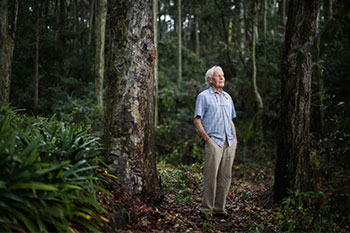
Professor Lesley Rogers, neurobiologist
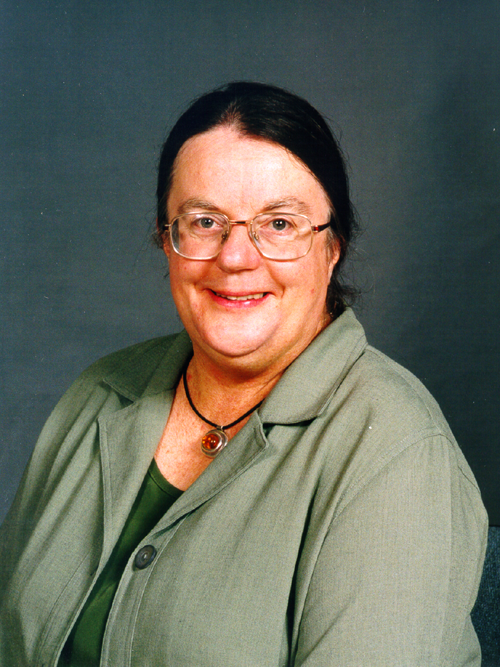
Lesley Rogers was born in Brisbane in 1943. She received a BSc (Hons) from Adelaide University in 1964, where she investigated the physiology of long-necked tortoises. From 1965 to 1966 she was a teaching fellow at Harvard University and from 1967 to 1968 she was a research assistant in the Gastroenterology Department of the New England Medical Center Hospital in Boston. In 1971 Rogers received a DPhil from Sussex University in the UK.
Rogers returned to Australia in 1972 when she was appointed as a senior tutor in the Physiology Department at Monash University. From 1976 to 1977 she was a senior research fellow at the Australian National University. From 1978 to 1985 she was in the Pharmacology Department at Monash University, appointed initially as a senior tutor, then ARC research fellow and finally as a lecturer. Rogers joined the Physiology Department of the University of New England in 1985 as a lecturer. She received a DSc from Sussex University in 1987 for her thesis entitled Neuroethological Studies of Brain Development and Behaviour. In 1987 she was appointed senior lecturer and in 1989 was appointed associate professor. She was appointed to a personal chair in 1993 and is now Professor of Neuroscience and Animal Behaviour. In 1997 she received the Vice-Chancellor’s Award for Excellence in Research. Her particular research interests include the structural and functional lateralisation in the brain and the effects of early experience and hormones on brain development.
Interviewed by Professor John Bradshaw in 2001.
Contents
- Childhood steps toward science
- Choosing a career interest: the path to biochemistry and zoology
- Political by-ways on the road to a PhD
- A change of scenery: via cancer research to a new PhD opportunity
- Researching the isthmo-optic nucleus and the effects of testosterone
- Learning new approaches to scientific inquiry
- A return to Australia for a new direction in research
- The chick model delivers insights into memory and lateralisation
- How does lateralisation occur? An exciting explanation
- Is lateralisation of behaviour significant for survival?
- What determines how lateralisation works?
- Appreciating the grey areas as well as the black-and-white
- Rejoicing in the broadening of knowledge
- Distinguishing between biological science and convenient explanations
- The scientist as researcher, teacher and administrator
- Resolving identity problems in scientific disciplines
- Transcending stereotypes to follow a passion for science
- The best environments for the best research efforts
- Widening the audience for scientific knowledge
- Giving the Eureka moments a chance to occur
- Research funding: taking all the potentials into account
- Satisfactions and setbacks: social responsibility in science
- Drawing the line in acceptable research
- Enjoying life's fascinations
Childhood steps toward science
I wonder, Lesley, whether something in your early days set the stage for your interest in science.
I wouldn't say my earliest memories had much to do with science. The first thing I remember, from when I was a babe in arms, is seeing a huge crack in our terrazzo verandah looming up at me as my brother accidentally dropped me. And I remember being in a pram on the front lawn of our house in Adelaide, with a gum tree moving against the sky.
My mother's sister was a science teacher, and also my immediate family had some interest in science which I suppose must have had an impact on me. My brother, who was eight years older than me, was particularly fascinated by ants and how their colonies organised themselves, and I used to share some of that interest as well as my family's love for animals in general. We spent a lot of time every holidays camping in the bush, and we would often spend several days down at the mouth of the River Murray, where my father owned an old boat. We would go past the mouth of the river from Goolwa down into the Coorong, which at that time could only be reached by boat. I used to roam the sandhills there and observe nature.
I think your love for animals made you interested in going into zoo keeping.
When I was very young it was my aim to become a zoo keeper, but not in any academic way. I used to organise little zoo displays, getting together all the children in the neighbourhood and lining up their pets along the front footpath for various adults to look at as they passed. Actually, in retrospect that was not a very great career to have aspired to – I'm now quite opposed to zoos except for certain species.
Did you study much science at high school?
Well, if you were interested in going to university it was two maths, two languages – I took French and Latin – English, physics and chemistry. I loved physics, it was my favourite subject. But I read beyond the school curriculum, which wasn't terribly entertaining. I wanted to do biology as well, but that wasn't open to girls unless they were seen to be not university material.
Those years at Norwood Girls High School were an interesting time, because the girls and the boys were kept separate. There was a white line painted down the middle of the school, and the girls had to stay on one side and the boys on the other. In fact, if you were caught putting your toe over the white line during school hours you got quite severe punishment. In the final year (called Leaving Honours) there were so few students that boys and girls were put together, but until then physics was taught separately for girls and boys. We had excellent teachers, however, and in retrospect I think we were rather special. The selective school was actually Adelaide High, but Norwood High was extremely good.
Choosing a career interest: the path to biochemistry and zoology
Did you have some idea at the back of your mind that at university you'd eventually switch to the biological sciences if possible, and perhaps go into veterinary science?
I would have done vet if it had been open to me, but in Adelaide there was and still is no veterinary school, so it would have meant going to Melbourne or to Sydney – which in those days wasn't the sort of thing that was ever considered for a girl, particularly from my background. Also, I needed to have a scholarship, and when you applied for the scholarship it was always to the university in your home town.
So I went to Adelaide University, set to become a physicist. I took what they called Physics I, which was the one leading on to further study. There were about 180 students in the class, of which two of us were girls. It was a frightful experience, because I was the only young woman in my tutorial group and the lecturer always asked me to solve the problems, do the theorems on the board and so on. Years later I discovered that the lecturer asked me because he knew I could do them, but in those days I was terribly nervous and thought it was just to show me up. He used to laugh and then the boys in the class would laugh, and I was totally demoralised. (The other girl student and I were not a support to each other, which was also typical of a time when women were not well accepted.)
About halfway through the year I decided, 'If this is what physics is, it is not a career for me,' and I actually dropped back to do general physics – a terrible thing to decide, because in the entrance exam I had come fourth in the state in physics and the general physics was really just a catch-up course for people who couldn't do physics. But by then I'd met encouraging people in zoology, which tied in with my love of animals, and I took up biochemistry and did my honours in zoology.
For my honours I worked on the long-necked tortoise. These tortoises migrate over quite long distances in dry conditions, and the question was how they maintained their water levels. I discovered that their urine just concentrates in the bladder and the water gets resorbed into the body. Later it was shown that many frogs – and some mammals – do the same. My findings were published, I might add.
Political by-ways on the road to a PhD
After honours you began a PhD, didn't you?
Yes. First of all I was accepted to do a PhD in Adelaide, at Waite Agricultural Research Institute. That was looking at metamorphosis in tadpoles and changes in enzyme levels and so on, but it didn't work out terribly well and I got the idea it would be better to go overseas. In those days you weren't respected as a scholar in Australia unless you'd either come from overseas or been to Britain or America.
I was awarded the George Murray Scholarship from Adelaide University, and took it to Harvard University. The problem was that although the money might have been sufficient to support you through living in the UK, you couldn't have lived on it at Harvard, and also the fees there were very high. So I had to take up a teaching fellowship as well, which meant teaching 20 hours a week plus doing a full-time course. That is how I made a second start – not really wanting to have to – at a PhD.
I didn't finish my PhD at Harvard, however. By then it was the mid-'60s, and even before I left Adelaide I had been an active member of the anti-nuclear campaign and had moved on into the early anti Vietnam war movement. When I got to the United States I was on some of the first demonstrations in Boston, in Harvard Square, where there'd be about 60 of us marching. (Of course later it got to be thousands and thousands.) If you were heard to have a foreign accent, you were given 24 hours to leave the country, but I survived by carrying placards and being careful not to speak.
But then I also worked to get the vote against the war through the city council in Cambridge, which was the first place in America that actually voted as a people against the war, and my involvement in those political activities clashed with my studies at Harvard. Foreign students were not supposed to be involved in all these things, and in fact I was told to leave Harvard. I was pretty devastated, because I had been brought up in a family who were, on my mother's side, very strongly left-wing and very outspoken about their political views, and I'd just been continuing what I was used to.
Your PhD supervisor was a well-known person. Didn't he support you?
My supervisor was George Wald, who shared the Nobel Prize for vision. (That was two years after I had left Harvard.) He was against the war and eventually became one of the leaders of the whole anti-Vietnam movement. In fact, he came to Australia and led big marches here. But being young and flamboyant, I came out in favour of the National Liberation Front, NLF. He saw me as a threat to the middle-of-the-road approach and we clashed in a fairly fiery way. I could have followed Seymour Levine's advice to fight against being thrown out of Harvard for such a reason, but by then the scholarship was in jeopardy and I had financial problems, so I didn't think it was an option. In retrospect it should have been, but these things just carry you along.
A change of scenery: via cancer research to a new PhD opportunity
What did you do when you had to leave Harvard?
I avoided deportation by finding a job at the New England Medical Center Hospitals (associated with Tufts University) as a research assistant to Marshall Kaplan, and they filed the papers that allowed me to stay in the United States.
We were working with alkaline phosphatase, which comes in various iso-enzymic forms. Until then, finding where a tumour might be located in the body required an operation and a biopsy. We developed a method of taking blood samples and separating the iso-enzymes so you could tell whether the iso-enzyme of alkaline phosphatase came from bone or liver, and so where the cancer might be located. The idea of doing this technique came from Marshall Kaplan, but I did the actual working-out of it for him. It was really just cookery: you had to fiddle and get each of the concentrations right. By then I had had quite a lot of training in biochemistry, but you needed to use a bit of intuition about what to add to what. And if it works, it works.
Actually, this became a major technique, even a classic. When I went back to Tufts a year or two later, I was surprised to find that the red carpet went out and everything. There had been more than 1,000 requests for the paper in the first year, and largely as a result Marshall Kaplan had been made Director of the New England Medical Center Hospitals.
Did you think of continuing that work as PhD research?
They did try to encourage me and would have given me a scholarship and so on, but by then I had decided that adding one colourless liquid to another and putting it into a machine to be read was not really what I wanted to do. But at Harvard I had taken a course in animal behaviour, and my interests in that had grown; then I met somebody who had worked for Richard Andrew at Sussex University and she suggested that I try to get in to do a PhD there.
Actually, I first went to London and worked as a teacher in a secondary modern school in the Notting Hill Gate area. That was an experience – the students were like the girls of St Trinian's. I had enjoyed reading those stories, but that was when I realised such girls did exist! When I met Richard Andrew, he did offer to take me on for a PhD, so I continued teaching for a while – about nine months altogether – to get some money, and then took up the PhD at Sussex.
How were you funded?
Well, having lost the George Murray Scholarship I was a bit high and dry. Sussex gave me a scholarship that waived the fees and I had a living allowance, but to help out I taught part-time at the Open University, which was newly started, and did some demonstrating on campus and so on. Also, from time to time my parents sent me a little money, as much as they could afford. So I managed to live, even if very frugally.
Researching the isthmo-optic nucleus and the effects of testosterone
What work did you do with Richard Andrew at Sussex?
There were two aspects of the PhD work. I started off looking at the effects of lesioning the isthmo-optic nucleus in the chick brain. The isthmo-optic nucleus sends efferent nerves to the retina, and the bird brain is a great place to study that because there is a clear nucleus with a tract going to the eye, whereas in humans and even in amphibia and so on the origin is more diffuse, and, in those species nobody knew exactly where they came from. So, along with Fred Miles, who is now at the National Institutes of Health (NIH) in Washington, we looked at the effects of lesioning that nucleus. He was looking at the electrophysiology, the whole feedback loop, and I was looking at some of the behavioural effects.
That was not an easy task. Any kind of lesion you make in a visual system, particularly of that nature, tends to be compensated for, so it's really hard to tease out what the visual lesion is. After working for about a year with indications but nothing particularly concrete, I shifted to look at the effects of testosterone on attention. But I later came back to the isthmo-optic nucleus and did solve it, and got a paper that has recently started to be cited again as people have really got interested in that.
The major part of the thesis, though, was on the effects of testosterone, again given to the chick as a model. I discovered that when you elevate the levels of testosterone, the chicks become attentionally persistent. As a simple example, if you give them red and yellow grains to peck at, the control chick will peck a few times at each colour, switching around, whereas the testosterone treated chick tends to start on, say, yellow, doing a very long run of pecking on that, and then switches to a long run on red. So there was quite clearly a difference in attention switching.
Would these levels of testosterone be higher than normally occur in male chickens in their breeding cycle?
Well, the actual work I did was on young chickens, in which they were certainly very artificially high. But later, when I came back to Monash, I looked at adult roosters – some which were castrated versus those that weren't – and that showed the same attentional persistence in the ones with the higher level of testosterone. So it worked with natural levels.
Presuming that roosters, like the passerines, have elevated levels of testosterone at certain times of the year, in accordance with their breeding cycle, might a linkage between those levels and attention be related to the normal behaviour patterns to do with mating and breeding?
Yes. Richard Andrew showed later, again with the young chick, that one reason why they may show elevated copulation and attack levels when they're given testosterone is that they just lock on to an object. If you give them a cup, say, they will look at it, lock on to it and actually try to attack it, to copulate with it. Of course there is a threshold effect in these elicited behaviours. But another part of the motivation would be that once you've got locked on to an object you are more likely to do something about it. Maybe an adult rooster will lock on to whatever hen it wants to copulate with at that time.
Learning new approaches to scientific inquiry
Role models are often thought to be important for young scientists. Did you find that working with Richard Andrew enabled you to learn much from him?
Richard was an enormously important role model for me. He is one of the true intellectuals, well educated in the arts as well as the sciences, and he thinks very creatively. He was terribly important to me at that stage of my career because he'd see a little thing happening that I might have tended to throw away and not pay attention to, and he'd build on that. I had to learn to realise that, if not all the animals do the same thing, it may be those few that are doing a different thing that can really tell us more. It was quite a step in my thinking, because previously I had been caught up in the number crunching – 'If X of them do that; that's what they do' – whereas in fact it's some of those that diverge from the expectations that we follow up. Richard taught me to recognise that as part of the art of science.
I know he is retired, but have you continued to collaborate with him?
Yes. In fact, we've just finished editing a book on comparative vertebrate lateralisation. He's very much not retired; like so many people in his situation these days, he finds that retirement has given him time to think and his ideas seem to have moved on to a very new level as a result.
A return to Australia for a new direction in research
What brought you back from Britain to Australia after your PhD?
For the PhD I took three years, so with the teaching I was in Britain for close to four years overall – seven years away from home. I hadn't any intention, really, to come back. Many of the students who go overseas these days can afford to come back, but in those days it was out of the question. When you left you set sail, in effect, and that was it until you'd finished.
By the time my PhD was finished I had found a niche in England and had become very much an expatriate. Richard Andrew had offered me a good position and I could see a very good career ahead of me in England. But I had a responsibility to my parents, and if I was going to come back it had to be then. It might sound odd to feel responsible in that way at such an age, but I was the last survivor among my parents' three children, so there was an enormous feeling that I should be around for them.
I came back to Monash University, however, not Adelaide. I was offered a lectureship at the University of Tasmania but I didn't take that up – perhaps I was silly not to, but coming back to Australia seemed to be far enough and Tasmania, nice as it is, seemed to be the other end of the earth. But Richard Mark, in Physiology at Monash, offered me a senior tutorship. That was not tenured but it seemed to be research oriented, and Richard had a good reputation and had visited Sussex. Although I didn't actually know him, Richard Andrew did and was very encouraging for me to join him.
And so it was, in 1972, that we first met, when I used to consult with Richard Mark. You and I have known each other for nearly 30 years!
The chick model delivers insights into memory and lateralisation
Is that when you started to work on memory?
Yes, in a way. Richard had developed, along with Marie Gibbs (his PhD student prior to my coming there), a model using the chick to look at the biological correlates of memory formation. Because of my experience with the chick I took that up and looked at protein synthesis inhibitors and blockage of long-term memory – the 'in' topic at the time.
I found, however, that if you gave cycloheximide, blocking the protein synthesis in the chick, not only did you block the memories that might have formed about the time of the injection but the chick never learnt as well thereafter. So there was an added effect, not just on memory but as some brain damage that resulted from the treatment.
Was the cycloheximide technique something that you or Richard had developed, or was it fairly standard in those days for manipulating consolidation in memory?
Richard and Marie were already using the technique before I came to the lab, having picked it up from Art Cherkin in the United States, I think, so it was a rather new technique using the chick as the model. The chick has now become one of the classic models for studying memory, and that sort of technique is still used – I believe that your colleagues at Monash, John, still use the chick and cycloheximide, as does Steven Rose at the Open University. He had made big progress in looking at the cascade of biological events that occur.
What led you to realise that there were lateralisation effects with memory? Did you already suspect this, or was it a chance observation?
It was a chance observation that you got this long-term effect which I was then teasing out and looking at in more detail: what actually had gone wrong, what was causing it and so on. But Richard Mark had worked with Sperry – which would be your common interest with him too on the lateralisation – and so one day he said, 'Well, why don't you just try injecting cycloheximide into the left or right hemisphere separately?'
Together with my honours student Judith Anson, who is still working in Canberra, I tried that technique and found that on the task of searching for grains on a background of pebbles, long-lasting effects of the cycloheximide were caused only by injecting the left hemisphere. There was no effect at all if you injected the right. (It turned out later that other functions are associated and affected when you inject the right.) So on that one particular task the asymmetry was discovered. Actually, it was at that time pretty revolutionary, apart from Fernando Nottebohm's demonstration that a number of species of songbirds have the centres for singing in the left hemisphere. The syrinx, the musculature, is also lateralised in the songbird. At that stage he had only shown it by cutting the nerves supplying either side of the syrinx; he had not yet taken it to the central nervous system.
Up to that time, lateralisation had been thought to be unique to humans – in fact, seen as the thing that gave us our wonderful superiority of language and consciousness and tool use – and there are still some people around today who think that. But Victor Denenberg, at more or less the same time, was showing laterality in the rat brain.
How does lateralisation occur? An exciting explanation
Having discovered and documented that asymmetry, you went on to develop Denenberg's point that environmental influences can also modulate laterality. You were the first, perhaps, to note and to develop the interaction of the environmental factors with the genetic print.
After I had discovered this lateralisation, when I was following it up and looking at exactly what things are lateralised, people used to say to me, 'Oh, it's all genetically pre-programmed.' Being a bit of a devil's advocate and, perhaps because of my whole political perspective, my dislike of the idea of these things being pre-programmed, I wished I could show there was some environmental influence. Then one day, when I was just thumbing through Freeman and Vince's very important book on development of the avian embryo, I noticed they had a series of pictures of the embryo in the egg – in the final stages before hatching, the embryo is turned so that the left eye is occluded but the right eye can be stimulated by light that can come through the shell and membranes. And I thought, 'Ah! Perhaps that's it.'
The first experiment, then, was to incubate eggs in the dark and compare them with ones that had been exposed to light during the last stages of incubation, when the visual pathways to the forebrain are becoming functional. Lo and behold, when they were incubated in the dark there was no lateralisation for the behaviours I was looking at: the pebble-grain laterality and also the laterality for attack and copulation. (Now, of course, many years later, we know some lateralities are still present; those are non-visual modalities.)
Later we found that by taking the air sac end off the egg at the stage when the chick's beak has penetrated into the air sac membrane so that it's now breathing air, you can just ease the membrane across, pull the head out gently and put it back into the incubator, but with the head now lying out. Then you can let light go to both eyes or else you can occlude the right eye instead of the left, and the lateralisation follows accordingly.
I know that in mammals you have a small percentage of left-right reversal of the viscera and indeed a number of other structures. Are there any such instances of situs inversus in the chicken?
I believe it occurs, but it's a very rare occasion and, unlike the work done in rats, where people have selected actual lines for that so you can work with it as a model, you could not predict where it is going to occur. I can think of only once when I have opened the egg and found the embryo oriented the other way around. There may have been more that I haven't seen, but it's very rare. And in any case, you could still have the chick oriented the same way but the viscera the other way around.
Is lateralisation of behaviour significant for survival?
What advantages might accompany lateralisation – or, conversely, what might be the disadvantages of its absence? Why is the vertebrate brain lateralised?
I hope to be able to tell some of the answer to that in a couple of years' time, because it is now my main theoretical interest. And again the chick model turns out to be terrific, because I can make more- or less-lateralised chicks by incubating them in the dark or the light, and then compare the cognitive abilities of those two groups.
Are unlateralised chicks in any way disadvantaged, either in the lab or in other settings?
In the lab we've done one experiment, giving the chick two things to do, which hints at that. The idea was to challenge it by asking its two hemispheres to do two different things at the same time. In the chick, the left hemisphere – and, incidentally, the right eye, because they have completely crossing optic nerves – is used preferentially for finding these pebbles versus grain in pecking to feed. And Chris Evans and Peter Marler showed that if you play to a chicken the alarm call for its own aerial predator, it looks up and scans overhead using its left eye (and hence its right hemisphere). So I designed a test where the chick is pecking on the floor using its right eye-left hemisphere, and then a little model predator comes over the top. It should then look up, using its right hemisphere-left eye for that. Once the dark-incubated, less lateralised chicks started pecking, they were slower to respond to the predator coming overhead. In a natural situation, that slower response could well be a disadvantage.
Is this where you expect your experimental, empirical interests to be directed most?
Well, one thing is to try to follow up more, in a laboratory setting, the advantage of having a lateralised brain – going ahead with these tasks that require competing input from the hemispheres and moving to other sensory modalities. But the other challenge is to ask whether what we are looking at in the lab is just an esoteric thing. Or does it for animals, as we know it does for humans, actually relate to their behaviour in the natural environment? Can you even see it in the natural environment? And now we have some evidence that, yes, animals do show lateralised behaviours in the natural environment.
Some really nice work with fish has been done in Italy by Angelo Bisazza and Giorgio Vallortigara, outside the collaborative work I do with them. Looking at various species of fish, they found laterality in some and not in others. Then they applied to the fish an idea I had, that laterality might have something to do with coordinating social behaviour.
They put one or two fish in a little internal tank and looked at how close the others came to it, so they could get an objective measure of their degree of schooling. Then they looked to see which species are lateralised or not: when a fish swims up to a barrier behind which it sees various stimuli, does it go left or right? It turned out that the ones that school are also lateralised – if they've got a population bias to go one way, then they tend to be a schooling species. (Certainly, to have that bias would keep the shoal together.) Of the ones that didn't school so much, some were lateralised but the majority weren't. So the consistent population bias of lateralisation was present in those species that have a sort of social order in their movement. But of course each different kind of lateralisation might be associated with a different selective pressure, or a different advantage. We should not talk as if it were unitary; it is probably much more complex than that.
What determines how lateralisation works?
Does some underlying common denominator distinguish the left side of the brain from the right side of the brain in most species – communication versus emotion or, perhaps, spatial processing? And if a final common denominator exists, does one side pre-empt processing at the expense of the other? If so, the big question would be which side, which function, which feature, which aspect of behaviour is the primary one. What are your thoughts on that?
Richard Andrew and I developed a model which we think applies to all vertebrate species, and certainly applies to those studied so far. The left hemisphere seems to be used to control responses that have to be considered, whereas the right hemisphere is more for immediate responses that are given without the pros and cons being weighed up.
In order for the left to fill its role, it has to suppress the spontaneous responses of the right, which is, as you mentioned, for expression of intense emotions and for spatial processing of the kind that uses a map. There are other, added aspects of function in the hemispheres, but as a general model one might say that feeding responses which require the animal to manipulate things or to inhibit pecking at a pebble in order to peck at a grain are left hemisphere: you've got to think about what you do before you respond. But if you're going to just lob an attack peck or strike at an animal – something unspecific which you have to do quickly – that's right hemisphere.
In some recent experiments I did when I was in Italy last, we looked at where a chick strikes. You put two chicks in together which haven't seen each other before. They tend to do attack pecks – not very damaging; some people call them social pecks – at each other. If you look at where they lodge those, you see that they are primarily in the left lateral field, which means right hemisphere. So, left side for attack, right side for feeding responses that have to be considered. And we have shown that the same is true in the toad. When toads strike at prey, they do so in the right hemifield, and if they make a conspecific attack strike, it's on the left. In other work, gelada baboons, if they attack the conspecific, tend to do the one on the left. Deckel, in the United States, has now shown this to be true in lizards also. There is a surprising similarity across many different vertebrates, so it seems to be a fairly basic property.
If the left and the right sides of the brain are different, how do you stand with respect to the currently popular 'educate the right side of your brain' literature? Is it drawing a long bow?
Perhaps there is something in it, but I think it is mostly a waste of time. There is no way you can force that. There may be useful psychological experiments where you really do put information in, presenting it tachistoscopically – with rapid flashes – so that people are looking straight ahead and the information is actually in the peripheral field and they're not turning the eyes to look at it. But that is not how these techniques go on; instead they get people to do all sorts of motor things.
Appreciating the grey areas as well as the black-and-white
I suppose most of us at some time look back and think, 'Perhaps I shouldn't have published that.' In your long career as a research scientist, Lesley, have there been any papers or findings that you now feel you shouldn't have reported because they went beyond the data, or the mathematics or the technique was wrong, or hindsight suggests a different conclusion?
No, there's nothing I regret having published. There have been odd mistakes in a paper where a label's wrong or a word is spelt wrongly; they always stand out and hit you in the face, and they make me feel very angry. But I don't publish unless I've got tons and tons of data to support my conclusion. One's ideas do move on, though.
For example, from the earliest discovery of light affecting lateralisation I said the light exposure and the orientation of the embryo determined visual lateralisation, full stop, because all the things I had chanced to look at were affected by that. Now I have been looking at some other visual behaviours that are not affected by that experience, and since not all of the visual behaviours are affected in that way, what seemed before to be a black-and-white issue is a little greyer. I would not have stated it so strongly then, had I seen as many as I have now. But that's an evolution of the idea, not the idea being incorrect. It has just been given some more substance.
Rejoicing in the broadening of knowledge
On the more positive side, is there one paper, one discovery, finding, insight that you are most proud of and would like to be remembered for?
It probably sounds quite trivial to say this, but the work showing the role of light in establishing the asymmetry in the embryo was a breakthrough in thinking, a paradigm shift, I guess. If you say to people that you've discovered such a thing for the chick embryo, they are likely to wonder why the heck it matters. But in fact it's a model system and a way of thinking about how things work. I think that was my biggest single leap.
Do you have students still working in that area, or are you much more now in the behavioural side?
More behavioural, and with many other species. We have a colony of marmosets at the university so I'm doing a lot of work on their lateral preferences and the effects on them of ageing. Also, we have shown very similar laterality in our famous cane toads and in a number of different species, even going off to Sabah in east Malaysia to work on orang-utans in the wild. So the range of species has broadened and the work is applied to what's going on in the natural world – as well as the continued lab work.
It is very hard to get students interested in chickens these days. If you've got primates in the offing, they'll go for those instead. I don't agree with that, myself. You need to ask the question and then think about the best species to use to answer that question, but you get a lot of young people today on the doorstep saying, 'I want to work on orang-utans' or some other species they have latched on to. Perhaps it comes from the television and the documentaries. It's not necessarily a bad thing to take these focus species, but it is important to come from the discipline and ask a question: 'I want to study memory,' or 'Why does this particular molecular system' – or this particular behaviour – 'function in this way?' All too often today it comes not from a theoretical concept but from, 'Oh, that's a nice species. I'd like to work with that.'
Do you have any very good students who want to look at aspects other than lateralisation?
Yes. For example, because of legislative requirements the marmoset colony has for the first time gone outside, and one student that Gisela Kaplan and I co-supervise is actually looking at their stress responses, both physiological and behavioural, to that. He wants to eventually go into the whole thing about animals in captivity and enrichment and so on. I do have other projects going on, with students whom I've either supervised or co-supervised working on them. I think that's terribly important.
Distinguishing between biological science and convenient explanations
What are your views on sociobiology and the ideas of E O Wilson – this new fad of evolutionary psychology?
I am very opposed to these developments. In fact, my book Sexing the Brain looked at what poor implications that has had for our attitudes to gender, for example. As to Hamer's whole idea of finding a small number of genes or even a gene sequence to explain homosexuality, he claims that even homelessness is on the genome. Yet we all know that homelessness is a much more complex thing than that. There are many societal reasons why people don't have a roof over their heads.
Well, we are down now to 30,000 genes – whatever a gene may be – rather than the 100,000 of about six months ago.
That's right. I am not detracting from the revolution of that; it's quite amazing how the whole field has moved along. The problem occurs, however, when you start to look at complex behaviours, animal or human, and try to use science for a political objective. This is not new but it's certainly on the rise, and evolutionary psychology is not only banal but quite dangerous when it tries to say that certain kinds of human behaviours come from our animal past and are built into our genome. It is used to implement certain social practices which we know from the history of humanity have been to the disadvantage of many groups. It is no different from the thinking that the Nazis used.
There is a very worrying trend in our society to rely on these biological 'explanations' of why one group has more than another or why one group has access to education and jobs when another doesn't. These explanations fail to distinguish between association and causation, but upper-rung people, particularly, like to hear them because they provide a nice pat answer and people don't have to think about anything else. They can just go along being oppressive to those below.
Would you say, then, that the nature/nurture debate is a black-and-white issue, or is the dichotomy invalid – do the two interact at so many levels that one can't separate them?
Yes, exactly. I would agree with you that it is not one extreme or the other. The developmental processes of genetic and environmental influences are quite intertwined. Unfortunately, with the new revolution in molecular technology and the development of evolutionary psychology coming together in quite impossible, rather sinister ways, people are now falling back on genetic explanations for even very complex human behaviour.
The scientist as researcher, teacher and administrator
As a professor, one has a number of commitments – research, teaching, an increasing amount of administration. Have you enjoyed administering such a large department?
Well, not only was I head of department but I was also, until last year, Deputy Chair of the Academic Board. I decided not to go on to be Chair of the Academic Board because I don't particularly enjoy administration. To be perfectly honest, I do administration because it has to be done; I don't enjoy it at all, so I certainly would not see myself moving into an entirely administrative position.
It was very useful to spend time being head of department, though, because for the first time I saw that many decisions, rather than having some sort of right and logic to them, are pretty random and arbitrary. The way the system works is not always through meritocracy; it is often a matter of who bumps into whom, where and when. I suppose I don't spend enough time working on that approach. Perhaps my future, in terms of climbing up the ladder and the monetary aspects, would have been a lot easier had I found it interesting to do those sorts of things, but I don't. I'm much happier to be with my animals and in my laboratory.
In your research, do you see yourself as somebody who paddles her own canoe, or as a team player? The British philosophy, as I see it, is that graduate students are thrown in the deep end and have to be their own salvation, whereas in America they very much play a role in the overall strategy of the lab or the lab's leader. How should one educate one's graduate students in research?
I guess I'm more inclined towards the British model. It suits my personality more. I like to see students come up with their own ideas. Obviously, there is some guidance and my students tend to be working on laterality, but not all of them are. If they come with a good idea that I think should be supported, I'll go with it. But very often they come without an idea, and then they get put into things that I might suggest to them.
In a way, I do paddle my own canoe. I collaborate with people overseas, particularly in the lab in Italy, but in Australia there is nobody else working directly in my area so doing my own thing is partly a necessity. Also, I probably enjoy it better.
And teaching? Perhaps you would take us through your teaching responsibilities at Monash University and the departments you've worked in.
I was initially in the Physiology Department, later Pharmacology, and I was teaching science and medical students – at first, mostly the medical students. Initially that was quite interesting, because I had done some physiology before, but I had actually been more of a zoologist cum animal behaviourist so I had to do a lot of learning. That was good; I don't regret it by any means.
I also got involved in organising the teaching of sexuality at Monash. In those days it was suddenly realised that a lot of problems that humans have when they go to doctors concern sexual issues and they're afraid to discuss them, and if they do, doctors don't know quite to do. So a number of people from Monash met once a week – over a considerable period of time, actually – in the hospital in Melbourne and even at retreats, and discussed how this program would come into operation. In those days it was seen as a really big thing to teach about sexuality at the university! I was quite actively involved in getting that program going, and then used to do some of the lectures in it. I was teaching physiology every day, with a few lectures thrown in here and there to psychology students, and so on.
Resolving identity problems in scientific disciplines
You have expertise in physiology, in pharmacology and also in animal behaviour. When did your interests in the more behavioural aspects of lateralisation take on?
It's a strange thing: once I discovered lateralisation it got me hooked. I'm still fascinated by it. I did do other things as well, such as looking at effects of 2,4,5-T on the developing brain, but lateralisation has been an abiding interest ever since the day I got into it. In a way, it has just gone on from one stage to the next: from teasing out the interaction with experience, I got onto looking at the role of hormones and how they interacted with it, and developing the model, going from behaviour to looking at visual pathways and how they develop. But now I am interested in what it actually means ecologically for animals in the natural environment.
And that has brought you back to your very early days when you were interested in zoo keeping, zoology in the broad sense. So do you see yourself as a psychologist, a primatologist, a behaviourist, a physiologist, all of these things? Or are these artificial boundaries that we should be forgetting in the 21st century?
For me they are. I think I've always had an identity problem in science. I wasn't really a standard physiologist and certainly not a standard pharmacologist, and now I'm not a standard zoologist. I think the strength of my work is to be able to integrate various things and I have tried to move intellectually with that.
I firmly think we should have discipline training, so that people know how to think in certain logical ways. I'm opposed to what is happening in the current education system, where people don't come out with a good training in a discipline but just shop around and grab at little ideas.
Should those disciplines be the traditional ones, like physics, chemistry, biochemistry, physiology and pharmacology, or are we carving nature at an inappropriate set of joints these days? Should we be looking for other ways of directing research and the modelling of the world?
There are two levels there. When we talk about modelling of the world I think we do need to move and change, but when it comes to teaching I'm very old-fashioned and think an undergraduate course should have the traditional structures. People should come out of a university able to profess their discipline. There should be physical sciences, biological sciences and social sciences, but I look with dismay at the disappearance of the need to do physics and chemistry in a regular science degree. I know that a lot of people have to be drawn along to those lectures kicking and screaming, but they are part of a way of thinking, a very important part of understanding that leads you to other areas. Without that good strong basis in the fundamental sciences you'll never have the flexibility and power of thinking that you need later on. I am all for having environmental sciences and other things taught in universities, and they should be part of a package that students can do, but there is a need for training as scientists first. Those other things can be taught, obviously – they are science – but there is a manner of thinking that you can only get by going to some of the fundamental subjects.
Transcending stereotypes to follow a passion for science
Have you found science so worthwhile and stimulating that you would encourage a close relative of yours to follow in your footsteps?
Yes. I always tell students that the important thing is to find out what you feel passionately about and do it, no matter what the opposition is. It doesn't have to be science; it could be in any other area. We only have one life to live, and the important thing is to live it passionately and do something with it, not do something just because your parents or your teacher thinks it would be good. It's got to come from within. Science can be extremely fulfilling, but if you're passionate about it there are opportunities – and of course they are increasing.
What words of advice would you give a girl who said she was passionate about following a research career in science?
I would say, 'Do it, and don't be steered off by any opposition you meet'. Actually, when you look at who does science, you see that there are more women than men: at the laboratory bench, working as research assistants or in the lower levels of the academic career. But when we look at who actually makes the decisions in science, we see that women have a very low representation. That is what we need to change. We need more women in science and we need to change the face of decision making control in science. I would like a lot of those women who get a degree and then just go off doing other people's science as research assistants to say at some point in their lives, 'Look, I'd like to follow my own ideas. Let's go beyond this'.
Do you think things like this series of videos play a useful role in countering the gender stereotypes and encouraging girls, particularly, to take up science?
I don't know. Certainly it is important that students who are contemplating a career in science see there is a career there for women. But it is still not an easy one.
The best environments for the best research efforts
Things have changed enormously in the 30 years that you and I have worked in our respective disciplines. Is there a future for universities in the next 30 to 50 years – for the lab as we know it, even for pure blue-sky research as we know it?
I certainly hope, John, that we turn back to that. I say that not only because those are the interests I have and there are young people who will be coming along with similar interests that need to be nurtured, but because it is important for the long-term future of a country that this occurs. It is in Australia's interest to continue to be like that. Australia has been a world leader in many areas in science – medical science, in particular – but we have let much of that fall away. Some of the countries that moved into much more applied research even earlier than we did are now saying it was a mistake and going back to the older models. So I'm hoping that's just round the corner for Australia too, and not too much damage is done before we pick up those important threads. I would also like to see funding go back to supporting individuals, encouraging them to row their own boat, rather than only supporting team research.
It used to be easier than now to publish as an individual. What do you think about the development of the 'invisible college', whereby a group in America, Italy, Britain, loosely collaborates for a particular topic, a particular area, a particular technique?
That's not a bad thing, you know. With the Web and so on, communication opens up. I have always seen science as an international thing, not just national, and I think that is very much in Australia's interest too, given our position in the world.
There has been some talk lately of thrusting people within an institution together: 'if they're not working together they should be made to work together'. I think that's a disaster. If people work together, they do so, it just grows. It's an organic thing. Much of research collaboration or writing books together involves finding not only the right sort of academic person but also people you can get on with. It must have in it something to do with the human element. You may work with the brightest mind in the field in your area, but if you don't get on you won't share anything.
Widening the audience for scientific knowledge
You mentioned writing a book with Richard Andrew. I know you've written a number of popular and semi-popular works as well. How might you make such books available to a wider audience?
Well John, I should add that having left Richard Andrew's lab (although I've never really felt I have, because I've kept in close contact with him over the years) I was very fortunate in going to Richard Mark's lab. Richard Mark has many of those similar qualities. He too practises science as an art form, and he writes beautifully. He taught me how to write, really. He first taught me how to write scientific papers, when I was working with him, and from there I've moved on over the years. And you taught me how to write books – I would never have written a book if you hadn't asked me to write one with you. It was a great honour for me that you asked, but it was also a new step in my life, because although I had mastered papers and could do them, writing a book seemed to be in the blue sky somewhere. It was by working with you that I realised doing it was a possibility. Then I got onto the idea of writing more popular science books, which I've thoroughly enjoyed. It is actually much harder – for me, anyway – than writing scientific papers, because I've got to think about how I write. I would not by any means say I have really mastered that art, but I have enjoyed trying to do so and I continue to.
So what will the next book be?
The next book, which is coming out next month, is actually by Gisela Kaplan and Lesley Rogers – I'm the second author on that – with the title Birds: Their Habits and Skills. It takes into account many years of work with birds by each of us, in different ways, and it tries to put those ideas in a more general context to appeal to a broad readership. And the next one after that is going to be on wild dogs!
Giving the Eureka moments a chance to occur
I have been struck by the role that chance has played in my career, at least. So many things have happened unexpectedly. Chance probably does 'favour the prepared mind', but how much has your scientific career depended on your happening to be the right person at the right place, at the right time?
Perhaps all the way along the line there has been an element of chance. I think it does depend on who you meet and where the ideas fall into place. For example, the significance of the orientation of the chick in the egg suggested itself because I just happened to be going through the books at the ideal time. And again, discovering that it wasn't only behaviour that was lateralised but there was actually a neural structure we could find was a result of chance. A visitor to my lab, doing some labelling of neural pathways with these tracer dyes, happened to think, 'Well, let's give it a go.' And when we saw it, that was a Eureka moment. Yet it was chance – he happened to come, he was looking at something entirely different, I offered him the place in the lab, we then decided to just give it a go, and it turned out.
To me there is a similarity between the arts and the sciences – the chance aspect, the human aspect, the creative aspect, the thought that floats into one's mind, often at inopportune times, and has to be captured before you lose it. Is this how you've seen your science developing?
Yes. Connections like that, between people and ideas, have to just grow of their own accord. They can't be imposed upon scientists and research, or any other discipline, in my opinion. If you give better communication – as I said before, the Web's there and can be used in that way – something will emerge out of that. But to say, 'We will only fund science if you've got this or this mould that it fits into,' is a death knell to it.
Research funding: taking all the potentials into account
At a time when it's very difficult to be an expert even in a single narrow discipline, I think you could be regarded as an expert in a number of disciplines. Has this breadth of activity ever proved a problem in getting funding or recognition?
Oh, it has probably been an advantage, because the more you've acquired different areas, the more likely you are to come up with a new idea in bridging them.
Yet we are increasingly being asked by government and grant giving bodies to justify our research. In view of such questions, what would you say have been the spinoffs, the applications, the 'utilitarian' aspects of your findings?
The laterality work has been pure research, although it does have potential application in the sense of providing a model which we can look at. As you well know, many dysfunctions of the human brain relate to laterality, so if we can study it in animals and we have developed a model, we have the tool to do that.
As far as the development of neurones goes, and the work I've done on the interaction between experience and hormones in their development – how they grow and die off in response to those influences – that is important in our understanding of the development of the brain. I mentioned that I am now, using the marmosets as a model, looking at what happens to laterality as an animal ages. And even though I would not say you can apply these models directly to humans, they do give us a basis to start thinking about whether the same things happen in humans.
It has certainly been thought that the dysfunctions associated with Alzheimer's might be preferentially lateralised.
Yes. It has been a bit fashionable to think of laterality as relevant to every kind of problem, including schizophrenia. That seems a bit over the top, but there probably are some elements that will be terribly important. Certainly discovering lateralisation in the chick brain has led to an important step for the people working on memory, very often using the chick as a model. They would use one side of the brain as the control for the other, thinking, 'Well, I've trained the animal monocularly, so I've trained its contralateral hemisphere. I now can look at what the biochemical events are in that one and compare them with the other side where I haven't trained it, because I've put a patch over that eye.' This is what Steven Rose's lab and various others had been doing. When I discovered the laterality in the brain, Steven Rose said to me, 'What are you wasting your time doing that for? What's the point of it?' but I could tell him, 'Well, in your own work you use one side as the control for the other, but if the left and the right hemispheres are in fact different, they cannot be a control, one for the other.' (He didn't ever say I was right, but he doesn't work like that any more.)
Satisfactions and setbacks: social responsibility in science
What are your views on social responsibility, the role of science in society generally?
I have very strong views that science should be for the people in general. In fact, I started a Science for the People group when I was in Melbourne, before I moved to the University of New England [in New South Wales]. While that group was in operation we did some quite interesting things, getting into the whole question of spraying 2,4,5-T to control blackberries in national parks and so on. We had some demonstrations and some lectures on that, at the time when the whole issue of the use of Agent Orange had come to a head.
In fact, you were an expert witness, were you not, for the Vietnam veterans?
Yes. While I was in the Pharmacology Department at Monash, an honours student came to me saying she'd like to work on toxic chemicals in the environment. Geoff Bentley, who was Associate Professor in the department at that time, said, 'Well, why don't you try 2,4,5-T on the chick eggs and see what happens?' I thought, 'Mm, it's a bit of a nasty thing to do, but it could be important,' so we went ahead and did that. We showed that there were behavioural abnormalities caused by doses one-hundredth the kind that were known to cause the physical deformations. That was taken up by the media and I got into all sorts of political hoo-ha.
Do you think it was in any way an impediment to your career?
Yes, I think it was. It was published in Science and so on, but it was an impediment because the political forces at that time were not in favour of it. (The government was trying to get out of having to pay compensation to Vietnam veterans.) And something quite fascinating happened. After that was in the papers in Australia, I was getting phone calls from farmers as well as Vietnam veterans, saying they suffered from these and these symptoms. First of all I'd say, 'Oh but look, my work's on chickens; I don't have anything to do with humans.' But after several phone calls and just listening to these people I thought, 'These symptoms are the same.' Then a farmer from Sale phoned up when I had been talking to a veteran from Sydney. I said, 'Look, why don't you two talk to each other, because the effects you're talking about sound mighty similar.' It was just a chance thing; I don't see myself all that instrumental in what followed, except the penny dropped. That gave rise to the Vietnam veterans' movement, which eventually led to the Royal Commission where I gave evidence.
Drawing the line in acceptable research
I am sure you would feel some areas of science should not be investigated. On the other hand, the knowledge gained from your work on toxicity and chickens enabled us to draw vital conclusions about human involvement. Where should we draw the limits? Are there any aspects of pure knowledge that we shouldn't research?
All new knowledge has the potential to be abused. It is the responsibility of the scientist to think about that before taking part in it. In retrospect, if I had been in a position to direct where money for research would be spent, I would not have wanted the scientists to work in developing the atom bomb. Of course times change and you can look at these things differently afterwards, and even today I think a lot of the areas of research that get huge amounts of money are not necessarily where it ought to be going. Research, we have to accept, is big business as well as a pure seeking of knowledge for human good, and that concerns me greatly.
I am also concerned at the present idea in Australia and elsewhere in the world that we have to be much more applied. Many of the breakthroughs in science have occurred with nobody ever thinking about what they could end up with, but this is what we are seriously losing in Australia – and have actually lost, to a large extent. We'll have to go back to it if we want to be at the forefront.
How to draw the line between acceptable and unacceptable research is a difficult one, though. You do need to monitor that; you do need bodies of informed people. But perhaps, rather than government having a major role in directing research, it could be done along lines such as we have now for animal ethics, with committees that have representatives not only from science but from many different bodies. In some senses we have that now, but I think it could become much more influential in how things are funded. Instead we are moving rapidly away from any of those models to dollar driven research. And, unfortunately, most of that research is very short-lived.
Enjoying life's fascinations
When you're not engaged in science, what are your interests, recreations, relaxation?
With a friend I have a rainforest property, an absolutely beautiful place, in northern New South Wales. The idea is to preserve some of Australia's wonderful bush, with a long-term aim of protecting it in various ways and then, hopefully, handing it over to the government. But also, in a very non-altruistic way, I am personally fascinated by learning more about plants and insects, species about which I know very little now. I'm just getting into exploring all that. That has become a very involved hobby – and an expensive one.
I think that as a child you learned to fish. Do you still do that?
No, I don't, because I don't like killing fish. I like the experience of fishing, but once when I had caught a fish I was told that I'd better kill it myself, and that was the end of fishing for me.
But I used to enjoy playing the cello – even if nobody particularly enjoyed listening to me. I used to play with the local community symphony orchestra. In the last four years of my father's life, when he was totally blind, I just couldn't keep all that up. Although I've let it fade away and I don't play the cello at all any more, I've got it sitting right alongside my desk and there will be a day, I hope not too far away, when I'll go back to it (even if I have to start all over again).
Will you ever retire, Lesley?
I won't retire from living until I have to, and they take it away from me! But I always want to do research at a different level. I will certainly retire from the university system and I'll probably retire from being 100 per cent of my time in the laboratory. I would like to do a lot more looking at animals in the natural environment, and I think during retirement I'll develop more of my field interests.
Thank you, Lesley, for giving us this interview.
Thank you, John. It was a great pleasure.
Dr Sabine Piller, medical research scientist
Sabine Piller was born in 1970 in Vienna, Austria. In 1991 she completed a degree at the University of Vienna, majoring in zoology, botany, chemistry and physics. She moved to the USA for further studies and in 1993 received an MSc from the University of Alabama at Birmingham (UAB) where she researched the gill physiology of marine crabs. From 1993-94 Piller worked in the Department of Neurobiology at the University of Vienna.
Piller continued her studies of ion channels at the Australian National University, working on a protein of HIV named Vpr. Her PhD research, completed in 1998, was important in that it was the first time any HIV protein had been shown to function as an ion channel. From 1998-2000 Piller returned to UAB as a postdoctoral fellow in the Center for AIDS Research. Piller returned to Australia in 2000 when she was awarded a Young Investigator Award from the Centre for Immunology (CFI), the research campus of St Vincent's Hospital, Sydney. As a senior research officer/group head she is working on several projects involving Vpr and gp41. In addition to her work at CFI she is simultaneously adjunct lecturer in the Department of Medicine of the University of New South Wales and visiting fellow in the Division of Biochemistry and Molecular Biology at the John Curtin School of Medical Research (JCSMR).
Interviewed by Ms Marian Heard in 2001.
Contents
- An early fascination with marine biology
- Transatlantic differences in universities
- A marine biology project leads to proteins as ion channels
- The PhD project: moving to ion channels in viruses
- Linking ion channels to AIDS dementia: an exciting hypothesis
- Learning to study fully infectious HIV safely
- Is Vpr really linked to AIDS dementia? Testing the hypothesis
- How does HIV become resistant to drug treatments?
- Exploring the implications of a truncated gp41 strain
- Science commercialisation: development flow versus information drought?
- Science and life: interests, challenges and rewards
- Building a future on skills and passion – and funding
An early fascination with marine biology
Sabine, where were you born?
I was born in Vienna, Austria, on 8 January 1970, as the oldest daughter in a blue-collar family – my Dad is an airplane engineer, and my Mum was a secretary and then stayed home after my sister was born.
What early experiences influenced your decision to go into science?
Probably one of the most exciting experiences was when I was two years old and my parents took me to the Mediterranean. For the first time I had a snorkelling mask on my face and got to see the underwater world, which from then on was a real fascination.
I remember that at the age of six, in my first year of primary school, we had to write an essay on what we would like to be when we were older. I wrote that I wanted to become a ‘deep-sea diver’, and although that later changed to ‘marine biologist’, it basically was the same thing. And my parents fostered that interest in marine biology, taking us on holidays to the Mediterranean almost every summer so I could go snorkelling and continue my passion for the underwater world.
I learnt scuba diving at the age of 14. (Normally the German federation of scuba divers only allows you to start scuba diving at 16, so to start early I had a special permit.) That was also a very important experience in my life. My mother was very worried about me; my father thought if I went in and did this first dive I would never ever do it again. But I came out totally fascinated. Diving and marine research were what I wanted to do for the rest of my life.
Transatlantic differences in universities
After finishing high school, you went on to study science at the University of Vienna. What were your subjects there?
In the Austrian university system, for an undergraduate degree you have to get a really good background. In the first part of your studies you can’t choose your subjects, so I covered the whole lot: chemistry, physics, general biology – botany, zoology, genetics, microbiology, the whole biology field. You have to take all these classes. But I do have quite a strong physics and chemistry background because in high school I specialised in physics and chemistry, and probably also because my Dad is an engineer.
While you were studying at university, you made a trip to the United States to visit a friend. That became a turning-point for you, didn’t it?
Absolutely. It came about because I needed one more lab to finish up the first part of my studies, and basically the students who had been studying the longest time got selected first. Having to wait a whole year to get into that lab was a really bad experience, because I was on track with my studies and it felt like the lazy students got favoured.
In the United States, visiting my friend, I sat in on a two-hour class, late in the evening. Everybody was tired, so the instructor told us to have a break and then we convened back after 15 minutes. I thought, ‘Oh well, it will still finish at the full hour, so we only have 45 minutes left now.’ But he continued for an extra 15 minutes. He just said, ‘You paid for a full two hours, and you should get your money’s worth.’ The whole attitude of teachers there, the student-teacher relationship, was quite different from what I was used to in Austria. Students were openly asking questions and were encouraged to ask them, whereas in Austria you were usually told, ‘Well, you’re supposed to know this.’ It was a really great experience for me, and I decided that I wanted to go overseas and study in America because I didn’t like the Austrian system any longer.
So when I came home I applied to the Austrian Ministry of Science and Research, and got a six-month scholarship to study in America. I was then further funded to continue my Master of Science research at the University of Alabama at Birmingham.
A marine biology project leads to proteins as ion channels
What work did you do for your Masters degree at the University of Alabama?
I wanted to get into marine biology, so I worked in the Biology Department with Professor David Kraus and his wife Jeannette Doeller on two very closely related marine crab species, Callinectes sapidus and Callinectes similis. (They are like your blue swimmer crabs here – which you actually get to eat, as well.)
These crabs live in an estuarine environment, where the fresh water from rivers comes into the ocean and meets the salt water, so they experience regular changes in the salinity of the water. Every time it rains and more fresh water comes in, the salt concentration changes. The two species have the same preying behaviour, what they eat. So why can one of the species survive in fluctuating salt concentrations, while the other one is much more restricted, needing a certain salt concentration and unable to survive in fluctuating salinities? That was my topic.
I found differences in the gill tissues with which the crab species breathe. Towards the end of my project it turned out that these tissues, which also regulate the salt concentration in the crabs’ body fluids, differed in the proteins that can form ion channels – basically a protein that goes across a membrane and can shuttle ions, charged particles, across. That lab was not set up to study ion channels, but after the end of this project I wanted to go on and learn, somewhere, more about those specialist proteins that form ion channels.
The PhD project: moving to ion channels in viruses
After you completed your Masters, you returned to Austria for a year to earn some money. Then you applied to do your PhD in a number of places around the world. You turned down an opportunity to work in Alaska, in favour of taking up a PhD scholarship at the Australian National University.
I had the offer of an Overseas Postgraduate Research Scholarship, but before deciding on it I came and visited the John Curtin School of Medical Research at the ANU to meet with my prospective supervisors, Professor Peter Gage and Professor Graeme Cox, basically just for a chat. I had originally applied for the scholarship because I knew they were doing ion channel research. But before coming around the world to do my PhD here, I wanted to know what they were working on and if I wanted to do that type of research. I was very fascinated by Professor Graeme Cox. His enthusiasm as a researcher really captured me and he was probably the reason why I decided to take up the project.
Professor Peter Gage is a neuroscientist whose group works on studying ion channels in the human brain. They’re made out of several sub-units and are very complicated to study. He is trying to work out exactly how the ions move across a membrane barrier through those channels. At the time that I joined, he had just started to look at proteins from viruses that also can form ion channels. They are much smaller proteins and the idea was, ‘If we can understand how the ion channels work in viruses, in a much simpler system, maybe that will give us a clue to how they work in the brain.’ So he had a student studying an ion channel from the influenza virus.
Graeme Cox is basically the biochemist of the team. He was going through several other viral proteins from all kinds of different viruses, deciding from similarities in their structure whether any could possibly also form ion channels. Out of the proteins on the list, I picked the virus protein Vpr, from HIV virus – I thought, ‘Well, if I work on viruses, HIV sounds really exciting.’ And having decided on that first trip out here what I wanted to work with, I then came back a couple of months later to take up my scholarship and start working on that project.
Linking ion channels to AIDS dementia: an exciting hypothesis
Why was your PhD work important?
It was very important because we showed that that particular protein of the HIV virus, Vpr, does form an ion channel – the first time any HIV protein has been shown to function like that. We went on to identify which part of the protein forms the ion channel, and then, because this ion channel’s characteristics were quite different from those of the ion channel in the influenza virus, we speculated that this one might be involved in the AIDS dementia of HIV patients. Many HIV patients in their late stages become demented and have problems with motor control and cognitive problems but it is so far not understood how this disease comes about and why it affects some patients and not others.
Since I have shown that this viral protein from HIV forms an ion channel, we have used neurons, brain cells, from rats to show that if this protein is present on the outside of neurons it can actually form an ion channel in the membrane of the neurons, and completely abrogates the normal functioning of the brain cells by interrupting the ion gradients across there. That is very exciting: if we can prove that that is taking place in the patients, perhaps drugs can be developed to alleviate the horrible AIDS dementia problems that they face.
Learning to study fully infectious HIV safely
What did you do after your PhD?
I returned to the US, to a different department of the University of Alabama at Birmingham. I worked in the lab of Eric Hunter, the director of the Center for AIDS Research. I basically went there because by the end of my PhD thesis work I was quite fascinated by how the HIV virus works but I had only worked with one part of that virus, one protein, and I had never come into contact with the entire virus. And to learn more about the entire virus I needed to learn how to work with a fully infectious virus. So part of my postdoc project in the US was to learn all the techniques that I needed for that. I learned how to work with all the proteins together in the live virus, under special physical containment facilities at what is called the PC3 level.
While I was there I studied a different protein of the HIV virus, a glycoprotein called gp41. It is on the outside of the virus, and it is very important in making the virus infectious. If the protein isn’t there or is truncated, the virus is non-infectious. And so it is interesting to study. Also, that particular protein has a very unusual long part on one end of it, and we made mutations in the protein by changing certain of its building blocks, to see what effect those changes would have.
People are quite concerned about the chance of contracting AIDS. Did you think about the risks of working with the fully infectious virus?
HIV is quite a safe virus to work with in a laboratory setting. The virus has a lipid bilayer around it. Normal bleach and detergents can actually remove that lipid bilayer and the virus is then non-infectious. Also, the whole training that goes with certification to work with the infectious virus is very strict. You work under very safe conditions. I feel that it’s much safer to work with it in a laboratory setting, where you know the risks and what you are working with, than it is in a hospital setting, where you work with patients’ blood samples that may contain all kinds of much more infectious viruses like hepatitis B and hepatitis C. So I believe that knowing the risk and actually controlling for it, and working under very safe conditions in those facilities, is quite safe – otherwise I really wouldn’t have done it!
Is Vpr really linked to AIDS dementia? Testing the hypothesis
What brought you back to Australia after your postdoc, and what are you currently working on?
Well, my husband is Australian and he really wanted to come back. (He absolutely didn’t like it in the US.) The other reason is that I was awarded a Young Investigator Award from the Centre for Immunology on the research campus of St Vincent’s Hospital, in Sydney.
At the moment I have three main projects running, two of them still on the virus protein Vpr that I worked on in my PhD, and one on the protein that I worked on through my postdoc. We are just starting to write up publications from these very exciting projects.
For one of the Vpr projects we have a collaboration with Dr Bruce Brew, who is a neurologist. He has stored away about 4000 samples from patients who have developed AIDS dementia, and now I’m in a unique position to answer the question that came up during my PhD: whether the viral protein Vpr is actually causing AIDS dementia, or has anything to do with that part of the disease. We are trying to set up an assay to find out if the viral protein Vpr is present in the brain fluids, because that has so far not been shown at all. Vpr is known to be normally present inside the virus; it is packaged into the virus. However, for Vpr to form an ion channel into neuronal cells (as I showed in my PhD research), it needs to be present outside of the virus, in the blood and/or the brain fluids.
We are trying not only to find out if Vpr is present in the brain fluids but also to quantitate how much of it is present, and then to correlate that to the disease stage. Is it possible that patients who develop AIDS dementia have more Vpr in their brain fluids than patients that do not develop the disease? That’s very exciting, and we are hoping to get funding for this. We basically have the assay developed and hopefully by next year we should be able to screen Professor Brew’s 4000 patient samples. He has just got a grant from the National Institutes of Health (NIH) – the US funding agency equivalent to the National Health and Medical Research Council here – so that we will be able to receive additional patient samples from all over the world, and to come up in the next couple of years with a very sound statistical analysis to check for a link of that protein to AIDS dementia.
How does HIV become resistant to drug treatments?
The second Vpr project includes collaboration with another MD, Professor David Cooper, and his group. They have identified HIV patients who are resistant to the current drug treatment, called Highly Active Anti-Retroviral Therapy. Two enzymes in the virus are blocked by the drugs, but mutations, changes, in those enzymes are causing the virus to be able to emerge and be resistant to the drugs. For a long time now, physicians have been ordering a screen of the genes to see if those changes in the particular two proteins of the virus have taken place. Then our collaborators identified patients who did not respond to the therapy but did not have those changes in the two proteins. When they tried to work out if there are other regions in HIV that influence becoming resistant, they found some interesting changes in the protein responsible for incorporating Vpr into the virus particle.
This is where I came in with my experience of working on Vpr, and we collaborated on trying to work out if those patients have Vpr incorporated into the virus particle. When we made recombinant viruses – that is, we took part of the virus from the patients it had been isolated from and put it into a lab strain to work out what effects the changes have – we found that Vpr is not incorporated in the recombinant virus. However, the patients have that protein incorporated. That is very interesting, because it shows that Vpr is very important in vivo, and that if changes occur which would prevent the incorporation of the protein, the virus changes Vpr itself to again get it incorporated. It is really the first time that the incorporation of Vpr has been shown to be important in vivo. And that’s about to be published. It’s very exciting.
Exploring the implications of a truncated gp41 strain
The project on gp41 arose from something we stumbled across when we were setting up my lab at the Centre for Immunology. I have a very good research assistant, Darren Jones, who started to run initial screening tests with some of the assays that we do with antibodies, to see which of the proteins are present in the virus. And when I looked at those assays I saw that in one HIV strain the gp41 – the particular protein I had worked on in the US so I was quite used to looking at it – seemed to be shorter than in the other strains. We have tried to follow up what could be the reason for it to be smaller, and it turns out that a truncation has occurred, a stop codon has been inserted. That protein is about 100 amino acids shorter, so it is 100 of the building blocks shorter than normal. That has happened in a strain that is very widely used as a reference strain by researchers all across the world.
We received that strain from the NIH, which has a Reference Reagent Program that supplies HIV reagents all over the world for free. (You just pay shipping costs.) It appears that the truncation has happened at the NIH, most likely several years ago through continuous passage. It is very exciting to have discovered this, because at the moment that strain is used in particular as a reference strain in research with drug-resistant strains, so it is possible that researchers could come to incorrect conclusions because they are working with something that is not what they think it is. So that is also being submitted for publication next week. And it will be exciting to follow up what that truncation actually does to the virus.
Science commercialisation: development flow versus information drought?
What do you think about the potential commercialisation of the science that you’re involved in?
The research has potential for drug development later on, and if it does lead to drug development, that’s great. Obviously, one of the aims is to find a way to fight or even cure HIV. But I am an old-school scientist, I guess: I think that all the knowledge we create and all the things we find out should not be commercialised, should not be owned by anybody. I am very wary about all this commercialisation that is going on, and about people selling off their ideas and patenting things like genes. Everybody should have free access to all the information that is found out in research at universities. It shouldn’t be owned by any company, because that keeps the information away from other researchers to build on – and that’s not a very good idea.
Science and life: interests, challenges and rewards
Sabine, as well as your science you have many other interests, some of which go back a long way.
Among my other interests was underwater rugby – a very, very exciting sport which again involves snorkelling. (Everything I did had to be underwater!) It’s the only game I know of that is played in a three-dimensional playground: the ball is filled with salt water, so it sinks, and you have baskets at the bottom of a pool. It is rather rough. I played with the national men’s team in Austria, and it was a great time. It kept me fit and also it improved my snorkelling
skills a lot.
I still enjoy snorkelling and scuba diving. I’m a real outdoors person, and I enjoy bushwalking and also rock climbing, which my husband introduced me to. Motor cycles are my real passion. I’ve been riding them since I was 16 and I have had a motorbike on every continent I have lived on – in Austria, in the US, and here. And I have a one-year-old son now, Christopher, who is absolutely keeping me busy. He is also very curious. It is definitely a challenge to be a first-time mum and to keep a science career, but it has been very rewarding.
What have you found the most rewarding aspects of a career in science?
Even in my early childhood I always asked questions about how and why things work, and it’s really like putting pieces of a puzzle together. It has been my passion during my whole life to try to understand how, exactly, things are working. And finding out one more answer, one more piece, and adding it to the puzzle is the most rewarding experience in science.
Another thing that I really enjoy is teaching, passing on the knowledge to students. That’s also very rewarding.
Building a future on skills and passion – and funding
What skills are most needed in taking up a career in science today?
It’s increasingly important to be able to keep up with all the information that is out there, so computer skills and knowing the internet, knowing where to get information, are important. Good communication skills and writing skills are also very important.
But the very most important thing for a career in science is to just have a love for it. You have to have a passion for the job, because there is not much funding for science and not much money in it. So you really have to love what you’re doing – you have to be curious about what you’re doing. That, I think, is what gets you there.
Sabine, having achieved such a lot in such a short career, where do you see yourself in 10 years’ time?
On good days, I’d love to be still in research in 10 years, with a bigger lab, more students and more research assistants. But on bad days, when our grants aren't successful, I think I might be teaching scuba lessons or working for a museum, or be a stay-at-home Mum – I have no idea. I’ll have to look at something else if I don’t get funding!
Professor Sam Carey, geologist
Professor Sam Carey received a DSc from the University of Sydney in 1939 for his work on the tectonic evolution of New Guinea and Melanesia. He worked in the petroleum industry in New Guinea and then served with the Australian Infantry Forces from 1942-44. After the war he became chief government geologist in Tasmania and later was appointed foundation professor of geology at the University of Tasmania.
Carey supported the theory of continental drift, explaining the movement of the continents through a model in which oceanic crust was formed at mid-ocean ridges and old oceanic crust underwent subduction at deep ocean trenches. The University of Tasmania became a leading university in tectonics and in 1957 he organised the Continental Drift Symposium, which influenced many scientists about the importance of continental drift.
More information about Professor Carey is available on the Academy's website at Biographical memoirs - Samuel Warren Carey, 1911-2002.
Interviewed by Professor Pat Quilty in 2000.
Contents
- Background and education
- Memories of Edgeworth David and Mawson
- Flotsam: drifting continents and a wayward thesis
- Friend or foe?
- Setting a southern course for geology
- Attracting attention to tectonics
- Dropping anchor in the right place
- A question of best fit: the expanding Earth
- Valued recognition and the art of recommendation
Background and education
Professor Carey, could you tell us a little bit about your family background and perhaps your schooling?
My father was a printer, but he went overseas and became a public lecturer. My mother was born in Australia, of Australian ancestry. I had two sisters and four brothers. One brother was killed by the Japanese during the war.
We lived on a farm three or four miles out of Campbelltown, in New South Wales, and when I started school I had to walk three and a half miles to get there and then walk back again – right from the age of five.
So you were fit from a very early age?
Well, I was fit enough to walk to school and back every day, until we moved almost into the centre of town.
Your interest in science was initially in the area of physics. What was it that got you interested in science, and when was that?
I was interested in science all through high school, because of a good science teacher. In fact, he was teaching physics. The system was that at school you could do physics or chemistry but not both, but I went to university intending to do physics and chemistry. And, although I went there with no chemistry whatsoever, I came top in first year.
To enrol in science at university I had to do mathematics, of course, but I didn’t have a fourth subject. When I asked my physics teacher what to do for a fourth subject, he said, ‘Well, try geology. I did geology under Professor Edgeworth David and I enjoyed it very much.’ I thought, ‘What’s geology?’ but I enrolled in it – and I came top that year!
As the years went by, you were very strong on the role of physics in geology. What changed you from physics itself?
I had no idea of becoming a geologist when I went to university, but I think it was the fieldwork – in geology, it interleaved with the lab work – which caught me. I enjoyed fieldwork, which you didn’t do in physics and chemistry, of course. By the end of first year I had no doubt about it: I was going to be a geologist, a rock-hopper.
What were some of your successes at the University of Sydney?
One of the things I started was the student geology club, the first one in Australia. They then moved for them in all universities. I suppose you could say I was a leader among students.
I understand that when you were going through university you didn’t have a great deal of money, and you took on some other activities to tide you over financially.
I did about 16 hours coaching a week.
Wasn’t there also a role as a magician there somewhere?
That’s right, I used to give magic shows. And they were well paid.
I remember an occasion when my wife Helen and I were going out for dinner one Friday night. We came into your room at the university with our two little boys, who were about five and three. They had been told to behave themselves and sit quietly, but you must have noticed that they were behaving too well. You pulled coins out of their ears and within five minutes the kids were out of control.
The coins would have been shillings. I loved pulling money out of ears, especially my own ear.
Memories of Edgeworth David and Mawson
What memories do you have of Edgeworth David? I noticed you always had a photograph of him in your room at the university.
I knew him quite well and saw a lot of him. When I formed the student geological club I invited him to give the inaugural lecture, which he did. He was already so famous that the theatre overflowed. Several rows of extra seats were brought in. And he came to inspect my rocks when I brought them back from fieldwork, to make sure I had identified them correctly and see how they correlated with others he was working on. David was a very gentle man, very kind and not obtrusive in any way. He wasn’t a big, bull-at-a-gate sort of man at all.
I wonder how David and Mawson would have got on. They were very different personalities. Did you ever meet Mawson?
Oh yes, I knew Mawson quite well. He was one of David’s students, and they would have got on perfectly well. The first time Mawson went to the Pole it was under David, who had gone to the Pole and then asked Mawson to take over, halfway through. Of course, David was a much older man. One of the strange things was that, as dominant a man as Mawson was and as dominant a woman as his wife was, they clicked perfectly – never any quarrels. They always got on very beautifully, although they were so obviously both leaders and obviously different.
Flotsam: drifting continents and a wayward thesis
When you graduated, you went to New Guinea and got involved in tectonics. Why?
Why New Guinea? I had no intentions of that. I intended to go to Cambridge after I had got my Master of Science. But when I was halfway through my year, G.A.V. Stanley turned up from New Guinea, looking for recruits. The only one that was available besides me was scared of the idea of going to New Guinea – he wouldn’t go. So the Professor said, ‘Well, there’s only one other man, that’s Carey. Try him.’ When I said, ‘Oh well, I’m going to Cambridge,’ Stanley said, ‘Come down to our office and look at our maps.’ I went down and looked at all the maps and things they were doing with the natives and so forth – and I was converted. I came home that night to tell my mother I was going to New Guinea.
In New Guinea I was doing ordinary fieldwork, mapping on streams, which were the only place you could get good outcrops. We had another team with a surveyor who worked on the ridges, but my work in New Guinea was entirely in the rivers. I had no idea then of going into tectonics as such; I was just mapping geology, a geologist pure and simple. I hadn’t worked out that I was interested in the tectonics in New Guinea. When I came back I started working on that.
When did you graduate with your Masters degree, and then your Doctorate?
I graduated in the minimum time for Masters – and minimum time for the Doctorate. Nobody has had a doctorate granted in Sydney, even since, in such a short time from graduation. There was no supervisor of any kind for my DSc. People who go for a doctorate now at university have a supervisor. I wrote my DSc thesis entirely myself. I paid a typist – she was very good, actually – and a draughtsman, and paid for my own thesis.
I thought I’d lost the thesis. Because I was writing on New Guinea, they wanted somebody who knew something about it as one of the examiners. They appointed a Dutchman who had worked all his life in New Guinea and in Timor, mainly. My thesis went to him by sea all the way to Holland, but when it got there he was in Timor. So it went by sea all the way back to Timor. By the time it got there, he was in Jakarta – Batavia as it was then – and so it went by sea all the way to Jakarta. And eventually it had to go back to Holland to catch him. But once you’ve appointed an examiner, he is the examiner.
I’d gone back to New Guinea, assuming that I had failed. But in 1938, after about 18 months, after those months of my thesis travelling backwards and forwards across the seas, I heard that my DSc had been granted.
How many examiners did you have?
There were just three examiners: Dr Woolnough, from Western Australia, this man from Holland, and the head of my department, Leo Cotton. He was a good man.
A very famous name in Australian science. How did you make that step from being a field geologist to going into a DSc and an interest in tectonics?
Well, the war pulled me out of New Guinea. All the women were evacuated, and every male in New Guinea had to enlist in the Army, but I and one other were sent back to work on rocks in the Gulf of Papua, looking for oil. It was thought that we might be cut off from American oil, and so we weren’t allowed to enlist. The rocks that we were working on were the ones that finally produced oil, but not there, further up on the highlands – in the same beds, but slightly different facies.
Friend or foe?
You did get involved in the war, becoming a bit of hero as one of the Commandos.
I was no hero. I ended up in Z Special Unit, whose job was to work deep behind the lines. Z was a thousand miles further north of the fighting; it would go along ahead of the front line. But McArthur had come from some other islands up there, had been kicked out of them. He had the island-hopping idea: he was all for going north, right up to Japan – so he changed the pattern of things. He would hop ahead, and once he started doing that, he made Z redundant. I resigned before the end of the war, because Z was no longer needed.
Tell us about putting dummy limpet mines on the American fleet when you were in Z.
That was in Cairns. A limpet is a charge attached to a magnet. The Americans didn’t believe in limpets, but oh, we’d show them that they worked. So we did the lot. Afterwards, the Admiral invited me to come aboard in the evening with such of my officers as I chose. Two other officers and I went aboard. Of course, we’d limpeted every one of his ships, and they would have been dead – sunk – by dawn. But he said, ‘Oh, you didn’t do anything. You couldn’t attach on my ship.’ ‘Oh, couldn’t we?’ I called Captain Cardew, who, being military, responded, ‘Sir!’ and introduced him: ‘My good friend, my 2IC.’ I said, ‘You personally limpeted this ship last night?’ ‘Sir!’ ‘Have you got anything for the Admiral?’ So he went down and de-limpeted the Admiral’s ship while he watched! We had wonderful fun out of that.
There was a lot of activity in science following the war, with a rush of key papers on geology being written in the early 1950s; for example, Anderson’s application of gravity to the classification of faults, and your own rheidity, folding, continental reconstructions. Would these ideas have been going over in your mind, and other serving people’s minds, during the war?
I expect so, but I wasn’t aware of it. I never thought positively about it. You can be unaware of things that are happening in your thinking. They don’t come right to the surface, but they’re still bubbling along in your mind.
Setting a southern course for geology
Near the end of the war, in 1944, you went to Tasmania. Where were you when you applied for the job there?
I was in Melbourne. I resigned from the Army to become Chief Government Geologist in Tasmania. There was an advertisement and I just applied for the job.
While I was Chief Government Geologist, I was appointed to the University of Tasmania's Faculty of Science as an external member, with no idea I would ever become a professor myself. There was no geology department then, or geophysics or anything like that, and I advocated the start of a geology school in the university. When eventually a school was started, in 1946, I applied for the Chair but without any illusions that I would get it. But I did get it and was the first Professor of Geology and Geography.
Geography was part of my department for a couple of years. A lot of school-children did geography to avoid mathematics, so there was a heavy enrolment and eventually geography was separated out. The man who had been my lecturer in geography, Peter Scott, resigned when they announced there was going to be a Department of Geography, so that he could apply from outside. He became the first professor. But he would have been even if he had not resigned, because I was on the selection committee and I knew he was a good man who could lecture well. He had plenty of ability. There was a big field. I think five of those people who were applicants at that time later became professors.
As Chief Government Geologist and then at the University of Tasmania, how did you work with the bureaucracy?
I had no problems, I just fitted in. That didn’t worry me.
Being an independent thinker, did you sometimes have problems with them?
I did what I wanted to! I set the rules.
You were at the university during some of its very turbulent years.
I didn’t know very much about the turbulence at first, because I was down at Sandy Bay and the main university was up at the Domain.
Between 1948 and 1965, the university did change quite dramatically, didn’t it?
Well, it grew, and shifted entirely to Sandy Bay. But I wasn’t deeply concerned about matters of staff appointments or the university’s reputation outside. I just made sure that the Department of Geology and Geography ran well. The two were together then.
Attracting attention to tectonics
You were interested in tectonics in the 1930s, and in Tasmania that became your specialty. Would you like to tell us a bit about the people you attracted to tectonics, people whose minds you changed?
I don’t know whose minds I changed. I know some have changed mine. A person who greatly affected me was Harry Hess, a professor from Yale. He came to Tasmania for the International Symposium I had conceived and organised and invited me to go to Yale. I had a year as professor at Yale, and during that time I lectured at practically every other university in the United States – I’d been invited around.
And then you attracted some students from Yale to Tasmania.
Yes, a few came – Kugler, Jan Smith, some others.
Tasmania was, because of your influence, a leading university in tectonics. In 1957 you had the Continental Drift Symposium. Would you like to talk about how you put that symposium together and some of the people you brought to it?
Oh well, I thought it was the right time to have a symposium on structural geology and tectonics, and we had one. Some people wanted to come but couldn’t. An important man who did come was Longwell, from Yale. That resulted in my being invited to Yale as professor.
That symposium was very, very important. By pulling all of those people together, you started to have an influence in tectonics on the rest of the world. The English-speaking world had not really taken on the idea of continental drift.
They did then. The symposium is still quite heavily quoted, and they made reprints of the volumes – just recently, another reprint.
Dropping anchor in the right place
Of the main characters who came to that 1957 meeting, you’ve referred to Chester Longwell. Was Tuzo Wilson there? I think you had a big influence on him.
He was invited to the meeting but I don’t think he was there. I probably did have an influence on him. He resented it at first and we quarrelled academically on a number of things. But he came round.
Another important person you met was Lewis Weeks, at Princeton University. It was Weeks who put Esso and BHP on to the exploration in Gippsland Basin, which has contributed enormously to Australia’s oil and gas production. He has said that you drew a map of projected anticlines out into Gippsland Basin for him in 1959.
I remember Lewis Weeks very well. I certainly influenced him, and he influenced me.
It is important for professors to know the leaders in other universities, so they can send their students there, but a lot of our professors don’t. They haven’t been there themselves. I don’t know how you can arrange for university men to go round the other universities and see what they are doing. They do so now via literature.
You must have had many opportunities to move to other parts of the world.
Yes, I’ve had many. I was invited to go to Yale, Princeton and California, and perhaps I should have. But no, when I came to the University of Tasmania I said in my application, ‘If I’m appointed, I will not be tempted to go anywhere else.’ And I have stuck to that.
Tasmania has benefited greatly from it. What do you think are some of the advantages of being in a university in a small, isolated state like Tasmania?
I don’t think it’s got any advantages, particularly – unless you make them.
So how did you generate the advantage of being here?
Oh, I don’t know – just by inspiring students.
That has been one of the really strong points in your career. You were very effective in attracting good students to geology, with an unusually high recruitment rate from first year into second year. Why do you think that was?
They must have liked the subject. Anyway, there hadn’t been a geology department and they wanted to get away from mathematics!
I think it is fair to say that you and the staff you recruited were responsible for the very good reputation for geology which your university had, right around Australia.
Perhaps, yes. And Tasmania had a good variety of rocks around, compared with poor old Sydney or Brisbane.
A question of best fit: the expanding Earth
The other thing that you’ve done – and you’re still a bit of a rebel in this regard – is to propose the question of the expanding Earth.
No longer a rebel – they now believe it! At least, they all will eventually. It takes some people a while to catch up.
What made you think of an expanding Earth as the explanation for what you saw? Was it purely that you were fitting the continents together and it didn’t fit?
Well, I put the continents together and there was a big hole. I had to have that or more than half the world as ocean. It seemed to be a better solution, because there was a great area where I believed the edges of those things belonged to each other, across the Pacific. And the north Pacific had rims which belonged to each other.
Valued recognition and the art of recommendation
You retired in 1976, roughly 24 years ago.
Correction: I was retired.
Okay – through the bureaucracy again. What have you been doing with yourself since? 24 years is almost time for another career.
I agree with you there. I am still a member of all the societies and get all their journals, which I read. I don’t throw them away after that; I present them to the university. In fact, quite a number of journals that the university have been getting for years are ones I’ve given to them. They haven’t subscribed. They’ll have to subscribe when I peg out!
During your career you’ve received many awards and been recognised by many different geological societies. Which are the awards that you value most?
I don’t know. There was the Geological Society of London, the Geological Society of India, where I was quoted quite a bit. I have travelled there and had quite a lot of Indian students. As to which I value most – the Geological Society of Australia, probably. I was there when that was first formed.
One of those Indian students was Ahmad, who played a role in a paper – now regarded as a classic – which you wrote on glacial marine sedimentation. In it you referred to Prydz Bay, in Antarctica, as an example of the environment that probably existed during some of the Permian sedimentation in Tasmania. What was Ahmad’s role in that study?
He was my student. I used to advise him perhaps every day. We had long discussions and that came out of them.
You maintained very close ties with industry, in both minerals and petroleum. It was very important to the careers of many young geologists that you recommended them to the various companies.
That’s right. I’d been in petroleum for years in New Guinea and also here, and so it was natural that I still had connections with these companies, and that was an advantage. I had been President of the Institute of Mining and Metallurgy. My background had been through the companies entirely. I started off with Oil Search Ltd – it’s still going now – and I was one of their geologists for a good number of years. I’ve always had contact with the industry. I agree that it was important because I could write to Mr X, in charge of that industry, ‘Such and such a student is a good man.’
It must have been difficult on occasions, though, because industry would have asked you for opinions about some students that weren’t necessarily your highest flyers. How did you handle those difficult situations?
Oh, I would give an honest assessment of their good points. If companies were very careful they would really look for omissions in my statements. The statements would be only of people’s good points, but if you hunted you’d find omissions. That’s the only way to deal with that. You can’t raise it, it’s not to the student’s advantage, but you omit saying anything about it.
You accepted Fellowship of the Australian Academy of Science a long time after it was first offered to you.
Yes. They invited me to become a Fellow but I was in disagreement with them about something I had done. But a good many years later, when they invited me again to become a Fellow, I accepted.
I would just like to say, as one who worked with you in the 1960s and who has kept in contact with you since – as many of your students have – that we look back with a great deal of affection to the role of Professor Carey in our lives. Thank you very much for your efforts this morning.
Thank you. Glad to help if I can. I was fond of my students at times. I tried to help them if I could.
And you were very successful.