





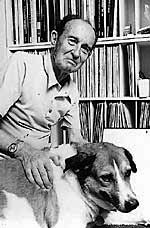
William Thomas Williams 1913-1995

Written by H. Trevor Clifford.
- Family background
- Career outline
- Post retirement activities
- Scientific contribution
- Musical ability
- Other interests: Theatre, radio and television
- Personal characteristics
- About this memoir
Family background
Bill Williams was born in Fulham, London, on 18 April 1913, the only child of Thomas and Clara Williams. His father suffered from asthma and so had left Wales, where he had been a coalminer, to work in London but at what has not been ascertained. Whatever it was, his mother found it necessary to work as a midwife and charlady to ensure that Bill received a good education. Having no siblings, Bill spent much of his childhood at the home of his lifelong friend and scientific colleague David Goodall, whose family he sometimes accompanied on their annual holidays.
Bill's mother was vivacious with an enquiring mind and a spirit of adventure. She was deeply interested in religion but, as judged by the number of Christian denominations she espoused and abandoned, none were to her satisfaction. Neither was the Buddhism that she went to India to investigate. In later life, to the amusement of her son, Clara took to holding séances. She followed Bill to Australia in 1966 where, in both Brisbane and Townsville, the two shared houses that had been subdivided so each could lead an independent life. Nonetheless in later life they shared a housekeeper and, following his mother's death in 1976, Bill offered her the now unoccupied flat. The arrangement was mutually satisfactory for as it happens she was obliged to move from her usual accommodation and he still required a housekeeper.
Bill was an excellent cook and in Townsville gave his neighbours Christmas puddings and treated a select group of friends to a very formal traditional Christmas dinner.
Career outline
With the assistance of scholarships, Bill was educated first at the Stationers' Company's School in north-east London, where he was a brilliant student, and then at the Imperial College of Science and Technology, London, where he graduated BSc with First Class Honours in 1933. He obtained a PhD in 1940 and in 1956 was awarded a DSc by the University of London. He was also an Associate of the Royal College of Science (ARCS 1933) and a Diplomate of the Imperial College (DIC 1940). In 1973 he was awarded a Doctorate of Science (honoris causa) by the University of Queensland in acknowledgement of his unstinting advice to its postgraduate students.
He was a member of the Society for Experimental Biology whose journal he for a short time edited and a member of both the Biometric and the Classification Societies in addition to being a Fellow of the Institute of Biology and of the Linnean Society (London). On moving to Australia he became a member of ANZAAS and in 1966 served as President of Section M. In 1980 Bill was admitted to the Order of the British Empire. The citation accompanying the award noted that he was retiring as a 'Research Fellow, Commonwealth Scientific and Industrial Research Organisation Division of Tropical Crops and Pastures', and 'was a pioneer in the application of computer science to agricultural and biological problems'.
Bill's professional life fell into two separate but overlapping phases. One was played out in England and the other in Australia. His only forays elsewhere as a scientist were a visit to Lahore in 1962 to attend a conference on 'The Role of Science in the Development of Natural Resources with Particular Reference to Pakistan, Iran and Turkey' and in 1968 a short lecture tour to South Africa where he was attached for five weeks to the Department of Botany at the University of Cape Town.
In England, except for a period of four years in the Army, Bill was an academic botanist and taught at Imperial College (1933-36), Sir John Cass Technical College (1936-40), Bedford College for Women (1946-51) and the University of Southampton (1951-65) where he was Professor and Head of Department. His fourteen years in Southampton were busy and happy times. He enjoyed his teaching and built up the Department by attracting active and able staff and postgraduate students of whom several became collaborators. In the early days at Southampton Bill maintained his research interest in plant physiology, but he encouraged others to pursue their individual interests while promoting collaborative projects in which he was often involved. He also supported his staff with their own courses and regularly visited Port Erin as a member of the annual algology excursion. The Department expanded under his leadership and at the date of his resignation he was involved in planning new accommodation. However, his life was not all work and no play for he organized at least one staff-student revue in which his involvement included teaching many of the cast to dance. At about this time he also successfully engaged in competition ballroom dancing for which he won a silver medal.
Concurrently with his teaching and other university duties Bill served on the Agricultural Research Council, being a member of its Potato Marketing Board Research and Development Committee, and of the Governing Body of the Glasshouse Crops Research Institute.
Notwithstanding this busy life, Bill also made time to indulge an interest in logic. He was fortunate in that Anthony Manser of the Philosophy Department at Southampton was a keen supporter of the controversial logician and metaphysician F.H.Bradley whom they both much admired. In his Principles of Logic Bradley had been unorthodox in beginning with a chapter entitled 'The General Nature of Judgement' and then going on to reduce the standard tripartite division of logic into terms, propositions and inferences to two, namely judgement and inference.(1) When Bill turned to the study of numerical classifications he found in Bradley a rationale for abandoning statistical tests as a basis for determining the validity or otherwise of classifications.
Bill also found in Bradley a philosophical ally who was a fellow logical positivist. The two shared many ideas in common including the one expressed by Bradley as follows: 'In the sciences we know, for the most part the end we aim at; and, knowing this end, we are able to test and to measure the means. But in religion it is precisely the chief end on which we are not clear'.(2) Bill expressed similar ideas in several of his Australian radio broadcasts.
Shortly after the outbreak of war in 1939, Bill enlisted. He did not declare his academic qualifications and so began his military career as a private. Not surprisingly, his scholarship could not be disguised indefinitely, and on 20 October 1941 he was commissioned as a 2nd Lieutenant in the Royal Army Ordnance Corps. A year later he was appointed Acting Captain at the Ministry of Supply's Air Defence Research and Development Establishment. Early in 1943 he transferred to a new service, the Royal Electrical and Mechanical Engineers, which was concerned with the development of radar, and in August 1944 he was appointed a war substantive captain and temporary major in what was now known as the Radar Research and Development Establishment.(3) One task of this Establishment was to train radio maintenance officers, many of whose backgrounds were in the biological rather than the physical sciences.(4)
In 1963 Godfrey Lance, who had co-operated with Bill at Southampton from the mid-1950s until 1960, was appointed Chief of CSIRO's Division of Computing Research in Canberra. The Division had sections located in all state capitals but as a matter of policy all computing research was carried out at the Division's headquarters in Canberra. Lance appreciated that Bill's talents would be invaluable to Australia and in 1965 invited him to visit for a few months. During this visit Bill lectured and met many scientists during numerous visits to CSIRO Divisions, including one to the Division of Irrigation at Griffith in New South Wales. There Eric Hoare, also an erstwhile Englishman, 'beered' and dined Bill and took him on an extensive trip into the outback. On waving 'Goodbye' at the end of Bill's visit to Australia, Lance promised to keep in touch but was pleasantly surprised when, within a week, Bill wrote asking if he could come to CSIRO on a permanent basis. The Executive was easily persuaded to offer an appointment at DCR in Canberra as a Principal Research Scientist. Bill accepted this offer and in 1966 he migrated to Australia.
On his appointment to CSIRO Bill signed an affirmation of allegiance, thereby becoming an Australian citizen. This move he never regretted and in a letter to DrVictor Burgmann following his election as a Fellow of the Australian Academy of Science wrote: 'The Fellowship gives me great pleasure, Australia has been very kind to me, and I have always been anxious to repay the debt'.
With Bill's departure from Southampton, the University lost an able professor and the Agricultural Research Council lost a valued member. In response to a request for a reference for the Canberra position, Sir Gordon Cox, Chairman of the Agricultural Research Council, wrote: 'In my work I have to learn whether I can rely on the scientific judgement of others, and I can say without hesitation that I know no one in whose scientific judgement I have greater confidence than Williams'.(5) These words were a signal tribute to the high esteem in which Bill was held in England. In Canberra, however, he found the climate too cold and after two years he transferred to the Division of Tropical Pastures in Brisbane where he worked for five years until his retirement. He then moved to the warmer climes of Townsville. When Les Edye heard of Bill's plans to go north, he kindly offered to help in any way possible. 'Well there is just one thing I'd appreciate', said Bill, 'Could you find me a glasshouse please?' 'Of course', replied Les, 'do you plan to return to experimental botany after this long break?' 'No!', retorted Bill, 'I want to live in it'.
A thorough planner, before moving to Townsville from Brisbane Bill learnt to swim along with a group of children at the early morning classes held at the Toowong Public Pool. However, having acquired the skill, it was never put to use when he travelled north. He claimed that, like cats, he had an aversion to water. Although Bill officially retired at 60, during the following twenty years his research publication rate scarcely declined. This productivity resulted partly from his having been appointed a consultant to the Davies Laboratory in Townsville. This was a branch of the Division of Tropical Pastures and so he was familiar with its research programme. The consultancy supplemented his pension and also enabled him to complete projects begun in Brisbane. In addition he was a consultant to the Australian Institute of Marine Science and informally offered advice to students and staff of the James Cook University of North Queensland.
Post retirement activities
Although Bill's contribution to most of the publications that appeared in his retirement was methodological, his collaboration with Les Edye was an exception in that it was closely allied to agricultural problems akin to those with which he had been involved in England as a member of the Agricultural Research Council. In a series of seventeen papers dealing with introductions of Glycine and Stylosanthes, they demonstrated the power of clustering analysis for making agronomic sense of the variation observed in field trials. The economic importance of this research was recognised when Les Edye was successfully nominated for the prestigious Sir Ian McLennan Achievement Award and the Cattleman's Union Industry Research Medal for his role in effecting pasture improvement in northern Australia.
Bill's research output as judged from his publications was prodigious, especially when it is realised that he normally worked only office hours. That his opinion was widely respected and sought is indicated by the many papers of which he was co-author. In general Bill and his collaborators were careful to ensure that credit was given where credit was due so, for example, a paper by 'Lance and Williams' would normally be one in which the computational methodology was developed mainly by Lance whereas one by 'Williams and Lance' would be an application of the methods to some scientific subject, Williams being most influential in how the techniques were applied.
Scientific contribution
Plant physiology and stomatal behaviour
Bill's research interests were broad but fall into two quite separate categories, plant physiology and pattern analysis.
Aside from brief encounters with urease metabolism and the role of aerenchyma, Bill's studies in the former discipline were mostly concerned with leaf expansion and stomatal action, topics into which he had been indoctrinated by Professor O.V.S. Heath at Imperial College. Bill's research on these subjects was competent and meticulously quantified but nonetheless somewhat pedestrian by subsequent standards, for at that time the transmission electron microscope was not generally available and the refined biochemical tools available today had not been developed. For one usually so far-sighted, it is surprising that when he proposed a new theory of stomatal mechanism, Bill did not support his views with adequate original data. Instead he raised objections to the classical theory on the grounds that although the carbohydrate and aperture changes were roughly correlated, the correspondence was not exact, a discrepancy he regarded as 'most unanswerable'. As Levitt noted shortly afterwards in a review, carbohydrates include sugars as well as starch and at the time the 'exact measurements of carbohydrate changes in the guard cells, have not as yet, been achieved'.
Bill's analysis of the available data was adequate but reads a little like a Conan Doyle short story. The similarity is not unexpected for Bill was a great admirer of Conan Doyle whom he regarded as a competent scientist. Although listed in several publications as a sometime secretary of the Sherlock Holmes Society, no record of his membership can be located.(6) Therein lies a mystery worthy of the great detective himself.
Once given the opportunity to employ his mathematical as well as his biochemical skills, Bill did so with finesse, as in a paper dealing with the transpiration of Pelargonium leaves undergoing wilting. Noting that the process involved the loss of both heat and mass to the surrounding air, he undertook a series of experiments that measured only the water loss. His neglecting heat loss may indicate that he regarded this as of negligible significance compared with that of water loss, or it may reflect an unconscious but persistent preoccupation with stomatal mechanisms. Nonetheless the experiments performed were elegant and enabled physical meanings to be given to the arbitrary constants in a series of transpiration equations proposed by Hygen.(7) It is a testimony to Bill's unfailing courtesy that his paper, in which he was mildly critical of Hygen, was published with that author's knowledge and approval.
Notwithstanding Bill's appreciation of the physical sciences, it is clear that by the mid-1950s he had become concerned that modern technology 'had persuaded many botanists that all science is measurement and that nothing else was respectable [and] that botany should in Whitehead's words "ape the manner of physics", in that we should first study the simple system and move on to complex systems only after their simple counterparts were fully understood'. This he regarded as the latest but by no means the least of the great fallacies of science. Bill also became disillusioned with 'the increasing tendency to insist that teachers spend a period undergoing diploma courses in Education, and the occasional suggestions that lecturers should be taught how to lecture'.
Statistical ecology and pattern analysis
After ten years of studying stomatal behaviour, Bill was growing tired of the subject. Therefore when approached by his colleague Joyce Lambert for advice on how to 'take unbiased samples of vegetation and sort them without any preconceived ideas as to how they should be grouped', he readily agreed to co-operate. So began the second stage of his scientific career.
As an undergraduate Bill had attended Eric Ashby's lectures on statistical ecology(8) and so was familiar with the subject as it had been grappled with up to that date. Furthermore, because he exchanged reprints with David Goodall, a botanist inclined to statistics, he had a copy of his friend's brilliant paper(9) in which a solution to the problem raised by Joyce Lambert was offered.
Random sampling within an area selected for study will take care of bias in the choice of sites from which to collect data. Such sampling was commonly practised at the time but was used largely as a basis for the description of vegetation that had been selected visually for its apparent uniformity. A few ecologists had counted the numbers of individuals of species in their quadrats and shown that, with rare exceptions, they were not randomly distributed. In general the lack of randomness was ascribed to the biology of the species rather than the diversity of the environment, which by definition was assumed to be uniform.
However, non-randomness of species distributions, especially if considered in pairs, would confirm that the environment was non-uniform. This theory had been tested by a number of ecologists, especially in Scandinavia, and was employed by Goodall in his study of mallee vegetation in Victoria. Using chi-squared as a measure of association between species, based on their presence or absence in randomly placed quadrats, he demonstrated that the area was vegetationally diverse since more significant correlations were present than would be expected by chance alone, were the species randomly distributed. Having established that the area under study was heterogeneous, Goodall then subdivided the total number of quadrats into subsets on the basis of a number of objective criteria. Here was an answer to the question that Joyce Lambert had raised.
Bill, however, although in sympathy with the general principle proposed by Goodall for subdividing the total quadrat number into subsets, found it to be inadequate because the results were not clear-cut. Whereas Goodall generally employed the presence or absence of the commonest species as the basis for constructing subsets, Bill hit upon the idea of using the species for which the chi-squared values summed over all other species was a maximum. Such a decision-making procedure involved all rather than one species. Initially he was unaware of the additive property of chi-square and employed it only on intuition, prompted by his familiarity with the methodology of factoranalysis.
Bill rapidly mastered the art of writing programs for the then recently installed Ferranti Pegasus Computer at Southampton. Furthermore, he was highly skilled in the art, as was shown by his Association Analysis program which, written in machine language, had only one bug and this one that appeared only when more than 38 species were to be considered.
In Godfrey Lance, at that time the Director of the Computer Centre, Bill found a congenial colleague. The two went on to collaborate fruitfully for nearly thirty years and to co-author many joint papers. The last of these was a note in which they commented upon the success of their 'mixed data classificatory program' which had been published in the first volume of the Australian Computer Journal and had become a 'citation classic', having been quoted more than 145 times in a period of twenty years.(10)
As a logical positivist, Bill found in classificatory problems a perfect outlet for his interest in logic and an opportunity to apply his considerable mathematical skills. He soon expanded from the manipulation of binary to continuous and multistate variables, and became immersed in multivariate analysis where the psychologists had already developed a formidable array of techniques centred on factor analysis and principal components (eigen vectors). Information measures soon joined his armoury of techniques.
Quite early in his studies, Bill suspected that several of the clustering strategies then in common use were related in a simple fashion. This suspicion proved to be true and with the co-operation of Godfrey Lance he showed that five of the strategiesnearest and furthest neighbour, median and group average, and median (but only when similarities were based on distance-squared)were variants of a simple linear model. This model involved four variables, one of which was the difference between a single pair and one of the other three. Each variable was weighted by a constant (a1,a2,b,g). Varying the magnitude of the constants altered the clustering strategy and if their values were restricted to ± ½, ± ¼ or 0, a suitable choice of these constants would generate one of the five strategies mentioned above.
As each of the strategies results in a different intensity of clustering, the linear model was later amended to allow the user to obtain clustering intensities intermediate between those commonly employed. Such 'flexible sorting' was achieved largely by fixing the values of a1 and a2 whilst allowing b to assume a value between -1 and +1 (Lance & Williams 1967). It was later shown that when b was positive, the space in which the clusters formed contracted during the clustering process, when zero the space was conserved, and when negative it was dilated as in clustering strategies based upon information measures. Because 'flexible sorting' leaves the choice of clustering intensity to the operator, it removes some of the objectivity from the methodology although the results are still reproducible provided b is defined.
From the beginning, Bill and his collaborators appreciated that the classificatory strategies being developed were applicable not only to ecological data but to almost any set of objects for each member of which a series of comparable observations was available. Accordingly, he and Joyce Lambert wrote on the application of multivariate methods in taxonomy and shortly afterwards, when he visited Australia, Bill undertook a numerical classification of the algal genus Chlorodesmis. Bill's enthusiasm was infectious and extended to others in the department at Southampton. Amongst these was Leslie Watson who was interested in higher-level classifications where it was easy to become overwhelmed with data. The two collaborated in a study concerning angiosperm classification. Shortly after Bill's migration to Australia, Watson took up a position at the Australian National University where he considerably extended the application of numerical methods to the classification of the world's grasses.(11)
It is perhaps surprising that, as one who was a pioneer of the subject, Bill did not write a substantial text. However, that he did not do so is explained by his response when asked if he would care to be listed as a co-author of An Introduction to Numerical Classification,(12) during the writing of which he had given unstintingly of his time and expertise to the authors. He declined on the grounds that he had contracted to write a larger treatise for Wiley, the prestigious American publisher.
That book was never written for, as he once said to me, he was incapable of writing more than ten pages on any subject. Instead, he edited a set of conference papers that were published as a book.(13) To this he contributed twelve chapters dealing with methodology. They varied in length from five to twelve (7.33 ± 2.19) pages, thereby falling within his self-assessed limit of ten pages on any topic. Published shortly after his retirement, the book is an excellent summary of his views on the use of pattern analysis for investigating multivariate data.
Seeking patterns in other people's data suited Bill's temperament and became central to his research in Australia. It led to the production of many co-authored papers, few of which he initiated unless the topic involved extending the application of the methodology of classificatory strategies that he had helped to devise.
In general, Bill was little interested in the source of the data. According to Len Webb, who once inveigled him into the field to become personally acquainted with the vegetation they were jointly describing, Bill said the scene meant nothing to him and it was only the data that were meaningful. This indifference may have resulted from his being interested solely in numbers, or it may have stemmed from his colour-blindness. However, the latter disability is not necessarily a serious hindrance to field work as shown by Professor Desmond Herbert who, although colour-blind, was for many years an active field botanist in Queensland.(14) Bill's indifference to the source of data was almost certainly associated with his interest in logic as expressed in algebraic formulations: he once told Norm Duke at the Australian Institute of Marine Science that he was almost blind to diagrams.
The modesty and willingness with which Bill applied himself to data collected but not analysed by others is remarkable. Through his ability to detect patterns in a very wide range of data, especially that collected by agriculturalists, he rescued from oblivion a vast amount of valuable research not amenable to standard statistical analysis. His appointment to the then Division of Tropical Pastures of CSIRO was largely predicated on the understanding that he would look through their unpublished files and extract anything publishable. So successful was he in this regard that on any cost-benefit analysis his appointment must be regarded as akin to a bargain.
Bill's analyses were not always appreciated, however, by those whose view of research was to set up testable hypotheses. Whilst there is some justification for such criticism, his claim was that it was better that patterns, no matter how weak, be detected than that the data remain unresolved. Bill regularly stressed that computer classifications are in no sense absolute and carry no authority but suggest 'to a user, what boundaries between groups might repay further study'. That is, the classifications should be seen primarily as 'hypothesis generating'. Since it is possible to provide a limitless number of classifications for the same set of data, it is important that there be some guide as to which are useful. The decision must always be made by the user but nonetheless an attempt was made to evaluate selected classifications in terms of their profitability. The concept was criticized by Goodall(15) who suggested, as an alternative, the utility of a classification.
Although neither of these concepts has persisted in a formal sense, that of utility is still recognised, albeit unwittingly, for once patterns have been detected it is often possible to collect further data suitable for statistical analysis. The ability of a program to locate groups in a set of data depends primarily upon the similarity measure chosen and the clustering strategy employed. Standardization of the data as when combining attributes into a single index automatically leads to the weighting of characters and in some circumstances the numbers of closely similar individuals in the sample may influence the order in which the groups unite. Both of these phenomena are basically properties of the data rather than of the clustering strategy.
There is a classic example that illustrates the over-riding role of the data. It involved the classification of quadrat data collected in the Norfolk Broads in England and recording the presence or absence of species at a number of localities. Surprisingly, the results highlighted the parish boundaries rather than any of the more obvious environmental variables. No-one believed that the Pegasus computer was divinely inspired and so Bill asked Joyce Lambert to review her data. It transpired that each parish had treated its land in a unique way. For example, some had done drainage work and others had used fertilizer. These differences in historical land treatment had influenced the environment sufficiently to affect where the species were growing. The present pattern of species distributions therefore provided the demarcations that showed the parish boundaries. Pegasus was not, after all, divinely inspired! Here was an example of the computer producing a classification that led to the testable hypothesis that the observed species distributions reflected different patterns of historical land usage.
Although many of the earlier practitioners of numerical classification stressed that the methodology was free of bias in that they did not weight the characters employed, Bill, because of his mathematical insight, appreciated that bias could arise as a consequence of the similarity measure employed and the clustering strategy adopted. To both of these problems he brought new insights. The 'Canberra Metric' was developed for combining quantitative characters into a single index in such a way that no single character could completely dominate the others. The Metric is particularly useful for handling data such as annual rainfalls where a record for a single year may differ markedly from the remainder. The concept of 'group-size dependence' contributed to a clearer understanding as to how it came about that composition of a group depended not only on the similarities of its members but also on the numbers in the groups. The matter was particularly significant when information measures were involved and made it clear that the branching pattern of the dendrogram was often as important as the composition of its terminal branches. Having found groups in the data it is important to determine their relationships, and here, too, Bill displayed inventiveness in devising methods for comparing the pathways by which the groups are linked. These pathways are usually presented as rooted tree structures, where the root is the sum total of objects to be classified and the tips of the branches are the individual objects. The number of groups recognised is usually determined arbitrarily by truncating the tree. The relationships between the tips of the branches (individuals) may be expressed in terms of the number of nodes passed in travelling from one tip to another. If the individuals are taxa it is tempting to treat the dendrogram as if it reflected an evolutionary tree. That it does not is clear for the tree root represents the total population under investigation.
However, when the individuals are taxa the differences between them may be treated as phylogenetic distances and the minimum spanning tree linking them could be regarded as reflecting their evolutionary relationships, taxa near to one another being more closely related than those further apart. The choice of root for such a tree is problematical for any branch tip may serve this role. The problem is resolvable only in terms of evolutionary concepts and, in particular, which taxa or characters are accepted as primitive.
Here there is an opportunity to unite numerical methods of classification with evolutionary theory. However, although aware of the development of cladistics as a taxonomic tool, Bill remained an onlooker rather than a player in this new field. That he stood on the sidelines rather than enter the fray supports the view that, at least in later life, he was basically interested in the detection of patterns rather than the mechanisms by which they were generated.
This interest in the search for patterns, together with his genial personality and penetrating insight, made him an attractive colleague to a very diverse group of scientists. The range of topics on which he wrote is astonishingly broad. It includes papers on temperate and tropical ecology, benthos, bird and foram distribution, the taxonomy of grasses, algae and monocotyledons, grazing and fertilizer trials, crop and silage chemistry, the ripening and packaging of fruit, the behavioural outcome of parental deprivation, and the qualities of travel agents. This list does not include the numerous methodological papers he wrote.
An alternative explanation of his indifference to cladistics may be that the development of the subject came at a time when he was committed to the very time-consuming process of acquiring the qualifications necessary to practise as a professional musician.
Musical ability
Bill's passion for music manifested itself at an early age. He taught himself to play the piano and enjoyed singing, as did his friend David Goodall. The two used often to sing duets to Bill's accompaniment on the Goodall family piano. Bill also taught himself to read and write music. David's sister Joyce remembers him writing a simplified version of 'Rhapsody in Blue' for her twelve-year-old friend Connie, who still plays the tune seventy years later at meetings of her local 'Pensioner's Athletic Club'.
However, it was not until he came to Australia that Bill studied the piano seriously, electing to take lessons from Larry Sitsky of the then Canberra College of Music. From then on he was a dedicated musician. After transferring to Brisbane, Bill continued his keyboard studies with Alan Lane of the Queensland Conservatorium. The two quickly found common interests, particularly in their regard for twentieth-century music, and their weekly meetings became more than just instrumental instruction. Alan says: 'Bill's mixture of talent, intelligence, character and open self-criticism was an ideal platform for rapid progress and the development of professional awareness. His wealth of experience and understanding allowed his piano studies to be absorbed within a much wider framework than is usual.' It is interesting to note that the one style of music that was quite alien to his personal outlook was that of the early Romantics, while he never quite came to terms with the particular performance demands of Chopin.
Although in Queensland there are no government requirements or registration for setting up as a private music teacher or performer, Bill was well aware of the usefulness of publicly recognised credentials and he gained both his AMusA and LMusA performance diplomas with very high results. Once resident in Townsville, he took pupils and was for a time chairman of the Townsville Music Teachers' Association. As a result of these activities he discovered a number of local pianists who would be delighted to play a concerto movement in public but could not afford the costs associated with entering the nearest competitions, which were held in Brisbane. In 1980 Bill overcame their problem by organizing the first North Queensland Piano Competition, choosing Alan Lane as the adjudicator. The concept was popular and in 1988 it expanded into the North Queensland Concerto and Vocal Competition, with Bill as patron.
He also fostered the musical life of the city by being deeply involved in the affairs of the Townsville Community Music Centre, by serving as a music presenter on Radio 4TTT, and by arranging musical evenings at his home. In appreciation of these services, Bill in 1991 received a Townsville City Council Arts, Culture and Entertainment Award. Furthermore, he was generous with his extensive library of books, scores and records and gave many people a key to his house so they could use the collection in his absence. Fortunately the collection has been preserved, for Bill bequeathed it to the James Cook University of North Queensland where it is available in the Department of Music and Fine Arts.
Because it was Bill's custom to play mezzo piano, he was in demand as an accompanist. This preference for mezzo piano was in stark contrast to that of his friend and near neighbour, the distinguished concert pianist Nancy Weir, who preferred the forte piano. In consequence they rarely played duets though they were often soloists on the same program.
Other interests: Theatre, radio and television
In addition to music, Bill in his younger days was active in the theatre. In about 1930 he and David Goodall played the roles of Bottom (DWG) and Oberon (WTW) in a North London production of 'A Midsummer Night's Dream'. The two were members of the Imperial College Musical and Dramatic Society of which Bill, who had now abandoned the name 'Willie' by which he was known until entering university, was President. As always he took the position seriously and not only played roles, including that of Hahalaba in Lord Dunsany's 'The Jest of Hahalaba', but also directed Patrick Hamilton's 'Rope' in which David Goodall played a role.
The Thespian skills acquired during these years were often employed, for example at Southampton where he and Tony Manser jointly produced 'Age Cannot Wither', a student-staff revue. The book and the lyrics on which the revue was based were written by Bill and David Cook, while the music was written by Bill and Kenneth Brooks. Unfortunately the book has not been located but a recording was produced of which there is a copy in Townsville. Thereon Bill is recorded as a performer in three items. These same Thespian skills contributed to his fine lecturing style and stood him in good stead whenever he appeared on television shows or performed impromptu on the piano in the bars of innumerable pubs.
Given the great diversity of Bill's activities, it would be easy to overlook that his was an ordered life in which he assumed the role of critic and communicator. Whether the scene was set on the concert platform, stage, lecture podium, television or radio studio, the pages of a scholarly journal, the columns of a newspaper or the public bar in one of his favourite pubs, Bill had an opinion to offer. Stomates, pattern analysis, science education or fiction and politics were all grist to the mill.
In England, Bill for many years took part in BBC television and radio programmes including the 'Brains Trust'. In Australia, the ABC radio series 'Insight' and 'Ockam's Razor' gave him the opportunity to display his wit and penetrating insights into many controversial issues on which a scientist might be expected to have an informed opinion. He was at his best when producing short pithy articles such as those published in The Listener, and the Australian radio talks reproduced in his book, The Four Prisons of Man, and Other Insights.
In one of his last broadcasts, 'The Tape of Many Colours', he tackled two controversial topical issues where he felt emotion rather than logic had gained the upper hand. Logic, his lifelong companion, compelled him to be critical of both the 'Green Lobby' and those concerned about the preservation of 'sacred sites'. The former did not appreciate his view that, without management, the character of vegetation will change, his comments being based upon English experiences where strict conservation had led to the extinction of the endangered species. The latter were offended by his remark, 'I am not convinced that development should ever be held up by religious scruples'. In taking these positions Bill realised he was being contentious, but he stuck to his belief in the power of logic. The word 'belief' is appropriate here, even though it carries a religious connotation. While Bill regarded 'all religious beliefs to be irrational'(16) and therefore the antithesis of the logical positivism he espoused, his attachment to logic was almost dogmatic. However his views were never presented dogmatically.
Personal characteristics
Amiable at all times, Bill was nonetheless eccentric in several aspects of his behaviour. His reluctance to wear shoes or a tie in Queensland and elsewhere could be regarded variously as an affectation, an indifference to dress codes, or a conscious desire to be unconventionalto name a few of the possibilities. On one occasion he was not allowed to eat breakfast at the Hotel Windsor in Melbourne because he was deemed to be improperly attired. At the 'Royal Exchange' in Brisbane, however, he always wore sandals and so conformed with the pub culture he so much admired. Such conformity was in marked contrast to his behaviour in Mareeba where, after leaving the pub, he repaired to the median nature strip, divested himself of his shirt and lay on the lawn to sleep in the sun. He always feigned surprise that he was questioned by the police for this action, although a person of his education and the holder of a commission in the British Army is unlikely to have been ignorant of the law appertaining to vagrancy.
Bill's eccentricity may have reflected a personality in which living and acting unconsciously intermingled so that all the world became a stage. When living in Southampton, he breakfasted at a Truckies' Cafe where he kept his own jar of marmalade. In Townsville he shunned the RSL Club of which he was entitled to be a member in favour of a local pub, and in later life took to leading his dog around the streets clad in shorts and a singlet. These very visible actions are befitting of an actor. A love of the theatrical was also reflected in his habit of crawling down the corridor of the Botany Department in Southampton so as to go to lunch without being seen by Joyce Lambert whose half-glass door he had to pass.(17)
An intensely private person, Bill revealed little of himself in letters or conversation. Still, he was not reticent, as may be seen from his writing to fellow dog-lover Nancy Weir on the death of his dog, and his sending Joyce Lambert transcripts of his Australian radio broadcasts and detailed accounts of his dogs. That he had difficulty in personal relationships is nevertheless suggested by his going to the pub rather than to the wake after his father's funeral.(18)
Such behaviour was surprising considering his close relationship with his mother, but reflected his deep attachment to the 'pub culture' that he discussed so eloquently in the third of his talks in the ABC Insight series, 'The Three Cultures'. Therein he described 'the direct personal culture of the working man's public bar. It is a culture that has been much reviled, but little understood.' Bill saw it as a 'culture of great honesty' and 'great kindness to all frail and helpless things: to small children, dogs and especially aged parents'. He also described it as a 'gladiatorial culture' but one 'of fierce loyalties'. Furthermore, he said, 'It is a unisexual culture, such as would have been understood in ancient Greece. It is in no sense homosexualthough I suppose the Freudians would try to make it sobut it is understanding of such things and is tolerant.' It was perhaps this tolerance that he so much appreciated, for in the public bar he would have found few people with whom to share anything of his professional life.
It is unfortunate that Bill's account of 'The Bernie-and-Bill Pub Pilgrimage' was distributed privately and then to only a select few. Therein is 'The Record of a Remarkable Journey by B. McMullen and W.T. Williams from Brisbane to Cooktown and Return in a Morris 850 Mini-Minor, covering Twenty-nine Days (12 June 1971 to 10 July 1971), Three Thousand Four Hundred and Seven Miles, and Two Hundred and Sixty-Three Pubs'. No hotel was included in the pilgrimage unless it had a genuine public bar, at which the travellers consumed at least one five-ounce glass of beer or one half-Scotch.
In contrast to his apparent feelings of insecurity with people, Bill had no hesitancy in accepting the companionship of dogs. He spoke at length about this in a broadcast entitled 'A Man and His Dog' wherein he wrote: 'But a dog offers silent companionship; and in that gracious silence there need be no more than a gentle scratch behind the ear, acknowledged by an affectionate lick. No more is asked, and no more is needed.' Later in the broadcast he gave a poignant account of his feelings after agreeing to have his dog put down on account of its infirmity: 'There comes the dreadful day when the vet shakes his head, and says he's sorry, but there is nothing more he can do. And so, fighting back the tears, you bow to the inevitable, give a last caress and murmur of farewell, as, desolate, you watch an important part of your life being led away. I suppose it might help if you were religious; for then the possibility of reunion would not be quite inconceivable.'
In the middle of the afternoon a few weeks after this broadcast, Bill tripped over a panel of wire fence lying on a pathway in the grounds of the Causeway Hotel. In falling he sustained serious injuries and died five days later. Joyce Ashby remembers the teenaged Bill as a 'kind, thoughtful, amusing person'.(19) These admirable qualities he retained throughout a long and highly productive life. Bill never married.
About this memoir
This memoir was originally published in Historical Records of Australian Science, Vol.12, No.1, 1998. It was written by H. Trevor Clifford, Department of Geology, Queensland Museum.
Acknowledgements
I am grateful to the following for the advice and information they gave so cheerfully during the writing of this memoir: Mike Dale, Les Edye, David Goodall, Merv Hegarty, Brian Hopkins, Jiro Kikkawa, Joyce Lambert, Godfrey Lance, Alan Lane, Pat Newman, Mary-Lou Schönfeldt, Kathy Stephens, Anne Tuppack, Les Watson, Len Webb, Nancy Weir, Robyn Williams. The photograph was taken by Patti Holden in Townsville on 14 July 1988.
Notes
- A. Manser, Bradley's Logic (1983), p.63.
- F.H. Bradley, Appearance and Reality (1995), p.399.
- National Army Museum, Chelsea.
- B.B. Kennett and J.A. Tatman, Craftsmen of the Army: The Story of the Royal and Mechanical Engineers (1970).
- Both this and the previous quotation came from CSIRO staff file, W.T.Williams.
- Information from Honorary Secretary, Sherlock Holmes Society of London.
- G. Hygen, Physiologia Plantarum 4 & 6 (1951, 1953).
- Information from Ilma Brewer, a former student of Lord Ashby.
- D.W. Goodall, Australian Journal of Botany, 1 (1953).
- Current Contents, 17 March 1986.
- L. Watson and M.J. Dallwitz, The World's Grasses (Wallingford: CAB International, 1992).
- H.T. Clifford and W. Stephenson, An Introduction to Numerical Classification. (New York: Academic Press, 1975).
- W.T. Williams, W.T. 1976. Pattern Analysis in Agricultural Science (Melbourne/Amsterdam: CSIRO/Elsevier, 1976).
- H.T. Clifford, 'D.A. Herbert ', in Australian Dictionary of Biography, Vol. 14 (Melbourne: Melbourne University Press, 1997).
- D.W. Goodall, Nature, 211 (1966).
- W.T. Williams, 'A Biologist Grows Old', ABC broadcast, 7 February 1993.
- Information from Palmer Newbold, aSouthampton colleague.
- Information from Joyce Lambert, aSouthampton colleague.
- Information from Joyce Ashby (née Goodall), a friend from childhood.
Bibliography
1940
- A Theoretical and Experimental Investigation of the Factors concerned in Stomatal Movement with Special Reference to the Transmission of Shock Stimuli. PhD thesis, University of London.
1947
- Shock-induced Stomatal Movements. Nature, 160: 364-5.
1948
- Studies in Stomatal Behaviour. I. Stomatal Movement induced by Heat-shock Stimuli, and the Transmission of such Stimuli across the Leaves of Pelargonium zonale. Annals of Botany (N.S.), 12: 35-57.
- (With O.V.S. Heath) Studies in Stomatal Action: Adequacy of the Porometer in the Investigation of Stomatal Aperture. Nature, 161: 178-9.
- The Continuity of Intercellular Spaces in the Leaf of Pelargonium zonale, and its Bearing on Recent Stomatal Investigations. Annals of Botany (N.S.), 12: 411-20.
1949
- Studies in Stomatal Behaviour. III: The Sensitivity of Stomata to Mechanical Shock. Annals of Botany (N.S.), 13: 309-27.
1950
- Studies in Stomatal Behaviour. IV. Water Relations of the Epidermis. Journal of Experimental Botany, 1(1): 114-31.
- (With M.E. Shipton) Stomatal Behaviour in Buffer Solutions. Physiologia Plantarum, 3:479-86.
- Function of Urease in Citrullus Seeds. Nature, 165: 79.
- (With G.S. Spencer) Quantitative Estimation of Stomatal Starch. Nature, 166: 34-35.
1951
- Studies in Stomatal Behaviour. III. The Sensitivity of Stomata to Mechanical Shock. Part 2. True Shock-Phenomena and Their Implications. Journal of Experimental Botany, 2(4): 86-95.
- (With P.Ch. Sharma) Urease Metabolism in Citrullus. Nature, 168: 659-60.
1952
- Studies in Stomatal Behaviour. II. The Role of Starch in the Light Response of Stomata. Pt.3. Quantitative Relationships in Pelargonium. Journal of Experimental Botany, 3(7): 110-27.
- Studies in Stomatal Behaviour. II. The Role of Starch in the Light Response of Stomata. Pt.4. Variation under Constant Conditions. Journal of Experimental Botany, 3(9): 424-29.
1953
- (With F.A. Barrett) A Simple 'Scoring' Method for the Estimation of Stomatal Starch in Pelargonium. Physiologia Plantarum,6: 226-33.
1954
- A New Theory of the Mechanism of Stomatal Movement. Journal of Experimental Botany, 5: 343-52.
- (With F.A. Barrett) The Effect of External Factors on Stomatal Starch. Physiologia Plantarum, 7: 298-311.
- (With P.Ch. Sharma) The Function of Urease in Citrullus Seeds. Journal of Experimental Botany, 5: 136-57.
1955
- (With R.D. Preston and G.W. Ripley) ABiophysical Study of Etiolated Broad Bean Internodes. Journal of Experimental Botany, 6: 451-7.
1956
- Etiolation Phenomena and Leaf Expansion. In F.L. Milthorpe, ed., The Growth of Leaves: Proceedings of 3rd Easter School in Agricultural Science, University of Nottingham (London: Butterworths), pp.127-38.
- (With J. Dore) Studies in the Regeneration of Horseradish. II. Correlation Phenomena. Annals of Botany (N.S.), 20: 231-49.
1957
- (With F.A. Amer) Transpiration from Wilting Leaves. Journal of Experimental Botany, 8(22): 1-19.
- (With F.A. Amer) Leaf-Area Growth in Pelargonium zonale. Annals of Botany (N.S.), 21: 339-342.
- (With F.A. Barrett and L.G. Mockett) The Effect of Light on the Osmotic Behaviour of the Plumular Hook. Journal of Experimental Botany, 8(24): 368-72.
- (With J. Dore and D.G. Patterson) Studies in the Regeneration of Horseradish. III: External Factors. Annals of Botany (N.S.), 21:627-32. 1958
- (With F.A. Amer) Drought Resistance in Pelargonium zonale. Annals of Botany (N.S.), 22: 269-79.
- (With G.N. Lance) Automatic Subdivision of Associated Populations. Nature, 182: 1755.
1959
- (With J.M. Lambert) Multivariate Methods in Plant Ecology. I. Association-Analysis in Plant Communities. Journal of Ecology, 47:83-101.
1960
- The Problem of Communication in Biological Teaching. Symposia of the Society for Experimental Biology, 14: 243-249.
- (With J.M. Lambert) Multivariate Methods in Plant Ecology. II. The Use of an Electronic Digital Computer for Association-Analysis. Journal of Ecology, 48: 689-710.
1961
- (With D.A. Barber) The Functional Significance of Aerenchyma in Plants. Symposia of the Society for Experimental Biology, 15: 132-44.
- (With P.J. Goodman) Investigations into 'Die-Back' in Spartina towsendii agg. III. Physiological Correlates of 'Die-Back'. Journal of Ecology, 49: 391-8.
- (With J.M. Lambert) Nodal Analysis of Associated Populations. Nature, 191: 202.
- (With J.M. Lambert) Multivariate Methods in Taxonomy (Symposium Report). Taxon, 10:205-11.
- (With J.M. Lambert) Multivariate Methods in Plant Ecology. III. Inverse Association-Analysis. Journal of Ecology, 49: 717-29.
1962
- (With M.B. Dale) Partition Correlation Matrices for Heterogeneous Quantitative Data. Nature, 196: 602.
- Computers as Botanists. Proceedings of the Royal Institution, 39: 306-12.
- (With J.M. Lambert) Multivariate Methods in Plant Ecology. IV. Nodal Analysis. Journal of Ecology, 50: 775-802.
1963
- The Biological Importance of Soil Aeration. In E.K. Woodford, ed., Crop Production in a Weed-Free Environment: Symposium of British Weed Control Council, Number 2 (Oxford: Blackwell Scientific Publications), pp. 83-9.
- The Computer Botanist. The Listener, 70:983-5.
1964
- Man in Future. The Listener, 71: 779-81.
- Alien Biology. The Listener, 72: 1003-4.
- Experimental Botany in Agricultural Development. In M.L. Smith, ed., The Role of Science in the Development of Natural Resources with Particular Reference to Pakistan, Iran and Turkey (London: Pergamon), pp.252, 262-9.
- (With M.B. Dale and P. Macnaughton-Smith) An Objective Method for Weighting in Similarity Analysis. Nature, 201: 426.
- (With P. Macnaughton-Smith, M.B. Dale and L.G. Mockett) Dissimilarity Analysis: A New Technique of Hierarchical Sub-Division. Nature, 202: 1034-35.
1965
- (With S.C. Ducker and G.N. Lance) Numerical Classification of the Pacific Forms of Chlorodesmis (Chlorophyta). Australian Journal of Botany, 13: 489-99.
- (With G.N. Lance) Logic of Computer-Based Intrinsic Classifications. Nature, 207: 159-61.
- (With G.N. Lance) Computer Programs for Monothetic Classification ('Association Analysis'). Computer Journal, 8: 246-9.
- (With B.R. Buttery and J.M. Lambert) Competition between Glyceria maxima and Phragmites communis in the Region of Surlingham Broad. II. The Fen Gradient. Journal of Ecology, 53: 183-95.
- (With M.B. Dale) Fundamental Problems in Numerical Taxonomy. Advances in Botanical Research, 2: 35-68.
1966
- (With J.M. Lambert and G.N. Lance) Multivariate Methods in Plant Ecology. V. Similarity Analyses and Information-Analysis. Journal of Ecology, 54: 427-45.
- (With J.M. Lambert) Multivariate Methods in Plant Ecology. VI. Comparison of Information-Analysis and Association-Analysis. Journal of Ecology, 54: 635-64.
- (With G.N. Lance) Computer Programs for Classification. Proceedings of the Australian National Committee on Computing and Automatic Control Conference, Canberra. Paper 12/3. pp. 304-6.
- (With G.N. Lance) Computer Programs for Hierarchical Polythetic Classifications ('Similarity Analyses'). Computer Journal, 9:60-64.
- (With G.N. Lance) A Generalized Sorting Strategy for Computer Classifications. Nature, 212: 218-9.
- (With J.T. Tharu) Concentration of Entries in Binary Arrays. Nature, 210: 549.
- (With L. Watson and G.N. Lance) Angiosperm Taxonomy: A Comparative Study of Some Novel Numerical Techniques. Journal of the Linnean Society (Botany), 59: 491-501.
1967
- The Computer Botanist. Australian Journal of Science, 29(8): 266-71.
- Numbers, Taxonomy and Judgement. Botanical Review, 33(4): 379-86.
- (With G.N. Lance) A General Theory of Classificatory Sorting Strategies. I. Hierarchical Systems. Computer Journal, 9:373-80.
- (With G.N. Lance) A General Theory of Classificatory Sorting Strategies. II. Clustering Systems. Computer Journal, 10:271-7.
- (With G.N. Lance) Mixed-Data Classificatory Programs. I. Agglomerative Systems. Australian Computer Journal, 1: 15-20.
- (With G.N. Lance) Note on the Classification of Multi-Level Data. Computer Journal, 9:381-2.
- (With R.G. Fisher and G.N. Lance) An Application of Techniques of Numerical Taxonomy to Company Information. Economic Record, 43: 566-87.
- (With L. Watson and G.N. Lance) A Mixed-Data Numerical Approach to Angiosperm Taxonomy: The Classification of Ericales. Proceedings of the Linnean Society (Botany), 178: 25-36.
- (With L.J. Webb, J.G. Tracey and G.N. Lance) Studies in the Numerical Analysis of Complex Rain-Forest Communities. I. A Comparison of Methods Applicable to Site/Species Data. Journal of Ecology, 55: 171-91.
- (With L.J. Webb, J.G. Tracey and G.N. Lance) Studies in the Numerical Analysis of Complex Rain-Forest Communities. II. The Problem of Species-Sampling. Journal of Ecology, 55:525-38.
1968
- (With A. El-Gazzar, L. Watson and G.N. Lance) The Taxonomy of Salvia: A Test of Two Radically Different Numerical Methods. Journal of the Linnean Society (Botany), 60:237-50.
- (With G.N. Lance) Mixed-Data Classificatory Programs. II. Divisive Systems. Australian Computer Journal, 1: 82-85.
- (With G.N. Lance) Note on a New Information-Statistic Classificatory Program. Computer Journal, 11: 195.
- (With G.N. Lance) Choice of Strategy in the Analysis of Complex Data. The Statistician, 18(1): 31-43.
- (With G.N. Lance and P.W. Milne) Mixed-Data Classificatory Programs. III. Diagnostic Systems. Australian Computer Journal, 1:178-81.
- (With W. Stephenson and G.N. Lance) Numerical Approaches to the Relationships of Certain American Swimming Crabs (Crustacea:Portunidae). Proceedings of the United States National Museum, 124: Number 3645.
1969
- The Problem of Attribute-Weighting in Numerical Classification. Taxon, 18: 369-74.
- (With V.R. Catchpoole) The General Pattern in Silage Fermentation in Two Subtropical Grasses. Journal of the British Grassland Society, 24: 317-24.
- (With H.T. Clifford and G.N. Lance) A Further Numerical Contribution to the Classification of the Poaceae. Australian Journal of Botany, 17: 119-31.
- (With G.N. Lance) Application of Computer Classification Techniques to Problems in Land Survey. Bulletin of the Institute of Statistics, 42: 345-55.
- (With G.N. Lance) Choice of Strategy in the Analysis of Complex Data. The Statistician, 18(1): 31-43.
- (With G.N. Lance, L.J. Webb, J.G. Tracey and M.B. Dale) Studies in the Numerical Analysis of Complex Rain-Forest Communities. III. The Analysis of Successional Data. Journal of Ecology, 57: 515-35.
- (With J.G. Tracey and L.J. Webb) The Australian Flora. In L.J. Webb, D. Whitelock and J. LeGay Brereton, eds, The Last of the Lands (Brisbane: Jacaranda Press), pp. 74-81.
- (With L.J. Webb) New Methods of Numerical Analysis of Rainforest Data.Malayan Forester, 32(4): 368-74.
- (With L.J. Webb, J.G. Tracey and G.N. Lance) The Pattern of Mineral Return in Leaf Litter of Three Subtropical Australian Forests. Australian Forestry, 33(2): 99-110.
1970
- (With M.B. Dale, P. Macnaughton-Smith, and G.N. Lance) Numerical Classification of Sequences. Australian Computer Journal, 2(1): 9-13.
- (With L.A. Edye and A.J. Pritchard) A Numerical Analysis of Variation Patterns in Australian Introductions of Glycine wightii (G.javanica). Australian Journal of Agricultural Research, 21: 57-69.
- (With W. Stephenson and G.N. Lance) The Macrobenthos of Moreton Bay. Ecological Monographs, 40: 459-94.
- (With G. Vilks and E.H. Anthony) Application of Association-Analysis to Distribution Studies of Recent Foraminifera. Canadian Journal of Earth Sciences, 7: 1462-9.
- (With L.J. Webb, J.G. Tracey and G.N. Lance) Studies in the Numerical Analysis of Complex Rain-Forest Communities. V. A Comparison of the Properties of Floristic and Physionomic-Structural Data. Journal of Ecology, 58: 203-32.
- (With W. Stephenson) Computer Analyses of Petersen's Original Data on Bottom Communities. Ecological Monographs, 42:387-415.
1971
- (With G.N. Lance) A Note on a New Divisive Classificatory Program for Mixed Data. Computer Journal, 14: 154-55.
- Principles of Clustering. Annual Review of Ecology and Systematics, 2: 303-26.
- The Four Prisons of Man, and Other Insights. Sydney: Australian Broadcasting Commission. 72 pp.
- Strategy and Tactics in the Acquisition of Ecological Data. Proceedings of the Ecology Society of Australia, 6: 57-62.
- (With R.L. Burt, L.A. Edye, B. Grof and C.H.L. Nicholson) Numerical Analysis of Variation Patterns in the Genus Stylosanthes as an Aid to Plant Introduction and Assessement. Australian Journal of Agricultural Research, 22: 737-57.
- (With H.T. Clifford) On the Comparison of Two Classifications of the Same Set of Elements. Taxon, 20(4): 519-22.
- (With H.T. Clifford and G.N. Lance) Group-Size Dependence: A Rationale for Choice between Numerical Classifications. Computer Journal, 14(2): 157-62.
- (With M.B. Dale and G.N. Lance) Two Outstanding Ordination Problems. Australian Journal of Botany, 19: 251-8.
- (With C.T. Gates and R.D. Court) Effect of Droughting and Chilling on Maturation and Chemical Composition of Townsville Stylo (Stylosanthes humilis). Australian Journal of Agricultural Research, 22: 369-81.
- (With P. Gillard) Pattern Analysis of a Grazing Experiment. Australian Journal of Agricultural Research, 22: 245-60.
- (With K.P. Haydock, L.A. Edye and J.B. Ritson) Analysis of a Fertility Trial with Droughtmaster Cows. Australian Journal of Agricultural Research,22: 979-91.
- (With J. Kikkawa) Altitudinal Distribution of Land Birds in New Guinea. Search, 2(2): 64-65.
- (With J. Kikkawa) Ecological Grouping of Species for Conservation of Land Birds in New Guinea. Search, 2: 66-69.
- (With G.N. Lance) Note on a New Divisive Classificatory Program for Mixed Data. Computer Journal, 14(2): 154-5.
- (With G.N. Lance, M.B. Dale and H.T. Clifford) Controversy concerning the Criteria for Taxonometric Strategies. Computer Journal, 14: 162-65.
- (With W. Stephenson) A Study of the Benthos of Soft Bottoms, Sek Harbour, New Guinea, using Numerical Analysis. Australian Journal of Marine and Freshwater Research, 22(1): 11-34.
- (With L.J. Webb) Australia's Oldest Asian Heritage. Hemisphere, 15(2): 2-7.
- (With L.J. Webb) Island of Sand. Hemisphere, 15(12): 2-6.
- (With L.J. Webb, J.G. Tracey and G.N. Lance) Prediction of Agricultural Potential from Intact Forest Vegetation. Journal of Applied Ecology, 8: 99-121.
1972
- The Problem of Pattern. Australian Mathematics Teacher, 28(3): 103-9.
- Partition of Information. Australian Journal of Botany, 20: 235-40.
- (With R.D. Court and M.P. Hegarty) The Effect of Mineral Nutrient Deficiency on the Content of Free Amino Acids in Setaria sphacelata. Australian Journal of Biological Sciences, 25: 77-87.
- (With D.A. Hedges and J.L. Wheeler) Sources of Variation in the Number of Lambs Born in a Grazing Experiment. Australian Journal of Agricultural Research, 23: 839-49.
- (With E.M. Hutton and L.B. Beall) Reactions of Lines of Phaseolus atropurpureus to Four Species of Root-Knot Nematode. Australian Journal of Agricultural Research, 23: 623-32.
- (With J. Kikkawa and D.K. Morris) A Numerical Study of Agonistic Behaviour in the Grey-Breasted Silvereye (Zosterops lateralis). Animal Behaviour, 20: 155-56.
- (With G.N. Lance) Practicalities of Numerical Classification. Proceedings of the 5th Australian Computer Conference, Brisbane, pp. 432-6.
- (With D. Schoorl) Prediction of Drop-Testing Performance of Apple Packs. Queensland Journal of Agriculture and Animal Sciences, 29: 187-97.
- (With L.J. Webb and J.G. Tracey) Regeneration and Pattern in Subtropical Rain Forest. Journal of Ecology, 60: 675-95.
1973
- Partition of Information: The CENTPERC Problem. Australian Journal of Botany, 21:277-81.
- What is a Scientific Education? Australian Physicist, 10(2): 32-4.
- (With H.T. Clifford) Classificatory Dendrograms and Their Interpretation. Australian Journal of Botany, 21: 151-62.
- (With L.A. Edye, R.L. Burt and B. Grof) The Use of Ordination Techniques in the Preliminary Evaluation of Stylosanthes Accessions. Australian Journal of Agricultural Research, 24: 715-31.
- (With L.A. Edye, R.L. Burt, R.J. Williams and B.A. Grof) Preliminary Agronomic Evaluation of Stylosanthes Species. Australian Journal of Agricultural Research, 24: 511-25.
- (With C.W. Ford) In vitro Digestibility and Carbohydrate Composition of Digitaria decumbens and Setaria anceps Grown at Different Levels of Nitrogenous Fertilizer. Australian Journal of Agricultural Research, 24: 309-16.
- (With C.T. Gates and K.P. Haydock) A Study of the Interaction of Cold Stress, Age, and Phosphorus Nutrition on the Development Lotononis bainesii Baker. Australian Journal of Biological Sciences, 26: 87-103.
- (With D.A. Hedges and J.L. Wheeler) The Efficiency of Utilization of Forage Oats in relation to the Quantity Initially Available. Australian Journal of Agricultural Research, 24: 257-70.
- (With G.N. Lance, L.J. Webb and J.G. Tracey) Studies in the Numerical Analysis of Complex Rain-Forest Communities. VI. Models for the Classification of Quantitative Data. Journal of Ecology, 61: 47-70.
- (With D. Schoorl) Robustness of Model Predicting Drop-Testing Performance of Fruit Packs. Queensland Journal of Agriculture and Animal Sciences, 30: 247-53.
- (With W. Stephenson) The Analysis of Three-Dimensional Data (Sites x Species x Times) in Marine Ecology. Journal of Experimental Marine Biology and Ecology, 11: 207-27.
- (With R.L. Burt and J.F. Compton) Variation within Naturally Occuring Townsville Stylo (Stylosanthes humilis) Populations: Changes in Population Structure and Some Agronomic Implications. Australian Journal of Agricultural Research, 24: 703-13.
- (With L.J. Webb) SynecologyCinderella Finds Her Coach. New Scientist, 59: 195-96.
- (With L.J. Webb, J.G. Tracey and J. Kikkawa) Techniques for Selecting and Allocating Land for Nature Conservation in Australia. In A.B. Costin and R.H. Groves, eds, Nature Conservation in the Pacific (Canberra: Australian National University Press), pp.39-52.
1974
- (With L.A. Edye) A New Method for the Analysis of Three-Dimensional Data Matrices in Agricultural Experimentation. Australian Journal of Agricultural Research, 25: 803-12.
- (With L.A. Edye, R.L. Burt, and D.O. Norris) The Symbiotic Effectiveness and Geographic Origin of Morphological-Agronomic Groups of Stylosanthes Accessions. Australian Journal of Experimental Agriculture and Animal Husbandry, 14: 349-57.
- (With L.A. Edye, R.L. Burt, C.H.L. Nicholson and R.J. Williams) Classification of the Stylosanthes Collection, 1928-69. CSIRO Australia, Division of Tropical Agronony. Technical Paper No. 15. 28 pp.
- (With R.L. Burt, L.A. Edye, P. Gillard, B. Grof, M. Page, N.H. Shaw, R.J. Williams and G.P.M. Wilson) Small-Sward Testing of Stylosanthes in Northern Australia: Preliminary Considerations. Australian Journal of Agricultural Research, 25: 559-575.
- (With A. Chang and S. Faine) Cross-Reactivity of the Axial Filament Antigen as a Criterion for Classification of Leptospira. Australian Journal of Experimental Biology and Medical Science, 52(3): 549-68.
- (With K.M. Koller) Early Parental Deprivation and Later Behavioral Outcomes: Cluster Analysis Study of Normal and Abnormal Groups. Australian and New Zealand Journal of Psychiatry, 8(1): 89-96.
- (With W. Stephenson and S.D. Cook) The Benthic Fauna of Soft Bottoms, Southern Moreton Bay. Memoirs of the Queensland Museum, 17: 73-123.
1975
- Pattern Analysis in Field Experiments. In V.J. Bofinger and J.L. Wheeler, eds, Developments in Field Experiment Design and Analysis. Commonwealth Bureau of Pastures and Field Crops. Bulletin No. 50. pp.107-17.
- (With G.N. Lance) REMUL: A New Divisive Polythetic Classificatory Program. Australian Computer Journal, 7: 109-12.
- (With R.L. Burt) Plant Introduction and the Stylosanthes Story. Australian Meat Research Committee Review, No. 25: 1-26.
- (With L.A. Edye) The Analysis of Reproductive Records with Use of Labelled Sequences, and Its Application to a Grazing Experiment. Australian Journal of Agricultural Research, 26: 665-72.
- (With L.A. Edye, P. Anning, A.McR. Holm, C.P. Miller, M.C. Page, and W.H. Winter) Sward Tests of Some Morphological-Agronomic Groups of Stylosanthes Accessions in Dry Tropical Environments. Australian Journal of Agricultural Research, 26: 481-96.
- (With G.N. Lance) POLYDIV: A Divisive Classificatory Program for All-Numeric Data. Australian Computer Journal, 7: 144.
- (With I. Noy-Meir and D. Walker) Data Transformations in Ecological Ordination. II. On the Meaning of Data Standardization. Journal of Ecology, 63: 779-800.
- (With J.H. Schottler) The Effect of Early Weaning Brahman Cross Calves on Calf Growth and Reproductive Performance of the Dam. Australian Journal of Experimental Agriculture and Animal Husbandry, 15: 456-9.
- (With J.H. Schottler and P. Efi) Behaviour of Beef Cattle in Equatorial Lowlands. Australian Journal of Experimental Agriculture and Animal Husbandry, 15: 725-30.
1976
- Matrix Terminology. In W.T. Williams, ed., Pattern Analysis in Agricultural Science. Amsterdam: Elsevier/ Melbourne: CSIRO. pp.3-7.
- Manipulation of Matrices. In W.T. Williams, ed., Pattern Analysis in Agricultural Science. Amsterdam: Elsevier/ Melbourne: CSIRO. pp.8-15.
- Determinants: The Inverse of a Matrix. In W.T. Williams, ed., Pattern Analysis in Agricultural Science. Amsterdam: Elsevier/ Melbourne: CSIRO. pp. 16-21.
- Latent Roots and Vectors. In W.T. Williams, ed., Pattern Analysis in Agricultural Science. Amsterdam: Elsevier/ Melbourne: CSIRO. pp.22-28.
- Attributes. In W.T. Williams, ed., Pattern Analysis in Agricultural Science. Amsterdam: Elsevier/ Melbourne: CSIRO. pp. 31-36.
- Ordination: Principal Component Analysis. In W.T. Williams, ed., Pattern Analysis in Agricultural Science. Amsterdam: Elsevier/ Melbourne: CSIRO. pp. 47-58.
- Other Ordination Procedures. In W.T. Williams, ed., Pattern Analysis in Agricultural Science. Amsterdam: Elsevier/ Melbourne: CSIRO. pp. 59-69
- Types of Classification. In W.T. Williams, ed., Pattern Analysis in Agricultural Science. Amsterdam: Elsevier/ Melbourne: CSIRO. pp.76-83.
- Hierarchical Agglomerative Strategies. In W.T. Williams, ed., Pattern Analysis in Agricultural Science. Amsterdam: Elsevier/ Melbourne: CSIRO. pp. 84-90.
- Hierarchical Divisive Strategies. In W.T. Williams, ed., Pattern Analysis in Agricultural Science. Amsterdam: Elsevier/ Melbourne: CSIRO. pp. 91-95.
- The Meaning of Pattern. In W.T. Williams, ed., Pattern Analysis in Agricultural Science. Amsterdam: Elsevier/ Melbourne: CSIRO. pp.124-29.
- Pattern Analysis and Statistics. In W.T. Williams, ed., Pattern Analysis in Agricultural Science. Amsterdam: Elsevier/ Melbourne: CSIRO. pp. 130-36.
- (With R.L. Burt and R. Reid) Exploration for, and Utilization of, Collections of Tropical Pasture Legumes. I. The Relationship between Agronomic Performance and Climate of Origin of Introduced Stylosanthes spp. Agro-Ecosystems, 2(4): 293-307.
- (With S.J. Campbell) Factors associated with 'Maturity Bronzing' of Banana Fruit. Australian Journal of Experimental Agriculture and Animal Husbandry, 16: 428-32.
- (With H.T. Clifford) Similarity Measures. In W.T. Williams, ed., Pattern Analysis in Agricultural Science. Amsterdam: Elsevier/ Melbourne: CSIRO. pp. 37-46.
- (With L.A. Edye, G. Bishop, R.L. Burt, B.G.Cook, R.L. Hall, C.P. Miller, M.C. Page, J.H. Prinsen, S.L. Stillman and W.H. Winter) Sward Tests of Some Stylosanthes guyanensis Accessions in Tropical and Subtropical Environments. Australian Journal of Agricultural Research, 27: 637-47.
- (With P. Gillard and L.A. Edye) An Improved Numerical Method for the Analysis of a Floristic Pasture Survey. Australian Journal of Ecology, 1: 237-43.
- (With R.L. Sandland and K.P. Haydock) Statistics and Pattern Analysis in Pasture Research. In N.H. Shaw and W.W. Bryan, eds, Tropical Pasture Research: Principles and Methods. Commonwealth Bureau of Pastures and Field Crops. No.51. pp. 354-77.
- (With L.J. Webb) Nurseries of the Sea. Hemisphere, 20: 27-30.
- (With L.J. Webb and J.G. Tracey) The Value of Structural Features in Tropical Forest Typology. Australian Journal of Ecology, 1:3-28.
1977
- At 'The Pub'. Hemisphere, 21(8): 20-24.
- (With L.A. Edye, R.L. Burt, B. Grof, S.L. Stillman and W.H. Winter) The Assessment of Seasonal Yield using some Stylosanthes guyanensis Accessions in Humid Tropical and Sub-Tropical Environments. Australian Journal of Experimental Agriculture and Animal Husbandry, 17: 425-34.
- (With C.A.P. Boundy and A.J. Millington) Effect of Sowing Date on the Growth and Yield of Three Sorghum Cultivars in the Ord River Valley. 2. The Components of Growth and Yield. Australian Journal of Agricultural Research, 28: 381-7.
- (With G.N. Lance) Attribute Contributions to a Classification. Australian Computer Journal, 9: 128-29.
- (With G.N. Lance) Chapter 11. Hierarchical Classificatory Methods. In K. Enslein, A.Ralston and H.S. Wilf, eds, Statistical Methods for Digital Computers (New York: Wiley).
- (With A.J. Millington, M.I.K. Whiting and C.A.P. Boundy) The Effect of Sowing Date on the Growth and Yield of three Sorghum Cultivars in the Ord River Valley. 1. Agronomic Aspects. Australian Journal of Agricultural Research, 28: 369-79.
- (With J.H. Schottler and A. Boromana) Comparative Performance of Cattle and Buffalo on the Sepik Plains, Papua New Guinea. Australian Journal of Experimental Agriculture and Animal Husbandry,17: 550-54.
- (With W.H. Winter, L.A. Edye and R.G.Megarrity) Effects of Fertilizer and Stocking Rate on Pasture and Beef Production from Sown Pastures in Northern Cape York Peninsula. 1. Botanical and Chemical Composition of the Pastures. Australian Journal of Experimental Agriculture and Animal Husbandry, 17: 66-74.
- (With W.H. Winter and L.A. Edye) Effects of Fertilizer and Stocking Rate on Pasture and Beef Production from Sown Pastures in Northern Cape York Peninsula. 2. Beef Production and Its Relation to Blood, Faecal and Pasture Measurements. Australian Journal of Experimental Agriculture and Animal Husbandry, 17: 187-96.
1978
- (With S.J. Campbell) Predictive Varimax Rotation. TOME, 18: 75-81.
- (With S.J. Campbell) Mineral Relationships in 'Maturity Bronzing' of Banana Fruit. Australian Journal of Experimental Agriculture and Animal Husbandry, 18: 603-8.
- (With M.B. Dale) A New Method of Species-Reduction for Ecological Data. Australian Journal of Ecology, 3: 1-5.
- (With L.A. Edye and W.H. Winter) Seasonal Relations between Animal Gain, Pasture Production and Stocking Rate on Two Tropical Grass-Legume Pastures. Australian Journal of Agricultural Research, 29: 103-13.
- (With E.M. Hutton and C.S. Andrew) Differential Tolerance to Manganese in Introduced and Bred Lines of Macroptilium atropurpureum. Australian Journal of Agricultural Research, 29: 67-79.
- (With E.M. Hutton and L.B. Beall) Evaluation of Bred Lines of Macroptilium atropurpureum. Australian Journal of Experimental Agriculture and Animal Husbandry, 18: 702-7.
1979
- Letter to the Editor.Australian Computer Journal, 11(3): 114.
- (With G.N. Lance) INVER: A Program for the Computation of Distance-Measures between Attributes of Mixed Types. Australian Computer Journal, 11: 27-28.
- (With R.L. Burt and R.F. Isbell) Strategy of Evaluation of a Collection of Tropical Herbaceous Legumes from Brazil and Venezuela. I. Ecological Evaluation at the Point of Collection. Agro-Ecosystems, 5: 99-117.
- (With R.L. Burt) Strategy of Evaluation of a Collection of Tropical Herbaceous Legumes from Brazil and Venezuela. II. Evaluation in the Quarantine Glasshouse. Agro-Ecosystems, 5: 119-134.
- (With R.L. Burt) Strategy of Evaluation of a Collection of Tropical Herbaceous Legumes from Brazil and Venezuela. III. The Use ofOrdination Techniques in Evaluation. AgroEcosystems, 5: 135-46.
- (With R.A. Date and R.L. Burt) Affinities between Various Stylosanthes Species as shown by Rhizobial, Soil pH and Geographic Relationships. Agro-Ecosystems, 5: 57-67.
- (With E.M. Hutton) Cold Tolerance in Siratro and Bred Lines of Macroptilium purpureum. Journal of the Australian Institute of Agricultural Science, 45: 248-50.
1980
- Twonet: A New Program for the Computation of a Two-Neighbour Network. Australian Computer Journal, 12(2): 70.
- (With J.S. Bunt) Studies in the Analysis of Data from Australian Tidal Forests ('Mangroves'). I. Vegetational Sequences and Their Graphic Representation. Australian Journal of Ecology, 5: 385-90.
- (With J.S. Bunt) Studies in the Analysis of Data from Australian Tidal Forests ('Mangroves'). II. The Use of an Asymmetric Monothetic Divise Classificatory Program. Australian Journal of Ecology, 5: 391-6.
- (With R.L. Burt and G.N. Lance) A Method for Establishing Character Inter-Relations in Plant Collections, and Its Possible Application to Plant Improvement Programs. Euphytica, 29: 625-33.
- (With R.L. Burt and B.C. Pengelly) Network Analysis of Genetic Resources Data. III. The Elucidation of Plant/Soil/Climate Relationships. Agro-Ecosystems, 6: 119-27.
- (With R.L. Burt, D.F. Sinclair, P. Harrison and B.C. Pengelly) Preliminary Agronomic Evaluation of Some Perennial Urochloa Species over a Range of Environments. Australian Journal of Experimental Agriculture and Animal Husbandry, 20: 439-46.
- (With R.L. Burt and R.J. Williams) Observation, Description and Classification of Plant Collections. In R.J. Clements and D.G. Cameron, eds, Collecting and Testing Tropical Forage Plants (Melbourne: CSIRO), pp. 40-51.
- (With R.L. Burt, B.C. Pengelly and P.J.Robinson) Network Analysis of Genetic Resources Data. 1. Geographical Relationships. Agro-Ecosystems, 6: 99-109.
- (With R.L. Burt, P. Gillard and B.C. Pengelly) Variation within and between Some Perennial Urochloa Species. Australian Journal of Botany, 28: 343-56.
- (With R.L. Burt and B. Grof) StylosanthesStructure, Adaption, and Utilisation. In R.J.Summerfield and A.H. Bunting, eds, Advances in Legume Science (Kew: Royal Botanic Gardens), pp. 553-58.
- (With H.T. Clifford) Interrelationships amongst the Liliatae: A Graph Theory Approach. Australian Journal of Botany, 28:261-68.
- (With A.C. Done and I.M. Wood) An Assessment of Variation of Kenaf (Hibiscus cannabinus) and Roselle (Hibiscus sabdariffa) using a Multivariate Numerical Analysis Technique. SABRAO Journal, 12:31-42.
- (With P.J. Robinson and R.L. Burt) Network Analysis of Genetic Resources Data. II. The Use of Isozyme Data in Elucidating Geographical Relationships. Agro-Ecosystems, 6: 111-18.
1981
- (With D.J. Abel) NEBALL and FINGRP: New Programs for Multiple Nearest-Neighbour Analyses. Australian Computer Journal, 13(1): 24-25.
- (With D.J. Abel) Program INVER Revisited. Australian Computer Journal, 13(1): 26.
- (With J.S. Bunt) Vegetational Relationships in the Mangroves of Tropical Australia. Marine Ecology Progress Series, 4: 349-59.
- (With J.S. Bunt and N.C. Duke) Mangrove Litter Fall in North-Eastern Australia. II. Periodicity. Australian Journal of Botany, 29:555-63.
- (With J.S. Bunt, R.D. John and D.J. Abel) Community Concept and the Phytoplankton. Marine Ecology Progress Series, 6: 115-21.
- (With N.C. Duke and W.R. Birch) Growth Rings and Rainfall Correlations in a Mangrove Tree of the Genus Diospyros (Ebenaceae). Australian Journal of Botany, 29: 135-42.
- (With N.C. Duke and J.S. Bunt) Mangrove Litter Fall in North-Eastern Australia. Australian Journal of Botany, 29: 547-53.
- (With J. Kikkawa, L.J. Webb, M.B. Dale, G.B. Monteith and J.G. Tracey) Gradients and Boundaries of Monsoon Forests in Australia. Proceedings of the Ecological Society of Australia, 11: 39-52.
- (With R.L. McCown, P. Gillard and L. Winks) The Climatic Potential for Beef Cattle Production in Tropical Australia. Part II. Liveweight Change in relation to Agro-Climatic Variables. Agricultural Systems, 7:1-10.
- (With I.L. Miller) Tolerance of Some Tropical Legumes to Six Months of Simulated Waterlogging. Tropical Grasslands, 15: 39-43.
- (With W.A. Shipton and R.L. McCown) Influence of Weather on Mouldiness and the Mycoflora of Legume Pasture during the Dry Season in Tropical Australia. Australian Journal of Botany, 29: 59-69.
- (With E. Wolanski and M. Jones) Physical Properties of Great Barrier Reef Lagoon Waters near Townsville. II. Seasonal Variations. Australian Journal of Marine and Freshwater Research, 32: 321-34.
- (With C.W. Wrigley and P.J. Robinson) Association between Electrophoretic Patterns of Gliadin Proteins and Quality Characteristics of Wheat Cultivars. Journal of the Science of Food and Agriculture, 32: 433-42.
1982
- (With J.S. Bunt) Standing Stocks of Organic Carbon associated with Sessile Reefal Communities in the Bahamian Region. AIMS Data Report RS-82-1. Australian Institute of Marine Science.
- (With J.S. Bunt and H.J. Clay) River Water Salinity and the Distribution of Mangrove Species along Several Rivers in North Queensland. Australian Journal of Botany, 30: 401-12.
- (With J.S. Bunt and N.C. Duke) Mangroves Distributions in North-East Australia. Journal of Biogeography, 9: 111-20.
- (With R.L. Burt) A Re-appraisal of Hartley's Agrostological Index. Journal of Applied Ecology, 19: 159-66.
- (With H.J. Clay and J.S. Bunt) The Analysis, in Marine Ecology, of Three-Dimensional Data Matrices with One Dimension of Variable Length. Journal of Experimental Marine Biology and Ecology, 60: 189-96.
- (With J.C. Coll, S. La Barre, P.W. Sammarco and G.J. Bakus) Chemical Defenses in Soft Corals (Coelenterata: Octocorallia) of the Great Barrier Reef: A Study of Comparative Toxicities. Marine Ecology Progress Series, 8: 271-8.
- (With J.G. McIvor, P. Anning, R.L. Clem and M.C. Finlay) The Performance of Introduced Grasses in Seasonally Dry Tropical Environments in Northern Australia. Australian Journal of Experimental Agriculture and Animal Husbandry, 22: 373-81.
- (With N. Revelante and J.S. Bunt) Temporal and Spatial Distribution of Diatoms, Dinoflagellates and Trichodesmium in Waters of the Great Barrier Reef. Journal of Experimental Marine Biology and Ecology, 63:27-45.
- (With D.F. Sinclair, D. Ratcliff and P.J. Robinson) Comparison of Two Sets of Nearest Neighbours with Application to Pedigree and Non-Pedigree Information for Australian Wheat Varieties. Biometrie-Praximetrie, 22:15-28.
- (With C.W. Wrigley and P.J. Robinson) Associations between Individual Gliadin Proteins and Quality, Agronomic and Morphological Attributes of Wheat Cultivars. Australian Journal of Agricultural Research, 33: 409-18.
- (With C.W. Wrigley and P.J. Robinson) Relationships between Australian Wheats on the Basis of Pedigree, Grain Protein Composition, Grain Quality and Morphology. Australian Journal of Agricultural Research, 33: 419-27.
1983
- Analysis of Plant Evaluation Data. In J.G. McIvor and R.A. Bray, eds, Genetic Resources of Forage Plants (Melbourne: CSIRO), pp.293-98.
- (With D.J. Abel, P.W. Sammarco and J.S. Bunt) A New Numerical Model for Coral Distribution. Marine Ecology Progress Series, 12: 257-65.
- (With R.L. Burt) A Multidisciplinary Approach to Tropical Pasture Improvement. In R.L. Burt, P.P. Rotar, J.L. Walker and M.W. Silvey, eds, The Role of Centrosema, Desmodium and Stylosanthes in Improving Tropical Pastures (Boulder, Colorado: Westview Press), pp. 257-87.
- (With R.L. Burt and D.J. Abel) A New Graph-Theoretic Technique for the Analysis of Genetic Resources Data. Agro-Ecosystems, 8:231-45.
- (With M.M. Mullin) Spatial-Temporal Scales of Zooplanktonic Assemblages in Three Areas of the North PacificA Further Analysis. Deep-Sea Research, 30(5): 569-74.
- (With C.J. Rose) Ingestion of Earthworms, Pontoscolex corethrurus, by Village Pigs, Sus scrofa papuensis, in the Highlands of Papua New Guinea. Applied Animal Ethology, 11:131-9.
- (With J. Williams, R.E. Prebble and C.T.Hignett) The Influence of Texture, Structure and Clay Mineralogy on the Soil Moisture Characteristic. Australian Journal of Soil Research, 21: 15-32.
1984
- (With D.J. Abel) PREPOL: A Method to Convert a Mixed Data Set to All Numeric. Australian Computer Journal, 16(1): 33-35.
- (With J.S. Bunt and H.J. Clay) Detection of Species Sequences across Environmental Gradients. Marine Ecology Progress Series, 24: 197-99.
- (With N.C. Duke and J.S. Bunt) Observations on the Floral and Vegetative Phenologies of North-Eastern Australian Mangroves. Australian Journal of Botany, 32: 87-99.
- (With R. Slaughter and K.G. Boto) Growth and Survival of the Oyster Crassostrea echinata in Tropical Mangrove Waters: Preliminary Studies in Subtidal Tray Culture. AIMS Technical Bulletin No. AIMS-CS-84-1. Australian Institute of Marine Science.
- (With J.G. Tracey) Network Analysis of Northern Queensland Tropical Rainforests. Australian Journal of Botany, 32: 109-16.
- (With L.J. Webb and J.G. Tracey) A Floristic Framework of Australian Rainforests. Australian Journal of Ecology, 9: 169-98.
1985
- (With D.J. Abel) Re-examination of Four Fusion Strategies. Computer Journal, 28(4): 439-44.
- (With J.S. Bunt and E.D. Bunt) Mangrove Species Distributions in Relation to Tide at the Seafront and up Rivers. Australian Journal of Marine and Freshwater Research, 36: 481-92.
- (With J.S. Bunt and H.J. Clay) Detection of Species Sequences across Environmental Gradients. Marine Ecology Progress Series, 24: 197-9.
1986
- Marine Science. In H.T. Clifford and R.L. Specht, eds, Tropical Plant Communities (Brisbane: Department of Botany, University of Queensland), pp. 199-204.
- (With E.H. Bradbury, Y. Loya and R.E. Reichelt) Patterns in the Structural Typology of Benthic Communities on Two Coral Reefs of the Central Great Barrier Reef. Coral Reefs, 4: 161-7.
- (With G.N. Lance) This Week's Citation Classic. Current Contents, 17(11): 16.
1988
- (With R.L. Burt) Plant Introduction in Australia. In R.W. Home, ed., Australian Science in the Making (Melbourne: Cambridge University Press), pp. 252-76.
1991
- (With J.S. Bunt and H.J. Clay) Yet Another Method of Species-Sequencing. Marine Ecology Progress Series, 72: 283-287.
- (With J.S. Bunt, J.F. Hunter and H.J. Clay) Mangrove Sequencing: Analysis of Zonation in a Complete River System. Marine Ecology Progess Series, 72: 288-94.
1995
- (With H.J. Clay and J.L. Rutledge) Nearest-Neighbour Techniques in Tourism Research. Annals of Tourism Research, 22(4): 931-40.
- (With J.L. Rutledge) Analysis of a Comparative Study of Travel Agents. In R.N. Shaw, ed., Proceedings of the National Tourism and Hospitality Conference (Melbourne: Council for Australian University and Hospitality Education), pp.278-91.

William Sydney Robinson 1876–1963
Born 3 October 1876, Melbourne. Educated at Hawthorn Grammar School, Scotch College and Longerenong Agricultural College; graduated with Diploma of Agricultural Science, 1894. Spent three years farming and orcharding before joining the Melbourne Age as a junior journalist; Financial Editor, 1900–1907. Visited Broken Hill 1905; commenced career of extensive travel in Australia and overseas. From 1908 engaged in financial and business affairs in London; a career which became worldwide; especially versed in the non-ferrous metal industry. He was advisor to the Hughes, Curtin and Chifley administrations during two world wars.
Robinson, universally known as "W.S.", has been described as the "titan of Australian industry and finance". Partly due to his vision, Broken Hill was revitalised. He promoted a policy of British Imperial self-sufficiency in the mining, processing and marketing of non-ferrous metals. "W.S." fostered many Australian industries including zinc refining, smelting, aircraft manufacturing and gold mining. He was associated with the Zinc Corporation successively as a Director (1920); Managing Director (1926) and President until 1952; became Managing Director of Broken Hill Associated Smelters 1915, and was associated administratively with the Burma Corpora tion, 1924–1945. He was a moving force behind the establishment of the Electrolytic Zinc Company of Australasia in Tasmania.
Robinson steadfastly eschewed honours and publicity. He was, however, awarded the Gold Medal of the Institute of Mining and Metallurgy (London), 1929; the Medal and Honorary Membership of the Australasian Institute of Mining and Metallurgy, 1949; and the Platinum Medal of the British Institute of Metals, 1952. Many individuals and many sectors of Australian industry owed him a great deal. Lord Chandos, an early associate, describes him as "a remarkable man" with "an originality far in advance of his times". Winston Churchill and Brendan Bracken acknowledged that his "services manifold ... to the British Commonwealth were beyond computation".
Download the memoir
William Rowan Browne 1884-1975
Written by T.G. Vallance, with contributions by E.S. Hills.
William Rowan Browne was born on 11 December 1884 at Lislea, County Derry, Ireland, the sixth of eight children born to James and Henrietta Browne, National School teachers. On both sides he descended from families long-established in that country though, by his own account, without particular eminence for learning or public service. His paternal grandfather, who had fought the rebels in 1798 as a yeoman volunteer, he presumed was a farmer; Henrietta's father was an architect and contractor chiefly concerned with the building of country churches in Ulster. Throughout his life, Browne stayed true to these loyalist, devout Church of Ireland (Anglican) origins.
From his parents' school young William Browne moved in 1897 to the Academical Institution at Coleraine where he distinguished himself and, rather unexpectedly in view of his later lack of interest in sport, played in the Rugby 1st XV. With first place at matriculation for all Ireland, the Clothworkers' Scholarship from his school as well as a Junior Exhibition, Browne entered Trinity College Dublin in October 1903 intending to read a classical Arts course. These hopes were dashed when he was found to be suffering from tuberculosis; progress of the disease forced him to withdraw before completing a term.
In those days long sea voyages were commonly prescribed for British sufferers of tuberculosis. Some responded to the 'treatment', and Australia has good reason to be grateful for this particular medical fashion. The debt we owe such enforced immigrants deserves the attention of some student of Australian culture. Among geologists, poor health gave us men like W.B. Clarke, Edgeworth David, and Walter Howchin. Howchin, in fact, reached Adelaide so afflicted that he had to be carried ashore, yet survived to within a couple of months of his 94th birthday. Browne loved to recall that example and, one suspects, hoped to do better. His sudden death in Sydney on 1 September 1975 after a life here with remarkably robust health robbed him by just three years of that triumph; but in that long life he became the foremost exponent of Australian geology to the generation which succeeded Edgeworth David.
Browne set out for Australia in February 1904, and by the time he reached Sydney the tuberculosis was so far advanced he went directly to a private sanitorium at Leura in the Blue Mountains. There, remarkably, his health soon began to improve. After five months he was allowed to leave and take work at Inverell coaching a lad for matriculation. Early in 1906 he moved to Wollogorang, a grazing property near Goulburn, as tutor to the Chisholm children. There Browne learned to ride and to love the open spaces of Australia. Towards the end of 1906 he was considered well enough to commence studies in the University of Sydney.
At the matriculation examinations of 1906, Browne secured both the Cooper (classics) and Barker (mathematics) Scholarships. He had planned to continue the sort of course abandoned four years earlier, but a friend suggested he might try Science rather than Arts. Browne did so. As a science student he could develop his mathematics but the rules required him to read natural science subjects. For a fourth subject after mathematics, chemistry, and physics, he chose geology. He knew nothing of it but the professor was said to be good value and the excursions great fun; such deep considerations determined a career.
Professor Edgeworth David, as usual, lectured to the First Year geology class of 1907 and lived up to Browne's expectations. Encouraged by the award of the University Prize for Geology and the prize for fieldwork, Browne decided to continue with the subject but had to do so without benefit of professor. Late in 1907 David went off, ostensibly to spend the long vacation voyaging south with the Shackleton expedition, but managing to over-stay his original leave by a year. During that absence care of the department devolved upon W.G. Woolnough, a man in some ways the very antithesis of his chief. A bit unbending and not immediately inspiring as a lecturer, Woolnough nevertheless was a scholar with a deep and critical concern for research as well as a sincere interest in students. His influence on the young Browne was little less than that of David. Browne went on to take the prizes for the Second and Third Year courses in geology, graduating early in 1910 with honours class I in both geology and mathematics. For geology he shared the University Medal with his fellow student and friend A.B. Walkom.
When Walkom secured the only geological post then available, a junior demonstratorship in the Sydney department, Browne looked to his other subject. The mathematics course had included lectures in astronomy, and thus experienced, he became First Assistant to G.F. Dodwell, South Australian Government Astronomer, at the Adelaide Observatory. Duties there were mainly routine – observing time-stars with a transit telescope and measuring earthquake records from a Milne seismograph, though the latter exercises on one occasion were enlivened by Dodwell's cow chewing part of a seismogram Browne had set out to dry on the observatory fence. An expedition to Bruni Island, Tasmania, in April-May of 1910 brought unexpected variety. On the initiative of Pietro Baracchi, Victorian Government Astronomer, arrangements had been made to observe a total eclipse of the sun; Browne went along with Dodwell to help. In fact, the event was seen only at Queenstown, normally about the wettest spot in Tasmania and quite by chance on his way back to Adelaide Browne encountered a man who had witnessed it. The observer was induced to write an account and to make a sketch. He did better, procuring the negative of a photograph taken at totality. Thus provided, the Adelaide astronomers were able to report something more than a journey to set up instruments for nothing.
Browne's career as an astronomer came to an end early in 1911 when David offered him the junior demonstratorship vacated by W.N. Benson, who had won a scholarship to Cambridge. By the end of the year Browne and Walkom had completed a paper on the rocks of the Pokolbin district, an area they visited first on an excursion in 1907. It was the first of many works each was to publish on the Hunter Valley region and on problems of Carboniferous geology.
In 1912 Browne returned to Adelaide, this time to the university in locum tenens for Douglas Mawson, then lecturer in mineralogy and petrology, who had been granted leave to resume exploration in Antarctica. The call gave Browne opportunity to see more metamorphic rocks and, incidentally, to make what he once described only half in jest as his greatest discovery, a student by the name of Tilley. This young man responded warmly to the newcomer. Tilley acted as Browne's assistant in the field at Victor Harbour; eventually he followed Browne to Sydney. There in due course he took a degree with University Medals in both geology and chemistry. Tilley's attachment to Browne is tribute enough to the young teacher's quality. They remained life-long friends.
Woolnough's appointment in 1913 to the foundation chair of geology at the newly-established University of Western Australia left a vacancy in Sydney that was filled by promotion of L.A. Cotton. Browne, in turn, moved to the tenured post of assistant lecturer, and thereafter his career was firmly linked to the University of Sydney. In 1916 he became lecturer and by 1923 had the title Assistant Professor, an honour which Browne once claimed came to all lecturers who completed ten years of trouble-free service, though one can think of exceptions to that dismissive explanation. Until 1924 he taught mainly petrology but with the succession of Cotton to David's chair, Browne's duties expanded. There was not only the work that came the way of a second-in-command but also new courses in agricultural geology and even economic geography. When new staff was found for these subjects Browne concentrated on teaching Australian stratigraphy (generously interpreted) and general petrology. He retired in December 1949 with the rank of Reader.
For the quarter-century after the retirement of Edgeworth David, Browne really led the university department of geology in Sydney, not indeed as professor – others occupied that office – but by strength of intellect. Browne was the man with information and ideas. Students turned to him as their leader in science but first he had to be discovered, Browne made no particular effort to advertise himself or attract a following. Indeed, a student's first impression would often enough suggest the reverse. To the beginner Browne could appear formal, even stern, the model of a teacher who stands no nonsense. But the awed respect thus commanded was usually in this case soon replaced by a genuine admiration for the quality of Browne's lectures. What seemed the driest subjects came alive when touched by his mastery of organization, his fluent economy with words, and an apparently endless store of gentle, if rather astringent quips and apt anecdotes. The student soon found also that Browne was more than a gifted exponent of information from textbooks. In Australian stratigraphy for instance, one discovered on consulting the library that Browne himself was the authority and that the class was being led to knowledge not yet imprisoned by print.
Impressive as Browne was in the lecture room, it was on excursions he seemed most in his element. If the outfit, apart from well-worn boots and puttees of uncertain but motheaten antiquity, made few concessions to the field, the wearer certainly did. Many students first discovered there that the stern teacher was, in fact, a remarkably approachable and patient man. Browne made excursions memorable; even those who have long since forgotten the science he taught them still treasure the jokes and stories he would tell by the campfire. They will hardly forget, either, the cracking pace he set on traverses or the fact that nothing seemed to escape his notice. All was carefully recorded in a note-book though, as one came to know him better, one wondered why he took such exemplary trouble. His extraordinary memory seemed to grant facility to recall almost every line he had read and every place seen. Localities not visited for years could be described to the last detail; anyone seeking some outcrop was likely to find Browne's recollected description a sure guide.
For all his tidy-mindedness Browne managed to work in surroundings that appeared reassuringly confused. His field books may be models of careful record but his office notes were more often than not jotted on any piece of paper that chanced to be handy; tied or pinned in bundles they became his files. Thin-sections found their way into a multitude of old tobacco tins that served the place of more orthodox storage. It may have seemed chaotic but Browne knew where to find things. Those files too reveal an unexpected facet of the man who was so fluent in speech and in his published writings. Draft manuscripts full of deletions and substitutions bear witness to the painstaking attention that lay behind what seemed like native skill. For Browne, the written presentation of his researches demanded every bit as much care as the making and recording of his observations. Among Australian geologists, he was a rare stylist.
The pattern of Browne's original investigations owes much to the influence of his teachers, David and Woolnough. Browne's debt to both men is particularly evident in the period to about 1934. Thereafter petrological studies, to which he had been guided by Woolnough, play a diminished role. For the first 15 years of this later period, Browne was largely occupied in realizing David's book, the work that now serves as a splendid memorial to two great scientists who devoted their careers to an adopted homeland. The last phase of Browne's scientific work occupied the years of his so-called retirement and was concerned largely with problems of Quaternary geology.
The Adelaide visit of 1912-13 gave Browne his first sight of Broken Hill, a district he was soon to know well. At the invitation of E.C. Andrews, Government Geologist of New South Wales from 1920 to 1931, Browne joined survey parties there during the university vacations of 1918, 1919, and 1920. Browne was assigned the petrological study of country away from the line of lode, work on the rocks associated with the main ore-bodies being entrusted to F.L. Stillwell. Their reports, with opposed interpretations on a number of points, appeared as appendices to Andrews's memoir, a classic in Australian geology. Browne's contribution formed the basis of 'The petrological evolution of the Willyama complex', a thesis for which he received the Sydney DSc with University Medal in 1922. The argument with Stillwell continued for years, both men holding tenaciously to their views. If Stillwell was no match in the cut-and-thrust of debate for the articulate, quick-witted Browne, the honours must now be rated even. Both were distinguished men who deserve respect for their intelligent contributions to problems which even today have not been resolved.
Browne's first published work on a metamorphic terrain, however, came from his introduction to the Monaro region of New South Wales by Woolnough. Those parts were to attract Browne for the rest of his life. Part I of his account of the Cooma district is dated 1914; 30 busy years passed before readers had the next instalment. The first paper in particular is a landmark among Australian metamorphic studies. Rocks of the Cooma area had long been regarded as being of Precambrian age, mainly on the traditional grounds that such metamorphic materials must be of high antiquity. Through his discovery of graptolites in the lower-grade slates, Browne demonstrated that that part, at least, of the complex could be no older than late Ordovician in age.
David's discovery in 1914 of signs of late Palaeozoic glaciation in the Seaham area of the Hunter Valley led Browne, and others, to investigate problems of the age of the glacial beds. At first thought to be Permian, Browne's work near Maitland showed these strata to be of Carboniferous age. Subsequently study of the glacigene products led him northwards into the New England region. Eruptive rocks of late Palaeozoic age, like those described in the Pokolbin paper, continued to attract Browne during the 1920s. He was particularly fascinated by the phenomena of secondary mineral-adjustment evident in these volcanic materials, an interest that led also to valuable studies of the Prospect intrusion near Sydney and Permian lavas at Port Kembla. Browne's researches in this field broke new ground for Australian petrology.
While Andrews led the New South Wales Geological Survey, Browne maintained a close connection with the group. He was able thus to visit many remote parts of the state in the company of Survey officers and had unrestricted access to the collections of the Mining Museum in Sydney, then the responsibility of his friend G.W. Card, a petrographer for whom he had great respect. The fruits of this experience can be seen in Browne's presidential address of 1929 to the Linnean Society of New South Wales. His theme was the relation between crustal movements and igneous action in New South Wales to the close of Palaeozoic time. It is a pioneer's synthesis, much of it based on original observations. If the germ of the idea came from David and Andrews, Browne made it his own, refining and polishing the scheme on a number of later occasions. Perhaps even greater petrological interest attaches to his presidential address of 1933 to the local Royal Society. There, in his consideration of the products of post-Palaeozoic igneous action in New South Wales, Browne recognized the existence of contrasted types of basalts thereby anticipating concepts of tholeiites and alkali basalts made fashionable by others in the past couple of decades.
To this period also belongs a paper on batholiths (or bathyliths as Browne insisted, confident of etymology) that continues to be quoted in textbooks. Its interest lies in the elegant exposition of time-relations between tectonic action and emplacement of granitic bodies and the criteria whereby such relations can be recognized. In addition, subjects as remote from igneous and metamorphic petrology as soils, erosion, and physiography were also considered in original researches during those early years. If we now see them as expressions of a concern that was to dominate the last phase of Browne's research, they also demonstrate the breadth and versatility that must have led David to look on him as his heir in science.
Anyone familiar with Browne's own achievements must regard the circumstance that he is most widely known for another's book, The Geology of the Commonwealth of Australia, as perhaps unfortunate. Browne never shared that view. He was a man of intense loyalties. Loyalty to local societies kept him publishing in their journals rather than seeking wider attention abroad. But above all it was a loyalty to Edgeworth David, for him ever The Professor, that coloured the whole of Browne's scientific life. Nowhere did that find happier expression for Browne than in the work for which he claimed only that credit due to an assistant. The sight or sound of references to 'David's Geology... by W.R. Browne' was a sure means of rousing his ire. Browne maintained staunchly the book was David's; he had the privilege merely to realize what The Professor began. Indeed, the introduction to the book is so packed with acknowledgments to others that an uninformed reader might take Browne at face value. Therein lies another story: some colleagues who had helped David felt slighted by the generality of his thanks in the Explanatory Notes... he published in 1932. Browne decided to do the job thoroughly.
David had long planned to compile a Geology of Australia and after his retirement in 1924 tried to settle down to the task. But other matters, not least the unfortunate business of Precambrian 'fossils', kept getting in the way. The book was to have been a sort of cooperative venture for which many friends and colleagues, Browne among them, were asked to prepare essays on particular topics. But as material accumulated, David's health declined. By 1930 Browne was devoting many free hours to the work. David, meanwhile, had resolved to concentrate on finishing the geological map and issuing it with explanatory notes, a decision that may have expressed a doubt in his capacity to complete the book. At the time however, David kept counsel but by March of 1934 he had to admit defeat. A few words – 'Oh, by the way, Browne, I want you to finish the book' – determined Browne's work for the next 15 years. Within a matter of months, David was dead and Browne, despite his previous involvement, was left with no clear idea of what had been done or of what remained.
In November 1935, the New South Wales Government having bought the manuscript from the David estate, formally asked Browne to complete and edit the work. It came to him as bundles of paper in dozens of cardboard boxes. A few parts, those sent in by colleagues, seemed reasonably presentable but David's contribution was scattered throughout as miscellaneous jottings. For many chapters there was no sustained writing at all. With no way of estimating how long the task would take, a period of two years was agreed upon though this was soon recognized as inadequate. On secondment from the university, Browne gave all his time to the work. With no sight of an end, the government in 1939 reviewed its support but decided to continue and, indeed, to add the services of a graduate assistant and a draughtsman. By 1941, however, the Lands Department could no longer spare the draughtsman and as the war seemed likely to continue, Browne suggested he resume academic duties until hostilities ceased. Nevertheless, work on the book continued as a spare-time occupation with the result that by the end of 1944 writing was practically completed. Browne then sought and was granted study leave (the only 'sabbatical' he ever took) to make a comprehensive revision. That done, the government committee in charge of the work resolved in 1946 that Browne personally should deliver the typescript to the London publishers (Messrs Edward Arnold & Co.) with whom David had made an agreement some 20 years earlier. Galleys had been checked and the first page proofs coming through when Browne returned to Sydney in May 1948. The rest of the work on proofs, the making of an index and so forth were done while he carried a full load of teaching and supervision. Browne had already retired from the University when the book finally appeared in July 1950 in an edition limited by the number of sets of the map kept since 1932 to form part of the work.
The long-awaited book, the first ever to draw together the scattered experience of Australian geology, quickly went out of print. No doubt most copies went to libraries but its present rarity suggests that those who bought copies in 1950 have had little inclination to part with them, despite the considerable growth of our geological knowledge since. That growth, which may well have taken the subject beyond the grasp of one individual, underlines the special quality of this book – the distillation largely of one man's thought and experience. Future historians of Australian geology will find it a rich and complex quarry. Any work so long in the making could scarcely be other than complex. One perceptive reviewer in 1951 expressed wonder that the labours of two men so opposed in temperament as the classical is to the romatic should have been fused so harmoniously. If few signs of the romantic Davidian resonance survive in the generally austere prose, that is hardly strange but the fusion is there, in matters of arrangement and even argument. One has only to look back to the Explanatory Notes of 1932 to see how Browne followed David's plan. Likewise the models uniting stratigraphy, tectonism, and igneous action owe something to David in their conception, but the refinement of the synthesis was due to Browne. His recognition of the Benambran and Bowning revolutions, for instance, served to complete the David/Andrews picture of orogenic divisions in the Palaeozoic history of southeast Australia. The words 'edited and much supplemented by W.R. Browne...' on the title-pages of the book fail to inform the reader as to the nature of Browne's contribution. Browne had to write David's Geology... – and he did it magnificently.
It was during the period when Browne made several visits interstate, chiefly to resolve problems of geological correlation which had become intractable due to the parochial attitudes of State officialdom and academic schools, that many young geologists first became closely acquainted with him and experienced the delight of meeting with a man of high intellect and culture, with the charm of a sensibility that his erudition and seniority failed to conceal. In achieving correlations across State boundaries, Browne had to deal with many so-called 'boundary faults' where the same formation was regarded as being of a certain age in one State, but different in the other, the opposing views being 'official' as the States were very jealous of their territorial rights. While David had dealt with such problems by royal decree, Browne achieved his results by reasoned argument and sensitive arbitration, even where, as sometimes happened, his own prior views could be called in question. If Griffith Taylor, in an atmosphere of vicious political antagonism, had shown us Australia as a continent geographically, and David's rhetoric had done the same for geology in his Explanatory Notes, Browne's scientific arguments and enormous capacity for detail paved the way for much subsequent collaborative work on Australian regional and tectonic geology – a situation to which he undoubtedly was emotionally committed [E.S.H.].
While still engaged on the book, Browne occasionally would express a hope to resume petrological research when the task was done. But the advances in petrology over the many years spent gathering and arranging the data of Australian geology seemed finally to daunt him. Instead, he turned to a subject to which, in 1945, he had devoted another of his notable presidential addresses, that of the Quaternary history of Australia. The tentative chronology then proposed has been considerably refined in later years, not least through increasing use of radiometric methods for dating, without destroying the logic of Browne's scheme. These modern developments he followed with keen and critical interest, an interest dominated by geological sense. Problems of relatively recent geology, the origin of terraces and the like, continued to hold Browne's attention in his later years but really this last period was dominated by Kosciusko.
A visit to Kosciusko in 1942 revived interests dormant since the 1920s and was followed by a more extensive survey in 1946 under the auspices of a joint advisory committee of the Linnean and Royal Zoological societies of New South Wales. Sponsored by the newly-formed Kosciusko State Park Trust, the work resulted in a useful reconnaissance report. Retirement brought opportunities to extend these investigations and each summer from 1951 to 1955 Browne led parties of biologists and geologists in the field at Kosciusko on behalf of the joint committee. Browne's main scientific concern there lay in the evidence of Pleistocene glaciation, a study made urgent in his view by spoliation of the landscape through human agencies. He saw himself, as citizen as well as scientist, in the role of 'trustee for posterity'. His advocacy of restrictions on the use of the summit area, eloquently expressed in the David Memorial Lecture of 1952 and elsewhere, attracted vehement criticism from those like the graziers who had long enjoyed rights to snow-leases. But Browne was a doughty fighter for causes he believed in and Kosciusko, to him, was indeed a precious heritage. Proclamation in 1962 of the primitive area, though in extent less than half that allowed by the park Act of 1944, owes much to Browne's efforts as a publicist. When the joint committee was disbanded, Browne and his wife continued to work privately in the region until advancing years and failing health put a stop to their annual pilgrimages after 1965.
The real measure of Browne's work on the record of Pleistocene glaciation at Kosciusko is yet to be taken. His starting point, not surprisingly, was where David finished. David had demonstrated evidences of glacial action in the high country and related these to a three-fold pattern. An early ice-sheet glaciation was held to have been the most extensive, later activity being confined to carving the present valleys and finally to deepening of cirque-heads. Browne adopted this view with deep conviction and over the years proceeded to document details of the Kosciuskan landscape in such terms. Few parts escaped his scrutiny on the ground even after aerial photographs became available to make the work of survey easier. No one had a closer familiarity with the terrain than Browne but his work, and in particular that part relating to the extent of what he took to be the earliest glaciation, has attracted criticism from some geomorphologists who argue that the influence of an ice-sheet was far more limited than Browne had it. The problem is still not resolved though one must add that latterly Browne found few supporters. He did not welcome the criticism but what troubled him more was the virtual abdication of interest in geomorphology by the geologists of his home state. Almost single-handed in New South Wales, and with little success, he sought to re-kindle among geologists something of that concern for the study of landscape David had left his generation. Landscape, Browne argued, depended on geology yet geomorphology was being abandoned to geographers, many of whom in his view were inadequately trained in matters of geology. The experience saddened his last years but he went out fighting; he was at work on a new paper describing glacial features and their distribution until a few days before his death.
Finally, another side of Browne's original work must be mentioned, that relating to the practical applications of geology. As long ago as 1911 he had joined his colleague Cotton in a visit to central Queensland to investigate and report on coal prospects for the Mt Morgan Gold Mining Co. Thereafter from time to time his expert advice was sought by various authorities in charge of railways and roads, chiefly in connection with materials problems. In his retirement he accepted some commissions for consultancy work and thus prospected for uranium and molybdenum in the New England region as well as advising a syndicate interested in the petroleum resources of the Illawarra district but these were minor compared with Browne's involvement in engineering geology. In 1943 the Metropolitan Water Sewerage and Drainage Board began work for a major new storage dam on the Warragamba River west of Sydney. Browne and his colleague L.L. Waterhouse were engaged to advise on the proposed site. Fortunately, manpower problems during the war restricted the pace of constructional work for Browne and Waterhouse soon discovered the chosen site was geologically unpromising. A dam constructed there would be subject to considerable lateral drainage through shallow fractures along the gorge. After detailed investigation by boring confirmed these suspicions, they reported adversely on the site and their opinion was supported by American consultants. Browne and Waterhouse were then commissioned to extend their work and search for a more suitable site. Waterhouse had to withdraw for reasons of health soon after this phase began, leaving Browne to continue with the support of Water Board staff. By 1946 a satisfactory location that met all engineering and geological requirements had been found further up the gorge. The capacity of a dam at this new site would be slightly less than that originally planned but in making public the Board's acceptance of the geological advice the president, T.H. Upton, on 30 May 1946, paid tribute to the efforts of both Browne and Waterhouse, adding that their research had already reduced the estimated cost of construction by £2 million. Browne's services as geological adviser were retained until the dam was finished in 1960. Other, less well known, facets of Browne's work as an engineering geologist include his extensive investigations regarding a site for the single-arch Gladesville Bridge over the Parramatta River, Sydney.
Browne's contributions to Australian science through work for scientific societies are no less worthy of note than those made by his research and teaching. His record of effort is indeed impressive. On committees and councils he was admirable. Browne knew his own mind and expressed his opinions with clarity and logic. His good manners combined with a sensitive intelligence, that splendid memory and a deep concern for precedent would gently restore sanity to a discussion rendered aimless by colleagues with more zeal than sense. Perhaps there lay the key to his notable contributions to knowledge – a formidable grasp of his subject and great skill in reasoned argument rather than any dependence on intuitive flashes. But, for the societies he supported, Browne gave far more than wise advice; he gave unsparingly of his time and effort.
A member of the Linnean Society of New South Wales for 64 years, Browne served on its council from 1924 almost continuously until 1973 when he retired as councillor emeritus. During that time he was twice president and at a difficult stage in the society's history offered to act as honorary secretary, holding the post from 1951 to 1966. The Royal Society of New South Wales enjoyed his membership since 1913 and elected him an honorary member in 1969. On its council from 1929 to 1942, Browne was president of the Royal Society of New South Wales in 1932-3 and for a session acted as editorial secretary. Volume 99 of that society's Journal and Proceedings was issued as the W.R. Browne Volume, containing papers contributed by colleagues and former students. Earlier he had received from the Royal Society of New South Wales the Clarke Medal (1942) and its own medal for distinguished service (1956), and had delivered to it the Clarke Memorial Lecture in 1949.
The Australian National Research Committee and ANZAAS claimed his devoted support. Browne held the presidency of Section C (Geology) at the Hobart congress (1949), was David Lecturer (1952) and Mueller medallist (1960). For many years the Australian Journal of Science profited from his work as an assistant editor. Again, when the Geographical Society of New South Wales was founded in 1927 Browne accepted a place on its council and remained a councillor until 1945. He held its presidency for two sessions (1929-30 and 1948-9) and was long an active member of the society's research committee. At the time of his death Browne was an honorary member of the Geographical Society of New South Wales. He was also a founder-member of the Geological Society of Australia, its second president (1955-6) and an honorary member since 1957. Browne's distinguished contributions to Australian geology were recognized too in his election to fellowship of the Australian Academy of Science.
Browne was elected to fellowship of the Australian Academy of Science in 1954, in the first elections to be held after the granting of the Royal Charter which established the Academy. He immediately took a leading part in stimulating the fellowship and Council to recognize the need for a high level scientific study of the Kosciusko region so as to provide an objective basis for determining the effects of past land-use practices and future policy for this and other alpine areas in southeast Australia. In 1956 he was one of five who petitioned the Council to set up a committee 'charged with the duty of enquiring into, and if possible establishing, the immediate causes of the deterioration, suggesting means of halting and remedying it' for the Kosciusko Tops country. A committee was appointed in December 1956 to investigate the Snowy Mountains area and the high mountains of Victoria, and reported back in May 1957. Thus it was during Browne's membership of Council from 1957 to 1960 that the Academy became involved in discussions and negotiations with government agencies, graziers, and other groups which, despite the acrimony at many times evinced, did result in much improved grazing and other land-use practices in the high country being established by regulation [E.S.H.].
In June 1915 at Neutral Bay, Sydney, William Rowan Browne married Olga Marian Pauss, daughter of Olav Pauss, then Consul for Norway in Sydney. There were two daughters of the marriage, Margaret Rowan (born 1916) and Helen Rowan (born 1919). Margaret Browne graduated BArch (Sydney) in 1940 and practiced as an architect in London. Helen Browne followed her father into science, taking a Sydney BSc with first class honours and University Medal in botany (1942). Following postgraduate research in botany she joined the Women's Australian Air Force, and after demobilization moved to the CSIRO in Canberra. Married in 1947 to F.H. Morley, a geneticist also with CSIRO, Helen Morley died tragically in December 1976.
Olga Marian Browne died in September 1948. Later her husband and daughters donated a sum of money to the University of Sydney to establish a memorial prize in geology. The Olga Marian Browne Prize is awarded for proficiency in fieldwork during the Second Year course given in the department, of which the late Mrs Browne was a graduate and from 1913 to 1915 curator of the geological collections.
In 1950 Browne married Ida Alison Brown, senior lecturer in palaeontology in the University of Sydney. Dr Ida Browne resigned from the university staff shortly afterwards but both she and her husband continued their active interests in research. Many scientifically fruitful years were thus shared, she helping him in the field at Kosciusko, he helping her with stratigraphical investigations at Yass and on the south coast of New South Wales, until Dr Ida Browne's health gave way. Her last years passed under constant medical attention and the equally constant care of a devoted husband whom she survived by little more than a year.
To conclude this record of a great Australian geologist, mention ought to be made of the resolution by the Geological Society of Australia to institute a W.R. Browne Medal. Appropriately, this memorial medal will be awarded for distinguished service to Australian geology. Steps are now being taken in the matter of design and were a motto required one could hardly improve on Nullum quod tetigit non ornavit. Dr Johnson's epitaph for his friend Oliver Goldsmith applies equally to another native of Ireland, one who also loved Latin but who came to enrich science and learning on the other side of the world.
Caelum non animum mutant qui trans mare currunt.Horace Ep. I. xi. 27.
About this memoir
This memoir was originally published in Records of the Australian Academy of Science, vol.4, no.1, 1978. It was written by Thomas George Vallance BSc PhD, Associate Professor, Department of Geology and Geophysics, University of Sydney.
William Percy Rogers 1914–1997
Written by C. Bryant and R.I. Sommerville.
William Percy Rogers was elected a Fellow of the Australian Academy of Science in 1954, and served as a member of the Council (1958–1960) and as Vice-President (1971–1973). He received a DSc from the University of London in 1956, and was a Fellow of the Institute of Biology (UK) and of the Australian Society for Parasitology, of which he served as president in 1966–1967. He was a member of the Australian National Research Council, of which he was a Fellow, and of five other National Committees. For 15 years he was a member of the WHO Expert Committee on Parasitic Diseases. A member and for three years chairman of the Board of Standards of Journals of the Australian Academy of Science and CSIRO, he was also on the editorial boards of seven Australian and international journals. He was known affectionately as 'Buddy' by friends and colleagues, a nickname borrowed from a well known American actor of the early decades of the 20th century, Charles 'Buddy' Rogers.
Rogers was born on 23 November 1914 in Katanning, Western Australia. His father, Percy Nunn Rogers and his mother, Agnes Fanny Rogers (née Bishop), were both born in England. William Rogers was the last and, by 11 years, the youngest in a family of four children. The eldest was Dorothy, born in England on 10 October 1900; Leslie was born in Australia on 6 January 1902; and Gladys was born on 23 November 1903.
His father was a storekeeper who at various times ran general grocery stores in several West Australian country towns, including Meekatharra, Wickepin, Woodanilling and Katanning. He recalled his parents as 'kind, generous people', well-educated and well-read and possessing many books. His father's favourite authors included Shakespeare, Emerson and Dickens. Rogers remembered this 'because, an avid reader myself, my father's choice of books surprised me. However, there was a wide choice of books in our house and I was allowed to buy lots myself.' He retained a love of reading for the rest of his life. He also developed a lasting interest in field biology and became involved in amateur radio.
At the age of 11 it seems likely that his parents decided that he needed a better education than was available locally, so he was sent to school in Perth, where he lived in private lodgings. In 1927 he won an Entrance Scholarship for secondary education and attended Perth Modern School, from which he matriculated to the University of Western Australia in 1933. Aided by a Commonwealth Bursary, he studied zoology, chemistry, physics and mathematics and obtained his BSc in 1936. The subsequent grant of a Commonwealth Postgraduate Scholarship enabled him to study for an MSc, which was awarded in 1938. His thesis was in parasitology and his supervisor was Dr H.W. ('Bill') Bennetts, who held degrees in veterinary science from the University of Melbourne and was the first veterinary pathologist in Western Australia's Department of Agriculture. Highly respected for his understanding of both field and laboratory work, Bennetts was an important influence on Rogers' early years, and parasitologists generally owe a great debt to him for introducing Rogers to the subject.
Two papers were published from Rogers' thesis (1, 5). Here we see those qualities that are so much a hallmark of his research. The problems were defined with masterly clarity, special apparatus developed, and findings and conclusions expressed with precision and imagination. The paper (5) on the effect of the environment on availability of infective stages of parasites for sheep was and remains an outstanding contribution.
Rogers was awarded a Hackett Scholarship from the University of Western Australia to enrol for a PhD at the University of London in the School of Hygiene and Tropical Medicine. His supervisor was the distinguished parasitologist Professor R.T. Leiper FRS, 'who first encouraged me to undertake research work on the physiology of parasites' (49). Rogers later wrote: 'I doubt if I spoke to him about my work after the first week. But he did allow me to follow my own interests in research and to submit my thesis as a collection of papers or “galleys” which ranged from taxonomy … to physiology (2, 3, 4, 6, 7, 8, 9, 10, 11, 12) – looking back it seems terrible stuff'. Nowadays no supervisor could or would have so little involvement with a student. Yet Leiper recognised that Rogers was outstanding and suggested the general direction of his research. No doubt Rogers would have seen much more of his supervisor had his research floundered.
Of great significance was Leiper's selection of Professor David Keilin FRS to be examiner. The degree of PhD was awarded in 1940. There were however, other important consequences. Keilin was not only a distinguished biologist but also director of the Molteno Institute at Cambridge and one of the foremost biochemists of his day – the discoverer of cytochrome. In Roger's words, 'He was a brilliant lecturer and stimulating research worker'. Keilin invited Rogers to the Molteno as a postdoctoral student. This was perhaps the most important event in shaping Rogers' future as a scientist and teacher, because it allowed him to meet and work with some of the most outstanding biochemists of the day. However, he confessed to one of us (RIS) that he was nonetheless astonished, within a few hours of arriving at the Molteno, to witness Keilin hurl a flask across the laboratory, apparently in disgust with the experimental results.
In addition to his appointment to the Molteno, another event of great consequence took place at this time. In 1939, at St Albans, Rogers married Lillian Edith Readhead Taylor, daughter of George Taylor of Gloucester, England and Elizabeth Readhead, of Greta, New South Wales. It is appropriate to give more than a passing reference to this marriage, because Lillian Rogers was not only her husband's equal intellectually, but a scientist in her own right. A graduate in physics (MSc 1940) of the University of Western Australia, she commenced work for a PhD at Leeds University, but with the outbreak of war this was abandoned and she worked on range tables and ballistic missiles, finally becoming an assistant crystallographer at the Cavendish Laboratory, Cambridge. When she and Rogers returned to Australia, Mrs Rogers joined the staff of the Australian Council for Scientific and Industrial Research (CSIR), which subsequently became the Commonwealth Scientific and Industrial Research Organisation, or CSIRO. Her background enabled her to appreciate and discuss with Rogers his research and she was, as those who knew her could testify, a strong source of advice, criticism and support.
Rogers remained at the Molteno Institute through the war years. Rejected on medical grounds for service in the RAF, he remained there until 1946. He was concerned with work on parasitic diseases, which were given special emphasis during the war, and his list of publications includes papers on trichinosis and anthelmintics (11, 12, 13, 15, 17). But a greater benefit to generations of university students and to research in Australia arose from Keilin's insistence that Rogers take the Part II Tripos in biochemistry. This gave Rogers 'a basis on which I was able to build much of the knowledge and biological understanding I use in research and teaching'. Rogers confessed that the course was hard work and 'remarkable for its intensity and standards'. There were only four students and some twenty or so lecturers, including such well-known names as Baldwin, Chibnall, Danielli, Dixon, Gale, Hill, Keilin, Mann, Sanger and Stephenson. It is clear that this experience was profoundly important for Rogers' future work.
In 1946 Rogers and his wife returned to Australia to enable him to take up an appointment as leader of the Parasite Physiology and Toxicology Unit at the McMaster Laboratory of CSIR, then located in the grounds of the University of Sydney. He soon gathered a group of outstanding young people in the Unit and made a strong impact, not only on the McMaster Laboratory but also on the study of parasites and parasitism generally in Australia. He introduced the study of physiological and biochemical aspects of parasites, and directed attention to the parasite rather than to the host. This was a change in thinking which, in Australia at least, was almost revolutionary. Hitherto, and for excellent economic reasons, parasites – particularly parasites of ruminants – were viewed only as pests. Rogers was among the first to see the parasite as an interesting organism in its own right. Of course, pest control had to be faced, but it was Rogers' view that this desirable outcome could be best addressed by first clearly understanding the biology of the animal. He sought out model systems within which to work and introduced the experimental organisms Nippostrongylus brasiliensis and Plasmodium berghei to Australia. In the search for techniques of greater resolution – for work with parasites is both labour intensive and bedevilled by scarcity of material – he was one of the earliest in the country to use radioactive chemicals in biological research.
At the McMaster Laboratory he was exposed to practical as well as theoretical questions. He often related how a senior member of the scientific staff sought his opinion on the design of some new sheep yards. Although astonished, it seems he lodged no objection: he heard later that the designer of the pens reported of the plan: 'If it's good enough for the “professor”, it's good enough for me'!
In 1952 Rogers accepted appointment to the Chair of Zoology in the University of Adelaide in succession to Professor T. Harvey Johnston, who had also been a keen student of parasites. This appointment was viewed with some astonishment by his colleagues: universities were impoverished compared with CSIRO, overcrowded and short of staff. Rogers apparently did not offer, at least in public, a reason for his move, saying only that his reasons were 'imponderable'. Examination of his publications offers a clue. There was a reduction in output, not unexpected in view of his new duties, but there was also a change in direction, and it may be that he felt free to determine the course of his research without the obligations associated with an organisation like CSIRO. In later years, when writing about his work on the control of growth and infection in nematode parasites he said 'it was not until I got a university job that I felt secure enough to tackle that, as I thought, difficult problem'. It is ironic that within a year of his resignation from the McMaster Laboratory, research on this very problem began there.
The first hints of this change in direction can be found in his address as President of Section D of ANZAAS (38) and in his paper with A.F. Bird on the cuticle of the infective stage of parasitic nematodes (42). But a clear statement of his interests appeared in Nature in 1957 with a paper entitled 'Physiology of exsheathment in nematodes and its relation to parasitism' (44). This paper appears at about the mid-point in his list of publications. It formed the central theme of both his book, The Nature of Parasitism, published in 1962, and virtually all his subsequent papers.
Rogers faced a heavy workload when he became professor and head of the Zoology Department. Numbers of students were growing and more staff were needed. It was not uncommon in those days for heads of departments in Australian universities to travel on personal recruiting drives for academic staff. One of the authors (CB) was interviewed in London in 1962 by no fewer than three such heads, including Rogers. The Rogers interview was particularly harrowing. The London underground was delayed because of an accident on the line and after a sprint up the Strand to South Australia House CB arrived at Rogers' desk, breathlessly incoherent. Rogers glared from under his bushy eyebrows, stroked his luxuriant moustache and harrumphed. After explanations, the atmosphere thawed somewhat and a glass of sherry was offered. Even so, it may be significant that Rogers was the only one of the three heads who did not offer CB a job. Some two years later, at a conference in Canberra they met again. CB was about to introduce himself when Rogers produced another harrumph. 'Ha! You were the chap who was an hour late for interview!' Happily, subsequent relations were much more cordial.
In those early years he gathered an outstanding staff, and ensured that a wide range of interests was represented. The department was both lively and democratic. Everyone, from junior laboratory assistant up, came to the common room for tea, and discussion was stimulating. Rogers often introduced controversial topics, and encouraged debate: his wide reading and deep interest in social questions helped him to select and preside over provocative topics. For honours and graduate students these discussions were particularly valuable.
One his students from the early 1960s, Dr Val Kempster, recalls that Rogers' gruff manner alienated some students but she further comments that:
I hope my memories of him as one of the brightest minds I have had the privilege to work with will counterbalance that … Most of us students never called him Buddy – always Prof – not that we were scared of him, just a mark of respect. I only reluctantly called him Buddy when I met him again in 1994 on coming back to Australia. I think of him as a very lateral thinking man, inspiring to work for, but a very well-rounded man. He was quite a gourmet, loved good food and wine and prided himself on his knowledge of Australian and other wines. I was thus most flattered when he asked me to arrange the menu, including the wines, for the dinner that he held for senior people from Park-Davis & Co. who funded his Chair of Parasitology.
At the Sixth International Congress of Parasitology in Brisbane in 1986,
it was a sign of the man that he insisted that two of his former students, Alison Bailey and me, were seated either side of him at the Conference Dinner.
In 1962 the late Professor H.G. Andrewartha, FAA, became head of the Department of Zoology and Rogers was appointed to a personal chair of parasitology, a post supported by the United States Public Health Service for five years and by Parke, Davis & Co. for three. In 1966 he transferred to the Department of Entomology at the Waite Agricultural Research Institute of the University of Adelaide, where the teaching load was comparatively light, and space and facilities more suited to his work. He reached the statutory age for retirement in 1979, and was appointed Professor Emeritus. Although an outstanding teacher, his real interest was in research, and he continued to be very productive for a further 10 years.
Rogers displayed a very broad understanding of modern science. He claimed he was not a biochemist, although many thought him such, but his interests were wider. The claim implied a very narrow view of what biochemistry is, and we feel sure that Rogers had his tongue firmly in his cheek. No-one who had been taught by Danielli, the elucidator of membrane structure, or Keilin, who first demonstrated the presence of haemoproteins in the nematode Ascaris, or Hill, famous for his studies on muscle physiology, or Baldwin, the founder of comparative biochemistry (adaptive biochemistry, as it is now called) could reasonably claim not to be a biochemist and we show later how empty that disclaimer is! He not only had a deep appreciation of modern biology and its wider implications, but was able to apply chemistry and physics – aided here by Lillian Rogers – to biological problems. He was adept at modifying apparatus to suit his particular purposes, for which his early interest in amateur radio was important. He impressed on students 'never be afraid of techniques', and set the example in his own work.
Rogers was especially interested in the social implications of science and believed it was his duty to encourage informed discussion on such topics as atomic energy. After the atomic bomb tests at Maralinga in South Australia in 1956, he tried to influence public opinion by organising demonstrations and making speeches. He was interested in the aims of the Pugwash Conferences, and spoke publicly about the dangers of nuclear warfare as well as other topics, including conservation and environmental problems, science and antiscience and the problems of human populations. In more recent years he became less sympathetic to what he regarded as extreme views, particularly about the use of uranium as a fuel. He wrote, 'I doubt if my actions had any influence on public opinion: there was only one tangible result – the establishment at the University of Adelaide of a masters course in Environmental Studies'. This was the precursor of what is now a substantial course that includes both undergraduate and doctoral students. Yet the views he held, which were largely disregarded in the past, are now more widely appreciated and understood. He was one of a small band of pioneers whose collective influence has been profound and is continuing. A list, almost certainly incomplete, of his non-scientific papers is given in an Appendix to the bibliography below.
One of Rogers' great assets was his capacity to introduce and explain a problem to students in ways that induced an ordered yet constrained enthusiasm. Yet he was unusual, for an outstanding scientist and professor, in that he has not left a large body of postgraduate students. Perhaps this came about because he came to science before team-work became the vogue. Certainly he preferred to do his own research, and made no serious attempt to enlist a body of graduate students. Of a total of 95 papers and one book, more than half – 54 papers and the book – are sole publications. He was also an intensely private person, a little known facet of his character that may in some way have contributed to the paucity of graduate students. Yet his consideration and kindness to, and defence of, graduate students was exemplary. Dr Alison Bailey reported arriving at the Adelaide railway station to hear her name called over the loudspeaker to go to 'the man in grey', who turned out to be Professor Rogers accompanied by the departmental secretary. She was then to be driven to her digs. His advice to her on writing a thesis was 'to go home at night, have one glass of wine (but never two), and write seven pages'!
An obvious feature of Rogers' character was a dislike of ceremony and pomp. He tried to avoid formal occasions, whether at the University or in private. A nephew recalls that his uncle, after a walk across the farm with the dogs, insisting that he need not change for a concert in Adelaide, put on an overcoat but retained his muddy boots which were visible to all. He was very democratic and became irritated if staff or students had no views of their own to express. In politics he was left of centre, although not markedly so. It was not without friendly amusement, however, that his friends and relations noticed how with retirement and a dependence on investment income, his outlook on economics moved to the right of the political spectrum.
The desire for privacy perhaps influenced the purchase of a farm in the Adelaide Hills where he and Lillian Rogers lived for some thirty years. The property was named 'Lirra Lirra' after the aboriginal name for the superb blue wren, a common bird on the property. Here he was able to indulge in his deep love of natural history and the countryside. He bred cattle and his wife kept horses. Curiously for a private person, he did not ignore other aspects of rural life. Perhaps he saw it as his duty to become a member of the Oakbank-Balhannah brigade of the Country Fire Service of South Australia, and he served at various times as radio officer, brigade and regional secretary. The farm played a large part in his life, although even after retirement he continued for a time to go each day to the laboratory. But in later years this became more difficult. There were no children, and he and Lillian Rogers made provision to transfer the title of the property to the University of Adelaide Student Union. They continued to live on and to manage the property. When failing health made this difficult, the property was eventually sold and the proceeds supported the construction of a student refectory at the Waite Institute, named, appropriately 'Lirra Lirra', after the property that he and Lillian Rogers loved so much.
Lillian Rogers had been troubled by ill-health for many years, and died on 20 September 1992. Rogers married his second wife, Marjorie Howley, née MacWilliam, on 24 April 1994. Declining health forced him to move, in March 1996, to a retirement village in Stirling in the Adelaide Hills, where he died a year later, on 28 April 1997.
Scientific research
Rogers as biochemist
It is often interesting to attempt to evaluate a man's work in the light of his own assessment. Rogers claimed he was not a biochemist; he certainly made the disclaimer to both of us at different times. Above, we have argued that, for anyone exposed to the influences to which he had been exposed, to make such a case would be disingenuous. The reason probably lies in the definition of biochemist that was current at the time. The 1940s and 1950s was a period when almost the whole of biochemistry was defined by rat liver, yeast and Escherischia coli. It was a time when standard metabolic pathways were being elucidated and interest was on the similarity of those pathways in different organisms. Glycolysis (in full or in part) is almost universally distributed in the living world; attention was focused on its regulation. The tricarboxylic acid (Krebs) cycle had almost been defined, but people were still seeking the mythological 7-carbon intermediate and 'active acetate'. Oxidative phosphorylation was easily observed but the chemiosmotic theory was ten years away; meanwhile huge effort went into the hunt for a hypothetical 'high energy intermediate'. It was a period of reductionism.
Rogers was certainly not a reductionist. What characterises his work is his interest in the parasite, in the process of parasitism. The question that he wanted to ask of the biochemists about each newly discovered metabolic intermediate or regulatory control point was 'what does it mean in the life of the organism?' This emphasis on the whole animal is a characteristic frequently encountered in biochemists who have been trained in zoology. As mentioned above, Rogers' holistic view is today frequently called 'adaptive biochemistry'. Almost all his work on nematode development falls into that category.
He was, however, ahead of his time in this. Rogers carried out most of his research before 1970. In the field of parasite biochemistry, the thirty years leading up to 1970 were largely concerned with mapping the unknown continent. Parasites are notoriously difficult to work with so that biochemists of the time were concerned more with structural than with functional biochemistry. A very few researchers were attempting to tackle simple problems of function but their work was dominated by what could be measured rather than what should be measured. Succinate dehydrogenase was the most studied enzyme in intestinal helminths because it was rugged and survived all the insults of isolation procedures to which other enzymes succumbed.
These endeavours – very necessary if not intellectually stimulating – achieved their apotheosis in the two heroic compendia on the biochemistry of parasites by the great German-American biochemical parasitologist, Theodor von Brand. These two volumes are monuments to the assiduous compilation of data about parasites; they describe the constitution of parasites but reveal remarkably little about the nature of parasitism. This was why Rogers' book, The Nature of Parasitism, was a breath of fresh air to those of us who were following the trail that he had blazed.
In the preface, Rogers states that his intention is seminal, to generate interest in the peculiar problems of parasites and the evolution of parasitism:
A consideration of host-parasite relationships raises a number of basic problems. What are the features of the parasite and the host that allow infection to occur? What are the physiological characters that distinguish a parasite from its free-living relatives? What are the features of the environments of parasites which affect specificity? To these sorts of questions our present knowledge provides only general answers. Until we have more precise answers we cannot begin to understand the basic features of the host-parasite relationship and the nature of parasitism… I have been concerned not so much to summarize our knowledge as to stimulate research on parasitism.
The book itself actually provides an excellent summary of research to that point. More important, it is a unique attempt to see the parasite as a whole organism, with an evolutionary history, an ecology and a life.
We have dwelt on this point because we believe it explains something about Rogers' attitude to his science and, in particular, illuminates his transfer from the comparatively wealthy CSIRO to the relatively impoverished university sector. His personal philosophy was at odds with the policy of directed research necessarily espoused by the CSIRO. His goal was not the control of parasites but that of understanding them as the products of evolutionary processes.
This journey is well illustrated in his early papers. Thus the first fourteen in the bibliography and paper 16 may fairly be described as physiological studies. But paper 15 is concerned with the anthelmintic effect of two organic compounds while numbers 17 and 20 are concerned with the theoretical approach to drug design. It is as if he has made one excursion into the field, become appalled by the drudgery involved and has attempted to think his way through the problem. It is notable that he made only one other excursion into the study of drug action (33, 34) and that was because opportunities offered by radioactive tracers had become available.
His paper 17, in a series entitled 'Scientific Method in the Evolution of New Drugs', clearly states Rogers' position. It takes the form of a mini-review of comparative (adaptive?) biochemistry remarkably succinct and complete for its time (1946). It is worth quoting the discussion in full.
In this article, emphasis has been laid on comparative biochemistry and physiology rather than on chemotherapy and pharmacology, and this with definite reason, for though the chemical development of new drugs is being pressed forward, comparative biochemistry and biophysics (so important in relation to cell permeability) lag far behind. The outline of the fundamental ground-plan is but barely visible, and the special biochemistry of phyla has hardly been touched upon. Much of the little evidence now available is based on such poor experimental procedure that it needs re-examination. Further, the academic flavour of this work reduces its rate of advance. And yet comparative biochemistry is one of the important approaches to the logical evolution of new drugs! (our emphasis)
This theme is revisited in paper 20:
the field of helminth therapy is greatly limited by the lack of knowledge concerning helminth physiology; a great deal of research in this field is needed before a logical approach to the problem will be possible.
It is clear that, over the next forty years, Rogers attempted to remedy this deficiency.
The evidence that a change had taken place in Rogers' thinking is manifest in papers published over the next few years. With few exceptions, they are concerned with attempts to elucidate the respiratory and nitrogen metabolism of parasitic nematodes. Central to his work is the comparative approach. He makes comparisons both within and without phyla. In re-evaluating his work in the light of knowledge fifty years later it is impressive to see what he achieved. His basic findings have been confirmed and have been built on by adaptive biochemists using modern techniques.
Thus, Rogers concluded that the cytochrome system plays some role in oxygen transport in parasitic nematodes in vitro but is careful not to assume that same is necessarily true in vivo (19). He established that glycolysis was similar to that in yeast and mammalian muscle (22); concluded that oxygen uptake may (always the caveat) play a part in their metabolism (23); and worried over the fact that, while there were similarities in the tricarboxylic acid cycle, there were important differences (24, 29, 30, 32, 35). This led him to take a detailed look at the environments in which the adult parasite lived (25, 26), remarking that there was some oxygen available and concluding that nematodes were well adapted to live in low oxygen tensions. Rogers attacked the problem again in papers 27 and 28, examining the properties and seeking a role for nematode haemoglobin. All this was a tremendous achievement, given the paucity of microtechniques in the fifth decade of the last century.
Almost certainly this need for techniques of much higher resolution fuelled Rogers' interest in the use of radioactive isotopes in biological experiments (31). He made another foray into the field of anthelmintics, this time phenothiazine labelled with radioactive sulphur (33, 34), and later followed up this work with a colleague (40, 41, 43). Shortly after this began his major preoccupation with the developmental processes surrounding hatching and exsheathment of nematodes (42, 44), the outcome of which is described below.
The nature of the infectious process
We have already mentioned that Rogers' move to the university was associated with a change in the direction of his research. His address to Section D at the 1954 meeting of ANZAAS (38) reveals something of this change. Rogers made it clear that he wanted to understand parasitism as a biological phenomenon, and that, in spite of the increasing interest in the study of the physiology of parasites, 'the real problems have yet to be formulated'. He proposed that the answers he sought lay in the transition from a free-living to a parasitic mode of life, that is, in the nature of the infectious processes and the concomitant physiological changes in the parasite. Because the study of parasitology is bedevilled by a vast array of examples, derived from many phyla and frequently of great complexity, he elected to study those nematodes which live as parasites in the alimentary tract of vertebrates. In these the morphological changes that accompany infection are relatively simple, thus avoiding the complexities associated with such phyla as the platyhelminthes, parasitic molluscs and arthropods.
The infective stage of these nematodes is commonly in the third larval stage of development. The first of four moults has been completed but the second is incomplete, so that the worm has retained the uncast cuticle of the second stage. When a susceptible host is infected, the moult is completed and the old cuticle discarded, a process known as ecdysis or exsheathment. It was the mechanism of exsheathment and the initial developmental changes that succeeded it that were to become the principal theme of Rogers' research for the next thirty years. Indeed, these initial events in the transition to parasitism are the subject of nearly half his scientific publications, and include almost all those published after 1962.
The first paper in this series was a joint publication with A. F. Bird on the chemical constitution of the discarded second-stage cuticule (42). The cuticle must be discarded before infection can proceed, and an understanding of its structure offers clues to its breakdown. The paper also recognised that the worm completes the moult because it has received a stimulus provided by the host. This was followed in 1957 by a paper entitled 'The physiology of exsheathment in nematodes and its relation to parasitism' (44). Rogers said publicly that he regarded this as his most important paper. Its genesis was strongly influenced by the publication, in 1954, of V.B. Wigglesworth's monograph, The Physiology of Insect Metamorphosis. The paper proposed that 'moulting in nematodes is controlled by endocrine systems, and that, in parasitic species, the delayed exsheathment of the second stage is due to the suspension of the normal endocrine mechanism'. Some component of the host's alimentary tract was needed to enable moulting to be resumed and infection to be established.
At that time this was an unusual paper in the field of parasitology. It directed attention to the parasite as an animal in its own right, rather than as an appendage of the host. It asked some original questions about the biology of these animals and about the particular and special features of the host that were essential requisites for successful infection. Over the ensuing years Rogers devoted himself to three facets of this problem. The first was to define the stimulus from the host for oral infection, the second, to trace the physiological consequences of stimulation, and the third to determine the enzymic basis of moulting. We consider his work on these three aspects in turn.
The stimulus for oral infection
Early work (44) showed that nematode parasites of sheep, such as Haemonchus contortus and Trichostrongylus axei, exsheathed readily in the rumen of the host, an observation that prompted attempts to chemically analyse rumen fluid for an active substance. Rogers argued against this: intuitively he believed, and later showed, that the stimulus was a physical process that induced a change in the internal pH of the worm.
Soon after the 1957 paper was published, Rogers took study leave at the Institute of Parasitology in McGill University, Montreal. Here Donald Fairbairn and a student, B. I. Passey, had begun to study the hatching mechanism in vitro of eggs of the nematode Ascaris lumbricoides. In their work Rogers found support for his views on the physical nature of the stimulus. The important components in vitro for the hatching of eggs of this species were carbon dioxide and temperature (46), findings that he later extended not only to eggs of another species, Ascaridia galli (49), but also to exsheathment of nematode infective stages such as H. contortus, T. axei and Trichostrongylus colubriformis (47).
It became evident that a great number of parasites that infect the host by the oral route responded to carbon dioxide. Under physiological conditions more than 99% of the carbon dioxide in aqueous solution is in its original gaseous form. The balance, consisting of carbonic acid, bicarbonate and carbonate ions and protons, thus forms a very small proportion of the whole. The reaction whereby carbonic acid is converted to bicarbonate and protons is very rapid, but is readily reversed if the concentration of carbonic acid falls. This ensures that bicarbonate and protons provide what Rogers referred to as a 'readily available' source of carbonic acid.
In his early work, Rogers described the stimulus for hatching and exsheathment as a function of the sum of the concentration of dissolved carbon dioxide and carbonic acid: direct experimental methods to distinguish between their effects were not available. However, in a later paper (88), he presented evidence that undissociated carbonic acid, or, put in another way, undissociated carbonic acid plus protons plus bicarbonate are the critical factors. As he said, 'it is the physical chemistry of the overall system which is important in assessing the biological roles of the components' (94).
The major products of the hydration of carbon dioxide, that is, protons, bicarbonate and carbonate ions, do not readily pass across biological membranes, and are not in themselves the stimulus. But dissolved gaseous carbon dioxide and undissociated carbonic acid are able to pass freely through biological membranes. It is well known that in most biological systems the uptake of carbonic acid or carbon dioxide leads to a reduction in the internal pH. Rogers therefore proposed that the initial event in the worm, which starts development of the parasitic stage, is a sudden reduction in the internal pH, brought about by the dissociation of carbonic acid to produce protons and bicarbonate ions.
It should be added that, for species which live in the acid stomach, the signal from the host is provided by undissociated hydrochloric acid (90). At low pH values, very small amounts of undissociated acid would be available, and Rogers proposed that this would be rapidly taken up by the worm and immediately dissociated. In this way a change in the internal pH would be expected.
Rogers' analysis of the role of carbon dioxide shows that it is not an isolated stimulus for a few species. Carbon dioxide is the stimulus for the resumption of development in numerous species of nematodes that infect the host by the oral route (66, 90), but its activity is not limited to nematodes. Infective stages of the platyhelminth Fasciola hepatica and of some acanthocephalids and parasitic protoza are also dependent on carbon dioxide to initiate oral infection of the mammalian host. Rogers constantly stressed to his students and colleagues the importance of seeking generalisations in science, and he was delighted to find this example. However, we do not know whether subsequent events, such as a change in the internal pH, also follows exposure of these infective stages to carbon dioxide as it does in nematodes.
The physiological consequences of stimulation
Rogers described the infective stage as being in a state of 'hypometabolic dormancy' (92). Exposure to 'readily available' undissociated carbonic acid, or, less commonly, undissociated hydrochloric acid, terminates dormancy, and the obvious changes that ensue, exsheathment or hatching, may take place within thirty minutes. These changes, it was proposed, depend on both the activation of an endocrine system, set up in the previous (second) stage, which controls moulting or hatching, as well as much slower changes involving DNA transcription of the gene set of the first parasitic stage (third stage).
Significance of the change in internal pH. Experimental evidence showed that the change in internal pH was not slow and steady, but fast and diphasic. Within thirty minutes of exposure to the stimulus, the internal pH fell and then recovered quickly, overshooting the initial pH before returning close to the original value. The significance of these changes lies in the demonstration that they were associated with the release of calcium ion, which as a 'second messenger', was proposed in turn to activate systems that direct development of the early stages of the parasite (94).
Involvement of an endocrine system in ecdysis. In 1982 Rogers and his colleague T. Petronijevic drew attention (86) to the work of K. G. Davey and colleagues at McGill University, who had been largely responsible for establishing the form of an endocrine system governing ecdysis in nematodes. The Canadian group used the cod-worm Pseudoterranova decipiens. Worms in codfish are infective for seals. The early changes they undergo when eaten by a seal can be reproduced in vitro and involve the formation of a new cuticle followed by ecdysis of the old. This moult is preceded by a cycle of activity in catecholaminergic cells in the nervous system that synthesises noradrenaline. Some of these cells are in close association with peptidergic cells, and it was proposed that noradrenaline modulated the release of a hypothetical peptide hormone which in turn controlled the release, from the excretory cell, of enzymes involved in ecdysis.
A link between the action of the stimulus for exsheathment and an endocrine system in H. contortus was suggested by Rogers' observation that there was a rapid increase in the noradrenaline content of worms within one hour of exposure to the stimulus (71). Moreover the neurosecretion Davey had reported in P. decipiens had been detected in comparable regions of H. contortus (65). Although the information about the sequence of events that leads to exsheathment in H. contortus was tenuous compared with that available for P. decipiens, Rogers argued that the same principles governed the terminal events of ecdysis. Thus, a stimulus from the host (not defined in P. decipiens), induces a sequence of changes in an endocrine system. These in turn induce the release of enzymes from the secretory cell that break down the old cuticle.
Gene activity and the initiation of development. Nematodes moult four times, and each of the five stages in the life cycle is different. Rogers (85, 86) suggested that, in addition to a set of genes that control continuous processes common to all stages, there must be a gene set characteristic of each stage. The infective juvenile of H. contortus is ready to enter the third stage. Expression of the gene set that controlled the formation of the infective stage would have been completed during the second-stage, but the gene set that controls the third (or first parasitic) stage is suppressed, and so is ecdysis. If this is correct, the formation of the infective stage involves the suppression of genetic activity, and this suppression is lifted when the host is infected. How these events are controlled was the problem Rogers set out to answer.
In the United States, two groups had shown that actinomycin-D, which inhibits DNA-dependent synthesis of RNA, prevented or delayed the development of infective stages both in vitro and in vivo. Rogers, using H. contortus, was able to show (85) that the antibiotic blocked the action of the stimulus that normally initiates the development of the first parasitic stage, but it did not prevent exsheathment. He concluded that the hypometabolic dormancy that is a characteristic of these infective stages, and that is normally reversed by the host, must be initiated at the point of DNA transcription. But the failure to stop exsheathment implied that here the control mechanism had developed beyond the point of transcription. Thus, when a parasite like H. contortus infects the host, exposure to the stimulus arising from carbon dioxide initiates transcription of the gene set of the next (third) stage, but also triggers exsheathment. The mechanism for exsheathment, including the formation and release of the enzymes concerned, was presumably set up by the gene set of the previous (second) stage.
Investigations with juvenile hormone. The similarity between the life cycles of apterygote insects and nematodes, particularly in the cycles of growth and moulting, had prompted a number of workers in North America to see whether the insect hormones ecdysone and juvenile hormone, and analogues of the latter, had an effect on development of nematodes. Some years previously Rogers (72) had already shown that the infective stage of H. contortus contained a substance with activity which resembled the activity of juvenile hormone in insects, and that hatching of the non-infective eggs of this species could be inhibited by analogues of juvenile hormone.
Non-infective eggs of H. contortus normally hatch when the embryo has attained the first stage of development. Rogers re-examined the effect of juvenile hormone on hatching of non-infective eggs of five different species, including H. contortus (78), and found that if the hormone or its analogues were present shortly prior to the expected commencement of hatching, the process was completely inhibited. Inhibition was assumed to arise because of failure of eggs to release enzymes that attack the egg membranes and so release the worm, a process that had already already been examined (75) in collaboration with F. Brooks.
However, the inhibition brought about by juvenile hormone was reversed by exposure of the eggs to undissociated carbonic acid (80). Of great significance was the finding that the relationship between pH and the optimum concentrations of carbonic acid for the reversal of inhibition was similar to that already recognised in the action of the stimulus on infective eggs and infective juveniles (81). For both non-infective and infective eggs, a sharp optimum concentration of undissociated carbonic acid was obtained at each pH level tested between pH 6 and 8: increase beyond the optimum decreased hatching. As the pH increased from 6 to 8, the optimum concentration of carbonic acid required for hatching fell. A similar relationship was observed between the effect of carbonic acid and pH on exsheathment of infective juveniles, although sharp optima for each pH tested were not obtained. Instead, exsheathment rose to a maximum with increase in the concentration of carbonic acid, but remained high as the concentration of carbonic acid was further increased (47). These results on the reversal of the inhibition imposed by juvenile hormone implied that the key to the formation of the infective stage may lie in the accumulation of a juvenile hormone-like substance.
Two additional observations are relevant. It was found that as the temperature rose from 20°C to 38°C, the capacity of exogenous juvenile hormone to inhibit hatching also rose (81). Therefore if endogenous juvenile hormone controlled hatching of non-infective eggs at 20°C, at higher temperatures it might be expected that these eggs would fail to hatch, a prediction that was confirmed. This observation may be extrapolated to other stages in the life cycle: perhaps the amount of juvenile hormone-like substance in non-infective stages determines the threshold to an internal stimulus that initiates their development.
Second, two specific inhibitors of the enzyme carbonic anhydrase prevented hatching of non-infective eggs and exsheathment of infective juveniles. These observations suggested that this enzyme was in some way critical for the developmental processes that juvenile hormone controls.
These apparently disparate observations led Rogers to propose a general hypothesis about the role of a juvenile hormone-like substance in nematodes (80, 81, 86). Nematodes have a uniform pattern of growth. All moult four times, and it is likely that the mechanisms that control the transition through four juvenile stages to the adult are similar throughout the group. He suggested that juvenile hormone plays a central role in these developmental processes. The similarity in the effects of carbonic acid on both infective and non-infective eggs, together with the observation that increase in temperature enhanced the inhibition of hatching by juvenile hormone, implied that this substance is present throughout development. In non-infective stages, and presumedly in non-parasitic species, the level of juvenile hormone would determine the threshold to an internal stimulus that initiates development of successive stages in the life cycle. But it is the accumulation of endogenous juvenile hormone above a normal level that is proposed to be the key to the pause in development characterising the infective stage. The significance of the inhibition of carbonic anhydrase was, however, far from clear, but Rogers proposed that juvenile hormone acted directly or indirectly with carbonic anhydrase activity perhaps associated with a membrane protein, so affecting permeability 'which has consequences in the control of development' (81).
These investigations, culminating in the hypothesis that development of nematodes is regulated by a juvenile hormone-like substance, are important, and provide a significant advance, both in our understanding of nematode development and, more importantly, the nature of parasitism. The exact nature of the 'juvenile hormone-like' molecule that is proposed to control infection is unknown. It should be noted that Rogers was careful in his references to it, using such terms as 'JH-like substance' (80) and similar terminology elsewhere (72, 86). He was concerned about the need to use very high concentrations of juvenile hormone and its analogues in the experiments, and drew attention to the view expressed by K. G. Davey that under natural conditions, juvenile hormone itself may not be involved in nematode physiology.
Direct observations on stimulated worms. A different approach to the study of internal changes in the stimulated H. contortus came from collaboration with K. G. Davey (82, 83). An examination was made of changes in the volume of water associated with exsheath-ment, as measured by exchange in tritiated water, by changes in volume of the worm calculated from linear measurements and by quantitative interference microscopy. Of particular interest were examinations of changes within the oesophagus and the excretory cells by interference microscopy which, under the particular circumstances of this study, indicated changes in volume of water.
Exsheathment was shown to be associated with loss of water from both the excretory cell and the oesophagus, and ethoxyzolamide, which strongly inhibited exsheathment, also inhibited the loss of water from the excretory cells. An analogue of juvenile hormone had an effect like exsheathment on the water content of the excretory cells and this was also blocked by ethoxyzolamide. Although the enzyme carbonic anhydrase is specifically inhibited by ethoxyzolamide, very little is known about this enzyme in nematodes, and it cannot be ruled out that the inhibitor may function in other ways. However, in spite of these complexities, it was possible to propose a working hypothesis in which it is envisaged that both carbon dioxide and juvenile hormone act on the same receptor, an action which can be blocked by ethoxyzolamide. The receptor is envisaged to be in the nervous system, from which it triggers the release of noradrenaline. This in turn leads to the release of a peptide hormone from neurosecretory cells that acts on the excretory cells, promoting release of the contents, including enzymes capable of breaking down the old cuticle.
The involvement of enzymes in hatching and exsheathment
Early work had suggested that when the infective stage exsheathed, an 'exsheathing fluid', which included the enzymes responsible for loss of the old cuticle or sheath, was detectable in the medium and was apparently released from the excretory pore. It seemed likely that the site for storage of these enzymes was located in a region between the base of the oesophagus and the excretory pore (48). In this region lie the excretory cells that connect to the exterior through the excretory pore. Rogers identified three enzymes, an esterase, a lipase and a chitinase, in the hatching fluid of the eggs of A. lumbricoides (46), and he subsequently published similar results of an investigation of enzymes in exsheathing fluid (56, 60).
Rogers showed that exsheathing fluid contained an enzyme, leucine aminopeptidase, which he concluded 'is indeed the enzyme which completes the second moult of some species of nematodes' (60). It was clear however, both from the paper itself as well as from discussions with one of us (RIS), that he was troubled by the results. Exsheathing fluid from H. contortus attacked sheaths isolated from this species, but not those isolated from T. colubriformis. Similarly, fluid from the latter failed to attack sheaths isolated from H. contortus. More seriously, a purified preparation of mammalian leucine aminopeptidase had no significant effect on isolated sheaths of both species. There were other inconsistencies which it was not in Rogers' nature to ignore. Moreover between 1969 and 1974, doubt was cast on Rogers' conclusions about the role of leucine aminopeptidase by two groups of workers in the United States. This provided an additional stimulus to clarify the inconsistencies.
In one of the papers critical of his work, Rogers saw what he regarded, correctly, as fatal flaws in the techniques. His response was to publish paper 70, in which he described as his chief aim the simplification of methods to test for the presence and activity of the disputed enzyme. He saw no reason to change his views on the importance of leucine aminopeptidase, but modified his conclusions by proposing that it may be only one of the enzymes involved. He later confessed to one of us (RIS) that he wished he had expressed himself differently and been less impatient with his critics.
Further clues as to the identity of these enzymes came from an examination of the hatching of the non-infective eggs of H. contortus (75). These eggs hatch 'spontaneously' when the enclosed embryo has attained the first stage in the life cycle and is ready for life as a free-living worm. Working with F. Brooks, Rogers found that hatching fluid contained both a leucine aminopeptidase and a lipase. The hatching fluid was able to act on isolated sheaths in the same way as exsheathing fluid. The natural substrates were interchangeable, a demonstration that implied that hatching and the four subsequent moults in the life-cycle may be associated with similar enzymes throughout the life cycle. But more important in the present context was the recognition (76, 77) that leucine aminopeptidase 'cannot be the sole agent involved in exsheathment': a lipase may be necessary.
The cast cuticles of nematodes like H. contortus are composed chiefly of a protein that resembles a degraded collagen, with small amounts of lipid and carbohydrate (42). Leucine aminopeptidase alone had no effect on pieces of cast cuticles. Moreover combinations of this enzyme with a lipase were also without effect (84) and it became clear that some other enzyme was involved. Early attempts to locate a collagenase in exsheathing fluid had failed, but the problem was readdressed using a modified method of analysis and a pseudocollagenase was detected. Moreover, a highly purified preparation of bacterial collagenase was found to produce changes in the isolated cuticles like those seen in natural exsheathment, although the activity was substantially less than with the enzyme from exsheathing fluid.
Rogers concluded (84) that the active components in exsheathing fluid consisted of leucine aminopeptidase, a pseudocollagenase and a lipase. The probable role of the aminopeptidase was believed to be the breakdown of membranes within the excretory cell, so allowing water uptake and the discharge of cell contents. In eggs the lipase is probably necessary for breakdown of the lipid membrane, although pieces of sheaths were readily attacked by collagenase alone. But pieces of sheaths are not the same as intact sheaths: presumedly in these the lipase is important, although this aspect is not clear in his discussion.
This controversy is interesting. Rogers' critics were correct in their claim that leucine aminopeptidase was not the enzyme that attacked the sheath, but for the wrong reasons. Yet their criticisms were valuable because Rogers became cautious about his claim and investigated the matter further, with the consequence, as we have seen, that at least three enzymes were found to be concerned: exsheathment was more complicated than at first thought. Identification of the enzymes involved in exsheathing and hatching was particularly difficult, not only because of their instability but also because the organisms are small and not readily available in large numbers. Success depended in part on the development of new and the modification of old techniques for handling worms, concentrating exsheathing fluid and measuring enzyme activity (70, 74, 75, 84).
Epilogue
Rogers' real interests lay in research and, to a lesser extent, in teaching, which he saw as an extension of his research. Although a capable administrator, he avoided administrative chores when he could reasonably do so. In his later years, he was much consulted for his opinions in departmental reviews in his own and other Australian universities, and asked to provide advice on senior appointments. He seems to have favoured those with similar attributes to his own, which might not have been entirely appropriate for universities in the latter half of the twentieth century. Rogers himself held views about the roles and functions of universities that have become increasingly outmoded in these modern, entrepreneurial times.
These facets of his character are not uncommon in research workers of his generation. But in his chosen discipline, parasitology, Rogers was unique in his approach. For sound reasons, animal parasitology in the middle of the twentieth century was concerned primarily with pathology and chemotherapy, with immunity and to a lesser extent biochemistry in the ascendant. The parasite was not seen as an identity in its own right.
Rogers' views were the antithesis of this approach. As he made clear in his book The Nature of Parasitism, he was interested in the whole animal. He wanted to understand parasites and parasitism as products of the evolutionary process. He adopted a comparative approach within and across phyla, applying his outstanding technical skills and always trying to elucidate the fundamental features of the parasitic state. This work in the late forties and early fifties was remarkable. His technical ability enabled him to tackle problems that were inaccessible to scientists of lesser accomplishments. The organisms with which he worked do not lend themselves readily to the experiments imposed upon them, and a high degree of technical skill was required of Rogers to put the questions and obtain the answers. As we have pointed out, his findings of some fifty years ago have been confirmed and built upon by subsequent generations of adaptive biochemists.
These achievements alone ensured his place as a distinguished worker in the field. But more was to come with his investigations of developmental processes in parasitic nematodes and the insight these gave to the nature of parasitism. We have drawn attention to the conflict between Rogers' personal philosophy and the policy of directed research that characterised CSIRO. From his personal papers it is clear that he regarded the research on development as being both difficult to investigate and uncertain as to its outcome. In his view, only the environment of a university gave him the security he needed to take this new direction. These days it is argued that university research must be accompanied by commercialisation, which seems to imply some limitations on what might and might not be studied. Yet it was the university that provided freedom to undertake the difficult and speculative research which enabled Rogers to develop his ideas, and to make an enlightened and original contribution to our understanding of parasitism.
In his examination of developmental processes and their relationship to parasitism, Rogers never confused host and parasite. Rather, he saw parasites as animals in their own right. He deciphered the sequences of transcription and translation that control both formation of the infective stage and the subsequent resumption of development that is the sequel to contact with the host. He showed that a physico-chemical state in the host animal's alimentary tract triggered development and began to analyse the role of the parasite's endocrine system in these events. Parasitic nematodes are difficult animals with which to work. Those who are familiar with them can appreciate that these investigations demanded substantial ingenuity in the invention and adaptation of appropriate techniques.
Rogers worked with parasitic nematodes partly because, compared with other parasitic metazoa, they are relatively simple animals. But it seems likely that the principles he has established will be found to apply to a wide range of parasitic invertebrates. Where a potential parasite enters a 'resting' stage in which it waits for the advent of a host, the suspension of development implies arrest of transcription or translation, or both. When a host is encountered, the response of the potential parasite must be prompt. Recognition of the host which involves response to a physico-chemical state is likely to be quicker than a process which involves, for example, ingestion of active components: infective stages do not feed. It remains to be seen whether the challenge Rogers' work offers is taken up in the future.
About this memoir
This memoir was originally published in Historical Records of Australian Science, vol.13, no.2, 2000. It was written by:
- C. Bryant, Emeritus Professor, Australian National University.
- R.I. Sommerville, Honorary Visiting Research Fellow, sometime Reader in Zoology, University of Adelaide.
Numbers in brackets refer to the bibliography.
Acknowledgements
We particularly thank Mrs Marjorie Rogers for giving us access to private papers of her late husband. We are grateful to the following for information on aspects of Professor Rogers' life and family: Dr A. Bailey, Mr W. P. Haack, Mrs W. Cruse, and Dr V. N. Kempster. We are also pleased to acknowledge the assistance of Ms A. Brooks, Graduate Database Supervisor, University of Western Australia, for information about Mrs Lillian Rogers.
Bibliography
- Nematode parasites of sheep in Western Australia. Journal of Helminthology, 17 (1939), 151-158.
- The physiological ageing of ancylostome larvae. Journal of Helminthology, 17 (1939), 195-202.
- A new species of Strongyloides from the cat. Journal of Helminthology, 17 (1939), 229-238.
- Haematological studies on the gut contents of certain nematode and trematode parasites. Journal of Helminthology, 18 (1940), 53-62.
- The effects of environmental conditions on the accessibility of third stage trichostrongyle larvae to grazing animals. Parasitology, 32 (1940), 208-225.
- The occurrence of zinc and other metals in the intestines of Strongylus spp. Journal of Helminthology, 18 (1940), 103-116.
- Digestion in parasite nematodes. I. The digestion of carbohydrates. Journal of Helminthology, 18 (1940), 143-154.
- The physiological ageing of the infective larvae of Haemonchus contortus. Journal of Helminthology, 18 (1940), 183-192.
- Digestion in parasitic nematodes. II. The digestion of fats. Journal of Helminthology, 19 (1941), 35-46.
- Digestion in parasitic nematodes. III. The digestion of proteins. Journal of Helminthology, 19 (1941), 47-58.
- The metabolism of trichinosed rats during the early phase of the disease. Journal of Helminthology, 19 (1941), 87-104.
- Factors influencing the prevalence of trichinosis in man. Proceedings of the Royal Society of Medicine, 34 (1941), 589-590.
- The metabolism of trichinosed rats during the intermediate phases of the disease. Journal of Helminthology, 20 (1942), 139-158.
- Strongyloides planiceps, new name for S.cati Rogers. Journal of Parasitology, 29 (1943), 160.
- Studies on the anthelmintic activity of hexyl-resorcinol and tetrachlorethylene. Parasitology, 36 (1944), 98-109.
- Studies on the nature and properties of the perienteric fluid of Ascaris lumbricoides. Parasitology, 36 (1945), 211-218.
- Scientific method in the evolution of new drugs. Part XIV. Comparative biochemistry and the selection of possible pharmacologically active compounds. Australian Journal of Science, 9 (1946), 55-59.
- Histological distribution of alkaline phosphatase in helminth parasites. Nature, 159 (1947), 374-375.
- The respiratory metabolism of parasitic nematodes. Parasitology, 39 (1948), 105-109.
- The integration of biological, chemical and pharmacological investigation in the search for efficient anthelmintics. Australian Veterinary Journal, 24 (1948), 220-224.
- (With M. Lazarus) The uptake of radioactive phosphorus from host tissues and fluids by nematode parasites. Parasitology, 39 (1949), 245-250.
- (With M. Lazarus) Glycolysis and related phosphorus metabolism in parasitic nematodes. Parasitology, 39 (1949), 302-314.
- Aerobic metabolism in nematode parasites of the alimentary tract. Nature, 163 (1949), 879-880.
- (With V. Massey) The tricarboxylic acid cycle in nematode parasites. Nature, 163 (1949), 909-910.
- On the relative importance of aerobic metabolism in small nematode parasites of the alimentary tract. I. Oxygen tensions in the normal environment of the parasites. Australian Journal of Scientific Research. Series B. Biological Sciences, 2 (1949), 157-165.
- On the relative importance of aerobic metabolism in small nematode parasites of the alimentary tract. II. The utilization of oxygen at low partial pressures by small nematode parasites of the alimentary tract. Australian Journal of Scientific Research. Series B. Biological Sciences, 2 (1949), 166-174.
- The biological significance of haemoglobin in nematode parasites. I. The characteristics of the purified pigments. Australian Journal of Scientific Research. Series B. Biological Sciences, 2 (1949), 287-303.
- The biological significance of haemoglobin in nematode parasites. II. The properties of the haemoglobins as studied in living parasites. Australian Journal of Scientific Research. Series B. Biological Sciences, 2 (1949), 408-420.
- (With V. Massey) Effects of oxygen carriers and oxygen tensions on fluoroacetate inhibition of citrate utilization. Nature, 166 (1950), 951.
- (With V. Massey) Fluoroacetate and the tricarboxylic acid cycle in nematode parasites. Nature, 165 (1950), 681-682.
- Radioactive isotopes in biological experiments. Royal Australian Chemical Institute Journal and Proceedings, 17 (1950), 101-112.
- (With V. Massey) The intermediary metabolism of nematode parasites. I. The general reactions of the tricarboxylic acid cycle. Australian Journal of Scientific Research. Series B. Biological Sciences, 3 (1950), 251-264.
- (With M. Lazarus) Uptake of phenothiazine labelled with sulphur-35 by the tissues of nematode parasites and their hosts. Nature, 166 (1950), 647-648.
- (With M. Lazarus) The mode of action of phenothiazine as an anthelmintic: The uptake of 35S-labelled phenothiazine by the tissues of nematode parasites and their hosts. Australian Journal of Scientific Research. Series B. Biological Sciences, 4 (1951), 163-179.
- (With V. Massey) Conditions affecting the action of fluoroacetate on the metabolism of nematode parasites and vertebrate animals. Australian Journal of Scientific Research. Series B. Biological Sciences, 4 (1951), 561-574.
- (With F. Dwyer, E. Gyarfas and J. Koch) Biological activity of complex ions. Nature, 170 (1952), 190-191.
- Nitrogen catabolism in nematode parasites. Australian Journal of Scientific Research. Series B. Biological Sciences, 5 (1952), 210-222.
- Presidential Address, Section D. The physiological basis of parasitism. Report of the Australian and New Zealand Association for the Advancement of Science, 30th Meeting (1954), 105-120.
- Amino acids and peptides excreted by nematode parasites. Experimental Parasitology, 4 (1955), 21-28.
- (With J. Cymerman-Craig and G.P. Warwick) Chemical constitution and anthelmintic activity of cyclic analogues of phenothiazine. British Journal of Pharmacology and Chemotherapy, 10 (1955), 340-342.
- (With J. Cymerman-Craig and G.P. Warwick) Chemical constitution and anthelmintic activity. II. Preparation of some analogues of phenothiazine. Australian Journal of Chemistry, 8 (1955), 252-257.
- (With A.F. Bird) Chemical composition of the cuticle of third stage nematode larvae. Experimental Parasitology, 5 (1956), 449-457.
- (With J. Cymerman-Craig and M.E. Tate) Chemical constitution and anthelmintic activity. III. Preparation of some substituted phenothiazines and some mono- and dicyclic analogues. Australian Journal of Chemistry, 9 (1956), 397-405.
- (With R.I. Sommerville) Physiology of exsheathment in nematodes and its relation to parasitism. Nature, 179 (1957), 619-621.
- (With J. Koch, F.P. Dwyer and E. Gyarfas) The metabolic fate of tris-1, 10-phenanthroline 106ruthenium (II) perchlorate, a compound with anticholinesterase and curare-like activity. Australian Journal of Biological Sciences, 10 (1957), 343-35
- Physiology of the hatching of eggs of Ascaris lumbricoides. Nature, 181 (1958), 1410-1411.
- The physiology of infective processes of nematode parasites: the stimulus from the animal host. Proceedings of the Royal Society. Series B, 152 (1960), 367-386.
- (With R.I. Sommerville) The physiology of the second ecdysis of parasitic nematodes. Parasitology, 50 (1960), 329-348.
- The physiology of hatching of eggs of Ascaridia galli. Journal of Helminthology, R.T. Leiper Supplement, (1961), 151-156.
- (With J.C. Craig, M.E. Tate and G.P. Warwick) Chemical constitution and anthelmintic activity. IV. Substituted phenothiazines. Journal of Medicinal and Pharmaceutical Chemistry, 2 (1960), 659-668.
- (With J.C. Craig, M.E. Tate and F.W. Donavan) Chemical constitution and anthelmintic activity. V. Alkoxy- and chloro phenothiazines. Journal of Medicinal and Pharmaceutical Chemistry, 2 (1960), 669-680.
- (With J.C. Craig, M.E. Tate and G.P. Warwick) Chemical constitution and anthelmintic activity. VI. Some diphenolamines and mono- and dicyclic analogues of phenothiazine. Journal of Medicinal and Pharmaceutical Chemistry, 2 (1960), 681-685.
- The Nature of parasitism. The relationship of some metazoan parasites to their hosts. New York and London: Academic Press Inc., 1962. ix + 287pp.
- The use of radioisotopes in the study of the biochemistry and physiology of parasites. In: Radioistopes in Tropical Medicine. International Atomic Energy Agency, Vienna, (1962), 341-353.
- (With R.I. Sommerville) The infective stage of nematode parasites and its significance in parasitism. Advances in Parasitology, 1 (1963), 109-177.
- Physiology of infection with nematodes: some effects of the host stimulus on infective stages. Annals of the New York Academy of Sciences, 113 (1963), 208-216.
- The biology of infection in nematode parasites. In: Proceedings UNESCO Symposium on Scientific Research on Tropical Parasites, (1963), 268-270.
- Micromethods for the study of leucine aminopeptidase. Microchemical Journal, 8 (1964), 194-202.
- (Joint author: WHO Expert Committee) Immunology and parasitic disease. WHO Technical Report Series 315 (1965), 1-65.
- The role of leucine aminopeptidase in the moulting of nematode parasites. Comparative Biochemistry and Physiology, 14 (1965), 311-321.
- The progress of infection with nematode parasites. Proceedings Regional Symposium on Scientific Knowledge of Tropical Parasites (1st), University of Singapore, November 1962, (1963), 268-269.
- Reversible inhibition of a receptor governing infection with some nematodes. Experimental Parasitology, 19 (1966), 15-20.
- The reversible inhibition of exsheathment in some parasitic nematodes. Comparative Biochemistry and Physiology, 17 (1966), 1103-1110.
- Exsheathment and hatching mechanisms in helminths. In: Soulsby, E.J.L. (Ed.), Biology of Parasites: Emphasis on Veterinary Parasites. New York and London: Academic Press Inc., (1966), 33-39.
- Neurosecretory granules in the infective stage of Haemonchus contortus. Parasitology, 58 (1968), 657-662.
- (With R.I. Sommerville) The infectious process, and its relation to the development of early parasitic stages of nematodes. Advances in Parasitology, 6 (1968), 327-348.
- The biochemistry of a receptor governing infection with nematodes. Abstract. International Congress of Tropical Medicine, Malar Tehesan, September 7-15, 1968. Abstracts and Reviews, (1968), 185-186.
- Nitrogenous components and their metabolism: Acanthocephala and Nematoda. In: Florkin, M. and Sheer, B.T. (Eds), Chemical Zoology. Vol. III: Echinodermata, Nematoda and Acanthocephala. New York and London: Academic Press Inc. (1969), 379-42.
- (With R.I. Sommerville) Chemical aspects of growth and development. In: Florkin, M. and Scheer, B.T. (Eds), Chemical Zoology. Vol. III: Echinodermata, Nematoda and Acanthocephala. New York and London: Academic Press Inc. (1969), 465-499.
- The function of leucine aminopeptidase in exsheathing fluid. Journal of Parasitology, 56 (1970), 138-143.
- (With R. Head) The effect of the stimulus for infection on hormones in Haemonchus contortus. Comparative and General Pharmacology, 3 (1972), 6-10.
- Juvenile and moulting hormones from nematodes. Parasitology, 67 (1973), 105-113.
- (With F. Brooks) Zinc as a cofactor for an enzyme involved in exsheathment of Haemonchus contortus. International Journal for Parasitology, 6 (1976), 315-319.
- (With F. Brooks) The estimation of leucine aminopeptidose with labelled leucinamide. Microchemical Journal, 22 (1977), 245-248.
- (With F. Brooks) The mechanism of hatching of eggs of Haemonchus contortus. International Journal for Parasitology, 7 (1977), 61-65.
- (With F. Brooks) Leucine amino-peptidase in exsheathing fluid of North American and Australian Haemonchus contortus. International Journal of Parasitology, 8 (1978), 55-58.
- (With F. Brooks) Leucine aminopeptidase and exsheathing activity in preparations from Haemonchus contortus. International Journal for Parasitology, 8 (1978), 449-452.
- The inhibitory action of insect juvenile hormone on the hatching of nematode eggs. Comparative Biochemistry and Physiology, 61A (1978), 187-190.
- Dr Theodor Von Brand – an appreciation of the man and his work. (Obituary). International Journal of Parasitology, 9 (1979), 164.
- The interaction of insect juvenile hormone and carbon dioxide in the hatching of nematode eggs: its significance in the physiology of infective stages. Comparative Biochemistry and Physiology, 64A (1979), 77-80.
- The action of insect juvenile hormone, on the hatching of eggs of the nematode, Haemonchus contortus, and its role in development of infective and non-infective stages. Comparative Biochemistry and Physiology, 66A (1980), 631-635.
- (With K.G. Davey) Changes in water content and volume accompanying exsheathment of Haemonchus contortus. International Journal for Parasitology, 12 (1982), 93-96.
- (With K.G. Davey and R.I. Sommerville) The effect of ethoxyzolamide, an analogue of insect juvenile hormone, nor-adrenaline and iodine on changes in the optical path difference in the excretory calls and oesophagus during exsheathment in Haemonchus contortus. International Journal for Parasitology, 12 (1982), 509-513.
- Enzymes in the exsheathing fluid of nematodes and their biological significance. International Journal of Parasitology, 12 (1982), 495-502.
- (With T. Petronijevic) Gene activity and the development of early parasitic stages of nematodes. International Journal for Parasitology, 13 (1983), 197-199.
- (With T. Petronijevic) The infective stage and the development of nematodes. In: Symons, L.E.A., Donald, A.D. and Dineen, J.K. (Eds), Biology and Control of Endoparasites. McMaster Laboratory 50th Anniversary Symposium in Parasitology, University of Sydney, 5-6 November 1981. Sydney: Academic Press, Australia (1982), 3-28.
- (With G.P. Jones and T. Petronijevic) The dynamics of the permeation of an analogue of insect juvenile hormone into nematodes. Comparative Biochemistry and Physiology, 76A (1983), 289-293.
- (With T. Petronijevic and R.I. Sommerville) Carbonic acid as the host signal for development of parasitic stages of nematodes. International Journal for Parasitology, 15 (1985), 661-667.
- Dormancy in nematode infections. Parasitology Today, 2 (1986), Australian Supplement, S17.
- (With T. Petronijevic and R.I. Sommerville) Organic and inorganic acids as the stimulus for exsheathment of infective juveniles of nematodes. International Journal for Parasitology, 16 (1986), 163-168.
- Advances in parasitology, 1886-1986. In: Howell, M.J. (Ed.), Parasitology – Quo vadit: Proceedings, 6th International Conference of Parasitology, 24-29 August, 1986, Brisbane, Australia. Canberra: Australian Academy of Science (1986), 1-13. (Also published in International Journal for Parasitology, 17(1987), 1-13.
- (With T. Petronijevic) Undissociated bases as the stimulus for development of the early parasitic stages of nematodes. International Journal for Parasitology, 17 (1987), 911-915.
- (With T. Petronijevic) The physiology of infection with nematodes: the role of intracellular pH in the development of the early parasitic stage. Comparative Biochemistry and Physiology, 88A (1987), 207-212.
- (With R.I. Sommerville) The nature and action of host signals. Advances in Parasitology, 26 (1987), 239-293.
- Centenary biographical note: David Keilin, 1887-1963. International Journal for Parasitology, 17 (1987), 1337-1379.
Appendix: Publications other than scientific*
- Biological science in Australian universities. Vestes, 4 (1961), 13-16.
- The scientific revolution and adult education. Australian Journal of Adult Education, 1 (1961), 12-16.
- The function of research in universities. Vestes, 9 (1966), 23-27.
- Education for our students in the 1980's. Journal of the South Australian Science Teachers Association, Special publication from Conference, Salisbury Teachers College, July 1971, 3-8.
- Learning from experience. In 'Education '78', The Advertiser (Adelaide), 12 September 1978.
- John Ellerton Becker, 1904-1979. Historical Records of Australian Science, 5 (3) (1982), 92-107.
*List almost certainly incomplete.
William Ian Potter 1902–1994
Written by D.A. Denton and M.H. Ryan.
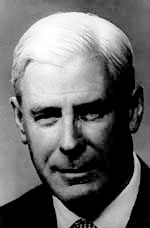
The formative years
William Ian Potter, known as Ian, was born in Sydney on 25 August 1902 to James W. Potter and Louisa McWhinnie. He was the third of four children – three boys and a girl. James Potter was a well-established wool merchant of Bradford, England, and he and Louisa were visiting Australia in connection with the Potter family wool business interests here.
As a result of the Potters' business involvement in both countries, Ian became exposed to different environments while young. His school education was received in Bradford and then at Dumfries Academy in Scotland. When the family moved to settle in Sydney after the First World War, Ian entered the University of Sydney. Leon Glezer has suggested that 'an early alternation between Britain and Australia left him with a sense of being part of each society, yet distant from both'.[1] Over the years he travelled frequently, and in later life maintained an apartment in New York; his bearing was such that he was thought by some connections in England to be an American with Australian interests, and in America to be an Englishman with Australian interests.
Although his father had hoped Ian would become a lawyer, he was drawn to business. At university he read economics and history, and topped his class in graduating Bachelor of Economics. He was a man of parts. An interest in medieval English literature led to a capacity to read and speak it freely and to quote Chaucer extensively. His intellect and social ease allowed him to develop good relations with a range of people including students of different political views from his own conservative position. He came second in a University five-mile run. He entertained on his boat on Sydney Harbour. There was charm, wit, energy and hints of resolve.
On graduating in 1929, he joined the staff of Edward Dyason, a Melbourne stockbroker to whom he had been recommended by R.C.Mills, his economics professor. He was one of the first economists to be engaged in stockbroking; at that time, few graduates were employed in Australian financial institutions. In October 1931, he confirmed his interest in markets by buying, for £700, a seat on the Melbourne Stock Exchange.[2]
In consequence of his role as an economist, and a bright and sociable one, he became noticed in political circles. In 1933 he was invited by R.G. Casey, then Assistant Treasurer in the Commonwealth Government, to move to the Treasury in Canberra as Casey's economic adviser. Although he remained there for less than two years, the connections he gained continued his formation of significant personal networks. His work brought him in close contact with a range of politicians, and gave him experience in lending and taxation policy and in negotiation with Australian and overseas bankers.
In 1935 he returned to Melbourne to pursue a career in business. He was offered employment in the leading stockbroking houses of J.B. Were and E.L. and C. Baillieu, but elected to set up as a sole trader. He founded the firm Ian Potter & Co. in 1936. In much later years, after he retired from the partnership, the firm became Potter Partners, then Potter Warburg Limited, and is today part of SBC-Warburg Australia Limited.
Thus were gathered the ingredients for the development of innovation, wealth, influence and philanthropy, and a remarkable and varied contribution to national life over the next 60 years.
Stockbroker
While still a sole trader, working from an office in the basement of the Bankers and Traders Building in Collins Street, Potter made his first foray into commercial underwriting. In September 1936, in competition with J.B.Were, who were the dominant brokers of that time and always a major competitor of Ian Potter and Co., he bid successfully and somewhat boldly for the underwriting of a £1 million issue of preference shares by the company Electricity Meters and Allied Industries Ltd, later known as Email. In the same year he underwrote his first semi-government issue, for the Melbourne and Metropolitan Board of Works. These and smaller contracts helped to bring forward his name and reputation.
To penetrate and find a place in the Melbourne establishment, controlled by several families and their connections, was a formidable challenge. Potter's credentials of early market success and evident acumen were enhanced by his considerable social skills – a readiness and ability to move easily among leaders in business, politics and other fields in Australia and elsewhere. He engaged energetically with business society, and later remained accepted despite the publicity attending three divorces.
War service from 1940 to 1943 with the Australian Naval Volunteer Reserve in Australian waters interrupted his business activities, but during the '30s and '40s he progressively extended and consolidated his market involvements and his networks. With his connections in mind the Committee of the Melbourne Stock Exchange elected him as a Committee member in July 1942, to assist in dealing with a difficulty with the Commonwealth Government. He continued as a member of the Committee for 20 years, to November 1962.[3]
Prominent acquaintances included Leslie McConnan, general manager of the National Bank of Australasia. When the Chifley Government announced in August 1947 its intention to nationalise the private trading banks, McConnan, who was also chairman of the Associated Banks, called upon Potter to assist with the strategy and publicity for the campaign of resistance mounted, ultimately successfully, by the industry. Each such engagement created an increased flow of business from individuals and companies who were seeking the services of a broking house.
Potter's adeptness in building networks was matched by his shrewdness in selecting his partners. He had taken Henry A. Pitt into Ian Potter and Co. as his first trading partner in January 1938. J.H. McColl followed in October 1943. With the rapid expansion of the firm in the 1950s, others were added: C.T. Looker, N.K. Miller and G.D. Brown (1953), A.L. Shilton(1954), K.W. Pring (1956), G.R. Stuckey and J.L. Taylor (1960), and K.W. Halkerston and L.M. Muir (1962). His policy in seeking partners was to attract high quality and relevant experience. Pitt was a former under-secretary to the Victorian Treasury, a background which enhanced the firm's potential for underwriting semi-government loans. Miller was head-hunted from Were's, where he had set up the first company analysis and statistical research service in an Australian broker's office. Brown, a former secretary to the Stock Exchange, was an expert on prospectuses; Stuckey came from the Commonwealth Bank; Looker, pre-war, was private secretary to Menzies.
He took the same approach in hiring key staff. Charles Smith had been trained in Were's, and joined Potter as general manager, bringing order at a time when Potter's office had few systems and little up-to-date office equipment. The firm's first operator on the floor of the Exchange was not hired until 1947, when Laurie Day, acknowledged as the then finest operator in the House, was attracted from Were's.
His firm's business burgeoned post-war, when economic growth, commercial development and the demand for capital provided the context for expansion. Capital issues controls were removed in 1949. The banks, hitherto the mainstays of capital provision, did not have the capacity to satisfy the growth pressures by debt financing, and would suggest that capital might be raised by issues of equity shares. Potter's, especially Ian Potter and Cecil ('Peter') Looker, had themselves actively canvassed corporations to alert them to their wider post-controls options; known favourably by the banks, the firm was not infrequently recommended to companies to handle their equity issues. Its reputation was also enhanced by success in flotations which, to other contending brokers, had seemed technically too difficult. From the outset, Ian Potter took a creative and entrepreneurial view of his business opportunities as a broker, ready to extend beyond normal broking into related services.
Ian Potter and Co.'s underwriting of semi-government loans was aggressively pushed forward in this period, and reached market dominance in the early '50s, though later in that decade increased competition made inroads into the firm's market share. To support his underwriting, Potter arranged a consortium of institutional sub-underwriters, whose confidence in his judgment was such that he was able to set and offer terms of issues rather than negotiate them with the sub-underwriters in advance. Success in semi-government underwriting was complemented by leadership in facilitating and underwriting equity issues and company flotations to the Stock Exchange. Of 33 companies listed on the Melbourne Exchange in 1950, 16 were underwritten by Potter's, easily the largest number by one broker. The firm also sometimes underwrote major equity issues jointly with E.L. and C. Baillieu.
Such was the momentum of this business and the robustness of competition, particularly between Potter's and Were's, that terms tended to be cut fine. Potter's successes substantially outweighed shortfalls, though the firm incurred some considerable losses. Ian Potter read economic and market trends astutely, and he knew who had funds available to invest.
Although the major financial institutions had held equities, especially the life companies with their requirements for long-term investments and investment spread, the proportion of institutional assets held in equities prior to the '50s was small. Ian Potter was one of the first brokers to encourage institutional managers to move more significantly into the equity markets. Later, in the '60s, he went further, in encouraging direct institutional investment in the mining industry.
Potter's services extended to the provision of a merchant banking facility. For example, he bought the share capital of Email and then placed it with institutions and others as a solution to difficulties between Australian and UK interests. Similarly, he reconstructed the capital of the shipping company, McIlwraith McEacharn. His firm's operations were not without occasional controversy, as might be expected in a highly competitive business, but the dynamic was overwhelmingly constructive.
The firm became the preferred stockbrokers for an increasing number of clients, and grew rapidly. It developed the investment research pioneered by Miller when with J.B.Were's, and produced a book for investors entitled Selected Australian ordinary shares; this also introduced to Australia the analytical concepts of growth in earnings per share and the making of adjustments for distributions and share issues. In response to the demands of the '60s, at the time of the nickel boom, a night staff was employed; total staff rose to 560 by 1970 but with the post-boom correction the firm reduced its overdraft and culled its staff numbers, which settled back to around 200.
Financier
The considerable growth of Potter's business was not merely a response to detected opportunity, but to a degree was the result of making and then exploiting opportunity. Glezer observes that '[Ian] Potter's role as a catalyst pervade[d] most of the important developments in the financial sector in the two decades after 1945'.[4] It was a conjunction of unusual personal capacities with the relaxation of financial conservatism and regulation and the introduction of new investment instruments to meet commercial needs. Backed by his partnership, Potter became 'the pre-eminent Australian financier from the early 1950s to the late 1960s'.[5]
In 1955, Cecil Looker, later Sir Cecil, who was the firm's debt financing expert, went to London to study the discount market, and returned to advocate to the Federal Treasury that such a market be established in Australia. There was a demand for improved day-to-day management of the flows of very short-term funds, for example those in the hands of semi-government bodies and hire purchase companies, and generally for institutions public and private where money flows were uneven. The new market, approved by the government and the central bank, opened in 1959 for short-term trading in bonds, with the central bank as lender of last resort. Potter's were involved as a partner in one of the initial four official dealers. An 'unofficial' market in short securities, without central bank cover, was also developed.
Potter established the investment vehicle Australian United Investment Company Ltd (AUI), which became the principal source of his personal wealth and remains a listed investment company to this day. In conjunction with the Commercial Bank of Australia, he also established one of the first public unit trusts, the Australian Capital Fund.
Ian Potter's assistance was sought by Anglo-Australian Corporation (AAC), a merchant bank owned by British merchant bankers, which had faced some resistance in its attempts to break into the Australian market. After protracted debate in Stock Exchange circles and then prolonged negotiations with Potter's, shares were exchanged between Ian Potter's investment and banking companies and AAC, with the outcome that Australian United Corporation (AUC) was formed in 1960, in conjunction with Morgan Grenfell Ltd and Lazard Brothers of the UK and J.P.Morgan of the US. This organisation became the major Australian merchant bank of the '60s and '70s. It gave financial stimulus to the rise and growth of some of Australia's principal industrial, commercial and media corporations, and of resources companies such as Conzinc Rio Tinto and Hamersley Mining. Debt issues were arranged for BHP, CSR, and Carlton and United Breweries. AUC's subsidiary, United Discount Corporation, became a major and profitable participant in the short-term money market.
Ian Potter's merchant banking approach was such as to build wealth through new development, company floats to secure capital growth, and amalgamations to obtain economies of scale and greater productive effectiveness. His way was not the way of takeovers for asset-stripping, which reached notorious levels in the '80s.
He displayed a constant alertness for new ideas, including overseas techniques that might readily be applied in the maturing Australian context. He travelled overseas three or four times each year and became well-known in London and other European financial centres and in New York. He had long done arbitrage business through firms in London, and finally opened a branch there during the boom in Poseidon shares. He also developed a New York business, in 1957, in association with Carl M. Loeb Rhoades and Co.
It was perhaps inevitable that Ian Potter's skills and reputation in stockbroking, corporate floats, merchant banking and advisory services (sometimes for companies that were in competition with one another) led to numerous invitations to join company boards. His contribution was not limited to financial advice but also went to practical operational issues. His directorships ranged across industry; for example: in finance he was chairman of Commercial Union Assurance Co. of Australia, as well as his companies AUC and AUI; in mining he was a director of Consolidated Gold Fields and Bellambi Coal; in general industry he was on the boards of Formica, Boral and TNT, and chairman of Email. His associations had consequences for relationships between companies, which strengthened their own financial well-being.
In consequence of his international connections Ian Potter became adviser or director, frequently chairman, of the Australian boards of a number of overseas corporations. For example, he was an Australian director of Time Life International, and a member of the international advisory council of the New York Chemical Bank. He formed a particular association with the Wallenburg banking family in Sweden, and through it and in other ways became involved with two Swedish corporations operating in Australia, ASEA and Atlas Copco, and a number of Swiss corporations – CIBA-GEIGY, Nestlé, and various insurance companies. A list of his directorships is given in Table 1.
Table 1: Company directorships held by Sir Ian Potter
- The Ian Potter Foundation Ltd
- McIlwraith McEacharn Ltd
- Australian United Investment Co.Ltd
- Western Bulk Carriers Ltd
- Atlas Copco Australia Pty Ltd
- Email Ltd
- Boral Ltd
- Diversified United Investment Ltd
- Petro-chemical Holdings Ltd
- Commercial Union Assurance Co. of Australia Ltd
- CIBA-GEIGY Australia Ltd
- Associated Steamships Pty Ltd
- Bulkships Ltd
- ASEA Electric (Australia) Pty Ltd
- The Nestlé Company (Australia) Ltd
- Time Life Australia Pty Ltd
- Consolidated Gold Fields Australia Ltd
- Renison Ltd
- R.W. Miller Ltd
- Union Steamship Co. NZ Ltd
- The Bellambi Coal Company Ltd
- TNT Ltd
- Coca-Cola Bottlers Ltd
- Formica Ltd
Source: Who's who in Australia, 1995 (company names have been edited).
Note: This is an indicative list of Sir Ian's directorships over the years. The form of some company names may not be wholly correct as at the time of his association.
He was also in demand as a commentator on Australian economic and financial questions, and he gave numerous addresses on such topics as the role of directors, overseas ownership, and immigration, and wrote articles for the press.
A special personal interest from the mid-1940s, perhaps sharpened by his Navy days, was the shipping industry. Potter joined the board of McIlwraith McEacharn Ltd in 1946 and was elected chairman in 1957. This was one of the first shipping companies in the world to use containers. He encouraged the building up of the fleet, culminating in 1963 in the amalgamation of the company's interstate shipping business with that of Adelaide Steamship Company to become Associated Steamships, of which he was first chairman. He joined the board of Bulkships in 1962 and was elected to the chair.
After Ian Potter retired from Ian Potter and Co., in June 1967, he continued to take a direct and innovative interest in financial markets, somewhat to the concern of his erstwhile partners. After much negotiation, the firm's name was changed to Potter Partners. As a practical vehicle for continuing his merchant banking, he established in 1970 the company Tricontinental, in which overseas financial connections took equity positions and which operated successfully while he remained involved. He sold most of his shareholding in 1979, and the remainder when he retired from its board in 1985.
Citizen
Ian Potter's early breadth of interests as a student foreshadowed his later participation in various non-business fieldspolitics, education, the arts, the sciencesand his widespread philanthropy. Just as in business he played a hands-on role in creative development, networking and negotiations, so he engaged directly in other areas of civic and cultural life.
Following his entry into political circles as a bright young man, reinforced by his service in Treasury in the '30s, he developed and maintained significant political connections. He was associated with the formation of the Liberal Party in 1944, as a founding trustee, and remained a major influence in party affairs including fund-raising over the next 30 years. He enjoyed friendship with R.G. Menzies, who sought unsuccessfully to recruit him into politics, and had close relationships with senior politicians on both sides of the parliament: Holt, McMahon, and Fadden; Chifley, Calwell and Whitlam.
Potter served as Commonwealth Representative at the Conference on Rural Debt Adjustment, 1934–35, and later as the Australian Member of the War Reparation Council. In 1956–62, he was a member of the Commonwealth Immigration Council. During the '50s and '60s he represented Australia at World Bank meetings. His political skills and networks were a salient factor in his success in public sector fixed interest markets.
In 1964, his personal wealth having grown through his business achievements, he established the Ian Potter Foundation. This would be a vehicle through which his personal philanthropy could quietly be contributed and given continuity, with a Board of Governors (of which he was one) to husband its growing assets and set the direction of its grants. By 1994, the year of Ian Potter's death, the corpus of assets accumulated by the Foundation, from Ian Potter's donations and from returns from investments, had risen to some $50 million; a bequest in his will took total assets to $100 million in 1995.
Grants made by the Ian Potter Foundation during Potter's lifetime amounted to some $22 million, and in the early '90s were running at over $2 million annually. Over the years more than 50 institutions or organisations were supported, in the arts, academia, business education, the sciences, environment and heritage conservation, social welfare, and travel opportunities for young people. A list of major beneficiaries is shown at Table 2. Gifts always tended to be made discreetly, 'to the point', says Charles Goode, 'of anonymity'.[6] In addition to philanthropy through the Foundation, Potter continued to make donations personally.
Table 2: Grants made by the Ian Potter Foundation
Major beneficiaries during Sir Ian Potter's lifetime include:
- The Howard Florey Institute of Experimental Physiology and Medicine
- The University of Melbourne
- Monash University
- La Trobe University
- Deakin University
- The University of Sydney
- The University of New South Wales
- The University of Queensland
- The Australian Academy of Science
- CSIRO
- The Potter Farmland Plan
- The State Library of Victoria
- The Museum of Victoria
- St Patrick's Cathedral Restoration Appeal
- St Paul's Cathedral Restoration Appeal
- The National Trust of Australia
- The Zoological Board of Victoria
- The Royal Botanic Gardens, Sydney
- The National Gallery of Victoria
- The Ian Potter Sculpture Commission
- The Victorian Arts Centre
- The Museum of Modern Art at Heide
- Regional Galleries of Victoria
- The Salvation Army
- The Children's Welfare Association of Victoria
- Ballarat Children's Homes
- St Luke's Family Care
- The Smith Family
- Foodbank Victoria
- The Ecumenical Migration Centre
- The Victorian State Opera
- The Australian Ballet School
- The Australian Chamber Orchestra
- The Bell Shakespeare Theatre
- Birds Australia (formerly The Royal Australasian Ornithologists Union)
- The Centre for Independent Studies
- The Walter and Eliza Hall Institute of Medical Research
- The Baker Medical Research Institute
- St Vincent's Institute of Medical Research
- The Microsurgery Research Centre
- The Advisory Council for Children with Impaired Hearing
- The Royal Australasian College of Physicians
- The Royal Eye and Ear Hospital
- The Peter McCallum Cancer Institute
- Austin Hospital
- Royal Melbourne Hospital
- Prince Henry's Institute of Medical Research
- Monash Medical Centre
Source: The Ian Potter Foundation.
Ian Potter contributed not only financially but also, and frequently, by direct application of his personal skills. For example, he was a member of the Council of the University of Melbourne from 1951 to 1971, and influenced Council to invest a significant proportion of its superannuation funds in equities. In addition, the University, its Graduate Business School and colleges received grants from the Foundation, and medical research was supported as described later in this memoir. Among other universities that received support, his alma mater, the University of Sydney, was also liberally assisted by the Foundation for 30 years, especially through travel grants for academics and contributions to building restoration.[7]
Potter's association with the arts, especially the performance arts, was extensive. He was involved in the construction of the National Gallery of Victoria, was a member of the Gallery and Cultural Centre from 1957, and was responsible for negotiating between the Victorian Treasury and the Centre's Building Committee for the financing of the whole arts and theatre complex, with bipartisan political support.
He succeeded his friend Dr H.C. ('Nugget') Coombs in 1968 as chair of the Australian Elizabethan Theatre Trust when Dr Coombs became the first chair of the Australia Council for the Arts. Potter retired from this role in the Trust in 1984, and was elected to the honorary post of its President. The importance of the Trust in the development of the performance arts in Australia cannot be overstated. It had a generative role in the formation of the Australian Opera, the Australian Ballet Foundation and School, the National Institute of Dramatic Art (NIDA) and several theatre companies. Potter was a member of the boards of both the Opera (1970–1980) and the Ballet Foundation (1965–1983).
It is appropriate in this memoir to give special acknowledgement to Ian Potter's interest in Australian science. He could appreciate the state of scientific knowledge and sense opportunity for real advance. This capacity, coupled with his drive, his alertness to how finance might be arranged, and his networks, was well exemplified in his first major act of philanthropy. He had for some time shown curiosity about the work of the Howard Florey Laboratories of Experimental Physiology and Medicine in the University of Melbourne, and he and Ken Myer had visited to see what was being done. (I was the Laboratories' Director and Ian, Ken and I were mutual friends – D.D.). Interest came to a head over a dinner in 1960, when discussion turned to the urgent need for upgraded space and facilities for the Laboratories, which were then in a nineteenth-century building that provided poor conditions. During the meal, Ken Myer suggested that Potter might like to join him and his brother, Baillieu Myer, through their newly-formed Myer Foundation, in financing what was intended to be a state-of-the-art laboratory building. Potter's immediate response was: 'Yes, and we'll go halves for the major sum', and after a short pause, 'and furthermore we'll underwrite the total so the scientists can go now and get an architect'. By Friday night of the same week, the architect, Garry Patten, was chosen. The four days it took to move from the germ of the idea to a commitment to construct what was to become a nine-floor international centre of scholarship and medical research may well be something of an Australian record, if not an international one.[8]
The funds for the centre were found successfully, including a federal Government grant secured through Ian Potter's friendly access to Menzies and Holt. Around the same time, by personal intervention through his World Bank connections and in conjunction with Coombs, Potter also assisted in removing an administrative blockage in the US National Institutes of Health to the passage of a large grant to the Laboratories following their discovery of a new hormone bearing on the control of salt balance.
Potter's active interest in the Laboratories continued. He lent his weight to securing their incorporation in 1971, by Act of Parliament, as an independent Institute affiliated with the University. When this step was mooted, Potter remarked: 'We don't want any University sherry party committee – we want responsibility!'.[9] Up to the date of writing (mid-1997), some $4 million has been paid or committed to the Howard Florey Institute by the Ian Potter Foundation, for studies in molecular biology, hormones and mechanisms of instinctive behaviour, and for a recent extension to the Institute's building.
The Florey's sister body, the Walter and Eliza Hall Institute of Medical Research, and its close affiliate the Ludwig Institute, were also beneficiaries of Potter's generous grants. The wide range of institutes and university research departments assisted by Ian Potter Foundation donations is included in Table 2.
Potter's interest in and support for the science community were manifest perhaps most symbolically by his association with the peak learned society of scientists in the country, the Australian Academy of Science.
Academician
In the 1950s the Academy successfully negotiated with the federal Government to secure a home site near the Australian National University campus under a special-purpose lease for a nominal rent. The Academy's 'Dome', an imaginative copper-sheathed structure designed to house a fairly large auditorium, with offices and meeting rooms, was completed in 1959, and became a landmark in Canberra and a well-recognised icon in the Academy's coat of arms.
Ian Potter had taken a 'benevolent interest in the Academy of Science from the inception of the Dome proposition'.[10] From 1961 over the following 10 years a very significant donor to the Academy's development had been Sir Ellerton Becker. In 1965, the Academy's bye-laws were amended to make available two places in the Academy's Finance Committee for lay persons who could provide financial counsel, and Becker and Potter were appointed to the Committee by the Academy's Council. Ian Potter's influence was immediately felt in the Committee's deliberations and in an increase in the operating authority delegated to it.
In April 1978, against a background of long and significant philanthropy and direct, personal interest in scientific institutions in Australia, Ian Potter was elected a Fellow of the Academy by special election – a distinction reserved for persons 'who (have) rendered conspicuous service to the cause of science or whose election would be of signal benefit to the Academy and to the advancement of science'.[11] He was one of only 10 distinguished persons to have been so recognised up to that time.
All Academy activities had been carried on in the Dome until 1968, when it became necessary, through growth in the Academy's affairs, to lease additional office space elsewhere. By 1981, about half the staff were located in rented premises. Negotiations with government were then commenced, to obtain title to the adjoining building, Beauchamp House, constructed in 1927 as a hostel for female public servants who had been transferred from Melbourne. It later became a public meeting place and offices for community use. The building had generally deteriorated and was slated for structural restoration and refurbishment.
Negotiations for the title succeeded, subject to certain conditions relating to progress with restoration and to ultimate use. An appeal for funds was launched by the Academy in 1982, directed to the Fellows and more widely. In November 1982 the Ian Potter Foundation supported the appeal with a seeding grant of $50,000, payable in two instalments, which was later described by the President of the Academy as a critical factor in the decision of the Academy's Council to proceed with refurbishment.[12] This grant was supplemented in 1984, bringing the Foundation's total donation to $250,000. The further support was seminal to the Council's decision to push forward to finish the building, which was achieved by 1987.
In 1984 Council honoured its two principal benefactors by resolving to rename the two buildings in the Academy's island precinct. The Dome became 'Ellerton Becker House' and Beauchamp House 'Ian Potter House'. A bronze plaque acknowledging the history and naming of Ian Potter House was installed in 1988 beside the walkway between the two buildings, under the magnificent wisteria growing over the pergola at the entrance to the Academy's offices. Ian Potter House is listed in the register of the National Estate.
Ian Potter's longstanding friendship with Marcus Wallenburg of the Enskilda Scandinavica Bank led to support by the Ian Potter Foundation, jointly with the Wallenburg and Wenner Gren Foundations, for Australian–Swedish scientific conferences on neuroscience, circulation, botany and connective tissue biology. The first Australian–Swedish scientific symposium, on integrative mechanisms in neural function, was held in Melbourne in March 1987, sponsored by the Ian Potter Foundation. In 1989, Potter visited Stockholm for the 250th anniversary of the Royal Swedish Academy of Science, where he was treated with honour and became a signatory of the scientific exchange agreement between the Swedish and Australian Academies.
Potter maintained a working association with the Australian Academy of Science as a member of its Finance Committee until his retirement from the Committee in 1993. He remained a Fellow until his death.
The man
Though he moved in international circles of influence, Ian Potter was a private man. Urbane and elegant in presentation, with an ease, connections and a steady blue eye, he nonetheless avoided publicity. Graeme Adamson notes that he was 'never known to grant an interview with any newspaper'.[13]
He spoke and wrote eloquently, and with spareness. Goode observes that 'while he was active in business he maintained an office and a secretary in both Melbourne and Sydney and frequently a work schedule that involved spacing his appointments at 15 minute intervals. One could be in his office and after the discussion had been concluded in an unhurried manner one realised that it had only taken ten minutes'.[14]
He not only knew how to select his colleagues but also how to allow them delegated freedom, how to multiply his own capacities through others. His own leanings were creative, analytic, strategic and interpersonal rather than bureaucratic. In the early days, his office, with few systems, bordered on administrative chaos, but he remedied this through well-targeted recruitments and, after some reluctance, permitted the adoption of such technology as seemed justifiable, until eventually the firm became a leader in the introduction of technology to the trading floor and in inter-office communication.
To Alwynne Shilton, his 'brilliance was not so much as a share man as a financier in floats and in amalgamations ...'; Laurie Day described him as 'an enigma and a genius'.[15] His negotiating skills, his relationships and networks, a remarkable memory and grasp of detail, and a resolve in pursuing a project to a conclusion, marked his path to success. Adamson writes that 'Potter's attitude was: somebody has got to do it, and there must always be a way'.[16] He made mistakes, but pressed forward. His application of these qualities in financial markets, politics, the arts and the sciences, influenced the course of national development.
His private interests included reading, tennis, and – an echo of his love of the sea and ships – yachting and swimming. He enjoyed trolling for fish at Lake Eucumbene, where he had a lodge that he himself designed and built. There and in Melbourne he was an amiable host, with a reflection of the international in his wine, his schnapps and his martinis, around the fire. His humour was dry and occasionally, with his friends, provocative.
He is survived by his wife, Primrose (Lady Potter, AO), two daughters from earlier marriages, Robyn Potter and Carolyn Parker Bowles, two grandchildren, Luke and Sam Parker Bowles, and his stepdaughter Primrose Krasicki and her daughter Zofia. Lady Potter herself is a longstanding and well-known contributor, on boards and in other ways, in the fields of the arts, education and community philanthropy.
Ian Potter was knighted by the Queen in 1962, for public services in the field of finance – the first Australian stockbroker to have been knighted with that citation. In 1973, the University of Melbourne bestowed on him the honorary degree of Doctor of Laws. In 1989, he received from the King of Sweden the honour Knight Commander of the Polar Star (First Class). The Melbourne Stock Exchange, the base for his rise to distinction, elected him an Honorary Fellow of the Australian Stock Exchange in 1991. He was an Honorary Life Member of the Australian Elizabethan Theatre Trust, the Australian Ballet Foundation, the Australian Opera and the National Gallery of Victoria, a Member of the Royal Society of Victoria, a Fellow of Queen's College in the University of Melbourne, and a Governor of the Royal Shakespeare Company, Stratford-upon-Avon.
Sir Ian Potter died at home on the evening of 24 October 1994, after a long illness. He was 92. On 22 November, his many contributions to his country, his profession and so many sectors of society, were celebrated at a memorial service of thanksgiving in St Paul's Anglican Cathedral in his home city.
About this memoir
This memoir was originally published in Historical Records of Australian Science, Vol. 11(4), 1996. It was written by:
- D.A. Denton, The Howard Florey Institute of Experimental Physiology and Medicine, University of Melbourne, Parkville, Vic 3052.
- M.H. Ryan, 6/36 Musgrave Street, Mosman, NSW 2088.
Acknowledgments
The authors are grateful for the comments and corrections of those who kindly read the draft of this memoir, including: Lady Potter; Charles Goode and Patricia Feilman of the Ian Potter Foundation; Peter Gray and Noel Miller of SBC-Warburg Australia; Rosanne Walker of the Australian Academy of Science.
References
[1] Glezer, L., 1988, 'Sir Ian Potter and his generation', in R.T. Appleyard & C.B. Schedvin (eds), Australian Financiers, Macmillan, South Melbourne (a collection of biographical essays commissioned by the Reserve Bank of Australia as part of its contribution to Australia's Bicentenary), p. 402.
[2] The Stock Exchange of Melbourne, card record of membership.
[3] Ibid., and Glezer, op.cit., p. 405.
[4] Glezer, op.cit., p. 402.
[5] Glezer, op.cit., p. 420.
[6] Goode, C., 1994, 'Sir Ian Potter - an appreciation', The Ian Potter Foundation, Melbourne, unpub., p. 8.
[7] Obituary, Sydney University Gazette, April 1995, p. 29.
[8] Denton, D.A., 1994, text of eulogy given at the memorial service for Sir Ian Potter in St Paul's Cathedral, Melbourne, unpub.,p. 3.
[9] Ibid., p. 5.
[10] Letter from the President of the Academy, Arthur Birch, to Sir Ian Potter, 27March 1984, Academy archives file 4096.
[11] Academy Bye-law II:10.
[12] Letter from Birch, op.cit.
[13] Adamson, G., 1984, A Century of Change the First 100 Years of the Stock Exchange of Melbourne, Currey O'Neil, South Yarra (commissioned by the Committee of the Stock Exchange), p. 137.
[14] Goode, op.cit., p. 4.
[15] Adamson, op.cit., p. 139.
[16] Adamson, op.cit., p. 136.
Beyond the specific references given above, the information in the text has been substantially drawn from the named works of Leon Glezer, Charles Goode and Graeme Adamson, and from the archives of the Australian Academy of Science, especially files 417, 4096, 4270 and 4423.
William Herdman Elliott 1925–2012
Bill Elliott graduated in Biochemistry at Cambridge and gained his PhD with enzymologist Malcolm Dixon in the Biochemical Laboratories. Following research appointments at Harvard, Oxford and the Australian National University, he became Professor of Biochemistry at the University of Adelaide in 1965.
He was an outstanding scholar and stimulating teacher who profoundly influenced the lives of students and staff of his Adelaide department. Early in his career he made important contributions to the understanding of enzyme reactions driven by phosphoryl group transfer from adenosine triphosphate (ATP) and discovered the glutamine synthetase enzymes in plant and animal tissues that utilise that mechanism.
He later worked on mechanisms of enzyme secretion by certain microorganisms, before turning to the biochemical mechanisms of porphyrin synthesis that lead to the formation of haem and thence haemoglobin, research that he pursued for the rest of his academic life.
Download the memoir
About this memoir
This memoir was originally published in Historical Records of Australian Science, vol. 24(1), 2013. It was written by George E. Rogers, Biochemistry Discipline, School of Molecular and Biomedical Science, University of Adelaide.
William Henry Wittrick 1922–1986
Written by J.W. Roderick.
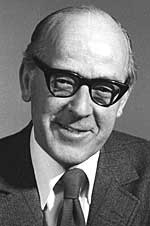
William Henry Wittrick was born in Huddersfield, England on 29 October 1922. His father, Frank Wittrick (1894–1960) was the eldest of three sons of an iron and steel merchant in Huddersfield, and his mother Jessie was the eldest child of Walter Jury, a builder in the same city.
Frank Wittrick enlisted in 1914 and served in France throughout most of the First World War; he was wounded and emerged with impaired health which was to take its toll in the difficult years ahead.
William Henry Wittrick spent the whole of his childhood in Huddersfield. His parents were by no means well off and had something of a struggle bringing up four children, but his childhood was nevertheless a happy one. His mother was a proficient pianist, had a fine contralto voice and had sung in the well known Huddersfield Choral Society. A source of great pleasure for William was the many enjoyable musical evenings spent around the piano with family and friends, his mother playing the piano and leading the singing.
It was not until the latter part of his secondary education (1933–1940) at Huddersfield College that Wittrick began to show his full scholarly potential. Having passed the School Certificate examination and matriculated, he proceeded to study mathematics, physics and chemistry and came to realise that his strongest subject, and the one that he found most absorbing and enjoyable, was mathematics. He was, too, very fortunate in having a quite outstanding mathematics teacher, Mr. Leslie Horsfall, himself a Cambridge Wrangler. As a result of Wittrick's performance in the Higher School Certificate examination, Mr. Horsfall and the Headmaster persuaded his parents to let him stay on in the Sixth Form for another year and to try for a Cambridge scholarship.
At this stage it was essential that he should have somewhere quiet to study. With two younger sisters and brother, this was not easy at home, and he spent much time studying at his grandmother's house about a mile away. She would purposely refrain from conversation and would sit quietly reading whilst he was working. He owed much to her encouragement during this critical stage; not only did it result in his going to Cambridge, but it was during this time that he really learned how to study.
In preparing for the Cambridge scholarship examinations, Wittrick had decided to drop chemistry and to take applied mathematics instead. The latter he taught himself largely from books under the direction of Mr. Horsfall who also spent many hours of his own time preparing him for the scholarship examinations of St Catherine's College.
He was eminently successful in these examinations and was awarded an Open Exhibition in mathematics at St Catherine's at Easter 1940. In the summer of the same year he re-sat the Higher School Certificate examinations, on the result of which he was awarded both a State scholarship and the Jubilee Exhibition of the Huddersfield Education Committee. He was therefore able to go up to Cambridge in October 1940 without requiring any financial assistance from his parents.
Undergraduate years
Because of the war, Wittrick had decided to read for the Mechanical Sciences Tripos at Cambridge rather than mathematics and was allowed two years to complete the course. He therefore entered immediately to the second year of the course, and sat for the Tripos in May 1942. During the final year he elected to take four optional B Schedule papers in the subjects of Aeronautics, Applied Mechanics, Theory of Structures (Civil), and Theory of Structures (Mechanical); in addition he also attended lectures in a fifth B subject, namely Heat Engines. His supervisor during these two years was Mr. (later Professor) T.R.C. Fox of King's College, but in his final year he also had special supervision from Mr. H.A. Webb of Trinity College, a scholar who was also a gifted teacher. Like many before him, Wittrick found this contact with Webb a particularly stimulating experience.
On the result of the Tripos in May 1942, Wittrick was awarded the B.A. degree with First Class Honours and Distinctions in Theory of Structures (Civil) and Theory of Structures (Mechanical), and was also awarded the Archibald Denny Prize for Theory of Structures. His college had awarded him a prize in 1941, after his first year, and again in 1942. They also granted him the title of Scholar. Although he had sat for the Tripos in 1942, he was not formally admitted to the degree until 22 June 1943, three academic years after matriculating in the University. In February 1947 he proceeded to the M.A. degree upon payment of the requisite fee.
Sporting activities
Both at school and later at Cambridge, Wittrick gained a great deal of enjoyment from sports and athletics without being particularly outstanding in any of them.
Huddersfield College was a soccer school and did not play rugger; but when he was in the sixth form the sports master was a Welsh rugby international and both he and Wittrick's father, who had played rugby in his youth, made him keen to play. He took it up at Cambridge and managed to secure a place in the college Second XV with which he enjoyed many games. He also loved cricket and played for his House at school, his main accomplishment being as a leg spin bowler, but he did not play cricket at Cambridge. He played quite a lot of tennis whilst in the sixth form at school and later at Cambridge, where he captained his college team. During his Cambridge years he also took up squash, which he greatly enjoyed and continued to play regularly until 1970 when his health forced him to give it up.
Early work and research
After taking the Mechanical Sciences Tripos in 1942, Wittrick spent four months with the Hawker Aircraft Company, working at Esher on the stress analysis of the centre fuselage on the Centaurus-engined version of the Tempest fighter aircraft.
The Centaurus was a radial engine manufactured by the Bristol Aeroplane Co., whilst the existing version of the aircraft had a Napier 'Sabre' in-line engine. This necessitated a re-design of the engine mounting and centre fuselage which was essentially a statically indeterminate and rather complicated three-dimensional framework made from aluminium tubes, but with the shear bracing in several of the rectangular panels consisting of two diagonal taut wires. Under load, the likelihood was that the shear of the panel would cause one or other of the two wires to go slack, and before calculation could commence, a decision had to be made about which of the two wires should be omitted in each panel. This was a matter of inspired guess work, and if at the end of the calculation it transpired that the wire that had been retained was carrying compression, it meant that the initial guess had been wrong; the other wire in the panel had then to be included instead and the calculation repeated! The method of analysis was based on Sir Richard Southwell's tension coefficient method and was set out in tabular forrn, whilst the arithmetic was done on a Fuller calculator, a slide rule with a scale 500 in. long in the form of a helix on a cylinder about 3 in. in diameter. The process was therefore laborious and Wittrick spent most his time at Esher going through the many flight and landing cases that the Air Ministry publication AP970 decreed should be considered. Today the entire calculation would be carried out on a digital computer, using a standard program, in a matter of a few minutes.
In September 1942, Wittrick was called for interview by C.P. Snow – the archetypal talent spotter of the day – and sent back to Cambridge, primarily to teach Royal Engineer Officer Cadets doing six-month short courses. He was there for two years as a Junior Demonstrator, and during the second of these years he worked on the Liberty-ship problem under the guidance of Richard Weck. Liberty ships were being built in large numbers, using prefabrication techniques, in Henry Kaiser's shipyards in the USA. The problem was that some were failing catastrophically by developing extremely large cracks, due to brittle fracture of the steel. Wittrick assisted Weck in laboratory experiments to measure the residual stresses in butt-welded steel plates when the shrinkage across the weld was constrained elastically.
In October 1944 Wittrick was again interviewed by C.P. Snow and this time sent as a Scientific Officer to the Royal Aircraft Establishment, Farnborough, where he worked in the Structural and Mechanical Engineering Department. The head of the department at that time was Dr. A.G. Pugsley (later Professor Sir Alfred Pugsley, FRS) and among his colleagues who were later to become FRS's were A.R. Collar, E.G. Broadbent and E.H. Mansfield. He worked on two main problems. The first was an airworthiness problem arising from the excess stick forces being experienced by Spitfire pilots due to aileron and elevator distortion in high speed manoeuvres. The second was a theoretical investigation into the possible efficiency of the then new form of structure known as sandwich construction. This became the subject of his first published paper.
University of Sydney (1945–1964)
At the end of World War II the chair of aeronautical engineering at the University of Sydney was occupied by A.V. Stephens, a Cambridge man whose research interest lay in the field of aerodynamics. The department was a small one and, as it was the only one in Australia, Stephens was anxious to attract someone able to develop a strong teaching and research effort in aircraft structures. He therefore sought the advice of Professor J.F. Baker (later Lord Baker of Windrush), originally an aeronautical engineer, who in 1943 had become head of the Engineering Department at Cambridge and had gathered around him a most enthusiastic group to work on steel structures. Wittrick had spent a short period teaching and assisting in research in that department and with his excellent academic record and some experience at the Royal Aircraft Establishment, Farnborough, was highly recommended by Baker. At the age of twenty-three, he became one of the youngest senior lecturers ever appointed to the University of Sydney.
Getting to Sydney in those days with not without its difficulties. Wittrick had married in June 1945, and while he was granted a passage quickly, his wife Joyce had to wait until a later date. The irony of the situation was that the ship in which Bill sailed had some empty berths. Joyce joined her husband some months later after a long tedious journey around the Cape. Both being endowed with Yorkshire determination, they did not allow such frustrations to interfere with the task of making a good life in Australia.
The small department at Sydney had its compensations for Wittrick. The teaching load was not particularly onerous and since his interest in aircraft structures was mainly theoretical, he was able to engage in research very soon after his arrival. At that time, considerable attention was being given to swept-back wings for high-speed aeroplanes and particularly to the delta wing, for which the leading edge is highly swept but the trailing one is more or less unswept so that the taper and 'average' sweep are large. This was a complex problem on which a great deal of work was being done though few papers had been published. For swept and tapered wings with ribs parallel to the root, Wittrick produced solutions for their behaviour under load. He demonstrated the coupling between flexure and twist, and the effect of root restraint which could be significant for large angles of sweep. A detailed account of this work is to be found in his thesis entitled 'Torsion and Bending of Swept and Tapered Wings with Ribs Parallel to the Root', submitted for the degree of Ph.D. The appendix contains detailed numerical applications of the theory to a highly tapered unswept four-boom tube of rectangular section, with a completely restrained root section, under varying bending moment and torque. No mean task when the only aid then available was the mechanical hand-operated calculating machine!
It is interesting to note that when Wittrick was awarded the Ph.D. degree in 1950, he became the first recipient in the University of Sydney. The thesis is now lodged under restricted access in the Rare Books section of the University Library. Associated with it are a number of publications, the first of which was said to be the first paper on this topic published anywhere in the world.
With hindsight, we can see that Wittrick's adoption of the well-established assumption of rigid line-of-flight ribs was not appropriate for swept wings, because it markedly exaggerated the coupling between torsion and flexure. However, this served a useful purpose, because it highlighted a novel structural phenomenon and acted as both a trigger and a spur to those who then recognised the need for a more exact analysis.
In the early 1950s Wittrick returned to his interest in buckling, prompted by problems arising in the design of swept wings concerning the elastic stability of irregularly shaped panels (such as parallelograms and triangles) subjected to edge loads. He also produced an elegant solution for the buckling of orthotropic and isotropic rectangular plates under various biaxial loading and boundary conditions. A number of other papers on similar topics were also published. Indeed, in 1954 his papers formed a substantial part of the literature on these problems.
During this period Wittrick found time to examine a number of intriguing problems in the wider field of engineering. One example was his work on the stability of a heated bimetallic disc, which constituted one of the few exact solutions of the stability of a non-linear elastic system to be published up to that time. The behaviour of the disc also relates to the thermo-elastic stability of skin panels of supersonic aircraft and missiles. Another example was his study of the theory of crossed flexural pivots, which had been widely used in scientific instruments, particularly balances, because of their inherent lack of friction. When subjected to load they exhibited certain phenomena associated with their stability that were often undesirable. Wittrick's papers on this topic gave a comprehensive analysis of their behaviour and led to the design of new and improved flexural pivots in which the undesirable features were to a large extent eliminated.
By 1953, having devoted some years to research on swept-back wings in an environment somewhat remote from other centres of aeronautical research, Wittrick decided that it was time to acquaint himself more fully with overseas ideas on these problems. He therefore arranged to spend about six months at the California Institute of Technology working with a group interested in the structural behaviour of swept-back wings. He was awarded a Fullbright/Smith-Mundt grant and appointed a Research Fellow at CIT where he was invited to conduct weekly seminars on the results of his own research. Also, in collaboration with Professor Y.C. Fung, he made a study of a (structural) boundary-layer phenomenon that occurs, for example, at the free edges of thin cantilever plates in the large-deflexion regime. This edge effect involves localised out-of-plane displacements that result in middle-surface forces which, because of the curvature of the plate, have components acting normal to the plate. Over a narrow region, typically of order (plate thickness/plate curvature)1/2, these forces cause the moment per unit length in a direction normal to the boundary to increase from zero to a value that effectively enables the interior regions of the plate to deform linearly into a developable surface. When this research was undertaken, Fung and Wittrick were unaware of the inextensional theory of plates(1) that gave a general technique for determining the generators of such developable surfaces. These separate researches were, however, complementary because the one provided details of the localised mechanisms required for the other. Interest in these researches stemmed from their application to very thin solid wings and fins on missiles.
On his return to Sydney, Wittrick was promoted to Reader. One of the referees was a senior member of CIT who made the comment: 'Dr. Wittrick is the type of scholar and research worker that we would have liked to keep at CIT as a member of our permanent staff. This is not only the feeling of those in the Aeronautics Department, but also of the staff members in our Applied Mathematics, Mechanical Engineering and Applied Mathematics groups'.
In 1956, Wittrick succeeded Stephens as Lawrence Hargrave Professor of Aeronautical Engineering at Sydney, and was inevitably drawn more into the affairs of the Faculty where his clear thinking and grasp of essentials were greatly appreciated. Over the years, he had built up a reputation among staff and students not only as a scholar and research worker brimming over with ideas, but also as someone who had developed an excellent relationship with his small band of students both as a teacher and a friend. He had little time for academic politics and even less for ponderous administrative procedures and interminable committees. Nevertheless, he was prepared to give time to devising a scheme for processing examination results that, for students with good aggregates, allowed certain compensations for shortcomings in a few subjects. This did much to quicken the progress of these students without in any way reducing standards. He also found time to take part in sport. As one of his colleagues of that time, G.A.O. Davies (now head of the Department of Aeronautics at Imperial College of Science and Technology) has remarked, 'Bill Wittrick had this [respect] in full measure in all fields, including the sporting one. Postgraduates found that guile is a powerful weapon on the squash court and a pretty potent one in the hands of a slow spinner on a turning wicket too'. It was therefore particularly appropriate that for some years Wittrick served as Senate representative on the Sports Union Committee.
After the Comet aircraft disaster in 1953, Wittrick turned his attention to problems of minimising stress concentrations around the windows in aircraft fuselages. 'Neutral hole' theory(2) showed that it was theoretically possible to design a reinforced hole such that there were no stress concentrations in the surrounding plate. For the 2:1 stress field in a pressurised fuselage, the neutral hole is a square-root of 2:1 'vertical' ellipse - a not unreasonable shape - but the total weight of the required edge reinforcement is about 2.5 times the weight of the 'removed' plate. There is therefore a design trade-off between weight and stress concentration. The neutral reinforcement also exhibits a localised peak near the ends of the major axis, whereas the designer would prefer a uniform reinforcement. There was therefore a need to determine the stress concentrations due to elliptical and other holes with various degrees of uniform edge reinforcement. To tackle this formidable range of problems, Wittrick turned to analytical methods put forward by the Russian school of elasticians that had become known through translations by J.R.M. Radok of two of Muskhelishvili's books. In this way he was able to predict the stress concentrations around reinforced holes of 'rounded square' and 'rounded triangular' shape, in addition to the important 'neutral' elliptical shape that has been used in various civil aircraft windows. For part of this work Wittrick was awarded the Orville Wright Prize of the Royal Aeronautical Society.
An event that was of great interest to Wittrick was the establishment of a computer facility at the University of Sydney in 1956. This was probably the first viable digital computer in the Southern Hemisphere and was appropriately called Silliac since it was a development of the Illiac pioneered by the University of Illinois. Wittrick's early work on swept-wing structures and on stress concentrations around holes in shells, and his first excursions into plate bending, were more than enough to convince him of the research advantages of this new tool. Again his colleague Davies has given a graphic account of Bill's enthusiasm: 'The machine was as large as a double decker bus and its thousands of valves rapidly overtaxed the air-conditioning system, so that it was rarely 100% reliable. Bill could be seen, with the few academics willing to embrace such a monster, loading, compiling, bootstrapping and diagnosing faults on the machine itself - including corrective measures such as hitting the valves with a rubber hammer'. But for all its shortcomings, Silliac was not decommissioned until 1968.
On appointment to the chair, Wittrick began to take a more active part in the national research programme in aeronautics. He became a member of the Australian Aeronautical Research Committee, charged with the task of advising the Minister for Supply who had under his control the aircraft factories and Aeronautical Research Laboratories in Melbourne. In 1961 Wittrick was invited by the Minister to become chairman of this committee. It was therefore entirely appropriate that in 1962 he should be appointed one of the three Australian representatives on the Commonwealth Aeronautical Advisory Council responsible for co-ordinating aeronautical research throughout the Commonwealth.
Wittrick again went on sabbatical leave in 1960. Part of the time was spent as a visiting professor at the College of Aeronautics at Cranfield, and the rest making visits to universities and industrial organisations, first in the USA under the sponsorship of the Carnegie Corporation, then in Canada and certain European countries. He returned from this experience convinced that there were still many problems of plate buckling in need of examination. This is reflected in his subsequent papers such as those dealing with the effect of tapering thickness, elastic restraints and some further non-linear shell-boundary-layer effects.
In 1964 Bill Wittrick was still a comparatively young man of forty-two. He had been nearly twenty years in the same department and was obviously ready for some new challenge. To his colleagues he frankly expressed the view that it would be a good thing for himself and the vitality of his department if he were to move on. He had made outstanding contributions to the fund of Australian research that had been recognised by special awards and notably by his election to Fellowship of the Australian Academy of Science in 1958. He had played a full and active part in all aspects of university life and was currently Dean of the Faculty of Engineering. His acceptance of the chair of structural engineering at the University of Birmingham was a matter of great regret. Yet Bill, Joyce, Jane and Ann – as the family were affectionately known - left Australia with the sincere good wishes of friends, colleagues and students alike.
Birmingham University (1964–1982)
After going to Birmingham University in October 1964, the main thrust of Wittrick's research was to provide aerospace designers with the means of calculating, accurately and efficiently, the buckling loads or natural frequencies of vibration, together with the associated modes, of thin prismatic structures, the individual walls of which are subjected to uniform biaxial compression and shear and may have either isotropic (metal) or anisotropic (composite) elastic properties.
The work started in a fairly small way from an idea Wittrick had in 1965 for extending the Engineering Sciences Data Unit – Structures Data Sheets on the local (i.e. short wavelength) buckling of stiffened isotropic panels to cope with loading cases in which the individual flats carry shear in addition to longitudinal compression. The wavelength was supposed to be sufficiently small compared with the panel length for end effects to be ignored, so that the panel could be considered to be effectively of infinite length. It was assumed that the longitudinal line junctions between adjoining flats remained straight during buckling, but that rotations occurred about them. The fact that the nodal lines in the flats are curved in the presence of shear loading, resulting in (spatial) phase differences between the sinusoidally varying rotations about the various junctions, was allowed for by introducing complex vectors of rotations and the concept of complex 'stability functions'. The stiffness matrices turned out to be complex Hermitian. This work was done in conjunction with a Ph.D. student, P.L.V. Curzon, and resulted in four joint papers published in 1968 and 1969.
Wittrick quickly realised that the approach could be generalised to include all possible forms of buckling in a unified way, provided that the prevailing conditions were such that all modes were sinusoidal or nearly so. That is the case if the stresses in the flats are invariant in the longitudinal direction, and either the ratio of half-wavelength to the panel length is small enough for end effects to be unimportant or (in the absence of shear loading) the ends of the panel are 'diaphragm supported'. In general the longitudinal line junctions no longer remain straight during buckling and each one has four (complex) degrees of freedom associated with it, consisting of three translations plus one rotation. In order to cater for the destabilising effect of the membrane loading in the flats on in-plane deformations (which is necessary, for example, in the case of a web of a stiffener in an overall mode, or a flange of a stiffener in a torsional mode), it was necessary to base the equations of equilibrium of the theory of elasticity on the geometry of a deformed element. The analytical basis is provided in 'A unified approach to the initial buckling of stiffened panels in compression', Aeronautical Quarterly, 19 (1968), 265-283, for calculating the buckling loads of panels under uniform longitudinal compression. This was extended in 'General sinusoidal stiffness matrices for buckling and vibration analyses of thin flat-walled structures', Int. J. Mech. Sci., 10 (1958), 949–966, to include more complicated load systems, with each flat subjected to biaxial compression and shear. Moreover, by permitting all forces and displacements to vary sinusoidally with time, the analysis also opened up the possibility of calculating either the critical buckling loads (corresponding to zero frequency) or the natural frequencies and modes of a loaded panel, within a single computer program.
The one big problem remaining, before the by now large body of theory could be incorporated into a general-purpose computer program for use by designers, was how to extract the eigenvalues, i.e. the critical loads or natural frequencies. Because the stiffness matrices are derived from exact solutions of the partial differential equations, the elements of the overall stiffness matrix (the singularity of which provides the criterion for calculating the eigenvalues) are transcendental functions of the eigenvalues and not linear ones as in a conventional (approximate) finite-element solution. The only known method of solution at that time was by trial and error, based upon the value of the determinant. For many reasons this is both unreliable and inefficient. First, it is all too easy to miss eigenvalues in the event of coincident or nearly coincident ones; secondly, it is impossible to know a priori how small to make the load (or frequency) increment in the trial and error process; thirdly, the determinant may change sign via infinity as well as via zero; fourthly, such infinities in exceptional cases coincide with each other and with zeros; and finally such methods are extremely difficult to incorporate into a general-purpose program.
It took several years to overcome this problem but, in the end, F.W. Williams and Wittrick developed an extension of the Sturm sequence procedure. In both buckling and vibration problems it enables the number of eigenvalues lying between zero and any chosen value to be calculated with ease and provides a safe, reliable and efficient algorithm for general-purpose programs. The algorithm was first published in the context of vibration of skeletal frames and then of any linearly elastic structure but was also extended to apply to the buckling problem. It should be noted that in the latter problem, unlike the vibration one, both positive and negative eigenvalues can occur in general. The algorithm also provides a straightforward exact means of assembling the structure from substructures which may themselves be assembled from smaller substructures and so on to any depth, thereby enabling the maximum possible advantage to be taken of any repetition as is usual in stiffened panels (e.g. identical and equally-spaced stiffeners). The algorithm has found many applications and was developed further to cover vibration of spinning bodies.
Finally the whole analysis was further extended to include anisotropy of the individual flats, such as occurs in composite structures. It was assumed that there is no interaction between bending and membrane forces and deformations (i.e. symmetric lay-ups) and that the membrane properties are orthotropic (i.e. equal numbers of plies in the +0 and -0 directions). The bending properties were taken to be fully anisotropic, including interaction between bending and twist.
The later stages of development of all this theory, and its incorporation into the general-purpose computer program called VIPASA (Vibration and Instability of Plate Assemblies with Shear and Anisotropy), was carried out under a research contract supervised by Dr. F.W. Williams (later Professor of Civil Engineering, UWIST, Cardiff). The program was commissioned during 1972 and handed over to the Royal Aircraft Establishment and the aerospace industry.
Following a joint paper about this work that was presented at an IUTAM Symposium at Harvard in 1974, the program was extensively tested by NASA and subsequently made available to all the major aerospace organisations in the USA and Britain. It has been used on numerous design projects and was immediately chosen by NASA for checking the design of the Space Shuttle. In the latter role it correctly predicted a type of buckling failure that had been missed in the design stages and was only found during test.
Wittrick's plate and eigenvalue work led more or less directly to many other papers. However, his interests were much broader than this and led to significant contributions in other areas.
Wittrick's work on the stability of plates opened up the possibility of a better understanding and the solution of a number of structural problems in civil engineering. These have been examined by research workers in various countries. In Australia, use has been made of Wittrick's analyses by N.W. Murray (professor of civil engineering at Monash University) to obtain theoretical results for comparison with some careful experimental studies of the influence of initial imperfections on the buckling loads of steel plates. The treatment described by Wittrick is an exact solution and was later followed up by an alternative semi-analytical finite-strip method. The latter has been extended by G.J. Hancock (associate professor of civil engineering at the University of Sydney) to interpret the behaviour of steel I-beams fabricated from steel plate when subject to local, distortional and lateral buckling.
Retirement
For a number of years Wittrick suffered increasingly from breathlessness. This became much worse in 1979, when it was diagnosed as the restrictive airways disease emphysema. Thereafter he regularly used inhalers to alleviate – but not cure – the condition, but his activities were severely restricted as a result. In addition he felt increasingly out of place as head of a fairly large department of civil engineering because his research interests, as well as most of his close professional contacts, were predominantly in the aeronautical field. Further, in view of the increasing pressure upon university engineering departments to develop closer ties with industry and to turn out graduates supposedly more useful to industry, Wittrick felt more and more that he should make the way clear for the University to replace him with someone more strongly in sympathy with these views and more committed to civil engineering. The University agreed to his request in February 1980 that he be allowed to stand down from the headship of the department (to which he had been appointed as a permanent position) whilst still retaining his chair. Wittrick then applied for, and was granted, three months' sabbatical leave later in the year in order that he should not appear to be 'breathing down the neck' of his successor, friend and colleague Michael Hamlin when he assumed office in September.
When in 1980 Wittrick retired from his position as Beale Professor in the Department of Civil Engineering at Birmingham, his colleagues working in his own particular area of technical interest wished to mark the occasion by providing some form of permanent record in his honour. This took the form of a book comprising contributions from some of his many friends and colleagues in the field of structural mechanics. Appropriately, the volume was published by the Oxford University Press with which Wittrick had had a long association, not least as one of the editors of the Oxford Engineering Science series.
Early in 1982, Wittrick decided to retire at the age of 60, partly because his illness was making it increasingly burdensome for him to carry out his professional duties, partly because of the financial squeeze that was by then causing all British universities to encourage early retirement. He was elected Emeritus Professor and was given the use of a small office in the Department of Civil Engineering which he valued greatly, going to Birmingham for one day in most weeks. This enabled him to continue to do some research, and to have the stimulus of talking to colleagues with interests similar to his own. The standard of his contributions did not decline after retirement nor did their quantity reduce very much. His mind was as alert as ever and the pleasure of his company was only qualified by sadness at the trying physical restrictions caused by emphysema that he bore with great patience but which were too obvious for him to hide, even though by nature he would have wished to do so. He died on 2 July 1986.
Australian friends and colleagues will remember Bill Wittrick as a man of cheerful disposition and a great sense of fun that he sometimes allowed to disguise his considerable intellectual qualities. Even so he was by nature a quiet man with the ability to derive great satisfaction from the simpler things of life. He and his charming wife and their two daughters were an ideal family; Bill and Joyce never allowed their own activities to detract from the care and concern they had for the well-being and education of their children. They made many friends and their friendship had about it a constant and enduring quality; and when they returned to England those friends when travelling overseas would always be sure of a warm welcome at the Wittrick home.
To Bill, research was a very important part of his life; he gained immense satisfaction from developing mathematics to reveal the complex modes of behaviour of metal structures. He had a great respect for the power of mathematical analysis and an equal regard for clear definition of the mechanics of the problems he chose to study. He had the gift of exceptionally clear exposition, evident in all his writing, teaching and supervision of research.
He was especially interested in the part that skill and craftsmanship play in producing the beautiful things with which we like to surround ourselves. He had himself acquired considerable skill in the use of woodworking tools and he took much pleasure in making many fine pieces of furniture, some entirely to his own design. In later years he turned his attention to bookbinding and there exist some particularly elegant examples of his work.
The image of the man comes more clearly into focus in the following personal reflections of a few of those who had the privilege of working closely with him.
Professor G.A.O. Davies writes:
In 1959, as a young engineer in the Advanced Projects Office at British Aerospace Filton, I knew of Bill Wittrick as a very useful reference for certain plate buckling problems and when I was offered the opportunity to join him at the University of Sydney I looked forward to meeting a scientist and a scholar. I was not disappointed.
The Department of Aeronautics in Sydney was small even though it was the only such Department of Aeronautics in Australia. Some thirty third- and fourth-year undergraduates, with a handful of postgraduates, meant that the teaching and research load could be adequately managed by the Head of the Department (Professor Wittrick), the Reader - P.T. Fink (later Chief Scientist, Department of Defence, Australia), a Senior Lecturer - J.J. Mahony (later Professor of Applied Mathematics at the University of Western Australia) and myself. Such a small department meant that the staff knew all students intimately and vice-versa, so the opportunity to foster young research talent and watch it mature was an experience few enjoy today. Bill Wittrick clearly enjoyed this role and commanded always the affection and loyalty of all undergraduates and research students.
In the early sixties his work on swept-wing structures, on stress concentrations around holes in shells, and his early excursions into plate bending led him naturally to the infant digital computer. His enthusiasm was not blinkered, however, and he was still producing elegant analytical solutions. When he returned to England after nearly twenty years at Sydney University he left behind hundreds of graduates and postgraduates who remember an enthusiast with the ability to communicate, a researcher full of ideas and eager to share and a scholar whose papers were a model of lucidity. His many academic colleagues and students counted him as a friend. He was always direct and never oblique. Above all he was a gentleman in both senses. In the past 26 years that I have known him I never once heard an unkind word spoken of him, he enjoyed a unique mixture of respect and affection. His many papers are a fitting memorial to his scholarship, but his enthusiasm, industry, loyalty and sense of fun remain embedded in the memories of his colleagues, co-workers, and students in the United Kingdom and in Australia.
Professor F.W. Williams has said:
Shortly after my move to Birmingham in 1967 Bill invited me to work with him to develop computer programs which were the fore-runners of the later VIPASA. Then I quickly experienced a sense of privilege, respect and even awe, which I think was probably typical of all Bill's junior co-workers. His courtesy and consideration was unfailing. An abiding memory is the way he would identify and remove one's areas of ignorance. He would ascertain that a particular point, or a whole area of work, was outside one's experience in a way which was direct but never crushing. Then he would pick up his fountain pen (never a biro!) and write rapidly, in bold and clear script, an explanation the lucidity of which is rarely matched even in lectures which have taken hours to prepare. I soon formed a strong image of our relationship as that of a craftsman and his apprentice, and Bill, like the best of master craftsmen, passed on by example and training the very highest standards of scholarly integrity, enthusiasm and thoroughness.
Associate Professor G.J. Hancock writes:
In 1978 I published a paper on the local, distortional and lateral buckling of I-beams using the semi-analytical finite strip method of Plank and Wittrick. When I arrived in Birmingham in October 1978 to spend six months sabbatical leave working with Professor Wittrick, the first question he asked me was why I had chosen the semi-analytical method in preference to his earlier published exact method. It became clear from our subsequent discussions that although he had been a major contributor to the former method his heart lay with the latter.
The main purpose of my work at Birmingham was to develop a non-linear analysis of plates in the post-buckling range, using the semi-analytical finite strip method, a task in which I received from Professor Wittrick maximum support both financial and intellectual. We met at regular intervals when he would listen to a summary of what I had been doing and then give me a set of references from which he thought I might clarify some of my difficulties and misunderstandings. I look back on those sessions as one of the most stimulating periods of my career.
The semi-analytical method continues to be developed by other research workers including Professor Murray at Monash University, Professor Sridharan at Washington University and at Sydney University to include material plasticity and to demonstrate the advantages of incorporating the spline finite strip method. Professor Wittrick took a keen interest in all this work and communicated with me regularly right up to the time of his death.
Honours and awards
Academic and professional qualifications
- M.A. (Master of Arts, University of Cambridge, 1947)
- Ph.D. (Doctor of Philosophy, University of Sydney, 1950)
- Sc.D. (Doctor of Science, University of Cambridge, 1969)
- F.R.Ae.S. (Fellow of the Royal Aeronautical Society)
- M.I.C.E. (Member of the Institution of Civil Engineers)
Fellowships
- F.A.A. (Fellow of the Australian Academy of Science; elected 1958)
- F.R.S. (Fellow of the Royal Society; elected 1980)
- F.Eng. (Fellow of the Fellowship of Engineering; elected 1981)
Honorary degrees
- May 1984 Honorary Doctor of Science (Engineering), Chalmers University of Technology, Göteborg, Sweden
- July 1985 Honorary Doctor of Science, University of Wales
About this memoir
This memoir was originally published in Historical Records of Australian Science vol.7, no.1 1987. It was written by J.W. Roderick, Emeritus Professor of the University of Sydney and formerly Challis Professor and Head of the School of Civil Engineering.
Acknowledgements
I wish to thank all those who by formal and informal contributions have assisted in the writing of this memoir. I am especially grateful for helpful correspondence with Mrs. Joyce Wittrick. I am indebted to the University of Sydney for access to certain records and to Dr. E.H. Mansfield, FRS, for detailed information about Wittrick's work after 1964. Special thanks are also due to Professor G.A.O. Davies for his several contributions, to Professor F.W. Williams and to Associate Professor G.J. Hancock.
Notes
- (1) Mansfield, E.H., 'A large-deflexion theory for thin plates', RAE Rep. Struct., 153 (1953); see also Quart. J. Mech. & Appl. Math., 8 (1955), 338-352.
- (2) Mansfield, E.H., 'Neutral holes in plane sheet - reinforced holes which are elastically equivalent to the uncut sheet', RAE Rep. Struct., 90 (1950); also Aero. Res. Council, Rep. & Memo., No. 2815.
William Hayes 1913-1994
Written by Bruce Holloway and Paul Broda.
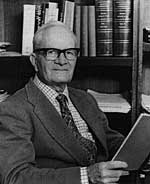
- Introduction
- Early years
- Indian years
- The years of revolution
- The years of the medical research council units
- The Australian years
- Personality
- Honours
- About this memoir
Introduction
William Hayes, physician, microbiologist and geneticist, made his own special contribution to modern genetics and molecular biology in a manner quite different from that of any of his contemporaries. Bill, as he was universally known, was an unlikely candidate for such distinction. It is interesting to speculate on the events that transformed someone likely to have had a distinguished but still traditional medical career into a world renowned scientist who influenced a whole generation of microbiologists and geneticists. He did not come from a family with a history of scientific or academic activities, nor did he study at the centres of biological research. Moreover, at the beginning of his meteoric rise to eminence, he did not have the support of the scientific elite or access to research resources. It is likely that had he been born twenty years later his originality that he brought to microbial genetics would have been lost to us. Perhaps the situation he encountered in India during the Second World War and the relative freedom of the research system operating in the United Kingdom in the fifties ideally suited the talents of Bill Hayes. He was a dedicated experimentalist with a talent for improvisation, and his major contributions were through experiments that he did by himself, rather than with the aid of an assistant or graduate student. He would not have described himself as a leader, although his associates willingly gave him their loyalty and support. Nor would he have thought of himself as having charisma – indeed, he was unusually self-effacing. When he gave up experimental work to write his outstanding and extraordinarily influential book, The Genetics of Bacteria and their Viruses, he typed all the first draft himself. Administration and the power it can provoke were anathema to Bill. Nevertheless, he created first at Hammersmith Hospital in London and then at the University of Edinburgh research groups that were the envy of his peers in terms of their productivity and innovation.
Early years
Bill was born in 1913 at Edmondstown Park, Rathfarnham, Co Dublin, to William Hayes and Miriam Hayes née Harris, the only child of his father's second marriage and when his father was aged 73. William Hayes senior was given £3000 by his own father, which he used to establish a pharmaceutical business known as Hayes, Conyngham and Robinson Ltd that prospered and became a chain of chemist's shops in Dublin. William Hayes senior became President of the Pharmaceutical Society of Ireland. Bill's mother, the daughter of a Church of England clergyman, was aged in her thirties when he was born. A much older first cousin, A.D. Barton, was Church of Ireland Archbishop of Dublin. Sir John Crofton, sometime President of the Royal College of Physicians of Edinburgh, was the son of another first cousin.
Bill was brought up in a large Georgian house in Dublin and apart from during the war he lived there until 1950 when he moved to London. His father died when he was five, so that most of his upbringing was undertaken by his mother and grandmother. Bill has written (in an unpublished memoir that has been of great value to us) of this time as one which encouraged his introspection and liking for solitude. There was a strong religious aspect of his life at this time with family prayers twice a day, and because his mother was steadfastly Protestant he did not mix with the predominantly Roman Catholic local population. He was tutored by a governess from the age of eight until in 1923 he went to a preparatory boarding school for boys, Castle Park, Dalkey, Co Dublin. Bill disliked this experience but the education he obtained must have been satisfactory in that he did well in the entrance examination for his secondary school, St Columba's College, Rathfarnham, Co Dublin. During his time at Castle Park he associated with a classmate, the writer Patrick Campbell, who stuttered badly, and Bill found this infectious to the point that he developed a life-long stutter, although it never prevented him from giving excellent lectures.
Bill entered St Columba's in 1927 and at about that time he began to develop an interest in science, particularly radio and electronics. He constructed his own crystal set and was able to receive signals from Daventry 5XX until the set was destroyed during a storm when the aerial collapsed on to an uninsulated DC electric cable, which started a fire in his dormitory. He continued to build more complicated radios, and retained this enthusiasm for many years. His formal training did not include science but, as was the custom of the day, focused on the classics. In 1929 he won the Lord Pembroke Prize for Mathematics. Bill particularly appreciated the efforts of one master, Dr Sandham Willis, who encouraged willing students to read beyond the school curriculum. He introduced Bill to Galsworthy, Shaw, H.G. Wells and Sir Arthur Eddington and this created a love of the English language that served Bill well for the rest of his life. At about this time he lost his faith in orthodox Christianity.
Towards the end of his time at St Columba's, Bill responded to an advertisement to compete in an International Oratorical Contest sponsored by the newspaper, The Washington Star. He was selected to represent Ireland at the competition, and his mother arranged for him to have elocution lessons from Frank Fay of the Abbey School of Acting. In Washington DC the audience turned out to be some 5000 strong, including President Hoover. Bill did not win but he did receive an invitation to Hollywood for a screen test, an invitation that he refused. Who knows what the movie world lost and science gained?
Bill then chose to study medicine, partly as a result of peer pressure and indecision, but also because of its scientific content and prospect of financial security. He entered Trinity College Dublin in 1981 and enjoyed studying the various science subjects, but it was not until his third year that there was any indication of his future career activities. He started to learn bacteriology and immunology under Professor J.W. Bigger, which stimulated his interest to the point that he enrolled to take an extra year to read for an Honours Degree (Moderatorship) in Natural Science in which he could specialize in bacteriology. This was Bill's first real exposure to research, studying aspects of streptococcal fibrinolysin and he obtained First Class Honours. He continued with his medical course but was not attracted to the clinical aspects. He was no ordinary student in that he won the Haughton Prize for Medicine, was awarded the Silver Medal of the Dublin University Biological Association, read three papers to the Dublin University Biological Association and was awarded the Adrian Stokes Memorial Travelling Fellowship which he never took up because of the outbreak of war.
After graduating in medicine, Bill was retained by Bigger at Trinity as a General Assistant (1938-1939) and then Senior Assistant (1939-1941). At this time a distinguished refugee from Nazi Germany, Professor Hans Sachs, came to work in the laboratory, typing blood for the Irish Medical Research Council. Sachs had been Professor of Bacteriology at Heidelberg University and was well-known for the Sachs-Gyorgy precipitation test for syphilis. He had also been an intimate friend of Paul Ehrlich. Bill wrote in his memoir as follows:
Sachs initiated me into the mysteries of serology and it was from him that I first learnt that what the text books say and the latest hypotheses proclaim are usually grossly over-simplified approximations to reality. Together we studied the nature of an unusual human serum that was falsely positive in the Wassermann Reaction; when heated to destroy the human complement, this serum inactivated the haemolytic properties of the standardised guinea pig complement used in the test. All the ideas in this research came from Sachs's great knowledge and experience, but he generously insisted on my being senior author of the paper that followed – my second publication.
Another refugee from Germany at that time was the noted theoretical physicist Erwin Schrödinger, invited by de Valera to work in Dublin. I occasionally met him at lunch in the College but did not know of his developing interest in biology until much later, when I got to know Max Delbrück at the California Institute of Technology in 1953.
As part of his medical training, Bill had house physician posts in Dublin and at the Victoria Hospital in Blackpool, where he met his future wife, Nora Lee, daughter of Joseph and Margaret Lee of Oldham. They were eventually married in 1941 but almost immediately had to separate for four years due to the war. Nora Hayes, who died in 1996, was a remarkable person in her own right who provided a lifetime of extraordinary support for her husband and also devoted herself to the many people who worked with Bill in various capacities. They had one son, Michael, now practising medicine in Sydney.
Indian years
In late 1941, Bill was accepted by the Royal Army Medical Corps, and after an initial period as a pathologist was trained in tropical medicine and pathology at Liverpool and eventually arrived in India in late 1942. His first post, with the rank of Major, was the command of the Army Enteric Reference Laboratory at Kasauli near Simla and subsequently at the new Central Military Pathology Laboratory in Poona. He spent ten months at Kasauli, where his functions were to identify numerous salmonella strains isolated from Army personnel, and also to provide standardized diagnostic sera and agglutinable salmonella suspensions to military laboratories throughout India and Ceylon.
His time at Kasauli revealed his gift for improvization. The demand for these reagents could no longer be satisfied by producing anti-sera in rabbits and suspensions from Petri dish cultures. He therefore obtained a small herd of goats for the former, which proved a success, and large metal trays for the latter. Agar was very scarce since it had largely come from Japan and it therefore needed to be recycled. Bill allowed the harvested nutrient agar to reset in the trays after autoclaving, cut it into cubes and then washed these in running water. The agar was finally separated from the water in which it was dissolved by exposure on the laboratory roof at night, and was then standardized by hydrolysing samples for glucose assay.
The four senior staff of the Central Laboratory included Bill as bacteriologist and Douglas (now Sir Douglas) Black as biochemist. They ran three-monthly courses in clinical pathology, and by several accounts Bill was an outstanding teacher. One of their notable students was Michael (now Sir Michael) Stoker, who was retained at Poona as a member of the Typhus Research Unit, a decision that launched him into rickettsial research and thence into virology.
Bill also became responsible for assaying every batch of penicillin imported for army use. The methods he adopted depended on inhibition of staphylococcal growth and Bill improved the reproducibility of these methods. He was also sent to the UK, via flying boat, to obtain the latest information on the laboratory aspects of penicillin from Florey and Fleming and their groups. Following this trip, he wrote a booklet on the laboratory control of penicillin therapy that was circulated to all the laboratories of India Command. While in London he had himself transferred to the Indian Army so that Nora could join him in India. In the event, she spent nearly ten months there; he was demobilized in 1946 and they returned to Dublin.
Other work in India provided the basis for Bill's interest in bacterial genetics. He later wrote as follows in his unpublished memoir:
The Salmonella work was a source of constant interest from several points of view. For example the number of species and types received offered much scope for ecological and epidemiological studies. One of the most interesting of these was the frequency of strains of S. enteritidis isolated by blood culture from cases of septicaemia on the Burma front. S. enteritidis, which is enzootic among ducks, is normally non-invasive in man and causes simple gastroenteritis. Similar invasive variants were first reported during the Paraguayan-Bolivian war in 1932-1938 (the Chaco War) and designated S. enteritidis var. chaco. The evidence suggested that the Indian strains were introduced into Burma by the Japanese. I tested them for the presence of an alkali-labile 'virulence Vi' antigen, analogous to those demonstrated by Felix in S. paratyphi A,B and C but failed to find one.
Another example was the isolation of a novel salmonella from the stool of an African cook in Chittagong (now in Bangladesh). Dr E.S. Anderson, who was working in London at the time (early 1946) writes: 'It proved to be a salmonella which seemed to be new. The organism was passed to me by Dr Joan Taylor, Director of the Salmonella Reference Laboratory. Its antigenic formula, which was a hard nut to crack, proved to be (I).III.X.(XIX).XXVI.;b«Z35, 'Z35' being at that time a new antigen. It had been reported that three strains of the paracolon group of organisms, isolated from snakes, had flagellar antigens closely related to phase 2 of Salmonella chittagong. It seemed possible that the serotype may have originated from a snake, because West Africans ate these reptiles, which were commonly found in their kitchens in India'. It was only after Bill's arrival at Hammersmith in 1950 (where be inherited Anderson's laboratory) that he and Anderson first met in person.
Bill also wrote of this time:
S. enteritidis posed problems of a different nature which, much later, were to determine my ultimate research interests. High titre antisera prepared against the somatic (O) antigens of some strains, which we may call A, agglutinated other (B) strains to only a relatively low titre: conversely, antisera to these B strains agglutinated both A and B strains to roughly the same titre. Strains were then found in which all the cells were agglutinated to titre by B antisera, but only a proportion of the cells by A antisera. When such strains were plated and individual colonies tested some behaved like A and others like B strains. Finally if, say, an A-like colony was plated and daughter colonies tested, with some strains as many as 5% might have reverted to B-type and vice versa. This, therefore was a high frequency diphasic variation involving a somatic antigen which later turned out to be what was then termed antigen XII2: this antigen was highly antigenic and was present in phase A but absent from phase B. Since it is also one of the major antigens of S. typhi, its striking variation was clearly a potential source of error in the preparation of agglutinable suspensions for use in the Widal Test, and of diagnostic antisera. However what really interested me was the mechanism of diphasic variation and I seemed to have a good system to study it. I took up this research again five years later when it led me into the then embryonic field of bacterial genetics.
To sum up, it is fair to say that I enjoyed my war service which gave me considerable experience of teaching and the responsibilities of administration, and initiated me into the pleasures and rewards of independent research that resulted in eleven publications. The war as such hardly touched me and I never heard a shot fired in anger.
The years of revolution
With the ending of the war with Japan, Bill was demobilized in August 1946 and returned to Trinity College Dublin, as Lecturer in Bacteriology. During this time he was able to do little research, since his time was largely taken up in teaching and routine diagnostic work. In 1949 he used his presidential address to the pathology section of the Royal Academy of Medicine in Ireland to explain the recent developments in bacterial genetics and their significance for medicine. He submitted his accumulated published work for the degree of Doctor of Science and this degree was duly conferred by Dublin University in 1948. However, he was only runner-up for a College Fellowship and was also disappointed by the lack of opportunity for research there. When the opportunity arose he therefore applied for and was accepted for the position of Senior Lecturer in Bacteriology at the Royal Postgraduate Medical School at Hammersmith in London in 1950.
With his arrival at Hammersmith, Bill again had the opportunity to do research, since his teaching duties were light. The Head of Department, Lord Stamp, put no constraints on his topic of research, and so Bill chose to return to the mechanism of somatic phase variation in Salmonella enteritidis. He had begun to realise the potentialities of genetic analysis inherent in the recent discovery by Lederberg and Tatum [iv] of conjugation in Escherichia coli, and wondered whether its relatives, the Salmonellae, could also conjugate. He recorded in his research notes of March 1950 the design of an experiment involving growth in mixed culture of a pair of genetically marked Salmonella strains, stabilized in each phase, and the selection and examination of recombinants for restoration of the variation. The experiment itself was never attempted.
An opportunity arose to become acquainted with conjugation in E. coli when, towards the end of 1950, he went on a course on bacterial chemistry at Cambridge, organised by E.F. Gale. At that course he met L. Cavalli (later Cavalli Sforza), who had worked with Joshua Lederberg on conjugation at Wisconsin, and who was currently a visitor in R.A. Fisher's Department of Genetics at Cambridge. Cavalli provided him with the basic E. coli K12 auxotrophic parental strains, and Bill started to work with them early in 1951.
Bill was initially interested in the kinetics of the mating process, in particular at what time recombinant cells were formed after mixing and plating the parent strains. He therefore spread a mixture of a streptomycin-resistant mutant of one parent (A) and a sensitive strain of the other (B) on several minimal plates, and at intervals thereafter respread the plates, in turn, with a lethal concentration of streptomycin. No colonies arose when streptomycin was added prior to two hours after mating but thereafter they increased in number with time. To confirm this result, Bill did a similar experiment in which a sensitive strain A was mated with a resistant strain B. This time the results were quite different. About the same number of recombinant colonies emerged from all the samples, even when streptomycin was added immediately after plating the mixture.
Bill writes in his unpublished memoir: 'I discussed these results with Denny Mitchison and I think it was he who first suggested that one of the parents, A, might be acting as a gene donor and the other, B, as a recipient'. Bill tested this hypothesis by treating each sensitive parent with streptomycin to a survival of less than 10-6 colony-forming cells, and then mating with an untreated suspension of the other. The crosses in which strain B had been treated were invariably sterile while treated A suspensions always generated recombinants although their numbers might be markedly reduced as compared with normal crosses.
It was from this experiment that the concept of asymmetry in bacterial sexuality arose. Parent B was the recipient or 'female', the continued viability of which was essential for the whole process of recombination and segregation, while the A donor or 'male' cell was dispensable once genetic transfer had been effected. Bill suggested that the male cell extruded a surface 'gamete' that was taken up by the female cell on contact, and that blocking male protein synthesis by streptomycin did little to inhibit its fertility. This hypothesis, and the experiments supporting it,, were published under the title 'Recombination in Bact. coli K12: unidirectional transfer of genetic material'. It was also presented in a paper at the April 1952 meeting of the Society for General Microbiology in Oxford. The meeting featured a symposium on 'Virus Replication' and was attended by André Lwoff and Gunter Stent from the Pasteur Institute and the young James Watson who had recently come to work on DNA structure with Francis Crick at Cambridge.
Bill's next step was based on a report four years previously (Haas et al 1948) that ultra-violet irradiation of a mating mixture markedly increased the number of recombinants. Was this due to stimulation of the male or of the female? Experiment showed that exposure of the male before mating to a dose of UV, permitting about 50% survival, resulted in a 5- to 10-fold increase in the frequency of recombinants. In contrast, irradiation of the female led to a fall in the number of recombinants that paralleled that of the survivors. In the previous year, Lwoff and his colleagues had described the UV induction of a Bacillus megaterium prophage (Lwoff et al 1950), and Weigle and Delbrück (1951) had investigated a similar induction of the E. coli K12 prophage lambda. Since both phage induction and the enhancement of male fertility required post-irradiation-incubation in a rich medium, Bill thought it possible that the male 'gamete' might be 'a gene-associated virus', although this was unlikely to be phage lambda, which lysogenized both male and female cells. Later studies of a non-lysogenic male obtained from Elie Wollman confirmed this. At that time Zinder and Lederberg had not yet published their discovery of transduction in Salmonella.
In September 1952, Bill was invited to the Second International Symposium on Microbial Genetics, sponsored by the Rockefeller Foundation and held at Pallanza on the shores of Lake Maggiore, Italy. There he met most of the rather small numbers of Europeans in the field at that time, as well as some of the Americans including Jim Watson. He therefore had the opportunity to present his donor-recipient hypothesis to a well-informed and critical audience, while Cavalli-Sforza supported the more orthodox homothallic viewpoint. This occasion was recalled for a larger public by Watson in his book, The Double Helix (Watson 1968). In it, he remarks that 'Bill's appearance was the sleeper of the three day gathering; before his talk no one except Cavalli-Sforza knew he existed. As soon as he had finished his unassuming report, however, everyone in the audience knew that a bombshell had exploded in the world of Joshua Lederberg!'
It should, however, be noted that this dramatic account is a simplification since Watson, Lwoff and Stent had all been present at the Oxford meeting, and Bill's work had already appeared in Nature in January 1952. Gunther Stent has written to us: 'I heard him (i.e. Bill Hayes) give a talk...on the polarity of K12 crosses as revealed by UV and antibiotic treatment of either parent strain. It was on my instigation that Elie (Wollman) went to visit the then totally unknown Bill at Hammersmith, and that the Hayes-Wollman-Jacob axis...came to be formed. At the summer l952 Royaumont Phage Colloquium, I managed to persuade Max Delbrück, who trivialised Bill's results as reflecting no more than a differential radio- and drug-sensitivity of the parent strains, that Bill was for real. The 1952 Microbial Genetics meeting, in Pallanza, to which Bill was invited, was held in the fall of 1952. Watson errs, if he claims that no one except Cavalli knew of Bill before that meeting. Jim and Max certainly knew of him, and Elie was already collaborating with Bill.'
Dr E. Wollman has written of this time (Wollman 1966): 'in the Spring of that year I visited William Hayes for the first time in his laboratory at the postgraduate medical school in London. His working conditions were then so modest that they made our musty attic in the Pasteur Institute look almost luxurious by comparison. I was particularly impressed by his tiny petri plates, 3-4 cm in diameter and cut out from the bottom of vials, and by the watchmakers eye lens with which he counted the minute colonies of recombinants appearing on these plates. Shortly after this visit, I gave an account of the new developments in recombination in bacteria, and of the genetic basis of lysogeny, at the first international conference on Bacteriophage, held at Royaumont. Max Delbrück, who was present at Royaumont and who had been all along somewhat suspicious of genetic recombination of genetic bacteria, listened with interest to my description of his work. Though still far from convinced that there was anything to this sexual polarity business at all, he decided to invite Hayes to give a paper at the following Cold Spring Harbor symposium on viruses.'
Bill's next achievement was to elucidate the nature of the agent responsible for sexuality, and this arose by serendipity. At about the time of the Pallanza meeting, a friend of his in London, Dr Clive Spicer, who had worked with the Lederbergs and with whom Bill had discussed his hypothesis, told him that he had a pair of parental K12 strains, similar to Bill's A and B parents, that on storage had lost their capacity to produce recombinants. Bill had been attempting without success to isolate a male strain that had lost its postulated vector, by looking for A colonies that were no longer fertile with the R female; perhaps Spicer's strain was one such infertile male. To test this possibility, Bill crossed Spicer's strains with his own; the outcome showed that it was indeed the male strain that was defective.
Bill's most crucial experiment was to ask whether the fertility that had been lost could be infectively restored by contact with a normal male. Accordingly, he labelled the defective A (Spicer) strain with two independent markers (resistance to sodium azide and to streptomycin), and then grew it overnight in mixed culture with his own (fertile) strain, sensitive to both agents. Before he knew the result he wrote to Cavalli, who was now working with the Lederbergs at Wisconsin. He explained what he had done and remarked that if the experiment worked he (Cavalli) would have to accept the fact of infectious transfer. The experiment did work; 25% of the colonies of the re-isolated strain A (Spicer) were now normally fertile. When he got Cavalli's reply, it was to say that he already knew the result of this experiment, since he and the Lederbergs had done basically the same experiment three weeks earlier, but using a quite different approach. Their experiment showed that the fertility character was transferred by a transmissible agent, which they called F or the sex factor, at a frequency some 10,000 times greater than that of recombinant formation. Thus two quite different modes of experimentation and thinking converged in the coincidental discovery of the first transmissible plasmid, the F factor (Lederberg el al 1951). The Lederberg/Cavalli interpretation was that the sex factor conferred on the parents of a cross what they termed 'relative sexuality', which they did not attempt to explain in mechanistic terms. As with the earlier demonstration of unidirectional transfer, Bill was, by contrast, thinking in precisely such terms.
A limited survey by Bill showed that F+ and F- cells as defined by the Lederbergs and Cavalli corresponded unambiguously to donors and recipients respectively. The ability of infectivity to convert recipients to donors meant that it was possible to study the genetical efforts of 'reversal of F polarity' by comparing the outcome of A.F+ x B.F- crosses and B.F+ x A.F-. If, as Lederberg and his colleagues believed, the two parents contributed equally to the zygote, both crosses should give the same result. They did not. First, the recombinants inherited most of their characters from the F- parent. Secondly, the characters inherited from the F+ parent were limited to a few linked ones and were quite different in the two crosses. In Hayes' opinion, everything behaved as if the F+ donor transferred only part of its genome to the F- recipient, the particular part being that selected to make good the auxotrophic defect of the F- recipient which, of course, differed in the two crosses.
Joshua Lederberg's explanation was quite different. He still did not accept the donor recipient hypothesis and proposed instead that complete zygotes are formed (as everywhere else in biology) but that a fraction of the F+ genome is then eliminated – the 'post-zygotic exclusion' hypothesis for which a precedent was known in Cheironomus. It was not until the hypothesis of one-way partial chromosome transfer was proven beyond reasonable doubt by the work of Wollman and Jacob four years later that Lederberg accepted it. Hayes' own comment was that he 'had the great advantage of knowing virtually no genetics while Lederberg knew too much'!
One result of the Pallanza meeting was that James Watson began to take an increasing interest in E. coli genetics, and when he was in Cambridge he would visit Bill on visits to London to discuss x-ray diffraction analysis of DNA. Watson considered that the results of Bill's genetic analyses provided good evidence that the E. coli genome comprised three linkage groups. Lederberg et al. (1951) had already defined three sets of linked genes that showed non-linear interactions, the nature of which they did not understand. Watson and Hayes submitted a joint paper to Proceedings of the National Academy of Sciences, through Max Delbrück, in which they presented their model. This was that the three linkage groups reflected discrete chromosomes, only one of which normally became associated with the transmissible F vector at any one mating event, and thus was carried over to the recipient cell. However, they supposed that occasionally the F factor became associated with two chromosomes, so that both were transferred in the same pairing, and that this provided an explanation of Lederberg's non-linear interactions.
At this time, Bill also made the accidental discovery of the Hfr (for high frequency of recombinants) strain, HfrH (H for Hayes). This arose spontaneously in a static culture of the A.F+ donor strain and yielded about 1000 times more recombinants in crosses with B.F+ than did the ancestral strain. As Bill points out in his unpublished memoir, this discovery was not original since Cavalli had first described the Hfr state (Cavalli, 1950). However, Bill discovered a number of important new features in terms of mechanism, since he showed that the fertility of HfrH was relatively unaffected by streptomycin treatment. Thus it was its donor ability that was enhanced compared with the parent. Moreover, UV-irradiation did not further increase the frequency of recombinants that could be formed, implying that this frequency was already maximal. The third observation was that the donor state was no longer transmissible at high frequency. Fourthly, only one of the three linking groups was transferred at high frequency. Markers on the other linkage groups could be selected at low frequency, and a proportion of the recombinants that were formed were found to be Hfr donors like the parent strain.
All these observations seemed to fit well with the model that Hayes and Watson had put forward, proposing that a mutant F factor had become stably associated with one of the three chromosomes that they had proposed. Bill commented in his memoir that 'this hypothesis, of course, turned out to be basically incorrect although not a bad approximation to the truth...'. It was indeed incorrect in supposing the existence of three chromosomes, but the observations show how Bill was always thinking mechanistically about his strains. The value of these observations was in illuminating the nature of the F+® Hfr event.
The second half of the sentence quoted above reads'...but the main importance of HfrH was that I gave it to Elie Wollman and François Jacob of the Institut Pasteur, Paris, with whom I had already established a close liaison, in whose hands it played a key role in the many experiments of their brilliant series that revealed the true nature of E. coli sexuality'. This comment exemplifies for us Bill's grace, modesty and generosity.
It was through Watson and Wollman that Bill was invited by Max Delbrück to contribute to the Cold Spring Harbor Symposium in 1953, on Viruses (at which Watson also gave an historic account of the structure of DNA). It was in the publication that emerged from this meeting that Bill gave the most definitive account of his experiments and hypotheses. Rather characteristically, he chose to finish what was a very substantial and thoughtful article as follows: 'Increasing evidence of the role of temperate phages as genetic carriers enables the concept that F fulfils a similar all more specialised and efficient, function in E. coli to be fitted into a gene evolutionary picture. Perhaps Hilaire Belloc's poem 'The Microbe' can express, better than I can say, my feelings on this matter.
'All these have never yet been seen –
But Scientists, who ought to know,
Assure us that they must be so...
Oh! Let us never, never doubt
What nobody is sure about!'
During the meeting Delbrück invited Bill to visit him for six months at the California Institute of Technology, which came about that autumn. It had been suggested that Bill should work with Watson on E. coli conjugation. However in the event Watson, fresh from the DNA triumph, chose instead to work on RNA structure. Dr Watson has written to us as follows: 'I felt guilty about not interacting more with him when he came to Caltech during the fall of 1953. But then I cared only about the RNA structure, believing bacterial genetics would never again get exciting. How wrong I was, with Bill's work leading into that of Wollman and Jacob and soon afterwards to the Monod-Jacob ideas about gene expression in E. coli.'
At Caltech, Bill took over equipment and culture medium reagents from Marguerite Vogt, who had been working with E. coli K12 F+ x F- crosses but was about to change topics. With these materials Hill's work had 'an interesting but initially embarrassing denouement' since no recombinants arose from crosses plated on the appropriate minimal media. The Caltech media, highly purified, were not supporting the process of recombination as had Bill's materials in London. Bill showed that crosses became fertile when aspartate was added to the medium. This observation led to the first analysis of the energetic requirements for conjugation, by K.W. Fisher, who became Bill's first PhD student in London in 1954 (Fisher 1957).
Bill then returned to his initial project, on the kinetics of the mating process, this time using his Hfr strain. His method also involved the use of high multiplicities of the virulent phage T6 instead of streptomycin. He was therefore able to kill the sensitive donor at intervals after mixing with a resistant recipient in broth, and the results were clear-cut and reproducible. When untreated samples were plated, recombinants began to appear immediately after mixing the parental cultures. On the other hand, the treated samples yielded no recombinants if phage was added at times less than ten minutes after the initial mixing. Recombinants then began to appear and their numbers increased linearly with time until a plateau was reached about thirty minutes later.
Bill had supposed that the donor genome, which he visualised as a discrete 'nucleoid', would be transferred en bloc over a very short period. Therefore he expected that the donor lac+ and phage T6s alleles, which were located on the same linkage group as the selected markers (thr+ and leu+) would be inherited among these recombinants. He ascribed their absence to killing of the T6s recombinant segregants by the phage. It was only with the publication by Wollman and Jacob (1955) of their interrupted mating experiment that the correct explanation emerged.
Bill had succeeded in producing 'zygote suspensions' from which Hfr bacteria had been eliminated by the treatment with phage. He used this system to study the kinetics of segregation. Thus if a suspension of newly-formed zygotes was diluted and incubated in fresh broth and samples then plated at intervals for recombinants, the time at which the number of recombinants began to increase indicated the commencement of division among the recombinant segregants so that in this way the time of segregation could be assessed. Furthermore, if zygotes were plated on media containing the inhibitory or lethal substance, only those in which the resistance gene is dominant can segregate resistant recombinants, so that a comparison of the kinetics of segregation and of expression distinguished dominant from recessive alleles.
These new methods were developed at Caltech and the definitive experiments were completed during 1954. An abstract was published in 1955 but the work was not published in full until Wollman, Jacob and Hayes collaborated on a joint paper that was presented at the 1956 Cold Spring Harbor Symposium (1956).
The years of the medical research council units
In 1957, Bill was invited by Sir Harold Himsworth to set up a Medical Research Council Unit, the Microbial Genetics Research Unit, at Hammersmith Hospital, where a generation of to-be-successful British, European and North American bacterial geneticists established themselves. The initial members of the Unit were Ken Fisher, Neville Symonds, Royston Clowes and Stuart Glover. They were joined by Robert Pritchard and Julian Gross, and later by Kenneth Stacey and Elinor Meynell. The initial postgraduate students were John Scaife and Donald Ritchie, followed by Marilyn Monk and Paul Broda. There was also an extensive list of visitors, who included Raymond Devoret, Jeff Schell, Jon Beckwith, Simon Silver, Millard Susman, Gerard Venema, Robert Weisberg, David Goldfarb, and Stephen Cooper. Bill preferred to let people get on with the job so as to give him time to do his own scientific work rather than being an administrator and manager, which he detested. However, his hopes of returning to the bench were never realised since he set himself the all-consuming task of writing a book. In the words of Neville Symonds: 'The Genetics of Bacteria and their Viruses published in 1964, was the first comprehensive textbook on microbial genetics and became a trusted companion to students and research workers all over the world. In many ways the book typifies the character of the author. It evokes a kind of old-world charm, talking with a sense of wonder about the ideas it is portraying, and being scrupulously fair to the scientists under discussion. Nonetheless behind it all is the ability to see through the often complex experiments and confusing theories and expound them simply: it is this which made the book so successful.'
Nora Hayes recalled later how for several years she lived in a silent house, as Bill worked day and night on his book. The book emerged more than three years later and three times the expected length. However, coming so soon after the heroic decade of molecular biology from 1952 to 1962, it appeared at the perfect time. Bill wrote in his memoir: 'shortly after publication the book came to the attention of J.B.S. Haldane when he was recovering from his cancer operation not long before his death in 1964; he told me that he proposed to review it. He seemed especially intrigued by the final chapter on transmissible plasmids but wrote me a number of letters criticising my amateurish accounts of "classical" genetics which I found most valuable when I came to write the second edition. One letter began, "Dear Hayes, in this letter I am going to give you hell" – and did!'
The book had been reprinted four times by 1967 and in 1968 a second edition appeared. The fact that the first edition had 740 pages and the second had 925 pages and almost twice as many references shows both the scale of the undertaking and the rate at which the subject was growing. It is not surprising that Bill never attempted a third edition. The effort involved in creating this book, the changing nature of science, and his other duties together frustrated his expressed hope to return to the laboratory.
Characteristic of Bill's open style, it was decided to promote molecular genetics (and the Unit) at the international level. Bill had a special interest in links with Eastern European countries, which had been so deprived of modern molecular genetical developments during the Lysenko period. The principal means chosen was a series of courses of about four weeks duration, comprising lectures and practical classes; they were roughly modelled on the Cold Spring Harbor course. Four courses were held between 1960 and 1964; each was attended by about twenty students, ranging from professors to postgraduates, from diverse disciplines with a fair proportion coming from other countries. Hayes and Clowes edited a book, Experiments in Microbial Genetics, that was based on the courses. The Unit also made available stocks of the strains used in the course and produced an international registry of laboratories that were willing to help in disseminating these strains. These activities made Bill and the Unit very well known and valued.
In 1964 Bill was elected FRS and in short order Symonds, Stacey and Pritchard left to be founding professors in the Universities of Sussex, Kent and Leicester respectively, whilst Clowes and Fisher departed for the USA. Also at this time Martin Pollock, who headed a biochemistry group at the National Institute for Medical Research, proposed that their two groups should merge as a new university department of Molecular Biology. This appealed greatly to Bill since such an integrated department would be the first of its kind in Britain and would attract undergraduate students into the field. Moreover, most of the Unit staff welcomed the idea of some teaching. These ideas came to fruition through the good offices of Michael (later Lord) Swann at Edinburgh. It was finally agreed with the Vice-Chancellor, Sir Edward Appleton, that the new department would be allocated the top three floors of an extended eight-storey Forestry building that was being planned. The MRC agreed to this, the first example of an MRC Unit being an integral part of a university department with full teaching responsibilities. The Unit acquired the new title of Molecular Genetics Unit. Bill was appointed to a personal chair in the university and the Unit moved to Edinburgh in May 1968.
In Edinburgh Bill again did little research of his own, his time being consumed by teaching and organization, invited lectures and trips abroad, and a very heavy burden of committee work for the Royal Society, the University Grants Committee and the recently-funded European Molecular Biology Organisation. He was also President of the British Genetical Society in 1971-1973.
In 1971 he accepted an invitation to tour New Zealand and he spent three months there and then visited Australia on the way home. He felt an immediate affinity with Canberra and the Australian National University, and told Nora that this was where he would like to spend the rest of his professional career. John Langridge, then Professor of Genetics at the Research School of Biological Sciences, asked Bill if he knew of anyone who would like to come and take up an appointment at the RSBS. Bill said he would like to come, and Langridge replied that they really weren't looking for anyone so distinguished. However, the seed was sown and in 1973 when Langridge left the Department of Genetics and returned to CSIRO, Bill was invited to be the next Professor of Genetics at the Research School of Biological Sciences of the Australian National University. He duly arrived in early 1974, just a few days after he turned 61. Before accepting the position, Bill wrote to one of us (BH) asking if he was also a candidate for the chair (which was not the case) and if that was so, then he would not accept the position – a typical example of Bill's constant generosity and concern for others.
Bill's departure resulted in the closure of the MRC Unit rather than its continuation with a new Director. After a period of great uncertainty, four of the untenured staff were granted tenure after application to the Council by Bill as one of his final acts. Together with two borrowed tenured staff, these individuals joined the University Department, with their salaries and other support provided by the MRC. The Unit had published 253 papers during the period 1957-1973.
The Australian years
Bill's first impressions of Canberra were happily confirmed. He was finally able to return to laboratory work, he loved the lack of traffic, the ease with which the nearby high country could be reached and the warm Australian climate. He travelled to most parts of Australia in the first three or four years. Always, this travel was an interlude from his laboratory work, his major activity. He continued to gain great satisfaction and enjoyment from classical music, particularly opera and piano works. He loved walking in Canberra, both in the city and in the surrounding bush, and was an enthusiastic but in his own words not very competent swimmer. Bill and Nora found the emphasis on home entertainment in Canberra very much to their liking. Bill was somewhat disdainful of dining and good food, and frequently suggested that he would prefer to be supplied in the form of capsules or pills so that that part of living could be got over and done with quickly. On the other hand, conversation after a meal was an entirely more serious pursuit. In 1976 he was elected to the Australian Academy of Science and in 1977 invited to give the prestigious Burnet Lecture at the Academy's annual general meeting. He was not a regular participant at such meetings because he didn't much like dressing up and one of the features of Australian life he enjoyed was the informality. He only ever attended one Academy dinner, on the day that he was formally inducted into the Fellowship, because these are traditionally black-tie functions.
Bill's research work at the Research School of Biological Sciences was focused on the nature of an E. coli temperature-sensitive mutant called tif-1, which had a pleiotropic phenotype affecting induction of the lambda prophage and formation of filamentous shaped cells. This was done in collaboration with Dr Erela Ephrati-Elizur, who had been a visitor to the Hammersmith MRC Unit and who happened to be in Canberra because she was the wife of the Israeli ambassador. This work resulted in a few publications, but with her departure the activity gradually diminished.
On retirement from the ANU in 1979, Bill was invited to Caltech by Max Delbrück and awarded a Fairchild Distinguished Scholar appointment there for about eighteen months, reinforcing the contacts that he had made there 25 years earlier. He enjoyed the Pasadena social life and Nora and Manny Delbrück, Max's wife, shared the shopping and cooking so as to provide home entertainment for the international Delbrück research group. At the end of his period at Caltech, Bill was offered appointments at many prestigious universities, including Edinburgh and a variety of locations in the USA, but he had no hesitation in accepting the offer of an Emeritus Professorial appointment at the Australian National University.
He did not want to work in the Research School of Biological Sciences, considering that he would be an inhibition to the new Professor of Genetics, so he insisted that he be located in the School of General Studies in the Department of Botany headed by Peter Gresshof. He did some teaching and spent a lot of time working on his undergraduate lectures and with research that was a continuation of his work with Max Delbrück at Caltech. In about 1985 be decided that he had had enough, and announced that he had given his last lecture and discontinued his work in the laboratory. At about this time he became aware of memory deficiencies. These changes were the forerunner of a dementia that gradually diminished his faculties over the years. Characteristically, he participated in a brain donor programme and it would have appealed to his sceptical nature to know that a clinical diagnosis of Alzheimer's Disease was not confirmed pathologically. He spent more time with Nora, he walked, and – what for Bill must have been a new experience – he relaxed and did not involve himself with scientific activities. As his health deteriorated, Nora sold their Canberra home and moved to Sydney to a retirement village where he could get increasing medical care. Michael Hayes, in a eulogy delivered at Bill's funeral service, said of this time: 'During these last difficult years he was lovingly cared for by both my mother and the staff at Bowden Brae. Within the last couple of years we were able to celebrate the fiftieth anniversary of an exceedingly happy marriage and more recently Dad's eightieth birthday.'
Personality
In his personal life Bill had simple tastes. He listened to music almost every day of his active life. He loved poetry, mainly the Romantics, and was a competent though only occasional painter. We have already referred to the central importance to him of his marriage, which was to be the fixed point in his life. Together Nora and he were magnificent hosts.
Michael Hayes, again from his eulogy, said 'From a personal viewpoint, if I had to single out the most striking features of Dad's personality, I would nominate both his honesty and his modesty. As a father he adopted something of a laissez-faire attitude and was both generous and accepting. He never attempted to impose his own ideas, and if he disagreed he would carefully expound his reasons. By nature he was a sceptic. As a boy I remember being taken aback at his professed admiration for Doubting Thomas and by quoting G.B. Shaw that faith was one of the seven deadly sins. He was equally unsympathetic to the atheist tradition.
For him, the great appeal of science was as an expression of the creative process. To have an original idea and to then set about rigorously examining its validity was the great endeavour.... He once described his favourite pastime in Who's Who as "doing nothing" which was based more on whimsy than reality. As for his intellect, the achievements speak for themselves and his peers remain the best judge.'
Possibly as a result of his period in India, Bill loved the sun and with the international success of his book he decided to buy a house on the Maltese island of Gozo, where he spent part of the summers. He did not maintain close links with Ireland, and seemed to find it easy to move from London to Edinburgh and then to Australia.
Bill's life has encompassed the span of the 'short twentieth century' to a remarkable degree. His childhood was still a world of horse-drawn carriages, family prayers morning and evening, addressing his father as 'Sir', and education by a governess. There was an old-fashioned, almost courtly, element to his make-up that no doubt came from his upbringing. To Naomi Datta his demeanour seemed paradoxical: 'He looked soldierly in being very upright and with shortcut hair. One could imagine him in uniform, but his sandals and open-necked shirts did not fit that image. Also, the Army is hierarchical and Bill's unit was absolutely not – it was very friendly and egalitarian.' To others he seemed shy, but it was a universal view that the most striking features of his personality were his intellectual curiosity and his modesty. He was informal in his dealings, easy to get on with and endlessly helpful. These characteristics served to make him probably the most popular microbial geneticist of his generation, and he will be remembered with affection in countless laboratories. Many of his colleagues can attest to his acts of kindness, support and understanding, tendered in a most unobtrusive way. In 1968, in his book's second edition, he wrote about two colleagues who had died: 'I could not allow this edition to go to press without paying tribute not only to their key contributions to molecular biology, but also to their endearing qualities and personality and their many acts of kindness for which they will be long remembered by their friends.' This was his own combination of attributes.
Honours
Bill was elected to the Royal College of Physicians in Ireland (1943), the Royal Society of London (1964), the Royal Society of Edinburgh (1968) and the Australian Academy of Science (1976). He was awarded Honorary Degrees from the University of Leicester – Doctor of Science (1968), the University of Dublin – Doctor of Laws (1970), the University of Kent – Doctor of Science (1973) and the National University of Ireland – Doctor of Science (1973). His awards included the Royal Society Leeuwenhoek Lecture (1965), the Genetical Society Mendel Lecture (1965), the first Griffith Memorial Lecture (1965), the Burnet Lecture and Medal of the Australian Academy of Science (1977), and Fellowship of the Royal Postgraduate Medical School, University of London (1985).
About this memoir
This memoir was originally published in Historical Records of Australian Science, vol.11, no.2, 1996. It was written by:
- Bruce Holloway, Department of Genetics and Developmental Biology, Monash University, Victoria.
- Paul Broda, Department of Biochemistry and Applied Molecular Biology, UMIST, Manchester, UK.
Acknowledgments
The authors wish to record their sincere thanks to Michael Hayes for his help in compiling this memoir. Bill, in his characteristically modest but effective way, provided a detailed personal memoir, self-typed, that contained many details of his life unobtainable in any other way. He told one of us (BH) after preparing the biographical memoir for Max Delbrück that he would make it much easier for whoever did it for him. We are also indebted to the many individuals who offered reminiscences of their interactions and experiences with Bill. Some are mentioned in the text.
References
- Cavalli, L.L. (1950). La sessualita new batteri. Boll. Ist. Sierotera Milano, 29, 281-289.
- Fischer, K.W. (1957). The nature of endergonic processes in conjugation in Escherichia coli K-12. J. Gen. Microbiol., 16, 136-145.
- Haas, F., Wyss, O., and Stone, W.S. (1948). The effect of irradiation on recombination in Escherichia coli. Proc. Nat. Acad. Sci. Wash., 34, 229-232.
- Lederberg J. and Tatum, E.L. (1946). Gene recombination in Escherichia coli. Nature, 158, 558.
- Lederberg, J., Cavalli, L.L. and Lederberg, E.M. (1952). Sex compatibility in Escherichia coli. Genetics, 37, 720-731.
- Lederberg, J., Lederberg, E.M. Zinder, N.D. and Lively, E.R. (1951). Recombination analysis of bacterial heredity Cold Spring Harbor Symp. Quant. Biol., 16, 413-441.
- Lwoff, A., Siminovitch, L., and Kjelgaard, N. (1950) Induction de la production de bacteriophages chez une bactérie lysogéne. Ann. Inst. Pasteur, 79, 815-859.
- Watson, J.D. (1968) The Double Helix: A Personal Account of the Discovery of the Structure of DNA. Wodenfield and Nicolson, London.
- Weigle, J.J. and Delbrück, M. (1951) Mutual exclusion between an infecting phage and a carried phage. J. Bacteriol., 62, 301-318.
- Wollman, E.L. (1966). Bacterial Conjugation. In Phage and the Origins of Molecular Biology, ed. J. Cairns, G.S. Stent and J.D. Watson, pp. 216-225 (Cold Spring Harbor Laboratory of Quantitative Biology, Cold Spring Harbor).
- Wollman, E.L. and Jacob, F. (1955). Sur le mécanisme du transfer de matériel génétique au cours de la recombination chez E. coli K12. Compt. Rend. Acad. Sci., 240, 2449-2451
William Christopher Swinbank 1913–1973
Written by C.H.B. Priestley.
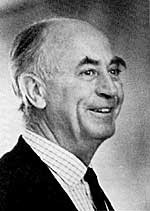
William Christopher Swinbank was born in Easington Village, Co. Durham, on 8 May 1913. His father was a mechanical engineer at a local coal mine, having started his career in the ship-building industry on the River Wear at Sunderland. His mother was a devout Catholic and through her faith he was brought up within the Catholic church, under some pressure from the local clergy that the brilliant youngster should be trained to enter the priesthood.
The pit-scarred landscape of his native county was a source of profound sorrow to him, in that nature had been exploited and the unsightly remains left to posterity. This and the extremes of the depression years caused the sensitive teenager to reject, permanently, all forms of establishment, the Church among them. The misery and the lame excuses were nourishment to a fiercely independent spirit and bred a life long hate of hypocrisy and humbug. But elements of his religious background remained strongly with him too: a refusal to compromise with principles as he saw them, and a good faith with his obligations even when he felt out of tune with the system which imposed them.
At the age of twelve he had obtained a scholarship to Henry Smith Grammar School at Hartlepool, where he was an outstanding student and a good athelete. He became captain of his house, the Spartans(!), as he used later to remind a fellow-member of that house, Dr Frank Pasquill, who was to match him in meteorological eminence. During these years he acquired a number of great and abiding loves, for the accurate use of the English language, for the classics and all that was best in science, for literature, and for music up to the generation before his own. Matching the man, there was special love for those with a strongly individual or humorously protesting style: Shakespeare of course, Robert Burns, L.F. Richardson in atmospheric science, Lewis Carroll, Oscar Wilde, Gilbert and Sullivan.
In 1931 he entered Hatfield College at Durham University where, over the heads of protests from senior lecturers who judged the task too heavy, he was allowed to take a special course in Double Honours in Physics and Mathematics. He graduated in 1934, but even for the top student, jobs were hard to get, and he stayed on a further year to take a teaching diploma. He taught physics at Windermere Grammar School and for a short period at Lewes, Sussex, Grammar School, and then worked as research physicist with Electrical and Mechanical Industries at Hayes, Middlesex. But neither teaching nor industrial research satisfied his restless and critical intelligence, and he took appointment as Technical Officer in the Meteorological Office, Air Ministry.
Weather forecasting remains today as a major and most difficult scientific challenge to the profession of physics. In 1938 it constituted an almost completely empirical exercise. Attached for forecasting duties to RAF stations, Swinbank came quickly to evaluate and respect the problems of synoptic-scale dynamics. But he struggled to find interest in the daily operational task. Tragedy, in the death of his young wife and infant child in separate hospitals in London, lost him all orientation for a while. Summoned to give evidence to an official enquiry into aircraft losses, he came out with characteristically frank but tactless comments on the state of the forecasting art. Officialdom, spurred apparently by the wise Ernest Gold, FRS, was to show both compassion and an unusual sense of fitness. In effect, it challenged him to see what he could do about it. At that time a main bugbear was fog, grounding vital air forces and endangering the landing of others. In an almost unprecedented step for the Meteorological Office of that era, this young scientist was transferred to head office for full-time study of the problem.
This was to be the real starting point of his career. In association with C.S. Durst, he began to develop in reasonable depth the scientific interests, notably in turbulence and atmospheric thermodynamics and cloud physics, which were to underlie many of his later contributions. Early in 1942 he moved to forecasting headquarters at Dunstable to continue his work on fog. There he met and married Angela Pinney, and from that time his star was in the ascendant.
It was towards the end of 1943 that I was posted to Dunstable to join Petterssen's group, and met Bill Swinbank for the first time. Petterssen and he had already collaborated in an important extension and application of Richardson's fundamental turbulence criterion. I had previously been concerned with the related problems of turbulent diffusion and, though preoccupied with operational requirements, we were among the few who liked to spend tea and coffee breaks discussing the science which lay behind. Another, P.A. Sheppard, has written on these times as follows:
There was a freshness and originality about Bill's physical thinking which was in the main very stimulating and a part of the fun was to distinguish his geese from his swans. One of his geese was the proposal to disperse fog by causing collision, coagulation and precipitation of fog droplets by the use of ultrasonics and some laboratory tests were undertaken to this end in the Physics Department at Imperial College (in collaboration with Mazur). Even though this idea came to nothing it led to some clarification of the energetics of fog.
He continued to wrestle with the fog prediction problem but spent part of his time in the upper-air analysis section which had recently been formed under Dr S. Petterssen. Weather systems and their associated (large-scale) motions had been of strong interest to Bill ever since his first operational assignment in the M.O. and he saw that any effective method of fog forecasting must be closely tied to the structure of the large-scale system in which fog might or might not form. However important the vertical transfer of heat and water vapour by (slow) turbulent diffusion may be in the production of fog, it would not, Bill saw, be by attempting to quantify this process directly that forecasting success would be likely to come at the time. He chose rather to study the relation of fog to bulk parameters of the weather system such as the hydrolapse (a term first used by WCS) between the earth's surface and the air immediately above the atmospheric boundary layer. He made a good deal of use in this study of captive-balloon sounding (BALTHUMS) to a km or so over Bedfordshire and was probably the first to show thereby how very sharp the changes of thermal and humidity gradient could be at the top of the atmospheric boundary layer.
Our whole energies were soon turned towards the development of upper air analysis and forecast techniques, and to their use for the fighting services. O.F.T. Roberts, F.A. Berson, and S. Petterssen had gone a long way to establish the superiority of isobaric (contour) analysis methods. It was Swinbank who thought most deeply about the energetics, through which we learnt how one chart was linked to its successor by the evolution, rather than simple advection, of the pattern of higher level temperatures or 'thickness lines'. The acid test of skill in meeting the new challenge was imminent. Some of the multiple air operations over Europe demanded precise routing and timing which had to be planned and executed from the forecast charts. These were projected forwards from analysis charts based, in turn, on data which was always inadequate and often non-existent over crucial areas. The six-hourly sounding network over the British Isles had revealed a meandering belt of westerly winds (later christened the jet stream) of strength hitherto quite unsuspected, augmenting the problems of forecasting and navigation from 15 000 ft upwards. Science can point to many examples of the important difference in meaning between precision and accuracy, and here was one on which many lives and even the fate of nations could well be depending. Imminent too was the participation of our unit in the most crucial forecast in history, which was later to be described in detail by J.M. Stagg in his book 'Forecast for Overlord: June 6, 1944'.
A year of intense operational pressure for the upper air group was to follow Overlord. One night we were on late duty together when, during a snatched tea-break, our discussion of turbulent transport of heat and other properties turned to the relative roles of buoyancy and shear-induced turbulence. Doubts about currently accepted thinking soon came to the fore, and in similar breaks over the next two days the essential evidence and implications were hammered out. Whether the resulting joint paper was the 'classic' which kinder friends have called it is arguable, but its novelty was not, nor the strength of the reaction by our seniors on the Meteorological Research Committee. This was to prove the most productive paper of our two careers, at least as measured by the mass of subsequent research which stemmed from it in one way or another.
No scientist could work with Swinbank for long without becoming aware of the depth and clarity of his physical insight and perception. His forte in thermodynamics was vital in understanding both the surface layers and the region (15 to 30 thousand feet) in which our official responsibilities then lay. I myself, initially a mathematician ever striving for stronger grasp of the physics of the atmosphere, gained more from my association with him than with any other, before or since. In 1946-7 I was most fortunate in gaining appointment to the CSIR with the challenge of developing a new activity in Australia, a research group in meteorological physics. Bill Swinbank was first choice for a colleague. Though we both knew that our two natures could never blend into an easy partnership, the challenge was equally attractive to him and our thus continued association was to endure longer than either could have foreseen.
Meanwhile, with the European peace, the demand for precise upper forecasts had slackened and Swinbank had returned to the problems of fog. Dunstable lay close to Harpenden (Rothamstead) and he was able to foster closer connection with the problems of agricultural physics, as they were then called, and notably with H.L. Penman. Years later Penman wrote:
I have known Mr Swinbank for more than 20 years, and in those preceding his departure for Australia the personal contact was close, and very rewarding for me. Our common interest was – and is – the study of the physics of the behaviour of the atmosphere near the ground, and I and my kind, in seeking agricultural and hydrological outlets for our work, have been very greatly dependent on Swinbank for ideas, experimental techniques, and scientific results.
Study of his impressive record of publication will show that he has produced all three in abundance. His ideas are invariably provocative, stimulating fresh thinking and new experiments; his new techniques have not been as frequently copied as they deserved, because few can match his skill in setting up and using apparatus; and his scientific results are gradually taking their place in the monographs and text-books of meteorological physics.
Most of his work has been done in Australia, in the Division of Meteorological Physics. This unit has an enviable world-wide reputation for the quality of its work, and no small part of the respect we outsiders have for it comes from what Swinbank has done himself or has inspired in his colleagues. In this context the Australian standard is the world standard, and Swinbank is one of those who has helped to make it so.
Arriving in Australia, Swinbank had the ball at his feet, employed by a liberal organization with no programme details yet committed, and with our common view that he would work best untrammelled. He had no responsibility -and at first did not seek any – other than to exploit the twin flairs for insight and experiment to which the above quotations have testified. Although in the instrumental arts he was not, in my opinion, quite the equal of our colleague E.L. Deacon, there was plenty of room for all in a subject whose underlying components were still so little investigated in other than ad hoc fashion. Micrometeorology was chosen as the first main theme for the group as a whole. We had brought a common interest in this field from England although there, with the exception of fog, the emphasis of previous work had lain in turbulent dispersion rather than in the geophysical context of air-surface interactions. Here in Australia the latter were far more intense. We considered them a set of poorly understood processes which underlay the climate, the water conservation, the primary industry of a whole continent. Research would have bearing on the way of life and on a multiplicity of other community problems ('environmental problems' according to their modern label). Within the main theme, Swinbank took to himself the target of measuring the vertical fluxes of heat, momentum and water-vapour (i.e. absolute measurement of evaporation), and with help along the road from Deacon, Taylor, McIlroy, Dyer, Webb, this work was to prove as successful as it was innovative, and it spun off, as foreseen, into a wealth of other basic and more applied results.
Through the formative years it was the basic micrometeorology and its applications into agricultural meteorology which mattered most. Since this work started scientists from some twenty countries (many of them developing ones) have been attracted to Aspendale for extended periods of collaborative research or advanced training, whilst the outgrowth of work of this type into other scientific institutions in Australia has been immense. As Penman has implied above, Swinbank was a principal architect of this situation but he did not, as many have supposed, initiate the effort in agricultural meteorology. Rather did he reject my suggestion that he should do so, preferring, with justification, to concentrate his own personal efforts on the more basic paths. He had produced a sensitive vapour pressure recorder which was developed further by McIlroy into a probe for general micro-fine measurement of temperature and humidity, while Angus went to work on frost protection in orchards. After these two had joined forces to study evaporation and other agricultural applications more systematically, Swinbank continued to be an interested contributor and critic. It is interesting to recall the recommendation of an early member of the Royal Society (was it Halley?) that the natural philosophers of his day should turn their attention to the weather-connected problems of the farmer, reasoning that should these efforts succeed the national welfare should benefit, whereas if they failed at least the time would have been spent in salubrious surroundings!
The direct measurement of the turbulent flux of any entity involves, in essence, the recording of the instantaneous departures from the average x' of the entity and simultaneously the instantaneous momentum component of the air normal to the surface, pw. The mean of the product of these two variables must then be evaluated. For the particularly difficult vertical momentum, Swinbank decided to adapt the hot wire anemometry techniques developed by L.F.G. Simmons for wind tunnel measurements. Hitherto our 'knowledge' of the three key geophysical fluxes, of sensible heat, water vapour (and hence latent heat), and horizontal momentum, and of the laws governing these, had rested on conjecture. Quite aside from instrumental challenges, the problem of measurement was far more simple to state than to achieve. There was no a priori knowledge of how finely the fluctuation structure needed to be resolved; that is, in physical terms, of the ranges of eddy sizes contributing to the various fluxes. The ranges themselves could be expected to vary with height, but in an unknown manner. How long a record was necessary for adequate averaging and for balancing of the energy budget had to be learnt the hard way. Again, the matching of response times for pw and x, and the question of removing the average pw, and the relevance of doing so, exposed hitherto unrealised problems and prompted much debate. An acceptable set of measurements was achieved in 1951, in time for the first International Symposium on Atmospheric Turbulence in the Boundary Layer, held at MIT later that year, a meeting which was the precursor of many which were to follow under various international auspices. A comment on this pioneering work makes interesting reading today. Professor Frenkiel's remark, 'you stopped at four hundred points (The number of points read off each 5-minute record), not for lack of data, but because it is such terrible computing work' was readily agreed. But the obvious follow-up suggestion, that the computation be automated ab initio, was one which we had considered and rejected. In fact it was from the individual fluctuation records, even more than from the flux statistics themselves, that much precious insight was to be gained over the next few years. Important internal properties of the turbulence, the variability of its character and not merely of its intensity, the very pronounced difference in character between fluctuations of the different entities x, which supported our claims for differences in transport mechanism, all these could well have been lost. Automation was achieved later (Dyer and Hicks) when the demand grew for eddy flux measurement in a number of more applied contexts.
By early 1953 Swinbank had completed, at Edithvale, a sufficiently large number of high quality flux measurements, and attention swung to the interpretive work so generously opened up. He himself stood somewhat aside from this. With his main objective achieved, he hankered for a more radical change of field. Studies of turbulent structure in themselves had never interested him greatly. I had suspected that some effects of buoyancy began to outweigh those of wind-shear turbulence at heights (and hence negative Richardson numbers) far smaller than had previously been thought. Free convection relationships appeared even with moderate winds. It was suggested that he might follow up this idea but he preferred otherwise, though long after its consolidation he returned to the issue and suggested new forms of dimensional analysis, which was one of his pet subjects.
All this was characteristic of the man and of his strong and interesting personality. He was no lone wolf, but he followed his own nose and had his own way of doing things, from which nobody could move him. Faced with a problem new to him he had to think it out for himself, going as far back into the grass-roots and the classics as he could manage, often deliberately ignoring much good recent work which had been done along the way. There were elements of arrogance and blindness in his attitude at times, and one came to learn that any critical or suggestive thought about his own work was best conveyed indirectly, so that absorption was unconscious. This is not an uncommon characteristic among research scientists who take pride in their independence of outlook. But uncommon indeed were his feeling for the atmosphere and his ability to get right to the heart of many of its complexities, stripping away the inessentials. Science needs its simplifiers side by side with its complicators, and he was the former par excellence. Many of his new ideas so produced were unorthodox but invariably, whether they stood the test of time or not, one found one had learnt something by pondering them.
These were among the qualities through which he contributed so greatly to the benefits of his environment and of his closest colleagues, though the same qualities at times could leave him somewhat oblivious of what he himself derived in return. He was a fine leader and guide to any younger scientist prepared to hearken to his precepts and to swallow his critical medicine.
Swinbank appreciated that the Edithvale work had turned the tables of the subject's development, that the fluxes had now been measured more accurately than the gradients and profiles which were necessary for the finer points of interpretation. By the standards of previous sites where temperature and wind profiles had been measured, Edithvale was superb. But still was it good enough for the ultimate baseline, strictly one-dimensional, situation without the solution of which the relevance of all further steps towards the resolution of nature's full complexity, e.g. advective and time-dependent situations, would suffer?
These ponderings were to bear fruit later. For some years his output of original work grew thinner, but they were years in which the Aspendale group greatly diversified its activities. In this diversification, he was a party to every main decision, an initiator of many, and a close and critical onlooker over the whole programme. For Berson's synoptic-dynamic group, even though this lay outside his personal responsibility, he supervised the development of a radar facility. He advocated that permanent ozone stations should be established in Australia and he guided the group leader, R.N. Kulkarni, in building up the network which, with the collaboration of the Bureau of Meteorology, has become the focus of work in the southern hemisphere. It has provided vital pointers to major differences between the two hemispheres in the general atmospheric circulation, particularly in the lower stratosphere, and will now provide a priceless backlog of data against which world climatic trends can be monitored in the light of changing aviation practices. He suggested the evaporation study of Lake Eucumbene, carried out by E.K. Webb in 1959, which was the first of its kind following that of Lake Meade in USA, and established methodologies which have been generally used in subsequent lake studies in Australia. He gave impetus and guidance to the radiation group throughout its early years up to and beyond the premature death of its first leader, J.P. Funk. As he envisaged, this activity has now grown into a national observatory, a standards and calibration authority, an innovator of instruments and a strong research team in experimental and interpretive geophysics.
In this field too he made another characteristic contribution. Many had searched for satisfactory forms of parameterizing the downcoming infrared radiation from clear skies in terms of the temperature and water vapour content in the surface air. From the appreciation that there is generally enough vapour low down for its absorption bands to be virtually opaque, Swinbank argued that the temperature effect should be over-riding. This narrowed the search to a one-parameter function without, it was to be hoped, significant loss of accuracy. The idea was criticized as an oversimplification, but the results have stood up and have found use in many practical applications.
During this period he was also active in international work. He served on the International Ozone Commission, the International Joint Commission on Evaporation, and on WMO Working Groups on Atmospheric Ozone and on Plant Injury by Air Pollutants. At home, he was a Fellow of the Institute of Physics and a strong supporter of the Victorian Division, serving terms as committee-man and chairman, and representing the Australian Branch on the National UNESCO Committee for Natural Sciences. The Director of Meteorology, Dr W.J. Gibbs, writes:
Bill Swinbank had many good friends in the Bureau of Meteorology in spite of, or possibly because of, a somewhat abrupt and incisive attitude. Bill left one in no doubt if he considered an expression of views to be unscientific or illogical. As one got to know him better one found underneath the somewhat tough exterior lay a warm sympathetic personality. While many members of the Bureau will recall his always brief and to the point contributions to scientific discussions – sometimes devastating in their directness – they will also remember his willingness to assist those needing scientific advice and guidance. Members of the Bureau were, without exception, impressed by the depth and breadth of his scientific knowledge coupled with a thoroughly practical approach to real problems. Some of us had the advantage of getting to know him better at scientific conferences in Australia and overseas and found him charming, pleasant and witty company.
Some not so close to his actual work in meteorology were indeed put off by this apparent abruptness, and the width of his influence and of the impact of his work suffered in consequence. Outspoken when he wanted to be, much of the inner man was held back even from his intimates. His many-faceted character showed through in personal as well as professional idiosyncrasies. From the day he took up smoking he enjoyed a perpetual form of self-teasing in preparations to give it up, always buying cigarettes in the smallest packets or purchasing them one at a time from his colleagues. Many remember him at international airports, bowed down with only-just-portable radio or furnishing goods for his family, always pleased to have struck the best of all possible bargains. My own most vivid memory is of six weeks in Japan with a pair of skis he had bought for a colleague, carried into taxis, buses, trains, aircraft, blind to the inconvenience to himself and, unfortuantely, to his companions as well. His Spartan school influences had left their permanent impression. He would refuse a government car when travelling on interstate duty, rising at 5am to drive to Frankston Station whence by public transport, in three different stages, he would finally reach the airport.
The avoidance of inessentials and ornamentation was strongly reflected in the second period of his most productive research. The opening paragraph of his 1964 paper ran as follows: 'The central problem of micrometeorology concerns the shape of the wind profile when the air is thermally stratified, and may be formulated as follows. A steady wind blows over horizontal, uniform terrain and, in the general case, there will be an exchange of heat between the air and the underlying surface. Then it is required to determine the relationship which must exist between the wind shear delta-u_z/delta-z where u_z is the mean horizontal wind speed at the height z, the rate of vertical heat exchange per unit area H. the shearing stress exerted by the air on the surface and the height z itself. It seems unlikely that any other variable is relevant.' Here was the basic target focused in terms that few would challenge. But no adequate range of measurements with good fetch existed, and there was no physically mechanistic theory which predicted the variations of wind profile with heating or cooling from below. Nor could any of the derivative problems such as advection be really soundly formalized until the basic one had been resolved. Swinbank had spent thought, ahead of his contemporaries, in clarifying the stringent requirements on fetch and on steadiness of conditions which the baseline needs imposed. In 1960 he had formulated an attractive physical bridging hypothesis, of similarity type, from which the wind shear could be deduced as a function of height in a general and relatively simple exponential form. A sufficiently level and uniform site had been located at Kerang and a comprehensive set of measurements encompassing wind and temperature profiles, sensible heat, momentum flux and other energy quantities had been taken in February 1962. In 1963 and 1964, work continued at Kerang and at an equally good or even superior site at Hay. A.J. Dyer was the main collaborator; others, including overseas scientists, carried out adjunctive tasks. Measurements were extended to humidity profiles and evaporation and thus achieved coverage of the complete energy balance. For daytime (lapse) and slight inversion conditions, the quality of the informa-tion gained on these expeditions seems unlikely to be surpassed for many years. Indeed, it could be contended that the ultimate purpose has been served. With automation, Dyer and Hicks have subsequently supplemented it in important ways. Comparable work in moderate and strong inversions and over rough oceans constitutes the remaining experimental challenge. That the exponential profile did not survive the acid test was a source of disappointment to him as to his colleagues, even though we were all too well aware of Sir Harold Jeffreys' comment in the Earth: 'Turbulence in fluid motion, even in its simpler cases, is comparable in difficulty with nuclear physics. In the atmosphere we have all the problems of turbulence complicated by rotation and the proximity of a nearly spherical boundary.' It is one measure of the truth of Jeffreys' assertions that the profile of fluid flow over a boundary with heating from below, experimentally established by Swinbank, still awaits a satisfactory physical explanation.
The Hay-Kerang expeditions made history also in that they established a pattern, indeed a philosophy, for atmospheric field experiments on this scale. The literature contains many data tabulations of uneven quality, obtained with motives imprecisely defined, with easier but inessential measurements pushing out the harder essential ones. Swinbank aimed to do experiments in the real atmosphere which would rank in strength of focus and in precision with the great laboratory experiments of his classical idols. Preparation and subsequent scrutiny of each instrument and piece of data was unusually close, and any doubts on performance or on the realisation of the conditions laid down meant absolute rejection – for example, if the cloudiness changed during the course of a run. Each expedition had its specific hard-core content or limited primary objective. In one, emphasis might be on excellence in humidity profiles and vertical transfer (evaporation); in another, on dry conditions to allow extremes of lapse rate and sensible heat transfer to be studied; and so on. Progressively, the core group (Swinbank, Dyer, Stevenson, and assistants) were joined by other scientists and their assistants, anxious to make related measurements for whose interpretation the simultaneous baseline data would be invaluable. These were always welcome but Bill was the leader of the expedition. Others must arrange their programmes to phase in with his and, if they were not ready to go when conditions were right for the core group, they would miss out. Bill could be a martinet when he chose, and the proliferation of side-objectives, complexity of logistics and operation of Murphy's law (if anything can go wrong, it will), fully justified his single-mindedness as director on these occasions.
Within the Division at Aspendale, too, he took pains to enforce his authority, quietly but firmly and with generous sprinklings of sardonic wit. He was an able administrator, a quality deriving from his feeling for people, particularly the sub-professional staff, and his amazing memory: though this could be distorted by minor incidents which had either annoyed or amused him and could be stored up and reproduced years afterwards. To the staff of the Division he frequently filled the role of counsellor or trouble-shooter, and he gave unsparingly of his own time and trouble in listening to and advising those who brought their problems to him. His great sense of humour, which also could take a sharp twist, combined with a love of argument and strong views on science, politics, and society to make his company much sought after at the lunch table. He was never happier than when at the centre of things, organizing sing-songs at office parties or at home, accompanying on the mouth-organ and interspersing with the violin. Despite his independence it was very important to him to feel accepted by his colleagues, and he delighted in their companionship on informal occasions.
The same need also showed through strongly in his science. To him, as to many of us, recognition in science was an elixir. The Hay-Kerang work and its subsequent analysis earned him the 1968 Buchan Prize, the highest research award of the Royal Meteorological Society, in conjunction with Dyer. But possibly this, and certainly other high awards, came too late to make their most telling impact. The University of Durham awarded the DSc in 1973 after an earlier rejection, incomprehensible to his colleagues, had caused a discernible setback. That no physics body honoured this unusually able physicist was a frustration he shared with others whose work has lain in the near, as distinct from the remote, atmosphere. The Australian Academy of Science, slow to recognize excellence away from the traditional disciplines, elected him to Fellowship only in 1970. By this time, driven in part by lack of wider recognition here, he had gone on leave of absence to the National Center for Atmospheric Research in Boulder. In 1971 he resigned from CSIRO, where he had held the rank of Chief Research Scientist since 1961, in order to remain in Boulder as Director of the National Hail Research Experiment.
He had turned down many previous offers from the USA but had spent a number of terms there as visiting professor at Chicago and other universities. Paul Frenzen, friend for many years, who himself paid two extended visits to work at Aspendale, writes:
Bill was, of course, a truly gifted teacher. The courses in atmospheric turbulence and boundary layer phenomena which he taught at various times at the university of Hawaii, the University of California at Los Angeles, and Pennsylvania State University were uniformly successful. And from what he told me, I know these excursions in the academic world were for him particularly rewarding experiences. On several occasions he, with some pride, told me of the pleased reactions of his students to both the style and content of his presentations. I sometimes discussed the course material with him, it always being in the back of my mind to try to teach these subjects in order to learn them myself. In more recent years I frequently urged him to collect his turbulence course material in a monograph. Perhaps he had planned to do so, eventually.
Some of this material had been prepared originally for unit courses in Melbourne University which, to his chagrin, had been discontinued after two years.
At Boulder he was initially to be a member of the Advanced Study Program, to pursue his own special interests and to impinge on others where he chose. Even across the world, one could sense the continued mellowing. New colleagues and responses abounded, constraints which had grown irksome were replaced by different and, for a time, less burdensome ones: and with the assumption of the Directorship of the National Hail Research Experiment he began to enjoy the ultimate responsibility for which he had long yearned.
Dr. John Firor and Dr Chester Newton have generously supplied material for the account which follows:
The NHRE is aimed at the eventual modification of hail, but with strong emphasis on studies of the mechanisms of severe convective storms. These include the storm environment, the updraft velocity profile, radar reflectivity profile, liquid water content profile, conditions at cloud base, and atmospheric electricity. The possibility of modification derives from the consideration that size distribution depends on the concentration of freezing nuclei, that large hailstones should be suppressed by introducing artificial nuclei to compete for the supercooled water, thus producing a large number of much smaller stones.
Prior to 1971, there had been active negotiations on the need for such an experiment, to be funded nationally but drawing on the expertise and practical collaboration of numerous university groups. The qualities sought in the first Director had been defined. He must be able to deal with the many technical and scientific issues, have had experience in managing large and complex atmospheric field programmes and must deal effectively with the diverse scientific and support groups which needed to be brought together. It must have been a daunting prospect, especially to a man of Swinbank's simplifying predilections: to the arch-apostle of 'small science' and of the smaller field experiment designed to study one thing at a time. His acceptance of the challenge must, at the least, have put the brake on complexity, though this project could never be reduced to the Kerang-Hay denominator. Swinbank realised at once that the statistical results of seeding experiments would never be useful, possibly not even credible from the number of storms expected to be studied within the stipulated five-year period, unless supported by understanding of all the underlying physical processes. He shaped the characteristics of his core group, setting an example of long hours of hard work, facing them with a picture of a director who was very hard to convince, and requiring them to marshal their arguments and recommendations clearly and effectively. His chief colleague and lieutenant was Richard Sanborn who, at a memorial gathering held at Boulder shortly after Bill's death, and which drew a nation-wide attendance, said:
I remember his loyalty, his pride and the respect he had for the people who worked for him. He was one of those rare individuals who, by their own strength of character, was able to pull a diverse group together to work toward a common goal. I remember his love for a lively discussion with free exchange of ideas. How he encouraged us to think and challenge. And finally I remember that wonderful sense of humour.
And from Walter Orr Roberts, NCAR's first Director:
Bill was a great organizer, but no one knew better than he that organization charts and evaluation forms and the paraphernalia of management do little to assure success unless there is, first and foremost, dedication and a sense of involvement in getting things done that are worthwhile. The thing above all that Bill did for us was to keep us sane in the face of organized absurdity. I loved to watch his eyebrows during administrative meetings. They told more than thousands of words. And he didn't hesitate to pin-prick hypocrisy, which he enjoyed doing.
Swinbank was well aware of the practical difficulties which confronted the experiment, the inadequacy of knowledge of hailstorm circulations and cloud microphysical processes and the uncertainty as to the nature of the artificial nucleation process. In his representations to the sponsoring National Science Foundation he was noted for his clear descriptions of the physics of the problem, and for his candidness in telling precisely what had been accomplished and where lay the limitations in knowledge and practical expectation. The first practice year in the field had been held in 1971 and the project was scheduled for five subsequent summers of full operations. The incessant journeyings and the complexity of the responsibility must have taken their toll physically and, after apparently unidentified warning symptoms, he died of a heart attack on December 28 1973. He died at the moment when the project he had done so much to create was running well, with the major problems solved and prospects for three exceedingly effective years in the field. He also died shortly after having been selected as one of the first members in a newly created category called Senior Scientist at the National Center for Atmospheric Research, a group meant to encompass those few whose attainments and judgements should be recognized as the leaders of the National Center.
Happy as he was in America, Australia remained his home and he planned to retire to his house in Mount Eliza which he had considerably designed and built himself, with typical skill and care, in the days when life 'in the bush' still retained an element of pioneering. It had always been a pleasure to visit there. The charm and resource of his wife, Angela, supported him in his work and combined to form a bond of the closest possible mutual happiness. With their six children they built an unusually intimate family relationship which was a continuing source of pride to them.
The journal Boundary Layer Meteorology has honoured him with a memorial volume (1974), to which colleagues over the world have contributed papers and articles. One of special interest by Paul Frenzen supplements this memoir, quoting extensively from Swinbank's own writings to round out the full significance and surrounding philosophy of the exponential profile and the Hay-Kerang expeditions. It concludes by assigning Bill a place in the company described by one of his own special idols, James Clerk Maxwell:
There are only a few men who have stood in a similar position and who have been urged by the love of some truth, which they were confident was to be found though its form was as yet undefined, to devote themselves to minute observations and patient manual and mental toil in order to bring their thoughts into exact correspondence with things as they are.
About this memoir
This memoir was originally published in Records of the Australian Academy of Science, vol. 3(1), 1974. It was written by Charles Henry Brian Priestley, ScD, FRS is Chairman of the Environmental Physics Research Laboratories, CSIRO, Aspendale, Vic. Elected to the Academy in 1954, he served on Council 1958–60, and was Vice-President in 1959–60.
Wilfred John Simmonds 1918–1990
Written by T.G. Redgrave.
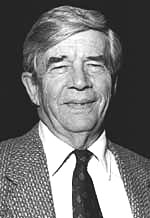
Introduction
The death after a brief illness of Wilfred John Simmonds on 29 March 1990 marked the end of an important contributor to Australian medical science. As the foundation professor of physiology in the newly established medical school at the University of Western Australia, Simmonds played key roles in the development of the school. He will be remembered for his unbending commitment to scientific enquiry by experiment. Simmonds placed great value on the experimental approach and had no patience with armchair theorists or for unwarranted extrapolations.
Simmonds was born in Queensland on 29 November 1918 to Dorothy Graham née Dawson and John Lloyd Simmonds, who was a graduate in medicine from the University of Melbourne and who practised in Crow's Nest, Queensland, and in Brisbane. There was a younger brother, Graham Lloyd, who became a dental practitioner. Simmonds' education began in Victoria and continued in Queensland where his family shifted when he was aged nine. His secondary education was at Ipswich Grammar School and he matriculated with scholarships to the University of Queensland. Too young at first to proceed in Medicine because dissection was not permitted until aged eighteen, Simmonds' first two years were in the Faculty of Science from which he graduated with honours in physiology in 1940. He then continued in Medicine, graduating MB, BS in 1942.
'Wilf entered the Physiology I class (Med II) in 1937, the first full year of its existence', writes Professor Douglas H.K. Lee.
It was clear from the start that he was a very bright student, a judgement that future events fully justified. He quickly took a lead in discussion, both academic and clinical. As a brand new and young professor I was delighted to have students show initiative; I 'took a shine' to Wilf that he continued to justify! Wilf participated in the departmental research activities that naturally centred on war work. I remember his developing an attack of bronchitis after being cooled off in a ventilated protective suit. Wilf's brilliance enabled me to conclude an arrangement with the Faculty of Science for selected medical students to take a year off after their third year, to pursue a science program and be awarded a Bachelor of Science degree.
With some changes this ad hoc arrangement ushered in the present provision for such students to receive a Bachelor of Medical Science.
During his undergraduate years, Simmonds was also working as a demonstrator in physiology in Professor Lee's department. In 1942 he graduated in Medicine with a brilliant record. He was a part-time lecturer in physiology while studying Medicine. Professor Malcolm Whyte, whom Simmonds preceded by a couple of years, first at Ipswich Grammar School, then through studies in medicine at the University of Queensland then on to Oxford and finally back to the Kanematsu Institute, recalls of Simmonds: 'An ardent hard worker, of course; a cricketer; a member of the 'knitters and sitters' group who lived upstairs in the old King's College building at Kangaroo Point in Brisbane', and also that he would be most depressed after his examinations, aware of what he had omitted, but then coming up with his usual string of excellent passes.
From 1942–1946 Simmonds served as Flight Lieutenant in the RAAF Medical Services, including a spell as squadron medical officer in Dutch New Guinea. He was a member of the RAAF No. 1 Flying Personnel Research Unit. During this period he was involved in studies of the physiological responses to centrifugal forces and to high altitude. His wartime experiences brought him into contact with soldiers and civilians who had suffered hardship and brutality. He developed a lasting admiration for the people of Singapore, Malaya and the Dutch East Indies, and in later life he did what he could to support their educational and scientific programmes.
In December 1946 Simmonds married Natalie Baker, the daughter of a medical practitioner who worked in general practice in the Berri-Renmark districts in South Australia and later in Townsville and Maryborough in Queensland. For a brief time Simmonds returned to the University of Queensland as lecturer in pathology, but then he was awarded a Nuffield Dominions Fellowship to undertake medical research in England. This gave him the opportunity to embark on an academic career in the basic medical sciences, an opportunity he welcomed for he had a creative and enquiring mind and was soon to enjoy the world of experimental physiology.
Experimental science
Oxford, 1947–1950
Simmonds' Nuffield Fellowship took him to England early in 1947. 'I well remember his arrival in Oxford', writes Professor F.C. Courtice.
Wilf had written to me earlier, seemingly somewhat concerned that I would not be able to recognize him on the Oxford railway station. When the train from London pulled in on that freezing January day, vast numbers of pale-faced commuters, wearing their pork-pie or bowler hats and carrying their briefcases, poured on to the platform. For a while I could not see anyone who remotely resembled a Queenslander – but then at the far end of the platform there emerged from a carriage door an attractive young lady. She was followed by a sunburnt young man struggling with several large suitcases and wearing an enormous hat that only Queenslanders wear and the likes of which I am sure had never before that day been seen in Oxford. I made a beeline for that part of the platform, for it did not need a Sherlock Holmes to tell me that this was my man. 'Pardon me', I said 'but might you be Dr and Mrs Simmonds?' With a chuckle, Wilf replied 'Yes, and you must be Dr Courtice, but how on earth did you pick us out in this crowd?' I was at that time too polite to ask him whether he wore that hat because he was afraid that I would not recognize him or because he was afraid of the January sun in Oxford! But that encounter was the beginning of a very close friendship that lasted until his death forty-three years later.
Simmonds began his research career in the old Physiology Laboratory at Oxford, steeped in tradition. Actually he worked in the very same laboratories in which J.S. Haldane and J.G. Priestley had carried out their classical experiments in respiration at the turn of the century. He was granted what in Oxford is called 'advanced student status' enabling him to enrol for the degree of Doctor of Philosophy with F.C. Courtice as his supervisor. The Second World War had only recently ended, a war in which medical research had played a very important role. One of the major medical advances was the development of blood transfusion services and the use of blood products, especially serum and plasma, in the treatment of injury and traumatic shock, so prevalent in both civilian and military spheres during the war. Much attention had been focused on the plasma proteins or macromolecules that escaped from the blood vessels and accumulated in the injured tissues. The evidence at that time suggested that these proteins could be returned to the circulation only by the lymphatic vessels. It was therefore important to study the capacity of the lymphatics to remove the proteins in oedema fluid and so to restore the tissue to its normal state.
Simmonds investigated the removal of protein-rich fluid from the lungs and from the pleural cavities. The technique of labelling protein with a radioactive marker had not yet become standard procedure, so Simmonds used a blue dye that formed a very tight bond with plasma albumin. His experiments showed that whereas labelled protein is absorbed from the alveolar sacs of the lungs fairly slowly in anaesthetised animals it is removed much more quickly when the animal is allowed to recover from initial anaesthesia and move about normally. Lung movement, therefore, seemed to have a profound effect on the lymphatic absorption of protein-rich oedema fluid from the lungs.
His experiments concerning absorption from the pleural cavities showed that dye-labelled protein was removed entirely, or almost so, by way of the lymphatic vessels, that this removal was very much more rapid than previously thought, and that respiratory movement had a considerable effect on the rate of removal. In Simmonds' words, writing of his time in Oxford:
It goes without saying that the intellectual climate was bracing. If any one event were to be selected for its formative effect it would be the experience of defending one's thesis orally before two scientists of the calibre of Howard Florey and G.R. Cameron. One learnt a life-long lesson about the quality of ideas from such a session.
In addition to his research work, Simmonds was appointed a departmental demonstrator by Professor E.G.T. Liddell, enabling him to play an active role in teaching in the practical classes of the Human Physiology Section of the Final Honours School of Physiology. He was a good teacher and enjoyed the contact with students, many of whom had served, like himself, in the military during the war and were now beginning the study of medicine at a more mature age. Not only were they mature in years but also in experience in life. There were about seventy students in the Final Honours School, and they were taken in small groups in the practical classes so that there was a close rapport between teacher and student. This was teaching at its best, an experience that Simmonds found of immense value when at a later stage in his life he was responsible for the teaching of physiology at the University of Western Australia. Both Simmonds and his wife Natalie became close friends of Professor and Mrs Liddell whom they had the pleasure of entertaining in Perth when the Liddells visited Australia in the 1960s.
Kanematsu Memorial Institute, 1950–1957
After three years in the Physiology Laboratory at Oxford, Simmonds returned to Australia to take up the position of Senior Research Assistant in the Kanematsu Institute. Here at first he continued his investigations into the role of the lymphatic vessels in removing protein-rich fluids from various tissues. Of these years Dr Bob Finlay-Jones recalls:
I met Wilf forty years ago when I was a pathology registrar at Sydney Hospital and he joined the research team at the Kanematsu Institute. The Institute is not a big building and in addition to the research laboratories and the four clinical pathology laboratories it housed the mortuary, animal house and hospital library. Space was at a premium. Wilf was accommodated by closing off one of the corridors linking the Institute with the main hospital. His desk and filing cabinets were deposited in this draughty, and in winter, bleak spot. We called it 'Siberia'. When asked how he was faring Wilf, in his usual imperturbable fashion, replied: 'The best work is carried out in freezing garrets. Another winter like this and the Nobel prize is a certainty'.
Simmonds turned his attention to the subarachnoid space of the brain, a tissue in which there are no lymphatics. He again used a blue dye to label the protein and showed that considerable amounts of protein were absorbed directly into the bloodstream, presumably through the arachnoidal granulations, compared with the relatively small amounts that entered the cervical lymphatics by way of the cribriform plate and the nasal mucous membrane. Blood cells were also cleared from the subarachnoid space by the same routes but at a slower rate. By labelling the red cells with radioactive phosphate, it was confirmed that the cervical lymphatics were but a minor route of absorption, the major route presumably being by way of the subarachnoid granulations directly into the venous sinuses. In addition to this work Simmonds joined other members of the Institute in tackling broadly related problems.
Professor Paul Korner recalls:
As the senior scientist next to Colin Courtice, Wilf was called upon to maintain good order and discipline in the laboratory, which included a rather wild group of very junior research fellows: myself, Ian Darian-Smith, Bede Morris and Bernard Lake. With the retrospectroscope, Wilf had quite a few crosses to bear at that time and managed to do it with a lot of grace. Space at the Kanematsu was measured, not in rooms, but in feet of bench space and the new arrivals greatly encroached on Wilf's space, but he treated them most generously.
By now Simmonds had made significant contributions to knowledge of the absorption of protein-rich fluids and blood from the lungs, serous cavities and subarachnoid space and to understanding of the resolution of oedema or haemorrhage in these regions of the body. He wrote widely acclaimed reviews of his work in relation to existing knowledge, namely, (i) ' The subarachnoid space: Some experimental approaches to its pathology' and (ii) 'The physiological significance of the lymph drainage of the serous cavities and lungs'.
There was a practical side to the research. Writes Dr Bob Finlay-Jones:
The trainee pathologists dubbed their research colleagues, because of their consuming interest, the 'lymphomaniacs'. As a result of an explosion and fire on a naval vessel in Sydney Harbour (HMAS Tarakan), many shockingly burnt sailors were admitted to Sydney Hospital. Some died quickly. With the survivors it was a problem to obtain blood by venepuncture to get haematocrit readings to assess the level of haemoconcentration. Most of them had severe burns to the upper limbs. Colin Courtice and his colleagues prepared glass capillary tubes lined by anticoagulant, and vigorous needle pricks in an area of unburnt skin yielded enough blood for a satisfactory column of blood which was then aligned vertically on a dob of plasticine. It did the trick.
In the early 1950s there was considerable activity in the Kanematsu Institute relating to the function of the lymphatic system. Some were turning their attention to studies of the lipoproteins and their possible implication in the aetiology of atherosclerosis and coronary heart disease. Internationally, the concept of lipoproteins had emerged and methods for their separation by electrophoresis and by ultracentrifugation had been devised. Soon the whole question of lipid metabolism became a very active topic of investigation. Of considerable importance in this field of endeavour was the lymphatic flow from the intestines for it was via the lymph that fat was absorbed from the gut, mainly in the form of chylomicrons. Some of Simmonds' colleagues were studying the interrelationships between the lipoproteins in the plasma and in lymph, while he turned his attention to studies of the lymphatic absorption from the intestines in conscious rats with thoracic ducts drained by delicate plastic tubes. The advent of plastic tubes to replace glass cannulas for the collection of lymph made possible the production of a lymph fistula from which lymph would drain for long periods of time – days or even weeks – in conscious animals. Simmonds perfected this technique which revolutionized the study of fat absorption from the intestines. He made several detailed studies of the thoracic duct lymph flow after the introduction of fluid, electrolyte and various foodstuffs into the stomach. Fluid was absorbed rapidly causing a shortlived increase in lymph flow, whereas the prolonged increase associated with the absorption of fats was of vascular origin, probably humorally mediated. The results of other experiments on lymph transport of fat following the ingestion of olive oil (a triacylglycerol) or oleic acid (a fatty acid) refuted the 'Partition Hypothesis' of fat absorption which was then in vogue. Simmonds then made a detailed analysis of the various factors, such as anaesthesia and gut motility, that might affect lymph flow after a fat meal.
'In those years, 1947–1957, during which we were closely associated in the laboratory', writes Professor F.C. Courtice,
Simmonds was a most dedicated and meticulous research worker, carefully checking every detail of an experiment. He was ever alert to the possibility that something might have gone wrong for which he had not accounted. With regards to his own experiments he was perhaps at times too ardent a proponent of Murphy's Law – 'If something can possibly go wrong it will' – which made him always doubly careful concerning the accuracy of his results and of the interpretation that he placed upon them. By the middle 1950s he had established his own area of investigation into absorption from the gastro-intestinal tract and it was this field of research that he pursued when he left the Kanematsu Institute to occupy the Foundation Chair of Physiology in the newly established medical school in the University of Western Australia.
The University of Western Australia, 1957–1990
(i) Steady state fat absorption
In 1957, when thirty-eight years old, Simmonds was appointed to the University of Western Australia as its inaugural professor of physiology. He was one of nine professors who planned and developed the new Medical School initiated by public subscription from the people of Western Australia. He was head of the Department of Physiology until his retirement in 1983.
Dr Bob Collin was a member of Simmonds' new department. He writes:
At the end of 1956 Wilf braved the unsealed road across the Nullarbor to bring his wife and two young and car-sick children to Perth. There were further tribulations. A university friend invited the family to Christmas dinner soon after their arrival but on Christmas eve the host family went down with the mumps. The final straw was that the welcoming turkey would not fit in the professorial oven in the university house in Arras Street. This was a testing preparation for setting up physiological laboratories in a hut previously used to house Air Force personnel for the flying-boat base in Matilda Bay. It was at about this time that Wilf plotted with his son Ralph to build a 'moon rocket' which disappeared into the night and reappeared on a following night back from the moon. The children of the street were enthralled.
Simmonds, Collin, and the Vice-Chancellor, Sir Stanley Prescott, had all served in the RAAF No.1 Flying Personnel Research Unit in Melbourne, along with physiologists Archie McIntyre and R.D. ('Pansy') Wright. The foundation professor of biochemistry, Joe Lugg, had been working in an adjacent department in Melbourne but knew Simmonds only by sight. The inaugural professor of anatomy, David Sinclair, as a British officer had been with a military research unit in Queensland testing the effects of mustard gas under various conditions and he also had visited the Melbourne research group during the war. Some of these threads would be useful as Simmonds strove to develop his new department. Prescott before the war was professor of physiology at the Cheeloo University Medical School. Prescott, Simmonds wrote, 'when later Vice-Chancellor of the University of Western Australia, provided the friendship, encouragement, support and freedom needed to build up Physiology as a research discipline in the new Faculty of Medicine'.
Simmonds continued his research on fat absorption and transport by lymphatics, now addressing the questions of the absorptive capacity of the rat intestine, absorption by different parts of the small intestine and absorption in rats with bile- and pancreatic-fistulae. A distinctive approach was evolved, using observations during steady state absorption in unanaesthetized rats. Instead of feeding fat as a bolus, fat was delivered into the intestine or into the stomach by a steady slow injection as an emulsion in water or as an oil. The concept of the steady state was of great assistance in the experimental resolution of questions relating to fat absorption. Combined with brilliant experimental surgery on the rat intestine, this new technique was applied to show that the intrinsic absorptive capacity was the same for lower small intestine as for upper small intestine, provided that sufficient time was allowed for adaptation after surgical resection. Related experiments explored the relationships between fat transport and intestinal motility.
Before establishment of the Department, when N.D. Crosby had the appointment of Reader in Physiology, postgraduate students had come from various other backgrounds, but now Simmonds was beginning to attract new students into the Physiology Department. Reg Morgan was a recent graduate in medicine who decided to undertake studies for the PhD under his supervision. Bile had an unquestioned role in fat absorption insofar as events in the gut lumen were concerned, but there was uncertainty about possible effects of bile on the resynthesis of fats in intestinal mucosal cells. Metabolic handling of absorbed fat by intestinal mucosa was shown to be normal in bile-fistula animals provided that sufficient time was allowed for postoperative recovery. Slower transit of contents through distal small intestine gave more time for fatty acid absorption which partly counterbalanced a slower rate of uptake.
The breadth of Simmonds' interest allowed him to undertake the supervision of projects in other scientific areas, essential for the balanced academic development of his department. While this was never a major research interest of his, Simmonds supervised Malcolm Sparrow for his PhD in the area of smooth muscle physiology. Sparrow and Reginald Morgan both went on to develop their own research careers and to become in time most valued members of the Physiology Department.
It was now that my own scientific relationship with Simmonds began. I had recently graduated in medicine and decided to turn to Physiology to do some basic research in a field where my curiosity had been aroused during clinical training. My initial intention was to become a surgeon, but as I became embroiled in my project under Simmonds' supervision that ambition receded. We used a drug to inhibit mitosis of intestinal cells in the crypts of the mucosa. With the appropriate dose the rats survived this insult, and after a few days a new crop of cells migrated up from the crypts in a synchronized fashion. We used this technique to show that the epithelial cells in rat small intestine acquire the capability for fat absorption when they are about 24 hours old, at about the time they migrate from the crypts on to the sides of the villi, and that they retain their capacity until they are shed from the villus tip, when they are about 38 hours old. I shared a laboratory with another medical graduate under Simmonds' supervision, John Masarei, who investigated the effects of diversion of pancreatic secretions on the absorption of fat. Simmonds and his students had lymph dripping all around the department, and facilities were now greatly improved by a shift to a new building.
During my studies the laboratory was visited under the Colombo Plan scheme by Dr Binode Shrivastava. We collaborated to show that fatty acids absorbed from biliary phospholipids in the intestinal lumen were the major source of the endogenous fat found in the lymph of fasted rats. This 'enterohepatic' circulation of biliary lipids had not previously been known.
(ii) The physics of fat absorption
Simmonds took sabbatical leave in 1965. He travelled to the USA as the recipient of a Fulbright Senior Award. He worked as a Guest Investigator in Professor E.H. Ahrens' group at the Rockefeller University Hospital, along with John Davignon, Scott Grundy and especially Alan Hofmann. This was the first of many visits by Simmonds to the USA. Professor Douglas Lee writes:
My first meeting with Wilf after I went to the U.S. was when he arrived in Washington, late in the afternoon, as a Fulbright Scholar. In 1965 the Daughters of the American Revolution were still something of a social force, and their annual convention had left not a bed available in central Washington. But Wilf, Natalie and the two children were alright, weren't they? The Embassy had arranged accommodation! Unfortunately the hotel of their choice had changed hands and scrubbed its books. So...! My hotel room would not even hold four people standing up, let alone sleeping. After a lot of telephoning and hassling, against a background of polyglot outrage at similar abandonment, we managed to find a vacancy in a veritable fleabag. After sharp words with the Embassy the next morning better accommodation was found, but it had been a memorable welcome to the United States.
Professor Alan Hofmann recalls a particular incident from Simmonds' productive sabbatical: 'We worked together extremely closely. I remember vividly a night during the great blackout in New York City when we wrote a paper, or the early drafts of a paper, by candlelight on the stairs of the hospital of the Rockefeller University.' Simmonds and Hofmann became close friends and scientific collaborators. Simmonds spent two subsequent sabbaticals with Hofmann's group in 1972 at the Mayo Clinic and in 1979 at La Jolla in the University of California, San Diego. Simmonds was delighted when Hofmann reciprocated a visit to Perth for an extended period. Hofmann writes further:
Wilf was always a charming and disarming enigma to me. It was clear that he had extremely high scientific standards, and hated any kind of pomp or arrogance in science. At the same time, he hid his keen, critical judgement values in an almost pathological modesty, such that it was difficult to know whether he was being truthful or ironic. He liked to work directly at the bench even though in later years his hand began to tremble a bit and cigarette breaks became more frequent. He liked to speak with a very soft voice, yet at the same time he wanted everyone to listen. His lectures were planned in great detail and were masterful. He constantly sought the understatement. He got far too little credit for his work on fat absorption, which was really cleaner by far than anyone else's. He never tooted his horn; and because he was not visible in the scientific arena, he never was appreciated widely at an international level by either gastroenterologists or physiologists.
In this period of his research Simmonds made significant contributions towards clarifying basic problems of fat absorption such as the role of solubilization in uptake of lipid by the mucosa, the functions of biliary phospholipid, and the roles within the lumen and mucosal cells of bile salts in connection with cholesterol absorption. He showed the feasibility of the measurement of bile acids at their low concentrations in plasma by immunological techniques, providing an important bridge between basic and clinical studies of bile acid physiology. International recognition of his work is indicated by invitations to speak at overseas meetings and to publish reviews of the field. In 1968 he was a guest symposium speaker at the 25th International Congress of Physiological Science at Munich. In 1972 he was an invited speaker in the USA at the Gordon Research Conference on Lipids, and in 1975 in Germany at the International Conference on Lipids at Titisee.
Distinctive approaches characterized the most productive phases of Simmonds' research. In the first phase his use of a steady-state absorption model to characterize mucosal and lymphatic transport under a variety of conditions was of great value in interpreting clearly the effects of experimental variables. In later work Simmonds directed his attention to the physical aspects of fat digestion and absorption. With Neville Hoffman and Shirley Watt, lipid and detergent mixtures were used to study absorption in different types of experimental preparations. These studies both in vivo and in vitro were of great value in establishing the advantages and limitations of the preparations as models for absorptive mechanisms. Many of the results relating to the physical aspects of absorption are brought together in his review of this field. The concept developed that lipid uptake from the lumen is limited by diffusion across an unstirred aqueous layer and that this step is limited by micellar solubilization. Penetration of the absorptive cell membrane, on the other hand, involves lipid as single molecules. The natural detergents, bile acids, function only as micellar stabilizers so far as the products of triglyceride digestion are concerned, and other detergents can substitute. Previous workers had suggested a specific requirement for trihydroxy bile acids in cholesterol absorption. Simmonds' experiments separated this requirement into an effect on uptake from the lumen requiring a planar detergent but not necessarily trihydroxy bile acids and an effect on mucosal esterification of cholesterol which was mediated more efficiently, but not solely, by trihydroxy bile acids.
(iii) Phospholipids and fat absorption
Simmonds next focused on biliary phospholipids and chylomicron production during fat absorption. There were speculations that biliary phospholipid absorbed from the lumen supported enhanced phospholipid synthesis during chylomicron formation. His results with Patrick Tso suggested that absorbed lysolecithin was necessary during rapid production of chylomicrons but not for low rates of production. The palmitate-rich lecithin found in bile was not specifically required since dioleoyl lecithin was an effective substitute. Choline was only partially effective. These findings together with analyses of fatty acid composition of chylomicron lecithin indicated that much of the absorbed lysolecithin was directly acylated to lecithin and incorporated into chylomicrons, supplementing lecithin synthesis by the alpha-glycero-phosphate pathway.
'Wilf was the most meticulous scientist that I ever worked with', writes Professor Patrick Tso.
I will never forget one experience John Balint (Albany Medical College) and I had with Wilf. We had studied lipid absorption in rats using radiolabelled glycerol trioleate. We felt that we had the answer we were looking for and were quite happy to stop at that. This was not good enough for Wilf. He insisted that we also measure esterified fatty acid output to support our conclusion from the radioactivity data.
(iv) Post-retirement
After his retirement in 1983, Simmonds became an Honorary Research Fellow in his former Department. When I took up the Chair in 1985 he was eager to get back to the bench. The laboratory was well equipped for my type of research, but for the first six months I had no funds for research and no students so we could do little except write a few grant applications. We soon had lymph dripping again and Simmonds was delighted. My interests had shifted away from the intestine to problems of chylomicron clearance from the blood, but Wilf and I shared enough common interests to quickly generate a few research ideas.
When the grants came in, we could begin in earnest. Although Simmonds' expertise was in fat digestion and absorption of fat by the intestine, the physiology of lymph and the functions of bile salts, he now adapted to the new challenges of my own particular brand of research. Obliged to come to grips with new techniques and unfamiliar scientific instruments, he drew the line at computers. His scepticism was justified to an extent. He saw the power of computers as an impediment to the appreciation by students of the 'nuts and bolts' of science, and insisted on always checking with a pencil and paper the computer's proclamations. He took delight in discovering flaws in the output so readily accepted by most. His experimental skills were a great asset as we worked out the effects of specific fat structures on the clearance from plasma of emulsion models of chylomicrons.
Teaching and other activities
Teaching
Setting up a new medical school in an isolated and essentially anti-intellectual community was a challenge. Paucity of imagination was not confined to the 'town', although perhaps it never will be. Simmonds and Sinclair, together with Ivan Oliver in Biochemistry, introduced new ideas for the undergraduate medical curriculum, all of which were subsequently abandoned. I was a member of the first intake of students. Simmonds' lectures stood out as models of simplicity and organization. Of these years Professor Sinclair writes of him:
In committees he did not say much, but when he said it the committee was always brought back to reality, sometimes with a bump. I think he had an unlimited supply of that rare human quality, common-sense, and this is something that is sadly lacking amongst academics. I wish I had been taught physiology by Wilf as a student, for indeed I was taught it by him long after I had passed that stage. During the planning stage of the medical school Wilf was by far the most 'sensible' of the protagonists, with a clear eye to what was practicable and what was not.
The students who benefited from Simmonds' nurturing and guidance include a generation of Perth's medical graduates and numerous scientists world-wide. Professor Patrick Tso was his last PhD student. He recalls: 'Training under him was comprised of two parts: first the knowledge and then independence. He supervised me closely during the first one and a half years. I was then challenged to design my own experiments and also to interpret the data from these experiments.'
In addition to his duties at the University of Western Australia, in 1957 Simmonds was an external examiner in Australian, New Zealand and Malaysian universities. In 1957 and 1961 he was a Colombo Plan Lecturer for the Australasian College of Surgeons Course in Singapore, and from 1961 to 1971 he was a member of the examiners' panel for basic sciences for the Royal Australasian College of Surgeons in Melbourne, Sydney, Dunedin, Singapore and Hong Kong. From 1966 to 1976 he was an examiner in basic sciences for the Australian College of Dental Surgeons. In 1970 he was appointed to the planning committee for the establishment of Murdoch University, the second university in Western Australia.
Other activities
Simmonds found time from his teaching and administrative duties to give service to numerous professional and community organizations. He was a foundation councillor and from 1983 to 1985 president of the Australian Physiological and Pharmacological Society. He served as dean of the Faculty of Medicine, 1974-1976, as chairman of the University of Western Australia's Academic (Professorial) Board, 1981-1982, and as chairman of the medical and scientific advisory committee of the TVW Telethon Foundation, 1983-1986. In 1984 he was made an Honorary Life Member of the Gastroenterological Society of Australia. He served in various ways the Royal Australasian College of Surgeons, the Tobacco Research Foundation Scientific Advisory Committee, the National Health and Medical Research Council Medical Advisory Committee (1960-67 and 1976-78), the National Heart Foundation Research Advisory Committee (1967-73) and the Australian Research Grants Committee (1976-78). He was a member of the council of the Australian Academy of Science 1986-1989, and vice-president in 1988-89. He was a member of the Physiological Society of Great Britain, the Australian Society for Medical Research, the Royal Australasian College of Physicians and president of the Western Australian branch of the Oxford Society.
Honours and Awards
Simmonds was elected a Fellow of the Australian Academy of Science in 1982. Further recognition of his contributions to original research in science and medicine included election as Fellow of the Royal Australasian College of Physicians in 1969 and an honorary doctorate in Science from the University of Western Australia in 1986.
Personal
Simmonds was held in high esteem by his peers. At the symposium organized to celebrate the twenty-fifth anniversary of the Medical School in Perth, Simmonds was chosen to open the proceedings. On numerous occasions when his former students were overseas, doors were opened when it was learned that they had trained with Wilf Simmonds. He always took a friendly and supportive interest in the lives of his former students. A comment by Professor Ian Darian-Smith is illustrative: 'As his first graduate student I was brash and arrogant. Yet he did a great deal to ensure that I had every opportunity to learn and work hard at the Kanematsu, even when it must have been both inconvenient and uncomfortable for him personally. I always viewed Wilf with affection and respect, as did all those who knew him well and worked with him.'
During his career Simmonds played an active role in many spheres for the advancement of the medical sciences in Australia, but his main love remained until the end his experiments at the bench. He ardently applied Socratic discipline to science, and many established researchers, including myself, benefited from and were sometimes discomfited by his penetrating questions. After retiring from his Chair, Simmonds continued within the Department of Physiology as Honorary Research Fellow, assisting me in setting up my laboratory, in supervising new students and training new staff.
'Soon after Wilf went to Western Australia, I moved to the John Curtin School of Medical Research at the Australian National University in Canberra', writes Professor F.C. Courtice.
Whenever he came to the East for a meeting he would find an excuse to spend the night at my home mainly to enjoy dinner with my wife and myself. His favourite dinner was a medium to rare grilled steak and a bottle of the best claret that I could produce, followed by a glass or two of port. After dinner we would sit for hours, in the winter in front of a blazing log fire, discussing all manner of things but inevitably he would get around to the latest experiments that he was proposing to undertake. They were very happy hours for both of us. I last saw Wilf about a year before his death. On a visit to the East he came to see my wife and myself in our home in one of the northern suburbs of Sydney. We sat in the garden and had morning coffee together. Although he was now 70, he still had that young, boyish look with his attractive chuckle as he told me what he intended to do when he went to the United States later in the year to work in the laboratory of one of his old pupils.
He spent those three months working in the laboratory of Professor Patrick Tso, his former student who is now a professor of physiology at Louisiana State University who writes: 'I am so glad that he came and spent three months working in my laboratory shortly before his death. He enjoyed working with Reneau, an incredibly bright and able technician. They were working on a procedure to isolate fat-laden enterocytes from the small intestine. They worked extremely hard on the problem and seemed to have the procedure worked out.' Shortly after his return to Perth, Simmonds became ill, and he died on 29 March 1990.
Simmonds was kind, generous and good spirited. All who knew him will acknowledge him as mentor and friend. He was a keen athlete and a skilled tennis player. When I began my doctoral studies in 1963 Wilf had his arm in a plaster cast because of a fracture sustained in a cricket match against the students, and a few weeks later it was my nervous task to remove the cast without too much of the professorial skin. Evan Morgan, the holder of a personal chair in the Physiology Department, recalls that he was responsible for another assault on Simmonds' skeleton, when his forearm was fractured during a hotly contested game of squash.
Professor Ramsay Gunton was a contemporary of Simmonds at Oxford. Now Professor of Medicine at the University of Western Ontario, he recalls:
Both Wilf and I had occasion to use carbon monoxide in our early work. Indeed, his first publication with Courtice was on that subject. Those were the days when red cell mass was determined by carbon monoxide, and cardiac output by acetylene! Courtice was a protege of C.G. Douglas who, although then retired, used to come into the laboratory from time to time and see us using the Douglas bag, Douglas valves, and of course the Haldane apparatus for determination of oxygen content of blood. We felt some vicarious pride in this arm length relationship to Douglas and his mentor the great British respiratory physiologist J.S. Haldane.
Professor Gunton concludes: 'I found Wilf to be meticulous, honest, and generous. I can quite understand the comments relating to his bibliography in which it is pointed out that his name did not appear on quite a bit of the work which originated in his department or as a result of his initiatives as a visiting scientist. Those characteristics of deference, generosity, and meticulous scientific honesty were apparent in the young man I knew only briefly forty-two years ago.'
His family
Deepest sympathies are extended to Natalie, Ralph and Carolyn. Wilf never dwelt on his achievements nor on those of his family, but his pleasure was obvious when his daughter Carolyn began to write under her own by-line in The Australian newspaper, and when his son Ralph was appointed in 1989 to the foundation Chair of Law at Murdoch University.
About this memoir
This memoir was originally published in Historical Records of Australian Science, vol. 8(4), 1991. It was written by T.G. Redgrave, Professor of Physiology at the University of Western Australia.
Acknowledgements
The kind assistance of Professor F.C. Courtice in the preparation of this biography is particularly appreciated. I also acknowledge the thoughtful comments of Mrs Natalie Simmonds, Professor David Sinclair, Dr Robert Collin, Professor Ian Darian-Smith, Professor J.W.H. Lugg, Dr L.R. Finlay-Jones, Professor Paul Korner, Professor A.F. Hofmann, Professor Patrick Tso, Professor A.K. McIntyre, Professor Malcolm Whyte, Professor D.H.K. Lee, Professor E.H. Morgan and Professor R.W. Gunton. Some background material was obtained from the following publications:
- Collin, R., 'Physiology in Western Australia', pp. 749-754 in Research in Physiology, ed. F.F. Kao, K. Koizumi and M. Vassalle (Bologna, 1971).
- Courtice, F.C., 'The Kanematsu Memorial Institute of Pathology: The Inglis Era, 1933-1960', Historical Records of Australian Science, 6 (1985), 115-136.
- Sinclair, D., Not a Proper Doctor (Cambridge, 1989).
- Stanley, N.F., ed., The First Quarter Century (1957-1982) (Perth, 1982).