





Raymond John Stalker 1930–2014

Raymond John Stalker was born in Dimboola, Victoria on 6 August 1930 and died in Brisbane on 9 February 2014. He had a distinguished academic career at the Australian National University in Canberra and at the University of Queensland. His work on hypersonic flow was universally recognised, and the ‘Stalker Tube' facilities he pioneered were able to reach unprecedented flow speeds and were reproduced in many laboratories around the world.
Download the memoir
About this memoir
This memoir was originally published in Historical Records of Australian Science, vol. 27(1), 2016. It was written by Caroline Stalker, Richard Morgan and Roger I. Tanner.

Raymond James Wood Le Fèvre 1905-1986
Written by M.J. Aroney and A.D. Buckingham.
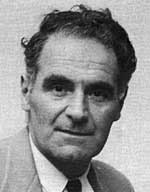
- Early life
- East London College
- University College London
- Le Fèvre's war work
- The early years in Sydney
- Research in Sydney
- Professional and community activities
- Personal
- About this memoir
Early life
Raymond James Wood Le Fèvre was born in North London on the first day of April, 1905. He was the eldest of three children of Raymond James Le Fèvre, the managing clerk of a firm of London solicitors, and his wife Ethel May (née Wood). Of his four grandparents, three had died before 1910. Only his father's mother, née Louise Darby, of Bath survived into his childhood. She was a strict, severe and religious person, always dressed in black as was then customary for widows. She, with her watch-maker husband, had, many years before, established a home in Richmond, Surrey, and there produced six children of whom Le Fèvre's father was the youngest boy. Her family practically formed the local church choir of St Elizabeth's Roman Catholic Church at Richmond. At eight years of age, Le Fèvre became an altar boy and he remained in close association with this church, eventually becoming the Master of Ceremonies in his 20s. Further, through his close friendship with many of the clergy, he found great interest in church and choral music, history, ritual and church vestments. This aspect of his education and life over the years ran in parallel with his secular life.
Le Fèvre's parents moved to St Margaret's, East Twickenham, in Middlesex, a district just across the Thames from Richmond. His schooling began in the infants' class of Gumley House Convent, Isleworth, and after about a year he was transferred to St James School, Twickenham, an elementary school staffed by Sisters of Mercy and lay teachers. About April 1915, he was transferred to the Salesian school at Farnborough, Hants, a boarding school which Le Fèvre has recorded as being 'austere though probably healthy'. Cricket and football were played but he showed no great aptitude for either. He was, however, a good swimmer; his family kept a punt on the Thames. He enjoyed visits to Farnborough Abbey and roaming relatively freely on Farnborough Common. The Abbey had been founded by the Empress Eugenie to house the tombs of the Emperor Napoleon III and his son the Prince Imperial, who had been killed by an assagai while fighting in Zululand in 1879, in the Crypt Chapel, which to the young Le Fèvre had a fascination as a sombre and mysterious place – an impression intensified by distant chanting from the church above.
In 1915 Farnborough Common was still open to the public. For small boys part of its attraction was a large pond in which on warm days they could swim, but a larger part arose from the use of the Common as an aerodrome for the adjoining Government Aircraft Factory that was then growing up around the old balloon and airship establishment. Here could be seen pusher-engined Farman biplanes, B.E.2c's, and other fragile-looking contraptions staggering shakily into or out of the air. Le Fèvre could not have known at the time that the G.A.F. had just gathered together a group of able men, mostly from Cambridge, destined to become leaders in various branches of pure and applied science – men such as F.A. Lindemann (later Lord Cherwell), B.M. Jones (later Sir Melville Jones), G.I. Taylor (later Sir Geoffrey Taylor), G.P. Thomson (later Sir George Thomson and a Nobel Laureate in physics), W.S. Farren (later Sir William Farren, Director of the Royal Aircraft Establishment during the Second World War), G.T.R. Hill (designer of the 'Pterodactyl' aeroplane), F.W. Aston (subsequently a Nobel Prize winner in chemistry), and Hermann Glauert (whose contributions to aerodynamical design, to aerofoil theory, to the analysis of auto-gyro flight, and so on, were to earn him election to the Royal Society of London in 1931; at the height of his powers he was unfortunately killed by a falling tree on the Common in mid-1934). In the course of his career, Le Fèvre was destined to have an official place in the Establishment which grew out of 'the muddle of huge shanties' that were there in his school days.
Educationally the Salesians were 'earnest and mostly encouraging'; their curriculum and methods were conventional. Latin, algebra, geometry and French were taught among other subjects and particular emphasis was given to religious knowledge and the catechism. In 1916 Le Fèvre's parents decided that he should live at home, so in the Spring of that year he was enrolled in the Isleworth County School in Middlesex. The ICS, although founded formally only in 1895, could trace its ancestry back to a Stuart Charity School founded ca. 1630. From 1715-1813 this became known as the Isleworth Charity School where, as recounted in later years by Le Fèvre, '40 boys and 20 girls were clothed and taught reverence for Protestant and Hanoverian authority, given principles but not opinions, and generally taught to be submissive, pious, industrious, and respectful citizens'. The school evolved into a nineteenth-century National School and an Upper Department was established that later merged into a new grammar school being formed by the British and Foreign School Society. Le Fèvre attended this school from 1916 to 1923, recalling that 'The atmosphere in all senses was pleasant – literally because we were often downwind either of Pears' soap works or Watney's Brewery, and figuratively because our small numbers made friendships with one another, and contacts with the staff, easier and freer than would have been the case in a larger establishment.'
Because of the war, a number of masters were in the services, their places being temporarily filled by women. One of the latter, Miss E.B. Murdoch, conveyed to Le Fèvre his first impressions of chemistry. She believed in practical experience as a method of learning; her introductory experiment was the examination of a mixture of iron filings and flowers of sulphur before and after heating. The vivid light emission accompanying combination and the altered behaviour towards a magnet underlined indelibly the differences between physical and chemical changes. From that moment, chemistry displaced history as Le Fèvre's favourite subject. Conversion was completed during the next annual session when physics and chemistry were taught by B.H. Walmsley, 'the finest teacher in all my pre-University experience'. Notable among his school activities were a strong interest in historical novels (graduating from Henty to Scott), photography (winning a competition in Isleworth for two enlargements, done with a home-made lantern, of architectural subjects at Verulamium and St Albans Cathedral), rifle shooting (twice winning the school championship), and listening to music both liturgical and orchestral.
With the passing of the matriculation examination, the question of a future career became important. His father would have liked him to study law but this prospect did not appeal as much as a livelihood involving science and preferably chemistry. It was B.H. Walmsley who convinced his parents that this was not a disastrous course and that it was essential that he should arm himself with a degree and, if possible, get some experience of research before being launched on to the labour market. He therefore went into the post-matriculation science stream with the object of taking the London Intermediate BSc examination during the two years of the sixth form. Four subjects were required by the regulations. He chose pure and applied mathematics, physics and chemistry. The Headmaster, W.T. Kenwood, a believer in general education, discipline, and the idea that improvement of boys came best from hard work, personally took the combined science and arts groups for four periods a week, using a procedure that could be termed 'seminar leading', in which one student would read some passage or other and the rest would discuss it. The students learned a lot in this way, for example, selected passages from the Old Testament easily led to 'facts of life'; Ruskin's Stones of Venice started talk about architecture, travel, painting, mosaics and the like; an elementary book on economics likewise gave some insight into the production, distribution and consumption of wealth, and probably reinforced the determination of many to make a university, rather than commerce, their goal. Although a martinet who inspired fear in many boys and who closely and severely supervised the staff, Kenwood insisted that the sixth-form timetables included some half-dozen hours each week for private study, on their own without any masters being present – excellent training for the self-learning later to be undertaken in the post-school years.
Walmsley took the class for physics and chemistry. His enthusiasm in the laboratory was genuine and infectious. He was always fair and just, never sarcastic or sharp-tongued. They worked extensively from J.W. Mellor's Modern Inorganic Chemistry, E. Edser's General Physics and Light, H.E. Hadley's Magnetism and Electricity and others of similar standard. His introduction to organic chemistry followed the plan upon which E.L. Lewis's Elements of Organic Chemistry was based; this was essentially practical. In the very first lesson they learnt about fermentation, brewing, enzymes, wines, and so forth, and made up an aqueous solution of glucose to which yeast was added. A few days later the mixture was distilled and the easy accessibility of alcohol made obvious. Its value as a raw material was then illustrated by preparing, from fresh alcohol, such compounds as ether, ethylene, acetaldehyde, ethyl acetate and acetamide. In this way they were introduced to the idea that organic chemistry dealt with families of inter-related and interconvertible molecules; moreover, they were acquiring enough personal experience to be able to appreciate the simplifying and systematising advantages of Kekulé's structure theory which, sixty years earlier, had brought logic and harmony into what might easily have become a vast catalogue of uncoordinated empirical facts. Opportunities were given also to try their hands at many of the reactions and procedures described by J.B. Cohen in the 1918 reprint of his Practical Organic Chemistry, an outstandingly popular book.
In 1922 Le Fèvre sat for the London Intermediate BSc and Higher School Certificates. The examinations were passed at a level sufficient to qualify him for a Middlesex Senior County Scholarship worth about £25 per annum, a sum that just covered the fees at East London College (now Queen Mary College). Application was made to this institution and admission granted after various interviews. In September 1922, therefore, he found himself an undergraduate looking towards a BSc degree of the University of London.
East London College
In 1922, East London College was young in years. It stood on a site originally provided by the Drapers' Company in 1887, and seemed to have grown around the People's Palace and other buildings that had once housed a technical school and facilities for popular entertainment. The College thus found itself the possessor of premises that included a large hall containing a pipe organ; nevertheless the area was architecturally very ordinary. During 1907, E.L.C. was recognised by the University of London as a School in the Faculties of Arts, Science, and Engineering. Chemistry established itself under the influence of Professor J.T. Hewitt, a student of Victor Meyer and a man whose standards and interests had been influenced by membership of St John's College, Cambridge and periods spent in the Universities of Berlin and Heidelberg. The research climate around Hewitt was immensely stimulating and favoured all branches of chemistry (1).
Chemists who benefited from such guidance included Sir J.C. Drummond (later professor of biochemistry, University College London), G.M. Bennett (later a professor at Sheffield, then at King's College London, and finally the Government Chemist), and E.E. Turner (of whom more later). Others in Hewitt's circle, either as staff colleagues or research collaborators, were F.G. Pope, A.D. Mitchell and J.J. Fox (later knighted, and in 1936 appointed to be Government Chemist). Fox had contacts with early pioneers of physical methods for the investigation of chemical problems and among his publications were some dealing with topics in the formative days of infrared spectroscopy.
In time, Le Fèvre was ushered into the presence of Professor J.R. Partington by S.K Tweedy, J.R.P.'s hard-working personal assistant. He was a little disappointed to find, not a bearded and reverend-looking professor – his ideas having been formed by pictures of Mendeleef – but instead a pink-faced, somewhat testy individual who expressed dissatisfaction at the extent of his mathematical experiences. He was given an extended booklist with many of the standard chemical texts of the time and including several items by Partington himself – it involved a not inconsiderable financial outlay.
In the laboratory, Le Fèvre worked among a group of friends that was to keep together for three or four years until the ends of their periods as research students. Among these were N. Hadley, H.F. Halliwell, M.A. Mayes, F.G. Soper, E.B. Evans, A. Brewin, H.C. Gull, D.D. Moir and T.B. Child. A.I. Vogel was a year senior to Le Fèvre and a research student, working with J.R. Partington on sulphur sesquioxide. Le Fèvre has put on record some of his impressions:
As a candidate for chemistry honours, with physics a subsidiary subject, I attended lectures by a range of staff: Partington on inorganic and historical chemistry (although J.R.P.'s vocal style was not exciting, it was redeemed by the fact that he, plus Farrow his lecture assistant, performed in front of the class most of the experiments and demonstrations described in Partington's 'Text Book of Inorganic Chemistry'); E.E. Turner on organic chemistry (Turner was always clear and precise, he wrote rapidly and neatly on the blackboard, and often carried out small-scale preparations, crystallisations, or distillations, to illustrate whatever was under discussion, E.E.T. showed more than anyone else I encountered during my student years, what could be done with the simplest apparatus used with understanding and experience). W.H. Paterson and D.C. Jones took us for physical chemistry, which in those days was almost non-instrumented, reasonably practical, and not highly mathematical. To me the most troublesome course was thermodynamics, the material of which seemed 'dry' in the extreme, especially when droned out by J.R.P. more-or-less verbatim from his book. For eloquence, I think that Dr Alan Ferguson, of the Department of Physics, talking on the properties of matter, surpassed all others we heard as undergraduates; to Ferguson I owe my especial interest in 'additive properties' – an interest which has persisted for 60 or more years. For enthusiasm, I rank E.E.T. above all others. He occupied a small room at one end of the large laboratory where we 2nd and 3rd year students were located. I was on the second bench from the door of his room from which he would often emerge and chat with whomsoever he encountered. E.E.T. had not long before returned from two years as a lecturer in the University of Sydney, where he had collaborated with G.J. Burrows in examining the optical resolvability of certain inorganic complexes having Fe, Al, As or Sb as central atoms. At E.L.C. he was continuing this programme, making alkaloidal ferrioxalates, aluminoxalates, and antimonoxalates, etc. I well remember being invited to admire a beautifully crystallised strychnine aluminoxalate spread out to dry. Through his ever-open door we could see that he worked constantly. Later on, I had many opportunities to admire Turner's general skills in the laboratory, at glass-blowing (he said he had been taught by his brother, a student under Ramsay at University College) and in all phases of preparative technique, an aspect of chemistry for which Turner had genuine enthusiasm.
Le Fèvre's interests extended well beyond his science studies. He availed himself fully of the range of cultural activities so readily accessible in London – theatres, museums, cathedrals and churches with outstanding choirs, cinemas, historic buildings.
In June 1925, he passed his final examinations with First Class Honours in Chemistry and at once began research with E.E. Turner. On the BSc results he was awarded a DSIR Scholarship of £140 a year. His initial effort in research was inauspicious, involving as it did a too vigorous reaction and subsequent fire, but despite Le Fèvre's apprehensions, most people laughed off the incident. He began a study of the orientations of substituents entering diphenyl compounds. This led him to investigate the general usefulness of piperidine when used as an agent in locating halogen atoms situated ortho or para to nitro groups in aromatics. The results consistently supported the view that piperidine was of great value as an agent. This work was summarised in his thesis for the MSc degree, awarded in 1927; it also formed part of one of the first papers published with Turner. The scission of diphenyl ethers by piperidine was also examined.
The major preoccupation of Le Fèvre and Turner at this time was with questions concerning the stereochemistry of diphenyl and its derivatives. Chemists were beginning to query the space formula proposed by Kaufler. Reinvestigations showed much of his evidence to be dependent on errors and mistakes. From the confusion, a simpler picture gradually developed. Le Fèvre and Turner were led to conclude that an unsubstituted diphenyl molecule will tend to be planar unless it is prevented by steric or other forces, in which case the structure as a whole would adopt the shape of a two-bladed propeller and become capable of optical resolution into dextro and laevo forms. This recognition of conformational isomerism in the aromatic series opened the way for developmental work in several laboratories in England and elsewhere.
University College London
In 1928, Le Fèvre became a lecturer in organic chemistry at University College London. His departmental duties were not numerous. Mainly these were to demonstrate in the organic laboratory under the direction of O.L. Brady and to help on Saturday mornings with the elementary chemistry classes for engineers that were being run by R.W. Lunt. His immediate research programme was concerned with finishing his PhD work; the thesis (QMC thesis 82) submitted that year incorporated material from a number of published papers. The nitration of 4,4'-difluorodiphenyl was to be his last contact with this type of work on the diphenyl series, although Turner and his colleagues continued with these compounds very productively for thirty or more years.
At University College, changes were occurring. Professor J.N. Collie retired in 1928 and was replaced by Robert Robinson (later Sir Robert) who was then entering one of his most active periods of research. Robinson had already established a brilliant reputation for his contributions to many separate regions of organic chemistry, notably to electronic theories of reactivity and structure and to knowledge of plant pigments, drugs, alkaloids and so on. Robinson rapidly built up a large following of research students, some coming with him to London from Manchester, others travelling from countries overseas. Thus in a short time the UCL Department of Organic Chemistry became very cosmopolitan and stimulating to its members in ways not always experienced in other university departments. The traditions of friendliness were fostered by daily meetings for tea, coffee and much informal conversation, and the fact that staff and postgraduate students behaved as near equals. Years before, a 'Seven Seas Club' had been established for research students who had travelled to London via one of the seven seas or who had been at UCL for more than three years; all this helped to create a happy and united social atmosphere.
Robinson was not a remote or distant departmental head but one always accessible to colleagues and students, as he usually worked in his private laboratory with its doors constantly open. His wife, Dr Gertrude Maude Robinson, joined him very frequently, thus adding her personal interests in plant pigments and her quiet and dignified charm to the other attractive qualities of the Department.
Le Fèvre's lectures have been described by Professor H.J.A. Dartnall as follows:
I was a Chemistry student at University College between the years 1931-34 and attended his lectures on Organic Chemistry. The theatre was always filled to overflowing, for his lectures were marvellously planned and were not only full of examination 'meat' from the student's point of view but full of interest too. Nearly all the statements he made were illustrated by experiments, which were carried out with breakneck speed, yet he would write the equations on the black-board very slowly so that we could get them all down in our note books. He was always immaculately groomed and attired (like most lecturers then) in morning dress. I suspect he was a little vain, but with good reason for he had a commanding presence and was very handsome. His entrance into the Lecture Theatre was always accompanied by stamping of feet (a sign of approval).
His interests to use his own phrase 'ranged from the sacramental to the excremental'! On one occasion he was well ahead of his syllabus and therefore treated us to a fascinating and learned discourse on the famous burial shroud of Christ at Turin, with a chemical interpretation of the mysterious markings on the shroud.
Le Fèvre became actively involved with questions concerning the orientations of groups entering aromatic structures – a hotly argued topic at the time. The orienting ability of oxonium oxygen was examined experimentally as oxygen was the last element requiring investigation in this connection in the 'onium' state. In discussion, Robinson had suggested that the phenylpyrylium salts might be looked at 'since it should be easy to get a positive oxonium pole conveniently situated to orient substitutions in that series'. From substitution experiments mainly upon derivatives of 2-phenylbenzopyrylium perchlorate, Le Fèvre was able to conclude that the positively charged oxonium pole forms one of the strongest meta-directive influences known. Another study was concerned with the variable electropolar properties of the nitroso-group. In aromatic systems the strongly activating effect of the nitroso-group on halogens situated in the ortho- or para-positions was noted and compared with the similar action of the nitro-group in analogous circumstances. The nitroso-group was behaving as a meta-directing group yet experiment showed that nitrosobenzene could be directly substituted by bromine to give 4-bromonitrosobenzene. The apparently anomalous character of the nitroso-radical in nitrosobenzene on substitution by electrophilic reagents was investigated and rationalized in terms of Robinson's mechanistic concepts. Supportive evidence was provided from dipole moment measurements of derivatives of nitrosobenzene. Other work of that period included studies of the dinitration of 1-phenylpiperidine from which it was concluded that the piperidine radical possesses an abnormally strong para-directing influence.
During 1932-34, a number of cases of orientation by alkyl groups were investigated where the results appeared to follow the steric rather than the electropolar nature of the subsitutents. In this connection the nitration, chlorination, bromination, iodination and sulphonation of p-cymene were investigated quantitatively. In parallel, polarisation and polarisability effects in aromatic hydro-carbons were examined by dipole moment measurements on p-ethyltoluene, p-cymene, p-tert-butyl toluene, etc, and some halogeno- and nitro-derivatives.
In 1931-32 the interaction of aqueous ammonium sulphide with formalin, begun in 1928 with a study of the period of induction, was carried a stage further by the isolation of the chief product in a pure state, thus enabling its constitution to be determined. Other work included colligative-property studies of solid terpenes.
These last two projects were to assume a special significance for Le Fèvre since they introduced to research a Miss Catherine Gunn Tideman who earlier had been a student in his practical chemistry classes. To quote Le Fèvre:
Among those taking organic chemistry during 1928-29 was one who seemed always cheerful, lively, ready with relevant comments on current or local affairs, full of conversational topics, of repartee, energy and vigour; a hockey player of enthusiasm (who had once knocked unconscious an opponent through an accidental head-to-head collision), a tireless dancer, a rider of horses (her grandmother had owned a riding school in Glasgow), not excessively teetotal but convivial with most of the women and men contemporary with her at UCL. She and I chatted in the lab. about many things not always scientific. She lived in Lambeth where she 'housekept' for her two brothers and knew all about the Old Vic to which later on, she and I went fairly frequently. She was then C.G. Tideman, later Mrs. Catherine G. Le Fèvre.
The marriage took place in Glasgow on 1 August 1931. They rented a house at Neasden, about twenty minutes by car from University College. Catherine Le Fèvre was to become her husband's most constant and most valued research colleague. Their subsequent work in physical organic chemistry was strongly encouraged by Professor C.K. (later Sir Christopher) Ingold who in 1930 had taken up a Chair of Chemistry at University College in succession to Robinson who had been elected to the Waynflete Chair of Chemistry at Oxford.
From 1933 Le Fèvre became increasingly interested in the applications of dipole moments to chemical problems. He had been introduced to the technique by J.W. Smith with whom he had collaborated in measuring the dielectric polarizations of nitroso-compounds and of quinoline and isoquinoline, and from whom he later inherited the apparatus when Smith left University College. Consequently, the structures of numerous other substances were examined by this method. An account of such structural studies as well as the use of polarisation measurements to probe inductive and mesomeric effects in molecules, is given in Le Fèvre's book, Dipole Moments, Their Measurement and Application in Chemistry (Methuen, London), which was first published in 1938. Problems of solute association and aggregation were also explored. A number of papers were published on the variation of molecular polarisation with the permittivity of the solvent and, as well, with changes of state. An equation connecting the true dipole moment of a gas with the apparent moment in solution was advanced and led to the starting of experimental work on the dipole moments in the vapour state of a number of compounds with negative Kerr constants. Referring to the English period of Le Fèvre's researches, Ingold was later to write:
He had become well known as a physical organic chemist of great power and originality. With several others in England he had cleared up a morass of confusion concerning optical activity which, in fact, arose from unrecognised confirmational causes. He had largely alone, made several important contributions on the distinctive roles of polarisation and polarisability in polarity. Dipole moments were a much-used tool: using it he showed quantitatively how polarity could be inverted by conjugation.
In March 1935, Le Fèvre was awarded the DSc degree; he was promoted to Reader in 1938. In that year also their son, Ian, was born. Soon after, Catherine was employed as a demonstrator at University College and she also taught chemistry at Queen's College, Harley Street.
About this time the Le Fèvres decided to set up apparatus for the measurement of the Kerr effect, i.e. electrically induced double refraction. In this they were encouraged by H.A. Stuart of the Universität Mainz and G. Szivessy of the Universität Bonn, and were helped by a grant from the Royal Society. By 1939, measurements on gases and on organic substances in solution were being undertaken. Other topics under investigation at the time included: the stereochemistry of l,2-diketones, the geometrical isomerism of diazo-, azoxy- and azo-compounds, the configurational relationships of certain anils, the associations of aliphatic acids and of aromatic nitroso-compounds, the dielectric polarizations of vapours, phototropy, and equilibria of the keto-enol type. The outbreak of war caused the temporary cessation of these activities. Prominent collaborators between 1928 and 1939 were C.G. Le Fèvre, J.W. Smith, J. Pearson, P.J. Markham, S.N. Ganguly, P. Russell, E.D. Hughes, H. Vine, V. de Gaouck, P.P. Hopf, G.S. Hartley, I. Dostrovsky and C.C. Caldwell.
Le Fèvre's war work
During September 1939, University College granted Le Fèvre temporary release and for a short time he was attached to the Ministry of Home Security for the training of Gas Identification Officers. About a dozen chemists were needed to help organise and train the GIOs giving them 'practical experience of the gases that might be encountered in time of war'. Special centres of instruction were arranged in London and the provinces. Le Fèvre was sent to one such centre at Battersea Polytechnic where he worked as an instructor until well into December.
In the early days of January 1940, Le Fèvre joined the Directorate of Scientific Research, Air Ministry (later the Ministry of Aircraft Production). There he was an adviser to RAF Commands on certain chemical aspects of armaments. He familiarised himself with the techniques of manufacturing, handling, storage and charging of toxic liquids and other materials. A careful watch was being maintained at the time for evidence of the deliberate use by the enemy of toxic chemicals for offensive purposes. Official apprehension was fuelled by intelligence reports of vesicant stocks held by the Germans, of records of mustard gas spraying by the Italians in their Abyssinian campaign, and of analogous activities of French and Spanish forces in North Africa. The Japanese had dropped gas bombs at Changsha and it was thought they might behave similarly if hostilities started in East Asia.
On 2 October 1940, a daughter, Nicolette, was born to the Le Fèvres in London at a time when air-raids were beginning to become regular nightly occurrences. Catherine and the children left soon after to return to Harrogate where they had been living.
Early in 1941, it was decided that a supply of chemical weapons should be sent to the RAF Command in Singapore and Le Fèvre was to go there as a chemical adviser, with the honorary rank of Wing Commander. He proceeded to Singapore through West Africa, Egypt, India, Burma and Malaya. The fortnight he spent in Cairo gave Le Fèvre the opportunity to see the arrangements made by F.B. Kipping (from St John's College, Cambridge) for the reception and storage of chemical stocks in the Middle East. In Singapore he was met and briefed by Wing Commander Ramsay Rae (later to become an Air Vice-Marshal), who was then the senior armament officer of the RAF Far Eastern Command.
Le Fèvre's first duties concerned the extant plans for anti-gas defence of all RAF areas and making arrangements for the receipt, storage and handling of chemical weapons that were expected to arrive in a few weeks' time. He found most buildings on airforce stations to be 'fantastically insecure, being constructed in tropical fashion of light-weight materials of various kinds...'. While contemplating the storage of gas weapons, he chanced to meet M.W.F. Tweedie, the Curator of the Raffles Museum, whose archaeological and speleological interests had given him a good knowledge of excavations and caves in Malaya. On Tweedie's advice, the Batu caves just outside Kuala Lumpur were examined. Those that were suitable were cleared of the bat dung that had lain undisturbed for years by offering it to the Malay inhabitants who gladly took it, regarding it as first-class fertiliser. Within a week, the first of the gas storage depots in Malaya was started, and soon stocked by train from Singapore.
The RAF Far Eastern Command had hurriedly constructed landing grounds at intervals along the Burma road, so Le Fèvre was sent to visit them, up as far as Lashio near the China-Burma frontier. Of special interest was a stop at Toungoo where Colonel Chennault and his Flying Tigers were based. They seemed knowledgeable about Japanese tactics and equipment, but when asked about earlier reports of chemical warfare activity in China they appeared genuinely ignorant.
On his return to Singapore, Le Fèvre was given instructions from London that he was to try to travel into China as a university lecturer, a civilian, suitably clothed at Air Force expense. He was to go to Changsha or wherever Japanese chemical weapons (or casualties therefrom) had been reported and to try to arrange that a few unexploded bombs, and other chemical warfare samples, be brought back to some place where analyses and examinations could be performed. It was thought that Singapore, which had an efficient Government Laboratory, would meet this requirement adequately. However, intelligence reports began to come in that a Japanese fleet was somewhere in the South China Sea and fears of an invasion attempt on the Kra Isthmus or the Malayan coast were becoming stronger and stronger. Le Fèvre's China trip was therefore suspended pro tem; instead, a somewhat ancient specimen of a Type 92 50-kg bomb was sent from (probably) the Air Attaché's Office in Chungking. The liquid contents seemed to be a fairly pure Lewisite/Mustard mixture, as already described in Japanese weapon manuals available at the time.
Pearl Harbour had been bombed on 7 December and air raids on Singapore were soon to be a regular occurrence. They were almost unopposed since the defenders lacked aircraft capable of dealing with the numbers and capabilities of the enemy. With the sinking of the Prince of Wales and the Repulse on 10 December and news of further Japanese successes it was thought advisable to bring back to Singapore the Batu caves stocks. Ultimately it was decided that the whole stock should be put into lighters and towed to one of the numerous small islands near Singapore, where they would be out of the way of operations but accessible if needed. St John's East, a once-time leper settlement, proved suitable. Seven lighters were loaded and towed by tugs; they were taken to the island, run up the beach and secured.
However, the war situation was rapidly worsening and as part of a general 'denial' scheme, Le Fèvre was ordered to plan the destruction of 'gas' stocks. With time running out, the lighters were taken out to sea and sunk. During the above operations, the S.S. Silver Larch arrived in Singapore bringing chemical and other cargo. It was re-routed to Oosthaven in south Sumatra. About a week before the capitulation, Le Fèvre left Singapore on a Yangtse river boat, the Whangpu, for Palembang, Sumatra, and from there he went by train to Oosthaven. Still pursuing the Silver Larch, he set out for Batavia on a 500-ton RAF auxiliary, the Tung Song, and from there went to Tjilatjap in south Java. A group of about 240, mostly RAF personnel, was taken on board the Tung Song, believed at the time to be the last friendly ship to leave Java before the Japanese occupation. The hazardous journey to Exmouth Gulf in northwest Australia took ten days or so. On 14 March 1942, they reached Fremantle. Thus, by chance, Le Fèvre made his first contact with Australia.
An interchange of signals took place between OHQ RAAF Kingsway and Air Force HQ Melbourne, and Le Fèvre found himself temporarily seconded to the RAAF at a time when fears were increasing of a Japanese invasion of Australia. He was given posts in the Directorates of Armament and Air Staff Policy. He remained in Australia nineteen months and travelled extensively about the continent and allied-occupied New Guinea, arranging for the storage and testing of mustard gas under tropical and semi-tropical conditions. It was.recognised that the physiological effects could be quite different from those known in Europe. Some of this work is described in a contribution by Le Fèvre to the 1983 Australian Department of Defence account, Mustard Gas Field Trials during World War II, by R.G. Gillis (2). He became a casualty when investigating a leakage on the Blue Funnel vessel Idomeneus, and was in Concord Hospital unable to see for six weeks. Although he regained his sight, he permanently lost his senses of taste and smell as a result of exposure to the vapours.
Le Fèvre visited most Australian universities, seeking to recruit Australian-trained chemists for war work involving chemical agents. In Sydney he met Professors J.C. Earl and C.E. Fawsitt separately, and recalled finding the Chemistry Department in a 'terrible state of disrepair' and the front lawn of the University dug up into air-raid trenches.
Having found an RAAF successor, he returned to the United Kingdom in December 1943, by air via the Pacific, USA, and the Atlantic. He resumed work at the Ministry of Aircraft Production headquarters as an Assistant Director (Research and Development, Armament Chemistry). In July 1945 he became Head of the Chemistry Department, Royal Aircraft Establishment, Farnborough. Since the authorities permitted a certain engagement in pure research, Le Fèvre took the opportunity to investigate aspects of diazocyanide chemistry that had been questioned in the chemical literature of the war period. One of his duties at Farnborough was to supervise the planning and construction of a new building for his department, an experience that would prove of great value a decade later when the opportunity came to build a new Chemistry School at the University of Sydney.
The early years in Sydney
After the war, Le Fèvre was approached in London by Professor Eric Ashby (later Lord Ashby), Chairman of the Professorial Board of the University of Sydney from 1942 to 1944, who invited him to take up the position of Director of Chemistry at that University.
Le Fèvre was attracted by Sydney as a city in which to live and to bring up a family far from the memories of a war-ravaged Europe. Moreover, the University of Sydney had a style somewhat reminiscent of the more traditional English universities and this too had its appeal. The teaching of chemistry there dated from the arrival in 1852 of Professor John Smith to take up the Chair of Chemistry and Experimental Philosophy. Robert Robinson held the Chair of Organic Chemistry, 1913-16. Another Nobel Laureate in the making was J.W. Cornforth who graduated MSc in 1939. G.J. Burrows, D.P. Mellor, F. Lions and F.P.J. Dwyer (who for a time had a very close collaboration with R.S. Nyholm) had made important contributions to coordination chemistry.
It was a regrettable fact that for some years prior to Le Fèvre's arrival, Chemistry at Sydney had become implacably divided into two groupings about Professors C.E. Fawsitt and J.C. Earl. It was to be Le Fèvre's task to attempt a reunification. He arrived in Sydney with his family in 1946 and in November of that year took up duties as Professor of Chemistry. The retirement of both Fawsitt and Earl allowed reforms in organisation to be made and at the beginning of 1948 the two separate departments of Chemistry and Organic Chemistry, Pure and Applied were fused into one Chemistry School. Le Fèvre was made Head of the School of Chemistry, a position he was to hold until his retirement in 1970. He was to be joined in 1952 by A.J. Birch who took up the Chair of Organic Chemistry and D.P. Craig who became the University's first Professor of Physical Chemistry. In the course of Le Fèvre's tenure, Birch would be replaced by C.W. Shoppee (office 1956-69) and Craig by A.E. Alexander (office 1956-70).
Le Fèvre's arrival in Sydney coincided with the great wave of post-war enrolments of ex-service and other new students. This highlighted the inadequacy of the chemistry building, something that was quite evident even before the war. A feature of the University's centenary celebrations in 1951 was a public appeal, and although the appeal did not reach anywhere near its target, it did produce an anonymous donation of £100,000 to be used for the building of a first wing of a new Chemistry School. The donor was subsequently disclosed to be the late Mrs. Brightie Phillips. With the promise of further funds from the government of New South Wales, construction began in 1955 with completion four years later, followed by an inauguration ceremony in 1960. Le Fèvre was intimately involved with the design and planning and with the supervision of construction of what was regarded by many as the finest chemistry building of any campus in Australia. D. Branagan and G. Holland pay homage to Le Fèvre's efforts in their history of science in the University of Sydney, Ever Reaping Something New (University of Sydney, 1985).
Le Fèvre's period as Head was characterised by the great impetus he gave to research. His active encouragement of research groups within the School is reflected in the statistic that during his first fourteen years in office the number of articles from the School published in learned journals amounted to 680, a major component of the University's entire research output. With the introduction of PhD programmes in the late 1940s, a rapid increase occurred in research student numbers and the Sydney School was to achieve a pre-eminence in research within the Australian university system. Le Fèvre himself had about one hundred research students and co-authors during his term of office. His publication list includes reviews, a book, and several hundred research papers.
Research in Sydney
Le Fèvre resumed his research work in Sydney, taking up and extending projects commenced in England but interrupted by the war. Much of the apparatus at University College had been destroyed in the bombing of London so new equipment had to be constructed for the Sydney laboratories. This was to be the beginning of more than two decades of highly productive and innovative research effort.
From the outset, a programme of investigation was undertaken of the structures and configurations of a variety of diazo-compounds, of photochemical and thermal transformations between isomeric forms, and of the kinetics of isomerisations in solution. These studies strongly supported Hantzsch's ideas on the structures of diazo-compounds and led (in the best traditions of the subject!) to controversy in the columns of Chemistry and Industry with H.H. Hodgson of Huddersfield (see, for example, Chem. and Ind, 1948, 270). Associated with Le Fèvre in this work were K.E. Calderbank, J. Northcott, J.D.C. Anderson, I.R. Wilson, A.A. Hukins, P. Souter, D.D. Brown, R.N. Whittem, H.C. Freeman, T.H. Liddicoet, I. Youhotsky and C.V. Worth. A number of infrared spectral studies were made with M.F. O'Dwyer, R.L. Werner, J.B. Sousa, W.T. Oh, I.H. Reece, R. Roper and M.J. Aroney, to specify the stretching frequency of the –N=N– group in a range of diazo-compounds and to identify infrared spectral features characteristic of the diazonium cation. Working with Sousa and Roper, Le Fèvre proceeded to investigate the kinetics of normal to iso-diazoate transformations in strongly alkaline solutions and to make various attempts to disentangle the complicated series of pH-dependent equilibria between diazoates and diazonium salts. The programme was effectively concluded in about 1963.
Early in the Sydney period, the first observations were made of the high polarities of J.C. Earl's newly discovered 'sydnones'. Information on molecular structures and the mesomeric effects operative in this new class of compounds was extracted from dipole moment and infrared spectral measurements. Interest in the sydnones led to an examination of 'model' structures such as antipyrin and phenylisooxazolone and to an understanding of electronic displacements in keten and some of its derivatives. C.L. Angyal, R.D. Brown, A.A. Hukins, E.M. Leake, G.A. Barclay and R.S. Armstrong contributed notably to this work.
Investigation of the effects of medium and state on the apparent dipole moments of substances, started with P. Russell and C.G. Le Fèvre before the war, was carried forward in collaboration with I.G. Ross, B.M. Smythe, G.A. Barclay, C.G. Le Fèvre, J.W. Mulley, C.L. Angyal, H.G. Holland, H.C. Freeman, A.D. Buckingham, B. Harris, E.P.A. Sullivan, D.A.A.S. Narayana Rao, J.Y.H. Chau, F. Maramba and J. Tardif. Dielectric polarisation measurements were made for a wide range of molecular substances in the gas, liquid or dissolved states primarily to assess existing theoretical treatments (Clausius-Mossotti-Debye, Onsager, Ross-Sack, and others) as well as various empirical relations by which the 'true' or gas-phase dipole moments of molecules could be predicted from experiments on solutions or on pure liquids. Correlations between solvent effects as observed from experiment and the sign of the Kerr constant attracted particular attention. In the 1953 edition of Dipole Moments (p.82), Le Fèvre concluded that:
None of the empirical or theoretical approaches...adequately embraces all the known facts concerning the effects of the medium in dipole moment measurements. Some seem valid for the differences between µ solution and µ gas but fail when tested on pure polar liquids, others – especially produced for polar liquids – are unable to cover all such liquids.
Such studies effectively culminated in empirical equations that fitted known data better than any others previously proposed. Le Fèvre was able to claim that 'a method, useful in practice, is now available for estimating µ gas from either µ solution or µ liquid'. A postscript to this work was a study of polarisation effects in liquids carried out with Narayana Rao.
In parallel with the above programmes and substantially with colleagues already named, Le Fèvre continued his long-standing interest in the elucidation of problems of molecular structure and geometry using dipole moments, often in conjunction with infrared and electronic spectral data.
Examined were, inter alia, oxygen, sulphur and nitrogen containing heterocycles, monoterpenes, oximes, 'iodoxybenzene', substituted benzocinnoline 6-oxides, 2,2'-dipyridyl, 'diphenylmaleinitrile', substituted aryl nitro compounds, 1,4-dioxan and the temperature dependence of its structure, species with possible keto-enol tautomerism, and solute intermolecular interactions. Other topics that interested Le Fèvre in his first decade in Sydney included the thermotropy of spiro-pyrans and thermochromism of methyleneanthrones; the a priori calculation of atomic polarisations from spectroscopic data; and the influence of molecular shape and of medium characteristics on the dielectric relaxation times of dipolar solutes. About the mid-1960s, he was invited to write 'Dipole Moments (Electrical and Magnetic) for The Encyclopedia of Physics.
As mentioned earlier, among other investigations laid aside for the war was one concerning the Kerr effect and the uses that this phenomenon might have in chemistry. The effect, known since 1875, occurs when a voltage is applied to a dielectric causing it to become doubly refracting, i.e. the refractive index at a given wavelength is different in directions parallel and perpendicular to the applied field. The magnitude and sign of the measured effect depends on the 'Kerr constant' which is related to the structure of the molecules forming the medium and their electronic properties. Equipment for measurement of the Kerr effect was reconstructed in Sydney (incorporating remnants of the pre-war apparatus that had survived) and the programme was restarted in 1947. Financial help was forthcoming, mainly from Imperial Chemical Industries, Australia and New Zealand Limited. The UCL-Sydney activities were the subject of Le Fèvre's Presidential Address to Section B of ANZAAS at the 1955 Melbourne meeting, which was titled 'The Kerr Effect in Chemistry'. To quote from pp.41-42:
Experience before the war had shown two things: the difficulty of taking electric double refraction observations on vaporized materials, and the necessity of extracting useful information from measurements made on solutions. As the mathematical formulae for the Kerr effect were strictly applicable only to gaseous dielectrics, the full usefulness of this property to chemists was limited, since many interesting substances could not be vaporized without decomposition. In 1947 the whole situation had some analogies with that in which dipole moments were being measured about 1920. It seemed fundamentally necessary therefore that the possibilities of examining materials as solutes, and ultimately securing some value for these solutes at infinite dilution, should be explored. This was made the first objective of the Sydney work.
By 1953, Professor and Mrs Le Fèvre had devised and tested a method whereby the electric double refraction of a solute, expressed as the quantity mKsolute (the solute molar Kerr constant at infinite dilution) could meaningfully be extracted from experiments in solution. Using a modified form of the classical theory of Langevin and Born, they were able to obtain, from mKsolute, the anisotropy of polarisability of the solute molecule. As well, it was shown that for polar solutes the ratios mKsolute / mKgas roughly resemble the corresponding µ2solute / µ2gas values, thus making it possible to calculate approximate gas-state Kerr constants from solution measurements. The Le Fèvre solution-state approach was regarded by H.A. Stuart and others in the field as an important achievement, especially since previous efforts had yielded indifferent results. It was to become clear with further work that the treatment should be restricted to observations made in non-polar media such as carbon tetrachloride, cyclohexane or dioxan. Nonetheless, wide fields of applications were opened. A full account detailing the theory, the technique of measurement, and results to hand at the time, appeared in 1955. Further results to 1959 were collated in 'The Kerr Effect', Chapter XXXVI of Physical Methods of Organic Chemistry, ed. A. Weissberger (with C.G. Le Fèvre), and in Le Fèvre's Liversidge Lecture. Progress up to the end of 1964 was summarised by Le Fèvre in 'Molecular Refractivity and Polarisability' in Advances in Physical Organic Chemistry, ed. V. Gold, wherein Le Fèvre placed particular emphasis on the application of the Kerr effect to stereo-structural problems. He illustrated this with the tabulation of a wide range of examples investigated in the Sydney laboratories. In a further account in 1970, 'Polarisation and Polarisability in Chemistry', Le Fèvre discussed the central nature of the polarisability concept in relation to molecular interaction, transition states, reaction pathways, energetics, and kinetics. His final overview was written, with C.G. Le Fèvre, about the time of his retirement: 'The Kerr Effect', Chapter VI of Physical Methods of Chemistry eds. A. Weissberger and B. Rossiter.
The Le Fèvres analysed Kerr constants from solution, together with solute dipole moments (in the case of polar substances) and molar electron polarisation data (the latter from molecular refractivity dispersion), to determine the molecular principal polarisabilities for solutes such as methyl and t-butyl halides, chloroform, benzene, a number of 1,3,5-trisubstituted and hexasubstituted benzenes which, because of their symmetry, are associated with polarisability ellipsoids of revolution. They were able to extend the method to molecules such as mono- and di-substituted methyl-, halogeno- and nitro-benzenes, pyridine, quinoline and acetone which, because of their lower symmetry, required additional data for specification of the polarisability tensors. This was provided, in the first instance, by recourse to early measurements in the literature of the depolarisation factor for light scattered transversely by a substance (from J. Cabannes, La diffusion moléculaire de la lumière, 1929). in this way the Le Fèvres were able to provide valuable information on solute polarisability, a measure of the electronic response to a perturbing field for particular directions within the molecular framework. A weakness in the procedure, however, was uncertainty as to the appropriateness of the light scattering data, which derived from measurements on gases or pure liquids. The problem was addressed by Le Fèvre, working with B. Purnachandra Rao, in the 1956-60 period. They developed a method of determining solute anisotropies from measurements of depolarisation factors of light scattered by solutions. With the aid of a grant from the Nuffield Foundation, they constructed apparatus based at first on the Cornu visual technique but modified later for photometric detection. This work placed on a firmer foundation the determination of anisotropic polarisabilities for solute molecules. Prior to this development, Le Fèvre had advanced a number of approximate methods of estimating polarisability along a specific molecular principal axis. These were based on: (a) the interpolation of values for members of a related group of molecules where regular trends in polarisability had been observed, as in the methyl-substituted benzenes; (b) a rough correlation which had been found between ratios of molecular dimensions and directional polarisabilities; or (c) the use of crystal-state refractive index and density measurements as was found appropriate for naphthalene.
With the determination of polarisability tensors for a substantial number of molecules of known geometry, the Le Fèvres proceeded to test the notion, suggested by E.H. Meyer and G. Otterbein (Physik.Z, 32, [1931] 290), that polarisability parameters can sensibly be ascribed to discrete molecular segments such as individual bonds. From dissection of the molecular values, Le Fèvre was able to set up an extensive scheme of anisotropic polarisabilities for bonds commonly encountered in organic molecules. A compilation of bond polarisabilities to 1965 was presented by Le Fèvre in his chapter in Advances in Physical Organic Chemistry. It was stated, however, that the anisotropy of a given bond should not be regarded as a 'universal' constant since it could be affected by the structural environment and particularly so by conjugation or mutual induction. Comparisons made between the C-X group polarisabilities (X=halogen, Me, NO2 or CN) of aliphatic and aromatic structures showed small polarisability augmentations (exaltations) to occur along the C(aryl)-X bond axis with slight diminutions in directions perpendicular to that axis. The evidence, Le Fèvre wrote, correlated with 'the non-classical polarisability mechanisms long used in organic chemistry to formulate the temporary transmission of electrical effects from group to group or from substituent to reactive position (3)'.
A safe viewpoint, adopted by Le Fèvre, was that the apparent bond polarisabilities drawn from measurements on solutes should be regarded as empirical and that they may appropriately be applied to molecular situations analogous to those from which they were derived. A very considerable body of evidence justifying this was accumulated over the years, reference to which is made in the Le Fèvres' 1972 contribution to Physical Methods of Chemistry. Ancillary work involved devising empirical correlations between polarisability components and the dimensions of bonded atomic groupings, bond vibrational stretching frequencies and wavelengths of maximum absorption of the K-band in conjugated diphenylpolyenes, and the calculation from bond polarisabilities of optical rotatory powers.
The determination of bond polarisabilities as well as polarisability tensors for larger molecular segments such as phenyl, amide and other groups, though important, was regarded by Le Fèvre as the precursor phase to what can only be described as an enormous programme of study of the Kerr effect in relation to the stereo-structural analysis of molecules in solution. It had long been understood that the magnitude and sign of the Kerr effect could at times provide qualitative information about molecular geometry; for example thianthren, having a negative Kerr constant, must (from theory) be folded about a line joining the sulphur atoms. Phenazine, on the other hand, has a positive Kerr constant and is planar. The procedure most often used by Le Fèvre was to compute the molecular polarisability tensors (using component group parameters) and thence the molar Kerr constants for the various possible stereo-structures and to compare the latter with the molar Kerr constant from experiment. The power of the method, due in large measure to the fact that the Kerr constant is often greatly sensitive to variations of molecular geometry, was recognised early in the Sydney programme. Measured also, as a matter of routine, was the permanent dipole moment (as it came into the equations for the Kerr effect with polar molecules), and in many cases this assisted in the stereochemical analysis from dipole vector considerations. The techniques were used in a complementary manner. Apparent in Le Fèvre's later work of the 1960s is a greater use of other physical methods, notably nuclear magnetic resonance and infrared spectroscopy, to provide information that facilitated analysis of the Kerr effect, often through defining and/or limiting the range of confirmational possibilities. In the period 1955-71, Le Fèvre and his co-workers investigated the molecular stereo-structures in solution of a wide range of compounds.
It was Le Fèvre's grand design to establish the Kerr effect technique as a method of importance in molecular stereochemical analysis, and to prove this to be the case by applying it to a great number of substances to obtain information on solute geometry that was not readily accessible or not available at all from other techniques. In his 1965 chapter in Advances in Physical Organic Chemistry, he was able to conclude that:
The majority of the procedures currently being used in the confirmational analysis of solutes (e.g. infrared absorption differences between conformers, optical rotatory dispersion, NMR proton shifts, etc.) are qualitative and based upon empirical observations and analogies. It is therefore claimed that the present applications of anisotropic polarisabilities, built as they are on the theoretical arguments of Lorentz, Lorenz, Langevin, Born, Gans, Debye, and others, have – where solutes are concerned – advantages both in their foundations and in the quantitatively expressible natures of the conclusions they can provide.
In many of the 'confirmational papers' quoted above, evidence was presented for various electronic effects in molecules. As well, studies were made specifically to probe electromeric interactions, usually by seeking correlation between the observed polarisability exaltation and the direction of the delocalisation pathway, in aniline, toluene, t-butylbenzene, benzotrichloride and their para-substituted derivatives). In other work, Le Fèvre and J.M. Eckert used structure determination by the Kerr effect to examine steric courses for the replacement of hydroxyl by chlorine in cis-2-decalol. Also they were able to apply the Kerr effect to the conformational analysis of natural product derivatives such as those of cholesterol, tropine and y-pelletierine. Some aspects of this were followed up, with C.Y. Chen, in a series of 1H NMR and IR spectral investigations of compounds with 6-membered heterocyclic systems. The observation in some instances of non-linear relationships between solute concentration and the Kerr effect or the dielectric polarisation led to investigations that showed solute-solute intermolecular associations of particular geometry to occur in solutions of benzyl alcohol, aniline and substituted anilines, normal alcohols, triisopropanolamine borate, tetrabutoxytitanium, carboxylic acids, and mercury(II) chloride. The Kerr effect technique was applied also to determining overall polarisability anisotropies and the morphologies of macromolecular species dissolved in non-polar media. Other parts of the programme involved studies of possible conformational changes in flexible molecules with variation of the dielectric characteristics of the medium; the influence of solvent on the apparent solute molar Kerr constant; wavelength dispersion of the Kerr constant; polarisabilities of non-bonding electron pairs; the temperature-independent component of the Kerr constant; and dispersion of dielectric absorption in the microwave region as applied to problems of 'anomalous atomic polarity', molecular structure and rigidity. Working with G.L.D. Ritchie, a more sensitive version of the apparatus for solutions was constructed and applied to measuring Kerr constants of gases and to deriving molecular and bond polarisabilities appropriate to this state. Other developments in the experimental technique, carried out with R.K. Pierens, involved the use of sinusoidal or of pulsed voltages – the latter found particular application in the measurement of the Kerr constants of weakly conducting solutions of substances such as keto-enol mixtures.
Other issues were to emerge from the main theme of Le Fèvre's research. One such was the application of the Kerr effect to investigating solvation. It had been noted in the earlier work that solute Kerr constants from benzene solutions sometimes differed markedly from those obtained from carbon tetrachloride or cyclohexane. This was eventually attributed to time-averaged non-random packing of the anisotropic benzene molecules about the solute, a notion supported by NMR evidence at the time. Le Fèvre and his colleagues used observed aromatic solvent-induced changes of the solute Kerr constant, with concomitant 1H NMR, dipole moment and dielectric absorption data, to specify some stereochemical aspects of the interactions of polar molecules in these solvents. A somewhat similar approach was applied to studying p-hydrogen bonding as found for fluoroform in benzene, p-p-donor-acceptor complexes, and co-ordination of vanadylacetylacetonate with dioxan.
Concurrently with the above programmes, Le Fèvre launched a study in the early 1960s of the magnetic birefringence of molecular diamagnetic substances. The magnetic analogue of the Kerr effect, the Cotton-Mouton effect, was known to be related by theory to the molecular polarisability and magnetisability. A procedure was developed whereby Cotton-Mouton constants from solution could be used together with analogous Kerr effect data to obtain solute molecular magnetic anisotropies and, in many cases, the principal molecular magnetisabilities. The examination was undertaken of a large number of aromatics, primarily substituted benzenes, polynuclear hydrocarbons, heterocyclic compounds, and quinones. In cases where comparisons could be made, reasonable agreement was usually found with literature values of solid-state magnetic anisotropies obtained by crystal-torsion or crystal-oscillation methods. Indeed, one of the attractions of the technique to Le Fèvre was that it provided an independent and accessible physical property from which it was sometimes possible to derive polarisability data complementary to those from the Kerr effect. Trends in magnetisabilities were observed and interpreted in terms of a tentative bond magnetisability scheme.
A prime motivation was the hope that the magnetic anisotropies from experiment would provide a quantitative measure of electron delocalisation and, by inference, of aromatic character. Studied also was the dependence of solute Cotton-Mouton constants on benzene solvation. Le Fèvre's final publication in this series, before he retired from his Sydney post, reported the investigation of about forty pure aliphatic liquids and was concerned with the relationship between pure liquid and solution-state molar Cotton-Mouton constants.
More than seventy research students and colleagues were associated with Le Fèvre in studies of the Kerr and Cotton-Mouton effects and Rayleigh scattering. They included the following: C.G. Le Fèvre, M.J. Aroney, R.S. Armstrong, G.L.D. Ritchie, R.K. Pierens, J.M. Eckert, A.J. Williams, K.E. Calderbank, B. Purnachandra Rao, D.V. Radford, R. Bramley, L. Radom, P.J. Stiles, B.J. Orr, P.H. Cureton, E.P.A. Sullivan, D.S.N. Murthy, C.Y. Chen, J.D. Saxby, K.M.S. Sundaram, A. Sundaram, K.R. Skamp and L.H.L. Chia.
Le Fèvre's Sydney work of the 1950s and 1960s greatly enhanced his reputation as a physical-organic chemist of international standing. His election in 1959 as a Fellow of the Royal Society bears testimony to the distinction of 'his research in organic and physical organic chemistry'. It is pertinent to quote from Sir Christopher Ingold's preface to the Festschrift compiled in 1970 by colleagues of Professor Le Fèvre to celebrate his sixty-fifth birthday. Ingold says:
Le Fèvre's work on molecular electric anisotropy is so outstandingly original, so complete in its grand conception, such a major creation in physical organic chemistry...
It is remarkable that all that we now know of the electronic polarisability of molecules as a function of direction comes almost entirely from the work of the Sydney School. The unique quality of the record, as well as its massive character, is a matter for congratulations...
Professional and community activities
Le Fèvre's prodigious efforts in research appeared not to detract from his attention to other responsibilities. He was acknowledged to be a conscientious and able administrator. That he was a teacher of quality is undoubtedly true. His lectures and seminars were those of the enthusiast, yet presented with sincerity and style – a reflection of the man himself. Le Fèvre was philosophically committed to a specialist first-year teaching group (to be supplemented and assisted by other, more research-orientated, members of staff) to cater for the needs of between 1,500 and 2,100 first-year students about three-quarters of whom were in service courses for Faculties other than Science. The varied and complex needs of these students were for the period of Le Fèvre's tenure well catered for by the teaching group, initially under the directorship of J.J. Broe and later under A.J. Harle. Le Fèvre's administrative headship of the Chemistry School, spanning twenty-two years, encompassed a number of difficult periods, beginning with the tearing down of emotional and physical barriers to departmental amalgamation in 1948, surviving in the early years an era of great acrimony (some of it in the public arena), and negotiating periods of very rapid growth and of severe economic stringency. What cannot be denied is that within a few years of his arrival, Sydney was flourishing as a centre of chemical learning and postgraduate research. Perhaps this is the best testimony to Le Fèvre's achievements.
He found time also for participation in extra mural academic and professional activities. He was a Fellow of the Royal Institute of Chemistry and of the Royal Australian Chemical Institute, serving as Vice-President and New South Wales Branch President of the latter and being its Smith Medallist for 1952. He was a Foundation Fellow of the Australian Academy of Science (1954) and was one of the Petitioners to Her Majesty the Queen for a Royal Charter. Le Fèvre became a member of the first Council of the Academy. Before emigrating, he had served two periods of office on the Council of the Chemical Society in London. He twice served as a member of the Council of the Royal Society of New South Wales, 1948-51 and 1961-74; in 1960 he was the Liversidge Lecturer and in 1961 the President of this Society. Of historical importance was a chapter titled 'The Establishment of Chemistry within Australian Science – Contributions from New South Wales' in A Century of Scientific Progress, the centenary volume of the Royal Society of New South Wales, published in 1968, in which he traces the growth of chemistry in New South Wales from the establishment of the colony to the retirement of Archibald Liversidge in 1907 from the Chair of Chemistry and Mineralogy at Sydney. He was the Society's Medallist in 1969. At the Melbourne meetings of the Australian and New Zealand Association for the Advancement of Science in 1955 and 1967, Le Fèvre was respectively President of Section B and Masson Lecturer. Other distinctions include: Coronation Medallist (1953); Fellow, Queen Mary College, London (1962) Chemical Society of London Lecturer for Australia (1968). He was at various times a member of the following: Australian Journal of Chemistry editorial board, Society of Chemical Industry (Sydney Section) committee, Advisory Committee on Buildings for the Australian National University, Australian Broadcasting Commission Science Panel, Department of Supply and Development Chemical Sub-Committee, and the New South Wales Department of Public Health Pure Foods Advisory Committee. During 1947-48 he was a trustee of the Mitchell Library, Sydney, and a member of the Developmental Council set up by the Minister for Education to form an Institute (or a University) of Technology in New South Wales. He was a trustee of the Museum of Applied Arts and Sciences (1946-75) and a member of the Rotary Club of Sydney from 1948 till his retirement. Sir Mark Oliphant, a physicist and founding member of the Australian Academy of Science, sums up succinctly the feelings of many of Le Fèvre's colleagues:
Raymond was one of the earliest, and most valuable fellows of the Australian Academy of Science. He played a significant part in getting the young Academy off the ground, and in making it respectable, for his standards were high and his knowledge of procedures profound.
Raymond's attitude towards science, and its responsibilities, as well as its benefits, for mankind generally, reflected his caring personality and I learnt much in discussion of such questions with him.
His company, and that of Cathie, were always enjoyable. We looked forward to the occasions when we could meet. He had a true sense of humour, without malice or rancour. He never boasted or sought the limelight, but his stature as a scientist is clear from the fact that he was elected to the Royal Society of London as an Australian chemist.
The memory of Raymond warms my heart, for, to paraphrase a quotation used by Chadwick of Rutherford, 'he was a good man, who did good things'.
Personal
At the age of sixty-three, Le Fèvre suffered a heart attack but was able to resume his duties after a period of convalescence. His love for research was undiminished and it was with great sadness that in 1970, having reached the compulsory retiring age of sixty-five, he was obliged to vacate his Sydney laboratories. Le Fèvre was made Emeritus Professor in 1971 and thereafter he moved to Macquarie University at North Ryde where he continued his research as an Honorary Professorial Fellow. His contributions to the University of Sydney were honoured in 1985, the year of the Science Centenary, by the award of a Doctorate of Science honoris causa.
An extremely modest man, Le Fèvre seemed almost oblivious of honours or esteem accorded him. An exception, perhaps, was his stated appreciation of the unusual honour bestowed on him with his inclusion on the 'wall of fame' at the Technion in Haifa, Israel.
He made generous donations in recent years to, inter alia, Queen Mary College, the University of Sydney, and Macquarie University. In each of these recipient institutions, the decision was made that such funds be used to establish awards to younger chemists.
Raymond Le Fèvre's record of achievement, though great, tells only part of the story. Some other aspects of his life deserve special mention. He was blessed with an extraordinarily happy marriage with Catherine, his wife of fifty-five years. It was a trusting, loving relationship, enhanced by their two children, Nicolette and Ian. They were totally supportive of each other in matters personal, in regard to their family, in times of happiness and of sadness. The tragic loss of their son Ian in November 1977 brought them, if anything, even closer together. It was, to all who knew them, the complete partnership. Catherine's research contributions led to the award to her of a DSc by the University of London (1960). In the 1960s she became very much involved with research issues of social importance such as the drug problem in New South Wales and, later on, with aspects of forensic science.
To generations of Sydney science graduates, Raymond Le Fèvre was an inspiration. He propagated to so many that which he himself felt, the excitement of exploration in science. Many of his past students now occupy senior posts in academia and elsewhere – testimony, in large measure, to his example and encouragement. He will be remembered as a warm, gregarious man with a subtle and gently wicked humour. Above all, he was compassionate and feeling – a man who evoked loyalty and deep affection.
It is fitting that Cathie, in whose arms he died, should have shared his odyssey.
About this memoir
This memoir was originally published in Historical Records of Australian Science, vol.7, no.3, 1988. It was written by:
- M.J. Aroney, School of Chemistry, University of Sydney.
- A.D. Buckingham, University Chemical Laboratory, Cambridge, U.K.
Acknowledgements
The authors are very grateful to Dr Catherine G. Le Fèvre for making available papers dealing with Professor Le Fèvre's early life and wartime experiences, for providing the photograph, and for her helpful comments. We are indebted also to Dr R.S. Armstrong, Professor R. Bonnett, Professor D.P. Craig, F.R.S., Professor H.J.A. Dartnall, Professor M. Davies, Dr J.M. Eckert, Professor P.H. Gore, Mr A.J. Harle, Dr H.G. Holland, Professor L.E. Lyons, Professor Sir Mark Oliphant, F.R.S., Professor B.J. Orr, Dr B. Purnachandra Rao, Professor G.L.D. Ritchie, Professor I.G. Ross, Dr P.J. Stiles, and Professor W.C. Taylor. Most of all, we are indebted to the late Professor Le Fèvre for his beautiful autobiographical material from which we have quoted at length.
Notes
- (1) M.M. Harris, Chemistry and Industry, 1966, 1953; C.K. Ingold, Biographical Memoirs of Fellows of the Royal Society, 14 (1968), 449.
- (2) Contribution to the 1983 Australian Department of Defence account, Mustard Gas Field Trials during World War II, by R.G. Gillis. Australian Government – released for publication, June 1988.
- (3) C.K. Ingold, Structure and Mechanism in Organic Chemistry, Cornell University Press, 1953.
Ralph Owen Slatyer 1929–2012
Ralph Slatyer (16 April 1929–26 July 2012) had a distinguished career in the Commonwealth Scientific and Industrial Research Organisation and the Australian National University, in plant-water relations and plant succession, leading the development of physiological plant ecology.
He was the founding Professor of Environmental Biology at the Research School of Biological Sciences, at the Australian National University and then Director of the Research School of Biological Sciences, 1984–9. He was Australian Ambassador to United Nations Educational and Scientific Cultural Organisation (1978–81), and as Australia’s first Chief Scientist (1989–92), he set up the Cooperative Research Centres.
Download the memoir
About this memoir
This memoir was originally published in Historical Records of Australian Science, vol. 31(1), 2020. It was written by Graham Farquhar.

Phillip Garth Law 1912–2010
Phillip Law is renowned as the first and best-recognised Director of the Australian Antarctic Division, responsible for conduct of the Australian National Antarctic Research Expeditions (ANARE) 1947–66, with the emphasis on science. He established most of the ANARE traditions and oversaw the location and establishment of all Australian Antarctic stations. He was widely recognised and decorated for both national and international influence. His main trait was perseverance in fighting to achieve his goals. In 1966, he became Chief Executive of the Victoria Institute of Colleges to develop, highly successfully, non-university tertiary education in Victoria. Throughout his professional career, he was a prolific diarist, writer and publicist.
Download the memoir
About this memoir
This memoir was originally published in Historical Records of Australian Science, vol. 24(1), 2013. It was written by Patrick G. Quilty and Desmond J. Lugg.
Peter William Gage 1937–2005
Written by D. J. Adams and P. H. Barry.
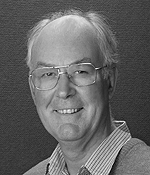
- Introduction
- Family background, education and marriage
- PhD at the Australian National University, 1963–1965
- Postdoctoral research at Duke University, North Carolina, 1965–1968
- Academic positions at the University of New South Wales, 1968–1984
- Australian National University, 1984–2005
- Scientific achievements in biophysics and neuroscience
- Service to Australian science
- Awards and affiliations
- Some personal comments
- About this memoir
Introduction
Peter William Gage (1937–2005) was recognised nationally and internationally as one of Australia’s leaders in membrane physiology, biophysics and neuroscience. His research on neurotransmission, muscle and the structure–function of ion channels was extraordinarily productive, with over 7, 000 citations. A gifted speaker with a great enthusiasm for research and for the introduction of cutting-edge technology, Peter Gage influenced and encouraged a great many research students, postdoctoral fellows and senior colleagues in their scientific careers.
Peter Gage died peacefully of myeloid leukemia in Canberra Hospital on 13 August 2005 with his partner, Angela Dulhunty, his sister, Janice Ryan, and his adult children around him. Australia had lost one of its foremost investigators in membrane biophysics and neuroscience. As Bertil Hille commented from the USA: ‘For almost 40 years Peter was a leading practitioner and advocate of membrane biophysics in Australia. He had many students. He was imaginative and brave in his range of work. ’ Peter was awarded a DSc from the University of New South Wales (UNSW) in 1976, elected a Fellow of the Australian Academy of Science (AAS) in 1977, awarded an Australian Research Council (ARC) Centre of Excellence in 1982, awarded the Bob Robertson Medal of the Australian Society for Biophysics in 2004 and elected an Honorary Member of the Australian Physiological Society in 2005. His research on neurotransmission, muscle and the structure–function of ion channels was extraordinarily productive, resulting in over 200 publications and more than 7, 000 citations, with nineteen of his papers receiving more than 100 citations each. He had a great enthusiasm for research and for the introduction of cutting-edge technology to Australia. He was a gifted and dynamic lecturer who received innumerable invitations to speak at national and international conferences. All this, together with the quality of his research, attracted many PhD students, postdoctoral fellows and other senior colleagues to his laboratory. He also contributed greatly to the Australian research community by organizing International Union of Physiological Sciences (IUPS) satellite conferences, patch-clamp workshops, numerous Curtin Conferences over many years, and a GABA 2000 International Symposium in Cairns. In addition, he was a warm and engaging person with a keen sense of humour whose presence will be greatly missed by his many former students, postdoctoral researchers and colleagues, family members and friends in Australia and around the world.
The authors of this memoir, currently holding professorial positions in their respective Australian universities, first met Peter at different stages in their careers. Peter H. Barry (PHB) as a postdoctoral fellow at UCLA first met Peter in the late 1960s, when Peter encouraged him to contact him when PHB wanted to return to Australia. PHB did this and with Peter’s support came from Cambridge University to work with him at UNSW as a Queen Elizabeth II (QEII) fellow in 1972, continuing to work closely with him there until Peter left to go to the Australian National University (ANU) in 1984. David J. Adams (DJA) first met Peter in 1972, as a science student in Peter’s third-year membrane physiology course, becoming his BSc (Hons) student and subsequently his PhD student until he left to go to the USA as a postdoctoral fellow in 1978.
Peter had a special ability for attracting around him students, colleagues and postdoctoral researchers from a range of different disciplines, and for forming successful collaborations with other scientists both within and outside Australia. This was aided by the fact that 1. Peter was invariably involved in cutting-edge research in areas of membrane physiology; 2. he knew the leading international researchers in the field; and 3. he had an outstanding reputation for his own research in these areas. His attributes included considerable practical expertise in electrophysiological experiments and an enthusiasm for advances in instrumentation—for example, the use of operational amplifiers and computers in electrical recording and data analysis, and techniques such as noise analysis and, later, single channel recording, as the latter was being developed. Peter had a solid background in membrane biophysics, together with a good understanding of the physics and mathematics involved in the modelling of processes like neurotransmission, circuit theory and cable analysis, and that was also required for understanding signal analysis and its relevance to ion channel properties. This gave him the ability either to solve problems himself or to encourage, guide and mentor students and postdoctoral researchers to do this. Where more specialist input was required, Peter had the ability to collaborate effectively with specialized biophysicists, engineers and mathematicians. Furthermore, Peter had a great enthusiasm for basic science and research that he communicated to those in his research group. A high proportion of Peter’s research students and postdoctoral fellows have been successful in their careers, greatly helped by his mentoring and training and the quality of his research group. Peter’s international contacts and research reputation were also of considerable value when recommending his students to other leading international laboratories. In addition, research in the field of biophysical and biomedical research of necessity requires the collaboration with research students, postdoctoral researchers and other research colleagues that Peter was able to provide.
Family background, education and marriage
Peter William Gage was born in Auckland, New Zealand, on 21 October 1937 to John Gage, an accountant, and Kathleen Mary Gage (née Burke). He was the third child with two brothers (John and Michael) and one sister (Janice).
Peter was educated at the Sacred Heart College in Auckland and then studied medicine at the University of Otago, being awarded his MB ChB from the University of New Zealand (the only degree-awarding university in New Zealand from 1870 to1961) in 1960. In the same year, he married Jillian (Jill) Christine Shewan, the daughter of James and Carla Shewan, whom he had met while she was studying physiotherapy and he medicine in Dunedin. They had two daughters, Michelle and Jennifer, and two sons, Peter and David, and have eleven grandchildren. Peter did his internship as a house surgeon at Auckland Hospital in 1961 and was a Research Fellow at Green Lane Hospital, Auckland, in 1962.
PhD at the Australian National University, 1963–1965
In early 1963, he and Jill moved to Canberra with their two daughters, for him to undertake a PhD with Professor John Hub-bard in Sir John Eccles’ department in the John Curtin School of Medical Research (JCSMR) at the ANU in Canberra. This was an exciting time to be at the JCSMR, not only because Eccles was awarded the Nobel Prize that year, but also because it was a very dynamic department. Peter’s PhD research on post-tetanic potentiation, post-tetanic hyperpolarization and neurotransmission was extraordinarily productive and was highly cited. From this period, he produced six papers in Nature (3–7, 9), one in the Journal of Pharmacology and Experimental Therapeutics (8) and three in the Journal of Physiology (11–13), with the whole set of papers being cited more than 560 times in other publications. In addition, during this time he had input to two other papers (one in Nature and the other in Vision Research) with Ken Brown.
Postdoctoral research at Duke University, North Carolina, 1965–1968
The Gages, now also with a young son Peter, went to the USA in 1965. Peter (senior) commenced work in Paul Horowicz’s department at Duke University on a prestigious National Institutes of Health International Postdoctoral Fellowship in 1965–7. This was followed by an appointment as Assistant Professor in the same department, 1967–8. During this period he worked with a number of leading electrophysiologists including James R. Bloedel, Clay Arm-strong, Robert (Bob) Eisenberg, Rudolpho Llinas, John Moore, David Quastel and Paul Horowicz himself. In addition, Peter worked on neurotransmission at mammalian and amphibian endplates and, with his colleagues, he also investigated the properties of neurotransmitter release and the ionic nature of the underlying postsynaptic current in voltage-clamp experiments on the squid giant synapse. At least seven papers were published from this research, including two in Nature (15, 22) and one in Science (27), that have obtained more than 270 citations. Peter’s keenness to introduce new techniques is well illustrated by his second Nature paper (22), with Clay Armstrong, in which they recorded synaptic currents at the end plate, and ‘used, then, novel operational amplifiers to build the voltage clamp’, an innovation that paved the way for further developments by Charles F. Stevens and others in their work on understanding synaptic transmission at the endplate [2]. Peter was the first to use these voltage-clamp techniques (22). In addition, Peter published papers in connection with his previous work with David Quastel and Ken Brown.
The impact of all this productive and important research, significant as it was, was, however, somewhat dwarfed by a series of innovative and comprehensive classical experiments. In collaboration with Bob Eisenberg, Peter investigated the role of the transverse tubular system (TTS) in muscle fibres that was then believed (but not yet proven) to be ‘an essential link between the action potential and the activation of the contractile apparatus’ in the fibre (19). In two brief papers in Science in December 1967, Gage and Eisenberg (18, 19) documented their development of a technique, using a glycerol treatment, to electrically isolate the TTS from the surface membrane of muscle fibres. In their microelectrode experiments, they showed that the glycerol treatment, while it did not affect the production of action potentials in the surface membrane of a muscle fibre, had blocked contraction of the muscle and changed the electrical properties of the fibres, radically reducing their electrical capacitance and eliminating a resistance ‘creep’ phenomenon, as would be predicted if the TTS was disrupted (and hence isolated from the surface membrane of the fibres) (18, 19). They followed this up with three detailed and comprehensive papers in the Journal of General Physiology (24–26), that were published in early 1969, to quantify clearly contributions of the TTS and surface membranes to the conductances and capacitance of whole muscle fibres and to confirm the role of the TTS in excitation–contraction coupling in muscle. This was also a breakthrough in muscle electrophysiology, making it possible to dissect out the individual electrical parameters of underlying muscle fibre components and enabling detailed simulation of currents and ionic diffusion within the muscle fibre and its TTS. The importance of this TTS work is well demonstrated by the fact that these five papers alone have been cited over 770 times, underscoring the fact that Peter Gage’s period at Duke University was highly productive and had a significant impact.
Academic positions at the University of New South Wales, 1968–1984
In addition to research, Peter was a committed educator. He had organized and taught a unit on cellular neurophysiology at Duke University, and also held a teaching position during the latter part of his time there. Then, in 1968, he returned to Australia to take up a Senior Lectureship in the School of Physiology and Pharmacology in the Faculty of Medicine at UNSW. He enthusiastically undertook the heavier teaching loads typical of Australian universities compared with those of major US universities. Throughout Peter’s time at UNSW, Walter (Darty) Glover was Head of School (HOS; 1969–85), except when Peter arrived in 1968 when Robert Holland was Acting HOS. During his time in the School, Peter taught both medical and science students. He was very concerned that medical students should be given a strong grounding in basic science and he taught them the biophysics of excitable cells, on topics such as membrane potentials, action potentials (Hodgkin & Huxley equations), muscle and neurotransmission. He also set up a unit in Biophysics for Physiology II for the third-year science students, which provided an excellent background for students wanting to do a BSc (Hons) year in membrane biophysics. On the home front, about two years after the Gage family returned to Australia, Peter’s youngest son, David, was born.
Soon after he arrived at UNSW, Peter was able to establish an active research group and obtain support from the Australian Research Grants Committee (ARGC; the forerunner of the ARC) and the National Health and Medical Research Council (NHMRC). The early members of Peter’s research group included PhD students Angela Dulhunty, Ron Balnave and Robert (Bob) McBurney, a chemical engineer— Dirk Van Helden—and an MSc student, Susan Andrews. Research over the next few years included: 1. measuring the electrical properties of single isolated skeletal muscle fibres and investigating the mechanism of glycerol treatment for disrupting the TTS in those fibres (with Dulhunty: 38, 41, 42); 2. investigating the properties of transmitter release at the toad neuromuscular junction, the temperature dependence of facilitation on release and the inhibitory effect of manganese on release (both with Balnave: 29, 35, 44) and the stimulation of acetylcholine (ACh) release by lithium (with a staff member, John Carmody: 34); and 3. exploring the mechanism of action of blue-ringed octopus toxin to block neuromuscular transmission by blocking presynaptic action potentials (with Dulhunty: 30) and that of miniature endplate currents and potentials, including their simulation, generated by quanta of acetylcholine in toad muscle fibres without transverse tubules (with McBurney: 33, 37, 45).
It should be noted that, early on, Peter had attracted funding to obtain a ‘large’ 4K (word; 8K byte) Digital Equipment Corporation (DEC) PDP8I computer, which was used for data acquisition, theoretical calculations and simulation studies. It was the first computer in the School. An 8K PDP8e was added shortly after for the same cost as an extra 4K of memory for the PDP8I.
Peter was promoted to Associate Professor in 1971. In 1972, Peter Barry (PHB; see Introduction) a QEII Fellow, also arrived to join the group, remaining a collaborator with Peter at UNSW for the rest of Peter’s time there.
In keeping with Peter’s enthusiasm for new technologies and new research projects, he wanted to develop a marine laboratory, similar to the laboratories at Woods Hole in the USA and Plymouth in the UK, in order to work on the giant axon of the squid. To work on squid required setting up a laboratory close to where the squid were caught, so in the early 1970s Peter obtained research funding and set up a small preliminary laboratory in a caravan on a farming property near Shell Harbour, south of Wollongong. The laboratory was established with Dirk Van Helden but, while the idea was excellent, there proved to be logistical problems in doing research so far from Sydney and unfortunately it never quite took off.
As mentioned earlier, Peter’s PhD students generally gained prestigious fellowships and positions in leading international laboratories, in no small measure a reflection of Peter’s international reputation, his international links and the excellent research training imparted to his students. Dulhunty, with her PhD completed in 1973, was awarded a Muscular Dystrophy Association Fellowship at the University of Rochester (USA), to work with Paul Horowicz and Clara Franzini-Armstrong; McBurney, with his PhD also completed in 1973, received a Florey Fellowship to work with Andrew Crawford at the University of Cambridge; Van Helden, with his PhD completed in 1975, was awarded a Ramaciotti Fellowship at UNSW in 1976–7, followed by a Nuffield Travelling Fellowship to work with Bernhard Frankenhaeuser at the Karolinska Institute in Stockholm and with Richard Keynes at the University of Cambridge.
David Adams (DJA; see Introduction) joined Peter’s research group as a BSc (Hons) student in 1973, before starting a PhD in 1974. He worked with Peter on the electrophysiology of Aplysia neurons, investigating various monovalent and divalent ionic currents, conductance changes, gating currents, and the effects of depressant drugs, obtaining his PhD in 1978 (52, 54, 57, 59, 63, 72–74, 81, 91; including two papers in Nature, one in Science and four in the Journal of Physiology). He received a Muscular Dystrophy Association Fellowship to work with Bertil Hille at the University of Washington in Seattle and a Beit Memorial Fellowship at University College, London. Dirk Van Helden, under Peter, developed computer programs to use the technique of noise analysis to determine indirectly the conductance and lifetime of single ionic channels in biological membranes. At this time, Owen Hamill had arrived in Sydney with a BSc from Monash University to do a PhD with Peter. He worked on synaptic transmission investigating the effects of general anaesthetics and ethanol (e. g. 49, 54, 59). Van Helden, with some early input from Hamill, used the noise analysis technique to investigate the effect of permeant cations and some anaesthetics on the lifetime and conductances of ACh endplate channels in muscle fibres (e.g. 60, 64, 67, 69–71, 75, 76, 79). In 1978, Van Helden left for the Karolinska Institute, returning in 1980 on a QEII Fellowship. Hamill completed his PhD in 1977 and after working as a Postdoctoral Fellow with Peter at UNSW (1978–9), obtained a Von Humboldt Fellowship to work at the Max-Planck-Institut für biophysikalische Chemie in Göttingen, Germany, with Erwin Neher and Bert Sakmann on the patch-clamp technique (for which Neher and Sakmann were awarded the Nobel Prize in 1991).
In 1976, following an invitation to write a major review on ‘Generation of end-plate potentials’ for Physiological Reviews (55; to date cited 164 times), Peter was awarded a DSc from the UNSW and was promoted to a personal chair in the School of Physiology and Pharmacology. The following year, 1977, he was elected a Fellow of the AAS.
In the late 1970s, Peter stimulated the interest of the physical chemist Ray Golding in physiological problems, and they co-supervised a physical chemistry student, Tatsanee Mallanoo, in a PhD project on a physico-chemical analysis of synaptic transmission (1978). Peter also supervised the anaesthetist Thomas Torda’s MD project to investigate the effects of some anaesthetic drugs on neurotransmission at the mammalian neuromuscular junction (1978) (53, 62, 78). In the early 1980s, a PhD student from Canada, Ken Takeda, came to work with Peter and subsequently, together with PHB, investigated the effects of nitrate ions, divalent ions and external sodium concentration on the properties of endplate ACh channels (80, 90, 93). Takeda obtained a postdoctoral position in the Centre National de la Recherche Scientifique (CNRS) at Gif-sur-Yvette, France, and subsequently a permanent academic position with the CNRS at Strasbourg. Around this time, Peter also supervised the PhD project of an electrical engineer, Nick Datyner, on the control of acetylcholine secretion at mammalian motor nerve terminals (1981) (83, 94). Over this period, Peter had also been particularly interested in setting up the new technique of patch-clamping that was being developed in Germany by Neher and Sakmann. This directly measured the current in pA (10-12 A) passing through a single protein channel, and was thus able to determine the conductance and open duration of these channels directly, rather than inferring them indirectly by noise analysis. Through his international connections Peter was able to obtain the electronic circuits, generously supplied by Erwin Neher, to build the appropriate amplifier. A new PhD student, Nino Quartararo, jointly supervised by PHB and Peter Gage in PHB’s laboratory, then successfully built a patch-clamp amplifier and electrophysiology set-up, thus initiating patch-clamp measurements in Australia.
By this time, Peter had built up a large research facility that also included PHB’s laboratory. It comprised a PDP 11/34 computer for data analysis and theoretical studies, eight fully equipped electrophysiological laboratories with three PDP 11/03 computers for online data acquisition and analysis, and the older PDP8e and PDP8I computers. In this period Peter also attracted a number of international visitors who spent their study leave in his laboratory, such as Nancy Lane-Perham (1972) (40) from the University of Cambridge, James McLarnon (1978), Peter Vaughan (1979) from the University of British Columbia, John Mac-Donald (1980) from the University of Auckland, Alan Harvey (1979–80) (85) from the University of Strathclyde and Paul Adams (1981–2) from the State University of New York, Stony Brook. There were also two postdoctoral fellows, Dirk Van Helden who had returned as a QEII Fellow, and a Muscular Dystrophy Association Fellow, Ruth Wachtel from Duke University, as well as four PhD students, an MD student, an MSc student and a BSc (Hons) student, an electrical engineer as an NHMRC Research Associate, a senior Technical Officer, Rodney Malbon, an ARGC Student Assistant and some other support staff.
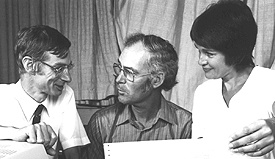
Figure 1. Shortly after the award of the Nerve–Muscle Research Centre in 1982; Peter (centre) with Peter H. Barry and Angela Dulhunty. [© UNSW; UNSW Archives CN1127/4; reproduced with permission from UNSW publication Uniken, no. 142(1), 19 February 1982]
In 1982, Peter was awarded one of the first ARC Centres of Excellence, the ‘Nerve Muscle Research Centre’, to investigate the normal and abnormal function of nerve and muscle and the signal transmission between them. The staff included three full-time permanent academic research staff (Peter as Director, PHB as Assistant Director and Angela Dulhunty, seconded from the University of Sydney; Fig. 1). New postdoctoral fellows over the next couple of years included Graham Collingridge (on leave from the University of Bristol) and Graham Lamb from the University of Melbourne; new PhD students included Brian Robertson from the UK, W. Roland Taylor, David McKinnon, Pankaj Sah, Chris French and Gavin Schneider, together with BSc Hons and BMedSci students and a number of other support staff including a computer programmer, two electrical engineers and an administrative assistant. The new facilities included a faster and more powerful PDP 11/44 computer to enable development of programs and data analysis to cope with twelve active research projects.
Some of Peter’s collaborative research highlights at the Centre included the following:
- Single channel currents were successfully recorded and analysed by Nino Quartararo, and later by David McKinnon, in intact denervated single muscle fibres (e.g. see fig. 7 in 104, 106, 121), for what was arguably the first time in Australia. The laboratories subsequently helped to train researchers in other Australian universities in this technique.
- Collingridge and Robertson began using acute brain slices for electrophysiology, a technique that was then practised in only a few laboratories worldwide, and successfully recorded spontaneous inhibitory postsynaptic currents in neurons in hippocampal slices using a single electrode voltage-clamp system (98, 101) and demonstrated that some general anaesthetics prolong the inhibitory currents (107). Peter’s group was the first to record such currents and use them to examine the effects of general anaesthetics on GABAergic synaptic transmission.
- Schneider started to record some very large chloride currents in cultured pulmonary alveolar cells, which would later lead to the observation of equally spaced current sublevels and a demonstration of ‘co-channel’ behaviour (116, 163).
- Chris French observed an interesting slow inward current in rat hippocampal neurons, which was blocked by tetrodotoxin. It was subsequently shown to be a persistent sodium current (108, 132) that plays a role in hypoxia (166).
- Peter and colleagues set up a three-microelectrode end-of-fibre voltage-clamp system and were the first to record asymmetrical charge movement in mammalian muscle fibres. There were some highly cited papers by Dulhunty and Peter Gage (e.g. 96, 105) on measurements showing a close link between asymmetrical charge movement across muscle membranes and activation of contraction in muscle in normal and paraplegic rats, and an interesting ultrastructural observation by them of internal cysternae of muscle fibres in normal and paraplegic rats (97, 102) that were later identified with crucial elements in the link between depolarization of the muscle tubular system and release of calcium from the sarcoplasmic reticulum that directly enables muscle contraction.
In 1984, after his productive tenure at UNSW, Peter was appointed as Professor and Head of Physiology in the JCSMR at the ANU, with an arrangement worked through with the Director of the JCSMR, Professor Bob Porter. Under the arrangement, Peter brought with him a support staff member and a number of his students, and the ANU provided some postdoctoral fellowships and a senior academic position. Peter was also able to take a significant amount of his equipment, including the PDP 11/44 computer and many of the electrophysiological set-ups, to the ANU.
Peter took with him the laboratory administrator, Rodney Malbon, six PhD students—Robertson, Sah, Taylor, McKinnon, French and Schneider—and a postdoctoral fellow, Graham Lamb (funded initially by UNSW and then on an ANU fellowship). Peter was joined in Canberra by other new ANU postdoctoral fellows—Alasdair Gibb from the UK, Mauri Krouse from the USA and Kevin Buckett from the UK. In addition, Dulhunty was the successful academic applicant for the position at the JCSMR. PHB’s laboratory remained at UNSW with the PDP 11/34 computer and some additional equipment. Nino Quartararo completed his PhD on ion channel measurements and continued for a few years with postdoctoral research in that laboratory as it subsequently expanded independently. It is clear that while Peter’s move from UNSW meant that the Nerve-Muscle Research Centre now ceased to exist as a funded unit, the core of its personnel had moved to the JCSMR and the research that had been stimulated and expanded during its lifetime continued not only with the large group at the ANU but also in PHB’s laboratory at UNSW, with good collaboration between the two groups.
On the personal side, Peter and Jill separated in the early 1980s, some years before his move to the ANU (the marriage being officially dissolved in 1991), and from that time on until the end of his life, his partner was Angela Dulhunty, his research colleague.
Australian National University, 1984–2005
Peter’s period at the ANU was marked by major academic achievements. He had been appointed to the John Eccles Chair of Physiology and Head of the Department of Physiology. The Physiology Department was dissolved in 1988 and replaced by the Division of Neuroscience. Peter remained in that Division for several years and then transferred to the Division of Biochemistry and Molecular Biology in 1999 and was a part of the Membrane Biology Program at the ANU. Peter’s science continued to flourish at the ANU and he made a major contribution to Australian physiology and biophysics, holding two very successful Patch Clamp Workshops at the JCSMR between 1986 and 1989 and then a series of Curtin Conferences at Canberra Grammar School from 1995 to 2003. These conferences were re-established in 2009 by the Ion Channels and Transporters community in his honour.
Peter’s work between 1984 and 1990 was in part a continuation of a number of projects begun at UNSW, with PhD student and postdoctoral fellows who transferred to the ANU with him. This work included an extensive study of post synaptic currents in the hippocampus, with important work on anaesthetic effects on these currents, with C. French, Robertson, Sah, Gibb and Frances Edwards (107, 108, 110, 123, 125, 127, 128). Fran Edwards (123) started as a PhD student with Peter for a couple of years before she transferred her ANU scholarship to Germany for personal reasons, to complete her PhD with the subsequent Nobel prize winner, Bert Sakmann.
Peter continued the first single-channel work to be performed in Australia, which started at UNSW, with an analysis of anion channels in pulmonary epithelia with Schneider and Krouse in a strong collaboration with John Young and David Cook from the University of Sydney. This research included some ground-breaking observations and analysis of multiple conductance levels in the channels (111) and led to a publication in Nature (113). The novel and productive studies of gating charge movement and excitation–contraction coupling in mammalian muscle continued with Dulhunty, Lamb, Bruce Wakefield and a collaboration with Ian Neering and Martin Fryer at UNSW (115, 118, 122, 126, 129, 130). The long-term collaboration with PHB and Quartararo on ion permeation also continued into this period (121). A stream of visitors to the ANU during this time included Florian Dreyer (Germany), David Leaver (Australia) (124), John Macdonald (NZ), Bob Martin (USA), Sue Pockett (NZ), Bob French (Canada), Joe McArdle (USA) (133) and Pei-Hong Zhu (China), together with a collaboration with David Hirst (151) from the University of Melbourne.
Peter began an extensive collaboration with the physical chemist/theoretical biophysicist Shin-Ho Chung and the mathematician John Moore at the ANU, which led to the development of the Hidden Markov Model (HMM) for high-powered analysis of single-channel currents and definition of the probability of small subconductance levels that were difficult to distinguish from background noise (136). Other collaborators in this work included Louis Premkumar and Derek Laver (134, 136, 141, 146, 163, 169). HMM was also used to illustrate a novel phenomenon of coupled gating between channels in hippocampal neurons (137). This important, innovative model has been used by numerous investigators in Australia and overseas and was developed commercially. The model was applied to choride channels in the sarcoplasmic reticulum of skeletal muscle in a collaboration with Dulhunty and Laver (153).
Another discovery by Peter’s laboratory during the 1980s was the persistent sodium current that underlies the massive increase in intracellular calcium during ischaemia in cardiac myocytes and neurons. This collaborative work included an extensive characterization of the current and its sensitivity to the redox environment started with Lamb and Wakefield (130). It remained a mainstream interest in the laboratory over the following fifteen years with collaborative contributions from Buckett, French and Sah (132), David Saint and Yue-Kun Ju (135, 140, 147, 151, 156, 158) and Anna Hammarström (166, 173, 179, 184, 185, 192).
The late 1980s to early 1990s also resulted in the beginning of a long-term project with GABA-induced currents and GABAA receptors. This work included Peter’s collaborations with research assistant John Curmi, and PhD students and postdoctoral fellows including L. Premkumar, Chung, Saint, Bryndis Birnir, Louise Tierney, Julie Dalziel, Andrea Everitt, Michelle Lim and Mansoureh Eghbali (134, 135, 143, 144, 148, 149, 161, 162, 175, 176, 178, 182, 187, 188, 201). To pursue these studies in greater detail and to take advantage of the rapidly evolving application of molecular biology techniques to ion channels in the 1990s, Peter began a rewarding and fruitful collaboration with Graeme Cox, a biochemist and molecular biologist at the JCSMR. They expressed GABAA receptors, investigated the role of various subunits in determining the characteristics of GABAA receptor channels and undertook extensive mutation analysis to understand the conductance and gating of these channels and the molecular determinants of their drug responses, including anaesthetic actions. This work is continuing at the JCSMR under the direction of Louise Tierney. The first publication in this extensive work was in 1992 (142) and the most recent publication was in 2008 (202), with numerous communications in between, including a paper in Nature. The work has been in collaboration with numerous PhD students and postdoctoral fellows, including Tierney, Birnir, Lim, Eghbali, Susan Howitt, Brett Cromer and Tien (Cindy) Luu (152, 159, 162, 164, 167, 168, 171, 174, 177, 190, 196, 198). This novel research led to a paradigm shift in understanding ion channel conductance by showing that single channel conductance could vary with ligand and drug application. This resulted in Peter developing the concept that channels could associate and synchronously gate together to produce variable conductance units, and predicting that the increased conductance of such resultant ‘channels’ under certain circumstances may be due to the direct interactions between the individual channels. This hypothesis has subsequently been supported by experiments indicating that proteins like GABARAP, which facilitate channel clustering, also lead to high conductance state ‘channels’ (198).
The early 1990s produced the unprecedented discovery of viral ion channels, which also formed a major research area for Peter’s group over the following fifteen years and led to two patents. This research was also with Graeme Cox, together with Gary Ewart, Anita Premkumar, Sabine Piller, David Jans, Patricia Jans, Julian Melton, Lauren Wilson, Philip Board and Eric Gowans, a virologist from the Burnet Institute in Melbourne (154, 155, 157, 165, 170, 172, 183, 185, 186, 188, 191, 194, 197, 199). The viral ion channel research formed the impetus for setting up the biotechnology company Biotron. Drugs developed by the company and based on the ANU research have been shown to block viral ion channels and prevent viral replication. These drugs are currently in phase Ib/IIa clinical trials for the hepatitis C virus.
Finally, another area of research for Peter opened up in the early 2000s with the remarkable discovery that glutathione transferases and CLIC proteins are novel modulators of ryanodine receptor ion channels and form one of the few endogenous inhibitors of the cardiac ryanodine receptor. This work, which began in collaboration with Dulhunty and Board, and with Pierre Pouliquin and Yasser Abdelatiff (181, 193, 195, 200), is continuing at the ANU. Other research collaborators with Peter not mentioned elsewhere over this recent period at the ANU included postdoctoral fellows Nesrin Oszarac, N. P. Pillai (152, 159, 160) and Weiping Wu, PhD students Steven Weiss, Rolla Khorie and Victoria Seymour, and research assistant Terry Sutherland (157).
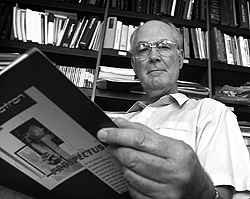
Figure 2. Peter, a founder, shareholder and Director of the biotechnology company Biotron Pty Ltd, in his office at the time Biotron began trading on the Australian Stock Exchange on 22 January 2001. Peter was elated, as this was the culmination of three years of intense work and negotiation. [© Newspix/photographer: John Feder; reproduced with permission]
During the period 1998–2005, Peter was instrumental in developing the biotechnology company Biotron. Figure 2 shows Peter’s elation when Biotron started to trade on the Australian Stock Exchange. He was passionate in his belief that research should be developed commercially. The company was originally developed in collaboration with a business partner, Peter Scott, and included JCSMR researchers Chris Parish, Board, Dulhunty and Cox. The company was eventually listed on the Australian Stock Exchange and Peter remained a Board member until his death in 2005.
Scientific achievements in biophysics and neuroscience
Throughout his research career, Peter’s work on neurotransmission, skeletal muscle and the structure and function of ion channels was highly productive. Some particularly noteworthy areas of his collaborative research include:
- with Bob Eisenberg (24–26), the use of glycerol treatment to isolate and investigate the electrical properties and role of the TTS in muscle, continued with Angela Dulhunty (41, 42), and extended to the generation of end-plate potentials in muscle (33, 37, 55)
- showing that general anaesthetics prolong inhibitory postsynaptic currents in hippocampal neurons (107)
- with Dulhunty, being the first to measure asymmetric charge movement in mammalian muscle, which showed a fibre-type dependence (96), and elucidating the role of the dihydropyridine receptor in skeletal muscle excitation–contraction coupling (126)
- suggesting that activation of ion channels in pulmonary alveolar cells was coupled (163)
- with Peter Barry describing cation permeability through acetylcholine receptors (68, 71, 76, 80, 90, 93, 104)
- investigating asymmetrical charge movements in neurons with David Adams (52, 63, 74)
- with Chris French characterizing the persistent sodium channel (108, 132), later showing it to be increased in hypoxia, and reversed by reducing agents
- showing that a series of virus proteins also formed ion channels in lipid bilayers (154, 155, 157) and that some of them could also form channels in neurons, depolarizing and killing them (165, 170)
- uncovering spontaneously opening GABAA channels in neurons that could be modulated by drugs (e.g. 158, 159, 175, 176, 178, 182)
- showing that members of the glutathione transferase structural family modulate ryanodine receptor Ca2+ channels (181)
- showing, in a collaborative project with plant biologists, that a wheat protein that has anti-bacterial and anti-fungal activity, forms ion channels (180).
Overall, Peter’s research resulted in more than 200 publications, the majority in high-impact journals (including sixteen in Nature and three in Science), that included a large number of invited reviews and invited book chapters. His work was cited well over 7,000 times, with nineteen publications receiving over 100 citations each. He also held numerous research grants, mainly from the NHMRC and ARC.
Service to Australian science
Peter introduced many cutting-edge electrophysiological techniques to Australia. He established his laboratory as a central resource for training other researchers, and his organization of annual Curtin Conferences in Canberra on ion channels from 1995, various Patch Clamp Workshops and the GABA 2000 International Symposium reinforced this role. The new techniques included: voltage-clamping with operational amplifiers; the three-electrode voltage clamp for measuring asymmetric charge movement in muscle (with Dulhunty); the patch-clamp technique for directly studying ion channels (with PHB and Nino Quartararo); and (with members of his group at the ANU) the hippocampal slice technique to study synaptic currents.
Peter had more than thirty successful PhD students, many of whom went on to establish international reputations, and at least twenty-two postdoctoral fellows. He also attracted numerous distinguished senior scientists from around the world who visited and collaborated with his group at both UNSW and the JCSMR. Peter was an excellent speaker with innumerable invitations to speak at national and international conferences. His founding role in Biotron, and on its Board, together with two patents of his own, will be of continuing value in encouraging the commercialization of basic research discoveries in Australia.
Awards and affiliations
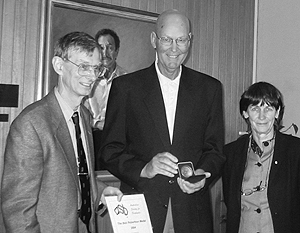
Figure 3. Peter’s award of the Bob Robertson Medal in 2004. Peter (centre) with the then President of the Australian Society for Biophysics and Judith Whitworth, then director of the John Curtin School of Medical Research.
- In 1977, Peter was elected a Fellow of the Australian Academy of Science. He served on the Council (1983–6) and was Vice-President in 1985–6.
- In 1976, he was awarded a DSc from the UNSW.
- In 1982, he was awarded one of the first ARC Research Centres of Excellence, the Nerve–Muscle Research Centre at UNSW.
- In 2004, he was awarded the Bob Robertson Medal of the Australian Society for Biophysics, named in honour of Sir Rutherford (Bob) Robertson, in recognition of Peter’s outstanding contributions to the field of biophysics in Australia, his contributions to the Society— of which he had been a member for many years—and to Australian science in general. Because he was too ill at the last moment to have it presented at the Society’s meeting, it was awarded a few months later by the Society’s then President, Peter Barry, at a special presentation in the JCSMR with Judith Whitworth, the Director (Fig. 3).
- In 2005, Peter was elected an Honorary Member of the Australian Physiological Society (AuPS), formerly the Australian Physiological and Pharmacological Society (APPS), of which he had been a member since 1964, Treasurer in 1973–5 and President in 2000–4.
- He was also a member of the International Brain Research Organisation and the Australian Society for Biochemistry and Molecular Biology.
Some personal comments
Peter was a very engaging person with a keen sense of humour, who was always very supportive of research colleagues and staff. He was especially proud of his children— Michelle, a general practitioner, Jennifer, a lawyer, Peter, an aerospace engineer and David, a successful business man—and of his grandchildren. He was also keenly interested in music, in native vegetation regeneration on his hobby farm, and in activities such as tennis, skiing, horse riding and camping. He is survived by his former wife, Jill, their four children and eleven grandchildren, and his subsequent partner, Angela.
About this memoir
This memoir was originally published in Historical Records of Australian Science, vol.20, no.2, 2009. It was written by:
- D. J. Adams. Health Innovations Research Institute, RMIT University, PO Box 71, Bundoora, Vic. 3083, Australia
- P. H. Barry. Department of Physiology, School of Medical Sciences, University of New South Wales, Sydney, NSW 2052, Australia. Corresponding author. Email: p.barry@unsw.edu.au
Reference material and acknowledgments
Reference material includes: Who’s Who in Australia, 2000 [1]; P. W. Gage Curriculum Vitae (2004) [2] and other material accompanying his nomination for the Bob Robertson Award [3]; JCSMR Web-site information (27 September 2004) [4]; information from Gage reprints; information from Nerve–Muscle Research Centre documents; personal information of DJA and PHB and from other colleagues; information from and discussions with Jill Gage; and considerable input from Professor Angela Dulhunty, especially on Peter’s research and activities at the ANU. The portrait photograph is of Peter Gage in 2001, courtesy of Multimedia, JCSMR, ANU.
Bibliography
- Gage, P. W. (1962). The application of optical density to the quantitation of optically recorded indicator dilution curves. Proc. Med. Inst. Dev. Sect. A. LD. L Me 52.
- Rowe, R. D., Sinclair, J. D., Kerr, A. R., and Gage, P. W. (1964). Duct flow and mitral regurgitation during changes of oxygenation in newborn swine. J. App. Physiol. 19, 1157–1163.
- Hubbard, J. I., and Gage, P. W. (1964). Abolition of post-tetanic potentiation. Nature 202, 299–300. Peter William Gage 1937–2005 247
- Gage, P. W., and Hubbard, J. I. (1964). Ionic changes responsible for post-tetanic hyperpolarization. Nature 203, 653–654.
- Gage, P. W. (1965). Effect of cardiac glycosides on neuromuscular transmission. Nature 205, 84–85.
- Gage, P. W., and Quastel, D. M. J. (1965). Dual effect of potassium on transmitter release. Nature 206, 625–626.
- Gage, P. W., and Quastel, D. M. J. (1965). Influence of sodium ions on transmitter release. Nature 206, 1047–1048.
- Gage, P. W. (1965). The effect of methyl, ethyl and n-propyl alcohol on neuromuscular transmission in the rat. J. Pharmacol. Exp. Ther. 150, 236–243.
- Gage, P. W., and Hubbard, J. I. (1965). Evidence for a Poisson distribution of miniature end plate potentials and some implications. Nature 208, 395–396.
- Brown, K. T., and Gage, P. W. (1966). An earlier phase of the light-evoked electrical response from the pigment epithelium choroid complex of the toad’s eye. Nature211, 155–158.
- Gage, P. W., and Hubbard, J. I. (1966). The origin of post-tetanic hyperpolarization in mammalian motor nerve terminals. J. Physiol. 184, 335–352.
- Gage, P. W., and Hubbard, J. I. (1966). Aninvestigation of the post-tetanic potentiation of endplate potentials at a mammalian neuromuscular junction. J. Physiol. 184, 353–375.
- Gage, P. W., and Quastel, D. M. J. (1966). Competition between sodium and calciumions in transmitter release at mammalianneuromuscular junctions. J. Physiol. 185, 95–123.
- Bloedel, J., Gage, P. W., Llinas, R., andQuastel, D. M. J. (1966). Transmission across the squid giant synaps in the presence of tetrodotoxin. J. Physiol. 188, 52–53.
- Bloedel, J., Gage, P. W., Llinas, R., and Quastel, D. M. J. (1966). Transmitter release at the squid giant synapse in the presence of tetrodotoxin. Nature 212, 49–50.
- Crawford, J. M., Gage, P. W., and Brown, K. T. (1967). Rapid light-evoked potentials atextremes of pH from the frog’s retina and pigment epithelium, and from synthetic melanin. Vision Res. 7, 539–551.
- Gage, P. W. (1967). Depolarization andexcitation-secretion coupling in presynaptic terminals. Fed. Proc. 26, 1627–1632.
- Eisenberg, R. S., and Gage, P. W. (1967). Frog skeletal muscle fibers: change in electrical properties after disruption of transverse tubular system. Science 158, 1700–1701.
- Gage, P. W., and Eisenberg, R. S. (1967). Action potentials without contraction in frog skeletal muscle fibers with disrupted transverse tubules. Science 158, 1702–1703.
- Muchnik, S., and Gage, P. W. (1968). Effect of bromide ions on junctional transmission. Nature 217, 373–374.
- Horowicz, P., Gage, P. W., and Eisenberg, R. S. (1968). The role of the electrochemical gradient in determining potassium fluxes in frogstriated muscle. J. Gen. Physiol. 51, 193–203.
- Gage, P. W., and Armstrong, C. M. (1968). Miniature end-plate currents in voltage clamped muscle fibres. Nature 218, 363–365.
- Gage, P. W., Crawford, J. M., and Brown, K. T. (1968). Ionic dependence of the third phase of the light evoked response of pigment epithelium cells. Vision Res. 8, 369–382.
- Gage, P. W., and Eisenberg, R. S. (1969). Capacitance of the surface and transverse tubular membrane of frog sartorius muscle fibers. J. Gen. Physiol. 53, 265–278.
- Eisenberg, R. S., and Gage, P. W. (1969). Ionic conductance of the surface and transverse tubular membranes of frog sartorius fibers. J. Gen. Physiol. 53, 279–297.
- Gage, P. W., and Eisenberg, R. S. (1969). Action potentials, after potentials andexcitation-contraction coupling in frog Sartorius fibers without transverse tubules. J. Gen. Physiol. 53, 298–310.
- Gage, P. W., and Moore, J. W. (1969). Synapticcurrent at the squid giant synapse. Science166, 510–512.
- Kelly, J. S., and Gage, P. W. (1969). L-glutamate blockade of transmission at the giant synapse of the squid stellate ganglion. J. Neurobiol. 2, 209–219.
- Balnave, R. J., and Gage, P. W. (1970). Temperature sensitivity of the time course of facilitation of transmitter release. Brain Res. 21, 297–300.
- Dulhunty, A. F., and Gage, P. W. (1971). Selective effects of an octopus toxin on action potentials. J. Physiol. 218, 433–455.
- Gage, P. W. (1971). Salinity and animal cells. In: Salinity and Water Use. (Eds J. Talsma and J. R. Philip. ) (Macmillan: London. )
- Gage, P. W. (1971). Tetrodotoxin and saxitoxinas pharmacological tools. In: Neuropoisons: Their Pathophysiological Actions. Volume I. (Ed. L. L. Simpson. ) (Plenum Press: New York. )
- Gage, P. W., and McBurney, R. N. (1972). Miniature end-plate currents and potentials248 Historical Records of Australian Science, Volume 20 Number 2generated by quanta of acetylcholine inglycerol-treated toad sartorius fibres. J. Physiol. 226, 79–94.
- Carmody, J. J., and Gage, P. W. (1973). Lithium stimulates secretion of acetylcholine in the absence of extracellular calcium. BrainRes. 50, 476–479.
- Balnave, R. J., and Gage, P. W. (1973). The inhibitory effect of manganese on transmitter release at the neuromuscular junction of the toad. Br. J. Pharmacol. 47, 339–352.
- Datyner, M. E., and Gage, P. W. (1973). Australiantiger snake venom – an inhibitor of transmitter release. Nature 241, 246–247.
- Gage, P. W., and McBurney, R. N. (1973). Ananalysis of the relationship between the current and potential generated by a quantum of acetylcholine in muscle fibres without transverse tubules. J. Membr. Biol. 12, 247–272.
- Dulhunty, A. F., and Gage, P. W. (1973). Electrical properties of toad sartorius muscle fibres in summer and winter. J. Physiol. 230, 619–641.
- Datyner, M. E., and Gage, P. W. (1973). Presynaptic and postsynaptic effects of the venom of the Australian tiger snake at the neuromuscular junction. Br. J. Pharmacol. 49, 340–354.
- Lane, N. J., and Gage, P. W. (1973). Effects of tiger snake venom on the ultra structure of motor nerve terminals. Nature New Biol. 244, 94–96.
- Dulhunty, A. F., and Gage, P. W. (1973). Differential effects of glycerol-treatment on membrane capacity and excitation contraction coupling in toad sartorius fibres. J. Physiol. 234, 373–408.
- Dulhunty, A. F., and Gage, P. W. (1973). Glycerol fluxes, membrane capacitance and excitation-contraction coupling. J. Gen. Physiol. 62, 657.
- Gage, P. W., and Dulhunty, A. F. (1973). Effects of toxin from the Blue-ringed octopus (Hapalochlaena maculosa). In: Marine Pharmacognosy. (Eds D. F. Martin andG. M. Padilla. ) (Academic Press: New York/London. )
- Balnave, R. J., and Gage, P. W. (1974). On facilitation of transmitter release at the toad neuromuscular junction. J. Physiol. 239, 657–675.
- Gage, P. W., McBurney, R. N., and VanHelden, D. (1974). Endplate currents are shortened by octanol: possible role of membranelipid. Life Sci. 14, 2277–2283.
- Gage, P. W. (1974). Movements of ions at synapses. (A review. ) Proc. Aust. Physiol. Pharmacol. Soc. 5, 18–22.
- Gage, P. W., and McBurney, R. N. (1975). Effects of membrane potential, temperature and neostigmine on the conductance change caused by a quantum of acetylcholine at the toad neuromuscular junction. J. Physiol. 244, 385–407.
- Gage, P. W., McBurney, R. N., and Schneider, G. T. (1975). Effects of some aliphatic alcohols on the conductance change caused by a quantum of acetylcholine at the toad end plate. J. Physiol. 244, 409–429.
- Gage, P. W., and Hamill, O. (1975). General anaesthetics: synaptic depression consistent with increased membrane fluidity. Neurosci. Lett. 1, 61–65.
- Gage, P. W., and Hamill, O. (1976). Effects of several inhalation anaesthetics on the kinetics of postsynaptic conductance changes in mouse diaphragm. Br. J. Pharmacol. 57, 263–272.
- Gage, P. W., Moore, J. W., and Westerfield, M. (1976). Anoctopus toxin, maculotoxin, selectively blocks sodium current in squid axons. J. Physiol. 259, 427–443.
- Adams, D. J., and Gage, P. W. (1976). Gating currents associated with sodium and calcium currents in an Aplysia neuron. Science 192, 783–784.
- Torda, T. A., and Gage, P. W. (1976). Effect of barbiturates on synaptic currents. Anaesthesia and Intensive Care 4, 199–202.
- Adams, D. J., Gage, P. W., and Hamill, O. P. (1976). Voltage sensitivity of inhibitory postsynaptic currents in Aplysia bucal ganglia. Brain Res. 115, 506–511.
- Gage, P. W. (1976). Generation of end-plate potentials. Physiol. Rev. 56, 177–247.
- Gage, P. W. (1976). The God of the Gaps. In: Nervous Insights. (Ed. R. Williams. ) (Hogbin, Poole Pty Ltd: Sydney. )
- Spence, I., Adams, D. J., and Gage, P. W. (1977). Funnel web spider venom produces spontaneous action potentials in nerve. LifeSci. 20, 243–250.
- Balnave, R. J., and Gage, P. W. (1977). Facilitation of transmitter secretion from toad motor nerve terminals during brief trains of action potentials. J. Physiol. 266, 435–451.
- Adams, D. J., Gage, P. W., and Hamill, O. P. (1977). Ethanol reduces the duration of excitatory postsynaptic currents at a crustacean neuromuscular junction. Nature 266, 739–741.
- Van Helden, D., Hamill, O. P., and Gage, P. W. (1977). Permeant cations alter end plate channel characteristics. Nature 269, 711–712. Peter William Gage 1937–2005 249
- Gage, P. W., and Spence, I. (1977). Origin ofmuscle fasciculation caused by funnel-web spider venom. Aust. J. Biol. Med. Sci. 55, 453–463.
- Torda, T. A., and Gage, P. W. (1977). Postsynaptic effect of I. V. anaesthetic agents at the neuromuscular junction. Br. J. Anaes. 49, 771–776.
- Adams, D. J., and Gage, P. W. (1978). Asymmetrical displacement currents. Nature 271, 586–587.
- Gage, P. W., McBurney, R. N., and Van Helden, D. (1978). Octanol reduces end-plate channel lifetime. J. Physiol. 274, 279–298.
- Albuquerque, E. X., and Gage, P. W. (1978). Differential effects of perhydrohistrionicotoxin on neurally and iontophoretically evoked end-plate currents. Proc. Natl. Acad. Sci. USA 75, 1596–1599.
- Gage, P. W. (1978). The mechanism of transmitter release. Proc. Aust. Physiol. Pharmacol. Soc. 9, 77–82.
- Van Helden, D., Gage, P. W., and Hamill, O. P. (1979). Conductance of end-plate channels is voltage dependent. Neurosci. Lett. 11, 227–232.
- Barry, P. H., Gage, P. W., and Van Helden, D. F. (1979). End-plate channels behave as neutral site channels. Neurosci. Lett. 11, 233–237.
- Gage, P. W., Hamill, O. P., and Van Helden, D. (1979). Dual effects of ether on end-plate currents. J. Physiol. 287, 353–369.
- Gage, P. W., and Van Helden, D. (1979). Effects of permeant monovalent cations on end-plate channels. J. Physiol. 288, 509–528.
- Barry, P. H., Gage, P. W., and Van Helden, D. F. (1979). Cation permeation at the amphibian motor end-plate. J. Membr. Biol. 45, 245–276.
- Adams, D. J., and Gage, P. W. (1979). Ionic currents in response to membrane depolarization in an Aplysia neurone. J. Physiol. 289, 115–141.
- Adams, D. J., and Gage, P. W. (1979). Characteristicsof sodium and calcium conductancechanges produced by membrane depolarization in an Aplysia neurone. J. Physiol. 289, 143–161.
- Adams, D. J., and Gage, P. W. (1979). Sodium and calcium gating currents in an Aplysianeurone. J. Physiol. 291, 467–481.
- Gage, P. W., Hamill, O. P., Van Helden, D. F., and Barry, P. H. (1979). Acetylcholine receptors and end-plate channels. Excerpta Medica, International Congress Series 473, 166–173.
- Barry, P. H., Gage, P. W., andV an Helden, D. F. (1979). Cation permeation through single motor end-plate channels. Excerpta Medica, International Congress Series 473, 174–184.
- Albuquerque, E. X., Gage, P. W., and Oliveira, A. C. (1979). Differential effect of erhydrohistrionicotoxinon ‘intrinsic’ and ‘extrinsic’end-plate responses. J. Physiol. 297, 423–442.
- Gage, P. W., Lonergan, M., and Torda, T. A. (1980). Presynaptic and postsynaptic depressant effects of phenytoin sodium at the neuromuscular junction. Br. J. Pharmacol. 69, 119–121.
- Gage, P. W., and Hamill, O. P. (1980). Lifetime and conductance of acetylcholine activated channels in normal and denervated toad sartorius muscle. J. Physiol. 298, 525–538.
- Takeda, K., Barry, P. H., and Gage, P. W. (1980). Effects of ammonium ions on endplate channels. J. Gen. Physiol. 75, 589–613.
- Adams, D. J., and Gage, P. W. (1980). Divalention currents and the delayed potassium conductance in an Aplysia neurone. J. Physiol. 304, 297–313.
- Allen, J. E., Gage, P. W., Leaver, D. D., and Leow, A. C. T. (1980). Triethyltin depresses evoked transmitter release at the mouse neuromuscular junction. Chem. Biol. Interactions31, 227–231.
- Datyner, N. B., and Gage, P. W. (1980). Phasic secretion of acetylcholine at a mammalian neuromuscular junction. J. Physiol. 303, 299–314.
- Gage, P. W., and Murphy, E. C. (1981). Facilitation of acetylcholine secretion at a mouse neuromuscular junction. Brain Res. 204, 327–337.
- Harvey, A. L., and Gage, P. W. (1981). Increase of evoked release of acetylcholine at the neuromuscular junction by a fraction from the venom of the eastern green mamba snake (Dendroaspis Angusticeps). Toxicon19, 373–381.
- Gage, P. W., and Dulhunty, A. F. (1981). Upper motor neurone modulation of charge movement and mechanical activation in rat skeletal muscle fibres. Neurosci. Lett. 27, 271–276.
- Dulhunty, A. F., Gage, P. W., and Valois, A. A. (1981). Upper motor neurone modulation of the structure of the terminal cisternae in rat skeletal muscle fibres. Neurosci. Lett. 27, 277–283.
- Gage, P. W., and Hamill, O. P. (1981). Effects of anaesthetics on ion channels in synapses. In: International Review of Physiology, Neurophysiology IV. (Ed. R. Porter. ) pp. 1–45. (University Park Press: Baltimore. )250 Historical Records of Australian Science, Volume 20 Number 2
- Dulhunty, A. F., Gage, P. W., and Barry, P. H. (1981). Asymmetrical charge movement in normal and glycerol-treated toad sartoriusfibres. In: Advanced Physiological Sciences, Volume 5. Molecular and Cellular Aspects of Muscle Function. (Eds E. Varga, A. Kover, T. Kovacs and L. Kovacs. ) pp. 321–327. (Akademiai Kiado: Budapest. )
- Takeda, K. T., Gage, P. W., and Barry, P. H. (1982). Effects of divalent cations on toad end-plate channels. J. Membr. Biol. 64, 55–66.
- Adams, D. J., Gage, P. W., and Hamill, O. P. (1982). Inhibitory postsynaptic currents at Aplysia cholinergic synapses: effects of permeantanions and depressant drugs. Proc. R. Soc. Lond. B 214, 335–350.
- Gage, P. W., and Sah, P. (1982). Postsynaptic effects of some central stimulants at the neuromuscular junction. Br. J. Pharmacol. 75, 493–502.
- Takeda, K., Barry, P. H., and Gage, P. W. (1982). Effects of extracellular sodium concentration on null potential, conductance and open time of endplate channels. Proc. R. Soc. Lond. B 216, 225–251.
- Datyner, N. B., and Gage, P. W. (1982). Secretion of acetylcholine in response to graded depolarization of motor nerve terminals. J. Physiol. Paris 78, 412–416.
- Gage, P. W., Hamill, O. P., and Wachtel, R. E. (1983). Sites of action of procaine at the motor end-plate. J. Physiol. 335, 123–137.
- Dulhunty, A. F., and Gage, P. W. (1983). Asymmetrical charge movement in slow and fast-twitch mammalian muscle fibres in normal and paraplegic rats. J. Physiol. 341, 213–231.
- Dulhunty, A., Gage, P. W., and Valois, A. (1983). Indentations in the terminal cisternae of slow- and fast-twitch muscle fibers from normal and paraplegic rats. J. Ultrastr. Res. 84, 50–59.
- Collingridge, G. L., Gage, P. W., and Robertson, B. (1983). Inhibitory synaptic currents recorded in rat hippocampal slices. J. Physiol. 349, 31.
- Gage, P. W., and Dulhunty, A. F. (1983). The influence of upper motor neurones on excitation-contraction coupling in mammalian skeletal muscle. In: Molecular Pathology of Nerve and Muscle. (Eds A. D. Kidman, J. K. Tomkins, C. A. Morris and N. A. Cooper. ) pp. 113–118. (The Humana Press: Clifton, NJ. )
- Gage, P. W., and Wachtel, R. E. (1984). Some effects of procaine at the toad end-plate are not consistent with a simple channel blocking model. J. Physiol. 346, 331–339.
- Collingridge, G. L., Gage, P. W., and Robertson, B. (1984). Inhibitory postsynaptic currents in rat hippocampal CAI neurones. J. Physiol. 356, 551–564.
- Dulhunty, A. F., Gage, P. W., and Valois, A. A. (1984). Indentations in the terminal cisternae of denervated rat EDL and soleus muscle fibers. J. Ultrastr. Res. 88, 30–43.
- Gage, P. W. (1984). Pharmacology of ionicchannels in excitable membranes. Meth. and Find. Exptl. Clin. Pharmacol. 6, 161–165.
- Barry, P. H., and Gage, P. W. (1984). Ionic selectivity of channels at the end plate. Current Topics in Membranes and Transport21, 1–51.
- Dulhunty, A. F., and Gage, P. W. (1985). Excitation-contraction coupling and charge movement in denervated rat extensor digitorumlongus and soleus muscles. J. Physiol. 358, 75–89.
- Gage, P. W., and McKinnon, D. (1985). Effects of pentobarbitone on acetylcholine activated channels in mammalian muscle. Br. J. Pharmacol. 85, 229–235.
- Gage, P. W., and Robertson, B. (1985). Prolongationof inhibitory postsynaptic currents by pentobarbitone, halothane and ketamine in CAl pyramidal cells in rat hippocampus. Br. J. Pharmacol. 85, 675–681.
- French, C. R., and Gage, P. W. (1985). A threshold sodium current in pyramidal cells in rat hippocampus. Neurosci. Lett. 56, 289–293.
- Gage, P. W. (1985). Ion channels and signal transmission in animal cells. (Invited lecture. )Proc. Aust. Physiol. Pharmacol. Soc. 16, 61–77.
- Sah, P., French, C. R., and Gage, P. W. (1985). Effects of noradrenaline on some potassium currents in CA1 neurones in rat hippocampal slices. Neurosci Lett. 60, 295–300.
- Schneider, G. T., Cook, D. I., Gage, P. W., and Young, J. A. (1985). Voltage-sensitive, high-conductance chloride channels in theluminal membrane of cultured pulmonary alveolar (type II) cells. Pflügers Arch. 404, 354–357.
- Gage, P. W., McKinnon, D., and Robertson, B. (1985). The influence of anaestheticson postsynaptic ion channels. In: Molecular Mechanisms of Anesthesia. (Eds S. H. Rothand K. W. Miller. ) (Plenum Press: New York. )
- Krouse, M. E., Schneider, G. T., and Gage, P. W. (1986). A large anion-selective channel has seven conductance levels. Nature 319, 58–60.
- Finkel, A. S., and Gage, P. W. (1985). Conventional voltage clamping with two Peter William Gage 1937–2005 251intracellular microelectrodes. In: Voltage and Patch Clamping with Microelectrodes. (EdsT. G. J. Smith, H. Lecar, S. J. Redman and P. W. Gage. ) (American Physiological Society: Bethesda, Maryland. )
- Dulhunty, A. F., Gage, P. W., and Lamb, G. D. (1986). Differential effects of thyroid hormone on T-tubules and terminal cisternae inrat muscles: an electrophysiological and morphometric analysis. J. Mus. Res. Cell Motil. 7, 225–236.
- Krouse, M. E., Schneider, G. T., and Gage, P. W. (1986). A large anion-selective channel has seven conductance levels. Nature 319, 58–60.
- Gage, P. W. (1987). Channels – an introduction. Proc. Aust. Physiol. Pharmacol. Soc. 18, 15–17.
- Dulhunty, A. F., Gage, P. W., and Lamb, G. D. (1987). Potassium contractures and asymmetric carge movement in extensor digitorumlongus and soleus muscles from thyrotoxic rats. J. Mus. Res. Cell Motil. 8, 289–296.
- Barry, P. H., and Gage, P. W. (1987). Artificialnerve and muscle. Proc. Aust. Physiol. Pharmacol. Soc. 18, 167–171.
- Gage, P. W. (1987). Ion channels in nerve andmuscle. Proceedings of the First Congress of the Asian and Oceanian Physiological Societies, Thailand: 99–110.
- Quartararo, N., Barry, P. H., and Gage, P. W. (1987). Ion permeation through single channels activated by acetylcholine in denervated toad sartorius muscle fibres: effects of alkalications. J. Membr. Biol. 97, 137–159.
- Fryer, M. W., Gage, P. W., Neering, I. R., Dulhunty, A. F., and Lamb, G. D. (1988). Paralysis of skeletal muscle by butane dionemonoxime, a chemical phosphatase. PflügersArch. 411, 76–79.
- Edwards, F. A., and Gage, P. W. (1988). Seasonal changes in inhibitory currents in rat hippocampus. Neurosci. Lett. 84, 266–270.
- Leaver, D. D., Schneider, K. M., Rand, M. J., Anderson, R. M., Gage, P. W., and Malbon, R. (1988). The neurotoxicity of tunicamycin. Toxicology 49, 179–187.
- Sah, P., Gibb, A. J., and Gage, P. W. (1988). The sodium current underlying action potentials in guinea pig hippocampal CAI neurons. J. Gen. Physiol. 91, 373–398.
- Dulhunty, A. F., and Gage, P. W. (1988). Effects of extracellular calcium concentration and dihydropyridines on contraction in mammalian skeletal muscle. J . Physiol. 399, 63–80.
- Sah, P., Gibb, A. J., and Gage, P. W. (1988). Potassium current activated by depolarization of dissociated neurons from adult guinea pig hippocampus. J. Gen. Physiol. 92, 263–278.
- Gage, P. W. (1988). Ion channels and postsynaptic potentials. Biophys. Chem. 29, 95–101.
- Dulhunty, A. F., and Gage, P. W. (1989). Effects of cobalt, magnesium and cadmiumions on contraction in rat skeletal muscle fibres. Biophys. J. 56, 1–14.
- Gage, P. W., Lamb, G. D., and Wakefield, B. T. (1989). Transient and persistent sodium currents in normal and denervated mammalianskeletal muscle. J. Physiol. 418, 427–439.
- Gage, P. W., Dulhunty, A. F., Lamb, G. D., and Wakefield, B. T. (1989). Effects of denervation on excitation-contraction coupling in mammalian muscle. In: Neuromuscular Junction. (Eds L. C. Sellin, R. Libelius and S. Thesleff. ) pp. 405–412. (Elsevier: Amsterdam, NewYork. )
- French, C. R., Sah, P., Buckett, K. J., and Gage, P. W. (1990). A voltage-dependent persistent sodium current in mammalian hippocampal neurons. J. Gen. Physiol. 95, 1139–1157.
- Gage, P. W., McArdle, J. J., and Saint, D. A. (1990). Effects of butanedione monoxime on neuromuscular transmission. Br. J. Pharmacol. 100, 467–470.
- Premkumar, L. S., Chung, S., and Gage, P. W. (1990). GABA-induced potassium channels in cultured neurons. Proc. R. Soc. Lond. B241, 153–158.
- Saint, D. A., Thomas, T., and Gage, P. W. (1990). GABAB agonists modulate a transient potassium current in cultured mammalian hippocampal neurons. Neurosci. Lett. 118, 9–13.
- Chung, S., Moore, J. B., Xia, L., Premkumar, L. S., and Gage, P. W. (1990). Characterization of single channel currents using digital signal processing techniques based on Hidden Markov Models. Phil. Trans. R. Soc. Lond. B329, 265–285.
- Premkumar, L. S., Gage, P. W., and Chung, S. (1990). Coupled potassium channels induced by arachidonic acid in cultured neurons. Proc. R. Soc. Lond. B 242, 17–22.
- Gage, P. W., Chung, S., Moore, J. B., and Premkumar, L. S. (1990). Detection and interpretation of multiple conductance levels in ion channels in membranes. In:Exocrine Secretion II. (Eds P. Y. D. Wong252 Historical Records of Australian Science, Volume 20 Number 2and J. A. Young. ) pp. 53–56. (United League Graphic and Printing Co. Ltd: Hong Kong. )
- Saint, D. A., Ju, Y., and Gage, P. W. (1992). A persistent sodium current in rat ventricular myocytes. J. Physiol. 453, 219–231.
- Ju, Y., Saint, D. A., and Gage, P. W. (1992). Effects of lignocaine and quinidine on the persistent sodium current in rat ventricularmyocytes. Br. J. Pharmacol. 107, 311–316.
- Vasudevan, S., Premkumar, L., Stowe, S., Gage, P. W., Reilander, H., and Chung, S. (1992). Muscarinic acetylcholine receptor produced in recombinant baculovirus infected Sf9 insect cells couples with endogenous G-proteins to activate ion channels. FEBS 311, 7–11.
- Birnir, B., Tierney, M. L., Howitt, S. M., Cox, G. B., and Gage, P. W. (1992). A combination of human α1 and β1 subunits is requiredfor formation of detectable GABA-activatedchloride channels in Sf9 cells. Proc. R. Soc. Lond. B 250, 307–312.
- Gage, P. W. (1992). Activation and modulation of neuronal K channels by GABA. TINS15, 46–51.
- Curmi, J. P., Premkumar, L. S., Birnir, B., and Gage, P. W. (1993). The influence of membrane potential on chloride channels activated by GABA in rat cultured hippocampal neurons. J. Membr. Biol. 136, 273–280.
- Gage, P. W., Premkumar, L. S., and Chung, S. (1993). Influence of GABA on potassium channels in hippocampal neurons. In: Molecular and Cellular Biology of Pharmacological Targets. (Eds H. Glossmann and J. Striessnig. )pp. 165–188. (Plenum Press: New York. )
- Gage, P. W., and Chung, S. (1994). Influence of membrane potential on conductance sublevels of chloride channels activated by GABA. Proc. R. Soc. Lond. B 255, 167–172.
- Ju, Y., Saint, D. A., and Gage, P. W. (1994). Inactivation-resistant channels underlying the persistent sodium current in rat ventricular myocytes. Proc. R. Soc. Lond. B 256, 163–168.
- Premkumar, L., and Gage, P. W. (1994). Potassium channels activated by GABAB agonists and serotonin in cultured hippocampal neurons. J. Neurophysiol. 71, 2570–2575.
- Birnir, B., Everitt, A. B., and Gage, P. W. (1994). Characteristics of GABAA channels in rat dentate gyrus. J. Membr. Biol. 142, 93–102.
- Gage, P. W., Sunstrom, N. A., Premkumar, L. S., Laver, G. W., and Cox, G. B. (1994). Structure and function of a novel ion channel. In: Studies in Honour of Karl Julius Ullrich: an Australian Symposium. (Eds P. Poronnik, D. I. Cook and J. A. Young. ) pp. 11–14. (Fast Books, Wild &Woolley Pty Ltd: Sydney. )
- Ju, Y., Saint, D. A., Hirst, G. D. S., and Gage, P. W. (1995). Sodium currents in toad cardiac pacemaker cells. J. Membr. Biol. 145, 119–128.
- Birnir, B., Tierney, M. L., Pillai, N. P., Cox, G. B., and Gage, P. W. (1995). Rapid desensitization of α1β1 GABAA receptors expressedin Sf9 cells under optimized conditions. J. Membr. Biol. 148, 193–202.
- Kourie, J. I., Laver, D. R., Junankar, P. R., Gage, P. W., and Dulhunty, A. F. (1996). Characteristics of two types of chloride channel in sarcoplasmic reticulum vesicles from rabbit skeletal muscle. Biophys. J. 70, 202–221.
- Piller, S. C., Ewart, G. D., Premkumar, A., Cox, G. B., and Gage, P. W. (1996). Vprof human immunodeficiency virus type 1forms cation-selective channels in planarlipid bilayers. Proc. Natl. Acad. Sci. USA 93, 111–115.
- Sunstrom, N. A., Premkumar, L. S., Premkumar, A., Ewart, G., Cox, G. B., and Gage, P. W. (1996). Ion channels formed by NB, an influenza B virus protein. J. Membr. Biol. 150, 127–132.
- Ju, Y., Saint, D. A., and Gage, P. W. (1996). Tetrodotoxin-sensitive inactivation-resistant sodium channels in pacemaker cells influence heart rate. PflügersArch. 431, 868–875.
- Ewart, G. D., Sutherland, T., Gage, P. W., andCox, G. B. (1996). The Vpu protein of human immunodeficiency virus type 1 forms cation selective channels. J. Virol. 70, 7108–7115.
- Ju, Y., Saint, D. A., and Gage, P. W. (1996). Hypoxia increases persistent sodium currentin rat ventricular myocytes. J. Physiol. 497, 337–347.
- Tierney, M. L., Birnir, B., Pillai, N. P., Clements, J. D., Howitt, S. M., Cox, G. B., and Gage, P. W. (1996). Effects of mutatingleucine to threonine in the M2 segment of α1and β1 subunits of GABAAα1β1 receptors. J. Membr. Biol. 154, 11–21.
- Gage, P. W., Birnir, B., Tierney, M. L., Dalziel, J. E., Cromer, B., Pillai, N. P., Howitt, S. M., and Cox, G. B. (1996). Effects on functionof mutations in α1β1 GABAA receptors. In: Studies in honour of John Atherton Young. (Eds A. Dinudom and P. Komwatana. ) pp. 109–114. (University of Sydney Printing Service: Sydney. )
- Birnir, B., Tierney, M. L., Dalziel, J. E., Cox, G. B., and Gage, P. W. (1997). A structural Peter William Gage 1937–2005 253determinant of desensitization and allosteric regulation by pentobarbitone of the GABAA receptor. J. Membr. Biol. 155, 157–166.
- Eghbali, M., Curmi, J. P., Birnir, B., and Gage, P. W. (1997). Hippocampal GABAA channel conductance increased by diazepam. Nature388, 71–75.
- Laver, D. R., and Gage, P. W. (1997). Interpretation of substates in ion channels: uniporesor multipores? Prog. Biophys. Mol. Biol. 67, 99–140.
- Birnir, B., Tierney, M. L., Lim, M., Cox, G. B., and Gage, P. W. (1997). The nature of the 5_residue in the M2 domain affects function of the human α1β1 GABAA receptor. Synapse26, 324–327.
- Piller, S. C., Jans, P., Gage, P. W., and Jans, D. A. (1998). Extracellular HIV-1 Vpr causes a large inward current and cell death in cultured hippocampal neurons: implications for AIDS pathology. Proc. Natl. Acad. Sci. USA95, 4595–4600.
- Hammarström, A. K. M., and Gage, P. W. (1998). Inhibition of oxidative metabolism increases persistent sodium current in rat CAI hippocampal neurons. J. Physiol. 510, 735–741.
- Gage, P. W. (1998). Signal transmission inligand-gated receptors. Immunology and CellBiology 76, 436–440.
- Tierney, M. L., Birnir, B., Cromer, B., Howitt, S. M., Gage, P. W., and Cox, G. B. (1998). Two threonine residues in the M2 segment ofthe α1β1 GABAA receptor are critical for ion channel function. Receptors and Channels 5, 113–124.
- Chung, S. -H., and Gage, P. W. (1998). Signal processing techniques for channel current analysis based on Hidden Markov Models. Methods. Enzymol. 293, 420–437.
- Piller, S. C., Ewart, G. D., Jans, D. A., Gage, P. W., and Cox, G. B. (1999). The amino terminal of VPR from HIV-1 forms ion channels and kills neurons. Journal of Virology 73, 4230–4238.
- Dalziel, J. E., Birnir, B., Everitt, A. B., Tierney, L. M., Cox, G. B., and Gage, P. W. (1999). A threonine residue in the M2 regionof the β1 subunit is needed for expression of functional α1β1 GABAA receptors. European Journal of Pharmacology 370, 345–348.
- Ewart, G. D., Greber, D., Cox, G. B., and Gage, P. W. (1999). Ion channels formed by Vpu, an HIV-1-encoded protein (a potential target for AIDS therapeutic drugs?). Australian Biochemist 30, 11–13.
- Hammarström, A. K. M., and Gage, P. W. (1999). Nitric oxide increases persistent sodium current in rat hippocampal neurons. J. Physiol. 520, 451–461.
- Dalziel, J. D., Cox, G. B., Gage, P. W., and Birnir, B. (1999). Mutant human α1β1(T262Q) GABAA receptors are directly activated but not modulated by pentobarbital. Eur. J. Pharmacol. 385, 283–286.
- Birnir, B., Everitt, A. B., Lim, M. S., and Gage, P. W. (2000). Spontaneously opening ABA(A) channels in CAl pyramidal neuronesof rat hippocampus. J. Membr. Biol. 174, 21–29.
- Birnir, B., Eghbali, M., Everitt, A. B., and Gage, P. W. (2000). Bicuculline, pentobarbital and diazepam modulate spontaneous GABA(A) channels in rat hippocampal neurons. Br. J. Pharmacol. 131, 695–704.
- Dalziel, J. E., Cox, G. B., Gage, P. W., and Birnir, B. (2000). Mutating the highly conserved second membrane-spanning region 9_leucine residue in the alpha(1) or beta(1) subunit produces subunit-specific changes in the function of human alpha(1)beta(1) gamma-aminobutyric acid(A) receptors. Mol. Pharmacol. 57, 875–882.
- Eghbali, M., Gage, P. W., and Birnir, B. (2000). Pentobarbital modulates gamma-aminobutyric acid-activated single-channel conductance in rat cultured hippocampal neurons. Mol. Pharmacol. 58, 463–469.
- Hammarström, A. K., and Gage, P. W. (2000). Oxygen-sensing persistent sodium channels in rat hippocampus. J. Physiol. 529, 107–118.
- Hughes, P., Dennis, E., Whitecross, M., Llewellyn, D., and Gage, P. (2000). The cytotoxic plant protein, beta-purothionin, forms ion channels in lipid membranes. J. Biol. Chem. 275, 823–827.
- Dulhunty, A., Gage, P., Curtis, S., Chelvanayagam, G., and Board, P. (2001). The glutathione transferase structural family includes a nuclear chloride channel and aryanodine receptor calcium release channel modulator. J. Biol. Chem. 276, 3319–3323.
- Birnir, B., Eghbali, M., Cox, G. B., and Gage, P. W. (2001). GABA concentration sets the conductance of delayed GABAA channels in outside-out patches from rat hippocampal neurons. J. Membr. Biol. 181, 171–183.
- Ewart, G. D., Mills, K., Cox, G. B., and GageP. W. (2002). Amiloride derivatives block ion channel activity and enhancement of virus like particle budding caused by HIV-1 protein Vpu. Eur. Biophys. J. with Biophys. Lett. 31, 26–35.
- Hammarström, A. K. M., and Gage, P. W. (2002). Hypoxia and persistent sodium current. Eur. Biophys. J. with Biophys. Lett. 31, 323–330.
- Nielsen, K. J., Watson, M., Adams, D. J., Hammarström, A. K., Gage, P. W., Hill, J. M., Craik, D. J., Thomas, L., Adams, D., Alewood, P. F., and Lewis, R. J. (2002). Solution structure of mu-conotoxin PIIIA, a preferential inhibitor of persistent tetrodotoxin-sensitive sodium channels. J. Biol. Chem. 277, 27247–27255.
- Melton, J. V., Ewart, G. D., Weir, R. C., Board, P. G., Lee, E., and Gage, P. W. (2002). Alphavirus 6K proteins form ion channels. J. Biol. Chem. 277, 46923–46931.
- Eghbali, M., Gage, P. W., and Birnir, B. (2003). Propofol increases GABAA channel conductance. Eur. J. Pharmacol. 468, 75–82.
- Eghbali, M., Birnir, B., and Gage, P. W. (2003). Effects of propofol on GABA(A)channel conductance in rat-cultured hippocampal neurons. J. Physiol. 552, 13–22.
- Premkumar, A., Wilson, L., Ewart, G. D., and Gage, P. W. (2004). Cation-selective ion channels formed by p7 of hepatitis C virus areblocked by hexamethylene amiloride. FEBSLett. 557, 99–103.
- Everitt, A. B., Luu, T., Cromer, B., Tierney, M. L., Birnir, B., Olsen, R. W., and Gage, P. W. (2004). Conductance of recombinant GABAA channels is increased in cellsco-expressing GABARAP. J. Biol. Chem. 279, 21701–21706.
- Premkumar, A., Ewart, G. D., Cox, G. B., and Gage, P. W. (2004). An amino-acid substitutionin the influenza-BNBprotein affects ion channel gating. J. Membr. Biol. 197, 135–143.
- Hammarström, A. K., and Gage, P. W. (2004). Methods to study oxygen sensing sodium channels. Methods. Enzymol. 381, 275–290.
- Board, P. G., Coggan, M., Watson, S., Gage, P. W., and Dulhunty, A. F. (2004). CLIC-2modulates cardiac ryanodine receptor Ca2+release channels. Int. J. Biochem. Cell. Biol. 36, 1599–1612.
- Ewart, G. D., Nasr, N., Naif, H., Cox, G. B., Cunningham, A. L., and Gage, P. W. (2004). Potential new anti-human immunodeficiency virus type 1 compounds depress virus replication in cultured human macrophages. Antimicrob. Agents Chemother. 48, 2325–2330.
- Dulhunty, A. F., Pouliquin, P., Coggan, M., Gage, P. W., and Board, P. G. (2005). A recently identified member of the glutathione transferase structural family http://www. publish. csiro. au/journals/hras modifies cardiac RyR2 substate activity, coupled gating and activation by Ca2+ andATP. Biochem. J. 390, 333–343.
- Luu, T., Cromer, B., Gage, P. W., and Tierney, M. L. (2005). A role for the 2_ residue in the second transmembrane helix of the GABAA receptor gamma2S subunit in channel conductance and gating. J. Membr. Biol. 205, 17–28.
- Premkumar, A., Horan, C. R., and Gage, P. W. (2005). Dengue virus M protein C-terminal peptide (DVM-C) forms ion channels. J. Membr. Biol. 204, 33–38.
- Luu, T., Gage, P. W., and Tierney, M. L. (2006). GABA increases both the conductance and mean open time of recombinant GABAA channels co-expressed with GABARAP. J. Biol. Chem. 281, 35699–35708.
- Premkumar, A., Dong, X., Haqshenas, G., Gage, P. W., and Gowans, E. J. (2006). Amantadine inhibits the function of an ion channel encoded by GB virus B, but fails to inhibit virus replication. Antivir Ther. 11, 289–295.
- Abdellatif, Y., Liu, D., Gallant, E. M., Gage, P. W., Board, P. G., and Dulhunty, A. F. (2007). The Mu class glutathione transferase is abundant in striated muscle and is an isoform-specific regulator of ryanodine receptor calcium channels. Cell Calcium. 41, 429–440.
- Gaul, S., Ozsarac, N., Liu, L., Fink, R. H., and Gage, P. W. (2007). The neuroactive steroids alphaxalone and pregnanolone increase the conductance of single GABAA channels in newborn rat hippocampal neurons. J. SteroidBiochem. Mol. Biol. 104, 35–44.
- Tierney, M. L., Luu, T., and Gage, P. W. (2008). Functional asymmetry of the conserved cystine loops in alphabetagammaGABAA receptors revealed by the response to GABA activation and drug potentiation. Int. J. Biochem. Cell Biol. 40, 968–979.
Patents
- Method for determining ion channel activity of a substance. Provisional patentPO2581/96, 27 September 1996; international patent application PCT/AU97/00638, 26 September 1997.
- A method of modulating ion channel functional activity. Provisional patent PP6464/9812 October 1998; international patent application PCT/AU99/00872, 12 October 1999.
Peter Gavin Hall 1951–2016
Peter Hall, in the 40 years of his research career, produced work in both probability and statistics, whose breadth and depth must be regarded as phenomenal. He displayed extraordinary technical skills together with remarkable intuition in developing and applying multifaceted mathematical approaches in the whole of his work. The impact of this wide-ranging use of powerful mathematical methods has had a profound effect on much of modern mathematical statistics.
After completing his DPhil at Oxford, he remained in Australia for almost all his career although he was renowned as one of the major international figures in probability and statistics.
Peter was a mentor to a large group of postgraduate students and postdoctoral colleagues giving encouragement and guidance and he attracted many research visitors contributing greatly to the whole of Australian statistical research.
Remarkably, given his immense research output, he took a significant role in both editorial duties in major international journals and in advocacy for mathematics and statistics in Australia.
Peter was a man of great charm whose modest demeanour belied his staggering abilities. His loss to mathematics and statistics is great, but is matched by the personal loss to us and to his many friends.
Download the memoir
Corrigendum
The original Supplementary Material 1 and 2 for this paper, available online, contained some errors. Supplementary Material 1 and 2 have now been corrected and replaced online.
About this memoir
This memoir was originally published in Historical Records of Australian Science, vol. 28(2), 2017. It was written by John Robinson and Alan H. Welsh.
Pehr Victor Edman 1916-1977
Written by F.J. Morgan.
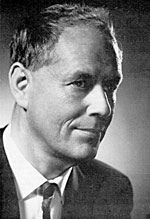
Pehr Victor Edman was born in Stockholm, Sweden, in April 1916 and died in Munich, FRG, in March 1977. He was born into a lawyer's family and received his schooling in Stockholm. In 1935 he began medical studies at the Karolinska Institute and graduated with his primary medical qualifications in 1938. He became interested in research and, following graduation, continued to work at the Karolinska Institute, largely in the laboratory of Professor Eric Jorpes. He appears to have systematically taught himself organic chemistry at this time by extensive reading. During the war years his research was interrupted by a long period of service in the medical corps of the Swedish Army. He was awarded the degree of Doctor of Medicine in 1946. The subject of his thesis was the purification and analysis of angiotensin from bovine blood. His earlier published studies concerned heparin and secretin, which were interests of his mentor Jorpes.
At this juncture Edman began to take the independent research direction which he followed almost uninterruptedly for the rest of his career. He accepted a grant to work for a year in the Northrop-Kunitz laboratory at the Princeton branch of the Rockefeller Institute for Medical Research. Swedish medical research had been isolated during the war and he was anxious to learn of the progress made in the United States. Moreover, his work on angiotensin had made him realize that simple compositional analysis would not be helpful in providing a basis for understanding the biological function of peptides or proteins. The realization that proteins were not colloids but that each had a definite molecular weight and a specific structure was beginning to emerge, especially as a result of the work of the Uppsala group. Edman knew that the order of aminoacids linked by peptide bonds was an essential part of the unique makeup of any given protein. At Princeton he began experiments to try to find a way to chemically decode the aminoacid sequence of proteins.
In the early years of Edman's attempts in this area two general procedures were being used to attack the sequence problem. Various reagents had been found useful in labelling the aminoterminal (or first) aminoacid through its reactive amino group and allowing identification as a derivative. One of these reagents, fluorodinitrobenzene (FDNB), which gave the dinitrophenol (DNP) derivative of the aminoterminus, was used by Sanger in his epochal work on the structure of insulin. By using the FDNB reaction with sets of overlapping peptides derived from partial cleavage of insulin, Sanger, by 1956, was able to deduce a unique structure for the insulin molecule. This was the first primary structure of a protein to be decoded, but despite the undoubted importance of the feat it was clear that the method was too cumbersome to have wide application.
Another reagent used for aminoterminal determination was phenylisocyanate (PIC), introduced for this purpose by Abderhalden and Brockmann in 1930. As with FDNB the hydrolysis to release the aminoterminal aminoacid derivative destroyed many of the other peptide bonds, leaving the remaining protein useless for analysis. In Princeton, Edman realised that if phenylisothiocyanate (PITC) were used the nucleophilic sulphur would weaken the adjacent peptide bond, raising the possibility of finding conditions for its hydrolysis that did not cleave the remainder of the molecule. This remaining peptide could then be subjected to a second reaction with PITC and the second aminoacid determined, and so on theoretically to the carboxyterminal end of the molecule. Whether Edman thought of this solution completely independently, whether some unrelated paper uncovered in his wide reading drew PITC to his attention, or whether some colleague in Princeton or Stockholm suggested its use is not known. In view of the success which the reaction ultimately achieved, the latter seems unlikely in the absence of any claims or reminiscences to this effect. In his review of aminoacid sequencing methods written in 1969 Edman is at pains to stress that the PITC reaction was not at all derived from the earlier PIC reaction, as they had different mechanisms of action. However, in view of the superficial similarities between the reagents and the similar uses to which they were put in protein chemistry, this seems a little strained. By the time Edman returned to Sweden in 1947 he had performed enough experiments to know that the idea was practicable and could form the basis of a protein sequencing technique.
Edman took up an associate professorship at Lund and continued to work almost exclusively on protein degradation. The derivative resulting from the coupling of PITC with an aminoacid, the 3-phenyl-2-thiohydantoin (PTH) aminoacid, proved to be a stable compound in almost all cases. Edman synthesised the PTH derivatives of all the amino acids found in proteins and developed chromatographic systems to identify and quantify them; conditions for the coupling of PITC to the aminoterminus and the cleavage of the PTH derivative which worked smoothly for all peptide bonds were found. After two years work Edman was able to publish the chemical details of a method capable, in theory, of solving the problem of primary structure of proteins and of providing the essential information about innumerable proteins essential for further advances in protein biochemistry. The characteristic ultraviolet absorption spectra of the PTH-aminoacids made them particularly suited to quantitative studies. It permitted useful measurements of the subunit structure and molecular weight of proteins and, in conjunction with column chromatography, it was an alternative to the ninhydrin reaction for aminoacid analysis. However, these possibilities could not be fully exploited until the recent developments in high performance liquid chromatography. The method became widely known and was given the eponym 'Edman degradation' by Kai Linderstrom-Lang of the Carlsberg Laboratories.
In the early 1950s Mr 'Jack' Holt, a well-known Victorian racehorse trainer, died and his will provided that the income from his estate, to be held in trust, was to be used for medical research at St. Vincent's Hospital in Melbourne. By 1956 the hospital authorities had decided to establish a separate research institution in the hospital rather than disburse the funds as research grants to existing hospital units. The decision had also been taken to develop a non-clinical basic science area, preferably biochemistry. The School of Medical Research, as it was originally known, had its own governing board and for practical purposes functioned independently of the hospital administration.
Edman applied for the position of Director of Research. He was clearly the outstanding candidate and moreover his interests coincided with the preference for biochemistry as the focus of the School. In 1957 Edman accepted the offer of the position of first Director of Research at St Vincent's School of Medical Research in Melbourne. His reasons for this move, which were said to have been a mixture of general dissatisfaction with scientific resources in Lund and the impending breakdown of his marriage, must have been strong and not primarily directed to career improvement. He had just accomplished an outstanding piece of individual biochemical research which would have made him welcome in many leading centres in the northern hemisphere. In Australia, in Melbourne, he would be largely isolated from these centres; the School was a new institution, with no traditions, no established workers, nor any support staff; and although situated in a teaching hospital of the University of Melbourne, it had itself no academic or university affiliation. Moreover, Australia at that time was not known for generous government research funding. Despite this formidable array of disincentives Edman decided to move alone to Melbourne to continue his work, initially without trained help and without close colleagues.
In Australia Edman completed a few small projects on other aspects of protein structure that he had begun in Sweden, but otherwise he worked almost entirely on the phenylisothiocyanate (PITC) degradation. This work fell into three phases: improvements in the conditions for the degradation, largely focussed on the elimination of side reactions; 'automation' of the reaction sequence; and application of the degradation to various sequence problems. The latter phase overlapped the other two and usually involved the interests of visiting scientists who had come to Edman's laboratory to learn or use his technique.
By 1960-61 the three-stage degradation reaction had been essentially perfected. Its universal application and repetitive nature suggested to G.S. Begg, Edman's Australian technical assistant, that it would be suitable for automation. Edman realized that the number of existing proteins (about ten million) made manual sequencing an impossible task and was quickly converted to the idea of automation. The close control of reaction conditions possible with automation also gave promise of higher and more constant repetitive yield than were possible manually. High repetitive yields are crucial to repetitive processes, whether synthetic or degradative. Geoffrey Begg had been one of the early technical staff employed by Edman after his arrival in Melbourne. He had no formal qualifications but from a combination of courses at technical college and self-instruction had achieved a remarkable expertise in practical chemistry and glassblowing, mechanical engineering, and electronics. The sequenator project provided a perfect opportunity to use these multiple talents which complemented Edman's academic and theoretical knowledge. Edman and Begg worked as a team on the sequence automation project, with no sustained input from other workers. It was typical of Edman's thorough approach to all tasks that he became a sufficiently adept toolmaker in this period to do much of the fitting and turning himself.
The basis of what was to become the protein sequenator was developed to a prototype stage in a period of a few weeks in the autumn of 1961 – the glass cup spinning on its cylindrical axis, addition of reagents via a catheter, reactions in a thin liquid film on the wall of the spinning cup, and extractions by solvent moving upwards over the film into a groove. Within two years Edman and Begg had built, in their own workshop, a machine capable of reliably carrying out the reactions of the degradation. They had found new conditions and reagents suitable for the physical conditions of the spinning cup; for example, the open cup in general required less volatile chemicals and the narrow delivery and effluent tubes demanded special attention to the surface tension and rheological properties of the solvents. Edman's wide knowledge of classical organic chemistry enabled quick progress in converting the manual reaction to its automated form. In 1964 Edman reported his preliminary findings to a meeting in Scotland. In 1967 in the first issue of the European Journal of Biochemistry with Begg as co-author he published his definitive paper demonstrating an unbroken automated determination of the aminoterminal sixty aminoacids of humpback whale myoglobin at the rate of one residue per hour. The extent of this advance can be gauged from the knowledge that at that time the most extensive manual degradation encompassed about fifteen residues at a rate of one per day. Many laboratories could not establish the manual degradation at all, owing to a failure to appreciate the importance of pure reagents in eliminating side reactions. During the next few years Edman's aim was to improve the repetitive yield obtained from the machine; an increase from the 98% of the 1967 paper to 99% was calculated to double the length of determinable sequence. The protein sequenator in Melbourne remained unique until late in 1969 when the Beckman Instrument Company in the United States put on the market a commercial version based on Edman's design. Edman played no part in the commercialisation of his machine. The Board of the School discussed the possibilities of patenting the sequenator but soon accepted Edman's strong view that he should publish fully without patent protection. Edman was elected a Fellow of the Australian Academy of Science in 1968 and a Fellow of the Royal Society of London in 1974. Edman became an Australian citizen in the mid sixties.
In 1972 Edman resigned from St Vincent's School of Medical Research and became Director of Protein Chemistry I at the Max Planck Institute for Biochemistry at Martinsreid near Munich. In 1968 he had remarried; his second wife Agnes Henschen had come from Stockholm and this had given him a reason to think of a return to Europe. In the ten years since his arrival in 1957 the School had remained small, and attempts to raise support for expansion on the basis of the success of the sequenator project proved not very successful. Now, as many years before in Lund, he believed that the importance of his work was not properly recognised and that he would continue to have inadequate resources in Melbourne. A move to the new laboratories of the Max Planck Institute seemed to provide an answer to his needs. Edman set up his laboratory in Munich along the lines of that in Melbourne and with the same aim of increasing the efficiency of the degradation. In addition, with his aid, Agnes Henschen began to make substantial progress in her studies of fibrinogen structure. Sadly, Edman developed a cerebral tumour and died after a short period of coma in 1977.
Edman played little if any role in broader scientific administration or politics in Australia. Although his School had no formal academic affiliation, there is no evidence that he would not have been accepted in these arenas. Some efforts to arrange a personal appointment at the University of Melbourne came to nothing. Thus he remained something of an enigma in the scientific community. He was slow to publish, with approximately one and a half papers per year during his Australian period, which made difficulties for those wishing to implement the method. If his impact on the Australian scene was limited, it was paradoxically the result of his single-minded pursuit of the sequence degradation. Such work, despite Edman's reputation, was not very attractive to students and he never built up a tradition of a flow of graduate students. Once the initial work on the manual or especially the automated reaction was complete, the details would easily have been completed by others in his or other laboratories. One cannot help thinking that his impact would have been so much greater had he seen himself able to move strongly into new areas of protein structure and function. Biological research often requires the appreciation of the importance of an approximate result for advancement.
Nevertheless the Fellowships of the Australian Academy of Science and the Royal Society of London indicate in how much esteem his work was held internationally, and this judgement has been supported by later events. Technical advances in related fields, especially in liquid chromatography and sensitive ultra violet detectors, have led to the development of low-level or microsequencing techniques which still employ the reactions described by Edman forty years ago and which play an indispensible role in gene isolation and molecular cloning.
Edman's reputation as a reclusive person, often difficult to deal with, did not arise from those who worked with him in the laboratory. He was reserved by Australian standards, but courteous and always helpful, often humorous, and took pleasure in organising social occasions both at his home and outdoors in the country. To those who came to know him in the laboratory two aspects probably had a lasting influence. In those days he was a rare example in the hospitals and the world of Australian medical research of someone who devoted himself full-time to nonclinical research. This served as an example, to those who came across him, of the possibility of such a career. At a time when biochemistry in Australia was largely concerned with the intricacies of metabolic pathways, an area where the great discoveries had already been made, Edman understood and stressed the importance of the information-containing macromolecules. The double helical structure of DNA had been proposed by Watson and Crick only a few years before Edman's arrival in Australia. The possibility of obtaining a corresponding understanding of the more complex structures of proteins which Edman's work opened up inspired his colleagues with the belief that they were in a position to participate directly in a new era of biological investigation. fic basis for consciousness. Cognitive Studies 5, 95-109.
About this memoir
This memoir was originally published in Historical Records of Australian Science, vol.8, no.2, 1990. It was written by F.J. Morgan, Department of Biochemistry, La Trobe University.
Paul Ivan Korner 1925–2012
Paul Korner's life's work centered on unraveling the sympatho-adrenal control of the circulation and applying this knowledge to understanding the pathogenesis of hypertension and to improving the management of cardiovascular diseases. He made major contributions as Foundation Professor of Physiology at the University of New South Wales (1960–8), as the first Scandrett Professor of Cardiology at the University of Sydney and the Royal Prince Alfred Hospital (1968–74), and as Director of the Baker Institute for Medical Research (1975–90). After retirement in 1990, he undertook his last major work, writing an influential single-author text, Essential Hypertension and it Causes.
Download the memoir
About this memoir
This memoir was originally published in Historical Records of Australian Science, vol. 24(2), 2013. It was written by John Chalmers, James Angus, Robert Graham, John Carmody, Roger Dampney, Garry Jennings and Nicholas Korner.
Otto Frankel 1900-1998
Written by L.T. Evans.
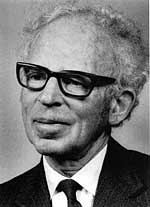
Introduction
Sir Otto Frankel – whom I shall refer to as Otto because that is how we all addressed him – was a geneticist by training, plant breeder by occupation, cytologist by inclination and genetic conservationist by acclaim. Apart from his personal research, Otto was a highly effective builder and leader of research groups, Socratic gadfly to the scientific establishment, and high prophet of the genetic resources conservation movement. His career in science was unusual in that his most widely acclaimed work was done after his official retirement. A man of inexhaustible variety of opinions, Otto had a complex personality that could be rough or kindly, bored or engaged, impossible or altogether charming by turns, and he did not wish this memoir paint him otherwise. He refused to write an autobiographical sketch and did not keep many records. However, two interviews with him about his career were recorded, by Gavan McCarthy in 1985 [1] and by Max Blythe in 1993 [2]. Much of the information and views quoted here are from records of discussions I have had with him over many years.
Family background and early life
Otto Herzberg-Frankel was born in Vienna on 4 November 1900, the third of four sons of a prominent and wealthy lawyer. Frankel was a relatively uncommon name in Vienna at that time, but to differentiate himself from a more traditionally Jewish branch of the family, Otto's paternal grandfather, a well-known author, added Herzberg from his mother's name to become Herzberg-Frankel. After his father's death, Otto chose to drop the hyphen and revert to Frankel.
Ludwig Herzberg-Frankel, Otto's father, was a highly successful barrister in Vienna, effective both in the courtroom and as a public orator. Otto's enjoyment of, and effectiveness in, public debate and persuasion were clearly shared with his father. What he called his 'peasant instincts', so important in his motivation to make his career in agriculture, came from his mother's family. Thérèse Sommerstein was the youngest child of a family with several rural estates in Galicia. Her older sister Ann was an able and progressive farmer, and Otto's early rural experiences were associated with visits to his aunt's estate [3], where he was also impressed by the abilities and aristocratic manners of her husband, Joseph Bernstein vel Niemirovski. Their son, the British historian who later changed his name to Lewis Namier, also played a significant role in Otto's career.
Fin-de-siècle Vienna was a culturally sophisticated and affluent city which attracted the adventurous and talented in many fields to become a hot-bed of cultural change in art, architecture, music, theatre and philosophy. This was the background to Otto's life and a formative effect on his youth, which had many elements in common with that described by Victor Weisskopf [4] and others. But he also witnessed the collapse of the old Empire, along with the relative impoverishment of his family, at the end of the First World War. At its outset his father had volunteered for military service along with his motor car and his chauffeur. By its end there was no car but, as Otto's brother Paul put it, the brothers had acquired the incentive to work.
Max, Otto's oldest brother (1895-1983), qualified in law but after joining Otto in New Zealand in 1938 he became an accountant. Theo (1897-1986), who had to flee Vienna hurriedly in 1938, became a progressive paper manufacturer in Great Britain, establishing the Scottish Pulp and Paper Mills enterprise in the Highlands. Paul (1903-1992) also moved to Britain, from Poland in 1937. An economist by training, he founded Petroleum Economics Ltd. in 1955 and became a distinguished international authority on the oil industry. Their family home was not a happy one, according to Otto. Paul told me that Otto's youth was quite tempestuous and unhappy, more because of his own problems than of his father's domination. One of these was Otto's sense of 'homelessness' which he ascribed to his father's 'distance' and to not having a country to call 'home': they were Viennese Jews but not Jewish in any religious sense, nor Austrian, nor Polish.
Not only did Otto subsequently claim that he had no country, he also insisted that he had 'no education'. In Otto's early years, his father employed a tutor for his sons as well as a French governess. From 1910 to 1918 Otto attended the Piaristen Staatsgymnasiums Wien VIII, as did Karl Popper. Otto's claim to no education was based on this being a classical rather than a modern school [5], with poor mathematics and next to no science but eight years of Latin and four of Greek. None of his teachers inspired him.
University education
The end of school coincided with the end of the war, when there was little chance of a young man without military service being admitted to the University in Vienna. However, under Otto's leadership, a group of young people took over a disused military laboratory, obtained a copy of the practical course work from the Chemical Institute of the University, worked through it together without any lectures and were subsequently given credit for the course.
Besides chemistry, the young Otto had also become involved in communism, and was arrested on one occasion for addressing a street crowd. At about this time there had been a communist putsch in Munich and Otto went there to be interviewed by the celebrated professor of chemistry, Richard Willstätter. As a result he was admitted to Munich University (1919-1920) to study chemistry, botany and physics. However, after three semesters he had lost some of his enthusiasm for chemistry. The young idealist, concerned about the fight against hunger, wanted to do something more practical like agriculture.
The Agricultural Institute of the University of Giessen was recommended to Otto's father, and he studied there under Professor Paul Gisevius for two semesters in 1920/21. Otto did not find his professor congenial and packed his bags again. He was still determined to learn about farming, however, and in 1922 returned to his aunt Ann's estate in Galicia but soon decided he was not really interested in farm management. His aunt then persuaded him to go back to university, with her support.
In the autumn of 1922 he began his studies at the Agricultural University of Berlin, having been given credit for his earlier studies in Vienna, Munich and Giessen, as well as for his practical farm work [6]. Luckily, at this stage Otto attended a lecture on plant genetics by Professor Erwin Baur, a charismatic personality and lecturer [7], which opened a new and wholly fascinating world. He was challenged by Baur's claim to be able to work with genes and the genetic combinations of plants exactly like the chemist with his molecules and his formulae. Otto asked Baur in 1923 if he could begin research under him before his diploma was completed, and Baur agreed in view of the educational disruptions following the war. However, this arrangement entailed a lot of commuting between the city of Berlin, where he was completing his diploma studies, and the laboratories at Dahlem where Otto grew the large populations of Antirrhinum needed for his research, and this added to his sense of isolation from his fellow students.
In his book on the German genetics community, 1900-1933, Harwood divides them between the 'comprehensives' and the more practically-orientated 'pragmatics'. The former were drawn from the upper classes, had a classical education, and maintained broad biological and cultural interests, while the latter were of more lowly social origins, often with a modern education and more specialized interests, and wished to use their expertise to solve agricultural, industrial and social problems. By social and cultural background Otto could have been expected to join the 'comprehensives' like Kuhn, Goldschmidt and von Wettstein, but his wish to do something of practical value led him instead to Baur, the exemplar of the pragmatics but also with an active interest in 'racial hygiene' [8].
The research problem allocated to him by Baur was one of the earliest studies of genetic linkage in plants. Baur suggested that he clarify the linkage relations between one specific mutant (A, fuchsin red) and another nine mutants in Antirrhinum majus. In this Otto was rather unlucky because, after an extensive crossing and back-crossing programme, he found that all but one of the mutations segregated independently of A, and to a large extent of one another. However, the introduction to his thesis was a comprehensive review of linkage in plants that brought high praise from Baur, led to his first published paper (1) and earned his doctorate in agriculture from the University of Berlin in 1925.
When comparing his university experience with that of his later colleagues Otto concluded that while he had learned the value of self-reliance in research, he had missed out on many important elements of university education. His first degree courses were neither coherent nor comprehensive and he was left to himself in his research. Neither Baur nor Elizabeth Schiemann (his nominal supervisor) gave him significant attention, he was isolated by his work (and his genes) from the other students, and he was not taught cytological techniques. He did present a seminar on linkage in plants, and another on speltoid wheats, a subject he later revisited. And he spent his aunt's supporting grant on a psychoanalysis.
Itinerant post-graduate
Through a client of his father, Otto was then employed for two years (1925-1927) as a plant breeder on a large private estate at Dioseg, near Bratislava, after marrying his first wife, Mathilde Donsbach (1899-1989). Although sugar beet crops and their processing were the major activities on the estate, Otto began wheat and barley breeding programmes, which helped his subsequent appointment in New Zealand.
At this point his cousin Lewis Namier re-entered the scene. He had become an ardent Zionist and advisor to Chaim Weizmann. A British group had arranged for a small team of scientists to be sent to Palestine to establish a plant and animal breeding programme there and to act as a bridge between the Zionist Organization and the Empire Marketing Board under the direction of John Boyd Orr, then Director of the Rowett Research Institute, Aberdeen.
Namier had suggested his cousin as a potential recruit with experience in genetics and plant breeding and Otto was brought to London for interview and briefing. In Palestine Otto found that he was not fully occupied because the main emphasis of the project was on animal improvement. However, he made friends with J.D. Oppenheim who had a microscope on which Otto began his cytological career by counting the chromosomes of the Jaffa orange, which led to his third paper. The highly political nature of the Palestine project resulted in its being visited in 1928 by an influential group led by Walter Elliot, Under-Secretary of State for Scotland. In the course of this visit Otto apparently made it clear that he did not wish to remain in Palestine and temporary support for him in England was arranged until a permanent position became available.
Rowland Biffen, Director of the Plant Breeding Institute in Cambridge, arranged for Otto to work on fatuoid oats. In the course of his work at the Institute, Otto became friendly with A.E. Watkins, an excellent cytologist and evolutionist who introduced him to the cytological complexities of wheat. He also took Otto's still-imperfect English in hand, recommending that he should read all of Jane Austen, which Otto did with pleasure and profit. This brief period in Cambridge was seminal in developing Otto's interest in cytology and evolution, as well as his understanding of the English way of life.
During his stay in Cambridge Otto was invited to accompany F.B. Smith on a secret trip in August/September 1928 to Brazil and Argentina to advise the banking group Lazard Bros. on the establishment of a wheat industry in the southern state of Parana, a mission he enjoyed in many ways as 'my first real overseas trip'.
However, a more permanent position and home was what Otto sought, and it came about quite unexpectedly. His patron, Boyd Orr, was travelling across Canada by train on which he met the newly-appointed Secretary of the New Zealand Department of Scientific and Industrial Research (DSIR), Ernest Marsden. In the course of their discussions Marsden said he was looking for a plant breeder and geneticist for the newly-established Wheat Research Institute in New Zealand. Boyd Orr said he knew of one, and a cable was sent to Professor Biffen for Otto: 'Will you accept post New Zealand beginning £400 per annum plus passage?' There was no indication of what kind of work was involved, but Otto trusted Orr and accepted. Watkins encouraged him to take to New Zealand a subsample of his comprehensive collection of wheat varieties, many of which had been obtained by British government officers from overseas markets. Otto and Tilli arrived in New Zealand, after a month at sea, in March 1929.
Wheat breeding in New Zealand
In view of how significant his 22 years in New Zealand were for his scientific career, it is surprising that Otto says virtually nothing about them in his 1985 interview with McCarthy. He had come to New Zealand hoping to find a 'home'. Indeed, he did feel at home there with the countryside, and especially in the mountains, but 'I was never accepted in New Zealand, I always felt a foreigner and was made to feel that. Only in the ski huts was I accepted.'
At Lincoln College, near Christchurch, where he was to work until 1951, Otto was briefed on the role of the Wheat Research Institute (WRI) by Professor F.W. Hilgendorf, the director, with whom Otto was to have excellent relations. Hilgendorf had conceived of the Institute to improve New Zealand wheat, especially its baking quality, with support from levies on wheat growers, millers and bakers to be matched by government funding. After much proselytizing by Hilgendorf, all parties had agreed to its establishment in 1928, within the DSIR [9].
Hilgendorf had previously crossed the Canadian variety White Fife with Tuscan, and the progeny of the seventh cross were handed over to the newly established WRI. Otto began his breeding programme with these, introducing quantitative assessments of grain yield and of milling and baking quality, which eventually led to the release of the widely grown variety 'Cross 7' in 1934. Being more resistant to lodging and better suited to direct heading, this variety aided the mechanization of the wheat industry as well as improving the quality of New Zealand bread. Although the improvement of milling and baking qualities was the prime objective of his breeding programme, Otto also began an analysis of the yield components in wheat crops, reflecting the influence of F.L. Engledow's work at Cambridge (12, 17, 19).
However, further studies of the effects of selection for yield (26) showed that the efficiency of selection was not enhanced by using yield components rather than yield per se. Otto's overall experience in breeding for higher yield was summarized in an influential review (27) which, in the light of the striking advances in yield potential since that time, now seems far too conservative, indeed pessimistic. Like Farrer in Australia, he was much more confident of being able to improve the baking quality of New Zealand wheat, and put a considerable effort into optimizing the role of quality-testing in the selection process (8, 20). That this was highly effective was shown by the outstanding baking qualities of his cv. Hilgendorf.
Otto had hoped to use Watkins' varietal collection, which he enlarged in New Zealand, particularly for increasing grain size, but in the event this did not prove desirable because of associated loss of baking quality. However, the expansion and maintenance of the wheat collection put him in touch with the great Russian geneticist, N.I. Vavilov, and other plant breeders around the world, and led on to his later interest in genetic resources.
Early cytological investigations
Otto soon felt on top of the demands of his wheat breeding programme and sought the permission of his Director to undertake cytological research on native plants in the off season. Hilgendorf encouraged him and consulted New Zealand's leading ecologist, Leonard Cockayne, who suggested Hebe as a large genus with some interspecific hybrids. The Hebe-Veronica complex required considerable travel, often in the mountains, which was attractive to Otto and he began cytological research on it in 1929 although he was aware, as he indicated in a letter to the DSIR head office, that such 'fundamental' work 'is not the type of work I am here for'.
When Cockayne recommended Hebe for Otto's cytological investigation, he did so as an ecologist who considered it a diverse and interesting genus, but ecological and evolutionary significance do not bestow cytological suitability. In the event Hebe proved to be rather unsatisfactory from a cytological point of view, with its many small chromosomes. However, his cytological evidence suggested several taxonomic revisions, including the grouping of the New Zealand Veronica species with Hebe (14). Further cytological studies (21, 23) supported the establishment of Hebe as a separate genus, and suggested that the New Zealand species of Euveronica and the genus Pygmaea should also be included within Hebe, which subsequent taxonomic work has confirmed.
In wheat, Otto observed two abnormalities among the progeny of an F4 plant from a Tuscan x White Fife cross he made in 1928/29, which provided him with the material for his finest cytological research. The first involved two inverted duplications, one long and one short, that Otto interpreted as having arisen by breakage of dicentric chromatid bridges. The broken ends presumably then 'healed', becoming a functional telomere, thereby preventing sister reunion of chromatids (32). Homozygotes and heterozygotes for these duplications, as well as combined long/short heterozygotes, were analysed for their meiotic behaviour (33) in what M.J.D. White calls 'a piece of classic cytogenetics' [10].
In the same family that displayed the inverted duplications there also occurred a chlorophyll defect that Otto called striatovirescens, the leaves having alternate white and green sectors (35). The defect was shown to be due to three recessive mutations, presumably on homeologous chromosomes of the A, B and D genomes, but how these occurred is uncertain. The independent mutation of three genes, or the mutation of one which was then transferred to the homeologous chromosomes, was considered highly improbable. The association of the defect with the occurrence of the inverted duplication was presumably not coincidental, and the duplication may therefore have acted as a destabiliser of heredity, comparable with those found in maize, which Otto once referred to in a 1954 letter as 'the curious case of Barbara McClintock' [11].
Overseas visit to Darlington and Vavilov, 1935
Otto first canvassed the possibility of an overseas trip between wheat harvests early in 1934. He wanted to extend his wheat collection, have discussions with wheat breeders in Europe, and get some guidance and criticism in 'modern Karyology' which had 'grown up since I came here'. He hoped to finish off his work on Hebe during his stay of several months at the John Innes Horticultural Institution at Bayfordbury. In one sense Otto's work on Hebe was finished off there. C.D. Darlington took one look at his slides and said 'If you want to work on small chromosomes, go to Karpechenko. He likes small chromosomes.' Darlington then introduced him to the chromosomes of Fritillaria, 'on which you can do real cytology'. In any case, as Otto put it, 'the Hebe work was an evolutionary study and I'd got an inferiority complex about the taxonomy'. So although the work on Hebe continued for many years, this first overseas visit changed the direction of his cytological research. He made a systematic search for evidence of inversions among almost 30 species of Fritillaria, using Darlington's collection of slides. None were found in most species, but the results of crossing-over in the four species with them were analysed (13) and the nucleolar cycle examined (15).
Otto's overseas visit in 1935 introduced him to two of the scientists who most influenced his life. When Otto first met Cyril Darlington, he had written his highly influential Recent Advances in Cytology and was in the throes of discussing and revising it. Otto was also stimulated by the wide-ranging lunch time discussions at John Innes between J.B.S. Haldane, Darlington and others.
The other major impact of Otto's overseas trip in 1935 was his meeting with Nicolai Vavilov who warmly welcomed his visit to the USSR, arranged his visa and itinerary [12], and spent much of his time with Otto during the week he was in Leningrad (129). Otto was impressed by Vavilov's passionate drive to identify general principles, by his style of leadership and by his stamina, if not by the poor state of his experimental plots. At the time of Otto's visit Vavilov was preparing the second and third volumes of his Theoretical Bases of Plant Breeding, yet shared his time and ideas generously with Otto. Many years later Otto and Erna Bennett dedicated Genetic Resources in Plants (72) to Vavilov, of whom Otto always had a photograph in his office.
After Leningrad, Otto visited several of Vavilov's research stations, before continuing his visits to European plant breeding institutes on his way back to England. From Kiev Otto sent some 'friendly criticism and suggestions' that Vavilov took seriously in his reply. After his return to New Zealand Otto again wrote urging Vavilov to adopt Brabender's cereal chemistry procedures, criticising the Lysenkoist papers presented at the International Botanical Congress in Amsterdam, and letting him know of the discussions at the succeeding Imperial Botanical Conference in London.
Proselytizing for plant breeding
Otto's return to New Zealand opened a more than usually tempestuous phase in his life. He was divorced from Tilli in 1937, resumed his vitriolic exchanges with E. Bruce Levy (Director of the DSIR Plant Research Station in Palmerston North) over the question of who should oversee pasture plant breeding, and got into hot water for some off-the-cuff comments to a reporter about the Department of Agriculture. Like other extempore remarks by Otto, these found their way into The Press, to the delight of some and the chagrin of the DSIR headquarters.
From early in 1934, Otto had pressed for his wider involvement in DSIR plant breeding activities, initially in relation to pasture plants such as perennial ryegrass. After his return from overseas Otto put forward a more ambitious proposal for a Plant Breeding Section of DSIR, with five Divisions spread between Lincoln and Palmerston North. For a time, Otto held high hopes of its establishment. He had also formulated plans for a Genetics Bureau to undertake fundamental genetic research with both plants and animals and to collaborate with the various groups of plant and animal breeders in New Zealand. However, strong opposition from Levy and others on the plant side, and lack of interest by Dr Dry of Massey College on the animal side, led to these proposals being dropped.
Another activity in which Otto was engaged at that time (1937/9) was in trying to assist the immigration to New Zealand of Jewish refugees from Europe following the Anschluss. Otto was the secretary of a committee on which Karl Popper, who had come to Christchurch early in 1937, was also a member, one who tended to favour intellectuals whereas Otto had to deal with the Minister for Immigration who thought there were already too many of them in the country.
In 1939 Otto again went overseas by ship, on a second pilgrimage to the John Innes Institution, his research there resulting in a paper on chiasma formation in Fritillaria (22). This visit was less stimulating and significant than his first one. Darlington was preoccupied with his new duties as Director of the Institution. Haldane had left and laboratory discussions were less lively and wide-ranging. Otto was impressed by how quickly the research atmosphere of an institution could change.
Remarriage and recognition
Otto returned to New Zealand by ship in the early stages of the Second World War, and married Margaret Anderson (1902-1997), an artist and art teacher from a well-known Christchurch family, within a few hours of getting home on 8 December 1939. They had met many years before and theirs was a wonderfully enduring and happy marriage of two strong personalities. Unlike Tilli, Margaret was always welcomed by Otto's family and he, after they recognized his gardening skills, by hers. The Andersons lived in an historic house called Risingholme, set in large grounds, and Margaret's father gave them some of the land on which to build the first of the three houses and gardens from which they gained so much delight. When he died, Risingholme was given to the City of Christchurch, and Otto and Margaret suggested that it be turned into a community centre, in which they were active for many years. Their first house, completed in 1940, was designed by the great Viennese-born contemporary of Otto, Ernest Plischke, and is illustrated in two books on his architecture.
When Hilgendorf died in 1942, Otto was appointed Chief Executive Officer of the Wheat Research Institute and his powers of leadership, his capacity for planning and his vision were at last given some scope. He had already proved himself to be an able plant breeder whose varieties Cross 7 (released in 1934), Taiaroa and Tainui (1939) and Fife-Tuscan (1941), and subsequently WRI-Yielder (1947), had raised wheat yields, while Hilgendorf (1948) had quite outstanding baking quality [13]. Although the work of the WRI was appreciated by wheat growers, millers and bakers, it was not widely known until 1947 when the seed harvested from the experimental plots of a very promising line was stolen. Otto's appeal for its return received headline treatment, bringing the Institute and its work into welcome prominence. He was reminded of the opera diva who became more famous for her stolen pearls than for her singing.
Nevertheless, these years were among Otto's most scientifically productive. In 1947 he published a paper on plant collections (25), another on selection for yield in wheat (26), and an influential review on the theory of plant breeding for yield (27). Over the next three years his papers included accounts of two newly-released wheat varieties (28, 29) and of what he regarded as his best cytological work, on an inverted duplication in wheat (32, 33), as well as the first paper in his long series on base sterile mutants in speltoid wheat, which he had first observed in 1929 (31).
In 1948 he visited the John Innes for a third time, to find Darlington preoccupied with the controversy over Lysenko's presidential address to the Soviet Academy of Agricultural Science on 31 July. Darlington, S.C. Harland and R.A. Fisher had expressed deep concern over this development in a discussion on the BBC's Third Program and Otto entered the fray with a letter to The Listener of 9 December 1948 questioning J.B.S. Haldane's public defence of Lysenkoism. When they met a little later there was, as Otto put it, 'an exchange of grunts'.
In 1949 the wheat breeding section of the WRI was merged with the DSIR Agronomy Division, also based at Lincoln. For the first year, Otto was associate director of the combined group, becoming Director in March 1950. As he says in his interview with McCarthy: 'for the first time I was able to look for scientific staff...and I could think of the scientific content of a job rather than purely breeding barley or some root crop or other, and I could look for quality...' However, he encountered bureaucratic resistance to his attempts to build a stronger research group at Lincoln, and was soon tempted to leave New Zealand.
Although administrative frustrations precipitated his departure from New Zealand, his sense of intellectual isolation there would probably have led him to leave eventually, as well as the lack of 'old stones and modern art'.
Chief of the CSIRO Division of Plant Industry, 1951-1962
Although Otto felt less at home with the landscape in Australia than in New Zealand, he was 'never made to feel a foreigner', a welcome difference. Two other components led to his remembering his early years in Australia as the most rewarding of his career. Funding for research in the Commonwealth Scientific and Industrial Research Organization (CSIRO) burgeoned in the fifties, giving opportunities for recruitment and building that Otto seized. And in Sir Ian Clunies Ross he had an idealistic, cultured and brilliant but enigmatic Chairman with whom his relations remained warm. Otto's memoir of him [14] radiates appreciation, and a photograph of Clunies Ross was prominent in all the offices Otto later occupied.
Yet when Otto first visited the Division of Plant Industry in Canberra with Carl Forster (an associate of the then CSIRO Executive) before being interviewed in Melbourne, he was reluctant to be considered. It was much larger and more diverse than his Crop Research Division but the buildings were run down and the staff demoralized, and he thought the environment ugly. Forster must have conveyed Otto's impressions to Clunies Ross because when Otto went, still wavering, to see him, the Chairman cut off his retreat with 'Frankel, Frankel. I'm exceedingly sorry you won't take it – and that job is so terribly difficult'.
Clunies Ross had made it quite clear that Otto's major role was to strengthen the Division's research, especially the more fundamental research, particularly in genetics, all of which appealed to him. In fact, when Clunies Ross first joined the CSIRO Executive, one of his main goals had been the building of a national programme in genetics education and research [15], and in a paper to the Executive Committee in 1947 he had argued the need to strengthen genetic research in the Division of Plant Industry. Otto's efforts along similar lines in New Zealand must have encouraged Clunies Ross in his subsequent negotiations with him.
Prior to Otto's interview in mid-1951, there had been a review of the Division that had also recommended a strengthening of basic research, so his brief was clear and he set about it vigorously on a series of recruiting trips overseas. He was sceptical of the effectiveness of advertising positions: 'People who apply are rarely the best, they are footloose, they are available. You want to get people who are not available'. Much of the agrostological and associated research moved to Brisbane, where it eventually became a separate Division. Distinguished older scientists and promising young ones were recruited to give new life to old activities. In other areas, such as plant introduction, Otto simply challenged them to do better. The small Divisional unit in plant physiology already established at the Waite Research Institute in Adelaide was moved to Canberra and enlarged. Plant biochemistry also required extensive recruiting. Some projects were tapered off and the younger research staff given new opportunities, as in the case of the phytochemical survey staff in Queensland who were refocused on rainforest ecology.
The most profound changes, however, were in the area of genetics and cytology, Otto's own, where he felt most confident in his recruiting and where he had the strong support of Clunies Ross. Although the fields of quantitative genetics and cytology received initial emphasis, a powerful and wide-ranging group in evolutionary genetics was quickly established, and became highly influential both in Australia and internationally. Otto's personal commitment to his research on the genetics of floral development in wheat, the high standards he demanded, his interest in broader genetic issues and his provocation of their discussion made the genetics seminar a lively centre of Divisional activities.
As he sought to rejuvenate the Division and re-orientate it to 'science for the second half of the 20th century' there was, naturally, some resentment among some of the older staff. However, his efforts soon transformed the scientific life and standing of the Division by building up a range of strong discipline-based groups, such as that in agricultural physics under the leadership of J.R. Philip. The recruiting of additional staff in new fields greatly enlarged the Divisional requirements for additional laboratory space and new equipment, both of which proved hard to obtain. Looking back, Otto thought these were his greatest difficulties. When he became Chief, the Division was still largely housed in its original 1930s building and in spite of great efforts by Otto there was no major addition until the 'Genetics' building was completed in 1958. Even that required a personal visit by the Prime Minister, R.G. Menzies, to the Division. After that, the new buildings came more readily, the Genetics extension being completed in 1960, the Biochemistry building in 1961 and the phytotron in 1962.
The capstone to Otto's reconstruction of the Division was his campaign to build an Australian phytotron to serve as a national facility for research on the responses of plants to climatic factors. On his first visit to the phytotron at the California Institute of Technology in 1953, he was greatly impressed by its potential value for agricultural research in a country like Australia with such a wide range of climatic conditions. This would be an expensive facility, especially for the biological sciences at that time, and the 'big science' element was a challenge. But Otto also wanted the Australian phytotron to be novel and distinctive in both engineering design and architecture. Clunies Ross was supportive, and Otto soon enlisted the enthusiastic cooperation of R.N. Morse, officer-in-charge of the CSIRO Engineering Section, and his staff.
A novel design was developed, in which the major components were thoroughly tested before financial commitments were sought, and in 1958, the federal government decided to provide the requisite funds. The phytotron was officially opened in August 1962 by the Prime Minister, Mr Menzies, by which time Otto had joined the CSIRO Executive. Nevertheless, its scale, originality and style symbolized, for many, Otto's leadership of the Division of Plant Industry.
Other research areas in the Division were also stimulated and enlarged right up to the end of Otto's term as Chief. Perhaps his greatest disappointment as Chief was that Clunies Ross, not long before he died in June 1959, began to express concern that Otto had neglected, even impoverished, applied research by the Division. Yet Otto continually challenged his research staff to pursue their work within a framework of potential relevance to agriculture.
What particularly saddened him was that, as he makes plain in his interview, his initial attraction to the CSIRO culture was the enthusiastic and idealistic encouragement given by Clunies Ross and his Executive colleagues to basic research related to applied problems, and he sensed that such enthusiasm was faltering. Despite this, he told McCarthy that the biggest thing in his life, which he felt 'everyday in spite of all my wars and my arguments', was his admiration and respect for CSIRO. On one occasion when Otto expressed this rather forcibly in a comparison with the Australian National University to Lord Florey, its Chancellor, the latter was moved to comment: 'Frankel, I'm not here to award marks'.
On the CSIRO Executive, 1962-1966
Otto was persuaded by R.N. Robertson to succeed him in 1962 as a member of the Executive of CSIRO. He would rather have remained in the Division, preferring always to fight for something than against it, distrusting the 'management' of science, and enjoying the irreverence of young colleagues. But he sensed that a need to fight for basic research within CSIRO was emerging. He also sensed a need to protect the Division of Plant Industry, by then the largest in CSIRO, from being split, which would reduce the interactions and cross-fertilization between disciplines that he had tried to foster. He may also have had expectations of succession to the Chairmanship of CSIRO.
However, he found little satisfaction in his work, missed the contact with active researchers and missed his home and garden through having to spend most of his time in Melbourne. Otto's record as Chief made it clear that he was excellent at choosing staff given his subtle, merciless, multidimensional judgement of people, and he had expected to deploy those skills in the choice of new Chiefs of Divisions, but even there he was thwarted.
It was fortunate, therefore, that just at this juncture a subject in which he had long been interested, especially since visiting Vavilov in Leningrad, namely the conservation of genetic resources, began to emerge on agendas for international action. Otto soon became a key figure in the movement and remained so for thirty years after his official retirement from CSIRO in 1966.
Research after retirement
On retirement Otto returned to the Division of Plant Industry as an Honorary Research Fellow, which allowed him to resume active research in genetics and to play a more active role in the International Genetics Federation.
Throughout his life, after hearing that lecture by Baur when he was in his early twenties, Otto saw himself primarily as a geneticist. Altogether he attended ten International Genetics Congresses, beginning with the 6th at Edinburgh in 1939. He was a Vice-President and Treasurer of the International Genetics Federation from 1968 to 1973 and, according to M.J.D. White, 'played a large part in bringing together pure and applied geneticists in order to confront these most critical problems of the earth's biota in an intelligent, informed and humane manner' [10].
For Otto, as for François Jacob, 'genetics became a bastion of reason. To do genetics was to say no to intolerance and fanaticism' [16]. Many of Otto's closest friends were geneticists, and he admired the way Darlington, Dobzhansky, Haldane and others viewed humankind and its problems from a genetic perspective.
Otto's post-retirement research was focused on the base sterile mutants of speltoid wheats. In the evolution of wheat, the appearance of the free-threshing 'naked' grain character, was a highly significant step in domestication, associated with the presence of the Q-factor on the long arm of chromosome 5A. Speltoid mutants, with a brittle rachis, long internodes and tight glumes, arise by a cytologically-observable deletion of the Q segment.
Otto had found several speltoids in a crop of Yeoman wheat in 1929/30, among which one plant was sterile in most of the basal (first) florets. This sterility was found to be caused by the recessive allele of a single gene, subsequently called Bs and found to be located on chromosome 5D, and homeologous with the Q factor (31, 85). Even in a single dose, Bs prevents basal sterility in the second and higher florets, whereas sterility can extend up to them in the double recessive, to an extent depending on the polygenic background (68, 92). Eventually a series of speltoid lines was developed that ranged from full fertility to sterility of the first three florets, or even of the first eight or nine (65). At the other extreme of this scale of fertility were the 'compactoids', in which grains are found in the axils of the normally sterile basal glumes, associated with the addition of a second Q factor.
On the question of the relation between the genomes in floral morphogenesis of vulgare (bread) wheats, it is striking that the dominant Q factor is not present in any of the ancestral A, B or D genomes (50), which nevertheless had genetic systems ensuring the fertility of their first florets. According to Kuckuck [17] the Q factor may have arisen from unequal crossing over in chromosome 5A, and Frankel and Roskams (92) proposed that a gene homeologous to Bs was included in the multiple repeat. They also examined the effect of a period in short days at high temperatures at the beginning of floral initiation on the pattern of floret sterility in several normal and base sterile genotypes. These shock treatments increased basal sterility in the speltoid lines but not in the normal wheats. Further work identified the most sensitive period for each floret (94), and the stage at which cell division failed (113). Even the initiation of sterile floret primordia required prior lemma initiation (110). Although no further work has been done on them, the speltoid lines developed by Otto still have much to offer those interested in the molecular control of floret differentiation and fertility in wheat and other cereals and grasses.
FAO, IBP and genetic resources
As long ago as 1923, N.I. Vavilov had warned of the need to conserve, as well as to use, the range of genetic variation within crop plants in the face of agricultural change. With the initiation of the International Biological Program (IBP) in 1963, concern for such 'genetic erosion' was heightened. Otto had not been keen to be involved in the IBP, but at the urging of R.N. Robertson, of Ledyard Stebbins (who had introduced 'plant gene pools' as a major theme of IBP) and of C.H. Waddington (Vice-President of IBP and an old friend from his early days in Cambridge), he took part in the 1st General Assembly at Paris in 1964. The entry of the IBP, and of Otto, into the field resulted in a transformation in public awareness of the problem and plans for action. The programme, drafted by Otto in 1965, led to a clearer definition of the various kinds of genetic resources, a strategy for their conservation with priority on the land races, and an emphasis on information and availability. The realisation that IBP could not achieve this on its own led Otto to meet R.B. Sen, the Director-General of FAO, in 1965, to explore the prospects for joint efforts. Both the IBP and FAO welcomed the proposed collaboration, and Otto was invited by Sen to act as a consultant in 1966, to review the activities and responsibilities of FAO, and to prepare plans for a meeting in 1967. This integration of effort by IBP and FAO continued until the end of the IBP in 1974 [18].
During his consultancy at the FAO in 1966, Otto was visited by a fellow student from Baur's group, Professor Hermann Kuckuck, who painted an alarming picture of the accelerating loss of land races and wild relatives in Turkey and Ethiopia. His account brought home to Otto the need for urgent and comprehensive action, which he stressed in his report to FAO.
The 1967 FAO/IBP Conference on 'The Exploration, Utilization and Conservation of Plant Genetic Resources' was a landmark for the genetic resources movement. In both its planning and the reworking of its proceedings, Otto was joined, at his personal request, by Erna Bennett, and together they coined such phrases as genetic resources and genetic erosion. The conference itself led to a programme for FAO-initiated international action, while the book (72) had a substantial impact on the scientific community. In particular, the book emphasised the importance of what Otto liked to refer to as the 'generalist strategy' of Vavilov as against 'mission-oriented' collecting (122).
After the 1967 conference there followed a frustrating period of bureaucratic inaction by FAO. The Panel of Experts was reconstituted with a membership representing both IBP and FAO under Otto's chairmanship, and many issues were considered at their four meetings. The high priority for collection of endangered land races was retained. Consideration was given to the problems of evaluating accessions more broadly, to computerizing the information, to long-term seed storage, to the establishment of a global network of genetic resource centres, and to the respective roles of the various kinds of collection. Throughout the late sixties and early seventies it was the Panel of Experts under Otto's activist chairmanship, and Erna Bennett within FAO, who kept the genetic resources issues alive. As Otto wrote later: 'Conservationists who became so concerned in the eighties when the battle was essentially over were notably uninterested when their publicity might have been invaluable' (127).
Otto published several papers on genetic resources issues through this period, many of them aimed at increasing public awareness of the problems. One of the finest of these – in the estimation of Soulé and Mills [19] – was his Macleay Memorial Lecture entitled 'Variation – the essence of life' (77), in which he argues that the scale of human impact on genetic variation within both domesticated and natural communities is now such that we can no longer claim evolutionary innocence: 'We have acquired evolutionary responsibility' and must develop an 'evolutionary ethic'.
A conference of experts was convened at Beltsville, USA in 1972, to consider the proposal of the IBP/FAO Panel of Experts for the establishment of a network of regional genetic resource centres plus a coordinating centre to recommend priorities and organize training and other activities of the network, which would be associated with FAO. Otto was invited to present the report of the Beltsville meeting to the Technical Advisory Committee of the Consultative Group on International Agricultural Research (CGIAR) in April 1972.
Two months later Otto unexpectedly found himself given an opportunity to address the United Nations Conference for the Human Environment, in Stockholm, on genetic resources. He had been asked by FAO to prepare a background paper on this subject for the conference, with recommendations. Several delegates moved the adoption of these recommendations, and another requested that Otto be allowed to address the conference. He relished the opportunity, his recommendations were adopted in Articles 39-45 [20], and the world's news media carried his message. He became a cult figure at Stockholm and genetic resources became an international issue, requiring consideration by national governments and inviting the concern of public interest groups. The genetic conservation wave began to roll, fourteen years before the term 'biodiversity' was coined.
In 1973 the CGIAR established an International Board for Plant Genetic Resources (IBPGR). Otto, who was widely expected to be the first chairman of the Board, was not even a member. Moreover, FAO, which had sponsored the cause of genetic conservation when no other organization did so, abandoned its own Panel of Experts once IBPGR was established. Although the panel members had expected their accumulated experience in the area to be retained, the Panel was barred from contact by the Board, and disappeared (128). A round-up technical conference was held in Rome in 1973, the proceedings being edited by Otto and Professor J.G. Hawkes (88).
Otto's most widely admired and influential paper, 'Genetic conservation: our evolutionary responsibility' (84), presented at the 13th International Congress of Genetics in Berkeley, had already been published. Regarded by M.J.D. White 'as a landmark in the cultural evolution of the human species', and by Soulé and Mills as 'prophetic...(presenting) the conceptual and moral agenda for the discipline of conservation genetics', this paper signalled the end of Otto's most active, creative and influential role in the genetic resources movement. Otto then collaborated with Michael Soulé in the writing of Conservation and Evolution (109). Published in 1981, this was a pioneering book, particularly in placing the genetic resources movement within the wider context of the conservation of biological diversity and of the opportunity for continuing evolution.
Otto was now freer to speak out on genetic resources issues as he continued to think and write about them. He urged greater activity by the national gene banks (128) and more comprehensive evaluation and documentation of accessions. He proposed the use of representative 'core collections' as being more accessible for plant breeders (118). Nevertheless, Otto had always regarded the global network of base collections as the backbone of the genetic conservation strategy, and was appalled when one of his erstwhile colleagues suggested a shift of emphasis to the national collections. At the age of 90 he still responded vigorously (140). He had earlier engaged in public debate with P.R. Mooney on the subject of 'farmers' rights', and in 1988 locked horns with J.R. Kloppenberg and others on the 'sovereignty of seeds' and our 'genetic debts' to developing countries (131). He expressed his views on the FAO International Undertaking, on the Commission on Plant Genetic Resources, and on the Keystone International Dialogue (137). He became less and less sanguine about the role of botanic gardens in genetic conservation, and more and more convinced of the benefits of in situ conservation of wild species, while remaining unsure to the very end on where to draw the line between the impossible goal of conserving everything and the utilitarian approach of conserving only species of likely usefulness.
Otto's views on several issues in genetic conservation evolved, but his commitment to the effective conservation and use of genetic resources never wavered. However, there were times when the populist excesses and errors of Mooney, the genetic debts movement and the FAO commission made him want to dissociate himself from the issue: 'I sometimes wonder whether the ideas of the early days – which became the Genetic resources dogma – did harm through overstatement and over-acceptance' [21]. When political fashion and rhetoric displaced reasoned debate, or when bureaucratization and management issues predominated, he often wished to quit but continued to debate them to the very end. He was a worthy successor to Vavilov, and took great pleasure in the decision of the erstwhile IBPGR to establish a Vavilov-Frankel Fellowship Program in genetic resources, with the first awards in 1993. At 95 years of age Otto, with two younger colleagues A.H.D. Brown and J. Burdon, published The Conservation of Plant Biodiversity (142).
Other activities related to science
In New Zealand throughout the 1930s and 1940s, Otto was an outspoken advocate of high-quality basic research. He was elected to fellowship of the Royal Society of New Zealand in 1948, of the Royal Society of London in 1953 and of the Australian Academy of Science in 1954, becoming vice-president of the latter in 1959/60. He once observed, somewhat ruefully: 'I tend to be held at the Vice-presidential level, being too unpredictable to be made President'.
In 1956, when designs for an Academy building were first being discussed, a sketch in the classical style, decorated with columns, was produced by a member of Council. Otto found it appalling and suggested that a design committee should be appointed [22]. Otto, as a member of the committee under the chairmanship of the President, Sir Mark Oliphant, sought advice on architects to be approached and procedures to be followed and chaired the meeting at which the design by Grounds, Romberg and Boyd was recommended to Council. Otto was then appointed to the Building Committee where, as he later put it: 'In everything I was concerned with style and Oliphant with quality and I think we made a very good team'.
The bold, modern, symbolic design of the Academy dome delighted him. In his tribute to Roy Grounds [23] he wrote: 'The Academy building helped to generate a corporate consciousness and, thanks to its architectural distinction, it enhanced a growing pride in the Academy. For the public it became a symbol of Australian science.' Otto had enjoyed working with Roy Grounds. He became a close friend and Otto and Margaret asked him to design their third house, built in 1971.
In the early 1960s when the International Biological Program was first being discussed, Otto had been an outspoken critic of the proposed projects. However, he was persuaded by R.N. Robertson to convene the Academy's ad hoc committee to report on the advisability of Australian participation in the IBP. Given the strength of local research in many areas of the IBP, Otto's committee recommended that Australia should take an active part, and Otto was made chairman of the National Committee for IBP. Despite his early reservations, he provided sustained and dynamic leadership of the Australian efforts, and was a member of ICSU's Special Committee for IBP.
Through his service on Council and on several committees, Otto had opportunities to shape the practices as well as the architecture of the Academy. In his 1972 Falk memorial lecture (79), Otto had suggested the establishment of a 'Science and Society Forum' by the Academy, to concern itself with scientific issues of likely or emerging public impact and to provide a forum where 'dissent and constructive criticism are given the orderly freedoms of institutionalization'. The first such Forum, however, was not under his chairmanship and proved to be disastrously disorderly and the experiment was abandoned [24].
In 1979, Otto was appointed chairman of a committee of review to report to the 25th anniversary meeting of the Academy on the appropriateness of its activities and structure for the next decades. Here the canvas was much wider and the committee made a lot of recommendations for change, many of which were acted upon. 'Whatever the Academy is now, it ought to be something better', was the attitude Otto took to the review. He wished the Academy to become more outward-looking and responsive in its second quarter-century and, looking back later, he felt it had.
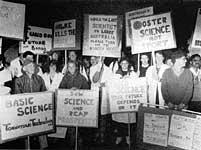
Sir Otto (far left, holding the basic science poster), participating in a protest against cuts in government funding for research, at the age of 89.
The man
Complex, mercurial, charismatic, acerbic, persuasive, polarizing, practical, ironical, elegant, concerned: these are some of the adjectives that spring to mind when colleagues and friends recall Otto. His complex mixture of practical peasant and intellectual aristocrat flowered when he played host in the elegant houses and gardens he and Margaret had created. Clunies Ross had once suggested that the corner of the CSIRO land where Otto hoped to build his second house was not regarded as an appropriate environment for a Chief, to which Otto replied: 'We don't mind. We make our own environment' – which they did.
Whatever opinion you expressed, whatever side of an issue you took, he would challenge it to sharpen both your thinking and his, a practice he learned from his uncle Joseph Niemirovski. Where some focus on points of agreement, Otto homed in on points of disagreement. It could be tiresome, but also illuminating, because he was quick and resourceful in debate and liked to test all facets of any idea. Arguments with Otto were 'energetic', as Boswell found those with Dr Johnson. Such a man does not have heroes. He would always want to argue with them. He told me he had none, but for many years there were photographs of Clunies Ross, Darlington, Dobzhansky and Vavilov displayed in his offices. They were friends, and they had influenced him at various stages, 'played God in his life' as he had with others.
His friends were mostly men and mostly scientific colleagues. Science was important to him, but so also were music and the arts, architecture and skiing, in all of which he had cherished friends. He particularly relished the company of young colleagues who would argue with him irreverently yet seriously about their research and his, and about science in general. Otto cherished these generations of intellectual offspring, not having had children of his own.
He also enjoyed meeting the great and famous but once wrote to a social scientist: 'I am no longer top brass, which in my eyes I never was, nor do I feel the need to listen to it. It might be a problem for your consideration why inescapably we turn to the Establishment when we organize a serious discussion of social problems...I hope I am right in thinking that in the natural sciences on the whole we have slightly better ways of discerning and using talent at a less exalted level' [25].
Otto was always quick to remind protégés of the dangers of the 'slippery slope' away from the real world of science, whenever they were tempted to take on organizational responsibilities or international commitments. Life was theatre for him, and like Picasso he would play games with people, especially those he cared about. Picasso's reply to Max Jacob as to why he did this could have come from Otto: 'Since I cared very much about my friends, it seemed to me I should put our friendship to the test every once in a while just to make sure it was as strong as it needed to be' [26].
Whenever Otto called himself a peasant, it was partly out of pride in his practicality. He enjoyed the manual skills needed in cytological work, 'doing his root tips' as his wife referred to it, and he often noted the absence of such skills in his colleagues with surprise. Dobzhansky was 'clumsy', while Vavilov was 'not terribly good on techniques, and plant breeding with which I was familiar was not second nature to him' [27], a comment as revealing of Otto as of Vavilov. One look at Otto's hands, or at his gardening tools, sufficed to indicate that he was a practical man, expert in the arts of pruning (both plants and people). At the entrance to the Canberra phytotron he had inscribed 'Cherish the earth for man will live by it forever', which truly reflected his values and concern for the world's resources. He cherished his garden and the fruits of it, even the imperfect ones. He was a true husbandman.
Music was also important to him and even in his nineties he enjoyed hearing new compositions. Trout fishing was, for a time, a consuming hobby, in which he enjoyed playing the fish, much as he enjoyed playing his colleagues at times. Besides gardening, skiing was his most abiding joy, which he practised whenever he could in Europe, New Zealand, Australia and the USA. Near the Blue Cow Club, which he helped to found at Guthega, there is a slope now called 'Sir Otto's run', on which he was to be seen each year until he was 90.
Otto's practicality was also expressed in his attitude to research. He was an unwavering proponent of the need for basic research, provided it was 'first class', as the key to enlarging our understanding of the world about us. His loyalty to CSIRO and to Clunies Ross derived from their support of that approach in the CSIRO culture of the 1950s, when he joined. Nevertheless, he was also an agriculturist at heart, deeply concerned with the world's food and population problems, and he encouraged long-term research with a bearing on those problems. The long term was his 'time scale of concern', and the internationality of science his delight.
Humane was an important word in Otto's vocabulary. Not having grown up with English as his native language, he savoured his subsequent mastery of it and was resourceful in his use of words. His early exposure to Jane Austen left its mark on his unremitting search for elegance of expression, fine manners, and love of irony, the salt of life to him. Always fluent and persuasive in speech, especially extempore speeches such as his address to the Stockholm conference in 1972, he nevertheless laboured hard – with pencil, eraser and scotch tape – on his written drafts. To the end of his career, he envied those scientists who wrote with an elegant style, such as E.O. Wilson and his colleague J.R. Philip. Elegance of expression was as significant for him as perpetual challenge, and he sought both to the very end.
In old age he remained determinedly active, alert, involved and irreverent, consciously exercising both his body and his mind. He would 'not go gentle into that good night', as Dylan Thomas had urged his own father. He died on 21 November 1998.
Degrees and honours
- D. Agr. (Berlin, 1925)
- D. Sc. (New Zealand, 1951)
- FRS NZ (1948)
- FRS (1953)
- FAA (1954)
- Knight Bachelor (1966)
- Correspondant Štranger, French Academy of Agricultural Science (1969)
- Honorary Life Fellow, Pacific Science Association (1979)
- Distinguished Economic Botanist (1983)
- Honorary Member, The Japan Academy (1983)
- Foreign Associate, US National Academy of Science (1988)
About this memoir
This memoir was originally published in Historical Records of Australian Science, vol.12, no.4, 1999. A shorter version of this memoir is also published in Biographical Memoirs of Fellows of the Royal Society of London, 1999. It was written by L.T. Evans, Honorary Research Fellow, CSIRO Division of Plant Industry, Canberra, ACT.
Acknowledgements
Reminiscences and comments from many colleagues and friends of Otto and Margaret have shaped this memoir. For detailed comments on earlier drafts I am grateful to Dr R.D. Brock, Dr A.H.D. Brown, Professor R.W. Home, Dr Elizabeth Whitcombe and Professor S.G. Wildman. The photographic portrait of Otto was taken in his seventies by Colin Totterdell; that of him participating in the protest was published in Search, 21(2) (1990), 47.
Notes and references
- McCarthy, G. (1985) Transcript in Frankel papers, to be deposited in the National Library of Australia, Canberra.
- Blythe, M. Videotaped interview, 15 September 1993, deposited in the Australian Academy of Science.
- Otto's aunt Ann and the Niemirovski estate at Koszylowce where he worked are described by Julia Namier in Lewis Namier, A Biography (London, 1971).
- Weisskopf, V. The Joy of Insight – Passions of a Physicist, (New York, 1991).
- In his book Styles of Scientific Thought: The German Genetics Community 1900-1933 (Chicago, 1993), J. Harwood describes the difference between the 'classical' and 'modern' schools of Germany and their relation to the later careers of German geneticists.
- Such frequent shifts from one university to another, and between subjects, were not uncommon in Germany at that time, cf. R.B. Goldschmidt, Portraits from Memory (Seattle, 1956).
- Schiemann, E., 'Erwin Baur', Berichte der Deutschen Botanischen Gesellschaft, 52 (1934), 51-114.
- Baur had come to genetics from the practice of psychiatry and believed that the new knowledge of genetics should also be applied to human populations and to the question of racial hygiene, as discussed by R.D. Harvey in 'Pioneers of genetics: A comparison of the attitudes of William Bateson and Erwin Baur to eugenics', Notes and Records of the Royal Society of London, 49 (1995), 105-117.
- The background to the establishment of the WRI and the work which led to it becoming one of the early successes of DSIR are described more fully in DSIR: Making Science Work for New Zealand, by Ross Galbreath (Wellington, 1998).
- White, M.J.D., 'Otto Frankel – contributions to wheat genetics', pp. 279-283 in Wheat Science – Today and Tomorrow, ed. L.T. Evans and W.J. Peacock (Cambridge, 1981).
- Frankel to S. Smith-White, 15 June 1954.
- Vavilov to E. Marsden, 29 September 1934. A notebook records the details of Otto's visits to the USSR and European wheat breeders.
- Copp, L.G.L., 'Wheat breeding in New Zealand', New Zealand Wheat Review, No. 10 (1967), 78-86.
- Frankel, O.H., 'The very human touch', pp. 131-135 in Ian Clunies Ross, Memoirs and Papers, with some Fragments of Autobiography (Melbourne, 1961).
- McCann, D.A. and Batterham, P., 'Australian genetics: a brief history', Genetica, 90 (1993), 81-114.
- Jacob, F., The Statue Within (Transl. F. Philip) (New York, 1988).
- Kuckuck, H., 'Neuere Arbeiten zur Entstehung der hexaploiden Kulturweizen', Zeitschrift fur Pflanzenzüchtung, 41 (1959), 205-226.
- Worthington, E.B., The Evolution of IBP (Cambridge, 1975).
- Soulé, M.F. and Mills, L.S., 'Conservation genetics and conservation biology: a troubled marriage', pp. 55-68 in Conservation of Biodiversity for Sustainable Development, ed. O.T. Sandlund, K. Hindar and A.H.D. Brown (Oslo, 1992).
- Pistorius, R., Scientists, Plants and Politics (Rome, 1997).
- Frankel to M.F. Day, 19 March 1985.
- Fenner, F., ed., The Australian Academy of Science: The First Forty Years (Canberra, 1995).
- Frankel, O.H., 'Sir Roy Grounds, 1905-1981', Historical Records of Australian Science, 5 (1982), 89-91.
- Johnston, R., 'Social responsibility of science: the social mirror of science', pp. 308-325 in MacLeod, R. (ed.) The Commonwealth of Science (Melbourne, 1988).
- Frankel to S. Encel, 20 November 1977.
- Gilot, F. and Lake, C., Life with Picasso (New York, 1964).
- Frankel to B.M. Cohen, 31 August 1977.
Bibliography
- 1925 Frankel, O.H. Faktorenkoppelung bei Pflanzen. Zeitschrift für induktive Abstammungs-und Verebungslehre 38: 324-348
- 1929 Baur, E., Herzberg-Frankel, O., Husfeld, B., Saulescu, N. and Schumann, E. Koppelungserscheinungen bei Antirrhinum majus. Zeitschrift für induktive Abstammungs-und Verebungslehre 50: 314-343
- 1929 Oppenheim, J.D., Frankel, O.H. Investigations into the fertilization of the 'Jaffa Orange'. I. Genetica 11: 369-374
- 1929 Frankel, O.H. Pflanzenzüchtung in Neuseeland. Der Züchter 1:9
- 1930 Genetics and plant-breeding. New Zealand Journal of Science & Technology 11: 401-408
- 1930 Frankel, O.H. Analytical yield investigations of New Zealand wheat. 1. Wheat Research Institute Annual Report pp. 42-59
- 1932 Frankel, O.H. Analytische Ertragsstudien an Gertreide. Der Züchter 4: 98-109
- 1933 Frankel, O.H. and Donald, H.P. Some critical observations on quality testing in wheat breeding. Proceedings of the World Grain Exhibition and Conference 2: 400-408
- 1933 Frankel, O.H. A case of mass-occurrence of non-inherited chlorophyll defects in wheat. Transactions of the Royal New Zealand Institute 63: 141-143
- 1934 Frankel, O.H. 'Cross 7' wheat. A new combination of high yield and baking-quality. Bulletin New Zealand Department Scientific Industrial Research 46
- 1935 Frankel, O.H. The differentiation of grain samples of closely related varieties of wheat by means of a simple mechanical test for grain quality. Journal of Agricultural Science 25: 461-465
- 1935 Frankel, O.H. Analytical yield investigations on New Zealand wheat. 2. Five years' analytical variety trials. Journal of Agricultural Science 25: 466-509
- 1937 Frankel, O.H. Inversions in Fritillaria. Journal of Genetics 34: 447-462
- 1937 Frankel, O.H. and Hair, J.B. Studies on the cytology, genetics and taxonomy of N.Z. Hebe and Veronica (Part 1). New Zealand Journal of Science Technology 18: 669-687
- 1937 Frankel, O.H. The nucleolar cycle in some species of Fritillaria. Cytologia 8: 37-47
- 1938 Frankel, O.H. The evolution of cultivated plants. Journal of the New Zealand Institute of Horticulture 8: 27-34
- 1938 Frankel, O.H. and Hair, J.B. Analytical yield investigations on N.Z. wheat. III. Nine years' observations on two varieties. New Zealand Journal of Science Technology 20A: 224-259
- 1939 Frankel, O.H. Tainui, a new spring wheat variety. New Zealand Journal of Science Technology 20A: 319-323
- 1939 Frankel, O.H. Analytical yield investigations on N.Z. wheat. IV. Blending varieties of wheat. Journal of Agricultural Science 29: 249-261
- 1940 Frankel, O.H. A critical survey of breeding wheat for baking quality. Journal of Agricultural Science 30: 98-112
- 1940 Frankel, O.H. Studies in Hebe. II. The significance of male sterility in the genetic system. Journal of Genetics 40: 171-184
- 1940 Frankel, O.H. The causal sequence of meiosis. I. Chiasma formation and the order of pairing in Fritillaria. Journal of Genetics 41: 9-34
- 1941 Frankel, O.H. Cytology and taxonomy of Hebe, Veronica and Pygmaea. Nature (London) 147: 117-118
- 1941 Frankel, O.H. 'Fife-Tuscan' wheat: a new variety for 'Tuscan land'. New Zealand Journal of Science and Technology 22A: 303-308
- 1947 Frankel, O.H. Plant collections. Journal of the Australian Institute of Agricultural Science 13: 122-124
- 1947 Boyce, S.W., Copp, L.G.L. and Frankel, O.H. The effects of selection for yield in wheat. Heredity 1: 223-233
- 1947 Frankel, O.H. The theory of plant breeding for yield. Heredity 1: 109-120
- 1948 Frankel, O.H. Hilgendorf wheat of outstanding baking quality. New Zealand Journal of Agriculture 76: 117-119
- 1948 Frankel, O.H. A new high-yielding wheat variety – WRI-yielder. New Zealand Journal of Agriculture 76: 221-222
- 1948 Frankel, O.H. Wheat varieties in New Zealand. Canterbury Chamber of Commerce Agricultural Bulletin No. 22
- 1948 Frankel, O.H. and Fraser, A.S. Basal sterile mutants in speltoid wheat. Heredity 2: 291-397
- 1949 Frankel, O.H. A self-propagating structural change in Triticum. I. Duplication and crossing-over. Heredity 3: 163-194
- 1949 Frankel, O.H. A self-propagating structural change in Triticum. II. The reproductive cycle. Heredity 3: 293-317
- 1950 Frankel, O.H. The development and maintenance of superior genetic stocks. Heredity 4: 89-102
- 1950 Frankel, O.H. A polymeric multiple gene change in hexaploid wheat. Heredity 4: 103-116
- 1951 Frankel, O.H. The multiple mutation in wheat. Heredity 5: 349
- 1954 Frankel, O.H. Genetic adaptation of cultivated plants in Australia. Proceedings Pan Indian Ocean Science Congress pp. 71-74
- 1954 Frankel, O.H. Invasion and evolution of plants in Australia and New Zealand. Caryologia Supplement 6: 600-609.
- 1957 Frankel, O.H. The biological system of plant introduction. Journal of the Australian Institute of Agricultural Science 23: 302-307
- 1958 Frankel, O.H. The biological system of plant introduction. Indian Journal of Genetics and Plant Breeding 17: 336-342
- 1958 Frankel, O.H. The dynamics of plant breeding. Journal of the Australian Institute of Agricultural Science 24: 112-123
- 1958 Frankel, O.H. and Williams, J.D. A record of natural crossing in subterranean clover. Journal of the Australian Institute of Agricultural Science 24: 162-163
- 1958 Frankel, O.H., Gani, R. and Munday, A. Two independent gene systems for floral induction in wheat. Proceedings 10th International Congress of Genetics 2: 86
- 1959 Frankel, O.H. Variation under domestication. Australian Journal of Science 22: 27-32
- 1959 Morley, F.H.W. and Frankel, O.H. An ecogenetic research program with introduced plants. Monographiae Biologicae 8: 577-586
- 1960 Brock, R.D. and Frankel, O.H. Plant improvement. Journal of the Australian Institute of Agricultural Science 26: 170-182
- 1960 Frankel, O.H. and Munday, A. The genetics of floral development in wheat. Journal of the Wheat Information Service, Biology Laboratory, Kyoto University 11: 1-3
- 1961 Frankel, O.H. The F.A.O. Freedom from Hunger Campaign. Journal of the Australian Institute of Agricultural Science 27: 79-84
- 1962 Frankel, O.H. Agricultural science and productivity in the next decade – plant science. Journal of the Australian Institute of Agricultural Science 28: 84-91
- 1962 Frankel, O.H. and Munday, A. The evolution of wheat. In: The Evolution of Living Organisms (Royal Society of Victoria, Melbourne) pp. 173-180
- 1963 Frankel, O.H. Agricultural scientists among scientists. Journal of the Australian Institute of Agricultural Science 29: 95-103
- 1963 Frankel, O.H. Concluding remarks – the next decade. In: Environmental Control of Plant Growth (L.T. Evans ed., New York, Academic Press) pp. 439-441
- 1963 Frankel, O.H. The social responsibility of agricultural science. Australian Journal of Science 25: 301-307
- 1963 Frankel, O.H. and Munday, A. Canalization of flower morphogenesis in wheat. Proceedings XIth International Congress Genetics 1: 10.31
- 1963 Frankel, O.H. The role of long range research in agricultural development. Proceedings of the World Food Congress, 4-18 June, 1963. FAO, Rome.
- 1964 Barnard, C. and Frankel, O.H. Grass, grazing animals, and man in historic perspective. In: Grasses and Grasslands (C. Barnard ed.) (London: Macmillan) pp. 1-12
- 1965 Frankel, O.H. Agricultural education for research workers. Agricultural Education. (Australian Institute of Agricultural Science, Melbourne) pp. 35-41
- 1966 Frankel, O.H. Adaptability of crops. New Scientist 31: 144-145
- 1966 Frankel, O.H. Internationalism in agricultural science. Australian Journal of Science 28: 314-320
- 1966 Frankel, O.H. The international biological program. Australian Journal of Science 28: 324-325
- 1967 Frankel, O.H. Guarding the plant-breeder's treasury. New Scientist 35: 538-540
- 1968 Frankel, O.H. Human welfare and international cooperation. Proceedings of the National Academy of Science of the United States of America 60: 33-41
- 1968 Frankel, O.H. International collaboration in plant exploration and conservation. Journal of the Australian Institute of Agricultural Science 34: 22-27
- 1968 Frankel, O.H. Man in the biosphere – an international study. In: Biology in the Modern World (Canberra: Australian Academy of Science) pp. 4-12
- 1968 Frankel, O.H. and Shineberg, B. The genetic system of basal fertility in wheat. Proceedings 3rd International Wheat Genetics Symposium (Canberra: Australian Academy of Science) pp. 279-281
- 1969 Frankel, O.H. Pacific centres of genetic diversity. Malayan Forester 32: 356-360
- 1969 Frankel, O.H. The dynamics of plant breeding. In: Proceedings XII International Congress Genetics (C. Oshima ed.) 3: 309-325
- 1969 Frankel, O.H., Shineberg, B. and Munday, A. The genetic basis of an invariant character in wheat. Heredity 24: 571-591
- 1970 Frankel, O.H. Genetic conservation of plants useful to man. Biological Conservation 2: 162-169
- 1970 Frankel, O.H. Genetic dangers in the green revolution. World Agriculture 19: 9-13
- 1970 Frankel, O.H. Save the genetic treasuries in the Sabrao region. Sabrao Newsletter 2: 1-6
- 1970 Frankel, O.H. and Bennett, E. (eds.) Genetic resources in plants – their exploration and conservation. In: Genetic Resources in Plants – Their Exploration and Conservation (Blackwell: Oxford and Edinburgh) IBP Handbook 11, 554 pp.
- 1970 Frankel, O.H. Preface. In: Genetic Resources in Plants – Their Exploration and Conservation (O.H. Frankel and E. Bennett, eds.) (Blackwell: Oxford and Edinburgh) IBP Handbook 11, pp. 1-4
- 1970 Frankel, O.H. and Bennett, E. Genetic resources. In: Genetic Resources in Plants – Their Exploration and Conservation (O.H. Frankel and E. Bennett, eds.) (Blackwell: Oxford and Edinburgh) IBP Handbook 11, pp. 7-17
- 1970 Frankel, O.H. Evaluation and utilization – introductory remarks. In: Genetic Resources in Plants – Their Exploration and Conservation (O.H. Frankel and E. Bennett, eds.) (Blackwell: Oxford and Edinburgh) IBP Handbook 11, pp. 395-401
- 1970 Frankel, O.H. Genetic conservation in perspective. In: Genetic Resources in Plants – Their Exploration and Conservation (O.H. Frankel and E. Bennett, eds.) (Blackwell: Oxford and Edinburgh) IBP Handbook 11, pp. 469-489
- 1970 Frankel, O.H. Variation – the essence of life. Proceedings of the Linnean Society of New South Wales 95: 158-169
- 77a. 1971 Frankel, O.H. The International Biological Program. Frontier Research on our Biosphere. The Australian Science Teachers Journal 17: 13-19
- 1972 Frankel, O.H. Australia and the international biological program. Search (Sydney) 3: 105-108
- 1972 Frankel, O.H. Genetic conservation – a parable of the scientist's social responsibility. Search (Sydney) 3: 193-201
- 1972 Frankel, O.H. Only one earth: the United Nations conference on the human environment, Stockholm, 5-16 June 1972. Search (Sydney) 3: 406-408
- 1973 Frankel, O.H. Introduction. In: Survey of Crop Genetic Resources in Their Centres of Diversity (O.H. Frankel, ed.) (Rome: FAO/IBP) pp. ix-xiv
- 1973 Frankel, O.H. (ed.) Survey of Crop Genetic Resources in Their Centres of Diversity (Rome: FAO/IBP) 164 pp.
- 1973 Frankel, O.H. The citizen in the knowledgeable society. Public Administration 32(2): 128-130
- 1974 Frankel, O.H. Genetic conservation – our evolutionary responsibility. Proceedings XIII International Congress Genetics 78: 53-65
- 1975 Frankel, O.H. Base-sterile speltoids – the location of the Bs gene of Triticum aestivum. Proceedings of the Royal Society of London B Biological Sciences 188: 163-166
- 1975 Frankel, O.H. Conservation in perpetuity: ecological and biosphere reserves. In: A National System of Ecological Reserves in Australia (F. Fenner, ed.) (Report 19) (Canberra: Australian Academy of Science) pp. 7-10
- 1975 Frankel, O.H. Genetic conservation – why and how. In: South East Asian Plant Genetic Resources (J.T. Williams, C.H. Lamoureux and N. Wulijarni-Soetjipto, eds.), Proceedings Symposium Bogor, 1975 (Bogor: International Board for Plant Genetic Resources and others) pp. 16-32
- 1975 Frankel, O.H. and Hawkes, J.G. (eds.) Crop Genetic Resources for Today and Tomorrow (International Biological Programme 2) (London: Cambridge University Press) 492 pp.
- 1975 Frankel, O.H. and Hawkes, J.G. Genetic resources – the past ten years and the next. In: Crop Genetic Resources for Today and Tomorrow (O.H. Frankel and J.G. Hawkes, eds.) (International Biological Programme 2) (London: Cambridge University Press) pp. 1-11
- 1975 Frankel, O.H. Genetic resources survey as a basis for exploration. In: Crop Genetic Resources for Today and Tomorrow (O.H. Frankel and J.G. Hawkes, eds.) (International Biological Programme 2) (London: Cambridge University Press) pp. 99-109
- 1975 Frankel, O.H. Genetic resources centres – a cooperative global network. In: Crop Genetic Resources for Today and Tomorrow (O.H. Frankel and J.G. Hawkes, eds.) (International Biological Programme 2) (London: Cambridge University Press) pp. 473-481
- 1975 Frankel, O.H. and Roskams, M.A. Stability of floral differentiation in Triticum. Proceedings of the Royal Society of London B Biological Sciences 188: 139-162
- 1976 Frankel, O.H. Biological structure of the landscape. In: Man and Landscape in Australia – Towards an Ecological Vision (G. Seddon and M. Davis, eds.), Symposium Canberra 1974, Australian UNESCO Committee for Man and the Biosphere, Publication 2 (Canberra: Australian Government Publishing Service) pp. 49-62
- 1976 Frankel, O.H. Floral initiation in wheat. Proceedings of the Royal Society of London B Biological Sciences 192: 273-298
- 1976 Frankel, O.H. IRRI phytotron – science in the service of human welfare. In: Proceedings of the Symposium on Climate and Rice (Los Baños, Philippines: International Rice Research Institute) pp. 3-9
- 1976 Frankel, O.H. The time scale of concern. In: Conservation of Threatened Plants (J.B. Simmoons, R.I. Beyer, P.E. Brandham, G.L. Lucas and V.T.H. Parry, eds.) (New York: Plenum Press) pp. 245-248
- 1977 Frankel, O.H. Genetic resources. Annals of the New York Academy of Science 287: 332-344
- 1977 Frankel, O.H. Genetic resources as the backbone of plant protection. In: Induced Mutations Against Plant Diseases, Proceedings of a symposium held in Vienna 1977 (Vienna: International Atomic Energy Agency) pp. 3-12
- 1977 Frankel, O.H. Natural variation and its conservation. In: Genetic Diversity in Plants (A. Muhammed, R. Askel and R.C. von Borstel, eds.) (New York: Plenum Press) pp. 21-44
- 1978 Frankel, O.H. Value of wilderness to science. Proceedings National Wilderness Conference, Canberra. ed. G. Mosley, Australian Conservation Foundation. pp. 101-105
- 1978 Frankel, O.H. Germplasm 'preservation'. Plant Genetic Resources Newsletter No. 34: 18-19
- 1978 Frankel, O.H. Natural resources and technology – evaluation, use and conservation of biological resources. Proceedings 3rd Inter-Congress Pacific Science Association (Bali, Indonesia: July 1977) pp. 303-323
- 1978 Frankel, O.H. Philosophy and strategy of genetic conservation in plants. Forest Tree Breeding. In: Third World Consultation of Forest Tree Breeding, Canberra 1977, Documents (Canberra: CSIRO) 1: pp. 2-11
- 1978 Frankel, O.H. Biosphere reserves: the philosophy of conservation. In: Conservation and Agriculture (J.G. Hawkes, ed.) Duckworth, London. pp. 101-106
- 1978 Frankel, O.H. Conservation of crop genetic resources and their wild relatives: an overview. In: Conservation and Agriculture (J.G. Hawkes, ed.) Duckworth, London. pp. 123-149
- 1980 Frankel, O. Our evolutionary responsibility. UNESCO Courier, May 1980 pp. 25-27
- 1980 Frankel, O.H. Trees in the Australian rural landscape. In: Focus on Farm Trees. The Decline of Trees in the Rural Landscape (N.M. Oates, P.J. Greig, D.G. Hill, P.A. Langley and A.J. Reid, eds), Proceedings of a National Conference, Melbourne 1980 (Melbourne:Organising Committee) pp. 14-18
- 1981 Frankel, O.H. Evolution in jeopardy: the role of nature reserves. In: Evolution and Speciation: Essays in Honor of M.J.D. White (Atchley, W.R. and D.S. Woodruff, eds.) (Cambridge University Press: New York.) pp. 417-24
- 1981 Frankel, O.H. and Soule, M.E. (eds.) Conservation and Evolution. (Cambridge: Cambridge University Press) 327 pp.
- 1981 Frankel, O.H., Knox, R.B. and Considine, J.A. Development of the wheat flower: genetics and physiology. In: Wheat Science – Today and Tomorrow (L.T. Evans and W.J. Peacock, eds.) (Cambridge: Cambridge University Press) pp. 167-190
- 1981 Frankel, O.H. Definition of gene pools. In: Evolution Today. Proceedings of the 2nd International Congress of Systematic and Evolutionary Biology. (G.G.E. Scudder and J.L. Reveal, eds.) Hunt Institute of Botanical Documentation, Pittsburgh. pp. 385-386
- 1981 Frankel, O.H. Maintenance of Gene Pools: Sense and Nonsense. In: Evolution Today (G.G.E. Scudder and J.L. Reveal, eds.) pp. 387-392
- 1982 Considine, J.A., Knox, R.B. and Frankel, O.H. Stereological analysis of floral development and quantitative histochemistry of nucleic acids in fertile and base-sterile varieties of wheat. Annals of Botany (London) 50: 647-663
- 1982 Frankel, O.H. Role of conservation genetics in the conservation of rare species. In: Species at Risk: Research in Australia (R.H. Groves and W.D.L. Ride, eds.) pp. 159-162
- 1982 Frankel, O.H. Can genetic diversity survive? Advances in Cytogenetics and Crop Improvement (R.B. Singh, R.M. Singh and B.D. Singh, ed.) Kalyani, New Delhi.
- 1983 Frankel, O.H. The place of management in conservation. In: Genetics and Conservation (C.M. Schonewald-Cox, S.M. Chambers, B. MacBryde and W.L. Thomas, eds.) pp. 1-14
- 1984 Frankel, O.H. Genetic diversity, ecosystem conservation and evolutionary responsibility. In: Ecology in Practice. Part l: Ecosystem Management (F. Di Castri, F.W.G. Baker and M. Hadley, eds.) (Dublin/UNESCO Paris: Tycooly International Publishing Limited) pp. 414-427
- 1984 Frankel, O.H. Genetic perspectives of germplasm conservation. In: Genetic Manipulation: Impact on Man and Society (W. Arber, K. Illemensee, W.J. Peacock and P. Starlinger, eds.) (Cambridge: Cambridge University Press) pp. 161-170
- 1984 Frankel, O.H. Genetic principles of in situ preservation of plant resources. In: Conservation of Tropical Plant Resources, Proceedings Regional Workshop on Conservation of Tropical Plant Resources in South-East Asia, New Delhi, 1982 pp. 55-65
- 1984 Frankel, O.H. and Brown, A.H.D. Current plant genetic resources a critical appraisal. In: Genetics : New Frontiers, Volume IV Applied Genetics, Proceedings XV International Congress of Genetics, New Delhi, 1983, V.L. Chopra, B.C. Joshi, R.P. Sharma and H.C. Bansal, eds.) (New Delhi: Oxford and IBH Publishing Co) pp. 3-13)
- 1984 Frankel, O.H., Brown, A.D.H. Plant Genetic resources today: a critical appraisal. In: Crop Genetic Resources: Conservation and Evolution (J.H.W. Holden and J.T. Williams, eds.) (Allen & Unwin, London).
- 1985 Frankel, O.H. Genetic resources: the founding years [Part One]. Diversity 7: 26-29
- 1985 Frankel, O.H. Into the second decade: genetic resources and the plant breeder. Proceedings International Symposium South East Asian Plant Genetic Resources, Jakarta, 1985 (K.L. Mehra and S. Sastrapradja, eds.) pp. 26-31
- 1986 Frankel, O.H. Conservation – science, ethics and society. N.W. Briton Oration, Queensland Agricultural College, 1986, 8 pp.
- 1986 Frankel, O.H. Genetic resources – museum or utility. In: Plant Breeding Symposium DSIR 1986, Agronomy Society NZ, Special Publication 5: 3-8
- 1986 Frankel, O.H. Genetic resources: the founding years. Part Two: the movement's constituent assembly. Diversity 8: 30-32
- 1986 Frankel, O.H. Genetic resources: the founding years. Part Three: the long road to the International Board. Diversity 9: 30-33
- 1987 Frankel, O.H. Genetic resources: the founding years Part Four: after twenty years. Diversity 11: 25-27
- 1987 Frankel, O.H. Nikolai Ivanovich Vavilov 1887-1943: a memoir. Plant Genetic Resources Newsletter 72: 1-2
- 1987 Frankel, O.H., Gerlach, W.L. and Peacock, W.J. The ribosomal RNA genes in synthetic tetraploids of wheat. Theoretical and Applied Genetics 75: 138-143
- 1988 Frankel, O.H. Genetic resources: evolutionary and social responsibilities. In: Seeds and Sovereignty – The Use and Control of Genetic Resources (J.R. Kloppenburg (Jr), ed.) pp. 19-46
- 1988 Frankel, O.H. Nikolai Ivanovich Vavilov 1887-1943 a memoir. FAO/IBPGR Plant Genetic Research Newsletter 72: 1-2
- 1989 Appels, R., Reddy, P., McIntyre, C.L., Moran, L.B., Frankel, O.H. and Clarke, B.C. The molecular – cytogenetic analysis of grasses and its application to studying relationships among species of the Triticeae. Genome 31: 122-133
- 1989 Brown, A.H.D., Frankel, O.H., Marshall, D.R. and Williams, J.T. (eds.) The Use of Plant Genetic Resources (Cambridge: Cambridge University Press) 382 pp.
- 1989 Frankel, O.H. Principles and strategies of evaluation. In: The Use of Plant Genetic Resources (A.H.D. Brown, O.H. Frankel, D.R. Marshall and J.T. Williams, eds.) (Cambridge: Cambridge University Press) pp. 245-260
- 1989 Frankel, O.H. Point of view: perspectives on genetic resources. In: CIMMYT 1988 Annual Report: Delivering Diversity (International Maize and Wheat Improvement Center: Mexico) pp. 10-17
- 1989 Frankel, O.H. The Keystone international dialogue on plant genetic resources: A scientist's evaluation. Diversity 5: 59-60
- 1990 Frankel, O.H. Cultivation and conservation. Trends in Ecology and Evolution 5: 129-130
- 1990 Frankel, O.H. Germplasm conservation and utilization in horticulture. In: Horticultural Biotechnology (Wiley-Liss, Inc.) pp. 5-17
- 1990 Frankel, O.H. The future of the global genetic resources network: Activation or dissolution? Diversity 6: 59-60
- 1995 Frankel, O.H., Burdon, J.J. and Peacock, W.J. Landraces in Transit – The threat perceived. Diversity 11(3): 14-15
- 1995 Frankel, O.H. Brown, A.H.D. and J.J. Burdon. The Conservation of Plant Biodiversity. Cambridge University Press 500 pp.
Norman Alan Walker 1929–2013
Alan Walker (he never used ‘Norman') developed pioneering electrophysiological methods to make major contributions to our understanding of mechanisms and energetics of transport of solutes across plant cell membranes. He used giant cells of characean algae to measure membrane electrical potential differences and conductances that were combined with measurements of fluxes of inorganic ions and organic nutrients obtained with radioactive tracers.
Alan built up a strong research group at the University of Sydney and had many external collaborations that considerably widened the scope of his research in relation to membrane biology of characean cells and well beyond. His considerable skills in mathematical modelling contributed significantly to research led by others on plant-fungal (mycorrhizal) symbiosis, movement of solutes through the cytoplasmic connections between plant cells (plasmodesmata), the membrane transport mechanisms that regulate the release of nutrients from coats of developing legume seeds, and even nutrient cycling in Arctic ecosystems.
Alan had strong political views and definite aesthetic tastes that included aspects of visual arts (ceramics and impressionist paintings) and music. He was very interested in good food and wine, and other interests included vertebrate palaeontology and bird-watching. He had many friends with similar tastes, who share fond memories of him.
Download the memoir
About this memoir
This memoir was originally published in Historical Records of Australian Science, vol. 26(2), 2015. It was written by F. Andrew Smith and Mary J. Beilby.