





Wilbur Norman Christiansen 1913–2007

W. N. (‘Chris') Christiansen was an innovative and influential radio astronomy pioneer. The hallmarks of his long and distinguished career in science and engineering, spanning almost five decades, were his inventiveness and his commitment to, and success with, large-scale projects. These projects were the outcome of his innovative skill as physicist and engineer. Paralleling this was his equal commitment to forging strong international links and friendships, leading to his election as Vice-President of the International Astronomical Union for the years 1964 to 1970, as President of the International Union of Radio Science, URSI, from 1978 to 1981, and subsequently as Honorary Life President in 1984, and as Foreign Secretary of the Australian Academy of Science from 1981 to 1985. Major subsequent developments in radio astronomy and wireless communications on the global scene stand as a legacy to Chris's approach to his work and to the development of those who worked with him.
Download the memoir
About this memoir
This memoir was originally published in Historical Records of Australian Science, vol. 22(2), 2011. It was written by R. H. Frater and W. M. Goss.


Wesley Kingston Whitten 1918–2010
Wesley Kingston Whitten (1918–2010) was recognized as one of Australia's most innovative biological scientists. His studies were the precursor of the science of preimplantation embryology and the technology of assisted reproduction. He pioneered the study of mammalian pheromones and their receptor, the vomeronasal organ. He elucidated the genetic basis of hermaphroditism and mosaicism, and the timing and mechanism of X chromosome inactivation. Several of his recombinant mouse strains continue to provide models for a number of diseases.
Download the memoir
About this memoir
This memoir was originally published in Historical Records of Australian Science, vol. 22(2), 2011. It was written by J. N. Shelton and P. J. McCullagh.
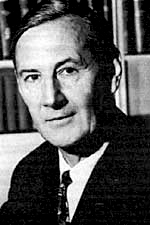
Walter Victor Macfarlane 1913–1982
Written by A.K. McIntyre.
Introduction
With the death of Victor Macfarlane on 26 February 1982, Australia and New Zealand lost one of the most oustanding figures to have appeared in the Australasian scholastic world. Macfarlane' s remarkable reputation stemmed not only from his exceptional intelligence, originality of thought and the high quality of his many research activities, but particularly and uniquely because of the extraordinary breadth of his scientific achievements and cultural interests, ranging from studies of parasitic trematodes through clinical medicine and surgery, neurophysiology, adaptation to desert and arctic environments, ecophysiology of animals, including mankind, and nutrition, especially salt and water metabolism, to social interactions and the genesis of customs and rituals. Nor were these many research ventures trivial: whatever problems he chose to study, his approach was innovative and direct, and most often required a minimum of complex and sophisticated equipment. The task of doing justice to this polymath in writing about his career is indeed formidable.
Early days in New Zealand
Walter Victor Macfarlane was born in Christchurch, New Zealand, on 27 September 1913. His parents, Ada Constance Westerman and Walter Macfarlane, were first-generation New Zealanders, their families having migrated from Britain in the early days of settlement. Ada Westerman's parents came from Yorkshire, Walter Macfarlane's from Scotland. Victor was the first child of the marriage; two other children, both girls, made their appearance later. The first of these sisters, born about two years after Victor, died at the age of four from complications arising from pertussis (whooping cough), a notorious child-killer in those pre-antibiotic times. This tragedy must have been a shattering experience to the family. Victor's surviving sister, nine years his junior, recalls that Victor never spoke about the matter or even mentioned the younger sister, although from family photographs it was clear that he and this little girl had been devoted to one another.
The family lived in the beautiful Cashmere hills north of Christchurch, on the volcanic slopes of the Banks peninsula. Their house was high up, close to the upper steep, open, largely tussock-covered slopes. Looking south and west, the city of Christchurch could be seen below, and far to the west beyond the Canterbury plains was the magnificent backdrop of the Southern Alps. The Macfarlane family revelled in this clear, airy and open environment, and it would be difficult to imagine a better place in which to grow up. It must have played a major role in shaping the young Victor's developing interests and aspirations. At least of equal importance, however, was the domestic environment and the character and attitudes of the parents. According to Victor's sister Yvonne, their parents were not highly educated, but they both had great energy and vitality, and had wide interests. Their mother was well read in classical literature and poetry and had a remarkable memory, often quoting at length from her favourite poets. Their father, a successful builder, was quiet, strong and tireless. He was a fine husband and father, and he and his family were very popular in the district. The harmonious and tolerant home atmosphere meant that the children enjoyed a great deal of freedom within and outside the home. In addition to his own household obligations, Walter Macfarlane settled his widowed mother and two unmarried sisters on a farmlet of three and a half acres at the foot of the Cashmere hills, where they kept a cow and chickens, grew fruit of various kinds and quantities of vegetables and flowers.
Victor's sister writes: 'The big house and its produce was a Mecca for many during the depression. We adored this farmlet and the happy people there – not to mention the ever-present goodies to eat.'
From an early age, Victor was able to go, sometimes alone, sometimes with company, on extensive explorations of the adjoining steep tussocky hills and patches of native bush. Highly intelligent, with a lively curiosity, he loved these wanderings and observations of plant and animal life, wind and weather. His home and surroundings favoured this early development as a budding naturalist. Victor also became an avid reader and, although there is no record of when he began to read, there can be little doubt that this was early and that his mother played a big part in helping him to acquire this skill. But he was no self-effacing bookworm, and his life-long predilection for conversation on every conceivable topic developed early. These often lengthy conversations, especially during meals, are remembered by his sister as lively and provocative, and well sprinkled with puns. One topic brought up a number of times was comparative religion.
Although not narrowly religious, the Macfarlane family belonged to the Methodist Church, which was fortunate to have then amongst its New Zealand clergy a number of spritely, intelligent young men with a remarkably ecumenical outlook for the times. Amongst those attending the Cashmere Methodist Church was a group of lively and intelligent people who were the basis of much of the Macfarlane family's social life. One of these friends living nearby was Hugh Parton, a member of the staff of Canterbury University College's Department of Chemistry and later professor of chemistry at the University of Otago in Dunedin. Parton took a particular interest in the young Victor, who attended his Bible class at the church, and the pattern and direction of Victor's career was strongly influenced by this association.
Victor attended Cashmere Primary School and, from 1928 to 1931, Christchurch Boys' High School. His performance, though not spectacular, was sound and led to several prizes for general excellence. English, History, Geography and Chemistry were his main subjects. He showed a clear preference for the humanities, the subjects he intended to pursue at tertiary level being English and History, and this perhaps is not surprising in view of his extensive reading and love of language. That he chose to include Chemistry when enrolling for his BA at Canterbury University College in 1932 can be attributed to the influence of two people, his bible class convenor Hugh Parton and John Kidson, science teacher at Christchurch Boys' High School and also a member of the Cashmere Methodist Church. Little or no Biology was available in most boys' schools at the time.
Hugh Parton has provided an interesting sidelight on Victor's rather unusual manner of speech and accent. Everyone who knew him was intrigued by his manner of talking and by his accent, very different from that of most New Zealanders. He spoke in a very measured but sometimes hesitant way, with periodical pauses and occasional asides. Parton is convinced that these characteristics arose from elocution lessons that he received from the author and dramatist, Ngaio Marsh (later Dame Ngaio), who lived nearby in the Cashmere hills.
Victor's main outdoor recreation continued to be ever-wider exploration by bicycle and on foot of the surrounding country. These expeditions, mainly during holidays, often with a friend but sometimes alone, extended beyond the Banks peninsula and took him to the river-valleys, foothills and passes of the Southern Alps. He also engaged in the more usual sports and hobbies of school-age boys, including the making and flying of model aeroplanes, rugby football and rifle-shooting. He became a crack shot, and was a member of the school's Snowden Trophy shooting team. His passion for reading continued; his sister recalls that his room always seemed full of books. She also writes: 'I remember Victor in his teens sitting down for three days and reading the Bible from cover to cover!' At high school, he served very successfully as librarian for a year. At times the demands of his active physical life temporarily dampened his usual conversational sparkle. Like his father, he was physically strong and had great endurance. Each school day he bicycled to high school, five miles each way and with a stiff climb at the end of the day, at times in the teeth of a howling northwest wind. His sister writes that sometimes after rugby, 'a bruised "hooker" used to push his bicycle up the hill and fall into a bath for ages. On these occasions his usual lively meal conversations became monosyllabic.'
Victor's own words (1) summarise succintly this early phase of his life:
There were advantages to growing up in New Zealand. We lived on the andesitic lava flows that to James Cook had been Banks' Island. There was a great high playground of Poa tussock for sledging, and tangled native forest on the steep crater slopes for exploration. Across the plain we watched the southern Alps change from summer scree to winter snow. As an adolescent I began to explore them, often using a bicycle to get to the foothills. The rivers ran clear and fast and led to the Notofagus forests and these in turn, over the untracked moss, to gorges and the passes of the mountains. Then there were glaciers and snow peaks to climb. People were and still are the rarest fauna of the region. There could be few better places to grow up.
Civilisation from Europe came essentially in books. These I read avidly. In the routines of school, english, chemistry, geography and history provided the main interest and at the age of 13, 15 and 17 prizes for general excellence emerged. But there was no biological science in school work. I spent a vacation reading all the plays and prefaces of G.B. Shaw and found a framework for social understanding and criticism. Then the volumes of Wells, Huxley and Wells' Science of Life, consumed also in a vacation, was a new book of revelations. At 16 this provided a sweep of imaginative biology from the pre-Cambrian to human psychology. In spite of an invitation to return to school as head prefect I decided to go on to the University, Canterbury College in Christchurch.
Canterbury University College
In 1932, Victor Macfarlane enrolled in the Faculty of Arts, his first year subjects being English, French, History and Chemistry. His intention was to proceed to his MA degree in History. Because of his growing interest, through his own reading and the influence of Hugh Parton and John Kidson, in the broad sweep of science, he was considering, as the topic of his master's thesis, the history of science in New Zealand. However, these plans changed during the course of his first year as a result of the wider contacts and challenges encountered in this new, more varied, and liberal educational environment. Canterbury University College, with only about a thousand students, must have been a stimulating place for any bright young person fortunate enough to be able to study there despite the economic depression. Although staffing was meagre, the college was fortunate in having some excellent scholars and teachers in various departments, and the general atmosphere must have encouraged enquiry and learning. To young Macfarlane, seething with ideas and an unquenchable thirst for knowledge and understanding, the experience opened whole new vistas. In his own words:
There were a thousand gowned students. Frederick Sinclair was Professor of English and he roused my latent interest in etymology. Some of us accepted his invitation to spend lunchtime construing Dante, which led us not only to poetry but also to appraisal of human behaviour in a framework which categorised malice and treachery as the most human and least worthy forms of conduct. This extracurricular activity had much more lasting influence than many thousands of the formal hours of work. Periodically I walked up the hill with Edward Percival, Professor of Zoology, and we discussed the world and the sciences. He suggested that I might like to sample zoology in his course on evolution held on Friday nights between 7 and 8 p.m. In the next year I enrolled in zoology and followed it through to Masters level. With Edward Percival we pursued and discussed everything from genetics to ecology.
Thus Victor's second year subjects were English II, History II, Chemistry II and Zoology I. On returning in 1934 from a year overseas, Hugh Parton was surprised to find Victor in the Chemistry III class. In that year Victor also completed Zoology II as well as History III, qualifying for his BA. This highly unusual course continued the following year with Zoology III as prerequisite for his MA in zoology, which he completed in 1936.
In those depression years, jobs were few, and in the Department of Zoology there were no laboratory assistants. Victor offered his services as unpaid assistant during his second year, and continued these duties for the next two years. His autobiographical notes relate that he was able 'to combine work in four subjects with the duties of lab boy. This was a good way to learn how a laboratory works and also to acquire techniques like section-cutting, the culture of protozoa, and embryology. It gave a view of science from the inside while I was still a student.' Much of the stimulus and intellectual excitement came from personal and informal contacts and discussions out of formal class hours, such as those already mentioned with Sinclair and Percival. Victor's notes describe another informal activity: 'Another educational institution not mentioned in the calendar was a seat outside the Chemistry Department, in the quadrangle. There we discussed concept, percept, epistemology, sociology and the nature of things in a moderately sophisticated fashion. Hugh Parton was very much involved with this side of scientific thinking.'
Before enrolling at college, Victor through his reading and rural excursions and observations had become interested in the interactions between living organisms and their surroundings. But it was Edward Percival who really introduced him to ecology, which became in the broadest sense the main theme underlying his thinking and research from then on. This introduction was by way of studying the food supply in trout streams, which demonstrated that limitations of mean size and numbers in the trout population were determined by the predation of anglers rather than shortage of food.
Victor chose as the topic for his Master's thesis the study of two trematode parasites of eels that he had found in an eel brought into the laboratory for class purposes. This research 'meant a year of nights wading black rivers, tending fish traps, catching and counting 60,000 snails, small fish and trematodes. From this emerged four trematode life cycles, two new genera and a picture of the ecological impact of environment on the numbers and dispersion of parasites amongst their hosts'. On some of these watery expeditions, he took with him as assistant his young sister Yvonne.
The thesis was accepted, and he was awarded the degree of MA, Class II, in Zoology. Hugh Parton recalls Edward Percival's annoyance with the British external examiner. Percival was convinced that his failure to award a First for this admirable piece of research was the result of Victor's justifiably critical treatment of a question on which the examiner had dogmatic views. Be that as it may, closer to home the quality of the work was recognised and led to an invitation from the Wallaceville Veterinary Research Laboratory to join them as parasitologist and, in particular, to study the intermediate host of the New Zealand liver-fluke. For this work he was to receive £50.
Parasitologist
Victor accepted this offer, and set to work with his usual vigour and dedication to solve this important practical problem, the first with which he was faced as a professional zoologist. The host had been believed to be potamopygus, a very common fresh-water snail, but no proof had been forthcoming. Victor's research involved extensive field-work, often under severe climatic conditions, for which the determination and physical endurance that he had already demonstrated were essential. The task is well described in his biographical notes:
In the heavily dissected volcanic ash country of Hawkes Bay I looked for the host, riding horses along narrow tracks on near-precipices in search of molluscs. After about three months, likely looking rediae and cercariae were found in a swamp on the MacKinnon Station. For laboratory there was a table on the verandah of the great homestead and I saw the likely cercariae with the setting sun to illuminate the microscope. The peculiar pleasure of that sort of discovery was increased by talking of it over dinner at the vast polished table. Eighty years earlier this had seated 60 guests on their way north in convoy during the Maori wars. Now the table had only three occupants, but it retained the splendour of the patriarchal days.
The tiny fasciola larvae he had found were transmitted to the Wallaceville laboratory in small paraffin containers and there fed to rabbits. After two months, small liver-flukes were found in their livers and bile ducts, proving that the snail Limnaea truncatula was indeed the long-sought molluscan host in this district. Later, further search in other areas revealed that two other kinds of snail could also act as hosts for fasciola, one in the Buller region and one in Central Otago. The time spent in searching the Buller area included a week of black frost. 'The temperature did not rise above the freezing point of water at any time of the day or night and the mist froze continuously on the trees meshing them in ice. The other host was in Central Otago, where at least the ice conditions permitted some skating.' Thus the young parasitologist had solved his first problem, identifying the true mollusc hosts of the sheep liver-fluke and showing the earlier belief to be incorrect.
Subsequent activities included work in the Marlborough district on 'blowfly strike' in sheep that involved the setting and tending of many fly-traps in the hills and the collection of millions of flies. He devised experiments to determine the degree of fly-attractance of wool in different states of wetness from rain or urine contamination. This was done by setting out what Victor called a cafeteria of different samples of wool and counting the egg-deposition. Wet tip-wool proved to have the greatest fly-attractance. Similar tests were also carried out with larval nematode worms. Somehow during this busy couple of years Victor managed to fit in physics lessons with Frederick White, professor of physics at Canterbury University College (later Sir Frederick White, head of CSIRO). Victor performed the practical work alone in the laboratory on Saturdays. During his time attached to the Wallaceville laboratory, he became increasingly aware of gaps in his basic science training, especially in the rapidly growing fields of physiology and biochemistry. Furthermore, according to Hugh Parton, he also felt that the prospects for a graduate in classical zoology were not promising in a veterinary establishment. His father agreed to support him in obtaining the appropriate professional training, and suggested a veterinary school in Australia. However, Victor chose instead to tackle medicine in New Zealand's only medical school, at the University of Otago in Dunedin, the only establishment in the country then offering courses in physiology and biochemistry.
Dunedin and the University of Otago
To embark as a mature student on a course so exacting and prolonged as medicine requires exceptional determination as well as academic ability, attributes with which Victor had already shown he was amply endowed. The small city of Dunedin, founded by Scottish immigrants, was and is dominated by its university; indeed, the University of Otago was the first to be established in the whole country. Victor must once again have enjoyed working in an environment permeated with learning and enquiry, even though the excessive minutiae to be memorised in some subjects, especially gross human anatomy, can scarcely have been intellectually rewarding. But he endured it, even noting: 'The drilling in anatomy from William Gowland would have made FRCS candidates of us all, but the histology and embryology was not without its later use.' John Malcolm, nearing retirement, taught physiology well, with a nutritional bias; and Norman Edson very ably expounded to the class the biochemistry of the times. Nor did the winter climate of Dunedin, which has been euphemistically described as 'bracing', deter Victor's enthusiasm, despite living on short commons in 'digs' that were hardly luxurious. Victor characteristically wrote: 'The wet climate described in Hodge's The Wind and the Rain was useful encouragement to work, even at the level of working out problems in an unheated room at 2 or 3 o'clock in the morning with ice on the windows.' The physical problems of climate and accommodation apart, Victor, with his widespread interests, soon settled into the university community and became friendly not only with many students in medicine and other faculties, but also with staff, most of whom soon came to recognise and respect his remarkable talents. The city was well endowed with libraries, having a good lending library as well as those in the university. The medical school had its own library containing not only good runs of the major journals and a good supply of textbooks, but also a most valuable historical section obtained through a legacy, the Monro collection from Edinburgh of old books mainly on anatomy and physiology. Victor wrote:
There were 300 leather-bound volumes which recorded the thinking of Scarpa, Willis, Morgagni, Malpighi, Harvey, Sydenham, Addison and many others. As president of the Medical History Society, I had access to the books and enjoyed devising displays of their more pertinent contents. This reinforced the pleasures I had had in Canterbury of exploring Leeuwenhoek and reading the journals of explorers and biologists with Cook, d'Urville, Bellingshausen, Wilkes, or Vancouver who had passed the region up to 150 years previously.
Victor continued to read widely in all his subjects, in addition to the standard set texts and other material, and soon this was well known by the staff. It was usual for Horace Smirk, professor of medicine, to greet him in tutorials, clinics or oral exams with the words: 'Well, Macfarlane, what have you got to tell us today?' But his activities were by no means confined to medical academic study and history. He was able to draw very competently – his sister reports that 'his zoology illustrations were immaculate and beautiful to behold' – and in Dunedin he continued his interest in the visual arts. Doubtless this helped his friendship with Pamela Sinclair, a zoology student with outstanding artistic talent. He also enjoyed music, but was no performer and was thought to be tone-deaf. One new friend who opened up for him a wider musical world was Walter Griesbach, a physician who had been able to leave Hitler's Germany and settle in New Zealand. He gave lectures on endocrinology in the physiology course, as well as carrying out innovative research on pituitary-thyroid relationships. Griesbach was himself a competent pianist. Victor's notes relate:
I came to know him much better as his classic investigations of pituitary-thyroid cytology developed. He was a wise physician, a logically imaginative investigator and through him I came to know Brahms, Bach, Beethoven and Scarlatti much better.
Apart from social occasions with students or staff, such as his visits to Griesbach, Victor was also involved in other non-academic activities during the busy Dunedin days. These included taking up fencing, drilling with the Otago University Medical Corps, and producing several plays including a Greek tragedy.
The head of the medical school's Department of Public Health and Bacteriology was Charles (later Sir Charles) Hercus. He had carried out important pioneer work on goitre, a common condition in mountainous regions through iodine deficiency, and had been instrumental in largely preventing goitre by the use of iodised salt. One feature of his course was a requirement that each student undertake a study, out of formal class hours, of some problem of public health significance, and present a minor thesis on his or her work. Victor found a problem well suited to his earlier experience with parasites and schistosomes: to track down the cause of 'swimmer's itch' that affected many people after swimming in the country's many lakes. It seemed likely that the itchy rash might be an allergic reaction to some agent or organism in the water, and possible candidates included larval schistosomes. The work was done during vacations when Victor worked on a large property adjoining Lake Wanaka. Victor's notes vividly describe his activities:
I became fourth rouseabout on Wanaka Station working from 7am until 6pm for six days for £2 a week, mutton and potatoes and a sack bed in the shed. After work and on the seventh day I sought the nature of the itch and sat in the lake all day waiting to be attacked. Nothing happened. I set up a microscope in the undertaker's shed near the lake. There was a kerosene lamp for microscope work. I set it up on the carpenter's bench, sat on an upturned boat and was surrounded by empty coffins. Then one Sunday in some snails dredged from the lake I found fork-tailed cercariae and applied them to my arm. There was no effect. The coffin-maker's son, however, came by and some of the cercariae were applied to his skin. He complained of itching sensations and within 4 hours there were papules, forming the characteristic itching rash of swimmers in the lake. Ten days later I applied more of these organisms to my own skin and after an initial penetration itch, papules appeared with a 24-hour latency. I put some more organisms on my thigh and at 24 hours after invasion persuaded Archie Douglas, the general practitioner of the village, to undertake a biopsy. He took epidermis and dermis containing the papules. The scar is still present. But it took more than three months hunting serial sections of the tissue to find the lesion. Finally I realised that a small hole with debris in it was the invasion track, but the organisms had already been dissolved by 26 hours. Next season I made antigens from the snails, the cercariae and their secretions. Injections into exposed subjects showed that antibodies were present in all components. The cercarial body was the main antigen, and 10 days elapsed between the initial invasion and the build-up of adequate antibodies. This work on immunopathology was aided by the presence of a girls' fitness camp which yielded a supply of under-occupied girls, who obligingly and rather surprisingly allowed the larvae to invade the inner sides of their arms. From these I was able to take biopsies at timed intervals to follow the whole sequence of non-immune and immune responses to the organisms.
The phenomenon of habituation impressed him during this study. The glacier-fed lake's temperature stays much the same throughout the year (10–12°C), and initial immersion was painful and short. But after two weeks of daily immersion he was able to stay in the water all day without great discomfort and without shivering.
Late in 1944, Victor sat his final examinations. Not surprisingly he topped his year and won a number of awards – the McCallum, Colquhoun and Clinical Medicine medals and the Travelling Scholarship in Medicine. The degrees of MB, ChB were conferred early in 1945. For the first six months of that year he was the only resident house surgeon in the orthopedics unit of the Dunedin Hospital adjacent to the medical school buildings. He assisted with long operating lists and set innumerable fractures himself. After this introduction to the duties of an RMO, he became assistant to Murray Falconer in a newly established neurosurgical unit. Falconer was highly skilled in the special techniques necessary for exposure of the brain, spinal cord and nerve roots, and in the delicate procedures to be carried out on the nervous tissue. He was also completely dedicated to his craft and the welfare of his patients. Victor wrote:
There was little differentiation of night from day. Patients were studied in detail and the level of observation and logic applied in neurological studies were the highest I have encountered in biological work. Surgical craft was excellent and I enjoyed the skills acquired.
He and his chief collaborated in trying new procedures in their spinal nerve-root patients, using electrical stimulation and recording to define more clearly the defects in nerve conduction.
But Victor, who was becoming increasingly interested in the mechanisms underlying nerve and brain function, felt frustrated by the lack of time for analysis of the experiments and the limitations imposed by work on human subjects. During his final year as a student, a dynamic successor to John Malcolm took up his duties as professor of physiology. This was John Carew Eccles, an Australian Rhodes scholar and student of and collaborator with Sherrington for 12 years. He arrived fresh from some remarkably fruitful years of research in Sydney in which, with Bernard Katz and Stephen Kuffler, outstanding fundamental advances had been made in the mechanisms of transmission between nerve fibres and muscle cells, and between different nerve cells. During his work with Falconer, Victor used to cross Great King Street when duties allowed to attend Eccles' neurophysiological seminars. These contacts led to an offer by Eccles of a senior lectureship, beginning in 1947, which Victor accepted 'with a view to gaining more understanding of brain function'. He and Eccles must often have discussed philosophy as well as neurophysiology, both being greatly interested in the unorthodox views about scientific method of Karl Popper, who had come to Canterbury University College in 1937 and who lectured on his views in Dunedin in 1945 shortly before returning to Europe.
In the department of physiology, Victor was soon busy. As well as a heavy teaching load, he was actively engaged in research, and so began to acquire Eccles' electrophysiological expertise. During that year, the department was host to a Guggenheim Fellow from Johns Hopkins University, Chandler Brooks, who came to learn basic neurophysiological techniques to use in his studies of hypothalamic function. As those who have worked with Eccles well know, his experiments often last well into the early hours of the morning. Sandwiched between a busy teaching day and a 9am lecture the following morning, their conduct required considerable powers of endurance, no new thing for Victor. He wrote:
Spinal cord neurones and neuromuscular junctions filled days, nights and weekends. The old sub-culture of neurophysiology which was just entering its exponential phase opened up a tremendously lively intellectual groundbase. Chandler Brooks came from Johns Hopkins to try to learn to record from hypothalamic neurones. He learned a good deal about spinal cord neurones instead.
Victor's principal research was on the basic mechanism of neuromuscular transmission, involving electrical recording of the end-plate potential under various controlled conditions including the presence of pharmacological agents. The results provided further confirmation that release of acetylcholine from the nerve terminal is responsible for the transmission. Victor did not take up his travelling scholarship because, as he said,' it was unlikely that I could have found more valid and exclusive experience abroad than was obtainable with Murray Falconer and John Eccles'. In 1948, however, the chair of physiology at the University of Queensland was advertised. Victor applied and, at the age of 35, was appointed.
Brisbane
Victor arrived in Brisbane in January 1949 and discovered that it was a sauna. After the bracing physical and intellectual environment of Dunedin, he suffered considerable thermal and cultural shock in this large, brash and rapidly growing city with its sub-tropical climate. It took a long time for him to acclimatise and adjust, but he eventually did so.
The best way of making use of the day was to keep standing and working at some quite routine manipulation during the heat of the day. The temptation to sit and write or think led to coma...In time, I learned to sleep when it came, and then, waking at 2 or 3am, to use the cool hours from that time till dawn for writing, thinking and marking exam papers.
At the time, the Sir William Macgregor School of Physiology was in an old building situated in the city near the Houses of Parliament. There were two floors and a basement. The staff consisted of four graduates, three technical assistants and several typists. The teaching load was daunting: eight courses, with 700–800 students, and almost no modern equipment. The exception was a climatically-controlled 'hot room' and an adjoining laboratory in the basement, with some equipment including a balance for weighing human subjects. This was a legacy from Victor's predecessor, D.H.K. Lee. The heavy teaching burden was not helped by the situation of the lecture theatre which adjoined a steep road with noisy traffic. Victor's biographical notes relate:
Trucks carrying tons of gravel from the river ground up the road past the lecture room, taking 3 minutes for the journey. Up to 5 or 6 trucks an hour would pass this way. In autumn and spring if the windows were closed, the heat of 100 or more students was insupportable so that the windows were usually open and sound had its toll on communication.
By this time Victor had become engaged to his artistic Dunedin friend, Pamela Sinclair (daughter of New Zealand lawyer, Guy Sinclair) who, having completed her zoology course, was now working in the Department of Zoology at the University of Western Australia. Late in 1949, Victor crossed the continent, and they were married in Perth on 12 December.
The late Horace ('Harry') Waring, professor of zoology at the University of Western Australia, wrote on the occasion of Victor's retirement in 1978:
My first glimpse was of the pirate who, in the guise of a visitor, stole from me the woman who was not only my baby sitter, the department's official deflator of pompous professors, but whose artistic skill was to adorn my major opus.
While in the west, Victor took the opportunity of exploring the Wagin lakes south of Perth to look for schistosomes, which he had already found in swamps off the Brisbane river and in the Murray. He found them and again tested them on himself. He showed that they evoked the typical skin rash, and that applying dimethylpthalate (DMP) to the skin before immersion prevented invasion. He also obtained another biopsy of one of his lesions.
The young professor returned with his wife to Brisbane and resumed his many duties, but now with the support of a vivacious and talented helpmate. During the ten years of his chairmanship of the University of Queensland's department of physiology, courses were upgraded, modern teaching equipment installed, new staff recruited and a number of lines of his own research pursued. In addition to all this, he coped with a heavy administrative load, encouraged and collaborated with staff in their research endeavours, and trained and supervised research students. His sister Yvonne writes: 'One of the nice things about him was that he encouraged – almost bullied – people to use their talents.' This characteristic of the young professor in his first headship post contributed substantially to his success in rejuvenating the department, as did his iron determination and quiet obstinacy, especially in dealing with university committees. As if all these activities were not enough, Victor also undertook many other duties outside the university sphere, including provision of an electroencephalograph service for patients in Brisbane, membership of the CSIRO Council, chairmanship of the Queensland State Committee of CSIRO, Queensland representative on the Nuffield selection committee, and council member of the Queensland Institute of Medical Research.
After leaving New Zealand, Victor submitted to the University of Otago a thesis for the degree of MD, on the results of experiments carried out in Eccles' department on neuromuscular transmission. In 1950, the thesis was accepted cum laude. He continued with some further work on skeletal muscle in Brisbane after acquiring some basic electrophysiological equipment, and later he extended this research to cardiac muscle. However, other major research interests were developing. The sudden exposure to Brisbane's summer climate and the presence of a controlled climatic room combined to direct his attention to problems of thermal regulation and adaptation by animals and humans to different environments, including the associated mechanisms of water and salt metabolism. From that time on this became the central theme of his thinking and experimental activities, albeit with many forays into other areas of inquiry. In the laboratory, he carried out experiments on heat stress in sheep and other animals, with particular reference to salt and water balance and the regulation of renal function, and to the effects on reproductive function. The problems of thermal stress in humans was, of course, very much in his mind through personal experience. The RAAF was experiencing difficulty in manning its base on Manus Island, 2° from the equator, where the extreme humidity as well as heat made conditions very trying. They flew Victor to Manus to advise them about ways of improving the situation. He also visited the Commonwealth Building Research Unit at Ryde, NSW, to give advice on similar problems. He wrote:
I learned a good deal about the diversity of human reactions to thermal environments in the summer excursions to Sydney...The typists and indoor working subjects were much less tolerant to heat than carpenters or gardeners who were outdoors in the sun. The typists began to feel hot and sweaty at 26°C, whereas the outdoor subjects would sometimes not acknowledge thermal discomfort at 38°C.
The third thermally stressful environment studied was the very hot and arid central Australian Mitchell grass country at Toorak station, near Julia Creek. Here the agriculture department was setting up a tropical sheep research station, and Victor and his colleagues Ron Morris and Beth Howard worked there in summer vacations studying the water and electrolyte status of sheep, while themselves experiencing high temperatures and intense solar radiation.
A glance at the list of papers published by Victor and co-workers during his tenure of the Brisbane chair reveals the remarkable breadth and diversity of his research interests, the topics including schistosome dermatitis, properties of skeletal and cardiac muscle, effects of day-length on reproductive and other functions in ferrets, and pain-producing agents in the Queensland stinging bush Laportea, in addition to the main series of papers on the effects of different thermal environments on a range of body functions.
Victor's interests, always wide, were further extended during his first prolonged visit overseas in 1951. Chandler Brooks, who knew Victor from Dunedin days and had since become chairman of physiology in the State University of New York's Downtown Medical Center in Brooklyn, NY, invited Victor to work there as Visiting Professor. The Macfarlanes crossed the Pacific in the slow but luxurious, single-class propellor-driven aircraft of those days for their first glimpse of the bright new world of the United States, and soon settled in Brooklyn. Victor worked on several different problems, including the use of radioactive isotopes, a method which he used extensively in later years. In the research at Brooklyn, I131 was used to measure the rate of iodine uptake by the rat thyroid, and the effect of hypothalamic stimulation on this rate was examined. Victor also acquired the technique of making and using glass micropipette electrodes, developed by Graham, Gerard and Ling, for impaling single muscle and other excitable cells. Pam continued her artistic activities and studies, and they both enjoyed the cultural opportunities available in New York City, including the performing as well as the visual arts. Victor wrote:
New York was a relatively safe town in the early 1950s...It was still possible for Pam to work in the Art Students League at 57th Street and come home on the 11.30pm subway without any feeling of threat or disturbance The art, science, music (ancient and modern), Marthe Graham's dance and the steady stream of intelligence passing through New York made it a very civilised place from our point of view.
Victor took the opportunity of visiting other well known medical science laboratories in New York, including du Vigneaud's at Cornell – then on the verge of achieving the first synthesis of a polypeptide hormone – and the leaders in studies of kidney function, Homer Smith and Robert Pitts. Perhaps the most exciting event was the famous symposium at Cold Springs Harbour in 1951 at which Eccles and others described major breakthroughs in nerve cell physiology stemming from the intracellular microelectrode technique. Victor's words convey the excitement of the occasion:
There Hodgkin, Huxley, Katz and Eccles were in full flight, and Eccles had become converted to chemical neurotransmitter action. In 1951 when this symposium occurred the sodium-potassium permeability changes as a concept for action potentials in nerve and muscle had finally taken shape...and most of the essential stories for the Nobel prizes which Hodgkin and Huxley received for the nerves, Eccles for excitation and inhibition and Katz for micro-potentials, were there for those who cared to perceive them.
During this occasion Victor was able to converse at length with these giant figures in the world of cellular neurophysiology.
In the spring, the Macfarlanes explored more of the country, driving a small Austin to the west coast and back and meeting more leaders in physiological science while visiting medical schools and other institutions. In California, Victor met Magoun and Gerard, of the intracellular micro-electrodes, also Evans, Li and Chaikoff of endocrine fame. Altogether, fourteen US and four Canadian medical schools were visited to learn their organization, standards and general educational approaches. After these crowded months in North America, the return journey was made via Europe. There four months were spent visiting twelve of the main universities and medical schools in Britain and, on the continent, ten medical schools in France, Belgium, Holland, Denmark, Sweden, Germany and Italy. This intensive tour provided Victor with 'a rounded concept of what is done, what is possible and what is planned in research and teaching around this world'.
Back in Brisbane, Victor resumed once again the struggle against the heavy odds of excessive teaching commitments and inadequate support in those lean days before the Murray report. It is not surprising that there were times when he felt despondent, as noted by Hugh Parton after a visit. But he pressed on with his efforts to improve the courses and with his research, his zeal and techniques reinforced by the overseas experience. He also continued the summer visits to Julia Creek and his extra-curricular commitments in the community. The research on muscle cells was helped by acquisition of better electronic equipment and by the new techniques learned in New York, so that he was able to study the electrical and ionic events in both cardiac and skeletal muscle by means of intracellular microelectrodes. The events during recovery from activity in both these types of muscle interested him especially, and these were related to metabolic processes in the cells. The effects of differences in temperature on these processes were also examined, thereby linking this work to the major theme of thermal regulation and adaptation.
A symposium on 'Man and Animals in the Tropics' was planned by the Australian Academy of Science soon after receiving its Royal Charter in 1954. Eccles, a foundation Fellow and now heading the department of physiology in the John Curtin School of Medical Research at the Australian National University, arranged for Victor to join the organising committee, where he played a major role. The symposium was held in Brisbane during May 1956, and its success owed much to Victor's work on the committee, as well as to his paper delivered during the meeting on 'Mechanisms in heat adaptation'. 1956–57 were especially busy years for him, for in addition to the Academy symposium, he went on a UNESCO-sponsored science liaison visit to Indonesia, Malaya and India. He was also Australian representative on the International Standing Committee for Public Health and Medical Sciences of the Pacific Science Association, and in 1957 he attended the Pacific Science Congress at Bangkok as official representative of Australian medical sciences.
This was the same year in which Sputnik I gave its dramatic message to the world. In Australia it was followed by the 'Murray Report' on Australian universities and, shortly afterwards, the Universities Commission and a much-needed improvement in funding. As Victor put it: 'A strange astrological conjunction of Sputnik with Canberra set in motion funds for updating the old and for building new universities.' At about this time, Victor became convinced that Australian physiology, which had developed substantially since the war, needed its own professional association, and he began to take steps toward the founding of an Australian Physiological Society. En route to a CSIRO meeting in Melbourne, he went on a sort of missionary enterprise, as he put it, calling on several senior physiologists and putting the proposal to them. Reactions were mixed, mainly because of the distances and travel costs involved, especially in the case of Western Australia. The following year, with happier financial prospects after the Murray Report, general agreement was reached. The society's inaugural meeting was held in May 1960, appropriately at the University of Sydney, the institution which had established the nation's first department of physiology. Victor was elected as the society's first secretary and executive officer. More than any other individual, Victor was responsible for the society's genesis, and his influence during its formative years was profound. At its 21st birthday meeting at the University of New England in 1981, characteristically he gave a paper on the physiology of physiological societies. In a letter earlier that year discussing his plans for this talk, he wrote:
I thought I would talk about ethology, group behaviour and the limbic cortex...I think that group behaviour is about the most important piece of physiology there is, in terms of war and peace, food and drink, power and religion, politics and institutions. And as a gesture to the fusion of physiology with ethology I thought I'd talk about some of these tribal matters as they developed in the society.
By 1958, Victor was feeling the need to have more time for his multiple research activities, as well as relief from the relentless burden of teaching that he had shouldered for some nine years. Also, by this time, the Brisbane department was in good shape as a result of his efforts. The attraction of a senior non-teaching research post with Eccles in Canberra was strong, and during 1958 he made the decision to relinquish his chair and move to Canberra as Professorial Fellow. Also in 1958, the Macfarlanes set out on a second major overseas visit. Chandler Brooks had invited Victor to spend another period of work in his department, so he and Pam renewed their acquaintance with New York. Other visits in the New World were made as before, including one to Knut Schmidt-Nielsen, well known for work on desert animals, at Duke University, North Carolina; also a meeting in Syracuse, New York, at which Victor gave a well-received paper on his hot environment studies. Texas and Mexico were also visited before moving on to Europe, where Victor worked as Visiting Fellow in Professor Pickering's Regius Department of Medicine at the Radcliffe Infirmary, Oxford. Visits were also made to the Continent, this time including Spain and Portugal. Victor participated in an international meeting on tropical medicine held in Lisbon during September; his paper dealt with human water economy in the heat. Early in 1959, after returning to Australia, the Macfarlanes left Brisbane for Canberra, and Victor took up his new position at the Australian National University (ANU).
Canberra
While the physical and intellectual environment of Canberra was more bracing than that of Brisbane, Victor found that getting set up for his laboratory work, mainly on water and salt balance, was a slow business. There was also some physical isolation, his laboratory being on the first floor whereas the rest of the department, mostly Eccles' high-powered cellular neurophysiology group, operated on the fourth floor of the John Curtin building. Victor of course found plenty of things to do while establishing his laboratory, including more work on intracellularly-recorded activity of cardiac muscle, the equipment for which was available. He also became involved in studying the remarkable tolerance of rabbits to carbon dioxide and, in the reproductive field, observed that in Canberra the laboratory rat population produced an excess of males in their litters.
There seemed to be a similar disproportion in the human population of Canberra, at least for a time. Chandler Brooks writes that he believed Victor attributed this to changes in the water supply arising from clearing the native bush from catchments and replacing it with Pinus insignis. There seems to be no publication on this topic, in contrast to his work in Brisbane on the effects of ambient temperature and different latitudes on conception rates in animal and human populations. One topic which was closer to Eccles' field did engage his attention, namely, habituation of reflexes at purely spinal level. With Rod Westerman, a PhD student at the time, and W. Kozac from Poland, such plasticity was demonstrated. In cats surviving after complete spinal cord section, long-term changes in the pattern of simple spinal reflex responses were shown to follow repeated mechanical or thermal stimulation of the skin. Another sideline was further work on identifying the pain-producing toxins of the Queensland stinging plant Laportea, during which, according to Rod Westerman, Victor's nasal mucosa suffered from inhalation of the toxin-containing hairs from the leaves he was harvesting for analysis. However, his field work continued and intensified. Eventually the laboratory was ready and experimental work on water and salt mechanisms in animals – mainly sheep – resumed.
One unusual sideline of Victor's in Canberra was to solve a visual problem in the Academy's auditorium. The walls of this meeting hall were lined with pale, vertical timber studs with dark gaps between, and this background of alternating light and dark strips proved to evoke most uncomfortable visual effects, even to the point of vertigo in some people. Victor's solution was to reduce the strong light-dark contrast by filling the dark gaps with closely-spaced vertical strings, also of pale colour.
On the domestic and social front, the Macfarlanes made many new friends, such as Sir Keith Hancock and family, who were neighbours. They found the cultural life of the capital since the establishment of the ANU much to their liking. Pam's artistic activities flourished, and her work became well known and sought after, especially after a major exhibition of her paintings in 1961. And, to the parents' delight, a daughter (Ingereth) was born on 31 July, at the time of the exhibition in Melbourne. Yet it would appear that Victor's work in the John Curtin School fell somewhat short of his expectations. This may partly have resulted from the translation from chairmanship to readership level. He had believed he could be a professorial fellow and work much as he had done in Brisbane, but in 1978 he said: 'The facts are different. It is harder to work without a power-base.' Sir John Eccles wrote: 'He felt a second-class citizen on the 1st floor against the neuroscientists on the 4th floor...He became very indrawn, a great contrast to his ebullient character earlier.' Again, Victor was a gifted and dedicated educator, and it may be that lack of the stimulating, if often exhausting, contact with undergraduates contributed to his problems in the John Curtin School.
On the other hand, his field work flourished, and much was achieved, especially in the desert, during his six years in Canberra. He continued to attend and contribute to conferences in Australia and overseas, including the 1960 Arid Zone conference in Melbourne and the Xth Pan-Pacific Congress at Honolulu in 1961. As a result of a paper he gave in Hawaii on the stinging bush Laportea moroides, he obtained a substantial grant towards the studies of aborigines in the Australian desert and indigenous societies in New Guinea. In 1962, Victor attended an international symposium in Lucknow, India, on environmental physiology and psychology in arid conditions, contributing a paper on Merino sheep as desert animals. Afterwards, he was able to make his first visit to Africa, again with UNESCO support. Here Victor studied a range of African fauna in Kenya and elsewhere, including identical twin cattle, antelopes, Somali sheep and goats, and people. He measured their water turnover and ability to adapt to thermal stress.
The human environments studied included the deep mines of the Great Rand. He said:
...it was an astonishing experience too, to be up at dawn into little concrete boxes, where these people lived, go with them down the mines to these saturated environments of great heat down at the 8-12,000 foot depths. We measured various things, including the degree to which these people overheated as they tried to acclimatize to these mine environments and although they were tropical people (Bantu), many of them couldn't make the grade at temperatures like 32° dry bulb, 31° wet bulb, and those that overheated were the ones who didn't have much water turnover; those that didn't overheat had high water turnovers. This is the beginning of the sort of ecophysiological view of things – that turnover rates do determine adaptability and the amount of elasticity in the system.
In Queensland, Victor had measured water and salt turnover in adult Europeans, namely cane-cutters, working under hot and humid conditions, as well as in human subjects in the laboratory; but he was yet to study these functions in nomadic Australian aborigines in the desert. However, special opportunities for such work were shortly to be arranged.
After returning to Australia early in 1962, Victor planned more desert field trips. In the first of these, camels at Alice Springs were the subjects, and Knut Schmidt-Nielsen measured their metabolic rate while Victor studied their water turnover. The other venture aimed to study nomadic aborigines in the western desert during summer, and was a joint expedition with the anthropologist Norman Tindale, together with other Australian biologists and patrol officers from Woomera. The desert journey was delayed until 1963, but eventually the expedition set out in motor vehicles from Woomera. During the next four weeks, two field stations were set up. One was in the Rawlinson ranges in Western Australia, where aborigines of the Ngadadjura tribe, nomads who had little exposure to Europeans, were camped at a water hole. The other station was near Mt. Davies in the far north-west of South Australia, where members of the Pitjantjara and Nakako tribes were camped. Victor's biology group studied the Europeans in the party as well as the aborigines for water turnover and thermal balance, while Tindale recorded aboriginal songs and ceremonies on tape and film. In contrast to the expectation that desert-adapted humans might have a high, camel-like water economy, the measurements showed exactly the opposite. Like the African Bantu miners, the Australian aborigines are tropical in origin, having migrated from South-East Asia some 40,000 years ago, and their sweat-rate and water turnover are high. As Victor said: 'They have a higher water turnover by a factor of two than we Europeans do, even though they are in the howling desert.' They survive in summer by staying near waterholes and drinking a lot; they are 'great water drinkers' and can down 2 litres in 30-40 seconds; and of course they sweat profusely.
To carry out such field studies in animals or humans, ordinary laboratory procedures for measuring volumes of fluid input and output – 'by bucket', as Victor put it – are less than satisfactory, especially if the subjects are moving around in their usual activities. Periodical assays of electrolyte or hormone content of body fluids present little problem. Victor adopted tracer methods for measuring body fluid volumes and turnover, using tritium in small amounts (heavy water, deuterium oxide, needed mass spectrography, so was soon abandoned). Tritium (TOH) concentration is easily measured, and this proved ideal in field studies: 'with that it was possible to get nice answers, both on the amount of water in an animal and the rate at which it went through...It isn't a static pool, it is a flowing river'. One of the first applications of this method came during his first visit to New Guinea, also in 1963, in the highland Chimbu region, where he measured the throughput of water from mother's milk in babies. Victor had been greatly intrigued by reports that in the New Guinea mountains people didn't drink: he
was rather puzzled to think that there were people who did not drink, especially on latitude 6° from the equator. So we went up there into the mountains and lived in these rather nice thatched bamboo huts...on the top of a ridge. Somewhere about 300 feet below the ridge there was a stream which flowed down to the Chimbu river, but no Parian really felt that it was worthwhile walking down to the stream and dragging water up to the top. And the answer was that they had taken their water from the kar kar, the sweet potato, their staple diet. An adult male Chimbu eats about 4 kg a day...he gets over three litres of water a day out of just eating and burning the starch from this vegetable [of which 80% or more is water.]
Many more visits to other countries, including New Guinea, were to be made in Victor's pursuit of ecophysiology and palaeophysiology, terms he had introduced in 1961. But in Australia, another major event was brewing. In 1963, the University of Adelaide, on the advice of Dr Jim Melville, Director of its Waite Agricultural Research Institute, created a Chair of Animal Physiology. Victor Macfarlane was amongst the strong field of applicants, and was clearly the selection committee's first choice. Melville wrote in 1978 on the occasion of Victor 's formal retirement: 'I recall my relief and satisfaction when...the position brought a strong field of applicants. My relief and satisfaction were still further enhanced when Victor Macfarlane, the first choice of the Appointment committee, accepted the position.' So in 1964, Victor left Canberra for Adelaide to take up the position of Foundation Professor of Animal Physiology at the Waite Institute.
The Waite Institute
It can be surmised that this final academic appointment was the most satisfying position held by Victor during his professional career. Not only did he have once again a chairman's 'power-base', but the Institute's location in Adelaide made it ideally suited for his continuing field work in the dry two-thirds of the Australian continent Furthermore, once again he had undergraduate as well as postgraduate students to work with, though with a much more modest teaching load than had been his lot in Brisbane. He was also able to make many more visits abroad for ecophysiological studies of an increasingly wider range of animals. There is little in the record about Victor's teaching and other more routine activities during his 15 years in this appointment. However, there can be no doubt that the new department was highly successful, despite the limited resources available to it. Jim Melville wrote:
by whatever yardstick the success of the department is measured – the popularity of animal physiology as an option by third and fourth-year students, the number who have graduated with higher degrees, the number of mature scientists who have been accommodated, or the number and quality of scientific publications – there can be no doubt of the department's contribution to the Institute, the University and to science.
The Macfarlanes' house was beautifully situated at Crafers in the Adelaide hills, and looking south from it a panorama of Adelaide was spread out below. Visitors to the department from many countries enjoyed Macfarlane hospitality in this attractive setting, as well as in the laboratory. Some wrote their impressions, at the time of Victor's retirement, of their experiences at the Waite Institute. These included Hiroaki Shishido of the Japan National Institute of Animal Industry, Pulak Ghosh from the Central Arid Zone Institute at Jodhpur, Howard Haines of the University of Oklahoma's Department of Zoology and Hashim El Hadi from the Faculty of Veterinary Science at the University of Khartoum.
Shishido, who first met Victor during the Pan-Pacific Congress at Tokyo in 1966, writes warmly of his 'happy days at the Waite Institute' and the hospitality of the Macfarlane family. He failed, however, to make friends with the camel whose resistance to dehydration was under study, involving him in taking daily blood samples! 'She began to regard me as an enemy...Whenever she recognised me she roared, though I wanted to make a friend with her...In my living room there is hung a picture of the camel drawn by Mrs Macfarlane...' Pulak Ghosh met Victor during the 1962 UNESCO meeting at Lucknow, and in 1968 he worked at the Waite as UNESCO Fellow. Ghosh retains 'fond memories of warm hospitality...in the intellectually stimulating environment of his home'. Howard Haines 'liked the easy-going but efficient way that the business of the laboratory was run. This all reflects on Victor's abilities as the departmental head...There is no doubt that the best of my time with Victor MacEarlane was that in which ideas flowed. There were, invariably, challenging and interesting ideas or comments on whatever topics we were discussing...Ideas frequently ranged off into politics, society, literature and history.' From Khartoum, El Hadi wrote of his six months with Victor in 1976: 'I consider this as one of the most fruitful and bright periods of my scientific career...His coaching was close, keen and sincere.' He, too, was impressed by Victor's remarkable breadth of knowledge when he talked about 'the wider fields of science, architecture, history, arts, languages...I must say that I have learnt from him a few things about my own country.' Many other visitors from far and near enjoyed the stimulus and hospitality of the department and the Macfarlane family, and these quoted extracts convey something of the atmosphere and activities they encountered.
Victor's field work and overseas visits intensified during his chairmanship at the Waite. In December 1965, another expedition was made with Norman Tindale and an anthropologist from the University of Colorado into Pitjantjara country near the Musgrave Ranges. Once again, Victor's group carried out thermal and water balance studies on both white and aboriginal 'guinea pigs'. The following year Victor attended the Pan-Pacific Science Congress in Tokyo and made other visits, including one to Israel. In 1967, the New Guinea highlands were the scene of more work on water and salt metabolism in the indigenous mountain people.
Victor was amazed at the very low arterial blood pressure in this very fit, hardy population. He related this to the extremely low sodium intake in the mountain regions through prolonged leaching out of salt from the soil, with consequent low levels in their staple, vegetarian diet. The low sodium intake also, of course, is another factor helping to explain why the Chimbu do not need to drink water. Because of their low sodium intake, the hormonal (especially aldosterone from the adrenal cortex) and renal secretory mechanisms are adapted from birth to retain what sodium is needed for maintenance of blood volume, and to excrete the excess potassium from their staple vegetarian food. Ample blood flow is maintained through active tissues such as muscle despite the low driving pressure, because resistance to flow is low through relaxation of the muscular walls of arterioles; these are the vessels that become relatively rigid and narrowed in cases of hypertension. Victor also noted that, unlike the situation in Europeans, the blood pressures of these highlanders do not increase with age, but that exposure to European diets and culture soon changes the pattern to match that of most western societies.
These findings strengthened Victor's growing interest in the interaction between social factors – custom, tradition, and so on – the environment, and physiological function and adaptation. Group behaviour and the brain mechanisms upon which it depends – for many years one of his interests – began to loom as large as, or even larger than, his major theme of ecophysiology and climatic adaptation. High salt intake is a matter of social habit as well as addiction, and the figures obtained in the New Guinea highlands, at least for the non-Europeanised people, are very striking: 'these people have between 3 and 30 mEq per day of sodium going through them, as against the 100-200 mEq which wash through us daily for most of our lives, tighten up our arterioles, so that we get high blood pressure'. Later, another visit to New Guinea was made, to the Kuku Kuku country, the wildest part of New Guinea with only a year's contact with western ways. This time they measured thyroxine levels and turnover, and found remarkable correlations between thyroxine levels and social status.
In 1967, Victor also went to Britain again, including a visit to Aberdeen where one of his former lecturers in the medical school at Dunedin was now Professor Malcolm and chairman of physiology. Lawrence Malcolm notes that during this visit Victor introduced his department to the term 'ecophysiology'. 1968 was the year in which the 24th International Congress of Physiological Sciences was held in Washington, D.C., and Victor contributed to this, as well as visiting Japan again. Before and after the congress, Victor was once again a guest in Chandler Brooks' department in Nev York. Chandler writes: 'In this last visit I brought him to help me with the large flow of visitors before and after the IUPS Congress because Victor could talk with anyone about anything. I said to him, "Victor, you are a great help because if there is a period of silence you start to talk"...we got along very well, and so did our Russian, English, Yugoslav, Latin American, etc. visitors.' Further overseas visits were made over the next six years, including two more to Israel, another to Kenya, and an important period of work in Alaska where moose, musk oxen and reindeer were added to the animals investigated for water turnover. On his way back from Alaska in 1970, Victor stopped off in Japan once again, and renewed his acquaintance with Hiroaki Shishido.
In 1972 Victor Macfarlane was elected to Fellowship of the Australian Academy of Science, a well-deserved honour which should have been his several years earlier; it appears that the very extent of his interests and the range of topics on which he published were an obstacle to his election. In 1974, the 26th International Congress of Physiological Sciences was held in New Delhi, so Victor once again went to India and renewed contacts with colleagues in that country. After this he made his third visit to Israel and then, with Pam and Ingereth, worked in England at the University of Reading. During this time, his activities included some undergraduate teaching as well as advanced seminars. Geoffrey Waites wrote:
He brought all this rich experience to us in Reading in 1974 to 'weave patterns' for our students as he had done for so many others before. With his incomparable slides drawn from his travels on every continent, and others constructed with Pam's delicate artistry, he enchanted and educated. We still have the tapes of an excellent series of lectures on 'Brain and Behaviour', a model exposition in a difficult area.
In 1977, the Academy of Science arranged a one-day symposium on 'Water', which was held during its annual general meeting. Appropriately, Victor delivered a key address on 'the ecophysiology of water in desert organisms'. The paper based on this address sums up, perhaps better than any other, his findings and views about this topic and the broad role of water in biological systems. Amongst many other things, the paper demonstrates very clearly the genetic stability of physiological patterns over very long periods of time, and the importance of behavioural repertoires in adaptation to a wide range of environments. For example, the camelidae have the most efficient water economy, sheep are intermediate and cattle, originating in tropical regions, are the most wasteful; yet cattle can and do survive in very dry conditions, providing there is access to water. Camels, according to Victor, originated in the dry plains of North America; some went to Asia and Africa, others (the llamas) went south to non-desert regions. But their water economy has remained the same for some 3 million years. The Arctic musk ox, in terms of physiology, is also a camel. In addition to his studies of these large animals and humans, Victor also investigated different small native Australian animals such as dasyurid marsupials, and in these, too, wide differences in water economy became evident.
1977 was also the year of the 27th IUPS international congress, which was held in Paris. Victor attended and in addition to delivering papers, was chairman of a round table discussion on physiological adaptations to desert climates. In the same year, the one preceding his retirement, he went to Africa again, this time visiting Ghana, Ethiopia and the Sudan. Early in 1978, Victor was invited to participate in an international symposium on Arid Zone Research and Development held at Jodhpur, where he again renewed contact with Pulak Ghosh. He spent an evening with the Ghosh family and was in good form: 'He kept our young daughter and us glued to our chairs for more than two hours with a most vivid account of the fascinating history of the Scottish clans...The narration was generously seasoned with passing discourses on a host of subjects ranging from the Australian aborigines to Ikebana to Zebu cattle.'
Before his official retirement, Victor decided to make an experiment exploiting electronic technology as a new means of biographical recording. He was interviewed by Laurie Geffen, chairman of physiology at Flinders University, and this was videotaped by the Adelaide University's Advisory Centre for University Education. The tape is entitled Victor Macfarlane: the Genesis of a Ritual, and is sub-headed 'In airs, waters and places'. Victor had for long been interested in how rituals began, and thought that he might be pioneering a new kind of ritual for biographical purposes. The end of 1978 saw his official retirement and in 1979 he became Professor Emeritus of the University of Adelaide. In the same year, a symposium honouring Claude Bernard, organised by French physiologists, was held in Paris. Victor was pleased to have been invited to contribute to this special meeting, and according to Chandler Brooks, with whom he corresponded about his contribution, he worked very hard for this occasion. Chandler writes: 'One of Victor's last triumphs was participation in this Claude Bernard symposium in Paris.' His paper was an outstanding success.
Victor's retirement, clearly, was purely formal for, apart from shedding some administrative and routine teaching duties, he pursued research as actively as before, and continued to receive grants for its support and to write papers. He also undertook some undergraduate as well as advanced teaching, including lectures to undergraduate classes at the University of New England. These teaching sessions included some on the limbic system of the brain and its important role in behaviour. Professor Rogers recalls a seminar Victor gave on the limbic system. As he talked, he began sketching on the blackboard a diagram, 'which to say the least, had a wildly erotic content. A colleague of mine – always the fall guy – shouted, "Watch it, Victor." With a bland and rather sly look Victor said "What's that, Professor?" as he added a line which transformed the diagram to a well-recognised outline of part of the limbic system.' This harmless little trap illustrates one aspect of Victor's dry and sometimes elfish humour. During the busy but tragically few post-retirement years, in addition to pursuing research, giving seminars and lectures and participating in overseas and local scientific meetings, Victor also continued to play an active role in the affairs of a number of committees. These duties included chairmanship of the Academy of Science's National Committee for Nutrition. It was during a special meeting of this committee in Canberra that he suffered his sudden and final collapse.
Amongst Victor's many honours and distinctions, in addition to Fellowship of the Academy of Science, he received the Petersen Award in Animal Climatology, the Decennial Medal of the Negev Institute for Arid Zone Research, and the Mueller Medal of ANZAAS.
He was indeed a polymath, someone to whom all knowledge should be comprehensible. Chandler Brooks sums up the qualities of this remarkable man: 'An ability to do, an appreciation for the totality and freedom of the mind from conventional ways of thought is, to me, the Renaissance. That definition would characterise Victor Macfarlane.' But despite his many achievements and outstanding intellect, his breadth of knowledge, his iron determination and penetrating wit, he was a warm, modest and caring soul, with a deep concern for fellow humans as well as for the whole biosphere. This concern was manifest on many occasions when he used his medical training to help people in trouble. Sir Keith Hancock wrote of him in 1978: 'Had he so chosen, he would have rendered pre-eminent service in medical practice, for he possesses the two great gifts of healing – scientific knowledge and human understanding.'
About this memoir
This memoir was originally published in Historical Records of Australian Science, vol. 6(2), 1985. It was written by A.K. McIntyre, Emeritus Professor of Monash University.
Acknowledgements
Mrs Pamela Macfarlane, Adelaide; Mrs Yvonne Adams (née Macfarlane) of Dunedin, New Zealand; Miss Preethi Perera of the Waite Institute; Emeritus Professor Hugh Parton of Christchurch, New Zealand; Sir John Eccles, Switzerland; Professor Chandler McC. Brooks, of New York; Professor W.P. Rogers of Adelaide; Biographical notes for the Academy, by Victor Macfarlane; Collected tributes to Victor Macfarlane on the occasion of his retirement; Transcripts of ABC tape of interview of Victor Macfarlane by Michael Daley; Transcript of the University of Adelaide's tape: 'Victor Macfarlane – the Genesis of a Ritual'.
List of awards and affiliations
Awards
- Marjorie McCallum Medal in Clinical Medicine
- Colquhoun Medal in Medicine
- Travelling Scholarship in Medicine, University of Otago
- Nuffield Fellowship in Medicine
- Fulbright Travelling Fellowship
- Scholar in Residence, New York State University
- Petersen Award in Animal Climatology
- Decennial Medal, Negev Institute for Arid Zone Research
- Mueller Medal of ANZAAS
Affiliations
- Fellow of the Australian Academy of Science
- Member of the Physiological Society of Great Britain
- Foundation Secretary of the Australian Physiological and Pharmacological Society
- Member of the Endocrine Society of Australia
- Member of the Institute of Aboriginal Studies
- Member of the International Biometeorological Society
- Past President, Physiology Section, Australian and New Zealand Association for the Advancement of Science
- Fellow of ANZAAS
Notes
- (1) Biographical notes by Victor Macfarlane
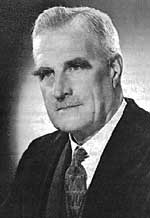
Walter Lawry Waterhouse 1887–1969
Written by I.A. Watson and O.H. Frankel.
Introduction
Walter Lawry Waterhouse was born at Maitland, N.S.W. in 1887. At that time his father, John Waterhouse, was headmaster of West Maitland Boys' High School, a position he held until 1889 when he was appointed District Inspector of Schools and served in various centres throughout the State. Walter was only seven when his mother and a younger sister were drowned in an accident in Wellington Harbour. This tragedy had a profound effect on his formative years. Together with his father's periodic absences, the lack of maternal support imposed early responsibilities on the boy and his elder sister.
In 1896 John Waterhouse became headmaster of Sydney Boys' High School. According to biographical notes contributed by the Waterhouse family, "in the new environment his father's mother, with stern discipline, assisted in the management of the house". Walter attended Chatswood Public School and Sydney Boys' High School. John Waterhouse was a keen ornithologist and geologist and whilst at Maitland was associated with Professor Sir Edgeworth David during his work on the Greta Coal Seam. His father's interest in Natural History aroused similar interests in Walter. Big home gardens in country homes, and the large garden and near-by bush land at the Chatswood home aroused the boy's interest in horticulture and in native plants. After two years in a commercial office he went to Hawkesbury Agricultural College, Richmond, as a result it seems of his early attraction to agriculture and horticulture. Soon after graduating in 1907 he was appointed headmaster of the Mission Boys' High School of the Methodist Church at Davuilevu in Fiji (1908-1910). Required to include agriculture in the curriculum, he decided he needed to study in greater depth and hence joined the newly established course in Agricultural Science at Sydney University under R.D. Watt in 1911, at the age of 24.
Waterhouse had an outstanding undergraduate record. In 1913 he was awarded the first Farrer Research Scholarship for a study 'The effects of superphosphate on the wheat yield in New South Wales', which was published as a Science Bulletin. In 1914 he passed with first class honours and received the University Medal. The First World War had already broken out; and when in the next year he was awarded the 1851 Science Exhibition he declined it, and instead enlisted for overseas service with the first A.I.F. He was awarded the Military Cross for conspicuous gallantry at Pozieres in July 1916, and, severely wounded in November of the same year,was invalided back to Australia early in 1917.
In 1918 he was awarded a Walter and Eliza Hall Research Fellowship. He went to Imperial College in London and obtained its Diploma. On the return voyage to Australia via the United States he spent some time in the Department of Plant Pathology at the University of Minnesota, St. Paul. There he came under the influence of Dr E.C. Stakman, a man of dynamic personality about his own age. Stakman was in the process of building up a Department of Plant Pathology at which several Australian graduates later had the opportunity to study. He and his colleague, M.N. Levine, were both active in cereal rust research and Waterhouse repeatedly emphasised his indebtedness to both of them.
Teaching
Returning to Australia in 1921 he was appointed Lecturer and Demonstrator in three disciplines – Plant Pathology, Genetics and Plant Breeding and Agricultural Botany in the University of Sydney. This entailed a heavy teaching load in the Department of Agriculture and Veterinary Science. The preparation of new material for his three courses must have been a formidable task as he appeared before the students for one lecture each day throughout the year and for six hours of practical classes each week, for which he had to prepare most of the laboratory material himself.
Although his main interests were in plant diseases he taught on a wide range of subjects and his personality was infused into all his lectures and demonstrations. The lectures were delivered in the laboratory amidst specimens of botanical interest about which he spoke, but the academic robes, the scholarly and stimulating addresses all helped to create an atmosphere that will long be remembered by all students who were part of the audience. Practical classes were conducted with split second timing. The demands made on the students in his three subjects often interfered with their attention to other work and the impasse was a constant source of trouble both for the students and for the Dean.
Waterhouse had the capacity to dramatise his lectures so that situations were depicted in a most realistic way. Students became disturbed to learn of immense personal losses that were being suffered by some farmers following plant disease epidemics. After these lectures one was left with a sense of urgency. There seemed to be no alternative but to become involved in research dealing with these problems.
All classes were conducted under a set pattern as Waterhouse was a very strict disciplinarian. Students were given some rein but there was never any familiarity. Most students had few opportunities to get to know the real Waterhouse, and it was unfortunate that even senior undergraduates came to know almost nothing of the nature of the research in which he was engaged. Nevertheless he had a fine sense of humour which was very refreshing on the appropriate occasions. Biometry classes included a short penny tossing exercise to show frequency distributions and he would always ask some responsible student to watch Science Road in case the Vice-Chancellor should arrive and question the activities in progress. In other classes students reporting lack of progress in their Drosophila mating experiments would be queried in a most dignified voice, 'Well, do you expect anything to happen when two females are together?'.
He always maintained a keen interest in the subsequent careers of his former students and had an open door for any who returned to the Faculty.
In 1929, Waterhouse received the first award of the degree of Doctor of Science in Agriculture. In 1937 he was made Reader, and in 1946 Research Professor in Agriculture, a status held until his retirement in December, 1952, when the title of Emeritus Professor was conferred on him.
Waterhouse served on many committees concerned with the advancement of science. He was a member of the committee of the National Research Council and of the State Committee of CSIRO, and president of the Linnean Society of New South Wales, the Royal Society of New South Wales, and Section K of ANZAAS.
Honours
Dr Waterhouse was awarded the Farrer Memorial Medal (1938 and again 1949), the Clarke Memorial Medal (1943), the Medal of the Royal Society of New South Wales (1948), the Medal of the Australian Institute of Agricultural Science (1949), and the James Cook Medal (1952). He was the first recipient of the Elvin Charles Stakman Award in 1956. For his contributions to agricultural science he was made a C.M.G. in 1955, and elected a Fellow of the Australian Academy of Science in 1954 and of the Australian Institute of Agricultural Science in 1960.
Family life and retirement
In 1924 Waterhouse married Dorothy Blair Hazlewood. Her grandfather, Rev. David Hazlewood of Fiji, reduced the Fijian language to a written form in the Dictionary and Grammar of the Fijian Language, published in 1872. Waterhouse's home life was an extremely happy one. His wife and three daughters showed sympathy and support for his scientific studies. Ruth, now a lecturer at Macquarie University, was of considerable assistance in the preparation of his later manuscripts and to her, in part due to her early disabilities, he was particularly attached. Apart from his research and duties associated with scientific societies, his family was practically his whole life.
His main hobbies were gardening and photography. He showed considerable skill in illustrating his research work, particularly with the equipment available in the early years of his investigations.
In many respects Waterhouse was somewhat austere. He frequently chose not to accept methods associated with technological advancement. For example, his Sunday afternoons were devoted to writing longhand to various scientific colleagues and farmers with whom he co-operated.
Upon his retirement Waterhouse devoted a good deal of time to bean and pea breeding, and to writing up of research work which had been considerably impeded by ill-health following a serious heart attack in 1942. In his last years he became dependent on his family for the communication of the written word. He died on the 9th December, 1969.
Rust research
When the early basic studies on members of the genus Puccinia began in 1921 there was great speculation throughout the world as to the cause of pathogenic variability. It was known that new and dangerous strains of most plant pathogens arose from time to time but their origin was often obscure. Marshall Ward in England had received some support for his proposals that pathogenicity may be increased as a result of organisms growing on a 'bridging' host. Such a 'bridge' would allow a pathogen to acquire the ability to attack a host plant which was previously resistant to it. The United States workers, led chiefly by Stakman, had refuted these proposals and claimed that new strains arose largely by mutation and/or hybridisation.
The information available on Puccinia graminis was at this stage not at all clear. It was suspected that the alternate host of this fungus played some role because it had been known for a long time that there was a connection between the barberry plant and the cereal stem rusts, barberry eradication programmes in both Europe and North America being successful in reducing rust damage in cereal crops. However, apart from providing early spring inoculum, the real significance of barberry was not appreciated in the early 1920s.
In Australia it was known that species of barberry were introduced as early as 1859; but prior to 1921 it was widely accepted that the local wheat stem rust organism had lost the ability to infect them. This belief was quickly dispelled by Waterhouse who was able to show that the basis for the confusion lay in the variability within the organism itself. P. graminis f. sp. tritici, the rust attacking wheat, was found to comprise six strains which were characteristically Australian. They had not been found elsewhere. These strains could be separated as dikaryons by their ability or inability to attack a group of 12 different wheats, but Waterhouse showed that as monokaryons there were also differences. One strain which he called race 43 was avirulent on barberry plants; others such as 45 and 46 grew normally on it. This was the first evidence of differentiation at the monokaryotic level and some 25 years later a similar happening was reported from Canada.
During these early days when strains of the stem rust pathogen were recognised, these questions were repeatedly asked – where do they originate and how do they breed? In the early experiments wheat stems showing the black stage of a rust strain whose identity had been established, were used to infect barberry plants. The aeciospores recovered from the latter were used to reinfect wheat but although these spores represented the sexual progeny there was nothing exciting about them. For the first four years of these experiments the parental strain only was recovered after passage through the alternate host. Race 46 only gave race 46 in its progeny and although this was not apparent at the time, hindsight tells us that it was apparently homozygous for the genes for virulence and avirulence on the wheat seedlings which were used. In the fifth year – 1925 – he repeated the work using his race 45 and from the barberry he recovered progeny dissimilar from the parent. This, from information we now have, was a very significant finding but for some reason Waterhouse withheld the information. Apparently the differences between parent and progeny were not sufficiently large to impress him.
In the spring of 1928 the real advance was to be made, because he took yet another rust – race 34 – which when used to infect barberry gave rise in its progeny to two new races, 11 and 56, outstandingly different from the parent which of course was also recovered. Race 34 was apparently heterozygous for the genes for virulence on the wheats Einkorn and Mindum and hence segregation had occurred. In 1929 in a short paper to the Linnean Society of N.S.W., Waterhouse made this dramatic announcement about the role of the barberry plants in the life cycle of P. graminis.
The excitement in three leading rust laboratories at the time, St. Paul, Winnipeg and Sydney must have been intense. The work of Craigie (1927) in Winnipeg had shown clearly that the structures developed within the haploid infections on the barberry were functional and this stimulated further work in North America. Workers in that area were doing experiments similar to those being done in Sydney and they also obtained new strains from barberry inoculations. Like Waterhouse they found some races were homozygous for their genes for virulence while others were heterozygous. In their work however, they were dealing with a multiplicity of races because infected barberries could be found within a short distance of the laboratory. Under these circumstances and with the method of culturing available it was not always easy to distinguish between artificially produced races and those occurring naturally. Waterhouse on the other hand was working in isolation away from natural infection of barberries, so it was much easier for him to obtain irrefutable evidence that the new races had arisen from self fertilisation on barberry of a heterozygous race.
This discovery, which was later confirmed at a number of different laboratories, underlined the significance of the barberry eradication programme in the United States and Canada. In Australia no action was taken to remove the barberries in Tasmania which have been allowed to grow even to the present day undisturbed over widely separated areas in that State. Having established the important role for barberries in relation to P. graminis it was only a short step for Waterhouse to show, again for the first time, that species of Thalictrum served the same purpose in the life cycle of P. recondita, the organism causing leaf rust of wheat, as Berberis did for P. graminis.
In the early days of rust research there were insufficient data to assess whether or not Australia's geographical isolation offered any protection against cereal rust inoculum entering the country from overseas. While the initial studies showed the six original races to be unique, race 34 which was used in the barberry experiments was isolated from Western Australia in November 1925. Such a race is widespread throughout the world and although Waterhouse speculated as to its origin, this has not yet been determined. Genetic evidence eliminates the possibility that race 34 arose from the pre-existing races since they carried several recessive genes for virulence whereas in 34 the corresponding genes were dominant. His suggestions about an overseas origin cannot be dismissed as it seems very likely that rust spores may enter Australia from time to time and if they fall on a congenial host they begin to colonise it. A new race, 21, was found by him on Agropyron monticola on Mt. Kosciusko in 1948 and this could have been brought in as spores carried by wind; other unusual races found in 1954 and 1969 provide further evidence. Spore movement from Australia across the Tasman Sea is well established but more documentation is necessary before we can be certain that new material is entering Australia from the west across the Indian Ocean.
The elegant studies that had been made by Waterhouse on sexual hybridisation on barberries explained racial diversity in North America but it did not explain variation in Australia where except for Tasmania, barberries were rare. On the mainland new races were arising to coincide with the cultivation of new resistant wheats. While he conceded that foreign spores may enter occasionally from outside, he was not convinced that introduction or sexual hybridisation could account for the variation in virulence occurring in the cereal rusts of Australia. He had earlier observed in the glasshouse mutation both for spore colour and virulence in P. graminis tritici but in 1942 he had his first clear demonstration of the importance of mutation in this organism in the field.
About 1940 there was great satisfaction with the contribution that wheat breeders had made towards a solution of rust control. Thatcher, a hard spring wheat, was thriving in North America and Macindoe had released Eureka in New South Wales in 1938. It was commonly accepted that stem rust was no longer to be feared. Waterhouse had released his wheats Fedweb and Hofed, yet while their resistance was still effective, he was always on guard for the fungus to attack any wheat that was currently resistant. The blow fell in 1942 when a rusty crop of Eureka was found near Narrabri, N.S.W. This material was collected by Mr J.A. O'Reilly who was the Agricultural Instructor stationed at Gunnedah. O'Reilly gave Waterhouse extremely valuable help during the whole of the time he was active in wheat breeding in northern N.S.W. He collected widely, he was enthusiastic about the new resistant wheats Eureka, Fedweb and Hofed and the wheat growers accepted with confidence the advice that was given. This close association over a long period with the University programme was in no small measure responsible for the success it achieved because as Waterhouse once wrote, 'There is no other N.S.W. Department of Agriculture officer who has had such a wide experience of rust and who has such a respect for it!'
The unexpected rust on Eureka required some explanation and there was widespread speculation among those who had had long experience with wheat; some blamed the time of sowing, others the unusual temperatures, while still others claimed the direction of sowing could have accounted for the result. Perhaps they can be excused for being wrong because this was a new experience for them. Resistant varieties had not previously 'broken down'. The real explanation came some months later when Waterhouse and Watson showed that the fungus had changed, a new strain had arisen which, except for its ability to attack Eureka, was identical with that against which Macindoe had obtained resistance. It was a stepwide mutation in the fungus for virulence on plants with Sr6, the gene for resistance in Eureka.
The unexpected change in the resistance of Eureka was the forerunner of a series of events that Waterhouse was to observe over the next 10 years with monotonous regularity. It was an event which was to demonstrate forceably the futility of basing resistance on single genes and there was no difficulty in convincing him of the value of the broadly based genetic resistance which has, since 1947-48 given excellent protection to the Australian wheat crop in the rust liable areas. Macindoe naturally was disappointed at the turn of events as he had based his hope on what he thought was the field resistance of Eureka. He claimed that the use of seedling reactions and undue attention to physiologic forms of rust could retard breeding work by at least a decade. Since Waterhouse assessed his material both as seedlings and in the field it is not surprising that considerable rivalry developed between these two breeders as a result of the different techniques used. Each was ready to search for deficiencies in the varieties developed by the other but undoubtedly both men made outstanding contributions to our knowledge of rust resistant wheats.
Most of the changes that have been observed in the virulence of P. graminis involved single gene mutations in which a particular host gene for resistance became ineffective. From time to time, however, Waterhouse believed that some sort of vegetative hybridisation may take place between strains. He visualised the possibility of nuclear exchange between the + and – nuclei when two different strains were present in a given host. Such an exchange could bring together recessive genes and so make possible the expression of virulence which otherwise was masked by dominant genes for avirulence.
We now know that certain strains of rust when mixed on a compatible host will hybridise as dikaryons and the process has been reported in several species. While the exact mechanism involved is not yet understood, artificial culturing of P. graminis on agar may provide the answer. Waterhouse predicted that some day these obligate parasites would be cultured on agar and it is appropriate that the building at the University of Sydney in which this was first done in 1966 is only a short distance from the one in which he worked. From William's work with P. graminis it appears that monokaryotic diploids arise from dikaryons from time to time when the latter are grown on artificial media and presumably they also arise in the host.
Waterhouse was always interested in the total pathogenic ability of the rust strains. He concerned himself mainly with those occurring on the small grain cereals wheat, oats, barley and rye. It was realised early in the work that there were wide taxonomic differences between these crops, nevertheless the plant pathogens were able to seek out certain biochemical affinities between them P. graminis f. sp. tritici could attack wheat and barley but not oats or rye. P. graminis f. sp. secalis could attack barley and rye but not oats or wheat. Dactylis glomerata was susceptible to P. graminis f. sp. avenae and P. graminis f. sp. lolii. Waterhouse studied these relationships and his work on the rusts attacking wild grasses in Australia is being appreciated more now than when he was actively engaged doing it. One or two examples of the ramifications of his studies will suffice, and these should be viewed in the light of present day efforts to conserve the wild species.
Agropyron scabrum is a native Australian species and was shown in these early studies to be a host for both P. graminis tritici of wheat and P. graminis avenae of oats. It was probably an essential species for the stem rust organism before the cultivation of wheat. Unlike A. elongatum and A. intermedium it has never been used as a source of resistance to stem rust but there is a tremendous range of variability from plant to plant in the field; some are resistant. The finding by Waterhouse that the species is susceptible to more than one forma specialis is very important as such a host species provides the opportunity for somatic hybridisation between two groups of rusts when members of each group are capable of attacking it. While it is now extremely rare to find P. graminis avenae on A. scabrum, P. graminis tritici and P. graminis secalis are commonly found associated on this species in Queensland together with a range of strains that are somatic hybrids between them. These hybrid strains possess many genes for avirulence; some have come from P. graminis tritici others from P. graminis secalis and hence they may be unable to attack either wheat or rye but for the most part they are virulent on A. scabrum, the host from which they came. While Waterhouse assumed this species to be important in the perpetuation of wheat rust from season to season, we can now commonly find situations where the grass is heavily rusted along fence lines but wheat on either side is unaffected. In Europe these hybrid strains would probably be called P. graminis f. sp. agropyri.
The wild species of Avena were also studied by Waterhouse in relation to their reaction to rust diseases, the species A. ludoviciana coming up for detailed consideration. The resistance and susceptibility between ecotypes that he observed in this material is characteristic of the wild species and in A. sterilis, a close relative it is now known that valuable resistance to oat stem rust can be found. The relationships between the genes for resistance in the wild species and those in the cultivated oats has not yet been determined in detail but they are known to carry different genes.
In studying these rusts of wild and cultivated grasses Waterhouse recognised four formae speciales of P. graminis – tritici, avenae, secalis and lolii. These are still valid but he realised that they are inadequate to describe the variation since not only is there a rust attacking mainly Agropyron spp. but also others specific for a genus such as Dactylis, Phalaris or Deyeuxia. P. graminis is now thought of as a species comprising a huge pool of genes from which combinations of genes may flow to give the various formae speciales. The rate of flow will be accelerated when a common wild grass host allows somatic recombination to occur.
Although the cereal rust studies included a very broad field, Waterhouse concentrated on the stem and leaf rusts of wheat and many of the principles that he established emanated from host-pathogen studies of the strains within these two species. In these studies he sought to examine the impact that resistant cultivars had on the variability of the organism and hence the structure of the whole rust population. In the initial attempt to breed rust resistant wheats the six races originally present were arranged in two groups of three. By crossing parents which were resistant to races of group one with those resistant to races of group two, Waterhouse was able to combine the genes and so to develop a wheat resistant to all races. This approach did not reach fruition, as the arrival of race 34 in 1925 nullified several years of work since it attacked all parents, regardless of the group to which they belonged. Race 34 clearly had new genes for virulence and this alone could have explained the manner in which it so dramatically dominated the Australian rust scene for the next 15 years. Waterhouse found, however, that this new rust also brought in genes for greater aggressiveness because in competition with the original six races, under conditions equally congenial to all, race 34 quickly overran the others. This was important because it meant that during the 1930s one was breeding for resistance against only one strain.
The ecological relationships between host and pathogen which first showed up with the release of Eureka (gene Sr6) wheat in 1938 was studied by Waterhouse in detail for the next 15 years. As Eureka became increasingly popular, the mutant strain of 1942 specific for it increased in prevalence until finally the variety was so susceptible that farmers rejected it in favour of Gabo, a wheat with a different gene for resistance (Srl1). The almost complete withdrawal of Eureka from cultivation finally resulted in the disappearance of the recessive gene in the pathogen that enabled it to attack plants with Sr6 in 1942. Gabo quickly replaced Eureka as the most popular variety in the north but it also fell to two new stem rust strains in 1947–48.
These classical studies soon attracted the interest of fungal ecologists abroad. The question was asked whether those pathogens which accumulate genes for virulence maintain fitness equal to that in the original strains. Are genes for virulence in the fungus which are not necessary for survival lost from the population? These questions posed nearly 30 years ago still remain largely unanswered. Van der Plank in South Africa has argued, largely from the Australian work, that a loss of fitness is associated with an accumulation of genes for virulence. If so, plant breeders could take solace from the thought that as more and more genes for resistance are built into the host varieties, poor survival ability of the fungal strains attacking them, will give added protection. There is some evidence to support Van der Plank but on the other hand, substantial evidence also can be found to show that fitness is not related to an accumulation of genes for virulence. The concept of 'strong' and 'weak' genes still needs further study before it can be accepted unreservedly.
Wheat breeding
The international recognition that Waterhouse enjoyed for many years, came as a result of his more theoretical studies conducted in the laboratory, in his rather primitive glasshouses and on a small patch of land adjoining the Veterinary School at Sydney University. At Hawkesbury Agricultural College, Richmond, however, association with an old friend the late E.A. Southee, Principal of the College, enabled him to test allegedly rust resistant wheats in a more typical environment. The agronomic worth of these wheats developed from his own hybridisation programmes became apparent to him and he was encouraged to seek facilities further afield to broaden the scope of his studies. The grim determination with which he undertook this field programme in the face of almost insuperable difficulties is a lesson to many of us in modern times. His university facilities were appallingly primitive, he had virtually no assistance, his field areas apart from those at Richmond were non existent and yet he undertook to develop rust resistant wheats for northern N.S.W. and Queensland. The seemingly hopeless situation was not helped by the fact that he had practically no time to conduct field studies in the country since he had a heavy teaching commitment. About October each year during the 1930s, he made a tour of three days and this allowed him to see field problems for himself. He travelled by train to Bathurst, thence to Cowra and finally to Dubbo where contacts at each point showed him the latest in rust resistant cereals.
The first impact of Waterhouse's applied researches were to be made in the north-western part of NSW where Mr C.H. Beeson, an old mate from Hawkesbury College, was farming at 'Leyburn', Gunnedah. Mr Beeson offered to provide land and labour for sowing and harvest. The varieties Hofed and Fedweb, were never widely grown as they had been developed without adequate yield testing, but they demonstrated in 1935-36 what could be expected from resistant varieties and paved the way for the ready acceptance of Eureka, a variety which was more widely adapted. By 1938 other material showing great advances was ready for trial. This had come from crosses in which Waterhouse had attempted to transfer the rust resistance of the tetraploid wheats Khapli Emmer (T. dicoccum) and Gaza (T. durum) to hexaploid wheats. He had been particularly attracted to the vigour of material in which Gaza (2n-28) had been backcrossed to a special accession of Bobin received from Mr J.T. Pridham, a former assistant to William Farrer. This accession is not unlike Gular, a wheat of good quality and quite unlike the Bobin grown commercially. It is less surprising then that Gabo, which was derived from this cross, has been so widely acclaimed.
Selection for rust resistance and agronomic characters were made in the first instance at Hawkesbury College. Successful lines were then assessed at Gunnedah on Mr Beeson's property. During the 1930s Waterhouse was approached by Dr Erasmus Bligh of North Sydney who owned a property at Brookstead Queensland, on the Darling Downs. Waterhouse provided seed of his most resistant lines and thus began a long association between Dr Bligh's son John and the University of Sydney. He was the first to grow Gabo in Queensland, and since he had excellent irrigation facilities and could grow wheat in the summer very successfully, he undertook a rapid multiplication programme for the more recent University wheats.
Expansion of the work to Gunnedah, N.S.W. and to Brookstead, Queensland was so encouraging that Waterhouse sought additional help to handle the material. In May 1938, I.A. Watson was appointed as Assistant Lecturer with instructions to be prepared to take over lectures at any time, but as Waterhouse was seldom absent from the University, there was no opportunity to give them.
The main purpose of Watson's appointment was to promote the field work at Gunnedah where the new wheats were showing such promise. More assistance was also needed at Sydney University and at Hawkesbury College and in 1941 Waterhouse appointed E.P. Baker as his Graduate Research Assistant. Both these new appointees were trained as plant breeders, Watson with Hayes and Stakman at Minnesota, and Baker with the N.S.W. Department of Agriculture and at the University of California. In 1946. N.H. White was appointed to assist in teaching but he was given no formal lecturing work in the areas in which he was qualified. Waterhouse was unwilling to delegate these responsibilities to others.
From preliminary testing it became evident that among the hybrid wheat progenies some exceptionally high yielding material was available. Dough ball tests carried out according to the Pelshenke method indicated a potential for high quality also, but this test was by no means infallible. There was concern about a reliable assessment for quality and, knowing of this, Mr Henry Marcroft, manager of Brunton's Flour Mill, Gunnedah, during the course of a visit to the 'Leyburn' plots, suggested that the cereal chemist of the company might be able to help. The cereal chemist happened to be Mr Eric Bond, now Director of the Bread Research Institute of Australia. Bond quickly saw in some of these lines the possibility for a marked improvement in the quality of northern wheat. He accompanied Waterhouse to the Gunnedah plots in 1941, offered his services in the work, but in doing so he almost certainly did not realise the key role he would have in the improvement of Australia's hard wheat over the next 30 years.
From this humble beginning, Brunton's Mill at Granville virtually became the headquarters for the assessment of quality in the wheat breeding programrme, and Mr Bond, backed by the resources of Brunton's, became an indispensable member of the team. When he subsequently moved to North Sydney to direct the Bread Research Institute, he agreed to continue the quality testing of all the breeding lines. The Institute was enlarged and moved to North Ryde and the support given to the University programme was further expanded. This association between the Bread Research Institute and the University of Sydney has been outstandingly successful in the development of prime hard wheats.
The 1941 season was the last that Waterhouse spent in the field and he was denied the opportunity of seeing the broad acres sown to Gabo when it became so popular. Early in 1942, with a deterioration in the war situation, all University personnel were required for air raid duty around the buildings. This extra chore, superimposed on his many other responsibilities, placed a big strain on him and he suffered a heart attack which necessitated his being away from lectures for the whole of Lent term. He made an excellent recovery, but withdrew from many of his former activities. The wheat breeding programme was left entirely to his two younger colleagues Watson and Baker. Although he could no longer participate actively in the field aspects of the breeding programme he followed it closely till his retirement. He had approved the acquisition of sites for experimental work at Curlewis in northern N.S.W. and at Castle Hill near Sydney. He saw in these facilities the opportunity for greater independence and some assurance that the foundations for a continuation of the work had been laid.
Gabo, the wheat that will be remembered best and which evolved from Waterhouse's early studies, was registered in 1945. It presented a number of new characters to the farmer. It had short straw, it was early, yielded well and was rust resistant. Farmers found it easy to harvest, but unfortunately it had several serious defects such as low bushel weight, unattractive grain appearance and a marked susceptibility to weather damage. Nevertheless, the grain gave a well balanced dough and for the first time in Australia there was available a wheat variety from whose flour alone an excellent loaf of bread could be made. By 1950 it was the standard of quality and has essentially been the basis of the prime hard wheats that are so successfully grown in the north and which at present are so readily saleable.
The success of Gabo however, was not confined to one area of the State, it became popular elsewhere in the country and at one stage was the leading wheat in Australia. In other countries also Gabo had considerable success. When the Rockefeller programme began to develop in Mexico, introductions from the United States and Canada were rust resistant but matured too late for commercial production. Among many wheats that had been sent to Dr Borlaug, Gabo had shown its superiority in rust resistance, earliness and yielding ability. It was first commercially multiplied in 1951 but had to be replaced on account of a marked susceptibility to stripe rust, the arrival of race 15B of stem rust in the early 1950s finally sealing its fate.
An important feature of this Australian variety was its contribution of a gene for insensitivity to daylength. This was quite accidental but its use as a parent in the breeding programme allowed the Mexican material to be assessed during different seasons of the year regardless of day length. The wide adaptability of many of the current Mexican lines can be attributed to the presence of this insensitivity gene which first became important in Gabo. It is seldom that a single wheat variety contributes so much in so many different environments. Gabo and its sib, Timstein, were both widely used in the pedigree of the Mexican wheats and Cajeme, Mayo, Nainari and many others can be traced back to them.
During the 25 years that Waterhouse and his colleagues had worked in northern N.S.W. definite progress was made in deriving a wheat that could be grown with confidence in the rust liable areas. In 1970, Mr Fish of the Victorian Department of Agriculture reported that 'The continuous attack on stem rust of wheat over an 80-year period has been a remarkable contribution to plant disease control and to the welfare of Australia'. From 1930 until 1947-48 it was not unusual for one third to one half of the northern wheats to be ruined by rust. At that time good years were synonymous with rusty years but this situation has been progressively changed. Unfortunately we cannot say that Waterhouse solved the cereal rust problem, because in no country in the world has the menace been completely eliminated; a lot was learnt, however, as soon as rust resistant wheats became available. Single genes for resistance quickly became obsolete, narrowly based combinations of genes being effective but still not adequate for lasting protection. The broadly based resistance of the modern varieties Timgalen, Gamut and Gatcher, each with at least 4 resistance genes, has given excellent protection in northern N.S.W. These wheats together with their predecessors, have reduced rust losses to insignificant proportions for the past 25 years. Waterhouse's work laid the basis for this success and his students developed and improved on his methods, techniques and facilities. In places where the lessons he taught have not been learnt, losses from rust disease continue to occur. They were serious in southern N.S.W. in 1955, in Western Australia in 1963 and again in southern N.S.W. and South Australia in 1969.
The wheat growers of N.S.W. did not allow to pass unnoticed the work of Waterhouse and the University in the northern part of the State. When the Wheat Research Act was passed in 1957 and they decided to establish their own Research Institute at Narrabri, the University of Sydney was asked to administer it and direct its research. Professor McMillan gladly accepted the honour on behalf of the University and the work at Narrabri has flourished since the place was established in 1958. One of the buildings there has been named in honour of W.L. Waterhouse.
About this memoir
This memoir was originally published in Records of the Australian Academy of Science, vol. 2(3), 1972. It was written by:
- Irvine Armstrong Watson, BSc Agr. PhD; Professor of Agricultural Botany (Plant Breeding), University of Sydney since 1962.
- Sir Otto Frankel, Kt, DSc, FRS; Senior Research Fellow, Division of Plant Industry, CSIRO, Canberra, of which Division he was Chief, 1952-66. He was elected a Fellow of the Academy in 1954 and was a Councillor 1958-60 and Vice-President, 1959-60.
Walter Boas 1904-1982
Written by L.M. Clarebrough and A.K. Head
- Introduction
- Early years 1904-1938
- University of Melbourne 1938-1947
- CSIR/CSIRO 1947-1969
- Post-retirement years 1969-1982
- About this memoir
Introduction
The death of Walter Boas on 12 May 1982, after a short illness, came as a shock to a very large number of friends and colleagues in the scientific, university, metallurgical and engineering communities. To all these communities Walter Boas had made outstanding contributions since his arrival in Australia in 1938.
Early years 1904-1938
Walter Boas was born in Berlin on 10 February 1904 and was the only child of Adele (née Reiche) and Arthur Boas. Arthur Boas was a doctor with a general practice centred on his home in western Berlin and he died of a heart attack at the age of 49 when Walter was fifteen. Walter lived with his widowed mother in the family home until he left Berlin in January 1933. Adele Boas remained in Berlin until 1939 when she came to live with Walter and his wife Eva in Melbourne. She lived with them until her death in 1953.
The early days in Berlin were difficult ones for the Boas family and the young Boas often went cold and hungry to bed due to severe shortages of food and coal towards the end of the first world war. Boas' parents were of Jewish origin, but the family did not practise the Jewish religious traditions and the young Boas was baptised in the Lutheran Church. His schooling from 1911-1922 was in the classics at a typical German Gymnasium, where he studied German, Latin, Greek, French, History and Mathematics with very little science and no English. He had fond memories of his father during these early school years, a father who took him on Sunday morning visits to museums and who gave him considerable help with his studies of Latin and Greek, subjects for which his father had a greater love than Walter.
After matriculation, Walter Boas started a course in electrical engineering at the Technische Hochschule Berlin in October 1922. It was compulsory for students at the Technische Hochschule to spend a full year working at the 'shop-floor' level in an approved factory as part of their course and Walter spent from October 1923 to September 1924 working at Siemens and Halske Ltd., learning techniques and taking part in all stages of the manufacture of telephones and electrical measuring equipment. He recalled this time as an important stage in his growth as, coming from an intellectual background, he had no previous knowledge of the hardships in the lives of factory workers at that time. At the completion of this year of practical experience, and following a desire for a more solid grounding in the fundamentals of science, he changed his Diploma of Engineering course from Electrical Engineering to Applied Physics. Before the final examinations for the Diploma of Engineering (Applied Physics) it was necessary for candidates to complete a research project and Walter asked Professor Richard Becker, recently appointed professor of theoretical physics at the Technische Hochschule, if he would accept him as his first research student. Becker agreed and Walter considered this the most important decision involved in his professional career as Becker directed him to the field of plastic deformation of metals, a field which remained at the centre of his scientific interests throughout his life. Having successful]y completed a research project on the influence of load and temperature on the creep rate of metals, which resulted in his first scientific publication, co-authored with Becker, Boas graduated with the Diploma of Engineering (Applied Physics) in February 1928. Of his first experimental research project, Boas recorded that all was not well with his initial results and that the advice from his supervisor Becker was: 'You must apply yourself with all your love and your whole soul to your project, otherwise no experiment will ever succeed'. The young Boas never forgot this early advice from a man he greatly admired, and it was the spirit of this advice that he took on and managed to convey so successfully to a great many of his students and young research colleagues in later years.
Following graduation, Boas wanted to commence work in industry as the depression was already hitting hard in Germany and jobs were very difficult to get. However, Becker persuaded him to stay in research and arranged for him to work with 'a young fellow called Schmid' who had just been appointed to the position of head of a new section for physics in the Kaiser Wilhelm-Institut für Metallkunde at Dahlem, a suburb of Berlin, which was the centre for several institutes of the Kaiser Wilhelm-Gesellschaft. He commenced working with Schmid in March 1928 and a most successful research career concerned with the plasticity of crystals was underway.
Boas' first research project involved the verification of the law of critical resolved shear stress for the onset of plastic deformation using single crystals of cadmium grown from the melt. Due to the extreme softness of these crystals, the tensile tests were very sensitive to external vibrations and he had to do most of his experiments in the early morning hours between 3am and 6am. As an extension of this work, he showed that plots of shear stress vs shear strain were independent of crystal orientation and he also studied the influence of temperature on the critical resolved shear stress and the form of the stress-strain curve. The results were submitted as a thesis for the degree of Doctor of Engineering (Dr Ing.) at the Technische Hochschule of Berlin early in 1930. In printed form, the thesis was only 15 pages long and was received with some scepticism in the faculty, as it was the shortest thesis that had ever been submitted for a higher degree. The oral examination of the thesis was conducted by all members of the faculty, but Boas 'survived the gruesome ordeal with flying colours' and was awarded his doctorate in July 1930.
Boas continued to work with Schmid and others in Berlin until Schmid moved to Fribourg, Switzerland, in 1932 to take up the chair of physics that he had been offered there. At this stage, Boas had published 15 papers, 10 of them with Schmid, on the results of his research in Berlin. Already in 1930 Boas and Schmid had started to write a book on the plasticity of crystals, but progress was slow due to the fact that they were both actively engaged in research. Boas joined Schmid in Fribourg in January 1933 and there they completed Kristallplastizität which was published in 1935. It is of interest that an English translation of the book was published in 1950, without the knowledge or approval of the authors, and was reissued without change in 1968. The continuing demand for the book in 1968 marks it as a classic work of continuing interest to scientists and engineers concerned with the plastic behaviour of crystalline materials. In the translators' preface to the English translation, the publishers correctly comment on Kristallplastizität that 'This book, with its lucid exposition and wide range, is cited as the first reference in innumerable metallurgical papers, and became a classic within a year or two of its publication'.
Boas often commented that he had great regrets on leaving Berlin in 1933 but that, at the time, he had no idea how lucky he was to be leaving Germany before Hitler came to power. In this connection, he has fondly referred to his colleague Günter Wassermann, of Schmid's group in Berlin, who with his wife arranged for Boas' mother Adele to live with them during the weeks in November 1938 when thousands of Jews in Berlin were arrested.
During his student days, and afterwards as a research worker in Berlin, Boas had the opportunity to meet and to be present at colloquia given by many of the great men of physics including Einstein, Von Laue, Planck and Schrödinger. In the later years of his life he was much sought after to give talks on the scientific scene in Berlin in those early days.
Boas' term in Fribourg finished in December 1935 and he was invited to join Professor P. Scherrer in his Department of Physics at the Eidgenossische Technische Hochschule in Zürich. This move to Zürich marked the end of eight years of close collaboration with Schmid, a period in which the output resulting from the collaboration of these two scientists was remarkable and set the pattern for research in fields such as plastic deformation of metals and alloys, deformation twinning, preferred orientation and recrystallization for many years to come.
Boas had discovered in Berlin that he could obtain Laue back-reflection diagrams from metal crystals that were too thick for transmission of X-rays and he and Schmid developed the technique of determining crystal orientations from such diagrams. In the course of this work, they became interested in the change in shape of diffraction spots that resulted when the crystals were plastically deformed, and Boas continued this work in Zürich. His experimental and theoretical results convinced him that lattice strain was the cause of the observed effects. An alternative explanation was favoured by W.A. Wood of the National Physical Laboratory of the UK, in terms of the breakdown of the crystal by plastic deformation into small crystallites so that the diffraction effects resulted from small crystal size. Boas and Wood never reached agreement on their differing interpretations and seeking a solution to this problem remained one of Boas' scientific interests for many years. In fact the solution, which proved to be a compromise between the two positions, was not arrived at until the direct observation of the dislocation structure of deformed metals by transmission electron microscopy in the late 1950s.
In 1937 Boas' stay in Switzerland was becoming difficult as the number of German immigrants increased. The legal situation in Switzerland at that time was that the right of permanent residence was obtained automatically by any foreigner who had lived in the country for a continuous period of five years. However, the Swiss government was becoming worried that too many foreign nationals, particularly Germans, would satisfy these conditions. To prevent this, a new law was introduced specifying that all foreigners had to leave the country after a period of residence of four years and nine months, for at least three months, so that any rights of permanent residence under the old rule would lapse.
It was clear that Boas could not remain permanently in Switzerland and in September 1937 Scherrer contacted his friend Dr A. Muller, who was Swiss by birth and Assistant Director of the Royal Institution in London, on Boas' behalf, to enquire whether Boas could be admitted as a worker in the Davy Faraday Research Laboratory of the Royal Institution. Boas was advised that he should write directly to Sir William Bragg and Bragg's response in November 1937 was: 'We shall be very pleased to see you at the Royal Institution and to find opportunities for putting you in touch with the work that is done'. Boas' invitation to work at the Royal Institution was for the Lent Term from 17 January to 9 April 1938. During his time in London Boas took lessons in English three times a week, which he found very hard work but profitable. At the Royal Institution he met E.N. da C. Andrade, Mrs (later Dame Kathleen) Lonsdale, J.M. Robertson, A.R. Ubbelohde, M. Blackman, Bruce Chalmers, G.W. Brindley, W.L. Bragg (later Sir Lawrence) and many others. Several of these people became friends and international contacts in later life. W.L. Bragg was the director of the National Physics Laboratory and it was he who introduced Boas to W.A. Wood who was mentioned earlier.
Before the approach to the Royal Institution had begun, Boas was in contact with Dr Demuth of the 'Association of German Scientists in Foreign Countries' and with Walter Adams, secretary of the Society for the Protection of Science and Learning (formerly the Academic Assistance Council), both with headquarters in London, with a view to obtaining an academic post outside Germany. It was through these bodies that the possibility of a position at the University of Melbourne was first raised in September 1936. Walter Adams advised Boas on 12 January 1937 that 'although there is no position in Melbourne, the authorities are prepared to make an application to the Carnegie Corporation for a grant if they feel that you are a suitable candidate. They have asked their representative in England, Professor Irvine Masson of the University of Durham, to interview you and he informs me that he could do so on the 29th January'. A further quote from the correspondence between Boas and Adams illustrates the difficulties that scientists and others in Walter Boas' position were having in the unsettled Europe of those days. In a letter of 16 January 1937 Adams asked: 'Can you give me detailed and official information about the police regulations in Switzerland which make it difficult for you to stay there. I should like this information because otherwise a suspicion might arise that you are having to leave Switzerland because you have engaged in political activities'.
Boas, in recalling in 1973 his trip from Zürich to London for the interview with Masson, wrote:
This trip to London was the first time I left the continent and the crossing of the Channel from Dieppe to Newhaven was a nightmare. My lack of knowledge of the English language and English eating habits made life rather difficult (e.g. eating puffed wheat without milk and sugar in spite of the advice offered by the waiter). I had prepared myself for an interview on my scientific work and ideas for future work and was shocked when Professor Masson pointed out that a talk on my work was useless, since he was a chemist, and I should rather tell him about my hobbies, which sports I was playing, which books I was reading, whether I was interested in art, music, theatre etc. With my very poor knowledge of English and no experience in speaking it, I must have made an appallingly bad impression and it would be interesting to read Masson's report on the interview. I certainly was very depressed and did not expect to hear from Melbourne again.
Contrary to the information from Adams that there was no position available in Melbourne, an advertisement appeared for a position of Assistant director of (Physical) Metallurgical Research at the University of Melbourne and Boas applied for this post on 1 February 1937. It is of interest that part of the funding for this position was to be supplied by CSIR, following a decision of the Commonwealth government to subsidise research work in certain subjects in several Australian universities. The occupant of the new position would be required to carry out research, under the general direction of Professor J. Neill Greenwood, on the application of X-ray techniques to the atomic structure of alloys and to instruct research students in these techniques. A limited amount of lecturing on this topic would also be required. It was specified that the applicant should be a graduate in physics and must have had experience in the application of X-ray techniques to alloy problems. It was also mentioned that a Metropolitan Vickers X-ray set was to be installed in the Metallurgy Department at the University. Boas must have been delighted on seeing this advertisement as the specifications for the position seemed to have been written to fit him and his experience. However his application was unsuccessful, the successful applicant being Dr H. Hirst of the Metropolitan Vickers Electrical Company Ltd., the suppliers of the X-ray equipment.
All was not lost, however, as correspondence was now occurring between Boas in Zürich, Adams of the Society for the Protection of Science and Learning in London and Professor J. Neill Greenwood in Melbourne concerning the possibility of a Carnegie Fellowship for Boas in Melbourne. Greenwood was keen to arrange for Boas to come to Melbourne, but he was reluctant to initiate moves for a grant from the Carnegie Corporation because of delays in building the laboratory to house the new X-ray set which, in July 1937, was still under construction at Metropolitan Vickers. In a letter to Adams in September 1937 Greenwood wrote: 'I am now in a position to say that the laboratories and X-ray equipment for which I have been waiting are in the course of erection and will, I hope, be ready for occupation about the beginning of next year. Without this accommodation it would have been useless to take further steps with regard to Dr Boas as we should have no facilities for him to work with. I have now asked Dr Priestley (Vice Chancellor, University of Melbourne) to take up the matter with the Carnegie Corporation and I shall inform you later of the decision' .
Boas had moved from Zürich to take up his position at the Davy Faraday Research Laboratory when, on 22 January 1938, Adams received the following cable from the Registrar of Melbourne University: 'Please inform Walter Boas appointed lecturer here on Carnegie Grant of twenty two hundred dollars a year for two years ask him cable acceptance and address'. A few days later Boas had a phone call from E.N. da C. Andrade of University College, London, offering him a position there. After many months of uncertainty in Zürich, Boas now had two offers of appointment and he sought the advice of Sir William Bragg to help with the decision. He recalled that Bragg 'told me of his happy twenty three years as Professor of Mathematics and Physics in Adelaide, how much he had enjoyed the unconventional, open air life in Australia and said he was sure I too would be happy there and he would advise strongly that I accept the offer'. Boas accepted this advice and on 31 January 1938 the Society for the Protection of Science and Learning cabled the Registrar of Melbourne University: 'Boas accepts but cannot leave until the end of March. Address c/o this office. Send contract letter and please arrange immigration Canberra authorities'.
Thus, fortunately for Australian science, the die was cast for Walter Boas' future in Australia. Walter proposed to Eva Orgler, a friend of five years who lived in Berlin but who had made several holiday visits to Switzerland during his time there. They were married at the Registry Office in Hampstead on 22 March 1938 and two days later set out from London for Melbourne. Because the Spanish civil war made shipping unsafe in the Bay of Biscay, they travelled by train via Paris to Toulon where they embarked on the ss. Ormonde for Melbourne on l April.
The Society for the Protection of Science and Learning, through its General Secretary Walter Adams and its Assistant Secretary Esther Simpson, had played a crucial role as intermediary in all the negotiations associated with Boas' appointment in Melbourne and the story of Boas' arrival in Melbourne is best told by his letter of 6 July 1938 to Walter Adams:
Dear Mr Adams,
Being here now nearly two months I should like to give you a short report.
The journey was very nice. The sea was calm, we saw Pompeii, Aden, made a trip by rickshaw in Colombo and arrived here on the 2nd of May. Professor and Mrs Greenwood met us on the boat and took us to the boarding house where all was prepared for our coming. After staying there for a month we moved into a flat where we are feeling very comfortable and at home.
Professor Greenwood and the other people in the Metallurgical School are very kind and help me always. I am lecturing now on 'Fatigue of Metals' and will have to lecture in the next year on 'Physics of metals'. Naturally I met the other Carnegie Fellows of whom you gave me the addresses. Heymann is now Senior-Lecturer, about Loewe nothing is definitely decided till now nor about Duras. I hope that there will be found some permanent position for me in the next year.
After all we read in the newspapers we are very happy to be here so far from Europe. I should like to thank you again very much for your endeavour to place me here.
With best regards also to Miss Simpson,
Yours very sincerely,
Walter Boas
University of Melbourne 1938-1947
In recruiting Walter Boas to the Metallurgy Department at the University of Melbourne in 1938, J. Neill Greenwood gained a staff member who already, at 34, had a very high international reputation in science, having published some 25 papers on his research and the book Kristallplastizität. Boas was under the impression, from discussions with Adams in London, that his job in Melbourne as Carnegie Lecturer would be concerned mainly with research. However, on his first day in the department, he was informed by Greenwood that he would be required to start a lecture course on the fatigue of metals in six weeks' time. Boas had no experience of lecturing in English and, at that time, no detailed knowledge of the topic, and he said of those weeks 'I do not think I ever worked as hard ever in my life before or after' .
In the first term of 1939, Boas commenced his lectures on the physics of metals to students taking metallurgy as one of their subjects for the BSc degree and to students working for their BMetE degree. The course was the first of its type to be given in the British Commonwealth and treated crystallography, plastic deformation of single crystals and polycrystalline metals and alloys, theory of alloys and diffusion and phase transformations in the solid state. In the beginning, spoken English was a problem in Boas' lectures for teacher and students alike. However, he went to great pains to prepare a set of detailed lecture notes for distribution to his students. These notes formed the basis for his second book, An Introduction to the Physics of Metals and Alloys, which was published by the Melbourne University Press in 1947. Boas generously acknowledged that 'the book could not have been written without the great unselfish help given by J.S. Bowles'. Bowles, who has recently retired from the position of Research Professor of Metallurgy at the University of New South Wales, was a demonstrator and then lecturer in the Metallurgy Department at Melbourne during the period the book was in preparation.
Throughout his nine-year association with the University of Melbourne, Boas was an inspiration to his students. It was a unique experience for students in those days to be taught from their first year by a man with such a high international reputation in science and to realise that the definitive papers on the subject being studied were the work of their lecturer. Walter Boas' enthusiasm for his subject was contagious and it was his teaching and inspiration that formed the base for successful careers in science by so many of his students. For all his students, it was a delight to find that aloofness was not a characteristic of this top-line scientist, and Boas' approach to students was such that they came to regard him as a friend as well as a teacher, a friend who was always willing to help with further explanations of difficult topics and to give a word of encouragement when it was needed. He acted as a friendly counsellor for any of his students with personal or study problems, long before student counsellors were part of the university scene, and he and Eva frequently entertained students in their home. Walter Boas believed that close association between staff and students was of mutual benefit to both. He took a great interest in the activities of the student Metallurgical Society and could be relied on to tell the best joke at the annual dinner of this group.
Boas was appointed as a Senior Lecturer in Metallurgy in September 1939, a member of the Faculty of Science in May 1940, elected as a Fellow of the Institute of Physics in May 1943 and admitted to the degree of Master of Science without examination in December 1943.
When war broke out in 1939, Boas was automatically classified as an enemy alien. However, this made no difference to the friendships that were developing on the Melbourne campus and Boas has recorded his thanks to many, among a large number of people, who helped him and Eva to feel settled and welcome in their new land. They were Professor Greenwood, Professor (later Sir Samuel) Wadham, Professor (later Sir Kenneth) Bailey, Harold Hunt, Frank Sublit, Mansergh Shaw, Sydney Rubbo, J.S. Anderson, Haughton Dunkin, Mervyn Willis and Vic Hopper. These men and their wives were very supportive of Walter and Eva and the friendship they offered made assimilation into university life at Melbourne a very happy experience. Walter and Eva were determined to become Australians and Walter was granted 'refugee alien' status in 1943. His application for a certificate of naturalization, supported by the Vice-Chancellor, J.D.G. (later Sir John) Medley, was approved by the Minister of the Interior in March 1944. The Boas' children, John Frank, born on 27 February 1941, and Anne Catherine, born on 20 September 1944, were, of course, Australian citizens by birth, and neither of them learnt any German from their parents. This was the case because of the decision by Walter and Eva to sever connections with their German past by speaking only English at home, a decision that was marked by a ceremonial burning of their German passports shortly after arriving in Australia.
Boas' first few years of lecturing in the Metallurgy Department coincided with the second world war and shortened courses in the Faculty of Engineering. The normal engineering degrees in specialities such as civil, mechanical, electrical and metallurgical engineering, usually awarded after four years' study, were deferred during the war years for all but a few selected students, and the degree of BEngSc was awarded after a compressed course of three years. For students and staff alike, many more lectures and practical classes had to be fitted into the working week which was extended to include Saturdays. Academic postgraduate research ceased during these years and students were moved as quickly as possible into industries associated with the war effort. An annexe was built on to the Metallurgy Department for the production of tungsten wire and the output from this small 'factory' became the sole source of tungsten in Australia, with many graduates from the Metallurgy Department becoming 'factory hands' associated with this production instead of moving on to postgraduate research.
Boas was frustrated by the lack of opportunity for research in the Metallurgy Department and he kept his research interests alive by co-operating with members of the CSIR Section of Lubricants and Bearings, which had been set up by F.P. Bowden in the neighbouring Chemistry Department at Melbourne. A very practical problem in the Section at the time, that was under investigation by R.W.K. Honeycombe (one of Boas' first students and later professor of metallurgy at Cambridge), was the failure of tin-base bearing alloys. Honeycombe consulted Boas about this problem and they were able to show that the failure resulted from plastic deformation in the polycrystalline tin-base alloy resulting from the anisotropy of thermal expansion of tin. The failure mechanism was called 'thermal fatigue' and Boas and Honeycombe published four papers on the topic, two of them in the Proceedings of the Royal Society of London. Boas' co-operation with the CSIR Section of Lubricants and Bearings was put on an official footing in December 1943 in a letter from Lightfoot, Secretary of the CSIR, in which he stated, 'I have been in communication with the Vice-Chancellor and with Acting Professor Dunkin regarding our desire to obtain your services on a part-time temporary basis to assist in work in our Lubricants and Bearings Section on thermal and mechanical fatigue of bearing alloys'. Boas' part-time appointment with CSIR commenced on 3 January 1944 at a salary of £200 per annum.
With the end of the war, Boas' hopes for initiating research activity in the Metallurgy Department continued to be frustrated. Professor Greenwood had received a grant from the Baillieu family to set up a Research Chair in Metallurgy. He vacated the teaching chair and became Research Professor of Metallurgy late in 1945. Boas applied for the vacant teaching chair in March 1946 but was unsuccessful, the appointment going to H.K. Worner. Life in the Metallurgy Department was becoming more difficult for Boas as new research laboratories were being set up in the former tungsten annexe and equipment from the teaching department was being transferred to the research department so that opportunity for research by the teaching staff was further reduced. It was at this time that Boas was thinking of leaving Australia to work in England and he made tentative enquiries of Sir Lawrence Bragg and C.H. Desh concerning research posts in the UK in June 1946. However, in writing to Bragg and Desh, Boas was also thinking of a possible research career in CSIR as he wrote to them 'The only research which I have been able to carry out was in collaboration with Dr Bowden's Section of the Council for Scientific and Industrial Research. There is probably no need to say that I enjoy that collaboration very much indeed, and it seems in fact that I could if I so desire, obtain a research position with CSIR...'.
While changes were occuring in the Metallurgy Department, great changes were also occurring in the CSIR Lubricants and Bearings Section next door. S.H. Bastow replaced Bowden as leader of the Section in 1946 and established its new name, Tribophysics. Bastow's aim was to broaden the research activities of the Section from practical problems associated with friction, lubrication, bearings and explosives into more fundamental studies on the plastic behaviour of metals and alloys and the chemical reactivity of surfaces. In looking for a leader for this new research activity, the obvious choice was Walter Boas who had an outstanding international reputation in the field, was keen to get back to full-time research, and had been collaborating so successfully with staff of the Lubricants and Bearings Section since 1943. A position of Principal Research Scientist (Physicist) for the CSIR Section of Tribophysics was advertised in November 1946 and it was specified that the applicant should have the 'highest qualifications as a physicist combined with considerable experience in the initiation and direction of physical research'. The duties required were 'to undertake, and assist in direction of research on the physics of solids'. Boas was offered the appointment on 31 December 1946 and accepted on 15 January 1947; his resignation from the position of Senior Lecturer in Physical Metallurgy was accepted by the Council of the University of Melbourne on 22 January 1947. Thus ended Boas' nine years with the University of Melbourne, first as Carnegie Lecturer and then as Senior Lecturer.
CSIR/CSIRO 1947-1969
On his appointment as a Principal Research Scientist in the CSIR Section of Tribophysics, Boas received a welcoming letter from the Chairman, Sir David Rivett, in which he wrote: 'I only hope that we shall succeed in providing not only the facilities, but also the freedom and happy atmosphere which are essential...Dr Bastow and his colleagues are, I know, delighted to have you in the family circle'. Boas found freedom, facilities and a happy atmosphere under the leadership of Bastow and he wasted no time in building up a research group on the physics of metals, adding to existing staff by recruiting new staff mainly from among his former students. Research projects were quickly under way on, for example, plastic deformation of alloys consisting of two phases, the destruction of order by plastic deformation and its recovery on annealing and the inhomogeneity of deformation of crystals in polycrystalline aggregates. Before a year had elapsed, the Section of Tribophysics was redesignated as a Division in CSIR with Bastow as Chief.
In 1948, Boas went overseas for six months. Most of this time he spent in England and Europe and returned via America. This was the first time he had left Australia since 1938 and was the opportunity, which he had looked forward to for some time, to renew contacts with his many overseas colleagues of pre-war days. He attended conferences on metal physics in Amsterdam, applied mechanics in London, surface properties of metals in Paris and X-ray diffraction in Pittsburgh; the annual conference of the Institute of Metals (London) in Cambridge, and the summer school on metal physics in Cambridge. Although this trip was the first of ten that he made during his time in CSIRO, it was probably the one that he had looked forward to most.
During this trip he spent a few days in Germany. He was one of the first civilians allowed to visit post-war Germany without wearing a military uniform but he was under military control, staying at officers' hotels, reporting regularly to commanding officers of the occupation forces, and travelling in an army car. He was shocked by the destruction of German cities and in particular the railway system. Of special significance on this trip were visits to his former research supervisor, Professor Becker, in Göttingen, and his colleague Günter Wassermann, formerly of Schmid's group, in Clausthal.
A commentary on his probable feelings during this return to Germany can be seen in correspondence of the previous year, first from the Chairman of CSIR to the Australian Scientific Research Liaison Officer in London:
Yesterday I had a visit from Dr W. Boas...He has just received a letter asking that, as an old pupil of Richard Becker, he should contribute a paper to the special volume of the Zeitschrift to celebrate Becker's 60th birthday.
Naturally Boas was a little bit dubious as to the wisdom of sending a paper to Germany, seeing that he was practically driven out of the country not so very long ago. He is, however, greatly attached to Becker who, he assures me, was strongly anti-Nazi during the war. I told Boas that if I were in his position, I would not hesitate about sending a paper as a tribute to his teacher; but after talking it over I promised to ask you whether you could find out the attitude of people somewhat similarly placed to Boas...
It seems to me that the sooner we renew fraternal scientific contact with the right type of German scientist, particularly with those who kept to their principles during the war, the better for all of us; but one can understand Boas' diffidence.
The reply was as follows:
...on account of his personal connection with Becker, Orowan will contribute while Mott, having no similar personal connection, will not. It appears that the people at Göttingen desire to reestablish fraternal scientific contact, but there is some small tendency towards propaganda behind it. However Becker was always anti-Nazi and is undoubtedly a distinguished scientist. Dr Orowan is very grateful indeed for the indication of your opinion, which I passed on to him.
I hope that this information will be adequate assistance to Boas to make his decision.
Boas did not, in the end, produce a manuscript for the Becker Zeitschrift volume, probably because of the short time available before his departure for Europe in 1948.
On his return to Australia, changes were underway in CSIR. In May 1949, CSIR was reorganised as CSIRO and Bastow became a member of the Executive. Boas recalled that, when he arrived in the laboratory on the morning of 19 May, Bastow was packing his personal papers and told him that he would have to 'hold the fort' until a new Chief was appointed, 'So I was left suddenly with the administration of the Division, a field in which I had no experience. That I managed this was due to Bastow's secretary (Miss E. Angus) and the co-operation and team spirit of my colleagues' .
Before the position for the new Chief of Division was advertised, Boas received a hand-written letter from Sir David Rivett, former Chairman of CSIR, who was on his way to London. This letter, the text of which is given below, was posted in Aden on 8 June 1949.
My dear Boas,
Being now able to enjoy a sense of complete irresponsibility, I can wnte and say how much I am hoping to hear that my former colleagues have asked you to take Bastow's post. I feel certain they will – and am anxious that you should not hesitate one moment in accepting the job.
The loss of B. in the Division will be severe, but I am personally convinced that he is essential to the Executive if the new 'Organization' (I still dislike the implications of the word) is to keep itself on the right track. If you take his place he will feel less sad at leaving research work, for he will know that his ideals will be perfectly safe in your hands and that there will be no surrender to the influences that may seek to drag you away from the frontiers. There are four Divisions in CSIR of which I have no fear for the future. Tribophysics will remain one of them if you take over the reins from Bastow: but you may have to do some fighting!
Every good wish,
Yours ever,
David Rivett.
Despite this encouragement from Rivett, Boas was reluctant to apply for the position of Chief as his wish was to do research rather than direct it. Applications for the new post were to close on 12 September and at the beginning of September Bastow rang Boas to enquire why he had not applied. On hearing Boas' response, that he would rather continue doing research than take on permanent administrative duties, Bastow advised him that 'one could not be sure of the attitude of a new Chief' and that he should discuss the matter with Ian Wark, then Chief of the Division of Industrial Chemistry. Wark's attitude was a definite one, that senior scientists had an obligation towards their younger colleagues to make a sacrifice and undertake administrative duties. He strengthened this argument, Boas recalled, with the points that 'if you don't apply and get a nasty boss it is your own fault...and anyhow it is better that science is administered by scientists rather than by...clerks'. Boas was persuaded and submitted his application four days before the closing date. He was appointed Chief of the Division of Tribophysics on 27 October 1949, a position he held until his retirement from CSIRO on his 65th birthday in February 1969.
As the new Chief of the Division of Tribophysics, Boas continued and advanced the policy initiated by Bastow of redirecting the research programmes of the Division towards more basic science. In a relatively short time Boas and his young research colleagues were publishing results on basic investigations of the influence of crystal lattice defects on the properties of metals and alloys and on the physics and chemistry of surfaces. In redirecting the research effort in this way, Boas put into effect his philosophy concerning science and industry, namely that Australian manufacturing industry needed the back-up provided by first-class research on the structure and properties of materials. Although the main output of the Division was a steady flow of scientific papers, the annual reports of the Division recorded advice given to industry on a range of physical and chemical problems and approximately 100 outside enquiries were handled each year. The evolution of the scientific work of the Division in Boas' time resulted in a clear distinction between the early work of the Lubricants and Bearings Section and the more basic studies that were initiated by Bastow and Boas in 1947-1949 and developed vigorously by Boas from 1949.
As Chief of Division, Boas was responsible for a research team of young scientists (physicists, metallurgists, chemists, electrical and mechanical engineers) all in their twenties and on the threshold of their research careers. He encouraged them to work together on projects where their differing backgrounds and skills complemented one another. This multi-disciplinary approach to problems, where teams came together for particular problems and then reformed in different ways when these were finished, was very successful. Boas believed strongly in the effectiveness of a small Division in which the Chief could keep himself familiar with the essential detail of all research projects. He achieved this aim of a small Division throughout his time as Chief, starting and finishing his term with a total staff of 53 including 23 research scientists. He did not believe in breaking down his research team into formal groups or sections and research staff naturally formed informal groups, as demanded by current research problems, and within these groups every scientist had equal access to the Chief's time. As a Chief, he did not insist on his research staff following detailed research programmes but instilled confidence in his young research scientists by encouraging them to pursue their own ideas within the general framework of the overall research programme of the Division.
Boas shielded his research staff from administrative duties and through his own efforts he was able to keep the administrative staff to a minimum in his small Division. In 1949 the administrative staff in Tribophysics consisted of one clerk, one telephonist/typist, one librarian and one secretary; in 1969 the number in the administrative team was identical although the clerk, Mr A. Daunt (Ack), was then called the DAO [Divisional Administrative Officer] and his work load had grown considerably as general administrative procedures in CSIRO had become more demanding. Boas always tried to keep his 'in-house' administrative procedures as informal and as democratic as possible. A good example of this was his way of settling the annual estimates for equipment. He invited all research staff to a meeting in his office at which they stated their needs. Everybody's bid was written down and, if the total sum involved was too far in excess of the funds available, he encouraged free discussion which soon led to agreements to defer or to share until the sum was reduced to a manageable amount. He then undertook to do his best for everybody in his approach to Head Office and was generally successful. His research colleagues always knew when Boas was going to attend Head Office in Albert Street concerning particularly difficult problems of capital grants or staff promotions, for on those days he would change his normal grey soft felt hat for a black hard hat which gave this gentle man the appearance of a very formidable adversary.
An unenviable task that Boas always took on was the production of the annual report of the Division. All research scientists were asked for their contributions which Boas collected, collated and often rewrote to produce a final report. He took it as a point of honour that a copy of the annual report for the year ending on 30 June would be presented to all members of staff by 1 July. He was very disappointed that this record could not be maintained after reproduction of the report was taken outside the Division in 1961.
Boas always went carefully through every draft manuscript written by members of his staff. Discussions with the authors were often long and detailed with his insistence on precision and clarity of presentation. He would often surprise his colleagues with his detailed knowledge of the niceties of English grammar, which may well have had its origins in his many years of study of Latin as a young man. Of course, word processors were not available in those days and a draft manuscript, when Boas had finished with it, would often resemble a game of snakes and ladders with words and sentences boldly encircled with attached arrows indicating new locations up and down a page. Boas could easily have added his name as an author to many of the scientific papers submitted for publication in the early 1950s, but he rarely did so as he believed that credit should always go to the person responsible for the work. Boas' own publication pattern changed after he became Chief of Division as he concentrated on reviews and general papers concerning the work of the Division. He published some 20 of these.
Boas' interest in maintaining quality in scientific publications is demonstrated by his service as Associate Editor for Australia of Acta Metallurgica from 1953 to 1969 and as a member of the Board of Governors of this prestigious metallurgical journal from 1954 to 1965. He was also Associate Editor for Australia and New Zealand of the journal Wear from 1956 to 1963.
As the leader of a research team in Australia, Boas always emphasised the importance of overseas experience in the formation of a good research scientist and he worked hard to ensure that all the members of his research staff went overseas, to meet and work for a time with internationally renowned scientists in the fields of metal physics and solid state physics and chemistry. For his young colleagues, their first trip overseas was eased by Boas' consideration, as he always wrote to his overseas colleagues announcing the visit and the resultant welcome and hospitality were astounding. This is but one example of Boas' many efforts to further the scientific careers of his staff and it was always clear that he got great pleasure from any success of the young scientists in his team. Many successful scientific careers originated with Boas' leadership in the Division of Tribophysics, and by the late l950s the Division was internationally known and recognised as a centre of excellence for research in the science of materials. As a university lecturer, Boas had inspired his students by his enthusiastic teaching, his encouragement and his friendship. Similarly, as a leader of a research team, he inspired his younger colleagues by his boundless enthusiasm for science and his constant efforts on their behalf, whether it be discussion and advice on their research problems, working hard to obtain funds for a new piece of equipment or, as was often the case, filling the role of friend and adviser for colleagues with problems outside science.
Boas' love of educating students remained with him after joining CSIRO and in 1956 he readily accepted an invitation from Professor Bruce Chalmers to be the Gordon McKay visiting lecturer on Metallurgy at Harvard University during the spring term, even though this involved three months' leave without pay from CSIRO. Further, throughout his term as Chief of Division, he made time to give lectures to students of physics and engineering at the University of Melbourne. He regarded this as an important way of encouraging closer co-operation between CSIRO and the university. He gave courses of lectures on solid state physics to third year Physics students and on physics of metals to Engineering students. For several years he served on the Faculty of Science at Melbourne and he was made an Honorary Senior Associate in solid state physics of the Physics Department at Melbourne in 1963.
Boas always felt that part of the responsibility of a Chief of Division in CSIRO was to foster public relations. To this end he often delivered lectures to learned societies in Australia and always on his trips overseas he lectured on the work of his Division. These efforts by Boas played a big part in the work of the Division becoming known locally and internationally, and this was an important contribution to the Division and its staff during the early years of Tribophysics.
Although in Boas' laboratory most of the work was of a basic nature, he kept in touch with more practical problems through his membership, for many years, of the Engineering Group Committee set up by CSIRO and the Department of Supply. In later years he gained great satisfaction from his membership of the Science and Industry Forum of the Australian Academy of Science. Despite many demands on his time, he attended regularly local meetings of the Australian Institute of Metals and the Australian Institute of Physics and continued to do so all his life, i.e. long after attendances at such meetings had declined dramatically.
Boas had a strong sense of the social responsibility of a scientist and because of this he became interested in the Pugwash movement during the late fifties and helped to establish a Pugwash Group in Melbourne. In May 1961 Professor and Mrs Linus Pauling had organized a Pugwash Conference in Oslo, at the Norwegian Nobel Institute, on the spread of nuclear weapons. All the participants were personally invited by the Paulings and Boas replaced Oliphant, who was unable to attend at that time, as the Australian representative. Frank discussions were held over five days between 60 scientists and other scholars from 15 countries. Boas recalled that he was very impressed by the spirit of goodwill between all the participants including those from the USA and the USSR. Following this experience, Boas was active in organising the first South-East Asian Regional Pugwash Conference on 'Scientific, Technical and Industrial Development in South-East Asia' which was held in Melbourne in January 1967. This was the last major meeting organised by the Melbourne Pugwash Group and Boas has attributed its decline to the great difficulty of keeping to the Pugwash ideal that all meetings and discussions should be strictly non-political.
Throughout his career Boas worked actively for the learned societies in both metallurgy and physics and he received many high awards for his contributions to science. He was a Foundation member of the Australian Institute of Metals (1941), was awarded its Silver Medal in 1960 and was elected as Federal President in 1962. He became a Fellow of the Institute of Physics in 1943, a Foundation Fellow of the Australian Institute of Physics in 1962 and presented the Einstein Memorial Lecture in Adelaide in 1964. He was elected a Fellow of the Australian Academy of Science in 1954 and served on its Council from 1964 to 1966. He was an active and enthusiastic member of the Academy and served on a number of national and sectional committees. He was honoured by election as a Foreign Scientific Fellow of the Max-Planck-Institut für Metallkunde in 1965 and as a corresponding member of the Austrian Academy of Sciences at Vienna in 1972. He was elected to the Solid State Commission of the International Union of Pure and Applied Physics in 1963 and held the positions of Secretary to the Commission from 1966 to 1969 and Chairman from 1969 to 1972. These positions of Secretary and Chairman coincided with his six-year term as a vice-president of the Union itself.
Despite his many honours, there was no trace of pomposity in Walter Boas: he was a most friendly and hospitable man and lasting friendships developed between him and his colleagues in the Division of Tribophysics. He and his wife Eva were most generous hosts at their home in Kew which was the centre for a great many happy social occasions for the staff of his Division. There, over the years, he encouraged the development of lasting friendships between his staff's families and there was the venue where young scientists could meet socially with visiting scientists from overseas at delightful dinner parties arranged by Eva. For many years, all members of staff, with their wives or girl friends, who were attending the annual CSIRO ball, would meet first for savouries and drinks at the Boas' home. Eva's savouries were always delicious and Walter's drink, a mix of white wine and pineapple juice in a secret proportion which he never revealed, 'set up' the Tribophysics ball party in such a grand manner that its late arrival at the ball was always cheerful and often noteworthy.
Walter Boas retired from his Division of Tribophysics on his 65th birthday on 10 February 1969. During his time as Chief of the Division he had fulfilled for his staff the conditions that Sir David Rivett had promised him when he first joined CSIRO in 1947. His leadership had provided a free and happy atmosphere in which good research was done and he with Eva's help built up a happy Tribophysics family circle.
Post-retirement years 1969-1982
Boas, an enthusiastic man of science, was not really ready for retirement in 1969 and he became an Honorary Senior Associate in metal physics in his old Department of Metallurgy at the University of Melbourne. Once again he became an active member of the department and initiated there a research programme on the mechanical properties of organic crystals, a programme for which he was given a grant for research assistance by the Australian Research Grants Committee. From his old department he published his third book, entitled Properties and Structure of Solids, in 1971. Walter Boas was working next door to the Tribophysics laboratory and he regularly visited his colleagues there with the greeting that he was 'working harder than ever'.
The University of Melbourne recognised his contributions to science and to the university with the award of the degree of Doctor of Applied Science, honoris causa, in 1974. Part of the citation read at the conferring stated 'Dr Boas' unique and continuing contribution to the deeper scientific understanding of materials was a most important factor in the development of the Department of Metallurgy and the whole School of Engineering'.
Thus in his final years of so-called retirement Walter Boas was back amongst the young students he loved and full of ideas and enthusiasm for revitalising an aging department. During this period he developed an active association with the Royal Melbourne Institute of Technology and was the first chairman of the Applied Physics Course Advisory Committee. From 1969 he was Chairman of the editorial board of Search for ANZAAS .
It is clear from Walter Boas' life as a teacher and a scientific leader that he always had a great personal interest in the encouragement of high scientific achievement by young people, and for this quality, among many others, he will be remembered as an outstanding leader in Australian science.
The high regard in which Walter Boas was held by the Australian scientific community is illustrated by the fact that in 1984 the Australian Institute of Physics established the 'Walter Boas Medal' to promote excellence in research in physics in Australia. This medal is awarded annually for original research work described in papers published in the preceding four years. In addition, in acknowledgement of Boas' interests in the education of science students, the Department of Applied Physics of the Royal Melbourne Institute of Technology established the 'Walter Boas Memorial Prize' in 1983 which is awarded annually to the best student in the final year of the Bachelor of Applied Science degree course.
About this memoir
This memoir was originally published in Historical Records of Australian Science, vol.6, no.4, 1987. It was written by L.M. Clarebrough, CSIRO Division of Materials Science and Technology and A.K. Head, CSIRO Division of Materials Science and Technology.
Acknowledgements
The authors acknowledge the use of the following material:
- Correspondence and Personal Record of Dr W. Boas – Australian Academy of Science.
- 'Walter Boas', by J.F. Nicholas, an introduction to Physics of Materials, a Festscrift for Walter Boas on his 75th birthday, eds. D.W. Borland, L.M. Clarebrough and A.J.W. Moore (CSIRO and Department of Mining and Metallurgy, University of Melbourne, 1979).
- 'Walter Boas', by L.M. Clarebrough, in booklet for the Walter Boas Memorial Prize of the Department of Applied Physics, Royal Melbourne Institute of Technology.
- CSIRO Archives, PH/BOA/2.
Victor Martin Trikojus 1902–1985
Written by J.W. Legge and F. Gibson.
Introduction
With Trikojus' death in Melbourne on 27 January 1985, Australia lost another of the powerful figures who helped shape the structures of our science since the 1940s. Those fortunate enough to have been associated with him in a professional or personal capacity will remember him always with respect, a worthy opponent in debate yet equally generous whatever the outcome. To those in trouble he gave support and warmth of friendship beyond his usual reserve. He was, above all, a man of his times, reflecting its mores and enjoying its distinctions with conviction and modesty. Few of those who served under him would have wished to exchange him for any of the other departmental heads they saw about them, however irritating they may have found him from time to time.
Early years
Trikojus was born in Darlinghurst, Sydney, on 5 February 1902. His father, August Martin Trikojus, was born in 1857 in Tilsit, East Prussia and now part of the Soviet Union; his mother, Charlotte Josephine (née Thompson), was born in Port Macquarie, New South Wales, in 1880. His youth is best described in his own words, which we quote from a short account that – under considerable pressure – he agreed to dictate several years before his death:
My father died in August 1911, leaving my mother with three children, two boys and a girl, and limited funds. We continued his hairdressing business for some 2-3 years at 150 William Street, then moved to 10 Campbell Street, Milson's Point, an area now occupied by the Sydney Harbour Bridge. Here we ran a small guest house. I managed to supplement the income by odd jobs during school vacations and from the age of 12 to 16 I [ran] a newspaper stall at the old Milson's Point railway station, after school and at weekends, for the New South Wales Bookstall Company.
The loyalty and responsibility that Trikojus displayed throughout his life were thus evident quite early.
He owed his formal education to the State system, his primary schooling at the Darlinghurst Public School continuing at the William Street Public School and, after the move to the North Shore, at the Milson's Point Public School. His secondary education was received at the Sydney Technical High School, where he spent five years assisted by a special bursary from the New South Wales Department of Education. This school had been founded by the department in 1912 as 'a new adventure in technical education...to furnish courses which would fit its trainees for the technical age to come...The teachers were culled from amongst the best in New South Wales...'.
'Trik' – as he was referred to, except on formal occasions, by most of his friends, by his colleagues and by his adult family – became head prefect and dux of what would certainly be regarded now as an elite school. He was in the first XV rugby union team and a member of the rowing eight. On occasion he spoke with gratitude about one or two of his teachers – now unfortunately nameless – and stated:
I have nothing but affection for this school...Here I learned (apart from Physics, Chemistry, Mathematics, History and English), woodwork, metalwork and mechanical drawing – each for two years. The classics were not taught but French or German was compulsory. I took German.
He made good use of the practical skills in competing with the architects in the design of the new building he was later to occupy.
On leaving school, Trikojus spent three months in the Accounts Branch of the Department of Agriculture, and then, on receipt of a bursary, was able to take up a university course. By now the family circumstances had become somewhat easier, his mother having remarried; but just as he had kept on his newspaper stall for the first two years of his secondary schooling, he managed to supplement his bursary and the scholarships awarded him during his honours course by finding vacation work which returned a little more than £2 per week over four years.
Universities
Trik's university career was much as would be expected from a brilliant and all-round student. At this time Sydney was as strong in chemistry, particularly organic chemistry, as Melbourne was in physics and physical chemistry. He appears to have been attracted to chemistry by 'the brilliant lectures of Professor John Read, FRS' and then to organic chemistry by James Kenner, who succeeded Read at this time, as well as by the opportunity of working for a short time with H.G. Smith, no doubt on the essential oils of some Australian species. (It is of interest that he was awarded the H.G. Smith Memorial Medal by the Royal Australian Chemical Institute in 1945.) It is hard to judge now whether his later interest in plants and gardening started at home, or was stimulated by his studies of elementary botany at the university or by his early contact with a notable product chemist.
The interest in extra-curricular activities which Trik showed at school continued at the university. He was active in the Science Association, served on the Undergraduate Committee – comparable to our present S.R.C.s – and organised the first rowing eight for the Science Faculty, as well as the collection of 'sufficient funds mainly from staff members to purchase a set of oars for our crew'. It is likely that performances such as these, when added to his academic excellence, led to the suggestion from some of his fellow students that he might enter as a candidate for the Rhodes Scholarship. He chose otherwise and applied for an 1851 Exhibition science research scholarship, which was awarded him in 1925.
On Kenner's advice, Trik decided to study at Oxford under Professor William Henry Perkin, Jun., 'who, unfortunately, was no longer the outstanding inspiration he had been in his earlier years'. The younger Perkin had been appointed to the chair in 1913. He had worked for four years with Adolph von Baeyer and is believed to have introduced some of the latter's traditions at Oxford. Judging from Trik's DPhil thesis, 'The Introduction of the Methylenedioxy Group and of Similar Groups into the Aromatic Nucleus' (1927), one of these was to parcel out fragments of larger problems, in this case the starting point of one of the routes to an alkaloid synthesis, to his students. Trik also recalled his contacts with W.N. Haworth – later to effect the total synthesis of ascorbic acid – and with N.V. Sidgwick, one of the last of the great general chemists.
Trik's laboratory work did not stop him keeping in touch with other Australians at Oxford, or from rowing in the Queen's College eight. In 1927 he was awarded a third year of his '1851' and, again on Professor Kenner's advice, chose to spend the next nine months at the Laboratorium des Staates in Munich. The laboratory had been originally designed and occupied by Adolph von Baeyer after he had succeeded Liebig, and was now directed by Heinrich Wieland. Trik recalled that
I began work in a large laboratory with some twenty other postdoctoral fellows, my own bench space being some 5 ft x 2 ft 6 in., with a Roumanian...as my neighbour. For the latter part of my stay in Munich I was privileged to work in Wieland's private laboratory, originally that of von Baeyer and connected by a covered way to the professorial residence. The scientific atmosphere was at that time excellent. Willstatter (the previous occupant of the chair) was still there although...closeted in his Ferment-laboratorium. Hans Fischer with his work on porphyrins headed the Organic Chemistry School of the Technische Hochschule. Sommerfeld was Professor of Physics and Fajans was the Head of Physical Chemistry. All of these, as well as Wieland, became Nobel Laureates. The seminars held once a week in the Horsall attracted well over a hundred senior chemists, including postdoctoral fellows. There were many visitors from other parts of Germany at the seminars and here I heard, for example, Debye, Haber, Meyer of macromolecular fame and many others.
The organic chemist
Chance now played a role in Trik's career. Kenner had left Sydney for the chair at the College of Technology at Manchester and had invited his younger protege to spend a period with him on organic chemical research on the completion of his term as 1851 Exhibition Scholar. Trik wrote: 'If I had accepted, perhaps I may never have returned to Australia but my mother became ill at the time and I felt obliged to return in the latter part of 1928, fortunately to a vacant position as Lecturer in the Department of Organic Chemistry at my old University'. His sister (Mrs Jean Hind), who was a child at the time, vividly recalled the family excitement generated by his return. In a recent letter (1985) she throws some light on an important side of his life which was rarely, if ever, revealed to his later associates:
After his years in Europe he found Australia, Australians and his own family, much as he loved them, very insular and as soon as he could he found his own flat at Kings Cross. He then joined the German Club and the Russian Club and soon had a wide selection of cosmopolitan friends. Soon he met Lisuscha Engels [a vivacious Russian emigrée] whom he married in 1932. Poor old mother found much in his new life style of which she did not approve but Vic's filial ties to his family remained and mother, dad and I were always included if Vic and a crowd of friends rented a cottage at Avalon, Dee Why and such places for a long weekend or a vacation.
After Vic and Lisuscha married they continued to live at Kings Cross and appeared to enjoy a good social life but as in most marriages there was much adjustment needed on both sides...
Trik remained in the Chemistry Department until 1932, when he took up a lectureship in medical organic chemistry in the Department of Medicine, then headed by Professor C.G. Lambie. The Department was now housed in the handsome 'New Medical School' built from funds provided by the Rockefeller Foundation. Trik was responsible for the chemical laboratories but maintained his connection with his old department by continuing to lecture on organic chemistry to the first and second year students in Medicine and Science. As he had no responsibility for the student practical work he was able to concentrate on developing a research programme in his new department.
Up to this point his interests might be described as those of the classical natural product chemist, namely the elucidation of the structures of hitherto unexplored compounds, with occasional diversions into the improvement of synthetic methods. He had now some nine papers to his credit. Most – perhaps reflecting his first research association with H.G. Smith – were on compounds found in Australian flora; a number were in collaboration with D.E. White, who later identified the oestrogens in some species of subterranean clover and thus explained infertility observed in ewes in certain regions of Western Australia. The only indication that Trik was then interested in the biological applications of his chemical skills appeared after he had joined the Department of Medicine when he published a review in the Proceedings of the Australian Chemical Institute on 'Some Synthetic and Natural Anti-Termitic Substances' .
The first sign of a significant shift in direction appeared about four years after his new appointment with a paper written with Professor Lambie on the preparation of the thyrotropic hormone in bovine pituitaries. This was the start of a long series of investigations that was to occupy much of his research time, as well as to introduce many younger workers to the compulsions of research disciplines.
In 1936, Trikojus was granted sabbatical leave, which he chose to spend with Professor A. Loeser at the Pharmakologisches Institut of the University of Freiburg im Breisgau. Several joint papers appeared on the effects of the thyrotropic hormone: its assay in blood, studies on methods for its isolation from this tissue and one on its effects on the ascorbic acid content of the adrenals and liver (a study to which he returned at intervals after his return to Australia). The period was also one in which his first papers relating the structure of thyroxine to its actions appeared. The ethers of thyroxine, diiodothyronine and diiodotyrosine were prepared and assayed, as was the activity of thyroxamine. By the canons of the time, these experiments were among the necessary first steps towards entry to the metabolic processes influenced by the hormone. Trik had been accompanied by Lisuscha on this visit to Europe and their stay in Germany was saddened by the loss of their first child from a respiratory infection.
On completion of the experimental work in Freiburg they went to London, where Trik spent some months with Professor Jack Drummond at University College. This gave him the opportunity of extending his contacts with endocrinologists, as well as getting to know one of the great figures in British nutrition. While in London he isolated carotene from a wood oil. A further opportunity to extend his experience came with a request from the Sydney University Cancer Research Committee to inquire into biochemical tests purported to be useful for the early diagnosis of cancer. This involved visits to several of the important schools of cancer research on the Continent and in Britain and, after his report had been circulated, to an invitation from the director of the new laboratories of the Imperial Cancer Research Fund at Mill Hill to spend 1940 there in a collaborative research into the possible relationships between hormones and cancer. The plan received the full support of both his department and the university but the outbreak of war caused its cancellation.
The travellers returned to Australia in 1937 at a time of mounting international tension. The rebel forces were making advances in Spain; Austria was to be incorporated in Greater Germany early in 1938. These events were not without influence in the scientific community. A number of distinguished physiologists and biochemists who had become persona non grata in Germany or Austria found their way to Australia and provided a welcome stimulus to medical research (1). As well, many of the 1851 Exhibition Scholars and others who had managed to gain overseas experience in the 1930s had returned with a deeper appreciation of the social responsibilities of the scientist, and at the 1939 ANZAAS conference – visited by H.G. Wells – made the first moves towards the foundation of an Australian Association of Scientific Workers, along the lines of the British society which had influenced them while overseas. The local body gained significant support in several States and during the decade of its existence initiated a number of activities which have left some mark. So far as Trik was concerned, the most important of these was the Drugs Subcommittee.
The approach of war
Few scientists at that time would have been unaware of the tense international situation. Those with a chemical training that included elements of history would certainly have been aware of the problems which German pre-eminence in the chemical industry had presented to the allied powers in the First World War. The first meeting of the Drugs Subcommittee took place within a month of the outbreak of war and considered the problems which might face Australia. By February 1940 the Association's subcommittees were considering the supply of essential drugs, the raw materials needed in industry and the possibility of producing these locally.
One move was the preparation, publication and distribution of 1200 copies of a list of generic names of drugs. This was not sufficient to soften the official Canberra attitude towards the other proposals of the Subcommittee and Adrien Albert, its chairman, recalled that the Minister had been advised by the Defence Department's Medical Equipment Control Committee that drugs should be continued to be imported for 'as long as the sea-lanes from Europe and America remained open' rather than putting any further strain on the underdeveloped local organic chemical industry (2). Attempts to get Federal support for the experimental work failed but, fortunately, the University of Sydney came to the rescue with grants to provide the senior workers with research assistants.
With one or two exceptions, the direction of practically all the investigations was left in Trik's hands. He coordinated the work on eleven different types of pharmaceuticals in scarce or problematical supply in four different laboratories. Some were brought from the information present in a raw patent to a stage where the process could confidently be handed over to industry; in other cases immediate shortages were met by Herculean continuation of pilot-scale preparations until factory production could be arranged from intermediates available in Australia. In one case an improved process was handed over to industry without consideration of royalties. In the three and a half years of operation Trik was assisted in this work by a succession of nine chemists, some seconded from industry or from State departments. Four were women. He recalled later that the most difficult of the investigations was that of the development of ascorbic acid synthesis to the stage where it could be handed over to the Colonial Sugar Refinery Pty. Ltd. for factory production. The most onerous was probably that involved in meeting the emergency demand for sulphaguanidine for the treatment of dysentery during a critical stage of the New Guinea campaign in 1942, when 45 kg of the drug were prepared in the large-scale laboratory in the Medical School. This occasion seems to have been the only one that brought Trik any personal gain. On his occupancy of the chair of biochemistry at Melbourne, he brought with him an 18-litre stainless steel beaker, often in demand in the large-scale laboratory. He sometimes referred to it as the memorial to the sulphaguanidine synthesis.
In January 1941, Trikojus was suddenly arrested. A conversation one of us (J.W.L.) had with his solicitor on the following day indicated that Trik had no clear notion of the reasons for this action. At a preliminary hearing, he was unable to satisfy the investigating body of his loyalty and was forthwith interned.
Members of the Australian Association of Scientific Workers as well as those of the Drugs Subcommittee were staggered and perplexed by this action and immediately took all steps within their power to secure a proper examination of the 'case' and, if possible, Trik's immediate release. Trik had certainly worked in Germany in the '20s, had joined both the German and the Russian Clubs, and had returned to research in Germany in the '30s. His comments on his return from Germany in 1937 (Age, 22 June 1937), while hardly as fulsome as those made at the time by the Attorney General, R.G. Menzies, were certainly sympathetic enough or, perhaps, naive enough to explain the view which emerged in some circles at the time that he favoured the Nazi regime. He was reported as being 'greatly impressed by the regeneration that Hitler has wrought in the nation', and further that 'any Jews who are useful to the Nazis are kept in their positions'. However, few knew that a number of members of Lisuscha's family were still living in Germany, and he may simply have been careful to avoid making any remarks that might conceivably affect them.
The views attributed to him were, of course, representative of much opinion of the time, by no means all of it conservative, but three years later he was chiefly concerned that the Allies were underestimating the support that he believed Hitler was receiving from the German people. But neither this opinion, nor those he had expressed three years earlier, seemed adequate to explain the government's action. The episode was not one that he was willing to discuss, but it is worth noting that thereafter he always lent a sympathetic ear to the plight of others where there was any suggestion that their security of employment might be at risk from procedures which appeared to skirt the canons of natural justice. There were several such occasions during the period of the cold war.
During Trikojus' enforced absence from the work on which he had been engaged he managed, in some way, to continue to advise on it. In the meantime the pressure which his colleagues and friends had built up, together, no doubt, with normal review procedures, resulted in his case being reconsidered. After thirteen weeks he was released, apparently no longer considered a danger to the war effort. In view of the trust soon to be placed on the man and the various missions he was asked to undertake, it is difficult to avoid the conclusion that in this period the authorities acted first and considered the matter at their leisure. Trik was thus able to return to what must have been a full-time occupation on top of his lecturing load, as well as to his family who had loyally supported him during his internment. By early 1943, the efforts of Professor Eric Ashby (director of the newly-founded Scientific Liaison Bureau), of officials of the New South Wales Branch of the Australian Association of Scientific Workers, and of members of the Drugs Subcommittee, had at last led to a situation where the work described above received sufficient official and industrial support for the band of chemists to relinquish their emergency, pilot-scale efforts and to return to earlier stages in research into the drug supply. In the meantime, the supply routes from overseas were now sufficiently reliable for the import of drugs to be resumed.
With the war moving in the Allies' favour and the immediate pressure removed, Trik was able to give some thought to his own future and that of his family. At this point the chair in biochemistry at the University of Melbourne was advertised. Emphasis was placed on the chemical rather than the physiological or clinical attainments of applicants, and there would have been few with credentials as apt as those of Victor M. Trikojus. He was appointed, the youngest of the three full professors then to be found in biochemistry departments in Australia, in the wake of a predecessor, W.J. Young, who together with Harden had helped, forty years earlier, to transform chemical physiology into the new discipline of biochemistry. His own interests were a portent of a further specialisation, that into endocrinology.
Unlike the situation during the First World War, the University of Melbourne maintained a liberal tradition during the second and was able to discount Trik's internment as a bureaucratic aberration, particularly when offset by his tireless efforts on the behalf of the Drugs Subcommittee.
The professor of biochemistry
Trik had never experienced the difficulties of running a department and came to one in 1943 which was under considerable pressure. The medical course had been shortened from 6 to 5 years and the full-time teaching staff (one lecturer and two senior demonstrators), all of whom happened to be women appointed by Young during his incumbency, were running the department and dealing with the truncated courses as best they could. They were left with little time for research after coping with the teaching and the administration.
The new professor had no assistants to continue his research while he was becoming familiar with the many duties of his position. Nor was he entirely comfortable with the way in which some of his views were questioned by the full-time staff members who had managed during the interregnum. The only male members of the academic staff were two part-time appointees who demonstrated to the clinical sections of the medical classes, namely Dr L.A.I. Maxwell, a distinguished physician, and Dr A.B. Corkill, Director of the Baker Institute. Maxwell was a wise and gentle man and his book, Clinical Biochemistry, went through many editions. He had completed degrees in both agricultural science and science before he had commenced the study of medicine. He was one of the few at the time whose judgements about clinical teaching and other questions were accepted by Trik and there is no doubt that he was of great help to the new incumbent of the chair. In 1958, the largest teaching laboratory in the new Russell Grimwade School of Biochemistry (v.i.) was named the 'Maxwell Laboratory'.
As soon as he had been able to assess the situation, Trik threw himself into the task of rectifying what he saw to be the deficiencies of his new establishment. In a succinct memorandum he set out the class sizes and the areas available for teaching, for class preparation, for the balance room and for the professor, lecturer and demonstrators. The total came to 600m² (excluding a shared lecture threatre and a laboratory equipped with the classical belt-driven kymographs, shared with physiology students) to serve about 360 students, spread over the week. The medical students, who made up the majority, had to be divided into three groups, exchanging with the other preclinical departments and attending on different days. Bench space was crowded, plaster and calcimine occasionally fell from the ceiling and the primitive sinks were readily blocked and more than once flooded the Medical Laboratory situated beneath. Lectures and practical courses – initiated by Professor Osborne in physiology and continued in biochemistry – were carried out in a small unheated room in which some of the animals were housed.
The immediate requests were for more space and equipment, particularly for research, and for an increase in staff by advertising a new senior lectureship and for a lecturer in Food Analysis and Nutrition, while keeping all the old positions on the establishment. So far as the staffing was concerned, Trik drew attention to the fact that the position at Melbourne compared unfavourably with that in other universities, including Sydney, and he was empowered to take the necessary steps for the new appointments. One was filled from within the department while other positions were filled by appointees from outside, primarily on the basis of proven research capacity.
The question of increased accommodation was not solved immediately. The new Chemistry School had been completed some years earlier and a good part of the area vacated – including the large first-year laboratory – taken over by the anthropologist Dr Donald Thomson for the storage of a vast accumulation of aboriginal artefacts which he had brought back from his travels in Arnhem Land. By the time Trik was appointed the first steps to constrict Thomson's museum had been taken by 'force majeure', in that space had been allocated to a unit established by the Ministry of Munitions to carry out research into the physiological aspects of chemical warfare. Trik was finally able to generate enough pressure to further compress Thomson's collection into a distant corner of the old Chemistry School, and by 1949 most of his staff had moved into the building bordering Tin Alley and were in possession of a suitable laboratory for third-year studies. These moves soured official relationships between Anthropology and Biochemistry for a period. There is, however, an interesting sequel showing that neither Trik nor Thomson allowed such personal difficulties to stand in the way of principle. Thomson was offered a useful grant with certain strings attached which he felt placed improper restrictions on his academic freedom. Sir Robert Menzies was Chancellor at this time (1967-72) and, with Trik's support, Thomson explained to him that he was unable to accept the grant. So persuasive were the arguments that the Chancellor managed to arrange for Thomson's support without the offending restrictions. Thereafter, the Chancellor and Trik held each other in great respect.
A little more than a year after taking up the chair, Trik's many initiatives, and probably also his earlier efforts in assisting the local manufacture of drugs, brought a welcome bonus. Late in 1944, W. Russell Grimwade, a director of the important Victorian firm of manufacturing chemists, Felton, Grimwade and Duerdins Pty. Ltd., who had recently served as the University's Deputy-Chancellor (1941-43), made it a handsome gift. This was accepted as contributing towards the cost of a new building for the Department of Biochemistry. There was already a bequest in the coffers from Nicholas Pty. Ltd., which had resulted from the efforts of Professor Osborne to establish proper courses in nutrition and dietetics in the University. Trik's dream of a newly housed, modem department thus came closer to realisation.
A short period of leave in 1946-47 enabled Trik to visit laboratories in the United States and England, inspecting their design and enlarging his circle of friends, all as addenda to membership of one of the technical missions to post-war Germany on behalf of the Commonwealth Government. His fellow members were Dr J.A. Broben and Dr J.J. Graydon of the Commonwealth Serum Laboratories, their task being the investigation of the 'Preparation of Biological Products in Selected Targets in Germany'. Trik's command of the German language was invaluable.
Architect and builder
It was at this time that the fascination of building took hold, only to be frustrated by circumstances beyond the control of any professor of biochemistry. Student intake was swelled by many entrants supported by the Commonwealth Reconstruction and Training Scheme.
Trik was not the only departmental head who wanted a new building to cope with the unexpected post-war expansion of their discipline. But the lifting of war-time restrictions on building now led to competition for materials and the beginnings of an inflation that was to erode the value of investments. Further Commonwealth money had to be sought, but this was in short supply. The Chifley Government had finalised payment of the residual Lend-Lease debt and as well as facing the cost of post-war reconstruction was deeply committed to the growing demands of the Australian National University.
A further, and unexpected, delay then emerged in the shape of the new professor of architecture, Brian Lewis, who persuaded the administration that the University needed a grand plan for its future building programme. Such a plan was not finally achieved until 1970, but the original notion led to the scrapping of the first set of plans of the new Biochemistry building. By the time a site had been agreed on and new plans considered, inflation had further eroded the original funds.
The result of these frustrations was not wholly bad. Few laboratories have been designed and redesigned so many times, or subjected to so much criticism by its potential users. Little of this criticism was accepted by the arch-designer, who spent seemingly endless hours, day and night, annotating the architects' dyelines and meticulously drafting his own amendments. The most serious consequence of the delays was that the building had to be constructed in two stages, so increasing the final cost and further postponing the time when the staff would all be under the same roof.
The basement and first floor were occupied in 1958 and the remainder in 1961. The many long years that Trik lovingly spent on the plans – on top of his activities in other directions – have stood up well to user trials by more than twenty thousand undergraduates and hundreds of postgraduates.
Years after his predecessor, earlier associates, the Department' s benefactors and those who had participated in the official opening of the building had been appropriately recognised, Trik's turn came. It was an unforgettable occasion, and perhaps his last public appearance, when, surrounded by well-wishers, staff and many ex-members of the department, he spoke after witnessing the naming of the large lecture theatre in a building to which he had devoted so many design-hours, and in which he had shared his knowledge with so many, as the 'V.M. Trikojus Theatre'.
The teacher
As noted earlier, Trikojus' own formative years were in the period when biochemistry was in the long process of separating from physiology. Teich (3) places the commencement of this in Germany in 1879, during the controversy between Pfluger and Hoppe-Seyler over the latter's foundation of the Zeitschrift für Physiologische Chemie. The contending factions might be broadly described as, on the one hand, those whose initial training was chemical and for whom the living world offered a set of fascinating and unresolved structures; and on the other, those whose initial training was in medicine or one of the other sciences concerned with organisms and for whom chemistry or physics offered little more than useful techniques for the study of their functioning. The decade before Trik was appointed to the Melbourne chair was one in which the seminal studies underlying the structure of the present discipline were being appreciated: the formation and function of adenosine triphosphate, rediscovery of ribose nucleic acid in animal cells and recognition of its probable role, Astbury's 'piled coin' model for deoxyribonucleic acid structure, low-resolution X-ray analysis of haemoglobin, the process of transamination, the elucidation of the tricarboxylic acid cycle, and, finally, the demonstration of the biosynthesis of starch and glycogen.
If Trik was not familiar with the details of some of these advances when he started lecturing in Melbourne, it was not long before he picked them up: the traditional introduction to amino acid biochemistry via their organic synthesis soon shrank in significance. His early appointments showed the wide range of interest which was apparent throughout his chairmanship. That of W.A. Rawlinson brought a man who had worked with H.F. Holden and Alfred Gottschalk, equally familiar with the intricacies of haemoglobin biochemistry and the Pasteur effect in yeast, a skilled instrumentalist commanding magneto-chemistry and spectroscopy, and with uncanny ability to crystallise proteins. The arrival of J.W.H. Lugg brought a master of amino acid analysis, whose data for the composition of leaf proteins, obtained in the mid-'30s, was only equalled by modern methods in the early '60s. These accessions balanced, to some extent, the losses of some experienced teachers.
We are fortunate in finding a record of the impression made by Trik, five years after his appointment, in the memories of one of his early students:
Biochemistry II was under the guidance of a man who was in the process of becoming one of the most significant influences on the development of Biochemistry in Australia, Victor M. Trikojus...I shall never forget our first lecture. We were a tiny class of eight students studying what was called Advanced Biochemistry. We sat at the appointed time in the small Physiology theatre near the entrance to the old Medical School on Swanston Street. A tall, spare man with a very long, pristine, white laboratory coat and long fingers with beautifully manicured filbert finger-nails came through the door and commenced to lecture us on the chemistry of nitrogen in biochemistry. We hadn't the faintest idea who he was, but knew he must be very important. When he left, we swapped notes and determined to find out his name. We found that out alright, but not much more. It took years to know Trik; he was one of the last great God-Professors (4).
Possessed of such a presence, his lectures were never disturbed by the paper dart and rarely by late arrivals.
In the earliest years of his incumbency, Trik felt obliged to accept a heavy lecturing load although, in retrospect, his occasional reference to two hundred or more lectures per year may have been a trifle exaggerated. If he took in a folder of notes, it was generally left unopened on the rostrum. Later, when staff and student numbers had increased, he allowed himself to be gracefully elbowed out of a number of topics and to retire to a more civilised lecture load. By this time he had accumulated a collection of critically important reprints. These were used to refresh his enviably retentive memory and were generally topped up by his weekly reading. Those who sought his company between 8 and 9 a.m. will remember the pile of journals he was going through: ticking each inconspicuously, noting those articles he wished to secure as reprints and occasionally making a note for his colleagues or for his current lectures.
Trik was never frightened of accepting responsibility and his qualities were recognised by his professorial peers who lost no opportunity in making use of them. So far as the department was concerned, his total command over the thyroid and much of the rest of the endocrine literature, coupled with his awesome capacity in debate, tended to isolate him from any broader discussion on these subjects with those in the department with other interests.
In the earlier years he added to his burdens by insisting on the correction of drafts of all the papers which emerged from the department. Of necessity, this surveillance was later relaxed. Once a lecturer was appointed – after considerable discussion with his senior colleagues – it was rare for there to be any interference with the style of lecturing or the way in which agreed topics were to be dealt with.
There is little doubt that Trik looked towards a future department which would be recognised more for its research productivity than for the excellence of its undergraduate teaching. The enormous effort he put into the new building was matched by his wish that research would never lack adequate equipment and sufficient technical help. In the earlier days he was secretive about the sources of departmental funds. They were generally disposed in an equitable fashion, although never without a hint of magnanimity. New equipment was generously shared and megalomania checked. As the department grew and some of the senior workers managed to secure separate funding for their own projects, the purchase of major items became open to more general discussion. This was usually amicable, although a good deal of heat was generated over the disposal of the income available for the running of practical classes.
The Professor had never been greatly interested in the practical classes, particularly in the more elementary ones. He was, however, aware of the importance of his senior classes as fields from which research talent could be harvested. He had therefore developed a habit of diverting some fraction of the income derived from the second-year teaching to supplement the needs of the smaller, more advanced classes as well as those of the graduate students.
Opposition to such decisions gradually grew, no doubt fuelled by the knowledge that the Physiology Department had replaced their classical smoked kymographs by electronic equipment, as well as by the recognition of the need to give even elementary students some hands-on experience of the practices behind the theories given in the lectures as well as an introduction to the fascination of more advanced studies. In the end, questions of equity proved to be decisive – a tribute to the democratic tradition of the University and its acceptance in the Department – and relative justice was done. The junior classes began to receive their share of new equipment.
The fate of nutrition teaching
The practical value of a broad knowledge of nutrition became apparent in two world wars. Trik was well aware of this, having spent a short period with Drummond – one of the principal advisors to the British government in both – as well as having himself directed the work which brought ascorbic acid synthesis to the Commonwealth Serum Laboratories in order to help the Australian Forces in the second.
It is all the more surprising, therefore, that Trik proved less than enthusiastic about the fraction of nutrition teaching that he had inherited on taking office. By the time sufficient funding had been accumulated for a start to be made on the new Biochemistry building, inflation and the delays referred to above had eroded the funding for nutrition to the point where it could command no more than one-tenth or less of the floor space: this it shared with the animal accommodation and sufficed for the lecturer's office and adjoining laboratory as well as a student laboratory where some small-scale experiments in food preparation could be carried out.
This can only have been a disappointment to those engaged in giving dietetic and nutritional advice to the public and in the more specialised hospital area and who had, some years earlier, succeeded in getting the Victorian Parliament to enact legislation setting up a board to register those capable of giving appropriate advice. In this they had been supported throughout by Osborne's efforts, which will no doubt receive fuller recognition in histories of nutrition and dietetics teaching which are in preparation.
Problems then arose in academia about the appropriate teaching in the Science Faculty. Some were anxious to support specialised teaching for nutritionists and dieticians throughout the course while others believed that a rigorous introduction to fundamental science must be given priority. Trik, like others for whom academic rigour held no fears, was unhesitating in his support for the latter. When the initial post-war intake of students to the course slackened it passed to the control of a newly established faculty, that of Applied Science. In view of Trik's later support in the Australian Academy of Science for its Science and Industry Forum, it is perhaps surprising that he showed little enthusiasm for the new Faculty. He lost whatever interest he had in the teachings of dieticians, and as the intake further slackened in competition with other courses, it was abandoned. Trik never relinquished the position of a Lecturer in Nutrition on the department's establishment,and he encouraged postgraduate work, but any specific contribution the department was making to the training of dieticians came to an end.
Research
Trik brought to the Department the unwavering belief that its stature would ultimately be judged by the contribution it made to research. Teaching, about which he rarely expressed an opinion, could presumably come naturally to a staff selected for research potential.
The Department enjoyed membership in a number of faculties (Agricultural Science, Applied Science, Dental Science, Medicine, Science and Veterinary Science). It was, therefore, not difficult for him to seek funding from a variety of sources, particularly as he had no wish to head an enterprise devoted to a single goal set by its leader. His efforts to get adequate support for individuals were often pursued to the detriment of his own research efforts. On occasion he shared some of the support due to his position, or ostensibly gained for his own projects, with other workers.
Trik's contribution to his major area of interest, namely thyroid research, is likely to have been the resultant of the usual mixture, with chance and one's perception of one's own capabilities governing the choice of the major field. Continuation of his work on drug chemistry would have perhaps been his choice if the chair were one associated with medical chemistry and its pharmacological connections; but the continuation of his thyroid research was an appropriate one. He had been initiated into a number of the appropriate skills; it was also a subject with results which could contribute to the lessening of human suffering, and the Department would be recognised by the student population as being concerned with this. As well, the field presented many scientific challenges and was of some clinical importance, a factor which might engender interest among medical students as well as offer access to a significant source of research funding, the Australian National Health and Medical Research Council (ANHMRC).
A number of the themes that occupied Trikojus for most of the time he spent in office were touched on in the George Adlington Syme Oration that he gave to the Royal Australasian College of Surgeons in 1944. After speaking of the way in which knowledge of the processes behind the functioning of the thyroid gland had led to applications in medical practice, he went on: 'Biologist, clinician, microanalyst, chemist and, latterly, the atomic physicists have all become attracted by the mysteries of iodine metabolism, and it is probable that only through such combinations of specialised interests will the aetiologies of thyroid dysfunction become clarified'.
This review had the virtue of giving some insight into Trik's plans in the period when, besides reorganising his department and planning for a new building as well as arranging for its financing, he was envisaging experiments that would test these plans and attracting associates who would help carry them out. As might be expected, his approaches to the baffling problems presented by aberrant thyroid function were in the first place chemical: as Hopkins had predicted, decades earlier, the analytical data would prove decisive in the solution to many medical problems. At that time the Department housed, in the person of J.W.H. Lugg, one of the great amino acid analysts of the period. The new technique of paper chromatography had just been developed and was immediately recognised as a method of virtually unbounded power, simplicity and economy – perhaps an indication that it belonged to the string-and-sealing wax era in Great Britain. Finally, most of the Melbourne graduates had received, from the Chemistry School's Gustav Ampt, one of the best introductions to classical analytical chemistry available anywhere.
The new work undertaken in Trik's first decade in office started with approaches to the isolation, separation, identification and quantitative analysis of thyroxine and its precursors and products. This was essential for the improvement of diagnostic procedures as well as for any more detailed research into the formation of the hormone, controls over its production and the way in which both of these were influenced in naturally disordered states and after various of the conventional treatments had commenced.
Several reports dealt with the artefactual errors to be avoided in these analyses. One of his research associates, Dora Winikoff, was encouraged to move from the field of nutrition to that of organically bound iodine. Until methods of greater sensitivity and specificity were developed, she was one of the central figures in determining the concentration of the thyroid hormones bound to the carrier proteins in plasma for the clinical endocrinologists .
Another report described observations made with F.J.R. Hird – who was later to succeed him in the chair – in which they suggested that an unknown spot on a chromatogram of iodo-amino acids might well be tri-iodothyronine. This was the first time this compound had been observed, and had they carried out an appropriate bio-assay they would have been able to announce its greater potency as a hormone. Unfortunately, they trusted the figure for the biological activity for the mixture that they had received from the donor. The finding was drawn personally to the attention of other workers who later reported the discovery of tri-iodothyronine, but was overlooked in their announcement.
This period also saw the start of what was to become the major interest of Trik and his close colleagues. This was the nature of the protease that split thyroxine and the iodotyrosines from the parent thyroglobulin. As usually prepared from fresh glands, thyroglobulin could be shown to be associated with some proteolytic activity. Careful attention to the conditions under which thyroglobulin was usually prepared showed that fractions enriched with the enzyme and correspondingly impoverished in iodoprotein could be isolated, making it unlikely that the capacity to liberate thyroxine was a property of the major protein of the colloid moiety of the gland. This was supported by the finding that glycerol extracts of the gland with one-eighth of the iodine content could be shown to be ten times as active in splitting the peptide bonds in the protein used. The protease certainly liberated thyroxine from labelled thyroglobulin, had an acid pH optimum, and was resistant to inactivation by trypsin. Nor was it activated by preparations of thyrotrophic hormone, a number of metal ions or sulphydryl compounds.
These observations were the start of a long and painstaking series of researches into the proteolytic activity associated with the biologically functional protein of the gland. As fast as new methods for protein purification were published, they were tried: only to meet with the further barrier that other enzymes, or at least further enzymic activities, were identified and carefully examined. In passing, it should be recalled that these activities gave Trik an opportunity to exhibit his old skills in organic synthesis, as in the preparation of five cysteinyl peptides. In this phase of his work, as in that associated with the investigation of goitrogenic substances in Australian pastures, it was a pleasure to see him enjoying the challenge of crystallising some intractable derivative.
By 1957 his group was convinced that there were two carboxypeptidases active at pH 3.5 present in the thyroid gland, as well as a protease. Significant changes in the activity of some of these enzymes were observed in extracts from the glands of animals treated with the thyroid stimulating hormone or, alternatively, with 2-thiouracil, an agent which inhibited thyroid activity. At this point they were giving much thought to the relations between the enzymic activities they were observing and the functioning of the gland in various states. Some investigations had been directed towards the fate of the trophic hormones responsible for the central control of their target organs. The group then compared the effects of the proteolytic enzymes they had been isolating from the thyroid gland, as well as found by similar methods in the adrenal gland, on the trophic hormones which had been shown to stimulate each gland. In both cases the latter hormones were shown to retain their activity after incubation with the acid proteinases deriving from their respective target glands. It was unlikely, therefore, that the function of the thyroid proteases or peptidases was connected with the inactivation of the trophic hormones.
Further work helped to delineate the specificity of the cysteinyltyrosinase and demonstrated that its activity was lost after dialysis in the presence of a zinc chelator and partly restored if zinc ions were present. However, the enzyme was unable to liberate any iodo-amino acids or iodo-thyronines from labelled rat thyroglobulin, unlike the acid protease they had obtained. The specificity of the latter enzyme was then further examined using the A and B chains of oxidised insulin as substrates and determining the points of cleavage by end-group analyses. It was shown to resemble the acid proteases present in lung, spleen and adrenal glands at pH 3.5 but at pH 5.3 unable to cleave the oxidised A chain. This was, perhaps, a disappointing finding as it suggested that the protease might be associated with some more general function than the liberation of the active hormone. The thyroid group, by this time experienced in such studies with proteolytic enzymes, then moved on to investigate the intracellular distribution of the latter in pig and rat thyroids. As they had suspected, their results pointed strongly to a lysosomal compartmentation of their two peptidases and the acid proteinase. However, by this time, a careful and well-advised study of pig thyroglobulin structure by end-group analysis which Trik had carried out in 1963-64 failed to confirm earlier reports that di-iodotyrosine and thyroxine were demonstrable at the N-termini of the chains by the method they had used, and found instead aspartyl, asparaginyl and glycyl residues as first on the rank. The ratios approximated to 2 moles of (Asp + Asn) to 1 mole of Gly per mole thyroglobulin of 650,000 Daltons. This finding made it likely that a number of residues had to be removed before the active hormones were released from the parent protein. Taken in conjunction with the difficulties the group had experienced in separating proteases from thyroglobulin and the evidence that the acid protease was distributed as were lysosomes, it confirmed their views as to the complicated nature of the processes involved in the secretion of the hormone.
Passing reference has been made earlier to Trik's work on goitrogens in Australian pasture plants. It was, perhaps, disappointing that no new and potent agent could be so isolated, but as a consolation they observed that an unexpected rearrangement took place when the aglycone of one of the goitrogenic thioglucosides, gluxocheirolin which had been isolated from the Queensland turnip weed, Rapistrum rugosum, was incubated in rumen fluid. The researches were profitable in showing the need for epidemiological inferences to be checked by careful laboratory studies.
By this time Trik was becoming much more heavily involved in the committee work which falls to the senior academic, both within the University and outside it. This took much of his attention and as the time for retirement from the chair approached, the direction of the work on the thyroid gland fell to other capable hands that he had helped to train. Apart from one report on work in which he participated in one of the laboratories to which he was invited during his retirement, he now remained in touch with work from his old laboratory only as a critic and contributor to the occasional conference paper.
It is unlikely that there are many scientists who have not looked back on their own past performance and made some judgement on the missed opportunity or the odd success. The more outgoing are quite willing to discuss this at morning tea. While Trik may have discussed his strategies with his closest associates or with friends such as Pehr Edman, who spent some years at St. Vincent's Hospital, his conclusions were never made public within the Department.
We are left with some unanswered questions. How far did Trik anticipate the difficulties that emerged at each step in his researches on the thyroid? Many of the problems addressed remain unresolved almost two decades after he left the field. The complicated nature and possible heterogeneity of the complex carbohydrate groups attached to thyroglobulin was still being unravelled two years before his death. This fact would have compounded the difficulties accompanying the purification procedures which the group used for their key protein. There is no evidence that methods of the highest resolving power, such as the variants of gel electrophoresis, were used to check the homogeneity of thyroglobulin or the various proteases and peptidases used to attack it, although at times there were members of staff who were skilled in the appropriate methods.
The adviser
The fact that Trikojus' department was concerned with nutrition teaching led to his service on the Food Standards Committee of the State of Victoria from his appointment in 1943. He also served on the Commonwealth Nutrition Committee and the Commonwealth Food Additives Committee. In 1946 he was one of the members of the Natural Sciences Section of the Australian Advisory Committee of UNESCO and was chairman for several years. He also spent seven years as a member of the Medical Research Advisory Committee of the ANHMRC, some of it during the period of construction of his new building. No sooner had he served his turn on some of these committees – or perhaps become tired of them – than he found others wanting him. He was never a passive committee member; his quick mind generally enabled him to digest the previous minutes and to make up his mind on issues to come before any meeting he was attending.
In some of these activities his involvement was quite disinterested, in others he had his own axe to grind. This was never a personal one but perhaps related to the possibility of uncorking a new avenue of funding for some project or for preparing the ground for a position to which a member of staff or one of the doctoral students might consider applying. The same comment could well apply to his visits as an external examiner to universities in Singapore and Kuala Lumpur.
Trik was elected a Fellow of the Australian Academy of Science in the year of its establishment. He served on the National Committee for Biochemistry, was its chairman for some time, and was later elected to the Council of the International Union of Biochemistry. He was one of those who supported the initiation of the Academy's Science and Industry Forum. Trik almost invariably either encouraged or turned a blind eye to the extra-territorial activities of his staff or graduate students. The closest of these were their associations with members of the Physiology Department and a number of researchers benefited from their collaboration. This was never impaired by the occasional shadow-sparring between Trikojus and the professor of physiology, R.D. Wright, over some minor issues. Both were powerful figures in the University, but in spite of their differences in character, they shared a common love for its wellbeing and a considerable respect for each other.
Fruitful associations were maintained with many other University departments as well as with laboratories outside it. One of the earliest of these was with the group of scientists engaged in CSIR's Biochemistry Unit of the Division of Applied Chemistry, headed by Dr F.G. Lennox. It was then situated in quarters in Flinders Lane, as cramped as and far more dangerous than those in the Biochemistry Department. It was later to become the CSIRO's Division of Protein Chemistry with headquarters in Parkville. Staff from the Biochemistry Department began by joining CSIRO staff in informal seminars: the Biochemistry Group of the Royal Australian Chemical Institute emerged from these, to melt into the Australian Biochemical Society which Trik helped to found. He was later to become one of its first Honorary Members.
By the early 1960s, with his new building and its occupants well established, Trik took up more university responsibilities. In 1963 he became the first professorial Dean of Graduate Studies. This must have satisfied in some way his deep commitment to the encouragement of research, for he spent a second year in the post during which he no doubt mastered the minutiae of research funding with the same facility that he showed with any new challenge. By this time the Federal government had digested the recommendations of the 1957 Murray Report into the Australian universities. Methods for funding tertiary education were radically revised, in particular, that feeding into research. Trik was selected to be one of the foundation members of the Australian Resarch Grants Committee, on which he served 1965-66. We have no record of his considered opinion about this appointment but from his optimistic remarks within the Department he may well have hoped for a radical change in research funding which would benefit the university traditions he so respected, as well as other spheres where he felt help was needed. His experience in this committee may have been one of the reasons why he was happy to be elected chairman of the Professorial Board in 1967. This he considered one of his most important responsibilities.
Apart from his success in seeing that no-one in the Department was prevented from carrying on with their research as a result of inadequate funding, his staff were generally left in ignorance of his activities in the high echelons of university government. On one occasion it was recalled that he was pleased that he played some role in ensuring that the new headquarters of the University Rifles was built off-campus, rather than on the site chosen for the Beaurepaire Sports Centre. It is quite likely that he spoke of some principle in support of his decision. In this case it was perhaps the belief that universities have no place for militarism. This was a move he often made in debate, casting his opponents into some confusion while they thought up some equally weighty principle to support their case.
Vale
Trik's last years were marred by the insidious development of Parkinson's Disease which did not readily respond to treatment and severely restricted his mobility. He was annoyed by this but never showed any signs of self-pity. He was always glad to see his old colleagues and remained interested in the Department and in the progress of biochemistry to his death, which came shortly after that of his wife.
He will be remembered in many ways. To his undergraduate classes he remained austere and impenetrable, a professor who obviously knew a great deal. Only the more astute of those who had the misfortune to be called up for an oral examination – whether for their lamentable performance or for judgement of fitness for the award of honours – will have realised that he was among the softest of any of their examiners. Within the Department he was obviously its Head, reserved and polite. For most of his reign he knew every member by name – a sign of consideration which is still remembered. He relaxed his reserve with those of his colleagues who had been with him for a long time and could be drawn into reminiscences about individuals or laboratories he had visited, but generally stopped short of any but the most innocuous comment on his colleagues in the professoriate or the administration. He was, however, provoked to disagree with a pronouncement by Sir Macfarlane Burnet that all the discoveries in biological science worth making had already been made.
Trik was kindness itself to any in the Department, and often elsewhere, who were in some sort of trouble, illness or death in the family, political or occasionally financial. Besides his family, his main love was his department and his discipline. He proved an astute politician when these impersonal goals were to be served: some in administration occasionally wished that he had taken a broader interest in the more general affairs of the University, but he remained attached to his earlier loves.
In this perhaps he was wise. Australian science, and particularly Australian biochemistry, has much to thank him for.
About this memoir
This memoir was originally published in Historical Records of Australian Science, vol. 6(4), 1987. It was written by:
- J.W. Legge, formerly Reader in Biochemistry, University of Melbourne.
- F. Gibson, Emeritus Professor of Biochemistry, John Curtin School of Medical Research, Australian National University.
Acknowledgements
We are grateful for help given by members of Professor Trikojus's farnily, his daughter (Mrs R.O. Davies), his son Sasha, his sister, Mrs Jean Hind, and his many colleagues and friends, among them Miss Muriel Crabtree, Dr Kathleen Law, Mrs Audrey Cahn, the late Professor Emeritus E.S. Hills FRS FAA, Professor F.J.R. Hird, Max Marginson, Bob Goullet, Dr L.R. Finch, Miss Nancy Hosking, Dr Mary McQuillan, Dr Pamela Todd and Professor Emeritus Sir Douglas Wright.
Notes
- (1) R.D. Wright, Proceedings of the Australian Physiological and Pharmacological Society, 14 (1983), 22-27.
- (2) J. Moran, 'Scientists in the Political and Public Arena: A Social-Intellectual History of the Australian Association of Scientific Workers, 1939-1949'. MPhil, thesis, Griffith University, 1982, p.93, and: Anon., Aust. J. Sci., 7 (1944), 75-79.
- (3) M. Teich, 'The Historical Foundation of Modern Biochemistry', in The Chemistry of Life: Lectures on the History of Biochemistry, ed. J. Needham (Cambridge: Cambridge University Press, 1971).
- (4) Max Marginson, in More Memories of the University of Melbourne, ed. Hume Dow (Melbourne: Hutchinson, 1985).
Victor Albert Bailey 1895–1964
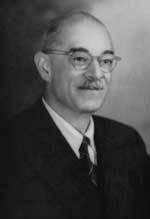
Born Alexandria, Egypt, on 18 December, 1895; educated King Edward VI School, Southampton, England, and Queen's College, Oxford. Demonstrator in Electrical Laboratory Oxford. M.A., D.Phii. (Oxon). Associate Professor of Physics, then Professor of Experimental Physics, then Research Professor of Physics, University of Sydney 1952; Emeritus Professor 1961. Visiting Professor of Engineering Research, Pennsylvania State University 1953–54. Walter Burfitt Prize and A. D. Olle Award Roy. Soc. of N.S.W. T. K. Sidey Medal and Prize Roy. Soc. New Zealand.
Professor Bailey's early work was in the field of the motions of electrons in gases, developing the lines originated by Professor J. S. Townsend of Oxford. In 1933 he was in Sydney, in contact with the team of radio research workers assembled by Professor J. P. V. Madsen (now Sir John Madsen). At that time there appeared in "Nature" a letter from Tellegen, an engineer working in the Philips laboratory in Eindhoven, describing how when listening in Holland to a radio programme from Switzerland on medium wavelengths he had received mixed with it the programme from Radio Luxemburg, a long wave radio station situated approximately half-way between Holland and Switzerland. Taking account of the competence of the observer this was clearly not due to faulty radio receivers; it had to be a phenomenon of Nature. Bailey quickly realized that the effect was likely to be due to interaction of radio waves in the ionosphere; the powerful Luxemburg transmitter might raise and lower the electron temperatures in the ionosphere in consonance with the programme modulation; this is turn could affect the ionospheric absorption, and hence the modulation of another radio programme passing through the same region. Here lies Bailey's most generally accepted contribution to science, and possibly his most important. He invited the collaboration of D. F. Martyn, and between them they laid down the now classically accepted explanation of interaction of radio waves in the ionosphere.
In later years Bailey went on to examine the effects of interaction of radio waves at the gyro-frequency of electrons in the ionosphere, with results which are still not fully understood.
Collaborating with A. J. Nicholson, Bailey contributed significantly to the theory of the natural control of insect populations. Using mathematical arguments, Bailey conferred greater precision and generality upon conclusions previously noted by Nicholson, who had used verbal arguments supplemented by arithmetical examples.
Later still he developed far-reaching hypotheses regarding interplanetary magnetic fields and electrostatic charges on stars and on bodies within our own galaxy. It is too early to assess the value of his conclusions on these topics.
Download the memoir
Thomas MacFarland Cherry 1898–1966
Written by K.E. Bullen.
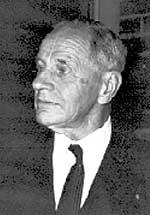
Thomas MacFarland Cherry's grandfather Edward Cherry was born in England about 1831 and arrived in Australia in 1855. He went first to the Victorian goldfields and soon afterward turned to building, later setting up in Gisborne (Victoria) the business of Cherry and Sons, known for 'Cherry churns' and other dairy appliances. Edward Cherry was a member of the Gisborne Shire Council. In Gisborne, as a childless widower, Edward Cherry married Anne Appleby, née Davies, a widow, who had been born in St Helena about 1825, daughter of a sergeant with the guard of Napoleon.
The elder son of Edward and Anne Cherry was Thomas Cherry, MD, MS, who became a Director of Agriculture in Victoria and was Professor of Agriculture in the University of Melbourne from 1911 to 1916. Thomas Cherry was noted not only as a distinguished scholar but also as a resourceful handyman who could 'fix anything'. He wrote a book on Victorian agriculture and carried out research on cancer which he continued with vigour till near his death at the age of 84.
Thomas Cherry married Edith Gladman, a graduate in classics, who had come to Australia from England when her father was appointed first principal of the Melbourne Teachers' College. Thomas MacFarland Cherry was their second child, born in Glen Iris in outer Melbourne on 21 May 1898. Tom was brought up in Glen Iris in what was then a rural atmosphere. His elder brother, John Howard Cherry was killed in France in World War I. Two other brothers, Henry Lister Cherry and Richard Ormond Cherry (now Senior Lecturer in Physics in the University of Melbourne), and one sister, Margaret Lilias Cherry, survive him.
Tom Cherry was a pupil at Scotch College, Melbourne, where his bent for mathematics soon revealed itself. He went to the University of Melbourne as a resident student at Ormond College, and in 1918 graduated with first-class honours in mathematics, being awarded the Dixson and Wyselaskie Scholarships.
He then had a short period in Army service and some Air Force training which, according to some notes he has left, enabled him 'to learn telegraphy and solo whist'. In 1919, he began a medical course in the University of Melbourne, but his godfather Sir John MacFarland (the Chancellor of the University of Melbourne) offered to advance him funds to further his mathematical career in Cambridge.
He thereupon entered Trinity College, Cambridge, and at the end of his first year gained first-class honours in Part 2 of the Mathematical Tripos, becoming a Wrangler with B-star. He was awarded a Senior Scholarship and an Isaac Newton studentship at Trinity College, graduated BA (Cambridge) in 1922 and PhD in 1924, and was elected to a Senior 1851 Studentship.
He was a Fellow of Trinity College from 1924 to 1928. Inside this period he carried out lecturing duties during three terms in 1924–25 as an Associate Professor of Applied Mathematics at the University of Manchester, deputising for E.A. Milne during Milne's prolonged illness. In 1927, he deputised for C.G. Darwin for one term at the University of Edinburgh.
In 1929, Cherry relinquished his Trinity College Fellowship to accept the Chair of 'Mathematics, Pure and Mixed' at the University of Melbourne. In 1952, this Chair was replaced by separate chairs in Pure and Applied Mathematics and Cherry, with some hesitation, elected to take the Chair of Applied Mathematics, which he occupied till his retirement in 1963. In 1950, he received the ScD degree of the University of Cambridge.
In the latter part of his life, the affairs of the Australian Academy of Science became one of his principal interests, and his years of service on the Academy Council substantially exceed that of any other Fellow to date. He was a Foundation Fellow and member of the first Council (1954–5), Secretary A (1956–9), and President (1961–5).
The following honours came to him: He was Pollock Memorial Lecturer in the University of Sydney, 1948; Lyle Medallist, Australian National Research Council, 1951; and was elected a Fellow of the Royal Society in 1954. He received honorary degrees (DSc) from the Australian National University and University of Western Australia in 1963, and became a Knight Bachelor in 1965.
Among his other principal interests were the affairs of the Australian Mathematical Society of which he became the first president in 1956, and the development of Latrobe University in which he played a prominent part. He held office as president of the Mathematical Association of Victoria in 1929–34 and 1946–8, and was foundation president of the Victorian Computer Society, 1961-3. He was a member and chairman of the Mathematics Standing Committee of the Schools Board of the University of Melbourne from 1929–52, and was personally responsible for major re-draftings of mathematical syllabuses in Victorian secondary schools on two occasions. In 1958, he was president of Section A of ANZAAS.
Cherry's research and contributions to knowledge took several turns during the course of his academic life, though most of his work was closely related to his chief love which was classical mathematical analysis.
In his early years in Cambridge, on being given some problems in Statistical Mechanics to investigate, he soon found his interest turning to the underlying differential equations. The theory of differential equations, particularly the equations that arise in Dynamics and Celestial Mechanics, was his main research field for a number of years. Over the period 1923-38, he published 13 papers in this field, bearing mainly on periodic solutions and relations between different manifolds of periodic solutions, and on the possible complexities of non-periodic solutions. In 1966, some earlier unfinished work was published.
In the late 1930s, Cherry turned to an interest in mathematical logic. He spent some time mastering Gödel's theorem, but though in this field he read a great deal and entered into discussions with Melbourne philosophers, he did not publish any papers. In 1937 he was asked to give a lecture (published by the Melbourne University Press) in commemoration of the tercentenary of the publication of Newton's Principia. This led him to an intensified interest in the foundations of the theory of Mechanics. In the notes he has left, he wrote:
While I am interested in the facts of Nature, I am much more interested in scientific theories, and particularly in fundamental questions, e.g. whether the classical principles of dynamics form a sufficient foundation for Statistical Mechanics. When such questions are formulated mathematically, they become problems in pure mathematics, and it is really to this subject that most of my work belongs. On the fundamental questions themselves I have perhaps arrived at understanding, but have found nothing sufficiently interesting to publish.
Actually, Cherry did present some of his ideas on the foundations of Mechanics in his ANZAAS address, which was published in 1958. The approach in this paper is rather severely formalistic and mainly leaves aside questions of uncertainty and inductive inference.
During World War II, Cherry's interests turned to questions of a more practical nature, to which he applied his skills in mathematical analysis. Examples are questions on the detection of aircraft by radar, and on the pressure and temperature generated in a film of nitroglycerine when hit by a hammer. The war also sowed the seeds of a later interest in electronic computers, an interest which grew in his subsequent post-war researches. Those with whom he worked during the war were in high praise of his physical insight as well as of his formal mathematical powers.
In 1945, his attention was called by a former pupil to a class of problems in the flow of gases, and in particular to a method (the hodograph method) which, it was thought, might yield detailed results of much physical interest at the hands of a good mathematical analyst. Previously no more than crude approximation methods had been applied to the problems. Cherry succeeded in deriving formally exact flow patterns of importance to trans-sonic flows past aerofoil shapes and to the design of supersonic wind tunnel shapes. This new activity led him to publish some 15 further substantial papers from 1947 on, and he was elected to the Royal Society in 1954. The papers included several on auxiliary mathematical analysis, mainly on the approximation to functions by asymptotic expansions and the numerical summation of slowly convergent series. Around this time, Melbourne University acquired the electronic computer constructed by T. Pearcey of the CSIRO, and Cherry interested himself not only in the programming detail but also in the more practical properties of the computer.
Cherry's research career was that of an individualist. His notes state:
By taste, or upbringing, I have preferred always the "do it yourself" method. This began when, at the age of seven, my attendance at school involved a walk of nearly four miles every day. With the help of prizes and scholarships, whose attainment involved little effort for me, I have been practically self-supporting since the age of 17. I have "directed" the initial research efforts of a fair number of students, but by force of circumstances, reinforced by inclination, I have not tried to form a "research school".
Cherry was intensely interested in the teaching of undergraduates in his Melbourne University Department. On this, he wrote: 'For over 20 years I was responsible for the whole mathematical syllabus, pure and applied, and I have always regarded the associated teaching as my chief responsibility. For over a decade the stint was four courses of lectures per term. Since I am really attached to teaching this was no burden. At one time or another I have taught every subject in the curriculum, at all levels.' One of his greatest prides was the success of the cream of his students in their subsequent careers and his notes state 'I am most conscious of the two-way reaction between teaching and research.'
When I went to Melbourne in 1940 I found a Department of Mathematics which, in respect of fine attention to undergraduates' needs and highly efficient organisation, I have not seen bettered in any of the Universities I have since visited in many countries. The foundations for this efficiency had been laid by J.H. Michell, FRS, Cherry's immediate predecessor in the Melbourne Chair and a world figure in Applied Mathematics. Cherry was Michell's star pupil and set out to perfect the work on the undergraduate structure which Michell had begun.
Cherry had also, when a student in Melbourne, come under the influence of Professor E.J. Nanson, and of D.K. Picken and C.E. Weatherburn of Ormond College. Picken was still in Melbourne (as Master of Ormond College) at the time of my arrival and I was able to learn something of his influence on Cherry. Picken had a first-class logical brain and might have had a significant mathematical career were it not for the inhibiting effect of an unbridled passion for formalism. Cherry, though aware of Picken's limitations, had a great respect for Picken and told me that it was Picken who first imbued him with the importance of mathematical rigour. From talks with both Picken and Cherry, I gathered the impression that Picken also contributed to the development of one of the strongest traits in Cherry's disposition, namely, thoroughness and extreme attention to detail. Cherry was, however, constitutionally incapable of ever being other than thorough.
Contributing also to the quality of Cherry's undergraduate department, as I saw it in the 1940s, was something in the nature of a scout-like approach which had both its pros and its cons. (Actually, scouting was another major activity of Cherry, from his Cambridge days onward.) The predominant note in the department was that service to students and the department must be placed above all else. Cherry himself was devoted to the welfare of the department and students and took great interest in questions of pedagogy, syllabus and examinations at the School as well as the University level. He himself was a very competent lecturer, methodical and lucid, with his material meticulously ordered and errorless.
In Victoria, in contrast to the circumstances in some other Australian states, the University of Melbourne had virtually full control over syllabuses and examinations in the main secondary school system. The University conducted not only the Matriculation, but also the School Leaving and Intermediate examinations. In much of this work (and not wholly confined to mathematics) the guiding hand was Cherry's. In mathematics, he built up model relations with secondary school teachers and when he had won their confidence delegated important sections of work to them.
Part of his strength lay in the research frame of mind he brought to bear in problems of education and examination. Where many senior academics have tended to decree, and still decree, on these matters without appreciating the depth of underlying problems, Cherry never acted without intense prior fact-finding and investigation. Thus he was equipped to give informed (firmly, but mildly expressed) rejoinders to professional educationists with differing viewpoints and usually would quickly win the opposition round.
By the time I had arrived in Victoria, he had acquired an almost god-like stature among the mathematical teachers of the State, and the quality of preparation of entrants to Melbourne University was streets ahead of that in any other Australian State. In spite of current fanfares in some other States, it is doubtful whether school education in Mathematics and Physics will for many years approach the quality it reached in Victoria in Cherry's time. Among several other things, I owe Cherry a personal debt for what I learned when in Melbourne about the principles of setting and assessing examination papers – principles which were arrived at through solid research and controlled experiments instituted by Cherry. I have nowhere seen a fairer assessment of students' results than in Melbourne, nor more intelligently conducted examinations.
If any criticism could be made of the Melbourne department in those days, it could only be of the extent to which devotion in such matters was carried. I sometimes felt that the emphasis on undergraduate needs, admirable as it was in so many ways, yet carried with it an undue tax on the staff's research activity. For most of the third term, for example, the time devoted to preparing and criticising examination question papers by the entire department made it next to impossible to concentrate on any deep research. There was also a severe tax on research energies in the second term – in Melbourne's foggy winter when colds and influenza are rife. Even though the staff was quite small in those days, the rules of the department required every undergraduate lecture to be given – when a staff member was away sick others would take over his courses and then themselves often become sick. Thus one might have suddenly to drop research and reading for periods inside the winter terms to prepare and deliver sometimes up to two full additional courses. In the changed conditions of today, the very thought of the total lecture load sometimes reached, a load which Cherry himself fully shared, would make the average modern young lecturer go pale. Many miscellaneous extra-curricular tasks involving mathematical effort were carried out by the department in a volunteering spirit. Staff members were expected (though not quite directed) by Cherry to work with him on these tasks, often at zero notice (At the same time, it should be said that many of the staff, especially those who were Melbourne graduates, loved working with Cherry on his enthusiasms.) While these matters need to be stated to give a balanced picture of life in the department, they should not detract from the outstanding fact that Cherry built up in Melbourne a Department of Mathematics of enviable reputation. Its fruits are to be seen in the achievements of and posts held subsequently by many of the department's graduates.
For my own part, the five years I spent in Cherry's department were an invaluable contribution to my education and to my qualifications for a Chair. Even though conditions in New South Wales have made it difficult for me to bring to bear all the features I most admired in the Melbourne Department, I had the privilege of seeing in Melbourne a great machine in action and of profiting from my observations of its greatnesses as well as its limitations. It was also a privilege to work in the presence of one of Australia's best mathematical analysts of the time.
A further interesting passage in Cherry's notes refers to his regret at having to relinquish, in 1952, the title of 'Professor of Mathematics, Pure and Mixed'. He always felt that this title provided the best description of his interests and it was only after hesitation and with some reluctance that he elected to take the Chair of Applied Mathematics. He regarded himself as essentially a pure mathematician – though his interest was not in modern abstract mathematics – whose tastes led him intermittently to use his analytical skills in a variety of contexts. Where many applied mathematicians nowadays put context first and the mathematics second, mathematical analysis came first with Cherry.
I first met Tom Cherry in 1931 when he and his wife Olive graciously entertained me in their home when I was a New Zealand student passing through Melbourne on my way to England. After 1946 when I left Melbourne University, our paths continued to cross a great deal, partly through common interests as holders of Chairs of Applied Mathematics, but even more so after 1954 when the Australian Academy of Science was founded and brought us into close contact on a number of national tasks.
I thought he rose to his best as a Secretary of the Academy. In the early part of the International Geophysical Year, for example, when H.C. Webster and I carried heavy loads as convener and chairman of the national committee, Cherry was a tower of strength. Where some other Academy officers appeared indifferent to the necessities of Australia's IGY contributions, Cherry saw the needs clearly and worked hard as Academy Secretary to obtain indispensable Government support. He is one of a quite small number of men who enabled Australia's reputation in respect of the IGY to be saved. Again, during the formation of the International Scientific Committee on Antarctic Research, Cherry worked hard behind the scenes in Australia's interest. These are two examples in which I had close first-hand knowledge of what he did. But the Academy Secretaryship also brought out in him latent qualities that surprised even many of his friends who had known him closely in the Victorian setting.
He was also successful, though sometimes slightly controversial, as President of the Academy. As third President, Sir Thomas Cherry saw the Academy through an important epoch in its history when its place as an Australian institution was beginning to emerge. He had the distinction of admitting His Royal Highness, the Duke of Edinburgh, as a Royal Fellow of the Academy, and of receiving the Grant of Arms to the Academy. During his presidency, the Basser Library was opened, Senior Fellowships were established by the Academy, and active steps were taken to form discussion groups with representative industrialists.
Cherry had no hesitation in taking strong and positive action on a number of occasions when he felt this to be in the Academy's interest. He had strong views on broadening the basis of Academy membership. In his Quadrennial Review as retiring president, he wrote in 1965: 'I make no secret of my own opinions: (1) that the tendency of the Academy should be towards a suitably circumspect and marginal broadening of the basis for its membership; (2) that its tendency in fact has not been this; (3) that my own attempt to propagate the less conservative policy was badly judged; for example, I tried to go too quickly.' It remains an acutely controversial question within the Academy as to the extent, if any, to which the Academy ought to change its policy in respect of balance between pure and applied science.
In most of his outlooks, Cherry took an Australian viewpoint, though he also had a great regard and liking for British ways. He looked increasingly toward the international scientific scene after he became Secretary A to the Academy. As Academy President, his chief international venture was his enthusiastic acceptance of an exchange of delegations between the Academy and the Academia Sinica of Peking, which was not without its controversial aspects. While there was general agreement among the Australian scientific community that the President of the Academy should foster all possible good relations with Chinese scientists, irrespective of official Government attitudes, there was some concern that the President should take the further step of expressing publicly a view on the question of the admission of China to the United Nations. Many felt that an Academy president should refrain from declaring on a major question involving expert knowledge outside the field of the Academy. At the same time, none could ever question Cherry's sincerity in doing what he thought right, even if unpopular. He was a man of principle.
From examples such as the above, it will be correctly inferred that Cherry was a strong and fearless character. Yet he was also among the gentlest of men. The furthest he ever went toward expressing displeasure was a faint flicker of an eyebrow which rarely failed to quell anyone who ventured too far in directions he did not approve of. He was not only a gentle man, but a man of kindliest intentions. He was also a man of austere integrity. One always knew where one stood with him even if one sometimes had opposed views. When one did disagree, he was a formidable opponent – in a quiet way. He was a man without malice or grudge, with strong views on his purpose in life. Most people who knew him well rather loved him or at least admired him, though few came close to being really fully in tune with him. Many who did not know him well thought him cold, but that was a mistake: he had a warm disposition below the surface. He was a doer rather than a talker. He was also a philanthropist and personally generous in an unostentatious way.
He had fairly definite political views, at times somewhat, but not very far, left of centre. He was essentially an independent thinker: one could not imagine him having any political affiliation. He once told me that he thought one should vote left to get some new ideas into government and then vote right a few years later in order to get straightened out the mess that socialists always make of things. In his earlier years his attitude to rank and privilege could sometimes be pointedly offhand and he was casually scornful of the fopperies of society. In later years his attitudes changed a little, though he by no means became strongly conservative, as his record as Academy president shows.
Not only did he think as an Australian but he loved the Australian countryside. He tramped almost everywhere in Victoria and loved expounding on the local geology and flora and fauna. He lived a vigorous and disciplined life with few frills. Camping and mountaineering were another major part of his activities. His notes state: 'My love of camping and mountaineering connects in one direction with "do it yourself" and in another direction – via the shapes of hills – with geometry and mathematics.'
The stories of his robust physique are legion. The following example, relating to an incident on an outing of the Melbourne University Mountaineering Club, of which he was president, gives an interesting glimpse of his ways. A group including Cherry (aged about 50 at the time) and others all much younger, had come after a long day's tramping to the foot of an 800 feet hill standing between them and their destination. The worn and tired young men and women put it to the president that the group go round the hill and not over. 'The route is shorter over the hill' came the unyielding reply, and before protests could become articulate, the president was striding rapidly upward at a pace that belied his years, with the rest of the group straggling mournfully behind.
It was thought by all his friends that Cherry would continue after retirement into a long period of mental and physical activity. It came as a great shock when in early 1965 he was stricken with a heart attack. This followed a grim 30-hour struggle for survival in which he and his son-in-law were benighted in a precipitous area without food or water and in summer heat. With characteristic courage, after a short convalescence, he resumed his interrupted activities and even added to them, for example, in his work for Latrobe University. But he succumbed to a second heart attack on 21 November 1966. He leaves behind him his widow, Lady Olive Cherry, and only daughter Jill, now Mrs J.D. Stowell of Newcastle, NSW A great tribute is due to Lady Cherry who placed her husband's interests first in all things and unobtrusively gave him precisely the support which a man of his type needed.
The writer would like to acknowledge gratefully the help he has received from several of Sir Thomas Cherry's friends in compiling this article, and especially from Professor E.R. Love who kindly supplied a quantity of the biographical material used and checked various details.
About this memoir
This memoir was originally published in Records of the Australian Academy of Science, vol. 1(2), 1967. It was written by K.E. Bullen, FRS, FAA, Foundation Fellow of the Academy and Professor of Mathematics (Applied Mathematics), University of Sydney.
Thomas Griffith Taylor 1880–1963
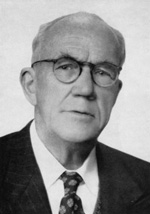
Emeritus Professor Griffith ("Grif'') Taylor, who died on November 5th, 1963, at the age of 82, was among the most brilliant and versatile geographers of his time.
Download the memoir
Sydney Sunderland 1910-1993
Written by Ian Darian-Smith.
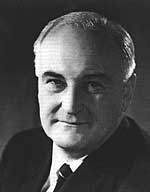
- Schooling, Undergraduate and Graduate Studies
- Wartime Experience
- Research Contribution
- Professor of Anatomy 1939-1961
- Dean of Faculty of Medicine 1958-1971
- Services to Australian and Victorian Governments
- Other Professional Activities
- International Recognition
- Personal
- Degrees, Qualifications and Honours
- About this memoir
This short memoir of Sir Sydney Sunderland is based on autobiographical information assembled by Sir Sydney, on a number of informal discussions the author had with him during the last five years of his life, and on the more accessible public documentation of his many activities associated with the University of Melbourne and the Federal and State Governments. In these notes I am more concerned with providing a picture of the kind of man Sydney Sunderland was, his science, and his contributions to Australian universities and to the community, than with presenting exhaustive detail of his many achievements.
Schooling, Undergraduate and Graduate Studies
Sydney Sunderland was born in Brisbane on the last day of 1910. His father was a journalist and sporting identity in Brisbane and his family provided a strongly supportive environment for their only surviving child, who quickly established himself as an outstanding schoolboy athlete and student. He spent a couple of years at Scotch College, Melbourne, when his father was circulation manager of the recently established Sun newspaper, and then completed his schooling at Brisbane State High School. Sydney Sunderland was awarded an Open Scholarship in 1930 and started a science course at the University of Queensland. Since at that time there was no medical school in the University of Queensland, students wishing to complete a medical course had to enrol at either Sydney or Melbourne. This became possible financially for Sydney Sunderland when, as top student in first year Science, he won the Raff Memorial Scholarship. In 1931 he entered second year medicine in the University of Melbourne, and so began a highly productive association which lasted more than sixty years. Sunderland graduated as top student in medicine in 1935, having 'topped' every other year along the way and been awarded the Exhibition and Dwight Prize in Anatomy, the Jamieson Prize in Clinical Medicine, the Keith Levi Scholarship, and the Fulton Scholarship in Obstetrics and Gynaecology. He also passed the Primary Fellowship Examination of the Royal College of Surgeons (London) a year before graduating.
Quite early, as a medical student, Sydney Sunderland was attracted to research. In this, he was greatly influenced, firstly by the neurologist Leonard Cox, and then by the singularly charismatic professor of anatomy at Melbourne, Frederic Wood Jones. These two senior colleagues guided Sunderland's interests toward neurology and greased the tracks for his career with a breathtaking directness. Immediately on graduation Sunderland was offered a Senior Lectureship in Anatomy, which he accepted. He was simultaneously appointed Assistant Neurologist in Cox's neurological clinic at the Alfred Hospital, and also Assistant to the eminent surgeon, Hugh Trumble, who specialized in neurosurgery at the same hospital. These four remained close colleagues and friends throughout their lives.
In 1937 the ever-restless and controversial Wood Jones returned to England to the chair of anatomy at Manchester. Before leaving Melbourne, however, he arranged Sunderland's appointment as a Demonstrator in the Department of Human Anatomy in Oxford with Le Gros Clark. Le Gros Clark and the young 'colonial' did not warm to each other, although Sunderland completed four papers on the cerebral cortex while in Oxford, using the Marchi staining technique and retrograde neuronal degeneration for tracing cortical projections in the macaque monkey. Fortunately for both Sunderland and the University of Melbourne, on 21 July 1938 he was offered, and accepted, the chair of anatomy in the University of Melbourne! He was then 27 years old.
Sunderland arranged with the University of Melbourne to take up his professorial duties early in 1940, so that he could complete the research he had begun at Oxford and also make the 'grand tour' of several active laboratories in North America. While in Oxford he spent much time in the neuro-surgical unit of the recently appointed first Nuffield Professor of Surgery, Sir Hugh Cairns. Cairns, an Adelaide graduate and one of the pioneers of neurosurgery in the UK, encouraged Sunderland's participation in neuroanatomical research in his department. There he developed a friendship with the brilliant Pio del Rio-Hortega, a political refugee from Franco's Spain, who had been a student to the Nobel Laureate Ramon y Cajal. Rio-Hortega introduced Sunderland to the various silver staining techniques that the Spanish neurohistologists had developed for visualizing the fine structure of neurons and glial cells, and especially microglial cells, which Rio-Hortega had independently identified.
Sunderland left Oxford in mid-1939 to spend three months at the Montreal Neurological Institute with Wilder Penfield's group, then at its peak. Penfield's very great contribution, for which he received both the Nobel Prize and the Order of Merit, was his systematic investigation of the functional organization of the human cerebral cortex. This study was done on patients undergoing cerebral surgery for the removal of tumors or scar tissue resulting from previous brain injury: at that time, these procedures were done in the conscious patient using local anesthesia at the surgical site. Penfield developed methods of identifying and mapping those regions of the cortex directly concerned with the voluntary movement of the limbs and the perception of the surrounding world. Once identified, these zones could be avoided or minimally resected by the neurosurgeon when removing the tumor or scar tissue: this minimized the sensorimotor disability resulting from the surgical removal of brain tissue. These procedures were soon to become especially important in dealing with the aftermath of penetrating wounds of the head in the war-injured. Sunderland developed the greatest respect for Penfield and his research, and about twenty years later was able to invite him to contribute to the celebration of the centenary of the Melbourne University Medical School (1962). At these celebrations the honorary degree of Doctor of Laws was conferred on Penfield.
Other groups visited in this 'grand tour' late in 1939, under the shadow of the impending world conflict, were the important neuroanatomical and clinical neurological groups at Toronto and Harvard, the neurophysiologist John Fulton at Yale, the neurosurgeon Earl Walker at Johns Hopkins, who had just published his classic monograph on the connections and organization of the primate thalamus, and the neurological centres at St Louis, Chicago, Rochester, Los Angeles and San Francisco. Sunderland returned to Melbourne at the end of 1939, after the outbreak of war.
Sydney Sunderland's early association with Wood Jones, and his short period in Oxford before the outbreak of the Second World War, were to determine the direction of his subsequent professional career as a neuroanatomist. Wood Jones was larger than life, an excellent teacher, public speaker and writer (as in his book, The Hand), sharply alert to what would interest an audience and, most importantly, an outstanding intellect. He was one of the thinking, observational biologists of his generation and, although often controversial (he was anti-Darwinian), commanded respect from a wide international scientific audience. Le Gros Clark, Penfield, and Earl Walker trod a different path, with an emphasis on experimentation and the application of innovative techniques. Each of these great experimentalists was prepared to speculate on the meaning of the data, and to develop models of cortical and thalamic organization that could then be further examined by appropriate experimentation. In addition, Le Gros Clark was a great comparative anatomist, especially interested in primate evolution. (In the 1950s, he played an important role in exposing the Piltdown forgery.) Thus, the young Sunderland had the good fortune to work with some of the great neuroanatomists of the period, and their imprint was apparent in the whole of his subsequent career. Sunderland did publish many experimental studies on nerve and nerve injuries, but his strength and evident primary interest was along the observational path of Wood Jones. Rather than pursuing comparative anatomical studies of the brain, however, as did Wood Jones and Le Gros Clark, Sunderland was to turn his research focus to the human peripheral nervous system and its responses to injury. This shift was really dictated by the circumstances of the Second World War, and the many Australian troops chronically disabled by nerve injuries produced by penetrating injuries of the limbs in the period 1940-1945. An attractive feature of such studies was that they led to great advances in the surgical management of nerve injuries, which in turn enhanced the recovery of useful limb function in many patients.
A perhaps unexpected change in Sunderland's subsequent post-war career was that although his early mentors were now in English universities, he became more closely linked to clinical neuroscience in the USA than to that in the UK. This may have resulted from the friendly support and encouragement the very young Sunderland received in North America, contrasting with the more austere and reserved response of some English academics to 'colonials'.
Wartime Experience
Sydney Sunderland was working in Penfield's department at the outbreak of war in 1939, but was able to return to the University of Melbourne by the end of that year. In addition to chairing the Department of Anatomy and doing most of the teaching of undergraduates throughout the period of the war, Sunderland became responsible for a Peripheral Nerve Injuries Unit that had been set up at the 115 AGH, Heidelberg, Victoria. All Australian servicemen sustaining chronic nerve injuries were sent to this unit for treatment. The experience of the next five years was to provide the framework of Sunderland's subsequent research career, in which peripheral nerve organization and its repair following injury were to become central topics. Eighty years earlier, Union troops with rifle-bullet wounds of peripheral nerves sustained in the battle of Gettysberg had triggered the first intensive and systematic study, by Weir Mitchell, of nerve injuries and their consequences, including the excruciating and disabling condition of causalgia. Sunderland was now able to parallel the research of his eminent predecessor, with the advantage of having powerful new neuroanatomical research tools and a backup of improved neurosurgical procedures that surgeons could possibly develop to repair injured nerves. The first papers reporting these clinical neurological studies were published in 1944-45.
Research Contribution
Throughout his career Sydney Sunderland retained wide research interests, evident from papers published on various aspects of topographic anatomy, structure of the cerebral cortex, the connections of the hypothalamus, the vascular supply of various organs and tissues, the pupilloconstrictor pathways, and medical education. Nonetheless, the majority of his papers were focused on the structure of human peripheral nerves, the pathophysiology of nerve injury and regeneration, the disabilities of hand function resulting from nerve injuries of the forelimb, and the natural history of anatomical and functional recovery following these injuries. A number of papers were concerned with the innervation of the small muscles of the hand, the normal action of these muscles, and their abnormal actions following nerve injury. Sunderland considered that his own work 'was at all times directed to the elucidation of those principles on which the clinical management of nerve injuries should be based'. One great strength of Sunderland's peripheral nerve studies was that he personally was able to study the natural history of each of 365 patients with peripheral nerve injuries for a period of ten years or more, and to follow the successive stages of their recovery of sensorimotor function. This very effective co-operation of patient (mainly battle casualties) and investigator flowed from the trust that developed between them. After their discharge from hospital, many of these patients, now ex-servicemen, would repeatedly travel long distances to be examined and reviewed by Sunderland. These men strongly believed in the great value of this long, systematic study of their nerve injuries. A second strength of this longitudinal study was that the surgical repair of nerve injuries was not performed by Sunderland, thus introducing the essential objectivity needed in such studies. In fact, much of the reparative surgery was done by Sunderland's mentor Hugh Trumble. The two editions of Nerves and Nerve Injuries (1968, 1978), and Nerve Injuries and Their Repair (1991) summarize this large body of work and place it in the context of other contemporary work in the field. In his foreword to the first edition of Sunderland's encyclopedic monograph, Sir Francis Walshe pointed out that 'This volume has clearly been a labour of love of many years for its author'. The enduring quality of these studies is evident from the fact that in the period 1991-1995 Sunderland's publications were cited on average in 110 neurological papers each year (ISI Neuroscience Citation Index). In his later life Sunderland was often referred to as the 'father of modern nerve surgery'. In 1979 he was the honoured Founders Lecturer of the American Society for Surgery of the Hand at its meeting in San Francisco, and in 1986 at an international meeting in Tokyo he was cited as a 'Pioneer in the Field of Hand Surgery'.
Revealing features of Sunderland's research were that he was sole author of about 75% of his published papers, and that in the remaining papers the co-authors were usually long-time colleagues and members of the Department of Anatomy (Bradley, Ray, Lavarack, Merrillees, Roche, Adey). Although meticulous and elegantly planned, Sunderland's research did not depend on the use of technically innovative procedures and equipment, reflecting his view that good research is the product of carefully shaped questions, accurate observation and thoughtful analysis of the data obtained. Sunderland dismissed mindless experimentation and thought it to be too common in the current neurobiology. This view, of course, was in accord with those of two of his heroes, the great experimentalist Claude Bernard and the great field naturalist Frederic Wood Jones.
The following paragraphs briefly summarize Sydney Sunderland's research achievements. This work, with a full bibliography, is most accessible in Sunderland's monographs.
Structure of human peripheral nerves
Sunderland recognized the complexity of the biology of peripheral nerves, and that the function of their constituent axons depends in no small measure on their blood supply and the organization of the interfascicular connective tissue of each nerve. These non-neural elements were recognized as having an important role in limiting the effects of injury on the axon populations of a nerve, and on the subsequent processes of functional recovery. Sunderland examined and described the fascicular anatomy of all the major nerve trunks in the human subject, emphasizing their changing patterns along the length of each trunk, and their relations to specific nerve branches of the main trunk that innervate particular muscles or particular areas of skin. He attempted to correlate these anatomical patterns with the susceptibility of each nerve to injury resulting from mechanical deformation, and with its subsequent recovery following mechanical injury.
Pathophysiology of nerve injury and regeneration
Sunderland also studied the axon populations of peripheral nerves, their responses to injury, and their subsequent degeneration or regeneration. Again, these studies were mainly on human tissues. In one study the atrophy of the endoneural tube distal to the site of axonal injury was found to have little effect on the subsequent regrowth of the axon into the denervated tissue. Similarly, it was found that the atrophy of muscle fibres resulting from prior denervation did not limit their subsequent reinnervation, even when the period of denervation had extended over many months. These studies did show clearly that the full restoration of muscle function following interruption of its nerve supply depends on much more than the simple re-establishment of neuromuscular continuity. The motoneuronal axons which make synaptic contact with the denervated muscle fibres must originate from the appropriate motoneuronal pools in the spinal cord, they must be sufficient in number, and they must reinnervate a substantial fraction of the initially denervated extrafusal muscle fibres. In addition, the innervation and function of muscle spindles in these muscles must be re-established. Comparable studies of cutaneous nerves emphasized the complexity of sensory innervation and the myriad factors which determine the recovery of cutaneous sensibility following nerve injury.
Sunderland also systematically examined the manner and rate of regeneration of previously interrupted peripheral nerve axons, how this varied in different nerves and was modified by the type of nerve injury, and how different types of surgical repair could influence the final recovery of sensory or motor function in the patient.
In addition to studying gunshot wounds of nerves, Sunderland also examined traction and compression injuries of those nerves mediating sensorimotor functions of the hand. As with penetrating injuries, he found that the integrity of the nerve's blood supply was critical, and that factors impairing it were those which also impaired nerve conduction. Furthermore, those peripheral nerves most readily injured by traction were characterized by having relatively few large fascicles of nerve fibres supported by a minimum of non-neural interfascicular tissue.
Painful sequelae of nerve injuries
Yet another problem examined by Sunderland was a relatively common and severely debilitating complication that can develop following a proximal lesion of one of the nerves innervating the hand or foot. This extremely painful condition, first systematically studied by Weir Mitchell eighty years earlier and termed causalgia by him, most commonly occurs following an incomplete nerve lesion resulting from a missile penetrating the upper arm or thigh, and may develop immediately following the injury, or weeks or months later. Sunderland's contribution to the understanding of the basis of causalgia was to bring together the evidence for a central spinal location for its neuropathology, supporting the views of Livingstone. This model did not preclude contributing factors operating at the site of nerve injury, but it did emphasize that the etiology of the condition is complex, and it provided an explanation for the well-known clinical finding that repair of the peripheral nerve injury or removal of local neuromas may not cure the condition. Although the focus of recent studies, the neuronal genesis of causalgia is still not clear. However, Sunderland's idea that there is disruption of the processing of sensory information in the regional spinal cord circuitry receiving input from the injured nerve, is still current.
The classification of peripheral nerve injuries
Extensive experience with peripheral nerve injuries, their surgical management and 'repair', and the subsequent recovery of sensorimotor function, prompted Sunderland to develop a classification that is based on the histopathology of the nerve injury rather than its cause. He recognized five stages of nerve damage, increasing in severity from loss of nerve conduction in structurally intact axons, loss of axonal continuity and associated Wallerian degeneration, the disruption of the internal structure of nerve fascicles, the disorganization of the nerve trunk's fascicular anatomy, and finally the loss of continuity of the nerve trunk. Each category of nerve injury could be recognized clinically, and provided some guide to the prognosis of the injury and the best form of clinical management.
In seeking to explain the impact of Sunderland's research on peripheral nerve injury, several factors stand out. First, he approached each problem through questions that would be clinically relevant, and examined them systematically in terms of the known neuroanatomy and neurophysiology. Secondly, he was always practical and down-to-earth in his approach and, especially in his 'bible' on nerve injuries, explained carefully how sensorimotor dysfunction might be assessed by the neurologist in the months following nerve injury or attempts at repair. Sunderland's studies of nerve injuries happened to coincide with the introduction of penicillin, so that surgeons could now concentrate their efforts on microsurgical techniques. This meant that the microanatomy of peripheral nerves, at the level of resolution that could be visualized at the operating table, assumed a special clinical importance that was largely met by Sunderland's investigations.
Professor of Anatomy 1939-1961
Sydney Sunderland was an excellent lecturer and soon had the reputation in the University of Melbourne Medical School of being a first-rate teacher of neuroanatomy. As was the current fashion, he used to great advantage the blackboard presentation of the three-dimensional relations of the different brain structures. In the background of the portrait of him, painted by Wes Walters, that hangs in the Sunderland Lecture Theatre in the Medical Centre at Parkville, this particular skill is alluded to. In teaching undergraduates, Sunderland relied on the highly competent presentation, both in the dissecting room and in the lecture theatre, of anatomical fact that he considered should constitute part of the education of every practising doctor. This matter-of-fact approach to teaching was particularly well expressed in the facilities of the new building that housed the Anatomy Department from 1967 and that was largely designed, in all its grandeur, by Sunderland and his staff. The fully air-conditioned dissecting room, the excellent anatomy museum and the 'Padua' theatres for small-group tutorials and demonstrations that they designed, continue to be greatly appreciated by the hordes of undergraduate students who currently use them. Sunderland fully exploited these wonderful facilities by appointing competent and knowledgeable tenured senior academic staff, and using trainee surgeons to tutor undergraduate students in anatomy. The senior staff of the Department of Anatomy included early Melbourne associates (Russell, Ray, and Bradley, each of whom became a professor in the Department) and other very experienced anatomists (Drs Lavarack, Merrillees and Adey).
In 1953-54, at the beginning of his period as Dean of the Faculty of Medicine, Sydney Sunderland was Visiting Professor of Anatomy in Bodian's department in the Johns Hopkins University School of Medicine at Baltimore, and during that year was freed from administrative duties and able to concentrate on his research and teaching.
Dean of Faculty of Medicine 1953-1971
Sydney Sunderland was elected Dean of the Faculty of Medicine in 1953. As Professor of Anatomy he held this part-time position until 1961. He was then appointed Professor of Experimental Neurology and held this position and that of Dean until 1971. He retired in 1975 but continued working in the Department of Anatomy as Emeritus Professor until 1993.
During his eighteen years as Dean of the Faculty of Medicine, Australian universities, and particularly the medical schools, changed profoundly. In no small measure this upheaval was the result of the recommendations of the Australian Universities Commission, of which Sunderland was a leading member. In the 1950s a number of clinical chairs were set up in the teaching hospitals, in medicine, surgery, psychiatry, obstetrics and gynaecology, ophthalmology, and child health. The establishment of a second medical school in Melbourne, at Monash University in 1960, with the transfer of the use of Alfred Hospital and Prince Henry's Hospital as teaching hospitals to Monash, produced serious overloading of the teaching facilities at the Royal Melbourne and St Vincent's Hospitals that remained with the University of Melbourne. The shortage of teaching facilities was compounded by the University's commitment to the State Government to expand the intake of medical students in order to meet the perceived need for medical services in Victoria. These problems were slowly resolved by pursuing a vigorous policy of expansion of the preclinical and clinical University departments that was implemented during Sunderland's deanship. During his period as Dean the number of professors was increased from six to twenty-four, mainly in the clinical departments, and a Clinical Sciences Block was built in each teaching hospital affiliated with the University of Melbourne. New buildings to house the preclinical departments and the Brownless Medical Library were completed in 1967, and the Austin Hospital became an important addition to the teaching hospitals of the Medical School of the University of Melbourne.
Services to Australian and Victorian Governments
Sydney Sunderland was an active member of many Federal Government committees. He represented universities with medical schools on the National Health and Medical Research Council, and was a member of the Council's Medical Research Advisory Committee from 1953 to 1969. He was chairman of the latter committee from 1964 to 1969. In 1970-1971 he was a member of the Advisory Medical Board of Australia.
One of Sunderland's most important and fruitful commitments to the Federal Government was his long association with the Australian Universities Commission. He was the longest-serving member of the AUC, working from 1962 until 1976 with all four chairmen of the Commission - Sir Leslie Martin, Sir Lennox Hewitt, Sir Henry Basten and Professor Peter Karmel. Even before joining the AUC, Sunderland worked on a subcommittee with Sir Leslie Martin to assess the costs of the clinical training of medical students in teaching hospitals, a task that involved visiting all the medical schools and most teaching hospitals throughout Australia. The report of this committee provided the baseline data for the subsequent operations of the AUC.
The AUC was feverishly active in the 1960s and '70s, during which period twelve new universities and six new medical schools were created. At the same time the older universities received substantial injections of funds. Sunderland was involved in all these developments, particularly those relating to medical schools and teaching hospitals. He was a persistent advocate of payment for clinical teaching undertaken by visiting honorary medical staff, and of the building of Clinical Science facilities in teaching hospitals to accommodate university clinical science departments, both practices eventually being adopted.
Sunderland was particularly involved with the establishment of the medical school in Perth, not initially through the AUC but through a subcommittee of the Senate of the University of Western Australia, appointed in 1955. Financial support from the AUC eventually gave reality to the University's proposal.
Sunderland had a long association with the Australian Department of External Affairs. His most important commitment, although eventually it came to nothing, was in Indonesia. At the request of the Indonesian Government, the Australian Government agreed to support the creation of a medical school at Bukittingi, in central Sumatra (1956-1960). The project was to operate under the auspices of the Medical School of the University of Melbourne. Planning was well advanced, buildings erected, and an Australian coordinator in residence, when the scheme had to be abandoned because of the outbreak of civil war in the area. During the 1960s, Sunderland acted in an advisory capacity concerning the establishment of medical schools in various other countries, including Burma and New Guinea.
Other Committees of the Federal Government that were chaired by Sunderland included the Protective Chemical Research Advisory Committee (1964-73), the Safety Review Committee of the Australian Atomic Energy Commission (1961-74), and the National Radiation Advisory Committee (1951-1964).
Sydney Sunderland was created a Knight Bachelor by the Governor-General of the Commonwealth of Australia on 12 June 1971 'for distinguished services to medicine and government'.
Sunderland also served for remarkably long periods on State Governmental bodies, including the Zoological Board of Victoria (1944-1965), the National Museum of Victoria, of which he was a Trustee and Council Member from 1954 to 1982, and the Medical Advisory Committee to the Mental Hygiene Authority of Victoria (1952-1963).
Australian Academy of Science
Sunderland was one of the twenty-three Foundation Fellows of the Australian Academy of Science and played an important part in its early development. He, along with O.W. Tiegs and T.M. Cherry, was assigned the task of drafting the bye-laws of the Academy.
Dr John Nicholson became the first Secretary (Biological Sciences) in 1954 but resigned early in the following year. Sunderland was elected to succeed him (1955-1958) and joined the Council, which included Mark Oliphant as President, David Martyn as Secretary (Physical Sciences) and Hedley Marston as Treasurer. In this early stage of the Academy's history, much of the Council's business was complex and contentious and its meetings were quite turbulent. Martyn and Marston were bitter adversaries who could never agree. Sunderland was friendly with the other members of the Council but found that he could rarely if ever make peace between the contestants. This frustrating and tedious period was one that Sunderland was later to recall without any enthusiasm.
Sunderland was also an active member of the Council's Building Committee that selected Roy Grounds to design the Academy's building in Canberra. Since he knew Grounds and lived in Melbourne, Sunderland was assigned the task of interacting with the architect, and as a consequence played an important role in the Building Committee's deliberations.
Other Professional Activities
Governing bodies and boards of management of research institutes sought Sunderland's advice and judgment throughout his career. He was a long-time member of the Council of the University of Melbourne, of the Committee of Management of the Royal Melbourne Hospital and of the Board of the Walter and Eliza Hall Institute of Medical Research, and a Trustee of the Van Cleef Foundation. In recognition of Sir Sydney's thirty years' service as a Governor of the Ian Potter Foundation from 1964 until 1993, in 1994 this Foundation established the annual Sunderland Award of $10,000 to enable a selected young neurobiologist, working in a field that would have interested Sir Sydney, to gain research experience in an overseas laboratory of the recipient's choice.
International Recognition
By the 1950s, Sydney Sunderland's work was becoming widely recognized and respected by those clinical groups concerned with nerve injuries in human subjects, a reputation that was greatly enhanced by the publication of the first edition of Nerves and Nerve Injuries in 1968. As a result, he was invited to lecture at more than fifty international symposia and conferences in the United Kingdom, Switzerland, Holland, Norway, Sweden, Germany, France, Austria, the United States, Canada, South Africa, India, China, Japan, Singapore, and Hong Kong. Lady Sunderland accompanied him to each of these meetings, often four to six per year. Sunderland enjoyed these meetings, and continued to participate in them in his eighties.
The Sunderland Society
A remarkable and unique tribute to Sydney Sunderland's contribution to the clinical study of nerve injury was the formation of the Sunderland Society in the early 1980s. The following resume of the origins of this society is based on information provided by Drs George E. Omer, Jr and J. Leonard Goldner (see acknowledgments). In 1978 a group of surgeons interested in peripheral nerve pathology met at Duke University with J. Leonard Goldner as host, in order to explore the possibility of establishing a Peripheral Nerve Study Group. Following on from this, it was agreed that clinicians and research scientists with an interest in peripheral nerves should meet periodically to exchange their clinical experience, to assess recent advances in research on peripheral nerves, to establish what important issues were not understood, and to attempt to direct research into these latter problems. Action was prompt and in August 1979 a group including Drs Spinner, Curtis, Kutz, Omer, Wilgis, Jabalay, Urbaniak and Tupper set about organizing a formal meeting of the Study Group. The membership of this Group was quickly expanded to about 22, and included some from the United States, Austria, Canada, Sweden and Switzerland. Sunderland was invited to join the Group in 1980.
Just prior to this time, the second edition of Sir Sydney's Nerve and Nerve Injuries was published and he was invited by the President of the American Society for Surgery of the Hand, George Omer, to be the Founders Lecturer at the 1979 meeting of this Society in San Francisco. These events duly prompted the Study Group to adopt the new name of the Sunderland Society, a change that was unanimously accepted by all its members. This change was in recognition of Sir Sydney's considerable contribution to our current understanding of the biology and pathology of peripheral nerves at a level of immediate relevance to neurologists and neurosurgeons involved in the management and surgery of peripheral nerve lesions.
Sir Sydney was delighted by this honour and, along with Lady Sunderland, attended the meeting of the Sunderland Society at Santa Fe in May 1983. Furthermore, he was an active participant in all the following twelve meetings, some in Europe, up till 1993. The most recent meeting of the Sunderland Society was in Zürich in 1995, hosted by Professor V.E. Meyer.
Personal
Sir Sydney Sunderland walked the corridors of power for the greater part of his long professional career. In spite of this he remained a genuinely attractive man, shrewd but both generous and optimistic in his judgment of others. He was an enthusiast and could quickly become excited by new experimental findings of his colleagues. In the last ten years of his life when I came to know him a little through regular contact in the Department of Anatomy, I could always be sure of arousing his critical interest by telling him of our recent experiments on the macaque's cortex. He had traced out cortical connections in the macaque fifty years earlier in Le Gros Clark's laboratory, and retained a clear image of the questions that still need to be answered. One was sure of a useful but critical discussion of cortical structure, and of the experiments just completed. Furthermore, everyone in our laboratory, from student to professor, could be sure of being taken seriously by Sir Sydney in any such discussion. For this alone he gained their lasting respect and affection. At a more down-to-earth level, Sunderland was generous in his support for any investigator seeking funds whom he judged to be working on a good, well-defined biological problem, and who had the skills to do the necessary experiments.
Sunderland dedicated all his monographs to his wife, Nina Gwendoline Sunderland, and insisted that without her help and support throughout his career these would not have been published. Lady Sunderland graduated as a lawyer at the University of Melbourne in 1938, before her marriage to Sydney in 1939, and completed her articles on returning to Australia. After that she committed much of her time to helping him prepare and publish his many research papers and his three major books, and she accompanied him to many of the professional meetings at which he spoke. Their son, Ian Sydney Sunderland, graduated in medicine at the University of Melbourne, and is Investigating Officer for the Medical Practitioners Board of Victoria.
Sir Sydney Sunderland died on 27 August 1993, in his 83rd year.
Degrees, Qualifications and Honours
- 1935: M.B., B.S. Melbourne
- 1941: F.R.A.C.P.
- 1945: D.Sc. Melbourne
- 1946: M.D. Melbourne
- 1952: F.R.A.C.S. (Honorary)
- 1954: F.A.A. (Foundation Fellow)
- 1961: C.M.G.
- 1970: M.D. (Honorary) Tasmania
- 1975: M.D. (Honorary) Queensland
- 1975: LL.D. (Honorary) Melbourne
- 1977: LL.D. (Honorary) Monash
- 1971 (12 June): Knight Bachelor
Academic Appointments
- 1936-1937: Senior Lecturer in Anatomy, University of Melbourne
- 1936-1937: Honorary Assistant Neurologist and Neurosurgeon, Alfred Hospital, Melbourne
- 1939-1961: Professor of Anatomy, University of Melbourne
- 1953-1954: Visiting Professor of Anatomy, Johns Hopkins University, Baltimore, Md, USA
- 1953-1971: Dean of Medicine, University of Melbourne
- 1951-1975: Professor of Experimental Neurology, University of Melbourne
- 1972-1973: Fogarty Scholar in Residence, National Institutes of Health, Bethesda, Md, USA
- 1976-1993: Professor Emeritus, University of Melbourne
- 1977: Sterling Bunnell Lecturer and Visiting Professor of Orthopedic Surgery, University of California, USA
- 1979: Founders Lecturer, American Society for Surgery of the Hand
Professional Activities
- 1951-1967: Member of Council, University of Melbourne
- 1957-1969: Australian Representative on Pacific Science Council
- 1960-1968: Member of Victorian State Council, Australian Medical Association
- 1963-1971: Member, Committee of Management, Royal Melbourne Hospital
- 1964-1993: Governor, Ian Potter Foundation
- 1968-1975: Member of Board, Walter and Eliza Hall Institute of Medical Research, Melbourne
- 1971-1993: Trustee, Van Cleef Foundation, Melbourne
- 1972-1993: Member, Howard Florey Institute of Experimental Physiology and Medicine, Melbourne
- 1975-1978: Vice-President, International Association for the Study of Pain
Honorary Membership
- 1964: Australian Association of Neurologists
- 1971: Anatomical Society of Great Britain and Ireland
- 1973: Anatomical Society of Australia and New Zealand
- 1975: Neurosurgical Society of Australasia
- 1975: Australian Medical Association
- 1975: American Neurological Association
Commonwealth Government Appointments
- 1958-1969: Member, National Health and Medical Research Council, and Medical Research Advisory Committee
- 1964-1969: Chairman, Medical Research Advisory Committee, NH&MRC
- 1957-1975: Member, Defence Research and Development Policy Committee, Dept. Defence
- 1957-1978: Member, Defence Medical Services Committee, Dept. Defence
- 1957-1964: Member, National Radiation Advisory Committee (Chairman, 1959-1964)
- 1961-1974: Chairman, Safety Review Committee, Australian Atomic Energy Commission
- 1962-1976: Member, Australian Universities Commission
- 1964-1973: Chairman, Protective Chemistry Research Advisory Committee, Dept. Supply
- 1970-1971: Advisory Medical Council of Australia
About this memoir
This memoir was originally published in Historical Records of Australian Science, Vol.11, No.1, 1996. It was written by Ian Darian-Smith, Department of Anatomy and Cell Biology, and Howard Florey Institute of Experimental Physiology and Medicine, University of Melbourne, Parkville, Victoria 3052.
Acknowledgments
Lady Sunderland provided the author with many details of the career of Sir Sydney, and with various documents that he wrote. I am most grateful to her. George E. Omer, Jr, Professor and Chairman Emeritus, Department of Orthopaedics and Rehabilitation, University of New Mexico, Albuquerque, and J. Leonard Goldner, James B. Duke Professor, Chief Emeritus, Division of Orthopaedic Surgery, Division of Surgery, Duke University Medical Center, Durham sent the author a detailed account of the formation of the Sunderland Society and its subsequent history. I thank them for their great assistance. Professor Graeme Ryan helped in many ways in preparing this memoir. Iris Welcome uncovered many University documents relevant to it, and typed the bibliography.
References
- Jones, F. Wood, The Principles of Anatomy as Seen in the Hand, 2nd edition (London: Bailliere, Tindall and Cox, 1941).
- Haymaker, W., and F. Schiller, The Founders of Neurology, 2nd edition (Springfield, Ill.: C.C. Thomas, 1970).
- Le Gros Clark, W., Chant of Pleasant Exploration (Edinburgh: Livingstone, 1968).
- Penfield, W., and H. Jasper, Epilepsy and the Functional Anatomy of the Human Brain (Boston: Little, Brown, 1954).