





Mollie Elizabeth Holman 1930–2010

Mollie Holman was a biophysicist whose work on the autonomic nervous system and the innervation of smooth muscle was seminal in advancing knowledge of its behaviour at a cellular level.
She was particularly known for her technical expertise in microelectrode recording of membrane potential from single smooth muscle cells, and the interpretation of their electrical activity, both spontaneous and in response to transmitters released from their autonomic nerves.
Download the memoir
About this memoir
This memoir was originally published in Historical Records of Australian Science, vol. 24(2), 2013. It was written by Elspeth M. McLachlan and G. David S. Hirst.


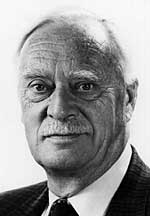
Michael James Denham White 1910-1983
Written by W.J. Peacock and D. McCann.
- Place in science
- Early life and education
- Early scientific career
- The United States—science and politics
- Australia—an intellectual and cultural home
- Research on morabine grasshoppers
- Stasipatric speciation
- Epilogue
- Awards and positions
- About this memoir
Place in science
Michael White put chromosomes into evolutionary thinking and made a primary contribution to the emerging neo-Darwinian evolutionary synthesis. He emphasised cytogenetic systems and argued that genic and chromosomal evolution were of seminal importance in the process of speciation and evolution. His major scientific contribution was Animal Cytology and Evolution (1945), a book that summarised, analysed and synthesised current information on animal chromosomes. White held a somewhat parallel place in cytogenetics to C.D. Darlington, whose book Recent Advances in Cytology (1932, 1937) had earlier synthesized observations on plant chromosomes. For many years from the late 1930s there was a lively competition between these two industrious, innovative and self-assertive figures. Undoubtedly White found satisfaction greater than that of science alone when (contra Darlington) he described an achiasmate meiosis in a mantid during his first period of research in the United States in the late 1930s.
White had an enormous personal capacity for research that was matched by a voracious appetite for the literature of his subject. He had an extraordinary ability to absorb and retain essential technical information, and this contributed towards the integrated approach he achieved in his books. White's contributions to Australian science were largely the result of his own research efforts. He was one of the most consistent and effective participants in meetings of the Genetics Society of Australia and of the Australian Entomological Society. Apart from the impressions that he made on students and other research workers in presenting his results and ideas, he contributed more generally to Australian science by taking a leading role in the Flora and Fauna Committee of the Australian Academy of Science in preparing policies for the development of the biological sciences in Australia. His concerns for taxonomic studies on the Australian fauna eventually led to the fauna work initially carried out by the Australian Biological Resources Study. White worked with colleagues such as Fenner, Waterhouse and Ride on these causes, and later was involved in the early plans for the development of a Museum of Australia. He was a strong advocate of the formation of a Research School of Biological Sciences in the Institute of Advanced Studies in the Australian National University.
Particularly in his later years, Michael White appeared a rather formidable person on first meeting. His unique voice and manner of speaking and somewhat craggy appearance belied what was underneath, an emotional, shy and endearing man for whom many people had a real affection. White was a major figure in the fields of cytology, genetics and evolution. In Australia, where he spent the major part of his scientific life, he was one of the principals in biology, one of a small group of individuals who brought new standards of rigour into Australian cytology and genetics. In presentations to professional societies, he set high standards both as to content and in his mode of delivery. He was a fine example for students and young scientists to emulate, although his manner of presentation was so unique that one was always tempted to listen to the way in which he said things rather than to what he was saying. He liked to be the centre of attention, to create a presence, but he had a wonderful sense of humour and his persona was always softened by mischievous comments and wry smiles. White was an erudite, literate man whose writings even on complex scientific subjects were a pleasure to read. Papers, grant proposals and books were always written longhand in the first draft, and more often than not his first draft was a close approximation to the last.
White's career involved work in many countries, but probably he identified principally with Australia and the country of his boyhood, Italy. In his last years Michael showed particular enthusiasm for Italy. He had been honoured by election to the Accademia Nazionale dei Lincei, but in addition he had active research programmes that took him back to Italy several times. He organised a meeting for the Accademia Nazionale dei Lincei and was obviously delighted to be part of the senior scientific community of that Academy during the meeting, which involved visiting scientists from other parts of the world. His principal leisure activity, one of few, was to read the classics of Italian literature, in the language in which they were first published. It was a unique experience to travel in Italy with White and to benefit from the manifest pleasure he derived in imparting some of his knowledge and observations on the history and culture of the country.
Early life and education
Michael White was born in London on 20 August 1910 to James Kemp White and Una Chase White. James White made a modest living tutoring students who were about to enter Oxford and Cambridge universities or the civil Service, in mathematics, Greek and Latin. In 1915, when Michael was five years of age, the family migrated to the Tuscany region of Italy. His father, who held fairly bohemian values, did not favour a formal education for Michael and nurtured his education in the home environment. Although, as described in Michael's own writings, his father could not be regarded as having been a successful man in the formal sense, he apparently was a capable teacher and certainly inculcated a desire for the acquisition of knowledge in his son. Michael learned a great deal of natural history in his surroundings in Tuscany and even at the age of seven made some incisive observations on local insects and their life histories, and so gained an early interest in entomology. He was also a keen observer of the native flora and made collections in a systematic manner. His father fostered his developing interest in natural history by providing him with books on appropriate subjects. He admired his father greatly and was distressed when his father died when Michael was only 14 years of age. Before this the family had moved to southern France close to the Italian border, after five years in Italy. They lived a total of seven years in France, although during this period the major cultural influence remained that of Italy. As well as cultivating an interest in natural history, Michael had by this time formed an emotional attachment to Italy and the Italian people. After his father's death, an uncle supported Michael's interest in natural history and provided him with books on botany. His mother, loyal to her late husband's wishes, arranged that his schooling continue through a correspondence course with the University Correspondence College in Cambridge.
In 1927, after almost three years of secondary school studies by correspondence, Michael returned to London to study for a degree at University College (part of the University of London). He was initially disposed towards a botanical career, but under the influence of the Professor of Zoology, D.M.S. Watson, he became enthralled with the possibilities presented in this area of science. In particular, Michael was influenced by Watson's discussions on evolutionary biology and his interest was strengthened by a young lecturer of the College, Richard Palmer, who added a genetic aspect to Michael's thinking about evolution. In his third year of university life White made a special effort in entomological subjects, perhaps because of his childhood interests. He supplemented his University College studies with courses in entomology at the Royal College of Science, where one lecturer, O.W. Richards, had a particular influence. Richards lectured on evolution and discussed problems of the nature of species and speciation. Michael was awarded a prize for excelling in his third year and in choosing his gift made a decision that was to influence the direction of his whole career. Instead of receiving the Gold Medal to which he was entitled as a top student he chose instead to receive a copy of E.B. Wilson's classic book The Cell in Development and Heredity. Wilson's book influenced his choice of his first research topic. In his book Wilson mentioned that there were seeming contradictions between the genetic and cytological data concerning sex-linked inheritance in birds, so White decided to conduct an investigation into the chromosomes of the domestic chicken. Although he encountered technical difficulties in this study, it did confirm his interest in chromosomal and genetic questions. During these and subsequent studies at University College, he was able to take advantage of the University of London system and attend lectures in other colleges in various aspects of biology and evolution. In this way he was exposed to a variety of evolutionary ideas ranging from Lamarckian to Darwinian.
Early scientific career
White was awarded a Master of Science degree in 1932 for his cytogenetic studies in chickens. Probably the most important outcome of his Master's degree was that he became convinced that he had special interests and abilities in analyzing genetic and evolutionary matters from a chromosomal observational starting point. Given this realisation it was natural that he might turn to the Orthoptera (an insect group including grasshoppers, locusts, crickets, coackroaches etc.) for his subsequent studies because they presented excellent cytological advantages; in particular, large chromosomes.
His first studies also showed that his mind was attuned to the genetical implications of cytological phenomena. He studied the effect of external environmental factors on the frequency of recombination in grasshoppers, first by looking at the influence of temperature on chiasmata frequencies and later at the consequences of x-irradiation. These studies were important because they were experimental in character. This emphasis on experimentation was an underlying theme in all of White's subsequent research. However, what attracted him most were the puzzles presented by cytological observations on natural populations. He believed that seemingly anomalous observations were likely to provide a key to understanding the normal and later often referred to his 'treasured exceptions'. The first unusual situation that attracted him was the strict centromeric localization of chiasmata in Mecostethus, a grasshopper found in some of the sphagnum bog areas within striking distance of London. These investigations brought him into contact with a figure who was to have a major influence on him, namely J.B.S. Haldane.
Haldane had arrived at University College in 1932, already a charismatic figure in genetics and evolutionary biology. Although White later denied that Haldane had a strong influence on his work, there is no doubt that he was greatly impressed by him, perhaps as much by his behaviour as by his ideas. White was to develop into a colourful figure himself. Many of White's acquaintances had the pleasure of listening to Michael in some of his memorable feats of story telling, and many of those centred around incidents involving J.B.S. Haldane. Haldane was unquestionably impressed by White and in 1938 invited him to move from the Department of Zoology to the Department of Genetics for his research, but White chose to stay in the zoological milieu, perhaps indicative of his conviction that one always had to study genetic systems in a biological framework. Also, Haldane's department emphasized population and analytical genetics with a mathematical slant which was not one of White's major interests or strong points. However, White maintained close contact with Haldane, who accompanied him on some of his collecting trips. Rigour in analysis of experimental results was certainly one conviction that White absorbed from Haldane's approach to science.
In these first years of study, White cemented the major directions of his research and intellectual interests for the next several decades. It was clear to him that he wanted to work with chromosomes and that the Orthoptera was an ideal group to work with because they were cytologically amenable. Nevertheless, his interest in chromosomes was not in them as cytological objects per se but because they provided a key for some incisive thinking about genetic systems and the role of genetic processes in speciation and evolution. His analytical and genetical approach to cytology differed substantially from the more descriptive outlook of most other cytologists of the day. In this early period, too, he worked with grasshoppers, one of the three groups of insects that would be his dominant experimental material throughout his research career. In later research, as a consequence of his first visit to the United States, he would add mantids and gall midges.
1932 was an eventful year in White's life. He married Margaret Thomas, a fellow student with similar scientific and political interests to his own. This was also the year that Darlington's Recent Advances in Cytology was published, as too was Haldane's book, The Causes of Evolution. Darlington's synthesis of cytological studies in the plant kingdom was of major importance in cytology and cytogenetics. There is no doubt that it had a strong influence on White, probably triggering a desire to make a comparable mark with the chromosomes of animals, particularly insects. Just as White was impressed by Haldane's behaviour he was also impressed by the demeanour of Darlington. Above all, Darlington's book strengthened White's conviction that chromosomal observations were of value in developing an understanding of genetics and evolution. However, Darlington's approach to cytology, genetics and evolution differed markedly from White's, and several times during their careers they clashed with some relatively intense disputes emerging in the scientific literature.
As a young academic, White briefly became involved politically, and although he was dedicated primarily to his research it is not surprising that, as an intellectually active person, he responded to political concerns of the day. The radical physicist J.D. Bernal had a particular influence in White joining the Communist Party in 1932. Although White was politically concerned, it is clear that he was not a great enthusiast. He was more a supporter than an activist, and was criticised by his political peers for his apparently indifferent attitude. A couple of years later he resigned and joined the British Labour Party.
White went through a troubled period when his marriage effectively ended in 1933 and it was not until 1936 that he fully regained his drive in research and life. At that time he met Sally (Isobel Mary Lunn), whom he would later marry and who for the remainder of his life was an influential and supportive colleague and partner. In 1935, too, he was made a lecturer at University College. In his research he began demonstrating one of his characteristic traits, that of thinking beyond his own immediate experimental studies and placing them in a broader picture, looking for any appropriate generalizations that they indicated. Darlington was of the same conviction but went far beyond the experimental data with many of his generalizations. White was more conservative in this regard and additionally saw the value of experimental cytology in assisting in general understanding. A very good example was work he published on the nature of distributed centromeric activity in the chromosomes of Ascaris, in which he settled contemporary differences of opinion with an unambiguous experimental analysis.
White first synthesised his thoughts about the nature and importance of chromosomes in a small monograph, The Chromosomes, first published in 1937. Although this book did not contain the theoretical insights and major tracks of conceptual thinking that were prevalent in his subsequent book Animal Cytology and Evolution, it filled a niche in the field at the time and went to seven editions. It was published in several languages and for many years was used extensively in universities throughout the world. In this small monograph White signalled his appreciation of the genetic consequences of meiotic events. The book included what was essentially his first public discussion of the importance of chromosomal systems in evolution. This was quite an achievement for a young scientist of 27 years. The publication of his book undoubtedly contributed to his gaining a Rockefeller Fellowship in 1937 to travel to the United States for a period of research and study.
White went to work at Columbia University with Franz Schrader and Sally Hughes-Schrader, two insect cytologists. He took with him some cytological material and slides from his London studies and carried out an analysis of this material that established that the direction of chromosome coiling was basically random. This contravened generalizations made by Darlington. After the completion of this work, White saw no way to take it any further and began searching for new problems. Through contact with one of the Schraders' students, Kenneth Cooper, he became interested in one of the central cytogenetic problems of the day, the question as to whether meiosis could proceed regularly if there were no chiasmata between homologous chromosomes at metaphase 1. Cooper's views differed markedly from those of Darlington, who insisted that chiasmata were essential to the normal and orderly progress of meiosis. White studied meiosis in a male mantid, Callimantis antillarum, and discovered that there was a complete absence of chiasmata in meiosis in the male. White was excited by this discovery and promptly published his findings in the Proceedings of the Royal Society of London, shocking the Schraders with what they viewed as a precipitous approach to science. When reminiscing about working with the Schraders, White always compared their thorough Germanic descriptive approach with his own, which was more dynamic and always genetically oriented.
At Columbia, White made another vital contact. Theodosius Dobzhansky was visiting Columbia from the California Institute of Technology where he worked in association with T.H. Morgan and colleagues in Drosophila genetics. Dobzhansky had just published his seminal book Genetics and the Origin of Species, and already it was obvious to White that he was one of the world's most dynamic evolutionary geneticists. Dobzhansky and White quickly established a rapport and, discovering that they both planned to travel to Mexico on collecting trips, arranged to rendezvous in Mexico City. This they did and participated in a lecture series at the Instituto Politcnico Nacional in Mexico City. White had a vivid memory of one of his lectures in which he discussed sex chromosome systems involving either two or three X chromosomes. He was surprised at the enthusiastic applause that punctuated his lecture, not realising at the time that 2 X's and 3 X's signified brand names of popular Mexican beers.
While in the United States, White met a large number of cytologists and geneticists and was clearly influenced by the high level and freedom of academic exchange of ideas. This stimulating period probably strongly influenced his subsequent decision to write what was to become a major book, Animal Cytology and Evolution. His somewhat idyllic academic experience in the United States as a Visiting Fellow also influenced his later decision to return to work in that country. However, the Rockefeller Fellowship required him to go back to England. He returned accompanied by Sally, who had come over to the United States to spend some time with him towards the end of his stay, while he worked at the Woods Hole Laboratory.
Not long after their return to England war broke out. Although for a while his research work continued at University College, the Zoology Department then closed down. After a brief time at an entomological laboratory in Slough, White was placed as a statistician in the Ministry of Food, where he served for the duration of the war. Michael and Sally had married only a few months before war broke out. An amusing episode in an otherwise sombre year of political crises occurred at this time. Michael found himself standing in a queue in order to acquire the marriage license, and only after some considerable time discovered that he was in fact in the wrong queue. He had unknowingly joined the one for petrol coupons!
So far as his scientific work was concerned, White was frustrated by the inconveniences caused by war-time restrictions. His cytogenetic research languished. He was not intellectually stimulated by his war duties and generally resented the interruption to his career. Nevertheless, this wartime hiatus paradoxically led to one of his most important contributions to science. In the evenings and on weekends he worked on his book, Animal Cytology and Evolution, and he had a manuscript ready by the end of the war. It was published in 1945.
A chapter he wrote for the book Cytology and Cell Physiology (1942) signalled many of the concepts that he further developed in Animal Cytology and Evolution. White recognised that chromosomes were complicated organelles and that ultimately a molecular understanding of them was going to be fundamental to both physiological and evolutionary biology. In the 1942 review he struggled with the fragmentary state of nuclear chemistry and was not able to attach any conceptual meaning to what was then known of nucleic acids and proteins in the chromosome. In this he was not alone. However, this section of his paper was in marked contrast to the masterly sections dealing with structural behaviour of the chromosome. The latter was his field and it is what he understood best. It would not be until the last couple of years of his life that White would fully return again to the recognition that the control of gene expression was central to an adequate understanding of development and evolution. The review was of interest too because, although White had considerable empathy with the wonderful work of the Drosophila geneticists, he was able to question their notion of equating heteropyenotic chromosomes with genetic inertness. White's analysis came from a cytological viewpoint and it was interesting that he did not feel overwhelmed by the genetical studies. His paper contained other important ideas. For example, he concluded that polytene chromosomes of insects' salivary glands and other tissues represented a particular form of endopolyploidy and suggested that there were probably different levels of replication of the chromosome thread in different regions of some polytene chromosomes. Again this was a suggestion stemming from his cytological knowledge of chromosomes, extending far beyond the salivary chromosomes of Drosophila. In this review paper he contributed a penetrating consideration of induced chromosome structural rearrangements in terms of their consequences as mutations. He also emphasised that not all was known in genetics and he pointed to some significant holes in the knowledge fabric.
Animal Cytology and Evolution gathered into a coherent whole a mass of descriptive cytology and conflicting theories of cytogenetics and evolution. In this respect it paralleled Darlington's earlier plant-oriented book, Recent Advances in Cytology. White's Animal Cytology and Evolution was the first critical survey of cytology since E.B. Wilson's The Cell in Development and Heredity published twenty years earlier, the book that initially inspired White to enter the field. It integrated the cytological approaches of Belar, Dobzhansky and Darlington. White's book must be regarded as the foundation of modern animal cytogenetics and it established him as one of the major conceptual contributors to the neo-Darwinian evolutionary synthesis. White examined cytological and evolutionary observations of diverse sources from a genetical viewpoint, and the resulting synthesis probably provided his single most important contribution to the development of modern evolutionary theory.
Animal Cytology and Evolution ranks with Dobzhansky's Genetics and the Origin of Species as one of the seminal treatises in animal evolutionary biology. White's book emphasized that the principles of evolution applied to individual chromosomes and the chromosome complement just as they did to more classical morphological characters. He also stressed that the chromosome complement, principally through its meiotic properties, could influence the course and rate of evolution of any taxon. White had a great understanding of the mechanism of meiosis and its significance, and an almost intuitive grasp of the complexities and consequences of chromosomal rearrangements, especially in regard to speciation. The various chapters of the book testify to what were his major areas of creative study. One of the dominant themes in the book concerned the evolution of sex chromosomes, sex-determining mechanisms, and the phenomenon of thelytoky, the subject on which he concentrated for many of his later research years. Before the war had interrupted White's research, he had published his first papers on sex chromosome mechanisms in both mantids and grasshoppers. He retained an experimental and theoretical interest in sex chromosome systems throughout his career and made many contributions in this area. This topic and his stimulating experiences in the United States were major factors in convincing him to write Animal Cytology and Evolution.
In various editions of the book, as in his research career generally, White's focus was always the chromosome and the chromosome complement. This was true whether he was concerned with a particular aspect of an insect's genetic system, whether he was probing the causes of speciation, or thinking even more widely about mechanisms of consequence for evolution. White personally attached a great deal of importance to the book and put in an enormous effort in later years into producing a second and third edition of comparable quality. The third edition published in 1973 demonstrated that he was attempting to keep abreast of the vast changes that were occurring in genetics with the advent of molecular biology. It revealed his strong interest in molecular analyses of genetic events and showed his determination to embrace these findings within an evolutionary perspective. All three editions of the book bear witness to White's encyclopedic knowledge and familiarity with the published work of animal cytogenetics. White wrote in the preface to his third edition: 'If the present book helps to re-establish chromosomal mechanisms in the centre of the evolutionary stage, the labour of writing it will not have been in vain.'
The United States—science and politics
In 1946 White was elevated to a readership in University College, but he remained dissatisfied with the scientific community in England. He felt deeply the interruption the war had brought to his research career. While writing Animal Cytology and Evolution his ideas were developing rapidly, but he felt he was extremely isolated in the English academic environment. He was becoming increasingly annoyed at what he perceived to be personality cults surrounding a few central figures who dominated the scene in British biology such as Darlington, Mather, Ford, Fisher and to some extent Waddington. As soon as an opportunity presented itself, he travelled again to the United States, looking for a suitable position there. His favourable memories of the stimulating academic environment in the pre-war United States were confirmed by his return visit to the Genetics Department of the Carnegie Institute of Washington at Cold Spring Harbour. It was thus not surprising that he accepted an offer of a job at the University of Texas at Austin, one of the strongest centres of genetics research in the United States. In 1947 White spent six months as Visiting Fellow at the Cold Spring Harbor laboratories, then, accompanied by Sally, moved to Texas to begin a new phase of his career.
For most of the time at the University of Texas White was engaged in productive research. He appreciated the opportunity of working with colleagues such as Patterson, Stone, Wheeler, Griffiths and Wagner. It was during this time that he studied the peculiar meiotic systems of the gall midges, Cecidomyidae, a group to which he had been introduced by the Schraders while at Columbia University. White saw that study of the bizarre meiosis of these organisms could further advance the understanding of regular meiotic systems. He also continued work on the chromosomes of grasshoppers which confirmed for him the pleasure to be derived from working with natural populations of insects, particularly those living in arid environments. While at Texas White commenced regular annual summer collecting trips in the deserts of the south-west. These regular and extensive collecting pilgrimages to outback areas were also to be a feature of his later research work in Australia. In Australia, even in the years of his 'retirement', White mounted major collecting trips into the arid Nullarbor Plain in the heat of summer. His wife, Sally, proved to be his only durable companion on these arduous safaris.
Some of the south-west grasshopper taxa had chromosome rearrangements that were polymorphic in various populations. His study of these, particularly in Trimerotropis, kindled his interest in population cytogenetics. During a prolific period, he published not only his own experimental results but also commentaries on a range of other cytological and evolutionary matters.
But White's time at Texas was to be troubled, and this phase of his career was brought to an end by political issues. The McCarthy era of political witch-hunts had begun. Michael was investigated by the US Immigration Authority because of his connections with the Communist Party during his student days in England. His problems were acute largely because a state law had been passed that required employees of public universities and other institutions to sign an oath indicating that they had never had any Communist affiliations. Of course White was unable to do so and this ultimately resulted in his resignation. In the end it was a matter of White either resigning or being deported. During this period he found himself in an untenable situation at Texas. Once again White found safe haven in the intellectual cocoon of the Cold Spring Harbor laboratories. He took sabbatical leave, without pay, and for a year was personally and materially supported and provisioned at Cold Spring Harbor by Miloslav Demerec, Barbara McClintock and others. This gave the White family some respite, allowing them to regain a measure of equanimity before Michael returned to teach again at the University of Texas. However, shortly afterwards this excruciating and deplorable political saga came to a conclusion when in 1953 the White family voluntarily left the United States for Australia.
Australia—an intellectual and cultural home
Through the efforts of Dobzhansky and other colleagues, in 1953 Michael White was offered an appointment in the Genetics Section of the CSIRO Division of Plant Industry in Canberra. Dobzhansky made contact with Otto Frankel, who had recently been appointed Chief of the Division, requesting his help. Frankel, himself a prominent geneticist, was happy to provide a position for White because he was attempting to build up the research strength of the Genetics Section of his Division. Frankel made the full facts of White's predicament known to CSIRO's senior executive officers, Frederick White and Ian Clunies Ross, who had no hesitation in supporting Frankel in his efforts to secure a position for White. There is no doubt that White would have warranted the appointment through his scientific reputation alone, but they were also sympathetic to the unfortunate political intrusions into his career. It was a courageous decision by Frankel and colleagues because anti-Communist sentiment was also raging in Australia. At Canberra, White was put under no pressure to work on plants. Frankel felt that White's presence and active research would be of general benefit to the programme at CSIRO and it certainly proved to be so, with White providing an international perspective and the setting of new standards for other geneticists. He played an important role in raising the standing of the Division's genetics group as a whole.
White spent three productive years in the Canberra laboratories. In 1956, the final year of his appointment, he began working on the morabine grasshoppers. This proved to be a turning-point in his career. This large group of endemic, wingless grasshoppers would be his central experimental organisms in subsequent years. One piece of work he carried out in Canberra was an extension of his observations on pericentric inversions in the trimerotropine grasshoppers of the south-west United States. He collaborated with another CSIRO geneticist, Fred Morley, in exploring the genetic consequences of polymorphism for pericentric inversions in populations of a species of local grasshoppers. White was proud of this paper which demonstrated his ability to collaborate with other workers who had complementary skills - in this case, Morley's conceptual mathematical thinking. White also unearthed some other remarkable chromosomal rearrangements in the morabine grasshoppers and this resulted in the first of a series of papers published over many years.
Although his work was stimulating and he was well pleased with his colleagues and the environment, White was not completely satisfied at CSIRO. The CSIRO was a purely research institution and he found himself missing the stimulation and pleasures of teaching. During his time at Canberra he received entreaties to return to the United States where his genetical colleagues fully appreciated his capabilities and his stature as a scientist. No doubt they were anxious to redress the wrongs of the McCarthy period.
With McCarthy's decline in late 1954 the United States returned to a saner political environment and White decided to return to a university position where he hoped to experience the stimulation of both research and teaching. He accepted a position as Professor of Zoology at the University of Missouri, which was one of the strong centres of genetic research in the United States, having an impressive history of both Drosophila and maize genetics. But unfortunately it was not a good choice for White. His particular brand of cytogenetics was not well represented there. Both he and Sally found the general culture and religious environment of Missouri not to their liking. White realised that he and the family had been much more at home in the social and scientific environment of Australia. With the intervention of Frankel and Clunies Ross, an invitation came to White to return to Australia as Professor of Zoology at the University of Melbourne. So, after just eighteen months in Missouri, in 1958 White once again found himself a major figure in the Australian genetics community.
White built up a strong genetics section within the Department of Zoology at the University of Melbourne. In 1964 he became the foundation professor of genetics at the University, moving in 1973 to a separate building of which he was, perhaps uncharacteristically, very proud. He put a considerable effort into raising money for the building and insisted that it made a statement about the importance of genetics as a discipline. White built up a first class genetics department, something much needed in Australia at that time. His personal reputation allowed the department to maintain a strong international flavour, attracting a succession of visiting scientists and scholars. Nevertheless, from the perspective of a dynamic research scientist not all was ideal for him at the University of Melbourne. Particularly onerous were the administrative duties associated with the heavy bureaucracy of the University. White was one of the outstanding scholars in the faculty and this was probably under-recognised by the University. During his professorship he maintained an active research effort and found himself in touch with a wealth of cytogenetic opportunity, particularly with the morabine grasshoppers. He also 'travelled and collected' the Orthoptera of other countries, for example in South Africa and Madagascar.
White had a succession of graduate students during this period, some of whom including Ross Crozier, Jon Martin, John Thomson and Graham Webb, went on to academic and research positions in Australia. However, he personally supervised relatively few postgraduate students. This was perhaps due to his single-minded concern with his own research programme and his lifelong tendency to operate as a lone-worker. He required complete freedom in his own work and thinking and granted the same to others. He was not orientated towards building a strong 'school' as such, although he certainly hoped that this would happen naturally, as a by-product of his own inspiration and devotion to the cause. He was driven on by a desire to uncover yet another piece of the genetic puzzle and fit it into the larger picture. Nevertheless, he made a huge contribution to Australian genetics. Apart from his own students, he also influenced others elsewhere in Australia, primarily through his presentations at the annual meetings of the Genetics Society of Australia. By his later years he had developed into a wonderful example of an idiosyncratic but gifted academic. His addresses at the Genetics Society meetings were inevitably of a high standard with new findings from his experimental programme presented every year. Above all they were colourful and entertaining and fired the imagination of his audience. Along with Otto Frankel, Jimmy Rendel and Spinny Smith-White, Michael White stimulated many of us to aspire to excel in our quests for understanding of the mechanisms and consequences of genome dynamics in plants and animals.
Following his retirement from Melbourne in 1975, White accepted a visiting fellowship in the Research School of Biological Sciences at the Australian National University (ANU) in Canberra. Along with David Shaw he was a major figure in an active cytogenetic team headed by Professor Bernard John, an ex-Darlington student. Even though nominally retired, White attracted, on merit, research grants from both Australia and the United States. He published a substantial part of his total research papers during a very active period at the ANU. During this time he also renewed associations with the CSIRO laboratory at Plant Industry in which he had worked in earlier years. The CSIRO laboratory and the ANU collaborated in seminars and the organization of journal clubs. Jim Peacock and his colleague, Elizabeth Dennis, molecular biologists in CSIRO, were able to provide him with another set of complementary skills to probe the evolutionary puzzles of the morabines.
In this period in Canberra, his last major period of research, he also renewed his ties with Italy. In 1978 he was elected a Fellow of the Accademia Nazionale dei Lincei, an honour he prized above almost any other, and he took every available opportunity to lecture and conduct research in the country that along with Australia he had identified as homeland territory. It was in Italy, in what proved to be his last visit, that he was stricken with a cancer that not long afterwards ended his life. From his last visit he returned elated because he had been able to visit Corsica and Sardinia, islands he had long wanted to see.
Research on morabine grasshoppers
Michael White had an extremely wide knowledge of genetics and evolution. He was a walking encyclopaedia of research in cytology and cytogenetics of the animal kingdom; but to many scientists he was 'the grasshopper man'. Many of his major contributions to science and particularly to an understanding of the modes of speciation and evolutionary change came from his research in the Orthoptera. His particular interest was in the short-horned grasshoppers and particularly the Australian group of Morabine species. He began his work on the Morabines in Canberra, interrupted it when he returned to the USA for the period in Missouri, and then re-established it when he returned to Australia as Professor of Zoology at the University of Melbourne. White's research intensified when he returned to Canberra on retiring from the University of Melbourne.
Population Cytology of Moraba scurra
In his first paper on the morabine grasshopper Moraba (later Keyacris) scurra, White analysed hybrids of chromosome races in an attempt to explain their distribution in the field, carrying out both laboratory and field experiments. Here we have once again evidence of White's experimental approach to cytogenetics. This modus operandi delineated him as a major figure in the field. White analysed the heterotic effect of the polymorphisms he had identified and related his work to the extensive studies made in various Drosophila groups. He was intrigued by the positive heterosis that was associated with chromosome rearrangements in Moraba scurra and postulated negative heterosis for hybrids between races with different chromosome numbers, arguing that this could provide a basis for raciation even in small geographic areas. Incidentally, White did often work with the morabines in small geographic areas. He frequently studied these wingless grasshoppers in cemeteries of country towns that provided 'islands' of natural vegetation. More than one citizen in Australia was startled by the figure crawling around on hands and knees in the local cemetery. White summarised his findings on chromosomal polymorphisms and their effects in a major paper in the Cold Spring Harbour Symposium of 1958. This paper marked a milestone in his contributions to primary concepts of population dynamics.
In his prolonged and productive interaction with the morabine grasshoppers, White was fortunate in having a series of colleagues with complementary sets of expertise. Ken Key, an orthopteran taxonomist in the CSIRO Division of Entomology was associated with White for many years. They first published together in 1957 on the grasshopper genus Austroicetes, a genus of some economic importance in Australia, but the Key-White axis really matured during the long-term collaboration on the subfamily Morabinae that provided a series of papers on the systematics, genetics and evolutionary biology of these remarkable species. In his first period in Canberra, as well as working with Ken Key on the taxonomic side, White formed an association with Fred Morley, a stimulating geneticist in the CSIRO Division of Plant Industry. Morley contributed a quantitative and analytical dimension to White's study of the effect of pericentric inversion polymorphisms in natural populations of Moraba scurry. The White-Morley work was published in 1955.
When White returned to Australia in 1958 to take up the post as Professor of Zoology at the University of Melbourne he continued his analyses of the biological effects of various chromosomal arrangements in Moraba scurra, searching for evidence for heterosis and its basis. In collaboration with Richard Lewontin, he constructed a series of adaptive topographies for various inversion frequencies. They published their results in a strong theoretical paper in 1960. Lewontin, one of the brightest of Dobzhansky's students, provided a link back to the Dobzhansky-White interaction of earlier years. Indeed, Lewontin strongly influenced a number of Australian geneticists during his sabbatical period in the late 1950s in Australia. At a personal level White and Lewontin got on exceptionally well. Before White's work on Moraba scurra it was generally thought that chromosomal polymorphisms in natural populations were maintained in equilibrium by simple heterozygote superiority. His research indicated that the situation was far more complex. The research on Moraba scurra, and especially the work carried out in collaboration with Lewontin on adaptive topographies, was extensively cited and discussed in the literature. The Moraba scurra project was one of the most detailed studies of chromosomal polymorphisms in natural populations beyond the standard Drosophila work.
William Atchley, another visitor to Melbourne, provided biometrical analyses in some of the Moraba work, and another visiting scientist, Robert Blackith, collaborated with White in the mid-1960s, applying multivariate analyses to some of the population studies. Of White's students, probably Graham Webb made the major direct contribution to White's own research area, in particular on the parthenogenetic grasshopper Warramaba virgo. Later, in Canberra, Webb was able to bring molecular-biological analyses to bear on the research through his associations with Liz Dennis and Jim Peacock.
These were fruitful collaborations, and in many cases were crucial in the development of White's scientific work, but throughout there was no doubt in the minds of any of the collaborators that White was in charge! Although his own research work always had priority, he did appreciate the contributions of others and collaborated only with scientists whom he respected and trusted.
Parthenogenesis in Warramaba virgo
White's tireless fieldwork on the morabines further paid off when he happened on the first example of a parthenogenetic species of grasshopper. On a field trip in western New South Wales in January 1961, White discovered a population of a Moraba (later Warramaba) species and was surprised that he could locate only females. After a fruitless additional search for males by his observant son Nicholas, White became convinced that this was possibly a parthenogenetic species. No mind could have been better prepared to come to such a conclusion. In an earlier study in Austin on the mantid Brunneria borealis White had described an exclusive parthenogenetic reproduction system and had pondered on the genetic consequences of parthenogenesis for a number of years. He sent off a short note to the Australian Journal of Science about his discovery, which was published in August 1962. White enthusiastically took Ken Key, his taxonomist colleague, to look at the all-female population. Key was initially sceptical that this would prove to be a valid species. However, he was soon convinced that no males were present and provided a suitable taxonomic place for the species, with a joint publication in the Australian Journal of Zoology in 1963.
White's first public announcement of his finding of the parthenogenetic grasshopper was at the Genetics Society of Australia meeting in Sydney in 1962. Many Australian geneticists have fond memories of Michael describing what was then called Moraba virgo, which he had discovered in two populations by that time, in New South Wales and north-western Victoria. The scientific excitement was accentuated by his presentation, and in particular his enunciation of the word 'femalllllllllle', this word sometimes using many seconds of his valuable presentation time! White was clearly fascinated by thelytoky, as he persisted in calling it in the scientific meetings of that time (perhaps because of the resonance he could give to that particular word rather than because of its precise biological meaning). White studied Warramaba virgo not just for its own sake, however, but because he felt that a detailed study of this unusual species would lead him to an understanding of processes involved in regular speciation events.
Ironically, his initial conclusions about the origin of Warramaba proved to be incorrect. Along with his graduate student, Graham Webb, White studied the patterns of chromosomal replication and concluded that the difficulties they had in recognising homologous pads of chromosomes in the genome were due to differential heterochromatisation that had occurred since the origin of the parthenogenetic species. It was a prevalent concept in the cytological literature of the day. Another of White's students, David Porter, suggested that perhaps the puzzling chromosome complement was a result of a hybrid origin of the parthenogenetic species. But it was not until 1975 that Godfrey Hewitt, a visiting scientist at the Australian National University, made the convincing suggestion that Warramaba virgo originated as a hybrid between two particular Western Australian sexual species of the grasshopper. Initially White's work on Warramaba virgo had been only in eastern Australia but he subsequently found that it also occurred on the other side of the arid centre of the continent in Western Australia, where there was a complex of related sexual species. His results were recorded first in 1973 in a paper in Chromosoma. Hewitt, of course, was able to propose a hybrid origin only because of White's extensive data on the sexual species P169 and P196 from the Western Australian location. White, who had earlier dismissed a hybrid origin, gradually came to accept this as a real possibility. His experimental hybridisation studies using bisexual relatives led him in 1977 to publicly admit that the hybrid origin was a distinct possibility, and indeed, a high probability.
White had also surmised that the parthenogenetic species undoubtedly had a single origin and he developed elaborate hypotheses as to the probable point of origin and the rate and directions of subsequent migrations to extant localities. But work with Graham Webb on chromosome banding patterns showed two clones of Warramaba virgo which were clearly different, and White was forced to consider the possibility that there had been two separate hybrid origins of Warramaba virgo. This was confirmed in Canberra, following his retirement as Professor of Genetics in Melbourne. He established a collaboration with Jim Peacock and Elizabeth Dennis at the nearby laboratories of CSIRO's Division of Plant Industry. Here, analyses on repeated DNA sequences established beyond any doubt that there had been more than a single origin of Warramaba virgo and that there were probably many.
Michael White's place in the Australian scientific landscape was paralleled by his seamless fit into the Australian physical landscape. Collecting with him in the harsh sunlight, of the Mulga and Cassia country near Broken Hill left an indelible imprint of a dedicated, excited scientist perfectly at home in that demanding, xerophytic ecosystem.
Stasipatric speciation
In addition to his experimental studies on Moraba scurra and Warramaba virgo, White conducted a third major analysis with morabine species. This was based on the Vandiemenella (formerly Moraba) viatica species group of morabines in the Eyre Peninsula and the surrounding region of central southern Australia. This research sharpened his ideas on the mechanisms by which speciation occurs and provided the stimulus for his last book Modes of Speciation.
White's work on Moraba scurra and his other cytogenetic studies had strengthened his conviction that the chromosomal and genetic system of a taxon was of considerable importance to its future. In thinking about how new species developed, White adhered to the basic genetico-biological view that a species was a collection of individual organisms that could be considered to have an interchanging gene pool, so that a species perimeter was drawn by the limits of freedom of exchange of genetic information. Conceptually, he accepted that the gene pool of a taxon could differentiate into two or more subsequent distinct gene pools, that is new species, with genetic mechanisms playing a primary role as isolating mechanisms. He gradually modified his early acceptance of the generally accepted proposition that geographical isolation was a prerequisite to speciation. In several of his publications, White commented on the complexity of biological mechanisms involved in speciation. He recognised that geographic, behavioural, and genetic and cytogenetic mechanisms could all play a role, and in different incipient speciation complexes these factors could have different weightings.
During his studies on the morabines, with their low vagility, he found that he was dealing with taxa associated with small geographic areas, often intimately interdigitated. In his earliest writings on Moraba scurra it is possible to see that he was moving towards the ideas that genetic barriers could be the major isolation mechanism needed for the development of two subsequently independent gene pools. In the viatica species group in the Eyre Peninsula in South Australia, he was confronted with a mosaic of karyotypic chromosomal systems with very little geographical separation. Not only could he find situations where it seemed that new taxa, as defined by the cytogenetic system, arose from an apparent peripheral population isolate of an existing group, but he found other situations where individuals with a new chromosomal system seemed to have arisen within the distribution of another taxon. He coined the term stasipatric (stationary place) speciation to describe the latter situation as apparently demonstrated in the viatica species group.
Vandiemenella viatica was a regular single species over much of its distribution range, but in the coastal region of central South Australia White found a multitude of chromosomal forms. These forms or races were often contiguous (or parapatric in White's terminology). Because the hybrids could be identified cytologically he was able to determine that in many situations the hybrid zones could be extremely narrow, a matter of one or a few metres. This emphasized to him that chromosomal rearrangements could function as strong primary genetic isolating mechanisms. White saw that chromosomal variants with the appropriate properties did not always occur on the geographic peripheries of the species distribution. Rather, White found situations which he interpreted as meaning that the origin had been within the distribution with a subsequent expansion on one or more fronts. This convinced him that geographic isolation was not a mandatory requirement in the speciation process. He developed his stasipatric speciation concept in a lead article in Science in 1968, realising that in doing so he was throwing up a challenge to what he considered to be an overly narrow concept of geographically based speciation promulgated by orthodox neo-Darwinian contributors to this field such as Ernst Mayr. White developed his ideas further in his 1978 book, Modes of Speciation, where he went to some lengths to explain why we might envisage many different paths of speciation, dependent on chromosomal, genetic, behavioural and other biological factors as well as geographic considerations. In developing his concept of stasipatric speciation, White emphasised his lifelong view of the importance and complexity of cytogenetic processes in population dynamics and hence in evolution.
White, an admirer and colleague of Mayr, felt that Mayr had underestimated the importance of genetics related processes in the mechanisms of speciation and evolution. The viatica group of the morabines gave him the opportunity to illustrate his view of the many factors involved in speciation. Characteristically, he drew on data derived from his own field collections and experimentation. Although White may not have succeeded in achieving a general acceptance of his views on speciation processes and may not have convinced the broad range of taxonomists and evolutionists that stasipatric speciation may occur, he certainly re-established the importance of genetic mechanisms in the isolation processes involved in the generation of species. Mayr, in a thorough review of Modes of Speciation in Systematic Zoology in 1978, paid tribute to White in this regard.
Epilogue
Michael White was one of the most distinguished scientists of his generation to work in Australia. Throughout his career he made important contributions to many aspects of cytology and cytogenetics and to evolutionary biology, including speciation theory and systematics. He had an awesome capacity for unremitting hard work and continued his research activities up until a few days before his death. He died from cancer on the 16 December 1983 at age 73, still at the height of his career. At the time of his death he was acknowledged as the world's leading cytogeneticist. His importance to science is indicated by his membership of many of the world's most prestigious academic societies and in the variety of international honours bestowed on him (see below). White was honoured by a Festschrift on his seventieth birthday (Evolution and Speciation, 1981; edited by W.R. Atchley and D.S. Woodruff).
Michael is survived by his wife Isobel (Sally), an anthropologist who specialises in research on the Australian aborigines. In addition to her own academic work, Sally had an extensive involvement in Michael's field work. Michael is also survived by his three children: son Nicholas, a virologist, son Jonathan, a university lecturer in humanities, and daughter Charlotte, a medical practitioner. Michael White's passing was a major loss to Australian and international science and to family and friends. His legacy, however, is immense.
Awards and positions
Degrees
- BSc in Zoology and Human Physiology (First Class Honours), University of London, 1931
- MSc, University of London, 1932
- DSc, University of London, 1940
- MSc, University of Melbourne, 1959
- Dottore in Science Biologiche honoris causa, University of Sienna, 1979.
Fellowships of Learned Societies
- Fellow, Australian Academy of Science, 1955
- Member of Council, AAS, 1960-1962
- Fellow, Royal Society of London, 1961
- Honorary Foreign Member, American Academy of Arts and Sciences, 1963
- Fellow of University College, London, 1962
- Foreign Member, American Philosophical Society, 1978
- Socio Straniero, Accademia Nazionale dei Lincei, 1978
- Fellow of the Linnean Society of London honoris causa, 1979
- Foreign Associate, U.S. National Academy of Sciences, 1981.
Medals
- Mueller Medal, Australian & New Zealand Association for the Advancement of Science, 1966
- Silver Medal for Research, Royal Society of Victoria, 1979
- Linnean Medal for Zoology, Linnean Society of London, 1983
- Minerva Medal of the University of Rome, 1983.
Academic appointments
- 1976 Visiting Fellow, Department of Population Biology, Australian National University
- Jan.-Mar. 1968 Visiting Agassiz Professor, Harvard University
- Aug. 1964-1975 Professor of Genetics, University of Melbourne
- July 1958-July 1964 Professor of Zoology, University of Melbourne
- 1963 Visiting Fellow, Witwatersrand University, South Africa
- Jan. 1957-June 1958 Professor of Zoology, University of Missouri
- July 1953-Dec.1956 Senior Research Fellow, CSIRO, Canberra
- Sept. 1947-June 1953 Professor of Zoology, University of Texas
- Mar.-Sept. 1947 Guest Investigator, Department of Genetics, Carnegie Institution of Washington, Cold Spring Harbor, N.Y.
- Jan.-Mar. 1947 Reader in Zoology, University of London
- 1940-1945 Wartime positions as Statistician and Entomologist in British Ministry of Food
- 1937-1938 Rockefeller Research Fellow, Columbia University
- 1935-1946 Lecturer in Zoology, University College, London
- 1932-1935 Assistant Lecturer in Zoology, University College, London.
About this memoir
This memoir was originally published in Historical Records of Australian Science, Vol.10, No.2, 1994, and also in Biographical Memoirs of Fellows of the Royal Society of London, 1994. It was written by:
- W.J. Peacock, who works in the CSIRO Division of Plant Industry; and
- D. McCann, who works in the Department of History and Philosophy of Science, University of Melbourne.
Acknowledgements
The authors are indebted to Philip Batterham, Linden Gillbank, Rod Home and Sally White for advice and critical comments on this manuscript.
Mervyn Silas Paterson 1925–2020
Mervyn Paterson exploited a background in metallurgical engineering and the physics of metals as the basis for a long and influential career in earth sciences, mainly at the Australian National University.
Recognising the need for specialised equipment for experimental rock deformation, Mervyn made a highly distinctive contribution through his design and construction of a series of machines of progressively increasing sophistication for laboratory studies of the mechanical behaviour of rocks under conditions of high pressure and temperature. The new insights thus obtained in the laboratory have found widespread application in understanding the behaviour of the Earth’s crust and underlying mantle, notably within the disciplines of structural geology and geodynamics.
Download the memoir
About this memoir
This memoir was originally published in Historical Records of Australian Science, vol. 33(1), 2022. It was written by Ian Jackson.
Maxwell Frank Cooper Day 1915–2017
Max Day (1915–2017) entomologist, scientific diplomat and conservationist, was a national scientific leader across the 20th century, a time that spanned the rise of the idea of the environment and of concern about ecological limits. He was a pioneer in Australia of integrated, cross-disciplinary science and an important advocate of evidence-based policymaking. His fundamental disciplinary work in entomology, virology, ecology and forestry focused on nationally significant problems and their international context.
Download the memoir
About this memoir
This memoir was originally published in Historical Records of Australian Science, vol. 31(1), 2020. It was written by Libby Robin and Jon C. Day.
Max Rudolf Lemberg 1896–1975
Written by J. Barrett and R.N. Robertson.
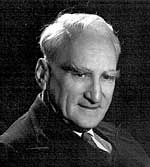
Introduction
Max Rudolf Lemberg, who died on 10 April 1975, was one of the Foundation Fellows of the Australian Academy of Science. Known to a wide circle of friends around the world as Rudi, he was affectionately referred to by his younger Australian colleagues as Lemmy. Born and educated in Germany, he made Australia his home for the latter half of his life and adapted himself well to the ways of his country of adoption. Other accounts of Lemberg's life and influence have appeared elsewhere: his autobiographical chapter written at the invitation of the Annual Review of Biochemistry (1965); Encounter with Rudi Lemberg published privately by his friends (1975); the Royal Society (London) Memoir (1976) compiled by C. Rimington FRS and C.H. Gray.
Early life
Lemberg was born in Breslau on 19 October 1896, into a cultured, educated family. His father was a leading lawyer specializing in civil law and law was in the family tradition, particularly on the maternal side. His younger brother became a lawyer. However, many relatives and close family friends were noted scientists such as Albert Neisser, bacteriologist, Martin Freund, organic chemist, Minkowski and 'Augen' Cohn, medical scientists, and Cohn's son who, under the name of Emil Ludwig, became an internationally known writer. Thus as a small boy he was exposed not only to an intellectual heritage but also to contact with many professional and academic adults. He was educated at the same liberal, humanist gymnasium in Breslau as Bonhoffer, who became an eminent protestant theologian and was later killed by the Nazis. This gymnasium gave excellent instruction in mathematics, Greek, and Latin – much of which Lemberg retained in his later years despite his modest disclaimers. As might have been expected he was more attracted to the intellectual glories of the Greek civilization than to the majestic splendour of the Roman heritage.
Lemberg had a keen love of music mostly of the middle Germanic tradition, music by composers such as Telemann, whose music he greatly enjoyed, Bach, Mozart, and Beethoven. He was not drawn much to the creations of the French and English schools, though he loved Purcell and had some attachment to the works of Britten. He has recorded that there was a great deal of music in his home. His beautiful mother, who was later to die in a concentration camp, had a fine alto voice and his younger brother who also migrated to Australia played the viola and continued to do so until his death two years before that of Lemberg. Though Rudi Lemberg was never a practising musician, he had great ability for analysing music immediately on hearing it.
Aesthetic appreciation was an important component in his mental disposition. Though a somewhat overprotected and frail child, he escaped to experience the joys of the open countryside and the woods beside the River Oder. Thus from childhood and throughout his student days he was keenly aware of the beauty of natural surroundings. In his autobiographical chapter (1965) there are several references to the beauty of the countryside he experienced in all countries he visited. He also enjoyed the colour and rhythm of verse, and frequently read Goethe, Morgenstern, and Rilke. He has recorded that he dreamt in colour and certainly he enjoyed the splendid reds of his porphyrin compounds.
His religious background was Jewish, although not strict or orthodox. His mother, who had a great influence on his cultural life, had a protestant education. He had many contacts with the Lutheran Church and was converted to the Christian faith during World War I. Thus he experienced the flexibility of the Jewish spirit combined with protestant application and uprightness which probably accounted for his strong conscience throughout his life.
War and universities
His high school education veered to the classics but he was impressed by his mathematics master and responded to his teaching. On leaving school he studied chemistry, physics, mineralogy, and geology at Breslau University, but the war came and, believing in the justice of the German cause, he tried to enlist. Twice he was refused on medical grounds and so continued his studies at Breslau, Munich, and Heidelberg until 1917. He was attracted to chemistry but recalled the teaching of this subject in both Munich and Heidelberg at that time as being dull. He enjoyed his period in Munich because of opportunities for skiing and walking in the Alps. In 1917 he was finally able to enlist in the German army. He served in the trenches as a telephonist. Like so many of his time, he gave loyal support to the Fatherland but the brutal experiences in the German army left him a confirmed pacifist with a keen contempt for the military establishment and the mentality of its officers. He was repelled by the brutalization of men by the war, not only by the crudity of the trenches, but also by the senseless cruelty of the officers and sub-officers. He was no coward, being able to face up to the hardships and death of the front line, and was awarded the Iron Cross (2nd class) for a daring attempt to repair a telephone line during the Somme battle of March 1918, being wounded in the attempt.
In 1919 he was able to resume his university work at Breslau University, where he studied methyl-substituted uric acid derivatives with Heinrich Biltz, working towards a PhD. Lemberg remarks that he had not been fitted to become a biochemist. He had had no lectures on biological subjects and, except for a few hours teaching in microbiology and botanical class work, his extensive knowledge of biology was self-taught. Following the award of PhD (summa cum laude) he went to Mannheim in 1923 to work with Bayer, the pharmaceutical manufacturer. Biltz had told him that he was not suited to an academic life and should go into industry. On 21 December 1924 he married Hanna Claussen who was to share the rest of his life in Germany, in England, and in Australia. In 1926 following retrenchment in the prevailing economic crisis, he went to Heidelberg, obtaining a grant from the Notgemeinschaft der Deutschen Wissenschaft which was supplemented by a three-year severance allowance from Bayer. Encouraged by Freudenberg, whose courage and kindness he greatly admired, he began research for his 'venia legendi', a qualification which would permit him to give lectures. Freudenberg recalled recently that he liked Lemberg very much because of his modesty. In Freudenberg's laboratory in the old Institute in the Märzgasse, the organic chemistry was directed to the solution of biochemical as well as physiochemical problems, and there Lemberg had his first contact with the borderland between chemistry and biology which became his future working field. At that time there was a great interest in metallo-organic compounds. Karl Ziegler, later to become a Nobel laureate for his researches on organo-metal complexes, provided many ideas for Lemberg's fertile mind. Hieber was then working on metal carbonyl compounds and Werner Kuhn had begun his studies on the optical rotatory dispersion of macromolecules. Kautsky had recently come from Warburg's laboratory to carry out fluorescence studies which became of importance in the understanding of photosynthesis.
With Freudenberg, whose work on the stereochemistry of organic compounds he admired, he worked on catechins for about six months, but then began independent work on the chromoproteins of red algae, stimulated by Czapek's accounts of them in his Biochemie der Pflanzen. Freudenberg recalls that they ordered a sample of seaweed from Japan, a most precious plant material in Heidelberg, which arrived in two trunks, one of which contained a crab. The algal chromoproteins largely occupied Lemberg's research efforts until 1934 but he retained a lasting interest in these pigments and was particularly pleased when one of his later colleagues (Barrett) took up the study of the interaction of the chromophores with the protein moiety in phycocyanin. Intuitively he recognized that the phycobiliprotein pigments were pyrrole-derivatives and was forced to immerse himself in the work of Hans Fischer whose school at Munich was prodigious in its output of tetrapyrrole literature, sometimes unfortunately premature and incorrect. Lemberg has recorded that there was some disagreement – or polemics – between Fischer and himself over the question of the structure of certain bile pigments. Lemberg and Fischer were antithetical and, though he recognized the immensity of Fischer's achievement, he was more drawn to the imaginative explorations of the Cambridge school of biochemistry, although inclined there to be critical of what he regarded as a lack of chemical thinking by Hopkins and Barcroft and certain of their associates. His Habilitation as Privatdozent at Heidelberg was awarded in 1930 for his demonstration that the prosthetic groups of the algal chromoproteins, phycoerythrin and phycocyanin, were bile pigments. The zinc complexes of the split products were like those of urobilin and 'mesobiliviolin', giving him the first clue that the prosthetic groups of these crystalline chromoproteins were bile pigments. This study also familiarized him with work on proteins.
On Freudenberg's recommendation he applied for a Rockefeller Foundation fellowship to go to the biochemistry department under Gowland Hopkins at Cambridge. At that time Cambridge had outstanding scientists such as Barcroft, Robin Hill, Hopkins, Szent-Györgi, and the Needhams. Lemberg had been greatly impressed by the work of Keilin, Barcroft, and Robin Hill on haem compounds and cytochromes, and elected (1930-31) to continue his studies on the bile pigments rather than to participate directly in the work of the Hopkins school. This decision he later somewhat regretted. However there was interchange of ideas particularly between the departments of physiology and biochemistry and the Molteno Institute. One day Keilin told him that Barcroft had a green pigment in the placenta of the dog. It turned out to be 'uteroverdin', which was identical with oocyan, the green pigment that Lemberg had isolated from gull's egg shells. The 'uteroverdin' was more readily purified than oocyan and was analysed as tetrapyrrolic dehydrobilirubin. In Cambridge Lemberg worked in the same laboratory as Robin Hill, who at that time was doing his brilliant pioneering work on photosynthesis.
Retreat from Germany
Lemberg was a Christian socialist who had been a member of the democratic socialist party. Freudenberg recalls that he displayed no political divergences and no student agitated against him. However the end of his scientific career in Germany came in 1933 when he was compelled by the encroaching Nazi antisemitic oppression to flee from Heidelberg. His English friends were aware of the danger he was in and had sent a message by Szent-Györgi personally for him to leave immediately for Cambridge. Freudenberg had obtained orders from the authorities in Karlsruhe to dismiss him but, though he felt he had to pass on the information to Lemberg, he did not feel he had to serve him notice. However, though Lemberg was a qualified lecturer, he was working only as an assistant and, from that position, Freudenberg was obliged to give him notice. To the Lembergs' everlasting gratitude, Freudenberg gave them shelter in his own home during their last few days in Heidelberg. The Freudenbergs arranged a small farewell party attended by Dr and Mrs Ziegler, Dr and Mrs Kautsky and Werner Kuhn, who was a bachelor. Before his departure they all took a short walk through Heidelberg and accompanied him to the railway station. It had been a pleasant evening but Freudenberg recalls that though the departure was quite unsentimental, they were all overwhelmed and in a very reflective mood.
An associate of David Keilin during his second stay at Cambridge, Lemberg was increasingly aware of the excitement associated with the rediscovery of the cytochromes, first observed by McMunn in the nineteenth century, and of the beginnings of the unravelling of the complex pathways of biological oxidation.
The Australian opportunity for Lemberg to obtain some measure of financial and political security and to be established as a completely independent worker came through the foresight of Dr Wilson Ingram of the Royal North Shore Hospital, Sydney. Dr Ingram, a Scot, of great pioneering spirit, travelled as surgeon to Antarctica with Mawson, and then in the mid-1920s founded the biochemical laboratories that were to grow into the Institute of Medical Research, containing the Kolling Laboratories. There in the crises of 1935 Lemberg found a haven and a base for his future growth as a scientist. The Academic Assistance Council of the UK sought all over the world at that time to resettle academic refugees in academic positions and Ingram had responded to their enquiries. Lemberg, who had been recommended by Sir Frederick Gowland Hopkins as an outstanding scientist with a good command of English, accepted an offer to become a director of the Research Biochemical Laboratories, a position which had been advertised both locally and overseas. Ingram's decision to appoint Lemberg was both courageous and farsighted at a time when xenophobia and a lingering dislike of German nationals, even though many were victims of Hitlerism, still existed in some Australians. The appointment of Lemberg was subject to questions and protests by the Australian Medical Association and chauvinistic scientists; questions were also asked in Federal Parliament. Fortunately, the Australian immigration authorities were more humane and Ingram himself persisted with the appointment and protected Lemberg from those who criticized him for lack of a medical degree. Lemberg and Ingram both originated in the Northern Hemisphere, but were different in personality. They were nevertheless complementary so that their combined organizational and scientific strengths contributed greatly for 40 years to the output of research from the Institute. A bond between them was their love of exploration and both men had suffered the miseries of the western front of World War I.
The experience of travel to the far distant Sydney was a shock for the Lembergs and, during the long ship voyage, provided many doubts on the wisdom of isolating themselves from the centre of western learning and research. However the Australia of the thirties and forties provided a fertile, if unfamiliar, soil for the growth of Lemberg's ideas in biochemistry and gave him an opportunity to provide intellectual leadership in his branch of science. Cast out of his homeland he sought, perhaps, to play a fuller role as an exemplar of liberal humanistic thought and to contribute to his adopted country some of the intellectual heritage of European society. Lemberg was quick to find support for his research and, though funds were modest, he considered himself fortunate to have obtained such support so soon after his arrival, when some others, who were less fortunate than he, had proceeded westwards after their ejection from Germany by the Hitler regime, and had languished alone. In their turn, he and his wife, Hanna, working particularly with the Hon. Camilla Wedgewood, assisted refugees who had come from Europe to Sydney. This involvement with displaced people of that period and from the later upheavals and political disturbances of Europe, with the consequential loss of personal liberty of many scientists, gave the Lembergs much opportunity for challenging humanitarian work. This also caused him to think deeply about the wider issues of human liberty and in his later years the increasing violence and barbarities of the post-war scene. He sought to avoid allying himself to any movement politically inclined to the right or to the left but rather applied himself to the furtherance of humane missions through the Society of Friends.
Early years in Australia
The first few years were difficult, as he had inherited little equipment in his laboratory. The staff consisted of one graduate doing hospital analyses, one research graduate, R.A. Wyndham, and one technician, M. Norris, later to become a distinguished industrial chemist. He had to set about acquiring staff and was fortunate in obtaining the help of two very able younger colleagues in J.W. Legge and W.H. Lockwood who joined him in 1937 and 1938 respectively. At this time his eminence in the area of biological pigments had received international recognition, and he was invited to be author of the first review on animal pigments for the Annual Review of Biochemistry of 1937. The first X-ray crystallographic study on an azaporphyrin – a tetrapyrrole closely related to biological porphyrins – had just been completed by J.M. Robertson. The recognition of its planar structure led Lemberg to speculate on the binding of the iron-complexes of porphyrins to protein as in the oxygen carriers, haemoglobin and myoglobin, and in the haematin enzymes. Here he showed his brilliant insight and the beginning of his later preoccupation with the intimate relationship of the haems with their associated proteins, leading him to emphasize the importance of the conformational changes of the protein moiety of haemoproteins in determining and controlling the reactivity of the central iron of haematin enzymes, particularly cytochrome oxidase.
Those were the days of the threat of Nazism. Legge the Marxist and Lemberg the social democrat argued through the historical antagonism of ideologies to form a united front of two. Lemberg's pleasure at finding someone who spoke the same language and Legge's respect for his intellect developed into an understanding and affection that was life-long.
The advent of war in 1939 and the consequent increased isolation of Australia hindered the development of his laboratory researches. The exigencies of the war, particularly Australia's isolation from her normal sources of pharmaceuticals and other chemicals, provided a stimulus to find effective local means to overcome deficiencies of supply. To that end many notable scientists including Lemberg were coopted to give advice. He and his colleagues carried out a number of ad hoc investigations which arose from wartime needs. It was during this period that he isolated an orange pigment from a fungus gathered on his frequent walks in the Sydney bush. Named by him polystictin (now cinnabarin), it was the only nitrogen-containing fungal pigment then discovered. Lemberg studied its decarboxylation and later a colleague, Dr Peter Clezy (now associate professor of organic chemistry in the University of NSW) established cinnabarin to be 2-amino-phenoxazin-3-one and thus related to the antibiotic actinomycins.
During this period Lemberg intensified his survey of the accumulated literature of tetrapyrrole chemistry and biochemistry for his writing of the text on the haematin compounds and bile pigments – a book which was firmly to establish his authority in the field of tetrapyrrole biochemistry. Within this book he sought to bring into relation the many and varied biochemical manifestations of the porphyrin molecule as well as the linear tetrapyrroles, the animal bile pigments and the algal phycobilins, which had first drawn him into this diverse realm of chemical biochemistry. The book, Hematin Compounds and Bile Pigments, was published in 1949 with J.W. Legge as co-author and some collaboration from J.P. Callaghan. This book was a high-water mark in Lemberg's scientific development and thinking. It led to the shaping of his future major lines of personal research, which included the elucidation of the structure of porphyrin a and his investigations into the complexities of the interaction between molecular oxygen and the two haem a components of cytochrome oxidase (cytochromes a + a3). Quite early, Lemberg realized and put forward the view that the haem of the haemoproteins must lie in a crevice formed by the polypeptide chain of the protein.
Post-war years
The immediate post-war period brought to the research programmes of Lemberg some more very able men when Ernest Foulkes and John Falk joined his research group. Foulkes later became professor of physiology at Cincinatti, USA. Falk, who made important contributions to our knowledge of the biosynthesis of porphyrins and was the author of a classical book on porphyrins, later became Chief of Division of Plant Industry, CSIRO.
Lemberg committed himself and his colleagues for the next 14 years to the study of the structure of the prosthetic groups of cytochrome oxidase (cytochromes a + a3), cytochrome a2 (the terminal oxidase of many bacteria), lactoperoxidase and myeloperoxidase, and the interaction of these haems with their protein moieties. Significant contributions were made to the determination of the structure of these porphyrin prosthetic groups, some of which were first identified and isolated by Lemberg's school. The achievement was all the more remarkable considering the relatively simple apparatus and paucity of technical assistance. Great use was made of the hand spectroscope and the Hartridge reversion spectroscope, supplemented in 1951 by the first manual electronic spectrophotometer. Previously the quantitative spectral analysis – then a vital method in the determination of porphyrin structure – had been carried out using an optical spectrophotometer.
The haem moiety of cytochromes a + a3, the Atmungsferment of Warburg, proved hard to isolate and purify. Warburg chose to attempt to purify the haem, but Lemberg with his greater command of tetrapyrrole chemistry elected to purify the porphyrin. The task was difficult because of the extreme lipophilic nature of the molecule and the presence of complex lipid impurities from the heart tissue, and even obtaining enough fresh hearts was not easy! However, by the late forties Lemberg in Sydney, C. Rimington (with John Falk) at University College, London, W.A. Rawlinson of Melbourne University (in collaboration with Hale of St Mary's Medical School, London) had achieved the isolation of porphyrin a from heart muscle and bacteria, and had demonstrated that it had formyl and vinyl functions. Appropriately a joint communication was presented, in the presence of the pioneer, David Keilin, at the first International Congress of Biochemistry at Cambridge. The complete purification and crystallization of porphyrin a (as the dimethyl ester) and the definitive determination of the complete structure and subsequent synthesis of the porphyrin at the Cambridge Chemical Laboratories, under Alan Battersby, in collaboration with one of us (J.B., a former member of Lemberg's research group) and at the University of NSW chemistry school under Clezy, required 25 more years during which major contributions to the elucidation of the structure were made by the Lemberg school.
In 1949 Lemberg went overseas for the first time since his arrival in Australia – a span of 14 years. The international biochemical scene had changed greatly since his departure from Cambridge. With the stimulus provided by the post-war revival of biochemical research, there were advances in instrumentation, such as those of Britton Chance in spectroscopy, which were to have a profound influence on the development of dynamic studies in bioenergetics. New vistas were opening like that of Perutz at Cambridge, who had begun his X-ray crystallographic study of haemoglobin, of immense interest to Lemberg. By 1948 also, Shemin and Rittenberg in the USA, and Altman, had experimentally confirmed Lemberg's prediction that glycine and succinate were precursors of porphyrins and had opened up the whole problem of the complex biosynthesis of the natural tetrapyrroles.
Following the first International Biochemistry Congress at Cambridge, where he met several of the English and Continental porphyrin biochemists and investigators into bioenergetics of the cell, Lemberg proceeded to the USA. He was there also to meet several of the leaders of research into porphyrin biosynthesis and into bile pigment metabolism. As a former Rockefeller scholar of the 1930s, he visited the Rockefeller University. He then worked for two months in Chicago with David Shemin whose recent work with Rittenberg had shown by labelling with 14C that glycine and succinic acid were the precursors of the tetrapyrroles. Shemin(1) has recounted that they sought to identify the C1 compound that escaped on the splitting of the ring when haem was degraded to biliverdin. He recalls that they mistakenly looked for CHO rather than correctly for CO. Lemberg also encountered Watson and Schmidt of Minnesota who have spoken of their immense admiration for Lemberg's scientific insight, wide-ranging intelligence, and personal charm.
Lemberg journeyed to the west coast visiting Berkeley and the laboratory of Calvin, who was later to receive a Nobel award for his discovery of the C3 photosynthesis cycle. Although not engaged in photosynthesis chemistry, apart from his earlier discoveries of the nature of the chromophores of the algal phycobiliproteins, Lemberg thought of and contributed to the discussion of the specific features of the chlorophylls which were especially pertinent to the primary act of photosynthesis.
On his return to Australia Lemberg was enabled by a grant from the Rockefeller Foundation to purchase a modern high speed centrifuge and other equipment for a joint investigation with his next generation of colleagues into the bioenergetics of animal and microbial cells. The same year brought to the laboratory the first manual electronic spectrophotometer of high optical resolution. This instrument, and its successors, were to play an important role in the elucidation of the structure of porphyrin. Though Lemberg gradually acquired, and used with great skill, the new equipment that more sophisticated technology made available, he was a master of simple improvization which he maintained could often solve difficult technical problems. He would recount, with some glee, how his analytical chemistry teacher, 'old' Jannash at Munich, had removed the starched shirt cuffs from his wrists to demonstrate their use as shields when grinding refractory silicates in a mortar. He had a delicate, artistic approach to bench work which accounted for much of his success, exemplified by the great skill that enabled him to crystallize the dimethyl ester of biliverdin which had defied purification since its discovery in the 1850s.
Lemberg was catholic in his acceptance of people with innate scientific ability. Not overly impressed by formal degrees, he would give opportunities to those who had not experienced the particular scientific disciplines encompassed by his school. Because of his attitude, two of his colleagues, Frank Moss, a medical bacteriologist (later associate professor of biochemistry, University of NSW) and one of us (J.B.), formerly a microbiologist, were enabled to make significant contributions to the work of the Lemberg school. Lemberg's relationship with his co-workers was that of a gentle aristocrat and savoured of the enlightened court of a nineteenth century German principality, echoing another era. 'Let a thousand flowers flourish' could well have described Lemberg's laboratory in its most creative period.
His undoubtedly high reputation for his work on tetrapyrrole chemistry and biochemistry was recognized by the Royal Society of London which elected him to its fellowship in 1951.
Later years
Because of his dominant interest with the organic moieties of the many fascinating tetrapyrrole-proteins investigated at Royal North Shore Hospital, his laboratory was essentially a natural-product style organic chemistry laboratory until the advent of David B. Morell, a student of David Keilin. Later, the grants of large NIH funds enabled support of research, particularly in the protein field, so that work in the sixties and seventies was directed towards topics in haemoprotein and phycobiliprotein biochemistry rather than porphyrin chemistry per se. Perhaps the turning point can be seen to be marked by the Haematin Enzyme Symposium organized under the auspices of the Australian Academy of Science and held in Canberra in 1959. Lemberg was the president and principal editor of the proceedings; R.K. Morton was the convener, and Falk the local organizer. The proceedings were published under the title of Haematin Enzymes. This international symposium was something of a watershed in the development of haematin biochemistry, bringing together for the first time on this subject, workers from mathematics, physics, and biology. It was important for another reason also, for it was the first time that a party of Japanese scientists had visited Australia since before World War II and marked the beginning of the collaboration between Australian and Japanese biochemists working in this field. The Japanese delegation was headed by Professor K. Kaziro who had been at Cambridge University. Others who attended included Y. Ogura and F. Egami, and the younger, brilliant T. Horio. By then most of the purely organic-type chemistry on the porphyrins and bile pigments in Lemberg's laboratory had been carried out and the later sustained interest in the interaction of their metal complexes – or the free tetrapyrroles in the case of the phycobiliproteins – was developing. Lemberg himself had just returned from a six months visit overseas where, during 1958, he had worked on the biosynthesis of porphyrin a for two months in Rimington's laboratory at University College Hospital, London. He had also visited university departments in Europe, including those of Lynen and Kiese in Munich. He had also lectured at the Academia Anatomica-Chirugica di Perugia (and in 1959 took much pleasure when membership of the ancient Academy was conferred on him, so reinforcing his 'European identity').
That invigorating confrontation in 1959 with many eminent workers on the area of cytochromes and haematin enzymes stimulated his research into the complexities of cytochrome oxidase, for him perhaps the most important of haematin enzymes – or of any – because of its vital role in respiration. This study of a highly sophisticated haem-copper protein complex absorbed Lemberg's attention to the end of his working life. From that time on he was also increasingly involved in international collaboration. In 1966 he was guest professor with Britton Chance at the Johnson Foundation, University of Pennsylvania, where he continued the collaboration with Dr Marion Gilmour who had been a visiting fellow in his laboratory in Sydney. He contributed vigorous discussions on cytochrome oxidase during his USA visit, particularly at the Heme and Hemoproteins Colloquium in Philadelphia (a colloquium dedicated to him) and at the first Gordon Conference on porphyrins which was also attended by four of his collaborators – Falk, Barrett, Sinclair, and Gilmour.
In 1967, accompanied by two of his associates, he went to Japan as chairman of the Symposium on Structure and Function of Cytochromes honouring Okunuki, the leader of haematin-enzyme research in Japan. He prepared himself (aged 70) by learning some Japanese. His preeminence in tetrapyrrole biochemistry was generally recognized and he was sought after by many Japanese scientists both at Kobe and at the Congress of Biochemistry in Tokyo. He was accorded the status of Dai Sensei (distinguished teacher). On his part, Lemberg admired the Japanese scientists for their experimental skills and keen powers of observation. As always, he embraced new experiences with appreciative vigour and attended the classical theatres, One of us (J.B.) remembers both the vigour with which he scaled the hills above Lake Hakone to arrive at the sulphurous plateau of Ohwakidani and to examine enthusiastically the bubbling sulphur vents, and his enjoyment of the solitude at a wayside eating place. In his final year of professional life (1972) he revisited the centres of haemoprotein work in Japan, en route to the symposium on porphyrin chemistry convened by the New York Academy of Sciences.
In his last decade he was particularly engrossed with the problem of the interaction of the two molecules of haem a (not rigidly proven to be identical in every structural detail) and the two copper atoms of the complex mammalian cytochrome oxidase (cytochrome a,a3). This phase of his life work culminated in a definitive and encyclopaedic review in 1969 in Physiological Reviews, which brought some thousand requests for reprints from many countries. A final and more synoptic account of his views was given in his second book, Cytochromes, with J. Barrett, published in 1973. There he expressed his standpoint that, though the evidence did not support the view that cytochrome oxidase consisted of two separate haem a proteins, there was strong evidence for two different types of binding of the two haem a groups to protein in cytochrome-oxidase. In this view he differed from the eminent and admired Okunuki school. In his later experimental work Lemberg intensively studied, with Professor Ron Williams of Canada and Dr Marion Gilmour of the USA, the ferric state and the oxygenated state (discovered by Okunuki) of solubilized cytochrome oxidase. He concluded that mechanistically the oxygenated state was important as being indicative of a highly reactive, transient Fe3+, or ferryl (Fe IV) state of membraneous cytochrome oxidase in the mitochondrion.
Influence on Australian science
Lemberg had experienced, in the 1930s, the value of the frequent meetings of the British Biochemical Society as a forum of interchange of ideas for spreading the burgeoning knowledge of biochemistry. In Sydney he actively participated in the late 1940s and early 1950s with his colleagues in the (now defunct) Society for Experimental Biology of NSW. From the time of World War II he attended regularly the weekly forum at the Botany School, Sydney University, inaugurated and led by one of us (R.N.R.). The appreciation of this reading group (affectionately termed the bible class!) for the critical discussion and dissemination of current international research, particularly in what is now termed bioenergetics, is attested to by the assiduous weekly attendance of the 'Lemberg group', considering the time and hazards of travel across Sydney. Lemberg's contributions to the education of many younger scientists at that reading group over about 15 years were of great value.
The Australian Academy of Science was founded in 1954 by a group of scientists most of whom were fellows of the Royal Society of London. Lemberg, who had become an FRS in 1952, was much concerned with the discussions leading up to the foundation of the Academy and regarded it as a very important development for Australian science. He subsequently took part in various activities, being a member of Council (1956-58) and vice-president (1957-58). When the Academy began it took over the National Committee for Biochemistry which had been under the auspices of the Australian National Research Council and on which he had been serving. Lemberg was elected to the National Committee for Biochemistry of the Academy and served until 1966 and took part in the activities of the Sectional Committees. He was particularly interested in the Academy building, both before and after it was completed and welcomed the addition of its imaginative architecture among the more conventional Canberra buildings; he referred to it as the 'mushroom'. He regularly attended the dinners of the Sydney fellows' dining club. Lemberg was also active in the affairs of the Royal Society of NSW and was its president in 1956.
The growth of biochemistry in Australia, largely in the capital cities, was brought about by increased funding by the Federal Government through the National Health and Medical Research Council and, later, the Australian Research Grants Committee. It was assisted also by the formation of several special disease-oriented medical funds and by the expansion of that fount of biological research in Australia, the CSIRO. The growing interest in biochemistry and the increasing number of biochemists resulted in a search for a more general venue for an exchange of current biochemical research within Australia. At the national level this had previously been effected to some extent at ANZAAS. Lemberg was a strong supporter of that organization and in 1954 he was president of the section comprising biochemistry and physiology at the ANZAAS Congress. By this time there was a strong feeling that biochemists needed a specialist association to advance their science. Extensive consultation led to the formation in 1955 of the Australian Biochemical Society, of which Rudi Lemberg became the first president, and subsequently its first honorary life member. Recently the principal annual lecture of the Society and its associated gold medal were named after him.
From his viewpoint as director of the Biochemical Laboratories of the Royal North Shore Hospital, Lemberg realized the need to upgrade the standard of clinical biochemical analysis. He saw particularly the need to achieve complete biochemical values for normal subjects to assist the clinician in his diagnosis of pathological states. Following consultation with D. Roman of Adelaide and other clinical biochemists, he encouraged his deputy in the clinical area, F. Radcliff, to collaborate in this task with K.M. Mattocks (Sydney), J. Owen (Melbourne), and D.H. Curnow (Perth). Having provided a stimulus to action, Lemberg left this task to his younger confreres, while continuing to play the role of an elder statesman. He was gratified to see shortly the formation of the Association of Clinical Biochemists – and to become its patron.
Lemberg served on the Advisory Committee of the NH&MR Council for ten years: he was always concerned about the financial plight of the young and promising research worker at the threshold of an independent career. For some years Lemberg was also on the Advisory Committee of the NSW State Cancer Council, where he sought to apply strict scientific principles to the assessment of applications for grants.
It is appropriate to record that, throughout his scientific career in Australia, he was generously supported – in the context of the limited funds available – by grants, first from the National Health and Medical Research Council, and later from the Australian Research Grants Committee. Between 1961 and 1969 the National Institutes of Health (USA), Heart Division, gave considerable amounts of money for major equipment, salaries, and substantial alteration and refitting of part of one floor at the Kolling Institute. The successful development and redeployment of the research within the scientific ambit of Lemberg and his colleagues during that period was dependent on this foreign aid which, thereby, made an important contribution to advancing biochemistry in this country.
It is a significant comment on the university scene in Australia, and in Sydney in particular, that Lemberg received no official recognition from any university until the University of Sydney conferred on him an honorary DSc in 1970, largely due to the representations made by L.C. Birch and R.J.W. Le Fèvre. Though he contributed in many ways to university life, his potential as a teacher and leader of thought in the biological sphere was never recognized by any formal academic affiliation or by a personal chair, such as would have happened in other countries. His scientific eminence was recognized by his peers in this country and especially overseas. In 1956 his old university, Heidelberg, conferred on him the status of Professor Emeritus, and he was a foreign member of the Heidelberg Academy of Science. In 1965, he was awarded the James Cook Medal of the Royal Society of NSW and, in 1971, the Walter Burfitt Prize and Medal of the same Society.
His philosophy
Lemberg thought deeply about life, the significance of man's existence in the cosmic scheme, and his personal role therein. He was a deist and his philosophical thinking was influenced and permeated with the light of his particular understanding of man's existence. Although a protestant and a member of the Society of Friends, shaped by his education and his long association with his gifted and devoted wife Hanna, he had within him elements of the Hebraic faith and would often emotionally identify with the Jewish cause in controversial issues.
As a scientist he thought critically about the physical origin of life, devoting a chapter in each of his books to discussion of the evolution of tetrapyrroles and haematin enzymes. Lemberg accepted the geobiological evolutionary theories of I.A. Oparin, who has expressed his great respect for Lemberg and his exploratory discussions of this topic.
He was preoccupied with the truths of human life. He was not only analytical in his approach but also thought creatively. He was emancipated, humane, and compassionate in his approach to social questions, but elements of the Jewish concept of a just, albeit strict and righteous, God would obtrude into the more generally tolerant vein of his attitudes. His stature as a theological thinker was recognized by the invitation of the Society of Friends of Australia to give the annual Backhouse Lecture in 1966. This lecture 'Seeking in an age of Imbalance' has been widely acclaimed.
His desire for open discussion of the philosophical and sociological, on a real-world plane, led him for many years to participate actively in and often lead the wider discussions provided by the Friday evening forum of the Society of Friends, to which not only senior members of the community came, but also many students. For some young people these discussions, especially in the 1960s, left an indelible impression. Men such as Dr H.C. Coombs, chairman of the Reserve Bank and later chairman of the Australian Council of Aboriginal Affairs, Thomas Keneally, novelist, Charles Birch, biologist and theologian, Peter Mason, physicist, women such as Faith Bandler, aboriginal leader and spokeswoman, and Dorothy Butler, the mountaineer, presented their views on major contemporary issues at these forums, the venue of which was a Meeting House given by Lemberg to the Society of Friends, and set in the beautiful native bush garden of his home at Wahroonga. This Meeting House had been built from the money of his Britannica (Aust.) Prize for Science, presented in 1965.
As his life advanced, he became increasingly concerned with the spiritual crises of western technological man and with the problems increasingly encountered by the Asian countries confronted with the impact of this technology. He raised his voice against the abuse of scientific knowledge, against its misuse by military-economic juntas, and against political power-blocks' ability to lay waste man's environment, and his artistic and social heritage. He was troubled by the use of violence in political and social disputes, and saw in the unbridled uses of violence and torture as political tools the possible ultimate destruction of humane rationalistic western society. As a pacifist, his conscience led him to protest against the dangers to the peace of the world caused by the development of the H-bomb. He deplored the idiocies and cruel suffering of the Vietnamese war. His convictions were such that when he was in his seventies he endured a silent vigil throughout the night outside the Sydney Town Hall.
His character
In his early years, Rudi Lemberg had a private teacher who was a naturalist; his mother also knew the names of nearly all the local species of wildflowers and, in his university years, he received some instruction in botany. Freudenberg recalls he was a gardening enthusiast in Heidelberg where he rented a small garden to grow flowers and vegetables and a few grape vines. His early interests matured into a great love of the flora of the native bush of New South Wales and of the alpine slopes of the Snowy Mountains. With loving meticulousness, he plotted the distribution, and catalogued the identity and appearance of the many wildflowers, bushes and trees that filled the one-acre native bush garden of his home in the hills of Sydney. His special love was for the wild orchids; these beautiful, sometimes solitary plants, he photographed systematically.
Lemberg was a very warm person despite his sometimes austere attitudes, and was sincerely interested in the continuing fortunes of younger scientists with whom he had had association either as supervisor of their research in his own laboratories, as an adviser to a PhD student, or later as examiner. He took pride in their achievements even if they were not his own pupils. On one occasion he was heard to refer to his own scientific entourage as his 'science children' and the students of John Falk, who was then heading a flourishing porphyrin and chlorophyll biochemistry research group in Canberra, as his 'science grandchildren'. If there was a slight possessiveness in this remark, it was far out-weighed by his sense of continuing responsibility to those he had guided in their careers.
He took great interest in imparting his knowledge to his associates, to students, and to children. Though never having formal teaching responsibilities in Australia, he gave many authoritative lectures in the scientific field, characterized by insight and breadth of scholarship and which were delightful and endearing in their delivery.
Lemberg had tremendous powers of concentration, and the ability to exclude all extraneous distractions when working at the bench or writing, to the extent that it was sometimes impossible to break into his consciousness if he was approached without prior arrangement. During the writing of the book The Cytochromes, in his seventies, after a day in his laboratory going through his card index and journals he would work every evening until late at night, collating and writing the text of the chapter currently in hand.
When in deep consideration of some of his favourite scientific principles, Lemberg was oblivious of the mechanical and organizational machinery of society. Colleagues remember, with fond amusement, his presidential address to the Royal Society of NSW. Having filled the blackboard, he sought only briefly for the duster before, to the sudden consternation of the secretary of the Society, he firmly grasped the scarlet side curtains with the very evident intent of putting them to practical use as dusters! Likewise, he was not interested in, or good at, the mundane administrative tasks which he rarely delegated but simply by-passed, believing usually correctly, that someone would take over.
Similarly, Lemberg did not organize the members of his research groups into a coordinated multi-faceted attack on a problem. Unless frustrated by his personal inability to cope with the necessary scale of operations, he worked frequently as a 'one man band' thus allowing his colleagues to work with him or on (sometimes rather distantly) related topics, as they chose. Thus, it was difficult to imagine Lemberg as the motivating head of a university department with all its organizational as well as human needs. Nevertheless, he was exceptional as one who would motivate his colleagues through his ad hoc 'think sessions' in the research laboratory or the discussion group where his leadership stemmed simply from the high quality of his probing and postulating mind.
Never having a large staff, at the most four senior colleagues with an equal number of supporting assistants and the occasional visitor, he was an assiduous bench worker and only in his later years delegated his experiments to others.
Trained as a chemist, though by nature drawn to the enormous variety of form and range of colour of the biological realm, he delighted in the coloured solutions of porphyrins and bile pigments and the formal beauty of their crystallized state. Until his death he retained, and displayed with great pleasure, the first crystals of phycocyanin prepared in 1932 at Cambridge. To his great joy, his wife Hanna, through her sensitive skill, was able to capture the colour and form of the Australian bush in her remarkable tapestries.
Lemberg gave a distinctive and intellectual stature to the science of biochemistry in Australia equalled by only a few others in his time. He brought to his adopted country a rich heritage from the associations of his youth and early manhood. In his life he bore himself with a dignity and was an exemplar of the value of reason and scholarship. He conducted himself with no interest in personal gain or in the acquisition of power. He brought with him the impress of his years at Cambridge where he had grown to love the gentleness and warmth of his many Cambridge friends, some of whom were of the Society of Friends. He invested any office he held with a sense of dignity and purposefulness to deal with the tasks ahead, committing himself with zeal to the furtherance of its cause.
Though Lemberg was sure of his position as a scientist and aware of the esteem with which his work was held by those familiar with the field of haematin enzymes he, nevertheless, bore some evidence of the insecurity of his younger years. This in part had been generated by the economic collapse of the new German Republic and by the destruction of his career in Germany due to the emergence of the Nazi regime. As his wife has noted, the shock of having to fight for his very existence, because he had been publicly stamped as a Jew, contributed greatly to this sense of insecurity.
His insecurity appeared also in later life because he seemed to feel that he had not been accepted by the establishment at Cambridge, despite his two periods in that mecca of biochemists, and he never revisited Cambridge after the first Biochemical Congress in 1949. At some stage in his earlier life, he had prepared a paper for the Proceedings of the Royal Society and it had been rejected and returned with comments which he regarded as unscientific.
Perhaps compensating for this uncertainty made him appear arrogant at times. Though somewhat autocratic in approach and somewhat impatient with specious arguments, which he would contemptuously dismiss, he was not arrogant but rather was committed to maintaining standards of excellence and intellectual probity, sometimes in situations where these standards had been obscured. He was a somewhat reticent person, though accurately described as an intellectual elitist. Although quick to speak his case in any discussion, private or public, he did not appear to be fitted to participate in the hurly-burly of academic politics and certainly would never engage in 'horse-trading' to secure personal or professional advancement.
With the passage of time perhaps his greatest contribution to science (and above all to its quality) in this country may be seen not only in his intellectual scientific achievements, great as they were, but also in the leadership he gave and in the maintenance of the highest standards of conduct and judgement, often before conflicting claims. This he did with firmness but with an essential humility only by which a man can advance the causes of enlightenment of humanity and of even partial comprehension of the universe.
Sir John Eccles, Nobel laureate, has written to one of us:
Rudi Lemberg was one of the most gracious and gentle men I have ever known. In a wonderful way he adopted his new homeland with a deep love and understanding of nature. He became an expert in Australian wildflowers, particularly in the great national parks of the Sydney area. I remember vividly several long walks with him in the enchanting Kuringai Chase, in August, in wildflower time. Out of his love grew his acre of beautifully planted wildflowers and trees in his paradisal 'Sanctuary' at Wahroonga.
He was deeply religious and extremely sensitive to the wonder and mystery of existence. After much effort he was able to develop a philosophy in which science and religion had a complementary relationship at a mystical level. It was a synthesis of vital interest to this present age of disillusionment, where it has been assumed that science had destroyed religion and yet had not replaced it by a system of beliefs whereby human individuals could live in harmony and dedication and face death with serenity.
I had long ago urged him to write his message to mankind, and at last he started, but unfortunately too late. It was to be a great enterprise and was entitled Complementarity of Religion and Science. Alas, he died after completing only 8 of the projected 50 chapters. Here is a brief extract:
'We are creatures of the earth and part of nature, and also made in God's image in a sense deeper than that nature is also God's creation. We are in a special way God's helpmates to whom some creativity has been delegated. We remain as part of nature and can as such enjoy its beauty. The knowledge of the really great scientists has not diminished but enhanced their sense of wonder and mystery. Far from being a hindrance to the freedom of our souls, matter is in fact the complement, providing the handholds and footholds on the mountain of our spiritual climb.'
I believe that this fragment of eight chapters gives a unique message by a great scientist. I hope for a publisher who will link these eight chapters with some six earlier publications by him on religion and science.
About this memoir
This memoir was originally published in Records of the Australian Academy of Science, vol. 4(1), 1978. It was written by:
- Jack Barrett MSc, who was a member of the Biochemical Research Group of the Kolling Institute, Royal North Shore Hospital, Sydney, 1953–73, and is at the time of publication a Visiting Fellow with the CSIRO Division of Plant Industry, Canberra.
- Sir Rutherford Robertson CMG DSc FRS, who was director of the Research School of Biological Sciences, The Australian National University, and is at the time of publication Emeritus Professor of Botany in the University of Adelaide. He was elected to the Academy in 1958, was secretary (Biological Sciences) in 1958, a member of Council 1961-64, and president of the Academy 1970–74.
Acknowledgements
We are grateful to a number of people who helped us with material and comments when we were writing this biographical memoir. Special thanks are due to Mrs Lemberg for her substantial and thoughtful help at all times and to Mrs Katherine Carson, secretary of the Institute for Medical Research at Royal North Shore Hospital, who played such an important role over many years in the research group.
Former research colleagues of Lemberg who have helped are P. Clezy, J.W. Legge, W.H. Lockwood, D.B. Morell and Norma Scott (Newton). Helpful comments also came from C. Appleby and the letter quoted came from Sir John Eccles. We are indebted to Dr G.F. Kolar for obtaining and translating into English the reminiscences of Professor Karl Freudenberg.
Notes
(1) Personal communication.
Maurice Alan Edgar Mawby 1904-1977
Written by I.W. Wark and E.G. Ellis.
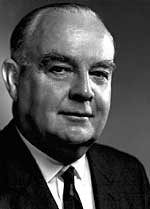
- Introduction
- Personal
- Education
- Early professional experience
- Concern for the employee
- Wartime activities
- Post-war career – The Zinc Corporation and CRA
- Mawby, the mineralogist
- Contributions to the mining and minerals industries
- Other activities
- Honours
- Summing up
- About this memoir
Introduction
Sir Maurice Mawby was a memorable figure in the Australian minerals industry – an Australian proud of his country and of what mining had done to make it strong. He was one of a handful of professional mining executives who set in motion the greatest upsurge in mineral exploration, discovery, and development ever seen in the country's history. Well known and highly regarded, he inspired international confidence in the people who worked with him.
There can be no better introduction than Professor Geoffrey Blainey's tribute at Sir Maurice's funeral service on 8 August 1977:
Maurice Alan Edgar Mawby...was intensely proud of the mining field and its people. His formal education was entirely in Broken Hill but he was mainly his own teacher; no formal syllabus could have given him the sheer range and depth of knowledge which he acquired; nor the wisdom.
At the Pinnacles mine, at the old Junction North, and at the Zinc Corporation he learned the practical skills of the mining industry. He learned them so well that by the age of thirty-three he was said to be the only Australian simultaneously to possess a mine manager's certificate, the proven capacity to run a big metallurgical operation, and a wide knowledge of geology.
When directing the search for minerals, he combined the intoxicating optimism of the bush prospector and the sobering caution of the rational geologist. He was prominent in the rediscovery of scheelite at King Island, and in three world-class finds in the 1950s and 1960s: the bauxite at Weipa, the iron ore at Tom Price, and the copper at Bougainville.
No new nation in the third world probably owes as much, to a single economic event, as Papua New Guinea owes to the opening up of Bougainville Copper.
Sir Maurice Mawby's success in opening new mining fields was remarkable, but then he was a remarkable man.
He believed that every human being deserved a place in the sun. Thousands of working people at Broken Hill and elsewhere took pride in his achievements because he took a personal pride in theirs. He was both an extraordinary man and an ordinary man. His powerful wide-ranging mind was guided by humility and warmheartedness and tolerance. In the deepest sense of the word he was a democrat.
He was a nature conservationist thirty years before the phrase came into vogue. He backed the botanist, Albert Morris, in the pioneering plan to stabilize the drifting sand around Broken Hill and curb the dust storms that almost suffocated the city. At weekends in the late 1930s he himself did much of the digging of holes, the filling of tins with soil, and the planting of native shrubs.
He loved this country – I need hardly say it in this gathering. He had a deep affection for the terrain, the rocks and the soils, the native plants on which he was an authority, the native animals, and the racehorse and the Aberdeen Angus...
In recognition of his conspicuous service to the cause of science, Sir Maurice was elected a Fellow of the Australian Academy of Science in l969.
Personal
Maurice Mawby was born on 31 August 1904 in 'The Silver City' of Broken Hill, New South Wales, the second of three sons of Charles and Alice Mawby. Charles Mawby, born in Cheshire, had been brought to Australia as a child; his wife – and her parents too – were born in the mining district of Burra in South Australia. Mawby's parents moved to Broken Hill, where Charles owned a grocer's shop. A kindly and generous man, Charles was said to be too liberal with credit for the family ever to become prosperous. The eldest son, Victor, died in infancy before Maurice was born; the youngest, Jack, still lives in Broken Hill.
The mining companies at that time did little for the dusty, isolated town. There were few social services, and there was no promise of work ahead. The houses were built of mud and stone. The railroad to Adelaide was the main link with the outside world; the line to Sydney came much later. Water was scarce, and Saturday's bath had to serve 'mum, dad, and the kids' before the precious water was used to grow a tree. But there was colour and charm. The Afghan hawkers on their camels traded everything from clothing to household equipment and tools. Travel north was by camel. Wool from the Darling River stations was transported by boat to Goolwa in South Australia.
As a boy and young man Maurice would cycle to the outskirts of the town, shooting rabbits, collecting minerals, identifying and pressing botanical specimens, and observing the fauna of the area. He became an ardent naturalist – everything within the earth, or growing on it, or living from it, remained a passionate interest throughout his life. His knowledge of botany was as impressive as his knowledge of minerals, and he could name practically every species of eucalypt. He was a member of the Ornithological and Field Naturalists Societies.
In 1929, at the age of 25, Maurice Mawby married Lena White, a Broken Hill girl; her family had been friendly with the Mawbys for many years. Both families had moved from the Burra district to Broken Hill; both were retailers. Mawby's son, Colin, was born in 1932. He accompanied his father on many prospecting and shooting expeditions, and strong and lasting bonds of friendship and respect were forged between father and son. In due course Mawby derived enormous pleasure from his five grandchildren, visiting them frequently and watching their development with great interest.
An unusually active and successful career was no impediment to a good family life. Except when travelling, work was so ordered that Mawby could be home by six o'clock each evening. In 1945 came a move to Melbourne, where he was thereafter based. An unostentatious man, the home he acquired in 1946 in Mont Albert Road, Canterbury, served him for the rest of his life, and Lady Mawby still lives there.
Warmth and concern were not confined to the family circle. Old friendships were renewed on frequent visits to Broken Hill, and an exceptional memory meant that Mawby never forgot a person or a name. He read the Broken Hill papers and would write a letter of congratulation, encouragement, or sympathy when there was a personal item concerning a former schoolmate or colleague.
Education
Mawby realised early the importance of education, and for him it remained a life-long process. Attendance at the Broken Hill High School followed from the North Broken Hill Primary School. School reports, though not outstanding, showed aptitude for mathematics, economics, and chemistry; he topped the class in chemistry. Mawby decided on a mining career, and proceeded on a leaving scholarship to the Broken Hill Technical College (a branch of the Sydney Technical College) to do a diploma course in chemistry. The scholarship would have entitled him to attend the Sydney campus of the college, but the family was in no position to subsidise living away from home (Sydney was a three-day train journey from Broken Hill in those days), and Mawby was too independent to accept the offer of one of the masters at the college (Albert Noellat) to finance him through a university course.
He successively gained diplomas in metallurgy (with credit) and geology (with honours), the latter carrying with it the Bronze Medal of the Sydney Technical College. Several years later he secured first place in the New South Wales State Examination for the Mine Manager's Certificate. The qualifications in mining, metallurgy, and geology were obtained while gaining practical experience in a number of facets of the mining industry.
In 1929, at the age of 24 and while still attending evening courses at the college, Mawby himself became a part-time lecturer in geology and metallurgy. Eight years later, no longer able to devote sufficient time to lecturing, he became a member of the Advisory Committee of the college, serving in this capacity until his departure from Broken Hill in 1945. He was proud that so small an institution produced so many mine managers and senior technicians, not only for the local mines but also for other mining fields in Australia and abroad.
When a knighthood was conferred upon him in 1963, Mawby chose for his coat of arms, in which are incorporated a wooden poppet-head, a mallee fowl, and the Sturt desert pea, the motto of the Broken Hill High School – palma non sine pulvere – which may be freely translated as 'no prize is won without effort'.
Early professional experience
Employment opportunities were scarce when Mawby left school at the age of sixteen during a protracted miners' strike. His first job was growing seedlings in a local nursery at 10 shillings a week. In 1921 when the New South Wales Government set up a Technical Health Commission, headed by Professor H.G. Chapman, to inquire into industrial diseases at Broken Hill, he became a laboratory assistant analysing human organs to ascertain where lead accumulated. In 1922, when the Commission completed its investigations, Chapman urged Mawby to study biochemistry, but he was already committed to mining.
Mawby's long association with mining began in 1922 as an assayer and analyst with the Junction North Company which, in addition to the Junction North mine, operated the smaller White Leads, Pinnacles, Mayflower, and Allendale mines. The company, though small, had introduced cascade flotation and other innovative practices. From the beginning he was in a stimulating and sympathetic work environment.
Mawby's duties at the Junction North mine were diverse. He operated a mill for treating crude ore, he ran a flotation plant for treating sulphide slimes, and he treated a furnace product that was the reformed sulphide from the reduced wastes of the oxidised slimes. Later, at the Pinnacles mine, he was in charge of the concentrator, which treated five tons of ore an hour by tabling and flotation to produce a high-grade silver-lead concentrate.
At the early age of 20, Mawby was company metallurgist in charge of some 80 men – a remarkable accomplishment and an early indication of his potential as a leader. But the company was soon to cease operating because it could not meet the compensation commitments recommended by the Chapman Commission. However the manager of the Pinnacles mine, W.J. Turner, then undertook a final geological survey at the Junction North and surrounding mines, and although a position was available with another mine, Mawby stayed on as Turner's assistant for six months.
By now Mawby had obtained his metallurgy diploma and had completed most of the subjects for mining engineering, so he sought to enlarge his experience in a big mine with modern survey equipment. Good positions were offering in several mines but, having set his sights on The Zinc Corporation Limited, Mawby accepted a lesser post with this company because it had good prospects, was ahead in its technical operations, and seemed to offer the best opportunity for varied experience. The Zinc Corporation was a London-based company with international connections, and its Australian mine was managed by Bewick Moreing and Company, who also managed mines in Western Australia and Queensland.
In 1928 Mawby was engaged by the Zinc Corporation as a timberman at the princely sum of £4.7s.6d. a week, but on reporting for duty on 12 March he was made a surveyor's assistant on a ventilation survey. Neither the company nor Mawby could have realised what a significant appointment this was, for the history of the company and that of Maurice Mawby became inextricably connected. Consequently some company background is needed.
The Zinc Corporation was registered in Melbourne in 1905 to treat the zinc-bearing tailings at Broken Hill. In 1911 the company, having decided to acquire a producing mine, secured the leases of Broken Hill South blocks, and the Zinc Corporation was reconstituted with its head office in London: later other leases were acquired. In 1915 the Zinc Corporation joined with Broken Hill South Limited and North Broken Hill Limited to acquire a controlling interest in the Port Pirie smelters of The Broken Hill Proprietary Company Limited (BHP), leading to the formation of Broken Hill Associated Smelters Proprietary Limited. (In 1925 BHP sold its remaining interest, and by 1945 the Zinc Corporation's interest had increased to 50 per cent.)
After only three months on the ventilation survey, Mawby took part in an investigation of the ore reserves, at that time under water, of the Lake George Mine at Captain's Flat, New South Wales. The survey occupied some six months, after which he worked on a metallurgical treatment of the ore at the Minerals Separation Company in Melbourne, the aim being to produce, by flotation, separate concentrates of lead, iron, and zinc.
On completion of this assignment, Mawby returned to the Zinc Corporation at Broken Hill as a junior surveyor. He referred to this as 'one of the most stimulating positions that I have ever held', and 'a wonderful experience with wonderful associates, and a fine body of men'. G.R. Fisher (now Sir George Fisher) was chief surveyor, and S.M. Moline and C.W. Kayser (later manager of the Emperor Mine in Fiji) were also junior surveyors. In those days surveyors were responsible not only for preparing plans and overall surveying, but also for calculating contract rates, designing underground timbering, ore chutes, and rail layouts, and conducting ventilation surveys-in fact the whole gamut of mining engineering. This range of experience was to serve Mawby well.
In 1935 he became assistant mill foreman. In 1936 the Zinc Corporation took over the management and direction of its Australian operations from Bewick Moreing. The prices of lead and zinc were very low, hovering around £10 a ton; staff changes were impending, and Mawby seriously considered whether he should leave Broken Hill to seek experience elsewhere. He was persuaded to stay, to become mill foreman with a view to succeeding J.C. Lyster as mill superintendent within 12 months.
The Zinc Corporation was keen to develop an 'all-flotation' plant to replace the efficient but complicated system of jigs and tables followed by flotation. Mawby welcomed the challenge of all-flotation, which had defeated the Broken Hill companies. After preliminary work an all-flotation plant with a capacity of 30 tons an hour was built adjacent to the main mill, with provision for returning the products of the experimental plant for further treatment. On the basis of the results obtained, a new all-flotation mill was designed and built, and was commissioned in August 1939.
This was Mawby's most significant direct contribution to metallurgical innovation at Broken Hill. It is described in his thesis on the evolution of the all-flotation process at the Zinc Corporation, for which he was awarded the Fellowship of the Sydney Technical College in 1937. A paper describing it was published in the Proceedings of the Australasian Institute of Mining and Metallurgy.
The decision to scrap the Zinc Corporation's large and costly gravity-based concentration plant was strongly supported by the experimental evidence. Mawby stated, 'We had operated the all-flotation plant in parallel with the gravity-flotation plant for several years and were in a position to assess the economics of both processes'. He then listed ten advantages of all-flotation, not least of which was that 'the direct milling costs due to lower labour, power, and maintenance charges would be about one shilling (1941 currency!) per ton lower in the all-flotation plant'.
It was about 1935 that Mawby first met W.S. Robinson, the dynamic mining industry figure of the 1930s and the war years. As managing director of the Zinc Corporation, Robinson had come to Broken Hill on a fact-finding and policy-determining mission. After many years of close association, Mawby said, 'W.S. Robinson was one of the very, very great Australians, a man of real humanity, real appreciation of the role of the working man in industry, and I always regarded myself as being probably more influenced by him than any other man'.
Robinson was keen to investigate the ore potential south of the mine. The original geological work in the district was done in 1910 by the members of the defunct Geological Sub-Committee of the Scientific Society of Broken Hill. This was followed by E.C. Andrews and associates (1920-22), W.I. Turner (already mentioned, 1926-27), and E.J. Kenny (1928-32). Until 1934 no geologists were employed by any of the companies in Broken Hill, and geological mapping was carried out by the surveyors. However, the mining engineers of the day had successfully developed the mine orebodies by systematic exploration and drilling. Robinson thought that the situation justified the application of all available geological knowledge, experience, and expertise in the search for more ore. Geophysical work indicated that there was a good chance of the main lode continuing for a considerable distance, so the leases for some two miles south were acquired. When drilling penetrated the zinc lode and proved the continuance of the lead lode, the outlook was so promising that a subsidiary, New Broken Hill Consolidated Limited, was formed in 1936. (Mawby was to become its first manager, in 1944.)
Mawby's first overseas visit came in 1937-38, when he accompanied George Fisher on a world tour that lasted some ten months. Their reports on mining and metallurgical operations in North America, Europe, and Africa did much to help the subsequent design of the Zinc Corporation's underground and metallurgical operations.
Concern for the employee
The expansion of the Zinc Corporation and the birth of New Broken Hill in the mid-1930s had a favourable impact on the lives of the miners and the townspeople of Broken Hill. Ore reserves sufficient for half a century gave a sense of security and confidence.
In his book If I Remember Rightly, Robinson (1) describes the situation in which Mawby grew up:
When I entered industry in 1914 I was struck by the care devoted to inanimate power and the carelessness displayed to man power. The machine was carefully selected on expert advice, submitted to severe tests and splendidly housed. It had an army of attendants to feed it, to keep it in constant repair, and to polish it...No attention was paid to housing, or to transport to and from work, or to feeding or hospitalisation, or educational facilities for a man's children or amenities for his wife. The contrast shocked me. As soon as possible I introduced the slogan, 'At least as much care for the man as for the machine'...
The directors of Zinc Corporation were the first to recognise that Broken Hill was not just another mining camp but was rather the heart of a great group of industrial enterprises. From the mid-1930's working and living conditions were steadily transformed. In some projects we worked alone but in others we enlisted the cooperation of other big mining companies...
Broken Hill came to provide a model of industrialism for all to see. But it is fair to point out that great things are only possible when the foundations of a mining industry rest on great reserves of profitable ore. They are also possible only when the men recognise that without the help of much capital and skilled management there can be no regular employment and few if any amenities, and when the directors and management realise that all the ore on the field is not worth a pinch of salt unless the men can be got to work efficiently.
Mawby had wagged school during the big strike and had seen baton charges and mounted police herding people in the streets. He understood the problems of the miners and the reasons for the bitterness that persisted, and when he entered management he consciously adopted Robinson's philosophy that the prosperity of the mines was inextricably bound to the prosperity of the miners.
People mattered to Mawby, and not just as producers. Good working conditions and safety were important, but so too were living conditions and leisure facilities. Whole families were essential for stability and permanence in remote areas, so the welfare of wives and children was as important as that of the men themselves. Housing equalled city standards, swimming pools and like amenities were built, fare subsidies were provided for secondary school students, and seaside holidays were encouraged. Mt Tom Price, Dampier, and Bougainville set high standards, but in negotiating industrial agreements Mawby recognised a responsibility not to set precedents that others could not afford to match.
Mawby maintained contact with a wide range of friends around the world. One of the things that attracted him to mining was its international outlook. 'People', he said, 'are the basis of the mining industry: the technical part is secondary.... Mining engineers don't worry so much about politics and nationalities, mining transcends all boundaries.'
Wartime activities
At the start of World War II the Allies were short of metals. Australia, which feared it could be cut off from overseas supplies, had lead and zinc but was short of copper and aluminium. In 1940 the Commonwealth Government set up the Copper and Bauxite Committee. Mawby, as its technical secretary, visited many mineralised areas to assess their potential. Copper had to be 'scrounged' (Mawby's word), and mines like Captain's Flat in New South Wales and Rosebery in Tasmania, which produced lead and zinc concentrates containing copper, were soon producing copper concentrate. Mt Isa was producing lead and zinc but, although traces of copper had been found, no one suspected that Mt Isa would become one of the great copper mines of the world.
There was drilling for bauxite in Tasmania and New England. The great deposits at Weipa were not discovered until later; because the Japanese were in Port Moresby, northern Australia was excluded from exploration activity. However, during the war the Commonwealth and Tasmanian Governments jointly agreed to establish an aluminium works in Tasmania.
The Copper and Bauxite Committee later became the Commonwealth Minerals Committee under the chairmanship of Colin Fraser. Mawby was a member from 1941 to 1944, and in this capacity was concerned with the development and production of such strategic metals and minerals as copper, tungsten, tin, tantalite, and beryl. He became acquainted with almost every known Australian mineral deposit. With P.B. Nye, who later became director of the Bureau of Mineral Resources, Mawby assessed the important scheelite deposits on King Island. Scheelite, the source mineral for tungsten, was vital because of the tungsten capping on anti-tank shells.
Titanium was also in demand. The beach-sands industry originally operated in a small way along the eastern coast, making a mixed heavy-minerals concentrate that was sent to America for separation; before the war ended Australia was producing its own concentrates of rutile and zircon. Later, Australia was to supply 90 per cent of the world’s rutile.
In 1942 Mawby was a member, with Frank Green and Arthur Evans, of a government-sponsored mission to the United States and Canada to study lead and zinc metallurgy. He spent considerable time at the Pittsburgh Consolidated Company, a large owner and operator of coal mines, investigating the possibilities of beneficiating the high-ash coals of the New South Wales south coast. He also investigated up-draft sintering, as carried out by the American Smelting and Refining Company, and the de-bismuthising of lead as practiced in the United States, Canada, and Mexico.
Australia was not as polarised then as it is today, and the war created a situation in which most people of Mawby’s age and interests came together. Spending much of his time in Canberra, he made enduring friendships that were to be of great advantage when he resumed full-time activities with the Zinc Corporation, and later again when the company conducted negotiations with the Commonwealth Government.
Despite the demands of these extramural activities, in 1944 Mawby became the first manager of New Broken Hill Consolidated Limited, as well as chief metallurgist of both the Zinc Corporation and New Broken Hill Consolidated.
Post-war career – The Zinc Corporation and CRA
Mawby had an inquiring mind that needed a challenge and in 1945, at the age of 40 and with experience in all phases of Broken Hill mining and metallurgy, he felt that the time had come to broaden his knowledge. From the positions offered, he accepted appointment as director of research and development of The Broken Hill Associated Smelters Proprietary Limited (BHAS) in which, as stated, the Zinc Corporation had a half interest. Here was the opportunity to familiarise himself with the final treatment stage of lead concentrates. The appointment, based in Melbourne, involved visits to smelters throughout the world. However, it was not long before Robinson realised that a company having but one mine must seek new mineral deposits, and he invited Mawby to return to the Zinc Corporation as director of exploration and research. With the blessing of BHAS, who regarded him as 'a W.S. man', he accepted.
Thus Mawby rejoined the Zinc Corporation in 1946 and 'went looking for mines' – a job after his own heart. Exploration has always been the main challenge of mining, for without new ore there can be no continuity. General exploration was at a low ebb, so this was a unique opportunity, and it ushered in the most productive period of Mawby's life. The Zinc Corporation was not seeking small deposits; its new mines had to be of national significance, mines that would catalyse the opening up of new areas of Australia.
The first steps were to assess the known mineralised areas, to consult state departments of mines and geological surveys, and even to examine mineral collections in the hope that somewhere there would be encouraging signs for real exploration work. Many of the old areas such as the Cloncurry field, the New England areas, Mount Morgan and its environs, the Victorian mineralised areas, and the Flinders Ranges were re-investigated.
This assignment proved extremely rewarding, both to Mawby and to the Zinc Corporation. Over the next 20 years world-scale deposits of bauxite, copper, and iron were discovered, and the company's future no longer depended solely on the silver/lead/zinc reserves at Broken Hill. Development of the new mines required massive capital and a great deal of planning. Later promoted to leadership of the Australian operation, Mawby used his technical and organisational skills to bring them into production.
There were other less important projects, some of which are still in existence and some of which have been discarded. The beach-sands industry was then in its infancy. Mawby was responsible for the investigation and subsequent mining of the Stradbroke Island deposits, and in 1948 Titanium and Zirconium Industries Proprietary Limited was formed to develop them. However, his overseas colleagues were unconvinced that the industry had a great future, either for its minerals or for the metals made from them, and in 1969 the company's interest was sold.
It is seldom appreciated that Mawby was a pioneer in oil exploration. In 1946 the Zinc Corporation joined with two experienced overseas oil companies, D'Arcy Exploration Company Limited (later British Petroleum) and the Vacuum Oil Company (later Mobil Australia), to search for natural gas and oil, first in the southwestern corner of the Great Artesian Basin and later in the Otway Basin of Victoria. (At the time most overseas petroleum experts were firm in the view that oil and gas were unlikely to be found in Australia in commercial quantities, and only one other company – Oil Search – was operating here.) The three companies became equal partners in the exploration company, Frome-Broken Hill Company Proprietary Limited, in 1947. Oil exploration is an activity in which good fortune is imperative for success, and it was one of Mawby's major disappointments that, despite some early encouragement, his company failed to discover a commercial field. However, his optimism for Australia has been vindicated by later discoveries of commercial oil and gas fields.
There was an unexpected bonus as a by-product of the search for oil. A memorandum that Mawby wrote in June 1953 stated: 'Please issue instructions to all field geologists that, apart from the search for base metals, they should keep an eye open for possible deposits of other minerals, particularly bauxite and phosphate, which may occur in many places in the Northern Territory and possibly Cape York Peninsula...' Though oil was the prime objective of the Cape York Peninsula survey, the big breakthrough came in 1955 with the discovery of the Weipa bauxite deposit, which itself pointed the way to several other significant bauxite discoveries, such as that at Gove.
Australia could not provide the necessary development finance. Mawby said: 'Mining in those days was a dirty word. You could not get the sort of money you wanted even if you went around the world with a hat in your hand.' Nevertheless, that is precisely what he did. At first he received a polite 'no' from many of the world's major mining and metallurgical companies. Following a three-year association with the British Aluminium Company, in 1960 a firm partnership was established with the Kaiser Aluminium and Chemical Corporation of the United States. This paved the way for the rapid development of Comalco Industries Proprietary Limited as an integrated aluminium complex, based on Weipa, Bell Bay, Yennora and Gladstone, and expanding overseas with interests in an alumina refinery in Sardinia, an aluminium fabrication plant in Hong Kong, and an aluminium smelter at Bluff in New Zealand.
Mawby always had a special identification with Weipa. Not only had he explicitly reminded his staff of the possibility of bauxite in northern Australia, but after the discovery he also supported and guided its development, stage by stage, into one of the world's largest bauxite/alumina/aluminium enterprises.
Haddon F. King, a close associate from 1946 until Mawby's death, believed they were fortunate to belong to an organisation in which exploration was seen not merely as the key to growth and profit, but also as a duty. A geological staff of world standard was built up from zero in 1946 to 40 in 1960, and it was during those years that CRA developed the activities, the skills, the investigational curiosity, and the geological concepts that led to the successes of the 1950s and 1960s. Mawby's long-range view made disappointments easier to accept; an abortive test was not a waste of money, it was merely part of the cost of developing mineral resources. Optimism and judgment at first, and experience later, provided justification; and poor times were no excuse for cutting back the effort.
King, looking back after nine years of retirement from CRA, said, 'There are two things that I specially like to remember about Maurie's part in exploration – that during the 1950s, when I as Chief Geologist and another senior geologist were developing unorthodox geological ideas which were regarded by the eminent as mistaken and even deplorable, I never felt any pressure to conform; and that, even when Sir Maurice was Chairman of CRA, a visiting field geologist could have an hour of his time on almost any day.'
In 1949 there began a series of management changes that were to influence Mawby's career. A merger in Britain of the Zinc Corporation and the Imperial Smelting Corporation resulted in the formation of the Consolidated Zinc Corporation Limited (CZC) and an Australian subsidiary, Consolidated Zinc Proprietary Limited (CZP). In 1950 Sir Norman Mighell (former High Commissioner in London) became chairman of CZP, and in 1951 the management of the Zinc Corporation, New Broken Hill Consolidated, and some other Australian interests were transferred from London to Australia. Mawby was appointed vice-chairman of CZP in 1955, and in 1956 was made a director of CZC. In 1956 L.B. Robinson (W.S. Robinson's son) became chairman of CZC and at the same time, following Mighell's death while still in office, took over chairmanship of CZP. On the death of L.B. Robinson, in July 1961, Mawby succeeded him as chairman of CZP.
The year 1962 was a crucial one for Mawby, then in his late fifties. CZC merged with the powerful Rio Tinto Company Limited of London, a company with worldwide ramifications, to form The Rio Tinto-Zinc Corporation Limited (RTZ). Alfred Baer, recalled from retirement on the death of L.B. Robinson to become chairman of CZC, became chairman of the new company; Val Duncan of Rio Tinto became managing director, and Mawby became a director. At the same time Conzinc Rio Tinto of Australia Limited (CRA) was formed by merging the large CZP with the smaller Rio Tinto Mining Company of Australia Limited, a publicly listed company whose main asset at that time was a majority shareholding in Mary Kathleen Uranium Limited. In Mawby's picturesque language, CZC 'had lots of deposits, lots of work ahead, lots of development and limited money, and they [Rio Tinto] had lots of money and no projects'. RTZ regarded CRA as an operating company concerned with the technical problems of mining and exploration. Mawby, the undoubted technical leader of CZP, had long been in the mainstream of development, and had the ideal background for his appointment as Chairman of CRA.
'Sir Maurice had a rare grasp of technical subjects and pursued matters in which he was interested with the dedication and curiosity of the true scientist', said Sir Roderick Carnegie, who succeeded Mawby as Chairman of CRA in 1974. Throughout a lifelong association with mining, Mawby demonstrated his faith in exploration and research, actively supporting both and backing promising ideas wherever they originated. His receptive attitude encouraged a stream of innovative studies by CRA, including the DAVCRA flotation cell, the WORCRA continuous smelting methods, various forms of ore sorters, and the successful Imperial Smelting process for lead and zinc. Such is the nature of research that not every one of these studies proved rewarding.
Mergers are not without difficulties, but by 1964 the whole organisation cemented into place and the individuals were becoming welded into a well-integrated and effective team. At the outset CRA had to rely heavily on the business experience, financial acumen, and marketing ability of RTZ to supplement the technical expertise, exploration skill, and enterprise of the Australian group. Nevertheless Mawby hoped that CRA would eventually play a bigger part in defining the overall policies and in making important development decisions.
After the establishment of Comalco in l960, the next two major areas of expansion were in iron and copper. Rio Tinto Mining had been investigating iron ore in the Pilbara region of Western Australia in 1961 and, following the amalgamation with CZP, continuing exploration resulted in the discovery of a massive iron orebody at Mt Tom Price in 1962. Hamersley Holdings Limited was formed in association with the Kaiser Steel Corporation of the United States, and only recently (in August 1979) has CRA acquired the Kaiser shareholding. A huge open-cut mine was established with mechanical mining and loading facilities, and a railway was constructed to Dampier, 290 kilometres northwest of Mt Tom Price, where a port and loading facilities were provided. Townships were built at the mine and at the port (and later at Paraburdoo,100 kilometres south of Mt Tom Price). This was a tremendous achievement requiring close coordination. The first shipments were made in 1966, and 23 million tons were produced during 1971. The mine at Paraburdoo began producing in 1973.
In 1964 CRA began exploring a large low-grade copper/gold orebody on Bougainville Island, Papua New Guinea, and in the early stages Mawby was determined that exploration should be kept going. Bougainville Copper Proprietary Limited was incorporated in Papua New Guinea in 1967. Progress thereafter was fast and spectacular, and by 1972 the first concentrates were shipped. The island population has been integrated into the project, and the Government of Papua New Guinea has been substantially dependent on the royalties and dividends received.
The Hamersley iron and Bougainville copper stories are so well known that it is unnecessary to deal with them at length. There were other, less publicised, projects, during Mawby's chairmanship – commissioning of new slag-fuming and electrolytic zinc plants at BHAS in Port Pirie, establishment of Dampier Salt on the northwest coast, and studies of the open-cut coal prospect at Blair Athol in Queensland. There have been substantial reorganisations and rationalisations between CRA and other companies with respect to copper smelting, coal and coke production, and zinc and lead smelting. Further, in 1974 the decision was made to re-open the Mary Kathleen uranium mine.
Mawby had a sense of urgency, even impatience, and the unprecedented speed with which major projects were brought into production almost simultaneously testifies to his drive and organising ability. From his twenties onwards he had been a good manager with a belief in delegation and in sharing credit. He had the gift of being able to choose the right person for a particular job, and his colleagues say that, having chosen, he provided encouragement without interference. He did not suffer fools gladly. He was impatient with accounts and administrative procedures and long erudite discussions; these were not his style. His principal 'back-stop' was Arthur Rew – the administrator and finance man – who also spent many years in Broken Hill and held the positions of general manager of CZP and later managing director of CRA. They formed a truly great team and worked together very harmoniously for almost thirty years.
When Mawby retired in 1974, CRA had become second only to BHP among Australian companies. Exploration was proceeding apace, and there was momentum enough for an exciting future. It had 23,000 employees, its sales revenue was $833.5 million, and its dividends ($36.1 million) took less than a quarter of the money paid to governments in royalties and taxation ($166.9 million). Yet Mawby took pride not so much in the size of the company as in the multiplicity of its contributions to the development of Australia. Looking back, one can only marvel at his courage and enterprise; he might have chosen to play safe. Though he had risen dramatically from the lowly days of boyhood in Broken Hill, Mawby remained an unassuming man.
Sir Roderick Carnegie said: 'One of Sir Maurice's greatest attributes was his ability to lead and to be well liked in the process. He generated enthusiasm in others in leading them towards common objectives, instilling a team spirit in those whom he led.'
Mawby, the mineralogist
Mawby was a noted mineralogist whose prowess first became apparent at the Junction North mine. A keen observer and a skilful analyst, he identified for the first time a remarkable number of the rarer minerals among the 150 species known to exist in the silver/lead/zinc lodes in Broken Hill. The minerals he first identified are alabandite, native antimony, apophyllite, augelite, bustamite, coronadite, inesite, jarosite, manganocolumbite, meneghinite, microlite, palygorskite, purpurite, pyroxmangite, sturtite, and tetrahedrite. A fine personal collection, part of which adorned his office, included many lead and silver specimens from the unique oxidised section of the great Broken Hill orebody.
In collaboration with mineralogists in Australia and overseas, Mawby characterised and described many other minerals in the Broken Hill lode and surrounding host rocks. He worked closely with such eminent Australian mineralogists as George Smith and T. Hodge-Smith, Drs A.B. Edwards, John McAndrews, E.S. Simpson, and F.L. Stillwell, and Professors L.J. Lawrence and R.L. Stanton. He also worked with overseas greats like Foshag, Schaller, and Mason at the Smithsonian Institution, Washington DC, Professor Ramdohr of Heidelberg, Germany, and Professors Berman, Frondel, and Palache at Harvard University.
Mawby has not been commemorated in the name of any mineral – colleagues say because of his modesty. He loved minerals, but he shunned the limelight. For this reason there was little publicity when he donated his world-class collection of minerals to the National Museum of Victoria.
He was patron of the Mineralogical Society of Victoria, and in 1978 Dr Peter Bancroft, director of the San Diego Gem and Mineral Society in California, delivered the first Sir Maurice Mawby Memorial Lecture, entitled 'The World's Finest Minerals and Crystals', in Melbourne.
Australian Mining and Smelting Limited is commissioning a memorial volume to Mawby, provisionally entitled The Minerals of Broken Hill, with Dr Howard K. Worner and Professor John F. Lovering as joint editors.
Contributions to the mining and minerals industries
Mawby felt an obligation to support and advance his profession by active participation in the various associations of the mining and minerals industries. In particular he made important contributions to the Australasian Institute of Mining and Metallurgy, the Australian Mineral Industries Research Association Limited, and the Australian Mineral Development Laboratories.
The Australasian Institute of Mining and Metallurgy in 1923 notified Mawby of his election as a student member and asked for 'a postal note for l0s 6d as annual subscription'. Thus began an association that lasted for more than half a century. A member of the Institute's council in 1948, Mawby was vice-president 1950-1952, president in 1953-54, vice-president again from 1955-63, and president once more in 1968. He did a great deal during his terms of office to motivate the institute and to set high standards. Two presidential addresses – 'The Torch we Hold' (1954) and 'The Standards we Inherit' (1968) were notable.
The highest award of the Institute, its Bronze Medal, was made to Mawby in 1955. He was delighted and proud that the presentation was made at Broken Hill during the 1956 annual conference by the president, A.R. West, a classmate at Broken Hill Technical College. West was able to say of him, 'Equally at home in the fields of mining, metallurgy, geology, exploration, research, education and Government, Mr Mawby has been able to provide a liaison and stimulus whose value to the Institute and Industry can hardly be overstated. At the age of fifty-one his career is far from closed, but the Council of the Institute unanimously feels that it is time now to recognise Mr Mawby's already eminent services to mining and metallurgy.'
In 1976 the Institute conferred honorary membership on Mawby 'in recognition of his valuable services to science and industry'. The address by the president, C.H. Martin, and Mawby's reply reveal his great love for Broken Hill, his high regard for his colleagues, and the extraordinary versatility and breadth of interests that enabled him to play such a significant part in the affairs of the Institute.
Mawby was a member of the organising committee and chairman of the publications committee of the Fifth Empire Mining and Metallurgical Congress which was held in Australia in 1953, and during the latter part of the congress he was acting president. He was president of the Eighth Commonwealth Mining and Metallurgical Congress, which was held in Australia and New Zealand in 1965. For each of these congresses an authoritative volume, Geology of Australian Ore Deposits, was published by the Institute; Mawby was closely associated with both.
The exploration programs of the 1960s had greatly expanded geological knowledge, and Mawby saw in the imminent retirement of C.L. Knight from CRA an opportunity to have the earlier volumes updated and to extend their scope to include Papua New Guinea. A committee was set up in 1972, with Mawby as chairman and Knight as editor-in-chief, to compile a third edition – the fourth-volume Economic Geology of Australia and Papua New Guinea, published by the Institute in 1975. These volumes are a memorial to Mawby's vision and energy. But the Institute has yet another tribute to pay. It is in the process of preparing a memorial volume, provisionally entitled Mining and Metallurgical Practices in Australia, to which G.B. O'Malley will contribute a chapter on Mawby's technical career.
In the 1950s there was no appropriate body to back research for the mineral industry. This situation was rectified in 1959 by the formation of the Australian Mineral Industries Research Association Limited (AMIRA) after meetings between the Australian Institute of Mining and Metallurgy and the Commonwealth and South Australian Governments to consider the offer of the South Australian Premier, Sir Thomas Playford, to hand over the Technical Services Section of his Department of Mines for the joint use of the industry, the Commonwealth and the State. It was decided that the section should be reconstituted as the Australian Mineral Development Laboratories (AMDEL) to provide a comprehensive contract research service for the benefit of the mining industry. Mawby was elected first president of AMIRA, a momentous decision. He was also elected to the AMDEL council.
The first task of AMIRA was, in association with the Commonwealth and South Australian Governments, to underwrite the operation of AMDEL. Mawby's personal approaches won guarantees of work or cash to the value of £45,000 a year for five years. Always a champion of AMDEL, Mawby arranged for it to carry out much of his own company's metallurgical work.
The objectives of AMIRA are very broad, and once the AMDEL guarantee system was successfully launched, AMIRA extended its activities by disseminating technical information and sponsoring within the universities and the CSIRO research projects of general interest to the industry. AMIRA's first annual report in 1960 mentions three such projects – geobiological research into ore genesis, non-destructive testing of mine hoisting ropes, and the application of XRF spectrography to the analysis of ores. Twenty companies and several state mines departments had joined in the sponsorship of these projects. Mawby did not favour a levy on members for general support of research; he fostered a system whereby each member decided whether or not to support a particular proposal.
AMDEL had a remarkable growth rate during the 1960s, and in 1968 Mawby was instrumental in raising $220,000 from AMIRA members for new buildings. His sincerity and his belief in the value of research greatly stimulated support from the minerals industry. By 1969 membership numbered 53, and included exploration, cement, and chemical companies in addition to mining and smelting companies.
At the annual conference of The Australasian Institute of Mining and Metallurgy in 1969, Mawby presented an impressive address entitled 'The Australian Mineral Industries Research Association – A Decade of Progress', in which he reviewed the projects undertaken and acknowledged the great satisfaction that he had derived from helping to sponsor cooperative research within the mineral industry. Academic research, he thought, was handsomely supported by the mining companies through the taxes they paid. Excerpts define his broad philosophy regarding industrial research:
Little or no research is conducted in industry in general and the minerals industry in particular which does not have a chance of improving the profitability of operations, or providing an economic gain in one form or another, directly or indirectly, short-term or long-term. I do not apologise for this, just as I do not apologise for the fact that the primary objective of industry as a whole is profit in its widest sense. Persons, companies and Governments must at least balance their budget some time and it is only through the surpluses that credit ratings can be assessed. These in turn determine the potential capital or loan raisings without which progress is halted and stagnation intervenes. In other words, the profit incentive defines the broad environment in which industrial Research and Development has to work...but I do not want you to think that profit is the only incentive. There are many others, which will become apparent as I describe some of AMIRA's activities...There are a number of areas of concern to mining companies where the human problems heavily outweigh all other considerations. Projects of this type in which AMIRA is involved are the safety of mine hoisting, underground ventilation and the conditions in communities of which a mine is the focal point.
AMIRA prospered under Mawby's leadership, and he was persuaded to continue as president until 1972 – a term of thirteen years. AMIRA was then a most successful organisation with a modus operandi unique in Australia. It had become accepted by government, by universities, and by industry as the coordinating body and spokesman for minerals research in Australia. The Mineral Industry Research Organization in the United Kingdom, and the Australian Engineering and Building Industries Research Association both used AMIRA as a pattern.
When CRA became a prime target for criticism as one of the largest 'foreign' companies, Mawby was forced into the postition of spokesman for the entire industry. He was no apologist. Although he was a dedicated Australian, he was convinced that a very large amount of overseas capital was needed to develop world-scale deposits of lead/zinc, copper, bauxite, and iron ore. 'We have to set about fitting them into the world pattern of markets and usage, because no foreseeable growth in domestic markets would alone have provided an adequate base for developing such large resources.' Foreign money, he said, was just as important in mining as it had been in constructing railways and building up manufacturing industries. He told the Federal Government that he would accept 'anybody's money' because it would develop Australia, and unless the north were developed we wouldn't hold it. However, he envisaged less dependence in the long term, and his company practised what he preached; the Australian public's equity in CRA has steadily increased. Expatriated profits, Mawby pointed out, were a minor matter compared with the gains that accrue. Australia's limited technical manpower and the time needed to develop new technology frequently made it economical to import know-how. With overseas capital comes overseas expertise, but by research and good operating practice Australia could make improvements, and indeed had contributed to the international pool of knowledge from which it had drawn.
In Optima (September 1971) Mawby set out his vision of 'The Way Ahead for Australian Mining'. Australia's growth had been closely linked to the development of its mineral resources; the winning of metals had taken an increasingly important part in national life and had influenced politics, unions, laws, and racial policies. Not only had mining been Australia's greatest force for decentralisation, but in industrial centres business had been stimulated and employment had been stabilised. The effect of mining fanned out into all sectors.
Mawby was highly critical of Britain's entry into the Common Market, and the progressive weakening of the links between Australia and Britain. Within Australia, he opposed government control in the mining industry, and the policies of the Whitlam Government were an anathema to him. He felt that Australia lost its way in the early 1970s, but if he were here today he would find that some of the principles he espoused are returning to favour.
In his Optima article, reacting to what he considered was unfair criticism of the mining industry, Mawby wrote, 'The mineral industry should adopt a policy of optimising processing, maximising local equity participation, and minimising pollution.... The mining industry aims to establish and maintain the right balance between preservation and development and does not seek blanket approval to conduct uncontrolled operations. The decision, however, on whether or not ecological and environmental considerations should take precedence over natural resource development is one that society must soon make...The problems are more than just technological...The solutions must be technically sound and they must be socially, economically, and politically feasible.'
Mawby, always intensely interested in conservation, was one of the founders of the Australian Conservation Foundation. However, he was keenly disappointed when, in his words, it 'became more interested in generating controversy than in encouraging better environmental practices'.
Other activities
The key to Mawby's life was Broken Hill. There he first met George Fisher when the latter was gaining underground experience and Mawby was 'a very bright young star' at the technical college. From 1928 they worked in close association for many years and they became lifelong friends. Fisher has said, 'In our young days we spent much of our leisure time together and every available weekend was spent in the bush prospecting and hunting...we ranged from Tibooburra to Mt Gunson...and thought we were going to make our fortunes, with gold at Tibooburra and copper at Mt Gunson.' They held the Mt. Gunson deposit until wartime requirements necessitated a transfer. They were successful in the development of a sillimanite deposit in the Thackaringa hills that produced a substantial tonnage, and they were very interested in amblygonite, a lithium mineral, at Euriowie. When Mawby received one of the two Gold Medals of the Institution of Mining and Metallurgy, London, in 1963, the other recipient was Fisher.
As a young man Mawby played competition tennis. He also enjoyed swimming and later adopted it as a regular form of exercise. He was a great reader with catholic tastes; he was also a confirmed diarist and a prolific correspondent. He liked the theatre and played the piano as a hobby (by ear, for he had no formal training). In later life Mawby did not participate in any organised sport. Nevertheless, like many another town-dwelling mining man, he sought relaxation at times at the racecourse; he even owned a race-horse. He continued to follow his interests as a naturalist.
The important contributions to AMIRA, AMDEL, and the Australasian Institute of Mining and Metallurgy have been reviewed. A strong supporter of the formation of the Australian Mining Industry Council in 1967, Mawby was a member of its steering committee and a foundation member of the executive committee. He was a life member of the Royal Australian Chemical Institute, and between 1962 and 1972, as a member of the faculty of engineering at the University of Melbourne, rendered valuable assistance behind the scenes. He did much to foster trade and cultural relations with Japan, and sought to improve the understanding between the two nations by encouraging Japanese studies in Australia. He was a life member – the first – of the Australia/Japan Business Cooperation Committee.
For several years from 1956, Mawby was a member of the advisory council of the CSIRO and a member of its Victorian state committee. One of the CSIRO's major successes has been the discovery that trace elements – copper, zinc, molybdenum, and cobalt – could bring prosperity to certain unproductive farming areas. His keen interest in things that grow and knowledge of this research probably influenced his purchase in 1956 of 6,300 acres of virgin mallee scrub near Keith in South Australia for development as a grazing property – Noranda Station. There was no certainty that the venture would be successful, but Mawby accepted the challenge with characteristic energy and enthusiasm, and it turned out well. His son bought an adjoining property in 1967. A notable Aberdeen Angus stud, a Murray Grey stud, and a Merino stud were established. Mawby liked to visit the property at least monthly. It gave a respite from business activities and afforded him plenty of scope to follow his instinct for developing a project from conception to production. And there were financial benefits too.
Mawby was a perfectionist, and his favourite quotation, his son says, was, 'If something is worth doing it's worth doing well.' Family, friends, and colleagues have repeatedly referred to Mawby's great capacity for enjoyment. He did enjoy living – his family, his work, his hobbies; in fact all the pleasures of life.
Honours
In 1955 Mawby was admitted to the degree of Doctor of Science (Honoris Causa) of the New South Wales University of Technology (now the University of New South Wales). In 1956, as mentioned, he received the Bronze Medal of the Australasian Institute of Mining and Metallurgy 'in recognition of his contribution to exploration and to non-ferrous metallurgy, and also of his continuous public services in many directions associated with mining and metallurgy'.
Appointed a Commander of the Order of the British Empire in 1959, four years later he was created a Knight Bachelor 'for services to mining and industry'.
The American Institute of Mining, Metallurgical and Petroleum Engineers elected him an honorary member in 1963 'for outstanding contributions to the world lead and zinc mining industry and for his able and constructive services in developing the raw material resources of Australia'.
In 1969 Mawby was elected a Fellow of the Australian Academy of Science. In 1970 he was awarded a Kernot Memorial Medal of the University of Melbourne 'in recognition of his distinguished engineering achievement in exploration, research and development in the mining and metallurgical industry in and beyond the continent of Australia, and also of his interest in education, and his concern for the preservation of the environment'. The Victoria Institute of Colleges, at a special ceremony in 1975, conferred on him the degree of Doctor of Arts and Sciences (Honoris Causa) for 'services to the development of the mining industry in Australia'. Mawby supported the establishment of the Australian Academy of Technological Sciences, of which he was a foundation member; he was a signatory to its articles of association.
Summing up
For Fellows elected under the provisions of the Academy Bye-Laws (Special Election of Fellows), there will rarely be a long list of personal research papers. Their impact on science will have taken a different course. Let there be no doubt that Mawby had a profound and wide influence, through the use of science and the scientific method, on the operations of a whole group of companies. At a time when control was passing into the hands of financiers, accountants, and powerful shareholders, his performance as a manager demonstrated the benefits of having a technical man at the helm - provided that man is wise enough (as Mawby was) to ensure that among his colleagues there are skills complementary to his own.
Mawby was by nature and inclination an entrepreneur. Once a new venture was achieving cost and production targets it received less of his time and interest. Ahead there was always more exploration, more research, and more development – something more to be added to the already long list of notable achievements – New Broken Hill, Weipa, Gladstone, Mt Tom Price, Paraburdoo, Dampier, Bougainville, Bluff, and others. In all these developments CRA blazed a trail.
We all like to look back occasionally. Who among us could lay claim to more than Mawby, who said, 'I get a tremendous thrill from seeing new harbours, and ports, and towns, and mines growing where none grew before; seeing the establishment of roads, railways, airfields, and integrated communication systems that open up the Australian emptiness...meeting the challenge of doing something that will endure and be of real benefit to Australia.'
Sir Maurice was confident about the future of mining in Australia, and considered himself 'the luckiest man in the world' to have found his true vocation. When he received a certificate of honorary membership of The Australasian Insitute of Mining and Metallurgy in 1976, he said, 'Summing it all up, if I had my life to live again, I would wish no other than that which I have had in the same localities with the same people.'
About this memoir
This memoir was originally published in Historical Records of Australian Science, vol.5, no.1, 1980. It was written by:
- Sir Ian Wark, who was Chief of the CSIRO Division of Industrial Chemistry from 1939 to 1958, a member of the CSIRO Executive from 1961 to 1965, and Chairman of the Commonwealth Advisory Committee on Advanced Education from 1965 to 1971. He was elected to the Academy in 1954, and was Treasurer from 1959 to 1963.
- Eleanor Ellis, who was Sir Ian's assistant at the CSIRO Division of Mineral Chemistry.
Acknowledgments
It is fortunate that Sir Maurice had been interviewed by Mel Pratt for the National Library of Australia regarding major events in his career, and that this was taped. There is another tape, held by CRA, on which he recounted some of his earlier contribution to mining and metallurgy. Reference material used in the preparation of this paper has been deposited with the Academy.
CRA colleagues have given much appreciated assistance. In particular, Sir Roderick Carnegie and Miss Brenda Scougall – Sir Maurice's secretary for twenty-eight years – have been most helpful. Dr J.C. Nixon provided much of the information concerning AMIRA and AMDEL, and Dr H.K. Worner provided the information concerning Sir Maurice's contributions to mineralogy.
There were valuable discussions with Lady Mawby and Mr Colin Mawby, to whom the sympathy of the Academy is extended.
Notes
- (1) No apology is offered for references to W.S. Robinson (himself a Fellow of the Academy from 1954 until his death in 1963), for without him it is doubtful whether Mawby could have achieved so much.
Marcus Laurence Elwin Oliphant 1901-2000
Written by J.H. Carver, R.W. Crompton, D.G. Ellyard, L.U. Hibbard and E.K. Inall.
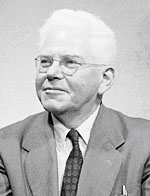
Introduction
With the death of Professor Sir Mark Oliphant, the first President of the Australian Academy of Science, Australia lost one of its most distinguished scientists. A tall, handsome man with a shock of white hair and a distinctive voice and laugh, he was well informed on a wide range of scientific matters and expressed firm views on their social consequences. He enjoyed wide respect throughout the nation as a great Australian, his influence spreading far beyond the discipline of physics, to which he made seminal contributions both through his own research and his leadership. The Academy will remember and honour him for his leading role in its establishment, and for his continuing association with it until the last years of his long life.
Oliphant's outstanding international reputation was based on his pioneering discoveries in nuclear physics in Cambridge in the 1930s and his remarkable contributions to wartime radar research and to the development of the atomic bomb. In 1950, after an absence of 23 years, Oliphant returned to Australia, where he founded the Research School of Physical Sciences at the Australian National University and pioneered the creation in Canberra of a national university dedicated to the conduct of research at the highest international level.
To the layman, Mark Oliphant was well known for his often outspoken comments on those matters about which he felt so strongly: social justice, peace, atomic warfare, the environment, academic freedom and autonomy, to name a few. The scientific community will remember him as a physicist for his pioneering experiments with Ernest Rutherford during momentous years that saw the birth of nuclear physics, as a physicist/engineer for his ingenuity and determination as one of the pioneers of high-energy particle accelerators, and as a science administrator and public advocate for science.
The early years in Adelaide
Marcus (he later called himself Mark) Laurence Elwin Oliphant was born on 8 October 1901 at Kent Town, an inner suburb of Adelaide, the first-born of the five sons of Harold Oliphant and Beatrice Oliphant (née Tucker). Harold (known as 'Baron' within the family) had eventually followed his own father's footsteps and become a clerk in the South Australian public service. Beatrice had been a schoolteacher. With a small income for such a large household, the family lived carefully, with moves from one rented house to another as its number grew.
Mark began primary school at Goodwood at the age of 8, but not long afterwards the family moved to Mylor in the Adelaide Hills, which was, for Mark, a delightful place in which to grow and learn. There he attended a one-teacher school with about 25 students. The master, Mr McCaffrey, was 'an Irishman and a marvellous teacher' whose influence, Mark later asserted, had been part of the backbone of his education. In 1914, a move back to the Adelaide suburbs became necessary when the time came for Mark to attend secondary school, first Unley High School and then, for his final year, the premier public school in the State, Adelaide High School.
Mark's scholastic achievements at high school gave little inkling of the distinguished scientific career to follow, but his inventiveness and his remarkable ability to 'make and do' blossomed during these senior school years and provided evidence of talents more predictive of his future research performance. Both schools were the beneficiaries of these talents. Accompanying an application in 1918 for a position with the Advisory Council of Science and Industry (a predecessor of CSIR) was a list of complex apparatus and delicate instrumentation Mark had constructed for his own and the schools' use. The list included a Wimshurst machine, Tesla coil, Kelvin's quadrant electrometer, Kelvin's reflecting galvanometer, organ pipe, siren, automatic tuning fork and more – an amazing list of achievements for a student of 17 who would have had very limited facilities at his disposal.
Whether or not these talents would have flourished under any circumstances, there is no doubt they were greatly encouraged by one of his most precious possessions at that time, his own underground 'laboratory' at the family's new home in Mitcham. It was his alone for study and experimentation and was given to him when the family moved to its new home when he was about 12. By that time he had already shown a remarkable aptitude with his hands, a skill he retained and honed throughout his life. During these formative years Mark responded to complementary influences from his parents. He inherited his strong sense of social justice and morality from his father, who was a deeply religious and sensitive man, although dogmatic religion, including Christianity, became anathema to him. From his mother came a love of reading and learning and a practical approach to life. Both clearly encouraged his inquiring and inventive mind as evidenced by the 'holy of holies' reserved for him in the Mitcham house. Nothing would have pleased his father more if he had elected to enter the Anglican priesthood, although Mark's early aspirations leant towards medicine. In the event it was to be neither.
Mark left school in 1918, all of his secondary schooling having been spent during the years of the First World War. Tertiary education without financial backing from the family was open to very few, certainly not to him. He did not win one of the twelve State Government bursaries then offered (still the only 'free' tertiary education available until after 1945), so he looked for a job. He worked for a time for an Adelaide jeweller and applied unsuccessfully for a number of other positions. Eventually he obtained a cadetship at the South Australian Public Library. The work was uninspiring, but it did at least enable him to take a couple of subjects at the University of Adelaide at night, and thus, in 1919, to cross the threshold of his academic career.
Chemistry and physics soon captured him. Then, in his second year of part-time study, an opportunity arose which was undoubtedly a turning point in his life. He accepted a cadetship in the Physics Department under Professor (later Sir) Kerr Grant, thus giving him not only free tuition and a minute income but also an intimate connection with the department and its academic staff of three. Since his first year physics result was undistinguished, it is not clear how he obtained the position. Kerr Grant may have been aware of Oliphant's ingenuity and facility with apparatus, and seen an opportunity for skilled help with the lecture demonstrations for which Kerr Grant was renowned. Whatever the reason, Mark flourished in the job, taking out a First Class Honours degree in physics in 1923.
As Kerr Grant's 'laboratory assistant' (so recorded by the university's 1926 Calendar) Mark Oliphant's stature in his employer's eyes steadily grew. In a letter to the chairman of the university's finance committee, which sought increases in Oliphant's salary over two years to £400 a year, a sum approaching that of a Lecturer, Kerr Grant wrote:
Such a man as Mr Oliphant, who understands and can handle the great variety of instruments and apparatus of a physics laboratory, is more essential to the working of this department than a mere assistant.
Kerr Grant's recognition in that same letter of Mark's 'remarkable technical skill' explains why he wanted to exploit his talent to the full rather than use his other talents only on the more routine tasks of lecturing and demonstrating. The records show that he did in fact do both, teaching at all levels of undergraduate physics.
The offer of the cadetship was Oliphant's first break. The second came when Kerr Grant took sabbatical leave in 1927 and Mark then became responsible to the acting departmental head, R.S. (Roy) Burdon. Kerr Grant had a brilliant mind and inspired his students, Mark included. With great enthusiasm, he initiated research on numerous topics that interested him, but often could not pursue them to conclusion. Burdon's approach was different and, through careful research, he became highly respected for his work on surface tension, a project that Oliphant had joined earlier.
Oliphant and Burdon continued their collaborative work on mercury surfaces, a line of investigation suggested earlier to Burdon by Kerr Grant and with which Oliphant had been assisting Burdon. Their work led to joint publications in Nature, Transactions of the Faraday Society and to Mark's first solo publication in Philosophical Magazine. Undoubtedly, it was this work that played a significant part in securing for Oliphant one of the 1851 Exhibition scholarships for 1927, satisfying as it did one of the criteria of the award that the candidate should possess 'proven capacity for original work'. Burdon had often expressed his high opinion of Oliphant's experimental ability in later years; Kerr Grant's was enthusiastically expressed in his letter of support to the commissioners for the scholarship:
Mr Oliphant possesses, in fact, an altogether unusual aptitude for the technical side of physics and a remarkable gift for manipulation...While I thus emphasize [his] ability and experience in the field of practical physics I do not wish to give the impression that he is a mere technician. On the contrary, his knowledge of theoretical physics is both wide and thorough – as his interest is strong – and amply sufficient to guide him in the choice of problems for research...As proof of his interest and capability in theoretical physics I may mention that in letters received from him since my departure (on sabbatical leave)...he tells me that he has been reading the very difficult papers of Schrödinger and others on the new 'Wave mechanics' of atomic processes.
The award of the prestigious and valuable '1851' enabled Oliphant to realise an ambition to work with the New Zealand-born Nobel Prize winner Ernest Rutherford, then Director of the Cavendish Laboratory in Cambridge. The ambition had had its origin some two years earlier when Rutherford had briefly visited Adelaide en route from New Zealand and Mark had been 'electrified' by him. That year, 1925, was a momentous year for him. Not only did it mark his first encounter with the man who had the most profound influence on his scientific career and with whom he was to make his greatest scientific contributions, but it was also the year in which he married his beloved wife, Rosa Wilbraham, who was to be his companion for more than sixty years.
Rutherford's aura had an immediate impact on Oliphant. According to his later accounts '[Rutherford's] work fascinated me, and I determined that I would work under him, if this was at all possible'. It was now possible, and late in 1927 Mark and Rosa left Adelaide for England and Cambridge. It was to be 23 years before they returned to their homeland permanently.
Cambridge
Oliphant arrived in Cambridge in October 1927. Having already secured a place in Trinity College, he sought a meeting with Rutherford to propose a research programme that he had prepared. Although his proposal may not have been of direct interest to Rutherford, it would have interested his predecessor, J.J. Thomson, who was still working in the Cavendish Laboratory at that time. Recounting that first interview later, Oliphant wrote:
I told him of my wish to do some work on the effect on metal surfaces of bombardment by positive ions, if he thought that would fit well into the program of the laboratory, and I handed him a paper I had written on the adsorption of gases on a freshly prepared surface of pure mercury. He went over the proposal and agreed that I should do as I wished.
This topic was certainly of interest to Thomson, whose beneficial influence Oliphant freely acknowledged. Oliphant and Thomson worked as near neighbours in the laboratory and Oliphant gained confidence in his own experimental skills from his first sight of Thomson's apparatus, which convinced him that he 'could do better glass-blowing than J.J.'s assistants were able to accomplish'.
Oliphant's PhD thesis displayed his ingenuity and dexterity in constructing apparatus. In scale, his experiments were more ambitious than those of his Adelaide days, but still small compared with the work he began with Rutherford in 1932. The experiments were mainly concerned with the impact of positive ions on metal surfaces. Calling on his experience with mercury surfaces in Adelaide, Oliphant took extreme care in the preparation of his metal surfaces, adopting meticulous vacuum and surface preparation techniques. Two years after presenting his research plan to Rutherford, Oliphant submitted his PhD thesis on The Neutralization of Positive Ions at Metal Surfaces, and the Emission of Secondary Electrons, and was awarded the degree in December 1929.
Oliphant completed his PhD at a time when the staff of the Cavendish Laboratory, led by Rutherford, were famous for their fundamental discoveries about atomic structure and their pioneering development of the new science of nuclear physics. Oliphant delighted in the exalted scientific company in which he found himself. The following list of Nobel Prize winners (by year of award) shows the remarkable strength of the Cavendish staff of the 1930s: J.J. Thomson (1906); Ernest Rutherford (Chemistry, 1908); Francis W. Aston (Chemistry, 1922); Charles T.R. Wilson (1927); James Chadwick, Rutherford's deputy (1935); Edward V. Appleton (1947); Patrick M. Blackett (1948); John D. Cockcroft (1951), who became Oliphant's life-long friend and a future Chancellor of the Australian National University (ANU); Ernest T.S. Walton (also 1951); and the ebullient Russian, Pyotr ('Peter') L. Kapitza (1978), founder of the 'Kapitza Club' discussion group.
Oliphant shared a room in the Cavendish Laboratory with P.B. (Philip) Moon, who later joined him in Birmingham. Following his PhD work, Oliphant had a brief foray into isotope separation, his interest then being to determine which of the isotopes of potassium was radioactive. Although he soon moved from isotope separation to transmutation by accelerated particles, the techniques that he learnt were crucial to his work with Rutherford on the disintegration of lithium under proton or deuteron bombardment and, later, in the separation of the isotopes of uranium.
In the history of the Cavendish Laboratory, 1932 is often called the annus mirabilis, when major new discoveries made it possible to explore the atomic nucleus using the model that had been proposed by Rutherford long before he was appointed to the Cavendish Chair. Led by Rutherford, the staff of the Cavendish Laboratory began to lay the foundations for the new science of nuclear physics.
Chadwick's discovery of the neutron, an uncharged particle of similar mass to the proton, confirmed Rutherford's suspicion (or long-held vision) that the nucleus was made up, not of protons and electrons, but of protons and neutrons. Nuclear structure was explored in more detail by Cockcroft and Walton, who showed how to break open the nuclei of 'light' target elements such as lithium and boron to release showers of particles such as protons and helium nuclei that were smaller than the nuclei of the target elements. To do that, Cockcroft and Walton had bombarded the nuclei with streams of protons accelerated to great speeds by high electrical voltages. The 'particle accelerator' they built for this purpose was a sign of the future of nuclear physics, in which new discoveries would depend less on the 'string and sealing wax' for which the Cavendish Laboratory was noted, and more on applications of heavy electrical engineering.
Rutherford was none too enthusiastic about the new methodology but nevertheless quickly recruited the inventive and technically adept Oliphant to design and build a similar machine on which the two of them could work together. Assembled in a basement, Oliphant's accelerator used lower voltages than Cockcroft and Walton's, but higher currents, which provided a greater flux of protons to bring about the 'splitting' or 'disintegration' of the atomic nucleus. Oliphant and his research team were soon able to confirm what Cockcroft and Walton had found.
In the summer of 1933, the Cavendish Laboratory obtained a few drops of the precious 'heavy water', newly discovered by the American chemist G.N. Lewis of the University of California at Berkeley. Heavy water contained 'heavy hydrogen', the nucleus of which held a neutron as well as a proton. A team of physicists at Berkeley, led by E.O. (Ernest) Lawrence, had begun to use the heavy hydrogen nuclei, which they called 'deutons' (later to be called 'deuterons') to bombard light nuclei as Cockcroft and Walton had first done with their linear high-tension accelerator. The Berkeley team used Lawrence's recently invented cyclotron to accelerate the projectile particles by sending them many times around a circular track and adding an energy increment with each circuit.
Oliphant and Rutherford were soon using deuterons (which the Cavendish Laboratory called 'diplons') in similar experiments, with the particles as both missiles and targets (replacing ordinary hydrogen in certain compounds), but the plentiful disintegrations yielded puzzling results. The Berkeley team saw them as well, and argued that the deuterons were unstable and broke up on impact. At the Cavendish Laboratory they thought differently, arguing that when two deuterons collide, they momentarily fuse into a helium nucleus (two protons and two neutrons) before breaking apart again into two previously unknown particles. Some disintegrations yielded a hydrogen nucleus with two neutrons (hydrogen-3, 3H) plus a free proton, others a helium nucleus with only one neutron (helium-3 , 3He) plus a free neutron. Neither 3H nor 3He had previously been known to exist, but proof enough was provided by the Cavendish experiments to convince the Berkeley team. Correspondence between Lawrence and Oliphant on this research was the beginning of a friendship that was crucial in the coming war years.
The early 1930s were the most productive of Oliphant's career as a pure researcher in nuclear physics, but his recognition of the investment needed to make further experimental advances in nuclear physics was a sign of things to come. With a reputation established by two versions of the 'basement' accelerator, Oliphant was set to work by Rutherford overseeing the building of two new high- voltage machines (the famous HT1 and HT2 sets) that were paid for by a gift from Lord Nuffield. Rutherford saw the money as more trouble than it was worth; others, however, including Oliphant, knew that big and expensive equipment was the only way forward.
Oliphant and Rutherford carried out fundamental work on nuclear transmutations. They had complementary talents, with Oliphant's inventiveness and technical skills matching Rutherford's seemingly inspired knowledge of possible nuclear processes. Oliphant's research achievements at the Cavendish Laboratory are summarised in the following citation supporting his election to the Royal Society of London:
[Oliphant is] distinguished for his experimental researches on the action of positive ions on surfaces and for his contribution to our knowledge of transmutations. [He] has been active in the design of high voltage apparatus for the production of swift positive ions and has taken a responsible part in experiments which show that two new isotopes, hydrogen three and helium three, were produced by the bombardment of deuterium by deuterons. He has made an accurate study of the modes of transmutation of lithium, beryllium and boron by the action of protons and deuterons, and determined the masses of the light elements.
Oliphant was elected to the Royal Society in 1937. His work on nuclear reactions with the isotopes of hydrogen and helium was particularly important and forms the basis for the production of nuclear fusion energy, which is still one of the holy grails of energy research. At the time of his death, Oliphant was by far the longest-serving Fellow of the Royal Society, having carried the honour for over sixty years.
In 1935, Chadwick left the Cavendish Laboratory, having accepted the Chair of Physics at the University of Liverpool. In his place, Oliphant was appointed Assistant Director of Research and became Rutherford's deputy for experimental work throughout the Cavendish Laboratory. He was also a Fellow of St John's College, with a share in the annual College dividend, and a College Lecturer, earning fees for tutorial and other teaching duties. Taken together, the various income strands provided a comfortable living for Mark and Rosa that was well above the near penury in which they had lived in their early days in Cambridge. Mark's research achievements had been rewarded, but no amount of financial success could make up for the loss of their three-year-old son, Geoffrey, who had died of meningitis in 1933 while Mark was travelling in Europe with his father.
One by one, the old Cavendish team was moving on. Chadwick had gone to Liverpool, Blackett to London and Kapitza was back in Russia. Rutherford's successor would be another Nobel Prize winner, W. Lawrence Bragg, eminent in solid-state physics rather than the inner workings of the atom. Cockcroft was still there, but the central role of the Cavendish Laboratory in nuclear physics was beginning to pass to others, notably Lawrence's team in Berkeley.
Birmingham
Oliphant had done excellent work with Rutherford in Cambridge but, like so many others from the old Cavendish Laboratory, he wanted to 'run his own show' and, in 1937, despite Rutherford's strong initial objections, Oliphant accepted the Poynting Chair of Physics at the University of Birmingham.
Oliphant moved to Birmingham in early autumn of 1937 but, within weeks of his arrival, Rutherford died, suddenly and unexpectedly, from the effects of hernial damage resulting from a fall from a tree in his garden in Cambridge. Oliphant heard the news in Italy while attending the Galvani Bicentenary celebrations. He felt keenly the loss of the man who had had such a great influence on his own career.
In his new surroundings in Birmingham, Oliphant was determined to continue the Cavendish tradition of research in experimental nuclear physics. He had bargained hard with his new employers to boost the resources supporting research, but he was planning to build the largest cyclotron in Europe and much more money would be needed. With support from the new Prime Minister, Neville Chamberlain, whose family had strong links to the University – the Chamberlain Tower dominated the campus landscape – Oliphant and his supporters gained the patronage of Lord Nuffield, maker of the popular Morris cars. Nuffield provided a sum of £60,000 (ca A$4 million today), enough for the cyclotron, a building to house it and a trip for Oliphant to Berkeley to see Ernest Lawrence.
Oliphant had met Lawrence, the second of the 'two Ernests' who were such an influence on him, only once before, in 1933, at a meeting of the Kapitza Club. They had, however, been in close correspondence in connection with the Cambridge experiments using heavy hydrogen. Oliphant visited Berkeley in December 1938. He and Lawrence had much in common and became good friends. Lawrence generously offered help with the Birmingham cyclotron, which would be a close copy of the one he was then building in Berkeley, and his staff, notably Don Cooksey, provided advice and copies of blueprints of their machine.
With massive resources at his disposal, Lawrence made rapid progress. His new cyclotron was on-line late in 1939, producing 10 MeV (million electron volt) protons, and the award of the Nobel Prize for Physics crowned his year. Oliphant saw in the award a vindication of the efforts he and others were making to develop new methods to accelerate particles. He wrote to Lawrence in November:
...the Prize shows that the technical side of the subject is now recognised as of equal importance to the advances that follow from the use of these techniques and, more important, I hope, than the theories which attempt to explain them.
Oliphant's year had not gone so well. War had broken out in September, with his machine well short of completion. Delays had piled up, including those resulting from an accident when two of his team had legs crushed by a falling steel plate. Many of his senior colleagues were indifferent to his plans, and more and more of his time was spent away from the project, dealing with crucial matters of national defence.
Radar
The defence matters concerned what was known at the time as RDF (Radio Direction Finding), which became 'Radio Location', and is now universally known as 'Radar' (radio detection and ranging). Since 1935, a growing team of scientists and technicians, working in secret, had taken RDF from a simple principle to a network of radar stations called Chain Home, dotted along the south and east coasts of Britain, able to detect approaching aircraft. They were also a source of mystery to the local public. The system, however, was unreliable and seriously in need of development and refinement.
Oliphant was made privy to the secret in the autumn of 1938. He was soon to realise that the limitations of existing RDF were largely attributable to the wavelengths of the radiation used, 10 metres or more. Finding ways of generating powerful radio waves of a metre or less in wavelength were needed, ways that might also allow the production of equipment small and lightweight enough to be fitted into aircraft.
Existing magnetrons were low-power laboratory devices, as were the klystrons recently invented by Stanford University scientists. Oliphant used his visit to Lawrence to learn more about generating useful amounts of power at very short wavelengths.
In the last months before the outbreak of war, John Cockcroft took charge of recruiting more than 80 physicists from universities across the country, including Oliphant and others from the old Cavendish network, to bolster research on RDF. Oliphant led his team of eight or ten, all from Birmingham, to a Chain Home station at Ventnor on the Isle of Wight, to discover more about how RDF worked and how to make it work better.
When war was declared, the team moved back to Birmingham, a few at a time. Oliphant then succeeded in securing for the team a contract from the Admiralty to identify or invent the best possible generators and detectors of microwaves. He broke his team into groups, each with different responsibilities. He and James Sayers concentrated on improving the design of the klystron and by early in the following year had produced a new style of klystron producing about 400 watts (W) at a wavelength of 7 cm.
In the meantime, two members of his team, J.T. (John) Randall and H.A.H. (Harry) Boot, worked on the primitive magnetron. From unpromising and frustrating beginnings, they went back to first principles and, in November 1939, produced plans for a new form of magnetron, the 'resonant cavity' magnetron. Oliphant obtained some further funding from the Admiralty to build a demonstration model. On 21 February 1940, the first model, crafted from a solid block of copper, poured out half a kilowatt at a wavelength of 9.8 cm, right on target. By June 1940, the first sealed-off cavity magnetrons were available for use in RDF sets that could detect aircraft and surface ships. Rapid improvements increased the power to 25 kW pulses, making it possible for an airborne set to detect the periscope of a submarine. Subsequent 'strapping' of the cavity magnetron by Sayers increased the power to 50 kW. The General Electric Co. had assisted in its refinement and the operational testing was handed over to the RDF development teams at Swanage and elsewhere.
The power of the klystron did not equal that of the cavity magnetron, but continued improvement of design produced reliable, robust, compact klystrons that were essential for the local oscillators in the heterodyne microwave receivers of the signals reflected from the target.
Thousands of magnetrons and klystrons were produced by the radio valve manufacturers in England and then in the United States, where the designs, which had been provided from England, were further improved for use in American-produced radar sets. Oliphant himself relayed much of the detailed information on the design and production to America. He crossed the Atlantic several times in the bomb bays of aircraft, his only provisions being the packs of sandwiches that Rosa had cut, a thermos of coffee, and a bundle of blankets.
Oliphant's influence, overall, was immense. He inspired the various groups of his team and gave them their leads. He made the contacts, found the funds and resources, and led the whole team on a dozen projects with passion, vigour and an endless supply of good ideas, many of which worked. The pace of work was furious, especially when war came, but he remained with them totally immersed in the task.
The fall of Singapore in February 1942 prompted a swift reaction in Oliphant. He, like others, saw Australia as under threat from the advancing Japanese and he immediately arranged to return home. The move was hasty and unrewarding, if well intentioned. The trip by troopship took two and a half months, but did reunite him with his family, whom he had sent to Adelaide early in the war for safety. The worst of the blitz now over, they returned to England together, with the journey by sea lasting four months!
The atomic bomb
A number of widely reported pre-war experiments had raised the possibility that energy stored in uranium atoms could be used to produce a bomb of unprecedented power. Otto Hahn, Lise Meitner and Fritz Strassmann, working in Berlin, had studied transmutations produced by neutron bombardment of the elements. Generally, as had been shown by Enrico Fermi, neutron bombardment led to the formation of the element with the next highest atomic number, but the results obtained by bombarding the heaviest element, uranium, could not be understood simply in terms of formation of transuranic elements. Following Germany's annexation of Austria in 1938, Meitner, an Austrian Jew, fled to Holland and then to Scandinavia. Hahn, Meitner and Strassmann continued their collaboration by correspondence. When Hahn tried to explain their uranium work in terms of transuranics, Meitner insisted on re-examination of the experimental results, which showed that barium, not radium, was the main transmutation product. She suggested that the whole uranium nucleus had been split by neutron bombardment, with a massive release of stored nuclear energy. Meitner and her nephew, Otto Frisch, gave the first theoretical account of this process, which they called 'nuclear fission'.
By April 1939, Irène and Frédéric Joliot-Curie, in Paris, had shown that an average of three neutrons were left over from each fission, able, at least in theory, to stimulate other fissions and so begin a chain reaction. Oliphant, aware of these developments, turned his attention to the possibility of releasing large amounts of energy by the fission of uranium.
Otto Frisch and Rudolf Peierls were émigrés from Germany who had been invited by Oliphant to come to Birmingham, where Peierls was appointed to the new Chair of Applied Mathematics. Frisch had made outstanding personal contributions to understanding the fission process. Because of their foreign origin, they were excluded from participation in the secret radar programme, but not from work on nuclear fission, nor, indeed, from consideration of the practicality of constructing nuclear weaponry. The presence in Birmingham of both Frisch and Peierls greatly strengthened the fission work that Oliphant now wished to encourage.
Two major questions needed to be answered to decide if an atomic bomb could be built. Would the chain reaction be fast enough to be explosive and, given that some neutrons would always escape, what critical mass of uranium would be needed to sustain the reaction? Initial calculations and experiments indicated that with natural uranium the reaction would be so slow that the critical mass would be measured in tonnes. The military value appeared to be minimal.
Oliphant's old Cavendish roommate Philip Moon had joined the staff at Birmingham after a time at Imperial College with G.P. (George) Thomson (son of J.J.), trying without success to start a chain reaction in uranium. Oliphant used his RDF contacts at the Air Ministry to secure one ton of uranium oxide that allowed Moon to continue this work, but results remained negative.
Natural uranium consists of a mixture of 235U and 238U, with only the lighter isotope, 235U, being fissionable by slow neutrons. In a crucial memorandum, Frisch and Peierls proposed 'enriching' the uranium by increasing the proportion of 235U. They calculated that a chain reaction in only a few tens of kilograms of fully enriched uranium would be violently explosive, equal to hundreds or even thousands of tonnes of TNT.
Oliphant used his contacts to bring the Frisch-Peierls memorandum to the attention of Whitehall, notably Sir Henry Tizard, Chief Scientist to the Air Ministry. The British effort to build an 'atomic bomb', initially code-named M.A.U.D. and later 'Tube Alloys' or 'TA', arose from their proposal.
Oliphant reached back to his Cambridge work on potassium in an effort to separate the uranium isotopes using electromagnetism. Elsewhere, other methods were being tried, but it was soon clear that the massive effort needed to build the bomb was beyond hard-pressed Britain. The necessary technical and industrial resources lay in the United States, where Albert Einstein, spurred by Leo Szilard, had already tried to alert the US Government to the threat that Germany might have the weapon first.
During his 1941 visit to the United States to promote 'strapping' the magnetron, Oliphant was shocked to find that work there on the atomic bomb appeared to be at a standstill, with crucial reports from M.A.U.D. lying unread. His response was typical; he stirred up his good friend and collaborator Ernest Lawrence, who in turn convinced key people in US science and government of the need for action. The British atomic energy group eventually transferred to the USA and Canada. Oliphant took his team of mostly Birmingham people to Berkeley to work on electromagnetic separation of isotopes with Lawrence's people. This work helped produce the bomb that was to level Hiroshima. Oliphant's skilful and determined arguments, and his friendship with Lawrence, were important factors in the establishment of the Manhattan Project. He was deeply concerned that any delay in the Project could increase the risk that Germany might build the first atomic bomb; and he was both a persuasive speaker and a persistent advocate. When told, for example, that insufficient high conductivity copper was available to wind the coils for the electromagnetic separators, Oliphant succeeded in convincing the US Treasury to release 14,000 tons of silver from Fort Knox, to be used instead of copper!
The 'peaceful' atom
By mid-1945, Oliphant was back in Birmingham, looking to tasks beyond the war. His attitude to the atomic bomb at the time was clear. Writing to Manhattan Project Director, General Leslie Groves two weeks before the weapon was first tested, he said:
If the imminent first step proves as successful as I believe it must, we will see a complete vindication of the faith of those of us who have fostered this revolutionary undertaking and, incidentally, a great demonstration of the practical value of academic nuclear physics.
He was less enthusiastic after Hiroshima. After favouring a non-lethal demonstration of the weapon's power (as had a number of the other Project scientists), he was horrified by its use against civilians, and thereafter actively opposed the military use of nuclear power. His activities inevitably brought him into conflict with the authorities, whose perception of him may lie behind an apparent refusal of a visa to visit the United States in the early 1950s.
International control of nuclear weapons was one of the most important problems facing the newly formed United Nations (UN) in 1946. Australia's Prime Minister, J.B. Chifley, on a visit to England at the time, invited Oliphant to join the Australian delegation to the United Nations Atomic Energy Commission (UNAEC), led by Dr H.V. Evatt, the Australian Minister for External Affairs. Oliphant welcomed the opportunity to participate in the resolution of an issue about which he held strong views, and joined George Briggs of CSIR as a technical adviser to Evatt.
Oliphant also (like Bertrand Russell, Cockcroft, Blackett and many others) became a zealous champion of the 'peaceful atom', publicly endorsing a vision of a future transformed by cheap nuclear power from the atom. He contributed to advancing its cause when he led the Australian delegation to the first UN Conferences on the Peaceful Uses of Atomic Energy in Geneva in 1955 and 1958. In time though, his attitude changed, as the many issues surrounding nuclear power emerged.
Oliphant's membership of the Pugwash Conferences on Science and World Affairs provided him with a less formal but nonetheless influential forum in which to express his strongly held views against war of any kind. As one of the 22 founding members of Pugwash, comprising eminent scientists drawn from 10 countries, many Nobel Laureates among their number, Oliphant found a group with which he formed strong kinship. Founded in 1957 at the height of the Cold War, it had as its proclaimed aims the
...bring[ing] together, from around the world, influential scholars and public figures concerned with reducing the danger of armed conflict and seeking cooperative solutions for global problems. Meeting in private as individuals, rather than as representatives of governments or institutions, Pugwash participants exchange[d] views and explore[d] alternative approaches to arms control and tension-reduction with a combination of cando[u]r, continuity, and flexibility seldom attained in official East-West and North-South discussions and negotiations.
Both its aims and its modus operandi appealed greatly to Oliphant's strong attraction to internationalism and his desire to cut through hypocrisy and cant based on nationalism and political alignment.
Following the inaugural conference in 1957 in Canada, entitled Appraisal of Dangers from Atomic Weapons, Oliphant attended seven other conferences during the next twenty years, preparing or presenting papers at many of them. In 1967 he was one of the organisers of the first South-East Asian Regional Pugwash Conference in Melbourne.
In 1995, the Nobel Peace Prize was awarded, in two equal parts, to the Pugwash Conferences on Science and World Affairs, and to Joseph Rotblat, the Conference's most prominent member.
Oliphant's involvement in, and enthusiasm for, Pugwash illustrates one of his passionately held views, namely his opposition to war. Whether or not this often- expressed opposition resulted from his horror at the first use of the bomb he helped develop, he described himself in later life
as a belligerent pacifist, who recognises that violence and inhumanity cannot be banished from human behaviour by passive means, but must be suppressed by universal law and order which is rigidly enforced in the interests of justice for all.
It was a theme to which he often returned.
In later years, the thought of hydrogen and deuterium as power sources intrigued Oliphant, both through nuclear fusion (using the reactions he had discovered more than twenty years before at the Cavendish Laboratory), and as a chemical fuel in a 'hydrogen economy'.
In 1980, Stewart Cockburn, one of Oliphant's biographers, found among declassified secret records in the United States National Archives in Washington, a citation for the conferring on Oliphant of the highest award that can be granted to foreigners by the US Government, namely, the Congressional Medal of Freedom with Gold Palm. The award was proposed for Oliphant's brilliance in conceiving, developing and perfecting the cavity magnetron (an incorrect attribution), his 'outstanding contributions in the development of the atomic bomb' and his immeasurable contribution 'to the success of the Allied war effort'. Oliphant was not apprised of the proposed award. Other archival material revealed that the Australian Government of the time could not agree to the acceptance by Australian citizens of awards of another Government. Thus, the proposed award was cancelled.
Return to Birmingham
Back in Birmingham, with the war not quite won, Oliphant resumed his work on particle accelerators. In 1939, with funding from Birmingham University and Lord Nuffield, he had commenced the construction of a 60-inch cyclotron that was very similar in design to Ernest Lawrence's accelerator in Berkeley. The construction of this machine, which would be the largest cyclotron in Europe and the second largest in the world, was, in itself, a major project for the University.
Simultaneously with resuming construction of the cyclotron, Oliphant considered other types of particle accelerator that might provide higher energies than could be obtained using cyclotrons alone. He was particularly interested in the proton synchrotron, a radically different particle accelerator, which had been suggested independently during the war by Oliphant and by E.M. McMillan in the USA and by V.I. Veksler in the Soviet Union. No detailed design studies had been made, but the principle of the proton synchrotron was to confine the particles to a fixed orbit by varying the magnetic field as batches of particles were accelerated. At the same time, the frequency of the applied accelerating electric field had to change in such a way as to maintain synchronism with the accelerating particles, and to compensate for relativistic effects. The restricted path meant that the circular pole pieces of the cyclotron could be replaced by a ring of magnets, with a great saving in materials and costs.
Oliphant was the first to request and receive funds to construct a proton synchrotron. In January 1945, while still in the USA, he requested funds from Tube Alloys (the UK uranium project) to construct, in England, a 1 GeV (or 1000 million electron volts) proton synchrotron. By July of that year, £200,000 had been allocated for his synchrotron project, an immense sum in postwar Britain. Oliphant justified the spending on the grounds that the new understanding of nuclear physics that the machine would bring might open up new sources of energy.
In the immediate postwar period Oliphant attracted a number of Australian and New Zealand research students to work with him in Birmingham. One of these was John Gooden from Adelaide, who arrived in Birmingham in 1946 and was very interested in the proposed new particle accelerator. Other early recruits to Birmingham who had a long-term involvement with Oliphant's accelerator projects included J.W. (Jack) Blamey from Melbourne, L.U. (Len) Hibbard from Sydney, and W.I.B. (Wibs) Smith from Adelaide. Gooden had worked on radar research at CSIR in Sydney during the war and began to work with Oliphant on detailed synchrotron designs. They made good progress with these studies and, by 1947, Oliphant was able to undertake to construct the world's first proton synchrotron in Birmingham. The Birmingham synchrotron would, at 10-second intervals, accelerate protons to an energy level of 1 GeV, or one hundred times the maximum energy of existing cyclotrons. At the same time, work continued on the construction of the Birmingham cyclotron.
Birmingham or Canberra?
With his Chair in Birmingham and his well-established laboratory on the international conference circuit, as shown by the distinguished attendance at the Birmingham 1947 International Theoretical Physics Conference, Oliphant would seem to have been ideally located to participate in the postwar expansion in nuclear and particle physics research. His reputation as one of the world's leading accelerator physicists, together with the facilities he was constructing in Birmingham, would have given him a central position in the rapidly developing field of high-energy particle physics. Moreover, during the war he and his research groups had made major contributions to the development of the magnetron for airborne radar and to the initiation of research on the atomic bomb. Taken together with his earlier research in nuclear physics, particularly his work with Rutherford on nuclear reactions among the isotopes of hydrogen and helium, Oliphant was ideally placed to lead a well-equipped laboratory carrying out experimental research at the forefront of modern physics.
All this had not gone unnoticed, and Oliphant now faced a dilemma. His eminence as a research director led to his receiving a number of tempting offers at this time, including a recommendation from Cockcroft for the Jacksonian Chair of Physics in Cambridge, an offer of a tenured post with Lawrence in Berkeley, and the founding Directorship of the ANU Research School of Physical Sciences. His scientific achievements and leadership prowess would have impressed any search committee.
The possibility of attracting Oliphant back to Australia was being discussed in Canberra, where H.C. 'Nugget' Coombs, Douglas 'Pansy' Wright, Alfred Conlon and others were planning a national research university that would, in the words of the 1946 ANU Act, 'provide facilities for postgraduate research and study both generally and in relation to subjects of national importance to Australia'. The university, at least initially, would contain four research schools, including one in medical research, one in physical sciences and two in the social sciences. Coombs and his fellow planners sought advice about the scope and structure of the research schools from distinguished Australian expatriates who were well established in leading overseas institutions, mainly in the UK, and who might, as directors, provide leadership for the new research schools. Coombs asked Harrie Massey, a distinguished Australian theoretical physicist at University College London, for advice about a research school of physical sciences that concentrated on theoretical problems. Massey was not enthusiastic about this proposal since he considered that, in the postwar period, the most interesting opportunities for major scientific advances were in experimental rather than theoretical physics. Consequently, if the research were to be mainly limited to theoretical topics, it would be very difficult to create a research school at international standards in the physical sciences. Massey suggested that an approach should be made to Oliphant but warned that, if Australia wished to attract leading scientists in Oliphant's field, it would need to provide adequate resources, including expensive laboratory facilities like those in the USA and Europe.
Coombs arranged for Oliphant to meet Australian Prime Minister Chifley in 1946 when Chifley and his advisers were in London for the first postwar Commonwealth Prime Ministers' meeting. The meeting was of great importance for the ANU. It began with a 'walk in the park', followed by dinner at the Savoy Hotel attended by Massey, Coombs, Dr H.V. Evatt and other members of the Prime Minister's party. Oliphant, we are told, was at his spellbinding best. He spoke about the atomic bomb and the strategic implications of a world dominated by nuclear weapons. He was enthusiastic about the peaceful uses of nuclear power, especially the benefits of unlimited sources of energy for nuclear desalination. He foresaw Australia at the forefront of nuclear research. Oliphant told Chifley that, for the first five years, he needed £500,000 or more to set up the type of physics school he had in mind. This was more than four times the amount originally suggested to Cabinet, but Chifley told Coombs 'If you can persuade Oliphant to head the school we will do whatever is necessary'. Oliphant was enthusiastic about Chifley's attitude towards the new university and agreed to join Howard Florey, Keith Hancock and Raymond Firth on the ANU Academic Advisory Committee in the United Kingdom.
Of the four advisers, only Oliphant accepted the appointment as founding Director of his School. In his 50th year, he had to face the dilemma of choosing between remaining in Birmingham, with its partly complete accelerators, and founding a new nuclear physics laboratory in Canberra with sufficient government support to be internationally competitive. In the end, he chose to accept the ANU appointment.
Oliphant was convinced of the benefits of nuclear research to Australia and encouraged by the level of official support for the new university laboratory. In later years, he frequently recalled Florey's warning (given at Tilbury when farewelling Oliphant in 1950) that going to Canberra would be committing scientific hara-kiri and that all he would find in Canberra would be a 'hole in the ground and a mountain full of promises'. But any decision to take the easy option and remain in Birmingham would have been totally out of character for Oliphant. Extending the metaphor of Florey's warning, Oliphant's move to Canberra meant that he would need to establish a new laboratory on a bare ridge in an almost empty campus within a town that had no significant high technology industry.
From 1946 to 1950, when he became Director, Oliphant tapered off his direct involvement with the Birmingham synchrotron and was increasingly concerned with the design of the proposed Canberra accelerator and with planning, staff recruitment and administration of the new research school.
Oliphant and his family moved to Canberra in 1950. Although the Birmingham synchrotron was not yet finished, Oliphant considered that all critical decisions had been taken and 'the rest was detail' that could be settled in his absence. After his departure, the Birmingham project was delayed by problems in the motor generator set, the anchorage of the pole tips and an electrical short in the magnet windings. These faults ('details') were easily fixed but the delays were such that, despite starting two years earlier, the Birmingham machine did not reach its designed 1 GeV until July 1953, a few weeks after the US 'Cosmotron' reached 3 GeV.
Canberra
The Research School of Physical Sciences
Oliphant was both founding Director of the School and leader of the group that conducted the School's major projects. His plans to build in Canberra one of the world's biggest particle accelerators dominated the expenditure of the School's funds. At a time of postwar shortages, buildings, workshops, stores, and technical services had to be established from scratch to support research over a wide range of the physical sciences. Oliphant's projects also brought to the School a number of experienced technicians, some of whom had worked with him in Cambridge and Birmingham. In the 1950s and 1960s, when the Research School was being set up, there was an acute shortage of experienced technical staff throughout Australia, and the continued recruitment of technical staff from overseas was required.
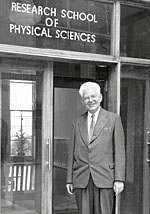
Mark Oliphant in 1955 outside the ANU Research School of Physical Sciences which he founded.
In addition to leading the work of his own group in high-energy accelerator physics, Oliphant, as Director, expanded the work of the Research School to include astronomy, mathematics, geophysics, theoretical physics, atomic and molecular physics, nuclear physics and particle physics. Under his leadership, the Research School became a major centre for Australian research and postgraduate training in the physical sciences. Oliphant was a generous manager and his 'one man rule' enjoyed the strong support of the academic staff, most of whom had never before worked in an adequately funded laboratory where needs were anticipated rather than placed in a queue.
The academic expansion of the Research School may be judged by considering some of the first professorial appointments. In 1950, the Commonwealth Astronomer, R. van der Reit (Dick) Woolley, became an honorary Professor of Astronomy at the ANU. Oliphant further expanded the academic range of the School in 1952 by appointing John C. Jaeger as Professor of Geophysics. In 1956, Oliphant appointed Kenneth Le Couteur, an outstanding theorist who had been responsible for the extraction of the beam from the Liverpool cyclotron, as Professor of Theoretical Physics. Also in 1956, when Woolley was appointed Astronomer Royal and the transfer of the Commonwealth Observatory on Mt Stromlo to the University formed the ANU Department of Astronomy, Bart J. Bok from Harvard was appointed as Professor of Astronomy. In 1962, Bernhard H. Neumann was appointed as Professor of Mathematics.
Oliphant made a senior academic appointment in a field close to his own in 1950 when Ernest W. Titterton, then at Harwell, was appointed as a Professor of Physics. Titterton had been Oliphant's first research student in Birmingham and from 1943 to 1947 was a member of the British group at Los Alamos. He was experienced in the use of cloud chambers and emulsions, both of which would be useful techniques for studying the properties of some of the 'strange particles' that might be produced by a high-energy accelerator. The original strategy was for Titterton's group of nuclear physicists to conduct an experimental nuclear research programme using a number of small accelerators, while Oliphant's team of accelerator builders completed the big machine. The small accelerators included a 1.2 MeV Cockcroft-Walton set (purchased in 1951, commissioned in 1952), a 33 MeV electron synchrotron (a gift from Harwell in 1955) and an 8 MeV cyclotron (built in Canberra in 1955 as the injector for the big machine). The original strategy was soon out of date, due to delays in machine building and because the nuclear physics research programme was proceeding independently.
The accelerator
Oliphant's initial plans for the new Research School were centred on the construction of an accelerator that could operate at 2 GeV, that is, at twice the energy of the Birmingham proton synchrotron. Oliphant called the proposed accelerator a cyclo-synchrotron and described it in Nature in 1950. Although construction of the massive foundations and assembly of the 1400-ton magnet proceeded at a satisfactory rate, it became clear by 1953 that the US proton synchrotrons would outperform the Canberra cyclo- synchrotron before the latter could be completed.
Oliphant was forced to revise his plans and to increase the target energy to 10 GeV or more in order to remain competitive. His proposal was to convert the pole pieces and the main magnet of the cyclo- synchrotron into a homopolar generator (HPG), which stored energy in massive steel discs rotating at 900 rpm. Molten sodium jets would provide interconnections between the rotors using technology to be developed by E.K. (Ken) Inall. The stored energy would be drawn as an electric current that would rise to about 1.6 MA (million amperes) in about 0.6 s and power an air-cored synchrotron magnet located in a separate building (the 'round house'). The designed particle energy was 10 GeV, with an interval between pulses of 10 minutes compared with the 2 GeV pulses at 10-second intervals of the cyclo-synchrotron.
These changes were an ingenious solution to the problem of designing a particle accelerator that would be competitive because of its higher energy, but the competitiveness was achieved at the expense of a much slower pulse rate, which might make the machine very difficult to use for high-energy experiments. The machine, although less complicated than the original design because of the separation of functions, made great demands on the design and construction staff, some of whom found the task before them daunting.
Oliphant was more than ever in need of people who had 'fire in their bellies'. Trained in basic physics, Oliphant was a talented mechanical designer justifiably confident in his own natural ability. He was a successful but demanding group leader, who inspired great loyalty in the staff who worked closely with him. He was generous and tolerant towards his staff to an extraordinary degree, but his tolerance had its limits and he had a wicked turn of phrase. He often expressed disappointment at the time taken to complete the work, 'You have held this up by 18 months', but never complained that someone was not working hard enough. Oliphant sometimes said that a design had been made too complicated, or too sophisticated – 'We'll have no Rolls Royce installations in this building' – or even (horrors!) that a component was 'unnecessarily well made'.
The Canberra accelerator programme was seriously behind schedule by 1955. Members of the accelerator team remained fiercely loyal to Oliphant and looked to him for leadership as it became more widely known throughout the School that delays in the accelerator project could cause serious problems for ANU. There were complaints from some members of the University of Sydney's School of Physics about the magnitude of the research funds going to ANU. In 1955/56, several joint meetings were held between Sydney and ANU physics groups to discuss the ANU accelerator programme. At one point a group of three senior members of the ANU accelerator team sought to discuss external criticisms with Oliphant. The critics argued that, in view of accelerator developments in other countries, work on the Canberra 10 GeV accelerator should be abandoned. Oliphant admitted that the accelerator was behind schedule and that some mistakes may have been made, but argued that the construction was the team's own original work and much could be learned from it. After the last joint meeting, Oliphant summarised the arguments as follows:
Berkeley had found the antiproton and would skim off the cream of the experimental results; the 10 GeV Russian machine would be in operation before the ANU machine was ready; and ANU should cut its losses and complete the HPG for other work.
In conclusion, Oliphant made the surprise announcement that the construction of the accelerator would be deferred and all efforts would be concentrated on completion of the HPG.
Completion of the homopolar generator
The combination of a large HPG for energy storage and a separate air-cored magnet for particle acceleration was an imaginative proposal that required detailed design work. With the resources available, Oliphant's decision to defer the accelerator and concentrate construction efforts on the completion of a working HPG now seems inevitable. It certainly should not have come as a surprise in 1955. This limited objective took until 1965 to complete and involved an immense amount of work. The modifications required for the HPG to meet the requirements of a 10 GeV accelerator had been made using liquid metal jets of sodium-potassium alloy (NaK). In 1962, the HPG with NaK interconnections met all design criteria and, in a series of tests, supplied currents over 2 MA. This was a short-lived triumph for the hard-working HPG team for, unfortunately, during cleaning operations in July 1962, NaK contaminated with kerosene and potassium peroxide exploded, tragically blinding George Lagos, a young technician.
Over the years, the Research School had gained considerable experience in the use of the conducting liquid metals, mercury (Hg, liquid at room temperature), sodium-potassium alloy (NaK, liquid at room temperature) and sodium (Na, liquid above about 100°C). Following the inquiry that was convened after the July 1962 accident, the use of NaK and other liquid metal systems was abandoned and the HPG was rebuilt under Jack Blamey's supervision using copper/graphite brushes designed by Dr R.A. (Dick) Marshall.
With its solid brushgear, and a new air- bearing system designed by Oliphant, the 1965 HPG was, in all respects, a better, safer and more versatile machine than the 1962 HPG with NaK interconnections, even though the earlier machine had met all its design criteria. The 1965 HPG worked well, but no attempt was made to use it to operate a large accelerator. Instead, it was used extensively as a power source for some high-current facilities in laser and plasma physics, including a 30 Tesla-pulsed magnet, a powerful rail gun and the LT-4 Tokamak. The LT-4 Tokamak was designed specifically to operate with power supplied by the HPG, and the combination performed reliably and routinely for several years, exploring the conditions needed for toroidal plasma confinement. After nearly a quarter of a century of valuable service, under a wide range of operating conditions, the HPG was decommissioned at the end of 1985.
Retirement as Director
Oliphant retired from the Directorship of the Research School of Physical Sciences in 1963 and, a year later, from his position as Professor of Particle Physics. His involvement with the HPG also ceased and he was therefore free to pursue other research interests. He received the title of Professor of Ionised Gases, and was provided with a small laboratory, a research assistant and a technician. Thus, he returned to the small-scale physics that had been the subject of his early days as a PhD student in the Cavendish, namely the interaction of intermediate-energy positive ions with metal surfaces. Much had been done in that field in the intervening thirty years but, in his view, much still needed to be done because 'the results are strangely inconsistent and their explanation often dubious and incomplete'. These words set the stage for the work described in four papers presenting the results from his laboratory in the period 1965-1968.
Taking advantage of modern, clean high- vacuum technology, he and his small group investigated reactions between numerous light atomic and molecular ions, some multiply charged, and a number of carefully degassed metal surfaces. How long he would have continued this work one can only guess. He clearly delighted in getting his hands dirty again in the laboratory, designing and making some of his own apparatus. In 1968, the University fellowship that had been provided for him had run its course and it was finally time for him to begin to retire from the university he had been so instrumental in founding.
Oliphant never completely severed his connection with ANU. He shared an office in the School, participated in School seminars and discussions and regularly attended Founders Day, which was established in 1981 on the occasion of his 80th birthday. Founders Day is held every October on a date near his birthday and consists of a morning of seminars and award presentations, followed by a barbecue lunch for the whole School. Oliphant remained a very strong defender of the special nature of the ANU. As an example, in 1991, at the age of 90, he made a fighting speech at a meeting attended by over 500 members of the ANU staff, criticising Government proposals to separate the John Curtin School of Medical Research from the ANU.
The Australian Academy of Science
Attempts to form a 'national academy of science' to promote scientific research in Australia and to represent Australia in international scientific activities started as long ago as 1901. These early attempts had failed because of regional loyalties and jealousies and the difficulties of interstate travel before the provision of regular commercial air transport.
In the early 1950s, Oliphant and Dr David F. Martyn, Chief Scientist with the Radio Research Board, independently decided that a new attempt should be made to form an Australian Academy of Science, and that those Fellows of the Royal Society of London now resident in Australia could be used as a nucleus and planning group. The Prime Minister of the time, Robert Menzies, agreed wholeheartedly with the need for an Academy of the kind proposed, and the powerful collaboration between Oliphant and Martyn overcame the difficulties that had defeated previous attempts to form an Academy. Oliphant and Martyn organised the Petition to the Queen requesting the formation of the Australian Academy of Science (AAS), which was constituted by Royal Charter in 1954. Professor Mark Oliphant was its first President.
The formation of the AAS encouraged the development of Australian science nationally and its representation internationally, but the arguments that had delayed the foundation of the AAS for so long would not instantly disappear. Although the need for an Australian academy of science was widely recognised, it needed all Oliphant's persuasive and placatory powers to hold the AAS together during those early years. Other talented personalities, such as David Martyn, H.R. (Hedley) Marston, and A.C.D. (David) Rivett, all fellow Council members who had been prime movers with Oliphant in the formation of the AAS, had strong but differing views on its planning and organisation.
There were also problems arising from the relationships between the AAS, CSIRO, the State universities and ANU, and their differing responsibilities for research.
The AAS needed a building. Oliphant approached Essington Lewis and W.S. Robinson, leading industrialists who had been elected to the AAS in 1954. They spearheaded appeals to the major commercial and industrial companies for funding, with immediate success. Eventually, the total cost of the building was covered by donations. As Chairman of the Building Design Committee, Oliphant oversaw the construction of the Dome, as it was called, in early 1959. The completion of this distinctive and prize-winning building in record time was a remarkable achievement.
In 1961, Oliphant delivered the Academy's Matthew Flinders Lecture, entitled 'Faraday in his time and today'.
Along with astronomers worldwide, Oliphant recognised the need for large telescopes in the Southern Hemisphere, where the southern skies were under- explored, and gave strong support for the creation of one in Australia, to be operated jointly by Britain and Australia. In 1963, he initiated the action of the AAS in the preliminary stages of the establishment of the Anglo-Australian Telescope, which was finally inaugurated at Siding Spring, NSW, in October 1974.
In September 1964, Oliphant accompanied the President of the AAS, T.M. Cherry, and two other Fellows, E.S. Hills and E.J. Underwood, on a four- week visit to China, at the invitation of the Academia Sinica. The invitation was reciprocated in the following year.
A dinner was held in the Dome in 1987, co-hosted by the AAS and the Royal Society of London, to celebrate Oliphant's election to the Royal Society fifty years earlier. This occasion, together with a bust of Sir Mark that has been installed in the lobby of the Dome, are testimony to the esteem in which he is held by the AAS.
Governor of South Australia, 1971-1976
In 1971, Sir Mark Oliphant began a new career when he accepted an invitation by the Premier of South Australia, D.A. (Don) Dunstan, to be nominated as Governor of that State. Dunstan had sought such an appointment three years earlier, but political events had intervened.
Oliphant's appointment broke the long tradition of appointing retired military officers to the post. Oliphant believed that the role of Governor, although mainly ceremonial, would give him the chance to serve his home State and he accepted the appointment proudly and willingly. He warned the Premier, though, that he was not prepared to be a 'military-type' Governor and that he would wish to be able to speak as freely on public matters as he had been in Canberra. Dunstan was more than agreeable. Despite his age (almost 70), Oliphant was fit for the post and relished the challenges that it would bring.
Oliphant was to serve five years as Governor. The public and the media welcomed him, and were proud to have such a distinguished scientist and acknowledged humanitarian as their Governor. Some politicians and commentators claimed to see in Oliphant leftist political leanings; others thought his background less suitable than a military one as a preparation for the post and that his ebullience was likely to cause difficulties for the government.
Oliphant was a decidedly different sort of Governor from his predecessors. Well informed on a wide range of issues, and accustomed to speaking his mind, he was not reticent in expressing opinions on matters of public concern. He wrote his own speeches and was an excellent performer, and his remarks made good press copy. His views continued to receive public attention, including those on the nature of God and the perils of radioactive fallout from nuclear testing. On local matters, he spoke very strongly in favour of environmental issues, especially in defence of the Adelaide Hills, and he expressed his opposition to libertarian society, unrestricted pornography, child abuse, drinking drivers, 'magistrates' whims', ugly architecture and vandalism, to mention a few. Polls suggested that the populace approved of a Governor willing to speak his mind, especially as his commonly expressed opinions were widely shared by the general public.
There was little doubt about his popularity, and of the popularity of the office while he held it. He travelled widely across the State, discharging all his duties with dedication and enthusiasm. He tried to draw into the vice-regal circuit people normally outside it. With Rosa, he once hosted a garden party for 4,000 people who had never previously attended a vice-regal function.
Later on, Oliphant's relationship with Dunstan deteriorated markedly. Oliphant came to feel the irrelevance of the Governor in the political process, and to believe that the government only tolerated the existence of the post because it could not do away with it. Ministers began to appear offhand in their dealings with him, for example, failing to dress with appropriate formality for their presentation to him of an Address-in-Reply. This and an accumulating series of aggravations, including a hurtful confrontation with radical students at Flinders University, led him to seek to resign in August 1974, only to be prevented from doing so by the intervention of the Premier.
The tensions did not subside and were heightened when Oliphant proposed to make a public statement supporting the action taken by Governor-General Sir John Kerr in dismissing the Whitlam Government in November 1975. The South Australian Government's response was to pass legislation setting tight guidelines for the dismissal of the government by the Governor, so avoiding any possibility of a similar crisis in South Australia.
Among Oliphant's last acts in office was to write to the Premier, expressing his concerns at the government's intention to appoint Aboriginal pastor Sir Douglas Nicholls as his successor on the grounds that various cultural issues would have affected Nicholls' capacity to fill the role. Dunstan nevertheless appointed the pastor. Oliphant's response was, typically, to invite the Governor-designate and his wife to visit Government House to familiarise themselves with its operations.
Oliphant returned to Canberra in December 1976 but his involvement with South Australian politics was not yet at an end. In 1978, he became deeply embroiled in the 'Salisbury Affair', in which Dunstan dismissed South Australia's Police Commissioner, H.H. (Harold) Salisbury, on the grounds of allegedly misleading Parliament about the nature of material kept in secret files. Oliphant sided with Salisbury, whom he regarded as a man of integrity, and asserted on several occasions that, had he still been in office, he would have offered his own resignation rather than sign an Executive Order dismissing Salisbury. The rift with Dunstan was never permanently healed.
With funding by public subscription, a bronze head of Sir Mark was later erected outside Government House on North Terrace, Adelaide's principal thoroughfare.
Oliphant – some impressions
Oliphant had style and dignity. White-haired from an early age, he retained his distinctive, upright stature to the end of his long life. These features, together with his booming laugh, gave him a 'presence' in any gathering. His personality was such that even his opponents had to like him. He was richly endowed with natural talents. His leadership qualities, ingenuity, originality, idealism, courage and zeal, to mention but a few, served him well.
Oliphant had interests in nuclear physics, accelerator physics and other, broad areas of engineering physics. Although he made no pretence to be a theoretician, he was supremely confident in his own ability to master any technology even before some of what he liked to call 'the details' had been properly worked out. He always chose ambitious projects, and not infrequently underestimated the time needed to complete them. He liked to work with only a small team, which enabled him to be flexible about altering his plans. He never adopted the detailed planning methods for accelerator design involving large teams of engineers that were used with such success in the USA and at CERN. His own self-confidence could be infectious but it limited the effective criticism that a more determined and independent professional staff might have been able to provide. As one of them noted: 'None of us had ever defied Oliphant. Our sin was that we had failed to agree with him'. He was a natural risk-taker who never hesitated to rail at what he believed was excessive caution, continually exhorting his team to 'stick their necks out'.
Always 'good with his hands', Oliphant's exceptional technical skills were recognised while he was still at school, and were appreciated by Kerr Grant in Adelaide and Rutherford at the Cavendish Laboratory. Oliphant liked to be involved in all aspects of a major project. He enjoyed detailed design work and, throughout his professional life, continued to take personal responsibility for the design and construction of important components of major projects. One of Oliphant's continuing pleasures was jewellery-making, especially with silver, an interest perhaps aroused by his job with an Adelaide jeweller for a short time after leaving school. He made Rosa's wedding ring out of a nugget that his father had brought back from the Coolgardie goldfields. While Governor of South Australia, he installed a small workshop in the grounds of Government House and, at the end of his tenure, presented the household with a set of six silver candlesticks that he had made himself on the premises.
Oliphant was a skilful and persuasive speaker and writer who could 'think on his feet'. He was quick-witted, enjoyed argument and debate, and never missed a chance to take a rise out of the bureaucracy when it seemed to him foolish or pompous. But he was notorious for his sometime public changes of opinion. For example, he adopted a fiercely anti-nuclear stance after Hiroshima, like many scientists who had worked on the atomic bomb, and his views on euthanasia changed as he approached his own death.
Along with these skills in the spoken and written word went salesmanship, which enabled him to sell ideas and elicit funds and materials for their realisation, the principal examples being: the building of the cyclotron and proton synchrotron in Birmingham (from Lord Nuffield and Tube Alloys) before and after the war, respectively; silver for electromagnetic separation (US Treasury); the accelerator in Canberra (Australian Government); and the 'Dome' of the Academy of Science (Australian commerce and industry).
Oliphant was forthright and passionate in his belief in the benefits that the world, especially Australia, could gain from application of the physical sciences. He was on firm ground when explaining basic physics and its potential benefits to the Australian public, but the simple analysis that worked so well in physics did little to explain more complicated social issues. For Oliphant, science always provided the right guide, whereas practitioners of other disciplines such as economists, architects, clergymen, non-scientific administrators, engineers and, of course, politicians, had, he believed, little to offer. Some of these, for their part, considered him to be naïve and simplistic.
Oliphant's impatience with security rules during the war was shown, for example, when, on a visit to Washington in 1941, he informed R.G. Casey, Australia's representative there, about Britain's work on uranium. This indiscretion, and others, may have been responsible for his exclusion from later high-level decision-making on nuclear matters. He was outspoken in his postwar opposition to the military use of nuclear power and made no effort to conceal his views, which may have caused him to be denied a visa to enter the United States in 1951, and resulted in unfair political smears in his own country.
Two world wars affected the course of his life. All of his secondary schooling was spent during the first, when teaching staff was severely depleted as the young flocked to the Front. During the second, his part in the development of radar and the atomic bomb gave him international recognition and prestige, but at the cost of severe set- back to the development of the cyclotron in Birmingham, upon which all work ceased as he and members of his laboratory moved over to war work. Resumption of peace- time pursuits was slow, amid severe postwar stringencies in Britain. For many years after the war, a large portion of his time was focused on anti-war activities. In Canberra, the paucity of infrastructure in postwar Australia, necessitating the importation of technical staff, equipment and resources from Britain, was undoubtedly a contributory factor in his failure to achieve his goal of building the accelerator.
Anyone attempting, however briefly, to appraise Oliphant's achievements cannot fail to be impressed by their range and significance. Oliphant was justifiably proud of the fundamental work he had done with Rutherford in Cambridge in the 1930s. This research on nuclear reactions in the light nuclei assured Oliphant of a permanent place among the pioneering founders of nuclear physics. During the war, he and his teams from Birmingham University made significant contributions to the development of radar and the atomic bomb. After the war, he was the first to request and receive funds to construct a proton synchrotron. His major achievements in Australia were his contribution to the creation of the ANU; the formation, as founding Director, of the ANU Research School of Physical Sciences, with its outstanding research facilities; and his leading role in the establishment of the Australian Academy of Science. No other physicist has made a greater impact on Australian science than Professor Sir Mark Oliphant.
Family
Sir Mark enjoyed a happy, loving family life, which was, however, touched by sadness. He and his gentle wife Rosa suffered the sudden, tragic loss of their infant son, Geoffrey, in Cambridge in 1933 and that of their adult son, Michael, in Melbourne in 1971. The family endured prolonged periods of separation, especially during the war. Rosa died in 1987, after a long illness during which Sir Mark cared for her devotedly. He and Rosa always had the loving support of their children Michael and Vivian, daughter-in-law Monica and grandchildren Michael, Katherine and Michele.
Honours and awards
- 1927: 1851 Exhibition Scholarship.
- 1931: Messel Research Fellow, Royal Society.
- 1934: Fellow of St John's College, University of Cambridge.
- 1937: Fellow of the Royal Society.
- 1942: Honorary Degree of Doctor of Science, University of Melbourne.
- 1943: Hughes Medal, Royal Society.
- 1946: Silvanus Thomson Medal, Institute of Radiology, England.
- 1946: Honorary degree of Doctor of Laws, St Andrews University.
- 1946: Honorary Fellow, New York Academy of Sciences.
- 1947: Trasenoter Medal, Association des Ingénieurs, Liège.
- 1947: Kelvin Lecture, Institution of Electrical Engineers.
- 1948: Faraday Medal, Institution of Engineers.
- 1949: Honorary degree of Doctor of Science, University of Toronto.
- 1949: Honorary degree of Doctor of Science, University of Belfast.
- 1950: Honorary degree of Doctor of Science, University of Birmingham.
- 1952: Honorary degree of Doctor of Science, University of Technology, NSW.
- 1952: Honorary Fellow, St John's College, Cambridge.
- 1954: Foundation Fellow of the Australian Academy of Science.
- 1954-1957: Foundation President, Australian Academy of Science
- 1955: Bakerian Lecture, Royal Society.
- 1955: Rutherford Memorial Lecture, Royal Society.
- 1956: Galathea Medal, His Majesty The King of Denmark.
- 1958: Medal of the Australian Institution of Production Engineers.
- 1959: Knight of the British Empire.
- 1961: Matthew Flinders Medal and Lecture, Australian Academy of Science.
- 1967: Professor Emeritus, Australian National University.
- 1968: Honorary degree of Doctor of Science, Australian National University.
- 1969: Honorary degree of Doctor of Science, University of Adelaide.
- 1971: Knight of Grace of the Order of St John.
- 1974: James Cook Medal, The Royal Society of New South Wales.
- 1975: Foundation Fellow of the Australian Academy of Technological Sciences.
- 1977: Companion of the Order of Australia.
- 1977: Oscar Mendelsohn Lecture, Monash University, Victoria.
- 1979: Medal of the Australian and New Zealand Association for the Advancement of Science.
- 1980: Duhig Memorial Lecture, Brisbane.
About this memoir
This memoir was originally published in Historical Records of Australian Science, vol.14, no.3, 2003. It was written by:
- J.H. Carver, Research School of Physical Sciences and Engineering, Australian National University, Canberra
- R.W. Crompton, Research School of Physical Sciences and Engineering, Australian National University, Canberra
- D.G. Ellyard, Beecroft, New South Wales
- E.K. Inall, Wahroonga, New South Wales
Acknowledgments
The authors wish to thank Dr Mary Carver for researching background material and preparation of the manuscript. The formidable task of locating and correctly compiling a list of Sir Mark's publications was assisted by staff of several institutions, especially by Ms Susan Woodburn, Barr Smith Library, University of Adelaide.
References
- S. Cockburn and D. Ellyard, Oliphant. The Life and Times of Sir Mark Oliphant, (Axiom Books, Adelaide, 1981).
- F. Fenner (ed.), The First Forty Years, (Australian Academy of Science, Canberra, 1995).
- S.G. Foster and M.M. Varghese, The Making of the Australian National University 1946-1996, (Allen and Unwin, St Leonards, 1996).
- L.U. Hibbard, Oliphant – Engineer. An Account by One of his 'Boys' of Professor Marcus Oliphant, and his Machines in Birmingham and Canberra, unpublished, 2003 (to be deposited in the Barr Smith Library, University of Adelaide, South Australia). Supported by original documentary material.
- E.K. Inall, Mark Oliphant, a Great Australian Physicist and Philosopher, unpublished, 2003 (to be deposited in the Adolph Basser Library of the Australian Academy of Science, Canberra).
- T.R. Ophel and J.G. Jenkin, Fire in the Belly. The First Fifty Years of the Pioneer School at the ANU, (Research School of Physical Sciences and Engineering, ANU, Canberra, 1996).
Bibliography
- M.L.E. Oliphant, 'The spreading of aqueous solutions on the surface of mercury', Australasian Association for the Advancement of Science, 18 (1926), pp. 126-127, abstract.
- R.S. Burdon and M.L. Oliphant, 'The problem of the surface tension of mercury and the action of aqueous solutions on a mercury surface', Transactions of the Faraday Society, London, 23 (1927), pp. 205-213.
- M.L. Oliphant and R.S. Burdon, 'Adsorption of gases on the surface of mercury', Nature, 120 (1927), pp. 584-585.
- M.L. Oliphant, 'Selective adsorption from gaseous mixtures by a mercury surface formed in the mixture', Philosophical Magazine S7, 6 (1928), pp. 422-433.
- M.L. Oliphant, 'The effects produced by positive ion bombardment of solids: metallic ions', Proceedings of the Cambridge Philosophical Society, 24(3) (1928), pp. 451-469.
- P.B. Moon and M.L. Oliphant, 'Current distribution near edges of discharge-tube cathodes', Proceedings of the Cambridge Philosophical Society, 25(4) (1929), pp. 461-468.
- M.L.E. Oliphant, 'The action of metastable atoms of helium on a metal surface', Proceedings of the Royal Society of London A, 124 (1929), pp. 228-242.
- M.L.E. Oliphant, 'The liberation of electrons from metal surfaces by positive ions I. Experimental', Proceedings of the Royal Society of London A, 127 (1930), pp. 373-387.
- M.L.E. Oliphant and P.B. Moon, 'The liberation of electrons from metal surfaces by positive ions II. Theoretical', Proceedings of the Royal Society of London A, 127 (1930), pp. 388-406.
- M.L.E. Oliphant, 'Electron emission from Langmuir probes and from the cathode of the glow discharge through gases', Proceedings of the Royal Society of London A, 132 (1931), pp. 631-645.
- R.M. Chaudrhi (sic) and M.L. Oliphant, 'The energy distribution among the positive ions at the cathode of the glow discharge through gases', Proceedings of the Royal Society of London A, 137 (1932), pp. 662-676.
- P.B. Moon and M.L.E. Oliphant, 'The surface ionisation of potassium by tungsten', Proceedings of the Royal Society of London A, 137 (1932), pp. 463-480.
- M.L. Oliphant, 'Heavy hydrogen in contact with normal water', Nature, 132 (1933), p. 675.
- M.L.E. Oliphant and Lord Rutherford, 'Experiments on the transmutation of elements by protons', Proceedings of the Royal Society of London A, 141 (1933), pp. 259-281.
- M.L.E. Oliphant, B.B. Kinsey and Lord Rutherford, 'The transmutation of lithium by protons and by ions of the heavy isotope of hydrogen', Proceedings of the Royal Society of London A, 141 (1933), pp. 722-733.
- M.L.E. Oliphant, P. Harteck and Lord Rutherford, 'Transmutation effects observed with heavy hydrogen', Proceedings of the Royal Society of London A, 144 (1934), pp. 692-703.
- M.L. Oliphant, P. Harteck and Lord Rutherford, 'Transmutation effects observed with heavy hydrogen', Nature, 133 (1934), p. 413.
- M.L. Oliphant, E.S. Shire and B.M. Crowther, 'Disintegration of the separated isotopes of lithium by protons and by heavy hydrogen', Nature, 133 (1934), p. 377.
- M.L. Oliphant, E.S. Shire and B.M. Crowther, 'Separation of the isotopes of lithium and some nuclear transformations observed with them', Proceedings of the Royal Society of London A, 146 (1934), pp. 922-929.
- M.L.E. Oliphant, 'Transformation effects produced in lithium, heavy hydrogen and beryllium, by bombardment with hydrogen ions', in Papers and Discussions of the International Conference on Physics, London, 1934, 1 (Nuclear Physics) (The Physical Society, London, 1935), pp. 144-161.
- M.L.E. Oliphant, A.E. Kempton and Lord Rutherford, 'The accurate determination of the energy released in certain nuclear transformations', Proceedings of the Royal Society of London A, 149 (1935), pp. 406-416.
- M.L.E. Oliphant, A.E. Kempton and Lord Rutherford, 'Some nuclear transformations of beryllium and boron, and the masses of the light elements', Proceedings of the Royal Society of London A, 150 (1935), pp. 241-258.
- M.L. Oliphant, 'Masses of light atoms', Nature, 137 (1936), pp. 396-397, p. 407.
- M.L. Oliphant, 'The conservation of mass-energy and momentum in the transformation of the light elements', in Kernphysik: Vorträge gehalten am Physicalischen Institut der Eidgennossischen Technische Hochschule, Zurich, im Sommer 1936 (30 Juni-4 Juli), (Springer, Berlin, 1936), pp. 62-70.
- M.L. Oliphant, 'The new high voltage laboratory at Cambridge', Nuovo Cimento, 15(3) (1938), pp. 160-166.
- M.L. Oliphant, 'Radioactivity and sub-atomic phenomena: introduction and summary', Annual Reports on the Progress of Chemistry, 35 (The Chemical Society, London, 1939), pp. 7-16.
- M.L.E. Oliphant, 'The utilization of nuclear energy', Proceedings of the Royal Institution, 33 (1945), pp. 506-514. On two other occasions Oliphant delivered lectures to The Royal Institution in its Friday Evening Discourses: on 21 February 1947, a lecture entitled 'Problems and techniques of modern nuclear physics' and, on 5 May 1950, one entitled 'The generation and use of atomic particles'.
- M.L. Oliphant, 'Nuclear energy in war and peace', Victory for Peace, 6(1) (1946), pp. 5-7.
- M.L. Oliphant, 'The release of atomic energy', Nature, 157 (1946), pp. 5-7.
- M.L. Oliphant, 'Nuclear physics and the future. The 37th Kelvin Lecture', Journal of the Institution of Electrical Engineers, 94(1) (1947), pp. 304-308.
- M.L. Oliphant, 'Rutherford and the modern world. The third Rutherford Memorial Lecture for the Physical Society', Proceedings of the Physical Society of London, 59 (1947), pp. 144-155.
- M.L. Oliphant, J.S. Gooden and G.S. Hide, 'The acceleration of charged particles to very high energies', Proceedings of the Physical Society of London, 59 (1947), pp. 666-677.
- M.L.E. Oliphant, 'The scientific and technical backgrounds II. The practical realization of the release of atomic energy and atomic weapons', in Atomic Energy, its International Implications, a discussion by a Chatham House Study Group, (Royal Institute of International Affairs, London, 1948), pp. 36-41.
- M.L. Oliphant, 'University or Institute of Technology?', Universities Quarterly, 4(1) (1949), pp. 19-23.
- M.L. Oliphant, 'The cyclosynchrotron: acceleration of heavy particles to energies above 1,000 MeV, and the homopolor generator as a source of very large current pulses', Nature 165 (1950), pp. 466-468.
- M.L. Oliphant, 'Administration of scientific research'. Targets for Management.Proceedings of the 10th Australian One-Day Top Management Conference of the Australian Institute of Management, Melbourne Division, Melbourne, Australia, (8 March 1951), pp. 38-44.
- M.L. Oliphant, 'Radiation hazards of atomic energy. The Röntgen Oration', Medical Journal of Australia, (1952, vol. 1), pp. 277-281.
- M.L. Oliphant, 'The industrial applications of atomic energy', in Annual Report of the Board of Regents of the Smithsonian Institution for the Year 1951, (US Government Printing Office, Washington, 1952), pp. 223-234.
- M.L. Oliphant, 'The Research School of Physical Sciences in the Australian National University. Presidential address to Section A of ANZAAS', in Report of the 29th Meeting of the Australian and New Zealand Association for the Advancement of Science, (Sydney, August 1952), pp. 31-46.
- M.L. Oliphant, 'The University of Birmingham cyclotron', Nature, 169 (1952), pp. 476-477.
- M. Oliphant, 'Peace or destruction?', Voice: the Australian Independent Monthly, 3(7) (1954), pp. 12-13.
- M.L. Oliphant, 'Is there a retreat from Christianity?', Anglican Review, 28 (1954), pp. 9-14.
- M.L. Oliphant, 'The physics of atomic energy', Atomic Power in Australia. Proceedings of Symposium held at the New South Wales University of Technology, (31st August- 1st September 1954), pp. 11-22.
- M.L.E. Oliphant, 'Science and mankind', Transactions of the Royal Society of New Zealand, 82(4) (1955), pp. 837-850.
- M.L. Oliphant, 'The acceleration of protons to energies above 10 GeV. Bakerian Lecture to the Royal Society, 1955', Proceedings of the Royal Society A, 234 (1956), pp. 441-456.
- M.L. Oliphant, 'Man and knowledge', Meanjin, 15(4) (1956), pp. 325-332.
- M. Oliphant, 'The University and the community', excerpts from an address delivered in Hobart during 'University Week', 1956, Westerly, 1 (1957), pp. 7-10.
- M.L.E. Oliphant, 'Can we harness the power in hydrogen?', Atomic Energy, 1 (1957), 6-8.
- M.L. Oliphant, 'Science and the future of humanity', Overland, 13 (1958), pp. 21-27.
- M.L. Oliphant, 'Science and the survival of civilization. Presidential Address', in Report of the 33rd Congress of the Australian and New Zealand Association for the Advancement of Science, (Adelaide, August 1958), pp. 8-16.
- Sir Marcus L. Oliphant, 'Fission or fusion...two roads to atomic power', Journal of Industry, 27(1) (1959), pp. 61-67, 27(2), pp. 61-65.
- M.L. Oliphant, 'The possibilities of thermonuclear power and its significance for Australia', Journal of the Institution of Production Engineers, 38(4) (1959), pp. 165-170, p. 180.
- Sir Mark Oliphant, 'The dichotomy in our culture and its effect upon education. 7th Frank Tate Memorial Lecture, 17 June 1960', Australian Journal of Education, 4(3) (1960), pp. 155-164.
- M.L. Oliphant, 'The physical sciences in Australian universities', Vestes: the Australian Universities' Review, 3(2) (1960), pp. 11-15.
- M.L. Oliphant, 'Faraday in his time and today. Matthew Flinders Lecture to the Australian Academy of Science', Australian Academy of Science Year Book 1961, (1961), pp. 69-87.
- J.W. Blamey, P.O. Carden, L.U. Hibbard, E.K. Inall, R.A. Marshall and Sir Mark Oliphant, 'The large homopolar generator at Canberra: initial tests', Nature, 195 (1962), pp. 113-114.
- M.L. Oliphant, 'Science and a First Cause', Australian Quarterly, (December 1964), pp. 27-35.
- M.L. Oliphant, 'Man is an earth-bound creature', lunch-hour lecture, St Mark's Library, Canberra, (5 November 1964), 8 roneoed pages.
- M.L. Oliphant, 'Over pots of tea: excerpts from a diary of a visit to China', Bulletin of the Atomic Scientists, (May 1966), pp. 36-43.
- M.L. Oliphant, 'The two Ernests – I', Physics Today, 19(9) (1966), pp. 35-49.
- M.L. Oliphant, 'The two Ernests – II', Physics Today, 19(10) (1966), pp. 41-51.
- M.L. Oliphant, 'The University of Queensland Act', Vestes: the Australian Universities' Review, 9(2) (1966), pp. 74-77.
- M.L.E. Oliphant, 'John Douglas Cockcroft 1897-1967', Biographical Memoirs of Fellows of the Royal Society, 14 (1968), pp. 139-188.
- Professor Sir Mark Oliphant, 'Some personal recollections of a science in the making', Vacuum: the International Journal and Abstracting Service for Vacuum Science and Technology, 18(12) (1968), pp. 621-624.
- E.R. Cawthron, D.L. Cotterell and Sir Mark Oliphant, 'The interaction of atomic particles with solid surfaces at intermediate energies I. Secondary electron emission', Proceedings of the Royal Society of London A, 314 (1969), pp. 39-51.
- E.R. Cawthron, D.L. Cotterell and Sir Mark Oliphant, 'The interaction of atomic particles with solid surfaces at intermediate energies II. Scattering processes', Proceedings of the Royal Society of London A, 314 (1969), pp. 53-72.
- E.R. Cawthron, D.L. Cotterell and Sir Mark Oliphant, 'The interaction of atomic particles with solid surfaces at intermediate energies III. Angular and energy distribution of particles scattered with electric charge from polycrystalline and crystalline platinum', Proceedings of the Royal Society of London A, 319 (1970), pp. 435-459.
- M.L.E. Oliphant, Science and Mankind, The Aggrey-Fraser-Guggisberg Memorial Lectures 1969, (Ghana Publishing Corporation for the University of Ghana, Accra, 1970), 77 pp.
- Sir Mark Oliphant, 'Science and humanity. Presidential address to Junior ANZAAS', Australian Journal of Science, 32(10) (1970), pp. 377-382.
- Mark Oliphant, Rutherford – Recollections of the Cambridge Days, (Elsevier, London, 1972).
- J.H. Piddington and M.L. Oliphant, 'David Forbes Martyn', Records of the Australian Academy of Science, 2(2) (1972), pp. 47-60.
- M.L. Oliphant, 'The second century', Transactions of the Royal Society of South Australia, 100 (1976), pp. 1-2.
- Sir Mark Oliphant, 'Looking back', in Ageing and Looking Back, eds F.M. Burnet and M. Oliphant (Australian Broadcasting Commission, Sydney, 1979), pp. 29-58.
- Sir Mark Oliphant, 'A physicist looks at today and tomorrow', in Challenge to Australia, eds Sir Barton Pope, Sir MacFarlane Burnet and Sir Mark Oliphant (Southdown Press, Melbourne, 1982), pp. 35-44.
- M.L. Oliphant, 'Chadwick and the neutron – a personal recollection', Australian Physicist, 19 (1982), pp. 50-55.
A collection of Sir Mark's publications is held in the Special Collection of the Barr Smith Library of the University of Adelaide, South Australia.
Louis Walter Davies 1923–2001
Written by Graham A. Rigby.
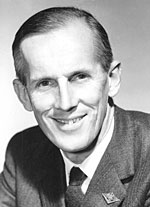
Introduction
Emeritus Professor Lou Davies was an exceptionally tall man who literally stood out in any group of people. This physical characteristic symbolized qualities that made him stand out in many other ways and left a lasting memory among the huge range of people who knew him. Though his professional eminence led to his being widely admired, his personal qualities meant that he is remembered not just with respect but also with affection. These qualities included an unfailing courtesy and friendliness. Even people who did not know him well, and who might have been daunted by his reputation, found him easy to talk to. He showed interest in everyone he met and in virtually any topic of conversation. Those who knew him better will also remember his prodigious note-taking. Whether in a meeting or a private conversation, he had his pen and pad in his hand. This created the impression, at least, that what he was hearing was important enough to record. Whether this was always the case is open to question!
Lou was a scientist, researcher and inventor who was equally at home in the laboratory, the lecture theatre, the board room, the corridors of power and the farm. His career produced bridges between industry and academia. He had a lasting influence on Australian technology and on the careers of other scientists and engineers. His death in Sydney on 28 September 2001, through preceded by a period of serious illness, saw the passing of a man of great fitness and energy. Even in his seventies, he set a pace that would have done credit to a much younger man.
The early years
Lou was born in Sydney on 27 August 1923, the son of Louis Walter and Madge Davies of Lindfield, New South Wales. The family soon moved to Aberdeen in the Hunter Valley and Lou's primary education was at the three-teacher local school in Aberdeen. There he was said to be already showing a talent for mathematics and science. His secondary education started at Muswellbrook Rural School, then at Maitland High School. But the final four years were at the Sydney Church of England Grammar School (Shore), where his mathematical talents flourished under the teaching of the School's renowned Headmaster, L.C. Robson. Lou later served as a member of the School Council for 23 years and as its Chairman for four years.
Student, bomber navigator, husband and father
Lou entered the University of Sydney in 1941 as a Science and Engineering student, but his student life was soon re-directed to the war effort. He joined the Royal Australian Air Force in 1942, trained at Cootamundra, Evans Head, Bairnsdale, Sale and Parkes, and joined 1 Squadron in Darwin as a navigator. He flew fifty-two operational sorties in Beauforts, plus a number of operations in Dakotas to the north of Australia.
Lou had known June Fleming of 'Kelvinside', near Aberdeen, since the age of 12. Though their paths did not cross often during school days and the war, they married on 27 September 1945. (June had been an Army driver at Victoria Barracks). The end of the war also brought Lou back to the University of Sydney, from which he graduated with his BSc in 1948. In fact, he had continued his studies during the war through the University's external studies programme and sat the Mathematics II examination in a tent in a coconut plantation on the equator! He remembered receiving a Credit for that subject. Lou was also an athlete of some note. He had rowed at school, but at university he competed in what was then called the hop-step-and-jump (now known as the triple jump), with considerable success. The combination of his excellent academic results, his athletic prowess and his war service led to the award of the Rhodes Scholarship for New South Wales in 1948.
Lou's military service left a legacy that always remained with him. He stood erect and did not stoop. Though, when talking to someone much shorter, he would sometimes incline his head to one side. When he greeted someone, there was a subtle 'coming to attention' and the faint clicking of heels!
The Rhodes Scholarship took Lou and June to Oxford, where he worked at the famous Clarendon Laboratory towards his DPhil degree. His research was in plasma physics, under the supervision of Dr Heinrich Kuhn. A major goal of such research was and is the containment of plasmas for controlled nuclear fusion. As Lou remarked many years later, it still remains an intractable problem, but his own work was scientifically satisfying and led to the award of the DPhil in 1951 [1, 2, 3]. His later career did not continue with plasma research, though his earliest work at CSIRO had a link with his doctoral research. But, as happens with many research students, the physical insights and skills he acquired were applied to new and different problems during his professional career. While at Oxford, he also exercized his skills as a triple-jumper and competed with the University teams in Wales, Dublin, Greece and the USA.
Lou and June's first son was born during their time at Oxford and was named Louis Walter, as were his father and grandfather. The potential for confusion was solved by nicknames. Lou, the father, was known as Bill, particularly in the earlier part of his life. His friends therefore became differentiated in later life. Those who had known him more than fifty years called him Bill. The newer friends called him Lou. Lou, the son, was called Sandy! Their other two children, Fiona and Gordon, were born after Lou and June returned to Australia.
The CSIRO years
In 1951, Lou and June returned to Sydney, where he was appointed a Research Officer at the CSIRO Division of Radiophysics, then on its way to achieving a world reputation for radio-astronomy. His initial work applied his plasma knowledge to studying microwave noise from the sun [6], but the Division Chief, Dr Taffy Bowen, later suggested that Lou shift his attention to the 'newfangled transistor'.
The transistor was invented at the Bell Telephone Laboratories, just at the time Lou started his studies at Oxford. It turned out to be one of the most important engineering inventions of the twentieth century and resulted in the award of the Nobel Prize to William Shockley, John Bardeen and Walter Brattain. Bowen sent Lou to Bell Labs for what was planned as a two-week visit in 1953. During his visit he spent time with the inventors of the transistor and started to build up contacts with other laboratories in the US, including at General Electric. The planned two weeks became six. He became fascinated with the refining of germanium, which was then the principal material for making transistors and the material in which the first transistor was made. In 1954, with Dr Brian Cooper, he set up a section in CSIRO that was to pioneer the manufacture of transistors in Australia [5, 7, 8]. In 1956, Lou also spent some months in New Delhi as a UNESCO Technical Expert. There, he worked, together with other overseas scientists, with the Indian National Physical Laboratory, to foster the growth of local expertise in semiconductor technologies [11].
Lou was awarded a Commonwealth Fund Fellowship in 1958, which allowed him to return to Bell Labs and work for twelve months on semiconductor physics. The Bell Telephone Laboratories, with a staff of 15,000, represented one of the most powerful forces for innovation in electronics and telecommunications at the time. Lou joined a basic research group at Murray Hill which itself had a research staff of 150. His bibliography shows a large number of publications on zone-refining and semiconductor devices, dating from this time [9, 10, 12, 13, 14, 15]. Zone refining became a key process for achieving the required levels of purity in semiconductor materials. The physics of what happens during this process is complex and requires special mathematics (confluent hypergeometric functions) to describe it. On looking back years later, Lou regarded his research into zone refining as one of his most rewarding mathematical and scientific achievements. Among the publications from that era was a book on the transistor [4], co-authored with Brian Cooper and published by CSIRO, which was possibly the first book in the world on this topic.
Bridging industry and academia
Six years after the semiconductor laboratory was established at CSIRO, Lou began an involvement with Amalgamated Wireless Australasia Ltd (AWA), that was to continue for 35 years. This was to be followed, five years later, by a joint appointment with the University of New South Wales and meant that, for the greater part of his professional life, Lou was pursuing two parallel careers.
AWA was the largest Australian-owned electronics company and its Chairman, Sir Lionel Hooke, approached Lou to join the company and lead it into the semiconductor era. He was appointed Chief Physicist in 1960. At that time it was almost unheard of for a scientist to leave the special environment of CSIRO to work in industry. The fact that Lou did says something about his creative nature, which, in turn, enabled him to build some pioneering links between sectors of the economy. AWA already had a Research Laboratory (which Lou was to head some years later) and a strong history of applied research in electronics. Lou's task was to establish a new Physical Laboratory, to focus on semiconductors and other areas in applied physics. The Laboratory that he headed was set up in AWA's Rydalmere plant, which manufactured vacuum tubes for radio use and television picture tubes. In an area adjacent to the Laboratory, the company had also set up a transistor manufacturing operation, which was able to make extensive use of the knowledge Lou had developed over the previous six years.
The Physical Laboratory commenced a productive twelve-year period of research and invention. Lou put together a small group of scientists which, under his leadership, showed great foresight into what would become some mainstream technologies in electronics and telecommunications. Notable amongst these was the Laboratory's work on surface acoustic wave devices [37, 47], electrets [23, 26, 34, 41], photovoltaics [51, 52, 53, 54, 55] and optical fibres. Surface acoustic wave device research was largely carried out by Dr Martin Lawrence. These are now a key component of every television receiver and radar system. Electrets, from which permanently polarized capacitor microphones are made, are now found in every telephone and in many other acoustic systems. The charged insulator layer in an electret is normally made from a polymer such as teflon. As an alternative, Lou's colleagues Dr Peter Chudleigh and Dr Richard Collins experimented with anodic oxides grown on aluminium. Though these did work as electrets, a more effective result came from a novel way of polarising FEP teflon that Chudleigh and Collins developed.
Optical fibres have revolutionized land-based telecommunications and have become the most commercially important of the many ideas on which the laboratory worked. Their earlier experiments used liquid-core fibres. Though this was a creative solution to the transmission losses in fibre materials, practical problems led the group to solid-core fibres, and Dr Don Nicol achieved notable results with fibre fabrication and cladding. Because of commercial sensitivities, the optical fibre work led to patent applications, but not publications.
Photovoltaics have become one of the important technologies in the generation of renewable energy. The laboratory identified their potential at an early stage, but the most important developments occurred after Lou's appointment to the University of New South Wales.
Along with the above innovations, research was carried out into other semiconductor effects and devices, such as magnetic and hot electron phenomena. This work led to publications [10, 16, 17, 18, 19, 20, 21, 22, 24, 25, 27, 30, 31, 32, 36, 38] but was not taken further into product development. In addition, Lou published a number of educational and review papers during that time [28, 29, 42, 43, 44]. Regrettably and for reasons given later, AWA was not able to exploit the full potential of many of the Laboratory's innovations, though it did carry forward its optical fibre expertise by forming a joint venture with Corning (USA), which became Optical Wave Guides (Aust).
The twelve-year life of the Physical Laboratory was also one of intense patenting activity. At the end of this article is a list of 46 patent applications that Lou filed (some with co-inventors), that almost all came from this period. This deserves some special comment. Obviously it reflects the creativity of the small group of researchers operating under his leadership, but it was also driven by the company. AWA had licensing agreements with a number of overseas companies, including RCA, Telefunken and Marconi. Since licensing involves the exchange of or payment for intellectual property, AWA was able to strengthen its negotiating position in accordance with the size of its patent portfolio. The Physical Laboratory thus made a direct contribution to the company's commercial negotiations.
Lou was loyal to and supportive of his group of co-workers and paid close attention to the growth of their careers. Later, Richard Collins became Professor of Applied Physics at the University of Sydney and Chairman of the Australian Nuclear Science and Technology Organisation (ANSTO). Don Nicol went on to become Director of R&D at the Overseas Telecommunications Commission and, after this was taken over by Telstra, held senior R&D positions with Telstra.
At the time Lou joined AWA, the first integrated circuit had just been demonstrated and was to appear in a more practical form in 1961. Within four years of that event, the company set up an experimental integrated circuit manufacturing facility next-door to the Physical Laboratory, drawing again on their knowledge. In 1967, the first working integrated circuit was produced and the facility commenced commercial operations. Fifteen years later, as a result of management changes in the early 1980s, Lou was appointed General Manager of AWA Microelectronics.
In 1965, a new opportunity and challenge emerged which, as mentioned, was to expand Lou's influence on research and technology and to launch a dual career. Through an agreement between AWA's Chairman, Sir Lionel Hooke, and Sir Philip Baxter, the Vice-Chancellor of the University of New South Wales, he was appointed Visiting Professor at the University of New South Wales for two days a week and retained the position of Chief Physicist at AWA for three days a week. Though very demanding, the dual appointment placed Lou in a position which was rare in Australian experience and which continued to be supported by both organizations. Baxter's successor, Sir Rupert Myers, paid particular attention to ensuring that the arrangement was effective.
At the University of New South Wales, Lou established the Department of Solid State Electronics within the School of Electrical Engineering, and remained its Head until 1982. He was responsible for pioneering semiconductor research there and, as a result, the University became the strongest centre in the country for work in silicon devices and integrated circuit technology. In parallel with publications from the Physical Laboratory, Lou and his colleagues at the University also produced many research and teaching publications [42, 43, 44, 45, 48, 55, 56, 58, 62]. He encouraged the growth of optical fibre research in the School, arranging for the transfer of AWA's fibre-drawing equipment, and a major research activity grew under the leadership of Professor Pak Chu. In 1968 Lou spent a semester as Visiting Professor in the Department of Electrical Engineering at Stanford University. This Department was eminent in the field of semiconductor and integrated circuit technology and one of the centres from which the 'Silicon Valley' phenomenon grew.
Lou's loyalty and support for his AWA colleagues was mirrored in his support for his postgraduate students, of whom two, Hiroaki Morisaki and Sitthichai Pookaiyaudom, went on to distinguished careers. Sitthichai returned to Thailand where, a few years later, he founded and became President of a new private university, the Mahanakorn University of Technology. Thanks to his association with Lou, Sitthichai built strong links with the University of New South Wales as well as with Imperial College, London and elevated his institution to one that is widely respected.
The strength of the University of New South Wales in semiconductors was recognized by a grant under the new Commonwealth Centres of Excellence programme in 1982. A Joint Research Centre was formed between the University and RMIT. Graham Rigby left his position with AWA Microelectronics to become its Director and took over Lou's position as Head of the Solid State Electronics Department. During the nine years of the Centre's operation, it must be said that the greatest success was achieved by the Photovoltaics Research Group under the leadership of Professor Martin Green. So Lou's original decision to promote photovoltaics and his support for Green's early work resulted in a research group with a major reputation around the world. He also arranged for AWA to donate one of Green's first vacuum systems.
Ten years before the events described above, there was an upheaval at AWA that had both negative and positive effects on what Lou was trying to achieve. In 1972, the newly elected Whitlam Government announced a sudden and drastic reduction in the import tariff regime that provided protection to many Australian manufacturers. AWA was very strongly affected by this decision, though its impact varied across the Company. Activities with a strong service component and those involving large systems engineering were less affected than the pure manufacturing activities. Among the latter, electronic components were particularly vulnerable and the Company began closing down such operations, including transistor manufacturing. (The microelectronics operation was less vulnerable, because its products were custom-designed for specialized markets.) The Physical Laboratory was strongly associated with component manufacturing and it suffered a similar fate.
The upheaval, though, placed Lou in a position of broader responsibilities. In 1972, he was appointed Chief Scientist of AWA. His predecessor, Dr Jim Rudd, had died six months earlier and Lou took up a position, which on the one hand had a long and honourable history, and, on the other, increased even further the demands on his time. He relocated some elements of the former Physical Laboratory from Rydalmere to his new base at the North Ryde plant. This preserved the optical fibre expertise, but many other activities were terminated. Lou's broader responsibilities also stimulated him to apply his physical insights into new areas including reliability physics, hazard analysis and safety engineering [57, 59, 60]. By the 1980s, though, changes in AWA's commercial activities and priorities led to reduced support for the Research Laboratories and Lou's appointment as General Manager of AWA Microelectronics became his last executive position in the company. He was appointed to the Board of AWA Ltd in 1987 and remained a Director until 1995.
Service to Government and the community
Though the above activities would constitute more than a full career, Lou became involved in many others on a part-time or voluntary basis.
He was a Foundation Member of the Australian Science and Technology Council (ASTEC). The formation of this council was notable as an act of recognition by the Australian Government of the importance of having an expert and independent source of policy advice in science and technology matters. But its establishment was marked by a false start or two. The McMahon Government, in April 1972, formed an Advisory Committee on Science and Technology, which met only a few times and was disbanded before the end of that year. Then, at the beginning of 1975, Cabinet took a decision to establish ASTEC, with Sir Louis Matheson as Chairman and with Lou as one of a group of eminent scientists and industrialists as its members. ASTEC started work, but with the change of government later that year, found itself in an uncertain relationship with the new Fraser Government. Early in 1976, the Government re-named the same council as the 'interim council' and asked a small advisory group to recommend what to do. As a result, ASTEC was formally re-established in June 1976, with a stronger mandate and the same membership it had in 1975. Lou served on ASTEC for eight years.
He was a foundation member of the Australian Industrial Research Group. An initiative of that association of research directors led to the formation of the Australian Academy of Technological Sciences (now the Australian Academy of Technological Sciences and Engineering). The eminence of Lou's reputation in science and technology led to his election as a Foundation Fellow of the new Academy in 1975 and, in the following year, as a Fellow of the Australian Academy of Science.
Lou was, at various times during this period, elected also to the Fellowship of the Institution of Engineers (Australia), the Australian Institute of Physics and the Institution of Radio and Electronic Engineers. In 1978 he was appointed an Officer in the Order of Australia and in 1981, was elected a Fellow of the Institution of Electrical and Electronic Engineers (USA), the largest Institution of its kind in the world. The citation for this last honour made particular reference to his early work on zone-refining – an achievement of which he was always particularly proud.
Lou served the Australian Academy of Science as a member of its Solar Energy Committee and as a member of Council from 1983 to 1986. He was a member of the Council of the Australian Academy of Technological Sciences and Engineering, its Vice-President for two years and a member of two specialist committees of which one (the Espie Committee) had an important influence on Australia's subsequent industrial R&D activities. He was a member of the Council of the National Association of Testing Authorities, of the Graduate Careers Council of Australia, of the New South Wales Higher Education Board and the International Science and Technology Policy Advisory Committee of the Commonwealth Department of Science. These activities reflected Lou's commitment to a broader range of issues than solid-state physics. He was passionate about good education, the support for research and development in both the public and the private sector, and the effective transfer of knowledge from one sector to the other [61, 63, 64].
The complexity of Lou's professional life poses the question of whether he also had a private and family life. He certainly did. June expressed amazement herself at how he had time to be a good husband and father as well. The way she said this demonstrated how devoted to each other they were. Their capacious house at Roseville was not only the hub of the family, but also the setting for dinner parties enjoyed by a wide variety of their friends. It is true that when Lou was travelling a lot, June had to be mother and father. But when he returned, they did things together, whether it was time at their beach house or the pursuit of their common love of music and theatre. They supported several theatre groups in Sydney, were regular opera-goers and also supported the resident music ensembles at the University of New South Wales. One of the benefits of growing older, June remarked, was that they could devote more time to these activities.
Lou was also a member and sometime President of The Australian Club. This association led to an activity that was characteristic of Lou's creative mind. In the 1990s he developed a strong interest in the sealing of wine corks – a widely recognized and persistent problem. Lou had some new ideas and was considering applying for patents. While this might seem to have little relationship to his professional activities, he was, in fact, Chairman of the Australian Club's Wine Committee for many years and had first-hand knowledge of the problem. Rather than accepting the problem and continuing to enjoy his position, he decided to do something about it!
In the late 1980s, Lou's management activities expanded in new directions. He was appointed to the Board of Ludowici & Son Ltd, which produces rubber and synthetic products for industrial seals and materials handling and also is involved in paper recycling. He later became Chairman. He joined the boards of Radio 2CH Pty Ltd, Alsafe Safety Industries Pty Ltd (workplace protective clothing) and the Australian Caption Centre (television subtitles for hearing-impaired viewers). His research and other scholarly activities resulted in the publication of three books and more than sixty technical papers, and the filing of approximately fifty patent applications.
During the later part of his career, he and June bought a grazing property near Picton, New South Wales and they moved there from Roseville in 1986. He then applied his scientific mind to farm management, adopting new technologies, but still commuted regularly to Sydney for business activities and visits to the University Library and Patent Department. Among other activities related to his new life, he became actively involved with the Mount Annan Botanic Gardens and with an experiment being carried out by the Environmental Protection Authority to monitor the effects of injecting sewage sludge into grazing pastures. He and June set aside 15 hectares of their property to take part in this assessment.
When remembering this remarkable man, it is clear that what he did reflected much more than his intellect, creativity and energy. He made friends with a wide range of people, who were charmed by his never-failing courtesy and generosity. They knew that his wisdom and judgement were to be trusted. Professor Lou Davies is survived by his mother (age 103), his wife June, their daughter Fiona, two sons Sandy and Gordon, and five grandchildren.
About this memoir
This memoir was originally published in Historical Records of Australian Science, vol.14, no.4, 2003. It was written by Emeritus Professor Graham A. Rigby, School of Electrical Engineering and Telecommunications, University of New South Wales, Australia.
Acknowledgements
I am grateful for information provided by Professor Richard Collins, Mr Gordon Davies, Mrs June Davies, Professor Sir Rupert Myers and an interview conducted by Professor David Craig on behalf of the Australian Academy of Science.
Bibliography
- 'Spectroscopic investigations of velocities of electrons and ions in gas discharges'. DPhil thesis, Oxford University, June 1951.
- 'Spectroscopic study of caesium discharges in a magnetic field'. Proc. Phys. Soc. B, 66 pp. 33-40, Jan. 1953.
- 'Spectroscopic study of caesium discharges in a magnetic field'. Proc. Phys. Soc. B, 66 pp. 898-899, Oct 1953.
- 'The Transistor' CSIRO Radiophysics Laboratory (Sydney), 93 pp., Oct 1953 (with B. F. C. Cooper).
- 'Some metallurgy and physics of germanium'. Trans. Aust. Inst. Metals 7 pp. 137-142, 1954. Also in Australasian Engineer pp. 66-71, April 1955)
- 'Microwave and metre wave radiation from the positive column of a gas discharge'. Aust. J. Phys. 8 pp. 108-128, March 1955 (with E. Cowcher).
- 'Semiconductor physics and the transistor'. Proc. IRE (Aust) 17 pp. 41-52, Feb. 1956.
- 'Low-high conductivity junctions in semiconductors'. Proc. Phys. Soc. B, 70 pp. 885-889, March 1957.
- 'The ultimate distribution of impurity in the zone-melting process'. Phil. Mag., 3 pp. 159-162, Feb. 1958.
- 'The reduction of misalignment voltage in Hall measurements'. J. Sci. Instr., 35 p. 111, March 1958.
- 'Semiconductor and transistors'. In 'Semiconductors and Microwave Techniques' (Indian NPL and UNESCO S. Asia Co-operation Office) pp. 9-33, Aug. 1958
- 'Metallic contacts to germanium and silicon'. J. Sci. Instr. 35 p. 423, Nov. 1958.
- 'Determination of the limiting segregation of gallium in zone-refined germanium'. Trans. Metall. Soc, AIME, 212 pp. 799-801, Dec. 1958.
- 'The efficiency of some zone-refining processes'. Trans Metall Soc AIME 215 pp. 672-675, Aug. 1959.
- 'The efficiency of some zone-refining processes'. In H. C. Gates: 'Properties of Elemental and Compound Semiconductors', pp. 11-16, 1960.
- 'Recombination radiation from hot electrons in silicon'. Phys. Rev. Letters, 4 pp. 11-12, Jan. 1960.
- 'Recombination radiation from silicon under strong field conditions'. Phys. Rev. 121 pp. 381-387, Jan. 1961 (with A. R. Storm).
- 'Hot electrons in semiconductors and their applications'. Proc. IRE (Aust) 22 pp. 151-156, March 1961.
- 'Semiconductor junctions as positional indicators of radiation'. Proc. IRE (Aust), 22 pp. 151-156 Aug. 1961.
- 'Electron tunnelling in solids'. Proc. IRE (Aust) 23 pp. 127-132, March 1962.
- 'Electron-hole scattering at high injection levels in germanium'. Nature 194, pp. 762-763, May 1962.
- 'Variation with temperature of p-n junction characteristics'. Proc. IRE (Aust) 24, p. 368, April 1963.
- 'Energy distribution of hot electrons in aluminium'. App. Phys Letters 2 pp. 213-215, June 1963 (with R. E. Collins).
- 'The use of PIN structures in investigations of transient recombination from high injection levels in semiconductors'. Proc. IEEE 51 pp. 1637-1642, Nov. 1963.
- 'Heat liberation in alloy-junction silicon diodes'. Nature 200 p. 1196, 21 Dec 1963.
- 'The transport of hot electrons in Al-Al2O3-Al tunnel cathodes'. Solid State Electronics. 7 pp. 445-453, June 1964 (with R. E. Collins).
- 'Solid-state diffusion effects in zone-refining and the use of a getter'. Solid State Electronics. 7 pp. 501-514, July 1964.
- 'AWV Education Aids – Semiconductors'. Radiotronics, 30 pp. 42-46, March 1965 (with D. K. Money).
- 'Semiconductors and Transistors'. Radiotronics, 30 pp. 86-95, May 1965 (with H. R. Wilshire).
- 'Electron-hole scattering effects in semiconductor plasmas'. Proc. Symp. on Plasma Engineering. pp. 18-19, Sydney 25 Feb 1966.
- 'Thin film magnetoresistive devices'. Radio Research Board Symp. (The Physics of Thin Films) pp. 116-120, Adelaide 1966. Also in Proc. IREE (Aust), 28 pp. 118-120, April 1967.
- 'Electron and hole mobilities in silicon at high injection levels'. IREE (Aust) Nat. Radio and Electronics Conv. Abstracts, pp. 36-37, 1967 (with M. S. Wells).
- 'The physics of thin films'. Proc. IREE (Aust) 28 p. 97, April 1967.
- 'Anodic oxide electrets'. Electronics Lett. 5 pp. 462-463, 18 Sept. 1969 (with R. E. Collins).
- 'Integrated Hall current element'. Digest – Intl Conf. on Microelectronics, Circuits and Systems Theory. pp. 32-34, Sydney, Aug. 1970 (with G. P. Barnicoat).
- 'Magneto transistor incorporated in a bipolar integrated circuit'. Digest – Intl Conf. on Microelectronics, Circuits and Systems Theory. pp. 34-35, Sydney, Aug. 1970 (with M. S. Wells).
- 'Prospects for surface elastic wave crystal-controlled delay-line oscillators'. Proc. IREE (Aust) 32 pp. 61-62, Feb. 1971 (with M. W. Lawrence).
- 'Some observations on microplasmas in PIN diodes'. Solid State Electronics 14 pp. 428-430, May 1971 (with V. Svoboda).
- 'Guest Editorial'. Proc. IREE (Aust) 32 p. 191, June 1971 (with G. A. Rigby).
- 'Magneto transistor incorporated in a bipolar integrated circuit'. Proc. IREE (Aust) 32 pp. 235-238, June 1971 (with M. S. Wells).
- 'Electrets for microphone applications'. Tech Papers, IEAust Conf. Materials for the Electrical and Electronics Industries. p. 7, Perth, Aug. 1971 (with P. W. Chudleigh).
- Chaps. 4, 15, 16, 17 in 'Information, Computers, Machines and Man'. Eds A. E. Karbowiak, R. M. Huey (Wiley & Sons) 1971.
- 'Some frontiers of research in electronics in Australia'. Aust. Sci. Teachers Jnl 17 pp. 41-45, Dec. 1971.
- 'Applied Physics – Physics and Engineering'. In 'The Application of Physics in Industry'. Eds J. S. Blakemore, C. J. Milner. Univ. of NSW 1972.
- 'Integrated Hall current elements for high frequency field detection'. Proc. RRB Symp. On Microwave Components. Paper 10 p. 7, Adelaide, Feb 1972 (with R. Michael, S. Soegijoko).
- 'PIN microwave diode switches'. Ibid. Paper 19 p. 14, Adelaide, Feb 1972 (with V. Svoboda, C. E. Brander).
- 'Surface motion measurements on surface elastic waves'. App. Phys. Lett. 20 pp. 328-329, 15 April 1972 (with M. W. Lawrence).
- 'Magnetically switched integrated SCR'. IEEE J. Solid State Circuits SC-8 pp. 175-180, April 1973 (with M. W. Neild).
- 'Federal policy for industrial research and development in Australia'. Search 3 pp. 423-426, Dec. 1972.
- 'Report of Committee appointed by Council to report on solar energy research in Australia'. Aust. Acad. Science. Sept 1973 (with C. N. Watson-Munro et al.).
- 'Direct conversion of solar energy to electricity'. Proc. ISES Symp. 'Realistic Prospects for Solar Power in Australia'. p. 4, Melbourne, Nov. 1973.
- 'Prospects for the direct conversion of solar energy to electricity'. AWA Tech. Review, 15 pp. 139-142, 1973.
- 'Review of solar energy utilisation in Australia'. Proc. ISES Tech Meeting, Brighton, UK, 9 July 1974.
- 'Recent developments in photovoltaic devices for solar energy conversion'. ISES Symp. 'Physics of Solar Energy Utilisation'. pp. 27-31, Sydney, 8 Nov. 1974.
- 'The analysis of conical reflectors as concentrators for solar energy in photovoltaic and thermoelectric applications'. Ibid. pp. 32-38 (with P. E. Botrell).
- 'Direct solar production of electricity'. In 'Solar Energy'. Eds H. Messel, S. T. Butler. pp. 275-292, Sydney, 1974.
- 'Science in fact-finding'. Aust. J. Forensic Sciences. 8 (4) pp. 152-155, 1976.
- 'Large open-circuit photo-voltages in silicon minority carrier MIS solar cells'. Proc. 12th IEEE Photovoltaic Specialists Conf. pp. 896-899, Baton Rouge, 1976 (with M. A. Green, R. B. Godfrey).
- 'Failsafe requirements of rad traffic signal equipment'. Proc. Aust Roads Res. Board, 8 pp. 27-35, 1976 (with H. S. Blanks, F. R. Hulscher, J. W. Syme).
- 'Failsafe requirements of road traffic signal equipment'. Proc. 9th ARRB Conf. pp. 21-25, 1978 (with F. R. Hulscher, J. W. Syme).
- 'Technology transfer in the electronics industry'. AWA Tech. Review 16 (3) 1977.
- 'Short wavelength response of single and polycrystalline MIS solar cells'. Proc. 13th IEEE Photovoltaic Specialists Conf., Washington, 1978 (with M. A. Green, R. B. Godfrey).
- 'Science and technology transfer to Australia: Benefits, costs and problems'. Aust Acad. Sci. Symp. 'Science and Technology for what purpose?' pp. 273-279, Canberra 1979.
- 'The Control of Research', AVCC Conf. Of Governing Bodies – University-Government Relations. No. 14 pp. 1-11, 1982.
Patents
(Note that the following patents were assigned to AWA Ltd. The Australian Patent No. or provisional No. is quoted, although some were also filed overseas)
- 247854: 'Semiconductor Devices' (1961)
- 258423: 'Cold cathodes' (1962)
- 273393: 'Purifying Process' (1962)
- 263758: 'Semiconductor device' (1963)
- 267605: 'Solid state particle detector' (1963)
- 264037: 'Cold cathodes' (1963)
- 280051: 'Semiconductor device' (1964)
- 143676: (NZ) 'Inductors for integrated circuits' (1965)
- 401105: 'Self-synchronising devices' (1965)
- 286874: 'Positional indicator of radiation' (1965)
- 418536: 'Reducing adherence of deposited layers' (1966)
- 149066: (NZ) 'Semiconductor diodes' (1966) (with G. Russell, J. Ziegler)
- 410923: 'Magnetoresistive devices' (1967)
- 400158: 'Intruder and fire alarm system' (1967)
- 404236: 'Improvements In quartz crystal units' (1968)
- 413304: as above
- 410154: 'Semiconductor transducer' (1968)
- 51676: 'Surface elastic wave devices' (1969)
- 52884: as above
- 54467: 'Inorganic electret' (1969)
- 54468: 'Capacitor transducer' (1969)
- 411997: 'Electret transducer' (1969)
- 54870: 'Improvements in capacitive transducers' (1969)
- 56441: 'Capacitive transducers' (1969)
- 57833: 'Transducer' (1969)
- 58896: 'Quartz crystals' 1969)
- 23075: 'Magnetic field sensor' (1970) (with G. P. Barnicoat)
- 25139: 'Positional indicator of radiation' (1970)
- 25822: 'Integrated capacitive transducers' (1970) (with D. R. Nicol)
- 27248: 'SEW oscillators' (1970) (with J. Barrett, J. Barraclough)
- 32810: 'Planar pn junctions' (1970) (with V. Svoboda)
- 32812: 'Magnetically controlled diode switches' (1970)
- 32811: 'Improvements in Hall elements' (1970)
- 39075: 'Integrating detection of radiation' (1971)
- 39162: 'Optical waveguide' (1971)
- 40765: 'SEW oscillator' (1971)
- PA5305: 'Magnetic field measurement' (1971)
- PA5363: 'Bulk elastic wave magnetometer' (1971) (with M. W. Lawrence)
- PA5364: 'SEW magnetometer' (1971) (with M. W. Lawrence)
- PA5365: 'Solid state compass' (1971) (with M. W. Lawrence)
- PA5366: 'Solid state magnetometer' (1971) (with M. W. Lawrence)
- PA6621: 'Improvements in Schottky diodes' (1971)
- 53583: 'Printing arrangement' (1972)
- 55726: 'Electret push-button switches' (1972) (with R. E. Collins)
- 55725: 'Improvements in light guides' (1972)
- PA4405: 'Article identification system' (1973)
Lord Robert May of Oxford 1936–2020
Robert May was the leading theoretical ecologist of his generation. He started his career as a theoretical physicist and began the transition to ecology soon after completing a postdoctoral fellowship at Harvard.
His mathematical analysis of the stability of ecological communities challenged orthodox views and spawned a new research agenda. He demonstrated that many different patterns of population fluctuations, including chaotic behaviour, could arise from simple mathematical models.
Together with R. M. Anderson he transformed the mathematical modelling of infectious diseases. All of his work was characterised by his remarkable ability to reduce complex problems to their essential simplicities. His achievements were recognised by the award of numerous major international prizes.
May also served as government chief scientific advisor (UK) between 1995 and 2000, and as president of the Royal Society between 2000 and 2005.
Download the memoir
About this memoir
This memoir was commissioned by Biographical Memoirs of the Royal Society and is published here with minor amendments. It was published by the Royal Society online on 23 June 2021. It was also published in Historical Records of Australian Science, vol. 33(1), 2022. It was written by Lord (John) Krebs, Michael Hassell and Sir Charles Godfray.
Lloyd Thomas Evans 1927–2015
Lloyd Evans, a leading plant scientist, published extensively on the regulation of flowering and on crop production during a lifetime spent in research at CSIRO.
His significant achievements included: identification of a gibberellin plant hormone as a flowering regulator in the grass Lolium temulentum; discovery of a synthetic gibberellin growth retardant that blocked endogenous gibberellin synthesis; and discovery in Pharbitis of a novel biological flowering clock with a 12h (semidian) period.
In crops, he established the impact on yield of photosynthate production and transport to competing sinks. Two of his books, Crop Evolution: Adaptation and Yield and Feeding the Ten Billion have had a major influence on agricultural research and policy. His ability to define research options led to many years of international advisory work.
He was an Officer of the Order of Australia (AO), and was elected a Fellow of the Royal Society (FRS), and of the Australian Academy of Science (FAA) (including a term as president).
Download the memoir
About this memoir
This memoir was originally published in Historical Records of Australian Science, vol. 27(2), 2016. It was written by Roderick W. King.