





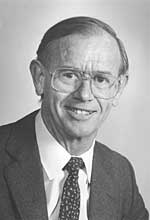
Graeme Reade Anthony ('Bill') Ellis 1921–2011

Graeme Reade Anthony Ellis (universally known as ‘Bill') was a pioneer in the area of low-frequency radio observations. By exploiting Hobart's geomagnetic latitude and the lack of background radio noise there, he was able to make major discoveries at these low frequencies (principally in the frequency range 1–10 MHz).
Among the questions he pursued were the propagation/dispersion/reflection of radio waves in the ionosphere and the detection of radio emissions from the Sun, the galactic disk and Jupiter. He built innovative radio receivers and de-dispersers to gain information about the radio sources, for example about the Sun via aurorae and about the influence of Io on the Jovian emissions.
It is thanks to Ellis' practical research investigations and clever experimental methods that radio astronomy at the University of Tasmania is today firmly established and internationally recognised.
Download memoir
About this memoir
This memoir was originally published in Historical Records of Australian Science, vol. 24(1), 2013. It was written by Robert Delbourgo and Peter M. McCulloch.

Graeme James Caughley 1937-1994
Written by C.H. Tyndale-Biscoe.
- Formative years
- Early days in Wanganui and Palmerston North
- University and early research career
- University of Canterbury and New Zealand Forest Service
- Consultant wildlife biologist
- School of Biological Sciences, University of Sydney
- CSIRO Division of Wildlife Research
- New Zealand interests
- National and international consultancies
- Conservation biology
- Honours
- About this memoir
Graeme Caughley studied the interactions between large mammalian herbivores and the environments they occupy. The pattern of population growth that can be predicted theoretically from such a relationship is both complex and variable. The animals will either erupt, crash, and then converge to a more stable density, or the population may oscillate indefinitely, the densities of plants and animals being locked into a stable limit cycle. He argued that the dynamics of mammalian herbivore populations are comprehensible only in terms of an interactive relationship between the herbivores and vegetation. He further argued that efficient management of such systems requires an understanding of the underlying mechanisms whereby the animals react to the plants and in turn the plants react dynamically to the effects of grazing.
He was best known for his contributions to the understanding of herbivore-vegetation dynamics in the New Zealand high country, the Himalayas, southern Africa and the semi-arid rangelands of Australia. His research was distinguished by rigorous design, execution and analysis, so that the conclusions had generality beyond the particular species studied. Since he chose topics that combined theoretical interest and practical application, he also influenced important management policies – deer populations in New Zealand, kangaroos in Australia and the conservation of large mammals in Africa and North America. He had, and continues to have, a major influence on thinking and practice in the field of vertebrate ecology and wildlife management throughout the world.
Formative years
Graeme Caughley was born on 28 September 1937 at Wanganui, New Zealand, into an educated, professional family. He was the second of three children, and the only son, of John Norman Caughley and Thelma Caughley (née Keltie). His father was a Branch Manager of the Bank of New Zealand, in Wanganui until 1945, then in Palmerston North until 1955 and then at Eltham. He was also a good mathematician. His mother encouraged Graeme's curiosity and his father took him off on expeditions.
His paternal grandfather, James Caughley, migrated from Ireland at the turn of the century and was Headmaster of Takapau Primary School, Hawkes Bay from 1903 to 1936.1 He enjoyed children, loved teaching and had a wicked sense of humour, so that he had the ability to get fun out of the children, not to laugh at them but with them. As a boy Graeme knew his grandfather well and may have got his own dry sense of humour from him. Graeme's father was the eldest of four. The second son, James, was a psychologist with the British Army during the Second World War, and subsequently became Chief Psychologist in the Justice Department, Wellington. Graeme saw a lot of him while at university; they had dinner once a week and he was a mentor to Graeme. One of Graeme's two aunts, Nancy Caughley, taught Speech Therapy at the Christchurch Training College and was later a lecturer at the University of Tasmania, Hobart.
On his mother's side his grandfather, Hugh Keltie, was a watchmaker from Tasmania. He settled at Greytown in the Wairarapa, where he eventually had three shops. Graeme's grandmother died young and his mother was brought up by a stepmother, whom she did not like, so Graeme had little contact with his grandfather as he grew up.
He was not particularly close to his older sister, Jocelyn Ruth (Latta), born in 1932; but, despite the age difference of six years, he developed a close bond with his younger sister, Patricia Mary, born in 1943. He was her role model and encouraged her to go to university, where she did Honours in Political Science and a postgraduate diploma in international relations at the Hague. He said to her that the trouble with university was that it measured how well you knew the answers, but not how to ask the questions. Pat worked at the Commonwealth Secretariat in London, and later joined the New Zealand Ministry of Foreign Affairs for 22 years. She was posted to India in 1974–77 and visited Graeme in Nepal. In one of his early papers (8) Graeme acknowledged Pat's help. They remained close throughout their lives.
Early days in Wanganui and Palmerston North
Graeme attended Drury Hill Primary School in Wanganui until the family moved to Palmerston North in 1945, when he went to Terrace End Primary and Intermediate School. At the age of eight he was collecting moths and butterflies and catching birds. And thinking about the meaning of fossil shells found high above the sea. In The Deer Wars (89) he describes his nascent scientific curiosity:
He had not heard of fossils and he was not happy with enigmas. He stood on solid ground, high up, far from the sea, holding a sea shell in his hands and trying to reconcile those things. The commonplace explanations would not fit and he abandoned them shortly to explore alternatives at first peculiar and then bizarre. Finally he isolated from the rest the only one that satisfied all the data: the sea once covered this hill. Excited, he picked his way down to the flat and ran across the paddocks to the house. His grandfather was a kindly man but he would not humour even a child to that extent. 'Nonsense,' he said firmly and then laughed to signal that he was not annoyed, that it was only a small thing. He did not forget that shell and he was surprised to discover a few years later that he had been right, not quite in the way he had envisaged, but near enough.
While not exceptional in class, Graeme had an unusual breadth of knowledge. At the age of 12, when at Palmerston North Boys High School, he challenged Crosbie Morrison, then a well-known radio broadcaster on natural history, on a question of classification of moths. Graeme thought Morrison was incorrect and, with his best friend, Martin Hyde, did a year's study on the matter and was able to refute him. Later, in about 1953, he was in the New Zealand national team for 'Quiz Kids' with Jonathan Hunt.
On leaving school Graeme joined the Department of Internal Affairs in February 1955 as a government hunter, based at Rotorua, shooting deer, pigs and goats. This year was a formative experience, which he describes in detail in The Deer Wars. In Rotorua he met Thane Riney, an American ecologist who had recently come to New Zealand to work on deer and goats for the New Zealand Forest Service. Riney gave a talk on his work and after it Graeme said to John Henderson, President of the Deer Stalkers' Association, 'do you mean that people can earn a living doing this sort of thing?' Graeme became a disciple of Riney's and two years later joined him as a field assistant, publishing with him on the home range of feral goats (2).
University and early research career
Graeme enrolled for a BSc at Victoria University College, Wellington, in 1956, where he had to support himself financially. In his first year he had free lodging at the Miramar Fire Station in exchange for being on call as a volunteer fireman living on the premises. Of this time he told an amusing episode against himself (Ian Parker in 143). Overwhelmed by urgency and excitement at his first fire, he charged into the burning house and amidst blinding, eye-watering smoke and flames found a person to rescue. That this man fought him off violently he put down to panic. After an epic struggle he got his victim across his shoulders in the approved fireman's lift and made for the exit. Bystanders were delighted when the diminutive Caughley shot out of the smoke with another fireman twice his size on his back. There is no record of any particular lecturers influencing his thinking and the only comment on his experience at university is that he was marked down for using regression analysis on results from a physiology project. He joined Riney in the New Zealand Forest Service in 1956 and continued his degree studies part-time, completing his degree at the end of 1959.
During the summer of 1958–59 Graeme went to Antarctica as a biologist with the New Zealand Antarctic Division, based at Scott Base. He worked on the Adelie penguin colonies around Ross I. and Beaufort I. and the Emperor penguin colony at Cape Crozier, publishing substantial papers on both species (6, 4), as well as notes on skuas (5) and seals (7). These early papers, written at the age of 22, already demonstrated some of the characteristics of his later investigations – questioning strongly-held beliefs, checking original sources and demonstrating a thorough knowledge of natural history. He revised down the estimates of mortality of Emperor penguin chicks at the Cape Crozier colony (4) from those of Edward Wilson, and he also questioned Wilson's assumption that chicks float out to sea on pack ice before they have shed their down, an idea that had been repeated many times and accepted as fact. He acknowledged the help of Dr Robert Falla, Director of the Dominion Museum, in the preparation of the penguin papers. Caughley Beach at Cape Bird, Ross Island was named after Graeme. It has been recognised as a Site of Special Interest by the International Committee on Antarctic Research and, like others, it was proclaimed under Australian legislation, the Antarctic Treaty (Environment Protection Act) 1980.2 There is a brief description of Caughley Beach in the Australian Gazette of 29November 1993, which states that it 'is the site of the most extensive stands of moss, algae and lichens in southern Victoria Land. The terrestrial ecosystem within the Site is the subject of long-term research.'
Graeme's BSc degree from the University of New Zealand (of which Victoria University College was at that time a part) was conferred in May 1960 by which time he had moved to the School of Biological Sciences in the University of Sydney to undertake research for the MSc under the supervision of Charles Birch and Harry Frith, Chief of the CSIRO Division of Wildlife Research. His topic was the comparative ecology of Red and Eastern Gray Kangaroos (Macropus rufus and M. giganteus) on the CSIRO sheep station, 'Gilruth Plains', near Charleville. The MSc was conferred in April 1963 and from it Graeme published papers on the social organization and daily activity (11), density and dispersion of the two species (12), and on sex ratios (13). These were the first papers to be published on social organization and activity of any species of kangaroo.
University of Canterbury and New Zealand Forest Service
At the end of 1962 Graeme returned to the New Zealand Forest Service to begin a study on the population dynamics of alpine mammals, particularly the Himalayan Tahr (Hemitragus jemlahicus). [Note the correct spelling is tahr, but in New Zealand it is spelt thar]. The study developed out of work that Thane Riney had done in California on the eruption and spread of ungulate populations. Tahr had been liberated in the Mount Cook area of South Island in 1904–09 and Graeme chose the spread of Tahr in New Zealand as a good species with which to test Riney's ideas. In 1965 this work became the basis for his PhD from the University of Canterbury, awarded in 1967. His supervisors for this were Bernard Stonehouse and Euan Young but, as Young said,3 'Not that anyone actually supervised this work. His understanding of population processes even then was much superior to ours.'
Graeme developed his ideas about ungulate populations into major contributions in papers 22, 23, 24 and 28. Using new definitions of birth and death rates, he proposed a mathematical framework for analysing the dynamics of seasonally breeding populations. For example, in Paper 22 on mortality patterns in mammals he used his new data for Himalayan Tahr to develop a comprehensive examination of methods of obtaining life table data, and of the assumptions and biases in most analyses. In it he showed that the known relationship between mortality rate and age for humans also held for all mammalian species for which data were adequate. This new analysis established a single mortality pattern for all mammalian species, including humans, irrespective of the body size or life history of the species or whether they were wild or domestic.
Similarly, in Paper 24 on parameters for seasonally breeding populations he used data from a well-studied population of domestic sheep to show that the basic equations used in demography could not be used to cover all populations, especially those species with restricted annual breeding seasons. These two papers are regarded as classics in mammalian demography and, as Charles Krebs later said, 'he single-handedly put large mammal ecology into a theoretical framework'. Paper 22 was reprinted in 1970 (27) and 1982 (79) in the USA for student use.
Paper 28 on eruption of ungulate populations became widely known for two reasons. Using data from his own study of the increase of the Himalayan Tahr since its introduction to New Zealand, he showed that the build-up in species' populations after their introduction to new areas is essentially the same as eruptions in natural mammalian herbivore populations. The growth pattern does not follow a logistic curve as had previously been thought but is an eruption and crash followed by stabilization. Because this interpretation was at variance with a widely-quoted study on a population of deer on Kaibab Island, Canada, he re-examined that study and showed that the original observations had been overlaid by accretions and interpretations of later writers, including the doyen of American ecologists, Aldo Leopold; when these were exposed the original evidence was uninterpretable.
Graeme was now demonstrating his talent for picking key questions and presenting them in provocative but well-researched papers. Much later in his life he disclosed his philosophy about research in the preface to a book that he was planning to write, to be called The Kangaroo Game:
Let me describe myself to allow you, the reader, to gauge my motives and my view of the world. Confessions are not the best source of truth but they give clues, even if one must read between the lines. Socially I am inept. I go to considerable lengths to avoid meeting new people. I find it a strain. Charming I am not. Politically I am uncommitted.
I am good at research, not as good as I would like to be but somewhat better than average. Research is not quite the activity that most people think. It is a blood sport in which the opponents are other researchers. It must be the cleanest sport in the book because the ground rules, agreed to by the great majority of participants, ensure that in the long run the best win. Even in the short run not too many injustices occur. The ultimate high in research is not the discovery of a new fact – that you do almost once a week – but in writing a scientific publication that changes thinking. If you are good you might achieve that with every tenth paper. But when you do it you know that you have done it, even before anyone reads it, and then you sit back and say to yourself 'try to shoot that one down, you bastards.' When congratulated for the incredible insight displayed by 'your book' the correct response is 'which book'; or if you lobbed this mortar shell in the form of a paper you can practise 'Oh, that old thing' or 'Actually, I am not quite certain that I got it exactly right.' Research is a very serious business, it is the cutting edge of science, but it is also great fun.
You also need to know something about my attitude to killing animals. Take the extreme case, the killing of a large whale by means of an explosive harpoon. It is not pretty, and I think I would like myself better were I to view it as an aesthetic and moral outrage, but I do not. It is not important that you agree or disagree with this viewpoint. The importance lies in your realising that this is the way I am and in interpreting what I write in the light of that knowledge. I have no strong feeling for individual wild animals although paradoxically I cried when the family cat was run over. However I get very emotional about the suggestion that a population of wild animals should be exterminated. Hence I am a conservationist but not an animal-liberationist.
Charles Birch recognised some of these aspects of Graeme's character in 1979:4
If he has any irksome qualities they are a tendency to exaggerate for effect, to be a bit of a know all and to always be right. It is a sort of game playing in which points are being scored. In other words you do not always get a frank and open discussion with him if something he values is at stake, and he does have some very definite points of view and objectives. This does not basically make him a difficult person to work with. It does mean that on some issues one learns to take him with a grain of salt.
Consultant wildlife biologist
On completing his PhD Graeme undertook a series of consultancies as a wildlife biologist for the Food and Agriculture Organisation of the United Nations (FAO). This came about through Riney, who was now at FAO Rome. In March 1968 Graeme went to Nepal for a year to do a biological survey and to set up National Parks (26). During this time he made observations on the distribution of Tahr in its native habitat (34) and once again challenged old assumptions and showed how they were incorrect. All texts on Himalayan wildlife stated that Tahr live below the tree line, whereas in New Zealand they live exclusively above the tree line. From his own observations he confirmed that the same was true in Nepal and that all writers on Himalayan wildlife had quoted, directly or indirectly, from two nineteenth-century hunters who had collected male trophy heads below the tree line; in both New Zealand and Nepal lone males leave the breeding herd and descend into the forest but the main population live above the tree line.
In 1969 the FAO sent Graeme to Kenya to determine the accuracy of methods for assessing density of wild ungulates and later, at the invitation of the Iranian Government, he visited the Pamirs to estimate optimum sustained yield for Marco Polo sheep (Ovis poli). He also made a three-month trip to Afghanistan to investigate conservation status of endangered species (35). During these trips Graeme developed an interest in old coins. FAO consultants were paid part of their salary in local currency and, since it was difficult to exchange, he bought old Tibetan coins in Nepal. Later in Afghanistan, ancient Bactrian coins attracted his attention, as well as Greek tetradrachmas from the time of Alexander the Great. The interest in these coins continued and he built up a small collection by subsequent purchases.
At the conclusion of the consultancies, in 1969, he was awarded a Queen Elizabeth II Fellowship at the University of Sydney, and spent the next two years developing his theoretical approach to wildlife ecology. In 1971 he and Charles Birch, in a paper on rate of increase (43), showed that biologists studying the population dynamics of mammals were estimating the rate of increase incorrectly; they were using equations that were valid and widely used for insects but inappropriate for mammals. The logical fallacy in the common practice of calculating rate of increase from age distribution was indicated, and the appropriate methods of analysis were pointed out. The paper was subsequently reprinted as a 'classic' in Wildlife Population Ecology for student use (79). He also wrote the first draft of his book Analysis of Vertebrate Populations (62) but was then unable to interest a publisher in the manuscript; it languished for four years until accepted by Wiley in 1975. He also continued to do short consultancies for the FAO in Nepal, Afghanistan and Zambia.
During the Fellowship he met Judith Ada Badham, who was doing her PhD in ecology in the same School, and they were married in 1970. At the conclusion of the Fellowship in mid-1971, Graeme and Judy went to Zambia to complete a FAO project on elephant in the Luangwa Valley, begun by John Goddard, who had died when the project had eighteen months left to run. The aim of the project was multiple use for the Luangwa Valley – conservation, subsistence harvesting in wildlife management zones, agriculture and tourism – so the scientists involved were a very diverse group. The Caughleys worked and lived entirely within the national park in the centre of the Valley for the whole of their stay. Africa was good to them and they enjoyed the work. Judy described it as a wonderful, wonderful experience. Their son, Ian, was born there. Judy went through Goddard's diaries to get the data and analyse his aerial survey results, while Graeme continued the aerial surveys. He met a lot of people from Kenya and other countries doing aerial surveys of elephants and other large mammals – especially influential were Ian Parker and Michael Norton Griffiths. The most influential population ecologist was Richard Bell, who from his work in the Serengeti introduced Graeme to the field of African plant-herbivore relationships.
The fruit of this interaction was Graeme's refinement of analyses of aerial surveys (44, 49, 52) and the development of his ideas on the long-term interactions between elephant and the trees that provide it with food and shelter (56). He suggested that 'the elephant problem' – elephants knocking down forest faster than the forest regenerates – does not reflect the notion, as previously believed, that an equilibrium between forests and elephants has been displaced. The evidence indicated that elephants increase while thinning the forest and then decline to a low density that allows the forest to recover. Elephants then begin to recover and the cycle repeats. This he defined as a 'stable limit cycle' which may be very long. He estimated the length of the cycle in the Luangwa Valley to be in the order of 200 years, from the size distribution of Mopane trees, which showed a bimodal distribution suggesting an earlier period of low recruitment, and the age distribution of Baobab trees, which showed a unimodal peak at about 140 years. Since elephants browse young Baobabs the data suggested that a low density of elephants 140 years ago had allowed a cohort of Baobabs to become established and reach sufficient size to survive. The idea was put forward with characteristic verve and the paper aroused considerable interest in all African countries dealing with the elephant problem, and changed perspectives on management of the species.
Fourteen years later (130) Graeme examined this further by analysing the volume of ivory coming on to the world market since 1950, to determine the trend of the elephant populations from which it came. The data were consistent with a rapidly declining population. He deduced that few elephants would survive in East Africa outside high-security areas after 1995. The trend for Africa as a whole was similar but lagged about twenty years behind that of East Africa. This work was both clever and beautiful, but also written so tersely that it needed translation before it could be appreciated by all concerned.5 It showed that the ivory trade rather than habitat loss has been the main cause of decline in elephant populations and it influenced the decision to ban international traffic in ivory so as to conserve the species.
School of Biological Sciences, University of Sydney
Early in 1973 the Caughleys returned to Australia and he took up an appointment as Lecturer in Ecology in the School of Biological Sciences at the University of Sydney. The next six years in Sydney were a very productive time for him, although Judy recalled that he was never really happy in the university environment. For someone accustomed to working in a team he found it difficult to accommodate to the individualism of the university. He enjoyed the lecturing but the aggressive competition to do the minimum of lecturing and get the best post-graduate students distressed him. Nevertheless, his few post-graduate students remember his influence warmly. Bill Magnusson (personal communication 1997) recalled how he became Graeme's PhD student in 1974:
Thin, wiry and not very academic looking, he was so intent on his work that he looked up distractedly when I knocked on his door. 'Dr Caughley, I am putting together a thesis project on the nesting ecology of salt water crocodiles and I was wondering if you'd look it over for me?' He pushed aside his papers and our talk lasted about half an hour. His experienced mind quickly picked out the good bits, discarded the bad, and suggested ways to prop up the weak aspects. He never asked who my supervisor was. At the end of our discussion I asked if he thought it a good thesis project. He paused and said sincerely, 'yes it's a good project.' As he turned back to his papers I said 'So you're willing to supervise my project?' He said without thinking 'Oh! – yes.' A few minutes later Graeme was in Gordon Grigg's office saying 'Who is that Magnusson character? I think he has just suckered me.' Whether or not it was an appropriate way to get a supervisor, the next day Graeme said 'Alright, I'll supervise your project but only if Gordon is a co-supervisor.'
A year later, after Graeme had been into the field with Bill, he commented to a colleague that Bill seemed to be a good researcher, to which she replied 'Of course he's good!' He looked her in the eye and said 'If he's a good researcher, how did he get through our University system?'
Graeme met Robert May, then at the University of Sydney, and was attracted by his ideas on stable limit cycles, which Graeme developed in the elephant-plant system. At the same time Graeme was developing concepts of plant-herbivore systems, to which he had been introduced by Richard Bell, while he was in Zambia. May invited him to write the chapter on plant-herbivore interactions (54) for the book Theoretical Ecology that he was then editing for Blackwells. Caughley's chapter explored the theoretical relationships between a population and its resources in a number of plant-herbivore systems, ranging from simple through varying degrees of complexity, classified them into functional categories and indicated the expected dynamic behaviour of each. A close fit between observation and theory was shown.
In the same year (1976) he was invited to write on wildlife management and the dynamics of ungulate populations (55). At the time this essay was written, advances in wildlife management had not kept pace with those in other fields of population management, notably fisheries biology and economic entomology. The paper was an extended treatment of the relationship between population dynamics and population management using the ungulate-vegetation system for examples. Suggestions were given for estimating sustained yield and for managing an ungulate population to minimize damage to the vegetation. It was a powerful impetus to the development of a harvest theory for ungulates and had a profound influence on the management of large herbivores in the national parks of North America and world-wide.
In 1977 Caughley's book Analysis of Vertebrate Populations (62) was published by Wiley. It dealt largely with the problems of sampling, estimation and analysis and was an immediate success. It was recognised as the seminal work on the dynamics of vertebrate populations and how such populations may best be studied, and established him as the leading ungulate ecologist and one of the top five vertebrate ecologists in the world. Prior to the book's publication the ecologist wishing to be informed on vertebrate populations had to read a very large and scattered literature; it was awarded 'Book of the Year' by the American Wildlife Society and was translated into Russian (63). It is still the primary reference in the discipline and is still widely consulted.
Publication of the book brought lots more contacts and invitations to numerous conferences, especially in North America. Graeme wrote an amusing anecdote about one of these that he attended in 1978:6
When the proceedings are published and I find out what was said there, I may write about the scientific advances unveiled at the Elk Ecology and Management Conference at the University of Wyoming, 3–5 April 1978. The first inkling of disaster came when I was handed on arrival my schedule of 'extra-conference commitments.' The design (as we say in statistics) being exhaustive but non-overlapping. Into the interstices of this time frame was fitted a conference that began at 8am each day and continued indefinitely. By halfway through the second day I was suffering severe physiological stress. I gave a paper later that night and remember only that the projector kept going backwards. No-one else seemed to notice. The third day is something of a mystery but I can piece together parts of it from my meticulously kept notes, the standard of which fortunately remained constant throughout. That day, for instance, I 'lynched with Harry and Chuck who disgust elbows. Very stimulation.' The fourth day I do not understand but I can give a broad outline. I was no longer in Wyoming but in Colorado, having been driven across the border at high speed, two hours before a gentleman would be contemplating whether his eggs should be poached or fried. Apparently someone, sometime, had said, 'You must come down to Colorado State University' and presumably my reply, whatever it had been, was interpreted as agreement. I was ushered into what appeared to be the Wallace theatre and instructed to give a seminar in the direction of an already assembled crowd scene. Since I had nothing prepared I simply babbled for an hour and in the process apparently insulted, quite unintentionally, half the heavier wildlife managers stationed north of the Rio Grande. The ensuing discussion was lively. Subsequent events are telescoped in my memory but the factor common to all was continuous discussion. The groups of beady-eyed post-grads and staff changed, as did the seminar rooms in which these chats occurred, but otherwise it was total talk Americans are earnest, generous, likeable and organised. If you are none of these you are in for a rough time.
Certainly, in North America Graeme's provocative style was not always appreciated. His major contributions were to introduce the use of mathematical analysis of mammal populations, to explain what he was doing with great clarity and simplicity, and to re-examine the basic tenets of wildlife ecology to provide a critique of entrenched dogma. However, the field of wildlife management, which had begun in the 1930s in the US, was still dominated by the writings of Aldo Leopold (Game Management, Scribners, New York, 1933) and a somewhat slavish adherence to the ideas of that great American master. When Graeme began to challenge the sacred tenets he was resisted bitterly by some of the most senior people. However, younger biologists were attracted to Graeme's thinking and four of them came up with the idea of publishing his ideas under a pseudonym, in order to get around the antipathy for Graeme in North America. They were Richard Bell, Douglas Houston, Michael Norton-Griffiths and Tony Sinclair. Graeme suggested the name John Macnab from the John Buchan hero of that name. There were to be four papers, each author taking a particular concept and then the others commenting on the draft. Three papers were published, 'Wildlife management as scientific experimentation' (86), 'Carrying capacity and related slippery shibboleths' (100) and 'Does game cropping serve conservation? A re-examination of the African data' (137).
Graeme did not shy away from controversy in Africa either, as Brian Walker remembered. The complexity of plant species composition in grazed systems prevented, for a long time, the acceptance of his conclusions based on analyses of the one-herbivore–one-plant model. His analyses of the models in 1982 (80) provided a theoretical basis for the notion that the diversity of plant species has little effect on the dynamics of plant-herbivore systems, particularly with respect to the fluctuations and equilibrium densities of the herbivore. From this and other work in Africa and elsewhere he had developed strong and convincing arguments against over-managing 'natural ecosystems' and he became an ardent advocate of letting ecosystems follow their natural dynamics with minimum interference by managers. His views were diametrically opposed to those held by African wildlife biologists at the time and, in two workshops in South Africa in 1979 and 1982, dealing with management of African wildlife and the problem of culling in national parks, he provoked vigorous discussion by asking 'What is this thing called carrying capacity?' and 'What is this thing called overabundance?' In the first (72) he emphasised the difference between ecological carrying capacity and economic carrying capacity, about which much confusion then existed. In the second (90, 91), where he was a principal speaker, he did not spare feelings in attacking the contrary views. The outcome was a salutary experience for all and his work on carrying capacities had a major effect on the direction and outcome of those meetings for wildlife management in Africa.
In Australia Graeme Caughley was becoming recognised as the pre-eminent expert on kangaroo ecology and population dynamics. In the early 1970s animal welfare groups in the USA campaigned to have the trade in kangaroo products abolished, on the grounds of the danger they represented to the populations of red and grey kangaroos. Wildlife biologists realised that an accurate method of measuring the size of kangaroo populations was needed to resolve this dispute. Caughley applied his African experience to this problem and began to develop accurate methods of aerial census of kangaroo populations (61, 65, 67, 69).
In 1978 Graeme submitted his corpus of publications, entitled The Dynamics of Mammalian Populations, for the degree of DSc, which he received from the University of Sydney early in 1979. However, although now Reader in Ecology, he was still unsettled at Sydney. Harry Frith and Graeme were members of the Advisory Board of the New South Wales National Parks and Wildlife Service and at one meeting in 1978, Graeme muttered to Harry, 'Have you got any jobs in Canberra?' Harry replied 'Maybe'. At the next meeting Harry said 'Were you serious?' and Graeme said 'Yes'.
CSIRO Division of Wildlife Research
Graeme was appointed Senior Principal Research Scientist in the Division of Wildlife Research in September 1979 to head a programme on kangaroo ecology. His aims were to determine the distribution, density and dynamics of the three main species of kangaroo across Australia, to determine appropriate options for their management, and to elucidate the ecological operating rules of the arid and semi-arid grazing systems.
He continued to develop the aerial survey techniques begun at the University of Sydney. He developed a rigorous system of calibration and statistical treatment that has made it possible to make regular estimates of the numbers of free-ranging kangaroos across the vast areas of Australia (71, 76, 82, 83, 88, 93, 94, 99), their movements (101), and the distribution of other large animals (81, 98, 105). Since 1980 these aerial survey techniques have been routinely used by the fauna authorities of the Australian states for their respective kangaroo management programmes, and by Environment Australia as the basis for the Federal Government's export quota system each year. The accurate knowledge of trends in kangaroo populations across the continent has helped to counter opposition from Europe and the USA to culling and harvesting of kangaroos. In 1986 Graeme successfully negotiated with members of the European Parliament against a proposed ban on kangaroo imports.
In addition to the direct application of his work on kangaroos, he also attempted to get some general principles out of the distributions of the three large kangaroos in Australia. One paper (114) used a fairly orthodox approach and standard distribution data, to show that each species reacts independently to specific and differing climatic variables and that biological interaction between species is not important. A second (117) took a quite different tack, using much tighter data that included dynamics attributes as well as simple distribution, and ended up with generalized results about the factors determining the edge of a species' range.
In 1983 he and Charles Krebs explored the importance of body size in mammalian ecology (87). Ecologists studying mammalian population dynamics have tended to base generalizations, covering all species, on results from the kinds of animals that they have studied themselves. This new analysis suggested that the ecological and evolutionary relationships between mammals weighing more than 30 kg and the plants that they eat differ intrinsically from those of smaller mammals and their food, a concept independently arrived at by comparative physiologists.
However, Graeme's major project in CSIRO was a collaborative one with the New South Wales National Parks and Wildlife Service, begun under the leadership of Neil Shepherd in 1977, to examine the relationship between high kangaroo densities and vegetation in an arid-zone national park (Kinchega National Park). With Graeme's transfer, CSIRO was invited to join in and Graeme and Neil shared the leadership from 1980 to its completion in 1985. Its aims were altered to include interactions with weather, vegetation and other herbivores and it was run as a joint enterprise, combining staff of CSIRO Division of Wildlife Research and National Parks and Wildlife Service (Preface to 108). The scale of the project is indicated by the fact that 400 student volunteers contributed to it as well. At the time it was the largest and most comprehensive study of a complex plant-herbivore ecosystem ever attempted. Graeme designed the joint study so that its diverse sub-projects dove-tailed to produce a synthesis of the dynamics of this grazing system. Growth, offtake, species composition and standing biomass of vegetation were measured over 600 km2 at frequent intervals. Kangaroos were censused regularly over an area of 200 km2, necessitating some 500 hours of aerial survey. The project identified and quantified the relationships between weather, plant growth, and rate of increase of kangaroos; it showed that the ecological relationships within the system were very tight and interactions occurred with minimum lag, despite the massive environmental fluctuations. Carrying capacity was shown to be a function of the coefficient of variation of annual rainfall. Sustainable harvesting rates and management strategies were defined. The study, which provided the most detailed and integrated analysis to that time of any grazing system in the world, was published by Cambridge University Press as a monograph (108), with Caughley as senior editor, entitled Kangaroos: Their Ecology and Management in the Sheep Rangelands of Australia. In addition to the book, 31 papers were published from the study as well as nine theses (4 Honours, 1 MVSc, 2 MSc and 2 PhD).
New Zealand interests
Although Graeme lived in Australia from 1973, his links with New Zealand remained strong and in 1983 he wrote an unusual book, The Deer Wars: The Story of Deer in New Zealand, published by Heinemann (89). In it he analysed the problem of wildlife management simultaneously from several perspectives: history, ecology, evolution, hydrology, geology, sociology, politics and economics. The book was unusual for several reasons: it was not a treatise on the ecology of red deer and the history of deer in New Zealand, although there was a lot of that in it; it was not a text on the economics and politics of managing a wildlife resource, although one can learn much about that in its pages; and it was not an autobiography, although Graeme obviously wrote from first-hand knowledge and experience. The book is a splendid example of problem-solving, vigorous and free-flowing text that examines the complex interactions between wild mammals, their environment and the perceptions and interests concerning these animals held by different groups of people within society. Graeme took a particularly good example with which to examine the evolution of people's perceptions of a wild species and the way in which government policy responds to these perceptions. It is the merit of this book that, while it is about deer in New Zealand, it has lessons for the management of wildlife everywhere. The book aroused some controversy in New Zealand, especially from forestry people who felt the bite in his criticisms of the research and management of wild deer. The point was made that Caughley had been out of New Zealand for much of the time when perceptions of deer and their uses were changing and that his analysis of this period could be faulted.7 The deer stalkers' association, however, applauded the book8 and Graeme was invited to address their annual conference in 1985 (104). Biologists, conservationists and those interested in land use in New Zealand also applauded the book. Its influence was profound because it appeared just before the administration of native forests was moved from the New Zealand Forest Service to the Department of Conservation. Graeme was the keynote speaker at a two-day seminar on wildlife legislation in New Zealand in 1988 (118, 119).
Sometime about 1986 or 1987 Graeme began a project on Quaternary faunal extinctions, climate change and the dispersal of people. He wanted to apply dispersal ecology and regression analysis to human ecology in order to understand the early spread of mankind across Australia. He recognised that the settlement of New Zealand by Polynesians about 1,000 years ago would provide a rigorous model for the much harder task in Australia. In 1988 he examined the pattern of colonization of New Zealand by the Polynesians (115) and the interaction of the avian megafauna, the New Zealand flora and mankind. It produced results at variance with the current anthropological paradigm of rapid colonization by Maoris of all coastal regions of New Zealand, and a long association of moas and Maoris. Instead, he proposed that the first landfall was made on the Kaikoura coast of South Island about 1,000 years ago and colonization of both islands spread out from there at an accelerating rate, reaching 10km a year after 400 years, when colonization was complete. Secondly, variance stripping on the radiocarbon dates indicated that the average time that megafauna and people co-existed in any district was only about one century. The inference from this was that the human population grew and spread on the abundant food resource in much the same way as the introduced ungulates did several centuries later. This paper had an important effect on ethnography and archaeology in New Zealand and it demanded a new appraisal of the time of arrival and the pattern of spread of the Maori people through New Zealand.
In a subsequent paper in 1989 (123), presented at a symposium of the New Zealand Ecological Society in response to the previous paper, Caughley examined the history of the New Zealand biota over the last 7,000 years. He divided it into three phases. BC 5000 to AD 1000 was a period of comparative ecological stasis. That equilibrium was disrupted between AD 1000 and AD 1800 by the destruction of most of the New Zealand plant-herbivore systems, the co-evolutionary relationships between the plants and the vertebrate herbivores being decoupled by about AD 1400. The ecology of the moas was deduced from what data were available to show that their closest living ecological analogues are not birds but browsing mammals.
Regrettably, the rest of the project, addressing the interactions of people and megafauna in Australia, was not completed by the time of his death.
National and international consultancies
Graeme Caughley continued to undertake many overseas consultancies. In 1988–90 he went to Tanzania, China, Kenya, Nepal, Canada, Greenland and Zimbabwe.
In 1989 he was appointed to the Resource Assessment Commission, set up by Act of Parliament to advise the Australian Prime Minister on resource matters. The Forests and Forest Industries Inquiry was instituted in November 1989 and was charged with describing the forests of Australia, the adequacy of their conservation, the timber and timber products industries of Australia, and any conflict between them. Caughley was the Special Commissioner with expertise in matters environmental. His contributions to the modelling that forms the core of the enquiry provided a basis for interpreting such data as were available. During 1990 he read about 260 submissions, went on seven field inspections and attended public hearings in fifteen centres around Australia (135). From his analyses he recognised that the rate of timber cutting of native forests exceeded the rate of increase and was therefore unsustainable, in the same way as the harvesting of whales had been unsustainable some decades earlier. These conclusions were incorporated into the Interim Report (135), which was made available for comment. The forest industry objected to these conclusions and demanded that a forestry representative join the Commission and oversee the final version of Caughley's report. He objected to this condition and to what he saw as the obstructive and intransigent attitude of the forest interests. When it was upheld by the Chief Commissioner, Caughley resigned and left for Greenland and a study of Muskox. As he said in another context (123) but applicable to the Commission:
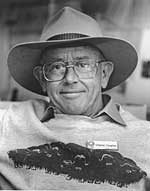
Graeme Caughley, ca. 1992, shortly after returning from his Muskox trip to Greenland, wearing his CSIRO badge of which he was inordinately proud.
Ideologies can be applauded or ridiculed but they cannot be invalidated unless they are converted to hypotheses. Then there can be reasoned scholarly debate. It is precisely to avoid that possibility that ideologies are always framed in abstract terms... We must not change reality to fit ideology.
Certainly the Resource Assessment Commission was a stressful time for him, not least because smoking was forbidden during the hearings and, since he had to attend all of them, he decided to give up smoking for the duration of the Commission. Also, in 1990, he and Judy decided to go their separate ways.
In 1991, he took on another public task as Chair of the Review of Australian Research Council Funding in the field of Ecology (142).
Recognition by his scientific peers followed. In 1992 he was elected to fellowship of the Australian Academy of Science, and in 1993 he received the highest award bestowed by CSIRO, the Chairman's Medal. In 1994 he was also awarded the Peter Scott Medal by the International Union for the Conservation of Nature but sadly did not live to receive it.
Conservation biology
Graeme's attitude to conservation is expressed in the quotation given earlier; he was concerned about survival of species but was indifferent to individual animals. Because of his experience, as revealed in The Deer Wars, he had an impartiality as to whether animals are killed, culled or conserved and this approach is probably essential for a person who is to develop rational management policies. In the last years of his life he turned his attention more to conservation issues and the management of declining populations and away from harvesting and sustained yield issues.
In 1990 he began a project to test experimentally the effect of various stressors on the viability of small populations and, at the same time, began to gather material for a re-examination of the theoretical bases of conservation biology and the factors determining population viability. A major review on the subject was sent to the Journal of Animal Ecology in April 1993. In the same month he learned that he had terminal cancer and could not expect to live long. He set himself the goal of seeing the review through the press and, if time allowed, writing a book on conservation biology. With characteristic vigour and courage he saw the review published (145), and he completed a book already begun with Tony Sinclair entitled Wildlife Management and Ecology (144), published by Blackwells in 1994. In the months between April and December, with his partner, Anne Gunn, he wrote most of an entirely new book, which even drew critically on papers published in 1993. The major portion of the book, entitled Conservation Biology in Theory and Practice, was completed at the time of Graeme's death at his home in Canberra on 16 February 1994. Anne Gunn completed the book during the next nine months and it was published by Blackwells in 1996 (146).
The review and the book that followed aroused considerable debate. In the review (145) Graeme recognised two threads in conservation thinking. These he termed the small-population paradigm, which deals with the effect of smallness on the persistence of a population, and the declining-population paradigm, which deals with the cause of smallness and its cure. His criticism of the small-population paradigm was that it treats an effect (smallness) as if it were a cause and attempts to answer a trivial question – how long will a population persist if nothing unusual happens? His contention was that much of the theoretical side of conservation biology has been directed to population genetics and modelling to determine minimum population size, all of which he saw as part of the small-population paradigm. The declining-population paradigm, by contrast, is short on theory and generalization, because the causes of decline are different for each species, but determining the causes of decline is relevant to most problems in conservation. He concluded that the declining-population paradigm urgently needed more theory and the small-population paradigm needed more practice. He appealed for an intermixing of the two, which might lead to a reduction in the rate at which species are going extinct.
The review provoked a round-table discussion at the next annual meeting of the Society for Conservation Biology at Fort Collins, Colorado in 1995 and that was the impetus for Hedrick et al.9 to challenge Caughley's distinction of two paradigms as over-simplistic and something that should not be perpetuated. They were especially exercised by his argument that theoretical models based on population genetics had not contributed to the rescue of any declining species, as this would give ammunition to hostile forces attempting to discredit conservation efforts. Young and Harcourt10 then came to Caughley's defence, as did Clinchy and Krebs,11 the latter daring to 'be brought before the Inquisition on charges of heresy' by taking Caughley's distinction further. They suggested that the two paradigms represent a wider dichotomy in conservation biology between laboratory-based research (the small-population paradigm) and field-based research (the declining-population paradigm). It is clear that, in his last paper, Graeme Caughley had once again lobbed one of his mortar shells at his favourite protagonists, his peers in ecology, and scored well!
The book (146) that was written hard on the heels of the review was an astonishing achievement, even without considering the conditions under which it was written. In a real sense it is a response to the appeal of the review, to provide conservation biology with a strong theoretical underpinning. This it does, and also offers a wealth of examples and practical solutions for the particular problems faced by species in decline. It is destined to be the handbook of first resort in conservation biology for years to come. While Graeme's mind is in it all, Anne Gunn played a huge part in the support she gave him through the last months of his life and in the hard task of completing it for publication. As his friend Ian Parker wrote in the front of the book, 'he was thinking originally to the end'.
After his untimely death at the peak of his intellectual powers, there was a move to create some fitting memorial to Graeme Caughley. The Graeme Caughley Travelling Fellowship was established through the joint auspices of the Australasian Wildlife Management Society, the CSIRO Division of Wildlife and Ecology and the Australian Academy of Science. Its purpose is to encourage exchange of ideas and knowledge about wildlife management, by travel grants to enable Australian and New Zealand ecologists to visit colleagues in other countries. The first two Caughley Fellows were David Choquenot, who travelled in Africa, and Jim Hone who travelled in Europe and North America.
In ecology Graeme Caughley led by setting high standards of research and integrity tempered by a delight in ecological relationships and a rapier wit. As mentioned earlier, The Deer Wars was partly autobiographical and the last words of that incomparable book sum up Graeme's philosophy of life:
The formative mythology of the New Zealanders is not easily dissected, and perhaps it should not be attempted because to dissect is to destroy. But some elements can be displayed without trauma: water on fern, breaking out of forest onto snow grass, a fist in the scrum, the lobbed shot that comes off, the flooded river that must be crossed, the piton that gives just a little, 'and the antlers in the hall, sings Harry'.
These I judge necessary and their absence as impoverishment. I am certainly growing no younger and maybe I missed the point somewhere along the way. But what do you judge as important?
Honours
- 1970 Queen Elizabeth II Post-Doctoral Fellowship
- 1978 Analysis of Vertebrate Populations awarded 'Book of the Year' by the Wildlife Society, Washington, D.C.
- 1987 Kangaroos: Their Ecology and Management in the Sheep Range-lands of Australia awarded Whitley Book Award Certificate of Commendation by the Royal Zoological Society of New South Wales.
- 1992 Elected to Fellowship of the Australian Academy of Science.
- 1993 Awarded CSIRO Chairman's Medal for outstanding research achievements and leadership in the field of vertebrate ecology.
- 1994 Peter Scott Award for Conservation Merit, Species Survival Commission of the International Union for the Conservation of Nature.
About this memoir
This memoir was originally published in Historical Records of Australian Science, Vol.12, No.3, 1999. It was written by C.H. Tyndale Biscoe, School of Biological Sciences, Australian National University, Canberra, ACT.
Acknowledgments
For providing information and anecdotes about Graeme and leads to his correspondence I thank David Grice, Anne Gunn, Bill Magnusson, Roxanne Missingham, Steve Morton, Peter Shaughnessy, Tony Sinclair, Rodney Teakle, Brian Walker and Rosanne Walker. Pat Caughley and Judy Caughley were especially helpful in providing the background to Graeme's early life and research career. The notes used to prepare this Memoir and most of Graeme's papers have been deposited at the Australian Academy of Science. Other official files concerning his time in CSIRO are held in the Australian National Archives, Canberra.
References
- Caughley, N. 1979. James Caughley – Headmaster 1903–1936. Takapau Centennial School Report, p .2.
- Antarctic Treaty (Environment Protection Act) 1980. Site of Special Scientific Interest No.10. Caughley Beach, Cape Bird, Ross Island. Commonwealth of Australia Gazette No. P 39, 29 November 1993.
- Young, E. 1994. Letter to Chief, Division of Wildlife and Ecology.
- Birch, C. 1979. Letter to Chief, Division of Wildlife Research.
- May, R.M. 1994. Graeme Caughley and the emerging science of conservation biology. TREE 9, 368–9.
- Morton, S.R. 1996. Four Fs* Newsletter, Division of Wildlife and Ecology 194, 2.
- Batchelor, C.L. 1985. Review of The Deer Wars. New Zealand Journal of Forestry 30, 278–81. Miers, K.H. 1984. Review of The Deer Wars. Journal of the Royal Society of New Zealand 14, 291–2.
- Henderson, J.B. 1983. The great wild animal debate. Review of The Deer Wars. NZ Listener, 3 December 1983. p. 106–7.
- Hedrick, P.W., Lacy, R.C., Allendorf, F.W. and Soule, M. 1996. Directions in conservation biology: comments on Caughley. Conservation Biology 10, 1312–20.
- Young, T. and Harcourt, A.H. 1997. Viva Caughley! Conservation Biology 11, 831–2.
- Clinchy, M. and Krebs, C.J. 1997. Conservation Biology 11, 832–3.
Bibliography
- Caughley, G. 1958 How high do birds live in the Southern Alps? Notornis 8: 24.
- Riney, T. and Caughley, G. 1959 A study of home range in a feral goat herd. New Zealand Journal of Science 2: 157–170.
- Caughley, G. 1960 Riflemen in exotic pine forests. Notornis 9: 63.
- Caughley, G. 1960 The Cape Crozier Emperor penguin colony. Records of the Dominion Museum (New Zealand) 3: 251–262.
- Caughley, G. 1960 Observations on incubation and chick rearing in the Antarctic skua. Notornis 8: 194–195.
- Caughley, G. 1960 The Adelie penguins of Ross and Beaufort Islands. Records of the Dominion Museum (New Zealand) 3: 263–282.
- Caughley, G. 1960 Dead seals inland. Antarctica 2: 270–271.
- Caughley, G. 1962 Habitat occupation of birds in a New Zealand high country drainage during the breeding season. Emu 62: 129–139.
- Caughley, G. 1963 Dispersal rates of several ungulates introduced into New Zealand. Nature 200: 280–281.
- Caughley, G. 1964 Does the New Zealand vertebrate fauna conform to zoogeographic principles? Tuatara 12: 49–56.
- Caughley, G. 1964 Social organization and daily activity of the red kangaroo and the grey kangaroo. Journal of Mammalogy 45: 429–436.
- Caughley, G. 1964 Density and dispersion of two species of kangaroo in relation to habitat. Australian Journal of Zoology 12: 238–249.
- Caughley, G. and Kean, R.I. 1964 Sex ratios in marsupial pouch young. Nature 204: 491.
- Rammell, C.G. and Caughley, G. 1964 Composition of thar's milk. New Zealand Journal of Science 7: 667–670.
- Caughley, G. 1964 (REVIEWS) The Distribution and Abundance of Animals by H.G. Andrewartha and L.C. Birch; and Introduction to the Study of Animals Populations by H.G. Andrewartha. New Zealand Journal of Forestry 9: 223–224.
- Caughley, G. 1965 A method of comparing the numbers of species in areas covered by different periods of observations. Emu 65: 115–118.
- Caughley, G. 1965 Standardizing the common name of 'possum' for Trichosurus vulpecula. Tuatara 13: 30.
- Brooker, M.G. and Caughley, G. 1965 The vertebrate fauna of Gilruth Plains, south-west Queensland. Linnean Society of New South Wales 90: 238–241.
- Caughley, G. 1965 Horn rings and tooth eruption as criteria of age in the Himalayan Thar Hemitragus jemlahicus. New Zealand Journal of Science 8: 333–351
- Caughley, G. 1965 Politics and science. Te Karere 1, 12–14.
- Caughley, G. 1966 The breeding of black-backed gulls in the South Island mountains. Notornis 13: 166.
- Caughley, G. 1966 Mortality patterns in mammals. Ecology 47: 906–918.
- Caughley, G. 1967 Calculations of population mortality rate and life expectancy for thar and kangaroos from the ratio of juveniles to adults. New Zealand Journal of Science 10: 578–584.
- Caughley, G. 1967 Parameters for seasonally breeding populations. Ecology 48: 834–839.
- Caughley, G. 1969 Genetics of melanism in the fantail Rhipidura fuliginosa. Notornis 16: 237–240.
- Caughley, G. 1969 Wildlife and recreation on the Trisuli watershed and other areas in Nepal. HMG/FAO/UNDP Trisuli Watershed Development Project. Project Report No.6. p. 54.
- Caughley, G. 1970 Mortality patterns in mammals. Ecology 47: 906–918 (1966). Reprinted in Jones, J.K. and Anderson, S. (eds). Readings in Mammalogy. Monograph 2. Museum of Natural History, University of Kansas.
- Caughley, G. 1970 Eruption of ungulate populations with emphasis on Himalayan thar in New Zealand. Ecology 51: 53–72.
- Caughley, G. 1970 Liberation, dispersal and distribution of Himalayan thar in New Zealand. New Zealand Journal of Science 13: 220–239.
- Caughley, G. 1970 Fat reserves of Himalayan thar in New Zealand, by sex, season, area and age. New Zealand Journal of Science 13: 209–219.
- Caughley, G. 1970 A comment on Vandermeer's 'Pseudo-reproductive value'. American Naturalist 104: 214–5.
- Caughley, G. 1970 Population statistics of chamois. Mammalia 34: 194–199.
- Caughley, G. 1970 Cervus elaphus in southern Tibet. Journal of Mammalogy 51: 611–614.
- Caughley, G. 1970 Habitat of the Himalayan tahr Hemitragus jemlahicus. Journal of the Bombay Natural History Society 67: 105–106.
- Caughley, G. 1970 Wildlife Resources of Afghanistan. FAO Publ. TA2905, 11 pp.
- Caughley, G. 1970 (REVIEW) The Natural History of Canterbury, by G.A. Knox (ed.). Australian Journal of Science 32: 374.
- Caughley, G. 1971 Offspring sex ratio and age of parents. Journal of Reproduction and Fertility 25: 369–383.
- Caughley, G. 1971 The season of births for northern-hemisphere ungulates in New Zealand. Mammalia 35: 204–219.
- Caughley, G. 1971 Demography, fat reserves and body size of a population of red deer in New Zealand. Mammalia 35: 369–383.
- Caughley, G. 1971 An investigation of hybridization between free-ranging wapiti and red deer in New Zealand. New Zealand Journal of Science 14: 993–1008.
- Caughley, G. 1971 The name of the Himalayan ***. New Zealand Wildlife 32: 20–21.
- Caughley, G. 1971 Correction for band loss. Bird-banding 42: 220–221.
- Caughley, G. and Birch, L.C. 1971 Rate of increase. Journal of Wildlife Management 35: 658–663.
- Caughley, G. and Goddard, J. 1972 Improving the estimates from inaccurate censuses. Journal of Wildlife Management 36: 135–140.
- Caughley, G. 1973 Game management. Game Management and Habitat Manipulation in the Luangwa Valley of Zambia, p. 50–158. FAO Publication DP/ZAM/68/510/WDI.
- Caughley, G. 1974 Interpretation of age ratios. Journal of Wildlife Management 38: 557–562.
- Caughley, G. 1974 Productivity, offtake and rate of increase. Journal of Wildlife Management 38: 566–567.
- Caughley, G. 1974 Introduced mammals: thar. New Zealand Nature Heritage 3: 929–935.
- Caughley, G. 1974 Bias in aerial survey. Journal of Wildlife Management 38: 921–933.
- Caughley, G. and Caughley, J. 1974 Estimating median date of birth. Journal of Wildlife Management 38: 552–556.
- Caughley, G. 1975 The distribution of eastern grey kangaroos (Macropus giganteus Shaw) in north-western New South Wales. Search 6: 341–342.
- Caughley, G. and Goddard, J. 1975 Abundance and distribution of elephants in the Luangwa Valley, Zambia. East African Wildlife Journal 13: 39–48.
- Caughley, G. 1975 (REVIEW) East African Mammals, Vol. 2 by J. Kingdon. Search 6: 344.
- Caughley, G. 1976 Plant-herbivore systems. Chapter 6 in R.M. May (ed.) Theoretical Ecology: Principles and Applications. p. 94–113. Blackwell, London.
- Caughley, G. 1976 Wildlife management and the dynamics of ungulate populations. In T.H. Coaker (ed.) Applied Biology 1: 183–246.
- Caughley, G. 1976 The elephant problem – an alternative hypothesis. East African Wildlife Journal 14: 265–283.
- Caughley, G. 1976 The taxonomy of moas. Tuatura 23: 20–25.
- Caughley, G. 1976 (REVIEW) Animal Population Ecology by J.P. Dempster. (1975). Search 7: 174.
- Caughley, G., Sinclair, R.G. and Scott-Kemmis, D. 1976 Experiments in aerial survey. Journal of Wildlife Management 40: 290–300.
- Caughley, G. 1976 (REVIEW) Conservation in Practice by A. Warren and F.B. Goldsmith (eds). (1974). Search 7: 211.
- Caughley, G., Sinclair R.G. and Wilson, G.R. 1977 Numbers, distribution and harvesting rate of kangaroos on the inland plains of New South Wales. Australian Wildlife Research 4: 99–108.
- Caughley, G. 1977 Analysis of Vertebrate Populations. Wiley-Interscience Publication, John Wiley & Sons, London. 234 pp.
- [Russian translation by Mir Publishers, Moscow]
- Reference not used
- Caughley, G. 1977 Sampling in aerial survey. Journal of Wildlife Management 41: 605–615.
- Caughley, G. 1978 Whaling. Viewpoint 6: 15–18.
- Magnusson, W.E., Caughley, G. and Grigg, G.C. 1978 A double-survey estimate of population size from incomplete counts. Journal of Wildlife Management 42: 174–176.
- Caughley, G. 1978 Evaluating control techniques. Australian Vertebrate Control Conference, Working Papers, p. 1–4.
- Caughley, G. 1979 Sampling techniques for aerial censuses. Australian National Parks and Wildlife Service, Special Publication 1: 9–14.
- Caughley, G. 1979 Designs for aerial censuses. Australian National Parks and Wildlife Service, Special Publication 1: 15–23.
- Caughley, G., Sinclair, R.G. and Grigg, G.C. 1979 Trend of kangaroo populations in New South Wales, Australia. Journal of Wildlife Management 43: 775–777.
- Caughley, G. 1979 What is this thing called carrying capacity? p. 2–8 in M.S. Boyce (ed.) North American Moose: Ecology, Behavior and Management. University of Wyoming Press.
- Caughley, G., Grigg, G.C., Caughley, J. and Hill, G.J.E. 1980 Does dingo predation control the densities of kangaroos and emus? Australian Wildlife Research 7: 1–12.
- Caughley, G. 1980 (REVIEW) The George Reserve Deer Herd by D.R. McCullough. (1979). Science 207: 1338–1339.
- Caughley, G. 1981 Comments on: 'Natural regulation of ungulates (what constitutes a real wilderness?)'. Wildlife Society Bulletin 9: 232–234.
- Caughley, G. and Grigg, G.C. 1981 Surveys of the distribution and density of kangaroos in the pastoral zone of South Australia, and their bearing on the feasibility of aerial survey in large and remote areas. Australian Wildlife Research 8: 1–11.
- Caughley, G. 1981 What we do not know about the dynamics of large mammals. Chapter 18 in C.W. Fowler and T.D. Smith (eds.) Dynamics of Large Mammal Populations. Wiley-Interscience, New York.
- Caughley, G. 1981 Overpopulation. p. 7–19 in P.A. Jewell, S. Holt and D. Hart (eds.) Problems in Management of Locally Abundant Wild Mammals. Academic Press, New York.
- Caughley, G. 1982 Mortality patterns in mammals. Ecology 47: 906–918 (1966); Caughley, G. and Birch, L.C. Rate of increase. Journal of Wildlife Management 35: 658–663 (1971); Caughley, G. Interpretation of age ratios. Journal of Wildlife Management 38: 557–562 (1974). All three reprinted in J.S. Wakeley (ed.). Wildlife Population Ecology. Pennsylvania State University Press.
- Caughley, G. 1982 Vegetation complexity and the dynamics of modelled grazing systems. Oecologia 54: 309–319.
- Caughley, G. and Grice, D. 1982 A correction factor for counting emus from the air, and its application to counts in Western Australia. Australian Wildlife Research 9: 253–259.
- Caughley, G. and Grigg, G.C. 1982 Numbers and distribution of kangaroos in the Queensland pastoral zone. Australian Wildlife Research 9: 365–371.
- Caughley, G. 1982 Aerial survey in Australia. p. 328–331 in T. Riney (ed.). Wildlife Management in the '80s. Field and Game Federation, Melbourne.
- Caughley, G. 1982 (REVIEW) Comparative Ecology by Y. Ito. (1980). Australian Journal of Ecology 7: 213.
- Caughley, G. and Briggs, S.V. 1983 Management of waterfowl. Parks and Wildlife: Wetlands of New South Wales. C. Haigh (ed.) p. 68–72.
- Macnab, John [pseudonym for Caughley, G., Sinclair, A.R.E., Houston, D. and Bell, R.H.] 1983 Wildlife management as scientific experimentation. Wildlife Society Bulletin 11: 397–401.
- Caughley, G. and Krebs, C.J. 1983 Are big mammals simply little mammals writ large? Oecologia 59: 7–17.
- Caughley, G., Grigg, G.C. and Short, J. 1983 How many kangaroos? Search 14: 151–152.
- Caughley, G. 1983 The Deer Wars: the Story of Deer in New Zealand. Heinemann Publishers, Auckland. 187 pp.
- Caughley, G. and Walker, B. 1983 Working with ecological ideas. Chapter 2 (p. 13–33) in A.A. Ferrar (ed.) Guidelines for the Management of Large Mammals in African Conservation Areas. South African National Scientific Programme Report Series, No.69.
- Caughley, G. 1983 Dynamics of large mammals and their relevance to culling. p. 115–126 in R.N. Owen-Smith (ed.). Management of Large Mammals in African Conservation Areas. HAUM Publishers, Pretoria.
- Caughley, G. 1984 On the scientific utilization of airlines. Search 15: 17–18.
- Caughley, G., Brown, B., Dostine, P. and Grice, D. 1984 The grey kangaroo overlap zone. Australian Wildlife Research 11: 1–10.
- Short, J., Caughley, G., Grice, D. and Brown, B. 1984 The distribution and abundance of kangaroos in Western Australia in relation to environment. Australian Wildlife Research 10: 435–451.
- Caughley, G. 1984 (REVIEW) Principles of Wildlife Management by J.A. Bailey. Quarterly Review of Biology 60: 95–96.
- Caughley, G. 1984 Determinants of Olympic performance. Search 15: 248–249.
- Caughley, G. 1985 Problems in Wildlife Management. Chapter 13, pp 129–135 in H. Messel (ed.) The Study of Populations. Pergamon Press, Sydney.
- Grice, D., Caughley, G. and Short, J. 1985 Density and distribution of emus. Australian Wildlife Research 12: 69–73.
- Caughley, G., Grigg, G.C. and Smith, L. 1985 The effect of drought on kangaroo populations. Journal of Wildlife Management 49: 679–685.
- Macnab, John [pseudonym for Houston, D., Sinclair, A.R.E., Caughley, G. and Norton-Griffiths, M.]. 1985 Carrying capacity and related slippery shibboleths. Wildlife Society Bulletin 13: 403–410.
- Caughley, G., Brown, B. and Noble, J. 1985 Movement of kangaroos after a fire in mallee woodland. Australian Wildlife Research 12: 349–353.
- Caughley, G. 1985 Harvesting of wildlife: past, present and future. p. 3–14 in S.L. Beasom and S.F. Roberson (eds). Game Harvest Management. Caesar Kleberg Wildlife Research Institute, Kingsville, Texas.
- Grigg, G.C., Beard, L.A., Caughley, G., Grice, D., Fletcher, M. and Southwell, C. 1985 The Australian kangaroo populations, 1984. Search 16: 277–279.
- Caughley, G. 1985 Address to the 37th annual conference of the New Zealand Deerstalkers' Association. New Zealand Wildlife 76: 12–15.
- Grice, D., Caughley, G. and Short J. 1986 Density and distribution of the Australian bustard Ardeotis australis. Biological Conservation 35: 259–267.
- Caughley, G. 1986 Rangelands, livestock and wildlife, the ecological equivalent of sulphur, saltpetre and charcoal. p. 545 in Joss, P. J., Lynch, P. W., and Williams, O. B. (eds), Rangelands, a Resource under Siege. Australian Academy of Science, Canberra.
- Caughley, G. 1987 (REVIEW) Immigrant Killers: Introduced Predators and the Conservation of Birds in New Zealand by Carolyn King. Search 18: 55.
- Caughley, G., Shepherd, N. and Short, J. (eds.). 1987 Kangaroos: Their Ecology and Management in the Sheep Rangelands of Australia. Cambridge University Press, Cambridge. 253 pp. [Received Whitley Book Award Certificate of Commendation (1987)]
- Caughley, G. 1987 Chapter 1: Introduction. In Caughley, G., Shepherd, N. and Short, J. (eds.). Kangaroos: Their Ecology and Management in the Sheep Rangelands of Australia. p. 1–13. Cambridge University Press, Cambridge.
- Caughley, G. 1987 Chapter 10: Ecological relationships. In Caughley, G., Shepherd, N. and Short, J. (eds.). Kangaroos: Their Ecology and Management in the Sheep Rangelands of Australia. p. 159–187. Cambridge University Press, Cambridge.
- Shepherd, N. and Caughley, G. 1987 Chapter 11: Options for management of kangaroos. In Caughley, G., Shepherd, N. and Short, J. (eds.). Kangaroos: Their Ecology and Management in the Sheep Rangelands of Australia. p. 188–219. Cambridge University Press, Cambridge.
- Caughley, G. 1987 Drought and kangaroo populations: a response. Journal of Wildlife Management 51: 603–604.
- Caughley, G. 1987 The distribution of eutherian body weights. Oecologia 74: 319–320.
- Caughley, G., Short, J., Grigg, G.C. and Nix, H. 1987 Kangaroos and climate: an analysis of distribution. Journal of Animal Ecology 56: 751–761.
- Caughley, G. 1988 The colonisation of New Zealand by the Polynesians. Journal of the Royal Society of New Zealand 18: 245–270.
- Short, J., Caughley, G., Grice, D., Brown, B. 1988 The distribution and relative abundance of camels in Australia. Journal of Arid Environments 15: 91–97.
- Caughley, G., Grice, D., Barker, R. and Brown, B. 1988 The edge of the range. Journal of Animal Ecology 57: 771–785.
- Caughley, G. 1988 Plant-herbivore interactions. p. 51–52 in A. E. Newton (ed) The Future of New Zealand's Wild Animals? New Zealand Deerstalkers' Association, Christchurch.
- Caughley, G. 1988 Control of wild animals. p. 101–103 in A. E. Newton (ed) The Future of New Zealand's Wild Animals? New Zealand Deerstalkers' Association, Christchurch.
- Caughley, G. 1988 (REVIEW) Collins Guide to the Mammals of New Zealand, by M. Daniel and A. Baker. Search 19: 231.
- Caughley, G. 1988 Report to Tasmanian National Parks and Wildlife Service on fallow deer survey methods. Australian Deer 13(1): 13–18.
- Caughley, G. 1988 A projection of ivory production and its implications for the conservation of African elephants. CSIRO Consultancy Report to CITES. 21 pp.
- Caughley, G. 1989 New Zealand plant-herbivore systems: past and present. New Zealand Journal of Ecology 12 (Supplement): 3–10.
- Gunn, A., Shank, C. and Caughley, G. 1989 Report of the workshop on management options for rapidly expanding muskox populations using Banks Island as an example. Canadian Journal of Zoology 67: A37–A38.
- Caughley, G. 1989 (REVIEW) Red Deer in the Highlands by T.H. Clutton-Brock and S.D. Albon. Australian Zoologist 25: 93.
- Caughley, G. 1989 (REVIEW) The Reindeer of South Georgia. The Ecology of an Introduced Population. by N. Leader-Williams. Journal of Animal Ecology 58: 1118.
- Fletcher, M., Southwell, C.J., Sheppard, N.W., Caughley, G., Grice, D., Grigg, G.C., Beard, L.A. 1989 Kangaroo population trends in the Australian rangelands, 1980–1987. Search 21: 28–29.
- Caughley, G. 1990 Seminar 2000 – Control of wild animals. New Zealand Wildlife 90, 35–36. Reprint of Caughley, G. (1988) Control of wild animals.
- Barker, R.D. and Caughley, G. 1990 Distribution and abundance of kangaroos (Marsupialia: Macropodidae) at the time of European contact: Tasmania. Australian Mammalogy 13:157–166.
- Caughley, G., Dublin, H. and Parker, I. 1990 Projected decline of the African elephant. Biological Conservation 54:157–164.
- Grice, D., Caughley, G. and Brown, B. 1990 Accuracy of aerial surveys. CSIRO consultancy report to Australian National Parks and Wildlife Service. 31 pp.
- Caughley, G., Brown, B. and Grice, D. 1990 Report on cockatoo damage to roofing membranes. CSIRO consultancy report to ICI. 5 pp.
- Caughley, G. 1990 A review of wildlife research projects. Consultancy report to Department of Renewable Resources, Government of the North West Territories, Canada.
- Caughley, G. 1991 (REVIEW) The Handbook of New Zealand Mammals. by C.M. King (ed.). New Zealand Journal of Zoology 18: 93.
- Stewart, Justice Donald, Caughley, G., and James D. 1991 Resource Assessment Commission: Forest and Timber Inquiry Draft Report. Vols 1 and 2. Australian Government Publishing Service, Canberra. 1300 pp.
- Caughley, G. 1991 A matter of opinion. CoResearch, December, Issue 345, p. 7.
- Macnab, John [pseudonym for Houston, D., Sinclair, A.R.E., Caughley, G. and Norton-Griffiths, M.] 1991 Does game cropping serve conservation? A re-examination of the African data. Canadian Journal of Zoology 69: 2283–2290.
- Caughley, G. 1991 (REVIEW) Panbio-geography. Special Issue of New Zealand Journal of Zoology 16(4) 1989, 815 pp, for Australian Geographic Studies 29: 189–191.
- Barker, R.D. and Caughley, G. 1992 Distribution and abundance of kangaroos (Marsupialia: Macropodidae) at the time of European contact: Victoria. Australian Mammalogy 15: 81–88.
- Caughley, G., Pech, R. and Grice, D. 1992 Effect of fertility control on a population's productivity. Wildlife Research 19: 623–627.
- Caughley, G. and Gunn, A. 1993 Dynamics of large herbivores in deserts: kangaroos and caribou. Oikos 67: 47–55.
- Caughley, G. Grubb, P. and Peterson, C.H. 1993 Response by Australian Research Council to Report No. 6. Ecology 1986–1990. Australian Government Publishing Service, Canberra. 48 pp.
- Caughley, G. 1993 Elephants and economics. Conservation Biology 7: 943–945.
- Caughley, G. and Sinclair, A.R.E. 1994 Wildlife Management and Ecology. Blackwells, Oxford and Boston. 334 pp.
- Caughley, G. 1994 Directions in Conservation Biology. Journal of Animal Ecology 63: 215–244.
- Caughley, G. and Gunn, A. 1996 Conservation Biology in Theory and Practice. Blackwell Science, Oxford. 459 pp.
Theses
- Caughley, G. 1962 The Comparative Ecology of the Red and Grey Kangaroo. MSc Thesis, Zoology Department, University of Sydney. 177 pp.
- Caughley, G. 1967 Growth, stabilisation and decline of New Zealand populations of the Himalayan thar (Hemitragus jemlahicus). PhD (Zoology) Thesis, University of Canterbury, Christchurch, New Zealand. 155pp.
- Caughley, G. 1978 The Dynamics of Mammalian Populations. DSc Thesis, University of Sydney.
George William Kenneth (Ken) Cavill 1922–2017
Ken Cavill knew from his high school years that his career lay in science. Whilst completing his Bachelor of Science at the University of Sydney he chose to focus on organic chemistry and made his academic career in that field.
Ken gained his PhD at Liverpool University in England in 1949 and was awarded a DSc from that university in 1957. He was employed during World War 2 at W. Hermon Slade & Co., and then as a lecturer in chemistry at Sydney Technical College, becoming a senior lecturer at the newly formed University of New South Wales (UNSW), where he had a distinguished career in research and teaching until his retirement in 1982.
He received the first personal chair awarded by the university in 1964 and was made a Fellow of the Australian Academy of Science in 1969. He was made an emeritus professor by UNSW in 1983.
He actively pursued collaboration between chemistry and biology, and pioneered studies in Australia on the chemistry of insect venoms, attractants and repellents, leaving a legacy of a well-respected body of work in this field.
Ken was awarded a Centenary of Federation Medal in 2001 for his service to Australian society and science in the field of organic biological chemistry.
Pursuing his love of Australiana, he devoted his retirement to researching and writing about Australian silverware and jewellery manufacturers of the nineteenth and early twentieth centuries.
Download the memoir
Supplementary material
About this memoir
This memoir was originally published in Historical Records of Australian Science, vol. 29(2), 2018. It was written by Doreen V. Clark and Jennifer A. Genion
Geoffrey Malcolm Badger 1916–2002
Written by Ian D. Rae.
Introduction
Geoffrey Malcolm Badger was Professor of Organic Chemistry at the University of Adelaide from 1955 to 1964 and, after serving briefly as a member of the CSIRO Executive, Vice-Chancellor from 1967 to 1977. Elected to Fellowship of the Australian Academy of Science in 1960, he served on the Council and was President of the Academy from 1974 to 1978. He was President of the Royal Australian Chemical Institute in 1965 and Chairman of the Australian Science and Technology Council (ASTEC) from 1977 to 1982. During the Second World War, while working as a Lieutenant Instructor for the British Navy, he developed an interest in maritime navigation, and especially in Captain James Cook. Later, he edited the book Captain Cook: Navigator and Scientist and, in retirement, he wrote two books, Explorers of the Pacific (1988) and The Explorers of Australia (2001). He was admitted to the order of Australia (AO) in 1975 and knighted in 1979.
Family Information
Geoffrey Malcolm Badger was born in Port Augusta, South Australia, on 10 October 1916, second child of John McDougall Badger (1880–1949) and Laura Mary née Brooker (1884–1979). His sister, Kathleen Woodford Badger, had been born two years earlier and his brother, Hugh Gibson Badger, was born in 1921. Both parents came from large South Australian families, the father being the second of seven children of Gibson Badger (1853–1889) and his wife Annie (1857–1946), second of nine children of Scottish immigrants, Rev. and Mrs John McDougall (Badger 1985). Geoffrey’s mother was the daughter of William Brooker (1847–1935), an Adelaide businessman, and his wife Sarah Elizabeth (1857–1947) née Boundy.
In the late 19th century, the Badger family found themselves in straightened circumstances, and so John was obliged to leave school at age nine for paid employment. In ensuing years, he studied part-time and eventually became a chartered accountant. In 1914, he was employed as Senior Clerk by the Commonwealth Railways, which was extending the Trans-Australian Railway across the Nullarbor Plain to Western Australia, and so the family moved to Port Augusta, the eastern depot for the project (Luke 1997).
In 1920, the family moved to Gee-long, Victoria, where John Badger had been appointed as Company Secretary at the Commonwealth Woollen Mills at North Geelong (Geelong Business 2007).
School Education
Soon after reaching the age of four, Geoffrey went off to school at North Geelong Primary School, walking each way about a kilometre through the business district. ‘School’meant classes of about forty pupils, writing on slates, and standing to attention for the morning flag-raising ceremony. Both parents had strict moral values that they passed on to their children, and these were reinforced by weekly attendance at a nearby Presbyterian Sunday School and later by the choice of Christian schools for their children. The Scottish belief in the value of education had been inherited from immigrant grandparents and reinforced by John’s achievements, with the result that all three children went to Presbyterian colleges for their secondary schooling. Such education was costly, of course, and John Badger’s family made sacrifices; for example, not owning a car despite his managerial position. John Badger could give his time, however, and he served as Chairman of the Parents and Friends organization at Morongo College, where Kathleen was a pupil. To jump ahead in our story, all three children graduated from the University of Melbourne—Kathleen as Bachelor of Arts with Honours in 1935, Geoffrey in Science, and Hugh as Bachelor of Mechanical Engineering in 1944, following which he worked for the Commonwealth Department of Supply. Kathleen worked in Geelong for some years before completing a library science degree in Canada and serving as a librarian for the United Nations in a number of overseas locations.
Geelong College accepted Geoffrey into its preparatory year in 1927. While remaining a shy boy, he quickly put aside his apprehension about joining such a school although he was categorized with the ‘swots’ because of his love of reading. Joining the Boy Scouts and collecting stamps were fairly normal activities for a teenaged boy, and his interest in shipping was kindled by the proximity of home and school to the Geelong harbourside. Within a few years, Scouts had been replaced in his life by the school cadet corps, always a strong feature of Victoria’s private school system. Geoffrey enjoyed the drill (with Lee Enfield.303 rifles) and the camps, but not the boots or the puttees, and felt that he was doing his duty by learning to defend Australia. These founding influences would bear fruit in later life, as we shall see.
At Geelong College, he concentrated on Mathematics, Physics, Chemistry and English, along with French, Latin, Geography and History. In later life, and especially in view of his research into biologically active chemicals, he regretted that the school, like most boys-only schools, did not offer Biology as a subject. Sport was compulsory and so (without notable success) Geoffrey played cricket and football in house teams, and competed on the track. He enjoyed tennis on the church courts at weekends, and took day trips on his bicycle into the nearby countryside.
Although John Badger was never unemployed during the Depression, like many others he suffered salary cuts. It had been intended that Geoffrey should complete his studies at Geelong College, but once he had completed his Public Intermediate Certificate at the end of 1931 there was some pressure from home for him to get a job. The Headmaster, Rev. Frank Rolland, suggested a career in business as a manager or perhaps in a bank. Geoffrey’s preference for science, and in particular for chemistry, which had been his best subject, would have meant continuing at school, but a visit with his father to the Shell company’s laboratories in Melbourne and a conversation with the Chief Chemist there brought out another solution—transfer to a technical college to study for a diploma in industrial chemistry. Geoffrey’s younger brother, Hugh, who had just begun at Geelong College, stayed on through the end of 1939, following which he studied at the University of Melbourne.
Following this advice, Geoffrey started at the Gordon Institute of Technology in Geelong where he came under the influence of the head of chemistry, J. M. Hennessey, a qualified public analyst. He completed the diploma course in 1934; chemistry was the main subject but there was also some engineering. As the award of the certificate required industrial experience, it was several years before all the requirements for award of the diploma were completed.
Since the economic situation had begun to improve, John Badger supported his son’s desire to continue his education at the University of Melbourne, and they were both grateful for the support of a scholarship awarded by Trinity College that enabled Geoffrey to live in a residential college. The University gave credit for first year Chemistry, Natural Philosophy (Physics) and Mathematics on the basis of his diploma studies, thus enabling him to begin in the second year of the BSc course.
University Education and Beginning Research
Geoffrey’s record at school had been solid but undistinguished, and his university career continued that level of performance until he was able to concentrate on chemistry alone. In 1935, he achieved passes in Pure Mathematics and Chemistry, Honours in Natural Philosophy, and passes in both French and German language studies. He repeated the Chemistry and language scores in the third-year course in 1936 and also gained Honours in Metallurgy I, thus completing his Bachelor of Science degree. At the university, Geoffrey continued his military involvement by joining the Melbourne University Rifles in April 1935, for a three-year term. Technically, he was voluntarily enlisted in the Militia.
In 1937, Badger conducted research for his MSc degree at Melbourne, under the guidance of Associate Professor William Davies. Along the way, he was awarded a Minor Research Grant (£25) and in 1938 a Major Commonwealth Research Scholarship (£40). He finished with First Class Honours and was awarded the Bartlett Scholarship (£50) for research in chemistry. His thesis, completed in 1937, was entitled ‘Synthetic Plant Growth Hormones: The Acetic Acid Derivatives of Thianaphthene’. The synthesis of thianaphthene-acetic acids and exploration of their activity as synthetic plant hormones was Davies’ major interest at the time, although Badger’s contribution to this research programme was not published until twenty years later (95). There were continuing common interests, however, for example Davies’ research on the isolation of carcinogenic compounds from over-cooked foodstuffs (Anon 1966) that he began some years before Badger’s experiments on the formation of polycyclic hydrocarbons by high-temperature treatment of simpler organic substances (183).
Having completed his MSc, Badger was determined to continue with university research, but to do this he had to proceed overseas since the PhD degree was not to become available in Australia until after the war. On Davies’ recommendation, he was accepted by Professor J. W. Cook at the Chester Beatty Research Institute, Royal Cancer Hospital, London, and his research there was to set a pattern that he followed for many years. The University of Melbourne generously allowed Badger to continue to receive his scholarships during his first year at London, but his father had to pay for the voyage. In the later stages of his PhD research, he was supported by a Finney-Howell Research Fellowship.
As well as sharing Cook’s interest in chemicals that produce cancer, Badger sought chemicals that might inhibit tumour growth. New substances were synthesised in the laboratory and injected into rats and mice that already had tumerous tissue. The work produced a steady stream of publications (1–9) and after two years of intensive effort Badger was awarded the PhD degree in December 1940 for his thesis, ‘The Synthesis of Growth-inhibitory Compounds Related to the Carcinogenic Hydrocarbons’, supervised by Professor Cook and Dr C. L. Hewitt.
Badger had no trouble securing a position in the chemical industry with Imperial Chemical Industries (ICI) in the Manchester area, and on the strength of his new salary (£325 a year) he was able to marry Edith Maud Chevis, whom he had first met at the Chester Beatty Institute where she worked as a secretary. They spent a honeymoon in Huddersfield, the unlikely location being explained by his need to inspect ICI factories there as part of his induction into the industry. Seeing that he had expressed an interest in medicinals, ICI put him to work on a new plant for the production of sulphamerazine, which had antibiotic and was thought to have anti-malarial properties. It was in great demand in tropical theatres of war. Badger would not have known that at about this time Australian chemists were manufacturing sulphamerazine, having begun the project without British assistance, but with advice from the Adelaide professor whom Badger was eventually to succeed, A. Killen Macbeth (Weickhardt 1947).
Badger played his part in war-time civil society, first as a Gas Identification Officer in Chelsea (1939–1941) while he was studying in London, and then as a member of the Manchester Home Guard (1941–1943). Despite this and his industrial chemical contribution to the war effort, he hankered after a more direct involvement, but on application to join the forces he was told to return to his scientific work. Undaunted, he answered an advertisement placed by the Royal Navy in Nature for men with at least two years of university mathematics to serve as instructors in navigation. After an interview and a medical examination, he was accepted as an Acting Temporary Instructor Lieutenant to teach navigational methods, both coastal and astronomical, to naval recruits. The relevant teaching tool was theAdmiralty Navigation Manual, published in three volumes by His Majesty’s Stationery Office, 1938–1939. Sporting a brand new officer’s uniform, he reported for three months’training at Bristol while his wife returned to live with her parents in London. After a week’s leave, he then reported for work at HMS Dauntless, a light cruiser launched in 1918 and used from 1943 as a training vessel based at Inverkeithing near Edinburgh. Subsequent periods of leave meant a train trip to London to spend the weekend with Edith, and an early morning return to duty.
Once the war ended, Badger wanted to return to civilian life, but he was not released until 1946, well after the war’s end, and only then when his old mentor, Professor Cook, wrote to the Admiralty. Badger was the recipient of one of the first ICI fellowships (Rae 1994), which enabled him to embark on a postdoctoral career with Cook who had by then moved to a Chair at the University of Glasgow. The Badgers rented a flat for the three years they were in Glasgow, and Geoffrey’s career advanced steadily as he worked under Cook’s direction and also provided day-to-day supervision of many of the professor’s graduate students. His published work (10–33) showed the concentration on polycyclic aromatic compounds and their biological activity that had begun with Cook in London. As Badger set sail for Australia in 1949, he was awarded the Glasgow DSc for a thesis entitled ‘Studies on the Relationship Between Chemical Constitution and Biological Action’.
Return to Australia
Towards the end of his three years in Glasgow, Badger began to explore opportunities in Australia. He was, for example, an unsuccessful applicant for the Sydney Chair of Organic Chemistry in 1948. He also wrote to all professors of chemistry in Australia asking whether there were or were likely to be vacancies for which he could apply. The only response came from Professor
A. Killen Macbeth at the University of Adelaide, and it was followed by an assessment of Badger by a Glasgow physicist contacted by the Adelaide hierarchy to ‘look over’ the prospective staff member. The report must have been favourable because Badger was offered a Senior Lecturer position that he took up in 1949.
While Badger was establishing a research group in Adelaide, publications arising from his work in Glasgow continued to appear in the journals (39, 46, 49, 54) Chemists traditionally list authors in alphabetical order and Badger benefited from this convention. The publication of his first ‘Adelaide’ research (34) was based on the work of his first Honours student, Ronald Pearce. Badger soon gathered around him an active group of Honours and PhD students and his and their interests were served by his attention to publishing their work (34, 37–38, 41, 45, 49, 50 and 55 with Pearce, for example) in multiple instalments. Like Cook, with whom he had spent two periods of research, and other organic chemists of the time, Badger established series of papers under common headings— substituted anthracene derivatives (eight papers), polynuclear heterocyclic systems (fifteen papers), aromatic azo compounds (eight papers), desulfurisation with activated metal catalysts (twenty-three papers), formation of aromatic hydrocarbons at high temperatures (twenty-nine papers), porphyrins (eight papers) and photochemical reactions of azo compounds (six papers). In a few cases, numbered papers in the series appeared not over Badger’s name, but over those of his co-workers, who acknowledged his continuing interest. A Badger student from those early years whose subsequent career reached great heights was Rowland Pettit, who had completed an Honours degree with Macbeth then became Badger’s first PhD student (49, 50, 52, 55, 57, 58, 69). Later, as a professor at the University of Texas, Pettit was responsible for the synthesis of the iconic molecule, cyclobutadiene (Gilbert 1995).
In 1951, Badger was promoted to Reader, the senior sub-professorial grade, and then upon Macbeth’s retirement in 1955 he was appointed to the newly-created Chair of Organic Chemistry. In the preceding year, D. O. J. Jordan (1914–1982) had been appointed to the parallel Chair of Inorganic and Physical Chemistry and was probably responsible for ensuring that each of them was able to head a separate department, of organic chemistry and inorganic and physical chemistry, respectively. Such a division was seen in a number of British universities, although at Cambridge the division was between physical chemistry in one department and organic and inorganic chemistry in the other, while at Oxford there were four departments (inorganic, organic, physical and theoretical). In establishing departments and chairs, Australian universities had generally held to the one-professorone-department rule, according to which the establishment of a second chair in a discipline automatically led to the fission of the existing department. This may have been the driving force at Adelaide, as it had been at Sydney in 1915 when Robert Robinson was appointed to a new Chair of Organic Chemistry, and was certainly the case at the University of Western Australia, although a compromise was adopted there with the two departments (inorganic and physical chemistry, and organic chemistry) forming a school with common technical services and budget (Bayliss undated). The new Adelaide professors worked harmoniously together, providing great strength for chemistry in such arenas as the Professorial Board, and providing a model for the later separation of Pure and Applied Mathematics (Best 1987; Edgeloe 1987).
Much of Badger’s research in subsequent years was performed in conjunction with Graham Lewis, who shared with Badger a service background and research experience at the Chester Beatty Institute, and a great interest in the chemistry of aromatic azo compounds. Lewis served in the Royal Australian Air Force in the Second World War, afterwards entering the University of Adelaide under the Commonwealth Reconstruction Training Scheme and completing his BSc at about the time Badger took up his appointment. He was Badger’s Honours student of 1951 (44) and completed his PhD in 1955 (60, 65, 66, 67, 71). He was appointed to the Adelaide staff in 1956 after a postdoctoral period at the Chester Beatty Institute, and promoted successively to become a Reader in 1966.
Badger’s British experience and the prestige of Britain’s Chemical Society led to his publishing his research, apart from some specialist contributions, in the Society’s Journal of the Chemical Society until 1962 (last paper 133). Thereafter, however, his major publication vehicle became the Australian Journal of Chemistry (first paper 136). There is an obvious connection with Badger’s membership of the editorial board of the Australian journal 1960–1964, but CSIRO (publishers of the journal) were also asking leading Australian scientists to publish in their journals so as to lift their international profile (Walby 1976). Former colleagues at Adelaide recall that Badger encouraged them to follow his lead and publish the results of their research in the Australian Journal of Chemistry. The support by many ofAustralia’s leading chemists resulted in a rapid growth of the number of papers published in the journal, from 73 in 1960, to 157 in 1963, and 256 in 1965, and a change from quarterly publication to bimonthly in 1963 and then monthly from 1964.
Towards the end of his laboratory career, Badger produced what he regarded as his best work, the synthesis of a series of annulenes, organic substances with alternating double and single bonds in an eighteen-membered ring. The parent substance had been synthesized by the English chemist Franz Sondheimer (Jones and Garratt 1982) and found to possess aromatic character, resembling in that respect the benzene ring of six carbons when represented as having alternating bonds. Best (1987, p. 145) reports Badger as saying ‘I was sitting having coffee with Graham Lewis one morning. We were talking about the structure of 18-annulene. It has 6 hydrogen atoms inside the cyclic system and 12 external to the ring … Graham Lewis said it would be interesting to replace the six internal hydrogens with three atoms such as sulfur or oxygen. I agreed and went away. A short time later I returned with a possible method to synthesise such a compound’. The synthesis of 18-annulene trisulphide was effected by PhD student Jack Elix and reported in a short communication (156) and then in full detail (175). Subsequent syntheses by Elix of the oxygen analogue (189) and by U. P. Singh of a mixed oxide-sulphide (192) and a bridged disulphide (195) were reported, the last of these some years after Badger had left to take a senior position with CSIRO and then returned to lead the university.
Another piece of chemistry for which Badger is remembered, together with his then student Wolfgang Sasse (PhD 1957), is the coupling of two molecules of pyridine by dehydrogenation over finely divided, activated nickel metal (84). The product of the reaction, 2,2'-bipyridyl, was at that time of great interest as a precursor to substances with herbicidal activity, but no convenient synthetic routes to it were available. ICIANZ chemists in Melbourne recognized the significance of the Adelaide work, improved on it and patented the process in Australia and twenty-eight other countries (Varco 1960). It was subsequently employed on an industrial scale by their parent company, ICI UK, to produce the herbicide Diquat (Kolm 1988). Sasse was appointed to a lectureship after completing his degree, and was soon promoted to Senior Lecturer. In his research work, he collaborated extensively with Badger on work with activated metal catalysts (97, 98, 107, 109, 115, 118, 122, 129, 130, 152, 155, 157, 158, 159) before leaving Adelaide in 1964 for a position at CSIRO. Sasse was also the sole author of several papers in this numbered series. In Badger’s final chemistry publication, a whimsically-entitled article ‘Three Princes of Serendip: Chemical Discoveries by Accident and Sagacity’ (202), he reviewed a number of chemical discoveries that fitted his twin themes. He ended the piece with his own and Sasse’s work on active metal catalysis leading to the formation of 2,2'-bipyridyl, noting that ‘the first commercial production of diquat therefore resulted from serendipity’ since the 2,2'-bipyridyl had been formed from the solvent (pyridine) they chose in which to undertake a completely different reaction.
While most of Badger’s Adelaide research was classical organic chemistry, his eye for developing fields was exemplified by a number of publications in physical organic chemistry, especially spectroscopic work that was made possible by the increasing sophistication of scientific instruments and advanced techniques (45, 71, 81, 82, 83, 106, 111, 133, 153, 155, 197). In his extensive work on pyrolysis of organic compounds, the studies of mechanisms of reaction were facilitated by the use of labelling that enabled the fate of particular carbon atoms to be established (145, 161, 184, 185, 193, 194). A few papers reported work on Australian natural products (85, 114, 148). Badger wrote a number of reviews of fields of chemistry where he had established expertise (42, 43, 47, 63, 73, 86, 91, 96, 100, 134, 183, 198) and he published four books that were written for advanced undergraduate students and research scientists (74, 127, 128, 200). The Structure and Reactions of Aromatic Compounds, published in 1954, was republished in 1957, and was followed by The Chemistry of Heterocyclic Compounds (1961) and Aromatic Character and Aromaticity in 1969 (reprinted in Japanese and in Polish in 1971). In between came The Chemical Basis of Carcinogenicity (1962, reprinted in Russian in 1966).
Badger’s early interest in chemical carcinogenesis continued into his Adelaide years, but he could trace the field back beyond J. W. Cook, with whom he had first encountered this research field while studying for his PhD degree. Ernest Laurence Kennaway (1881–1958) had demonstrated that the tars produced in reactions of organic chemicals, and fluorescent hydrocarbons in particular, would produce cancers in experimental animals (Kennaway 1955). After Cook joined him in the late 1920s, they were able to show that certain polycyclic aromatic hydrocarbons were responsible, and that 3,4-benzpyrene was especially potent. Badger noted this in his obituary of Kennaway (112) and in the 1960s conducted extensive experiments, published in collaboration with Dr Tom Spotswood, on thermal routes to aromatic hydrocarbons.
Badger enjoyed socializing with his graduate students and postdoctoral fellows. Best has reproduced a 1964 document in which Badger listed his associates and annotated the list with notes about their countries of origin and the names of girlfriends (Best 1987, pp. 146–147). We shall see the same attention to detail when Badger later walked a larger stage. His final lecture each year to the first-year class, no doubt intended to encourage them to proceed to second-year chemistry, was replete with jokes and anecdotes and illustrated with black-and-white slides. It was also widely attended by students who had enjoyed previous years’ performances. Text and slides for a number of these lectures are held by the University of Adelaide archives. Within the Department of Organic Chemistry, however, Badger, like his predecessor A. Killen Macbeth, ran a tight ship. Everybody was encouraged to work hard, and in consequence Badger was admitted by his graduate students to The Most Noble Order of the Grindstone. On Friday afternoons Badger toured the laboratories, conducting what was referred to as ‘Captain’s Inspection’, no doubt an echo of his Royal Navy days.
CSIRO and the ARGC
In 1964, Badger resigned from the University of Adelaide to become a member of the CSIRO Executive, chaired by Sir Frederick White (1905–1994). As Badger took up his appointment, the Executive was in the process of moving from Melbourne to Canberra, and so he and his wife relocated to the national capital and sold their Adelaide residence.
Badger was with CSIRO for only two years before he returned to the University of Adelaide. Although his work in Canberra and visits to universities and CSIRO Divisions around the country kept him in close contact with active researchers, Badger found that he missed the contact with students that he had had during his own research career, and this was an important factor in his decision to return to university life. The ‘student factor’ emerged again during his years as Vice-Chancellor.
In April 1965, while Badger was in Canberra, the Minister-in-Charge of Commonwealth Activities in Education and Research, Senator John Gorton, appointed him to the newly-formed Australian Research Grants Committee (ARGC), ostensibly as a ‘non-university person’ although he had only recently left the education sector for CSIRO. Badger’s accession to the position was no doubt due to the foundation chairman of the committee, Professor Rutherford (Bob) Robertson, who had been Professor of Botany at Adelaide and hence Badger’s colleague for some years. The duties of the ARGC involved assessment of applications for grant support and campus interviews with researchers, mainly from the sciences, but also from the humanities and social sciences. When it was announced that he would be returning to Adelaide, Badger resigned from the ARGC to avoid a conflict of interest, and another chemist, D. L. Ford, was appointed in his place.
Back to Adelaide
Badger accepted an invitation to become Deputy Vice-Chancellor at the University of Adelaide at a time when universities around Australia were strengthening their senior executive ranks by appointing deputy and pro-vice chancellors to share in the academic leadership of the institution and leave the vice-chancellor free to play a broader role. Simon Marginson, writing about this in his history of Monash University (Marginson 2000), ascribes the change to the influence of the American management expert, Peter Drucker, and his advocacy of ‘a small elite of visionary manager-leaders’. Adelaide had more than duty-sharing in mind, however, since the then Vice-Chancellor, Henry Basten, was to retire within about six months of Badger’s arrival and it was clear that succession planning was the reason for Badger’s recall.
Badger was Vice-Chancellor for ten years (1967–1977), a period when Australian universities had to respond to calls at two levels for greater participation in university governance. The two were linked, but played out under quite different circumstances. There was resistance from members of the University Council to changes that would see non-professorial staff and students elected to Council by their various electorates, but Badger was successful in bringing about this reform, which was enshrined in the University of Adelaide Act (1971) brought down by South Australia’s Dunstan government. Further down the university hierarchy, there were pressures to allow non-professorial staff to become heads of departments. Badger opposed this change, on the old-fashioned ground that a professor chosen for excellence in subject matter should be capable of running a department. He pointed out that junior staff could not be expected to exercise the same degree of care for governance and finance, career development and all the other responsibilities that had been devolved over the years to departmental level. The battle was lost in 1974, and while departmental governance was generally in the hands of senior academics with sub-professorial appointments, in a few cases even such junior staff as lecturers were elected to head departments. A profile published at the end of Badger’s time as vice-chancellor (Cockburn 1977) noted ‘the resignation of some first-class academics who found they could not mix scholarship with politicking’, but that regarding the expansion of participation in university governance, Badger felt that democratization had not been a recipe for mediocrity and that ‘in most departments the quality was very high’.
The other push for more involvement came from students, radicalized by Australia’s involvement in the Vietnam War and especially by the introduction in the late 1960s of selective (ballot-based) conscription of young Australian men for military service. Opposition to the war was a catalyst for the expression of other concerns, and Badger received delegations of students who came to his office to complain about the university’s lack of overt opposition to conscription and about social conditions that they said demanded the university’s attention.As at mostAustralian universities, there were large meetings in open spaces on the campus and, like most vice-chancellors, Badger was often in attendance and recognized by the students although choosing not to address the meetings. Universities must allow free speech, he felt, but their tradition of scholarship must be protected. The stance taken by Professor Bruce Williams, Vice-Chancellor of the University of Sydney at the time, was that the university was obliged to obey the law although it might test the law in court if it felt that this was warranted. Students, as citizens, could make up their own minds, but it was not in the power of the university to accede to their demands that the university defy the law concerning disclosure of information, for example (Williams 2005). Badger, however, was praised for risking prosecution under the Crimes Act when he (allegedly) ‘told the then federal Government that he’d go to gaol rather than let Government officials see student files to help them identify draft dodgers’ (Cockburn 1977).
It is fair to ask why Adelaide escaped the violence and prolonged disruption that marked student protest at some other Australian universities. Louis Matheson, Vice-Chancellor at Monash University, used words like ‘rebellion’, ‘occupation’ and ‘insurrection’ when he came to write about the troubles at Clayton, and he conceded that he had ‘allowed himself to become too personally involved’(Matheson 1980). Matheson addressed student meetings, thereby aligning himself with the ‘authority’ that radical students had chosen to oppose, and he faced a more determined student ginger group led by Albert Langer and the university Labor Club than existed at other Australian universities. In commenting on student unrest at Adelaide, Duncan and Leonard in their history of the University commented extensively and favourably on Badger’s ‘perceptive and sympathetic address’ at a Commemoration ceremony in May 1971, in which he advised that ‘both generations … need to be patient and tolerant’ and to keep open the channels of communication (Duncan and Leonard 1973). Leonard would have been among the ‘substantial proportion of sub-professorial staff’ who supported many of the students’ demands, and so it is perhaps not surprising that the authors were prepared to praise Badger for trying ‘to practise what he preached in his Commemoration address’.
An aspect of university life at which Badger excelled was wide-ranging informal discussion among colleagues. It was his custom to lunch each day at the Staff Club and to make a point of sitting with different people, discussing university business with them and seeking their points of view. Also, among the less confrontational aspects of his vice-chancellorship, Badger placed special importance on the establishment of an Aboriginal Music centre. His interest had been aroused by a staff member in the Department of Music whose specialty it was, and by a visit he paid to the Indulkana people in Central Australia. After several visits from tribal elders and meetings at which everyone including Badger sat on the floor of his office, the University accepted his proposal to establish the centre in North Adelaide.
An interesting evidence of Badger’s rapport with students was his contribution to a seminar organized by Friends of the Earth in 1972, when he posed the question ‘is modern technology a blueprint for destruction’ (205). Noting ‘that we are rapidly increasing pollution of the atmosphere, the seas and rivers, and the general environment’, Badger presciently went on to describe carbon dioxide as a serious pollutant because of the ‘glasshouse effect’, which could lead to ‘increase in ocean levels, flooding of coastal areas, and considerable changes in climate’. He took a similar line the following year in his Presidential Address to Section 2 (Chemistry) of the 44thANZAAS Congress in Sydney, but also included remarks about the consequences of the dispersal in the environment of pesticides such as DDT.The address was published by ANZAAS under the heading ‘The Quality of theAir:A Study of Pollution’ (201).
As Vice-Chancellor, Badger was very much a public figure. He helped to found the Friends of the Art Gallery of South Australia, and was the body’s inaugural President. As a further illustration of his interest in the visual arts, he played a crucial role in the purchase for the University in 1971 of a significant sculpture by Henry Moore, reclining connecting forms. He served on selection committees for a number of awards, and chaired a committee on worker participation in management, the report of which was adopted by the Dunstan government (206).
While he was Vice-Chancellor, he still found time for some chemistry, continuing his interest in aromatic molecules and writing his book Aromatic Character and Aromaticity (1968). He enjoyed the personal assistance of Jillian Teubner (née Donnelly) who had done research under his supervision for her BSc Honours and PhD degrees. Jillian and her husband Peter Teubner (Professor of Physics at Flinders University) remained close personal friends of the Badgers’ until Jillian’s untimely death in 2002. Following his retirement as Vice-Chancellor, Badger held a position as Research Professor in the Department of Organic Chemistry although he was no longer involved in experimental science. In November 1985, a dinner was held to commemorate the centenary of the teaching of chemistry at the University, which began with the appointment of Edward Rennie in 1885. Badger was the guest speaker at the dinner, and his remarks—including the claim that the Adelaide chemistry school was ‘better than most of the chemistry schools in the British provincial universities’—were reported in the campus newspaper (Lumen 1985). As part of the commemoration, the laboratories of the Department of Organic Chemistry were named the G. M. Badger Laboratories. Also marking the centenary, the University held a special meeting of the Assembly, chaired by Deputy Chancellor Hon. Justice Roma Mitchell, at which the oration was delivered by the Master of Christ’s College, Cambridge, Lord Todd. The connection with Badger would have been obvious to most, since Todd was the doyen of the world’s organic chemists and an old friend of Geoffrey Badger.
Australian Academy of Science
Badger was elected to Fellowship of the Australian Academy of Science in 1960 and served theAcademy as a member of Council (1964–1967), Secretary (Physical Sciences) (1968–1972) and President (1974–1978). In 1967, the Academy established its Science and Industry Forum that brought together leaders from industry, government and science. At its first meeting, it resolved to prepare reports for consideration at further meetings and promulgation as expert advice to the nation (Fenner 2005). Badger led a group to ‘study and assess the need for a national science policy’and their report was published as Report No. 1 of the Forum (203). The report formed the basis for discussion at the October 1968 Forum meeting, and attracted the attention of the Minister for Education and Science, Malcolm Fraser. Fraser spoke on ‘Government approaches to science’ at the Forum’s subsequent meeting in February 1969 but, to the disappointment of some, without expressing support for the establishment of an advisory body. Fraser’s address was published by theAcademy later that year as a National Science and Industry Forum Report.
Badger had a strong interest in science policy, and as President he led the Academy to devote more of its efforts to developing independent advice to government. His first Presidential Paper (207) took a broad approach, while his second (208) emphasized the importance of basic science for Australia’s future. The views of theAcademy were readily transmitted to the Australian Science and Technology Council (ASTEC) discussed below, but it is sufficient to note here that Badger was also the chairman of ASTEC.
In 1975, Badger’s strong stand on the importance of science to technology brought him an invitation to speak at a conference in Chile organized by theAustralian Society for Latin American Studies. He and his wife spent a few days in November at Viña del Mar on the coast west of Santiago, then went on to Brazil as guests of the Brazilian Academy of Sciences, visiting universities and research establishments. In 1979, he and his wife were guests of the USSR Academy of Sciences as they visited Moscow and St Petersburg, pausing on the way to visit universities in the Tokyo region. The Australian Academy of Science holds extensive reports written by Badger on these 1970s visits.
Badger was a popular speaker in Australia. As well as serious addresses that served to promulgate his views on science and technology, there were addresses to a range of audiences on less serious or social occasions. The texts of a number of these witty talks are held by the Academy, and they reveal the careful preparation of material with jokes and other cues written on the manuscripts. His light-hearted talks were usually accompanied, however, by serious messages such as ‘there are no utopias’ and ‘as cynics have said, technology enables us to be more miserable in greater comfort’.
Australian Science and Technology Council (ASTEC)
The formation of a body that would be charged with providing advice to government on science (and later technology) was not supported by all sectors of the scientific community. Johnston and Buckley (1988) trace the origins of the idea back as far as 1951, and mention that the first formal proposal was made by the Academy of Science in 1957. They further note that CSIRO was concerned that, to the extent that they had played this advisory role in Australian science and technology, their influence would be diminished if a separate body were to be established. This view was expressed strongly by Sir Frederick White, with whom Badger had worked as a member of the CSIRO Executive, but later White became a supporter of the formation of ASTEC.
Agitation for the formation of an advisory body persisted through the 1960s, with approaches to government by senior figures in the science community such as Sir Mark Oliphant and Sir Leslie Martin, both Fellows of the Australian Academy of Science. The interest in science policy by the Academy was shared by other professional bodies, notably the Royal Australian Chemical Institute and the Australia and New Zealand Association for the Advancement of Science (ANZAAS), and the breadth of this support was influential in the decision of the McMahon coalition government in 1972 to set up an Advisory Committee of Science and Technology. Badger was a member of this committee, which was chaired by Louis Matheson,Vice-Chancellor of Monash University. The committee was dissolved upon the change of government later that year. Badger and some other fellows of the Academy were involved in discussion with the new Prime Minister, Gough Whitlam, about the terms of reference for a successor body, but it was not until March 1974 that the Minister for Science, William Morrison, produced a green paper, Towards an Australian Science Council. Prime Minister Whitlam announced the terms of reference for ASTEC at the January 1975 ANZAAS Congress. This was followed soon afterwards by a white paper, Science and Technology in the Service of Society: The Framework for Australian Government Planning and in the same month the establishment of an Interim Australian Science and Technology Council.
In mid-1975, the Royal Commission on Australian Government Administration established a Science Task Force chaired by the chairman of the Commission, Dr H. C. Coombs, who in introducing it said that ‘It is important that scientists have the independence necessary for effective work but at the same time do not lose sensitivity to the needs of users of their work. We must seek the right way to organise science to meet the problems of the next decade.’ Shortly before the December 1975 election, the Government received the report of the Science Task Force, which recommended that ASTEC should report to the Prime Minister or a Minister assisting him, and that ‘there should be no Department of Science and no specifically designated minister for science’(Royal Commission 1975). This was clearly intended to free ASTEC from particular departments so it could play a ‘supra-departmental’ role.
The election brought another change of government and this led to changes being made toASTEC, which remained an interim body for some time. The Act to establish the permanent ASTEC was not passed until 1978 (incidentally expanding its full title to Australian Science, Technology and Engineering Council), although the members were appointed in April 1977. Badger was its chairman and three other members— Robertson, Nossal and Street—were Fellows of the Australian Academy of Science.
Badger spent two days each week in Canberra attending to his ASTEC duties, assisted by a small secretariat provided by government. His secretariat colleagues found him diligent, innovative and, most importantly, politically astute. On behalf of ASTEC, Badger reported directly to the Prime Minister, Malcolm Fraser, with whom he enjoyed a good relationship. This, however, tended to put Badger and ASTEC offside with the permanent heads of Commonwealth departments, some of whom resentedASTEC’s influence. Badger moved to neutralize this opposition by inviting the heads to sit with ASTEC members at most meetings, and they were soon won over as supporters, especially as they recognized the value of having both senior industrialists and scientists as ASTEC members.
Under Badger’s leadership, ASTEC produced reports dealing with the future of the Bureau of Mineral Resources, direct funding of basic research, marine science and technology,Australian telescopes, and a snapshot of science and technology in Australia (ASTEC 1978–1979). While few in the science community outside the reviewed organizations would have read the reports in full, their contents were summarized in the ANZAAS magazine, Search. That publication’s editor, Ronald Strahan, congratulated Badger and his colleagues on a ‘remarkable performance’ (Strahan 1979). While it is not always easy to assess the impact of ASTEC’s recommendations, some outcomes were clear. An earlier, internal review of the Bureau of Mineral Resources had not provided government with a clear picture of the possible future of the organization, but the recommendations in the ASTEC report were ‘just what the Government had been looking for’ and their acceptance by the Australian Government led to radical change in the organization’s structure (Wilkinson 1996). The Bureau (now after several changes of name, Geoscience Australia) was ‘changed, broadly speaking, from a survey body into a resource-oriented research organization’ (Campbell 1983).ASTEC’s telescope report followed on from an inquiry by an inter-departmental committee into future arrangements. It recommended the construction of a new radio synthesis telescope to be known as the ‘Australia Telescope’, and also that all future government-funded instruments should be national facilities (Gascoigne 1988). The ASTEC report led to provision of funding for the Australian Telescope and its completion by 1988 at Culgoora in New South Wales, and is credited as being a determining factor in the advance of Australian astronomy (Collis 2002; Frater 2008). The marine science work began with an ASTEC working party that identified the main themes, and ASTEC’s 1977 annual report recommended greater co-ordination of marine science and technology and formation of a permanent co-ordinating body, the Australian Marine Science and TechnologyAdvisory Committee (AMSTAC). This body was established in 1979 and initially reported to ASTEC, which proceeded in its Marine Science and Technology report to recommend additional funding including for a new CSIRO oceanographic research vessel. ‘The Prime Minister listened’ and the ‘policy advice was implemented’ (Watson and Baker 1988), although one of the affected bodies, the Australian Institute of Marine Science, in Townsville, was prepared to concede only that ‘the impact of AMSTAC on AIMS activities was mostly positive’ (Bell 1998).
ASTEC also produced discussion papers, notably one on industrial innovation and another, written for the Council by Professor Ron Johnston, on science indicators and their role in Australian science policy. The Johnston document came in for heavy criticism by theANZAAS correspondent, David Denham (1979).
Apart from the formal presentation of ASTEC reports, Badger had many opportunities as an invited speaker to bring ASTEC’s thinking before other audiences.
A major example was his opening address to the Fourth National Physics Congress, organized by the Australian Institute of Physics and held in Melbourne in August 1980 (209). Addressing ‘The Role of Government in Australian Science’, Badger emphasized that ‘close government involvement with, and support for, science and technology is essential to the future wellbeing of Australia’ and that what we ‘can loosely call a national science policy, is now being actively developed’. Such a policy never appeared. The matter is still raised occasionally by the science community but is not acted upon by government.
Badger’s health began to fail in 1982. He required open-heart surgery and was advised that in future he needed to avoid stress, so he resigned his ASTEC position. Following a review by the Chief Scientist in 1997, the functions of ASTEC were subsumed by those of the recently-formed Prime Minister’s Science, Engineering and Innovation Council. At the second reading of the repeal Bill, the work of ASTEC was praised, most explicitly by Senator Stott Despoja, on account of the ‘broad perspective on science, engineering and technology matters’ that it brought to Parliament (Stott Despoja 1998).
Writing about Explorers
It is the tradition of the Australian Academy of Science to hold a symposium in conjunction with their Annual General Meeting, and in May 1969 the occasion was used to prepare for the bicentenary of Captain James Cook’s first visit toAustralian shores. Badger’s latent interest in explorers and navigation appeared in public for the first time, when he delivered a paper entitled ‘Cook, the Scientist’and then acted as editor for the publication of the collected papers from the symposium (204).A review of the volume in a leading history of science journal labeled it ‘a useful summary of information about James Cook, his voyages and their scientific results’, but the review devoted most space to the technical nature of Badger’s paper (Bylebyl 1972).
In retirement, Badger again took up this interest, studying historical literature and visiting many places on the Australian coast and in the Pacific Islands to which Cook’s voyages had taken him, with a special interest in Hawai’i. This gave rise to The Explorers of the Pacific (210). Badger’s research covered the voyages of Polynesian settlers and Spanish explorers, but most space was devoted to French and British visits in the period from 1750 to 1850. The book was extensively illustrated with maps, botanical and zoological sketches, and photographs of paintings and Pacific locations. Historians probably saw the book as ‘popular’ and so their scholarly journals did not review it, but a New Scientist reviewer (Reader 1989) was enthusiastic, praising it as a ‘substantial book … a window on the subject which has captivated its author for years, if not a lifetime’ and giving a tonguein-cheek warning to the reader that ‘such enthusiasm is contagious’. A review by a fellow organic chemist, Emeritus Professor John Swan (1989), strongly recommended it as a present for ‘any budding scientist, or budding historian’. A second edition, in paperback and revised and enlarged, followed eight years later (211). The appendix on Dead Reckoning no doubt owed something to Badger’s naval work in the 1940s, since in it he introducedTraverseTables and discussed the advantages of the Mercator projection and its associated rhumb lines.
Through the 1990s, Badger worked on another ‘explorer’ book, this time about the land-based exploration of Australia (212). In the Acknowledgments in this work, Badger notes that his illness in 1999 and the need for several operations had meant that he needed assistance to finish the book and that this had been forthcoming. In both his explorer books, Badger provided a wealth of detail about navigation, diet and other technical matters. A number of the photographs were his own, again attesting to his research travels.
Recognition
Badger had a long association with the professional body for chemists in Australia, the (later Royal) Australian Chemical Institute (RACI). He joined the Institute in 1938 and became a Fellow in 1952. Soon after his return to Australia, he was awarded the RACI’s H. G. Smith Medal for the best record of research conducted largely inAustralia by a member of the RACI during the preceding ten years. He was president of the South Australian Branch in 1958, and RACI President in 1965. The Institute recognized his contributions with its highest award, the Leighton Memorial Medal, in 1971. The citation, read by the then President of the Institute, Professor Bruce West (an Adelaide graduate and one-time colleague of Badger’s) noted that the award was ‘for his leadership in Australian scientific research, for his contribution to Australian science through his active participation in the CSIRO, for his active participation in the Council of the Academy of Science, and for his leadership in guiding the University of Adelaide’ (Anon 1973). His Leighton Memorial Award lecture, which included some events from his own career, was published in 1973 (202) and has been discussed above.
He was Abbott Lecturer in 1964 for the Sydney University Chemical Society, R. K. Murphy Lecturer in 1965 for the Science Association of the University of New South Wales, and in 1974 he was awarded the W. D. Chapman Memorial Lecture and Medal of the Institution of Engineers Australia. He was a Dominion Fellow at St John’s College, Cambridge, during a study leave in 1958, and a Governor of the Ian Clunies Ross Memorial Foundation 1975–1978.
In 1956, he was the Liversidge Lecturer for the Royal Society of New South Wales, which published his address in its Journal and Proceedings (91). Two years later, ANZAAS presented him with its Liversidge Award and published the award lecture (108). He was the Association’s President 1979–1980, presiding over the 50th Congress, held in Adelaide in 1980. In 1981, he was awarded the ANZAAS Medal for service to the advancement of science.
Badger became an Officer in the Order of Australia (AO) in June 1975 and four years later was created Knight Bachelor, the citations for both mentioning his service to science and education. In the period from 1985 to1988, he was President of the South Australian Branch of the Order of Australia Association, and he was national president of the Association from 1989 to 1992. He received the honorary degree of Doctor of the University from the University of Adelaide in 1980. In 1978, he was elected to Fellowship of the Australian Academy of Technological Sciences, and he was also a fellow of the Australian College of Education (1969) and of the Australian Institute of Management (1974).
One of Badger’s ASTEC colleagues, Arvi Parbo, was responsible for his becoming a non-executive director on the Board of the Western Mining company after a vacancy arose in December 1979.The value of non-executive directors lies in their ability to ask questions, and Badger was very good at that, according to Parbo (2007). He contributed ‘in this way to proper analysis of proposals put before the Board, especially their technical aspects. He also liked to visit operations, had no difficulty communicating with people of all kinds and asking them perceptive and searching questions in a pleasant and constructive manner’, Parvo added. Badger served until 1988, when he reached the age of compulsory retirement for directors, 72 years.
Death and Biographical Detail
Sir Geoffrey BadgerAO died on 23 September 2002 and was survived by his wife, Lady Edith Badger OAM. Her Medal in the Order of Australia had been awarded in June 1982 in recognition of her service to the community, particularly through the Meals on Wheels organization.
Brief obituaries were published by the Australian Academy of Science (Beckwith 2003–2004) and by the University of Adelaide newspaper (Anon 2002a). A more extensive piece appeared in the Adelaide daily newspaper The Advertiser (Brice 2002) and was reproduced by the Royal Australian Chemical Institute (Brice 2003). There was also an obituary published in Britain (Anon 2002b). The RACI also published a longer statement by a South Australian Fellow, John Mason (2003). Giving rather more detail than the others, Mason’s obituary concluded by describing Badger as a ‘private man who gave so much to chemistry, education and history’.This theme had been struck in a profile published in The Advertiser on Badger’s last day as Vice-Chancellor (Cockburn 1977). Headed ‘A Professor of Peace’, this described Badger as an ‘urbane, reticent, modest and self-controlled’ man ‘who had led the university with distinction and played prominent roles in Australian science’.
Despite his prominent position in the world of chemistry, as a university leader and a major figure in the work of leading scientists and industrialists to provide sound advice to government on matters scientific and technological, Badger is always described by those who knew him as a very private man. Close study of his work reveals a complementary meticulousness to which his lectures, his research publications and the documents now preserved in archives in Adelaide and Canberra all attest. In professional life, Badger set very high standards for himself and inspired others to meet them, too. They did, because his judgment was respected and his creativity admired. Very few of his colleagues would claim to have known him well, however, although a small number remained close to the Badgers long after Geoffrey’s withdrawal from public life.
References
- [Anonymous] 1966 ‘William Davies’. Chem. Aust. 33(1865), 376.
- [Anonymous] 1973 ‘Leighton Memorial Award’. Proc. Roy. Aust. Chem. Inst. 40, 237. [Anonymous] 1979 ‘ASTEC Publishes’. Search 10, 334–336.
- [Anonymous] 2002a ‘Professor Sir Geoffrey Badger (1916–2002)’. Adelaidean 11, 10.
- [Anonymous] 2002b ‘Sir Geoffrey Badger. Scientist and university administrator who wrote about early exploration of the Pacific’. Daily Telegraph, London, 31 October 2002, p. 29. Information was provided to the newspaper by CSIRO officer, David Bowman. The obituary was also published in the Weekly Telegraph (Australian Edition), 6–12 November 2002, p. 44.
- ASTEC 1978–1979 Published under the generic title A Report to the Prime Minister by the Australian Science and Technology Council (ASTEC), these reports were entitled ‘Bureau of Mineral Resources, Geology and Geophysics (BMR)’ (1978); ‘Direct Funding of Basic Research’(1979); ‘Next Generation ofAustralian Telescopes’ (March 1979); ‘Marine Sciences and Technologies in Australia: Immediate Issues’ (July 1979); ‘Science and Technology in Australia, 1977–78’ (1978–1979). The last of these appeared in three volumes 1A, 1B and 2, occupying over 1000 pages altogether (plus a 72-page separate publication of the recommendations).
- Badger, D. G. 1985 David Badger, Preacher, Pioneer, Patriarch, Lutheran Publishing House, Adelaide. This memoir includes an extensive Badger family genealogy.
- Bayliss, N. S. Unpublished manuscript held in the School of Chemistry, University of Western Australia.
- Beckwith, A. L. J. 2003–2004 ‘Sir Geoffrey Badger AO, FTS, FAA, FRACI, FACE, FAIM, Fellow ANZAAS 1916–2002’. Australian Academy of Science Annual Report 2003–2004, pp. 49–50.
- Bell, P. 1998 AIMS: The First Twenty-five Years, Australian Institute of Marine Science, Townsville, pp. 70–71.
- Best, R. J. 1987 Discoveries by Chemists, University of Adelaide Foundation, Adelaide, p. 114.
- Brice, C. 2002 ‘Peacemaker guided uni in turbulent times’. Adelaide Advertiser, 12 October, p. 70.
- Brice, C. 2003 ‘Sir Geoffrey Malcolm Badger AO,FRACI 1916–2002’. Chem. Aust. 70(1), 40.
- Bylebyl, J. B. 1972 Book Review, Isis, 63, 121.
- Campbell, P. 1983 Nature 302, 202.
- Cockburn, S. 1977 ‘A Professor of Peace’.Adelaide Advertiser, Saturday 5 March, p. 5.
- Collis, B. 2002 Fields of Discovery, Allen & Unwin, St Leonards, NSW, pp. 402–407.
- Denham, D. 1979 ‘Science on Government’. Search 10, 334–336.
- Duncan, W. G. K. and Leonard, R. A. 1973 The University of Adelaide, 1874–1974, Rigby, Adelaide, pp. 155, 161.
- Edgeloe, V. A. 1987 Chemistry in the University of Adelaide, 1876–1980, Departments of Chemistry, University of Adelaide, Adelaide, p. 28.
- Fenner, F., ed. 2005 The Australian Academy of Science: The First Fifty Years, Australian Academy of Science, Canberra.
- Frater, R. H. 2008 Private communication. Frater was Chief of the CSIRO Division of Radiophysics from 1981 to 1987 and director of the Australia Telescope project from 1982 to 1988.
- Gascoigne, S. C. B. 1988 ‘Australian Astronomy since the Second World War’, in R. W. Home, ed., Australian Science in the Making, Cambridge University Press, Melbourne, pp. 345–373.
- Geelong Business 2007. The mills had been established in 1912. In 1923, the business was sold to a group of Geelong businessmen who changed the name to Federal Woollen Mills. http://www.geelongbusiness.com.au/view_article.php?id=846, accessed November 2007.
- Gilbert, J. C. 1995 ‘Rowland Pettit, February 6, 1927–December 10, 1981’. Biographical Memoirs National Academy of Sciences 67, 293–313.
- Johnston, R. and Buckley, J. 1988 ‘The Shaping of Contemporary Scientific Institutions’ in R. W. Home, ed., Australian Science in the Making, Cambridge University Press, Melbourne, pp. 374–398.
- Jones, E. and Garratt, P. 1982 ‘Franz Sondheimer, 17 May 1926–11 February 1981’. Biogr. Mem. Fell. Roy. Soc. 28, 505–536.
- Kennaway, E. 1955 ‘The Identification of a Carcinogenic Compound in Coal-Tar’. Brit. Med. J., 4952–4955. Kennaway wrote this retrospective to clear up uncertainties about the process of deduction he used in reaching his conclusion in the 1920s.
- Kolm, J. E. 1988 ‘The Chemical Industry: Australian Contributions to Chemical Technology’, in Technology in Australia, 1788–1988, Australian Academy of Technological Sciences and Engineering, Melbourne, p. 684.
- Luke, M. 1997 Riders of the Steel Highways. The History of Australia’s Commonwealth Railways, 1912–1975, Hyde Park Press: Richmond, S.A.
- Lumen. 1985 Lumen. The University of Adelaide. Graduate Issue, 13 December 1985, pp. 4–5.
- Marginson, S. 2000 Remaking the University: Monash, Allen & Unwin, St Leonards, NSW, pp. 69–74.
- Mason, J. 2003 ‘Sir Geoffrey Badger AO, FRSC, FTS, FAA, FRACI, FACE, FAIM, Fellow ANZAAS 1916–2002’. Chem. Aust. 70(2), 24–26.
- Matheson, L. 1980 Still Learning, Macmillan, South Melbourne, pp. 109–145.
- Parbo, Sir Arvi 2007 private communication, November 2007.
- Rae, I. D. 1994 ‘ICI Fellowships and Their Effect on Australian Chemistry’. Hist. Rec. Aust. Sci. 10, 25–34.
- Reader, J. 1989 ‘Barking Pigeons and Vampire Birds’. New Scientist 124 (No. 1692, November), p. 47.
- Royal Commission on Australian Government Administration, 1975. Appendix 4B, ‘Science and Government’, pp. 23–38.
- Stott Despoja, N. 1998 Senate Hansard, 28 May.
- Strahan, R. 1979 ‘ASTEC Report Completed’. Search 10, 201. Swan, J. M. 1989 ‘The Explorers of the Pacific’. Search 20, 168.
- Varcoe, G. 1960 Australian Patent 245 072.
- Walby, B. J. 1976 ‘Australian Journals of Scientific Research’. Nature 261, 661–664.
- Watson, M. and Baker, J. 1988 Developments in Australian Marine Science and Technology, Australian Institute of Marine Science, Townsville, pp. 19–22.
- Weickhardt, L. W. 1947 ‘The Production of Sulphamerazine in Australia, 1943–1945’. J. Proc. Aust. Chem. Inst. 14, 81–120.
- Wilkinson, R. 1996 Rocks to Riches: The Story of Australia’s National Geological Survey, Allen & Unwin, St Leonards, NSW, pp. 289–293.
- Williams, B. 2005 Making and Breaking Universities, Macleay Press, Sydney, pp. 82–84.
Bibliography
Scientific Papers and Books
- G. M. Badger and J. W. Cook (1939). Synthesis of growth-inhibitory polycyclic compounds. I. J. Chem. Soc., 802–806.
- G. M. Badger, J. W. Cook and F. Goulden (1940). Polycyclic aromatic hydrocarbons. XXI. J. Chem. Soc., 16–18.
- G. M. Badger and J. W. Cook (1940). Synthesis of growth-inhibitory polycyclic compounds. II. J. Chem. Soc., 409–412.
- G. M. Badger, J. W. Cook, C. L. Hewett, E. L. Kennaway, N. M. Kennaway, R. H. Martin and A. M. Robinson (1940). Production of cancer by pure hydrocarbons. V. Proc. Roy. Soc. (London) B129, 439–467.
- G. M. Badger, F. Goulden and F. L. Warren (1941). Polycyclic aromatic hydrocarbons. XVII. J. Chem. Soc., 18–20.
- G. M. Badger (1941). Derivatives of o-1-naphthoylbenzoic acid and 1-benzylnaphthalene-2/-carboxylic acid. J. Chem. Soc., 351–352.
- G. M. Badger (1941). Synthesis of growth-inhibitory polycyclic compounds. III. J. Chem. Soc., 535–538.
- G. M. Badger, L. A. Elson, A. Haddow, C. L. Hewett and A. M. Robinson (1942). Inhibition of growth by chemical compounds. Proc. Roy. Soc. (London) B130, 255–299.
- G. M. Badger, J. W. Cook, C. L. Hewett, E. L. Kennaway, N. M. Kennaway and R. H. Martin (1942). Production of cancer by pure hydrocarbons. VI. Proc. Roy. Soc. (London) B131, 170–182.
- G. M. Badger (1946). Biological activity of compounds in homologous series. Nature 158, 585.
- G. M. Badger (1947). Molecular asymmetry and biological activity. Nature 159, 194–195.
- G. M. Badger, J. W. Cook and W. P. Vidal (1947). Activating influence of para groups on the lability of chlorine in chlorobenzenes. J. Chem. Soc., 1109.
- G. M. Badger (1947). Oxidations and dehydrogenations with selenium dioxide. J. Chem. Soc., 764–766.
- G. M. Badger (1947). Polycyclic aromatic hydrocarbons. XXXII. 2-Methoxy-and 2-methoxy-7,12-dimethylbenz[a]anthracene. J. Chem. Soc., 940–943.
- G. M. Badger, J. W. Cook and G. W. Crosbie (1947). Chloromethylation of naphthalene and of tetralin. J. Chem. Soc., 1432–1434.
- G. M. Badger and R. I. Reed (1948). Relative reactivities of aromatic double bonds. Nature 161, 238.
- G. M. Badger, J. W. Cook, G. M. S. Donald, J. D. P. Graham and T. Walker (1948). Synthetic analgesics. Nature 162, 21.
- G. M. Badger (1948). Modified synthesis of chrysene. J. Chem. Soc., 999–1001.
- G. M. Badger (1948). Polycyclic aromatic amines. I. J. Chem. Soc.,1756–1759.
- G. M. Badger, J. W. Cook and T. Walker (1948). Synthesis of piperidine derivatives. II. Aryldecahydroquinolines. J. Chem. Soc., 2011–2017.
- G. M. Badger (1948). The carcinogenic hydrocarbons: chemical constitution and carcinogenic activity. Brit. J. Cancer 2, 309–350.
- G. M. Badger, W. Carruthers, J. W. Cook and R. Schoental (1949). Isomerization reactions. I. J. Chem. Soc., 169–173.
- G. M. Badger (1949). Relative reactivity of aromatic double bonds. J. Chem. Soc., 456–463.
- G. M. Badger and A. R. M. Gibb (1949). Polycyclic aromatic amines. II. J. Chem. Soc., 799–803.
- G. M. Badger, J. E. Campbell and J. W. Cook (1949). Polycyclic aromatic hydrocarbons. XXXIV. Cyclization of α,β-diphenylglutaric anhydride. J. Chem. Soc., 1084–1088.
- G. M. Badger, J. W. Cook and T. Walker (1949). The synthesis of piperidine derivatives. III. 5-Phenyl-1-azabicyclo[3.3.1] nonane. J. Chem. Soc., 1141–1144.
- G. M. Badger, W. Carruthers and J. W. Cook (1949). Polycyclic aromatic hydrocarbons. XXXV. Isomerization in the perinaphthene series. J . Chem. Soc., 1768–1771.
- G. M. Badger, W. Carruthers and J. W. Cook (1949). Isomerization reactions. II. J. Chem. Soc., 2044–2048.
- G. M. Badger (1949). Interpretation of some elimination reactions in disubstituted dihydro-derivatives of aromatic compounds. J. Chem. Soc., 2497–2501.
- G. M. Badger, J. W. Cook and G. M. S. Donald (1950). Synthesis of piperidine derivatives. IV. 4-Phenyl-piperidols. J. Chem. Soc., 197–199.
- R. R. Aitken, G. M. Badger and J. W. Cook (1950). Isomerization reactions. III. J. Chem. Soc., 331–335.
- G. M. Badger (1950). Addition of osmium tetroxide to dinaphthylethylenes. Nature 165, 647–649.
- G. M. Badger, J. W. Cook, P. A. Ongley and R. Schoental (1950). Chemistry of the Mitragyna genus. J. Chem. Soc., 867–873.
- G. M. Badger, M. L. Jones and R. S. Pearce (1950). Substituted anthracene derivatives. I. cis-and trans-9,10-Dimethyl-9,10-dihydroanthracene. J. Chem. Soc., 1700–1702.
- G. M. Badger and K. R. Lynn (1950). Relative reactivity of aromatic double bonds. II. Addition of osmium tetroxide to substituted 1,2-benzanthracenes. J. Chem. Soc., 1726–1729.
- G. M. Badger (1950). The relative reactivity of aromatic double bonds. III. The relation between double-bond character and the velocity of addition of osmium tetroxide. J. Chem. Soc., 1809–1814.
- G. M. Badger and R. S. Pearce (1950). Substituted anthracene derivatives. II. An example of 1,5-anionotropic rearrangement. J. Chem. Soc., 2311–2314.
- G. M. Badger and R. S. Pearce (1950). Substituted anthracene derivatives. III. Further examples of 1,5-anionotropic rearrangements. J. Chem. Soc., 2314–2318.
- G. M. Badger, J. E. Campbell, J. W. Cook, R. A. Raphael and A. I. Scott (1950). Synthesis of 4,5-dimethylphenanthrene. J. Chem. Soc., 2326–2328.
- G. M. Badger and R. T. Howard (1950). Schmidt reaction with unsymmetrical ketones. Chemistry & Industry, 601–602.
- 41. G. M. Badger and R. S. Pearce (1950). Substituted anthracene derivatives. IV. Ultraviolet absorption spectra of meso substituted 1,2-benzanthracenes. J. Chem. Soc., 3072–3077.
- G. M. Badger (1950). Polycyclic aromatic hydrocarbons. J. & Proc. Roy. Aust. Chem. Inst. 17, 14–30.
- G. M. Badger (1950). Chemical constitution and biological action. Aust. J. Sci. 12, 198–204 and 225.
- G. M. Badger and G. E. Lewis (1951). Rates of oxidation of azonaphthalenes. Nature 167, 403–404.
- G. M. Badger and R. S. Pearce (1951). Absorption spectrum of rubrene in different solvents. Spectrochim. Acta 4, 280–283.
- G. M. Badger, J.W. Cook and G. M. S. Donald (1951). Synthesis of piperidine derivatives. V. Decahydroisoquinolines. J. Chem. Soc., 1392–1397.
- G. M. Badger (1951). The aromatic bond. Quart. Rev. (London) 5, 147–170.
- G. M. Badger andA. F. Beecham (1951). Isolation of tetrahydroharman from Petalostyles labicheoides. Nature 168, 517–518.
- M. Badger, R. S. Pearce and R. Pettit (1951). Polynuclear heterocyclic systems. I. Introduction. J. Chem. Soc., 3199–3203.
- G. M. Badger, R. S. Pearce and R. Pettit (1951). Polynuclear heterocyclic systems. II. Hydroxy derivatives. J. Chem. Soc., 3204–3207.
- G. M. Badger, J. H. Seidler and B. Thomson (1951). Polynuclear heterocyclic systems. III. The 3,4-benzacridine-5,10-dihydro-3,4-benzacridine complex. J. Chem. Soc., 3207–3211.
- G. M. Badger and R. Pettit (1951). Polynuclear heterocyclic systems. IV. The linear pentacyclic compounds. J. Chem. Soc., 3211–3215.
- G. M. Badger, J.W. Cook and A. R. M. Gibb (1951). Reaction of ethyl diazoacetate with anthracene, 1,2-benzanthracene, and pyrene. J. Chem. Soc., 3456–3459.
- G. M. Badger, J. W. Cook and F. Schwarz (1952). Fluorene derivatives related to amidone. J. Chem. Soc., 117–118.
- G. M. Badger, R. S. Pearce and R. Pettit (1952). Substituted anthracene derivatives.V. The conjugating powers of the substitution positions in 1,2-benzanthracene. J. Chem. Soc., 1112–1116.
- G. M. Badger (1952). Substituted anthracene derivatives. VI. 9-(1-Propenyl)–10-propylanthracene. J. Chem. Soc., 1175–1178.
- G. M. Badger and R. Pettit (1952). Polynuclear heterocyclic systems. V. 5,8-Diazapentaphene. J. Chem. Soc., 1874–1877.
- G. M. Badger and R. Pettit (1952). Polynuclear heterocyclic system. VI. Tetraazabenzopentaphene and related compounds. J. Chem. Soc., 1877–1882.
- G. M. Badger, R. T. Howard and A. Simons (1952). Schmidt reaction with unsymmetrical ketones. J. Chem. Soc., 2849–2852.
- G. M. Badger and G. E. Lewis (1952). The carcinogenic azo compounds: Chemical constitution and carcinogenic activity. Brit. J. Cancer 6, 270–292.
- G. M. Badger (1952). Addition of ozone to aromatic bonds. Rec. Trav. Chim. Pays-Bas Belg. 71, 468–472.
- G. M. Badger,W. Carruthers and J.W. Cook (1952). Derivatives of 1,2-cyclopentenophenanthrene. J. Chem. Soc., 4996–5000.
- G. M. Badger (1952). Molecular asymmetry and biological action. Aust. J. Sci. 15, 85–89 and 117–122.
- G. M. Badger and H. A. McKenzie (1953). Bond orders in aromatic compounds. Nature 172, 458–459.
- G. M. Badger, R. G. Buttery and G. E. Lewis (1953). Aromatic azo compounds I. Oxidation of cis- and trans-azobenzene. J. Chem. Soc., 2143–2147.
- G. M. Badger and G. E. Lewis (1953). Aromatic azo compounds. II. Oxidation of substituted azobenzenes. J. Chem. Soc., 2147–2150.
- G. M Badger and G. E. Lewis (1953). Aromatic azo compounds. III. Oxidation of azonaphthalenes and phenylazonaphthalenes. J. Chem. Soc., 2151–2155.
- G. M. Badger and R. G. Buttery (1953). Aromatic azo compounds. IV.Absorption spectra of azo and azoxy compounds. J. Chem. Soc., 2156–2158.
- G. M. Badger and R. Pettit (1953). Polynuclear heterocyclic systems. VII. Syntheses using the Elbs reaction. J. Chem. Soc., 2774–2778.
- G. M. Badger, G. E. Lewis and R. T.W. Reid (1954). Carcinogenic azo compounds. Nature, 173, 313–314.
- G. M. Badger, R. G. Buttery and G. E. Lewis (1954). Aromatic azo compounds. V. The absorption spectra of N-substituted 4-aminoazobenzenes and their mono-acid salts. J. Chem. Soc., 1888–1890.
- G. M. Badger, H. J. Rodda and W. H. F Sasse (1954). Synthetic applications of the desulfurization reaction. Chem. & Ind., 308.
- G. M. Badger (1954). Chemical constitution and carcinogenic activity. Adv. Cancer Res. 2, 73–127.
- G. M. Badger (1954). The Structures and Reactions of the Aromatic Compounds (Cambridge University Press: London).
- G. M. Badger and R. G. Buttery (1954). Aromatic azo compounds. VI. The action of light on azoxy compounds. J. Chem. Soc., 2243–2245.
- G. M. Badger and J. H. Seidler (1954). Polynuclear heterocyclic systems. VIII. Synthetic applications of the Schmidt reaction. J. Chem. Soc., 2329–2333.
- G. M. Badger, R. S. Pearce, H. J. Rodda and I. S. Walker (1954). Substituted anthracene derivatives. VII. Examination of naphthacene endooxide derivatives. J. Chem. Soc., 3151–3160.
- G. M. Badger and I. S. Walker (1954). Substituted anthracene derivatives. VIII. Conjugating powers of substitution positions in 3,4-benzophenanthrene. J. Chem. Soc., 3238–3240.
- G. M. Badger, I. J. McCarthy and H. J. Rodda (1954).The reactions of 1-chlorophthalazine. Chem. & Ind., 964.
- G. M. Badger, H. J. Rodda and W. H. F. Sasse (1954). Synthetical applications of desulfurization reaction. I. Synthesis of fatty acids. J. Chem. Soc., 4162–4168.
- G. M. Badger and R. G. Buttery (1955). Aromatic azo compounds.VII.The synthesis and absorption spectra of some azoquinolines. J. Chem. Soc., 2816–2818.
- G. M. Badger and I. S. Walker (1956). Polynuclear heterocyclic systems. IX. n-π *-Transitions in the spectra of aromatic aza hydrocarbons. J. Chem. Soc., 122–126.
- G. M. Badger and R. G. Buttery (1956). Aromatic azo compounds. VIII. Intramolecular hydrogen bonding in 8-hydroxyquinoline. J. Chem. Soc., 614–616.
- G. M. Badger and W. H. F. Sasse (1956). Synthetic applications of activated metal catalysts. II. Formation of heterocyclic biaryls. J. Chem. Soc., 616–620.
- G. M. Badger and W. Korytynk (1956). Examination of honey in Australian honey-ants. Nature 178, 320–321.
- G. M. Badger (1956). Miscellaneous chemical carcinogens: chemical constitution and carcinogenic activity. Brit. J. Cancer 10, 330–356.
- G. M. Badger and R. G. Buttery (1956). 8-Mercaptoquinoline. J. Chem. Soc., 3236– 3237.
- G. M. Badger and B. J. Christie (1956). Polynuclear heterocyclic systems. X. Elbs reaction with heterocyclic ketones. J. Chem. Soc., 3435–3437.
- G. M. Badger and B. J. Christie (1956). Polynuclear heterocyclic systems. XI. Absorption spectra of compounds containing 5-membered rings. J. Chem. Soc., 3438– 3442.
- G. M. Badger and J. F. Stephens (1956). Fluorine-substituted polycyclic compounds. J. Chem. Soc., 3637–3640.
- G. M. Badger (1956). Recent advances in the chemistry of the aromatic compounds. J. Proc. Roy. Soc. NSW 90, 87–99.
- G. M. Badger and W. F. H. Sasse (1957). Phenanthridines. I. Synthesis of bromophenanthridines. J. Chem. Soc., 4–8.
- G. M. Badger and N. Kowanko (1957). Synthetic applications of activated metal catalysts. III. Desulfurization of thiazoles with Raney nickel. J. Chem. Soc., 1652–1657.
- G. M. Badger, P. R. Jeffries and R. W. L. Kimber (1957). Synthesis of polycyclic aromatic hydrocarbons. I. Synthesis of optically active 9,10-dihydrodinaphtho (2',3'-3,4)(2",3"-5,6)phenanthrene, and a new synthesis of pentaphene. J. Chem. Soc., 1837–1841.
- G. M. Badger, D. J. Clark, W. Davies, K. T. H. Farrer and N. P. Kefford (1957). Thianaphthenecarboxylic acids. J. Chem. Soc., 2624–2630.
- G. M. Badger (1957). Intramolecular hydrogen bonding in organic chemistry. Revs. Pure Appl. Chem. 7, 55–68.
- G. M. Badger and W. H. F. Sasse (1957). Synthetic applications of activated metal catalysts. IV. Formation of dimeric products during desulfurizations. J. Chem. Soc., 3862–3867.
- G. M. Badger, B. J. Christie, J. M. Pryke and W. H. F. Sasse (1957). Synthetic applications of activated metal catalysts. V. Desulfurization of flavophene and of tetraphenylthiophene. J. Chem. Soc., 4417–4419.
- G. M. Badger and B. J. Christie (1958). Polynuclear heterocyclic systems. XII. Further examples of the Elbs reaction with heterocyclic ketones. J. Chem. Soc., 913–915.
- G. M. Badger and B. J. Christie (1958). Reactions of ethyl diazoacetate with heterocyclic systems, in A. Albert, G. M. Badger, and C. W. Shoppee, eds. Current Trends in Heterocyclic Chemistry, Proc. Symposium, Canberra (Academic Press Inc.), pp. 1–7.
- G. M. Badger, B. J. Christie, H. J. Rodda and J. M. Pryke (1958). Polynuclear heterocyclic systems. XIII. Reaction of ethyl diazoacetate with naphthalene and its heterocyclic analogs. J. Chem. Soc., 1179–1184.
- G. M. Badger, R. G. Buttery, R. W. L. Kimber, G. E. Lewis, A. G. Moritz and I. M. Napier (1958). Formation of aromatic hydrocarbons at high temperatures. I. Introduction. J. Chem. Soc., 2449–2452.
- G. M. Badger and R. W. L. Kimber (1958). Formation of aromatic hydrocarbons at high temperatures. II. Examination of “Schroeter Tar”. J. Chem. Soc., 2453–2454.
- G.M.Badger,R.G. Buttery, R.W. L. Kimber, G. E. Lewis, A. G. Moritz and I. M. Napier (1958). Formation of aromatic hydrocarbons at high temperatures. III. Pyrolysis of 1-(4-phenylbutyl)naphthalene. J.Chem. Soc., 2455–2458.
- G. M. Badger and R. G. Buttery (1958). Formation of aromatic hydrocarbons at high temperatures. IV. Pyrolysis of styrene. J. Chem. Soc., 2458–2463.
- G. M. Badger and A. G. Moritz (1958). Intramolecular hydrogen bonding in 8-hydroxyquinolines. J. Chem. Soc., 3437–3442.
- G. M. Badger, H. J. Rodda and J. M. Sasse (1958). The reaction of ethyl diazoacetate with thianaphthene. J. Chem. Soc., 4777–4779.
- G. M. Badger (1958). Activated metal catalysts in organic syntheses. Aust. J. Sci. 21, P45–P51.
- G. M. Badger, N. Kowanko and W. H. F. Sasse (1959). Synthetic applications of activated metal catalysts. VI. Desulfurizations with Raney cobalt. J. Chem. Soc., 40–444.
- G. M. Badger and T. M. Spotswood (1959). Formation of aromatic hydrocarbons at high temperatures. V. Pyrolysis of 1-phenyl-1,3-butadiene. J. Chem. Soc., 635–1641.
- G. M. Badger and A. G. Moritz (1959). The CH-stretching bands of methyl groups attached to polycyclic aromatic hydrocarbons. Spectrochim. Acta 15, 672–678.
- I. Heiger and G. M. Badger (1959). Ernest Lawrence Kennaway, 23rd May 1881–1st January 1958. J. Pathol. Bacteriol. 78, 593–606.
- G. M. Badger and R. W. L. Kimber (1960). Formation of aromatic hydrocarbons at high temperatures. VI. Pyrolysis of Tetralin. J. Chem. Soc., 266–270.
- G. M. Badger and R. B. Bradbury (1960). Alkaloids of Kreysigia multiflora. I. Isolation. J. Chem. Soc., 445–447.
- G. M. Badger,N.Kowanko andW. H. F. Sasse (1960). Synthetic applications of activated metal catalysts. IX. A comparison of the desulfurizing abilities of some transition metals. J. Chem. Soc., 1658–1662.
- G. M. Badger and R. W. L. Kimber (1960). Formation of aromatic hydrocarbons at high temperatures. VII. Pyrolysis of indene. J. Chem. Soc., 2746–2749.
- G. M. Badger, G. E. Lewis and I. M. Napier (1980). Formation of aromatic hydrocarbons at high temperatures, VIII. Pyrolysis of acetylene. J. Chem. Soc., 2825–2827.
- G. M. Badger,N.Kowanko andW. H. F. Sasse (1960). Synthetic applications of activated metal catalysts. X. Desulfurization of thianaphtheno [3,2-b]thianaphthene. J. Chem. Soc., 2969–2972.
- G. M. Badger, R. W. L. Kimber and T. M. Spotswood (1960). Mode of formation of 3,4-benzopyrene in human environment. Nature 187, 663–665.
- G. M. Badger and T. M. Spotswood (1960). Formation of aromatic hydrocarbons at high temperatures. IX. Pyrolysis of toluene, ethylbenzene, propylbenzene, and butylbenzene. J. Chem. Soc., 4420–4427.
- G. M. Badger and T. M. Spotswood (1960). Formation of aromatic hydrocarbons at high temperatures. XI. Pyrolysis of 1,3-butadiene and of 1,3-butadiene with pyrene. J. Chem. Soc., 4431–4437.
- G. M. Badger, G. D. F. Jackson and W. H. F. Sasse (1960). Synthetical applications of activated metal catalysts. XI.A comparative study of the toxic effects of pyridine and 2,2'-bipyridyl on some Raney catalysts. J. Chem. Soc., 4438–4441.
- G. M. Badger and J. M. Sasse (1961). So-called “2-triacetylthiophene” (a boron compound). J. Chem. Soc., 746–747.
- G. M. Badger and J. Novotny (1961). Formation of aromatic hydrocarbons at high temperatures. XII. Pyrolysis of benzene. J. Chem. Soc., 3400–3402.
- G. M. Badger and J. Novotny (1961). Formation of aromatic hydrocarbons at high temperatures. XIII. Pyrolysis of 3-vinylcyclohexene. J. Chem. Soc., 3403–3407.
- G. M. Badger and R. W. L. Kimber (1961). Formation of aromatic hydrocarbons at high temperatures. XIV. Pyrolysis of [a–14C]ethylbenzene. J. Chem. Soc., 3407–3414.
- G. M. Badger (1961). The Chemistry of Heterocyclic Compounds (Academic Press: New York).
- G. M. Badger (1962). Chemical Basis of Carcinogenic Activity (C.C.Thomas: Springfield, III.).
- G. M. Badger, P. Cheuychit and W. H. F. Sasse (1962). Synthetic applications of activated metal catalysts. XIII. Desulfurization of alcohols derived from thiophene. J. Chem. Soc., 3235–3240.
- G. M. Badger, P. Cheuychit andW. H. F. Sasse (1962). Synthetical applications of activated metal catalysts. XIV. Desulfurization of 2,7-dihydrodibenzo[c,e]thiepin. J. Chem. Soc., 3241–3242.
- G. M. Badger and P. J. Nelson (1962). Polynuclear heterocyclic systems. XIV. Indoloquinoxalines. J. Chem. Soc., 3926–3931.
- G. M. Badger, R. J. Drewer and G. E. Lewis (1962). The synthesis of polycyclic aromatic hydrocarbons. II. Optical rotatory dispersion studies of 1,1'-bianthryls. J. Chem. Soc., 4268–4271.
- G. M. Badger, R. L. N. Harris, R. A. Jones and J. M. Sasse (1962). Porphyrins. I. Intramolecular hydrogen bonding in pyrromethenes and porphyrins. J. Chem. Soc., 4329–4337.
- G. M. Badger (1962). Mode of formation of carcinogens in human environment. National Cancer Institute Monograph, No. 9, 1–16.
- G. M. Badger (1962). The desulfurization reaction, in T. S. Gore, B. S. Joshi, S.V. Sunthankar and B. D. Tilak, eds. Recent Progress in the Chemistry of Natural and Synthetic Colouring Matters and Related Fields (New York), pp. 629–640.
- G. M. Badger, J. K. Donelly and T. McL. Spotswood (1962). The formation of aromatic hydrocarbons at high temperatures. XV. The pyrolysis of 2,2,4-trimethylpentane (isooctane). Aust. J.Chem. 15, 605–615.
- G. M. Badger, R. W. L. Kimber and J.Novotny (1962).The formation of aromatic hydrocarbons at high temperatures. XVI.The pyrolysis of [1–14C]tetralin. Aust. J. Chem. 15, 616–625.
- G. M. Badger, R. J. Drewer and G. E. Lewis (1963). Arsenobenzene and related compounds. Aust. J.Chem. 16, 285–288.
- G. M. Badger and C. P. Whittle (1963). Reaction of naphthyl radicals with naphthalene. Aust. J. Chem. 16, 440–444.
- G. M. Badger, J. K. Donnelly and T. M. Spotswood (1963). The formation of aromatic hydrocarbons at high temperatures. XVII. The pyrolysis of a gasoline. Aust. J. Chem. 16, 392–400.
- G. M. Badger and P. J. Nelson (1963). Polynuclear heterocyclic systems. XV. Dihydroquinoxalino[2,3-b]quinoxalines. Aust. J. Chem. 16, 445–450.
- G. M. Badger and J.W. Clark-Lewis (1963). Molecular rearrangements in some heterocyclic compounds. Molecular Rearrangements 1, 617–654.
- G. M. Badger and J. Novotny (1963). Mode of formation of 3,4-benzopyrene at high temperatures. Nature 198, 1086.
- G. M. Badger and J. Novotny (1963). The formation of aromatic hydrocarbons at high temperatures. XVIII. The pyrolysis of n-decane. Aust. J. Chem. 16, 613–622.
- G. M. Badger and J. Novotny (1963). The formation of aromatic hydrocarbons at high temperatures. XIX. The pyrolysis of [d–14C]butylbenzene. Aust. J. Chem. 16, 623–635.
- G. M. Badger, R.W. Hinde,W. E. Matthews and T. M. Spotswood (1963). Condensation of cyclohexanone and anthranilic acid. Aust. J. Chem. 16, 732–733.
- G. M. Badger, B. J. Christie and H. J. Rodda (1963). Isolation of N,N-dimethyl-4-methoxyphenylethylamine from Teclea simplicifolia. Aust. J. Chem. 16, 734–735.
- G. M. Badger, L. M. Jackman, R. Sklar and E. Wenkert (1963). The structures of rotundifoline and mitragynol. Proc. Chem. Soc., 206.
- G. M. Badger, H. P. Crocker, B. C. Ennis, J. A. Gayler,W. E. Matthews,W. O. C. Raper, E. L. Samuel and T. M. Spotswood (1963). Doebner-Miller, Skraup, and related reactions. I. Isolation of intermediates in the formation of quinolines. Aust. J. Chem. 16, 814–827.
- G. M. Badger, B. C. Ennis and W. E. Matthews (1963). Doebner-Miller, Skraup, and related reactions. II. Preparation and cyclization of 3-methyl-4-(2-nitroanilino)-2-butanone. Aust. J. Chem. 16, 828–832.
- G. M. Badger, H. P. Crocker and B. C. Ennis (1963). Doebner-Miller, Skraup, and related reactions. IV. Intermediates and by-products in the preparation of 1,10-phenanthrolines. Aust. J. Chem. 16, 840–844.
- G. M. Badger andW. H. F. Sasse (1963). The action of metal catalysts on pyridines. Adv. Heterocyclic Chem. 2, 179–202.
- G. M. Badger, J. K. Donnelly and T. M. Spotswood (1963). Thin-layer chromatography using partially acetylated cellulose as adsorbent. J. Chromatog. 10, 397–398.
- G. M. Badger, R. J. Drewer and G. E. Lewis (1963). Photochemical reactions of azo compounds. II. Photochemical cyclodehydrogenations of methyl-and dimethylazobenzenes. Aust. J. Chem. 16, 1042–1050.
- G.M.Badger,N.KowankoandW.H.F.Sasse (1964). Chromatography on a column of Raney cobalt. J. Chromatog. 13, 234.
- G. M. Badger, J. A. Elix and G. E. Lewis (1964). Synthesis of [18]annulene trisulfide. Proc. Chem. Soc., 82.
- G.M.Badger,P.CheuychitandW.H.F.Sasse (1964). Synthetic applications of activated metal catalysts. XXII. Desulfurization of 2,5-diphenyl-1,4-dithiin. Aust. J. Chem. 17, 353–365.
- G.M.Badger,P.CheuychitandW.H.F.Sasse (1964). Synthetic applications of activated metal catalysts. XXIII. The desulfurization of thianthrene. Aust. J. Chem. 17, 366–370.
- G.M.Badger,P.CheuychitandW.H.F.Sasse (1964). Synthetic applications of activated metal catalysts. XXIV.The desulfurization of sulfones. Aust. J. Chem. 17, 371–374.
- G. M. Badger and A. D. Ward (1964). Porphyrins. II. The synthesis of porphyrins from 2-aminomethylpyrroles. Aust. J. Chem. 17, 649–660.
- G.M.Badger,S.D.JoladandT.M.Spotswood (1964). Formation of aromatic hydrocarbons at high temperatures. XX. Pyrolysis of [1–14C]naphthalene. Aust. J. Chem. 17, 771–777.
- G. M. Badger, R. W. L. Kimber and J. Novotny (1964). Formation of aromatic hydrocarbons at high temperatures. XXI. Pyrolysis of n-butylbenzene over a range of temperatures from 300◦ to 900◦ at 50◦ intervals. Aust. J. Chem. 17, 778–786.
- G. M. Badger, P. J. Nelson and K. T. Potts (1964). 1,2,4-Triazoles. VIII. s-Triazolo[2,3-a]pyrazine derivatives. J. Org. Chem. 29, 2542–2545.
- G. M. Badger, R. L. N. Harris and R. A. Jones (1964). Porphyrins. III. Preliminary studies on the synthesis of porphyrin a. Aust. J. Chem. 17, 987–1001.
- G.M.Badger,R.L.N.Harrisand R.A.Jones (1964). Porphyrins. IV. Further preliminary studies on the synthesis of porphyrin a. Aust. J. Chem. 17, 1002–1012.
- G.M.Badger,R.L.N.Harrisand R.A.Jones (1964). Porphyrins. V. The cyclization of linear tetrapyrroles.Aust. J. Chem. 17, 1013– 1021.
- G.M.Badger,R.L.N.Harrisand R.A.Jones (1964). Porphyrins. VI. The relative reactivities of substituted pyrroles. Aust. J. Chem. 17, 1022–1027.
- G. M. Badger, R. A. Jones and R. L. Laslett (1964). Porphyrins. VII. The synthesis of porphyrins by the Rothemund reaction. Aust. J. Chem. 17, 1028–1035.
- G. M. Badger, R. J. Drewer and G. E. Lewis (1964). Photochemical reactions of azo compounds. III. Photochemical cyclodehydrogenation of substituted azobenzenes. Aust. J. Chem. 17, 1036–1049.
- G. M. Badger, J. K. Donnelly and T. M. Spotswood (1964). Formation of aromatic hydrocarbons at high temperatures. XXII. Pyrolysis of phenanthrene. Aust. J. Chem. 17, 1138–1146.
- G. M. Badger, J. K. Donnelly and T. M. Spotswood (1964). Formation of aromatic hydrocarbons at high temperatures. XXIII. Pyrolysis of anthracene. Aust. J. Chem. 17, 1147–1156.
- G. M. Badger, R. A. Jones and R. L. Laslett (1964). Porphyrins. VIII. Stepwise synthesis of porphyrins.Aust. J. Chem. 17, 1157–1163.
- G. M. Badger, C. P. Joshua and G. E. Lewis (1964). Photocatalyzed cyclization of benzalaniline. Tetrahedron Lett., 3711–3713.
- G. M. Badger and R. P. Rao (1964). Azaindoles. I. Introduction. Aust. J. Chem. 17, 1399–1405.
- G. M. Badger, J. A. Elix and G. E. Lewis (1965). Synthesis of [18]annulene trisulfide. Aust. J. Chem. 18, 70–89.
- G. M. Badger, N. C. Jamieson and G. E. Lewis (1965). Photochemical reactions of azo compounds. IV. Further photochemical cyclodehydrogenations. Aust. J. Chem. 18, 190–198.
- G. M. Badger and R. P. Rao (1965). Azaindoles. II. Synthesis of pyrazolo[4,3c]pyridines. Aust. J. Chem. 18, 379–387.
- G. M. Badger and M. E. Mitchell (1965). A 1,5-anionotropic rearrangement in a substituted 1,2-benzanthracene. Aust. J. Chem. 18, 919–921.
- G. M. Badger, J. K. Donnelly and T. M. Spotswood (1965). The formation of aromatic hydrocarbons at high temperatures. XXIV. Pyrolysis of some tobacco constituents. Aust. J. Chem. 18, 1249–1266.
- G. M. Badger and R. P. Rao (1965). Azaindoles. III. Synthesis of pyrazolo[3,4b]pyridines and pyrazolo[3,4-d]pyrimidines. Aust. J. Chem. 18, 1267–1271.
- G. M. Badger, G. E. Lewis, U. P. Singh and T. M. Spotswood (1965). Synthesis of [18]annulene dioxide sulfide. Chem. Commun., 492.
- G. M. Badger, C. P. Joshua and G. E. Lewis (1965). Photochemical reactions of azo compounds. V. Photochemical cyclodehydrogenation of amino-, acetyl-, and nitroazobenzenes. Aust. J. Chem. 18, 1639–1647.
- G. M. Badger (1965). Pyrolysis of hydrocarbons. Progr. Phys. Org. Chem. 3, 1–40.
- G. M. Badger, S. D. Jolad and T. M. Spotswood (1966). The formation of aromatic hydrocarbons at high temperatures. The pyrolysis of [3–14C]indene. Aust. Chem. 19, 85–93.
- G. M. Badger, S. D. Jolad and T. M. Spotswood (1966). The formation of aromatic hydrocarbons at high temperatures. Pyrolysis of [1–14C]styrene. Aust. Chem. 19, 95–105.
- G. M. Badger, G. E. Lewis and U. P. Singh (1966). Synthesis of [18]annulene l,4-oxide7,10:13,16-disulfide.Aust. J. Chem. 19, 257–268.
- G. M. Badger, R. J. Drewer and G. E. Lewis (1966). Photochemical reactions of azo compounds. VI. Determination of quantum yields, and some aspects of the mechanism of photochemical cyclodehydrogenation. Aust. J. Chem. 19, 643–666.
- G. M. Badger, J. K. Donnelly and T. M. Spotswood (1966). Formation of aromatic hydrocarbons at high temperatures. XXVII. The pyrolysis of isoprene. Aust. J. Chem. 19, 1023–1043.
- G. M. Badger, J. A. Elix and G. E. Lewis (1966). Synthesis of [18]annulene trioxide. Aust. J. Chem. 19, 1220–1241.
- G. M. Badger, J. A. Elix and G. E. Lewis (1966). Stereochemistry of some α,β-di(2thienyl)acrylonitriles and β,β'-di(2-thienyl)α,α'-(2,5-thiophen) diacrylontriles. Aust. J. Chem. 19, 1243–1250.
- G. M. Badger, J. A. Elix and G. E. Lewis (1966). Vilsmeier-Haak formylation of 2,2'bithenyl. Aust. J. Chem. 19, 1477–1479.
- G. M. Badger, G. E. Lewis and U. P. Singh (1966). Synthesis of [18]annulene 1,4:7,10dioxide–13,16-sulfide. Aust. J. Chem. 19, 1461–1476.
- G. M. Badger, S. D. Jolad and T. M. Spotswood (1967). The formation aromatic hydrocarbons at high temperatures. XXVIII. Pyrolysis of propyl-1–14Cbenzene. Aust. J. Chem. 20, 1429–1438.
- G. M. Badger, S. D. Jolad and T. M. Spotswood (1967). The formation of aromatic hydrocarbons at high temperatures. XXIX. Pyrolysis of methylstyrene and 2-[1–14C]methyl styrene. Aust. J. Chem. 20, 1439–1450.
- G. M. Badger, G. E. Lewis and U. P. Singh (1967). The synthesis of 1,4-epimino[18] annulene 7,10:13,16-disulfide.Aust. J. Chem. 20, 1635–1642.
- G. M. Badger, J. A. Elix and G. E. Lewis (1967). Preparation of pyrrole-2,5-diacetic acid. Aust. J. Chem. 20, 1777–1778.
- G. M. Badger, J. H. Bowie, J. A. Elix, G. E. Lewis and U. P. Singh (1967). Mass spectra of 18-annulene derivatives. Skeletal rearrangement upon electron impact. Aust. J. Chem. 20, 2669–2676.
- G. M. Badger, G. E. Lewis and U. P. Singh (1967). Preparation of methyl cis-α,β-di(2pyrrolyl)acrylate. Aust. J. Chem. 20, 2785– 2787.
- G. M. Badger and J. K. Teubner (1968). Chemical carcinogens. Aust. J. Sci. 30, 239–246.
- G. M. Badger (1969). Aromatic Character and Aromaticity (Cambridge University Press: New York).
- G. M. Badger (1973). The Quality of the air: A study of pollution. Search (Sydney) 4, 58–65.
- G. M. Badger (1973). Three Princes of Serendip: Chemical discoveries by accident and sagacity. Proc. Roy.Aust. Chem. Inst. 40, 273–280.
Miscellaneous Publications
- G. M. Badger (1968). Science Policy Machinery for Australia (Australian Academy of Science: Canberra).
- G. M. Badger (1970). Captain Cook: Navigator and Scientist (Australian National University Press: Canberra).
- G. M. Badger (1972). ‘Is Modern Technology a Blueprint for Destruction’, address to a seminar held on 2 and 3 September 1972 by Friends of the Earth, Adelaide University. A copy of the published address is held by the Australian Academy of Science.
- G. M. Badger (1973). ‘A Report of the Committee on Worker Participation in Management, Private Sector (South Australia)’.
- G. M. Badger (1974). An Australian Science Policy (Australian Academy of Science: Canberra).
- G. M. Badger (1974). The Nature of Scientific Discovery: Fundamental Research in Science (Australian Academy of Science: Canberra).
- G. M. Badger (1980). The Role of Government in Science. Australian Physicist 17, 157–160.
- G. M. Badger (1988). The Explorers of the Pacific (Kangaroo Press: Kenthurst, NSW).
- G. M. Badger (1996). The Explorers of the Pacific 2nd edition (Kangaroo Press: Ken-thurst, NSW).
- G. M. Badger (2001). The Explorers of Australia (Kangaroo Press: East Roseville, NSW).
About this memoir
This memoir was originally published in Historical Records of Australian Science, vol.20, no.1, 2009. It was written by Ian D. Rae, School of Philosophy, Anthropology and Social Inquiry, Faculty of Arts, University of Melbourne, Vic. 3010, Australia. Email: iandrae@bigpond.com
Acknowledgements
The Australian Academy of Science holds a video interview conducted with Badger, plus a transcript and two curricula vitae. I was pleased to have access to these documents and be able to draw on them in writing this Memoir. An extensive autobiographical manuscript is held by family members.
I acknowledge the considerable assistance in compiling this memoir that I have received from librarians and archivists at schools and universities, especially Ms Rosanne Walker of the Australian Academy of Science. I have also been helped by people who worked with Badger in a number of spheres, notably Sir Arvi Parbo, Dr Roy Green and Dr Bruce Middleton, by Sir Geoffrey’s brother, Hugh Badger, and by Emeritus Professor Peter Teubner. Several chemists helped me with information about Sir Geoffrey or about the University ofAdelaide or the wider world of chemistry, and I am grateful to Dr Malcolm Thompson, Dr George Gream, Dr Wolfgang Sasse and Emeritus Professor Bruce West for this. Most helpful of all was Emeritus Professor Athel Beckwith, Badger’s successor in the Chair of Organic Chemistry at Adelaide and later Professor in the Research School of Chemistry at the Australian University.
Geoffrey Ivan Opat 1935-2002
Written by A. G. Klein.
Introduction
Geoffrey Ivan Opat, Professor of Experimental Physics at the University of Melbourne, died suddenly at home on 7 March 2002, at the age of 66. He was one of Australia’s most versatile and highly respected physicists, scholars and teachers and his death came as a profound shock to the staff of the University of Melbourne and to the physics community in Australia.
His enthusiasm for teaching physics at all levels, from kindergarten to postgraduate, and his enormously creative ideas in many different areas have been the hallmarks of a remarkable career in research and in service to the physics profession and to education in Victoria, in Australia and internationally.
Family Background and Childhood
Geoffrey Opat was born in Melbourne on 16 November 1935, the eldest of four sons born to Samuel and Leah Opat (née Mecoles). His mother was born in Australia, one of five children of a Russian immigrant and his Swiss wife whom he met in Australia, both having migrated to Australia in their twenties. Geoff’s father, Sam, came to Australia from Poland in 1929, as a penniless young man seeking his fortune. Having studied shoe design in Europe, he set up a very modest factory, making ladies’ felt slippers. He later shifted to fashion leather shoes because, as quoted by Geoff, he realised ‘that women nowadays don’t want anything felt’ – thus illustrating the Opat predilection for wit and risqué humour. Indeed, Sam Opat is remembered as a very witty as well as kind-hearted man – character traits inherited and perhaps amplified by Geoff. Before the Second World War, sensing the impending disaster in Europe, Sam Opat was instrumental in bringing to Australia his parents and many members of the extended family – particularly his brothers whom he took into partnership in the factory that eventually became Opat Brothers. Many of the family members who stayed behind perished in concentration camps. The few who survived the holocaust emigrated after the war and were helped by Geoff’s father to establish themselves in Australia. Their tales of horror and survival left a profound impression on Geoff and no doubt shaped some of his attitudes towards immigrants, refugees and people (including students) from different cultural backgrounds.
Sam Opat also owned, and helped run, a mixed farm in Gladysdale, not far from Melbourne. Many of Geoff’s childhood memories and interests came from this farm, with its machinery, animals and, in particular, technological contraptions such as the Diesel engine and generator, the 110-volt battery bank and DC lighting system, the centrifugal pumps and the early model radio sets. All these things fascinated young Geoff and moulded his interests and his deep-seated desire to learn how things work. He also liked to tinker by inventing and building toys that worked, as opposed to inanimate models in the shape of real objects such as the dinky cars or dolls that other boys and girls played with. (One of Geoff’s earliest inventions was an electric fence for snails in the form of two strips of foil connected to a battery –– enough to deter snails by electrocution.)
All in all, Geoff had a very happy childhood at home and on the farm, surrounded by loving parents and family who were quite permissive and who exposed him to a rich physical and cultural environment. Their Jewish background implied a respect for books and learning and a joyous calendar of holidays and festivities that left a lasting impression on Geoff. Though not a strictly observant Jew, he closely identified with his faith and its traditions and was a loyal member (and some-time Vice-President) of the Temple Beth Israel in Melbourne.
Although they appear to have led a comfortable middle-class existence, the family was by no means opulent, Sam Opat having spent most of his fortune on helping his extended family. They did, however, buy Geoff all the books he wanted as a boy (such as ‘The Lively Youngster’ series of six volumes by T. G. S. Rowlands that were still in his library almost sixty years later). They also sent Geoff to a private school –– Brighton Grammar School – then a small boys’ school where Geoff had some very fortunate experiences in being taught by a generation of highly talented people who saw in the teaching profession a secure way of surviving the great depression. He was particularly influenced by a science teacher, John Asche, an Australian Bachelor of Engineering and Master of Science who had spent most of his career teaching in a mission school in China, before the revolution. He taught Mathematics, Physics and Chemistry and had knowledge far beyond the average, thus being able to satisfy Geoff’s growing thirst for knowledge.
In fact, Geoff decided to become a scientist at a very early stage – he couldn’t remember how early – partly because of the interests acquired on the farm and partly from reading his favourite books. This preference was strongly reinforced by Mr Asche: Geoff couldn’t have fallen into better hands. Though not very good at sports and not very keen on some other school activities such as cadets, he did very well in all subjects, not just Science and Mathematics, and ended up, in 1953, as Dux of Brighton Grammar – a considerable achievement and a great boost to his self-confidence.
University Education
It was a foregone conclusion that Geoff would go to University, his desire to do Science – particularly Physics – being tempered by his father’s wish that he do ‘something professional’ such as Engineering. A compromise was reached allowing Geoff to enrol in Science and Engineering at the University of Melbourne in 1954. It was in the First Year Engineering class – in the Drawing Office, to be precise – that he and I met and struck up an instant rapport. However, Geoff disappeared from this class not long afterwards because of the rigorous though somewhat mindless Engineering Drawing practice. Having spilt Indian ink on his first assignment, he balked at having to re-do it and promptly abandoned Engineering. Aware that there was not much joy in science unless one is very good at it, he convinced his parents that he could always fall back on the shoe trade if he couldn’t achieve his aims as a scientist.
It was an interesting time to be studying at the University of Melbourne. Student numbers had settled down to about 7500 after the post-war glut of returned servicemen and Physics was still basking in the aura of its Second World War successes. The staff of the Physics Department was engaged in several interesting research projects: David Caro and John Rouse were building a variable-energy cyclotron; Victor Hopper was building up his cosmic ray research with high-altitude balloons carrying photographic emulsions; low- energy nuclear physics was being pursued with several accelerators built in the Department – such as a several hundred keV Cockcroft-Walton chain, a 17 MeV electron synchrotron and a giant free-air Van de Graaf generator that was something like 10 metres tall and could throw impressive lightning bolts. Along with this were some smaller projects in thermal physics and the beginnings of theoretical physics research. All this was ruled (a carefully chosen word!) by Professor Leslie Martin (later Sir Leslie, Kt, FRS) who, following the example set by his predecessors, Professors Thomas Lyle FRS and Thomas Laby FRS, strongly encouraged research in a university and a department that were slowly emerging from the colonial era.
Geoff enjoyed his studies and the kind of teaching that encouraged students (the keener ones, anyway!) to look up things for themselves in the library. In this way, several lecturers noted for their fairly mediocre presentation were later remembered with gratitude. In his First Year he was taught by Dr Walter Kannuluik, an unexciting lecturer whose lectures were nevertheless quite popular because he wrote excellent summaries on the blackboard. By contrast, Dr Russell Love who, according to Geoff, was an outstanding lecturer stimulated his interest in mathematics. Second-year Physics was shared between Professor Martin, who lectured on electromagnetism and modern physics, and Associate Professor Eric Hercus, who covered all other aspects of the subject. Martin used an ancient set of notes that he didn’t revise because he was far too busy and often absent on account of his duties as the Australian Government’s chief defence science adviser. These notes contained a few arcane gems to be found only in some of the older textbooks, hunted down by Geoff and a few of his eager classmates. (Among these was, for example, the quadrant electrometer – a very clever form of classical parametric amplifier upon which Geoff would expound with glee many decades later. At the time, students enjoyed explaining these things to each other, which no doubt contributed greatly to their education.) Likewise with Hercus’s lectures: students found them very stimulating, often hard to understand, and very conducive to private study in the classical textbooks. There were even a few lectures on Astronomy, which Geoff greatly enjoyed, having read the popular books by Jeans and Eddington. The lectures on optics were somewhat dry and hard to comprehend but it didn’t seem to matter because optics seemed a pretty dead subject then. (The laser revolution was in the distant future!) The lecturer in Pure Mathematics was Dr Angas Hirst (later Professor of Mathematical Physics at the University of Adelaide and a Fellow of the Australian Academy of Science) who demanded a very high standard from serious students and who was probably responsible for steering Geoff in a theoretical direction.
Third-year Physics lecturing was shared by quite a few people, a notable feature being the theoretical physics courses given by Courtney Mohr who had been a close collaborator of Sir Harrie Massey in England and was one of the few people in the Department who really understood quantum mechanics. Mohr, who later became the Foundation Professor of Theoretical Physics at the University of Melbourne, became Geoff’s mentor and postgraduate supervisor. David Caro’s famous course on electronics attracted students from far and wide, including some from Electrical Engineering. It contained all the new material discovered and used during the Second World War, such as pulse techniques, then being freshly applied to nuclear instrumentation. (All done with vacuum tubes, of course – the impact of transistors was just around the corner). Along with the lecture courses, a rigorous programme of practical work was an essential part of the Physics course. Beyond the useful but often mundane laboratory exercises in first year lay the arduous hurdles of second- and third-year ‘prac’, the latter administered with military discipline by Richard O. Cherry who held the rank of colonel in the Army and who, in earlier years, had participated in the introduction of radio broadcasting to Melbourne. One of Geoff’s favourite anecdotes concerned one of the standard laboratory exercises in Third Year, namely the measurement of the field strength produced by one of the local radio stations, 3LO (now 774 ABC). In his youth Dick Cherry had ridden his motorbike all over Melbourne, carrying a dipole antenna and portable measuring gear. The results were recorded in ‘the’ book that was used to check and assign marks to the measurements made by several generations of students. When it came to Geoff’s turn – horror of horrors, his result was in disagreement with ‘the book’ and he was sent back to do it again. He obtained the same result over and over again and, to his credit (or perhaps as an early sign of the scientist that he was to become), he stood his ground. In the eventual showdown, it turned out that the transmitter was undergoing extended maintenance and the field strength of the temporary standby was indeed different! (It is not known for how long that state of affairs had prevailed and, indeed, how many compliant students had produced ‘the’ expected result.)
Geoff enjoyed his studies and excelled in them, being almost always at the top of the class or not too far from it, in spite of stiff competition from some excellent classmates. He enjoyed and greatly benefited from the scholarship involved in finding things out for himself from textbooks: he thus acquired extremely well- developed study skills that stood him in good stead and that he, in turn, tried to inculcate in his students. Somewhat more surprisingly for someone who was to become a theoretical physicist, he also greatly enjoyed the practical work and excelled at it. His childhood experiences with machinery, with woodwork and with electrical things such as radio sets, had resurfaced. For example, he was rather proud of the fact that in 1956, in his third year, he built himself a very high frequency radio receiver, using military surplus vacuum tubes and other components bought from a disposals store. To his great surprise, when he turned it on he heard voices right away. It was the groundsmen at the Melbourne Cricket Ground using walkie-talkies during the Melbourne Olympic Games! However, that was more by the way of a hobby. By Third Year, Geoff was strongly mathematical in orientation and determined to pursue theoretical physics.
Another formative experience in Geoff’s undergraduate years was National Service – made compulsory by the Menzies Government – which consisted of one three-month stint of Basic Training one summer and two six-week summer camps in subsequent years. Geoff did his ‘Nasho’ with the Melbourne University Regiment at Watsonia Army Camp and subsequently at Puckapunyal, near Seymour, Victoria. Not exactly a model soldier, Geoff sometimes fell foul of the Drill Sergeant for being untidy or for not having sufficiently well-polished brass. The punishment for such offences was to be put on guard duty. This suited Geoff down to the ground: he took a copy of Weatherburn’s Vector Calculus with him to the guardhouse and by the end of summer had studied it from cover to cover. This stood him in good stead in later years: decades later, he could still derive all the standard formulae. Being an amiable and good-humoured character, Geoff made many life-long friends at Nasho, including George Isaak (later Professor of Physics at the University of Birmingham) and me. We have fond memories of discussing scientific problems with Geoff to alleviate the boredom of army life, and we often reminisced about our times in the ‘Puckapunyal campaigns of Her Majesty’s Armed Forces’. There were lots of anecdotes, many of which kept being embellished as the years went on. One vivid memory concerns Geoff’s stint in the Puckapunyal Army Hospital (which was said to exist mainly to deal with social diseases acquired by soldiers). Geoff was hospitalized for a different infection altogether – in fact by a case of measles – and had many weekend visitors among his army friends. One of his nurses turned out to be the daughter of the Physics Department’s tea lady, who regaled Geoff with inside stories about various senior staff that he promptly passed on to the rest of us.
Geoff obtained his BSc with high honours in 1956 and decided to continue at Melbourne with postgraduate studies in theoretical physics under Courtney Mohr, who pointed him in the direction of theoretical studies of gamma-ray emission by nuclei. Whilst always available, friendly and ready with wise counsel, Courtney left Geoff fairly much to his own devices – a situation that suited both of them. Geoff was a serious, scholarly and mathematically very able student who taught himself all that he needed to know to tackle the problems posed by the research. His MSc thesis entitled ‘Photonuclear Reactions’ was completed in 1958 and already showed a thorough grasp of the field. Geoff then went on to do a PhD at the University of Melbourne. Though the University had been awarding PhD’s since 1948, this was a somewhat unusual choice on his part since most students who could do so continued to go overseas to do their PhD – usually to Cambridge, Oxford or one of the other British universities. Geoff chose to stay in the comfort of the parental home, secure in the knowledge that he could continue his researches on his own with the financial help of a General Motors Holden’s Postgraduate Scholarship. Indeed he succeeded and submitted a very fine PhD thesis in 1961 entitled ‘Theoretical Investigations concerning Photonuclear Reactions’. This contained important results, the so-called sum rules in gamma- ray transitions in nuclei. The publications resulting from it continue to be cited in textbooks and review articles, being fundamental to the field.
Some of Geoff’s numerical calculations involved the CSIRO-built computer, CSIRAC, one of the very first general- purpose digital computers in the world, which was then housed in the Physics Department in Melbourne. It was a very slow and cumbersome machine by present standards but was a great advance on mechanical calculators and gave its users a thorough appreciation of how computers work. As one of its early users, Geoff received a grounding in computational methods, machine language and digital systems in general that far exceeded the understanding of theorists before or since. However, the greatest outcome of Geoff’s PhD studies was the remarkable self- reliance and self-confidence in approaching any problem in Physics that he developed. Somehow he never lost faith in his ability to get somewhere with the most recondite problems, even if he could not arrive at an actual solution. This dogged perseverance, coupled with formidable analytical skills, was the hallmark of Geoff Opat as a physicist.
However, the fact that his work was never tied to a realistic time-scale was, later in his career, sometimes very frustrating for his students and collaborators. Geoff could supply solutions but could never be relied upon to do so on time or to a deadline. When faced by seemingly insurmountable difficulties, his usual ploy was to side-track to some other fascinating problem and give learned discourses on some topic of little or no relevance to the problem at hand, never admitting that he was stumped. People frequently gave up in desperation and abandoned the problem or worked out a rough and ready answer for themselves. Geoff would come up with the correct and elegant solution at some indefinite time later, sometimes too late to be of any material help.
Upon completing his PhD, Geoff won a prestigious Fullbright travelling fellowship that took him to the USA for post-doctoral studies from 1961 to 1964. However, before taking up his fellowship, he married Diana (née Rogers) who accompanied him to the USA.
Postdoctoral Fellow at Pennsylvania
Just as it was for Australian postgraduate students, the usual track for Australian post-docs at this time was Oxford, Cambridge or perhaps one of the better red- brick British universities such as Birmingham where Mark Oliphant had attracted several young Australian physicists. However, Geoff received wise advice from Ed Muirhead, then a relatively new senior lecturer in the Physics Department who was doing experimental work on photonuclear reactions, and Keith Mather, another Physics staff member who had worked at Washington University in St Louis (and who later became Director of the Alaska Geophysical Institute). All three realised that, in the post-war world, the centre of gravity of Physics had shifted away from Europe to the United States. Keith Mather recommended Geoff to an old friend, the theorist Henry Primakoff, who was then at the University of Pennsylvania. Ed Muirhead had recently won a fellowship to the same university. In due course Primakoff appointed Geoff as a post- doctoral fellow on what seemed a princely salary of $US 6000. So the Muirheads and the Opats proceeded to Pennsylvania at about the same time and the two families ended up as close friends, living just one street away from each other.
Henry Primakoff was a very distinguished theorist who, by that time, had made two important contributions – one to the theory of weak interactions and another to the study of magnetic materials. He was a very versatile physicist from whom Geoff learned a great deal in depth, in breadth and in style. Together they studied an interesting problem, namely the capture by atomic nuclei of muons – particles found in cosmic rays or in high- energy interactions.
The University of Pennsylvania had an excellent Physics Department and Geoff, who had very wide interests, learned a great deal in all sorts of different areas of Physics – largely by sitting in on all the department’s graduate courses. There was, for instance, Robert Schriefer, who later shared a Nobel prize for explaining superconductivity, who gave a course on magnetism. A visitor from Japan, Ryogo Kubo, gave a course on statistical physics, particularly stochastic theory. Another short course, given by E. T. Jaynes, explored the connection between information theory and thermodynamics. These and others like them were avant-garde courses that left a lasting impression on Geoff’s understanding of physics.
Geoff also attended graduate ‘summer courses’ at Brandeis University in Boston where he heard J. D. Jackson (who wrote the definitive text on electromagnetism) on the latest advances in particle physics, and the Swedish physicist Gunnar Kallen, one of the leading quantum field theorists of the day. Coming from a smaller place with no formal graduate courses, Geoff was now exposed to the richest possible postgraduate education. Furthermore, his amiable and friendly character once again meant that he was befriended by all and sundry who gave him the best possible ‘private lessons’ in their chosen fields. By the time Geoff returned to Australia, he was not only a highly accomplished theoretical physicist but he had a smattering of ultra-fast electronics, cryogenics, solid- state physics and a plethora of experimental techniques in nuclear and particle physics –– all acquired by looking, listening and learning from experts. He possessed an altogether formidable, encyclopaedic knowledge base that never ceased to amaze his colleagues.
Meanwhile, Geoff’s research activities with Henry Primakoff bore fruit: their results were published only at the end of the investigation, as was customary in the days before the pressure for serial and piece-meal publication of smaller, intermediate results became mandated by the granting bodies. Their published paper on muon capture was definitive work that stood the test of time. Some of their results received experimental verification only several decades later – for example from experiments at the Tri-University Meson Factory (TRIUMF) in Vancouver in the 1990s.
Geoff also taught several graduate-level courses. It is reported by Ed Muirhead that Geoff was always available to students and very popular with them. He would frequently be seen – just as in Melbourne many years later – giving tutorials or mini-lectures to groups of them who invaded his office.
The years from 1961 to 1964 were happy times for the Opats in Philadelphia, where Diana gave birth to their two daughters, Andrea and Vicki, and they enjoyed life with a circle of good friends – foremost among whom were the Muirheads. However, their stay came to an abrupt end with a telephone call from Melbourne: Sam Opat, Geoff’s father, had died suddenly at the age of 57. Geoff was clearly concerned about any genetic implications of his father’s untimely death – more so in later years when he was approaching his fifties. He had thorough check-ups and was under regular medical supervision. He was proud of the fact that he was found to be in excellent health with no indications of any cardiac or vascular symptoms. He took regular exercise on most days by walking around the tan at the Melbourne Botanic Gardens. His sudden death from heart failure at the age of 66 was, indeed, a bolt out of the blue.
In 1964 Geoff and Diana and the two little girls returned to Melbourne and Geoff took up a Senior Lectureship in Physics in his Alma Mater in what was by then the multi-professorial School of Physics, headed by Professor David Caro. In the years following their return, Diana gave birth to another two children, both boys, Stephen and David who, along with the two girls, grew up and settled in Melbourne.
Senior Lecturer in Physics
Geoff took up his appointment as Senior Lecturer in Physics in August 1964. Several other new staff members were to join the School around that time, including me, recruited from the Australian Atomic Energy Commission. At that time the School of Physics was running the 12 MeV variable-energy cyclotron staffed by Professor Caro and Dr John Rouse. Then there was a 35 MeV Siemens Betatron acquired and run by Brian Spicer who was to be promoted to a Personal Chair in the following year and who was designated as Director of Nuclear Studies. He was later joined by Dr Ed Muirhead and Dr Max Thompson, returning from post-doctoral appointments in the USA. A 600 keV electrostatic accelerator, dubbed the Statitron, was run by Drs Graeme Sargood and Colin McKenzie. A completely separate ‘empire’, the Diffraction Group, was presided over by Professor John Cowley, a noted electron diffraction and electron microscopy expert, formerly at the CSIRO, who had been appointed to a Chair around 1962, and was supported by Dr Hein Wagenfeldt and in due course several younger staff members, including Dr Alan Spargo, Dr Zwi Barnea and Dr Bill Swindell. Each of the above research groups had several lively PhD students, as had the small Theoretical Physics group consisting of Professor Courtney Mohr (nuclear physics) and Dr Ken Hines (plasma physics). Geoff was a welcome addition to the theory group and soon acquired several highly talented Honours students. These included, in the first two years, Graham Lister, Ed Smith, Rod Crewther and Chris Hamer, all of whom later became successful academics.
Geoff’s presence in the School of Physics was like a breath of fresh air. With strong support from David Caro, he articulated a fresh vision for the School. With help from several young colleagues he set about revolutionizing the curriculum by introducing designated core subjects (such as Classical Mechanics, Quantum Mechanics, Thermal Physics and Electromagnetism) and optional subjects (Optics and Diffraction, Nuclear Physics, etc). A lively Curriculum Committee debated the contents of each of these courses and how the subject matter was to be distributed among the undergraduate years.
In parallel with this radical shake-up of the undergraduate courses that was catalyzed and led by Geoff, the undergraduate laboratory exercises, some of which had remained unchanged for decades, received an equally thorough revamp at the hands of some of the ‘young turks’. The increasing number of staff members who had been exposed to North American practices all gave their strong support to these reforms, that resulted in a high-quality and up-to- date curriculum in the Melbourne School of Physics.
Another important reform, also spearheaded by Geoff, was the institution of formal course work in Fourth Year (Honours). The rational analysis of the undergraduate curriculum carried out by the Curriculum Committee made it clear that quite a few topics indispensable to a well-trained physicist could not be covered in three years and the rising number of research students meant that it was more economical to give formal courses of lectures on such topics. This was, at the time, quite a radical departure; it was not adopted by other Science Faculty departments for many years.
Geoff and his research students, meanwhile, were pursuing various aspects of theoretical particle physics. Geoff became increasingly aware, however, of the need for the kind of closer contact with the experimental aspects of the subject that he had enjoyed in Pennsylvania. The same thoughts were beginning to be articulated by Professor Dave Peaslee, an American physicist then in the Research School of Physical Sciences at the ANU.
Peaslee had great trouble trying to ‘sell’ experimental particle physics (otherwise known as high-energy physics) to the ANU School of (mostly) low-energy nuclear physicists. In his frustration, he came to Melbourne, joined forces with Geoff and convinced David Caro that the future lay in experimental high-energy physics. The upshot was the formation of the Melbourne High Energy Physics (HEP) Group – led by Geoff and David Caro. With help from Dave Peaslee, they mapped out a research programme, obtained a substantial grant from the then recently established predecessor of today’s Australian Research Council (then called the Robertson Committee – later to become the Australian Research Grants Committee) and wrote up a proposal for experiments to be carried out at the Brookhaven National Laboratory in the USA. The research programme was designed to hunt for a set of excited sub-nuclear species that had been predicted to arise in the interaction of antiprotons with neutrons. The experiments needed a beam of antiprotons, a species of anti-matter then available in copious beams at the Brookhaven proton synchrotron, and a target of deuterium (heavy hydrogen). The interactions, which exemplified the annihilation of matter by anti-matter, were to be observed in a bubble chamber filled with liquid deuterium at around 20° above absolute zero, as trails of bubbles left when incident antiprotons reacted with the deuterons and spat out a bunch of other particles – the products of the reactions.
Brookhaven National Laboratory had such a bubble chamber as well as the beam of antiprotons and, furthermore, had a generous policy of allowing external ‘user groups’ of researchers from universities (American or foreign!) to bid for free access to the apparatus. The budding Melbourne HEP Group sent their experimental proposal to the director of the Brookhaven facility and followed it up with a personal visit by Geoff in 1968. Geoff didn’t let on that he was actually a theorist, and was cordially received by Dr Ralph Shutt and told that his proposal was accepted. However, the experiment had to be done the following week, when a group from the University of Syracuse, New York, were finishing their run. With amazing audacity, Geoff accepted the challenge and spent the following days understudying the Syracuse group, making firm friends with its leader, Professor Ted Kalogeropoulos, and his staff, and receiving a veritable ‘brain transfusion’ from them (to use a typical Opat turn of phrase).
The following week, Geoff single- handedly retuned the antiproton beam-line to his specifications and then spent several days and nights, non-stop, accumulating a quarter of a million photographs in quadruple-view stereo, recording the interactions of the antiprotons with the deuterons in the bubble chamber. In the process, he learned almost everything that there was to be known about the ‘trade’ from other physicists, and from the local crew of technicians who were running the bubble chamber. This fantastic technical feat by a so-called theorist and the audacious self-confidence and self-reliance that it demonstrates could only be compared with something like landing a jumbo-jet after only one week of flying lessons.
The 250,000 frames of 70-mm film, technically ‘on loan’ from the Brookhaven National Laboratory, were shipped to Melbourne and arrived some time after Geoff returned. (They were duly examined by Australian Customs who telephoned Professor Caro for his assurance that the film contained no ‘R-rated’ material, because they couldn’t find anything on it that made sense to them!)
However, that was only the beginning of the experiment: the tracks on the film still needed to be measured, reconstructed in three dimensions and analyzed frame by frame (at least those frames that showed the type of interaction that was being sought). This required optical projectors and precision measuring machinery as well as computer programs for doing the reconstruction and the analysis. At this stage, Geoff and David Caro were joined by me (then an instrumentation expert) and by Bill Wignall who had studied particle physics at Cambridge.
The mammoth task was divided eight ways. Two people did the optical design for the projectors; two people designed the measuring machines; two people adapted and rewrote the computer programs, and two people analyzed the high-energy physics. But there were only four of us, so everyone did at least two things – and Geoff did a bit of everything!
After about a year the results started to come through and the other members of the group went to Brookhaven for more experimental runs and more film to bring home. Several new research students joined the group and some of the preliminary results were written up for publication. These preliminary data, which roughly classified the different types of sub-nuclear reactions and estimated their relative prevalence, was a valuable contribution to the literature. Twenty or so years later, long after bubble chambers became obsolete, higher-precision experiments carried out with more advanced instrumentation at CERN in Geneva verified and validated our results.
The so-called ‘resonances’ – the excited states of particles that were being sought – never actually materialized in spite of valiant efforts by Dave Peaslee to extract statistically significant ‘bumps’ from the data. (He even tried to convince the rest of the group of the existence of ‘negative bumps’ caused by a low-lying data-point, provoking Geoff to comment that all camels have one hump – only some have a positive hump and some have a negative hump.) Nevertheless, the time spent pondering the meaning of the experiments bore fruit. Geoff reinterpreted the data and discovered a very interesting result that verified an important property of the strong nuclear interaction. The experiments verified that a new quantum number called ‘g-parity’ was conserved, as expected by the rapidly emerging quark theory of sub-nuclear phenomena. Furthermore, a much more surprising phenomenon was also shown to exist, namely that there would be as many particles thrown forward as backward under the condition of the experiment. This so-called beam- target reversal symmetry in the anti- proton–neutron system was one of the most interesting outcomes of the research programme. All in all, about twenty papers in international journals and several PhD theses resulted from this experimental programme over the approximately six years of its existence.
The Chair of Experimental Physics
In 1971 David Caro, who had been increasingly preoccupied with the University’s central administration, resigned from the Chair of Experimental Physics to take up a full-time Deputy Vice-Chancellorship. (He later left the University of Melbourne to become Vice-Chancellor of the University of Tasmania, returning a few years later to become Melbourne’s Vice- Chancellor.) A protracted worldwide search ensued for a new professorial appointee in the area of experimental high- energy physics. In 1973, a year or so after the Opats’ return from sabbatical leave at the Rutherford Laboratory near Oxford where Geoff spent a lot of time in forging fresh international links, it was revealed that the Selection Committee had unanimously agreed that an internal candidate, namely Geoffrey Opat, was to be appointed to the Chair of Experimental Physics. He was 37 years old at the time and a little diffident, but he nevertheless accepted with alacrity. The news of an internal appointment was very well received in the School since everyone recognized Geoff’s outstanding contributions to both teaching and research. With hindsight it was indeed an excellent appointment. The fact that Geoff had originally trained as a theorist, and had joined the staff as a theorist, was by that time largely irrelevant in view of his successful activities in the experimental area. Meanwhile, Courtney Mohr having retired, the Chair of Theoretical Physics was filled in 1972 with the appointment of a brilliant young Sydney physicist, Bruce McKellar, who came via the Princeton Institute of Advanced Studies and who took over the leadership of theoretical nuclear and particle physics.
Two new staff members joined the Experimental HEP group: Stuart Tovey was recruited from CERN and Ches Mason from England, both of them experienced particle experimentalists who broadened the skill base of the group. However, by the mid-1970s it became clear that bubble chambers were becoming obsolete as experimental tools and that other, hugely more expensive particle detectors were coming into service. Some attempts were made to enter into collaborations with other groups in order to participate in more advanced experiments (e.g. using heavy liquid bubble chambers with internal hydrogen or deuterium targets) but it was becoming increasingly clear that the Melbourne Group – along with many similar-sized outfits overseas – was no longer able to compete with more richly endowed organizations. Several group members started looking for alternative research projects. Stuart Tovey, who was a highly respected member of a CERN group before coming to Melbourne, successfully continued in that capacity and became ‘our man at CERN’. Other research groups in a similar position, from other universities all over Europe, combined their efforts and joined very large, multi-institution, multi-national collaborations, thus continuing experimental particle physics with a completely different modus operandi. That was the direction in which the Melbourne HEP Group continued too, and in later years flourished. For a few years it remained the only group to represent Australia at CERN. Later it was joined by a small group from the University of Sydney and various theoretical particle physics groups from elsewhere in Australia to form the Australian Institute of High Energy Physics that, to this day, continues its activities at CERN and elsewhere.
Geoff and I, meanwhile, went off in a completely new and unexpected direction following a 1973 visit to the university by the noted Israeli physicist Professor Yuval Ne’eman of Tel Aviv University. In a private conversation about mutual acquaintances, Ne’eman mentioned some recent theoretical work by Yakir Aharonov and his student Leonard Susskind purporting to show that rotations of fermions by 360° would lead to observable effects. Ordinary macroscopic objects, as well as particles with integral spin – called bosons –– when rotated by 360° about any axis, return to where they started from and thus show no signs that they have undergone a rotation. On the other hand, fermions, which are the class of particles with half-integral spin and include electrons, protons and neutrons, behave differently: their wave-functions develop a minus sign when rotated by 360°. Since observable quantities depend on the square of the wave-function, however, it was thought that the minus sign was simply a mathematical artefact, not an observable effect. Aharonov and Susskind proposed a ‘thought experiment’ in which half of a box containing a single electron was to be rotated by 360° and allowed to recombine with the remaining half. An interference effect (in the quantum-mechanical sense) would reveal the minus sign.
After meeting Ne’eman, Geoff and I, who used to drive home together, continued discussing this intriguing effect and realised that the rotation effect could be accomplished simply by placing particles that had a non-zero magnetic moment in a magnetic field. However, particles such as electrons would be swept away because of their charge. Hence a realistic experiment ought to be done with neutral particles such as neutrons. I had had some previous experience with neutron beams and proposed running a slow neutron beam past a current-carrying wire (which has oppositely directed magnetic fields on either side) and observing the interference pattern a long way downstream. It was agreed that this would work in principle but in the following few days calculations showed that the currents required could not be carried by wires of the required very small diameter. Thus the proposed experiment was nearly stillborn. However, shortly thereafter, Geoff’s ingenuity saved the day. He proposed that, instead of using a fine wire, the neutrons be diffracted by a magnetic domain boundary – the border between regions of opposite magnetization in a crystal of magnetic material (in practice a common iron alloy). The details were soon worked out in a remarkable cooperative effort and with mounting excitement a feasible experiment was arrived at. After preliminary research with an optical analogue and computer simulations of the expected effect, a paper was written up for publication and for use as an experimental proposal that was duly accepted at the Institut Laue-Langevin in Grenoble, which had the world’s most intense neutron beams and whose director, Nobel laureate Rudolph Mossbauer, saw the beauty of the experiment (though he admitted later that he had doubts about its feasibility).
I went on a six-month sabbatical to Grenoble in September 1974 and Geoff came later on an extended visit, staying with us over the Christmas–New Year period. During that time Geoff and I worked feverishly to align the beam and to assemble and test the apparatus shipped from Melbourne. The experiment was finally ready to run in January 1975. An excited exchange of Telexes between Grenoble and Melbourne in February announced that the experiment was indeed working and that the results looked hopeful. Detailed measurement and analysis after I returned to Melbourne showed that the predicted effect was verified. It was a remarkable tour-de-force that would not have been possible except through the collaboration of two people who came from opposite ends of the academic spectrum: I an electrical engineer who had gone in the direction of abstract physics and Geoff a theoretical physicist who had gone a long way towards pure experimentation. We met somewhere in the middle and struck sparks off each other.
The great appeal of this experiment was that it was not simply a measurement but a fundamental experiment that verified a theoretical prediction. For Geoff it had the additional attraction that it could be regarded as an experiment in geometry. In fact, he interpreted it as showing that geometry was not a property of empty space but that it depended on the kind of objects – bosons or fermions – that existed in that space. With a long-standing interest in geometry as applied to general relativity, he was thrilled to have contributed to that notoriously difficult field of experimentation.
Geoff continued to lead the High Energy Physics Group for a few more years but changed its name to ‘Particles and Fields Group’ on the semi-facetious grounds that since everything could be thought to be made up of particles and fields, the group could do any experiments that could be conceived! Further neutron experiments did indeed follow, generally exploiting the techniques that the rotation experiment pioneered and demonstrating other quantum-mechanical effects that depend on the wave-like properties of neutrons. In the following decade, Geoff and I and our students published a large number of papers on such experiments, carried out initially at the Institut Laue-Langevin in Grenoble, and later at the Missouri University Research Reactor (MURR) in collaboration with Professor Samuel A. Werner. With quite a few experiments carried out jointly, Sam Werner became a firm and loyal friend to us, with reciprocal visits to Australia and to Columbia, Missouri cementing the friendship.
In 1983, with characteristic generosity, Geoff proposed me for a Personal Chair, to which I was duly appointed in 1983. Our collaboration and close friendship continued unabated and resulted in several other noteworthy experiments. Some of these were concerned with topological effects, again based on theoretical work by Yakir Aharonov of Tel Aviv University. The demonstration of the so-called Aharonov– Casher effect with neutrons led to our being jointly awarded the Walter Boas Prize of the Australian Institute of Physics in 1990. We were also proposed for fellowship of the Australian Academy of Science and were both elected in 1994, following another successful fundamental experiment that demonstrated the so-called Scalar Aharonov–Bohm Effect. Some of this work, known under the heading of Neutron Interferometry, was noted and commented upon in the general scientific literature – Nature, Science, New Scientist, Scientific American, and so on – and some of it found its way into the textbooks. Much of the research was, of course, carried out by research students and particularly noteworthy contributions were made by Alberto Cimmino, who started out as a technical officer with the group but later rose through the ranks, becoming a Professional Officer in the School of Physics and obtaining a Masters’ degree and eventually a PhD.
In 1976–1977 the Opats spent another sabbatical year abroad, this time at the University of British Columbia and the TRIUMF Accelerator Facility in Vancouver. There Geoff was pleased to see the experimental confirmation of his early work on muon capture that he had done as a postdoctoral fellow in Pennsylvania. While there he met and was greatly influenced by Professor Bill Unruh, a noted theorist in the field of general relativity and gravitation – a field that was always close to Geoff’s heart. Of particular interest was the detection of gravitational waves emitted by cosmic objects, something that was attempted in those days with large, superconducting metal cylinders. Geoff realised that the coupling of gravitational waves (which travel with the speed of light) with sound waves in the solid detectors was extremely inefficient because of the enormous mismatch of the wave velocities. He set about trying to invent an electromagnetic detector, initially based on the idea of a large chamber ‘filled’ with a very intense magnetic field. (Such objects had indeed been used as bubble chambers.) The coupling of gravitational waves with the finite energy content of the magnetic field could, in principle, lead to detectable signals. However, the effect of even static gravitational fields, such as the Earth’s gravity, on metallic objects such as the walls of an empty bubble chamber were not well understood, and so the behaviour of the proposed gravity-wave detector could not be deduced with certainty. There were some confusing and contradictory experimental results in the literature (several of which later turned out to be simply erroneous) and the whole field was in need of some definitive experiments. Upon Geoff’s return to Melbourne in 1977, several excellent new research students joined the group (still ‘Particles and Fields’ but soon to change to ‘Fundamental Experiments’ in order to avoid confusion) and set about constructing exquisitely sensitive experiments to investigate the effects of gravity and inertia upon the electromagnetic properties of materials. Progress was very slow, partly because signals of the order of magnitude of picovolts (millionths of a millionth of a volt) required great ingenuity and a lot of very hard work, and partly because the false results in the literature acted as ‘red herrings’.
Nevertheless, by the early 1980s a suite of beautiful experiments had been performed and several seminal papers were published by Geoff with his students Tim Davis, Tim Darling, Frank Rossi and Gareth Moorhead. They concerned the electromagnetic properties of metals under gravity, inertia and stress, with results that remain unchallenged in the literature. This work found application in an ambitious experimental programme undertaken by a research group at the Los Alamos National Laboratory (and later continued at CERN) concerning the fall of antiprotons in the Earth’s gravitational field. The interest in electromagnetic detectors of gravitational waves was, however, overtaken by large optical interferometers ‘filled’ with laser light, several of which were developed around the world.
The above work went on in parallel with some of the neutron interferometry activities and in parallel with yet another new departure named ‘GAMBLE’ – the Gravity Assisted Molecular Beam Line Experiment. The idea behind the latter was Geoff’s constant desire to do gravity experiments and the fact that neutrons were of too small a mass, and too feeble in beam intensity, to make such experiments feasible. The successes of the neutron experiments as well as some ingenious ideas for experiments with beams of molecules led to a protracted undertaking to build an ultrahigh-vacuum beam line for polar molecules. It took several years before eventually a couple of very nice papers came out of this work but, alas, no significant gravity experiment. The episode illustrates Geoff’s willingness to undertake extremely difficult and (with hindsight) unrewarding work in preference to more routine experiments. However, it also underscores his extraordinary confidence in attacking new problems and learning new techniques that did not always bear fruit – certainly not in the finite time allowed by contemporary granting agencies. Nevertheless, the few highly significant publications that resulted are still a valid justification for such work, not to mention the outstanding educational opportunities that their challenges provided for the training of graduate students.
The molecular beam work, which suffered from some intrinsic limitations, was discontinued around 1990, upon Geoff’s return from another sabbatical year that he spent at the University of Washington, in Seattle, learning new techniques and pondering other gravitational experiments relating to the so-called ‘fifth force’ that was very much in the air at the time (but that has since been discredited).
In 1991, at my suggestion, Geoff joined forces with Dr Peter Hannaford from the CSIRO Division of Chemical Physics (which in 1987 had merged with another Division to become the Division of Materials Science and Technology) to propose and carry out very ingenious experiments in the field of atom optics – the logical successor to neutron optics. Significantly, this field, which makes use of the wave-like properties of neutral atoms, would allow one to contemplate gravity experiments. Opat and Hannaford proposed to build an atom interferometer, analogous to a neutron interferometer but much more sensitive to gravitational effects because of the greater mass of the atoms and the much more intense beams that were available. In particular, an atom interferometer, if it could be built, would be highly sensitive to gravitational gradients such as the ones produced by underground ore bodies and hence could be of enormous value in mineral exploration.
Hannaford, in the spirit of the ‘New CSIRO’ that was by then required to obtain a large fraction of its operating expenses from industry, was very keen to obtain support from the Australian mining industry through the Australian Mineral Industries Research Association (AMIRA). He later succeeded in obtaining a sizeable Generic Technology Grant from the Government. At that stage – around 1990 – atom interferometers existed only on paper. Atom-optical components such as mirrors and diffraction gratings had to be invented and developed. That is where Geoff’s ingenuity and experience with neutrons was invaluable, complementing Peter Hannaford’s expertise in handling atoms and laser beams. With help from other CSIRO physicists (Russell McLean, David Gough), several post-doctoral fellows (Andrei Sidorov, Wayne Rowlands, Sile Nic Chormaic), and several graduate students, remarkable progress ensued. Not fast enough, however, for the short-term interests of industry or the CSIRO. The work was too ‘pure’ and too fundamental – in other words, too much real research had to be carried out before the development phase could be reached. While this was consistent with Geoff’s temperament, it did not suit the short-term, business-like outlook of CSIRO. By 2001, just as really beautiful results started to emerge and attract great interest and acclaim internationally – in particular, the demonstration of magnetic mirrors on which atoms would bounce as if on a trampoline – CSIRO support ceased and the group moved to Swinburne University of Technology in Melbourne. Peter Hannaford was appointed a Professorial Fellow there and a more far-sighted institutional policy allowed the work to flourish, leading to several very significant publications. Around that time the phenomenon of Bose–Einstein condensation of atoms became an experimental reality (leading to the 2001 Nobel prize in physics) and showed promise of supplying a coherent atomic beam for atom interferometry. The work of the Hannaford–Opat group was highly regarded internationally and looked like having a great future. This was the state of affairs at the time of Geoff’s sudden death. The group was devastated. Geoff, who had retired from the Chair of Experimental Physics at Melbourne in the previous year and had been appointed Adjunct Professor at Swinburne while continuing as a Professorial Fellow in the Melbourne School, was a vital contributor, without whom the group at Melbourne simply fell apart. Hannaford’s group at Swinburne, however, has recovered and is soldiering on.
Educational Activities and Scholarship
Geoff’s contributions to undergraduate and postgraduate education in the School of Physics have already been described. He continued as a key member of the Curriculum Committee and as its Chairman for most of his 37 active years and continued to keep an eye on the syllabus of each subject. He also instituted and annually updated a ‘Lecturer’s Manual’ – a document that contained all the useful information that lecturers, new and old, needed for teaching and examining each of the courses offered.
Beyond this vital involvement with teaching in the School of Physics, Geoff took a serious interest in high school education in Victoria. He was a member and later Chairman of the Physics Standing Committee of the Victorian Universities and Schools Examinations Board (VUSEB) and served as Chief Examiner in 1966 and 1967. He also became a member of VUSEB itself, representing the University of Melbourne, and stayed on in that capacity for several decades through successive changes of that organization, which later became the Victorian Institute of Secondary Education (VISE) and later still the Victorian Curriculum and Assessment Board (VCAB). During that time, participation in secondary education soared and concomitantly, standards unavoidably fell. Geoff’s was a lone voice crying out for rigorous intellectual standards in a period when successive governments were implementing mass education. He became used to being outvoted time after time and had no illusions about his political effectiveness. Nevertheless he soldiered on, realising the importance of keeping rigorous intellectual values alive in the face of expediency and cynicism.
In parallel with this essentially thankless political activity, Geoff instigated and participated in numerous activities aimed at making contact with secondary school science teachers, particularly physics teachers, and providing in-service training, enrichment material and general support. The so-called ‘July Lectures in Physics’ – a series of four annual lectures aimed at high school physics teachers and the interested lay public were inaugurated in 1967 and have taken place each year since then, with Geoff giving one of the lectures each year except when he was overseas. He usually lectured on some topic of advanced physics from an elementary standpoint (and occasionally one of elementary physics from an advanced standpoint). This highly popular lecture series, which packed large lecture theatres year after year, was supplemented by an annual in- service training day for physics teachers, organized by Geoff, that addressed particular topics in the high school curriculum. He later participated in international efforts along similar lines, in the Asia Pacific Science Education Network (ASPEN) supported by UNESCO. In 1989 he organized a highly successful ASPEN conference on the teaching of optics, held in Melbourne.
In 1988, realising that there was a strong demand for curriculum enrichment for bright, high-achieving secondary students, Geoff organized another activity that he dubbed the ‘Physics Gymnasium’ that held several after-hours sessions each year. For this he enlisted some of the School’s best undergraduate lecturers and sometimes graduate students. He often gave highly illustrated talks himself, one of his favourites – repeated several times to fresh audiences – was ‘The Physics of Boomerangs’, which was greatly enjoyed by the students as well as by Geoff. He was a true enthusiast who never tired of presenting the excitement of physics to whatever audience he could find. This included colleagues from other parts of the University who, over lunch, were exposed to learned discourses on whatever physics topic was in the news or was uppermost in Geoff’s mind at the time.
Of course colleagues and students in the School of Physics were the prime targets for this kind of informal teaching, which was clearly one of Geoff’s favourite pastimes. He spent an inordinate amount of time explaining physics to other physicists, to postgraduate students and to the occasional undergraduate student – indeed to anyone who found their way into his office. Invariably people left his office enlightened – not necessarily on the question that they had come about but always by something interesting and illuminating on any one of an enormously wide range of subjects. Geoff’s encyclopaedic grasp of physics was extraordinary. He was interested, and very well read, in a remarkable range of topics, covering all areas of the subject, picked up in a lifetime of scholarship and by very wide reading: In fact, Geoff had a ‘private’ arrangement with the Physics Librarian who regularly brought him every new book that was bought for the library, to be pre-read and internalized by him before it appeared on the shelves. He was, indeed, a true scholar who followed the talmudic precept of never ceasing to learn. And having learned, he had a burning desire to pass on his knowledge.
Geoff’s breadth as a scholar was widely recognized and led to his advice being sought nationally and internationally. He served on numerous Chair selection committees and several departmental review committees at other universities in Australia and in other countries, as well as on the Australian Research Council’s physics grant-selection committee for several years.
However, the time taken up by scholarship was often at the expense of Geoff’s own creative work. Many colleagues felt that he could have achieved more if he had focused his interests to a greater extent. Arguably, however, he made a greater impact on physics by being such a superb scholar and teacher as well as a successful researcher. This also explains why his research was almost always in collaboration with others who helped to channel his creative efforts into more goal-oriented directions. However, his collaboration was very highly valued – and not only for his scholarship. He often exhibited his creative streak with flashes of insight into problems providing unusual or unexpected solutions. Geoff was, indeed, a physicist’s physicist!
One way in which this was manifested was in Geoff’s phenomenal talent to do calculations, usually in front of an audience of research students and group members. Without ever consulting data sheets or handbooks, he could estimate practically any physical quantity, starting with his collection of ‘desert-island’ formulae and basic data. These were the things that one would carry on to a desert island where no libraries, computers or calculators were to be found. Other formulae would be derived, on the spot, from an irreducible set that he simply carried around in his head. The data were a seemingly odd but very shrewdly selected set of numbers in an easily remembered form. Instead of numbers for things like the mass of the electron or the gravitational constant in SI (or cgs) units, he had things like Plank’s constant as ‘200 MeV-fermi’, the mass of the sun as ‘6 kilometres’ (which is actually the Schwarzschild radius) the length of a year as p.107 seconds – and so on. He would typically say seemingly incongruous things such as ‘multiply top and bottom by the square of the velocity of light’ that led to very effective numerical short cuts.
Other Activities
Along with inventing new experiments, one of Geoff’s favourite activities was inventing new gadgets –– some of which were more useful than others. One of the more useful ones, invented jointly by Geoff, Alberto Cimmino and me, was a wide-range extensometer or length transducer, dubbed the ‘Rubbery Ruler’ by the University’s patent attorney. It eventually led to worldwide patents and an ‘R&D 100 Award’ as one of the 100 most technologically significant new products in the year 1995. Geoff was inordinately proud of this achievement and never tired of telling people about it. It was intended, initially, to replace a physiological transducer based on the electrical resistance of a column of mercury contained in a thin latex tube. With the ‘Rubbery Ruler’ one measures the capacitance between two strands of a double helix of fine wire contained inside a rubber tube. It found various medical, physiological and agricultural applications, and was even used in the instrumentation of the space suits of European astronauts. Alas, it did not turn into a commercial success because it lacked the ‘killer application’ that would have generated a mass market.
Throughout his life, Geoff undertook many voluntary activities and accepted several honorary positions. He was an active board member of the Temple Beth Israel Hebrew Congregation, rising to the position of vice-president of the Alma Road Temple Beth Israel. With a special interest in Jewish music, he organized several very successful concerts.
Service to professional societies included active membership of the Victorian Committee of the Australian Institute of Physics for many years. He also served in 1989 as President of the Australian Optical Society, which elected him to honorary life membership after his retirement. In 1994 he took up a three-year position on the Physical Sciences and Mathematics Panel of the Australian Research Council. A few years after his election to Fellowship of the Australian Academy of Science in 1994, he became Chairman of the Victorian Group of Fellows and with the help of his faithful secretary, Mrs Mikki Narielvala, organized very successful social functions several times a year for several years.
Finally, in recognition of his boundlessly creative ideas, he was invited to become a Board Member of the Museum of Victoria, and to chair its Research Committee. He also chaired the Research Committee of the Victorian College of the Arts where he was highly respected for his original ideas on research in the arts.
Geoff’s enthusiasm spilled over into many other areas. He was a notable opera lover and, for many years, a keen ‘bathroom tenor’. Some time in the 1980s he decided to take singing lessons, from which he derived enormous enjoyment. Characteristically, he read everything he could find about the physics of the human voice and would give impromptu discourses on the subject to anyone who would listen. On the occasion of one of his daughters’ weddings, he gave a memorable Pavarotti impersonation – complete with white handkerchief – at the conclusion of which it was unanimously agreed that his singing was very much better than Pavarotti’s physics. From opera, it was but a short step to learning Italian, taken up with gusto and practised on several trips to Italy – as a tourist on some occasions and as an invited lecturer at a European Physics Summer School, held in Sicily, around 1994.
Geoff’s other principal hobby was farming, though not very seriously, on a holiday property at Red Hill on the Mornington Peninsula. Typically, Geoff revelled in pumping water between different tanks, devising irrigation systems for fruit trees, taking his grandchildren on donkey rides and so on. He bought two Irish donkeys one of which, unbeknownst to him, was pregnant at the time – so he ended up with three donkeys! He called the mother donkey Hazel (from the German for donkey: Esel) and its progeny was named Annie (from the French for donkey: Ane). Geoff delighted in such word games, in fact he had a whole fictitious cast of characters, for example among Olympic athletes, the Russian high-jumper ‘Upanova’ and the Chinese high-jumper ‘Lee Ping’.
Wit and humour played a very important part in Geoff’s life. Not the least aspect was the swapping of jokes with whoever would listen. He was indeed a delightful character, full of good humour and harmless wit, and was universally loved by friends, colleagues, administrative and technical staff, and students.
First and foremost, however, Geoff was a devoted husband and father who took great pride in his two daughters and two sons, all of whom grew up to be successful adults who inherited their father’s sense of humour. Family life was a great source of satisfaction to Geoff and this is to the great credit of Diana who not only ran two highly efficient households – one at Moorakyne Avenue, Malvern, and the other at the holiday place at Red Hill – but who also, according to humorous confessions made at Geoff’s 60th birthday party, kept the children ‘off his back’ so that he could get on with his beloved physics. Between them, Diana and Geoff provided boundless hospitality to students, colleagues and visiting academics. They had a very wide circle of close friends, to whom were added all the new friends that they made while on sabbatical leave overseas. Apart from the extended sojourns in Philadelphia, Oxford, Vancouver and Seattle, the Opats travelled widely – to conferences in Europe, the USA, Israel and Japan, as well as on tourist trips in later years to Turkey, Italy, Sweden and elsewhere. Geoff attracted new friends wherever he went and particularly enjoyed the linguistic adventures involved in learning new words and phrases. For instance, he taught himself a few dozen characters of Japanese, treating the whole thing like a new mathematical formalism. He even tried to translate jokes into Japanese! In 1999, a year before his retirement and a year after mine, a special session in our honour was held by the Australian Optical Society at its Sydney conference. This was well attended by quite a few overseas friends and collaborators from the USA, Austria and Italy, in addition to numerous former students and younger colleagues. Several interesting papers were presented and several anecdotes retold, to Geoff’s great pleasure and amusement.
In later years, one of Geoff’s principal sources of delight and satisfaction was the time he spent with his grandchildren, of whom there were ten at the time of his death. He was telling them jokes or teaching them things – usually science ––At every opportunity. On one occasion, bright spark Oscar – clearly destined to become a scientist! –– told his kindergarten teacher that ‘my Grandpa knows everything’. Geoff was promptly invited to demonstrate this and, in due course, turned up at the kindergarten equipped with simple science demonstrations with which he proceeded to delight the children. A photo of Geoff sitting with all his grandchildren on a big couch took pride of place in his office. He simply revelled in their uncritical admiration and in the warmth of their unconditional love.
On Australia Day 2002, in recognition of Geoff’s outstanding contributions to education and of his unstinting voluntary activities in various organizations, he was appointed an Officer in the Order of Australia (AO). He was enormously pleased by this honour, as were his family and his friends. It was recognized by everyone that this was a richly deserved accolade. Geoff had this to say in reply to the many congratulatory messages that poured in:
As you know, I have spent much of my life in a labour of love, trying to understand a little more about the world, trying to let others know about it, and hopefully interesting them in it. Most people do not have the good fortune to spend a life working at what they love. To be recognized for it as well is an added pleasure. I have every intention of continuing my pursuits into the future.
Alas, he did not have the chance. He died suddenly, at home one morning, only two months later. The funeral service and commemoration at the Temple Beth Israel, as well as the one in the School of Physics a short while later, were very moving occasions – packed by hundreds of people whose lives had been touched, irreversibly, by this larger-than-life character.
About this memoir
This memoir was originally published in Historical Records of Australian Science, vol.16, no.1, 2005. It was written by A. G. Klein, School of Physics, University of Melbourne, Parkville, Victoria.
Numbers in brackets refer to the bibliography.
Acknowledgments
This memoir is based largely on the author’s personal knowledge, supplemented by Geoff Opat’s highly detailed curriculum vitae that has been deposited in the Basser Library of the Australian Academy of Science. A further important source of information was the record of an extensive interview of Geoff by Dr Ragbir Bhatal for the Oral History Section of the National Library of Australia, in May 1998. A transcript of this interview may be accessed as Document TRC 3726. I am very grateful to Professors Caro, Hannaford, Muirhead and Wignall and to Mrs Diana Opat who have read and commented on the draft and particularly to Professor Rod Home whose help and advice were invaluable.
Bibliography
- Opat, G.I. (1959). The electric dipole sum rule. Nucl Phys 14, 506.
- Opat, G.I. (1962). Electromagnetic sum rules. Nucl Phys 29, 486.
- Opat, G.I. (1964). Radiative muon capture in hydrogen. Phys Rev B 134, 428.
- Opat, G.I. (1966). The displacement current. Lab Talk 9, 12; and Opat, G.I. (1967). The displacement current. Aust Sci Teachers J.13, 63.
- Frankel, N.E., Opat, G.I., and Spitzer, J.J. (1967). Exact statistical mechanics of a relativistic anomaly. Phys Lett A 25, 716.
- Opat, G.I. (1968). Electromagnetic waves. Lab Talk 12, 14.
- Opat, G.I. (1970). Bulk matter and atomic physics. Lab Talk 14, 6.
- Burrows, R.D., Caro, D.E., Gold, E., Klein, A.G., MacDowell, C.E., Olney, J.L., Opat, G.I., Starr, J., Wignall, J.W.G., and Peaslee, D.C. (1970). p - d Topological cross- sections in the momentum range 50–920 MeV/c. Aust J Phys 23, 819–821.
- Aitchison, J.L., Caro, D.E., Gold, E., Klein, A.G., Lamb, P.R., Langdon, J.F., MacDowell, C.E., Opat, G.I., Starr, J., Wignall, J.W.G., and Peaslee, D.C. (1971). The odd/even ratio of annihilations of antiprotons on neutrons in flight. Lett Nuovo Cimento 2, 1009–1010.
- MacDowell, C.E., and Opat, G.I. (1972). Analysis of breakup scattering in a deuterium target. Application to antiproton deuteron breakup scattering. Nucl Phys B 49, 333–344.
- Caro, D.E., Gold, E., Klein, A.G., MacDowell, C.E., Opat, G.I., and Wignall, J.W.G. (1973). Elastic antiproton- deuteron scattering below 1.0 GeV. Nucl Phys B 52, 239–247.
- Caro, D.E., Gold, E., Klein, A.G., MacDowell, C.E., Opat, G.I., and Wignall, J.W.G. (1973). Antiproton-nucleon scattering in deuterium below 1.0 GeV. Nucl Phys B 52, 301–315.
- Opat, G.I. (1974). Reaction rates and the T-matrix. Aust J Phys 42, 597–599.
- Caro, D.E., Gold, E., Klein, A.G., Opat, G.I., and Wignall, J.W.G. (1975). A test of the Orfanides Rittenberg Model using p-n data in flight. Nucl Phys B 90, 221–226.
- Klein, A.G., and Opat, G.I. (1975). Observability of 2 p rotations. Phys Rev D 11, 523–528.
- Opat, G.I. (1976). Limits placed on the existence of magnetic charge in the proton by the ground-state hyperfine splitting of hydrogen. Phys Lett B 60, 205.
- Klein, A.G., and Opat, G.I. (1976). Observation of 2 p rotations by Fresnel diffraction of neutrons. Phys Rev Lett 37, 238–240.
- Klein, A.G., Martin, L.J., and Opat, G.I. (1977). Fresnel diffraction of slow neutrons. Am J Phys 45, 295–297.
- De Pommier, P., Martin, L.J., Poutissou, J.-M., Poutissou, R., Berghofer, D., Hasinoff, M., Measday, D., Salomon, M., Bryman, D., Dixit, M., MacDonald, J.A., and Opat, G.I. (1977). New limit on the decay mu+ to e+ and gamma. Phys Rev Lett 39, 113.
- Gold, E., Mason, G.C., Opat, G.I., Parker K.R., Wignall, J.W.G., Chapman, G.J., DeRoach, J.N., King, P.A., Klein, A.G., Martin, L.J., and Tovey, S.N. (1977). Beam-target reversal symmetry in antiproton-neutron interactions in flight. Phys Rev D 16, 2679–2686.
- Gold, E., Mason, G.C., Parker, K., Opat, G.I., Wignall, J.W.G., Chapman, G., DeRoach, J., King, P., Klein, A.G., Martin, L.J., and Tovey, S.N. (1977). G-parity conservation in antiproton-neutron interactions in flight. Phys Rev D 16(9), 2679–2685.
- Tovey, S.N., Parker, K.R., Chapman, G., DeRoach, J., Gold, E., King, P.A., Klein, A.G., Martin, L.J., Mason, G.C., Opat, G.I., and Wignall, J.W.G. (1978). The reaction p-n to pi–pi–pi+ at incident momenta below l GeV/c. Phys Rev D 17, 2206–2215.
- Rangaswamy, T.N., Gurtu, A., Malhotra, P.K., Raghavan, R., Subramanian, A., Sudhakar, K., Chapman, G.J., Klein, A.G., Mason, G.C., Opat, G.I., Tovey, S.N., and Wignall, J.W.G. (1979). A search for direct electron production in p-p interactions at 2.0 GeV/c. Nucl Phys B 151, 71–80.
- Unruh, W.G., and Opat, G.I. (1979). The Bohr-Einstein ‘weighing of energy’ debate. Am J Phys 47(8), 743–744.
- Kasper, P., Chapman, G., DeRoach, J., Gold E., Klein, A.G., Martin, L.J., Mason G.C., Opat, G.I., Parker, K., Tovey, S.N., and Wignall, J.W.G. (1979). Resonance production in the reaction pbar-d pispi+pi–pi–pi0 at 0.4–0.9 GeV/c antiproton momenta. Nucl Phys B 156, 207–224.
- Klein, A.G., and Opat, G.I. (1979). Applications of the Fresnel diffraction of neutrons. In Neutron Interferometry, ed. U. Bonse and H. Rauch (Oxford University Press, Oxford), pp. 97–107.
- Martin, L.J., Mason, G.C., Opat, G.I., Chapman, G., DeRoach, J., Kasper, P., Klein, A.G., Parker, K.R., Tovey, S.N., and Wignall, J.W.G. (1980). Interpretation of enhancements in the pn spectrum from pD annihilation. Phys Lett B 92, 358–362.
- Kearney, P.D., Klein, A.G., Opat, G.I., and Gahler, R. (1980). Imaging and focussing of neutrons by a zone plate. Nature 287, 313–314.
- DeRoach, J., Chapman, G., Kasper, P., King, P., Klein, A.G., Martin, L.J., Mason, G.C., Opat, G.I., Parker, K.R., Tovey, S.N., and Wignall, J.W.G. (1980). The reaction p-bar d to 2pi+3pi-p for antiproton momenta in the range 0.35–0.92 GeV/c. Nucl Phys B l76, 321–332.
- Klein, A.G., Kearney, PD., Opat, G.I., Cimmino, A., and Gahler, R. (1981). Neutron interference by division of wavefront. Phys Rev Lett 46, 959–962.
- Klein, A.G., Kearney, P.D., Opat, G.I., and Gahler, R. (1981). Focussing of slow neutrons with cylindrical zone plates. Phys Lett A 83, 71–73.
- Klein, A.G., Opat, G.I., Cimmino, A., Treimer, W., Zeilinger, A., and Gahler, R. (1981). Neutron propagation in moving matter: the Fizeau experiment with massive particles. Phys Rev Lett 46, 1551–1554.
- Opat, G.I. (1981). In the realm of the quanta – Waves and particles. The Age 4 August, 16.
- Opat, G.I. (1982). This is your problem! Physics in the lower secondary school. Aust Physicist 19, 131.
- Opat, G.I. (1982). Understanding and entropy: Reflections of a university lecturer. Uni Melb Gazette 33(1), 9.
- Davis, T.J., and Opat, G.I. (1983). Elastic vibrations of rods and Poisson’s ratio. Am J Phys 51, 161–163.
- Horne, M.A., Zeilinger, A., Klein, A.G., and Opat, G.I. (1983). Neutron phase shift in moving matter. Phys Rev A 28, 1–6.
- Klein, A.G., Opat, G.I., and Hamilton, W.A. (1983). Longitudinal coherence in neutron interferometry. Phys Rev Lett 50, 569–572.
- Hamilton, W.A., Klein, A.G., and Opat, G.I. (1983). Longitudingal coherence and interferometry in dispersive media. Phys Rev A 28, 3149–3152.
- Darling, T.W., Opat, G.I., Tovey, S.N., and Wignall, J.W.G. (1983). Observation of structure in the annihilation reactions p-n to pions. An Fis 79A, 43–47.
- Opat, G.I. (1983). Molecular interferometry: A possible gravitational field measuring technique. In Proceedings of the Third Marcel Grossmann Meeting on General Relativity, ed. H. Ning (Science Press and North Holland Publishing Co., Amsterdam), pp. 1491–1495.
- Darling, T.W., Opat, G.I., Tovey, S.N., and Wignall, J.W.G. (1984). A study of the reaction p-bar n to pi-pi-pi+ at centre-of-mass energies between 1.9 and 2.3 GeV. Nuovo Ciment A 79, 181–192.
- Darling, T.W., Opat, G.I., Tovey, S.N., and Wignall, J.W.G. (1984). A study of the reaction p-n pi–pi–pi+ at centre-of-mass energies between 1.9 and 2.3 GeV. Nuovo Ciment A 79, 181–192.
- Klein, A.G., and Opat, G.I. (1984). Neutron wave packets and longitudinal coherence. J Phys–Paris 45(C3), 235–238.
- Opat, G.I. (1984). Matter – its ultimate structure. Recent developments in our understanding of the basic constituents of matter and their interactions. Lab Talk 1, 14–23.
- Darling, T.W., Klein, A.G., Opat, G.I., and Tovey, S.N. (1984). Direct measurement of rotation by a laser speckle method. Opt Acta 31, 813–821.
- Arif, M., Kaiser, H., Werner, S., Cimmino, A., Hamilton, W.A., Klein, A.G., and Opat, G.I. (1985). Null Fizeau effect for thermal neutrons in moving matter. Phys Rev A 31, 1203–1205.
- Grigg, M.W., Davis, T.J., Cimmino, A., Klein, A.G., and Opat, G.I. (1986). Elastic moduli of solids – a method suitable for high temperature measurements. J Phys E Sci Instrum 19, 1059–1063.
- Hamilton, W.A., Opat, G.I., and Wark, S.J. (1987). A self aligning white light monochromatic interferometer consisting solely of a mirror and a reflection grating. J Mod Opt 34, 1375–1384.
- Hamilton, W.A., Klein, A.G., Opat, G.I., and Timmins, P.A. (1987). Neutron diffraction by surface acoustic waves. Phys Rev Lett 58, 2770–2773.
- Wark, S., Hamilton, W.A., and Opat, G.I. (1987). A self-aligning white light or monochromatic interferometer consisting solely of a mirror and a reflection grating. J Mod Opt 34(10), 1375–1384.
- Davis, T.J., and Opat, G.I. (1988). Electric fields in accelerated conductors. Classical Quant Grav 5, 1011–1028.
- Kaiser, H., Arif, M., Berliner, R., Clothier, R., Werner, S., Cimmino, A., Klein, A.G., and Opat, G.I. (1988). Neutron interferometry investigation of the Aharanov–Casher effect. Physica B 151, 68–73.
- Opat, G.I. (1988). ASPEN: Asian Physics Education Network. Aust Opt Soc News 2, 2.
- Hajnal, J.V., and Opat, G.I. (1989). Diffraction of atoms by a standing evanescent light wave – a reflection grating for atoms. Opt Commun 71, 119–124.
- Goodman, P., Grigg, M., Opat, G., Peele, A., Drennan, J., and Rohan, P. (1989). Dependence of YBaCuO superconductor properties on constituent oxide preparation I. CuO and BaCO3 pre-treatment. J Am Ceram Soc 72, 856–859.
- Cimmino, A., Klein, A.G., Opat, G.I., Kaiser, H., Arif, M., Berliner, R., Clothier, R., and Werner, S. (1989). Experimental verification of the Aharonov–Casher effect by neutron interometry in a perfect crystal interferometer. Phys Rev Lett 63, 380–383.
- Opat, G.I. (1989). Polarisation of light by scattering and its rotation in optically active media. In Proceedings of the Asia Physics Education Network (ASPEN) Conference/Workshop on the Teaching of Optics, (Melbourne, 23–27 September 1989), pp. 24–27.
- Cimmino, A., Hamilton, W.A., Klein, A.G., Opat, G.I., Arif, M., Clothier, R., Kaiser, H., and Werner, S.A. (1989). Fizeau-type experiments with neutrons. Nucl Instr Meth A 284, 179.
- Cimmino, A., Opat, G.I., and Klein, G.I. (1989). Observation of the topological Aharonov–Casher phase shift by neutron interferometry. Phys Rev Lett 63, 380–383.
- Kaiser, H., Arif, M., Berliner, R., Clothier, R., Werner, S., Cimmino, A., Klein, A.G., and Opat, G.I. (1989). Neutron interferometry observation of the topological Aharonov– Casher effect. Nucl Instr Meth A 284, 190–191.
- Cimmino, A., Opat, G.I., Klein, A.G., Kaiser, H., Arif, M., Clothier, R., and Werner, S.A. (1989). Neutron interferometry observation of the Aharonov–Casher effect. In Proceedings of the 3rd International Symposium on the Foundations of Quantum Mechanics, (Tokyo, 1989), pp. 51–56.
- Hajnal, J.V., Baldwin, K.G.H., Fisk, P.T., Bachor, H.-A., and Opat, G.I. (1989). Reflection and diffraction of sodium atoms by evanescent optical wave. Opt Commun 73, 331–335.
- Hajnal, J.V., Baldwin, K.G.H., Fisk, P.T.H., Bachor, H.-A., and Opat, G.I. (1990). Diffracting atoms from evanescent light fields. In Coherence and Quantum Optics VI, ed. J.H. Eberly, L. Mandel and E. Wolf (Plenum Press, New York), pp. 461–466.
- Opat, G.I. (1990). Coriolis and magnetic forces: The gyrocompass and magnetic compass as analogs. Am J Phys 58, 1173–1176.
- Baldwin, K.G.H., Hajnal, J.V., Fisk, P.T., Bachor, H.-A., and Opat, G.I. (1990). Optics for neutral atomic beams: reflection and diffraction of sodium atoms by evanescent laser light fields. J Mod Opt 37, 1839–1848.
- Opat, G.I., Cimmino, A., Klein, A.G., Kaiser, H., Arif, M., Werner, S.A., and Clothier, R. (1990). Experimental verification of the Aharonov–Casher effect for neutrons with a crystal interferometer. In Quantum Coherence, ed. J.S. Anandan (World Scientific Publishers, Singapore), pp. 150–159.
- Opat, G.I. (1991). Statistical analysis of neutron interferometer detection systems. Rev Sci Instrum 62, 1947–1950.
- Opat, G.I. (1991). The precession of a Foucault pendulum viewed as a beat phenomenon of a conical pendulum subject to a Coriolis force. Am J Phys 59, 822–823.
- Opat, G.I., and Unruh, W. (1991). Theory of an earth-bound clock comparison experiment as test of the principle of equivalence. Phys Rev D 44, 3342–3344.
- Hajnal, J.V., and Opat, G.I. (1991). Stark effect for a rigid symmetric top molecule: exact solution. J Phys B–At Mol Opt 24, 2799–2805.
- Opat, G.I., Wark, S., and Cimmino, A. (1992). Electric and magnetic mirrors and gratings for slowly moving neutral atoms and molecules. Optics and Interferometry with Atoms. Appl Phys B 54, 396–402.
- Allman, B., Cimmino, A., Klein, A.G., Opat, G.I., Kaiser, H., and Werner, S.A. (1992). The scalar Aharonov–Bohm experiment with neutrons. Phys Rev Lett 68, 2409–2412.
- Darling, T., Rossi, F., Opat, G.I., and Moorhead, G. (1992). The fall of a charged particle under gravity – a study of experimental problems. Rev Mod Phys 66, 237.
- Wark, S., and Opat, G.I. (1992). A self- aligning interferometer suitable for white or monochromatic light consisting solely of a mirror and a reflection grating. II. Experimental results. J Mod Opt 39, 637–644.
- Wark, S., and Opat, G.I. (1992). An electrostatic mirror for neutral polar molecules. J Phys B 25, 4229–4240.
- Rossi, F., and Opat, G.I. (1992). Gravity and strain-induced electric fields outside metal surfaces. Phys Rev B 45, 11249–11261.
- Rossi, F., Opat, G.I., and Cimmino, A. (1992). Modified Kelvin technique for measuring strain-induced contact potentials. Rev Sci Instrum 63, 3736–3743.
- Rossi, F., and Opat, G.I. (1992). Observation of the effects of adsorbates on contact potentials. J Phys D Appl Phys 25, 1349–1353.
- Allman, B., Klein, A.G., Nugent, K.A., and Opat, G.I. (1993). Lloyd’s mirage – a variant of Lloyd’s mirror. Eur J Phys 14, 272–276.
- Opat, G.I. (1993). On the effects of gravitational fields on the electrical properties of matter. Aust J Phys 46, 647–650.
- Gudkov, V., Opat, G.I., and Klein, A.G. (1993). Neutron reflection interferometry. Physical principles of surface analysis with phase information. J Phys–Condens Mat 5, 9013–9024.
- Gudkov, V., Opat, G.I., and Klein, A.G. (1994). Neutron reflection interferometry. Physical principles of surface analysis with phase information. Erratum. J Phys–Condens Mat 6, 1081.
- Allman, B., Klein, A.G., Nugent, K.A., and Opat, G.I. (1994). Refractive index profile determinations using Lloyd’s mirage J Appl Opt 33, 1806–1811.
- Hannaford, P., McLean, R.J., Opat, G.I., Rowlands, W.J., and Sidorov, A. (1994). Towards a cold-atom matter wave interferometer. Quantum Opt VI, Springer Proc Phys 77, 18–26.
- Opat, G.I. (1995). Interferometry with particles of non-zero rest mass: Topological experiments. In Advances in Quantum Mechanics, Ettore Majorana School in Erice (Sicily) Italy, 16–28 February 1994 (Plenum Press, New York), pp. 89–112.
- Kearney, P.D., Klein, A.G., Opat, G.I., and Gahler, R. (1996). Imaging and focussing of neutrons by a zone plate. In Selected Papers on Zone Plates, ed. J. Ojeda-Castaneda and C. Gomes-Reino (SPIE Optical Engineering Press, Bellingham, Washington DC), pp. 398–399.
- Feng, X.-P., Witte, N.S., Hollenberg, L.C.L., and Opat, G.I. (1996). Reflection and diffraction of atomic de broglie waves by evanescent laser waves – Bare state method. Aust J Phys 49, 765–775.
- Rowlands, W.J., Lau, D.C., Opat, G.I., Sidorov, A.I., McLean, R.J., and Hannaford, P. (1996). Manipulating beams of ultra-cold atoms with a static magnetic field. Aust J Phys 49, 577–587.
- Rowlands, W.J., Lau, D.C., Opat, G.I., Sidorov, A.I., McLean, R.J., and Hannaford, P. (1996). Stern–Gerlach deflection of a beam of ultra-cold caesium atoms. In Laser Spectroscopy XII, ed. M. Inguscio, M. Allegrini and A. Sasso (World Scientific, Singapore), pp. 134–137.
- Rowlands, W.J., Lau, D.C., Opat, G.I., Sidorov, A.I., McLean, R.J., and Hannaford, P. (1996). Magnetostatic state- selective deflection of a beam of laser-cooled atoms. Opt Commun 126, 55–60.
- Rowlands, W.J., Lau, D.C., Opat, G.I., Sidorov, A.I., McLean, R.J., and Hannaford, P. (1996). Magnetostatic manipulation of beams of laser-cooled atoms. Laser Physics 6, 274–277.
- Rowlands, W.J., Lau, D.C., Opat, G.I., Sidorov, A.I., McLean, R.J., and Hannaford, P. (1996). Magnetostatic manipulation of beams of laser-cooled atoms. In Proceedings of the International Symposium on Modern Problems of Laser Physics, ed. S.N. Bagayev and V.I. Denisov (Siberian Division of the Russian Academy of Sciences, Novosibirsk), pp. 199–206.
- Sidorov, A.I., McLean, R.J., Opat, G.I., Rowlands, W.J., Lau, D.C., Murphy, J.E., Walkiewicz, M., and Hannaford, P. (1996). Magnetostatic manipulation of beams of laser- cooled atoms. Quantum Semicl Opt 8, 713–725.
- Sidorov, A.I., Lau, D.C., Opat, G.I., McLean, R.J., Rowlands, W.J., and Hannaford, P. (1997). Magnetostatic optical elements for laser-cooled atoms. Modern Problems of Laser Physics, ed. S.N. Bagayev and V.S. Denisov (Siberian Division of the Russian Academy of Sciences, Novosibirsk), pp. 299–316.
- Sidorov, A.I., Lau, D.C., Opat, G.I., McLean, R.J., Rowlands, W.J., and Hannaford, P. (1998). Microfabricated magnetostatic mirrors for cold atoms. In Laser Spectroscopy, eds Z.J. Wang, Z.M. Zhang and Y.Z. Wang (World Scientific, Singapore), pp. 252–255.
- Richmond, J.A., Nic Chormaic, S., Cantwell, B.P., and Opat, G.I. (1998). A magnetic guide for cold atoms. Acta Phys Slovaca 48, 481–488.
- Minogin, V.G., Richmond, J.A., and Opat, G.I. (1998). Theory of the time orbiting (TOP) quadrupole trap for cold atoms. Phys Rev A 58, 3138–3145.
- Sidorov, A.I., Lau, D.C., Opat, G.I., McLean, R.J., Rowlands, W.J., and Hannaford, P. (1998). Magnetostatic optical elements for laser-cooled atoms. Laser Physics 8, 642–648.
- Lau, D.C., McLean, R.J., Sidorov, A.I., Gough, D.S., Koperski, J., Rowlands, W.J., Sexton, B.A., Opat, G.I., and Hannaford, P. (1998). Magnetostatic optical elements for laser- cooled atoms. Proc 6th Symp Laser Spectrosc 6(3), 24–32.
- Opat, G.I., Nic Chormaic, S., Cantwell, B.P., and Richmond, J.A. (1999). Magnetostatic optical elements for laser-cooled atoms. J Opt B–Quantum S O 1, 415–419.
- Lau, D.C., Sidorov, A.I., Opat, G.I., McLean, R.J., Rowlands, W.J., and Hannaford, P. (1999). Reflection of cold atoms from an array of current-carrying conductors. Eur Phys J D 5, 193–199.
- Lau, D.C., McLean, R.J., Sidorov, A.I., Gough, D.S., Koperski, J., Rowlands, W.J., Sexton, B.A., Opat, G.I., and Hannaford, P. (1999). Magnetic atom optical elements for laser-cooled atoms. J Korean Phys Soc 35, 127–132.
- Lau, D.C., McLean, R.J., Sidorov, A.I., Gough, D.S., Koperski, J., Rowlands, W.J., Sexton, B.A., Opat, G.I., and Hannaford, P. (1999). Magnetic mirrors with micron-scale periodicities for slowly moving neutral atoms. J Opt B–Quantum S O 1, 371–377.
- Gough, D.S., McLean, R.J., Sidorov, A.I., Lau, D.C., Koperski, J., Rowlands, W.J., Sexton, B.A., Hannaford, P., and Opat, G.I. (1999). A magneto-optically recorded mirror for cold atoms. In Laser Spectroscopy, ed. R. Blatt, J. Eschner, D. Leibfried and F. Schmidt-Kaler (World Scientific, Singapore), pp. 340–341.
- Sidorov, A.I., McLean, R.J., Sexton, B.A., Gough, D.S., Davis, T.J., Akulshin, A., Opat, G.I., and Hannaford, P. (2001). Micron- scale magnetic structures for atom optics. CR Acad Sci IV 2(4), 565–572.
- Akulshin, M., and Opat, G.I. (2001). The ‘storage of light’ and very large variations of the group velocity of light in coherently prepared atomic media. AOS News 15(2/3), 30–35.
- Sidorov, A.I., McLean, R.J., Scharnberg, F., Gough, D.S., Davis, T.J., Sexton, B.A., Opat, G.I., and Hannaford, P. (2002). Permanent magnet microstructures for atom optics. Acta Phys Polonica B 33, 2137–2155.
- Richmond, J.A., Cantwell, B.P., Nic Chormaic, S., Lau, D.C., Akulshin, A.M., and Opat, G.I. (2002). A magnetic guide for neutral atoms. Phys Rev A 65, 033422.
- Akulshin, A.M., Cimmino, A., and Opat, G.I. (2002). Negative group velocity of a light pulse in caesium vapour. Quantum Electron 32, 567.
- Akulshin, A.M., Cimmino, A., Sidorov, A.I., Hannaford, P., and Opat, G.I. (2003). Light propagation in an atomic medium with steep and sign reversible dispersion. Phys Rev A 67, 011801.
Books
- Opat, G.I. (Editor and part author.) Physics in General Science: Worksheets for Years 7-l0 (S.T.A.V., February 1983).
- Opat, G.I. (Editor and contributor.) Proceedings of the ASPEN Conference/Workshop on the Teaching of Optics (Melbourne, September 1989).
Films
- Opat, G.I. et al. The Ammonia Maser (with Audio-Visual Aids and the Post Office, 1961).
- Opat, G.I. Connections Between Electricity and Magnetism. (Made by Media Unit, University of Adelaide, September 1984, and Media Unit, University of Western Australia, October 1985).
Frank Macfarlane Burnet 1899-1985
Written by Frank Fenner.
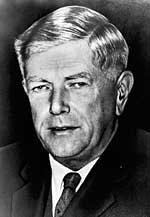
Introduction
With the death of Frank Macfarlane Burnet on 31 August 1985, Australia lost its greatest biologist, a man who had spent virtually all of a long working life in Australia. His experimental work on bacteriophages and animal viruses, especially influenza virus, resulted in major discoveries concerning their nature and replication, and he was a pioneer in the application of ecological principles to viral diseases. He proposed two concepts in immunology – acquired immunological tolerance and the clonal selection theory of antibody production – which proved to be of critical importance in stimulating research and led to a more complete understanding of immune processes. In the later stages of his life he lectured and wrote extensively about problems of human biology and human affairs, ageing and cancer. He was a Foundation Fellow and, from 1965 to 1969, President of the Australian Academy of Science.
Early life
Burnet was born in Traralgon, in eastern Victoria, on 3 September 1899. His father, Frank Burnet, was born in 1856 in Langholm, Scotland, and emigrated to Australia as a young man; his paternal grandfather was an architect and factor to the Duke of Buccleuch in Dumfriesshire. His mother, née Hadassah Pollock Mackay, was born in Koroit, in Victoria, in 1872. She also came of Scottish middle-class stock, her father being a Glasgow schoolteacher who had emigrated to Australia in the late 1850s and settled in Koroit.
Macfarlane Burnet, who from childhood and throughout his life was known as 'Mac' to his close friends, was the second of seven children. At the time of his birth, his father was manager of the Traralgon branch of the Colonial Bank. In 1909, he was transferred and moved with the family to Terang, in western Victoria. In both places young Burnet went to the local primary school. As related in his autobiography, Burnet retained vivid memories of his life as a boy in Terang, where he returned for vacations until he was in his twenties. He was a shy boy, but revelled in the opportunities to wander in the nearby countryside, especially near Lake Terang, where he was greatly interested in the variety of wild life to be seen. He became a member of the Boy Scouts in 1910, soon after the movement was founded in Victoria, and enjoyed the associated camping and outdoor activities.
The first evidence of a serious interest in biology began in Terang, where young Burnet became an enthusiastic collector of beetles – an interest which he retained all his life. There were no books on biology in his home, and no ready access to them in Terang, but he read all the biological sections of an old Chambers Encyclopaedia (published in the 1860s), which introduced him to Charles Darwin. His parents bought him Harmsworth's Natural History, which appeared as a fortnightly periodical. He wrote to Melbourne for a book about beetles, and was sent an English translation of Fabre's Souvenirs Entomologique. Later he acquired Froggatt's (1907) Australian Insects, his copy of which shows his intense interest in the Coleoptera – these pages are covered with entries concerning his collecting and his own very creditable drawings of some of the beetles he had found. This interest in beetles led the local Presbyterian minister, the Rev. Samuel Fraser, to note that he was a bright boy and to suggest to his parents that he should have a university education. Always a person to have a realistic view of his own qualities and deficiencies, Burnet notes in his autobiography that his attributes in childhood and adolescence fitted well with the picture drawn by Roe (1965) for a group of eminent research scientists working in America: 'Most...were rather shy, socially late-maturing boys with strong hobbies and noticeable persistence in them. [They] were voracious if unselective readers throughout their childhood. Most regarded their fathers with great respect but felt somewhat distant from them'.
University education
Having completed his primary school education in Terang, Burnet was sent to Geelong College for four years – an experience that he did not greatly enjoy. In his final year he gained scholarships enabling him to proceed to the university, the most important being a residential scholarship at Ormond College, in the University of Melbourne. Choice of a course was not so much because of a desire to be a doctor as a choice of the only kind of professional life that had much of an appeal of the three suggested – Medicine, Law or the Church. His early years at the University were accompanied by the usual wide reading and broadening of horizons, and a sorting out of his ideas on religion, during which he moved from the traditional social pattern in which he had grown up – Sunday school and later church every Sunday – to become consciously agnostic. Charles Darwin was his hero, whose writings exerted a profound influence on his scientific work, and H.G. Wells was an important influence on his views about science and society.
At the end of a medical course that was shortened to five years because of the First World War and the perceived need when the course began to produce medical graduates quickly, Burnet graduated MB,BS in April 1922, coming second in a class that contained four other persons who later achieved fame in science and medicine as Sir Roy Cameron, Professor R.A. Willis, Dame Jean Macnamara and Dame Kate Campbell. After graduation, Burnet proceeded immediately to prepare for the degree of MD by examination, which he gained late in 1924. It was then usual to spend one year as a resident medical officer, so as to gain experience in casualty and medical and surgical wards before going into practice. In the surgical wards he came to know two eminent surgeons, each of whom later served as a chairman of the Board of The Walter and Eliza Hall Institute when he was director: Sir Alan Newton and Sir Victor Hurley. However, his greatest satisfaction at this time was to serve as house physician to Melbourne's leading physician at the time, Dr R.R. (later Sir Richard) Stawell, a neurologist. This experience firmly convinced Burnet that his future career lay in clinical neurology, and he applied for the post of medical registrar as a stepping stone for such a career. However, the medical superintendent of the Melbourne Hospital, who was responsible for making such appointments, judged (correctly) that Burnet's character and personality were more compatible with a career associated with the laboratory than with clinical work, and instead he was appointed pathology registrar, and a few months later, senior resident pathologist.
Scientific career
The Walter and Eliza Hall Institute, 1924
At that time the pathology laboratories of the Melbourne Hospital were operated as part (then the larger part) of The Walter and Eliza Hall Institute, which had been established in 1915. As a medical resident, Burnet had been interested in the attempts of Dr N.H. Fairley (later Sir Neil Hamilton Fairley), then a member of the Institute staff, to treat cases of typhoid fever by intravenous injections of typhoid vaccine – an interest that led to Burnet's first scientific papers and subsequently to his interest in bacteriophages.
In 1924 the Institute was transformed with the arrival from University College, London, of Dr Charles Kellaway (later to become Sir Charles Kellaway (1)) to become the second director of the Institute. Kellaway was not content with a predominantly service role for the Institute and proceeded to establish research activities in physiology, biochemistry and bacteriology.
The Lister Institute, London, 1925-1927
Kellaway saw Burnet as the potential leader of the small bacteriology section, but decided that he should first have overseas training, and Burnet left for England as a ship's surgeon in June 1925. He took a position at the Lister Institute because there was a paid position available there as an assistant to the curator of the National Collection of Type Cultures, which allowed him about two-thirds of his time for research. A few months later he obtained a Beit Fellowship Award and was able to devote himself full-time to research on bacteriophages. Under the supervision of Professor J.G. Ledingham, he gained a PhD degree of the University of London (1928). A measure of the respect his work had already gained is provided by the fact that he was invited to write the chaper on bateriophages for the Medical Research Council's System of Bacteriology. A copy of d'Hérelle's (2) expanded work, Le Bacteriophage, purchased by Burnet in Paris in July 1927, reveals how carefully he read the book and picked up aspects which prompted additional experimental work. While working in London he became engaged to a fellow Australian then resident there, Edith Linda Marston Druce, whom he married on 10 July 1928, after his return to Australia.
Bacteriologist at The Walter and Eliza Hall Institute 1928-1931
Shortly after his return to Australia in 1928, an event called the 'Bundaberg disaster' occurred, in which several children died after receiving inoculations of diphtheria toxin-antitoxin. Kellaway headed the Royal Commission appointed to investigate the tragedy (3) and Burnet carried out the bacteriological investigations, leading to important studies on staphylococcal toxins. At the same time he continued studies on bacteriophages, producing some papers later regarded as classics.
National Institute of Medical Research, London, 1932-l933
In November 1931 Burnet received an offer that changed the course of his scientific life. Sir Henry Dale, Director of the National Institute of Medical Research at Hampstead, had received a generous offer from the Rockefeller Foundation to expand the excellent work on animal virology then in progress at Hampstead, and after consultation with Kellaway, he invited Burnet to participate in this work. This was a period of great activity, for with people like Sir Patrick Laidlaw, Wilson Smith, C.H. Andrewes, W.I. Elford and J.E. Barnard, the Hampstead laboratories were world leaders in research on animal viruses. The excitement caused by Laidlaw's comment 'The ferrets are sneezing' remained with Burnet all his life; it may even have influenced his later decision to concentrate on influenza virus. During this period Burnet developed his work on the use of the chick embryo for the isolation and assay of animal viruses. He also acquired a powerful friend in Sir Henry Dale, who offered him a permanent position at the National Institute. However, Burnet decided to return to Melbourne, where he became Assistant Director of The Walter and Eliza Hall Institute, in charge of the virus section.
Assistant Director, The Walter and Eliza Hall Institute, 1934-1943
Back in Melbourne, Burnet rounded off his work on bacteriophages and continued actively to study the behaviour of a variety of viruses in the developing chick embryo. Seizing opportunities as they arose, he worked on psittacosis, an experience that influenced his thinking in his first book, Biological Aspects of Infectious Disease, recognized a rickettsia to be the cause of Q fever, and carried out studies on poliovirus. However, his major interest after 1939 was influenza virus, prompted by the discovery of methods of growing the virus in the amniotic and allantoic cavities of the chick embryo. With the onset of the Second World War, his attention was focused on methods of immunizing against influenza, in case there should be another epidemic like that of 1918-19. In 1942 he was elected FRS, and in 1944 made his first trip to America, where he delivered the Dunham Lectures at Harvard University and received an attractive offer for a chair at Harvard. This tempted him greatly, and was refused only after much soul-searching, principally out of a feeling of loyalty to Australian science and especially to the Hall Institute.
Director of The Walter and Eliza Hall Institute, 1944-1965
In 1943 Kellaway was appointed Director of the Wellcome Foundation in London; Burnet was appointed Director of The Walter and Eliza Hall Institute in 1944. He had been greatly impressed with what he saw of medical research in the United States in 1944, especially at Harvard University, and set out to achieve something of this pattern in Melbourne. He decided that the future activities of the Institute should be concentrated on animal virology, especially influenza virus, and of those already in the Institute (apart from the Clinical Research Unit), only Gottschalk, a biochemist, continued to work on any other topic. When the enzymic nature of influenza virus action on red blood cells became apparent, Gottschalk also joined the team and unravelled the nature of the viral enzyme (neuraminidase).
Although he personally evinced no desire to become involved in experiments using biochemical and biophysical techniques, Burnet recognized that such an approach was essential if the Institute were to contribute to a comprehensive study of animal viruses. In 1946 he sought and obtained from the Commonwealth Government a special grant of £20,000 (then a very considerable sum) to establish a group equipped to carry out biophysical research on viruses, including electrophoresis, ultracentrifugation, and later electron microscopic studies. For the next decade, the Institute was a Mecca for overseas scientists who came to work on influenza virus under Burnet's guidance.
From 1951 to 1956, Burnet himself concentrated on studies of the genetics of influenza virus. His demonstration of high frequency recombination was received with great scepticism by scientists overseas, since it did not accord with what was found with bacteriophages and therefore with conventional wisdom. The soundness of Burnet's experimental work in this field became apparent when it was demonstrated several years later that influenza virus had a segmented genome (4).
Although he was an expert and assiduous experimentalist, Burnet also found time to write books summarizing his views on animal virology and with W.M. Stanley acted as co-editor of a major compendium on virology.
In parallel with his work on virology, Burnet had always been interested in the immune response, and in 1941 he had produced a monograph analysing the nature of antibody production. In 1948 he re-examined this topic and propounded a new hypothesis on antibody production based on analogies with adaptive enzymes. More important, however, was his enunciation in this book of the hypothesis of acquired immunological tolerance.
Honours, both scientific and civil, began to come his way. In 1947 he received a Royal Medal and in 1959 the Copley Medal of The Royal Society; he was knighted in 1951. In 1958 he was awarded the Order of Merit and in 1960 the Nobel Prize in Physiology or Medicine.
Although never a keen committee man, as Director of the Institute Burnet accepted an increasing number of national and international obligations. Apart from Board meetings and membership of committees of the National Health and Medical Research Council that were an obligation of his position, he served as a member of the Defence Research and Development Policy Committee (1947-52), as Chairman of the Radiation Advisory Committee (1955-59), and as Chairman of the Queen Elizabeth II Fellowship Committee (1963-69). As Chairman of the Papua New Guinea Medical Research Committee (1962-69) he played a major part in the establishment of the Papua New Guinea Institute of Human Biology – a name that he preferred to 'Medical Research' in that it emphasized the importance of demography and population growth in the future of that country.
Internationally, Burnet had the unusual distinction of serving as President of both the International Association of Microbiological Societies (1953-57), and the Third International Congress of Immunology (1977). He served on several committees of the World Health Organization, including the WHO (Global) Medical Research Advisory Committee (1959-63) and on retirement undertook the task of acting as foundation chairman of the Commonwealth Foundation in London (1966-69).
In 1957, at an age when most scientists are thinking of contracting their bench work, Burnet made a revolutionary change in the direction of his own work and that of the Institute. He decided that henceforth he (and all staff in the Institute) would abandon virology and concentrate instead on immunology. The reasons for this decision were complex. He saw that virology would in future demand the use of tissue culture rather than the developing chick embryo, and that it would become more and more 'molecular', and he was loth to undertake either transition. Further, as Lederberg noted (personal communication, 1986), Burnet was at the time 'remarkably uninformed with respect to modern views on the mechanism of protein synthesis, DNA coding, etc.' Also, his long time interest in the theory of antibody production had been stimulated by a paper by Jerne (5) that proposed a 'selective' model for the process, rather than the currently fashionable instructive theory. A few years later, this decision was vindicated by the award of the Nobel Prize not for virology (for which the award would certainly have been merited), but for an immunological discovery, acquired immunological tolerance. By then, Burnet had gone beyond immunological tolerance to formulate what he himself regarded to be his major contribution to science, the clonal selection theory of antibody production.
Burnet's increased prestige and international fame led to a change in his work pattern, so that he had less and less time to spend at the bench. Nevertheless he continued to produce papers on experimental immunology – on graft-versus-host reactions, as described by Simonsen (he was deighted to find that he could use the chorioallantoic membrane to study immunological phenomena), and on autoimmune diseases, using NZB mice as a model.
Burnet had always kept the staff of The Walter and Eliza Hall Institute small, partly, no doubt, so as to maximise his opportunities for research at the bench. But by 1962 he saw that his successor, whoever he was to be, would require more space, and he devoted considerable effort to obtaining money for two more floors, which were completed in 1966 and named the 'Nuffield-Burnet Laboratories' by his successor. In 1965 he retired from directorship of the Institute, and Dr G.J.V. Nossal (now Sir Gustav Nossal) was appointed as Director. To mark the occasion, the Ciba Foundation organized a symposium on 'The Thymus' (6) in Melbourne, and the Governor-General of Australia, Lord Casey, attended his Farewell in the University of Melbourne.
University of Melbourne, 1966-1977
For Burnet, as for most scientists, retirement from an official position did not mean the end of active work. Professor S.D. Rubbo, who had just moved into the newly built School of Microbiology in The University of Melbourne, across the road from the Hall Institute, offered Burnet rooms and organized the provision of a secretary, and Burnet began a new career as a writer and elder statesman of science in Australia. At this time (1965) he accepted the presidency of the Australian Academy of Science, which he had declined eight years earlier because of his wish to devote himself primarily to his work as Director of the Hall Institute. During the twelve years that he was at The University of Melbourne, Burnet produced thirteen books, initially on immunology and subsequently on human biology, ageing and cancer, as well as a fourth edition of his first book.
He continued to receive honours, both scientific and civil. In 1969 and again in 1974 international symposia were organized by Nossal to celebrate his 70th and 75th birthdays. He received a KBE in 1969 and Australia's highest award, Knight of Australia (AK), in 1978. However, in 1973 he suffered a grievous loss when his wife Linda died of lymphoid leukaemia. For a time he went to live again in Ormond College, University of Melbourne, where he had lived as a medical student, and renewed his friendship with the Master, Dr Davis McCaughey, who was later to be appointed Governor of Victoria. In 1976 he married again, to Hazel Jenkin, a widow who had endowed the library in the School of Microbiology to commemorate her only daughter, who had died while still a graduate student.
Retirement, 1978-1985
In 1978 Burnet decided, at the age of 78, that the time had come to slow down somewhat. He left the School of Microbiology and moved to his home, where he produced two more books, and continued to maintain an extensive correspondence and to write articles on general problems such as the future of Australia. In November 1984 he was operated on for cancer on the rectum and appeared to have made a good recovery, but secondary lesions were discovered early in August 1985 and he died on August 31 at his son's home at Port Fairy, near where he had spent his boyhood. He was given a State funeral by the Government of Australia, and was buried at Tower Hill cemetery, near Port Fairy. He was survived by his second wife Hazel, his son Ian, his daughters Elizabeth and Deborah, and eight grandchildren.
Pattern of work
Daily and weekly routine
Before embarking upon an analysis of Burnet's scientific work it may be useful to outline the pattern of his activities during the period 1945-55. After this, his increasing fame led to many other calls on his time and increased absences overseas, which disrupted this pattern somewhat, but when at the Institute Burnet always devoted a substantial part of each day to work in the laboratory. Throughout his life at the bench, he worked alone, except for one or sometimes two graduate assistants and one or two technicians. In consequence, many of his papers on experimental research show Burnet as the sole author and few list a co-author other than his current graduate assistant. He was careful in the selection of his graduate assistants, and had a succession of highly competent and devoted women help him in this capacity: Margo McKie (1928-34), Mavis Freeman (1928-40), Dora Lush (1934-39), Diana Bull (1941-43), Joyce Stone (1940-50), Patricia Lind (1944-65), Margaret Edney (1948-56), Margaret Gilpin (1948-49; 1949-52), Margaret Holmes (1958-65), Deborah Burnet (1960-62; 1963-64), and Susi Ernyei (1962-64).
Burnet's abiding passion was his scientific work. As Director of the Institute, he decided policy, usually after consultation with the Deputy Director, Dr I.J. (later Sir Ian) Wood, and often after discussions with Dr E.V. Keogh, the éminence grise of medical research in Victoria in the 1950s. However, he always took absolute responsibility for all appointments of research staff, graduate students and overseas visitors, in accordance with his policy of ensuring that the Institute should be an elite institution of world standard, small enough to be effectively controlled by one man, himself. He delegated the implementation of policy to the Manager of the Institute, Mr Arthur Hughes, and the Personnel Manager, initially Miss Fanny Williams and after her retirement, Dr Margaret Holmes.
Burnet was very proud of being an Australian, and was determined to show that science of first class quality could be carried out in Australia by Australians. The majority of his research papers were published in Australian journals, notably the Australian Journal of Experimental Biology and Medical Science, and for papers with a medical flavour, The Medical Journal of Australia. It was very fitting, and a source of considerable pride, that he was selected as 'Australian of the Year' in 1961.
Intellectual processes
This account of his daily work shows that Burnet was a dedicated and hard-working scientist. Hundreds of other scientists share these traits – what made Burnet so outstanding? Nossal (7) and Cohn (8) have analysed this question, and some of the answers will emerge from the description of Burnet's scientific work which follows. But it may be useful to attempt a summary here.
Although perhaps better known as a theoretical biologist, Burnet was a first-class experimental scientist, who until well into his sixties spent the greater part of each day working at the laboratory bench. His name never appeared on an experimental paper unless he had participated substantially in the benchwork himself. This involvement in benchwork meant that he was able to notice the unexpected result that might otherwise be dismissed as a technical mistake, and follow it up. His own experiments never made use of apparatus more complex than a microscope, for like many medically trained laboratory workers of that era, he overestimated the difficulties inherent in the use of biochemical and biophysical equipment. He rarely used statistical analysis for the evaluation of his experimental results; they had to be capable of unequivocal interpretation without it. And he found that benchwork was excellent 'occupational therapy', that allowed his mind to wander and wonder while his hands were occupied with pipettes and eggs.
In his experimental work, Burnet was a reductionist; he designed experiments to demonstrate or disprove the 'minute particulars' of his current hypothesis. However, in discussions of his own work, and even more that of his associates, he was quick to relate any new finding to biology as a whole in a most perceptive way. As he says of himself, Burnet was an ecologist, and his capacity to integrate discoveries made in diverse fields of science, which is the hallmark of the ecologist, was one of his great strengths.
A remarkable feature of Burnet's career was that although he worked as a virologist until the age of 57, some 90% of his experimental papers being on virology, the two contributions to science for which he became most renowned were in the field of immunology, on aspects in which he had done little or no experimental work. Such breadth and depth of understanding, and such self-assurance as to allow him to challenge established dogma in a field not his own, is rare in the present era of scientific specialization.
In spite of the fact that he never gave a regular course of lectures to undergraduate or graduate students, Burnet was a great teacher. He had an unforgettable impact on the thinking of the stream of scientists who came to the Hall Institute from Australia and overseas, especially between 1944 and 1965 (Walter and Eliza Hall Institute of Medical Research Annual Review 1978-79). Even at this stage of his life, he was shy and withdrawn, and reacted most effectively with his colleagues when he discussed a paper that they wished to submit for publication. But all who worked in the Institute had no doubt that they were privileged to be working with a man of genius. He influenced an even wider audience though his books, the majority of which were not technical monographs, but were written in 'Scientific American' style, for the physician or biologist who was not a specialist in virology, or immunology, or gerontology.
Burnet had knowledge and intelligence in abundance. He was uncommonly broad in his interests and reading and had an excellent memory. But the great and rare qualities to which his knowledge and intelligence were harnessed were originality and creativity. Burnet had a remarkable intuitive grasp of certain fundamental biological concepts, especially Darwinian evolution. He had courage, optimism and the self-assurance and confidence in his own judgement that allowed him to address questions of fundamental importance in spite of his relative isolation in Australia. Indeed he thought that his isolation was an advantage, since it protected scientists from being too much influenced by fashions in scientific thinking. And he was a lateral thinker with an unparalleled capacity to link apparently unconnected observations. This led him to devote as much mental energy into interpreting the world literature as most people put to interpreting their own work. However, he did not have much interest in other people's theories, except in so far as they helped him to remould his own.
Of course, he had weaknesses. He was very reluctant to accept the 'ultimate reductionism' of DNA, and in both articles and books castigated molecular biology as being potentially dangerous, and unlikely to make a contribution to human health commensurate with the funds and talent that were devoted to it. Even this much-criticized shortcoming had its logic. His comment referred to medical science, not biology in general, and he argued that little could ever be done to prevent afflictions due to genetic errors (germline or somatic), and that little research in molecular biology was needed to control or prevent the diseases due to environmental influences. The major problem, he thought, was to ensure the proper distribution of known methods of preventive and curative medicine, which applied almost exclusively to extrinsic diseases, to all of the world's people.
If one had to nominate 'keywords' to describe Burnet's greatness as a biological scientist, they might include – originality, creativity, biological intuition, high intelligence, discipline, persistence, excellent memory, capacity for lateral thinking, ability to write rapidly and clearly, and self-confidence.
Scientific work
Burnet's first scientific paper was published in 1924 and his last in 1983; his first monograph appeared in 1936 and his thirty-first and last book in 1979. For over two-thirds of the long period during which he was writing, he spent well over half of each working day, on average, at the bench. His work covered a wider range of subjects in biomedical research than that of most scientists, hence it is convenient to arrange it by major topics, in roughly chronological order. There are, of course, some overlaps, as Burnet responded to urgent biomedical problems that occurred when he was involved in other studies, e.g., the Bundaberg disaster in 1928 and the poliomyelitis epidemic in 1937; and, as Director of the Hall Institute, the outbreak of Murray Valley encephalitis in 1951.
Bacteriophages
Although as the pathology registrar at The Walter and Eliza Hall Institute in 1924-25 he was responsible for clinical bacteriology for the Melbourne Hospital, Burnet immediately began to carry out research. In 1924, shortly after beginning work at the Institute, he had acquired a copy of an English translation of Felix d'Hérelle's first book on bacteriophage (9). His fascination with this subject was heightened by the observation, soon afterwards, of bacteriophage plaques in a culture of Escherichia coli grown from the urine of a patient with pyelitis. The study of bacteriophages was to dominate Burnet's research for the next decade, and his 32 papers on the subject, published between 1924 and 1937, include two authoritative reviews on bacteriophages themselves, one review on their immunological reactions, and several papers of seminal importance for what came to be the sciences of molecular biology and microbial genetics.
In contrast to d'Hérelle, who held that the phenomenon of transmissible bacterial lysis was caused by self-reproducing virus particles, many other scientists of the period, including such notable figures as Jules Bordet and André Gratia, maintained that the phenomenon was caused by bacterial enzymes. Burnet was convinced by the logic of d'Hérelle's view of the particulate nature of bacteriophage, but his experience with isolations from human faeces soon led him to believe that d'Hérelle was wrong in insisting that there was only a single, highly variable, species of virus – the bacteriophage. He thought that there were many different species of bacteriophage, and showed that different strains differed greatly in physical and physiological characteristics. In order to establish this point unequivocally, he adopted an approach that was to characterise his later work in animal virology and reflects his childhood interest in collecting and classifying beetles. Taking advantage of the opportunity provided by his brother's dairy farm, he collected specimens from fresh excreta of pigs, cows, horses and chickens, from which he isolated many bacteriophages. Up to this time the principal method of classification was that introduced by Bail (10), viz., study of the resistance patterns of 'smooth' and 'rough' salmonellas to various bacteriophage strains. Burnet decided to employ serology (virus neutralization) for the classification of his collection, and found that using this method, 50 cloned bacteriophage strains could be classified into 12 natural groups. All members of each serological group also produced plaques with the same general structure and showed similar patterns when studied by Bail's method. His observations of physical differences between different strains of bacteriophage was greatly strengthened by the demonstration by Elford & Andrewes (11) that different bacteriophages, mainly from Burnet's collection, differered greatly in size, as judged by filtration through graded collodion membranes.
Although d'Hérelle had made many fundamental observations on bacteriophage and had introduced the basic techniques for its study, viz., the limiting dilution method and the plaque assay, he was principally concerned with its possible use for the therapy of human diseases. As a medical bacteriologist, Burnet had a similar concern and produced three papers exploring such possibilities. However, his major interest was with the nature of bacteriophages and their interactions with bacteria. Several of his contributions were to be of lasting historical importance, notably a paper on techniques for studying bacteriophage multiplication, papers on the nature of lysogeny, and experiments on the inheritance of bacterial resistance to bacteriophages.
Bacteriophage multiplication.
In 1926 d'Hérelle had demonstrated that with a highly virulent strain of bacteriophage and highly susceptible bacteria, bacteriophage multiplication caused step-wise increases in titre. However, proponents of the bacterial enzyme hypothesis of bacteriophage action regarded this as a special case. By modifying d'Hérelle's methods, Burnet was able to show that the step-wise increase in titre was a general phenomenon, applicable to all bacteriophages. These experiments provided the basis of the classical experiment of Ellis & Delbrück (12) on the one-step growth experiment, a technical manipulation that was to prove of crucial importance in the use of bacteriophages for the development of molecular biology. Shortly after I had joined the staff of the Hall Institute in 1946, Burnet gave me reprints of the Ellis-Delbrück and subsequent Delbrück papers to read, with the remark that they were scientifically fascinating, but of no practical importance. Parenthetically, Delbrück also had a blind spot; he did not believe in lysogeny but thought that persistence of bacteriophages in some cultures was due to cryptic infections.
Burnet also carried out important experiments on the initial stage in virus multiplication, viz., the attachment of virus particles to the susceptible bacterial cell. He proposed that the initial contact between infecting virus and bacterial cell was a stereo-specific process between complementary structures on virus and cell, analogous to an antigen-antibody reaction, and showed that bacterial extracts could specifically inactivate bacteriophage particles to which the intact cell was sensitive, but that similar extracts of bacteriophage-resistant bacteria could not.
The significance of lysogeny.
The phenomenon of lysogeny has played a central role in the formulation of ideas about bacteriophages. Excluding contamination of a partially susceptible bacterial strain with a bacteriophage ('carrier' cultures), certain bacterial strains exhibit lysogeny, i.e., during their multiplication the bacteriophage genetic material is replicated as part of the bacterial genome (prophage), but occasionally certain bacterial cells release viral particles, which can be detected by their effects on susceptible bacteria.
Lysogeny provided Bordet and other critics of d'Hérelle with their most serious objection to the notion that serially transmissible bacterial lysis was caused by a particulate virus, since lysogenic bacteria reproduced the lytic principle during their growth without the viability of the cell being affected – a contradiction to beliefs of d'Hérelle and his contemporaries about the essential nature of viral reproduction. The problem was conclusively solved by the elegant experiments of Lwoff & Gutmann (13), involving the cultivation of individual lysogenic bacteria in microdrops, which led to the notion of 'probacteriophage' (later called 'prophage' and ultimately generalized to 'provirus'). As these authors noted, however, Burnet & McKie (14) had already come close to this view, when they said that permanence of the lysogenic character made it necessary to assume the presence of the bacteriophage or its anlage in every cell of the culture, and drew the conclusion that it was a part of the hereditary constitution of the bacterial strain. In other experiments, Burnet also recognized the difference between resistance of bacteria at the level of absorption of bacteriophage particles and what came later to be called the 'immunity' of lysogenic bacteria to infection by a bacteriophage homologous to that it already carried.
Microbial genetics.
Since so many bacteria are lysogenic, the development of bacterial genetics has been inseparable from studies on bacteriophages. To this extent Burnet's contributions to the understanding of lysogeny, just discussed, are an important part of the early history of microbial genetics. Two other papers report pioneering experiments in what came to be the science of bacterial genetics. Many years before Luria and Delbrück (15) published their classical paper on the 'fluctuation test', showing that the occurrence of bacteriophage-resistant bacteria in a culture exposed to bacteriophages was due to the selection of bacterial mutants, Burnet (16) had reached the same conclusions, by selecting resistant mutants by their colonial morphology, without the use of phage as a selective agent. Subsequently, Burnet & Lush (17) wrote the first paper on bacteriophage genetics, when they discovered a bacteriophage whose capacity for being carried in the lysogenic state had been lost permanently, by mutation.
Staphylococcal toxin
Burnet arrived back in Australia from his first sojourn in England in December 1927, filled with enthusiasm to carry on his work with bacteriophages. On 27 January 1928, however, within twelve hours after twenty-one children in Bundaberg, in Queensland, had received injections of a diphtheria toxin-antitoxin mixture (then the accepted method of immunization against diphtheria), eighteen of them had become ill, and twelve died within twenty-five hours. Dr Charles Kellaway, the then Director of the Walter and Eliza Hall Institute, was immediately appointed Chairman of a Royal Commission to investigate the fatalities (18) and Burnet was deputed to carry out the laboratory part of the investigations. He soon showed that Staphylococcus aureus could be recovered from both the fluid in the toxin-antitoxin bottle and the pus in the abscesses of survivors. This led him into a completely new field, and over the period 1928-31 the behaviour of staphylococci and their toxins was the central theme of his research, with bacteriophages taking second place.
Over the next four years Burnet published nine papers on the staphylococcal alpha toxin, which was regarded as the cause of death in these children, and some years later, a paper on staphylococcal bacteriophages. The Bundaberg disaster was important in the history of The Walter and Eliza Hall Institute, because the effective work of its Director, Charles Kellaway, and his staff on a matter of great public interest impressed the name of the Institute and the significance of medical research on the Australian public. Burnet's work on the staphylococcal exotoxin extended a field that had barely been studied before, but the most important aspect of this work for Burnet's future development was an incidental observation on the antibody response of rabbits after intravenous or subcutaneous injection of the toxoid. Despite a very small and slow response to the first injection, a second injection a few weeks later led to an immediate and rapid rise in the antitoxin level, which rose logarithmically over a period of 40-120 hours after the second injection. Burnet' s interpretation of this phenomenon was that something was duplicating itself every twelve hours or so to produce the antibody. His paper on these results and their implications was rejected by the British journal to which it had been sent, but this only stimulated him to collect further information on the topic and to publish it in an Institute monograph, The Production of Antibodies, which was eventually published in 1941 (19). These data also figure prominently in the second edition of the monograph (20), for Burnet saw in this difference between the primary and secondary response, overwhelming evidence that the Haurowitz-Mudd-Pauling 'instructive' hypothesis of antibody production could not be correct.
Animal virology
Although Burnet had already carried out some work with poliomyelitis virus (21), his introduction into animal virology really came with his second, two-year-long visit to England in 1932-33. Before Kellaway came back to Australia in 1923, he had worked with Sir Henry Dale, the Director of the National Institute of Medical Research in Hampstead, England. Since its opening in 1919, the microbiology department of the National Institute had concentrated on virus diseases, and by 1931 Dale had gathered together an active group of workers who had made some well-publicized discoveries and were at that time recognized as world leaders in this field. The Rockefeller Foundation offered Dale substantial support to develop work on animal viruses further, and through Kellaway, Dale asked Burnet to come to the Institute on a two-year appointment, to study animal viruses. After assuring himself that there would be a post at the Hall Institute when he returned, Burnet accepted the offer and started work at Hampstead early in 1932.
At that time animal virology was in its infancy. Apart from smallpox and vaccine virus, which had been studied for many decades, the only viruses of medical importance that had been isolated were those that caused herpes simplex, poliomyelitis, rabies and yellow fever, and very little detailed study had been made of any of these. However, since all these viruses were already being studied by staff members at Hampstead, another virus had to be found for Burnet. The chance came when Kikuth, the German worker who had just discovered the first effective synthetic antimalarial drug, atebrin, asked Dale to help with study of a virus that had caused problems in their testing of antimalarials. With the collaboration of J.E. Barnard and W.J. Elford, Burnet (22) showed that the virus was a large one and correctly identified it as canary-pox virus, related to but different from fowlpox virus. The fact that it was a virus of birds suggested to Burnet that it might be a good candidate for growth on the chorioallantoic membrane – a technique described for fowlpox virus a year before by Woodruff & Goodpasture (23) at Vanderbilt University, USA. Many years later, Burnet was to pay gracious tribute to Goodpasture (24). The initial experiments were successful, and Burnet was introduced to the developing chick embryo – an experimental animal that was to dominate his work in virology, and even in immunology, for the rest of his life at the bench.
At the National Institute of Medical Research, Burnet found a lively group of colleagues of about his own age, including C.H. (later Sir Christopher) Andrewes, with whom he continued to conduct a correspondence ('FMB' to 'CHA', and vice versa) for many years afterwards. Although working with animal viruses, Andrewes and Elford were also interested in bacteriophages, studying their size, as determined by gradocol filtration (25) and the mechanism of neutralization by antibody (26). With this example and stimulus, Burnet himself divided his time between studies of animal viruses (mainly their growth on the chorioallantoic membrane), and further work with bacteriophages, on which he published, from the National Institute of Medical Research, seven experimental papers and a major review (27).
Growth of viruses in the developing chick embryo.
Although Goodpasture and his colleagues had shown that fowlpox and vaccinia viruses could be grown on the chorioallantoic membrane, they had always used large inocula and obtained confluent growth. In the work described in his paper on canary-pox virus (28) Burnet also used concentrated inocula. Some time later, however, he noticed that with dilute suspensions, opaque spots of proliferating cells a few millimetres in diameter were produced. Here was a system comparable to plaque assay with bacteriophages, that might be employed for the titration of animal viruses and antisera to them. However, it was not until 1936, after he had returned to Melbourne, that he was to utilize the pock-counting technique for studying the relationship between canary-pox virus and fowlpox virus (29).
Growth on the chorioallantoic membrane. Having found that canary-pox virus grew on the chorioallantoic membrane, Burnet again followed his collecting habits. He studied all the viruses he could obtain, whether from human or animal sources, to study their growth on the chorioallantoic membrane and their effects on the developing chick embryo. In rapid succession, papers appeared on the growth on the chorioallantoic membrane of infectious laryngotracheitis virus (30), fowl plague and Newcastle disease viruses (31), vesicular stomatitis virus (32), influenza virus (33), psittacosis 'virus' (34), louping ill virus (35) and ectromelia virus (36). Initially, he merely tested for growth, by subinoculation into susceptible animals, and studied the macroscopic and histological changes in the membrane and elsewhere in the chick embryo.
In 1936 he published his first paper on the use of the pock-counting technique, with avian laryngotracheitis virus (37), and illustrated the potential of this method for assaying antibodies to the virus. He immediately applied the method to other viruses, and by the time he came to write his monograph on the use of the developing egg in virus research (38), he or workers in his laboratory had shown that a variety of viruses could be assayed in this way – avian poxviruses, vaccinia, ectromelia, herpes simplex, infectious laryngotracheitis and louping ill viruses, and after adaption by serial passage, influenza A virus.
Over the next four years (1936-40) he worked on a variety of viruses and with the chlamydia of psittacosis and the rickettsia of Q fever. A series of eight papers utilized pock-counting of egg-adapted influenza virus for the study of various aspects of influenza; other papers illustrated the use of the pock-counting method for the analysis of the natural history of herpes simplex and the pathogenesis of louping ill (39). A few years later he produced a paper (40) describing in detail the methodology of the pock-counting technique, including ways of minimizing the occurrence of non-specific lesions.
Amniotic inoculation. Following a report that inoculation of meningococci into the amniotic cavity produced infection of the lung and meninges of chick embryos, Burnet demonstrated that unadapted (ferret) as well as egg-adapted strains of influenza virus could be propagated in the chick embryo by amniotic inoculation (41), and that this route of inoculation could be used for titration of influenza virus and antibodies to it (42). It also provided a new, simpler and more sensitive method than ferret inoculation for the recovery of influenza virus directly from human patients (43). Until about 1968, when it was found that the Hong Kong strain would grow directly in the allantoic cavity, amniotic inoculation continued to be the method of choice for the recovery of influenza virus from human and animal sources.
Allantoic inoculation. Although he had previously observed that the allantoic fluid contained large amounts of virus after the amniotic inoculation of influenza virus, Burnet had regarded this as having been derived from the infected lung, and did not test whether influenza virus would grow after direct inoculation into the allantoic cavity. However, after reading that Nigg et al. (44) had found that a high yield of influenza virus could be obtained from membranes of chick embryos inoculated through the chorioallantoic membrane, Burnet tested direct allantoic inoculation, and showed that 2-3 days later all strains tested could be recovered to high titre in the allantoic fluid. He commented that this method might be useful for the production of large amounts of virus for use as vaccine (it is still the preferred method of preparation of influenza vaccine). He also noted that with some strains of influenza virus that multiplied to high titre, the embryo was unaffected and hatched normally, however no antibody to influenza virus was produced. It was not until 1950 that he used the chick embryo to test for acquired immunological tolerance (45).
With the discovery of haemagglutination by influenza virus by Hirst (46), the possibility arose of using allantoic inoculation as a cheap, simple and reliable method of titrating influenza viruses and their antibodies (47). Later he was to concentrate the full resources of the virus group in the Hall Institute on the elucidation of the haemagglutination-elution phenomenon. In 1942 Burnet published his first paper on the genetics of influenza virus, based on differences between viruses that were maintained by amniotic passage (O) or passed in the allantoic sac (D) (48). This was a topic that was to become his major interest in the 1950s.
This phase of Burnet's research was rounded off with the publication in 1946, with his colleague W.I.B. Beveridge, of the second edition of their Medical Research Council monograph (49). In contrast to the first edition, which was concerned only with the results of inoculation on the chorioallantoic membrane, all routes of inoculation – chorioallantoic, amniotic, allantoic, intravenous, intracerebral and yolk sac – were discussed.
Psittacosis and the ecological approach to infectious diseases.
Burnet did not carry out much research on psittacosis, since he published only six papers, over a period of eight years, on the topic. Two of these were routine papers for a laboratory-based microbiologist – one the demonstration that the chlamydiae of psittacosis, like many viruses, multiplied on the chorioallantoic membrane, with the production of pocks when dilute suspensions were used, with characteristic Levinthal-Coles-Lillie (LCL) bodies (50); and the other with the production of focal pulmonary lesions after the intranasal inoculation of mice with dilute suspensions and the use of the method for titrating the agent (51). However, his work with psittacosis had some interesting side effects:
- it brought him into contact with Karl Meyer, a powerful figure in contemporary public health activities in California, leading to a lifelong friendship;
- his recent use of Castaneda's strain for LCL bodies led to his early recognition of rickettsiae in Q fever material; and
- his studies of latent psittacosis and an outbreak of lethal disease in Australian wild parrots directly influenced his thinking about the ecology of infectious diseases.
It may be useful to elaborate somewhat on the last of these matters here. In his autobiography (52), Burnet notes that he was '...by temperament an ecologist, a naturalist...'. Until 1934, his naturalist's instincts had been largely directed to beetle collecting, bird watching, and curiosity about the ecology of the bacteriophages of intestinal bacteria. In 1934, in response to a request from the Commonwealth Director-General of Health, he demonstrated that psittacosis was present in apparently healthy parrots obtained from bird dealers in Adelaide and Melbourne (53). Following up this study, he demonstrated that asymptomatic psittacosis was enzootic among Australian parrots in the wild, but could cause disease when parrots were stressed under conditions of confinement by bird dealers (54). Some years later, he was able to investigate outbreaks of fatal psittacosis that occasionally occurred among wild parrots in nature (55).
Lysogeny was, of course, a perfect example of latent, inapparent infection, and experimental work during 1935-36 had impressed Burnet with the frequency with which inapparent infections occurred in laboratory animals deliberately infected with different viruses (56). Psittacosis exemplified a similar situation, and he interpreted data on the epidemiology of poliomyelitis and yellow fever in man as indicating that most infected humans suffered inapparent infections with these viruses (57). Over the next year or so Burnet put these ideas about the ecology of infectious diseases and immunity together as a book, Biological Aspects of Infectious Disease, written 'from the point of view of a biologist as much interested in how the parasite species survives as in how the host resists it'. Written before he had read the only other comparable book at that time – Theobald Smith's Parasitism and Disease, it presented a rather similar point of view. He later acknowledged his debt to Smith, whose ideas, he said, 'filtered through the writings of others long before I read his famous exposition of the ecological approach in medicine'. This first semipopular book of Burnet went through four editions (1940, 1953, 1962, 1972), and was translated into German, Italian, Japanese and Spanish. From my own contacts with scientists in the United States, I know that it and his 1944 Dunham Lectures, Virus as Organism, had a considerable impact on many biochemists and microbiologists, by showing the value of thinking of infectious diseases from the point of view of the survival in nature of the parasite, rather than just as diseases of the vertebrate host.
Burnet was to come back time and again to this ecological point of view (58) hence his great interest in myxomatosis and Murray Valley encephalitis in Australia, two diseases on which he did not carry out any investigations himself, although the work on Murray Valley encephalitis was carried out under his direction.
Q fever.
In 1935 physicians in Brisbane became concerned with the sporadic occurrence of a typhoid-like disease among abattoir workers, from which no bacteria could be recovered. Guinea pigs were susceptible, but again no organisms could be recovered (59). It was reasonable to assume that the disease was due to a virus, hence organs from an infected guinea pig were sent for investigation to Burnet, late in 1936. Burnet subjected the material to the usual series of tests in experimental animals, making inoculations in guinea pigs, monkeys, mice, rats and on the chorioallantoic membrane, but soon concentrated on studies in mice, using normal and immune guinea pigs to determine the specificity of the findings (60). In all his studies of the growth of viruses in experimental animals, Burnet used to examine infected organs histologically. Sections of the enlarged mouse spleens showed no inclusion bodies but under high power magnification Burnet noticed a 'vague herringbone pattern', which recalled what he had seen in psittacosis and had read about for rickettsiae. Using Castaneda's stain, he decided that there was no doubt but that the agent was a rickettsia. In an addendum to his first paper on Q fever, Burnet reported that he had been able to recover the organism from the blood of a patient, and that acute and convalescent sera of another patient showed a substantial rise in agglutinating titre against a rickettsial suspension, thus establishing that it was the cause of Q fever.
The next step was the development of a serological test. Mouse spleens contained very high concentrations of the rickettsiae, which could be substantially purified by differential centrifugation and provided a satisfactory agglutinogen (61). Having confirmed by serological tests that the rickettsia that they had isolated was without question the cause of the human disease, further work with the agglutination test devolved on Derrick, who used the method with good effect to unravel the epidemiology of Q fever in Queensland (62).
Burnet's subsequent investigations on Q fever were concerned mainly with determining the relationship of the Q fever organism to other microorganisms. In a rare excursion into tissue culture, he showed that it behaved like the typhus rickettsiae and unlike viruses or chlamydiae in its capacity to continue to multiply in damaged cells (63).
Subsequent studies involved direct comparisons with other known rickettsiae, the upshot of which was to show that there was no serological relationship between the Q fever rickettsia and other known pathogenic rickettsiae (64). However, early experiments (65) suggested and later investigations (66) conclusively demonstrated that it was identical with a rickettsia isolated from ticks in Montana, USA, by Cox (67), except that the American strain was much more virulent for guinea pigs.
Apart from being the first of many laboratory workers to be infected with Q fever (68), the other feature of note in Burnet's association with Q fever is that the causative organism was named after him – first, by Derrick, as Rickettsia burneti and subsequently, when taxonomists split the genus, as Coxiella burnetii. As noted in a recent review (69), 'The papers of Derrick and of Burnet and Freeman remain models of careful investigations, critical analyses, and conclusions'.
Poliomyelitis.
During the 1920s and 1930s epidemics of poliomyelitis were common in Melbourne, and as a medical virologist Burnet inevitably became involved in the experimental study of polioviruses. An early study (70) provided the first inkling that there was more than one serotype of poliovirus; monkeys that had recovered from intracerebral inoculation with either the Rockefeller Institute 'MV' strain (now known to be poliovirus type 2) or the local strain (probably type 1) were immune to reinfection with the homologous strain but susceptible to the heterologous strain. A severe epidemic of poliomyelitis occurred in Victoria in 1937-38, with over 1900 paralytic cases, and Burnet was appointed by the State Government to the local Advisory Council on the outbreak, and had his first experience of public affairs when he acted as its spokesman.
He was also asked to undertake experimental investigations into the disease, and over the period 1938-40 he and his colleagues produced seven research papers on poliomyelitis in monkeys. After isolation of the virus causing the epidemic in rhesus monkeys, Burnet and his colleagues (71) developed intraocular inoculation as a preferable alternative to intracerebral inoculation in tests for neutralizing antibodies. Then the supply of rhesus monkeys ran out, because of a six-months-long closed season in India. As an alternative, cynomolgus monkeys were obtained from Singapore. Although some earlier workers had reported that cynomolgus monkeys, unlike rhesus, could be infected by the oral route, Flexner (72), in extensive experiments with the 'MV' strain, had been unable to confirm this result. Burnet and his colleagues (73) found that cynomolgus monkeys were readily infected by all routes of inoculation, including feeding, swabbing the pharynx, and after laparotomy, inoculation directly into the stomach or small intestine. The orthodox view at the time was that, apart from cases after recent tonsillectomy, the only 'natural' route of human infection was via the olfactory bulbs (74). However, the results obtained with cynomolgus monkeys suggested to Burnet that infection of humans with poliovirus might normally occur by oral or pharyngeal routes. Extending this study (75), he found that poliovirus could be recovered from pharyngeal tissue, certain local nerves (vagus, coeliac plexus), and mesenteric lymph nodes of cynomolgus monkeys infected by the oral or intestinal routes, and then went on to carry out the second and last experiment of his career employing tissue culture. Lung, intestine and buccal tissues of a 12-weeks-old human foetus were used to set up 'Rivers-type' tissue cultures and each culture was inoculated with poliovirus. After incubation for three days, the centrifuged supernatant fluids were inoculated intracerebrally into monkeys; those from the intestinal and buccal tissues, but not from the lung tissues, yielded virus. Confirmation of this experiment, the first demonstration of the cultivation of poliovirus in non-nervous tissues, was not possible because 'we have been unable to obtain any other suitable human embryos...so that its implications must be accepted with great reserve'. That paper reported the last of Burnet's experimental work with poliovirus. In a review article (76) published, ironically, in 1949, Burnet 'adopted a wholely defeatist attitude towards the problem of poliomyelitis and...[hoped] that further developments [would] prove [him] wrong'. Yet his last unconfirmed experiments ten years before had left him poised on the edge of the discovery reported in the classical paper of Enders et al. (77), which was to make possible the effective control of the disease.
Herpes simplex.
Burnet and his co-workers wrote only six papers on herpes simplex, all of which were published in 1939. They provided him with confirmatory evidence of the value of the ecological approach in virus research. The studies began with the demonstration that herpes simplex virus of man, B virus of monkeys and pseudorabies virus of swine, which Sabin (78) had shown shared many characteristics, grew well on the chorioallantoic membrane (79), which provided an accurate and sensitive method for the titration of antibodies to them (80). Burnet confirmed Sabin's opinion that these three viruses were members of a natural group (now designated as the subfamily Alphaherpesvirinae).
Burnet's principal contribution lay in describing, for the first time, what is now the accepted view of the epidemiology of this ubiquitous human disease (81). After confirming that aphthous stomatitis in infants was usually due to herpes simplex virus, he and his colleagues showed by serial antibody assays that these were primary infections. They suggested that non-specific resistance to primary infection developed in later childhood, except when there was intimate exposure. In adults, there was a sharp distinction between persons with high titre antibody and those without any antibody – intermediate levels of antibody were not found. Further, the presence of antibody was correlated with socio-economic status, being lowest among university graduates and highest among public hospital patients. It was clear from the occurrence of recurrent herpes that virus persisted somewhere in the body, but like others, Bumet failed in efforts to demonstrate it directly, by cultivation of fragments of skin or of Gasserian ganglion. Recurrent herpes simplex occurred in the presence of high levels of antibody and was due to reactivation of the latent virus, by mechanisms then unknown. The epidemiology of pseudorabies in swine and B virus in monkeys, Burnet concluded, was very similar to that of herpes simplex in man, viz., asymptomatic infection, usually in very young animals, with lifelong persistence of both virus and antibody. In animals other than their natural hosts, all three viruses could produce severe disease.
Poxviruses.
Burnet's first paper on animal virology was the demonstration that the causative agent of a disease of canaries was a poxvirus (82), a study that led to his lifelong devotion to the use of the developing egg as a laboratory animal. His early studies with infectious ectromelia virus, which had been discovered at the National Institute of Medical Research a few years earlier (83), established that pock-counting was a feasible method for assaying this poxvirus (84), a technique that I was to use extensively a decade later. It was in studies with ectromelia virus in the developing chick embryo that Burnet introduced into virology the concept that the temperature of incubation influenced viral multiplication, later to be extensively developed in poxvirus research by Bedson & Dumbell (85) under the designation of 'ceiling temperature'.
Following the chance observation by Burnet that a suspension of vaccinia virus agglutinated fowl red blood cells, Nagler (86), working at The Walter and Eliza Hall Institute, demonstrated that vaccinia virus agglutinated the red cells of certain fowls only, and that this haemagglutination could be inhibited by anti-vaccinial antibodies. Recalling his experiments with ectromelia virus a decade earlier, Burnet then showed that ectromelia virus would agglutinate cells agglutinable by vaccinia virus and that ectromelia haemagglutination was inhibited by vaccinia-immune serum (87). When he had been working in Hampstead in 1932-33, Burnet had been interested in Topley's studies in experimental epidemiology, especially in those involving ectromelia virus (88). Now that he had shown that ectromelia virus was an Orthopoxvirus (as the genus was later designated), he decided to develop further work in the experimental epidemiology of viral diseases in the Walter and Eliza Hall Institute, based on studies with ectromelia, and in 1946 he appointed me to do this. Burnet himself continued with laboratory studies of vaccinia haemagglutinin, and showed that unlike haemagglutination by influenza virus and the arboviruses, the haemagglutinin of vaccinia and ectromelia virus, as found in extracts of infected egg membranes or rabbit skin, was separable from the virions, and that nonspecific tissue lipids also agglutinated only those red blood cells susceptible to agglutinination by the orthopoxvirus haemagglutinins.
Virus classification.
In contrast to his friend C.H. Andrewes and the famous French virologist André Lwoff, Burnet was not deeply interested in the classification and nomenclature of viruses. However, because of his eminence as a virologist and his position as President-elect and then President of the International Association of Microbiological Societies, he unavoidably became involved in discussions about viral taxonomy. His first contribution came at an international conference of which he was chairman, 'Virus and Rickettsial Classification and Nomenclature', held at the New York Academy of Sciences in 1952. In his introductory address (89), he outlined his ideas on criteria for allocation to a genus ('...approximately the same size and appearance in electron micrographs and, at least, one common functional characteristic'), and concluded by suggesting that '...we should go all out to make a start on virus classification...'. This initiative was followed up at the International Congress of Microbiology in Rome in 1953, where Burnet played an important role in developing a compromise between those who wished to introduce a Linnaean binomial nomenclature forthwith, and those who opposed this. He also suggested that for animal viruses the group names should carry the suffix '-virus', an idea that eventually developed into the present system for viral families ('-viridae'), subfamilies ('-virinae'), and genera ('-virus').
Subsequently he was a member of the subcommittees that prepared reports on two virus groups: the 'myxoviruses' (90) – later to be divided into two families, Orthomyxoviridae and Paramyxoviridae – and the poxviruses (91).
Influenza.
Between 1934 and 1939, after his return from Hampstead, Burnet's investigations ranged over a wide variety of different animal viruses, and included also the non-viral causative agents of psittacosis and Q fever. Influenza virus was among the viruses for which he was able, with a suitably adapted strain, to develop a pock-counting method of assay. However, this technique was never used by other investigators, and his major contributions to the study of influenza virus began in 1940, with the demonstration that amniotic inoculation of the developing chick embryo provided a method for isolating virus directly from human patients, a method which quickly supplanted intranasal inoculation of ferrets. Continuing his exploration of routes of inoculation of the developing egg, he showed that the allantoic route, while not suitable for isolation of virus from human subjects, could be used for large-scale production of virus that had initially been isolated in the amniotic sac.
By that time the Second World War had begun, the then Director of The Walter and Eliza Hall Institute, Kellaway, was heavily involved as Director of Pathology for the Australian Army, and Burnet had to serve as Acting Director. With memories of the devastation caused by the influenza pandemic that followed the First World War revived by a review of the literature of that disaster (92), Burnet decided that his war effort should be the development of a method of immunization against influenza. In fact, the study of influenza virus became the major focus of his work, and that of The Walter and Eliza Hall Institute, of which he became Director in 1944, until 1957, when he made an historic shift to immunology. It took some two years after that change before papers on virology ceased to appear, and over the period 1942-59 Burnet's name was attached to some 114 papers on influenza virus. Since almost every other independent worker in the Hall Institute at that time, apart from the Clinical Research Unit, was working on influenza virus, the volume of investigations on this topic in which he was involved as an adviser was perhaps three times greater than this. It is not possible to describe here work on influenza virus carried out at this time by his colleagues and students in the Hall Institute – a description of this can be found in the Annual Reports of The Walter and Eliza Hall Institute over the relevant period, or more conveniently in Burnet's history of the Institute (93). However, it should be remembered that all of this work was strongly influenced by Burnet's ideas and perceptions, and often by his advice.
Although his own work covered almost every aspect of the biology of influenza and influenza virus, his major contributions fall into four fields:
- methods of isolation of influenza virus from human subjects;
- immunization against influenza;
- the phenomena of haemagglutination and elution; and
- influenza virus genetics.
His discovery and development of the amniotic and allantoic routes of inoculation have already been discussed; the next few pages outline in turn Burnet's work on immunization against influenza, haemagglutination and influenza virus genetics.
Immunization. As early as 1937 Burnet had found that egg-passaged influenza virus (after 65 passages on the chorioallantoic membrane) was non-pathogenic for ferrets and mice, but produced an immune response and conferred protection against challenge with virulent virus (94). Taking the view that only a live virus vaccine administered by the natural route was likely to be of any use if there was an influenza epidemic during or after the Second World War that was anything like that experienced in 1918-19, Burnet concentrated his efforts on trying to produce an effective attenuated live virus vaccine. In 1940 he reported the results of spraying various strains of influenza A virus, some attenuated by passage on the chorioallantoic membrane and others fully virulent, into the nose and throat of human volunteers (95). The attenuated strains had no protective effect, whereas the virulent strains caused typical influenza in most subjects who were previously sero-negative, but had no effect or produced subclinical infection (as evidenced by antibody rises) in those who had high antibody levels at the time of challenge.
Saving recovered influenza virus B by amniotic inoculation from human subjects in an epidemic in Melbourne (96), Burnet proceeded to test the efficacy as a vaccine of influenza B virus attenuated by amniotic passage, inoculated in human volunteers by the intra-nasal route (97). Antibody responses were observed only in those with low initial titres, and second inoculations produced a much lower proportion of antibody responses and virus reisolations than the first series of inoculations, suggesting that the vaccine might be protective.
However, any pandemic was likely to be caused by influenza A, and in February 1942 Burnet received permission to test in Australian Army volunteers influenza A virus that had been grown in the allantoic cavity of the chick embryo. Initial experiments were satisfactory, but by the time vaccination got under way on a large scale (20,000 men by June 1942), a natural epidemic of influenza A had already occurred (98); the immunization programme had been launched just too late to test its efficacy adequately. By 1943 experiments in USA with inactivated vaccine (produced by Burnet's method, in the allantoic cavity) had shown good enough results to convince the Australian Army that further experiments with live virus vaccine were not justified. Almost half a century later the position remains unchanged; inactivated influenza vaccines are not very effective, but a satisfactory live virus vaccine has still to be produced.
Haemagglutination. The agglutination of chicken red blood cells by influenza virus was reported independently by Hirst (99) and McClelland & Hare (100). It was a discovery that Burnet conceded that he should have made, for he had been working with influenza virus in developing eggs for much longer, and much more intensively, that anyone else – but he didn't follow up his observation that such clumping occurred. However, immediately after reading Hirst's paper, he saw the value of the method for assaying influenza viruses, and realized that the phenomena of haemagglutination and elution had the makings of a first class scientific problem. As the Institute staff built up after the end of the Second World War he deployed almost all of them on the study of haemagglutination. This work reached its peak in the period that I worked at the Hall Institute (1946-48); I was the only virologist there at that time who was not working on influenza virus and in one way or another on the phenomenon of haemagglutination-elution. Burnet believed that intensive team work was essential if the Institute was to be competitive with what were assumed to be the large teams working on the problem in the USA. In fact, McClelland & Hare did not follow up the discovery, and Hirst, who did, preferred to work alone, and was very conscious of the size and power of the group of scientists that Burnet had assembled.
A practical result of the availability of the haemagglutination test was to make all other methods of assay of influenza virus and antibodies to it obsolete (101), especially as it was directly applicable to untreated allantoic and amniotic fluids. Following his usual practice of testing new discoveries with all available viruses, Burnet soon showed that Newcastle disease virus also exhibited haemagglutination and elution (102). He seized on the demonstration by Levens & Enders (103) that mumps virus also agglutinated fowl red cells to point out its similarity to Newcastle disease virus (104), and demonstrated that vaccinia and ectromelia viruses produced a different kind of haemagglutination.
However, the major focus of interest was the phenomenon of elution. It was shown that cells from which a particular 'myxovirus' (influenza, Newcastle disease virus or mumps virus) had eluted were inagglutinable by that virus but agglutinable by others further down a 'receptor gradient'. Then came one of those feats of biological intuition which were the hallmark of Burnet's genius. Having observed that fowl or human erythrocytes from which 'myxoviruses' had eluted became susceptible to agglutination by normal sera that were without action on normal cells, Burnet recalled the phenomenon of 'panagglutinability' of human red cells described by Thomsen (105) and Friedenrich (106). This was ascribed by them to the action of bacterial enzymes, and Burnet (107) showed that enzymes of Vibrio cholerae, one of the bacterial species that produced panagglutinability, would remove viral receptors from red cells in almost the order of the receptor gradient. Further studies showed that V. cholerae filtrates contained other enzymes of interest – a mucinase and a 'tissue disintegrating enzyme' (108); however his main interest was in what was described as the 'receptor-destroying-enzyme' (109). At the same time Burnet seized on the discovery of Francis (110) that mucins would inhibit influenza virus haemagglutination to show that mucins were a substrate for both bacterial and viral receptor-destroying-enzymes. These two discoveries opened the way for Gottschalk, a skilled carbohydrate biochemist who until then had been outside the virus group, to join it (111), an event which changed Gottschalk's subsequent career and led to his pioneering work on sialic acid and the glycoproteins (112). The immediate result was the definition of receptor-destroying-enzyme as a neuraminidase (113); since then the influenza virus neuraminidase has been crystallized and its sequence and three-dimensional structure determined (114).
Leaving the biochemical work to others, Burnet's interest in haemagglutination and elution was principally in relation to what light it might shed on the initiation of infection by influenza virus, a topic that he reviewed and chose for his Croonian Lecture to the Royal Society (115).
Influenza virus genetics. Like other virologists, Burnet had always been interested in the changes in virus virulence, for particular hosts, that occur after serial passage of a virus in another host – the classical method of 'adaptation' for laboratory use and attenuation for use as a vaccine. With influenza virus, he had observed such changes after passage on the chorioallantoic membrane and after amniotic passage. However, his first explicit discussion of genetic changes in influenza virus came with observations of changes in the haemagglutination behaviour of strains of influenza virus newly isolated in the amniotic sac, and after serial passage (116). Newly isolated virus (O; original) differed from passaged virus (D; derived) in a number of characteristics, notably O virus showed a much higher haemagglutination titre with guinea pig cells than with fowl cells and would not multiply in the allantoic cavity; with D virus the haemagglutination titre was much the same with guinea pig and fowl cells and the virus multiplied readily in the allantoic cavity. Further, since passage in the amniotic cavity at high dilutions maintained the O characteristics whereas passage at low dilutions produced D virus, Burnet concluded that the change from O to D was a 'discontinuous mutation'.
He returned to this problem in 1945 (117), and showed that virus could be maintained in the O form if the inoculum was obtained from embryo lung emulsion purified by absorption with fowl cells, to which such O form virus does not attach. Further observations of sporadic and epidemic cases of influenza (118) supported the concept that in human infections influenza virus always occurred in the O form, and clarified anomalies apparent in earlier work (119). The molecular explanation of the difference between O and D forms emerged 40 years later. They differ in a specific amino acid residue in the cell-binding site at the distal tip of the haemagglutinin molecule, which alters the binding preferences of the virus for glycoprotein receptors with one type of sialic acid linkage to those with another. The mutation also produced an antigenic change that may explain the ineffectiveness of inactivated influenza virus vaccines, all of which are produced from allantoic fluid (120).
At the time, however, others had not been able to confirm Burnet's ideas about the mutational nature of the O-D change, partly, he believed, because of the difficulty inherent in the system. He therefore used a simpler system to establish the same principle, namely the maintenance of the neurotropic character of NWS influenza virus by serial passage in the allantoic sac at limit dilution, and the loss of the neurotropic character when passage was made at low dilutions (121).
Having established to his satisfaction that mutations occurred in influenza virus similar to those observed in bacteriophages, bacteria and higher organisms, Burnet set out to determine whether recombination would occur with mixed infections. He first defined two derivatives of the original WS strain of influenza A virus, WSM and NMW, by a number of very simple 'marker' characteristics – virulence for mouse lung and neurotropism (122). Taking advantage of the phenomenon of viral interference, he found that when a mixture of varying larger amounts of non-neurotropic WSM were mixed with a constant small amount of neutrotropic NWS and inoculated intracerebrally in mice, recombinants occurred at the level at which interference with NWS by WSM was just being overcome (123). Subsequently he extended the system by demonstrating recombination between two strains with different serological characteristics (124).
However, mouse brain inoculation, followed by limiting dilution analysis of the progeny of mixed infections, was a laborious process, and it was natural for Burnet to try to demonstrate recombination after inoculation of viral mixtures into developing eggs. In the first of three papers describing recombination between strains of influenza A virus in the developing egg (125), Burnet observed and described a novel kind of interference. He mentioned the possibility that the observed interference was due to some product of the virus-cell interaction which might modify the susceptibility of the target cells (vascular endothelium) – what would now be interpreted as interferon – but preferred the 'negative' interpretation, viz., that the ongoing viral multiplication in the allantoic membrane led to a deficiency in some plasma component which was needed if the virus was to multiply in and damage the vascular endothelium. Like his failure to discover haemagglutination, this was another 'near miss' – Isaacs, who was later to describe interferon and open a new field in cell biology (126), was working on interference between heat-inactivated and active influenza viruses in Burnet's laboratory at this time.
Subsequent papers (127) demonstrated that reciprocal recombination occurred between two different strains of influenza A virus in first-cycle viral multiplication in the allantoic cavity; back-cross experiments were also positive (128), and provided suggestive evidence for the production of 'heterozygotes' – a matter which was subsequently elaborated. He also showed that recombination would occur between two different strains of influenza B but not between strains of influenza A and influenza B virus (129), and obtained recombinants with a wide range of virulence for the mouse lung, a result which led him to postulate the possibility that the genome of influenza virus 'may fracture and the fragments themselves replicate independently' .
In his earlier writings on influenza virus genetics, Burnet noted with regret that single-cell experiments of the type used in bacteriophage genetics were not then feasible with animal viruses – a deficiency made good a few years later by Lwoff et al (130). However, he tried to simplify the system as much as possible, and turned to the use of de-embryonated eggs. Some of the progeny obtained in such experiments were doubly neutralizable, partly as a result of phenotypic mixing, partly, he thought, because some of them were heterozygous (131).
Over the next three years Burnet explored a number of unusual features of influenza virus multiplication by means of this approach, including the production of 'incomplete' virus (132), which he showed could contribute genetic information in recombination experiments (133), and the reactivation of inactivated influenza virus (134), which he interpreted, correctly, as being due to genetic recombination. He also reinvestigated the significance of heterozygosis (135) and probed further into the genetic control of viral virulence. By this time, however, Burnet realized that he had exploited the purely biological approach to influenza virus genetics as far as it would go. Ada, working in the Hall Institute, had shown that the genome of influenza virus was RNA (136) and that 'incomplete' virus contained less RNA than infectious virus (137). However, it was not until the demonstration by Pons & Hirst (138) that the genome of influenza virus was segmented that Burnet's results, and those of Hirst, fell into place. Until then, many virologists had regarded the 'high frequency recombination' demonstrated by these two workers with great suspicion, since it was so unlike the results obtained with bacteriophages.
Later, long after Burnet had abandoned the field, genetic reassortment, as the process has come to be called, was taken up as a method of producing vaccine strains (139), although in the process the occurrence of the O-D change rendered the vaccine less than ideal. It is now widely accepted, also, that new pandemic strains of influenza A virus arose, and may arise again, by reassortment between animal and human strains of influenza virus (140).
Mumps and Newcastle disease viruses.
During his wide ranging examination of other viruses for evidence of haemagglutination, Burnet noticed that Newcastle disease virus behaved very like influenza virus, producing haemagglutination and then eluting from the red cells, although there was no serological relationship between the two viruses. He suggested that influenza, Newcastle disease, and mumps viruses belonged to the same group, and used all three species in experiments with the 'receptor gradient'. However, unlike influenza viruses, mumps and Newcastle disease viruses also lysed red blood cells. His only other contribution with these viruses was that he was himself the subject of the first reported case of human conjunctivitis due to Newcastle disease virus (141).
In 1955 he was one of the three members of a subcommittee which proposed the name 'Myxovirus' group for the influenza, mumps and Newcastle disease viruses, a taxonomic view based on particle morphology and the property of haemagglutination and elution, which had to be discarded when the properties of the genomes of these viruses were discovered (142).
Immunology
Apart from the relatively small specialty of human blood group serology, immunology remained largely the province of the microbiologist until transplantation became a practical measure in the 1950s. Like other microbiologists, Burnet employed serological techniques from the time of his entry into the laboratory (143), and he was an early exponent of serology as a method of bacteriophage classification. His interest in the immune response per se was stimulated by observations on the antibody response to staphylococcus toxoid, which led to an abiding interest in the production of antibodies and the publication of his first monograph on this topic (144).
After starting work on influenza virus in 1935, Burnet had by 1956 'worked out' what could be done with influenza virus genetics without adopting a molecular biological approach (which still lay some years in the future). Tissue culture methods were essential for the study of all other viruses, and he was reluctant to use this technique. On the other hand, his latent interest in immunology had been restimulated by Jerne's (1955) paper describing a 'selective' hypothesis for antibody production. At about the same time Dr Carleton Gajdusek, working in the Hall Institute, had found very high levels of autoantibodies in a patient with an immunoproliferative disease (145), and Simonsen (146) had shown that graft-versus-host reactions could be demonstrated on the chorioallantoic membrane, producing pocks due to cellular proliferation that could be regarded as clonal.
This combination of circumstances led, in 1957, to a decision by Burnet to reorient work at the Hall Institute from virology to immunology, although it took until about 1960 before publications on virology ceased to appear. From 1957 onwards, however, new students, staff and visitors to the Institute worked on immunological problems, Burnet himself being involved in bench work relating to autoimmune diseases and the graft-versus-host reaction, and increasingly in theoretical studies of immunology, immunological surveillance and cancer.
The production of antibodies.
During the 1930s Breinl & Haurowitz (147) and Mudd (148) proposed a hypothesis to account for antibody production which was clarified and reformulated by Pauling (149); namely that antibody protein was synthesized, or according to Pauling, folded, in specific ways in spatial contact with the antigenically significant (determinant) parts of the antigen, which acted as a template – an 'instructive' hypothesis. Burnet could not accept this 'chemical' picture of antibody production, for a number of biological aspects of antibody production were incompatible with it. In 1941 he summarized his views in a monograph, in which he reviewed the known facts and developed some ideas on antibody production. Because of the apparently almost infinite variety of antibodies, he accepted an instructive hypothesis, but suggested that the antigen impressed a complementary pattern not on the globulin molecule, but on some cellular component – for 'antibody-producing cells must be capable of giving rise to descendant cells with the same faculty'. The same point of view was developed more forcefully in the second edition of the monograph (150), together with a new hypothesis for the process of antibody production itself based on an analogy with adaptive enzymes.
The more important feature of the second edition, however, was the exposition of a hypothesis concerning the manner in which the body normally failed to make antibodies to its own components – the 'self-marker' concept. In the course of the discussion of this concept, Burnet noted reports in the literature to the effect that mice and calves exposed continuously to antigens during embryonic life (congenital lymphocytic choriomeningitis virus and red cell antigens in some twin births respectively) failed to produce antibodies if exposed to these antigens in adult life. He made the comment: 'If in embryonic life expendable cells from a genetically distinct race are implanted and established, no antibody response should develop against the foreign cell antigen when the animal takes on independent existence'. This prediction was to form the basis for the award of the 1960 Nobel Prize in Physiology or Medicine to Burnet, jointly with Sir Peter Medawar, who had developed an experimental system demonstrating the generality of this phenomenon (151), something that Burnet (152) had attempted to do without success. However, even in 1955 Burnet saw no alternative to an instructive theory to account for the great multiplicity of antibodies that all animals can produce, although on this occasion he invoked the concept of an RNA 'genocopy' to serve as the template.
The revolution in his thinking came in 1956, after reading a paper by Jerne (1955), which developed a 'selective' hypothesis, in which it was postulated that every animal had a large set of natural globulins that had become diversified in some unknown fashion. According to Jerne, the function of an antigen was to combine with those globulins with which it made a chance fit and to transport the selected globulins to antibody-producing cells, which would then make many identical copies of the globulin presented to them. Burnet turned this idea over in his mind for several months, and '...it gradually dawned on me that Jerne's selection theory would make real sense if cells produced a characteristic pattern of globulin for genetic reasons and were stimulated to proliferate by contact with the corresponding antigenic determinant. This would demand a receptor on the cell with the same pattern as antibody...'. (153) Under appropriate conditions, such cells would either liberate antibodies or give rise to descendant cells that would do so.
Just before writing a short paper setting out this hypothesis, he saw Talmage's (154) review, in which somewhat the same idea was suggested. Essentially, Burnet envisaged the problem in terms of the population genetics of mesenchymal cells, with the variety of surface receptors and antibody globulins arising as a result of somatic mutation or 'by some other obscure process occurring during differentiation and development'. He published a paper on the subject (155) in an Australian journal not readily accessible to overseas scientists, for reasons which reveal some aspects of his personality. One was his Australian nationalism; he knew that it was a good idea and he wanted it to see first light in Australia. On the other hand, he had received adverse criticism of theories he had elaborated in a recent book (156), and he thought that by publishing the paper in this way he would have established priority, if it was eventually going to be recognized as important, and if there was something very wrong with it, very few scientists in America or England would have seen it (157). In fact, this short paper, in which he acknowledged Talmage' s contribution, still provides an excellent summary of the theory. Within two years, he had elaborated the concept as a book entitled The Clonal Selection Theory of Acquired lmmunity. He regarded the elaboration of this hypothesis as his most important scientific achievement (158), a view with which many biomedical scientists concur. Two immunologists who were working at the Hall Institute during the 1950s have recently summarized the history of the clonal selection theory. Over the last thirty years, it has led to a vast amount of experimental work, which has provided 'a rich insight into the biologic basis of immunity, and the central, unifying framework underlying this understanding is the clonal selection theory of antibody production' (159).
In 1957 Nossal (Burnet's successor as Director, now Sir Gustav Nossal) was working as a PhD student in Burnet's laboratory and he set out to test the clonal selection theory, by determining whether one antibody-producing cell could make more than one kind of antibody. None of 456 single cells challenged with two antigens produced two antibodies, although 33 were active against one antigen and 29 against the other (160). Further experiments from the Hall Institute (161), together with other evidence, finally provided formal proof of the validity of the clonal selection theory.
As he was increasingly called upon to give honorific lectures or to participate in symposia, Burnet used the clonal selection theory as the central point of his contributions, and it formed the theoretical basis of the major books on cellular immunology that were produced after his retirement. As new discoveries in immunology were made, e.g., the immunological functions of the thymus and the bursa of Fabricius, they were incorporated within the framework of the theory. However, his experimental work, which went on until his retirement from the Institute in 1965, was principally concerned with two other aspects of immunology – graft-versus-host reactions and auto-immune disease.
Graft-versus-host reactions.
In 1957 Simonsen showed that when a chick embryo was inoculated intravenously with adult fowl blood, a graft-versus-host reaction occurred. Here was an immunological phenomenon demonstrable in the chick embryo, Burnet's favourite experimental animal. Further, it was amenable to quantitative study by the pock-counting technique. Over the three years 1960-62 the 'Simonsen phenomenon' was the major focus of Burnet's personal laboratory work. He studied the role of major histocompatability antigens (162) and the effects of corticosteroids on the reaction (163), and showed that chickens could be rendered tolerant by prenatal administration of embryonic spleen cells (164). He and his colleagues also continued to explore the roles of the thymus and bursa of Fabricius in the immune responses of the chicken. In a review of the history of the graft-versus-host reaction, Simonsen (165) commented that: '...the most significant use to which Burnet's group put their CAM assay was in their investigations of bursectomized chicks... That work marked the beginning of our understanding of the T and B cell dichotomy in lymphocytes'. By the end of 1962, however, Burnet felt that investigation of the graft-versus-host reaction on the chorioallantoic membrane had yielded as much as it was likely to in his hands, although a few years later it was to form the basis of experimental work that helped to reestablish the 'passenger leukocyte' concept in tissue transplantation (166).
Autoimmune disease.
Burnet became interested in autoimmune disease in about 1955, partly because staff of the Clinical Research Unit of the Hall Institute suspected that some aspects of chronic hepatitis appeared to have an autoimmune basis. At that time, the laboratory findings on which ideas about autoimmune disease rested were the Coombs anti-globulin test, the anti-nuclear antibody basis of the lupus erythematosus (LE) cell effect, and autoimmune thyroiditis. The demonstration of LE cells in a patient with active chronic hepatitis (167), and the subsequent observation that such patients, and patients with macroglobulinaemia, had very high levels of antibody to extracts of normal human liver, forced Burnet to face up to the problem of autoimmune disease in the formulation of the clonal selection theory of antibody production (168).
One important aspect of Burnet's elaboration of the clonal selection theory was the notion of 'forbidden clones', which he suggested would provide an explanation for the 'self' 'not-self' conundrum. Autoimmune diseases were seen as aberrations of this mechanism. At 63, Burnet was still a keen experimenter, and he therefore turned to an experimental model which promised to provide an opportunity for the study of autoimmune disease. The model he chose was a strain of mice, 'New Zealand Black' (NZB), of which he heard by chance (169). With Dr. Margaret Holmes, he devoted the last few years of his life at the bench exploring various aspects of the biology and immunopathology of these mice, which spontaneously develop a high incidence of haemolytic anaemia of an autoimmune type, at an early age, and other signs recalling human systemic lupus erythematosus (170). Having shown that the anaemia could be transferred to young isologous mice by transfer of spleen cells from older mice (171), Burnet and Holmes showed that the affected mice developed characteristic thymic lesions (172). Over the next few years they studied the inheritance of autoimmune disease and thymic lesions emphasising the importance of a genetic factor and dismissing the influence of a virus (as suggested by others). The clearcut effect of cyclophosphamide in enhancing survival and abrogating renal disease (173) influenced clinical thinking on the use of immunosuppressive drugs in human autoimmune diseases. However, when Burnet abandoned laboratory work at the end of 1965 he was unsatisfied with the results of these experimental studies: '...without [a] break, the whole field may be deserted within a year or two', he wrote in 1967. In fact, the discovery of other inbred strains of mice that also developed autoimmune disease showed that the phenomenon was not just an idiosyncrasy of the NZB mouse, and murine models of systemic lupus erythematosus continue to be extensively exploited (174). However, mouse models have not proved to be very useful for studying the basic mechanisms of autoimmune disease.
After his retirement from the Hall Institute, Burnet continued to lecture and write on autoimmune diseases, and in 1972 he followed up the earlier technical book on the subject (175), written mainly by Mackay, with a second more general book of which he was sole author (176), designed for the 'physician or biologist', rather than the immunologist. Later he became more and more interested in ageing and diseases associated with it, such as cancer, which he approached as he had approached the biological basis of immunity, i.e., as a biologist interested in the population genetics of the cells of the body. Looking at cancer as an immunologist, he developed the concept of 'immunological surveillance'.
Immunological surveillance.
In 1957 Burnet suggested that 'small accumulations of tumour cells may develop and because of their possession of new antigenic potentialities provoke an effective immunological reaction with regression of the tumour and no clinical hint of its existence' (177), a concept for which he later coined the term 'immunological surveillance'. However, he has said that he really developed this concept only after hearing of remarks by Lewis Thomas (178), suggesting that 'perhaps, in short, the phenomenon of homograft rejection will turn out to represent a primary mechanism for natural defense against neoplasia.' This happened after he had abandoned virology and was reorienting his interests, ranging widely over other kinds of human disease in which immune mechanisms might play a role, notably autoimmune diseases and cancer. He did not carry out any experimental work on surveillance, but discussed it in lectures (179) and reviews (180) over the succeeding years, ascribing a major responsibility to cellular immunity, mediated by T lymphocytes. In 1970 his views on the topic were elaborated in a book entitled Immunological Surveillance (181), and the same year saw the first international congress on the topic, which Burnet was unable to attend, but for which he provided a final comment (182). Over the next decade he further refined his views on surveillance in books and lectures, expounding the idea that a self-monitoring system was of major importance in cancers of the lymphoid cells, but accepting the widely held view that immune surveillance was probably much less effective in affecting the development of epithelial tumours (183). Inevitably, Burnet's views on surveillance now look dated, because since 1970 new immunological mechanisms that bear directly on the phenomenon have been discovered, such as suppressor cells, natural killer cells, and MHC restriction of the activity of T lymphocytes. However, it is still regarded by tumour immunologists as a useful concept (184).
Cancer
Burnet's experience on the Australian Radiation Advisory Committee (1955-59) had made him think about the relationship between ionizing radiation and cancers, especially leukaemia, and he spoke about this problem at some length to both Australian and overseas audiences (185). In 1957, in the process of looking at other fields of biomedical science as he moved out of virology, he undertook a survey of cancer as a biological problem, much as he had reviewed the 1918-19 pandemic of influenza in 1941 prior to embarking on attempts to produce an influenza vaccine. In these articles, and subsequently (186), he was highly critical of research in tumour virology, holding that the conditions under which experiments in this field were carried out were so highly selected and artificial that they had no relevance for the understanding of human cancer, its prevention or its cure. Burnet did not foresee how the 'oncogene' hypothesis, proposed in 1969 as a direct outcome of research in tumour virology (187), would change and develop so that by the late 1980s, in a radically different form, it promised to provide 'the final common pathway to tumorigenesis' (188).
His approach to cancer was profoundly influenced by the observation that in all mammals that have been adequately studied, the incidence of cancers increases with increasing age, reaching much the same levels towards the end of the life span, whether this was 2 years, as in the mouse, or 70 years, as in man. He looked for random processes in the renewable cells of the body, the likelihood of which would increase with the passage of time, as the key to the development of the malignant cell, and therefore espoused the somatic mutation hypothesis of cancer causation. As advances in molecular biology revealed the complexity of DNA replication and the role played by various enzymes in 'error repair', Burnet emphasized the importance of random somatic mutations in the genes for such enzymes in relation to both carcinogenesis and ageing. He found support for this concept in certain 'experiments of nature', such as high frequency of skin cancers in patients suffering xeroderma pigmentosum, in which there are congenital defects in these enzymes.
He thought that environmental causes of cancer – cigarette smoke, irradiation, etc. – might greatly enhance the likelihood that relevant sequential mutations might occur, but that even without such influences the error-proneness in the DNA replication process was subject to random mutation – a process that he called 'intrinsic mutagenesis'. In parallel with the increased likelihood with time of the emergence of a series of somatic mutations that might result in the production of a clone of turnout cells, Burnet envisaged that immunological surveillance (see above) diminished in efficiency with increasing age (189). As a corollary, turnouts would be likely to develop earlier in individuals with genetic or acquired immunodeficiencies. His concept of cancer was thus a logical extension of the application of Darwinian principles to the phenomena of disease and the interactions of cells within the body, just as was the clonal selection theory of antibody production.
Compared with the impact of the concepts of clonal selection and immunological tolerance on the field of immunology, Burnet's hypothesis of intrinsic mutagenesis has had little influence on cancer research. However, it illustrates Burnet's penchant for looking at specific problems from a broad biological and evolutionary point of view.
Public health
It was inevitable that as a medically qualified scientist interested in microbiology, Burnet should have been actively interested in public health and preventive medicine. Even in his early days of bacteriophage research, he explored the possibility that bacteriophages might have a role in the treatment of bacillary dysentery (190), and his major virological work, on influenza virus, was always done with one eye on the risks of another pandemic of influenza like that of 1918-19 and the need to develop a satisfactory method of protection against it. Later, when poliovirus vaccines became available, he was active both in Australia (191) and in the World Health Organization in advising on their use.
Perhaps his major contributions to public health, however, were in lucid addresses on the application of science to public health. Many of these were given to Australian audiences and most of them were published. Between 1939 and 1955, when he was still working on viruses at the bench, they dealt with infectious diseases in general, poliomyelitis, rickettsial diseases, influenza, allergic diseases, tuberculosis, staphylococcal infections, and Murray Valley encephalitis. In a more general analysis of infectious diseases (192), he took recent data on mortality statistics in childhood, and by using a log-log scale gave a good graphical illustration of the interactions of changes due to three factors: the inexperience and development of the immune system in early childhood, its over-reaction in early adult life and its decline in old age.
After moving away from virology he lectured on cancer and leukaemia, always with the possibilities of prevention in mind, and in his Presidential Address to the Australian and New Zealand Association for the Advancement of Science, he made a strong and well-publicized attack on the danger of undue exposure to medical and dental ionizing radiation, and on the relation between cigarette smoking and lung cancer. Other lectures with public health importance covered such topics as autoimmune disease, diseases of old age, kuru, and the risks of radiation.
Human biology
'Human biology' receives special though brief mention in this memoir because of Burnet's view of himself primarily as a human biologist, who from about 1940 had repeatedly tried to apply an understanding of biology to human diseases, and subsequently to human affairs. Initially his interest was in the ecology of the infectious diseases of man. His laboratory experience with the population genetics of bacteriophages and later of influenza virus was then applied to the populations of lymphocytes that make up the immune system, leading to the enunciation of the clonal selection theory of acquired immunity. Later, he applied a similar approach to his interpretation of the nature of cancer.
However, it was his experiences just after the Second World War, when as the newly appointed Director of The Walter and Eliza Hall Institute he was asked to serve on a number of official committees concerned with scientific research, that led him to take a serious interest in the major problems confronting the human species – notably war and overpopulation. A naive newcomer to official committees, he was shocked by their lack of interest in anything except short-term approaches to the problems with which they dealt. In an attempt to draw attention to the long-term problems of man as a mammal, in 1947 he wrote a book with the title Dominant Mammal. However, at that time it was rejected by both an English and an Australian publisher, and Burnet forgot about it until after his retirement from the Institute. He then went back to his original manuscript, reduced its formerly over-ambitious coverage, and rewrote the book in conformity with scientific knowledge in the late 1960s. It was published, with the title Dominant Mammal: the Biology of Human Destiny, in 1970 (193). This time, perhaps reflecting Burnet's status as an elder statesman of science, it was a success, being reprinted by Penguin Books and translated into Danish, Japanese and Spanish. Dominant Mammal expresses most clearly Burnet's philosophy of life. He returned to the same subject again in his last two books (194), in which, amongst other things, he examined human aggression as the expression of the genetic make-up of man, selected for during his long evolution as a hunter-gatherer, but totally inappropriate for civilized life.
Burnet's deep concern with human biology, encompassing particularly problems of population growth, was expressed again in his choice of these words, rather than 'medical research', for the title of the research institute established in Papua New Guinea in 1968, when he was chairman of the Papua New Guinea Medical Research Advisory Committee. It is ironic that in 1973, reflecting the greater popular and political interest in short-term medical research than in longer-term demographic problems, the name of the institute was changed to the 'Papua New Guinea Institute of Medical Research'.
Ageing
It was perhaps inevitable that a human biologist with as wide a spectrum of interests as Burnet, who continued actively to read and write well into his eighties, would become interested in the ageing process. It had been implicit in his earlier writings about immunological surveillance and the origin of cancers that both of these processes had a secular component – with increasing age both surveillance and error-correcting mechanisms became less efficient, whereas the likelihood of the occurrence of sequential mutations that might lead to cancer increased with age. In 1970 he specifically examined immunological surveillance in relation to problems of ageing, and a few years later wrote his first paper that dealt explicitly with the concept that the characteristic life span of man and other mammals was genetically determined, and that much of the process of ageing was due to somatic mutations in clonally proliferating cells in the body (195). He suggested that quite apart from the effects of extrinsic mutagens, somatic mutation depended on random errors in copying the DNA message, that mutations in the 'editing' enzymes might increase (or, rarely, decrease) the rate of 'intrinsic mutagenesis'. This was followed, in 1974, by his last referenced, 'technical' book, Intrinsic Mutagenesis: a Genetic Approach to Ageing (196), in which he discussed all aspects of senescence, including ageing of the post-mitotic cells of the brain and the social implications of the biological approach to ageing which he espoused. He accepted the biological necessity for death and was impatient with proposals designed to prolong the human life span. However, he saw '...wide scope for research on the best means of minimizing the depression and misery of pre-death...'. Happily, he and his relatives were spared a long period of dependent pre-death – he died, mentally acute until he lost consciousness, shortly after the onset of his last illness.
Books
This account of Burnet's scientific career mentions incidentally most of the books that he wrote, but this does not give adequate emphasis to his extraordinary productivity. He wrote no fewer than 31 books and monographs, a few of which went through second and subsequent editions, and many of which were translated into other languages. All are lucid, and his many semipopular books are very readable. His first book, as distinct from a long technical report, was written for the non-specialist, to provide a general account of the infectious diseases of man looked at from an ecological point of view. Entitled Biological Aspects of Infectious Disease (197), it was written in 1937-38 but was not published until 1940. With the title The Natural History of Infectious Disease it went through three further editions (1953, 1962 and 1972) and was translated into Italian, Spanish, German and Japanese.
His output of books is all the more remarkable when it is remembered that many of them were produced while he was making major contributions as an experimental biologist. They were of two types: technical overviews of some facet of virology or immunology in which he had been working or was interested, and more or less 'popular' books, written for the physician and biologist who was not a specialist in the field concerned. Early in his life, while he was still working at the bench, his books fell equally into the two categories; of sixteen books published after retirement, all except three – Cellular immunology (1969), Immunological surveillance (1970) and Intrinsic mutagenesis: a genetic approach to ageing (1974) – fell into the second.
He began writing major reviews early in life, after being asked to prepare the chapter on bacteriophages for the Medical Research Council's System of Bacteriology (198) while still doing his PhD degree in the University of London. The habit of reviewing a field in which he was interested, or had recently carried out extensive experimental work, persisted throughout his life at the bench. As well as writing a classical review on bacteriophages in 1934 (199), he produced a monograph on the growth of viruses in the chick embryo in 1936 (200), which was rewritten and greatly expanded ten years later. (201)
Virtually all Burnet's experimental work before 1957 was concerned with microbiology, mainly virology, but his interest in theoretical aspects of immunology was evident from early in his career, and was first expounded in a major review of the immunological reactions of viruses (202). In 1941 he used the device of a monograph, The Production of Antibodies, to publish some data on the antibody response of rabbits to staphylococcal toxoid which had been rejected by a journal, as well as to review the subject in general. In 1949 he published a second edition of this monograph, in which he introduced to science the concept of immunological tolerance. Between the publication of these two editions of The Production of Antibodies, he wrote a monograph on influenza, as a prelude to his wartime work on influenza virus, and published the Dunham Lectures, Virus as Organism (203), and another popular book on human infectious diseases (204). The last-mentioned was updated and published as a Penguin paperback in 1953, with a second edition two years later.
Over the period 1955-60 he summarized his great experience in virology as a book, Principles of Animal Virology, which was published in 1955. A second edition, his last book on a virological subject, was published in 1960, and was translated into Polish and Japanese. By 1964, when he was asked to prepare a third edition of this book, he had moved over completely to immunology and suggested to the publishers that I should be asked to do it – a request that I declined as such, but responded to by writing The Biology of Animal Viruses (205). Burnet always preferred to be sole author of any book that he was involved with, and he had no taste at all for the task of planning and acting as editor of a multi-author book. Nevertheless, at the request of the publishers of the Principles, he agreed to act as an editor, with Wendell Stanley, of a multi-author three-volume book, The Viruses (206), which was published in 1959 and contained five chapters written by Burnet. He undertook editorship, under very different conditions, on only one other occasion, when he acted as editor, many years later (1976), of a number of Scientific American articles on immunology (207).
By 1958 he was moving out of virology, and after a rather unsuccessful book that attempted to integrate biochemistry, immunology and virology (Enzyme, antigen and virus: a study of macromolecular pattern in action) and the production of the second edition of Principles of Animal Virology, he embarked upon purely immunological books. The first of these was a classic, The Clonal Selection Theory of Acquired lmmunity (208). The material of this book was updated and enlarged in 1963 as The Integrity of the Body, which was translated into Italian, Japanese, Polish and Russian. His first book on autoimmune disease(Auto-immune diseases: pathogenesis, chemistry and therapy), to which Mackay made a major clinical contribution, was translated into Spanish and Japanese. In 1972, as sole author, he produced another more general book on this subject(Auto-immunity and auto-immune disease: a survey for physician or biologist), for 'physicians and biologists'.
After his retirement from the directorship of the Hall Institute in 1965, he worked full time as a writer and lecturer, and produced 16 books, a few of which have already been mentioned. They covered a wide range of subjects. Cellular Immunology, a technical, fully referenced book, was the largest book he ever wrote. Ever an innovator, he carried out the interesting experiment with this book of preparing simultaneously a shortened version, without references, as a popular book (209). The large book was translated into Russian; the smaller one into Italian, Japanese and German. A year earlier, in 1968, his Boyer Lectures were published (210), as well as an autobiography. In 1970 he produced a book, Dominant Mammal, that he had been thinking about for some twenty years. This was translated into Danish, Spanish and Japanese. The same year saw the publication of his first book on problems of ageing, cancer and the immune response, Immunological Surveillance. He was to return to this theme again, with more emphasis on ageing, in 1974 and 1976, but in the meantime he published a history of The Walter and Eliza Hall Institute and another book on human biology (211) which was also published by Penguin Books and translated into Italian and French. His last books were written as he approached his eightieth year and were appropriately philosophical in tone: Endurance of Life and Credo and Comment.
Because of these books Burnet is thought of by many scientists throughout the world as essentially a writer and theoretician. He was this, but he was as well a superb experimenter, as all who worked with him can testify, and as the survey of his personal experimental work illustrates.
Academy activities
As a Fellow of The Royal Society resident in Australia, Burnet was a Petitioner for the Charter and a Foundation Fellow of the Australian Academy of Science. Since he was acknowledged to be the leading biological scientist in Australia, it was natural that in 1958 he should be asked to succeed Sir Mark Oliphant who as the moving spirit in the formation of the Academy was its first President. At that time he declined, since he wished to devote his full energies to the activities of the Hall Institute. However, he later became a member of its Council and Vice-President (1961-63). In 1965, just before he retired from the Hall Institute, he accepted an invitation to become President. He thus became, over the period 1965-69, '...in one sense the official spokesman for science in Australia', and '...tried hard to develop a balanced approach to the part science, basic and applied,...should play in relation to medicine and other practical affairs of the community' (212). He was outstandingly successful in this role, and although he did not initiate the idea, he played a major role in the establishment of the Academy's 'Science and Industry Forum'. He also strongly supported the recommendations of the Academy's Fauna and Flora Committee, which were the culmination of prolonged efforts to organize the production of a new Flora Australiensis and to establish a Biological Survey of Australia. One of his last acts as President was to inform the then Minister of Education and Science (Mr J.M. Fraser) that he thought that these proposals were the most important projects to be proposed by the Academy, and to urge their prompt implementation (213). Both initiatives were eventually supported by the government.
His Australian nationalism emerged in a suggestion that The Royal Society should be asked to accept no further Australian nominations for election as Fellow – a move that he believed would in the long term enhance the prestige of the Academy. As might be expected, this proposal met with little support in either Australia or Britain.
As President of the Academy, Burnet was recognized by both governments and the public as the leading scientist in Australia. His advice was often sought and was freely given – he was always thoughtful, sometimes provocative, and courageous in his predictions about contemporary and future trends in science and medicine. It was inevitable that this sometimes led to criticism by those who thought that he tried to speak with authority about too wide a range of subjects. But, as Walsh (1979), who was Secretary, Biological Sciences, during his presidency, noted: '...he always retained the respect of his colleagues, and...conducted the business of the Academy with dignity and impartiality' .
After he had retired from the presidency, the Council established the Burnet Lecture and Medal to mark his contributions during this period. This Lecture is now the Academy's premier award in the biological sciences, being given alternately with the Matthew Flinders Lecture and Medal, which since 1972 has become the highest award in the physical sciences.
Public policy
Burnet was an innately shy person, and until 1937 he had never served on a committee that dealt with matters of public policy. In that year he was deputed to act as spokesman for the Advisory Council set up by the Victorian Government to advise it on measures to be taken in the face of a large outbreak of poliomyelitis. In the existing state of ignorance, there was little of value that could be done, but he got a sense of the difference between model infections in the laboratory and a worrying human situation. In 1944, when he was appointed Director of The Walter and Eliza Hall Institute he was already a greatly respected authority on infectious diseases, and as Director of what was then the major medical research centre in Australia, he now became a public figure. In order to fulfil his obligations he schooled himself to overcome his shyness, and in time became a lucid public speaker, and even came to enjoy the limelight. As well as serving as a member or chairman of scientific committees, both in Australia and overseas, he recognized the importance of co-operation with the media if the general public was to understand science and scientists. While ensuring that his bench work was interrupted only for cogent reasons, from the time he became Director of the Institute he always responded to enquiries from the press. In later life he gave a number of radio addresses and occasionally appeared on television, but he was rarely comfortable with interviewers, either on radio or television, and he did not seek such confrontations.
Inevitably, he received many invitations to participate in activities that were not directly related to his scientific interests. Since all would make demands on his available time, he never accepted an invitation without careful thought. As Director of The Walter and Eliza Hall Institute, he gave priority to those that would benefit the Institute and his own research activities, but he also accepted some as a matter of duty and a few that he thought might be of particular personal interest.
The more important committees upon which Burnet served are listed below:
- 1947-52 Defence Research and Development Policy Committee (Commonwealth of Australia)
- 1947-53 National Health and Medical Research Council – Medical Research Advisory Committee (Commonwealth of Australia)
- 1955-59 Radiation Advisory Committee (Commonwealth of Australia), Chairman
- 1962-69 Papua New Guinea Medical Research Advisory Committee (Territory of Papua New Guinea), Chairman
- 1957-64 Nuffield Foundation, Australian Advisory Committee
- 1963-69 Queen Elizabeth II Fellowships Committee (Commonwealth of Australia), Chairman
- 1965-74 Britannica Australia Awards General Council. Britannica Australia Awards Medical Committee, Chairman
- 1952-69 World Health Organization, Expert Advisory Panels on Virus Diseases and on Immunology
- 1953-57 International Association of Microbiological Societies, President
- 1959-63 World Health Organization Medical Research Advisory Committee
- 1977 International Congress of Immunology, President
- 1966-69 The Commonwealth Foundation, Chairman
- 1966-70 La Trobe University Council
- 1982-83 Australian Advisory Council of Elders, Patron
No attempt will be made to describe his contributions to all of these committees, but a few comments on some of them will give a flavour of Burnet's contributions to public policy. The Medical Research Advisory Committee of the National Health and Medical Research Council, which advised the Council on grants for medical research in Australia, was the major source of support for medical research in Australia, and thus of the work of the Institute. He also served on several technical committees of the Council, and contributed especially to the work of the Epidemiology Committee.
As a member of the Defence Research and Development Policy Committee from 1948 to 1952 and its Chemical and Biological Warfare Subcommittees, Burnet became involved in investigation of the rumours circulated by the People's Republic of China about biological warfare in Korea – an activity which he felt disqualified him for a visit to China in 1964, something that he always regretted.
Burnet was the first Chairman of the National Radiation Advisory Committee; he accepted the invitation because of his concern that the Australian population was being exposed to unnecessary medical, dental, industrial and commercial irradiation. He made this matter, and the dangers of cigarette smoking, the central topics of his Presidential address to the Australian and New Zealand Association for the Advancement of Science in 1957 (214). Problems with fallout from nuclear weapons testing arose after he had left the committee, but he entered, at a late stage, into the nuclear energy debate in Australia. At first, in a widely publicized lecture, he opposed the use of nuclear energy on the grounds of the risk it posed for further escalation of nuclear weapons (215). In 1977, in a letter to The Age, he withdrew his objections to the mining of uranium in Australia, on the grounds that he was convinced of the necessity of the use of nuclear energy to cover a world 'energy gap' before fusion or renewable energy sources would become available.
He enjoyed his role in medical affairs in Papua New Guinea. Although until 1956 he had never been there, he had a vicarious interest in the Territory, since his only son, Ian, was a patrol officer there, and later became Secretary for Transport. In 1956-57 Dr Carleton Gajdusek was a guest worker at the Hall Institute, and while there this inveterate traveller had visited New Guinea and become aware of the existence of the disease locally called kuru (216). (In 1976 Gajdusek was to receive the Nobel Prize for his work on kuru.) Burnet was asked for advice about research on kuru by the Director of Public Health of New Guinea, Dr J.T. (later Sir John) Gunther, and this request led to a series of regular visits to the Territory from 1962 to 1969 as Chairman of its Medical Research Advisory Committee. Building on his own experience, Burnet persuaded the Australian government, which then administered the Territory, to establish a medical research institute in New Guinea, but because of his appreciation of the vital importance of population growth for the future of this tropical country, it was called, at his suggestion, the Papua New Guinea Institute of Human Biology. The Institute played a vital role in the combined Australia/United Kingdom contribution to the International Biological Programme (Human Adaptability), operated jointly by the Australian Academy of Science (during Burnet's Presidency) and The Royal Society. A visit to Madang by representatives of both bodies, including Sir Lindor Brown as Secretary, Biological Sciences, of The Royal Society, and Professor R.J. Walsh, Secretary, Biological Sciences, of the Australian Academy, coincided with Burnet's 70th birthday and was marked by a notable open air banquet at the 'Smugglers Inn' on the coral shores of Madang Harbour. Through his activities as chairman of the Papua New Guinea Medical Research Advisory Committee and the Council of the Institute of Human Biology, Burnet played an important role in the development of medicine and science in Papua New Guinea. From 1967 to 1972 he acted as medical editor of the Encyclopaedia of Papua New Guinea, and he retained a lifelong interest in kuru.
In the wider international field two of his public activities stand out – those associated with the Commonwealth Foundation and the World Health Organization. He was the first chairman of the Commonwealth Foundation, which was set up in London in 1966 with the broad aim of 'increasing interchanges between Commonwealth organizations in professional fields throughout the Commonwealth'. The Foundation, now a well-established and active body, owes much to Burnet's leadership during its formative years. Burnet was for a long time a member of the World Health Organization Expert Advisory Panel on Virus Diseases, his major contributions being in the fields of poliomyelitis and influenza. Later he became a member of the first Medical Research Advisory Committee of the World Health Organization, a body which included the cream of the world's medical research leaders.
Burnet's writings and lectures probably played an even more important part than his service on committees in the formulation of public attitudes and policy on a variety of biological topics. He expressed his opinions fearlessly, even when he knew that they would be unpopular. His scientific stature assured an audience and his clarity of expression ensured that his writings would be widely understood. He was particularly worried about possible developments in molecular biology, sensing its fascination for scientists but feeling that it might be the biologist's equivalent of nuclear fission in its potential for danger. He was offended by the arrogance of some molecular biologists, and saw little chance that their work would contribute much to the betterment of human health, although he did not dispute its scientific interest. He continued to sound warnings about the dangers of molecular biological studies of the virulence of viruses (217), but he could not resist the scientific attraction of the contributions that molecular biology was making to the understanding of the problem with which he had wrestled for most of his life, the diversity of antibodies, and to his ideas on intrinsic mutagenesis. At the time, young molecular biologists were greatly concerned by Burnet's comments, since they believed that these would undercut their funding, but as time passed it was clear that Burnet could not stop the tide. As Burnet himself said, 'no-one has ever heeded the words of a Cassandra'.
As well as publications in scientific journals and books, Burnet spoke freely with newspaper reporters. His pronouncements were often controversial, but were always made with sincerity and usually after considerable thought, not 'off the cuff'. His contributions to the media are covered in some detail in the first biography of Burnet, other than his autobiography (218).
Honours and awards
Burnet was by far the most highly decorated and honoured scientist to have worked in Australia – in this respect he and Florey stand out in a separate category from all other Australian-born scientists. Various categories of these honours and the years in which they were received are listed below.
Decorations
- Knight Bachelor 1951
- Elizabeth II Coronation Medal 1953
- Order of Merit 1958
- Second Class of the Order of the Rising Sun 1961
- Knight Commander of the Order of the British Empire 1969
- Elizabeth II Jubilee Medal 1977
- Knight of the Order of Australia 1978
Membership of learned academies and professional bodies
- Professor of Experimental Medicine, University of Melbourne, 1944-1965
- Professor Emeritus of the University of Melbourne 1965
- President of the Australian and New Zealand Association for the Advancement of Science 1957
- President, Pacific Science Congress 1971
- Fellow of The Royal Society 1942
- Foundation Fellow of the Australian Academy of Science 1954, President 1965-69
- Foreign Associate, US National Academy of Sciences 1954
- Foreign Member, Royal Swedish Academy of Science 1957
- Foreign Member, American Academy of Arts and Sciences 1958
- Honorary Member, Royal Society of New Zealand 1960
- Foreign Member, American Philosophical Society 1960
- Foreign Correspondent, Academia de Ciencias Medicas, Argentina 1978
- Honorary Member, New York Academy of Sciences 1950
- Honorary Member, American Public Health Association 1950
- Honorary Member, American Society of Microbiology, 1966
- Honorary Member, American Association of Immunologists 1961
- Honorary Fellow, Royal Society of Medicine 1950
- Honorary Fellow, Royal Society of Edinburgh 1970
- Fellow of the Royal Australasian College of Physicians 1948
- Fellow of the Royal College of Physicians (London) 1953
- Fellow of the Royal College of Physicians (Edinburgh) 1953
- Honorary Member, College of Pathologists of Australia 1956
- Honorary Member, Association of American Physicians 1961
- Honorary Fellow, American College of Physicians 1963
- Fellow, International Society of Haematology 1962
- Fellow, Australian Postgraduate Federation of Medicine 1963
- Honorary Fellow, Royal Institute of Public Health & Hygiene 1966
- Honorary Fellow, College of Pathologists (London) 1967
- Fellow of the Royal College of Surgeons (England) 1968
- Honorary Member, International Epidemiological Association 1971
- Honorary Fellow, American Academy of Allergy 1974
- Honorary Member, Associacion Medica Argentina 1977
- Fellow, Queensland Institute of Medical Research 1981
Honorary degrees
- Doctor of Science, Cambridge (1946), Western Australia (1948), New Zealand (1957), London (1960), Harvard (1960), Sydney (1961), New South Wales (1967), Oxford (1968), Monash (1968), Newcastle (1974).
- Doctor of Medicine, Hahnemann Medicai College, Philadelphia (1958)
- Doctor of Medical Science, Medical University of South Carolina (1984)
- Doctor of Laws, Melbourne (1962)
Awards
- 1935 Stewart Prize, British Medical Association
- 1938 Walter Burfitt Prize, Royal Society of New South Wales
- 1939 Cilento Medal, Australian Institute of Anatomy
- 1947 Royal Medal, The Royal Society
- 1953 Lasker Award, American Public Health Association; Charles Mickle Fellowship, University of Toronto
- 1954 Von Behring Prize for 1952, University of Marburg; James Cook Medal, Royal Society of New South Wales
- 1958 Galen Medal, Worshipful Society of Apothecaries of London
- 1959 Copley Medal, The Royal Society; Matthew Flinders Medal, Australian Academy of Science
- 1960 Nobel Prize in Physiology or Medicine
- 1962 Mueller Medal, Australian and New Zealand Association for the Advancement of Science; New York University Medal
- 1963 James Spence Medal, British Paediatric Association
- 1967 Royal Institute of Public Health & Hygiene Medal; Silver Medal, I'Institut de Microbiologie et d'Hygiene de l'Université de Montréal
- 1971 First International Congress of Immunology Award, USA
- 1973 Distinguished Service Award, International Association of Allergy
International lectureships
- 1944 Dunham Lectures, Harvard University
- 1950 Croonian Lecture, The Royal Society; Herter Lectures, Johns Hopkins University; Moynihan Lecture, Royal College of Surgeons of England; Wright Lecture, St Mary's Hospital, London; Holme Lecture, University College Hospital, London
- 1952 Woodward Lecture, Yale University; Dyer Award Lecture, US National Institutes of Health
- 1954 Price Lecture, Royal College of Physicians (Edinburgh); CIBA Foundation Lecture, London; Litchfield Lecture, Oxford University
- 1956 Wyckoff Lecture, New York University
- 1958 Abraham Flexner Lectures, Vanderbilt University; Cutter Lecture, Harvard University
- 1959 Croonian Lectures, Royal College of Physicians (London)
- 1960 Herstein Medical Lectures, Stanford University; Schorstein Lecture, London Hospital; Nobel Lecture, Royal Swedish Academy of Science
- 1962 Jephcott Lecture, Royal Society of Medicine; Chouke Lecture, College of Physicians of Philadelphia
- 1963 Eli Lilly Lecture, American College of Physicians; Aschoff Lecture, Freiburg, Germany
- 1964 Sommer Memorial Lectures, Portland, Oregon; Marcy Lecture, University of Pittsburgh
- 1966 Harben Lectures, Royal Institute of Public Health and Hygiene
- 1967 Noranda Lecture, Expo' 67, Montréal; Cameron Lecture, College of Pathologists, London
- 1973 Sir Douglas Robb Lectures, University of Auckland
- 1975 MacArthur Postgraduate Lecture, University of Edinburgh
- 1978 Aharon Katzir-Katachalsky Memorial Lectures, Weizmann Institute of Science, Rehovot, Israel
- 1980 William S. Paley Lecture, New York Hospital-Cornell Medical Center, New York
Honorific lectures in Australia
- 1941 Charles Mackay Lecture, Australian Institute of Anatomy, Canberra
- 1942 Bancroft Memorial Lecture, Queensland Branch, British Medical Association
- 1948 Edward Stirling Lectures, University of Adelaide
- 1952 Listerian Oration, South Australian Branch, British Medical Association; Charles Clubbe Memorial Oration, Sydney Postgraduate Medical Foundation
- 1953 Mathison Memorial Lectures, University of Melbourne
- 1959 Sir John Morris Memorial Lecture, Adult Education Board of Tasmania; Matthew Flinders Lecture, Australian Academy of Science
- 1961 Keith Inglis Memorial Lecture, Sydney Hospital
- 1963 Arthur E. Mills Oration, Royal Australasian College of Physicians
- 1966 Boyer Lectures, Australian Broadcasting Commission
- 1967 Sir Richard Stawell Oration, Victorian Branch, Australian Medical Association
- 1970 Sydney Rubbo Memorial Lecture, Australian Society for Microbiology
- 1971 Oscar Mendelsohn Lecture, Monash University
- 1973 Bertrand Russell Memorial Lecture, Flinders University Science Association
- 1976 Alfred Deakin Lecture; Brailsford Robertson Memorial Lecture, Medical Sciences Club of South Australia
- 1978 Leonard Ball Oration, Victorian Foundation on Alcoholism and Drug Dependence
Other marks of recognition
- 'Australian of the Year', 1961
- CIBA Foundation Study Group: The Immunologically Competent Cell, in honour of Sir Macfarlane Burnet, 1963
- CIBA Symposium: The Thymus, in honour of Sir Macfarlane Burnet, held in Melbourne in 1965.
- Australian Journal of Experimental Biology and Medical Sciences, Frank Macfarlane Burnet Commemoration Issue, July 1965
- Nuffield-Burnet Laboratories, Walter and Eliza Hall Institute, named 1966
- Australasian Annals of Medicine, Burnet Symposium Issue, November 1969
- Burnet Lecture, Australian Academy of Science, established 1969
- Sir Macfarlane Burnet Address, Australasian Society for Infectious Diseases, established 1977
- Walter and Eliza Hall Institute Annual Review 1978-79; A Tribute to Sir Macfarlane Burnet
- Macfarlane Burnet Centre for Medical Research, Fairfield Hospital, Melbourne, named 1986
- Burnet Memorial Oration, Australian Society of Immunology, established 1986
- Burnet Clinical Research Unit of The Walter and Eliza Hall Institute, named 1986
About this memoir
This memoir was originally published in Historical Records of Australian Science, vol.7, no.1, 1987. It was written by Frank Fenner, Emeritus Professor, Australian National University, and Visiting Fellow, John Curtin School of Medical Research.
Acknowledgements
Many colleagues of Sir Macfarlane Burnet have provided me with assistance in the preparation of this Memoir. In particular, I am grateful to his children, Mrs Elizabeth Dexter and Mr Ian Burnet, for information on his later publications. I am also indebted to various colleagues of Sir Macfarlane for their help, in particular Professor G.L. Ada, Mrs Joyce Fazekas de St Groth (née Stone), Dr Margaret Holmes, Mr A. Hughes, Emeritus Professor D.O. Lancaster, Professor J. Lederberg, Dr I.R. Mackay, Sir Peter Medawar, Dr D. Metcalf, Sir Gustav Nossal, Associate Professor Margaret Sabine (née Edney), Emeritus Professor E. Saint, Professor D.O. White, and the late Sir Ian Wood.
The photograph reproduced was taken when Burnet was President of the Australian Academy of Science and hangs in the Academy's Becker Building.
Sources of information
Burnet did not prepare biographical notes for either The Royal Society or the Australian Academy of Science, probably because of the large number of sources of information on his life and work that had been published during his lifetime. These include his autobiography, Changing Patterns (1968), the Annual Reports of The Walter and Eliza Hall Institute of Medical Research during the period of his directorship, and the collected tributes prepared in honour of his seventieth and eightieth birthdays, published in Australasian Annals of Medicine, November 1969, and The Walter and Eliza Hall Institute of Medical Research Annual Review 1978-79, respectively.
Burnet's large collection of diaries, notebooks and personal correspondence is being sorted and listed by the Australian Science Archives Project prior to being deposited in the University of Melbourne Archives. It will form a rich primary source for future biographers. The first biography of Sir Macfarlane Burnet, by Christopher Sexton, will be published in 1988.
Notes
- (1) Dale, H.H. 1953 Charles Hallilay Kellaway. Obituary Notices of Fellows of the Royal Society 81, 503.
- (2) d'Hérelle, F. 1926 Le bacteriophage et son comportement. Paris, Masson.
- (3) Kellaway, C.H., MacCallum, P. & Tebbutt, A.H. 1928 Report of the Royal Commission into the fatalities at Bundaberg. Canberra: Government Printer.
- (4) Pons, M. W. & Hirst, G. K. 1968 Polyacrylamide gel electrophoresis of influenza virus RNA. Virology 34, 386.
- (5) Jerne, N.K. 1955 The natural selection theory of antibody formation. Proc Nat. Acad. Sci. US, 41, 849.
- (6) Wolstenholme, G.E.W. and Porter, R. 1966 Ciba Foundation Symposium: The Thymus: experimental and clinical studies. London: Churchill.
- (7) Nossal, G.J.V. 1969 Burnet and science. Australas. Ann. Med. 4, 311.
- (8) Cohn, M. 1979 Burnet, lysogeny and creativity. The Walter and Eliza Hall Institute Annual Review 1978-79, pp.9-13, Melbourne.
- (9) d'Hérelle, F. 1922 The bacteriophage: its role in immunity. Baltimore: Williams and Wilkins.
- (10) Bail, O. 1923 Versuche über die Vielheit von Bakteriophage. Zeit. Immunitatsforsch. 38, 57.
- (11) Elford, W.J. & Andrewes, C.H. 1932 The sizes of different bacteriophages. Br. J. exp. Path. 13, 446.
- (12) Ellis, E.L. & Delbrück, M. 1939 The growth of bacteriophage. J. gen. Physiol. 22, 365.
- (13) Lwoff, A. & Gutmann, A. 1950 Recherches sur un Bacillus megatherium lysogene. Ann. Inst. Pasteur 78, 711.
- (14) Burnet, F.M. & McKie, M. 1929 Observations on a permanently lysogenic strain of B. enteritidis Gaertner. Aust. J. exp. Biol. med. Sci. 6, 277-284.
- (15) Luria, S.E. & Delbrück, M. 1943 Mutations of bacteria from virus sensitivity to virus resistance. Genetics 28, 491.
- (16) Burnet, F.M. 1929 'Smooth-rough' variation in bacteria in its relation to bacteriophage. J. Path. Bact. 32, 15-42.
- (17) Burnet, F.M. & Lush, D. 1936 Induced lysogenicity and mutation of bacteriophage within lysogenic bacteria. Aust. J. exp. Biol. med. Sci. 14, 27-38.
- (18) Kellaway, C.H., MacCallum, P. & Tebbutt, A.H. 1928 Report of the Royal Commission into the fatalities at Bundaberg. Canberra: Government Printer.
- (19) Burnet, F.M., Freeman, M., Jackson A.V. & Lush, D. 1941 The production of antibodies: a review and theoretical discussion. (Monograph from The Walter and Eliza Hall Institute of Research in Pathology and Medicine, No.1), Melbourne: Macmillan.
- (20) Burnet, F.M. & Fenner, F. 1949 The production of antibodies. (Monograph of The Walter and Eliza Hall Institute, Melbourne), 2nd ed., Melbourne: Macmillan.
- (21) Burnet, F.M. & MacNamara, J. 1929: The activity of stored antipoliomyelitic serum in experimental poliomyelitis. Med. J. Aust. 2, 851-855 & 1931: Immunological differences between strains of poliomyelitic virus. Br. J. exp. Path. 12, 57-61.
- (22) Burnet, F.M. 1933 A virus disease of the canary of the fowl-pox group. J. Path. Bact. 37, 107-122.
- (23) Woodruff, A.M. & Goodpasture, E.W. 1931 The susceptibility of the chorioallantoic membrane of chick embryos to infection with the fowlpox virus. Am. J. Path. 7, 209.
- (24) Burnet, F.M. 1973 The influence of a great pathologist: a tribute to Ernest Goodpasture. Pespect. Biol Med. 16, 333-347.
- (25) Elford, W.J. & Andrewes, C.H. 1932 The sizes of different bacteriophages. Br. J. exp. Path. 13, 446.
- (26) Andrewes, C.H. & Elford, W.J. 1933 Observations on antiphage sera. I. 'The percentage law'. Br. J. exp. Path. 14, 367.
- (27) Burnet, F.M. 1934 The bacteriophages. Biol. Rev. 9, 332-350.
- (28) Burnet, F.M. 1933 A virus disease of the canary of the fowl-pox group. J. Path. Bact. 37, 107-122.
- (29) Burnet, F.M. & Lush, D. 1936. The immunological relationship between Kikuth's canary virus and fowl-pox. Br. J. exp. Path. 17, 302-307.
- (30) Burnet, F.M. 1934 The propagation of the virus of infectious laryngotracheitis on the chorio-allantoic membrane of the developing egg. Br. J. exp. Path. 15, 52-55.
- (31) Burnet, F.M. & Ferry, J.D. 1934 The differentiation of the viruses of fowl plague and Newcastle disease: experiments using the technique of the chorio-allantoic membrane inoculation of the developing egg. Br. J. exp. Path. 15, 56-64.
- (32) Burnet, F.M. & Galloway, I.A. 1934 The propagation of the virus of vesicular stomatitis in the chorio-allantoic membrane of the developing hen's egg. Br. J. exp. Path, 15, 105-113.
- (33) Burnet, F.M. 1935 Propagation of the virus of epidemic influenza on the developing egg. Med. J. Aust. 2, 687-689.
- (34) Burnet, F.M. & Rountree, P.M. 1935 Psittacosis in the developing egg. J. Path. Bact. 40, 471-481.
- (35) Burnet, F.M. 1936 Observations of the effect of louping ill virus on the developing egg. Br. J. exp. Path. 17, 294-301.
- (36) Burnet, F.M. & Lush, D. 1936 The propagation of the virus of infectious ectromelia of mice in the developing egg. J. Path. Bact. 43, 105-120.
- (37) Burnet, F.M. 1936 Immunological studies with the virus of infectious laryngotracheitis of fowls using the developing egg technique. J. Exp. Med 63, 685-701.
- (38) Burnet, F.M. 1936 The use of the developing egg in virus research. Special Report No. 220. London: Medical Research Council.
- (39) Burnet, F.M. & Freeman, M. 1939 A comparative study of rickettsial strains from an infection of ticks in Montana (United States of America) and from 'Q' fever. Med. J. Aust. 2, 887-891.
- (40) Burnet, F.M. & Faris, D.D. 1942 The technique of quantitative chorioallantoic virus titration. J. Bact. 44, 241-248.
- (41) Burnet, F.M. 1940 Influenza virus infections of the chick embryo lung. Br. J. exp. Path. 21, 147-153, & Influenza virus infections of the chick embryo by the amniotic route 1. General character of the infections. Aust. J. exp. Biol. med. Sci. 18, 353-360.
- (42) Burnet, F.M. 1941 Influenza virus infections of the chick embryo by the amniotic route 2. Titrations and serum neutralization tests. Aust. J. exp. Biol. med. Sci. 19, 39-44.
- (43) Burnet, F.M. & Foley, M. 1941 Two methods for the detection of influenza virus in human throat washings without the use of ferrets. Med. J. Aust. 1, 68-72.
- (44) Nigg, C., Crowley, J.H. & Wilson, D.E. 1940 On use of chick embryo cultures of influenza virus in complement fixation tests. Science 91, 603.
- (45) Burnet, F.M., Stone, J.D. & Edney, M. 1950 The failure of antibody production in the chick embryo. Aust. J. exp. Biol. med. Sci. 28, 291-297.
- (46) Hirst, G.K. 1941 The agglutination of red cells by the allantoic fluid of chick embryos infected with influenza virus. Science 94, 22.
- (47) Burnet, F.M. 1943 Characteristics of the influenza virus-antibody reaction as tested by the method of allantoic inoculation. Aust. J. exp. Biol. med. Sci. 21, 231-238.
- (48) Burnet, F.M. & Bull, D.R. 1943 Changes in influenza virus associated with adaptation to passage in chick embryos. Aust. J. exp. Biol. med. Sci. 21, 55-69.
- (49) Burnet, F.M. & Beveridge, W.I.B. 1946 The cultivation of viruses and rickettsiae in the chick embryo. Special Report No. 256. London: Medical Research Council. French edition: 1950.
- (50) Burnet, F.M. & Rountree, P.M. 1935 Psittacosis in the developing egg. J. Path. Bact. 40, 471-481.
- (51) Burnet, F.M. & Rudd, G.V. 1941 Intranasal infection of mice with the virus of psittacocis. Aust. J. exp. Biol. med. Sci. 19, 33-38.
- (52) Burnet, F.M. 1968 Changing patterns; an atypical autobiography. Melbourne: Heinemann. New York: Elsevier, 1969, Melbourne: Sun Books. 1970. Japanese edition: Tokyo, 1978.
- (53) Burnet, F.M. 1934 Psittacosis in Australian parrots. Med. J. Aust. 2, 743-746.
- (54) Burnet, F.M. 1935 Enzootic psittacosis amongst wild Australian parrots. J. Hyg. (Camb.) 35, 412-420.
- (55) Burnet, F.M. 1939 A note of the occurrence of fatal psittacosis in parrots living in the wild state. Med. J. Aust. 1, 545-546.
- (56) Burnet, F.M. 1936 Inapparent (subclinical) infection of the rat with louping-ill virus. J. Path. Bact. 42, 213-225 & Burnet, F.M. & Lush, D. 1936 Inapparent (Subclinical) infection of the rat with the virus of infectious ectromelia of mice. J. Path. Bact. 42, 469-476.
- (57) Burnet, F.M. 1936 Inapparent virus infections with special reference to Australian examples. Br. med. J. 1, 99-103.
- (58) Fenner, F. 1979. Burnet and infectious diseases. The Walter and Eliza Hall Institute of Medical Research Annual Review 1978-79, pp. 25-30, Melbourne.
- (59) Derrick, E.H. 1937 Q fever, a new fever entity: clinical features, diagnosis and laboratory investigations. Med. J. Aust. 2, 281.
- (60) Burnet, F.M. & Freeman, M. 1937 Experimental studies on the virus of 'Q' fever. Med. J. Aust. 2, 299-305.
- (61) Burnet, F.M. & Freeman, M. 1938 The rickettsia of 'Q' fever: further experimental studies. Med. J. Aust. 1, 296-298.
- (62) Derrick, E.H. 1944 The epidemiology of Q fever. J. Hyg. (Camb.) 43, 357.
- (63) Burnet, F.M. 1938 Tissue culture of the rickettsia of 'Q' fever. Aust. J. exp. Biol. med. Sci. 16, 219-224.
- (64) Burnet, F.M., Freeman, M., Derrick, E.H. & Smith, D.W.J. 1939 The search for immunological relationship between 'Q' fever and other rickettsioses. Med. J. Aust. 2, 51-54.
- (65) Burnet, F.M. & Freeman, M. 1939 A comparative study of rickettsial strains from an infection of ticks in Montana (United States of America) and from 'Q' fever. Med. J. Aust. 2, 887-891.
- (66) Burnet, F.M. & Freeman, M. 1941 Studies of the X strain (Dyer) of Rickettsia burneti I. Chorioallantoic membrane infections. J. Immun. 40, 405-419 & Studies of the X strain (Dyer) of Rickettsia burneti II. Guinea pig infections, with special reference to immunological phenomena. J. Immun. 40, 421-436.
- (67) Cox, H.R. 1938 A filter-passing infectious agent isolated from ticks: III. Description of organism and cultivation experiments. Publ. Hlth. Rep. 53, 2270.
- (68) Burnet, F.M. & Freeman, M. 1939 Note on a series of laboratory infections with the rickettsia of 'Q' fever. Med. J. Aust. 1, 11-12.
- (69) Baca, O.G. & Paretsky, D. 1983 Q fever and Coxiella burnetii: a model for host-parasite interactions. Microbiol. Rev. 47, 127.
- (70) Burnet, F.M. & MacNamara, J. 1931 Immunological differences between strains of poliomyelitic virus. Br. J. exp. Path. 12, 57-61.
- (71) Burnet, F.M., Jackson, A.V. & Robertson, E.G. 1939 Poliomyelitis 1. Intra-ocular inoculation as a standard method for the demonstration of neutralizing antibodies. Aust. J. exp. Biol. med. Sci. 17, 253-260.
- (72) Flexner, S. 1936 Respiratory versus gastro-intestinal infection in poliomyelitis. J. exp. Med. 63, 209.
- (73) Burnet, F.M., Jackson, A.V. & Robertson, E.G. 1939 Poliomyelitis 3. The use of Macacus cynomolgus as an experimental animal. Aust. J. exp. Biol. med. Sci. 17, 375-391.
- (74) Flexner, S. 1936 Respiratory versus gastro-intestinal infection in poliomyelitis. J. exp. Med. 63, 209.
- (75) Burnet, F.M. & Jackson, A.V. 1940 Poliomyelitis 4. The spread of poliomyelitis virus in cynomolgus monkeys with particular reference to infection by the pharyngeal-intestinal route. Aust. J. exp. Biol. med. Sci. 18, 361-366.
- (76) Burnet, F.M. 1949 Some aspects of the epidemiology of poliomyelitis. Proc. R. Australas. Coll. Phys. 4, 95-100.
- (77) Enders, J.F., Weller, T.H. & Robbins, F.C. 1949 Cultivation of Lansing strain of poliomyelitis virus in cultures of various human embryo tissues. Science 109, 85.
- (78) Sabin, A.V. 1934 Studies on the B virus. I. The immunological identity of a virus isolated from a human case of ascending myelitis associated with visceral necrosis. Br. J. exp. Path. 15, 248.
- (79) Burnet, F.M., Lush, D. & Jackson, A.V. 1939 The propagation of herpes, B. and pseudorabies viruses on the chorioallantois. Aust. J. exp. Biol. med. Sci., 17, 35-40.
- (80) Burnet, F.M. & Lush, D. 1939 The inactivation of herpes virus by immune sera: experiments using the chorio-allantoic membrane technique. J. Path. Bact. 48, 275-286.
- (81) Burnet, F.M. & Williams, S.W. 1939 Herpes simplex: a new point of view. Med. J. Aust. 1., 637-642.
- (82) Burnet, F.M. 1933 A virus disease of the canary of the fowl-pox group. J. Path. Bact. 37, 107-122.
- (83) Marchal, J. 1930 Infectious ectromelia. A hitherto undescribed virus disease of mice. J. Path. Bact. 33, 713.
- (84) Burnet, F.M. & Lush, D. 1936 The propagation of the virus of infectious ectromelia of mice in the developing egg. J. Path. Bact. 43, 105-120.
- (85) Bedson, H.S. & Dumbell, K.R. 1961 The effect of temperature on the growth of poxviruses in the chick embryo. J. Hyg. (Camb.) 59, 457.
- (86) Nagler, F.P.O. 1942 Application of Hirst's phenomenon to the titration of vaccinia virus and vaccinia immune serum. Med. J. Aust. 1, 281.
- (87) Burnet, F.M. 1945 An unsuspected relationship between the viruses of vaccinia and infectious ectromelia of mice. Nature, Lond. 155, 543 & with Boake, W.C. 1946 The relationship between the virus of infectious ectromelia of mice and vaccinia virus. J. Immun. 53, 1-13.
- (88) Greenwood, M., Hill, A.B., Topley, W.N.C. & Wilson, J. 1936 Experimental epidemiology. Medical Research Council Special Report Series No. 209.
- (89) Burnet, F.M. 1953 Virus classification and nomenclature. Ann. N.Y. Acad. Sci. 56, 383-390.
- (90) Burnet, F.M., Andrewes, C.H. & Bang, F.B. 1955 A short description of the Myxovirus group (influenza and related viruses.) Virology 1, 176-184.
- (91) Burnet, F.M. & Fenner, F. 1957 A short description of the poxvirus group (vaccinia and related viruses). Virology 4, 305-314.
- (92) Burnet, F.M. & Clark, E. 1942 Influenza: a survey of the last 50 years in the light of modern work on the virus of epidemic influenza. (Monographs from The Walter and Eliza Hall Institute of Research in Pathology and Medicine, No.4) Melbourne: Macmillan.
- (93) Burnet, F.M. 1971 Walter and Eliza Hall Institute 1915-1965. Melbourne: Melbourne University Press.
- (94) Burnet, F.M. 1937 Influenza virus on the developing egg: IV. The pathogenicity and immunizing power of egg virus for ferrets and mice. Br. J. exp. Path. 18, 37-43.
- (95) Burnet, F.M. & Foley, M. 1941 The results of intranasal inoculation of modified and unmodified influenza virus strains in human volunteers. Med. J. Aust. 2, 655-659.
- (96) Burnet, F.M. 1942 Influenza virus B: I. Observations on growth in chick embryos and on the occurrence of antibodies in Australian serum. Med. J. Aust. 1, 671-673.
- (97) Burnet, F.M. 1942 Influenza virus B: II. Immunization of human volunteers with living attenuated virus. Med. J. Aust. 1, 673-674 & 1943 with Bull, D.R. Experimental immunization of volunteers against influenza virus B. Med. J. Aust. 1, 389-394.
- (98) Burnet, F.M., Beveridge, W.I.B., Bull, D.R. & Clark, E. 1942 Investigations of an influenza epidemic in military camps in Victoria, May 1942. Med. J. Aust. 2, 371-376.
- (99) Hirst, G.K. 1941 The agglutination of red cells by the allantoic fluid of chick embryos infected with influenza virus. Science 94, 22.
- (100) McClelland, L. & Hare, R. 1941 Adsorption of influenza virus by red cells and a new in vitro method of measuring antibodies for influenza virus. Can. J. publ. Hlth 32, 530.
- (101) Burnet, F.M. 1942 Red cell agglutination by viruses: the Hirst phenomenon. Aust. J. Sci. 5, 5-7 & with Beveridge, W.IB. 1943 Titration of antibody against influenza viruses by allantoic inoculation of the developing chick embryo. Aust. J. exp. Biol. med. Sci. 21, 71-78.
- (102) Burnet, F.M. 1942 The affinity of Newcastle disease virus to the influenza virus group. Aust. J. exp. Biol. med. Sci. 20, 81-88.
- (103) Levens, J.H. & Enders, J.F. 1945 Hemoagglutinative properties of amniotic fluid from embryonated eggs infected with mumps virus. Science 102, 117.
- (104) Burnet, F.M. 1945 Haemagglutination by mumps virus: relationship to Newcastle disease and influenza viruses. Aust. J. Sci. 8, 81-83.
- (105) Thomsen, O. 1926 Ein vermehrungsfahiges Agens als Veranderer des isoagglutinatorischen Verhaltens der roten Blutkorperchen, eine bisher unbekannte Quelle der Fehlbestimmung. Z. ImmunForsch. exp. Ther. 52, 85.
- (106) Freidenreich, V. 1928 Recherches sur le phenomene de l'hemoagglutination de Thomsen. Nature de la substance transformante. C.r. Seanc. Soc. Bio. 98, 1267.
- (107) Burnet, F.M., McCrea, J.F. & Stone, J.D. 1946 Modification of human red cells by virus action I. The receptor gradient for virus action in human red cells. Br. J. exp. Path. 27, 228-236.
- (108) Burnet, F.M., with Stone, J.D. 1947 Desquamation of intestinal epithelium in vitro by V. cholerae filtrates: characterization of mucinase and tissue disintegrating enzymes. Aust. J. exp. Biol. med. Sci. 25, 219-225 & 1948 The mucinase of V. cholerae. Aust. J. exp. Biol. med. Sci. 26, 71-80.
- (109) Burnet, F.M. & Stone, J.D. 1947 The receptor-destroying enzyme of V.cholerae. Aust. J. exp. Biol. med. Sci. 25, 227-233.
- (110) Francis, T. 1947 Dissociation of hemagglutinating and antibody-measuring capacities of influenza virus. J. Exp. Med. 81, 1.
- (111) Trikojus, V.M. 1975 Alfred Gottschalk. Rec. Aust. Acad. Sci. 3 (1), 53.
- (112) Gottschalk, A. 1957 The chemistry and biology of sialic acids and related substances. Cambridge: Cambridge University Press & 1966 (ed.) Glycoproteins: their composition, structure and function. Amsterdam: Elsevier.
- (113) Gottschalk, A. 1957 Neuraminidase: the specific enzyme of influenza virus and Vibrio cholerae. Biochim. biophys. Acta 23, 645.
- (114) Varghese, J.N., Laver, W.G. & Colman, P.M. 1983 Structure of the influenza virus glycoprotein antigen neuraminidase at 2.9 Å resolution. Nature, Lond. 303, 35.
- (115) Burnet, F.M. 1949 Some aspects of the epidemiology of poliomyelitis. Proc. R. Australas. Coll. Phys. 4, 95-100.
- (116) Burnet, F.M. 1942 Discontinuous variation in influenza virus. Aust. J. Sci. 5, 81-83 & with Bull, R.D. 1943 Changes in influenza virus associated with adaptation to passage in chick embryos. Aust. J. exp. Biol. med. Sci. 21, 55-69.
- (117) Burnet, F.M. & Stone, J.D. 1945 The significance of primary isolation of influenza virus by inoculation of mice or of the allantoic cavity of chick embryos. Aust. J. exp. Biol. med. Sci. 23, 147-150 & Further studies on the O-D change in influenza virus A. Aust. J. exp. Biol. med. Sci. 23, 151-160.
- (118) Burnet, F.M. & Anderson, S.G. 1947 Sporadic and minor epidemic and incidence of influenza A in Victoria, 1945-46. 1. Phase behaviour of influenza A strains in relation to epidemic charcteristics. Aust. J. exp. Biol. med. Sci. 25, 235-242.
- (119) Burnet, F.M., Stone, J.D., Isaacs, A. & Edney, M. 1949 The genetic character of O-D change in influenza A. Br. J. exp. Path. 30, 419-425.
- (120) Robertson, J.S., Naeve, C.W., Webster, R.G., Bootman, J.S., Newman, R. & Schild, G.C. 1985 Alterations in the hemagglutinin associated with adaptation of influenza B virus to growth in eggs. Virology 143, 166.
- (121) Burnet, F.M. 1951 A genetic approach to variation in influenza viruses 2. Variation in the strain NWS on allantoic passage. J. Gen. Microbiol. 5, 54-58.
- (122) Burnet, F.M. 1951 A genetic approach to variation in influenza viruses. 1. The characters of three substrains of influenza virus A (WS). J. Gen. Microbiol. 5, 46-53.
- (123) Burnet, F.M. & Lind, P.E. 1951 A genetic approach to variation in influenza viruses 3. Recombination of characters in influenza virus strains used in mixed infections. J. gen. Microbiol. 5, 59-66.
- (124) Burnet, F.M. & Lind, P.E. 1951. A genetic approach to variation in influenza viruses 4. Recombination of characters between the influenza virus A strain NWS and strains of different serological subtypes. J. gen. Microbiol. 5, 67-82.
- (125) Burnet, F.M. & Fraser, K.B. 1952 Studies on recombination with influenza viruses in the chick embryo I. Invasion of the chick embryo by influenza viruses. Aust. J. exp. Biol. med. Sci. 30, 447-458.
- (126) Isaacs, A. & Lindenmann, J. 1957 Virus interference. I. The interferon. Proc. R. Soc. B147, 258.
- (127) Burnet, F.M. & Fraser, K.B. 1952 Studies on recombination with influenza viruses in the chick embryo. II. Genetic interaction between influenza virus strains in the chick embryo. Aust. J. exp. Biol. med. Sci. 30, 459-468 & with Lind, P.E. 1952 Studies on recombination with influenza viruses in the chick embryo. III. Reciprocal genetic interaction between two influenza virus strains. Aust. J. exp. Biol med. Sci. 30, 469-477.
- (128) Burnet, F.M. & Lind, P.E. 1953 Back-recombination of influenza A strains obtained in recombination experiments. Aust. J. exp. Biol. med. Sci. 31, 361-372.
- (129) Burnet, F.M. & Berry, B.T. 1953 Recombination studies with two influenza virus B strains. Aust. J. exp. Biol. med. Sci. 31, 519-528.
- (130) Lwoff, A., Dulbecco, R., Vogt, M. & Lwoff, M. 1955. Kinetics of the release of poliomyelitis virus from single cells. Virology 1, 128.
- (131) Burnet, F.M. & Lind, P.E. 1954 Recombination of influenza viruses in the de-embryonated egg. 2. The conditions for recombination and the evidence for the possible existence of diploid influenza virus. Aust. J. exp. Biol. med. Sci. 32, 153-164.
- (132) Burnet, F.M., Lind, P.E. & Stevens, K.M. 1954 A new technical approach to the interpretation of 'incompleteness' in influenza virus. Aust. J. Sci. 16, 145-147.
- (133) Burnet, F.M., Lind, P.E. & Stevens, K.M. 1955 Production of incomplete influenza virus in the de-embryonated egg. Aust. J. exp. Biol. med. Sci. 33, 127-142.
- (134) Burnet, F.M. & Lind, P.E. 1954 Reactivation of heat inactivated influenza virus by recombination. Aust. J. exp. Biol. med. Sci. 32, 133-144 & 1957 Further studies of recombination between heat-inactivated virus and active virus. Aust. J. exp. Biol. med. Sci. 35, 531-540.
- (135) Burnet, F.M. & Lind, P.E. 1957 Further studies of recombination between heat-inactivated virus and active virus. Aust. J. exp. Biol. med. Sci. 35, 531-540.
- (136) Ada, G.L. & Perry, B.T. 1954 The nucleic acid content of influenza virus. Aust. J. exp. Biol. med. Sci. 32, 453.
- (137) Ada, G.L. & Perry, B.T. 1956 Influenza virus nucleic acid: relationship between biological characteristics of the virus particle and properties of the nucleic acid. J. Gen. Microbiol, 4, 623.
- (138) Pons, M.W. & Hirst, G.K. 1968 Polyacrylamide gel electrophoresis of influenza virus RNA. Virology 34, 386.
- (139) Kilbourne, E.D. 1969 Future influenza vaccines and the use of genetic recombinants. Bull. WHO 41, 643.
- (140) Murphy, B.R. & Webster, R.G. 1985 Influenza viruses. In Virology (ed. B.N. Fields et al.), p.1179, New York: Raven Press.
- (141) Burnet, F.M. 1943 Human infection with the virus of Newcastle disease of fowls. Med. J. Aust. 2, 313-314.
- (142) Waterson, A.P. 1962 Two kinds of myxovirus. Nature, Lond. 193, 1163.
- (143) Burnet, F.M. 1924 Preliminary note on a new method of serological investigation in cases of suspected typhoid fever. Med. J. Aust. 1, 205-208 & Observations on the agglutinins in typhoid fever. Br. J. exp. Path. 5, 251-260.
- (144) Burnet, F.M., Freeman, M, Jackson, A.V. & Lush, D. 1941 The production of antibodies: a review and theoretical discussion. (Monograph from The Walter and Eliza Hall Institute of Research in Pathology and Medicine, No. 1), Melbourne: Macmillan.
- (145) Gajdusek, D.C. & Mackay, I.R. 1958 An 'autoimmune' reaction against human tissue antigens in certain acute and chronic diseases. II. Clinical correlations. Arch. Int. Med. 101, 30.
- (146) Simonsen, M. 1957 The impact on the developing embryo and newborn animal of adult homologous cells. Acta path. microbiol. scand. 40, 480.
- (147) Breinl, F. & Haurowitz, F. 1930 Chemische Untersuchung des Prazipitates aus Hamoglobin and Anti-Hamoglobin-Serum and Bemerkungen ber die Natur der Antikorper. Z. Physiol. Chem. 192, 45.
- (148) Mudd, S. 1932 A hypothetical mechanism of antibody formation. J. Immun. 23, 423.
- (149) Pauling, L. 1940 A theory of the structure and process of formation of antibodies. J. Am. chem. Soc. 62, 2643.
- (150) Burnet, F.M. & Fenner, F. 1949 The production of antibodies. (Monograph of The Walter and Eliza Hall Institute, Melbourne), 2nd ed., Melbourne: Macmillan.
- (151) Medawar, P.B. 1961 Immunological tolerance. Science 133, 303.
- (152) Burnet, F.M., Stone, J.D. & Edney, M. 1950 The failure of antibody production in the chick embryo. Aust. J. exp. Biol. med. Sci. 28, 291-297.
- (153) Burnet, F.M. 1967 The impact of ideas on immunology. Cold Spring Harb. Symp. quant. Biol. 32, 1-8.
- (154) Talmage, D.W. 1957 Allergy and immunology. A. Rev. Med. 8, 239.
- (155) Burnet, F.M. 1957 A modification of Jerne's theory of antibody production using the concept of clonal selection. Aust. J. Sci. 20, 67-69.
- (156) Burnet, F.M. 1956 Enzyme, antigen and virus: a study of macromolecular pattern in action. Cambridge: Cambridge University Press.
- (157) Burnet, F.M. 1968 Changing patterns: an atypical autobiography. Melbourne: Heinemann. New York: Elsevier, 1969. Melbourne: Sun Books, 1970. Japanese edition: Tokyo, 1978.
- (158) Cellular immunology. (Books 1 and 2 combined) 1969 Melbourne: Melbourne University Press. Cambridge: Cambridge Press. Russian edition: Mir, 1973.
- (159) Ada, G.L. & Nossal, G.J.V. 1987 How cells make antibody: the clonal selection theory of immunity. Scient. Am. 257, (2) 62.
- (160) Nossal, G.J.V. & Lederberg, J. 1958 Antibody production by single cells. Nature, Lond. 181, 1419.
- (161) Ada, G.L. & Byrt, P. 1969 Specific inactivation of antigen-reactive cells with 125I-labelled antigen. Nature, Lond. 222, 1291 & Nossal, G.J.V. & Pike, B.L. 1976 Single cell studies on the antibody-forming potential of fractionated, hapten-specific B lymphocytes. Immunology 30, 189.
- (162) Burnet, F.M. & Burnet, D. 1961 Analysis of major histocompatability factors in a stock of closely inbred white leghorn fowls using a graft-versus-host reaction on the chorioallantoic membrane. Aust. J. exp. biol. med. Sci. 39, 101-110.
- (163) Warner, N.L. & Burnet, F.M. 1961 The influence of anti-inflammatory corticosteroids on the growth of the chick embryo and the manifestations of the Simonsen phenomenon. Aust. J. exp. Biol. med. Sci. 39, 235-248.
- (164) Burnet, F.M. & Holmes, M.C. 1963 The influence of splenectomy in NZB mice. Aust. J. exp. Biol. med. Sci. 41, 449-456.
- (165) Simonsen, M. 1985 Graft-versus-host reactions: the history that never was, and the way things happened to happen. Immun. Rev. 88, 5.
- (166) Lafferty, K.J. & Jones, M.A.S. 1969 Reactions of the graft versus host (GVH) type. Aust. J. exp. Biol. med. Sci. 47, 17 & Lafferty, K.J., Prowse, S.J., Simeonovic, C.J. & Warren, H.S. 1983 Immunobiology of tissue transplantation: a return to the passenger leukocyte concept. A. Rev. Immun. 1, 143.
- (167) Joske, R.A. & King, W.A. 1955 The 'L.E.-cell' phenomenon in active chronic viral hepatitis. Lancet 2, 477.
- (168) Mackay, I.R. 1979 Burnet and autoimmunity. The Walter and Eliza Hall Institute of Medical Research Annual Review 1978-79, pp. 39-45, Melbourne.
- (169) Burnet, F.M. 1963 An experimental model of autoimmune haemolytic anaemia. Australas. Ann. Med. 12, 3-5.
- (170) Bielschowsky, M., Helyer, B.J. & Howie, J.B. 1959 Spontaneous haemolytic anaemia in mice of the NZB/B1 strain. Proc. Univ. Otago med. Sch. 37, 9.
- (171) Burnet, F.M., Holmes, M. & Gorrie, J. 1961 Transmission by splenic cells of an auto-immune disease occurring spontaneously in mice. Lancet 2, 628-639.
- (172) Burnet, F.M. & Holmes, M.C. 1962 Immunological function of thymus and bursa of Fabricius. Thymus lesions in an auto-immune disease of mice. Nature, Lond. 194, 146-147 & 1964 Thymic changes in the mouse strain NZB in relation to the auto-immune state. J. Path. Bact. 88, 229-241.
- (173) Burnet, F.M., Russell, P.J. & Hicks, J.D. 1966 Cyclophosphamide treatment of kidney disease in (NZB x NZW) F1 mice. Lancet 1, 1279-1284.
- (174) Theofilopoulos, A.N. & Dixon, F.J. 1985 Murine models of systemic lupus erythematosus. Adv. Immun. 37, 269.
- (175) Burnet, F.M. & Mackay, I.R. 1963 Auto-immune diseases: pathogenesis, chemistry and therapy. Springfield: Charles C. Thomas. Spanish edition: 1965. Japanese edition: 1967.
- (176) Burnet, F.M. 1972 Auto-immunity and auto-immune disease: a survey for physician or biologist. Lancaster: Medical and Technical Publishers.
- (177) Burnet, F.M. 1957 Cancer – a biological approach. Br. med. J. 1, 779-786; 841-847.
- (178) Thomas, L. 1959 In Cellular and humoral aspects of the hypersensitive state (ed. H.S. Lawrence), p. 529. New York: Hoeber-Harper.
- (179) Burnet, F.M. 1967 Immunological aspects of malignant disease. (Roy Cameron Memorial Lecture of the College of Pathologists). Lancet 1, 1171-1174 & 1969 The evolution of adaptive immunity in vertebrates. Acta path. microbiol. scand. 76, 1-11.
- (180) Burnet, F.M. 1964 Immunological factors in the process of carcinogenesis. Br. med. Bull. 20, 154-158; 1970 The newer immunology: an evolutionary approach. In Infectious agents and host reactions. (ed. S. Mudd), pp. 1-21, Philadelphia: Saunders; Immunological surveillance: an evolutionary approach. In Immunity and tolerance in immunogenesis. Proc. IV Perugia Quadrennial Int. Conf. on Cancer, Perugia, 1969, (ed. L. Severi), vol.1, pp. 45-61, Perugia: Division of Cancer Research.
- (181) Burnet, F.M. 1970 Immunological surveillance. Oxford: Pergamon Press; Sydney: Pergamon (Australia).
- (182) Burnet, F.M. 1970 Impressions and comments. In Immune surveillance. (ed. R.T. Smith & M. Landy), pp. 512-518, New York: Academic Press.
- (183) Burnet, F.M. 1978 Endurance of life, the implications of genetics for human life. Melbourne: Melbourne University Press.
- (184) Doherty, P.C., Knowles, B.B. & Wettstein, P.J. 1984 Immunological surveillance of tumors in the context of major histocompatibility restriction of T cell function. Adv. Cancer Res. 42, 1.
- (185) Burnet, F.M. 1957 Biology and medicine. (Presidential address, Australian & New Zealand Association for the Advancement of Science). Med. J. Aust. 1, 405-410 & 1958 Leukemia as a problem in preventive medicine. (Cutter Lecture, Harvard University). New Engl. J. Med. 259, 432-431.
- (186) Burnet, F.M. 1976 Immunity, aging and cancer: medical aspects of mutation and selection. San Francisco: Freeman.
- (187) Huebner, R.J. & Todaro, G.J. 1969 Oncogenes of RNA tumor viruses as determinants of cancer. Proc. Nat. Acad. Sci. US 64, 1087.
- (188) Bishop, J.M. 1984 Exploring carcinogenesis with retroviruses. Symp. Soc. Gen. Microbiol. 36, 121.
- (189) Burnet, F.M. 1971 Immunological surveillance in neoplasia. Transplant. Rev. 7, 3-25.
- (190) Burnet, F.M. 1929 Bacteriophage in its clinical aspects. Med. J. Aust. 1, 406-410 & with McKie, M. and Wood, I.J. 1930 Investigations on bacillary dysentery in infants with special reference to bacteriophage phenomena. Med. J. Aust. 2, 71-78.
- (191) Burnet, F.M. 1955 The Salk poliomyelitis vaccine. Med. J. Aust. 1, 660.
- (192) Burnet, F.M. 1952 The pattern of disease in childhood. (Charles Clubbe Memorial Oration). Australas. Ann. Med. 1, 93-108.
- (193) Burnet, F.M. 1970 Dominant mammal: the biology of human destiny. Melbourne: Heinemann; New York: St. Martin's Press, 1971; Penguin Books, 1971. Spanish edition: Madrid: Alianza, 1973. Danish edition: Copenhagen: Gyldendal, 1973. Japanese edition: Tokyo, 1973.
- (194) Burnet, F.M. 1978 Endurance of life, the implications of genetics for human life. Melbourne: Melbourne University Press & 1979 Credo and comment: a scientist reflects. Melbourne, Melbourne University Press.
- (195) Burnet, F.M. 1973 A genetic interpretation of ageing. Lancet 2, 480-483.
- (196) Burnet, F.M. 1974 Intrinsic mutagenesis: a genetic approach to ageing. Lancaster: Medical and Technical Publishers.
- (197) Burnet, F.M. 1940 Biological aspects of infectious disease. Cambridge: Cambridge University Press. Later editions published under title, Natural history of infectious disease. Italian edition: Einaudi, 1947.
- (198) Burnet, F.M. 1930 Bacteriophage and cognate phenomena. In Medical Research Council, Great Britain: A system of bacteriology in relation to medicine, Vol.7, 463-509. London: His Majesty's Stationery Office.
- (199) Burnet, F.M. 1934 The bacteriophages. Biol. Rev. 9, 332-350.
- (200) Burnet, F.M.1936 The use of the developing egg in virus research. Special Report No. 220. London: Medical Research Council.
- (201) Burnet, F.M. & Beveridge, W.I.B. 1946 The cultivation of viruses and rickettsiae in the chick embryo. Special Report No. 256. London: Medical Research Council. French edition: 1950.
- (202) Burnet, F.M., Keogh, E.V. & Lush, D. 1937 The immunological reactions of the filterable viruses. Aust. J. exp. Biol. med. Sci. 15, 227-368.
- (203) Burnet, F.M. 1945 Virus as organism: evolutionary and ecological aspects of some human virus diseases. Cambridge, Mass.: Harvard University Press. Russian edition: Moscow, 1947. Japanese Edition: Tokyo: Ishiyaku, 1956.
- (204) Burnet, F.M. 1946 The background of infectious diseases in man. Melbourne: The Melbourne Permanent Postgraduate Committee.
- (205) Fenner, F. 1968 The biology of animal viruses. New York: Academic Press.
- (206) Burnet, F.M. & Stanley W.M. (eds) 1959 The Viruses: biochemical, biological and biophysical properties. Vols. 1, 2 and 3, New York: Academic Press.
- (207) Burnet, F.M. 1976 Immunology: readings from Scientific American with introductions and additional material by F.M. Burnet. San Francisco: Freeman.
- (208) Burnet, F.M. 1959 Clonal selection theory of acquired immunity. Cambridge: Cambridge University Press; Nashville: Vanderbilt Univerity Press.
- (209) Burnet, F.M. 1969 Self and not-self. (Book 1 of Cellular immunology) Melbourne: Melbourne University Press, Cambridge: Cambridge Press. Japanese edition: Tokyo: University of Tokyo Press, 1972. German edition: Stuttgart: Thieme, 1973. Italian edition: Bologna: Zanichelli, 1974.
- (210) Burnet, F.M. 1968 Biology and the appreciation of life. Melbourne: Sun Books. (Based on the Boyer Lectures of the Australian Broadcasting Commission for 1966).
- (211) Burnet, F.M. 1971 Genes, dreams and realities. Aylesbury: Medical and Technical Publications; Harmondsworth: Penguin Books, 1973. Italian edition: Milan: Edizioni Scientifiche e Techniche Mondadori, 1974. French edition: Paris: Flammarion, 1975.
- (212) Burnet, F.M. 1968 Changing patterns; an atypical autobiography. Melbourne: Heinemann.
- (213) Fenner, F. & Rees, A.L.G. (eds) 1980 The Australian Academy of Science: the first twenty-five years. Canberra, Australian Academy of Science.
- (214) Burnet, F.M. 1957 Biology and medicine. (Presidential address, Australian & New Zealand Association for the Advancement of Science). Med. J. Aust. 1, 405-410.
- (215) Burnet, F.M. 1976 Uranium: for good or evil? Melbourne, The Alfred Deakin Lecture Trust.
- (216) Farquhar, J. & Gajdusek, D.C. (ed.) 1981 Kuru. Early letters and field-notes from the collection of D. Carleton Gajdusek. New York: Raven Press.
- (217) Burnet, F.M. 1974 Hazards of virus research. Doc. Geigy (Hazards of Modern Medicine issue), pp. 3-4 & 1976 Experiments with viruses. Trends Biochem. Sci. 1(10), p.N228.
- (218) Sexton, C. 1988 Sir Macfarlane Burnet: A biography. Melbourne: Macmillan.
Frank Leslie Stillwell 1888–1963
Written by E.S. Hills.
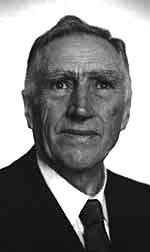
Frank Leslie Stillwell was born on 27 June 1888, in the family home at Hawthorn, an outer suburb of Melbourne, Victoria. He was the seventh of eight children to Alfred and Mary Eliza Stillwell (née Townsend) and was the youngest son.
His father was a printer and his grandfather, John Stillwell, who arrived in Australia from London in 1855, had also been a printer. Both parents of the grandfather were of Huguenot stock and were silk weavers in London. In his youth, Frank Stillwell, as were all his brothers and sisters, was encouraged to work hard at school, and he was given every chance by his parents. It is remembered that as a boy he was well-liked but was delicate and suffered several illnesses, out of which he grew to enjoy college life in later years. His ailments were chiefly to do with his lungs, and his 17 months as a young man in Antarctica finally cleared them up.
He attended the Auburn State School from 1893 to 1900, and later Hawthorn College to which he won a scholarship. It was from Hawthorn College (a school which no longer exists) that he won an exhibition of £40 and went to study at Melbourne University in 1907. He elected to study Science but included Mining Engineering in his course also. He held a resident scholarship at Ormond College, one of the affiliated colleges of the University of Melbourne.
When Stillwell started his university studies, John Walter Gregory had only recently resigned from the Chair of Geology and the position of Director of the Geological Survey of Victoria which he also held, being, according to a long letter he wrote to the Argus newspaper, unable to continue in the face of lack of facilities for the development of mining geology, and Ernest Willington Skeats, a double first-class honours man in geology and chemistry from the Royal College of Science, London, had just assumed the Chair vacated by Gregory in 1905. Skeats and Stillwell were, in fact, to be closely associated thereafter, and both played a major part in the developments of mining geology during a period in which the mining industry, while facing many problems, made great advances in Australia.
In his university years, Stillwell gained several prizes, holding the Caroline Kay Scholarship, a Government Research Scholarship, and the Kernot Research Scholarship. After graduating BSc with first-class honours at the Final Examination in 1911, he worked for his Master's degree on the geology of a local region (Broadmeadows) in which he showed a growing interest in the microscopical and chemical aspects of rocks and minerals. A few years later, and in fact after the minimum time had elapsed for the attainment of this high honour, he obtained the degree of Doctor of Science with a thesis on 'The metamorphic rocks of Adélie Land', and in 1919 he won the coveted David Syme Prize for scientific research in Australia-wide competition.
During these early years Stillwell was most active. Not only had he studied the geology of Broadmeadows and the monchiquite dykes of Bendigo, then an active and important goldfield, but after graduation he joined the Australasian Antarctic Expedition (1911–1914) as geologist, and spent 17 months in Antarctica under the leadership of Douglas Mawson. He was stationed at the Main Base at Commonwealth Bay, Adélie Land, and during the summer season of 1912–1913 was leader of a three-man team which surveyed 50 miles of the coast line east of Commonwealth Bay. It was on this assignment that he collected and studied in the field the metamorphic rocks which were described and discussed in his report, published in 1918, in which he propounded the concept of metamorphic differentiation in order to explain contrasted mineral assemblages which were formed during metamorphism from an initially uniform parent rock. Although his work had already been recognised in Science Progress of April 1919, as notable and worthy of rank with contemporary Scandinavian investigations, it was to be 30 years after its publication that his concept was re-discovered and G.H. Francis, of Cambridge, wrote to Stillwell pointing out that he had made great use of his work in connection with his own researches into the Lewisian metamorphic rocks of Inverness-shire. Stillwell always retained strong personal links with his Antarctic colleagues, and there is little doubt that his period in Antarctica had a great influence on him. Not only did his health clear up but he also made friendships which lasted him all his life, and his abiding interest in 'The Home of The Blizzard', that land of snow and ice where his name is preserved in Stillwell Island near Cape Denison, must have served partly to fill some of the emotional gaps in his life. Stillwell never married. He was indeed a retiring and even shy man, especially as a young man. Despite the clarity of his thought and writing, it was not until the later years of his life that he expressed himself at all freely in public and, indeed, he was almost tongue-tied in the presence of a large audience. Nevertheless he had a warmth behind a very conservative and rather retiring exterior, which those who were fortunate enough to work at all closely with him soon discovered, and his friendships and family ties always remained strong.
On returning from Antarctica early in 1914, he went to Adelaide as Acting Lecturer in Mineralogy during 1914 and 1915. After enlistment in 1916 with the Australian Military Forces he was withdrawn from the Army to assist in the newly-developed Commonwealth Advisory Council of Science and Industry, which was later to develop into the present Commonwealth Scientific and Industrial Research Organisation. Stillwell worked with the Advisory Council until 1919, conducting detailed studies on the occurrence of gold in the Bendigo mines on behalf of the Gold Research Committee which had been set up under the Council. His papers on the Bendigo gold occurrences cover detailed studies in the mines and in the laboratory, which demonstrated the association of gold with particular geological structures and with certain minerals, and his theories concerning these. He was particularly influenced by Taber's notions as to growth pressures developing during crystallisation in porous rocks in the absence of pre-existing fissures, and was also led to believe that gold was concentrated and precipitated by carbonaceous material in black slates. From 1919 to 1921 he worked at Broken Hill, New South Wales, as assistant geologist under the direction of Dr E.C. Andrews, of the Mines Department of that State. Dr W.R. Browne, doyen of Australian geologists today, and Frank Stillwell both made petrographic studies of the country rocks surrounding the Broken Hill ore bodies, but the two young geologists did not agree as to the origin of those rocks, and a controversy developed therefrom. Many years later, in 1954, both men were simultaneously elected to fellowship of the newly-established Australian Academy of Science, and renewed acquaintance in the Academy for the first time in many years.
On completing his work at Broken Hill, Stillwell returned to Victoria as staff geologist to the Bendigo Amalgamated Goldfield Company, but during 1922 and 1923 he visited mining fields in Europe, South Africa and the United States of America.
This overseas tour, which was made at his own expense, brought to his notice the developing subject of mineragraphy, that is the study of opaque minerals and particularly the ore minerals in polished section under the reflecting microscope On his return to Australia and his assumption of the first Research Fellowship of the University of Melbourne, he began his mineragraphic studies of Australian ores, working on the Broken Hill deposits. This work immediately revealed the economic as well as the scientific potentialities of the study of polished ores, for, in particular, he was able to locate, in the form of minute dispersed particles, a good deal of the silver content in the galena in the Broken Hill lode, which he demonstrated was present in the form of the mineral dyscrasite. This discovery immediately aroused interest among scientists and mining men and led to his appointment as Research Petrologist in 1927 to the newly formed Council of Scientific and Industrial Research.
Extending his sphere of interest, he visited the West Australian goldfields and remapped the Kalgoorlie field in 1927 and 1928. Here he joined geological and mineralogical work in the careful examination of the rock types in order to discover the relationship between their emplacement or alteration, and the emplacement of the gold-bearing ores. This brought together an array of data which hitherto had been treated separately and drew attention to the possibility of the extension of the Kalgoorlie field into areas where similar geological conditions could be demonstrated to exist. It was largely as an outcome of Stillwell's findings that further exploration and development was stimulated, and the Kalgoorlie field was revived and extended.
On his return to Melbourne Stillwell continued work on the Kalgoorlie telluride ore minerals, publishing an important paper on them in 1931. From 1929 until his retirement at the age of 65 in June 1953, he was in charge of the Mineragraphic Section of C.S.I.R. (later CSIRO) which section is housed in the University of Melbourne adjoining the Department of Geology. For many years he took the courses in mining geology for the advanced students for Bachelor of Science and Bachelor of Mining Engineering, and also gave instruction in mineragraphy in the laboratory, where many of the Melbourne graduates who are now working throughout Australia first met him. He was a patient teacher if somewhat pedantic, and, in order to appreciate him, it was necessary to recognise his reliance on logic, clear thinking and skill in the application of techniques. He never gave up an idea without a fight, and perhaps his conservativeness at times caused him to cling to an outmoded idea. But indeed the range of his work and its importance had been such that he was in the field of ore mineralogy and mineragraphy the undoubted leader in this country and a major figure in the world. Under his direction, ores, mattes, slags, spiesses and mill products from all over Australia were investigated, with results of great economic importance particularly in regard to tracing the causes of losses in mineral recovery of gold, copper, lead, zinc, tin and other ores and thus in checking the efficiency of mineral separation methods used by the mines. Nearly every major ore deposit and many smaller occurrences in Australia were investigated by Stillwell and his associates in the Mineragraphic Section, where he was joined in 1935 by the late A.B. Edwards, who was his most distinguished student and colleague. Edwards' untimely death in 1960 was a great blow to Stillwell, but he was fortunate in that others were there to carry on in his laboratories, where he was afforded facilities to continue his own work until his death.
During his retirement he was appointed consultant to the Broken Hill Geological Committee, and continued his work with Broken Hill rocks and minerals. His last paper on these was published in 1959, 37 years after his early work on the Broken Hill district.
In all Stillwell published 68 scientific papers, dealing in later years chiefly with mineragraphy.
Stillwell was a member of the Royal Society of Victoria from 1910 until his death, and of the Australasian Institute of Mining and Metallurgy from 1921. In both these bodies he played an important role. He was a member of the Committee of the Victorian Branch of the Australasian Institute of Mining and Metallurgy for several years and at one time its Chairman. In the Royal Society of Victoria he was Councillor from 1929 to 1963, Honorary Secretary from 1929 to 1947, Vice-President (1949–52), President (1953 and 1954) and Honorary Editor of the Society's Journal from 1956 to 1963.
Many honours came his way and he deeply appreciated them. In 1948 the Australasian Institute of Mining and Metallurgy awarded him the Institute Medal. He was awarded the Clarke Memorial Medal by the Royal Society of New South Wales in 1951, and was appointed Correspondent of the Geological Society of America in 1952, and Honorary Member of the Australasian Institute of Mining and Metallurgy in 1953. In 1954 he was created an officer of the Order of the British Empire in recognition of his services to Australia and to the Geological Sciences, and it was in this year that he was elected to fellowship of the Australian Academy of Science. To honour his 70th birthday, the Stillwell Anniversary Volume was published in 1958 by the Australasian Institute of Mining and Metallurgy.
As a University man, Stillwell was a life member of the Melbourne University Graduate Union, and the Graduate Union received its first legacy from him, a sum of £2,000. [He left munificent legacies also to the Royal Society of Victoria (£4,000), the Australasian Institute of Mining and Metallurgy (£2,000), the Geological Society of Australia (£1,000) and to the Australian Academy of Science (£1,000).] He had been a keen college cricketer, being indeed an accomplished batsman and a man with an abiding interest in sport. He took up tennis in middle life and played regularly with colleagues for several years, but eventually it was bowls which became his major outdoor interest. He was, too, always a keen chess player. All this despite the fact that in his youth he had had lung trouble, and in later years he faced with great fortitude recurring deterioration of the sinews of his hands causing partial loss of the use of his fingers and necessitating periodical operations. He pursued a life which in his youth was extremely strenuous and called for the highest degree of physical courage; in later years he pursued his scientific researches and his many other activities with equal fortitude and tenacity. He was a man of few spoken words, but of great loyalty and devotion not only to Science, but also to his colleagues and to his family and friends.
As mentioned above, the death of his younger colleague, A.B. Edwards, was a great loss to him. Edwards had acknowledged Stillwell's role as "tutor, guide, instructor and colleague" in the foreword to his book of the Textures of the ore minerals, and Stillwell's tribute to Edwards in the American Mineralogist (Vol. 46, 1961, pp. 488–96) expresses his own deep feelings about his friend and associate.
Stillwell and his scientific colleagues were men of a period, seeing in Australia the growth and development of the application of science to industry, and having inborn the abilities and desires which, with opportunity and support, lead on to great achievement. He explored the Earth under rigorous conditions at the surface, in the depths of the mines, and in the laboratory. He was an initiator, along with many others who in their own disciplines were likewise initiators and from whom the present growth of Science in Australia derives an enormous amount. One can, in looking back, identify these people and fortunately many of them are still with us; but to Stillwell it would have been a challenge to continue this work, and this challenge is one that must now be faced with all the energy, the honesty and the élan with which the men of Stillwell's generation faced their problems.
One of his younger colleagues who formerly knew him in the Geology Department, University of Melbourne, and later worked with him in the Mineragraphic Section of CSIRO, Dr George Baker, has not only assiduously collected together his materials and papers but has also very kindly provided much of the factual information on which the writer's account of Stillwell is based.
As one who knew Stillwell as a student and was taught by him, as one who worked with him as his first demonstrator in practical classes in mineragraphy in the University of Melbourne, and who was closely associated with him in the Royal Society of Victoria, I believe that the appreciation which has been expressed of Stillwell is in every sense true and just.
Stillwell was a great man of science. A little hampered as well as endowed by nature, moulded by the influences of his time, and at times frustratingly conservative and rigid to younger associates, he was a true pioneer, an explorer of Nature and an intellectual master whose influence has spread like ripples from a stone in a pond, affecting geology and geologists, mineralogy and mineralogists, mining and mining men, not only in Australia but throughout the world.
This biography owes much to Stillwell's surviving younger sister, Miss Olive Stillwell, who very kindly provided not only biographical material but also her thoughts about her brother and his career. It is from Miss Olive Stillwell that we know what many of us had sensed – that he was deeply appreciative of the course of events in his life and work and particularly of the respect and support which permitted him to continue in harness until the day of his death. He died in Melbourne after a short illness on 8 February 1963, in his 75th year.
About this memoir
This memoir was originally published in Records of the Australian Academy of Science, vol. 1(1), 1966. It was written by E.S. Hills.
Francis Patrick John Dwyer 1910–1962
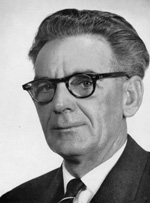
Francis Patrick Dwyer started out his career with a special interest in organic chemistry, but became a pioneering figure in biological inorganic chemistry, laying the foundations for this discipline in Australia. He was a Professor at the John Curtin School of Medical Research at the Australian National University, and was elected a Fellow of the Australian Academy of Science the year before his sudden death at the age of 51.
Download the memoir
Ernest William Titterton 1916-1990
Written by J.O. Newton.
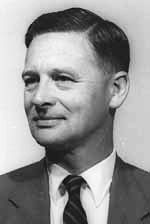
- Introduction
- The early years 1916-1934
- Birmingham University 1934-1943
- Los Alamos 1943-1947
- Harwell 1947-1951
- Head of Department of Nuclear Physics at the ANU 1950-1970
- British atomic weapons tests and related activities 1952-1973
- Dean and Director 1966-1973
- Final period 1973-1990
- Conclusions
- About this memoir
Introduction
With the death of Sir Ernest Titterton on 9 February 1990, Australian has lost one of its most controversial scientists. Well known because of his forthright and uncompromising views on the subjects of nuclear weapons and nuclear power and because he 'pushed the button' for the world's first nuclear weapon, he was highly regarded by some and hated by others.
The early years 1916-1934
Ernest William Titterton was born in the small village of Kettlebrook near Tamworth, Staffordshire, England on 4 March 1916. He was the son of William Alfred and Elizabeth Titterton (née Smith) who, three years later, had their only other child, Maurice.
For many years his father was a clerical worker in a paper manufacturing mill, eventually working himself up to a managerial position. Unfortunately the mill was forced to close down in the Great Depression of the 1930s and he was unemployed for several months. As was common in those days, the parents had been thrifty people, saving as much as they could, and they had to live on their savings for that period. After that, Titterton's father had a series of physically demanding manual jobs which he was ill-fitted to perform, but which kept the family going though in much reduced circumstances. After two years, he managed to get a clerical position in another paper mill, which position he retained until he retired at the age of sixty-eight. Elizabeth Titterton was fully occupied as a housewife and mother and kept tight control over the family finances as was very necessary. During all of this difficult period, the parents gave love and every support to the two boys and shielded them from the great difficulties they were experiencing.
William Titterton had a great interest in music, particularly choral music. He was a member of the choir at St Editha's church in Tamworth and, when Ernest was eight years old, he took him along to become a member too. The choir was very good and, in addition to singing at the Sunday church services, performed such works as Handel's 'Messiah' and Haydn's 'Creation'; it was associated with the Tamworth Choral Society which produced public concerts of popular musicals by Gilbert and Sullivan, Edward German, and so on. Ernest would spend two nights a week at rehearsals and sing in up to four services on Sundays. Most probably this gave him his great love for music of all types, which lasted throughout his life. His father took a keen interest in Ernest's general education. For example he bought him a blackboard and easel, which could double as a desk, when Ernest was at primary school.
Ernest's formal education began at the age of four, at the single-room infants' school in Kettlebrook; his father used to lift him over a small wall separating their garden from the school playground. At the age of six he moved from the mixed infant school to a council school for boys only, in the mining village of Glascote. This school was well equipped and even had some science teaching, rather unusual in those days; it stimulated his first interest in science. The boys in this school were rather rough and had frequent fights. Initially, being small, he came badly out of these but eventually he learnt to give as much as he got.
Ernest did well at school and at the age of ten won a scholarship to Queen Elizabeth's Grammar School in the nearby town of Tamworth. This was a small (140 boys) but very well equipped school, where his academic success continued and he was always top or nearly top of the class. Here he also gained a liking for sport and became very proficient in cricket and hockey, playing for the school's first teams in both. He obtained his School Certificate with seven credits at the early age of fourteen and then went into the sixth form. In those days the sixth form was limited to the more academically talented boys who were expected to proceed to university; they specialized either in the humanities or in science. Ernest took physics, mathematics and some chemistry. He was fortunate in having an exceptionally able physics teacher, William Summerhayes, who also carried out part-time research in thermal diffusion at Birmingham University. This was done in collaboration with Dr Arthur Shakespear, who was a Fellow of the Royal Society and also a Governor of the School. Because of this the boys had the unusual and exciting experience of seeing a scientific paper being prepared, going to referees, corrected in proof stage and finally published in the Proceedings of the Royal Society. This stimulated young Ernest's ambition to become a scientist and to eventually publish papers himself. Summerhayes set up many original demonstrations and experiments for the practical class and strongly believed that the boys should carry out experiments themselves. As an example, Ernest and another boy were asked to measure, during a weekend, the diurnal variation of the earth's magnetic field; this involved taking measurements every 15 minutes for the whole 48-hour period. The results were written up and published in the school magazine. There is little doubt that Summerhayes was the major influence in exciting Ernest Titterton's interest in science.
He was also fortunate to have a very good teacher in mathematics, Frank Burkett, who was headmaster of the school. Ernest Titterton was well appreciated for both his scholastic achievements and his personality, as the following reference from Frank Burkett shows:
He was an exemplary pupil, always hard working and extremely conscientious. He was a boy of wide interests, very well read, and possessing exceptional musical ability both as organist and pianist. He had a very pleasing personality and threw himself wholeheartedly into all School activities. He showed himself to be both original and resourceful.
He was a good all-round sportsman and proved to be a very good Captain being both efficient and tactful.
As a School Prefect he was a great success being both conscientious and reliable. In my opinion he was one of the best half dozen boys we have had in the last fifteen years.
Ernest was put up for the Higher School Certificate examination three times in all the first two being trial runs. His subjects, apart from the first time when he took chemistry also were physics, pure mathematics and applied mathematics. Summerhayes wished him to go to Cambridge, but unfortunately this was not possible because of his father's reduced financial situation. Instead, in 1934, he went to Birmingham University as a trainee teacher with a scholarship that paid his fees, together with board and residence at Chancellor's Hall, located about a mile from the University.
Ernest Titterton's musical career developed further after he gained a scholarship to grammar school. His father felt that he should learn the piano and provided half-hourly bi-weekly lessons for eighteen months. Ernest was a talented student and his skill developed rapidly. However, in retrospect he felt that the teacher did not exercise sufficient discipline in making him play scales and use correct fingering; he found this to be a severe disadvantage in later life. He continued to develop his abilities after the lessons were completed, becoming an excellent sight reader. He accompanied his father, who had a good tenor voice, in recitals and took over playing the piano for morning assembly at school. When his voice broke at the age of about thirteen, Henry Rose, the church organist, showed him how to use the three-manual church organ and the pedal organ. Later he gave him free lessons, allowed him to play for children's services and finally, towards the end of his time at school, made him assistant organist, enabling him to play at any church service. His father was very proud of him and never missed a service at which he played.
At school, he, with three others, formed a dance band that first played for school dances and then for town dances. Later he joined an adult dance band that finally ended up playing at one of the local hotels, where they had the advantages of microphones and sound equipment. He saved much of the money earned from these activities and used it to buy a three-speed bicycle which, later, he used to travel the long journey from the University to home.
His skill in popular and classical music made him popular at university. He played the piano for physics school socials and dances and also in the students' union and for the University Review at the Theatre Royal. He also joined a five-piece band for which he sang as well as played the piano. The well-known City of Birmingham organist, G.D. Cunningham, often made broadcasts playing the four-manual organ in the Great Hall of the University. He allowed Ernest to sit next to him and watch whilst he rehearsed, and later to play the organ. His father often used to come and listen. Thus he became a fine organist, enabling him in later life to play on organs in many different countries.
Birmingham University 1934-1943
Titterton's excellent preparation at school enabled him to begin with the second-year courses at University; even so, on the whole, he found them easy. The third-year courses were more challenging and he achieved his BSc pass degree in 1936 with distinctions in physics, pure mathematics and applied mathematics. He proceeded to the honours course, obtained a First and was top of the year in physics. This excerpt from a testimonial given by the Head of the Mathematics Department, Professor G.N. Watson, FRS, indicates the high regard in which he was held:
He was an exceptionally able student, whose work was at a consistently high level. He was not content merely to memorise results for examination purposes, but took a keen and intelligent interest in all that he did. Altogether, he was the best student who has taken Mathematics up to the principal stage for several years.
He took an active interest in sport, playing tennis socially at Chancellor's Hall and hockey for the University, being in the first XI for each of the three years from 1934-1936.
In 1937 Titterton was awarded a University scholarship and became a research student under the supervision of Professor Mark Oliphant, who had just been appointed to a chair of physics at Birmingham University. The scholarship paid the very modest sum of £92 per annum, barely enough to live on. Because of this, he had to live at home and travel to the University and back by train and bus on six days each week. His research project, carried out in collaboration with another student, was to discover whether, as had been previously suggested, the very weak alpha activity of samarium was triggered by the electron or gamma-ray components of cosmic radiation. To accomplish this, they had to do measurements in a place where the cosmic radiation was much weaker than at ground level. A coal mine 5,000 feet deep was chosen for this purpose. It was a very 'wet' mine with a constant mist enveloping everything. This made it both uncomfortable and very difficult to carry out the measurements with his shallow ionization chamber, together with a low-noise amplifier acquired from Wynn-Williams at the Cavendish Laboratory. Titterton and his collaborator successfully completed the project in spite of this and the fact that Oliphant could be only a part-time supervisor because he spent much time at Cambridge, completing work there, and also at Berkeley. They showed that, within experimental accuracy, the alpha activity was the same at the bottom of the mine as it was at ground level. For this work Ernest Titterton received his MSc degree in 1938.
Ernest's scholarship required him to be a teacher for a certain period and to do this he had to take a one-year course for the Diploma of Education. This he found 'soft' and superficial, after the rigorous physics and mathematics courses that he had previously attended. However, he enjoyed the teaching practice which he carried out at King Edward's Grammar School for Boys, the most distinguished school in the Birmingham area. Mr Rogers, the Headmaster, held him in high regard as the following excerpt from a testimonial shows:
It is clear that Mr Titterton not only has a thorough grasp of his subjects, but that he is deeply interested in the method and technique of teaching them and is determined to equip himself as thoroughly as possible from a theoretical point of view.
In the classroom itself he shows the same keenness and vitality and his work is carefully prepared and is presented in a lively and vivid way so that the lesson becomes interesting and stimulating. His control of a class is good. He is a gentleman of very pleasing personality and he has been deservedly popular in the Common Room. I have found him very pleasant to deal with, and his willingness and enthusiasm have been very attractive. Mr Titterton has obviously the makings of an excellent teacher and should be able to render very valuable service on the staff of any school, not only in the classroom but also in Music and in School activities.
Whilst doing this diploma course he had to do part-time teaching at Birmingham Technical College three nights a week, in order to help support himself. This meant arriving back in Tamworth at about eleven at night followed by a two-mile walk to his home; the next day he had to be up at six in the morning to get to Birmingham in time for work. He passed the diploma course with distinction in 1939, being top of the class and awarded the Elizabeth Cadbury Prize.
At King Edward's School he had an accident in the gymnasium that may have influenced his subsequent career. He severely tore his quadriceps muscle, which never entirely recovered. As a consequence he was later judged unfit for military service, ensuring his entry to the wartime scientific research sector as a civilian.
Wishing to go elsewhere than Birmingham or Tamworth, Titterton chose a post at the co-educational grammar school at Bridgenorth in Shropshire. There he taught physics in all classes up to the sixth form, employing many of the techniques he had learnt from William Summerhayes. He took part in sporting and musical activities, even composing a school song, and was well liked by staff and students. He very much enjoyed teaching but the war broke out shortly after he started. He was asked by Oliphant to return to Birmingham University to join an Admiralty team charged with developing devices to produce high-power pulsed radiation with a wavelength of about 10 cm. The purpose was to obtain higher resolution in the detection of aircraft by radar, or RDF as it was then called. Hence he spent only six weeks teaching in Bridgenorth and then became an Admiralty Research Officer.
At the beginning of the war there were two types of oscillator that could produce centimetre waves at low power. These were the klystron, invented a few years previously by the Varian brothers at Stanford University, and the magnetron invented by E.S. Megaw at GEC, Wembley, England. The Birmingham group under Oliphant's leadership attempted to develop both types to produce high-power outputs suitable for transmitters. The breakthrough was made by Randall and Boot who developed the resonant magnetron which first produced power in continuous mode in February 1940. In collaboration with Megaw, production models were developed for use in aircraft. Titterton had the job of making a modulator for the magnetron to produce 25 kV rectangular pulses with a duration of about 1 µs and a repetition rate of 500 per sec. He realised that this would require the use of spark gaps and developed a system with rotating spark gaps. It was spectacularly successful when used with the magnetron, producing a pulsed output of more than 10 kw. It required a major development programme in collaboration with industry to make a reliable modulator small enough to put in an aircraft. Titterton and his group developed a triggered spark gap to replace the rotating one and production models were produced finally by Metropolitan-Vickers. Oliphant commented that 'during this time Titterton was a key member of the team, working like a Trojan, satisfying everyone, totally dedicated and unselfish' Sometimes he was involved in considerable personal danger, such as when the laboratory was bombed at night and when the klystron-powered equipment, which he and a New Zealand colleague were testing at Portsmouth, was bombed and destroyed. All of this work was of course 'Top Secret' but, under wartime regulations, Titterton was allowed to submit it for his PhD degree. His examiners were the distinguished nuclear physicists J.D. Cockcroft and P.I. Dee, both of whom were working on radar at that time. He received the degree in 1941.
In 1939 Oliphant had brought the experimental nuclear physicist Otto Robert Frisch to Birmingham. Frisch, together with his aunt Lise Meitner, had given the correct interpretation of the process of nuclear fission and had demonstrated that an enormous amount of energy, 200 million electron volts, was produced in each fission event. Neither Frisch nor the outstanding theoretical physicist, Rudolph Peierls, who was also at Birmingham, were allowed to take part in the radar work because they were not of British origin. They were allowed to work in nuclear physics because its major importance was not recognized at the beginning of the war. However, together they produced the famous report showing the practicability of making nuclear weapons if the rare isotope (0.7%) uranium-235 could be separated from natural uranium. This led to the formation of the Maud Committee, code-named Tube Alloys, to oversee the development of nuclear weapons in the UK. Ernest Titterton, whose work on the modulator was nearly over, was assigned to work as a research assistant with Otto Frisch because of his previous experience in radioactivity and his expertise in fast pulsing. Initially he helped Frisch make measurements of some of the important cross-sections for neutron-induced fission with the aid of a strong radon-beryllium source that produced a copious supply of neutrons. To detect the fission events, they had an ionization chamber containing about one gram of uranium. An account of this work and an unexpected result is given by Frisch in his book, What Little I Remember (1):
That ionization chamber led to quite an important discovery. The electronic equipment for it had been constructed by Ernest Titterton, who has since become Professor and Head of the Physics Department at Canberra in Australia as well as being knighted, but who at that time was a young student, very bright and active, whom Oliphant had detailed to help me with the work. I kept complaining that the chamber from time to time, produced a pulse which looked just like a fission pulse but surely couldn't be; there was no source of neutrons, or was there? We went so far as to search the laboratory to see if by any chance a small source had been left in a drawer. We tested the electronics and tried all kinds of improvements. Nothing made any difference, and in the end I had to admit that uranium was occasionally suffering fission spontaneously. Because of the war and the secrecy surrounding our work, Titterton could not publish that important discovery; it was made about the same time by the two Russian physicists G.N. Flerov and K.A. Petrzhak who are generally quoted as the discoverers of spontaneous fission. (1)
Later Titterton went to Liverpool University to carry out an experiment to determine whether most of the neutrons following fission were emitted promptly or after a significant delay. This information was of crucial importance for the construction of a bomb, though not for a reactor, because if the delay was long it would not be mechanically possible to hold the system together for sufficient time to build up an efficient chain reaction, leading to a nuclear explosion. Frisch had already moved to Liverpool because of the much better experimental facilities there; they had a working cyclotron. To do the experiment, they had to pulse the cyclotron beam and measure the delay time between the initiation of fission events by the beam pulses and the production of the neutrons. Titterton pulsed the beam by deflecting it on to the target by an electric field driven by his spark-gap modulators. No delay was found within the accuracy of the measurement (about a microsecond), suggesting that a bomb was feasible.
By September 1940, Britain had disclosed its military secrets to the USA, including the very important resonant magnetron. Britain was not safe enough, because of the war on its doorstep, nor did it have sufficient resources, to carry out the nuclear bomb project on its own. Therefore it was decided in 1943 to transfer the entire project to the USA. Sir James Chadwick, the discoverer of the neutron, was the leader of the British team and Professor Mark Oliphant was his deputy. Titterton was one of the small number of British scientists to go there, and he joined the Manhattan Project based at Los Alamos in New Mexico.
The Germans also had their nuclear project (2) (3), which started earlier than those of the UK and USA, causing considerable concern to the Allies. By 1940 they had made substantial progress and had access to the world's largest producer of heavy water and to large stocks of uranium compounds from occupied Europe. About seventy scientists, including the Nobel prizewinner Werner Heisenberg, were involved in the project. Although fairly substantial support was given, it was very small compared to that given by the Allies. Nevertheless at the end of the war the Germans had demonstrated the feasibility of enriching 235U with an ultra-centrifuge and were on the verge of having a working reactor; but for the massive Allied bombing campaign beginning in 1943, most likely this would have been successfully achieved. However by 1942 the Germans considered that it was not feasible to make a bomb in time to influence the outcome of the war.
When Titterton took up his job as a research officer at Birmingham University at the beginning of the war, he met Peggy Eileen Johnson, who was an able laboratory assistant. She carried out a mixture of technical and typing jobs and was located fairly close to Ernest's office. They soon got to know one another well and she helped him in producing the prototype of the triggered spark-gap modulator. He married Peggy, the daughter of Captain and Mrs Alfred Johnson, on 19 September 1942 at Hagley Parish Church, close to Birmingham.
Los Alamos 1943-1947
The site of the Manhattan Project was in a very remote region, high in the mountains of New Mexico. Apart from a school that had been taken over, there had been virtually no habitation in the area. Security was extremely strict and the area and the whole project was controlled by the military under General Groves. Consequently the community of scientists, which shared the same social facilities, was very close knit. This must have been very exciting and stimulating for Ernest Titterton, still only 27 years of age, since a major fraction of the greatest physicists from the USA, together with others from Britain and Europe, were working there. For example, the Nobel laureate Niels Bohr and his son Aage, later also to get a Nobel prize, had the house next door to the Tittertons. Hans Bethe, another Nobel prize-winner to be, lent them a kitchen table and a carpet; Bruno Rossi lent them a radio and the Bohrs often used to drop in to hear the news on it. There was a grand piano in the main lodge, where the social activities took place, and Ernest was very popular, entertaining the scientists and their wives with pop-music, jazz and light classical music. Here he collaborated with the brilliant and eccentric Richard Feynman who played the drums.
He initially shared an office with Otto Frisch, but their paths soon diverged. Titterton was assigned, because of his expertise in fast timing, to a group working on the assembly and testing of nuclear weapons, whereas Frisch was more interested in reactor problems. One of Titterton's first duties was to repeat the Liverpool experiment, looking for delays in the prompt neutrons, as this was of such crucial importance for the bomb project. This he did in collaboration with an American, B. McDaniel, on the newly commissioned Harvard cyclotron. The method was improved over that used in Liverpool by electronically pulsing the ion source located at the centre of the cyclotron. Again no significant delay was found, showing that a very fast chain-reacting system would be possible.
For an explosive chain reaction to occur, a critical mass of fissile material must be exceeded. The critical mass (of order 10kg) for a particular geometry occurs roughly when the number of neutrons produced by fission within the material (about 3 per fission event) is equal to the number that escape from the surface. There were two basic weapon designs. The first, strongly favoured by the British and by Chadwick, was simple in concept. A near-critical cylinder of 235U was driven into the centre of another near-critical cylinder with a hole in it, essentially by gun technology, thus forming a super-critical mass. A pulse of neutrons from a radium-beryllium source at the centre initiated the explosive chain reaction. This system was called the 'Thin Man' because its length was much greater than its diameter. It was assumed that this rather simple type of bomb would be certain to explode, though only an upper limit to its power could be estimated.
A much more efficient use of the fissile material (235U or 239Pu), then in very short supply, would be obtained with the use of spherical geometry, which minimizes the surface-to-volume ratio and hence the critical mass. Therefore there were strong reasons for designing a bomb of this type. The initial idea was to collapse, by suitable explosive technology a sub-critical hollow sphere to a solid sphere, which would then be super-critical. Titterton and his collaborators developed a pulsed (µs) high voltage (250 kV) X-ray system together with other techniques to study the collapse of a small model of such a device as a function of time. The method worked well but showed that the implosion was not symmetrical, presumably because the shock wave that hit the surface was not spherically symmetric. Because of this it was thought necessary to develop 'explosive lenses' that would tailor the shock wave precisely to match the surface of the sphere. In addition, it was decided to replace the hollow sphere by a near-critical solid sphere that would be compressed to become super-critical. Titterton helped develop a two-dimensional explosive lens system that was then handed over to the high-explosive division for extension to three dimensions. He then had to test the new system, which involved developing new methods as only full-scale models could be constructed and the X-ray method was not applicable because of its limited penetrating power. This was all done successfully. Titterton was also involved in field tests of the aerodynamical properties of the spherical implosion bomb system. Its rather large diameter spherical shape was far from ideal for a free falling bomb, and it had to be fitted with a large tail-fin structure to stabilize it and prevent it from rotating. Tests were essential to make sure that the bomb would detonate at the desired height and that all the timing circuits, required for simultaneous detonation of the explosive lenses, operated correctly.
This more sophisticated implosion bomb, made from 239Pu rather than 235U, had to be tested. Ernest Titterton was responsible for the complex timing system to initiate the explosions that would detonate the bomb, and for the electronic monitoring system for its first test. By this time he was the senior member of the timing group. On 16 July 1945, he was given the historic task of triggering the world's first nuclear bomb in a test explosion, code-named 'Trinity', that took place at Alamogordo in the New Mexican desert. The success of this bomb, planned, constructed and detonated on the basis of theoretical calculations, represented a stupendous achievement. The success, for good or ill, changed mankind's affairs forever.
Subsequently, on the order of President Truman, in early August 1945 the 'Thin Man' bomb was exploded over Hiroshima and an implosion bomb over Nagasaki, each with a power of about 20kt of TNT.
Following the Trinity test, a new project, code-named 'Operation Crossroads', was begun for the US Navy. The implosion weapons for this test were made at Los Alamos but the Navy wished to be involved with all of the maritime equipment installed on the ships and atolls around the target area. Therefore they took charge of this equipment and Titterton was appointed to advise the Naval Research Laboratories in Washington, DC, on the timing requirements. Soon after the end of the war with Japan, Congress passed the McMahon Act, which excluded all but US nationals from working on nuclear weapons. The British mission had therefore to leave and return to the UK. The two exceptions were Dr William Penney (later Lord Penney) and Ernest Titterton, who were asked to stay on for Operation Crossroads because of their expertise in shock-wave and timing measurements respectively. There were two tests at Bikini, the first bomb being detonated above sea level and the second below. The purpose was to determine the effect on naval vessels. Titterton did the count-down for both tests. On the naval ship going to the tests, he became very popular with the crew as he gave them some simple lectures on the bomb tests and, perhaps more importantly, repaired the ship's movie projector! Soon after returning from Crossroads, he was made Head of the Electronics Division at Los Alamos. Titterton had played a very important role in the bomb developments and in the tests. He was obviously held in high regard as Norris Bradbury, who had succeeded Oppenheimer as Director of Los Alamos, tried hard and long to get him to stay or return to his position there.
The period at Los Alamos had a major influence on his future career. It gave him the opportunity to be acquainted with the great figures in nuclear science and technology of that time and a strong interest in nuclear power and weapons that lasted throughout his life. Unlike some of his contemporaries, he felt no guilt regarding his part in the development of these weapons. He was of the opinion that it was much better that the Allies first produced them rather than Hitler's Germany, that their use in Japan had saved many US and Japanese lives, and that fear of their use had kept, and would most probably continue to keep, the peace between the major powers.
On the personal side, in 1945 Ernest and Peggy Titterton had their first child Jennifer, who unfortunately was born with a spina bifida. This developed into a growth on the middle of her back that contained part of the central nervous system. A new and delicate ten-hour operation was performed on her at the Johns Hopkins Hospital in Baltimore. Though fairly successful, it left her with limited control of her lower limbs. The Tittertons returned to England in 1947.
Harwell 1947-1951
On his return to England in mid-1947, Titterton joined the newly formed Atomic Energy Research Establishment (AERE) at Harwell. This was located in a sparsely occupied part of the country on the Berkshire Downs about sixteen miles from Oxford. The site had previously been an RAF airfield and initially housing for scientists was provided locally in ex-RAF houses and messes and in groups of prefabricated houses. So again he joined a fairly close-knit community, many members of which he knew from Los Alamos or from his wartime work in England. At home he immediately set about cultivating the garden of his 'prefab' house and, in particular, growing vegetables. This developed into one of the passions of his life, which only ceased when his accident prevented it.
He became a member of the General Physics Division under Professor Herbert Skinner and was put in charge of a research group that was to carry out work with nuclear emulsions and cloud chambers, though with the eventual aim of using the 170 MeV synchrocyclotron under construction at Harwell. He had to build up the group and one of the early people he recruited was a very capable technician called Tony Brinkley, who had worked on radar from 1938 until July 1946 when he transferred to Harwell. Tony carried out the exacting and tricky job of loading thick (up to 800 microns) emulsions with elements to be studied and later, after irradiation, processing them. He also took a significant part in analysing the results. Tony was to stay with Ernest for the remainder of his career.
Initially the only sources of neutrons for irradiations at AERE were the 'zero energy' reactor GLEEP and a 500 kV Cockcroft-Walton accelerator. Hence Titterton sent plates containing stable elements such as lithium to laboratories in the USA for irradiation by some of his Los Alamos colleagues. He also made some irradiations with the 1 MV Cockcroft-Walton machine at the Cavendish Laboratory. Later, radioactive elements were loaded and irradiated at the world's first 33 MeV electron synchrotron, which had just been constructed at TRE Gt Malvern, the Air Ministry radar establishment. Because of the high background from the radioactive elements, the loading and processing had to be done on-site. When the large reactor BEPO became operational, neutron irradiations of uranium and thorium were made at Harwell. A few irradiations were made with the 170 MeV synchrocyclotron, which commenced working towards the end of his period at AERE.
Titterton exploited the photographic technique very effectively and carried out pioneering work. His research fell into three main areas. The first and perhaps most interesting of these was the work on the fission of heavy nuclei into three parts (ternary fission). Only one ternary fission event occurs for about 500 binary events, so the process is difficult to observe. Fission was induced by slow neutrons, which produce very high yields, for the case of 235U, and by fast neutrons and gamma-rays, which produce much lower yields, for 238U and 232Th, which are not fissile with slow neutrons. He carried out by far the best experiment up to that time on the energy spectrum and angular distribution of the alpha particles emitted in ternary fission for the 235U case (the most likely third particle is an alpha particle). In this, more than half a million fission tracks were examined and about one thousand ternary alpha particle events found. The energy spectrum was bell shaped with a mean energy of 15 MeV and extending up to 30 MeV, whilst the angular distribution was strongly peaked at 90° to the direction of the two heavy fragments. He indicated that these results were consistent with the idea that the alpha particle is produced nearly at rest between the two heavy fragments and acquires its energy and direction from the electrostatic repulsion between it and the fragments. This is very close to the view of this process held at the present time, though even now it is not well understood. He also observed cases in which two alpha particles were emitted and attributed this to ternary fission involving the unstable 8Be, which decays into two alpha particles within about 10-16sec.
His second area of research concerned the disintegration of highly excited light nuclei into one or more particles. The reactions were mostly induced by gamma rays (photodisintegration). These were either monochromatic gamma-rays with energies ranging from 6 MeV to 17.6 MeV produced by nuclear reactions induced by protons from Cockcroft-Walton accelerators on targets of 7Li or 19F, or bremsstrahlung gamma-rays, with a continuous spectrum extending as high as 33 MeV, from the electron synchrotron. Much was learnt about the nature of these reactions and energy states of light nuclei. Unfortunately the energy of the new synchrocyclotron at Harwell was too low to produce a useful yield of p-mesons as had been hoped. Titterton therefore studied 'stars' (multi-particle disintegrations) produced in nuclear emulsions by very fast neutrons (~150 MeV) from a Be target. Though these were of qualitative interest, it proved not possible to get quantitative information from them. He sought the help of K.J. Le Couteur, Reader in Theoretical Physics at the University of Liverpool, in interpreting these data. Titterton was impressed by Le Couteur's abilities and this association led him later to strongly encourage the appointment of Le Couteur as the first Professor of Theoretical Physics at the Australian National University.
Titterton's research at AERE was very successful and prolific; he published 28 papers in the period 1949 to 1952. By the time he left Harwell, he had established a flourishing group. An excellent cloud chamber, with an innovative stereo camera, and a pulse height analyser had been developed. Unfortunately the cloud chamber produced results too slowly compared with the emulsion technique, so that in spite of working well it was never used in experiments.
Whilst at Harwell, he also acted as a consultant for the Atomic Weapons Research Establishment (AWRE) at Aldermaston. In his final year there, the designs for a British nuclear weapon, together with the techniques required for producing the nuclear material and fabricating it, were nearly complete. Discussions were already proceeding as to where the weapons tests would take place and at the time he left, three possibilities were being considered. These were the US test site in Nevada, a site on the Canadian shield in the barren north of Canada, and the Monte Bello islands off the north-west coast of Australia.
In August 1950 Titterton was offered the Foundation Chair of Nuclear Physics at the Australian National University (ANU) by his old supervisor, Sir Mark Oliphant. Oliphant had recently been appointed Foundation Director of the Research School of Physical Sciences at the ANU and was intending to build a large, 2 GeV (later changed to 10 GeV) proton accelerator to carry out experiments in high energy or 'particle' physics, as it is now called. This was to be of unique design, since the magnetic field was to be provided by high-current electromagnets without the aid of iron cores. The currents (greater than a million amps) were to be provided by a homopolar generator, which was successfully built though the full project was never completed.
Oliphant wanted Titterton to set up a group initially to carry out traditional nuclear physics with accelerated particles and later, when the big machine was working, to engage in particle physics. He was to be provided with a 1.2 million volt Cockcroft-Walton type accelerator, built by Philips in Holland, and had the task of supervising its construction and final tests. For this purpose he remained at AERE for about six months after being appointed a professor at the ANU.
Before leaving AERE in April 1951, he occasionally joined a group of distinguished people who formed a sub-committee of the interim council of the ANU, which met every two months in Oxford. The members of the group representing various fields were Sir Howard Florey (Medicine), Professor Keith Hancock (Social Sciences), Sir Mark Oliphant (Physics) and Professor A.C. Wheare (International Relations).
Titterton asked Tony Brinkley to move with him to Canberra. Tony was very apprehensive about leaving and relates how Titterton dealt with this in his typical way. 'Ernest called me up one day with three copies of my resignation from Harwell. He said "sign it boy, you will never regret it". I signed and I didn't ever regret it.'
Head of Department of Nuclear Physics at the ANU 1950-1970
When Ernest Titterton arrived in Australia on the liner Orcades in May 1951, he started with a clean slate. Tony Brinkley, who had preceded him by a month, was the only other member of his Department. He had brought with him many nuclear emulsions from irradiations done in the USA, Harwell and Malvern, together with two microscopes for their analysis; other microscopes were on order. Brinkley found and trained some people in the technique of emulsion scanning so that some research could take place until the 1.2 MV Cockcroft-Walton accelerator (HT1) came into operation. Titterton's immediate task was to construct a building for the new accelerator and then to assemble it and get it working. He had great talent for carrying out this type of project, having tremendous drive and organizational ability resulting in excellent value for a limited amount of money. His longer-term aim was to build up a very good laboratory that would be recognized world-wide as one of the leaders in the field. For this he needed to recruit academic staff of very high calibre as they became available. He hoped that these would be mainly of Australian origin, some from the Department's students, and that eventually there would be about ten academic staff, half of them non-tenured, together with about ten technicians and ten students. These staffing numbers were achieved and exceeded by the early sixties. He aimed to keep one non-tenured staff position open in order to finance visitors to the department. His contacts, developed at Los Alamos, with many of the leading figures in nuclear physics, were very helpful in this respect.
In 1954 Titterton heard that the 33 MeV electron-synchrotron at TRE was to be closed down. He wrote to Sir John Cockcroft, then Director of AERE Harwell, to ask if he could have it for the ANU. Cockcroft agreed, provided that the ANU would dismantle and pack it and pay for transport to Australia. This had to be arranged formally via the UK and Australian governments and Prime Minister Menzies asked Titterton to come and explain it to him. Menzies thought it was a very good idea and a generous gesture on the part of the UK.
In this same year Titterton was elected as one of the earliest Fellows of the Australian Academy of Science of which he was later to be a member of Council and Vice-President (1964-66). He also became entitled to a year's study leave and, feeling that all was going well in the department, decided to take it at AERE Harwell. This was a very convenient time for overseeing the dismantling and packing of the synchrotron. In addition to carrying out research, he took the opportunity to talk to his old colleague from Los Alamos days, Sir William Penney, who was now Director of the Atomic Weapons Research Establishment (AWRE) at Aldermaston near Reading, about the British nuclear weapons tests in Australia. During his voyages to and from the UK on the Orient liners Orcades and Otranto, he wrote most of his first book, Facing the Atomic Future. This gives an excellent and well-balanced account of the situation at that time of nuclear power, nuclear weapons and the social, ethical and political problems associated with them.
The synchrotron arrived in Canberra soon after Titterton returned from Harwell. It was set up in the basement of the Oliphant Building of the Research School of Physical Sciences and the beam of bremsstrahlung gamma rays from it was directed into a tunnel under the road separating the Oliphant and Cockcroft Buildings. It made a very loud 50 Hz noise and created a sizeable intensity of gamma radiation in the foyer of the Oliphant Building. Titterton succeeded in interesting Menzies sufficiently to come and see the accelerator when it was working. Being a lawyer, he did not understand much of what Titterton told him but did catch on to the idea that the gamma-ray flux was directed into a narrow cone and that, at about a metre from the machine, one could accumulate a lethal dose in less than an hour without realising that anything was happening. With a twinkle in his eye, Menzies said that he would send Titterton a list of people for this treatment! Menzies was very cognizant of the difficulty he and other politicians had in understanding science, and felt strongly that this situation should be improved. He must have been impressed with Titterton's ability to present scientific ideas in a clear and simple way, as he said that he would use him from time to time to talk to and educate politicians about science. This he did, probably to the ANU's advantage in the sense that it brought to the attention of politicians that the ANU contained down-to-earth useful people as well as those living in ivory towers, whom they might perceive as useless.
Later in 1954, a third accelerator was added. This was a 600 keV Cockcroft-Walton machine, constructed by Ken Inall, who was then a member of the department. Like HT1, it was a high-current machine, used mainly for producing neutrons. Hence by this time the department was well equipped with accelerators.
For his own work, Titterton had a large group of emulsion scanners run by Tony Brinkley who did most of the data analysis. The main purpose was to study photonuclear reactions with 17.6 and 14.8 MeV mono-energetic gamma rays obtained with the Cockcroft-Walton machines and continuous bremsstrahlung gamma-rays from the synchrotron. They also studied some neutron-induced reactions.
Titterton and Brinkley were the first to observe ternary fission in the decay of 252Cf by spontaneous fission. This measurement offered a better possibility for observing more weakly ionizing products of ternary fission, such as protons, than did the cases where the plates had to be irradiated to induce fission and many extraneous background tracks produced. They found 179 ternary events out of 50,000 binary events. Of these, nine events had tracks that could be attributed to particles lighter than alpha particles, the dominant component in ternary fission. Titterton could not be persuaded to publish this, possibly because Niels Bohr had previously told him, on a visit to Harwell, that the third particle must be an alpha particle. He missed a significant discovery in so doing. It is now known that protons, deuterons and tritons are also emitted and in a proportion agreeing, within experimental error, with the numbers that Brinkley found.
Titterton's work in this field was recognized by his being asked to write a review article on photodisintegration experiments with nuclear emulsions for Progress in Nuclear Physics, Volume 4; it was published in 1955.
Photodisintegration experiments afforded a method of studying the giant-dipole resonance in nuclei. However at that time monochromatic photon beams with variable energy were not available. Consequently it was very difficult to study the resonance in detail. An alternative method, which later proved to be very powerful, was to study the inverse reaction in which protons were the bombarding particles and gamma rays were emitted. The EN tandem accelerator that the department later acquired was the ideal machine for carrying out such measurements. Titterton realised the value of this method and pressed hard in the late 1950s to use the injector cyclotron, built for the high energy accelerator, for this purpose. Consequently, he and his collaborators, D.S. Gemmell, W.J.B. Smith and A.H. Morton, were the first to make measurements of this type.
Titterton's contacts with Menzies and government ministers probably helped him to get funds for the 5 MV terminal EN tandem accelerator, which commenced operations in 1961. This was a very successful machine, the fourth of its type to be built, and helped the Department greatly to raise its status in world nuclear physics. During its prime research period it averaged 16 hours/day of operation for every day of the year. The synchrotron ceased operation in 1961 and was given to the University of Western Australia. Titterton's photonuclear emulsion experiments also ceased at this time, though data analysis continued until around 1964. He supervised a number of students who worked with the tandem until 1969, after which he took no further part in research. Even during this period, though he took a close interest in the students' activities, he did not take an active part in the experimental work. The years at Harwell and at the ANU until the early '60s were the most productive in his research career.
In 1969 Titterton was successful in gaining $A2.2m for upgrading the Department's accelerator facilities. This resulted in the purchase of a 26 MeV negative-ion cyclotron to inject into the EN tandem (first beam in 1972) and more importantly, the 14UD tandem accelerator that commenced operation in 1974. Though at the beginning of 1970 he ceased to be Head of the Department on becoming Director of the Research School of Physical Sciences, he continued to take a leading role in the accelerator project. The original proposal was made in terms of an 8 MV terminal FN tandem from the High Voltage Engineering Corporation, which also manufactured the EN tandem. However, a number of better possibilities arose by the time that the funds were made available. Titterton showed characteristic shrewdness, courage and business acumen in persuading the department to choose the 14UD and in negotiating a deal that was good for the Department, with its limited funds, and good for the National Electrostatics Corporation in enabling it to show that it could successfully produce large tandem accelerators. The choice, backed by most of the Department, required courage because the 14UD was based on new technology devised by Professor Ray Herb at the University of Wisconsin. It proved to be a correct choice and for many years the 14UD was the world's most powerful tandem accelerator.
Bringing the 14UD into operation was a mammoth task because, unlike the EN tandem, only the bare bones of the accelerator were purchased. Without the able and dedicated academic and technical staff of the Department, it would not have been possible. It required a great deal of complex engineering design and construction, either in the Department, in the Research School or in Australian industry. An example was the 22m high by 5.5m diameter pressure vessel, to contain the accelerator and 30 tonnes of sulphahexafluoride gas, which has to be supported and positioned to an accuracy of 0.25mm. Extensive building construction such as the 43m high tower to contain the accelerator, was also required. Titterton's drive and organising ability was behind all of this. He made sure that there was adequate but not excessive radiation shielding, taking account of the fact that the 14UD was to be an accelerator for heavy ions, which produce relatively low levels of radiation compared to protons and deuterons. This was most important in keeping the cost within reasonable limits. Thus the total cost of accelerator and buildings was much less than that for the buildings alone for an essentially identical accelerator later installed overseas. Though exasperating and designedly provocative, as was his way, there is no doubt that his drive, perspicuity and ability to see the minimum required to accomplish a task gave the ANU a marvellous bargain in the 14UD project.
Up to the time that he became Dean of the Research School in 1965, he maintained very firm control. He made all decisions on staffing and equipment without obvious consultation; with a few exceptions they were good decisions. He listened to people's complaints and often acted upon them, though they were not given the satisfaction of knowing this. Titterton believed that responsibility was taken and not given, which made it difficult for some people in dealing with such a strong and forceful character. Mostly he allowed staff freedom in carrying out their research, though he adopted the tactic of opposing new research developments or proposals but later supporting them if the proposer persisted. The Department produced a large number of PhD graduates. Titterton drove and at the same time encouraged the research students, instilling into them enthusiastic 'get-up-and-go', resourcefulness and enterprise. This was recognized as the 'Canberra Stamp' by many overseas laboratories, who appreciated the high quality of these students. This was a great source of pride to him.
On the whole, Titterton was successful as Head. From nothing he built a department with a good international reputation and excellent equipment. In the Australian context, where there was and still is not any clear procedure for gaining funds for large projects, the latter was a very considerable achievement. However, on the debit side some members of staff highly resented his overbearing manner.
British atomic weapons tests and related activities 1952-1973
On 16 September 1950, British Prime Minister Attlee passed a message to Prime Minister Menzies asking for a survey of the barren and uninhabited Monte Bello islands, lying 120 km off the north-west coast of Australia, as a possible site for a nuclear weapons test. This was agreed and a later request, also agreed, was made for a test in October 1952, October being the only month when weather conditions were commonly suitable. Agreement was given because Menzies felt that it was to Australia's advantage, both from the point of view of strengthening the UK's position as leader of the Commonwealth and of improving technical co-operation with the UK in the field of nuclear energy. It should be appreciated that this was a very critical period in the Cold War. In April 1952, the British asked Menzies if he would agree to Titterton assisting in the forthcoming test, code-named 'Hurricane', in view of his experience with tests in the USA. They also requested that Menzies ask the Vice-Chancellor of the ANU to release him for this purpose. Menzies agreed and accordingly on 23 April 1952, A.S. Brown, Secretary of the Prime Minister's Department, wrote to the Vice-Chancellor who, after consulting Oliphant, acceded to the request. Shortly after being approached himself, Titterton had a personal meeting with Menzies, who explained his views and asked him to act as an observer, looking after Australia's interests, and to give the British team under Dr Penney every possible help. Professor L.H. Martin (Defence Scientific Advisor and Head of School of Physics, University of Melbourne) and Mr W.A.S. Butement (Chief Scientist, Department of Supply) were also appointed observers. None of the observers had any formal responsibility for the test, which was entirely a British responsibility. However they, together with an Australian meteorologist from Melbourne, were closely involved in the predictions of suitable weather patterns for the test, which took place on 3 October 1952. Operation Hurricane was of particular interest to Australia since it involved firing a weapon located in the hold of a ship. Delivery by such means to an Australian port would be very difficult to detect and could have catastrophic consequences.
The following year a second series of land-based tests (Totem 1 and 2), with the weapons mounted on steel towers, was arranged. These were to take place at Emu Field, located about 480 km north-west from the rocket testing station at Woomera and in the Great Victoria Desert of South Australia. Since these tests took place in the centre of Australia, the criteria for choosing suitable weather and wind conditions for the explosions had to be more stringent than those for Hurricane where most of the radioactive fallout would go into the ocean. The same team of Australian observers was present at these tests, but in this case the British invited the participation of Australian personnel in experiments related to the tests. After discussion with Martin and Butement, it was decided that Titterton and others from the ANU should attempt to measure neutron fluxes as a function of distance from ground zero using photographic emulsion and neutron-threshold detector techniques. The others who took part were Tony Brinkley and Dr John Carver, later to become Director of the Research School of Physical Sciences at the ANU. Both the tests, which took place in October 1953, and the neutron experiments were successful. During the two week long delay while waiting for suitable weather conditions for the Totem 2 test, Titterton was able to resume the table tennis contests with Penney which they had enjoyed so much when in the USA during the war.
Following the Totem tests it was decided that a 'permanent' testing ground would have to be developed to cater for an extended period of nuclear tests. The Emu site suffered from inadequate water supplies and access difficulties. A site at Maralinga, just north of the transcontinental railway line, was chosen. However, the British were anxious to carry out tests in which the bombs contained light elements, as a preliminary to the thermonuclear tests that were to be carried out at Christmas Island. The Monte Bello islands were chosen for this series because the Maralinga site might not be ready in time and also because the second explosion was to have a yield of about 60 kt, which was considered too large for a central Australian site. The tests, code-named 'Mosaic', took place in May and June 1956. This period of the year is not generally favourable because prevailing westerly winds would carry fallout to the mainland. However, suitable conditions do occur briefly once or twice a month. A more formal arrangement for Australian observers was instituted. The Atomic Weapons Tests Safety Committee (AWTSC) was set up in July 1955 and had joint responsibility with the UK team for the decision to fire a weapon; it had the power of veto if it felt that the conditions would endanger people, flora or fauna. In addition it was required to set up a fallout monitoring system throughout Australia. Eventually about sixty monitoring stations were established. It reported not only on fallout from the British tests but also from others, such as the French tests in the Pacific. The results, together with health implications, were tabled in Parliament and also published by the AWTSC in the scientific literature. The first members of this committee were Martin (Chairman), Titterton, Butement, C.E. Eddy (Director, Commonwealth X-ray and Radium Laboratory [CXRL] ) and J.P. Baxter (Chairman, Australian Atomic Energy Commission). Shortly afterwards L.J. Dwyer (Director, Commonwealth Bureau of Meteorology) was co-opted because none of the other members had the meteorological skills required for the fallout predictions. Some members of the AWTSC, including Titterton attended the Mosaic tests and subsequent ones.
All further weapons tests in Australia were carried out at the Maralinga site. Four weapons were exploded in the 'Buffalo' series between 27 September and 22 October 1956. Before the final 'Antler' series, with three tests between 14 September and 9 October 1957, the duties of the AWTSC were split between two new committees. The new AWTSC initially consisted of Titterton (Chairman), Dwyer and D.J. Stevens (Director CXRL, following the death of Eddy). It was responsible for all matters of public safety arising from the tests. The National Radiation Advisory Committee (NRAC) had Sir Macfarlane Burnet as chairman and also included Martin and Butement. It reported to the Prime Minister on radiological effects in the community. Both committees were disbanded by the Whitlam government in 1973, though after protests from Martin, another committee with similar duties to NRAC, the Australian Ionizing Radiation Advisory Council (AIRAC) was formed. Neither Titterton nor Martin was a member of the new committee though the latter was invited to be.
In addition to the major weapons tests there was a large number of minor trials. These were related to the design of nuclear weapons and as a consequence were more secret than the major weapons tests; no Australians were allowed to take part, nor were full details given by the British. The AWTSC had no control over these tests though it was at times consulted by the Australian government regarding them. These tests took place at Emu in September and October 1953 and continued at Maralinga, on and off, until April 1963. Only conventional explosives were used so that there was no problem with radioactive fallout outside the range area. However, within the range area there was some chemical and radioactive contamination. The most controversial of these tests were the Vixen B series which took place between September 1960 and April 1963. These involved the burning or explosion of plutonium and were carried out in order to assess the effects of an accident to a weapon in transit or storage.
Titterton was the subject of severe criticism from the Royal Commission into British Nuclear Tests in Australia which held hearings between August 1984 and September 1985. The President of the Commission was the Honourable James R. McClelland, a judge and ex-Labor politician. It is difficult to accept its report (4) (hereafter referred to as RCR) as fair and balanced on scientific matters and on events that took place thirty years earlier. It evokes the suspicion that, as for many government-inspired investigations, it was set up to reach the conclusions it did. These were contrary to those of previous investigations, the most detailed of which was AIRAC9 (1983) (5). It also raises the question once again as to whether an adversarial legal investigation is the proper way to investigate scientific questions. Its conclusions regarding the AWTSC and Titterton (RCR, p.526) read:
- The AWTSC failed to carry out many of its tasks in a proper manner. At times it was deceitful and allowed unsafe firing to occur. It deviated from its charter by assuming responsibilities which properly belonged to the Australian Government.
- Titterton played a political as well as a safety role in the testing program, especially in the minor trials. He was prepared to conceal information from the Australian Government and his fellow Committee members if he believed to do so would suit the interests of the United Kingdom Government and the testing program.
- The fact that the AWTSC did not negotiate with the UK openly and independently in relation to the minor trials was a result of the special relationship which enabled Titterton to deal with the AWRE in a personal and informal manner. He was from first to last, 'their man' and the concerns which were ultimately voiced in relation to the Vixen B proposals and which forced the introduction of more formal procedures for approving minor trials were a direct result of the perceived inadequacies in the manner in which he had carried out his tasks.
The statement that Titterton was 'from first to last, "their man" ' rejects any other interpretation of his actions. It appears contrary to the attitude that the Commission adopted in other cases. For example (RCR p.600) the statement in the AIRAC9 report on the weapons tests that 'AIRAC found no evidence that Aborigines were injured in nuclear tests', was strongly criticized. It was suggested that a better formulation would be that 'AIRAC was not supplied with any evidence which would enable it to decide one way or the other whether Aborigines...'. It is certainly true that Titterton was of British origin and closely associated with Penney, and that he wished the tests to be successful; so in fact did the Australian government. The British were very concerned to re-establish their relationship with the USA on nuclear matters and as a consequence were reluctant to pass on information to Australians regarding details of the weapons. It is likely that Oliphant was not associated with the tests because the Americans regarded him as a security risk. Titterton, with his American clearance, was a person with whom they could safely communicate, though details of the weapons were excluded even from him. However, it does not necessarily follow that, because of his relationship with the British, he did not carry out his responsibilities to Australia to the best of his ability. Titterton was in many ways his own worst enemy. He was a very bright and shrewd person but on occasions very abrasive and impatient with those who disagreed with him. He was also very impatient with bureaucratic procedures and would short-circuit these if possible; basically he was a 'doer'. One of the main objections to Titterton by the Commission appeared to be that he had a direct line to the British and that this was indicative of a conspiracy. However, it might well have been an advantage to Australia for the British to have had a knowledgeable person in whom they could safely confide and thus enable him to form better judgements than would otherwise have been the case.
Titterton was severely criticized because he advised the British to say that the fission yield of the 1960 Vixen B minor trials was zero. The Commission said (RCR, p.519) 'This, of course, was a misrepresentation of the nature of Vixen B as Titterton well knew'. Titterton probably took the view that it would be better not to worry the bureaucrats about the very small fission product yield, which was completely insignificant from a safety point of view; the standard employed was that 'any fission products produced must be radiologically insignificant compared to the activity of the parent fissile material' (RCR, p.521). In 1960 the requirements for approval were tightened up and more written evidence was required. According to RCR (p.520), 'Titterton's role and influence diminished after that'. Nevertheless it is interesting that the Vixen B tests continued until 1963.
The Royal Commission criticized many of the weapons tests on the grounds that the weather conditions for firing were unsuitable or that the observed fallout pattern did not precisely follow that predicted. The accuracy of a prediction depended on the accuracy of the British fallout model, the estimated power of the weapon and the meteorological forecast. Even today, short term meteorological forecasts are not very reliable; thirty years ago, with no satellite observations, they were very much less so. In all, it would seem that the major weapons tests were a great success as far as safety was concerned; there is no tangible evidence that anyone was harmed by the fallout. It may possibly be true, as the Commission repeatedly pointed out, that a few people may develop cancer as a consequence of the low-intensity fallout radiation. However, Titterton's view was that any action, such as crossing the road, involves some risk of accident or death, sad though it might be. He felt strongly that the risks involved in various actions and technological developments should be compared, and that it was ridiculous to spend effort and money on reducing small risks when the same amount spent on reducing a large risk would produce a much higher dividend. Unfortunately lawyers and most of the general population who are not trained to consider probabilities, tend to judge such matters purely on emotional grounds. If the British were so disregardful of safety in Australia and Titterton was their lackey, as the Commission seemed to think, it is a miracle that there were not serious consequences from the tests which, by any standard, were of a major and potentially very dangerous nature.
Dean and Director 1966-1973
When Oliphant retired as Director of the Research School of Physical Sciences (RSPhysS) at the end of 1963, Professor John Jaeger, Head of the Department of Geophysics, was appointed Acting Head of the School for two years, with the title of Dean. Titterton followed him as Dean for two years from January 1966. However, at the end of this period the University decided to reinstate the Directorship and appointed Titterton for a five-year period. Deans, with their short period of tenure, were allowed to retain their departmental Headships but the University decided that Directors would have to relinquish them. Since Titterton was not due to retire until 1981, he quite reasonably requested and obtained an assurance that, apart from exceptional circumstances, he could expect to be reappointed for a second term.
Under his leadership, the School prospered and expanded in size. He established two new departments. That of Applied Mathematics, under Professor Barry Ninham, proved to be a great success and has made very significant contributions in fields such as optics, colloid physics and intermolecular forces (the latter an essentially experimental subject). Titterton deserves considerable credit for this success because it was his insight and determination that led to the formation of this very non-typical department of applied mathematics. The Department of Solid State Physics was less successful. It was formed with the aim of utilizing the (at that time) uniquely high magnetic fields (300 T) available with the homopolar generator as a current source. This objective was never achieved, partly because of the low duty cycle of the homopolar generator.
An event of considerable importance to the Research School was the establishment of the Anglo-Australian Telescope (AAT). After many discussions between interested parties the Australian government indicated in 1967 that it was prepared to join the UK in building and operating a large optical telescope in Australia. A formal agreement was signed in 1969, but unfortunately this omitted any specific reference to the management of the telescope. This omission led to acrimonious discussions between the ANU and the Telescope Board that only ceased in 1973 (6). The telescope was to be located on Siding Spring Mountain, where the ANU had already established an observatory. The Mount Stromlo and Siding Spring Observatories (MSSSO) were operated by the Department of Astronomy in the RSPhysS. Its Director and Head of Department was Professor Olin Eggen, a forthright man with a good sense of humour and an astronomer of the old school. Eggen, who was strongly supported by Vice-Chancellor Sir John Crawford wanted the ANU to act as the agent for the Telescope Board and manage the telescope as part of an integrated observatory under his control. This view was not acceptable to the British side who naturally did not wish to see the telescope under the control of one of its major users; later it transpired that astronomers from other Australian observatories did not like it either.
Titterton set out his views on this question in a paper in 1970. He was strongly opposed to Eggen's proposal, pointing out that it would put a heavy burden of responsibility on the Head of the Department of Astronomy and saying:
This seems to have overwhelming disadvantages to us; it demands a greatly increased administrative structure under the aegis of the School and opens the possibility that we, through our special geographical advantage, are attempting to control the operation. There would be absolutely no compensating advantages in research.
His opinion was that the telescope should be under the control of an independent director who should be an eminent astronomer, responsible directly to the Board. He pointed out that
if a front ranking astronomer were appointed...this would be greatly to our advantage. It would enrich our academic circle and increase the stature of the Observatory.
He maintained these views throughout the long period of conflict and in February 1973 succeeded in getting the Faculty Board of the RSPhyS to reverse its decision to support the establishment of an Observatory Services Unit (OSU), administered by Eggen but responsible to the Vice-Chancellor, to provide support for all telescopes at Siding Spring. This was done on the grounds that Eggen was by now clearly not going to be Director of the AAT. He pointed out that
Regrettably the real situation was developing into a struggle between the ANU on the one hand and the Australian and British Astronomers on the other.
There is no doubt that Titterton was correct in his assessment of this situation but he may well have made enemies in the Chancellery for opposing the view of the Vice-Chancellor. In spite of the Faculty Board's decision, the OSU was established by the University but never fulfilled its function and was subsequently abandoned. The Telescope Board appointed its own staff to manage and develop the AAT.
Another important event during Titterton's period as Director was the splitting off of the Department of Geophysics and Geochemistry from the RSPhysS to form the new Research School of Earth Sciences in 1973. Long before this, in 1955, Professor John Jaeger, Head of the Department, had proposed a School of Earth Sciences and in 1961 and 1962 he presented a detailed case that reached the Board of the Institute, though without success. He re-opened the matter again in 1969 though, since he was nearing retirement, he left the final campaign mainly to Professor A.E. Ringwood. Titterton and the Faculty Board of RSPhysS were opposed to an expansion of Geophysics and Geochemistry within the School because it would have to have been at the expense of other disciplines, some of which would themselves have had a good case for expansion. Titterton was also opposed to the formation of a new School, partly because he thought that the academic case was not strong enough and partly because of the increased costs of administration that would inevitably result; for example there would have to be two School Secretaries instead of one, two workshops, and so on. The battle between Ringwood and Titterton was long and acrimonious but Titterton eventually lost it in the University Council, possibly as a result of overstating his case.
The last years of Titterton's directorship were not happy. In many respects he was a professor of the old autocratic school, dogmatic and pugnacious into the bargain. This type of behaviour was becoming much less acceptable in the 1970s. Furthermore, though he was perceptive, farsighted and more often than not correct in his major policies over which he took great trouble, his frequent lack of tact, aggressive manner and incessant monologues antagonized many people. As when he was a Head of Department, he did not take kindly to criticism and did not give people the opportunity to know that he sometimes listened to their suggestions. Though he would support projects involving large sums of money, he was extremely tight on lesser matters such as additional salary increments for people who merited them, money for fieldwork, and so on. Sometimes he descended to extreme pettiness such as not allowing a light in the nuclear physics lavatory on the grounds that people might sit there and read the newspaper. This was not a good way to run a large School with a variety of departments, headed by people distinguished in their own right. It gradually built up resentment, not only amongst Heads of departments and units, but also amongst many other members of the School.
This first showed itself openly in the matter of the chairmanship of Faculty in mid-1971. Faculty, of which all academic members of the School were members, had no powers except to advise, and its main function was to keep members informed about developments in the School and University. The Director had normally been chairman but some members felt that Titterton did not act impartially, coming down hard on those who proposed matters with which he disagreed. Some felt inhibited in speaking, fearing that if they said anything out of turn it might damage their career. Because of this, there was a move to have an elected chairman of Faculty. Had Titterton been a better politician, he would have agreed to this without delay, as Faculty was a toothless body which, in normal times, frequently had difficulty even in raising a quorum. In doing so he would have gained kudos, but unfortunately, he fought to the bitter end, apparently not appreciating the very strong feelings growing rapidly within the School. Matters finally came to a head with a special meeting of Faculty at which the Academic Registrar was present, probably the only meeting attended by almost every member of the School. The motion that there should be an elected Chairman of Faculty received over 100 votes, whilst there were no votes for the motion that the Director should remain Chairman. This episode marked the beginning of a significant decline in his popularity within the School. He also became unpopular with the Vice-Chancellor, probably due, at least in part, to his opposition to Sir John Crawford's strongly-held positions on the Anglo-Australian Telescope and Earth Sciences. From this point on, Titterton, though in no way an unapproachable snob, seemed to become more and more isolated and out of touch with grass-roots feeling within the School. He appeared to feel that there was a conspiracy against him by some 'ratbag' elements. All of these things ensured that he would not be extended for a second term as Director as he had been led to expect when he was first appointed.
A committee, under the chairmanship of Dr H.C. Coombs, was appointed to consider who was to be the next Director of RSPhysS in the Institute of Advanced Studies. A similar committee has subsequently been established near the end of each Director's term. However, this was the first occasion on which this was done and most probably the reason was to ensure that Titterton would not be reappointed. His term came to an end on 15 September 1973.
With hindsight, Ernest Titterton's non-reappointment was due to people concentrating on the more irritating aspects of his character, forgetting his very real accomplishments as Dean and Director. The School developed and prospered during his stewardship and there is little doubt that he worked long and hard for its success. In spite of his tough and authoritarian nature, there was much more information provided to the Faculty Board and more discussions on important issues than was the case with subsequent Directors.
Final period 1973-1990
After he ceased to be Director, Titterton returned to his former department as a professor, though not as Head. Many years previously he had foreseen the eventual necessity to upgrade the 14UD tandem accelerator if the Department of Nuclear Physics were to maintain its position among the top international nuclear science laboratories. He came to the conclusion, as did the Department, that the most suitable and cost-effective upgrade would be to use the 14UD as an injector to a superconducting linear accelerator. This would approximately double the energy of heavy ions achievable with the 14UD alone, for a price in real dollars considerably less than that for the original machine. As one of his main activities, he chose to look further into this question and to follow up similar developments in other parts of the world. The University provided him with funds for this purpose in addition to his normal study leave money. Unfortunately times had changed since 1969, when the funding for the 14UD was approved. Money for research became increasingly difficult to get. The matter was made even more difficult by the fact that, unlike most other 'advanced' countries, Australia had and still has no established mechanism for the assessment of and provision of funding for research equipment proposals unless they involve only very small cost. Proposals are usually neither approved nor turned down, they are simply passed from one section of the bureaucracy to another, causing frustration and demoralization to those who make them. As a consequence, although much effort was put into the proposal by members of the Department including Titterton, no final decision has yet been reached.
Titterton continued his interest in the subject of nuclear power, giving lectures, making television appearances and writing articles. In 1978 he wrote a book, Uranium, Energy Source of the Future?, with F.P. Rowbotham as co-author who put the case against nuclear power. He was also on the Council of Macquarie University from 1978 to 1984. He retired at the end of 1981 but continued as a Visiting Fellow in the Department of Nuclear Physics. Shortly after retiring he had a stroke which initially left him partially paralysed, but he made an almost complete recovery. He was divorced in 1986.
In September 1987 Titterton was seriously injured in a motor accident, shortly after leaving home for the University. His mind was as clear as ever but he became a quadriplegic. Though there was some initial hope of a partial recovery, it eventually became clear to him that he would remain like this until the end of his life. To be completely dependent on others for even the simplest action, to be 'rolled' every two hours to avoid bed sores, was to this previously very active and fiercely independent man, a fate worse than death. Nevertheless, he approached this situation with his usual courage and took the positive step of dictating his memoirs into a voice-activated tape recorder. In this he was helped by a technical device constructed specially for him. By blowing down tubes he was able to operate his tape recorder, to choose one of two channels on his radio, or to operate a buzzer to call for attention. These were the only actions that he could carry out without help.
During this period he had the opportunity not only to observe his own condition but also those of others who had problems similar to his own, who suffered from brain damage, senility and the like. He found this a very depressing experience, particularly when great efforts were made to keep alive people who were hopeless suffering cases, seemingly so that they could suffer even more. Titterton became a firm believer in euthanasia. In November 1989 he gave a recorded interview for the National Brain Injury Seminar, in which he discussed the tragic situation of some of these people. A few of his opinions are given in the following quotations: 'Nursing homes, put bluntly, are places where people on the scrap heap of life go to end their days'; 'These people are just cabbages. They do not enjoy living and the answer to that is to accede to their wishes and induce a dignified painless death through euthanasia as is now practiced in Holland.' In answer to a question requesting one simple sentence on his own situation, he said: 'There is no hope and the sooner I'm dead and buried the better'.
Ernest Titterton's wish to die was granted suddenly and unexpectedly on 8 February 1990. In accordance with his desire, his ashes were scattered along the cliffs of the English Channel near Folkestone.
Sir Ernest is survived by his former wife, his three children, Jennifer, Andrew and Ashley, and two grandchildren.
Conclusions
Ernest Titterton was an enigmatic and controversial character. He was a man of great talent, enthusiasm, courage and drive. Seemingly, in his early days at school and university, he was held in high regard on both the intellectual and social sides. Though normally thought of as a right-wing conservative, in England, perhaps due to his early experiences in the great depression, he was once a strong supporter of the Labour Party. His meanness with money was legendary. There are countless tales of this, which caused him considerable unpopularity. Nevertheless this should probably be considered a neurosis rather than a fault. In his latter days he was a relatively wealthy man, yet even when lying in the nursing home as a helpless quadriplegic, he was not prepared to spend anything to help make his existence a little more pleasant. On the other hand, as a guest, he could be charming and extremely considerate.
His personal achievements in nuclear physics research were competent rather than inspired, in spite of his undoubted ability. Probably this was because his activities prior to going to Harwell in 1947, at the age of 31, were mainly in the technical field of electronics. Thus he started work in nuclear physics rather late in life. Furthermore, after quite a short period at AERE, he took the job at the ANU where a great deal of his effort had to be devoted to starting up a new department from scratch. His most productive period in basic research was 1947-53. Probably his greatest achievements were his wartime work at Birmingham and Los Alamos, his establishment of the Department of Nuclear Physics at the ANU and developments during his earlier period as Dean and Director of the RSPhysS. Other notable contributions were his work with the Atomic Weapons Tests Safety Committee and with the Council of the Australian Institute of Nuclear Science and Engineering, of which he was a founding member, 1958-83, and President, 1973-74. For services to science and government, Ernest Titterton was appointed as a Companion of the Order of St Michael and St George (CMG) in 1957 and knighted in 1970. Since his Los Alamos days, Titterton held a strong, one might say passionate, interest in the subjects of nuclear power and weapons. His view of the latter is well put in the following excerpt from a letter which he wrote:
Nuclear proliferation will continue, just as all other weapons have proliferated, and we should accept this as a fact to be understood and lived with into the future.
It is no use wringing one's hands and attempting the impossible - keeping 'the nuclear genie in the bottle'. The nuclear genie is very much out of the bottle and nations representing over 50% of the world's population already have access to such weapons.
What we have to do is to strive for a wide understanding of the realities of the situation, present and future, so that man can control his actions and settle his problems without resort to warfare.
He said, regarding the Hiroshima and Nagasaki bombs, forty years afterwards:
Those two weapons caused enormous damage. Everyone was very sad that it was so. Nevertheless it had to be done. We had to swap 200,000 Japanese lives for literally millions of lives of our people. It's a curious way of looking at it, but it was a humanitarian act.
He was a tireless advocate for nuclear power, which he felt offered the world a safe and relatively non-polluting source of energy. By safe he did not mean that there was no risk, but that relative to other major power sources, such as coal, the risks were very much less and that nuclear power was by far the safest major technology that has ever been developed. Certainly on its record to date in the West, this is true. The disaster at Chernobyl understandably had a very adverse effect on public opinion regarding nuclear power. However, the combination of a badly designed reactor with a positive temperature coefficient, together with the quite extraordinary lack of administrative control over its operation that led to the accident, seems almost inconceivable in advanced countries, though much less so in third-world countries. Much of the opposition to nuclear power and the advocacy of alternative power sources such as solar and wind power has been based on emotional grounds and very little on fact. Titterton had no patience with people, most of whom had little real understanding of any of these matters and who frequently took the view that anyone who did was automatically prejudiced and therefore should be ignored. His views were well summed up by the following comment, though it was made in a different context, in reply to a question at the Royal Commission into British Nuclear Tests:
I do not have very much scepticism of scientists as a group. I have considerable scepticism of pseudo scientists, who learn a little and think they know a lot.
In this matter he showed both the good and bad aspects of his personality. He was courageous in standing up for what he believed in, regardless of the consequences, and he spoke and wrote very lucidly and well.
However, he often could not resist twisting arguments to suit his purpose and stamping down very hard on those with whom he disagreed – much of this was unnecessary and made him many enemies. He seemed to play the great dictator rather than the great persuader and as a consequence his advocacy of nuclear power probably did more harm than good. Sometimes one felt that he didn't care what others thought but it seems more likely that he lacked understanding of how others felt; certainly there seems little doubt that his commitment to science and to nuclear power was genuine and intense.
Ernest Titterton was a tough, authoritarian individualist and he came to admire conservative politicians with similar characteristics, such as Menzies, Sir Charles Court and Sir Joh Bjelke-Petersen. He was very much opposed to left wing unions and the Labor Party, which he felt were ruining the country by their support of restrictive work practices and excessive social welfare. This is probably why he was not invited to be a member of the AIRAC in 1973. His life's principles are well summed up by this quotation from Abraham Lincoln that I found amongst his papers:
You cannot bring about prosperity by discouraging thrift.
You cannot strengthen the weak by weakening the strong.
You cannot help the wage earner by pulling down the wage payer.
You cannot further the brotherhood of man by encouraging class hatred.
You cannot help the poor by destroying the rich.
You cannot keep out of trouble by spending more than you earn.
You cannot build character and courage by taking away man's initiative and independence.
You cannot help men permanently by doing for them what they could and should do for themselves.
About this memoir
This memoir was originally published in Historical Records of Australian Science, vol.9, no.2, 1992. It was written by J.O. Newton FAA, Emeritus Professor and Visiting Fellow, Department of Nuclear Physics, Research School of Physical Sciences and Engineering, Australian National University; formerly Head of the Department.
Acknowledgements
Many people contributed to this memoir and I would like to thank them all. I am very grateful for information provided and in some cases comments on the manuscript to Mr T.A. Brinkley, Mr G. Burrows, Prof. J.H. Carver, Prof. R.W. Crompton, Prof. F.J. Fenner, Dr J.M. Freeman, Dr K. Inall, Prof. T.R. Ophel, Mr C.G. Plowman, Prof. I.G. Ross, Mr Maurice Titterton and Prof. P.B. Treacy. Special thanks are due to Mrs Ashley Oates and Dr D.F. Hebbard for access to transcriptions and tapes of Sir Ernest's memoirs, to Rosanne Clayton for help in accessing his personal papers held in the Basser Library, Australian Academy of Science, and to the ANU for access to records. I am especially indebted to Sir Mark Oliphant for his willing and invaluable help. Last but not least I would like to thank Mrs Anne Gillard for her patience and help in preparing an excellent manuscript.
References
- (1) O.R. Frisch, What Little I Remember (Cambridge University Press, 1979).
- (2) M. Walker, German National Socialism and the Quest for Nuclear Power, 1939-1949 (Cambridge University Press, 1989).
- (3) D. Irving, The German Atomic Bomb: The History of Nuclear Research in Nazi Germany, 2nd edn (New York: Da Capo, 1983).
- (4) Report of the Royal Commission into British Nuclear Tests in Australia (Australian Government Publishing Service, Canberra, 1985).
- (5) British Nuclear Tests in Australia: A Review of Operational Safety Measures and of Possible After Effects (AIRAC Report, 9) (Australian Government Printing Service, Canberra, 1983).
- (6) S.C.B. Gascoigne, K.M. Proust and M.O. Robins, The Creation of the Anglo-Australian Observatory (Cambridge University Press, 1990).
Ernest Oliver Tuck 1939–2009
Ernie Tuck was one of Australia's most outstanding applied mathematicians, with an international reputation as a leading authority on water waves and ship hydrodynamics. He made seminal and incisive theoretical analyses in many areas, especially on wave resistance of slender ships and wave interaction with obstacles. His work is characterised by his ability to find the essentials of a complex problem, and then to apply apparently simple, but revealing analyses, using a combination of perturbation and asymptotic techniques with numerical calculations. He was an outstanding expositor, supervised 25 doctoral students, and will be remembered by his many colleagues as a brilliant scientist and an enthusiastic and caring person.
Download the memoir
About this memoir
This memoir was originally published in Historical Records of Australian Science, vol. 23(2), 2012. It was written by Roger Grimshaw, Department of Mathematical Sciences, Loughborough University.