





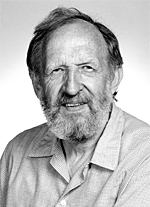
Brian John Robinson 1930–2004

Written by J. B. Whiteoak and H. L. Sim.
- Introduction
- Family information
- The early years
- A career with CSIRO Division of Radiophysics, 1953-1992
- Radio astronomy research: 21-cm hydrogen spectroscopy
- The birth of molecular cloud research: The first detection of radio emission from interstellar molecules (hydroxyl)
- Expansion of molecular-line studies
- The 4-m millimetre-wave telescope and carbon monoxide survey of the southern Milky Way
- Management roles in the CSIRO Division of Radiophysics
- Membership of societies and committees
- Protector of radio astronomy
- Radio astronomy in retirement
- How Brian will be remembered: Perspectives from others
- Brian's hobbies
- Brian in retirement
- About this memoir
In a half-century involvement in radio astronomy, Brian Robinson achieved international recognition and received many honours. During a forty-year career at CSIRO Division of Radiophysics, he undertook leading research, headed the Astrophysics Group, and contributed significantly in the Australia Telescope planning and funding campaign. Internationally, he distinguished himself in radio astronomy committees and negotiations to protect radio astronomy observations from interference from telecommunication transmissions.
Dr Brian Robinson's career spanned several critical periods in Australian radio astronomy. Often with a single-mindedness second to none, he contributed to the pioneering research of the 1950s and 1960s, led CSIRO's radio astronomy group during the 1970s, and played a major role in promoting the Australia Telescope project to the Australian Government in the 1980s. In addition, to ensure a successful future for radio astronomy, for many years he spearheaded national and international moves to protect radio astronomy observations from interfering signals in the frequency bands that are used.
Family information
Brian was born in Melbourne, Victoria, on 4 November 1930; he used to delight in pointing out that this was the day the champion race-horse Phar Lap won the Melbourne Cup. He was the first of two children of Raymond John (Ray) and Ellen Jessie (Jess, née Guernin) Robinson. His father, born in Melbourne in 1905, was a journalist and author; he died in 1982. The Robinsons had first settled in Australia when Brian's great-great-grandfather, William Robinson, arrived in Perth in 1852 on board the ship Palestine. Jess was born in 1901 at Mount Lloyd, Tasmania; she died in 1973. She had the distinction of being the first female conductor on a Melbourne tram, and later became the columnist 'Aunty Sadie' of the Bulletin magazine. The Guernins had arrived in Australia around 1860 when Brian's great-grandfather was given a grant of land in Tasmania.
Brian married twice. On 28 June 1956, at the British Embassy in Paris, he married Judith Ogilvie White, daughter of Sir Harold White (until 1970 the National Librarian in Canberra) and Elizabeth (née Wilson) White. Judith was foundation Professor of French at the University of New South Wales between 1963 and 1974. A son, Anthony Philip Robinson, was born on 4 February 1970. The marriage ended in divorce in 1975 and in 1978 Brian married Jill Miles whom he first met when she applied for a job to care for his shy six- year-old son. Jill had been previously working with people (mostly children) with intellectual disabilities.
The early years
Brian's primary education began in Victorian State schools in Caulfield and Elwood. When he was eight, the family moved to Sydney. Brian recalled: 1
I went to Waverley school on the edge of Paddington, then a slum and notorious for the razor and acid gangs. As a kid from Melbourne I was treated just like the refugee kids arriving from Europe. I wore glasses and got beaten up every day but I made some great friends among the European Jewish kids.
A succession of other public schools in various Sydney suburbs followed: Croydon, Rose Bay, Vaucluse, Woollahra and Artarmon. Although his hobbies included chemistry and crystal-set technology, academically he was a consistent underachiever. This may have been the result of ill health: scarlet fever had left him deaf in one ear and prone to constant infections. However, when these problems were overcome, he began to show a penchant for mathematics. His interests in mathematics and chemistry were encouraged during his secondary education at North Sydney Boys' High School. Awarded a scholarship to the University of Sydney in 1948, Brian completed with distinction two years of an engineering degree, and was awarded the J. A. Garnsey Prize. He then transferred to the science faculty, and at the end of 1950 was awarded the Deas-Thompson Scholarship and Walter Burfitt Scholarship for physics and mathematics, respectively. The following year he completed a BSc with first-class honours, sharing the University Medal in Physics. Continuing at the same university, in 1953 he completed an MSc under V. A. Bailey and K. Landecker, with a thesis 'Gyro-interaction of radio waves in the ionosphere'. This year marked the first publication of his scientific research, in collaboration with K. Landecker (1).
As an enthusiastic Honours student, Brian attended the Sydney 1952 Congress of the International Union of Radio Science (URSI). This was a very important international event, because it brought together for the first time many of the world's radio astronomers. Writing in 2001, Brian recalled Sir Edward Appleton's address at the first plenary session. Appleton spoke of the newly discovered 21-cm wavelength radiation emitted by interstellar atomic hydrogen (HI). He highlighted the possible research it opened up and the need to protect the spectral band containing this emission for the benefit of astronomers. These issues were to loom large in Brian's future career.
In 1952, Brian had his first contact with the CSIRO Division of Radiophysics. While completing his MSc, he was located in the Division's Valve Laboratory located within the grounds of the University of Sydney. During May of the following year, he joined J. L. Pawsey's radio astronomy group at the Division as a fixed-term Research Officer. His appointment was timely: the group was starting to study the newly discovered HI emission. Interstellar hydrogen is the main constituent of the molecular gas clouds from which stars form. Its emission was to become the 'workhorse' of radio astronomy, spectacularly revealing the large-scale structure and dynamics of our Galaxy and other galaxies. Brian was put to work with F. J. Kerr and J. V. Hindman at the Potts Hill field station, building a new 36-ft diameter parabolic antenna with which to survey the southern sky for HI signals. These astronomers were to use their results to map the spiral structure of the southern region of our Galaxy for the first time. Brian shared the first detection of HI emission from galaxies other than ours – the Large and Small Clouds of Magellan, our closest neighbours, revealed large extended envelopes of hydrogen gas (2). During 1954 he also assisted W. N. Christiansen in the construction of a radio astronomy interferometer, the Grating Array, beside the Potts Hill reservoir.
In 1953 the Royal Society awarded Brian a Rutherford Memorial Scholarship at Cambridge University, and in 1954 he sailed to the UK to begin a PhD at Trinity College. Supervised by J. A. Radcliffe and K. Weekes, he chose to study the nature of the ionosphere (3, 5, 6). He completed a thesis 'Investigations of the E-layer of the ionosphere' in 1957 and was awarded a PhD during the following year. As part of the thesis he designed and constructed an ionospheric sounder providing a power much higher than available with standard sounders. By comparing his measurements of ionosphere penetration frequencies and group heights with theoretical predictions, he determined scale heights of the atmosphere in the E-region. His results cast some doubts on the reliability of the routine methods of identifying the penetration of the ionospheric E-layer. His analysis of the detailed structure of the E‑layer revealed the presence of more than one ionizing process.
A career with CSIRO Division of Radiophysics, 1953–1992
Following his brief period as a Research Officer with the CSIRO Division of Radiophysics and a further four years undertaking a PhD at Cambridge, in 1958 Brian was reappointed to the Division of Radiophysics. However, instead of returning to Australia, he was immediately seconded to the Netherlands Foundation for Radio Astronomy (NFRA) as a Visiting Scientist. Four years later he returned to the Division headquarters in Sydney and was promoted to Senior Research Scientist. In the ensuing years he moved up the ranks to become a Chief Research Scientist in 1975. Between 1968 and 1979 he took on the roles of Deputy Director of the Australian National Radio Astronomy Observatory (now Parkes Observatory) operated by the Division (1968–1970), Director of Research undertaken at the Observatory (1971–1979), and Leader of the Cosmic Radio Astronomy Group at the Radiophysics Laboratory at Marsfield. Brian remained with the Division until his retirement in 1992, although taking leave in 1972 to spend twelve months at the Max- Planck-Institut für Radioastronomie in Bonn.
Radio astronomy research: 21-cm hydrogen spectroscopy
Brian's four-year secondment to the Leiden Observatory of NFRA was an important move in providing new high-quality observing equipment for CSIRO's 64-m diameter (then known as 210-ft diameter) radio telescope. During this period the telescope was under construction near Parkes in western New South Wales, and would be operated by the Division of Radiophysics (ultimately as a national research facility). The new equipment was not yet available during the first months of telescope commissioning in 1962, and one of us (JBW) recalls having to use simple insensitive crystal-mixer radio receivers resplendent with cat's whiskers, which had to be manually adjusted for best contact with the crystal. On occasion contact failed and so did the observing!
In the Netherlands, radio engineers were busy developing sensitive equipment for their radio astronomers, who were at that time world leaders in HI research. In collaboration with these engineers, Brian developed new types of low-noise microwave amplifiers, working on maser amplifiers at the Kamerlingh Onnes Laboratory in Leiden and on parametric amplifiers at NFRA's Dwingeloo Observatory (4, 7–13, 21, 34, 84). For operation on the Parkes telescope, he constructed a sensitive parametric-amplifier receiver to enable radio astronomers to undertake leading-edge research on the faint HI emission from galaxies other than ours. In 1962 he returned to Australia and installed this new equipment. Although its sensitivity was not quite as good as another cooled 20-cm parametric system installed a few months previously for the measurement of the 'continuum' (mainly synchrotron) emission from radio sources, it was unique in that its bandwidth of 150 MHz was more than an order of magnitude larger than available on other systems. This meant that HI emission from galaxies with velocities Doppler-shifted over a range of more than 30,000 km s–1 could be observed without the receiving system having to be re-tuned. Unfortunately, in contrast to a multi- channel system used on the telescope, the output was only a single channel that could be swept in frequency across the band. Some rotating galaxies viewed edge-on have a radial velocity range of several hundreds of kilometres per second, and measurement of their HI emission profiles by means of a set of observations with the channel frequency progressively advanced could be time consuming. Nevertheless, during the following four years Brian used his system successfully to investigate the hydrogen emission from our Galaxy, the Magellanic Clouds, and several other galaxies (14–16, 20, 24, 25, 30, 31, 38, 67). In 1966 he and J. A. Koehler (his PhD student at the time) claimed the first detection of HI gas clouds located in space between galaxies (29). However, although the existence of intergalactic HI clouds was indeed later confirmed (in other directions), it is generally accepted that the 1966 detection was not real, and was the result of instrumental baseline variations across the observed spectra.
Brian's amplifier design expertise was acknowledged internationally. In 1963, the Institute of Electrical Engineers (London) awarded him and J. T. de Jager the Electronics Division Premiums for their 1962 publication 'Optimum performance of paramagnetic diodes at S-band' (12).
The birth of molecular cloud research: The first detection of radio emission from interstellar molecules (hydroxyl)
In 1963 an overseas radio astronomy discovery set the scene for Brian's subsequent long involvement in investigating the physics and chemistry of the dense molecular clouds and their stellar nurseries in our Galaxy. For some years previously, astronomers had believed that it should be possible to detect narrow-band radio emission from interstellar molecules, but searches failed because the frequencies of the radiation in the radio spectrum were uncertain. However, in 1963 a team of US astronomers detected two spectral lines at the frequencies of 1665 and 1667 MHz from an interstellar molecule (the hydroxyl radical OH). The lines were actually in absorption – OH gas was absorbing the wideband 'continuum' radiation from an intense background galactic radio source known as Cassiopeia A. This object was too far north to be observed with the Parkes telescope. However, J. G. Bolton, then the Director of the Parkes Observatory, reasoned that the discovery could be confirmed and extended by observations towards the strong radio emission in the direction of the central region of our Galaxy, which passes almost directly overhead at Parkes. Strong HI absorption of the central radio emission had already been detected towards the Galactic Centre, produced by the large amount of hydrogen spread along the line of sight to the Centre. Because this line-of-sight is perpendicular to the rotation of our Galaxy, the observed radial velocities of the gas were close to zero. Additional weaker absorption at a radial velocity near –50 km s–1 (that is, towards the observer) was produced by hydrogen concentrated in an expanding spiral arm some ten thousand light years out from the Centre. It was believed that a similar absorption pattern would also be produced by OH molecules in the same gas clouds. Accordingly, the 21-cm receiving system that Brian had brought back from the Netherlands was modified for operation at the OH frequencies. OH absorption near zero velocity was detected unambiguously (17) but the results were not quite as expected. As Brian related at a symposium held on 22 November 1991 at the Parkes Observatory to celebrate the telescope's thirtieth birthday (102):
The first observations at 1665 and 1667 MHz covered a very narrow spectral range, and we thought that our improvised receiver had a monumental baseline slope; but in the middle there was, clearly, an absorption feature which we reported in Nature. It was three months before we were again allocated telescope time and discovered that the weak absorption feature was only part of a much broader and deeper absorption which was hardly visible in the 21-cm line.
Brian and his co-workers had in fact discovered a dense molecular cloud centred at a velocity near +50 km s–1. This discovery created some consternation, because the cloud appeared to be located near the Galactic Centre, in front of the radio emission, yet had a substantial positive radio velocity that was inconsistent with the accepted galaxy model of general uniform circular motion plus an expanding spiral gaseous arm. An acceptable interpretation did not eventuate until detailed studies of the structure of the central absorbing clouds and radio emission were carried out in the 1970s.
In another surprise, an American group using the Harvard Observatory 60-ft antenna discovered another unexpected wide absorption feature centred at a velocity near –130 km s–1. This indicated that another expanding molecular cloud was present along the line of sight to the Centre. Such negative velocities had not been covered in the Parkes observations with the single-channel receiving system. However, Brian and his co-workers began a series of observations using a 48-channel spectral-line system, and found that the total extent of the absorption covered a total velocity range extending from –230 to +100 km s–1 (22). Further OH absorption was detected in all directions along the Galactic Plane within two degrees of the Galactic Centre, and for the first time it was possible to identify individual molecular clouds.
Another success followed. Theory indicated that there should be two additional OH lines at nearby frequencies, but initially the frequencies were not known. However, D. W. Posener from the CSIRO Division of Electrotechnology produced new predictions of 1612 and 1720 MHz, and further observations towards the Galactic Centre at these frequencies revealed appropriate OH absorption (19). The researchers were puzzled that the intensity ratios of the four lines differed from the laboratory and theoretical predictions, and although they explained the results in terms of high optical depths in the clouds, they also correctly commented that 'an alternative explanation, such as perturbations of the populations of the (involved energy) levels, cannot be excluded'.
In spite of the many OH successes, thanks to an unfortunate twist of fate Brian and his co-workers missed out on identifying an important new OH spectral feature while observing the intense radio source Sagittarius B2 located near the Galactic Centre. As Brian related at the 1991 Parkes symposium (102), the 1665-MHz OH absorption profile showed a curious spike, which virtually extended up to the zero‑intensity line. Because the multi- channel filter system was in use, and was in the process of being checked, he assumed that someone had actually pulled out one of the filters during the observations. R. X. McGee, a CSIRO collaborator in the program, had also ignored the spike because he was aware that the filter associated with the spike had given trouble previously. 2 Unfortunately for the observers, the spike turned to be a very narrow 'maser' emission line produced in the OH cloud by enormous amplification of background radio emission – the microwave equivalent of the laser. US radio astronomers had detected the lines in other OH clouds, but for some time could not interpret their results. They finally published their discovery of the important new physical process in 1965.
Brian and co-workers went on to study the Galactic Centre OH in more detail (18, 22, 23, 26, 28, 32, 33, 50), and extended their research to OH molecular clouds in other regions of our Galaxy (35–37, 39–41, 44–49, 51–62, 72–74).
The Australian OH research was acclaimed internationally; the fact that Brian was asked to write reviews (for example 21,34, 84) indicated that he was regarded as an authority on the subject. The OH results set the scene for a continuing era in which molecular clouds in galaxies are studied both individually as regions containing massive star formation and collectively as tracers of the large-scale structure of the galaxies.
Expansion of molecular-line studies
In 1968 Brian had a brief flirtation with the newly discovered pulsars, stars emitting pulses of radiation at very regular intervals generally shorter than a second (42, 43). One of his pulsar chart records showing the pulsed emission was reproduced on one side of the first Australian $50 banknote. At that time, astronomers overseas were hunting for microwave spectral lines associated with many other molecules, and Brian realised the importance of such discoveries in unravelling the chemistry and chemical evolution of galaxies. Accordingly, he decided to expand his field of interest to include other molecular species. Not content with extending the studies of molecules already discovered [for example water vapour (H2O) (63) and methyladyne (CH) (70,71,78)], in 1971 he and Radiophysics co-workers set up a fruitful collaboration with chemists from Monash University led by R. D. Brown. The aim was to investigate Galactic chemistry and in particular to search for molecules believed to be the 'building blocks of life'. The chemists established the frequencies of spectral lines of target molecules in their laboratory, and joined the radio astronomers in searches using the Parkes telescope. Through this process the team detected the interstellar lines of the organic molecules thioformaldehyde (64), methanimine (65), acetaldehyde (68), methanol (69) and methyl formate (77). Brian presented review papers on interstellar molecules at the 1973 General Assembly of the International Astronomical Union and associated symposia (66, 75, 76), and later at an annual meeting of the Astronomical Society of Australia (79). As a result of his research on molecular clouds, in 1974 he was awarded the Walter Burfitt Prize by the Royal Society of New South Wales for contributions to the field of radiophysics.
In 1977, to improve the performance of the Parkes radio telescope at shorter wavelengths, the reflecting surface in the innermost 17-m diameter was upgraded and new receiving equipment was added. Although the new surface operated well at wavelengths down to 7 mm and provided some sensitivity at 3.5 mm, Brian and his collaborators discovered only one new spectral line (of acetonitrile) (80), although detecting lines of other molecular species already discovered by astronomers using northern hemisphere telescopes (81). Their attempt to detect interstellar glycine, one of the important 'building blocks', by searching for several of its spectral lines using overseas radio telescopes, was unsuccessful (83).
The 4-m millimetre-wave telescope and carbon monoxide survey of the southern Milky Way
By 1970, overseas research was showing that many of the interstellar spectral lines of interest to radio astronomers had wavelengths too short for the lines to be detectable using the Parkes telescope. To enable Australian research in this field to be competitive internationally, Brian proposed the construction of a 30-m diameter radio telescope operating at millimetre wavelengths. Unfortunately, the timing of this initiative was bad. As one of us (JBW) has commented: 3
It would have been a great leap in Southern Hemisphere millimetre-wavelength research, and was years ahead of competitors anywhere in the world. The problem was that the plans for this coincided with plans to build the Australian Synthesis Telescope, the Compact Array forerunner. Paul Wild (the then Chief of Radiophysics) got the Astro people together for a vote and just about everyone voted for the interferometer... After this, Brian threw in his lot with the AST [Australian Synthesis Telescope] project.
Although a formal proposal for the millimetre telescope was made to the Australian Science and Technology Council (ASTEC) in 1972, it was withdrawn in 1975 and replaced with a proposal for the AST, to be located at Parkes and to incorporate the Parkes telescope. Brian provided major contributions to the final AST design, to ensure that it included a capability for spectral-line research.
At the same time, the immediate need for a millimetre-wave telescope in the southern hemisphere remained. Undaunted by his earlier failure, Brian obtained funding for a 4-m millimetre-wave telescope. It was constructed in the grounds of the CSIRO Radiophysics Laboratory at Marsfield, New South Wales, and commissioned in 1979. Brian directed its research until 1987, when operation of the telescope ceased, enabling its technical support staff to concentrate on the construction of equipment for the new antennas of the Australia Telescope (AT), the evolved AST. The 4-m telescope operated at wavelengths near 3 mm, which included the wavelength (2.6 mm) of a spectral line of carbon monoxide (CO), one of the most important molecules for the study of cosmic molecular clouds. The receiving system provided an instantaneous bandwidth of a few hundred megahertz, large by the standards of the day. This was large enough to cover the range of Doppler frequency shifts resulting from the radial velocities of the detected molecular clouds in our Galaxy. Brian collaborated with Chinese astronomers, notably Jing Shen Wang from Kunming Observatory, to provide a capability for observation of narrow spectral lines, such as occur in cold clouds (96, 100).
The 4-m radio telescope was used for studies of several molecular species, for instance a study of the formyl radical (HCO+) in which Brian participated (90). However, Brian directed the most important programme, the first extensive survey of the 2.6-mm CO emission from molecular clouds along the southern Milky Way (which defines the plane of our Galaxy) (85–89, 91–93, 95, 98, 99). The study extended from 1981 to 1988, and Brian was involved in it for the whole period despite an emergency quadruple heart bypass and repair of his mitral valve in 1984. The survey provided the distribution and radial velocities of Galactic molecular clouds, and these parameters were transformed into cloud locations within our Galaxy. In conjunction with the results of a previous complementary survey of the northern Galactic plane, the cloud distribution revealed large-scale Galactic structure consistent with a four-armed spiral.
Management roles in the CSIRO Division of Radiophysics
In addition to his research, Brian played major roles in the development of CSIRO's radio astronomy group. In management, as mentioned previously, he was Deputy Director of the Parkes Observatory for three years, and also the Leader of the Cosmic Radio Group between 1968 and 1979. During this period, the Radiophysics Laboratory (led by E. G. Bowen initially, then by J. P. Wild) also included other groups, covering solar radio astronomy (led by J. P. Wild intially, then by S. Smerd when Wild became Chief of the Division), cloud physics (J. Warner), aerials (H. C. Minnett) and computing (M. Beard).
In 1972, after NASA had constructed a 64-m antenna at its Canberra Deep Space Communication Centre at Tidbinbilla, Brian helped set up the Australian Radio Astronomy Panel to allocate time for radio astronomy observations when this antenna was not being used to track spacecraft. Negotiations with NASA led to the installation of a 'third cone' at the Cassegrain focus of the antenna, to house receiving equipment operating in radio astronomy frequency bands. Radio astronomers also used NASA receivers at the other cones for very-large- baseline interferometry (VLBI), involving simultaneous observations with other radio telescopes in Australia and overseas.
By the mid 1970s, the Australian radio telescopes built in the 1960s (Parkes radio telescope, Molonglo Cross Array, Culgoora Radioheliograph) were continuing to yield good research. However, it was apparent that, because many other countries were building a new generation of sensitive instruments, Australia's astronomers needed a new instrument to remain competitive internationally. A consortium of CSIRO and several Australian universities proposed the construction of the AST, a radio-telescope interferometer array that included the Parkes Telescope. Its design goals included operation over a wide range of wavelengths, ability to image with high sensitivity and positional accuracy, a dedicated spectral-line capability, and ability to combine with other telescopes to form vast interferometer networks. As a member of the Design Study Group established to design the AST, Brian was the principal author of the first proposal submitted to ASTEC in 1975. Design concepts were tested by a CSIRO–Australian National University two-element synthesis telescope (TEST) project linking the 64-m and a movable 18‑m radio telescope at Parkes. Brian was a member of the AST Steering Committee and its Vice-Chairman between 1979 and 1982. He was responsible for preparing the scientific case for the instrument, and the principal author of the final submission for government funding in 1981. Unfortunately, the project failed to obtain government support.
Following the 1981 appointment of R. H. Frater as Chief of the Division of Radiophysics, the project evolved into the AT. The plan contained several strategic differences from the AST. A Compact Array, a radio interferometer of (finally) six 22-m antennas, would be built on the site of the Culgoora Radioheliograph near Narrabri, New South Wales, making use of the existing support services (offices, accommodation and so on) and providing added rationale for terminating the Radioheliograph operation. The 'Mopra' Telescope (another 22-m antenna) would be constructed on Siding Spring Mountain near Coonabarabran, between the Compact Array and the Parkes Telescope. A location near the Australian National University's Siding Spring Observatory was planned with the intention of sharing the Observatory's services. The relative locations of the three telescopes would enable these instruments to be used together as an effective Long-Baseline Array or as part of a VLBI network. In effect, the original plan of a single compact array (that is, the AST) was replaced by a set of three instruments that could be operated individually or together, at the expense of a loss of more than half the collecting area of the compact array. As inducements for government support, CSIRO would operate the AT as a National Research Facility under guidelines set by ASTEC. It would be available internationally on the presumption that, on a quid pro quo basis, this would give Australian researchers access to overseas facilities not available in Australia. It would be constructed as an Australian bicentennial activity, with an opening planned during 1988. One of us (JBW) believes that the major design change resulted from a private discussion between Brian and R. H. Frater. Brian also played a major role in the campaign for AT funding and approval. He was responsible for making the scientific case for the instrument: he successfully argued that the new facilities be capable of operation at wavelengths down to 3 mm to enable the study of important molecular lines.
The AT construction was approved in August 1982 by the Australian (Fraser) government. However, the government changed hands shortly afterwards, and the new (Hawke) government requested a review of the project by a Parliamentary Standing Committee on Public Works (PPWC). Brian and M. Wiltshire (PPWC secretary) compiled the Statement of CSIRO Evidence and Brian participated in the presentation at the hearing (Inquiry on funding of the Australia Telescope) in 1983. The construction project was finally approved in November of that year. From its inception in 1982 to 1991, Brian was a member of the AT Advisory Committee that oversaw the development, construction, 1988 September opening, and subsequent operation of the AT. During the construction period, Brian produced a periodic progress newsletter, AT Countdown, and gave presentations on the Australia Telescope and the science that could be carried out with it (94, 97). At the opening of the AT on 2 September 1988, R. H. Frater, AT Project Director as well as Radiophysics Chief, acknowledged the 'key support' that Brian had provided at various stages of the project.
In addition to his involvement in the AT project, Brian produced several background papers on behalf of the Division for internal CSIRO reviews in 1979 and 1986, plus other important strategic documents on behalf of CSIRO. The latter included a 1976 CSIRO submission to the Interdepartmental Committee on Astronomical Observatory Facilities (jointly with H. C. Minnett, then Chief of the Division of Radiophysics), and a 1977 Division of Radiophysics submission to the Committee of Inquiry into CSIRO (jointly with H. C. Minnett).
Membership of societies and committees
Brian was a Fellow of the Royal Astronomical Society (1964), Senior Member of the Institution of Electrical and Electronic Engineers (USA) (1964), Fellow of the Australian Institute of Physics (1967), and Fellow of the Australian Academy of Science (1974). The Australian Academy of Science citation notes that Brian 'has gained an international reputation as a pioneer and leader in...the technical development of very sensitive receivers...and the exploration of the Galaxy by means of the emission and absorption of spectral lines in the microwave spectrum', and 'has proved himself to be an outstanding research director'.
He was an active member of many national committees. From 1966 to 1982 he was a member of the National Committee for Radio Science, chairing the Committee in the period 1975–1980. He was a strong supporter of the Astronomical Society of Australia from its foundation in 1966, and served as its President in the period 1987–1989. From 1971 to 1977 he was on the Editorial Committee of the Australian Journal of Physics, and from 1977 to 1980 represented the CSIRO Executive on the Board of Standards of the Australian Journals of Scientific Research. From 1977 to 1980 he chaired the Academy of Science Committee on a National Communications Satellite, recommending scientific uses for a proposed satellite. He was Chairman of the National Study Group 2 of the International Radio Consultative Committee (CCIR) from its inception in 1977 to 1990. In the period 1979–1981 he was a member of the Astronomy Advisory Committee to the Minister for Science.
Brian actively promoted scientific collaboration between Australia and other countries, notably China, the USSR, the Netherlands and Germany. He was Convenor of the ad-hoc Committee for Astronomy under the USSR–Australia Science Agreement from 1977 to 1992.
Brian was a much-respected and frequent player on the international astronomy stage. As a strong supporter of URSI, he attended many General Assemblies between 1952 and 1993; he was also a member of the URSI Council from 1975 to 1980. He was also a frequent participant at the General Assemblies, held every three years, of the International Astronomical Union (IAU). From 1970 onwards he was involved in many IAU committees, particularly the IAU Commissions related to the Galaxy, the Interstellar Medium, and Radio Astronomy. From 1976 to 1994 he was extremely active as Chairman of the IAU Working Group on the Protection of Molecular-Line Frequencies, which established and upgraded a list of spectral lines most important to radio astronomy. Related to this, from 1979 to 1982 he was the IAU delegate to the CCIR. In 1978 he chaired the scientific organising committee for the inaugural Asian–South Pacific IAU meeting. From 1979 Brian was a member of the Inter-Union Commission on the Allocation of Frequencies (IUCAF), which represents the interests of URSI, IAU and the Commission on Space Research in the protection of radio frequencies for radio astronomy, Earth exploration and space research. He actively chaired the group from 1987 to 1995.
Protector of radio astronomy
Brian's most valuable legacy for a successful future in radio astronomy almost certainly lay in his efforts both nationally and internationally to keep the frequency bands used and planned for use by radio astronomy free from man-made interference. Radio astronomy involves the reception of extremely weak cosmic signals, many orders of magnitude weaker than man- made transmissions associated with services such as radio, television and radar. Therefore radio astronomy is not generally possible at frequencies used by these services. Fortunately, the regulation of radio spectrum usage has been organized through the International Telecommunication Union (ITU), a specialized agency of the United Nations Organization, and many of the frequencies used by radio astronomers are now protected. Protection for observations of interstellar molecules has been particularly difficult to obtain because the observed frequencies are set by nature, and thus there is no flexibility in choice of frequency bands. In view of the ever-increasing demands for additional frequency bands for new or expanding communication services, radio astronomers need to fight hard to maintain or improve the protection for their observing bands.
One of us (JBW) worked closely with Brian on frequency protection for over twenty years and considers that in this area Brian was an unsung hero. In addition to his participation in IUCAF and the IAU Working Group on protection of radio astronomy frequencies, from 1965 onwards Brian was closely associated with the ITU's work on radio astronomy protection. He took over the national responsibility, which had previously been carried out by A. J. Higgs, also of the Division of Radiophysics. Input for ITU meetings was organized through national and international study groups for the individual services using the radio spectrum. National Study Group 2 dealt with matters related to the national protection of radio astronomy, Earth exploration and space research. The work included discussions and negotiations with the Department of Transport and Communications on Australian policy in these areas.
The protection negotiations were quite complex and compromises were sometimes needed (82, 101). With a patient, logical approach, Brian excelled at the meetings, and radio astronomy benefited. The conclusions from the national meetings were merged into an Australian document and subsequent documents providing a technical basis for ITU World Radio Conferences that set the international radio regulations. He represented Australia and IUCAF in the World Radio Conferences of 1979 and 1992.
Brian played a critical role at one stage during the 1979 conference. This three- month meeting was particularly important because it revised all the frequency bands that were previously allocated to the various services using, or planning to use, the entire radio spectrum out to 275 GHz. In line with the proposals submitted by the countries involved in the conference, an interference-free allocation to radio astronomy for the main OH lines appeared ensured. However, towards the end of the meeting, some US delegates with interests in a new satellite communication system began to lobby for support of an allocation in the OH band. Had this occurred, future observations of OH would have been badly affected. When it appeared that the UK might change its position and spearhead a general support for the allocation, I (JBW) was still at the conference and contacted Brian, who had returned to Sydney at that stage. He immediately initiated world- wide complaints to the UK administration from the many countries with active astronomy groups, and as a result of this pressure the move was aborted.
Brian also participated in a Joint Interim Working Party meeting to complete a report to the 1992 conference. After this meeting D. Hartley, Australian Delegation Leader from the Australian Department of Transport and Communications, informed Brian that he was very impressed with his handling of radio astronomy matters, noting that radio astronomy had achieved a very high profile as a result.
One particular national problem was the protection of existing Australian radio telescopes from new ground-based transmitters with planned locations sufficiently close to the radio sites for their signals to cause interference. On one occasion, a new gold/copper mine was planned for installation only eight kilometres from the Parkes Observatory. Brian led an exhaustive enquiry that demonstrated that the intervening topography would not sufficiently shield the Parkes telescope from the radiation emitted by the DC motors of the ore crushers. He suggested modifications to the mine design that would reduce the radiation to acceptable levels. Some of the modifications were included, and the mine has now been operating for several years without affecting observations with the Parkes telescope.
Brian was very active as IUCAF Chairman. For example, during the 1980s, observations of the 1.6-GHz OH spectral lines began to suffer from interference from transmissions associated with a Russian satellite system GLONASS. Brian was tenacious in following up the matter, working in conjunction with the GLONASS administration. As part of a plan to eliminate the interference, a sequence of tests took place in 1992 with observations at fifteen observatories around the world. This evaluation formed the basis for formal agreements between the GLONASS administration, IUCAF and several national governments that have led to interference-free OH observations. Brian later played a leading international role when it appeared that the OH observations would be threatened by transmissions from the US satellite system IRIDIUM.
In summing up Brian's activities in radio astronomy frequency protection, one of us (JBW) believes that the successes achieved by Brian's involvement are his most important legacy to the successful future of radio astronomy.
Radio astronomy in retirement
Brian retired from CSIRO in 1992 but continued his interests in radio astronomy, his involvement with ATNF as an Honorary Fellow, and his participation in some committees. During the thirtieth birthday celebration of the Parkes radio telescope he presented a talk on early spectral line astronomy with the instrument (102). He prepared a history of the first forty years of frequency allocation (103), and gave presentations on 'Radio astronomy and the international telecommunications regulations' (104) and 'Reminiscences of early 21-cm research at the CSIRO' (105) at appropriate overseas conferences. Typically, in 2003 he participated actively in the 25th General Assembly of the IAU, held in Sydney. In the session 'The Early Development of Australian Radio Astronomy', he presented three talks: 'Joe Pawsey and his influence on the development of Australian radio astronomy', 'Early observations of H-line in Sydney', and 'URSI (Sydney) 1952: the first international meeting of radio astronomers'.
How Brian will be remembered: Perspectives from others
A review of Brian's many scientific successes could give an impression that Brian may have been a radio astronomy 'boffin' whose great dedication, single-mindedness and devotion to science allowed little time for him also to enjoy a less-focused, social life. It appears that some of his scientific peers found him a 'driven' person, at times even ruthless in pursuing his goals, a bit 'distant' and 'political'. However, other colleagues provide perceptions of a 'warmer' and sensitive person. Mal Sinclair, former Head of the ATNF Receiver Group, has commented that when he first worked with Brian in the 1960s, Brian's attitude was one of 'Master and Apprentice'. However, in later years a warm social friendship eventuated, sailing being a common love. He regarded Brian as the 'ultimate political animal' in respect to science politics. He noted the mellowing effect that resulted from Brian's marriage to Jill.
Accolades are given by Dick Manchester, former research collaborator and a current Federation Fellow at ATNF:
Brian was a very political person. He worked tirelessly to advance the interests of the Radiophysics Division, whether it was the direction of the science or the development of new instrumentation. He played a major role in promoting the development of an Australian synthesis array, right from early 1975 when he encouraged (us) to 'think bigger' in our ideas of extending the Parkes interferometer, through to the decision to locate the proposed array at Narrabri and the subsequent push to obtain funding for what became the Australia Telescope Compact Array.
Dick McGee, former Senior ATNF Principal Research Scientist and one of Brian's early research collaborators, also recalls Brian's politicking side, pointing out that Brian appeared to be well acquainted with a number of influential Canberra public servants, even being on the Governor-General's guest dining list at one time. As evidence of Jill's moderating influence, he recalls: 'we took part in a Palm Sunday peace march in ~1988 and were surprised to meet Brian and his wife Jill marching with Quakers'. Dick's wife Lynn Newton recalls with pleasure many kindnesses from Brian. In particular, there was one occasion when, as a new young assistant at Radiophysics, on her first trip to Parkes she backed a CSIRO car into a tree near the telescope. To avoid any repercussion for the new assistant, Brian took the blame for the accident.
General perceptions from Brian's family and friends highlight his 'human' side, revealing a person who was sensitive, loving and generous. In his eulogy, his son Tony provided some insight:
Brian was strongly influenced by his parents Ray and Jess. He once wrote in a letter 'because of Ray's fathering and my own life pattern, I feel at ease with everybody, and feel no differently towards the rich and powerful as I do the poor and humble. I admired Ray's basic honesty and dependability and Jess' practicality. From both my parents I put high value on creativity.'
On tolerance:
Brian rarely complained about things. One of the few things I found was a section where he wrote 'I am uneasy with superstition, ignorance-dressed-up-as-knowledge, intolerance, fascist politics and wanton destruction of the environment.'
On appearance:
Most of you know Brian as having a beard. Well he didn't always have one. In 1978 I came down with the mumps which I passed on to Brian. As a result of his not shaving Brian grew a beard and Jill liked it so much that he has kept it ever since! Brian was Santa at CSIRO one year and wore a white cotton-wool beard. One cheeky kid thought he would show up Santa and pulled off the beard to reveal a not-too-shorter grey beard underneath! Never did a kid look at Santa with such surprise again!
As a sentimental father:
As a father Brian often surprised me with sentimental things from my past. Some examples include a few Christmases ago putting up at Kirribilli Christmas decorations I made at school when I was six. He found photocopies of my hands and feet that we made at his work when I was seven, little red sneakers I wore when I was two, plus a little curtain that was in my creche at the time I was born.
Other perspectives have been contributed by Brian's stepchildren Mandy and Peter Miles. Mandy considered that Brian 'was a gentle caring man who showed great patience and perseverance in all he did.' From Peter:
Firstly, my strongest memories of Brian were his sense of humour and patience. Brian's intellect was unquestioned, but he had an uncanny knack to be able to recall and recant many a topical point in a discussion to some equally and amusing or hilarious experience earlier in his life which had some direct or indirect linkage. He had a real feel for the raconteur, but more than his story-telling expertise was his extreme patience to sit back and take in the conversation, and then like a coda at the end of a symphonic piece he would contribute his oft hilarious anecdote...there was always much laughter around the dinner table. Secondly, and equally memorable was his subtle yet profound generosity. I witnessed many instances of the understated acts of kindness and generosity to those less fortunate than himself. Never seeking acknowledgment or notoriety, just happy to make anonymous acts of kindness with no fuss or fanfare.
Brian's hobbies
During his lifetime, Brian developed several interests outside radio astronomy, and in some areas he achieved some successes. He bought a block of land in Castle Crag, New South Wales, in about 1970, and contributed to the design of a house built on the site. His wife Jill recalls:
It was a house designed basically by Arthur Baldwinson, though part of Brian's contribution was to design a self-supporting flight of stairs. Baldwinson thought that what Brian was designing would be an impossibility, and was astonished at his skill.
Brian was interested in art, and began creating his own sculptures and paintings in the 1970s. Tony's eulogy quotes Brian's comment:
My drawing teacher used to say 'You never make a mistake'. In class we weren't allowed to use rubbers. If we made some mark on the page, we had to go with it. And it was amazing where it could lead...I have used the dictum in many other areas. It helps me to profit from something I could regard as a 'mistake' – to work with it, rather than against it.
Jill believed that 'Brian and I expanded and nourished each other's deep love of music and the Arts during our marriage.' More recently, Brian fruitfully collaborated with Australian artist Joan Brassil on several projects by providing the sounds from space for her installations, including one at the Museum of Contemporary Art and another at the Mt Stromlo Observatory. The collaboration was mentioned by Joan in an ABC television programme ('Somewhere between Light and Reflection') examining her work, broadcast on 4 September 2005. Brian featured prominently in this programme. Tony's eulogy mentions one of Brian's less-successful achievements: 'Later in life he battled away at his clarinet. Brian showed great persistence despite not having nearly as much natural talent as in other areas of his life.'
Brian's love of boating took off in the late 1970s. One of us (JBW) recalls that Brian then owned a 'rubber duckie' and organized several Division of Radiophysics 'regattas' in Pittwater. Subsequently he and Jill owned 26- and 33-foot sloops, enjoying sailing weekends at Pittwater and later sailing with the Coastal Cruising Club.
Brian in retirement
In 1991 Brian and Jill moved to Magnetic Island, off the coast of Townsville, in north Queensland, where their sloop 'Narama' was then berthed. Here they lived for the rest of the decade, spending their summers south at their Kirribilli apartment in Sydney. Brian loved the unspoilt quality of the island and thrived as part of a creative community of environmentalists, artists and musicians. He became involved in local politics, contributed a monthly 'Found in Space' column for the Magnetic Times newspaper, and lobbied hard to prevent the development of Hinchinbrook Island. At the same time, as already mentioned, he still continued to be active in radio astronomy.
Brian and Jill subsequently moved to the Henry Kendall bayside retirement village at Bonnell's Bay, Morriset, New South Wales, enabling not only closer access to health facilities, but also access to an affordable marina berth. Brian sailed his 33-foot yacht from Townsville to Lake Macquarie, the considerable physical effort resulting in a major mitral valve infection. Both Brian and Jill took on roles of Welfare Officer at the village for the following three years.
Brian died peacefully in his sleep on 22 July 2004. He is survived by Jill, Tony, Peter and Mandy. Jill recalls that 'it was only a few hours before his own death, which he knew to be imminent, that he summed up his own life as one of joy'.
About this memoir
This memoir was originally published in Historical Records of Australian Science, vol.17, no.2, 2006. It was written by:
- J. B. Whiteoak, CSIRO Australia Telescope National Facility, Sydney (corresponding author)
- H. L. Sim, CSIRO Australia Telescope National Facility, Sydney
Numbers in brackets refer to the bibliography.
Acknowledgments
The authors are grateful to Tony Robinson for an email copy of the text of his eulogy, and to several people for contributing information by email and/or telephone: Jill Robinson (including comments by her children), Mal Sinclair, Dick Manchester, Dick McGee and Lyn Newton.
Notes
- 1 Quoted in 'Vale Brian Robinson: a great Australian', Magnetic Times, 31 July 2004, p. 1.
- 2 R. X. McGee, 'Letter to the Editor', ATNF News, No. 53, February 2005, p. 1.
- 3 Quoted in H. Sim and W. Orchiston, 'Brian John Robinson: 1930–2004', ATNF News, No. 54, October 2004, pp. 11–13.
Bibliography
- Landecker, K. and Robinson, B.J. (1953). Study of HF fluctuations from light sources. Proc. Phys. Soc. B, 66: 737–742.
- Kerr, F.J., Hindman, J.V. and Robinson, B.J. (1954). Observations of the 21-cm line from the Magellanic Clouds. Aust. J. Phys., 7: 297–314.
- Robinson, B.J. (1959). Experimental investigations of the ionospheric E-layer. Reports Prog. Phys., 22: 241–279.
- Bolger, B. and Robinson, B.J. (1959). On the use of a solid state maser as a non-reciprocal amplifier. Arch. Des. Sc., 11: 187–189.
- Robinson, B.J. (1960). Diurnal variation of the electron distribution in the ionospheric E‑layer. J. Atmos. Terr. Phys., 18: 215–233.
- Robinson, B.J. (1960). On some disturbances in the E-region. J. Atmos. Terr. Phys., 19: 160–171.
- Bolger, B., Robinson, B.J. and Ubbink, J. (1960). Some characteristics of a maser at 1420 MHz. Physica, 26: 1–18.
- Bolger, B. and Robinson, B.J. (1960). Paramagnetic relaxation rates determined by pulsed double-resonance experiments. Physica, 26: 133–141.
- Robinson, B.J., Seeger, C.L., van Damme, K.J. and de Jager, J.T. (1960). On stabilizing the gain of varactor amplifiers. Proc. I.R.E., 48: 1648.
- de Jager, J.T. and Robinson, B.J. (1961). Sensitivity of the degenerate parametric amplifier. Proc. I.R.E., 49: 1205.
- Robinson, B.J. (1962). Theory of variable capacitance parametric amplifiers. Proc. I.R.E., 109, Part C: 198–208.
- Robinson, B.J. and de Jager, J.T. (1962). Optimum performance of paramagnetic diodes at S- band. Proc. I.R.E., 109, Part B: 267–276.
- Robinson, B.J. (1963). Development of paramagnetic amplifiers for radio astronomy. Proc. I.R.E. (Aust.), 24: 119–127.
- Robinson, B.J. (1963). The Galaxy and the Magellanic Clouds. Nature, 199: 322–325.
- Robinson, B.J., van Damme, K.J. and Koehler, J.A. (1963). 21 cm absorption of the radiation from 3C273. Nature, 199: 990–991.
- Robinson, B.J., van Damme, K.J. and Koehler, J.A. (1963). Neutral hydrogen in the Virgo cluster. Nature, 199: 1176–1177.
- Bolton, J.G., van Damme, K.J., Gardner, F.F. and Robinson, B.J. (1964). Observations of OH absorption lines in the radio spectrum of the Galactic Centre. Nature, 201: 279.
- Robinson, B.J., Gardner, F.F., van Damme, K.J. and Bolton, J.G. (1964). An intense concentration of OH near the Galactic Centre. Nature, 202: 989–991.
- Gardner, F.F., Robinson, B.J., Bolton, J.G. and van Damme, K.J. (1964). Detection of the interstellar OH lines at 1612 and 1720 MHz. Phys. Rev. Letters, 13: 3–5.
- Robinson, B.J. and van Damme, K.J. (1964). Comparison of neutral hydrogen in NGC 55 and the LMC. In The Galaxy and the Magellanic Clouds. (Eds F.J. Kerr and A.W. Rodgers.) pp. 276–278. (Australian Academy of Science: Canberra.)
- Robinson, B.J. (1964). Receivers for cosmic radio waves. Ann. Rev. Astron. & Astrophys., 2: 401–432.
- Bolton, J.G., Gardner, F.F., McGee, R.X. and Robinson, B.J. (1964). Distribution and motions of OH near the Galactic Centre. Nature, 204: 30–31.
- Robinson, B.J. (1965). Hydroxyl radicals in space. Sci. Am., 213: 26–33.
- Robinson, B.J. (1965). Some dynamical problems in external galaxies. Symposium on The Magellanic Clouds. (Eds B.E. Westerlund and J.V. Hindman.) pp. 1–3. (Mount Stromlo Observatory.)
- Robinson, B.J. and Koehler, J.A. (1965). Hydrogen content of Virgo cluster galaxies. Nature, 208: 993–994.
- McGee, R.X., Robinson, B.J., Gardner, F.F. and Bolton, J.G. (1965). Anomalous intensity ratios of the interstellar lines of OH in absorption and emission. Nature, 208: 1193–1195.
- Robinson, B.J., McGee, R.X. and Gardner, F.F. (1966). Interstellar OH. Symposium on Radio and Optical Studies of the Galaxy. (Eds J.V. Hindman and B.E. Westerlund.) pp. 85–88. (Mount Stromlo Observatory.)
- Robinson, B.J. and McGee, R.X. (1966). OH at the Galactic Centre. Symposium on Radio and optical studies of the Galaxy. (Eds J.V. Hindman and B.E.Westerlund.) pp. 110–112. (Mount Stromlo Observatory.)
- Koehler, J.A. and Robinson, B.J. (1966). Intergalactic atomic neutral hydrogen. Astrophys. J., 146: 488–503.
- Robinson, B.J. and van Damme, K.J. (1966). 21 cm observations of NGC 55. Aust. J. Phys., 19: 111–127.
- Shobbrook, R.R. and Robinson, B.J. (1967). 21 cm observations of NGC 300. Aust. J. Phys., 20: 131–145.
- Robinson, B.J. and McGee, R.X. (1967). Interstellar hydroxyl molecules near the Galactic Centre. In Determination of Radial Velocities and Their Applications. pp. 133–137. (Academic Press: London.)
- Robinson, B.J. (1967). Radio observations of interstellar molecules. In Radio Astronomy and the Galactic System. (Ed. H. Van Woerden.) pp. 49–64. (Academic Press: London.)
- Robinson, B.J. (1967). Low noise amplifiers in radio astronomy. In Progress in Radio Science 1963–1966. pp. 2062–2089. (URSI: Brussels.)
- Gardner, F.F., McGee, R.X. and Robinson, B.J. (1967). 18 cm OH-line radiation from NGC 6334. Aust. J. Phys., 20: 309–324.
- McGee, R.X., Gardner, F.F. and Robinson, B.J. (1967). OH observations in the directions of galactic thermal sources. Aust. J. Phys., 20: 407–420.
- Robinson, B.J. and McGee, R.X. (1967). OH molecules in the interstellar medium. Ann. Rev. Astron. & Astrophys, 5: 183–212.
- Robinson, B.J. (1967). Limits to the neutral hydrogen content of Omega Centauri and 47 Tucanae. Astrophys. Lett., 1: 21–23.
- Robinson, B.J. and Goss, W.M. (1968). Interplanetary scintillation of the OH emission at 1665 MHz from Sagittarius B2. Astrophys. Lett., 2: 5–9.
- Goss, W.M. and Robinson, B.J. (1968). OH emission at 1720 MHz in the direction of non-thermal galactic sources. Astrophys. Lett., 2: 81–86.
- Robinson, B.J. (1968). Maser action in interstellar OH. Proc. Astron. Soc. Aust., 1: 70–73.
- Robinson, B.J., Cooper, B.F., Gardner, F.F., Wielebinski, R. and Landecker, T.L. (1968). Measurements of the pulsed radio source CP1919 between 85 and 2700 MHz. Nature, 218: 1143–1145.
- Robinson, B.J. (1968). Pulsed radio sources. Aust. Physicist, 5: 83–85.
- Mezger, P.G. and Robinson, B.J. (1968). Protostars as sources of anomalous OH emission. Nature, 220: 1107–1110.
- Manchester, R.N., Goss, W.M. and Robinson, B.J. (1969). A new type of wideband 1665 MHz OH emission. Astrophys. Lett., 3: 11–14.
- Robinson, B.J., Goss, W.M. and Manchester, R.N. (1969). A thermal source with strong 1612 MHz OH emission. Proc. Astron. Soc. Aust., 1: 211–212.
- Manchester, R.N., Goss, W.M. and Robinson, B.J. (1969). A wideband OH emission source. Proc. Astron. Soc. Aust., 1: 212–214.
- Goss, W.M., Robinson, B.J. and Manchester, R.N. (1969). Time variation in the polarization of the OH emission from NGC 6334B. Proc. Astron. Soc. Aust., 1: 214–215.
- Manchester, R.N., Goss, W.M. and Robinson, B.J. (1969). Occultation positions of the 1665 MHz OH emission from G0.7–0.0 (Sgr B2). Astrophys. Lett., 4: 93–98.
- Robinson, B.J. and McGee, R.X. (1970). OH absorption at 1667 MHz near the Galactic Centrre. Aust. J. Phys., 23: 405–423.
- Robinson, B.J., Goss, W.M. and Manchester, R.N. (1970). 18 cm observations of galactic OH – longitudes 350° to 50°. Aust. J. Phys., 23: 363–404.
- Goss, W.M., Manchester, R.N. and Robinson, B.J. (1970). 18 cm observations of galactic OH – longitudes 305° to 334°. Aust. J. Phys., 23: 559–573.
- Manchester, R.N., Robinson, B.J. and Goss, W.M. (1970). 18 cm observations of galactic OH – longitudes 128° to 300°. Aust. J. Phys., 23: 751–775.
- Robinson, B.J., Caswell, J.L. and Goss, W.M. (1970). Linear polarization and variability of the 18 cm OH emission from VY Canis Majoris. Astrophys. Lett., 7: 79–80.
- Caswell, J.L. and Robinson, B.J. (1970). OH emission at 1612 MHz from VX Sagittarii. Astrophys. Lett., 7: 75–77.
- Robinson, B.J., Caswell, J.L. and Goss, W.M. (1971). Unusual OH emission from a Mira variable. Astrophys. Lett., 7: 163–165.
- Robinson, B.J., Caswell, J.L. and Dickel, H. (1971). Similarity of the OH emissions from VX Sagitarii and VY Canis Majoris. Astrophys. Lett., 8: 171–174.
- Robinson, B.J., Caswell, J.L. and Goss, W.M. (1971). New OH emission sources. Proc. Astron, Soc. Aust., 2: 36–38.
- Robinson, B.J., Caswell, J.L. and Goss, W.M. (1971). A 1665 MHz OH survey of the Southern Milky Way. Astrophys. Lett., 9: 5–8.
- Caswell, J.L., Robinson, B.J. and Dickel, H. (1971). A search for southern OH-IR objects. Astrophys. Lett., 9: 61–64.
- Goss, W.M., Caswell, J.L. and Robinson, B.J. (1971). OH absorption in the direction of W44. Astron. & Astrophys., 14: 481–486.
- Robinson, B.J., Caswell, J.L. and Goss, W.M. (1972). New OH emission sources. Mémoires Soc. Roy. des Sc. de Liège, III: 473–477.
- Johnston, K.J., Robinson, B.J., Caswell, J.L. and Batchelor, R.A. (1972). Water sources, associated with OH emission in the Southern Milky Way. Astrophys. Lett., 10: 93–98.
- Sinclair, M.W., Fourikis, N., Ribes, J-C., Robinson, B.J., Brown, R.D. and Godfrey, P.D. (1973). Detection of interstellar thioformaldehyde. Aust. J. Phys., 26: 85–91.
- Godfrey, P.D., Brown, R.D., Robinson, B.J. and Sinclair, M.W. (1973). Discovery of interstellar methanimine (formaldimine). Astrophys. Lett., 13: 119–121.
- Robinson, B.J. (1973). Interstellar molecules. Trans. IAU, 15A: 487–495.
- Lewis, B.M. and Robinson, B.J. (1973). The Sculptor Group. Astron. & Astrophys., 23: 295–301.
- Fourikis, N., Sinclair, M.W., Robinson, B.J., Godfrey, P.D. and Brown, R.D. (1974). Microwave emission of the 211–212 rotational transition in interstellar acetaldehyde. Aust. J. Phys., 27: 425–430.
- Robinson, B.J., Brooks, J.W., Godfrey, P.D. and Brown, R.D. (1974). Detection of the 31–31 (A) transition of methanol in Sagittarius B2. Aust. J. Phys., 27: 865–868.
- Robinson, B.J., Gardner, F.F., Sinclair, M.W. and Whiteoak, J.B. (1974). Absorption and emission by interstellar CH at 9 cm. Nature, 248: 31–32.
- Gardner, F.F. and Robinson, B.J. (1974). Amplification and absorption of the 9 cm 2P1/2, J=1/2 L-doublet lines of interstellar CH. Proc. Astron. Soc. Aust., 2: 253–255.
- Robinson, B.J., Caswell, J.L. and Goss, W.M. (1974). 18 cm observations of 19 new southern OH emission sources. Aust. J. Phys., 27: 575–596.
- Caswell, J.L. and Robinson, B.J. (1974). A 1667 MHz OH absorption survey of the Southern Milky Way. Aust. J. Phys., 27: 597–627.
- Caswell, J.L. and Robinson, B.J. (1974). Positions and 1665 MHz line profiles for 10 northern OH emission sources. Aust. J. Phys., 27: 629–635.
- Robinson, B.J. (1974). Molecules in dense interstellar clouds. In The Interstellar Medium. (Ed. K. Pinkau.) pp. 159–183. (Reidel: Dordrecht.)
- Robinson, B.J. (1974). Kinematics of molecules at the Galactic Centre. In Galactic Radio Astronomy. (Eds F.J. Kerr and S.C. Simonson.) pp. 521–535. (Reidel: Dordrecht.)
- Brown, R.D., Crofts, J.G., Godfrey, P.D., Gardner, F.F., Robinson, B.J. and Whiteoak, J.B. (1975). Discovery of interstellar methyl formate. Astrophys. J., 197: L29–L31.
- Gardner, F.F., Robinson, B.J. and Sinclair, M.W. (1976). Observations of interstellar CH at 9 cm wavelength. Aust. J. Phys., 29: 211–226.
- Robinson, B.J. (1976). Molecular astronomy. Proc. Astron. Soc. Aust., 3: 12–19.
- Blackman, G.L., Brown, R.D., Godrey, P.D., Bassez, M.P., Ottrey, A.L., Winkler, D. and Robinson, B.J. (1977). Detection of J=2–1 emission of acetonitrile (CH3CN) in Sgr B2. Mon. Not. Roy. Astr. Soc., 180: 1P–3P.
- Balister, M., Batchelor, R.A., Haynes, R.F., McCulloch, M.G., Robinson, B.J., Wellington, K.J., Yabsley, D.E. and Knowles, S.H. (1977). Observations of SiO masers at 43 GHz with the Parkes radio telescope. Mon. Not. Roy. Astr. Soc., 180: 415–427.
- Robinson, B.J. and Whiteoak, J.B. (1979). Does the radio spectrum have room for radio astronomy. Proc. Astron. Soc. Aust., 3: 396–400.
- Brown, R.D., Godfrey, P.D., Storey, J.W.V., Bassez, M.P., Robinson, B.J., Batchelor, R.A., McCulloch, M.G., Rydbeck, O.E.H. and Hjalmarson, A.G. (1979). A search for interstellar glycine. Mon. Not. Roy. Astr. Soc., 186: 5–8.
- Robinson, B.J. (1980). Maser amplifiers. In Interstellar molecules, IAU Symposium No. 87. p. 619. (Mt Tremblon.)
- McCutcheon, W.H., Robinson, B.J. and Whiteoak, J.B. (1981). A CO survey of the southern galactic plane. Proc. Astron. Soc. Aust., 4: 243–247.
- Robinson, B.J., Whiteoak, J.B. and McCutcheon, W.H. (1982). Southern galactic plane CO survey. Int. J. Infrared & mm Waves, 3: 63–76.
- McCutcheon, W.H., Robinson, B.J., Whiteoak, J.B. and Manchester, R.N. (1983). Distribution of CO in the Southern Milky Way. In Kinematics, Dynamics and Structure of the Milky Way, Proceedings of Workshop, Vancouver, Canada. pp. 165–170. (Reidel: Dordrecht.)
- Robinson, B.J., Manchester, R.N., Whiteoak, J.B. and McCutcheon, W.H. (1983). CO distribution along the Southern Milky Way. In Surveys of the Southern Galaxy, Proceedings Workshop, Leiden, the Netherlands. pp. 1–15. (Reidel: Dordrecht.)
- Manchester, R.N., Whiteoak, J.B., Robinson, B.J., Otrupcek, R.E. and Rennie, C.J. (1983). Latitude distribution of CO in the southern hemisphere. In Surveys of the Southern Galaxy, Proceedings Workshop, Leiden, the Netherlands. pp. 137–141. (Reidel: Dordrecht.)
- Batchelor, R.A., Robinson, B.J. and McCulloch, M.G. (1984). HCO+ in NGC 6334. Proc. Astron. Soc. Aust., 5: 363–367.
- Riley, P.A., Wolfendale, A.W., Xu, C.-X., Manchester, R.N., Robinson, B.J. and Whiteoak, J.B. (1984). Correlation of gamma-ray fluxes with southern hemisphere CO data. Mon. Not. Roy. Astron. Soc., 206: 423–432.
- Robinson, B.J., Manchester, R.N., Whiteoak, J.B., Sanders, D.B., Scoville, N.Z., Clemens, D.P., McCutcheon, W.H. and
Solomon, P.M. (1984). The distribution of CO in the Galaxy for longitudes 294° to 86°. Astrophys. J., 283: L31–L35. - McCutcheon, W.H., Robinson, B.J., Manchester, R.N. and Whiteoak, J.B. (1985). Distribution of CO in the Southern Milky Way and large-scale structure in the Galaxy. In Milky Way Galaxy, IAU Symposim No. 106. p. 203. (Groningen, the Netherlands.)
- Robinson, B.J. (1986). The Australia Telescope. Astrophys. & Sp. Sc., 118: 57–61.
- Robinson, B.J., Manchester, R.N. and McCutcheon, W.H. (1986). CO observations, geometry, and galactic structure. IAU 3rd Asia-Pacific Regional Meeting, Kyoto, Japan, Astrophys. & Sp. Sc., 119: 111–114.
- Wang, J.S., Robinson, B.J., Huang, G.C. and Otrupcek, R.E. (1987). A 28-kHz resolution acousto-optic spectrometer. In Astrochemistry, IAU Symposium No. 120. pp. 111–114. (Goa, India.)
- Robinson, B.J. (1987). Science with the Australia Telescope. Proc. Astron. Soc. Aust., 7: 220.
- McCutcheon, W.H. and Robinson, B.J. (1988). CO emission from the southern galactic plane and galactic structure. In The Outer Galaxy, Proceedings of the Symposium in honour of F.J. Kerr. Lecture Notes in Physics, vol. 306. (Eds L. Blitz and J. Lockman.) p. 132. (Springer-Verlag: Berlin.)
- Robinson, B.J., Manchester, R.N., Whiteoak, J.B., Otrupcek, R.E. and McCutcheon, W.H. (1988). CO survey of the Southern Galaxy. Astron. & Astrophys., 193: 60–68.
- Wang, J.S., Robinson, B.J., Otrupcek, R.E. and Huang, G.C. (1989). A high-resolution acousto-optical spectrograph suitable for CO observations of dark clouds. Proc. Astron. Soc. Aust., 8: 207–211.
- Robinson, B.J. (1991). Protection of passive bands in Australia, India, and Japan. In Light Pollution, Radio Interferometry, and Space Debris, IAU Colloquium No. 112. (Ed. D.L. Crawford.) p. 189. (Astronomical Society of the Pacific: San Francisco.)
- Robinson, B.J. (1994). Spectral line astronomy at Parkes. In Parkes, Thirty Years of Radio Astronomy. (Eds D.E. Goddard and D.K. Milne.) pp. 106–118. (CSIRO Publishing: Melbourne.)
- Robinson, B.J. (1999). Frequency allocation: the first forty years. Ann. Rev. Astron. & Astrophys., 37: 65–96.
- Robinson, B.J. (2001). Radio astronomy and the International Telecommunications Regulations. In Preserving the Astronomical Sky, Proceedings of IAU Symposium No. 196. (Eds R.J. Cohen and W.T. Sullivan.) p. 209. (Vienna.)
- Robinson, B.J. (2002). Reminiscences of early 21-cm research at the CSIRO. In Seeing Through the Dust: The Detection of HI and the Exploration of the ISM in Galaxies. (Eds A.R. Taylor, T.L. Landecker and A.G. Willis.) p. 19. (Astronomical Society of the Pacific: San Francisco.)

Brian Herbert Kay 1944–2017
Brian Kay was a renowned entomologist and arbovirologist who worked in academia and with local and international governments to make major and lasting improvements in public health. Particular highlights were the first ever elimination of a saltmarsh mosquito in the world and elimination of dengue from many hamlets and villages in Vietnam.
He is also remembered for the development of the careers of many young researchers in Australia and overseas. When thinking of Brian Kay, three things come to mind immediately. First, Brian was a great character – a man of fun and passion and always good to be around. He had a great cheeky smile. Second, Brian was deeply committed to the careers and well-being of those around him – exemplified no better than how he acted so caringly for the Queensland Institute of Medical Research (QIMR) staff when he served for several years as Chairman of the QIMR Staff Association; and third, Brian was an outstanding entomologist, biologist, scientist.
Here, we give a little history of his background and attempt to distil a few of Brian's many scientific achievements and paint a picture of a man who was greatly admired and loved by those who worked alongside him in various parts of the world, but predominantly in Australia and the Asia–Pacific region.
Download the memoir
About this memoir
This memoir was originally published in Historical Records of Australian Science, vol. 29(1), 2018. It was written by Michael F. Good, Scott A. Ritchie, Darryl McGinn and Richard C. Russell.
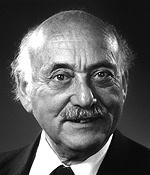
Bernhard Hermann Neumann 1909–2002
Written by Cheryl E. Praeger.
- Introduction
- Early Life and Education
- Life in England up to 1946
- Life in England 1946–1962
- The Careers of Bernhard’s Five Children
- Life in Australia 1962–1974
- Life in Australia 1974–2002
- Scientific Work
- About this memoir
Introduction
Bernhard Hermann Neumann was born and educated in Berlin. He held doctorates from Berlin and Cambridge, and mathematical positions at universities in Cardiff, Hull, Manchester, and the Australian National University (ANU) in Canberra. Whereas his move to the UK in 1933 was a result of the difficulties he faced as a Jew in finding employment in Germany, his move to Australia in 1962 was to set up a new research Department of Mathematics at the Institute of Advanced Studies at the ANU. Bernhard Neumann was famous for both his seminal research work in algebra and his strong support of all endeavours in mathematics. His scholarly publications span more than seventy years. His honours include Fellowship of the Royal Society and of the Australian Academy of Science, appointment as Companion of the Order of Australia, and numerous honorary doctorates. To Bernhard it was important to share and spread the joy of doing mathematics.
Bernhard Hermann Neumann was born in Berlin, Germany, on 15 October 1909. After completing his doctorate in Berlin, he moved to the UK to seek employment, and undertook a second doctorate in Cambridge. His academic work as a mathematician in the UK was interrupted by a period of internment, and then service in the British army, during the Second World War. Bernhard Neumann was head-hunted from his position in Manchester to become, in 1962, foundation professor and head of a new research mathematics department at the Australian National University. He had an enormous positive influence on the development of mathematics in Australia and the Asia-Pacific region, not only during his time as departmental head at the ANU but also in the decades following his retirement in 1975. Bernhard died suddenly on 21 October 2002, in Canberra, Australia, shortly after his 93rd birthday. He is survived by his second wife Dorothea and the five children of his first marriage (to Hanna, also a mathematician and a Fellow of the Australian Academy of Science at the time of her death in 1971).
Early Life and Education
Bernhard was named after his two grandfathers. His paternal grandfather Bernhard Neumann was a hardware merchant in Karlsruhe in the south of Germany, and Bernhard’s father Richard was the youngest of four children, born on 15 January 1876. Bernhard’s maternal grandfather Hermann Aronstein had a large farm, called a Rittergut, in Westphalia, and Bernhard’s mother Else was Hermann’s third daughter. Both sides of Bernhard Neumann’s family were thus solidly middle-class.
Richard Neumann married Else in 1905 in Berlin. He studied engineering, spent two years in the USA as an engineer and then held a job until the late 1930s in Berlin, in the AEG—Allgemeine Elektrizitätsgesellschaft. Bernhard was the second child and only son. His elder sister Edel-Agathe (known as Eta) was born in 1906 in Berlin, studied physics in Berlin, worked in patent law and patent physics in north-east England until she married Gösta Lindskog, a Swedish pastor and school teacher, and then lived in Sweden with Gösta until her death from cancer in 1958. Both of Bernhard’s parents were Jewish. Richard was not practising, while Else went to synagogue for the important festivals. Bernhard was also not practising, but despite this he and his first wife Hanna sat on the Council of Jews and Christians in their Manchester days in the late 1950s, wishing to bring reconciliation between the two religions.
Bernhard was four years old when the First World War began. The blockade against Germany caused severe shortages and strict rationing, and Bernhard remembered feeling very hungry for much of the war. Thus he knew privation of a type not often met with in Europe today. Bernhard remembered with some affection the arrival of Quakers immediately after the war; they went around schools in Germany feeding the children.
Bernhard attended the Herderschule in Berlin-Charlottenburg from 1916 to 1928. He claims that he was dull as a young child to the extent that an aunt consoled his mother with the words, ‘he might yet make an artisan of sorts!!’(1) A tonsillectomy that happened at about the time he entered the Herderschule changed this perception. From then on he took delight in sums and particularly mental arithmetic. Bernhard’s father had a student text on calculus that fascinated him. He did all the exercises and thus learned differential calculus (then a university subject) at a very early age, and loved studying the beautiful curves contained in the book. Later, in Year 10 of school, he invented three-dimensional analytic geometry for himself.
At school, Felix W. Behrend taught Bern-hard mathematics and physics. His teacher’s son Felix A. Behrend, a life-long friend of Bernhard, became an Associate Professor of Mathematics at the University of Melbourne (see B73). The Herderschule also produced G. P. Hochschild, later to become
Professor of Mathematics at the University of California, Berkeley. Throughout his life, Bernhard made friends quickly and easily, and kept in contact with a large number of people. His remarkable memory was no doubt aided by his famous pocket diary in which he recorded birthdays and other significant details.
Bernhard left the Herderschule with the Abitur, the qualification that was an entitlement to university entrance. His university education began with two semesters at Freiburg University in 1928–29, studying under Alfred Loewy, Gustav Mie and Lothar Heffter. Heffter, Bernhard’s favourite teacher, was mathematically active until his 100th year. Bernhard dedicated his paper B68 for Heffter’s 100th birthday. However on submitting the paper Bernhard learned from the editor ‘by return’ that Heffter had just died, less than six months before his 100th birthday (B120, p. 587). So the paper is dedicated to his memory. Bernhard was always keenly interested in people who continued to be very active academically after retirement, and later loved the fact that his own life was so long. When a mutual friend died, Bernhard is reported as saying, ‘but he was only 85, wasn’t he?’ The other side of the coin was that he became one of the great supporters of the young, as we see later.
After the Freiburg experience, Bern-hard returned home to Berlin to study at the Friedrich-Wilhelms-Universität, later to become the Humboldt University. He was delighted to have a degree from both incarnations of the institution, the doctorate from Humboldt being an honorary one. Bernhard studied under such luminaries as Erhard Schmidt, Issai Schur, Robert Remak and Heinz Hopf. He began with pure mathematics, physics and philosophy. Later he concentrated on pure mathematics.
Bernhard was introduced to group theory in the autumn semester of the academic year 1930–31 by Remak, who had given a course on his own (then unpublished) work on direct products of groups. Apparently the attendance started at thirty and ended up with Bernhard as the single attendee. Groups were new and exciting to him, and this excitement never wavered throughout his life. He came across the subject that eventually became part of his Dr.phil. dissertation while attending a seminar on geometry and topology led by Hopf and Georg Feigl.
Bernhard had read a paper of Jakob Nielsen on automorphisms of free groups (B120, p. 1); Nielsen had found a finite presentation for the automorphism group of a free group of finite rank. Bernhard discovered that he could reduce the number of generators and relations. Indeed he found the minimum generating numbers for free groups of rank at least 4. He told Hopf, who suggested that the proof should be written down; and when Hopf saw the resulting manuscript, he suggested that it might be used as Bernhard’s doctoral dissertation. Bernhard thought that he was too young and the result too slim, but after comings and goings involving Hopf, Schur and Schur’s assistant Alfred Brauer, Schur eventually agreed that it was perhaps a little on the slim side. Schur suggested that Bernhard investigate the minimum generating numbers of what are now called permutational wreath products of finitely presented groups and symmetric groups. In a fortnight, Bern-hard had done the required work—‘the size doubled’ (B120, p. 1)—and now there was enough for the Dr.phil., which Bernhard took at the early age of 22. Bernhard’s first published paper B1 came out of this.
Life in England up to 1946
Bernhard left Germany for England in August 1933, and on his arrival was given refugee status, somewhat to his surprise. He found that job prospects in England were no better than they had been in Germany, so he ‘camouflaged’ the fact that he was unemployed. He became a research student again, at Fitzwilliam House (now Fitzwilliam College), Cambridge, financed at first by his parents in Germany and then by an uncle in South Africa. His supervisor was Philip Hall and weekly supervision sessions took the form of dinner in King’s College followed by discussion in Hall’s rooms in college, ‘where we would drink his sherry, smoke his cigarettes and talk about rhizomorphs of plants and political history in Germany and everything’. At about ten o’clock the discussion would drift towards mathematics. After completing his PhD in 1935, Bernhard stayed on in Cambridge for a further two years until he was appointed in late 1937 as a temporary assistant lecturer in mathematics at University College, Cardiff. He taught in Cardiff until 1940.
Bernhard had met Hanna von Caemmerer in January 1933. Hanna was born in Berlin on 12 February 1914, the youngest of three children of Hermann and Katharina von Caemmerer. Her father had a doctorate in history, and was well on the way to establishing himself as an archivist and academic historian when he was killed in the first days of the 1914–18 war. As a result she and her mother, brother Ernst (born 1908) and sister Dorothea (Dora, born 1910) lived impecuniously on a war pension and Hanna contributed to the family income by coaching younger school students for up to fifteen periods a week.
Bernhard and Hanna got to know each other through the Mathematisch-Physikalische Arbeitsgemeinschaft, a working group within the university in Berlin. Although Hanna was not Jewish, she was very much anti-Nazi. Bernhard and Hanna remained in regular contact by correspondence after Bernhard moved to England. As open correspondence was too dangerous, their letters went secretly via various friendly channels. They became engaged in 1934 and met for a couple of weeks in Denmark in 1936 as Bernhard was returning to England from the International Congress of Mathematicians in Oslo. Then in 1938 Hanna, deciding that war was not unlikely, moved to the UK where she and Bernhard were married. However such ‘mixed’ marriages between Jews and non-Jews were against the law in Germany, and Bernhard and Hanna felt they could not openly marry until his parents were safe from possible reprisals. Thus after their marriage Hanna lived in Bristol and Bernhard in Cardiff. Bernhard’s father could not believe that the level of evil abroad in Germany since 1933 could possibly last, and it was not until February 1939 that Bernhard’s parents left Germany. From that time, the four Neumanns lived together in a small house in Cardiff, where Bernhard’s and Hanna’s first child Irene was born in August 1939, just before the beginning of the Second World War.
During the first part of 1940, Bern-hard and Hanna fell into the class of ‘least restricted aliens’ and Bernhard continued to work as a lecturer in Cardiff as this was a ‘reserved occupation’ not liable for army service. However, after the Dunkirk evacuation a large part of the coast was barred to all aliens and they were required to leave Cardiff. They moved to Oxford, and within a week Bernhard was interned. After several months he was released into the British army. He was trained in Yorkshire and then transferred to the south of England. Most of the time he was within reach of Oxford and could visit his family occasionally. In particular, he obtained special leave when his son Peter was born in Oxford at the end of December 1940.
Bernhard served in the Pioneer Corps until 1943, when he was allowed to volunteer for combatant service. He was transferred to the Royal Artillery, then to the Artillery Survey where he used theodolites and did some numerical work. Later he entered the Intelligence Corps. During this time Bernhard completed several mathematical papers (B14, B15, B16, see B120 pp. 279 and 740).
Meanwhile Hanna submitted her Dr.phil. thesis in Oxford in mid-1943, and soon afterwards she was allowed to return to Cardiff, where their third child Barbara was born in November 1943. Hanna returned to Oxford for her oral examination in April 1944 and Bernhard, by then in the Intelligence Corps and stationed not very far away, was able to join her for a celebratory lunch after the examination.
During 1945, when the European war was over, Bernhard volunteered to go to Germany with the Intelligence Corps. On a long weekend leave (replacing his leave for VJ Day that he had missed) he was able to visit Hanna’s sister and mother. He was demobilized later that year and returned to England.
Life in England 1946–1962
The University College in Cardiff wanted Bernhard to return to his teaching post there, but Bernhard did not feel obliged to do so because they had not helped to get him out of internment. Instead he obtained a Temporary Lectureship at the University College in Hull (now the University of Hull) at the beginning of 1946, as replacement for Jacob Bronowski. At the same time his fourth child Walter was born. For the next academic year, Bernhard was appointed to a permanent lectureship and, as Bronowski decided not to return to Hull, Hanna applied for and was appointed to the vacant position as a Temporary Assistant Lecturer.
Hanna stayed in Hull for twelve years, but in 1948 Bernhard was enticed to a position at the University of Manchester by
M. H.A. Newman. This entailed ten years of commuting between Manchester and Hull in all the vacations and for many weekends. Bernhard was not only a keen everyday cyclist, but also a long-distance one: on several occasions he made the hundred-mile trip across the Pennines between Manchester and Hull by bicycle, and once he rode from Manchester to give a lecture in London because there was a train strike. In 1951, during this period, his fifth child Daniel was born.
This period saw also the publication of a number of highly influential research papers. Foremost is the famous joint paper B19 (1949) of Bernhard and Hanna with Graham Higman introducing HNN-extensions. In the same year Bernhard’s paper B17 on ordered groups appeared. Published shortly afterwards were the paper B20 (1950) in which he answered one of the 1948 Prijsvraagen of the Wiskundig Genootschap te Amsterdam, and Bernhard’s celebrated essay B38 for which he won the Adams Prize in 1952. Then in 1954 his papers B36 and B41 on BFC groups appeared (see Section F.5).
In 1958 Hanna obtained a Lectureship in the Faculty of Technology at the Manchester College of Science and Technology (now, after several name changes, part of the University of Manchester). At the time the College was part of the University of Manchester but independently financed and physically separate, with its own department of mathematics. Hanna’s role was to set up an honours programme in mathematics.
By then Bernhard had the rank of Reader in Mathematics, and in the following year, 1959, he was elected to the Fellowship of the Royal Society for his numerous and influential contributions to the theory of infinite groups. Bernhard served as a Vice-President of the London Mathematical Society 1957–59 and as an Editor of the Proceedings of the London Mathematical Society 1959–61. Bernhard supervised eight PhD students in Manchester, seven of whom became long-term university teachers and researchers in mathematics and the other a senior secondary teacher of mathematics and mathematics editor. Six of them became professors of mathematics: in Egypt, England, Wales, the USA and two in Australia.
During 1959 Bernhard was granted sabbatical leave from Manchester. He spent three months visiting all the universities in Australia, including a week at the Australian National University in Canberra. Following his Australian tour he spent the ‘Monsoon Term’ of 1959 at the Tata Institute of Fundamental Research in Bombay, and notes of his lectures in Bombay were subsequently published by the Tata Institute B61. These travels are perhaps an early manifestation of his combining travelling activities with the spreading of mathematics.
Bernhard held the position in Manchester until 1962, but the final academic year was spent on study leave working at the Courant Institute of Mathematical Sciences in New York. The year in New York was fruitful mathematically, for Bernhard and also for Hanna and their son Peter who was by then an undergraduate student in mathematics in Oxford. They wrote the ‘3N’ paper B67 on product varieties of groups and embarked on a joint project with Gilbert Baumslag, one of Bernhard’s former PhD students, which culminated a year later in the ‘B+3N’ paper B75 on varieties generated by a finitely generated group.
The Careers of Bernhard’s Five Children
After completing a Master of Arts in English literature at the University of Manchester, Irene (Neumann Brown) was a high school teacher in Aberdeen, Scotland, and then a lecturer in English at New Mexico State University. Peter became a mathematician at the Queen’s College, Oxford, with research contributions ranging over a number of areas of algebra and its history. He was awarded the Lester R. Ford Award by the Mathematical Association of America in 1987 and the Senior Whitehead Prize by the London Mathematical Society in 2003, and was appointed an Officer in the Order of the British Empire in 2008 for services to education. On completing a mathematics degree at the University of Sussex, Barbara (Cullingworth) taught at Saint Bernard’s Convent School in Slough, England, specializing in the teaching of statistics, and having an active role in the Mathematical Association. Walter studied mathematics in Adelaide and Bonn. His mathematical interests are in topology, algebraic geometry and geometric group theory, and his academic career has been an international one, with posts in Germany, Maryland, Ohio, Melbourne and New York. He is presently Full Professor at Barnard College, Columbia University, New York. Daniel completed degrees in ancient Greek and pure mathematics at Monash University, and in psychology at the University of New England and Swinburne University. For many years he was a professional musician in Orchestra Victoria, and he now works as a psychologist.
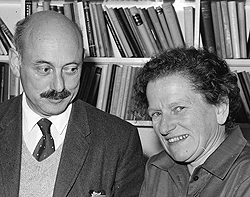
Life in Australia 1962–1974
As a result of Bernhard’s Australian visit in 1959, and with some strong encouragement especially from Sir Mark Oliphant, Bernhard and Hanna in 1961 accepted positions at the Australian National University (ANU), Bernhard as the foundation Professor of Mathematics at the Institute of Advanced Studies, a position he held until his retirement at the end of 1974, and Hanna as Reader in the department Bernhard was appointed to set up. Later Hanna became the first female professor of mathematics in Australia, and Foundation Head of the Department of Pure Mathematics in the School of General Studies at the ANU (see Fig. 1). She was also the first woman mathematician elected a fellow of the Australian Academy of Science (in 1969). Sadly, she died in 1971 while on a lecture tour in Canada.
Bernhard’s major task on taking up his position at ANU in 1962 was to build up the new Department of Mathematics, and to establish a healthy PhD programme in mathematics there. He attracted active researchers to his new department. During Bernhard’s headship (1962–74) about fifty graduate students completed their degrees, of whom eight were directly supervised by him. He always had an open door and fostered a feeling of family. The students sometimes found his expectation of intellectual rigour daunting but came to appreciate it. They have gone on in diverse ways— quite a few of them made their careers in Australian universities, and Bernhard lived to see many of them make a significant mark.
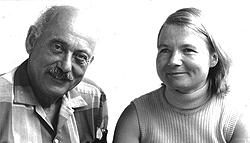
Bernhard married Dorothea Frieda Auguste Zeim in 1973 (see Fig. 2). Dorothea was born in Berlin on 20 January 1939. Her father Albert Zeim was a classics scholar and secondary school teacher. Her mother Hildegard Rockstroh studied modern languages (French and English) but did not finish her doctorate for family reasons. She started working, as a contract teacher at secondary school, in the 1960s when her three children were all at university. Dorothea had known the Neumann family for many years. Her mother had gone to school with Hanna’s elder sister Dora, and Dorothea had spent some time with the Neumann family in Manchester working as an au pair and becoming familiar with English as part of her education. She had remained in contact with the family from that time. After her marriage Dorothea completed a PhD in linguistics at the Australian National University.
Bernhard travelled widely, giving many talks, attending many conferences and spreading the message that good mathematics was being done in Australia and that Australia was a good place in which to do mathematics.
Bernhard expected intellectual rigour not only in mathematics but more widely. He was known for his rigour in other activities such as editing typescripts and recording of minutes of meetings.
The first two international conferences in Australia on a mathematical topic were held under his leadership, on the theory of groups, in 1965 and 1973. Both were notable for the quality of the main speakers and the range of countries from which they came. The first was also notable because Bernhard was able to arrange for young people from overseas to earn their way to Australia by teaching at an Australian university. A third international conference on the theory of groups was held in 1989 to mark his 80th birthday.
Bernhard was active in many aspects of mathematical life in Australia, holding numerous leadership positions that were later appropriately acknowledged. He became the fifth President of the Australian Mathematical Society (1964– 66), was elected an honorary member in 1981, and was further honoured by having a prize named after him for the most outstanding talk by a student at the Annual Meeting of the Society. Two of his mathematical grandchildren (doctoral students of his own PhD students) have won that prize. As founding editor (1969–79) of the Bulletin of the Australian Mathematical Society, which he developed as a quality international journal, Bernhard succeeded in creating a vehicle for fast publication of good mathematics, though he did not quite achieve his hoped-for five months, on average, from submission to publication. Bernhard also helped found the Australian Association of Mathematics Teachers and was its first President (1966–68).
Bernhard was elected to the fellowship of the Australian Academy of Science in 1964. The citation noted his contributions to group theory and that he had established himself as one of the leaders of mathematics in the country, and his determination to foster mathematics on a national scale. He served on Council (1968–71), was a Vice-President (1969–71), and gave the Matthew Flinders Lecture in 1984. He served an extended term on the National Committee for Mathematics (1963–75) and on Australian delegations to many meetings of the International Mathematical Union (IMU), held in conjunction with International Congresses of Mathematicians (he attended thirteen of these congresses; surely close to a record). He gave an invited lecture at the Nice congress in 1970. Also, at the Nice congress, he was appointed to improve communication among mathematicians. This led to his founding the IMU Canberra Circular, which he edited almost single-handedly from 1972 to 1999; it provided timely information about mathematical meetings as well as announcements of honours and deaths within the mathematical community internationally. Its circulation rose to more than 1100 before becoming largely electronic, and was especially valued by colleagues in countries with little contact with the wider world. Bernhard also served (1975–79) on the Exchange Commission of the IMU.
Through the Australian Academy of Science, Bernhard initiated the Australian Subcommission of the International Commission on Mathematical Instruction (ICMI), chaired it (1968–75) and was the Australian representative on ICMI. He was a member at large of ICMI (1975–82) and of its Executive Committee (1979–82). This was the basis for Australia’s hosting of the Fifth International Congress on Mathematical Education (ICME5) in Adelaide in 1984. In addition he was active in getting the Academy involved in providing materials for schools, and after a long gestation period, six volumes of Mathematics at Work appeared in 1980–81.
Life in Australia 1974–2002
On retiring as Professor and Head of the Department of Mathematics at the end of 1974, Bernhard was made Professor Emeritus and an Honorary Fellow of ANU. He was also appointed a Senior Research Fellow at the Commonwealth Scientific and Industrial Research Organisation (CSIRO) for three years and then became an Honorary Research Fellow, reappointed annually until his death. In 1975 he also became an Honorary Member of the Canberra Mathematical Association, the Australian Association of Mathematics Teachers, and the New Zealand Mathematical Society.
In ‘retirement’ he continued his own research in mathematics and his support of work in mathematics by others, directly, through teaching and editorial and committee work. For example, he served as a member of the Academic Advisory Council of the Royal Australian Naval College. He continued to be an ambassador for mathematics and for Australia.
Together Bernhard and Dorothea provided a steady welcoming and supportive environment especially for visitors and young people, in mathematics, in music and quite generally. The annual Neumann wine and cheese parties were legendary. Initially they were yearly gatherings of Bernhard’s and Hanna’s students. By the 1970s the guest list included at least 100 students and former students, together with their friends and family.
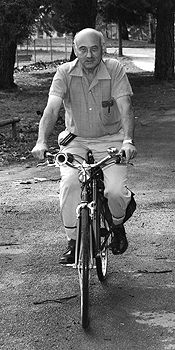
Dorothea gave Bernhard outstanding non-mathematical support by joining him in exploring and pursuing activities outside mathematics. In particular, she joined him in regular chamber music evenings and in an orchestra in which Bernhard played the cello, and strongly encouraged him to continue. Bernhard’s approach to new challenges and suggestions was always ‘why not’. After his son Daniel and grandchildren took him camping for the first time when he was over seventy, Dorothea and he planned and executed numerous camping expeditions that sometimes included mathematics conferences. Dorothea developed ingenious plans to enable Bernhard to keep cycling up to a few months before his death (see Fig. 3), and to continue his active enjoyment of the Australian bush. On his eightieth birthday he went ballooning; and on his ninetieth he went abseiling. One cannot help but wonder what he would have done had he made it to his hundredth birthday!
Bernhard continued to support activities aimed at stimulating and developing mathematics talent. He gave considerable encouragement to Peter O’Halloran and his colleagues involved in the formative stages of what is now the Australian Mathematics Competition and maintained an active interest in it. He chaired the Australian Mathematical Olympiad Committee from its inception in 1980 till 1986. In his role as Chair of a Site Committee (1981–83) during his term on the Executive Committee of ICMI (1979–82), he ensured better structure and operation of the International Mathematical Olympiads. The holding of the 1988 IMO in Australia during Australia’s bicentenniel year owed much to him. Through the B. H. Neumann Awards, the Australian Mathematics Trust recognizes significant and sustained contributions to the enrichment of mathematics learning in Australia and its region. When the Australian Mathematics Trust commissioned the Sydney portrait artist Judy Cassab to paint his portrait, Bernhard was delighted not only by the painting but also by Judy Cassab’s approach to portrait painting: ‘she talked all the time and asked me questions, and I talked all the time—and so the portrait is not a photograph, it’s myself’.
Most of his mathematical life was spent in Australia. During that time he contributed much to mathematics in Australia and became a much loved and respected figure. He was a positive influence on an immense number of people. He was made a Companion of the Order of Australia in 1994 for service to the advancement of research and teaching in mathematics.
He was awarded honorary doctorates from a number of universities: the University of Newcastle (NSW), Monash University (Vic), the University of Western Australia and the ANU within Australia; and the University of Hull (UK), the University of Waterloo (Canada) and the Humboldt University of Berlin (Germany). Bernhard was well known in circles outside mathematics. On his first visit to Australia he played in many chess clubs. At the time of his death he was the oldest rated chess player in the country. He was known to the broader Canberra public as a familiar figure cycling on its roads, in more recent times wearing an electric blue helmet. He was for many years Vice-President of the Friends of the Canberra School of Music; he helped judge an annual chamber music competition the day before he died. He enjoyed exploring the countryside and showing visitors around it. In spite of all this visible activity, he was perhaps at his best giving quiet, often unnoticed and unrecognized help to individuals.
Bernhard Neumann was a strong supporter of all endeavours in mathematics— he supported people who did mathematics for its own sake, people who applied mathematics and people who taught mathematics. To him it was important to share and spread the joy of doing mathematics. Bernhard Neumann was the right person at the time for mathematics in Australia with his energy, enthusiasm and commitment to the subject and to all people involved in mathematics. During his lifetime, Bernhard saw Australia change from a mathematically under-developed country to one with a significant mathematical profile, and he was instrumental in that change.
Scientific Work
The scientific work of Bernhard Neumann ranges widely in mathematics. The core is his published research. In addition he made many other contributions through his editorial work, his lectures, his reviews (of which he wrote many hundreds), his training of students, his participation in and organization of conferences and his ready availability to all who sought him out.
The published research of Bernhard Neumann is primarily in algebra with occasional excursions into geometry and other parts of mathematics. Within algebra his main work was on the Theory of Groups, though there was often work in more general contexts such as division rings, near-rings, semigroups, universal algebra and ordered algebras. Groups are mathematical structures satisfying a small number of axioms that formalize the essential aspects of symmetry. Thus one may view the focus of Bernhard Neumann’s research as the ‘Mathematical Science of Symmetry’.
Much of Bernhard Neumann’s published work continues to be cited regularly up to the present: most notably the HNN-embedding paper B19 and the ‘Mal’cev-Neumann construction’ B18 for ordered division rings, both dating from 1949; his seminal paper B6 on infinite groups and his paper B9 on varieties of groups, both published in 1937; his essay on group products with amalgamations B38; and his papers on group coverings B36, B39, on various finiteness conditions for groups B24, B42 and on the ‘Erdős Problem’ B104. Other of his ‘mathematical inventions’, such as the twisted wreath product, are now household names in mathematics and are routinely used without explicit reference.
Bernhard Neumann was punctilious about publication names. For example, in 1970, when I was writing my first research article arising from an undergraduate summer vacation research project supervised by Bernhard, he counselled me about keeping one publication name throughout my career. Moreover that name, he said, should as far as possible uniquely identify me as author. Thus I became Cheryl E. Praeger and, as Bernhard explained, he was from 1935 onwards B. H. Neumann in print. Therefore, in this scientific evaluation, I will refer to Bernhard as BHN, a name used by his colleagues when discussing Bernhard as mathematician. Moreover, as a tribute to BHN, the numbering system used for listing his publications in the Bibliography and citing them in the text is that used by BHN himself in the Selected Works (B120, 1988). That is to say, publication number xy in the list is referenced as Bxy, both there and in the text. In particular this overcomes the problem of distinguishing the publications of BHN from those in the list of other publications. Moreover use of other references has been kept to a minimum. Where possible, such references have been restricted to material that can be readily traced using the mathematical reviewing journals Mathematical Reviews [2] and Jahrbuch über die Fortschritte der Mathematik [3], or the bibliography of the monograph by Chandler and Magnus [4] (from which one may gain a good view of BHN’s contribution to combinatorial group theory). Publications reviewed by Mathematical Reviews or the Jahrbuch will be referenced in the text by their review number and year of publication. As examples of this usage, the history by Chandler and Magnus [4] might be referenced as Chandler and Magmus (MR0680777, 1982), and the paper of Burnside mentioned in Section C.1 as Burnside (JFM33.0149.01, 1902).
Within Group Theory, a number of topics are specifically associated with BHN. He is noted for the inventiveness of his constructions and his analysis of constructions and their application to embedding problems. He is a founder of the theory of varieties of groups.
A number of his contributions have seen his name used (in conjunction with others) and these are discussed in the indicated section:
- the Birkhoff–Neumann embedding – Section E.1
- the Douglas–Neumann Theorem – Section D.3
- the Grushko–Neumann Theorem – Section F.3
- the HNN construction/embedding – Section E.2
- the Macintyre–Neumann Theorem – Section F.6
- the Mal’cev–Neumann construction – Section E.5
- the Moser–Neumann question – Section D.2
- the Neumann–Rado Theorem – Section D.1
- the Neumann semidirect product – Section E.3
A. Automorphisms and Endomorphisms
A.1 Automorphism Groups of Free Groups
As mentioned already, BHN’s interest in groups was aroused by a course in Berlin given by Remak in 1930. While he was participating in a seminar on geometry and topology conducted by Feigl and Hopf he came across a paper by Nielsen (MR1512188, 1924) in which finite presentations for the automorphism groups of finitely generated free groups are determined. BHN was able to reduce these presentations. In particular he showed that the automorphism groups of the free groups of rank at least 4 can all be generated by two elements. This was the core of his doctoral dissertation (1931) in Berlin and of his first paper B1 (1932). The heart of the work is manipulation of group presentations. This is something which continued to be a significant part of his work for his whole career. Presentations for the automorphism class groups of the finitely generated free groups are determined in paper B23 (1951) with Hanna. The main thrust of that paper is characteristic subgroups and systems of generating vectors. Characteristic subgroups are also studied in B82 (1966). The theme is extended to general categories in B89 (1969).
A.2 Fixed-point-free Automorphisms
BHN reported in the Selected Works (B120, introductions to Chapters 2 and 9) that questions in the foundations of geometry had a revival of interest in the 1920s and 1930s arising from work on the 7th edition of Hilbert’s Grundlagen der Geometrie. BHN also reported that much of the work he did on these foundational questions was never published. BHN was fascinated by the algebra underlying geometrical systems. In B11 (1940) he studied what are now called near-rings, generalizing results of Zassenhaus about finite near-fields to the infinite case. The questions were boiled down to proving that a group satisfying certain conditions is abelian. One of these conditions is the existence of an automorphism with order 2, which leaves fixed only the identity element; nowadays usually referred to as a fixed-point-free automorphism. BHN proved that a group which admits a fixed point-free automorphism with order 2 and in which every element has a unique square root is abelian. In B14 (1943) he showed that the existence, but not uniqueness, of square roots is not sufficient. In B44 (1956) BHN gave a description of finite groups which admit a fixed-point-free automorphism with order 3.The study of groups and other algebraic systems admitting automorphisms with few fixed points has developed into a substantial topic; see, for example, monographs by Khukhro (MR1224233, 1993; MR1615819, 1998).
A.3 Finite Groups
In B43, B45 (1956) Ledermann and BHN studied automorphism groups of finite groups. They were inspired by a problem of Birkhoff and Hall (MR1501860, 1936) which asked for a lower bound for the orders of automorphism groups of finite groups. In B43 Ledermann and BHN showed that large finite groups have large automorphism groups or more precisely: there is a bound f(n) such that every finite group with order not less than f(n) has at least n automorphisms. Recent work of Bray and Wilson (MR2243245, 2006) sheds further light on this. In B45 Ledermann and BHN considered what they called a local version and showed that, for each prime p, there is a function g(h) such that every group whose order is divisible by pg(h) has ph dividing the order of its automorphism group. An important ingredient in the work on the local problem is Schur’s multiplicator. Not long after, Green (MR0081901, 1956) made improvements that show that the function h(h + 3)/2 + 1 suffices. There have been some further improvements in the bound but not asymptotically. Nevertheless there is a popular conjecture, seemingly dating from about the same time, that the order of a non-abelian group with prime-power order divides the order of its automorphism group (Schenkman MR0067111, 1955; Mann MR1716701, 1999).
A.4 Semigroups
The story is quite different in semigroups as Dlab and BHN showed in B91 (1969). They exhibited arbitrarily large finite semi-groups with just eight endomorphisms, and their question of whether a smaller number can be achieved was answered by Kublanovsky (MR734514, 1983) who showed that for semingroups containing at least four elements, the minimum possible number of endomorphisms is four, and there are infinitely many finite semigroups with exactly four endomorphisms. Dlab and BHN also exhibited an infinite rigid semi-group: one whose only endomorphism is the identity.
B. Presentation Manipulation
Presentation manipulation is a significant feature of BHN’s work. It is the core of his paper B1, and in particular is a critical ingredient of B6 (1937). About the paper B6, Baumslag and Miller (MR2554768, 2009) say:
In [this] brief, remarkable paper [BHN] established several facts which are now widely known and used in combinatorial group theory: (i) a proper subgroup of a finitely generated group is contained in a maximal proper subgroup; (ii) if a group can be defined by finitely many relations on one finite set of generators, then it can be defined by finitely many relations on any other finite set of generators; (iii) there exist finitely generated groups which are not finitely presented; and (iv) there exists [by construction] a family of continuously many non-isomorphic two generator groups.
This important construction is discussed further in Section E.1.
Part of his joy with presentation manipulation came via coset enumeration. BHN was one of the early practitioners and he continued to enjoy it for a long time. He saw that it would benefit from the use of electronic computers. He argued for computational resources at ANU in the 1960s and established a post to support computation. He set interesting challenges for the development of better implementations (see B107c for an example and MR1775892, 2000). He continued to record such manipulations in his notebooks and to publish consequences he thought of interest.
In B47 BHN considered the question of whether a finite group with trivial Schur multiplicator has a presentation with an equal number of generators and relations, in other words has deficiency zero. This is a growing subject to which BHN contributed further in B106, dedicated to Coxeter who was another great presentation manipulator, B117, B122 and B123.
In the course of proving that it is possible to adjoin n’th roots of elements to semi-groups in B85 and B86, BHN suggested a computational procedure, analogous to the Todd–Coxeter procedure for groups, to enumerate the elements of a finitely presented monoid. The procedure was proved by Jura (MR0486223, 1978), and various variants have been proposed, culminating in a general framework of Linton (MR1344920, 1995) that encompasses double coset enumeration in groups and vector enumeration, as well as the Todd–Coxeter procedure for groups and for monoids as special cases.
C. Varieties
C.1 Varieties of Groups
BHN initiated the study of identical relations in groups in his Cambridge dissertation (1935), Identical relations in groups. The investigation was set in motion from his study of Boolean matrices B2 (1932). The introduction to the paper B7 (1937) that arose from the thesis suggests that the famous paper (JFM33.0149.01, 1902) of Burnside played a part in setting the direction of the work. At that time not much progress had been made on the questions Burnside had posed though they were being thought about (see footnotes on p. 506 of B7). What mattered for BHN was that the groups satisfied a relation xk = 1 identically and, related to that, the idea of a ‘maximal group’ generated by n elements and having the order of all its elements divide a fixed number k. BHN asserted (B7, p. 507):
The identical relations that hold in a given group are well worth being closely studied; whereas the relations which connect the generators of a group depend on the choice of the generators, the identical relations clearly depend only on the group itself: they are an invariant property of the group.
The paper B7 is labelled I; it deals with the general theory. It introduces ‘word-groups’, now called verbal subgroups, and the V-groups Vn(G), now called relatively free groups—that is, the n-generator group defined by the identical relations in n variables that hold in G. BHN proved that for a finite group G the groups Vn(G) are finite; more precisely, the order of Vn(G) divides |G||G|n . He also observed that Vn(G) can be determined from G and n in a finite number of steps. He then said (B7, p. 520):
But to get all the identical relations we have to know something about Vn(G) for every n. Whether this question can still be reduced to a finite problem cannot be decided now.
This comment evolved into the finite basis problem: does every group have a finite basis for its identical relations, that is, is there a finite set of identical relations from which all the identical relations follow?
The second part of the thesis, which contains detailed computations of the identical relations or laws of a number of finite metabelian groups, was never edited for publication (B120, p. 144). BHN also pointed out (B7, p. 509) that in Hall’s paper (JFM62.0082.02, 1936) on Eulerian functions the V -groups for the icosahedral group are implicitly determined.
Nowadays this field of study is given the name ‘varieties of groups’. The term variety in this context was introduced by P. Hall in 1949.
Graham Higman and BHN opened another aspect of the subject by showing in B28 (1952) that the variety of groups can be described by a single law in terms of the binary operation of right division.
Encouraged by Padmanabhan, BHN returned in B111 and B118 to finding single laws for the variety of groups this time in terms of the natural operations. His technique is based on the use of left and right mappings. This theme has been taken up for other varieties and in particular using automated theorem provers.
All BHN’s other publications on varieties deal with problems that arose in Hanna’s major paper (MR0078374, 1956) on varieties.
BHN showed in B49 (1956) that there is a 3-generator non-metabelian group all of whose 2-generator subgroups are metabelian and a 4-generator non-metabelian group all of whose 3generator subgroups are metabelian. These groups have exponent 8, and were the first of several examples demonstrating the complexity of groups with exponent 8. The most recent is by Krasilnikov (MR1994688, 2003).
The visit of BHN, Hanna and their son Peter to New York for the academic year 1961–2 provided a flourish of activity on varieties that is reported in two papers. In B67 (1962) the three Neumanns settled questions about the structure of the lattice and algebra of varieties left open in MR0078374. In particular the semigroup of varieties of groups (omitting the variety of all groups and that of trivial groups) is free and freely generated by indecomposable varieties, a result obtained independently by Shmel’kin (MR0151539, 1963). The important new idea used is to relate wreath products of groups to products of varieties of groups.
In B75 (1964) Baumslag and the three Neumanns considered conditions under which a variety is generated by a relatively free group of finite rank. They introduced, and made effective use of, the notion of a ‘discriminating’ set of groups. For example, they showed that the variety of all groups with given soluble length is generated by the relatively free group of rank 2.
In 1967 BHN gave an invited lecture to the American Mathematical Society in which he surveyed work on varieties referring his listeners to Hanna’s monograph that was about to appear; B83 is the text.
The finite basis problem was the impetus for a lot of work which established ‘varieties of groups’ as a separate discipline in the 1950s (see the index of [2]) with its status reported in a monograph by Hanna (MR0215899, 1967). Oates and Powell, students of Higman, proved in 1964 that the identical relations of a finite group always have a finite basis (MR0161904, 1964). Then in 1970, in quick succession, Ol’shanskii, Adian and Vaughan-Lee (MR0286872, MR0257189, MR0276307) published quite different proofs that there are groups that do not have a finite basis for their identical relations and indeed there are continuously many varieties of groups.
Many of the results about varieties of groups have been transferred to varieties of Lie algebras especially over infinite fields.
BHN and Macdonald took up a theme from BHN’s PhD—to study the interdependence and independence of commutator laws in groups in a series of papers B121, B124, B127.
C.2 Varieties of Other Algebras
D. A Little Geometry
The foundations of geometry were a significant source of inspiration early in BHN’s career. His interest in geometry went back to his early days as an undergraduate at Freiburg in 1928. Most of his publications related to geometry deal with algebraic questions that arise—primarily in foundations B11, B17, B18, B44. There are two other themes—convex plane regions and Napoleon’s Theorem. The former was the basis for various lectures including the Matthew Flinders Lecture to the Australian Academy of Science. It has also led, via a question popularized by J. Moser, to developments in dynamical systems—the theory of outer billiards. The approach of BHN to Napoleon’s Theorem is quite algebraic.
D.1 Convex Regions
BHN (B10, 1939) showed that a certain parameter associated with the lengths of chords of a plane closed convex curve must lie between 1/3 and 1/2. Then in B16 (1945, 1946) BHN found that the same bounds hold for an analogous parameter related to the area of intersection with a half-plane of a closed finite planar region. His proof applies without alteration if the planar region is replaced by an appropriate planar mass distribution. Moreover in the case of convex planar regions BHN gave a simplified proof, improved the lower bound to 4/9, and conjectured that a lower bound of (3 − √5)/2 may hold. Recent computational work by Kaiser (MR1424359, 1996) suggests that the conjecture is true and may be exact in some cases. The main result from B16 and its generalization by Rado (MR0021962, 1946) for higher dimensions is now viewed as a result on measures in Euclidean spaces, called the Neumann–Rado Theorem (see Dolnikov MR1187871, 1992), and has been generalized by many others, most notably by Tverberg (MR0187147, 1966).
D.2 Outer Billiards
Around 1960 BHN gave some popular lectures on Dupin curves under the title: ‘Sharing ham and eggs’. There is a written account B52b of one such lecture in the magazine Iota published in Manchester. In this account BHN asked a question about what is now known as outer or dual billiards. This question was popularized by Moser as a crude model for planetary motion (MR0442980, 1978). Recently Schwartz (MR2299242, 2007) answered what he now calls the Moser–Neumann question and published a monograph on outer billiards (MR2562898, 2009).
D.3 Douglas–Neumann Theorem
The (Petr–)Douglas–Neumann theorem is an ‘astounding’ generalization (see MR1959194, 2003) of what is usually referred to as Napoleon’s Theorem: If on the sides of a triangle are erected (outside or inside) equilateral triangles, then the centroids of these triangles form an equilateral triangle with the same centroid as the original triangle. The generalization can be stated (see Theorem 3.2 of B12): If isosceles triangles with base angles π/2 − 2πν/2n are erected on the sides of an arbitrary polygon π, and if this process is repeated with the polygon formed from the free vertices of the triangles, but with a different value of ν, and so on until all values of ν except 0 and one other (arbitrary) value, say μ, have been used in arbitrary order, then a regular figure is obtained. Its centroid coincides with that of the vertices of π, and its sides are equal in length and (parallel but) opposite in direction to the sides of the polygon that would have been obtained from π by taking ν = μ. Jesse Douglas was one the (two) first Fields Medallists in 1936 for his work on the plateau problem. BHN’s interest stemmed from a problem about electrical transformers which he came across in proof-reading his father’s book, Symmetrical Component Analysis of Unsymmetrical Polyphase Systems (1939). BHN’s paper attracted the interest of the well-known Cambridge geometer Baker (MR0008453, 1942) who gave a direct proof. BHN in turn polished it further B13. BHN gave a number of lectures on this topic. There is a nice, more recent, account in B113. A Java script that illustrates the theorem can be found on the web (http://www.maa.org/editorial/knot/Napolegon.html) (sic).
E. Constructions and Embeddings
A major topic of interest to BHN was the embedding of groups or algebras in other groups or algebras, frequently with the preservation of given properties. Many of his embedding results are achieved by ingenious constructions, and may be viewed either as embedding or construction theorems. Most notable are the famous Higman– Neumann–Neumann (HNN) construction for groups and the Mal’cev–Neumann construction for division rings. Other important examples include the twisted wreath product, the non-Hopfian group constructions, and the ‘Neumann semidirect product’ for semigroups.
E.1 Subgroups of Direct Products
Several authors remark on a construction in B6 (1937). It is described in detail in a recent book by de la Harpe (MR1786869, 2000). BHN used it to construct continuously many pairwise non-isomorphic finitely generated groups. They are all subgroups of unrestricted direct products of alternating groups which contain the restricted direct product of these groups. Since there are only countably many finitely presented groups, most of BHN’s examples must be not finitely presented. Indeed, recently Baumslag and Miller showed that all of them are not finitely presented. Baumslag (and others) have used these groups to provide examples of non-trivial discriminating groups (MR2288461, 2007). They are significant in the theory of amenable groups because they show there are continuously many finitely generated elementary amenable groups.
BHN made other use of his insight into unrestricted direct products. The embedding of a relatively free group Vn(G) into the direct product of |G|n copies of G introduced by Birkhoff (1935) and by BHN (B7, 1937) has been called the Birkhoff– Neumann embedding (see MR2245589, 2006). The restricted product is usually not complemented in the unrestricted one (B76, 1965). BHN and Yamamuro used it (B80, 1965) to show that for one family of subgroups, the Boolean powers, all countable quotients are finite. In an addendum they remarked that this fits into a broader context.
E.2 The Higman–Neumann–Neumann
(HNN) Construction Given a group G with subgroups A and B, when does there exist a group H containing G such that A and B are conjugate in H? Necessarily A and B must be isomorphic. The HNN construction (B19, 1949) demonstrates that this is sufficient, constructing groups that are now known as HNN extensions. They are closely related to amalgamated free products and have many analogous properties. HNN extensions are used in B19 to embed any countable group in a 2-generator group, and to prove that any group G can be embedded in a group in which all elements of G of the same order are conjugate. They are at the heart of G. Higman’s famous embedding theorem (MR0130286, 1961) showing that a finitely generated group can be embedded in a finitely presented group if and only if it is recursively presented. Most important in their application these days is Britton’s Lemma (MR0168633, 1963) giving a normal form for an HNN extension. The HNN construction is of considerable importance in combinatorial and geometric group theory. It is used in essentially all work on unsolvable decision problems. The use of HHN embedding plays a significant role in the theory of amenable and non-amenable groups, and there are many other recent applications (for example MR2294245 and MR2270456, 2007).
E.3 Wreath Products and Generalizations
The wreath product construction has a long history and remains a fundamental tool in both abstract group theory and applications of group actions, in algebra, combinatorics and statistics. BHN and Hanna pioneered the use of wreath products in their work on embeddings in B54 (1959) and B59 (1960). In B54, BHN and Hanna showed that every countable soluble group G is embeddable into a soluble 2-generated group H. This embedding theorem was extended to generalized soluble groups in B77 (1965) (with Kovács). In B59, BHN showed that if the (soluble) group G is fully ordered, then the 2-generated (soluble) group H can be made fully ordered with G order isomorphic to its image in H. This result was extended to generalized soluble groups with a full order by Mikaelian (MR1898374, 2002; MR1970055, 2003).
In B68 (1963) BHN introduced a generalization of this construction that he called the twisted wreath product of which the wreath product is a special case. The general notion leads in B65 to a sharpened form of a theorem of Auslander and Lyndon on the lower central series of normal subgroups of free groups. The twisted wreath product gives its name to one of the small number of types of finite primitive permutation groups in the O’Nan–Scott scheme. A number of other generalizations of the wreath product have appeared in the literature. Of these the crown product introduced in B48 (1956) is used to study ascending derived series of groups.
BHN was the first to introduce a semidirect product construction for semigroups. In B57 he used it to define a wreath product of semigroups, to prove that every finite semigroup can be embedded in a finite 2-generated semigroup, and also to give a new proof of Evans’ theorem (MR0050566, 1952) that every countable semigroup can be embedded in a 2-generator semigroup. The ‘Neumann semidirect product’ turned out to be a very powerful tool for semigroup theory. For example, Preston (MR0837162, 1986) investigated a more general product definition and showed that only the direct product and the Neumann semidirect product have the crucial property that the product of two semigroups is always a semigroup.
E.4 Group Amalgams
Group amalgams arose in Hanna’s work on free products with amalgamated subgroups (MR0026997, 1948) and the amalgam concept was introduced shortly afterwards by Baer (MR0030953, 1949). Amalgams play an important role in the study of finite simple groups and associated geometries (for example see MR1705272, 1999). A group amalgam is an ‘incomplete group’ in that its set of elements is the union of groups Gi, for i ∈ I, such that for distinct i, j the intersection Hij = Gi ∩ Gj is a subgroup of both Gi and Gj. In particular, the product of two elements is only assumed to exist if some Gi contains both elements. An amalgam is embeddable if there is a one-to-one homomorphism from it to some group. BHN in collaboration with Hanna undertook an intense study of group amalgams. In B21 (1950) they studied a family of amalgams in which the subgroups Hij are central in both Gi and Gj, and constructed what are now called central products of the groups Gi to prove that such amalgams are embeddable. In B32 (1953) they introduced uniform notation to state all the then-known embedding results and showed that each was best possible. In particular they asked whether an embeddable amalgam consisting of finite groups is embeddable in a finite group. This question was answered in the negative by Brown (MR1230631, 1992). In B58 (1960) BHN introduced the permutational product of an amalgam of two [sub]groups as an embedding group for the amalgam. He studied the extent to which various finiteness properties of the amalgam carry over to the permutational product. Using this construction he showed (B56, 1960) by example that the properties of local finiteness, or being periodic need not carry over to the embedding group. BHN (B60, 1960) explored existence questions for linked products of given groups (introduced by Hanna and Wiegold, MR0124386, 1960), and (B66, 1962) demonstrated that there are no necessary and sufficient criteria involving only commutators, intersections, and multiplications of subgroups for the existence of a generalized free nilpotent product, or a generalized free soluble product, of the amalgam of two groups.
E.5 Mal’cev–Neumann Theorem
It was the role of ordered groups and ordered division rings in the foundations of geometry that drew BHN’s interest (B120, p. 800). In B17 (1949) BHN generalized some necessary conditions, and some sufficient conditions proposed by Levi for a group to be orderable, producing some general constructions for ordered groups, and the first example of a perfect ordered group. Ordered division rings are even more important in geometry than ordered groups, and in B18 (1949) BHN constructed a formal power series division ring and used this to prove that every ordered group can be embedded in an ordered division ring. The construction made independently by Mal’cev (MR25457, 1948) is now known as the Mal’cev–Neumann construction and is of central importance in the theory of division rings (see Chapter 2 of Cohn’s book MR1349108, 1995). It has had a far-reaching impact in areas as diverse as classical analysis, diophantine equations, combinatorics and commutative algebra.
E.6 Non-Hopfian Constructions
A Hopf group is one that is not isomorphic to any of its proper quotient groups. Hopf had conjectured in the 1930s that all finitely generated groups should be what we now call Hopf groups. The first suggestion that this was not so came in a paper by Baer that ‘shook the group-theoretical world’ (B120, p. 905). Combining Baer’s basic ideas with use of the newly developed HNN-extension of B19, BHN constructed (B22, 1950) the first finitely generated non-Hopf group (a 2-generator group). In B31 (1953) BHN and Hanna answered another question of Hopf negatively by constructing two non-isomorphic (finitely presented) groups, each a homomorphic image of the other. Later (B54, 1959) BHN and Hanna constructed the first example of a soluble non-Hopf group.
E.7 Essay for the Adams Prize
The largely expository prize-winning essay (B38, 1954) has been widely read and has had substantial influence. Its origins lie in an appendix that BHN was invited to write as an up-date for the 1953 German translation of Kurosh’s book Teoriya Grupp, to ‘describe some of the then new results that had been obtained and that answered many of the problems in Kurosh’s book’ (B120, p. 281). The appendix was updated, translated into English, and submitted to the University of Cambridge for the Adams Prize, which it won. The published essay B38 contains basic facts about amalgamated free products with all sorts of applications and examples, including the HNN construction, 2-generator embedding, and ‘three remarkable groups of G. Higman’, in a very readable exposition.
E.8 More on Embeddings of Groups and Algebras
In B14 (1943), written while on leave from the British army, BHN studied the problem of solving equations in groups and adjoining the necessary solutions. He developed an elegant procedure, proving that every group can be embedded in a divisible group (one in which, for every group element g and every positive integer n, the equation xn = g has a solution x in the group).
In B17 (1949) BHN noted that every ordered group can be embedded in the multiplicative group of an ordered division ring, and in the early 1950s, BHN asked whether every totally ordered group can be embedded in a totally ordered divisible group. Despite forming the topic for PhD theses in 1974 and 2002, and being listed as the first and most notorious problem in the Black Swamp Problem Book (a problem book on ordered groups carried around to conferences in this area of mathematics and containing contributions from participants), this problem was not solved until Bludov (MR2213301, 2005) produced a totally ordered group for which no such embedding exists.
In B25 (1951), arising from discussions with Evans, BHN showed that a non-associative ring R is embeddable in a division ring D with unique left and right division if and only if R has no zero divisors. Moreover, D may be chosen to retain certain properties of R such as commutativity or being idempotent.
In a subsequent paper (B37, 1954) BHN derived from a theorem of Steenrod a general embedding result for a large class of universal algebras that contains all (partial) semigroups. He deduced a number of striking consequences: a group can be fully ordered if and only if all its finitely generated subgroups can be fully ordered; a ring can be embedded in a division ring if and only if every finitely generated subring can be so embedded; the edges of a graph can be coloured with k colours so that no incident edges have the same colour provided the same is true for every finite sub-graph. Many of these consequences would these days be derived from the Compactness Theorem of first order logic. However several now-senior mathematicians recall the high impact B37 had on them as students, one finding the paper ‘very beautiful and clever’, another finding it had ‘changed forever [his] view of the mathematical world to see that one could take such a global view of the world and still prove significant theorems’.
In B70 (1963) with Tekla Taylor, BHN characterized those semigroups that can be embedded in nilpotent groups, a characterization similar to an earlier one by Mal’cev (MR75959, 1953).
Other papers of BHN may be regarded as a prelude to B19 (B20 written in June 1948—see the endnote to B20 on SW118), or a development of B19 (B27, B40). In this context, Problem 11.67 in the Kourovka notebook by BHN asks: does there exist a torsion-free group with exactly 3 classes of conjugate elements such that no non-trivial conjugate class contains a pair of inverse elements?
F. Other Contributions
F.1 A Group-theoretic Arithmetic Problem
B3 (1933) shows the existence of continuously many maximal non-parabolic subgroups of the modular group. The existence of such subgroups was needed by Arnold Schmidt for his doctoral thesis on the axiomatics of geometry (B120, p. 65). There is an extensive account in a monograph by Wilhelm Magnus on Noneuclidean Tesselations (sic) and Their Groups (MR0352287, 1974).
F.2 A Problem like Burnside’s
BHN considered, though not as part of his thesis work, a problem similar to Burnside’s that he called the bounded orders problem. In B8 he considered the simplest non-trival case: groups all of whose elements have order at most 3.
The last thirty years have seen an extension of the bounded orders problem. The set of orders of elements of a periodic group has been called the order spectrum of the group. Given a divisibility-closed subset Ω of the positive integers the extended problem asks for a description of the periodic groups whose order spectrum is Ω, preferably in the strong form of determining the groups up to isomorphism. There is a recent survey on this topic by Mazurov and Shi (MR2491731, 2009; see also also MR1676650, 1999).
There are three types of order spectrum for groups all of whose elements have order at most 3. The solution of the bounded orders problem for groups with order spectrum {1, 2} was known when Burnside posed his questions. BHN solved the bounded orders problem for finitely generated groups with order spectrum {1, 2, 3}. The strong form of the problem has still not been solved for groups with order spectrum {1, 3}, that is groups with exponent 3.
F.3 The Grushko–Neumann Theorem
The Grushko–Neumann Theorem asserts that the number of generators needed to generate a free product of groups is the sum of the number of generators for each of the free factors. The BHN proof (B15, 1943) of this result was written while he was on leave from the Pioneer Corps and published in 1943, responding to a question of Levi. During the war both communication and publication were difficult, and we note that the proofs by Grushko and BHN were obtained independently even though the former (MR0003412) dates from 1940. In [4, p. 106] the theorem is described as the next development in the theory of free products after the work of Kurosh. This important result has attracted intense interest since then with alternative proofs offered by Wagner (the infinitely generated case, MR0008809, 1957), Lyndon (MR0178073, 1965), Stallings (MR0188284, 1965) and Imrich (MR0773183, 1984).
F.4 The Frattini Subgroup
In B6 (1937) BHN proved fundamental properties of what is now called the Frattini subgroup for not necessarily finite groups.
In B35 (1954) BHN and Higman solved two questions of Itô about the Frattini subgroup. They showed that the Frattini subgroup of a group need not be nilpotent and that the Frattini subgroup of a non-trivial free product is trivial. They pointed out that, for free products with an amalgamated subgroup, the Frattini subgroup can coincide with the amalgamated subgroup, and they asked if it can be larger. It has been shown independently and by different methods that the Frattini subgroup is contained in the amalgamated subgroup, by Gelander and Glasner (MR2377495, 2008) if the free product is countable, and by Allenby and Tang (MR2419010, 2008) if the amalgamated subgroup is countable.
In B52 (1958) BHN studied ascending Frattini series. He concluded by asking whether a finite group that is the Frattini subgroup of some group is also the Frattini subgroup of a finite group. This question was answered in the affirmative by Eick (MR1427706, 1997).
F.5 Almost Finite and Almost Abelian Groups
BHN’s work over many years on groups that are in some sense close to being finite, or close to abelian, has been very influential. In B24 and B53 he studied groups in which the conjugacy classes of elements are all finite, in particular proving an extension of the Sylow theorems for these infinite groups. In B36 and B41, BHN studied BFC-groups, groups for which there is a finite upper bound on the sizes of the conjugacy classes of elements, and proved that these are precisely the groups with finite derived subgroup (a measure of commutativity). The question in B36, p. 239, asking for an explicit upper bound for the order of the derived group in terms of the upper bound on the conjugacy class sizes of such a group has been investigated over many years. BHN’s review of a paper by Segal and Shalev (MR1726791, 1999) gives an account of recent results.
In similar vein BHN proved in B42 equality of the class of groups whose centre has finite index (another measure of commutativity) with the class of groups all of whose conjugacy classes of subgroups are finite. Baer’s observation that this class is also equal to the class of groups which can be covered by finitely many abelian subgroups prompted BHN’s investigation (B39, B41) of groups coverable by finitely many cosets of proper subgroups. If such a covering is minimal in the sense that no proper subset of the cosets covers the group, then BHN’s results in B36 imply that all the cosets correspond to subgroups of finite index, and bounds for their indices are given in B41. BHN’s work on coverings, in the contexts of both abstract groups and group actions, has been applied and developed in many ways by many mathematicians up to the present (see MR0401882, 1976; MR1328918, 1994).
A more combinatorial measure of commutativity is provided by the non-commuting graph Γ(G) of a group G in which elements of G are joined by an edge if and only if they do not commute. In 1975, Erdős asked of groups G where Γ(G) contains no infinite complete subgraph or, equivalently, groups in which every infinite subset of elements contains two that commute: does there exist an integer n(G) such that every complete subgraph of Γ(G) has at most n(G) vertices? In B104 BHN characterized such groups G as those for which the centre Z has finite index, and proved that n(G)≤|G|/|Z|−1 (see also MR0506252, 1978). This result inspired many further investigations and is much cited (see the review MR0419283, 1996; the sequel B135; and MR2260490, 2006).
F.6 Algebraic Closure: the Macintyre–Neumann Theorem
BHN’s work on algebraic closure, also called existential closure, in groups and general algebras began with a question of Scott (MR0040299, 1951). Scott had introduced notions of algebraic closure and weak algebraic closure for groups. Using the generalized free product construction, BHN proved (B26, 1952) that these notions are equivalent, and moreover that each algebraically closed group is simple. Recognising that these notions belong to universal algebra rather than group theory, BHN proved analogous results for algebraically closed semigroups (B93, 1971) and related results for cancellative semi-groups (B92, 1970; see SW1116).
BHN’s second major paper (B97, 1969/1973) on this theme was widely circulated as a preprint several years before it was published. In it he proved (among other things) that a finitely generated group with soluble word problem can be embedded in every algebraically closed group—one half of the Macintyre–Neumann Theorem. Macintyre (1972) proved the converse for finitely generated groups (and more—see Schupp’s review MR0414671 of B97). At that time logicians from Abraham Robinson’s school of model theory were developing generic structures using forcing and were interested in existentially closed structures because of work of Macintyre. This result led to work on existentially closed groups by Simmons, Macintyre, Ziegler and others.
F.7 Properties of Countable Character
In B99, dedicated to the memory of Mal’cev and written a little before B96 (see B120, p. 1259), BHN studied group properties of countable character. These are properties possessed by a group if and only if all the countable subgroups possess them. BHN showed in B99 that residual finiteness is a property of countable character. ‘Properties of countable character’ is the title of BHN’s invited lecture at the International Congress of Mathematicians in Nice in 1970. In the account B96 of that lecture BHN considered this theme for general algebras.
F.8 Means in Groups
In B33, BHN simplified necessary and sufficient conditions, due to Scott, for the existence on a group of a set of ‘Schimmack means’. In doing so he constructed the first example of a nonabelian group admitting such means. Subsequently Wiegold (MR120277, 1960) showed that both Scott’s and BHN’s conditions are equivalent to requiring that the centre of the group and its factor group are both direct products of groups isomorphic to the additive group of rational numbers.
F.9 Unsolvability and the Axiom of Choice
BHN learnt from Remak in Berlin to be alert to the use of the Axiom of Choice when working with infinite sets and this was reinforced by lectures there by von Neumann. There are signs of this influence in quite a lot of his papers, for example in B6. It surfaces explicitly in B102 where Hickman and BHN showed that the answer to a question of Babai depends on the underlying set theory. Another publication at the confluence of algebra and logic arose out of a visit by Boone to Manchester in 1958. Their discussions together with Baumslag led to results on the algorithmic unsolvability of questions about groups B55.
About this memoir
This memoir was originally published in Historical Records of Australian Science, vol.21, no.2, 2010. It was written by Cheryl E. Praeger, School of Mathematics and Statistics, University of Western Australia, WA 6009, Australia. Email: cheryl.praeger@uwa.edu.au.
Acknowledgements
Many people have helped in the preparation of this memoir. Foremost I thank M. F. (Mike) Newman to whom I am especially indebted and without whose help and scholarship over several years this memoir could not have been written. In particular, together with L. G. (Laci) Kovács, he prepared the BHN bibliography below, and I thank both Mike and Laci for their patience and dedication in presenting this accurate listing of BHN’s published work. I thank members of Bernhard’s family for their patience and assistance checking innumerable details and reading drafts: Dorothea Neumann, Peter Neumann, Walter Neumann, Barbara Cullingworth, Daniel Neumann.
I am greatly indebted to James Wiegold, Martin Taylor, and many others who have helped in various ways: Reg Allenby, Gilbert Baumslag, Keith Burns, Slava Grigorchuk, Hermann Heineken, Charles Holland, Andrei Kelarev, Ann Chi Kim, C. F. (Chuck) Miller III, Sidney Morris, Akbar Rhemtulla, Douglas Rogers, K. P. Shum, Anne Penfold Street, Zhi-Wei Sun, F. C. Y. Tang, Helge Tverberg, Mikhail Volkov, Sheila Williams, J. S. Wilson.
In addition to generous personal contributions, I am indebted to sources of biographical information such as the record of an interview [1] of BHN by Professor Bob Crompton in 1998, and the obituaries (MR0342340, 1974) and (MR1983807, 2003) of Hanna Neumann and BHN.
The formal portrait of B. H. Neumann was taken for the Royal Society in 1984.
Students
BHN was the supervisor of the work of seventeen students for doctorates. He was the formal supervisor of several other students. He was interested in the work of a wider group of students. He also gave help to some students of which the most significant was that given to Kamal Riad Yacoub (see B120, pp. 65–66).
- Yacoub 1953
Manchester
- Chehata Chehata, 1953
- John Britton, 1954
- Christine Dale, 1957
- Gilbert Baumslag, 1958
- James Wiegold, 1959
- Ian Macdonald, 1960
- Michael Newman, 1960
- László Kovács, 1961
ANU
- Narain Gupta, 1965
- Terence Gagen, 1967
- Ahmad Shafaat, 1968
- Neil Williams, 1969
- Andrew Brunner, 1973
- Kok Yeo, 1973
- Lambertus Hesterman, 1974
- Colin Fox, 1974
- Tim Brook, 1974
References
- Professor Bernhard Neumann (1909-2002), Mathematician, Interviews with Australian Scientists, Interviewed by Professor Bob Crompton in 1998. http://www.science.org.au/scientists/bn.htm
- Mathematical Reviews, The American Mathematical Society, Providence, RI. For Mathematical Reviews on the Web see http://www.ams.org/mathscinet/
- Jahrbuch über die Fortschritte der Mathematik (JFM) (1868–1942), available electronically through the Electronic Research Archive for Mathematics at http://www.emis.de/projects/JFM/
- Bruce Chandler and Wilhelm Magnus, The History of Combinatorial Group Theory: A Case Study in the History of Ideas. Studies in the History of Mathematics and Physical Sciences, 9. Springer-Verlag, New York, 1982.
Publications of B. H. Neumann
Several entries in this list have a lower case roman letter as an additional label following the numeral, and represent papers published or submitted at roughly the same time as the ‘unadorned entry’, for example [B 4a]and [B 4] were both published in 1935. The entries [B 1a] and [B 5a] are the two doctoral theses. All other such entries up to[B 115a] are numbered as in the Selected Works (B120, 1988). BHN explained there that he added letters for items that he considered of lesser importance, and this was the guiding principle for later entries.
- B 1.
- Bernhard Neumann, Die Automorphismengruppe der freien Gruppen, Math. Ann. 107 (1932), 367–386.
- B 1a.
- Bernhard Neumann, Die Automorphismengruppe der freien Gruppen, Inaugural-Dissertation, Friedrich-Wilhelms-Universität zu Berlin, 1932.
- B 2.
- Bernhard Neumann, Matrizenkalkül inder Booleschen Algebra, Jber. Deutsche Math. -Verein. 42 (1932), 126–130 (1933).
- B 3.
- Bernhard Neumann, Über ein gruppentheoretisch-arithmetisches Problem, Sitzungsber. Preuss. Akad. Wiss. phys. -math. Kl. X (1933), 429–444.
- B 4.
- B. H. Neumann, Decomposition of groups, J. London Math. Soc. 10 (1935), 3–6. Bernhard Hermann Neumann 1909–2002 277B 4a. Bernhard H. Neumann, Aufgabe 188, Jber. Deutsche Math. -Verein. 45 (1935), 22.
- B 5.
- B. H. Neumann, A remark on primary ideals, J. London Math. Soc. 10 (1935), 111–112.
- B 5a.
- Bernhard Hermann Neumann, Identical Relations in Groups, Ph. D. thesis, University of Cambridge, 1936.
- B 6.
- B. H. Neumann, Some remarks on infinite groups, J. London Math. Soc. 12 (1937), 120–127.
- B 7.
- B. H. Neumann, Identical relations in groups. I., Math. Ann. 114 (1937), 506–525.
- B 8.
- B. H. Neumann, Groups whose elements have bounded orders, J. London Math. Soc. 12 (1937), 195–198.
- B 9.
- B. H. Neumann, Identical relations in groups, Comptes Rendus Congrès Internat. des Math. (Oslo 1936), Tome 2, A. W. Brøggers Boktrykkeri, Oslo, 1937, pp. 18–19.
- B 10.
- B. H. Neumann, On some affine in variants of closed convex regions, J. London Math. Soc. 14 (1939), 262–272.
- B 11.
- B. H. Neumann, On the commutativity of addition, J. London Math Soc. 15 (1940), 203–208.
- B 12.
- B. H. Neumann, Some remarks on polygons, J. London Math. Soc. 16 (1941), 230–245.
- B 13.
- B. H. Neumann, A remark on polygons, J. London Math. Soc. 17 (1942), 165–166.
- B 14.
- B. H. Neumann, Adjunction of elements to groups, J. London Math. Soc. 18 (1943), 4–11.
- B 15.
- B. H. Neumann, On the number of generators of a free product, J. London Math. Soc. 18 (1943), 12–20.
- B 16.
- B. H. Neumann, On an invariant of plane regions and mass distributions, J. London Math. Soc. 20 (1945), 226–237 (1946).
- B 17.
- B. H. Neumann, On ordered groups, Amer. J. Math. 71 (1949), 1–18.
- B 18.
- B. H. Neumann, On ordered division rings, Trans. Amer. Math. Soc. 66 (1949), 202–252.
- B 19.
- G. Higman, B. H. Neumann, and Hanna Neumann, Embedding theorems for groups, J. London Math. Soc. 24 (1949), 247–254.
- B 20.
- B. H. Neumann, On a special class of infinite groups, Nieuw Arch. Wiskunde (2) 23 (1950), 117–127.
- B 21.
- B. H. Neumann and Hanna Neumann, A remark on generalized free products, J. London Math. Soc. 25 (1950), 202–204.
- B 22.
- B. H. Neumann, A two-generator group isomorphic to a proper factor group, J. London Math. Soc. 25 (1950), 247–248.
- B 23.
- B. H. Neumann and H. Neumann, Zwei Klassen charakteristischer Untergruppenund ihre Faktorgruppen, Math. Nachr. 4 (1951), 106–125.
- B 24.
- B. H. Neumann, Groups with finite classes of conjugate elements, Proc. London Math. Soc. (3) 1 (1951), 178–187.
- B 25.
- B. H. Neumann, Embedding non associative rings in division rings, Proc. London Math. Soc. (3) 1 (1951), 241–256.
- B 26.
- B. H. Neumann, A note on algebraically closed groups, J. London Math. Soc. 27 (1952), 247–249.
- B 26a.
- B. H. Neumann, On some interesting sets of circles, Math. Gaz. 36 (1952), 121–122.
- B 27.
- B. H. Neumann and Hanna Neumann, Extending partial endomorphisms of groups, Proc. London Math. Soc. (3) 2 (1952), 337–348.
- B 28.
- G. Higman and B. H. Neumann, Groups as groupoids with one law, Publ. Math. Debrecen 2 (1952), 215–221.
- B 29.
- B. H. Neumann and H. Neumann, On a class of abelian groups, Arch. Math. 4 (1953), 79–85.
- B 30.
- T. Evans and B. H. Neumann, On varieties of groupoids and loops, J. London Math. Soc. 28 (1953), 342–350.
- B 31.
- B. H. Neumann, On a problem of Hopf, J. London Math. Soc. 28 (1953), 351–353.
- B 32.
- B. H. Neumann and Hanna Neumann, A contribution to the embedding theory of group amalgams, Proc. London Math. Soc. (3) 3 (1953), 243–256.
- B 33.
- B. H. Neumann, A note on means ingroups, J. London Math. Soc. 28 (1953), 472–476.
- B 34.
- B. H. Neumann, Anhang, in Gruppentheorie by A. G. Kurosch (Mathematische Lehrbücher und Monographien. I. Abt. Band III. ), Akademie-Verlag, Berlin, 1953, pp. 333–381.
- B 34a.
- B. H. Neumann, Függelék, Csoportokáltalánosított szabad szorzatai, in Csoportelmélet by A. G. Kuros (Hungarian, 278 Historical Records of Australian Science, Volume 21 Number 2translated by Sándor Gacsályi), Akadémiai Kiadó, Budapest, 1955, pp. 433–502.
- B 35.
- G. Higman and B. H. Neumann, On two questions of Itô, J. London Math. Soc. 29 (1954), 84–88.
- B 36.
- B. H. Neumann, Groups covered by permutable subsets, J. London Math. Soc. 29 (1954), 236–248.
- B 37.
- B. H. Neumann, An embedding theorem for algebraic systems, Proc. London Math. Soc. (3) 4 (1954), 138–153.
- B 38.
- B. H. Neumann, An essay on free products of groups with amalgamations, Philos. Trans. Roy. Soc. London Ser. A246 (1954), 503–554.
- B 39.
- B. H. Neumann, Groups covered by permutable subsets, Proc. Internat. Congr. Math. (Amsterdam 1954), vol. 2, North-Holland, Amsterdam, 1954, p. 45.
- B 40.
- B. H. Neumann and H. Neumann, Partial endomorphisms of finite groups, J. London Math. Soc. 29 (1954), 434–440.
- B 41.
- B. H. Neumann, Groups covered by finitely many cosets, Publ. Math. Debrecen3 (1954), 227–242 (1955).
- B 42.
- B. H. Neumann, Groups with finite classes of conjugate subgroups, Math. Z. 63 (1955), 76–96.
- B 43.
- W. Ledermann and B. H. Neumann, Onthe order of the automorphism group of a finite group. I, Proc. Roy. Soc. London Ser. A 233 (1956), 494–506.
- B 44.
- B. H. Neumann, Groups with automorphisms that leave only the neutral element fixed, Arch. Math. 7 (1956), 1–5.
- B 45.
- W. Ledermann and B. H. Neumann, On the order of the automorphism group of a finite group. II, Proc. Roy. Soc. London Ser. A 235 (1956), 235–246.
- B 46.
- B. H. Neumann, On a question of Gaschütz, Arch. Math. 7 (1956), 87–90.
- B 47.
- B. H. Neumann, On some finite groups with trivial multiplicator, Publ. Math. Debrecen 4 (1956), 190–194.
- B 48.
- B. H. Neumann, Ascending derived series, Compositio Math. 13 (1956), 47–64.
- B 49.
- B. H. Neumann, On a conjecture of Hanna Neumann, Proc. Glasgow Math. Assoc. 3 (1956), 13–17.
- B 50.
- B. H. Neumann and J. A. H. Shepperd, Finite extensions of fully ordered groups, Proc. Roy. Soc. London Ser. A 239 (1957), 320–327.
- B 51.
- B. H. Neumann, Corrigendum and addendum to “Ascending derived series”, Compositio Math. 13 (1956), 128.
- B 52.
- B. H. Neumann, Ascending verbal and Frattini series, Math. Z. 69 (1958), 164–172. B52a. B. H. Neumann, Review: The Theory of Groups by A. G. Kurosh; Review: Gruppentheorie by Wilhelm Specht, Math. Gaz. 42 (1958), 151–154.
- B 52b.
- B. H. Neumann, Sharing ham and eggs, Iota (1958), no. 1, 14–18.
- B 53.
- B. H. Neumann, Isomorphism of Sylow subgroups of infinite groups, Math. Scand. 6 (1958), 299–307 (1959).
- B 54.
- B. H. Neumann and Hanna Neumann, Embedding theorems for groups, J. London Math. Soc. 34 (1959), 465–479.
- B 54a.
- B. H. Neumann, Review: Structure of Rings by Nathan Jacobson, Math. Gaz. 43 (1959), 73.
- B 55.
- Gilbert Baumslag, W. W. Boone, and B. H. Neumann, Some unsolvable problems about elements and subgroups of groups, Math. Scand. 7 (1959), 191–201.
- B 56.
- B. H. Neumann, On amalgams of periodic groups, Proc. Roy. Soc. London Ser. A 255 (1960), 477–489.
- B 56a.
- B. H. Neumann, Review: Abelian Groups by L. Fuchs, Math. Gaz. 44 (1960), 150–151.
- B 57.
- B. H. Neumann, Embedding theorems for semigroups, J. London Math. Soc. 35 (1960), 184–192.
- B 58.
- B. H. Neumann, Permutational products of groups, J. Austral. Math. Soc. 1 (1959/1960), 299–310.
- B 59.
- B. H. Neumann, Embedding theorems for ordered groups, J. London Math. Soc. 35 (1960), 503–512.
- B 60.
- B. H. Neumann and Hanna Neumann, On linked products of groups, Acta Sci. Math. Szeged 21 (1960), 197–205.
- B 61.
- B. H. Neumann, Lectures on topics in the theory of infinite groups, Notes by M. Pavman Murthy. Tata Institute of Fundamental Research Lectures on Mathematics, No. 21, Tata Institute of Fundamental Research, Bombay, 1960, reissued 1968, iii+267+iv pp.
- B 62.
- L. G. Kovács, B. H. Neumann, and H. de Vries, Some Sylow subgroups, Proc. Roy. Soc. Ser. A 260 (1961), 304–316.
- B 62a.
- B. H. Neumann, Review: Boolean Algebras by Roman Sikorski, Math. Gaz. 45 (1961), 365–366. Bernhard Hermann Neumann 1909–2002 279B
- 63.
- B. H. Neumann, Special topics in Algebra. Universal algebra, Lectures delivered in the Fall Semester 1961–62, Notes by P. M. Neumann, Courant Institute of Mathematical Sciences, New York, 1962, Cyclostyled notes, ii+78 pp.
- B 64.
- B. H. Neumann, Special topics in Algebra. Order techniques in algebra, Lectures delivered in the Spring Semester1962, Notes by P. M. Neumann, Courant Institute of Mathematical Sciences, New York, 1962, Cyclostyled notes, ii+77 pp.
- B 65.
- B. H. Neumann, On a theorem of Auslander and Lyndon, Arch. Math. 13 (1962), 4–9.
- B 66.
- B. H. Neumann and J. Wiegold, On certain embeddability criteria for group amalgams, Publ. Math. Debrecen 9 (1962), 57–64.
- B 67.
- B. H. Neumann, H. Neumann, and Peter M. Neumann, Wreath products and varieties of groups, Math. Z. 80 (1962), 44–62.
- B 67a.
- B. H. Neumann, Ferment in school mathematics, (Opening address at the) Summer School for Mathematics Teachers, University of New South Wales, 1963, pp. 0. 1–0. 10.
- B 68.
- B. H. Neumann, Twisted wreath products of groups, Arch. Math. 14 (1963), 1–6.
- B 68a.
- B. H. Neumann, Products of groups (Lectures delivered at the Summer Research Institute, Canberra, 1963; notes by Tekla Taylor), The Australian National University, 1963, i+55 pp.
- B 69.
- B. H. Neumann, A further note on means in groups, J. London Math. Soc. 38 (1963), 226–227.
- B 70.
- B. H. Neumann and Tekla Taylor, Subsemi groups of nilpotent groups, Proc. Roy. Soc. Ser. A 274 (1963), 1–4.
- B 71.
- B. H. Neumann, Felix Adalbert Behrend, J. London Math. Soc. 38 (1963), 308–310.
- B 72.
- B. H. Neumann and R. Rado, Monotone functions mapping the set of rational numbers on itself, J. Austral. Math. Soc. 3 (1963), 282–287.
- B 73.
- T. M. Cherry and B. H. Neumann, Felix Adalbert Behrend, J. Austral. Math. Soc. 4 (1964), 264–270.
- B 74.
- B. H. Neumann, Subsemigroups of nilpotent groups: an acknowledgement, Proc. Roy. Soc. Ser. A 281 (1964), 436.
- B 74a.
- B. H. Neumann, On decimal coinage, Matrix (1964), 16–18.
- B 75.
- G. Baumslag, B. H. Neumann, Hanna Neumann, and Peter M. Neumann, On varieties generated by a finitely generated group, Math. Z. 86 (1964), 93–122.
- B 76.
- B. H. Neumann, Supplements of direct powers in cartesian powers, Math. Z. 87 (1965), 17–18.
- B 77.
- L. G. Kovács and B. H. Neumann, An embedding theorem for some countable groups, Acta Sci. Math. (Szeged) 26 (1965), 139–142.
- B 78.
- L. G. Kovács and B. H. Neumann, On the existence of Baur-soluble groups of arbitrary height, Acta Sci. Math. (Szeged) 26 (1965), 143–144.
- B 79.
- G. Baumslag, L. G. Kovács, and B. H. Neumann, On products of normal subgroups, Acta Sci. Math. (Szeged) 26 (1965), 145–147.
- B 80.
- B. H. Neumann and S. Yamamuro, Boolean powers of simple groups, J. Austral. Math. Soc. 5 (1965), 315–324.
- B 81.
- B. H. Neumann and E. C. Wiegold, A semigroup representation of varieties of algebras, Colloq. Math. 14 (1966), 111–114.
- B 82.
- B. H. Neumann, On characteristic subgroupsof free groups, Math. Z. 94 (1966), 143–151.
- B 82a.
- L. G. Kovács and B. H. Neumann, editors, Proceedings of the International Conference on the Theory of Groups (held at the Australian National University, Canberra, 10–20 August, 1965), Gordon and Breach Science Publishers, New York, 1967, xvii+397 pp.
- B 82b.
- B. H. Neumann, Making new finite simple groups, Some problems and results in the theory of groups, II (Notes of a mini-conference, Oxford, 1966), pp. 3–4.
- B 83.
- B. H. Neumann, Varieties of groups, Bull. Amer. Math. Soc. 73 (1967), 603–613.
- B 84.
- I. D. Macdonald and B. H. Neumann, A third-Engel 5-group, J. Austral. Math. Soc. 7 (1967), 555–569.
- B 85.
- B. H. Neumann, Some remarks on semigroup presentations, Canad. J. Math. 19 (1967), 1018–1026.
- B 86.
- B. H. Neumann, Some remarks on semigroup presentations: Corrigendum and addendum, Canad. J. Math. 20 (1968), 511.
- B 87.
- B. H. Neumann, On a problem of G. Grätzer, Publ. Math. Debrecen 14 (1967), 325–329. 280 Historical Records of Australian Science, Volume 21 Number 2B
- 88.
- B. H. Neumann, Embedding theorems for groups, Nieuw Arch. Wisk. (3) 16 (1968), 73–78.
- B 89.
- B. H. Neumann, On characteristic morphisms, J. Austral. Math. Soc. 9 (1969), 478–488.
- B 90.
- B. H. Neumann, Remarque sur une notede A. Sade, Univ. Lisboa Revista Fac. Ci. A (2) 12 (1968/1969), 199–200.
- B 91.
- V. Dlab and B. H. Neumann, Semigroups with few endomorphisms, J. Austral. Math. Soc. 10 (1969), 162–168.
- B 91a.
- B. H. Neumann, Editorial, Bull. Austral. Math. Soc. 1 (1968), 1–2.
- B 91b.
- B. H. Neumann, Spreading the news, Manifold 8 (1970), 39–40.
- B 92.
- B. H. Neumann, Some remarks on cancellative semigroups, Math. Z. 117 (1970), 97–111.
- B 92a.
- B. H. Neumann, Quelques remarques surles demi-groupes cancellatifs, Algèbre etThéorie des nombres, Sem. P. Dubreil, M. -L. Dubreil-Jacotin, L. Lesieur et C. Pisot, année 23 (1969/70) Demi-groupes, Exposé no. 11, 2 pp., Secrétariat mathématique, Paris, 1970.
- B 93.
- B. H. Neumann, Algebraically closed semigroups, Studies in Pure Mathematics (Presented to Richard Rado), Academic Press, London, 1971, pp. 185–194.
- B 94.
- B. H. Neumann, Group Constructions, Faculty of Mathematics, University of Waterloo, Ontario, Canada, 1971, 25 pp.
- B 95.
- L. G. Kovács, Joachim Neubüser, and B. H. Neumann, On finite groups with ‘hidden’ primes, J. Austral. Math. Soc. 12 (1971), 287–300.
- B 95a.
- B. H. Neumann, Review: Permutations strukturen by Olaf Tamaschke, Zbl. Didaktik Math. 4 (1971), 123.
- B 96.
- B. H. Neumann, Properties of countable character, Actes du Congrès Internationaldes Mathématiciens (Nice, 1970), Tome 1, Gauthier-Villars, Paris, 1971, pp. 293–296.
- B 97.
- B. H. Neumann, The isomorphism problem for algebraically closed groups, Word problems: decision problems and the Burnside problem in group theory (Conf. on Decision Problems in Group Theory, Univ. California, Irvine, Calif. 1969;dedicated to Hanna Neumann), Studies in Logic and the Foundations of Math., vol. 71, North-Holland, Amsterdam, 1973, pp. 553–562.
- B 98.
- B. H. Neumann, Byron’s daughter, Math. Gaz. 57 (1973), no. 400, 94–97.
- B 99.
- B. H. Neumann, Group properties of countable character, Selected questions of algebra and logic (Collection dedicated to the memory of A. I. Mal’cev), Nauka, Novosibirsk, 1973, pp. 197–204.
- B 100.
- B. H. Neumann, Some groups I have known, Proc. Second Internat. Conf. Theory of Groups (Australian Nat. Univ., Canberra, 1973), Lecture Notes in Math., vol. 372, Springer-Verlag, Berlin, 1974, pp. 516–519.
- B 100a.
- B. H. Neumann, The day of a mathematician, Austral. Math. Soc. Gaz. 1 (1974), 72–73.
- B 100b.
- B. Neumann, Mathematics in New Zealand, CSIRO Division of Mathematics and Statistics Newsletter (1975), no. 10, 1.
- B 101.
- B. H. Neumann, Teaching teachers of teachers, J. Japan. Soc. Math. Educ. 57 (1975), Supplementary issue (Proc. ICME–JSME Regional Conference on Curriculum and Teacher Training for Mathematical Education, 1974), 24–28.
- B 102.
- J. L. Hickman and B. H. Neumann, A question of Babai on groups, Bull. Austral. Math. Soc. 13 (1975), no. 3, 355–368.
- B 103.
- B. H. Neumann, Questions and examples on group covering, Acta Math. Acad. Sci. Hungar. 26 (1975), no. 3–4, 291–293.
- B 104.
- B. H. Neumann, A problem of Paul Erdőson groups, J. Austral. Math. Soc. Ser. A 21 (1976), no. 4, 467–472.
- B 105.
- B. H. Neumann, The reflection principle, Math. Chronicle 5 (1976), no. 1–2, 1–7.
- B 106.
- B. H. Neumann, Some group presentations, Canad. J. Math. 30 (1978), no. 4, 838–850.
- B 107.
- B. H. Neumann, A problem of I. D. Macdonald, Math. Gaz. 62 (1978), no. 422, 298–299.
- B 107a.
- B. H. Neumann, Some new rumours in group theory, Math. Medley 6 (1978), no. 3, 100–103.
- B 107b.
- B. H. Neumann, On a problem of Ian D. Macdonald, Math. Medley 6 (1978), no. 3, 104–108.
- B 107c.
- B. H. Neumann, Proofs, The Mathematical Intelligencer 2 (1979), 18–19.
- B 107d.
- B. H. Neumann, Review: Combinatorial Group Theory by Roger C. Lyndon, Paul E. Schupp, The Mathematical Intelligencer 2 (1979), 42.
- B 108.
- B. H. Neumann and L. G. Wilson, Some sequences like Fibonacci’s, Fibonacci Bernhard Hermann Neumann 1909–2002 281Quart. 17 (1979), no. 1, 80–83; Corrigenda, ibid. 21 (1983), no. 3, 229.
- B 108a.
- B. H. Neumann, On some group presentations, Word problems II (Conf. on Decision Problems in Algebra, Oxford, 1976) (S. I. Adian, W. W. Boone, and G. Higman, eds. ), Stud. Logic Foundations Math., vol. 95, North-Holland, Amsterdam, 1980, pp. 297–298.
- B 109.
- Ann Chi Kim, B. H. Neumann, and A. H. Rhemtulla, More Fibonacci varieties, Bull. Austral. Math. Soc. 22 (1980), no. 3, 385–395.
- B 110.
- B. H. Neumann, Formal power series, Proc. Fourth Biennial Meeting of SEAMSon Modern Applications of Mathematics (Bangkok, 1978) (Sawai Nualtaranee and Yupaporn Kemprasit, eds. ), 1980, pp. 14–18.
- B 111.
- B. H. Neumann, Another single law for groups, Bull. Austral. Math. Soc. 23 (1981), no. 1, 81–102.
- B 112.
- B. H. Neumann, Not quite inner automorphisms, Bull. Austral. Math. Soc. 23 (1981), no. 3, 461–469.
- B 112a.
- B. H. Neumann, A supernova in Australian mathematical education, Proc. 2nd South-East Asian Conf. on Mathematical Education (Kuala Lumpur, 1981), pp. 6–8.
- B 112b.
- B. H. Neumann, Editor’s introduction to J. Nielsen, On calculation with noncommutative factors and its applications in group theory, Math. Scientist 6 (1981), 73.
- B 112c.
- B. H. Neumann, Review: Continued fractions: Analytic theory and applications by William B. Jones and W. J. Thron, Search 12 (1981), 371.
- B 112d.
- B. H. Neumann, Review: Emmy Noether, 1882–1935 by Auguste Dick (translated by H. I. Blocher), Bull. London Math. Soc. 14 (1982), 155–156.
- B 113.
- B. H. Neumann, Plane polygons revisited, J. Appl. Probab. (Special volume: Essays in statistical science) 19A (1982), 113–122.
- B 114.
- A. Kertész, L. G. Kovács, and B. H. Neumann, Pure subgroups of non-abelian groups, Publ. Math. Debrecen 30 (1983), no. 1–2, 1–30.
- B 114a.
- B. H. Neumann, Review: The history of combinatorial group theory: a case study in the history of ideas by Bruce Chandler and Wilhelm Magnus, Ann. Sci. 41 (1984), 96–99.
- B 115.
- B. H. Neumann, Augustus De Morgan, Bull. London Math. Soc. 16 (1984), no. 6, 575–589.
- B 115a.
- A. C. Kim and B. H. Neumann, editors, Groups—Korea 1983 (Proceedings of a conference on combinatorial group theory held at Kyoungju, August 26–31, 1983), Lecture Notes in Math., vol. 1098, Springer-Verlag, Berlin, 1984, viii+183 pp.
- B 116.
- B. H. Neumann, Commutative quandles, Groups—Korea 1983 (Kyoungju, 1983), Lecture Notes in Math., vol. 1098, Springer-Verlag, Berlin, 1984, pp. 81–86.
- B 117.
- B. H. Neumann, Some finite groups with few defining relations, J. Austral. Math. Soc. Ser. A 38 (1985), no. 2, 230–240.
- B 118.
- B. H. Neumann, Yet another single law for groups, Illinois J. Math. 30 (1986), no. 2, 295–300.
- B 119.
- B. H. Neumann and Alf van der Poorten, Kurt Mahler: 1903–1988, Austral. Math. Soc. Gaz. 15 (1988), no. 2, 25–27.
- B 120.
- Selected works of B. H. Neumann and Hanna Neumann. Vol. I–VI, Selected Papers Series, Charles Babbage Research Centre, Winnipeg, MB, 1988, Edited by D. S. Meek and R. G. Stanton. With a foreword by Narain Gupta. With an obituary of Hanna Neumann by M. F. Newman and G. E. Wall, lii+1371 pp.
- B 121.
- I. D. Macdonald and B. H. Neumann, On commutator laws in groups, J. Austral. Math. Soc. Ser. A 45 (1988), no. 1, 95–103.
- B 122.
- J. L. Mennicke and B. H. Neumann, More on finite groups with few defining relations, J. Austral. Math. Soc. Ser. A 46 (1989), no. 1, 132–136.
- B 123.
- B. H. Neumann, Yet more on finite groups with few defining relations, Group Theory (Singapore, 1987), de Gruyter, Berlin, 1989, pp. 183–193.
- B 123a.
- A. C. Kim and B. H. Neumann, editors, Groups—Korea 1988 (Proceedings of the Second International Conference on Group Theory held in Pusan, August15–21, 1988), Lecture Notes in Math., vol. 1398, Springer-Verlag, Berlin, 1989, vi+189 pp.
- B 124.
- I. D. Macdonald and B. H. Neumann, On commutator laws in groups, 2, Combinatorial group theory (College Park, MD, 1988), Contemp. Math., vol. 109, Amer. Math. Soc., Providence, RI, 1990, pp. 113–129. 282 Historical Records of Australian Science, Volume 21 Number 2
- B 125.
- Ann Chi Kim and B. H. Neumann, Laws in a class of groupoids, Discrete Math. 92 (1991), no. 1–3, 145–158.
- B 125a.
- B. H. Neumann, Review: School mathematics: The challenge to change by N. F. Ellerton and M. A. Clements, Zbl. Didaktik Math. 23 (1991), no. 4, 132–133.
- B 125b.
- B. H. Neumann, David Hilbert, Math. Spectrum 25 (1993), 70–73.
- B 126.
- B. H. Neumann, A large nilpotent group without large abelian subgroups, Bull. London Math. Soc. 25 (1993), no. 4, 305–308.
- B 126a.
- B. H. Neumann, Group-theoretic introduction, Proc. Internat. Conf. Geometry Bangkok, 21 January–2 February 1991 (V. Sa-yakanit, W. Sritrakool, et al., eds. ), Chulalongkorn University Press, N. D., 1994, pp. 281–289.
- B 126b.
- B. H. Neumann, Plane transformations, Proc. 22nd Annual Iranian Math. Conf. 12–15 March 1991 (M. R. R. Moghaddam and M. A. Pourabdollah, eds. ), Ferdowski University of Mashhad, p. 262.
- B 126c.
- B. H. Neumann, Commutator laws, Proc. 22nd Annual Iranian Math. Conf. 12–15March 1991 (M. R. R. Moghaddam and M. A. Pourabdollah, eds. ), Ferdowski University of Mashhad, p. 262.
- B 126d.
- B. H. Neumann, What use is mathematics?, Quality Mathematics Education in Developing Countries (Proc. South Pacific Conf. on Math. and Math. Education, Univ. Papua New Guinea, 24–26 June 1992) (O. P. Ahuja, J. C. Renaud, and R. M. Sekkappan, eds. ), UBS Publishers’ Distributors, New Delhi etc, 1995, pp. 1–3.
- B 126e.
- B. H. Neumann, Plane transformations, Quality Mathematics Education in Developing Countries (Proc. South Pacific Conf. on Math. and Math. Education, Univ. Papua New Guinea, 24–26 June 1992) (O. P. Ahuja, J. C. Renaud, and R. M. Sekkappan, eds. ), UBS Publishers’ Distributors, New Delhi etc, 1995, pp. 201–220.
- B 126f.
- B. H. Neumann, Interaction between German and Australian mathematicians, German-Australian Cultural Relations Since 1945 (Brisbane, September20–23, 1994) (Manfred Jurgensen, ed. ), German-Australian Studies, vol. 9, Peter Lang, Bern etc, pp. 321–325.
- B 127.
- I. D. Macdonald and B. H. Neumann, On commutator laws in groups, 3, J. Austral. Math. Soc. Ser. A 58 (1995), no. 1, 126–133. http://www.publish.csiro.au/journals/hras
- B 128.
- J. T. Buckley, John C. Lennox, B. H. Neumann, Howard Smith, and James Wiegold, Groups with all subgroups normal-by-finite, J. Austral. Math. Soc. Ser. A 59 (1995), no. 3, 384–398.
- B 129.
- B. H. Neumann, Covering groups by subgroups, Groups—Korea ’94 (Pusan), de Gruyter, Berlin, 1995, pp. 249–250.
- B 130.
- B. H. Neumann, Hardy – some reminiscences, Austral. Math. Soc. Gaz. 25 (1998), no. 3, 138–141.
- B 131.
- L. G. Kovács, B. H. Neumann, and M. F. Newman, A problem of Grätzerand Wehrung on groups, Southeast Asian Bull. Math. 22 (1998), no. 2, 155–156.
- B 132.
- B. H. Neumann, Commutator laws in algebraic systems, Semigroups (Kunming, 1995), Springer, Singapore, 1998, pp. 245–250.
- B 133.
- B. H. Neumann, Implicative identitiesin groups, Algebras and combinatorics (HongKong, 1997), Springer, Singapore, 1999, pp. 359–365.
- B 133a.
- B. H. Neumann, Review: Memoirs of a maverick mathematician by Zoltan Paul Dienes, Math. Gaz. 84 (2000), 348–350.
- B 134.
- B. H. Neumann, Some semigroup laws in groups, Canad. Math. Bull. 44 (2001), no. 1, 93–96.
- B 135.
- B. H. Neumann, Ensuring commutativity of finite groups, J. Aust. Math. Soc. 71 (2001), no. 2, 233–234, Special issue ongroup theory.
- B 135a.
- B. H. Neumann, An ancient mathematician remembers, Newsletter, British Soc. for the History of Math. 43 (2001), 3–7.
- B 135b.
- B. H. Neumann, Review: Calls from the past by Zoltan Paul Dienes, Math. Gaz. 85 (2001), 534; 86 (2002), 347.
- B 135c.
- B. H. Neumann, An ancient mathematician remembers, Math. Spectrum 35 (2002/2003), 2–3.
- B 136.
- Bernhard Neumann, Some personal recollections, Studies in Memory of Issai Schur (Chevaleret/Rehovot, 2000), Progr. Math., vol. 210, Birkhäuser Boston, Boston, MA, 2003, pp. xxxi–xxxii.
- B 136a.
- B. H. Neumann, Review: Notable women in mathematics, a biographical dictionary by Charlene Morrow and Teri Perl; Review: Women becoming mathematicians. Creating a professional identity in post-world war II America by Margaret A. M. Murray, Math. Gaz. 87 (2003), 183–184.
Notes
- (1) Much of the material for this part of the memoir has been drawn from the record of interview [1] and the essays written by Bernhard in the Selected Works of B. H. Neumann and Hanna Neumann B120.
Bernard Yarnton Mills 1920–2011
Bernie Mills is remembered globally as an influential pioneer in the evolving field of radio astronomy. His contributions with the ‘Mills Cross' at the CSIRO Division of Radiophysics and later at the University of Sydney's School of Physics and the development of the Molonglo Observatory Synthesis Telescope (MOST) were widely recognized as astronomy evolved in the years 1948–85 and radio astronomy changed the viewpoint of the astronomer as a host of new objects were discovered.
Download the memoir
About this memoir
This memoir was originally published in Historical Records of Australian Science, vol. 24(2), 2013. It was written by R. H. Frater, W. M. Goss and H. W. Wendt.
Bede Morris 1927-1988
Written by F.C. Courtice.
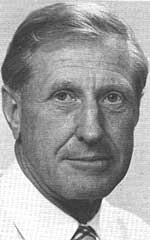
Introduction
Bede Morris was killed instantly and his wife, Margaret, severely injured in a road accident while they were driving near Fontainebleau on the outskirts of Paris on 2 July 1988. Morris had just completed six months of study leave in London and he and Margaret had packed their belongings in preparation for the journey home. Before leaving, however, Morris had agreed to pay a short visit to the Basel Institute of Immunology to thymectomize some foetal lambs and, on their way back to London, to call on Marcel Bessis in his country home in Normandy. It was while skirting Paris on their way to Normandy that this tragic accident occurred, depriving Australia of one of its most distinguished medical scientists. For those who knew him well, Morris will be remembered for his outstanding skill in unravelling some of the mysteries of the lymphatic system, especially the role played by the lymphocytes in the development of immunity. His love of scientific experiments, his desire for excellence and his outgoing enthusiasm, coupled with his innate dexterity, served to inspire many young investigators from several countries around the world to come to Canberra to work in his laboratory. He was, indeed, a master in his chosen field of endeavour. Perhaps a wider audience will remember him in his later years for his forceful and fearless defence of what he believed to be right in many scientific and social issues related to his work, issues that were of considerable public concern.
Bede Morris was born in Sydney on 10 June 1927, the younger of two sons of Grainger and Evelyn Morris. His father, who owned a taxi business in Sydney, died in 1930 when Bede was barely three years old, leaving his mother in difficult financial circumstances. The young family, mother and two sons, went to live with Mrs Morris's parents, Albert and Evelyn Chapple, who owned a bakery and small business at Emu Plains, in the western outskirts of Sydney. Bede's maternal grandparents had been born in Australia, but their parents, Bede's great-grandparents, had earlier migrated from England where his great-grandmother had been a seamstress for the Queen. Bede's paternal grandfather was a bank inspector in Sydney and his paternal grandmother, Ada Tilden-Smith before she married, was a talented opera singer, having studied with Percy Grainger after whom Bede's father and elder brother were named. Both were born in Australia of British stock. However, after the death of Bede's father there was little or no contact with this side of the family, although his father's uncle in England had left a small legacy that was of considerable help in the financially difficult days of Bede's early childhood.
When Bede was seven years old, his mother married Geoffrey Alton Gow and the new family moved into a house in Emu Plains adjacent to that of his grandparents. It is in Emu Plains that Bede's mother still lives near her son and daughter of her second marriage (Bede's step-brother and sister). So Bede spent all his childhood days in Emu Plains. At the age of 4 and a half he attended the Emu Plains primary school, somewhat earlier than usual at the time, in order to make up the numbers necessary to prevent the loss of a teacher. From this school he went to the Penrith Intermediate High School in 1938 and passed the Intermediate Examination in 1940 before going on to the Parramatta High School where he passed his Leaving Certificate Examination in 1942. Although not remarkable, his pass was sufficient for him to win a scholarship to the University of Sydney but, as he was only 15 years old, he was too young to be accepted. He refused to stay on at school to repeat the final year because he was tired of studying.
During his school days, Bede was a choir boy at St Paul's Church. He also played several sports with great enthusiasm and, as with most things, worked hard to achieve a standard of excellence which satisfied him. He eventually won the Metropolitan under-12 boys' tennis championship. With his brother, Grainger, he also spent much time fishing and boating on the nearby Nepean River. Bede also had a love of animals. His mother tells the story of her son proudly riding his horse to visit an uncle when the horse suddenly dropped dead; it took Bede a long time to get over the shock he received. Another story concerns Bede's cockatoo which he taught to say things that embarrassed the family, especially when the Minister came for afternoon tea. Cocky would sit on a stand attached by the leg with a light metal chain. On one occasion the chain broke and, with chain dangling, Cocky flew over the electric power lines in front of the house. When the chain made contact with both lines, there was a flash, a squawk and a cloud of feathers. Cocky picked himself up off the road, ruffled what was left of his feathers and, dragging the remains of the blackened chain, walked back down the garden path muttering to himself. Bede also kept racing pigeons and joined the local pigeon racing club. Training the birds involved long bicycle rides, with a basket of pigeons on the handle-bars, to some location where the birds were released to fly home where his grandfather waited to time their return. His veterinary career probably started when one of his favourite pigeons was attacked by a hawk and struggled back to the loft with a badly torn breast. Bede sewed up the wound with an ordinary needle and cotton and the pigeon recovered to go on and win races. Such stories – and there are a great many more – of Bede's childhood days in Emu Plains typify the carefree, busy life of a boy in the country environment in which he was brought up! In his later life Bede often spoke warmly of his childhood days, referring to himself as 'that baggy-trousered schoolboy from Emu Plains'.
After leaving Parramatta High School he got a clerical job at the Water Board, since he was too young to go to the University. But he did not like office work and, after a year, he began keeping Rhode Island Red fowls to supply eggs to poultry farmers in the district for incubation. Another interesting facet of his character in later years was very evident during his childhood. At Emu Plains, Bede and his friends used to enjoy livening up gatherings with stories and acts that got great laughter and applause from the audience (although at times the Minister did not seem to be amused). Bede also taught himself to play the piano and he played and sang his limited repertoire with style and flourish to provide a lot of fun and enjoyment for many people during those war-time years.
On 10 June 1945, Bede turned 18. Since the war in the Pacific area was still raging, he immediately enlisted in the A.I.F. As the war ended two months later, following the release of the atom bombs on Hiroshima and Nagasaki, he was not sent overseas but became an infantry sergeant doing instructional duties at Canungra, one of the Army's jungle training schools. 'His superiors would have noted his qualities; a lean physique, over six feet tall, raw-boned and lantern-jawed, with a hard flat Australian accent; an ideal type for platoon sergeant,' writes his friend, Dr E. J. Lines. In 1947 he was selected for officer training at Duntroon, but he chose instead to leave the Army to begin a veterinary course at the University of Sydney. He was now in his 20th year, and his army service made him eligible for financial assistance under the Commonwealth Reconstruction Training Scheme without which he may not have embarked on a university course. His choice of Veterinary Science seemed natural for a talented young man with his country background and his love of animals. He began his course in the University of Sydney in March 1947, completing his examinations in December 1951. During the course he was awarded the Martin McIlrath Scholarship and in his final year, the S.T.D. Symonds Memorial Prize for clinical subjects. He graduated with First Class Honours and the University Medal, the degree of Bachelor of Veterinary Science being conferred on him on 31 January 1952.
Having finished his undergraduate course with such distinction, Morris discussed his future with the Dean of the Faculty, intimating that he would rather try his hand at research than practise veterinary medicine. I had, a few years earlier, returned from Oxford in an endeavour to rebuild the research department of the Kanematsu Institute at Sydney Hospital. The Dean, whom I knew very well, rang to ask whether I would have a place for a brilliant young veterinary graduate who could be perhaps somewhat unorthodox at times. After an interview I offered Morris what facilities we had but, unfortunately, I had no funds to pay him a stipend. He was soon awarded the George Aitken Pastoral Research Trust Scholarship of Sydney University and early in January 1952 he began research on the fourth floor of the Kanematsu Institute, made famous in pre-war days by that distinguished triumvirate, J.C. Eccles, B. Katz and S.W. Kuffler.
Experimental research
1. Kanematsu Institute, Sydney, 1952-1955
During the war much emphasis had been directed to resuscitation of the severely wounded by intravenous infusions of blood or serum. I had been involved in some aspects of this work in England at that time and became especially interested in the role of the plasma proteins and of the lymphatic system in the restoration of the fluid balance of the body after injury. One of the projects in which we were engaged at the Kanematsu Institute when Morris arrived was the capacity of the lymphatic vessels to return to the blood stream protein-rich fluids which had, in various disorders, infiltrated the lungs and serous cavities. Morris began his research by undertaking an analysis of the factors involved in the absorption of protein from the pleural cavities and the lymphatic routes taken. This involved measurement of intrapleural pressures and pulmonary ventilation in rats, the separation of the effects of costal and diaphragmatic breathing and the capacity of the different lymphatic pathways to remove excess protein and red cells when they were introduced into the pleural cavity to simulate a pathological pleural effusion. He then extended his work in similar experiments with absorption from the peritoneal cavity.
Within that first year, Morris showed such skill as an experimenter that it was not difficult to predict for him a bright career in research in the basic medical sciences. Supported by a National Health and Medical Research Council Fellowship, he continued at the Kanematsu Institute for a further three years, investigating several aspects of the role of the lymphatic vessels in restoring fluid balance. He studied the rate of turnover of protein from plasma to lymph in various tissues, as part of an analysis of the factors concerned in the permeability of the capillary wall to macromolecules. Attention, however, was especially focused on the lipoproteins which, at the time, were being implicated in the aetiology of atherosclerosis. His important papers on the exchange of lipids between plasma and lymph in normal and hyperlipidaemic animals indicated that certain lipoproteins crossed the blood-lymph barrier and it was postulated that a similar transfer of lipoprotein across the endothelium of arteries could be a factor in the formation of an atheroma in those vessels.
His experiments led him to an analysis of hepatic and intestinal lymph and of the chylomicron, the large fat particle with a surface coating of protein and phospholipid, which is formed in the mucosal cells of the small intestine and absorbed into the intestinal lymphatics during fat digestion. The fate of these chylomicrons once they entered the blood stream via the lymphatic vessels, the relationship between the chylomicrons and the alpha- (high density or HDL) and beta- (low density or LDL) lipoproteins and the possible transference of these substances across the vascular endothelium involved much experimentation and analysis. Morris studied these lipids in the blood of many species of animals. His love of fishing enabled him to determine the levels and patterns of lipoproteins in the blood of a wide variety of fresh- and salt-water fish. His close friend, E.J. Lines, who had been a contemporary in his undergraduate days in the University and who was now an intern at Sydney Hospital, tells many stories of their fishing expeditions off the coast of New South Wales when Bede would collect samples of blood from the fish he caught. 'We were both a bit crazy in those days, earning a living at last but anxious to get away, while we had the chance, from work and study not to mention an unknown future. It was an experience to see hardened professional fishermen go pale and wobble at the knees at the sight of Bede or me extracting blood with a syringe and needle inserted directly into the heart of a fish through its sternum,' writes Lines. I well remember Bede arriving at my home in Sydney in the early hours of the morning, having driven all night with the boot of his car filled with fish – my family ate fish for a week.
During these four years at the Kanematsu Institute, Morris did the work for sixteen of the papers listed in his bibliography. He showed that he was an outstanding investigator, certainly the most skilled young experimenter with whom I have had the privilege to work, with a tremendous love and enthusiasm for testing hypotheses by the experimental method. His fantastic zeal permeated every aspect of his work. If he anticipated a very long experiment, he would get things ready the night before, lie on the floor of the laboratory to get some sleep and when he awoke at 4 or 5 a.m, he would begin his experiment long before anyone else arrived for work. The success of a beautifully executed experiment always held first priority in his day's activities. Although Morris had published many papers while working at the Kanematsu Institute, one of his great regrets was that the rules of the University of Sydney did not allow him to enrol for the PhD degree even though Sydney Hospital was a teaching hospital in the university's Faculty of Medicine. Nevertheless, he wrote his work in the form of a thesis and had it bound, merely as a disciplinary exercise. This ineligible thesis still exists as an example of the enthusiasm of a young scientist embarking on a career of research in the medical sciences.
2. School of Pathology, Oxford, 1956-1958
In the latter part of 1955, Morris was awarded an Overseas Fellowship of the Australian and New Zealand Life Insurance Medical Research Fund. Early in 1956 he left Sydney for Oxford to work for two years in Sir Howard Florey's School of Pathology. Here he worked mainly with J.E. French and D.S. Robinson on the fate of chylomicrons, continuing the work he had undertaken in Sydney. He also enrolled for the PhD degree as a student of Magdalen College.
Morris spent two years at Oxford working in a field which was, at that time, receiving considerable attention internationally. The fatty acids in the chylomicrons were labelled with l4C, the chylomicrons infused intravenously and the tissue distribution and oxidation of the labelled fatty acids monitored. Morris also perfected an isolated perfused liver preparation in the rat which enabled him to study the uptake of l4C-labelled fatty acids by the liver when chylomicrons containing these labelled fatty acids were infused. His work was published in four papers, and was successfully presented as a thesis entitled 'Factors concerned with lipid transport' for which he was awarded the degree of Doctor of Philosophy of Oxford University.
3. The John Curtin School of Medical Research, Canberra, 1958-1988
(a) 1958-1964. The merino sheep becomes his experimental animal of choice for studies on regional lymph flow and lipid metabolism
Morris returned to the Kanematsu Institute in July 1958 as a Senior Research Fellow at the expiration of his Overseas Fellowship. However, earlier in that year I had been appointed to the Foundation Chair of Experimental Pathology in the John Curtin School of Medical Research at the Australian National University in Canberra where facilities for the sort of work that we both wanted to undertake would be much better than those in Sydney at that time. Morris agreed to join me together with my head technician, Jack Harding, in this new venture. He remained in Sydney for a short time only, moving to Canberra as a Senior Fellow in the Department of Experimental Pathology in September.
While at the Kanematsu Institute our work was restricted to small animals because of the facilities available. I had, earlier in my career in England, worked with goats and found that these animals had a relatively large lymph flow. In Sydney, not long before he went to England, Morris acquired some goats, housed at the Veterinary School of the University, but he departed before beginning experiments. In Canberra, however, the facilities to use large experimental animals were excellent. Being in the heart of some of the richest merino sheep country in Australia, Morris decided to adopt the merino sheep as his experimental animal of choice.
His first research student to enrol for a PhD, in 1959, was A. K. Lascelles with whom Morris developed surgical techniques to monitor the lymph flow over long periods of time – days or weeks – from various lymphatic ducts in the conscious sheep. The mastery of these techniques in the sheep was essential for the many projects he planned to undertake. Morris was a superb experimental surgeon and his experiments rarely failed. With Lascelles, his main project was concerned with the lymph from the mammary gland of the lactating ewe. The large lymph flow reflected the blood flow in such an organ, but Morris was particularly interested in the barriers that separated blood, tissue fluid, lymph and the milk formed in the acini of the gland. It was only on rare occasions when the udder was extremely distended that the lipid and casein particles of the milk would enter the lymph, probably as the result of the rupture of an acinus. On the other hand, when a needle was inserted into the gland, milk readily entered the tissue fluid from torn acini and the lymph rapidly became milky in appearance. These experiments formed the basis of much experimental work concerned with mastitis that Lascelles undertook in the University of Sydney after he had left Canberra.
From 1960 to 1962 Morris gathered a group of young graduates who either continued his interest in the metabolism of the chylomicron in the small animal models that he had perfected earlier, or embarked on new projects concerned with the lymphatic system of the merino sheep. M.W. Simpson-Morgan was one of the first of these and he extended the work on the metabolism of chylomicron fatty acids in the rat. After his return from Oxford, Morris had measured many quantitative aspects of the oxidation and transport of absorbed dietary fat by the intact unanaesthetized animal. While every attempt had been made to preserve the normal physiological state of the experimental rats used, he was troubled by the fact that in all of his experiments, single injections of chylomicrons had been used, whereas animals absorb fat continuously from their small intestine. Morris had also been concerned with some of the experiments that had been done by biochemists on physiological processes without paying due regard to the integrity of the experimental animals. There were some glaring examples of these in experiments that purported to show that with adequate available glucose, the oxidation of lipid was 'spared', but in which the amounts of glucose used were excessively high, and the lipid was administered as non-physiological artificial emulsions. He determined that future experiments should make use of continuous infusions of chylomicrons and of glucose at normal physiological rates of entry into the circulation. With this in mind, he acquired a Cary model 31 vibrating reed electrometer to measure minute electrical currents. With attached ionization chambers, this made it possible to record continuously the expiration of l4CO2 by animals as small as rats, so that the patterns of oxidation of l4C-labelled metabolites could be determined. Simpson-Morgan studied the metabolism of chylomicrons infused at physiological rates and demonstrated the extraordinary efficiency with which these were metabolized, enabling them to provide for a large part of the body's immediate energy needs, and subsequently showed that glucose infused simultaneously with the chylomicrons at physiological rates had little effect on those that are oxidized rapidly. Subsequent experiments demonstrated unequivocally that the large particles of lipid were removed directly in the microcirculation of the heart to provide for a large part of its energy needs, and in so doing spared the oxidation of glucose by the heart.
With M.A. Mishkel, Morris investigated the metabolism of free fatty acids and chylomicron triglycerides in the isolated perfused choline-deficient liver of the rat. It was found that when l4C-labelled free palmitic acid or l4C-labelled chylomicron triglycerides were added to the perfusate, they were taken up by the choline-deficient liver as rapidly as by the normal liver, and the labelled fatty acids were also oxidized to l4CO2 by the choline-deficient livers as efficiently as by normal livers. The synthesis of choline-containing phospholipids, however, was significantly reduced in the choline-deficient livers.
In the ruminant, digestion is affected by the rumen and so differs from that of the monogastric animal. With T.J. Heath, Morris set out to investigate the absorption of long-chain fatty acids, using the sheep model. l4C-labelled tripalmitin introduced into the abomasum or duodenum of lambs was promptly absorbed into the lymphatics draining the intestines. When labelled fat was introduced into the rumen of the adult sheep, however, absorption occurred much more slowly and continued for two or three days. It was evident that young lambs showed a pattern of fat absorption similar to that observed in monogastric animals, whereas in adult sheep the pattern was different. Heath went on to study the role of the bile and pancreatic juice on fat absorption in the sheep.
With the advent of gas-liquid chromatography, E.P. Adams, in 1962, joined Morris's team to investigate further the digestion and absorption of fat in the sheep. A characteristic feature of the lipids in the intestinal lymph of adult sheep was the high concentration of 18C saturated fatty acids which are not characteristic of the lipids of pasture grasses. When maize oil, which contains a high concentration of 18C unsaturated fatty acids, was given into the rumen, the lymph lipids recovered during the period of fat absorption showed a high proportion of 18C saturated and mono-unsaturated fatty acids and a greatly reduced content of 18C diene acids. When the rumen was by-passed and the maize oil given into the abomasum or small intestine, these changes did not occur, nor did they occur when maize oil was fed to young lambs. It was thought that the ruminal micro-organisms were responsible for the hydrogenation of a large part of the dietary unsaturated fatty acids.
Adams went on to study the actual changes that occur in the rumen as well as the fatty acid patterns of lipids in lymph from many tissues of the body. It was concluded from the results of these investigations that the ruminal micro-organisms impressed their metabolic activities on the host animal in terms of the characteristically high content of 18C saturated fatty acids which were found in the lipids of sheep lymph and plasma. These findings were very relevant at a time when studies had shown that the ingestion of fats containing high concentrations of polyunsaturated fatty acids lowered the plasma cholesterol level in man. Morris who, as a veterinarian, was an ardent supporter of the natural products of the primary industries of Australia, did not dispute these scientific findings, but he could never bring himself to believe that the level of serum cholesterol in man affected the development of atherosclerosis which underlies coronary heart disease. As a consequence of these beliefs he did not advocate the manufacture of polyunsaturated margarines nor did he support efforts by others to produce beef containing a high proportion of polyunsaturated fatty acids.
At this time Morris also undertook an investigation of lymph from the reproductive organs of the ewe. He found that relatively large volumes of lymph flowed from the ovary during the luteal phase of the oestrus cycle and during pregnancy. These findings indicated significant alterations in the exchange of fluid and protein across the capillary wall following the development of the corpus luteum. Ultrastructural changes were found in the blood capillaries of the corpus luteum to explain these findings. One of his interests in these experiments was the mechanism of transfer of hormones, which were mainly protein-bound, from the ovarian cells to the blood stream.
With Maureen Sass, Morris undertook a study of the lymph flow from the pregnant uterus of the ewe. Lymph flowing from the main duct into which the uterine lymphatic vessels drained was collected continuously over periods of many weeks in conscious, unrestrained pregnant ewes. The lymph flow from the non-gravid uterus was less than 10 ml/hr, but during pregnancy this flow increased to as much as 200 ml/hr while the protein content of the lymph fell to about 0.1 to 0.2 g/100 ml. These changes reflected the increased blood flow and capillary pressure in the uterus during pregnancy. About 24 to 48 hours before parturition, red cells appeared in the lymph, but during the actual expulsion of the foetus lymph flow ceased as the uterus contracted. Following the birth of the lamb, the lymph flow returned to pre-parturition levels and then gradually decreased over the next two weeks as the uterus underwent involution. These experiments not only demonstrated the important role of the lymphatic vessels in maintaining the fluid balance of the uterus during pregnancy, but showed that the lymph from an organ could be monitored over very long periods of time in a physiologically normal, conscious sheep.
A prominent feature of the lymphatic vessels of the sheep in all regions studied was their intrinsic rhythmic contractility. So evident was this that Morris was an ardent proponent of the view that the magnitude of this form of lymph propulsion greatly exceeded propulsion by extrinsic mechanisms.
During his first five years at the John Curtin School of Medical Research, Morris had pursued his interest in lipid transport and metabolism, but perhaps more importantly he was perfecting his techniques of long-term lymph collection from many different tissues of the sheep. Most significantly with regard to the direction that his future research would take, Morris in 1962 developed with J.G. Hall a model in the sheep to study the cell population in lymph from the popliteal node and the changes that occur in this population when an antigen is introduced into the lower part of the leg. Morris was working in the School of Pathology in Oxford in the late 1950s when J.L. Gowans was demonstrating the recirculation of lymphocytes in lymph nodes. He now saw his sheep model as ideal for studying the long-term trafficking of lymphocytes throughout the body. In his first experiments with Hall he showed that the introduction of an antigen led initially to an increase in the output of mature lymphocytes followed by the appearance of primitive stem cells and finally what were at the time thought to be plasma cells. Antibody was detected in both the cells and the lymph plasma. With a particulate antigen, a second dose led to a shorter but more vigorous response, but when human serum globulin was used as the antigen the secondary response showed little change from the primary. This model in which the cell population and volume of lymph coming from a single lymph node, challenged by an antigen, could be monitored over long periods of time in an otherwise physiologically normal conscious animal, was to form the basis of many of Morris's future investigations.
By 1964, at the age of 37, Morris had gained considerable experience using the sheep as a model for long-term monitoring of lymph flow from many regions of the body. His papers represent the wide field of interests that his work covered during this time. Professor W.J. Simmonds, who was a member of our team at the Kanematsu Institute in those early years and who has closely followed Morris's career in medical sciences since that time, writes: 'From his earliest days, moulded by his veterinary training and by his apprenticeship at the Kanematsu Institute, Bede was an uncompromising whole animal physiologist. He saw lymph collection as a window on the tissues at work in the whole animal. When he turned to immunology his interests remained the same – the whole animal was the test-bed, mechanisms inferred from in vitro experiment should always be testable in the whole animal...He was not denigrating the in vitro approach but was merely saying that isolated cells in a simplified medium might work differently from the same cells assembled as tissues in their normal environment – so why not test such concepts wherever possible in the whole animal.'
Perhaps more importantly, however, Morris was aware that young scientists were interested in coming to Canberra to learn the techniques of which he was certainly a master. He was an excellent teacher at the post-graduate level, working with and guiding his students through the intricate mazes of creative research. He, however, imposed on them the same stern discipline that he applied to himself in order to attain excellence. A.K. Lascelles, who was to become Morris's first PhD student, tells how he received instruction in writing a scientific paper:
In Sydney in July 1958 the Morris family had just returned from England and were staying in the Mosman home of Professor Courtice who was overseas. It was here during a couple of very long evenings that Bede gave me instruction in scientific writing. I had recently completed some experimental work on wound healing and had prepared a draft which I thought was good; indeed I was rather proud of the factorial design I employed with the help of Dr Peter Claringbold from the Department of Veterinary Physiology. Bede went over the paper sentence by sentence, word by word. It was a humbling experience, but a truly valuable exercise and a practice which I subsequently adopted for all my research students. When I went to work with him in Canberra, I found that he and all around him worked very hard and all-night sessions were not uncommon. He was full of ideas and very generous in the way he shared these with scholars. In those early days Morris was a hands-on supervisor and those who were fortunate enough to work with him came to know the extent of his laboratory and surgical skills.
Towards the end of 1964, Morris went overseas on study leave to revisit the School of Pathology at Oxford and later to work for the first time with Dr Marcel Bessis in Paris. He wanted to familiarize himself with the latest techniques, especially in electron microscopy, since he felt that he could never ask a student to excel with a technique that he himself had not mastered. In Oxford he set out to perfect his electron microscopic techniques in Professor Florey's laboratory. Florey wrote at the time:
Starting from scratch Morris mastered in three months the techniques of embedding, cutting and photographing with the electron microscope. I consider his illustrations first class and it is a great tribute to his energy, skill and perspicacity that he was able to accomplish so much in such a short time. He made some splendid observations on the lymphatics and on the blood vessels of the corpus luteum and the results of this work are now about to appear in the press.
In Paris, Morris continued his work on the effects of antigenic stimulation on the cells in the lymph emerging from the popliteal node. He and Hall had shown that antigenic stimulation led to the appearance of large numbers of basophilic lymphoid cells in the lymph, and that these cells rather than antigens act to amplify and propagate the immune response by being disseminated throughout the body by way of the lymphatic system. With Bessis and others, Morris examined these cells with the electron microscope to try to relate this messenger function with their ultra-structural characteristics. It was found that their structure differed considerably from that of classical plasma cells, containing only a small amount of endoplasmic reticulum arranged in a haphazard fashion in the cytoplasm. No classical plasma cells were found in the lymph although these cells occurred in large numbers in the lymph node from which the basophilic cells originated.
Before going to Paris, Morris enrolled in a special course in French so that he would be able to communicate with his French colleagues in their own language. He later derived much pleasure telling me how he gave his first seminar in French. He burst into loud laughter when he told me how Bessis interrupted his seminar with, 'Bede, why don't you speak in English, we would understand you much better. You are really persecuting our language.' This, of course, only stimulated him to become more fluent in French which he did on subsequent visits to Paris. In this regard E.P. Cronkite of Brookhaven National Laboratory, New York, writes: 'On several occasions I was visiting in France with Marcel Bessis when Bede was also present. I love to hear him talk in French with his unmistakeable Australian accent. I believe that it confused our French associates when I told them that I could understand his French better than theirs.'
(b) 1965-1970. The immune system in the foetus and in organ transplantation
While on overseas leave Morris had become proficient in electron microscopy which he wanted to use in relating structure to function in his investigations of the cellular components of the lymphatic system in the development of immunity. With J.B. Smith he continued his studies on characterizing the cells in lymph from many tissues of the body. It was shown that in afferent lymph, 10 to 20 per cent of the cell population were macrophages and monocytes. In the liver following the injection of particulate material intravenously, the cell output in afferent lymph from that organ increased many times: for a period of several weeks after the injection of colloidal carbon intravenously, macrophage cells containing carbon were identified in the lymph. This suggested that the Kuppfer cells are not an entirely residential population of cells. In another situation, an antigen was localized beneath the skin of the lower leg, thereby establishing a granuloma. The cell output in the afferent lymph draining this area increased 20-fold with increased numbers of macrophages. The efferent lymph of the regional lymph nodes concerned in all these experiments was, however, free of macrophages.
It was at this time that Morris began, with G.J. Cole, an investigation of the development of the lymphoid apparatus in new-born animals in relation to immunological reactivity. The plasma of new-born unsuckled lambs does not contain gamma-globulins which are acquired from the mother's colostrum soon after birth. Morris and Cole found that in these agammaglobulinaemic new-born lambs the popliteal node is capable of producing a cellular reaction to a primary challenge with antigen. Very large numbers of basophilic lymphoid cells leave the lymph node in the efferent lymph, although no antibody could be identified in the lymph. A secondary challenge led to a cellular reaction together with antibody formation.
These findings led to the study of the role of the thymus in influencing cellular immune responses in single lymph nodes. The thymus was removed in foetal lambs as early as 60 days in utero (gestation period 160 days) and after they were born, chronic lymphatic fistulae were established in the efferent ducts of lymph nodes to study the capacity of the nodes to react to an antigen. Although thymectomy reduced the number of lymphocytes in the lymph to about 10 per cent of normal levels, the nodes reacted in essentially the same manner as in non-thymectomized lambs when challenged with an antigen such as influenza virus, Salmonella muenchen organisms or chicken red cells. In these lambs the 'wasting syndrome' described for thymectomized mice was not seen; the lambs subsequently grew and developed at a normal rate. These thymectomized lambs were also capable of rejecting grafts of allogeneic skin as vigorously as normal lambs, the cellular reactions seen histologically being the same as in controls. They were also able to mount an immediate type hypersensitivity response to ferritin although the delayed type hypersensitivity response to tuberculin was severely reduced. Thymectomy also resulted in a reduced ability of the lymphocytes of these lambs to cause a normal lymphocyte transfer reaction when injected into the skin of normal sheep. The reaction in the skin of thymectomized lambs following the intradermal injection of lymphocytes from normal donors was also greatly reduced.
These studies suggested that while the thymus is a source of lymphocytes, it is not the only source and that a considerable proportion of the lymphocytes present in normal animals is not derived directly from the thymus. Although the thymus was not essential for the development of an adequate cellular or humoral response to an antigen, the experiments showed that it is the source of some of the cells that take part in delayed hypersensitivity responses and in the capacity of lymphocytes from lambs to produce and resist graft-versus-host reactions.
In 1967, techniques were devised to collect lymph over long periods of time from foetal lambs in utero. Using these techniques, the nature of the free-floating cells in the lymph draining the intestines was established and followed by a study of the changes that occur in this population of cells after birth. A catheter was introduced into the intestinal lymph duct of the foetal lamb in utero near to term and the cells in the lymph monitored. The lamb was then delivered by caesarian section and the cell population of intestinal lymph studied over the ensuing seven days. In utero and for the first two days after birth, the cell population of the lymph consisted of uniformly small lymphocytes and less than 0.1 per cent of these cells incorporated 3H thymidine when incubated with the labelled material in vitro. By the third day, however, a significant change occurred when large numbers of blast cells and basophilic cells appeared and as many as 15-20 per cent of the cells incorporated 3H thymidine and were in the proccess of dividing. During the first three months of life the output of cells in the intestinal lymph increased about 10-fold and was associated with an enlargement of the gut-associated lymphoid tissue, particularly the Peyer's patches.
During this time Morris also developed a model for studying cells in the lymph draining a transplanted organ, the kidney. First, however, he had to master the technique of collecting lymph over a long period of time from the kidney of a normal sheep. With G.H. McIntosh he introduced a catheter into the main vessel in the hilus of the kidney and so established a fistula that kept flowing continuously for periods of up to four weeks. With this model, studies were made of the effects of ureteral occlusion and of intravenous infusions of large volumes of Ringer-Locke solution.
These experiments were essential preliminaries to investigations of lymph from a transplanted kidney during the period of graft rejection. With N.C. Pedersen, Morris developed a model in which a kidney with catheters in the ureter and in the lymphatic duct of the hilus was transplanted into the neck of the sheep, the renal artery being connected to the carotid artery and the renal vein to the jugular vein. With this model Morris and Pedersen were able to obtain an isolated population of lymphoid cells that had migrated through the graft, and to characterize accurately the origin, fate and morphology of these cells. It was found that cells, which were collected within 24 hours of grafting, had become sensitized to the graft. Within the graft the main pathological changes were found in the vascular endothelium, and many of the peritubular capillaries became plugged with emboli comprised of lymphoid cells. The migration of cells from the circulation through the graft was very large – about 4-6 days after grafting, up to 4 x 10⁸ lymphocytes were passing through the grafted kidney each hour. Towards the end of the life of the graft, large numbers of red cells appeared in the lymph and the lymph protein concentration rose to near the levels in the plasma, by which time extensive destruction of the vascular endothelium was observed. Antibodies were detected in the cirulation of the host, 48 hours before the graft was rejected. This antibody had both cytotoxic and agglutinating activity against the lymphocytes of the kidney donor and was of both IgM and IgG classes. Renal grafts that were removed within 120 hours of grafting did not evoke an antibody response in the host, which suggested that antibody synthesis in the host was regulated by events occurring in the graft. Although antibody production depended on the presence of the graft for a minimum period of 120 hours, a much shorter period of exposure to the graft sensitized the host so that a second graft was more rapidly rejected.
In October 1969 Morris left Canberra to spend a year's study leave in Paris with Bessis at the Institut de Pathologie Cellulaire, during which time he also visited many centres in England and in Europe to give lectures on his work. In 1970 the Australian National University established a Department of Immunology in the John Curtin School of Medical Research, and in November of that year Morris was appointed Professor and Head of the new department. In January 1971 several immunologists and research students who were members of the Department of Experimental Pathology transferred to form the nucleus of the new Department of Immunology.
(c) 1971-1988. Professor and Head of Department of Immunology. Work on foetal immunology intensified.
The creation of this new department gave Morris greater scope to develop the main lines of research that he had established in the Department of Experimental Pathology over a period of twelve years, first as a Senior Fellow and, since 1963, as a Professorial Fellow. These lines of research concerned the mechanisms of discrimination between 'self' and 'not-self' materials, the way in which immune reactivity develops in the foetal animal, the regulation of immune responses and the biochemical changes that occur in specifically stimulated lymphocyte populations involved in cell-mediated and humoral antibody reactions. The capability to distinguish 'self' from 'not-self' is crucial in all types of immune responses. In order to control or eliminate the reactions that occur in response to foreign tissue and organ grafts, to induce states of immunological tolerance or non-reactivity against foreign substances, it is imperative to understand the nature of the immunological recognition processes. In addition, the interactions that occur between allogeneic lymphoid cell populations and the relationship between malignant tumours and the tissues of the host are important aspects of the general biological problem of how an individual animal retains its own special uniqueness.
In his report for 1973 Morris described the research in his department as being concerned with foetal immunology, the control of antibody formation, transplantation biology and tumour immunology. He pointed out that it was being carried out at two levels of complexity: (a) physiological studies of immune reactions in the whole animal and (b) analytical studies in tissue culture designed to elucidate cellular mechanisms underlying immune reactions. This division of research effort allowed analytical studies to be related to events occurring in the whole animal.
It was the immunological system in the foetus that continued to excite his interest most. The earlier studies of foetal immunology were preliminaries to a comprehensive account of the ontogeny of the lymphomyeloid complex in foetal lambs. The techniques already described for collecting lymph from the foetal lamb had been used by T.C. Smeaton and M.W. Simpson-Morgan to determine the absorption of macromolecules from the foetal gut. With the expertise gained from these experiments coupled with that which he and G.J. Cole had gained from their work on foetal thymectomy, Morris and his colleagues, L.D. Pearson and M.W. Simpson-Morgan, in 1971, began a classical study of lymphocyte recirculation in the normal and the thymectomized lamb. Subsequently, beginning in 1973 with K.J. Fahey, an extensive study was made of the immune response of foetal lambs in utero to a range of antigens in terms of histological changes and circulating antibody production.
These experiments led to elaborate studies in collaboration with J.D. Reynolds and later H.A. Gerber in 1976 on the development and role of Peyer's patches and the gut-associated lymphoid tissue in foetal lambs in utero. The results of these experiments suggested that free-floating lymph-borne small Ig+ve lymphocytes originated from the Peyer's patches. To elucidate this role of Peyer's patches, it was necessary to remove all the mesenteric lymph nodes from the foetus, and/or a metre length of the ileum containing Peyer's patches. This resulted in the multitudinous lymphatic vessels afferent to the extirpated gut lymph nodes re-establishing continuity with the major efferent lymphatics, and it was possible to cannulate them after the lambs were born. An unexpectedly high lymph-borne cellular traffic between the gut and its regional nodes was found that proved to be greater than had been described in any other tissue. An unforeseen consequence of this heroic experimental surgery and tenacious dedication to achieving the almost impossible was the development of techniques that made it feasible to collect large quantities of peripheral lymph from many regions. These techniques are being used increasingly in a number of animal species.
When Reynolds completed his PhD he went to work with J.G. Hall in the United Kingdom. He showed R.N.P. Cahill who was then working at the Basel Institute with another of Morris's former students, J.B. Hay, how to operate on foetal lambs. This led to an extensive study of lymphocyte 'homing' in the foetal lamb by the researchers at Basel, work that is being continued in Melbourne by Cahill. The concept of different pathways of lymphocyte migration in the body and of heterogeneous populations of lymphocytes with preferred sites for leaving the blood stream interested Morris greatly and various aspects of this were studied in collaboration with his student A.V. Fahy, visitor C.F. Zukoski, and colleague Wendy Trevella. His last contribution in this area was the demonstration with his student, M.T.H. Alsalami, that the high endothelium venules in lymph nodes thought to be necessary for lymphocyte recirculation in many species (other than the sheep), were only obvious in the foetal lamb before lymphocyte recirculation began.
It is interesting to note that despite his continuing use of foetal lambs as experimental animals, fifteen years elapsed before the demonstrated utility of collecting lymph chronically from foetuses in utero was applied to the study of immune reactions of single foetal lymph nodes in utero. With A.R. Hugh, Wendy Trevella and M.W. Simpson-Morgan, a study of the response of single lymph nodes of foetal lambs to a variety of antigens was begun in 1982, providing the first descriptions of the time-course of unequivocal primary immune responses. This line of work was still being actively exploited at the time of Morris's death. By then the full scope of experiments that might be done using the foetal lamb as an experimental animal was beginning to be appreciated. Experiments had been planned to make use of identical twins produced by J.N. Shelton, that would allow the transfer of cells between co-twins in a way previously only possible in highly inbred strains of laboratory rodents, or animals made pathological by treatment with radiation or cytotoxic immunosuppressants. Needless to say, Morris was highly critical of extrapolating too far from such highly contrived experimental artifacts.
Morris's experiments in foetal immunology required considerable attention over long periods of time, especially in the early post-operative period. Like most distinguished medical scientists, especially those engaged in chronic animal experiments, Morris relied to a considerable extent on his research assistant for the success of his experiments. Many of his extraordinarily complex surgical operations, which needed intensive post-operative care, were successful largely because he had an assistant, Wendy Trevella, as dedicated to success as he was himself. Their working association spanned the time from when he started working with foetal lambs until he died. Wendy Trevella not only assisted Morris in his own experiments but was also invaluable in the Department, helping many of Morris's students and visitors to make their experiments the successes they became.
Apart from his work on the foetus, some of Morris's most elegant work was the description of the lymphatics and lymphatic drainage of the ovary and uterus of the ewe which, as we have seen, he began with Maureen Sass in 1961, and which gave a whole new perspective into the endocrinology of the ovary. This line of work was allowed to lie dormant until his student, W.R. Hein, extended it to cattle before bringing it back to sheep. One of Morris's last experiments in Canberra was to collect lymph from the ovary of a sheep throughout the oestrous cycle, something he had previously not thought possible. These results have not yet been published. Getting similar data for the entire oestrous cycle in rats or mice, as was obtained from this one sheep, would require single point collections from a large number of individual animals, tens or hundreds, which would guarantee acceptance for publication even though inherent between-animal variation would greatly reduce the value of the results. This raises ethical and philosophical considerations that Morris would have loved to debate. Such points were made forcefully in his preface to the book he edited with Masayuki Miyasaka to record the proceedings of a conference to honour the retirement of Zdenek Trnka from the Basel Institute (Immunology of the sheep (1985)). He writes:
Most immunological experiments are now done on conglomerates of cells in test tubes or with conventional laboratory animals, predominantly rats and mice. These species have been refined by innumerable incestuous matings to give inbred strains whose genetic constitutions make it impossible for them to behave like normal animals. As a consequence what we know about the immunology of man is largely the immunology of the factitious mouse and rat...The study of the immune response as an aspect of lymphatic physiology demonstrated from the outset the limitations of small laboratory species. Developments in techniques of lymphatic cannulation in sheep and cattle have enabled physiological experiments to be done on single lymph nodes in conscious animals and regional responses have been defined for various antigens and allografts. These physiological approaches have told us much about the immune response and about the way the lymphoid apparatus works as a bodily system...Sheep and cattle are different from mice and rats but they are certainly as noble and certainly as relevant for studying the immune system.
It is certain that none of the work presented at that conference in Basel on the 'Immunology of the Sheep' would have been possible without Morris's signal contributions to science.
(d) Work on Cattle
Although the sheep remained his experimental animal of choice, Morris began working with that much larger species, in some ways a more difficult species to handle experimentally because of its size, the bovine species. He had spent his study leave in 1974 in the Pathology Institute in the University of Bern supported by the award of an Eleanor Roosevelt International Cancer Fellowship, and in 1975, after his return from Europe, he decided to use cattle for certain projects that he had in mind. His interest in cattle, however, went back several years before this. In 1963, in his private sphere of life, he had bought a property, 'Lockhart', just out of Canberra, which he used for the first five years to produce wool from his Merino flock. Subsequently, however, he disposed of most of his sheep and became involved in the newly approved use of imported bovine semen to introduce genetic material safely from countries affected by diseases exotic to Australia. So began the production of a purebred Charolais herd, a long and difficult process but one that gave him great pleasure.
Morris's love of the land and especially the breeding of sheep and cattle in his private life dovetailed in very well with his work in his laboratory. Sundry cattle had been acquired by members of his Department for various projects. It is interesting that the first such cow was bought in the late 1960s with twin calves at foot. Morris had often commented on the tremendous contribution that had been made to understanding immunology by the natural phenomenon of mutual tolerance demonstrable in a large proportion of non-identical twin calves for each other's tissues. However, it was not until 1975 that he indicated some of his thoughts in his Presidential Address to Section 16 of ANZAAS and the real thrust into exploiting this valuable research model was begun, using techniques that had been well worked out and that had proven so valuable in sheep. By the end of that year a new student, D. Emery, and his supervisor, P.J. McCullagh, reported that 36 sets of mixed-sex twin calves had been collected; this number reached 60 during the following year. It is important to stress that Morris's contribution to much of this work cannot be gleaned from his bibliography; but those who were associated with his Department know his generosity with respect to authorship, as well as the tremendous effort that he put into acquiring animals and facilities, and encouraging staff and students in using them. His first publication arising from the new work with cattle did not appear until 1980 and reported genetic differences between the two species of domestic cattle Bos taurus and Bos indicus with respect to transport of antibodies into their tears.
This project had been suggested to his student, M.R. Banyard, because of the empirically established different susceptibility of the two species to the serious eye infection 'pink-eye' caused by a specific bacterium Moraxella bovis. Twenty-six years had elapsed between his first publication on cattle, written when a recent recruit to research, and his second. By this time he had established a department that probably was unique in the world with respect to making use of the latest technologies of lymphocyte typing and embryo transfer to make custom-designed experimental animals. This was foreshadowed in his 1977 report where he stated:
This year the Department began a program of research into disease resistance and susceptibility in cattle. It has been possible to undertake research on large animals of economic importance because of the acquisition of a farm by the John Curtin School. The earlier experimental studies on the immunology of natural chimeric twin calves are being extended to include investigations into the major histocompatibility complex of cattle, studies on local immunity to eye infections of cattle and the maternal interactions that occur in sheep and cattle during pregnancy. Further developments in these projects will include the synthesis of mixed breed chimeric calves by embryo transplantation using Bos indicus and Bos taurus embryos. These chimeras will have mixed lymphoid cell populations and they will be used to study differential reactivities between lymphoid cells of different breed origins to infections.
Large amounts of external funds were obtained from the livestock industries over a period of ten years and, coupled with Morris's energetic efforts to obtain a farm for the School, the realization of these goals became possible. The acknowledged expert in bovine embryo transfer in Australia, J.N. Shelton, was recruited with external funds in 1977 and, working with a new PhD student, P.M. Summers, achieved the production of chimeras in 1979. The characterization of their immunological responsiveness was published in 1984. Morris's involvement with the new technologies of embryo transfer, embryo manipulation and embryo surgery aroused in him an acute awareness of some of the potential benefits that might accrue from their use in the animal industries, and also of the awesome ethical and legal problems that might arise from their use in the human clinical situation. He became intensely interested in some of these philosophical issues and, in 1979, organized a major exhibition entitled Creation and Copyright at the celebration of the 25th anniversary of the Australian Academy of Science. This brought the public directly into contact with what new technologies in reproduction had achieved and where they might lead. Morris became widely sought after to speak on these issues, and some of his lectures have been published.
A major contribution was made to the classification of bovine major histocompatibility complex (MHC), initially Class I MHC antigens, and later Class II. A number of people played a role in this including T.E. Adams, M.R. Brandon, M.J. Newman, M.J. Stear and J.T. Mackie. Some associations between MHC classes and disease resistance or susceptibility were found. Work with cattle also involved extension of some of the classical studies of lymphatic physiology and foetal immunology that had been previously done in sheep. Thus together with W.R. Hein, J.N. Shelton and M.W. Simpson-Morgan, Morris studied extensively the lymphatic drainage of the pregnant uterus of cattle and of the corpus luteum of pregnancy, and the foetal calf contained in the pregnant uterus was finally used as an experimental animal. The foetal calf proved to be a much less obliging animal than the foetal lamb, and its physical size with resulting problems proved almost insurmountable. Some initial successes were achieved, but these were what Morris might have colloquially described as the 'burley to get you in' because consistent success with experiments involving foetal calves subsequently became more elusive. Nevertheless, as a result of his foresight and industry, we now know that it is possible to consider using what he termed 'inconceivable animals', synthesized in the laboratory for immunological and physiological experiments. Only a small proportion of the full contribution that these animals can make to an understanding of the immune system has yet been realized.
Another type of synthesized animal that held his interest was the identical twin produced by embryo division, but this is considered above with his work on sheep. The cyclical functioning of the ovary, especially as reflected in the lymph it produces, was a proposition that also interested him greatly. It led him to question a fundamental tenet of homeostasis enunciated by one of his 'heroes', Claude Bernard, and this was argued in 'The inconstancy of the milieu interieur'.
Some colleagues questioned the need to use cattle as research animals, thinking them to be too expensive. It should be recorded that many of the experimental animals used for the cattle research were lent to the University by Morris. He took great satisfaction in equating the cost of maintaining such large animals with the cost of providing and maintaining more conventional experimental animals, and he remained certain that their use alone could answer some of the most important biological questions. In describing the advances made in his department during its first ten years, Morris, in his report for 1980, highlighted one of his keenest interests, the manner in which the genetic constitution of an animal influences its capacity to mount an immune response against infectious disease: 'The decision to explore this relationship in cattle entailed an extensive survey of the nature and pattern of inheritance of molecules on the surface of cells of the immune system. Successful characterization of these molecules together with a description of the manner in which they are genetically controlled would facilitate description of the nature of their influence on disease susceptibility.'
In the last report he wrote of the work of his department, the annual report of the John Curtin School of Medical Research for 1987, he stated:
Scientific research is a continuing activity of shifting interests and emphasis determined by new ideas, discoveries and techniques. Research in Immunology which originally concerned aspects of immunity and the immune response, antigens and antibodies, now embraces molecular and cellular genetics, cell ecology and ethology, cell proliferation and differentiation, lymphatic physiology, protein chemistry and molecular biology. Given that there are undeniable restrictions on the range of research projects that can be serviced within the School's budget, the Department of Immunology decided in 1986 to coordinate its research around the crucially important biological questions of how the immune discriminatory system develops in the foetus, and the immunological implications of pregnancy both in terms of the effect of hormones on the comportment and reactivity of cells and the immune interactions that occur between the conceptus and the mother. The approach to these questions has continued to be developed around studies in the embryo and foetus throughout their development and the effects of pregnancy on the immune system of the mother. Our experiments have integrated the disciplines of immunology, endocrinology, reproductive biology, foetal surgery and lymphatic physiology in investigating the status of self-tolerance versus acquired tolerance, the genetic basis of self-recognition, the control and regulation of lymphocyte recirculation and the physiological basis of the metastatic behaviour of cells. Large animals with long gestation periods offer particular advantages for these studies, especially when their reproductive processes and even the genetic constitution of their foetuses, can be determined by experimental design.
When Morris wrote this, shortly before his untimely and tragic death, he had spent thirty-six years of his life in research. During the last seventeen of these years, he had guided the destinies of the Department of Immunology. He realized that to tackle the many problems that came to his fertile mind he had to develop a multi-disciplinary department that embraced all the latest technologies in his field of endeavour. Although his work had a direct relevance to many disease states and also a potential for considerable commercial benefit to the community, Morris was always a strong advocate of the importance of supporting ideas that arise from all sorts of inconceivable sources, without consideration of any immediate cash benefit. He wrote:
Ideas come from unexpected events, incongruities of thought and the inspirations of people with imagination. If one looks back 20 years few scientists would have predicted the development of techniques of gene analysis, the transfection of embryos, the production of monozygous mammalian clones, the significance of peptides in brain function, the genetic engineering of drugs and so on. It is this very uncertainty and unpredictability of outcome in science that requires the fostering of a research environment that will allow creative scientists to pursue difficult, fundamental research problems that may have no immediate commercial or social relevance. Such environments must be protective of the fragile new idea and not the target of destructive inputs from research managers whose imaginations scarcely extend beyond the bottom line of a balance sheet.
Morris himself was certainly a man of ideas and also a man of action. To help him develop his ideas, he relied to a great extent on mastering the latest technologies and, perhaps to an even greater extent, on his ability to attract and inspire able young graduates. Morris supervised thirty research students for higher degrees, mainly the PhD. In addition he influenced the work of numerous researchers who came from many countries. Of these, eleven came from various centres in Japan. In extending his sympathy on behalf of his Japanese colleagues, Professor Kazuhiko Awaya, President of Yamaguchi University, writes:
Truly his scientific exploitation of large animals has characterized JCSMR's emergence as a world leader in immunology. The Latin phrase 'Proles sine matre creata' may be apropos for his creative works. His leadership at JCSMR has significantly advanced immunology research throughout Japan and in no small measure at our School of Medicine at Yamaguchi University. Professor Morris visited our University in January of last year (1988) at which time he presented me with a book 'Images: illusion and reality' written in his inimitable fashion and eloquent enthusiasm. I never expected this would come to be his last gift to me.
Other scientific interests
1. The Australian Animal Health Laboratory
In his dual role as a breeder of Charolais cattle and a distinguished research scientist interested in the prevention of animal diseases, Morris was in an ideal position to make a contribution on many issues of concern to our animal industries. One of these issues, of great importance to Australia, was the proposed establishment of the Australian National Animal Health Laboratory (ANAHL), now the Australian Animal Health Laboratory (AAHL). This became the centre ot a major controversy in the 1980s in which Morris played a leading role.
The Laboratory, which was built by the Commonwealth Government, was designed to handle safely such exotic agents as Foot and Mouth Disease (FMD) virus. Its broad objective was to complement the existing State and Commonwealth facilities for the diagnosis, control and eradication of exotic diseases and to provide diagnostic services and technical back-up for the off-shore quarantine station. The concept of a maximum security laboratory had been in existence for a long time. However, the real impetus for its construction came in 1964 following the visit of Dr Eichorn of the Food and Agricultural Organisation of the United Nations, at the invitation of the Commonwealth Department of Health, to advise on Australia's ability to cope with outbreaks of exotic disease. There followed over the years a flurry of committee activity and a major project evaluation was undertaken. Eventually the Agricultural Council endorsed a recommendation from State and Commonwealth animal health authorities for a maximum security laboratory that would provide trained staff and facilities for diagnosis of exotic diseases and vaccine testing. It was agreed that the laboratory should not introduce FMD virus and other highly virulent exotic agents in advance of an outbreak. Other committee assessments essentially endorsed those of the Agricultural Council. The report of the Parliamentary Public Works Committee (PPWC) was accepted by Parliament in 1974. It was surprising, given the official advice provided at the PPWC enquiry, that its report should recommend, inter alia, that the Laboratory, after a suitable proving period, should be authorised to handle FMD virus prior to an outbreak of the disease in Australia.
There was a long delay following acceptance of the Parliamentary Public Works Committee's report and the starting date of construction in March 1978. The question of importing dangerous viruses in advance of an outbreak remained a 'sleeper' issue until after construction had started. It was the impact of the cost of this most elaborate facility that first came to be appreciated by those on the outside as it were. This concern exploded publicly in March 1981 when Morris expressed his serious misgivings about the high security laboratory and offshore quarantine facilities on Cocos Island, during an address to the annual conference of the Cattle Council of Australia. He argued that new technology in animal breeding had overtaken the Cocos Island developments and that the exorbitantly expensive ANAHL was a waste of public funds. He asserted that the proposed FMD vaccine facility was unnecessary, especially in view of likely developments with new recombinant vaccines. He went on to say that the enormous expenditure on ANAHL would draw diminishing resources away from other areas of research, and that the existence of ANAHL would not improve the lot of farmers in Australia 'one iota'.
Until that time, the question of importing highly infectious exotic virus into ANAHL in advance of an outbreak had not entered the public arena. The majority of Commonwealth and State veterinary officials and the official view of CSIRO held that exotic viruses, including FMD virus, should be imported into the laboratory shortly after commissioning, even if it were not used immediately. However, a minority view held that a suitable proving period for the laboratory should be three years after commissioning and that FMD virus should not be introduced even then unless this was considered absolutely essential for diagnosis. It was again Morris who brought this issue into the public arena, expressing the view that live FMD virus in particular was not essential for developing a diagnostic capability, and that its importation in advance of an outbreak would represent an unnecessary threat to Australia's livestock industries as the record overseas had shown that its containment could not be guaranteed.
In the subsequent debate, Morris pointed to the history of escapes of FMD virus from high security laboratories in other parts of the world. He was greatly respected by livestock producers as a scientist and was well known as a successful Charolais breeder. These attributes understandably gave him a credibility in the eyes of rural Australia that his opponents in the debate were unable to diminish. Morris had strong support for his stand from the leadership of most commodity councils, many scientists in universities and even CSIRO, a large number of veterinarians, but not the Australian Veterinary Association leadership. Even so, he was rightly seen as the most effective and influential antagonist of the laboratory itself and exotic virus importation. As a result, high level meetings were convened to develop strategies to counter his arguments and neutralise his influence on the livestock industries. Morris's strength was tested during this bitter period from 1981 to 1986. Public debate was extremely acrimonious and hurtful to all participants but especially so to Morris, who had to fight the entrenched positions and reputations of individuals and large organisations.
An ANAHL forum held at Geelong on 22-23 August 1983 was an initiative of the National Farmers' Federation (NFF) to allow all participants in the debate to express views without fear of reprisals from their employing organisations. Prominent overseas speakers, well-known for their strong support of the facility and for the most part in favour of working with FMD virus in advance of an outbreak, were flown to Australia at CSIRO expense. The forum failed to resolve any of the major issues. It did become clear, however, that the scientific justification for the vaccine facility, which proponents were by now claiming was required to make FMD stocks in advance of an outbreak, could not be sustained. The facility would simply not be large enough to make the necessary number of doses of the various strains of FMD virus judged to be a potential threat, given that stocks would have to be turned over at intervals of less than two years. At the end of the meeting, Directors General of Agriculture could not agree on the issue of virus importation.
Subsequently the Australian Academy of Science, the Senate Standing Committee on Natural Resources and the Australian Science and Technology Council conducted their own inquiries, seeking submissions from all quarters regarding the need for live virus, especially FMD virus, for diagnosis, research and vaccine manufacture. Morris made telling formal contributions and was supported by many colleagues in universities, CSIRO and State Departments of Agriculture. It was relatively easy for Morris and his colleagues to dismiss arguments for FMD virus research and even for vaccine manufacture, but proponents continued to argue that FMD could not be diagnosed adequately without live virus. Finally these arguments were shown to be wanting and the government came to the firm decision that consideration of the importation of FMD virus would be deferred for three years after commissioning the laboratory, after which the safety issue and the needs arguments should be reassessed. In the meantime, the laboratory would develop a diagnostic capability for FMD based on complement fixation and the recently developed highly sensitive enzyme-linked immunosorbent assay using non-infectious reagents from overseas laboratories – precisely as Morris and colleagues had advocated. The government also accepted the view of the NFF that livestock industries should be closely consulted prior to any decision to import or work with any other exotic disease agents.
While the government decision brought the public debate to an end, at least for the time being, it was not until 1987 that the fight by protagonists to import FMD virus was irretrievably lost. At this time the vulnerability of the high security laboratory was demonstrated by what was an effective escape of virulent Newcastle Disease Virus (NDV) as a result of a series of human errors. This was a major blow to the credibility of those responsible and received wide publicity. The general consensus of official opinion was that the incident served as a salutary experience, fortunately without cost, destroying the notion that this high security facility could fully take account of imperfections of the human condition.
One of the initiatives taken by the Board of Management of AAHL following the NDV incident was the institution of an independent review of the justification for using various exotic pathogens in AAHL for diagnosis, training and research. The list of pathogens that laboratory personnel had considered necessary was examined on a case-by-case basis by a committee of four comprising a senior veterinarian, a distinguished virologist, a distinguished animal geneticist representing the CSIRO Staff Association, and a nominee of the NFF. Morris was the NFF nominee. Strong representations were made by AAHL staff in an attempt to force rejection of Morrls's nomination. The NFF stood firm and the Board of Management finally accepted its nomination. So Morris toiled for two weeks with the committee, deferring his departure for what turned out to be his last study leave. It was a source of considerable satisfaction to Morris and others involved in the controversy, that the committee was able to agree on the major issues. Among other things, the committee recommended that the following viruses not be imported at this time (or in most cases in advance of an outbreak of the relevant disease): African swine fever (virulent strain), Avian influenza (additional strains), Foot and mouth disease, Rabies, Rift Valley fever (virulent strain) and Sheep pox (virulent strain).
So, after a long fight and shortly before his death, the live exotic virus issue was brought to a resolution that largely satisfied Morris's earlier concerns. Viewed in hindsight, the position that he and his colleagues had taken had been vindicated. In the absence of a Morris-led opposition with its high public profile, it is probable that FMD virus would have been introduced into the laboratory in 1984, shortly after commissioning.
2. The administration of science
Morris was elected to the Fellowship of the Australian Academy of Sdence in 1969 and played an active role in the administration of the Academy for several years. He served on Council from 1977-1980 and from 1981-1985, was Vice-President, 1979-1980, and Treasurer,1981-1985. He also served on the Science and Industry Forum of the Academy from 1981 to 1985.
Besides the work of the Academy, Morris became particularly interested in the application of science to the rural industries, especially the livestock industries. He was a member of the Wool Research Production Advisory Committee of the Australian Wool Board, Chairman of the Rural Credits Development Fund of the Reserve Bank, a member of the Scientific Advisory Committee of the International Laboratory for Research in Animal Disease, Nairobi, and a scientific and technical consultant on cattle production to the French government.
Personal
Of the many awards that Morris was given to study and lecture abroad, those he valued most were from the French government enabling him to work at the Institut de Pathologie Cellulaire. From his first visit to Marcel Bessis's laboratory in Paris in 1965, Morris became an ardent Francophile. He subsequently visited Paris frequently on study leave to work in the Institut de Pathologie Cellulaire. His deep and sincere love of France, its people, its culture and especially its wine of which he became a connoisseur, influenced his entire life – he enjoyed drinking French wine, driving French cars and, of course, one of his greatest enjoyments was, as mentioned earlier, the establishment of his Charolais stud. The French government recognized his contribution to their nation's science by retaining him as a consultant on cattle production and by awarding him the honour of Chevalier dans l'Ordre Nationale du Mérite. In May 1988, shortly before his death, the award to him was announced of France's highest honour, the Légion d'Honneur.
Professor Bessis writes, inter alia:
Bede Morris loved France where he had many friends. For more than 20 years, from 1965, he came to France very often, on Study Leave or after attending a Congress in Europe, always accompanied by his wife Margaret who shared his love of France and often by one or other of the children. He especially loved French literature – he knew by heart many of Beaudelaire's poems – and French wines. He spoke of French wines with knowledge and humour whether they be from Bordeaux, Bourgogne, Jura or elsewhere. All of his friends in France have memories of Bede Morris's discourses on the making of champagne or on the comparable value of Bordeaux wines from the year 1907 to 1985.
In 1983 he participated, in Paris, in a seminar of the French Academy of Sciences to which he brought greetings from the Australian Academy of Science. Many members of the two Academies knew one another and it was decided to establish official relations between the two Academies. These were sealed in 1986 when Professor Jean Bernard went to Canberra where he was elected a Corresponding Member of the Australian Academy of Science. That same year Bede Morris had organized a photographic exhibition the greater part of which consisted of the treasures of the French Society of Photography. Since photography was born in France in 1826, this Society takes great care of the photographic plates and prints of its first fifty years. This exhibition, entitled 'Images: illusions and reality', was shown under the auspices of the two Academies in galleries throughout Australia. It was a great success, thanks to the enthusiasm and indefatigable activity of Bede Morris.
For a long time Bede Morris wanted to write a book in which he would bring together all his scientific and philosophical reflections on the physiology of the immune system. The opportunity was given him by the Fondation de France which invited him to Paris as Professor at any time of his choosing from 1988. It was while he was happily preparing this stay and making plans for the lectures he would give to the College de France and to the Centre d'Ecologie Cellulaire that a car accident deprived the world of a very distinguished scholar and his friends of an unrivalled human being. Bede Morris has made contributions of extreme importance on the physiology of the lymphatic system of man and animals, work which his pupils are continuing across the world. Mais ceux qui l'aimaient, savent que cette oeuvre n'était qu'une petite partie de tout ce qu'il allait ecrire, de tout ce qu'il pouvait apporter au monde d'idées profondes, paradoxales, plaisantes, geniales.
Distinguished scientist that he was, recognized throughout the world for his contributions to our knowledge of the function of the lymphatic system and of the immune system in particular, Morris never forsook that lighter side of his character, his prowess as a raconteur and an entertainer, which, as I have mentioned earlier, he showed as a schoolboy. His somewhat boisterous joie-de-vivre at scientific society dinners, which at times can be rather dull occasions, will be remembered by all of his colleagues; his repertoire was sufficient to suit all occasions. In this regard, Dr E.P. Cronkite of the Brookhaven Laboratories in New York writes:
Knowing of his work on the cannulation of diverse lymphatic vessels, I invited him to visit us and demonstrate his technique, particularly in cannulation of hepatic lymph vessels. He gladly accepted my invitation and spent a few days showing us how to cannulate various lymphatic vessels in sheep and goats. He gave some seminars and entertained us with a movie on the bursa of Fabricius. We had a small reception and party at home in his honour and, after dinner and a few Fosters beers, he entertained us with a riotous and ribald story and dance. My daughter was home from the University of Rochester for a short vacation and said to me 'Dad, I wish all of your scientific friends were like Dr Morris.'
He also expressed an interest in Long Island oysters and bluefish, so at low tide I took him out into the mud flats where one wallows in two or three feet in the black goo that is loaded with luscious oysters. Then, upon the rising tide, we went fishing for bluefish. In trolling for this fish, we use what is called an 'umbrella rig' that consists of crossed, foot and a half stainless steel wires, at the tip of which there is a large hook on each and then another central hook with surgical rubber of different colours. As this moves through the water, bluefish attack it and not infrequently one will get three, four and on rare occasions five bluefish at the same time. This was the time when five hit. I tried to explain to Bede to please let me bring them into the boat the first time so that he could become more familiar with how we get them in and off the hook without being bitten by these voracious and aggressive fish. With his energy, strength and enthusiasm, he brought all five aboard in one fell swoop, a total of about fifty pounds of fighting bluefish.
With his fun-loving spirit, his zest – indeed zeal and ardour – for making life as humorous as possible, it was difficult to believe that he also had a very serious and reflective attitude. He gave the opening lecture at our International Conference that was held in my honour at Brookhaven National Laboratory, 6-7 October 1983. His lecture on 'The development of immunological reactivity in foetal lambs' was delivered with beautiful, expressive language, elegant photomicrographs and electron micrographs, illustrative graphs that within a half hour or so described nearly the results of an entire, productive, innovative career.
Although my family and associates thoroughly enjoyed the person of Dr Morris with his joie de vivre, his enthusiasm, his zest for life and his exuberant mirth always on the surface and ready to burst out, it did not disguise that, in reality, he was a very innovative, thoughtful, serious and productive scientist and a most warm and gracious human being.
Morris was a man of many callings – soldier, scientist, cattle breeder and entertainer, in all of which spheres he strove for and attained the highest standards of excellence. From his childhood days he drove himself at a fantastic pace to reach such standards in everything he did. Above all else, however, he was a family man, deeply devoted to his wife, Margaret, their five children and three grandchildren. To him, his family formed that rock-solid foundation in life without which his other activities would have been meaningless. Bede and Margaret were married in Sydney in 1953, when he was a young research worker at the Kanematsu Institute. In those early 1950s on the fourth floor of the Institute we all knew when it was Friday, the day Margaret Gibson, that beautiful, softly-spoken young lady who worked in the city nearby, would come to the laboratories with a bag of fish and chips for Bede's lunch. With one eye on his experiment and the other on Margaret he would sit on a stool in his laboratory and eat his fish and chips.
When, after their return from England, the Morrises moved to Canberra in 1958 with their young children, Simon and Sally, one of Bede's high-priority tasks was to establish the garden at their new house at Yarralumla. As with all his other activities, Bede strove for excellence as a gardener. He excelled as a vegetable grower and his vegetables were always bigger than anything the rest of us could grow. But I well remember one Sunday morning when he visited me, in a neighbouring suburb not far away. I was in my garden, harvesting my onions. When he saw them he was speechless. He could not understand how anyone, let alone myself, could grow onions that were so much bigger than his. When he got over his shock, he was full of praise and admiration for my prowess as an onion grower, and from that day he held me in much higher regard as a gardener.
Naturally, I have numerous personal memories of incidents that we shared throughout our scientific careers together. For several years in the early 1960s we would both walk to work, a distance of about five kilometres, and at the end of the day we would walk home together. He would drop into my office and first take me down to the animal house to show me proudly his latest experiment with lymph flowing freely from catheters in various lymphatic ducts and the sheep quite unconcerned munching on its chaff. It was only a few years earlier that I had taught him how to insert glass cannulae into lymph ducts of small anaesthetized laboratory animals. His use of plastic cannulae and of sheep as his experimental animal was a great advance in our techniques, which he was always proud to display. On our way home we discussed all manner of topics from science to politics to gardening, and on Friday evenings we would call into the bar at the back of the old Canberra Hotel, our half-way house, always the public bar where we would have a beer and a chat with the many workmen of Canberra, also on their way home. One historic occasion was in 1963 when Lake Burley Griffin was filling after the Molonglo River was dammed. Our route took us across the low-level Lennox Crossing bridge over the Molonglo. In the morning the water level was below the bridge, but in the evening it was a foot or more above. Like two schoolboys we took off our shoes and socks, rolled our trousers up above our knees and waded across, shoes in one hand and briefcase in the other, careful not to step over the side of the narrow bridge into the deep water. This was the last time that anyone walked across Lennox Crossing bridge, which since that day has lain submerged beneath the waters of Lake Burley Griffin. Although it was not Friday, we called in at our half-way house to celebrate.
To some of his fellow scientists, Morris was an enigma – easy-going, humorous, full of fun and laughter, yet with strong views on many issues that he would express with considerable force and vehemence. For those who really understood him, he was a delightful colleague. In my old age I feel that I have lost a true friend and an extremely loyal colleague. More importantly, however, Australia has lost in tragic circumstances one of her most colourful and distinguished scientists.
About this memoir
This memoir was originally published in Historical Records of Australian Science, vol.8, no.1, 1989. It was written by F.C. Courtice, Emeritus Professor of the Australian National University and Honorary Visiting Professor at the University of New South Wales.
Acknowledgements
I should like to acknowledge the assistance in writing this biographical memoir of Dr M.W. Simpson-Morgan, Dr A.K. Lascelles, Dr Wendy Trevella, Dr E.J. Lines, Professor W.J. Simmonds, Professor Kasuhiko Awaya, Professor Masahiko Kotani, Professor M. Bessis, Dr E.P. Cronkite, Derek Gow and Robin Freeman.
Athelstan Laurence Johnson Beckwith 1930–2010
Written by Ian D. Rae
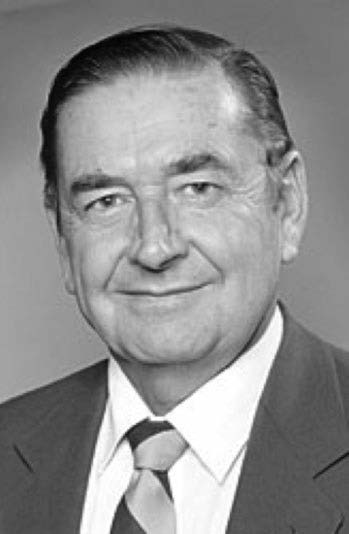
Athel Beckwith was an organic chemist whose research was concerned with free radicals, the reactive intermediates that play important roles in many organic chemical reactions. After studies and junior appointments at Australian universities, at Oxford University he worked with W. A. Waters and completed his doctorate at a time when scepticism about the very existence of free radicals was being rolled back by a small group of experimentalists. Returning to Australia, where he occupied chairs at the University of Adelaide and the Australian National University, Beckwith used studies of organic structure and mechanisms, revealed by kinetic methods and electron spin resonance spectroscopy, to become a world leader in this field of chemistry. He was honoured by election to Fellowship of the Australian Academy of Science (1973) and the Royal Society of London (1989), by several awards from the Royal Australian Chemical Institute, and by membership of the Order of Australia (2004). His extensive travels, often accompanied by his wife Kaye and their children, to work in overseas chemical research laboratories and to give presentations at international meetings, helped him to secure his place in networks at the highest levels of his profession. Several those who studied with him now hold important positions in Australian chemistry
Early Days
Athelstan Laurence Johnson Beckwith was born on 20 February 1930 in Perth, Western Australia, to Laurence Alfred and Doris (née Johnson) Beckwith. Later additions to the family were his brothers, Kingsley, born in April 1936, and Graeme Harvey, born on 17 April 1939. Doris was the daughter of a Perth cabinet maker, John Johnson, and his wife, Lilly. Laurence was born in Katanning, 200 km east of Perth in the wheat belt, where his father Alfred James Beckwith (1878–1951), a builder and carpenter, and mother Ethyl Blanche née Strutt, both Melbourne-born, had settled. Laurence moved to Perth at age twelve upon winning entrance to Perth Modern School, afterwards qualifying as a pharmacist and owning a business in central Perth. Looking further back (Beckwith 2003), Athel notes that of his great-grandparents three were Scottish, two English, one German and one Scandinavian, and that all had arrived in Australia in the mid-nineteenth century. He traced his English antecedents to seventeenth century Leeds and noted earlier manifestations of the Beckwith name in Yorkshire. It is attached to church bells and some thirteenth-century silverware in York Minster, and to the village of Beckwith shaw near Harrogate.
Both Laurence and Doris Beckwith were talented musicians. Laurence appeared frequently for the national broadcaster (Australian Broadcasting Commission) and sang with local choirs. The rich family life of music and reading was augmented by the presence in the Beckwith household of Doris’ parents who lived with them during the depression years of the 1930s. Grandfather Johnson was a strong influence on young Athel’s interest in carpentry and model-building, and in outdoor life that included time spent in the nearby bush, in fishing at Fremantle and swimming.
Schooling
The first few years were completed in Perth at Mt Hawthorn and Leederville primary schools, but in 1942 Athel with his mother, two brothers and grandmother were evacuated to the Porongurup area some 400 km south of Perth. Evacuations from actual and potential war zones took place under the aegis of revised regulations on national security and were implemented in the Northern Territory, Queensland and Western Australia. Athel attended Mt Barker school, undertaking his sixth-grade studies as a pupil in a combined class (grades 6–9) that enabled him to take his studies beyond those set down for primary school. He credited the excellence of his teacher, Mr Best, for the success of several Mt Barker students, Athel among them, who won scholarships to study at the state’s premier secondary school, Perth Modern, to commence their studies in 1943.
Things went well for a few months, in both academic and sporting fields (he was captain of the basketball team) but in April young Beckwith was struck down by an illness that kept him out of school until he was able to resume in 1945. The initial diagnosis was that extreme pain in his leg was caused by poliomyelitis, known as infantile paralysis because of its major impact on the group most vulnerable to this viral infection. This was an obvious diagnosis because at the time Perth was in the grip of one of three major epidemics that swept Australia in the middle years of the twentieth century.This was incorrect,however, and the mistake could have proved fatal. It was some months before the correct diagnosis of osteomyelitis, a staphylococcal infection of the bone, was made but by that time the disease was well advanced. The infection was treated with sulfa drugs and with the then-new penicillin, obtained for him by an American serviceman who was billeted with the family, but it was seven years before Athel was free of the bacterium. The result of the disease, the long convalescence and slow bone regrowth was that Athel’s knee and hip joints became fused, leaving him with a pronounced limp. Nevertheless, with his determination to make the most of life, he continued to walk, to hike the bush and to body surf as vigorously as possible.
While he was out of school Athel had read broadly and also studied by correspondence, and so subject to a performance review at the end of first term, he was allowed to retain his place with his erstwhile classmates. Short periods of hospitalization over the next two years did not affect his academic performance, although he never mastered Latin and dropped that subject as soon as possible.He completed his final (matriculation) year in 1947 with the rare feat of Distinctions in all seven subjects (Mathematics A, Mathematics B, Applied Mathematics, English, Physics, Chemistry and Music).
Athel had piano tuition from about the age of six, and in his mid-teens he added composition and then turned to jazz, a skill that greatly enhanced his social standing. A year or two later the sound of George Gershwin’s Rhapsody in Blue drew him to the clarinet, which he studied under a leading musician and played in the ABC Training Orchestra. His clarinet repertoire remained classical, and he played as a member of small groups over the next fifty years. On his first love, however, he was both a jazz and classical pianist (Figure 1).
Figure 1. Athel and grandson at the piano. University of Western Australia (UWA).
Beckwith’s interest in chemistry made his choice of undergraduate studies (1948–50) at the University of Western Australia (UWA) an easy one. In traditional fashion he enrolled in four subjects in first year (Chemistry, Physics, Mathematics and Zoology), three in second year (Chemistry, Physics and Mathematics), and two in his final year (Organic Chemistry and Inorganic Chemistry). The staff members of the Chemistry Department at UWA, whilst mostly Australian-born, had gained overseas experience and were equipped to pursue research in several fields. In addition, there was a flow of talented students, especially in chemistry, who were subsequently to occupy prominent positions in Australian science.
Athel’s main interest was in the field of organic chemistry—he liked preparative chemistry and he had enjoyed the lectures by Professor Doug White on organic natural products. In 1951 Athel began his Honours year with White, contributing to work on triterpenes in Australian native plants that was published in succeeding years (2, 6). When White went on sabbatical leave, Athel came under the supervision of another young staff member, Dr Joe Miller, who had introduced to the department the electronic theories then being developed in Britain by Robert Robinson and Christopher Ingold. This led to several joint publications (1, 3, 4, 5) exemplifying Miller’s interest in nucleophilic substitutions at electron-deficient aromatic carbons, and saw Athel graduate in March 1952 with First Class Honours in organic chemistry.
Rather than proceed to PhD studies that were then becoming available in Australia (Rae 1999), Athel took a position as Graduate Assistant in the chemistry department and also enrolled in a Master of Science degree to be completed by research. His departmental duties included some lecturing and a good deal of laboratory supervision, but allowed time for research. His research concentrated on the reactions of diazonium salts with various substances, important steps in the production of many dyestuffs, but his attempts to elucidate the reaction mechanisms via study of their kinetics came to grief over unexplained variability in the observed reaction rates. ‘I couldn’t understand what was going on’, Beckwith said, and ‘later I returned to this problem’. Work with PhD student Gordon Meijs on cyclization reactions of diazonium salts, which were later shown to have considerable synthetic potential, probably represents the return to this subject (103, 139, 143).
As the year progressed, Athel made plans to take up a scholarship made available under the Hackett Bequest to UWA for him to study for the PhD degree in London with Professor Derek Barton. He changed direction, however,when the head of chemistry at the University of Adelaide, Professor A. Killen Macbeth, contacted him via the head of the UWA department, Professor Noel Bayliss, and asked him to come to Adelaide as junior lecturer. Athel and Kaye Marshall had become engaged in the Spring of 1951, and in January 1953, a few days after her twenty-first birthday, they were married and after starting their honeymoon in Perth they set off a week later for Adelaide, on the M.V. Westralia. Athel and Kaye shared interests in books, music and the outdoors and their wedding marked the formal beginning of a partnership in which Kaye developed her own career while playing an important adjunct role in Athel’s (K. Beckwith 1999).
Beckwith’s teaching duties in Adelaide were not in organic chemistry, but in inorganic and physical chemistry, where he noted that he managed to stay ‘one lecture ahead’ of his students. In his research he explored mechanisms of reactions and also did some natural product work and synthesized thyroxine analogues. In October he wrote to UWA requesting that his candidacy be transferred from MSc to PhD and this was granted the following month, with G. M. Badger, who had recently arrived in Adelaide (Rae 2009), suggested as a possible supervisor. The thesis topic was to be, echoing Miller’s influence and Beckwith’s interest in electronic theory, ‘Some Aromatic Nucleophilic Displacement Reactions’.
The overseas doctorate still beckoned, how- ever, leading to a successful application for a Commonwealth Scientific and Industrial Research Organisation (CSIRO) overseas scholarship. Beckwith’s aim was again to work with Barton on natural products, but the Chief of the CSIRO Division of Industrial Chemistry, Ian Wark, thought there might be a better, more adventurous alternative, and approved of Beckwith’s second suggestion that he should work with W. A.Waters, an expert on free radical chemistry, at Oxford University. This interest in free radicals had its roots in the erratic kinetic results obtained in Perth and it led to more than fifty years of research for Athel Beckwith.
Oxford
Athel and Kaye and baby daughter Catherine Louise (born October 1953) travelled by ship to England on the S.S. Orcades, arriving in London in November 1954 and proceeding to Oxford a week later. At that time only a few chemists were working on free radicals and many, including the doyen of organic chemistry, Robert Robinson, did not believe in them. However, after initially deriding chemists like Waters who had staked their careers on the existence of the highly reactive and therefore fleeting entities, Robinson was unusually magnanimous in stating that they had been right all along (Norman et al. 1986). Waters was a gentle supervisor who encouraged his students to develop their ideas and reserved Saturday mornings to visit the laboratory and discuss progress with them. Four publications (7–10) resulted from Beckwith’s studies of the attack of radicals on aromatic systems. A fellow student, R. O. C. (‘Dick’) Norman (later to be UK Chief Scientist) was co-author on one of these papers and he became the first of a ‘family’ of free-radical chemists with whom Beckwith developed strong personal and professional ties. Both contributed to a Chemical Society publication in 1970 marking Waters’ retirement (52).
Although Athel was attached to Balliol College, dining in twice a week, the family had to live out. The scholarship did not support more than basic living and so the Beckwiths took in one or two students as lodgers, an arrangement that required Kaye to take out a licence as a boarding house keeper. As well as providing rental payments, the students helped with babysitting, and so enabled the parents to take part in the rich social life of the Oxford community. Their social circle included other Australians there at that time, among them R. J. (‘Bob’) Hawke and his wife Hazel. Bob was a friend from Athel’s primary school days who had been a year ahead of him at Perth Modern and was to serve as Prime Minister of Australia 1983–91.
Prior laboratory experience, typical of Australians proceeding to postgraduate work in Britain following Masters degrees or other research experience, enabled Beckwith to complete his D. Phil. degree within two years and see it conferred in October 1956. The family despatched most of their goods and moved to London in November in readiness for the return journey to Australia, only to learn that their ship was trapped in the Red Sea by the crisis that followed British, French and Israeli attempts to regain control of the Suez Canal from Egyptian authorities. CSIRO extended their scholarship support and the Beckwiths made the best of their time in the capital that freezing cold winter. The entertainer Rolf Harris, another Perth Modern acquaintance, visited them from time to time to share the warmth of their oven and the family became adept at finding warm places, among which were art galleries and the hothouses at Kew Gardens.
While they waited for a passage home, Athel continued experimental work at Oxford with Waters and Norman and writing at home in London, and he was grateful to accept an invitation from the Chemical Society to present the results of his Oxford work at a conference in London where, for the first time, he addressed a high-level audience. Eventually, in February 1957, they were able to board the S.S. Strathaird for a homeward voyage around the Cape of Good Hope, but there were further delays when the ship broke down in Cape Town and the necessary repairs there and in Durban delayed them for a week. They did not waste the opportunity to explore the hinterland but found the Apartheid regime everywhere oppressive.
Return to Melbourne
The Beckwiths arrived in Melbourne in early 1957. Life was pleasant there and the pace of research at CSIRO was leisurely. Kaye wrote that ‘for the first and only time in my married life I had a nine to five husband’, although things got busier when their second child, Paul, was born in September 1957. Beckwith had joined the research group of H. H. Hatt at CSIRO’s Fisherman’s Bend laboratories, where the aim of the research was to find uses for wool wax. Athel was assigned the task of functionalizing the main component, lanosterol, with a view to converting it to possibly useful chemical substances. Background reading revealed that a related but better-known sterol, cholesterol, became oxidized during storage and that a new hydroxyl group was introduced into the hydrocarbon side-chain, remote from the only sites of chemical activation, the hydroxyl group at the 3-position and the C5-C6 double bond. Beck- with’s attempts to oxidize cholesterol in solution did not produce the diol, 25-hydroxycholesterol, but oxidation of the crystalline solid suspended in water or spread on a glass plate did so. Beckwith ascribed this selectivity to the way cholesterol molecules were packed into the crystals so that the side-chains were exposed on the surface, as had been demonstrated by X-ray crystallography.
The work was published the following year (11), by which time Beckwith had taken up a lectureship at the University of Adelaide, and it was some years before he returned to the matter of remote functionalization in steroid molecules. He noted that the conversion of readily available cholesterol into steroid hormones proceeded by degradation of the side-chains of molecules in which the cholesterol functional groups were protected against oxidative attack. In Beckwith’s hands, the reaction of chromic acid with 5α,6β-dibromocholestan-3β-yl acetate, followed by debromination and hydrolysis, gave a 2% yield of the 25-hydroxy derivative which he proposed was the initial product from which further oxidation products, isolated by him and other workers, were formed (17).
Beckwith’s first research at Adelaide was similar to that of his Oxford work, producing a series of papers on oxygen-centred radicals (12, 13, 18, 19, 28), but he also continued to work on aromatic substrates (15, 20). He reviewed the field (14) before exploring analogous reactions with ferrocene (21, 25, 26, 34, 35) and return- ing to this old interest from time to time (36–39) (Figure 2).
Figure 2. Free radical attack on butanoic acid (12).
Beckwith’s colleague and head of depart- ment, Professor Geoffrey Badger, was interested in the ability of polycyclic hydrocarbons to induce animal cancers, and this led Beckwith to speculate about possible chemical pathways through which this carcinogenesismight be acti- vated. Thinking, naturally, of free radicals, he investigated the reactions of sulfur-based radi- cals with aromatic substrates and found a rich field of chemistry (16, 22, 24, 27). Even though naturally occurring thiols such as glutathione and cysteine took part readily in such reactions, the carcinogenesis hypothesis could not be confirmed and the work was abandoned although sulfur-based radicals were later found to be useful in organic synthesis.
In 1960 the Royal Australian Chemical Institute awarded Beckwith its Rennie Medal (named after the first professor of chemistry at Adelaide) for the most meritorious research by an Australian chemist under thirty years of age. At the end of the year he was promoted to Senior Lecturer and three years later to the rank of Reader. Beckwith had not forgotten his earlier desire to work with Professor Derek Barton at Imperial College, London, who at the time was engaged in research on remote functionalization of the kind that Beckwith had explored with cholesterol. So, supported by a travel grant from the British Council under the Commonwealth Universities Interchange Scheme, he took sabbatical leave from Adelaide to spend a year in London. Following a brief holiday in Perth with family, the family of four sailed from Fremantle in the S.S. Strathnaver on 24 January 1962 and spent the year in London, suffering together through the cold winter of 1962–63 and the last of the London smogs. Barton’s group had been unsuccessful in achieving remote attack by oxygen-based radicals generated from hypoiodites, but Beckwith found that ultraviolet irradiation of N-iodo-amides, and hydrolysis of the resulting γ-iodoamides, produced the desired γ-lactones (23, 29).
Beckwith’s time in London was extended because the first two months had been lost while he underwent back surgery. He had experienced pain before leaving Adelaide and had the good fortune on the voyage to Britain to encounter a fellow passenger, a neurosurgeon, who diagnosed spinal degeneration and arranged treatment for him in London.Thus it was not until 14 February 1963 that the family embarked on the S.S. Himalaya to travel via the Suez route and arrive home a month later. As well as the experience of working in Barton’s laboratory, Beckwith had renewed old acquaintances in Britain and also attended the 1962 IUPAC Symposium on Natural Products Chemistry in Prague. As well, he had visited the Technical University of Eindhoven to learn about mass spectrometry and he had discussions with chemists at the National University in Singapore, on his way back to Australia.
Back in Adelaide, Beckwith found that γ-lactones could also be formed from N-chloroamides (31), but that oxidations of carboxylic acids gave only poor yields of lactones (32). Turning to other reactive nitrogen species, he and his students found that the oxidation of primary amides generated nitrene species R-CO-N: that rearranged to isocyanates and these could be trapped as acylamines (30). This was reminiscent of the well-known Curtius reaction in which the nitrene was generated by thermal decomposition of acyl azides.There followed a series of papers on oxidations by lead tetra-acetate (33, 36, 37, 38, 40, 41, 42). The strength of the Beckwith group was by that time attracting graduate students and more senior researchers such as Professor W. B. Renfrow from Oberlin College, Ohio. Renfrow and his wife Antoinette (Toni) both worked in the laboratory and together with graduate student Jillian Teubner were co-authors on published work (43).
The year 1964 was an eventful one, first on account of the birth of the Beckwiths’ third child, Claire, and then the resignation of Professor Geoffrey Badger to take an executive position with CSIRO, from which he was not long afterwards to return to the University and become Vice-Chancellor. Athel applied for the Adelaide chair, as he did for a corresponding chair at the UWA, and there was a delay while the institutions decided on their respective appointments until in February 1965, at the age of 35, he was able to take up the position of Professor and Head of the Department of Organic Chemistry at the University of Adelaide. One of his first actions was to appoint members of staff to a departmental committee but, with the democratic movement of the late 1960s and then the 1970s still some years away, the committee’s role was always advisory and the Head continued to take responsibility for decisions.
Under the generous conditions prevailing at the University of Adelaide, Beckwith was able to take sabbatical leave again in 1968. By then Kaye’s environmental activism—opposition to development in ‘green’ zones—had led to her election as Councillor in the City of Mitcham, but she took leave and the whole family travelled by ship, the S.S. Himalaya, leaving Adelaide on 6 January 1968. Athel had arranged to work with his fellow-student of Oxford days, Dick Norman, who was by then Professor of Chemistry at York University. The particular focus of Beckwith’s study programme was electron spin resonance (ESR) spectroscopy. Energy at microwave frequencies could be absorbed by the unpaired electrons of free radicals when the species were held in a strong magnetic field, and less than two decades from the time when most chemists did not believe that free radicals were important reaction intermediates, commercial instruments were becoming available that were suitable for routine use by organic chemists (Figure 3).
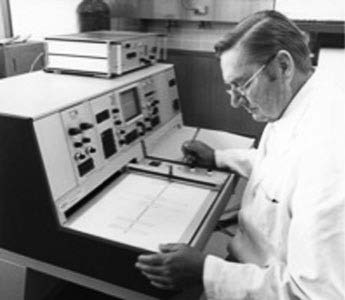
Figure 3. Beckwith at the ESR spectrometer.
The major features of the ESR spectra that they obtained were the fine splitting on the ESR sig- nals, which revealed the relationships between the free electrons and nearby nuclei such as those of hydrogen and nitrogen atoms, the size of the fine splitting being generally related to the number of intervening chemical bonds.
While in the UK Beckwith took the opportunity to visit other research laboratories and also wrote up a good deal of Adelaide work that was published later that year. In October 1968 the Beckwith family travelled to Canada and the USA, where Athel, with support from the Carnegie Foundation, undertook a gruelling lecture tour—thirty universities in three months— during which he made some important contacts. One was with Professor Cheves Walling, doyen of American free radical chemists, and the other was Dr Keith Ingold at the National Research Council of Canada. Beckwith and Ingold visited each other on several occasions, remained close friends and shared several research publications (81, 90, 91, 122, 183, 205).
Working together at the University of York in 1968, Beckwith and Dick Norman had found new ways to generate alkyl and aryl free radicals within the cavity of an ESR spectrometer, and their results were reported early in the following year (45, 46). Large, expensive scientific instruments such as nuclear magnetic resonance (NMR) and ESR spectrometers and mass spectrometers were becoming essential to the practice of organic chemistry.Adelaide’s first NMR spectrometer was installed in 1962 and in May 1966 Beckwith hadmade a three-week visit to the Hitachi company in Japan to learn about the operations of the mass spectrometer that was soon to be delivered to Adelaide.While he was at York it became clear to Beckwith that ESR was also a technique to which he needed ready access in his laboratory, and so one of the first things he did upon returning to Adelaide in early 1969 was to approach the Australian Research Grants Committee for funding. Fortunately, there were at the time uncommitted funds that had to be expended by the end of the financial year on 30 June and soAthel got his spectrometer promptly. The first results, describing aryl radical cyclizations, were obtained by graduate student W. B. (Bill) Gara and published as research notes that same year (47, 48), with full papers following some years later (69, 70).
One of the lead tetra-acetate reactions (42), in which pyrimidinediones were produced, attracted the attention of the Maumee Chemical Co., a US manufacturer of heterocyclic compounds and part of the Sherwin Williams group, the interests of which lay in paints and other surface coatings. They contacted Beckwith in early 1969, offering to pay the cost of relevant patents that Beckwith would then assign to them in return for payments to the University. The Australian market for such chemical substances was small but world-wide demand was likely to be sufficient that an international manufacturer could benefit from them, and so the University allowed patenting to proceed. A German patent, No. 1926475, was granted in December 1969, naming Beckwith as inventor. Subsequent US patents, Nos. 388750, 3947416 and 3947442, were granted to Beckwith in 1975 and 1976 and assigned to the Sherwin Williams Co. Alater review(Coppola 1980) described the lead tetraacetate oxidation as ‘the method of choice’ for production of such compounds, and another (Kappe and Stadbauer 1981) noted that these companies had patented several discoveries in this field of chemistry. In 1985 the patents were reassigned to the PMC Specialties Group Inc. but their coverage has since expired. In 1968, however, Students for Democratic Action, a radical group at the University of Adelaide, accused the University and Beckwith in particular of working for the US ‘military industrial complex’. There ensued demonstrations at meetings of the University Council—where the matter was listed in confidence as ‘agreement between Professor Beckwith and an un-named American company’—and in the Department of Organic Chemistry, during which Beckwith was defamed and several chemistry students were arrested. The fact was that Maumee intended to use the chemicals as corrosion inhibitors and for ultra-violet protection, certainly not the herbicides then being used by American troops in Vietnam that were in the students’ minds. The fuss eventually subsided and harmonious relations were restored.
The years 1970–75 marked a productive period for Beckwith’s group, and Athel was elected to Fellowship of the Australian Academy of Science in 1973. In his laboratory, ESR spectroscopy became a customary tool (50, 54, 57, 60), while kinetic methods were often used to study reaction mechanisms, especially where rearrangements were involved (51, 53, 56, 58, 59, 65). Beckwith was a recognized expert in rearrangements and published a succession of reviews on this topic (52, 55, 90). The development in the late 1960s of the principle of conservation of orbital symmetry and adumbration of the ‘Woodward-Hoffmann Rules’ by the chief protagonists led to great interest among organic chemists. Although orbital symmetry never played a big part in Beckwith’s analysis of reaction mechanisms, he did explore ideas of stereo-electronic control, beginning in 1971 (53) and continuing for many years (62, 70, 71, 86, 88, 96, 101). Beckwith was assisted in coming to an understanding of the principles by a leading Australian theoretical chemist, Leo Radom, and the two shared authorship of some articles (117, 219). In 1980 and 1981 Beckwith published guidelines on these aspects of radical reactions (94, 101), and thesewere often referred to as ‘Beckwith’s rules’ (Figure 4).
Figure 4. Beckwith’s Rules (94).
In Adelaide Beckwith had acted as consultant to several small companies. Then in 1972 he accepted an invitation from the Chief of CSIRO’s Division of Applied Chemistry in Melbourne, Dr David Solomon, to be a consultant to the organization’s work on copolymerization of allylamines that were to be used in the Sirotherm ion-exchange resins (Spurling 2011). Beckwith devoted one day a month to this activity, in return for a modest consulting fee (subsequently used to facilitate conference travel) and rights to co-authorship that yielded a series of published papers (67, 68, 77) covering practical and theoretical aspects of free-radical cyclopoly- merizations, especially of diallylamines from which industrially important polyamines could be formed. Later he was to consult on polymer chemistry for the paint manufacturer, Dulux, where his ideas were influential in the company’s development of new products; he was also involved in other collaborative work with CSIRO researchers (109).
Beckwith was aware that several enzyme mediated chemical changes in natural systems involved attack at apparently unactivated positions in molecules. Some free-radical reactions have this characteristic, and Beckwith speculated that free radicals might be involved in the natural systems. He pursued this interest by taking a year’s leave from Adelaide to work at Oxford with Professor Sir Ewart Jones, an expert in biological chemistry. While daughter Cathy stayed behind in Adelaide to study for her B.A., the rest of the family set off in March 1974, flying first to Athens and visiting several other European scientific centres of chemical research on their way to England. During the year Athel was able to visit North America to attend the Gordon Conference on Free Radicals and to visit Keith Ingold in Ottawa to initiate collaboration that involved work on free radical chemistry. Returning to Australia a year later, the family travelled via Moscow and Singapore where again Athel met with chemists. During the year he lectured at several UK and European universities and attended conferences, including the International Conference on Free Radical Chemistry, in Italy, where he chaired a session. The involvement of free radicals in enzymic reactions could not be demonstrated and this outcome, plus the lack in Adelaide of the microbiologist collaboration that Jones enjoyed at Oxford, meant that there was no direct follow-up when Beckwith returned to Adelaide.
However, thinking about remote functionalization rekindled Beckwith’s interest in reactions taking place at crystal surfaces, which he had investigated in the case of cholesterol many years before. The result was several articles reporting reactions of ozone with solid substrates (80, 82, 85, 87). Later, the biological interest led to a study of free radical formation in vivo from the anaesthetic halothane (105). Beckwith’s continuing interest in possible involvements of free radicals in biological systems led him in 1979 to embark on an eight-month period of study leave, taking Kaye and their two younger children, to work at Oxford with Professor Jack Baldwin. A joint publication arose from that period (100) and was followed up in Adelaide with other studies. These were the formation of a β-lactam in a free radical reaction that demonstrated a possible biosynthetic route to penicillin (113), and synthesis of other β-lactams in fused ring systems (121).While he was away, Beckwith gave invited lectures at several universities and research centres in the UK, France and Israel, and attended the Euchem Conference on Free Radicals, which had become a major venue for presentation of his work.
It was not all chemistry in Adelaide. Both Athel and Kaye were members of the Southern Jazz Club and frequently attended its Thursday night band concerts in the Flagstaff Hotel, and Athel played with the band at the concert they held to farewell the Beckwiths from Adelaide. Kaye was active in the environment movement, and both of them were involved in promoting social justice for the local aboriginal community. Leaving Adelaide was hard for Kaye, who had advanced in her career in municipal government to be a Councillor and then an Alderman, but after two decades in Adelaide Athel was ready for new challenges and opportunities.
Canberra and the Australian National University
Following Professor Arthur Birch’s retirement from the Research School of Chemistry at the Australian National University (ANU) in 1980, Athel Beckwith and Lew Mander were appointed to professorships, Athel taking up his appointment in mid-1981. Among the advantages he found in Canberra were better equipment, including ‘a new ESR spectrometer that was much more powerful than the one in Adelaide’, and ‘a large number of highly proficient and extremely helpful technical staff’. During his ANU years, Beckwith was to benefit substantially from this technical assistance, notably through the work of Dr Tony Willis, a crystallographer who joined the school in 1985. X-ray crystal structure determinations (176, 179, 185, 203, 204) confirmed structures that helped to elucidate reaction mechanisms. Another important contributor was Dr Steven Brumby who did much of the ESR spectrometry for the group and conducted research on the analysis of ESR spectra (146–148, 187, 189, 197).
Freed from undergraduate teaching and with the strong support that ANU provided, Beckwith was extraordinarily productive at the Research School of Chemistry. The chemistry of free radicals uncovered by him and others had not only gained acceptance for radicals as real species that played important parts in the mechanisms of many well known reactions, but the understanding of how to generate and use free radicals had developed to the point where radical reactions entered the organic chemist’s ‘tool box’. The propensity for formation of five-membered rings was put to advantage by Gilbert Stork (Stork and Baine 1982; Stork and Mook 1983) and by Curran (Curran and Rakiewicz 1985a, 1985b), who synthesized fusedring triquinane natural products. Stork covered some of this chemistry when he delivered the 1987 Birch Lecture ‘Radical Cyclisation in Natural Product Synthesis’ at ANU, and a later review showed how synthetic chemists had made good use of free radical chemistry in the ensuing decade (Jasperse et al. 1991).
During his Canberra years Athel became more deeply involved in the work of the Australian Academy of Science, serving as a Council member (1983–86), Vice-President (1985–86) and Treasurer (1997–2001), and he was also a member of a panel appointed to review the funding of research in organic chemistry in Australia (227). Kaye gave time to the Women’s Electoral Lobby and served as Administrator for the Citizens Advice Bureau. Their daughter Cathy married Martin Banwell, an organic chemist who was later to become Athel’s colleague at ANU, while son Paul completed his D. Phil. at Oxford, working with Jack Baldwin. In the later 1980s Athel served as a consultant to ICI Australia, which maintained a research laboratory in that period but abandoned it in the 1990s. His advice was sought on a range of chemical projects but especially on the search conducted for novel herbicides (Watson 2011). Consulting work with the ICI Australia subsidiary, Dulux, also continued.
In Canberra Kaye deepened her interest in Aboriginal art and held positions in environment groups. Despite these local involvements she was often free to join Athel as he continued to travel extensively to present research results at conferences and to visit other laboratories where he was able to learn of recent or forthcoming developments and to engage in discussion with other free-radical chemists. From his earliest days as a research leader, he was always ‘hands on’. Just as sabbatical leave at York had enabled him to develop methods that he was to take home to Australia, a period spent with Professor Alwyn Davies in London allowed him to begin work with molecular mechanics calculations that were then developed in Canberra (119, 125). Other numerical methods came later (146, 147, 163 198, 210, 219) (Figure 5).
Figure 5. Beckwith and David Harman performing a molecular mechanics calculation.
In research at Adelaide and Canberra, free radicals were generated by various means (136), including photolysis and oxidation by copper (II) ions, but greatest use was made of stannyl radicals that came into widespread use after 1975 (Neumann 1987). Chain reactions with these metal-centred radicals, initiated by fission of azobisisobutyronitrile (AIBN) in the presence of tri-n-butyl tin hydride, proceeded by abstraction of halogen atoms from suitably constructedmolecules, or interactionswith other heteroatoms, to generate specific carbon-centred radicals. From the beginning of his Canberra period, although he did not attempt complete syntheses, Beckwith explored free-radical reactions that could be used to construct key sections of the molecular frameworks of natural products.These were inevitably cyclization reactions, which Beckwith explored using kinetic, X-ray crystallography, ESR spectroscopy and theoretical tools.Cyclizations were the subject of amajor group of research publications (113, 119, 121, 125, 127, 132, 133, 134, 137, 141, 145, 151, 158, 161, 167, 168, 170, 172, 177, 178, 181, 182, 192, 202, 208, 214, 215, 217, 220) and reviews (136, 152).Molecular rearrangements and other chemical reactions were frequently the subject of reaction rate studies, including the determination of absolute reaction rates, and data from the Beckwith group were reported in three major contributions to the Landholt-Börnstein series (116, 197, 224) edited by one of the pioneers of free-radical chemistry, Hanns Fischer, who spent three months in Canberra in 1992. Beckwith and Ingold memorialized him when he died in 2005 (223).
In 1989 Beckwith was elected a Fellow of the Royal Society of London, and when his colleagues Professor Lew Mander (1990), John White (1993) and Martin Bennett (1995) were elected, there were seven FRSs on the staff of ANU’s Research School of Chemistry, the others being Birch (1958), Craig (1968) and Sargeson (1983). In 1993 Beckwith travelled to Britain to deliver a Centenary Lecture for the Chemical Society (190) and to receive the Centenary Medal. A period spent in Germany in the 1990s where Beckwith was supported by a Humboldt fellowship enabled him to work in the laboratories of Christoph Rüchardt at the University of Freiburg, where ESR spectroscopy was applied to the measurement of bond dissociation energies and stabilization energies (211).
The Beckwith Chemical ‘Family’
Co-authorship of research publications shows an important aspect of Beckwith’s status as a scientist. There were early papers on which he was not the lead author and, as is the cus- tom in the sciences but not the humanities, he shared authorship with graduate students and postdoctoral fellows who had worked under his direction. However, he also collaborated on equal terms with several leading organic chemists from around the world. I have already described joint work with R. O. C. Norman (45, 46), D. H. R. Barton (23, 29), K. U. Ingold (81, 90, 122, 183, 205, 223) and A. G. Davies (153, 165) but collaborations arose in other ways, too. French chemist Bernard Maillard, for example, first met Beckwith in Ingold’s Ottawa laboratory, and later shared preliminary results with him that led to joint publications (208, 215).
As the fame of the Beckwith group grew, scientists came to spend periods of leave working there, and often brought their families to this (for some, faraway) centre of chemical excellence. This accounted for collaborations with the Renfrows (43), Swee Hock Goh (110, 111), Warkentin (150), and Dyall (168). An especially interesting case was that of Stephen Glover, a South African who completed his PhD degree working with André Goosens, who had worked with Barton and Beckwith at Imperial College (29). After a period of leave spent in Canberra with Beckwithin 1984, Glover emigrated to Australia and took up a position at the University of New England, in Armidale, in gaining which he credits Beckwith’s influence. Glover later spent a period of leave in Canada, at McMaster University with John Warkentin, whom he had met while the two were guests in Canberra a decade earlier. Another whose position in Beckwith’s laboratory resulted in emigration to Australia was Anil Abeywickrema, a Sri Lankan chemist who had completed a PhD at Flinders University in Adelaide. Abeywickrema returned home to a position at the University of Colombo but remained in Australia after his subsequent post-doctoral experience in Canberra (122, 131, 134,139, 144, 145). Those who made several visits include Goh of the University of Malaya, Dyall from Newcastle University, and Andreas Zavit- sas of Long Island University (140, 163, 198, 210, 225). Israeli chemists Y. Mazur and Morde- cai Ruben exchanged visits with Beckwith, with Rubin spending several periods in Canberra.
Students and postdoctoral fellows moved between groups, such as Dean Struble who worked with Beckwith in the late 1960s (44, 56) and also with Barton, finally returning to Canada to forge his career. They formed connections between the groups and sometimes brought their erstwhile research directors into collaboration. Such was the case with Ian Davison, a Davies student (153, 155) who was later a postdoctoral fellow in Canberra (191, 195), and Gordon Meijs, a Beckwith PhD from Adelaide days who subsequently spent a postdoctoral period with J. F. Bunnett in Santa Cruz and brought together Beckwith’s and Bunnett’s mutual interest in SRN 1 reactions (130). In the early 1980s, Beckwith was a visiting lecturer at Duke University, North Carolina, where his host, Professor Bert Fraser-Reid invited him to comment on some unusual aspects of the photochemical addition of alcohols to enones in the presence of benzophenone. Beckwith established that this involved hydrogen abstraction followed by conjugate addition of the resulting hydroxymethyl radical, bringing understanding of the stereoelectronic control when cyclic enones were involved (156).
The Australian Journal of Chemistry pub- lished an issue to mark Beckwith’s 65th birthday in February 1995. In his introductory remarks, Beckwith’s graduate student and later colleague at ANU, Chris Easton, outlined Beckwith’s career and his achievements and noted that his work had been cited over 1000 times in 1992–93. He also spoke of the support that Athel and Kaye gave to students and colleagues (Easton 1995). The issue included papers from chemists from around the world who had associations with Beckwith’s research. In the gracious introduction to his paper, Professor Gerald Pattenden, University of Nottingham, commented that ‘few would argue with the leading position that AthelL. J. Beckwith occupies in the line of pioneers of the application of free radicals in contemporary organic synthesis. The plethora of citations and publications from his laboratory are ample evidence of the ingenuity and creativity of his contributions in this area’ (Pattenden 1995). Beckwith and his inorganic chemistry colleague, Alan Sargeson (Bosnich 2011, 2012), having reached the statutory age of 65 years, retired at the end of 1995 and a symposium to honour their achievements was held in Canberra in January 1996. In February 2010 a symposium entitled ‘Perspectives of a Radical Chemist’ was held at ANU to honour Athel’s 80th birthday. It featured lively presentations from former students and collaborators.
The Royal Australian Chemical Institute, of which he was President in 1984–85, had recog- nised Beckwith’s contributionsto chemistry with the award of their H. G. Smith Memorial Medal in 1980 and the Organic Division Medal in 1992 and its highest award, the Leighton Memorial Medal, in 1997. In civil life, he was awarded a Centenary of Federation Medal by the Australian Government in 2001, and in 2004 became an Officer of the Order of Australia (AO).
Tributes
Athel Beckwith was killed in a car crash on 15 May 2010. He is survived by his wife, Kaye, who was badly injured in the crash but recovered after hospitalization, and by their three children, Paul, Cathy and Claire. These three and Beckwith’s brother Graeme spoke at the subsequent celebration of his life, as did several ANU colleagues. Claire’s contribution was a reading from Tolkien’s masterpiece, The Lord of the Rings, which Athel adored and had read as a serialised bedtime story to each of the children. The music reflected Beckwith’s tastes and abilities— a Mozart clarinet trio and Gershwin’s Rhapsody in Blue and Summertime—while Tom Lehrer’s The Elements served to underscore his love of chemistry.
In 2011, almost a year after his death, the Australian Journal of Chemistry again dedicated an issue to Beckwith, with articles from a range of Australian and international chemists. The guest editor was Peter Duggan, who had com- pleted his PhD with Beckwith at ANU in 1990. In his thoughtful introduction (Duggan 2011) Dug- gan mentioned the ‘reaction that Athel would ultimately become best known for—the cycliza- tion of the hex-5-enyl radical’ (Figure 6)—and the ‘Beckwith Rules’ (94).
Figure 6. Cyclization of the hex-5-enyl radical (88).
A reflective paper by Algi Serelis, a Beckwith postdoctoral fellow from his late Ade- laide period, recounted the way that Beckwith developed a deep understanding of free radi- cal reactions and developed them as tools for the synthesis of polycyclic structures (Serelis 2011). Former Beckwith student Carl Schiesser, now a professor at the University of Melbourne, organised a themed issue on free radical chemistry in memory of Athel Beckwith in the journal Organic and Biomolecular Chemistry that attracted 48 articles (http://blogs.rsc.org/ob/category/web-theme- issues/, accessed September 2011). In an article of which Beckwith was named as co-author, Schiesser wrote about the ‘dark ages’ in which ‘free radicals remained largely inaccessible to synthetic chemists’ and the ‘renaissance period’ beginning in ∼1970 when key questions wereasked and answered, and free radicals became useful and not ‘poorly understood curiosities, often scapegoats for unwanted outcomes’ (226).
Early in 2011 the Organic Division of the Royal Australian Chemical Institute renamed their annual lectureship for recently appointed staff in his honour. Funding is available for the Athel Beckwith Lecturer to deliver six lectures in state capitals or major regional centres during the year of the lectureship. His continuing influence on chemistry in Australia is perpetuated by the Centre of Excellence for Free Radical Chemistry. This dispersed organization, based in several Australian universities, includes several Beckwith graduates, one of whom is the Centre Director, Professor Carl Schiesser of the University of Melbourne, and another, Chris Easton, a professor in the Research School of Chemistry at the Australian National University.
A leading historian of chemistry, Colin Russell, has described how free radicals joined ion pairs and heterolytic bond cleavage in the chemical orthodoxy by about the middle of the twentieth century (Russell 2004),andhecredited D. H. Hey, W. A. Waters, D. H. R. Barton and C. Walling with seminal contributions to the field. Athel Beckwith’s important role was described by Keith Ingold in a moving eulogy delivered at the opening of the EUCHEM meeting on free radicals that was held in Bologna just a few weeks after Athel’s death (Ingold 2010). In it, he described Beckwith’s chemistry, alluded to their long friendship and collaboration, and described Athel as ‘an outstanding scientist’ and ‘one of the great chemists of the twentieth century’. A tribute that pointed to broader interests in life came from the Canberra Jazz Club, who remembered him as ‘the chemistry professor who took on free radicals—and won’, a quotation from an obituary that first appeared in the Sydney Morning Herald in June 2010.
Bibliography
- A. L. Beckwith, J. Miller and G. D. Leahy (1952). The SN mechanism in aromatic compounds. Part III. J. Chem. Soc., 3552–3556.
- J. R. Anstee, H. R. Arthur, A. L. Beckwith, D. K. Dougall, P. R. Jefferies, M. Michael, J. C. Watkins and D. E. White (1952). West- ern Australian plants. Part VI. The occurrence of betulic, oleanolic, and ursolic acids. J. Chem. Soc., 4065–4067.
- A. L. Beckwith and J. Miller (1952). On N-(2,4- Dinitrophenyl)phthalimide. Aust. J. Sci. Res., Ser. B 5A, 786–789.
- A. L. Beckwith and J. Miller (1954). The SN mechanism in aromatic compounds. IX. Some reactions of polynitrodiaryl ethers. J. Org. Chem. 19, 1416–1423.
- A. L. Beckwith and J. Miller (1954). The SN mechanism in aromatic compounds. XI. Some reactions of aminodinitrodiaryl ethers. J. Org. Chem. 19, 1708–1715.
- A. L. Beckwith, A. R. H. Cole, J. C. Watkins and D. E. White (1956). Triterpenoid compounds. III. Phyllyrigenin. Aust. J. Chem. 9, 428–431.
- A. L. J. Beckwith and W. A. Waters (1956). Reactions of anthracene and 9-methylanthracene with the free radicals derived from di-tert.-butyl peroxide. J. Chem. Soc., 1108–1115.
- A. L. J. Beckwith and W. A. Waters (1957). Reac- tion of anthracene with benzyl radicals. J. Chem. Soc., 1001–1008.
- A. L. J. Beckwith and W. A. Waters (1957). Reaction of chlorobenzene with methyl radicals. J. Chem. Soc., 1665–1668.
- A. L. J. Beckwith, R. O. C., Norman and W. A. Waters (1958). Free-radical reactions of 9: 10-diphenylanthracene. J. Chem. Soc., 171–175.
- A. L. J. Beckwith (1958). The oxidation of crys- talline cholesterol. Proc. Chem. Soc., 194–195.
- A. L. J. Beckwith (1960). Reactions of alkoxy radicals. I. The reactions of di-tert.-butyl perox- ide with n-butyric acid and ethyl n-butyrate. Aust. J. Chem. 13, 244–255.
- A. L. J. Beckwith (1960). Reactions of alkoxy rad- icals. II. Thermal decomposition of n-octyl nitrite in butyric acid. Aust. J. Chem. 13, 321–323.
- A. L. J. Beckwith (1960). Free-Radical Substi- tution in aromatic compounds. Proc. Roy. Aust. Chem. Inst. 27, 400–404.
- A. L. J. Beckwith and M. J. Thompson (1961).Free-radical phenylationofphenanthrene. J. Chem. Soc., 73–80.
- A. L. J. Beckwith and Low Beng See (1961). Thiyl radicals. Part I. Reactions of anthracene with oxygen and thiols. J. Chem. Soc., 1304–1311.
- A. L. J. Beckwith (1961). Hydroxylation of 5α, 6β-dibromocholestan-3β-ylacetateby chromic acid. J. Chem. Soc., 3162–3164.
- A. L. J. Beckwith and G. W. Evans (1962). Mech- anism of the reactions of peresters catalyzed by copper salts. Proc. Chem. Soc., 63–64.
- A. L. J. Beckwith and G. W. Evans (1962). Reac- tions of alkoxy radicals. Part III. Formation of esters from alkyl nitrites. J. Chem. Soc., 130–137.
- A. L. J. Beckwith (1962). Reaction of anthracene with free radicals derived from 2,2,4- trimethylpentane (isooctane). J. Chem. Soc., 2248–2257.
- A. L. J. Beckwith and R. J. Leydon (1963). The mechanism of the reaction of ferrocene with free radical reagents. Tetrahedron Lett. 4, 385–388.
- A. L. J. Beckwith and L. B. See (1963). Thiyl radi- cals. II. Reactions of meso-substituted anthracene derivatives with oxygen and mercaptoacetic acid. Aust. J. Chem. 16, 845–53.
- D. H. R. Barton and A. L. J. Beckwith (1963). A novel Synthesis of lactones. Proc. Chem. Soc., 335.
- A. L. J. Beck and L. B. See (1964). Thiyl rad- icals. III. Some reactions of anthracene, 1,2- benzanthracene, and 3,4-benzopyrene with thiols and oxygen. Aust. J. Chem. 17, 109–118.
- A. L. J. Beckwith and R. J. Leydon (1964). Free- radical substitution of ferricinium ion: the mech- anism of the arylation of ferrocene. Tetrahedron 20, 791–801.
- A. L. J. Beckwith and R. J. Leydon (1964). Free- radical phenylation of ferricenium ion. J. Am. Chem. Soc. 86, 952–953.
- A. L. J. Beck and Beng See Low (1964). Thiyl radicals. Part IV. Reactions catalyzed by ferrous ion, of polycyclic aromatic hydrocarbons with t-butyl hydroperoxide and mercapto compounds. J. Chem. Soc., 2571–2578.
- B. Acott and A. L. J. Beckwith (1964). Reac- tions of alkoxy radicals. IV. Intramolecular hydrogen-atom transfer in the presence of cupric ion: a novel directive effect. Aust. J. Chem. 17, 1342–1355.
- D. H. R. Barton, A. L. J. Beckwith and Goosen (1965). Photochemical transforma- tions. Part XVI. A novel synthesis of lactones. J. Chem. Soc., 181–190.
- B. Acott and A. L. J. Beckwith (1965). Reaction of lead tetra-acetate with primary amides. Forma- tion of acylamines. Chem. Commun. (London), 161–162.
- A. L. J. Beckwith and J. E. Goodrich (1965). Free-radical rearrangements of N-chloro amides: a synthesis of lactones. Aust. J. Chem. 18, 747– 757.
- A. L. J. Beckwith and J. E. Goodrich (1965). Some oxidation reactions of branched-chain carboxylic acids. Aust. J. Chem. 18, 1023–1033.
- B. Acott, A. L. J. Beckwith, A. Hassanali and J. W. Redmond (1965). Reaction of lead tetra- acetate with primary amides. Formation of alkyl carbamates. Tetrahedron Lett. 6, 4039–4045.
- A. L. J. Beckwith and R. J. Leydon (1966). Co-oxidation of ferrocene and hydrazine deriva- tives. Formation of substituted ferrocenes. Aust. J. Chem. 19, 1381–1390.
- A. L. J. Beckwith and R. J. Leydon (1966). The reaction of ferricinium ion with phenylazotriph- enylmethane. Aust. J. Chem. 19, 1853–1858.
- A. L. J. Beckwith and J. W. Redmond (1966). Reaction of carbethoxynitrene with anthracene, phenanthrene, and pyrene. Aust. J. Chem. 19, 1859–1870.
- A. L. J. Beckwith and J. W. Redmond (1967). Reaction of anthracene with ethoxycarbonyl- nitrene: concentration dependence of prod- uct composition. Chem. Commun. (London), 165–166.
- A. L. J. Beckwith and J. W. Redmond, (1968). Temperature dependence of product composition in reactions of carbethoxynitrene with anthracene and with 2-butene. J. Am. Chem. Soc. 90, 1351–1353.
- A. L. J. Beckwith and R. J. Leydon (1968). The reaction of anthracene with benzoyl radicals. Aust. J. Chem. 21, 817–821.
- B. Acott, A. L. J. Beckwith and A. Hassanali. (1968). Reactions of lead tetraacetate. I. Forma- tion of acylamines from primary carboxamides. Aust. J. Chem. 21, 185–195.
- B. Acott, A. L. J. Beckwith and A. Hassanali (1968). Reactions of lead tetraacetate. II. For- mation of carbamic acid esters from primary carboxamides. Aust. J. Chem. 21, 197–205.
- A. L. J. Beckwith and R. J. Hickman (1968). Reactions of lead tetraacetate. Part III. Forma- tion of pyrimidinediones and related compounds from dicarboxylic acid amides. J. Chem. Soc. C, 2756–2759.
- A. L. J. Beckwith, W. B. Renfrow, A. Renfrow and J. K. Teubner (1968). Transannular rearrangement in 9,10-dihydroanthracene derivatives. Tetrahe- dron Lett. 9, 3463–3464.
- D. L. Struble, A. L. J. Beckwith and G. E. Gream (1968). Cyclization of 4-(1-cyclohexenyl) butyl radical. Tetrahedron Lett.9, 3701–3704.
- A. L. J. Beckwith and R. O. C. Norman (1969). Electron spin resonance studies. Part XX. The generation of organic radicals by the one-electron reduction of aliphatic halogeno- compounds in aqueous solution. J. Chem. Soc. B, 400–403.
- A. L. J. Beckwith and R. O. C. Norman (1969). Electron spin resonance studies. Part XXI. Reac- tions of the phenyl and substituted phenyl rad- icals in aqueous solution. J. Chem. Soc. B, 403–412.
- A. L. J. Beckwith and W. B. Gara (1969). Elec- tron paramagnetic resonance spectral study of intramolecular reactions of aryl radicals. J. Am. Chem. Soc. 91, 5689–5691.
- A. L. J. Beckwith and W. B. Gara (1969). Intramolecular addition and hydrogen atom trans- fer reactions of aryl radicals. J. Am. Chem. Soc. 91, 5691–5692.
- A. L. J. Beckwith (1970). Synthesis of amides, in The Chemistry of Amides (ed. J. Zabicky). New York: Wiley Interscience, pp. 73–186.
- A. L. J. Beckwith (1970). EPR spectral studies of aryl radical reactions. Intra-Science. Chem. Rep. 4, 127–137.
- D.L. Struble, A. L. J. Beckwith and G. E. Gream (1970). Copper-ion catalysed decomposition of bis-5-(1-cyclohexenyl)pentanoyl peroxide. Tetra- hedron Lett. 11, 4795–4798.
- A. L. J. Beckwith (1970). Some aspects of free-radical rearrangement reactions, in Essays on free-radical chemistry (ed. R.O.C. Norman). Chem. Soc., Spec. Publ. No. 24, 239–269.
- A. L. J. Beckwith and G. Phillipou (1971). Stere- oelectronic effects in radical fragmentation: rear- rangement of 3β,5-cyclocholestan-6-yl radical. J. Chem. Soc. D., 658–659.
- A. L. J. Beckwith and P.K. Tindal (1971). Free rad- ical acetoxy group migration; an E.P.R. spectral study. Aust. J. Chem. 24, 2099–2116.
- A. L. J. Beckwith, G. E. Gream and D. L. Struble (1972). Cyclization and cupric-ion oxidation of 4-(cyclohex-1-enyl)butyl radical. Aust. J. Chem. 25, 1081–1105.
- A. L. J. Beckwith (1972). Phosphorous and hypophosphorous acid derived radicals and their reactions. An E.P.R. study. Aust. J. Chem. 25, 1887–1905.
- A. L. J. Beckwith (1973). Free radical structure, reactivity, and rearrangement, in Free radical reactions (ed. W.A. Waters). MTP (Med. Tech. Publ. Co.) Int. Rev. Sci.: Org. Chem., Ser. One 10, 1–47. Butterworth: London, Baltimore.
- A. L. J. Beckwith and C. B. Thomas (1973). Mech- anism of the rearrangement of β-acyloxyalkyl radicals. J. Chem. Soc., Perkin Trans. 2, 861–872.
- A. L. J. Beckwith and G. Phillipou (1973). Cyclization of 5,9-decadienyl and 2-(3-butenyl) cyclohexyl radicals. J. Chem. Soc., Chem. Com- mun., 280–281.
- A. L. J. Beckwith and M. D. Lawton (1973). For- mation and electron spin resonance spectra of cyclic alkoxynitroxide radicals. J. Chem. Soc., Perkin Trans. 2, 2134–2137.
- A. L. J. Beckwith and G. Phillipou (1974). Cop- per salt catalysed reactions of t-butyl perbenzoate with cis- and trans-p-menth-2-ene. Tetrahedron Lett. 15, 79–82.
- A. L. J. Beckwith, I. Blair and G. Phillipou (1974). Preferential cis cyclization of 6-hepten-2-yl and related radicals. Example of orbital symmetry control. J. Am. Chem. Soc. 96, 1613–1614.
- A. L. J. Beckwith, R. T. Cross and G. E. Gream (1974). The mechanismof lead tetraacetate decar- boxylation. I. Tertiary carboxylic acids. Aust. J. Chem. 27, 1673–92.
- A. L. J. Beckwith, R. T. Cross and G. E. Gream (1974). The mechanism of lead tetraacetate decarboxylation. II. 2,3,3-Trimethylbutanoic and adamantane-2-carboxylic acids. Aust. J. Chem. 27, 1693–1710.
- A. L. J. Beckwith and G. Moad (1974). Intramolecular addition in hex-5-enyl, hept-6- enyl, and oct-7-enyl radicals. J. Chem. Soc., Chem. Commun., 472–473.
- A. L. J. Beckwith, I. A. Blair and G. Phillipou (1974). Substituent effects on the cyclization of hex-5-enyl radical. Tetrahedron Lett. 15, 2251– 2254.
- A. L. J. Beckwith, A. K. Ong and D. H. Solomon (1975). Cyclopolymerization. II. Electron spin resonance studies of the free-radical reactions of some diolefins. J. Macromol. Sci., Pure Appl. Chem. A9, 115–124.
- A. L. J. Beckwith, A. K. Ong and D. H. Solomon (1975). Cyclopolymerization. III. Electron spin resonance studies of diallylamines with redox systems. J. Macromol. Sci., Pure Appl. Chem. A9, 125–147.
- A. L. J. Beckwith and W. B. Gara (1975). Intramolecular reactions of ortho-substituted aryl radicals. J. Chem. Soc., Perkin Trans. 2, 593–600.
- A. L. J. Beckwith and W. B. Gara (1975). Mech- anism of cyclization of aryl radicals containing unsaturated ortho-substituents. J. Chem. Soc., Perkin Trans. 2, 795–802.
- A. L. J. Beckwith and G. Moad (1975). Cycliza- tion of 3-allylhex-5-enyl radical: mechanism, and implications concerning the structures of cyclopolymers. J. Chem. Soc., Perkin Trans. 2, 1726–1733.
- A. L. J. Beckwith and G. G. Vickery (1975). Displacement of the hydroxy group from ferro- cenylmethanol by amines. J. Chem. Soc., Perkin Trans. 1, 1818–1821.
- A. L. J. Beckwith and G. Phillipou (1975). GC retention data of C7-C11 hydrocarbons. J. Chro- matog. 120, D6 (Table 961).
- A. L. J. Beckwith and G. Phillipou (1975). GC retention data of p-menthenols. J. Chromatog. 120, D6 (table 962).
- A. L. J. Beckwith and G. Phillipou (1976). Specific β-scission of 3β,5-cyclocholestan-6-yl radical. Aust. J. Chem. 29, 123–31.
- A. L. J. Beckwith and G. Phillipou (1976). E2 reactions of menthyl and neoisomenthyl toluene- p-sulphonates. Aust. J. Chem. 29, 877–882.
- A. L. J. Beckwith, D. G. Hawthorne and D. H. Solomon (1976). Cyclopolymerization. XII. Electron spin resonance studies of the free radical reactions of β-substituted diallylamines. Aust. J. Chem. 29, 995–1003.
- A. L. J. Beckwith and G. Phillipou (1976). Copper-catalyzed reactions of t-butyl perben- zoate with cis- and trans-p-menth-2-ene and other cyclic olefins. Aust. J. Chem. 29, 1277– 1294.
- A. L. J. Beckwith and M. L. Gilpin (1977). The preparation from cyclopentadiene trimer of alco- hols and ketones containing the perhydro- 4,9:5,8- dimethanobenz[f]indene ring system. J. Chem. Soc., Perkin Trans. 1, 19–27.
- A. L. J. Beckwith, C. L. Bodkin and T. Duong (1977). Interaction of ozone with 3,7- dimethyloctyl acetate on solid adsorbents. Chem. Lett., 425–428.
- G. Brunton, K. U. Ingold, B. P. Roberts, L. J. Beckwith and P. J. Krusic (1977). Carbon- 13 and proton hyperfine splittings and their variation with temperature for some alkoxyalkyl radicals. J. Am. Chem. Soc. 99, 3177–3179.
- A. L. J. Beckwith, C. L. Bodkin and T. Duong (1977). Reactions of organic compounds in adsorbed monolayers. I. Ozonation of 3,7- dimethyloctyl acetate. Aust. J. Chem. 30, 2177–2188.
- A. L. J. Beckwith and G. Moad (1977). Aluminium-chloride-promoted reactions of ethyl acrylate with olefins. Aust. J. Chem. 30, 2733– 2739.
- A. L. J. Beckwith (1977). Ring formation and fragmentation in free radicals. Colloq. Int. C. N. R. S. 278, 373–385.
- A. L. J. Beckwith and T. Duong (1978). Regios- elective oxidation of unactivated methylene and methine groups by dry ozonation: similarity to microbiological oxidation. J. Chem. Soc., Chem. Commun., 413–414.
- A. L. J. Beckwith and C. Easton (1978). A stere- oelectronic effect in hydrogen atom abstraction from a substituted cyclohexyl radical. J. Am. Chem. Soc. 100, 2913–2914.
- A. L. J. Beckwith and T. Duong (1979). Regios- elective oxidation of adsorbed alkyl hydrogen succinates by ozone in Freon 11. J. Chem. Soc., Chem. Commun., 690–691.
- A. L. J. Beckwith and T. Lawrence (1979). The effect of non-bonded interactions on the regios- electivity of cyclization of the 5-hexenyl radical. J. Chem. Soc., Perkin Trans. 2, 1535–1539.
- A. L. J. Beckwith and R D. Wagner (1979). For- mation of cyclic peroxides by oxygenation of thiophenol-diene mixtures. J. Am. Chem. Soc. 101, 7099–7100.
- A. L. J. Beckwith and K.U. Ingold (1980) Free- radical rearrangements. In Rearrangements in Ground and Excited States (ed. P. De Mayo), pp. 161–310. New York: Academic Press.
- A. Effio, D. Griller, K. U. Ingold, A. L. J. Beckwith and A.K. Serelis (1980). Allylcarbinyl- cyclopropylcarbinyl rearrangement. J. Am. Chem. Soc. 102, 1734–1736.
- A. L. J. Beckwith and G. Moad (1980). The kinetics and mechanism of ring opening of radicals containing the cyclobutylcarbinyl system. J. Chem. Soc., Perkin Trans. 2, 1083– 1092.
- A. L. J. Beckwith and G. Moad (1980). Ring- opening of some radicals containing the cyclo- propylmethyl system. J. Chem. Soc., Perkin Trans. 2, 1473–1482.
- A. L. J. Beckwith, C. J. Easton and A. K. Serelis (1980). Some guidelines for radical reactions. J. Chem. Soc., Chem. Commun., 482–483.
- A. L. J. Beckwith, T. Lawrence and A. K. Serelis (1980). Stereoselectivity of ring closure of sub- stituted hex-5-enyl radicals. J. Chem. Soc., Chem. Commun., 484–485.
- A. L. J. Beckwith and R. D. Wagner (1980). Regiospecific, stereospecific ring closure of alkenylperoxyl radicals generated by oxygenation of benzenethiol-triene mixtures. J. Chem. Soc., Chem. Commun., 485–486.
- A. L. J. Beckwith and C. J. Easton (1981). Stere- oelectronic effects in hydrogen atom abstraction from substituted 1,3-dioxanes. J. Am. Chem. Soc. 103, 615–619.
- A. L. J. Beckwith and G. F. Meijs (1981). Formation of dihydrobenzofurans by radical cyclization. J. Chem. Soc., Chem. Commun., 136–137.
- A. L. J. Beckwith, G. Phillipou and A. K. Serelis (1981). Formation of some bicyclic sys- tems by radical ring-closure. Tetrahedron Lett. 22, 2811–2814.
- J. E. Baldwin, A. L. J. Beckwith, A. P. Davis, G. Procter and, K. A. Singleton (1981). 5- Isothiazolidinonyl and 5-isoxazolidinonyl radi- cals. Approaches to the biogenetic-type synthesis of β-lactams. Tetrahedron 37, 2181–2189.
- A. L. J. Beckwith (1981). Regio-selectivity and stereo-selectivity in radical reactions. Tetrahe- dron 37, 3073–3100.
- A. L. J. Beckwith and R.D. Wagner (1981). Thiol-oxygen cooxidation reactions of cyclopen- tene, cis- and trans-but-2-ene, norbornene, and norbornadiene. J. Org. Chem. 46, 3638–3645.
- A. L. J. Beckwith and G. F. Meijs (1981). Reac- tions of o-alkenyloxy-arenediazonium fluorobo- rates and related species with nitroxides. J. Chem. Soc., Chem. Commun., 595– 597.
- A. L. J. Beckwith, J. R. Rodgers and R. D. Wagner (1982). Hydroxy sulfoxides derived from nor- bornene: determination of stereochemistry, and synthesis by stereoselective oxidation. Aust. J. Chem. 35, 989–996.
- J. L. Plummer, A. L. J. Beckwith, F. N. Bastin, J. F. Adams, M. J. Cousins and P. Hall (1982). Free radical formation in vivo and hepatotoxicity due to anesthesia with halothane. Anesthesiology 57, 160–166.
- A. L. J. Beckwith and C. J. Easton (1983). Stereo- electronic effects in hydrogen- atom transfer reac- tions of substituted cyclohexyl radicals. J. Chem. Soc., Perkin Trans. 2, 661–668.
- P. J. Barker, A. L. J. Beckwith and Y. Fung (1983). Reversible coupling of a substituted allylic radi- cal with molecular oxygen in a toco reaction of 5-methylhepta-1,3,6-triene. Tetrahedron Lett. 24, 97–100.
- A. L. J. Beckwith, C. J. Easton, T. Lawrence and A. K. Serelis (1983). Reactions of methyl- substituted 5-hexenyl and 4-pentenyl radicals. Aust. J. Chem. 36, 545–556.
- A. L. J. Beckwith, P. H. Eichinger, B. A. Mooney and R. H. Prager (1983). Amine autoxidation in aqueous solution. Aust. J. Chem. 36, 719–739.
- A. L. J. Beckwith and S. H. Goh (1983). Interme- diacy of aryl radicals and arylmetal compounds in reductive dehalogenation of haloarenes with lithium aluminum hydride. J. Chem. Soc., Chem. Commun., 905–906.
- A. L. J. Beckwith and S. H. Goh (1983). Homolytic reductive dehalogenation of aryl and alkyl halides by lithium aluminum hydride. J. Chem. Soc., Chem. Commun., 907.
- A. L. J. Beckwith, D. M. O’Shea and D. H. Roberts (1983). Formation of tetrahydroindans and related systems by methods involving radi- cal ring closure. J. Chem. Soc., Chem. Commun., 1445–1446.
- A. L. J. Beckwith and C. J. Easton (1983). Forma- tion of β-lactams from 3- phenylthiopropionamide derivatives: a possible model for penicillin biosynthesis. Tetrahedron 39, 3995–4001.
- A. L. J. Beckwith, R. Kazlauskas and M. R. Syner- Lyons (1983). β-Fission of 9-decalinoxyl rad- icals: reversible formation of 6-ketocyclodecyl radical. J. Org. Chem. 48, 4718–4722.
- A. L. J. Beckwith and S. W. Westwood (1983). Reactions of cyclohexenyl halides with tributyl- stannane. Stereoelectronic effects on SH 2 reac- tions at halogen. Aust. J. Chem. 36, 2123–2132.
- A. L. J. Beckwith (1984). Carbon-centred rad- icals: fragmentation and rearrangement reac- tions. In Radical Reaction Rates in Liquids (ed. H. Fischer) Landholt-Börnstein Numerical Data and Functional Relationships in Science and Technology, Vol 13, subvolume a, pp. 252–317. Berlin: Springer-Verlag.
- S. Saebo, A. L. J. Beckwith and L. Radom (1984). Mechanism of 1,2-migration in β-(acyloxy)alkyl radicals. J. Am. Chem. Soc. 106, 5119–5122.
- P. J. Barker and A. L. J. Beckwith (1984). E.s.r. identification of alkoxythiocarbonyl radicals as possible intermediates in Barton deoxygenation of alcohols. J. Chem. Soc., Chem. Commun., 683–684.
- A. L. J. Beckwith and C. H. Schiesser (1985). A force-field study of alkenyl radical ring closure. Tetrahedron Lett. 26, 373–376.
- A. L. J. Beckwith and D. R. Boate (1985). Rear- rangement of an o-substituted phenyl radical by 1,7-hydrogen atom migration. J. Chem. Soc., Chem. Commun., 797–798.
- A. L. J. Beckwith and D. R. Boate (1985). Forma- tion of fused bi- and tri-cyclic β-lactams by radi- cal ring closure.Tetrahedron Lett. 26, 1761–1764.
- L. J. Johnston, J. Lusztyk, D. D. M. Wayner, N. Abeywickreyma, A. L. J. Beckwith, J. C. Scaiano and K. U. Ingold (1985). Abso- lute rate constants for reaction of phenyl, 2,2-dimethylvinyl, cyclopropyl, and neopentyl radicals with tri-n-butylstannane. Comparison of the radical trapping abilities of tri-n- butylstannane and -germane. J. Am. Chem. Soc. 107, 4594–4596.
- P. Barker, A. L. J. Beckwith, W. R. Cherry and R. Huie (1985). Characterization of spin adducts obtained with hydrophobic nitrone spin traps. J. Chem. Soc., Perkin Trans. 2, 1147–1150.
- A. L. J. Beckwith, D. H. Roberts, C. H. Schiesser and A. Wallner (1985). Formation of linear triquinanes by serial homolytic cyclization. Tetra- hedron Lett. 26, 3349–3352.
- A. L. J. Beckwith and C. H. Schiesser (1985). Regio- and stereo-selectivity of alkenyl radical ring closure: a theoretical study. Tetrahedron 41, 3925–3941.
- A. L. J. Beckwith and P. E. Pigou (1986). Rela- tive reactivities of various sulfides, selenides and halides towards SH2 attack by tributyltin radicals. Aust. J. Chem. 39, 77–87.
- A. L. J. Beckwith and P. E. Pigou (1986). Forma- tion of lactones via a radical ring closure mecha- nism. J. Chem. Soc., Chem. Commun., 85–86.
- A. L. J. Beckwith and P. E. Pigou (1986). Rel- ative reactivities of various sulfides, selenides, and halides towards SH 2 attack by tributylgermyl radicals. Aust. J. Chem. 39, 1151– 5.
- A. L. J. Beckwith and D. R. Boate (1986). Stere- ochemistry of intramolecular homolytic substitu- tion at the sulphur atom of a chiral sulphoxide. J. Chem. Soc., Chem. Commun., 189–190.
- G. F. Meijs, J. F. Bunnett and A. L. J. Beckwith (1986). Product ratio variation in reactions of o-(3-butenyl)halobenzenes and 6-bromo-1-hexene with alkali metals in ammonia/tert-butyl alcohol solution. Indications of reaction-during-mixing effects. J. Am. Chem. Soc. 108, 4899–4904.
- A. N. Abeywickrema and A. L. J. Beckwith (1986). Homolytic reductive dehalogenation of aryl halides by sodium borohydride. Tetrahedron Lett. 27, 109–112.
- G. F. Meijs and A. L. J. Beckwith (1986). For- mation of functionalized dihydrobenzofurans by radical cyclization. J. Am. Chem. Soc. 108, 5890– 5893.
- A. L. J. Beckwith and D. H. Roberts (1986). Formation of some bi- and tricyclic systems by radical ring closure. J. Am. Chem. Soc. 108, 5893–5901.
- A. N. Abeywickrema, A. L. J. Beckwith (1986). Rate constants for the cyclisation of some aryl radicals bearing unsaturated ortho-substituents. J. Chem. Soc., Chem. Commun., 464–465.
- A. L. J. Beckwith, V. W. Bowry, M. O’Leary, G. Moad, E. Rizzardo and D. H. Solomon (1986). Kinetic data for coupling of primary alkyl radi- cals with a stable nitroxide. J. Chem. Soc., Chem. Commun., 1003–1004.
- A. L. J. Beckwith (1986). Mechanism and appli- cations of free radical cyclization. Rev. Chem. Intermed. 7, 143–154.
- A. L. J. Beckwith and D. M. O’Shea (1986). Kinetics and mechanism of some vinyl radical cyclisations. Tetrahedron Lett. 27, 4525–4528.
- A. L. J. Beckwith, D. M. O’Shea and D. H. Roberts (1986). Novel formation of bis-allylic products by autoxidation of substituted 1,4-cyclohexadienes. J. Am. Chem. Soc. 108, 6408–6409.
- A. N. Abeywickrema, A. L. J. Beckwith (1986). Mechanistic and kinetic studies of the thiodediazoniation reaction. J. Am. Chem. Soc. 108, 8227–8229.
- A. L. J. Beckwith and A. A. Zavitsas (1986). Allylic oxidations by peroxy esters catalyzed by copper salts. The potential for stereoselective syntheses. J. Am. Chem. Soc. 108, 8230–8234.
- A. L. J. Beckwith and S. A. Glover (1987). Determination of the rates of ring-closure of oxygen-containing analogs of hex-5-enyl radical by kinetic electron spin resonance spectroscopy. Aust. J. Chem. 40, 157–173.
- A. L. J. Beckwith and S. A. Glover (1987). An E.S.R. investigation of ethoxy- and trimethyl- silyloxyiminyl radicals. Aust. J. Chem. 40, 701–709.
- A. L. J. Beckwith and G. F. Meijs (1987). Iododediazoniation of arenediazonium salts accompanied by aryl radical ring closure. J. Org. Chem. 52, 1922–1930.
- A. N. Abeywickrema and A. L. J. Beckwith (1987). Mechanistic and kinetic studies on the iododediazoniation reaction. J. Org. Chem. 52, 2568–2571.
- A. N. Abeywickrema, A. L. J. Beckwith and S. Gerba (1987). Consecutive ring closure and neophyl rearrangement of some alkenylaryl rad- icals. J. Org. Chem. 52, 4072–4078.
- A. L. J. Beckwith and S. Brumby (1987). Numer- ical analysis of EPR spectra. 7. The simplex algorithm. J. Magn. Reson. 73, 252–259.
- A. L. J. Beckwith and S. Brumby (1987). Numer- ical analysis of EPR spectra. 8. Relative concen- trations. J. Magn. Reson. 73, 260–267.
- A. L. J. Beckwith and S. Brumby (1987). An elec- tron spin resonance investigation of free radicals with oxygen- and sulfur-containing substituents. J. Chem. Soc., Perkin Trans. 2, 1801–1807.
- A. L. J. Beckwith, D. M. O’Shea, S. Gerba and S. W. Westwood (1987). Cyano or acyl group migration by consecutive homolytic addition and β-fission. J. Chem. Soc., Chem. Commun., 666–667.
- A. L. J. Beckwith (1987). Synthetic Applica- tions and Biosynthetic Significance of Radical Cyclization. Proceedings of the First Princess Chulaborn Science Congress, Natural Products Vol. III, pp. 259–268.
- A. L. J. Beckwith, S. Wang and J. Warkentin (1987). Intramolecular radical additions to the azo group. Fast and indiscriminate 5-exo and 6-endo cyclizations. J. Am. Chem. Soc. 109, 5289–5291.
- A. L. J. Beckwith (1988). Intramolecular Radical Reactions of the Carbonyl Group. Table-Ronde Roussel-Uclaf No. 62 (Paris), p. 25.
- A. L. J. Beckwith, A. G. Davies, I. G. E. Davison, Maccoll and M. H. Mruzek (1988). The mechanisms of the rearrangements of allylic hydroperoxides. J. Chem. Soc., Chem. Commun., 475–476.
- A. L. J. Beckwith, D. M. O’Shea and S. W. Westwood (1988). Rearrangement of suitably constituted aryl, alkyl, or vinyl radicals by acyl or cyano group migration. J. Am. Chem. Soc. 110, 2565–2575.
- A. L. J. Beckwith, V. W. Bowry and G. Moad (1988). Kinetics of the coupling reactions of the nitroxyl radical 1,1,3,3-tetramethylisoindoline-2- oxyl with carbon-centered radicals. J. Org. Chem. 53, 1632–1641.
- Z. Benko, B. Fraser-Reid, P. S. Mariano and L. J. Beckwith (1988). Conjugate addi- tion of methanol to α-enones: photochemistry and stereochemical details. J. Org. Chem. 53, 2066–2072.
- A. L. J. Beckwith and B. P. Hay (1988). Generation of alkoxy radicals from N- alkoxypyridinethiones. J. Am. Chem. Soc. 110, 4415–4416.
- A. L. J. Beckwith and D. R. Boate (1988). Forma- tion of fused tricyclic azetidinones and pyrrolidi- nones by intramolecular SH 2 processes. J. Org. Chem. 53, 4339–4348.
- A. L. J. Beckwith and P. J. Duggan (1988). Dichotomy of mechanism in the rearrangement of β-(acyloxy)alkyl radicals. J. Chem. Soc., Chem. Commun., 1000–1002.
- A. L. J. Beckwith and B. P. Hay (1989). Kinetics of the reversible β-scission of the cyclopentyloxy radical. J. Am. Chem. Soc. 111, 230–234.
- A. L. J. Beckwith and B. P. Hay (1989). Kinet- ics and mechanism of the exo cyclizations of ω-formylalkyl radicals. J. Am. Chem. Soc. 111, 2674–2681.
- A. L. J. Beckwith and V. W. Bowry (1989). Kinetics and regioselectivity of ring opening of substituted cyclopropylmethyl radicals. J. Org. Chem. 54, 2681–2688.
- A. A. Zavitsas and A. L. J. Beckwith (1989). New potential energy function for bond extensions. J. Phys. Chem. 93, 5419–5426.
- B. P. Hay and A. L. J. Beckwith (1989). Synthesis of N-(alkyloxy)pyridine-2(1H)- thiones: alkylations of the ambident nucleophile pyridine-2(1H)-thione N-oxide and attempted isomerizations of 2-(alkylthio)pyridine N-oxide. J. Org. Chem. 54, 4330–4334.
- A. L. J. Beckwith, A. G. Davies, I. G. E. Davison, A. Maccoll and M. H. Mruzek (1989). The mechanisms of the rearrangements of allylic hydroperoxides: 5α-hydroperoxy-3β- hydroxycholest-6-ene and 7α-hydroperoxy-3β- hydroxycholest-5-ene. J. Chem. Soc., Perkin Trans. 2, 815–824.
- A. L. J. Beckwith, B. P. Hay and G. M. Williams (1989). Generation of alkoxyl radicals from O-alkyl benzenesulfenates. J. Chem. Soc., Chem. Commun., 1202–1203.
- A. L. J. Beckwith and S. W. Westwood (1989). The synthesis of indolizidine and quinolizidine ring systems by free-radical cyclization of 4-aza- 6-methoxycarbonyl-5-hexenyl radicals. Tetrahe- dron 45, 5269–5282.
- A. L. J. Beckwith and L. K. Dyall (1990). Oxida- tive cyclization of diamides by phenyliodoso acetate. Aust. J. Chem. 43, 451–461.
- A. L. J. Beckwith and C. L. L. Chai (1990). Diastereoselective radical addition to derivatives of dehydroalanine and of dehydro- lactic acid. J. Chem. Soc., Chem. Commun., 1087–1088.
- A. L. J. Beckwith, V. W. Bowry and C. H. Schiesser (1991). Ring closure of the 6-methylenecyclodecyl radical. Tetrahedron 47, 121–130.
- A. L. J. Beckwith (1991). Organic free radicals. Chem. Aust. 58, 60–63.
- A. L. J. Beckwith and J. Zimmerman (1991). Cyclization of the 3-tert-butylhex-5-enyl radical: a test of transition-state structure. J. Org. Chem. 56, 5791–5796.
- A. L. J. Beckwith and S. M. Palacios (1991). SRN1 reactions of nucleophiles with radical clocks: rate constants for some radical-nucleophile reactions. J. Phys. Org. Chem. 4, 404–412.
- A. L. J. Beckwith, R. Hersperger and J. M. White (1991). Highly diastereoselective addition reac- tions of a radical derived from a β- ethoxycarbonyl sulfoxide. J. Chem. Soc., Chem. Commun., 1151–1152.
- A. L. J. Beckwith, B. J. Maxwell and J. Tsanakt- sidis (1991). The Generation of Aminyl Radicals from Sulfenamides. Aust. J. Chem. 44, 1809– 1812.
- A. C. Willis, A. L. J. Beckwith and M. J. Tozer (1991). trans-3-Benzoyl-2-tert-butyl-4-isobutyl- 1,3-oxazolidin-5-one. Acta Crystallogr., Sect. C: Cryst. Struct. Commun. C47, 2276–2277.
- A. L. J. Beckwith and I. G. E. Davison (1991). Diastereoselective formation of cyclic carbon- ates by cyclization of alkenyloxycarbonyloxy radicals. Tetrahedron Lett. 32, 49–52.
- A. L. J. Beckwith and S. Gerba (1992). The stereochemistry of ring closure of some mono- substituted o-(but-3-enyl)phenyl radicals. Aust. J. Chem. 45, 289–308.
- A. L. J. Beckwith, C. L. L. Chai and A. C. Willis (1992). cis-2-(tert-Butyl)-4-(p- chlorophenylthio)- 3-phenylacetyl-1,3- oxazolidin-5-one. Acta Crys- tallogr., Sect. C: Cryst. Struct. Commun. C48, 593–594.
- A. L. J. Beckwith, R. A. Jackson and R. W. Longmore (1992). The intermediacy of free aryl radicals in the reaction of ortho- alkenyloxybenzenediazonium salts with fer- rocene. Aust. J. Chem. 45, 857–863.
- A. L. J. Beckwith, M. D. Cliff and C. H. Schiesser (1992). Ring closure of 2,2-dimethyloct-7- en-3-yl radical: a system exhibiting unusual solvent dependence. Tetrahedron 48, 4641– 4648.
- A. L. J. Beckwith and K. D. Raner (1992). Stereochemistry of the reversible cyclization of ω-formylalkyl radicals. J. Org. Chem. 57, 4954–4962.
- A. L. J. Beckwith, V. W. Bowry and K. U. Ingold (1992). Kinetics of nitroxide radical trap- ping. 1. Solvent effects. J. Am. Chem. Soc. 114, 4983–4992.
- A. L. J. Beckwith and M. J. Tozer (1992). The iodination and iodocyclization of some alkenyl- malonates. Tetrahedron Lett. 33, 4975–4978.
- A. L. J. Beckwith, C. L. L. Chai and C. Willis (1992). 2-(tert-Butyl)-cis-5-(p- chlorophenylthio)- trans-5-methyl-1,3-dioxolan- 4-one. Acta Crystallogr., Sect. C: Cryst. Struct. Commun. C48, 1362–1364.
- A. L. J. Beckwith and P. J. Duggan (1992). The mechanism of the β-acyloxyalkyl radical rear- rangement: kinetic and 18O labelling studies. J. Chem. Soc., Perkin Trans. 2, 1777–1783.
- A. L. J. Beckwith, S. Brumby and C. L. L. Chai (1992). An EPR study of free radicals derived from 1,3-dioxolan-4-one and related compounds. J. Chem. Soc., Perkin Trans. 2, 2117–2121.
- G. Moad, E. Rizzardo, D. H. Solomon and A. L. J. Beckwith (1992). Absolute rate constants for radical-monomer reactions: thenitroxide method. Polym. Bull. 29, 647–652.
- Y. Chen, S. Brumby, G. Jacobsen, A. L. J. Beck- with and H. A. Polach (1992). A Novel Appli- cation of the ESR Method: Dating of Insular Phosphorites and reef Limestone. Quaternary Science Review 11, 209–217.
- A. L. J. Beckwith (1993). Centenary Lecture. The pursuit of selectivity in radical reactions. Chem. Soc. Rev. 22, 143–151.
- A. L. J. Beckwith and C. L. L. Chai (1993). Some diastereoselective radical reactions of substi- tuted 1,3-dioxolan-4-ones.Tetrahedron 49, 7871– 7882.
- A. L. J. Beckwith, S. P. Joseph and R. T. A. Mayadunne (1993). Highly diastereoselective formation of substituted indolizidines and quino- lizidines by radical cyclization. J. Org. Chem. 58, 4198–4199.
- A. L. J. Beckwith, S. G. Pyne, B. Dikic, C. L. L. Chai, P. A. Gordon, B. W. Skelton, M. J. Tozer and A. H. White (1993). An efficient synthesis of (2S) and (2R)-N-benzoyl-2-t-butyl- 4-methyleneoxazolidin-5-one. Aust. J. Chem. 46, 1425–1430.
- A. L. J. Beckwith and P. J. Duggan (1993). The mechanism of the β-acyloxyalkyl radical rear- rangement. Part 2. β-acyloxytetrahydropyranyl radicals. J. Chem. Soc., Perkin Trans. 2 9, 1673–1679.
- A. L. J. Beckwith and V. W. Bowry (1994). Kinetics of reactions of cyclopropylcarbinyl rad- icals and alkoxycarbonyl radicals containing stabilizing substituents: implications for their use as radical clocks. J. Am. Chem. Soc. 116, 2710–2716.
- A. L. J. Beckwith and S. A. M. Duggan (1994). Kinetics of intramolecular alkyl radical attack on sulfur in disulfides and thioesters. J. Chem. Soc., Perkin Trans. 2, 1509–1518.
- A. L. J. Beckwith and S. Brumby (1994). Carbon-centred radicals: fragmentation and rear- rangement reactions, In Radical Reaction Rates in Liquids (ed. H. Fischer) Landholt-Börnstein Numerical Data and Functional Relationships in Science and Technology, Vol 18, subvolume a, pp. 171–257. Berlin: Springer-Verlag.
- A. L. J. Beckwith and A. A. Zavitsas (1995). Accurate calculations of reactivities and diastere- oselectivities in complex molecules: an AM1 study of 1,3-dioxolan-4-ones and related oxy- gen heterocycles. J. Am. Chem. Soc. 117, 607–614.
- J. R. Axon and A. L. J. Beckwith (1995). Diastere- oselective radical addition to methyleneoxazo- lidinones: an enantioselective route to α-amino acids. J. Chem. Soc., Chem. Commun., 549–550.
- D. Crich, A. L. J. Beckwith, C. Chen, Q. Yao, I. G. E. Davison, R. W. Longmore, C. Anaya de Parrodi, L. Quintero-Cortes and J. Sandoval- Ramirez (1995). Origin of the “β-oxygen effect” in the Barton deoxygenation reaction. J. Am. Chem. Soc. 117, 8757–8768.
- A. L. J. Beckwith and J. M. D. Storey (1995). Tan- dem radical translocation and homolytic aromatic substitution: a convenient and efficient route to oxindoles. J. Chem. Soc., Chem. Commun., 977–978.
- G.Adamson,A. L. J. Beckwith, M. Kaufmannand C. Willis (1995). Highly selective formation and ring fission of some cyclobutaquinolizidi- nones and cyclobutaindolizidinones. J. Chem. Soc., Chem. Commun., 1783–1784.
- A. L. J. Beckwith, S. P. Joseph, R. T. A. Mayadunne and A. C. Willis (1995). 1,3,4,10b- Tetrahydro -4 -phenylpyrido[2,1-a]isoindole-2,6- dione. Acta Crystallogr., Sect. C: Cryst. Struct. Commun. C51, 1438–40.
- A. L. J. Beckwith, S. P. Joseph, R. T. Mayadunne and A. C. Willis (1995). cis-(+-)-1,2,3,6,11,11a-Hexahydro-6-methyl-4H- benzo[b]quinolizin-4-one.Acta Crystallogr., Sect. C: Cryst. Struct. Commun. C51, 2307–2309.
- S. J. Garden, D. V. Avila, A. L. J. Beckwith, V. W. Bowry, K. U. Ingold and J. Lusztyk (1996). Absolute rate constant for the reaction of aryl rad- icals with tri-n-butyltin hydride. J. Org. Chem. 61, 805–809.
- D. Crich, A. L. J. Beckwith, G. F. Filzen and R. W. Longmore (1996). Free radical chemistry of lactones: ring contractions and expansions. J. Am. Chem. Soc. 118, 7422–7423.
- A. L. J. Beckwith and P. J. Duggan (1996). The mechanism of the β-(acyloxy)alkyl radical rear- rangement: substituent and solvent effects. J. Am. Chem. Soc. 118, 12838–12839.
- A. L. J. Beckwith, K. Drok, B. Maillard, M. Degueil-Castaing and A. Philippon (1997). Formation of substituted macrocyclic ethers by radical cyclisation. Chem. Commun., 499–500.
- A. L. J. Beckwith, D. Crich, P. J. Duggan and Q. Yao (1997). Chemistry of β-(acyloxy)alkyl and β-(phosphatoxy)alkyl radicals and related species: radical and radical ionic migrations and fragmentations of carbon-oxygen bonds. Chem. Rev. 97, 3273–3312.
- A. L. J. Beckwith and A. A. Zavitsas (1997). Accurate calculations of reactivities and diastere- oselectivities in complex molecules: an AM1 study of 1,3-dioxolan-4-ones and related oxy- gen heterocycles. [Erratum to publication #202]. J. Am. Chem. Soc. 119, 7171.
- J. J. Brocks, H.-D. Beckhaus, A. L. J. Beckwith and C. Rüchardt (1998). Estimation of bond dis- sociation energies and radical stabilization ener- gies by ESR spectroscopy. J. Org. Chem. 63, 1935–1943.
- A. L. J. Beckwith and P. J. Duggan (1998). The quasi-homo-anomeric interaction in substi- tuted tetrahydropyranyl radicals: structure and kinetics of formation. Tetrahedron 54, 4623– 4632.
- A. L. J. Beckwith and P. J. Duggan (1998). The quasi-homo-anomeric interaction in substituted tetrahydropyranyl radicals: diastereoselectivity. Tetrahedron 54, 6919–6928.
- A. L. J. Beckwith and D. M. Page (1998). For- mation of some oxygen-containing heterocycles by radical cyclization: the stereochemical influ- ence of anomeric effects. J. Org. Chem. 63, 5144–5153.
- A. Philippon, M. Degueil-Castaing, A. L. J. Beck- with and B. Maillard (1998). Formation of macro- cyclic ethers by free radical cyclization: effects of chain length, substituents, and solvents. J. Org. Chem. 63, 6814–6819.
- D. Crich, X. Huang and A. L. J. Beckwith (1999). Free-radical ring contraction of six-, seven-, and eight-membered lactones by a 1,2-shift mech- anism. A kinetic and 17O NMR spectroscopic study. J. Org. Chem. 64, 1762–1764.
- A. L. J. Beckwith and D. M. Page (1999). Stereoselective cyclisation of the 2- allyloxytetrahydropyran-3-yl radical and related species: the influence of anomeric effects. Tetra- hedron 55, 3245–3254.
- A. L. J. Beckwith and J. S. Poole (2002). Factors Affecting the Rates of Addition of Free Rad- icals to Alkenes – Determination of Absolute Rate Coefficients Using the Persistent Aminoxyl Method. J. Am. Chem. Soc. 124, 9489–9497.
- D. J. Henry, A. L. J. Beckwith and L. Radom (2003). Homoanomeric effect in the 1,2- dimethoxyethyl radical. Aust. J. Chem. 56, 429–436.
- A. L. J. Beckwith and R. T. A. Mayadunne (2004). Diastereoselective radical cyclization reactions; the synthesis of O-methylcorytenchirine. ARKIVOC, (x), 80–93.
- G. A. Adamson, A. L. J. Beckwith and C. L. L. Chai (2004). Highly Diastereoselective Radical Reactions of Substituted Methylideneimidazo- lidinones and Related Systems. Aust. J. Chem. 57, 629–633.
- A. L. J. Beckwith, V. W. Bowry, W. R. Bowman, E. Mann, J. Parr and J. M. D. Storey (2004). The mechanism of Bu3SnH-mediated homolytic aro- matic substitution. Angew. Chem., Int. Ed. 43, 95–98.
- A. L. J. Beckwith and K. U. Ingold (2006). Hanns Fischer: radical pioneer. Helv. Chim. Acta 89, 2061–2081.
- A. L. J. Beckwith (2007). Nonconjugated carbon radicals, In Inorganic radicals, metal complexes and nonconjugated carbon-centred radicals (ed. H. Fischer) Landholt-Börnstein Numerical Data and Functional Relationships in Science and Technology, Vol 26, subvolume A, pp. 179–431. Berlin: Springer-Verlag.
- M. L. Coote, C. Y. Lin, A. L. J. Beckwith and A. A. Zavitsas (2010). A comparison of methods for measuring relative radical stabilities of carbon-centred radicals. Phys. Chem. Chem. Phys. 12, 9597–9610.
- A. L. J. Beckwith and C. H. Schiesser (2011). Treasures from the Free Radical Renais- sance Period – miscellaneous hexenyl rad- ical kinetic data. Org. Biomol. Chem. 9, 1736–1743.
- G. Litwinienko, A. L. J. Beckwith and K. U. Ingold (2011). The frequently overlooked impor- tance of solvent in free radical syntheses. Chem. Soc. Rev. 40, 2157–2163.
- A. L. J. Beckwith, L. M. Jackman, R. Ramage and K. G. Watson (1993). Report of a Panel to Review Australian Research Council Fund- ing of Organic Chemistry Research 1987–1991 (Australian Government Publishing Service).
- Beckwith, A. L. J., ‘Preparation of hetero- cyclic compounds’ German Patent 1926475 (23/12/1970).
- Beckwith, A. L. J., Method for producing het- erocyclic acid anhydrides, US Patent 3887550 (3/6/1975) assigned to Sherwin Williams Co.
- Beckwith, A. L. J., Azaisatoic anhydrides, US Patent 3947416 (30/3/1976) assigned to Sherwin- Williams Co.
- Beckwith, A. L. J., method for producing hetero- cyclic acid anhydrides and pyrimidinediones, US Patent 3947442 (30/3/1976) assigned to Sherwin- Williams Co.
About this memoir
Download memoir (PDF)
This memoir was originally published in Historical Records of Australian Science, vol.23, no.1, 2012. It was written by Ian D. Rae, School of Historical and Philosophical Studies, Faculty of Arts, University of Melbourne. iandrae@bigpond.com
Acknowledgements
I am grateful for the assistance I have received from the Beckwith family and from archivists and librarians including Rosanne Walker at the Australian Academy of Science, Helen Bruce at the University of Adelaide, Miriam Congdon at the University of Western Australia, Nicky Hilton of Oxford University Archives at the Bodleian Library, and Don Cook of the Perth Modernian Society. Others who helped me with information were Dr John Jones, Emeritus Fellow of Balliol College, Ron Flack of the Southern Jazz Club, Athel’s former colleagues at Adelaide and Canberra, and research colleagues in Australia (especially Professor Lew Mander and Dr Algi Serelis) and abroad (especially Dr Keith Ingold and Emeritus Professor Alwyn Davies). Dr Serelis kindly provided the structures in Fig. 6. Several members of the Beckwith chemical family read the manuscript in draft and provided helpful comments.
Arthur Robert Hogg 1903-1966
Written by S.C.B. Gascoigne.
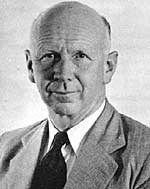
Arthur Robert Hogg was born in Melbourne, Victoria, on 25 November, 1903. He became a student at the Royal Melbourne Technical College, then at the University of Melbourne, where he graduated BSc in 1923, with first-class honours in chemistry and the Dixson Scholarship, and as MSc in 1925, with the Kernot Scholarship. He went first to the Broken Hill Associated Smelters at Port Pirie, South Australia, quickly to become Assistant Superintendent of Research, a post he held until 1929. In that year he joined the Commonwealth Solar Observatory, as it then was, taking up his new position on 1 August, 1929. Dr W.G. Duffield, founder and first director of the Observatory, died on the same day; the signing of Hogg's letter of appointment had been his last official act. Hogg remained a member of the Observatory staff for the rest of his life, 37 years. By a curious coincidence the day of his death, 31 March, 1966, was also the last day of the term of office of the third director, Professor Bart J. Bok.
Hogg's scientific interests covered an unusually wide range. He began professional life as an industrial research chemist, but, on joining the Observatory, took up the study of a number of atmospheric electrical phenomena, in particular of the conductivity, ionic mobilities and ion balance in the lower atmosphere. From atmospheric ionisation to cosmic rays was a short step, and by 1935 he had set up a high-pressure ionisation chamber with which hourly measurements of cosmic ray intensity were made for the next five years. This experiment, and its subsequent analysis probably constituted his most important work. They led to the award of a DSc by the University of Melbourne in 1950, and played a large part in his election to the Academy in 1954. Hogg spent the war years at Maribyrnong, with the Munitions Supply Laboratories and the Chemical Defence Board. On his return in 1946 he found a very different Observatory. There had been a major shift in emphasis, from the solar and geophysical work of pre-war years to stellar astronomy, and Hogg became an astronomer. The field he chose was photoelectric photometry, one well suited to his background and experimental skill. There followed a long series of papers on eclipsing variables, standard magnitudes and galactic clusters; but while this work, executed with characteristic care and thoroughness, earned him a considerable, and new overseas reputation, it was probably as an administrator that he made his principal mark on the Observatory. Hogg and Woolley, who was director at that time, worked very closely together and most of the detailed administration came Hogg's way; he had a flair for this type of work, and his thoroughness and attention to detail were legendary. Besides this he played a leading part in the setting up and testing of the new 74-inch telescope, and, most congenially, in the provision of associated laboratory facilities, such as the aluminising plant.
Early in 1957 Bok succeeded Woolley as director at the same time as the Observatory was transferred from the Department of the Interior to the Australian National University. These changes led to a substantial rearrangement of Hogg's duties. For a while he was able to devote more attention to astronomical work, but pressure to conduct a survey for alternative astronomical sites in other parts of the country had begun to mount. Conditions at Mt. Stromlo were clearly threatened by the growth of Canberra, and in any case it seemed probable that there were better sites further inland. Also an increasing number of enquiries were coming from overseas observatories interested in establishing observing stations on the Australian continent. The survey proper was initiated by Bok. Hogg, however, was prominent in it from the beginning, and before long had taken over the major responsibility. The results of this survey, which came to occupy the greater part of his later years, have already proved most important for the development of astronomy in Australia. Thus the choice of Siding Spring Mountain was essentially Hogg's. Intended originally as the Mount Stromlo out-station, it is now to be the site also for the Anglo-Australian 150-inch telescope. It is a matter for regret that Hogg did not live to see so satisfying a culmination to his efforts. As it is, astronomers the world over will be permanently in his debt for the care and thoroughness with which he carried out this arduous task.
A gregarious man, Hogg was well known in both Australian and international scientific circles. He was a frequent attender at ANZAAS; had been convenor of the National Committee on Astronomy since 1947; was President of the Royal Society of Canberra in 1954, and was a Fellow of the Australian Institute of Physics, serving as Chairman of the Australian Capital Territory branch in 1964. He had been elected a Fellow of the Institute of Physics in 1938. He served on a number of Commissions of the International Astronomical Union (IAU) notably that on Astronomical Sites, and from 1961 to 1964 was President of Commission 6 on Astronomical Telegrams.
When Hogg joined the Observatory in 1929 the main lines of work were the measurement of the solar constant and other solar phenomena, the luminosity of the night sky, atmospheric ozone, and the atmospheric potential gradient. Interest in atmospheric electricity has waned in recent years, or at least moved into the adjacent field of cloud physics, but in the 1930's it was an active subject, important enough to attract men of the calibre of Hess, Schonland and Simpson. Hogg arrived with at least one problem ready made, and within two months had begun regular observations of atmospheric conductivity. From the present point of view the atmosphere is a leaky dielectric separating the positively charged stratosphere from the negatively charged earth. It leaks, or conducts, because it is ionized (to a very small degree) by radioactive elements in the ground and in the air itself, and, to a less extent, by cosmic rays. Hogg's researches were concerned with the nature of the ions themselves, and with the processes which govern the ion balance in the lower troposphere. He counted ions of various types, measured their mobilities, estimated their sizes, studied their rates of formation and recombination, and, the subject being very statistical in nature, spent much time analysing his data for the effects of meteorological factors, and of annual and diurnal terms.
Much of his equipment he designed and built himself. Hogg was a skilful and ingenious experimenter, a facility which stood both him and the Observatory in good stead throughout his life. He had a meticulous eye for detail, and took the greatest pains to eliminate systematic effects from his measurements. His early work, on the diurnal variation of conductivity, and on the average lives, rates of production and mobility of small ions, attracted the attention of Whittle, who invited him to work at Kew Observatory. Hogg went there in 1937-38, taking with him a beautiful piece of equipment he had built at Canberra, with which he made some of the first measurements of the mobilities of the intermediate atmospheric ions, relatively frequent in the industrial atmosphere of London. In this important piece of work he was able to show conclusively that these ions existed in discrete groups, composed of one or more droplets of sulphuric acid, each containing about 2200 molecules. While at Kew he also carried out some experiments which led to a reconciliation between two apparently conflicting methods of measuring the air-earth current; the difficulty was traced to the local effect of radioactive matter in the soil. His final paper on the subject also dates from this time, although it was not published until 1950. It was a statistical examination of the air-earth current at a number of stations widely distributed over the earth. Hogg was able to derive an annual term for the variation, and to show that it lent substantial support to the thunderstorm theory, advanced by Whittle, for the maintenance of the earth's electric charge.
Hogg was clearly very much attracted by atmospheric electricity. When Woolley assumed the directorship late in 1939 one of his early actions was to present a paper to the Advisory Board in which he stated his views on the future research programmes of the Observatory. These were heavily weighted towards stellar astronomy, but he included also a programme of Hogg's for further work in atmospheric electricity, which would have taken several years to carry out, remarking that 'his (Hogg's) dissociation from the astronomical work of the Observatory would have proved complete'. it was atmospheric electricity, and not cosmic rays, which Hogg preferred at that time.
Hogg's habit of producing his own reliable and accurate version of fairly standard equipment, and of using it for long methodical series of observations rather than for shorter experiments aimed at solving particular problems, is nowhere better illustrated than in his work on cosmic rays. This had its origins partly in his investigations into atmospheric ionisation, and partly in a recommendation made by the 1930 meeting of ANZAAS. Hogg began preliminary work in 1932, with both Geiger counters and ionization chambers. Late in 1963 the Geiger counters were abandoned, as being too unstable for the type of long-term investigation he had in mind. The ionization chamber was redesigned, built in the Observatory workshops, and went into regular operation in September 1935, continuing until stopped by the war in August 1940. Altogether four chambers were used, two for an absolute calibration, and two for routine observations. The main chamber was a thin-walled steel vessel filled with C02 at 10 atmospheres, and shielded by 10 cm of lead, so that it measured predominantly the hard or meson component. A continuous photographic record of the current was made, from which readings were taken every hour. The whole was enclosed in a thermostatted hut.
Concurrent records were kept of atmospheric pressure B and temperature T. These were necessary because fluctuations in the cosmic ray intensity were known to be associated with variations in T and B. The mechanism, elucidated and confirmed by Hogg, depends on the fact that the hard component is composed of unstable mesons, with life-times of a few micro-seconds, formed from the primary cosmic radiation high in the atmosphere. If the level of formation is raised, by an increase in B or T, the mesons will have further to travel and a greater chance to decay before reaching ground level, so that the cosmic ray intensity will fall. Conversely, from a knowledge of the relation between the intensity and the variations in B and T one may deduce the mean rest life and absorption coefficient of the mesons. Hogg's careful statistical analysis of this relation is probably the best of its kind which has been made, and led him to lifetimes and absorptions in good agreement with those determined by other methods.
He now removed the P and T terms from his intensities and tested them for the presence of solar and sidereal periodicities. He found, as other observers had, a small diurnal term with a maximum shortly after local noon; this term exhibits a seasonal change in amplitude, the cause of which remains uncertain, but which may be due to a seasonal variation in the height of the meson-producing layers. The reality of the sidereal term was important, because of its far-reaching implications as to the mode of origin of cosmic rays. Hogg found a real term, with an amplitude of 0.08 per cent; but his term differed in phase by about twelve hours from a similar term observed in Europe, so that its origin must have been terrestrial rather than galactic. This discovery closed a long-standing and vexed problem, one on which an enormous amount of work had been expended. It is interesting to note that a sidereal term has recently been found by Jacklyn in Hobart, with a narrow-beam meson telescope, but at a level far below the ability of Hogg's equipment to detect. Hogg looked also for correlations with solar phenomena such as sunspots and flares, and for a 27-day periodicity, but found nothing which could not be attributed to variations in the earth's magnetic field (which is itself subject to influence by solar events). He studied bursts, isolated two types, and estimated cross-sections for the particles producing them, tentatively identified as electrons and mesons. We may leave the final word with the examiners of his DSc thesis – 'This work represents an extremely thorough, careful and extensive study of the variation of cosmic ray intensity with time...the experimental technique is obviously sound and the results are analysed statistically with great care'.
In November 1940 Hogg went to Maribyrnong, to the Chemical Defence Section of the Munitions Supply Laboratories (now the Defence Research Laboratories). I am indebted to Mr W.G. Jowett for the following remarks:
'He was engaged on research and developmental work on physical aspects of protection against chemical agents. Perhaps the most notable of a number of contributions he made during his service here was the development of an ionization penetrometer to measure the penetration of charged particles through respirator filters. He also worked on the development of wool-resin filter materials and took an active part in the early work which led to the development of the DSL Dust Respirator which was used extensively by the Services. He was transferred in mid-1944 to the newly formed Secretariat of the Chemical Defence Board and acted for about 18 months as secretary of the Physical Sub-committee.'
A man of his background and temperament could hardly have helped being valuable at Maribyrnong; Hogg clearly enjoyed his time there, and for a while I think toyed with the idea of remaining permanently.
By the time he returned in 1946 the Observatory had tripled in size, had acquired five years war-time experience in the manufacture of optical instruments, and was firmly set on its new course of stellar astronomy. Hogg's decision to cast in his lot with the astronomers must have been a difficult one. At the age of 43, he had to leave the two fields in which he had acquired real authority, for a new subject with new methods, new concepts, and almost a new philosophy. In the event he never moved as easily in astronomy as he had in atmospheric electricity or cosmic rays. He could not have been helped by the heavy administrative load he carried under Woolley – not, it must be added, that he found this uncongenial; he enjoyed responsibility, and a formal and orderly man himself, was well at home within the formal and orderly framework of the Public Service. All in all it is surprising that he published as much and achieved as high a reputation as he did; but he was too good a physicist not to seek out significant problems and to make important contributions to them.
Aided, no doubt, by some previous experience in photoelectric photometry, in the shape of a series of observations made with a cadmium cell of solar ultra-violet radiation, he very soon had a stellar photometer built and operating. He turned first to the problem of eclipsing binaries, important because they are one of the very few types of star for which masses and especially radii can be determined; an essential requirement is that they be observed intensively and very accurately. He began with V Puppis, a well-known but poorly observed system. Hogg obtained an accurate light-curve, and had the data reduced and published within a year, a quick piece of work for a man entering a new and by no means simple field. He became well known for his work on eclipsing stars, publishing seven papers on them in all. The most important concerned the system zeta Phoenicis, the binary nature of which he discovered himself. This has turned out to be an important system, one of the thirteen for which 'first-order' masses and radii can be determined, and the only one in the southern sky. Hogg's work on it is definitive.
Astronomers have traditionally measured stellar magnitudes in broad wave-bands, about 1000A wide. These have two substantial drawbacks: they do not admit of a simple physical interpretation, and in particular do not allow an unambiguous determination of temperature; and difficulties arise in intercomposing the results of different observers. Woolley was very conscious of the advantages of narrow-band magnitudes, and largely at his instigation Hogg undertook a programme of narrow-band photometry. If the idea was Woolley's, the organization and execution were Hogg's. The 50A band width was isolated by a slit in the focal plane of a spectrograph. The resulting magnitudes, for 63 stars, remain among the most accurate which have been determined. Hogg was a pioneer in this field, and had he remained in it might have anticipated many subsequent developments in observational astrophysics. Only in very recent years have narrow-band methods begun to come into general use.
Instead he went on to another important problem, the integrated magnitudes and colours of the Magellanic Clouds. The Clouds are the nearest of the external galaxies. They are faint extended objects, and have to be measured against a background which is relatively bright (it contributes about 80% of the total signal) and which varies both with time and with position in the sky. The elimination of the background is a tricky problem, calling for great care in the planning and reduction of the observations. Hogg's was the first accurate surface photometry which had been carried out on the Clouds. The programme has been repeated, with variations, on three other occasions, in all cases confirming Hogg. Hogg found also that the Small Cloud was appreciably bluer in its bright nuclear regions than in its outskirts, an important and so far unexplained observation.
Hogg's fourth and probably his main astronomical interest lay in galactic clusters. This was a very active subject in the 1950s. Stars in galactic clusters are presumed to have been born at the same time, from material of the same chemical composition. Using this, measures of magnitudes and colours of individual cluster stars can be made to give an age and distance of the cluster, an estimate of the amount of interstellar absorbing material in the line of sight, and an approximate figure for the chemical composition. Moreover, star clusters were not only the primary testing-ground of the rapidly developing theory of stellar evolution, but provided also essential clues to our understanding of the evolution of the galaxy. It is not surprising then that many astronomers work on clusters. Having published ten papers in the field, Hogg was well-known among them. He measured colour-magnitude diagrams for five galactic clusters, wrote a very competent review article for the 1964 Report of the IAU, and finally published a photographic atlas of galactic clusters south of -45°. This was a collection of 98 charts taken on the. 74-inch reflector. It was intended for reference, and as a basis for further work, and has already proved its utility in that one of the clusters, NGC 3680, which might otherwise have remained unnoticed for years, has proved to be unusually old. Not only this, but a search of the plates revealed the existence of 22 hitherto unknown clusters.
No account of this part of Hogg's life would be complete without reference to the 74-inch telescope. When this telescope, at that time well up in the ranks of the world's larger instruments, was erected in 1955, the images were found to suffer from an unacceptably large amount of astigmatism. The difficult task of deciding whether this lay in the primary mirror, the mirror supports or the secondary flat, fell mainly to Hogg. There being no one with experience of this aspect of large telescopes on the staff, methods and tests had to be devised ab initio. After much tedious work the trouble was traced essentially to the main mirror, which had to be returned for refiguring, but on the way a firm foundation had been established for the basis of large telescope technology, without which no big observatory can flourish, and which can be acquired only by first-hand experience. Many of the present-day practices at Mt. Stromlo go back, at least in part, to Hogg. One field he made particularly his own was aluminizing. He designed the first plant, made it work, and had a direct hand in most of the actual mirror aluminizing. He once remarked that aluminizing gave him more satisfaction than any other aspect of astronomy. His skill with large telescopes was by now well known, and it came as no surprise when the Egyptian Government invited him for a three-months visit in 1963 to advise on the adjustment and operation of their own 74-inch.
At the end of 1955 Woolley, having served a momentous 16-year term, left Mt. Stromlo to become thirteenth Astronomer Royal. There followed a difficult 15 months during which Hogg was temporarily in charge. One of Woolley's last acts had been to ensure the transfer of the Observatory to the University. Hogg was strongly opposed to this move, and apprehensive about the future. The simultaneous transfer to the University and change of director did in fact affect his position a good deal; he had little to do with the students, who soon came to play an important part in the research activities of the Observatory, and he did not achieve as close a personal relationship with Bok as he had with Woolley.
It did not take Bok long to decide that, astronomically speaking, the climate at Mt. Stromlo left a good deal to be desired, that with the growth of Canberra, conditions could not but deteriorate, and that a search should accordingly be made for a site where a field station could be established in the fairly near future. The search began within the year. The strategy was to gather meteorological data, with special emphasis on cloud cover, from as many potential sites as possible, then to carry out detailed testing on the more promising. Sites had to be selected (with an eye to many factors), local Boards and Councils interviewed, and arrangements made for the collection of the meteorological data. This could, of course, be done only at first hand. Much of it came Hogg's way, and in this field his easy manner, good sense, and acceptability to country people were major assets. Astronomical sites are commonly remote, and ours being no exception, we find that within a relatively short time Hogg had covered much of the back country between Meekatharra and Kalgoorlie, and had made separate extended visits to the Musgrave Ranges in northern South Australia, to the Flinders Ranges, and to the Barrier Range, north of Broken Hill. He clearly enjoyed these trips. He liked the outback, and the strenuous physical regime, and the more peaks there were to be climbed, the more effortlessly his long-striding, rather angular figure seemed to travel; among the site-testers his stamina was a by-word.
It would of course be unfair, to Bok in particular, to suggest that Hogg was alone in all this, but he did play a substantial part from the beginning, and on the completion of the initial phase took over the immediate direction of the whole enterprise. The task was indeed an immense one. The corresponding survey of the USA, covering about the same area, has taken decades, involved many institutions, and cost millions. If immense, it was no less important. Within the fairly near future between fifty and a hundred million dollars will be invested in major observatories in the south. The siting of these is critical, as witness the sending of at least a dozen site-testing expeditions to the south in recent years, from Europe and the USA Three have come to Australia, sponsored respectively by the Yale and Columbia Observatories, the University of California, and Mt. Wilson Observatory (CARSO), all of them working closely with the Mt. Stromlo survey. Hogg, with relatively slender resources, often with adapted or improvised equipment, and with a staff he had to recruit and train from scratch, nevertheless produced a body of data which can more than hold its own even in this eminent company, and which in its way is unsurpassed. This is as much a tribute to his organizing powers and human qualities as it is to his scientific ability.
By the end of the initial phase about twenty stations, distributed over most of the southern half of the continent, were sending in data. A first assessment reduced this number to four, on one of which, Mt. Bingar, near Griffith, NSW, a temporary field station centred on a 26-inch reflector was established towards the end of 1959. Meanwhile the problem had expanded, and while priority remained with finding a site for the Mt. Stromlo field station, which for accessibility and convenience had to be in NSW, interest was such, especially from what later became the Anglo-Australian Large Telescope organisation, that it was decided to continue the search on a nation-wide basis. Specifically this meant that beside the four NSW sites, testing was to continue on Mt. Singleton in Western Australia, on Mt. Woodroffe near the South Australian-Northern Territory border, Mt. Serle in the Flinders, and on Mt. Robe north of Broken Hill.
By this stage methods had stabilised, and the routine at each station was to keep records of wind, temperature and cloud, while special observations were made of seeing and transparency. Seeing is the critical quantity; it refers to the degradation in the stellar image produced by inhomogeneities in the atmosphere through which the image-forming beam has passed, and remains a little understood phenomenon, which can vary widely from site to site, and also from time to time. A seeing disk less than one second of arc is very good, one greater than three seconds barely acceptable. The difficulty of the problem is enhanced by the fact that one has to estimate, with equipment which of necessity must work under field conditions and near ground level, how the seeing will appear in a large telescope working at a height of fifty or eighty feet. Hogg trained his observers in the then standard Danjon method, essentially visual in character, then spent a good deal of time experimenting with photographic image trails, and with converted military range-finders in which one compared the quality and separation of the images formed by the two halves. These methods, though promising, did not go into routine use, and the final stages of the survey were carried out with the Babcock automatic seeing monitor, a photoelectric device which measured image movement directly. With D.G. Thomas, Hogg developed a very successful transistorised photoelectric photometer, light enough to be attached to a small telescope. It was used extensively for measuring atmospheric absorption. And seeing observations being highly vulnerable to wind vibration, he devised a neat, transportable dome which sheltered the instruments very effectively. Problems like these, together with arranging access, and power and water supplies at his remote sites occupied much of his time. He had also, of course, to supervise the reduction of very large amounts of data, the results appearing in a long series of internal and interim reports. He did not live to collect them into the definitive memoir which would surely one day have appeared.
On the organizational side Hogg had been appointed Australian member of the IAU Committee on Astronomical Sites, in which capacity he attended the IAU Symposium on Site Testing held in Rome in 1962. In 1963 he was appointed chairman of a Sub-Committee for Site Selection for the Anglo-Australian Telescope, set up by the Academy. By 1962 it had become necessary to decide on the location of the Mt. Stromlo Field Station. The choice lay between Mt. Bingar, the existing site, and Siding Spring Mountain. The issue became a contentious one within the Observatory. Bingar had been a successful site, and some observers, notably Bok, were understandably reluctant to leave it. Hogg, on the other hand, was a strong advocate of Siding Spring. Siding Spring won the day, chiefly on the grounds of better seeing. Subsequent experience has shown that the seeing there can indeed be extremely good. It must be recorded also that the issue decided, Bok threw himself wholeheartedly into the development of Siding Spring, which in consequence went ahead with great rapidity. As far as the large telescope site was concerned, Mt. Singleton was eliminated in 1967, after extensive tests, and Mt. Woodroffe because of its remoteness. Testing continued of Mt. Serle in the Flinders in cooperation with the University of California group who had occupied nearby Mt. McKinley. The Flinders sites were good, but Siding Spring had fewer logistic problems, and was already being developed, and it was no doubt for these reasons that it was specified for the Anglo-Australian telescope. The announcement was made at the same time as that to proceed with the telescope itself, only a few weeks after Hogg's death; as we have said, it was a pity that he did not live to see it.
Scientifically Hogg's virtues were of the solid kind. He was prepared to wait for his answers, and would not publish until he was certain; when he did, his results carried real conviction. Not a brilliant man himself, he inclined perhaps to an undue respect for brilliance in others. This led to a certain diffidence, which reinforced a habit of self-sufficiency: especially in his earlier days, he liked to work on his own problems in his own way. Woolley once said: 'Hogg is a better physicist than he gives himself credit for', a perceptive remark from one who knew him well.
He had an easy social manner, and was known and liked by a very wide circle, both in Australia and overseas. Some of this comes through in the wit and neatness of phrase which marked his occasional writings. A characteristically felicitous touch was his suggestion that one of the shaped pieces from the support of the Great Melbourne Telescope be adopted as the foundation stone of the Academy. He was, too, a man of character, who knew how to stand his ground. Older members of the Observatory staff will remember how level-headed and steady he was on the day of the fire which swept Mt. Stromlo and destroyed the Observatory workshops. About a year before his death he suffered a heart attack, followed some time later by a serious relapse: so warned, he bore himself in his last months with a quite remarkable gaiety and lightness of spirit. He died as one feels he would have wished, working normally almost until his last hour.
In 1933 he married, most happily, Irene Doris Yandell, and is survived by her, two sons and a daughter. His second son, Garth, is lecturer in Physics at the University of Glasgow.
About this memoir
This memoir was originally published in Records of the Australian Academy of Science, vol.1, no.3, 1968. It was written by Sydney Charles Bartholomew Gascoigne, PhD, Professor and Assistant Director (Research), Mount Stromlo Observatory, Australian National University, Australian Capital Territory; elected a Fellow of the Academy in 1966.
Note: In the original publication, Arthur Hogg's birthplace was given incorrectly (as Creswick) and his wife's maiden name, Irene Doris Yandell, was given incorrectly (as Randell).
Arthur Melville Thompson 1917–2009
Arthur Melville (‘Mel') Thompson graduated from the University of Adelaide in 1938 with First Class Honours in Physics. After graduation he joined Australia's Council for Scientific and Industrial Research as one of the ‘founding fathers' of the National Standards Laboratory and embarked on a life-time career in metrology.
His work in precision electrical measurement, ratio-arms transformer bridges and techniques for defining and measuring small capacitances is internationally renowned. He conceived the design of a calculable-capacitor, the Thompson-Lampard capacitor, which led to a new theorem in electrostatics and provided the basis for an absolute determination of the unit of resistance with an increase in accuracy of an order of magnitude.
Beyond the calculable capacitor, his work had a major impact in electrical impedance measurement in general and on other fields of metrology such as dilatometry and thermometry.
Mel Thompson was an inspirational leader and his work facilitated the development of many scientific careers.
Download the memoir
About this memoir
This memoir was originally published in Historical Records of Australian Science, vol. 25(2), 2014. It was written by Barry D. Inglis, National Measurement Institute.
Arthur John Birch 1915–1995
Written by Rodney W. Rickards and Sir John Cornforth.
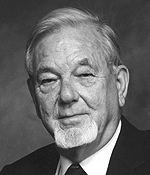
Introduction
Arthur John Birch AC CMG FRS FAA was one of the great organic chemists of the twentieth century. He held chairs at the Universities of Sydney and Manchester and at the Australian National University in Canberra, and was President of the Australian Academy of Science from 1982 to 1986. His outstanding research contributions include the Birch reduction of aromatic compounds by sodium and ethanol in liquid ammonia, his polyketide theory of the biosynthesis of natural products, and his studies of synthetic applications of diene iron tricarbonyl complexes.
Arthur John Birch AC CMG FRS FAA was one of the great masters of organic chemistry of the twentieth century. His extra ordinary creativity left its imprint across the breadth of the subject in its broadest sense, from synthesis to biochemistry to organometallic chemistry. He remains best known for the reaction that bears his name, the Birch reduction of aromatic compounds by solutions of sodium and ethanol in liquid ammonia. This process has wide application, most notably in the commercial synthesis of oral contraceptives, giving rise to his being called ‘the father of the pill’, although he himself preferred the more remote ‘grandfather’ relationship. His polyketide theory, which accounts for the biosynthetic origins of a wide range of natural products, is less widely acknowledged today simply because it has become absorbed into the accepted knowledge base of the subject. His final researches on the use of diene iron tricarbonyl derivatives in synthesis are equally distinguished and have prompted others to extend their application. During his career he was involved in the design of three new university chemistry buildings, one of which now bears his name, and contributed influential advice to governments on national science policies.
The authors of this memoir knew Arthur Birch from complementary perspectives. Rod Rickards was as an undergraduate at the University of Sydney when he first met him in 1954, on a crowded evening tram going home down George Street. Banter with a fellow student suggested that the unknown Professor of Organic Chemistry was quite a lad, who worked on things like sex hormones. A quiet voice alongside them said, ‘You want to be careful what you say on these trams, you never know whom you are sitting next to. ’ It was immediately apparent who sat alongside them. The Professor was undoubtedly more amused than the petrified students and, at a post-retirement symposium in his honour in Canberra in 1981, Birch recounted the incident with glee. In between these events Rod attended Birch’s undergraduate lectures, became one of his research students initially in Sydney and then in Manchester, and one of his staff in Manchester and Canberra. Finally he had the sad honour of speaking at his funeral.
John Cornforth was a year behind Birch at the University of Sydney and followed him to Robinson’s laboratory at Oxford. He married Rita Harradence, Birch’s contemporary at Sydney, who also went to Oxford one year after Birch. The three were lifelong friends.
Early Years
Arthur Birch was born in Sydney on 3 August 1915, the only child of Arthur Spencer Birch and Lily Bailey. His father was born in Northamptonshire, England, left school at the age of 12 years and home at 14, and then lived in Canada, Fiji and New Zealand, where he met Lily. Lily was born in central Tasmania but had emigrated to New Zealand at 27 years of age, and was 37 when they married. Arthur was born a year later, after the couple moved to Sydney. His father became a pastry chef at a major Sydney hotel, and later was manager of Woolworth’s cafeterias. Arthur ‘sauntered carelessly through primary school’ in the suburb of Woollahra but became interested in science. His father encouraged this with some apparatus and books bought with a legacy from an aunt, and Arthur ‘taught himself organic chemistry’ from about the age of 12 years. With his father now ailing, he was selected to go to the renowned Sydney Technical High School, where he did well academically while pursuing his own initiatives.
Chemistry initially fascinated him aesthetically rather than intellectually, although in later years he was clearly moved by the intellectual ‘highs’ that came from being the first to see and understand fundamental truths of chemical and biological behaviour. The beautiful natural product chemistry of the Australian bush intrigued him, with its range of odours from eucalypt trees, brilliant flower colours, and strange coloured resins exuding from the trunks of eucalypts and grass trees. He was to return to all these themes in due course as a scientist.
Career Path
Sydney 1933–1938
The University of Sydney, the oldest in Australia, was then the only university in the state of New South Wales, with about 3000 students. Its first Professor of Organic Chemistry was Robert (later Sir Robert) Robinson from 1913 to 1915. In his final school examination in 1932 Arthur Birch was ranked third in Chemistry in the state, winning a Public Exhibition exempting him from university fees. His rivals included Rita Harradence, later to become Lady Cornforth, who topped the state. These were the years of the Depression. His father was declining and died in 1937, so his family could offer him little more than accommodation. To pursue his desire to learn he washed bricks, coached other students, and won the only scholarship available at the end of his first year. The Sydney Chemistry Department in the 1930s lacked resources and ready access to the international chemical world, but its undergraduates were rich in talent and made their own fortunes. Birch’s competition with Rita Harradence continued and, on graduation at the end of their honours year in 1936, they were to share the University Medal in Chemistry. Ern Ritchie (later professor at the University of Sydney) was in the same year, Allan Maccoll (professor at University College London) was a year ahead, and a year behind were John Cornforth (Nobel Laureate) and Ron (later Sir Ronald) Nyholm (also professor at University College London).
Birch’s formal entry into research began in his fourth year, the honours year in the Sydney system. His Honours and MSc supervisor, Professor J. C. Earl, gave him a bottle of Eucalyptus dives leaf oil, a by-product of piperitone production, and then went on sabbatical leave. The result was five publications, four with Birch as sole author, on monoterpene natural products. The schoolboy’s interests were bearing fruit. In 1938, he was awarded a scholarship of the Royal Commission for the Exhibition of 1851 to study for a doctorate degree in England. No PhD degrees were awarded in Australia then, and there were few opportunities for those with such degrees, so he chose to work with Robert Robinson in Oxford and sailed from Sydney as World War II developed in Europe.
Oxford 1938–1948
Birch’s ten years at Oxford, 1938–1948, were not normal years for anyone alive at that time. A letter from him, written shortly after he started work at the Dyson Perrins Laboratory (DP), expressed pleasure at the ready availability of chemicals and disgust at the quality of the apparatus and equipment. Robinson had given him a problem of synthesis based on a speculation, later found to be baseless, that the peculiar lipids of mycobacteria contained fatty acids doubly branched at the positions next to the carboxyl group. Methods for the preparation, separation and handling of such compounds were largely undeveloped at the time. Birch did a creditable job with the preparation and gained his DPhil from the work in 1940. He never worked with fatty acids again. His predoctoral years were darkened by the approach and outbreak of the war in Europe.
Oxford was never bombed, and workers in the DP shared the life of most civilians in Britain: the blacked-out nights, the multifarious shortages and the resulting queues (even for films), the nutritionally adequate but uninteresting food (someone mistranslated the motto Alchymista spem alit aeternam above the DP entrance as ‘Eternal Spam nourishes the chemist’) and, for the first two years and more, the increasingly ominous news. In practice, people adapted: finding, for example, the Zionist restaurant that could make boiled red cabbage palatable by cooking it with vinegar and a little spice, or the pub that sporadically dispensed draught cider. Birch joined the Home Guard (‘Dad’s Army’); his autobiography (460) comments on it with characteristic wry humour.
Robinson was soon involved with numerous committees directing the contribution of science to the country’s war effort. He could not devote much time to his students and he had no deputy. This meant that students were unusually free to follow their own ideas: this was excellent for those who could think for themselves and learn from their work and from interaction with able peers, but less so for those who expected to be taught.
A certain amount of support was available for post-doctoral workers and after his DPhil Birch became, mysteriously, an ICI employee to whom a government grant was funnelled. His brief was to synthesize analogues of steroid hormones. His autobiography (460) gives a fascinating account of the complications caused by his success (ICI was bound by cartel agreements, and Robinson was bound by a promise to send all samples for testing to Sir Charles Dodds). That work, by that recalcitrant junior, laid the foundation for what is today an immense industry.
In 1941, Cornforth assembled some indications from the literature and showed that 2-methoxynaphthalene could be reduced by sodium in boiling ethanol to an enol ether readily hydrolysed by acids to 2-tetralone. A paper recording this procedure and some developments was published (with Rita Cornforth and Robinson) (Cornforth et al. 1942). Birch saw how much more useful this discovery could be if it could be applied to benzenes, which are less easily reducible than naphthalenes. He searched the literature and found an initially fortuitous discovery by C. B. Wooster in 1937 (Wooster and Godfrey 1937, Wooster 1939) that benzene, toluene and methoxybenzene could be reduced to dihydro derivatives by sodium and ethanol in liquid ammonia. Early in 1943, Birch tried this procedure with methoxybenzene. Physical techniques were primitive in those days, and chemistry was often needed to find out what was happening. He added a little of his reaction product to a solution of dinitrophenylhydrazine in hydrochloric acid. A slowly developing crystalline yellow precipitate dissolved when the mixture was heated and was redeposited as beautiful orange-red crystals. That test-tube experiment said it all: the addition of hydrogen was necessarily to the 2- and 5-positions of methoxybenzene. The enol ether group was hydrolysed by the acid to cyclohex-3-enone and thence by slower isomerisation to cyclohex-2enone, each of which formed its characteristic coloured derivative with the hydrazine. The Birch reduction was born (15). Birch spent much time, despite Robinson’s disapproval, exploring and developing the reaction.
The most direct application of the new method to the preparation of steroid hormone analogues was the conversion of oestradiol glyceryl ether into 19nortestosterone by way of an unconjugated isomer (41). Robinson provided only 0. 5 g of oestrone and refused a further supply when the first experiments showed practical difficulties. The situation was saved by Gilbert Stork, who generously gave Birch 5 g of oestrone. 19Nortestosterone proved to be a potent anabolic androgen, and the unconjugated isomer was an oestrogen. Part of the enormous importance of these artificial hormone mimics is that variations in structure can lead to specific biological effects, whereas with natural hormones effects are sometimes multiple and influenced by transformations in vivo.
Although the Birch reduction was certainly his principal achievement at Oxford, Birch made several contributions to some of Robinson’s schemes for steroid synthesis, including a widely applicable method for introduction of angular methyl groups.
Almost the last event of Birch’s Oxford days was his marriage to Jessie Williams, an event seen by all his friends as the best thing that could have happened to him.
Cambridge 1949–1952
In January 1949, Birch moved to Cambridge University as Smithson Fellow of the Royal Society. This appointment carried prestige, reasonable remuneration, and an independence that unfortunately precluded him from receiving university research support other than through the generosity of Sir Alexander (later Lord) Todd, who was a good friend to Birch on several occasions and whose opinion Birch respected greatly, especially on administrative matters. Todd allocated him Herchel Smith as a PhD student, a fortunate event that would later have major ramifications. In contrast to Oxford, the Cambridge laboratory facilities were excellent, and they made good progress with steroid synthesis directed towards androgenic and progestational hormones.
By Birch’s own admission, however, he was at that time becoming rather bored with synthesis, and the surrounding research projects of Todd and others reawakened his interest in natural products. Initially this found expression in deducing the correct structures of published natural products, and in collaborating with others to define the structures of new compounds. Much more significant for the subsequent development of organic chemistry, however, was his increasing interest in biosynthesis, the detailed process whereby natural products are formed by enzymes in living systems. This would become Birch’s second major contribution to science.
Alone after her husband’s death, Birch’s mother Lily had followed him to Oxford in 1939. During the progressive development of Parkinson’s disease, Birch had cared for her largely on his own, until the advent of Jessie Williams as her nurse in 1947. Lily Birch accompanied the newly married couple to Cambridge, and died there in 1951. In the same year, Birch was invited to accept the Chair of Organic Chemistry at his alma mater, The University of Sydney, and with his wife’s concurrence he decided to accept this challenge. After fourteen years absence he was homesick for Australia, and it would be a better place in which to bring up their three young children than post-war Britain.
Sydney 1952–1955
In 1952, Birch returned to Sydney to take up his first tenured academic appointment, as Professor of Organic Chemistry and Head of Department in a chemistry school of nearly 1000 students, with little teaching and less administrative experience. The chair had been vacant for several years, even its continued existence the subject of university controversy. The Depression and war years had passed, but the Department still lacked resources and international contacts. The laboratories in sandstone buildings around the Vice-Chancellor’s quadrangle (‘the vice quad’) were ancient and poorly equipped. Spectroscopy was limited to a manually driven ultraviolet spectrometer, and the small bottle of the novel solvent tetrahydrofuran could be used only if 90% could be recovered. The state government provided finance for a new building by mistake, confusing chemistry with pharmacy, but honoured its public commitment. This was the first of three such building designs with which Birch was to be involved, although the building itself was not erected until after his departure from Sydney in 1955.
The research projects chosen had to make the most of these facilities, in the hands of research students who mostly did only honours or masters degrees. Those who wanted to pursue a doctorate still usually went to England, although it was now possible in Sydney. Birch’s classic publication on the biosynthesis of phenolic natural products, ‘Studies in relation to biosynthesis. Part 1’, embodying ideas developed largely in Cambridge, was published by the Australian Journal of Chemistry in 1953 (56), having been rejected by the Journal of the Chemical Society on the grounds that it lacked experimental support. Proof of the hypothesis required the radiolabelled compounds that were now becoming available as a result of developments in isotope technology during the war. With financial assistance from the Nuffield and Rockefeller Foundations to buy 14C labelled acetate and to train students in its use, the first experimental support for the acetate hypothesis was presented in 1955. These students were shortly to follow their supervisor to England.
Birch also accomplished some structural work on natural products and some synthetic chemistry in Sydney, but the research environment was too restrictive. In 1954, he was elected a Fellow of the newly formed Australian Academy of Science. In 1955, he declined an offer of a foundation chemistry chair in the Research School of Physical Sciences at the new Australian National University (ANU) in Canberra. It would be twelve years before he joined the ANU, taking instead the renowned organic chemistry chair at the University of Manchester vacated by Professor E. R. H. (later Sir Ewart) Jones on his way to Oxford. His dissatisfaction on leaving Sydney in late 1955 prompted newspaper headlines like ‘Beggars in mortar boards. Why the professor resigned. ’ The departure for England of Birch and other senior chemists was a factor leading to the subsequent reorganisation of Australian universities under Common wealth rather than State auspices and funding. Birch later dryly suggested, ‘I probably made my best contribution to the Australian university system by then publicly quitting it’.
Manchester 1956–1967
Manchester was different. The Australian students who joined Birch in the industrial, commercial and cultural centre of northern England were used to the brilliant clear light and the sand and surf of their own country. They now frequently found themselves in thick, damp smog, at times barely able to see street lights glinting through the gloom at midday. They drank warm beer with the locals, learned to understand the North Country accent, watched Manchester United play football, and cheered the Australian cricketers at Old Trafford. Birch, too, liked the people, and the city because ‘it was easier to get out of than, say, London’. But the ‘red brick’ university dating back to 1851 was also different from Sydney, and its faculty lists, which included Nobel Laureates, reflected the illustrious scientific tradition that Birch felt honoured to join.
Birch’s research flourished. In Cam bridge, he had realised that micro organisms rather than higher plants were the preferred vehicles for experimental biochemistry. They were prolific producers of the phenolic compounds in which he was interested, and could be grown readily in the laboratory. The Manchester Chemistry Department already had such a facility, established by Birch’s predecessor E. R. H. Jones. He now appointed Herchel Smith, his PhD student from Cambridge, to the lecturing staff, and they collaborated on biosynthetic research. Herchel learned and introduced radiotracer techniques, which greatly accelerated the biosynthetic studies. Direct quantitative 14C assay of compounds was performed on open planchettes under an end-window Geiger counter, avoiding the previous cumbersome combustions to carbon dioxide gas and thus leaving the compounds available for further purification or degradative chemistry. The low counting efficiency was offset by the competence and convenience of the producing microorganisms.
Herchel Smith and Birch also resumed their Cambridge collaboration on sex-hormone synthesis, until Herchel wanted independence in this area and Birch withdrew. Herchel was highly successful, ultimately achieving an effective total synthesis of norgestrel and its analogues, which were to become widely used constituents of modern oral contraceptives. The basic chemistry was carried out in Manchester, but no patents were then filed. In 1961, Herchel moved to Wyeth Pharmaceutical Industries in Pennsylvania as Research Director, taking with him two Mancunian PhD students who happened to be in the right place at the right time. Subsequent royalties enabled Herchel Smith to retire in 1973; at his death in 2001 his estate value was estimated in excess of £100 million. He generously bequeathed some £90 million to be shared between his alma mater Cambridge University and Harvard University, supplementing the £15 million given to Cambridge during his lifetime. Birch’s work on the reduction of aromatic rings was crucial to this success, a fact that gave him intellectual satisfaction.
During this period, Birch utilized intermediates prepared by his metal–ammonia reduction chemistry in several areas apart from the steroid work. On the one hand, they were elaborated by various means to natural products; on the other, they were reacted with metal carbonyls to provide the organometallic species that were to interest Birch until his retirement.
The old Manchester laboratories had been periodically extended since their opening in 1872, when they were considered the best in the country (Burkhardt 1954), and now had character and history but were outdated and inflexible. They were reasonably equipped with ultraviolet and infrared spectrometry, and the physical chemists might allow their mass spectro meter to be used for organic work if the sample was volatile. But organic chemistry was changing rapidly, with increasing dependence upon sophisticated instrumentation. Fortunately, Associated Electrical Industries (AEI) was making the world’s best mass spectrometers only a few miles away, and their development engineers were happy to test the capabilities of instruments on their production line. In due course, a new chemistry building was designed and built, and in its turn became the best equipped in the UK. Organic mass spectrometry became routine with the acquisition of the classic AEI MS 9 spectro meter. Proton nuclear magnetic resonance (NMR) spectrometry was emerging from the realm of physics to revolutionize organic chemistry, so the government commissioned AEI to design and build NMR spectrometers to save England from having to import state-ofthe-art American Varian instruments. After much delay, the department acquired one, which detected passing buses better than precessing protons and was superseded in the new building by a Varian A60.
The advent of such instrumentation changed the face of natural product chemistry worldwide. Birch’s structural work in Sydney and initially in Manchester was primarily of the classical type, dependent upon microanalyses to indicate molecular formulae, reaction chemistry to establish functionality and to break structures apart, the occasional use of ultraviolet or infrared spectroscopy, and analytical reasoning. To this, he had added his own requirement of biosynthetic rationality, at times convincing in itself. Mass spectrometry now defined precise molecular formulae and suggested structural fragments, whereas 1H NMR spectroscopy looked directly at the intact molecule, mapping hydrogen atoms and their environments. Birch recognised the importance of these advances and ensured they were available, but he was not one to tie himself to technology. Instead, once his biosynthetic hypotheses were firmly established by experiment on known compounds, he reversed the logic and used radiotracer incorporations in vivo to assist the structure determination of unknown natural products. This innovative although somewhat cumbersome approach was valuable in difficult cases, but was soon surpassed by the increasing power of NMR analysis alone. Much later, with the availability of 13C-labelled compounds, the two techniques would successfully merge, until direct spectrometry again prevailed.
Birch was elected to Fellowship of the Royal Society in 1958 and became established as one of the world’s leading organic chemists. Scientific conferences, connections with industry (notably Syntex in Palo Alto and Mexico City, and Roche in Basle), periods in Nigeria to establish research, and even the occasional family holiday drew him away from the department, where research students jokingly appointed him to the BOAC Chair of Chemistry (after the national airline, the British Overseas Airways Corporation). A less sympathetic undergraduate referred to ‘the occasional smell of stale cigar smoke in a lift’. Although not inclined towards overall university administration, he nevertheless promoted departmental interests, setting up and chairing the first Department of Biological Chemistry in Manchester.
One conference Birch attended was the 1st International Union of Pure and Applied Chemistry (IUPAC) Symposium on Natural Products, held in Sydney, Canberra and Melbourne in 1960. In Canberra, the establishment of a Research School of Chemistry at the ANU was discussed, with Birch and Professors David Craig and Ronald (later Sir Ronald) Nyholm, now both at University College London, as the three Foundation Professors. Craig had been a professorial colleague with Birch in Sydney, whereas Nyholm had been at the New South Wales University of Technology. This unique but onerous opportunity was ultimately accepted only by Birch and Craig; Nyholm decided to stay in England. Imaginatively code-named ‘Project C’ by the ANU to prevent premature exposure (Foster and Varghese 1996), the basic building was designed in a flat in Half Moon Street, London, by Melbourne architects in close consultation with all three covert ‘Advisers’. The ANU supported PhD scholars and postdoctoral fellows in Manchester and London from 1965, who transferred with the professors to Canberra in 1967.
Canberra 1967–1980, and Retirement
Canberra was different, too. The remarkable ANU was and still is unique, not only in Australia. Conceived to provide research and postgraduate training to rebuild the nation following World War II, it inherited undergraduate faculties from the Canberra University College in 1960. Prominent expatriates were recruited to lead the generously funded research schools in its Institute of Advanced Studies, and Chemistry was the fifth to be established. ‘Project C’ emerged from a hockey field as a structurally elegant and technically efficient building, with the internal flexibility needed for a rapidly advancing science and laboratories designed for sophisticated instrumentation. For the organic chemists, there was then a mass spectrometer and a 100 MHz 1H NMR spectrometer; by 2004 the School would run six mass spectrometers, and six NMR spectrometers operating from 200 to 800 MHz. The Research School of Chemistry was officially opened by Birch’s Cambridge mentor, by this time Lord Todd of Trumpington, in 1968.
Counter to ANU practice and causing opposition from those who believed ‘nothing should be done for the first time’, the ‘Advisers’ had prescribed a school comprising research groups without the traditional departmental divisions, overseen by a Dean rather than a Director, and sited adjacent to the existing Chemistry Department to promote interaction. Birch was the Dean Elect from 1965, and Foundation Dean from 1967–1970. He served again as Dean from 1973–1976, and retired as Foundation Professor of Organic Chemistry in 1980. The School’s prime purpose was to conduct fundamental research at the highest international level, some aspects of which had potential application to Australian industry and national interests. In so doing it would provide opportunities and training for young Australians, both at home and overseas. The School’s research record into the twenty-first century has vindicated the judgement of its founders. The main building of the Research School was named in honour of Arthur Birch at a ceremony, which, despite failing health, he attended with great satisfaction in August 1995.
Birch’s personal research in Canberra developed his Manchester themes further, but with increasing emphasis on the organometallic chemistry of tricarbonyliron complexes with organic ligands. Metal–ammonia reduction provided the cyclohexadiene ligands, the reactivity of which was substantially altered and stereospecifically controlled by the transition metal attached laterally in a reversible fashion. Efficient syntheses of highly functionalized natural products emerged, but the concepts and methods were general and lent themselves to exploitation. With his major biosynthetic hypotheses now confirmed and the results of isotope incorporation studies becoming routine, this area was gradually phased out. Natural product studies were initiated using the new automated counter-current distribution apparatus to resolve complex mixtures, such as the phenolic resins from Australian grass trees that he had observed as a youth, but also gave way to the new developments in organometallic research.
In 1980, Birch reached the then mandatory retirement age of 65. In February 1981, the Research School of Chemistry honoured his achievements and contributions with a major symposium, involving participants from across Australia and overseas. Professor Albert Eschenmoser of the Eidgenössische Technische Hoch schule, Zurich, gave the inaugural Birch Lecture, since then an annual event on the School’s calendar. At the symposium dinner, Birch was presented with the Leighton Memorial Medal of the Royal Australian Chemical Institute (RACI) (its most prestigious medal, awarded ‘in recognition of eminent services to chemistry in Australia in the broadest sense’) by the Governor-General of the Commonwealth of Australia, His Excellency the Right Honourable Sir Zelman Cowen, and delivered the Leighton Address on ‘Creative and Accountable Research’ (416). Shortly afterwards, he took up the inaugural Newton-Abraham Visiting Professorship at Oxford, returning to the ANU in 1982 as a University Fellow in the Department of Chemistry. In 1987, he was awarded the Tetrahedron Prize for Creativity in Organic Chemistry. In 1994, the RACI made him one of their few Honorary Fellows, and in 1996 the Organic Chemistry Division of the Institute named their premier award in his honour.
The establishment of the Research School at the ANU demanded more of Birch’s time in onerous school organization and broader university administration than at Manchester, particularly during the periods of his deanship. This drawback was partly offset by the absence of undergraduate teaching responsibilities, but far greater compensation came from observing the success of his endeavours. Demands upon his time from outside the university also increased, which, as a professional scientist, he felt a moral obligation to meet both before and after his retirement. He was appointed Treasurer of the Australian Academy of Science from 1969 to 1973, Vice-President then President of the RACI in 1977–1978, and was elected President of the Australian Academy of Science from 1982 to 1986. During his Presidency of the Academy, he was instrumental both in reorganising and in securing much needed headquarters for its administration. The offices now occupy an elegantly refurbished 1927 government hostel, which retains its distinctive original exterior and is listed on the Register of Significant Twentieth Century Archi tecture, adjacent to the ‘Dome’, a Canberra architectural landmark housing the conference hall of the Academy.
As an international scientist of standing, Birch’s advice was also extensively sought beyond academia by governments in Australia and overseas. One of his major undertakings was to chair the 1976–1977 Independent Inquiry into the CSIRO, the large and widespread Australian government research body (374). The inquiry reaffirmed the role of CSIRO as strategic, mission-oriented research in the national context. It proposed radical changes to its longstanding structure, however, including notably the grouping of the many operating units of the organization, the Divisions, into six Institutes under an Advisory Council and Executive. Most of the recommendations were accepted and implemented by the Government, not entirely to the joy of the scientists involved; subsequent changes built on these recommendations. He was appointed Foundation Chair of the Australian Marine Sciences and Technologies Advisory Committee from 1978 to 1981. In 1987, he was made a Companion of the Order of Australia (AC) for his contributions to science in Australia.
At the international level, he was an examiner for the Organization for Economic Cooperation and Development (OECD) on Science and Technology Policy in Denmark. For an extended period from 1979 to 1987, he was Consultant to the UNESCO United Nations Development Programme project ‘Strengthening Research and Teaching in Universities’ in the People’s Republic of China, and made six visits to that country advising on technical and laboratory management and instrument centres. International honours included appointments as Academician of the USSR Academy of Science in 1976 and Foreign Fellow of the Indian National Academy of Science in 1989.
Birch’s scientific autobiography, incisively entitled ‘To See the Obvious’, was written over the last ten years of his life for the American Chemical Society series ‘Profiles, Pathways and Dreams. Autobiographies of Eminent Chemists’ (460). With Arthur now seriously ill, the editor and publishers responded to an urgent request from Jessie Birch, and it was published just before his 80th birthday in August 1995.
Scientific Research
Birch’s scientific research is described in more than 400 publications, which range in subject matter from organic synthesis to biochemical processes and organometallic chemistry. In this memoir, we can do no more than attempt to outline the origins, essence and significance of his three major research themes: the Birch reduction, his polyketide theory of biosynthesis and his studies of the organic chemistry of transition metal complexes.
The Birch Reduction
Figure 1.
Solution of the structures of many steroids during the 1930s led immediately to efforts to bring these biologically important compounds into the domain of synthetic organic chemistry, which at that time was heavily biased towards derivatives of benzene and other aromatics readily supplied by distillation of coal. Thus, sterols tended to be seen as ‘hydroaromatic’ compounds. It is no coincidence that the first steroid to be synthesised was the naphthalenoid equilenin (1) and that the second was oestrone (2) (Fig. 1). Alicyclic chemistry had been stimulated by work on the essential oils, but synthetic methods and control of stereoisomerism were still rudimentary. Methods for reduction were especially backward. Metallic sodium in association with alcohols was one of the more powerful reagents: it could, for example, reduce esters to alcohols and could add two hydrogen atoms to many naphthalenes, but it was largely ineffective for reducing solitary benzene rings. For that, hydrogenation over large amounts of platinum black or at high pressures and temperatures over nickel or copper–chromium catalysts was the most general method; however, it was stereo-chemically indiscriminate and it could alter or remove functional groups. Full appreciation of aromatics in steroid synthesis was also delayed by a curious failure to recognize that vinyl ethers are easily hydrolysed by mild acids to carbonyl compounds. Methoxyl groups on aromatic or saturated carbon atoms need vigorous methods for cleavage—the classical reagent is boiling hydriodic acid—and it seemed to be taken for granted that vinyl ethers would be similarly resistant.
Figure 2.
Birch’s crucial experiment in 1943, already outlined in the section on his Oxford days, combined two recent discoveries: that solitary aromatic rings could add two hydrogen atoms when treated in liquid ammonia with a combination of sodium metal and an alcohol, and that vinyl ethers were excellent sources of carbonyl compounds. Thus, his methoxy benzene (3) gave, on reduction, the 2, 5-dihydro derivative (4), which was hydrolysed by mild acid to cyclohex-3-en1-one (5) and thence by acid-catalysed isomerization to cyclohex-2-en-1-one (6) (Fig. 2) (15). Several important steroid hormones are formally derivatives of cyclo hexenone; in addition, cyclohexenones are useful intermediates for further synthesis. In Birch’s hands, pheno-lic ethers became packaged cyclohexenones, stable to many manipulations of functional groups elsewhere in the molecule and unpacked by a procedure that left many of these groups untouched. In a series of mostly single-author papers published between 1944 and 1950, Birch laid the foundations of this uniquely useful and, as it turned out, timely method (43). Dialkylaminobenzenes were shown to be reduced in the same manner as alkoxybenzenes (a procedure that has perhaps received less attention than it deserves). Allylic and benzylic alcohols were deoxygenated. The technical difficulty—that many substrates were insoluble in liquid ammonia—was palliated by substituting 2hydroxyethyl or glyceryl ethers for the usual methyl ethers. Other workers, later, found that lithium was preferable to sodium in some special cases. Birch’s original assignment to synthesize analogues of steroid hormones was to succeed beyond measure—but largely in other hands.
Figure 3.
Herchel Smith, his graduate student at Cambridge and his colleague at Manchester, devised along with others some commercially practical methods for synthesising oestrone (2, Fig. 1) and many analogues, and the last intermediate in these syntheses was almost always a methoxybenzene. When the Birch reduction was applied to these intermediates, hydrogen was added at the 1- and 4-positions (steroid numbering) and the products (7) by acid-catalysed hydrolysis and rearrangement gave enones (8) and (9) (Fig. 3). The structural element (9) occurs, of course, in many natural androgens and progestogens as well as in the adrenal hormones, but these also feature an angular methyl group between rings A and B, as in progesterone (10, Fig. 4).
Figure 4.
The synthetic enones lacked this angular methyl group between rings (A) and (B). It was possible, although inefficient, to introduce it via halocarbene addition to suitably protected intermediates (8). However, the principle of the contraceptive pill (daily oral intake of a combination of progestogen and oestrogen) had meanwhile been discovered and, unpredictably, many synthetic compounds devoid of this angular methyl group were found to be equal or superior (for this purpose) to the natural hormones. The progestogen norgestrel (11, Fig. 4) made Herchel Smith a multimillionaire.
Figure 5.
Although the Birch reduction is a practical method par excellence (320), Birch felt bound to understand its mechanism: why were the protons added where they were, and what was the role of the alcohol? His final paper on this subject was a collaboration with Leo Radom, who used ab initio calculations to substantiate a mechanism already adumbrated by the early experimental work (406). From methoxybenzene (3), acceptance of a solvated electron from the sodium–ammonia solution leads, reversibly, to a radical-anion (12) that in turn accepts, reversibly, a proton from the alcohol. The resulting neutral radical (13) accepts, reversibly, a second electron to form a stabilised anion (14). The final addition of a second proton to this anion is virtually irreversible in the usual conditions for Birch reduction and it leads to the terminal product 2, 5-dihydro1-methoxybenzene (4) (Fig. 5). This and similar products were not only sources of cyclohexenones, but, after complexation with metal carbonyls, were the basis for what Birch called lateral control of synthesis (see later).
Studies in Relation to Biosynthesis
Figure 6.
By the early 1950s, the fundamental role of amino acids in the biosynthesis of alkaloids and some aromatic compounds had been recognized, as had the role of acetic acid in fatty acid and steroid biosynthesis. In contrast, the origin of the increasing numbers of phenolic compounds isolated from various plant and microbial sources was not yet understood. It was such a compound from a New Guinean tree that provided Birch with the inspiration for his second major contribution to science, his polyketide theory of aromatic biosynthesis. The original authors had recognized that the carbonyl group in the side chain of campnospermonol (15, Fig. 6) defined a C18 ‘oleyl radical with…possible generic connection with the fatty oils’ (Jones and Smith 1928). Birch realized that if the presumed acetate-derivation of this segment was extended further, and coupled with decarboxylation and loss of oxygen, it could account for the origin of the phenolic ring and, in particular, the position of the phenolic hydroxyl meta to the side chain.
Figure 7.
From this emerged his ‘acetate hypothesis’, published from Sydney in 1953, whereby ‘the head-to-tail linkage of acetate units (17) could lead to phenolic substances in several ways’ (56). Ring closure of polyketonic intermediates of the type (18) through aldol condensation or C-acylation could yield orcinol (19) or phloroglucinol (20) derivatives, respectively (Fig. 7). Super imposition of other biochemically acceptable reactions, such as decarboxylation, reduction, dehydration, oxidation and halogenation, on these basic processes would extend the range of possible products (for example 21–23). The chain-initiating acid RCO2H (16) could be acetic or other natural aliphatic acids, or aromatic acids such as hydroxycinnamic acids in the case of plant stilbenes and flavonoids. The carbon skeleton and residual oxygen functionality of the resulting metabolite defined the folded polyketonic intermediate. Birch later termed such metabolites ‘poly ketides’, in deference to the early ideas of J. N. Collie (Collie 1907).
Figure 8.
Initial support for the acetate hypothesis came from structural analysis of a range of phenolic metabolites. Lecanoric acid (24, Fig. 8) is the simplest of the lichen depsides, containing two orsellinic acid (19, Fig. 7; R = CH3) units in ester linkage. Partial structure 25 (Fig. 8) summarizes the structures of the acid units present in all the depsides then known (85). Particularly convincing was the presence of carboxyl at position 1, oxygen at positions 2 and 4, and an odd-numbered alkyl chain at position 6 of all these units, in full agreement with Birch’s hypothesis. In contrast, positions 3 and 5 carried occasional oxygen, chlorine and methyl substituents, arising by secondary modifications.
Figure 9.
Biochemical proof of the hypothesis was provided by examination of the distribution of radioactive carbon (indicated by asterisks) in 6-methylsalicylic acid (26, Fig. 9) produced by growing the fungus Penicillium griseofulvum in the presence of [carboxyl-14C]-labelled acetic acid (85). Like campnospermonol (15, Fig. 6), this metabolite has also lost an oxygen from its polyketonic precursor by reduction and dehydration, but in contrast retains the carboxyl group. This was the Sydney forerunner of an extended series of radio-isotope studies of the biosynthetic origins of diverse fungal and bacterial metabolites, performed in Manchester and using detailed degradative chemistry to locate the radiolabels; the ease of pinpointing heavy isotopes with NMR spectrometry was not yet available.
The acetate theory was confirmed when griseofulvin (27, Fig. 9) in P. griseofulvum was shown to arise from a chain of seven acetate units (indicated by asterisks), modified by O-methylation, halogenation, phenolic oxidative coupling, and reduction stages (130). The occurrence of additional C-methyl substituents, as in the lichen depsides (25, Fig. 8) mentioned above, was shown to be an extension of the known biological O- and N-methylation by transfer from the S-methyl group of the amino acid methionine; the O- and C-methyl groups (indicated by filled squares) on the modified orsellinic acid nucleus of mycophenolic acid (28, Fig. 9) from P. brevi-compactum both arose in this way (133). The C7-chain of 28 confirmed another general process predicted by Birch, involving C-alkylation with a terpenoid moiety (which here suffered subsequent degradation at its terminus) (132).
Figure 10.
The acetate theory with its associated concepts now correlates the structures of many thousands of natural products. Subsequent work by others showed that whereas the polyketide chain biosynthesis is indeed initiated via acetyl coenzyme A or another acyl coenzyme A, the ‘acetate units’ (17, Fig. 7) extending the chain are incorporated not directly via acetyl coenzyme A as suggested by Birch, but rather via its carboxylation product, malonyl coenzyme A, with concomitant decarboxylation. This detail, although significant biochemically, in no way detracts from Birch’s theory. Fungi also provided the vehicle for studying some aspects of terpene biosynthesis, which was by then known to proceed from acetate through the inter - mediacy of mevalonic acid to isoprenoid chains, which could undergo concerted cyclisation and further modification. The important C19 plant hormone gibberellic acid (30) from Gibberella fujikuroi was proved to be a degraded diterpene, arising from a C20-precursor (29) by predictable and stereospecific biochemical processes (Fig. 10) (143).
Transition Metal Complexes in Synthesis
Figure 11.
Birch’s development of the use of iron carbonyl complexes in synthesis arose from his ready access to unconjugated dihydrobenzenes, such as 2, 5-dihydro-1methoxybenzene (4), from the reductions discussed earlier. Reaction with iron penta carbonyl gave the conjugated isomers (31 and 32) of the iron tricarbonyl complex (Fig. 11). An attempt to separate these as crystallizable salts by the removal of hydride with triphenylmethyl tetrafluoro borate gave the stable salt (33) from the former complex, but the isomeric 1methoxy salt (34) from the latter complex was unexpectedly hydrolysed to the neutral dienone complex (35) (Fig. 11) (219). This last compound was of interest as a stabilised ketonic tautomer of phenol, but it was the stable salts of the type 33 that proved to be of greater value in synthesis.
Figure 12.
An extensive series of iron tricarbonyl complexes of substituted cyclohexadienes was prepared, and their novel reactivity with a range of reagents studied (362). The presence of the attached but readily removable transition metal resulted in ‘superimposed lateral control of reactivity, stereochemistry and structure’ of the organic ligand (409). For example, the salt (33) could behave as the synthetic equivalent either of an aryl cation (36) or of a cyclohex-2-enone cation (37), depending upon the reaction sequence chosen (Fig. 12). Thus, reaction with a nucleophile (R) afforded the neutral com plex (38). Subsequent iron tricarbonyl removal coupled with dehydrogenation then gave the p-substituted anisole (39), whereas coupling with acid hydrolysis gave the 4-substituted cyclohex-2-enone (40) (Fig. 12).
Figure 13.
The iron carbonyl group blocks one face of the ring system (33, Fig. 12), and controls the reaction stereochemistry by forcing the nucleophile to attack specifically from the other face (electrophiles attack from the same face), affording the relative stereochemistry (38, Fig. 12) shown. This is not always significant, but the salt (33) and the neutral complex (38) are both chiral, and potentially resolvable into their mirror image pairs, the enantiomers (41 and 42) and (43 and 44), respectively (Fig. 13). The products from such stereochemically pure materials, if they themselves are chiral as is the ketone (40, Fig. 12), will be stereochemically pure.
Figure 14.
The potential of the chemistry is illustrated in one of his last publications, a synthesis of the important biochemical path way intermediate shikimic acid (Fig. 14) (441). The starting dihydro benzene in this case is methyl 1, 4dihydro benzoate (45), prepared from benzoic acid by Birch reduction and methylation. Complexation with iron tricarbonyl gave a mixture of dienesized by acid into the single isomer (46). This complex could be separated into its mirror image components (47 and 48) by hydrolysis to the acid, salt formation with (+)- or (-)-phenylethylamine, and re-esterification (427). Hydride removal from the enantiomer (47) with triphenylmethyl tetrafluoroborate now yielded the cation (49), which gave the neutral alcohol complex (50) on stereospecific reaction with hydroxide ion. Protection of the hydroxyl group as its tert-butyldimethylsilyl ether and removal of the iron by oxidation with trimethylamine N-oxide provided the free diene (51). Cis-diol formation with osmium tetraoxide and removal of the protecting silyl group with fluoride ion gave stereochemically pure (-)-methyl shikimate (52). Alternative chemistry, again laterally controlled by the iron tricarbonyl group, enabled conversion of the mirror image complex (48) to the same product (52).
Birch explored many facets of this chemistry over some twenty years, even beyond his retirement. The powerful methodology has not been used to the extent that he expected, however, probably for several reasons. The range of substituted cyclohexadienes readily available from Birch reductions has limitations, and metal complexation frequently yields a mixture of the conjugated diene complexes, only one of which is required. Furthermore, the transition metal has to be employed stoichiometrically and, although iron pentacarbonyl is relatively cheap, applications of organometallic chemistry in organic synthesis were turning increasingly towards catalytic processes.
Arthur Birch the Person
This memoir has sought to outline Birch’s life and career, and his major contributions to chemistry and science at large. His achievements stand on their own merits.
His extraordinary talent and his love for his chosen science are obvious, as are his preparedness to accept challenges and his commitment and determination to succeed. Readers will have inferred his ability to lead, glimpsed his dry humour, and seen his concern for the wellbeing of his family. His scientific persona emerges clearly in his scientific autobiography (460). His Oxford mentor, Sir Robert Robinson, regarded Birch as the student who most resembled him, a compliment accepted by Birch with mixed feelings. Comments by renowned chemists of his era are definitive (460). Sir Derek Barton regarded him as ‘ten years ahead of his time in three areas: reduction chemistry, biosynthesis, and organometallics’. Few chemists achieve this in a single area, let alone in three, and with the pace and maturity of chemistry in the twenty-first century it may no longer even be possible. Birch achieved it with relatively few collaborators and limited resources, even by the standards of the time. Carl Djerassi described him as ‘a maverick, a lone wolf’.
For the present memoir, Djerassi commented further: ‘My enormous regard for Arthur Birch as the quintessence of an original chemical mind can be most succinctly shown by two facts. In the early 1950s, I persuaded Syntex—at that time a small pharmaceutical research company in Mexico City—to hire Arthur as one of its chemical consultants. This was the beginning of Arthur’s longest professional relation with a pharmaceutical company. Much more significant is my personal conviction that I was the first chemist to publish the word ‘Birch Reduction’ in the literature. But while naming an important chemical reaction after its discoverer is a standard form of homage among chemists, I converted mine into the ultimate compliment: transforming it also into a verb. At Syntex in Mexico City in the mid 1950s, it was standard phraseology ‘to birch an aromatic methyl ether. ’ Que viva Don Arturo Birch!’
Birch’s close academic colleague David Craig recalled their interaction over many years in these terms. ‘Although Arthur and I came from the same undergraduate stable in the University of Sydney he was older and we did not meet at that time. We came to know each other well when in 1951 we were appointed to chairs in Sydney, he in Organic Chemistry at 36 and I in Physical Chemistry at 31. The Head of School was Raymond Le Fèvre. I doubt that Le Fèvre felt comfortable with these two brash youngsters. He was probably relieved when in 1955–56 we went back to the UK, Arthur to Manchester and I to London. ’
‘Starting in 1963 and with the strong support of our colleagues and the University, Arthur and I shared the task of establishing the Research School of Chemistry within the ANU. It was a great moment when the School opened its doors in 1967 with Arthur as the first Dean. We were confident that chemistry in Australia had moved forward. The School prospered. We had the same ideas—a firm commitment to a non-departmental structure and a determination that research should have priority over management and administration. In the alternation of the Deanship between Arthur and me we had an unspoken agreement never to interfere or to look back over what the other had done. ’
‘Arthur stood out, a man of purpose, academic values, good judgment and principles. I was fortunate to have been able to work closely with him over a long period. ’
His advice to governments was rational and influential. Malcolm Fraser, Prime Minister of Australia from 1975 to 1983 and Minister for Education and Science at the official opening of the ANU Research School of Chemistry in 1968, wrote: ‘I remember Professor Arthur Birch well. His contribution to the highest scientific research in Australia and overseas won a most distinguished, world-wide reputation. He played a significant, indeed indispensable role in establishing the Research School of Chemistry at the ANU. As a university established to foster fundamental research and post-graduate training in Australia, Professor Birch’s contribution was outstanding. Its research schools were regarded of real significance to building this country. ’
‘The government then believed in the integrity of academic freedom and the need for fundamental research if science was to advance in Australia and if scientists of the highest international standing were to be attracted to Australia. Professor Birch became a valued advisor to government. He chaired the 1976–77 Independent Inquiry into the Common wealth Scientific and Industrial Research Organisation and laid the foundations for that organisation’s continued relevance and importance. Its task was to accomplish strategic mission-orientated research. His service to Australia continued as Foundation Chair of the Australian Marine Sciences and Technologies Advisory Committee in 1978. ’
‘When asked by government, he felt an obligation to provide service beyond the particular confines of his own discipline. As a consequence he made a most distinguished and broad-ranging contribution to the advancement of science in Australia. ’
Those who worked for Birch were also fortunate. Research students at their bench soon learnt to recognize the smell of cigar smoke nearby, and to expect the ensuing laconic ‘Anything new?’ Of necessity they also learnt to select from the many ideas he would suggest to them, and to design and perform the experiments themselves. The sole exceptions were his signature reductions in which he liked to participate, preferably using a conical flask stoppered with cotton wool, frosted at the base by the evaporating liquid ammonia, and swirled by hand as he added pieces of sodium and watched them dissolve in transient blue patches. With longer acquaintance, particularly during his Canberra years, they saw not only the scientist, but also a man of warmth and sympathy, good company and an engaging raconteur, fluent in French, which he enjoyed speaking, and with a liking for Mozart.
With regard to his science, Birch was certainly self-centred, a trait that may be necessary for outstanding achievement. Was he content with the recognition that he achieved? There were clear reservations as he looked back in an interview at the age of 79 years (Wright 1995). In the Australian system, he could not obtain significant research support beyond his retirement; other countries would have welcomed his continuing involvement. His assistance or even his advice had not been sought for ten years—‘I haven’t been made use of properly in this country’. He was critical of both government and industry in Australia. Although he was clearly proud of the Research School of Chemistry and its achievements, his answer when asked if it was worth the sacrifice on his part was ‘probably no’. He was certainly nominated several times for the Nobel Prize, although he did not believe in such major awards.
Behind the frank professional scientist, however, Arthur Birch was a private person. Those who knew Birch before his marriage noticed with pleasure the effect that it had on him. Before, he was a lone wolf who had always had to make his own way; now, he had constant support and love and he could give it too. John and Rita Cornforth were touched when, very late in his life, he told them that they were like a brother and sister to him. He was a welcome visitor to their Sussex home.
In his biography, he acknowledges his debt to Jessie, as a nurse for his ailing mother in Oxford and Cambridge, as his wife and mother of their five children, and as the support for his career: ‘she shared my scientific achievements’. She accompanied him twice from England to the other side of the world, where she now lives in the second of their Canberra homes. The first, which she helped to design in the style of a Roman villa around a pool, won the architectural award for a Canberra residence in 1968. An artist in her own right, she has been employed by the National Gallery of Australia, and has made other contributions to arts organization, the theatre, and family planning. Her enthusiasm for golf was not shared by her husband; even as her caddy he was ‘useless’. Jessie, their children Sue, Michael, Frank, Rosemary and Chris, and their ten ‘bright and beautiful grandchildren who made him a rich man’ were a source of great pride, pleasure, and ultimately strength during the terminal stages of his illness.
Birch’s family, and his fighting spirit and humour, sustained him through long illness and successive operations. He died in Canberra on 8 December 1995. He disliked pomp and ceremony, and had said that there should be neither service nor eulogy at his funeral; the occasion was to be more in the spirit of an Irish wake. His wishes were essentially met at his cremation and the subsequent gathering at the Australian Academy of Science on 11 December 1995.
Honours and Distinctions
Honours and Honorary Degrees
- 1962 – MSc (ad. e. grad. ) University of Manchester
- 1977 – DSc (honoris causa) University of Sydney
- 1979 – Companion of the Most Distinguished Order of St Michael and St George (CMG)
- 1981 – MA (ad. e. grad. ) Oxon.
- 1982 – DSc (honoris causa) Monash University
- 1982 – DSc (honoris causa) University of Manchester
- 1987 – Companion of the Order of Australia (AC)
Elected Fellowships and Memberships
- 1954 – Fellow, Australian Academy of Science
- 1958 – Fellow, Royal Society
- 1960 – Fellow, Royal Institute of Chemistry (Chartered Chemist)
- 1968 – Fellow, Royal Australian Chemical Institute
- 1976 – Full Foreign Academician, USSR Academy of Science (first election in Australia)
- 1978 – President, Royal Australian Chemical Institute
- 1980 – Honorary Fellow, Royal Society of Chemistry (Fellow 1936)
- 1982-85 – University Fellow, Australian National University
- 1982-86 – President, Australian Academy of Science
- 1986 – Honorary Fellow, Royal Society of NSW (Fellow 1936)
- 1989 – Foreign Fellow, Indian National Academy of Science
- 1994 – Honorary Fellow, Royal Australian Chemical Institute
Distinctions and Named Lectureships
- 1937 – University Medal in Chemistry, University of Sydney
- 1945 – UK Defence Medal (1940–45)
- 1954 – H. G. Smith Memorial Medal, Royal Australian Chemical Institute
- 1960 – Simonsen Lectureship, Chemical Society
- 1960 – University Medal, Université Libre de Bruxelles
- 1960 – Fritsche (Gunther) Award for Terpene Chemistry, American Chemical Society
- 1961 – Canadian Institute of Chemistry Visiting Professor
- 1963 – E. C. Franklin Award for Outstanding Contribution to Chemistry, Phi Lambda Upsilon, Stanford University
- 1963 – Smith Lectures, University of Oklahoma
- 1966 – Royal Society Delegate, Romania
- 1966 – Wilson Baker Lecturer, Bristol University
- 1972 – Flintoff Medal, Chemical Society
- 1972 – Purkyne Award for Contributions to Biochemistry, Czechoslovak Medical Society
- 1972 – Matthew Flinders Medal and Lecture, Australian Academy of Science
- 1972 – Davy Medal, Royal Society (first award in Australia)
- 1974 – Liversidge Lecturer, Royal Society of New South Wales
- 1976 – Ritchie Lecture, University of Sydney
- 1980 – A. E. Leighton Memorial Medal, Royal Australian Chemical Institute
- 1980 – Masson Memorial Lecturer, University of Melbourne
- 1980–81 – Newton-Abraham Professor, University of Oxford
- 1981 – Robert Robinson Lectureship, Royal Society of Chemistry
- 1981 – Richard Martin Lecture, Université Libre de Bruxelles
- 1982 – Natural Products Award, Royal Society of Chemistry
- 1985 – Presenté à 1’Académie des Sciences de 1’Institut de France
- 1986 – Plaque, Jurusan Kimia, Institut Teknologi Bandung
- 1987 – Tetrahedron Prize for Creativity in Organic Chemistry
- 1990 – ANZAAS Medal, Australia and New Zealand Association for the Advancement of Science
- 1991 – Medaille Homage, Centre National de la Recherche Scientifique, Produits Naturelles
- 1992 – Dedicated Issue, Australian Journal of Chemistry
- 1995 – Main building of Research School of Chemistry, Australian National University, named the Arthur Birch Building
About this memoir
This memoir was originally published in Historical Records of Australian Science, vol.18, no.2, 2007. It was also published in Biographical Memoirs of Fellows of the Royal Society of London, 2007. It was written by Rodney W. Rickards (corresponding author), Research School of Chemistry, Australian National University, Canberra, ACT 0200, Australia, email: rickards@rsc.anu.edu; and Sir John Cornforth, Saxon Down, Cuilfail, Lewes, East Sussex BN7 2BE, UK.
Acknowledgments
Details of Arthur Birch’s early life and some factual information on his subsequent career are drawn from his scientific auto biography ‘To See the Obvious’, published by the American Chemical Society in 1995. We are grateful to the Birch family, including Jessie, Sue, Michael, Frank, Rosemary, and particularly Chris, for helpful comments and for providing a curriculum vitae and publication list. His colleagues Professors Carl Djerassi and David Craig, and former Australian Prime Minister Malcolm Fraser kindly responded to invitations for personal recollections. We ourselves accept responsibility for other narrative and scientific aspects of this memoir.
The frontispiece photograph was taken in 1989 by Bob van der Toorren, A. R. M. I. T., member A. I. P. P., Melbourne, and is reproduced with permission.
References to other authors
- Burkhardt, G. N. 1954 The School of Chemistry in the University of Manchester (Faculty of Science). J. Roy. Inst. Chem., 448–460.
- Collie, J. N. 1907 Derivatives of the multiple keten group. J. Chem. Soc., 1806–1813.
- Cornforth, J. W., Cornforth, R. H. and Robinson, Sir Robert 1942 The preparation of β-tetralone from β-naphthol and some analogous transformations. J. Chem. Soc., 689–691.
- Foster, S. G. and Varghese, M. M. 1996 The Making of the Australian National University, Allen and Unwin, St Leonards, pp. 229–234.
- Jones, T. G. H. and Smith, F. B. 1928 Campnospermonol, a ketonic phenol from Campnospermum brevipetiolatum. J. Chem. Soc., 65–70.
- Wooster, C. B. and Godfrey, K. L. 1937 Mechanism of the reduction of unsaturated compounds with alkali metals and water. J. Am. Chem. Soc. 59, 596–597. Wooster, C. B. 1939 Process for hydrogenatingaromatic hydrocarbons. US Pat. 2, 182, 242.
- Wright, B. 1995 A chemist on his own. Chemistry in Australia, 62, 34–38.
Bibliography
- S. J. Hazlewood, G. K. Hughes, F. Lions, K. J. Baldick, J. W. Cornforth, J. N. Graves, J. J. Maunsell, T. Wilkinson, A. J. Birch, R. H. Harradence, S. S. Gilchrist, F. H. Monaghan and L. E. A. Wright (1937). Pyrroles derived from acetonylacetone. J. Proc. Roy. Soc. New South Wales 71, 92–102.
- A. J. Birch (1937). The detection and estimation of α-phellandrene in essential oils. J. Proc. Roy. Soc. New South Wales 71, 54–59.
- A. J. Birch and F. Lions (1938). The constitution of gmelinol. Part I. J. Proc. Roy. Soc. New South Wales 71, 391–405.
- A. J. Birch and J. C. Earl (1938). The structure of origanene. Part II. Its identity with α-thujene. J. Proc. Roy. Soc. New South Wales 72, 55–61.
- A. J. Birch (1938). Isonitroso-α-thujene. J. Proc. Roy. Soc. New South Wales 72, 106–108.
- A. J. Birch (1938). Note on the exudation of Araucaria bidwilli. J. Proc. Roy. Soc. New South Wales 71, 259–260.
- A. J. Birch (1938). The structure of origanene. I. J. Proc. Roy. Soc. New South Wales71, 330–335.
- A. J. Birch (1938). The α-phellandrene fraction of eucalyptus oils. J. Proc. Roy. Soc. New South Wales 71, 261–266.
- A. J. Birch and R. Robinson (1942). Longchain acids containing a quaternary carbonatom. Part I. J. Chem. Soc., 488–497.
- A. J. Birch and R. Robinson (1943). β-Alkylation of certain cationoid systems by means of Grignard reagents. J. Chem. Soc., 501–502.
- A. J. Birch (1943). Preparation of derivatives of 2, 2-dialkylcyclohexanone. J. Chem. Soc., 661–662.
- A. J. Birch and R. Robinson (1944). Experiments on the synthesis of substancesrelated to the sterols. Part XLIII. J. Chem. Soc., 503–506.
- A. J. Birch and R. Robinson (1944). The direct introduction of angular Me groups. J. Chem. Soc., 501–502.
- A. J. Birch (1944). A new reagent for primary and secondary amines. J. Chem. Soc., 314–315.
- A. J. Birch (1944). Reduction by dissolving metals. Part I. J. Chem. Soc., 430–436.
- A. J. Birch, R. Jaeger and R. Robinson (1945). The synthesis of substances related tothe sterols. Part XLIV. dl-cis-Equilenin. J. Chem. Soc., 582–586.
- A. J. Birch (1945). Reduction by dissolving metals. Part II. J. Chem. Soc., 809–813.
- J. G. Daunt, M. Desirant, K. Mendelssohn and A. J. Birch (1946). Conductivity of sodium–ammonia solutions. Phys. Rev. 70, 219.
- A. J. Birch (1946). Electrolytic reduction in liquid ammonia. Nature 158, 60.
- A. J. Birch (1946). Reduction by dissolving metals. Nature 158, 585.
- A. J. Birch (1946). Reduction by dissolving metals. Part III. J. Chem. Soc., 593–597.
- D. K. C. MacDonald, K. Mendelssohn and A. J. Birch (1947). Conductivity of sodium–ammonia solutions. Phys. Rev. 71, 563–564.
- A. J. Birch and D. K. C. MacDonald (1947). Metal-ammonia solutions. Nature 159, 811–812.
- A. J. Birch and D. K. C. MacDonald (1947). Some physical properties of solidified sodium–ammonia solutions. Trans. Faraday Soc. 43, 792–798.
- A. J. Birch (1947). 2-Cyclohexenones from2-methylpyridines. J. Chem. Soc., 1270.
- A. J. Birch (1947). Anionic intermediates in reduction by nascent hydrogen. Discussions Faraday Soc. 2, 246–251.
- A. J. Birch (1947). Colours of Jupiter. Nature159, 478.
- A. J. Birch (1947). Reduction by dissolving metals. Part IV. J. Chem. Soc., 102–105.
- A. J. Birch (1947). Reduction by dissolving metals. Part V. J. Chem. Soc., 1642–1648.
- A. J. Birch (1947). Reduction of aniline in ammonia. Nature 160, 754.
- A. J. Birch and D. K. C. MacDonald (1948). Metal-ammonia solutions. J. Chem. Phys. 16, 741.
- A. J. Birch and D. K. C. MacDonald (1948). The nature of metal-ammonia solutions. Part II. Trans. Faraday Soc. 44, 735–742.
- A. J. Birch (1948). Errors in scale estimation. Research 1, 287.
- A. J. Birch (1948). Metal–ammonia solutions. Oxford Sci., 1–13.
- A. J. Birch and S. M. Mukherji (1949). Reduction by dissolving metals. Part VI. Some applications in synthesis. J. Chem. Soc., 2531–2536.
- A. J. Birch and S. M. Mukherji (1949). Reduction by sodium-ammonia solutions. Nature 163, 766.
- A. J. Birch (1949). Reduction by dissolving metals. Part VIII. Some effects of structure on the course of reductive fission. J. Proc. Roy. Soc. New South Wales 83, 245–250.
- A. J. Birch (1949). The preparation of some esters of 3, 3-dimethylbutanol and 3, 3-dimethylpentanol. J. Chem. Soc., 2721–2722.
- A. J. Birch (1949). How Chemistry Works. pp. 218. London: Sigma.
- A. J. Birch (1950). A conversion of cholest-4-en-3-one into cholesterol. J. Chem. Soc., 2325–2326.
- A. J. Birch (1950). Hydroaromatic steroid hormones. Part I. 10-Nortestosterone. J. Chem. Soc., 367–368.
- A. J. Birch (1950). Reduction by dissolving metals. Part VII. The reactivity of mesomeric anions in relation to the reduction of benzene rings. J. Chem. Soc., 1551–1556.
- A. J. Birch (1950). The reduction of organic compounds by metal-ammonia solutions. Quart. Revs. 4, 69–93.
- A. J. Birch, A. R. Murray and H. Smith (1951). Reduction by dissolving metals. Part IX. Some hydronaphthalene derivatives. J. Chem. Soc., 1945–1950.
- A. J. Birch and A. R. Murray (1951). The constitution of lanceol. J. Chem. Soc., 1888–1890.
- A. J. Birch and H. Smith (1951). Hydroaromatic steroid hormones. Part II. Some hydrochrysene derivatives. J. Chem. Soc., 1882–1888.
- A. J. Birch (1951). An attempted total synthesis of testosterone. Chem. and Ind., 616.
- A. J. Birch (1951). Homocyclic compounds. Ann. Repts. Prog. Chem. 1950 (Chem. Soc. )47, 177–219.
- A. J. Birch (1951). β-Triketones. Part I. The structures of angustione, dehydroangustione, calythrone, and flavaspidic acid. J. Chem. Soc., 3026–3030.
- A. J. Birch and A. R. Todd (1952). Anthelmintics: kousso. Part II. The structures of protokosin, α-kosin, and β-kosin. J. Chem. Soc., 3102–3108.
- A. J. Birch, J. A. K. Quartey and H. Smith (1952). Hydroaromatic steroid hormones. Part III. Some angular-methylated inter -mediates. J. Chem. Soc., 1768–1774.
- A. J. Birch (1952). Homocyclic compounds. Ann. Repts. Prog. Chem. 1951 (Chem. Soc. )48, 184–210.
- A. J. Birch (1952). Terpene structures and their elucidation. Perfumery and Essential Oil Record, 43, 110–113, 132.
- A. J. Birch and F. N. Lahey (1953). The structure of aromadendrene. I. Aust. J. Chem. 6, 379–384.
- A. J. Birch, F. W. Donovan and F. Moewus (1953). Biogenesis of flavonoids in Chlamydomonas eugametos. Nature 172, 902–904.
- A. J. Birch and F. W. Donovan (1953). Studies in relation to biosynthesis. I. Somepossible routes to derivatives of orcinol and phloroglucinol. Aust. J. Chem. 6, 360–368.
- A. J. Birch and F. W. Donovan (1953). Studies in relation to biosynthesis. III. The structure of eleutherinol. Aust. J. Chem. 6, 373–378.
- A. J. Birch and J. A. K. Quartey (1953). Hydroaromatic steroid hormones: the androgenicactivity of a D-homobisnor steroid. Chem. and Ind., 489–490.
- A. J. Birch, K. M. C. Mostyn andA. R. Penfold (1953). The sesquiterpene alcohols of Eucarya spicata Sprague and Summ. Aust. J. Chem. 6, 391–394.
- A. J. Birch and P. Elliott (1953). Eudesmic acid: its identity with 3, 4, 5-trimethoxy -benzoic acid. J. Chem. Soc., 355–356.
- A. J. Birch and P. Elliott (1953). Studies in relation to biosynthesis. II. The structure of “macropone”. Aust. J. Chem. 6, 369–372.
- A. J. Birch, P. Hextall and J. A. K. Quartey (1953). A conversion of 4-cholesten-3-oneinto 5-cholesten-3-one. Aust. J. Chem. 6, 445–446.
- A. J. Birch, R. A. Massy-Westropp and S. E. Wright (1953). Natural derivatives of furan. I. Ngaione. Aust. J. Chem. 6, 385–390.
- A. J. Birch (1953). The total synthesis of steroids. Revs. Pure and Appl. Chem. 3, 61–82.
- A. J. Birch (1953). The volatile oil of Metrosideros scandens. J. Chem. Soc., 715.
- A. J. Birch, A. Fogiel and G. J. Harvey (1954). Reduction with dissolving metals. XI. The action of potassium and alcohols on some monobenzenoid substances. Aust. J. Chem. 7, 261–263.
- A. J. Birch and F. W. Donovan (1954). The structures of some natural naphthoquinones. Chem. and Ind., 1047–1048.
- A. J. Birch, G. K. Hughes and E. Smith (1954). The constitution of gmelinol. III. Final elucidation. Aust. J. Chem. 7, 83–86.
- A. J. Birch, J. Cymerman-Craig and M. Slaytor (1954). The preparation of aldehydes. Chem. and Ind., 1559–1560.
- A. J. Birch and K. M. C. Mostyn (1954). The steric configuration of eudesmol. Aust. J. Chem. 7, 301–303.
- L. Bauer, A. J. Birch and W. E. Hillis (1954). Some synthetic leucoanthocyanidins. Chem. and Ind., 433–434.
- A. J. Birch, P. Elliott and A. R. Penfold (1954). Studies in relation to biosynthesis. IV. Angustifolionol. Aust. J. Chem. 7, 169–172.
- A. J. Birch, P. Hextall and S. Sternhell (1954). Reduction with dissolving metals. X. Aromatic compounds containing electron sinks. Aust. J. Chem. 7, 256–260.
- A. J. Birch, R. A. Massy-Westropp, S. E. Wright, T. Kubota, T. Matsuura and M. D. Sutherland (1954). Ipomeamarone and ngaione. Chem. and Ind., 902.
- L. Bauer, A. J. Birch and A. J. Ryan (1955). Studies in relation to biosynthesis. VI. Rheosmin. Aust. J. Chem. 8, 534–538.
- A. J. Birch, D. J. Collins and A. R. Penfold (1955). Zierone: derivative of a new naturalazulene. Chem. and Ind., 1773–1774.
- A. J. Birch and F. W. Donovan (1955). Barbaloin. I. Some observations on its structure. Aust. J. Chem. 8, 523–528.
- A. J. Birch and F. W. Donovan (1955). Studies in relation to biosynthesis. V. The structures of some natural quinones. Aust. J. Chem. 8, 529–533.
- A. J. Birch, J. Cymerman-Craig and M. Slaytor (1955). Reduction by dissolving metals. XIII. The production of aldehydes from amidines, amides, and related compounds. Aust. J. Chem. 8, 512–518.
- A. J. Birch and K. M. C. Mostyn (1955). A new sesquiterpene alcohol from Himantandrabaccata Bail. Aust. J. Chem. 8, 550–551.
- A. J. Birch and M. Slaytor (1955). The use of Mannich base methiodides in the diene reaction. Aust. J. Chem. 8, 144.
- A. J. Birch, P. Elliott, S. K. Mukerjee, T. R. Rajagopalan, T. R. Seshadri and S. Varadarajan (1955). The synthesis ofangustifolionol. Aust. J. Chem. 8, 409–412.
- A. J. Birch and P. Hextall (1955). Reduction by dissolving metals. XII. The conversion of2, 5- into 2, 3-dihydroanisoles by means of potassium amide in ammonia. Aust. J. Chem. 8, 96–99.
- A. J. Birch and P. Hextall (1955). Studies onxanthorrhoea resins. II. Xanthorrhoein and hydroxypeonol. Aust. J. Chem. 8, 263–266.
- A. J. Birch, R. A. Massy-Westropp and C. J. Moye (1955). Studies in relation to biosynthesis. VII. 2-Hydroxy-6-methylbenzoicacid in Penicillium griseofulvum Dierckx. Aust. J. Chem. 8, 539–544.
- A. J. Birch, R. A. Massy-Westropp and C. J. Moye (1955). The biosynthesis of6-hydroxy-2-methylbenzoic acid. Chem. and Ind., 683–684.
- A. J. Birch, R. A. Massy-Westropp and R. W. Rickards (1955). Mycelianamide. Chem. and Ind., 1599.
- A. J. Birch and R. J. Harrisson (1955). Hydroaromatic steroid hormones. IV. (+)-19-Nor-D-homotestosterone. Aust. J. Chem. 8, 519–522.
- A. J. Birch (1955). The structure of fuscin. Chem. and Ind., 682–683.
- A. J. Birch (1955). The structure of stercobilin. Chem. and Ind., 652.
- A. J. Birch, A. V. Robertson and J. W. Clark-Lewis (1956). The relative configurations of catechin and epicatechin. Chem. and Ind., 664–665.
- A. J. Birch and E. Smith (1956). Loganin. I. Some observations on the structure. Aust. J. Chem. 9, 234–237.
- A. J. Birch, H. Smith and R. E. Thornton (1956). The stereochemistry of the metalammonia reduction of α, β-unsaturated ketones. Chem. and Ind., 1310.
- A. J. Birch and H. Smith (1956). Hydroaromatic steroid hormones. Part V. Some D-homo-18, 19-bisnorsteroids. J. Chem. Soc., 4909–4916.
- J. B. Davenport, A. J. Birch and A. J. Ryan (1956). The alkali-catalyzed isomerization of unsaturated compounds. Chem. and Ind., 136–137.
- A. J. Birch and M. Slaytor (1956). Reduction of cinnamyl alcohols with aluminum chloride and lithium aluminum hydride. Chem. and Ind., 1524.
- A. J. Birch and P. Elliott (1956). Dehydroangustione. Chem. and Ind., 124–125.
- A. J. Birch and P. Elliott (1956). Studies in relation to biosynthesis. VIIIa. Tasmanone, dehydroangustione, and calythrone. Aust. J. Chem. 9, 95–104.
- A. J. Birch and P. Elliott (1956). β-Triketones. III. Xanthostemone. Aust. J. Chem. 9, 238–240.
- A. J. Birch, R. A. Massy-Westropp and R. W. Rickards (1956). Studies in relation tobio synthesis. Part VIII. The structure of mycelianamide. J. Chem. Soc., 3717–3721.
- A. J. Birch and R. W. Rickards (1956). Natural derivatives of furan. II. The structure of evodone. Aust. J. Chem. 9, 241–243.
- A. J. Birch (1956). Biosynthetic theories inorganic chemistry. In Perspectives in Organic Chemistry (ed. A. R. Todd), 134–154. London: Interscience.
- A. J. Birch (1956). The investigation of natural products. J. Sci. Indust. Res. 15A, 353–358.
- A. J. Birch and C. J. Moye (1957). Studies in relation to biosynthesis. Part X. A synthesis of lumichrome from nonbenzenoid precursors. J. Chem. Soc., 412–414.
- A. J. Birch, D. G. Pettit and R. Schofield (1957). Studies in relation to biosynthesis. Part IX. The structure of spherophysine. J. Chem. Soc., 410–411.
- E. F. L. J. Anet, A. J. Birch and R. A. Massy-Westropp (1957). The isolation of shikimic acid from Eucalyptus citriodora Hook. Aust. J. Chem. 10, 93–94.
- A. J. Birch, E. Pride and H. Smith (1957). Studies in relation to biosynthesis. Part XII. The synthesis of ethyl 4-formyl-3-methylbut-3-enoate. J. Chem. Soc., 5096–5097.
- A. J. Birch, H. Smith and R. E. Thornton (1957). Reduction by dissolving metals. Part XIV. Some stereochemical aspects of the reduction of α, β-unsaturated ketones. J. Chem. Soc., 1339–1342.
- A. J. Birch, J. W. Clark-Lewis and A. V. Robertson (1957). The relative and absolute configurations of catechins and epicatechins. J. Chem. Soc., 3586–3594.
- A. J. Birch and R. A. Massy-Westropp (1957). Studies in relation to biosynthesis. Part XI. The structure of nalgiovensin. J. Chem. Soc., 2215–2217.
- A. J. Birch, R. A. Massy-Westropp, R. W. Rickards and H. Smith (1957). The conversion of acetic acid into griseofulvin in Penicillium griseofulvum Dierckx. Proc. Chem. Soc., 98.
- A. J. Birch and R. J. English (1957). β-Triketones. Part IV. The chromophore of caly -throne. J. Chem. Soc., 3805–3806.
- A. J. Birch, R. J. English, R. A. Massy-Westropp and H. Smith (1957). The origin of the terpenoid structures in mycelianamide and mycophenolic acid. Mevalonic acid as an irreversible precursor in terpene bio -synthesis. Proc. Chem. Soc., 233–234.
- A. J. Birch, R. J. English, R. A. Massy-Westropp, M. Slaytor and H. Smith (1957). The biochemical origins of the methyl groups of mycophenolic acid. Proc. Chem. Soc., 204.
- A. J. Birch (1957). Biosynthetic relations of some natural phenolic and enolic compounds. In Fortschr. Chem. org. Naturstoffe, vol. 14, pp. 186–216. Vienna: Springer-Verlag.
- A. J. Birch (1957). Liquid ammonia as a solvent. J. Roy. Inst. Chem. 81, 100–105.
- A. J. Birch (1957). The chemistry of terpenoid compounds. Nature 180, 470–471.
- A. J. Birch, A. J. Ryan and H. Smith (1958). Studies in relation to biosynthesis. Part XIX. The biosynthesis of helminthosporin. J. Chem. Soc., 4773–4774.
- A. J. Birch, B. Milligan, E. Smith andR. N. Speake (1958). Some stereochemical studies of lignans. J. Chem. Soc., 4471–4476.
- A. J. Birch and C. J. Moye (1958). Studies in relation to biosynthesis. Part XVI. The synthesis of lumiflavin from non-benzenoid precursors. J. Chem. Soc., 2622–2624.
- A. J. Birch, E. Pride and H. Smith (1958). Hydroaromatic steroid hormones. Part VI. Some D-homo-analogues lacking ring B. J. Chem. Soc., 4688–4693.
- A. J. Birch, G. A. Hughes and H. Smith (1958). Hydroaromatic steroid hormones. Part VII. (±)-17α-Ethynyl-17α-hydroxy-Dhomo-18, 19-bisnorandrost-4-en-3-one. J. Chem. Soc., 4774–4776.
- A. J. Birch, G. E. Blance and H. Smith (1958). Studies in relation to biosynthesis. Part XVIII. Penicillic acid. J. Chem. Soc., 4582–4583.
- A. J. Birch and H. Smith (1958). Oxidative formation of biologically active compounds from peptides. Ciba Foundation Symposium, Amino Acids Peptides Antimetabolic Activity, 247–257, discussion 257–263
- A. J. Birch and H. Smith (1958). Reduction by metal-amine solutions; applications insynthesis and determination of structure. Quart. Revs. 12, 17–33.
- A. J. Birch and H. Smith (1958). The bio -synthesis of aromatic compounds from C1-and C2-units. Chem. Soc. Spec. Publ., 1–16.
- H. D. Law, I. T Millar, H. D. Springall and A. J. Birch (1958). The structure of evolidine. Proc. Chem. Soc., 198.
- A. J. Birch, J. Schofield and H. Smith (1958). The origin of the C5-unit in auroglaucin. Chem. and Ind., 1321.
- A. J. Birch, P. Fitton, E. Pride, A. J. Ryan, H. Smith and W. B. Whalley (1958). Studies in relation to biosynthesis. Part XVII. Sclerotiorin, citrinin, and citromycetin. J. Chem. Soc., 4576–4581.
- A. J. Birch, R. A. Massy-Westropp, R. W. Rickards and H. Smith (1958). Studies in relation to biosynthesis. Part XIII. Griseofulvin. J. Chem. Soc., 360–365.
- A. J. Birch, R. I. Fryer and H. Smith (1958). The biosynthesis of aurantiogliocladin, rubriogliocladin, and gliorosein: a possible relation to the biosynthesis of ubiquinone (coenzyme Q). Proc. Chem. Soc., 343–344.
- A. J. Birch, R. J. English, R. A. Massy-Westropp and H. Smith (1958). Studies in relation to biosynthesis. Part XV. Origin of terpenoid structures in mycelianamide and mycophenolic acid. J. Chem. Soc., 369–375.
- A. J. Birch, R. J. English, R. A. Massy-Westropp, M. Slaytor and H. Smith (1958). Studies in relation to biosynthesis. Part XIV. The origin of the nuclear methyl groups in mycophenolic acid. J. Chem. Soc., 365–368.
- A. J. Birch, R. W. Rickards and H. Smith (1958). The biosynthesis of gibberellic acid. Proc. Chem. Soc., 192–193.
- A. J. Birch, R. W. Rickards, H. Smith, A. Harris and W. B. Whalley (1958). The biosynthesis of rosenonolactone, a diterpenoid metabolite of Trichothecium roseum Link. Proc. Chem. Soc., 223.
- A. J. Birch, D. Boulter, R. I. Fryer, P. J. Thomson and J. L. Willis (1959). The biosynthesis of citronellal and cineole in Eucalyptus. Tetrahedron Lett. (3) 1–2.
- A. J. Birch, D. Nasipuri and H. Smith (1959). Reduction of monobenzenoid compounds bymetal–ammonia–alcohol systems. Experi -entia 15, 126–127.
- A. J. Birch and D. Nasipuri (1959). Reaction mechanisms in reduction by metal–ammonia solutions. Tetrahedron 6, 148–153.
- A. J. Birch and H. Smith (1959). The bio -synthesis of terpenoid compounds in fungi. Ciba Foundation Symposium 1958. The Bio -synthesis of Terpenes and Sterols, 245–263, discussion 263–266.
- A. J. Birch, H. F. Hodson and G. F. Smith (1959). Echitamine. Proc. Chem. Soc., 224.
- A. J. Birch, J. Grimshaw, R. N. Speake, R. M. Gascoigne and R. O. Hellyer (1959). Aromadendrene and viridiflorol. TetrahedronLett. (3) 15–18.
- A. J. Birch, O. C. Musgrave, R. W. Rickards and H. Smith (1959). Studies in relation to biosynthesis. Part XX. The structure and biosynthesis of curvularin. J. Chem. Soc., 3146–3152.
- A. J. Birch, R. W. Rickards, H. Smith, A. Harris and W. B. Whalley (1959). Studies in relation to biosynthesis, - XXI. Roseno -nolactone and gibberellic acid. Tetrahedron7, 241–251.
- A. J. Birch, B. J. McLoughlin and H. Smith (1960). The biosynthesis of the ergot alkaloids. Tetrahedron Lett. 1, 1–3.
- A. J. Birch, B. J. McLoughlin, H. Smith and J. Winter (1960). Biosynthesis of β-nitropropionic acid. Chem. and Ind., 840–841.
- A. J. Birch, D. G. Pettit, A. J. Ryan and R. N. Speake (1960). Flavanones in Angophora lanceolata. J. Chem. Soc., 2063–2066.
- A. J. Birch, D. W. Cameron and R. W. Rickards (1960). Studies in relation tobiosynthesis. Part XXIII. The formation of aromatic compounds from β-polyketones. J. Chem. Soc., 4395–4400.
- A. J. Birch, D. W. Cameron, P. W. Holloway and R. W. Rickards (1960). Further examples of biological C-methylation. Novobiocin and actinomycin. Tetrahedron Lett. 1, 26–31.
- A. J. Birch, D. W. Cameron, R. W. Rickards and Y. Harada (1960). Antimycin-A. Proc. Chem. Soc., 22–23.
- A. J. Birch, E. Pride, R. W. Rickards, P. J. Thomson, J. D. Dutcher, D. Perlman and C. Djerassi (1960). Biosynthesis of methy -mycin. Chem. and Ind., 1245–1246.
- A. J. Birch, E. Ritchie and R. N. Speake (1960). The structure of alphitonin. J. Chem. Soc., 3593–3599.
- A. J. Birch, H. F. Hodson, B. Moore, H. Potts and G. F. Smith (1960). Echitamine. Tetrahedron Lett. 1, 36–42.
- A. J. Birch, J. F. Grove and I. S. Nixon (1960). Gibberellic acid. Brit. Pat. GB844341 19600810.
- J. F. Snell, A. J. Birch and P. L. Thomson (1960). The biosynthesis of tetracycline antibiotics. J. Am. Chem. Soc. 82, 2402.
- A. J. Birch and M. Kocor (1960). Studies in relation to biosynthesis. Part XXII. Palitantin and cyclopaldic acid. J. Chem. Soc., 866–871.
- A. J. Birch, R. W. Rickards, H. Smith, J. Winter and W. B. Turner (1960). The allo -gibberic-gibberic acid rearrangement. Chem. and Ind., 401–402.
- A. J. Birch (1960). Phytochemical surveys in Australia. W. Afric. J. Biol. Chem. 4, 3–5.
- A. J. Birch (1960). Terpenoid compounds of mixed biogenetic origins in fungi. Chemisch Weekblad 56, 597–602.
- A. J. Birch (1960). The biosynthesis of flavonoids and anthocyanins. In Proc. XVIIIUPAC Conf. Munich 1959. pp. 73–84. London: Butterworth.
- A. J. Birch, A. Cassera and R. W. Rickards (1961). Intermediates in biosynthesis from acetate units. Chem. and Ind., 792–793.
- A. J. Birch and C. J. Moye (1961). The synthesis of 4, 5, 7-trimethoxy-2-propyl anthra -quinone. J. Chem. Soc., 4691–4692.
- C. W. L. Bevan, A. J. Birch and H. Caswell (1961). An insect repellant from black cocktailants. J. Chem. Soc., 488.
- A. J. Birch, D. W. Cameron, Y. Harada and R. W. Rickards (1961). The structure of the antimycin-A complex. J. Chem. Soc., 889–895.
- A. J. Birch, G. E. Blance, S. David and H. Smith (1961). Studies in relation to biosynthesis. Part XXIV. Some remarks on the structure of echinulin. J. Chem. Soc., 3128–3131.
- A. J. Birch, H. F. Hodson, B. Moore and G. F. Smith (1961). The reactions of echitamine. Proc. Chem. Soc., 62–63.
- A. J. Birch, J. Grimshaw and H. R. Juneja (1961). Aucubin. J. Chem. Soc., 5194–5198.
- A. J. Birch and J. Grimshaw (1961). Loganin. Part II. Structural interpretation of the spectralproperties. J. Chem. Soc., 1407–1408.
- A. J. Birch, J. Grimshaw, A. R. Penfold, N. Sheppard and R. N. Speake (1961). An independent confirmation of the structure of geijerene by physical methods. J. Chem. Soc., 2286–2291.
- A. J. Birch and M. Slaytor (1961). The synthesis of (±)-S-3-methylbut-2-enylhomo -cysteine. J. Chem. Soc., 4692.
- A. J. Birch, R. I. Fryer, P. J. Thomson andH. Smith (1961). Pigments of Phomaterrestris and their biosynthesis. Nature 190, 441–442.
- A. J. Birch, E. M. A. Shoukry and F. Stansfield (1961). The base-catalyzed isomerisation of some 3-alkyldihydroanisoles. J. Chem. Soc., 5376–5380.
- A. J. Birch (1961). Biosynthesis of natural products. In Proc. Symp. Phytochem., Univ. Hong Kong Jubilee.
- A. J. Birch (1961). Biosynthesis of some monobenzenoid quinones. Ciba Foundation Symposium 1960. Quinones in Electron Transport, 233–243.
- A. J. Birch (1961). Reduction by metalammonia solutions. Lectures Commem -orating Inauguration Shionogi Research Laboratories, 176–187.
- A. J. Birch, A. Cassera, P. Fitton, J. S. E. Holker, H. Smith, G. A. Thompson and W. B. Whalley (1962). Studies in relation to biosynthesis. Part XXX. Rotiorin, monascin, and rubropunctatin. J. Chem. Soc., 3583–3586.
- A. J. Birch, B. Moore and R. W. Rickards (1962). Curvularin. Part IV. Synthesis of adegradation product. J. Chem. Soc., 220–222.
- A. J. Birch, B. Moore, S. K. Mukerjee and C. W. L. Bevan (1962). A partial synthesis of (±)-pisatin from pterocarpin. Tetrahedron Lett. 3, 673–676.
- A. J. Birch, C. J. Moye, R. W. Rickards and Z. Vanek (1962). Studies in relation to biosynthesis. Part XXXI. Some developments of the bromopicrin reaction. J. Chem. Soc., 3586–3589.
- A. J. Birch, D. J. Collins, A. R. Penfold and J. P. Turnbull (1962). The structure ofzierone. Part II. J. Chem. Soc., 792–799.
- A. J. Birch, D. W. Cameron, Y. Harada and R. W. Rickards (1962). Studies in relation tobiosynthesis. Part XXV. A preliminary study of the antimycin A complex. J. Chem. Soc., 303–305.
- A. J. Birch and E. Pride (1962). Studies in relation to biosynthesis. Part XXVI. 7-Hydroxy-4, 6-dimethylphthalide. J. Chem. Soc., 370–371.
- A. J. Birch, J. F. Snell and P. J. Thompson (1962). Studies in relation to biosynthesis. Part XXVIII. Oxytetracycline (Terramycin). J. Chem. Soc., 425–429.
- A. J. Birch, J. M. H. Graves and F. Stansfield (1962). A convenient synthesis of some tropone derivatives. Proc. Chem. Soc., 282.
- A. J. Birch, M. Kocor and D. C. C. Smith (1962). Hydroaromatic steroid hormones. Part VIII. 1, 2, 3, 4, 5, 6, 11, 12-Octahydro-8- methoxy-1-oxochrysene. J. Chem. Soc., 782–785.
- A. J. Birch, M. Kocor, N. Sheppard and J. Winter (1962). Studies in relation to biosynthesis. XXIX. The terpenoid chain of mycelianamide. J. Chem. Soc., 1502–1505.
- A. J. Birch and M. Smith (1962). The addition of Grignard reagents to α, β-unsaturated ketones catalyzed by copper salts. Proc. Chem. Soc., 356.
- A. J. Birch, R. W. Holloway and R. W. Rickards (1962). Biosynthesis of noviose, a branched-chain monosaccharide. Biochim. Biophys. Acta 57, 143–145.
- S. Bhattacharji, A. J. Birch, A. Brack, A. Hofmann, H. Kobel, D. C. C. Smith, H. Smith and J. Winter (1962). Studies in relation to biosynthesis. Part XXVII. The biosynthesis of ergot alkaloids. J. Chem. Soc., 421–425.
- A. J. Birch (1962). Biosynthesis of flavonoids and anthocyanins. In Chemistry of Flavonoid Compounds (ed. T. A. Geissman), pp. 618–625. New York: MacMillan Co.
- A. J. Birch (1962). Some pathways in biosynthesis. Proc. Chem. Soc., 3–13.
- A. J. Birch, D. J. Collins, S. Muhammad and J. P. Turnbull (1963). The structure of flin -dissol. Some remarks on the elemi acids. J. Chem. Soc., 2762–2772.
- A. J. Birch, D. W. Cameron, C. W. Holzapfel and R. W. Rickards (1963). The diterpenoid nature of pleuromutilin. Chem. and Ind., 374–375.
- A. J. Birch, J. Grimshaw and J. P. Turnbull (1963). A possible structure for eremo -lactone, a new type of diterpene. J. Chem. Soc., 2412–2417.
- A. J. Birch and J. Winter (1963). A partial synthesis of 14C-phyllocladene: some observationson the biosynthesis of gibberellic acid. J. Chem. Soc., 5547–5548.
- A. J. Birch, J. M. H. Graves and J. B. Siddall (1963). Hydroaromatic steroid hormones. Part IX. Tropone analogues of estrone. J. Chem. Soc., 4234–4237.
- A. J. Birch and K. R. Farrar (1963). Studies in relation to biosynthesis. Part XXXIII. Incorporation of tryptophan into echinulin. J. Chem. Soc., 4277–4278.
- A. J. Birch, P. Fitton, D. C. C. Smith, D. E. Steere and A. R. Stelfox (1963). Studies in relation to biosynthesis. Part XXXII. Preparation, spectra, and hydrolysis of poly-β-carbonyl compounds. J. Chem. Soc., 2209–2216.
- A. J. Birch (1963). Biosynthetic pathways. In Chemical Plant Taxonomy (ed. T. Swain), pp. 141–166. New York: Academic.
- A. J. Birch (1963). The biosynthesis of antibiotics. Pure and Applied Chemistry 7, 527–537.
- A. J. Birch, B. Moore, E. Smith and M. Smith (1964). The conversion of gmelinol intoneogmelinol. J. Chem. Soc., 2709–2712.
- A. J. Birch, C. Djerassi, J. D. Dutcher, J. Majer, D. Perlman, E. Pride, R. W. Rickards and P. J. Thomson (1964). Studies in relation to biosynthesis. Part XXXV. Macrolide antibiotics. Part XII. Methymycin. J. Chem. Soc., 5274–5278.
- A. J. Birch, C. W. Holzapfel, R. W. Rickards, C. Djerassi, M. Suzuki, J. W. Westley, J. D. Dutcher and R. Thomas (1964). Studies in relation to biosynthesis. Part XXXVI. Macrolide antibiotics. XIII. Nystatin. V. Biosynthetic definition of some structural features. Tetrahedron Lett. 5, 1485–1490.
- A. J. Birch, C. W. Holzapfel, R. W. Rickards, C. Djerassi, P. C. Seidel, M. Suzuki, J. W. Westley and J. D. Dutcher (1964). Nystatin. Part VI. Chemistry and partial structure of the antibiotic. Tetrahedron Lett. 5, 1491–1497.
- C. W. L. Bevan, A. J. Birch, B. Moore and S. K. Mukerjee (1964). A partial synthesis of (±)-pisatin: some remarks on the structure and reactions of pterocarpin. J. Chem. Soc., Suppl., 5991–5995.
- A. J. Birch and D. A. White (1964). A direct conversion of α-tetralone into naphthalene. J. Chem. Soc., 4086.
- A. J. Birch, D. N. Butler and J. B. Siddall (1964). Reactions of cyclohexadienes. Part II. Some reactions of adducts of benzoquinones and 1-methoxycyclohexadienes. J. Chem. Soc., 2932–2941.
- A. J. Birch, D. N. Butler and J. B. Siddall (1964). Reactions of cyclohexadienes. Part III. Conversion of some 1-methoxycyclohexa-1, 3-dienes into polycyclic quinones. J. Chem. Soc., 2941–2944.
- A. J. Birch, D. N. Butler and R. W. Rickards (1964). The structure of the azaanthraquinone phomazarin. Tetrahedron Lett. 5, 1853–1858.
- A. J. Birch and D. N. Butler (1964). The structure of hyptolide. J. Chem. Soc., 4167–4168.
- A. J. Birch, F. A. Hochstein, J. A. K. Quartey and J. P. Turnbull (1964). Structure and some reactions of acoric acid. J. Chem. Soc., 2923–2931.
- F. A. Kincl, A. J. Birch and R. I. Dorfman (1964). Pituitary gonadotropic inhibitoryactivity of various steroids in ovariectomized-intact female rats in parabiosis. Proc. Soc. Exper. Biol. Med. 117, 549–552.
- A. J. Birch, J. M. Brown and F. Stansfield (1964). A new route to a cyclooctane derivative. Chem. and Ind., 1917–1918.
- A. J. Birch, J. M. Brown and F. Stansfield (1964). Reactions of cyclohexadienes. IV. Some transformations of bisdihalocarbene adducts. J. Chem. Soc., 5343–5348.
- A. J. Birch, J. M. Brown and G. S. R. Subba Rao (1964). Hydroaromatic steroid hormones. Part X. Conversion of estrone intoandrost-4-ene-3, 17-dione. J. Chem. Soc., 3309–3312.
- A. J. Birch, M. Salahud-Din and D. C. C. Smith (1964). The structure of xanthor rhoein. Tetrahedron Lett. 5, 1623–1627.
- A. J. Birch and M. Salahud-Din (1964). A natural flavan. Tetrahedron Lett. 5, 2211–2214.
- A. J. Birch and M. Smith (1964). The constitution of gmelinol. Part IV. Stereochemistryand relationships to other lignans. J. Chem. Soc., 2705–2708.
- A. J. Birch, P. Hodge, R. W. Rickards, R. Takeda and T. R. Watson (1964). The structure of pyoluteorin. J. Chem. Soc., 2641–2644.
- A. J. Birch, P. E. Cross, J. Lewis and D. A. White (1964). Iron tricarbonyl adducts of dihydroanisoles: an adduct of a tautomers of phenol. Chem. and Ind. 20, 838.
- A. J. Birch, S. F. Hussain and R. W. Rickards (1964). Studies in relation to biosynthesis. Part XXXIV. The branched-chain origin of citromycetin. J. Chem. Soc., 3494–3495.
- A. J. Birch, G. A. Hughes, G. Kruger and G. S. R. Subba Rao (1964). Hydroaromaticsteroid hormones. Part XII. J. Chem. Soc., Suppl., 5889–5891.
- A. J. Birch (1964). Aspects of the biosynthesis of phenolic and related compounds from acetic acid. VII Corso Estivo di Chimica, Biogenesi delle Sostanze Naturali1962, Roma Accad. Naz. dei Lincei, 57–66.
- A. J. Birch (1964). Some aspects of structure and biosynthesis in the terpene field. Perfumery and Essential Oil Record 55, 587–596.
- A. J. Birch (1964). Some considerations of biosynthesis and taxonomy. VII Corso Estivodi Chimica, Biogenesi delle Sostanze Naturali 1962, Roma Accad. Naz. dei Lincei, 77–93.
- A. J. Birch (1964). The biosynthesis of some antibiotics. VII Corso Estivo di Chimica, Biogenesi delle Sostanze Naturali 1962, Roma Accad. Naz. dei Lincei, 67–75.
- A. J. Birch, A. Cassera and A. R. Jones (1965). The biosynthesis of terrein. J. Chem. Soc., Chem. Comm., 167–168.
- A. J. Birch, A. J. Ryan, J. Schofield and H. Smith (1965). Studies in relation to biosynthesis. Part XXXVII. Some structures derived from acetic acid by two pathways. J. Chem. Soc., 1231–1234.
- A. J. Birch, D. N. Butler, C. J. Moye, R. W. Rickards and J. B. Siddall (1965). A new synthesis of polycyclic quinones. Bulletin of the National Institute of Sciences of India 28, 99–104.
- A. J. Birch and G. S. R. Subba Rao (1965). Steroid hormones. Part XIII. 13-Aza- and13-aza-D-homo analogues of equilenin methyl ether. J. Chem. Soc., 3007–3008.
- A. J. Birch and G. S. R. Subba Rao (1965). Steroid hormones. Part XV. (±)-8α-Androst-4-ene-3, 17-dione from 8α-estrone methyl ether. J. Chem. Soc., 5139–5140.
- A. J. Birch and J. B. Siddall (1965). Hydroaromatic steroid hormones. Part XI. A steroid with an angular aromatic ring. J. Chem. Soc., 1552–1553.
- A. J. Birch, J. M. H. Graves andG. S. R. Subba Rao (1965). Steroid hormones. Part XIV. Further tropone and tropolone analogues. J. Chem. Soc., 5137–5138.
- A. J. Birch, L. Loh, A. Pelter, J. H. Birkinshaw, P. Chaplen, A. H. Manchanda and M. Riano-Martin (1965). The structure of canescin. Tetrahedron Lett. 6, 29–32.
- A. J. Birch, P. E. Cross and H. Fitton (1965). Reactions of some metal carbonyls with1-methoxycyclohexa-1, 4-diene and related compounds. J. Chem. Soc., Chem. Comm., 366–367.
- A. J. Birch (1965). Chemical and physical properties of metal-ammonia solutions. Cooch Behar Lectures 1960. Calcutta: Indian Assoc. Cultiv. Sci.
- A. J. Birch (1965). Organic reactions in liquid ammonia. Chem. and Ind., 594–595.
- A. J. Birch, C. W. Holzapfel and R. W Rickards (1966). The structure and some aspects of the biosynthesis of pleuromutilin. Tetrahedron 22 Suppl. 8, 359–387.
- A. J. Birch, G. S. R. Subba Rao and J. P. Turnbull (1966). Eremolactone. Tetrahedron Lett. 7, 4749–4751.
- A. J. Birch and G. S. R. Subba Rao (1966). Steroid hormones. Part XVIII. Some derivatives of hexoestrol [3, 4-di (p-hydroxy -phenyl)hexane]. J. Chem. Soc. C, 1213–1214.
- A. J. Birch and G. S. R. Subba Rao (1966). Steroid hormones – XVII. Further A-homo -steroid hormones. Tetrahedron 22, Suppl. 7, 391–395.
- A. J. Birch and H. Fitton (1966). A vitamin-A aldehyde-tricarbonyliron adduct. J. Chem. Soc. C, 2060–2061.
- A. J. Birch, H. Fitton, R. Mason, G. B. Robertson and J. E. Stangroom (1966). Vitamin-A aldehyde iron tricarbonyl. J. Chem. Soc., Chem. Comm., 613–614.
- A. J. Birch, J. L. Willis, R. O. Hellyer and M. Salahud-Din (1966). The biosynthesis of tasmanone. J. Chem. Soc. C, 1337.
- A. J. Birch and J. S. Hill (1966). Reactions of cyclohexadienes. Part V. A new synthesis of4-substituted cyclohexenones. J. Chem. Soc., Org., 419–424.
- A. J. Birch and J. S. Hill (1966). Reactions of cyclohexadienes. Part VI. Further reactions of Diels–Alder adducts from 1-methoxy cyclo -hexadienes. J. Chem. Soc. C, 2324–2327.
- A. J. Birch and K. A. M. Walker (1966). Aspects of catalytic hydrogenation with a soluble catalyst. J. Chem. Soc. C, 1894–1896.
- A. J. Birch and K. A. M. Walker (1966). Specific deuteration of unsaturated compounds. Tetrahedron Lett. 7, 4939–4940.
- A. J. Birch, M. Salahud-Din and D. C. C. Smith (1966). The synthesis of (±)-xanthorrhoein. J. Chem. Soc., Org., 523–527.
- A. J. Birch, P. E. Cross, D. T. Connor and G. S. R. Subba Rao (1966). Steroid hormones. Part XVI. Some organometallic and3-deoxysteroids. J. Chem. Soc., Org., 54–56.
- A. J. Birch (1966). Biosynthetic intermediates in polyketide biosynthesis. Proc. Meet. Fed. Eur. Biochem. Soc., 2nd, 1965, 3, 3–13.
- A. J. Birch (1966). Some natural antifungal agents. Chem. and Ind., 1173–1176.
- A. J. Birch, C. J. Dahl and A. Pelter (1967). The isolation and characterization of a new type of biflavan derivative from a Xanthorrhoea. Tetrahedron Lett. 8, 481–487.
- A. J. Birch, G. M. Iskander, B. I. Magboul and F. Stansfield (1967). Conversion of some dihalocyclopropanes into unsaturated ketones. J. Chem. Soc. C, 358–361.
- A. J. Birch and G. S. R. Subba Rao (1967). A ring C aromatic bisnorsteroid. TetrahedronLett. 8, 857–858.
- A. J. Birch and G. S. R. Subba Rao (1967). New total syntheses of (±)-equilenin methylether and (±)-isoequilenin methyl ether: some remarks on polyphosphoric acidcyclizations. Tetrahedron Lett. 8, 2763–2765.
- A. J. Birch and G. S. R. Subba Rao (1967). Steroid hormones. Part XIX. (+)-9β-Androstenedioneand “retro”-androstenedione from9β-estrone. J. Chem. Soc. C, 2509–2510.
- A. J. Birch and J. S. Hill (1967). Reactions of cyclohexadienes. Part VII. A Diels–Alder adduct of a tetrahydropyranyloxycyclohexadiene. J. Chem. Soc. C, 125–126.
- A. J. Birch and K. A. M. Walker (1967). Homogeneous hydrogenation in the presence of sulfur compounds. Tetrahedron Lett. 8, 1935–1936.
- A. J. Birch and K. A. M. Walker (1967). Hydrogenation of some quinones to ene -diones. Tetrahedron Lett. 8, 3457–3458.
- A. J. Birch and K. S. J. Stapleford (1967). The structure of nalgiolaxin. J. Chem. Soc. C, 2570–2571.
- A. J. Birch and M. Maung (1967). The synthesis of ortho-isopentenylphenols. Tetra -hedron Lett. 8, 3275–3276.
- A. J. Birch, P. L. MacDonald and A. Pelter (1967). A revised structure for neogmelinol: determinations of configurations in tetra -hydrofuranoid lignans. J. Chem. Soc. C, 1968–1972.
- A. J. Birch (1967). A-Homoestratrien-3-onederivatives. Ger. Pat. DE 1252679 19671026.
- A. J. Birch (1967). Biosynthesis of poly -ketides and related compounds. Science 156, 202–206.
- A. J. Birch (1967). Fumagillin. Antibiotics (USSR) 2, 152–153.
- A. J. Birch (1967). Nystatin. Antibiotics (USSR) 2, 228–230.
- A. J. Birch (1967). Some approaches to the total synthesis of steroid hormones and analogues based on aromatic precursors. Proc. Int. Congr. Hormonal Steroids, 2nd, Milan, 1966, 316–320.
- A. J. Birch, A. A. Qureshi and R. W. Rickards (1968). Metabolites of Aspergillus indicus: the structure and some aspects of the biosynthesis of dihydrocanadensolide. Aust. J. Chem. 21, 2775–2784.
- A. J. Birch and G. S. R. Subba Rao (1968). Olefin isomerizations using tristri phenyl -phosphinerhodium chloride. Tetrahedron Lett. 9, 3797–3798.
- A. J. Birch and G. S. R. Subba Rao (1968). Oxidations catalyzed by tris (triphenyl -phosphine) rhodium chloride. Tetrahedron Lett. 9, 2917–2918.
- A. J. Birch, H. Fitton, M. McPartlin and R. Mason (1968). The structure and somereactions of the iron tricarbonyl complex of thebaine. J. Chem. Soc., Chem. Comm., 531.
- A. J. Birch and M. Haas (1968). Removal of OMe from tricarbonyl-1- or -2-methoxy -cyclo hexa-1, 3-dieneiron complexes: a novel preparation of tricarbonyl-π-cyclohexa -dienyliron salts. Tetrahedron Lett. 9, 3705–3706.
- A. J. Birch, P. E. Cross, J. Lewis, D. A. White and S. B. Wild (1968). The chemistry of coordinated ligands. Part II. Iron tricarbonyl complexes of some cyclohexadienes. J. Chem. Soc. A, 332–340.
- A. J. Birch and R. Keeton (1968). A synthesis of nezukone. J. Chem. Soc. C, 109.
- A. J. Birch (1968). Biosintesi: caratteristica fondamentale della materia vivente. In Enciclopedia della scienza e della tecnica. Milano: Mondadori.
- A. J. Birch (1968). Polyketide metabolism. Ann. Rev. Plant Physiol. 19, 321–332.
- A. J. Birch, B. McKague and C. S. Rao (1969). Reactions of cyclohexadienes. IX. Some reactions of nitrosobenzene adducts of1-methoxycyclohexa-1, 3-dienes. Aust. J. Chem. 22, 2493–2495.
- A. J. Birch and B. McKague (1969). Steroid hormones. XX. An A-substituted estrone derivative. Aust. J. Chem. 22, 2255–2256.
- A. J. Birch, C. J. Dahl and A. Pelter (1969). Synthetic evidence for the structure of xanthor rhone. Aust. J. Chem. 22, 423–426.
- C. W. Holzapfel, A. J. Birch and R. W. Rickards (1969). The oxidation of deoxy rosenonolactone by Trichotheciumroseum. Phytochem. 8, 1009–1012.
- A. J. Birch, F. Gager, L. Mo, A. Pelter and J. J. Wright (1969). Studies in relation to biosynthesis. XLI. Canescin. Aust. J. Chem. 22, 2429–2436.
- A. J. Birch and G. S. R. Subba Rao (1969). Metal-ammonia reduction of some acylphenols. Aust. J. Chem. 22, 761–764.
- A. J. Birch and G. S. R. Subba Rao (1969). The synthesis of p-mentha-1, 3, 8-triene. Aust. J. Chem. 22, 2037–2039.
- A. J. Birch and H. Fitton (1969). The preparation and some reactions of the irontri -carbonyl complex of thebaine. Aust. J. Chem. 22, 971–976.
- A. J. Birch and H. H. Mantsch (1969). Reductions of acridine by metal-ammonia solutions. Aust. J. Chem. 22, 1103–1104.
- A. J. Birch, J. H. Birkinshaw, P. Chaplen, L. Mo, A. H. Manchanda, A. Pelter and M. Riano-Martin (1969). The structures of canescin-A and -B. Aust. J. Chem. 22, 1933–1941.
- A. J. Birch and J. J. Wright (1969). A total synthesis of mycophenolic acid. J. Chem. Soc., Chem. Comm., 788–789.
- A. J. Birch and J. J. Wright (1969). A total synthesis of mycophenolic acid. Aust. J. Chem. 22, 2635–2644.
- A. J. Birch and J. J. Wright (1969). The brevianamides: a new class of fungal alkaloid. J. Chem. Soc., Chem. Comm., 644–645.
- A. J. Birch, J. J. Wright, F. Gager, L. Mo and A. Pelter (1969). The biosynthesis of canescin: a C1-unit in a chain. Tetrahedron Lett. 10, 1519–1520.
- A. J. Birch, M. Maung and A. Pelter (1969). Studies in relation to biosynthesis. XL. Some aspects of the chemistry of o-isopentenylphenols and related compounds. Aust. J. Chem. 22, 1923–1932.
- A. J. Birch, P. L. MacDonald and V. H. Powell (1969). A stereo selective synthesis of (±)-juvabione. Tetrahedron Lett. 10, 351–354.
- A. J. Birch and R. I. Fryer (1969). Studies in relation to biosynthesis. XXXIX. Oosporein. Aust. J. Chem. 22, 1319–1320.
- A. J. Birch, R. W. Rickards and K. J. S. Stapleford (1969). Reduction of1-arylpyrroles by metal–ammonia solutions. Aust. J. Chem. 22, 1321–1323.
- A. J. Birch and S. F. Hussain (1969). Studies in relation to biosynthesis. Part XXXVIII. A preliminary study of fumagillin. J. Chem. Soc. C, 1473–1474.
- A. J. Birch and B. McKague (1970). A stereo specific synthesis of trisubstituteddouble bonds. Aust. J. Chem. 23, 813–817.
- A. J. Birch and B. McKague (1970). Steroid hormones. XXI. Some testosterone derivatives substituted at C-19. Aust. J. Chem. 23, 341–346.
- A. J. Birch, E. G. Hutchinson and G. S. R. Subba Rao (1970). Preparation of some dimethylaminocyclohexa-1, 3-dienesand their reactions with αβ-unsaturated ketones. J. Chem. Soc., Chem. Comm., 657.
- A. J. Birch and G. S. R. Subba Rao (1970). Reduction by dissolving metals. XV. Reactions of some cyclohexadienes with metal-ammonia solutions. Aust. J. Chem. 23, 1641–1649.
- A. J. Birch and G. S. R. Subba Rao (1970). Steroid hormones. XXII. Total syntheses of (±)-equilenin methyl ether and (±)-estronemethyl ether. Aust. J. Chem. 23, 547–552.
- A. J. Birch, J. Diekman and P. L. MacDonald (1970). Syntheses of some 2-substitutedcyclohexenones by Michael-type reactions on tetrahydropyran-2’-yloxycyclohexenes. J. Chem. Soc., Chem. Comm., 52–53.
- A. J. Birch, J. E. T. Corrie and G. S. R. SubbaRao (1970). A nonstereospecific synthesis of (±)-davanone. Aust. J. Chem. 23, 1811–1817.
- A. J. Birch and J. J. Wright (1970). Studies in relation to biosynthesis. XLII. Structural elucidation and some aspects of the biosynthesis of the brevianamides-A and -E. Tetrahedron26, 2329–2344.
- A. J. Birch, K. B. Chamberlain, B. P. Moore and V. H. Powell (1970). Termite attractants in Santalum spicatum. Aust. J. Chem. 23, 2337–2341.
- M. Allen, A. J. Birch and A. R. Jones (1970). Studies in relation to biosynthesis. XLIII. The incorporation of L-lysine into myco -bactin-P. Aust. J. Chem. 23, 427–429.
- A. J. Birch, P. L. MacDonald and V. H. Powell (1970). Reactions of cyclohexadienes. Part VIII. Stereoselective and nonstereoselective syntheses of (±)-juvabione. J. Chem. Soc. C, 1469–1476.
- A. J. Birch and V. H. Powell (1970). Synthesis of some polycyclic quinones through 1-methoxycyclohexa-1, 3-dienes. Tetrahedron Lett. 11, 3467–3470.
- A. J. Birch, E. G. Hutchinson and G. S. R. Subba Rao (1971). Reduction bydissolving metals. Part XVI. Reactions of some aromatic amines with metal-ammonia solutions. J. Chem. Soc. C, 637–642.
- A. J. Birch, E. G. Hutchinson and G. Subba Rao (1971). Reduction by dissolving metals. Part XVII. Metal–ammonia reductions of some conjugated dienamines. J. Chem. Soc. C, 2409–2411.
- A. J. Birch and E. G. Hutchinson (1971). Reactions of cyclohexadienes. Part XII. Some dienamines and dimethyl acetylene -dicarboxylate. J. Chem. Soc. C, 3671–3673.
- A. J. Birch and K. A. M. Walker (1971). Organometallic complexes in synthesis. II. Further applications of tristriphenyl -phosphinechlororhodium. Aust. J. Chem. 24, 513–520.
- A. J. Birch, K. B. Chamberlain and S. S. Oloyede (1971). Reaction of sodium dimethyl sulfoxide with 2-bromoanisole. Aust. J. Chem. 24, 2179–2180.
- A. J. Birch and M. A. Haas (1971). Organometallic complexes in synthesis. Part III. The reaction of concentrated sulfuric acid with tricarbonylcyclohexa-1, 3-dieneiron com -plexes: a preparation of certain alkyltricarbonyl-π-cyclohexadienyliron salts. J. Chem. Soc. C, 2465–2467.
- A. J. Birch and R. Keeton (1971). Reactions of cyclohexadienes. X. Some dichloro -carbene adducts of alkoxycyclohexa-1, 4-dienes and their conversion into hydroxycyclopropanes and cycloheptenones. Aust. J. Chem. 24, 331–341.
- A. J. Birch and R. A. Russell (1971). Reactions of cyclohexadienes. XI. A synthesis of nidulol methyl ether (5, 7-dimethoxy-6-methylphthalide) and 4, 6-dimethoxy-5-methylphthalide. Aust. J. Chem. 24, 1975–1978.
- A. J. Birch (1971). Terpenoid compounds of mixed biogenetic origins. J. Agric. Food Chem. 19, 1088–1092.
- A. J. Birch, A. H. Jackson, P. V. R. Shannon and P. S. P. Varma (1972). An improved routeto isoquinolines; synthesis of the alkaloids escholamine and takatonine. Tetrahedron Lett. 13, 4789–4792.
- A. J. Birch and D. J. Thompson (1972). Studies in relation to biosynthesis. XLV. Probable origin of a B-norflavone. Aust. J. Chem. 25, 2731–2733.
- A. J. Birch and E. G. Hutchinson (1972). Reduction by dissolving metals. Part XVIII. Metal-ammonia reductions of somebicyclo [2. 2. 2]octene derivatives: structural effects on double bond reduction and nitrile cleavage. J. Chem. Soc., Perkin Trans. 1, 1546–1548.
- A. J. Birch and G. Subba Rao (1972). Reductions by metal-ammonia solutions and related reagents. In Advances in Organic Chemistry. Methods and Results (ed. E. C. Taylor), vol. 8, pp. 1–65. New York: Wiley–Interscience.
- A. J. Birch, J. E. T. Corrie, P. L. Macdonald and G. Subba Rao (1972). Total synthesis of (±)-ethyl acorate { (±)-ethyl (3RS)-3-[ (1SR, 4SR)-1-isobutyryl-4-methyl-3-oxo -cyclo hexyl]butyrate} and (±)-epiacoric acid. An application of the generation and alkylation of a specific enolate. J. Chem. Soc., Perkin Trans. 1, 1186–1193.
- A. J. Birch and K. P. Dastur (1972). A catalytic conversion of 1-methoxycyclo -hexa-1, 4-dienes into 1-methoxycyclo hexa-1, 3-dienes. Tetrahedron Lett. 13, 4195–4196.
- A. J. Birch and R. A. Russell (1972). Studies in relation to biosynthesis. XLIV. Structural elucidations of brevianamides-B, -C, -D, and -F. Tetrahedron 28, 2999–3008.
- A. J. Birch, W. V. Brown, J. E. T. Corrie and B. P. Moore (1972). Neocembrene-A, a termite trail pheromone. J. Chem. Soc., Perkin Trans. 1, 2653–2658.
- A. J. Birch (1972). Biogenetic aspects of the structure determination of natural products. Some Recent Dev. Chem. Nat. Prod. (ed S. Rangaswami and N. V. Subba Rao), pp. 6–17. New Delhi: Prentice-Hall.
- A. J. Birch (1972). Partial synthesis of some novobiocin analogues. Adv. Antimicrob. Antineoplastic Chemother., Proc. Int. Congr. Chemother., 7th, 1971, 1, 1023–1024.
- A. J. Birch (1972). The organic chemist in biosynthesis. Matthew Flinders Lecture, Austral. Acad. Sci., Records A. A. S. 2 No 3.
- A. J. Birch and D. H. Williamson (1973). Organometallic complexes in synthesis. PartV. Some tricarbonyliron derivatives of cyclohexadiene carboxylicacids. J. Chem. Soc., Perkin Trans. 1, 1892–1900.
- A. J. Birch and E. G. Hutchinson (1973). Reactions of cyclohexadienes. Part XIV. Addition reactions of dienamines and electrophilic olefins. J. Chem. Soc., Perkin Trans. 1, 1757–1760.
- A. J. Birch, K. B. Chamberlain andD. J. Thompson (1973). Organometallic complexes in synthesis. Part VI. Some oxidative cyclizations of tricarbonylcyclohexadieneiron complexes. J. Chem. Soc., Perkin Trans. 1, 1900–1903.
- A. J. Birch and K. B. Chamberlain (1973). Tricarbonyl (1-ethoxycarbonylmethyl-1-hydroxy-2, 4-cyclohexadiene)iron. Org. Syn. 53, 177.
- A. J. Birch and K. B. Chamberlain (1973). Tricarbonyl (2, 4-cyclohexadienone)iron and tricarbonyl (2-methoxy-1, 3-cyclohexa -dienylium)iron fluorophosphate from ani -sole. Org. Syn. 53, 176.
- A. J. Birch and K. B. Chamberlain (1973). Tricarbonyl (2, 4-cyclohexadienone) iron from benzene. Org. Syn. 53, 177.
- A. J. Birch and K. B. Chamberlain (1973). Tricarbonyl[5- (2-hydroxy-4, 4-dimethyl-6-oxo-1-cyclohexen-1-yl)-2-methoxy-1, 3-cyclohexadiene]iron. Org. Syn. 53, 178.
- A. J. Birch, K. B. Chamberlain, M. A. Haas and D. J. Thompson (1973). Organometallic complexes in synthesis. Part IV. Abstraction of hydride from some tricarbonylcyclohexa-1, 3-dieneiron complexes and reactions of the complexed cations with some nucleophiles. J. Chem. Soc., Perkin Trans. 1, 1882–1891.
- A. J. Birch and K. P. Dastur (1973). Reactions of cyclohexadienes. Part XIII. Catalytic conversion of 1-methoxy-1, 4-cyclohexadienes into 1-methoxy-1, 3-cyclohexadienes. J. Chem. Soc., Perkin Trans. 1, 1650–1652.
- A. J. Birch and K. P. Dastur (1973). Reduction by dissolving metals. XIX. A synthesis of 4-isopropylcyclohexa-1, 4-dienecarbaldehyde. Aust. J. Chem. 26, 1363–1364.
- A. J. Birch, K. S. Keogh and V. R. Mamdapur (1973). Conversion of 2, 5-disubstitutedfurans into (Z)-jasmone. Aust. J. Chem. 26, 2671–2674.
- A. J. Birch and P. C. Lehman (1973). Metalammonia reduction of aromatic nitrogen heterocycles. Part I. Reductive alkylation of quinoline and some methyl derivatives. J. Chem. Soc., Perkin Trans. 1, 2754–2759.
- A. J. Birch (1973). Biosynthetic pathways in chemical phylogeny. Pure and Applied Chemistry 33, 17–38.
- A. J. Birch (1973). Construction of bio -synthetic hypotheses. Journal of the National Science Council of Sri Lanka 1, 19–29.
- A. J. Birch and C. J. Dahl (1974). Some constituents of the resins of Xanthorrhoea preissii, australis and hastile. Aust. J. Chem. 27, 331–344.
- A. J. Birch and G. Nadamuni (1974). Reduction by dissolving metals. Part XX. Some biphenyl derivatives. J. Chem. Soc., Perkin Trans. 1, 545–552.
- J. Baldas, A. J. Birch and R. A. Russell (1974). Studies in relation to biosynthesis. Part XLVI. Incorporation of cyclo-L-tryptophyl-L-proline into brevianamide A. J. Chem. Soc., Perkin Trans. 1, 50–52.
- A. J. Birch and K. P. Dastur (1974). A synthesis of 4, 6-dien-3-ones in thebicyclo[4. 4. 0]decane series. Tetrahedron Lett. 15, 1009–1010.
- A. J. Birch and P. G. Lehman (1974). Metalammonia reduction of aromatic nitrogen heterocycles. II. 1, 4-Dihydroquinoline. Tetrahedron Lett. 15, 2395–2396.
- A. J. Birch (1974). Biosynthetic pathways in chemical phylogeny. Nobel Symposium 25, 261–270.
- A. J. Birch (1974). Chance and design. Historical perspective of the chemistry oforal contraceptives. J. Proc. Roy. Soc. New South Wales 107, 100–113.
- A. J. Birch (1974). Dihydrobenzenes in synthesis in terpene related areas. J. Agric. Food Chem. 22, 162–167.
- A. J. Birch and A. J. Pearson (1975). Organometallics in organic synthesis: alkylations of tricarbonylcyclohexadienyliron cationic complexes with organo-zinc and -cadmium reagents. Tetrahedron Lett. 16, 2379–2380.
- A. J. Birch and E. A. Karakhanov (1975). Preparation of some N-substituted 1, 4-di -hydropyridines by metal-ammonia reactions. J. Chem. Soc., Chem. Comm., 480–481.
- G. S. R. Subba Rao, N. S. Sundar, K. S. Rao and A. J. Birch (1975). Total syntheses of (±)-18-homo-B-norestrone and (±)-18-homo-8-iso-B-norestrone. Ind. J. Chem. 13, 644–647.
- A. J. Birch, I. D. Jenkins and A. J. Liepa (1975). Organometallic complexes in synthesis. Nucleophilic reactions on tri -carbonyl cyclohexadienyliron cations. Some cyclohexadienyl phosphinic, phosphonic, and sulfonic acid derivatives. Tetrahedron Lett. 16, 1723–1726.
- A. J. Birch and I. D. Jenkins (1975). Tricarbonylcyclohexadienoneiron: a new phenylating agent for amines. Tetrahedron Lett. 16, 119–122.
- A. J. Birch and J. Slobbe (1975). Metalammonia reduction and reductive alkylation of 2-furoic acid. Tetrahedron Lett. 16, 627–628.
- A. J. Birch and M. Kaye (1975). The other arts: science, invention, technology. Australia75 Festival of the Creative Arts and Sciences.
- A. J. Birch, T. J. Simpson and P. W. Westerman (1975). Biosynthesis of ravenelin from [1-13C]- and [1, 2-13C]-acetate. Tetrahedron Lett. 16, 4173–4177.
- A. J. Birch (1975). Origin of the Birch reduction. J. Chem. Ed. 52, 458.
- A. J. Birch and A. J. Pearson (1976). Friedel–Crafts chemistry of tricarbonyldieneiron complexes: carbonylative annulations of tricarbonylmyrceneiron. J. Chem. Soc., Chem. Comm., 601–602.
- A. J. Birch and A. J. Pearson (1976). Organometallics in synthesis: alkylation of tricarbonyldienyliron cationic complexes with organocadmium reagents. J. Chem. Soc., Perkin Trans. 1, 954–957.
- A. J. Birch and D. H. Williamson (1976). Homogeneous hydrogenation catalysts inorganic synthesis. Organic Reactions 24, 1–186.
- A. J. Birch and I. D. Jenkins (1976). Transition metal complexes of olefinic compounds. In Transition Metal Organometallics in Organic Synthesis (ed. H. Alper), vol. 1, pp. 1–82. New York: Academic.
- A. J. Birch, J. Baldas, J. R. Hlubucek, T. J. Simpson and P. W. Westerman (1976). Biosynthesis of the fungal xanthone ravenelin. J. Chem. Soc., Perkin Trans. 1, 898–904.
- A. J. Birch and J. Slobbe (1976). Metal–ammonia reduction and reductive alkylation of conjugated dienoic acids. Aust. J. Chem. 29, 2737–2739.
- A. J. Birch and J. Slobbe (1976). Oxidativede carboxylation of dihydroaromatic acids with lead tetraacetate: a synthesis of olivetoldimethyl ether and of rosefuran. Tetrahedron Lett. 17, 2079–2082.
- A. J. Birch and J. Slobbe (1976). Reduction of heterocyclic compounds by metalammonia solutions and related reagents. Heterocycles 5, 905–944.
- A. J. Birch, P. W. Westerman and A. J. Pearson (1976). Organometallic compounds in synthesis. VIII. Carbon-13 nuclear magnetic resonance spectroscopic study of tricarbonylcyclohexadienyliron salts. Aust. J. Chem. 29, 1671–1677.
- A. J. Birch, R. Effenberger, R. W. Rickards and T. J. Simpson (1976). The structure of phomazarin, a polyketide azaanthraquinone from Pyrenochaeta terrestris Hansen. Tetrahedron Lett. 17, 2371–2374.
- A. J. Birch and W. M. P. Johnson (1976). Reduction by dissolving metals. XXI. Some deuteroanisoles. Aust. J. Chem. 29, 1631–1633.
- A. J. Birch (1976). Chance and design in biosynthesis. Interdiscip. Sci. Rev. 1, 215–233.
- A. J. Birch (1976). Neglected hypothetical approaches. Trends in Biochem. Sci. 1, N206–N207.
- A. J. Birch (1976). Science centres, a challenge to the traditional museum. A proposal for a science centre. Science Museums and the Future. Aust. Nat. Commiss. UNESCO.
- A. J. Birch (1976). Sir Robert Robinson: a contemporary historical assessment and apersonal memoir. J. Proc. Roy. Soc. New South Wales 109, pt. 3–4, 151–160.
- A. J. Birch, C. T. Looker and R. T. Madigan (1977). Report of the Independent Inquiry into the Commonwealth Scientific and Industrial Research Organisation. Canberra: Australian Government Publishing Service.
- A. J. Birch and J. Slobbe (1977). Reduction by dissolving metals. XXII. Reduction and reductive alkylation of some methoxy- and dimethylamino-benzoic acids. Aust. J. Chem. 30, 1045–1049.
- A. J. Birch and K. B. Chamberlain (1977). Alkylation of dimedone with a tricarbonyl - (diene) iron complex: tricarbonyl[2-[ (2, 3, 4, 5-η)-4-methoxy-2, 4-cyclohexadien-1-yl]-5, 5-dimethyl-1, 3-cyclohexanedione]iron. Org. Syn. 57, 16–17.
- A. J. Birch and K. B. Chamberlain (1977). Tricarbonyl [ (2, 3, 4, 5-η)-2, 4-cyclohexadien-1-one]iron and tricarbonyl [ (1, 2, 3, 4, 5-η)-2-methoxy-2, 4-cyclohexadien-1-yl]iron (1+) hexafluorophosphate (1-) from anisole. Org. Syn. 57, 107–112.
- A. J. Birch and A. J. Liepa (1978). Biosynthesis of lignans. The Chemistry of Lignans. (ed. C. B. S. Rao), pp. 307–327. Waltair: Andhra University Press.
- A. J. Birch and A. J. Pearson (1978). Organometallic complexes in synthesis. Part 9. Tricarbonyliron derivatives of dihydroanisic esters. J. Chem. Soc., Perkin Trans. 1, 638–642.
- A. J. Birch and J. Slobbe (1978). The anodic aromatization of 2, 5-dihydroanisole derivatives. Aust. J. Chem. 31, 2555–2558.
- A. J. Birch and S. F. Dyke (1978). Reduction by dissolving metals. XXIII. Conversion of aromatic amines into cyclohexadienamines. Aust. J. Chem. 31, 1625–1628.
- A. J. Birch (1978). Biosynthesis in theory and practice: structure determinations. Ciba Foundation Symposium 53, Further Perspectives in Organic Chemistry, 5–24.
- A. J. Birch (1978). Chance and design in biosynthesis. Pure and Applied Chemistry 50, 1005–1014.
- A. J. Birch (1978). Chemical contraception: accident or design? Papers, Australian and New Zealand Association for the Advancement of Science Congress, 48th, Sydney, 1977, 2/145.
- A. J. Birch (1978). Historical aspects, structures of natural products. UNESCO Regional Workshop Structure Elucidation of Natural Products, Univ. Malaya, 1–22.
- A. J. Birch, A. J. Liepa and G. R. Stephenson (1979). Organometallic compounds inorganic synthesis. Some tricarbonyl (cyclohexadienyl) iron cations and nitrogen containing nucleophiles. Tetrahedron Lett. 20, 3565–3568.
- A. J. Birch, D. N. Butler, R. Effenberger, R. W. Rickards and T. J. Simpson (1979). Studies in relation to biosynthesis. Part 47. Phomazarin. Part 1. The structure of phomazarin, an aza-anthraquinone produced by Pyrenochaeta terrestris Hansen. J. Chem. Soc., Perkin Trans. 1, 807–815.
- G. M. Badger and A. J. Birch (1979). Marine sciences and technologies in Australia: Immediate issues 1979, pp. 1–16; Priorities for additional research and development1980–81, 1980, pp. 1–35; Towards a marine sciences and technologies program for the1980s, 1981, pp. 1–95; Marine sciences and technologies research grants scheme1980/1981, 1982, pp. 1–20. Reports to the Prime Minister by the Australian Science and Technology Council (ASTEC). Canberra: Australian Government Publishing Service.
- L. F. Kelly, A. S. Narula and A. J. Birch (1979). Organometallic compounds inorganic synthesis: reactions of some tri -carbonylcyclohexadienylium-iron complexes with trimethylsilyl enol ethers. Tetrahedron Lett. 20, 4107–4110.
- A. J. Birch and T. J. Simpson (1979). Studies in relation to biosynthesis. Part 48. Phomazarin. Part 2. Carbon-13 NMR spectra and biosynthesis of phomazarin. J. Chem. Soc., Perkin Trans. 1, 816–822.
- A. J. Birch (1979). Workshop overview. Science and technology for what purpose? An Australian perspective (ed. A. T. A. Healy), pp. 7–20. Canberra: Australian Academy of Science.
- A. J. Birch (1979). Science policy and science education. Chem. Aust. 46, 3–6.
- A. J. Birch, A. L. Hinde and L. Radom (1980). A theoretical approach to the Birch reduction. Structures and stabilities of the radical anions of substituted benzenes. J. Am. Chem. Soc. 102, 3370–3376.
- A. J. Birch, A. L. Hinde and L. Radom (1980). A theoretical approach to the Birch reduction. Structures and stabilities of cyclohexadienyl radicals. J. Am. Chem. Soc. 102, 4074–4080.
- A. J. Birch, A. L. Hinde and L. Radom (1980). A theoretical approach to the Birch reduction. Structures and stabilities of cyclohexadienylanions. J. Am. Chem. Soc. 102, 6430–6437.
- A. J. Birch, A. S. Narula, P. Dahler, G. R. Stephenson and L. F. Kelly (1980). Organometallic compounds in organic synthesis: reactions of some tricarbonyl -cyclohexadienyliumiron complexes with1, 2-bis (trimethylsiloxy)-1-cyclopentene. Anovel route to 2-substituted 2-cyclopenten-1-ones. Tetrahedron Lett. 21, 979–982.
- B. M. R. Bandara, A. J. Birch and T. -C. Khor (1980). Alkylation of tricarbonylcyclohexadienyliron salts with lithium alkyls. Tetrahedron Lett. 21, 3625–3626.
- A. J. Birch and B. M. R. Bandara (1980). An alternative formation of tricarbonylcyclohexadienyliumiron salts by acid-catalyzed decarbonylation. Tetrahedron Lett. 21, 3499–3502.
- A. J. Birch and B. M. R. Bandara (1980). Optical resolution of tricarbonyl (1-carboxycyclohexa-1, 3-diene)iron and the absolute configuration of the products. Tetrahedron Lett. 21, 2981–2982.
- L. F. Kelly, A. S. Narula and A. J. Birch (1980). Organometallic compounds inorganic synthesis. An equivalent of aromatic nucleophilic substitution by reactions of tricarbonylcyclohexadienyliumiron salts with O-silylated enolates: a novel arylation in the2-position of carbonyl compounds. Tetrahedron Lett. 21, 2455–2458.
- L. F. Kelly, A. S. Narula and A. J. Birch (1980). Organometallic compounds inorganic synthesis: electrophilic reactions of some tricarbonylcyclohexadienylium-iron complexes with allyltrimethylsilanes. Tetrahedron Lett. 21, 871–874.
- A. J. Birch, P. Dahler, A. S. Narula and G. R. Stephenson (1980). Tricarbonyl -cyclohexadienyliron complexes: synthetic equivalents of aryl cations. A facile synthesis of 2-arylcyclopentenones and its application towards prostaglandin analogues. Tetrahedron Lett. 21, 3817–3820.
- A. J. Birch, W. D. Raverty and G. R. Stephenson (1980). Absolute configuration of some tricarbonyl (cyclo hexa -diene) iron complexes. J. Chem. Soc., Chem. Comm., 857–859.
- A. J. Birch, W. D. Raverty and G. R. Stephenson (1980). Asymmetric synthesis of optically active tricarbonyliron complexes of 1, 3-dienes. Tetrahedron Lett. 21, 197–200.
- A. J. Birch (1980). Stereospecific and regiospecific formations and reactivities of some substituted tricarbonylcyclohexadieneiron complexes. Ann. New York Acad. Sci. 333, 107–123.
- A. J. Birch, A. L. Hinde and L. Radom (1981). A theoretical approach to the Birch reduction. Structures and stabilities of cyclohexadienes. J. Am. Chem. Soc. 103, 284–289.
- A. S. Narula and A. J. Birch (1981). Bisannulation reaction: a single step synthesisof endo-2-ethoxycarbonyl-exo-2-cyano-3, 3-dimethylbicyclo[2, 2, 2]octan-5-one andendo-2-ethoxycarbonyl-exo-2-cyano-1, 3, 3-trimethylbicyclo[2, 2, 2]octan-5-one. Tetrahedron Lett. 22, 591–594.
- B. M. R. Bandara, A. J. Birch, B. Chauncy and L. F. Kelly (1981). Tricarbonyliron complexes of some blocked cyclohexadienes. J. Organomet. Chem. 208, C31–C35.
- A. J. Birch, B. M. R. Bandara, K. Chamberlain, B. Chauncy, P. Dahler, A. I. Day, I. D. Jenkins, L. F. Kelly, T. -C. Khor, G. Kretschmer, A. J. Liepa, A. S. Narula, W. D. Raverty, E. Rizzardo, C. Sell, G. R. Stephenson, D. J. Thompsonand D. H. Williamson (1981). Organo -metallic compounds in organic synthesis –XI. The strategy of lateral control of reactivity: tricarbonylcyclohexadieneiron complexes and their organic synthetic equivalents. Tetrahedron 37, Suppl. 1, 289–302.
- A. J. Birch, D. Bogsanyi and L. F. Kelly (1981). Rates of reaction of pentane-2, 4-dione with some substituted tricarbonyl -cyclohexadienyl iron cations. J. Organomet. Chem. 214, C39–C42.
- A. J. Birch and G. R. Stephenson (1981). Optically active tricarbonyl (cyclohexa -dienyl)iron (1+) salts: synthetic equivalents to spatially directed organic cations. Tetrahedron Lett. 22, 779–782.
- A. J. Birch and G. R. Stephenson (1981). Regioselectivity of nucleophilic additions totricarbonyl [η5-2-methyl-2, 4-cyclohexadien-1-yl]iron (1+) PF6-: temperature dependenceof hydride reductions. J. Organomet. Chem. 218, 91–104.
- A. J. Birch, L. F. Kelly and D. J. Thompson (1981). Organometallic compounds inorganic synthesis. Part 10. Preparations and some reactions of tricarbonyl-1, 3- and -1, 4-dimethoxycyclohexa-1, 3-dieneiron and related compounds: the preparation of the tricarbonyl-3-methoxycyclohexadienyliumironcation. J. Chem. Soc., Perkin Trans. 1, 1006–1012.
- L. F. Kelly, P. Dahler, A. S. Narula and A. J. Birch (1981). Organometallics in organic synthesis: tricarbonyl (3-methoxy cyclohexa-2, 4-dien-1-yl)iron (1+). A synthetic equivalent of the C-5 cation of cyclohexenone. Tetrahedron Lett. 22, 1433–1436.
- A. J. Birch, W. D. Raverty and G. R. Stephenson (1981). Organometallic complexes in organic synthesis. 15. Absolute configurations of some simply substituted tricarbonyliron complexes. J. Org. Chem. 46, 5166–5172.
- A. J. Birch (1981). Creative and accountable research. Leighton Lecture, 1981. Chem. Aust. 48, 173–178.
- A. J. Birch (1981). Review of “The Basel Marriage. History of the Ciba-Geigy Merger” by P. Erni. Interdiscip. Sci. Rev. 5, 168.
- A. J. Birch, A. J. Liepa and G. R. Stephenson (1982). Organometallic complexes in synthesis. Part 16. Reactions of tricarbonyl (cyclo -hexadienyl) iron (1+) salts with aromatic amines. J. Chem. Soc., Perkin Trans. 1, 713–717.
- B. M. R. Bandara, A. J. Birch and W. D. Raverty (1982). Organometallic compounds in organic synthesis. Part 12. Methods of determination of the stereochemistry of tricarbonylcyclohexa-1, 3-dieneironcomplexes. J. Chem. Soc., Perkin Trans. 1, 1745–1753.
- B. M. R. Bandara, A. J. Birch and W. D. Raverty (1982). Organometallic compounds in organic synthesis. Part 13. Stereoselectivity of complexation of cyclohexadiene esters. J. Chem. Soc., Perkin Trans. 1, 1755–1762.
- B. M. R. Bandara, A. J. Birch and W. D Raverty (1982). Organometallic compounds in organic synthesis. Part 14. Tricarbonyliron as lateral control group in the selective alkaline hydrolysis of somecyclohexa-1, 3-diene carboxylic esters. J. Chem. Soc., Perkin Trans. 1, 1763–1769.
- C. C. Kanakam, H. Ramanathan, G. S. R. Subba Rao and A. J. Birch (1982). Strategies of synthesis of aromatic poly -ketides using cyclohexa-1, 4- and 1, 3-dienesin Alder–Rickert reactions. Current Science51, 400–402.
- A. J. Birch, L. F. Kelly and A. S. Narula (1982). Organometallic compounds inorganic synthesis – part 17. Reactions of tricarbonylcyclohexadienyliron salts with O-silylated enolates, allylsilanes and aspects of their synthetic equivalents. Tetrahedron38, 1813–1823.
- A. J. Birch (1982). Inorganic “enzymes”? Transition metal atoms as assembly and control centers in organic synthesis. Current Science 51, 155–157.
- B. M. R. Bandara, A. J. Birch, L. F. Kelly and T. -C. Khor (1983). The first full resolution of2-methoxytricarbonylcyclohexadienylironhexafluorophosphate, an example of asynthetic organic equivalent in the series of chiral cyclohex-2-enone-4 cations. Tetrahedron Lett. 24, 2491–2494.
- A. J. Birch (1983). Overview. Science research in Australia, who benefits? Papers from the ANU public affairs conference 1983 (ed. A. J. Birch), pp. 1–7. Canberra: Centre for Continuing Education, Australian National University.
- B. M. R. Bandara, A. J. Birch and L. F. Kelly (1984). Superimposed lateral control of structure and reactivity exemplified by enantio specific synthesis of (+)- and (–)-gabaculine. J. Org. Chem. 49, 2496–2498.
- B. M. R. Bandara and A. J. Birch (1984). The steric course of proton elimination in conversion of a tricarbonylcyclohexadieneiron carbinol into an endocyclic cation. J. Organomet. Chem. 265, C6–C8.
- L. F. Kelly and A. J. Birch (1984). Replacement of SO2Ar in tricarbonyl-5α- (arylsulfonyl) cyclohexa-1, 3-dieneiron complexes: regio- and stereocontrol in reactions of dienyliron cations with some nucleo -philes. Tetrahedron Lett. 25, 6065–6068.
- A. J. Birch, W. D. Raverty and G. R. Stephenson (1984). Chirality transfer in the coordination sphere of iron. Organometallics 3, 1075–1079.
- A. J. Birch, W. D. Raverty, S. Y. Hsu and A. J. Pearson (1984). Acetylation of dicarbonyl (η4-cyclohexadiene) triphenyl -phosphineiron. J. Organomet. Chem. C59–C62.
- A. J. Birch (1984). Aspects sociaux et scientifiques de la recherche sur les substances naturelles. Impact: Science et Société (UNESCO), 345.
- A. J. Birch (1984). Inorganic “enzymes”: a new approach to organic synthesis. Prog. Bioorg. Chem. Mol. Biol., Proc. Int. Symp. Front. Bioorg. Chem. Mol. Biol., 471–477.
- A. J. Birch, B. Chauncy, L. F. Kelly and D. J. Thompson (1985). Organometallic compounds in organic synthesis. XVIII. Removal of OMe from some substituted tricarbonyl cyclohexadieneirons to form substituted tricarbonylcyclohexadienyliron salts. J. Organomet. Chem. 286, 37–46.
- A. J. Birch, L. F. Kelly and A. J. Liepa (1985). Lateral control of skeletal rearrangement by complexation of thebaine with iron tri -carbonyl (Fe (CO)3). Tetrahedron Lett. 26, 501–504.
- A. J. Birch and L. F. Kelly (1985). Model reactions for sterically controlled syntheses of cyclohex-2-enones with 4, 4- or 5, 5-quaternarycenters: a direct chiral synthesis of4-allyl-4-cyanocyclohex-2-enone from the anion of (+)-tricarbonyl (5-cyano-2-methoxycyclohexa-1, 3-diene)iron. J. Org. Chem. 50, 712–714.
- A. J. Birch and L. F. Kelly (1985). Replacement of CO by R3P in thecyclohexa-1, 3-dienetricarbonyliron series. J. Organomet. Chem. 286, C5–C7.
- A. J. Birch and L. F. Kelly (1985). Tricarbonyliron methoxycyclohexadiene and dienyl complexes: preparation, properties and applications. J. Organomet. Chem. 285, 267–280.
- A. J. Birch (1987). Australian bicentenary: chemistry in Australia. Interdiscip. Sci. Rev. 12, 298–301.
- A. J. Abbott, A. Aylward, A. J. Birch and I. Johansen (1988). Science and technology policy in Denmark. OECD Examiners Report. Paris: OECD.
- A. J. Birch, L. F. Kelly and D. V. Weerasuria (1988). A facile synthesis of (+)- and (–)-shikimic acid with asymmmetric deuterium labeling, using tricarbonyliron as a lateral control group. J. Org. Chem. 53, 278–281.
- A. J. Birch and L. Rydstrand, eds (1988). The nature and role of innovation in the economy: report of the 1988 review of science, technology and engineering in Australia. Barton: Institution of Engineers, Australia, for National Science and Technology Analysis Group.
- A. J. Birch, M. J. Birch and J. E. Clarke (1988). Science and technology. In Australia and the World. The Australian Encyclo -paedia, 5th edn. Terrey Hills: Australian Geographic Society.
- A. J. Birch (1988). Chemistry in Australia: 200 years on. Chem. Brit. 24, 359, 361–362.
- A. J. Birch (1989). A vision of chemical total syntheses. Australian Chemistry Resource Book (Royal Australian Chemical Institute)8, 1.
- A. J. Birch, N. S. Mani and G. S. R. Subba Rao (1990). Strategies of synthesis based oncyclohexadienes: part 3. A novel route tomacrolide aromatic polyketides. J. Chem. Soc., Perkin Trans. 1, 1423–1427.
- A. J. Birch (1990). Deceit in science: does it really matter? Interdiscip. Sci. Rev. 15, 334–343.
- A. J. Birch (1990). Nature is a good scientist. Australian Chemistry Resource Book (Royal Australian Chemical Institute) 9, 1–12.
- A. J. Birch (1990). NSTAG 1989: bridging the economy. Search 21, 19–20.
- A. J. Birch (1991). Conversations on chemistry (a manifesto for the 21st century). Australian Chemistry Resource Book (Royal Australian Chemical Institute) 10, 34–45.
- A. J. Birch (1991). Diene complexes bynucleophilic attack on metal cationic complexes. Cationic dienyl complexes from metal diene complexes. In Inorganic Reactions and Methods (ed. A. P. Hagen). vol. 12A Formation of bonds to C, Si, Ge, Sn, Pb (Part 4), pp. 143–148. New York: VCH Publishers.
- A. J. Birch (1991). The idea of chemical atoms. Chem. Aust. 58, 228–230.
- A. J. Birch (1992). In John Warcup Cornforth. Selected research papers with commentaries (ed. B. T. Golding), pp. 15, 143, 272. Oxford: Pergamon.
- A. J. Birch (1992). Review of “Where the Truth Lies. Franz Moewus and the Origins of Molecular Biology” by J. Sapp. Interdiscip. Sci. Rev. 17, 95–96.
- A. J. Birch (1992). Steroid hormones and the Luftwaffe. A venture into fundamental strategic research and some of its consequences: the Birch reduction becomes a birth reduction. Steroids 57, 363–377.
- B. M. R. Bandara, A. J. Birch and B. Chauncy (1993). Stereoselectivity in the formation of tricarbonyliron complexes of some dihydrobiphenyls. J. Organomet. Chem. 444, 137–141.
- A. J. Birch (1993). Investigating a scientific legend: the tropinone synthesis of Sir Robert Robinson. Notes Rec. Roy. Soc. 47, 277–296.
- A. J. Birch (1994). Chemistry. In The Cambridge Encyclopedia of Australia (ed. S. Bambrick), p. 277. Cambridge: Cam -bridge University Press.
- A. J. Birch (1994). Francis in the lions’ den. Chem. Aust. 61, 252–253.
- A. J. Birch (1995). To See the Obvious. Profiles, pathways, and dreams. Autobiographies of eminent chemists (ed. J. I. Seeman). pp. xxviii and 269. Washing -ton: American Chemical Society.
- A. J. Birch (1996). The Birch reduction inorganic synthesis. Pure and Applied Chemistry 68, 553–556.
Arthur James McComb 1936–2017
Professor Arthur McComb conducted pioneer research on the occurrence and mode of action of the plant growth hormones gibberellins for 15 years. He then applied his experimental skills and physiological knowledge to develop a whole ecosystem approach to the study of aquatic systems. He was passionate in wanting to improve the state of environmental management, based on rational, logical and well-founded biological principles.
He and his team focused primarily on the mechanisms controlling plant growth and productivity in aquatic environments, and especially the effects of nutrient enrichment and its consequences, eutrophication. He became a leader in nutrient analysis of water systems, with innovations in how to determine nutrient pathways into waterways and strategies for fixing these issues. This important research has informed the long-term management of several important aquatic systems in Western Australia: the Blackwood River Estuary, the Peel Harvey Estuary, and the protection of seagrasses in Shark Bay, the Swan River and Cockburn Sound.
Arthur McComb had a seminal influence on a generation of researchers. Thirty-nine students completed their higher degrees under his supervision and they are spread internationally and throughout Australia in universities, state government departments and consulting firms, confirming his influence on driving our understanding and management of marine, estuarine and freshwater systems.
Download the memoir
Supplementary material
About this memoir
This memoir was originally published in Historical Records of Australian Science, vol. 29(2), 2018. It was written by Jen McComb