





Donald Eric Weiss 1924–2008

Don Weiss was born in the Melbourne suburb of St Kilda on 4 October 1924 and died in Melbourne on 30 July 2008. He was educated in South Australia, at Scotch College, the South Australian School of Mines and Industry, and the University of Adelaide.
He joined the Council for Scientific and Industrial Research (CSIR) in 1948 and worked for CSIR and its successor organisation, CSIRO, until his retirement in 1984. He was the Chief of the CSIRO Division of Chemical Technology from 1974 to 1979 and Director of CSIRO's Planning and Evaluation Advisory Unit from 1979 to 1984.
He was a highly imaginative and creative scientist whose work was always driven by his clear understanding of its application. He made important contributions to separation science but is best known for his contributions to technology for water and waste water treatment. His enduring legacy is the more than twenty MIEX plants that have been installed around the world.
Download the memoir
About this memoir
This memoir was originally published in Historical Records of Australian Science, vol. 22(1), 2011. It was written by Thomas H. Spurling, Institute for Social Research, Swinburne University of Technology.

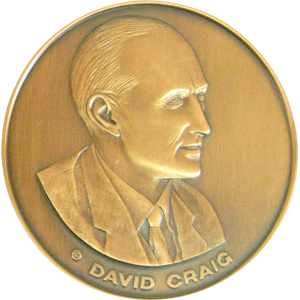
David Parker Craig 1919–2015
David Craig was an outstanding Australian theoretical chemist whose academic life oscillated between Australia (University of Sydney and Australian National University (ANU)) and the UK (University College London). The Craig Building of the Research School of Chemistry of the ANU was named in his honour in 1995. He was President of the Australian Academy of Science from 1990 to 1994, and the Academy's David Craig Medal, which recognizes outstanding contributions to chemistry research, was inaugurated in his honour. His best-known research is in the fields of quantum theory and spectroscopy of aromatic molecules, molecular crystals, quantum electrodynamics and chirality.
Download the memoir
About this memoir
This memoir was originally published in Historical Records of Australian Science, vol. 28(2), 2017. It was written by Noel S. Hush and Leo Radom.

David James Kemp 1945–2013
David Kemp's seminal contributions to molecular parasitology of malaria and scabies have placed Australian science at the forefront of research on these important human pathogens. Immunoscreening of expression clones led to the identification of several vaccine candidates against malaria. His contributions to scabies research are pivotal to our understanding of bacteria–parasite–human interactions.
Other notable achievements are: the discovery of one of the earliest known multi-gene families; the first cloning of linked variable-region genes in the immunoglobulin heavy-chain locus; the invention of highly cited molecular biology methods, namely Northern blotting and inverted-PCR; and contributions to ‘molecular public health' by his work on various bacterial infections relevant to the health of Indigenous Australians.
Kemp's manifest enthusiasm for science was highly infectious. He mentored many high-achieving scientists. In addition to his exemplary career as a scientist, he was a musician at heart and a passionate rock fossicker.
Download the memoir
About this memoir
This memoir was originally published in Historical Records of Australian Science, vol. 25(2), 2014. It was written by Kadaba S. Sriprakash, and Michael F. Good.
Colin Russell Austin 1914–2004
Roger V. Short
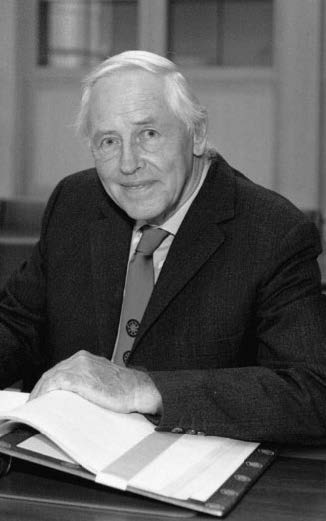
Colin Russell Austin, English by birth, initially graduated in Veterinary Science from the University of Sydney in 1936. The Second World War limited his career options, but he was fortunate to be employed by the CSIRO Division of Animal Health in Sydney. In 1954 he was invited to join the staff of the Medical Research Council’s laboratory in Mill Hill, London to study fertilization and early embryonic development in rats and rabbits. As a result, in 1962 he was asked to teach Fertilization and Gamete Physiology at theMarine Biological Laboratory,Woods Hole, Massachusetts, and subse- quently became Professor of Embryology in the Medical School at Tulane University, New Orleans. This alerted the University of Cambridge to his potential and they created a special Charles Darwin Chair for him in 1967. This enabled him to support the work of his young student Robert Edwards on human in vitro fertilization and embryonic development that culminated in the award of the Nobel Prize to Edwards and Patrick Steptoe in 2010. Austin also devoted a great deal of his time to editing the 13-volume Cambridge University Press series of textbooks, Reproduction in Mammals, completing the series from his retirement home in Buderim, Queensland in 1986.
Colin Russell Austin, known from childhood as ‘Bunny’, was born in Sydney on 12 September 1914 and spent his early days in India where his father, a Lieutenant Colonel in the British Army, was stationed during the First World War. At the end of the war, the family returned to England and then emigrated to Australia when Bunny was 15. After finishing his secondary education he enrolled at the University of Sydney, where he obtained a Bachelor of Veterinary Sci- ence degree in 1936. Since veterinary practice did not appeal, he continued at University, completing a Bachelor of Science degree in 1938 and then working towards a Master of Science degree in Biochemistry that he was awarded in 1940. In that year, he became a member of the research staff of the Division of Animal Health of Australia’s Council for Scientific and Industrial Research (CSIR, later CSIRO), where he stayed on the payroll until 1954 except for a couple of years, 1941–3, during the Second World War when he was seconded to the Dried Fruits Section of the Council’s Division of Food Preservation and Transport, working on Army diets and nutrition. It was there that he met Patricia, a CSIR librarian, and they married in 1941. They had two sons, Mark and Richard. In 1947,CSIR sent Bunny towork at the Medical Research Council laboratory in Mill Hill, London, where he spent a year before returning to Australia. He clearly made a very favourable impression, because in 1954 he was appointed to a permanent post in the newly created National Institute for Medical Research at Mill Hill. In the same year, he was awarded a Doctor of Science degree by the University of Sydney for work on fertilization and associated phenomena in mammals. At Mill Hill, Bunny eventually became Head of the Laboratory Animals Division from 1958 to 1961. The Austin family lived in Hadley Wood, North London, for ten years, and it was during this period that his scientific career took off, building on the study of fertilization and early embryonic development in rats and rabbits that he had started in Australia in collaboration with Dr A. W. H. Braden. Between 1948 and 1956, Bunny published ten papers in Nature (8, 10, 15, 16, 21, 22, 28, 30, 39, 42), and there were more to follow. Perhaps he will be best remembered for his 1952 paper in Nature (21). He showed that neither rabbit nor rat spermatozoa can fertilize their respective ova without a period of maturation in the female reproductive tract, a process he described as capacitation. He also found the time to write a landmark book, The Mammalian Egg, summarizing all these early findings. This was published by Blackwell, Oxford in 1961. Bunny’s research in due course brought him transatlantic recognition. In 1962, he was made a F. R. Lillie Memorial Fellow and a member of the teaching staff of the Fertilization and Gamete Physiology Training Program at the Marine Biological Laboratory, Woods Hole,Massachusetts, USA, an appointment that lasted until 1968. For the first three years, he and Pat spent the months of June, July and August in that inspiring academic environment. But he also inspired those around him and so it was that he became Head of the Genetic and Developmental Disorders Research Program at the Delta Regional Primate Research Center, Covington, Louisiana and also Professor of Embryology in the Medical School at Tulane University, New Orleans, 1964–7. The availability of primates enabled him to start working on spermatozoa in the epididymis of monkeys (104), the liquefaction of primate semen (106), the preservation of primate spermatozoa by freezing (107), the use of a rectal probe for electroejaculation of apes and monkeys (111, 114) and, most importantly, the use of human postmenopausal gonadotrophin to stimulate ovarian follicular and oocyte development in monkeys (115). So humans must be next on the list! Thus it was that his most important career move came in 1967, when he returned to England to take up a Chair that had been specially created for him at the University of Cambridge, the Charles Darwin Professorship in Animal Embryology in the Department of Physiology, together with a Fellowship at Fitzwilliam College. Here he was able to provide the perfect research environment for an up-and-coming young zoologist, Robert Edwards, who Bunny took into his department to develop, with his clinician colleague Patrick Steptoe, the contentious subject of human in vitro fertilization and embryo transfer—work that would eventually earn Edwards the 2010 Nobel Prize in Physiology or Medicine. Edwards and Bunny published their first paper together in 1959, on the induction of oestrus and ovulation in rats (67), but their most significant joint publication was in 1972 (131) on ‘Initiation of human development in vitro and transfer of early embryos’, presented at a UNESCO conference in Paris. In 1986, Bob Edwards had this to say of Bunny: ‘I would like to stress my own deep debt to him during themost difficult period of human in-vitro fertilization, when he was a clear thinking supporter of the work, prepared to defend it publicly when there were few others around’. This refers to the fact that several senior Cambridge academics, including a Nobel Laureate, were deeply opposed to human in vitro fertilization and would have torpedoed all the efforts of Edwards and Steptoe, had it not been for Bunny’s unwavering support as Charles Darwin Professor. Darwin would have been proud of Bunny! Bunny retired in 1981 and afterwards he and Pat settled in Buderim, Queensland. In 1987 he was elected a Fellow of the Australian Academy of Science, a fitting recognition of a great scientific career.
Scientific achievements
In 1986, Professor Ryuzo Yanagimachi, Professor of Anatomy and Reproductive Biology at the University of Hawaii and an extremely distinguished gamete biologist, summarized Bunny’s scientific contributions in the following words: ‘I, and I believe all reproductive biologists working on mammalian fertilization today, consider Dr Austin as the founder of the modern study of mammalian fertilization. Between 1948 and 1955, when he was in Australia, Dr Austin published 34 research papers on mammalian fertilization. His outstanding contributions to the field of mammalian reproduction are: the codiscovery of the phenomenon of sperm capacitation; the first description of the acrosome reaction of mammalian spermatozoa; the discovery of the zona reaction; and the first detailed descriptionofnormal andabnormal fertilization. Without the pioneering studies of Dr Austin we would be far behind where we are today in reproductive biology. If it were not for Dr Austin, the success of human in vitro fertilization, for example, would have been set back at least a decade, or perhaps never occurred. ’That is praise indeed.
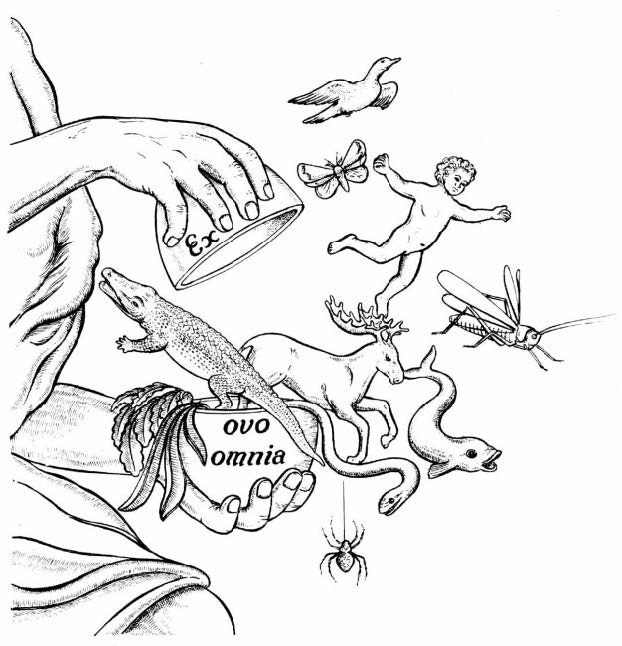
Figure 1.Figure 1. Bunny Austin’s chapter ‘The Egg’ in Reproduction in Mammals, Second Edition, 1982,Volume 1, has on page 61 this beautiful drawing by John Fuller, taken from the frontispiece of William Harvey’s classic book De generatione animalium (1651). It shows the hands of Jove holding apart the two halves of an egg, from which are emerging a plant, an insect, an amphibian, a reptile, a bird, a ruminant and even a human being, beautifully summarized in the words ‘Ex ovo omnia’ that might have been Bunny’s motto.
Reproduction in Mammals
There can be no doubt that one of Bunny’s great- est achievements was as the Senior Editor and a major contributor to the Cambridge Univer- sity Press series Reproduction in Mammals that he and I brought together. When planning this series, we decided first and foremost to make the books highly readable to undergraduates, to intersperse the text with excellent illustrations drawn by our Cambridge colleague John Fuller and, if possible, to avoid using tables since these break up the flow of the argument.
The first volume, Germ Cells and Fertiliza- tion, was published in 1972. The other volumes were: 2. Embryonic and Fetal Development, 3. Hormones in Reproduction, 4. Reproductive Patterns, 5. Artificial Control of Reproduction, 6. The Evolution of Reproduction, 7. Mechanisms of Hormone Action, and 8. Human Sexuality. These were all published between 1972 and 1980. To write the chapters, we hand-picked scientists from around the world whom we knew personally and we never had a refusal! Either Bunny or I, and sometimes both of us, had a chapter in each volume, thereby giving us a sense of ownership of the series. It met with a very warm reception from both teachers and students.
Scientifically, however, things were changing fast, and so we decided to produce a completely new edition of Volumes 1–5 between 1982 and 1986, in response to requests from our readers for a more up-to-date and detailed treatment of the subjects. As a result, the volumes doubled in size and a few tables crept in, but John Fuller’s beautiful drawings continued to enlighten the text (Fig. 1). There were a few title changes, with Volume 3 becoming Hormonal Control of Repro- duction, Volume 4, Reproductive Fitness, and Volume 5, Manipulating Reproduction. Much of the work for the new edition was done in Australia, with Bunny now living in Buderim while I had moved from Cambridge via the University of Edinburgh to Monash University in Melbourne, meaning that we were still able to keep in touch. Appropriately, Bunny had the last word because he wrote the final chapter in the new Volume 5, which he entitled ‘Barriers to Population Control’—a prescient theme in a world in which human population growth is one of the major problems facing mankind.
Bibliography
- Books (written)
- The Mammalian Egg. Blackwell Scientific Publica- tions, Oxford. (1961).
- Fertilization. Prentice-Hall Inc.,Englewood Cliffs, NJ. (1965).
- Ultrastructure of Fertilization. Holt, Rinehart and Winston, New York. (1968).
Books (edited)
- Sex Differentiation and Development. Memoirs of the Society for Endocrinology No 7. Cambridge, at the University Press. (1960).
- Cell Mechanisms in Hormone Production and Action. Memoirs of the Society for Endocrinology No 8. Cambridge, at the University Press. (1961). With
- P. C. Williams.
- A Symposium on Agents Affecting Fertility. L. &
- A.Churchill, London. (1965). With J. S. Perry.
- Reproduction in Mammals. Cambridge University Press. With R. V. Short.
- Book 1. Germ Cells and Fertilization. (1972).
- Book 2. Embryonic and Fetal Development. (1972).
- Book 3. Hormones in Reproduction. (1972).
- Book 4. Reproductive Patterns. (1972).
- Book 5. Artificial Control of Reproduction. (1972).
- Book 6. The Evolution of Reproduction. (1976).
- Book 7.Mechanisms of Hormone Action. (1979).
- Book 8. Human Sexuality. (1980).
- The Mammalian Fetus in Vitro. Chapman and Hall, London. (1973).
- Mechanisms of Sex Differentiation in Animals and Man. Academic Press, London and New York. (1981). With R. G. Edwards.
- Reproduction in Mammals, 2nd Edition. Cambridge University Press. With R. V. Short.
- Book 1. Germ Cells and Fertilization. (1982).
- Book 2. Embryonic and Fetal Development. (1982).
- Book 3. Hormonal Control of Reproduction. (1984).
- Book 4. Reproductive Fitness. (1985).
- Book 5. Manipulating Reproduction. (1986).
Research Reports, Abstracts, Reviews, Chapters, etc
- The clinical examination of urine. Lab. J. Aus-tralasia, June, pp. 1–14. (1941). With J. H. Rofe.
- The thiamine (vitamin B1) content of the urine of Trichosurus vulpecular. J. Proc. R. Soc. NSW.,75, 118–121. (1941). With A. Bolliger.
- The reproductive hormones: a review of chemicaland physical aspects. Aust. Vet. J., 17, 222–228. (1941).
- The determination of carotene: a critical eval-uation. J. CSIR, 17, 115–126. (1944). With J. Shipton.
- Endocrinology and animal production.Aust. Vet. J., 22, 48–54. (1946).
- The metabolism of thiamine in the sheep. Aust. J. Exp. Biol. Med. Sci., 25, 147–155. (1947).
- The effect of hexoestrol on the food intake of sheep. Aust. J. Exp. Biol. Med. Sci., 25, 343–346. (1947). With W. K. Whitten, M. C. Franklin and R. L. Reid.
- Function of hyaluronidase in fertilization. Nature, 162, 534. (1948).
- Phase-contrast microscopy in the study of fertilization and early development of the rat egg. J. R. Micr. Soc., 68, 13–19. (1948). With J. Smiles.
- Number of sperms required for fertilization. Nature, 162, 534. (1948).
- Fertilization and the transport of gametes in thepseudo-pregnant rabbit. J. Endocr., 6, 63–70. (1949).
- The fragmentation of eggs following induced ovulation in immature rats. J. Endocr., 6, 104–110. (1949).
- The functions of the endocrine system in preg- nancy. Aust. Vet. J., August, pp. 190–193. (1949).
- The fecundity of the immature rat following induced super-ovulation. J. Endocr., 6, 293–301. (1950).
- Fertilization of the rat egg. Nature, 166, 407. (1950).
- Activation and the correlation between male and female elements in fertilization. Nature, 168, 558. (1951).
- Observations on the penetration of the sperm intothe mammalian egg. Aust. J. Sci. Res., Ser. B, 4,581–596. (1951).
- The formation, growth and conjugation of the pronuclei in the rat egg. J. R. Micr. Soc., 71, 295–306. (1951).
- The development of pronuclei in the rat egg, with particular reference to quantitative relations. Aust. J. Sci. Res., Ser. B, 5, 354–365. (1952).
- The development of the rat spermatid. J. R.Micr. Soc., 71, 397–406. (1952). With C. Sapsford.
- The ‘capacitation’ of mammalian sperm.Nature, 170, 326. (1952).
- Passage of the sperm and the penetration of the egg in mammals. Nature, 170, 919. (1952). With A.W. H. Braden.
- Nucleic acids associated with the nucleoli of living segmented rat eggs. Exp. Cell Res., 4,249–251. (1953).
- The distribution of nucleic acids in rats eggs infertilization and early segmentation. I. Studieson living eggs by ultraviolet microscopy. Aust.J. Biol. Sci., 6, 324–333. (1953). With A. W. H. Braden.
- The distribution of nucleic acids in rats eggs infertilization and early segmentation. II. Histo-chemical studies. Aust. J. Biol. Sci., 6, 665–673. (1953). With A. W. H. Braden.
- Fertilization and fertility in mammals. Aust. J.Vet., May, pp. 129–132. (1953). With A. W. H. Braden.
- The growth of knowledge on mammalian fertil- ization. Aust. J. Vet., July, pp. 191–198. (1953).
- Polyspermy in mammals. Nature, 172, 82. (1953). With A. W. H. Braden.
- An investigation of polyspermy in the rat and rab-bit. Aust. J. Biol. Sci., 6, 674–692. (1953). With A.W. H. Braden.
- Nucleus formation and cleavage induced in unfertilized rat eggs. Nature, 173, 999. (1954). With A. W. H. Braden.
- Reactions of unfertilized mouse eggs to someexperimental stimuli. Exp. Cell Res., 7, 277–280. (1954). With A. W. H. Braden.
- Time relations and their significance in the ovulation and penetration of eggs in rats and rabbits. Aust. J. Biol. Sci., 7, 179–194. (1954). With A.W. H. Braden.
- Induction and inhibition of the second polar division in the rat egg and subsequent fertilization. Aust. J. Biol. Sci., 7, 195–210.(1954).
- The reaction of the zona pellucid to sperm penetration. Aust. J. Biol. Sci., 7, 391–409. (1954). With A. W. H. Braden and H. A. David.
- Anomalies in rat, mouse and rabbit eggs. Aust. J. Biol. Sci., 7, 537–542. (1954). With A. W. H. Braden.
- The number of sperms about the eggs in mammals and its significance for normal fertilization.Aust. J. Biol. Sci., 7, 543–551. (1954). With A.W. H. Braden.
- Fertilization of the mouse egg and the effect ofdelayed coitus and of hot-shock treatment. Aust.J. Biol. Sci., 7, 552–565. (1954). With A. W. H. Braden.
- The fertile life of mouse and rat eggs. Science, 120, no. 3120. (1954). With A. W. H. Braden.
- Polyspermy after induced hyperthermia in rats. Nature, 175, 1038. (1955).
- Acquisition de la capacite fertilisatrice desspermatozoids (“capacitation”) dans les voiesgenitales femelles. In: La Fonction Tubaire, pp. 22–27.Masson et Cie, Paris. (1955).
- Observations on nuclear size and form in living rat and mouse eggs. Exp. Cell Res., 8, 163–172. (1955). With A. W. H. Braden.
- Study of fertility. Nature, 178, 185–187. (1956).
- An attempt to produce the Hertwig effect by X-irradiation of male mice. Studies in Fertility, 8, 121–131. (1956). With H. M. Bruce.
- Cortical granules in hamster eggs.Exp. Cell Res., 10, 533–540. (1956).
- Ovultation, fertilization and early cleavage in thehamster (Mesocricetus auratus). J. R. Micr. Soc.,75, 141–154. (1956).
- Effect of continuous oestrogen administrationon oestrus, ovulation and fertilization in rats and mice. J. Endocr., 13, 376–383. (1956). With H. M. Bruce.
- Activation of eggs by hypothermia in rats andhamsters. J. Exp. Biol., 33, 338–347. (1956).
- Effects of hypothermia and hyperthermia on fer-tilization in rat eggs. J. Exp. Biol., 33, 348–357. (1956).
- Early reactions of the rodent egg to sperma-tozoon penetration. J. Exp. Biol., 33, 358–365. (1956). With A. W. H. Braden.
- Environmental modification of oestrus in thevole. Nature, 179, 592–593. (1957). With H. Chitty.
- Preliminaries to fertilization in mammals. In:The Beginnings of Embryonic Development, pp. 71–107. Am. Assoc. Adv. Sci., Washington, DC. (1957). With M. W. H. Bishop.
- Sec chromatin in early cat embryos. Exp. Cell Res., 13, 419–421. (1957). With E. C.Amoroso.
- Fertilization in mammals. Biol. Rev., 32,296–349. (1957).
- Fertilization, early cleavage and associated phe-nomena in the field vole (Microtus agrestis).J. Anat., 91, 1–11. (1957).
- Fate of spermatozoa in the uterus if the mouseand rat. J. Endocr., 14, 335–342. (1957).
- Oestrus and ovulation in the field vole (Microtusagrestis). J. Endocr., 15, iv. (1957).
- Mammalian spermatozoa. Endeavour, 16, 137–150. (1957).
- Capacitation of mammalian spermatozoa. Nature, 181, 851. (1958). With M. W. H. Bishop.
- Research within the laboratory-animal division. In: Symposium. Organized by the Laboratory Animals Centre of MRC. Royal Society of Medicine, 5 May. (1958).
- Permeability of rabbit, rat and hamster egg mem-branes. Exp. Cell Res., 15, 260–261.(1958). With J. E. Lovelock.
- Some features of the acrosome and perfora- torium in mammalian spermatozoa. Proc. R.Soc., B, 149, 234–240. (1958). With M. W. H. Bishop.
- Role of the rodent acrosome and perforatorium in fertilization. Proc. R. Soc., B, 149, 241–248. (1958). With M. W. H. Bishop.
- Entry of spermatozoa into the Fallopian-tube mucosa. Nature, 183, 908–909. (1959).
- Differential fluorescence in living rat eggs treated with acridine orange. Exp. Cell Res., 17,35–43. (1959). With M. W. H. Bishop.
- The role of fertilization. Perspectives Biol. Med., 3, 44–54. (1959).
- Presence of spermatozoa in the uterine-tubemucosa of bats. J. Endocr., 18, viii–ix. (1959). With M. W. H. Bishop.
- Induction of oestrus and ovulation in adult rats. J. Endocr., 18, vii–viii. (1959). With R. G.Edwards.
- Prospective experimental animals for medicalresearch. J. Anim. Tech. Assoc., 10, 1–6. (1959).
- The mammalian egg. Endeavour, 18, 130–143. (1959). With E. C.Amoroso.
- Fertilization and development of the egg. In:Reproduction in Domestic Animals, eds. H. H.Cole and P. T. Cupps. Academic Press; New York and London. 1st Ed.Chap. 12; 2nd Ed. Chap. 13.
- Syngamy in a mammalian egg. Study by phase- contrast microscopy. Med. Biol. Illustr., 10, 62–63. (1960).
- Fate of spermatozoa in the female genital tract. J. Reprod. Fert., 1, 151–156. (1960).
- Capactitation and the release of hyaluronidase from spermatozoa. J. Reprod. Fert., 3, 310–311. (1960).
- Fertilization. In:Marshall’s Physiology of Repro- duction, 3rd edition, ed. A. S. Parkes, vol. 1, pt.2, chap.10. Longmans, Green; London. (1960). With A. Walton.
- Anomalies of fertilization leading to triploidy. J. Cell Comp. Physiol.,56, suppl. 1, 1–15. (1960).
- Egg. In: Encyclopedia of Biological Sciences,ed. P. Gray, pp. 327–328. Reinhold; New York.(1961).
- Significance of sperm capacitation. In: Proc. IVInt. Congr. Anim. Reprod., Hague. (1961).
- Fertilization of mammalian eggsin vitro. Int. Rev. Cytol., 12, 337–359. (1961).
- Sex chromatin in embryonic and fetal tissue. ActaCytol., 6, 61–68. (1962).
- Evidence against participation of a jelly-spittingagent in sperm penetration ofArbacia eggs. Biol.Bull., 123, 470. (1962). With J. Piatigorsky.
- Action of neuraminidase on Arbacia sperma-tozoa. Biol. Bull., 123, 471–472. (1962). With R.L. Brinster.
- Relationship of fertilizin to the acrosome reac- tion in Arbacia. Biol. Bull., 123, 473. (1962). With J. Piatigorsky.
- Passage of spermatozoa through the chorion of Ciona eggs. Biol. Bull., 123, 472. (1962). With S.D. Ezell, jr.
- Axial body and filament formation in oystersperms. Biol. Bull., 123, 474–475. (1962). WithD. H. Spoon and A. Forer.
- Introducing new animals to the laboratory. NewScientist, 17, 117–120. (1962).
- Fertilization in Pectinaria (=Cistenides) gouldii.Biol. Bull., 124, 115–124. (1963).
- Acrosome loss from the rabbit spermatozoon in relation to entry into the egg. J. Reprod. Fert., 6,313–314. (1963).
- Sperm morphology of Emerita talpoida. Biol.Bull., 125, 361–362. (1963). With K. R. Barker.
- Ultrastructure of Pectinaria gouldii gametes.Biol. Bull., 125, 364. (1963). With R. Lambson.
- Fine structure of Nereis limbata spermatozoa.Biol. Bull., 125, 362. (1963). With J. F. Fallon.
Download memoir (PDF)
About this memoir
This memoir was originally published in Historical Records of Australian Science, vol. 25, no.2, 2014. It was written by Roger V. Short Faculty of Medicine, Dentistry and Health Sciences, University of Melbourne.
Christopher John Ash 1945-1995
J.N. Crossley, J.F. Knight and G.B. Preston.
Education and career
Christopher John Ash was born on 5 January 1945 at Gorleston, a seaside town adjoining Great Yarmouth, Norfolk, England. He was an only child. His father, Kenneth William Ash, was the middle of three brothers. The elder brother was a Wing Commander in the Royal Air Force who worked on rocket research and the younger was a Captain in the Merchant Navy. Chris’s father was Borough Engineer at Redcar on the North Yorkshire coast. His mother was Joan Evelyn Hadley, who worked at a Quaker school. Chris’s paternal grandfather was Headmaster of Middlesborough High School.
After starting school at Wilton House School, Redditch, near Birmingham he continued at Newcomen Primary School, Redcar, in 1953. At Redcar he joined the St. Peter’s Church choir, whose choirmaster was his music master from school. He loved the dressing up and the ceremony of church services. He lamented that when his voice broke he ‘was left with a rather feeble and inadequate tenor voice’ – a dubious assertion at best. Continuing his musical interests, he learnt to play violin, piano and cello, to which he later added recorders, clarinet and bassoon. Later still viola and tenor horn joined that impressive list. His love of music continued throughout his life.
From 1955 he attended Sir William Turner’s School at Coatham, North Yorkshire. He had taken the ‘eleven-plus’ examination a year early, as many bright children did, and he had the opportunity to become a boarder at York Minster Choir School. However, his parents decided, against Chris’s desires, to keep him at home.
In his first form in high-school, he was in the top two or three of his class of thirty. His English master in April 1956, his first year of high-school, commented ‘he must be careful of the inexact use of words’ – a recommendation which seems to have had effect, for Chris loved the exact use of words – in English or other languages – and he used words well.
When it came to entering the Sixth Form, he had to decide between Classics and Science. He certainly read and enjoyed classical literature, Greek and other, all his life, and enjoyed translating or debating Latin epithets. But he opted for Science as ‘more realistic’. He was surprised when his headmaster advised him to drop Chemistry and do Further Mathematics. However, Chris did hold his mathematics master, L. Page, in high regard and he followed the advice. For Pure Mathematics, in his penultimate year in high school, his other mathematics teacher wrote: ‘He has the ability and knowledge to be very successful, but he must guard against careless errors’. This comment apparently did not need repeating, as subsequently Chris was very careful.
Encouraged by his school he got a place at St Edmund Hall, Oxford and a State Scholarship. His undergraduate career in mathematics was undistinguished. He got a Second in Mathematics Finals, which was a disappointment to him, but it appears that he did not get much pleasure from the mathematics there. ‘The only lectures I enjoyed were those of Ken Gravett in Set Theory’, he has reported. Contemporaries in general would have regarded Gravett’s as the most entertaining and stimulating of all their lectures.
Singing flourished and, having sung in various choirs, Chris became a member of Schola Cantorum Oxoniense. This small group went on overseas tours including one to Italy and made at least one commercial record with Chris singing.
In 1966, he was awarded a (U.K.) Science Research Council award to do graduate study. By that time, Mathematical Logic was his preferred area of study. The subject had only recently been admitted into the advanced section (Part II) of the Final Examinations in Mathematics, but there was interest in the subject in Oxford, and it was increasing particularly among the mathematicians, with some philosophers contributing.
At that time graduate students first completed a Diploma in Advanced Mathematics (now renamed an MPhil degree). Ash worked under John Crossley, writing ‘A dissertation on constructive ordinals’. The importance of this enterprise for his future work is today apparent.
Ordinals are numbers which correspond to putting objects in order. Traditionally they are called ‘first’, ‘second’, ‘third’, etc. in English, but written simply as 1, 2, 3, etc… The sequence can be continued into the transfinite and extended to 1, 2, 3, …, ω the first infinite ordinal. After this, following the nineteenth-century notation of Cantor, one progresses to ω +1, ω + 2, …, ω + ω (which is written, awkwardly, as ω ⋅ 2), ω ⋅ 2 + 1, …, ω ⋅ 3, …, ω ⋅ n (for arbitrary finite n), ω⋅ω (written ω2 ) and continues further through ωn (n finite), then ωω. After this come generalized polynomials in ω, including ωωω ⋅ 2 + ωω ⋅ 3, for example. The generating processes for larger ordinals may be less apparent. However, the collection of ordinals is unending. ‘Constructive ordinals’ are those for which one can give a name, or ‘notation’, which encodes the construction process. There are different ways of presenting constructive ordinals (see e.g. Kleene [Kl], Markwald [Md]), but the actual ordinals notated are the same. The constructive ordinals play a fundamental rôle in all of Ash’s subsequent work in logic.
There is another noteworthy aspect of Ash’s diploma dissertation. While most students at this stage seem content to understand others’ proofs and explanations, Ash reworked everything. Chris always liked to be told what a theorem said and then to work out its proof for himself. This practice gave him a very deep understanding and enabled him to write up his work in an exceptionally clear fashion. This took a lot of work, but it also developed his insight and command.
In the 1960s, set theory, recursion theory and model theory were all rapidly becoming more sophisticated. In set theory, Cohen [Co] developed his method of forcing to prove the independence of the Axiom of Choice and the Continuum Hypothesis from the basic axioms of set theory. In recursion theory, the ‘priority method’ was being extended and applied widely, in particular, by Shoenfield [Sho] and Sacks [Sa]. In model theory, there were the notions of homogeneity and saturation, developed by Jónsson [J], and Morley and Vaught [M-V], and there were beautiful results related to ‘categoricity’, the deepest being due to Morley [Mo]. C. Karp [Ka] and others were investigating ‘infinitary’ logic, considering infinite conjunctions and disjunctions.
Recursion theory is the branch of logic dealing with computability and classification of sets, especially sets of natural numbers (or objects which can be coded by natural numbers). A set is decidable, or recursive, if there is an effective procedure for deciding membership in it. A set is recursively enumerable, or r.e., if there is an effective procedure for listing (enumerating) the elements. This method will be discussed further in §3.
Model theory concerns the relation between mathematical structures (such as orderings and fields) and formulae in a mathematical language. The usual formulae are finite, although in infinitary logic they are allowed to be infinite. A sentence is a formula in which all variables are introduced by quantifiers ‘for all’ or ‘there exists’. A theory is the set of all sentences (of the usual kind) true in some structure or class of structures. The models of the theory are the structures in which all sentences of the theory are true. Many of the early results in model theory were related to computability questions. Tarski [Ta] characterized the definable relations in the field of complex numbers, and in the field of real numbers, in the course of proving that the theories of these fields are decidable. By contrast, J. Robinson [Ro] proved that the theory of the rational number field is undecidable.
A theory with infinite models has models of arbitrarily large cardinality – obviously not all isomorphic. A theory is κ-categorical if there is just one model of cardinality κ, up to isomorphism. For example, the theory of the rationals under the usual ordering is ℵ0-categorical. The theory of vector spaces over the field of rationals has infinitely many countable models but is κ-categorical for all uncountable κ. Morley’s Categoricity Theorem says that for a countable theory T, if T is κ-categorical for some uncountable κ, then it is κ-categorical for all uncountable κ.
The group of academics in logic at Oxford had interest in computability at least partly because of Graham Higman’s interest in the word problem for groups [Hig]. Gravett’s interest in set theory naturally led to an interest in the constructive ordinals, combining set theory with computability. But model theory also seized the group’s attention.
Ash was among a strong group of graduate students in logic at Oxford. Their interests were divided between model theory and recursion theory and there was a seminar covering topics from both areas. Ash took some time choosing problems for his PhD thesis. He had rejected a problem suggested by Crossley, his supervisor. Much later – in 1994 – he jokingly said that it had been a mistake to reject the problem, for his thesis took a long time to finish.
Ryll-Nardzewski [Ry] gave very simple criteria for a theory to be ℵ0-categorical. However, as a matter of historical fact it was also the case that all the obvious theories which were ℵ0-categorical were also decidable. It is easy to create an undecidable ℵ0-categorical theory in a language with infinitely many relation symbols. Grzegorczyk [Gr] asked whether there was a theory in a finite language with these properties. Glassmire and Ash independently worked on this problem. Glassmire [Gl] was the first to publish a solution but Ash [1971] produced a construction ‘so simple that I could describe it in abstract’.
This formed part I of Ash’s DPhil thesis. Part II concerns a generalization of Boolean algebras to n-valued Post algebras. The work for Part II actually preceded that for Part I, as it was felt that such structures might lead to undecidable ℵ0-categorical theories (in a finite language). In fact, they are decidable in a strong sense [1972].
In 1969 Ash’s DPhil supervisor (Crossley) moved to a Chair at Monash and Ash obtained a Senior Teaching Fellowship in Mathematics there. He continued work on his thesis. However, Oxford, almost without exception, requires a viva voce examination in Oxford. Consequently, it was not until 1972 that Ash obtained his DPhil. He took out his MA in 1970, but this is a mere technicality and did not require a thesis..His examiners were John Shepherdson (Bristol University) and Robin Gandy (then at Manchester University). In their report they noted: ‘… a bare statement of [the main results] does not give a fair idea of the excellence of the thesis. Firstly the material is beautifully presented – we have seldom seen a dissertation which was so easy to read. Secondly, the author always has complete command of his material. When he has occasion to reprove known results his proofs are pithier and more transparent than those in the literature. (This is particularly true of Foster’s theorem about functionally complete algebras; the original proof was extremely hard to grasp). He picks out just those results needed for his purpose; the examples (see particularly section 6 of part I) are happily chosen. Thirdly, he uses, with evident understanding, a much wider range of results and techniques than is usual in DPhil theses. (In particular, Rabin’s techniques for proving decidability – see [Ra] – are not part of the standard equipment of model theorists).
‘In his oral exam he gave an extremely interesting account of the way in which the work had developed. This made it plain that the thesis had more coherence than might be obvious at first sight; it grew from a wellorganised attack on the problem solved in part I. He also confirmed the impression given by the thesis that he was familiar with all the work, cited or not, which was connected with his own.’
On returning to Monash Ash was promoted to a lectureship (in 1973). Within a short time, two important influences had begun to shape his research career. One was a visitor. Chris subsequently wrote: ‘I was greatly encouraged during this period by a visit from Anil Nerode of Cornell [University]. His apparently limitless store of knowledge of Mathematical Logic set an example for me which I have tried (unsuccessfully) to follow.’ Most logicians would dispute the bracketed word. Nerode worked with Ash on some problems in what was to become Ash’s primary research area. Nerode, in the 1970s, was responsible for getting a number of people interested in an area of logic sometimes called recursive model theory. A more descriptive name, for much of the work, is computable structure theory. This was the title Ash used consistently for his grant proposals.
The other important influence was the great interest in the algebraic structures called semigroups at Monash. Gordon Preston, as Professor, and more especially Tom Hall, as colleague, got Chris interested in their work, and he eventually solved several important problems on semigroups.
Ash’s results in algebra will be discussed in §2. In addition to the results on semigroups, there are results in universal algebra, a subject which sits between algebra and model theory. Ash’s results in logic (after the thesis) will be discussed in §3.
In a memorial booklet [Mem] Gordon Preston wrote: ‘When he first arrived in Australia, about 25 years ago, he was still working on his PhD, a little unsure of himself both mathematically and personally. He was modest and retiring but quickly opened up and showed that he liked his new environment. He made friends easily. I remember him at parties playing the piano for others to sing to and singing along himself. I remember long conversations with him and enjoyed his extensive knowledge of English literature.
‘His mathematical talents developed initially very slowly. He took a long time to complete his PhD, partly because of his desire for perfection. His first research papers had a long gestation period, not just to polish, but to improve arguments, rearrange, and extend results. But in his final development, from this slow start, he became a major figure in world mathematics, with discoveries that will ensure that he is always remembered.’
He was promoted to Senior Lecturer in 1981 and eventually to Reader in 1986. Not long before he died he had been preparing materials towards an application for a personal Chair and these are the source of several quotations in this article. More importantly, they provide more insight into his plans than casual conversations have done.
During his career he had a number of research students: David Billington (now at University of Queensland), Ewan Barker (University of Ballarat), John Love (Omeo, Victoria) and Kevin Davey (now studying at the University of California at Los Angeles) who did Master’s degrees and Geoff Hird (currently at Odyssey Research Associates, Ithaca, New York) who did a PhD. All of these worked on aspects of computable structures.
Chris Ash was a private man who became more reclusive over the years. He had a small number of partners over the years but baulked at marriage. When he could be inveigled into a social event such as lunch or dinner he was always entertaining. If he could be persuaded to play the piano – or any other instrument, it seemed – he demonstrated a talent and great love for music. In possibly the last photograph taken of him, he is playing a piano duet with Alan Robinson (Syracuse University).
Ash’s career in the Department of Mathematics centred on his research. This grew and grew over the years. He was encouraged to put in for Australian Research Council grants but, until the last year or two, he applied only for small grants. These were used to fund visits of workers in his field. He also obtained visiting professorships in the US. In 1975–6 he visited Schmerl at the University of Connecticut (Storrs, Connecticut); in 1980–81 and again in 1985, Terry Millar at the University of Wisconsin at Madison and in 1987, Julia Knight at Notre Dame University (Notre Dame, Indiana). Millar and Millar’s student, John Chisholm, visited Chris. Yuri Gurevich from the University of Michigan (Ann Arbor, Michigan) and Ted Slaman from the University of Chicago also visited Monash and talked or worked with Chris.
The work of Ash and Nerode was closely related to that of the Russian logic school at Novosibirsk, Siberia. Sergei Goncharov visited from there in the early eighties and he and Ash subsequently wrote a paper.
Most important among these connexions was that with Julia Knight, with whom he worked continually for nine years. At the time of writing, there are four joint papers to appear, and Knight is in the process of completing a book which Ash had started [1996].
In teaching, Ash took the utmost pains and gave lectures of exemplary clarity. He was not, however, an administrator. As his career progressed, it was expected that he would, in the usual way, do more senior committee work. In that context, the precision and possibility of getting things exactly right were not available as they were in mathematics, and this caused him anguish. How could he decide, with incomplete data, on the relative merits of incomparable candidates? He found this impossible and intolerable, sought guidance and seemed terrified of making a mistake instead of fearing the consequences of not making a decision.
One other factor made his final years increasingly difficult. His department had adopted a system of calculating points for work, which was intended to spread the workload evenly. Chris did not conform to the usual profile. He was unable to accumulate points through administrative jobs, and his enormous effort in research brought relatively few points. Unfortunately, Chris worried about this, and despite the reassurances of succeeding heads of department, it made him question his worth and justification. This was very sad because all but he could see what an asset he was. Even his election to the Australian Academy of Science in 1994 buoyed him up for only a limited period. At the very same time his research fecundity was growing ever more rapidly – and taking more effort.
He had medical treatment for his psychological state, but it is unclear how much this helped. Certainly he was disaffected by the side-effects of the drugs he was given. In February, 1995, when he died, he left a note in which he characterized himself as ‘too old and unattractive to carry on’. He was found dead on 16 February 1995. The coroner simply recorded that death was due to ‘acute...toxicity’ and that ‘no other person contributed to his death’.
Work in algebra
Chris Ash’s interest in algebra was already evident, at least from the standpoint of a mathematical logician, in his Oxford DPhil thesis [1972a]. Six of his later papers show his continuing interest in the questions he looked at in Part II of his thesis, Boolean extensions and Post algebras, for example his 1975 paper [1975a] and his 1986 paper [1986b]. In this work there was a merging of his interests in model theory, in what was possible in algebra if one restricted oneself to what could be effectively constructed, in universal algebra, and in the algebras underlying mathematical logic and their generalizations.
As mentioned above, when Chris arrived at Monash, he found a great deal of activity in semigroups, involving the regular faculty members and many visitors. This quickly attracted him and eventually he became a leading developer of semigroup theory, in particular solving three outstanding problems on which, prior to his solutions, numerous partial results had been obtained over many years. He brought to the solution of these problems a knowledge of techniques in model theory and in ordinal and cardinal arithmetic, his use of which continues to have a major effect on the development of semigroup theory. His first paper on semigroups was a joint one with T.E. Hall [1975c], and although they wrote only one other joint paper, this was the start of a collaboration, witnessed by the explicit attribution of results by each to the other, that continued for most of Chris’s life.
The first result on semigroups of Ash to appear in print was in the 1974 paper of W.D. Munn [Mun]. This is an example, of a semilattice (i.e. a poset [= a partially ordered set] in which any two elements have a greatest lower bound) that is, in Munn’s terminology, subuniform and dense in itself, but not densely subuniform. The construction involves a delicate use of order types and the proof that it has the properties desired is the central result of the paper [1977].
The paper [1975c] with T.E. Hall, already referred to, was an elegant contribution to the problem of determining what kind of poset can be (isomorphic to) the poset of J-classes of some semigroup. Hall had already in [Hal] shown, by an inductive construction, that any finite poset with a least element could be so realised, solving a problem posed by J.L. Rhodes in [Rh]. In their joint paper, starting from a poset P with a least element, they first construct an equivalent directed graph G = G(P), from which they construct an inverse semigroup S = S(G), whose elements are bijections between sets of directed paths in G, and whose poset of J-classes is isomorphic to P. That P has a least element is essential for this construction. As a bonus the construction also led to the discovery of a construction for congruence-free inverse semigroups.
The poset of J-classes of a semigroup does not necessarily have a least element when the semigroup is not finite, but it is always downward directed, i.e. given any two elements of the poset there always exists an element that is less than each of them. Paper [1979c] shows that any downward directed poset can be realised as the poset of J-classes of a completely semisimple inverse semigroup.
The crux of the solution to this problem is in [1979b], in which it is shown that if P is a downward directed poset, then there exists a full, uniform, P-semilattice. The concept of a P-semilattice is due to Ash, and the argument to establish the above existence theorem is complicated and subtle, requiring deep results from universal algebra and set theory. Paper [1980a] provides a corollary: it characterizes the lattices of ideals of a semigroup, including the empty ideal, as those lattices that are complete, distributive, and such that every two non-zero elements have nonzero meet and such that every element is a join of compact, join-irreducible, elements.
Paper [1979a] is an ingenious exercise in the arithmetic of order types constructing a uniform semilattice X such that the Munn semigroup TX (the semigroup of all isomorphisms between principal ideals of X) has no chart. The chosen X is of order type λ + (1+λ)ω1, where λ is the order type of the reals and ω1 is the first uncountable ordinal.
There is now an interlude of seven years before Ash writes again about semigroups, except in the wider context of universal algebra, but where the interest in the problems solved first arose for semigroups.
Paper [1980a] looks at when, and how, a semigroup S can be embedded in a semigroup T so that T has automorphisms extending (some) isomorphisms between subsemigroups of S. In particular, it is shown that an inverse semigroup S may be embedded in an inverse semigroup T such that every isomorphism between inverse subsemigroups of S extends to an inner automorphism of the form s ↦ g–1sg, for some g ∈ T, with g–1g = gg–1 = 1. A second generalization, for inverse semigroups, of the Higman-Neumann-Neumann [1949] theorem on groups with amalgamated subgroups is also offered.
Paper [1985a] introduces an important new concept, that of a generalized variety. A variety is a class of (universal) algebras that consists of all algebras of a given type that satisfy a set of identities. Equivalently, according to the famous Birkhoff [Bi] theorem, a class K of algebras is a variety if and only if it is closed under the formation of morphic images, subalgebras and direct products. If L is any class of algebras, write P(L) for the class of all direct products of members of L, M(L) for the class of all morphic images of members of L, and S(L) for the class of all subalgebras of members of L. Then Birkhoff’s theorem states that K is a variety if and only if K = M(S(P(K))) or, omitting some brackets, MSP(K).
More recently, with the growing emphasis on finite algebras, especially in automata theory, classes of algebras have been studied in which each algebra is required to be finite. In particular, the finite members of a variety form what is called a pseudo-variety. K is a pseudo-variety if and only if K = MSPf (K), where Pf (K) denotes the class of all direct products of a finite number of members of K. Not all pseudo-varieties are obtained by taking the finite members of a variety.
Ash’s concept of a generalized variety is what is required. Define the operator Pow on a class of algebras L by: Pow(L) is the class of all powers of algebras in L. Then a generalized variety K is defined to be a class of algebras such that K = MSPf Pow(K). Ash shows that a pseudo-variety is the same thing as the class of finite members of some generalized variety. In addition, he establishes that a variety is a special case of a generalized variety but the converse is not true.
In the mid-1970s the following problem was circulating in Paris: what is the pseudovariety generated by the finite inverse semigroups? In 1985 (see his [1987b]) Ash showed that it is the class of all finite semigroups for which any two idempotents commute. This is equivalent to showing that any finite semigroup with commuting idempotents is the morphic image of a subsemigroup of a finite inverse semigroup. The proof brought a wealth of new ideas and ingenious techniques and his paper met with wide acclaim. [1987a] presents a special case of his result, the case when J is trivial, but which displays the principal features of the proof. Paper [1990a], written in conjunction with T.E. Hall and J.-E. Pin, gives applications of both the results and the methods used, to investigate recognizable languages associated with pseudovarieties of semigroups with commuting idempotents.
Ash’s final achievement in semigroups ([1990e]) was to prove the so-called ‘type II conjecture’. This had been around since the early ’70s and had attracted great interest and extensive publications had appeared, going part of the way towards its verification. [1990e] is the manuscript of a conference talk (July 1990) in which Ash announced that the conjecture was true and provided the bones of his method of proof. Full details are in [1990e], which also includes important implications of the result.
In his memorial message [Mem] Margolis wrote: ‘The group kernel K(S) of a finite semigroup S is the set of elements that are related to the identity in every relational morphism onto a finite group. The type II subsemigroup SII of S is the smallest subsemigroup of S that contains the idempotents of S and is closed under weak conjugations: if sts = s ∈ S, then sSIIt ∪ tSIIs ⊆ SII.
‘In 1972, Rhodes and Tilson [R-T] proved the SII ⊆ K(S) and that every regular element of S that is in K(S) is, in fact, a member of SII. This proved in particular that if S is a regular semigroup, then SII = K(S). The type II conjecture was that this equality holds for every finite semigroup. Besides, its elegant formulation, the most important consequence of the conjecture is that membership in SII is effective given the multiplication table of S, while that of K(S) a priori involves searching through the infinite collection of all relational morphisms from S to finite groups. The type II conjecture guarantees that membership in K(S) is decidable and many important problems in semigroup theory turned out to be reducible to the effective computation of this subsemigroup.
‘I was aware of the conjecture in 1974 when I was a graduate student at Berkeley. I believe it appeared in print in Semigroup Forum in the mid-70’s in an article by Rhodes that listed some open problems in finite semigroup theory. Not much was done on this problem during the ’70’s. The RhodesTilson article was long and difficult to read and the interests in finite semigroup theory had turned to the development of the new theory of pseudovarieties that had been developed by Eilenberg and Schützenberger to give a firm tie between semigroup theory and the theory of recognizable languages.
‘In the summer of 1980, Jean-Eric Pin asked me if the pseudovariety of finite semigroups generated by finite inverse semigroups was equal to the pseudovariety of finite semigroups all of whose idempotents commuted. After thinking about this for a few days, it occurred to me that this was in fact a special case of the somewhat forgotten type II conjecture! Furthermore, it didn’t seem at first to be much easier than the general case. I was preparing to give a survey talk on finite semigroups at a conference to be held in the fall of 1980 at the University of Nebraska. I thought that this would be a good opportunity to let people in inverse and regular semigroup theory help with a significant problem of finite semigroup theory. I reported the nature of the type II conjecture at the conference and explicitly asked about the question raised by Pin.
‘Luckily, Tom Hall was in the audience and perceived that this was indeed a nontrivial and interesting problem. We were all rewarded in 1985 when Chris confirmed that the Pin question was answered in the affirmative in a brilliant piece of work. The difficulty, of course, lay with the non-regular elements of a finite semigroup, as the regular ones had been handled by Rhodes and Tilson. Chris was able to handle the non-regular elements by using Ramsey’s Theorem. This result in itself led to a number of breakthroughs in this and related theories.
‘Some progress was made on the general problem in the late 80’s. After hearing Tom Hall give a wonderful lecture on Chris’s results at Chico, Rhodes, Birget and I were able to extend the result to proving the type II conjecture in the case that the idempotents of S were a subsemigroup. Tilson, inspired by the result of Chris, gave a new easily understandable proof of the RhodesTilson result on regular elements, which cleared up the connection between weak conjugation and inverse semigroups. This proof indicated heavily that inverse semigroups and Ramsey theory should be the ingredients necessary to prove the general type II conjecture. In the late 80’s Rhodes and Henckell [He] developed a number of new techniques and reduced the type II conjecture to the case of block groups, semigroups whose regular principal factors are Brandt semigroups.
‘In 1990, I came to Monash to attend the Preston retirement conference. I explained these latest developments to Tom and Chris as best I could. During that week before the conference, Chris was able to complete his proof of the type II conjecture. It is a masterpiece. He was actually able to prove much more than the type II conjecture, with a brilliantly conceived generalization of the basic notions. In fact, these improvements were crucial for some of the deepest applications of his work. In fact, the Rhodes type II conjecture follows by applying the generalization to a graph with only one vertex and one arrow!’
The papers on the Type II conjecture were greeted with great excitement when they appeared and they were quickly followed by an explosion of research exploring the deep consequences of both Ash’s theorem and the new techniques he developed. The interested reader can find a good account of some of these consequences in [1990a], [1990e] and [1991b].
Work in logic
In logic, at first Ash worked on miscellaneous problems. From [1981a], joint with Nerode, he developed his own programme of research, but he continued working on miscellaneous problems from time to time. This work was often done in response to the challenges of various logicians, just as the work on semigroups was done in response to the challenges of Tom Hall and other semigroup theorists.
We have already discussed Ash’s thesis. Our discussion of the work Ash did in logic after that is divided into two parts. We begin with the results on miscellaneous problems and then we describe the main programme. The classification is not sharp, of course.
3.1 Miscellaneous problems
In [1975b], Ash showed that, assuming the Axiom of Choice, the additive groups of real numbers and complex numbers are isomorphic, and that without the Axiom of Choice, they need not be. Continuing this line of thought in [1983a], he showed that many of the standard consequences of the axiom of choice can be expressed in a modeltheoretic way by looking at the infinitary sentences associated with the model. Indeed, he provided a uniform method for establishing the independence of such forms of the axiom of choice.
In his [1975d] Ash characterized the languages in which every sentence which has a model has a finite model, and those in which every universal sentence which has a model has a finite model. (A universal sentence consists of a string of ‘for all’ quantifiers, with no quantifier later.)
Chris liked working on famous hard problems. In [1994a], he recorded his efforts on one such problem, the spectrum problem. The spectrum of a sentence is the set of sizes of finite models of the sentence, and the problem, still open, asks whether the complement of a spectrum is necessarily a spectrum. In attempting to give an affirmative answer, Chris reduced the problem to another statement, conjectured true.
Another famous open problem is the conjecture P ≠ NP, where P is the collection of functions computable in polynomial time by a deterministic machine, and NP refers to the collection of functions computable in polynomial time by a non-deterministic machine (a lucky guess yields a fast computation, while other guesses might not). Chris spent a great deal of time trying to prove that P ≠ NP, until he finally convinced himself that the problem was pure combinatorics.
The most famous problem in model theory is Vaught’s Conjecture, saying that for a countable complete theory T, the number of countable models (up to isomorphism) is either ≤ ℵ0 or 2ℵ0 . Ash had worked on Vaught’s Conjecture early in his career. The little result he obtained is in [1994c]. Unknown to Ash, the referee and the editor, Vaught had proved the result himself, and it had been used in a paper of Shelah [She, p.560].
Ash worked with J.W. Rosenthal on some computability questions in concrete algebraic settings. In [1980b], they showed that the theory of the complex number field with a binary relation for algebraic dependence of pairs is undecidable. In [1986b], they used some differential algebra to obtain a result on algebraically closed fields, saying that for recursive fields F and G of finite transcendence degree, given transcendence bases for F and G, one can effectively determine the transcendence degree of F ∩ G. In [1981b], Ash and Nerode showed the non-functorial nature of the notions of ‘algebraic closure’ and ‘Skolemization’.
As we said earlier, recursion theory involves classifying sets in terms of computability properties. There are different ways to do this. We can classify arbitrary sets of numbers by Turing degree. For sets X and Y, Y is said to be Turing reducible to X (for Alan Turing) if there is an effective procedure for determining membership in Y given answers to questions about membership in X. If the sets X and Y are each reducible to the other, then they are said to be Turing equivalent, or to have the same Turing degree. Sets and relations which admit some kind of effective approximation are classified by level (a constructive ordinal) in the hyperarithmetical hierarchy. This hierarchy begins with the recursive sets and relations. Then come the projections of recursive relations, called Σ01 (these are the same as the recursively enumerable or r.e. sets), and the complements of Σ0 1 relations, called Π0 1 . After that come the projections of Π0 1 relations, called Σ0 1 and their complements, called Π0 1 , and so on. At level ω, one chooses a family of sets running through the lower levels, takes the limit, and begins again with the relations which are recursive relative to this limit. The projections of these are Σ0 ω, the complements of Σ0 ω relations are Π0 ω, etc. For other constructive limit ordinals α, the process is as for ω. A relation which is both Σ0 α and Π0 α is said to be ∆0 α. The arithmetical sets and relations are those at finite levels; i.e. ∆0 n for some finite n.
Terry Millar of the University of Wisconsin-Madison was a research student of Anil Nerode. He and Chris visited each other several times over a fourteen-year period. Although they collaborated on a number of topics that grew into subsequent papers or dissertations of their respective students, they only published one coauthored paper [1983b] together.
Vaught proved that no complete theory could have exactly two countable models up to isomorphism. Ehrenfeucht produced an example of a complete theory with exactly three countable models up to isomorphism. Complete theories with more than one but only finitely many countable models up to isomorphism are now called ‘Ehrenfeucht theories’. Lachlan and Morley answered a question of Nerode’s by showing that there exist decidable Ehrenfeucht theories with undecidable countable models. Millar later showed that the Turing degrees of such models in fact were unbounded in the hyperarithmetic hierarchy. However, all of the known examples at that time depended on producing models with finitely many elements whose behaviour was computably complex. Ash and Millar, in their [1983b], proved that for a broad class of arithmetic Ehrenfeucht theories, any model with computationally ‘simple’ (arithmetic) finite tuples of elements must be arithmetic.
In his [1984] with Rod Downey, who had been a research student at Monash, he considered the lattice of r.e. subspaces of a recursive vector space. A subspace is said to be decidable if we can determine dependence over it. Ash and Downey showed that every r.e. subspace is a direct sum of two decidable subspaces, so the theory of the partially-ordered set of decidable subspaces is undecidable. They also gave other results on the Turing degrees of r.e. subspaces.
[1990b] was written with C.G. Jockusch and J.F. Knight. The notion of ‘jump degree’ was due to Jockusch. The results here continue work in an earlier paper of Knight. Ash was intrigued by some ideas [1990b], although he felt that the proofs which Knight gave for certain results called for reworking. This paper led to [1990c] and [1991a] (see below).
In [1992b], Ash considered generalizations of ‘enumeration reducibility’, at arbitrary levels of the hyperarithmetical hierarchy. The paper involved an interesting kind of forcing, with conditions which, although finite, carry infinite information. This paper led to [1994f].
3.2 The main programme
Chris Ash said that the way to find the ‘right’ proof of a given result was to generalize the result. Ash generalized repeatedly certain results of Goncharov and his own results with Nerode [1981a], until the generalizations grew into an elaborate programme of research in recursive model theory, including powerful new technology for nested priority constructions, the isolation of certain classes of infinitary formulae, and, for applications, the calculation of ‘back and forth’ relations for various kinds of structures.
The problems in the programme call for syntactical conditions to account for limitations on recursive complexity which persist in all recursive copies of a given structure. A structure is recursive if the satisfaction of atomic formulae is decidable. Ash’s programme grew from the three problems stated below:
Problem 1. Let A be a recursive structure, and let R be a further relation on A. When is there an isomorphism f from A onto a recursive B such that f(R) is not recursive? If there is no such f, i.e. if f(R) is always recursive in recursive copies, then R is said to be intrinsically recursive on A.
Problem 2. Let A be a recursive structure. When is there a recursive copy B with no recursive isomorphism from A onto B. If there is no such B, i.e. if for every recursive copy of A, there is a recursive isomorphism, then A is said to be recursively categorical.
Problem 3. Let A be a recursive structure. When is there an isomorphism f from A onto a recursive B such that f is not recursive? If every isomorphism from A onto a recursive structure is recursive, then A is said to be recursively stable. (This term had been used by Goncharov, although in model theory, stable structure usually refers to something quite different.)
There are variants of these problems. Problem 1 can be varied so that the aim is to produce a recursive copy B in which the image of R is not r.e., or Σ0 α , or to produce a copy B, not necessarily recursive, such that the image of R is not Σ0 α relative to B, and there are similar variants of Problems 2 and 3.
Ash’s paper with Nerode [1981a] concerns Problem 1, and the variant in which the aim is to make f(R) not r.e.. If R is definable by an infinitary formula ϕ(c,x) which is an r.e. disjunction of existential formulae, then the image of R is r.e. in all recursive copies. The converse holds provided a certain side condition holds on the one copy.
Problems 2 and 3 were first considered in the mid-1970s by Goncharov [G1], [G2]. Goncharov, Nurtazin and other members of a group at Novosibirsk, in the former USSR, had done considerable work in this area. Goncharov visited Ash and subsequently they wrote [1985b]. This concerns a variant of Problem 2 in which A is decidable (i.e., satisfaction of all formulae of the usual kind is decidable). The aim is to produce a decidable copy with no ∆0 2 isomorphism. There is no satisfying syntactical condition. The paper makes additions to the stock of pathological examples.
Ash’s [1986a] is about the variant of Problem 3 in which the aim is to make f not ∆0 n. The two papers [1986a] and [1986c] represent a tremendous advance. In both papers, the aim was to lift the results of Goncharov on Problem 3 to higher levels – finite in [1986a] and transfinite in [1986c]. These papers introduce, all at once, the most important notions and technology for carrying Ash’s programme to higher levels. First, there is a description of the class of recursive infinitary formulae. In recursive infinitary formulae, the infinite disjunctions and conjunctions are over r.e. sets (making this precise involves ordinal notation in an essential way). Considered all together, the recursive infinitary formulae have the same expressive power as the hyperarithmetical infinitary formulae, but this is a non-trivial theorem. The important feature of recursive infinitary formulae involves their classification as recursive Σα or Πα for various constructive ordinals α. In recursive structures, satisfaction of recursive Σα formulae is Σ0α and satisfaction of recursive Πα formulae is Π0α.
In addition to the recursive infinitary formulae, [1986a] and [1986c] contain an abstract formulation of the object of a ‘priority’ construction, and there are ‘metatheorems’ guaranteeing the success of the construction. The priority method was developed by Friedberg [Fr] and Muchnik [Mu] (independently) to solve a problem on r.e. sets. It is arguably the most important method for obtaining results in recursion theory. Ash applied the method extensively, and his deepest results are contributions to the method itself.
Thus, it seems important to try to describe the method. In a priority construction, the aim is to enumerate a set so as to satisfy a list of ‘requirements’. The information needed for the requirements may not be accessible in an effective way. The enumeration therefore proceeds based on systematic guessing. The strategies for meeting the separate requirements may come into conflict. When this happens, the conflict is resolved according to a system of priorities. Action on behalf of a given requirement typically results in injury to lower priority requirements.
The construction of Friedberg and Muchnik was a finite injury construction. In such a construction, each requirement is injured at most finitely many times, and with ∆0 2 information, it is possible to determine how the requirements are met. There are infinite injury constructions, where with D0 2 information it is possible to determine how the requirements are met. There are infinite injury constructions, where with ∆0 3 information it is possible to determine how the requirements are met. There are constructions involving information at still higher levels.
Harrington had described a ∆0 ω construction in terms of ‘workers’, in 1979, but only in handwritten notes, which Ash had not seen. Marker [Ma] and Knight [Kn], having seen Harrington’s notes, had tried using workers themselves. However, there was no ‘metatheorem’ before Ash.
Priority constructions can be extremely difficult to write out, to read, to check, and to vary. Harrington’s construction was a house of cards. With Ash’s metatheorem, where it applies, the proof is nice and modular. Ash said that before proving the metatheorem, he could not see how to proceed with the higher level version of Problem 3. Moreover, he had suggested to E. Barker, as a problem for his Master’s thesis, the higher level version of Problem 1 [B].
Having described the appropriate formulae, and developed the technology for the priority constructions, Ash obtained results of the kind he wanted. The results have some rather strong effectiveness hypotheses. In particular, in the given copy of the structure, certain ‘back-and-forth’ relations must be r.e. (uniformly). Ash calculated the back-and-forth relations for recursive well-orderings and showed how his results applied to these familiar structures.
The metatheorem from [1986c] was applied by Ash in [1987a], [1990c], [1990d] (slightly modified), [1991a] and [P1]. As planned, Barker used the metatheorem in his Master’s thesis (12), showing that, modulo some effectiveness conditions, R is intrinsically Σ0α on A if and only if it is definable in A by a recursive Σα. Later, Davey [D] used the metatheorem in his Master’s thesis, and two of Knight’s students, K. Hurlburt [Hu] and A. Vlach [V], used it in their PhD theses. Hurlburt was behind some minor corrections which Ash published.
In [1987a] Ash extended Goncharov’s result on Problem 2 to transfinite levels. He showed that his results applied to superatomic Boolean algebras. To do this, he calculated the back-and-forth relations for these structures.
The paper with J.F. Knight, M. Manasse and T. Slaman [1989] varies Problems 1, 2 and 3 by considering arbitrary copies of the given structure, instead of only recursive copies. The proofs use forcing. The results, with no side conditions, give evidence that the recursive infinitary formulae have all the expressive power needed for problems of this general kind. Manasse and Slaman had obtained some of the results before Ash and Knight, but had not published them. J. Chisholm obtained similar results independently [Ch].
In [1990c], with J.F. Knight, conditions are given on a pair of recursive structures A and B under which, for all sets Π0 α sets S, there is a uniformly recursive sequence of structures (Cn)n∈ω such that Cn is isomorphic to A if n∈ S and to B otherwise, and there are some other related results. J. Thurber [Th], in his PhD thesis, used results from the paper to re-work and extend results of L. Feiner [Fe] on Boolean algebras.
An r.e. quotient structure is the quotient of a recursive structure by an r.e. congruence relation. It is like a recursive structure, except that equality is not recursive, only r.e.. Love, in his Master’s thesis [Lo1], considered the variant of Problem 3 for such structures. In working with Love, Ash began thinking of structures in which various other relations were required to be r.e.. He realized that the metatheorem, as originally stated, did not apply. In [1990d], he discussed ‘r.e. structures’ and he modified the metatheorem so that it could be used in this context. There were other simplifications as well.
In [1990b], there was a generalization of a result of Watnik [W], saying that for all constructive ordinals α, Zα ⋅ A has a recursive copy if and only if A has a ∆02α copy. In [1991a] Ash returned to this, generalizing the result further and giving a better proof.
The paper [1992a], with J.F. Knight, considers the following variant of Problem 1. Let A be a recursive structure, and let ϕ(R) be a recursive Π2 sentence, true in an expansion of A, by a recursive relation R. Under what conditions is there a copy B with no relation R satisfying ϕ(R) and recursive relative to B?
Ted Slaman briefly visited Monash and subsequently Ash wrote his [1993], with J.F. Knight and T. Slaman. Slaman observed some uniformity in the proof of [1992a]. He and Ash isolated several related notions, and determined some of the implications between pairs of these notions. Knight made some minor contributions later, when the paper was being written up.
For a time, Ash enjoyed the belief that his metatheorem was completely general; that is, anything which could be done by a nested priority construction could be done using his metatheorem. He was able to prove Harrington’s [1979] result. However, there are problems – variants of the basic three – calling for priority constructions with special features which the original metatheorem could not handle. In [1994d] and [1994e], Ash and Knight developed variants of the metatheorem to solve some of these problems. In [1994e] there is a metatheorem for constructions with requirements at different levels. This can be applied to the variant of Problem 1 involving a family of relations Rn on A, where the aim is to produce a recursive copy in which, for all n, the image of Rn is not Σ0βn . In [1994d] there is a metatheorem for constructions in which sets are being enumerated at different levels. The syntactical conditions are related to those in [L], [1990d] and [Har]. They involve a new classification of recursive infinitary formulae. His [1994d], with J.F. Knight, contains an extension of the metatheorem for constructions with sets enumerated at different levels.
In [1994f], there is a result saying that the formulae isolated in [1994d] are the right ones – [1994f] bears the same relation to [1994d] as [1989] does to [B]. The proof is a forcing construction, using ideas from [1992b] as well as [1989].
At the time of his death, five of Ash’s papers had not appeared, although all had been accepted for publication. Three of these have now appeared. One of the papers [P5] is expository. Among the others, two [1997a], [19972b] were ready to submit when Ash died. The other two [1996], [P1] needed more work, although the results, joint with Knight, had been thought through.
V. Harizanov, a former student of Millar, showed that, in the setting of Problem 1, the conditions of [1981a] for producing a recursive copy of A in which the image of R is not recursive are not sufficient to give it arbitrary r.e. degree. She also found conditions for making the image of R r.e. of arbitrary r.e. degree [Har].
Let A be a recursive structure, and let R be a further relation on A, as in Problem 1, above. A set is simple if it is r.e. and the complement, while infinite, has no infinite r.e. subset. Hird, in his PhD thesis under Ash, gave conditions for making the image of R as simple as possible [Hir].
In [1997a], joint with Knight and Remmel, the aim was to give conditions for making the image of R simultaneously as simple as possible and of arbitrary non-zero r.e. degree. Simply combining the conditions of Harizanov and Hird does not work. Ash and Remmel had worked on the problem some years earlier, but had never published and had misplaced their notes. Ash and Knight started over.
Ershov defined a hierarchy of ∆0 2 sets, based on differences [E1], [E2], [E3]. For a ∆02 set X, there is a recursive ‘guessing’ function g(x,s) such that if x ∈ X, then for all sufficiently large s, g(x,s) = 1, and if x ∉ X, then for all sufficiently large s, g(x,s) = 0. If X is r.e., we can take g such that for each x, the value starts at 0 and changes at most once. For a 2-r.c., or n-r.e. set, the value changes at most twice, or n times. The definition extends through the constructive ordinals. For an α-r.e. set, an ordinal ≤ α accompanies each guess, and the ordinal decreases whenever the guess changes.
In [1996], joint with Knight, again the setting was as in Problem 1. The aim was to give conditions for making the image of R not 2-r.e., or not α-r.e.. In [1997b], joint with Cholak and Knight, the aim was to give conditions, for fixed α, guaranteeing that the image of R can be given arbitrary α-r.e. degree, or made α-r.e. and of arbitrary α- r.e. degree. In [1997b] it is also shown, using forcing, that if R can be given arbitrary ∆0 3 degree, then it can be given arbitrary degree.
In [1995], Ash and Knight showed that the most obvious conditions for lifting Harizanov’s results to arbitrary levels in the hyperarithmetical hierarchy fail. In [P1], joint with Knight, there are results related to this. It is shown that the conditions for making the image of R not ∆0 α are sufficient to give it arbitrary Σ0 α degree modulo ∆0 α, and the conditions for making the image of R Σ0 α and not ∆0 α are sufficient to make it Σ0 α of arbitrary Σ0 α degree modulo ∆0 α. There is a more general statement involving REA sequences, as in [1995]. In addition, the paper considers some model theoretic versions of the Friedberg-Muchnik Theorem. There are conditions on a recursive structure A and a pair of relations R and S, guaranteeing that there is a recursive copy in which the images of R and S are r.e. and independent, or Σ0 α and independent over ∆0 α.
The book [P6] which Ash had started was not meant to be jointly authored. It is entitled Computable Structures and the Hyperarithmetical Hierarchy. Ash had written parts of the first five chapters, and chapter titles for the rest. Knight is in the process of completing the book. It describes Ash’s programme and includes the background material from recursion theory and model theory (material on ordinal notations, infinitary formulae, etc.), necessary for a thorough understanding.
In contrast to his work on semigroups, where a long familiarity with a problem (The Rhodes type-II conjecture) ultimately led to a final successful assault, Ash’s work in logic is more of a continuous process. His deep study accompanied by a passion for elegance enabled him to tackle structures of richer complexity. His work used in [Mun] and his [1979b] took notions of model theory (homogeneous-universal models) and, by adding more structure, enabled him to solve outstanding problems in semigroup theory.
The study of ‘intrinsic’ complexity in mathematical structures, with Nerode’s encouragement at the outset, grew infinitely more complicated as Ash concentrated on it. Again, Ash’s elegance of presentation made complicated results manageable. His aerial view (his metatheorem of [1986c], in particular), opened up a land which previously had looked like an amorphous and virtually pathless swamp, and allowed its mapping and exploration.
Conclusion
The last few years of Chris Ash’s life displayed an ever-increasing productivity. Among semigroupists, his work is widely known and has found extensive application already. Ash’s primary research area was logic and by his own reckoning, his best and deepest results are in [1986c]. Ash’s work in computable structure theory is already admired by the handful of people who specialize in this sort of thing. However, there are signs of growing interest in computable structure theory among the broader community in recursion theory/ computability. The metatheorems are, as yet, understood by only a few people, but the fact that they have been used successfully by students from Monash and Notre Dame points to the possibility of further applications. Lerman and Lempp [L-L1], [L-L2], who in working on certain problems in pure recursion theory, began to develop their own framework for priority constructions, indicate that they used some of Ash’s ideas. The effects of Ash’s work will be felt for a long time to come.
References
[B] Barker, E.J., ‘Intrinsically Σ0 2 Relations’, MSc
Thesis, Monash University, 1985.
[B-S] Bell, J.L. and A.B. Slomson, Models and Ultraproducts: an Introduction, NorthHolland Publishing Co., 1969.
[Bi] Birkhoff, G., ‘On the structure of abstract algebras’, Proc. Camb. phil. Soc. 31 (1935),433–454.
[C-K] Chang, C.C. and H.J. Keisler, Model Theory, 3rd edition, North-Holland, 1989.
[Ch] Chisholm, J., ‘Effective model theory versus recursive model theory’, J. Symb. Logic 55 (1990), 1168–1191.
[Co] Cohen, P.J., Set Theory and the Continuum Hypothesis, Benjamin, 1966.
[D] Davey, K., ‘Inseparability in recursive copies’, Annals of Pure and Applied Logic 68 (1994), 1–52.
[Fe] Feiner, L., ‘Hierarchies of Boolean Algebras’, J. Symb. Logic 35 (1970), 365–373.
[Fr] Friedberg, R.M., ‘Two recursively enumerable sets of incomparable degrees of unsolvability’, Proc. Natl. Acad. Sci. USA 43 (1957), 236– 238.
[Gl] Glassmire, W.F., ‘There are 2ℵ0 countably categorical theories’, Bull. Acad. Polon. Sci. Ser. Sci. Math. Astronom. Phys. 19 (1971), 185–190.
[Go1] Goncharov, S.S., ‘Autostability and computable families of constructivizations’, Algebra and Logic 14 (1975), 647–680 (Russian); 392–408 (English).
[Go2] Goncharov, S.S., ‘On the number of nonautoequivalent constructivizations’, Algebra and Logic 16 (1977), 257–282 (Russian), 169–185 (English).
[Gr] Grzegorczyk, A., ‘A kind of categoricity’, Colloq. Math. 9 (1962), 183–187.
[Hal] Hall, T.E., The partially ordered set of all J-classes of a finite semigroup. Semigroup Forum 6 (1973) 263–4 (MR 52 #14111)
[Har] Harizanov, V., ‘Some effects of Ash-Nerode and other decidability conditions on degree spectra’, Annals of Pure and Applied Logic 55 (1991), 51–65.
[He] Henckell, K., S.W. Margolis, J-E. Pin and J. Rhodes, ‘Ash’s type II theorems, pro-finite topology and Mal’cev products, Part I’, J. Algebra and Computation 1 (1991), 411–436.
[Hig] Higman, G., B.H. Neumann and H. Neumann, ‘Embedding theorems for groups’. J. London Math. Soc. 24 (1949), 247–254.
[Hir] Hird, G., ‘Recursive properties of relations on models’, Annals of Pure and Applied Logic 63 (1993), 241–269.
[Hu] Hurlburt, K., ‘Sufficiency conditions for theories with recursive models’, Annals of Pure and Applied Logic 55 (1992), 305–320.
[J] Jónsson, B., ‘Homogeneous universal relational systems’, Math. Scand 8 (1960), 137–142.
[Ka] Karp, C., Languages with Expressions of Infinite Length, North-Holland, 1964.
[Kl] Kleene, S.C., ‘On the forms of predicates in the theory of constructive ordinals (second paper), Amer. J. Math. 77, 405–428.
[Kn] Knight, J.F., ‘Effective construction of models’, Logic Colloquium ’84, ed. Paris, Wilkie and Wilmers. North-Holland, Amsterdam, 1986, 105–119.
[L-L1]Lempp, S. and S. Lerman, ‘Priority arguments using iterated trees of strategies’, Proc. of Recursion Theory Week, ed. AmbosSpies, Miller, Sacks. Springer-Verlag, 1990, 277–296.
[L-L2]Lempp, S. and M. Lerman, ‘A general framework for priority arguments’, Bulletin of Symb. Logic 1 (1995), 189–201.
[Lo1] Love, J.J., ‘Stability of R.E. Quotient Algebras’, Msc Thesis, Monash University,1991.
[Lo2] Love, J.J., ‘Stability among r.e. quotient algebras’, Annals of Pure and Applied Logic 59 (1993), 55–63.
[Ma] Marker, D., ‘Degrees of models of true arithmetic’, in Proc. of Herbrand Symposium, Logic Colloquium ‘81, ed. Stern. NorthHolland, 233–242.
[Md] Markwald, S.W., ‘Zur Theorie derkonstruktiven Wohlordnungen’, Math. Annalen 127, 135–149.
[Mem]In Memoriam Dr Christopher J Ash, FAA, 1945–1995. Tributes from friends and colleagues. Dept. of Mathematics Logic Paper, March 1995.
[Mo] Morley, M., ‘Categoricity in power’, Trans. Amer. Math. Soc. 114 (1965), 514–538.
[M-V] Morley, M. and R. Vaught, ‘Homogeneous universal models’, Math. Scand. 11 (1962),37–57.
[Mu] Muchnik, A.A., ‘On the unsolvability of the problem of reducibility in the theory of algorithms’, Dokl. Akad. Nauk SSSR, N.S.108 (1956), 194–197 (Russian).
[Mun]Munn,W.D., ‘Congruence-free inverse semigroups’. Quart. J. of Mathematics, Oxford (2) 25 (1974) 463–84 52 #14114)
[Ra] Rabin, M., ‘Decidability of second order theories and automata on infinite trees’, Trans. Amer. Math. Soc. 141 (1969), 1–35.
[Rh] Rhodes, J.L., Research problem 24. Semigroup Forum 5 (1972) 92.
[R-T] Rhodes, J. and B. Tilson, ‘An improved bound on complexity’. J. Pure and Applied Algebra 2 (1972), 13–71.
[Ro] Robinson, J., ‘Definability and decision problems in arithmetic’, J. Symb. Logic 14 (1949), 98–114.
[Ry] Ryll-Nardjewski, C., ‘On the categoricity in power À0’, Bull. Acad. Polon. Sci., Sér. Sci. Math. Astron. Phys. 9 (1959), 545–548.
[Sa] Sacks, G., ‘The recursively enumerable degrees are dense’, Annals of Math. 30 (1964), 300–312.
[Se] Seidenberg, A., ‘A new decision method for elementary algebra’, Ann. of Math., ser. 2 60 (1954), 365–374.
[She] Shelah, S., ‘End extensions and numbers of countable models’, J. Symb. Logic 45 (1978), 550–562.
[Sho] Shoenfield, J., ‘Undecidable and creative theories’, Fund. Math. 49 (1961), 171–179.
[Ta] Tarski, A., A Decision Method for Elementary Algebra and Geometry, 2nd ed., revised 1951, iii+63 pp.
[Th] Thurber, J., ‘Recursive and r.e. quotient Boolean algebras’, Arch. Math. Logic 33 (1994), 121–129.
[Vl] Vlach, A., ‘Hyperarithmetical relations in expansions of recursive structures’, Annals of Pure and Applied Logic 66 (1994), 163–196.
[W] Watnik, R., ‘Constructive and recursive scattered order types’, in Logic Year, 1979–80 (Univ. of Conn.), ed. Lerman, Schmerl and Soare. Springer-Verlag, 1981, 312–326.
Bibliography
[1972]On countable n-valued Post algebras. Algebra Universalis, 2, 339–345.
[1972a]Some problems in mathematical logic. Doctoral dissertation, Oxford. v+113 pp.
[1972b]What is mathematical logic? (with C.J. Brickhill, J.N. Crossley, J.C. Stillwell,
N.H. Williams), (79 pp.) Oxford University Press, Oxford 1972. (Translated into Italian, Japanese, Spanish and Bulgarian.)
[1975a]Reduced powers and Boolean extensions. J. Lond. Math. Soc. 2, 9}, 429–432.
[1975b]A consequence of the axiom of choice. J. Aust. Math. Soc. (Ser. A), 19, 306–308.
[1975c] Inverse semigroups on graphs (with T.E. Hall). Semigroup Forum, 11, 140–145.
[1975d]Sentences with finite models. Zeit. f. math. Logik u. Grundl. d. Math., 21, 401–404.
[1977]Dense, uniform and densely sub-uniform chains. J. Aust. Math. Soc. (Ser. A), 23, 1–8.
[1979a]A uniform chain whose inverse semigroup has no chart. Semigroup Forum, 18, 1–4.
[1979b]Uniform labelled semilattices. J. Aust. Math. Soc. (Ser. A), 28, 385–397.
[1979c] The J-classes of an inverse semigroup. J. Aust. Math. Soc. (Ser. A), 28, 427–432.
[1980a]The lattice of ideals of a semigroup. Algebra Universalis, 10, 395–398.
[1980b]Some theories associated with algebraically closed fields (with J.W. Rosenthal), J. Symb. Logic, 45, 359–362.
[1980c] Embedding theorems using amalgamation bases. Proc. Semigroups Conference, Monash University, October 1979, Academic Press, New York, 167–176.
[1981a]Intrinsically recursive relations (with Anil Nerode), Proc. Conference on ‘Aspects of Effective Algebra’, Monash University, August
1979, U.D.A. Book Co., Steel’s Creek, Victoria, Australia, 26–41.
[1981b]Functorial properties of algebraic closure and Skolemization (with A. Nerode), J. Aust. Math. Soc. (Ser. A), 31, 136–141.
[1983a]Model-theoretic forms of the Axiom of Choice. South-East Asian Conference on Logic. Eds. C.T. Chong and M.J. Wicks, North-Holland, 1–12.
[1983b]Persistently finite, persistently arithmetic theories (with T.S. Millar), Proc. Amer. Math. Soc., 89, 487–492.
[1984]Decidable subspaces and recursively enumerable subspaces (with R. Downey). J. Symb. Logic, 49, 1137–1145.
[1985a]Pseudovarieties, generalized varieties, and similarly described classes. J. Algebra, 92, 104–115.
[1985b]Strong D0 2-categoricity (with S.S. Goncharov). Algebra i. Logika (Novosibirsk), 24, 718–727.(Also in the translation series Algebra and Logic, 1986, 471–477.)
[1986a]Stability of recursive structures in arithmetical degrees. Ann. Pure & App. Logic, 32, 113–135.
[1986b]Intersections of algebraically closed fields(with J.W. Rosenthal). Ann. Pure & App. Logic, 30, 103–119.
[1986c] Recursive labelling systems and stability of recursive structures in hyperarithmetical degrees. Trans. Amer. Math. Soc., 298, 497–514.
[1987a]Categoricity of recursive structures in hyperarithmetical degrees. Ann. Pure & App. Logic, 34, 1–14.
[1987b]Finite semigroups with commuting idempotents. J. Aust. Math. Soc., 43, 81–90.
[1987c] Finite idempotent-commuting semigroups. Semigroups and their applications (Chico, California 1986), eds. S.M. Goberstein and P.M. Higgins, Reidel, 13–23.
[1989] Generic copies of countable structures (with J.F. Knight, M. Manasse, T. Slaman). Ann. Pure & App. Logic, 42, 195–205.
[1990a]On the varieties of languages associated with some varieties of finite monoids with commuting idempotents (with T.E. Hall and J.E. Pin). Information and Computation, 86, 32–42.
[1990b]Jump degrees of orderings (with C.G. Jockusch and J.F. Knight). Trans. Amer. Math. Soc., 319, 573–599.
[1990c] Pairs of recursive structures (with J.F. Knight). Ann. Pure & App. Logic, 46, 211–234.
[1990d]Labelling systems and r.e. structures. Ann. Pure & App. Logic, 47, 99–119.
[1990e] Inevitable sequences and a proof of the ‘type II Conjecture’. Monash Conference on Semigroup Theory in honour of G.B. Preston (Melbourne, 1990). World Scientific, River Edge, N.J., U.S.A., 31–42.
[1991a]A construction for recursive linear orderings. J. Symb. Logic, 56, 673–683.
[1991b]Inevitable graphs: A proof of the type II conjecture and some related decision procedures. Int. Journal of Algebra and Computation, 1, 127–146.
[1992a]Relatively recursive expansions (with J.F. Knight). Fund. Math., 140, 137–155.
[1992b]Generalizations of enumeration reducibility using recursive infinitary propositional sentences. Ann. Pure & App. Logic, 58, 173–184.
[1993] Relatively recursive expansions II (with J.F. Knight and T.A. Slaman). Fundamenta Mathematicae, 142, 147–161.
[1994a]A Conjecture Concerning the Spectrum of a Sentence. Math. Log. Quart., 40, 393–397.
[1994b]Recursive expansions (with J.F. Knight). Fundamenta Mathematicae, 145, 153–169.
[1994c] On countable fractions from an elementary class. J. Symb. Logic, 59, No. 4, 1410–1413.
[1994d]Ramified systems (with J.F. Knight). Ann. Pure & Appl. Logic, 70, 205–221.
[1994e] Mixed systems (with J.F. Knight). J. Symb. Logic}, 59, 1383–1399.
[1994f] A completeness theorem for certain classes of recursive infinitary formulae (with J.F. Knight). Math. Logic Quarterly, 40, 173–181.
[1995] Possible degrees in recursive copies (with J.F.Knight). Annals of Pure and Applied Logic, 75, 215–221.
[1996] Recursive structures and Ershov’s hierarchy (with J.F.Knight). Math. Logic Quarterly, 42, 461–468.
[1997a]Quasi-simple relations in copies of a given recursive structure (with J.F.Knight and J.B.Remmel). Annals of Pure and Applied Logic, 86, 203–218.
[1997b]Permitting, forcing, and copies of a given relation (with P. Cholak and J.F. Knight). Annals of Pure and Applied Logic, 86, 219–236.
[1996] Recursive structures and Ershov’s hierarchy (with J.F.Knight). Math. Logic Quarterly, 42, 461–468.
Preprints
[P1] Possible degrees in recursive copies II (with J.F.Knight). To appear in Annals of Pure & Applied Logic.
[P2] Isomorphic recursive structures. To appear in volume on constructive mathematics, ed. by A.Nerode, J.B.Remmel & W.Marek.
[P3] Computable Structures and the Hyperarithmetical Hierarchy (with J.F. Knight), book in preparation.
This memoir is available to download as a PDF document.
- Download memoir (PDF, 258 KB)
About this memoir
This memoir was originally published in Historical Records of Australian Science, Vol.12, No.1, 1998. It was written by:
- J.N. Crossley, School of Computer Science and Software Engineering, Monash University, Clayton, Victoria 3168, Australia.
- J.F. Knight, Department of Mathematics, University of Notre Dame, Notre Dame, Ind. 46556-0398, USA.
- G.B. Preston, Department of Mathematics, Monash University, Clayton, Victoria 3168, Australia.
Christopher Charles Heyde 1939–2008
Written by E. Seneta and J. M. Gani.
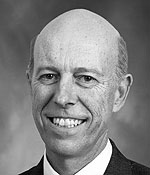
Introduction
An account of the Heyde family is followed by a description of Chris’s childhood, schooling and university training at Sydney and the ANU. Chris spent most of his academic career at the ANU, CSIRO and Columbia University. He made an outstanding contribution to probability theory and its applications. His theoretical work focused mainly on the laws of large numbers, branching processes, martingale theory, estimation theory and, most recently, financial mathematics. He also had a lasting interest in the history of probability and statistics. Chris received considerable recognition, including Fellowship of the Australian Academy of Science and of the Academy of Social Sciences in Australia, as well as Membership of the Order of Australia.
Some family history
Chris Heyde was born in Sydney, Australia on 20 April 1939, the son of Gilbert Christoph von der Heyde and Alice Danne Wessing. He died in Canberra on 6 March 2008, from the effects of metastatic melanoma.
Chris’s father’s family—the Heyde family
Chris’s paternal great-great-grandfather, Jacob Christoph von der Heyde (1792– 1839) was a master mason and his great-grandfather, Wilhelm von der Heyde, was born in the Lüneburger Heide area of Hanover, Germany, in 1826. He arrived in Adelaide in 1848 and moved through Melbourne, Hobart and Sydney, prospering as a tobacco merchant. He built a handsome house at Strathfield, a Sydney suburb, and was elected mayor of the municipality.
Chris’s grandfather Charles, Wilhelm’s eldest son, was born in Manly in 1879 and went to school in Germany for two years. He became managing director of a big combine of tobacco companies (British Australasian Tobacco) and was there for the whole of his working life. He married Gertrude (Truda) Philip, who was born in Armidale, New South Wales, of Scottish stock.
Chris’s father, Gilbert Christoph von der Heyde (1914–2000), was born in Sydney, the fourth child of his parents, and was also known as Chris. He was an adventurous skier as a young man. His father offered to send him to university at age 18, at the time of the great Depression, but he turned down the offer in order to start in the tobacco industry as a junior clerk, remaining in the industry for nineteen years. During this time he studied in the evenings for the Sydney Technical College’s Diploma of Chemical Engineering, as well as taking a range of science subjects out of interest. He soon became recognized as a very good manager and joined the newly established Australian Institute of Management (AIM), serving on AIM panels for twenty years and being elected a Fellow (FAIM). In 1951, he became head of Unilever’s management consulting department in Australia, staying on till 1970.
In 1966 Chris senior developed Modapts, MODular Arrangement of Predetermined Time Systems. This could be used to model different ways of doing a task and gave ‘fair times’ for work that could be used by both management and unions. It was applied in a range of jobs and organizations in various countries. It was so successful that he left Unilever to continue work on it full-time, with revised and enlarged editions being produced.
Chris senior was innovative from the start of his career. His essential curiosity about how things worked led him to explore phenomena well before they became widely known to the public, including early computers. His most animated stories were about discovering the causes of malfunction, non-function or dissatisfaction. The work on family history from which some of these notes are extracted was a manifestation of his general curiosity about history. An obituary by his son from his second marriage, Victor, appeared in the Sydney Morning Herald (V. Heyde, 2000).
Chris’s mother’s Family—the Wessing family
Chris’s maternal great-grandfather, Peter Wheisel (Hveisel) Wessing, a master baker, was born in Grenaa, Denmark. He married Rasmine Olavia Schjodt, who was born in 1838 in Ebeltoft, Denmark, the daughter of a ship’s captain. They emigrated to Tasmania in 1872. Their expectation was to become farmers, though they had received a good education—it is said that they had experience in law and medicine. Rasmine had a reputation for nursing/medical skills in her community near Hobart. Four of their children travelled with them.
Chris’s grandfather, Carl Sophus Wessing (1871–1949) was still a baby when his parents departed for Australia, while he remained with his grandmother in Denmark. He joined his family in Hobart at the age of thirteen years. He married Nella Marie Fredericca Neilson (Nelsson), who was of Swedish descent on her father’s side and whose mother had sung in the Stockholm Opera House. They had five daughters and a son before Nella died, when the eldest daughter Charlotte (Lottie, who was fifteen years older than Chris’s mother Alice) took on the mothering role. Carl worked in mines in Queenstown as a powder monkey, setting explosives. He observed the quality of the ore and used to telegraph Lottie with instructions about buying shares in mining companies. He eventually earned enough to buy a significant family property at Summerhill Road in Hobart, where he established a plant nursery and produced grafted fruit trees for the then flourishing orchard industry in Tasmania. At one stage he also owned two houses at Battery Point.
Carl and Nella Wessing with their Scandinavian background hosted the Norwegian explorer RoaldAmundsen in Hobart in early 1912, when Amundsen in the vessel Fram was on his way back from Antarctica after becoming the first person to reach the South Pole in December 1911.
Chris’s mother, Alice Danne Wessing (1908–1975), was the fifth daughter in the family and had one younger brother. Her sisters all worked at home duties in their father’s home before marriage, but Alice wanted to work outside the home. She qualified in typing and shorthand, winning two gold medals for speed, and became a court reporter in Hobart. She had two overseas voyages to Europe and was an adventurous skier, as was her younger brother Charles, both in Tasmania and on the mainland at Mount Kosciuszko. She met her future husband Gilbert Christoph von der Heyde on the skiing fields, and they married in 1936. After they separated, and once her son Chris was established in school, she undertook secretarial duties with a legal practitioner in Sydney. Chris spent many happy times in Tasmania during his childhood and youth with his mother’s family.
Chris’s formation: childhood to high school
When Chris was born his parents were living at Cambridge Avenue, Vaucluse, in Sydney. During 1942 the family moved to Cheltenham, where Chris lived until he moved to Canberra as a PhD student in 1962.
Chris’s parents separated when he was four or five years old. His parents both recalled that one day in their garden Chris made a critical comment to them, questioning why the relationship was not harmonious: his father referred to this incident as being in no small way a factor in his decision to leave. Chris’s mother closed the door on the relationship as far as Chris was concerned, and provided him with a very untroubled and secure upbringing.
For most of his schooling Chris attended Barker College, Hornsby (a Sydney suburb). Through the primary years he was often ill and did not do particularly well in his studies, in large part owing to his having missed large amounts of work.
As Chris became older he began to forge relations through St John’s Anglican church in Beecroft; he became active in the youth fellowship and the choir (in which he sang as a tenor), and attended church moderately often. Whatever was on in the sporting domain took top priority, and his mother supported his sporting interests, never questioning him about them.
He played rugby at school when he was 13–15, in the B team (out of A, B, C). He played one game in the A team because they needed his speed, but he had too great a sense of self-preservation and preferred to grab the opponents rather than ‘ankle-tap’ them as the fearless and highly prized tacklers do.
For a few years Chris swam competitively, his best results coming in Under 13 and Under 14 years competitions. He was best for his age at Barker then, but by the Under 15 stage Chris could see that others were putting in less work and getting better results. He decided it was then ‘a mug’s game’ to persist and gave up competitive swimming. Harry Hay was Chris’s favourite swimming coach; his other coaches were more impersonal and the squads were larger. Chris won the Harry Hay trophy, which was inaugurated as a memorial to Harry. This was a handicap race at the Spit, in which swimmers were rated, and Chris performed best in relation to the rating he was given. He held the huge cup for a year. This was the sporting trophy that meant most to him. Chris performed all the swimming strokes competitively but was best at freestyle. He often raced against Murray Rose, whom no-one ever beat and who went on to win several gold medals in the Olympics in 1956 and 1960. Chris used to come around 6th place in the State championships.
Chris made a smooth transition to athletics although he had started these late, at about 13, swimming having been his preferred activity until then. He went on to be best for age in Under 14, Under 15 and Under 16 at Barker. He had quite a reputation for courage in running relays. He ran last in his team and always caught up with some of the competition, running with such passion that people recognized his effort. At the Combined Schools Association meets, he was second in the 200 m and 800 m. Chris started with the Ryde/Hornsby athletics club at around the age of 14. Here his athletics career ended at age 15 when he tore his left Achilles tendon, probably because he had not warmed up enough before doing some long jumping. After this injury, he had significant difficulty in walking for a while and it was clear that there would be no more athletics in the near future.
At school, he was suddenly sedentary and began to take an interest in his lessons. Fortunately it was not too late. A few teachers were more inspirational than others: the good teachers tried to teach the subject rather than the curriculum, and were dedicated to their discipline. Among them was Robert Finlay who taught English. Chris was in the honours English stream and enjoyed it, gaining a good foundation in writing. The other inspirational teacher was Gordon Miller, who taught mathematics and science. He noticed that Chris was able to do things others could not; Chris’s scores moved up from about 65% to more than 95% in tests. When it came to the Leaving Certificate, Chris took the examinations twice. The first time was with no subjects at the honours level and he scored As in English, Mathematics I and II and Physics, and Bs in French and one other subject, a respectable score. The second time, he trained for the honours level, taking a completely different curriculum for these— Mathematics I Hons, Mathematics II Hons, Physics Hons, English, which was compulsory, and Applied Mathematics in which he was almost self-taught. He gained high results in Mathematics I and II, not quite so high in Physics, and As for English and Applied Mathematics. He came comfortably in the top 100 in the state, though there was no consequent entitlement in the way of scholarships or bursaries. However, he won a Commonwealth Scholarship, for which he had also qualified the previous year. A chief advantage in doing the Leaving Certificate for the second time was that he achieved a stronger position for first-year courses at university.
Chris was active in the school cadet corps, becoming an Underofficer in the final year of school. This was a quasi-commissioned rank with a paper mandate from the Army, essentially a platoon leader. Chris enjoyed Cadets increasingly as he became more senior, even to the extent of wondering about going to Duntroon Military College and joining the Army. His Uncle Phillip Heyde was part of the inspiration. But this was before Chris became a high achiever in Mathematics, when it was obvious to him that Science was the course to study.
Chris was Dux of Barker College in 1956. In his final year, he was also a prefect and coach/manager of the swimming team. He was generally liked at school. Though he did not have many close friends there— no-one shared his academic interests—he did not feel isolated.
University studies
Chris entered the Faculty of Science at the University of Sydney at the beginning of 1957 on his Commonwealth Undergraduate Scholarship; in those days in Australia these scholarships exempted their holders from university fees and sometimes provided a living allowance. For students doing Science, they covered the three years of a pass-level Bachelor’s degree and Fourth-Year Honours, which was then essentially training for research.
Chris went into the Mathematics Honours stream (doing Pure and Applied Mathematics combined) and Physics Honours. He was also in a class of 500 starting Chemistry from scratch, while Geology was his fourth subject, chosen because he preferred studying rocks to cutting up frogs. He could see that geology provided a general explanation of how the Earth fits together and found it very interesting. Chris’s attitude to geology wasn’t altogether appreciated by his tutors: after a field trip in the Blue Mountains, Chris’s report received the boldly written comment, ‘Too much cogitation, too little observation!’ He received good Credits in Geology and Chemistry and a Distinction in Mathematics, the latter being a somewhat disappointing result for him. He was in a very high-powered Mathematics class—everyone in it had been in the top 100 in the Leaving Certificate examinations. People took this course even if they were going to do Medicine. After first year, Chris gained High Distinctions in all his Mathematics subjects, but he was clearly one of the top students even in the first-year class, and he remembered competing intellectually with other students, which contrasted with his time at Barker.
The Chemistry and Mathematics Departments at the University of Sydney were held in high esteem at the time, both having Heads who were FRSs. Physics was expanding rapidly under its new Head, Harry Messel, an entrepreneur who managed to have six new Professors appointed and also obtained SILLIAC, among the first computers in Australia. Mathematics was in the Physics building, and Chris worked in the Physics library. When Harry Messel came through, students left because he always had a strongly-smelling cigar clamped between his teeth. By second year, Chris had given up on Physics, his enthusiasm having been severely dented when staff responded to questions along the lines, ‘you don’t need to know that’. In contrast, the quality of modelling in the Applied Mathematics Department, headed by Professor Keith Bullen, a seismologist, was extremely high. The approach was very rational, looking at what features one wanted to capture and what were the key elements needed for doing this, what could be left out, what had to be in—always aiming for the simplest possible model but all logically founded. Chris felt the intellectual rigour and found it very satisfying; he had never heard anyone teach modelling the way Bullen did and he later tried to do something similar in his own teaching and practice. He stressed what a model needed to capture, what it was supposed to do and what one hoped to get out of it, what were the inescapable building blocks. His own finance model, for which he later obtained a patent, is couched in these terms.
Bullen and Professor Thomas G. Room, Head of Pure Mathematics, were both Cambridge-trained and both FRS’s. However they were at loggerheads and did not speak to each other. Through third year, Chris did not enjoy Pure Mathematics although he scored well in it, but he was enjoying Mathematical Statistics with Harry Mulhall, as he also had in his second year. Mulhall was a very good teacher, quite systematic, and although he was not research-orientated he was aware of current research. Until Professor H. O. Lancaster was appointed at the end of Chris’s third year and a Department of Statistics was set up, Mulhall was the only person teaching Statistics at the University of Sydney. With Lancaster’s appointment, Fourth-Year Honours in Statistics became an option, and Chris agonized between Honours in Statistics and Honours in Applied Mathematics. He decided on Statistics and was a member of the first Honours class, together with Murray Aitkin, Mohammed (David) Hamdan, Reg Armson, and Brother Bennett (Seneta 2002; Seneta and Eagle-son 2004). In contrast to Harry Mulhall, Oliver Lancaster proved a somewhat less gifted teacher—except for a few students. Lancaster talked about his mathematical research and showed through his reasoning where he was going and what he wanted to achieve. Most undergraduate students could not adapt to this, but Chris understood and ‘ate it up’; it was hugely helpful to him as research training.
Chris was a meticulous keeper of records and files, and his lecture notes from his undergraduate years at Sydney have survived. They reflect the quality of undergraduate education there at the time and are historically interesting as an indication of Chris’s gestation as an eminent statistician. Undergraduate, presumably second-year reference books were P. G. Hoel’s Introduction to Mathematical Statistics (2nd edn.); A. Mood’s Introduction to the Theory of Statistics; H. Cramér’s Elements of Probability Theory and W. Feller’s Introduction to Probability Theory and Its Applications, Volume 1. For Mathematical Statistics III (in Fourth-Year Honours) there are the following sets of lecture notes: Rupert Leslie’s course: ‘Order Statistics’; Eve Bofinger’s course: ‘Analysis of Variance and Design of Experiments’; Ian Stewart’s course: ‘Quality Control and Sampling Theory’; Oliver Lancaster’s courses: ‘Analysis of Variance’ and ‘Distribution of Quadratic Forms’; and Harry Mulhall’s courses: ‘Distribution Theory’ and ‘Inference’. There is also a Pure Mathematics IIIA junior paper by Chris entitled ‘Asymptotics’, surely a predictor of the shape of things to come.
Chris had no significant social life at university as his days were filled with a packed lecture schedule, laboratory work every afternoon, and travel to and from home. For recreation he was active in the Hornsby Rifle Club on Saturday afternoons for about two years.
Chris gained his BSc with first-class honours in Mathematical Statistics and the University Medal from the University of Sydney in 1960, the degree being conferred in 1961. In 1958 and 1960, he also won the prizes for statistics of the New South Wales Branch of the Statistical Society of Australia.
Oliver Lancaster wanted Chris to stay on in his department and a scholarship for the Master’s degree was arranged. In those days, the MSc was a natural next step in research training after Fourth-Year Honours. Chris continued his studies at Sydney and received his MSc in 1962 for a thesis on the ‘Theory of characteristic functions and the classical moment problem’. His note from this period (3), in which he showed that the lognormal distribution is not determined by its moments, became a classic, eventually receiving the ultimate accolade of being mentioned in the Bible of advanced probability theory, the book of Feller (1971), p. 227. When his Master’s thesis was virtually complete, Chris visited Canberra with Oliver Lancaster and met P. A. P. (Pat) Moran and other members of Moran’s Department of Statistics at the Institute of Advanced Studies of the Australian National University (the ANU). In 1961, Chris had won a Commonwealth Postgraduate Research Scholarship and he took this with him when he moved to Moran’s department in early 1962. Moran’s department admirably fulfilled the key purpose for which the ANU had been created, namely to allow talented Australian students to pursue their doctoral research in Australia rather than having to go overseas: it attracted the cream of Australian students in Statistics for several decades (Gani 2005).
Chris’s PhD thesis was entitled ‘Results related to first passage time problems and some of their applications’. His nominal supervisor was J. E. (Jo) Moyal, but Chris worked mainly on his own, following some suggestions made by Pat Moran. He was awarded his PhD in Statistics in 1965. Eventually Chris was to write Pat Moran’s biographical memoir (139).
Chris met his wife-to-be, Thelma Elizabeth (Beth) James, at University House, the residence for unmarried PhD students at the ANU, in 1963, when they were both postgraduate students. Beth’s first memory of Chris was when he played the role of Roman centurion in Bernard Shaw’s play ‘Androcles and the Lion’, performed as a Sunday night play-reading in the basement of the Eastern Annex of University House. He wore laced-up Roman sandals, carried a garbage bin lid for a shield, and had a dustpan brush strapped to the top of his head. His role was not large, but the audience gave him a rousing reception.
Beth had won the Lilley Medal (first place in the Queensland Scholarship Examination, which pleased her teacher parents) and later studied Science at the University of Queensland, winning the University Medal. She won a General-Motors-Holden’s postgraduate scholarship to undertake a PhD in Biochemistry at the ANU in the John Curtin School of Medical Research, and moved to Canberra in 1963. She shared with Chris a love of nature and being out in the bush that she had gained during her childhood in various parts of Queensland, while Chris had done so from growing up on the edge of what is now Lane Cove National Park in Sydney. They also shared a commitment as Christians in the Anglican tradition.
Chris led bushwalks for the residents of University House, and caused some concern to his friends on one occasion when he was out reconnoitring for such an outing, because he did not return on schedule. He had underestimated the time required to get back and had to spend a night in the bush, but was able to walk out by himself when daylight returned. He went skiing when he could, and made an igloo with friends on one occasion. He, Bob Pidgeon and Peter Brockwell ran a sluice box on Araluen Creek, hoping to pick up some alluvial gold from the reef that had never been found. They did collect tiny bits of gold, but made the mistake of trying an old prospector’s method for turning these into a ‘nugget’ by mixing them with mercury and putting the mixture inside a potato that was then cooked; the theory was that the gold collected in a lump in the centre and the mercury diffused, but in practice it all diffused and they ended up with only a very poisonous potato.
Beth and Chris became engaged in May 1964. It was decided that Beth would finish her thesis in Canberra by August 1965, and that they would marry in Brisbane in September 1965. In August 1964 Chris submitted his PhD thesis and sailed from Sydney for the USA, where he joined Joe Gani, who had also been a member of Pat Moran’s department, and Uma Prabhu, then of the University of Western Australia, who had both moved to the Department of Statistics at Michigan State University, East Lansing. The three of them attempted to build up teaching and research in stochastic processes. When Joe Gani left towards the end of 1965 to take up the Chair of Probability and Statistics at the University of Sheffield in the UK, Chris followed him there as a Lecturer.
University of Sheffield 1965–1968; Australian National University 1968–1975
Chris returned to Australia in time for the wedding with Beth in September 1965 at St Colomb’s Anglican Church, Clayfield, Queensland. Their honeymoon began with a week spent at Heron Island and continued on board the P&O vessel Orsova, sailing from Sydney to Southhampton en route to Sheffield.
On arriving in Sheffield with their Volkswagen ‘Beetle’, which had travelled with them, both Chris and Beth settled in to work, Beth on a research grant in the laboratory of one of the Biochemistry staff, Stanley Ainsworth. At weekends they explored the countryside in England and Scotland.
Three months in the summer of 1966 were spent in Denmark. Here Chris worked at Aarhus University in the department of Ole Barndorff-Nielsen, with whose later work, especially as it related to financial mathematics, Chris was to become familiar. Touring around Denmark at the weekends, Chris and Beth included a visit to Grenaa on the north-east coast of Jutland where Chris’s maternal grandfather had been born. From Denmark, Chris and Beth travelled to Moscow in August 1966 for Chris to attend the 1966 International Mathematical Congress.
The first of their two children, Neil, was born on 12 June 1967, just before they moved to Manchester. Chris had been promoted to Special Lecturer in charge of the Statistical Laboratory at the University of Manchester from September 1967, when the Manchester-Sheffield School of Probability and Statistics was formed. Statistics at Manchester had come under Joe Gani’s aegis following the departure to Cambridge of Professor Peter Whittle.
Chris was offered three positions in Australia and decided to take up one at the ANU, a Readership in Ted Hannan’s Department of Statistics in the School of General Studies (SGS). The family returned to Australia in September 1968. Chris had by then produced some thirty papers, a dominant theme of which was the refinement of classical limit theory involving large and small deviations, rates of convergence and domains of attraction, while displaying a breadth of interest in the contemporary issues in probability. There were strong links between Hannan’s teaching department and Pat Moran’s purely research department in the Institute of Advanced Studies (IAS). The SGS department, which also had considerable strength in research, stimulated Chris’s interests in new directions, notably the theory of branching processes, statistical inference for them, and population genetics models related to them. He published several papers jointly authored with Eugene Seneta on these topics and others with Ted Hannan on time series analysis, in addition to a number of papers that he wrote alone. In this work, a principal focus of Chris’s was the martingale concept. He was to become widely known for his work on the theory and application of martingale methods, not least in estimation for stochastic processes. In 1973, he was awarded a DSc by the ANU ‘after due examination of his published work in the field of mathematical statistics and probability’.
Chris’s period in the SGS department also saw the genesis of his interest in the history of probability and statistics in company with Eugene Seneta. Both were influenced by Bienaymé’s 1845 discovery of the criticality theorem of branching processes, to which they had been led by remarks of Oliver Lancaster. Their book on Bienaymé was effectively a history of probability and statistics in the nineteenth century, perhaps the first of a modern resurgence of books on the history of statistics.
The period at the ANU saw the beginnings of intense editorial activity on Chris’s part, both at home and internationally. This is described in Gani and Seneta (2008).
Soon after returning to Canberra, Beth found part-time work at the John Curtin School of Medical Research (JCSMR), in the Biochemistry Department in which she had done her PhD. The first Moon landing on 20 July 1969 was being broadcast on television in the week or so before their second child, Eric, was born. Beth returned to part-time work at JCSMR in January 1970.
Chris arranged to take sabbatical leave at Stanford University for a year beginning with the northern Fall semester in 1972. In 1973, after attending St John’s Anglican Church at Reid, with which both Chris and Beth were familiar from student days, since 1968, they joined the Anglican community that was then meeting in the Aranda school hall near their new home, a link that continued at the time of Chris’s death.
CSIRO Division of Mathematics and Statistics 1975–1983; University of Melbourne 1983–1986
In January 1975 Chris joined the CSIRO Division of Mathematics and Statistics, of which Joe Gani had just become Chief. Meanwhile Beth was able to go back to full-time work, taking up a research fellowship at JCSMR. Chris was at first a Senior Principal Research Scientist and, from 1977, Chief Research Scientist and Assistant Chief of the Division. He took over as Acting Chief in 1981, when Joe Gani left the Division.
Chris was elected a Fellow of the Australian Academy of Science in 1977. His proposer was Pat Moran, with Ted Hannan as seconder. The citation submitted a few years earlier read:
Dr Heyde is an internationally recognized authority on the classical theory of probability. His principal contributions are concerned with the problems of convergence to normality, laws of large numbers and martingale theory. He has also worked on renewal theory, queueing theory and stochastic models for chemical processes. In the last 10 years he has published a large body of work which shows great originality and technical power.
At the time, nine new ordinary Fellows were being elected each year; Chris was elected in the face of very intense competition.
In September 1983 Chris became Professor and Chairman of the Department of Statistics at the University of Melbourne. He proved to be an excellent Chairman who strongly encouraged the pursuit of research and the use of computer facilities by staff and students. Instrumental in creating the Statistical Consulting Centre, he gave strong support to its director and staff. In 1985, he succeeded in obtaining a very large grant from the Australian Government to support a Key Centre for Statistical Science, a joint enterprise of LaTrobe, Monash and Melbourne Universities and the Royal Melbourne Institute of Technology (RMIT); Chris became founding director of this Centre.
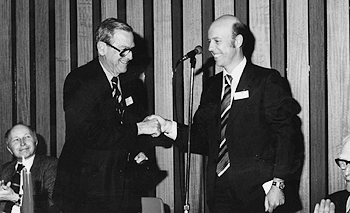
Figure 1. Chris Heyde, President of the Statistical Society of Australia, presents the Pitman Medal for 1980 to Oliver Lancaster. From left to right: Bill Kruskal, Oliver Lancaster, Chris Heyde, Edwin Pitman.
During this period he took on new editorial responsibilities. These included: Associate Editor of the International Statistical Review, 1980–1987; Joint Editor of The Mathematical Scientist, 1982–1984, and Associate Editor from 1984; Coordinating Editor of Advances in Applied Probability and the Journal of Applied Probability, 1983–1989 and Editor-in-Chief of these journals, 1990–2008 (jointly with Soren Asmussen from May 2005). He was one of the editors of the Australian Mathematical Society Lecture Series from 1984, and one of the editors of the Springer Monograph Series in Probability and its Applications from 1985. In 1984, following the death of Norma McArthur, one of the initial trustees of the Applied Probability Trust (APT), Chris was appointed as one of the four APT Trustees. His counsel was always balanced and wise and will be sorely missed. Further detail may be found in Gani and Seneta (2008) and Nash (2008).
Other commitments for the period included: member of the organizing committee for Section 8, Mathematical Sciences, 46th ANZAAS Conference, Canberra, January 1975; organizer of the 8th International Conference for Stochastic Processes and their Applications, Canberra, July 1978; member of the Committee for Conferences on Stochastic Processes, 1973–1983, and Chairman 1979–1981 and 1981–1983 (two terms); Alternative Director of SIROMATH Pty Ltd, October 1980– July 1981, and Director, August 1981– January 1983; member of the scientific advisory committee for the Australian Government Inquiry into the Possible Effects of Herbicides on Vietnam Veterans and their Families, 1980–1984; member of the Science and Industry Forum of the Australian Academy of Science from 1980; chairman of the Australian Statistics Policy Committee, 1980–1984; member of the Queen Elizabeth II Fellowships Committee, 1983; and member of the Australian Subcommission of the International Commission for Mathematical Instruction, 1984–1987.
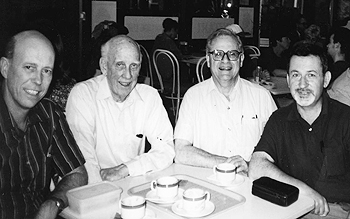
Figure 2.From left to right: Chris Heyde, Ted Hannan, Joe Gani and Eugene Seneta. ANU, Canberra, 6 January 1994.
Return to the ANU 1986–2008; Columbia University 1993–2008
In May 1986, Chris returned to the ANU to become Head of the Department of Statistics in the Research School of Social Sciences of the Institute of Advanced Studies, serving from July 1986 to December 1988. Pat Moran had retired in 1982 and Ted Hannan, Head until July, retired in December 1986.
The two Mathematics Departments (SGS and IAS), the IAS Department of Statistics and the ANU’s Special Research Centre for Mathematical Analysis soon afterwards underwent an important structural change in which Chris played a pivotal role, coming together to form the ANU School of Mathematical Sciences (since renamed the Mathematical Sciences Institute). This was the third attempt at bringing the ANU mathematicians together, but while the ANU was happy to hold the School up as a shining example of cooperation between its research and undergraduate teaching arms, the Institute and the Faculties, it did not provide it with adequate support. This contrasted, Chris noted, with the approach to new enterprises that he later found at Columbia University, where strong backing was given to the burgeoning area of financial mathematics. Chris was the Foundation Dean of the new School, serving from January 1989 to January 1992. From February 1992 to January 2005, he was Professor of Statistics in the School (later Institute), as a member of its Stochastic Analysis Group.
From 1993, he was also a professor in the Department of Statistics at Columbia University, New York. He taught there for their Fall semester each year (September to December) until 2007, and was the director of the Columbia Center for Applied Probability. He was intensely active in this role. To commemorate his contribution to the University, Columbia held an ‘Applied Probability Day in Honor of Chris C. Heyde’ on Saturday 28 June 2008. He was appointed Professor Emeritus of Statistics on 6 March 2008, the University President stating that ‘this reaffirmation of his importance to our scholarly community only begins to recognize his extraordinary contributions to Columbia’. More information on his contributions at Columbia may be found in Glasserman and Kou (2006).
On the occasion of Chris’s 65th birthday, a conference in his honour (CMA National Research Symposium on Probability Theory and its Applications, 22–23 April 2004) was held at the ANU, followed by a dinner in the Great Hall of University House. At this time, his colleagues, friends and former students offered him a Festschrift (Gani and Seneta 2004) as a token of the deep esteem and affection in which he was held by the mathematical and statistical communities in Australia and elsewhere.
In the midst of his very full academic life, Chris found time for travel, relaxation and recreation with his family. There were adventure tours exploring remote and beautiful regions of Australia; relaxation, such as cruising in Scandinavia; and frequent weekend and vacation retreats at South Durras on the New South Wales coast. He also very much enjoyed the many opportunities for overseas visits linked with his international responsibilities and research contributions.
During this part of his life, Chris continued to take a serious interest in the development of Mathematics and Statistics, both in Australia and internationally. He was chairman of the Executive Committee of the Australian Foundation for Science in 1990– 1992, and was a director of the Foundation, 1992–1999. A member of the council of the Australian Mathematical Society, 1980– 1983, he became its Vice-President in 1981. He was Vice-President of the International Statistical Institute (ISI, to whose membership he had been elected in 1972) in 1985– 1987 and again in 1993–1995; a member of the ISI’s Bernoulli Society Council in 1979– 1987, its President-elect in 1983–1985 and its President in 1985–1987.
Chris was a council member of the Canberra Branch of the Statistical Society of Australia (SSA), 1973–1983, and Branch President, 1987–1989. He put much effort into the job of Director of the National Mathematical Sciences Congress in 1988. This was held in Canberra, under the auspices of the Australian Bicentennial Authority. When at the University of Melbourne, he was a member of the Victorian Branch Council in 1984–1986 and Branch President in 1985–1986. He was a member of the SSA’s Central Council, 1973–1986, and the Society’s Federal President in 1985– 1986. He was a member of the Australian Mathematics Competition Board in 1981– 1992 and of the Board of its successor, the Australian Mathematics Trust, from 1992. His publications list contains invited articles that attest to his on-going concern about the public perception and future of mathematical and statistical science, presented from his authoritatively perceptive standpoint.
Chris served the Australian Academy of Science in a variety of ways. He was a member of Sectional Committee 1 (Mathematics), 1978–1982 (chairman, 1980– 1982), and also a member of Council in 1986–1993, Vice-President in 1988–1989, and Treasurer in 1989–1993.
In 1994, Chris was awarded the Hannan Medal of the Australian Academy of Science, and in 1995 the Thomas Ranken Lyle Medal. This period of his life brought other well-deserved rewards: the Pitman Medal of the Statistical Society of Australia; a DSc (honoris causa) of his alma mater, the University of Sydney; membership of the Order of Australia; the Centenary Medal of the Australian Government, and election as a Fellow of the Academy of Social Sciences in Australia.
In a remarkable presentation for the 19th Pfizer Colloquium, Chris was filmed for the American Statistical Association’s Distinguished Statisticians Archive (14), following in the footsteps of earlier eminent probabilists and statisticians. His talk encompassed the manifold areas of his experience in the service of statistics and probability. A highlight was his recommendation for proper supervision and mentoring of graduate students. Chris candidly expressed his views about the statistical profession, its growth over its golden decades (1950–1980), its current state and its likely future. This included topics such as a decreasing and ageing membership in statistical associations, the decline of ‘Mathematical Statistics’ as a discipline and of Departments of Statistics as separate entities, and the increasingly important roles in the practice of statistics and applied probability played by disciplines such as bioinformatics, data mining, and the mathematical treatment of financial risk.
Glasserman and Kou (2006) contains an excellent published conversation with Chris about his professional career, valuable in particular for the description of his perceptions and the evolution of his scientific thinking.
Research
Chris’s research covered a huge variety of topics, testifying to a great breadth of interest and a remarkable ability to assimilate new directions in probability. His publications include works on the moment problem, first passage problems, random walks, the iterated logarithm law, recurrent events, enzyme reactions, queueing theory, branching processes, martingale theory, estimation theory particularly for branching and stochastic processes, genetic balance and gene survival, invariance principles, weak convergence of probability measures, the Hawkins random sieve, reproduction rates and clutch sizes of birds, outbreaks of rare infections, random trees and stemma construction in philology, long-range dependence, fractals and random fields, random matrices in demographic projections, quasi-likelihood methods, estimation for queueing processes and processes with long-range dependence, inference for time series, robustness of limit theorems, risk assessment for catastrophic events, fractal scaling and generalizations of the Black-Scholes model in financial mathematics.
One of the central themes of Chris’s research in his first post-PhD period at the ANU was the probabilistic concept of a martingale, which derives from a gambling context whence the name comes. A sequence of random variables {Xn}, n= 0, 1, 2,... is said to be a martingale if E(Xn+1 | Xn,Xn-1-1,..., X0) = Xn. (That is, if the expected value of a random variable at time n + 1 given information on the entire past is the actual value observed at time n.) A martingale difference sequence is then {Yn}, n = 1,2,... where Yn = Xn - Xn-1.
Towards the end of his life, Chris listed what he considered his five favourite papers. These were:
- The paper (3) on the moments of the lognormal distribution that we have already mentioned above.
- A joint paper with Ted Hannan (45), in which it is shown that the best linear predictor is the best predictor if the innovations are martingale differences. This was one of the very early papers that made it clear that martingales would play an important role in statistics. (A martingale difference sequence is a generalization that allows for dependence, of the classical statistical context of independent zero-mean random variables.)
- An invited paper (47) expounding the emerging role that martingales were to play in probability. In particular, this contains a Central Limit Theorem for martingales. (A martingale can be regarded as a sum of martingale differences, and hence as a generalization of a sum of independent random variables. The classical Central Limit theory is framed in terms of a limiting normal Gaussian distribution for a normed sum of independent random variables.)
- A joint paper with Y. Yang (167), clarifying the concept of long-range dependence. This concept was of special interest to Chris in the last prevailing direction of his research, which involved modelling the probabilistic behaviour of financial assets.
- The paper (176) that introduced the fractal activity time geometric Brownian motion (FATBGM) risky asset model. This was the starting point for what is now a very large body of work by Chris, his students and his colleagues (for example (180), (183) and (200)), on models that capture subtle aspects of empirically observed financial asset data sequences.
This list is, however, an excessively modest account of Chris’s achievements. To it one might readily add the following contributions:
- Limit theorems in branching processes, as in a joint paper with E. Seneta (41).
- Rates of convergence in the Central Limit Theorem, as considered in (65).
- Inference in stochastic processes, as studied in (80).
- The pioneering text (2), Martingale Limit Theory and its Application, written with P. G. Hall.
- The clear exposition (8), as a book, of quasi-likelihood and its application.
We must also include Chris’s persistent interest in history as exemplified by his two books, I. J. Bienaymé: Statistical Theory Anticipated written with E. Seneta (1), and Statisticians of the Centuries edited with E. Seneta (11). This listing gives an overview of the immense span of his interests.
(15) includes commentaries on various areas of his research.
A most recent sphere of Chris’s activity was financial modelling. During the 1990s, while at Columbia University, his mathematical focus swung towards the stochastic modelling of long-range dependence and its effect on the observed behaviour of risky assets such as stocks. His ideas on dependence in models for financial returns, and the treatment of the heavy-tailedness of their distribution, have been hugely influential.
Chris’s key paper from this period is undoubtedly (176), followed by his paper with S. Liu (180). A more recent publication with N. N. Leonenko (202) is destined to become a classic. All build on his firm and long-held belief that the generalized symmetric t-distribution, because of its power-law tails, is the correct distribution for modelling stock market returns. With the support of Columbia University, he applied for and was granted a US Patent (13) arising out of this work.
Chris’s graduate MSc/MPhil students at the ANU by research thesis included P. G. Hall (later FAA FRS), R. J. Adler, I. M. Johnstone, C. W. Lloyd-Smith, I. S. McRae, A. M. Currie and A. Sly.
He supervised many PhDs, some of them jointly: V. Rohatgi at Michigan State University; P. D. Feigin, D. B. Pollard, R. Maller, D. J. Scott, J. R. Leslie, R. Gay, Y.-X. Lin, W. Dai, J. M. Senyonyi-Mubiru, B. Colbert, S. Hurst, S. M. Tam and B. Wong at the ANU; and Yanmei Yang and Olivier Nimeskern at Columbia. Supervision of Ross Maller (now himself a professor at the ANU) at SGS was continued by Eugene Seneta when Chris left the ANU for CSIRO. Ross now supervises Chris’s continuing students.
Epilogue
Chris was diagnosed with hairy-cell leukaemia eleven years before his death and underwent periods of treatment, including participation in a clinical trial in the USA, followed by periods of blessed remission. He completed his normal activities at Columbia University in the Fall of 2007, but early in 2008, in Canberra, metastatic melanoma was diagnosed. In an email message dated 20 January 2008 to one of us, he wrote: ‘Whatever happens, I certainly feel that I have had a fortunate life. I will be happy to have more,…but if not, I have had a good innings and can go in peace.’
We both saw him a few days before a scheduled hip replacement operation to relieve pain from pathological fracture. He died in Canberra just over a day after the operation, in the early morning of 6 March 2008.
The funeral was held at Holy Covenant Anglican Church, Dexter Street, Cook, ACT, not far from the Heyde home at Aranda, on Thursday 13 March, in the presence of family and many mourners and friends. His ashes lie in the grounds of Norwood Park Crematorium in Canberra, marked by a memorial plaque with an infinity sign and a butterfly.
About this memoir
This memoir was originally published in Historical Records of Australian Science, vol.20, no.1, 2009. It was written by:
- E. Seneta, School of Mathematics and Statistics, FO7, University of Sydney, NSW 2006. Corresponding author. Email: eseneta@maths.usyd.edu.au
- J. M. Gani, Mathematical Sciences Institute, Australian National University, Canberra ACT 0200.
Acknowledgements
Our thanks are due to Dr Beth Heyde who provided detailed family history. She also transcribed speaking notes and gave us access to Chris Heyde’s meticulously stored archival material. We also thank Rosanne Walker, Librarian, Australian Academy of Science.
References
- Feller,W.(1971)An Introduction to Probability Theory and Its Applications, Vol. 2. (Wiley: New York).
- Gani, J. (2005) ‘Fifty Years of Statistics at the Australian National University, 1952– 2002’, Historical Records of Australian Science, 16(1), 31–44.
- Gani, J. (1994) ‘Edward James Hannan, 1921– 1994’, Historical Records of Australian Science, 10(2), 173–185.
- Gani, J. and Seneta, E. (eds) (2004) Stochastic Methods and Their Applications: Papers in Honour of Chris Heyde (J.Appl. Prob., Special Vol. 41A) [Introduction by editors: pp. vii–x].
- Gani, J. and Seneta, E. (2008) ‘Obituary: Christopher Charles Heyde, AM, DSc, FAA, FASSA’, Journal of Applied Probability, 45, 587–592.
- Glasserman, P. and Kou, S. (2006) ‘A conversation with Chris Heyde’, Statistical Science, 21(2), 286–298.
- Heyde, V. (2000) ‘Chris Heyde: Expert on work, coin collector, 1914–2000’, Sydney Morning Herald, 29 November 2000.
- Nash, L. (2008) ‘Chris Heyde: An Appreciation’, Journal of Applied Probability, 45, 593–594.
- Seneta, E. (2002) ‘In Memoriam: Emeritus Professor Henry Oliver Lancaster AO FAA, 1 February 1913–2 December 2001’, Australian and New Zealand Journal of Statistics, 44(4), 385–400.
- Seneta, E. and Eagleson, G. K. (2004) ‘Henry Oliver Lancaster, 1913–2001’, Historical Records of Australian Science, 15(2), 223–250.
Bibliography
Books, patent and film
- I. J. Bienaymé: Statistical Theory Anticipated (with E. Seneta). Springer-Verlag, New York, 1977. xiv + 172 pp.
- Martingale Limit Theory and its Application (with P. G. Hall). Academic Press, New York, 1980. xii + 308 pp.
- Studies in Modelling and Statistical Science: Papers in Honour of J. Gani. C. C. Heyde (ed.). Austral. J. Statist., Special Volume 30A, 1988. ix + 309 pp.
- Bicentennial History Issue. C. C. Heyde and E. Seneta (eds). Austral. J. Statist., Special Volume 30B, 1988. ix + 130 pp.
- Youth Employment and Unemployment. W. Dunsmuir, C. C. Heyde and I. McRae (eds). Austral. J. Statist. Special Volume 31B, 1989. iii + 225 pp.
- Branching Processes: Proceedings of the First World Congress. C. C. Heyde (ed.). Springer Lecture Notes in Statistics 99, 1995. vi + 179 pp.
- Athens Conference on Applied Probability and Time SeriesAnalysis. Volume 1:Applied Probability. C. C. Heyde, Yu. V. Prohorov, R. Pyke and S. T. Rachev (eds). Springer Lecture Notes in Statistics 114, 1996. x + 448 pp.
- Quasi-Likelihood and Its Application: General Theory of Optimal Parameter Estimation. Springer-Verlag, NewYork, 1997. ix + 235 pp.
- Probability Towards 2000. L. Accardi and C. C. Heyde (eds). Springer Lecture Notes in Statistics 128, 1998. xi + 356 pp.
- Special Issue on Long-Range Dependence. V. V. Anh and C. C. Heyde (eds). Austral. J. Statist, 80, 1999. vi + 290 pp.
- Statisticians of the Centuries. C. C. Heyde and E. Seneta (eds). Springer-Verlag, New York, 2001. xii + 500 pp.
- Selected Proceedings of the Symposium on Inference for Stochastic Processes. I. V. Basawa, C. C. Heyde and R. L. Taylor (eds). IMS Lecture Notes–Monographs Series, Institute of Mathematical Statistics, Beach-wood, Ohio, Volume 37, 2001. 356 pp.
- US Patent 6643631: ‘Method and system for modeling financial markets and assets using fractal activity time’, 4 November 2003.
- ‘A Futuristic View on a Half-Century of Statistics and Applied Probability’: The 19th Pfizer Colloquium, presented at the University of Connecticut-Storrs, filmed November 4, 2005. ‘Filming of Distinguished Statisticians’ series, American Statistical Association [DVD deposited in Basser Library, Australian Academy of Science, Canberra].
- Selected Works of C. C. Heyde. R. Maller (ed.). Selected Works in Probability and Statistics. Springer-Verlag, New York. [To appear in 2010.]
Papers and articles
1963
- Some remarks on the moment problem I, Quarterly J. Math. (2nd series) Oxford, 14, 91–96.
- Some remarks on the moment problem II, Quarterly J. Math. (2nd series) Oxford, 14, 97–105.
- On a property of the lognormal distribution, J. Roy. Statist. Soc. B, 25, 392–393.
1964
- Two probability theorems and their applications to some first passage problems, J. Austral. Math. Soc., 4, 214–222.
- On the stationary waiting time distribution in the queue G1/G/1, J. Applied Prob., 1, 173–176.
1966
- Some results on small deviation probability convergence rates for sums of independent random variables, Canadian J. Math., 18, 656–665.
- Some renewal theorems with applications to a first passage problem, Ann. Math. Statist., 37, 699–710.
1967
- A pair of complementary theorems on convergence rates in the law of large numbers (with V. K. Rohatgi), Proc. Camb. Phil. Soc., 63, 73–82.
- Asymptotic renewal results for natural generalization of classical renewal theory, J. Roy. Statist. Soc. B, 29, 141–150.
- Some local limit results in fluctuation theory, J. Austral. Math. Soc., 7, 455–464.
- A limit theorem for random walks with drift,J. Applied Prob., 4, 144–150.
- A contribution to the theory of large deviations for sums of independent random variables, Z. Wahrscheinlichkeitstheorie, 7, 303–308.
- On the influence of moments on the rate of convergence to the normal distribution, Z. Wahrscheinlichkeitstheorie, 8, 12–18.
- On large deviation problems for sums of random variables which are not attracted to the normal law, Ann. Math. Statist., 38, 1575–1578.
1968
- A further generalization of the arc-sine law, J. Austral. Math. Soc., 8, 369–372.
- On almost sure convergence for sums of independent random variables, Sankhya Ser.A, 30, 353–358.
- Variations on a renewal theorem of Smith, Ann. Math. Statist., 39, 155–158.
- On large deviation probabilities in the case of attraction to a non-normal stable law, Sankhya Ser. A, 30, 253–258.
- On the converse to the iterated logarithm law, J. Applied Prob., 5, 210–215.
- An extension of the Hájek-Rényi inequality for the case without moment conditions, J. Applied Prob., 5, 481–483.
- On the growth of a random walk, Ann. Inst. Stat. Math., 20, 315–321.
1969
- On extremal factorization and recurrent events, J. Roy. Statist. Soc. B, 31, 72–79.
- A derivation of the ballot theorem from the Spitzer-Pollaczek identity, Proc. Camb. Phil. Soc., 65, 755–757.
- Some properties of metrics in a study on convergence to normality, Z. Wahrscheinlichkeitstheorie, 11, 181–192.
- On a fluctuation theorem for processes with independent increments II, Ann. Math. Statist., 40, 688–691.
- On the maximum of sums of random variables and the supremum functional for a stable process, J. Applied Prob., 6, 419–429.
- A note concerning behaviour of iterated logarithm type, Proc. Amer. Math. Soc., 23, 85–90.
- On extended rate of convergence results for the invariance principle, Ann. Math. Statist., 40, 2178–2179.
- A stochastic approach to a one substrate one product enzyme reaction in the initial velocity phase (with Elizabeth Heyde), J. Theor. Biol., 25, 159–172.
1970
- On some mixing sequences in queueing theory, Operations Research, 18, 312–315.
- Extensions of a result of Seneta for the super-critical Galton-Watson process, Ann. Math. Statist., 41, 739–742.
- Characterization of the normal law by the symmetry of a certain conditional distribution, Sankhya Ser. A, 32, 115–118.
- On the implication of a certain rate of convergence to normality, Z. Wahrscheinlichkeitstheorie, 16, 151–156.
- A rate of convergence result for the super-critical Galton-Walton process, J. Applied Prob., 7, 451–454.
- On the departure from normality of a certain class of martingales (with B. M. Brown), Ann. Math. Statist., 41, 2161–2165.
1971
- On the growth of the maximum queue length in a stable queue, Operations Research, 19, 447–452.
- Stochastic fluctuations in a one substrate one product enzyme system: are they ever relevant? (with Elizabeth Heyde), J. Theor. Biol., 30, 395–404.
- Some central limit analogues for super-critical Galton-Walton processes, J. Applied Prob., 8, 52–59.
- An invariance principle and some convergence rate results for branching processes (with B. M. Brown), Z. Wahrscheinlichkeitstheorie, 20, 271–278.
- Some almost sure convergence theorems for branching processes, Z. Wahrscheinlichkeitstheorie, 20, 189–192.
- Analogues of classical limit theorems for the super-critical Galton-Walton process with immigration (with E. Seneta), Math. Biosci., 11, 249–259.
- Improved classical limit analogues for Galton-Walton processes with or without immigration (with J. R. Leslie), Bull. Austral. Math. Soc., 5, 145–155.
1972
- On the influence of moments on approximations of portion of a Chebyshev series in central limit convergence (with J. R. Leslie), Z. Wahrscheinlichkeitstheorie, 21, 255–268.
- Estimation theory for growth and immigration rates in a multiplicative process (with E. Seneta), J. Applied Prob., 9, 235–256.
- On limit theorems for quadratic functions of discrete time series (with E. J. Hannan), Ann. Math. Statist., 43, 2058–2066.
- The simple branching process, a turning point test and a fundamental inequality: a historical note on I. J. Bienaymé (with E. Seneta), Biometrika, 59, 680–683.
- Martingales: a case for a place in the statistician’s repertoire. Invited Paper, Austral. J. Statist., 14, 1–9.
1973
- An iterated logarithm result for martingales and its application in estimation theory for autoregressive processes, J. Applied Prob., 10, 146–157.
- On the uniform metric in the context of convergence to normality, Z.Wahrscheinlichkeitstheorie, 25, 83–95.
- Invariance principles for the law of the iterated logarithm for martingales and processes with stationary increments (with D. J. Scott), Annals of Probability, 1, 428–436.
- Revisits for transient random walk, Stoch. Proc. Appl., 1, 33–51.
1974
- An iterated logarithm result for autocorrelations of a stationary linear process, Annals of Probability, 2, 328–332.
- Notes on estimation theory for growth and immigration rates in a multiplicative process (with E. Seneta), J. Applied Prob., 11, 572–577.
- Limit theory for stationary processes via approximating martingales, Abstract of invited paper given to the 3rd Conference on Stochastic Processes and their Applications, Sheffield, August 1973, Adv. Applied Prob., 6, 196–197.
- On estimating variance of the offspring distribution in a simple branching process, Adv. Applied Prob., 6, 421–433.
- On the central limit theorem for stationary processes, Z. Wahrscheinlichkeitstheorie, 30, 315–320.
- On martingale limit theory and strong convergence results for stochastic approximation procedures, Stoch. Proc. Appl., 2, 359–370.
1975
- A supplement to the strong law of large numbers, J. Applied Prob., 12, 173–175.
- Remarks on efficiency in estimation for branching processes, Biometrika, 62, 49–55.
- Kurtosis and departure from normality, in Statistical Distributions in Scientic Work,Vol. 1, Models and Structures, Eds G. P. Patil, S. Kotz and J. K. Ord, D. Riedel Publ. Co., Dordrecht, 193–201.
- On efficiency and exponential families in stochastic process estimation (with P. D. Feigin) in Statistical Distributions in Scientifjc Work, Vol. 1, Models and Structures, Eds G. P. Patil, S. Kotz and J. K. Ord, D. Riedel Publ. Co., Dordrecht, 1975, 227–240.
- On the central limit theorem and iterated logarithm law for stationary processes, Bull. Austral. Math. Soc., 12, 1–8.
- The genetic balance between random sampling and random population size (with E. Seneta), J. Math. Biol., 1, 317–320.
- Martingale methods in estimation theory, Abstract of invited paper given to the 4th Conference on Stochastic Processes and their Applications, Toronto, August 1974, Adv. Applied Prob., 7, 235–237.
- A non-uniform bound on convergence to normality, Annals of Probability, 3, 903–907.
- Bienaymé (with E. Seneta), Bull. Int. Statist. Inst., 46, Book 2, 318–331.
1976
- Estimation of parameters for stochastic processes, Abstract of invited paper given to the First Conference of the CSIRO Division of Mathematics and Statistics, Sydney, February 1975, The Mathematical Scientist, Supplement 1, 3–5.
- On a unified approach to the law of the iterated logarithm for martingales (with P. G. Hall), Bull. Austral. Math. Soc., 14, 435–447.
- Asymptotic properties of maximum likelihood estimators for stochastic processes (with I. V. Basawa and P. D. Feigin), Sankhya, Ser. A, 38, 259–270.
- On asymptotic behaviour for the Hawkins random sieve, Proc. Amer. Math. Soc., 56, 277–280.
- On moment measures of departure from the normal and exponential laws (with J. R. Leslie), Stoch. Proc. Appl., 4, 317–328.
1977
- The effect of selection on genetic balance when the population size is varying, Theoret. Population Biol., 11, 249–251.
- On the rate of convergence in the martingale convergence theorem,Abstract of invited paper given to the 6th Conference on Stochastic Processes and their Applications, Tel Aviv, June 1976, Adv. Applied Prob., 9, 196.
- Some rate of convergence results for the martingale convergence theorem, Abstract of invited paper given to the 3rd Conference of the Statistical Society of Australia, Melbourne, August 1976, The Mathematical Scientist, 2, 141–143.
- An optimal property of maximum likelihood with application to branching process estimation, Bull. Int. Statist. Inst., 47, Book 2, 407–417.
- On central limit and iterated logarithm supplements to the martingale convergence theorem, J. Applied Prob., 14, 758–775.
1978
- Bienaymé, lrenée Jules (with E. Seneta), Dictionary of Scientific Biography, 15, 30–33.
- Uniform bounding of probability generating functions and the evolution of reproduction rates in birds (with H.-J. Schuh), J. Applied Prob., 15, 243–250.
- A log log improvement to the Riemann hypothesis for the Hawkins random sieve, Annals of Probability, 6, 870–875.
- On an optimal asymptotic property of the maximum likelihood estimator of a parameter from a stochastic process, Stoch. Proc. Appl., 8, 1–9.
- On an explanation for the characteristic clutch size of some bird species, Adv. Applied Prob., 10, 723–725.
1979
- Applications of stochastic processes: some general principles and their illustration, The Mathematical Scientist, 4, 1–8.
- On asymptotic posterior normality for stochastic processes (with I. M. Johnstone), J. Roy. Statist. Soc. B, 41, 184–189.
- On central limit and iterated logarithm results for subadditive processes, Abstract of paper given to the 8th Conference on Stochastic Processes and their Applications, Canberra, July 1978, Adv. Applied Prob., 11, 283–284.
- On assessing the potential severity of an outbreak of a rare infectious disease: a Bayesian approach, Austral. J. Statist., 21, 282–292.
1980
- On a probabilistic analogue of the Fibonacci sequence, J. Applied Prob., 17, 1079–1082. Abstract in Adv. Applied Prob., 12, 282.
1981
- Rates of convergence in the martingale central limit theorem (with P. Hall), Annals of Probability, 9, 395–404.
- On Fibonacci (or lagged Bienaymé-Galton-Watson) branching processes, J. Applied Prob., 18, 583–591.
- Invariance principles in statistics, International Statistical Review, 49, 143–152.
- Looking forward into the 1980s: a personal view of the problems and prospects for the statistical profession. Presidential Address to the Statistical Society of Australia, August 1980. Austral. J. Statist., 23, 1–14.
- On the survival of gene represented in a founder population, J. Math. Biol., 12, 91–99.
- Trends in the statistical sciences. The Belz Lecture for 1980. Austral. J. Statist., 23, 273–286.
1982
- The Australian Journal of Statistics, in Encyclopedia of Statistical Sciences, Eds N. L. Johnson and S. Kotz. Wiley, New York, Vol. 1, 147–148.
- Estimation in the presence of a threshold theorem: principles and their illustration for the traffic intensity, in Statistics and Probability: Essays in Honour of C. R. Rao, Eds G. Kallianpur, P. R. Krishnaiah and J. K. Ghosh. North-Holland, Amsterdam, 317–323.
- The effect of differential reproductive rates on the survival of a gene represented in a founder population, in Essays in Statistical Science, Eds J. Gani and E. J. Hannan, J. Applied Prob. Special Vol. 19A, 19–25.
- Optimal estimation of the criticality parameter of a supercritical branching process having random environments (with A. G. Pakes), J. Applied Prob., 19, 415–420.
- On the asymptotic behaviour of random walks on a anisotropic lattice, J. Statist. Phys., 27, 721–730.
- Statistics (with J. Gani), in Mathematical Sciences in Australia 1981, Australian Academy of Science, Canberra, 60–70.
- On the number of terminal vertices in certain random trees with application of stemma construction in philology (with D. Najock), J. Applied Prob., 19, 675–680.
- The asymptotic behaviour of a random walk on a dual medium lattice (with M. Westcott and E. R. Williams), J. Statist. Phys., 28, 375–380.
- Further results on the survival of a gene represented in a founder population (with D. J. Daley and P. G. Hall), J. Math. Biol., 14, 355–363.
1983
- Invariance principles and functional limit theorems, in Encyclopedia of Statistical Sciences, Eds N. L. Johnson and S. Kotz. Wiley, New York, Vol. 4, 225–228.
- Law of the Iterated Logarithm, in Encyclopedia of Statistical Sciences, Eds N. L. Johnson and S. Kotz. Wiley, New York, Vol. 4, 528–530.
- Law of Large Numbers, in Encyclopedia of Statistical Sciences, Eds N. L. Johnson and S. Kotz. Wiley, New York, Vol. 4, 566–568.
- Limit Theorem, Central, in Encyclopedia of Statistical Sciences, Eds N. L. Johnson and S. Kotz. Wiley, New York, Vol. 4, 651–655.
- The sociology of discovery in pre-20th century probability and statistics. 1. Period pre1830, The Mathematical Scientist, 8, 1–10.
- The effect on humans of exposure to herbicides: a contentious contemporary problem in statistical inference, The Mathematical Scientist, 8, 63–73.
- An alternative approach to asymptotic results on genetic composition when the population size is varying, J. Math. Biol., 18, 163–168.
1984
- On limit theorems for gene survival, in Limit Theorems in Probability and Statistics. Ed. P. Révész, Colloquia Mathematica János Bolyai, 36, Vol. II, North-Holland, Amsterdam, 573–586.
- On the asymptotic equivalence of L_p metrics for convergence to normality (with T. Nakata), Z.Wahrscheinhchkeitstheorie, 68, 97–106.
1985
- On some new probabilistic developments of significance to statistics: martingales, long range dependence, fractals and random fields, in A Celebration of Statistics. The ISI Centenary Volume. Eds A. C. Atkinson and S. E. Fienberg, Springer, NewYork, 355–368.
- Multidimensional and central limit theorems, in Encyclopedia of Statistical Sciences, Eds N. L. Johnson and S. Kotz. Wiley, New York, Vol. 5, 643–646.
- Confidence intervals for demographic projections based on products of random matrices (with J. E. Cohen), Theoret. Population Biol., 27, 120–153.
- On inference for demographic projection of small populations, in Proceedings of the Berkeley Conference in Honour of Jerzy Neyman and Jack Kiefer, Eds L. Le Cam and R. A. Olshen, Wadsworth, Monterey, Calif. Vol. 1, 215–223.
- On macroscopic stochastic modelling of systems subject to criticality, The Mathematical Scientist, 10, 3–8.
- An asymptotic representation for products of random matrices, Stoch. Proc. Appl., 20, 307–314.
1986
- Probability Theory (Outline), in Encyclopedia of Statistical Sciences, Eds N. L. Johnson and S. Kotz. Wiley, New York, Vol. 7, 248–252.
- Quantile transformation methods, in Encyclopedia of Statistical Sciences, Eds N. L. Johnson and S. Kotz. Wiley, New York, Vol. 7, 432–433.
- On the use of time series representations of population models, in Essays in Time Series and Allied Processes. J. Applied Prob., Special Vol. 23A, 345–353.
- Random matrices, in Encyclopedia of Statistical Sciences, Eds N. L. Johnson and S. Kotz. Wiley, New York, Vol. 7, 549–551.
- Random sum distributions, in Encyclopedia of Statistical Sciences, Eds N. L. Johnson and S. Kotz. Wiley, New York, Vol. 7, 565–567.
- Optimality in estimation for stochastic processes under both fixed and large sample conditions, in Probability Theory and Mathematical Statistics. Proceedings of the Fourth Vilnius Conference, Eds V. Yu, Prohorov, V. A. Statulevicius, V. V. Sazonov and B. Griegelionis. VNU Sciences Press, Utrecht, Vol. I, 535–541.
- Comment on the paper “Applications of Poisson’s work” by I. J. Good, Statistical Science, 1, 176–177.
1987
- On combining quasi-likelihood estimating functions, Stoch. Proc. Appl., 25, 281–287.
- Quasi-likelihood and optimal estimation (with V. P. Godambe), Int. Statist. Rev., 55, 231–244.
- Optimal robust estimation for discrete time stochastic processes (with P. M. Kulkarni), Stoch. Proc. Appl., 26, 267–276.
1988
- Some thoughts on stationary processes and linear time series analysis, A Celebration of Applied Probability. J. Applied Prob., 25A, 309–318.
- Asymptotic efficiency results for the method of moments with application to estimation for queueing processes, in Queueing Theory and its Application. Liber Amicorum for J. W. Cohen, Eds O. J. Boxma and R. Syski, CWI Monograph No. 7, North-Holland, Amsterdam, 405–412.
- Fixed sample and asymptotic optimality for classes of estimating functions, Contemporary Mathematics (Amer. Math. Soc.), 80, 241–247.
- Official statistics in the late colonial period leading on to the work of the first Commonwealth Statistician, G. H. Knibbs, Austral. J. Statist., 30B, 23–43.
1989
- On asymptotic quasi-likelihood estimation (with R. Gay), Stoch. Proc. Appl., 31, 223–236.
- Comments in the discussion of the paper “An extension of quasi-likelihood estimation” by V. P. Godambe and M. E.Thompson, Austral. J. Statist, 22, 160.
- On efficiency for quasi-likelihood and composite quasi-likelihood methods, in Statistical Data Analysis and Inference, Ed. Y. Dodge, North-Holland, Amsterdam, 209–213.
- Quasi-likelihood and optimality for estimating functions: some current unifying themes, The Fisher Lecture, 1989, Bull. Int. Statist. Inst., 53, Book 1, 19–29.
1990
- On a class of random field models which allows long-range dependence (with R. Gay), Biometrika, 77, 401–403.
- Estimating population size from multiple recapture experiments (with N. Becker), Stoch. Proc. Applic., 36, 77–84.
- A view from the mathematical sciences, in Proceedings of the Forum on the Profile of Australian Science, ASTEC, 41–44.
1991
- Approximate confidence zones in an estimating function context (with Y.-X. Lin), in Estimating Functions, Ed. V. P. Godambe, Oxford University Press, Oxford, 161–168.
1992
- Patrick Alfred Pierce Moran1917–1988. Biographical Memoirs of Fellows of the Royal Society, 37, 366–379, and Historical Records of Australian Science, 9, 17–30.
- “Thoughts on the modelling and identification of random processes and fields subject to possible long-range dependence” (with R. Gay), in Probability Theory, Eds L. H.Y. Chen, K. P. Choi, K. Hu and J.-H. Lou, de Gruyter, Berlin, 75–81.
- The promotion and development of applied probability: a note on the contributions of J. Gani, in Selected Proceedings of the Symposium on Applied Probability, Eds I. V. Basawa and R. L. Taylor, IMS Monograph Series 18, Hayward, Calif., 9–11.
- New developments in inference for temporal stochastic processes, Austral. J. Statist, 33, 121–129.
- Some results on inference for stationary processes and queueing systems, in Queueing and Related Models, Eds U. N. Bhat and I. V. Basawa, Oxford University Press, Oxford, 337–345.
- On best asymptotic confidence intervals for parameters of stochastic processes, Ann. Statist., 20, 603–607.
- On quasi-likelihood methods and estimation for branching processes and hetero-scedastic regression models (with Y.-X. Lin), Austral. J. Statist., 34, 199–206.
1993
- Weak convergence of probability measures, in Soviet Encyclopedia of Mathematics, Kluwer, Dordrecht, Vol. 9, 448–449.
- Smoothed periodogram asymptotics and estimation for processes and fields with possible long-range dependence (with R. Gay), Stoch. Proc. Applic., 45, 169–182.
- Asymptotics for two-dimensional anisotropic random walks, in Stochastic Processes. A Festschrift in Honour of Gopinath Kallianpur, Eds S. Cambanis, J. K. Ghosh, R. L. Karandikar and P. K. Sen, Springer, New York, 125–130.
- Quasi-likelihood and general theory of inference for stochastic processes, in 7th International Summer School on Probability Theory and Mathematical Statistics, Lecture Notes, Eds A. Obretenov and V. T. Stefanov, Science Culture Technology Publishing, Singapore, 122–152.
- Allan, Frances Elizabeth (1905–1952), Australian Dictionary of Biography, Vol. 13, 26–27.
- Optimal estimating functions and Wedderburn’s quasi-likelihood (with Y.-X. Lin), Comm. Statist.Theory Meth., 22, 2341–2350.
- Societies, membership and the future of ISI, Bull. Int. Statist. Inst., 49, Book 1, 79–84.
- On constrained quasi-likelihood estimation (with R. Morton), Biometrika, 80, 755–761.
1994
- On the effects of noise in systems involving products of random matrices, in Recent Advances in Statistics and Probability, Eds M. L. Puri and J. P. Vilaplana, VSP International Science Publishers, Netherlands, 277–284.
- A quasi-likelihood approach to estimating parameters in diffusion type processes, in Studies in Applied Probability, Eds J. Galambos and J. Gani, J. Applied Prob., 31A, 283–290.
- A quasi-likelihood approach to the REML estimating equations, Statistics and Probability Letters, 21, 381–384.
- Edward James Hannan, 29 January 1921– 7 January 1994, Austral. Math. Soc. Gazette, 21, 121–122.
1995
- On asymptotic optimality of estimating functions (with K. Chen), Austral. J. Statist, 48, 101–112.
- A conversation with Joe Gani, Statistical Science, 10, 214–230.
- On the robustness of limit theorems (with W. Dai), Bull. Internat. Statist. Inst., Vol. 56, Book 2, 549–555.
1996
- Quasi-likelihood and generalizing the E-M algorithm (with R. Morton), J. Roy. Statist. Soc. B, 58, 317–327.
- On the robustness to small trends of estimation based on the smoothed periodogram (with W. Dai), J. Time Series Analysis, 17, 141–150.
- Ito’s formula with respect to fractional Brownian motion and its application (with W. Dai), J. Applied Math. Stochastic Analysis, 9, 439–448.
- On the use of quasi-likelihood for estimation in hidden-Markov random fields, Austral. J. Statist, 50, 373–378.
1997
- On spaces of estimating functions (with Y.-X. Lin), Austral. J. Statist, 63, 255–264.
- Avoiding the likelihood, in Selected Proceedings of the Symposium on Estimating Equations, Eds I. V. Basawa, V. P. Godambe and R. L. Taylor, IMS Lecture Notes–Monograph Series, Vol. 32, 35–42.
- On defining long-range dependence (with Y. Yang), J. Applied Prob., 34, 939–944.
- Asymptotic optimality, in Encyclopedia of Mathematics, Suppl. No. 1, Ed. M. Hazewinkel, Kluwer, Dordrecht, 69–70.
1998
- The chasm between the scientist and the media, in Statistics, Science and Public Policy, Eds A. M. Herzberg and I. Krupka, Proceedings of a Conference held at Herstmonceaux Castle, Hailsham, UK, April 10–13, 1996, Queen’s University, Kingston, Ontario, Canada, Chapter 5, 31–34.
- Role of national academies, in Statistics, Science and Public Policy, Eds A. M. Herzberg and I. Krupka, Proceedings of a Conference held at Herstmonceaux Castle, Hailsham, UK, April 10–13, 1996, Queen’s University, Kingston, Ontario, Canada, Chapter 11, 65–68.
- Multiple roots in general estimating equations (with R. Morton), Biometrika, 85, 954–959.
- Fate more than roll of the dice, The Canberra Times, August 6, p. 14.
- Risk assessment for catastrophic events, in Statistics, Science and Public Policy II, Hazards and Risks. Proceedings of a Conference held at Queen’s University, Kingston, Ontario, Canada, April 23– 25, 1997, Queens’s University, Kingston, Ontario, Canada, Chapter 13, 85–87.
1999
- Prediction via estimating functions (with A. Thavaneswaran), Austral. J. Statist, 77, 89–101.
- Stochastic models for fractal processes (with V. V. Anh and Q. Tieng), Austral. J. Statist, 80, 123–135.
- A risky asset model with strong dependence through fractal activity time, J.Applied Prob., 36, 1234–1239.
2000
- Comment on the paper “Eliminating multiple root problems in estimation” by C. G. Small, J. Wang and Z. Yang, Statistical Science, 15, 334–335.
2001
- A note on filtering for long memory processes (with A. Thavaneswaran), in Stable Models in Finance and Econometrics, Math. Comput. Modelling, 34, 1139–1144.
- The changing scene for higher education in science: a view from the statistical profession, in Statistics, Science and Public Policy V, Society, Science and Education. Proceedings of a Conference held at Herstmonceaux Castle, Hailsham, UK, April 26–29, 2000, Queens’s University, Kingston, Ontario, Canada, Chapter 2, 13–23.
- Empirical realities for a minimal description risky asset model. The need for fractal features (with S. Liu), Principal Invited Paper, Mathematics in the New Millenium Conference,Yonsei University, Seoul, Korea, October 2000, J. Korean Math. Soc., 38, 1047–1059.
- An overview of the Symposium on Inference for Stochastic Processes, in Selected Proceedings of the Symposium on Inference for Stochastic Processes, Eds I. V. Basawa, C. C. Heyde and R. L. Taylor, IMS Lecture Notes–Monograph Series, Vol. 37, 3–7.
- Shifting paradigms in inference, in Selected Proceedings of the Symposium on Inference for Stochastic Processes, Eds I. V. Basawa, C. C. Heyde and R. L. Taylor, IMS Lecture Notes–Monograph Series, Vol. 37, 9–21.
- Fractal scaling and Black-Scholes: the full story. A new view of long-range dependence in stock prices (with S. Liu and R. Gay), JASSA. Journal of the Australian Society of Security Analysts, Issue 1, 29–32.
- John Graunt, in Statisticians of the Centuries, Eds C. C. Heyde and E. Seneta, Springer-Verlag, New York, 14–16.
- George Handley Knibbs, in Statisticians of the Centuries, Eds C. C. Heyde and E. Seneta, Springer-Verlag, New York, 257–260.
- Agner Krarup Erlang, in Statisticians of the Centuries, Eds C. C. Heyde and E. Seneta, Springer-Verlag, New York, 328–330.
- Parameter estimation of stochastic processes with long-range dependence and intermittency (with J. T. Gao, V. V. Anh and Q. Tieng), J. Time Series Anal., 22, 517–535.
- On option pricing with the FATGBM risky asset model, Bull. Int. Statist. Inst., 53rd Session, Contributed Papers, 59, Book 3, 313–314.
2002
- Probabilistic models, in Encyclopedia of Environmetrics, Eds A. H. El-Shaarawi and W. W. Piegorsch, Wiley, Chichester, Vol. 3, 1637–1638.
- Statistical estimation of nonstationary Gaussian processes with long-range dependence and intermittency (with J. T. Gao and V. V. Anh), Stoch. Proc. Appl., 99, 295–321.
- Obituary: Richard L. Tweedie, Appl. Stoch. Models Bus. Ind., 18, 1–2.
- Dynamic models of long-memory processes driven by Lévy noise (with V. V. Anh and N. N. Leonenko), J. Applied Prob., 39, 730–747.
- On modes of long-range dependence, J. Applied Prob., 39, 882–888.
- Challenges facing statistics for the 21st century, in Advances in Statistics, Combinatorics and Related Areas, Eds C. Gulati, Y.-X. Lin, S. Mishra and J. Rayner, World Scientific, Singapore, 238–244.
2003
- Some efficiency comparisons for estimators from quasi-likelihood and generalized estimating equations (with S. Liu), Mathematical Statistics and Applications: Festschrift in Honour of Constance van Eeden, Eds M. Moore, S. Froda and C. Leger, IMS Lecture Notes–Monographs Series, Vol. 42, 357–374.
2004
- Comments on the paper “Evidence functions and the optimality of the law of likelihood” by S. Lele, in The Nature of Scientific Evidence: Empirical, Statistical and Philosophical Considerations, Eds M. L. Taper and S. Lele, University of Chicago Press, Chicago, 203–205.
- Asymptotics and criticality for a correlated Bernoulli process, Aust. N. Z. J. Stat., 46, 53–57.
- The central limit theorem. Encyclopedia of Actuarial Science. (Eds-in-Chief J. Teugels and B. Sundt.) Wiley, Chichester, 1, 255–260.
- On the controversy over tailweight of distributions (with S. G. Kou), Oper. Res. Letters, 32, 399–408.
- On the martingale property of stochastic exponentials (with B. Wong), J. Applied Prob., 41, 654–664.
- On subordinated market models (with A. Irle), in Proceedings of the International Sri Lankan Statistical Conference: Visions of Futuristic Methodologies, December Eds B. M. de Silva and N. Mukhopadhyay, Postgraduate Inst. Science, Univ. Peradenya, Sri Lanka, 1–15.
2005
- Student processes (with N. N. Leonenko), Adv. Applied Prob., 37, 342–365.
2006
- On the problem of discriminating between the tails of distributions (with K. Au), in Contributions to Probability and Statistics: Applications and Challenges, Proceedings of the University of Canberra International Statistical Workshop, April 2005, Eds P. Brown, S. Liu and D. Sharma, World Scientific, Singapore, 246–258.
- On changes of measure in stochastic volatility models (with B. Wong), Journal of Applied Mathematics and Stochastic Analysis, 18130.
2008
- Non-standard limit theorem for infinite variance functionals (with A. Sly), Annals of Probability, 36, 796–805.
- On estimation in conditionally heteroskedastic time series models under non-normal distributions (with S. Liu), Statistical Papers, 49, 455–469.
- A cautionary note on model choice and the Kullback–Leibler information (with K. Au), J. Statist. Theor. Practice, 2, 221–232.
2009
- Finite-time ruin probability with an exponential Lévy process investment return and heavy-tailed claims (with D. Wang), Adv. Applied Prob., 41, 206–224.
Forthcoming
- A cautionary note on modeling with fractional Lévy flights (with A. Sly), Physica A: Statistical Mechanics and Its Applications. [To appear]
- What is a good external risk measure: Bridging the gaps between robustness, subadditivity and insurance risk measures (with S. G. Kou and X. H. Peng). [Submitted]
Charles Norman Watson-Munro 1915–1991
By M.H. Brennan.
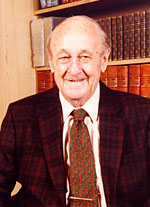
- Introduction
- Early days in New Zealand, 1915–1944
- Chalk River and Harwell, 1944–1947
- Return to New Zealand, 1948–1954
- Australian Atomic Energy commission, 1955–1959
- The University of Sydney, 1960–1980
- Committees and the man
- Degrees and honours
- About this memoir
Introduction
Charles Watson-Munro was trained as a scientist, majoring in chemistry and physics for his bachelor’s degree and primarily in geophysics for his master’s degree. After just two years working in physics and geophysics following graduation, he began work on the development of radar – a mix of physics and electrical engineering. That mix continued in the design and construction of the first nuclear reactors in Canada and the United Kingdom. The focus returned to physics for most of the last thirty years of his professional life when he moved first into cosmic ray research in New Zealand and then, after a short period as Chief Scientist of the Australian Atomic Energy Commission, into plasma physics at the University of Sydney. While the frequent shifts in fields of research made it difficult for Charles to develop as a major contributor in any one field, the resulting breadth of his expertise in science and engineering was a major factor in his success as a builder and leader of research teams. The other major factors in this success were his personal qualities – a sense of fun, integrity, loyalty to colleagues and students, concern for their welfare and development, and a desire and ability to get things done no matter how difficult the challenge.
The combination of scientific and engineering expertise and his personal qualities enabled Charles to make major contributions to science and engineering in four countries. In each country his contribution was at an early stage in the development of a particular technology – radar in New Zealand, nuclear power reactors in Canada and the United Kingdom, and nuclear science and technology in Australia. His contributions in New Zealand and Australia included participation in national committees and as a country representative on international committees.
Early days in New Zealand, 1915–1944
Charles Norman Watson-Munro was born in Dunedin, New Zealand on 1 August 1915, the son of Machell Watson-Munro, an electrical engineer, and Ethel Watson-Munro (née Penny). He had two sisters. After a brief period in England from 1919 to 1921 the family returned to New Zealand, living first in Lyall Bay and then in Lower Hutt, where Charles received his primary and secondary school education. He was a reluctant secondary school student, at least initially. He would have much preferred to be apprenticed as a carpenter but his father thought that ‘wasn’t a gentleman’s education’. His interest in carpentry never waned and he made several pieces of furniture for his and his wife Yvette’s home in Sydney.
Charles matriculated in 1930 at the age of 15. He was always placed near the top of his class, although not quite so highly placed for conduct. One of his reports from secondary school carries the comment ‘With more care, could be higher in the class. Plays at work.’ Despite that play he was placed second in the class that year! The family was not affluent and whilst at secondary school Charles helped out by selling honey from door to door. Charles stayed on at school for a further year after matriculating to sit for the higher leaving certificate in order to qualify for a government grant to cover part of his university fees for a science course at Victoria University, Wellington. He worked part-time as a laboratory assistant and apprentice instrument maker while studying at university and completed his bachelor’s degree in 1935, first in his class in physics and chemistry. He stayed on at Victoria for postgraduate study, supported by a scholarship and graduated Master of Science with first class honours in 1937.
Towards the end of his university study Charles joined the Department of Scientific and Industrial Research (DSIR), working directly under the Head, Sir Ernest Marsden, who was to have a great influence on the early development of Charles’ career. Charles worked on a variety of problems in physics and geophysics during this period (1937–1939) in which he published his first scientific papers [12–14] . A fourth paper [15] , with Marsden as co-author, was published in 1944.
In 1939, at the start of the Second World War, Charles joined a team engaged in radar development. He was sent to MIT in 1941 where he spent almost a year gaining information on the design and use of the necessary microwave equipment. While in the United States, Charles also served as New Zealand Scientific Liaison Officer in Washington. On his return to New Zealand in 1942 he was appointed Director of the Radar Development Laboratory, which grew to have a staff of 150. Charles’ visit to MIT had been so profitable, and his leadership skills already so well developed, that the Laboratory was able to sell around 15–20 sets to the United States for use in the Pacific war zone. In 1944, with the rank of Major, he took part in amphibious operations with US marines at Bougainville using the New Zealand radar equipment. He was made an Officer in the Order of the British Empire (OBE) in 1946 for his radar work during the war.
Shortly after returning to New Zealand from MIT Charles met Mark Oliphant who was visiting New Zealand to assist in the work on radar. The two had numerous contacts after that initial meeting. Charles believed that Oliphant, with Marsden, was influential in having Charles included in the group of New Zealanders who went to Chalk River (see following section).
Chalk River and Harwell, 1944–1947
In 1944 Charles and several other New Zealand scientists were invited go to Chalk River, Canada, to join a team of Canadian, UK and European scientists undertaking research on the peaceful uses of nuclear energy. The research was largely devoted to heavy water types of reactors that would subsequently be the basis of the highly successful Canadian nuclear reactor industry. Charles’ main task at Chalk River was the design of the control equipment for the heavy water reactor ZEEP (Zero Energy Experimental Pile), the first reactor to be built outside the United States. While in Canada Charles met his wife-to-be, Yvette Diamond, at a ski lodge in the Laurentian Mountains.
Early in 1946 a joint UK–New Zealand team, including Charles, commenced work at the newly founded Atomic Energy Research Establishment at Harwell, England, on the design and construction of two graphite moderated natural uranium reactors – BEPO (British Experimental Pile-0) and GLEEP (Graphite Low Energy Pile). The plan was to build GLEEP, a simplified version of BEPO, to check out the reactor physics for the design of BEPO and to provide radiation facilities for the Harwell site. Charles was given the responsibility of leading the GLEEP team. Construction began in August 1946 and the reactor went critical on Friday 15 August 1947. The short construction time, in the very difficult conditions that prevailed in England immediately after the end of World War II, was a remarkable achievement and owed much to Charles’ skills as a scientist, engineer, and team leader.
On the occasion of the thirtieth anniversary of the commissioning of GLEEP D J Taylor, the then GLEEP and DIDO Reactor Manager, remarked [1]
GLEEP has long outlived its immediate successor, BEPO, which closed down in 1968 after twenty year’s operation, and can claim to be the progenitor of all the British graphite reactors. GLEEP’s unique record of service, stability and safety is a tribute to those who designed, built and commissioned it thirty years ago.
GLEEP continued in operation until September 1990.
James Stewart, Charles’ deputy at Harwell, comments [2] ‘He was an outstanding project leader; a man of enthusiasm, commitment and drive, but at times a little impatient.’ and ‘Such a project is a fitting tribute to Charles Watson-Munro’.
Return to New Zealand, 1948–1954
Charles returned to New Zealand in 1948 to take up appointment as Deputy Head of DSIR where he had responsibility for directing research in physics, geophysics and engineering. Although Charles was not personally involved in much of the research, he had a major role in ensuring that it was of high quality and in fields of particular relevance to New Zealand including aerial magnetic surveys, geothermal energy, carbon dating, and meteorological studies based on measurements of the radioactivity of air.
In 1951 Charles resigned from DSIR to accept appointment as Professor of Physics at Victoria University, Wellington, where he carried out research on cosmic rays. With only relatively rudimentary equipment, his research group’s output was small, but it did include an interesting paper on the detection of radioactive dust from the British nuclear bomb tests of October 1953 which showed that the dust had been transported very rapidly from the bomb site to Wellington by the very high velocity, high altitude winds prevailing at that time. [19]
Australian Atomic Energy Commission, 1955–1959
In 1955 Charles took up appointment as Chief Scientist with the Australian Atomic Energy Commission (AAEC). The Commission had been established under the Atomic Energy Act 1953 with a wide range of functions and powers. In the first few years, the AAEC focused its attention on the development of an Australian uranium mining industry and on the initiation of a research and development program. The latter had, as one of its main objectives, the development of a joint R&D program with the United Kingdom (which had already undertaken a vast amount of work on reactor design and on the peaceful applications of nuclear energy, particularly its use in electricity generation). Shortly after his appointment, Charles joined the group of Commission staff working at Harwell on the joint program. He returned to Australia in 1957 to take direct charge of the research program and to oversee the completion of the initial set of buildings at the research establishment at Lucas Heights, a Southern suburb of Sydney, and the final stages of construction of the research reactor, HIFAR (High Flux Australian Reactor). The reactor, which was essentially the same design as the UK reactor, DIDO, went critical on Australia Day, Sunday, 26 January 1958. It has proved to be a remarkably successful research tool and also an important source of radioisotopes for use in industry, medical diagnostics and the environment.
The Commission’s original intention was to locate the reactor at Maroubra, a densely populated seaside suburb in Sydney. Charles was influential, with the assistance of Oliphant and others, in having the site moved to Lucas Heights which, at that time, was an outlying suburb with the nearest housing ‘about one and a quarter mile away’ [3] from the reactor site.
The principal objective [4] of the research program in those early days was ‘the development of the means for the economic production of industrial electric power from nuclear fuels’. [3]
This was the challenge that attracted Charles to the AAEC; at that time, Australia’s vast coal resources were not widely known. It soon became clear to him that the likelihood of Australia developing a nuclear power industry was remote and, in 1960, he accepted appointment as Professor of Physics (Thermonuclear) at the University of Sydney.
Charles was the ideal man for the job of AAEC Chief Scientist. With the commissioning of HIFAR he became perhaps the only person to be involved in the design, construction and commissioning of the first nuclear reactors in three countries – Canada, the United Kingdom, and Australia. His appointments in those three cases, and the highly successful outcomes, are a testimony to his scientific and technological ability and to his extraordinarily high administrative and management ability.
Two of the leading AAEC staff appointed in the period leading up to the commencement of operations at Lucas Heights were Keith Alder and Grant Miles. Their comments [5] on the early days there and particularly on Charles’ role as Chief Scientist include the following:
Charles could be informal and facetious – indeed, some of the team who had been a long time in the UK and were accustomed to English attitudes found his approach sometimes embarrassing. This was accentuated by his smoking habits – a well-chewed cigar or cigarette that, when deep in discussion, he was liable to light at the wrong end.
Charles’ informality and willingness to listen quickly gained him the confidence of the Australian group. His involvement in the very early days of atomic energy, both in Canada and the UK, was most important in Australia’s liaison with the UK and other countries.
He was also an excellent chairman of meetings, able to keep them crisp, short, and effective – with low tolerance for irrelevance; and he was a good lecturer.
Charles came to the AAEC equipped with a broad knowledge of physics, and while by temperament an experimentalist, he placed great store on ‘solid’ scientific training and achievement. He always sought and encouraged the ‘first class’ and established a tradition in recruitment and the merit assessment and promotion of staff, which provided a firm basis for the subsequent evolution of the Research Establishment.
The University of Sydney, 1960–1980
Soon after taking up appointment at Sydney, Charles realised that the description ‘Thermonuclear’ might conjure up unpleasant images among the general public and so he sought, and received approval, for the change to Plasma Physics in the title of his chair. The change in title didn’t reflect any change in objective: that remained to undertake research into the possibility of using nuclear fusion reactions in the generation of electricity – a possibility that Charles had become aware of when he attended the second ‘Atoms for Peace’ conference in Geneva in 1958.
Charles set about with great enthusiasm and energy building up his research group (‘Department’ in the terminology adopted by Professor Harry Messel to describe the research groups in the multi-professorial School of Physics that he headed). The W. D. and H. O. Wills Plasma Physics Department (the full title reflecting the generous gift from the company to assist in its establishment) was one of five departments, each with a professorial head, established by Messel in the late fifties. In each case, Messel had secured private funding from an individual or company to support the research – a remarkable and still unique achievement for an Australian university.
Messel readily agreed to Charles spending a year at the University of California, Berkeley, to familiarise himself with some of the science and technology of the field. He returned from Berkeley at the end of 1960 and I joined him early the following year as his first non-professorial staff member, having switched into plasma physics from nuclear physics at Princeton University during 1960 in preparation for taking up my appointment in Sydney. Charles had decided to use a method of plasma preparation for the Sydney experiments that had begun to be studied at Berkeley. During discussions at Princeton, he and I were able to target the key technologies that would be needed to ensure the successful implementation of that plan – a tactic similar to that used in the AAEC research program.
The plasma preparation method chosen for Sydney was hydromagnetic ionising fronts – a highly non-linear phenomenon that had the double advantage of producing a highly ionised plasma at relatively low cost and of providing an interesting and complex subject for research in its own right. Charles described the approach in the first two published papers from the group. [29, 30] Over the next two decades, a succession of linear plasma sources – the SUPPER machines [6] (Sydney University Plasma Physics Experimental Rigs) – were constructed using this method of plasma preparation. Although the temperatures obtained in the SUPPER machines were low compared with those obtained in larger (and more expensive) devices overseas, the plasma conditions were adequate for significant contributions to be made by the group to fusion related plasma problems, particularly in the study of both linear and non-linear characteristics of Alfven waves and in the development of techniques for plasma diagnostics (the measurement of plasma parameters such as density and temperature).
The second plasma device constructed by the group, SUPPER II, was constructed to study a method of plasma heating known as ion cyclotron heating. For this purpose, a 1MW, 8.5 MHz pulsed oscillator was constructed, but it did not produce the desired heating of the plasma. Consequently, Charles decided that more basic studies of wave propagation in the plasma would be necessary to understand the nature of the problems encountered with the heating experiment. This involved a large number of experiments on Alfven waves, including both the fast (compressional) and slow (torsional) wave types, at frequencies from about 1 MHz up to and above the ion cyclotron frequency.
The Alfven wave experiments were extended in the late sixties to include large amplitude waves, driven by alternating currents of up to 200 kA in the plasma. It was quickly discovered that at such large amplitudes, the waves became shock waves, with the potential for significant plasma heating. An extensive series of experiments were conducted up to about 1975 on ionising shock waves propagating into an upstream neutral gas in the presence of strong magnetic fields, as well as the so-called MHD switch-on shock waves that propagated into an upstream plasma. During this period the work on shock waves was done in close collaboration with the group led by Prof Bob Gross at Columbia University. Charles worked closely on the Alfven and shock wave experiments with his PhD students, including Ian Brown, Rod Cross, [8] Brian James, [8] Rory Niland, Frank Paoloni, and Lee Bighel.
The large volumes of plasma produced by the ionising shock waves were useful for the development of plasma diagnostics. Initial emphasis was on spectroscopy and microwave interferometry, but this was soon followed by the use of lasers for interferometry and Thomson scattering. The work on diagnostic development grew to become one of the major activities of the Plasma Physics Department.
A series of journal articles and conference papers resulted from this work. [29-61, 65, 67, 68] Charles was awarded a DSc in 1968 by Victoria University, Wellington, after submitting 23 of these publications for examination.
The work on hydromagnetic ionising fronts and on large amplitude Alfven waves was pioneering and highly relevant to the important issues of plasma preparation and heating. It was only matched in quality and timing by parallel studies in major laboratories in Russia. The work, and Charles’ ability as a communicator at international conferences, established the Sydney group as an important, although small, contributor to the international fusion research effort. This contribution, together with those of groups at the Australian National University and at Flinders University, enabled Australia to stay in touch with developments overseas. The work on small amplitude Alfven waves also attracted international attention and was the foundation for later work in the toroidal geometry of the Sydney tokamak, TORTUS, which was commissioned shortly after Charles retired.
A measure of the standing of the group, and of Charles in particular, is that he was chosen as one of only four people to present invited papers on the state of controlled thermonuclear research worldwide at the Third Atoms for Peace Conference in Geneva. [38] The other three papers were presented by researchers from Russia, Germany and the United States. The group was also well known for the very high quality of its graduates, the majority of whom went overseas for postdoctoral experience, in most cases to major laboratories where they were highly regarded.
Towards the end of his career Charles developed an interest in other energy sources, particularly solar energy. [62–64, 66, 69] He was the prime mover behind the successful work on solar energy that led to the formation of the Department of Applied Physics within the School of Physics. His involvement with solar energy research and with broader aspects of energy research continued for a few years after his retirement through his appointment as Energy Consultant to the Science Foundation for Physics at the University from 1981 to 1985.
Committees and the man
Charles had exceptional administrative and leadership qualities. Stewart’s comments on his time at Harwell have already been referred to. [2] He was ‘without peer as a committee member’. [7] These qualities were obvious very early in his career; he was just 27 when appointed Director of the New Zealand Radar Development Laboratory and only 30 when given the job of leading the team that designed and constructed the first nuclear reactor in the UK. In 1964, Sir Mark Oliphant commented, [9]
I know Watson-Munro to be a first class physicist and engineering physicist. He displays enormous energy and enthusiasm for whatever he is doing and always makes significant contributions to the subjects he tackles. His greatest asset is his ability to make things work, however complex equipment or experiment may be.
These administrative and leadership qualities, and his great breadth of experience and scientific knowledge, enabled Charles to make many significant contributions to Australian and international science through service on numerous committees and advisory bodies, on many of which he served a term as chairman. These bodies included the UN Committee for the Establishment of the International Atomic Energy Agency (1955); the International Fusion Research Council (1968–1980); the UN Scientific Committee on the Effects of Atomic Radiation (1973–1974); the Australian Institute of Nuclear Science and Engineering (1958–1980); the Australian Research Grants Committee (1969–1973); the Queen Elizabeth II Scholarship Committee (1974–1979); the Australian Ionising Radiation Committee (1974-1978); the National Energy Advisory Committee (1977–1979); and the National Energy Research, Development and Demonstration Council (1978–1981).
Charles’ abilities as an administrator and leader were founded on a wonderful personality – full of humour; a well developed sense of mischief with an accompanying impish twinkle in his eyes; a healthy disdain for bureaucracy, particularly that located in Canberra; until quite late in life, treatment of a cigar that was more chomping than smoking; [10] and a legendary concern for, and loyalty to, his staff and students. Yvette, his wife, supported Charles wonderfully in his career; together, they hosted many social gatherings at their home. In the 60s and 70s these gatherings played an important part in developing a common sense of purpose for the plasma physics group.
Charles’ health deteriorated markedly following the death of Yvette in 1989. He died peacefully in hospital in Melbourne on 10 August 1991. He is survived by his son, Tim. He is greatly missed by Tim and his many colleagues and friends.
Degrees and honours
- DSc (Victoria University, New Zealand, 1968)
- OBE (1946)
- Fellow, Institute of Physics (London)
- Fellow, Australian Institute of Physics
- Fellow, Institution of Engineering (Australia)
- Fellow, Australian Academy of Science (1968)
About this memoir
This memoir was originally published in Historical Records of Australian Science, vol. 14(1), 2002. It was written by M.H. Brennan, who lives in Netherby, South Australia.
Acknowledgements
Reminiscences and comments from many of Charles’ colleagues and friends have been a great help in preparing this memoir. These are annotated in the text. Two other sources of material were conversations between Charles and the author and a transcript of an interview conducted with Charles in March 1991 by Jane Innes. [11] Material drawn from these latter two sources is generally not annotated. The photograph, taken ca 1966, was submitted by Charles for the Academy’s archives.
Notes and references
- D. J. Taylor. 30th Anniversary of GLEEP. Atom 251, 196–198 (1977).
- J. Stewart. Private communication (1992).
- AAEC Third Annual Report, 1954–1955.
- A very thorough account of the AAEC can be found in the book ‘Atomic Rise and Fall: The Australian Atomic Energy Commission 1953–1987’ authored by Clarence Hardy, Glen Haven Publishing (Peakhurst, NSW, 1999).
- K. Alder and G. Miles. Private communication (1992).
- Charles had a talent for acronyms. The choices of SUPPER and later TEA (Toroidal Experimental Apparatus) for the Sydney machines were his. He also had a hand in the choice of the acronym GLEEP for the first UK reactor.
- J. A. Lehane. Charles Norman Watson-Munro 1915–1991. Australian and New Zealand Physicist 28, 219 (1991).
- I am indebted to Associate Professors Rod Cross and Brian James for their helpful comments on this section of the memoir.
- Sir M. Oliphant. Private communication (1964).
- The pipe held by Charles in the photograph seems out of character; a heavily chewed cigar was more common. However, the photograph is the one submitted by Charles to the Academy for its archives.
- J. Innes. Private communication (1991).
Bibliography
- C. N. Watson-Munro. The thermal conductivity of some specimens of pumice concrete. New Zealand Journal of Science and Technology 19, 585 (1938).
- C. N. Watson-Munro. Reconnaissance survey of the variation of magnetic force in the NZ thermal regions. New Zealand Journal of Science and Technology 20, 99B (1938).
- C. N. Watson-Munro. The flexural strengths, elastic limits and moduli of elasticity of some fibrous boards. New Zealand Journal of Science and Technology 21, 101B (1939).
- C. N. Watson-Munro and E. Marsden. Radioactivity of New Zealand soils and rocks. New Zealand Journal of Science and Technology 26, 99B (1944).
- C. N. Watson-Munro. A large number of classified reports in New Zealand, USA, Canada and UK on radar and atomic energy (1939-1947).
- C. N. Watson-Munro. Divergency curves for GLEEP reactor. Nature 160, 492 (1947).
- C. N. Watson-Munro. Some measurements of neutrons in cosmic rays. Pacific Science Conference Auckland (1954).
- C. N. Watson-Munro and N.V. Ryder. The detection of radioactive dust from the British nuclear bombs of October. New Zealand Journal of Science and Technology 36, 155 (1954).
- C. N. Watson-Munro. Nuclear physics beyond the earth. Southern Stars 16, 37 (1954).
- C. N. Watson-Munro. A.A.E.C. research programme. Nuclear Engineering 1, 183 (1956).
- C. N. Watson-Munro. Research programme of A.A.E.C. Australian Electrical Engineering 33, 369 (1957).
- C. N. Watson-Munro. The A.A.E.C. research reactor. Australian Journal of Science 19, 133 (1957).
- C. N. Watson-Munro. Divergence data for HIFAR. Atomic Energy 1, 2 (1958).
- C. N. Watson-Munro and J. P. Baxter. Possible developments of nuclear fuel cycles in Australia. Symposium on the Peaceful Uses of Atomic Energy in Australia (1958).
- C. N. Watson-Munro and G. L. Miles. The design and construction of research facilities for a power development programme. Proceedings of the Second International Conference on the Peaceful Uses of Atomic Energy 1093 (1958).
- C. N. Watson-Munro. Outlook for nuclear power in Australia. Atomic Energy 2, 6 (1959).
- C. N. Watson-Munro. Ion cyclotron resonance in highly ionized plasma. Bulletin of the American Physics Society II 7, 274 (1962).
- C. N. Watson-Munro. Some experimental observations of the characteristics of hydromagnetic ionizing fronts. Journal of Nuclear Energy Part C 5, 229 (1963).
- C. N. Watson-Munro. The design and characteristics of highly ionized hydrogenous laboratory plasma sources. Australian Journal of Physics 16, 340 (1963).
- C. N. Watson-Munro, M. H. Brennan, L. C. Robinson and L. E. Sharp. The production of hydrogenous plasmas by hydromagnetic ionizing fronts. Proceedings of the Sixth International Conference on Ionization Phenomena in Gases 4, 293 (1963).
- C. N. Watson-Munro, F. J. Boley and J. M. Wilcox. Hydromagnetic wave propagation near ion cyclotron resonance. Physics of Fluids 6, 925 (1963).
- C. N. Watson-Munro. Properties of high temperature plasmas. In Discharge and Plasma Physics. S. E. Haydon (ed.) (University of New England) 419 (1963).
- C. N. Watson-Munro. Measurement of plasma properties. In Discharge and Plasma Physics. S. E. Haydon (ed.) (University of New England) 427 (1963).
- C. N. Watson-Munro. The controlled thermonuclear power problem. In Discharge and Plasma Physics. S. E. Haydon (ed.) (University of New England) 465 (1963).
- C. N. Watson-Munro. Specific devices in C.T.R. research. In Discharge and Plasma Physics. S. E. Haydon (ed.) (University of New England) 488 (1963).
- C. N. Watson-Munro and L. E. Sharp. The radial variation of parameters determining the velocity of hydromagnetic ionizing fronts in a cylindrical geometry. Physics Letters 11, 39 (1964).
- C. N. Watson-Munro. Progress in controlled fusion and plasma physics in countries in the rest of the world-outside Europe, North America and the USSR. Proceedings of the Third International Conference on the Peaceful Uses of Atomic Energy 15-28, (1965).
- C. N. Watson-Munro and D. D. Millar. Experimental studies of J × B ionizing front propagation over the pressure range 0.1 millitorr to 1 torr. Proceedings of the Seventh International Conference on Phenomena in Ionized Gases 2, 783 (1965).
- C. N. Watson-Munro and I. G. Brown. Some studies of the attenuation of Alfven waves in a partly ionized hydrogenous plasma. Proceedings of the Seventh International Conference on Phenomena in Ionized Gases 2, 317 (1965).
- C. N. Watson-Munro and I. G. Brown. Characteristics of large amplitude Alfven waves in a laboratory plasma. Plasma Physics 9, 43 (1967).
- C. N. Watson-Munro, I. G. Brown and T. Gold. Laboratory simulation of magnetic fields produced in the moon by the field of the solar plasma stream. Physics Letters 20, 631 (1966).
- C. N. Watson-Munro, I. G. Brown, J. A. Lehane and I. C. Potter. Properties of a laboratory plasma prepared with combined transverse and axial currents. Australian Journal of Physics 20, 47 (1967).
- C. N. Watson-Munro, R. C. Cross and B. W. James. Percentage ionization in crossed field laboratory plasma sources. Physics Letters 23, 451 (1966).
- C. N. Watson-Munro. Energy sources for plasma devices. Proceedings of the Institution of Radio and Electronics Engineers, Australia 29, 312 (1968).
- C. N. Watson-Munro and R. C. Cross. Propagation of large amplitude Alfven waves. Proceedings of the Eighth International Conference on Gaseous Ionization Phenomena 359 (1967).
- C. N. Watson-Munro, R. C. Cross and B. W. James. Propagation of hydromagnetic ionizing fronts with large driving currents. Proceedings of the Eighth International Conference on Gaseous Ionization Phenomena 463 (1967).
- C. N. Watson-Munro. Electric fields ahead of ionizing shock waves. Physics Letters 25A, 156 (1967).
- C. N. Watson-Munro and R. C. Cross. Non-linear effects in the propagation of large amplitude Alfven waves in a laboratory plasma. Physics of Fluids 11, 557 (1968).
- C. N. Watson-Munro, R. C. Cross, R. A. Gross and B.W. James. Development of magnetohydrodynamic wave guide modes behind normal ionizing shock waves. Physics of Fluids 11, 129 (1968).
- C. N. Watson-Munro, G. F. Brand and N. R. Heckenberg. Spectral and microwave studies of the decay of a highly ionized hydrogen plasma. Australian Journal of Physics 22, 344 (1969).
- C. N. Watson-Munro. Sydney University studies of M.H.D. shock waves in laboratory plasmas. Atomic Energy 12, 24 (1969).
- C. N. Watson-Munro. Plasma heating from non-linear effects of large amplitude Alfven waves. Plasma Physics and Controlled Nuclear Fusion Research 11, 195 (1969).
- C. N. Watson-Munro, J. D. Crawford, B. W. James and R. M. May. Some characteristics of magnetohydrodynamic shock waves propagating into mixtures of gases. Proceedings of the Ninth International Conference on Gaseous Ionization Phenomena 61 (1969).
- C. N. Watson-Munro, R. C. Cross and B. W. James. Experimental measurements of the characteristics of normal ionizing shock waves. Nuclear Fusion 9, 4 (1969).
- C. N. Watson-Munro. Sydney University studies of the propagation of electromagnetic waves in laboratory plasmas. Atomic Energy 13, 2 (1970).
- L. A. Artsimovitch, C. M. Braams, B. Brunelli, G. von Gierke, R. W. Gould, P. Hubert, B. Lehnert, R. S. Pease and C. N. Watson-Munroe. Final report of the I.A.E.A. Panel on international co-operation in controlled fusion research and its application. Nuclear Fusion 10, 413 (1970).
- C. N. Watson-Munro and R. A. Niland. Electron temperature behind normal ionizing shock waves in helium. Physics Letters 34A (1971).
- C. N. Watson-Munro. The outlook for controlled nuclear fusion as a world source of energy. Search 2, 42 (1971).
- C. N. Watson-Munro and L. Bighel. Characteristics of normal ionizing shock waves in helium. Nuclear Fusion 12, 193 (1972).
- C. N. Watson-Munro, J. Cato and M. Kristiansen. Fast wave damping at the second harmonic of the ion cyclotron frequency. Physics Letters 40A, 161 (1972).
- C. N. Watson-Munro. A new look at solar radiation as an energy source. Search 4, 100 (1973).
- C. N. Watson-Munro. World energy resources for the next century. Proceedings of the International Solar Energy Symposium on Large Scale Solar Power for Australia (1973).
- C. N. Watson-Munro and C. M. Horwitz. A new type of selective surface. Proceedings of the International Solar Energy Symposium on Large Scale Solar Power for Australia (1973).
- C. N. Watson-Munro, L. Bighel, A. R. Collins, R. C. Cross and I. S. Falconer. Heating of plasma by MHD waves. Proceedings of the 11th International Conference on Phenomena in Ionized Gases (1973).
- C. N. Watson-Munro. Energy – the realistic options for Australia. Habitat 1(2), 20 (1973).
- C. N. Watson-Munro, L. Bighel, A. R. Collins, N. F. Cramer and R. C. Cross. Temperature and density profiles of an MHD ‘Switch-On’ shock. Proceedings of the Fifth Conference on Plasma Physics and Controlled Nuclear Fusion Research (1974).
- C. N. Watson-Munro, L. Bighel, A. R. Collins and N. F. Cramer. Heating and ionisation in MHD shock waves propagating into partially ionised plasma. Proceedings of the 7th European Conference on Controlled Fusion and Plasma Physics (1975).
- C. N. Watson-Munro. Australia and New Zealand energy resources – their availability, use and possible conservation. New Zealand Science Review 34(2), 31 (1977).
Charles Angas Hurst 1923–2011
Charles Angas Hurst was born in Adelaide, South Australia, on 22 September 1923 and died in Adelaide on 19 October 2011. He was internationally renowned as a mathematical physicist, making seminal contributions to the understanding of perturbation expansions in quantum field theory, to statistical mechanical models, and other topics in mathematical physics. He was a fine ambassador for his country and for Australian science. His commitment extended beyond physics and mathematical physics, for he was always interested in fostering links across disciplines and with science internationally, especially in the Asia-Pacific region.
Download the memoir
About this memoir
This memoir was originally published in Historical Records of Australian Science, vol. 27(2), 2016. It was written by Alan Carey and M. A. Lohe.
Bruce William Chappell 1936–2012
Bruce Chappell was one of the most distinguished geologists of his generation whose contributions to understanding the origins of granites are both insightful and profound. A pioneer in the application of X-ray fluorescence spectrography to the analysis of geological materials, his radical ideas about magma genesis, still the subject of vigorous debate, have dominated and largely determined the global directions of subsequent research on granites. His restite model, the recognition that most granite magmas move bodily away from their source regions as a mixture of melt and solid residual material, the progressive separation of which determines the magma composition, underlies his tenet that granites are images of their source. His consequent recognition, with Allan White, that there are two fundamentally different types of granite magma, I-type (derived from igneous sources) and S-type (derived from weathered sedimentary sources), each with its distinctive evolutionary path and associated mineralization, continues to underpin research into granites worldwide, and the search for granite-related mineral deposits.
Download the memoir
About this memoir
This memoir was originally published in Historical Records of Australian Science, vol. 29(1), 2018. It was written by Ian S. Williams and Kenton S. W. Campbell.
Bruce Godfrey Hyde 1925–2014
Bruce Hyde made seminal contributions to modern solid state chemistry, in particular to the understanding and characterisation of non-stoichiometry and structural complexity in the solid state. His work showed unequivocally that non-stoichiometric crystalline materials were often much more highly ordered than previously believed, that the ‘point defects' of conventional wisdom were in fact ordered into extended defects and that these defects were themselves ordered into structures of complexities hitherto unimagined. His deep understanding of crystal chemistry and structural relationships is apparent in his two co-authored books with his closest colleagues, Sten Andersson and Michael O'Keeffe. It also led to his mentoring an entire generation of younger Australian (and international) solid state chemists.
Download the memoir
About this memoir
This memoir was originally published in Historical Records of Australian Science, vol. 26(2), 2015. It was written by Ray Withers, Jeffrey Sellar, Michael O’Keeffe and Stephen Hyde.