





Arnold Hughes Ennor 1912-1977

Written by F.C. Courtice.
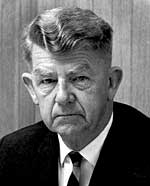
From relatively humble beginnings, Hugh Ennor accepted those opportunities that came his way to develop a love for biochemistry and the academic way of life. During a lifelong career in the world of learning, he became one of Australia's outstanding men of science. To those who knew him well, he will probably be remembered best for the part he played in the development of the John Curtin School of Medical Research at the Australian National University. The opportunities to use to the full his qualities as a leader came during the most active years of his life, for he was appointed to the Foundation Chair of Biochemistry in the John Curtin School of the newly established Australian National University at the age of 35. At this time, too, only three years after the end of World War II, research in the natural sciences was entering the most active era in its history. Scientists and technologists had achieved so much during the six years of war; the people of the world were now ready to support them in seeking solutions to the many problems that beset a society during times of peace. This was especially so in the field of medical research and in Australia where, before the war, research had been but little encouraged. In the last decade of his life, however, Ennor left the ivory towers of the university to devote himself to public administration. These were the hardest years in a long career dedicated to science.
Arnold Hughes (Hugh) Ennor was born on 10 October 1912 at Gardenvale, a suburb of Melbourne. His father, Arnold Martin Ennor, was a cabinetmaker in Bendigo, but moved to Melbourne as manager of the Caulfield Timber Company. His mother was Charlotte van de Leur Hughes and Ennor took both parents' names when he was christened Arnold Hughes by the Bishop of Bendigo in Bendigo.
He went to school at O'Neil College in Melbourne where he was usually top of his class. After leaving school in 1927 at the age of 15 he started pupil teaching but did not like it. His father then got him a position in a bank, but in 1929 he was appointed as a junior laboratory assistant at the Baker Medical Research Institute. This institute had been established in 1926, with Dr W.J. Penfold, a bacteriologist of the Commonwealth Serum Laboratories, as its first director. At the same time the recently formed biochemical laboratory of the Alfred Hospital, headed by Dr A.B. Corkill, was absorbed into the Baker Institute.
It was Corkill who early recognized that Ennor had considerable talent and who encouraged him to continue with his studies, firstly at the Melbourne Technical College and then at the University of Melbourne, where he matriculated as a student in the Faculty of Science on 8 March 1934. Together with others who had studied at the 'Tech', Ennor managed the elementary manipulations given in the practical classes with an effortlessness that was enviable to those who had come straight from school. Being somewhat older than the normal undergraduate he had a maturity, mien, and drive that marked him out from his peers at this stage. Dr J.W. Legge, who was in the same year, tells the following story to illustrate this:
With hindsight from the five years I spent with Lemberg at the Royal North Shore Hospital, I now recognize that the teaching of spectroscopy in elementary biochemistry in those days left much to be desired. Hugh had recognized this, had learned how the various derivatives of the haem compounds had been prepared, and in various tests had developed a technique worthy of Fresenius, which enabled him to identify pigments without using the spectroscope. Some were alkaline, some in acid solutions, some in alcoholic solutions and some reduced with ammonium hydrosulphide. He was thus able to identify them all by the use of litmus paper and smell without recourse to the hand spectroscope and the small medicine bottles which we were expected to use in order to identify the pigments. As one would expect, this was a foolproof method when compared with that taught in the practical class.
In 1937 Ennor obtained second class honours in Chemistry 3 and in Physiology 2, sharing the Exhibition with J.W. Legge, and he was admitted to the degree of bachelor of science on 9 April 1938. He then proceeded to the course for the degree of master of science in the school of biochemistry; in March 1939 he was awarded first class honours, again sharing the Exhibition, and was admitted to this degree on 4 September 1939. He later enrolled for the degree of doctor of science and in November 1943 his thesis consisting of papers on biochemistry was accepted by the examiners and he was admitted to this degree on 21 December 1943.
During his early postgraduate years, from 1938 to 1943, Ennor worked at the Baker Institute as a junior fellow of the National Health and Medical Research Council. At this time Corkill was director of the Institute and Ennor worked in close association with him. Corkill, a medical graduate of the University of Melbourne, as well as being in charge of the biochemistry laboratory was for a time physician-in-charge of the Diabetic Clinic established in the Alfred Hospital in 1926. Insulin had only recently, in 1922, been prepared by Banting and Best, an event which led to an enormous amount of work on carbohydrate metabolism, the field in which Corkill became interested. He went to England in 1929 and again in the early thirties to work at the National Institute for Medical Research with Dr H.H. (later Sir Henry) Dale on carbohydrate metabolism in muscle and liver. He returned from his second visit in late 1934, by which time Ennor was a science undergraduate at the University of Melbourne. In 1937, when Ennor graduated as a bachelor of science, Corkill was acting director of the Baker Institute and was soon to be appointed director, in 1938.
It was at this time that Corkill was gathering a group to work in the general field of carbohydrate metabolism. Charlotte Anderson studied the influence of a principle obtained from the anterior pituitary gland on carbohydrate metabolism in liver and skeletal muscle. Ennor, in 1938, joined in this work, studying the enzyme choline-esterase in myasthenia gravis and the role of the tripeptide, glutathione, in muscle metabolism. Later, Anderson and Ennor combined their techniques to investigate the step in carbohydrate metabolism in which methyl glyoxal is converted into lactic acid by the enzyme glyoxalase. They were able to show that their anterior pituitary extracts administered to animals for three days reduced by as much as 50 per cent the amount of reduced glutathione, which is a specific activator of glyoxalase, in the liver preparation made from these animals. In this way they demonstrated a chemical link between the anterior pituitary principle and carbohydrate metabolism.
The discovery by others that a diabetic state could be induced in animals by the injection of certain extracts made from the anterior pituitary gland led Corkill's group to embark on investigations of the diabetogenic substance of the anterior pituitary on carbohydrate metabolism in the liver; they also studied the glucose-phosphate metabolic pathways in the liver and the metabolism of fatty livers.
The events of World War II and his involvement in research projects for the Defence Department made it more and more difficult for Corkill to continue his fundamental work in carbohydrate metabolism. In 1942 his services were sought by the Chemical Warfare Department, and in 1943 Ennor resigned from his NHMRC fellowship at the request of Dr C.H. Kellaway to join a research unit, headed by Colonel F.S. Gorrill of the British Army, to study certain aspects of chemical warfare in the tropics of north Queensland. This work was mainly carried out during the hot wet summer months. One of his colleagues in this unit writes of these times:
Hugh had enough drive, energy, enthusiasm, and organizing capacity to serve two ordinary people, and behind these attributes was a first-rate brain. He was an extrovert to end all extroverts. His weapon was the bludgeon rather than the rapier, so ably wielded by Jack Legge, and the pair of them formed a team which was irresistible when it set out to persuade people to do things that they didn't want to do. Hugh's superabundant energy overflowed into innumerable games of poker in the Mess, and I remember very vividly how, when the station was immobilized owing to floods, Hugh suggested that we should build a tennis court while we were waiting. The temperature at the time was 97°F and the relative humidity 88.
When the war ended Ennor returned to his fellowship at the Baker Institute. By this time Dr C.H. Kellaway, who had been director of the Walter and Eliza Hall Institute, had accepted the position of Director of Research at the Wellcome Foundation in London and moved there in 1944. He was well aware of Ennor's ability as a biochemist and so the Wellcome Trustees offered him a fellowship to work in England for two years. Ennor proceeded to Oxford in 1946 to work in the Department of Biochemistry under Professor (later Sir Rudolph) Peters. Here he worked with Dr Lloyd Stocken on the distribution of acid-soluble phosphates in the fatty liver, on the estimation of creatine and the preparation of sodium phosphocreatine. It was during this time that his wife was confined to hospital for a considerable time necessitating the return of his two young children by ship to Australia to be cared for by relatives. Despite these domestic worries, Ennor remained cheerful and as energetic in the laboratory as ever. He was readily able to cope with difficulties which would have had a far greater effect on most individuals.
Ennor returned to Melbourne in 1948 as Senior Biochemist at the Commonwealth Serum Laboratories, but was soon appointed to the Foundation Chair of Biochemistry in the John Curtin School of Medical Research at the Australian National University. This was the first professorial appointment in the university where Ennor was to remain for nearly 20 years.
The facilities available for research in the John Curtin School gave Ennor the opportunity to develop his interests in biochemistry in a department devoted entirely to research. He ultimately built up an excellent department consisting of several groups of research workers. In his own group he formed a very close association with Dr H. Rosenberg and much of the work in his own laboratory was done in collaboration with Rosenberg, who joined him in January 1951.
During his tenure as professor of biochemistry in the John Curtin School from 1948 to 1967 and head of the department until 1965, Ennor's research was concerned with compounds containing phosphorus. The high-energy phosphates – in those days, adenosine di- and triphosphate (ADP and ATP) and phosphocreatine (PC) – had caught his interest during his earlier work on the metabolism of CC14-produced fatty livers, and he found some changes in the levels of high-energy phosphate in these livers.
In 1951 an intensive study began on the distribution and turnover of ATP phosphorus and phosphocreatine phosphorus in mammalian liver and muscle. It was virtually virgin ground. Ennor's laboratory was one of the first to use the isotopes 32Pand 24Na in the early fifties in Australia, and in these years the experimental background was laid down, with the use of isotopes, for this work. Once the procedures were worked out, the turnover rates of the various phosphates were determined and the chain of phosphate incorporation into them was followed through.
At this stage the interaction of ATP and PC became the central point of the work and the little-known enzyme creatine phosphokinase of muscle was investigated in detail. A series of papers established the important properties of this enzyme and laid the ground for further work. In a natural progression from this study, the work shifted to other, non-vertebrate, phosphagens and their kinases. An important methodological breakthrough at this stage was the development of a new method for the estimation of arginine, which worked equally well with all other guanidines and proved invaluable in subsequent work. It is now the standard method used everywhere.
In the period that followed Ennor and Rosenberg isolated in the pure state a number of invertebrate phosphagens and their precursors. Improved methods and application of modern separation techniques yielded crystalline phosphoarginine, the phosphagen of crustacea and other marine invertebrates and finally, in 1958, copious quantities of lombricine – the base of the earthworm phosphagen. These were the most exciting times and the most happy ones for Ennor. The review on phosphagen which he wrote about that time with Dr I.F. Morrison remained a definitive work for many years.
Lombricine is a phospho-diester of guanidoethanol and serine:
H2N–C(:NH)–NH–CH2–O–PO(OH)–O–CH2–CH(NH2)–COOH,
and its precursor, serine ethanolamine phospho-diester (SEP):
H2N–CH2–CH2–O–PO(OH)–O–CH2–CH(NH2)–COOH
was known to occur in amphibians. To their surprise and delight, the serine moiety in the lombricine molecule turned out to be d-serine, the first time a d-amino acid was shown to occur in a higher animal. The precursor, SEP, in the worm turned out to be d-SEP, which that of the amphibian was l-SEP. Free d-serine was also found in the earthworm.
The biochemistry of lombricine was further pursued and its biosynthesis elucidated. Ennor and Rosenberg finally turned to the phosphagen itself, phospho-lombricine. Its isolation was preceded by a cataclysmic three days of earthworm collection which will be remembered by an entire generation of Canberra schoolchildren of the early sixties. The enzyme lombricine phospho-kinase was then studied in detail and at the same time a study in breadth was undertaken of the distribution of serine ethanolamine phospho-diester, which occurred in the d-form only in the earthworm, but in the l-form in all lower vertebrates, as discovered in a wide survey carried out in the early sixties. The distribution of the l-compound was curiously restricted to fishes, birds, reptiles, and amphibians. Its function is a mystery to this day. In the course of this survey another strange observation was made in the lowest subphylum of the four, the fishes. Another related compound, l-threonine-ethanolamine phospho-diester was found alongside the serine diester. What's more, in a curious evolutionary twist, the relative amounts of the two varied from species to species, generally the threonine compound predominating in the most primitive, the serine one in the most developed ones.
Studies were then made to elucidate the metabolism, biosynthesis, and breakdown of these curious compounds and the specific enzymes involved in the reactions. It was at this stage, in 1965, that Ennor became more involved in university administration, and resigned from his position as head of the department of biochemistry.
The quality of Ennor's work and the standards set were always high. Claims for newly discovered compounds were made only after identification was completely positive and confirmed by synthesis. All the enzymic work was equally of high standard. Dr Rosenberg writes:
Ennor was happiest when working at the bench, and during those hours he was full of vigour, excellent wit, and boundless energy. He was, in those days, a delightful companion, though no one even in the closest circle in the department called him Hugh.
Professor W.H. Elliott, who worked for several years in Ennor's department but not in his group, writes:
Ennor was generous to people in his department. He took an interest in everyone's work but left us free to do whatever we wanted. His own group was never expanded at anyone's expense – we all got a fair share of the department's resources and he offered nothing but encouragement. Ennor was in those laboratory days a delightful companion – warm, friendly, generous. I was always impressed that irrespective of what company he was in, and it was often distinguished, he would come over and speak to anyone from his department, even the newest PhD student. It is true that no one called him Hugh. But those days were slightly different and it wasn't necessary to use first names on every occasion. He talked to everyone as an equal which is a good substitute for first name familiarity. He was meticulous in scholarly writing of papers and prided himself that no paper leaving the department was sloppily written. To this end he read every paper leaving the department very thoroughly and few were sent out without quite major improvements by him. He must have spent an enormous time on this task.
Ennor's love of biochemistry was obvious to all who knew him during the years he spent at the bench. He played a significant role in the establishment of the Australian Biochemical Society and was its president from 1960 to 1962. His research also took him to many biochemical laboratories overseas where he was well known by many of the leading biochemists of the world and for a time he was a member of the International Committee for Biochemistry. At the same time, many distinguished overseas biochemists visited his laboratory, some as visiting fellows, others as visitors for a shorter time. Among these, Sir Rudolph Peters writes:
I had a high regard for him, such a straight and downright character and always determined to do his best for whatever job he took on.
And Professor Baird Hastings writes:
The news of Hugh Ennor's death came as a great shock to me and Mrs Hastings. He was so vigorous and entered into any activity that he undertook with such enthusiasm that one thought of him as overcoming mortal ailments. I remember his vigour in research, particularly as it pertained to high-energy phosphates, culminating in his devising a phosphate method with Lloyd Stocken at Oxford that was an improvement on the popular Fiske and Subarrow one.
Whereas Ennor devoted much of his energy to research and to the administration of his own department, he was destined to play a very active role in the development of the John Curtin School and of the Australian National University. This university had been established by Act of Parliament in August 1946 with the specific provision that 'The research schools shall include a research school in relation to medical science to be known as The John Curtin School of Medical Research'. This Act came into operation in February 1947. Sir Howard (later Lord) Florey, Professor of Pathology and head of the Sir William Dunn School of Pathology in Oxford, had earlier advised the government on the establishment of the JCSMR and in 1947 the university negotiated with him concerning his possible acceptance of the directorship of the school. Although Florey declined to come to Australia in this capacity immediately, he agreed to act as adviser to the university in all matters concerning the John Curtin School. As Fenner, in his Victor Coppleson Memorial Lecture, said:
In essence he (Florey) functioned as a non-resident director, and was responsible for the way in which the school developed during the first decade of its existence. During this period (1947-1957) he visited Australia almost every year.
Ennor's appointment to the chair of biochemistry in 1948 was soon to be followed by that of Albert to the chair of medical chemistry in January 1949, Fenner to the chair of microbiology in July 1949, and Eccles to the chair of physiology in 1951. However, since there were no laboratories in Canberra, these professors were accommodated in various laboratories in Australia and overseas – Ennor at the Commonwealth Serum Laboratories and Fenner at the Walter and Eliza Hall Institute in Melbourne, Albert at the Wellcome institution in London and Eccles in the Medical School in Dunedin.
During these early years, a plan for the building of JCSMR was one of the main concerns of Florey and of the four widely scattered professors. It became clear that a permanent building in Canberra would take a considerable time to plan and build, so in 1952 the council of the university authorized the building of temporary laboratories on the campus; they were completed by the end of that year and enabled three of the four professors to be together in Canberra, Albert remaining in London. It then became convenient for one of the professors in Canberra to look after administrative matters locally and communicate with Florey in Oxford. Accordingly, Ennor was appointed dean of the school in 1952, a position to which he devoted a great deal of his enormous energy and drive in order to get the building under way and completed. In 1957 the building was completed and it was occupied in the latter part of that year. During this first decade of the school's development Ennor and Florey worked in close harmony. The completion of the building was undoubtedly a considerable achievement for them both, as well as for others. Florey could at last see many years of planning coming to fruition, an event that would not have occurred so smoothly had it not been for Ennor's administrative ability on the local scene.
The year 1957, however, was to be the end of the decade in which Florey was to guide the destinies of JCSMR. As the building neared completion, the university renewed negotiations with Florey to see whether he would come to Canberra as director of the JCSMR and professor of experimental pathology. Florey suggested an appointment as temporary director for one year and that he should come on that basis with several colleagues in the hope that conditions would be such that all would wish to stay. This plan did not have the support of university council and Ennor went to Oxford on behalf of council to discuss the matter with Florey. Ennor's mission, however, failed, with Florey deciding finally not to come to Australia as director of JCSMR. E.P. Abraham, in writing Florey's obituary for the Royal Society, comments:
Although Hugh Ennor was sent as an emissary to Oxford in March 1957, his visit only served to sharpen the division of opinion and to finalize the break. It is idle now to speculate on how things would have turned out if Florey had gone to Canberra on a temporary basis, but some such arrangement might have been made had it not been for a clash of personalities.
No doubt many factors were taken into consideration by Florey before he made his final decision. As Abraham stated:
One, to which he (Florey) himself attributed much importance, was that a sufficient number of his colleagues did not feel able to go with him to Canberra. He remarked that he had reached a time of life (he was 58 at the time) when he found it difficult to contemplate the formation of a group of entirely new collaborators and that he had no wish to find himself becoming merely an administrator or figurehead. Other factors were a growing apprehension about the administrative organization of the university and about the provision of sufficient money for the School of Medical Research to fulfil the role he had envisaged for it.
To what extent any clash of personalities affected Florey's decision is difficult to assess. Both Ennor and Florey were very plain-speaking, forthright men; neither suffered fools gladly but each understood and had considerable respect for the other. Both were down-to-earth practical men, laboratory men, happiest when working at the bench. Both, however, were destined to play leading roles in administration in science. Ennor in his position as dean was always loyal to Florey. He was never devious, never other than straightforward. He reacted quickly, but listened to arguments and changed his mind readily.
Indeed, one could see him changing in full flight, as it were, as his own exposition of a point developed or discussion opened up new avenues of thought.
Although Florey was no longer to be adviser to the university on JCSMR, he continued his deep interest in the school. In March 1958 he opened the JCSMR building and from 1964 until his death in 1968 when he was chancellor of the university, he made several visits to Canberra and was obviously delighted with the development of JCSMR. All those who attended the dinner in the Scarth Room of University House on 29 August 1966 to farewell Eccles on his departure for the United States, understand how happy Florey was with the stature and reputation attained by JCSMR in the world of medical research. Florey had planned to come to Canberra to work in the school when he retired as provost of Queens, but his death in February 1968, just before he was due to retire, ended what might have been a very pleasant period of his life.
When Florey finally decided not to accept the directorship of JCSMR, Ennor was appointed head of the school. There is no doubt that Ennor was genuinely disappointed with Florey's decision for he was well aware of the difficulties and the responsibilities of this position at an important stage of the university's development. He realized that he was not of the stature of Florey as a scientist and he insisted that he should continue to use the term dean instead of director. Nevertheless, he had an immense determination to maintain the high standards of research in JCSMR that Florey had envisaged and demanded. For the next ten years, until his resignation in 1967, Ennor remained head of JCSMR. This was a time of great expansion, not only for JCSMR but also for the university. During this time Ennor had a lot to do with the fine detail of the development of JCSMR, although the broad planning had already been set before his influence was at its height. It fell to him to establish the school's stature within the university. To him much credit must go for JCSMR's reputation for modesty in demands for growth and for fair and reasonable dealing in the competition for resources. Four new chairs were filled, experimental pathology in 1958, physical biochemistry in 1959, genetics in 1964 and clinical science in 1966; two new units were also established, biological inorganic chemistry and electron microscopy. The academic staff increased from 31 to 67 and the number of PhD students from 10 to 65 and, during this time, in 1963, Eccles was awarded the Nobel Prize for Physiology and Medicine. With the growth of the university, especially after the amalgamation with the Canberra University College in 1960, a position of deputy vice-chancellor was created to which Ennor was appointed for two years in 1964. He remained head of JCSMR and professor of biochemistry, but in 1965 resigned from the headship of the department of biochemistry.
In his concept of a research school Florey envisaged the research workers devoting the whole of their time to research under the best laboratory facilities possible. He felt that they should not be distracted or waste their time on administrative matters. In such a school the research should be 'superlatively good', at least equal to that in the leading laboratories of the world. The administration of the school was to be left largely to the director and the heads of departments who would form a school committee, and to a business manager and a technical manager responsible to the director. Members of the sub-professorial staff had a voice only at informal departmental meetings, but of course could as individuals freely discuss any matter with the director.
Ennor strongly endorsed this type of school management which worked well during the initial period of rapid expansion. With the growth of the academic staff, however, there arose an increasing demand for the formation of a faculty and Faculty Board to give all members of the academic staff a voice in the government of the school. Ennor was well aware of the importance above all else of the quality of research in determining the stature of the school on the international scene. He was also well aware of the enormous amount of time that can be wasted in meetings. He believed that members of the academic staff had access to whatever facilities they wished to carry out their research. For a time, therefore, he adhered to the original form of government and he resisted any move to form a more 'democratic' structure of government in the school. Ultimately, as an interim measure, two members of the sub-professorial staff were added to the school committee and meetings of the entire academic staff were held periodically. At this time, however, the climate was changing in all universities and it became difficult to resist the tide of opinion. In 1966, when Ennor was deputy vice-chancellor, a committee was set up by the vice-chancellor to report on the structure of JCSMR government; in 1967 a faculty-Faculty Board structure was recommended and established.
It has long been argued that a school for medical research completely divorced from the clinic suffers a considerable disadvantage. Florey was certainly a laboratory man, but he was very conscious of the necessity to exploit the results of basic medical research for the benefit of mankind. In his address at the opening of JCSMR in 1958 he said;
There are, I am sure, few who would now dispute that new knowledge is coming principally from those engaged either in what are called fundamental sciences of medicine or from those who have been trained thoroughly in experimental methods in these sciences and have then gone with the outlook so obtained to work in the clinic...I hope that one of the major functions of this institution will be to train future clinicians in experimental methods and ways of thought as well as to train laboratory workers.
With the rapid development of the basic medical sciences after he became head of the John Curtin School, Ennor began to realise the deep gap between the scientists in JCSMR and the practising clinicians. Even though some medical graduates were being trained in the experimental method and were returning to the clinic, as Florey had hoped, the research workers in the school had relatively little contact with medical problems as they existed in the clinic. Ennor became aware of the importance in Canberra of a teaching medical school as part of the Australian National University to complement the JCSMR. With the rapid growth of Canberra in the sixties, the establishment of a viable undergraduate medical school attached to the university became a possibility. With Ennor's support the university set up a committee under his chairmanship to report on the possible establishment of an undergraduate medical school. The report, produced in 1965, served as a basis for further studies and reports on the type of medical school best suited for the community and the time of its commencement. These studies were subsequently made, but for various reasons, at the time of his death in October 1977, the decision to establish an undergraduate medical school in Canberra was still in abeyance.
Although the establishment of an undergraduate medical school attached to the Australian National University was to become a long drawn-out issue, there were other ways in which JCSMR could attain a closer link with clinical medicine. One was to establish a chair of clinical science in JCSMR with the department located in the Canberra Community Hospital where scientists and clinicians could work together. It was hoped that there would be considerable liaison between those working in the main JCSMR building and those working in the hospital. With Ennor's support the establishment of this department was approved by both university council and hospital authorities, and the first professor of clinical science was appointed in 1966.
During the rapid expansion of the Australian National University in the sixties, Ennor became one of the main protagonists of a research school of chemistry, although he was strongly opposed to a rapid multiplication of research schools. At this time the university still had only its four original research schools – JCSMR, Physical Sciences, Pacific Studies, and Social Sciences – but had in 1960 become amalgamated with Canberra University College which ultimately became the School of General Studies. Chemistry at that time was largely confined to the department of medical chemistry in the JCSMR, although with the establishment of a faculty of science in the School of General Studies, an undergraduate department of chemistry was formed. A strong proposal for a research school of biological sciences was also put forward and supported by the Australian Academy of Science. There was, therefore, keen competition at the time for a major long-term development in the university. Ennor had, however, obtained the interest of three of Australia's leading chemists then residing in the United Kingdom – A.J. Birch, D.P. Craig and R.S. (later Sir Ronald) Nyholm. A proposal based on the return of these three chemists, or at least two of them, made the chemistry project very attractive and in 1965 council approved the establishment of a research school of chemistry.
After he became head of JCSMR in 1957, Ennor also took an active interest in national activities outside the university. He played a leading role in the establishment of the National Heart Foundation. This activity brought him into close contact with clinicians, especially those interested in cardiovascular disease, and with leaders in the commercial world. Ennor was elected chairman of the first national conference to establish the National Heart Foundation of Australia . This was held in the Council Room of the Australian National University on 23 February 1959. It was attended by 25 distinguished representatives from all States of the Commonwealth and, by special invitation, Sir Alan Taylor, representing the R.T. Hall Trustees, and Councillor W.J. (later Sir William) Kilpatrick, chairman of the then recent Cancer Society campaign in Victoria. It was at this conference, formally opened by the prime minister, the Right Honourable R.G. Menzies, and presided over by Ennor, that the formal motion establishing the National Heart Foundation of Australia was carried. Dr Kempson (later Sir Kempson) Maddox, with the R.T. Hall Trustees, had earlier put forward the idea of a foundation for the prevention and better management of heart disease in this country; at the time he was president of the Cardiac Society of Australia and New Zealand. The Foundation decided to launch a national appeal with Councillor Kilpatrick as National Appeal Chairman. Sir William Kilpatrick writes:
...such consistent action by Sir Hugh and other scientific and medical leaders on television, radio, and other media was a major factor in attaining £2.5 million for the National Heart Foundation to carry out its programme.
On 14 July 1960, the inaugural meeting of the National Medical and Scientific Advisory Committee was held with Ennor as chairman. Those who were present at this meeting, which continued for three long and tiring days, will always remember the skill with which Ennor conducted this important meeting which set the high standards adopted by the Foundation. On Ennor's retirement from this position in March 1967, the incoming chairman, Professor (later Sir John) Loewenthal, commented on 'the outstanding contribution which Sir Hugh Ennor had made to the successful functioning of the committee as its foundation chairman'. He reminded the members that 'the committee had laid down a very successful pattern of operation and all of the committee's work had been marked by the greatest goodwill and enthusiasm on the part of its members'. This, he said, was a tribute to the personality and capacities of Sir Hugh.
Ennor continuously served the Foundation as a member of the executive committee from 1959 to 1967, member at large from 1961, director from 1964 to 1967, and as president in 1966-67. Sir William Kilpatrick writes:
Having served continuously with him for some 18 years at the Foundation, I cannot speak too highly of his dedication to, and brilliant handling of, its affairs throughout that period.
In the sixties Ennor also played an active role in the establishment of the Science and Industry Forum of the Australian Academy of Science. Having been elected to fellowship of the Academy in 1954, he served on Council from 1962 to 1967 and was treasurer from 1963 to 1967. During 1963 the Council of the Academy saw a need to improve the Academy's public relations with various groups of people. At Ennor's suggestion, the officers met on several occasions for dinner with different small groups of people prominent in the industrial and commercial life of the country, many of them known personally to Ennor. This led to a symposium on 'Scientific and Technological Research in Relation to the Development of Australian Industry' at the annual general meeting in 1964, at which there were discussions, both formal and informal, between fellows and about thirty prominent industrialists. At the concluding dinner, Sir Ian McLennan suggested that some sort of joint organization might be set up to arrange similar discussions in the future. Other informal discussions with groups of business people were held at dinner meetings by the Sydney and Adelaide groups of fellows respectively.
In August 1964 the then president, Sir Thomas Cherry, called together a small representative group of fellows and industrialists to discuss the possibility of such a joint organization. As an outcome a small steering group consisting of Sir Archibald Glenn, Mr D.L. Hegland, Sir Henry Somerset, Sir Thomas Cherry, Sir Hugh Ennor, and Dr (later Sir Ian) Wark was set up to develop the project further. On the recommendation of this group an Interim Industrial Liaison Committee was called together and was subsequently expanded into the Science and Industry Forum which held its first meeting in March 1967. The Forum has become an important part of the Academy's continuing activities and Ennor's influence in the early stages was crucial to its development.
During the early sixties Ennor served on many other committees among which were the Selection Committee for Natural Sciences of the Nuffield Foundation, the Advisory Committee of the Ciba Foundation, and the Committee of the Australian Universities Commission (the Martin Committee) that reported on the future of tertiary education in 1964.
By the end of 1966 Ennor had crowded a great deal into the decade that had begun in 1957 with his appointment as head of the John Curtin School. During this time he had a great many friends in all walks of life – academics, diplomats, politicians, public servants, and people in the business and professional worlds. His success in administration led him to devote more and more of his time to this field and consequently less and less to his work in the laboratory. By 1966 the time was approaching when he had to decide between devoting more of his time to biochemistry and giving up laboratory work altogether. He really had little option but to devote his future to full-time administration, for he had become a very experienced and successful administrator in the academic world.
In the events of the latter half of 1966, Ennor decided to quit the academic life and to embark on a new venture. The opportunity arose for him to accept the position of permanent head of the Department of Education and Science, a newly established department in the Commonwealth Public Service. He served in this position from its creation at the beginning of 1967 until the separation of the science function as a department in its own right at the end of 1972. His selection as a non-public servant was, at the time, a rare event. It reflected the wish of the Holt government to appoint a distinguished academic administrator to develop the new department. The creation of a Commonwealth department in education and science was itself a significant development in Commonwealth/State relations in education, which was then and continues to be primarily a State responsibility. Ennor became a member of the Directors-General Conference and of the standing committee to the Australian Education Council.
As an experienced academic administrator Ennor found the transition to public administration not without its difficulties. The administrative organization established for the new department mirrored the classical hierarchical model of public service departments which was far removed from the models of administration with which he had been familiar in universities. He advocated the infusion of outside blood into the Commonwealth service, including short-term appointment and contracted services, and had limited success in following this approach within his own department.
Ennor's responsibilities in education to that time had been concentrated in the tertiary area, including his membership of the committee on the future of tertiary education in Australia, the Martin Committee, which reported in August 1964. However, as head of the new department his public comments were directed primarily at the schools level. His first major speech, the Eleventh Theodore Fink Memorial Lecture given on 3 October 1961, was titled 'Some Problems of Educational Research in Australia'. In it Ennor was highly critical of what he regarded as Australia's poor performance in educational research in contrast to many other areas of human activity, including research in which Australia had made her mark on the world scene:
The educational scene stands out as one in which we seem to have failed; failed in the sense that we do not appear to be able to delineate the problems; let alone ascribe priorities to them; let alone provide solutions to them.
The speech drew a sharp reaction from many senior educators, but Ennor did not stop at criticisms about lack of priorities and wasteful use of resources. In that speech he advocated the establishment of a representative committee to survey the situation, determine priorities, and indicate how they might be investigated. The outcome was a representative meeting of experienced people, including teachers, which led to the establishment of the ERDC – the Educational Research and Development Committee.
The period 1967-72 saw a substantial expansion of Commonwealth activities in education and also in science. Increases in direct Commonwealth expenditure were dramatic, although not on the scale which developed subsequently during the Whitlam administration. Some of the more significant Commonwealth initiatives in education during this period were: secondary school libraries programme; reports on academic salaries and on levels and nomenclature of awards in advanced education; development of the tertiary entrance examination; introduction of per capita grants to non-government schools and shared capital grants for government and non-government schools in the States; acceptance of direct responsibility for the education services in the ACT and the NT; establishment of the Commonwealth Teaching Service.
Ennor's public utterances emphasized the need for qualitative rather than quantitative improvement in education at the schools level. During this period the Commonwealth supported various groups working on the preparation of an up-to-date secondary science curriculum and the development of social science curricula. The Academy of Science had set the example with The Web of Life. The Asian languages and cultures exercise was a substantial effort in a particular area of growing relevance to Australians. All of these activities involved close cooperation between Commonwealth and State ministers and their departments, with support from academics.
In exercising its responsibilities for the provision of education services in the two mainland Territories, the new department sought to develop policies in tune with local requirements and arising from comprehensive expert enquiry and discussion. The creation of the Commonwealth Teaching Service was preceded by the Radford/Neale enquiry into the desirable organization, career, and salary structure for such a service. The Darwin Community College was created following the recommendations of a special committee of enquiry, and a committee drawn from the local community was commissioned to advise on the restructuring of the government secondary schools system in the ACT.
1972 saw the culmination of the pressure from highly organized groups who were seeking substantially increased Commonwealth grants for education at the schools level. Ennor, in opening the 26th Annual Conference of the Australian Council of State School Organizations on 16 October 1972, argued against those who advocated reduced class sizes. He warned that research throughout the world had not indicated any optimum number for a class size. He emphasized the need for the development of a strong element of professionalism within the various teacher organizations. He argued that:
not only should any demand for reduction in class sizes be based on some objective assessment, but also that those who make the demands should be aware of the cost of those demands.
This attitude reflected Ennor's belief that those who advocated substantially increased expenditure on education should back up their demands with argument and evidence. He emphasized too the role of government in determining priorities among various proposals.
Given Ennor's background and known attitudes, it was to be expected that the 'and Science' element of the new department would receive special attention. The department had been created from the education division of the Prime Minister's Department and its involvement in science during that period had been notable primarily for the establishment of the Australian Research Grants Committee and for annual grants such as that to the Academy of Science. During the period from 1967 to 1972 responsibilities in the science area led first to the establishment of a branch and later of a division within the department. Significant developments with which Ennor had a close personal association were the negotiations in 1967 leading to the construction of the Anglo-Australian telescope; the introduction of project SCORE – the Survey and Comparison of Research Expenditure covering all sections of the economy which was further developed following the creation of the Department of Science in 1972; the establishment of and administrative support for the Metric Conversion Board in 1970; and the first Advisory Committee on Science and Technology which was proposed in 1972 to advise on the alignment of civil science and technology to national objectives. In 1968 the US/Australian agreement for scientific and technological cooperation was signed, with the Department of Education and Science as the Australian executive agency. This was the first of a number of related measures taken subsequently which reflected Ennor's strong personal conviction about the need for and the national benefits to flow from such arrangements.
When the Whitlam Government decided to establish separate departments for education and for science, Ennor chose to go to science and took up that appointment from the beginning of 1973. Although the problems of a recently created department were not new to Ennor, those which he incurred through the Department of Science were to weigh heavily on him for the whole five years during which he was the permanent head. It was typical of him that, right up to the day of his official retirement, which turned out to be less than a week before his untimely death, he was still grappling with difficulties which he wanted resolved before his successor took over – and that while critically ill in hospital. The embryonic Department of Science was not an organization for which anyone could have accepted responsibility with cheerful optimism. But the magnitude and scope of the difficulties later to emerge were not anticipated.
It was recognized at the outset that the return to power of the Labor Government after a lapse of 23 years would pose problems for both the ministry and the administrative machine, but their extent and effect were not foreseen. The government wanted action and it wanted action quickly. The Department of Science was poorly equipped to respond. It had no management services of its own; it had minimal policy development resource; it inherited overnight a set of agencies which each had problems peculiar to itself that it looked to a central departmental organization to tackle, and in the case of the Department of Science that central organization was virtually non-existent.
The first 12 months in the life of the department were well nigh impossible ones for Ennor. It took that long to establish some sort of organization and some form of coherence in action. However it took much longer to get the whole machine to work efficiently and effectively. For many months the department had to depend for its chief management and administrative responsibilities entirely on support from the Department of Education, to which the management services branch of the erstwhile Department of Education and Science had been transferred en bloc; it also had to depend on the departments of the Attorney-General, Capital Territory, and Supply and Customs for administrative support for the Patent Office, the Bureau of Meteorology, the Antarctic Division, and the Analytical Laboratories respectively. Whilst this fragmentation was difficult for all involved, it was particularly hard on the permanent head of the Department of Science.
Ennor saw the new department as having roles both in the formulation of policy proposals and in the implementation of policies for science and technology. Those roles would not be exclusive and many other agencies would be involved. In particular he wanted to forge strong relationships with the Science Council that the government intended to establish. He saw that body as chief adviser on priorities, particularly in the field of 'big science' where the costs involved could run into millions of dollars. He had grave doubts that science expenditures could maintain the growth rates current at the time, and he worried about escalating costs, particularly those attributable to the increasing sophistication of instrumentation and facilities. He was concerned that the right institutional arrangements should be made for expensive new capital items and particularly that opportunities for bilateral or multi-partite international collaboration should be explored; he felt that, as a general rule, equipment serving a national purpose should be available as a national, rather than as an establishment-exclusive, facility.
Ennor became a member of the Anglo-Australian Telescope Board on 4 May 1973 and he was reappointed for a further term on 27 May 1976. His initial appointment led to a perceptible shift in the Australian attitude to the question of who would be responsible for day-to-day management and operation of the new telescope. Previously the Australian view had tended to favour the Australian National University in this role, as opposed to the UK view that the Board should effect strictly binational arrangements for the purpose. That Ennor should find himself closely in agreement with the British attitude was inevitable, given that he started with the views about multinational arrangements and national facilities attributed to him earlier. In the end, it was the British view that prevailed but not before Ennor had found himself at odds with some of his colleagues who were very strongly committed to the other option.
Ennor made notable contributions to the Board's work. Being also head of the Australian executive agency, viz., the Department of Science, he was able to give the best advice on many organizational and administrative matters. He took a deep personal interest in instrumentation and strove to assist the Board to equip the telescope with the range of facilities necessary to guarantee its use to full advantage. Ennor enjoyed his commitment to the Anglo-Australian telescope but the controversy over management and operation left some scars.
At 30 June 1973, the central office of the Department of Science consisted of a policy division with 18 positions occupied out of 37 allowed, a general services division with 26 positions occupied out of 34 allowed, and a management services branch with no positions occupied out of 97 approved. Most of the vacancies were filled over the following 12 months; the lengthy processes of recruitment on this scale however diverted a substantial fraction of the comparatively scarce resources available away from policy formulation.
It was a blow to Ennor when the Advisory Committee on Science and Technology which had been established by Prime Minister McMahon and had held its first meeting on 24 October 1972 was dissolved by the Minister for Science in February 1973. The Labor Government's interim Australian Science and Technology Council was not convened as a replacement till May 1975. During the interregnum Ennor worried continually that major policy issues in science and technology were not being considered. He was especially concerned that no effective action was being taken on initiatives proposed for marine science and astronomy. However he was reluctant to have the department make other arrangements to have these subjects addressed since he believed that such action would pre-empt the role which he judged proper for a Science Council.
The department and, more particularly, its central office had little chance to settle down till near the end of 1975. In the meantime the addition of various new responsibilities and the removal of others did not make life any more comfortable for Ennor. He had been unable to provide adequate resource in May 1973 to match the then Minister's newly conferred responsibility for coordinating the establishment of consumer standards. The transfer to the Department of Health of the task of measuring radioactivity from fallout provided some relief – but not till after work arising from the series of nuclear tests by the French in 1973 had been completed. When the council of the Australian Institute of Marine Science appointed the first group of officers to its own staff departmental support for the Institute was no longer required, but that commitment was balanced by the new one of servicing the interim council of the Australian Biological Resources Study.
An OECD review of Australian scientific and technological activities was undertaken early in 1974 at the request of the then Minister. This was a complex task and represented a big load for the department. Unlike similar reviews in other countries, this one had minimal support from the OECD Secretariat, and the shortfall had to be made good by the department. Ennor was personally involved in much of the work associated with the review, including leading an Australian delegation at a formal meeting of the OECD Committee for Scientific and Technological Policy convened to exchange views on the content of the draft review report.
In January 1915 the Space Projects Branch of the department came into being through transfer of the American Projects Branch of the Department of Manufacturing Industry; the latter had assumed responsibility for the branch when the Department of Supply had been abolished. The Balloon Launching Station at Mildura came with the branch. Also in January 1975 the Government issued a white paper: Science and Technology in the Service of Society – The Framework for Australian Government Planning. The intended machinery included a ministerial committee on science and technology, an Australian Science and Technology Forum and a continuing Department of Science. An interim ASTEC held its first meeting at the end of May 1975.
On 6 June 1975 the name of the department was changed to that of Science and Consumer Affairs. Shortly afterwards the Patent Office reverted to the Attorney-General's department. It would be fair to say that Ennor was not relaxed about the consumer affairs commitment. However, he accepted it cheerfully enough, and was determined to have his new department undertake its assigned tasks with dedication and effectiveness. An interim Commission on Consumer Standards had been established in October 1973 and had been assisted to some extent since that time by the department through the work of the Analytical Laboratories. In April 1974 the interim commission made recommendations concerning a permanent body to succeed it but, in the event, the proposals it developed never did come to fruition.
With the change to a Department of Science and Consumer Affairs, a consumer standards branch was established in the general services division and a consumer protection division was set up in the department by transfer of staff from the Trade Practices Commission. Once again Ennor found his limited resources well over-stretched. The consumer standards branch had to be manned by staff transferred temporarily from elsewhere in the department and the consumer protection division found itself tasked well beyond the capacity of the workforce which it brought with it. Nevertheless Ennor had the department produce some potentially useful results – price surveys, a guide to consumer rights and to sources of advice and information, and a consumers' magazine. After the general election in December 1975, 'Consumer Affairs' was removed from the purview of the department.
There was one incident arising out of the budget brought down by the government in 1975 that should be specially mentioned. In that budget funds for the Australian Research Grants Committee suffered a massive cut. The scientific community was greatly upset and, in some quarters, the Department of Science was blamed. Allegations amounting to charges of incompetence or indolence on the part of departmental officers were published in Search. The department was not only not responsible but rather had tried vainly to avert the potential disaster. Nevertheless, strict adherence to public service standards of propriety inhibited Ennor from revealing publicly exactly what had happened. It is nevertheless a matter of history that, subsequently, steps were taken by the government of the day to partly redress the situation.
The problems which Ennor had as a result of the demands of government were exacerbated by problems internal to the department. The latter reached something of a climax in publicity arising through the hearings of the Royal Commission on Australian Government Administration. It would be inappropriate to make judgments about respective rights and wrongs. What can be said is that Ennor always looked for the highest standards of personal and professional performance, and his make-up would not let him accept anything which he judged to be less.
The Royal Commission's Science Task Force rejected the concept of a minister and department of science. Ennor, however, firmly believed that a department of science is a necessary concomitant of a Science Council and he issued a firmly worded and detailed rebuttal of the Science Task Force report. The Royal Commission itself saw a need for a ministerial focus for CSIRO and general science policy and posed the alternatives of a group concentrated in the Cabinet office and working to the prime minister or of a minister for science with a more traditional department, associated with a ministerial committee on science and ASTEC. After the elections of December 1975, an Administrative Review Committee was established to recommend on administrative savings that might be achievable. Despite forecasts in the press to the contrary, the Department of Science was not abolished. It is a fair presumption that the committee was satisfied with what it found out about the department, its central office, and its top management with Ennor in charge.
During 1976 and 1977 the department received less adverse publicity. Ennor found himself as busy as ever. He was personally very much involved in a major review of astronomical facilities in Australia which had been commissioned by the government. Under his chairmanship, an interdepartmental committee, supported by a departmental secretariat and an expert group of astronomers, studied the subject in great depth and reported its findings in September 1977.
Meanwhile Ennor had also had to find staff from the central office to comprise a secretariat for a committee of inquiry that had been set up to examine the operations of the Bureau of Meteorology. The committee based its work in part on a substantial input from the department arising through the preparation and publication of a green paper on meteorology and analyses of over 300 responses from all sectors of the community.
Concurrently the department was engaged in a commitment of large proportions and long duration which stemmed from comprehensive review of Australian Antarctic operations and from development of future Antarctic policy. That task too had been initiated through a green paper drafted by the department; it entailed extensive consultations with universities and other bodies as well as protracted deliberations by an interdepartmental committee and a set of working parties. During the same period, yet another interdepartmental group, chaired by the Department of Science, was looking at issues arising from international collaboration in science and technology, and endeavouring to formulate a draft policy on the subject for consideration by government.
A lesser man might well have been overwhelmed by the magnitude of these tasks, given the small organization which Ennor had at his disposal. In more private moments he would occasionally express his concern and perhaps a little pessimism – but that was rare. Both in public and on the job he always exuded confidence and optimism. And he was buoyed up by some notable successes achieved under his leadership. The US/Australia Agreement for Scientific and Technical Cooperation has been progressively developed by the department as an excellent vehicle for promoting collaboration that, in its absence, could not occur. Against the run of the economic tide, the government accepted the department's arguments in the 1977-78 budget context for more resources for the Antarctic Division, and for the establishment of a LANDSAT receiving/processing facility in Australia. These were notable achievements and a source of great satisfaction to Ennor in his final year.
We have seen that in a career of 40 years since he graduated from the University of Melbourne in 1937, Ennor spent the first 30 years as a biochemist in medical research institutes. By the end of this time, towards the end of 1966, he had been drawn more and more into university administration and further and further away from his biochemical laboratory. He found himself at a crossroads and realized that it would not be easy to go into reverse. Most scientists who have been drawn away from the laboratory for a few years into academic administration find it difficult to return to the bench; they usually accept full-time administrative positions and this was so with Ennor. He was, I am sure, happiest in the academic world, but during the last decade of his life he nevertheless gave in full measure his skills and energy to public administration, however hard the road ahead sometimes appeared. He will be remembered by his colleagues in university and public service for his integrity and dedication, and for the affection, kindliness and courtesy which he unfailingly bestowed on the many good friends he had among them.
Ennor was honoured for his services to science and medicine by election to the fellowship of the Royal Australian Chemical Institute in 1951 and of the Australian Academy of Science in 1954, by the award of the degree of Doctor of Science honoris causa of the University of New South Wales in 1968 and of the degree of Doctor of Medicine honoris causa of Monash University in 1969. He was created CBE in 1963 and a Knight Bachelor in 1965.
I first met Hugh Ennor towards the end of the war when he visited the Chemical Warfare Establishment in England, but it was after the war, early in 1946, that I first came to know the Ennors. Hugh had married Violet Argall in 1939 and in 1946 he came to Oxford with his wife Vi and their two young children, Janice and Phillip, to take up his Wellcome Foundation fellowship in the department of biochemistry. They shared a house with Dr (later Professor) David Sinclair and his wife in North Oxford not far from where I lived with my family. My wife and I have clear memories of the austerity of those early post-war years when on a cold bleak Sunday afternoon the Ennors came to tea, as was the custom in Oxford. Janice was 5 and Phillip 3, roughly the same age as our three children. There began on that day a close family friendship which has remained for over 30 years. Although Hugh and I may not have always agreed in those 30 years, I always knew that beneath his somewhat forthright manner was a genuine feeling of warmth for his numerous friends in all walks of life.
In private life Hugh loved his role as handyman around the Ennor home in Canberra's Red Hill. In his later years he was especially interested in wrought-ironwork and got much pleasure from designing and welding the ironwork around his home. Whenever I went to the local hardware shop early on a Saturday morning, I usually met Hugh browsing, always smiling and happy in such circumstances and always enthusiastic about some new gadget or some new material that he had found. All, and over the years there must have been a very great many, who enjoyed the hospitality of the Ennors in their home will have fond memories of the warmth of their friendship. Hugh loved being with his friends and as host at dinner he was always good company, full of fun and good humour.
10 October 1977, the 65th anniversary of his birth, was to be Hugh's day of retirement to which he had looked forward so that he could spend more time on his hobbies, especially landscape painting of which he became fond as a means of relaxation in his later years. His many friends had organized a dinner in his honour, a dinner which Hugh would have enjoyed to the full. However, a recent illness forced his return to hospital; he spent his birthday in the intensive care ward and he died a few days later on 14 October 1977. That he should be deprived of the opportunity to do in retirement the many things he had planned is a matter of the greatest regret to all those who appreciate the heavy load he bore, especially during the last five years of his life. He is survived by Lady Ennor, his two children, Janice and Phillip, and his four grandchildren.
About this memoir
This memoir was originally published in Records of the Australian Academy of Science, vol. 4(1), 1978. It was written by Emeritus Professor Frederick Colin Courtice, Director, Kanematsu Memorial Institute of Pathology, 1948–58; Professor of Experimental Pathology, John Curtin School of Medical Research, Australian National University, 1958–74; Director, John Curtin School and Howard Florey Professor of Medical Research, 1974–76. Elected to the Academy in 1954; served on Council, 1965–66; and Vice-President, 1965–66.
Acknowledgements
I wish to acknowledge the help given by others in the preparation of this article, especially Dr H. Rosenberg, Mr K.N. Jones, Mr J.P. Lonergan, Dr J.W. Legge, Sir William Kilpatrick, Professors David Sinclair and V.M. Trikojus, Mr R.A. Hohnen, and Mr J. Deeble.

Archibald Keverall McIntyre 1913-2002
Written by R. Porter, U. Proske and R. F. Mark.
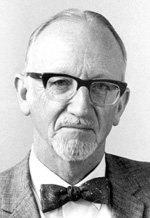
- Introduction
- Family Background and Formative Years
- Early Education
- University of Sydney
- Tasmanian Vacations
- Royal Prince Alfred Hospital
- Marriage and Family Life
- Outbreak of War
- Post-War Research
- Family Life on a Rockefeller Scholarship
- Cambridge and then Otago
- Life in New Zealand
- Otago Medical School — Dunedin
- Sabbatical Leave
- Monash University
- Scientific Accomplishments in Neurophysiology
- Service to Australian Science
- Retirement
- List of Awards and Affiliations
- About this memoir
Introduction
When Archie McIntyre died peacefully in St Vincent’s Hospital in Launceston, Tasmania on 20 July 2002, Australia lost one of its most significant contributors to the development of modern neuroscience. Less well known, perhaps, because of his self-effacing manner, than eminent peers like Jack Eccles, he was nevertheless a major driving force behind Australia’s excellence in neurophysiological research. The power of his intellect, his creative abilities and his practical skills were recognised early and he was given the opportunity to use these to make innovative contributions to research, first while he was still a student at the University of Sydney, later as a young medical graduate and then in aviation medicine during the Second World War. His interest in nerves, sensory receptors, their reflex actions and their projection to the brain, developed after the war when he spent time at the Rockefeller Institute in New York and at Cambridge University in England where he was influenced by the leading scientists of the day. He brought back to the University of Otago in Dunedin, New Zealand and then to the foundation days at Monash University in Melbourne an enthusiasm for research and scholarship that established these as leading centres for neurophysiology internationally and Archie himself as a world authority on sensory receptors. He was a leader in the growth and the establishment of scientific societies (Australian Physiological and Pharmacological Society, Australian Neuroscience Society) and served Australian science and society through his work with the Australian Academy of Science, the Australian Research Grants Committee, and the Australian and New Zealand Association for the Advancement of Science.
Family Background and Formative Years
Archie was born on 1 May 1913 in Edinburgh, Scotland, the second of four children of Dr William Keverall (Bill) and Margaret (Madge, née David) McIntyre who had moved to Scotland from Australia for Bill to study medicine.
Bill McIntyre was from Hobart, Tasmania. In talking about him, Archie described Bill as ‘a bit of an old warrior’, for he had volunteered for both the Boer War and the First World War. Bill’s mother, Adeline Janette, was said to have flown with Charles Kingsford Smith.
Bill chose to study engineering at the University of Sydney with the intention of becoming a mining engineer. There he met and married the daughter of the Professor of Geology. Edgeworth David was a distinguished scientist who came to Australia in 1882 to the post of Assistant Geological Surveyor for the Government of New South Wales. David was subsequently appointed Foundation Professor of Geology at the University of Sydney in 1891 and, along with his student, Douglas Mawson, joined Shackleton’s Antarctic expedition on the Nimrod in 1907. During the summers of 1907/08 and 1908/09 he led parties that climbed the active volcano, Mt Erebus, and walked, pulling sleds, to the South Magnetic Pole and back in time to be picked up again by the Nimrod and returned to Australia.
After discussions with his eminent father-in-law, and with his support, Bill abandoned engineering and transferred to medicine. Here a determining factor was his wife’s illness following the birth of their first-born child (Peggy). Madge developed puerperal fever from which she eventually recovered. The experience, however, led Bill to change careers. With financial assistance from Edgeworth David he travelled to Edinburgh to undertake medical studies, which explains how Archie came to be born in that city. Bill graduated in medicine in 1915 and joined the British 80th Field Ambulance, which saw service first on the Western Front and then in Macedonia. He returned to Edinburgh in 1919 and brought the family back to Launceston in 1920 where he remained for the rest of his life.
Bill and Margaret were well known personalities in the lives of many Tasmanians. Margaret was involved in aspects of community work, especially in relation to drama, music and the status of women. She was elected to the upper house of the Tasmanian Parliament in 1948. Three months later she died in an airline crash on her way home to Launceston following a National Council of Women Conference in Brisbane. Bill was greatly loved for his life-long devotion to the health and well being of the people of Launceston, especially of the women and children. He seemed to have been present at almost everyone’s birth!
Early Education
Archie’s education began at home. He learned the three Rs and developed a love of poetry under the guidance of his highly cultivated and intellectual mother, before commencing formal schooling in Launceston at the age of 8. His early schooling was hampered by his shortsightedness so that these were not happy times for Archie who couldn’t see the blackboard from the back of the classroom. And, anyway, he already knew most of the things being taught.
His parents therefore sent him to Sydney in 1925 to spend the last four years of secondary education at Barker College in Hornsby. During this time he got to know his famous grandparents well and became particularly fond of his aunt Mollie whom he subsequently referred to as his second mother. He did well in secondary school and won a University Exhibition in 1929 at the age of 16.
University of Sydney
In 1930 Archie enrolled at the University of Sydney as a BSc student with a special interest in Chemistry. During his first year he discovered the fascination of Biology, which had not been taught at his boys’ school, and he transferred to Medicine to follow this new interest. Although he said that the transition from Science to Medicine was at first difficult, he had a dedication to learning and an excellent memory that soon took him to the top of the class. He became one of the small group of students selected to be a Prosector in Anatomy in 1932. In a tape-recorded interview with his sister, conducted at his home in Launceston in November 1996, Archie recalled that he had transported partially dissected body parts home to Hornsby on the train for further study. When asked how his grandparents had reacted to having parts of a corpse in the house, his reply was ‘I don’t think I told them’.
His experimental skills led him to enrol in 1933 for a BSc in Medical Science, which involved a research project and preparation of a thesis. He mastered venepuncture and blood gas analysis using the Haldane apparatus. The professor of physiology, H. Whitridge Davies, supervised his project. He had to master use of the complicated apparatus required to measure oxygen and CO2 tensions in the blood, as well as to devise methods of withdrawing blood samples from his own veins. Here Archie developed an ingenious method of attaching the plunger of a syringe to the gas lines at the back of the laboratory bench. He then inserted the needle into his own vein and carefully moved his arm back away from the bench to draw blood into the syringe.
He rejoined the medical class in 1934 and studied pathology and pharmacology in fourth year. He spent most of his ‘clinical’ time in fifth and sixth year at the Royal Prince Alfred Hospital where ‘it was easier to keep in touch with the Profs, people like Harold Dew and Lambie’ (quoted from transcript of interview in November 1996). He graduated in 1936, when he was awarded the University Medal and shared top place in the graduating class with Ruthven Blackburn.
Tasmanian Vacations
During his early years in Tasmania, Archie had acquired a love for the bush. His father had taught him some of the basic survival skills as well as how to hunt and fish. Archie subsequently became an enthusiastic trout fisherman, a sport he continued to pursue until well into retirement.
During the early 1930s, whenever he came home from Sydney for the summer vacation, Archie went bushwalking. Together with his sister Peggy, he began walking through the Tasmanian wilderness, at that time largely unexplored country (Sharman, 1998). Those early trips were done with a minimum of equipment — no tent, just a blanket and groundsheet, a few supplies and the fishing rod. They often headed into the Cradle Mountain area, in particular, and into what is today the Walls of Jerusalem National Park. This was all wild, uncharted country and as they travelled through it they named some of the lakes they passed, like Lake Tyre (from McIntyre) and Ahchees Lake. These experiences instilled in Archie a love of the natural world that contributed to his sense of humility over man’s place in nature and stimulated him to attempt to understand nature through science.
Royal Prince Alfred Hospital
Archie spent 1937 as a Resident Medical Officer at Royal Prince Alfred Hospital, Sydney. His gift for making things work attracted the attention of Sydney’s clinical leaders like Sir Harold Dew, Professor of Surgery. His accomplishments led to his being awarded a Research Fellowship at the University of Sydney and an annual research grant of five hundred pounds for the years 1938–1940. During this time he invented a technique of nystagmography using an electro-oculogram, and was astonished to find that, in nystagmus, the head and the eyes move in opposite directions.
Archie’s interest in nerves and nerve functions had been stimulated by one of his teachers in the early years of his medical course, Martin Canny, a part-time lecturer who also worked at the Kanematsu Institute. At that time opportunities to engage in neurophysiological studies were decidedly limited. In his first major research project Archie had to adapt an ancient string galvanometer (Matthews oscillograph) to detect nerve action potentials in the 6th nerve. In another project, he had to utilise this primitive recording method in an attempt to measure contractions in uterine muscle, obtained during operations on patients at the Royal Hospital for Women (2).
One of his first original scientific observations, published in the Journal of Physiology in 1939 (3) was on the quick component of nystagmus. At that time it remained unclear whether nystagmus arose as a result of proprioceptive signals from extrinsic eye muscles, or whether its control was entirely of central origin. Archie used cats as his experimental animal. After cutting the 3rd, 4th and 6th cranial nerves he found he was still able to record efferent activity from the central cut end of the sixth nerve — activity typical of that associated with nystagmus. The observation put beyond doubt the view that the nerve activity associated with nystagmus was entirely of central origin.
While he was at Prince Alfred Hospital, Archie was befriended by Arthur Burkitt who had held the chair of anatomy at the University of Sydney since 1925, succeeding J.T. Wilson and J.I. Hunter in that position. The name J.T. Wilson was to come up again later in Archie’s life in association with his work on the platypus. Burkitt was a valuable ally since he had an extensive library that he made freely available for Archie’s use. Burkitt also arranged for Archie to give some of his first lectures.
Marriage and Family Life
Archie had met his future wife Anne Williams while he was staging a play at his aunt Mollie’s. They became engaged in 1939 and married on 30 March 1940. Anne’s grandfather’s family had emigrated from England as free settlers in the convict days and the family were given land at Milson’s Point, Sydney. Anne has written that the children ‘were rowed across the harbour by a ticket-of-leave servant to Circular Quay and then they walked through the bush, where charcoal burners worked, to Macquarie Street to school’. Her mother’s family were missionaries by the name of Blomfield. Anne’s parents and the David family were friends, and when Archie was studying at the University of Sydney and was living with his Aunt Mollie, Anne got to know him. In her words: ‘We seemed to get on well from the word go’.
Anne’s father was a solicitor in a well- established law firm in Sydney. Although he lost his job during the 1930s depression, he insisted that she stay at school and complete her Leaving Certificate. Anne was interested in art and architecture. She enrolled at East Sydney Technical College in Paddington to study drawing and painting. She was granted one of two scholarships that provided free tuition for two years while she was taught life drawing and painting by Douglas Dundas.
Although Anne had hoped to spend some time living with her artist aunt in Paris, the war was looming. When she and Archie married, they were fortunate that Archie’s grandmother allowed them to live very cheaply in her cottage in Hunters Hill. Michael and Margaret were born there during the war years.
Outbreak of War
At the outbreak of the war, Archie, who was already in the militia, joined the Air Force. Because of the relationship of the work he had done already on the vestibular system to some of the physiological problems in aviation medicine, Archie became involved in a number of air combat research projects during the years 1941–1946. He developed a method for detecting air-sickness-prone pilots — previously a major cause of dropout from flight training. Subsequently, he worked with Frank Cotton on the production of a G-suit that would keep pilots from blacking out, by preventing blood from pooling in the veins of the lower body when the plane pulled out of a steep dive. Testing of the suits was done on a human centrifuge. Archie used himself as a guinea pig in this and a number of other research projects. Anne reports that ‘the primitive centrifuge at the University of Sydney would break down frequently’ which meant that, from time to time, Archie’s body was subjected to excessive gravitational strains. It meant that in later years he was to suffer from varicose veins. Eventually, towards the end of the war, the Australian suits were used in Spitfires in Darwin.
Archie’s aviation medicine work was of such significance that he was sent to the USA to visit centrifuge laboratories there and to Britain where he worked in the Physiological Aviation Medicine Unit near Farnborough, run by Sir Bryan Matthews. Here he worked on the development and testing of an ejection seat, required by the need to bail out of the faster aircraft being brought into service. Some of this work was quite dangerous as it involved trials to discover the amount of explosive necessary for effective ejection without injury to the pilot’s spinal column. Some volunteers suffered major back injuries, but again Archie continued to be a test subject. He later declared that it was his view that he couldn’t ask others to do what he was not prepared to do himself.
He made other important discoveries about depth perception — so important for pilots during landing — and demonstrated that this was not correlated with visual acuity. Archie was demobilised in 1946 having reached the rank of squadron leader and, as he put it, having no squadron to lead.
Post-War Research
After the war Archie was offered the opportunity to join Roy (Pansy) Wright in the Physiology Department at the University of Melbourne. However, he decided that he really wanted to go overseas for further postgraduate experience. He was awarded a Rockefeller Fellowship and moved with his family to New York and the Rockefeller Institute where he worked during 1946–1948 in the company of major figures in neuroscience including Herbert Gasser, Lorente de No, Birdsey Renshaw and David Lloyd. His work with David Lloyd, who had been a Rhodes Scholar in Charles Sherrington’s laboratory in Oxford, provided Archie with the foundations for his future work in experimental neurophysiology. Lloyd had one of the most modern laboratories, equipped with the latest valve-operated electronics. Together, Lloyd and McIntyre studied long-spinal reflexes, the origin of dorsal root potentials and the central projection pathway for Group I afferents in peripheral nerves. Lloyd himself was a shy, sensitive person who prided himself on his dissection skills and on the care he took in assembling data before coming to any firm conclusion. Archie was deeply fond of Lloyd and in later years adopted some of Lloyd’s style, his skill in dissection and his care in designing experiments.
Family Life on a Rockefeller Scholarship
Anne McIntyre reports that the worst time in her life was undoubtedly the period of two years spent in New York while Archie worked at the Rockefeller Institute. ‘We knew nobody and the value of money changed overnight while we were paying $120 a month for a forty dollar apartment. We somehow managed to feed the kids. Archie and the other scholarship holders were given a square meal at the Institute at mid-day. My normal weight was nine and a half stone and when we left after two years I weighed seven stone’.
Cambridge and then Otago
Towards the end of his time in New York, Archie was awarded a Nuffield Scholarship to work in Cambridge, England, again with Bryan Matthews. In Cambridge Archie borrowed a bicycle from Alan Hodgkin to travel to the laboratory every day. He had to build his own equipment, a muscle-stretching device for frog muscle. He received a lot of help from Bryan Matthews, the Head of Department, and always retained a sense of gratitude towards him.
While in Cambridge, Archie made frequent visits to London to see his friend Bernard Katz, whom he had met in Australia when Katz was working at the Kanematsu Institute with Eccles and Kuffler on neuromuscular transmission. They had become friends and when Bernard married Rita Penly shortly after the war, Archie was best man. Katz returned to London in 1946 where he began a series of experiments that laid the basis for our present-day understanding of synaptic transmission and which brought him the Nobel Prize in 1970.
An important and revolutionary feature of Katz’s work in the post-war period was his use of microelectrodes to analyse details of the transmembrane events in neuromuscular transmission. Archie was deeply impressed with this technique and developed the idea that a similar approach could be used to analyse synaptic events within the central nervous system. Here he was combining his experience of whole- nerve recordings of reflex events acquired at the Rockefeller Institute under David Lloyd with Katz’s novel approach at the single-cell level.
While in Cambridge, Archie received an offer from Jack Eccles to take up a senior lectureship in Eccles’ department in Dunedin, New Zealand. Archie felt that he had an obligation to go back to Sydney where Burkitt had promised him there would be a job — but not a senior lectureship. After some hesitation he opted for Dunedin where he had a definite offer. The vacancy arose because of the departure from Dunedin of Victor MacFarlane who had left to take up the Chair of Physiology at the University of Queensland. Archie had met Eccles some years previously while Eccles was still at the Kanematsu Institute. Eccles was interested in McIntyre because he knew Archie had worked with Lloyd, one of Eccles’ main competitors in the field of central synaptic action.
In one of Lloyd’s exceedingly careful and painstaking studies, he had measured the latency of ‘direct’ inhibition of motoneurons in the spinal cord and found it to be the same as the latency for monosynaptic excitation. He therefore concluded that ‘direct’ inhibition was also monosynaptic. Eccles subsequently demonstrated the disynaptic tempo of ‘direct’ inhibition by means of microelectrode recordings. It turned out that because the excitatory post-synaptic potential had a finite rise time, an inhibitory potential of longer (disynaptic) latency could still block the excitation. Following this debate, Lloyd abandoned the subject of neurophysiology and began to work on sweat glands.
When Archie arrived in Dunedin he assembled an electrophysiology recording set-up of the kind he had used in New York and began to explore the technique of pushing microelectrodes into the spinal cord of anaesthetised animals as a means of recording activity in central neurons, at the single-cell level. At the time, Patton and Woodbury, K. Frank and others in the USA were attempting similar recordings.
Initially Eccles did not show much interest in what McIntyre was trying to do. He soon recognised the importance of this approach, however, and began to use Archie’s equipment in experiments on motoneurons with Jack Coombs and Lawrence Brock that would eventually bring him the Nobel Prize.
During their time in Dunedin, Eccles and McIntyre published papers together on plasticity of the central nervous system (18) and chromatolysis in motoneurons (19). In these experiments Archie did most of the dissections because of the skill he had acquired under Lloyd. In writing up the experiments, Archie recalls, it was characteristic of Eccles to want to speculate further than, Archie thought, the evidence allowed, and the speculation was often declared as a firm conclusion.
Life in New Zealand
The move to Dunedin was a very happy change for the family. Anne was able to do some painting though she felt that most of the New Zealanders who shared her interests were based in Auckland. Splendid food was now available. The McIntyres became firm friends with the Mantons (subsequently Guy Manton became Dean of Arts at Monash) and the Thomsons, owners of Earnslaw Station. The two academic families camped on the station land during their first summer holiday in New Zealand. Later they built a hut below the mountains on the edge of a small lake, Lake Wakatipu, on the edge of the Thomsons’ property. The lake’s water came from the Earnslaw glacier. This hut and the summer holidays spent there left a lasting impression on all members of the family. The children felt themselves to be New Zealanders. Archie was able to get ‘away from the University’ and his family recall ‘that was the time when Dad played with us, taught us to fish, taught us to make things like a small, light boat, to find good stones for building and so on’. The company of a professor of classics and his family on these trips brought a particularly scholarly tone to their holidays. Anne recalls Guy Manton, on a small bridge over a rivulet, telling the children the story of Horatio defending the bridge to Rome. The McIntyres helped the Thomsons bring in the hay and were occasionally permitted to drive the small truck in low gear while others tossed the bales into the back.
Otago Medical School — Dunedin
With the appointment of Eccles to the chair of physiology in the John Curtin School of Medical Research in 1951, Archie became acting head of department and then was appointed professor of physiology at the University of Otago from 1952, a post he filled with great distinction for the next nine years. He built up a substantial research department and stimulated a large number of medical students to commence careers in physiological research. He passed on his enthusiasm for research as well as the attention to detail and dissection skills that were needed in order to ensure a successful outcome. Some of the most successful of Archie’s students were Richard Mark, Ian McDonald, Julian Jack, John Steiner, Colwyn Trevarthen, Ainslie Iggo, John Ludbrook, John Hubbard and Austin Doyle. Archie attracted a zoologist, Geoff Satchell, to his department, and John Veale, who had double degrees in physics and medicine, joined him from Auckland. Archie’s nine years in Dunedin were some of the happiest years of his career. Here are some fragments of reminiscences by some of Archie’s students in Dunedin.
One of John Ludbrook’s recollections is of when he was an undergraduate in Dunedin. In third year Medicine, students were required to take a trip in an ex-RAF high altitude chamber. Archie sat in it (with an oxygen mask on) while the eight students ascended to around 20,000 feet. As each student collapsed in sequence, Archie would attach an oxygen mask to him/her. John dimly remembers noticing that his fingernails became blue at around 16,000 feet, just before he blacked out. Those were the heroic days of physiology!
Richard Mark was an editor of the medical students’ annual at that time. He recollects a brief verse describing Archie:
Professor McIntyre
Wants to experiment on a yak entire
To see whether it’s Himalayan vivacity
Is paralleled by an increased vital capacity.
Julian Jack in a piece published in the Otago Daily Times on 7 September 2002 described McIntyre as ‘very gentle and relatively permissive as a supervisor, but without making one feel he did not care’. Some doctoral supervisors, he noted, were often not so supportive, perhaps fearful of being overtaken by their ‘children’: ‘Archie was completely happy to be totally supportive and provided the kind of mentorship which resulted in many of his students going on to high positions — unfortunately, for New Zealand, often overseas’.
What Jack recalled as a ‘piece of informed imagination’ led to work by an Otago contemporary, Ian McDonald, into trying to understand multiple sclerosis (MS), the disease where axons lose their myelin. ‘That research launched Ian on work which enabled him to show, for the first time, that these demyelinated axons don’t necessarily stop conducting impulses’. It was one of the major therapeutic hopes for treatment of MS and led to the realisation that it was not possible to relieve symptoms.
Sabbatical Leave
In 1953 Archie gave a paper in Montreal on the chromatolysis work with Eccles. He used that occasion to spend a couple of months back in David Lloyd’s laboratory. Lloyd was working with Cuy Hunt at the time. The visit led to a collaboration between the three of them and publication in 1955 of a paper on the monosynaptic reflex (30).
As a result of their work together, Hunt and McIntyre became friends and they remained close for the rest of Archie’s life. During his time at the Rockefeller, Archie had also become impressed by Herbert Gasser, the director of the Institute. Gasser used to wander into the laboratory rather casually and in the ensuing conversation often made, in passing, rather pertinent remarks about some problem or other. So it was with Archie — Gasser mentioned that little was known of the properties of the cutaneous sense organs supplied by the peripheral nerves that he, Gasser, had studied. This comment eventually led to three landmark papers on sensory receptors by Hunt and McIntyre (43, 44, 45).
During 1959–1960 Archie took study leave, six months at University College, London, to visit Bernard Katz and then a second six months in Salt Lake City, Utah. In Utah, Archie and Cuy Hunt carried out the experiments that led to those three important papers. There he also met and became good friends with Ed Perl and Carlos Eyzaguirre.
Monash University
In 1961, Archie was approached to apply for the chair of physiology at the newly established Monash University in Melbourne. Because he wanted to return to Australia, he accepted the challenge of building up a new department from scratch. He made it one of his priorities to devote himself to the selection of staff who would generate an active programme of research. Some were old students of Archie’s. He brought with him from New Zealand members of staff like John Veale, as well as several technical assistants. Among his first Melbourne recruits were Mollie Holman, Geoff Bentley, Ian McCance and Ian R. McDonald. He brought Richard Mark back from California and recruited Laurie Geffen and Bob Porter from Oxford.
His recollection of the early days at Monash was that everything seemed to change rapidly. He would plan buildings for a set number of students, then that number would be doubled. Because of his good judgement in the selection of staff, the department was soon a thriving place, establishing its reputation locally and overseas. Archie believed that the best approach to the teaching of neuroscience was an integrated one. However, many of his early attempts in this direction were frustrated by the lack of co-operation from other departments.
Archie soon collected a group of local PhD students around him, much as he had done in Dunedin. This time, however, he was very busy establishing the department as well as contributing to the administration of Australian science, leaving him rather little time for student supervision. Nevertheless a number of successful candidatures were completed, including those of Pat Dorward, Uwe Proske, Poh- Tek Yeo, Ed Gregory, Paul Kenins and Paramsothy Subranarian. Uwe had completed an Honours year in Adelaide under Geoff Satchell. Geoff, a graduate of Leeds University had been working in the Zoology Department in Dunedin on sewage flies when he decided he really wanted to be a physiologist. Archie invited him across into Physiology as a lecturer and Geoff soon established himself as an authority on the cardiovascular system in sharks. When Archie moved to Monash, Geoff went to Adelaide. When Uwe professed his enthusiasm for neuroscience, Geoff recommended he transfer to Monash to do a PhD under Archie’s supervision. The McIntyres and the Satchells remained close friends. Archie and Anne were especially fond of Geoff’s wife Truda.
For the first decade of its new life Archie’s department had to deal with both physiology and pharmacology. Archie strongly encouraged the development of BSc courses in both subjects. Staff members were required to develop modern courses and to design practical classes for both science and medical students. John Phillis, a neuropharmacologist, was one of the earliest appointments to the Department. He was energetic in his development of a BSc programme in physiology, including rather sophisticated experiments in practical classes involving whole animals, often sheep as well as cats. Other early staff appointments included Rod Westerman (1965) Gray Woolley (1965) and Colin Gibbs (1966). The staff were ably assisted by Jeff Robinson the laboratory manager. From the start Archie insisted that the Department incorporate an animal house and a mechanical workshop.
Archie was innovative in his approach to teaching and utilised the available technologies of video recording, primitive as they were at the time, to support didactic teaching. Who amongst the medical students of those days could have failed to be impressed by videotaped recordings of classical neurophysiological experiments being performed by the Professor in a white coat and a bow-tie? He emphasised the importance of the practical class in physiological education and insisted that students come to appreciate the experimental evidence on which knowledge is based. He felt it was especially important to have some understanding of the history of science ‘to appreciate that in our current efforts we are standing on the shoulders of others’. In every aspect of the work of his Department and the Faculty he was personally committed and involved. Using the same approach as he had used when he subjected himself to rides on the human centrifuge, he provided leadership by being the most actively involved member of the team. That he succeeded, in a very few years, in developing one of the most highly regarded departments of physiology in the world is testimony to the effectiveness of his approach and to the wisdom with which he managed his responsibilities as a Head of Department. Archie resigned from the headship in 1974, four years before his retirement.
Scientific Accomplishments in Neurophysiology
Archie’s grounding in classical Sherringtonian methods for the study of the nervous system came from his experiences in David Lloyd’s laboratory. Here he utilised preparations like the decapitate cat to examine conduction in spinal cord pathways and the co-ordination of hindlimb and forelimb reflexes. In addition, he studied conduction in afferent pathways like the dorsal columns when these pathways were activated by stimulation of peripheral nerves.
Once he had set up his recording apparatus in Dunedin, he was able to examine motoneurons directly and he commenced studies on plasticity (use and disuse) and on chromatolysis (degeneration), resulting from section of motor nerves. This was work that was later taken much further by Eccles and his colleagues. His seminal paper (with Lawrence Brock) on the responses of motoneurons to stimulation by microelectrodes was published in the Proceedings of the University of Otago Medical School in 1953 (27) and, in the same year, in the same journal, he published a paper on cortical projections of afferent impulses in muscle nerves (26), opening up a field in which he retained an interest throughout the rest of his life and which continues to challenge, even today, those involved in the cortical control of muscle contraction.
The landmark papers by Hunt and McIntyre (43, 44, 45), based on the prompting of Herbert Gasser, identified the properties of cutaneous receptors in the cat. The approach taken here is reminiscent of a similar technique employed by Gasser himself. The preparation, the anaesthetized cat, was familiar to both Hunt and McIntyre. The technique of dissecting fragments of dorsal roots had been established earlier by Hunt (Kuffler, Hunt & Quillian, 1951).
In this series of experiments Hunt and McIntyre systematically measured the conduction velocities of all myelinated afferents arising from receptors in the skin of the ankle, the interosseous membrane and the flexor digitorum longus muscle. Receptor properties were matched with axonal conduction velocities which were then converted to estimates of axon diameters. These were compared with histological nerve profiles, as Hunt had done earlier in 1954. At the time, these studies represented the most comprehensive and systematic analysis of cutaneous receptors ever carried out. They opened up a whole new field of study.
One subsequent series of experiments that deserves particular mention was Archie’s work on the cortical projection of Pacinian afferents, published jointly with Mollie Holman and John Veale in 1967 (62). Archie already knew that there was a strong projection pathway to the cortex by Pacinian afferents. He and Cuy Hunt had learned earlier to expose the interosseous membrane of the cat hind limb and the associated population of Pacinian corpuscles which could be individually identified under the dissecting microscope. He managed to stimulate a single corpuscle with a fine glass stylus, monitor its action potential in the tiny interosseous nerve and record the cortical evoked potential from that one impulse. It is generally agreed that a cortical representation is a necessary prerequisite for conscious sensation. It was already known at that time that stimulation of Pacinian corpuscles produced distinct sensations of touch/vibration. Archie’s work demonstrated that one impulse in a single afferent fibre was sufficient to engage the machinery for cortical representation and therefore most probably for conscious sensation. It supported the view that whatever cortical circuits were involved in generating sensations, they were not likely to be very elaborate or widely distributed.
Archie’s style in scientific research was essentially curiosity-based, but unlike most people, he wanted to know more about things in depth. A common theme that recurred again and again in his writings was his fascination with and awe of the brain. Here his strong sense of humility emerged. He kept emphasising that despite the growing sophistication of our knowledge, we were still only scratching the surface. He abhorred the idea that we already knew all that there was to be known about a particular topic. He shunned scientific dogmatism and complacency.
Because of his curiosity and his intellectual fascination with mechanism, Archie’s interests knew few boundaries. Certainly he wasn’t interested in anything predictable and boring. Because of his breadth of interest and because some of his students at Monash were trained zoologists, he embarked on studies in comparative neurophysiology, always leaning on techniques and methods of analysis that he had acquired in previous cat experiments. Here it was Archie’s view that what was a complex and sophisticated situation in higher mammals was often represented in a simplified and more readily studied form in the lower vertebrates. This led Pat Dorward and Ed Gregory to study the mysterious Grandry and Herbst corpuscles in birds. Uwe Proske studied muscle spindles in reptiles where each receptor has only a single intrafusal fibre compared with the dozen or more fibres in mammalian spindles. The reflex action of these spindles was subsequently pursued by Paul Kenins.
Archie had a real interest in psychophysics, in particular in the proprioceptive senses. During the 1960s there was an ongoing controversy over how joint position and movement were signalled. It was known that blindfolded human subjects could unhesitatingly touch the tips of their noses, indicative of a precise sense of limb position and body image. Work on the cat had suggested that joint receptors were primarily responsible for this. The data all derived from studies on the medial articular nerve of the cat’s knee (Skoglund, 1973). Archie knew that this nerve was not a pure joint nerve but was sometimes contaminated with afferents from the popliteus muscle. This led to a study with David Tracey and Uwe Proske in which he demonstrated, unambiguously, that the so- called mid-range joint afferents were in fact muscle afferents. This conclusion provided supporting evidence for the view that muscle receptors were primarily responsible for position sense.
Archie was particularly interested in Australian native animals, especially the platypus and the echidna. As a keen trout fisherman he had often seen platypus as he waded up a stream. His interests in these animals led to a study in 1985 with his ex- students Ainsley Iggo and Uwe Proske on the sensory innervation of skin of the echidna snout (99). At this time Archie was already officially retired and living in Launceston, Tasmania. He would come back to Melbourne for a few weeks at a time to carry out these collaborative efforts. Another memorable series of experiments carried out at this time with John Rawson and Uwe Proske used a technique of raising the electrical thresholds of muscle spindle afferents by vibration (established by another student, Julian Jack) to show, for the first time, that tendon organ afferents projected to the cerebral cortex (100).
In 1986 the story broke of an electric sense in the platypus. Immediately Archie asked, ‘but what are the receptors involved?’. Answering that question led to yet another collaboration with Ed Gregory, Ainsley Iggo and Uwe Proske. It produced three major papers on electroreception in the platypus (101, 104, 109) and a further paper demonstrating the existence of an electric sense in the echidna (113).
Service to Australian Science
Archie McIntyre was elected to Fellowship of the Australian Academy of Science in 1963. He was a member of the Council of the Academy during 1968–1974, being Secretary, Biological Sciences during 1970–1974. He had been a founding member of the Australian Physiological and Pharmacological Society (APPS) and he was one of the driving forces behind the establishment of the Australian Neuroscience Society. In recognition of Archie’s contributions to APPS, the society set up the A.K. McIntyre Prize in 1994 for members of APPS who have made significant contributions in their pre-doctoral and immediate post-doctoral years. The prize has been awarded each year since then. Archie was very active in the promotion of physiology and neuroscience throughout Australia. He served on ANZAAS committees and was a member of both the ARGC and NH&MRC research support agencies. He served on the Program Committee of IUPS and was Chair of the National Committee for Physiological Sciences.
Retirement
Archie retired in 1978 and he and Anne moved to Launceston, Tasmania where Anne designed and supervised the construction of their home, ‘Montacute’, on the outskirts of the town, overlooking the valley of the river Esk, with the slopes of the Ben Lomond visible in the distance. Here they were close to Archie’s brother and sister and other members of family. Nevertheless, Archie continued to remain in touch with his scientific interests and, until about 1990, regularly visited colleagues at Monash to engage in further experiments on sense organs — some of them involving through-the-night recordings, exploring the electric sense organs of the platypus.
In retirement Archie was able to plant a vineyard with about fifty vines and he became seriously involved in wine- making. His early interest in chemistry was reflected in his establishment of a fully- functional oenological analysis laboratory. The end product was of high quality and enjoyed by all visitors to Montacute. As Archie’s health began to deteriorate, he and Anne found it necessary to leave ‘Montacute’ and move into a retirement village close to the centre of Launceston.
Archie is survived by his wife Anne and his three children, Michael, Margaret and Richard.
A fragment of poetry written by Archie sometime in the later years of his life:
There is sweet music here, which softer
Than petals from blown roses in the grass
Or night-dews on still waters, between walls
Of shadowy granite, in a gleaming pass.Here are cool waters deep
And through the moss, the ivies creep
And from the crannied ledge
The poppy hangs in sleep.
List of awards and affiliations
- 1937: University Medal (shared), University of Sydney, Graduated Bachelor of Medicine, Bachelor of Surgery, First Class Honours.
- 1937–1938: RMO, Royal Prince Alfred Hospital, Sydney.
- 1938–1939: Liston Wilson Research Fellow in Neurology, University of Sydney.
- 1939–1940: Junior Commonwealth Research Fellow, University of Sydney.
- 1940: Peter Bancroft Prize for Original Research on Reflex Responses of Eye Muscles.
- 1941–1946: Medical Officer — Royal Australian Air Force.
- 1946–1948: Rockefeller Foundation Fellow and Fellow of the Rockefeller Institute, New York, USA.
- 1949: Member, Physiological Society, Great Britain.
- 1949–1951: Senior Lecturer in Physiology, University of Otago, New Zealand.
- 1951–1961: Professor of Physiology, University of Otago, New Zealand.
- 1959: Member, Anatomical Society of Great Britain and Ireland.
- 1959–1960: Fulbright Research Scholar and Visiting Professor, University of Utah, USA.
- 1960: Member of International Brain Research Organisation’s Panel on Neurophysiology.
- 1960: Founding Member of Australian Physiological and Pharmacological Society.
- 1962: Foundation Professor of Physiology, Monash University, Melbourne.
- 1962: Doctor of Science, University of Sydney, for published work in Neurophysiology.
- 1962: President, Section N, ANZAAS.
- 1963: Fellow of the Australian Academy of Science.
- 1968–1974: Member of Council, Australian Academy of Science.
- 1968–1972: Member, Australian Research Grants Committee.
- 1969–1975: Chairman, National Committee for Physiological Sciences, Australian Academy of Science.
- 1970–1974: Secretary, Biological Sciences, Australian Academy of Science.
- 1970–1974: Member of Programme Committee, XXVth International Congress of Physiological Sciences, New Delhi, October 20–26, 1974.
About this memoir
This memoir was originally published in Historical Records of Australian Science, vol.15, no.1, 2004. It was written by:
- U. Proske, Department of Physiology, Monash University, Melbourne.
- R. F. Mark, Research School of Biological Sciences, Australian National University. (Richard Mark died during the period of preparation of this memoir. He did see a preliminary draft and was in general agreement with its contents.)
- R. Porter, Faculty of Medicine, Health & Molecular Sciences, James Cook University, Townsville.
Acknowledgments
The authors are grateful to Mrs Anne McIntyre for her helpful advice and for the comments she provided in conversations and in letters. We have had access to the transcripts of tape recordings of interviews conducted by Archie’s sister in November 1996 and March 2001 in Launceston. There are also transcripts of conversations between Archie and Uwe Proske recorded on 2 and 3 June 1995 in Launceston. These transcripts are all held by the Australian Academy of Science.
References
- Eccles, J.C. (1945). An electrical hypothesis of synaptic and neuromuscular transmission. Nature, 156: 680–682.
- Eccles, J.C. & Brooks, C. McC. (1947). An electrical hypothesis of central inhibition. Nature, 159: 760–764.
- Hunt, C.C. (1954). Relations of function and diameter in afferent fibres of muscle nerves. J. Gen. Physiol., 38: 117–131.
- Kuffler, S.W., Hunt, C.C. & Quillian, J.P. (1951). Function of medullated small-nerve fibres in mammalian ventral roots: efferent muscle spindle innervation. J. Neurophysiol., 14: 29–54.
- Proske, U. (2003). Obituary — Archie McIntyre. Clin. Exp. Pharmacol. Physiol., 30: 303–306.
- Proske, U. (2003). Obituary — Archie McIntyre. Physiology News, 52: 44–47.
- Sharman, J. (1998). Tough times for early bushwalkers. In ‘40° South’ Magazine, ed. W. Boyles, Tasmania, Australia, 9: 75–77.
- Skoglund, S. (1973). Joint receptors and kinaesthesia. In Handbook of Sensory Physiology, ed. A. Iggo, Berlin, Springer, pp. 111–136.
Bibliography
- McIntyre, A.K. (1938). Three cases of renal failure. Med. J. Aust., 1: 667–670.
- McIntyre, A.K. (1939). Electrometrography: A preliminary report. Med. J. Aust. 1: 793–796.
- McIntyre, A.K. (1939). The quick component of nystagmus. J. Physiol., 97: 8–16.
- McIntyre, A.K. (1939). Physiology of the cerebellum. Med. J. Aust., 1: 167–172.
- McIntyre, A.K. (1941). Physiology of the nerve endings in the extrinsic ocular muscles. Trans. Ophthal. Soc. Aust., 3: 99–106.
- McIntyre, A.K. (1945). Some subjective effects of linear and angular accelerations. J. Physiol., 104: P11.
- Clarke, W.G., Gardiner, I.D.R., McIntyre, A.K. & Jorgenson, H. (1946). Effect of hyperglycaemia and insulin hypoglycaemia on man’s tolerance to positive acceleration. Fed. Proc., 5: P17.
- Clarke, W.G., Gardiner, I.D.R., McIntyre, A.K. & Jorgenson, H. (1946). The effect of positive acceleration on fluid loss from blood to tissue spaces in human subjects on the centrifuge. Fed. Proc., 5: P17.
- McIntyre, A.K. (1946). Some aspects of the physiology of audition relevant to the use of hearing aids. Bull. Post-Grad. Committee in Med. (Sydney), 2: 167–170.
- McIntyre, A.K., & Lloyd, D.P.C. (1947). Origin and distribution of some long spinal reflex effects on crural muscle. Fed. Proc., 6: 157.
- McIntyre, A.K. & Lloyd, D.P.C. (1947). Spinal projections of hind limb afferent fibres. Fed. Proc., 7: 79.
- McIntyre, A.K. (1948). Electrophysiology in the study of neuroanatomy. In Essays in Biology, ed. Phillips, Wyke & Herlihy, Sydney, Aust. Med. Publishing Co., pp. 115–122.
- Lloyd, D.P.C. & McIntyre, A.K. (1948). Potentials of dorsal roots and related phenomena. Fed. Proc., 7: 74.
- Lloyd, D.P.C. & McIntyre, A.K. (1948). Analysis of forelimb–hindlimb reflexes in the acutely decapitate cat. J. Neurophysiol., 11: 455–470.
- Lloyd, D.P.C. & McIntyre, A.K. (1949). Bioelectric potentials in the nervous system and muscle. Ann. Rev. Physiol., 11: 173–198.
- Lloyd, D.P.C. & McIntyre, A.K. (1949). On the origins of dorsal root potentials. J. Gen. Physiol., 32: 409–443.
- Lloyd, D.P.C. & McIntyre, A.K. (1950). Dorsal column conduction of Group I muscle afferent impulses and their relay through Clarke’s column. J. Neurophysiol., 13: 39–54.
- Eccles, J.C. & McIntyre, A.K. (1951). Plasticity of mammalian monosynaptic reflexes. Nature, 167: 466–472.
- Downman, C.B.B., Eccles, J.C. & McIntyre, A.K. (1951). Responses of motoneurones undergoing chromatolysis. Proc. Univ. Otago Med. Sch., 29: 4–5.
- McIntyre, A.K. (1951). The afferent limb of the myotatic reflex arc. Nature, 168: 168–170.
- McIntyre, A.K. (1951). Spino-cerebellar pathways in the cat. Proc. Univ. Otago Med. Sch., 29: 16.
- McIntyre, A.K. (1952). The origin of post- rotatory nystagmus. Proc. Univ. Otago Med. Sch., 30: 28.
- Eccles, J.C. & McIntyre, A.K. (1953). The effects of disuse and of activity on mammalian spinal reflexes. J. Physiol., 121: 492–516.
- Downman, C.B.B., Eccles, J.C. & McIntyre, A.K. (1953). Functional changes in chromatolysed motoneurones. J. Comp. Neurol., 98: 9–36.
- McIntyre, A.K. (1953). Synaptic function and learning. Proc. 19th Int. Physiol. Congr., 107–113.
- McIntyre, A.K. (1953). Cortical projection of afferent impulses in muscle nerves. Proc. Univ. Otago Med. Sch., 31: 5–6.
- Brock, L.G. & McIntyre, A.K. (1953). Responses of motor neurones to stimulation by internal microelectrodes. Proc. Univ. Otago Med. Sch., 31: 19–20.
- McIntyre, A.K. (1954). Central and sensory transmission. Pharm. Rev., 6: 103–104.
- Lloyd, D.P.C. & McIntyre, A.K. (1954). Quality of monosynaptic reflex connections between synergic muscles. Fed. Proc., 13: 308.
- Lloyd, D.P.C., Hunt, C.C. & McIntyre, A.K. (1955). Transmission in fractioned monosynaptic reflex systems. J. Gen. Physiol., 38: 307–317.
- Lloyd, D.P.C. & McIntyre, A.K. (1955). Monosynaptic reflex responses of individual motoneurone. J. Gen. Physiol., 38: 771–787.
- Lloyd, D.P.C. & McIntyre, A.K. (1955). Transmitter potentiality of homonymous and heteronymous monosynaptic reflex connections of individual motoneurons. J. Gen. Physiol., 38: 789–799.
- Bradley, K., Brock, L.G. & McIntyre, A.K. (1955). Effects of axon section on motoneurone function. Proc. Univ. Otago Med. Sch., 33: 14–16.
- McIntyre, A.K., Mark, R.F. & Steiner, J. (1956). Multiple firing at central synapses. Nature, 178: 302–304.
- McDonald, W.I. & McIntyre, A.K. (1956). Observations on ascending long spinal reflexes. Proc. Univ. Otago Med. Sch., 34: 5–6.
- Mark, R.F., & McIntyre, A.K. (1956). Responses of second-order afferent neurones in the cat’s spinal cord. Proc. Univ. Otago Med. Sch., 34: 18–19.
- McIntyre, A.K. (1957). Symbolic mechanisms in biology. Aust. J. Sci., 19: 171–181.
- McIntyre, A.K. & Robinson, R.G. (1958). Stability of spinal reflex patterns. Proc. Univ. Otago Med. Sch., 36: 25–26.
- Jack, J.J.B., McIntyre, A.K. & Somjen, G.G. (1959). Excitability of motoneurones during reflex facilitation and inhibition. Proc. 21st. Int. Physiol. Congr., 136.
- McIntyre, A.K., Bradley, K. & Brock, L.G. (1959). Response of motoneurones undergoing chromatolysis. J. Gen. Physiol., 42: 931–958.
- McIntyre, A.K. & Robinson, R.G. (1959). Pathway for the jaw jerk in man. Brain, 82: 468–474.
- Hunt, C.C. & McIntyre, A.K. (1960). Diameter and receptor function of myelinated cutaneous afferent fibres. Fed. Proc., 19: 196.
- Hunt, C.C. & McIntyre, A.K. (1960). Characteristics of response from receptors from the flexor longus digitorum muscle and the adjoining interosseous region of the cat. J. Physiol., 153: 74–87.
- Hunt, C.C. & McIntyre, A.K. (1960). Properties of cutaneous touch receptors in cat. J. Physiol., 153: 88–98.
- Hunt, C.C. & McIntyre, A.K. (1960). An analysis of fibre diameter and receptor characteristics of myelinated cutaneous afferent fibres in cat. J. Physiol., 153: 99–112.
- McIntyre, A.K. & Mark, R.F. (1960). Synaptic linkage between afferent fibres of the cat’s hindlimb and ascending fibres in the dorsolateral funiculus. J. Physiol., 153: 306–330.
- McIntyre, A.K. (1962). Central projection of impulses from receptors activated by muscle stretch. In Muscle Receptors, ed. D. Barker, Hong Kong University Press, 19–29.
- McIntyre, A.K. (1962). Cortical projection of impulses in the interosseous nerve of the cat’s hindlimb. J. Physiol., 163: 46–60.
- McIntyre, A.K. (1963). Coding of sensory input. Aust. J. Sci., 25: 397–403.
- McIntyre, A.K. (1963). Deep sensibility. Proc. Aust. Assoc. Neurol., 1: 37–40.
- McIntyre, A.K. (1963). On the functions of Vater-Pacini corpuscles. J. Anat. Lond., 97: 489.
- McIntyre, A.K. (1963). Some effect of interosseous nerve volleys in the spinal cord. Proc. Aust. Physiol. Soc., 4: 36P.
- Gray, D.H., Jack, J.J.B. & McIntyre, A.K. (1963). Fluctuations in firing latency of monosynaptically excited motoneurones. Proc. Aust. Physiol. Soc., 5: 11P.
- Holman, M.E., McIntyre, A.K. & Veale, J.L. (1964). Cortical responses to restricted afferent input. Proc. Aust. Physiol. Soc. 6: 16P.
- Martin, A.R. & McIntyre, A.K. (1965). Responses of spinal interneurons to synaptic and direct electrical activation. Proc. Aust. Physiol. Soc., 7.
- McIntyre, A.K. (1965). Some applications of input–output technique. In Studies in Physiology, ed. Curtis, D.R. & McIntyre, A.K., Springer-Verlag, Berlin, pp. 199–206.
- Dorward, P., McIntyre, A.K. & Proske, U. (1965). Vibration detection by receptors in vertebrate skeletal tissues. Proc. XXIII Int. Congr. Physiol. Sci., Tokyo, p. 375.
- McIntyre, A.K. (1965). Perception of vibration. Proc. Aust. Assoc. Neurol., 3: 71–76.
- McIntyre, A.K. (1966). The wonder of the human brain. Hemisphere, 10: 2–6.
- McIntyre, A.K., Holman, M.E. & Veale, J.L. (1966). Some central effects of single afferent impulses. Proc. Aust. Physiol. Soc., 9: 22P.
- McIntyre, A.K. (1967). The enigma of brain function. Karyon, 36–39.
- A.K. McIntyre, M.E. Holman & J.L. Veale. Cortical responses to impulses from single Pacinian corpuscles in the cat’s hind limb, Exp. Brain Res., 4: 243–255.
- McIntyre, A.K. (1967). Biology and engineering. Monash Gazette, 4: 14–15.
- McIntyre, A.K., Proske, U. & Veale, J.L. (1968). Some central actions of impulses in afferent fibres of cutaneous nerves. Proc. XXIV Internat. Congr. Physiol. Sci., Washington, Vol. VII, P288.
- A.K. McIntyre.(1967) Spinal pathways for impulses from mechanoreceptors of the hind- limb, Proc. Aust. Assoc. Neurol., 5: 51–56.
- McIntyre, A.K. & Proske, U. (1968).Reflex potency of cutaneous afferent fibres. Aust. J. Exp. Biol. Med. Sci., 46: 19.
- McIntyre, A.K., Proske, U., Veale, J.L. & Yeo, P.T. (1969). Observations on long spinal reflex mechanisms. J. Physiol., 200: 86–87.
- McIntyre, A.K. (1969). What is memory? ANZAAS. Paper presented at the 41st ANZAAS Congress, Adelaide, South Australia.
- Yeo, P.T., McIntyre, A.K. & Veale, J. (1969). Actions of forelimbs volleys on lumbosacral neurones. Aust. J. Exp. Biol. Med. Sci., 47: 31P.
- Coppin, C.M.L, Jack, J.J.B. & McIntyre, A.K. (1969). Properties of Group I afferent fibres from semitendinosus muscle in the cat. J. Physiol., 203: 45–46P.
- Kenins, P., McIntyre, A.K. & Proske, U. (1970). Stretch-evoked reflex response in the lizard, Tiliqua nigrolutea. Proc. Aust. Physiol. Pharmacol. Soc., 1(1), 61.
- McIntyre, A.K. (1971). Memory. Proc. Aust. Assoc. Neurol., 8: 1–6.
- McIntyre, A.K. (1971). Biological aspects of surfaces and interfaces. Symposium on ‘Surfaces and Interfaces — their Importance to Man and his Environment’. Paper presented at the 43rd ANZAAS Congress, Brisbane, Queensland.
- Dorward, P.K. & McIntyre, A.K. (1971). Responses of vibration-sensitive receptors in the interosseous region of the duck’s hindlimb. J. Physiol., 219: 77–87.
- Kenins, P., McIntyre, A.K. & Proske, U. (1971). Spinal reflex mechanisms in the lizard. Proc. XXV Int. Cong. Physiol. Sci., Munich, 9: 299.
- McIntyre, A.K. & Kenins, P. (1972). Cutaneous receptors in Echidna: a preliminary study. ANZAAS. Paper presented at the 42nd ANZAAS Congress, Sydney, New South Wales.
- Aoki, M. & McIntyre, A.K. (1972). Long spinal and pyramidal actions on lumbosacral motoneurones in cats under choralose anaesthesia. Proc. Aust. Physiol. Pharmacol Soc., 3 (1): 21–22.
- Kenins, P., & McIntyre, A.K. (1972). Responses of single neurones in the lizard spinal cord. Proc. Aust. Physiol. Pharmacol. Soc. (IUPS Regional Meeting), 3 (2): 132.
- Aoki, M. & McIntyre, A.K. (1973). Long spinal and cortical actions on hindlimb motoneurones in the brush-tailed possum, Trichosurus vulpecula. Proc. Aust. Physiol. Pharmacol. Soc., 4 (1): 28–29.
- Aoki, M. & McIntyre, A.K. (1973). Pyramidal effects on some forelimb motoneurone populations of the arboreal brush- tailed possum, Trichosurus vulpecula. Brain Res., 60: 485–488.
- McIntyre, A.K. (1974). Light and seeing. In Visual Education, ed. C.E. Moorhouse, Pitman Publishers, Australia, Ch. 2, pp. 7–22.
- McIntyre, A.K. (1974). Central actions of impulses in muscle afferent fibres. In Muscle Receptors: Handbook of Physiology, ed. C.C. Hunt. Springer-Verlag, Berlin, Vol. II/2, pp. 235–288.
- McIntyre, A.K., & Kenins, p. (1974). Cutaneous receptors in the echidna. Proc. Int. Union Physiol. Sci., New Delhi, Vol. XI (XXVI International Congress of Physiological Sciences), p. 237.
- Aoki, M. & McIntyre, A.K. (1975). Cortical and long spinal action on lumbrosacral motoneurones in the cat. J. Physiol., 251: 569–587.
- McIntyre, A.K. (1976). Doctors of the future: some dilemmas in medical education. NZ Med. J., 83: 35–39.
- McIntyre, A.K. (1975). Some comparative observations on vertebrate somatosensory function. In The Somatosensory System, ed. H.H. Kornhuber, Georg Thieme Publishers, Stuttgart, pp. 161–167.
- Aoki, M. & McIntyre, A.K. (1976). Long spinal and pyramidal actions on hindlimb motoneurones in the brush-tailed possum, Trichosurus vulpecula. J. Neurophysiol., 39: 331–339.
- Yeo, P.T. & McIntyre, A.K. (1976). Central actions of impulses from Pacinian corpuscles. Proc. Aust. Physiol. Pharmacol. Soc., 7(2): 121P.
- McIntyre, A.K., Proske, U. & Tracey, D.J. (1977). Evidence for the presence of muscle spindle afferents in a knee joint nerve of the cat. Proc. Aust. Physiol. Pharmacol. Soc. 8 (2): 178P.
- McIntyre, A.K. (1978). Deep somatic sensibility: a re-appraisal. Proc. Aust. Physiol. Pharmacol. Soc. 9: 61–68 (invited lecture)
- McIntyre, A.K. Proske, U. & Tracey, D.J. (1978). Afferent fibres from muscle receptors in the posterior nerve of the cat’s knee joint. Exp. Brain Res., 33: 415–424.
- McIntyre, A.K., Proske, U & Tracey, D.J. (1978). Fusimotor responses to volleys in joint and interosseous afferents in the cat’s hindlimb. Neurosci. Lett., 10: 287–292.
- McIntyre, A.K. (1982). Perspective and summing up. In Proprioception, Posture and Emotion, ed. D. Garlick, University of NSW Press, Sydney, pp. 246–250.
- Iggo, A., McIntyre, A.K. & Proske, U. (1983). Sensory receptors in the snout of the echidna. J. Physiol., 345: 70P.
- McIntyre, A.K., Proske, U. & Rawson, J. (1983). Projection of information from tendon organs to the cerebral cortex. In Proc. XXIXth Int. Congr. Physiol. Sci., Satellite Symposium ‘Reflex organization of the spinal cord and its descending control’, eds R. Porter and S. Redman, P(2): 1.
- Rawson, J., McIntyre, A.K. & Proske, U. (1984). Pathway to cerebral cortex for impulses from tendon organs of the cat’s hindlimb. Proc. Aust. Physiol. Pharmacol. Soc., 15: 79P.
- Gregory, J.E., McIntyre, A.K. & Proske, U. (1984). Vibration receptors in wallabies. Proc. Aust. Physiol. Pharmacol. Soc., 15: 1312P.
- McIntyre, A.K., Proske, U. & Rawson, J. (1984). Cortical projection of afferent information from tendon organs in the cat. J. Physiol., 354: 395–406.
- Iggo, A., McIntyre, A.K. & Proske, U. (1985). Responses of mechanoreceptors and thermoreceptors in skin of the snout of the echidna, Tachyglossus aculeatus. Proc. Roy. Soc. B, 23: 261–277.
- McIntyre, A.K., Proske, U. & Rawson, J. (1985). Pathway to the cerebral cortex for impulses from tendon organs in the cat’s hindlimb. J. Physiol., 369: 115–126.
- Gregory, J.E. Iggo, A., McIntyre, A.K. & Proske, U. (1986). Sensory receptors in the bill of the platypus Ornithorhynchus anatinus. J. Physiol., 382: 120P.
- Gregory, J.E., Iggo, A., McIntyre, A.K. & Proske, U. (1986). Electroreceptors in platypus. Proc. Aust. Physiol. Pharmacol. Soc., 17: 144P.
- Gregory, J.E., McIntyre, A.K. & Proske, U. (1986). Vibration-evoked responses from lamellated corpuscles in the legs of kangaroos. Exp. Brain Res., 62: 648–653.
- Gregory, J.E., Iggo, A., McIntyre, A.K. & Proske, U. (1987). Electroreceptors in the platypus, Nature, 326: 386–387.
- Gregory, J.E., Iggo, A., McIntyre, A.K. & Proske, U. (1988). Response of electroreceptors in the bill of the anaesthetized platypus to focal and uniform field stimulation. J. Physiol., 67P.
- Rawson, J.A., McIntyre, A.K. & Proske, U. (1988). Descending inhibitory control of transmission of proprioceptive information via nucleus Z. Proc. Aust. Physiol. Pharmacol. Soc., 19(1): 47P.
- Proske, U., Gregory, J.E., Iggo, A. & McIntyre, A.K. (1988). An electrical sense in echidnas. Proc. Aust. Physiol. Pharmacol. Soc., 19(1): 190P.
- Iggo, A., Proske, U, McIntyre, A.K. & Gregory, J.E. (1988). Cutaneous electroreceptors in the platypus: a new mammalian receptor. Prog. Brain Res., 74: 133–138.
- Gregory, J.E., Iggo, A., McIntyre, A.K. & Proske, U. (1988). Receptors in the bill of the platypus, J. Physiol., 400: 349–366.
- Proske, U., Gregory, J.E., Iggo, A. & McIntyre, A.K. (1989). Electroreceptors in motoneurones. Neurosci. Lett. Suppl., 34: 53.
- Gregory, J. E., Iggo, A., McIntyre, A.K. & Proske, U. (1989). Responses of electroreceptors in the platypus bill to steady and alternating potentials. J. Physiol., 408: 391–404.
- McIntyre, A.K., Proske, U. & Rawson, J.A. (1989). Corticofugal action on transmission of Group I input from the hindlimb to the pericruciate cortex in the cat. J. Physiol., 416: 19–30.
- Gregory, J.E., Iggo, A., McIntyre, A.K. & Proske, U. (1989). Responses of electroreceptors in the snout of the echidna. J. Physiol., 414: 521–538.
- Gregory, J.E., McIntyre, A.K. & Proske, U. (1989). Tendon organ afferents in the knee joint nerve of the cat. Neurosci. Lett., 103: 287–292.
- McIntyre, A.K. (1990). Overview: Receptor function. In Information Processing in Mammalian Auditory and Tactile Systems, eds M.J. Rowe & L.M. Aitkin, Alan R. Liss. Inc., New York, pp. 1–6.
- Proske, U., Iggo, A., McIntyre, A.K. & Gregory, J.E. (1993). Electroreception in the platypus: a new mammalian sense. J. Comp. Physiol., 173(6): 708–710.
- Gregory, J.E., Iggo, A., McIntyre, A.K. & Proske, U. (1993). Electroreception in the Australian spiny anteater. J. Comp. Physiol., 173(6): 739.
Anton Linder Hales 1911–2006
Anton Linder Hales died in Canberra on 11 December 2006. He was a distinguished geophysicist of international renown who made major contributions to understanding the structure and evolution of the deep Earth through the combination of theoretical developments, field experimentation and laboratory measurements, including in whole-mantle convection, palaeomagnetism, geochronology and seismology.
He was also a creative and highly successful builder of research institutions on three continents, in South Africa, the USA and Australia. The last of these was as Foundation Director of the Research School of Earth Sciences at the Australian National University, leaving behind one of the leading geoscience research institutions in the world.
His career spanned a period in which earth science was undergoing rapid evolution – from a ‘fixist’ view of the planet to the ‘highly dynamic’ view that we have today, an evolution to which he made important contributions both through his own research and his scientific leadership at institutional and international level.
Download the memoir
Supplementary material
About this memoir
This memoir was originally published in Historical Records of Australian Science, vol. 30(2), 2019. It was written by Kurt Lambeck.

Anthony William Linnane 1930–2017
Anthony (Tony) Linnane isolated mitochondria from bakers’ yeast during his doctoral studies at the University of Sydney in the 1950s.
He subsequently pioneered research into the biogenesis of mitochondria, covering enzymology, membrane biochemistry, and molecular biology and genetics, over more than two decades until the mid-1980s. These discoveries were made mostly at Monash University and earned him election as FAA (1972) and FRS (1980).
Linnane thereafter broadened his research towards medical topics, especially the role of mitochondria in human ageing, together with studies on interferon and cancer-specific mucinous antigens.
After retirement from Monash in 1996, Linnane worked towards ameliorating disease through bioenergetic strategies, based at the Centre for Molecular Biology and Medicine in Melbourne.
He played significant roles in the Australian Biochemical Society and the International Union of Biochemistry.
Download the memoir
Supplementary material
About this memoir
This memoir was originally published in Historical Records of Australian Science, vol.30(2), 2019. It was written by Phillip Nagley.
Anthony Edward Perry 1937–2001
Written by Ivan Marusic and Alexander J. Smits.
Introduction
Tony Perry was one of Australia’s most outstanding researchers in fluid mechanics, particularly in the study of turbulent fluid motion. He was a gifted experimentalist who advanced the techniques of hot-wire anemometry and quantitative flow visualization to make measurements of unparalleled accuracy to answer fundamental scaling questions. He also made seminal theoretical contributions to the physical modelling of wall-bounded turbulence, and pioneered flow topology approaches for the classification and description of fluid motions. He was a gifted lecturer, devoted supervisor to twenty PhD students, and a passionate and enthusiastic influence on numerous colleagues around the world.
Anthony (‘Tony’) Edward Perry was born on 19 February 1937 at his family home in Newport, a suburb of Melbourne, to Anthony William Perry and Everald Marjory (née Barlow) Perry (subsequently Vines, Stephens). He had a younger brother, Lionel. Tony’s father was born in New Zealand but moved to Australia at a young age and resided principally in Inglewood, Victoria; he was a mechanical engineer working at Australian Paper Manufacturers.
Tony’s childhood was disrupted with the divorce of his parents when he was six years old. His mother remarried, and had two more children, Diane and Leonard. Her new husband was not supportive of scholarly pursuits and consequently Tony’s educational path was not a conventional one. He moved from De LaSalle College in Malvern to St Joseph’s Technical College in Collingwood, to full-time employment at Imperial Chemical Industries in Yarraville at age 14. Although working full-time, Tony developed a strong interest in engineering and mathematics and enrolled as an evening student at Royal Melbourne Technical College (now RMIT) for a Diploma in Mechanical Engineering. He completed the diploma course in two years, which had never been done before by a part-time student. His excellent grades allowed him to enrol as a third-year ‘block-exemption’ student at the University of Melbourne in Mechanical Engineering.
He graduated in 1960, completed a Master of Engineering Science degree in 1962 with a thesis on ‘Hydrodynamic Roughness and its Effect on Turbulent Boundary Layers’, and in the same year joined the staff of the University of Melbourne as an Assistant Lecturer. He was promoted to Lecturer in 1965. He received his PhD in 1966 for a study called ‘Some Aspects of Turbulent Shear Flow’, and then took up a post-doctoral fellowship at Harvard University in 1966–67 before returning to the University of Melbourne. He was promoted to Senior Lecturer in 1969, and to Reader in 1972. In 1984 he was appointed to a personal chair (professorship) in Mechanical and Industrial Engineering in recognition of his outstanding contributions to research. He served as the Head of the Mechanical and Manufacturing Engineering Department from 1 January 1990 to 31 December 1991.
On 10 January 1968, Tony married Lorna Dorothy Tarrant. They spent their honeymoon visiting the University of New South Wales and the University of Queensland and attending a conference at the Australian Atomic Energy Commission’s facility at Lucas Heights near Sydney, before taking up residence at Melbourne’s Ormond College, where Tony was a tutor. It was clear to Lorna from this beginning that Tony’s work was going to play a significant part in their future! They had four children: Anthony (1968), Jodie (1970), Alexander (1977) and Kimberlea (1983), and later four grandchildren. Lorna grew up in Melbourne but was born in China where her parents, Rev. George and Dorothy Tarrant, were Christian missionaries. Tony’s older son, Anthony David (né Perry) Bloam, graduated with a degree in Mechanical Engineering from the same department as his father and went on to receive a PhD from the California Institute of Technology (Caltech) in pure mathematics.
Honours
In 1979, Tony was made a Fellow of the Institution of Engineers, Australia, and in 1985 was elected a Fellow of the Australian Academy of Science. In 1992 he was a Sherman Fairchild Distinguished Scholar at Caltech. In 1996 he held the Clark B. Millikan Chair of Aeronautics for distinguished visitors at Caltech, and in 1999 he held a Rothschild Visiting Professorship at the Isaac Newton Institute for Mathematical Sciences at the University of Cambridge, UK. In 1998 he was elected a Fellow of the American Physical Society with a citation reading: ‘For physical insights into the behavior of turbulence, structure-based modeling approaches, elegant use of scaling arguments and inspirational teaching’. This citation succinctly and accurately describes Tony’s successful career as a researcher and educator. Since his passing, Tony has been honoured by his peers with editorials devoted to him in the Journal of Fluids and Structures and Experimental, Thermal and Fluid Science. In addition, two international symposia have been held in his honour, one in Adelaide in 2001, the other in Kingston, Ontario, Canada, in 2004.
Early Years at Melbourne
Once enrolled at the University of Melbourne, Tony thrived in his courses, particularly enjoying those given by Dr Franz Laszlo on solid mechanics. Laszlo had a thick Hungarian accent and most students found his lectures very difficult to follow. Tony on the other hand had a great appreciation for the deep mathematical insights Laszlo’s courses would explore. This strong mathematical grounding greatly complemented Tony’s instinctive appreciation for geometry, and these interests characterized well his unique approach to tackling complex problems.
Tony first met Hans G. Hornung (now Emeritus C. L. ‘Kelly’ Johnson Professor of Aeronautics and Emeritus Director of the Graduate Aeronautical Laboratories of the California Institute of Technology) when they were undergraduate classmates, and they became lifelong friends. Upon completion of their degrees in 1960, Tony and Hans started postgraduate research together in the fluids group at Melbourne led by Peter N. Joubert.
Peter Joubert had been a Second World War fighter pilot and, after demobilization from the RAAF, had studied aeronautical engineering at the University of Sydney. He was appointed a lecturer in mechanical engineering at the University of Melbourne in 1953, specializing in fluid mechanics. He recognized, very early on, the importance of fundamental research in fluid dynamics and stressed the importance of publishing in quality journals. He proved to be the perfect mentor for Tony.
Tony, Hans and a fellow student, Errol R. Hoffman, worked closely together in the ‘yellow wind tunnel’ (as it is still called today), a large recirculating wind tunnel built by Peter Joubert. The tunnel was housed in the back part of a ramshackle tin shed known as the ‘Brown Coal Laboratory’, and the laboratory had a particularly gritty feel about it. Each had separate projects for their Master’s degrees but they worked together as a team, designing and overseeing the fabrication of the equipment that they would share. Tony was responsible for designing a new closed working section for the wind tunnel and a combined Pitot and yaw probe; Hornung designed a traversing system for the probe, capable of an impressive five degrees of freedom, two of which were controlled remotely; and Hoffman designed the traverse rails and bridge.
During this period, Joubert’s group was visited by G. K. Batchelor and A. A. Townsend who were world-leading figures in fluid mechanics from Cambridge. Both were also Australians and graduates from the University of Melbourne and they took great interest in the careful turbulence experiments being conducted by Joubert’s students. George Batchelor was the founding editor of the Journal of Fluid Mechanics (JFM ), which upon its publication in 1956 almost immediately became the leading journal in the field. Alan Townsend and George Batchelor had both worked at the Aeronautical Research Laboratories at Fishermen’s Bend in Melbourne during the war and in 1945 had moved (or in Townsend’s case returned) to the Cavendish Laboratory in Cambridge to be PhD students of G. I. Taylor. The visits by Batchelor and Townsend and the fruitful discussions that ensued had a great impact on Tony and the Melbourne fluids group as a whole. With Batchelor’s encouragement, Hornung, Hoffman and Perry each submitted papers to JFM (co-authored with their supervisor Peter Joubert), and all were published promptly. This affirmed the quality of the work being done at Melbourne and the group (later to be led by Tony) did not look back from then on.
Overview of Research Contributions
Tony’s early research encompassed several themes that would stay with and guide him throughout his career. He was strongly influenced by the similarity arguments, based on dimensional analysis and scaling, advanced by Prandtl, von Kármán, Millikan, Coles, Hama and Clauser. The first ten years or so of his research were focused on using these tools, combined with careful experiments, to understand the behaviour of the mean-velocity profile in wall-bounded turbulent flows on smooth and rough walls. This included considering boundary layers with varying streamwise adverse pressure gradient (3, 8, 9), and three-dimensionality in the mean (6). Tony’s first paper in JFM (3) was based on his Master’s thesis (2) and it addressed the effects of hydrodynamic roughness on wall turbulence, a challenging subject that he would continue to revisit for the remainder of his life. His Master’s thesis is remarkable for its depth of thought on such a difficult problem. It is also the first place where Tony used the terminology of ‘k’-type and ‘d’-type roughness to distinguish the different responses of turbulent wall-bounded flows (boundary layers, pipes and channels) to a specific pattern of roughness. This nomenclature later became the standard in the field after it was published in JFM (12).As Townsend (1976) says:
two kinds of roughness behaviour can be distinguished, depending on whether the relevant fields of velocity and pressure are specified by motion in the equilibrium layer alone or by motions outside. The first kind, ‘k’ type roughness in the nomenclature of Perry, Schofield & Joubert (1969), is shown by surfaces with irregular corrugations and protuberances, e.g. sandpaper (that is, for k-type roughness the roughness length scales with wall variables) ...The second type of roughness behaviour is found when the shape of the roughness elements is such that the flow around them is almost unstable and can be disturbed violently by small fluctuations of large scale in the outside flow. (In this) ‘d’ type behaviour, the roughness length becomes a fixed fraction of the channel width (that is, in d-type roughness the roughness length scales with the diameter).
Tony continued to investigate roughness throughout his career, including studies in turbulent boundary layers with his students Jun De Li (89) and Kong Loong Lim (78). Tony also built two pipe experiments to study smooth and rough flows (one with Chris Abell and the other with Simon Henbest). One of the last papers he wrote (133) also discussed roughness effects, this time in the Superpipe experiment at Princeton.
Tony’s early work on the mean-velocity behaviour in wall turbulence was just the beginning. Ultimately he wanted to solve the problem fully by understanding the physical mechanisms of turbulent boundary layers and how one could use this to predict their behaviour using the Navier-Stokes and continuity equations. He believed strongly in starting his research with the equations of motion, and would always look for ways to better understand what ‘they were saying’. Experimentation was an integral part of his approach to research. Tony would often describe the wind tunnel as ‘nature’s own computer’.
After returning to Melbourne from Harvard in 1967, Tony collaborated regularly with his colleagues, Bill Schofield (later Director, Aeronautical Research Laboratories, Defence Science and Technology Organization, Australia) and Andrew Samuel (later Professor at the University of Melbourne), and at the same time set about establishing a first-class experimental research programme with turbulence measurements at its core. The majority of Tony’s work from then on was with his PhD students and postdoctoral fellows. Tony’s first graduate student was Graham Morrison and his PhD thesis topic changed from a study of pipe flow turbulence to an in-depth investigation of hot-wire anemometry. When Tony started to study the turbulent fluctuations in wall-bounded flows, it rapidly became clear to him that their scaling behaviour could only be understood by obtaining a database consisting of accurate measurements. This led to what he called a ‘Royal Commission on Hot-Wire Anemometry’; that is, a top-tobottom re-examination of the performance of the sensors and the circuitry used in hot-wire anemometry, and the implementation and application of the technique. These hot-wire investigations also became the focus for Lex Smits, who in addition investigated laser-Doppler anemometry methods. Together with his students, Tony developed a deep understanding of the system performance of constant-temperature and constant-current hot wire systems and perfected a method of dynamic calibration, which was more accurate than previous calibration schemes.
Although he changed hot-wire anemometry from an art to a science, he never thought of it as an end in itself. It was always just a tool, and he felt strongly that sometimes a craftsman needed to examine his tools. Sometimes that might take years, but if there was a need for careful measurements, then it had to be done. If it led to sixteen refereed papers (five in JFM : 14– 17, 35) and a major book (52), well that was fine, but it was always understood that it was just a warming-up exercise for the real job, which was to understand turbulence better.
Even as he was starting his work in hot-wire anemometry, another of his students, Bruce Fairlie, began studying separated flows. The characteristic flow patterns observed on the wall inspired Tony to take an interest in flow topology. In subsequent years, Tony almost single-handedly reintroduced the tools and language of topology into fluid mechanics. His first paper in this field, and perhaps the most seminal of all his publications, was ‘Critical points in flow patterns’, written with Bruce Fairlie and published in a relatively obscure journal, Advances in Geophysics, in 1974 (24). Tony later applied the concepts of topology in all his descriptions of eddying motions, and the p-q chart defining the various eddy types (nodes, saddles, complex eigenvalue critical points and their degenerate forms) became his trademark. A review paper with Min Seong Chong (73) elegantly summarizes the work, and should be required reading for all students in fluid mechanics.
Min Chong had been a PhD student in combustion at Melbourne and when he graduated in 1977 he joined Tony as a postdoctoral fellow. He continued to work with Tony in a remarkable and productive collaboration that lasted until Tony’s death. During that period, Min was appointed to the staff in 1987, and became Professor (personal chair) in 2003. Tony often called him ‘my intellectual bodyguard’. They worked together on all aspects of turbulence, topology and teaching. Their travels together often achieved legendary proportions as they negotiated foreign languages, customs and immigration officials, even bemused police officers.
Tony’s interest in flow topology strongly influenced the PhD theses of Jon Watmuff and Tee-Tai Lim. Jon Watmuff had spent considerable time designing and constructing what, at that time, was the world’s largest flying hot-wire. This was an impressive facility that overcame the limitations of using hot-wire anemometers in flows with very high turbulence intensity or in separated or reverse-flow conditions. It allowed phase-averaged wake structures to be quantified with a measurement technique for the first time (50, 61). Tee-Tai Lim had begun his graduate research on laser-Doppler methods but changed this overnight after Tony and he observed the beautiful smoke patterns being formed in a laminar buoyant jet issuing from a circular nozzle. The flow visualizations that resulted and their topological analysis became the basis of several high-impact papers (44, 51, 54), and included the making of the movie ‘Eddies in Captivity’ that was sold to many institutions around the world and is still an inspiration to watch. Tee-Tai Lim went on to work at NASA’s Ames Research Center at Moffett Field, California, but after two years returned to Melbourne and worked as a postdoc in Tony’s group for several years. Tony continued his interest in flow topology throughout the 1980s. He used it as a way of developing a new understanding of a variety of wall-bounded as well as free-shear flows (63, 75), working with subsequent students including DavidTan, Eng-WaaTeh, Jennifer Anderson and Tom Steiner.
Tony’s interest in understanding turbulence, his commitment to obtaining accurate turbulence data and his abiding love of flow topology came together in what may be his most influential contribution to fluid mechanics: an eddy-based turbulence model.Tony had informally published some preliminary work as early as 1979, but the complete concept first made its appearance in a classic publication with Min Chong, ‘On the mechanism of wall turbulence’, published in JFM in 1982 (53). Here, wall-bounded turbulence was modeled as a series of hierarchies of attached eddies—a concept first advanced by Townsend in 1976. The attached eddies had a characteristic Λ shape, inclined downstream at 45◦,as inspired by the ‘horseshoe’eddies observed by Theodorson (1952). Each hierarchy consisted of a distribution of eddy sizes and each hierarchy was, on average, twice the size of the previous hierarchy, with half the number. By assuming that the characteristic velocity scale of the circulation contained in each eddy was the friction velocity, the ensemble-averaged velocity field of the eddies yielded the logarithmic velocity distribution for the mean flow, as required, and the turbulence distribution in spectral and physical space. Tony and Min had built, on the foundations laid by Townsend, the first turbulence model that incorporated the complete physics of the coherent structures observed in wall-bounded turbulence.
The Perry & Chong attached-eddy model was later refined by Perry & Marusic (112, 113) to model the complete turbulence field, given only the mean-velocity information in flows with and without pressure gradients. This relied on using equations of motions to obtain an algebraic expression linking the Reynolds shear-stress to the mean velocity, which had not been done before without simplifying assumptions about the evolution behaviour of the boundary layer. The paper on the mechanism of wall turbulence also modeled convective heat-transfer effects, which Tony had earlier studied experimentally with his student Peter Hoffmann (28, 33). Modeling turbulence with coherent vortex structures was extended to flows with coflowing jets with Tim Nickels (119), building on the previous flow-topology work in free shear flows. This includes studies with Richard Kelso and Tee-Tai Lim (118, 129), where details of the underlying flow topology of cross-flowing jets were revealed for the first time with careful flying hot-wire measurements and beautiful water-channel-based flow visualizations (93, 122).
The original motivation for the attached-eddy model stemmed from a desire to understand the correct dimensionless scaling for the turbulence intensities in wall turbulence, and therefore to predict how they would be affected by changing Reynolds number. For engineering predictions, this is critical as it allows laboratory-based low-Reynolds-number experimental data to be scaled up to the high Reynolds numbers found in most practical applications (for example, in the boundary layers found on the wings and fuselage of large aeroplanes, or in pipes that transfer oil or water over long distances). The original experiments that Tony carried out for turbulence intensities were in pipe-flow facilities. The first was with Chris Abell (25, 29), and then with Simon Henbest (72) in a pipe of similar diameter but now with a length of 400 diameters, just so Tony could be sure that entrance effects were negligible. Tony continued to investigate the scaling laws of pipe-flow turbulence over many years, starting with the experimental results at Melbourne and later the Princeton Superpipe results with Lex Smits and Mark Zagarola (127). The study of turbulence intensities and their associated spectra was extended to boundary layers, with studies in zero-pressure-gradient flows by Kong Loong Lim, Jun De Li, Salah Hafez and Mesbah Uddin (78, 99, 124). Tony commissioned a series of other studies in flows with pressure gradients. One of these cases was an attempt to achieve ideal ‘sink flow’. Sink flow consists of flow between two straight plates, and theoretically represents the only smooth-wall boundary-layer flow that reduces to true equilibrium (Rotta 1962). That is, complete similarity exists where the boundary-layer profiles and all statistics become stream-wise invariant when normalized by only one length and one velocity scale.While this had been hypothesized, it had never previously been shown experimentally. Tony achieved this milestone, and the paper was published with Malcolm Jones (who conducted the experiments) and Marusic in 2001 (132).
Tony’s Travels and Interactions
Tony’s career in many ways highlights the benefits and importance of sabbaticals and study leave for academic researchers. During his career Tony often travelled for extended periods and always returned with a renewed vigour and full of new and creative ideas.
During his career, he spent extensive periods of time at Caltech, Stanford, Princeton, NASA Ames, Harvard, Göttingen and Cambridge. He was a frequent visitor to Stanford and spent three summers there as a visiting scholar at the Center forTurbulence Research (CTR) in 1990, 1992 and 1996. The CTR collaborations resulted in several papers with colleagues at NASA Ames and Stanford (86, 87, 100, 111, 117, 128) and led to lasting collaborations with Brian Cantwell and Julio Soria. Tony’s visits to Cambridge were also pivotal to his career as it was there that he visited Alan Townsend (who also visited Melbourne regularly). Cambridge was also the place where Tony first saw M. R. (‘Mac’) Head’s wind-tunnel visualization results that had a significant influence on the ‘mechanism of wall turbulence’ paper with Chong (53).
Aspects of Tony’s research were strongly shaped by his sabbatical visit to Caltech in 1973, where he worked with Donald E. Coles and his then PhD student Brian J. Cantwell. The visit was mutually beneficial for several reasons. Tony brought his hot-wire circuit design to the Caltech group, allowing them to build and analyse their own anemometers for the first time, and he also introduced Brian Cantwell to dynamical systems theory applied to fluid flow patterns, an area in which Cantwell later made seminal contributions. From Tony’s perspective, his visit to Caltech introduced him to digital data acquisition, an area in which Don Coles was a pioneer, and this strongly influenced Tony’s approach to experiments thereafter. Another important influence on Tony was the work Coles and Cantwell were doing with a new device called the ‘flying hot-wire’ capable of making measurements in regions of very high turbulence intensity or reverse flow. Conventional hot-wires could not do this since the heat-transfer principles on which they are based assume a nominal direction of the flow that cannot extend a critical incident-velocity vector angle. By moving (‘flying’) the wire with a large enough and known forward velocity, the incident angle for even a reverse flow could be resolved. The Caltech flying hot-wire was based on a whirling-arm design, providing measurements along a circular arc. Tony was interested in using the same principle but for measurements over an extended streamwise distance, and upon his return to Melbourne made this the PhD topic of Jon Watmuff. The result was the Melbourne flying hot-wire, which could move a wire at speeds up to 5 m/s over a 3 m distance (61). This was achieved using an ingenious mechanism and planar air-bearings. A later and new facility (built by Richard Kelso) extended the operation to over 8 m with speeds up to 10 m/s (104). These flying hot-wires enabled unique turbulence measurements to be carried out in a range of flows (and were central to the PhD experimental studies of Watmuff, Steiner, Kong-Loong Lim, Li, Marusic, Kelso and Nickels).
Tony would often comment that while he only spent nine months at Harvard they were perhaps the most beneficial of his career. It was there that he was first introduced to pipe flows by Richard E. Kronauer, and to dynamical systems theory, which strongly influenced his future work on flow topology and boundary layer evolution. The work on pipe flow was the start of his investigations into the structure and scaling of wall turbulence, for which he is now perhaps best known. The topic of boundary layer evolution was also one that he worked on throughout most of his career. Upon his return to Melbourne, Tony began a theoretical investigation of how wall turbulence evolves over streamwise distance in the presence of arbitrary pressure gradients, and this led to a manuscript in 1968 that was never published.
Tony returned to this problem in 1992 while on sabbatical at Caltech and having regular discussions with Don Coles. He developed the missing algebraic expressions required to advance the calculations in boundary layers, which had eluded him previously, and upon returning to Melbourne continued to work on this problem with his then postdoc, Marusic, and his PhD student Malcolm Jones. The work that Tony had started in 1967 was finally completed during his last days (literally in his hospital bed). The paper was coauthored with Marusic and Jones and was published posthumously in 2002 (134).
Another important collaborator of Tony’s was his good friend Hans Hornung, whom Tony visited regularly in Göttingen and later at Caltech. In 1984, Tony spent an extended period visiting Hans (at that time, Director of the Institute for Experimental Fluid Mechanics of the DeutscheForschungs-und Versuchsanstalt für Luft-und Raumfahrt (DFVLR)), and they developed a rigorous description for separated flows using topological tools and the concept of vortex skeletons.
An important aspect of Tony’s research programme was having a critical mass of graduate students and postdoctoral researchers working in the laboratory at one time. This was very effective in passing down knowledge from one group of students to the next. Most of Tony’s postdocs stayed for several years, mainly because the work was so interesting. A list of the post-docs who worked for
Tony for more than one year includes Min Chong (1977–87), Tee-Tai Lim (1984–93), Ivan Marusic (1992– 98) and Tim Nickels (1993–96). Tony also had a strong relationship with the technical staff, whom he regarded as critical for a successful experimental programme. Derek Jaquest, the lead technician in the Walter Basset Aerodynamics Laboratory, worked with Tony for over thirty years.
Tony’s Way
It would be inappropriate to write a memoir on Tony Perry and not mention his personal characteristics that made him a pleasure to work with. Tony was both intensely serious and self-mocking. This was true of all he did: he gave his soul to the study of turbulence, but he could always see it in perspective and laugh at it all. About the only thing apart from his family that he took absolutely seriously was his allegiance to the Collingwood Football Club, where he suffered mightily along with the club in its misfortunes for many years.
Tony’s style for tackling difficult problems was intriguing and his approach always demonstrated his total dedication to the subject. The problems Tony chose to work on were difficult ones that invariably involved an ever-increasing mosaic of complexity depending on how deeply one chose to look at them. While always passionate, Tony’s approach was consistently careful and patient—he believed in doing things properly, otherwise they were not worth doing. Also, while Tony had an uncanny mastery of the early literature of his topics of interest, he would avoid being ‘distracted’ by the literature once he embarked on a strategy for solving a problem. This reflected his confidence in his ability to think things through independently. Similarly, Tony would always derive a concept or theorem from scratch if he felt that it was central to his approach, rather than rely on the work of others. During his career Tony very much set his terms for doing research and was focused on only publishing significant papers and only submitting them to the best journals. He also avoided distractions that would take him away from the pace that he felt was required for creative and rewarding output. This included not applying for funding beyond what he felt was minimally needed. Thus he rarely held more than one modest grant at a time, and while this was not always appreciated by his university’s administrators, he felt it was the correct level in order to carry out the highest calibre of work.
Working as Tony’s student was always an adventure fuelled by Tony’s infectious enthusiasm. He demanded much from his students but was also very devoted to them. It was perhaps not a surprise that his first book on hot-wire anemometry was dedicated to his students. Tony also had a wealth of aphorisms that he impressed on his students, as in ‘you can’t steer a stationary car’ and ‘the only way to avoid a mistake is never to do anything’. He also had some rousing battle cries: ‘We can do this: we don’t even have to have a reason!’ and ‘We have the technology!’ Tony and Hans also often used the adjective ‘passiondrenched’(lifted from a cartoon of the time) to describe a scientific result.
Tony’s passion for science was reflected in his approach to life. One of Tony’s favourite poems, which he displayed on the back of his office door for many years, was ‘First Fig’ by the American poet, Edna St Vincent Millay:
My candle burns at both ends;
It will not last the night;
But ah, my foes, and oh, my friends
It gives a lovely light!
In many ways this was the way Tony chose to live his life. Tony’s last few years were made difficult by complications due to emphysema and other respiratory ailments, but these did not dampen his enthusiasm. He passed away on 3 January 2001.
About this memoir
This memoir was originally published in Historical Records of Australian Science, vol.21, no.1, 2010. It was written by:
- Ivan Marusic. Department of Mechanical Engineering, University of Melbourne, Vic. 3010, Australia. Corresponding author. Email: imarusic@unimelb.edu.au.
- Alexander J. Smits. Department of Mechanical and Aerospace Engineering, Princeton University, Princeton, NJ 08544-0710, USA.
Acknowledgments
The authors are very grateful to the following people who provided information and feedback on this memoir: Lorna Perry, Min Chong, Peter Joubert, Hans Hornung, Brian Cantwell, Tee Tai Lim, Tim Nickels and Simon Henbest.
References
- Rotta, J. C. (1962). Turbulent boundary layers in incompressible flow. Prog. Aero. Sci. 2, 1–219.
- Theodorsen, T. (1952). Mechanism of turbulence. In Proc. Second Midwestern Conference on Fluid Mechanics, 17–19 March (Ohio State University: Columbus, Ohio).
- Townsend, A. A. (1976). The Structure of Turbulent Shear Flow. Vol. 2 (Cambridge University Press: Cambridge).
Bibliography
- Joubert, P. N., Stevens, L. K., and Perry, A. E. (1962). The effect of aspect ratio on wind forces on building models. Civil Eng. Trans. I.E. Aust. 75–78.
- Perry, A. E. (1962). Hydrodynamic roughness and its effect on turbulent boundary layers. MSE Thesis, University of Melbourne.
- Perry,A.E.,andJoubert,P.N.(1963).Roughwall boundary layers in adverse pressure gradients. J. Fluid Mech. 17, 193–211.
- Perry, A. E. (1964). The concept of hydraulic diameter. ASME Winter Annual Meeting New York. Paper No. 64-WA/FE-31.
- Perry, A. E. (1965). Concept of hydraulic diameter. Mech. Eng. 87, 76.
- Perry, A. E., and Joubert, P. N. (1965). A three-dimensional turbulent boundary layer. J. Fluid Mech. 22, 285–304.
- Perry, A. E. (1966). Some aspects of turbulent shear flow. PhD Thesis, University of Melbourne.
- Perry, A. E. (1966). Turbulent boundary layers in decreasing adverse pressure gradients. J. Fluid Mech. 26, 481–506.
- Perry, A. E., Bell, J. B., and Joubert, P. N. (1966). Velocity and temperature profiles in adverse pressure gradient turbulent boundary layers. J. Fluid Mech. 25, 299–320.
- Joubert, P. N., Stevens, L. K., Good, M. C., Hoffmann, E. R., and Perry, A. E. (1967). The drag of bluff bodies immersed in a turbulent boundary layer. Proceedings of the International Research Seminar National Research Council, Ottawa.
- Joubert, P. N., Perry, A. E., and Brown, K. C. (1968). Critical review and current development in three-dimensional turbulent boundary layers. In Fluid Mechanics of Internal Flow (Ed. G. Sovran) pp. 210–237 (Elsevier Publishing: Amsterdam).
- Perry, A. E., Schofield, W. H., and Joubert, P. N. (1969). Rough wall turbulent boundary layers. J. Fluid Mech. 37, 383–413.
- Joubert, P. N., Perry, A. E., and Stevens, L. K. (1971). Drag of a bluff body immersed in a rough-wall boundary layer. In International Conference on Wind Effects on Buildings and Structures, Tokyo. pp. 179–188 (Saikon Co. Ltd.: Tokyo).
- Perry, A. E., and Morrison, G. L. (1971). A study of constant-temperature hot-wire anemometer. J. Fluid Mech. 47, 577–599.
- Perry, A. E., and Morrison, G. L. (1971). Static and dynamic calibrations of constant-temperature hot-wire systems. J. Fluid Mech. 47, 765–777.
- Perry, A. E. (1971). Vibration of hot-wire anemometer filaments. J. Fluid Mech. 50, 815–825.
- Morrison, G. L., Samuel, A. E., and Perry, A. E. (1972). Dynamic calibration of inclined and crossed hot wires. J. Fluid Mech. 52, 465–474.
- Perry, A. E. (1972). The aeroelastic behavior of hot-wire anemometer filaments in an air stream. J. Sound Vibration 22, 41–58.
- Perry, A. E., and Morrison, G. L. (1972). Errors caused by hot-wire filament vibration. J. Phys. E 5, 1004–1008.
- Perry, A. E., and Schofield, W. H. (1973). Mean velocity and shear-stress distributions in turbulent boundary-layers. Phys. Fluids 16, 2068–2074.
- Samuel, A. E., and Perry, A. E. (1974). Function inverters in hot-wire anemometry. In 5th Australian Conference on Hydraulics and Fluid Mechanics Conference Proceedings, Christchurch, NZ 1.376–1.384.
- Schofield, W. H., Perry, A. E., and Joubert, P. N. (1974). Similarity relations for pressure distributions on slot type rough walls under turbulent boundary-layers. J. Fluids Eng. Trans. ASME 96, 186–188.
- Perry, A. E., and Samuel, A. E. (1974). A note on static calibration of constant temperature hot-wire anemometers. J. Phys. E 7, 886–888.
- Perry, A. E., and Fairlie, B. D. (1974). Critical points in flow patterns. Adv. Geophysics 18B, 299–315.
- Perry, A. E., and Abell, C. J. (1975). Scaling laws for pipe-flow turbulence. J. Fluid Mech. 67, 257–271.
- Perry, A. E., and Fairlie, B. D. (1975). Study of turbulent boundary-layer separation and reattachment. J. Fluid Mech. 69, 657–672.
- Perry, A. E. (1975). The effects of prong conduction on the dynamic behaviour of hot-wire systems. In EUROMECH 63 Design and Application of Hot-Wire Anenometers. p. 2.6/1.
- Perry, A. E., and Hoffmann, P. H. (1976). Experimental-study of turbulent convective heat-transfer from a flat-plate. J. Fluid Mech. 77, 355–368.
- Perry, A. E., and Abell, C. J. (1977). Asymptotic similarity of turbulence structures in smooth-walled and rough-walled pipes. J. Fluid Mech. 79, 785–799.
- Perry, A. E. (1977). The time response of an aspirating probe in gas sampling. J. Phys. E 10, 898–902.
- Smits, A. J., Perry, A. E., and Hoffmann, P. H. (1978). Response to temperature-fluctuations of a constant-current hot-wire anemometer. J. Phys. E 11, 909–914.
- Perry, A. E., and Lim, T. T. (1978). Coherent structures in co-flowing jets and wakes. J. Fluid Mech. 88, 451–463.
- Hoffmann, P. H., and Perry A. E. (1979). Development of turbulent thermal layers on flat plates. Int. J. Heat Mass Transfer 22, 39–46.
- Perry, A. E., Lim, T. T., Watmuff, J. H., and Chong, M. S. (1979). Coherent eddies and the large scale motions in turbulence. In 2nd International Symposium on Turbulent Shear Flows, Imperial College, London 8, 30–33.
- Perry, A. E., Smits, A. J., and Chong, M. S. (1979). The effects of certain low frequency phenomena on the calibration of hot-wires. J. Fluid Mech. 90, 415–431.
- Smits, A. J., and Perry, A. E. (1979). Optimization of LDV-geometry. Applied Optics 18, 1097–1100.
- Chong, M. S., Lim, T. T., and Perry, A. E. (1980). The vortex shedding process behind a circular cylinder. In 7th Australasian Hydraulics and Fluid Mechanics Conference, Brisbane, Australia 330–333.
- Henbest, S. M., and Perry, A. E. (1980). The structure of turbulence in axisymmetric and flat plat flows. In 7th Australasian Hydraulics and Fluid Mechanics Conference, Brisbane, Australia 172–174.
- Lim, T. T., Chong, M. S., and Perry, A. E. (1980). The viscous tornado. In 7th Australasian Hydraulics and Fluid Mechanics Conference, Brisbane, Australia 250–253.
- Perry, A. E., and Chong, M. S. (1980). A membrane Moiré fringe and shadowgraph technique as aids in fluid mechanics. In 7th Australasian Hydraulics and Fluid Mechanics Conference, Brisbane, Australia 147–150.
- Perry, A. E., Lim, T. T., and Teh, E. W. (1980). A study of some transition processes. In 7th Australasian Hydraulics and Fluid Mechanics Conference, Brisbane, Australia 163–167.
- Perry, A. E., Watmuff, J. H., and Chong, M. S. (1980). Flow visualization using hot-wire anemometry. In Flow Visualization II (Ed. W. Merzkirch) pp. 758–789 (Hemisphere Publishing Corp.: Washington).
- Perry A. E., and Chong, M. S. (1980). Fluid-flow studies using a stretched membrane-analog solution of the flow equations and experimental-measurement of wall pressure distribution. J. Phys. E 13, 575–578.
- Perry, A. E., Lim, T. T., and Chong, M. S. (1980). The instantaneous velocity-fields of coherent structures in coflowing jets and wakes. J. Fluid Mech. 101, 243–256.
- Pullin, D. I., and Perry, A. E. (1980). Some flow visualization experiments on the starting vortex. J. Fluid Mech. 97, 239–255.
- Smits,A.J., and PerryA.E.(1980). The effect of varying resistance ratio on the behavior of constant-temperature hot-wire anemometers. J. Phys. E 13, 451–456.
- Watmuff, J. H., Chong, M. S., and Perry, A. E. (1980). The flying hot-wire and its application to the study of large scale structures in turbulent wakes. In 7th Australasian Hydraulics and Fluid Mechanics Conference, Brisbane, Australia 135–138.
- Perry, A. E., and Chong, M. S. (1981). A physical interpretation of the spectra of wall turbulence. In 3rd International Symposium on Turbulence Shear Flows, Davis, California 1.15–1.20.
- Smits, A. J., and Perry, A. E. (1981). A note on hot-wire anemometer measurements of turbulence in the presence of temperature-fluctuations. J. Phys. E 14, 311–312.
- Perry, A. E., and Watmuff, J. H. (1981). The phase-averaged large-scale structures in 3dimensional turbulent wakes. J. Fluid Mech. 103, 33–51.
- Perry, A. E., Lim, T. T., and Teh, E. W. (1981). A visual study of turbulent spots. J. Fluid Mech. 104, 387–405.
- Perry, A. E. (1982). Hot-Wire Anemometry (Clarendon Press: Oxford).
- Perry, A. E., and Chong, M. S. (1982). On the mechanism of wall turbulence. J. Fluid Mech. 119, 173–217.
- Perry, A. E., Chong, M. S., and Lim, T. T. (1982). The vortex-shedding process behind two-dimensional bluff-bodies. J. Fluid Mech. 116, 77–90.
- Perry, A. E., Chong, M. S., and Lim, T. T. (1982). Vortices in turbulence. In Vortex Motion DFVLR and Max Planck-Institute Colloquium to Commemorate the 75th Anniversary of Ludwig Prandtls Founding of AVA. pp. 106–121 (Friedr, Vieweg & Sohn: Braunschweig).
- Perry, A. E., Henbest, S. M., and Chong, M. S. (1983). Further spectral analysis of smooth-walled pipe flow. In 4th Symposium on Turbulent Shear Flows, Karlsruhe, Germany 1.18–1.22.
- Perry, A. E., Lim, K. L., Henbest, S. M., and Chong, M. S. (1983). Rough-and smooth-walled shear flows. In 4th Symposium on Turbulent Shear Flows, Karlsruhe, Germany 1.13–1.17.
- Perry, A. E., Tan, D. K. M., and Chong, M. S. (1983). Simple three-dimensional vortex motions in jets, wakes and boundary layers. In 8th Australasian Fluid Mechanics Conference, Newcastle, Australia 13C, 1–4.
- Perry, A. E., Henbest, S. M., Lim, K. L., and Chong, M. S. (1983). Turbulence structure in pipe flow turbulence. In 8th Australasian Fluid Mechanics Conference, Newcastle, Australia 9A, 5–8.
- Perry, A. E., and Steiner, T. R. (1983). Vortex formation behind stalled bodies. In 8th Australasian Fluid Mechanics Conference, Newcastle, Australia 4B, 9–12.
- Watmuff, J.H., Perry, A.E., and Chong,M.S. (1983). A flying hot-wire system. Exp. Fluids 1, 63–71.
- Hornung, H., and Perry, A. E. (1984). Some aspects of three-dimensional separation. 1. Streamsurface bifurcations. Z. Flugwiss. Weltraumforsch. 8, 77–87.
- Perry, A. E., and Tan, D. K. M. (1984). Simple three-dimensional vortex motions in coflowing jets and wakes. J. Fluid Mech. 141, 197–231.
- Perry, A. E., and Hornung, H. (1984). Some aspects of three-dimensional separation. 2. Vortex skeletons. Z. Flugwiss. Weltraumforsch. 8, 155–160.
- Perry, A. E., and Chong, M. S. (1984). Some recent developments in the description of eddying motions. In Turbulence and Chaotic Phenomena in Fluids (Ed. T. Tatsumi) pp. 351–356 (North-Holland Publishing Co.: Amsterdam).
- Perry, A. E., Lim, K. L., and Henbest, S. M. (1985). A spectral analysis of flat-plate boundary layers. In 5th Symposium on Turbulent Shear Flow, Cornell, USA 9.29–9.34.
- Perry, A. E., Chong, M. S., and Hornung, H. G. (1985). Local solution of the Navier-Stokes equations in separated flows. In 3rd Symposium on Numerical and Physical Aspects of Aerodynamic Flows, Long Beach, USA 8.25–8.32.
- Chong, M. S., and Perry, A. E. (1986). Synthesis of two-and three-dimensional separation bubbles. In 9th Australasian Fluid Mechanics Conference, Auckland, NZ 7–12.
- Li, J. D., Henbest, S. M., and Perry, A. E. (1986). The diffculties in the measurements of Reynolds stresses in smooth-and rough-wall turbulent boundary layers. In 9th Australasian Fluid Mechanics Conference, Auckland, NZ 35–38.
- Perry, A. E. (1986). A description of eddying motions and turbulence. In 9th Australasian Fluid Mechanics Conference, Auckland, NZ 456–459.
- Perry, A. E., and Chong, M. S. (1986). A series-expansion study of the navier-stokes equations with applications to 3-dimensional separation patterns. J. Fluid Mech. 173, 207–223.
- Perry, A. E., Henbest, S., and Chong, M. S. (1986). A theoretical and experimental-study of wall turbulence. J. Fluid Mech. 165, 163–199.
- Perry, A. E., and Chong, M. S. (1987). A description of eddying motions and flow patterns using critical-point concepts. Annu. Rev. Fluid Mech. 19, 125–155.
- Perry, A. E. (1987). Turbulence modeling using coherent structures in wakes, plane mixing layers and wall turbulence. In Perspective in Turbulence (Eds H. U. Meier and P. Bradshaw) pp. 115–153 (Springer-Verlag: Berlin).
- Steiner, T. R., and Perry, A. E. (1987). Large-scale vortex structures in turbulent wakes behind bluff-bodies. 2. Far-wake structures. J. Fluid Mech. 174, 271–298.
- Perry, A. E. (1987). Introductory remarks (on homogenous turbulence). In Turb Shear Flow 5. pp. 3–6 (Springer-Verlag: Berlin).
- Perry, A. E., and Steiner, T. R. (1987). Large-scale vortex structures in turbulent wakes behind bluff-bodies. 1. Vortex formation processes. J. Fluid Mech. 174, 233–270.
- Perry, A. E., Lim, K. L., and Henbest, S. M. (1987). An experimental-study of the turbulence structure in smooth-wall and rough-wall boundary-layers. J. Fluid Mech. 177, 437–466.
- Perry, A. E. (1987). Cogeneration. Civil Eng. 57, 42.
- Perry, A. E., Li, J. D. S., and Marusic, I. (1988). Novel methods of modeling wall turbulence. AIAA 26th Aerospace Meeting 88–0219.
- Chong, M. S., Perry, M. S., and Cantwell, B. J. (1989). A general classification of three-dimensional flow field a preliminary study. In Proceedings of the IUTAM Symposium on Topological Fluid Mechanics, Cambridge University (Eds H. K. Moffat and A. Tsinober) pp. 408–420 (Cambridge University Press: Cambridge).
- Chong, M. S., and Perry, A. E. (1989). Local solutions of the Navier-Stokes equations application to time-dependent problems. In 7th Symposium of Turbulent Shear Flow, Stanford University, USA 4, 1.1–1.6.
- Kelso, R. M., Lim, T. T., and Perry, A. E. (1989). A new flying hot-wire system for flow topology studies. In 10th Australasian Fluid Mechanics Conference, University of Melbourne, Australia 5A–2, 6.5–6.8.
- Li, J. D., and Perry, A. E. (1989). Shear stress profiles in zero-pressure-gradient turbulent boundary layers. In 10th Australasian Fluid Mechanics Conference, University of Melbourne, Australia 7A–3, 7.9–7.12.
- Marusic, I., Li, J. D., and Perry, A. E. (1989). A study of the Reynolds-shear-stress spectra in zero-pressure-gradient boundary layers. In 10th Australasian Fluid Mechanics Conference, University of Melbourne, Australia 1A–2, 1.5–1.8.
- Chen, J. H., Chong, M. S., Soria, J., Sondergaards, R., Perry, A. E., Rogers, M., Moser, R., and Cantwell, B. J. (1990). A study of the topology of dissipating motions in direct numerical simulations of time-developing compressible and incompressible mixing layers. In Proceedings of the 1990 Summer Program, Center of Turbulence Research NASA/Stanford University 141–164.
- Chong, M. S., Perry, A. E., and Cantwell, B. J. (1990). A general classification of three-dimensional flow-fields. Phys. Fluids A 2, 765–777.
- Perry, A. E., Li, J. D., Henbest, S. M., and Marusic, I. (1990). Attached eddy hypothesis in wall turbulence. In Near-wall turbulence. Proceedings of the Zaric Memorial International Seminar on Wall Turbulence (Eds S. J. Kline and N. H. Afgan) pp. 715–735 (Hemisphere: New York).
- Perry, A. E., and Li, J. D. (1990). Experimental support for the attached-eddy hypothesis in zero-pressure-gradient turbulent boundary-layers. J. Fluid Mech. 218, 405–438.
- Perry, A. E. (1991). Fundamental directions for experimental turbulence research. In Proceedings of Princeton Workshop on New Approaches to Experimental Turbulence Research (Ed. A. J. Smits) pp. 15–18, MAE Report No. 1924 (Princeton University: Princeton).
- Perry, A. E., Li, J. D., and Marusic, I. (1991). Towards a closure scheme for turbulent boundary-layers using the attached eddy hypothesis. Phil. Trans. Royal Soc. London A 336, 67–79.
- Henbest, S. M., Li, J. D., and Perry, A. E. (1992). Turbulence spectra in the near-wall region. In 11th Australasian Fluid Mechanics Conference, Hobart, Australia 821–824.
- Kelso, R. M., Lim, T. T., and Perry, A. E. (1992). A round jet in cross-flow. In 6th International Symposium on Flow Visualization, Yokohama, Japan.
- Kelso, R. M., Lim, T. T., and Perry, A. E. (1992). The effect of forcing on the time-averaged structure of the flow past a surface-mounted bluff plate. In 2nd International Colloquium on Bluff Body Aerodynamics, Melbourne, Australia.
- Lim, T. T., Kelso, R. M., and Perry, A. E. (1992). A study of a round jet in cross-flow at different velocity ratios. In 11th Australasian Fluid Mechanics Conference, Hobart, Australia 1089–1092.
- Lim, T. T., LaFontaine, R. F., Shepherd, I. C., and Perry, A. E. (1992). Some experimental studies of vortex rings generated at tube and orifice openings using particle image velocimetry. In 11th Australasian Fluid Mechanics Conference, Hobart, Australia 387–389.
- Marusic, I., and Perry, A. E. (1992). Cone angles and Reynolds stresses in an adverse pressure gradient boundary layer. In 11th Australasian Fluid Mechanics Conference, Hobart, Australia 829–832.
- Perry, A. E., Uddin, A. K. M., and Marusic, I. (1992). An experimental and computational study on the orientation of attached eddies in turbulent boundary layers. In 11th Australasian Fluid Mechanics Conference, Hobart, Australia 247–250.
- Perry, A. E. (1992). Theodore Theodorsen His modern view of turbulence. In An Appreciation of the Contributions of Theodore Theodorsen (Ed. E. H. Dowell) pp. 37–39 (AIAA: Washington).
- Soria, J., Chong, M. S., Sondergaarsd, R., Perry, A. E., and Cantwell, B. J. (1992). A study of the fine scale motions of incompressible time-developing mixing layers. In Proceedings of the 1992 Summer Program, Center for Turbulence Research, NASA/ Stanford University 101–121.
- Kelso, R. M., Lim, T. T., and Perry, A. E. (1993). The effect of forcing on the time-averaged structure of the flow past a surface-mounted bluff plate. J. Wind Eng. Industrial Aerodynamics 49, 217–226.
- Perry, A. E., Marusic, I., and Li, J. D. (1993). Recent ideas and developments in the modeling of wall turbulence. In International Symposium on Near-Wall Turbulent Flows, Arizona, Tempe, USA. In Near wall turbulent flows (Eds R. M. C. So, C. G. Speziale and B. E. Launder) pp. 1029–1030 (Elsevier: Amsterdam).
- Perry, A. E., Kelso, R. M., and Lim, T. T. (1993). Topological structure of a jet in cross flow. In AGARD Symposium on Computational and Experimental Assessment of Jets in Cross Flow, Winchester, UK 12.1–12.8.
- Kelso, R. M., Lim, T. T., and Perry, A. E. (1994). A novel flying hot-wire system. Exp. Fluids 16, 181–186.
- Marusic, I., Nickels, T. B., and Perry, A. E. (1994). A comparative study of the spectra of turbulent jets and boundary layers at high wavenumbers. In Proceedings of the 2nd International Conference on Experimental Fluid Mechanics, Torino, Italy (Ed. M. Onorato) pp. 253–260 (Levretto & Bella: Torino).
- Perry, A. E., and Nickels, T. B. (1994). An experimental and theoretical study of the turbulent coflowing jet. In Proceedings of the International Colloquium on Jets, Wakes and Shear Layers (Eds K. Hourgian and I. Shepherd) (CSIRO: Melbourne, Australia).
- Perry, A. E., and Chong, M. S. (1994). Topology of flow patterns in vortex motions and turbulence. App. Sci. Res. 53, 357–374.
- Perry, A. E., and Chong, M. S. (1994). Topology of flow patterns in vortex motions and turbulence. In IUTAM Symposium on Eddy Structure Identification in Free Turbulence Shear Flows, 1992, Poitiers, France, Proceedings (Eds J. P. Bonnet and M. N. Glauser) pp. 339–361 (Kluwer Academic Press: Dordrecht).
- Perry, A. E. (1994). Turbulence structure. In British Applied Mathematics Conference, Sheffeld, UK.
- Perry, A. E., Marusic, I., and Li, J. D. (1994). Wall turbulence closure based on classical similarity laws and the attached eddy hypothesis. Phys. Fluids 2, 1024–1035.
- Soria, J., Sondergaards, R., Cantwell, B. J., et al. (1994). A study of the fine-scale motions of incompressible time-developing mixing layers. Phys. Fluids 6, 871–884.
- Marusic, I., Perry, A. E. (1995). A wall-wake model for the turbulence structure of boundary-layers, Part 2: Further experimental support. J. Fluid Mech. 298, 389–407.
- Perry, A. E., and Marusic, I. (1995). A wall-wake model for the turbulence structure of boundary-layers, Part 1: Extension of the attached eddy hypothesis. J. Fluid Mech. 298, 361–388.
- Perry, A. E., Uddin, A. K. M., and Marusic, I. (1995). Similarity laws and attached eddies in turbulent boundary layers. In Proceedings of the 12th Australasian Fluid Mechanics Conference, Sydney, Australia 203–206.
- Uddin, A. K. M., Perry, A. E., and Marusic, I. (1995). On the validity of Taylors hypothesis in wall turbulence. In Proceedings of the Seminars in Fluid Mechanics Research, Dhaka, Bangladesh 21–30.
- Uddin, A. K. M., Perry, A. E., and Marusic, I. (1995). Similarity predictions based on the attached eddy hypothesis in turbulent boundary layers. In Proceedings of the 6th Asian Congress of Fluid Mechanics 67–71.
- Chong, M. S., Soria, J., Perry, A. E., Chacin, J., Na, Y., and Cantwell, B. J. (1996). A study of the turbulence structures of wall-bounded shear flows. Studying turbulence using numerical simulation databases IV. In Proceedings of the 1996 Summer Program, Center for Turbulence Research, NASA/Stanford University 383–404.
- Kelso, R. M., Lim, T. T., and Perry, A. E. (1996). An experimental study of round jets in cross-flow. J. Fluid Mech. 306, 111–144.
- Nickels, T. B., and Perry, A. E. (1996). An experimental and theoretical study of the turbulent co-flowing jet. J. Fluid Mech. 309, 157–182.
- Perry, A. E. (1996). Turbulence hits wall. Science 273, 1031.
- Jones, M. B., Perry, A. E., Marusic, I., and Hafez, S. H. M. (1997). Experimental study of sink flow turbulent boundary layers. In Proceedings of the 13th Australasian Fluid Mechanics Conference, Monash University, Australia (Eds M. C. Thompson and K. Hourigan) 1, 483–486.
- Lim, T. T., Kelso, R. M., and Perry, A. E. (1997). A visual study of vortex rings transversely into a cross-flow. In Proceedings of the 13th Australasian Fluid Mechanics Conference, Monash University, Australia (Eds M. C. Thompson and K. Hourigan) 2, 961–964.
- Marusic, I., Perry, A. E., and Jones, M. B. (1997). Application of the attached eddy hypothesis for the evolution of turbulent boundary layers. In 2nd International Seminar on Fluid Mechanics and Heat Transfer, Dhaka, Bangladesh 1–8.
- Marusic, I., Uddin, A. K. M., and Perry, A. E. (1997). Similarity law for the streamwise turbulence intensity in zero-pressure-gradient turbulent boundary layers. Phys. Fluids 9, 3718–3726.
- Nishizawa, N., Marusic, I., Perry, A. E., and Hornung, N. G. (1997). Measurement of wall shear stress in turbulent boundary layers using an optical interferometry method. In Proceedings of the 13th Australasian Fluid Mechanics Conference, Monash University, Australia (Eds M. C. Thompson and K. Hourigan) 1, 491–494.
- Perry, A. E., Marusic, I., and Jones, M. B. (1997). New evolution equations for turbulent boundary layers in arbitrary pressure gradients. In Proceedings of the 7th Asian Congress of Fluid Mechanics, Chennai, India 19–22.
- Zagarola, M. V., Perry, A. E., and Smits, A. J. (1997). Log laws or power laws: The scaling in the overlap region. Phys. Fluids 9, 2094–2100.
- Chong, M. S., Soria, J., Perry, A. E., et al. (1998). Turbulence structures of wall-bounded shear flows found using DNS data. J. Fluid Mech. 357, 225–247.
- Kelso, R. M., Lim, T. T., and Perry, A. E. (1998). New experimental observations of vortical motions in transverse jets. Phys. Fluids 10, 2427–2429.
- Marusic, I., Perry, A. E., Jones, M. B., and Chong, M. S. (1998). Evolution calculations for turbulent boundary layers approaching equilibrium sink flow. In Proceedings of the 13th Australasian Fluid Mechanics Conference, Monash University, Australia.
- Perry, A. E., Marusic, I., and Jones, M. B. (1998). New evolution equations for turbulent boundary layers in arbitrary pressure gradients. Sadhana 23, 443–457.
- Jones, M. B., Marusic, I., and Perry, A. E. (2001). Evolution and structure of sink-flow turbulent boundary layers. J. Fluid Mech. 428, 1–27.
- Perry, A. E., Hafez, S., and Chong, M. S. (2002). A possible reinterpretation of the Princeton superpipe data. J. Fluid Mech. 439, 395–401.
- Perry, A. E., Marusic, I., and Jones, M. B. (2002). On the streamwise evolution of turbulent boundary layers in arbitrary pressure gradients. J. Fluid Mech. 461, 61–91.
Ann Janet Woolcock 1937–2001
Ann Woolcock graduated in medicine from the University of Adelaide and pursued postgraduate studies in respiratory medicine with Professor John Read at the University of Sydney. Her MD thesis, awarded in 1967, was on the mechanical behaviour of the lungs in asthma. From 1966 to 1968 she worked with Professor Peter Macklem at McGill University in Canada, then returned to the University of Sydney to continue researching asthma. Her work in asthma and epidemiology showed that asthma was caused by allergens but that there is a genetic component. Her clinical research was a major contribution to better outcomes in asthma, in particular, the demonstration and practical measurement of airway hyperresponsiveness and her subsequent research that examined its contribution to asthma severity and the ways in which treatments were able to reduce it. In 1989 she wrote, with others, the world's first national guidelines for asthma management, the Australian Asthma Management Plan. In 1984, she was appointed to a personal chair of Respiratory Medicine at the University of Sydney. She founded the Institute of Respiratory Medicine in 1985, based at Sydney's Royal Prince Alfred Hospital. After her death, the Institute was renamed the Woolcock Institute of Medical Research in her honour.
Download the memoir
About this memoir
This memoir was originally published in Historical Records of Australian Science, vol. 25(2), 2014. It was written by Babette Smith, Adjunct Lecturer in Colonial History, University of New England.
Amyand David Buckingham 1930–2021
Professor A. David Buckingham CBE FAA FRS made fundamental theoretical and experimental contributions to the understanding of optical, electric and magnetic properties of molecules.
Born in Australia, he was an undergraduate at the University of Sydney and took his PhD at the University of Cambridge, UK. He moved to Oxford in 1955 and then in 1965 became Professor of Theoretical Chemistry at the University of Bristol. Finally, he moved back to Cambridge in 1969 for 28 years as Professor of Chemistry and head of a distinguished Department of Theoretical Chemistry. A man of broad interests and achievements, he played first class cricket in the 1950s.
Download the memoir
About this memoir
This memoir is adapted from a memoir that was commissioned by the Royal Society and will appear in Volume 72 (2022) of Biographical Memoirs of Fellows of the Royal Society. It is published here with minor amendments to the original memoir. It was also published in Historical Records of Australian Science, vol. 33(1), 2022. It was written by Sir David C. Clary and Brian J. Orr.
Alfred Gottschalk 1894-1973
Written by V.M. Trikojus.
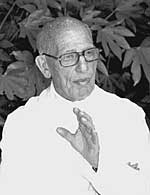
Introduction
With the passing of Alfred Gottschalk on October 4th 1973, at Tübingen, West Germany, in his 80th year, there ended a life of extraordinary dedication to research in biochemistry. He was active to the end; in fact his last fifteen years, from the time of his retirement from the Hall Institute, were among his most fruitful. He died acclaimed as the leading authority in the ever-expanding field of glycoprotein research.
Curriculum vitae
Gottschalk was born on April 22nd 1894, in Aachen/Rheinland, the third of four sons of Benjamin Gottschalk, merchant, and Rosa Gottschalk (née Kahn). The eldest son, Walter, became a distinguished orientalist but Alfred chose the study of medicine. His courses (1912-1920) at the Universities of Münich, Freiburg/Breisgau and Bonn were interrupted by the First World War in which he served in the Medical Corps and was decorated in 1915. On resuming his studies he graduated MD (with honours) from the University of Bonn in 1920. Postgraduate clinical work and research experience followed in association with the medical schools at Frankfurt/Main and Würzburg, while further training in physiology-biochemistry was undertaken at the Physiological Institute at the University of Bonn. During this period and, in fact, while an undergraduate, he had carried out research part-time and, by 1923, when he was invited to join Professor Carl Neuberg as an assistant at the Kaiser Wilhelm Institute for Experimental Therapy and Biochemistry (1) at Berlin-Dahlem, he already had a considerable number of publications and had received an award from the University of Madrid. Neuberg, already an international figure, exercised a lasting influence on his younger and hard-working colleague and probably helped determine the course of Gottschalk's later independent studies on the chemistry and biochemistry of carbohydrates.
He married, in 1923, Lisbeth Berta Orgler. Their only child, Rudolf, is now a successful civil and mechanical engineer in New Jersey, USA.
Towards the end of 1926 Gottschalk left the Kaiser Wilhelm Institute to become Director of the Biochemical Department at the General Hospital in Stettin, Pomerania, a position which he was forced to relinquish in 1934 as a result of the unhappy political upheavals in Nazi Germany. Following a period in private practice he was able to leave Germany with his family in the spring of 1939. After spending a few months in Liverpool, England, where, at the University, he was able 'to brush up his biochemistry', they left by ship for Melbourne in July 1939.
Through the good offices of an English Catholic Church organization – the family having embraced this faith some years earlier – and the interest of Dr Charles Kellaway, the then Director of the Walter and Eliza Hall Institute, Gottschalk had been offered a modest stipendium to work as a biochemist at the Institute. From 1942 to 1948 he taught at the Melbourne Technical College as a part-time Instructor in Organic Chemistry and Biochemistry, and from 1949 he lectured part-time on carbohydrates to senior students in my former Department of Biochemistry at Melbourne University. He became a naturalized British subject in 1945, and in 1946 his clinical training and experience were recognized by his registration as a Medical Practitioner with the Medical Board of Victoria, although he was never subsequently in private practice.
His early work at the Institute, mainly on carbohydrate fermentation, took a dramatic turn with the observations of the new Director, Dr F.M. (later Professor Sir Macfarlane) Burnet, on the enzyme-like activities of the influenza viruses. Burnet stimulated Gottschalk to join forces in 1947, with more far-reaching results than probably either could have foreseen.
When, in 1959, Gottschalk had reached retiring age, he transferred his activities to the John Curtin School of Medical Research at the Australian National University at the invitation of his friend and former colleague at the Hall Institute, Frank Fenner, who had become the Foundation Professor of Microbiology. Given adequate facilities and continuing support from the National Health and Medical Research Council in the form of a Senior Fellowship, he entered with enthusiasm into his post-retirement activities, but some four years later, early in 1963, he decided for personal reasons, and with reluctance, to leave Canberra to return to Germany. He had expected to come back to Australia and, in consequence, left much of his library and other personal effects in storage. However, this was not to be; even a planned lecturing visit early in 1972, sponsored by the Academy and by senior Australian biochemists, had to be cancelled on medical advice.
In Germany he was most warmly received as a biochemist of international standing. Professor Adolf Butenandt, Director of the Max Planck Institute for Biochemistry and President of the Max Planck Society for Advancement of the Sciences, offered him facilities and an honorarium as Guest-Professor to work for a period in his old institute (2). Gottschalk asked, however, whether this generous offer could be extended to Tübingen, which he thought might provide a better environment for the investigations he had in mind. To this the President readily agreed. Accordingly, there began a most happy and scientifically profitable association with the Max Planck Institute for Virus Research and a close friendship with its Director, Professor Hans Friedrich-Freska. In Tübingen he also enjoyed collaboration with university colleagues in the Institute of Physiological Chemistry (in particular with Dr E. Buddecke (3)).
The original two-year appointment as Guest-Professor in the Institute was extended year by year by mutual consent to 1968, when by special enactment he was admitted (March 5th 1968) as 'Foreign Scientific Member of the Max Planck Institute for Virus Research'. Thus he entered officially into the distinguished scientific circle of the Max Planck Society. This signal honour was a source of great pleasure to him. Professor Butenandt wrote: 'Das war für ihn eine Freude und Ehre, für mich personlich und für die Tübinger Kollegen zugleich der Versuch, ein wenig von dem Unrecht wieder gutzumachen, das ihm früher in Deutschland zuteil wurde. Durch die Annahme dieser Berufung durch Alfred Gottschalk ist eine echte unvergessliche Freundschaft zwischen ihm und seinen Kollegen in Tübingen und in München bergründet worden.'
Apart from his heavy research programme in the Institute his influence in teaching and research within the University of Tübingen was considerable. In appreciation, the University installed him in 1966 as an Honorary Professor in the Faculty of Mathematics and Science. In the same year (January 1966) he was notified of his election to Fellowship of the American Association for the Advancement of Science 'in recognition of your standing as a scientist'.
In further tribute to his 'life's work as Doctor and Researcher' he was admitted in 1969 to the honorary degree of Doctor of Medicine by the University of Münster on the submission of the Faculty of Medicine, an occasion also for the celebration of his 75th birthday.
Gottschalk became a Fellow of the Academy in 1954 following the first elections after its foundation. He took great pride in his election and strove to foster the welfare of the young Academy. He was largely responsible for the formation of the Victorian Group of Fellows and for the continued success of its regular meetings as its first Honorary Secretary (from July 1954 to December 1958) under the chairmanship of Macfarlane Burnet. As might be expected, the Minute Book was meticulously kept.
Other honours had come to him earlier while still in Melbourne. The University of Melbourne in 1949 conferred on him the degree of Doctor of Science for his distinguished contributions to the scientific literature and two years later he received the University's David Syme Research Prize (shared with H.W. Worner). In 1951 he was elected a Fellow of the Royal Institute of Chemistry (Great Britain) and a Fellow of the Royal Australian Chemical Institute, while in 1954 he shared with A.J. Birch the H.G. Smith Memorial Medal, awarded by the latter Institute.
Personal and general
'What always impressed me most was his absolute and unconditional devotion to the world of learning. That held for his own work but also for all other matters academic. For mundane things he had little time.' So wrote recently a friend of Melbourne days and with these assessments most who knew him well would agree. Moreover those who were associated with him as laboratory colleagues in Australia and in Germany would be unanimous in their admiration for his dedication and meticulous care and attention to detail in the design and execution of his experiments. He insisted on the same high standards from his co-workers but, as Fenner writes: 'Gottschalk was an excellent colleague for senior workers, although somewhat irritating because of his insistence on always seeing and checking evidence, and his persistence. These qualities, transferred to the daily and hourly checking of everything that a student did, made him a nearly impossible supervisor for research students' (4). However, the few post-graduate students who stood the grind had no cause to regret the years so spent and one has remarked: 'although he asked a high degree of dedication from his co-workers it was no more than that which he himself gave'. Moreover, he could be most generous and helpful to them. Although his circle of friends was never large he enjoyed relaxing with them when the demands of the laboratory and writing permitted. To quote Fenner again: 'Outside the laboratory we found Gottschalk to be a somewhat demanding but very enjoyable friend, with broad interests and conversation, a subtle sense of humour, and a great fund of interesting anecdotes about his early scientific life'. Professor Buddecke has expressed himself in similar vein and with the views of these two friends I am in agreement. I first met Gottschalk in 1943 and our friendship continued over the following thirty years.
Gottschalk showed extraordinary determination towards achieving his objectives: his scientific work exemplifies this pre-eminently, but this determination carried through, for example, to his decision, after he had turned 65, to buy his first car. This, in Canberra and later in Germany, was always a Volkswagen (5). I 'enjoyed' a drive with him on several occasions in Canberra and in Tübingen. After a while one relaxed, convinced that a guardian angel hovered continually over Alfred and other drivers in the neighbourhood. As far as I know there was only one accident (in Tübingen) with extensive damage to both cars but none to either driver.
Scientific contributions
Gottschalk's output of published work was immense: in all, 216 research papers and reviews, and four books. He wrote clearly and concisely in both German and English and for practically all of his output he insisted that the preparation of the manuscripts was his personal responsibility, even in the case of joint publications. He never seemed to tire and even at the close of his long life he would, according to Professor Buddecke: 'after dinner at home, several times each week, return to the laboratory quite early in the evening, where he would write until one or two o'clock in the morning'.
The German period (to 1939)
By the age of 29 when he joined Professor Carl Neuberg his list of published work was already impressive – 34 papers over a wide range of projects, partly clinical but mainly physiological and clinical biochemistry. His first four publications were written while he was still a student and one of these, as a contribution to the theory of tissue respiration, indicates that quite early he was in command of the relevant literature, setting a pattern for the many excellent reviews and books which were to issue from his pen over the following fifty years.
Two articles, (Beziehungen der Influenzaagglutinine zur Klinik der Grippe. Klin. Wschr., 1 (1922), pp. 935-937 & Fettabbau bei schwerem Diabetes mellitus. Z. ges. exp. Med., 35 (1923), pp.159-176) are worthy of special mention in view of his subsequent investigations: the first on influenza agglutinin (foreshadowing his work at the Hall Institute?), the second on diabetes, which became an absorbing interest during his period at the General Hospital in Stettin some years later.
The three years spent at the Kaiser Wilhelm Institute were particularly fruitful. Gottschalk was introduced by the master to biochemical fundamentals, with particular reference to carbohydrate metabolism and enzymology, while his contributions to scientific literature continued apace. Of 30 publications 13 were contributed jointly with his chief. Together they were responsible for the classic concept of 'coenzyme' and 'apoenzyme'. Four long reviews also appeared at this time on basic aspects of biochemistry. They are noteworthy for their clarity and scholarship, and are indicative of the wide range of his reading. Finally, a series of four papers, written in collaboration with the Physiological Institute of the University of Berlin (Director: Professor H. Steudel), climaxed his departure for Stettin in 1926 after a period of truly extraordinary activity.
With his background of physiological and biochemical research, Gottschalk was well equipped to assume the Directorship of the Chemical Institute of the General Hospital at Stettin, a city at that time of around 250 000 inhabitants. He introduced micro-methods for blood analysis and gaseous exchange equipment for use in cases of thyroid disease. He also acquired new laboratories. In the five years, 1926-1930, the number of investigations in clinical chemistry in his Institute rose from 9500 to 30 000. In spite of these demands on his time, the output of research publications continued unabated – in the nine years of his tenure of office another 40 were added to his already impressive list. The first twelve or so were largely in extension of his investigations in Berlin but he then became deeply involved in the biochemistry, physiology and pathology of carbohydrate and fat metabolism, particularly as related to diabetes. Apart from his research findings, this gifted scientist played a leading role as clinician in the organization of the diagnosis and treatment of diabetics, in Stettin and also throughout Pomerania. Judging by the content of his library he had read widely on the history of the disease (from the time of Claude Bernard), on various aspects of nutrition and on the controlled use of the recently-discovered insulin. He had also visited Minkowski, then in retirement in Wiesbaden,who with von Mehring had first established, in 1889, the link between the disease and the pancreas, while he had translated and extended 'The Fuel of Life' by J. J. R. McLeod, who had been associated with the discovery of insulin.
Among other innovations he started a diabetic kitchen where, under a qualified dietitian, a daily hot meal was available to each diabetic in accord with his or her prescribed treatment. The success of this organization, 'The Stettin System of Diabetic Aftercare', may be judged by the fact that in the years 1928-1930 there was only one case of diabetic coma (0.3%) whereas in other large centres such as Berlin, Frankfurt/Main, Halle, Leipzig and Breslau the incidence ranged from 3.6 to 16.1 %. His system became a model for other parts of Germany, and an international meeting on diabetes was held in Stettin while he was still in office.
It is left to the imagination as to what might have been the future course of his career had the political climate been different. Would he have continued to combine the intensity of the research scientist with the humanity of the clinician ? What is most likely is that the elucidation of the structures of the sialic acids and the resultant stimulus to glycoprotein research would have been left to other investigators and perhaps delayed by many years.
Melbourne (1939-1959)
The initial studies at the Hall Institute developed, in part, from his investigations during the Berlin period and were concerned with fermentation by yeast. An underlying theme, however, reflected his growing interest in enzyme specificity and in mechanisms of enzyme action. His reputation as an authority on carbohydrases was enhanced and the experience thus gained was undoubtedly of value in his subsequent investigations on the glycoproteins.
The Swedish biochemist, Gunnar Blix, in 1936 obtained a crystalline acid by heating the mucin, prepared from bovine submaxillary glands, in water. The compound, later named by him 'sialic acid', possessed reducing power, contained nitrogen and two acetyl groups and gave a series of colour reactions. A substance with somewhat similar properties was isolated by methanolysis from a brain glycolipid by Klenk (1941) in Germany and given the name 'neuraminic acid' (changed (1942) to 'methoxyneuraminic acid'). The full significance of these findings was not realized, however, until the early 1950s when there was an upsurge of interest in the 'sialic acids' and in the elucidation of these unusual structures Gottschalk was to play a dominant role. The stimulus came initially from observations of biological phenomena – those concerned with the influenza virus. G.K. Hirst reported from the Rockefeller Institute in 1942 that the virus adsorbed to erythrocytes at 4°, and agglutinated them. By raising the temperature to 37° the virus was eluted, but whereas the cells were now no longer agglutinable the virus retained its activity to agglutinate fresh cells. These and other observations led Hirst to interpret the phenomenon as an enzyme-substrate interaction, the enzyme being a component of the virus and the substrate consisting of receptor sites on the erythrocyte surface. By the mid-1940s Burnet and colleagues had become deeply interested in such activities of the virus. Following the observation of T. Francis (1947) they found that a wide range of mucins (mucoproteins) from both human and animal sources inhibited the action of the virus on erythrocytes or on suitable cells in the mouse lung. Again, incubation of the inhibitory mucoproteins with the infective virus (or by a soluble enzyme (RDE) (6) purified from cultures of Vibrio cholerae) destroyed irreversibly the activity of the inhibitors.
In 1947 Gottschalk accepted an invitation to join the 'Virus Department' of the Institute (7) putting aside entirely his studies on yeast enzymes and fermentation (8). He insisted, however, that 'you could not call an action enzymic until you could demonstrate the nature of the substrate and of the 'split product''. He set out to do just that and at the same time was led to the recognition of a new enzyme – neuraminidase – and to define its specificity characteristics.
In his early observations within the new project it was found that, concomitant with the loss of activity of inhibitory mucoproteins (e.g. ovomucin and purified urine mucoprotein) following their incubation with influenza virus or RDE, a low molecular weight dialysable compound ('split product') was released. It was also clearly demonstrated that the enzyme associated with the virus is an integral part of the virus structure and not an adsorbed artefact. At this stage (1951) Gottschalk seemed unaware of the earlier observations of Blix or those of Klenk (vide supra). However, following a communication from Professor Blix in 1952, two publications on the properties of the urine mucoprotein appeared, by agreement, simultaneously in 'Nature', the one by Gottschalk and the other by Odin from Blix's Department in Uppsala. Gottschalk's paper is noteworthy for the suggestion that the mucoprotein has the configuration of a protein backbone to which are attached numerous small oligosaccharide units, which yield the 'split product' by enzyme action. Odin drew attention to the close similarity between the properties of Gottschalk's 'split product' and those of Blix's 'sialic acid'; he also demonstrated the presence of 'sialic acid' in a number of other inhibitory mucoproteins.
Other laboratories, in particular those of Klenk in Köln and of R. Kuhn in Heidelberg, also became active in the search for the chemical nature of the elusive 'sialic acids' (or 'neuraminic acids' in Klenk's nomenclature). Gottschalk had tentatively suggested an N-substituted isoglucosamine (fructosamine) formulation for the 'split product', although he was still uncertain of its homogeneity (9). Carbohydrate was accepted as a component, but the evidence as to the nature of the nitrogen linkages was equivocal.
Critical observations were made by Gottschalk when he identified 2-carboxypyrrole as a product arising from the mild alkaline treatment of (a) sub-maxillary and urine mucoproteins and (b) the 'split product' itself. Subsequent progress was rapid. He postulated in 1945 structures for sialic acid and neuraminic acid based on their relationship to 2-carboxypyrrole, and he reported the synthesis of this substance from D-glucosamine and pyruvic acid.
In the development of these highly important conclusions Gottschalk acknowledged his indebtedness to Dr J.W. Cornforth – then at the National Institute for Medical Research, London – for valuable suggestions. Cornforth was also associated with the successful synthesis of crystalline N-acetylneuraminic acid from the simple reactants N-acetyl-D-glucosamine and oxaloacetic acid.
With the structure of the 'split product' now established and his views generally accepted, Gottschalk turned his attention to the specificity characteristics of the enzyme, neuraminidase (10). Using as source of the enzyme both the influenza virus and purified RDE, and employing a simple substrate 'neuramin-lactose' (diacetylneuraminic acid joined to the disaccharide lactose) isolated from rat mammary glands, he was able to define the action as a cleavage of an O-glycosidic-type linkage involving the keto group of neuraminic acid and a sugar molecule. In bovine submaxillary mucoprotein the sugar was shown to be N-acetylgalactosamine.
Appropriately, his last publication before he went to Canberra and the Australian National University was in the nature of a review article in which he critically examined the mechanism of infection by influenza virus; here he brought together, in masterly fashion, all the then known biological and biochemical data.
Canberra (1959-1963)
In Canberra he found the environment most conducive to the successful continuation of his Melbourne studies. Besides Professor Fenner, two other distinguished virologists who had previously worked at the Hall Institute, S. Fazekas de St Groth and H.J.F. Cairns, were senior members of the Department. He was thus able to renew active collaboration with Dr Fazekas while his expert assistant (E.R.B. Graham) rejoined him from Melbourne. He also had a reliable young associate in W.H. Murphy (a PhD student), and on occasions he collaborated in joint projects with a neighbouring and well-equipped department of Physical Biochemistry.
In the early part of this period he was able to bring to fruition his assignment with the Cambridge University Press on 'The Chemistry and Biology of the Sialic Acids and Related Substances'. Although this now classical monograph consists of but 115 pages, growth in the field had been so rapid that less than 10% of the material covered was known prior to 1950. Subsequently he was in considerable demand as a lecturer in and reviewer of his special areas of research, a tribute to his enhanced reputation.
His laboratory investigations in Canberra and subsequently in Germany were dominated by his overall interest in the biochemistry, physical chemistry and biology of the mucoproteins, in particular those located in the submaxillary glands of sheep and cattle (referred to, respectively, as OSM and BSM), which had played such an important role in the elucidation of the mechanism of the cellular action of the influenza viruses (11). The published results of this work formed a series, Parts I-XVIII, of which Parts I-X were issued from the Department of Microbiology, the remainder from Tübingen. Among the major findings within the first group of papers were those that showed a close similarity between the structures of OSM and BSM in that the carbohydrate moiety (prosthetic group) consists of a single disaccharide, in each case sialyl-N-acetylglucosamine. The greater potency of OSM as a haemagglutinin inhibitor with certain strains of the influenza virus may be concerned with the nature of the sialic acid; in OSM it is uniformly N-acetylneuraminic acid whereas in BSM this terminal group is modified by other acylated forms. However, the inhibitory property in both cases appears to be related not only to the size of the molecules but to the presence of multiple points of attachment to the virus surface provided by the acidic terminal groups. In highly purified OSM, 58/59% of the macro-molecule (of molecular weight, 1.0 × 10⁶) is a protein backbone to which is attached 41/42 % carbohydrate divided into approximately 800 strongly acidic disaccharide units each of molecular weight 512. The disaccharide units in both OSM and BSM appeared to be linked predominantly (80-85%) in ester form with the residual free carboxyl groups of the aspartic acid and glutamic acid components of the polypeptide chain. The remaining links were considered to be O-glycosidic. However, on Gottschalk's return to Germany, re-examination of the methods used led to a reconsideration of these proposals (see below). The high viscosity of the mucoproteins was shown to be greatly reduced by removal of the terminal neuraminic acid by neuraminidase.
Finally, an earlier observation during this period is worthy of comment as indicating another role for terminal sialic acid. The follicle-stimulating hormone of the anterior pituitary gland (FSH) lost essentially all physiological activity with the removal of its sialic acid on incubation with purified neuraminidase. Incidentally, although it contains 5% sialic acid, FSH, with a low molecular weight of 29 000, is not inhibitory towards influenza virus (see also footnote 11).
Germany (1963-1973)
Although a major commitment in his latter years was with the preparation of 'THE BOOK' (Glycoproteins. Their Composition, Structure and Function), the laboratory was far from neglected. He was fortunate in having a number of able collaborators. Most of these collaborations deal with renewed investigations of the structures of OSM and BSM, in particular the former.
It was soon established, in agreement with other laboratories, that the dominant linkages between the N-acetylglucosamine component of the di-saccharide-repeating unit and the protein backbone were O-glycosidic involving the free hydroxyl groups of serine and threonine rather than linkages of the ester type (12). In the new approach OSM was subjected to proteolysis, the intermediate glycopeptides were treated with neuraminidase and the sialic acid-free peptides were separated and hydrolysed with weak alkali; N-acetylglucosamine was released in molar amounts equivalent to the loss of hydroxyamino acids. Subsequently, an enzyme was located in and prepared from ox spleen, from the snail and from the common European earth-worm (Lumbricus terrestris), which specifically hydrolysed the O-glycosidic linkages in OSM and intermediate glycopeptides, providing the sialic acid groups were first removed. A particularly pure sample of the enzyme was obtained from L. terrestris. The results of these studies left no doubt that the only amino acid residues joined to sugar in the disaccharide-repeating unit of OSM are those of serine and threonine.
In 1960 Gottschalk accepted an invitation by Elsevier to bring together all relevant data in the rapidly developing field of glycoproteins, and to incorporate the information as Volume 5 in the BBA Library. A steadily increasing number of proteins had been shown to contain carbohydrate and sialic acid. These included hormones, enzymes, blood group-specific substances, immunoglobulins, casein and constituents of cartilage, apart from the group of influenza virus-inhibitory glycoproteins. In addition to editing the monograph with its twenty contributors, Gottschalk was also author or co-author of seven of the articles. Since his departure from Australia we had maintained a steady correspondence which was augmented during the preparation of the book, since I was co-author of one of the sections. Thus I was able to appreciate more than ever his fanatical attention to detail. The first edition was acclaimed by the critics and led, after a short period, to a demand for a second edition which, now double the size, appeared in 1972, the Editor still managing to contribute ten articles as author or co-author.
Between editions, Gottschalk somehow found time to travel extensively, either attending conferences or as peripatetic lecturer. In 1967 he was in England, Japan and India while during the latter part of 1968 he was in residence at Vanderbilt University, Nashville, Tennessee, where he lectured, conducted seminars and wrote for the second edition. During this period he also travelled widely in the USA, discoursing on glycoproteins en route.
In 1971 he was invited by the Chancellor of the University of California to become the Regents' Lecturer located at the Riverside campus in the Department of Biochemistry headed by Professor Leland M. Shannon. Here he was in residence for the first three months of 1972. Apart from his duties at Riverside he gave lectures or seminars at the other campuses of the University. He found the total experience most rewarding and enjoyable, but exhausting towards the end of his term. However, the students and staff at Riverside were so impressed by his contributions that on the students' petition to the University a return visit was arranged and accepted for the corresponding period of 1973. Professor Shannon has written as follows: 'Professor Gottschalk taught two courses, delivered several seminars and led numerous discussions. We all marvelled at his breadth and depth of knowledge. His contributions to our campus were legion and his influence will remain with us for many years.' '...his sharp wit, his ease among people, his breadth of wisdom, his expectation of perfection, his insistence upon punctuality, are a few of the cherished and indelibly imprinted trademarks Professor Gottschalk left with us.'
Soon after his return to Europe he attended what was to be his last congress, namely that at Lille (France) arranged by Professor Montreuil as a CNRS Workshop Meeting on Glycoproteins with most of the internationally known authorities present. At this stage he designated himself (in a letter to Professor Buddecke) as the 'Nestor of the world's students in glycoprotein research' – in many ways an apt assessment.
Although his mind remained clear to the end, few knew that he had lived with a heart condition for some years. His physical strength eventually deteriorated and he died in his sleep just a few days after his close friend and colleague Professor Friedrich-Freska, Director of the Max-Planck Institute for Virus Research. They were buried in Tübingen in adjoining graves.
The formal announcement of his death as sent to relatives and friends and which was issued jointly by The Max-Planck Institute for Virus Research and The Friedrich-Miescher-Laboratory of the Max-Planck Society, Tübingen, contained this tribute:
Sein wissenschaftliches Werk trug unter anderem grundlegend zu unserem heutigen Verständnis der Virusinfektion bei. Wir verlieren in ihm einen grossen Biochemiker von internationalem Ansehen, einen bescheidenen und hilfsbereiten Menschen.
About this memoir
This memoir was originally published in Records of the Australian Academy of Science, vol.3, no.1, 1974. It was written by Emeritus Professor Victor Martin Trikojus, CBE, DSc, Head, School of Biochemistry, University of Melbourne, 1943-1968. Elected a Fellow of the Academy in 1954 and member of Council, 1958-1961.
Notes
- (1) Subsequently the Kaiser Wilhelm Institute for Biochemistry which became independent in 1925.
- (2) Professor Butenandt had succeeded Professor Carl Neuberg in 1936 as Director of the Kaiser Wilhelm Institute, then still in Berlin. After the War, the Institute transferred to Münich with a change of name as indicated.
- (3) Also a close friend who continued collaboration after appointment as Professor at the University of Münster, Westphalia.
- (4) It seems likely that this attitude in part reflected that of his former teacher, Carl Neuberg, who, as Gottschalk himself related, was wont to peer over the shoulder of his assistant during titrations to make sure 'the values were obtained objectively'. Another incident as told to Bruce Graham was of Neuberg handing a paper in Japanese to Gottschalk with a demand for a translation by next day. The outcome is not recorded but, knowing Gottschalk, the German version was almost certainly ready as requested.
- (5) Fenner comments: 'This was maintained 'as new', but turned in for a new model every two years. His care for the vehicle extended to wiping his feet (and seeing that passengers did likewise) before entering – but he never learnt to drive properly, in that he never travelled fast but crossed intersections at the same pace as he used on the open road, undeterred by cross-traffic.'
- (6) Receptor Destroying Enzyme.
- (7) It is appropriate at this stage to quote a tribute to Burnet from the Preface to Gottschalk's subsequent monograph on the Sialic Acids: 'Finally, I would like to take the opportunity to express sincere thanks to Sir Macfarlane Burnet, OM, FRS, who in 1947 suggested that I should approach the problem of interaction between influenza virus and mucins from the biochemical side. His stimulating and ingenious biological approach was a safe guide for many of my moves in the field. There must be few laboratories where the 'give and take' between biology and biochemistry is so closely wedded as at the Walter and Eliza Hall Institute. It is the biological flavour which makes the cold beauty of the chemical structures displayed in this book attractive'.
- (8) Except to solve sometime later the problem of an Australian firm of whisky distillers. Thousands of gallons of the fluid were being spoilt by an acrylic flavour the source of which was rapidly pinpointed by the expert with the encyclopaedic knowledge; no laboratory work was needed.
- (9) Crystallization of the 'split product' was not achieved until 1955 (by Klenk and colleagues).
- (10) The neuraminidase from the more accessible Vibrio cholerae (RDE) was crystallized in 1959 by Ada and French (Hall Institute) and by Schramm and Mohr (Tübingen).
- (11) It may be noted here that with the recognition of the wider distribution of carbohydrate-protein complexes of biological importance the vague term 'mucoprotein' was replaced by 'glycoprotein'. Moreover, complexes of the same type were already known which, although containing sialic acid, were 'non-inhibitory' and of much smaller molecular weight than the highly viscous macromolecules, OSM and BSM.
- (12) Later findings with the reagent used earlier (lithium borohydride) suggested a source and explanation of the misinterpretation.
Alfred Edward Ringwood 1930-1993
Written by D.H. Green.
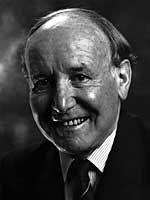
Ted Ringwood was born in Kew, an inner Melbourne suburb, on 19 April 1930, an only child in a family which identified strongly with Australia and with Melbourne in particular. Both his parents were Australian, but his mother's parents had come to Australia as Presbyterian emigrants from Ulster. His paternal grandfather was born in New Zealand, his paternal great-grandfather in Australia, and his grandmother in India. His father, also Alfred Edward Ringwood, enlisted as an 18-year-old in the First World War and fought in France, suffering gas attack, trench feet and other distressing experiences which heavily affected his later life. During the 1920s he held a variety of unskilled jobs and was essentially unemployed from the beginning of the Depression onwards. Ted's mother and extended family on both sides provided stability when his father joined Australia's large itinerant 'odd-jobbing' labour force during the 1930s. (Later, his father received a war service pension.) Ted's mother, with clerical skills, supported the family through much of the Depression. However, the family's precarious financial position meant that Ted was boarded out with grandparents and relatives for extended periods. His maternal grandfather owned a small foundry in Fitzroy, and successfully managed a small business through the Depression and Second World War years.
Ted attributed his earliest interest in science to his paternal grandfather who was largely self-educated and who attended a working-man's college as an adult, becoming interested in chemistry and in radio. Ted recalled his grandfather's ten-volume set of inorganic chemistry texts, as being instrumental in introducing the theoretical and systematic aspects of science as well as its practical applications.
The extended family support and the inner suburban environment provided Ted with a childhood that he remembered as being 'very pleasant'. He excelled academically at Hawthorn West State School and took up both cricket and football (Australian Rules). His mother's ambition was for Ted to acquire a university education and so she encouraged him to compete for a secondary school scholarship to Geelong Grammar School. He was successful and from age 13 (1943), became a boarder there. Geelong Grammar School is perhaps the most prestigious of Australia's private schools and was then patronized largely by the families of well-established grazing and agricultural properties of the fertile and productive Western District of Victoria, and by wealthy families of southern Australia generally.
Ted was forthright in his praise of the education he received at Hawthorn West. He attained exceptionally high standards in mathematics and English and accordingly was able to jump a year, to Form 4 (i.e. Year 10), in transferring to Geelong Grammar. There, he faced increased academic competition but found excellent teaching and encouragement. He also continued to play Australian Rules football with great enthusiasm.
There was no formal teaching in geology at Geelong Grammar but Ted had such a light academic load in his final year (having achieved the university entrance requirements a year earlier) that he had an opportunity to explore outside the core curriculum. He mastered the geology course of Melbourne High School by acquiring the text books and working through them himself. His growing interest in exploitation of mineral resources for national benefit, and as a potential road to personal wealth, led him to take Geology in his first year at the University of Melbourne. Ted had been awarded a Trinity College Resident Scholarship and this, together with the Commonwealth Government Scholarship provided for tertiary education at that time, enabled him to attend the University of Melbourne without the need for financial support from his family. He continued to play Australian Rules football and represented the University of Melbourne in both the Victorian Amateur Football Association and the annual Inter-varsity contests, to the long-term detriment of his knee joints. College life, football, the traditional undergraduate pursuits, and a broadening interest in metallurgy and materials science as practical, rewarding activities meant that he 'took university work very lightly', doing only enough to pass examinations, but working reasonably hard at geology so as to keep his Trinity scholarship. He obtained First Class Honours in Geology, and afterwards paid tribute to Professor E. Sherbon Hills, an excellent lecturer, and head of a top-class teaching and research department. Hills was an establishment figure in Australian earth sciences of the 1940s and 1950s, a foundation Fellow of the Australian Academy of Science and an unforgiving opponent of the concept of continental drift, then being articulated by Professor S. Warren Carey of the University of Tasmania.
At this stage of his career, however, Ted acknowledged that his motives were to become a successful economic geologist in the expanding minerals exploration industry. At Melbourne University at that time, Honours were awarded on the three-year course, and the top students continued on to a two-year MSc degree involving a major research project. Ted obtained scholarship support and began his MSc degree with a field-mapping and petrology project in the Devonian Snowy River volcanics of northeastern Victoria. This is steep, heavily timbered terrain with limited access and no resident population, so mapping was physically demanding and logistically difficult. Whilst mapping, Ted explored an exhausted silver mine where large quantities of galena-rich tailings had been discarded. Ted seized the opportunity by bagging the galena and transporting it to Melbourne for sale as feedstock for the Melbourne shot tower. (The shot tower is still preserved within the Daimaru Shopping Centre.) The venture was profitable and Ted's lifestyle improved considerably - a lesson that was not wasted on him! He obtained his MSc with Honours in 1953.
At Geelong Grammar, Ted had explored the literary resources in the school library. The books of Ion Idriess held special appeal. They presented an image of Australia as vast, varied, rich in resources, responsive to grand visionary ideas and peopled by independent and self-reliant men (few women!) in harsh but beautiful landscapes. His upbringing in inner Melbourne, through Geelong Grammar and its links to the Australian rural 'establishment', his mother's self-reliance, his wider family's emphasis on independence, and his forced intimacy with the solitude of the Australian bush during his fieldwork studies, meant that Ted absorbed and strongly identified with what he saw and valued as being Australian. He developed strong nationalist sentiments that were to continue throughout his life. His personal commitment to the development of science and industry within Australia likewise had its origins in his upbringing and education and was a dominant factor in his career decisions.
Ted Ringwood began his PhD at the University of Melbourne in 1953 at a time when it was unusual to undertake a PhD degree in Australia. (Most prospective postgraduate students travelled to the UK or the USA for the purpose.) The project began as an experimental study about the origin of metalliferous ore deposits. During his undergraduate and MSc years, Ted had met Arthur Gaskin, a young lecturer in geochemistry and later a scientist and executive of CSIRO's Division of Metallurgy and Minerals Processing. Gaskin and Ted became lifelong friends, and during the construction of the experimental equipment for Ted's proposed PhD study, Gaskin encouraged Ted to read more fundamental geochemistry, particularly that to be found in the works of V.M. Goldschmidt. Ted found this so stimulating that he changed his research topic so as to apply geochemistry to understanding the structure of the Earth. He was particularly interested in the way that crystal chemical concepts might predict the mineralogical constitution of the Earth's mantle. His publications of 1955 and 1956 illustrate the convergent strands which combined to set his future career path. They also attest to his writing skills - an essential basis for a research career - which owed much to the rigour of his primary and secondary education. The publications of that period include two papers on the geology of the Mt Deddick and Snowy River areas of East Gippsland; a patent (with A. Gaskin) on production of rutile from ilmenite; two papers in Geochimica et Cosmochimica Acta in 1955 on the principles governing trace element distribution during magmatic crystallization; papers in the American Journal of Science and Geochimica et Cosmochimica Acta on magnesium silicate and germanate solid solutions and melting relationships; and a paper in Nature on the olivine to spinel transformation in the Earth's mantle. In his 26th year, he was awarded his PhD and had already published major papers in leading international journals. He had pioneered a method for investigating the Earth's interior by using thermodynamics based on crystal chemical concepts and on experimental studies of germanates as analogues of high pressure silicates. He had developed his research quite independently of international leaders in studies of geochemistry or of the Earth's mantle. Professor E.S. Hills wrote on his behalf to Professor Francis Birch at Harvard University, enquiring about postdoctoral research possibilities. Birch responded favourably and offered an appointment. During the fifteen months in 1957 and 1958 which Ted spent at Harvard, he was introduced to high pressure experimental techniques, using the Bridgman anvils (or 'simple squeezer') and found Birch to be kindly, supportive and encouraging. In 1957, Dr Mervyn Paterson from the newly established Department of Geophysics at the Australian National University (ANU) visited Birch's laboratory, met Ted, and encouraged his interest in the ANU. Ted then met Professor John Jaeger, Professor of Geophysics at ANU, at the 1957 IUGG meeting in Toronto - it was indicative of the lack of contact between universities in Australia at that time that the two had not previously met, nor had Jaeger, a supporter of S. Warren Carey, had any effective scientific communication with E.S. Hills! Jaeger inquired about Ted from Birch and, after receiving Birch's enthusiastic endorsement, offered Ted a position in the new Department of Geophysics in the Research School of Physical Sciences at ANU.
At the ANU, Jaeger had added palaeomagnetism, heat flow, seismology, rock mechanics and experimental deformation to the Department of Geophysics, and had grafted isotope geochemistry and geochronology on to an 'inherited' laboratory in radiochemistry. Ted's expertise lay firmly in geochemistry but his research objectives were also those of many geophysicists - to understand the nature and properties of the Earth's interior, particularly the then unknown Transition Zone. Ted accordingly constructed a Bridgman-anvil high-pressure apparatus in his new laboratory in Canberra. In parallel, he continued his interest in the chemical composition and evolution of the solar system with special emphasis on the nature and significance of different classes of meteorites. Here he began by documenting the mineralogy of representatives of the different chondritic meteorite types, thereby emphasising both chemical-equilibrium trends, on the one hand, and the multi-component nature of meteorites, on the other. He showed that several meteorite classes had formed by auto-reduction processes from parental type I carbonaceous chondrites, and concluded that the various suites of differentiated meteorites had formed by melting and differentiation of parental chondritic bodies. These insights are summarized in several important papers in the late '50s and early '60s, wherein he both formulated the 'chondritic earth model', and discussed the composition and origin of the solar system. He challenged H.C. Urey's concept, generally accepted at the time, that differing densities of terrestrial planets reflected mechanical fractionation of metal from silicate during condensation of the solar nebula. Ted's interpretation was vindicated when it was later found that the solar abundance of iron - on which Urey had relied - was incorrect. Ted also emphasised the importance of different oxidation states in accounting for differing densities between Venus, Earth and Mars. This work laid the foundation for his active participation in studies of the lunar samples returned by the Apollo Mission in the early 1970s.
The work on meteorites also took Ted on several visits to Sweden in 1958-60 where he worked in collaboration with Kurt Fredericksson. There he met and, on 26 August 1960, married Gun Carlson. Ted and Gun returned to Canberra in 1960 to set up the Ringwood home which welcomed many visitors, particularly through the 1960s and 1970s.
It was characteristic of Ted Ringwood's style that he would focus intensively on a major theme, assimilate new relevant information from the literature, commonly contribute new results, and then proceed to construct an updated or greatly revised synthesis or model. He would return to these major themes if significant new data appeared, if a contradiction presented itself, and in invited review papers. Thus the intertwining themes of geochemical evolution of the solar system, composition and mineralogy of the Earth's mantle, composition of the Earth's core, composition and origin of Earth's Moon and the relationships between mineralogical phase transitions and mantle dynamics, continued as major research interests throughout his career.
In his early work, Ted had used germanate minerals as low-pressure analogues for high pressure polymorphs of silicate phases. These experimental insights allowed him to predict that polymorphic phase transitions in the common mantle minerals, olivine and pyroxene, would occur within the pressure regime of the Earth's Transition Zone. Indeed, this was Birch's 1952 hypothesis. (Phase transformations may occur in response to pressure, when a crystal structure is reorganised into a new, denser and more compact arrangement.) Phase transformations offered an alternative to postulating major chemical compositional layering in the Earth as a way of explaining the seismic velocity and density discontinuities across the Transition Zone. At ANU, Ted began experimental study of silicates at high pressure and in 1959 demonstrated that the iron end-member Fe2SiO4 of olivine indeed transformed to the denser spinel structure, as did numerous germanate and germanate-silicate solid solutions. In 1966 Ted and Alan Major, the technical officer who worked with him from 1964 to 1993, synthesised the spinel form of (Mg0.8Fe0.2)SiO4. This was especially significant because this composition approximates that of the Earth's mantle. Also in 1966, the transformation of pure forsterite (Mg2SiO4) to spinel-like b-phase was achieved. Thus the nature of the 400 km seismic discontinuity (at the top of the Transition Zone) was established beyond reasonable doubt. Further important polymorphic transitions - of pyroxene to garnet structure, of calcium silicate to perovskite, and of magnesium silicate (pyroxene) to perovskite structure were demonstrated by Ted and his colleague Dr Lin-gun (John) Liu at ANU in the 1970s. Several different kinds of high pressure apparatus were employed for this purpose, including Bridgman anvils with extremely small internal strip-heaters and the diamond-anvil high pressure cell in which the sample is internally heated by an infra-red laser. It was characteristic of Ted that this persistent experimental approach to the determination of the mineralogy and chemical composition of the mantle was complemented by progressive refinement of conceptual models of mantle dynamics and, particularly, of the fate of cool, sinking lithospheric slabs. Throughout the 1980s, in a series of rewarding collaborations with several Japanese postdoctoral fellows, Ted debated the issue of whole-mantle versus layered-mantle convection and argued in several major publications that descending slabs would be deflected within the Transition Zone. High-resolution seismic tomography later confirmed that view. Moreover, he presented a substantive case that no major compositional differences exist between upper and lower mantle and that the peridotitic composition inferred for the upper mantle was also appropriate for the lower mantle.
In 1962, Jaeger recruited me to work with Ted, specifically on commissioning the internally heated piston-cylinder apparatus. This device can reproduce pressure-temperature conditions equivalent to depths of about 150 km inside the earth. Thus began a fruitful fourteen-year collaboration at ANU. We began by quantifying Ted's 'pyrolite' model, expressed in opposition to a then popular alternative that the Earth's upper mantle was of basaltic, not peridotitic composition. In the alternative model, the seismic velocity and density jump across the Mohorovicic Discontinuity was attributed to phase transformations in basaltic, not peridotitic, composition. Ted, working from his chondritic model for the Earth's bulk composition, argued instead for an olivine-rich (peridotitic) mantle composition. Moreover, my own PhD study on a natural peridotite had established that it was indeed a mantle sample of high pressure origin. Together, we explored this concept further, calculating a model mantle composition termed 'pyrolite' that is equivalent to fertile upper mantle peridotite with the capacity to yield basalt by partial melting. We defined the four major mineral associations expected at depth for pyrolite and used the new piston cylinder apparatus for confirmation. In parallel we also explored the high pressure mineralogy of basaltic compositions to test the alternative model. We compared our experiments directly with observations on natural high pressure metamorphic rocks. We found, for example, that basalt converted to an assemblage well-represented in some metamorphic terranes, that is intermediate between its high-pressure mineralogy (eclogite) and its low-pressure mineralogy (gabbro). In this way we began investigations which led to key papers on the basalt-to-eclogite transformation and the role of this transformation in mantle dynamics. Complementary papers emphasised petrological aspects, and tectonic and geophysical implications. However, we did not always reach a consensus. One publication in 1966 presents two alternative scenarios of the role of eclogite in initiating or driving tectonic processes, couched in both 'fixist' or 'continental drift' terms, thereby illustrating the Hills/Carey dichotomy in our backgrounds and illustrative of the debates at that time. This collaborative period was extremely active and rewarding. It gave me first-hand insight into Ted's fundamental modus operandi - using experiments to obtain robust data on which multiple hypotheses might be built, but which would survive only until further observations or experimental study rendered them untenable. Ted Ringwood was not afraid to be wrong in his hypotheses or models but preferred that he should lead the rejection of an earlier idea and acceptance of a new one - rather than others should do so. His friend, Professor Albrecht Hofmann, Director of the Max Planck Institut für Chemie in Mainz, in delivering the Goldschmidt Medal citation to Ted in 1991, recounts how Ted was quick to recognise the importance of a particular concept and to pursue it tenaciously, 'sometimes in error, but never off course'.
During my tenure at ANU in the 1960s, we investigated the complementary relationship between partial melt (basalt) and its residue (peridotite) as functions of pressure and temperature. These experiments would not have been possible without the electron microprobe. We were the first to employ that instrument - new at the time - to analyse tiny minerals in situ in experimental charges. We also chose to employ natural volcanic rock compositions, rather than simple synthetic analogues, and both of these strategies proved extremely rewarding. The experimental petrology and petrogenesis of natural basaltic rock compositions became a major focus for research through the 1960s and early 1970s, including Ted's collaboration with my brother, Professor Trevor H. Green (then a PhD student), and Professor Ian A. Nicholls (a postdoctoral fellow).
Ted's reservoir of experience and knowledge meant that he was well-placed to exploit the scientific opportunities presented by the Apollo missions. The lunar rocks returned to Earth yielded a wealth of new geological, geophysical and chronological insights into the origin and evolution of another body in the solar system. In 1960, Ted had revived a modified version of Darwin's fission hypothesis. In essence, the material that accreted to form the Moon was thought to have been derived ultimately from the Earth's mantle. This was a minority view, and the first heat-flow measurements dealt it a severe blow. Given the thickness of the lunar crust, the heat-flow data implied that the Moon contained about twice as much uranium as does the Earth. That in turn meant that the Moon would have to contain about twice the Earth's inventory of calcium and aluminium oxides - seemingly the death-knell of the fission hypothesis with its requirement for similarity in bulk compositions. The fission hypothesis was unpopular for other reasons too, such as difficulty with the angular-momentum dynamics of the Earth-Moon system. It was much to Ted's relief that more accurate measurements on later missions permitted downward revision of heat-flow, and consequent resurrection of the fission hypothesis. Moreover, by this stage Ted had generated a wealth of experimental data on the origins and petrogenesis of the basalts that, long ago, had flooded the lunar maria. These results, in combination with certain seleno-chemical considerations, likewise pointed to a common genetic inheritance for both Earth and its Moon. Ted's hypothesis then received endorsement from Heinrich Wänke, a leading European geoscientist. Moreover, the giant-impact hypothesis of Hartmann and Davis, and Cameron and Ward, offered a conceptually-appealing mechanism for ejecting material from the Earth. Ted, however, was lukewarm about that scenario because it would require catastrophic melting of the Earth. He instead advocated ejection of proto-lunar material by numerous lesser impacts, after the Earth's core had segregated. Vigorous and heated debate ensued, and the issue is still not satisfactorily resolved. A comprehensive and fascinating narrative encompassing these turbulent times can be found in Brush (1988).
The seismic properties of the Earth's outer core of molten iron imply that it contains about 10 wt% of light elements. In 1977 Ted proposed that oxygen formed a major part of that light-element inventory. His rationale was straightforward. Oxygen makes up about half of the silicate earth, and thermodynamic considerations indicate that its solubility in molten iron should be facilitated by both high pressures and high temperatures. Intermittently, over the next decade, Ted and his colleagues conducted a series of ingenious experiments that provided a qualitative demonstration of that hypothesis. The experimental challenges were substantial. For example, Ted's equipment could reach pressures that were only about one-tenth those of the outer core. Indeed, it was not until 1992 that Ted's friend, Dr Reini Boehler, using materials supplied by Ted, was able to provide a more definitive demonstration via the ultra-high-pressure diamond anvil cell.
Public debate about the export of uranium was especially intense and divisive in Australia in the mid-1970s. There was much concern over the disposal of high level wastes (HLW) arising from burning Australian uranium in foreign nuclear power reactors. (Australia, with massive fossil-fuel reserves, does not herself generate power by nuclear means.) HLW are the unavoidable by-product of reprocessing spent fuel for the recovery and recycling of uranium and plutonium. HLW present a radiological hazard that requires management for time-scales of hundreds of thousands of years.
The late Sir Edward Bullard FRS, Professor of Geophysics at Cambridge University, further stimulated Ted's interest in the subject during a visit to Australia in 1977. At that time, most nations with nuclear-power programmes planned to consolidate and solidify HLW as an integral constituent of glass monoliths. Ted realised that this strategy might be less than ideal if glass wasteforms were ultimately to be buried deep underground. From a geosciences perspective, glass is not especially resistant to corrosion by circulating groundwaters. In contrast, certain ceramics might display advantageous properties. Ted accordingly drew on his reservoir of geochemical and mineralogical knowledge, and over the next eighteen months converged on and patented SYNROC (SYNthetic ROCk). SYNROC is a titania-based ceramic, the constituent minerals of which have the capacity to immobilize, in their crystal lattices, almost all of the radionuclides in HLW. Moreover, SYNROC's minerals also occur in nature, and so its longevity in diverse geological environments could be guaranteed. Ted called a press conference to announce his concept. To his surprise, he found himself under attack from all quarters. The 'greens', on the one hand, did not appreciate having their case for the intractability of nuclear waste management weakened by the advent of SYNROC. And the nuclear establishment did not welcome the criticism implicit in the announcement of 'an improved wasteform'.
In the context of its decision to permit the export of uranium, the Australian government also continued to support research into particular aspects of the nuclear fuel cycle. The government supported the construction and commissioning of a full-scale, non-radioactive demonstration SYNROC plant at the Australian Nuclear Science and Technology Organisation's (ANSTO) site in Sydney. ANSTO scaled up the fabrication process and also, over subsequent years, has carried out extensive scientific characterization and testing of SYNROC, both in Australia and via international collaborative agreements. The research, in which Ted continued to take an active interest, continues against a shift in waste management policy. Most nations have, for the time being, adopted the 'once-through' cycle, in which spent fuel is regarded as a waste product ultimately destined for encapsulation and geological internment. Reprocessing has been largely abandoned because it does not appear to be justified on economic grounds and thus the high level wastes for which SYNROC was designed are not a major aspect of the industry's future scenario.
Another venture into applied science stemmed from Ted's appointment to a scientific advisory board for one of Australia's major mining houses in the 1980s. Ted was amazed by the abundance of small industrial-grade diamonds flowing from the newly-opened Argyle mine in Western Australia. With corporate support he invented and patented a new diamond-based cutting tool material suitable for hard-rock drilling and ultra-hard ceramic machining. Licensing and commercialization of this technology is now underway.
Ted's published work was prolific and included two books, The Composition and Petrology of the Earth's Mantle (1975) and The Origin of the Earth and Moon (1979). He published over 300 scientific papers on several themes, including mineral transformations at high pressures, dynamic processes within the Earth's mantle (30 km to 2900 km depth); the origin of basaltic rocks; the nature of the Earth's core; the chemical evolution of the planets and meteorites; and the composition and origin of the Moon. A bibliography can be found at the conclusion of this memoir.
The Department of Geophysics and Geochemistry had grown and diversified under Professor J.C. Jaeger and within the Research School of Physical Sciences but by the early 1970s the approaching retirement of Jaeger, the limits to growth as a department within the Research School and conflicts between the earth scientists and the Director of RSPhysSci (the nuclear physicist Professor E.W. Titterton) led to pressures to separate the Department of Geophysics and Geochemistry into a new Research School. Ted Ringwood led this campaign, developing arguments on the importance of the earth sciences generally to Australia, the standing of the ANU group in international terms, and particularly on the inability, without significant growth, to expand into new fields of geophysics and geochemistry. The debates became intense and culminated in Ringwood and Titterton appearing before the University Council to argue their respective cases. The University Council, disposed towards conservatism and support of one of its most senior Research School Directors, was nevertheless persuaded by Ringwood in a meticulously prepared argument avoiding the personality issues which had become quite bitter. The new Research School of Earth Sciences (RSES) was established in 1972 with Professor Anton L. Hales appointed as Director.
Ted Ringwood was Director of RSES from 1978 to 1983. He had great influence on the research directions of the Department of Geophysics and Geochemistry and then on the Research School of Earth Sciences. He was a strong supporter of the introduction of geophysical fluid dynamics in 1975 and of the addition of environmental geochemistry. Initially opposed to the proposal by Professor W. Compston to design and build a high-resolution ion microprobe within RSES (largely because of cost), Ted became a major supporter during his term as Director. Similarly, he gave strong support to the development of mineral physics, to seismology and to geodynamics as core activities in RSES, in addition to maintaining a vigorous research group built around excellent research and technical staff and a series of contract appointments as research fellows and postdoctoral fellows.
Ted was a leading figure in Australian science. He contributed to broader scientific and social issues through his role as a senior ANU academic, membership of the Australian Academy of Science, and via national advisory committees. His work has been widely honoured, with many medals and prizes for achievement or 'Distinguished Lectures', and by election to Fellowships of numerous scientific societies (see below). Amongst his most prized awards were the Bowie Medal of the American Geophysical Union in 1974 (he was the youngest scientist to have received the medal) and the Goldschmidt Medal of the Geochemical Society. Perhaps most significantly, in 1991, he was presented with the Feltrinelli International Prize by the National Academy of Italy in the Corsini Palace in Rome. This prize is awarded in a five-year cycle to the fields of Science, Medicine, Art, Literature and Humanities. Previous recipients have included J.B.S. Haldane, Igor Stravinsky, Henry Moore and Thomas Mann. Ted was the first earth scientist to receive the Prize since 1966, and it is a fitting tribute to his stature. It is appropriate to quote from his address to the President and members of the Italian National Academy, and to members of the Italian Government, on the occasion of the award. 'It would be very rare that an individual scientist could claim the credit for recognition of this kind. The scientific output of an individual reflects not only his own efforts, but also, directly and indirectly, those of his colleagues, students, technicians, his institution and family. I've been extremely fortunate in all of these.... In particular I must pay tribute to the stimulating and supportive scientific environment provided by my own University.... I do not know of any other Institution where the conditions for research would have been so favourable.... Our understanding of the Earth in all her aspects has developed dramatically during the last 25 years. This has been an exhilarating period to have been an Earth Scientist. I feel very fortunate and fulfilled to have been able to participate in some of these developments.'
The one great love of Ted's life was the Earth - its origin, structure, dynamics and constitution. It was his profession, his pastime and his passion. His recreational pursuits in later life included camping in the Australian bush, and the pleasures of a beach-side holiday-house on the unspoiled south coast of New South Wales. He also became an accomplished and well-practised expert on the finer points of Australian wine.
Sadly, Ted died of lymphoma on 12 November 1993 at the age of 63. He is mourned by his wife Gun, his children Kristina and Peter, as well as a wide circle of friends and colleagues both at the Australian National University and amongst the discipline of Earth Sciences worldwide.
Honours and awards
- Fellow, Australian Academy of Science, 1966.
- Commonwealth and Foreign Member, Geological Society of London, 1967.
- Fellow, American Geophysical Union, 1969.
- Council, Australian Academy of Science, 1969-72.
- Vice-President, Australian Academy of Science, 1971-72.
- Fellow, Royal Society of London, 1972.
- Fellow, Meteoritical Society, 1972.
- Foreign Associate, National Academy of Science, USA, 1975.
- Honorary Member, All-Union Mineralogical Society, USSR, 1975.
- Honorary Foreign Fellow, European Union of Geosciences, 1983.
- Honorary Member, Mineralogical Society of Great Britain and Ireland, 1983.
- Honorary Doctorate (Dr. ver. nat. h.c.) University of Göttingen, 1987.
- Mineralogical Society of America Award, 1967.
- Clarke Memorial Lecture, Royal Society of New South Wales, 1969.
- Britannica Australia Award for Science, 1969.
- Inaugural Rosentiel Award, American Association for the Advancement of Science, 1971.
- Werner Medaille, German Mineralogical Society, 1972.
- William Smith Lecture, Geological Society of London, 1973.
- Arthur L. Day Medal, Geological Society of America, 1974.
- Bowie Medal, American Geophysical Union, 1974.
- Mueller Medal, Australian and New Zealand Association for the Advancement of Science, 1975.
- Vernadsky Lecture, USSR Academy of Science, 1975.
- Centenary Lecturer and Medallist, Chemical Society of London, 1977.
- Matthew Flinders Lecture and Medal, Australian Academy of Science, 1978.
- Foster Hewitt Lecturer, Lehigh University, 1978.
- Pawsey Memorial Lecture, Australian Insitute of Physics, 1980.
- Sir Maurice Mawby Memorial Lecture, Mineralogical Society of Victoria, 1981.
- Hallimond Lecture, Mineralogical Society of Great Britain, 1983.
- Bakerian Lecture, Royal Society of London, 1983.
- Gold Medal for Research, Royal Society of Victoria, 1985.
- Arthur Holmes Medal, European Union of Geosciences, 1985.
- Inaugural Ingerson Lecture, International Association of Cosmochemistry and Geochemistry, 1988.
- Wollaston Medal, Geological Society of London, 1988.
- Alix G. Mautner Memorial Lectures, University of California at Los Angeles, 1990.
- Feltrinelli International Prize, National Academy of Italy, 1991.
- Goldschmidt Award, Geochemical Society, 1991.
- Clarke Medal, Royal Society of New South Wales, 1992.
- Harry H. Hess Medal of the American Geophysical Union, 1993.
- J.C. Jaeger Medal of the Australian Academy of Science, 1993.
About this memoir
This memoir was originally published in Historical Records of Australian Science, Vol.12, No.2, 1998. It was written by D.H. Green, Research School of Earth Sciences, Australian National University, Canberra, ACT 2600.
Acknowledgments
Grateful thanks to my colleagues at the Research School of Earth Sciences, Professors W. (Bill) Compston, Anton Hales, Kurt Lambeck and Mervyn Paterson and Dr Sue Kesson, for looking at earlier versions of this manuscript and making helpful suggestions.
The photograph was taken around 1988 by Bob Cooper of the Australian National University Photo Services. It is reproduced with the ANU's kind permission.
References to Other Authors
Brush, S.G. A history of modern selenogony: Theoretical origins of the Moon, from capture to crush. Space Science Reviews 47 211-273, 1988.
Bibliography
Phase transformations under high pressure and their bearing upon the constitution of the deep mantle
- Ringwood, A.E. The system Mg2SiO4-Mg2GeO 4. Am. J. Sci. 254, 707-711, 1956.
- Ringwood, A.E. The olivine-spinel transition in the earth's mantle. Nature 178, 1303-1304, 1956.
- Ringwood, A.E. The olivine-spinel transition in fayalite. Bull. Geol. Soc. Am. 69, 129, 1958.
- Ringwood, A.E. Constitution of the mantle Part I. Thermodynamics of the olivine-spinel transition. Geochim. Cosmochim. Acta 13, 303-321, 1958.
- Ringwood, A.E. Constitution of the mantle Part II. Further data on the olivine-spinel transition. Geochim. Cosmochim. Acta 15, 18-29, 1958.
- Ringwood, A.E. Constitution of the mantle Part III. Consequences of the olivine-spinel transition. Geochim. Cosmochim. Acta 15, 195-212, 1958.
- Ringwood, A.E. Constitution of the mantle - A revision. Geochim. Cosmochim. Acta 16, 192-193, 1959.
- Ringwood, A.E. The olivine-spinel inversion in fayalite. Am. Mineral. 44, 659-661, 1959.
- Ringwood, A.E. The olivine-spinel transition in nickel orthosilicate. Nature 187, 1019, 1960.
- Ringwood, A.E. Solid solutions in the systems Mg2GeO4-Ni2GeO 4 and Mg2GeO4Co2GeO 4. Aust. J. Sci. 23, 1961.
- Ringwood, A.E. Prediction and confirmation of olivine-spinel transition in Ni2SiO4. Geochim. Cosmochim. Acta 26, 457-469, 1962.
- Ringwood, A.E. and Seabrook, M.P. The system Mg2SiO4-Ni2GeO 4at 600 C°and 0-90 kilobars. Nature 193, 158-159, 1962.
- Ringwood, A.E. and Seabrook M.P. Olivine-spinel equilibria at high pressure in the system Ni2GeO4Mg2SiO 4. J. Geophys. Res. 67, 1975-1985, 1962.
- Tarte, P. and Ringwood, A.E. Infra-red spectra of the spinels Ni2SiO4 Ni2GeO4 and their solid solutions. Nature 193, 971-972, 1962.
- Ringwood, A.E. and Seabrook, M.P. High-pressure transition of MgGeO3 from pyroxene to corundum structure. J. Geophys. Res. 67, 1690-1691, 1962.
- Ringwood, A.E. Mineralogical constitution of the deep mantle. J. Geophys. Res. 67, 4005-4010, 1962.
- Ringwood, A.E. and Seabrook, M.P. Some high-pressure transformations in pyroxenes. Nature 196, 883-884, 1962.
- Ringwood, A.E. Phase transformations in the mantle. Proc. NAS-NRS Conf. at Woods Hole, May (1962) 19-24.
- Ringwood, A.E. Olivine-spinel transformation in cobalt orthosilicate. Nature 198, 79-80, 1963.
- Ringwood, A.E. and Seabrook, M.P. High-pressure phase transformations in germanate pyroxenes and related compounds. J. Geophys. Res. 68, 4601-4609, 1963.
- Ringwood, A.E. Phase transitions in the earth. International Dictionary of Geophysics, 1-4, Pergamon Press, 1964.
- Tarte, P. and Ringwood, A.E. Infra-red spectrum and germanium coordination in some high-pressure meta-germanates. Nature 201, 819, 1964.
- Clark, S.P. and Ringwood, A.E. Density distribution and constitution of the mantle. Rev. Geophys.2, 35-88, 1964.
- Ringwood, A.E. Mineralogy of the Mantle. In Advances in Earth Science, editor P. Hurley, M.I.T. Press, Boston, 357-398, 1966.
- Ringwood, A.E. and Major, A. High pressure transformation of FeSiO3 pyroxene to spinel plus stishovite. Earth Planet. Sci. Letters 1, 135-136, 1966.
- Ringwood, A.E. and Major, A. Some high-pressure transformations in olivines and pyroxenes. J. Geophys. Res. 71, 4448-4449, 1966.
- Ringwood, A.E. and Major, A. High pressure transformations in pyroxenes. Earth Planet. Sci. Letters 1, 351-357, 1966.
- Ringwood, A.E. and Major, A. Synthesis of Mg2SiO4-Fe2SiO 4 spinel solid solutions. Earth Planet. Sci. Letters 1, 241-245, 1966.
- Ringwood, A.E. and Major, A. High pressure transformation in CoSiO3 pyroxene and some geochemical implications. Earth Planet. Sci. Letters 1, 209-210, 1966.
- Reid, A.F., Wadsley, A.D. and Ringwood, A.E. High pressure NaAlGeO4 with calcium ferrite isotype and model structure for silicates at depth in the Earth's mantle. Acta Crystal. 23, 736-739, 1967.
- Ringwood, A.E. and Major, A. Some high pressure transformations of geophysical significance. Earth Planet. Sci. Letters 2, 106-110, 1967.
- Clark, S.P. and Ringwood, A.E. Density, strength and constitution of the mantle. In The Earth's Mantle, editor T. Gaskell, Academic Press, London, 111-124, 1967.
- Ringwood, A.E. and Major, A. High pressure reconnaissance investigation in the system Mg2SiO4MgO-H2O, Earth Planet. Sci. Letters 2, 130-133, 1967.
- Ringwood, A.E. New light on the earth's interior. New Scientist 33, 530-532, 1967.
- Ringwood, A.E., Reid, A.F. and Wadsley, A.D. High pressure transformation of alkali aluminosilicates and aluminogermanates. Earth Planet. Sci. Letters 3, 38-40, 1967,
- Ringwood, A.E. The pyroxene-garnet transformation in the earth's mantle. Earth Planet. Sci. Letters 2, 255-263, 1967.
- Ringwood, A.E. and Major, A. The garnet-ilmenite transformation in Ge-Si pyrope solid solutions. Earth Planet. Sci. Letters 2, 331-334, 1967.
- Ringwood, A.E., Reid, A.F. and Wadsley, A.D. High-pressure KAlSi3O8, an aluminosilicate with sixfold coordination. Acta Crystal 23, 1093-1095, 1967.
- Ringwood, A.E. and Major, A. High pressure transformations in zinc germanates and silicates. Nature 215, 1367-1368, 1967.
- Reid, A.F. and Ringwood, A.E. High Pressure NaAlO 2, an a-NaFeO2 isotype. Inorg. Chem.7, 443-445, 1968.
- Wadsley, A.D., Reid, A.F. and Ringwood, A.E. The high pressure form of Mn2GeO4, a member of the olivine group. Acta Crystal. 24, 740-744, 1968.
- Ringwood, A.E. and Major, A. Apparatus for phase transformation studies at high pressures and temperatures. Phys. Earth Planet. Interiors1, 164-168, 1968.
- Ringwood, A.E. and Major, A. High pressure transformations in pyroxenes, II. Earth Planet. Sci. Letters 5, 76-78, 1968.
- Ringwood, A.E. and Reid, A.F. High pressure polymorphs of olivines: The K2NiF4 type. Earth Planet. Sci. Letters 5, 67-70, 1968.
- Reid, A.F. and Ringwood, A.E. High pressure scandium oxide and its place in the molar volume relationships of dense structures of M2X3 and ABX3 type. J. Geophys. Res. 74, 3238-3252, 1969.
- Ringwood, A.E. and Green, D.H. Phase transitions. In The Earth's Crust and Upper Mantle, editor P.J. Hart, Am. Geophys. U. Mon. No. 13, 637-649, 1969.
- Ringwood, A.E. Germanates as high pressure models for silicates. In Problems of Petrology and Petrogenetic Mineralogy, Volume in honour of V.M. Sobolev, Moscow, 41-48, 1969.
- Ringwood, A.E. Phase transformations in the mantle. Earth Planet. Sci. Letters 5, 401-412, 1969.
- Ahrens, T.H., Anderson, D.L. and Ringwood, A.E. Equations of state and crystal structures of high-pressure phases of shocked silicates and oxides. Rev. Geophys. 7, 667-707, 1969.
- Ringwood, A.E. and Reid, A.F. High pressure transformations of spinels, I. Earth Planet. Sci. Letters 5, 245-250, 1969.
- Reid, A.F. and Ringwood, A.E. Six coordinate silicon: High pressure strontium and barium aluminosilicates with the hollandite structure. Solid State Chem. 1, 6-9, 1969.
- Reid, A.F. and Ringwood, A.E. Newly observed high pressure transformations in Mn3O4 CaAl2O4 and ZrSiO4. Earth Planet. Sci. Letters 6, 205-208, 1969.
- Ringwood, A.E. and Major, A. The system Mg2SiO4-Fe2SiO 4 at high pressures and temperatures. Phys. Earth Planet. Interiors 3, 89-108, 1970.
- Ringwood, A.E. Phase transformations and the constitution of the mantle: A review. Phys. Earth Planet. Interiors 3, 109-155, 1970.
- Ringwood, A.E. and Reid, A.F. The crystal chemistry of dense M3O4 polymorphs: High pressure Ca2GeO4 of K2NiF4 structure type. J. Solid State Chem. 1, 557-565, 1970.
- Ringwood, A.E. and Lovering, J.F. Significance of pyroxene-ilmenite intergrowths among kimberlite xenoliths. Earth Planet. Sci. Letters 7, 371-375, 1970.
- Ringwood, A.E. and Major, A. Synthesis of majorite and other high pressure garnets and perovskites. Earth Planet. Sci. Letters 12, 411-418, 1971.
- Ringwood, A.E. and Reid, A.F. Olivine-spinel transformation in MgMnGeO4, FeMnGeO4 and CoMnGeO4. J. Phys. Chem. Solids 31, 2791-2793, 1971.
- Ringwood, A.E. Mineralogy of the deep mantle: Current status and future development In The Nature of the Solid Earth, editor E.C. Robertson, McGraw-Hill, 67-92, 1972.
- Ringwood, A.E. Phase transformations and mantle dynamics. Earth Planet. Sci. Letters 14, 233-241, 1972.
- Liebermann, R.C. and Ringwood, A.E. Birch's law and polymorphic phase transformations. J. Geophys. Res. 78, 6926-6931, 1973.
- Ringwood, A.E. Phase transformations and their bearing on the dynamics of the mantle. Fortschr. Miner. 50, 113-139, 1973.
- Ringwood, A.E. Structure and composition of the earth. Encyclopaedia Britannica (Macropaedia), 6, 48-57, 1974.
- Jackson, I.N., Liebermann, R.C. and Ringwood, A.E. Disproportionation of spinels to mixed oxides: Significance of cation configuration and implications for the mantle. Earth Planet. Sci. Letters 24, 203-208, 1974.
- Reid, A.F. and Ringwood, A.E. New dense phases of geophysical significance. Nature 252, 681-682, 1974.
- Liebermann, R.C., Mayson, D., Ringwood, A.E. and Major, A. Hot-pressing of polycrystalline aggregates at very high pressure for ultrasonic measurements. Proc. 4th International Conf. on High Pressure (Kyoto) 495-502, 1974.
- Liu, L. and Ringwood, A.E. Synthesis of a perovskite-type polymorph of CaSiO3. Earth Planet. Sci. Letters 28, 209-211, 1975.
- Reid, A.F. and Ringwood, A.E. High pressure modification of ScAlO3 and some geophysical implications. J. Geophys. Res. 80, 3363-3370, 1975.
- Ringwood, A.E. Phase transformations in descending plates: implications for mantle dynamics and differentiation. Am. Geophys. U. Mon. (Woollard Volume) 19, 391-398, 1976.
- Liebermann, R.C., Ringwood, A.E. and Major, A. Elasticity of polycrystalline stishovite. Earth Planet. Sci. Letters 32, 127-140, 1976.
- Ringwood, A.E. Phase transformations in descending plates and implications for mantle dynamics. Tectonophysics 32, 129-143, 1976.
- Jones, L.E.A., Liebermann, R.C. and Ringwood, A.E. Elasticity of aluminate, titanate, stannate and germanate compounds with the perovskite structure. Phys. Earth Planet. Interiors 14, 165-178, 1977.
- Jackson, I., Liebermann, R.C. and Ringwood, A.E. Elasticity and phase equilibria of spinel disproportionation reactions. Geophys. J.R. Astr. Soc. 50, 553-586, 1977.
- Liebermann, R.C. and Ringwood, A.E. Some comments on the elasticity of stishovite as determined by ultrasonic and high pressure X-ray diffraction techniques. In High-Pressure Research: Applications to Geophysics, editors M.H. Manghnani and S. Akimoto, Academic Press, New York, 343-349, 1977.
- Reid, A.F., Ringwood, A.E. and Li, C. High pressure silicate pyrochlores Sc2Si2O7 and In2Si2O7. J. Solid State Chem. 20, 219-226, 1977.
- Sinclair, W. and Ringwood, A.E. Single crystal analysis of the structure of stishovite. Nature 272, 714-715, 1978.
- Jackson, I., Liebermann, R.C. and Ringwood, A.E. The elastic properties of (MgxFe1x)O solid solutions. Phys. Chem. Minerals 3, 11-31, 1978.
- Eggleton, R.A., Boland, J. and Ringwood, A.E. High pressure synthesis of a new aluminium silicate Al5Si5O17(OH). Geochem. J. 12, 191-194, 1978.
- Sinclair, W., Eggleton, R.A. and Ringwood, A.E. Crystal synthesis and structure refinement of high pressure ScAlO3 perovskite. Zeitschrift fur Kristallographie 149, 307-314, 1979.
- Jackson, I. and Ringwood, A.E. High-pressure polymorphism of the iron oxides. Geophys. J.R. Astr. Soc. 64, 767-783, 1981.
- Ringwood, A.E. Phase transformations and differentiation in subducted lithosphere: Implications for mantle dynamics, basalt petrogenesis and crustal evolution. J. Geol.90, 611-643, 1982.
- Jackson, I., Ringwood, A.E. and McCammon, C.A. Comment on "High-pressure polymorphism of FeO? An alternative interpretation and its implications for the Earth's core", by L. Liu et al. Geophys. J.R. Astr. Soc., 77, 279-282, 1984.
- McCammon, C.A., Jackson, I., Cashion, J.D. and Ringwood, A.E. The binary systems FeS-MgS and FeS-MnS: Mossbauer spectrascopy of the B1 solid solutions and high pressure phase equilibria. Phys. Chem. Minerals, 11, 182-193, 1984.
- Ringwood, A.E. Mantle dynamics and basalt petrogenesis. Tectonophysics, 112, 17-34, 1985.
- Irifune, T., Sekine, T., Ringwood, A.E. and Hibberson, W.O. The eclogite-garnetite transformation at high pressure and some geophysical implications. Earth Planet. Sci. Letters 77, 245-256, 1986.
- Sekine, T., Irifune, T., Ringwood, A.E. and Hibberson, W.O. High pressure transformation of eclogite to garnetite in subducted oceanic crust. Nature 319, 584-586, 1986.
- Sekine, T. and Ringwood, A.E. A comparison of garnet-ilmenite-perovskite phase equilibria in germanate and silicate systems at high pressures. Phys. Earth Planet. Inter. 41, 240-248, 1986.
- Ringwood, A.E. Dynamics of subducted lithosphere and implications for basalt petrogenesis. Terra Cognita. 6, 67-77, 1986.
- Irifune, T. and Ringwood, A.E. Phase transformations in primitive MORB and pyrolite compositions to 25 GPa and some geophysical implications, pp. 231-242 in High-Pressure Research in Geophysics, edited by M. Manghnani and Y. Syono, Terrapub, Tokyo, 1987.
- Irifune, T. and Ringwood, A.E. Phase transformations in subducted oceanic crust and buoyancy relationships at depths of 600-800 km in the mantle. Earth Planet, Sci. Lett.,117, 101-110, 1993.
- Irifune, T. and Ringwood, A.E. Phase transformations in a harzburgite composition to 26 GPa: implications for dynamical behaviour of the subducting slab. Earth Planet Sci. Lett. 86, 365-376, 1987.
- Kato, T., Irifune, T. and Ringwood, A.E. Majorite partition behaviour and petrogenesis of the Earth's upper mantle. Geophys. Res. Lett. 14, 546-549, 1987.
- Kato, T., Ringwood, A.E. and Irifune, T. Experimental constraints on the early differentiation of the Earth's mantle. Lunar Planet Sci., 18 483-484, 1987.
- Ohtani, E., Ringwood, A.E. and Hibberson, W.O. Modified split-sphere guide block for practical operation of a multi-anvil apparatus. High Pressures - High Temperatures 19, 523-529, 1987
- Ringwood, A.E. and Irifune, T. Nature of the 650-km seismic discontinuity: implications for mantle dynamics and differentiation. Nature 331, 131-136, 1988.
- Kato, T., Ringwood, A.E. and Irifune, T. Experimental determination of element partitioning between silicate perovskites, garnets and liquids: constraints on early differentiation of the mantle. Earth Planet Sci., Lett. 89, 123-145, 1988
- Kato, T., Irifune, T. and Ringwood, A.E. Constraints on element partition coefficients between MgSiO3 perovskite and liquid determined by direct measurements. Earth Planet Sci., Lett., 90, 65-68, 1988.
- Rigden, S., Jackson, I., Niesler, H. and Ringwood, A.E. Pressure dependence of the elastic wave velocities for Mg2GeO4 spinel to 3 GPa. Geophys. Res. Lett. 15, 605-608, 1988.
- Irifune, T., Hibberson, W. and Ringwood, A.E. Eclogite-Garnetite transformation at high pressure and its bearing on the occurrence of garnet inclusions in diamond. In: Kimberlites and Related Rocks: Vol. 2 - their mantle/crust setting, diamonds and diamond exploration. Geol. Soc. of Aust. Special Pub. 14, 877-882, Blackwell Sci. Pub., Clayton, Vic., 1989.
- Ringwood, A.E. Constitution and evolution of the mantle. Review paper in: Kimberlites and Related Rocks: Vol. 1 - their composition, occurrence, origin and emplacement. Geol. Soc. of Aust., Special Pub. 14, 457-485, Blackwell Sci. Pub., Clayton, Vic., 1989.
- Ringwood, A.E. Phase transformations and their bearing on the constitution and dynamics of the mantle, Geochim. Cosmochim. Acta, 55, pp 2083-2110, 1991
- Fitz Gerald, J.D. and Ringwood, A.E. High pressure rhombohedral perovskite phase Ca2AlSiO5.5. Phys. Chem. Minerals, 18, 40-46, 1991.
- Ringwood, A.E. Role of the transition zone and 660 km discontinuity in mantle dynamics. Phys. Earth Planet. Int., 86, 5-24, 1994.
Constitution of the upper mantle, petrogenesis of basaltic, calc-alkaline and kimberlitic magmas
- Ringwood, A.E. Melting relations of Ni-Mg olivines and some geochemical implications. Geochim. Cosmochim. Acta 10, 297-303, 1956.
- Ringwood, A.E. Genesis of the basalt-trachyte association. Beitrage zur Mineral. und Petrog. 6, 346-351, 1959.
- Ringwood, A.E. A model for the upper mantle. J. Geophys. Res. 67, 857-867, 1962.
- Ringwood, A.E. A model for the upper mantle, 2. J. Geophys. Res. 67, 4473-4477, 1962.
- Green, D.H. and Ringwood, A.E. Mineral assemblages in a model mantle composition. J. Geophys. Res. 68, 937-945, 1963.
- Ringwood, A.E. and Green, D.H. Experimental investigations bearing on the nature of the Mohorovicic Discontinuity. Nature, 201, 566-567, 1964.
- Green, D.H. and Ringwood, A.E. Fractionation of basalt magmas at high pressures. Nature, 201, 1276-1279, 1964.
- Ringwood, A.E., McGregor, I.D. and Boyd, F.B. Petrological constitution of the upper mantle. Carnegie Inst. Washington Yearbook 63, 147-152, 1964.
- MacGregor, I.D. and Ringwood, A.E. The natural system enstatite-pyrope. Carnegie Inst. Washington Yearbook 63, 161-163, 1964.
- Green, T., Ringwood, A.E. and Major, A. Friction effects and pressure calibration in a piston-cylinder apparatus at high pressure and temperature. J. Geophys. Res. 71, 3589-3594, 1966.
- Ringwood, A.E. and Major, A. Synthesis of diamonds. Aust. J. Chem. 19, 1955-1969, 1966.
- Ringwood, A.E. and Green, D.H.. An experimental investigation of the gabbro-eclogite transformation and some geophysical implications. Tectonophysics 3, 383-427, 1966.
- Green, D.H.and Ringwood, A.E. Petrological nature of the stable continental crust. In The Earth Beneath the Continents, editors J.S. Steinhart and T.J. Smith. Am. Geophys. U. Mon. 10, 611-619, 1966.
- Green, T.H. and Ringwood, A.E. Origin of the calc-alkaline igneous rock suite. Earth Planet. Sci. Letters 1, 307-316, 1966.
- Green, D.H. and Ringwood, A.E. An experimental investigation of the gabbro to eclogite transformation and its petrological applications. Geochim. Cosmochim. Acta 31, 767-833, 1967.
- Green, D.H. and Ringwood, A.E. The genesis of basaltic magmas. Contrib. Mineral. Petrol. 15, 103-190, 1967.
- Green, T.H., Green, D.H. and Ringwood, A.E. The origin of the high alumina basalts and their relationships to quartz tholeiites and alkali basalts. Earth Planet. Sci. Letters 2, 41-51, 1967.
- Green, D.H. and Ringwood, A.E. The stability fields for aluminous pyroxene peridotite and garnet peridotite and their relevance in upper mantle structure. Earth Planet. Sci. Letters, 3, 151-160, 1967.
- Green, T.H. and Ringwood, A.E. Genesis of the calc-alkaline igneous suite. Contrib. Mineral. Petrol. 18, 105-162, 1968.
- Green, T.H. and Ringwood, A.E. Origin of garnet phenocrysts in calc-alkaline rocks. Contrib. Mineral. Petrol. 18, 163-174, 1968.
- Green, T.H. and Ringwood, A.E. Crystallization of basalt and andesite under high pressure hydrous conditions. Earth Planet. Sci. Letters 3, 481-489, 1968.
- Hyndman, R.D., Lambert, F.B., Heier, K.S., Jaeger, J.C. and Ringwood, A.E. Heat flow and surface radioactivity measurements in the Precambrian shield of Western Australian. Phys. Earth Planet. Interiors 1, 129-135, 1968.
- Green, T.H. and Ringwood, A.E. High pressure experimental studies on the origin of andesites. In Proceedings of the Andesite Conference, editor A.R. McBirney. Bull. 65, Oregon Dept. Geol. Min. Resources, 21-32, 1969.
- Green, D.H. and Ringwood, A.E. Origin of basalt magmas. In The Earth's Crust and Upper Mantle, editor P.J. Hart. Am. Geophys. U. Mon. 13, 489-494, 1969.
- Ringwood, A.E. Composition and evolution of the upper mantle. In The Earth's Crust and Upper Mantle, editor P.J. Hart. Am. Geophys. U. Mon. 13, 1-17, 1969.
- Green, D.H. and Ringwood, A.E. Mineralogy of peridotitic compositions under upper mantle conditions. Phys. Earth Planet. Interiors. 3, 359-371, 1970.
- Green, D.H. and Ringwood, A.E. A comparison of recent experimental data on the gabbro-garnet granulite-eclogite transition. J. Geol. 80, 277-288, 1972.
- Green, T.H. and Ringwood, A.E. Crystallization of garnet-bearing rhyodacite under high pressure, hydrous conditions. Proc. Geol. Soc. Aust. 19, 203-212, 1972.
- Nicholls, I. and Ringwood, A.E. Production of silica saturated tholeiitic magmas in island arcs. Earth Planet. Sci. Letters, 17, 243-246, 1972.
- Ringwood, A.E. Continental drift and the earth's interior. In Proc. 16th International Edison Birthday Celebration, Melbourne, 37-48, 1972.
- Ringwood, A.E.Petrological evolution of island arc systems. Q.J. Geol. Soc. London (William Smith Lecture) 130, 183-204, 1974.
- Mysen, B., Kushiro, I., Nicholls, I. and Ringwood, A.E. A possible mantle origin for andesitic magmas: Discussion of a paper by Nicholls and Ringwood. Earth Planet. Sci. Letters 21, 221-229, 1974.
- Nicholls, I. and Ringwood, A.E. Effect of water on olivine stability in tholeiites and the production of silica-saturated magmas in the island-arc environment. J. Geol. 81, 285-300, 1973.
- Ringwood, A.E. Petrogenesis in island arc systems. In Island Arcs, Deep Sea Trenches and Back-Arc Basins, editors M. Talwani and W.C. Pitman, Maurice Ewing Series I, Am. Geophys. Union, Washington, D.C., 311-324, 1977.
- Ringwood, A.E. Synthesis of pyrope-knorringite solid solution series. Earth Planet. Sci. Letters 36, 443-448, 1977.
- Leven, J.H., Jackson, I. and Ringwood, A.E. Upper mantle seismic anisotropy and lithospheric decoupling. Nature 289, 234-239, 1981.
- Kesson, S.E. and Ringwood, A.E. Slab-mantle interactions I: Sheared and refertilized garnet peridotite xenoliths - samples of Wadati-Benioff zones? Chem. Geol., 78, No. 2, 83-96, 1989.
- Kesson, S.E. and Ringwood, A.E. Slab-mantle interactions II: The formation of diamonds. Chem. Geol., 78, No. 2, 97-118, 1989.
- Ringwood, A.E. Slab-mantle interactions III: Petrogenesis of the alkaline association and structure of the upper mantle. Chem. Geol., 82, 187-207, 1990.
- Ringwood, A.E., Kesson, S.E., Hibberson W.O. and Ware N. Origin of kimberlites and related magmas. Earth Planet. Sci. Lett. 113 521-538, 1992.
- Hofmann, A.W./Ringwood, A.E. Introduction and Acceptance Speech for the V.M. Goldschmidt Medal Award. Geochem.Cosmochim.Acta, 56, 4333-4335, 1992.
- Kesson, S.E., Ringwood, A.E. and Hibberson W.O. Kimberlite melting relations revisited. Earth Planet. Sci. Letters 121, 261-262, 1994.
The Earth's core
- Ringwood, A.E. Core-mantle equilibrium: Comments on a paper by R. Brett. Geochim. Cosmochim. Acta 35, 223-230, 1971.
- Oversby, V.M. and Ringwood, A.E. Time of formation of the earth's core. Nature, 234, 463-465, 1971.
- Oversby, V.M. and Ringwood, A.E. Potassium distribution between metal and silicate and its bearing on the occurrence of potassium in the earth's core. Earth Planet. Sci. Letters 14, 14-18, 1972.
- Oversby, V.M. and Ringwood, A.E. Reply to comments by K. Goettel and J. Lewis. Earth Planet. Sci. Letters 18, 151-152, 1972.
- Ringwood, A.E. Composition of the core and implications for origin of the earth. Geochem. J. 11, 111-135, 1977.
- McCammon, C.A., Jackson, I. and Ringwood, A.E. A model for the formation of the Earth's core. Proc. 13th Lunar, Planet. Sci. Conf., J. Geophys. Res. Suppl. 88, 501-506, 1982.
- McCammon, C.A., Ringwood, A.E. and Jackson, I. A model for core segregation within the Earth. Lunar Planet. Sci. 13, 479-480, 1982.
- McCammon, C.A., Ringwood, A.E. and Jackson, I. Phase diagrams of the system FeFeO at high pressure. Lunar Planet. Sci. 13, 481-482, 1982.
- Ringwood, A.E. and Major, A. Mutual solubilities of molten transition metals and oxides. Lunar Planet. Sci. 13, 651-652, 1982.
- McCammon, Ringwood, A.E. and Jackson, I. Thermodynamics of the system FeO-MgO at high pressure. Lunar Planet. Sci., 13, 483-484, 1982.
- McCammon,C.A., Jackson, I. and Ringwood, A.E. Thermodynamics of the system FeFeO-MgO at high pressure and temperature and a model for the formation of the earth's core. Geophys. J.R. Astron. Soc. 72, 577-595, 1983.
- Ohtani, E. and Ringwood, A.E. Composition of the core. I. Solubility of oxygen in molten iron at high temperatures. Earth Planet. Sci. Letters, 71, 85-93, 1984.
- Ohtani, E., Ringwood, A.E. and Hibberson, W.O. Composition of the core. II. Effect of high pressure on solubility of FeO in molten iron. Earth Planet. Sci. Letters, 71, 94-103, 1984.
- Ringwood, A.E. The Earth's core: Its composition, formation and bearing upon the origin of the Earth. Bakerian Lecture. Proc. Roy. Soc. A395, 1-46, 1984.
- Kato, T. and Ringwood, A.E. Melting relationships in the system Fe-FeO at high pressures: implications for the composition and formation of the Earth's core. Phys. Chem. Min. 16, No.6, 524-538, 1989.
- Ringwood, A.E. and Hibberson, W. The system Fe-FeO revisited. Phys. Chem. Minerals, 17, 313-319, 1990.
- Ringwood, A.E. Solubility of mantle oxides in molten iron at high pressures and temperatures: implications for core-mantle reaction and the nature of the D" layer in the lower mantle. Earth Planet. Sci. Lett., 102, 235-251, 1991
Chemical evolution of Earth, planets and meteorites
- Ringwood, A.E. On the chemical evolution and densities of the planets. Geochim. Cosmochim. Acta 15, 257-287, 1959.
- Ringwood, A.E. Some aspects of the thermal evolution of the earth. Geochim. Cosmochim. Acta 20, 241-259, 1960.
- Ringwood, A.E. Silicon in the metal phase of enstatite chondrites. Nature 186, 465-466, 1960.
- Ringwood, A.E. Cohenite as a pressure indicator in iron meteorites. Geochim. Cosmochim. Acta 20, 155-158, 1960.
- Ringwood, A.E. The Novo Urei Meteorite. Geochim. Cosmochim. Acta 20, 1-4, 1960.
- Ringwood, A.E. Changes in solar luminosity and some possible terrestrial consequences. Geochim. Cosmochim. Acta 21, 295-296, 1961.
- Ringwood, A.E. Chemical and genetic relationships among meteorites. Geochim. Cosmochim. Acta 24, 159-197, 1961.
- Ringwood, A.E. Silicon in the metal phase of enstatite chondrites and some geochemical implications. Geochim. Cosmochim. Acta 25, 1-13, 1961.
- Kaufman, L. and Ringwood, A.E. High pressure equilibria in the iron-nickel system and the structure of metallic meteorites. Acta Metal. 9, 941-944, 1961.
- Ringwood, A.E. Present status of the chondritic earth model. In Researches on Meteorites, editor C.B. Moore. John Wiley & Sons, 198-216, 1962.
- Ringwood, A.E. and Seabrook, M.P. Cohenite as a pressure indicator in iron meteorites II. Geochim. Cosmochim. Acta 26, 507-509, 1962.
- Ringwood, A.E. and Kaufman, L. The influence of high pressure on transformation equilibria in iron meteorites. Geochim. Cosmochim. Acta 26, 999-1009, 1962.
- Fredriksson, K. and Ringwood, A.E. Origin of meteoritic chondrules. Geochim. Cosmochim. Acta 27, 639-642, 1963.
- Ringwood, A.E. The origin of high temperature minerals in carbonaceous chondrites. J. Geophys. Res. 68, 1141-1143, 1963.
- Ringwood, A.E. Cohenite as a pressure indicator in iron meteorites III. Geochim. Cosmochim. Acta 29, 573-579, 1963.
- Ringwood, A.E. Origin of chondrites. Nature 207, 701-704, 1966.
- Ringwood, A.E. Chemical evolution of the terrestrial planets. Geochim. Cosmochim. Acta 30, 41-104, 1966.
- Ringwood, A.E. The chemical composition and origin of the earth. In Advances in Earth Science, editor P.M. Hurley. M.I.T. Press, Boston, 287-356, 1966.
- Ringwood, A.E. Genesis of chondritic meteorites. Rev. Geophys. 4, 113-175, 1966.
- Ringwood, A.E. and Clark, S.P. Internal constitution of Mars. Nature 234, 89-92, 1971.
- Ringwood, A.E. The early chemical evolution of planets. In In the Beginning, a symposium on the origin of planets and life. Australian Academy of Science, Chapter 3, 48-84, 1973.
- Anderson, D.L. and Ringwood, A.E. Earth and Venus: A comparative study. Icarus 30, 243-253, 1977.
- Ringwood, A.E. Composition and origin of the earth, pp. 1-54. In The Earth, its Origin, Structure and Evolution, editor M.W. McElhinny. Academic Press, London 597 p., 1979.
- Ringwood, A.E. Water in the solar system. Water, Planets, Plants and People Aust. Acad. Sci. symposium, editor A.K. McIntyre, 18-34, 1977.
- Ringwood, A.E. Composition and origin of the earth. Vernadsky Lecture, USSR Acad. Sci., 1978.
- Ringwood, A.E. Origin of the earth and moon. Records of the Australian Acad. Sci. (Flinders Lecture) 4, No. 2. 71-107, 1979.
- Ringwood, A.E. Origin of the earth and moon. The 16th Pawsey Memorial Lecture, Univ. of West. Australia. The Aust. Physicist 18, 91-102, 1981.
- Ringwood, A.E. Significance of the terrestrial Mg/Si ratio. Earth Planet Sci. Lett. 95, 1-7, 1989.
- Ringwood, A.E. Earliest history of the Earth-Moon system. Proc. Conf. on 'Origin of the Earth' (Eds. H. Newson and J.Jones, Lunar and Planetary Institute), Oxford University Press, pp 101-134, 1990.
- Ringwood, A.E. Thermal and geochemical evolution of the Earth, Lithos special IAVCEI volume.
- McDonough, W.F., Sun, S.-S., Ringwood, A.E., Jagoutz, E. and Hofmann, A.W. Potassium, rubidium and cesium in the Earth and Moon and the evolution of the mantle of the Earth. Geochim. Cosmochim. Acta, 56, 1001-1012.
Composition, constitution and origin of the Moon
- Ringwood, A.E. Origin of the moon: the precipitation hypothesis. Earth, Planet. Sci. Letters 8, 131-140, 1970.
- Ringwood, A.E. and Essene, E. Petrogenesis of lunar basalts, and the internal constitution and origin of the moon. Science 167, 607-610, 1970.
- Ringwood, A.E. and Essene, E. Petrogenesis of Apollo 11 basalts, internal constitution and origin of the moon. Proc. Apollo 11 Lunar Sci. Conf.1, 769-799, 1970.
- Ringwood, A.E. Petrogenesis of Apollo 11 basalts and implications for lunar origin. J. Geophys. Res. 75, 6453-6479, 1970.
- Ringwood, A.E. Origin of the moon. Clark Memorial Lecture, Proc. Roy. Soc. N.S.W. 103, 57-75, 1970.
- Essene, E., Ringwood, A.E. and Ware, N.G. Petrology of the lunar rocks from Apollo 11 landing site. Proc. Apollo 11 Lunar Sci. Conf. 1, 385-397, 1970.
- Green, D.H., Ringwood, A.E., Ware, N.G., Hibberson, W.O., Major, A. and Kiss, E. Experimental petrology and petrogenesis of Apollo 12 basalts. Proc. Second Lunar Sci. Conf. 1, 601-615, 1971.
- Ringwood, A.E. and Graham, A.L. Lunar basalt genesis: the origin of the europium anomaly. Earth Planet. Sci. Letters 13, 105-115, 1971.
- Ringwood, A.E. Petrogenesis of Apollo 11 basalts and implications for lunar origin: Reply to comments by S.F. Singer. J. Geophys. Res. 76, 8075-8076, 1971.
- Green, D.H. and Ringwood, A.E. Crystallization of plagioclase in lunar basalts and its significance. Earth Planet. Sci. Letters 14, 14-18, 1972.
- Green, D.H., Ringwood, A.E., Hibberson, W.O. and Ware, N.G. Experimental petrology and petrogenesis of Apollo 14 basalts. Proc. Third Lunar Sci. Conf. 1, 197-206, 1972.
- Ringwood, A.E. Some comparative aspects of lunar origin. Phys. Earth Planet. Interiors 6, 366-376, 1972.
- Ringwood, A.E. Zonal structure and origin of the moon. In Lunar Science III, editor C. Watkins, Lunar Science Institute, 651-653, 1972.
- Green, D.H., Ringwood, A.E. and Ware, N.G. Experimental petrology and petrogenesis of Apollo 14 basalts. In Lunar Science III, editor C. Watkins, Lunar Science Institute 88, 654-656, 1972.
- Green, D.H. and Ringwood, A.E. Significance of Apollo 15 mare basalts and primitive green glasses in lunar petrogenesis. In The Apollo 15 Lunar Samples, editors J. Chamberlain and C. Watkins, Lunar Science Institute, 82-84, 1972.
- Duba, A., Boland, J. and Ringwood, A.E. The electrical conductivity of pyroxene. J. Geol. 81, 727-735, 1973.
- Duba, A. and Ringwood, A.E. Temperatures in the lunar interior and some implications. Earth Planet. Sci. Letters 18, 158-162, 1973.
- Duba, A. and Ringwood, A.E. Electrical conductivity, internal temperatures and thermal evolution of the moon. The Moon 7, 356-376, 1973.
- Green, D.H. and Ringwood, A.E. Significance of a primitive lunar basaltic composition in Apollo 15 soils and breccias. Earth Planet. Sci. Letters 19, 1-8, 1973.
- Ringwood, A.E. The minor element chemistry of lunar basalts. Lunar Science V, 633-635, 1974.
- Ringwood, A.E. and Green, D.H. Maria basalts and composition of lunar interior. In Lunar Science V, 636-638, 1974.
- Ringwood, A.E. Heterogeneous accretion and the lunar crust. Geochim. Cosmochim. Acta 38, 983-984, 1974.
- Green, D.H., Ringwood, A.E., Hibberson, W.O. and Ware, N.G. Experimental petrology and petrogenesis of Apollo 17 mare basalts. In Lunar Science VI, 311-313, 1975.
- Green, D.H., Ringwood, A.E., Hibberson, W.O. and Ware, N.G. Experimental petrology of Apollo 17 mare basalts. Proc. Sixth Lunar Sci. Conf. 1, 871-893, 1975.
- Ringwood, A.E. and Green, D.H. Mare basalt petrogenesis. In Lunar Science VI, 677-679, 1975.
- Ringwood, A.E. Composition and origin of the moon. In Lunar Science VI, 674-676, 1975.
- Ringwood, A.E. Some aspects of the minor element chemistry of mare basalts. The Moon, 12, 127-157, 1975.
- Kesson, S.E. and Ringwood, A.E. Mare basalt petrogenesis in a dynamic moon. Earth Planet. Sci. Letters 30, 155-163, 1976.
- Liebermann, R.C. and Ringwood, A.E. Elastic properties of anorthite and the nature of the lunar crust. Earth Planet. Sci. Letters 31, 69-74, 1976.
- Ringwood, A.E. Limits on the bulk composition of the moon. Icarus 28, 325-349, 1976.
- Kesson, S.E. and Ringwood, A.E. Mare basalt petrogenesis in a dynamic moon. In Lunar Science VII, editor C. Watkins, Lunar Science Institute, 448-450, 1976.
- Ringwood, A.E. and Kesson, S.E. Limits on the bulk composition of the moon. In Lunar Science VII, editor C. Watkins, Lunar Science Institute, 741-743, 1976.
- Ringwood, A.E. and Kesson, S.E. A dynamic model for mare basalt petrogenesis. Proc. Seventh Lunar Sci. Conf., 1697-1722, 1976.
- Ringwood, A.E. Basaltic magmatism and the chemical composition of the moon. I. Major and heat-producing elements. The Moon 16, 389-423, 1977.
- Ringwood, A.E. and Kesson S.E. Basaltic magmatism and the chemical composition of the moon. II. Volatile and siderophile elements in the moon, earth and chondrites: Implications for lunar origin. The Moon 16, 425-464, 1977.
- Ringwood, A.E. and Kesson, S.E. Further limits on the bulk composition of the moon. Proc. Eighth Lunar Sci. Conf., 411-431, 1977.
- Ringwood, A.E. Mare basalt petrogenesis and the composition of the lunar interior. Phil. Trans. Roy. Soc. London A285, 577-586, 1977.
- Ringwood, A.E. and Kesson, S.E. Composition and origin of the moon. Proc. Eighth Lunar Sci. Conf. 371-398, 1977.
- Delano, J.W. and Ringwood, A.E. Indigenous abundances of siderophile elements in the lunar highlands: Implications for the origin of the moon. The Moon and the Planets 18, 385-425, 1978.
- Delano, J.W. and Ringwood, A.E. Siderophile elements in the lunar highlands: Nature of the indigenous component and implications for the origin of the moon. Proc. Ninth Lunar Planet Sci. Conf. 1, 111-159, 1979.
- Delano, J.W. and Ringwood, A.E. Chemistry and possible origin of the Apollo 15 Green Glass. Lunar and Planet. Sci. X, 286-288, 1979.
- Delano, J.W. and Ringwood, A.E. "Pristine" highland rocks: A critical evaluation. Lunar and Planet. Sci. X, 289-291.
- Ringwood, A.E., Delano, J.W., Kesson, S.K. and Hibberson, W.O. More on lunar siderophiles: The strange case of rhenium. Lunar and Planet. Sci. VI, 929-931, 1980.
- Delano, J.W., Taylor, S.R. and Ringwood, A.E. Composition and structure of the deep lunar interior. Lunar and Planet. Sci. XI, 225-227.
- Ringwood, A.E. Composition and origin of the moon. In Origin of the Moon, editors W. Hartmann, R. Phillips and G. Taylor, Lunar and Planetary Institute, Houston, pp. 673-698, 1986.
- Ringwood, A.E. and Seifert, S. Nickel-cobalt systematics and their bearing on lunar origin. In Origin of the Moon, editors W. Hartmann, R. Phillips and G. Taylor, Lunar and Planetary Institute, Houston, pp. 249-278, 1986.
- Ringwood, A.E. Terrestrial origin of the Moon. Nature 322, 323-328, 1986.
- Ringwood, A.E. The Earth-Moon connection. Lunar Planet. Sci. 17, 712-713, 1986.
- Ringwood, A.E. The making of the Moon. Lunar Planet. Sci. 17, 714-715, 1986.
- Seifert, S. and Ringwood, A.E. The depletions of chromium and vanadium in the Moon. Lunar Planet. Sci. 17, 789-790, 1986.
- Ringwood, A.E., Seifert, S. and Wänke, H. A komatiite component in Apollo 16 highland breccias: Implications for the nickel-cobalt systematics and bulk composition of the moon. Earth Planet. Sci. Letters 81, 105-117, 1986.
- Ringwood, A.E. and Seifert, S. Metal silicate partition coefficients for some volatile siderophile elements and implications for lunar origin. Lunar Planet. Sci. 18, 904-905, 1987.
- Ringwood, A.E. Gordian knots and lunar origin. Lunar Planet. Sci. 18, 838-839, 1987.
- Ringwood, A.E. Lunar origin: single giant impact on multiple large impacts? Lunar Planet. Sci. 19, 982-983, 1988.
- Seifert, S. and Ringwood, A.E. Lunar siderophile signature and its genetic significance. Lunar Planet. Sci. 19, 984-985, 1988.
- Seifert, S. and Ringwood, A.E. The lunar geochemistry of chromium and vanadium. Earth, Moon and Planets 40, 45-70, 1988.
- Kato, T. and Ringwood, A.E. Was the Moon formed from the mantle of a martian-sized planetesimal? Lunar Planet. Sci. 20, 510-511, 1989.
- Ringwood, A.E. Flaws in the giant impact hypothesis of lunar origin. Earth Planet Sci. Lett. 95, 208-214, 1989.
- Ringwood, A.E. and Wänke, H. Cobalt and nickel concentrations in the "komatiite" component of Apollo 16 polymict samples: reply to R.L. Korotev. Earth Planet. Sci. Lett.96, 490-498, 1990.
- Ringwood, A.E. The Earth-Moon Connection. Z. Naturforsch 44a, 891-923, 1989.
- Ringwood, A.E. Volatile and siderophile element geochemistry of the Moon: A reappraisal. Earth Planet. Sci. Lett. 111, 537-555, 1992.
- Ringwood, A.E., Seifert, S. and Wänke, H. Comments on "Lunar meteorites: siderophile element contents, and implications for the composition and origin of the Moon" by P.H.Warren, E.A. Jerde and G.W. Kallemeyn, Earth Planet.Sci. Lett. 94, 165-166, 1989.
- Ringwood, A.E., Kato, T., Hibberson, W. and Ware, N. Partitioning of Cr, V and Mn between mantles and cores of differentiated planetesimals: implications for giant impact hypothesis of lunar origin. Icarus 89, 122-128, 1991.
- Ringwood, A.E., Kato, T. and Hibberson, W. High pressure geochemistry of Cr, V and Mn: implications for origin of the Moon, Nature 347, 174-176, 1990.
Nuclear waste disposal
- Ringwood, A.E. Safe disposal of high level nuclear reactor wastes: A new strategy. Australian National University Press, Canberra, 64 p., 1978.
- Ringwood, A.E., Kesson, S.E., Ware, N.G., Hibberson, W.O. and Major, A. Immobilization of high level nuclear reactor wastes in SYNROC. Nature 278, 219-223, 1979.
- Ringwood, A.E., Kesson, S.E., Ware, N.G., Hibberson, W.O. and Major, A. Safe immobilization of high level nuclear reactor wastes. Scientific Advances and Community Risk, Australian Acad. Sci., 71-98, 1979.
- Ringwood, A.E., Kesson, S.E., Ware, N.G., Hibberson, W.O. and Major, A. The SYNROC process: A geochemical approach to nuclear waste immobilization. Geochem. J. 13, 141-165, 1979.
- Ringwood, A.E. and Kesson, S.E. Immobilization of high-level wastes in SYNROC titanate ceramic. Proc. Int. Symp. Ceramics in Nuclear Waste Mngment., Conf. 790421, Amer. Ceramic Soc./US Dept. Energy, Cincinnati, Ohio, 174-178, 1979.
- Ringwood, A.E. The disposal of nuclear wastes, pp. 47-56. In Nuclear Issues in the Canadian Energy Context, editor E.P. Hincks. Royal Soc. Canada and Science Council of Canada, 279p., 1980.
- Oversby, V.M., Sinclair, W. and Ringwood, A.E. The effects of radiation damage on SYNROC. Scientific Basis for Nuclear Waste Management 2, editor G. McCarthy, 273-280, Plenum Press, New York, 1980.
- Ringwood, A.E., Kesson, S.E. and Ware, N.G. Immobilization of U.S. defence nuclear wastes using the SYNROC process. Scientific Basis for Nuclear Waste Management, 2, editor G.McCarthy, Plenum Press, New York, 265-272, 1980.
- Ringwood, A.E. Safe disposal of high-level radioactive wastes. Search 11, No. 10, 323-330, 1980.
- Ringwood, A.E. Safe disposal of high-level radioactive wastes. Fortschr. Miner. 58(2), 149-168, 1980.
- Ringwood, A.E. Safety in depth for nuclear waste disposal. New Scientist 88, 575-575, 1980.
- Ringwood, A.E. Australia could lead with SYNROC. Mining Review 9, 15-18, 1980.
- Sinclair, W.S., McLaughlin, G.M. and Ringwood, A.E. The structure and chemistry of a barium titanate hollandite-type phase. Acta Cryst. B36, 2913-2918, 1981.
- Ringwood, A.E., Oversby, V.M., Kesson, S.E., Sinclair, W., Ware, N.G., Hibberson, W.O. and Major, A. Immobilization of high level nuclear reactor wastes in SYNROC: A current appraisal. Nuclear and Chemical Waste Management, 2, 287-305, 1981.
- Oversby, V.M. and Ringwood, A.E. Lead isotopic studies of zirconolite and perovskite and their implications for long range SYNROC stability. Radioactive Waste Management 1(3), 289-307, 1981.
- Reeve, K.D., Tewhey, J.D. and Ringwood, A.E. Recent progress on SYNROC development. In The Scientific Basis for Nuclear Waste Management Vol. 3, Editor, G. McCarthy, Plenum Press, New York, pp. 147-154, 1981.
- Oversby, V.M. and Ringwood, A.E. Leach testing of SYNROC and glass samples at 85°C and 200°C. Nuclear Chem. Waste Manag. 2, 201-206, 1981.
- Kesson, S.E. and Ringwood, A.E. Immobilization of sodium in SYNROC. Nuclear and Chemical Waste Management 2, 53-55, 1981.
- Newkirk, H.W., Hoenig, C.L., Ryerson, F.J., Tewhey,J.D., Smith,G.S., Rossington, C.S., Brackmann, A.J. and Ringwood, A.E. SYNROC technology for immobilizing U.S. defense wastes. Amer. Ceram. Soc. Bull. 61, 559-566, 1982.
- Oversby, V.M. and Ringwood, A.E. Leaching studies on SYNROC at 95°C and 200°C. Radioactive Waste Manag. 2, 223-237, 1982.
- Sinclair, S. and Ringwood, A.E. Alpha-recoil damage in natural zirconolite and perovskite. Geochem. J. 15, 229-243, 1982.
- Oversby, V.M. and Ringwood, A.E. Immobilization of high-level nuclear reactor wastes in SYNROC: A current appraisal. In Scientific Basis for Nucl. Waste Manag. Vol. 6, Editor S.V. Topp, pp. 75-82, 1982.
- Ringwood, A.E. Immobilization of radioactive wastes in SYNROC. American Scientist 70, 201-207, 1982.
- Ringwood, A.E. SYNROC and the nuclear debate. Habitat 10, p.25, April, 1982.
- Ringwood, A.E., Oversby, V.M. and Kesson, S.E. SYNROC: Leaching performance and process technology. Proc. Internat. Seminar on Chemistry and Process Engineering for High-level waste solidification. Julich, Germany 1-5 June, 1981, Edited by R. Odoj and E. Merz, Vol. 1, 495-506, 1982.
- Reeve, K.D. and Ringwood, A.E. The SYNROC process for immobilizing high level nuclear wastes. Proc. Conf. IAEA-CN-43/127 Seattle, 16-20 May, 1983. (Preprint of F32.)
- Kesson, S.E. and Ringwood, A.E. Safe disposal of spent nuclear fuel. Rad. Waste Manag. and the Nuclear Fuel Cycle, 4, 159-174, 1983.
- Ringwood, A.E., Major, A., Ramm, E.J. and Padgett,J. Uniaxial hot-pressing in bellows containers. Nucl. Chem. Waste Manag. 4, 135-140, 1983.
- Kesson, S.E., Sinclair, W.J. and Ringwood, A.E. Solid solution limits in SYNROC zirconolite. Nucl. Chem. Waste Manag. 4, 259-265, 1984.
- Kesson, S.E. and Ringwood, A.E. Immobilization of high level wastes in SYNROC-E. Proc. Materials Research Soc. Symposium 26, 507-512, Editor, D. Brokim, Elsevier, New York, 1984.
- Ringwood, A.E. and Willis, P. Stress corrosion in a borosilicate glass nuclear wasteform. Nature 311, 735-737, 1984.
- Reeve, K.D.and Ringwood, A.E. The SYNROC process for immobilizing high level nuclear wastes. Radioactive Waste Management, 2, Proc.Ser. IAEA-43/127, 307-324, Vienna, 1984.
- Ringwood, A.E. Disposal of high-level nuclear wastes: a geological perspective. (Hallimond Lecture 1983). Mineralogical Magazine 49, 159-176, 1985.
- Ringwood, A.E. and Kelly, P.M. Immobilization of high level waste in ceramic wasteforms. Proc. Roy. Soc. London A319, 63-82, 1986.
- Levins, D.W., Reeve, K.D., Ramm, E.J., Kable, J.W., Tapsell, G., Ringwood, A.E. and Kesson, S.E. The SYNROC demonstration plant Proc. 2nd Int. Conf. on Radioactive Waste Management, Winnipeg, Canada, 7-11 Sept. 1986.
- A.E. Ringwood:Treatment of High Level Nuclear Waste
Australia: Patent Appl. 523472.
Accepted 31/5/82; issued Nov. 1982.
Japan: Patent Appl. 88319/79 (allowed 1985).
Canada: Patent Appl. 331205, allowed 26/1/82.
USA: Patent Appl. 4274976 (54957); issued in June, 1981.
Europe: Austria, Belgium, France, Germany, Italy, Netherlands, Sweden, Switzerland, UK. European Patent No. 0.007,236 (79301382.2) with the revised title High Level Radioactive Waste Immobilised in a mineral assemblage and process for Immobilizing High Level Radioactive Waste. - A.E. Ringwood: Process for Treatment of High Level (Military) Wastes. US Patent No. 1239248 (124953). Allowed February, 1980.
- E.J. Ramm and A.E. Ringwood: Arrangements for Containing Waste Material.
Australia: Patent Appl. 524883, granted 10/3/83.
Japan: Patent Appl. 109533/81.
Canada: Patent Appl. 1186818.
Europe: Patent Appl. 81303221-6.
USA: under examination - E.J. Ramm and A.E. Ringwood: Containment of Waste Material. Patent application under examination.
Australia: 18163/83.
Japan: 156557/83.
Europe: 8330497.5.
Canada: 435578.
USA: 524841. - E.J. Ramm, W.J. Buykx, J.G. Padgett and A.E. Ringwood: Hot Pressing of Free Standing Bellows-like Canisters
Australia: Patent Appl. PH 01498 - E.J. Ramm, W.J. Buykx, J.G. Padgett and A.E. Ringwood: Hot Transfer and Stabilizing Apparatus
Australia: Patent Appl. PH 01947. - Ringwood, A.E., Kesson, S.E., Reeve, K.D., Levin, D. and Ramm, E. SYNROC In: A Comparative Review of Nuclear Wasteforms, edited by W. Lutze and R. Ewing, pp. 233-334, Elsevier, Amsterdam, 1988.
Geology, geochemistry, metallurgy
- Ringwood, A.E. The principles governing trace element distribution during magmatic crystallization Part I. The influence of electro-negativity. Geochim. Cosmochim. Acta 7, 189-202, 1955.
- Ringwood, A.E. The principles governing trace-element behaviour during magmatic crystallization Part II. The role of complex formation. Geochim. Cosmochim. Acta 7, 242-254, 1955.
- Ringwood, A.E. Surface tensions of molten heavy metal iodides and their relation to sulphide paragenesis. Proc. Aust. Inst. Min. & Met. No. 180, 55-75, 1956.
- Ringwood, A.E. A study of the role of a gas phase in segregation and concentration of trace elements in a magma. Proc. Aust. Inst. Min. & Met. No. 180, 75-96, 1956.
- Ringwood, A.E. The geology of the Deddick-Wulgulmerang area, East Gippsland. Proc. Roy. Soc. Vic. 67, 19-65, 1955.
- Ringwood, A.E. The geology of the Snowy River area, East Gippsland. Proc. Roy. Soc. Vic. 67, 67-74, 1955.
- Gaskin, A.J. and Ringwood, A.E. Production of rutile from ilmenite and related ores. Aust. Patent Specifications 22, 815/56, 1-11, 1957. U.S. Patent Specifications 2, 954-278, 1-8, 1960. British Patent Specifications, 872, 944, 1-8, 1961.
- Ringwood, A.E. Diamond compacts and process for making same. International Patent Application PCT/AU8.5/22201, 46 pp., 1985.
- Ringwood, A.E. Diamond compacts and process. International Patent Application No. PCT/AU88/00058. 1988.
- Ringwood, A.E. Diamond compacts and processes for making same. United States Patent Application No. 4,874,398, 1989
- Ringwood, A.E. Abrasive compact of cubic boron nitride and method of making same. Australian Provisional Patent Application No. PK0297, 1990.
Books
- Ringwood, A.E. Composition and Petrology of the Earth's Mantle. McGraw-Hill, 630 pp., 1975.
- Ringwood, A.E. Origin of the Earth and Moon. Springer-Verlag, New York, 295 pp., 1979.
Alexander Killen Macbeth 1889–1957
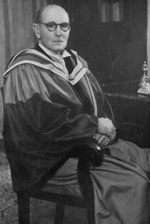
Alexander Killen Macbeth (1889–1957) was an Irish-born organic chemist who became a major figure in Australian chemistry. He was appointed Angas Professor of Chemistry at the University of Adelaide in 1928. There, he rebuilt and modernised the Chemistry Department, helped establish the Johnson Chemical Laboratories, and played a central role in improving pharmacy education in South Australia.
Macbeth was a leader in applying ultraviolet spectroscopy to organic chemistry. During World War II, he led vital applied research efforts, including local production of pharmaceuticals such as sulfamerazine, phenacetin, and caffeine. He was elected a Fellow of the Australian Academy of Science in 1955.