





Edwin James George Pitman 1897-1993

Written by Evan J. Williams.
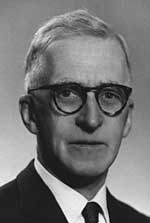
Edwin James George Pitman was born in Melbourne on 29 October 1897 and died at Kingston near Hobart on 21 July 1993. His father, Edwin Edward Pitman, was born at Morecombe, Whitchurch in the county of Dorset on 7 May 1862, and his mother, Ann Ungley (née Hooks) at Marylebone on 10 January 1865; they met on the ship to Australia, married and settled in Melbourne. The father worked for a firm making prime movers and other machinery.
Edwin J.G. was the fourth of eight children, preceded by three girls and followed by two more girls, Leonora and Pamela, a boy Charles and a girl Elsie.
He early developed a retentive and critical faculty; his mother described him as 'the critic' and 'that piece of blotting paper'. Although the family did not have many books, he acquired a taste for reading from a Sunday School teacher - a worker in a flour mill - who had a large library and would let him borrow any books that interested him.
His schooling was at Kensington State School and South Melbourne College. The College had an unusual Head, O'Hara, and an unusual curriculum. On Saturday morning the boys would work through examination papers in Arithmetic and Algebra, including in the later years Cambridge Tripos papers; in the afternoons they would study Shakespeare. Even so, Edwin was dissatisfied with the course, believing that, although it was advanced it was not rigorous enough.
In his final year, O'Hara insisted that he apply for a residential scholarship at a college of the University of Melbourne; as a result he gained not only the Wyselaskie and Dixson Scholarships in Mathematics but also a scholarship to Ormond College. At Ormond, the Master at the time was D.K. Pieken, a New Zealander who had been teaching a modern account of the Number System His notes filled a gap in Edwin's training and were avidly studied. Also at Ormond was C.E. Weatherburn, then a lecturer who taught applied mathematics and physics to Edwin on his own.
His time at the University was interrupted by two years of war service, in the 14th Battalion of the Australian Imperial Force in 1918-19. During demobilization he spent a year in London, studying at the London School of Economics: 'Sociology or something of that kind'. He also studied French and German at the Berlitz College, which enabled him to read the works of Paul Lévy and A.N. Kolmogorov.
Returning to Melbourne in 1920, he completed the degree course and graduated B.A. (1921), B.Sc. (1922) and M.A. (1923). In the meantime he was appointed Acting Professor of Mathematics at Canterbury College, University of New Zealand (1922-23). He returned to Australia when appointed Tutor in Mathematics and Physics at Trinity and Ormond Colleges and Part-time Lecturer in Physics at the University of Melbourne (1924-25). In 1926 Pitman was appointed Professor of Mathematics at the University of Tasmania, a position he held until his retirement in 1962.
University of Tasmania
Pitman's career at the University of Tasmania was rather arduous. As head of a small department of mathematics in a poorly-funded university, he had from the beginning a heavy teaching load. In addition, as a condition of accepting the appointment, he was required to have some knowledge of statistics and to be prepared to teach the subject. Pitman, who had attended only a few lectures in the subject at Melbourne and was not impressed, nevertheless agreed to these conditions and regularly gave courses in statistics, often to only one or two students at a time.
About two years after his appointment, an experimenter at the State Department of Agriculture, R.A. Scott, brought him some data and statistical analyses from field trials on potatoes, together with a copy of R.A. Fisher's Statistical Methods for Research Workers. Pitman checked the calculations and studied the Fisher book, which led to continuing collaboration with the Department of Agriculture on its field trials. Pitman later described himself as 'a mathematician who strayed into Statistics'; nevertheless, his contributions to statistical and probability theory, to be described below, were substantial.
Pitman early became involved in university administration, mainly because he considered the place was so badly managed, and was appointed to the Council, the university's governing body. Much of the academic administration was run by the Board of Studies, a body comprising prominent citizens and other outside people, while the Professorial Board functioned only as a disciplinary body. Eventually he was able to persuade the Board of Studies to transfer its functions to the Professorial Board.
Later he was active in negotiations that enabled the university to move from its rather cramped site on the Domain to the Rifle Range in Sandy Bay; the proposal was initiated in 1939 but the move did not occur until 1955 and later. Then, in the early 1960s, he arranged with the Chairman of the Hydro-Electric Commission for moves to jointly acquire a computer.
During this period he adopted a motto from the introduction to the poem, 'The Testament of Beauty', by Poet Laureate Robert Bridges. It begins
Mortal Prudence, handmaid of divine Providence
hath inscrutable reckoning with Fate and Fortune;
We sail a changeful sea through halcyon days and storm
and when the ship laboureth, our stedfast purpose
trembles like the compass in a binnacle; from which follows the motto
Our stability is but balance, and conduct lies
in masterful administration of the unforeseen.
A reading of Richard Davis' Open to Talent, a centenary history of the university, gives the impression that Pitman did exert considerable influence, often behind the scenes, because of his 'masterful administration of the unforeseen'.
The Orr case, which has been adequately documented elsewhere, created much controversy in the university. Peter Sprent, a lecturer in the Department of Mathematics in 1956 and now Emeritus Professor of Statistics, Dundee University, writes that 'there is internal bickering fanned by loonie-left activists. It was only some years later that I discovered these fools had spread scurrilous tales about Pitman's role in the Orr affair, and that some UK statisticians were gullible enough to believe them.'
During World War II, Pitman was Wing Training Officer for 6 Wing Air Training Corps stationed in northern Tasmania. This is a part-time appointment but was in fact virtually a full-time job; it involved travel from Hobart to Evandale, a distance of about 170 kilometres, several times a week.
Professional Societies
Pitman was active in the formation of the Australian Mathematical Society in 1956. H. Oliver Lancaster FAA, Emeritus Professor of Mathematical Statistics, University of Sydney, writes
Edwin Pitman became the second President of the Australian Mathematical Society, in 1959 and 1960, following Thomas MacFarland Cherry. He was very successful as President in a period of consolidation and extension. He was an excellent chairman of committees, always held in a friendly atmosphere.
He also took an active part in the Summer Research Institutes organized by the Mathematical Society, and used them as a sounding board for his research on statistical inference.
He was a renowned member of the Statistical Society of Australia, attending its biennial conferences. In 1978 the Statistical society established the Pitman Medal, as recorded in the Australian Journal of Statistics 21(1979) 173-4
In recognition of the unique, original and influential contributions of E.J.G. Pitman to the theory of Statistics and Probability, the Central Council of the Statistical Society of Australia resolved in August 1977 to 'institute the award of a gold medal to a member of the Society for high distinction in Statistics', to be named the Pitman medal, and that 'Professor Pitman be awarded the first of these medals'.
The President of the Society, Dr C.A. McGilchrist, in presenting the Medal, said
With little formal training in Statistics and few contacts with fellow statisticians, he produced work of such outstanding quality as to earn for him an international reputation and to have a substantial effect on the development of statistical method, particularly in the inferential and non-parametric fields. For many Australian statisticians he has a very special place. We, on the Australian continent, have a tendency to feel isolated and his work is a clear indication that isolation is as much a state of mind as it is of geographical location.
Pitman had been elected an Honorary Life Member of the Society in 1966; he was elected a Fellow of the Academy in 1954, in the first group of elected Fellows.
Research
Pitman's published work comprises 21 papers and a monograph. Much of his research has been presented in lectures and in other ways. He has said, 'I've never given a thought to publications. I've thought I'd solved a mathematical problem, but anyone else could solve it...' Nevertheless, the published work has been very influential, in clarifying the underlying ideas of inference and in defining new and relevant concepts. The reason for this may be found in the Preface to his 1979 publication Some Basic Theory for Statistical Inference, described as 'an attempt to present some of the basic mathematical results required for statistical inference with some elegance as well as precision...The topics treated are simply those that I have been able to do to my own satisfaction to this date.' This is an interesting remark also because Pitman was in his 82nd year when the book was published, even if its greater part may have been written a little earlier.
Pitman's 1936 paper, 'Sufficient statistics and intrinsic accuracy', Proc. Camb. Phil. Soc. 32, 567-579, defines the class of probability distributions that admits a complete sufficient statistic and also gives a critical account of the related concepts of information and intrinsic accuracy. It yields priority to Darmois(1), which however is a mere statement of results. In later work(2), Pitman discusses the limits on accuracy of estimation and the inapplicability of the information concept in non-regular cases. His two papers(3) on inference about location and scale parameters are classics; they define clearly the class of continuous distributions to which the theory may be applied and the limitations to which the inferences drawn from the analysis are subject.
Pitman presented the first systematic account of non-parametric inference(4) and lectured extensively on the subject, both in Australia and in the United States. The kernel of the subject, as described by him, is 'Suppose that the sum of two samples A, B is the sample C. Then A, B are discordant if A is an unlikely sample from C.' Again, he writes, 'The approach to the subject, starting from the sample and working towards the population instead of the reverse, may be a bit of a novelty'; and later, 'the essential point of the method is that we do not have to worry about the populations which we do not know, but only about the sample values which we do know'.
The notes of the 'Lectures on Non-parametric Inference' given in the United States, though never published, have been widely circulated and have had a major impact on the development of the subject. Among the new concepts introduced in these Lectures are asymptotic power, efficacy, and asymptotic relative efficiency.
The 1957 paper(5) is a lengthy review of Fisher's Statistical Methods and Scientific Inference, giving a critique of Fisher's presentation of significance tests and of fiducial inference; and the 1965 paper(6) is a more general discussion of inference, bringing out the central significance of the likelihood ratio.
A major contribution to probability theory is his elegant treatment of the behaviour of the characteristic function in the neighbourhood of the origin, in three papers(7). This governs such properties as the existence of moments. There are also interesting properties of the Cauchy distribution(8), and of subexponential distributions(9).
Although Pitman's work advanced the theory, he was also always concerned with the use to which results could be put. In his treatment of the Cramér-Rao Inequality, for instance, he states, 'We want to apply the Cramér-Rao inequality to statistics that we do not know, and so the regularity conditions should ask as little as possible of the statistic S...and should be mainly concerned with the family of measures which we know completely'. Elsewhere(10) he remarks 'Regularity conditions for theoretical results are often flung down with scant regard for the possible user. They are often too strong, and they are often difficult to verify in actual cases'. With this consideration in mind, he defines smooth families of measures in such a way that every statistic with essentially bounded variance from such a measure is regular.
The 1937 paper(11), in which the property of closeness of an estimator is defined and discussed, has received little attention until recent years. It was a response to Karl Pearson's paper(12) which raises the question of what is the best estimator of a parameter. Pitman sagely remarks that 'any definition of "better" and "best" must depend on the use which is to be made of the estimate'; he then goes on to define 'closeness' as a property defined in terms of probability inequalities, unlike other criteria based on moments. This criterion has not proved popular, possibly on account of the difficulty in applying it; also, it is not transitive though this does not detract from the validity of the criterion 'closest'.
It is puzzling that this paper should have appeared within a year of Pearson's paper, in view of slow communications between continents in that era; it is possible that Pitman was developing this criterion even before he saw Pearson's paper.
In 1991, a symposium on 'Pitman's Measure of Closeness' was held at the University of Texas at San Antonio. The conference proceedings were published as a 330-page issue of Communications in Statistics; subsequently three of the contributors published a monograph on the subject, entitled Pitman's Measure of Closeness: A Comparison of Statistical Estimators. It seems unlikely that Pitman was aware of this work.
Pitman's research, although encompassed in relatively few published papers, has been influential because each contribution has been the result of mature and careful crafting. The conditions imposed on results are the minimum required for precision, and chosen for their applicability by the user. These qualities are especially exemplified in the work on inference about location and scale parameters, and the treatment of the Cramér-Rao variance bounds.
Visiting Appointments
Pitman was much in demand as a visiting lecturer, especially in the United States. His first contact with statisticians outside Australia was in 1948-49, when he was invited to visit Columbia University, the University of North Carolina at Chapel Hill, and Princeton. It was on this visit that he developed his methods of nonparametric inference. His next visit to the United States was in 1957, when he was appointed a Visiting Professor at Stanford.
After his retirement in 1962, he was able to travel more frequently. In 1963 he visited Berkeley, where he contributed to the International Research Seminar at the Statistical laboratory, and then to Johns Hopkins in Baltimore. He spent 1965 at the University of Adelaide. For 1966 and 1967, the University of Melbourne appointed him as Visiting Professor, where he did further work on the behaviour of characteristic functions, as well as exploring some novel properties of the Cauchy distribution. In 1969 he visited the University of Chicago. At the University of Dundee in 1973 and at Melbourne in 1974 he put the finishing touches to the monograph.
Pitman was a shrewd judge of colleagues. Of Abraham Wald, whom he met at Columbia University, he said, 'I admired him very much. He was a damn' good mathematician. I gave a seminar, and I realized he knew exactly what I'd said, and understood it all. And he was very modest and very kind.' However, of Neyman he said, 'I never got anything from him, in conversation or hearing him lecture. He'd done most of his best work before I met him, and of course, people differ in what they get from a presentation. He didn't always do me justice in his writings and lectures...I'll just mention that Neyman and I got on all right; he was a splendid host and used to have lots of parties; it was wonderful being in his department (at Berkeley) for a while.'
Much of Pitman's research was carried out to clarify the work of R.A. Fisher. He had a good relationship with Fisher, whom he entertained in his home in Hobart when Fisher visited Australia in 1953. However, after Pitman wrote a justly critical review of Fisher's Statistical Methods and Scientific Inference, there was coolness between them. Later, Fisher's daughter, Joan Box, brought them together, although the Fisher monograph was never discussed again.
Awards and Honours
Edwin Pitman's contribution to statistical theory, and to mathematics generally, was widely recognized. He was elected to high status in several professional societies: in 1948, a Fellow of the Institute of Mathematical Statistics; in 1954, a Fellow of the Academy; in 1956, a Member of the International Statistical Institute; in 1965, an Honorary Fellow of the Royal Statistical Society; in 1966, an Honorary Life Member of the Statistical Society of Australia; in 1967 and 1968, an Honorary Life Member of the Mathematical Society of Tasmania and the Australian Mathematical Society respectively. As already mentioned, he was the eponymous first recipient of the Pitman Medal. In 1981 the American Statistical Association recorded on videotape a lecture by him, for historical purposes.
The University of Tasmania awarded an Honorary D.Sc. in 1977, his eightieth year; and in 1987, to mark his ninetieth birthday, named the Mathematics Library the Pitman Collection.
Reminiscences
Since Edwin Pitman outlived most of his contemporaries, those who remember him are mainly former students. Evan Williams, a student of Pitman in the 1930s, has written(13) in the introduction to a dedicatory volume
Pitman's contributions to statistics are characterized by depth of insight, rigour of treatment, clarity of expression and elegance of style. We hope that we have been able to mirror some of these qualities in the papers presented here. This publication is a means of expressing our gratitude to Pitman, who has been, and remains, an inspiring teacher and friend...Pitman has always been modest about his work, leaving the results to speak for themselves. In his first paper on distribution-free inference he describes his approach as "a bit of a novelty". He has seldom engaged in controversy, believing that it is more profitable to find and publish the facts, and that any conclusions demonstrably false will soon be forgotten.
Peter Sprent, a student of Pitman in the 1940s, now Emeritus Professor of Statistics at Dundee, provides the following insights
On first acquaintance, I summed up Edwin Pitman as somewhat cool and aloof, perhaps a little indifferent to those around him. I was misled because Edwin was so highly organized and self-disciplined that he conducted himself - in public at any rate - with almost military precision. He would have achieved less both as an academic and as an administrator had he not led such a disciplined life. In his own University he was remembered as a key figure in a small group who steered an under-staffed, poorly financed and sometimes badly administered University through turbulent seas to calmer waters...Edwin's most endearing characteristic was modesty about his achievements. He gave a course on inference, culminating in a treatment of asymptotic relative efficiency, not even telling us it was his concept.
He was not without humour. Asked to describe his field of interest to a group of mathematicians, his response was 'Pure but bold', which he later elaborated as 'A pure mathematician bold enough to venture into statistics'.
Geoffrey S. Watson, Emeritus Professor of Statistics at Princeton, was a student of Pitman for the academic year 1948-49 at the institute of Statistics in the University of North Carolina. In his article 'A Boy from the Bush'(14) he writes
Pitman's ability to go to the heart of any question took my breath away. He is justly famous for his contributions to statistical inference...the only lecture notes I still read were those from his Course 'Applied Probability'. It is a tragedy that they were not typed and circulated, like his notes on 'Nonparametrics', for they contained much novel material, and many results that were later proved and published by others, usually by much more cumbersome and less insightful methods.
And later, in correspondence
Applied Probability was my favourite course and I wish that that was the one I had tried to get typed up. He started with samples from the uniform distribution and used all sorts of tricks for all sorts of problems. For many years I saw a stream of papers with some of these results appear in the journals. I wept when I saw a paper on Spacings, with clumsy proofs and much hoohah...I emphasize that this (Pitman's notes) was an entirely original selection and arrangement of probability material.
Ingram Olkin, Professor of Statistics at Stanford University, was also a student of Pitman in the 1948-9 academic year. He recalls some of Pitman's innovations
He coined the term squariance, which avoided issues of how to define variance, with a denominator n or n-1. This never caught on, but it is still a good idea. He also coined the term 'efficacy', and used it extensively. But I forget what his definition was.
Donald Ylvisaker, Director, Division of Statistics at UCLA, was a student at Stanford in 1957; he writes
One prizes those contacts, however small, with a great man...I have always marvelled at my good fortune in having learned some nonparametrics from Pitman...One went to such classes to see a master at work - sly calculations, down-to-earth language, clues on taste.
Describing an oral examination before Pitman and others
I got through his portion and the sympathetic questioning of the other committee members. There followed a tortuous fifteen minutes during which I was dragged through a mind-twisting and nonstandard problem of the type that Pitman seemed to enjoy. Later he took me aside: You are one of the better students here and we are going to pass you, but you should become interested in Probability and Statistics'...It took me much too long to understand that he was exactly on target, and I view this episode now as an indication of what an astute man he was.
Bruce Brown, Reader in Mathematics at the University of Tasmania, was a graduate student at Melbourne in 1966 and his thesis was examined by Pitman. He writes of the experience
He examined my M.Sc. and hauled me over the coals over it, in his inimitable manner, which was very beneficial to me...Before that, I recall him in the tea room, which had a cross bar well above head height. I remember him lightly jumping up then hanging from it, saying how good it was for the spine. Apart from being impressed with the athleticism of a man in his late 60's, I was left with the impression which I later confirmed from his mathematical work as being characteristic - of spareness; being wiry, ascetic, minimalist. These characteristics also were part of his personality, part of which was (apparently) not ever for a moment suffering a fool gladly.
Family and Community Activity
No chronicle of Edwin Pitman's life and achievements would be complete without due recognition of the contribution of his wife Elinor. Elinor Hurst was the youngest member of a large Hobart family; she was educated at the Friends School where she was Dux, and at the University of Tasmania where she graduated in Arts. She and Edwin were married on 7 January 1932. They resided in a large sandstone house, then on the outskirts of Hobart, where Elinor was able to create a tranquil home environment in which Edwin could carry on his work. They had four children: Jane, now Reader in Mathematics at the University of Adelaide; Mary (Mrs John Baldwin), Professor of Environmental Science at Concordia University, Montreal; Edwin Arthur (Ted), a civil engineer with the Tasmanian Department of Main Roads; and James, Professor of Statistics at the University of California, Berkeley.
To Elinor must go much of the credit for the success of his travels overseas, when he took his family with him. Elinor simply established the home environment in the new location, as well as providing support for his work and for entertaining. The daughter Mary writes of the home life in the United States
Our lives as a family were entirely organized around his. His work was considered most important, and he liked to work at home, with breaks for lunch, tea, and dinner; one room of the downstairs, what might have been a den off the dining room, was used as his study, and he worked there....After dinner he normally read aloud to us, Dickens and Trollope. He decided when we would have family outings, and what they would be.
Describing their visit to the United States in 1948-49, she writes
Just before our departure he took Jane and me to a College basketball game between North Carolina and George Washington. These were things that we never did before or after in Tasmania with my father, who was not usually very interested in sports; but he certainly tried to see that we experienced American culture, and made an effort to participate. We made a family expedition to see Ringling Bros Circus, which was very impressive, and the highlight of our time in Chapel Hill. My father always liked circuses, and juggling, and took Jim to the Circus when young. Even as late as 1989, when I was out visiting (Hobart), I organized tickets for him to go with Ted and Ted's children to the Russian Circus which he thoroughly enjoyed. (When he went into the Army for the first World War, he actually did entertainment and magic shows.)
When at Chapel Hill, the Pitmans were entertained by, among others, Harold and Suzanna Hotelling, who used to hold a monthly Sunday afternoon occasion for graduate students, faculty and visitors. These gatherings had a lasting impression, for after their return to Hobart, Pitman started having Sunday afternoon teas for selected mathematics students, members of the department and others.
Edwin Pitman enjoyed an active social life. He was keen on theatre, and in 1933 produced the play 'Baa, Baa, Black Sheep', with brother Charles as Stage Manager. He joined a group of Bridge players, who met every Saturday night when in Hobart until the late 1950s. He also played tennis, including the occasional game of Royal Tennis at the local court.
He was an active member of the Church of England in Australia and took part in the negotiations that led to its transformation to the Anglican Church of Australia. At various times he served on the Diocesan Council, the Tasmanian Synod, and as a delegate to the Australian General Synod. He was a member of the Christ College Trust, the body responsible for Christ College at the University of Tasmania, Hutchins School in Hobart and Launceston Grammar School.
Final Years
In April 1982, three months after their golden wedding anniversary, Elinor Pitman suffered a stroke, which left her partly paralysed but with mind and speech unimpaired. Despite persistent encouragement from Edwin, she did not regain the confidence to walk without assistance. Nevertheless, they were able to go on outings together, including concerts and the theatre, thanks to the provision of wheelchair access at many venues in Hobart. Eventually Elinor moved to a nursing home.
In 1991 Edwin fell and fractured his femur. He then moved from their home in Davey Street to a serviced apartment at the Derwent Waters Residential Club in Claremont, north of Hobart. As this was not sufficiently comfortable, he moved to a nursing home at Kingston, south of Hobart, where he was joined by Elinor, and where Elinor continues to reside.
On his death, on 21 July 1993, Edwin was buried at the Hobart Regional Cemetery in Kingston. He lives on in the memory of many of us who are grateful for his life and legacy.
About this memoir
This memoir was originally published in Historical Records of Australian Science, Vol.10, No.2, 1994. It was written by Evan J. Williams, who works in the Department of Statistics, University of Melbourne.
Acknowledgements
Thanks are due to P.O. Bishop, Mary Baldwin (née Pitman), Bruce Brown, John Jenkin, Ingram Olkin, Edwin Arthur (Ted) Pitman, James Pitman, Jane Pitman, Peter Sprent, Geoffrey Watson and Donald Ylvisaker for their comments and contributions.
Notes
- (1) Darmois, G. 'Sur les lois de probabilité à estimation exhaustive', C.R. Acad. Sci. 200 (1935), 1265-1266.
- (2) Pitman, E.J.G., 'The Cramér-Rao inequality', Aust. J. Statist. 20 (1978), 60-74; and Some Basic Theory for Statistical Inference, London: Chapman and Hall, (1979).
- (3) Pitman, E.J.G., 'The estimation of the location and scale parameters of a continuous population of any given form', Biometrika 30, (1939) 391-421; and 'Tests of hypotheses concerning location and scale parameters', Biometrika 31, (1939) 200-215.
- (4) Pitman, E.J.G., 'Significance tests which may be applied to samples from any populations', Suppl. J. R. Statist. Soc. 4, (1937), 119-130; 'Significance test which may be applied to samples from any populaitons. II. The correlation coefficient test', Suppl. J. R. Statist. Soc. 4, (1937), 225-232; and 'Significance tests which may be applied to samples from any populations. III. The analysis of variance test', Biometrika 29, (1938), 322-335.
- (5) Pitman, E.J.G., 'Statistics and science', J. Amer. Statist. Assoc. 25, (1957), 322-330.
- (6) Pitman, E.J.G., 'Some remarks on statistical inference', Proc. Int. Res. Seminar, Berkeley (Bernoulli-Bayes-Laplace Anniversary Volume), (1965), pp.209-216. New York: Springer-Verlag.
- (7) Pitman, E.J.G., 'On the derivatives of a characteristic function at the origin'. Ann. Math. Statist. 27, (1956), 1156-1160; 'Some theorems on characteristic functions of probability distributions'. Proc. 4th Berkeley Symp. Math .Statist. Probab. II, (1961) 383-402; and 'On the behaviour of the characteristic function of a probability distribution in the neighbourhood of the origin'. J. Aust. Math. Soc. 8, (1968), 432-443.
- (8) Pitman, E.J.G., (with E.J. Williams). 'Cauchy-distributed functions of Cauchy variates'. Ann. Math. Statist. 38, (1967), 916-918.
- (9) Pitman, E.J.G., 'Subexponential distribution functions'. J. Aust. Math. Soc. A29, (1980), 337-347.
- (10) Pitman, E.J.G., 'Reminiscences of a mathematician who strayed into statistics. In The Making of Statisticians, ed. J. Gani, (1982), pp.112-125. New York: Springer-Verlag.
- (11) Pitman, E.J.G., 'The 'closest' estimates of statistical parameters', Proc. Camb. Phil. Soc. 33, (1937), 212-222.
- (12) Pearson, K., 'Method of moments and method of maximum likelihood', Biometrika 28 (1936), 34-59.
- (13) Williams, E.J. (ed.), Studies in Probability and Statistics (1974). Jerusalem: Academic Press.
- (14) Gani, J. (ed.) The Craft of Probabilistic Modelling (1986). New York: Springer-Verlag, pp;43-60.

Edward Norman Maslen 1935-1997
Written by S.R. Hall and A.McL. Mathieson.
- Introduction
- Background
- Scientific contribution
- Structure elucidation
- Contributions to academia
- Contributions to the profession
- On the sporting field
- Service to the community
- A memorial tribute
- About this memoir
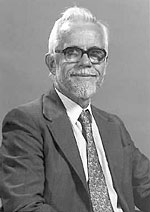
Ted Maslen's premature death on 2 February 1997, during a long distance run, shocked his many friends and colleagues around the world. A man of great energy and diverse talents, he made substantial contributions to the community and to sport as well as to Australian science.
Introduction
Prior to the Second World War, only a few scientists in Australia were involved in atomic structure studies using X-ray diffraction techniques. These were J. Shearer in the Physics Department of the University of Western Australia, D.P. Mellor in the Chemistry Department of the University of Sydney and, to a limited extent, J.S. Anderson in the Chemistry Department of the University of Melbourne. At the University of Adelaide, in the Physics Department, there were studies of electron scattering by R.S. Burdon.
During the War, the countries that normally supplied scientific equipment and materials to Australia were fully occupied with the provision of war needs. So, by necessity, Australian scientists had to devise means of production and that without delay. Thus, for example, an optical glass industry was created, optical devices manufactured, radar equipment constructed, and so on, as detailed in Mellor's volume of 'Australia in the War of 1939-1945' [1].
With the end of the War, the sense of confidence in the capability of science to solve problems and to contribute to post-war development encouraged the Federal government to support scientific research. One result was an effort to introduce advanced techniques by attracting scientists from overseas to contribute their knowledge and by arranging that young scientists in Australia proceed overseas to learn and then return to develop their new skills. As a result, nuclei of X-ray crystallography groups were created in Sydney, Melbourne, Adelaide and Perth.
In Perth specifically, C.J. Birkett Clews was appointed to the Chair of Physics of the University of Western Australia, having studied structure analysis by single-crystal X-ray diffraction at the Cavendish Laboratory in Cambridge. He initiated a number of students into the subject, one of whom was E.N. Maslen. After graduating BSc (Hons) in Physics in 1956, Maslen went to Oxford as a Rhodes Scholar.
In Oxford, he worked with Dorothy Crowfoot Hodgkin (Nobel Prize, Chemistry, 1964). His work there was mainly on the X-ray structure determination of certain antibiotic compounds but even in this biochemical area he gave evidence of an interest in the more physical aspects of crystallography. In 1960, he was awarded his DPhil. On his return to the University of Western Australia as a lecturer in the Physics Department, he proceeded to lay the foundations for what was to become a major school of crystallography, thus becoming a key figure in the development of this subject in Australia. He was a pioneer and later an established figure in the investigation of chemical bonding by precision studies of the electron density distribution in crystals. He contributed to many theoretical and experimental aspects of X-ray diffraction and explored basic questions in quantum chemistry. Latterly he utilized the great potential of synchrotron X-radiation in his studies. He was responsible for the formation of the Crystallography Centre at the University of Western Australia in 1972 and was its director until 1993 when he became head of the Physics Department.
As a recognized authority in the precision electron-density study of crystals, Ted was prominent in presenting the work of his group at international meetings. As a result, he became a important figure in the activities of the International Union of Crystallography (IUCr). In 1995, he was elected a Fellow of the Australian Academy of Science (AAS).
Background
Edward Norman Maslen was born at Kalgoorlie on 8 August 1935. His parents were William Michael Maslen, born on 1 October 1907 at Greenbushes, WA and Nellie Victoria Maslen (née Detez) born on 27 March 1905 at Merredin, WA. His father joined the Accounts Branch of the State Public Service in 1924 and, following correspondence courses in accountancy and part-time studies in English and Economics at the University of Western Australia, was attached to the Public Works Water Supply Department as an accountant. It is of interest to note that, at this time, he took up rowing with the Swan River Rowing Club. Because of changes associated with the Depression of 1929, he was transferred to Kalgoorlie. He completed his accountancy studies in 1933 and secured qualification with the Commonwealth Institute of Accountants with top marks for the State in Mercantile Law and Taxation. In 1934, he was admitted to the Chartered Institute of Secretaries with the second-highest marks in Australasia. In 1940, he became Officer-in-Charge of the Water Supply Department in Geraldton where Ted's schooling began at Saint Patrick's College (formerly Christian Brothers' College). His mother used to say that, even as a youngster, Ted always got into things and you didn't know what he would be up to next, indicative of his inquiring mind and superabundant energy. Ted was the second child and had an older brother, Victor, and a sister, Sue. All three became physicists, graduates of the University of Western Australia. In 1951, Ted won a General Exhibition and, in 1952, went to the University of Western Australia and St George's College to do a science degree. He was an outstanding student, gaining the Geology Prize in his first year and a Hackett Scholarship for 1955. He also became involved in student affairs, being elected in 1955 as President of the Guild of Undergraduates. 1956 was a momentous year for Ted. Apart from his role as President, he was very active in a student appeal to raise funds for a medical school within the University. For the latter, while competing in an athletic meeting, he inadvertently spiked himself and as a result contracted tetanus which was then a serious and often fatal disease. This was front-page news for several days and, even now, many people identify him as 'the student for whom traffic was diverted to keep his Royal Perth Hospital ward quiet'. This episode provided a very positive spin-off. The publicity was largely responsible for ensuring a generous subscription to the medical school fund and there is a photograph of a young, beaming Ted Maslen sitting up in a hospital bed handing over a cheque for £10,000 to the fund raisers. While all this was going on, Ted was a candidate for a Rhodes Scholarship, the announcement of which was withheld until he recovered. He was awarded the scholarship in 1956 and went to Oxford University at St John's College for the next three years. He completed his DPhil. studying molecular structure by X-ray diffraction techniques under the supervision of Dr Hodgkin. This was an inspirational period for Ted and was a dominant factor in his life-long interest in crystallography.
At Oxford, he met Sheila Robinson. Sheila's parents were Cyrus William Robinson, born on 29 October 1903, and Nora Teresa Robinson, born on 3 July 1905, both of Sunderland, England. Sheila and Ted were married in 1960, just before Ted took up a lectureship in the Physics Department of the University of Western Australia. They had three sons, Patrick, Daniel and Mark and five daughters, Barbara, Rebecca, Nicola, Catherine and Frances. The youngest of the boys, Mark, is following in his father's footsteps, having graduated from the University of Western Australia with First Class Honours in Physics. Several of the children, Patrick, Barbara and Nicola have followed Ted's interest and have degrees in Physical Education. Rebecca has degrees in Law and Commerce, Frances is an accountant, Catherine a physiotherapist and Daniel is studying viticulture.
This record of Ted's formative years reveals the personal characteristics of energy, enthusiasm, determination and personal involvement that in adult life were to manifest themselves in his dedication to his scientific research, his concern for his family, his students and, in the wider context, the University and the community.
Scientific contribution
During his forty years as a scientist, Ted Maslen contributed to almost every facet of crystallographic research. His main interest came to be precision electron density studies, but he was prepared to embark enthusiastically on allied projects ranging from the purely theoretical such as the solution of quantum mechanical systems, to the totally practical such as the design of collimators and diffraction instruments. Above all he was a determined individualist, confident enough in his abilities to 'go it alone' in a new field if expertise was not close at hand.
Structure elucidation
X-rays are scattered by electrons and the periodic scattering from atoms in crystals leads to interference, that is, diffraction. The electron density distribution of a crystal can be determined from measured X-ray diffraction intensities, provided the relative phase of each diffraction vector is derivable from other considerations. The determined distribution corresponds to the time-averaged integrated electron density of the atoms in the crystal and includes features due to bonding and vibrational modes. This approach leads to an atomic structure of the molecule or ionic entity in terms of a three-dimensional electron density distribution, thus defining its geometric parameters. Neutron diffraction provides similar structural information but in terms of atomic nuclei, so that a combination of X-ray and neutron diffraction can be useful and instructive.
Maslen's initial X-ray diffraction experience was the structural study of a pyrimidine (1), as part of his Physics honours thesis at the University of Western Australia. His doctorate from Oxford was for work on X-ray structure analyses of larger molecules of natural origin, the important antibiotics, cephalosporin C (2) and phenoxymethylpenicillin (3). Analysis of the latter allowed exploration of how sharpened Fourier coefficients improved structure determination (45).
On return to the University of Western Australia, Maslen followed two structural lines: one derived from his experience at Oxford on natural product molecules, while the other, associated with the structural properties of molecules with charged groups, zwitterions, focused mainly on aromatic molecules with amino and sulphonic acid groups. In addition, as appropriate to a physics department, his interest was in more general diffraction matters, particularly in measurement procedures that could improve the precision of structural studies. In time, this theme assumed dominance.
In respect of natural products, this was a period when X-ray diffraction became an important physical procedure capable of revealing the total structure of these relatively complex organic molecules, including their absolute configuration and details of conformation. By comparison with the more conventional methods of organic chemical analysis and synthesis, the diffraction approach provided unambiguous information about molecular structure, even though, at that time, it was a slow process because each diffraction intensity on film needed to be estimated by eye and the electron densities had to be calculated manually or with very slow computers. An additional obstacle was that suitable heavy-atom derivatives of the target compounds were required to assist in the phasing process, and these had to form suitable crystals. Nevertheless, organic chemists keenly sought the results of these analyses and Maslen determined the structures of a number of derivatives of natural products (5-10) using heavy atom and anomalous dispersion techniques. For methyl melaleucate iodoacetate (7, 7a), the anomalous scattering of CuKa radiation by an iodine atom was utilised to establish the phase angles of many reflections. This led to an estimation of the imaginary component, Df”, of the scattering factor for iodine (48).
Maslen determined other natural product structures (11, 12) using the so-called 'direct methods' phasing procedures based on the statistical structure-invariant relationships of Jerome Karle and Herbert Hauptman (Nobel Prize, Chemistry, 1985) which did not require a 'heavy' atom. In the second case, the normalized structure factors were not distributed evenly through diffraction space due to high anisotropic atomic displacement parameters and Maslen established a correction (18) (see 49,50) that led to an improvement in the modelling of the distribution, and hence to the solution of the structure by 'direct methods'.
Maslen's work on amino-benzene-sulphonic acids and amides (13-17) was aimed at studying the interaction between substituent groups attached to a benzene ring and a comparison of their hydrogen-bonding. In the case of ß-sulphanilamide (16), three-dimensional X-ray film data (a major measurement effort at that time) were used in conjunction with two-dimensional counter neutron diffraction data. Since the neutron data referred to nuclei, this provided improved information about bond length variations in the disubstituted benzene and in the related charged and neutral groups. His X-ray study of orthanilic acid revealed peaks of electron density above and below the plane of the benzene ring adjacent to the C – C bonds, indicative of p bonding contributions. This, and several other studies, highlighted for Maslen the opportunities for acquiring detailed information on chemical bonding from diffraction measurements.
During the 1960s he did other structural studies (19-25) to resolve specific chemical problems. However, as structure solution methodologies were better established, Maslen's focus shifted more to determining the fine detail of electron density distributions around and between atoms. With the creation of the Crystallography Centre at the University of Western Australia in 1972, structure analysis came under the general supervision of Dr A.H. White of the Chemistry Department. Even so, Maslen's interest in this aspect of crystallography continued throughout the 1970s, as is indicated in (26-43).
Electron density and bonding
Maslen's precision electron density studies, and particularly his use of the promolecule concept, were his most important and prolific contributions to crystallography. He became a recognised expert and respected authority in this field, though, not infrequently, his research directions and findings were somewhat controversial. As in most of his endeavours, Ted was a confident individualist who was undeterred by the consensus view or from offering unconventional interpretations, and this occasionally led to interesting editorial exchanges when the work was submitted for publication. His advice to colleagues on these occasions was 'one must always be prepared to educate referees'.
The electron density associated with bonding between atoms relates only to the outer electrons of the individual atoms, and therefore constitutes only a minor component of the total electron density distribution determined from a diffraction study. It is best observed by calculating the electron density difference distribution (or map), Dr = rexp – rcalc between the experimental electron density, rexp, derived from the X-ray diffraction data, and the corresponding distribution, rcalc, calculated from the co-ordinates and scattering capabilities of the non-bonded spherical atoms in the structural model as modified by their vibrational characteristics. Because these differences are usually small, the choice of modelling parameters that influence rcalc is a highly critical step.
Maslen's initial studies were on the bonding densities between carbon atoms. He recognised the importance of appropriate X-ray scattering curves in the resolution of Dr and applied the only theoretical curves available at the time, namely that by McWeeny [2] concerning bonded carbon. His examination (75) of the theoretical values of McWeeny in relation to graphite showed that, within the aromatic plane of the molecule, there is little deviation from isotropy. Prior to this treatment, the imaginary contribution to the scattering factor had been largely ignored and so he undertook to derive this for carbon in the case of diamond and graphite. These results showed the relation of this component to the antisymmetric distribution arising from s bonding in the case of diamond and the build-up between the carbon atoms, a result similar to that demonstrated by Dawson [3].
To determine the extent to which conventionally-measured diffraction data contained evidence of bonding, Maslen carried out a literature survey of electron density distributions (77). He observed that, for trigonally-bonded carbon, the aromatic C-C bonds contain a residual central peak of maximum ~0.2eA-3 with half height extensions about 0.3A in and 0.75A perpendicular to the trigonal plane. The most critical conclusion from this study was that the use of least squares to refine the structural model as isolated spherical atoms could obscure the detail of electron density variations associated with bonding.
This latter realization focused his attention on the possible use of aspherical scattering factors in the multipole refinement approach of Stewart [4], which he first applied to 1,3,5-triacetylbenzene (78). In an extensive survey (79) of multipole applications he concluded that the use of bond-directed scattering factors (78) was preferable and this led to five studies using this approach (80-84). The first was a neutron diffraction study of powdered diamond, the second a re-analysis of the available X-ray data on diamond, while the third investigated different electron density models for silicon using existing highly-accurate absolute measurements. The fourth paper, on s-triazine, was a more complex study while, in the final paper, he examined melamine using nuclear-centred multipole density functions in which the radial exponents were varied.
In an invited review of advances in precision density studies (85), Maslen summarized the field at the time. He pointed out that 'it now appears possible to observe directly the effects of forces on the density, which previously were merely inferred. As a consequence, charge density analyses are being used to improve our understanding of a wide range of physical and chemical concepts and phenomena, such as the degree of ionicity and the strength of covalent forces in chemical bonding, the nature of metal-metal bonds, hydrogen bonding, photochemical reactions, superconductivity transitions and Jahn-Teller distortions.'
His review also foreshadowed a change in interest from the lighter elements and mono-atomic crystals to compounds containing heavier metals and longer-range interactions. This was at a time when heavy-atom structures were generally considered as unsuitable for precision analysis. In the study of several transition metal complexes (86, 87) he gave close attention to the region adjacent to the metal atom. In the redetermination (88) of the classical structure, copper sulphate pentahydrate, dominant density differences near two crystallographically-independent Cu atoms were related to the re-distribution of the Cu 3d electrons associated with bonding. He claimed that the polarized density resulted from second-nearest-neighbour interactions and that these were significant and important to bonding.
From this point on, Maslen showed a preference for studying families of compounds in which the structure remained unchanged except for the central metal atom. This enabled modifications in Dr distributions to be interpreted in terms of changes in the orbital distribution of the central metal atoms. In the study of Tutton's salts, (NH4)2M(SO4)2.-6(H2O)6, an isomorphous series with a divalent metal, M = Mg, Ni, Zn or Cu (95-99) by X-ray and neutron diffraction methods, Maslen observed that the Dr distributions near the metal atoms were similar except for differences arising from the d-electrons. An extensive examination followed of the nona-aqualanthanoid(III) tris(trifluoromethanesulphonates), [Ln(H2O)9](CF3SO 3)3 complexes with Ln = La through to Lu, which form an isomorphous series of hexagonal structures (100, 101), and these presented an intriguing series of closely-related electron density maps.
Maslen's earlier density studies had involved predominantly 'neutral' atoms. This was because the partitioning of the electron density distribution is more difficult when atomic charges are involved and the Hirshfeld partitioning approach preferred by Maslen had to be applied judiciously. For example, the charges he determined for a series of transition metal perovskites, KMF3, M = Mn, Fe, Co, Ni, and Zn (102-105) changed monotonically through the series but the polarization near Zn is significantly aspherical and the Zn, K and F atomic charges were +0.18, +0.47 and – 0.21e, respectively. That is, the determined polarity is consistent with conventional charges, but the magnitudes are less than the formal values (see also 121).
A study of the copper perovskite KCuF3 (105) by Maslen guided the analysis of the more-difficult-to-crystallize superconducting compound YBa2Cu3O7-x (106) in relation to determining a position-space model for the superconducting behaviour. It is evident from this and later studies (for example 126, 128, 133) that his views had moved away from the conventional wisdom of anion-anion interactions dominating the distribution of the electron density, to holding that the cation-cation interactions were more significant.
At about this juncture, Maslen's group became more concerned with the effect of extinction on their measurements of intensity. Extinction is an important universal effect in the measurement of intensities from even small single crystals and is due to multiple interference within the crystal. Correction for this effect is generally based on theoretical mathematical models derived originally by Darwin [5] and elaborated by Zachariasen [6] and others, which Maslen had used in his earlier Dr studies. However, in a careful analysis of data in relation to a-Al2O3 (67), Maslen revealed that the param
eters derived from this procedure were physically unrealistic, the corrections being rather sensitive to the weighting of the observations of the intense low-angle reflections. He devised an alternative procedure for the assessment of extinction, more closely allied to experiment. In this, corrections for extinction are evaluated in respect of equivalent reflections with different path lengths through the crystal (68, also 71-73). (Such 'corrected' intensities for equivalent reflections should, in principle, be equal.) Corrections by this procedure tended to be smaller than those based on minimizing the difference between Fobs and Fcalc. The reliability of this procedure is, however, dependent on knowing the crystal shape accurately, the crystal being asymmetric, and on precisely measured intensities for symmetry-equivalent diffraction data (that is, the method is optimal for high-symmetry space groups).
From this time on, Maslen placed increasing reliance on the use of synchrotron radiation at the Photon Factory at Tsukuba in Japan, especially using off-focus beams to ensure better beam uniformity. The much greater beam intensity and monochromaticity greatly improved the signal/noise ratio of the measurements and this was important because he and his colleagues were early users of 'microcrystals' (that is, crystals less than 1000 microns3 in volume) to minimize extinction effects. This reduced the effect of random errors in the measurements and substantially enhanced definition of the density distributions. These improvements in precision provided the basis for an investigation of optical, electrostatic and magnetic properties attributable to aspherical electron density. Maslen's study of rhombohedral carbonates with Ca, Mg, and Mn (115-120) showed a correlation of the Dr distributions with physical properties of optical anisotropy. Lattice mode frequencies predicted from eigenvalues of the T and L tensors for the CO3 rigid group motion in these structures were close to spectroscopic values. The Dr topography near the CO3 groups showed the influence of the cations and correlated strongly with the refractive indices.
Maslen's interest in heavy-atom bonding extended across much of the periodic table, and included the rare-earth elements. Typical synchrotron studies were the rare earth oxides (139, 140) and the perovskite-type orthoferrites (133-5) in which strong magnetic interactions between heavy-metal atoms gave rise to pronounced bonding effects that were readily studied by r methods.
Maslen's use of the modelling factors that determined electron density distributions evolved considerably over his career. However, underpinning much of these efforts was the consistent application of the Hirshfield approach to partitioning electron density in relation to the individual atoms. The reasons for this are discussed in the next section. Definitive articles on X-ray scattering (64) and X-ray absorption (65) were contributed by Maslen to the International Tables for Crystallography.
The promolecule
The choice of the non-interacting spherical ground-state atomic model for the calculation of rcalc is critical to the interpretation of the measured electron density distribution, and is referred to as the 'promolecule' or independent atom model (IAM). The method of partitioning the electron density distribution, so as to allocate the proper charge component to the individual atom, has an important bearing on the efficacy of this approach in the study of chemical bonding.
Maslen carefully scrutinized the two available schemes for partioning, those of Bader and of Hirshfeld, using theoretical wavefunctions for forty heteronuclear diatomic molecules (141). The atomic charges derived by these procedures were compared closely with electronegativity differences and with dipole moments. The Hirshfeld procedure, in which component electron distributions are overlapping and continuous, was preferred and applied thereafter by Maslen and his colleagues in estimating atomic charges from X-ray diffraction data.
He illustrated the importance of the promolecule approach in determining chemical properties from electron densities with the study of atomic radii, atomic charges derived from partitioning and electrostatic energies (142). These results were compared with the corresponding quantities from theoretical and experimental studies of a large number of diatomic molecules. He pointed out that the promolecule intrinsically contains useful chemical information, the effect of which on the Dr distribution is sometimes mistakenly attributed to chemical bonding.
Subsequently, Maslen showed that the differences between experimental and accurate Hartree-Fock binding energies are strongly correlated with the classical
electrostatic interaction between spherical atoms for a large number of diatomic and polyatomic molecules (143). These results led to an estimate for the molecular extra correlation energy. He extended this approach (144) to test the IAM model with calculations of cohesive energies that compared favourably with the Madelung energies for a wide range of solids. IAM energies provide better estimates for the alkali halide lattices than do the Madelung energies.
In respect of atom size and charge in the alkali halides LiF, NaF and LiCl (145), Maslen claimed that the lowering of the potential energy, due to overlap of atomic electron densities, is an accurate approximation to the bonding energy.
Maslen also applied the IAM approach to the 3d transition metals (146), a class of solids the cohesive energy of which is not approximated by the classical electrostatic overlap energy due to the near-degenerate nature of the ground states. He showed that if the 3d metals were regarded as being in prepared states prior to bonding, the bonded electrostatic energies are better approximations to the observed binding energies.
Maslen's study of diatomic molecules led to a re-appraisal (147) of Berlin's theorem [7]. It had been observed experimentally that the central build-up of difference electron density typical of carbon-carbon bonds did not occur in the case of bonds N–O, O–O, Cl–Cl, and so on. Berlin's theorem underpinned the common assumption that an increase in the electron density at the mid-point of a covalent bond is essential to the stability of the bonded nuclei. While Berlin's theorem focused on the total electron density, which must be positive everywhere, the difference between the experimental density and the spherical model density may be positive or negative. In studies of theoretical electron densities for N2 and F2, Maslen observed that the only substantial contribution to the overall binding appeared to come from regions along the internuclear axis and close to the nuclei. According to this interpretation, the build-up of density near the mid-point of the bond plays almost no role in binding the nuclei and is not a necessary condition for binding.
Somewhat later, in his final publications in this area (148-152), Maslen stated that it was physically reasonable to subdivide the total electron density of the promolecule in proportion to each atom's contribution to the electrostatic potential. He assessed atomic charges as the differences between atomic numbers and the integrals of partitioned electron densities. Promolecular charges evaluated for 160 lattice-compounds indicated that cations acquire control over the electron distribution at the expense of the anions. He attempted to show a consistent relationship between the ground state electron configurations and the atomic radii in which the invariant component of the radius associated with the atomic cores can be equated with the value at which the integral of the density equals the number of the core electrons. The tests made on diatomic molecules were promising and would presumably have been pursued further had it not been for Maslen's untimely death.
Theoretical chemistry
During the 1980s, part of Maslen's research activity, and that of his students, was directed towards the application of the emerging symbolic computing methodologies. His use of algebraic packages, such as Mathematica and REDUCE, to tackle quite daunting quantum mechanical problems, was a tribute to his remarkable scientific versatility.
Maslen's papers (153-157) marked the first phase of a very determined attempt to find an exact closed-form expression for at least the ground-state wave function of helium. Though not successful in this, his work did lead to the discovery of a closed form for a second-order term in the expansion of that wave function, that had eluded previous attempts by others over a long period. Maslen's introductory paper opened by challenging the pessimistic view of the possibility of finding exact solutions for three – and four-body systems and series methods were applied in conjunction with a spherical polar co-ordinate system to the problem. However, simple exact expressions could only be obtained for early members of the series: even if this hurdle could be overcome, there still remained an infinite number of arbitrary coefficients to be determined. Maslen showed that this number could be reduced dramatically by taking account of the expected asymptotic behaviour of the wave function. The summary paper reflected on the question 'can an exact solution be obtained' and it concluded that this could be done if, in some representation, only a finite number of the arbitrary coefficients were non-zero. This set of papers greatly clarified the problems involved in seeking an exact wave function for helium.
Maslen followed with five exploratory papers (158-162) which, in addition to other useful results, threw light on the mathematical form of the exact wave function for helium and studied the relative merits of several sets of co-ordinates.
His next three papers (163-165) represent a second attempt to obtain the exact wave function for helium and great use is made of computer algebra to handle the heavy mathematical calculations. The first of these papers included an echo of his earlier comment in stating that the outlook for simple closed-form helium wavefunctions is more favourable than is generally believed. In (164), use is made of spherical polar co-ordinates to achieve full reduction of the second-order term to a closed form. However it was clear that the task of extending this achievement to higher-order terms would be immense. Paper (166) presents some useful reduction formulae for generalized hypergeometric functions of one variable while (167) derives a compact analytical formula for two-electron two-centre integrals over Slater functions. This work of Maslen and his co-workers has been recognized by Myers et al [8] as 'impressive both in its accomplishments and its innovative use of symbolic algebra'.
Primary research goal
While much of Ted Maslen's research was directed at understanding and resolving specific problems, a consistent goal throughout his career was the development of a unified view of chemical bonding. Probably the most succinct insights into what he saw as his 'holy grail' are contained within an eight-page document entitled A Unified View of Chemical Bonding, prepared in 1993 for internal circulation to his research students.
In this he states that to understand chemical bonding, precise knowledge is needed of the properties of atoms relevant to the interaction that brings them together. He observed that the topographies of the experimentally-determined aspherical densities are usually consistent with the view that the valence electrons that overlap with the cores of their neighbours are transferred by exchange repulsion to the interatomic regions of low electrostatic potential. However, he also stated his belief that regions remote from the atomic sites would reveal density information important to understanding physical and chemical phenomena. Thus from an initial concern with the density distribution between individual atoms, a more diversified view related to the distribution of cations is evident. Although his early death prevented a full development of this approach, his indelible legacy to the field of high-quality measurements and their perceptive evaluation has undoubtedly contributed significantly to the ultimate understanding of the chemical bond in terms of electron density distributions.
Contributions to academia
On his return to Australia from Oxford in 1960, Maslen began, with characteristic vigour, to activate the crystallography group. Though he expected of his students no less than he demanded of himself – the highest possible academic standards – his genuine concern for their progress and welfare meant that postgraduates were quickly attracted to his group. Over the years he supervized more than forty MSc and PhD students.
At Oxford, Maslen had been one of the early crystallographers to use electronic computers for structure determination. When he returned to Perth there was only one computer in Australia, SILLIAC, at the University of Sydney and Maslen made use of the facilities provided at that machine by Dr H.C. Freeman's group of crystallographers there. Although access to SILLIAC was a vast improvement over the use of calculators, a cycle of computing could still take the Perth group several weeks, and a local computer was clearly desirable. Maslen successfully campaigned, with Dr R. Dingle of the Physics Department and Dr J. Ross of the Psychology Department, for the purchase of a computer, and in 1962 an IBM 1620 was installed. Throughout the 1960s, crystallographers were the major users of the computing facility, both at the University of Western Australia and at most other university computing centres around the world. Maslen was a member of the University's Computer Coordinating Committee for many years and encouraged the University to take an important step in purchasing one of the world's first commercial time-sharing digital computers, a DEC PDP6, which was delivered in 1966. An attempt to control a Hilger and Watts four-circle diffractometer with the PDP6 was unsuccessful, but provided useful training for some students in real-time computing and machine control. Maslen soon recognised the potential of the minicomputer and
microcomputer as cost-effective computing options for crystallographers and physicists, and in the mid-1970s he argued vigorously that mainframe computers were no longer economical for universities.
During the period 1970-80, Maslen contributed much to university administration. In 1970, he became Chair of the University of Western Australia's Physical Sciences Research Grants Sub-committee. The 1970 Cole Report to the University Senate recommended that large-scale instrumentation be shared between departments. The combined efforts of Maslen and A.H. White of the Chemistry Department led to the establishment in 1972 of the Crystallography Centre with Maslen as director and White as deputy director. He held many other administrative posts, being an elected member of Professorial Board 1972-78 and 1984-86, a member of the University Research Committee 1973-78, of the Radiation Safety Committee from 1974 (Chair from 1977), and a member of the St George's College Council, 1978-87.
In addition, there were extra-curricular commitments: as a member of the Cancer Council (Western Australia) 1971-81, of the Radiological Council (Western Australia) 1974-85, and of the CSIRO State Committee for Western Australia 1976-80. He was a member of the Western Australian Rhodes Scholarship Selection Committee 1970-75 and was secretary from 1978. Indifferent to the conventional trappings of ceremony, Maslen would arrive at the annual selection meeting, held at Government House under the chairmanship of the Governor, on his battered bike with his well-worn green case containing the papers and reports. While he had no direct say in the choice of the Scholar, he was an adept secretary, bringing an item of relevant information to the committee's attention at the crucial moment.
With some reluctance, Maslen became Head of the Physics Department in 1993. The department, like others in Australia, faced problems with decreasing student numbers and reduced budgets. Maslen played a leading role in developing biophysics courses at the University and it is arguable whether, without his leadership, this programme, which has grown from a handful of second-year students in 1995 to representation at all levels, would have happened at all.
The position of Physics Head in the mid-1990s was not easy. Redundancies were necessary. Almost without exception, however, his colleagues considered Maslen to be the right man at the helm for the times. His dealings with university administrators were not always so well received. In the first place, Maslen was very direct or, as a senior colleague put it, 'for him diplomacy was just another term for telling lies'. This is not to say that he was intentionally rude or abrasive but he was scrupulously honest and curried no favours, at any level. Ted was tenaciously outspoken and even passionate, both in committee and in correspondence. On campus and elsewhere, he was viewed as a valuable ally and a formidable foe.
In a letter in which Maslen expressed his concerns about current university decision-making, he wrote: 'Traditional academic protocols are a distillation of the collective wisdom over generations. Those protocols have never become tiresome restrictions on brilliant minds, but, on occasions, have held in check the mediocre and the hare-brained.'
Contributions to the profession
In 1974, Ted was Chairman of Topic 1, 'Real Atoms in Crystals', of the International Conference on 'Real Atoms and Real Crystals' that was sponsored by the International Union of Crystallography (IUCr) and the Australian Academy of Science (AAS) and held in Melbourne. He was Vice-President of the Society of Crystallographers in Australia (SCA) 1978-79 and its President 1980-81. He was a member of the IUCr Commission on Charge, Spin and Momentum Density 1975-81 and was elected to the IUCr Executive in 1984. For the 1987 Triennial Congress, Perth was selected as the conference venue and Ted appointed Chair of the Organising Committee. In order to contain costs, the Crystallography Centre eschewed professional support to deal with organizational details. In the event, there was a significant profit, the SCA, which underwrote the conference, being the beneficiary. This outcome arose for two reasons: attendance was greater than had been originally planned for, and the registration fees were in US dollars and there was a fortuitous shift in exchange rates during the conference. The resultant income is now used to help students attend crystallographic conferences. In 1997, in recognition of Ted's
efforts in respect of the Congress, these funds were called the 'E.N. (Ted) Maslen 1987 Studentships and Scholarships'.
Maslen's membership of the IUCr Executive ended in 1990 but, because he was a strong advocate of electronic publishing for IUCr journals, he was appointed to the post of IUCr Director of Archiving and Crystallographic Information 1990-1993. Prior to that he had chaired a working party on crystallographic information (1987-1990). This eventually resulted in the development of the Crystallographic Information File [9] that was adopted by the IUCr for data exchange and is now used widely in the structural sciences for journals and databases. He later became the Chairman of the IUCr Committee on Electronic Publishing, Dissemination and Storage of Information 1993-96.
Maslen also made a foundational contribution to the Australian Institute of Nuclear Science and Engineering (AINSE) neutron-scattering group set up in the late 1950s as an interface between the Atomic Energy Commission and the universities. He was one of the first neutron scattering users at Lucas Heights and his group established an excellent collaborative presence at that facility. In the early years of the group, he would drive across the Nullarbor to AINSE with a car-load of research students. The driving was shared so that continuous progress could be made, and at change-over time the fresh driver would be required to fill the tank before getting behind the wheel. It then became a competition to see who could drive the car furthest on a single tankful of petrol. These cross-country expeditions on the then-unsurfaced Nullarbor 'highway' were part of student folklore. On one occasion Maslen managed to obtain some cheap accommodation for himself and his students in Sydney, only to find that no-one could sleep because of the incessant foot traffic outside their rooms in this particular Kings Cross Hotel. He complained to an incredulous hotel management but was given a refund.
On the sporting field
For his whole life, Ted was an intensely keen and competitive sportsman, especially in rowing and athletics. He is often remembered for his sporting achievements as a student. Although the University Athletic Club had been long established, there were just six members when Ted joined in 1952.
With him, there were no half-measures. For the next three summer vacations, he worked as a weighbridge clerk on the wheat bins some hundreds of kilometres from Perth but did not miss a Saturday afternoon competition at suburban Leederville Oval, travelling the long distance on his motor cycle. He was elected Captain of the Club in 1955. He also took up rowing at the University of Western Australia, joining the university boat club in 1952 and becoming club Captain in 1954.
At Oxford, he enthusiastically took to both academic work and sporting endeavour. One morning, he and a friend went by train to London, changed into running gear and ran non-stop from Marble Arch back to St John's – some sixty miles. His rowing prowess was honed at Oxford. His Isis eight took the Head of the River in 1957 and was the reserve crew for that year's annual Oxford-Cambridge clash. He was successful also in double sculling events. The trophy oars, suitably inscribed, hang proudly in the Maslen home. Ted acquired an Oxford half-blue.
In Perth, to ensure time for exercise, he carefully controlled how his time was allocated. As the family increased, Sheila had greater need of the car and Ted started to ride his bicycle to university. He rose at 5:30am, attended early morning mass and made breakfast and lunch sandwiches for the family, and then rode his bike some fifteen kilometres to the University of Western Australia campus. At the university, his end-of-day regime included an hour's run, often in the company of students and other staff, and then home by bike.
In spite of a tendency for his shoulder to dislocate, he liked to play cricket and football. On one such occasion when playing football at Oxford, his shoulder dislocated and he quietly asked a colleague in the other team if he would mind pulling on the arm to get it back into the socket. Ted played on but his colleague's concentration never quite recovered and Ted's team won easily.
In Western Australia, Ted stroked the senior eight from 1960 to 1970. University had not won a State eight's championship in eight years, then in 1963 Ted stroked a novice crew to victory. He subsequently rowed for Western Australia in the Kings Cup. In 1964, having stroked the University eight, the coxless four and the coxed four and been undefeated for the whole season, Ted was named Oarsman of the Year.
He was President of the University Athletic Club from 1960 to 1962. The club went on to become the State's most successful, and he remained a member for forty-five years. He was the ultimate 'club man'. He would run, walk, hurdle, jump, pole vault, to help his team score points and to encourage others. Ted is most fondly remembered for his Herculean efforts in the steeplechase. This event was always run on the hottest part of the day and Ted was always there – without a hat, and barefoot on a scorching track – trying to win or get a place, but above all to run a personal best time and score points for his club. He always gave 110% and invariably finished in a state of exhaustion, from which he quickly recovered to compete in the 5,000 metres a little later in the day, again to finish in a state of exhaustion but pleased with a good day's distance running.
In 1977 at the Australian Veterans' Championships Ted raced against Albie Thomas, Olympian and former world record holder for the mile. In a fast and hard-fought race Ted came to the line a second in front of that great Olympian in 4 minutes 15 seconds – an Australian veteran record for the mile. That was the highlight of his athletic career, he said. The Western Australian State steeplechase records for the veteran classes, M35, M40, M45, M50 and M60 were all held by Ted.
Service to the community
Ted gave outstanding service to the South Perth City Council, serving as a councillor for thirteen years between 1976 and 1995 as an independent. He not only kept an eye on the big planning picture but was conversant with detail at a local level to ensure maintenance of lifestyles and quality of life. He was one of the earliest to protest, on behalf of the inner Perth municipalities, at the mounting traffic volumes being disgorged into the city each day. He thus became an early advocate of ensuring that these traffic volumes were kept off suburban streets not designed for the high-density traffic, but directed to streets that were.
He was an ideal councillor in at least one important respect. In a State where party politics exists, but not overtly, in local government, Ted was genuinely of an independent mind and spirit. His personal politics remained his private affair. He believed strongly that solutions to problems lay in better information, planning and action. He often surprised authorities by his knowledge in their area of expertise and, on detailed investigation, he was more often than not successful with his proposed solution. In such cases, he was always fair, always direct, but uncompromising in getting at the truth.
Party politics aside, Ted in the local council did not 'politic' in the personal or factional sense. Again, as would appear consistent with his general intellectual rigor, he took the view that logic and merit would, or at least should, be the deciding factors. Thus he did not need to resort to the histrionics that might fall to others in public life. There was also an element of what was proper and what was improper in one's conduct. He obviously felt that, at a political and a personal level, the task could be done without the bitterness or division that so often passes as public debate in Australia.
A memorial tribute
A memorial evening was held to honour Ted on 2 June 1997 in Winthrop Hall at the University of Western Australia. This evening, only the third such occasion in the history of the University, reflected the esteem in which he was held as an undergraduate, a Guild President, a Rhodes Scholar and a member of the Physics Department for 37 years. It brought together his many friends and colleagues from academia, science, sport and the community. Among the many tributes paid to Ted on this evening, some of which have been included in this record, the most poignant were those made on behalf of his ex-students by Roger Price. Ted saw his responsibility for his many students, and their careers, as being more important than his own academic advancement. It was this selfless dedication to the discipline and to science that makes it fitting to close this record with a selection of his student's reminsciences:
'He let people be themselves, and did not push his students, but whenever you showed enthusiasm for a project, Ted matched it many times over.'
'Ted gave the uncanny impression that you were the sole focus of his time and energy.'
'At 5 in the morning at the Photon factory in Japan, Ted and I finally found the reflection we had been looking for after several days with little sleep and over 18 hours without a break...then my experiment began in earnest. I have Ted to thank for these data which formed the basis of my PhD. Anyone less concerned for my welfare as a student would have given up.'
'One of the reasons why Ted was held in such high regard by the young of his discipline was that he understood that doing good, coal-face science is hard work. Pursuit of scientific knowledge at the frontier is as difficult as any human endeavour that you can name. And invitations for physicists to endorse a breakfast cereal are few and far between. It tests mental endurance, inventiveness, and often lays siege to self-esteem. It demands a willingness to destroy one's most cherished intellectual edifices when the evidence is unassailable.'
'As a student at the threshold of the great intellectual journey, you need a mentor, a friend, and an expert guide through the thicket (and sometimes the minefield) of existing publications, half-formed ideas, blind alleys and conjectures on which you must base your own research. Ted was all of these.'
'He was "one of us" – whether it was when he shed his shoes but otherwise remained fully clothed for a cricket match, when he bounded out of the Physics Department every afternoon at 5 o'clock wearing a raggy singlet for a run through Kings Park accompanied by that day's fellow joggers, or when he expressed frank delight in a student's solution of a complex algebraic problem – the kind of delight reminiscent of the best moments of wonderment in one's early career as a student.'
'Ted was an eccentric, in the sense that the term is used to describe those charismatic, unconventional and fulfilled individuals who greatly enrich our lives.'
About this memoir
This memoir was originally published in Historical Records of Australian Science, vol.13, no.3, 2001. It was written by:
- S.R. Hall, Crystallography Centre, University of Western Australia.
- A.McL. Mathieson, Chemistry Department, La Trobe University, Victoria.
Numbers in brackets refer to the bibliography; numbers in square brackets refer to the references.
Acknowledgments
We thank Dr Victor W. Maslen, brother of Ted, for providing details relating to family matters and for preparing the summary of material for the section on theoretical chemistry. Thanks are also due to Ted's collaborators, Mark Spackman and Victor Streltsov, for their help with the precision density and promolecule sections, and to Allan White for his contributions. We are grateful for permission to use items from the memorial service at the University of Western Australia contributed by David Carr, Cyril Edwards, Michael McCall, Bernard Moulden, Phillip Pendal and Roger Price.
References
- Mellor, D.P. The Role of Science and Industry. Series 4, Vol. 5 of 'Australia in the War of 1939-1945', Canberra: Australian War Memorial.
- McWeeny, R. X-ray scattering by aggregates of bonded atoms IV. Applications to the carbon atom. Acta Cryst. 7, 180-186 (1954).
- Dawson, B. Aspherical atomic scattering factors for some light atoms in sp3, sp2 and sp hybrid valence state approximations. Acta Cryst. 17, 997-1009 (1964).
- (a) Stewart, R.F. Generalized X-ray scattering factors. J. Chem. Phys. 51, 4569-4577 (1969). (b) Stewart, R. F. Valence structure from X-ray diffraction data: an L-shell projection method. J. Chem. Phys. 53, 205-213 (1970).
- Darwin, C.G. The reflection of X-rays from imperfect crystals. Phil. Mag. 43, 800-829 (1922).
- Zachariasen, W.H. A general theory of X-ray diffraction in crystals. Acta Cryst. 23, 558-564 (1967).
- Berlin, T. Binding regions in diatomic molecules. J. Chem. Phys. 19, 208-213 (1951).
- Myers, C.R., Umrigar, C.J., Sethna, J.P. and Morgan III, J.D. Fock's expansion, Kato's cusp condition and the exponential ansatz. Phys. Rev. A44, 5537-5546 (1991).
- Hall, S.R., Allen, F.H., and Brown, I.D. IUCr Commission on Crystallographic Data, Commission on Journals, Working Party on Crystallographic Information. The Crystallographic Information File (CIF): A New Standard Archive File for Crystallography. Acta Cryst. A47, 655-685 (1991).
Bibliography
Structure analysis
- Maslen, E.N., Jukes, D.E. and Clews, C.J.B. The crystal and molecular structure of 2:5 diamino-4-mercapto-6-methyl pyrimidine. Acta Cryst. 11, 115-121 (1958).
- Hodgkin, D.C. and Maslen, E.N. The X-ray analysis of the structure of cephalosporin C. Biochem. J. 79, 393-402 (1961).
- Abrahamsson, S., Hodgkin, D.C. and Maslen, E. N. The crystal structure of phenoxymethylpenicillin. Biochem. J. 86, 514-535 (1963).
- Clews, C.J.B., Maslen, E.N., Rietveld, H.M. and Sabine, T.M. A neutron diffraction examination of p-diphenylbenzene. Nature 192, 154-155 (1961).
- Maslen, E.N., Nockolds, C.N. and Paton, M.G. The stereochemistry of lirioresinol-B. Aust. J. Chem. 15, 161-162 (1962).
- Duffield, A.M., Jefferies, P.M., Maslen, E.N. and Rae, A.I.M. The structure of bruceol. Tetrahedron 19, 593-607 (1963).
- Hall, S.R. and Maslen, E.N. The determination of the crystal structure of methyl melaleucate iodoacetate. Acta Cryst. 18, 265-279 (1965).
7a. Chopra, C.S., Fuller, M. W., Thieberg, K.J.L., Shaw, D.C., White, D.E., Hall, S.R. and Maslen, E.N. Triterpenoid compounds: VI Constitution of melaleucic acid 2. Tetrahedron Letters, 1847-1852 (1963). - Oh, Y.-L. and Maslen, E.N. The crystal and molecular structure of davallol iodoacetate. Acta Cryst. 20, 852-864 (1966).
- O'Connell, A.M. and Maslen, E.N. The crystal structure of beyerol monoethylidene iodoacetate. Acta Cryst. 21, 744-754 (1966).
- Paton, M.G. and Maslen, E.M. The crystal structure of dibromoeriostoic acid. Acta Cryst. 22, 120-133 (1967).
- Oh, Y-L. and Maslen, E.N. The crystal and molecular structure of isoeremolactone. Acta Cryst. B24, 883-897 (1968).
11a. Oh, Y-L. and Maslen, E.N. The structure and stereochemistry of isoeremolactone. Tetrahedron Letters, 3291-3294 (1966). - Huber, C.P., Hall, S.R. and Maslen, E.N. The crystal structure of oxotuberostemmonine. Tetrahedron Letters, 4081-4084 (1968).
- Rae, A.I.M., and Maslen, E.N. The crystal structure of sulphanilic acid monohydrate. Acta Cryst. 15, 1285-1291 (1962).
- Hall, S.R. and Maslen, E.N. The crystal structure of metanilic acid. Acta Cryst. 18, 301-306 (1965).
- O'Connor, B.H. and Maslen, E.N. The crystal structure of a-sulphanilamide. Acta Cryst. 18, 363-366 (1965).
- O'Connell, A.M. and Maslen, E.N. The crystal structure of b-sulphanilamide. Acta Cryst. 22, 134-145 (1967).
- Hall, S.R. and Maslen, E.N. The crystal structure of orthanilic acid. Acta Cryst. 22, 216-228 (1967).
- Maslen, E.N. A method for allowing for thermal anisotropy in evaluating Wilson plots and normalised structure factors. Acta Cryst. 22, 945-946 (1967).
- Rietveld, H.M. and Maslen, E.N. The crystal structure of cadmium n-butyl xanthate. Acta Cryst. 18, 429-436 (1965).
- Paton, M.G. and Maslen, E.N. A refinement of the crystal structure of yttria. Acta Cryst. 19, 307-310 (1965).
- O'Connor, B.H. and Maslen, E.N. The crystal structure of Cu(II) succinate dihydrate. Acta Cryst. 20, 824-835 (1966).
- O'Connor, B.H. and Maslen, E.N. A second analysis of the crystal structure of copper (II) diethyldithiocarbamate. Acta Cryst. 21, 828-830 (1966).
- Jones, R.O. and Maslen, E.N. The crystal structure of the p-complex [C6H4(CO)2 ]2. Z. Krist. 123, 330-337 (1966).
- Rae, A.I.M. and Maslen, E.N. An X-ray diffraction study of nickel cyanide ammoniate. Z. Krist. 123, 391-396 (1966).
- Robinson, D.J., Kennard, C.H.L., Maslen, E.N. and Temple, D.M. Crystal structure of [1,1,4,4,-tetraethylpiperazinium] dichloride-4-(p-nitroaniline). J. Chem. Soc. B, 1317-1322 (1970).
- Dewan, J.C., Kepert, D.L., Raston, C.L., Taylor, D., White, A.H. and Maslen, E.N. Crystal structures of tris(NN-diethyldithiocarbamato)oxo-niobium(V) and – vanadium (V). J. Chem. Soc. (Dalton), 2082 – 2086 (1973).
- Brotherton, P.D., Maslen, E.N., Pryce, M.W. and White, A.H. Crystal structure of collinsite. Aust. J. Chem. 27, 653-656 (1974).
- Maslen, E.N., Engelhardt, L.M. and White, A.H. X-ray crystal structure of {7,8,15,17, 18,20-hexahydrodibenzole[e,m]pyrazino-[2,3-b][1,4,8,11]tetra-azacyclo -tetradecinato(2-)}nickel(II) and of {7,8,15 16,17,18-hexahydrodibenzo[e,m][1,4,8,11] tetra-aza-cyclo-tetradecinato{2-)} nickel(II). J. Chem. Soc. (Dalton), 1799-1803 (1974).
- Hall, S.R., Maslen, E.N. and Cooper, A. The crystal and molecular structure of 3a,6a-dihydroxy-5b-cholan-24-oic acid, C24O4H40. Acta Cryst. B30, 1441-1447 (1974).
- Maslen, E.N., Cannon, J.R., White, A.H. and Willis, A.C. The crystal structure of 3-methyl-5-phenylpyrazole. J. Chem. Soc. (Perkin II), 1298-1301 (1974).
- Maslen, E.N., Raston, C.L. and White, A.H. Crystal structure of bis(2,2':6',2'-terpyridyl)cobalt(II) bromide trihydrate. J. Chem. Soc. (Dalton), 1803-1807 (1974).
- Brotherton, P.D., Wege, D., White, A.H. and Maslen, E.N. Crystal and molecular structure of tetracarbonyl–(7,7-dimethoxynorborn-2-ene)chromium(0). J. Chem. Soc. (Dalton), 1876-1878 (1974).
- Maslen, E.N., Dewan, J.C., Kepert, D.L., Trigwell, K.R. and White, A.H. Stereochemistry of the MX4Y system (M = metal; X = unidentate, Y = bidentate ligand): Crystal structure of tetrachloro-[1,2-bis(dimethylarsino)-3,3,4,4 -tetrafluorocyclobut-1-ene]rhenium(IV). J.Chem. Soc. (Dalton), 2128-2132 (1974).
- Maslen, E.N., Raston, C.L., Skelton, B.W. and White, A.H. Crystal structure of bis(hydrazine)bis(hydrazinecarboxylato) cobalt(II). Aust. J. Chem. 28, 739-744 (1975).
- Maslen, E.N., Raston, C.L. and White, A.H. Crystal structure of aqua(2,2':6',2':6',2''-quaterpyridyl)sulphitocobalt(III) nitrate monohydrate. J. Chem. Soc. (Dalton), 323-326 (1975).
- Maslen, E.N., Raston, C.L., White, A.H. and Yandell, J.K. Crystal structure of trans-aquabis(ethylenediamine)sulphitocobalt(III) perchlorate monohydrate. J. Chem. Soc. (Dalton), 327-329 (1975).
- Maslen, E.N., Greaney, T. M., Raston, C.L. and White, A.H. The crystal structure of catena-di-m-acetylacetonato-cadmium(II). J. Chem. Soc. (Dalton), 400-402 (1975).
- Maslen, E.N., Toia, R.F., White, A.H. and Willis, A.C. Crystal structure of (5E,12E)-7b-acetoxybertya-5,12-diene-3,14-dione. J. Chem.Soc. (Perkin II), 1684-1689 (1975).
- Greaney, T.M., Raston, C.L., White, A.H. and Maslen, E.N. Crystal structure of potassium tris(acetylacetonato)cadmate(II) monohydrate. J. Chem. Soc. (Dalton), 876-879 (1975).
- Maslen, E.N., Sheppard, P.N., White, A.H. and Willis, A.C. Crystal structure of the tricyclic diterpene derivative 18-hydroxydecipia-2(4), 14-dien-1-oic acid. J. Chem. Soc. (Perkin II), 263-266 (1976).
- Maslen, E.N., Raston, C.L. and White, A.H. Crystal structure of an epoxycembradienol, 3,15-epoxy-4-hydroxycembra-7(Z),11(Z)-diene. Tetrahedron, 33, 3305-3311 (1977).
- Maslen, E.N., Raston, C.L. and White, A.H. Crystal structure of (Z)-cembr-4-ene-15,19,20-triol. Aust. J. Chem. 30, 2723 – 2727 (1977).
- Baker, E., Maslen, E.N., Watson, K.J. and White, A.H. Crystal and molecular structure of the ferrous ion complex of A23187. J. Amer. Chem. Soc. 106, 2860-2864 (1984).
General diffraction matters
- Maslen, E.N. An X-ray collimator for single crystal goniometers. J. Sci. Instrum. 35, 110-111 (1958).
- Abrahamsson, S. and Maslen, E.N. The use of diverging functions in the solution of three-dimensional Patterson syntheses. Z. Krist. 118, 1-32 (1963).
- Rae, A.I.M. and Maslen, E.N. An analysis of possible methods for refining a non-centrosymmetric structure containing a partial centre of symmetry. Acta Cryst. 16, 703-704 (1963).
- Paton, M.G. and Maslen, E.N. The scattering length of ytttrium for thermal neutrons. Acta Cryst. 19, 679-680 (1965).
- Hall, S.R. and Maslen, E.N. An experimental determination of Df” for iodine. Acta Cryst. 20, 383-389. (1966).
- Maslen, E.N. A method for allowing for thermal anisotropy in evaluating Wilson plots and normalised structure factors. Acta Cryst. 22, 945-946 (1967).
- Maslen, E.N. An expression for the temperature factor of a librating atom. Acta Cryst. A24, 434-437 (1968).
- Maslen, E.N. The refinement of structures with non-crystallographic molecular symmetry. Acta Cryst. B24, 1165-1170 (1968).
- Maslen, E.N. A phase refinement of the crystal structure of benzotrifuroxan. Acta Cryst. B24, 1170-1172 (1968).
- Maslen, E.N. On the accuracy of electron density distributions with particular reference to structures with non-crystallographic molecular symmetry. Acta Cryst. B24, 1172-1175 (1968).
- Maslen, E.N. Higher order mechanistic models for thermal motion in crystal structures. Crystallographic Computing. Copenhagen: Munksgaard, pp. 227-242 (1970).
- Maslen, E.N. The effect of models for thermal motion and two-centre scattering on charge density analysis. Acta Cryst. A28, S8 (1972).
- Maslen, E.N. A procedure for the refinement of accurate diffraction data from molecular crystals. Acta Cryst. A25, S126 (1969).
- Delaney, W.T., Furina, R., Maslen, E.N., Price, P.F. and Varghese, J.N. Population analysis of molecular crystals: – density function or error sponge? Conference 'Diffraction studies of real atoms and real crystals'. Abstract 45. I.U.Cr. and Australian Academy of Science (1974).
- Davis, C.L., Maslen, E.N. and Varghese, J.N. Minimizing the variance in densities evaluated by Fourier synthesis. Acta Cryst. A34, 371-377 (1978).
- Davis, C.L. and Maslen, E.N. Minimizing the variance in integrals and derivatives of the electron density. Acta Cryst. A34, 743-746 (1978).
- Coppens, P., Dam, J., Harkema, S., Feil, R., Lehmann, M.S., Goddard, R., Kruger, C., Hellner, E., Johansen, H., Larsen, F.K., Koetzle, T.F., McMullan, R.K., Maslen, E.N. and Stevens, E.D.I.U.Cr. Commission on Charge, Spin and Momentum Densities. Project on comparison of structural parameters and electron density maps of
oxalic acid dihydrate. Acta Cryst. A40, 184-195 (1984). - Maslen, E.N. Problems in high precision electron density studies. Methods and applications in crystallographic computing: Proceedings of the International Summer School on Crystallographic Computing, Kyoto. Oxford: Clarendon Press, pp. 333-340 (1984).
- Spadaccini, N. and Maslen, E.N. Extinction in the KMF3 perovskites. Acta Cryst. A43, C-104 (1987).
- Maslen, E.N. The statistical significance of difference densities. Acta Cryst. A44, 33-37 (1988).
- Maslen, E.N., Fox, A.G. and O'Keefe, M.A. Section 6.1.1. X-ray scattering. In: International Tables for Crystallography. Volume C – Mathematical, Physical and Chemical Tables (Dordrecht: Kluwer), 476-516 (1992).
- Maslen, E.N. Section 6.3 X-ray absorption. In: International Tables for Crystallography. Volume C – Mathematical, Physical and Chemical Tables (Dordrecht: Kluwer), 520-529 (1992).
- Maslen, E.N. When automatic structure solution fails. Communicatedabstracts OCM-04.03.04. Acta Cryst. A49, 138-139 (1993).
- Streltsov, V.A. and Maslen, E.N. On least squares estimation of extinction corrections. Acta Cryst. A48, 651-653 (1992).
- Maslen, E.N. and Spadaccini, N. Corrections for extinction from equivalent reflection intensities. Asian Crystallographic Association Inaugural Meeting, Singapore. Acta Cryst. A49, Abstract 15V-63 (1992).
- Maslen, E.N., Streltsov, V.A., Ishizawa, N. and Satow, Y. Synchrotron x-ray study of the electron density in corundum a-Al2O3. Asian Crystallographic Association Inaugural meeting, Singapore. Acta Cryst. A49, Abstract 15V-68 (1992).
- Maslen, E.N. and Streltsova, N.R. On the reproducability of electron density maps for ideal perovskites. Asian Crystallographic Association Inaugural meeting, Singapore. Acta Cryst. A49, Abstract 15V-76 (1992).
- Maslen, E.N., Streltsov, V.A., Streltsova, N.R., Ishizawa, N. and Satow, Y. Synchrotron X-ray study of the electron density in a-Al2O3. Acta Cryst. B49, 973-980 (1993).
- Maslen, E.N., Spadaccini, N., Ito, T., Marumo, F., Tanaka, K. and Satow, Y. A synchrotron radiation study of potassium zinc fluoride perovskite. Acta Cryst. B49, 632-636 (1993).
- Maslen, E.N. and Spadaccini, N. Extinction corrections from equivalent reflections. Acta Cryst. A49, 661-667 (1993).
- du Boulay, D. and Maslen, E.N. Absorption, extinction and dead-time correction for high precision imaging with synchrotron sources. Acta Cryst. A49, 376, Abstract PS-14.01.12 (1993).
Electron density and bonding
- Rae, A.I.M. and Maslen, E.N. The importance of the imaginary part of the scattering factor of bonded carbon. Acta Cryst. 19, 1061-1063 (1965).
- Rietveld, E.G., Maslen, E.N. and Clews, C.J.B. An X-ray and neutron diffraction refinement of the structure of p-terphenyl. Acta Cryst. B26, 693-706 (1970).
- O'Connell, A.M., Rae, A.I.M. and Maslen, E.N. A discussion of the distribution of bonded electron density. Acta Cryst. 21, 208-219 (1966).
- O'Connor, B.H. and Maslen, E.N. The electron density distribution in 1,3,5-triacetylbenzene. Acta Cryst. B30, 383-389 (1973).
- Allen-Williams, A.J., Delaney, W.T., Furina, R., Maslen, E.N., O'Connor, B.H., Varghese, J.N. and Yung Fook Hong. Charge density analyses for molecular crystals using Bragg diffraction data: the effects of error. Acta Cryst. A31, 101-115 (1975).
- Price, P.F., Maslen, E.N. and Moore, F.H. Electron-density studies. I. A neutron diffraction powder study of diamond. Acta Cryst. A34, 171-172 (1978).
- Price, P.F. and Maslen, E.N. Electron-density studies. II. Further comments on the electron density in diamond. Acta Cryst. A34, 173-183 (1978).
- Price, P.F., Maslen, E.N. and Mair, S.L. Electron-density studies. III. A re-evaluation of the electron distribution in crystalline silicon. Acta Cryst. A34, 183-193 (1978).
82a. Price, P.F., Maslen, E.N. and Mair, S.L. Detailed charge density studies of crystalline silicon. International Union of Crystallography Xth International Congress. Abstract 17.3.11, S225 (1975). - Price, P.F., Maslen, E.N. and Delaney, W.T. Electron densities. IV. A comparison of techniques for charge density analysis and their application to s-triazine. Acta Cryst. A34, 194-203 (1978).
- Price, P.F., Varghese, J.N. and Maslen, E.N. Electron density studies. V. The electron density in melamine (2,4,6-triamino-s-triazine) with and without exponent refinement. Acta Cryst. A34, 203-216 (1978).
84a. Varghese, J.N., O'Connell, A.M. and Maslen, E.N. The X-ray and neutron crystal structure of 2,4,6-triamino-1,3,5-triazine (melamine). Acta Cryst. B33, 2102-2108 (1977). - Maslen, E.N. Electron density, chemical bonding and solid state interactions. Acta Cryst. A34, S27 (1978).
- Maslen, E.N., Ridout, S.C., Varghese, J.N., and White, A.H. Electron density distributions in transition metal complexes. Acta Cryst. A34, S21 (1978).
- Maslen, E.N. Applications of electron density studies to complexes of the transition metals. In: Electron and magnetization densities in molecules and crystals, ed. P. Becker (NATO Advanced Study Institute Series B: Physics, Volume 48). New York: Plenum Press, pp.779-789 (1980).
- Varghese, J.N. and Maslen, E.N. Electron density in non-ideal metal complexes. I. Copper sulphate pentahydrate. Acta Cryst. B41, 184-190 (1985).
- Maslen, E.N., Spadaccini, N., Watson, K.J. and White, A.H. Electron density in non-ideal metal complexes. II. Sodium bis(carbonato)cuprate(II). Acta Cryst. B42, 430-436 (1986).
- Maslen, E.N., Spadaccini, N. and Watson, K.J. Electron density distribution in potassium bis(carbonato)cuprate(II). Proc. Indian Acad. Sci. (Chem. Sci.) 92, 443-448 (1983).
- Maslen, E.N. and Ridout, S.C. Electron density in non-ideal metal complexes. III. Bis(hydrazine)bis(hydrazinecarboxylato)cobalt(II). Acta Cryst. B43, 352-356 (1987).
91a. Maslen, E.N., Ridout, S.C. and White, A.H. The electron distribution in bis(hydrazine)-bis(hydrazinecarboxylato)cobalt(II). International Union of Crystallography Xth International Congress. Abstract 17.3.10, S225 (1975). - Vaalsta, T.P. and Maslen, E.N. Electron density in chromium sulfate pentahydrate. Acta Cryst. B43, 448-454 (1987).
- Maslen, E.N. and Spadaccini, N. Electron density in potassium bis(dithiooxalato-S,S')nickelate(II). Acta Cryst. B43, 461-465 (1987).
- Hester, J.R., Maslen, E.N., Glazer, A.M. and Stadnicka, K. Jahn-Teller distortion of the electron density in a-nickel sulfate hexahydrate. Acta Cryst. B49, 641-646 (1993).
- Maslen, E.N., Ridout, S.C., Watson, K.J. and Moore, F.H. The structure of Tutton's salts. I. Diammonium hexa-aquamagnesium (II) sulfate. Acta Cryst. C44, 409-412 (1988).
- Maslen, E.N., Ridout, S.C. Watson, K.J. and Moore, F.H. The structure of Tutton's salts. II. Diammonium hexa-aquanickel(II) sulfate. Acta Cryst. C44, 412-415 (1988).
- Maslen, E.N., Watson, K.J., Ridout, S.C. and Moore, F.H. Electron density in diammonium hexa-aquazinc(II) sulfate – an X-ray and neutron study. Acta Cryst. C44, 1510-1514 (1988).
- Maslen, E.N., Watson, K.J. and Moore, F.H. Crystal structure and electron density of diammonium hexa-aquacopper (II) sulfate. Acta Cryst. B44, 102-107 (1988).
- Maslen, E.N., Ridout, S.C. and Watson, K.J. Electron density in non-ideal metal complexes. IV. Hexa-aquametal(II) ammonium sulphates. Acta Cryst. B44, 96-101 (1988).
- Chatterjee, A., Maslen, E.N. and Watson, K.J. The effect of the lanthanoid contraction on the nona-aqualanthanoid(III) tris(trifluoromethanesulfonates). Acta Cryst. B44, 381-386 (1988).
- Chatterjee, A., Maslen, E.N. and Watson, K.J. Electron densities in crystals of nona-aqualanthanoid(III) tris(trifluoromethanesulphonates). Acta Cryst. B44, 386-395 (1988).
- Buttner, R.H. and Maslen, E.N. Electron difference density in KZnF3 perovskite. Z. Krist. 185, 656 (1988).
- Buttner, R.H. and Maslen, E.N. Electron difference density in potassium zinc fluoride perovskite. Acta Cryst. C44, 1707-1709 (1988).
- Maslen, E.N. and Spadaccini, N. Electron density, thermal motion and bonding interactions in the perovskite structures KMF3 with M = Mn, Fe, Co and Ni. Acta Cryst. B45, 45-52 (1989).
- Buttner, R.H., Maslen, E.N. and Spadaccini, N. Structure, electron density and thermal motion of KCuF3. Acta Cryst. B46, 131-138 (1990).
- Buttner, R.H., Maslen, E.N. and Spadaccini, N. A position-space model for superconductivity in YBa2Cu3O7-x. Acta Cryst. B48, 21-30 (1992).
- Buttner, R.H. and Maslen, E.N. Structural parameters and electron difference density in Y2BaCuO5. Acta Cryst. B49, 62-66 (1993).
- Hsu, R.M., Maslen, E.N. and Ishizawa, N. A synchrotron X-ray study of the electron density in Y2BaCuO5. Acta Cryst. B52, 569-575 (1996).
- Hsu, R.M. and Maslen, E.N. A synchrotron X-ray study of Dr in Y2BaCuO5. Asian Crystallographic Association Inaugural meeting, Singapore. Acta Cryst. A49, Abstract 15V-69 (1992).
- Hester, J., Hsu, R. and Maslen, E.N. Second-nearest-neighbour interactions and the electron density in Y2BaCuO5. Acta Cryst. A49, Abstract PS-14.02.13, 381-382 (1993).
- Hsu, R. and Maslen, E.N. Effect of second-nearest-neighbour interactions on the electron density in Y2BaCuO5 and LiTaO3. Crystal XIX: Meeting of the Society of Crystallographers in Australia (Ballarat). Abstract P15 (1995).
- Buttner, R.H. and Maslen, E.N. Electron difference density and vibration tensors in SrTiO3. Acta Cryst. B48, 639-644 (1992).
- Buttner, R.H. and Maslen, E.N. Electron difference density and structural parameters in CaTiO3. Acta Cryst. B48, 644-649 (1992).
- Buttner, R.H. and Maslen, E.N. Structural parameters and electron difference density in BaTiO3. Acta Cryst. B48, 764-769 (1992).
- Maslen, E.N., Streltsov, V.A. and Streltsova, N.R. (I.) X-ray study of the electron density in calcite, CaCO3. Acta Cryst. B49, 636-641 (1993).
- Maslen, E.N., Streltsov, V.A. and Streltsova, N.R. (II.) X-ray study of the electron density in magnesite, MgCO3. Acta Cryst. B49, 980-984 (1993).
- Maslen, E.N., Streltsov, V.A., Streltsova, N.R. and Ishizawa, N. Electron density and optical anisotropy in rhombohedral carbonates. III. Synchrotron X-ray studies of CaCO3, MgCO3 and MnCO3. Acta Cryst. B51, 929-939 (1995).
- Maslen, E.N., Streltsov, V.A. and Streltsova, N.R. X-ray study of the electron density in rhombohedral carbonates, CaCO3, MgCO3, MnCO3. Acta Cryst. A49, Abstract PS-14.02.15, 382-383 (1993).
- Ishizawa, N., Maslen, E.N., Streltsov, V.A. and Streltsova, N.R. Diffraction study of the electron density and optical anisotropy in rhombohedral carbonates. Photon Factory Activity Report 1993, Vol. 11, p. 305 (1994).
- Maslen, E.N., Streltsov, V.A. and Streltsova, N.R. Synchrotron X-ray study of electron density and optical anisotropy in rhombohedral carbonates. Crystal XVIII: Meeting of the Society of Crystallographers in Australia (Medlow Bath). Abstract p. 33 (1994).
- Hester, J.R., Maslen, E.N., Spadaccini, N., Ishizawa, N. and Satow, Y. Electron density in potassium tetrachloropalladate (K2PdCl4) from synchrotron radiation data. Acta Cryst. B49, 842-846 (1993).
- Hester, J.R., Maslen, E.N., Spadaccini, N., Ishizawa, N. and Satow, Y. Accurate synchrotron radiation Dr maps for K2SiF6 and K2PdCl6. Acta Cryst. B49, 967-973 (1993).
- Hester, J.R., Maslen, E.N., Spadaccini, N., Ishizawa, N. and Satow, Y. Synchrotron radiation vibration amplitudes and Dr maps for K2SiF6 and K2PdCl4. Asian Crystallographic Association Inaugural meeting (Singapore). Abstract 15V-67 (1992).
- Hester, J.R. and Maslen, E.N. Electron density – structure relationships in some perovskite-type compounds. Acta Cryst. B51, 913-920 (1995).
- Maslen, E.N. and Streltsov, V.A. Electron density imaging with synchrotron radiation. AsCA'95: 2nd Conference of the Asian Crystallographic Association (Bangkok). Abstract 1A14 (1995).
- Maslen, E.N., Streltsov, V.A., Streltsova, N.R. and Ishizawa, N. Synchrotron X-ray study of the electron density in a-Fe2O3. Acta Cryst. B50, 435-441 (1994).
- Maslen, E.N., Spadaccini, N., Ito,T., Marumo, F. and Satow, Y. A synchrotron radiation study of strontium titanate. Acta Cryst. B51, 939-942 (1995).
- du Boulay, D., Maslen, E.N., Streltsov, V. A. and Ishizawa, N. A synchrotron X-ray study of the electron density in YFeO3. Acta Cryst. B51, 921-929 (1995).
- du Boulay, D., Maslen, E.N. and Streltsov, V.A. A synchrotron X-study of the electron densitry in YFe2O3. Proceedings of IC'94. (Roy. Aust. Chem. Inst.) D49 (1994).
- du Boulay, D. and Maslen, E.N. The structural variation within the rare earth orthoferrites and aluminates. Proceedings of IC'94. (Roy. Aust. Chem. Inst.) D50 (1994).
- du Boulay, D. and Maslen, E.N. Structure and electron density in rare earth aluminates and orthoferrites. Crystal XIX: Meeting of the Society of Crystallographers in Australia (Ballarat). Abstract WPM2.3 (1995).
- Hsu, R., Maslen, E.N., Streltsov,V.A. and Ishizawa, N. Synchrotron radiation imaging of the deformation electron density in LiNbO3 and LiTaO3. AsCA'95: 2nd Conference of the Asian Crystallographic Association (Bangkok). Abstract 3P42 (1995).
- Maslen, E.N., Streltsov, V.A. and Ishizawa, N. A synchrotron X-ray study of the electron density in C-type rare earth oxides. Acta Cryst. B52, 414-422 (1996).
- Maslen, E.N. and Streltsov, V.A. Synchrotron X-ray study of the electron density in C-type rare earth oxides. Crystal XIX: Meeting of the Society of Crystallographers in Australia (Ballarat). Abstract P29 (1995).
- Maslen, E.N., Streltsov, V.A. and Ishizawa, N. A synchrotron X-ray study of the electron density in SmFeO3. Acta Cryst. B52, 406-413 (1996).
- Etschmann, B.E., Maslen, E.N. and Streltsova, N.R. Deformation densities in simple rare earth compounds. Acta Cryst. A49, Abstract PS-14.02.14, 382 (1993).
- Streltsov, V.A. and Maslen, E.N. Synchrotron electron density-property relationship for metal oxides. IUCr synchrotron radiation satellite meeting, Argonne National Laboratory. Abstract, 111-03, p. 29 (1996).
- Maslen, E.N., Streltsov, V.A., Streltsova, N.R. and Ishizawa, N. Synchrotron X-ray density in the layered LaOCl structure. Acta Cryst. B52, 576-579 (1996).
- Milne, A.M. and Maslen, E.N. Electron density in the spin crossover complex trans-[N.N'-ethylenebis(salicylidenaminato)] bis(imidazole)iron(III) perchlorate. Acta Cryst. B44, 254-259 (1988).
- Chantler, C.T. and Maslen, E.N. Charge transfer and three-centre bonding inmonoprotonated and diprotonated 2,2'-bipyridylium decahydro-closo-decaborate(2-). Acta Cryst. B45, 290-297 (1989).
The promolecule
- Maslen, E.N. and Spackman, M.A. Atomic charges and electron density partitioning. Aust. J. Phys. 38, 273-287 (1985).
- Spackman, M.A. and Maslen, E.N. Chemical properties from the promolecule. J. Phys. Chem. 90, 2020-2027 (1986).
- Spackman, M.A. and Maslen, E.N. An empirical estimate of the correlation energy. Chem. Phys. Letters 126, 19-25 (1986).
- Trefry, M.G., Maslen, E.N. and Spackman, M.A. Electrostatic, Madelung and cohesive energies for solids. J. Phys. C: Solid State Phys. 20, 19-28 (1987).
- Henderson, J.A. and Maslen, E.N. Atom size and charge in alkali halides. Acta Cryst. A43, C-102 Abstract 06.2-1 (1987).
- Maslen, E.N. and Trefry, M.G. 3d-transition metals: Electron promotion and the independent atom model. J. Phys. Chem. Solids 49, 753-759 (1988).
- Spackman, M.A. and Maslen, E.N. Electron density and the chemical bond. A reappraisal of Berlin's theorem. Acta Cryst. A41, 347-353 (1985).
- Etschmann, B.E. and Maslen, E.N. Atomic charge in diatomic promolecules and in promolecular solids. Proceedings of IC'94. Roy. Aust. Chem. Inst. 1, D5 (1994).
- Etschmann, B.E. and Maslen, E.N. Atomic charges for promolecular solids. Crystal XVIII: Meeting of the Society of Crystallographers in Australia (Medlow Bath, N.S.W.). Abstract, Vol. 1, WPM1.2 (1994).
- Etschmann, B.E. and Maslen, E.N. Properties of the promolecule. IUCr XVII Congress, Seattle, USA. Acta Cryst. A53 Abstract PS.09.02.07, C-352 (1996).
150a. Maslen, E.N. and Etschmann, B.E. Bonding without Ionisation. Aust. J. Phys. 53, 299-316 (2000). - Etschmann, B.E. and Maslen, E.N. Atomic radii from electron densities. Crystal XIX: Meeting of the Society of Crystallographers in Australia (Ballarat, Victoria). Abstract P5 (1995).
- Maslen, E.N. and Etschmann, B.E. Atomic radii from electron densities. AsCA'95: 2nd Conference of the Asian Crystallographic Association (Bangkok, Thailand). Abstract 3P46 (1995).
152a. Etschmann, B.E. and Maslen, E.N.). Atomic Radii from Electron Densities. Aust. J. Phys. 53, 317-332 (2000).
Theoretical chemistry
- Davis, C.L., Maslen, E.N. and Varghese, J.N. On exact analytical solutions for the few-particle Schrodinger equation. I. A perturbation study. Proc. Roy. Soc. A384, 57-88 (1982).
- Davis, C.L. and Maslen, E.N. On exact analytical solutions for the few-particle Schrodinger equation. II. The ground state of helium. Proc. Roy. Soc. A384, 89-105 (1982).
- Davis, C.L. and Maslen, E.N. On exact analytical solutions for the few-particle Schrodinger equation. III. Spatially symmetric S states of two identical particles in the field of a massive third partricle. J. Phys. A: Math. Gen. 16, 4237-4253 (1983).
- Davis, C.L. and Maslen, E.N. On exact analytical solutions for the few-particle Schrodinger equation. IV. The asymptotic form and normalizability of the wavefunction. J. Phys. A: Math. Gen. 16, 4255-4264 (1983).
- Davis, C.L. and Maslen, E.N. Series wave functions for the helium atom. Int. J. Quant. Chem. 17, 217-225 (1983).
- Abbott, P.C. and Maslen, E.N. Expansion of two-body potentials in hyperspherical harmonics. J. Phys. B: At. Mol. Phys. 17, L489-492 (1984).
- Gottschalk, J.N. and Maslen, E.N. Three-body S-state wavefunctions: symmetry and degrees of freedom associated withnormalisation of the exact wavefunction. J. Phys A: Math. Gen. 18, 1687-1696 (1985).
- Abbott, P.C. and Maslen, E.N. A model wavefunction including electron correlation for the ground state of the helium isoelectronic sequence. J. Phys. B: At. Mol. Phys. 19, 1595-1605 (1986).
- McIsaac, K., Gottschalk, J.E. and Maslen, E.N. Closed form expressions for an integral involving the Coulomb potential. J. Computational Physics, 67, 479-481 (1986).
- McIsaac, K. and Maslen, E.N. Exact wavefunctions for few-particle systems: the choice of expansion for Coulomb potentials. Int. J. Quant. Chem. 31, 361-368 (1987).
- Abbott, P.C. and Maslen, E.N. Coordinate systems and analytic expansions for 3-body atomic functions: I. Partial summation for the Fock expansion in hyperspherical coordinates. J. Phys. A: Math. Gen. 20, 2043-2075 (1987).
- Gottschalk, J.E., Abbott, P.C. and Maslen, E.N. Coordinate systems and analytic expansions for three-body atomic wavefunctions: II. Closed form wavefunctions to second order in r. J. Phys. A: Math. Gen. 20, 2077-2104 (1987).
- Gottschalk, J.E. and Maslen, E.N. Coordinate systems and analytic expansions for three-body atomic wavefunctions: III. Derivative continuity via solutions to Laplace's equation. J. Phys. A: Math. Gen. 20, 2781-2803 (1987).
- Gottschalk, J.E. and Maslen, E.N. Reduction formulae for generalised hypergeometric functions of one variable. J. Phys. A: Math. Gen. 21, 1983-1998 (1988).
- Maslen, E.N. and Trefry, M.G. Two-center molecular repulsion integrals over Slater functions. Int. J. Quant. Chem. 37, 51-68 (1990). Erratum. 38, 871-872 (1990).
General
- Maslen, E.N. X-ray physics in Western Australia. The Australian Physicist, February, 29-30 (1976).
- Maslen, E.N. A systems approach to computing for charge density studies. Computing in Crystallography: Proceedings of the International Union of Crystallography Computing School, Bangalore. Indian Institute of Sciences Publication 15.01-15.14 (1980).
- Allen, F.H., Bugg, C.E. and Maslen, E.N. Editorial, electronic submission and publication of structural results in Acta Crystallographica. Acta Cryst. A47, 637-639 (1991).
- Maslen, E.N. Promises and pitfalls in electronic information. Acta Cryst. A49, Abstract DS-18.03.05. 414 (1993).
Edward Holbrook Derrick 1898-1976
Written by I.M. Mackerras.
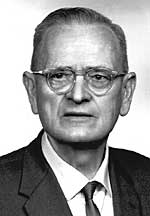
- Family and formative years 1898-1923
- In search of a curative climate 1924-1934
- The microbiological laboratory 1935-1947
- The Queensland Institute of Medical Research 1947-1966
- Final years, 1966-1976
- Conclusion
- About this memoir
Family and formative years 1898-1923
Edward Holbrook Derrick was born at Blackwood, Victoria, on 18 September 1898. He was a fourth-generation Australian, with a solidly Methodist lineage. Two paternal great-grandparents, Jehu Derrick and his wife, and their four children (Enoch, Elijah, Joseph, Mary) migrated to Victoria on three different ships between 1852 and 1855, and a maternal great-grandfather, Reverend Edward Sweetman, had settled in Melbourne as a Wesleyan minister in 1840. In addition to Methodism, or perhaps as an extension of it, was a strong family bent for teaching. Derrick's paternal grandfather (Joseph Holbrook Derrick), father (Clement Herbert Derrick, 1864-1945), mother (nee Elizabeth Mary Sweetman, 1871-1946), two uncles (one on each side), and a maternal aunt were all school teachers, and one of the uncles (Edward Sweetman, DLitt) became a lecturer in the University of Melbourne and wrote books on Australian history. Medicine was represented too, but more peripherally, by a great-great-grandfather, grandfather, and uncle, all on his mother's side. Derrick wrote of his lineage, but referring particularly to religion, 'Fortunate is the child with a goodly heritage'.(1)
In 1895 Clement Derrick brought his bride to Blackwood, a dying gold-mining town 65km from Melbourne, where he had been appointed head teacher. Their four children (Herbert, Edward, Edith, Kate) were born there and spent their early years surrounded by wild bush-clad hills, and in a more immediate environment of old mullock heaps, rusty machinery, poor sanitation, and general decay, and among people who suffered, directly and indirectly, from the effects of miners' phthisis. The school had about 100 pupils in 1895, but the numbers had declined considerably by the time the Derrick children finished their primary education. The young Edward's most vivid memories of Blackwood (and of Campbell's Creek, where he spent his holidays after his father was transferred there in 1911) were of the grandeur of the bush scenery; the brilliant stars at night; learning the constellations from his father; Halley's comet in 1910; an early fondness for poetry; fossicking for a few specks of gold; the Cornish miners ('How they could sing! How triumphantly they prayed!'); and an uncle convalescing from tuberculosis in their home. His own interest in medicine was excited at the age of ten or eleven, when he read The Family Physician (2 vols) from cover to cover while convalescing from typhoid fever, and his parents concurred in his choice of profession.
He gained an Education Department scholarship and entered Wesley College, Melbourne, as a day-boy, living with his grandparents. He was a reserved, rather shy lad who found the headmaster remote and unapproachable, but he did well at school, gaining four Distinctions in the Junior Public Examination in 1912 and a Government Exhibition in the Senior Public in the following year. He loved poetry, but his best subject was chemistry which he attacked with the same concentrated energy that he had given to The Family Physician at Blackwood.
His senior honours year in 1914 was sad and disturbing, for his brother, who had been a brilliant student two years senior to him at Wesley, died of tuberculosis in May and the Great War began in August. The school, in common with others of its kind, was caught up in a fervour of patriotism, and Derrick recorded later that, of 14 boys in Honour Sixth, 10 enlisted and 3 of them died in France. In spite of these distractions, he did very well in the Senior Public Honours Examination, sharing Honours and Exhibitions with two later fellows of the Academy, T.M. Cherry and E.J.G. Pitman. On the advice of the head-master, he repeated the Honours year as a boarder in 1915, but did not enjoy it, although he added to his honours list in the Senior.
He matriculated in April 1916 and entered the University of Melbourne as a resident student in Queen's College, a life he found much more to his taste than boarding at school. He availed himself of the wartime provision that those who had obtained Senior Public Honours in physics and chemistry could commence Medicine in second year by taking biology as an extra subject. He worked hard, gaining class honours in each year, and graduated MB, BS in 1920 with second class honours, fourth in the year to James Brown, Keith Fairley, and Ernest Chenoweth. He had been a member of the University Regiment.
Neither at the university, nor in his subsequent year at the Melbourne Hospital, then in Lonsdale Street, did he feel any attraction to pathology or microbiology. His basic concern was, and remained for the rest of his life, with sick people, and he vastly preferred out-patient clinics and ward rounds to any formal lectures and demonstrations. He was fortunate in his clinical teachers (especially Richard Stawell whom he revered), in having two periods of student residence in the hospital (another wartime emergency), and in helping to cope with the 1919 pandemic of influenza in an Army camp hospital with R.H. Fetherstone who was then Medical Officer of Health in Prahran. In spite of all this vicarious extra experience, he felt woefully inadequate and was horrified to discover how many diseases were incurable and how few of the drugs that doctors prescribed were of any real benefit to their patients. The inevitable course of lobar pneumonia to crisis or death particularly shocked him.
When the year ended, the Registrar appointments in the hospital fell to Brown and Fairley, so Derrick sought and obtained the Sir John Grice Scholarship in Cancer Research, tenable in the Walter and Eliza Hall Institute of Medical Research, and carrying a stipend of £250 per annum, residence in the hospital, and a share in carrying out the hospital autopsies. His main programme was a histological study of the tumours of the kidneys and suprarenal glands, from which he concluded that the common malignant tumour of the kidneys ('hypernephroma' or 'Grawitz tumour') developed from renal rather than suprarenal cells. His first scientific paper was a report of these findings published in The Medical Journal of Australia on 10 June 1922 (and his last a clinical account of his own experience with non-exertional angina pectoris, published posthumously in the same journal on 6 November 1976). He also visited the Austin Hospital for Incurables and carried out an experiment on pyrogenic treatment of inoperaable skin cancer, with some apparent benefit in a few cases. There is no doubt that the advice and guidance of the director of the Institute, Sydney Patterson, and successive deputy directors, Neil Hamilton Fairley and Harold Dew, during his tenure of the scholarship were significant factors in turning his mind towards a career in medical research.
At that time, the Orient and P & O lines offered three free passages to England each year through the university, and Derrick secured one of these at the end of July 1922. Arriving in England in the summer vacation, he and a friend (a classical scholar on his way to Oxford) took the opportunity to make a tour of Germany and Switzerland, which left him with a lasting impression that 'the similarities between people of different countries were much greater than the differences. A narrow nationalism could never return.' Back in London at the end of September, he found the employment he sought difficult to obtain. He made many contacts and Charles Kellaway, then at University College, was characteristically helpful, but nothing eventuated until Hugh Cairns, an Adelaide graduate, introduced him to Hubert Turnbull who was director of the Pathological Institute in the London Hospital. An appointment of pathological assistant in the Institute at a salary of £150 per annum followed. The duties included attending Turnbull's lectures, assisting in post-mortem examinations, which were carried out with a precision and attention to detail far surpassing anything he had seen in Melbourne, and preparing and studying histological sections, again using techniques of a standard he had not previously encountered. Turnbull became, with Stawell, one of the two great inspirations of his medical career.
Derrick became impressed with the frequency of deaths in children from miliary tuberculosis, due, it was believed, to rupture of tubercles in the intima of pulmonary veins flooding the body with tubercle bacilli. He resolved to test this hypothesis, so took every opportunity to dissect out the pulmonary veins of children who had died of the disease, search them for internal tubercles, and cut sections of any that he found. He successfully accomplished this task, but it was exacting work, and he failed to realize that snipping the small intimal tubercles off with scissors might charge the air before his face with live tubercle bacilli.
He had gone to England 'in search of knowledge' and it might be thought from the foregoing that he was preparing himself for a life in laboratory medicine. That was not so, for, on the one hand, he considered that morbid anatomy and experimental pathology lacked 'the close relation with patients...that gives medicine its satisfaction and its standing' and, on the other hand, he had a half-formed intention to become a medical missionary in China. This was his 'alternative career', and his inclination for it was no doubt strengthened by his association with Kingsley Hall, a Methodist mission in the East End to which he devoted much of his spare time. Proficiency in surgery was an obvious pre-requisite for a medical missionary, so he began to prepare himself by reducing his post-mortem work, and attending lectures and sitting for the primary FRCS examination which he passed in December 1923.
During the transition period, he visited Paris with Alan Lee (later a Brisbane surgeon) and one night, when alone in his hotel, he coughed up some blood, not much but of unequivocal diagnostic significance. He immediately returned to London, tubercle bacilli were found in his sputum, the physicians gave him a good prognosis, and an early passage to Australia was arranged. He arrived in Melbourne on 13 February 1924, and so, as he put it, 'all my plans came to a sudden and inglorious end.' He was later convinced that he had contracted the infection in the post-mortem room, but he had already had two intimate family contacts with tuberculosis in his youth, and the strenuous life he led could have activated a dormant infection.
In search of a curative climate 1924-1934
Thus did Derrick entitle the next ten years of his life. Rest in bed, which might have shortened his convalescence, was not then favoured in Victoria and he was treated, with his own full approval, in the Trudeau tradition of fresh air, sleeping out of doors, living in the country, and a special reliance on mountain air. He went to Kyneton, north of the Dividing Range, where he lived quietly for a few weeks and then took a relieving resident position in the local hospital. This set the pattern of an odyssey that was to lead him by devious paths to the far west of New South Wales and, ultimately, to northern Queensland. It was effective in that he recovered; but it is an interesting reflection on clinical attitudes in the twenties that it apparently did not occur, either to himself or to his advisers, that an itinerant phthisical doctor might spread the infection wherever he went.
On the advice of Ernest Chenoweth, by now practising in Queensland, Derrick's first venture further afield was to Brisbane, where he was well received, saw leprosy for the first time at the Peel Island lazarette, obtained registration from the Queensland Medical Board on 10 July 1924, and spent several enjoyable weeks at Bilinga on the south coast. He was greatly attracted by the northern State, but his health did not improve and he returned sadly to Melbourne in October.
He remained quietly in southern Victoria for several months, and then began again to seek relieving (locum tenens) appointments, moving progressively into drier and hotter country from Yea in Victoria (August-September 1925) to Curramukke in South Australia (September-October), Broken Hill in New South Wales (October-November), and finally Tibooburra in the northwestern corner of the State (November 1925 to March 1926). He adapted quickly to the arid environment, and his health remained good under the stresses of a busy lodge practice at Broken Hill, a long, tiring, two-day journey by mail-car to Tibooburra over a rough bush road with many gates to open on the way (a normal duty for a passenger), and life in an isolated village about 200m above sea level with an annual rainfall of about 200mm, annual evaporation of nearly 3m, and December temperatures up to 46.5°C. Medical work was light at Tibooburra, but he had cases of typhoid fever to worry him, a woman who died of puerperal septicaemia, and a patient with delirium tremens to control; he also made two long trips into South Australia, one to examine an old swagman who had died in the desert and the other to collect a surgical patient from an isolated station. One of his patients had a camel team and enlivened his convalescence by teaching Derrick to ride and manage the beasts.
When the time came to leave Tibooburra, he did not return south, but travelled north and east with the overseer of the rabbit-proof border fence on his tour of inspection and maintenance, crossed the Paroo River, and entered Queensland at Hungerford, where he saw his first cases of dengue fever, the 1926 epidemic being then in full spate. Another fortuitous car trip took him to Cunnamulla and so by train to Brisbane, where he arrived on 12 March.
A week as locum at Killarney in the border ranges brought him more experience of dengue fever (including a personal attack which provided useful serum antibodies for study 30 years later), but the turning point in his life came in April when he was called to a relieving appointment at Irvinebank in north Queensland. It was there that he finally regained his health, married, developed his great interest in the fevers of the north, and so was led, almost automatically, into the path that was later to prove so profitable. But it was still by no means all smooth going.
Irvinebank was a small tin-mining town about 760m above sea level on the main range 80km west of Innisfail, with an admirably dry mild winter climate and a monsoonal (summer) rainfall of about 850mm. The duties of the medical officer included regular visits to Stannary Hills 24km away, but were generally light and Derrick was able to enjoy the quiet life that he still needed. His health continued to improve rapidly, so that, when his appointment ended in June, he decided to spend the next few months visiting other places, including Ravenshoe, Innot Hot Springs, and Mount Garnet, in the same general area. Then followed another relieving appointment at Irvinebank from December 1926 to June 1927, followed by similar appointments at Mareeba on the tableland and Innisfail on the coast.
Believing that he was cured, he returned to Melbourne in January 1928 and was appointed resident pathologist at the Austin Hospital, but he soon relapsed with tubercle bacilli again in his sputum, a bitter disappointment. Further rest and a trial of private practice in the Riverina brought little improvement, and he returned to Melbourne a very worried man.
Relief from this distressing situation came in July 1929, in the form of a telegram inviting him to take over the position of medical officer at the Irvinebank Hospital on a permanent basis. He accepted gratefully and returned at once to the town which held all his hopes of survival and a productive life. By 1930 he 'pronounced himself perfectly fit', married Miss Margaret Gina Quadrio, matron of the hospital, on 11 March, and settled down to what appeared to promise a quiet life in general practice. But his troubles had not ended. Mining in the district declined, the Hospital Board found itself unable to pay his salary, and his appointment was terminated in May 1931. However, he was able to obtain a similar appointment at Mount Mulligan and remained there until early in 1934.
Throughout his wanderings, Derrick had been impressed, more than most, by the weight of responsibility that rests on a doctor who has to practise all branches of medicine in a remote place where he cannot discuss his problems with a colleague or call in the aid of a specialist. This feeling of inadequacy was sharply increased when he attended a postgraduate course in Brisbane before taking up the Mount Mulligan appointment, and an attempt to keep up-to-date thereafter by more intensive reading of the journals he received did not satisfy him. He believed his cure was complete, so resigned from Mount Mulligan to begin private practice in Brisbane.
That, indeed, was the end of his wanderings, for he and his wife remained in or near Brisbane for nearly 42 years, and their two sons grew up there. The way had been long, arduous, and often frustrating, but it had brought, too, a wide knowledge of the harsh interior and the tough north and of the people who lived in those remote places. Derrick quoted Trudeau's comment as applying very much to himself:
The struggle with tuberculosis has brought me experiences and left me recollections which I could not have known otherwise, and which I would not exchange for the wealth of the Indies.
The rest of this story belongs to his scientific work.
The microbiological laboratory 1935-1947
The practice at Kelvin Grove was short-lived, for Derrick was appointed director of the Laboratory of Microbiology and Pathology in the Queensland Health Department on 1 June 1935, a notable event in Australian medical history (as was J.B. Cleland's appointment to the equivalent laboratory in Sydney some 20 years earlier).
The laboratory had had a chequered career (Tonge, 1960). In 1893 a Stock Institute was established in Brisbane with C.J. Pound in charge for diagnosis and investigation of diseases in the livestock on which the colony was so dependent for survival and prosperity. It did good work, especially on the tick fevers of cattle. In 1899 its name was changed to the Bacteriological Institute, Pound became Government Bacteriologist, and the scope of the Institute was expanded to include human diseases; it became, in fact; the first public health laboratory in the colony. Its value in that capacity was soon demonstrated, notably in the plague epidemic of 1901-7, its tasks multiplied, and in 1910 it was split into the Laboratory of Microbiology and Pathology under Dr John Harris, attached to the Department of Health, and the Stock Institute under Pound, attached to the Department of Agriculture and Stock (now Primary Industries). The latter became the flourishing Animal Research Institute at Yeerongpilly, so the old Institute left two lusty descendents.
The Microbiological Laboratory had four changes in directorship (Harris, Burton-Bradley, Arnold Dean, and Harris again) between 1910 and 1923, but then remained without a medical officer for 12 years, during which it was managed, with remarkable efficiency, by Mr H.E. Brown and a small staff working in cramped, inadequate quarters. R.W. Cilento, a noted authority on tropical medicine, became Director-General of Health and Medical Services in 1934. He immediately perceived the inadequacy of the laboratory services, secured larger quarters for them in the new departmental building in William Street, and pressed strongly for the appointment of a medical director of the highest quality. This was finally approved by Cabinet on condition that the laboratory would take over all coronial autopsies from the private practitioners, thereby saving more in fees than they intended to pay the director in salary. Cilento's choice of Derrick proved a remarkably wise one.
It follows that his first task was to establish an efficient autopsy service, and this he did with his customary thoroughness and meticulous attention to detail. He based his procedures on the experience he had gained at the Pathological Institute in London 12 years earlier and recorded all his findings with such care and completeness that they now form a unique series for reference and research. He also published a guide to technique for medico-legal autopsies and a number of papers on suicide, alcoholism, lead poisoning, unusual pathological findings, and other subjects in general pathology. He was one of the first in the world to use blood alcohol estimations in court evidence.
In the meantime, in August 1935, Cilento was informed of the problem presented by the occurrence of 'abattoir fever' in the Brisbane Abattoir, and invited Derrick to investigate it. This was to him 'the opportunity of a lifetime' and he seized it with both hands, ably assisted by Hubert Brown and D.J.W. Smith whose appointment in 1937 was the first for full-time medical research in Queensland since the Commonwealth Institute for Tropical Medicine at Townsville closed in 1930. The resulting spate of publications has been reviewed several times, most vividly by Burnet (1967) and Derrick.
Derrick proceeded logically. His first step was to make a careful clinical study of all the cases available to him, but this revealed little more than that the disease had some typhoid-like or typhus-like features. He then used his laboratory resources to discover whether it was an aberrant form of some febrile disease already known in Queensland, again with negative results. A search of the veterinary literature failed to reveal any potential zoonosis derivable from cattle that would fit the picture. He then turned to the guinea-pig, the standard experimental animal in his laboratory, as in most others in Australia at the time. Guinea-pigs inoculated with blood from febrile patients developed a mild disease, characterized by fever and enlargement of the spleen, and ending in recovery. The disease could be passed serially from guinea-pig to guinea-pig by inoculation of spleen or liver errulsions, but guinea-pigs which had recovered from a previous attack were refractory to re-inoculation. Here then was a specific infectious disease caused by an organism which he could neither detect by microscopic examination of infected tissues nor grow in any of the culture media available to him. He thought it was probably a virus and sent infected spleens to F.M. Burnet at the Walter and Eliza Hall Institute of Medical Research, Melbourne, for further study.
Burnet's principal tools were not guinea-pigs but the chorioallantois of the developing chick and adult mice (the use of infant mice in rickettsial research came much later). The chorioallantois proved to be only marginally useful, but the inoculated mice developed enlarged spleens, sometimes with exudate on the surface. Searching a section of an infected spleen one day, Burnet came on what appeared to be a micro-colony of tiny, weakly stained rods, and study of Castenada-stained smears promptly confirmed their identity as rickettsiae; the mouse had proved a better animal than the guinea-pig for this investigation. The immediate problem was solved and Derrick named the disease Q (for Query) fever, later (January 1939) naming the organism Rickettsia burneti in honour of Burnet; still later it was removed from Rickettsia to a new genus Coxiella by C.B. Philip on account of its distinctive characteristics within the rickettsial family.
Derrick's guinea-pigs had given him a valuable tool for further research. Two guinea-pigs, one 'clean', the other recovered from previous infection, could be inoculated with any suspected material, and if the first guinea-pig reacted but the other not he was provided with both a diagnosis and a fresh strain of C. burneti to study. This method was used extensively, and the laboratory, a large gloomy room subdivided by island-benches, became congested with large glass battery jars, each occupied by two guinea-pigs. It was an awesome sight to the unprepared visitor! At the height of the work, rectal temperatures of more than 100 guinea-pigs were being taken daily, and more than 1000 were used in the whole investigation.
Meanwhile, Burnet and Mavis Freeman went on to provide another valuable diagnostic tool. 'By a little simple juggling with pH' (Burnet, 1967) Miss Freeman was able to prepare a stable rickettsial suspension from infected mouse spleens, which they used to develop a neat though somewhat tricky micro-agglutination test for specific antibodies in human and lower animal sera. For much of the work Derrick simply sent his sera to Melbourne and Burnet and Miss Freeman returned him prompt and reliable answers. The task was later transferred to Brisbane, using Freeman mouse spleen antigen, until Wilbur Smith discovered in 1940 that the abundant multiplication of rickettsiae in infected female Rhipicephalus sanguineus (dog ticks) made it possible for him to prepare much larger volumes of excellent suspensions. The tick antigen was employed until the complement-fixation test was introduced in 1950.
To return to the main story, recognition of a rickettsia pointed directly to an arthropod-mammal primary cycle of infection. Local bandicoots (Isoodon macrourus) were known to harbour a rich variety of blood-sucking ectoparasites, and here luck favoured the research, for it led the collectors to Moreton Island where there were no large mammals, other than a few goats, and abundant bandicoots carrying only one species of tick, Haemaphysalis humerosa. Using the guinea-pig technique described above, Smith soon isolated C. burneti from six batches of ticks and two bandicoots and a serological survey revealed a high incidence of infection in the bandicoot population. Bandicoots and their ticks are widely distributed in eastern Queensland, so an efficient reservoir cycle had clearly been revealed.
The question remained: how did the infection get from bandicoots into cattle, and from cattle into workers in widely scattered departments of the Abattoir, but not at all into the workers in Swift's and Borthwick's Meatworks which killed only for export ? And, as the work went on, how to account for the laboratory infections that occurred in both Brisbane and Melbourne? Most of this looked easy, but it proved most difficult.
Including experimental transmission, the four potential vectors of C. burneti then known (Haemaphysalis humerosa, H. bispinosa, Rhipicephalus sangineus, and Ixodes holocyclus) were also known to attack cattle, at least occasionally, so it was safe to assume that some transmission from bandicoots to cattle would occur in nature (another significant cycle involving sheep is noted later). It was known, too, that infected ticks had enormous concentrations of rickettsiae in their guts and that many of the cattle entering the Abattoir were infested with cattle ticks, Boophilus microplus. But this promising line drew a complete blank: not a single infection was found in the thousands of Boophilus and substantial numbers of cattle spleens from the Abattoir that were tested in guinea-pigs. There had to be some mechanism other than contamination from the bodies of infected ticks crushed in the slaughtering operation.
The answer came from the United States. In essence, 'nine-mile fever' of Montana proved to be a tick-transmitted rickettsiosis, a chance laboratory infection demonstrated its identity with Q fever, infection was found to be widespread in California, and detailed studies showed that rickettsiae were present in large numbers in the milk of infected dairy cows and in enormous numbers in the placentas of infected cows and sheep. Analysis of laboratory infections also supported the conclusion that infection could be acquired by inhalation of contaminated dust or droplets. C. burneti, in fact, had the remarkable ability to behave as a perfectly normal Rickettsia in its reservoir cycle and as a Brucella in infections of cattle, sheep, and man. These findings resolved all Derrick's difficulties, including the absence of Q fever from the export Meatworks which did not kill pregnant cows. By 1955 the disease had been recognized in 51 different countries.
Derrick's guinea-pigs served him well in another important study. In 1937, he was asked to investigate cases of fever in dairy farmers, so he inoculated guinea-pigs in the standard way and isolated a Leptospira, which he named L. pomona. D.W. Johnson, working in Derrick's laboratory, studied its distribution and epidemiology in Australia, and it was found later that it was also the cause of 'swineherd's disease' in Switzerland and mild leptospirosis in other parts of the world. It was of these two diseases, Q. fever and Pomona leptospirosis, that Burnet was thinking when he wrote in his citation for Derrick's election to fellowship in the Australian Postgraduate Federation in Medicine: 'To have defined and elucidated the aetiology of two world-wide infectious diseases is something no other living scientist can claim'.
Other investigations were going on at the same time, some new, others arising from the steadily increasing volume and range of routine work that was being undertaken by the laboratory, wedged, as it were, among the hordes of guinea-pigs in their battery jars. These included (Doherty, 1967): discovery of a second new leptospira (L. hyos) by D.W. Johnson; description of generalized amoebiasis, found at autopsy of a patient from New Guinea and thought at the time to have been due to Iodamoeba, but now considered to have been caused by Naegleria; isolation of the Karp strain of the scrub-typhus rickettsia (also from New Guinea); recognition of a variety of infections not previously recorded from Queensland, including classical Weil's disease (L. icterohaemorrhagiae), rat-bite fever (Spirillum minus), torula meningitis, chromoblastomycosis, and histoplasmosis; and surveys of filariasis (including a persistent focus at the Goodna mental hospital), tick-typhus, and human brucellosis. Finally, Derrick crowned his labours by developing and carrying through his plan for the establishment of an institute for medical research in Brisbane, making this unquestionably the most productive period in his whole life.
The Queensland Institute of Medical Research 1947-1966
Derrick has recorded the origin and birth of the Institute. During the later years of the 1939-45 war, the burden of routine forensic and public health work grew steadily heavier, shortage of staff was aggravated by enlistments (most notably of Wilbur Smith into the RAAF), Derrick himself was involved in considerable part-time teaching in the Medical School (he was a special lecturer in the Faculty of Medicine from 1939 to 1965), and research in the Microbiological Laboratory had to be almost completely abandoned. He became seriously concerned for the future, and therefore included a plea in his 1943-44 annual report for a return to a policy of active research as soon as the war situation permitted. This was noted by R.H. Robinson, under-secretary of the department, Derrick's initially modest proposals were expanded in further discussions and, on 18 April 1945, Cabinet appointed a Medical Research Advisory Committee of nine members, with Derrick as chairman, to plan an institute of medical research and advise on how the plan could best be implemented.
As is usual with such committees, the brunt of the work fell on the chairman (who would not have wished it otherwise), but all contributed and especially D.H.K. Lee, then Professor of Physiology in the university and the only member with previous experience of organized medical research on the scale contemplated. Their report and a draft Bill for establishment of the Institute were presented on 13 July, accepted almost in toto, the Bill was introduced into Parliament on 6 September, and The Queensland Institute of Medical Research Act was proclaimed on 19 January 1946. It provided for an institute to undertake 'research into any branch or branches of medical science . . . under the control and management' of a council of seven members with the director-general of Health and Medical Services as chairman.
The first meeting of the council, with Sir Raphael Cilento in the chair, was held on 8 February 1946, and Derrick was appointed acting deputy-director so that he could implement decisions about the Institute while continuing to control the Microbiological Laboratory. He became deputy-director on 27 March 1947, confirming his intention that someone else should be the first director. In the meantime, he and the council had done a great deal of work: gathering the nucleus of a library and essential basic equipment (including much that had been used by the LHQ Medical Research Unit at Cairns during the war); obtaining a temporary home for the Institute in a large, empty US Army hut in Victoria Park near the Medical School and Brisbane Hospital; providing enough sub-division and furnishing in the hut to accommodate initial research and ancillary staff; and securing the services of an experienced librarian (Mrs Margaret Macgregor, appointed 28 April 1947). When the building was occupied on 2 June 1947 by the director and the deputy-director, the librarian, and two ancillary staff (with three more to come in the following week), it was ready for at least the beginnings of some active work. It remained a centre of considerable activity for the next 30 years, for most of which Dr (later Sir) Abraham Fryberg was chairman of the council. Its successive directors have been Mackerras to 1961, Derrick to 1966, R.L. Doherty to 1977, and C.S. Kidson from 1978, with J.H. Pope as acting director in 1977-78.
Doherty (1967, 1978) has given well-balanced accounts of the next 14 years, the second paper bringing Derrick's activities into perspective with other work that was going on in the Institute in the same period.
Derrick was unquestionably glad to have a time of relative relaxation after his strenuous efforts in 1945-47, and he gave most of the next two years to the pleasant task of clearing up the backlog of uncompleted papers carried over from the Microbiological Laboratory. All 11 of his publications from 1948 to 1951 belong to this category. At the same time, he continued to help in the selection of staff, in planning the additional laboratories that would be needed within the building, and especially in establishing adequate stocks of laboratory animals, principally mice (derived originally from Hall Institute stock), but also rats, guinea-pigs, and rabbits. A large section of the area under the hut came to be occupied by the animal houses, which helped to sustain the rather flimsy structure of the laboratories above.
He also had two main research projects in mind, both fitting well into the broad research policy that had been accepted for the Institute. One was to continue the search for infectious agents in southern Queensland that had begun in the Microbiological Laboratory, but using mice rather than guinea-pigs as the primary tool; and the other was his old favourite, to investigate the many still undiagnosable fevers of north Queensland. He felt strongly that an efficient virological unit would be an indispensable component in the plans for both, so he spent several months in 1951 visiting relevant overseas laboratories to learn what he could of their organization and methods.
The first project began as soon as enough resources could be got together, and it proved (like the study of salmonellosis in infants that was going on in another section of the Institute at the same time) an admirable training ground for the young cadets who were later to become the backbone of the research staff. It went on, with intermissions, through the whole period, adding to general knowledge of infectious agents and their hosts, but leading to only two significant discoveries. One was that toxoplasmosis was common in Queensland rodents and small marsupials, and serological surveys showed that it was also common in man, usually in inapparent infections, but sometimes, as elsewhere, associated with a variety of syndromes, including congenital brain and eye damage. Its epidemiology remained obscure for we failed to recognize the domestic cat as the primary host in which the parasite behaves as an ordinary coccidian; that discovery came from studies overseas nearly 20 years later. The second discovery was the isolation of an obscure virus from a house mouse collected in Brisbane and its final identification by J.H. Pope as a mouse leukaemia virus, which led him directly into a productive career of research on the tumour viruses of man.
Derrick's second project began in 1951 after his return from abroad. A field station was set up in the Innisfail Hospital and manned successively by two medical research fellows (C.N. Sinnamon for a year, R.L. Doherty thereafter) and the most experienced of the available cadets. In essence, the plan was to make a careful clinical study of all febrile patients, to collect immediate and convalescent samples of sera for serological investigation, to make blood cultures for leptospirae, and to inoculate adult mice for isolation of rickettsiae and other agents. The mice were returned to the Institute, where they joined the search for infectious agents described above; sera and positive cultures were sent, by cooperative arrangement, to the Microbiological Laboratory, which was now directed by J.I. Tonge and had Hubert Brown and Wilbur Smith as experts in leptospiral identification. It was a return to valued old associations for Derrick.
The principal results of this study were the addition of eight 'new' serotypes of leptospirae to those already known in Australia and the demonstration that mouse-inoculation was much more reliable than the Weil-Felix serological reaction for the diagnosis of scrub-typhus. Serology and a broader approach to laboratory diagnosis in general also reduced the number of more ubiquitous infections that passed unrecognized, so that by the middle of 1955 it could fairly be said that the diagnostic problems, and consequently treatment, of the fevers of north Queensland had been substantially solved. Work at the field station was turned to a detailed study of the reservoir hosts, still in collaboration with the Microbiological Laboratory which had by then became a WHO Reference Centre for leptospirosis, but that story does not belong here.
Freed from his preoccupation with Innisfail, Derrick was able to gather in the loose ends and turn his attention to other problems. He published epidemiological analyses of dengue fever, leptospirosis, and scrub-typhus, in which he foreshadowed the special concern with climatic factors that was to influence much of his later work on asthma; he and Domrow organized a survey of the foci of scrub-typhus in north Queensland, which provided a basis for later studies by Domrow, Cook, and Campbell of the host distribution of Rickettsia tsutsu-gamushi and its transmission by Leptotrombidium deliense; he joined with Cook in the survey of human toxoplasmosis, with Pope in an investigation of murine-typhus during a mouse plague on the Darling Downs; and also with Pope in a final rewarding study of Q fever arising from an outbreak of the disease among shearers working on sheep stations in western Queensland. The investigation revealed a high incidence of infection in local kangaroos and kangaroo ticks (Amblyomma triguttatum, a three-host tick with a wide host range), which provided a major maintenance cycle in the west comparable to that provided by the bandicoot and its tick in the east. Many of the sheep brought in for shearing were infested with A. triguttatum, so it seemed probable that the workers in the shed were infected from the ticks macerated during the shearing operation, a hypothesis which was supported by the occurrence of Q fever in fellmongers in Brisbane who handled fleeces from the infected stations.
When Derrick became director on 29 July 1961, the Institute had teams able to work independently in such fields as arboviruses (Doherty, with the largest group), tumour viruses (Pope), Acarina (Domrow), rickettsiae (Pope, Carley, Campbell), bacteriology (Singer), and a capable deputy-director in R.L. Doherty, and he was therefore able to concentrate on a study of the epidemiology of asthma in Queensland, a problem to which he was attracted by the frequency of the disease, especially in children in the Brisbane area.
He had begun the study in 1960 with a survey of admissions for asthma in the Brisbane hospitals, which showed that there were normally two well-defined seasonal peaks, one in autumn and one in spring. Then he found that similar peaks in admissions occurred in other hospitals in southeastern Queensland but not in north Queensland, and that they were much more evident in young people than in older age groups. These findings suggested seasonally produced airborne allergens as the probable cause of the epidemics, so he arranged for the establishment of air-sampling facilities and secured the appointment of a botanist (J. Moss) and mycologist (R. Rees) to analyse the samples for plant pollens and fungal spores respectively. A great mass of quantitative and qualitative information was collected in the ensuing years, but no correlations with the frequency of asthmatic attacks were established either by statistical analysis of the data or by clinical testing of the potential allergens that had been isolated. Correlations with growth of grasses and density of smoke were also attempted without success. In the meantime, he pursued his statistical studies of weather and climate, still searching for correlations that might point to the operative allergens. He was able to correlate the monthly incidence of asthma with mean monthly temperatures up to 21 degrees C, but no higher, and the annual incidence of asthma with annual rainfall, but there the work ended. He published 19 papers on asthma, 13 of them after his retirement.
Final years, 1966-1976
When he retired on 28 July 1966, Derrick was appointed honorary research fellow in the Institute and, a little later, director of the Research Bureau of the Queensland Asthma Foundation, which post he held until 1973. He continued his studies much as he had before his retirement, published 21 papers on a variety of subjects, including those on asthma already referred to, and prepared a manuscript (published after his death) recording his own terminal illness with characteristic detachment and attention to detail. Though his physical capacity declined, his mental activity did not, and he was still making notes within a few hours of his death on 15 June 1976 (Tonge, 1976). It is sad that he did not survive long enough to enter the Institute's spacious new laboratories in the grounds of the Brisbane Hospital, which were opened in February 1977 and will remain his most enduring monument. His portrait by Graeme Inson hangs in the entrance hall.
Conclusion
This has been the story of an unusual man who came into research under two diverging influences. On the one side, his family background, early education, and temperament made him deeply religious, reserved, intolerant of levity on serious subjects, but still willing to suffer fools gladly if they were young and teachable. He came to medicine with the conviction that his task was to relieve human suffering – indeed, to seek it out for relief – and there is little doubt that he would have become a missionary among the heathen if tuberculosis had not intervened. On the other side, he was endowed with an analytical mind, a liberal share of scientific curiosity, an immense respect for the integrity of science, and an obsession (perhaps acquired in London) with detailed observation and precise recording. He had gone to England 'in search of knowledge' and the same tuberculosis that had deprived him of his missionary ambition led him in the end to the laboratory in Brisbane where he had ample opportunities to continue the search. This he did, with results that gave him great satisfaction and brought him world-wide recognition as a distinguished Australian scientist.
He received many honours. He was awarded a CBE in 1961, was elected to the Academy in 1955, received The Britannica Australia Award for Medicine in 1965, admitted DSc (honoris causa) by the University of Queensland in 1966, and awarded the ANZAAS Medal in 1969. He was elected a fellow of the Australian and New Zealand Association for the Advancement of Science (1940), fellow of the Royal Australasian College of Physicians (1947), foundation member (later fellow) of the Royal College of Pathologists of Australia (1956), member of the International Society of Biometeorology (1966), fellow of the Australian Society of Allergists (1967), fellow of the Australian Medical Association (1968), fellow of the Australian Postgraduate Federation in Medicine (1971), and honorary fellow of the Royal Society of Tropical Medicine and Hygiene (1975). He also shared the Cilento Medal with F.M. Burnet in 1939, was Bancroft Orator of the British Medical Association (Queensland branch) in 1948, and Elkington Orator of the Queensland Society of Health in 1962. The Medical Journal of Australia published a Festschrift number in his honour on 9 December 1967.
About this memoir
This memoir was originally published in Records of the Australian Academy of Science, vol.4, no.1, 1978. It was written by I.M. Mackerras, DSc, former Director of The Queensland Institute of Medical Research, Brisbane (1947-1961). He was elected to the Academy in 1954 and served on Council 1955-7.
Acknowledgments
I am grateful to Professor R.L. Doherty, University of Queensland, to Dr J.H. Pope and other members of the Queensland Institute of Medical Research, and to Dr J.I. Tonge and Mr D.J.W. Smith of the Queensland Laboratory of Microbiology and Pathology for information and suggestions, and to Dr Elizabeth N. Marks and Mrs E.R. Bailey for help in the preparation of the manuscript.
Notes
(1) Quotations without citation of reference are from a manuscript autobiography which was completed only to the end of 1933, now in the Academy's Basser Library.
Edward George Bowen 1911-1991
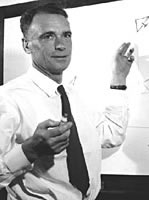
- Introduction
- Early years
- The war years
- The Tizard mission
- The Australian years
- Sport
- Personal
- Honours and awards
- About this memoir
Introduction
Edward George Bowen was one of the most dynamic and influential of the wartime generation of British physicists. Having completed his doctorate under Professor E.V. Appleton at King's College, London, he was recruited by Robert Watson-Watt in 1935 and played an important part in the early development of radar in Britain. He went to the United States with the Tizard Mission in 1940 and helped to initiate the tremendous enterprise that marked the evolution of microwave radar as a fighting weapon in the war. He was invited to join the CSIR(O) in Australia in 1943 and became the Chief of the Division of Radiophysics in Sydney. There he encouraged the greatest research effort that emerged from the war – the new science of radioastronomy – and brought about the construction of the 210 ft radio telescope at Parkes, New South Wales. Following the initiation of cloud and rain physics by Langmuir and Schaefer in the United States, he mounted a remarkable effort to improve the rainfall in dry Australia which began in 1947 and continued after he retired in 1971. Throughout his Australian career, he remained a devoted Welshman, rejoicing in the name of 'Taffy'. He had a strong and independent view of his science which occasionally involved conflicting views with others, but this was balanced by an enthusiastic and engaging manner which won him many friends.
Early years
Edward George Bowen was born on 14 January 1911 in the village of Cockett near Swansea, Wales, to George Bowen and Ellen Ann (née Owen). He was the youngest of four children: Gwladys, Richard, Olwen and Edward George. Both their grandfathers had served apprenticeships on clipper ships sailing around the Horn to Pacific ports in Chile and Peru, there to load ore for the busy refineries of Swansea. George Bowen himself was a steelworker in a Swansea tinplate works, where he folded and flattened red-hot plates into the thin sheet steel needed, a task which required considerable skill and strength. He satisfied a love of music as the organist in the Congregational Chapel in nearby Sketty.
Edward Bowen had a keen mind and, at an early age, developed a lively interest in radio and also in sport, particularly cricket. At the primary school in Sketty, he won a scholarship in 1922 to the Municipal Secondary School in central Swansea. His senior years there coincided with the onset of bleak economic times in South Wales, but fortunately he was successful in again winning a scholarship which enabled him to enter Swansea University College. At first Edward's intention was to concentrate on chemistry, his top subject, but he soon changed to physics and related subjects, a decision he never regretted. He graduated with a First-Class Honours degree in 1930 and went on to post-graduate research on X-rays and the structure of alloys under the direction of the Senior Lecturer, Dr W. Morris Jones, and Professor J.V. Evans, an excellent teacher and physicist. This work earned him an MSc in 1931.
At the University he had met his future wife Enid Vesta Williams from nearby Neath, who graduated in geology and became a science teacher. They were later to marry (in 1938) and bring up a family of three sons: Edward, David and John.
The war years
Ground radar
It was Professor E.J. Evans who, recognising Bowen's intense interest in radio, arranged for him to take a PhD in the Physics Department of King's College (London University) under the direction of Professor E.V. Appleton. As part of his research, Bowen spent a large part of 1933 and 1934 working with a cathode-ray direction finder at the Radio Research Station at Slough and it was there that he was noticed by R.A. Watson-Watt and so came to play an important part in the early history of radar.
The first significant event in that early history was the proposal by H.E. Wimperis, then Director of Research at the Air Ministry, that a Committee for the Scientific Study of Air Defence should be established under the chairmanship of H.T. Tizard. Prior to the first meeting of that committee on 28 January 1935, Wimperis enquired from the Superintendent of the Radio Research Station (Watson-Watt) whether it would be possible to incapacitate an enemy aircraft or its crew by an intense beam of radio waves, or in more popular language by a 'death ray'. In two memoranda Watson-Watt showed that such a 'death ray' was impracticable, but made the immensely valuable suggestion that radio waves might be used to detect, rather than destroy, enemy aircraft.
Following a successful demonstration in February 1935 of the reflection of radio waves by an aircraft, the development of radar went ahead, and on 13 May 1935 a team of five people set out from Slough for Orfordness. Their ostensible purpose was to do ionospheric research but their real purpose was kept secret: it was to set up an experimental ground radar.
Bowen, now aged 24, was one of that team; he had been recruited by Watson-Watt as a Junior Scientific Officer. While the two senior members (A.F. Wilkins and L.H. Bainbridge-Bell) took care of the antennas and the receiver, Bowen's job was to assemble a transmitter from a miscellaneous collection of parts collected together in a hurry at Slough. Before the end of May he had the transmitter working, and by using 5,000 volts on the anodes of a pair of NT46 valves he persuaded them to produce a power output of about 20 kilowatts at 6MHz with a pulse width of 25 microseconds. In the course of the next few months he increased the anode voltage to over 10,000 volts, well beyond the rated limits, and managed to raise the pulse power to over 100 kilowatts.
The first detection of an aircraft, so Bowen (1987) claims, was made on 17 June 1935 when a clear radar echo was detected from a Scapa flying boat at a range of 17 miles. This was only the beginning; many improvements, such as shorter working wavelengths, larger antennas, greater transmitter power, and systems for measuring the height and direction of the target were soon introduced, and by early 1936 aircraft were being detected at ranges of up to 100 miles.
The success of this work prompted the decision to start work on a chain of radar stations (CH) to give warning of enemy aircraft approaching the coast, and in December 1935 the funds were made available for five stations covering the approaches to London. This ambitious project made it urgently necessary to enlarge the small team at Orfordness and to establish the programme on a more suitable site. The Air Ministry bought a large and isolated country house, Bawdsey Manor, into which the original team, including Bowen, moved in March 1936.
Towards the end of 1935 Watson-Watt decided that when the move to Bawdsey Manor took place Wilkins would take responsibility for the chain of radar stations and that Bowen, at his own request, would tackle the highly speculative – and at that time unique – venture of putting radar in an aircraft. As part of the deal, Bowen was to remain responsible for his original transmitter which would be left at Orfordness, unused but untouched, while a new transmitter was constructed at Bawdsey Manor.
In the event it proved a wise decision to leave Bowen's old transmitter untouched. The first major Air Exercise to demonstrate the use of radar in air defence was held in September 1936 using large numbers of aircraft and the new radar station at Bawdsey Manor. It was watched not only by members of Tizard's committee but also by important members of the Air Ministry and the RAF notably the Commander in Chief of Fighter Command, Sir Hugh Dowding. The first day of the Exercise was an absolute shambles; the incoming aircraft were not detected until they were so close to the coast that their engines could be heard – a sound locator would have done just as well. Urgent enquiries showed that the new transmitter at the Manor was not putting out enough power.
Bowen helped to save the day in two ways. Before a disgruntled Sir Hugh Dowding returned to London, Bowen gave him an impromptu demonstration of an experimental radar, built as part of the airborne radar programme, which was detecting the aircraft engaged in the Exercise at ranges of up to 50 miles. This, so Bowen (1987) tells us cheered Dowding up immensely. Bowen then travelled to Orford with one assistant (A.G. Touch) and, working all night, made his original transmitter work satisfactorily in time for the Air Exercise on the morning of the second day. The old transmitter at Orford held the fort until the new transmitter at Bawdsey was put right.
The rest of the Exercise went reasonably well and the plans for the construction of a chain of coastal stations survived; which was just as well, otherwise they might not have been ready to play a vital part in the Battle of Britain four years later.
Airborne radar
The problems of installing a radar in an aircraft which Bowen faced in the spring of 1936 were, to put it mildly, challenging. The principal application envisaged for airborne radar was night interception and at that stage the principal problems were not operational but technical; it is easy to underestimate how difficult they looked in 1936. The most obvious difficulty was to reduce the size and weight of the equipment; the existing ground radars would fill a small house, weighed several tons and took many kilowatts of power. Bowen decided that a viable airborne radar should not exceed 200 lbs in weight, 8 cubic feet in volume and 500 watts in power consumption and that, to reduce the aerodynamic drag of the antenna, the operating wavelength would have to be about one metre – a very short wavelength in those days.
These targets were very difficult to meet. In those days most radio components were large, heavy and unsuitable for use in the extremes of vibration, temperature and atmospheric pressure met with in military aircraft. The aircraft power supply was DC, variable in voltage and very limited in capacity. There were a number of other troublesome problems; for example, there were no solid dielectric cables to connect the radar equipment to the antennas. But the greatest difficulty of all was to generate enough power at short wavelengths in a transmitter that could be carried in an aircraft.
Over the next few years, Bowen and his group tackled and solved most of these problems. To take two important examples, in 1938, with the help of Metropolitan Vickers, he solved the problem of the power supply in aircraft by introducing an engine-driven alternator which gave an 80 volt, 1,000 Hz, voltage-stabilized supply. In 1939 he encouraged ICI to produce the first radio-frequency cables with solid polythene dielectric, a most important advance.
Faced with the difficulty of fitting a sufficiently powerful transmitter into an aircraft, Bowen's first move was to leave it on the ground and carry only the receiver and indicator in the air. He erected a powerful (30 Kw) 6.7 metre transmitter on the roof of Bawdsey Manor and installed a receiver and cathode-ray indicator in a Heyford aircraft with a simple half-wave dipole strung between the wheels. Flying from Martlesham Heath in the autumn of 1936, he detected aircraft at ranges of up to 12 miles.
This hybrid system had the advantages that the transmitter could be large and powerful and that, unlike later metre-wave airborne radars, its maximum range was not limited to the height of the aircraft above the ground; nevertheless it had the obvious limitation that the range of the target aircraft, as seen by the fighter, was only correct when the fighter was in a direct line between the transmitter and the target. Although Bowen argued hard for its further development, he failed to persuade Watson-Watt; so he dropped it and pressed on with the construction of a complete airborne radar.
In early 1937 he acquired some Western Electric 316A valves that were capable of delivering a pulse power of a few hundred watts at a wavelength of about one metre. A complete radar system, using these valves, was built at a wavelength of 1.25m and installed in an Anson. On 17 August 1937 it was tested in the air by two of Bowen's group, A.G. Touch and K.A. Wood; although they detected no aircraft, they obtained clear echoes from ships off the coast at Felixstowe at ranges of two to three miles. Following this flight the performance was greatly improved by increasing the wavelength to 1.5m, which subsequently became the standard wavelength for metre-wave airborne radar.
In September 1937, hearing that an exercise was planned during which Coastal Command would search for the Fleet, Bowen gave a dramatic, uninvited, demonstration of the application of radar to aerial reconnaissance. Together with KA. Wood he used the experimental 1.5m radar to search for the Fleet in the North Sea under conditions of low visibility and, much to the astonishment of the Navy and Coastal Command, he found the aircraft carrier Courageous, the battleship Rodney and the cruiser Southampton. It was during this flight that they detected radar echoes from the aircraft of Courageous – the first detection of an aircraft by a complete airborne radar. This demonstration was, so Bowen (1987) tells us, 'a landmark in the history of airborne radar'; it was followed by many demonstrations to senior officers of the RAF.
The airborne radar group now had two major projects, the detection of ships (ASV – Air to Surface Vessels) and the interception of aircraft (AI – Aircraft Interception). Although there were many other applications in Bowen's lively and fertile mind, there was never enough time to explore them properly. He did, however, manage to experiment briefly with the use of airborne radar to detect features on the ground such as towns and coastlines, to detect falling bombs in a scheme to attack bomber aircraft from above, and as an aid to navigation in which the contours of the ground beneath an aircraft were compared with a map.
ASV (Air to Surface Vessels)
During 1938, most of the work of Bowen's small group was devoted to the development of improved components for both AI and ASV, and to the design of a practical system of ASV. The principal question was whether the radar should scan the sea for ships by looking forward, sideways or all round. The three modes required different antennas and displays.
The design of the forward-looking mode was technically the simplest and was fairly well established by mid-1938; as we shall see later, this was the first form of ASV to be adopted by the RAF.
To test the sideways mode, Bowen had two six-element Yagi antennas fitted to an Anson so as to project a beam at right angles to the direction of flight. Using a photographic recorder to record the returns from objects scanned by this beam, he demonstrated the system to the Services by showing them 'radar pictures' of ships of the Home Fleet as they passed from Spithead to Portland in May 1938.
To test the all-round-looking mode, Bowen arranged to fit a rotating dipole to an Anson and to display the signals on a cathode-ray tube using what is now called a B-scan. Although one of his group (P.L. Waters) made this system work, its maximum range was unsatisfactory, probably due to losses in the rotating joint.
Following extensive tests and demonstrations, in which Bowen played a major part, it was eventually decided that the first ASV system in service would be forward-looking. In this system the power from the aircraft transmitter was radiated in a wide beam forward, and the returns from the target were received on two simple antennas mounted on each side of the aircraft to give overlapping beams in the forward direction. The receiver was connected in rapid sequence to these two antennas by a fast rotating switch, and the signals were displayed as deflections to the right and left of a vertical timebase on a single cathode-ray tube.
The first installation of ASV MkI was made in a Hudson aircraft in December 1939. It could detect a 10,000 tonne ship at a range of about 20 miles and coastlines at 30 to 40 miles. About 300 sets were made and were fitted in Hudsons and Sunderlands of Coastal Command. In practice its main use was to aid navigation, not to find enemy shipping; it helped patrols to rendezvous with convoys (The Battle of the Atlantic [1946]), provided navigational assistance by detecting coastlines and, more popularly, helped aircraft to return to base using transponder beacons.
When war was declared in September 1939, Bawdsey Research Station, now called the Air Ministry Research Establishment (AMRE) was 'evacuated' to Dundee and the airborne group to Perth aerodrome. Bowen was then faced with the extremely awkward problem of carrying on the development of airborne radar at an aerodrome which had neither laboratory space nor adequate hangars. That did not last long; in late October his group was moved to 32 Maintenance Unit at St Athan which, although it had adequate hangars, was too far from Dundee and a most unsuitable place in which to do laboratory work. However the main task of Bowen's group at St Athan was to help the RAF to fit radars to their aircraft, and in doing this they were entirely successful; within a few months, aircraft were being fitted with AI or ASV at the rate of about one per day. It is very much to Bowen's credit that this was achieved in such difficult circumstances.
One of the first things that Bowen did at St Athan, in response to an urgent enquiry from Admiral Somerville, was to try to detect a submarine by radar. In the first week of December 1939, Bowen and I (RHB) carried out flight trials using ASV MkI in a Hudson to look for submarine L27 in the Solent. On the first flight at 1,000 feet we detected the submarine in a fairly rough sea at a range of 3 miles; on a subsequent flight at 6,000 feet, with a calmer sea, we detected it at a range of up to 6 miles. In our report on these trials we pointed out that although these ranges were short, they had been obtained with simple dipole antennas and could be doubled by using high gain directional antennas in a sideways-looking system.
Following these results it was agreed to introduce a sideways-looking system (Long Range ASV, LRASV) for anti-submarine patrol and, as a start, Bowen arranged that a Whitley should be fitted with high gain directional antennas. The first Whitleys with LRASV went into service at Aldergrove in December 1940. At a height of 2,000 feet they could detect coastlines at about 60 miles, a 10,000 tonne ship at 40 miles, a destroyer at 20 miles and a submarine at 8 miles; at 5,000 feet their range on a submarine increased to between 10 and 15 miles.
The engineering of the equipment, to make it more rugged and reliable, was carried out at the Royal Aircraft Establishment (RAE) under the supervision of a senior member of Bowen's original group (A.G. Touch). The set which they developed (ASV MkII) was produced in far greater numbers than MkI; in the UK alone, 6,000 sets were made, and many thousands were produced in the USA and Canada. It was fitted to patrol and reconnaissance aircraft all over the world and used in anti-submarine patrols, anti-shipping strikes, convoy escort and many other duties. Its principal value was in the first phase of the Battle of the Atlantic when the Germans were using the captured French ports to give their U-boats easy access to the Atlantic. In April 1941 Coastal Command was operating anti-submarine patrols with about 110 aircraft fitted with ASV MkII, and the use of radar by these aircraft increased the daylight sightings of submarines significantly. More importantly, it made it possible to attack submarines at night as they travelled on the surface; in 1941-1942 over 90 per cent of night attacks were made as the result of ASV contact. However very few of these attacks were lethal until the introduction in mid-1942 of a powerful searchlight (Leigh Light) that illuminated the submarine. The combination of this light with ASV MkII was so effective that the submarines tended to submerge by night and surface by day, thereby increasing their destruction by daytime patrols. This satisfactory state of affairs lasted for a few months until the Germans introduced a listening receiver – Metox – which warned the submarine of the approach of an ASV-equipped aircraft so that it could dive. As far as metre-wave ASV was concerned the introduction of this listening device marked the end of the first phase of he Battle of the Atlantic; the second phase was taken up by centimetre-wave radar.
AI (Air Interception)
Most of the early development of AI and ASV was done in parallel and they were able to share many of the same components. Nevertheless AI had its own peculiar problems; for example, the components had to work at higher altitudes, making it, among other things, more difficult to design a transmitter. Also AI is more complicated than ASV because it must guide the fighter to its target in three dimensions, and the range and relative direction of a fast moving target must be presented to the operator immediately and simply. Furthermore it must bring the night fighter so close to the target that the pilot can identify it visually before opening fire.
In early 1939 Bowen, together with his group, decided that the first AI radar would measure the relative direction of the target by four antennas mounted on the fighter; two 'azimuth antennas' would give overlapping lobes in the azimuth plane and two 'elevation antennas' would give overlapping lobes in elevation. Failing to devise a simple display on a single cathode-ray tube, Bowen had to accept that there must be two tubes and a separate radar operator. One tube would display the signals from the elevation antennas and the other the signals from the azimuth antennas. As in ASV, the signals would be distributed by a fast rotating switch. Following some tests on night vision made at the RAE Bowen decided that AI must have a minimum range of 1,000 feet.
The first complete installation of AI was flown in a Fairey Battle on 9 June 1939. It gave a maximum range of 12,000 feet with a Harrow as a target; the minimum range was about 1,000 feet and in mock interceptions the display seemed easy to use. A week or so later Bowen gave the Commander in Chief of Fighter Command (Sir Hugh Dowding) a successful demonstration; within a few weeks the airborne group was committed to fitting AI into 30 Blenheims for trials by 25 Squadron at Northolt.
This programme at Northolt was premature; not only was the AI equipment inadequately engineered, no proper provision was made for training and maintenance. Nevertheless the trials did expose one important fact; they showed that in order to make a successful interception with AI, it was essential to control the path of the fighter with a precision that could not be achieved by the existing system of fighter control. In November 1939 I pointed this out in a memorandum written to Bowen from Northolt and suggested that a special radar should be developed for fighter control. Bowen immediately forwarded my memorandum to the Superintendent of AMRE at Dundee, adding the excellent suggestion that the solution to the problem was to build a radar with a narrow rotating beam, a 'Radio Lighthouse'. Bowen had in fact suggested such a radar in July 1938, but not specifically for the control of night fighters. Unhappily that suggestion was turned down and Sir Robert Watson-Watt (1957) tells us that the failure to follow it up may have been one of his greatest mistakes in the development of radar. However, this time it was followed up; a radar with a narrow rotating beam and plan-position-indicator was developed by AMRE and the first Ground Control Radar (GCI) was delivered to the RAF in October 1940.
While at St Athan, Bowen's group developed an improved version of AI (MkIII) and helped to fit it into the Blenheims of various night-fighter squadrons. Although the maximum range of AI MkIII was regarded as adequate, its minimum range was about 1,000 feet and this became the subject of considerable friction between Bowen and the main establishment at Dundee. AI was not proving successful in the hands of the RAF and the Superintendent (A.P. Rowe) and his Deputy (W.B. Lewis) had been persuaded that this was largely due to the minimum range being too great; it must, they insisted, be reduced as a matter of urgency. Bowen disagreed profoundly; he was convinced that the minimum range had nothing to do with the shortcomings of AI in service and that the 1,000 feet achieved by AI MkIII was adequate operationally. To Bowen's intense annoyance Lewis, acting on a request from Rowe, started a programme of experimental work on AI MkIII at Dundee (Lovell 1988). Fortunately one of the things Lewis did was to enlist the help of EMI; in due course A.D. Blumlein and his colleagues at EMI produced an excellent transmitter modulator that reduced the minimum range to 500 feet and was subsequently incorporated in AI MkIV.
Nevertheless it is likely that in this controversy Bowen was right. The principal technical defect in AI MkIII was later shown by tests at Fighter Interception Unit to be a squint in the antenna system of the Blenheim which was cured by changing from horizontal to vertical polarization (Hanbury Brown 1991). The minimum range was probably not a serious defect; in an assessment of the combat reports of fighter pilots in 1940 and 1941, Bowen found that the median range at which enemy aircraft were tracked by A1 and then seen visually was between 1,200 and 1,500 feet (Lovell 1988). Furthermore the subsequent success of AI in 1941 suggests that two operational factors contributed to the failure of AI MkIII, the inadequate speed and armament of the Blenheim and the absence of GCI (Ground Control Radar).
This controversy about minimum range is only worth mentioning because it greatly exacerbated the strained relations between Bowen and A.P. Rowe, which had never been good ever since Rowe had succeeded Watson-Watt as Superintendent at Bawdsey in 1938 and appointed Lewis as his Deputy. As his senior staff Rowe had inherited Wilkins and Bowen, old colleagues of Watson-Watt who had pioneered radar, and as Bowen (1987) tells us, Rowe 'never came to terms with them'. The separation between Dundee and St Athan was a further strain and the friction with Lewis over the question of minimum range was, from Bowen's point of view, the last straw. When in May 1940 the main radar establishment (AMRE) moved from Dundee to Worth Matravers and the airborne group left St Athan to rejoin them, Bowen ceased to take an active part in their work and, as we shall see, he was soon to leave for the USA. [AMRE became TRE (Telecommunications Research Establishment) in November 1940.]
The final engineering of AI MkIII was undertaken at the RAE and introduced into service as AI MkIV in Blenheims and Beaufighters in the autumn of 1940. AI MkIV did everything which Bowen had originally visualized for a metre-wave AI set. It was the last and vital link in an elaborate and successful system of hunting enemy bombers that involved the coastal CH stations, inland GCI radars, radar beacons and transponders, VHF radio and AI-equipped Beaufighters with their Hispano cannons. In the hands of a skilled crew, AI MkIV was remarkably effective, and in the heavy night raids of 1941 the AI-equipped fighter proved to be the principal weapon of air defence at night (Douglas 1948); thus in May 1941 over 100 enemy aircraft were definitely shot down at night using AI compared with 30 by anti-aircraft guns.
The Tizard mission
In August 1940 Bowen left the UK as one of seven members of a Mission, led by Sir Henry Tizard, to disclose recent British technical advances to the USA and Canada. Bowen's job was to tell them all about British radar. He took with him not only information on all existing and projected equipment, but also an early sample of the cavity magnetron, the essential and highly secret key to the development of centimetre-wave radar that had just been invented by J.T. Randall and H.A.H. Boot at Birmingham University.
Following discussions with the Tizard Mission, the US made the important decision that the development of metre-wavelength radar should be the responsibility of the Armed Services, and that the development at centimetre wavelengths should be the responsibility of a special Microwave Committee of which Dr Alfred Loomis was appointed Chairman.
As far as metre-wave radar was concerned, Bowen, together with other members of the Mission, visited the various laboratories of the Armed Services telling them about developments in the UK; in particular he told them about airborne radar and arranged for demonstrations of ASV MkII, AI Mk IV and IFF (Identification Friend or Foe) equipment in the air. However most of his considerable energy and enthusiasm was devoted to helping them develop centimetre-wave radar. Ever since the days of Bawdsey Manor he had urged that work should be done on shorter and shorter wavelengths so that radars could use narrow beams; an airborne radar, for example, might use a narrow beam to eliminate the returns from the ground that limited the maximum range of AI at metre-waves.
With remarkable speed the Microwave Committee set up a special laboratory, the Radiation Laboratory at MIT, for the development of centimetre-wave radar, and Bowen collaborated closely with them on their programme. His advice was particularly valuable in the early stages; for example, he wrote the first draft specification for the development of their 10cm AI.
So successful was the programme at the Radiation Laboratory that the first experimental airborne 10cm radar was tested in a Douglas B18, with Bowen on board, on 27 March 1941, only seven months after the Tizard Mission had arrived in the USA. Their first 10cm AI (SCR720), accompanied by Bowen, was demonstrated in the UK in August 1941 and later became known as AI Mk IX.
In the course of the next year the Radiation Laboratory grew in size and soon became the most important and productive radar laboratory in the USA; by the end of the war the staff numbered about 4,000.
The Tizard Mission, in which Bowen played such a large part, was highly successful. It drew the attention of the Americans to the importance of radar as a weapon of war, introduced them to airborne radar, accelerated the development of centimetre-wave radar by giving them the cavity magnetron and, owing much to Bowen, helped them to set up the highly successful Radiation Laboratory.
The Australian years
The radiophysics laboratory, Sydney
In the closing months of 1943 one of us (White) was in the USA and, when visiting the Radiation Laboratory at MIT, met Bowen again for the first time since King's College, London. Bowen seemed to be at a loose end. His work in the USA was virtually finished and the invasion of Europe by the Allies was imminent. In Australia, the Radiophysics Laboratory was still hard at work helping the Australian and American forces in the Pacific. It was proposed to Sir David Rivett Chief Executive Officer of CSIR, that an offer be made to Bowen to come to Australia to join the Radiophysics Laboratory. Rivett agreed and Bowen arrived in Sydney on 1 January 1944. In his book Radar Days Bowen tells how he consulted Tizard and received the reply: 'They seem to need help in Australia. Go there my man.' He flew by US Air Force through Hawaii, Canton Island and Noumea to Sydney, a route well known to many Australians.
When Bowen arrived in Sydney, security conditions on radar information were gradually being lifted. CSIR was planning the return to peacetime work and within a year Fred White, who had been Chief of the Radiophysics Laboratory, had joined the Executive Committee in Melbourne. This was a period of great change; the Japanese surrendered in August 1945 after the atomic bombs had been dropped, and all hostilities in the Pacific ceased. In May 1946, when John Briton who had succeeded White returned to industry, Bowen was appointed Chief of the Division of Radiophysics. One of his first actions was to organise and edit A Text Book of Radar, a collective work by the staff of the Laboratory.
Radar was still unknown to most Australians and Bowen could now talk freely about the exciting secret effort that had helped to win the war for Britain and her allies. His first paper in Australia was a general account of 'Radar in War' (Aust. Jour. of Science, 1945, 8, 33-37) in which he spoke with personal authority of the way the Royal Navy had frustrated the U-boat attack on civilian shipping. He drew a moral from the extraordinary assimilation of civilian scientists, 'in grey bags and green jackets', by the fighting forces of England, in contrast to the rigid military control of scientific warfare by the Germans and the Japanese. The 'boffin' was everywhere in evidence and accepted amongst the military men. Bowen addressed the Institution of Radio Engineers on the historical development of radar, its military uses and its potential peacetime applications to civil aviation, marine navigation and surveying.
Post war research
With the cessation of the war, the skilled staff of the Division began to look around for work of interest to themselves and of importance to Australia. The professional staff of Radiophysics had grown to 66 by 1945, with several important newcomers recruited from the British and Australian services and Bowen was conscious of his responsibility to them. Two lines of research grew up naturally and became the predominant interests of the Division: radioastronomy and cloud and rain physics. The first grew out of the curiosity of J.L. Pawsey who repeated the observations of J.S. Hey in England on the jamming of radar receivers by radiation from the sun. Research on cloud and rain physics was started by Bowen in 1946 when I. Langmuir and V. Schaefer in the USA reported that rain could be induced by seeding clouds with dry ice. These two programmes absorbed the attention of a considerable proportion of the staff until Bowen himself retired from CSIRO in 1971.
Navigational aids
Bowen had also undertaken two other research activities. These were the pulse method of acceleration of elementary particles, with Pulley and Gooden, and more extensive work on air navigation with V.D. Burgmann. The latter resulted in the Distance Measuring Equipment (DME) that was ultimately adopted for all civil aircraft flying in Australia on internal routes.
Cloud seeding and rainfall
While many reacted cautiously to the 1946 claims by Langmuir and Schaefer that clouds could be made to rain by creating ice crystals in them, Bowen immediately saw the potential importance of the technique for dry Australia. Within months, two members of his staff had investigated the work and, on their return, had carried out a trial in eastern New South Wales using RAAF aircraft. Success was immediate. When seeded with dry ice the selected cloud reacted with spectacular changes of shape and heavy rainfall. This striking result held such promise that a systematic programme of cloud seeding was set up in February 1947 and continued for the next twenty-four years.
As little was known about the properties of clouds in Australia or the mechanisms of rainfall, Bowen initiated a vigorous research programme of cloud studies. This included not only the effects of adding ice crystals to cold clouds, but also the effect of spraying water into warm clouds which are responsible for much of the rainfall in the warmer parts of Australia. Bowen took part in the latter work himself and during 1950-1955 published papers on the theory of coalescent rainfall and directed experimental trials.
The difficulty with both these methods of stimulating rainfall was that only a few clouds could be treated on any one day and large amounts of dry ice or water were required. This limitation was overcome by the discovery, again in the USA, that tiny quantities of silver iodide smoke could be used as a seeding agent. Unlike many of his contemporaries, Bowen saw the potential for seeding large areas from the air using silver iodide burners mounted on an aircraft.
The first experiments with this method were made in 1955 over the Snowy Mountains in south-eastern Australia. The first two years were so successful, with an estimated rainfall increase of 25%, that several more regions were quickly selected. There the early indications were also successful, but in many subsequent years all areas showed a gradual decay of the induced rainfall with time. Most people would have become discouraged by such a result and given up. Bowen, however, proposed a simple explanation, based on the idea that a persistence phenomenon in the seeding process had confused the statistical analysis. Although this concept failed to win much support at the time, Bowen insisted that the next experiment (in Tasmania) should use target and control areas rather than two randomly-seeded areas, which was the method most susceptible to persistence effects. Moreover there was to be a gap of one year between seeded years.
This experiment was a success but, Bowen having retired (1971), the result was not immediately attributed to the correctness of his persistence hypothesis. Some years later Bowen reopened the question and the outcome of the ensuing debate established the persistence phenomenon as a vital factor that must be taken into account when designing and analysing a seeding experiment. Subsequent work by E.K. Bigg has done much to explain the detailed mechanism of the phenomenon. With the continuing success of cloud seeding work by the Australian states of Tasmania and Victoria and the recognition of the role of persistence, there appears now to be a promising future for the rain making techniques that Bowen did so much to pioneer.
Bowen's remarkable energy and enthusiasm were evident also in other programmes. He was not afraid to speculate and presented his intuitive ideas with a persuasive and engaging optimism that was either inspiring or alarming to his colleagues, depending on their views of science. Two of his well known theories about periodic rainfall variations illustrate this.
The influence of meteor showers
From the daily rainfall records for Sydney over the period 1859 to 1952 and for stations elsewhere in New South Wales and in other countries, Bowen found well defined peaks of rainfall in January and February. These anomalies he correlated with the passage of the Earth, 30 days earlier, through specific meteor streams that orbit the sun. He suggested that the smaller particles fell through the atmosphere to cloud level in 30 days, where they induced the observed rainfall.
The apparent physical implausibility of this hypothesis attracted a wave of criticism: the number of particles was insufficient, the fall time would not be fixed, and the particles would not form ice crystals. Even the reality of the anomalies was vigorously questioned, but independent analysis showed that they were statistically significant. But Bowen was not impressed by purely statistical arguments and insisted that his staff probe crucial aspects of his hypothesis by empirical tests in clouds. Whether he was right to invoke meteor showers to explain the rainfall anomalies and if so, how they influenced clouds after a fixed time interval, has yet to be demonstrated.
Lunar effects
In 1962, following a paper published in the USA, Bowen and Adderley showed that there were similar lunar effects in the monthly rainfall records for fifty New Zealand stations with comparable magnitude and closely related phase. The reality of the effect was beyond doubt. Independent frequency analysis revealed an amplitude variation of 20% and a periodicity of 29.5307 days. The mean period between full moons is 29.5306 days.
Bowen suggested that the Moon, revolving about the Earth, could modulate the amount of meteor dust reaching the Earth, and later showed that meteor rates in both the northern and southern hemispheres varied similarly with lunar phase. He argued that the Moon could intercept the particles or alternatively could deflect them because of electrostatic charges on the Moon and particles. Modern studies by his colleague, E.K. Bigg, however, suggest that the Moon's influence on rainfall is more likely to be caused by the lunar tides in the Earth's atmosphere.
The cloud and rain physics group, under Bowen's leadership, worked in a most stimulating environment. Even his more speculative ideas sometimes drove his critics to discover truths that would otherwise have remained hidden. Over twenty-four years, the group established a high international reputation with its achievements and an impressive number of sound scientific publications.
The radiotelescope at Parkes
In the first decade following the end of the war Radiophysics established an enviable reputation in the new science of radioastronomy. It was a time of exciting discoveries and innovative ideas, a time when a new observing system could be quickly tried out. The outstanding Australian successes in this period were recognised when URSI elected to hold its 10th General Assembly in Sydney in August 1952, the first meeting of an international scientific union ever held outside Europe or the USA. But by then the era of improvised equipment was drawing to a close and the era of big science was soon to begin.
Radioastronomy now needed aerial systems with much higher resolution and able to collect more of the extremely weak signals arriving at the Earth. One approach was to develop a very large parabolic-reflector aerial and as early as 1948 Bowen had been convinced that this was the best solution. Bernard Lovell at Manchester University in 1952 was the first to set off down this path. Bowen was very conscious that the British government had funded the project at a cost far beyond the resources of Radiophysics. Nevertheless he persisted and tried to find more economical designs, but none were quite satisfactory.
During visits to the USA, where he had made many influential contacts during the war, Dr Vannevar Bush (President, Carnegie Corporation) and Dr Alfred Loomis (Trustee, Carnegie Corporation and Rockefeller Foundation) revealed that it might be possible for Bowen to build a large radio telescope in Australia with financial help from the USA. In April 1954 the Trustees of the Carnegie Corporation of New York announced a grant of $250,000 to Australia for this purpose. This generosity was returned by Bowen, in part, over the next year by his help in establishing US radio astronomy: in January 1955, he arranged for John Bolton and Gordon Stanley to be seconded to the California Institute of Technology, a move that marked the beginning of the science in California.
Bowen organised a Technical Advisory Committee (TAC) in 1955 to advise on and specify the proposed design study for the Australian telescope. The committee included two structural experts, H.A. Wills of the Aeronautical Research Laboratories, Melbourne, and J.W. Roderick, head of the Civil Engineering School of the University of Sydney.
A highly significant development occurred in mid-year when Bowen had discussions with Barnes Wallis (later Sir Barnes Wallis FRS), the famous airship and aircraft designer at Vickers Armstrong, Weybridge. Wallis revealed some innovative ideas including a 'master equatorial' for controlling the movements in equatorial coordinates of the mounting, a concept which was to become a key feature of the Parkes Telescope. The outcome was that Freeman Fox and Partners (FF&P), London, the designers of the Sydney Harbour Bridge, were selected for the studies with advice from Barnes Wallis. Harry Minnett, from the Telescope Planning Committee, was appointed as CSIRO liaison officer and radio consultant to FF&P.
Bowen was forced to turn to a number of US funding organizations in the hope of supplementing the available funds. These overtures were successful for in December 1955 the Rockefeller Foundation contributed $250,000, with an important condition that the Australian government should match this sum as well as the amounts previously received. When approached by Sir Ian Clunies Ross, Chairman of CSIRO, the Prime Minister, Robert Menzies, agreed to this proposal and also to pay for the running costs of the complete installation.
In London the senior partner of FF&P was Ralph Freeman but the telescope project was directed by Gilbert Roberts, a brilliant if somewhat idiosyncratic engineer. Later both men were knighted and Roberts was also elected to the Royal Society. Roberts' first assistant in charge of the telescope team was Michael Jeffery, an outstanding structural engineer.
The three basic questions that Bowen had posed for the consultants were: compensated or rigid reflector structure; altazimuth or equatorial mounting; telescope cost as a function of reflector size for both mountings. As Wallis had remarked, the design of a giant radio telescope to the precision required was a venture into the unknown. It was not expected that Bowen's questions would be easily settled.
The structural aspects of the study proceeded satisfactorily. A small, very rigid central hub supporting the reflector structure was adopted to encourage symmetrical deflection patterns. For a rigid steel reflector, these were found to be so promising that the investigation of complicated servo-compensated aluminium structures was ultimately abandoned as unnecessary. Roberts and Wallis intuitively preferred an altazimuth mounting because of its structural simplicity compared with an equatorial, and a compact and extremely rigid design was evolved. However, a thorough study of the feasibility and cost of the Wallis master equatorial concept and the altazimuth servo drive system would clearly be crucial to the mounting decision. Unfortunately it proved very difficult initially to interest competent firms in this task.
In October 1956, however, Grubb Parsons Ltd. agreed to develop and cost a master equatorial system. They also suggested an important innovation for sensing the error between the pointing directions of the master unit and the slave reflector axis. This idea was based on proven auto-guidance technology and was a significant advance on the untried mechanical and hydraulic system in the Wallis proposal. By that time also Minnett had proposed a servo system that avoided the stability problems arising from structural resonances, and had shown that it could accurately track astronomical sources under dynamic wind loads. These ideas were adopted by Metropolitan Vickers, who had agreed to develop and cost the drive system. FF&P were confident by early 1957 that an altazimuth mounting was the best solution.
The design study report was completed by November and Bowen asked the TAC to critically review its recommendations. After discussions with Minnett and Roberts in Sydney, the Committee agreed that the feasibility of the telescope had been established and that the design was an excellent one. From the cost-size data, a diameter of 210 ft. (64 m) was chosen early in 1958 to match the available funds. Bowen's foresight in setting up and carefully organizing the design study was a major factor in this result and avoided many pitfalls.
Following completion of the detailed design, Bowen insisted on international tenders. MAN (Maschinenfabrik Augsberg Nürnberg AG) in West Germany was successful, with Metropolitan Vickers as contractor for the servo drive systems. The offer by Askania Werke of West Berlin was accepted as sub-contractor for the master equatorial control system. The MAN contract was finalized in July 1959. By his vigorous participation in the tendering process and contract negotiations, Bowen achieved a significant improvement in earlier estimates of the completion date and cost. Some additional funding was still needed, however, and he approached the Rockefeller Foundation again. Early in December it generously approved a further $130,000 which was matched by the Australian government.
MAN proceeded with great vigour. The construction of the base tower at Parkes started in September 1959 and a trial assembly in Germany of the mounting and servo drives took place in May 1960. On-site construction of the telescope commenced in September 1960, with Jeffery as resident engineer for FF&P. That it was completed closely to schedule was a tribute not only to MAN and to FF&P's careful design work and supervision, but also to Bowen's energetic efforts throughout the project.
On 31 October 1961 the Governor General, Lord de Lisle, was invited by the CSIRO Chairman, Dr F.W.G. White, to perform the opening ceremony; Bowen followed with a speech of thanks. The occasion was a grand affair in spite of the unusually high wind. The ceremony was attended by a large assembly of Radiophysics staff, Chiefs of CSIRO Divisions, academics, industrialists and local people.
Bowen was delighted with the performance of the new instrument. In 1963 he wrote 'It is clear from the figures that the telescope is one of superlative performance and provides both surface and pointing accuracy which is approximately double that called for in the original specifications'. The Parkes Telescope also proved timely for the US space programme. Bowen received a NASA grant for Minnett to participate in studies at the Jet Propulsion Laboratory in California for the design of a 210 ft. instrument for communicating with very distant space probes. Many of the Parkes features, including the drive and control concepts, were adopted.
John Bolton, the first Director of Parkes, initiated an intensive survey to detect radio sources and eventually listed many thousands, including many quasars. Detailed studies of hydrogen line emissions at 21cm wavelength helped to reveal for the first time the spiral structure of our galaxy. The versatility of the instrument made possible a variety of other investigations including: ionized interstellar hydrogen, supernova remnants, polarization and magnetic fields, the discovery of new pulsars, the study of the Magellanic Clouds and remote galaxies. During the first twenty-five years of operation, over 1,000 research papers were published.
The telescope played a vital role in NASA's Apollo moon landing programme and through it the world's television audiences saw Man's first steps on the Moon. For the European Space Agency's Giotto mission to Halley's Comet, Parkes was the prime receiving centre. The telescope was linked to the NASA station at Tidbinbilla to boost the signal during the successful flight of Voyager II past Jupiter, Uranus and finally Neptune, then the most distant planet of the solar system.
Over more than a quarter century, the achievements of the Parkes Telescope have more than justified the very great efforts necessary to bring it into being. Now the major element in the Australia Telescope National Facility, it is destined to continue its scientific contributions well into the next century. There could be no more enduring monument to the vision, tenacity and energy of 'Taffy' Bowen.
The Anglo-Australian telescope
In the first decades after the War, there was much discussion about the need for a large optical telescope in the southern hemisphere. The matter was taken up formally by the Royal Society of London and the Australian Academy of Science on a joint basis towards the end of 1963. Their discussions were lengthy, and at the end of June 1965 submissions for the construction of a 150-inch (3.8m) Anglo-Australian telescope were presented to both governments. A long delay then ensued.
In the months that followed, the Australian government was non-committal on the Anglo-Australian proposal despite British pressure. A firm commitment had been delivered by W.L. Francis, the Secretary of the Science Research Council, that Britain would fund half the cost of designing and building a 3.8 m telescope.
The Australian Academy of Science asked L.G.H. Huxley and Bowen to seek an interview with the responsible Minister, Senator Gorton. Once a few matters had been clarified, they found the Minister was very much in favour of the Anglo-Australian proposal. In May he announced the agreement of the two governments to build a 3.8m optical telescope on Siding Spring Mountain near Coonabarabran, New South Wales, the site of an Australian National University observatory.
The two governments set up a Joint Policy Committee (JPC), pending the legal creation of a Board, to direct the design, construction and operation of the new telescope. Bowen with Professor O.J. Eggen and Mr K.A. Jones represented Australia and Sir Richard Woolley, Professor Hermann Bondi and Mr J.F. Hosie represented the United Kingdom. Shortly after the first meeting, Bondi accepted another post and was replaced by Professor F. Hoyle.
At the first JPC meeting in August 1967 in Canberra, it was decided to follow broadly the design of the 150-inch polar axis telescope then being planned for the Kitt Peak National Observatory (KPNO) in Arizona. Many of the new post-war technologies had been applied to radio telescopes and the time was ripe for changing some traditional optical telescope practices. R.O. Redman of the University of Cambridge and S.C.B. Gascoigne of Mount Stromlo Observatory had been appointed as permanent astronomical advisers to the project, as a link with potential users and with special responsibilities for the optics.
Redman and Gascoigne recommended that the prime focal length adopted by KPNO should be increased to f/3.3 and that a simplification should be made to the arrangements at the prime focus cage. The primary mirror blank, to be cast in a new material with a zero coefficient of temperature expansion, was ordered at once from the US supplier to take advantage of the discount offered by adding to the KPNO order. The nucleus of the Project Office was established by appointing Hermann Wehner (Mount Stromlo Observatory) and John Pope (Greenwich Observatory) with particular responsibilities for instrumentation design.
After the first meeting of the JPC, Bowen set out to implement a number of his proposals which had been agreed. He organized the secondment as Project Manager of M.H. Jeffery, chief assistant to Sir Gilbert Roberts at Freeman Fox and Partners, London, during the design of the Parkes Telescope and resident engineer during its construction. H.C. Minnett from Bowen's Radiophysics Division, together with a British counterpart, R.L. Ford of the Royal Radar Establishment, were appointed as consultants on drive and control. Bowen also recruited D. Cunliffe from the CSIRO Division of Mechanical Engineering as the Executive Officer of the Project Office.
As a result of Bowen's initiatives, Jeffery was able to attend the next JPC meeting in London in March 1968. Minnett and Ford, after investigations in the UK and USA at the end of 1967, had produced a drive and control report for the JPC recommending that the setting accuracy target should be 10 arcsec; that the telescope should be controlled by a computer system operating through servo drives; and that a modern auto-guidance device should be developed to relieve the astronomer of this chore. Bowen later proposed that Maston Beard should be seconded from Radiophysics for a major role in this work. He also supported a proposal by Minnett and Jeffery that traditional worm drives should be replaced by high-precision spur gearing with symmetrical anti-backlash drives as in radio telescope technology.
When Jeffrey died suddenly from a heart attack early in September 1969, Bowen's reaction was typically swift. Within days he had arranged for Minnett to be seconded to Canberra as Acting Project Manager and had obtained the agreement of Freeman Fox to make a study of a serious problem in the design of the declination bearings. The engineer selected was Colin R. Blackwell who had worked on the design studies for the Parkes Telescope.
At the August 1970 meeting of the JPC in London, Blackwell was able to recommend a satisfactory solution to the bearing problem. By then Freeman Fox's role had been expanded by Bowen and the Board to include responsibility for the supervision of the complete mounting contract on behalf of the Project Office. The AAT inter-government agreement specified that tenders had to be called on an international basis and Bowen was insistent on the observance of this proviso. In October 1970 the contracts for both the mounting and the drive and control system were awarded to a Japanese company that offered specially favourable terms designed to win the work.
In February 1971, following the passage of the necessary legislation through the Australian Parliament, the JPC was dissolved and its members were appointed to the AAT Board, with Bowen as Chairman and Hoyle as Deputy. The management and operation of the telescope now became a critical and divisive issue. It was not settled until April 1972 when Bowen supported the British stand for a Scientific Director responsible only to the Board. Within a year Bowen was appointed to the post of Science Counsellor at the Australian Embassy in Washington, D.C., and he therefore had to resign as Chairman of the Board. Hoyle took his place and Paul Wild was appointed as a new Australian representative.
Bowen had successfully guided the project through the complex years when the design of the telescope was evolving and had overcome other problems of great difficulty to arrive at last at a highly satisfactory result. In the words of Hoyle: 'there is no doubt that a large share of it (the credit) must go to Taffy Bowen. Without him the telescope would have been only a shadow of what it was eventually to become'.
The telescope was officially inaugurated on 16 October 1974 in the presence of H.R.H. Prince Charles. When operations commenced in 1975, the telescope was accepted as a technological tour de force. In the words of Gascoigne: 'The mounting and the optics were clearly of the highest standard, but what created the real impression was the computer control system, which was comprehensive, versatile and efficient to a degree beyond anything previously contemplated'.
Sport
Bowen had an enduring love of cricket, which he began playing while he was a youth in Wales. After playing for the South Wales League at Gormorton, he continued at King's College, London, and later at Felixstowe and Martlesham. He continued his passion for cricket when he joined the Radiophysics Laboratory in Sydney.
He was also a keen sailor having started in England, but his main opportunity was in Sydney, where he became devoted to VJ's and Moths. He later bought a Yachting World boat that he raced in the Middle Harbour Yacht Club. About 1968 he was elected Rear Commodore of the Club. Later, as Science Counsellor in Washington, he lived at West River on Chesapeake Bay. There he sailed a 32 ft yacht named 'Sosie' about the Bay and with some success in local races.
Personal
Bowen's Division of Radiophysics was quite unlike others in CSIRO. It had been founded in 1939, in the utmost secrecy, to work on wartime radar for the fighting services. Several scientists spent the war in the fighting services and when demobilised came to Australia and joined in the remarkable post-war researches that Bowen headed. Two such men were John Paul Wild and John Bolton. The former, who succeeded Bowen as Chief of Division, has this interesting analysis of Bowen as his predecessor:
I was one of several young research scientists who joined the CSIR Radiophysics Laboratory in the early post-war years. The Chief, Taffy Bowen, was firmly in command: young, confident, cheerful and breezy, always optimistic and giving the impression that he knew exactly where he was going. He had supervised the transition of the laboratory from its wartime programme of military radar to its new peacetime policy.
By the mid 50's the Laboratory's activities had narrowed down to two large programmes – cloud physics under Taffy's direction and radio astronomy under Joe Pawsey's. Both programmes stood high in international repute.
Taffy then decided to enter the radio astronomy arena himself and set his mind on the construction of a giant radio telescope. Such was our reputation at the time, combined with Taffy's influence and diplomacy in the USA, that half the cost needed to fund this project came from the Carnegie and Rockefeller foundations. The major credit for the existence and success of this instrument must go to him.
The other major work which owes much to Taffy is the Anglo-Australian Telescope (AAT). As Chairman of the AAT Board he steered the 3.8m optical telescope to fruition, again showing his great skill in choosing and supervising the contractors.
The world will remember Taffy firstly as a member of the three-man team that developed radar to help save the day for Britain in 1940; secondly as the dynamic post-war leader of the Radiophysics Laboratory; and thirdly as the engineer who brought to successful completion two major astronomical instruments of his era.
John Bolton, clearly an admirer, goes further with this sympathetic summary of Bowen's contribution:
There can be no question that Taffy's most important contribution to science was his wartime work in airborne radar and there may be millions of people in the world today who are quite unaware of their debt to him.
His second contribution was the holding together of the wartime Radiophysics Lab and the conversion into one of Australia's most effective research centres. It is perhaps noteworthy that no less than five staff members were elected to the Royal Society before he himself was similarly and belatedly honoured.
Bowen's election to the Royal Society in 1975 was supported by posthumous letters from Sir John Cockcroft FRS and by Sir Harold Hartley FRS. His personal wartime work on radar, his telescope at Parkes for radioastronomy and his contribution to the understanding of cloud seeding were sufficient. He was elected to the Australian Academy of Science in 1957 and was awarded a Fellowship of his University College in Swansea.
Bowen's personality was complex. In the relaxed first interview with Robert Watson-Watt and Jimmy Herd, as he tells it in his book, he was challenged to sing the Welsh national anthem. This brought a response from Bowen that he would do so if they would sing the Scottish anthem. He remained a firm friend and admirer of Watson-Watt from then on.
Throughout his life he remained an ardent Welshman and in Australia rejoiced in the name of 'Taffy'. He refused the opportunity of taking Australian citizenship and thus sacrificed the possibility of Australian honours. In December 1987, he suffered a stroke at his home in Sydney. In spite of dedicated medical attention and the care of his family and friends, his condition gradually deteriorated. He died on 12 August 1991 at the age of 80.
Honours and awards
- 1941: OBE
- 1947: Medal of Freedom USA – for contributions to the US war effort
- 1950: Thurlow Award of the American Institute of Navigation – 'for the most outstanding contribution to the science of navigation during 1950'
- 1951: Royal Commission Award to Inventors in the United Kingdom
- 1957: Elected Fellow of the Australian Academy of Science
- 1957: DSc (Honorary) University of Sydney
- 1962: Vice-President of the Australian Academy of Science
- 1962: CBE in recognition of contributions to the development of science in Australia
- 1967-1971: Chairman of Joint Policy Committee of the Anglo-Australian Telescope
- 1971-1973: Chairman of the Anglo-Australian Telescope Board
- 1975: Elected Fellow of the Royal Society of London
- Fellow and first President, Australian Institute of Navigation
- Fellow, Royal Astronomical Society
- Foreign Member, American Academy of Arts and Sciences
- Foreign Member, US National Academy of Engineering
- Honorary Fellow, King's College, London
- Honorary Fellow, University College, Swansea
Acknowledgements
We wish to acknowledge the generous and invaluable assistance received throughout from Miss Sally Atkinson BEM, secretary to E.G. Bowen from 1946 to 1971 and now Honorary Archivist in the Division of Radiophysics. For material on Bowen's family and early years in Wales, we are indebted to his sons Edward and David and to W.S. Evans now living in Nelson, New Zealand. Thanks are due also to Dr E.K. Bigg, who contributed materially to the account of Bowen's work on cloud seeding and rainfall.
About this memoir
This memoir was originally published in Historical Records of Australian Science, vol.9, no.2, 1992. It also appeared in Biographical Memoirs of Fellows of the Royal Society of London, 1992. It was written by:
- R. Hanbury Brown, AC, FRS, FAA, (wrote the section entitled 'The war years'), Emeritus Professor of Physics, University of Sydney
- Harry C. Minnett, OBE, FAA, FTS, former Chief of the CSIRO Division of Radiophysics, 1978-1981; and
- Frederick W.G. White, KBE, FRS, FAA, former Chairman of CSIRO, 1959-1970
References
- Bowen, E.G., Radar Days (Adam Hilger, 1987).
- Hanbury Brown, R., Boffin (Adam Hilger 1991).
- Douglas, S., Supplement to the London Gazette No. 38404, 1948.
- Lovell, A.C.B., Biogr. Mem. Fell. Roy. Soc., 34 (1988), 472-474.
- Watson-Watt, R.A., Three Steps to Victory (Odhams Press, 1957).
- Watson-Watt, R.A., The Battle of the Atlantic (H.M.S.O., 1946).
Douglas Mawson 1882–1958
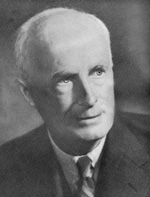
Douglas Mawson, Kt. (created 1914), O.B.E., F.R.S., D.Sc., B.E., Emeritus Professor of Geology and Mineralogy at the University of Adelaide, died on October 14, 1958, at the age of 76. He is Australia's most famous Antarctic explorer. As a member of Shackleton's first expedition in 1907, as leader of two Australian expeditions in 1911 and 1929, and as one of the chief authorities of the Antarctic Planning Committee of the present Australian Antarctic expeditions, he has dominated Australian Antarctic exploration for almost half a century.
Download the memoir
Douglas Geoffrey Lampard 1927-1994
Written by Stephen J. Redman.
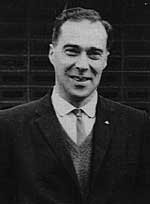
- Introduction
- School years
- University of Sydney
- CSIRO and Cambridge
- University of New South Wales
- Monash University
- Recreational activities: Hot jazz, perfumery and analytical chemistry
- Family life
- Epilogue
- About this memoir
Introduction
Douglas Geoffrey Lampard was born in Sydney on 4 May 1927 at the Royal Women's Hospital, Paddington. He was the only child of Edward Geoffrey Lampard and Violet Evangeline Lampard, née Moxon. Both of Doug's parents were the children of Anglican clergy, his father being the son of Archdeacon Lampard, of Lismore, and his mother the daughter of Archdeacon Moxon, of Grafton. Doug's father graduated in engineering from the University of Sydney in 1928 after serving in the Australian Flying Corps during the First World War. He became Chief Airbrake Engineer with the New South Wales Railways. Doug's mother had trained as a kindergarten teacher.
Doug's early years were spent in Sydney's northern suburbs, initially in Chatswood and then in Gordon. He grew up in a home with modest but comfortable living standards, under the guidance of well educated and caring parents. As he grew older, he showed an absorbing interest in mechanical and electrical equipment, and great skills in the use of workshop tools.
School years
Doug attended Chatswood and Gordon Primary Schools and he was selected to attend Artarmon Opportunity School in its second intake of pupils. From there he attended North Sydney Boys' High School, a selective and high-achieving school, from 1940 to 1944. At high school, Doug showed exceptional ability in physics and chemistry, especially in practical work. He was a nonconformist and concentrated on those activities of school life that took his interest. These did not include the Army Cadet Corps, which had a high profile during the war years. Nor was he interested in sport. The school was ruled by Robert Harvey, a famous headmaster at the time, who provided for his students a liberal curriculum including Latin, Greek, French, German, History, Music and Economics, as well as English, Mathematics, Physics and Chemistry. Doug always appreciated and respected this broad education. Harvey was a strict disciplinarian and all school days were prefaced by assembly, sometimes with a homily from the headmaster about any perceived slackening of effort. The assembled students then marched off to classes to the stirring strains of 'Colonel Bogey' or a similar marching tune. Doug was responsible for the sound amplification system and one of his hobbies was tinkering with this system to improve the quality of the sound. On his final day of school before sitting for the Leaving Certificate examinations, Doug substituted his own music and played 'When the saints go marching in'. This caused a minor riot and brought on the wrath of the headmaster.
At home, Doug built and repaired audio systems, power supplies and radios. Carpentry was another hobby. He became a projectionist at Gordon Cinema and an enthusiastic follower of traditional jazz, although he refused to learn to play any musical instruments. Sydney Harbour was a great attraction and he regularly sailed in VJ races on Middle Harbour.
University of Sydney
Doug began his university education at the University of Sydney in March 1945, enrolling in the Faculty of Engineering. In those days, the first two years of an engineering degree were the same for all branches of engineering. After two years as an engineering student, Doug decided to work for a year and he joined CSIR (now CSIRO), in the Electrotechnology Division of the National Standards Laboratory. He was employed as a Technical Assistant, working on microwave measurement techniques. (He had previously worked in this Division as a summer student while enrolled in Engineering). The exposure he had to research during this period convinced him that his scientific interests were in mathematics and physics, and on returning to the University of Sydney in 1948 he transferred to the Faculty of Science. He graduated with first-class honours in physics in May 1951.
Doug enjoyed his undergraduate years. He had a wide circle of friends studying engineering, medicine and science. He became interested in physiology and attended lectures given to medical students. He developed his interest in traditional jazz music, learning to play the washboard and then the banjo. He became an enthusiastic member of the Sydney University Film Society. His interests in electrical equipment and jazz music led to his involvement as a projectionist, and as a presenter of recorded jazz music.
CSIRO and Cambridge
Doug returned to the National Standards Laboratory, after graduation in February 1951, as a Research Officer. He worked in Dr David Hollway's group on K-band microwave spectroscopy. This work was written up for an MSc degree with the University of Sydney in a thesis entitled 'The development of a microwave spectroscope and some problems connected with its sensitivity', and the degree was awarded in May 1952. In June 1952 Doug was awarded a CSIRO overseas studentship for two years, to attend the University of Cambridge. He studied in the Electrical Engineering Department under the supervision of Professor E.B. Moullin, his PhD thesis being entitled 'Some theoretical and experimental investigations of random electrical fluctuations'. Random electrical fluctuations (or electrical noise) were of central interest to the research staff in the National Standards Laboratory, as they often limited the accuracy of electrical measurements. He was awarded the PhD degree by the University of Cambridge in November 1954.
Doug's two years in Cambridge were remarkably productive and busy ones. It was very unusual (and still is) for anyone to complete a PhD in two years. His research led to several seminal publications on electrical noise and stochastic process. His college was Corpus Christi which he chose because of a family association, his paternal grandfather, Archdeacon Lampard, having studied Greek and mathematics there in the latter part of the nineteenth century. While at Cambridge, Doug served as a member of the Department of Scientific and Industrial Research (DSIR) Committee on Atmospheric Noise at the request of the chairman, J.A. Ratcliffe of the Cavendish Laboratory. He also taught mathematics at Cambridge Technical College in the evenings, to help finance his studies. The interest he had shown in physiology at the University of Sydney developed further when he attended lecture courses on 'The Electrical Activity of the Nervous System', given in the Physiology Department at Cambridge by Professor Alan Hodgkin and Dr William Rushton.
Doug was then invited to spend three months (October 1954 – January 1955) as a visiting lecturer in the Electrical Engineering Department at Columbia University, New York, where he taught a postgraduate course in 'Stochastic Processes and Noise Theory'. He was offered a position in this department, which he declined because of his commitments to CSIRO. He returned to Australia and to the National Standards Laboratory in March 1955. On being reappointed as a Research Officer, his supervisor (Dr Fred Lehany) noted that 'Lampard has made excellent use of his studentship and has established himself widely as a successful research worker in the general field of information theory and the statistical treatment of signals in the presence of noise'.
Following Doug's return to the National Standards Laboratory, he became involved in calculating the capacitance of a succession of geometrical shapes that Dr Mel Thompson believed could be accurately constructed and defined so that their physical dimensions could be measured with sufficient accuracy. The results of some of these calculations on quite different cross-sectional profiles agreed with each other so closely that the suspicion arose that a general expression for their capacitance existed that was independent of cross-sectional profile. Doug discovered this identity, and it appeared in a paper entitled 'A new theorem in electrostatics with applications to calculable standards of capacitance', published in the Proceedings of the Institution of Electrical Engineers in 1957. This paper described what was probably Doug's most important single scientific work. It ultimately led to the development of a capacitance standard with an accuracy of about 1 part in 100 million, which was more than 100 times more accurate than the best capacitance standard at that time. This allowed the standard ohm to be redefined. In the field of electrical measurements, it was a major advance. The theorem (which is usually referred to in texts on electrostatics as the Lampard Capacitance Theorem) became the mainstay for establishing the absolute SI unit of resistance in every national standards laboratory for many decades. Doug was awarded the Heaviside Premium by the Institution of Electrical Engineers, London, in 1957 for this work. In 1965, Doug and Mel Thompson were jointly awarded the Albert F. Sperry Medal by the Instrument Society of America for their work on calculable standards of capacitance.
In the midst of this activity, Doug and Dr Ian Harvey were building a 'probability distribution analyser'. This device was to be used for investigations on random electrical noise. Nowadays electronic measurements of the probability density of amplitudes or of time intervals are commonplace, but at that time it was completely novel. Its key component was an electrostatic memory constructed on the screen of a normal cathode-ray tube so as to provide 64 channels, each of 15-bit capacity. Doug teamed up with Peter Bishop and Bill Levick in the Physiology Department at the University of Sydney to use this machine for the measurement of the probability density of the time intervals between successive nerve impulses in the firing pattern of retinal ganglion cells. At the time, it was believed that sensory information was encoded in the fine temporal structure of neuronal discharge. This first measurement of such temporal detail, reported in Nature in 1961, caused much excitement and stimulated many overseas laboratories to attempt similar measurements.
University of New South Wales
In August 1960, Doug was appointed to a newly created Chair of Electrical Engineering at the University of New South Wales, specifically in the field of communications engineering. It was to be a short appointment as he resigned in August 1961. Doug believed that he was not given the freedom and independence appropriate for a professorial appointment to develop teaching and research in his area of responsibility. When the issue could not be resolved to his satisfaction with senior university officers, he returned to the Division of Electrotechnology in CSIRO, from which he had been on long-term leave, as a Principal Research Officer. This experience was a painful one for Doug but it was not without rewards. He attracted around him some recent graduates in engineering and mathematics (Nhan Levan, Tony Stuart, David Montgomery, David Robinson and Stephen Redman) who were enrolled for Master's degrees. They all responded positively to Doug's enthusiasm and research guidance, and formed a lively research group. Two of them, Levan and Redman, were to follow Doug to Monash University and become his first PhD students. Doug also enjoyed his interactions with these research students very much, and this experience convinced him that his future research should be conducted in a university environment.
Monash University
Doug was appointed to the foundation Chair of Electrical Engineering at Monash University in August 1962. Prior to taking up this appointment, he spent three months in the Engineering School at Purdue University, Indiana. This was one of the largest engineering schools in the USA and his experience there, as well as at the University of New South Wales, were important in developing his ideas on how to create a modern department of electrical engineering. When he arrived at Monash at the end of 1962, the university had been in existence for only a short time, and the most advanced engineering undergraduates were in their second year. This was a splendid opportunity for Doug to work in a new university that had to grow rapidly and establish its own ethos. From the outset, and mindful of his previous experience at the University of New South Wales, Doug insisted upon having complete independence in developing the electrical engineering department. It was an exciting and frantic time. A new building had to be equipped, new courses developed, new laboratories commissioned, new staff appointed and research activities commenced. Only a few months' lead time was available to establish the third-year courses.
Doug attacked this challenge with great enthusiasm and energy. His leadership was outstanding. He recruited excellent academic staff and encouraged them quickly to establish strong research programmes. Doug's approach to undergraduate course design and tuition was to place great emphasis on the fundamentals of engineering science. The technology of the day was only of passing interest. All students, regardless of the field in which they wished to specialize, had to study across the whole field of electrical engineering, including power engineering, electronics, communications and control systems. The core subjects in each year were always presented in conjunction with a solid laboratory component. Doug could often be found among the undergraduates while they were engaged in laboratory work, asking questions, encouraging them, and helping them to put their work into a wider context. He taught a generation of electrical engineers and all were touched by his enthusiasm for his discipline. While he was intellectually formidable, he was an excellent lecturer, patient and helpful and with a genuine concern for the welfare of his students.
Events moved quickly on the research front in the early days of Doug's appointment. Within two years of his arrival at Monash, Doug was supervising eight PhD students, all of whom had done their undergraduate studies at other universities, at a time when it was relatively new for engineering graduates to be interested in research careers. His research interests at that time were concentrated on circuit theory and stochastic processes applied to communication systems. Doug was one of the first to study problems in circuit theory and signal theory using the time-domain approach. This was due to his interest in the response of systems to stochastic signals. He developed the first electrical circuit realization of a discrete shift operator and this became the central idea in the analysis and synthesis of a class of N-port networks. Other contributions that he made to circuit theory included active network synthesis, filter and amplifier design, networks with randomly varying parameters and inhomogeneous ladder networks. Doug sought analytical solutions, and he had uncanny insights into how problems should be formulated such that they led to analytical solutions. He was not very interested in numerical solutions. He encouraged others with interests in the design of electronic equipment, and he ensured that the new department was well provided with mechanical and electronics workshops staffed by excellent technicians. Doug's research reputation quickly became legendary within the academic and scientific community associated with electrical engineering, both nationally and internationally. The department attracted many international visitors and many PhD students. Research seminars were weekly events, with Doug giving many of them himself. His research influence was theoretically and scientifically orientated, rather than the more usual technological research activities of most engineering departments.
Another important research and teaching activity that Doug initiated in those early days was biomedical engineering. As a student, Doug had shown a keen interest in neurophysiology. Later, as we have seen, he had collaborated with Peter Bishop and Bill Levick on characterizing the temporal discharge patterns of retinal ganglion cells. One of Doug's students from his period at the University of New South Wales, Stephen Redman, followed him to Monash as a lecturer and joined him in this enterprise. They established a neurophysiology laboratory for studying spinal reflexes and were given much encouragement by the Professor of Physiology, Archie McIntyre, an eminent neurophysiologist. They also benefited from the advice of Jack Coombs, who spent a year's study leave with them in 1964-65. Jack had worked for many years with Sir John Eccles, in Dunedin and then at the ANU, on spinal cord neurophysiology. It was a very novel activity for engineers to undertake, and it was not without its sceptics. Doug's laboratory skills and his interest in surgical procedures were important in the success of this project. This research led to papers in Nature and the Journal of Neurophysiology describing the discharge response of motorneurones when they were activated by electrical stimulation of peripheral nerves in a more physiological manner than had been used hitherto.
Following this work, Doug became interested in neuropharmacology, muscle mechanics, and then anaesthesia. His interest in various aspects of anaesthesia became his major research activity for the remainder of his academic career. The initial project was to use a computer for the multivariable control of respiration and anaesthesia based on the measured levels of signals such as end-tidal CO2, blood pressure and inspired oxygen concentration. The ideas were extended to the computer control of neuro-muscular block using the integrated electromyogram (IEMG) as a measure of muscle relaxation. An IEMG monitor was developed into a commercial device and used for clinical purposes. There followed many years of work in muscle relaxation and the effects of hypothermia on cerebral blood flow, all based on the computer control work, At one stage full cardiopulmonary bypass and deep hypothermia procedures were being carried out on dogs in the department's laboratories, using expertise Doug had learnt from anaesthetists and surgeons. His main collaborators were two Melbourne anaesthetists, Drs Noel Cass and Kester Brown, and two electrical engineering colleagues from his own department, Drs Bill Brown and Kim Ng. Doug became a widely respected researcher amongst the anaesthetic research community. In November 1972 he became an Honorary Member of the Australian Society of Anaesthetists and in 1976 he was made an Honorary Fellow of the Faculty of Anaesthetists of the Royal Australasian College of Surgeons for 'distinguished research contributions to anaesthesia'.
For twenty-one of his twenty-eight years at Monash, Doug was chairman of the Electrical Engineering Department. He was a strong voice on the Engineering Faculty Board, on the Professorial Board, and at other forums within the university. He was a staunch defender of the ideals of outstanding scholarship and intellectual integrity, and he was highly critical of the trend towards allowing managerial issues to determine outcomes. He had little respect for university policy makers whose positions were not based on solid academic achievements, and he had no interest in university politics. He disliked petty administrative work and he could be relied on not to do it. He always fought strongly for a good deal for his own department, and he was intensely loyal to his staff. He was a very direct person to deal with, and no one could be in any doubt about where they stood with him.
Doug retired from Monash University in 1990. The event was marked by a gathering of most of his former research students, many of whom travelled from overseas. All gave seminars on their research work. The common thread throughout two days of talks was the outstanding research training and example that Doug had provided his students at a formative stage of their careers, and how grateful they all were for his guidance. Subsequently a group composed mostly of the PhD and MEngSc graduates of the department banded together to fund the establishment of the Douglas Lampard Electrical Engineering Research Prize and Medal. This is now awarded annually to the department's top PhD candidate for the year.
Doug was to receive many honours and awards throughout his academic career. Some have already been mentioned, The most important was his election as a Fellow of the Australian Academy of Science in 1977. He was elected to Fellowships in the main professional bodies for electrical engineering, including the Institution of Electrical Engineers, London; the American Institute of Electrical and Electronics Engineers; the Institution of Radio and Electrical Engineers, Australia; the Institution of Engineers, Australia; and the Australian Institute of Physics. He was on the Board of Directors of the Institute of Electrical and Electronics Engineers in 1970-71 and received a Centennial Medal from this Institute in 1984 'in recognition of his outstanding contributions to the profession of Electrical Engineering'.
Recreational activities: Hot jazz, perfumery and analytical chemistry
Doug listed his recreational activities (in Who's Who, 1994) as hot jazz, perfumery and analytical chemistry. He was passionately fond of jazz music. His parents were very musical but he resisted all their suggestions that he learn to play a musical instrument. At high school, he developed an interest in traditional jazz and began to collect recordings. This interest continued to develop while he was an undergraduate at the University of Sydney. He started to participate in jazz groups, first by playing the washboard, then the banjo. He found the conventional fingering arrangements for chords on the banjo to be very awkward, so he designed his own tuning system to provide a fingering arrangement to suit himself. This gave a distinctive sound to his banjo. He played in a Sydney group called the Ross Street Ramblers. He would regularly leave Sydney on Boxing Day for the Australian Jazz Festival, wherever it was held. Playing with jazz groups was a great relaxation for him. While on leave at Purdue University in Lafayette, Indiana, he played in Chicago with a well known group called 'The Salty Dogs'. In Melbourne, he belonged to a group called 'Drs Jazz', so named because most of its members had either PhD's or medical degrees. This group played at Doug's memorial service in the Monash University Chapel in September 1994.
As a schoolboy, Doug's favourite subject was chemistry. His decision to enrol in engineering rather than in chemistry had been a difficult one, made at the last minute. In later life he was to return to his enjoyment of chemistry. He built a large analytical chemistry laboratory beneath his house. It was superbly equipped. Doug would attend auctions (or tender a bid) for equipment and chemicals when commercial laboratories were being closed down. He was able to obtain some amazing bargains. At first Doug started making cosmetics and perfumes. This occurred at the time when his two daughters had reached the age when they needed these items. It was not uncommon for Doug to bring some of his perfumes into work to test their popularity. He formulated a large number of floral perfumes that met family approval and were most acceptable as Christmas presents for friends and colleagues. This interest led to his being consulted by several small manufacturing businesses that did not employ trained chemists. His curiosity about the constituents of wine that were responsible for their different flavours led him to study wine chemistry. He lived close to the Yarra Valley vineyards where a large number of small hobby vineyards, together with large commercial operations, had been established. Doug became the wine chemist consultant to many of the wine makers in the region and he interacted personally with them. Many of the small boutique wineries were managed by people with no scientific training, and Doug was able to give them crash courses in wine chemistry. He enjoyed his interactions with the vignerons and he also enjoyed tasting the end-products of his advice and analysis. From these local contacts, his reputation spread, and by the time he retired from Monash, he had built up a consulting practice with more than sixty wineries in Australia and New Zealand. During a short period he spent on study leave in Cambridge in 1988, he visited wineries in both England and France, and spent some time in the laboratory of one of the major champagne makers in France.
Doug's consulting activities also extended to the veterinary profession, where he gave advice on the design of veterinary equipment for field work and for the operating theatre.
Family life
Doug married Roslyn Crane on 18 April 1956. Roslyn was the only daughter of Ernest George Ekins Crane and Frances Elsie Crane (née Dutton) of Epping, New South Wales. They met at the University of Sydney in the late '40s, where Roslyn completed a Science degree in 1950, majoring in chemistry and biochemistry. Roslyn became Medical Librarian at Royal North Shore Hospital. They lived in Gordon, and had two daughters, Deborah Ann (born 1 May 1957) and Amanda Frances (born 7 November 1959). After the move to Melbourne in 1962, they lived at Croydon, in a house perched on the side of a hill with an easterly aspect. This arrangement gave Doug the opportunity to excavate under the house and build workshops, his analytical chemistry laboratory and a spacious office. These facilities allowed him to pursue many of his scientific interests at home. Both daughters attended Monash University and graduated in Science with honours, Deborah in mathematics and Amanda in immunology. Thus they became the fourth generation of Lampards to graduate in either science or engineering. Roslyn returned to medical library work, first at Dandenong Hospital and later at Lilydale Bush Nursing Hospital.
Doug's hobbies were largely home-based. This meant that he spent much of his leisure time at home – building, extending, making perfumes and cosmetics, and doing chemical assays for local wineries. He was very attentive to his daughters and gave them lots of encouragement and assistance with their school and university studies. Deborah became interested in horse riding as a teenager, and while Doug had no interest in riding, he regularly accompanied Deborah to wherever the horses were agisted. His interests in physiology and pharmacology often came into play whenever veterinary attention was needed. Both daughters married, and Doug found much pleasure in the company of his two grandchildren, Timothy and Melissa.
Epilogue
Doug was only a few years into retirement, and enjoying his new business venture assaying wines, when he was diagnosed to have mesothelioma. In typical style, Doug researched all aspects of this illness and treatment and explained it in detail to all his friends and colleagues. The end came quickly and he died at Croydon on 1 September 1994. Doug was full of courage and determination during this illness, even though he suffered greatly at times. His life was ended much too early, as he had much more to give.
In 1995 his department commissioned Jane Majkut to paint his portrait in oils from photographs. The portrait hangs at the entrance to the building where Doug had spent the longest period of his professional career and where the comings and goings of the staff and students of the active and vibrant department he had established in 1962 can still be observed.
There are many memories Doug's friends and colleagues will have of him. The overwhelming one must be of an enormously talented man, who was creative in many diverse fields and activities. Another must be the infectious enthusiasm and excitement he conveyed about scientific investigation and discovery. His scholarly style did not fit well within today's research environment, with its emphasis on publications, grantsmanship and citation indices. As a major contributor in fields as diverse as electrostatics, circuit theory, stochastic processes, medical science and anaesthetics, he would have felt comfortable in the scientific milieu of the nineteenth century. Indeed, he would have been able to stand tall among the great scientists of that era. He lives on in the memory of many of us who were fortunate to have been associated with him, and he has left a wonderful legacy through the students he inspired to do creative work.
About this memoir
This memoir was originally published in Historical Records of Australian Science, vol.11, no.2, 1996. It was written by Stephen J. Redman, Division of Neuroscience, John Curtin School of Medical Research, Australian National University, Canberra, ACT.
Acknowledgments
I am enormously grateful to Roslyn Lampard and to her daughters Debbie and Amanda for their help in writing this article. I have also received valuable assistance from some of Doug's friends and colleagues. These include Mr Greg Johnson, Dr Ian Harvey, Mr John Muir, and Professors Bill Levick, Bill Brown and Nhan Levan. I am very grateful to all of them for their assistance.
Degrees, awards and appointments
Degrees
- BSc in Physics (1st Class Honours), University of Sydney, 1951
- MSc in Physics, University of Sydney, 1952
- PhD in Mechanical Sciences, University of Cambridge, 1954
Fellowships
- Fellow, Australian Academy of Science, 1977
- Honorary Fellow, Faculty of Anaesthetists, Royal Australasian College of Surgeons, 1975
- Fellow, Institution of Electrical Engineers, London
- Fellow, Institute of Electrical and Electronics Engineers, USA
- Fellow, Institution of Engineers, Australia
- Fellow, Institution of Radio and Electronics Engineers, Australia
- Fellow, Australian Institute of Physics
- Fellow, Cambridge Philosophical Society
Awards and Medals
- Heaviside Premium, Institution of Electrical Engineers, London, 1957
- Albert F. Sperry Award, Instrument Society of America, 1965
- Centennial Medal, Institute of Electrical and Electronic Engineers (USA), 1984
Appointments
- 1951-1960 Member, Research Staff, CSIRO Division of Electrotechnology
- 1960-1961 Professor of Electrical Engineering, University of New South Wales
- 1961-1962 Principal Research Officer, CSIRO Division of Electrotechnology
- 1962-1990 Foundation Professor of Electrical Engineering, Monash University
Douglas Frew Waterhouse 1916-2000
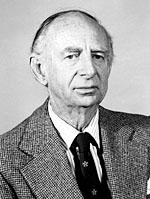
- Introduction
- Family background and early influences
- Education
- The four phases in the scientific career of Doug Waterhouse
- The young naturalist (1916-1938)
- The practising scientist (1938-1961)
- An innovative scientific leader and integrator (1961-1981)
- The humanitarian (1982-2000)
- Other activities
- The scientist and the person
- Honours and awards
- About this memoir
Introduction
Doug Waterhouse was a renowned entomologist, a fine scientist and an accomplished administrator. He worked within the CSIRO Division of Entomology for over 60 years, and was its Chief for 21 years until his retirement in 1981. Doug was responsible for many developments in insect and weed control both in Australia and around the globe, especially in developing countries across Asia and the Pacific. He not only guided the Division to international prominence, but was also an ardent humanitarian whose work had beneficial effects in many neighbouring countries. Much of his 'public good' work was done as an Honorary Fellow (1981-2000). As well as his extensive entomological interests, Doug was active in other areas such as education and community services. He was the foundation Chairman of the Canberra College of Advanced Education and continued as Chancellor when it became the University of Canberra.
Family background and early influences
Douglas Frew Waterhouse was born in Sydney on 3 June 1916, the second of four sons of (Eben) Gowrie Waterhouse OBE, CMG (born Waverley, a suburb of Sydney, 1881) and Janet Frew Waterhouse (née Kellie, born Ayr, Scotland, 1885). Doug recalled his mother with great affection. She had come from Kilmarnock, Scotland, earned an MA degree from the University of Glasgow, and had been a teacher of languages. She motivated her sons to be conscientious and hard working and to 'derive some satisfaction from having at least striven hard to achieve some goal'. Doug recalled her as being full of exhortations and wise sayings, such as 'Only the best is good enough'. After the family had grown, she developed great expertise in the art of Japanese flower arrangement, and became President of the Sydney Branch of the Ikebana Society. Doug's father, Gowrie Waterhouse, also the second of three sons, became Professor of German and Modern Languages and Literature at the University of Sydney. Professor Waterhouse had received the Goethe Medal and was also knighted by King Umberto of Italy for his contribution to teaching in European languages. He retired at age 64 to devote time to his special hobby – camellias, on which he published two outstanding books. Doug described his early recollections of his father as a 'figure in the background to be respected, but not to be distracted from his many academic and other activities'; however, that later, he became 'progressively more interested in our activities and we in his'.
Gowrie Waterhouse in 1913 commissioned W. Hardy Wilson, a highly regarded Sydney architect, to design an elegant home, 'Eryldene', in Gordon, a northern suburb of Sydney. Eryldene, with its renowned and much-visited garden, is maintained by the Eryldene Trust. The home and parents provided Doug with a culturally-rich environment; except perhaps in music, to which he was never much attracted, probably because he was tone deaf.
A number of family members were interested in natural history and some were collectors of sea shells, ethnographic artefacts and other items. Other members of Doug's large extended family included scientists in a variety of subjects, including botany, geology, and agriculture. Doug believed that he had been 'imprinted' to become an entomologist and recounted an occasion told to him by his mother when he was soothed as a young baby by grasping a weevil.
Doug's uncle, Dr G.A. (Athol) Waterhouse (1877-1950) had an early and lasting influence on his development and career. Athol maintained a lifelong interest in butterflies; he was awarded a DSc by the University of Sydney for his work on the origins of races of the genus Tisiphone (Nymphalidae). He had earlier obtained degrees in Science and in Engineering from the University of Sydney and had been on the staff of the Sydney Mint until it closed in 1926. In addition to numerous contributions to scientific journals, Athol published two significant books, the first (with G. Lyell) in 1914, The Butterflies of Australia, and the second in 1932, What Butterfly is That?. He arranged for Doug to become a Junior Member of the Linnean Society of New South Wales. In 1928 he was appointed Curator and Administrative Officer of the newly formed CSIR Division of Economic Entomology in Canberra to provide some measure of control over its first, rather erratic, Chief, R.J.Tillyard.
Before Doug's tenth birthday, Uncle Athol had given him collecting and preserving equipment, and later took him on numerous Saturday collecting trips in the vicinity of Sydney, from Bulli in the south to the Hawkesbury River in the north and the Blue Mountains in the west. One of us (MFD) was fortunate also to be invited on these expeditions. As a result of Athol's tutelage, in his early teens Doug already had a substantial knowledge of Australian butterflies and some understanding of other insect groups and biology generally.
Education
Doug was educated at Sydney Church of England Grammar School, North Sydney ('Shore'), from 1928-1933. He was considered 'a good but not outstanding student'. However, he did well enough to secure an Exhibition to the University of Sydney. At school he was a founding member of the Natural History Society. Doug excelled at the university, winning several prizes and graduating in 1937 with First Class Honours and the University Medal. One of his prizes was the second-year prize in practical chemistry. He recalled this achievement with relish because second place was awarded to John Cornforth, later Sir John, Nobel Laureate in Chemistry. Doug's principal mentor in biology was Dr Anthony Woodhill, later to become Reader in Entomology, of whom he wrote (with D.J.Lee) a very appreciative and sympathetic obituary (69). Woodhill required honours students to select their own research projects but, having done so, helped his aspiring graduates whenever possible. Doug studied the anatomy and respiratory physiology of the larva of a large aquatic insect, Archicauliodes.
Research degrees were not available in Australia at that time so Doug earned his MSc and DSc degrees 'on the job', having joined CSIRO on completing his Bachelor's degree. In 1949 Doug spent a year at Cambridge University where he worked under Professor V.B. Wigglesworth examining the origin, structure and function of the peritrophic membrane. In 1956-57 he visited the Connecticut Agricultural Experiment Station and Yale University and other laboratories in Canada and the USA, where he formed many fruitful and lasting friendships.
The four phases in the scientific career of Doug Waterhouse
During his very full 85 years, Doug witnessed many profound changes in science and society. Not surprisingly, his attitude to science, and the way it might best serve society, evolved in response to these changing circumstances. Despite momentous developments, Doug never faltered in his commitment to science as a human endeavour capable of generating public good of immense cultural and economic value. Nor did his affinity for butterflies ever diminish. What did undergo a radical shift, however, was Doug's view of people's relationship with the environment, and the need to work in harmony with nature, rather than dominating or controlling it. The maturation of Doug's thinking is well illustrated if we divide his career into four periods: the 22formative years as a student; his next 20 or so years as a practising scientist; his third period of 25years as a research leader; and, finally, his 20 'retirement' years as an Honorary Fellow.
The young naturalist (1916-1938)
Until early manhood, Doug was content to explore and appreciate nature. With his Uncle Athol, Doug explored the rich and diverse world of insects in and around Sydney. He had no interest in controlling nature; it was simply something to understand and enjoy.
The practising scientist (1938-1961)
Doug's research in CSIRO Entomology focused primarily on Lucilia cuprina, the Australian Sheep Blowfly. He studied its physiology (in particular, digestion and excretion), ecology and population control. His research was a blend of the strategic and tactical. He addressed practical projects like fly dressings and burying carrion to reduce breeding sites. Doug was greatly impressed by the new generation of powerful insecticides like DDT and Dieldrin. Such synthetic compounds represented potentially universal and lasting solutions to many insect pest problems. Like many other scientists at the time, Doug was enthused with the potential of pesticides to 'control' nature. Over time, Doug came to reject scientific modernism so well epitomized by high-input agriculture. This alternative thinking began to emerge early in the third phase of Doug's career, and matured during his final 20years as an Honorary Fellow. However, as a practising scientist, Doug remained enthusiastic about modernist philosophy and its domination of agricultural science.
Physiological research on Lucilia cuprina before the Second World War
Almost immediately after graduating, Doug was offered a short vacation studentship position in a CSIR laboratory in Victoria to study parasites of a new pest, the Oriental Fruit Moth. Soon afterwards, he was offered the position of Junior Research Officer in CSIR's Division of Economic Entomology, Canberra. He was assigned to the section dealing with the sheep blowfly, Lucilia cuprina, a cosmopolitan pest of vital importance to Australia's dominant sheep industry. Dr Ian Mackerras, the section's leader, told Doug 'to think about the blowfly problems and to study any that he felt challenging', an approach characteristic of the policy espoused by CSIR's far-sighted Chief Executive, Sir David Rivett. However, for a publicly-funded institution like CSIR, the emphasis was on finding solutions to economically important problems.
Doug started work in 1938 on physiological aspects of the sheep blowfly. He continued to do so, with interruptions during the Second World War, until the 1950s. He was awarded an MSc by the University of Sydney for a thesis based on this work. At the time it was conventional wisdom that insect physiology, which was then beginning to flourish, could provide the basis of new control measures. Later, physiology was to give way to ecology, then to insect biochemistry, and later again to molecular biology. But when V.B. Wigglesworth FRS (later Sir Vincent) was making great progress at Cambridge, physiology was seen to be the way ahead. Doug undertook early studies on blowfly behaviour, but soon became interested in insect digestion. He was interested in the conditions under which various poisons are absorbed by the gut or excreted. Although this work began on the premise that it should prove useful in the design of ingested insecticides ('stomach poisons' in the jargon of the time), it never did so. However, it did lead to fascinating discoveries of the role of the 'goblet cells' in the midgut and of 'longitudinal differentiation' in cell structure. Although these and other results were summarized in a well-researched review (41), few workers continued these lines of investigation. Insect physiology produced some notable successes in, for example, the study of insect hormones and the development of synthetic insecticides; but, as pointed out by Waterhouse and Norris (105), it did not live up to its early promise and Doug turned to examine other methods of fly control.
Ecological studies on Lucilia cuprina
Whilst the work on blowfly control was Doug's primary objective, it was clearly important to learn more about the ecology of the species. Doug took a role in an extensive experiment (9) to determine the population density of the fly and its rate of spread in an area of about 50sq.miles (>15,000 ha.) of grazing country near Canberra. The experiment, using marked flies, gave valuable indications of the numbers of flies per unit area and of the flight range in a variety of weather conditions. It required a large number of helpers, one of whom was Dawn Calthorpe, later to become Doug's wife. Other ecological work involved studying the breeding behaviour of the fly, in an attempt to find new methods of reducing fly populations (10-13). New information was obtained on the use of repellents for the prevention of fly strike and in the development of dressings for fly-struck sheep (5). A detailed taxonomic study (with S.J. Paramonov) (21) demonstrated the differences, both morphological and behavioural, between Lucilia cuprina and L. sericata (the English Sheep Blowfly). This was all interrupted by the start of the war in 1939.
Research during the Second World War
Soon after the outbreak of the Second World War, Doug was commissioned with the rank of Captain in the Army Medical Corps. He was located in Canberra (in the Officer Reserves), to be transferred to active service as required. This arrangement provided flexibility for his wartime research. Initially, this involved testing high-spreading oils for mosquito control, but soon evolved into the testing of sprays for control of mosquitoes responsible for malarial transmission. Since most of the world supply of pyrethrum came from Kenya, identifying new mosquito repellents became a high priority. Their testing involved exposing volunteers, Doug included, to large numbers of potential vectors in a screened room. Public awareness led to suggestions of possibly useful materials including the essential oils of Australian trees. Oil from Huon Pine proved to be an extremely efficient mosquito repellent, but about half the volunteers found it to be highly nauseating, negating its possible use. Another proposal came from a Sydney-based oil company for a product containing about 35per cent of either dimethyl phthalate (DMP) or of diethyl phthalate. The former proved to be most effective. In light of the fact that it was manufactured in Sydney, mainly as a plasticizer of the fabrics of aircraft wings, Doug immediately informed Captain Bob McCulloch of its value. He, in turn, advised Major Ian Mackerras, Doug's erstwhile boss in Canberra, but by then involved in malaria control. Mackerras soon arranged for DMP to be tested under field conditions in Papua New Guinea. Doug, with two junior colleagues, was despatched to Papua New Guinea to a village said to be one of the worst malarial places on earth. The DMP proved to be most effective. By 1943 the repellent was widely deployed in the Pacific where it became known as 'Mary' by the troops. Doug continued work on repellents until the end of the war.
Physiological studies on Lucilia cuprina after the Second World War
At the end of the war Doug returned to research, initiating a sequence of papers on the physiology of digestion and excretion, first on the blowfly (6, 7, 12, 20, 24), and later on insects capable of digestion of keratin (26-28), and wax (44). The work on wool led to an understanding of the detoxifying mechanisms and later to a study of the peritrophic membrane (32, 33, 38). All these were based on well-designed and careful observations, assembled in the belief that they would contribute to a better understanding of the mode of action of insecticides. In 1953 this work was summarized in a multi-author textbook on insect physiology (34-37).
The blowfly research earned Waterhouse a DSc from the University of Sydney and election as a Fellow of the Australian Academy of Science and of the Royal Society of London.
An innovative scientific leader and integrator (1961-1981)
Doug was a scientific leader of both genius and generosity. One of his lasting claims to fame is the way he made it possible for many other scientists to flourish. In a recent tribute, Dr Ren Wang from China, currently Deputy Director-General for Research in the International Rice Research Institute in the Philippines, stated 'Doug was my model scientist and his inspiration has given me so much guidance and courage in my career. His advice has helped so much to the development of biological control in China'. Many entomologists, at home and abroad, who had the good fortune to work with Doug have echoed those sentiments.
Some Eastern philosophers talk about three types of effective leader: the one who is feared, the one who is loved, and the greatest leader of all, whose followers say 'We did it all ourselves'. Doug had elements of all three in him – he was awesome to a few, loved by many, but his greatest attribute was his ability to provide the enabling environment for others. He had an uncanny capacity to recognize good ideas, whether his own or others, and obtain the resources, both people and funds, and leave them to it. In outlining below some of the key research programmes initiated during Doug's term as Assistant Chief under A.J. Nicholson and then as Chief, we are not demeaning the key contributions made by the relevant researchers. We simply acknowledge the facilitating and inspirational role played by Doug.
Assistant Chief
In 1953, Nicholson ('Nick' to all his staff) asked Doug to take on the role of Assistant Chief. Others had found this to be a difficult assignment, but Doug coped well with it. Initially, the added responsibility had little impact on his research output, but eventually he found that he could only undertake activities that could be put aside when pressing administrative tasks demanded his attention. Doug put this requirement and his training in chemistry into effect in the study of insect scents and the structure of the glands producing these materials (47, 54, 55, 65, 66, 68, 72, 75, 80).
Doug developed a strong research group in the basic disciplines of insect physiology, biochemistry and fine structure during the 1950s. The rationale centred on understanding the mode of action of chemical pesticides but ranged widely into fundamental studies in insect physiology and biochemistry. A notable achievement in the Division during this period was the successful culturing of insect tissues. This was entirely the work of Tom Grace. It took ten years of sometimes frustrating trials before an effective culture medium was developed and Doug supported Grace during those years. 'Grace's Medium' is still available commercially today, 35 years on, and the development represents an important tool for insect molecular biotechnology. With demands for useful outcomes within a three-year timeframe, such a development would be less likely to occur today.
Chief of the Division of Entomology, CSIRO
When Nick retired, the CSIRO Executive, following a worldwide search, had no hesitation in appointing Doug as Chief in 1961. Nick had steadfastly maintained that he did not wish to increase the size of the Division, but that was not Doug's way. He could foresee many opportunities for working on new ways to control pest species.
By this stage Doug had begun to question the wisdom of depending solely on chemical pesticides. In 1964 he presented a seminal paper to the CSIRO Executive calling for recognition of a diversity of approaches to pest management – cultural, physical, host resistance, genetic control, behavioural control and biological control. He advocated an integration of these approaches into the practice of integrated pest management (IPM). The ambitious proposal ended with the following statement:
No-one should underestimate the threat posed by insects. They inhabited the earth 300million years or more before man and will probably inhabit it after the last vertebrate has perished. We do well to prepare for a prolonged contest.
Projects were suggested in a number of areas, such as biological control, chemical methods (lures, pheromones, anti-feedants, etc), physical methods, genetic methods (sterile males, chemosterilants), IPM, and modification of a pest's resource needs. It was an expensive programme. Doug planned it with characteristic thoroughness. He arranged for his programme to be the topic for the 1965 Annual General Meeting of the Australian Academy of Science. He published a report of that meeting in the Australian Journal of Science (61) and he wrote a supporting article in the magazine Rural Research. He also commissioned an eye-catching painting (Fig.1) by the well-known artist Robert Ingpen. The image boldly captures the imagination that went into the concept of the 'new perspectives'. Ingpen's illustration shows a background reminiscent of the 'Silent Spring' of Rachel Carson (1962), but emerging from this are examples of the ten projects proposed by Doug to support a three-fold increase in the size of the Division over the ensuing five years.
Doug addressed the 12th International Congress of Entomology in London on his plans and on the divisional achievements. Most importantly, he enlisted the full support of the CSIRO Executive. In particular, he gained the ear of Sir Otto Frankel, who was then the executive member responsible for the Division. The plan was approved by CSIRO. It set the Division on course to become internationally recognized as a major centre for entomological research. Doug negotiated not only for three new projects a year, but also for the facilities, including new field stations in Australia and overseas, to support the newly appointed staff. CSIRO's decision to back Doug was fully vindicated with the favourable findings of the 1978 Marsden Report – an external and independent economic analysis of some of the Division's research. The analysis demonstrated a return on investment that could truly be called outstanding.
We describe briefly some of the major programmes (and some of the actors) that were promoted by Doug during his term as Chief, along with some of his 'extracurricular' activities that relate to insect control.
(i) Stored Grain Research Laboratory (SGRL)
One of the finest examples of Doug's broad strategic thinking is the establishment of the SGRL in 1969 after five years of deliberation with the Australian Wheat Board and the Federal Government. Australian grain was harvested at high summer temperatures and then marketed into the northern hemisphere summer. This pattern provided continuing ideal temperatures for rapid multiplication of grain pests. Australia and its principal traditional market, the UK, had come to accept the inevitability of 'weevilly' grain. However, new and emerging markets, in China, the USSR and the Middle East, were not prepared to accept insect-infested grain. At the same time, the USA introduced new bulk-storage technology (e.g. aeration) and posed a threat to Australia's position as a leading exporter. When malathion became available in the early 1960s, exported grain could be effectively protected and the threat was postponed. However, the risks of resistance (already emerging) and market concerns about residues meant that alternatives to grain protectants were urgently required. Discussions between the Australian Wheat Board, the Federal Government and CSIRO led to the establishment in 1970 of the SGRL with S.W. (Bill) Bailey as its first leader. Doug played a leading role in establishing the SGRL, its research programme and in selecting its staff. The Australian Wheat Board accepted, with some hesitation, Doug's suggestion that the SGRL's research staff be recruited from outside the field of stored product entomology in order to encourage highly innovative approaches.
Since its inception, the SGRL has been an outstanding success, and has devised a number of effective ways of marketing insect-free grain that has never been treated with insecticides. On several occasions its research (particularly that of Jim Des Marchelier) secured Australia's pre-eminence as a leading grain-exporting nation. Successful innovations from SGRL include: emergency bunker storage in good seasons; insect-free grain that has been fumigated without leaving residues (e.g. phosphine using the SIROFLO technology); inert dusts; sealed storage (to suffocate insects); storage under carbon dioxide (as a waste product from industry, e.g. aluminium smelting) and other inert gases; grain aeration (to lower temperature to a level at which insect reproduction ceases and then to a level at which development ceases); and fluidized bed heating (which can be used to provide rapid heat disinfestation of grain during loading on a ship). Outcomes of the research led to the extension of the useful life of many ageing and leaky bulk silos and positioned the industry for deregulation with the inevitable expansion of on-farm grain storage.
(ii) Pesticide residues in meat – a case for pre-emptive action
In the early 1960s, when environmental concerns arose about the widespread use of persistent pesticides (notably the chlorinated hydrocarbons), the issue of pesticide residues that might be present in foodstuffs was raised. Beef and lamb were of particular concern because chlorinated hydrocarbons were being used extensively to deal with insects and ticks attacking sheep and cattle in Australia. Doug's contacts overseas gave him early warning of a likely move by the USA to reject meat with residues above trace levels. A group in Australia (of which Roy Watts, New South Wales Director General of Agriculture, was a particularly influential member) worked to modify, progressively, recommendations for pesticide use. The Standing Committee on Agriculture then established the Coordinating Committee on Agricultural Chemicals. J.T. Snelson proved to be a very influential committee member, and Doug one of its central players. The committee met regularly over the next two decades while Doug was Chief and prevented the banning of meat and other export products by vigorous and far-sighted action.
In 1971 Doug was appointed Chairman of an Australian Academy of Science committee evaluating the dangers of DDT. Doug was sorely torn between the undisputed safety of DDT for humans and its detrimental effects on non-target organisms, especially birds. A minority report was submitted by Professor Charles Birch, who advocated total banning of DDT. Doug felt this was unnecessary and the committee concluded in its 1972 report that some uses of DDT should be phased out but other uses should be maintained where the advantages clearly outweighed the disadvantages. Public opinion, unnecessarily in Doug's view, hastened the complete phasing out of DDT in Australia.
(iii) The cattle tick program
An increase in acaricide resistance and chemical residues in meat called for new initiatives in tick control over pastoral regions of northern Australia. Paul Wilkinson was appointed in the late 1950s to lead a Townsville-based team to evaluate options that reduced dependency on acaricides. These approaches, supported strongly by Doug, included pasture spelling, strategic dipping and host resistance by crossing the susceptible European blood-lines with Asian breeds of cattle. Acaricide resistant strains of cattle tick were maintained and characterized by Bill Roulston and Jim Nolan. This gene bank proved of immense value to industry in its search for new and effective acaricides. This ecological approach to tick control significantly reduced dependency on acaricides.
Figure 1: Reproduction of illustration by Robert Ingpen for 'New Perspectives in Insect Control'.
(iv) The D.F. Waterhouse laboratory – the Australian national insect collection, insects of Australia, and regulation 13A
Although not a taxonomist himself, Doug regarded taxonomy as basic to most entomological studies. Tillyard, the Division's founding Chief (1928-34), expected researchers to each have their own group of insects; and he produced the definitive taxonomic textbook on Australian and New Zealand insects. His successor, Nicholson (1934-61), an ecologist, restricted taxonomic activities to certain individuals. During much of Doug's tenure as Chief, taxonomic work expanded, but not three-fold like the rest of the Division. However, the collection had developed as an important national asset. To ensure that this resource was not dissipated 'at the whim of some future Chief', Doug successfully lobbied the Science Minister at the time, Sir John Gorton, to proclaim in the Commonwealth Gazette that 'the Australian National Insect Collection was of national importance and should be preserved by the Commonwealth into the future'. Even so, some members of the CSIRO Executive still felt that taxonomy was akin to 'stamp collecting' or 'hobbies pursued at the taxpayers' expense'. Doug countered effectively by noting that the revered field of astronomy was itself at that time largely 'astrotaxonomy'. Doug eventually secured funds to construct a purpose-built laboratory with two collection halls. This magnificent facility was formally opened in 1982, around Doug's retirement, and named 'The D.F. Waterhouse Laboratory of Insect Taxonomy'. A further collection hall and offices were added by Doug's successor as Chief, Max Whitten (1981-95). This was financed from the sale of a divisional asset at Warrawee in Sydney which Doug had secured in the 1960s for studies on the Queensland fruit fly and biocontrol of other orchard pests. Insect taxonomy finally emerged as a mature discipline. Excellent facilities and a diverse, unique and scientifically-interesting insect fauna allowed the Division to recruit a fine team of taxonomists. Doug's foresight had positioned the Division and the nation to play a leading role in conservation biology and the understanding of biodiversity.
By the 1960s, Tillyard's textbook on insect taxonomy was decidedly out of date. Doug persuaded Ian Mackerras, who had left the Division shortly after the Second World War to lead the Queensland Institute of Medical Research, to return as a Research Fellow and edit a major new text, Insects of Australia. The task, involving 29 authors, mainly from the Division, was published by Melbourne University Press and sold over 20,000 copies. A completely revised second edition, in two volumes, edited by Ian Naumann, was published by Melbourne University Press in 1991 with similar success. Doug contributed a new chapter, 'Insects and Humans' (128).
Questions relating to the location of holotypes of Australian insects had arisen over many years. Ever since European settlement, collections of biological specimens were deposited with overseas institutions or in private collections outside Australia. Consequently, holotypes were mainly located offshore. This pattern of deposition was still occurring as late as the middle of the twentieth century. Opinions were not divided on the undesirability of this situation, but they certainly were divided on what to do about it. Many entomologists, including a majority within the Division itself, favoured 'gentleman's agreements' to encourage deposition back into Australian institutions of types described from exported collections.
Doug initially favoured a cooperative approach over legislative action. A controversy without precedent in Australia's entomological community raged throughout the 1960s on how best to remedy the problem. Doug's colleague, Ken Key, was the principal advocate of legislative action to ensure return of types described from any future material exported from the country. Regulation 13A to the Act Controlling Exports was gazetted and became law in July 1973, somewhat to the surprise and chagrin of many entomologists. The lack of suitable guidelines for implementation exacerbated a tense situation. The resultant confusion reflected poorly on Doug and the Division. Eventually, suitable guidelines were put in place and the regulation amended to make it more workable. The formal opening of the D.F. Waterhouse Laboratory, in conjunction with the 1982 Annual General Meeting of the Entomological Society of Australia in Canberra, buried the hatchet of division within the entomological community. With the Wildlife Protection Act of April 1984, Regulation 13A was rescinded, but its principal elements were fully preserved through the new legislation and the CITES treaty. Upton's 1997 history of the Australian National Insect Collection devoted a full chapter to the Regulation 13A controversy.
(v) The dung beetle program, dung burial and fly control
George Bornemissza, a Hungarian emigré, suggested in the early 1960s that Australia would benefit from the enrichment of the local dung-dispersing insect fauna with the introduction of dung beetle species from Africa and Europe. Bornemissza based his innovative proposal on his post-graduate studies of the rich dung beetle fauna of his native country and on his field observations of this continent's impoverished dung fauna immediately following his arrival in Australia in 1951. Doug recognized the value of this proposal and gave George financial and logistical support to make it happen. Doug accepted the considerable risk that might flow from accidental introduction of animal diseases or any untoward environmental eventualities. During the 1970s and until the mid-80s, some 50 species were introduced, mainly from southern Africa although a few came from Europe. At least 30 species have been established, and the beneficial impact can be witnessed in virtually all rural areas of the mainland and Tasmania where cattle are present. However, it is only since 2000 that, with support from the National Heritage Trust, the actual distribution and impact of the introductions have been evaluated systematically. All indications suggest that this has been one of the most valuable and cost-effective programmes ever conducted in Australian agriculture. The project had its critics along the way, both within and outside CSIRO, but Bornemissza's original and inspired recommendation has proven beneficial, thus vindicating Doug's support.
(vi) Genetic control of sheep blowfly
Another innovative programme initiated by Doug was the development of genetic means of controlling the Australian Sheep Blowfly. Doug had already anticipated this possibility in his 'new perspectives' article, but he recognized that the 'all or nothing' sterile male approach, so successful for the screw-worm fly in the USA, was unlikely to be practical in Australia. He accepted the advice of fellow Chief, Jim Rendel, and Jim Peacock (later Chief of Plant Industry (1978-) that other genetic means should be considered. Max Whitten was appointed as the first geneticist to the Division, in 1996, to explore genetic options. With Geoff Foster, he developed and evaluated a range of genetically-modified strains which had potential for suppressing natural populations of blowfly. The declining value of the wool clip and continued effectiveness of chemical pesticides were two factors that ultimately prevented practical implementation of this approach to blowfly control. The project was another example of the risk that Doug was prepared to take to explore all options to reduce dependency and use of chemical pesticides. Ultimately, the notion of pesticide resistance management for key pests like the army-worm, Helicoverpa armigera, was one of the benefits emerging from this research.
(vii) Biological control of weeds, orchard pests and sirex
A prominent element of Doug's 'new perspectives' was classical biological control. To implement his strategy he established laboratories in France, Portugal, South Africa, Brazil, Papua New Guinea, and the UK. Although it was expensive and without precedent in CSIRO, Doug argued that it would enable the Division's staff to identify and introduce biocontrol agents against arthropod pests and weeds that had originated in Europe, Africa or the Americas. Offshore facilities were complemented with field laboratories in each State so that staff could gain first-hand knowledge of the target pests and be well-positioned to introduce the imported agents. Many major successes emerged from this strategy. Two early appointments were Ken Harley and Tony Wapshere. Tony headed the Montpellier laboratory for 19 years and championed many successful introductions, including the first use of a fungal pathogen for weed control (skeleton weed). Ken Harley oversaw successful programmes like control of the water-weeds Salvinia molesta and water hyacinth. A task of the UK group at Silwood Park, under Frank Wilson, was control of Sirex, the Pinus radiata wood wasp. Initially the group concentrated on arthropod natural enemies, but eventually Robin Bedding demonstrated that the nematode, Deladenus, would be effective against Sirex. Not only did this prove spectacularly successful, but Bedding went on to demonstrate the potential of a whole group of insect-killing nematodes for insect pest management. Australia had become a leader in the theory and practice of biocontrol under Doug's leadership. Doug initiated two especially innovative programmes for orchard pests. The first, under Les Readshaw, was the introduction of acaricide-resistant predatory mites from the USA for controlling spider mites in pome orchards. The second was the development, by George Rothschild, of the first commercially-viable sex-disrupting pheromone for suppressing populations of the peach borer – the insect that Doug first worked on after joining the Division. There was also considerable success in the biological control of aphids involving a large group of researchers.
(viii) Cost-benefit analysis of research by CSIRO Entomology
Doug fully recognized that results from biological projects do not come quickly, but he had complete faith that any additional funding would be fully justified. He was so certain of the economic benefits that in 1980 he encouraged a study by the Industries Assistance Commission to undertake the first detailed cost-benefit analysis of any CSIRO Division. The initiative was vigorously opposed by some fellow Chiefs who regarded it as an unnecessary, even dangerous, precedent. The results, published by J.S. Marsden et al. in a 107-page report in 1980, demonstrated an overall annual internal rate of return (IRR) of 19per cent. The report was a landmark in the appraisal of government-funded research. Of course, not all divisional projects were subjected to close scrutiny, and there was great variation between the cost effectiveness of different projects. Many of the most effective divisional projects, like the dung beetle programme and the aquatic weeds programmes, had not, by then, yielded any positive benefits.
Many years later an ACIAR-funded programme on the control of the banana skipper (butterfly), initiated by Doug and Don Sands, was the subject of another cost-benefit analysis. Doug was dissatisfied with the result, claiming that many essential features had been omitted from the analysis. He argued for a revised analysis that showed benefits far in excess of those calculated previously, and indeed that the benefits for this programme alone outweighed the costs of all ACIAR cropping projects (150).
The humanitarian (1982-2000)
One could well argue that Doug's greatest achievements came during his retirement. During his period as Chief he could see the value of taking a broader approach to insect pest management than one simply relying on chemical control. Successful outcomes of many programmes, based on an integration of diverse approaches, strengthened this shifting viewpoint. Thus, by 1980, Doug was quite disillusioned with modernist thinking. For example, he suspected that the emergence of new pests in tropical rice paddies – a cropping system that is synonymous with food security – was caused by the inappropriate use of chemical pesticides, often promoted by unscrupulous pesticide companies. Green Revolution farmers had lost the capacity to manage their own crops as they had done for thousands of years. They had been reduced to mere 'inputs' in the minds of governments and industry, just like the chemicals. Doug became determined to promote ways of working 'with' nature, rather than aiming to 'control' nature. However, he never lost sight of the need for practical, cost-effective and lasting remedies to pest, disease and weed problems.
We deal with this aspect of Doug's work, largely pursued in retirement, under three headings:
- his involvement with the Food and Agriculture Organization (FAO) of the UN and its two Panels of Experts on IPM and Pesticide Resistance;
- his links with the Australian Centre for International Agricultural Research (ACIAR) and biocontrol of pests and weeds in Asia and the Pacific; and
- his role in the Council for International Congresses of Entomology.
(i) The FAO expert panels on integrated pest management and pesticide resistance and rice production in South and South-East Asia
Doug persuaded the FAO Conference, at its 12th Session in 1963, to convene a Symposium on Integrated Pest Control. It was held in Rome in 1965 and was the first such international symposium. A key outcome was the establishment of Expert Panels on IPM and Pesticide Resistance. Doug was Chairman of the latter Panel, and also became a very active member of the former, which was chaired by the American entomologist Ray Smith. According to Perry Adkisson, a doyenne of American entomology, Doug and Ray became the best-known and most influential leaders in implementing IPM on a global basis. The FAO IPM Panel was also regarded widely as the single most important instrument in promoting IPM globally. Doug used the Pesticide Resistance Panel to engage Bruce Champ to conduct a global survey of pesticide resistance in stored grain pests. The outcome of this survey was helpful in developing later research programmes for the Division's SGRL. In its early years the FAO IPM Panel was focused on cotton IPM. However, Doug was more concerned about pest outbreaks in paddy rice fields in Asia. He realized that new pests, like the brown plant hopper, were pesticide-induced. Thus food security across much of Asia was being jeopardized by pesticide misuse, and the Green Revolution in the world's major food bowl was placed in jeopardy.
Doug secured funds from AusAID while the Dutch entomologist Lucas Brader tapped the Dutch Government to enable the FAO to develop a programme targeting some 200million rice farmers in Asia. The resulting programmes have done much to reverse the serious social and environmental downside of the Green Revolution. The group of FAO IPM Programs that eventuated from Doug's initiative deployed non-formal education tools to help small-scale farmers become experts at growing their own crops again. The training in 'Farmers Field Schools' hinges on farmers understanding the rich biodiversity of the tropical rice paddy and how to use it to grow a crop sustainably and profitably. Once empowered, farmers look beyond plant protection and begin to make informed decisions about all aspects of growing a healthy crop, whether it be rice, vegetables or cotton, profitably and sustainably. These are the intercountry empowerment programmes that Doug created -millions of small-scale farmers can now rightly claim 'We did it all ourselves'.
Peter Kenmore, the leader of FAO's farmer empowerment programmes in Asia and Africa, said: 'One of Doug's smaller accomplishments was to create the FAO Intercountry IPM for Asia. He loved Asia very much, and did more than anyone in the world to connect, support, and push entomology, biocontrol and IPM in Asia into productive, heuristic contact with the rest of the world'.
(ii) The Council for International Congresses of Entomology
In the early 60s, the four-yearly International Congresses of Entomology were 'managed' by a self-appointed committee. Doug found this to be an unsatisfactory and unprofessional arrangement for such an important instrument of global entomology. Doug drew up a constitution and revamped the committee into a council which has staged highly successful congresses every four years since Doug's timely intervention. Doug was President for the XIVth Congress in Canberra in 1972 – the first in the southern hemisphere. He attended all Congresses since 1960 and played an active role as a participant as well as in Council affairs. In recognition of his leadership role on Council over so many years, the XXIst Congress at Iguassu Falls, Brazil, in August 2000, bestowed on Doug the unique honour of 'Honorary Chairman of Council'. Regrettably his doctors would not permit Doug to travel to the Congress in Brazil, but news of the honour brought him much happiness.
(iii) ACIAR and biocontrol in Asia and the Pacific
Soon after Doug's retirement, his life-long commitment to the biological control of pests and weeds was stimulated by the many Pacific people he met in October 1982 in Tonga, while attending a training workshop. Sponsored by several agencies, this workshop was the first of two in Tonga that had a major impact on biological control of pests and weeds in the region. Doug presented two papers at this workshop, one on the need to increase awareness of biological control in the Pacific as a preferred alternative to chemical control, and a second paper on the use of pheromones, hormones and genetic methods for controlling insect pests. He referred to the costs and benefits of these methods, and how they might be applied in the Pacific. In Tonga, Doug gained a considerable appreciation of the significance of entomological problems in the region and the need to prioritize future research.
Doug's association with ACIAR began in 1983, soon after its establishment in 1982. Jim McWilliam, ACIAR's Director, invited Doug to become a Senior Research Fellow with ACIAR. Doug visited China in 1984, and several major initiatives developed with CSIRO Entomology soon after this visit, including projects on the biological control of stem borers in street trees and Carposina moth in apples using nematodes. Increased interest in biological control developed throughout the Pacific after the training workshop in Tonga, and the participants recognized the need for another workshop specifically on biological control. Doug began reviewing previous biological control projects in the western Pacific and examining their relative rates of success, helped by colleagues and others that he contacted through the South Pacific Commission. He circulated drafts of his pest and weed evaluation reports, each headed by the scientific and common names, and ranked on a scale of increasing importance for each country.
At ACIAR, Doug started developing concepts for projects based on collaboration between Australian scientists interested in biological control and those in developing countries of the Pacific and south-east Asia. Encouraged by McWilliam, he began preparing dossiers on potential targets, to identify biological control projects that were most likely to be effective in the Pacific and help facilitate projects with expertise from Australian agencies.
After the workshop in Tonga, another aimed specifically towards biological control was proposed. Following a recommendation from Doug, ACIAR adopted a proposal that it should take the lead and, in collaboration with relevant agencies, planned a workshop on biological control of arthropod and weed pests to be held in the south-west Pacific. In 1983, Doug, N. vonKeyserlingk and Dirk Stechmann from the German Agency for Technical Cooperation (GTZ), developed the agenda. With support from the government of Tonga, ACIAR and GTZ (through its Tongan-German Plant Protection Project), the 'Workshop on Biological Control in the South Pacific' was subsequently held at Tongatapu in October 1985.
Doug presented dossiers on pests and weeds at the workshop and, after circulation to colleagues, compiled them for the first book in the series 'Biological Control: Pacific Prospects', published in 1987. This was followed by Supplement1 in 1989 and Supplement2 in 1993, both of them written with CSIRO colleague Dick Norris. These books dealt with 38 arthropod pests or groups of pests, giant African snails and 20 weeds, and each reviewed all that was required for new biological control initiatives. The books were distributed by ACIAR to the relevant agricultural and forestry agencies and libraries in all countries of the Pacific. As well as documenting all relevant information, Doug's dossiers were intended to provide a basis for collaborative projects between Australian agencies and Pacific countries. The major objectives of these projects were to introduce natural enemies (after carrying out any necessary host-specificity testing), provide for monitoring target populations, facilitate visits to Australia and overseas by collaborators, and sometimes provide training for personnel based overseas. Apart from successful control of pests and weeds, several of the overseas participants continued their entomological training by enrolling in universities and institutions.
The first project he compiled for a dossier, biological control of passion fruit scale (Pseudaulecaspis pentagona) in Samoa (then Western Samoa), was seen by Doug to be relatively straight-forward. The scale insect had attracted considerable research effort by GTZ entomologists in Samoa since 1984. Subsequently, in 1987, ACIAR supported a collaborative project between Samoa and CSIRO Entomology, and thus began a series of successful biological control projects involving collaboration between Pacific countries and Australian scientists.
In 1988, Doug proposed a major project, 'Biological Control in the Pacific', with subprojects on several pests: fruit piercing moths, mimosa, leucaena psyllid, banana aphid, banana weevil, banana skipper, and the weed lantana. This involved scientists from CSIRO Entomology, Queensland Department of Lands (now Department of Natural Resources), and New South Wales Department of Agriculture. The countries initially involved were Papua New Guinea, Tonga, Vanuatu, Western Samoa, Fiji, Solomon Islands, Niue, Cook Islands and Kiribati. The largest and most complex dossier Doug prepared was on fruit flies of the Oceanic Pacific. Natural enemies that had been used against fruit flies, especially in Hawaii, were well documented, but Doug emphasized how difficult it was to select an appropriate parasitoid for introduction against a particular fruit fly species, and to achieve satisfactory levels of control. Doug pointed out that for export produce, 'complete freedom from living fruit fly stages is demanded', and stated that acceptable levels of control of fruit flies may never be reliably achieved with natural enemies.
In 1991 Doug published an important handbook, Guidelines for Biological Control Projects in the Pacific (127). It provided short, simple and straight-forward summaries on selecting projects, importing agents, quarantine procedures, designing facilities, assessing an agent's safety, host-specificity testing and handling conflicts of interest. The book was reprinted in 1998 (145) and has continued to be useful to biological control practitioners.
Doug frequently participated at conferences in the South Pacific, and attended several workshops, including one, 'Exotic Pests in the Pacific – Problems and Solutions', held in Guam in 1990, sponsored by the Pacific Science Association and University of Guam. At this workshop he proposed renewed attempts to control breadfruit fluted scale, Icerya aegyptiaca, a problem on central Pacific atolls. A project for control of the scale was proposed by Doug to involve CSIRO, Kiribati and Federated States of Micronesia (FSM) where the pest had persisted since its introduction during the Second World War. The scale was eventually controlled by an Australian predatory ladybird, Rodolia limbata, from Darwin, when introduced into the FSM in 1994 and Kiribati in 1995. The predator was also introduced into the Marshall Islands and Palau.
Doug encouraged publication of the biological control work carried out in the Pacific, and he and Agnes Vargo from American Samoa were editors for the publication of proceedings of a plenary session in Beijing in 1992 for Supplement (4) of Micronesica in 1993. Titled Biological Control of Exotic Pests in the Pacific (134), this edition included biological control presentations from the north-west Pacific as well as the south-west islands.
Doug was always interested in the local cultures of the Pacific people and he took every opportunity to admire their crafts, traditional houses and sample their food, and he would overcome their shyness with his exceptional charm. Wherever he went with tubes in collecting bags, he was always followed by the villagers and their children, wanting to peer through his hand lens to see the pests and to have Doug explain the damage these microscopic creatures were doing (Fig. 2).
Doug was instrumental in initiating a project on the Asian banana skipper (Erionota thrax) in Papua New Guinea, and he prepared a dossier on the pest that was published in 1989 (Supplement1). Doug considered this would be one of several 'fast-track' sub-projects and his prediction for this pest proved to be accurate. The project, by CSIRO and ACIAR, began in 1988 and an exotic larval parasitoid (Cotesia erionotae), originally from Thailand, was first released in 1990 in Port Moresby. Following establishment of the parasitoid, the pest greatly declined in abundance and, since 1992, damage to bananas has no longer been of major importance. It undoubtedly reduced the chances of the pest reaching Australia. In 1997, Doug published an important work on the invertebrate pests and weeds of agriculture and forestry in the south-west Pacific (141). This book, consisting mainly of tables, listed all known Pacific pests, their common names and principal crops attacked, the countries of occurrence and their importance. He similarly listed weeds, their distribution and importance, and the distribution and importance of plantation trees and their pests.
In recognizing the need to update biological control in Australia, Doug and Don Sands decided to prepare a book on the classical biological control of arthropods. A previous exercise by Frank Wilson in 1960 had covered pests and weeds of Australia and Papua New Guinea, but many projects had been carried out since in Australia and summaries could not be obtained without extensive literature searches. The authors found that 98 pest species or groups of pests had been targeted for biological control. Despite his progressing illness, Doug worked with his usual zeal and energy until the text reached its final stage in November 2000, when ACIAR began editing. Sadly Doug did not see the book published, but he was very pleased with the final text. Classical Biological Control of Arthropods in Australia, published by ACIAR, was launched on 26 April 2001 at a special commemorative event held at the Australian Academy of Science in Doug's honour.
Figure 2: Doug Waterhouse showing children in Kiribati a scale insect infestation on a breadfruit leaf. (Photograph: D. Sands)
Doug, by his actions within FAO and though ACIAR, took up Stephen Toulmin's challenge to 're-appropriate the wisdom of the 16th Century humanists; and develop a new point of view that combines the abstract rigour and exactitude of the 17th Century "new philosophy" with a practical concern for human life in its concrete detail'. Thus he strived to 'counter the current widespread disillusion with the agenda of modernity, and salvage what is still humanly important in its projects'.
Other activities
Australian Academy of Science
The Australian Academy of Science was established in 1954, and Doug was immediately elected a Fellow. In 1960 he was elected to be a member of Council and the following year to the role of SecretaryB (Biological Sciences), a post he held until 1966. He was an early member of the Science and Industry Forum.
In 1965 he organized the AGM Symposium on 'New Perspectives in the Control of Insects' and he was very active in programmes to support the study of Australian biota, including the first Interim Council of the Australian Biological Resources Study (see below).
Doug also took an active role in the development of Australia's contribution to the International Biological Programme. He contributed to several reports (e.g. on the crown-of-thorns starfish) and he was chair of a committee responsible for a report on the use of DDT in Australia (83).
Australian Biological Resources Study (ABRS)
A proposal to establish a Biological Study of Australia received the support of both major political parties in the 1972 election, and in August 1973 Doug was appointed Chairman of an Interim Council. The function of the council was essentially to report on the provision of grants for the collection and description of species of Australian plants and animals, for the study of their ecology, and for the proper maintenance of collections. The Pigott Committee on Museums and National Collections was one of the important lines of enquiry established by this council. Its report was published in 1975 (94), but by this time the government had changed and the new minister showed no interest in the matter. Doug refused to give up, seeing the matter finally resolved with the establishment of the Australian Biological Resources Study in August 1978.
Because the Interim Council had not been given direct responsibility for making recommendations for the improvement of the position of State institutions, there was considerable apprehension that the funds would be allocated only to federal agencies. Doug recognized that, to ensure the support of the States, it would be essential to provide them with additional resources. Most of the initial three years funding was needed to examine conditions in existing institutions around the country, and then to call for and consider applications for grants. A report to the Federal Government was prepared and submitted less than two years after the first meeting of the council, by which time the support of the State institutions was assured. When the Interim Council was replaced, in 1978, by the ABRS Advisory Committee, Doug was the only member retained; he continued his association with the programme until his retirement.
ABRS has continued to be effective and productive, and there has been substantial progress to show for the Government's comparatively modest investment. Publications include numerous volumes of Flora of Australia and of Zoological Catalogue of Australian Species. Much of the early success of the venture was due to Doug's talent for turning a good idea into a feasible and lasting programme, and in his gift for communicating its benefits in public and political contexts. Certainly the climate of opinion changed, but Doug succeeded when previous efforts had failed.
Higher education in Canberra
Doug played a pivotal role in the establishment of the Canberra College of Advanced Education (CCAE), now the University of Canberra. The concept of the CAE system originated with a report in 1964. This recognized the need for a range of vocational and professional courses that were equal but different to those offered by the universities. In 1965 a further report, to which Doug contributed significantly, established the need for a CAE in Canberra, and in December 1966 an Interim Council, with Doug as a member, was appointed to design a completely new style of higher education. Doug was convinced that the CAE should produce graduates who would be immediately useful in their profession and that interdisciplinary studies were a critical element of such education. It was to focus on the professions, catering for both full-time and part-time students. He emphasized the necessity for quality teaching.
The permanent Council of the new CCAE was established in November 1968 and Doug was unanimously elected as its first Chair, a position he held for the next 16years, thus providing a continuing vision for the direction of CCAE.
Doug took a very active part in many of the activities of CCAE. He chaired the Finance Committee and the Buildings and Site Committee, deciding that the grounds should be planted exclusively with Australian flora.
Doug's leadership at CCAE was celebrated by Sam Richardson, inaugural Principal of the CCAE, in his 1979 book Parity of Esteem:
Doug's positive leadership and wise counsel has inspired us all throughout the decade As a leader, he was quietly modest and consciously strove for consensus. His good humour and evident enjoyment of life were infectious. His judgementswere invariably well considered, fair and positively friendly, He welded staff and students together as a team dedicated to success, despite the many disappointments and setbacks of the first two decades. He was, without question, the most influential and steadfast of the founders of the University of Canberra.
In 1975 Doug was made the first Honorary Fellow of CCAE, and in 1985 the School of Applied Science building was named in his honour.
Community affairs
One of Doug's passionate commitments was to the National Trust of Australia (ACT). He was Member of its Council from 1980 to 1996 and its President from 1985 to 1988. With characteristic foresight, he anticipated the increase in community interest in Australian history and saw the need for involving a broad range of professionals in Trust activities. He created links with government agencies, notably the National Capital Development Commission and the Australian Capital Territory Administration. He was fasciated with all aspects of natural and cultural heritage, Aboriginal and non-Aboriginal. He provided leadership and vision and, at the same time, ensured that all with whom he worked received credit for their contributions.
His dedication to the Trust was matched by his love of Canberra, and his infectious enthusiasm deepened the feelings of many people for the place he knew as home. He and Dawn were appointed the first Life Members of the Canberra Museum and Gallery. Doug was a member of Rotary and served for many years on the board of the school attended by his three sons.
The scientist and the person
Doug had come from a religious background, with Presbyterian grandparents and a Methodist father and grandfather, but like many biologists who found it difficult to accept both evolution and the scriptures, he was agnostic. He was, however, very tolerant of the beliefs of others. He was unusual in being quite certain of his vocation from a very early age, and coming from parents who were active in fostering the activities of their sons, he was able to pursue his entomological activities with enlightened encouragement.
He was intelligent, hard-working and enthusiastic. He had a remarkable memory, and showed perseverance and tenacity to an extraordinary degree. He was not physically robust, but was capable of arduous work in the field. Later in life he became adept at handling politicians, all of whom held him in great respect. He interacted equally well with all members of his staff, and particularly with entomologists in developing countries.
Doug had an unusually large number of acquaintances amongst entomologists around the world, and he described himself, not without reason, as a 'benevolent autocrat'. He greatly appreciated international recognition, especially his election to prestigious academies and institutions. His colleagues described him as having outstanding administrative ability and foresight, together with inexhaustible energy, courage, and loyalty to his staff. He had an unusual ability to select teams of young scientific staff in all disciplines needed to make the Division of Entomology, in the words of George Rothschild, 'an extraordinarily exciting place to be in'.
Doug wrote fluently, always by long-hand, never using either a typewriter or a word processor. He was an eloquent advocate, sometimes loquacious (to the annoyance of some of those with whom he was debating), but he rarely lost a debate on matters that he held dear.
His holiday home at the South Coast was a focus for family activities and a place where he enjoyed entertaining guests, especially those from overseas. Doug was a keen sea fisherman. According to Ian, his brother, 'it was almost as if he had a special line' to his catch. He used some of his fish to perfect his skills in making fishprints, the ancient Japanese art of Gyotaku (85, 93).
Doug loved life. He had many firm and lasting friends, especially within the entomological community in Australia and overseas. He was hard-working, jovial and enthusiastic about all he did. He was a devoted family man who gave much credit to his wife, Dawn, for his many accomplishments. In 1994 he was diagnosed with cancer. In the following years, Doug exhibited extraordinary courage and determination to overcome it for a further six years. Despite his illness, he continued to publish extensively. He finally laid down his pen, with much reluctance, just two days before his death. Doug is survived by Dawn, one daughter, three sons, and their families.
Honours and awards
During his illustrious career Doug received many distinctions and awards. His appointments and awards included:
- 1951 Fellow, Royal Australian Chemical Institute
- 1953 David Syme Research Prize, University of Melbourne
- 1954 Fellow, Australian Academy of Science
- 1960-6 Council, Australian Academy of Science
- 1961-6 Secretary (Biological Sciences), Australian Academy of Science
- 1966 Council, International Congress of Entomology. (Chairman 1980-4; Honorary Member 1984)
- 1967 Fellow, Royal Society of London
- 1968 Chairman (Chancellor), Canberra College of Advanced Education, later Honorary Fellow of the University of Canberra
- 1970 Commander of the Order of St Michael and St George (CMG)
- 1971 Foreign Fellow Gyotaku-No-Kai, Tokyo
- 1972 Honorary Fellow Royal Entomological Society of London
- 1972 Mueller Medal
- 1973 Farrer Medal
- 1974 Foreign Fellow Brazilian Academy of Science
- 1975 Medal, International Congress of Plant Protection
- 1975 DSc (Hon) Australian National University
- 1980 Officer, Order of Australia (AO)
- 1983 Foreign Member, USSR Academy of Science
- 1984 Foreign Member, US National Academy of Science
- 1985-7 President, National Trust of Australia (ACT)
- 1988 Australian Bicentennial Award, most outstanding living contributor to New South Wales agriculture
- 1993 Foreign Member, Russian Academy of Sciences
- 1996 Honorary Member, Australian Entomological Society
- 2000 Honorary Chairman, Council for International Congresses of Entomology (only such honour awarded).
Doug was member of numerous national and international committees, and served on the editorial boards of a number of scientific journals.
About this memoir
This memoir was originally published in Historical Records of Australian Science, vol.13, no.4, 2001. It was written by:
- Maxwell F.C. Day, CSIRO Entomology, GPO Box 1700, Canberra, ACT 2601.
- Maxwell J. Whitten, formerly Chief, CSIRO Division of Entomology, Canberra.
- Don Sands, formerly CSIRO Division of Entomology, Canberra.
Acknowledgments
Doug left a 32-page document entitled Chronicle, which provided a good deal of information about his early life. He also left a video made by Dr Max Blythe (Oxford Brookes University) and this provided details of his work during the Second World War.
We are grateful for the help of many people the preparation of this memoir, especially members of the Waterhouse family, and others too numerous to detail. Special thanks go to Paul Ferrar, Dick Norris, Murray Upton, John Rayner, Ken Taylor, Rosanne Walker, John Mulvaney and Perry Adkisson.
ACIAR, CSIRO and the Australian Academy of Science supported the reproduction here of Fig.1.
References
- Marsden, J. S. et al., Returns on Australian Agricultural Research: The Joint Industries Assistance Commission – CSIRO benefit-cost study of the CSIRO Division of Entomology, Canberra: CSIRO, 1980.
- Richardson, S.S., Parity of Esteem, Belconnen, ACT: Canberra College of Advanced Education, 1979.
- Upton, M., A rare and diverse fauna: The history of the Australian National Insect Collection 1926-1991, Melbourne: CSIRO Publishing, 1997.
Bibliography
1938
- Davis, C., Day, M.F. and Waterhouse, D.F. (1938). Notes on the terrestrial ecology of the Five Islands. Proceedings of the Linnean Society of NSW. 63: 357-88.
1939
- Waterhouse, D.F. (1939). Temperature preference in the Australian sheep blowfly, Lucilia cuprina Wied. Australian Journal of Science. 2: 31-2.
1940
- Waterhouse, D.F. (1940). Studies on the physiology and toxicology of blowflies. 5. The hydrogen ion concentration in the alimentary canal. Pamphlet CSIR Australia. 102: 5-27.
- Waterhouse, D.F. (1940). Studies on the physiology and toxicology of blowflies. 6. The absorption and distribution of iron. Pamphlet CSIR Australia. 102: 28-50.
1944
- Waterhouse, D.F. (1944). Field and laboratory tests with B.T.B. blowfly dressing and its modifications, with special reference to B.K.B. Journal CSIR. 17: 1-15.
1945
- Waterhouse, D.F. (1945). Studies of the physiology and toxicology of blowflies. 10. A histochemical examination of the distribution of copper in Lucilia cuprina. Bulletin CSIR. 191: 1-20.
- Waterhouse, D.F. (1945). Studies of the physiology and toxicology of blowflies. 11. A quantitative investigation of the copper content of Lucilia cuprina. Bulletin CSIR. 191: 21-39.
- Helson, G.A.H. and Waterhouse, D.F (1945). The present status of DDT as an insecticide. Journal of the Australian Institute of Agricultural Science. 11: 172-8.
1946
- Gilmour, D., Waterhouse, D.F. and McIntyre, G.A. (1946). An account of experiments undertaken to determine the natural population density of the sheep blowfly Lucilia cuprina Wied. Bulletin CSIR. 195: 1-39.
- Waterhouse, D.F. and Fuller, M.E. (1946). The use of borax for the prevention of fly breeding in trap baits. Journal CSIR. 19: 321-9.
1947
- Waterhouse, D.F. (1947). The relative importance of live sheep and of carrion as breeding grounds for the Australian sheep blowfly Lucilia cuprina. Bulletin CSIR. 217: 1-31.
- Waterhouse, D.F. (1947). Studies of the physiology and toxicology of blowflies. 12. The toxicity of DDT as a contact and stomach poison for larvae of Lucilia cuprina. Bulletin CSIR. 218: 1-18.
- Waterhouse, D.F. (1947). Studies of the physiology and toxicology of blowflies. 13. Insectary tests of repellents for the Australian sheep blowfly Lucilia cuprina. Bulletin CSIR. 218: 19-30.
- McCulloch, R.N. and Waterhouse, D.F. (1947). Laboratory and field tests of mosquito repellents. Bulletin CSIR. 213: 1-28.
- Waterhouse, D.F. (1947). An examination of the Peet-Grady method for the evaluation of household fly sprays. Bulletin CSIR. 216: 1-24.
- Waterhouse, D.F. (1947). Spray tests against adult mosquitoes. 1. Laboratory spray tests with culicine (Culex fatigans) adults. Bulletin CSIR. 219: 1-29.
- Waterhouse, D.F. and Atherton, D.O. (1947). Spray tests against adult mosquitoes. 2. Spray tests with anopheline (Anopheles punctulatus farauti) adults. Bulletin CSIR. 219: 29-40.
1948
- Waterhouse, D.F. (1948) The effect of colour on the numbers of houseflies resting on painted surfaces. Australian Journal of Scientific Research B. 1: 65-75.
1949
- Waterhouse, D.F. (1949). The hydrogen ion concentration in the alimentary canal of larval and adult Lepidoptera. Australian Journal of Scientific Research B. 2: 428-37.
1950
- Waterhouse, D.F. (1950). Studies of the physiology and toxicology of blowflies. XIV. The composition, formation, and fate of the granules in the malpighian tubules of Lucilia cuprina larvae. Australian Journal of Scientific Research B. 3: 76-112.
- Waterhouse, D.F. and Paramonov, S.J. (1950). The status of the two species of Lucilia (Diptera, Calliphoridae) attacking sheep in Australia. Australian Journal of Scientific Research B. 3: 310-36.
- Waterhouse, D.F. (1950). Connective tissue strands in blowfly larvae. Australian Journal of Science. 13: 25-6.
- Waterhouse, D.F. and SCOTT, Marion T. (1950). Insectary tests with insecticides to protect sheep against body strike. Australian Journal of Agricultural Research. 1: 440-455.
1951
- Waterhouse, D.F. (1951). Histochemical detection of barium and strontium. Nature. 167: 358.
- Waterhouse, D.F. (1951). The occurrence of barium and strontium in insects. Australian Journal of Scientific Research B. 4: 144-62.
1952
- Waterhouse, D.F. (1952). Studies on the digestion of wool by insects. IV. Absorption and elimination of metals by lepidopterous larvae, with special reference to the clothes moth, Tineola bisselliella (Humm.). Australian Journal of Scientific Research B. 5: 143-68.
- Waterhouse, D.F. (1952). Studies on the digestion of wool by insects. V. The goblet cells in the midgut of larvae of clothes moth (Tineola bisselliella (Humm.)) and other Lepidoptera. Australian Journal of Scientific Research B. 5: 169-77.
- Waterhouse, D.F. (1952). Studies on the digestion of wool by insects. VI. The pH and oxidation-reducing potential of the alimentary canal of the clothes moth larva Tineola bisselliella (Humm.). Australian Journal of Scientific Research B. 5: 177-88.
- Waterhouse, D.F. (1952). Detoxifying mechanisms in clothes moth larvae. Nature. 169: 550.
- Waterhouse, D.F. (1952). Studies on the digestion of wool by insects. VII. Some features of digestion in three species of dermestid larvae and a comparison with Tineola larvae. Australian Journal of Scientific Research B. 5: 444-59.
1953
- Waterhouse, D.F. (1953). Studies on the digestion of wool by insects. IX. Some features of digestion in chewing lice (Mallophaga) from bird mammalian hosts. Australian Journal of Biological Science. 6: 257-75.
- Waterhouse, D.F. (1953). Occurrence and endodermal origin of the peritrophic membrane in some insects. Nature. 172: 676.
- Waterhouse, D.F. (1953). The occurrence and significance of the peritrophic membrane, with special reference to adult Lepidoptera and Diptera. Australian Journal of Zoology 1: 299-318.
- Waterhouse, D.F. and Day, M.F. (1953). Function of the gut in absorption, excretion and intermediary metabolism. In: K.D. Roeder (ed.) Insect Physiology. NY: John Wiley: 331-49.
- Day, M.F. and Waterhouse, D.F. (1953). The mechanism of digestion. In: K.D. Roeder (ed.) Insect Physiology. NY: John Wiley: 311-30.
- Day, M.F. and Waterhouse, D.F. (1953). Functions of the alimentary system. In: K.D. Roeder (ed.) Insect Physiology. NY: John Wiley: 299-310.
- Day, M.F. and Waterhouse, D.F. (1953). Structure of the alimentary system. In: K.D. Roeder (ed.) Insect Physiology. NY: John Wiley: 273-98.
1954
- Waterhouse, D.F. (1954). The rate of production of the peritrophic membrane in some insects. Australian Journal of Biological Science. 7: 59-72.
1955
- Waterhouse, D.F. and Stay, Barbara (1955). Functional differentiation in the midgut epithelium of blowfly larvae as revealed by histochemical tests. Australian Journal of Biological Science. 8: 253-77.
- Waterhouse, D.F. (1955). Functional differentiation of the hindgut epithelium of the blowfly larva into longitudinal bands. Australian Journal of Biological Science. 8: 514-29.
1957
- Waterhouse, D.F. (1957). Digestion in insects. Annual Review of Entomology. 2: 1-18.
- Waterhouse, D.F. and Iryzkiewicz, H. (1957). An examination of proteolytic enzymes from several insects for collagenase activity. Journal of Insect Physiology. 1: 18-22.
1958
- Waterhouse, D.F. (1958). Wool digestion and mothproofing. Advanced Pest Control Research. 2: 207-62.
1959
- Waterhouse, D.F. (1959). Axenic culture of wax moth for digestion studies. Annals of the New York Academy of Science. 77: 283-9.
1960
- Poulson, D.F. and Waterhouse, D.F. (1960). Experimental studies on pole cells and midgut differentiation in Diptera. Australian Journal of Biological Science. 13. 541-67. 45(a) Poulson, D.F. and Waterhouse, D.F. (1960). Pole cells and midgut differentiation in Diptera. Proceedings XV International Congress of Zoology, Section 7, 39: 1-2.
- Waterhouse, D.F. and Wright, Margaret (1960). The fine structure of the mosaic midgut epithelium of blowfly larvae. Journal of Insect Physiology. 5: 230-9.
1961
- Waterhouse, D.F., Forss, D.A. and Hackman, R.H. (1961). Characteristic odour components of the scent of stink bugs. Journal of Insect Physiology. 6: 113-21.
- Waterhouse, D.F., Hackman, R.H. and McKellar, J.W. (1961). An investigation of chitinase activity in cockroach and termite extracts. Journal of Insect Physiology. 6: 96-112.
- Waterhouse, D.F. and McKellar, J.W. (1961). The distribution of chitinase activity in the body of the American cockroach. Journal of Insect Physiology. 6: 185-95.
- Mackerras, I.M., Waterhouse, D.F., Maiden, A.C.B. and Edgar, G. (1961). The cattle tick problem in New South Wales. Scientific Bulletin of the Department of Agriculture (NSW). 78: 1-100.
1962
- Waterhouse, D.F. (1962). Insect control by radiation sterilization in Australia. Journal of Applied Radiation and Isotopes. 13: 435-9.
1963
- Waterhouse, D.F. (1963). Pesticides. Wool Technology & Sheep Breeding. 10: 81-85.
- Waterhouse, D.F. (1963). Pesticides: Potential peril or profitable protection. Royal Agricultural Society of the Commonwealth. Report of the 1963 Conference, Sydney: 26-32. (reprint 1-6.)
- Gordon, H.T., Waterhouse, D.F. and Gilby, A.R. (1963). Incorporation of 14C-acetate into scent constituents by the green vegetable bug. Nature. 197: 818.
1964
- Gilby, A.R. and Waterhouse, D.F. (1964). The identification of trans-4-ketohex-2-enal by its proton magnetic resonance spectrum. Australian Journal of Chemistry. 17: 1311-13.
- Waterhouse, D.F. and Gilby, A.R. (1964). The adult scent glands and scent of nine bugs of the superfamily Coreoidea. Journal of Insect Physiology. 10: 977-87. 56(a) Waterhouse, D.F. (1964). Forest entomology in Australia and territories. FAO/IUFRO Symposium on internationally dangerous forest diseases and insects. FAO/FORPEST 64: 4 pp. mimeograph.
1965
- Gilby, A.R. and Waterhouse, D.F. (1965). The composition of the scent of the green vegetable bug Nezara viridula. Proceedings of the Royal Society [B]. 162: 105-20.
- Waterhouse, D.F. (1965). Some aspects of Australian entomological research. Proceedings XII International Congress of Entomology London 1964: 46-51.
- Waterhouse, D.F. and Gilby, A.R. (1965). Chemical characterization of the scent of the green vegetable bug Nezara viridula (Heteroptera). Proceedings XII International Congress of Entomology London 1964.
- Waterhouse, D.F. (1965). Whither insect control? Australian Journal of Pharmacology. 46: (Suppl. 35): 103-4.
- Waterhouse, D.F. (1965). New perspectives in insect control. Setting the scene: pest control past and present. Australian Journal of Science. 28: 218-20.
- Waterhouse, D.F. (1965). The use of sterile insects for their own destruction. Australian Journal of Science. 28: 235-7.
1966
- Waterhouse, D.F. and Norris, K.R. (1966). Bushfly repellents. Australian Journal of Science. 28: 351.
1967
- Waterhouse, D.F. (1967). The entomological control of weeds in Australia. The Eleventh Pacific Science Congress – Symposium No.28: Natural Enemies in the Pacific Area (Biological Control). Tokyo, 1966] Mushi 39: 109-18.
- Gilby, A.R. and Waterhouse, D.F. (1967). Secretions from the lateral scent glands of the green vegetable bug Nezara viridula. Nature. 216: 90-1.
- Waterhouse, D.F. and Wallbank, B.E. (1967). 2-methylene butanal and related compounds in the defensive scent Platyzosteria cockroaches (Blattidae: Polyzosteriinae). Journal of Insect Physiology. 13: 1657-69.
- Waterhouse, D.F. (1967). Biology in the modern world: Interacting organisms and the balance of nature. Reports of the Australian Academy of Science. 8: 33-9.
1968
- Filshie, B.K. and Waterhouse, D.F. (1968). The fine structure of the lateral scent glands of the green vegetable bug Nezara viridula (Hemiptera, Pentatomidae). Journal of Microscopie 7: 231-44.
- Lee, D.J. and Waterhouse, D.F. (1968). Anthony Reeve Woodhill 1900-1965: Memorial Series No. 21. Proceedings of the. Linnean Society of NSW. 92: 285-97.
- Waterhouse, D.F. and Wilson, F. (1968). Biological control of pests and weeds. Science Journal 4: 31-7.
1969
- Filshie, B.K. and Waterhouse, D.F. (1969). The structure and development of a surface pattern on the cuticle of the green vegetable bug Nezara viridula. Tissue & Cell. 1: 367-85.
- Crossley, A.C. and Waterhouse, D.F. (1969). The ultrastructure of a pheromone-secreting gland in the male scorpion-fly Harpobittacus australis (Bittacidae: Mecoptera). Tissue & Cell. 1: 237-94.
- Crossley, A.C. and Waterhouse, D.F. (1969). The ultrastructure of the osmeterium and the nature of its secretion in Papilio larvae (Lepidoptera). Tissue & Cell. 1: 525-54.
- Waterhouse, D.F. (1969). Pesticides. Australian Journal of Forensic Science. 1: 25-30. 74A Waterhouse, D.F. (1969). The Activities of the FAO Working Party of Experts on Resistance of Pests to Pesticides. FAO 22 September 1969. 11pp. mimeograph. 74B Waterhouse, D.F. (1969). Incidence and trends on a global basis of resistance in pests of agricultural importance. FAO 22 September 1969. mimeograph.
1970
- Wallbank, B.E. and Waterhouse, D.F. (1970). The defensive secretions of Polyzosteria and related cockroaches. Journal of Insect Physiology. 16: 2081-96.
- Mitsuhashi, J., Grace, T.D.C. and Waterhouse, D.F. (1970). Effects of insecticides on cultures of insect cells. Entomology Experimental & Applied. 13: 327-41.
- Mitsuhashi, J., Grace, T.D.C. and Waterhouse, D.F. (1970). Studies on the effects of rotenone on the growth of insect cells cultivated in vitro. Entomology Experimental & Applied. 13: 467-73.
- Gilmour, D. (in association with Waterhouse, D.F. and Day, M.F. (1970)). General anatomy and physiology. Chapter 2. In: (CSIRO) The Insects of Australia. Carlton: Melbourne University Press.
1971
- Filshie, B.K., Poulson, D.F. and Waterhouse, D.F. (1971). Ultrastructure of the copper-accumulating region of the Drosophila larval midgut. Tissue & Cell. 3: 77-102.
- Waterhouse, D.F. (1971). The defensive secretion of Polyzosteria and related cockroaches. Proceedings XIII International Congress of Entomology Moscow 1968. Nauka, Leningrad. 1: 459.
- Waterhouse, D.F. (1971). Insects and Australia. Journal of the Australian Entomological Society. 10: 145-60.
1972
- Common, I.F.B. and Waterhouse, D.F. (1972). Butterflies of Australia. Sydney: Angus and Robertson. 498 pp., 41 pls., 25 figs.
- Waterhouse, D.F. et al. (1972). The use of DDT in Australia. Reports of the Australian Academy of Science. 14: 72 pp.
- Waterhouse, D.F. (1972) The use of DDT in Australia. Search 3: 355-6.
- Waterhouse, D.F. (1972) In: Y. Hiyama et al (eds.) Masters of the Modern Art of Gyotaku. Kodansha, Japan.
- Rothschild, G.D.H. and Waterhouse, D.F. (1972). Research on rice borers, related pests and their natural enemies. Preface. Mushi 45 (Suppl.). 1-2.
- Waterhouse, D.F. (1972). Quarantine and the dung beetle. Animal Quarantine, 1 (4): 10-12.
1973
- Waterhouse, D.F. (1973). Insects and wheat in Australia. Farrer Memorial Oration, 1973. Journal of the Australian Institute of Agricultural Science. 39: 215-26.
- Waterhouse, D.F. (1973). Pest Management in Australia. Nature. 246: 269-71.
1974
- Waterhouse, D.F. (1974). Insects and man in Australia. Opening address at the Insects and Man Exhibition, Brisbane,March 1973. In: Changing Patterns in Entomology. Jubilee Publication of the Entomological Society of Queensland: 69-71.
- Waterhouse, D.F. (1974). Basic information needed for the effective development of 'new' control techniques. Proceedings of the FAO Conference on Ecology in relation to Plant Pest Control. Rome, Italy, 1972: 263-73.
- Waterhouse, D.F. (1974). The biological control of dung. Scientific American 230: 100-9.
- Waterhouse, D.F. (1974). Gyotaku. Harpers, July.
1975
- Pigott, P.H. (and others, including Waterhouse, D.F.) (1975). Museums in Australia. Report of the Committee of Inquiry on Museums and National Collections. 124 pp. Canberra: Australian Government Publishing Service.
1976
- Waterhouse, D.F., LaChance, L.E. and Whitten, M.J. (1976). Use of autocidal methods. In: D.B. Huffaker and P.S. Messenger, (eds.) Theory and Practice of Biological Control. New York, San Francisco, London: Academic Press: 637-59.
- Waterhouse, D.F. (1976). In V.L. Delucchi, (ed.) Studies in Biological Control International Biological Programme 9: Cambridge University Press.
1977
- Waterhouse, D.F. (1977). FAO activities in the field of pesticide resistance. Proceedings XV International Congress of Entomology Washington, D.C. 1976: 786-93.
- Waterhouse, D.F., et al. (1977) Report of the Interim Council of the Australian Biological Resources Study. Canberra: Department of Science: 1-50.
1978
- Waterhouse, D.F. (1978). Report and recommendations made by the Interim Council of the Australian Biological Resources Study. In Australian Biological Resources Study 1973-78. Canberra: Department of Science.
- Waterhouse, D.F. and Highley, E. (1978). Insecticides: essential or dispensable? Pest control strategies in perspective. CSIRO Central Information Service Leaflet. Sheet No. 1-13 (September).
- Waterhouse, D.F. and Highley, E. (1978). Biological control. CSIRO Central Information Service Leaflet. Sheet No. 1-14 (Nov).
- Waterhouse, D.F. (1978). Pasture pests and biological control in Australia. In: Crosby, T.K. and Pottinger, R.P., (eds.) Proceedings of the 2nd Australasian Conference on Grassland Invertebrate Ecology. Wellington: Government Printer. 12-16.
1979
- Waterhouse, D.F. (1979). The History and Future of Biological Control in Australia. 3rd Australian Applied Entomology Conference Queensland. Melbourne: CSIRO. 6-9.
- Waterhouse, D.F. (1979). Reduction of some biological constraints on the world's food supply. Proceedings IX International Congress of Plant Protection, Washington: 6-9.
1980
- Waterhouse, D.F. and Norris, K.R. (1980). Insects and insect physiology in the scheme of things. Insect Biology in the Future. Anniversary Volume for V.B. Wigglesworth. NY: Academic Press. 19-37.
1981
- Common, I.F.B. and Waterhouse, D.F. (1981). Butterflies of Australia. 2nd edn. 682pp. Sydney: Angus and Robertson.
1982
- Common, I.F.B. and Waterhouse, D.F. (1982) Butterflies of Australia. Field Edition. 2nd edn. 434pp. Sydney: Angus and Robertson.
- Waterhouse, D.F. (1982). Factors that merit attention in biological control programs. Methods of controlling diseases, insects and other pests in the South Pacific. Course proceedings, Ministry of Agriculture, Fisheries and Forests, Tonga. 195-209.
- Waterhouse, D.F. (1982). Pheromones, hormones and genetic methods of insect control. Methods of controlling diseases, insects and other pests in the South Pacific. Course proceedings, Ministry of Agriculture, Fisheries and Forests, Tonga. 264-84.
1983
- Waterhouse, D.F. (1983). The Australian National Insect Collection. Hemisphere 27: 194-99.
- Waterhouse, D.F., Putter, C.A.J., Theunissen, J. and van Halteren, P. (1983). FAO Inter-Country IPC Rice Programme. Report of the Joint ADAB/DGIS/FAO Mission to Review Progress. Rome: FAO, 51pp.
1985
- Waterhouse, D.F. (1985). Introduction to dossiers on biological control of some major pests of the south west Pacific. Biological Control in the South Pacific. Report on an International Workshop, Ministry of Agriculture, Fisheries and Forests of Tonga. 56-9.
- Waterhouse, D.F. (1985). Some attributes of biological control. Biological Control in the South Pacific. Report on an International Workshop, Ministry of Agriculture, Fisheries and Forests of Tonga. 98-104.
- Waterhouse, D.F. (1985). Summaries of arthropod pest and weed dossiers. Biological Control in the South Pacific. Report on an International Workshop, Ministry of Agriculture, Fisheries and Forests of Tonga. 255-92.
- Waterhouse, D.F. (1985). Tables of distribution and importance of arthropod and weeds in the south west Pacific. Biological Control in the South Pacific. Report on an International Workshop, Ministry of Agriculture, Fisheries and Forests of Tonga. 293-302.
1986
- Waterhouse, D.F. (1986). Biological control: Pacific Prospects. UNDP/FAO/GTZ/IRETA Regional Crop Protection Workshop, Apia, Western Samoa 8-12 September, 1986. Proceedings.172-3.
- Waterhouse, D.F. (1986). ACIAR support for plant protection research in the Pacific. UNDP/FAO/GTZ/IRETA Regional Crop Protection Workshop, Apia, Western Samoa 8-12September, 1986. Proceedings. 220-4. 117A Mitchell, W.C. and Waterhouse, D.F. (1986). Spread of the Leucaena psyllid,Heteropsylla cubana, in the Pacific. Leucaena Research Reports 7: 6-8.
1987
- Waterhouse, D.F. (1987). The rice brown planthopper (wereng choklat) problem in Indonesia. Report on a visit to Indonesia, 27January-4February 1987. Canberra: ADAB, 34pp.
- Waterhouse, D.F. and Norris, K.R. (1987). Biological Control: Pacific Prospects. 454pp. Melbourne: Inkata
- Waterhouse, D.F. (1987). Biological Control in the Pacific Islands. In Report on Proceedings of Regional Collaboration in Biological Control. 11th International Congress on Plant Protection, Manila, 5-9 October, 1987. 13-18.
1988
- Waterhouse, D.F. (1988). Entomology of the Pacific, a need for mutual interaction. Plenary Address, 15pp. Annual General Meeting, Australian Entomological Society, Brisbane,May 1988.
1989
- Waterhouse, D.F. and Norris, K.R. (1989). Biological Control Pacific Prospects. Supplement1, Canberra: ACIAR, 123pp.
1990
- Waterhouse, D.F. (1990). Guidelines for biological control projects in the Pacific. In: Proceedings of the Second ADAP Crop Protection Conference, University of Guam: 4-9.
1991
- Waterhouse, D.F. (1991). The two faces of biological control. Proceedings of the 11th International Congress of Plant Protection.October 5-9, 1987, Manila, Philippines, Volume 1: 20-5.
- Waterhouse, D.F. (1991). Biological control: mutual advantages of interaction between Australian and the Oceanic Pacific. Micronesica, Supplement 3: 83-92.
- Waterhouse, D.F. (1991). Possibilities for the biological control of the breadfruit mealybug, Icerya aegyptiaca, on Pacific atolls. Micronesica, Supplement 3: 117-22.
- Waterhouse, D.F. (1991). Guidelines for biological control projects in the Pacific. Information Documents 57: 1-30.
- Waterhouse, D.F. (1991). Insects and humans. In: The Insects of Australia, Vol 1, 2nd edn. Carlton: Melbourne University Press. 221-35
1992
- Waterhouse, D.F. (11992). Biological control: a viable strategy for the tropics. Proceedings of the Biological Control Session, 3rd International Congress on Plant Protection in the Tropics, Malaysia,March 1990. 1-13.
- Waterhouse, D.F. (1992). Biological control of diamondback moth in the Pacific. Proceedings of the 2nd International Diamondback Moth and Other Crucifer Pests Workshop. Taiwan. December 1990, Asian Vegetable Research and Development Centre, Taiwan. 213-24.
- Waterhouse, D.F. (1992). Some recent successes in biological control of aquatic weeds and prospects for paddy weeds in Southeast Asia. Proceedings, International Symposium on Biological Control and Integrated Management of Paddy and Aquatic Weeds in Asia. Tsukuba City, Japan. 20-25 October, 1992. 21-42.
- Waterhouse, D.F. (1992). The major weeds of Southeast Asia: prospects for biological control. Proceedings of the 3rd International Tropical Weed Science Congress, Malaysia, December 1990.
- Waterhouse, D.F. (1992). Choosing promising Southeast Asian biological control targets. Proceedings of the 3rd International Conference on Biological Control in Tropical Agriculture, 27-30 August, 1991, Malaysia. 1993
- Waterhouse, D.F. (1993). Biological control in the Oceanic West Pacific: an overview. Micronesica, Supplement 4: 1-9.
- Waterhouse, D.F. (1993). The major arthropod pests and weeds of agriculture in Southeast Asia: distribution, importance and origin. Australian Centre of International Agricultural Research (ACIAR), Monograph No21 Canberra, 141pp.
- Waterhouse, D.F. (1993). Biological control: Pacific Prospects. Supplement 2. ACIAR. Canberra, 138 pp.
- Waterhouse, D.F. (1993). Biological control in Pacific Countries. Food and Fertilizer Technology Center, Newsletter, Taipei, Taiwan. 2pp.
- Waterhouse, D.F. (1993). Biological control of invasive pests in Oceanic and Australia's near north. Australian Entomological Society Conference, Cairns, Queensland,July 1993.
- 138A Waterhouse, D.F. (1993). Prospects for biological control of paddy weeds in southeast Asia and some recent successes in the biological control of aquatic weeds. Food and Fertilizer Technology Center, Taiwan. Extension Bulletin No 366. 10pp.
1994
- Waterhouse, D.F. (1994). Biological control of weeds: Southeast Asian prospects. Canberra: ACIAR. Monograph No 26. 302pp.
- Waterhouse, D.F. (1994). Prospects for the classical biological control of exotic Southeast Asian weeds. Proceedings, 4th International Conference on Plant Protection in the Tropics. 28-31 March, 1994, MAPPS, Kuala Lumpur, Malaysia. 164-6.
1997
- Waterhouse, D.F. (1997). The major invertebrate pests and weeds of agriculture and plantation forestry in the southern and western Pacific. Canberra: ACIAR Monograph 44, 93pp.
- Li, Li-Ying, Wang Ren and Waterhouse, D.F. (1997). The Distribution and Importance of arthropod Pests and Weeds of Agriculture and Forestry Plantations in Southern China. Chinese Academy of Agricultural Sciences and ACIAR Monograph No 46, x+ 185 pp.
1998
- Waterhouse, D.F. (1998). Biological control of insect pests: Southeast Asian Prospects. Canberra: ACIAR Monograph No 51, 548 pp
- Waterhouse, D.F. and Ferrar. P. (1998). Proceedings, Second Workshop on Biological Control in the Pacific, Nadi, 9-13 October, 1995. SPC, Noumea, New Caledonia.
- Waterhouse, D.F. (1998). Guidelines for biological control projects in the Pacific. SPC, Noumea, New Caledonia, Revised Edition.
- Waterhouse, D.F. (1998). The distribution and importance of the major invertebrate pests of agriculture in the southern and western Pacific. In: Waterhouse and Ferrar (1998). Proceedings, Second Workshop on Biological Control in the Pacific, Nadi, 9-13 October, 1995. SPC, Noumea, New Caledonia.
- Waterhouse, D.F. (1998). The distribution and importance of the major weeds of agriculture in the southern and western Pacific. In: Waterhouse and Ferrar (1998) Proceedings, Second Workshop on Biological Control in the Pacific, Nadi, 9-13 October, 1995. SPC, Noumea, New Caledonia.
- Waterhouse, D.F. (1998). IPM, biological control and related issues. Proceedings, Workshop on Biological Control as a Cornerstone of Integrated Pest management for Sustainable Agriculture in Southeast Asia. 11-15September 1995. MARDI, Selangor, Malaysia.
- Waterhouse, D.F. (1998). Prospects for the classical biological control of major insect pests and weeds in southern China. Entomologia Sinica. 5, 320-41.
1999
- Waterhouse, D.F., Dillon, B. and Vincent, D. (1999). Economic Benefits to Papua New Guinea and Australia from the Biological Control of Banana Skipper (Erionota thrax). Canberra: ACIAR Impact Assessment Series No 12. 36 pp.
2000
- Klein Koch, and Waterhouse, D.F. (2000). Distribution and Importance of Arthropods Associated with Agriculture and Forestry in Chile. Canberra: ACIAR Monograph No. 68. 231 pp.
2001
- Morris, H. and Waterhouse, D.F. (2001). The Distribution and Importance of Arthropod Pests and Weeds of Agriculture in Myanmar. Canberra: ACIAR Monograph No. 67. 73 pp.
- Waterhouse, D.F. and Sands, D.P.A. (2001). Classical Biological Control of Arthropods in Australia. Canberra: ACIAR Monograph No.77.
Memoirs
- Waterhouse, D.F. (1989). Thomas Graham Campbell (21 Nov. 1904-29 Sept. 1988). Myrmecia 25: 25-6.
- Waterhouse, D.F. (1990). Thomas Greaves (2Aug 1902-19 Oct 1989). Entomological Society of Queensland News Bulletin, 17: 133-4.
- Waterhouse, D.F. and McInnes, R.S. (1990). Thomas Greaves (2 Aug 1902-19 Oct 1989). Myrmecia 26: 41-2.
- Waterhouse, D.F. and Norris, K.R. (1990). Tillyard, Robin John (1881-1937). In: John Ritchie (ed.) Australian Dictionary of Biography, Volume 12 1891-1939. Carlton: Melbourne University Press. 232-3.
Dorothy Hill 1907-1997
Written by K.S.W. Campbell and J.S. Jell.
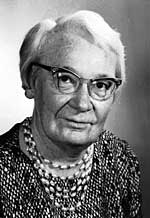
Introduction
Science, and the attempt to develop the academic standards of Australian universities, were the interests that dominated Dorothy Hill’s life. We refer not only to scientific endeavours as undertaken by herself and her colleagues, but also to basic approaches to administrative, commercial, educational and personal aspects of her life. Early in her career she learned how to develop and test hypotheses. To apply this philosophy to a wider range of problems, she had to be able to trust people and to make valid critical judgements; this required a high standard of conduct on her part as well as that of other people. Her students and the university staff responsible to her during her later years, all attest to the fact that she could be utterly relied upon. Guile was a word she did not recognise. In an interview she gave at the end of her career, she commented that she had been most concerned with the integrity of those with whom she had dealings of significance. This approach stood her in good stead in most of her work but, as one would expect, her judgements of the quality of fellow workers were not always faultless.
A second interesting aspect of her life was the extent to which she attempted to predict the ways in which geology would develop. She foresaw the need to use historical geology as a way of introducing students to the needs of various industries, at a time when it was commonly thought that oil would not be found in Australia and coal was not regarded as a valuable commodity; she saw the need to develop new aspects of palaeontological study, such as palynology, to interpret the thick sequences of fresh water sediments such as those in the Great Artesian Basin; she understood the opportunity for research on the Great Barrier Reef at a time when it was lauded as a great tourist attraction, but nobody had given much thought to the influence its study might have on the understanding of Quaternary history; she appreciated how to use the regional mapping skills of the Bureau of Mineral Resources as a basis for the reinterpretation of the geology of the State; she realised the need for a Palaeontological Association for Australia to foster the production of new work and the publication of the results in journals that were devoted to problems of Australian geology; and she quickly saw that collaboration with the European palaeontologists such as Glaessner, Öpik and Teichert, who landed in Australia in the 1930s and 1940s, would produce work that we could not otherwise have predicted. In these and many other respects she took a lead, thus expanding the main thrusts of her subject and giving rise to many opportunities for geologists to expand their interests.
She was undoubtedly a great lover of Australian universities, and the University of Queensland in particular. To many people it seemed she sacrificed a career overseas because she wished to see the Australian universities reach the forefront of academic achievement; and she spent a great deal of her life working towards this end. In doing this she was critical of the situation in Queensland that prevented the building up of the staff of the University to an international quality and size. Senior administration was in the hands of bureaucratic administrators who had no experience of world university standards. The replacement of senior administrative posts took a long time to achieve, and it took the efforts of many people to convince governing bodies that public service procedures were not appropriate for the administration of universities. Other aspects of the University marred her appreciation of its standards. Superannuation was entirely under the scheme of the Queensland Government and this could not be transferred on appointment elsewhere; nor could staff employed elsewhere transfer their previous entitlements into the scheme. This system prevented the recruitment of interstate and overseas staff. It was also discriminatory with respect to women employees. Women also suffered from the fact that they were not regarded as suitable for senior academic positions in many departments. Consequently Dorothy Hill sought to increase the impact of women in the University by encouraging women students to reach the highest levels possible in their work. Faculties such as Physiotherapy, which attracted many women students, were encouraged to develop high standards in their courses.
Background
Dorothy recorded that all eight of her great-grandparents were English villagers. She was born on 10 September 1907 to Robert Sampson Hill and Sarah Jane Hill (née Kington) in Brisbane, where her father was employed in a large city store. Her primary schooling was at the suburban Coorparoo State School. So far as is known, no other member of the family showed any interest in science.
What influenced her to become a scientist and a geologist? Her secondary education at the Brisbane Girls’ Grammar School (1920-1924) included mathematics, chemistry and biology. Physics was not offered at the school. Classics was an important subject, her study of which helped her in her later cultural life and in her research work. Among her school prizes was the Phyllis Hobbs Memorial Prize in English and History, and appreciation of these two subjects enabled her to enjoy many aspects of her later life. For example, the reading of poetry gave her much enjoyment, and gave her relaxation in times of stress. She also won the school’s most prestigious academic prize, the Lady Lilley Gold Medal, as well as the Sports Brooch for her sporting achievements.
From her school science courses and from her general reading, she learned that there were ample opportunities for a student to make original studies in Australia. Her first inclination was to study medicine, not to become a medical practitioner, but to be able to enter a research laboratory. At that time the University of Queensland had no Medical Faculty, and students had to go to either Sydney or Melbourne to enrol. Her sister remembers their father commenting privately to her that Dorothy, the third child in a family of seven, had an outstanding mind and would have a distinguished career. Despite this acknowledgment in the family, it was still impossible for the finances to support a medical course in Sydney. Fortunately, Dorothy won one of the twenty Entrance Scholarships to the University of Queensland , and she chose to enter the Science Faculty, particularly to study chemistry.
All incoming students had to study mathematics, chemistry, physics and one other subject. Dorothy had studied biology at school, and so she chose geology in an attempt to broaden her education. Immediately Professor H.C. Richards had an important influence on her. She records that he was a man of complete integrity, had a strong sense of humour, was sympathetic in his relationships with students, and able to be a leader in academic and teaching affairs. What won her into geology was Richards’ personality and his interest in developing a wide range of science. Under his guidance, she graduated in 1928 with a First Class Honours degree in Geology, and a Gold Medal for Outstanding Merit.
A second reason for her interest in geology was the opportunity to do field work. Although a city girl, she had a feel for the country, had learned to ride horses, and enjoyed the company of country people. She had country friends, including many people she had met at university. It was during a visit to friends at Mundubbera that she collected the corals on which she published her first Australian coral paper. Much of the field work for her honours studies in the Brisbane Valley was done on horseback.
Sporting and social life
At school, Dorothy was active in sport, particularly athletics. Hurdling was her forte. At university she played hockey with such success that she became a member of the Queensland University Hockey Team, became a Blue in Hockey, and was chosen for the Queensland Women’s Hockey Team. This was an important achievement because it opened up for her a range of social as well as sporting activities. She certainly enjoyed the social life of an undergraduate, and her private papers show how much she appreciated the student social swirl and the opportunity to meet a great variety of people on campus. Indeed the university was so small that she had friends in all the major faculties, many of whom she mentions in her personal papers. Especially she enjoyed the opportunity to mix socially with academic staff and their families, many staff being involved with coaching sporting teams and with dances and gala performances during the academic year. Field work also gave an opportunity for families to mix with students, and the wives of staff members accompanied student field excursions. She lamented that no contact of this kind occurs now, and in her view the students have thereby lost excellent opportunities to broaden their social lives and gain access to staff in an informal way.
She commented on the presence of radical students in the university – people who had a wide influence in the political sphere later in their lives. Despite these contacts she showed no signs of being involved in any political activities as an undergraduate. She also commented that when she was in Cambridge, the political left made an attempt to interest her in political issues from their point of view, but without success.
While she was in England, and had some independent income from scholarships and college appointments, she learned to fly, gaining an Air Pilot’s ‘A’ Licence. We have not found in any of her papers the reason for such an activity, but she later had an interest in car rallying, another way of releasing her physical energies. It is clear that flying was just another activity in which her independent spirit broke away from the normal routines of academic life. There is no evidence in her personal papers or from subsequent events that she had any further involvement in aviation.
Her interest in undergraduate sporting achievements continued throughout her academic career. From 1947 to1959 she was Patroness and Vice-Patroness of various student sporting bodies within the University.
Influence of Cambridge
Hill’s undergraduate work was of a sufficiently high standard to gain for her a Gold Medal as the most outstanding graduate of the year, the first time a woman gained that honour in the University of Queensland. It also won her a Foundation Travelling Scholarship to the Sedgwick Museum (the Geology Department) in the University of Cambridge for 1930-1932. Because she had done a year’s work on the basic topic of her PhD thesis before she went overseas, her supervisor assessed that she had already completed one of the three years necessary for PhD candidature. This work, started in Brisbane, was on the Carboniferous corals from Mundubbera, in the Burnett River Valley of southeast Queensland. Her main PhD work was on the Carboniferous corals of Scotland, and she was able to convince her supervisor that she had already put into effect all the preliminary reading for her study.
Her work in Cambridge left a lifelong impression upon her scientific and social life. In the first place she learned what were the qualities of an international university, and how a major library supported her research. Late in her life, she indicated that although she made excellent and helpful association with other researchers, the main value was working in the library of the University and in the Sedgwick Museum. The Museum Library was well maintained and had a large range of current literature. It was the advantage of having so much material on hand that gave her the impetus to put together a strong personal library and a strong departmental library when she returned home.
In the UK she found that much of the seminal work in her research field was being undertaken by two or three persons. The most important of these were Stanley Smith of Bristol, whose real interest was in the skeletal structure of corals but who also had an understanding of the relationships between the soft and hard tissues; W.D. Lang, whose taxonomic expertise was outstanding; and H. Deighton Thomas who understood the importance of extensive well preserved and curated collections for coral research. Lang and Thomas were at the British Museum (Natural History), in London. None of these people would have been regarded as being in the front rank of palaeontologists globally, but they set a pattern of investigation that Hill followed throughout her career. This made her work stately and meticulous, and left one feeling that she could be followed knowing that she had investigated details carefully.
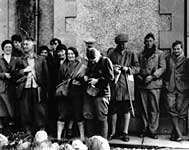
She began to think about the problems caused by workers producing results from similar material but with different interpretations. How much of this was caused by misunderstanding of the structures being described? Thus she set about defining the structural details of corals in terms of tissue patterns and skeletal deposition, and produced a paper on the terminology of Rugose Corals (Hill, 1935). This was a major step forwards in the understanding of the group, as most workers have now accepted her views. Then, she began to think about the way in which coral structures were the outcome of depositional processes of microscopic features of the skeleton, and how these were formed from the soft tissues of the polyps. This began a series of works on fine skeletal structures and the way in which they were related to the septal invaginations or the basal plates of the polyps (Hill, 1936). This kind of work influenced her later studies, and those of her students. Although this work on crystal structure and skeletal features was begun in Cambridge, it reached fruition after her return to Queensland when she published a paper dealing with the skeletal growth of crystals in hexacorals with Professor Walter H. Bryan, who worked on the processes of crystallisation in igneous rocks (Bryan and Hill, 1941).
In Cambridge, her work was supervised by Dr Gertrude Elles, whose research was on graptolites. Along with Elles, Dr Oliver Bulman, also a graptolite worker, demonstrated how detailed morphology, on well controlled palaeontological sequences, could be made to reveal refined stratigraphic results beyond anything she might have expected. Although her work had nothing to do with the graptolite researches, their guidance on stratigraphic palaeontology was of value to her. Obviously her PhD work was well appreciated because in 1932 she was awarded the Old Students’ Research Fellowship of Newnham College, Cambridge, and in 1934 she won the Daniel Pidgeon Fund from the Geological Society of London.
Elles and Bulman worked on well controlled stratigraphic sequences in which a variety of fossil groups had given access to the general interpretation. Hill’s Australian work consisted of an interpretation of coral faunas from isolated limestones in thick sequences that had not been properly mapped, and from which other fossils had not been collected. This was frontier palaeontology, and she could not apply the principles of closely controlled stratigraphy to her work. Understanding the need to improve the geological mapping work in Australia, and the use of a variety of organisms for correlation, enabled her to see why a vast effort had to be put into Australian geology before European standards could be reached. Most European work on corals had been carried out on well mapped sections in which an understanding of sedimentary facies had been interpreted into the local stratigraphy. Little of this kind of work had been done in Australia, and she appreciated how much field interpretation had to be done to make her work on corals more effective. This accounts for her later emphasis on teaching students about the classical areas of study. American work was built on such classical bases also, but at least early in Hill’s research career, she seemed to have a European bias to her work because of her Cambridge experiences. This limitation was overcome when Professor John Wells of Cornell University visited Brisbane on study leave in 1954, during the preparation of the coral volume for the Treatise on Invertebrate Paleontology. He worked mainly on the younger Scleractinian corals of the Mesozoic-Recent, whereas Hill’s work was on the older Palaeozoic representatives. The interaction of these two pre-eminent minds, coming from different backgrounds and with markedly different experiences of their science, enhanced the final product enormously, and made a real advance in the understanding of coral palaeontology. Not only were they involved with academic work, but they shared an interest in old cars. For Dorothy Hill, an Austin 7 was the epitome of the right thing in vintage cars, but we believe that John Wells would have preferred a De Soto. They became firm friends and continued to enjoy close collaboration long after the Treatise was finished. This was a very significant move for Hill, because in the 1960-1980 period, many American workers rose to prominence in coral palaeontology.
In 1971 an International Association for the Study of Fossil Cnidaria and Porifera was inaugurated, and Dorothy Hill was elected as the first president. This group resulted from the activities of Professor B.S. Sokolov in the USSR, Professor J.P. Chevalier in France, and Dorothy Hill. Also many American workers were active in this group, and foremost among them was William Oliver Jr., a student of John Wells.
Hill’s work in England brought her into contact with geologists and palaeontologists who set the tone of post-war studies in Britain. Friendship with such people enabled her to maintain contact with new developments and with opportunities for her graduates to visit Britain for postgraduate studies. Once she returned home in 1937, although she found visiting Europe very stimulating, she never wished to return to England to live. The reason for this is to be found in her deep love for Australia, and Queensland in particular, and her view that Australian universities needed to hold their successful researchers. She claimed that she did not feel isolated by living in Queensland, as she could get information by quick trips to Europe and by correspondence. She also learned to keep several projects operational at any one time, so that if there were a lack of literature or a failure to obtain specimens for comparison, she could change tack until the appropriate material arrived.
From a cultural point of view, Hill commented in an article written in the University News in 1976, that Cambridge reawakened an interest in music and drama, but that she came especially to appreciate the effect of architecture on the human spirit. From our personal contact with her, we conclude that these aspects of her career in Cambridge meant more to her inner life and personal development than she would normally reveal on casual aquaintance.
Return to Australia
After seven years in England, all of them spent in Cambridge, Hill began to feel that university life in the fens was too removed from the wider aspects of life she had enjoyed in Australia. Also, with her views on the research life of Australian universities, she felt that she must devote more time to research in Queensland. Professor H.C. Richards, when visiting her in Cambridge, indicated that he was keen to have her back in Brisbane. In 1937 he was able to use one of the new CSIR grants to fund her salary for a number of years. She notes in her personal comments that she ‘came back hot-footed’. The opportunity to work in Brisbane enabled her to develop several aspects of geological work that came to the fore later in her life.
As mentioned above, Hill realised that more basic work had to be done on local stratigraphy and facies. She appreciated that much work had to be done on the coral faunas themselves so that palaeontological workers could recognise the main coral units. Mapping was not one of the objects she could pursue alone, and in a country the size of Australia, mapping depended on the efforts of the Bureau of Mineral Resources and the State Geological Surveys. Consequently, her most outstanding contribution to science from the period after returning to Australia was her ability to put into order the known coral faunas of Australia and to use them to outline a wide-ranging stratigraphy. She published many papers on coral faunas from localities in all States except South Australia. Examine her bibliography for the years 1938-1943, and note that an enormous effort went into this basic taxonomic work. In these studies she used the methods she had developed in her PhD work, and the criteria used in the descriptions have become the standards for coral work around the world. All these papers provided a framework for the 1943 paper on the re-interpretation of the Australian Palaeozoic record. Although she realised that the understanding of coral faunas from isolated limestones in studying the regional geology left much room for later development, she felt that it was a necessary first phase in discovery of the elements of time stratigraphy in the large parts of the column for which only the most rudimentary knowledge was available. These publications drew attention to the quality of her work, her perceptive understanding of the fields of coral morphology, and the value of world-wide understanding of coral evolution to the interpretation of stratigraphy. Overseas geologists who needed to understand the stratigraphy of the corals they encountered in the field, sent specimens to her for examination. This work also encouraged Professor Raymond Moore, editor of the Treatise on Invertebrate Paleontology, to invite her to contribute to a volume on Coelenterata.
In addition to her research, she was asked by Richards to deliver lectures in palaeontology and stratigraphy. There were only three staff members in Geology at the University of Queensland at that time – Richards, Bryan and Whitehouse. Whitehouse had held the first Foundation Travelling Scholarship and Hill held the second. Thus the Department had staff of the highest quality, even though it was small. Hill clearly held her own in that company, and Richards saw that she would be a fine addition to the permanent staff when the opportunity came. Professor Thomis has commented to us that although the University of Queensland is seen as entering the world scene only in the 1950s, the Geology Department had set its foot on the ladder of international success in the late 1930s. This was largely the result of the forward looking approach by Richards who had chosen Whitehouse and Hill, outstanding researchers and good teachers, for the early appointments to his staff.
Student commitment and Moreton Bay
In addition to her research work, Hill immediately began to interest undergraduate students in the possibility of research as a career. It is difficult for us today to understand how badly off Australian science was in the late 1930s, because research was not considered a primary function of universities. At the present time our universities are being revamped by people who have a nineteenth-century view of teaching undergraduates, and we shall have a similar problem to tackle if we are not careful. To foster a spirit of independent inquiry among students, Hill set out to interest them in projects quite unlike those they encountered in student laboratories. She became involved with the Science Students’ Association, and encouraged a number of students to take up investigations into some interesting problems during the summer vacation. She saw this as a way of introducing students to field work and to the collection of data, as well as teaching them to write up results in an acceptable way. She was the advisor to several student trips involved with marine and geological studies in Moreton Bay. These activities declined after 1941 when the university was more concerned with wartime matters, but were revived again in 1946.
The results of these trips were written up as papers and were presented as bound volumes. Some items were of high standard and provided the basis for later work. Certainly, some well-documented collections from the sediment were studied in the laboratory, and provided opportunity for senior undergraduates to try their skills at interpretive work.
Women's Royal Australian Naval Service (WRANS)
Back in Australia, Hill had only two years before war broke out with Germany, and four before Australia was heavily engaged with Japan. She and her sister, Edna, were involved with a naval group serving in a mine watching role in Moreton Bay and the lower Brisbane River. It was suspected that Japanese planes were dropping mines in the entrance to the river in an attempt to stop the arrival of American supplies. New South Wales and Queensland had different railway gauges, and it was difficult to transport war supplies landed in Sydney to north Queensland. The shipping of American material into Brisbane thus became a major operation. Dorothy took on a more active role, after she came into contact with people who were working on cyphers in General Macarthur’s headquarters where she joined a group of civilian women, and became the officer in charge of a large number of undergraduates and typists. She also came into contact with Captain E.P. Thomas R.N. who was the naval officer in charge of the Port of Brisbane. He convinced her that she could do a worthwhile job in the WRANS and, despite her interest in getting her university work off the ground, she felt that she should forsake that task until the war was over.
She enlisted as a Third Officer in the WRANS and undertook training in Sydney and Adelaide. Subsequently she became an Operations Staff Officer and assistant to Captain Thomas. Her work included cypher and coding, accepting responsibility for the safety of shipping, and communicating with service personnel including commanders and ratings from Australian, American and British services. Her commander reports that she had the capacity to interact successfully with male servicemen, including people such as argumentative tug-masters, who usually did what was required of them without understanding the administrative control quietly applied. In one of her personal papers she comments that cypher work left her with time to visit the University, and allowed some time to think about geological topics. However, she comments that she worked up to 80-90 hours a week at her WRANS duties.
At the end of the war she served on the Demobilisation Planning Committee, being the representative of the Women’s Services.
Consultation with industry
On first returning from overseas, Hill made contact with people in government and private industry, and attempted to show them how historical geology could make a contribution to State welfare. She noted that almost all the chairs of geology in State universities were filled by mineralogists and petrologists, and that their courses concentrated on the ‘hard rock’ aspects of the subject. As a result, the coal, petroleum and gas industries were denied local graduates to join their work forces. Consequently she attempted to discover the areas where an immediate input of specialist knowledge would add to soft-rock resource development. She undertook work for fifteen oil companies exploring in regions where the geology was poorly known. Her knowledge of coral palaeontology enabled her to provide an outline of the stratigraphy from collections made by field geologists who needed to understand the broad geological relationships. One cannot point to the discovery of oil as the result of these investigations by Hill, but her contribution was made in an attempt to outline general structures on which further developments could take place.
It is interesting to read that in 1939 and the early 1940s she was in contact with the Chief Government Geologist of Queensland, asking that the collections of the Survey should be placed in a secure environment during the war. The information put together by many geologists should be accurately localized and held in useful form, even though access might be difficult. She also made herself available to study collections made by field workers in central and northern Queensland. In particular, also in 1939-1940, she did work for Shell Petroleum which was undertaking preliminary mapping and drilling work in the Permian of central Queensland. Reading some of her identifications of fossils makes one realise just how little was known about faunas at that stage. This lack of knowledge made it clear to her that she would soon have to get postgraduate students working on faunas that came from the abundant late Palaeozoic rocks. It was the common view that these rocks were the most likely to produce coal, oil and gas.
This work enabled her to see just where the major contributions to Queensland geology could be made. She also temporarily gave up her main work on Palaeozoic corals to do some original work on Permian faunas, particularly on those from Cracow, a mining town on the eastern side of the economically rich Bowen Basin (Hill, 1950). She quickly identified the gaps in what was known, and was able to guide students in the right direction. The late Palaeozoic palaeontology of Queensland had not been studied in any detail since the work of Jack and Etheridge (1892), and Hill’s observations showed that there was an enormous amount of work to be done. It is interesting to see, therefore, that her work for oil companies was not just a matter of specific identifications. Rather, she used her personal knowledge to equate a fauna at one locality with that at another. Correlations were based on her own experience, and it was this information that the companies wanted to have. Not that she made any money out of this exercise. The receipts for her work make fascinating reading at the present time when consultants charge as much for an hour’s work as she did for work that took months to complete. Her main object was to learn where the best problems were for her students. We are amazed at how much work she did for companies as part of her general work, because she must have been almost fully exercised by the teaching and administrative work she did in the University. A letter from one of her English colleagues mentioned that she had heard from Dr Deighton Thomas that ‘Dorothy had abandoned corals to work on Permo-Carboniferous faunas’. This gives a good indication of where her interests lay at that time.
Palaeontological research and applications after the war
We have previously given an account of how her work progressed up till she joined the WRANS. After demobilization she concentrated on the preparation of the Coelenterate volume for the Treatise on Invertebrate Paleontology, which was finally published in 1956.
Following the discovery of archaeocyathid faunas in Antarctica, she began studying them using the methods she had evolved for understanding sections of corals. She attempted to reconstruct their skeletons in three dimensions, and to make models of the skeletons of these animals. Most of the current literature on this group was in the Russian language. She learned enough Russian to assimilate this work, and to develop an understanding of how the Russians viewed this enigmatic group of fossils. One of the highlights of her study of the Archaeocyatha, was her examination of the material discovered by the Trans-Antarctic Expedition. One of the members of this expedition was Dr Jon Stephenson, one of her former students in Queensland. The study of this material produced a memoir of significance. After publishing a few smaller papers and reviewing the whole group in Biological Reviews in 1964, she was asked to write the Treatise volume on Archaeocyathida, which appeared in 1972. She is the only person to have produced quite separate volumes on different fossil groups for the Treatise, and one of these groups is treated in two volumes. Her work for the Treatise is outstanding because set the standard for studies in the group for decades.
While immersed in this work, Hill took on the responsibility for visiting the field survey teams of the Queensland Geological Survey and the Bureau of Mineral Resources. In doing this she gleaned a first-hand knowledge of areas that had until then been unmapped, and she was able to help workers in the field with on-the-spot identifications. This activity supported her other main research interest which was to put together a Geology of Queensland, accompanied by a ‘one inch = 40 mile’ map of the State. In association with A.K. Denmead she edited the State Geology which was published by the Geological Society of Australia in 1960. This found favour with working geologists and it was widely used by exploration companies. She still maintained her habit of keeping up to date her record of geology as it was done, and her series of maps was a remarkable endeavour wonderful to behold.
Subsequent to this she returned to the study of corals and, because of her now senior position in the University, she was given the money to appoint a research assistant, Dr John Jell. She also attracted a number of graduate students who began studying newly-discovered coral faunas as well as late Palaeozoic brachiopods. These students penetrated the market for palaeontologists throughout the country, and had a pronounced effect on the economic and educational work done in Australia.
Importance of collections
Workers in the biological sciences know well the paramount importance of maintaining collections of specimens that stand as the reference points for future developments in that field. Scientists who are engaged in physical measurements of static objects, fail to see the importance of such collections, and in some instances the collections have been destroyed because they occupy valuable space. Professor Richards appreciated the need to maintain such material, and even in the early days of the Department, set up a small storage for specimens that had been studied. A standard reference collection of fossils is absolutely necessary for further research. Dorothy Hill began to build up fossil specimens from Australian localities as well as others from the type localities overseas. Where she could not find a specimen from the type localities, she would obtain a thin section of a specimen that would serve as a basis for comparison of Australian faunas.
In her reports on her activities to the CSIR in the first years after her return from Cambridge, one can see just how important the type collection was to her as she began to put together her first attempts at the Australian faunal sequence. The report for 20 October 1941 lists:
Total Coelenterate slides in department = 2,157
Total Coelenterate slides made by Hill = 1,002.
After the war Dorothy Hill convinced Professor Walter Bryan that the Geology Department should develop the collection more extensively, and have it curated by a person specially appointed to do the job. This was particularly important because her honours and postgraduate students were bringing in collections that had to be curated so as to provide a basis for later work. Thus began the large collection that has proved of great value to workers within Australia and from overseas. A Keeper of Collections was appointed, and he and Hill built up the collection, largely based on work done by the staff of the department and the large number of graduate students they attracted. The specimens were catalogued using the system Hill had found useful in both the British Museum (Natural History) and the Sedgwick Museum.
Her respect for the importance of type material is shown up by her work for the Treatise on Invertebrate Paleontology. Wherever possible, she described and illustrated primary type specimens from the type locality. This prevented any attempt to reinterpret the taxa in terms of extraneous material, and her pattern has now been used by other authors.
Undergraduate teaching
Hill was meticulous in preparing lectures and practical classes for students. Looking back from the present period, one can see how the presentation of morphological palaeontological and stratigraphic data was the controlling factor in her work. Most of her research was based on detailed stratigraphy, and as most of the early work was done on European sequences, she encouraged students to investigate classical European sections. To do this she required an investigation into their sedimentary patterns and facies. Her lectures gave little attention to biological function, to genetics, to relationships between organisms, to evolution, or to biogeography, but rather addressed the Australian stratigraphy and the solution of problems by the interpretation of fossils. This was to some extent unfortunate since biologically-inclined students were not attracted to courses that they regarded as orientated entirely to geology, and as a result the Geology Department lost some promising students. However in educating students to undertake work on the broad geological structure of the State, she was particularly successful. We both have friends who, undertaking work with a company as their first jobs, found that the undergraduate work they had done provided a sound basis for stratigraphic mapping. The results of these efforts were strikingly good and provided much information for the companies or the State Surveys, as well as providing interesting topics for further research work.
Hill’s method of supervising honours students were unique. She did not give any lectures, but provided intense personal supervision of journal reading, practical work and field results. Each student was visited each day for discussions of problems, new ideas were developed and new literature was introduced. In order to introduce students to members of staff in other departments, she successfully arranged for visits to discuss problems in their special areas.
In other respects she continued to emphasise the importance of sedimentation and facies in her lectures. Fossils recorded one aspect of a system of sedimentation that produced a variety of facies, and the whole system of facies had to be considered if one were to achieve an historical analysis of the region. This approach was of significance to Australian students who were working in sequences so different from those found elsewhere. For example, the Gondwana Carboniferous and Permian are grossly different from those of Europe and Russia, and yet the problems of correlation with those type areas were foremost in the minds of the students. On the one hand Hill emphasised the importance of being broad in the understanding of a problem, but she also kept stressing the need to be fully competent in the understanding of detailed aspects of the whole system.
Great Barrier Reef Committee
As one would expect, Hill was much concerned with the scientific study of the Great Barrier Reef. The Geology Department was already heavily involved, because Professor Richards was one of those who initiated systematic study of the Reef. One of his main concerns was to understand its origin and history, and he saw that the initial study should be undertaken by studying three transects, one in the north, one at the latitude of Townsville, and one off Gladstone. A new committee was set up under the guidance of the Royal Geographical Society of Australia (Queensland Branch), largely because the then Governor of Queensland, Sir Matthew Nathan, who was very interested in that Society, agreed to be the President. Vice-Regal support for the new group was significant in view of the lack of money for research. The extent of the financial problem can be seen in that after three years of working to raise money, only £5,318 was in hand.
Survey ships had occasionally been used to provide a base for making elementary geological observations, and for the collection of zoological samples. The first serious attempt to gain new kinds of data came with the Michaelmas Reef Boring in 1926. Then, largely as the result of British work, the Great Barrier Reef Expedition in 1926-29 (the Yonge Expedition) took place on Low Isles. This study occurred when Dorothy was an undergraduate, and it made a deep impression on her. The onset of the Great Depression did nothing to support the Committee, but by 1937 enough money had been raised to drill the Heron Island Bore. The coincidence of this with Hill’s return from her PhD studies in England was also fortunate, as she was the appropriate person to study the core in association with Richards (Richards and Hill, 1942).
The site of the bore was significant for further development of reef studies. Professor E.J. Goddard of the University of Queensland Zoology Department, tried to activate the Committee to develop a Great Barrier Reef Committee Marine Biological Station, but he died on Heron Island before the project was accepted. When Dorothy Hill became the third Secretary of the Committee from 1945-1955, she also actively supported direct research work, and great efforts were made to establish a small shelter on Heron Island for students and research workers. This involved raising industry money, transporting materials by Government supply ships, using vast amounts of personal work on carpentry, providing items such as a water storage tanks, and volunteer efforts during holidays on site in the Island. By the end of 1952, ‘the Committee had on the island a building that could be used by visiting scientists or students, or for stores for the subsequent buildings’. She put a great deal of effort into seeking a major grant to develop a larger research site on the island, and grants from the Rockefeller Foundation and the Australian Research Grants Committee eventually made it possible to build adequate accommodation for visiting scientists and students, and to improve the laboratory facilities.
After completing her term in office, Hill was active in developing a continuing geological, taxonomic and ecological understanding of the reef. She was a member of the committee, chaired by Dr M.H.C. Day, that investigated the setting up of an Australian Institute of Marine Sciences in Townsville. In 1975, a statutory body, the Great Barrier Reef Marine Park Authority (GBRMPA), was set up by the Commonwealth Government to administer reef affairs. By this time Hill had retired from her university post, and she was not involved significantly with GBRMPA. However she had let her views on the conservation and management be known widely, particularly in relation to the drilling of deep holes on the reef. Following Richards, she took the view that little would be known of the early history of the reef unless we had sedimentary cores from its base. She pointed out that reefs had been mauled by natural causes and their capacity to regenerate was obvious. In the Quaternary the sea level had varied by more than 100m, causing damage beyond anything the collecting of molluscs and the crown-of-thorns starfish could produce. Unlike some biologists, who thought that regeneration would not occur after damage, she stood by the empirical geological evidence that regeneration was common. What is more, she held that the reef was in no danger of being destroyed by current practice. Having taken this stand, she was out of favour with many fellow scientists, particularly biologists. She incurred the wrath of students who had no historical understanding of the reef processes, nor of the way in which sea levels had changed during the Quaternary.
One of the highlights of Hill’s commitment to the Reef, was the appointment of Dr W.G.H. Maxwell to a lecturing position in the Geology Department. His research was on the history and sedimentation on the Reef, and he attracted many students to study the sedimentary and biological processes operating on the Reef at the present time. Many fine papers were produced by this research group. Finally Maxwell published a well reviewed paper on the structure and development of the Great Barrier Reef in the volume of essays Stratigraphy and Palaeontology in honour of Dorothy Hill (1969). This set the outline for his definitive work, a book entitled Atlas of the Great Barrier Reef. These studies outlined the history, sedimentation and biology of the reef as they were then known, and it gave great pleasure to Dorothy Hill to see the work advanced to a level where it could be summarized and presented to the rest of the scientific world.
Her long final illness prevented Hill from seeing the results of the Bureau of Mineral Resources work on the geological evolution of the Reef. Much of this was done by seismic sections and bottom sampling, and more recently by drilling on the outer barrier, as well as by work in the deeper water by the Ocean Drilling Program. This has shown that the reef is much younger than expected. As Hill noted in her paper in Historical Records of Australian Science (see below), Professor H.C. Richards had indicated that one of the main reasons for setting up the GBRC was to discover information on the origin of the reef. She would be pleased to see the current work coming to a conclusion.
Dorothy Hill wrote a summary article on the Great Barrier Reef in the volume the Australian Academy of Science published on Captain Cook, Navigator and Scientist, edited by G.M.Badger. The history of the Barrier Reef Committee was written by Hill (1984) in two articles published in Historical Records of Australian Science, Volume 6 (parts 1&2). She treated her own work in a modest way, but it is significant that those who worked with her claim that her drive and enthusiasm as secretary of the Committee played the vital role in establishing the research base at Heron Island. Without the establishment of that base, the work on the Reef would have been much inhibited.
Palaeontological Association of Australasia
In Hill’s view, one of the main functions of teaching palaeontology was to encourage field workers to make good collections of the fossils they encountered, and to equip them to make first attempts at an identification of species and an estimation of geological age. Her own students were made well aware of this in their practical work, and at least some of them were able to improve their mapping by several orders of magnitude as a result of this training. To improve their performance further, she organized the Queensland Palaeontographical Society with the specific purpose of illustrating the main fossils from the stratigraphic periods in the State. This was done by asking researchers who were familiar with each period to list and photograph significant species and to indicate their stratigraphic ranges. A separate booklet was produced for each geological period, and booklets were made available through the Society or through the museums. A range of people, including amateurs, became more interested in palaeontology, and a considerable sum of money was accrued.
In 1968, specialist groups of the Geological Society of Australia began to appear. One of these was the Specialist Group in Palaeontology and Biostratigraphy. After a few years it became apparent that colleagues in New Zealand would welcome closer contacts with Australian palaeontologists. By this time, the main purpose of the Queensland Society had been achieved in its publications, and its committee began negotiations with the Specialist Group, asking that a new and wider-ranging society should be formed. The wisdom of this proposal was accepted by most members, and the Association of Australasian Palaeontologists was formed. The funds from the Queensland Society were used to found the Association, and Dorothy Hill made a significant personal gift to support it.
One of its Association’s objects was to publish a journal, now known as Alcheringa. The policy of the journal was to publish material of local and international interest from authors of any nationality. In doing this it fulfilled Dorothy Hill’s aim of making Australian publication good enough to serve the world’s needs. At present 21 volumes of Alcheringa have appeared. In addition, there had long been a need for monographic memoirs to bring out larger works, such as studies of faunas of significance, or of major groups of organisms. Twenty volumes of the Association’s Memoirs have now appeared. Hill’s students and colleagues have maintained the publication of these works.
Geological interests outside palaeontology
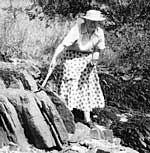
Hill had a concern to develop a geological history of Queensland as a major part of her contribution to geology. In particular, she wished to outline the stratigraphic and igneous histories, so as to provide a data base for a tectonic record of Queensland. Some of this work was extended to other States. Her basic knowledge was of immense value in this work, much of it having evolved from her work with field parties of the State Geological Survey and the Bureau of Mineral Resources. In at least some of this we can see the importance of her friendly co-operation with A.K. Denmead and N.H. Fischer, respectively directors of these institutions. Discussions with field workers attest to the strong influence she had on the various field parties. Not only did she allow them to get a better control on the stratigraphic order in their mapping, she encouraged them to appreciate the value of their work for the understanding of the evolution of the continent.
Despite these interests in Australian geology, she did not keep up with wider tectonic advances of the late 1960s and 1970s. Unlike many other Gondwana geologists, she did not grasp the many features of the southern continents that implied continental movement. On the contrary, she did not accept that the mechanism for continental movement had been adequately explained – a view perhaps inherited from contacts with geophysicists in her Cambridge days – and she still used local conditions to explain the distribution of corals and many Gondwana features such as the late Palaeozoic glacial deposits. As a result, she was not able to apply the results of global tectonics to her field and to palaeontological observations. This was very unfortunate, because she was thus not able to see how her work on Australian continental structure and the distribution of fossil faunas, could be interpreted in terms of a general tectonic theory. Her study of Queensland geological structure and her understanding of sedimentary basin relationships were well in advance of their times. However, her interpretation of their tectonic meanings remained in terms of 1940-1950 global ideas. Even in discussion, she could never conceive of the possibility of global tectonics being of value.
Publications
When Hill returned from Cambridge, she was depressed to find that many local scientists saw overseas publication as the best way of establishing a career in science. Certainly some aspects of Australian phenomena would be best published in Australian journals, simply because these studies had such a unique flavour that their conclusions could not be generally applied overseas. This included many geological, botanical, zoological and ecological investigations, that were of immense interest to Australians. This was an example of local culture being debased for no good reason, yet many people considered Australian publication indicated that the work was not in world class. The same kind of attitude is still present in that when scientists are asked to list the main publications in their field for formal assessment, higher ranking is placed on international journals because they are perceived as having wider exposure among scientists. Dorothy Hill considered that Australia should build up local publications that would give opportunities for work of major significance to be published locally. As a result of this approach, a large part of her work on Palaeozoic corals was published by the Royal Societies of Queensland, New South Wales, Tasmania, Victoria, and Western Australia, and the Linnean Society of New South Wales. Her attitude was that if the work was of high standard, it would attract attention. She was also impressed with the idea that many publications required extensive illustrations, and that these would not be available in overseas journals. Such work should be published locally in the Museum Bulletins. In adopting this attitude she was correct, as her own work, published locally, was taken up by overseas workers.
This attitude led Hill to be a strong supporter of the Journal of the Geological Society of Australia, and from 1958 to 1964 she was its editor. Within the University of Queensland, she strongly supported the efforts by Professor Richards to establish Departmental Publications which were sometimes reprints of work published in local journals, but which also included papers published in their own right by the University Press. Hill used these publications for exchange purposes with overseas research organizations in an effort to build up the local libraries, as well as to inform the wider world of what was going on in Queensland. This was very successful and it provided a large number of reprints in the departmental library. In opposition to the views of librarians, she had local publications bound into a series of volumes on a variety of topics.
As indicated above, one of the greatest benefits of Hill’s PhD studies in England was her discovery of the value of a major library. When she returned to Queensland she had collected a large stock of reprints that enabled her to continue research, but she still found the University totally lax in its attention to its library: ‘the Senate thought that the Library was a shelf with a few books upon it. It was fatherless until Harrison Bryan and Greenwood got together’. This was in the early 1950s. Bryan, the then University Librarian, was the son of Professor W.H. Bryan, Head of the Geology Department, and he no doubt saw at first hand the advantage of Dorothy Hill’s interest in the Library. She accepted the opportunity to assist in developing the library for the benefits of all students and researchers, and gave a great deal of her time, money and administrative persuasion to build it up to its present high standard.
The Geology Department housed the Dorothy Hill Geology Library of the University, and it was staffed from the main library. Recently the University decided to house it with the other science and engineering libraries, and the whole collection is now known as the Dorothy Hill Physical Sciences and Engineering Library. Although her name is preserved, she would not have been pleased to know that the library, on which she expended so much of her own effort and planning, has now been removed from the Geology Department.
University administration
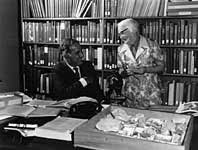
Hill was President of the Professorial Board of the University of Queensland in 1971-2. This was a difficult period for university administrations. First, many reluctant students were being enrolled for military service in Vietnam. This produced some violent activity on campus, some of which Hill had to face personally. Then there were members of staff who felt that formal university education required a new stimulus. Many meetings of staff and students took place, some of which were noisy and out of control. The formal structure of teaching and research was under attack by people who thought that the University should have a more open approach to learning. Much of this activity came from the Arts Faculty, but it took no account of the problems associated with teaching in science-based courses, much of which depended on formal practical classes.
With her views on teaching and research clearly defined, and with her approach of involving students in research efforts as soon as possible, Hill found difficulty in understanding what the protesters wanted. She also noted a strong feeling of anti-semitism on campus, and having been involved in a war that people had hoped would destroy such attitudes, she felt deeply depressed. She could never have found the work of administration enjoyable under these circumstances. Colleagues report that she claimed that, as with research, she required a concise account of the nature of the problems, a collection of information from whatever sources were available, an hypothesis for solution to be derived, a testing of the hypothesis, and a final solution as she saw it. She feared that mistakes would be made, but she also knew that administration had to make decisions, or an uncontrollable situation would develop. Finally she felt that all decisions could be reviewed in the light of subsequent experience.
The transparency of her attitude to the difficulties of that time were much appreciated by the majority of staff, and the Staff Association sent her formal thanks for her work. We have no doubt that dealing with ships’ captains during the war would have equipped her well for the task she performed.
After retirement
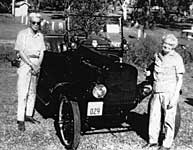
On retirement from her chair, Hill had many aspects of work to continue. In particular, together with John Jell, she had several postgraduate students from Australia and overseas who were working on Palaeozoic corals of Australia. This work was of great importance to her, as she thought that with the development of new techniques for stratigraphic correlation, the fundamental use of macrofossils was being forgotten. Among these students were nationals from China, Mianmar, USA and Australia.
She also felt that now was the time to put on paper histories of some of the organizations and subjects in which she had worked. The first of these projects was her Bibliography and Index of Australian Palaeozoic Corals, which was published by the University of Queensland Press (1978). As indicated above, she had previously published a chapter on Captain James Cook and the Great Barrier Reef, in the Academy of Science volume. This alerted her to the fact that the history of the Great Barrier Reef Committee had not been properly recorded, and much of the early work done by this committee was in danger of being lost. She expended much effort in researching the records and added her own personal knowledge to the study. This will remain a most valuable resource for future historians.
In 1981 she published a history of the Geology Department during its first fifty years. For those who came later, this is a remarkable outline of the development of a department in a newly formed university, and how it lived through the Great Depression and the two world wars. Those who were not involved with the organization learnt of the impact of Professor Richards on the Department and the University, the State Geological Surveys, the teaching programmes in the secondary schools, and other scientific exercises in the Commonwealth. Hill left no doubt that wider aspects of the scientific life of Queensland had been extended by the development of the Geology Department.
For about fifteen years after she retired she came daily to the University to work. She walked to and from home every day, trying to keep her health in good shape. Her friends from the staff ensured that her household was well supplied with daily needs. However she had a fall which caused her to be hospitalized. After a long period of recovery she had an occasional loss of memory and ceased to come into the department. Subsequently her health declined further, and she suffered a final stroke.
Dorothy Hill never married. The Hill family were well bonded and supportive of one another. For the last four decades of Dorothy’s life she and her sister Edna shared a house in Taringa, Edna suffering from a heart disease that required continual medical support. Dorothy took responsibility for caring for her. Nephews and nieces, whose families lived in the country, lived with their two aunts in Brisbane while they attended secondary school. Family responsibilities of this kind were accepted by Dorothy as part of the normal run of life until well after her retirement from the University.
Academic and civil recognition
Recognition of Hill’s research within Australia and overseas allowed her to assume a leadership role within the university community in Queensland. Professor Thomis, in his assessment of the graduates of the University, considered Dorothy Hill to be the most outstanding of them all. Subsequently he noted that the award of the Nobel Prize to Professor Peter Doherty would require him to rethink that comment. However he noted that Hill’s performance remained outstanding in that she led the University from the front during her whole time on its staff. Not only was she academically distinguished, she also took a leading role in its administration and development.
In 1956 Dorothy Hill was elected a Fellow of the Australian Academy of Science. She spent time serving on Academy committees, becoming Vice-President in 1969, and on the death of Dr D.F. Martyn in 1970, she became President. She is the only woman to have occupied the position of President of the Academy. She did not seek re-election for a full term, as she was President-elect of the Professorial Board in Queensland. In addition she did not like travelling to and from Canberra for meetings, and she felt that travelling inside and outside the country on Academy business would mean that she could not give sufficient attention to academic problems and to family support in Brisbane.
The Royal Society of London elected her a Fellow in 1965. She was only the second person on the University of Queensland staff to be so elected, the previous one being Professor B.D. Steele, the first Professor of Chemistry. She had a high regard for Steele when she was a student, and comments that he was ‘an Olympian character’ in the University during the early days. In addition he saw eye to eye with Professor Richards in his views of what the University was all about. She saw her election to the Royal Society as a major step in continuing the work of Steele and Richards in establishing the University of Queensland as a place for research.
In addition to these achievements Hill won the Daniel Pidgeon Fund, the Lyell Medal and was made a Commonwealth Fellow of the Geological Society of London. She was awarded the Clarke Medal by the Royal Society of New South Wales, and the Mueller Medal and the ANZAAS Medal by ANZAAS. She was awarded the W.R. Browne Medal and was an Honorary Member and subsequently President of the Geological Society of Australia. She received the civil honours of a CBE, for services to geology and palaeontology, and an AC from the Australian government. The University of Queensland awarded her an Honorary Doctorate of Laws for her work in university administration.
Summary
Dorothy Hill made a broad contribution to science in Australia at a time when both university and government science were in need of considerable improvement, and the benefits of research were not widely appreciated among university administrators. She discovered the use of fossil corals in sorting out the correlations of Palaeozoic rocks in Australia, took advantage of the vicinity of the Great Barrier Reef for research, expanded the knowledge of stratigraphy of eastern Australia, and used this newly available information for a revitalized interpretation of continental geology. In doing this she gave great support to field workers and students in their studies, and to the exploration companies working on the coal, oil, and economic sedimentary rocks of Queensland. Finally, she set standards for the preparation of large volumes such a those in the Treatise on Invertebrate Paleontology, which were her major contributions to the study of corals.
Dorothy Hill died on 23 April 1997. She never sought publicity for her work, nor did she seek to make an impact on the wider politics of the country. In this respect she did not attract national interest. In her adult life she was never a person for social activity, nor was she out to draw attention to her field of interest through her contribution to the industrial outcome of her work, though this was considerable. Throughout her later life she bore the stamp of having reached adulthood during the economic depression of the late ’20s and ’30s. She always attempted to get full value for any investment of time or money into a project. One wasted nothing. In the latter half of her life she was concerned with supporting her nephews and nieces and her siblings, rather than seeking recognition for her work.
As a result of these attitudes, she was not widely known to the majority of Australians, though she contributed much more than many whose names are a byword. In her own right, she was known as an active sports person, a strong leader in academe, a powerful supporter of women’s educational rights, a keeper of intellectual truth as she saw it, a maintainer of academic merit, and a member of her nation’s armed forces. She took part in the education of a large number of students who supported her efforts to advance geology. These former students may be found in all aspects of the profession – scientific research, teaching, administration and economic geology. The extent to which she was appreciated is shown by the fact that three honorific volumes were published by her students in 1969, 1974 and 1983. To her colleagues she offered strong personal support and profound intellectual and lively criticism as required. For all these reasons, she was an outstanding contributor to national life, and she will be remembered by those with whom she worked as an outstanding contributor to Australia’s welfare. To her, that would have been the ultimate accolade.
About this memoir
This memoir was originally published in Historical Records of Australian Science, Vol.12, No.2, 1998. It was written by:
- K.S.W. Campbell, Department of Geology, Australian National University.
- J.S. Jell, Department of Geology and Mineralogy, University of Queensland.
Acknowledgements
In preparing this memoir we have been assisted by Dr Peter Jell, who has read the text and has suggested several improvements. We have also been helped by the Librarian of the Fryer Library of the University of Queensland, and by Judith Gibson of the Archives of that University. Conversations with Ms Edna Hill, Dorothy Hill’s sister, have illuminated some items of family history. Professor Thomis has discussed with us several matters he dealt with in his book A Place of Light and Learning, the University of Queensland First Seventy Five Years. Mr David White allowed us to use the photograph in Figure 3. The portrait photograph shows Dorothy Hill as President of the Australian Academy of Science in 1970.
Biographical references
- Anon, 1960. Research Professor Dorothy Hill, DSc, PhD, FAA, FGS University of Queensland Gazette 46, 4-5.
- Anon, 1965. Special Note. Professor Dorothy Hill, FRS Journal of the Geological Society of Australia. 12, 167-168.
- Anon, 1988. Dorothy Hill. Australian Science Mag 29, 39-41.
- Denmead, A.K., 1969. Professor Dorothy Hill. In Stratigraphy and palaeontology. Essays in honour of Dorothy Hill, K.S.W. Campbell, ed., Australian National University Press, Canberra, v-vii.
- Denmead, A.K.,1972. Dorothy Hill. Earth-Science Reviews 8,351-363.
- Denmead, A.K., 1974. Professor Dorothy Hill, CBE, PhD, DSc, FRS, FAA In The Tasman Geosyncline – a symposium: papers read at a symposium in honour of Professor Dorothy Hill, A.K. Denmead, G.W. Tweedale & A.F. Wilson, eds, Queensland Division, Geological Society of Australia, Brisbane,
1-2. - Hill, D., 1981. The first fifty years of the Department of Geology of the University of Queensland. Papers Department of Geology, University of Queensland 10, 1-68.
- Gregory, H., 1987. Dorothy Hill. In Vivant professors. Fryer Memorial Library Occasional Publications 7, 51-58.
- Jell, J.S. 1997. Dorothy Hill. In McKay, J., ed., Brilliant careers, women collectors and illustrators in Queensland. Queensland Museum, Brisbane, 47-49.
- Jell, J.S. & Runnegar, B., 1983. Dorothy Hill, CBE, PhD,DSc, LLD, FRS, FAA, FGS Memoirs of the Association of Australasian Palaeontologists 1, 9-15.
- Rurmegar, B., 1975. The message of Alcheringa. Alcheringa 1, 1-2.
- Sherratt, T., 1994. Finding life in ancient corals – Dorothy Hill. Australasian Science 1994 (summer issue), 64.
- Wilson, A.F., 1965. Research Professor Dorothy Hill. Newly elected fellow of the Royal Society. University of Queensland Gazette 58, 1-2.
Festschriften
- Stratigraphy and palaeontology: Essays in honour of Dorothy Hill.. K.S.W. Campbell, ed., 1969. Australian National University Press, Canberra.
- The Tasman Geosyncline – a symposium: papers read at a symposium in honour of Professor Dorothy Hill. A.K. Denmead, G.W. Tweedale & A.F. Wilson, eds, 1974. Geological Society of Australia, Queensland Division, Brisbane.
- Dorothy Hill Jubilee Memoir. J.Roberts & P.A. Jell, eds, 1983. Memoirs of the Association of Australasian Palaeontologists 1, 1-371.
Bibliography
- Hill, D., 1930. The stratigraphical relationship of the shales about Esk to the sediments of the Ipswich Basin. Proceedings of the Royal Society of Queensland 41, 162-191.
- Hill, D., 1930. The development of the Esk Series between Esk and Linville. Proceedings of the Royal Society of Queensland 42, 28-48.
- Hill, D., 1934. The Lower Carboniferous corals of Australia. Proceedings of the Royal Society of Queensland 45, 63-115.
- Hill, D., 1935. British terminology for rugose corals. Geological Magazine 72, 481-519.
- Hill, D., Butler, A.J., Oakley, K.P. & Arkell, W. J., 1936. Report of 'Coral Reef' meeting at Wenlock Edge, the Dudley district and the Oxford district. Proceedings of the Geologists' Association 47, 130-139.
- Hill, D., 1936. Upper Devonian corals from Western Australia. Journal of the Royal Society of Western Australia 22, 25-39.
- Hill, D. 1936. The British Silurian rugose corals with acanthine septa. Philosophical Transactions of the Royal Society of London, ser. B, 226, 189-217.
- Hill, D. & Butler, A.J., 1936. Cymatelasma, a new genus of Silurian rugose corals. Geological Magazine 73, 516-527.
- Hill, D., 1937. Type specimens of Palaeozoic corals from New South Wales in W.B. Clarke's First Collection, and in the Strzelecki Collection. Geological Magazine 74, 145-153.
- Hill, D., 1937. The Permian corals of Western Australia. Journal of the Royal Society of Western Australia 23, 43-63.
- Hill, D., 1938. Euryphyllum: a new genus of Permian zaphrentoid rugose corals. Proceedings of the Royal Society of Queensland 49, 23-28.
- Hill, D., 1938. A scientific expedition to Moreton Bay. Australian Journal of Science 1, 28-30.
- Hill, D. & Smyth, L.B., 1938. On the identity of Monilopora Nicholson and Etheridge, 1879, with Cladochonus McCoy, 1847. Proceedings of the Royal Irish Academy, sec. B, 45, 125-138.
- Hill, D. 1938-41. A monograph on the Carboniferous rugose corals of Scotland: Pt 1, 1937 (1938), 1-78; Pt 2, 1938 (1939), 79-114; Pt 3, 1940, 115-204; Pt 4, 1941, 205-213. Palaeontographical Society, London.
- Hill, D., 1939. The Middle Devonian rugose corals of Queensland, I. Douglas Creek and Drummond Creek, Clermont district. Proceedings of the Royal Society of Queensland 50, 55-65.
- Hill, D., 1939. The Devonian rugose corals of Lilydale and Loyola, Victoria. Proceedings of the Royal Society of Victoria 51, 219-256.
- Hill, D., 1939. Western Australian Devonian corals in the Wade Collection. Journal of the Royal Society of Western Australia 25, 141-151.
- Hill, D., 1940. The Middle Devonian rugose corals of Queensland, II. The Silverwood-Lucky Valley area. Proceedings of the Royal Society of Queensland 51, 150-168.
- Hill, D. (Jones, O.A. & Hill, D.), 1940. The Heliolitidae of Australia, with a discussion of the morphology and systematic position of the family. Proceedings of the Royal Society of Queensland 51, 183-215.
- Hill, D., 1940. The Silurian Rugosa of the Yass-Bowning district, NSW. Proceedings of the Linnean Society of New South Wales 65, 388-420.
- Hill, D. & Jones, O.A., 1940. The corals of the Garra Beds, Molong district, New South Wales. Journal and Proceedings of the Royal Society of New South Wales 74, 175-208.
- Hill, D., 1940. The lower Middle Devonian rugose corals of the Murrumbidgee and Goodradigbee Rivers, N.S.W. Journal and Proceedings of the Royal Society of Queensland 50, 55-65.
- Hill, D., 1940. Geology of the Darling Downs. In Centenary Souvenir, Darling Downs, 1840-1940, Toowoomba, 25-27.
- Hill, D. & Edwards, A.B., 1941. Note on a collection of fossils from Queenstown, Tasmania. Proceedings of the Royal Society of Victoria 53, 22-23.
- Hill, D., 1941. (Bryan, W.H. & Hill, D.), Spherulitic crystallization as a mechanism of skeletal growth in the hexacorals. Proceedings of the Royal Society of Queensland 52, 78-91.
- Hill, D., 1942. Further Permian corals from Western Australia. Journal of the Royal Society of Western Australia 27, 57-75.
- Hill, D., 1942. The Middle Devonian rugose corals of Queensland, III. Burdekin Downs, Fanning R., and Reid Gap, north Queensland. Proceedings of the Royal Society of Queensland 53, 229-268.
- Hill, D. (Richards, H.C. & Hill, D.), 1942. Great Barrier Reef bores, 1926 and 1937. Descriptions, analyses and interpretations. Report of the Great Barrier Reef Committee 5, 1-111.
- Hill, D., 1942. Some Tasmanian Palaeozoic corals. Papers and Proceedings of the Royal Society of Tasmania 1941, 3-12.
- Hill, D., 1942. The Lower Devonian rugose corals from the Mt. Etna Limestone, Qld. Proceedings of the Royal Society of Queensland 54, 13-22.
- Hill, D., 1942. The Devonian rugose corals of the Tamworth district, N.S.W. Journal and Proceedings of the Royal Society of New South Wales 76, 142-164.
- Hill, D., 1942. Middle Palaeozoic rugose corals from the Wellington district, N.S.W. Journal and Proceedings of the Royal Society of New South Wales 76, 182-189.
- Hill, D., 1943. A re-interpretation of the Australian Palaeozoic record, based on a study of the rugose corals. Proceedings of the Royal Society of Queensland 54, 53-66.
- Hill, D., 1947. Notes on the geology of the Noosa district, Queensland Naturalist 13, 43-46.
- Hill, D., 1947. Report on tabulate corals from Eildon Dam spillway, Victoria. Memoirs of the Geological Survey of Victoria 16, Appendix 1, p. 41.
- Hill, D., 1947. Robert Logan Jack: a memorial address. Proceedings of the Royal Society of Queensland 58, 113-124.
- Hill, D., 1948. Notes on the geology of Somerset Dam. Queensland Naturalist 13, 90-94.
- Hill, D. 1948. The distribution and sequence of Carboniferous coral faunas. Geological Magazine 85, 121-148.
- Hill, D., 1949. Jack, Robert Logan (1845-1921). In Dictionary of Australian Biography, vol. 1, P. Serle, ed., Angus & Robertson, Sydney & London, 469.
- Hill, D., 1950. The Productinae of the Artinskian Cracow Fauna of Queensland. Papers Department of Geology, University of Queensland 3 , 1-27.
- Hill, D., 1950. Middle Devonian corals from the Buchan district, Victoria. Proceedings of the Royal Society of Victoria 62, 137-164.
- Hill, D., 1951. Geology. In Handbook of Queensland. 28th Meeting, Australian and New Zealand Association for the Advancement of Science, Brisbane, 12-24.
- Hill, D., 1951. The Ordovician corals. Proceedings of the Royal Society of Queensland 62, 1-27.
- Hill, D., 1952. Some late Palaeozoic corals from Southland, New Zealand. New Zealand Geological Survey Palaeontological Bulletin 19, 18-25.
- Hill, D., 1952. The Gondwana System in Queensland. Report of the 19th International Geological Congress, Algiers, 35-49.
- Hill, D., 1953. The Middle Ordovician of the Oslo region, Norway. 2. Some rugose and tabulate corals. Norsk Geologisk Tidsskrift 31, 143-168.
- Hill, D., Tweedale, G.W., Campbell, K.S.W. & Hawthorne, W.L., 1953. Geological Map of Queensland, 40 miles to 1 inch. Queensland Department of Mines, Brisbane.
- Hill, D., 1953. Outline of the geology of Queensland. 5th Empire Mining Metallurgical Congress Handbook, Australia and New Zealand, 117-123.
- Hill, D., 1954. The care of type specimens. News Bulletin, Geological Society of Australia 2, 2-3.
- Hill, D., 1954. Coral faunas from the Silurian of New South Wales and the Devonian of Western Australia. Bulletin of the Bureau of Mineral Resources, Geology and Geophysics, Australia 23, 1-51.
- Hill, D., 1954. Devonian corals from Waratah Bay, Victoria. Proceedings of the Royal Society of Victoria 66, 105-118.
- Hill, D., 1955. Contributions to the correlation and fauna of the Permian in Australia and New Zealand. Journal of the Geological Society of Australia 2, 83-107.
- Hill, D. & Tweedale, G.W., 1955. Geological Map of Moreton District, S.E.Q. 6 miles to 1 inch. Queensland Department of Mines, Brisbane.
- Hill, D., 1955. Ordovician corals from Ida Bay, Queenstown and Zeehan, Tasmania. Papers and Proceedings of the Royal Society of Tasmania 89, 237-254.
- Hill, D., 1956. The Devonian corals of Reefton, New Zealand. New Zealand Geological Survey Palaeontological Bulletin 25, 5-14.
- Hill, D. & Wells, J.W., 1956. Cnidaria – general features. In Treatise on Invertebrate Paleontology. Part F, Coelenterata, R.C. Moore, ed., Geological Society of America and University of Kansas Press, Lawrence, Kansas, F5-9.
- Hill, D. & Wells, J.W., 1956. Hydrozoa – general features. In Treatise on Invertebrate Paleontology, Part F, Coelenterata, R.C. Moore, ed., Geological Society of America and University of Kansas Press, Lawrence, Kansas, F 67.
- Hill, D. & Wells, J.W., 1956. Hydroida and Spongiomorphida. In Treatise on Invertebrate Paleontology, Part F, Coelenterata, R.C. Moore, ed., Geological Society of America and University of Kansas Press, Lawrence, Kansas, F81-89.
- Hill, D. (Wells, J.W. & Hill, D.), 1956. Anthozoa – general features. In Treatise on Invertebrate Paleontology, Part F, Caelenterata, R.C. Moore, ed., Geological Society of America and University of Kansas Press, Lawrence, Kansas, F161-165.
- Hill, D. (Wells, J.W. & Hill, D.), 1956. Ceriantipatharia. In Treatise on Invertebrate Paleontology, Part F, Coelenterata, R.C. Moore, ed., Geological Society of America and University of Kansas Press, Lawrence, Kansas, F165-166.
- Hill, D. (Wells, J.W. & Hill, D.), 1956. Zoantharia – general features. In Treatise on Invertebrate Paleontology, Part F, Coelenterata, R.C. Moore, ed., Geological Societv of America and University of Kansas Press, Lawrence, Kansas, F231-232.
- Hill, D. (Wells, J.W. & Hill, D.), 1956. Zoantharia, Corallimorpharia, and Actiniaria. In Treatise on Invertebrate Paleontology, Part F, Coelenterata, R.C. Moore, ed., Geological Society of America and University of Kansas Press, Lawrence, Kansas, F232-233.
- Hill, D., 1956. Rugosa. In Treatise on Invertebrate Paleontology, Part F, Coelenterata, R.C. Moore, ed., Geological Society of America and University of Kansas Press, Lawrence, Kansas, F233-324.
- Hill, D., 1956. Heterocorallia. In Treatise on Invertebrate Paleontology, Part F, Coelenterata, R.C. Moore, ed., Geological Society of America and University of Kansas Press, Lawrence, Kansas, F324-327.
- Hill, D. & Wells, J.W., 1956. Tabulata. In Treatise on Invertebrate Paleontology, Part F, Coelenterata, R.C. Moore, ed., Geological Society of America and University of Kansas Press, Lawrence, Kansas, F444-477.
- Hill, D., 1956. Zoantharia incertae sedis. In Treatise on Invertebrate Paleontology, Part F, Coelenterata, R.C. Moore, ed., Geological Society of America and Universitv of Kansas Press, Lawrence, Kansas, F477.
- Hill, D. (Wells, J.W. & Hill, D.), 1956. Ctenophora. In Treatise on Invertebrate Paleontology, Part F, Coelenterata, R.C. Moore, ed., Geological Society of America and University of Kansas Press, Lawrence, Kansas, F478.
- Hill, D., 1956. Springsure – 4 mile geological series sheet G/55-3, Australian National Grid. Bureau of Mineral Resources, Geology and Geophysics, Australia, Canberra.
- Hill, D., 1956. The sequence and distribution of upper Palaeozoic coral faunas. Australian Journal of Science 19, 42-61.
- Hill, D., 1957. Ordovician corals from New South Wales. Journal and Proceedings of the Royal Society of New South Wales 91, 97-107.
- Hill, D., 1957. Explanatory notes to the Springsure 4 mile geological series sheet G/55-3, Australian National Grid. Bureau Mineral Resources Australia Notes 5, 1-19.
- Hill, D., 1958. Introduction (An outline of the geology of Queensland). In Lexicon de Stratigraphie – vol. 6 Océanie – Fasc. 5 Australie – Fasc. 5 Queensland. Lexique Stratigraphique International – Commission de Stratigraphie, Centre national de la Recherche Scientifique, Paris, 9-12.
- Hill, D., 1959. Sakmarian geography. Geologischen Rundschau 47, 590-629.
- Hill,D., 1959. Distribution and sequence of Silurian coral faunas. Journal and Proceedings of the Royal Society of New South Wales 92, 151-173.
- Hill, D., 1959. Some Ordovician corals from New Mexico, Arizona and Texas. Bulletin of the State Bureau of Mines and Mineral Resources New Mexico 64, 1-25.
- Hill, D., 1960. Geology as a subject for secondary schools. Australian Science Teachers Journal 6, 59-60.
- Hill, D., 1960. Possible intermediates between Alcyonaria and Tabulata, Tabulata and Rugosa, and Rugosa and Hexacoralla. Report of the 2Ist International geological Congress, Copenhagen, 22, 51-58.
- Hill, D. & Denmead, A.K., eds, 1960. The geology of Queensland. Journal of the Geological Society of Australia. 7, 1-474. [Chapter 1, Geological Structure, and parts of Chapters 5 Devonian, 7 Permian, 8 Triassic, 10 Cretaceous and 13 Upper Cainozoic were contributed by D. Hill.]
- Hill, D., 1960. Contribution to the stratigraphical colloquium. In Compte Rendu du quatrième Congrès pour l'avancement des etudes de Géologie du Carbonifère, Heerlen, 1958, vol. 1, Ernst von Aelst, Maestricht, 289-292.
- Hill, D., 1961. Geology of south-eastern Queensland. in Handbook for Queensland, 35th Meeting, Australian and New Zealand Association for the Advancement of Science, Brisbane, 1-11.
- Hill, D., 1961. Circum- or Trans-Pacific correlation of Palaeozoic coral faunas. Proceedings of the Ninth Pacific Science Congress 12, 246-248.
- Hill, D., 1961. Contributions to Canadian palaeontology part I. On the Ordovician corals Palaeophyllum rugosum Billings and Nystopora billingsi Nicholson. Bulletin of the Geological Survey of Canada 80, 1-7.
- Hill, D. & Wilson, A.F., 1961. Obituary notice – Richard Gradwell. Proceedings of the Geological Society of London 1592, 146.
- Hill, D. & Maxwell, W.G.H., 1962. Elements of the stratigraphy of Queensland. University of Queensland Press, Brisbane, 1-71.
- Hill, D. & Woods, J.T., eds, 1964. Permian index fossils of Queensland. Queensland Palaeontographical Society, Brisbane, 1-32.
- Hill, D., 1964. Archaeocyatha from the Shackelton Limestone of the Ross System, Nimrod Glacier area, Antarctica. Transactions of the Royal Society of New Zealand (Geology) 2, 137-146.
- Hill, D., 1964. The phylum Archaeocyatha. Biological Reviews 39, 232-258.
- Hill, D. & Woods, J.T., eds, 1964. Carboniferous fossils of Queensland. Queensland Palaeontographical Society, Brisbane, 1-32.
- Hill, D., 1964. Archaeocyatha from loose material at Plunket Point at the head of Beardmore glacier. In Antarctic Geology. Proceedings of the First International Symposium on Antarctic Geology, Capetown, 15-21 September 1963, R.J. Adie, ed., North-Holland Publishing Co., Amsterdam, 609-619.
- Hill, D., 1965. Archaeocyatha from Antarctica and a review of the phylum. TransAntarctic Expedition 1955-1958, Scientific Reports 10 (Geol. 3), 1-151.
- Hill, D., 1965. Determinations of Palaeozoic faunas.Bulletin of the Bureau of Mineral Resources, Geology and Geophysics, Australia 71, Appendix 2, 151.
- Hill, D. & Jull, R.K., 1965. Note on Campophyllum flexuosum (Goldfuss). Geological Magazine 102, 206-212.
- Hill, D., Playford, G. & Woods, J.T., eds, 1965. Triassic fossils of Queensland. Queensland Palaeontographical Society, Brisbane, 1-32.
- Hill, D., Playford, G. & Woods, J.T., eds, 1966. Jurassic fossils of Queensland. Queensland Palaeontographical Society, Brisbane, 1-32.
- Hill, D., 1966. Memorial Walter Heywood Bryan, MC, DSc 1891-1966. Journal of the Geological Society of Australia 13, 613-618.
- Hill, D., Playford, G. & Woods, J.T., eds, 1967. Devonian fossils of Queensland, Queensland Palaeontographical Society, Brisbane, 1-32.
- Hill, D., & Maxwell, W.G.H., 1967. Elements of the stratigraphy of Queensland. 2nd ed., University of Queensland Press, Brisbane, 1-78.
- Hill, D., 1967. Obituary Walter Heywood Bryan. Proceedings of the Royal Society of Queensland 78, 113-114.
- Hill, D., 1967. The sequence and distribution of Ludlovian, Lower Devonian, and Couvinian faunas in the Union of Societ Socialist Republics. Palaeontology 10, 660-693.
- Hill, D., 1967. Phylum Archaeocyatha Vologdin 1937. In The fossil record, W.B. Harland et al., eds, Geological Society of London, London, 341-345.
- Hill, D., 1967. Devonian of eastern Australia. In International symposium on the Devonian System, Calgary, 1967, vol. 1, D.H. Oswald, ed., Alberta Society of Petroleum Geologists, Calgary, 613-630.
- Hill, D., 1968. The earth beneath Queensland. Queensland Naturalists 18, 97-105.
- Hill, D., 1968. Archaeocyatha. In Developments, trends and outlooks in paleontology, R.C. Moore, ed., Journal of Paleontology 42, 1358-1359.
- Hill, D., 1968. Palaeozoic corals. In Developments, trends and outlooks in paleontology, R.C. Moore, ed., J. Paleontology 42, 1361.
- Hill, D., Playford, G. & Woods, J.T., eds, 1968. Cretaceous fossils of Queensland. Queensland Palaeontographical Society, Brisbane, 1-35.
- Hill, D., & Jell, J.S., 1969. On the rugose coral genera Rhizophyllum Lindstrom, Platyphyllum Lindstrom and Calceola Lamarck. Neues Jarbuch für Geologie und Palaontologie Monatshefte 1969 (9), 534-551.
- Hill, D., Playford, G. & Woods, J.T., eds, 1969. Ordovician and Silurian fossils of Queensland. Queensland Palaeontographical Society, Brisbane, 1-32.
- Hill, D. (Jell, J.S. & Hill, D.), 1969. Devonian corals from the Ukalunda district, north Queensland. Publications of the Geological Survey of Queensland 340, Palaeontological papers 16, 1-27.
- Hill, D. (Jell, J.S. & Hill, D.), 1970. Redescription of the lectotypes of the Devonian tabulate corals Roemeria infundibulifera (Goldfuss), Roemeripora minor (Schlüter) and Favosites goldfussi d'Orbigny. Geological Magazine 107, 159-166.
- Hill, D. (Jell, J.S. & Hill, D.), 1970. The Devonian coral fauna of the Point Hibbs Limestone, Tasmania. Papers and Proceedings of the Royal Society of Tasmania 104, 1-16.
- Hill, D. (Jell, J.S. & Hill, D.), 1970. Revision of the coral fauna from the Devonian Douglas Creek Limestone, Clermont, central Queensland. Proceedings of the Royal Society of Queensland 81, 93-120.
- Hill, D. (Jell, J.S. & Hill, D.) 1970. A redescription of the holotype of the Devonian rugose coral Utaratuia laevigata Crickmay. Journal of Paleontology 44, 833-835.
- Hill, D. 1970. The Great Barrier Reef. In Captain Cook, navigator and scientist. G.M. Badger, ed., Australian Academy of Science, Canberra, 70-86.
- Hill, D. & Jell, J.S., 1970. The tabulate coral families Syringolitidae Hinde, Roemeriidae Pocta, Neoroemeriidae Radugin and Chonostegitidae Lecompte, and Australian species of Roemeripora Kraicz. Proceedings of the Royal Society of Victoria 83, 171-190.
- Hill, D., Playford, G. & Woods, J.T., eds, 1970. Cainozoic Sossils of Queensland. Queensland Palaeontographical Society, Brisbane, 1-36.
- Hill, D. & Jell, J.S., 1970. Devonian corals from the Canning Basin, Western Australia. Bulletin of the Geological Survey of Western Australia 121, 1-158.
- Hill, D., 1970. The fossils of Mt. Etna Limestone. In Mount Etna caves, J.K. Sprent, ed., University of Queensland Speleological Society, Brisbane, 37-38.
- Hill, D., 1971. The bearing of some upper Palaeozoic reefs and coral faunas on the hypotheses of continental drift. Journal and Proceedings of the Royal Society of New South Wales 103, 93-102.
- Hill, D., Playford, G. & Woods, J.T., eds, 1971. Cambrian fossils of Queensland. Queensland Palaeontographical Society, Brisbane, 1-32.
- Hill, D., 1971. Tabulata. In McGraw-Hill Encyclopedia of Science and Technology, 3rd Edition, McGraw-Hill, New York, 403.
- Hill, D., 1971. Heterocorallia. In McGraw-Hill Encyclopedia of Science and Technology, 3rd Edition, McGraw-Hill, New York, 483.
- Hill, D., 1971. Spongiomorphida. In McGraw-Hill Encyclopedia of Science and Technology, 3rd Edition, McGraw-Hill, New York, 9.
- Hill, D., 1972. Archaeocyatha. In Treatise on Invertebrate Paleontology, Part E, Vol. I (of 2), Archaeocyatha, 2nd ed., C. Teichert, ed., Geological Society of America and University of Kansas Press, Boulder, Colorado & Lawrence, Kansas, E1 – 158.
- Hill, D., 1972. Fossils. N.S.C.M. Geology Series, G14, Jacaranda Press, Brisbane, 1-91.
- Hill, D., Playford, G. & Woods, J.T., eds, 1972. Permian fossils of Queensland. (Revised edition), Queensland Palaeontographical Society, Brisbane, 1-32.
- Hill, D., 1972. Edward Oswald Marks 1882-1971. Queensland Naturalist 20, 124-129.
- Hill, D., 1972. The scientific work of Martin F. Glaessner, palaeontologist and historical geologist. Special Papers Centre Pre-Cambrian Research, University of Adelaide 1, 1-11.
- Hill, D., Playford, G. & Woods, J.T., eds, 1972. Select bibliography of Queensland Fossils. Queensland Palaeontographical Society, Brisbane, 1-15.
- Hill, D., 1973. Lower Carboniferous corals. In Atlas of Palaeobiogeography. A. Hallam, ed., Elsevier, Amsterdam, 133-142.
- Hill, D., 1974. Carpentaria, Gulf of. Encyclopaedia Britannica, 15th ed., Macropaedia 3, 951-952.
- Hill, D., 1974. Coral islands, coral reefs and atolls. Enyclopaedia Britannica, 15th ed., Macropaedia 5, 162-167.
- Hill, D., 1974. Eyre, Lake. Encyclopaedia Britannica 15th ed., Macropaedia 7, 125-126.
- Hill, D., 1974. Great Barrier Reef. Enyclopaedia Britannica, 15th ed., Macropaedia 8, 299-300.
- Hill, D., 1974. Physiotherapy as a university subject in Queensland. Australian Journal of Physiotherapy20, 117-128.
- Hill, D., 1974. An introduction to the Great Barrier Reef. In Proceedings of the 2nd International Symposium on Coral Reefs, vol. 2, A.L. Cameron, et al., eds, The Great Barrier Reef Committee, Brisbane, 723-731.
- Hill, D. (Jell, J.S. & Hill, D.) 1974. The microstructure of corals. Trudy Instituta Geologii Geofiziki 201, 8-14, 267-268.
- Hill, D., 1975. Australia-Queensland. In Encyclopaedia of Earth Sciences vol. 8, of World Regional Geology. Part 1, Western Hemisphere, R.W. Fairbridge, ed., Dowden, Hutchinson & Ross, Inc., Stroudsburg, Pennsylvania, 56-61.
- Hill, D., 1976. A personal view of this University's history. Queensland University News 66, 2-3.
- Hill, D., 1976. The history and contemporary state of life sciences in Australian Universities. I. Geology. The Australian University 14, 84-98.
- Hill, D., 1978. Bibliography and index of Australian Palaeozoic corals. Papers Department of Geology, University of Queensland 8, 1-38.
- Hill, D. & Willadsen, C., 1980. Bibliography of Australian geological serials and of other Australian periodicals that include geological papers. Papers Department of Geology University of Queensland 9, 1-76.
- Hill, D., 1980. Coral bibliographies of some 20th century British geologists including their coral, biostratigraphical and palaeontological papers. Fossil Cnidaria 9, 27-38.
- Hill, D., 1981. Rugosa and Tabulata. In Treatise on Invertebrate Paleontology, Part F, Coelenterata, Supplement 1, 2 vols, C. Teichert, ed., Geological Society of America and University of Kansas Press, Boulder, Colorado & Lawrence, Kansas, xi+762p.
- Hill, D., 1981. The first fifty years of the Department of Geology of the University of Queensland. Papers Department of Geology, University of Queensland 10, 1-68.
- Hill, D., 1981. Select list of biographies and bibliographies of workers on the taxonomy and biostratigraphy of Palaeozoic corals. Fossil Cnidaria 10, 16-30.
- Hill, D., 1984. The Great Barrier Reef Committee, 1922-1982: The first thirty years. Historical Records of Australian Science 6, 1-18.
- Hill, D., 1985. The Great Barrier Reef Committee, 1922-82. Part II: The last three decades. Historical Records of Australian Science 6, 195-221.
- Hill, D., 1987. Edwin Sherbon Hills 31st August 1906 – 2nd May 1986. Elected FRS 1954. Biographical Memoirs of Fellows of the Royal Society 33, 291-323.
- Hill, D., 1987. Edwin Sherbon Hills, 1906-1986. Historical Records of Australian Science 7, 79-95.
Donald Metcalf 1929–2014
Donald Metcalf was one of Australia's most distinguished medical researchers and is acknowledged internationally as the father of the modern field of haemopoietic growth factors. He defined the hierarchy of haemopoietic progenitor cells, purified and cloned the major molecular regulators of their growth and maturation, determined their mechanisms of action and participated in their development for clinical use in cancer patients. He received numerous awards and distinctions during his career, but was most pleased by the fact that his life's work improved human health.
Download the memoir
About this memoir
This memoir was originally published in Historical Records of Australian Science, vol. 27(2), 2016. It was written by Nicos A. Nicola.


Donald Metcalf 1929–2014
Written by D. Hilton, W. Alexander and N. Nicola.
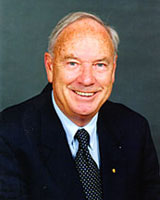
26 February 1929–15 December 2014.
Once more unto the breach, dear friends, once more,
Or close the wall up with our English dead!
In peace there's nothing so becomes a man
As modest stillness and humility,
But when the blast of war blows in our ears,
Then imitate the action of the tiger:
Stiffen the sinews, summon up the blood.— King Henry, Henry V (Shakespeare)[1]
Donald Metcalf – Don to most everyone with whom he worked – was a colossus of science who, working at the Walter and Eliza Hall Institute and supported by the Cancer Council of Victoria from 1954 to 2014, stood astride the world of haematology (the study of blood cells) for 60 years.
The achievements of Don, the scientist, are legion. Don introduced cancer research to the Walter and Eliza Hall Institute at a time when its Director, the Nobel Prize winner Sir Frank MacFarlane Burnet, viewed cancer as an "inevitable disease", with "anyone who wants to do cancer research, either a fool or a rogue".
Don politely ignored him.
Studying leukaemia in 1964, Don and Ray Bradley, from The University Of Melbourne, discovered it was possible to grow bone marrow cells in plates of partly set agar jelly. Don's genius lay not in this breakthrough, but in the realisation that it could be used to understand the cellular basis of blood cell production and to discover the hormones, which he named colony-stimulating factors, that regulate blood cell production in the body.
Don worked single-mindedly on this theme for the next 50 years. He characterised blood stem cells and their daughters cells, which are committed to producing the multiple types of white blood cells that fight infection and prevent bleeding. In doing so he made the blood cell system the 'poster child' of medical research and shone a light into the darkness for those who followed him to work on understanding other tissues such as the breast, skin and colon.
Don also understood his limitations. Although he was comfortable with cells, he was wary of molecules such as DNA and protein. Nevertheless, Don knew he needed collaborators who would take him out his comfort zone and help him fulfill his ambition of delivering health benefits from his discoveries and so he assembled a team of researchers who worked with him for 40 years. Don's ability to identify a glimmer of talent in younger researchers and mold them into a cohesive, loyal and vibrant team that consistently came up with groundbreaking discoveries, was remarkable. Decades ahead of its time, his model of collaborative, multidisciplinary science shaped the culture of the Walter And Eliza Hall Institute and is now seen as almost mandatory if big problems are to be tackled and significant breakthroughs are to be made in medical science.
After two decades of dogged progress, Don and his team succeeded in the Herculean task of isolating four of the blood CSFs, which were present in tiny quantities in the body. Despite Don's profound fundamental discoveries, which shaped basic understanding of how blood cells are made and work, he always recognised and espoused the responsibility of medical research to help those suffering illness and disease. Isolation and cloning the CSFs paved the way for their mass-production and clinical testing. Don found that injection of the hormones into animals resulted in a rapid increase in the number of blood cells responsible for battling infection and he surmised that they might be used to help cancer patients overcome one of the major side effects of chemotherapy: a loss of white cells and susceptibility to life-threatening infection. Don's hunch about clinical use was proven true – over the past 20 years, more than 20 million cancer patients, including Spanish tenor José Carreras, have been treated with CSFs and, as a result, have been given the best possible chance of beating their cancer. CSFs are now standard treatment and every year the number of people alive because of Don's work grows. There can be no greater legacy for a medical researcher.
Remarkable though his scientific achievements were – more than 750 scientific papers, 21 patents and receipt of almost every major international prize in medical research, they give only a skeletal outline of the man.
Don was practical – he eschewed the modern trend of senior researchers to move permanently from the laboratory to oversee a large team from the safety of an office. He was a man of scientific action. Many a young researcher was left with ears ringing after a spray from Don that would make John Kennedy senior's 1971 half-time grand final address to his Hawthorn players ("At least DO SOMETHING! DO! Don't think, don't hope, do!") seem like polite encouragement.
Don was hard working. He led from the front and expected his team to follow. From the day he entered medical research, until he was diagnosed with cancer four months ago, he would begin work early, between 7.00 am and 7.30 am either doing experiments or writing scientific papers solidly until 5.30 pm; his only compromise being a lunchtime or mid afternoon finish on Saturday. Upon a new recruit starting in his unit, it was mandatory for them to meet with Don who, at least until the mid 1990s, would be smoking a cigar, and would lull you with a question like "have you had a good holiday" – inviting a response like, "yes thank you Professor Metcalf, I have had a lovely two weeks camping at Wilson's Promontory" – which was then followed by "excellent, that's the last holiday you will have for three years, get to work". And it was the last holiday you took, not because Don would stop you taking leave, but because his hard work was infectious and the lab would become your world.
Don was loyal. He was loyal to the Walter And Eliza Hall Institute – working there almost continuously for 60 years from 1954 to 2014, despite lucrative offers from all over the world. Don enjoyed the tyranny of distance, which he believed made it easier for Australian scientists to pursue highly original research, away from the latest trends and fads. Don was steadfastly loyal to the four directors, under whom he worked and sometimes disagreed. His attitude approached a US-style respect for the office of the President. Although deeply suspicious and somewhat intolerant of people he called "prancers" or "strutters" once you had proven yourself to be practical, thoughtful, reliable, hardworking and collaborative, you were 'in'. Being 'in' meant a draft of a scientific paper would come back from Don's office with more red ink than black type. It meant you could be mercilessly interrogated about your science during a seminar or excoriated over some minor antisocial laboratory behavior. Being 'in' meant you would be defended to the hilt in front of visitors or other groups. You became part of the team. There was no greater honour.
Don was human – he was no uncaring science machine. He loved banter over afternoon tea, often laughing until tears streamed down his face, at some silly anecdote or remark. He loved an annual week on the Sunshine Coast with his wife, which included body surfing, into his late 70s, on waves of any size. He enjoyed a meal and a glass of wine with friends. And more than anything he loved his family – his wife of more than 60 years, Josephine (Jo), his four daughters and his six grandchildren, meant everything to him. He knew, and often publicly acknowledged, that without them he would have achieved little of note.
Other than a bad back, which was exacerbated by endless hours, days, weeks, months and years bent at the microscope, Don enjoyed relative good health until August this year. Feeling under the weather, he went on leave hoping some time away from the laboratory would rejuvenate him. He returned feeling worse and was quickly diagnosed with metastatic pancreatic cancer. Knowing the likelihood of cure was not high, his priorities were to undertake some treatment to give him a few extra weeks or months so as to avoid letting down his collaborators and, most importantly, to spend as much time as possible with his beloved Jo and his daughters – but how to do both of these things? The solution for the scientist and family man until the end – have his microscope moved into his home. Don performed his last experiment in October and died surrounded by his family on 15 December 2014. He would have wanted it no other way.
About this memoir
This memoir was written by:
- Professor Douglas Hilton FAA, Director of The Walter and Eliza Hall Institute of Medical Research
- Professor Warren Alexander and Professor Nicos Nicola FAA, Heads of The Division of Cancer and Haematology, The Walter and Eliza Hall Institute of Medical Research
Notes
[1] This was one of Don's favorite passages, the other being Tennyson's The charge of the light brigade. Don's autobiography was entitled Summon up the blood: In dogged pursuit of the blood cell regulators (AlphaMed Press, Dayton, Ohio, USA, 2000. ISBN 1-880854-28-7).