


Professor

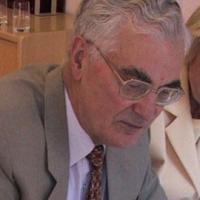
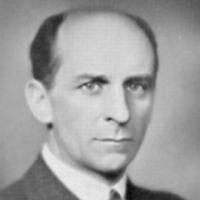
Mark Harrison

FAA

Mark Harrison
Image Description
Professor Harrison is a pioneer in the field of thermochronometry and its application to important questions of Earth history. His seminal contributions include: development of analytical methods and interpretive models that reveal continuous thermal and tectonic histories from geologic materials, leading a paradigm shift in our view of the evolution of the Himalayan mountain range, and making breakthrough observations of the earliest phase of Earth history that challenge longstanding conventional wisdom. In the course of his career he has mentored many promising young scientists, influenced national geoscience policy, and made his unique analytical facilities available to hundreds of external users.

Expertise type

  • Earth History
  • Earth Sciences
  • Geology
  • Thermochronometry

Please contact fellowship@science.org.au to request any updates to the data.

Professor

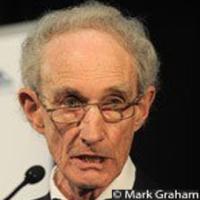
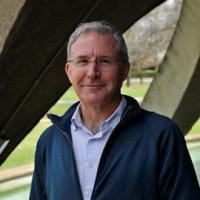
Tony Guttmann

FAA FTSE

Tony Guttmann
Image Description
Professor Guttmann is widely recognised internationally for his outstanding contributions to Computational Applied Mathematics. He is a major authority on the generation and analysis of power series expansions with applications in many areas of Science including statistical mechanics, enumerative combinatorics, fluid mechanics and polymer chemistry. He has developed new and irmovative algorithms and methods for the generation and analysis of series expansions that are now recognised as the 'industry standard'. He has recently made a major contribution to the study of the two-dimensional Ising model susceptibility in which the scaling structure has for the first time been convincingly revealed.

Expertise type

  • Combinatorics
  • Mathematics
  • Statistical Mechanics
  • Statistics

Please contact fellowship@science.org.au to request any updates to the data.

Professor

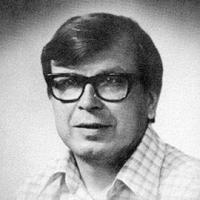
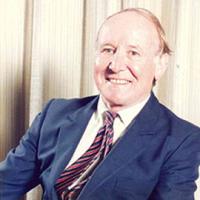
Bert Green

FAA

Bert Green
Image Description
Distinguished for his original contributions to the kinetic and quantum theory of liquids, electrodynamics, nuclear field theory and the theory of cosmic ray showers.

Expertise type

  • Mathematical Physics
  • Physics
  • Theoretical Physics

Please contact fellowship@science.org.au to request any updates to the data.

Professor

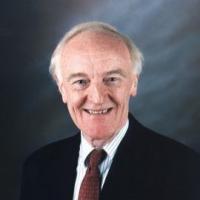
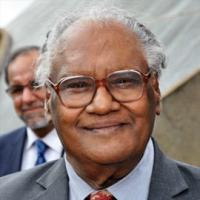
Jenny Graves

AC FAA

Jenny Graves
Image Description
Professor Graves has made seminal contributions to the understanding of mammalian genome organisation and evolution, exploiting the genetic diversity of Australia's unique mammals as a source of genetic variation to study highly conserved genetic structures and processes. She has used this strategy particularly to shed light on the organisation, function and evolution of mammalian genomes, and is particularly well known for her theories of the origin and evolution of human sex chromosomes and sex determining genes. In addition, she is well known for her classic contributions to our understanding of the molecular mechanism of X chromosome inactivation and the control of DNA synthesis in mammalian cells.

Fields of research

31 BIOLOGICAL SCIENCES
  • 3105 GENETICS
    • 310503 Developmental Genetics (incl. Sex Determination)
    • 310509 Genomics

For full list of research codes, please visit the ARC Website .

Expertise type

  • Animal Biology
  • Biology
  • Genomics
  • Mammalian Genetics

Please contact fellowship@science.org.au to request any updates to the data.

Professor

Bob Graham

AO FAA FAHMS

Bob Graham
Image Description
Professor Graham has been a pioneer in molecular cardiology through development of novel biochemical approaches and molecular strategies which have provided insights about adrenergic system function. His work on the action of prazosin in hypertension led to elucidation of the structure of a-adrenoceptors, the discovery of several subtypes, their coupled signal transduction pathways and some of their cardiovascular functions. This has influenced concepts of receptor activation theory and provided new approaches for drug design. Other insights have come from his work on regulation by the ANF gene. Overall, he has an outstanding capacity to integrate molecular biology and clinical paradigms.

Fields of research

32 BIOMEDICAL AND CLINICAL SCIENCES
  • 3201 CARDIOVASCULAR MEDICINE AND HAEMATOLOGY
    • 320101 Cardiology (incl. Cardiovascular Diseases)

For full list of research codes, please visit the ARC Website .

Expertise type

  • Cardiovascular Disease
  • Heart Disease
  • Hypertension
  • Medical Sciences

Please contact fellowship@science.org.au to request any updates to the data.

Professor

Chris Goodnow

FAA FRS

Chris Goodnow
Image Description
Professor Goodnow has pioneered the use of mouse molecular genetics for studying the mechanisms of immunological tolerance to self antigens. He devised a novel double-transgenic mouse strategy that revolutionised the field, confirmed the existence of B and T cell clonal energy, and revealed multiple processes for B cell and T cell clonal deletion in vivo. His work changed the conceptual framework of tolerance by showing that it is acquired through a series of regulatory checkpoints at many steps in lymphocyte maturation. The elucidation of these 'peripheral tolerance' checkpoints acting on mature and already-activated lymphocytes has fostered practical efforts to induce or restore tolerance in adults during transplantation and autoimmunity.

Expertise type

  • Genomics
  • Immunology
  • Medical Sciences
  • Phenomics

Please contact fellowship@science.org.au to request any updates to the data.

Professor

Justin Gooding

FAA FTSE FAHMS

Justin Gooding
Image Description
Justin Gooding uses electrochemistry, synthetic chemistry, interfacial physical chemistry, electron transfer theory, protein biochemistry, and cytochemistry, in order to modify surfaces at the molecular level to enable them to specifically recognise biochemical molecules and to transduce that biochemical information to the end user directly within biological fluids. He combines this experience in fundamental bioelectronics with chemometrics to fabricate practical biosensors. His outstanding achievements include the molecular wiring of the enzyme glucose oxidase (a diabetes monitor), molecular wiring of the redox protein cyctochrome-c to silicon, a peptide electrode array to detect bioactive metals, ‘DNA electrodes’, and porous photonic silicon with immobilised peptides able to detect protease activity – aiming for an infection-sensing chip.

Fields of research

34 CHEMICAL SCIENCES
  • 3406 PHYSICAL CHEMISTRY (INCL. STRUCTURAL)

For full list of research codes, please visit the ARC Website .

Expertise type

  • Biochemistry
  • Chemistry
  • Electrochemistry
  • Nanotechnology

Please contact fellowship@science.org.au to request any updates to the data.

Professor

Greg Goodall

FAA FAHMS

Greg Goodall
Image Description
Gregory Goodall is a world leader in the biology of RNA and cancer progression. He has combined innovation with thoroughness to make discoveries that open new areas in RNA biology for development and exploitation. He has made seminal contributions to the understanding of mechanisms governing gene activity in cancer, through control of mRNA activity, regulation of gene expression by microRNAs, and most recently his discovery of the regulation of circular RNAs. These breakthroughs have widespread implications for understanding gene regulation in biology, particularly in immunity and cancer.

Expertise type

  • Molecular Biology
  • Cell Biology
  • Cancer
  • Breast Cancer
  • Bioinformatics
  • Genomics
  • circRNA
  • Epithelial to Mesenchymal Transition (EMT)
  • Post-transcriptional Regulation
  • RNA
  • microRNA
  • RNA Sequencing
  • RNA Splicing
  • Cancer Metastasis
  • Medical Sciences

Please contact fellowship@science.org.au to request any updates to the data.

Professor

Ros Gleadow

FAA

Ros Gleadow
Image Description
Roslyn Gleadow is a world leader in the field of cyanogenesis, the process of cyanide release from stable bioactive compounds in plants in response to herbivory. Using cyanogenesis as a model, Gleadow has integrated opposing theories of plant defence into a single overarching theory demonstrating that these bioactive compounds are intricately involved in nitrogen management within the plant, and that this is the evolutionary driver, not herbivore resistance. Her work explains why so many crop plants are cyanogenic and helps predict changes in nutritional value of plants in response to environmental challenges. She actively translates her work to impact food security, human and environmental health, and crop adaptation.

Fields of research

30 AGRICULTURAL AND VETERINARY SCIENCES
  • 3004 CROP AND PASTURE PRODUCTION
    • 300404 Crop and Pasture Biochemistry and Physiology
31 BIOLOGICAL SCIENCES
  • 3108 PLANT BIOLOGY
    • 310806 Plant Physiology

For full list of research codes, please visit the ARC Website .

Expertise type

  • Food Security
  • Plant Biology
  • Plant Physiology
  • Biology

Please contact fellowship@science.org.au to request any updates to the data.

Professor

Andy Gleadow

AO FAA

Andy Gleadow
Image Description
Professor Gleadow has pioneered fission track analysis in Australia as a tool for geological dating and thermochronology. These techniques have been applied widely to studies of continental extension tectonics, hominid evolution and sedimentary basin analysis. Current developments include a revolutionary method for terrain imaging giving an unprecedented ability to reconstruct past landscapes on a continental scale. His work has established Australia clearly at the forefront of this field and has been recognised by the Royal Society of Victoria Research Medal, the Stillwell Medal of the Geological Society of Australia and the AINSE Gold Medal for Excellence in Research.

Expertise type

  • Continental Crust
  • Earth Sciences
  • Geochronology
  • Geology

Please contact fellowship@science.org.au to request any updates to the data.