


Professor

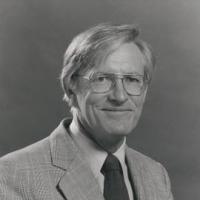
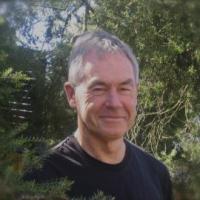
Lou Davies

AO FAA FTSE

Lou Davies
Image Description
Davies is distinguished for his contribution to the introduction of semiconductor technology to Australia. In his early career he made significant advances in the theories of zone melting and non-equilibrium carrier transport in semiconductors and led a group which fabricated the first junction transistors in Australia. In 1960 he founded a physics-oriented research laboratory in industry where he has been responsible for advances, leading to many patents, in solid-state and device physics (novel integrated circuits; discovery of a new type of electret). He initiated continuing industrial development of new technology and also generated a new research group in the University of New South Wales.

Expertise type

  • Physics
  • Solid State Physics

Please contact fellowship@science.org.au to request any updates to the data.

Professor

Nanda Dasgupta

FAA

Nanda Dasgupta
Image Description
Mahananda Dasgupta is a world-leader in measuring and understanding the complex quantum interactions occurring in collisions of heavy nuclei. Through the development in Australia of novel instrumentation and clever experimental and analysis techniques, Dasgupta made pioneering measurements of nuclear fusion with unmatched accuracy and precision. These have shown directly the fusion eigenchannels resulting from quantum superpositions, and allowed elucidation of the complex behaviour of weakly-bound nuclei, including astrophysically important lithium and beryllium isotopes. She led the development of a unique superconducting reaction product separator, generating worldwide interest, and recently pioneered introduction of the concept of quantum decoherence to nuclear fusion.

Expertise type

  • Fission
  • Fusion
  • Nuclear Physics
  • Physics

Please contact fellowship@science.org.au to request any updates to the data.

Professor

Norman Dancer

FAA

Norman Dancer
Image Description
Professor Dancer has made fundamental contributions to the theory of partial differential equations, non-linear analysis, and applications. His work has led to new areas of research in topics such as global bifurcation, symmetry breaking, degree theory, and infinite dimensional dynamical systems, in many cases introducing concepts from one area into another. He only works on difficult problems of some consequence, often motivated by and having consequences for physical and biological phenomena, such as catalysis theory and population systems with large interactions.

Expertise type

  • Differential Equations
  • Mathematics
  • Nonlinear Analysis
  • Pure Mathematics

Please contact fellowship@science.org.au to request any updates to the data.

Dr

Andrew Cuthbertson

AO FAA FTSE FAHMS

Andrew Cuthbertson
Image Description
Andrew Cuthbertson has made outstanding contributions to Australian science as an entrepreneur, specifically as Chief Scientific Officer and Executive Director of CSL Limited, an Australian-based global biopharmaceutical company specialising in therapeutic biological products for human health. Cuthbertson is also a powerful advocate of Australian science.

Fields of research

10 TECHNOLOGY 32 BIOMEDICAL AND CLINICAL SCIENCES
  • 3206 MEDICAL BIOTECHNOLOGY
    • 320601 Gene and Molecular Therapy
34 CHEMICAL SCIENCES
  • 3404 MEDICINAL AND BIOMOLECULAR CHEMISTRY
    • 340406 Molecular Medicine

For full list of research codes, please visit the ARC Website .

Expertise type

  • Research Commercialisation
  • Biotechnology
  • Clinical Translation
  • Influenza vaccines
  • Medical Sciences

Please contact fellowship@science.org.au to request any updates to the data.

Professor

Ross Crozier

FAA

Ross Crozier
Image Description

Expertise type

  • Evolution
  • Evolutionary Biology
  • Genetics
  • Biology

Please contact fellowship@science.org.au to request any updates to the data.

Professor

Max Crossley

FAA

Max Crossley
Image Description
Professor Crossley is an internationally recognised authority in the fields of porphyrin chemistry and molecular engineering. He has made seminal contributions to the understanding of porphyrin structure and has devised methods for controlled introduction of substituents into the porphyrin nucleus. More recently he has used this knowledge to design and synthesise large molecular and suprarnolecular assemblies that exploit the redox and photochemical properties of the porphyrins with the aim of producing molecular devices - a process often referred to as 'molecular engineering'. He has recently been awarded the highest research award of the Royal Australian Chemical Institute for research in Organic Chemistry, viz the Birch Medal in recognition of this work.

Expertise type

  • Chemistry
  • Molecular Electronics
  • Organic Chemistry
  • Porphyrins
  • Supramolecular Chemistry

Please contact fellowship@science.org.au to request any updates to the data.

Professor

Bob Crompton

AM FAA

Bob Crompton
Image Description
R.W. Crompton is internationally known for his experimental studies of electron collisional processes in gases and in particular for his measurements of diffusion and drift the precision of which is the result of a systematic attack, extending over many years, on sources of experimental error. The collision cross sections that he and his colleagues have derived from these measurements are now regarded as standard results against which a number of quantum mechanical calculations have been tested. His work is significant not only because the cross sections are precise and absolute but also because they relate to a range of very small energies inaccessible to other techniques.

Expertise type

  • Atomic Physics
  • Physics
  • Plasma Physics

Please contact fellowship@science.org.au to request any updates to the data.

Professor

Bill Compston

FAA FTSE FRS

Bill Compston
Image Description
Professor William (Bill) Compston is distinguished for his work in isotype geochemistry and isotopic age-dating and in developing geological and intrumental techniques for this purpose. He was responsible (jointly with P. M. Jeffery) for recognising that certain types of igneous rock may remain closed systems for rubidium and strontium during metamorphism and thus introducing the total-rock method of rubidium-strontium dating now so widely used. A second important discovery is that the age of deposition or diagenesis can be recorded in shales, thus opening up the possibility of dating Precambrian sediments by Rb-Sr methods. He has been the driving force behind the programme for dating the Australian Precambrian. On the instrumental side, he has developed statistical methods of determining Rb-Sr isochrons and has developed the important double-spike method for correcting mass-discrimination during the isotopic analysis of lead.

Expertise type

  • Moon rock
  • Apollo 11
  • Geochemistry
  • Geochronology
  • Astronomy
  • Earth Sciences
  • Solar System Evolution

Please contact fellowship@science.org.au to request any updates to the data.

Professor

Bob Clark

AO FAA

Bob Clark
Image Description
Professor Clark has co-authored 140 research publications. He has established two of the country's most advanced research laboratories, the National Pulsed Magnet Laboratory and Semiconductor Nanofabrication Facility both central to the new Australian Research Council SRC for Quantum Computer Technology of which he is Director. Research highlights include the first (indirect) measurement of fractional electronic charge in the fractional quantum Hall regime and the elucidation of the critical role played by electron spin (cited by RB Laughlin in his Nobel Prize review). Important experiments also include the optical detection of the fractional quantum Hall effect and electron solid (Wigner crystal).

Expertise type

  • Condensed Matter Physics
  • Nanotechnology
  • Physics
  • Quantum Computing

Please contact fellowship@science.org.au to request any updates to the data.

Dr

Greg Clark

AC FAA FTSE

Greg Clark
Image Description
Gregory Clark is a renowned scientist, technologist and businessman with an outstanding career both in Australia and internationally across a spectrum of industries from IT and communications to media, space and finance. His scientific contributions have been in the areas of solid-state physics, chip technology, neutrino physics, space technology, media digitization and cyber analysis. Clark has also continually supported student education and involvement.

Fields of research

10 TECHNOLOGY
  • 1005 COMMUNICATIONS TECHNOLOGIES
40 ENGINEERING 400606 Satellite Communications 46 INFORMATION AND COMPUTING SCIENCES
  • 4606 DISTRIBUTED COMPUTING AND SYSTEMS SOFTWARE
51 PHYSICAL SCIENCES
  • 5102 ATOMIC, MOLECULAR AND OPTICAL PHYSICS
510601 Nuclear Physics

For full list of research codes, please visit the ARC Website .

Expertise type

  • Applied Physics
  • High Performance Computing
  • ICT
  • Quantum Computing
  • Physics
  • Quantum Communication
  • Astronomical Instrumentation
  • Condensed Matter Physics
  • e-Research
  • Computer Science
  • Dark Matter
  • Materials Science
  • Nuclear Fusion
  • Physics Education
  • Electronics
  • Silicon and Germanium
  • Optical Communications

Please contact fellowship@science.org.au to request any updates to the data.