

Professor

Ron Ekers

AO FAA FRS

Ron Ekers
Image Description
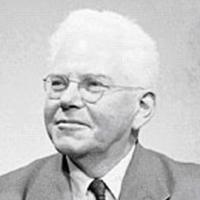
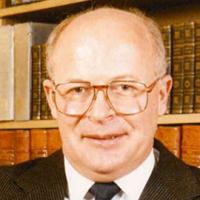
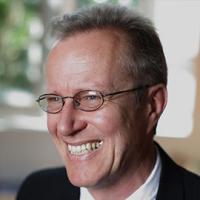
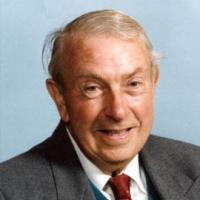
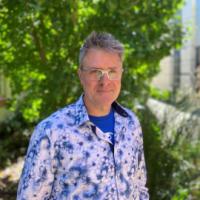
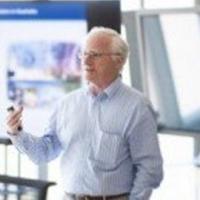
Professor Ronald Ekers has had an internationally distinguished career involving research in radio astronomy and radio astronomical techniques. He has been involved in a wide range of innovative experiments involving radio observations of the sun, planets, stars, galaxies, and quasars. These included the first measurements of the gravitational deflection of radio waves, the discovery of the hot gas spiralling around the nucleus of our galaxy and the discovery of a halo of cosmic ray electrons surrounding a spiral galaxy. Before returning to Australia as the foundation director of the CSIRO Australia Telescope National Facility, he was the director of the Very Large Array, operated by the U.S. National Radio Astronomy Observatory.

Fields of research

46 INFORMATION AND COMPUTING SCIENCES
  • 4602 ARTIFICIAL INTELLIGENCE AND IMAGE PROCESSING
  • 4603 COMPUTER VISION AND MULTIMEDIA COMPUTATION
    • 460306 Image Processing
50 PHILOSOPHY AND RELIGIOUS STUDIES
  • 5002 History and philosophy of specific fields
    • 500204 History and Philosophy of Science (incl. Non-historical Philosophy of Science
51 PHYSICAL SCIENCES
  • 5101 ASTRONOMICAL SCIENCES
    • 510101 Astrobiology
    • 510102 Astronomical instrumentation
    • 510103 Cosmology and Extragalactic Astronomy
    • 510106 High Energy Astrophysics; Cosmic Rays

For full list of research codes, please visit the ARC Website .

Expertise type

  • Astronomy
  • Cosmology
  • Physics
  • Radioastronomy

Please contact fellowship@science.org.au to request any updates to the data.

Professor

Ben Eggleton

FAA FTSE

Ben Eggleton
Image Description
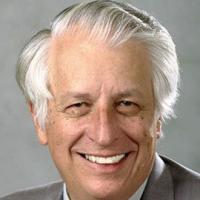
Ben Eggleton is a leader in integrated nanophotonics and nonlinear optical physics and has made seminal contributions to the fields of optics, photonics and optical communications technology. He has made significant advances in nonlinear optics, waveguides, soliton physics, and fundamentals and applications of slow light. He has made important contributions to optical communications technology with applications to ultrafast and ultra-broadband and energy efficient information signal processing devices that are chip-based. He established and shaped the research directions of the highly successful Centre of Excellence, CUDOS, and is working on creating a revolutionary photonic chip. He received the 2011 Eureka Prize for Leadership in Science.

Expertise type

  • Microwave Photonics
  • Optical Physics
  • Optical Fibres
  • Guided Wave Optics
  • Lasers
  • Nonlinear Optics
  • Nanoscience
  • Quantum Photonics
  • Optical Communications
  • Nanophotonics
  • Photonic Crystals
  • Silicon Photonics
  • Chalcogenide
  • Photonic Integration
  • Nanotechnology
  • Optics
  • Photonics
  • Physics

Please contact fellowship@science.org.au to request any updates to the data.

Professor

Barry Egan

FAA

Barry Egan
Image Description
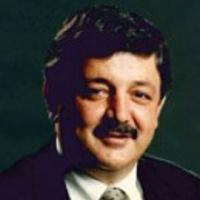
A lifelong study of the molecular details of the lysis-lysogeny switch in the temperate bacteriophage 186 has been a tour-de-force for Professor Barry Egan and his colleagues at Adelaide University. Not only have they described in exquisite detail each of the molecular components in the complex regulatory circuitry that controls these important alternate states of the virus, they have also corrected a major flaw in the existing model for lysis-lysogeny control in the bacteriophage λ paradigm, identified transcription interference as a particular and generic mechanism of regulation, and provided structural and genetic evidence to support the novel role of the 186 repressor. Their work is widely cited in major international journals and they have been invited to top-level meetings to present their results.

Expertise type

  • Biology
  • Molecular Biology
  • Recombinant DNA

Please contact fellowship@science.org.au to request any updates to the data.

Professor

Chris Easton

FAA

Chris Easton
Image Description
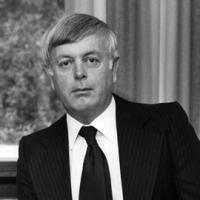
Professor Easton has made important contributions to two areas of chemistry, which have stimulated academic and commercial activity, nationally and internationally. In one, his work on biochemical reaction mechanisms and involving amino acid free radicals in particular has established ground rules to explain metabolic processes, provide synthetic methods and control physiological disorders. With the other, dealing with supramolecular chemistry and molecular recognition, and based primarily on modified cyclodextrins as templates, he has shown how molecular hosts can be designed and constructed to control chemical processes and to produce novel catalysts and molecular reactors, as well as agents to facilitate the administration of pharmaceuticals.

Expertise type

  • Chemistry
  • Free Radicals
  • Organic Chemistry
  • Supramolecular Chemistry

Please contact fellowship@science.org.au to request any updates to the data.

Professor

Frank Dwyer

FAA

Frank Dwyer
Image Description
Distinguished for his contributions to inorganic chemistry and particularly for his very extensive researches on organo-metallic complexes. Through these he has advanced analytical procedures, elucidated the isomerism of the triazenes and their metal derivatives, added substantially to the chemistry and stereochemistry of the Group VIII metals, and studied electron transfer reactions. Latterly in collaboration with groups of biologists he has sought to examine the function of metal complexes in biological systems.

Expertise type

  • Bioinorganic Chemistry
  • Chemistry

Please contact fellowship@science.org.au to request any updates to the data.

Professor

Chris Dickman

FAA

Chris Dickman
Image Description
Christopher Dickman is an ecologist, internationally recognised for his contributions to our understanding of terrestrial vertebrates. His pioneering research shows that competition, predation and indirect interactions have more profound and pervasive effects on mammalian population dynamics than previously thought, and has transformed thinking about how these interactions can be harnessed in programs of threatened species conservation and pest control. His ground-breaking research on interactions in arid ecosystems has uncovered novel processes including, long-distance movements, widespread omnivory and extreme behavioural opportunism that are unique to Australian mammals. His work has challenged and redirected thinking that desert organisms show global convergence in their adaptations.

Fields of research

31 BIOLOGICAL SCIENCES
  • 3103 ECOLOGY
    • 310308 Terrestrial Ecology
41 ENVIRONMENTAL SCIENCES
  • 4102 ECOLOGICAL APPLICATIONS
    • 410202 Biosecurity science and invasive species ecology
  • 4104 ENVIRONMENTAL SCIENCE AND MANAGEMENT
    • 410401 Conservation and biodiversity

For full list of research codes, please visit the ARC Website .

Expertise type

  • Biodiversity
  • Conservation
  • Ecosystems
  • Invasive Species
  • Evolution
  • Marsupials
  • Ecology
  • Arid Lands
  • Behaviour
  • Environmental Management
  • Applied Ecology
  • Deserts
  • Drylands
  • Ecological Interactions
  • Lizards
  • Mammals
  • Predator-prey Interactions
  • Predators
  • Biology

Please contact fellowship@science.org.au to request any updates to the data.

Professor

Bob Dewar

FAA

Bob Dewar
Image Description
Dr. Dewar has made original contributions to the basic theory of nonlinear processes in plasmas using novel mathematical methods. In particular he developed a Lagrangian method for calculating the interaction between a wave and an inhomogeneous background fluid which has also found application in other areas of fluid dynamics, and he pioneered the use of Hamiltonian perturbation theory for simplifying the description of particle motions in the presence of large amplitude plasma waves. He has also contributed significantly to the development of analytical and computational techniques for assessing the stability of toroidal, magnetically confined fusion plasmas.

Fields of research

49 MATHEMATICAL SCIENCES
  • 4901 APPLIED MATHEMATICS
    • 490109 Theoretical and Applied Mechanics
  • 4902 MATHEMATICAL PHYSICS
    • 490203 Mathematical aspects of classical mechanics, quantum mechanics and quantum infor
51 PHYSICAL SCIENCES
  • 5102 ATOMIC, MOLECULAR AND OPTICAL PHYSICS
  • 5106 NUCLEAR AND PLASMA PHYSICS
    • 510602 Plasma Physics; Fusion Plasmas; Electrical Discharges

For full list of research codes, please visit the ARC Website .

Expertise type

  • Fusion
  • Physics
  • Plasma Physics
  • Thermodynamics

Please contact fellowship@science.org.au to request any updates to the data.

Dr

Liz Dennis

AC FAA FTSE

Liz Dennis
Image Description
Elizabeth Dennis has made distinguished contributions in plant molecular biology, in the analysis of control of gene expression, defining DNA sequence elements and transacting promoter proteins which mediate plant responses to stress environments. She also described aspects of transposable element behaviour including a methylation cycle capable of controlling transposition of the maize Ac transposon. With her colleagues she first demonstrated the role of methylation in plant development, showing that it is involved in the control of flowering initiation in vernalization­sensitive plants. Recently Dennis found that haemoglobin is a regular component of plant metabolism and has isolated the primitive haemoglobin gene of the plant kingdom.

Expertise type

  • Biology
  • Gene Regulation
  • Molecular Biology
  • Plant Biology

Please contact fellowship@science.org.au to request any updates to the data.

Professor

Bob Delbourgo

FAA

Bob Delbourgo
Image Description
Professor Delbourgo has made important contributions to a wide range of areas in theoretical physics, both in Europe and since coming to Australia. In particle physics in collaboration with Abdus Salam he was one of the leading developers of the use of non compact groups for classifying elementary particles and of the study of non polynomial Langrangian with particular reference to gravitation and chiral theories. More recently he has created a very active group in Hobart studying the non perturbative use of gauge symmetries, the properties of supersymmetric algebra and the dynamics of chaos.

Expertise type

  • Particle Physics
  • Physics
  • Quantum Physics

Please contact fellowship@science.org.au to request any updates to the data.

Professor

Tom Davis

FAA

Tom Davis
Image Description
Tom Davis uses polymer science, synthetic chemistry, nanotechnology, pharmaceutical science, protein biochemistry, and nanomedicine in his research on free radical polymerisation. His early work was at the cutting edge of free radical polymerisation kinetics, using lasers to measure the speed at which synthetic chain molecules grow. He also made major contributions to understanding mechanisms of free radical chain reactions. Davis applied his fundamental understanding to build responsive nanostructures for advanced lens manufacture and drug delivery. Most recently he invented a new polymerisation synthetic approach to make sequence controlled synthetic chains with a complexity approaching peptides, and he has designed polymeric nanostructures to mediate amyloid formation.

Fields of research

10 TECHNOLOGY 31 BIOLOGICAL SCIENCES
  • 3106 INDUSTRIAL BIOTECHNOLOGY
    • 310607 Nanobiotechnology
32 BIOMEDICAL AND CLINICAL SCIENCES
  • 3206 MEDICAL BIOTECHNOLOGY
    • 320604 Nanomedicine
34 CHEMICAL SCIENCES
  • 3403 MACROMOLECULAR AND MATERIALS CHEMISTRY
    • 340306 Polymerisation Mechanisms
40 ENGINEERING
  • 4018 NANOTECHNOLOGY

For full list of research codes, please visit the ARC Website .

Expertise type

  • Polymers
  • Polymerization
  • Free Radicals
  • Nanomedicine
  • Chemistry
  • Molecular Imaging
  • Pharmaceutical Sciences
  • Soft Materials

Please contact fellowship@science.org.au to request any updates to the data.