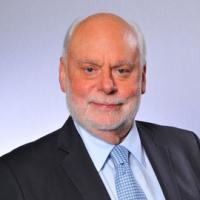


Emeritus Professor

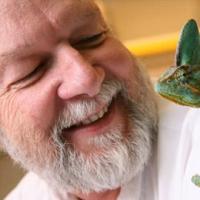
Mark Howden

AC FAA FTSE

Mark Howden
Image Description
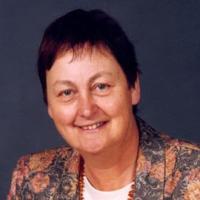
Professor Howden is a globally recognised scientist, whose work addresses comprehensively both climate change issues and their translation into real-world impact. His research covers the spectrum of the underlying science of climate change and variability, the impact of these and adaptation responses, emission inventory methods and sustainable emission-reduction options as well as methods and ethics of research translation. This breadth of expertise allows him to provide integrative science and solutions that have had broad policy and practice impact. Professor Howden’s pre-eminence in the field has resulted in an unsurpassed record of being selected for 28 significant IPCC (Intergovernmental Panel on Climate Change) roles since 1991.

Fields of research

37 EARTH SCIENCES 370202 Climatology (excl. Climate Change Processes) 41 ENVIRONMENTAL SCIENCES 83 ANIMAL PRODUCTION AND ANIMAL PRIMARY PRODUCTS
  • 8398 Environmentally Sustainable Animal Production

For full list of research codes, please visit the ARC Website .

Expertise type

  • Agricultural Science
  • Biology
  • Climate Adaptation
  • Climate Variability
  • Applied Ecology
  • Climate Change

Please contact fellowship@science.org.au to request any updates to the data.

Professor

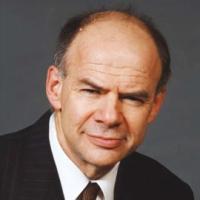
Adrian Horridge

FAA FRS

Adrian Horridge
Image Description
Professor Adrian Horridge is distinguished for the combination of electron microscopy, neuro-anatomy and electrophysiological analyses of coordination in invertebrates. Early examples were the analysis of medusae, the first electrophysiological demonstration of pitch discrimination in an insect, the discovery of a preparation for the study of learning by the ventral cord of a headless insect and the discovery that chaetognatha feed by vibration receptors. Recently work on the compound eye led to the discovery of an optokinetic response to the sun's movement, several new types of insect retina and a study of the accuray of synaptic connections in the projection of the fly's eye. This varied experience, and its philosophical basis, is summarised in a recent book "Interneurons". Also a book with T. H. Bullock is the standard reference work on invertebrate nervous systems.

Expertise type

  • Invertebrate Vision
  • Biology
  • Electrophysiology
  • Neuroscience
  • Vision Science
  • Bee vision

Please contact fellowship@science.org.au to request any updates to the data.

Professor

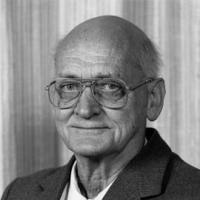
Eddie Holmes

FAA FRS

Eddie Holmes
Image Description
Professor Edward Holmes is a world-leading authority on viral evolution whose work has transformed his field. He has revealed the fundamental processes of microbial evolution, determined the origin and evolution of major human pathogens including influenza, dengue and the AIDS virus, and shown how genetic and epidemiological data can be combined to radically improve our understanding of disease evolution. Edward’s work has enabled more accurate assessments of what types of viruses, and from which animal species, are most likely to emerge in human populations, and how they will evolve in response to our attempts to control them.

Expertise type

  • Evolutionary Epidemiology
  • Medical Sciences
  • Molecular Genetics
  • Virology

Please contact fellowship@science.org.au to request any updates to the data.

Professor

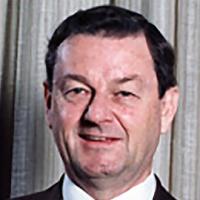
David Hirst

FAA

David Hirst
Image Description
David Hirst is one of the most original and productive scientists working in the fields of the innervation of smooth muscle and the physiological mechanisms that control its contractility. He has made major contributions to understanding the mechanisms underlying transmission at the junctions formed by autonomic nerves with smooth muscle and cardiac muscle. The unifying concept from Hirst's research is that receptors activated by neurally released transmitters act differently on target tissue compared with receptors activated by the same substances but not located subsynaptically. This has changed the traditional concept that autonomic nerves supply transmitter non-specifically to smooth muscle membrane.

Expertise type

  • Medical Sciences
  • Nervous System
  • Pharmacology
  • Physiology

Please contact fellowship@science.org.au to request any updates to the data.

Professor

Doug Hilton

AO FAA FTSE FAHMS

Doug Hilton
Image Description
Dr Hilton has made several seminal discoveries toward understanding molecular genetic regulation of blood cell formation. He purified the cytokine Leukaemia Inhibitory Factor (LIF) showing it to suppress the differentiation of embryonic stem cells, resulting in LIF's use in the production of genetically modified mice. He also discovered a novel family of proteins, the suppressors of cytokine signalling, and in doing so, spawned an entirely new field of research concerned with the attenuation of signal transduction. Dr Hilton is one of the scientists of his generation, a wonderful ambassador for the Australian research community and would make a first-class academician.

Expertise type

  • Autoimmune Disease
  • Blood Cells
  • Genomics
  • Medical Sciences

Please contact fellowship@science.org.au to request any updates to the data.

Dr

TJ Higgins

AO FAA FTSE

TJ Higgins
Image Description

Dr Higgins’ research provides an outstanding example of distinguished contributions to basic science leading to a range of applications in agriculture which are of national and global significance. He is widely recognized internationally for his contributions to our understanding of the biology and molecular genetics of the storage proteins formed in developing seeds and the regulation of expression of their coding genes. These studies, combined with his research on transgene technology, provided the basis for generating transgenic crops and pastures engineered to provide critical novel features. These include plants with either improved nutritional quality or resistance to viruses or insects.

Fields of research

10 TECHNOLOGY 3001 AGRICULTURAL BIOTECHNOLOGY
  • 300105 Genetically Modified Field Crops and Pasture
31 BIOLOGICAL SCIENCES
  • 3108 PLANT BIOLOGY
    • 310806 Plant Physiology

For full list of research codes, please visit the ARC Website .

Expertise type

  • Biology
  • Biotechnology
  • Plant Biology
  • Seed Biology

Please contact fellowship@science.org.au to request any updates to the data.

Professor

Chris Heyde

AM FAA FASSA

Chris Heyde
Image Description
Dr C. C. Heyde is an internationally recognised authority on the classical theory of probability. His principal contributions are concerned with the problems of convergence to normality, laws of large numbers and martingale theory. He has also worked on renewal theory, queueing theory and stochastic models for chemical processes. In the last ten years he has published a large body of work which shows great originality and technical power.

Expertise type

  • Probability
  • Queueing Theory
  • Mathematics
  • Martingale theory
  • Probability Theory
  • Stochastic Modelling

Please contact fellowship@science.org.au to request any updates to the data.

Professor

Bill Heath

FAA

Bill Heath
Image Description
Professor Heath has uncovered basic rules on how an immune response to pathogens is initiated. He studied interactions between dendritic cells, which collect, process and present antigens, and T cells which respond and destroy infected cells. He found that particular types of dendritic cells are specialised for activating killer T cells, but these dendritic cells must first be “licensed” or activated by helper T cells. He has also shown how the balance is changed in a non-infected individual, so the same system avoids responding to the bodies’ own tissues.

Fields of research

32 BIOMEDICAL AND CLINICAL SCIENCES
  • 3204 IMMUNOLOGY

For full list of research codes, please visit the ARC Website .

Expertise type

  • Immunology
  • Medical Sciences
  • Microbiology
  • T Cells

Please contact fellowship@science.org.au to request any updates to the data.

Professor

Tom Healy

AO FAA FTSE

Tom Healy
Image Description
Professor T. W. Healy is distinguished for his contribution in the fields of surface and colloid chemistry. He has published extensive definitive experimental information concerning the adsorption of metal ions at the oxide solution interface and for the charge, potential characteristics and ion distribution at surfaces in aqueous solutions for a variety of circumstances. This work in conjunction with his theoretical studies has considerably extended our knowledge of the electrical double layer at interfaces. Professor Healy's companion studies on the nature of adsorbed water and his more recent electro­chemical studies on zinc and other sulphides are an important contribution to our understanding of wettability and flotation. Although Professor Healy's studies have been carried out using a variety of adsorbents and adsorbates they have an impressive scientific unity; they also constitute a major contribution to the understanding of important industrial processes involving solid suspensions.

Expertise type

  • Chemistry
  • Colloids
  • Nanotechnology
  • Physical Chemistry

Please contact fellowship@science.org.au to request any updates to the data.

Dr

Hal Hatch

AM FAA FRS

Hal Hatch
Image Description
Dr. Hatch is distinguished for his contributions to the pathway of carbon dioxide fixation in plants. His studies have established that in several species of tropical plants the metabolic steps leading to photosynthetic carbon dioxide assimilation differ in a major way from those previously thought to be universal in nature. The unique reactions of this modified process serve to fix carbon dioxide into c4-dicarboxylic acids, which then act to transport carbon dioxide to the site of operation of the Calvin cycle. These investigations have been the stimulus for many studies which are leading to an understanding of the unique physiological and ecological features of plants with the c4-pathway of photosynthesis.

Expertise type

  • Biochemistry
  • Biology
  • Photosynthesis
  • Plant Biology

Please contact fellowship@science.org.au to request any updates to the data.