

Professor

Jim Williams

FAA

Jim Williams
Image Description
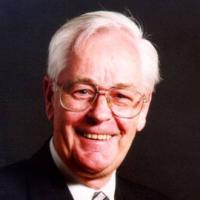
Professor Williams is one of the pioneers of modern atomic physics. He has made very significant experimental studies of atomic structure and scattering phenomena at the most fundamental levels. Many of the contributions have been the first, and in some cases are the only measurements of fundamental atomic scattering quantities. The experimental approaches have led to new techniques in atomic physics and to an increased understanding of the mechanisms of various collision processes, indicating the ways in which electron correlations determine atomic structure and scattering dynamics.

Expertise type

  • Atomic Physics
  • Molecular Physics
  • Physics

Please contact fellowship@science.org.au to request any updates to the data.

Emeritus Professor

Jim Williams

AO FAA FTSE

Jim Williams
Image Description
Professor Williams, who will take up the position of Director of the ANU Research School of Physical Sciences and Engineering at the end of 2002, has an international reputation for his work on the physics of those materials that form the basis of the semiconductor industry, and particularly on the use of ion-beam methods to characterise and modify the properties of those materials. He has established world-class facilities for this work and has built a large and diverse team of researchers at the Australian National University. He also collaborates extensively with colleagues in laboratories overseas. He is active in pursuing the industrial applications of discoveries in this field.

Fields of research

10 TECHNOLOGY 40 ENGINEERING
  • 4008 ELECTRICAL ENGINEERING
  • 4016 MATERIALS ENGINEERING
    • 401604 Elemental Semiconductors
  • 4018 NANOTECHNOLOGY
    • 401807 Nanomaterials
400910 Photovoltaic devices (solar cells) 51 PHYSICAL SCIENCES
  • 205 OPTICAL PHYSICS
  • 5102 ATOMIC, MOLECULAR AND OPTICAL PHYSICS
    • 510204 Photonics, optoelectronics and optical communications
  • 5104 CONDENSED MATTER PHYSICS
    • 510407 Surfaces and Structural Properties of Condensed Matter
  • 5199 OTHER PHYSICAL SCIENCES
511003 Synchrotrons

For full list of research codes, please visit the ARC Website .

Expertise type

  • Condensed Matter Physics
  • Optoelectronics
  • Nanomaterials
  • Photonics
  • Semiconductors
  • Applied Physics
  • Materials
  • Surfaces
  • Silicon Photonics
  • Materials Characterisation
  • Materials Processing
  • Nanoscience
  • High Pressure Physics
  • Materials Science
  • Physics
  • Silicon and Germanium

Please contact fellowship@science.org.au to request any updates to the data.

Professor

Bruce Wild

FAA

Bruce Wild
Image Description
Dr Wild has achieved international recognition for his research in inorganic chemistry, especially for his major contribution to the design and syntheses of chiral phosphines and arsines for use as auxiliaries for asymmetric syntheses and as probes of inorganic stereochemistry. His work is widely recognised as being both innovative and extremely elegant. He has also made important contributions to other areas. These include the synthesis of new 3- and 4-membered phosphorus and arsenic heterocycles, the self-assembly of novel metal-containing double helices and related complexes incorporating poly (tertiary phosphines and arsines) as well as research into the biotransformation of arsenic.

Expertise type

  • Chemistry
  • Inorganic Chemistry
  • Main Group Metals
  • Organometallic Chemistry

Please contact fellowship@science.org.au to request any updates to the data.

Dr

Max Whitten

AM FAA

Max Whitten
Image Description
Whitten has made distinguished contributions in insect, population and evolutionary genetics and developed novel methods of insect pest control based on genetic manipulation. His applied objectives are based on fundamental contributions he has made. Under his leadership, genetic methods developed to control Australian sheep blowfly are the most advanced in the world. His analysis of the genetics of pesticide resistance in Lucilia is the most comprehensive study for any insect pest. He has concentrated on developing strategies to minimise genetically-based resistance in pests and has shown the value of genetic modifications to beneficial natural enemies of pest species.

Expertise type

  • Biology
  • Entomology
  • Insects
  • Science Policy

Please contact fellowship@science.org.au to request any updates to the data.

Professor

Jim Whelan

FAA

Jim Whelan
Image Description
Mitochondria are essential organelles in plant cells involved in energy transduction and metabolism. James Whelan has carried out foundation and transformational studies on mitochondria in plant cells by defining the mechanisms and regulation of mitochondrial signalling and biogenesis. These studies have redefined mitochondria from being simply a metabolic hub to that of a central sensor and stress-signalling hub that is critical for plant responses to the environment. His publications, postgraduate student success, early-career researcher mentorship, institutional leadership and international collaborations testify to his international standing as a pre-eminent researcher in mitochondrial biology, an educator and an enthusiast for plant science.

Fields of research

31 BIOLOGICAL SCIENCES
  • 3108 PLANT BIOLOGY

For full list of research codes, please visit the ARC Website .

Expertise type

  • Phenomics
  • Biology
  • Plant Nutrition
  • Nonlinear Optics
  • RNA Regulation
  • Plant Cell Biology
  • Crop Science
  • Seed Biology
  • Plant Biology
  • Botany
  • Cell Biology
  • Plant Physiology
  • RNA Sequencing
  • Bioenergetics
  • Mitochondrial Function
  • Molecular Biology
  • Genomics
  • mRNA decay
  • Gene Expression
  • Plant Molecular Genetics
  • Transcriptomics
  • Retrograde Signaling

Please contact fellowship@science.org.au to request any updates to the data.

Professor

Tony Weiss

AM FAA FTSE FAHMS

Tony Weiss
Image Description
Professor Anthony Weiss is an outstanding multifaceted biomedical scientist, mentor and translational leader. He is the McCaughey Chair in Biochemistry and NHMRC Leadership Fellow at the University of Sydney, and the world leader in molecular studies of human tropoelastin and its assembly to make three-dimensional elastin protein biomaterials. His many international patents drove commercial success in one of Australia’s largest healthcare transactions. Professor Weiss’s many innovation awards include the Prime Minister’s Prize, NSW Premier’s Prize, Eureka Prize, Australian Academy of Technological Sciences & Engineering’s Clunies Ross Award, and Australian Academy of Science’s Ian Wark Medal.

Expertise type

  • Tissue Engineering
  • Extracellular matrix
  • Biology
  • Biomaterials
  • Research Commercialisation

Please contact fellowship@science.org.au to request any updates to the data.

Dr

Bob Watts

FAA FTSE

Bob Watts
Image Description
Professor Watts has made outstanding contributions to fields as disparate as liquid state theory, collisional energy transfer and sputtering dynamics. He was the first to show that integral equation methods are capable of describing the gas-liquid coexistence curve. He was one of the first to develop intermolecular potential surfaces of spectroscopic accuracy. With Barker he developed the benchmark argon potential; he developed models for water, benzene, ammonia and methane. These models account for the thermodynamic, transport and spectroscopic properties in all three phases. Watts has exploited state-selected, crossed beam experimental methods to refine interintramolecular potential functions and dynamics.

Expertise type

  • Chemical Physics
  • Chemistry
  • Computational Chemistry
  • Physical Chemistry

Please contact fellowship@science.org.au to request any updates to the data.

Professor

Ole Warnaar

FAA

Ole Warnaar
Image Description
Warnaar has made several groundbreaking contributions to the fields of solvable lattice models, special functions, q-series and algebraic combinatorics. He is the discoverer of the first solvable two-dimensional lattice model in the presence of a symmetry breaking magnetic field and a pioneer in the theory of elliptic hypergeometric series. Together with A Schilling he discovered the generalised Kostka-Foulkes polynomials and supernomial coefficients, and in joint work with G Andrews and Schilling he provided the first examples of Rogers-Ramanujan identities for the Lie algebra A 2.

Expertise type

  • Algebraic Combinatorics
  • Mathematics
  • Pure Mathematics
  • Representation Theory

Please contact fellowship@science.org.au to request any updates to the data.

Professor

Matt Wand

FAA

Matt Wand
Image Description
Wand has made major, highly influential contributions to statistical methods for estimating mathematical functions. His field, variously known as nonparametric or flexible function estimation, or statistical smoothing, focuses on estimating functions under minimal structural assumptions. He has contributed substantially at all levels: to theory, methodology, software, education, and especially to applications. In terms of theory he has introduced techniques for exact risk analysis, made very influential contributions to multivariate local polynomial modelling, and developed methods for smoothing-parameter choice. His statistical software is widely used, and forms part of standard statistical packages. The many applications on which he has worked include the development of new, geoadditive technologies for epidemiology.

Fields of research

49 MATHEMATICAL SCIENCES
  • 4905 STATISTICS
    • 490509 Statistical Theory
    • 490599 Statistics not elsewhere classified

For full list of research codes, please visit the ARC Website .

Expertise type

  • Mathematics
  • Multivariate Data Sets
  • Statistical Methods for Streaming Data
  • Statistics

Please contact fellowship@science.org.au to request any updates to the data.

Professor

Bob Vincent

AM FAA

Bob Vincent
Image Description
Professor Vincent is internationally renowned for his fundamental studies of the atmosphere. His work on the nature and significance of atmospheric waves is especially important, leading to an invitation to lead an international research project the World Climate Research Program. In 2002 Professor Vincent was invited to present the R.H. Clarke Prize Lecture of the Australian Meteorological and Oceanographic Society. He has a major role in the governing bodies of four international organisations promoting research in the atmosphere and the solar-terrestrial environment. In 1999 he was honoured by election as Vice-President of both IAMAS and SCOSTEP. Professor Vincent is an outstanding candidate for election to the Academy.

Fields of research

37 EARTH SCIENCES
  • 3701 ATMOSPHERIC SCIENCES

For full list of research codes, please visit the ARC Website .

Expertise type

  • Atmospheric Science
  • Earth Sciences
  • Ionospheric Physics
  • Meteorology

Please contact fellowship@science.org.au to request any updates to the data.