

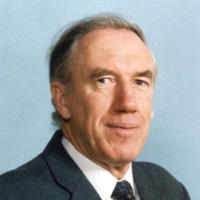

Professor

Rod Rickards

FAA

Rod Rickards
Image Description
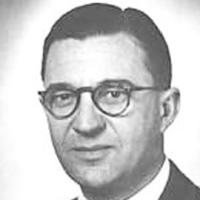
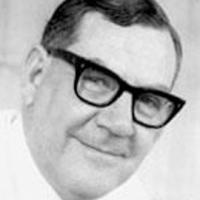
Rickards has made structural, stereochemical, biochemical and synthetic contributions to the chemistry of biologically active natural products. Among the most significant compounds studied are the macrolide, glutarimide and ansamycin antibiotics from soil microorganisms of the genus Streptomyces. Research on the complex macrolide lactones, which are important in human antibacterial and antifungal therapy, led in 1970 to the definition of the structure of nystatin, the first of the polyene macrolides to be discovered and used clinically for over twenty-five years. Recent work includes the synthesis from phenol of key chiral intennediates in the preparation of the biologically important prostaglandins.

Expertise type

  • Bioorganic chemistry
  • Chemistry

Please contact fellowship@science.org.au to request any updates to the data.

Dr

Lloyd Rees

CBE FAA

Lloyd Rees
Image Description
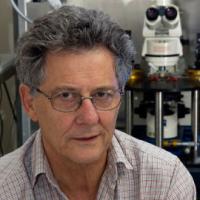
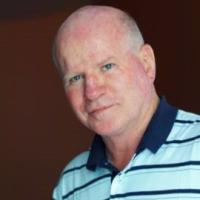
Distinguished for his work along the following main lines: 1. Spectroscopic studies of the properties of molecules in perturbing environments (e.g., in solution) in an effort to understand the environmental influences on physical and chemical behaviour. 2. Studies of the optical, structural and equilibrium properties of defect solids to provide an understanding of the chemistry of the solid state. 3. The development of high-resolution electron diffraction and a study of fine structural effects to elucidate the mechanism of electron scattering by solids, to apply the method in structure analysis and to obtain information on the behaviour of extremely small crystals.

Expertise type

  • Chemistry
  • Chemical Physics

Please contact fellowship@science.org.au to request any updates to the data.

Professor

Steve Redman

AM FAA

Steve Redman
Image Description
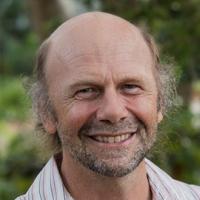
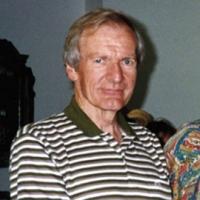
Redman is distinguished for original and highly skilful advances in the quantitative analysis of transmission mechanisms between nerve fibres and their target cells. Applying his background in mathematics and electrical engineering, he solved the equations describing spread of excitatory current in complex nerve and muscle cells, and developed new procedures for analysing their passive electrical properties, including those of the geometrically highly complex spinal motoneurone. By recording responses of one motoneurone to impulses in a single presynaptic nerve fibre, both subsequently labelled and visualized histochemically, he has succeeded in relating the precise location and number of the endings of a single presynaptic fibre to the quantitatively analysed excitatory action of single impulses therein. This unique achievement, together with his earlier mathematical modelling, is recognized internationally and qualifies Redman as a leading authority on excitatory synaptic transmission.

Expertise type

  • Nervous System
  • Brain Function
  • Memory
  • Medical Sciences
  • Neuroscience
  • Spinal Cord Circuitry
  • Synapses

Please contact fellowship@science.org.au to request any updates to the data.

Professor

Tim Ralph

FAA

Tim Ralph
Image Description
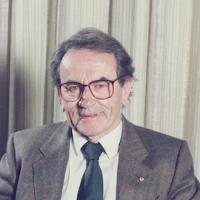
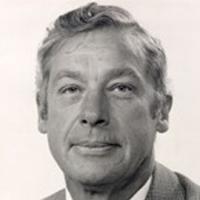
Timothy Ralph is internationally acclaimed for his pioneering theories in quantum information science. These include the theoretical development of secure communication systems based on quantum key distribution, and the demonstration of multi-qubit optical quantum computing algorithms. Ralph has instigated a whole new field of continuous variable quantum key distribution, with influential new techniques in relativistic quantum information. His theoretical proposals have led to the world’s first demonstration of a two qubit optical gate and subsequent demonstrations of multi-qubit behaviour. As a highly sought after theorist internationally, Ralph is well-known for his foundational theories and his ability to work closely with experimentalists to realise their outcomes.

Fields of research

51 PHYSICAL SCIENCES
  • 205 OPTICAL PHYSICS
  • 5101 ASTRONOMICAL SCIENCES
    • 510105 General Relativity and Gravitational Waves
  • 5102 ATOMIC, MOLECULAR AND OPTICAL PHYSICS
    • 510202 Lasers and Quantum Electronics
  • 5108 QUANTUM PHYSICS
    • 510803 Quantum Information, Computation and Communication
    • 510804 Quantum optics and quantum optomechanics

For full list of research codes, please visit the ARC Website .

Expertise type

  • Quantum Optics
  • Quantum Information
  • Quantum Computing
  • Quantum Communication
  • Relativistic Quantum Field Theory
  • Relativistic Quantum Information
  • Physics

Please contact fellowship@science.org.au to request any updates to the data.

Professor

Jim Quirk

AO FAA

Jim Quirk
Image Description
Professor James (Jim) Quirk is distinguished for his studies of the properties of soil which are determined by the presence of constituents of colloidal dimensions such as the clay minerals and certain metallic oxides. The properties which are of particular importance include aggregation, porosity, and permeability, and ionic absorption, desorption and exchange. He has paid special attention to the micro-crystalline structure of the clay minerals in so far as these have been revealed by absorption phenomena. Of particular interest has been the recognition of "domains" in these micro-structures. These concepts have been extended to the soil-plant root interface with reference to the movement of nutrients from the soil to the plant. His work is characterised by the use of modern theoretical and practical tools of research.

Expertise type

  • Chemistry
  • Clays
  • Physical Chemistry
  • Soil Science

Please contact fellowship@science.org.au to request any updates to the data.

Professor

Bob Pressey

FAA FRS

Bob Pressey
Image Description
Pressey is recognised internationally for establishing the field of systematic conservation planning and continues to be one of its leading innovators. He led a world-wide shift towards translating the field’s concepts and techniques into actions on the ground, facilitated by his unique combination of scientific leadership and agency experience. His main scientific contributions are: new concepts and techniques that have increased the effectiveness of conservation planning across the world; a long series of intellectual advances that have progressively defined best-practice; conceptual and technical innovations related to the dynamics of biodiversity and human activities; and ground-breaking, intuitive software tools.

Fields of research

31 BIOLOGICAL SCIENCES
  • 3103 ECOLOGY

For full list of research codes, please visit the ARC Website .

Expertise type

  • Biodiversity
  • Biology
  • Conservation Biology
  • Ecology

Please contact fellowship@science.org.au to request any updates to the data.

Professor

Ren Potts

AO FAA FTSE

Ren Potts
Image Description
Professor Potts' early work was concerned with the statistical mechanics of Ising lattices, where he has made a variety of important original contributions, including the determination of partition functions and correlations for special models. His name has been given to the Potts model, which is the subject of much interest today. Most of his later work has been concerned with Operations Research, a subject on which he has become a world authority. Professor Potts has been an Australian pioneer in the application of operations research to industry. Over a period of many years he developed special methods in operations research and successfully applied them to problems in Australian industries and Government utilities.

Expertise type

  • Applied Mathematics
  • Mathematics
  • Operations Research
  • Transportation Science

Please contact fellowship@science.org.au to request any updates to the data.
Sir

Ian Potter

FAA

Ian Potter
Image Description

Please contact fellowship@science.org.au to request any updates to the data.

Professor

Bob Porter

AC FAA

Bob Porter
Image Description
Professor Robert (Bob) Porter is distinguished for sustained and scholarly investigation of the central nervous mechanisms responsible for control of voluntary muscle, especially the role of the pyramidal pathway between cerebral cortex and motor nerve cells. His research has included comparative mammalian studies, precise analysis of the effects on single motor nerve cells of signals from the cerebral cortex, from interneurones and from muscle sense organs, and the biophysical basis of their interaction at the cellular level. His work is characterised by imaginativeness and outstanding technical skill, well illustrated by his achievement in recording from single brain cells in conscious animals performing learned tasks, experiements now yielding a rich harvest of information about the neural code-system used by the brain in its control of movement.

Fields of research

32 BIOMEDICAL AND CLINICAL SCIENCES
  • 3209 NEUROSCIENCES
    • 320903 Central Nervous System
4207 SPORTS SCIENCE AND EXCERCISE
  • 420703 Motor Control

For full list of research codes, please visit the ARC Website .

Expertise type

  • Neurophysiology
  • Cerebral Palsy
  • Epilepsy
  • MRI
  • Brain Function
  • Brain Structure
  • Medical Sciences
  • Neuroscience

Please contact fellowship@science.org.au to request any updates to the data.